Cover Story

The Old Testament’s Word to Police: You Answer to God’s Higher Court

How biblical law can illuminate today’s debates on law enforcement.

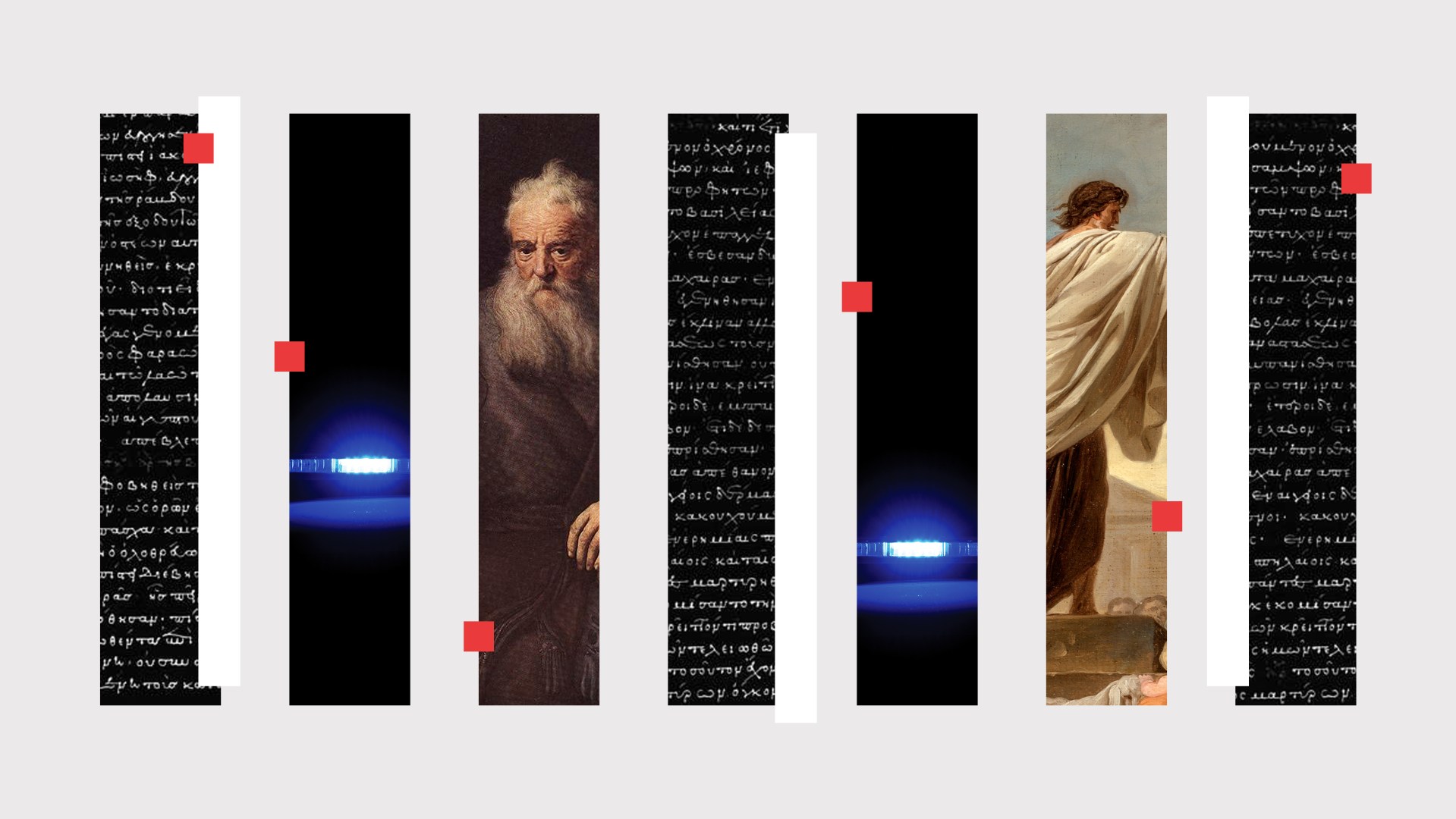
Source Images: NY Public Library / Wikimedia Commons / Aijohn784 / Getty

Years ago, my family lived in a small house outside of Glasgow, Scotland. I was completing postgraduate work, so most of my time was spent with my family or my books. But as occasion would allow, I also enjoyed hiking with friends in the nearby hills.

On one such outing, two neighbors took me to the Campsie Fells. One of my guides was a university professor; the other was a retired police officer. During our excursion, the retired officer reminisced on his years with the Scottish police force. One question that he posed has stuck with me.

“Why do American police all carry guns?” he asked. After my attempted answer, he offered his own perspective: “We would never consider arming ourselves when I was a police officer. To do so would undermine our role and would jeopardize the relationship we wanted to build with the public.”

I am not suggesting that American police should or should not carry sidearms. But in a moment when cries to reform (or abolish or “defund”) the police have reached a historic volume, this outsider’s perspective reminds us that the American policing paradigm is not the only possible model. Nor is our current system sacrosanct.

Christians should not hastily dismiss calls for change—even calls to “defund” and redesign policing from scratch. Our faith teaches that the kingdoms of this world are broken. We should not be surprised, therefore, if American policing needs transformation. But if Christians intend to contribute to this debate, they should first revisit the Bible’s lessons on policing—beginning in the Old Testament Law. (Read Esau McCaulley’s companion essay about New Testament perspectives on policing, also in CT’s September issue.)

God gave Israel his laws to teach them how to flourish as a community of love (Mark 12:28–34). Biblical laws are framed in the terms of an ancient society. They are not composed for direct implementation in this New Testament age. But we can still learn from their wisdom. That includes their wisdom on policing.

Strictly speaking, there was no police force in biblical Israel; but there were systems for community policing. Two institutions are particularly noteworthy. First, emergencies were handled with the hue and cry. Second, non-emergency crises were handled by a kinsman redeemer.

The Hue and Cry

The phrase hue and cry refers to a practice observed in many ancient societies, including Israel. Under this custom, a witness or victim of crime was expected to cry out, and all within earshot were obligated to assist. The entire community was a “police force reserve,” activated by the alarm.

One example is found in Deuteronomy’s law concerning rape (Deut. 22:23–27). Under this law, a victim was expected, if at all possible, to raise an alarm. Those who heard would rush to help. Without any professional police to call upon, the community itself enforced the law. The passage also addresses an acknowledged weakness of this custom: A victim might be accosted where no one could hear the cry. Despite this gap (the solution to which will be noted later), the hue and cry was Israel’s method for confronting crime as it was happening.

This practice might seem quaint and unsophisticated by modern standards. But it is also refreshingly authentic. The Law’s use of the hue and cry teaches us that public security is the duty of all members of the community. We might hire professionals to police for us. (And with the heightened dangers of modern weapons and technology, having trained police at some level seems very desirable!) But fundamentally, the responsibility to keep the peace lies with the whole community.

In fact, the professionalization of policing is a relatively recent innovation. The hue and cry remained the norm in most societies into Medieval years and until the modern age. London’s Metropolitan Police Act of 1829 is generally regarded as the birth of the modern police force.

In many respects, professionalized policing has been vital to the growth of cities since the Industrial Revolution. But policing systems have changed many times in different societies. We ought to stand ready to critique, overhaul, or even replace our own system as needed. The Old Testament hue and cry reminds us that we are all our “brother’s keeper[s]” (Gen. 4:9).

The Kinsman Redeemer

The hue and cry provided help the moment a crime took place. But another institution, the kinsman redeemer, provided help after the fact.

Every adult male in Israel might fulfill the role of a kinsman redeemer at one time or another. A kinsman redeemer was the nearest male relative to any person who needed help. When petitioned, this kinsman would investigate his relative’s trouble and take steps to restore peace on the sufferer’s behalf.

The Law teaches this office through the example of crimes of bloodshed. But the kinsman redeemer took interest in other matters, like theft, as well (Num. 5:8). In the example of bloodshed, the nearest kin of the deceased was assigned the role. As the kinsman redeemer (or “avenger of blood,” as Numbers 35:19 puts it), it was his duty to investigate the circumstances surrounding the death. If he identified a killer, he was further empowered to arrest and execute the guilty person. But he could only do so when there was sufficient evidence, especially in the form of witnesses (Num. 35:16–30). When guilt was in question, a trial was required before a jury of local residents (v. 24). If they handed down a guilty verdict, the murderer was turned over to the redeemer for execution (Deut. 19:12).

Through these processes, the kinsman redeemer served as the investigator, the arresting officer, the prosecutor at trial, and potentially the executioner. In fact, his role also encompassed resolving matters of economic distress, such as indebtedness (Lev. 25:25). The kinsman redeemer’s role, then, was much broader than what constitutes policing today.

That God’s Law gives this office the title of “redeemer” is no coincidence, since God calls himself Israel’s Redeemer (Ps. 78:35). By orchestrating the Exodus, he redeemed Israel from its slavery, poverty, and oppression, as well as from the diseases of Egypt (Deut. 7:15) and the sins and idols of that land. Scripture teaches that God redeems his people from all their troubles (Ps. 103:1–5), and the Exodus was the quintessential example of this redemption.

When God gave the title “redeemer” to Israel’s kinsmen, he charged them with delivering their relatives from injustice and oppression on a smaller scale. God desires this work of civic redemption to reflect his own divine redemption (Lev. 25:23–24, 47–55).

Today, we might devise different methods to redeem the impoverished and the victims of injustice. But the Law teaches that all such work is ultimately God’s work. Justice must be pursued in harmony with heaven’s redemptive purposes.

Protections Against Abuse

Through these institutions, biblical Law provided for peacekeeping in a society that lacked a police force. But naturally, putting policing into the hands of the public opened up many possibilities for abuse. Therefore, the Law also provided systems of oversight and appeal.

For example, in a society that depended on kinship for justice, the widow, the fatherless, and the foreign immigrant (“the foreigner residing among you,” in the words of Exodus 12:49) were often at risk. Biblical Law contained special provisions to guarantee the protection of those who usually lacked a kinsman redeemer.

Exodus 22:21–24 warns, “Do not mistreat or oppress a foreigner, for you were foreigners in Egypt. Do not take advantage of the widow or the fatherless. If you do and they cry out to me, I will certainly hear their cry. My anger will be aroused, and I will kill you with the sword; your wives will become widows and your children fatherless.”

In effect, this law made the entire community into proxy kinsmen redeemers for those without family. If the community as a whole failed to protect the vulnerable, God would make the men’s own wives into widows, and their own children would become fatherless. God thereby required his people to protect vulnerable members of the community as if they were protecting their own families. Indeed, with this warning, they were!

Cities of refuge (Num. 35:6–34; Deut. 19:1–13) added another hedge against abuse. The Law established a series of sanctuary cities, evenly spread throughout the kingdom. When a kinsman redeemer went rogue, a threatened individual could flee to the nearest city of refuge.

For example, a person might be wrongly accused of murder after an accidental death took place (Deut. 19:5; Num. 35:22–23). The kinsman redeemer, blinded by anger, might seek revenge, “even though [the man] is not deserving of death” (Deut. 19:6). In such a circumstance, the individual could flee to a city of refuge. The elders there would not determine guilt or innocence, but they would ensure a just trial.

Another interesting example appears in 2 Samuel 14:1–15. The case in this passage was actually a ruse invented by one of King David’s generals to make a point to the king. In it, a widow petitioned David’s court on behalf of her son. She said that a kinsman redeemer was going to execute her son for murder. Even though the case was staged, it illustrates another possibility for appeal.

The widow conceded that the charges were valid and that the redeemer had a legitimate claim. But she also had claims that the court was bound to consider: Executing her remaining son would remove her only source of support (Ex. 22:22–24; Num. 27:8–11). In this case, the king promised to intervene on the widow’s behalf. Even justified claims of a redeemer could be appealed in certain circumstances.

These protections illustrate some of the ways in which biblical Law guarded against the abuse of policing authority. They also remind us that no system of justice is perfect; even the system that God designed for Israel was liable to abuse! We should not be surprised to find that American systems contain loopholes and vulnerabilities that demand accountability or correction. Biblical Law trains us to be discerning in these matters, so that principles of justice—not just systems of justice—are upheld.

Israel’s Ultimate Law Enforcer

By these and other practices, God gave Israel institutions for law enforcement. But he did not abandon his own oversight. On the contrary, Israel sought just relations among themselves precisely because God would otherwise stir himself to act. One reason for human justice is to resolve matters quickly and avoid the need for heaven’s intervention.

If the community left injustice unresolved, God would visit his wrath not only upon the perpetrators but on the whole community for allowing it (Ex. 22:21–27; 2 Chron. 19:10). Second Samuel 21:1–14 provides an example that is relevant for today.

In the days of King David, a famine fell upon Israel. The king sought the Lord and learned that the famine was God’s judgment. The previous king, Saul, had undertaken a program of racial atrocities against the Gibeonites: “Saul in his zeal for Israel and Judah had tried to annihilate them” (v. 2). Israel failed to heed the cry of the Gibeonites living among them, but God heard it, and he visited his wrath on the land.

Upon discovering this unresolved injustice, David immediately summoned the Gibeonite leaders. He asked for their help to identify measures that would satisfy their grievances. David’s goal was to resolve their cries of injustice and to inspire their prayers “to bless the Lord’s inheritance” instead (v. 3). David and the Gibeonites came to a solution, and “God answered prayer in behalf of the land” (v. 14).

Today, the African American community is literally crying out in our streets. It is crying out against injustice in our nation’s policing systems. As Christians who fear God, we ought to sense the same urgency King David recognized, knowing that God hears the cries that humans ignore. We ought not dismiss these cries hastily but should listen and seek measures aimed at resolving them. Otherwise, heaven’s judgment will continue to mount against the nation.

Biblical Law shows us that there are different ways to implement law enforcement, as long as we uphold justice. Here is a vital principle to distill from all these considerations in the Law: The primary purpose of policing is to ensure that everyone receives justice before God—especially those least able to defend themselves.

This is a radical insight for our day. The biblical measure of policing is how well vulnerable, minority communities are protected. Americans commonly say that police maintain “law and order.” But this expression can overlook the biblical heart of policing. Biblical law enforcement is not about society’s “neatness” (its law and order) but about its justice.

The Old Testament frequently employs the language of justice and righteousness to describe the biblical aims of law (Gen. 18:19; Ps. 72:2). God’s purpose for law enforcement is to ensure justice, especially for those easily abused by the powerful, and righteousness, especially for those suffering under society’s inequities. Law and order, which tend to protect the status quo, is not sufficient. Justice and righteousness for those most disadvantaged by the status quo is the biblical purpose for policing.

America’s streets presently resound with the cries of our communities of color. The lessons of Old Testament Law urge us to open our ears and to undertake whatever renovations are necessary to ensure they receive justice. If we do not provide that justice, a higher court will answer their hue and cry.

Michael LeFebvre is pastor of Christ Church Reformed Presbyterian (Indianapolis) and a fellow with the Center for Pastor Theologians. He is the author of The Liturgy of Creation: Understanding Calendars in Old Testament Context.

Read Esau McCaulley’s companion piece here:

Cover Story

Paul’s Word to Police: Protect the Weak

As black Christians have long understood, the New Testament has a strong theology of law enforcement.

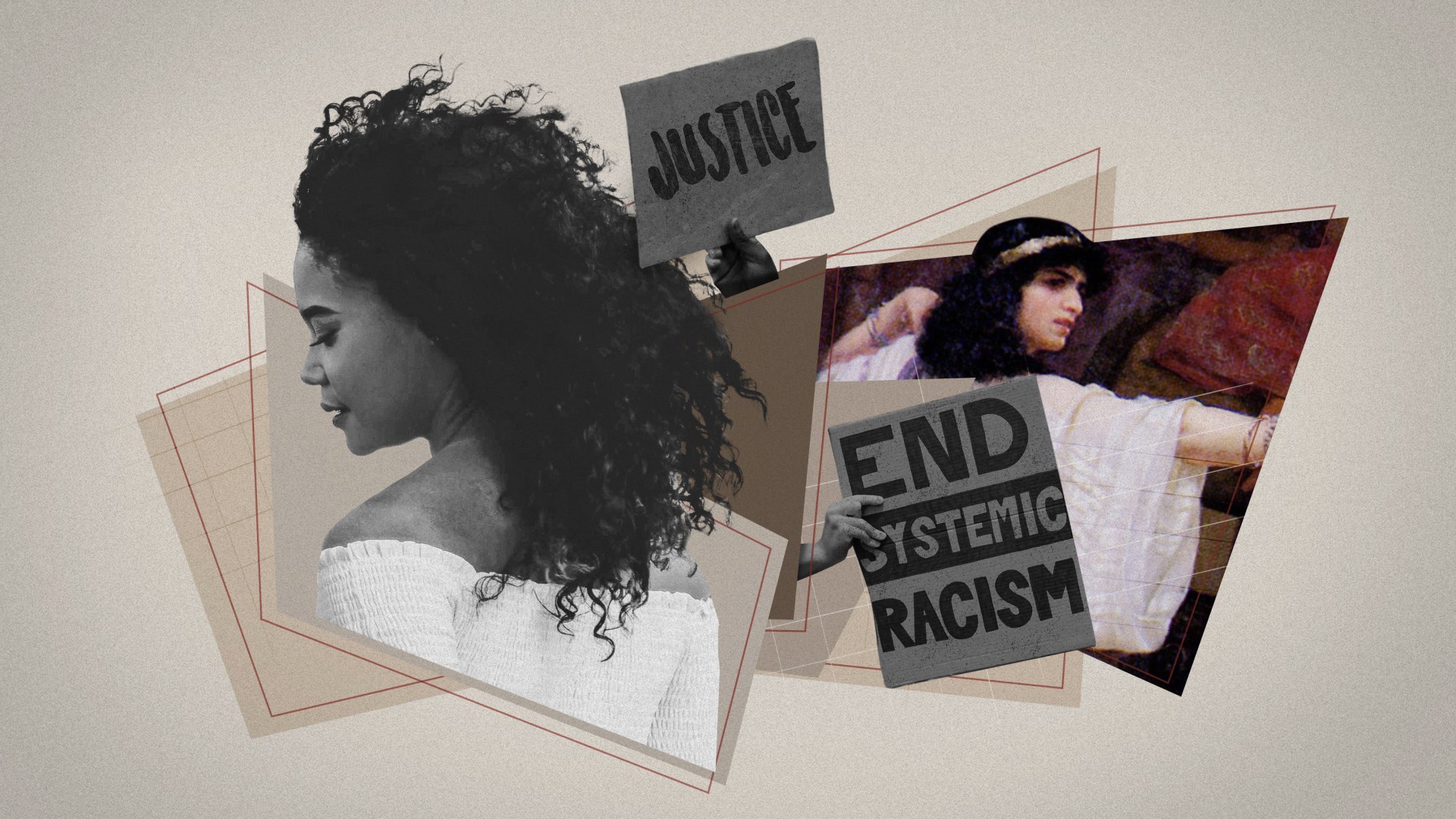
Source images:Library of Congress / Wikimedia Commons / Aijohn784 / Getty

I grew up in a poverty-stricken neighborhood in Huntsville, Alabama. By the time I was 16, I was confident that football would be my path to college. The letters and phone calls from college coaches had just begun. All I had to do was perform on the field, keep up my grades, and stay out of trouble.

By “trouble,” I didn’t mean my own behavior. I was afraid of being harassed by the police and afraid that I might find myself in an encounter that spun out of control.

I came of age in the aftermath of the Rodney King incident, which confirmed my fears of the police. But “driving while black” was not simply a problem I saw on the news. It was something I experienced.

One night my junior year, my friends and I had plans to go to the mall and, later, a party in the same part of town. We stopped at a gas station to grab some snacks and fuel before continuing on to the night’s festivities. After I finished filling the tank, I climbed back into the car and got ready to leave. Then I noticed that a black SUV had pulled up close behind us. Another drove up to my left, and another parked in front of my car. I thought I was being carjacked, but who would carjack someone at a well-lit gas station?

When police came filing out of the SUVs, I realized what was going on. “Put your hands where we can see them,” an officer said.

“I’m not putting my hands anywhere,” one of my friends said.

Right then, my future flashed before my eyes. Had all my planning been for naught? Had I exchanged my dreams for a bag of chips and a few gallons of fuel?

I told my friend to be quiet and do as the officer said. When the officer ordered us to get out of the car, we complied. I asked him what was going on. He said that this particular gas station was a known drug hub and that he had seen us conducting a drug deal. I couldn’t help but think that this location was also a known place to acquire gas. But what could we do?

The whole thing lasted less than 20 minutes. They found nothing in their search. I expected some apology, some further explanation for why they had detained us other than for being young and black. Instead, they gave us back our licenses and told us we were free to go.

But I didn’t feel free. I felt powerless and angry. I had come too close to losing it all: the football scholarship, the path out of poverty, and the chance to help my family. I had been briefly terrorized.

Over the years, I have been stopped between seven and ten times, on the road or in public spaces, for no crime other than being black. The people I love have also been stopped, searched, accused, and humiliated with little to no legal justification. These disclosures might give the impression that I don’t like police officers. On the contrary, I have known many good ones. I recognize the dangers they face and the difficulties inherent in the vocation they choose. But having a difficult job does not absolve one of criticism; it simply puts the criticism in a wider framework. That wider framework has to include the history of the police in this country—their legal enforcement of racial discrimination and the terror they have visited on black bodies.

The dark silt of that history has been brought to the surface by recent events, most notably the murder of George Floyd at the hands of police. The many protesters who have marched in our nation’s streets bear witness to the fact that Floyd is not the first. Black Americans have been “under the knee” for not days or weeks but centuries, and this cumulative oppression is once again front and center in our national consciousness.

As a country trying to come to terms with our view of policing, we turn to books, podcasts, conversations in the public square, and projects in our communities. That’s all fine and good. But as believers, we must turn our eyes to Scripture, not in order to “proof-text” but in order to think theologically about how the state polices its residents. The New Testament, in particular, points toward a theology of policing that is often neglected by laity, clergy, and even scholars. (Read Michael LeFebvre’s companion essay on policing and the Old Testament, also in CT’s September issue.)

Surprisingly, this subject has seen very little reflection in the standard works on New Testament ethics. But the guild has missed something. The state’s treatment of its citizens is not a subject foreign to the New Testament, and black folk looking to these texts will in fact find succor and hope. Taken as a whole, these passages are absolutely fundamental to how we think about the future of policing in America.

The New Testament provides the beginning of a Christian theology of policing in two places. The first is Romans 13:1–7, a much-maligned and misunderstood text. Paul’s words on “the sword” bear directly on the question of how the state polices its residents.

At a glance, the first few verses of Romans 13 might not seem like a productive place to start. They read:

Let every person be subject to the governing authorities; for there is no authority except from God, and those authorities that exist have been instituted by God. Therefore whoever resists authority resists what God has appointed, and those who resist will incur judgment. (Rom. 13:1–2, NRSV throughout)

The focus of this passage appears to be individuals, not the state. Furthermore, Paul tells individuals to submit to the authorities, because those in power have been placed there by God. Those who resist run the risk of opposing God’s will.

Paul’s lack of qualification here has been cause for concern among both lay readers and scholars. As Leander Keck writes in his commentary Romans, “It is not the opaqueness of this passage that has distressed and divided interpreters but its clarity.”

Is Paul arguing that the proper Christian response to mistreatment is not revolution but obedience? And is our only hope the eschatological righting of wrongs on the other side of this life? Yes, that eschatological picture is important, but Paul has more in mind. His words about submission to authority must be read in light of a much larger context.

First, we have to look at Paul’s study of Pharaoh. His use of the Pharaoh narrative is almost universally ignored in studies of Romans 13, but it provides essential groundwork for a biblically informed theology of policing. Paul writes:

For the scripture says to Pharaoh, “I have raised you up for the very purpose of showing my power in you, so that my name may be proclaimed in all the earth.” (Rom. 9:17)

According to the apostle, God is glorified through his judgment of wicked kings. Pharaoh was involved in the economic exploitation, enslavement, and harsh treatment of Israel, and God removed him because of his unjust and tyrannical rule.

As Paul notes, God’s destruction of Pharaoh is enacted partly through Moses. The story of Pharaoh, then, gives us an example of God removing authorities through human agents. More to the point, Paul’s interest in that story shows that his prohibition against resistance is not absolute.

Second, we have to understand Paul’s view of the state. Although Paul’s words to individuals have received the bulk of attention for exegetes, his comments about the state provide a fuller picture.

Paul’s call for submission to the state is grounded in a description of what the state itself should do:

For rulers are not a terror to good conduct, but to bad. Do you wish to have no fear of the authority? Then do what is good, and you will receive its approval; for it is God’s servant for your good. But if you do what is wrong, you should be afraid, for the authority does not bear the sword in vain! (Rom. 13:3–4)

In order to make sense of these words about the sword, we need to understand that in Paul’s time, soldiers performed a policing role. They were an “organized unit of men under official command whose duties involved maintaining public order and state control in a civilian setting,” writes Christopher J. Fuhrmann in Policing the Roman Empire. Although soldiers didn’t function exactly like modern police officers, they were in effect the closest thing to a police force.

In verses 3 and 4, Paul focuses on the authorities, not the officers themselves. He seems to recognize that a soldier’s attitude toward city residents will be determined in large part by those who give the orders. The problem, if there is one, does not reside solely with those who bear the sword but with those who direct it. In other words, Paul’s focus here is not on individual actions but rather on power structures.

A careful student of Paul might object to this interpretation by pointing to verse 3, where Paul says that rulers (who control the police) are not a terror to those who engage in good conduct. He states this as a fact. However, given God’s ability to judge nations and rulers for corrupt practices, it’s evident that Paul is talking about an ideal. His mandate to “do what is good” presupposes that rulers themselves are discerning the difference between right conduct and wrong conduct. That presupposition is key.

Clearly, Paul knows that some rulers are a terror to those who are good. His study of Pharaoh in chapter 9 makes that manifest. In chapter 13, Paul goes on to outline rulers’ responsibilities without directly addressing the problem of evil rulers. In this larger context, we are free to fill in the gap with his reference to Egypt and the wider biblical account.

What, then, does Paul’s focus on power structures mean for today? The application seems pretty apparent. In America, we have to face the fact that racism has been founded on corporate, institutional sin and fueled by the policing power of the state. Over the course of centuries, not decades, our government has crafted laws that were designed to disenfranchise black people. These laws were then enforced by the state’s sword.

By the logic of Paul’s theology, the same government that creates civic structures has a responsibility to discern what is just, undo any injustices, and right the wrongs of the system. It also follows that we as Christian citizens have a civic duty to hold these rulers or elected officials responsible for the actions of their agents or officers.

Paul’s view of policing grows too out of a Christian theology of persons. This theology reminds us that God is our maker, and the state is only a steward or caretaker. It did not create us, and it does not own or define us. With that in mind, we are being the Christians God calls us to be when we remind the state of the limits of its power.

Taken together in the larger narrative of the Old and New Testaments, Paul’s words point in a clear direction. Yes, he does speak to the Christian’s responsibility to obey the government. That’s fine. We don’t want anarchy. And yes, he invites us to recognize the potential goods of government. But these words on submission come in the context of his broader exhortation, calling governments to justly steward their power.

What about the police officers themselves? Is there a scriptural model for the individuals who represent the state? If the soldier is the closest thing to a modern police officer, then encounters with soldiers in the New Testament can provide us with important insights. In the Gospel of Luke, John the Baptist’s ministry gives us a clear and forceful vision of ideal police behavior.

First, it’s important to remember how John the Baptist functions in the wider Christian narrative. According to the Gospel writers, God appointed John as a herald of the coming Messiah and the messianic age. All of them associate him with the figure described in Isaiah: “The voice of one crying out in the wilderness: ‘Prepare the way of the Lord, make his paths straight’” (Luke 3:4–6). John’s call to repentance is a command to prepare for God’s arrival. Those who heed it have one question: What must we do to participate in the coming kingdom?

John responds with practical suggestions for different groups. One of those groups is soldiers—or for our purposes, police officers. He tells them, “Do not extort money from anyone by threats or false accusation, and be satisfied with your wages” (Luke 3:14).

If Romans 13:3–4 focuses on the state’s collective responsibilities, this verse in Luke gives us a picture of a law enforcement officer’s individual responsibilities. John condemns extortion, but the weight of this critique goes well beyond mere bribes. Extortion involves using power to prey on the weak and is only possible when the extorted have no recourse. Clearly, then, John is concerned with a form of policing in which people with station use their power to exploit people without station.

For this reason, his criticism of false accusations shouldn’t be separated from his criticism of extortion, since the two often go together. If a person being extorted refuses to comply, he might find himself accused of crimes that he didn’t commit.

Here, John might have in mind a soldier who offers up a person for a crime in order to satisfy the whim of a ruler or to achieve some political end. The story of Jesus’ crucifixion is the paradigmatic example. He is the truly innocent one who was nonetheless murdered by the state.

When the apostle John recounts Pilate’s words “Behold the man” (John 19:5, ESV), he is in part affirming Christ’s humanity. Jesus is a person who deserves to be treated with dignity. Today, blacks make this same claim of conscience on those who police us: See us as persons worthy of respect in every instance.

Jesus’ treatment by the soldiers strikes us as egregious because he was innocent of the charges, but even the guilty don’t deserve mockery and beatings. As recorded in Luke, John is calling soldiers in all circumstances to rise above the temptation to dehumanize. His exhortation to individual officers reinforces Paul’s exhortation to the state: Use your power to uphold the inherent dignity of all residents, and never use the sword for your own ends.

While Paul calls rulers to wield their power well, John calls individual soldiers not to heroic acts of physical bravery but to heroic virtue. Taken together, this New Testament theology of policing calls both the state and its officers to use their influence to protect the weak.

These scriptural and theological principles are easy enough to affirm in the abstract, but their application is often more fraught. Some people are of the mind that pews and politics ought not to mix. The sphere of faith should overlap only modestly (if at all) with the affairs of state.

Civil rights history gives us a vivid example of this mentality.

On January 16, 1963, eight clergy—two Methodist bishops, two Episcopal bishops, one Roman Catholic bishop, a rabbi, a Presbyterian, and a Baptist—wrote a letter to the citizens of Alabama titled “An Appeal for Law and Order and Common Sense.” It called for an end to the violence surrounding civil rights protests and implored those on both sides to trust the court system. It failed to make a strong stand against segregation.

Three months later, on April 12, 1963, this group of eight composed another letter. This one contained a not-so-veiled criticism of Martin Luther King Jr. and participants in the Southern Christian Leadership Council, whom they characterized as “outsider agitators.”

They questioned the political witness of King and others. They argued that “such actions as incite to hatred and violence, however technically peaceful those actions may be, have not contributed to the resolution of our local problems. We do not believe that these days of new hope are days when extreme measures are justified in Birmingham.”

This criticism of King’s work—and of the black, Christian, protesting tradition that undergirded it—came from something of a white, Southern, ecumenical consensus. Baptists, Methodists, Presbyterians, Catholics, Episcopalians, and Jewish leaders opposed him. King ’s response, “Letter from a Birmingham Jail,” was aimed not just at eight clergy but at a certain approach to faith that focused more on law and order than on the demands of the gospel.

In his reply, King writes:

I am in Birmingham because injustice is here. Just as the prophets of the eighth century B.C. left their villages and carried their “thus saith the Lord” far beyond the boundaries of their home towns, and just as the Apostle Paul left his village of Tarsus and carried the gospel of Jesus Christ to the far corners of the Greco Roman world, so am I compelled to carry the gospel of freedom beyond my own home town. Like Paul, I must constantly respond to the Macedonian call for aid.

Nearly 60 years after the publication of this letter, Americans are still debating the role of the church in the public square. Was King’s pursuit of a just society in fact analogous to the work of Paul and the prophets, or was it merely partisan politics? Was his public criticism of power structures a key element of his pastoral ministry or a distraction from it? For many black Christians, the answer is self-evident: We have never had the luxury of separating our faith from political action.

The New Testament letters give support for this tight integration of spiritual and political realms.

According to New Testament scholar J. Louis Martyn, Paul believed the world was under the domain of evil spiritual powers before the coming of the Messiah. As Paul writes in Galatians, Christ “gave himself for our sins to rescue us from the present evil age” (Gal. 1:3–4, NIV). In Ephesians, Paul suggests that these same powers hold sway over earthly leaders and rulers (Eph. 1:21). The social, political, and economic policies of unredeemed rulers, then, are a manifestation of evil forces opposed by God. These forces—along with the problem of human sin—are the enemies that God sent his Son to defeat.

For this reason, our modern delineation between spiritual and political evil, when read back into Paul’s thought, is an anachronism. The “present evil age” can be understood to mean the demonic evil of slavery in Rome and also rulers’ economic exploitation of the populace. Both were driven by the policies of corrupt Roman leadership, and both were ultimately dictated by spiritual forces.

The takeaway is unmistakable: Calling a system evil is a political assessment as well as a theological one. When black Christians today look upon the actions of police officers, political leaders, and governments and declare them wicked, we are making a theological claim in the same way that Paul was. We are compelled, in King’s words, “to carry the gospel of freedom.” Our protesting is not unbiblical. It is essential to our analysis of the human condition in light of God’s own vision for the future. His vision may await an appointed time, but it is coming (Hab. 2:1–4).

For me and many others, the application of these truths is profoundly personal. My hope for policing is not that complicated. I want to live free of fear. When I am pulled over for a traffic stop, I am afraid precisely because the police have been a source of terror in my own life, my ancestors’ lives, and the lives of my people.

As a father, I worry that my sons and daughters might experience the same terror. This dread trickles down from a national government that has often viewed our skin as dangerous.

To some, my fear might seem unwarranted. I am tempted to list statistics about black folk and our treatment at the hands of police. But I am skeptical that statistics will convince those hostile to our cause. Furthermore, statistics are unnecessary for those of us who carry in our hearts the experience of being black in this country.

The United States, historically and in the present, has failed to protect us. It has used the sword to instill a fear that has been passed down from generation to generation in black homes and churches. That dread, however, has never had the final word. Instead, black Christians have reminded themselves not to fear those who can only kill the body. At our best and most Christian moments, we have demanded our birthrights as children of God. But those rights should not be purchased at the price of our blood or our terror. A Christian theology of policing, then, is fundamentally a theology of freedom.

Esau McCaulley is a priest in the Anglican Church in North America, an assistant professor of New Testament at Wheaton College, and the author of Reading While Black: African American Biblical Interpretation as an Exercise in Hope (IVP Academic), from which this essay is adapted. Read Michael LeFebvre’s companion piece here:

Books
Review

What a Leading Racial Reconciliation Advocate Learned from Her Critics

Brenda Salter McNeil says she put too much faith in an approach that downplayed justice in order to seem nonthreatening.

Christianity Today August 26, 2020
Callum Blacoe / DeMorris Byrd / Clay Banks / Unsplash / Wikimedia Commons

Brenda Salter McNeil remembers the moment when everything changed. An active leader in reconciliation circles, especially within the church, she recalls feelings of uncertainty about her involvement in the Ferguson protest movement nearly six years ago. Certain that a younger generation of activists would take the lead, she traveled to Missouri not as an active participant but as someone who was there to “learn, listen, advise and consult.”

Becoming Brave: Finding the Courage to Pursue Racial Justice Now

Becoming Brave: Finding the Courage to Pursue Racial Justice Now

Brazos Press

208 pages

$11.58

But when the young activists asked whether she and other church leaders were actually going to join in protests later that day, Salter McNeil found she could only utter a single word in response: “Yes.”

Even if her response felt reluctant at best, the celebrated theologian, author, and pastor later felt she “was compelled to take a stand against the persistent forces that continued to deny the humanity of black and brown bodies, as evidenced by the ongoing slaughter of our sons and daughters by the police.” Little did “Dr. Brenda,” as students and parishioners know her, realize how this particular moment would upend the specific type of reconciliation work she had been engaged in for nearly three decades.

In her anticipated new release, Becoming Brave: Finding the Courage to Pursue Racial Justice Now, Salter McNeil invites readers not only to learn from her as a teacher and a guide but to gird up the courage to join her in the fight against racism and systemic injustice. In a book that is both necessary and prophetic—composed of equal parts history, biblical commentary, and personal narrative—Salter McNeil offers a distinctly pastoral approach. Her book is an exhortation to storm the gates, an admonition beyond heart and into the realm of action. It’s an invitation to “unlikely leaders and unlikely activists sensing the call of God on their lives,” to believers who are willing to become undone as they work to undo archaic systems of whiteness and white supremacy for the sake of the gospel.

But before Salter McNeil could issue this invitation, she had to become undone herself.

Rethinking Reconciliation

Perhaps it’s just me, but I often recognize the mark of a strong leader in one’s willingness to admit a mistake. Whether inside or outside the church, when leaders cultivate compassion and humility more than they seek admiration and success, I can’t help but lean into what they might have to teach me.

Salter McNeil is no exception to this rule, especially when it comes to recognizing that her critics had been right: She hadn’t gone far enough in “specifically addressing issues of systemic and structural injustice that affect people of color, the poor, and the marginalized in our society.”

As Salter McNeil writes in Becoming Brave, for too long she had bought into a model of reconciliation based on friendship, diversity, and inclusion—a model that, at its heart, ultimately sought to make the conversation palatable for a dominant white culture. By failing to insist on justice, this approach gave insufficient weight to both the historic and current realities that continue to create, feed, and amplify systems in our country that benefit some but not all. And in shrinking back from acknowledging the myriad roots of injustice, Salter McNeil writes, the prevailing reconciliation model never truly identified “the specific work that different groups must to do repair the divide.”

In one of many moments of deep authenticity, Salter McNeil recollects the illicit prize she chased after as a woman of color catering to mostly white spaces. Explaining her thinking at the time, she writes, “[I]f I could convince evangelical Christians that reconciliation was not some politically motivated agenda but a biblical calling rooted in Scripture, they would pursue racial justice. For years I tried to be biblical enough, nonthreatening enough, patient enough, persuasive enough, theologically rigorous enough, so that no one would say I had a hidden agenda.” Certainly, as a white woman, I can see how her words might be hard for readers in white evangelical churches to swallow—but this is the entire point. For too long, the reconciliation movement sought to dilute the brutal realities of racism and white supremacy so that white people would be comfortable discussing them. But this only served to ignore the real root of the problem.

Turning toward the bolder, justice-oriented approach she now embraces, Salter McNeil begins to ask (and answer) the kinds of questions that matter: “How will the belief in God’s reconciling work in the world practically impact impoverished people and those discriminated against based on their race, gender, sexuality, class or social status? How does our belief in the reconciling power of the Resurrection enable us to speak truth against the powers of injustice that are at work in the world? If we can’t answer those questions, then we are not relevant, and our message of reconciliation is shallow.” By boldly speaking truth to power, Salter McNeil dares her readers to consider how we as God’s people have allowed injustice to fester like an insidious, infected wound in our country today.

In tailoring its message to white ears, Salter McNeil writes, the reconciliation movement was ignoring the prophetic voices of the non-white (and non-male) “protesters, teachers, journalists, artists, [and] preachers [who] come to get our attention and inform us about the reality of what’s going on in people’s lives.” In tuning our ears to these neglected voices, we allow the Holy Spirit to whisper new truths, including truths that can make some of us feel rather raw and exposed in our comfort. And we come to see, all the clearer, how these voices must be re-centered if real change is going to occur.

Lessons from Esther

In reality, this message is nothing new, for Salter McNeil takes it straight from the book of Esther. Chapter by chapter, she reveals her fiery preacher’s soul as she walks readers though this Old Testament story of faithfulness under trying circumstances. Salter McNeil offers a thorough understanding of the customs, culture, and significance of ancient Persian society, all while providing biblical insight into central characters like Xerxes and Hadassah (Esther’s Jewish name) or Haman and Mordecai. And she draws powerful personal parallels between Esther’s time and our own.

In the opening chapter of Esther, Queen Vashti decides to stick up for herself by refusing to attend the extravagant party her husband is throwing, which infuriates the king and leads to her losing the throne. Salter McNeil uses Vashti’s example of principled defiance to remind readers that “we must not compromise our dignity, self-esteem and self-worth in an attempt to please others, to maintain a relationship, or to keep the peace.”

In another pivotal moment, Mordecai refuses to wear the clean clothes the newly minted Queen Esther has sent him, continuing instead to clothe himself in sackcloth and ashes for the Jewish people. From this, Salter McNeil draws valuable lessons about the role of biblical and historical lament. “By sending back the clothes,” she writes, “he is making a prophetic and political statement.” She imagines Mordecai thinking, “I will not let you silence me. I will not let you placate me. I will not go away quietly.

Connecting the dots between Esther’s life and her own reconciliation work, Salter McNeil exhorts her readers to partner in efforts to bring real change to broken systems of inequality, even though they are certain to face fierce resistance. Esther, she writes, “decided to join in God’s reparative work in the world, knowing full well that there were no promises that everything would turn out okay.”

By telling uncomfortable truths, both about herself and her audience, Salter McNeil compels her readers to wrestle with the limitations that keep them from fully engaging in this work. But in the end, her invitation is pastoral at heart. Like a good shepherd caring for her flock, she leads us into the deep work of reconciliation with compassion and grace. In so doing, she helps us—in the words of her book’s subtitle—find the courage to pursue racial justice now.

Cara Meredith is a writer and speaker living in the San Francisco Bay Area. She is the author of The Color of Life: A Journey Toward Love and Racial Justice (Zondervan).

Theology

11 Back-to-School Prayers

Short liturgies for anxious parents, teachers, and students.

Christianity Today August 26, 2020
fstop123 / Getty Images

The following is a collection of prayers related to the start of school. As both a professor of worship and a parent of two school-age children, I tried to imagine the sorts of things that parents and kids, teachers, school administrators, and community leaders might be feeling in light of the unpredictable realities that face them this fall.

My hope is that, in praying these prayers, they will sense in palpable and deeply personal ways the care-filled love of the Good Shepherd who knows them by name. In the end, the goal is simply to pray as one can and when one can, trusting always that the Spirit prays in and for us when we can no longer find the right words or even the will to pray.

A prayer for a new day.

O God, you who make things new, again and again, enliven the thoughts of my mind, revitalize the cells of my body, and cause a fresh outburst of praise to surge in my heart so that I might taste the Life that is truly life this day. In the name of the one whose face is like the shining sun. Amen.

A prayer for children going to school.

Dear Jesus, you who promise to be with me always, I pray that you would be with me today as I go to school. Bless my going and my coming. Bless my learning and my playing. Please protect my heart from fear. Please keep me safe. Please give me good friends. Give me joy this day, and thank you for loving me from head to toe. In your name. Amen.

A prayer for children schooling at home.

Dear Jesus, you who promise to be with me always, I pray that you would be with me at home today as I do my schoolwork. Please help me to do my best, help me not to feel alone, and help me to be with patient with my family. Give me joy this day, and thank you for loving me from head to toe. In your name. Amen.

A prayer for high school and college students.

O Lord, you who promise to be with me always, be with me this day as I begin my schoolwork. Keep me in health, I pray, and keep me from harm. In all that I do and say, may I love you with all my heart, mind, soul, and strength, and may I love my neighbor as myself, so that I might fulfill your purposes for me and your calling on my life as a student. In Christ’s name. Amen.

A prayer for parents.

O Lord, you who promise to guide us through the wilderness and to protect us through the storm, we ask that you would make us wise when we cannot clearly see the way forward, make us brave when we feel afraid, make us strong in the face of our weakness, and make possible what to us seems impossible, so that we might joyfully entrust ourselves and our children into your tender care in these trying and troubling times. In Jesus’ name. Amen.

A prayer for teachers.

O Lord, you who are the Good Teacher, I ask that you would help me to love my students well this day and to be patient with things that don’t go according to plan. May I help my students to feel afresh the wonder of our subject matter, to be humble in the face of ignorance, to be gracious with themselves in the light of mistakes that they may make, to delight in things newly discovered, and to love the truth with all their hearts and minds, so that they might be wise and compassionate citizens of this world that you so love. In Jesus’ name. Amen.

A prayer on behalf of teachers.

O Lord, you who have called and equipped the teachers in our community, we pray for them today. Watch over them, provide for them, guide them, sustain them. May you be their sun and shield, so that they might do the work that you have entrusted to them and sense your care in these uncertain times. In Jesus’ name. Amen.

A prayer for school administrators.

O God, you who have promised wisdom to all who would ask it, we pray today for school administrators, that you would grant them clarity of mind, unity of spirit, strength of will, a heart of wisdom and the gift of your truth-bearing Spirit, so that they might be enabled to make decisions that lead to the flourishing of their teachers, staff, and students and to the wellbeing of the whole community. In Jesus’ name we pray. Amen.

A prayer for frustrated school-related relationships.

O Lord, you who told us that we would have trouble in this world, we confess to you our worries over things that we cannot control, our distress over things that seem wrongheaded, and our frustration with those who oppose us on things that we hold dearly. Grant us the ability to bear with one another in love, and may the peace of Christ guard our hearts, so that together we might trust your leading and walk in the way of unity that only the Spirit of God can make possible. Amen.

A prayer for the time of pestilence.

O Lord, you who are the refuge of the poor and needy, we ask that you would save us from the pestilence that stalks in the darkness and the plague that destroys at midday. Be our sun and shield. Be our fortress. Be our comfort this day. May we not fear any evil but rather trust in your might to save and your wisdom to guide, so that we might rest always in the shadow of the Almighty. In the name of the one who heals our diseases. Amen.

A prayer for nightly care.

O Lord, you who guard me through the watches of the night, I entrust to you all that I said and left unsaid this day, all that I did and left undone, all that I wished this day could have been but was not, and I ask that you would grant me your peace, so that I might trust you in all things. In the name of the one who holds my life in tender care. Amen.

W. David O. Taylor teaches theology at Fuller Theological Seminary and is the author of Open and Unafraid: The Psalms as a Guide to Life (Thomas Nelson) and accompanying illustrated psalms prayer cards.

This piece was adapted from a post that appeared on The Diocese of Churches for the Sake of Others on Aug. 5.

Ideas

QAnon Is a Wolf in Wolf’s Clothing

Staff Editor

There’s nothing sheepish about this insidious internet demon.

Christianity Today August 26, 2020
Rick Loomis / Stringer / Getty Images

He doesn’t know much about the QAnon conspiracy theory, President Trump told a reporter this month. But “I understand they like me very much, which I appreciate,” he added. “I have heard that it is gaining in popularity, and from what I hear, these are people … that love our country.”

The reporter asked a follow-up: “At the crux of this theory is this belief that you are secretly saving the world from this cult of pedophiles and cannibals. Does that sound like … ” She trailed off, apparently at a loss as to where to go from there. “Like something you are behind?”

“Well, I haven’t heard that,” Trump answered, “but is that supposed to be a bad thing?”

This isn’t the first time Trump has interacted with QAnon. He has shared posts from QAnon Twitter accounts, and he greeted the primary victory of a pro-QAnon House candidate with enthusiasm. However, this explicit endorsement of the theory’s believers, if not quite the theory itself, is new territory for Trump. It will bring QAnon further into the political mainstream and make this cultic movement a greater threat to the American church.

If you’re among the majority of Americans unfamiliar with QAnon, a pause for definition may be in order. QAnon is a conspiracy theory that claims that a secret cabal in government, the media, and other influential institutions is engaged in child sex trafficking, cannibalism of a sort, and the usual conspiracist bugbear of world domination and human sacrifice. One sub-theory in the movement alleges that there’s footage of Hillary Clinton and her aide “ripping off a child’s face and wearing it as a mask before drinking the child’s blood in a Satanic ritual sacrifice.”

The QAnon movement began when an anonymous poster called Q took to the 4chan online forum—ironically, better known for its implication in child pornography and other foul dregs of the Internet—to predict Clinton would be arrested and massive riots would break out nationwide on October 30, 2017.

That day came and went, and nothing Q forecast came to pass. But here’s the genius of QAnon: For those already convinced, it’s unfalsifiable. According to Travis View, who researches conspiracy theories, “Q will say something very vague, like, ‘Watch the water,’ [and] because water covers most of the planet … there’s going to be a news event eventually that involves Trump and water. And so the QAnon community will look at that and will say, ‘Look, Trump drank a glass of water on camera. Q said, “Watch the water.” That means that Q predicted that event’—which, of course, is nonsense.”

When Q prophecies (or “drops,” as they’re called) don’t pan out, as with the initial Clinton arrest story, adherents simply conclude the cabal interfered.

The cabal is QAnon’s version of the Fall—its explanation for what’s wrong with our world. Q is the movement’s John the Baptist. Drops are its Scripture. And Trump is its messiah, ostensibly working at great personal cost to defeat the cabal and usher in a new age of American greatness.

Among QAnon’s most troubling aspects are its misuse of the Bible to disguise its deception and its increasing function as a syncretic cult of semi-Christian heresy.

That religious language isn’t only metaphorical. Among QAnon’s most troubling aspects are its use of the language and style of evangelical Christianity, its misuse of the Bible to disguise its deception, and its increasing function as a syncretic cult of semi-Christian heresy.

A pro-Q politician in Oregon described her involvement by sharing that some “people think that I follow Q like I follow Jesus,” a blasphemous characterization she left unchallenged. That’s unsurprising, for QAnon fashions itself as a “Christian” movement. Q drops often quote Scripture—as even the devil does (see Matt. 4:10)—a tactic that adherents have said helped convince them the theory was worth their time.

The way ardent Q supporters study drops for hidden truths (and also resonance with headlines) resembles nothing so much as evangelical eschatological obsessions in the vein of The Late, Great Planet Earth. There’s even a “church” of QAnon, in which congregants meet for services, pray, take communion, and use incoherent, anonymous posts from filthy online forums to guide their understanding of God’s Word.

QAnon may not be an error to which CT readers are prone. But what I find deeply worrisome about this movement is how insidious it has become. The more Pentecostal moments of my upbringing didn’t stick well enough to make me confident in diagnoses of demonic activity (as opposed to ordinary human evil), but QAnon sure seems devilish. It deliberately preys on well-intended concern about the very real issue of sex trafficking. Q followers glom onto anti-trafficking hashtags, sharing content that casual viewers may not realize mixes truth with malignant lies.

These strategies to infiltrate more normal parts of the internet are working, especially in evangelical and fundamentalist Christian contexts. As former CT editor Katelyn Beaty recently reported, pastors say QAnon “is on the rise in their flocks. It is taking on the power of a new religion that’s dividing churches and hurting Christian witness” among younger generations. Some pastors Beaty spoke with wouldn’t even go on record to discuss Q’s sway among their congregants.

That sway isn’t surprising, because pastors are at a grave discipleship disadvantage here. “A pastor may preach a wonderful 30-minute sermon that is exegetically sound, theologically rich, and has important applicability to the listener's life, but if that congregant goes home and consumes hours of [QAnon] stuff on YouTube every week, I can tell you what the outcome will be,” explained Paul Anleitner, a pastor in the Twin Cities.

After hearing accounts of church splits over QAnon, Anleitner made a video about the movement as a warning to fellow Christians. It’s a warning every American church needs to hear right now.

One reason Q appeals to Christians, Anleitner argues, is it can feel like a way to live out Jesus’s instruction to “be shrewd as serpents and innocent as doves” (Matt. 10:16, NASB). The problem, he says, “for followers of QAnon who are Christians is that they actually aren’t being shrewd enough.” QAnon is predatory drivel that undermines the authority of Scripture and pilfers trust we owe only to Christ. American Christians have a responsibility to learn to identify it—and flee.

Bonnie Kristian is a columnist at Christianity Today, a contributing editor at The Week, a fellow at Defense Priorities, and the author of A Flexible Faith: Rethinking What It Means to Follow Jesus Today (Hachette).

News

Russian Evangelicals Fined for ‘Missionary Activity’ During Pandemic

Offenses include passing out tracts and telling people to invite friends to hear the gospel.

Christianity Today August 26, 2020
Konstantin Chalabov/Sputnik via AP

Anatoly Chendemerov was handing out tracts that said “You must be born again!” in the Volga Federal District in southeastern Russia. He was fined 6,000 rubles, the equivalent of about $80.

Sergey Krasnov was passing out Christian newspapers and New Testaments in Krasnodar, a city in the South. He was fined 5,000 rubles, or about $65.

Seo Jin Wook, a South Korean, met with about 10 people in a private home in Izhevsk, in the Western Ural Mountains, to talk about the good news of Jesus Christ. He told the people they should come back and bring friends. He was fined 30,000 rubles (about $400) and deported.

In the first six months of 2020, more than 40 people have been punished for violating a Russian anti-missionary law, according to a new report from Forum 18, a religious liberty news service based in Norway. Government lockdowns and pandemic stay-at-home orders did not substantially slow the multiyear crackdown on unauthorized religious activity.

Russia passed a 2015 law that said all religious meeting places needed to be registered. That regulation was followed in 2016 with an anti-missionary law. The bill was labeled as anti-terrorism legislation, meant to prevent foreign extremist from exerting influence in the country. At the time, religious liberty experts said it was hard to predict how the law would be applied and what activity would be prohibited.

“It is broad and vaguely defined,” wrote Travis Wussow, of the Southern Baptist’s Ethics and Religious Liberty Commission, in 2016. “Of course, limiting expression and freedom in a vague way is a tried-and-true tool of regimes to stifle speech beyond the language of the law by creating fear of punishment.”

Four years later, the application of the law is clear. Local police, sometimes supported by the Federal Security Service, have fined roughly 100 religious people per year for practicing their faith. Baptists distributing tracts and Muslims teaching people the language skills necessary to read the Qur’an are prime targets, alongside ongoing efforts to completely rid the country of Jehovah’s Witnesses.

So far in 2020, local police have fined a dozen Muslim men for teaching Arabic grammar, according to Forum 18. They have also fined a sectarian Roman Catholic performing a Latin Mass, a Pentecostal holding services in his home, and a dozen Baptists distributing religious literature. Seventy percent of Russians are Orthodox, though only about five percent go to church regularly. Seven percent of people are Muslim and about 2 percent are Protestant—mainly Baptist and Pentecostal.

While the government has been targeting evangelical Christians, the Russian constitution was also amended to include a reference to God, define marriage as a union between one man and one woman, and allow President Vladimir Putin to remain in power beyond his fourth term, which ends in 2024. The Russian legislature is also considering a law limiting religious liberty to Russian citizens and permanent residents, banning non-residents from practicing their faith in the country and preventing Russian religious leaders from receiving theological education abroad.

Putin has raised the status of the Russian Orthodox Church in his fourth term and talked about the need to stand strong against secularism and the “chaotic darkness” of the West, which he says is “denying moral principles and all traditional identities: national, cultural, religious, and even sexual.” That political program includes clamping down on “foreign religions,” such as Baptists.

“There is a sophisticated narrative … that Russian society and culture are under siege,” Eric Patterson, a scholar in the Robertson School of Government at Regent University, wrote for the conservative website The Blaze, “and that Russia is fortunate to have the bold, determined leadership of Vladimir Putin and his United Russia party to stand up against all forms of foreign influence and aggression.”

The United States Commission on International Religious Freedom has recommended targeted sanctions in response to the violations of religious liberty.

Editor’s note: CT is beginning to translate select articles into Russian, as part of our 200+ CT Translations. To get involved, contact CT Global.

News

Jerry Falwell Jr. Finally Resigns from Liberty Amid Sex Scandal

(UPDATED) Board leaders decide return of Christian university’s president wouldn’t be in its “best interest” after dueling accounts of an affair make news.

Jerry Falwell Jr.

Jerry Falwell Jr.

Christianity Today August 25, 2020
Chip Somodevilla / Getty Images

Update (October 29): Two months after leaving Liberty University, Jerry Falwell Jr. is suing the school for defamation. The former university president alleges Liberty officials accepted “false claims” against him to force his resignation and then “engaged in a campaign to ‘tarnish, minimize, and outright destroy the legacy of the Falwell family and Mr. Falwell’s reputation.’” Falwell had reportedly been granted a $10.5 million severage package under his contract.

Monday was a big day for Liberty University. The school began the first day of classes as President Jerry Falwell Jr.’s name trended on Twitter due to recent news reports about the involvement of a young man in the conservative Christian leader’s marriage.

By the end of the day, Falwell had agreed to resign, rescinded his resignation, and submitted it again. The board of trustees officially accepted Falwell’s resignation on Tuesday.

Falwell had been put on leave two and a half weeks ago after sharing a provocative vacation photo on Instagram. The additional reports made it clear that it would not be in Liberty’s “best interest” for him to return, the Christian college said Monday night in a statement.

After leading the school through historic growth since 2007, Falwell ultimately agreed to leave because he wants “what’s best for the school,” he told the Wall Street Journal. The evangelical university confirmed in a statement that its “heartfelt prayers are with him and his family as he steps away from his life’s work.”

“I call upon the University community and supporters to be in prayer for the University and for all its leadership, past, present and future, as we walk with the Lord through this stormy time of transition,” said acting president Jerry Prevo, an Alaska pastor who had served as board chair before he stepped in to lead while Falwell was on leave.

Falwell joins a regrettable list of prominent evangelical leaders brought down by sexual scandal.

Falwell said in a statement to the Washington Examiner Sunday night that his wife, Becki, had an affair with a pool boy-turned-business partner, alleging that he and his wife were now being extorted. In a Reuters investigation published Monday morning, the 29-year-old Florida man, Giancarlo Granda, said he had been in a relationship with the Falwells, with Jerry’s knowledge, from 2012 to 2018. Falwell said in his statement, prior to Reuters airing Granda’s claims, that he was not involved and called Granda’s account “90 percent false.”

Questions around Falwell’s ties to Granda and Falwell’s investment in a Miami hostel previously came up in investigations in Politico and the Miami Herald.

Critics also expressed frustration about the racial climate on campus, brought to the forefront by a divisive tweet in May that led several African Americans to cut ties with Liberty and dozens of African American alumni to call for his resignation.

For the past few years, concerned members of the Liberty community say they worried that nothing would be done. They assumed because of Falwell’s influence at Liberty, and the loyalty of a board made up of Jerry Falwell Sr.’s associates and Falwell Jr.’s own appointees, he may never be held into account.

But then a viral photo turned up—not from media investigations, but Falwell’s own Instagram account. He is posed next to a woman and both have their zippers down. After backlash, Falwell agreed to take an indefinite leave of absence, which he recently characterized as a sabbatical, though it came at the board’s request.

Some critics of Falwell told CT at the time they were shocked to see the school take action.

The move also had trustees considering whether Falwell should stay in his position, even before hearing the news about the Falwells’ alleged sexual tryst.

The concerns could no longer be dismissed as baseless attacks from the outside, said Suzanna Krivulskaya, a professor at California State University San Marcos who writes about the history of American evangelical sex scandals.

She likened Falwell’s narrative to the pattern of institutional denial, then temporary leave, then permanent oustings Christians have seen modeled around leaders such as Jim Bakker, Ted Haggard, and Billy James Hargis. Krivulskaya observed that cases involving “accusations of homosexuality and allegations of bisexuality—where there’s another man involved” often prompt a quicker response and swifter condemnation.

Falwell Sr., Falwell’s father and Liberty’s founder, knew how sexual misdeeds could hurt ministry relationships and impede the work of evangelism. He famously took over for televangelist Jim Bakker after an “alleged sexual indiscretion” and coverup at the PTL Club in the 1980s.

Among evangelicals, sexual scandals hit on several levels. There’s the hypocrisy of a leader espousing sex between one man and one woman while not obeying the teaching himself. But there’s also the grief of how sexual brokenness damages people, families, and ministries.

“The past 24 hours of news related to Liberty University and Jerry Falwell Jr. and his family is sad. Whatever portion of it is true, it is a reminder of just how deeply entangling sin can become and our deep need for genuine spiritual renewal from Christ each and every day,” said Virginia pastor and Liberty alumnus Colby Garman, who signed a petition the week prior calling for Falwell’s removal.

“As I have said before, it will be best for the school to make a permanent leadership change immediately and allow the Falwell family to work out these matters in private. Prayers for all involved.”

The impact of Falwell’s departure will extend beyond the school. Falwell is a big name in evangelicalism because of his father’s legacy and the success of Liberty, which has grown to an enrollment of more than 120,000 students. Lately, he has also become known as a close friend of President Donald Trump. He serves as a faith adviser to Trump and has hosted the president on campus.

David Dockery, president of the International Alliance for Christian Education, said, “The news will certainly have implications for all who serve in Christian higher education as well as for evangelicalism at-large, at least from the vantage point of perceptions among those looking on from the outside.”

Liberty is somewhat of an exceptional example in the Christian college landscape. It is not a member of the Council for Christian Colleges and Universities (CCCU), though fellow evangelical schools, looped in with Liberty and its leader in media accounts, “are surely embarrassed by Falwell,” Bill Ringenberg, author of The Christian College: A History of Protestant Higher Education in America, told CT.

Even at the helm of what was once the country’s largest Christian college, Falwell never claimed to be the spiritual leader in his family—that’s his brother Jonathan Falwell, who succeeded their father as pastor of his other institutional legacy, Thomas Road Baptist Church. Instead, Falwell had positioned himself as steering Liberty like a business.

Many attribute that strategy as leading to Liberty’s massive growth in online education, sports, and enrollment.

“Jerry has done a great job in building a tremendous school,” Robert Jeffress, fellow Trump supporter and pastor of First Baptist Dallas, told the Washington Post. “The allegations, if true, should be a warning of the destructive power of sin.”

But his leadership has also tainted the school’s Christian witness, critics say.

Quan McLaurin, who resigned as a diversity director at Liberty, fears the board has only acted to hold its leader accountable when the negative press stands to affect its bottom line. He criticized leaders for not acting sooner or in response to the racial matters that have come up on campus. He called Falwell’s resignation “a great step in the right direction, but not enough” and wants to see “true accountability” and ethical behavior from the top.

Dockery, like many fellow Christian leaders, extended prayers for Liberty’s leadership.

“With the amazing resources with which they have been blessed,” he said, “we hope that the Board will prioritize their calling to rigorous academics and an unapologetic Christian commitment that will allow them to maximize their impact and influence in the world of higher education as well as in their service to church and society.”

Johnnie Moore, who previously served as the school’s vice president of communications during his 13-year tenure at the school, said its mission will continue even without a Falwell at the helm.

“Liberty would not exist but for the Falwells. Yet, the brilliance of its original mission and vision was transcended long ago,” said Moore, founder of the evangelical marketing firm The Kairos Company. “Liberty is an institution designed to thrive for the cause of Christ today and for generations. I am sure members of the community—past and present—will pray and will work together to ensure that Liberty’s best days are ahead.”

Additional reporting by Daniel Silliman.

News

Trump’s Faithful: Franklin Graham, Navajo VP, Freed Pastor Andrew Brunson on GOP Convention Lineup

During this year’s event in Charlotte, evangelicals are praying inside, outside, and remotely.

Christianity Today August 25, 2020
Evan Vucci / AP

Three and half years after offering a prayer at President Donald Trump’s inauguration, New York Cardinal Timothy Dolan opened the Republican National Convention—which had officially nominated the president to run for a second term—by praying for America Monday night.

His prayer mentioned both parties and spanned a litany of issues around this election, saying “pray we must” for COVID-19 patients, frontline workers, police, babies in the womb, immigrants, trafficking, religious liberty, democracy, and the electorate preparing to vote.

The convention speeches and panels, convened to make a case for Trump’s reelection, were also punctuated with mentions of prayer and freedom to worship, a sign that—like at the Democratic National Convention the week before—faith remains a guiding factor for how Republicans approach the 2020 race.

On the broadcast airing Monday night, a Montana businesswoman described desperately praying for the Lord’s guidance before receiving a Paycheck Protect Program loan to support her coffee shop during the pandemic. Attorney and Trump advisor Kimberly Ann Guilfoyle gave a passionate speech in favor of Trump’s vision for a country where “we kneel in prayer and we stand for our flag.” Football great Herschel Walker mentioned praying for his friend, the president: “I pray every night that God gives him more time. Give him four more years.”

During presidential election years, “I watch the key points of both conventions to help me know how to pray for our country and make sure Christians are involved,” said Greg Laurie, pastor of Harvest Christian Fellowship, who has visited the White House multiple times under Trump and applauded outreach to evangelicals. “We need to both think and vote biblically. I encourage every believer who cares about the future of our country to do the same.”

Chaplains from the Billy Graham Evangelistic Association (BGEA) have been on the streets offering prayer around the Charlotte, North Carolina, convention center that’s hosting a downsized version of the GOP event. BGEA president Franklin Graham is scheduled to offer a prayer at the convention on Thursday.

While Graham—who also prayed at Trump’s inauguration— is the biggest evangelical name on the lineup, he’s not the only one. Myron Lizer, a former bivocational pastor in Arizona who now serves as vice president of the Navajo Nation, will speak Tuesday.

“I attribute it to God’s favor that I am in this position for such a time as this,” he told CT. He suggested that perhaps the Lord would use the Navajo to help the country out of turmoil, like the role of the code talkers in World War II.

Lizer, who led a Southern Baptist congregation in Window Rock, Arizona, said he has a unique perspective as a Christian and a Native American. He knows what it’s like to feel the tension on both sides and believes “right-wing and left-wing extremists are taking America down the wrong road.”

While the Navajo leader praises what the Trump administration has done for his people—including providing $714 million in COVID-19 relief funding and establishing a task force to address missing and murdered indigenous women —he knows many of his fellow Navajo oppose Trump. Navajo President Jonathan Nez, for example, is a Democrat. But the two fellow Christians pray together each week.

Evangelical Presbyterian pastor Andrew Brunson made an unlisted appearance at the convention Monday night, part of a panel of overseas detainees returned to the US by the Trump administration. Each briefly thanked the president for his role in working toward their freedom. Brunson spent two years in a Turkish prison on erroneous terrorism and espionage charges. After a prayer campaign and through the efforts of the president, State Department, and Secretary of State Mike Pompeo, he was freed in 2018.

Later this week, convention viewers are slated to hear the more tragic story of a hostage who reportedly refused to recant her faith and didn’t make it home. The parents of the late Kayla Mueller—the Christian aid worker who was kidnapped, tortured, and enslaved by ISIS leaders in Syria—have previously criticized the Obama administration for not doing more to try to facilitate their daughter’s release and thanked the Trump administration for going after Abu Bakr al-Baghdadi.

Secretary of State Pompeo, who belongs to the Evangelical Presbyterian Church, is slated to address the convention Tuesday through remarks recorded in Jerusalem. While the location has stirred debate over politicking while on government business, it also evokes the significance of Trump’s Israel policy, including moving the embassy to the capital—a decision heralded by US evangelicals but far more contentious for believers in the region.

Nikki Haley, the former ambassador to the United Nations, described a vision for America under Trump “where every believer can worship without fear” and “where every girl and boy, every woman and man of every race and religion has the best shot at the best life.”

During the first night of the convention, this vision, and versions of it described by fellow speakers, was presented in contrast to the Democratic platform.

As Wheaton University politics chair Bryan McGraw predicted, Republicans’ message will declare “the Democrats are coming for their churches, their schools, their families,” as an attempt “to make evangelicals believe that unless they vote for Trump—and vote for him in large numbers—they will be on the receiving end of a kind of cultural revolution.”

“People of faith are under attack,” Donald Trump Jr. said. “You're not allowed to go to church, but mass chaos in the streets gets a pass. It's almost like this election is shaping up to be church, work, and school versus rioting, looting, and vandalism.”

Turning Point USA’s Charlie Kirk, who runs a think tank affiliated with Liberty University, mentioned the importance of pastors being able to reopen their churches without government interference. Liberty’s Jerry Falwell Jr., who was an early evangelical supporter of Trump in 2016 and gave a seven-minute speech in his favor during the last convention, had not been invited to speak.

In a Pew Research Center survey released last month, 82 percent of white evangelicals and 55 percent of all Christians said they planned to vote for Trump while 88 percent of black Protestants supported Joe Biden. As CT reported last week, his campaign has emphasized his Catholic faith.

Samuel Rodriguez, pastor and president of the National Hispanic Christian Leadership Conference, said as a believer, he doesn’t vote for “parties or for politicians but for policies that advance the Lamb’s agenda of protecting the sanctity of life, advocating for biblical justice, and protecting religious freedom.”

Jack Graham, pastor of Prestonwood Baptist Church in Texas, had a similar directive.

“Christians who are watching the major party conventions should ask themselves this simple question: Do the policies being discussed by these leaders align with our biblical values and beliefs?,” said Graham, who has spoken out in favor of the president’s pro-life policies. “This question should tell Christians all they need to know.”

Testimony

I Went in Search of My Jewish Heritage. Along the Way, I Found the Messiah.

How a mysterious book inscribed with a mysterious phone number changed the course of my life.

Christianity Today August 25, 2020
Portrait Courtesy of Anatoli Uschomirski / Image by Mallory Rentsch

I first encountered hatred as a Jew in Kiev, the capital of Ukraine, when I was 11 years old in 1969. Without provocation, two boys called me a dirty Jew in the hallway of my school. Sneering, they punched me in the face and body and knocked me down. I cried going home.

Incidents like these led me to begin investigating my heritage. My parents were secular Jews who never mentioned our past. They never celebrated Passover or attended synagogue. My father died when I was 10.

While researching my family roots, I made a sad discovery in a book of remembrances that listed victims of the 1941 Babi Yar ravine massacre, which happened near Kiev. Nazi death squads took more than 30,000 Jews (including children), stripped them naked, and led them to the bottom of the 50-foot ravine, where they were slaughtered with machine guns. My grandfather, aunt, and two cousins were among the dead. Thousands more died the same way through 1943.

Ukraine’s Communist government suppressed details of the massacre. For a long time, even acknowledging the Holocaust was taboo. Finding that millions of Jews were murdered in Nazi concentrations camps during World War II shocked me.

The government was well known for its anti-Semitic attitude, and it treated us as second-class citizens. We always knew rejection. Officials stamped “Jew” on my identity card and student records. The KGB monitored Jews attending Sabbath services.

As a teenager, I heard about a group of young toughs beating up someone I knew, yelling, “Hitler should have killed all of you!” Hatred against Germans poured into my heart.

Peace with God

Because universities in Ukraine only accepted a small number of Jews, mainly for scientific or engineering studies, I decided to pursue a profession that did not require mathematics. I was no good at figures, so photography seemed like the best career choice following my military service. Haunted by prejudice, I needed to prove I was worth something.

In the army, I met another man named Anatoli. He was honest and humble, the kind of good worker who didn’t curse or get drunk like so many soldiers did. Anatoli was the first Christian I had ever met, and he told me about his faith in Jesus. I liked him, but I pushed away his religious ideas. Like many Ukrainian Jews, I considered myself an atheist.

After leaving the military in 1991, I enrolled in the Kiev Technical Institute for Photography, where I met my wife Irina. As a student, I worked for magazines and newspapers, but this brought little satisfaction. To help fill the void, I tried every pleasure: alcohol, smoking pot and hash, partying, and sex. I even cheated on Irina. And I explored different world philosophies, including occultism and Eastern religions. But nothing brought me any closer to fulfillment. Clearly, something was missing from my life.

God intervened when I visited my mother. On a table in her living room, I noticed a book called Betrayed! A Messianic congregation in Kiev had just mailed the book with a phone number inscribed. The author was Stan Telchin, a successful American Jewish businessman. In the book, he described how angry he was when his daughter came to faith in Jesus. He tried disproving her experience, but in the end he came to faith along with his wife and family.

The book’s message challenged me. This was the first time I learned about a Jew believing in Jesus. Telchin had found a purpose in life that I lacked, but without betraying his Jewish heritage. Irina read his story as well.

We called the synagogue in Kiev and decided to attend a service during Passover. The congregation rented space in an old movie theater. Feeling uncomfortable, Irina and I sat in the rear, afraid to be noticed. The 100 or so people there were joyful, and I was surprised seeing Jews worshiping together.

An Israeli man preached on “Yeshua” and the love of God. During his sermon, a vision suddenly appeared in my mind. In it, I saw a backpack strapped to my shoulders, loaded with problems and cares, with unanswered questions, with my search for fulfillment and all my sins. It was heavy and pulling me down. Then a road appeared, leading to a Jewish man hanging on a cross. Somehow, I knew the only way I could get rid of the backpack was following that road.

When the sermon ended, we knew we could not leave until we found peace with God. Irina rushed to the altar, where people surrounded her with praying. She stayed a long time and gave her heart to Christ, the Messiah.

Watching the spectacle somewhat fearfully, I ran to the altar and grabbed the lapels of the speaker’s leather jacket. Staring into his eyes, I pleaded, “I want peace with God, but get this backpack off me!” At first he assumed I was mentally disturbed and wished to harm him. But then, realizing my sincerity, he said, “Tell God about your backpack experience.” And so I did, asking God to forgive my sins in what I’m sure was a laughably childlike manner.

Mission to Germany

Right away, I knew everything in my life would change from that day on. Irina and I were baptized a few weeks later, along with 23 new Jewish believers. We continued worshiping with the congregation and grew spiritually as we fed upon the Bible.

Meanwhile, the Soviet Union’s final break-up in December 1991 created lasting turmoil. Our future looked hopeless. The economy collapsed. Good jobs didn’t exist, food was scarce, and the long-term health effects of the Chernobyl nuclear disaster troubled us, especially for our daughter Alexandra.

With anti-Semitism rising, we decided to leave Ukraine for Israel. However, relatives warned us against coming because of the Persian Gulf War. Germany seemed like the best alternative. The German government opened doors welcoming Jewish immigrants from Russia. I only wanted to stay there temporarily, but God had another plan.

We sold our household possessions, and in June 1992 we arrived at the immigrant center barracks in Stuttgart. Learning German proved difficult, but I found help by using a Gideon New Testament I discovered in a trash dump. Riding the subway to language school for eight months, I asked commuters to explain the meaning of words I was reading. Although they obliged, they questioned why I was reading the New Testament. This opened opportunities for sharing my testimony.

During the first week in our new country, I met a Russian-German Christian who helped me understand the Bible and encouraged me to start a Messianic home group. From eight people meeting twice weekly, we grew to the point of renting a larger room from a Baptist church. Unfortunately, officials in the state Protestant churches refused us. They warned, “You should not tell Jewish people about Jesus.”

Eventually I met a missionary couple from Holland who encouraged me to lead a Messianic movement in Germany. Although I was somewhat skeptical, I took a step of faith, leaving my photo-lab job in 1994 to launch Evangelical Ministry for Israel. Initially, I sponsored summer camps for Jewish youngsters and a national Messianic conference. The first conference attracted only 25 people, but it has grown ever since. I also visited camps popular with Russian Jews.

One year after starting my ministry, during a family hiking trip to the Black Forest, an incident brought home why God had called me to this work. Returning to our car, I noticed a woman staring at the rear sticker, which displayed three symbols: the Christian fish, the star of David, and the Menorah. When she asked about the meaning, I gave my testimony as a Messianic Jew. Tears painted her cheeks as she revealed how the Gestapo killed her father for hiding a Jewish family in her home during the war. I could see that, even as a German, she also suffered under the Nazis, and did not blame the Jews for causing her father’s death.

God used that moment to shatter every bit of my lingering hatred toward Germans. And it renewed my desire to bring reconciliation between Jews and Germans through Christ. In 1998, Evangelical Ministry for Israel established one of the first Messianic congregations in Germany. Now there are 40 growing congregations and groups across the country, four of which I supervise. Close to 200,000 Jews call Germany home, and I want to continue sharing Jesus the Messiah with them.

Anti-Semitism is growing in Germany. Hate crimes against Jews are at the highest rate since 2001. But what could happen if more Messianic Jews began telling Germans who have little or no faith about the hope of Christ?

Religious Jews often say this prayer when arising, based on Psalm 3:1-6: “Dear God, I thank you that you gave me back my soul so I can live this day for you.” If God wakes me up every morning, then I want to live every day in fulfillment of his will. That’s my calling.

Anatoli Uschomirski is the founder of Evangelical Ministry for Israel in Stuttgart, Germany. Peter K. Johnson is a freelance writer living in Saranac Lake, New York.

Theology

Even in Times of Crisis, Learning Is Never a Waste of Time

COVID-19 is no excuse for neglecting God’s call to study and create.

Illustration by Chris Koehler

I lay alone in the hospital bed with searing pain coursing through my body. For three months, I had been unable to stand or sit for longer than 30 minutes. The doctors had no solutions for my constant nerve pain and debilitating muscle spasms. In my agony, I wondered if my calling to Christian teaching and scholarship had run its course.

Before the pain started, I had been a fairly healthy and successful professor at Baylor University. I had published multiple books, completed work on a significant grant, and enjoyed class discussions with PhD students in a program I helped build. In March 2017, I went in for what I assumed was a routine medical procedure. Shortly afterward, I was in anguish.

I became a prisoner to pain. To keep it under control, I had to languish in bed. I could no longer go to work, exercise, drive, or sit at the table with my family for evening meals. I felt isolated from friends and church.

Nor could I fulfill the basic responsibilities of being a professor. During most of those months, I did not even feel up to reading, much less writing. In my Job-like pity party, I felt as if anything that had given me fulfillment or a sense of identity had suddenly been taken away. “Who am I, now that I seem to have lost everything?” I wondered. Would I ever be able to teach, write, and learn in the same way again?

In all likelihood, the fallout from COVID-19 has led some educators and students to ask similar questions. Perhaps you (or your loved ones) have contracted the virus and dealt with long-term complications. Perhaps your life arrangements have been upended because of online learning, lockdown restrictions, or the economic fallout. Crises always raise questions about who we are and what God has called us to do. I hope to remind us of the reasons for our calling to learn—and to address the barriers and distractions that crises tend to throw in our way.

Prayer Must Take Over

“I don’t want to die,” my youngest son said while discussing COVID-19 one night at the dinner table. He is 16 and has a compromised immune system, as does my wife. My other son used to have asthma. I also have 81-year-old parents, one of whom has a partial lung. Everyone I love seems vulnerable.

I know my experience is not unique. We all fear losing people we love. The specter of death haunts us. We may lose sight of the calling we have received from God. What do we do when the fear of death distracts us from that calling?

First, we must pray. When my wife told me she wasn’t feeling well a few months ago, I faced an onslaught of paralyzing fear. Was it COVID-19? When fear threatens to take over our lives, prayer must take over instead. We pray to align our hearts with God’s heart. Through prayer, he comforts and guides us, reminding us of who he is and who we are.

What does prayer look like during times of crisis? There are any number of forms it can take. My brother-in-law, who lives with unforgiving chronic pain, taught me that sometimes you just pray, “Lord, help me live this next hour well” or “Lord, help me live this next five minutes well.” Other times, prayer is more colorful. During my health problems, many of my prayers involved little more than yelling at God. If you have yelled at God recently, that’s good. It means you are still living in relationship with him, even amid extreme stress. Furthermore, as the Psalms remind us, God can take it. In fact, God is the only one who can carry the burden of our fear.

Yet the Psalms also give us something more. During my hospital stay, some old university friends came from Virginia to visit, which proved providential. They prayed for me and lifted my spirits. Later, one sent me a book of Psalms. Of course, I already had a Bible, but for some reason, that separate book of Psalms got me reading, praying, and memorizing them more.

Through those three practices, I remembered to live in God’s story. I gained words to express my anguish in the laments: “I am worn out calling for help; my throat is parched” (Ps. 69:3). I breathed in hope-filled longings: “Lord, I wait for you; you will answer, Lord my God” (Ps. 38:15). And I was reminded: “The Lord is close to the brokenhearted and saves those who are crushed in spirit” (Ps. 34:18).

Remember the First Great Commission

Once we deal with our emotional paralysis and immerse ourselves again in communion with God, we can refocus on fulfilling our calling within God’s story. C. S. Lewis’s sermon “Learning in War-Time,” delivered at the beginning of World War II, reminds us that humans are always facing down the reality of death and eternal judgment. Lewis invites Christian students to ask themselves, “How [is it] right, or even psychologically possible, for creatures who are every moment advancing either to heaven or to hell, to spend any fraction of the little time allowed them in this world on such comparative trivialities as literature or art, mathematics, or biology”?

In my first year of college, I pondered similar questions, and I started answering them in a way that interfered with my call to learn. In my mind, simple evangelism and discipleship (as I narrowly conceived them) took precedence over political science and economics. I found myself convicted by the same pointed question Lewis asked his audience: “How can you be so frivolous and selfish as to think about anything but the salvation of human souls?”

It took me two years of college to understand what Lewis’s essay illuminated in a few paragraphs. You cannot live your whole life with a battlefront mentality. As Lewis noted, even frontline soldiers in World War I rarely talked about the war. Instead they spent most of their time doing normal activities, including reading and writing.

The war against COVID-19 has not changed that reality. Certainly, we spend more time hand washing, social distancing, and telecommuting, but we still spend the bulk of it on everyday activities like eating, relating, working, and learning. Our classes, meetings, church services, and hangouts with friends happen virtually or at a distance, but they happen all the same. As Lewis told his faculty and student audience, if you suspend all your intellectual and aesthetic activity in a crisis, “you would only succeed in substituting a worse cultural life for a better.” We still face decisions about whether to binge Netflix, study for classes, or cultivate deep relationships with friends and family—if only online or six feet apart.

To put it in theological language, even during crisis times, we should not neglect God’s first great commission (filling and cultivating the earth) just because his second great commission (making disciples) remains binding.

Genesis 1 contains an amazing statement about humans and their calling: “Then God said, ‘Let us make mankind in our image, in our likeness, so that they may rule over the fish in the sea and the birds in the sky, over the livestock and all the wild animals, and over all the creatures that move along the ground.’ So God created mankind in his own image, in the image of God he created him; male and female he created them” (vv. 26–27).

God creates. Since humans are made in his image, we are also designed to create. Indeed, God in his first great commission calls humans to be “fruitful and increase in number; fill the earth and subdue it” (Gen. 1:28). We are given the honor of creating culture. We make tools, write music, and even build cities (actions described in the fourth chapter of Genesis). We construct whole civilizations with roads and bridges, with languages and books. We launch businesses and charities, found hospitals and universities, and establish art galleries and theaters.

In all these endeavors, God made us to seek after him and to know his thoughts and character. He designed us to desire truth, goodness, and beauty and to discover his wisdom (Prov. 1, 8). As the 12th-century educator Hugh of St. Victor reminds us, pursuing wisdom means encountering the living mind of God, as if one were entering “a friendship with that Divinity.”

This is why we learn—not just to get money or a job, although these are important. We learn because God made us in his image so that we might reflect his creativity, truth, goodness, and beauty. We also learn to recover the fullness of that image, joining with Christ to reverse the effects of the Fall on both our individual lives and the world as a whole. Indeed, Christians have populated the world with schools in part to advance these very goals.

The pandemic has only amplified this point. If epidemiologists, scientists, and health care workers had ignored God’s call to study in college, they would not be prepared to fight the virus. We need economists to help us navigate financial pitfalls. We need psychologists, poets, writers, philosophers, and artists to help us process the mixed emotions we feel. We need pastors, worship leaders, and theologically equipped laypeople to help us see the pandemic in light of God’s larger story.

Within this perspective, Christians should be the biggest fans of learning. Confronting a crisis always requires God’s wisdom, which we find in Scripture and in the best of human tradition. In contrast, as Proverbs repeatedly says, only fools despise wisdom, instruction, and understanding. We wage war against the current pandemic by pursuing knowledge and wielding it skillfully. Surely our health care workers and medical researchers should avail themselves of all the gifts that human ingenuity and God’s grace can supply.

Perhaps you have been uncertain whether to pursue or put off learning during this time. If you really love it and hear its call for you (Prov. 1:20–33), you must pursue it now rather than wait until things get “back to normal.” As Lewis describes the greatest human learners: “They wanted knowledge and beauty now, and would not wait for the suitable moment that never came.”

New Forms of Discipline

We should not be surprised if the pandemic has interrupted the work of teaching and learning. Major crises tend to do that. Still, we have to guard against letting adverse circumstances consume and exhaust us.

Obsessive fear can be a major deterrent to staying the course. Does anxiety take over your life, occupying every waking thought? I can attest to this danger. When I first ran into major health problems, I let them dominate everything. I spent hours searching for answers online. I slipped into depression from the pain and mental exhaustion.

As I gave myself over to such vain pursuits, my wife shared some badly needed wisdom. A decade earlier, when she spent a year in bed recovering from her own medical issues, she had learned about dealing with conditions of enforced “quarantine.” The Lord slowly taught her the importance of structuring her day. She reminded me to begin the day spending time with God and doing the stretches and exercises that helped me calm misfiring muscles and refocus a wandering mind. Gradually, I relearned to steward my body, mind, and soul.

To learn well during a pandemic, we have to establish new structures and rhythms that keep the pressures of the moment from overwhelming us. While remaining committed to the God-ordained tasks at hand, we might need to experiment with unorthodox means of completing them.

During my bout of severe pain, I could no longer sit or stand for extended periods. To keep writing, I had to think creatively and learn to use some new tools. I ordered a computer stand that allowed me to write while lying in bed. By God’s grace, I soon found that focusing on work distracted me from the pain and helped restore my earlier productivity. In fact, I wrote two of my books in this manner.

Just as being confined to bed forced me to write in new ways, COVID-19 has forced us to teach and learn in new ways. Having taught both online and in person, I have no doubt that teaching in person is more conducive to learning. Students attending class online are easily distracted by their phones and their surroundings, including pets, other family members, and snacks in the kitchen. Maintaining focus requires a new form of discipline.

What can help us attain it? First, we treat online learning, just like in-person learning, as an essential part of God’s calling on our lives. Second, we treat it as a spiritual discipline that furthers sanctification. Listening to people closely is a skill of love. Online learning obliges us to practice this virtue in a challenging context. Third, we exercise moral agency. This involves staying mentally focused and avoiding the temptation to multitask. (In other words, get off your phone!) Online learning is no excuse for half-hearted effort. As Lewis argued in Mere Christianity, “God is no fonder of intellectual slackers than He is of any other slacker.”

And finally, we reward ourselves with Sabbath rest and play. If we feel we have to work seven days a week during the pandemic, we are likely trusting our own strength more than God. If we feel we need to skip communing with God to survive, we are failing to trust God with our time.

The COVID-19 crisis merely confirms what Christians should already know: Ever since the Fall, life has never been “normal,” and the days have always been unnaturally evil (Eph. 5:16). Satan, this world, and our sinful flesh continually conspire to distract us from God’s call on our lives. Yet his grace still empowers faithful Christians—inside and outside of classrooms—to seek God’s companionship, to know his mind and designs, and to accomplish his purposes in this world.

Perry L. Glanzer is professor of educational foundations at Baylor University, where he is also a resident scholar with the Institute for Studies of Religion. He is coauthor of The Outrageous Idea of Christian Teaching and Christ-Enlivened Student Affairs: A Guide to Christian Thinking and Practice in the Field.

Apple PodcastsDown ArrowDown ArrowDown Arrowarrow_left_altLeft ArrowLeft ArrowRight ArrowRight ArrowRight Arrowarrow_up_altUp ArrowUp ArrowAvailable at Amazoncaret-downCloseCloseEmailEmailExpandExpandExternalExternalFacebookfacebook-squareGiftGiftGooglegoogleGoogle KeephamburgerInstagraminstagram-squareLinkLinklinkedin-squareListenListenListenChristianity TodayCT Creative Studio Logologo_orgMegaphoneMenuMenupausePinterestPlayPlayPocketPodcastRSSRSSSaveSaveSaveSearchSearchsearchSpotifyStitcherTelegramTable of ContentsTable of Contentstwitter-squareWhatsAppXYouTubeYouTube