News

A New Face for Canadian Social Conservatism

Leslyn Lewis is a long shot for party leadership, but she’s showing the country a savvy way to talk about faith in politics.

Christianity Today August 18, 2020
Brett Gundlock / Getty Images

Leslyn Lewis stands out from her competitors for leadership of Canada’s Conservative Party. She’s the only woman. The only person of color. The only immigrant.

She’s also the one who speaks most publicly about the importance of her faith.

Lewis is a long shot for party leadership, behind political heavy weights Peter MacKay and Erin O’Toole. But the fact that she’s even being considered as a credible contender has come as a surprise to many political observers.

In a country where religious faith is generally kept private and elected officials have struggled even trying to explain how deeply held Christian values could influence political decisions, Lewis has won fans across the country for her ability to speak about her evangelical beliefs in the public sphere. A member of the Pentecostal Assemblies of Canada, she’s able to speak about her faith in a way that inspires socially conservative Christians, while not alienating everyone else in Canada.

“She’s a perfect example of someone who has been smart and strategic about putting ideas out there,” said Michael Zwaagstra, a municipal council member in Manitoba, who has been public about his own faith throughout his personal political career. He told CT he has already mailed off his ballot for Lewis.

Running Third, but Gaining Ground

Votes can be mailed in until August 21 and will be counted after that. No official date has been set for the final tally. Whomever wins the election will lead the opposition party in parliament and attempt to regain control of the government when the next federal election takes place.

Leslyn Lewis

Polls show Lewis in third. MacKay leads the race with the support of 55 percent of likely Conservative voters, followed by O'Toole with 25 percent. Lewis has about 11 percent, but her campaign has pointed out she is closing the fundraising gap, suggesting she’s gaining momentum in the race. In the first quarter, Lewis raised about $450,000 Canadian, compared to MacKay’s haul of more than $1 million. In the second quarter, however, while MacKay raised another $1 million, Lewis brought in about $990,000.

Andrew P.W. Bennett, a program director of the Cardus, a Canadian think tank that seeks to “translate the richness of the Christian faith tradition into the public square for the common good,” has also been watching Lewis’s rise in the Conservative race. Though he doesn’t consider himself particularly partisan, the ordained deacon in the Ukrainian Greek-Catholic Church is a fan of Lewis’ approach.

“I think she’s just tremendously honest and very clear and open about who she is,” Bennett said. “Some people might say that’s naive. I think it’s tremendously savvy.”

Win or lose, Lewis’s greatest accomplishment may be showing that it is possible for a Christians to speak publicly about their faith in Canadian politics.

Justin Trudeau’s Liberal Party caused serious soul searching in the Conservative Party when he won the federal election for a second time. Many felt that leadership failed to capitalize on Trudeau missteps, such as three photos that surfaced of the prime minister in blackface as a teen and young adult.

MacKay, who had been an important leader in the party before leaving temporarily in 2015, blamed the party’s main problem as the “stinking albatross” of an unclear stance on social conservatism. As a candidate for leadership, MacKay has distanced himself from social conservatism. He supports expansion of LGBT rights and says he wants the party to be more progressive in the future.

But Lewis has taken a very different approach. She has remained firm on conservative social issues and spoken openly about her Christian faith but in a way that seems politically interesting and could appeal to a broader Canadian public.

Lewis looks for common ground. For instance, on the issue of abortion, she has not said that she would ban all abortions. Instead she has advocated a ban on sex-selective abortions and cutting funding for abortions overseas—positions with widespread support, even among Conservative Party members who don’t consider themselves social conservatives.

Lewis’s approach may suggest a way forward for Christian politicians in Canada.

No ‘City on a Hill’

While there are many similarities between Canada and the US in heritage and culture, the countries are very different when it comes to politics. Founded just six years after the start of the US Civil War, Canada’s foundation of governance was in many ways a reaction to the American model and a return to the comfort of the British Parliamentary system.

America was founded on principles of human liberty and freedoms built around the philosophy of people like John Locke. Canada’s founding fathers, including its first prime minister, Sir John A. MacDonald, established the new nation on British ideals, says Tyler Chamberlain, who teaches political science at Trinity Western University, a large private Christian University in British Columbia.

He believes those foundational differences have played a role in how Canadians and Americans view faith and politics. Many Canadian politicians are committed Christians, including prominent Green Party leader Elizabeth May, who has considered becoming an Anglican priest, and former New Democratic Party leader Jack Layton. Few, however, talk about the ways their faith informs their politics or make explicitly religious arguments for their proposals.

Chamberlain said this is a notable different between US and Canadian politics. Many early American leaders saw the country as a religious project, a Christian nation, and adopted biblical language that equated citizenship and faith. Evangelicals in the 20th century often picked up this language like a torch, promoting America as a “city on a hill,” for example.

“We’ve never had that in Canada,” Chamberlain said. “Canada has never understood itself to be the city on a hill.”

While Protestants have historically supported the Conservative party and Catholics have often voted Liberal, Canada also doesn’t have established “blocs” of religious voters. Evangelicals aren’t generally treated as a distinct group with special political interests.

Zwaagstra says evangelicals face a lot of social pressure to keep quiet and rather than face unwanted criticism, many politicians simply don’t talk about their faith. Conservative Stephen Harper, who was prime minister of Canada from 2006 to 2015 is an example of this. While US presidents during his tenure welcomed evangelical supporters, Harper seemed to always be afraid he’d get caught with that label.

“Harper did everything he could to get [evangelical supporters] to be quiet—to stop talking about gay marriage and abortion,” Zwaagstra said. He saw “faith voters” as a liability, rather than a group he could mobilize.

Some of those same voters are now looking to Lewis with hope. Her social conservatism, they feel, could earn them a place in the public conversation. Lewis is seen as a more credible proponent of conservative views, too, because she is a black woman.

“It sounds different coming out of her mouth,” Chamberlain said.

An Authentic Alternative

At Cardus, Bennett sees dangers associated with both the American and Canadian approaches to religion and politics. He worries that in some ways, Christians in the US have come to conflate their faith and politics. While he believes Christians should be involved in politics and be active and informed citizens, it is dangerious when politics becomes core of a person’s identity.

“We should be careful hitching our wagons to a particular political party hoping it will advance the gospel,” he said. “That’s not the purpose of political parties.”

But in Canada, he said, it is troubling to see Christians distance themselves from their faith or claim it has no impact on how they think or what they value.

Bennett said Christians in Canada who want to talk publicly about their religious comments often struggle with how to put their faith forward in the public square. And when Christian politicians are asked about their faith and don’t give an answer, it makes it look like they are hiding something.

“I think we raise suspicion when we’re not honest,” Bennett said. “If you’re not being fully honest with people, they’re going to respond negatively. Be honest about what you believe.”

Lewis models this and gets plaudits even from her opponents for authenticity. If she wins, or even just demonstrates that it’s conceivable for a social conservative to win, she may well prove the moral of every Disney movie for evangelical politicians: Just be yourself.


Reply All

Responses to our May/June issue.

Source Image: Skaman306 / Getty

Who Is My COVID-19 Neighbor?

You raise age-old questions about sacrificial giving. How do we know when we are doing enough? There don’t seem to be easy answers. COVID-19 has caused church leaders to change how we do a lot of things. I am optimistic that we Christians will carry our lessons learned and improve how we serve, give, worship, and see the world. In God’s eyes, there are no political boundaries, just human beings. The sound of the slogan “America first” sounds rather selfish and hollow right now.

Vicky Dobbs Euless, TX

Texas Man Dreams of Tallest Cross

Rick Milby’s cross took me back to King Hezekiah’s obliteration of the bronze serpent, which Israel had preserved and worshiped for 1,000 years. As with the nails and tree that once anchored Jesus at Golgotha, veneration of such earthly stuff is both childish and sinful!

Charles Jandecka North Olmsted, OH

Called to Missions. Held Back by Student Loans.

We in the Christian community must accept some of the responsibility for the high levels of student loan debt encountered by our young people training for the ministry. We expect our missionaries and pastors to go to private Christian universities with tuition costs in excess of $30,000 a year and then are surprised when they are sitting in front of us with significant student debt. We should be willing to provide rigorous scholarships for those we feel are qualified. We as churches, mission agencies, and academic institutions have participated in the generational shift from scholarship-based educational financing for the academically qualified to a system of debt based on who can sign a loan application.

Gary Roberts Vicksburg, MI

Want a Healthy Society? Support Moms.

Andrea Palpant Dilley’s piece was well done. I would ask her and others to consider another related and more fundamental question: Should we not consider returning to the “family wage,” where one income can provide for the material needs of a family? As a Catholic Christian, our social teaching speaks of a “family wage.” (That is not the same as a “minimum wage” or even a “just wage.”) Children, and society in general, are not better served when both parents must spend most of their awake hours away from home and children.

Rev. Craig Anderson San Jose, CA

There’s a New Kind of Crisis Pregnancy Center on the Block

As a doula, it has been a sore spot of mine that popular pro-life discourse doesn’t include strategies for coming alongside mothers at such a sensitive time in meaningful, sustainable ways. Pregnancy through birth and postpartum is a challenging season even when it is joyfully received as a blessing. How much more challenging it must be for a woman who did not desire the pregnancy and is facing adverse life circumstances and likely trauma. How can we support them and their decision to continue their pregnancy, acknowledge the unique challenges they face, and help them on their journey to becoming a parent? While I trust in the good intentions of what the pregnancy crisis model has been, I am so refreshed and excited to see these new holistic models emerging.

Pam Serna Long Beach, CA

Can Christian Streaming Services Last Alongside Netflix and Disney+?

Whether we talk about streaming services dedicated to explicitly “Christian” content or those that filter “offensive” content out of media, the offerings of these services are by and large no different from those of their “secular” counterparts: stories that don’t matter with characters who don’t matter and endings that don’t matter. We have been catechized by Hollywood not to wrestle with good stories but merely to consume an endless amount of content—an appropriately empty and nondescript word for what is broadcast and streamed in the average American household. A thoroughly countercultural Christian catechesis would recognize that Christianity is about more than keeping our children from cursing, drinking, and engaging in premarital sex. It is about God’s triumph over humanity’s sin, suffering, and death—and the climax of the story, the Crucifixion and Resurrection, isn’t possible without all the “offensive content” that came before.

Rev. Andrew Russell Birmingham, AL

Tornados Put Our Faith to the Test

Job wanted to know why bad things happen to good people. The Lord answered him out of a whirlwind (Job 38:1). We should accept his answer.

Salvatore Anthony Luiso (Facebook) Correction: The article “Called by God. Held Back by Student Loans.” on page 25 incorrectly stated the percentage of college graduates who owe between $40,000 and $80,000 in student debt. It is 15 percent.

News

Can ‘Abraham’ Bring Peace to the Middle East?

Christians in the Gulf hope historic UAE-Israel normalization might also lead to a deal with Palestinians.

The flags of Israel and the UAE line a road in the Israeli coastal city of Netanya on August 16, 2020.

The flags of Israel and the UAE line a road in the Israeli coastal city of Netanya on August 16, 2020.

Christianity Today August 17, 2020
Jack Guez / AFP / Getty Images

In forging the first Arab-Israeli peace deal since 1994, President Donald Trump paid homage to a patriarch.

He named the historic normalization the “Abraham Accord.”

The familiar Bible character “is referred to as ‘Abraham’ in the Christian faith, ‘Ibrahim’ in the Muslim faith, and ‘Avraham’ in the Jewish faith,” explained David Friedman, US ambassador to Israel.

“And no person better symbolizes the potential for unity, among all these three great faiths.”

In signing the accord, the United Arab Emirates (UAE) joined Egypt and Jordan as the only Arab nations to make peace with Israel. Telephone lines are already being connected between the Gulf nation and the Jewish state, with preparations underway to exchange embassies.

It may open a new era. Fellow Gulf nations Bahrain and Oman signaled their support, while Saudi Arabia did not oppose it.

“This is a once-in-a-generation diplomatic achievement, but I predict it will be the first, not the last,” said Johnnie Moore, an evangelical leader engaged in behind-the-scenes advocacy. He and bestselling novelist Joel Rosenberg led an evangelical delegation to the UAE in October 2018 (as well as two delegations to Saudi Arabia), and Moore has personally visited three more times.

“The Abraham Accord,” he said, “will prove to be the moment when the grievances of the past no longer overpowered the promises of the future in the Middle East.”

A hero of faith to both Christians and Jews, ‘Ibrahim’ is already a central figure in the UAE. The nation opened its 2019 Year of Tolerance by welcoming Pope Francis in the first ever papal visit to the Arabian Peninsula. And in commemoration, it closed the year by announcing the inauguration of the Abrahamic Family House, dedicated to interfaith harmony.

The complex will house a church, synagogue, and mosque on an island near the capital of Abu Dhabi.

The “Human Fraternity Document” signed during the visit by the pope and the Cairo-based Grand Sheikh of al-Azhar, the foremost seat of religious learning in the Sunni Muslim world, continued UAE and other Muslim efforts to preserve peace with Christians after the rise of ISIS.

Anticipating other Muslim nations will soon join the UAE in making peace with Israel, Trump envisioned further protection for minority Christian populations.

“The UAE has agreed very strongly to represent us … with respect to Christianity, because in the Middle East it is not treated well,” Trump stated. “It is treated horribly and very unfairly.”

The UAE has been the exact reverse, according to the Bible Society in the Gulf.

“The degree of tolerance and freedom that the Christian communities exercise in UAE is immense,” said general secretary Hrayr Jebejian.

“An advocate for interfaith dialogue, the UAE has enabled different nationalities and cultures to live together in peace and harmony.”

While Emirati citizens are entirely Muslim, Christians constitute 13 percent of the population, drawn entirely from the migrant worker community which comprises 80 percent of the population and has been creatively served by the Bible society.

Roughly 11 percent of migrants are Arab, drawn primarily from Egypt, Jordan, and Palestine. The latter number roughly 200,000.

“The responses from Christian colleagues have been mixed,” said Andrew Thompson, senior Anglican chaplain at St. Andrew’s Church in Abu Dhabi.

Evangelical Christians have been “uncritically supportive” of Israel, while other traditions want to see a “just solution” for the Palestinian people.

“The one thing we agree on,” he said, “is that this development is a definite win for the UAE.”

Justin Meyers, associate director of the al-Amana Centre in Muscat, Oman, hopes to see peace spread in the region. His institution, an outgrowth of 125 years of cooperation between Omani Muslims and the Reformed Church in America, creates safe spaces for people of different cultures and religions to build relationships of trust, peace, and reconciliation.

“I applaud open diplomatic channels,” he said. “The question is how the UAE will use this new official relationship to help the Palestinians.”

By signing the Abraham Accord, they have already broken ranks.

In 2002, the Saudi-led Arab Peace Initiative promised normalization of relations with Israel in exchange for full withdrawal from the occupied territories, a just settlement for Palestinian refugees, and establishment of a Palestinian state with East Jerusalem as its capital.

Alternating between rejection and cautious acceptance by subsequent Israeli prime ministers, it was endorsed by the Arab League as the joint approach for peace. The Palestinian Authority expressed its support.

The UAE has taken a different path.

“This is the end of the Saudi peace plan,” said Salim Munayer, executive director of the Musalaha reconciliation ministry, based in Jerusalem.

“You cannot have peace without justice, which means [the UAE-Israel deal] is a superficial peace, at best.”

The region has changed in the past two decades. While the UAE and other Gulf states have been quietly nurturing relations with Israel for years, increased tensions with Iran are forcing a public realignment. So do the political needs of both Trump and Netanyahu, he said.

Emirati officials state an important part of the deal stems from their concern for Palestinians. They extracted a promise from the Israelis to suspend Netanyahu’s election promises to Jewish settlers to annex West Bank land.

“The UAE is using its gravitas and promise of a relationship to unscrew a time bomb that is threatening a two-state solution,” said Anwar Gargash, minister of state for foreign affairs.

Munayer is pessimistic. While there is potential for the deal to result in added regional stability, he believes the independent path taken by the UAE will hurt the Palestinian cause.

But at least it breaks the “clash of civilizations” narrative and its monolithic stereotypes of the Arab and Muslim worlds.

“We cannot generalize,” he said, “about Muslim, Christian, or Jewish positions.”

Including Netanyahu’s. While a spokesman for Israel’s 500,000 West Bank settlers said the prime minister “deceived us,” Netanyahu stated his annexation plans were only on “temporary hold.”

Moore, however, thinks that within the context of Trump’s “Deal of the Century,” the Abraham Accord advances peace with the Palestinians “100 percent.”

Rosenberg agrees.

“It would be almost unthinkable for Netanyahu, or any future Israeli prime minister, to humiliate the UAE leadership by suddenly reneging on this deal,” he said, “and applying sovereignty over parts of the West Bank outside the context of a broader, final peace agreement with the Palestinians.”

But neither evangelical leader is optimistic that will happen, placing blame on the Palestinian leadership.

And 18 years after the Arab Peace Initiative, Rosenberg hears from regional officials they are ready to move forward.

“They want to help the Palestinian people,” he said. “But the leaders of the UAE, at least, have stopped giving [PA President] Abbas the keys to regional peace.”

Munir Kakish, president of the Council of Local Evangelical Churches in the Holy Land—which represents congregations and ministries located in the West Bank, East Jerusalem, and the Gaza Strip—is also ready to move forward.

“It is time for elections and to have new faces run the country,” he said, noting most Palestinian leaders are over 60 years old. “It is time for the PA to evaluate itself, and have real changes, before we point our fingers at others.”

Palestinian divisions have also hurt their cause, Kakish said, allowing Israel to take advantage. And sovereign nations like the UAE will increasingly follow their own judgment in foreign policy.

“This is a breakthrough, opening the door for others like Bahrain and Oman to possibly follow,” said Knox Thames, senior fellow at the Institute for Global Engagement and former special advisor for religious minorities at the US State Department. “But it should be remembered this does not address the plight of the Palestinians in any lasting way.

“Until a pathway for peace is found that includes Palestinians at the table, that long-running challenge to Israel’s future will continue to fester.”

And for this, other analysts blame the Israelis. In agreement, one Palestinian formerly resident in the Gulf thinks the UAE has read the situation well, and positioned itself wisely.

“The Emiratis are very smart; they know the Palestinian-Israeli peace process is very much a pipe dream,” said Wael Qahoush, who as a banking executive served five years as the board chairman of an evangelical church in the UAE.

“But by positioning themselves as friends of Israel, they hope to play the role of an honest broker in a future comprehensive peace.”

Perhaps as Abraham once did with Lot, and later with Abimelek.

“Christian theology promotes respect toward the ‘other,’ advocating for each community to live in dignity, with peace and justice,” said Bible Society general secretary Jebejian.

“Any initiative that can build this bridge is welcomed.”

Additional reporting by Jeremy Weber

Ideas

Little Christs or Little Caesars

Staff Editor

Faithfulness is not easy for the politically powerful.

Illustration by Rick Szuecs / Source images: Envato / Andrey / Lightstock

The church was born in a political context both like and unlike our own. We Christians today find ourselves worshiping amid empire, just as our first forebears did. Idolatrous civil religion now, as then, competes for the allegiance we owe to Christ.

But ours is an empire that wears the face of democracy, and our civil religion demands nothing so blatant as genuflection before a statue of Caesar. The apostle Paul was never asked how he thought Rome ought to be run. Simon the Zealot’s zeal, if of the nationalist variety some church traditions suggest, was patriotic fervor for a small, occupied nation that would soon be brutally crushed by a trio of wars.

American Christians, by contrast, can participate in the governance of the most powerful nation on Earth. Our political system invites us to be the “rulers of the Gentiles [who] lord it over them” (Matt. 20:25), to embody the very object lesson Jesus used to warn his disciples against seeking power. What does faithfulness in political engagement look like for us?

Evangelicals in the US have long vacillated between two theories—or, perhaps, impulses. One draws on Reformed thinkers like Abraham Kuyper and asserts that our faith should be evident in all parts of our lives. Christians must use our political power to make state and society conform to God’s will as best we can. The second impulse, rooted in Anabaptism and Pietism, likewise takes a holistic view of faith but pairs it with a far stronger skepticism of sanctified power. Service to church and state require different, and sometimes incompatible, ethics and loyalties. As faithful citizens of the kingdom of heaven (Phil. 3:20), we are limited in what we can do as citizens of any earthly kingdom.

Caesar is not Lord, no matter how much I might like his platform.

I was raised in an evangelicalism under the sway of the first impulse, and I make my living from political commentary. Yet I worship in a Mennonite congregation precisely because of the denomination’s hard-tested refusal to participate in the idolatry and violence of the state. I feel the appeal of both impulses. I contend daily with which kingdom claims my attention and which is forming me with its liturgies.

I don’t have an easy answer for what faithfulness looks like in our increasingly consuming political context. I try to remember that seeking power is not what it means to follow Jesus, and that no politician, party, flag, or nation can be the source of my hope or the recipient of my allegiance. Jesus is Lord, so Caesar is not, no matter how much I might like his platform. Temporal politics—the “lesser kingdom” for which we’ve titled this column—are deeply important and often literal matters of life and death. But they pale in comparison to Jesus, and they should pale in comparison to the work of the church, too.

In this space, then, my aim is for my writing to be marked by three attributes. First, it should be prophetic more than prescriptive. I hope to imitate Old Testament prophets decrying injustice more than K Street lobbyists proffering themselves as sources of solutions. That’s not to say I don’t have policy recommendations. But, as Charles Colson wrote in a 1998 Christianity Today column, Christians are generally on surer ground “serv[ing] as society’s conscience” than collecting power for themselves as arbiters of policy decisions. Reasonable, faithful Christians may disagree—dramatically!—on how best to seek the good in politics, but discipleship should equip us all to call evil by its name.

Second, my writing should be eclectic. Colson’s 1998 column centered evangelical engagement solely on social issues: abortion, euthanasia, and gay marriage. With the hindsight of two decades, this is an inadequate list. It is also a potential source of distortion in our thinking insofar as it precludes attention to matters of war and peace, criminal justice and policing, housing and urbanism, and so many other pressing political questions we face.

Finally, it should be humble. “Boast not that you are mighty upon earth, and have great power,” Menno Simons, for whom the Mennonite tradition is named, advised those in positions of authority. Instead, as he charged, even in politics let us “seek the kingdom and country that will endure forever; and reflect that [we], however highly esteemed, upon earth are only pilgrims and sojourners in a strange land.”

Bonnie Kristian is a contributing editor at The Week and the author of A Flexible Faith: Rethinking What It Means to Follow Jesus Today.

Theology

J.I. Packer: The Bible’s Guide for Christian Activism

Trying to improve society is not worldliness but love.

Illustration by Rick Szuecs / Source image: Genesis Photos

Theologian J. I. Packer, who died on July 17 at age 93, helped millions of evangelical Protestants articulate and understand what they believe. His books, like 1973’s Knowing God, didn’t just explain doctrine—they reignited passion for the authority of Scripture, the wonder of the Cross, and holy living. But Christianity Today also remembers Packer as a colleague. He contributed to some of our first issues and, starting in the 1980s, served as an editor for more than three decades. “Pump truth,” he prodded us as he demonstrated it in the more than 70 articles he wrote on suffering, mystery novels, jazz, ecumenism, prayer, and dozens of other topics.

His picture accompanied most of them, though in a 1991 article he said that he wanted to be remembered for challenging evangelicalism’s personality cult: “I hope to be remembered as a ‘voice’ (like John the Baptist, crying in the wilderness) encouraging people to think, rather than as a personality whose felt status and charisma stopped them thinking.” A voice, he said, “that called people back to old paths of truth and wisdom.” So in that spirit, instead of another lengthy tribute (you’ll find several good ones on CT’s website), we are republishing one of Packer’s classic articles, pumping truth that’s needed as desperately today as it was in 1985. ­ —The editors

In the New Testament, civic obligation is emphatically commanded alongside—indeed, as part of—the obligation to serve God. When Jesus answered the question about taxpaying with the words “Render to Caesar the things that are Caesar’s, and to God the things that are God’s” (Mark 12:17), this was not a clever evasion of the issue, but a clear acknowledgement that rendering what is due to the existing political regime is part of the Christian calling. When Peter in one breath says, “Fear God. Honor the Emperor” (1 Pet. 2:17), he spotlights the same truth; as does Paul when, in the course of his overview of the life of gratitude for grace that is true Christianity, he teaches the Roman Christians to “be subject to the governing authorities” (Rom. 13:1) and tells them that “for the sake of conscience” they should “pay all of them their dues, taxes to whom taxes are due, revenue to whom revenue is due, respect to whom respect is due, honor to whom honor is due” (vv. 6–7).

Paul speaks of each state official as “God’s servant for your good” (v. 4). Note that it is pagan Roman officials, from the emperor down, that he has in view! And he further explains that God instituted the state as such to maintain law, order, justice, and “good.” “Good” here evidently embraces protection and well-being, and is thus not far removed from the opportunity to pursue happiness, which the American Constitution enshrines.

Hence, although Christians are not to think of themselves as ever at home in this world but rather as sojourning aliens, travelers passing through a foreign land to the place where their treasures are stored awaiting their arrival (see 1 Pet. 2:11; Matt. 6:19–20), Scripture forbids them to be indifferent to the benefits that flow from good government. Nor, therefore, should they hesitate to play their part in maximizing these benefits for others, as well as for themselves. The upholding of stable government by a law-abiding life, and helping it to fulfill its role by personal participation where this is possible, is as fitting for us today as it was for Joseph, Moses, David, Solomon, Nehemiah, Mordecai, and Daniel (to look no further). We must see it as service of God and neighbor.

As one Christian member of the European Parliament, Sir Frederick Catherwood, trenchantly put it: “To try to improve society is not worldliness but love. To wash your hands of society is not love but worldliness.”

Some Misguided Christian Developments

Here, however, we must note three developments in modern Christendom that have set up perplexing crosscurrents with regard to political duty. Each requires some discussion before we can go any further.

1. The politicized intentions of some Christian relativists. When I speak of Christian “relativists,” I have in mind certain Protestants who treat biblical teaching not as God’s revealed truth, but as man’s patchy pointer to God’s self-disclosure, couched in culturally relative terms that today’s Christians are not bound to use and voicing many sentiments that today’s Christians are not bound to endorse.

When I speak of “politicized intentions,” I mean that their goals reduce the Christian faith from a pilgrim path to heaven into a sociopolitical scheme for this present world. This scheme is often referred to as establishing God’s kingdom on earth by ending society’s collective sins—racism, economic and cultural exploitation, class division, denial of human rights—and setting shalom (the Hebrew word for communal well-being under God) in their place.

What is wrong here? Not praying for shalom, nor working for it as one has opportunity. Neighbor-love in the global village requires every Christian to do this—and to do it on an international as well as a domestic scale. But it is surely disastrous when Christian faith (our grasp of God’s revealed purposes among men) and Christian obedience (our efforts to do God’s revealed will) are reduced to and identified with human attempts at social improvement. The heart is cut out of the gospel when Christ is thought of as Redeemer and Lord, Liberator and Humanizer only in relation to particular deprivations and abuses in this world. This, however, has become the standard view of liberals and radicals among the Protestant leadership.

The heart is cut out of the gospel when Christ is thought of as Redeemer and Lord, Liberator and Humanizer only in relation to particular deprivations and abuses in this world.

What has happened, putting the matter bluntly, is that clergymen and clericalized laymen have allowed themselves to reinterpret and redefine their basic religious values as political values. Thus they have secularized Christianity under the guise of applying it to life. A flow of semi-technical books expressing this viewpoint, the entrenching of it in liberal seminaries, and the verbal dignifying of it as the discipline of “political theology” have made it respectable. Steady propaganda in its favor from Protestant denominational headquarters now leads many laity to equate the Christian citizen’s role with pushing this program everywhere.

The basic mistake in all this is that Christianity’s transcendent reference point has been lost sight of. Those who revere Bible teaching as divine truth, who see Jesus in New Testament terms as first and foremost our Savior from sin, delivering us from wrath to come, renewing us in righteousness, and opening heaven to us, and who view evangelism as the basic dimension of neighbor-love, ought to oppose social evils just as vigorously as anybody else. To do that is part of the practical Samaritanship to which all Christians are called—that is, the relieving of need and misery every way one can. But it is all to be done in the service of a Christ whose kingdom is not of this world, and who requires mankind to understand this life, with its joys and riches on the one hand and its hardships and sorrows on the other, as a moral and spiritual training ground, a preparatory discipline for eternity. Lose that perspective, however, as the relativists of whom I am speaking have lost it, and the entire enterprise of neighbor-love goes astray.

2. The pietistic inhibitions of some Christian absolutists. “Absolutists,” as I here use the word, are either those Protestant, Roman Catholic, or Orthodox who believe that God’s unchanging truth is given to the church in Scripture, and that only by obeying this truth can one please God. Among Protestant absolutists, many, perhaps most, would prefer to be called evangelicals, since the gospel (the evangel) of Christ is central to their Christianity.

“Pietistic” points to a concern about achieving holiness, avoiding sin, winning souls, practicing fellowship with Christians, and opposing all the forces of anti-Christianity on the personal level. Pietistic inhibitions take the form of political passivity and unwillingness to be involved in any level of civil government. Their stance as Christian citizens is thus one of withdrawal from, rather than involvement in, the political process.

Why is this? Several factors seem to operate. One is a reaction against the “social gospel” of the more liberal Protestantism such as was described above. A second is a faulty inference from their eschatology (i.e., their view of the future), which sees the world as getting inevitably and inexorably worse as Christ’s coming draws near and tells us that nothing can be done about it; therefore it does not matter who is in power politically. A third factor, linked with this, is the stress laid on separation from “the world,” with its moral defilements, its compromises of principle, and its earthbound, pleasure-seeking, self-serving way of life. Politics, thought of as a murky milieu where principles are constantly being sacrificed in order to catch votes and keep one’s end up in the power game, is seen as an eminently “worldly” business, and so off limits for Christians. A fourth factor, potent though imponderable, is an individualism that resolves all social problems into personal problems, feels that civil government is unimportant since it cannot save souls, and so is fundamentally not interested in the political process at all.

But none of this will do. Whatever mistakes the “social gospel” may enshrine, and however true it is that ministry in the church and in evangelism should be our first concern, there remains a social and political task for Christians to tackle.

Even if the Second Coming is near, we need not think that we cannot under God make this world temporarily a little better if we try, and in any case the fear of not succeeding cannot excuse us from trying when God in effect tells us to make the attempt.

Politics is certainly a power game, but it has to be played if social structures are to be improved, and though it belongs to this world it is a sphere of service to God and men that is not intrinsically “worldly” in the proscribed sense. Moreover, political compromise, the basic maneuver, is quite a different thing from the sacrificing of principles, as we shall see.

Finally, the individualism that destroys political concern is a kind of myopia, blurring awareness of the benefit that good government brings and the damage that bad government does. No. Pietistic passivity cannot be justified, and its present practitioners need to be educated out of it. This is no more valid a stance for the Christian citizen than was the politicized posture that we rejected above.

3. The political imperialism of some Christian biblicists. I have in mind the crusading spirit that currently animates certain members of Bible-loving churches and fellowships. Here there is no hesitation in announcing objectives and plunging into the hurly-burly of the political world in order to gain them. Problems arise, however, through the temptation to view the democratic power game as the modern equivalent of holy war in the Old Testament, in which God called upon his people to overthrow the heathen and take their kingdom by force.

Problems arise through the temptation to view the democratic power game as the modern equivalent of holy war in the Old Testament.

In biblical holy war, the heathen had no rights and received no quarter, for God was using his people as his executioners, the human means of inflicting merited judgment. Viewed as a revelation of God’s retributive justice (an aspect of his character that shines throughout the whole Bible), holy war made coherent, if awesome, moral sense. But holy war is no part of God’s program for the Christian church. Leave retribution to God, says Paul in Romans 12:19. And it makes no moral or practical sense at all if taken as a model for Christian action in the political cockpit of a modern pluralistic democracy.

In a democracy, you cannot govern except as public opinion backs you and retains you in office. Therefore the quest for consensus, and the practice of persuasion with a view to achieving consensus, is all-important. Riding roughshod over others as if they did not count will always have a self-defeating boomerang effect. Pressure groups that seek to grab and use power without winning public support for what they aim at will provoke equally high-handed opposition and will typically be short-lived. Christian citizens, who ought to have strong beliefs about communal right and wrong, will always need to be careful here.

Making Democracy Work

Representative democracy as we know it—in which the legislature, the judiciary, and the executive have separate status, the public information services (media) are not under government control, the elected administration always faces an elected opposition, and popular elections on a one-man, one-vote basis recur at regular intervals—is not the only form of government under which Christian citizens have lived and served God. However, there is no doubt that from a Christian standpoint it is a fitter and wiser form than any other.

The Christian recommendation of democracy rests on two insights. The first is the awareness that government of the people, by the people, for the people, in an open community system that in principle allows anyone to qualify for any office, best expresses in political terms the God-given dignity and worth of each individual. The second is the perception that, since in this fallen world, as Lord Acton put it, all power corrupts and absolute power corrupts absolutely, the separation of powers and the building of checks and balances into executive structures will limit the dangers of corruption, even if such procedures for restraint will never eliminate them entirely.

These Christian insights mesh with the worldly wisdom that sees that the more citizens can feel they have shared in making the decisions that now shape their lives, the more resolutely they will adhere to them. The pattern of government, therefore, that maximizes public consent will ordinarily be more stable than any other system.

Christian citizens, then, may be expected to show a firm commitment to the principles of democracy and to see themselves as bound to do all they can to make democracy work. But that means conscientious commitment to the democratic process as the best way of decision making within the body politic.

In democracies that are philosophically and religiously pluralist, like those of the West, the democratic process that achieves consent out of conflict is vitally important. In this fallen world, conflict arising from limited vision and competing interests is an unavoidable part of the political scene. The intensity and integrity of the public struggle whereby a balance is struck between the contending parties then becomes an index of community health and morale.

The name given to the resolution of political conflict through debate is compromise. Whatever may be true in the field of ethics, compromise in politics means not the abandonment of principle, but realistic readiness to settle for what one thinks to be less than ideal when it is all that one can get at the moment. The principle that compromise expresses is that half a loaf is better than no bread.

Give-and-take is the heart of political compromise, as compromise is the heart of politics in a democracy. To see this is a sign of political maturity. By contrast, a doctrinaire rigidity that takes up an adversary position toward all who do not wholly endorse one’s views and goals implies political immaturity.

Democratic decision making is as public a process as possible, and officials are expected to publish their reasons for action wherever this can be done without jeopardizing the future. But all major political decisions prove to be both complex in themselves and controversial in the community. This is inescapable for at least three reasons.

First, everyone’s knowledge of the facts of every case is partial and selective.

Second, values, priorities, and opinions of the relative importance of long- and short-term results will vary.

Third, calculations of consequences, particularly unintended and undesired consequences, will vary too, and many actions that seem right to some will seem wrong to others because they predict different consequences. Because executive decisions regularly have unwelcome by-products, they become choices between evils—attempts, that is, to choose the least evil and avoid evils that are greater.

The Christian citizen must accept that in politics, no black-and-white answers are available, but God wills simply that all be led by the highest ideals and ripest wisdom that they can discover. The case of Solomon (1 Kings 3) shows that God’s gift to rulers takes the form of wisdom to cope creatively with what comes rather than ready-made solutions to all problems.

What Should the Christian Citizen Do?

The New Testament does not speak about active political participation, for the very good reason that this was not an option for first-century believers. The Roman Empire was not a democracy, and many if not most Christians were not Roman citizens. They were a small minority from the lower end of the socioeconomic spectrum and were viewed as eccentric deviants from the older eccentricity of Judaism. They had no political influence, nor any prospect of gaining any. So the only politically significant things they could do were pay their taxes (Matt. 17:24–27; 22:15–21; Rom. 13:6–7), pray for their rulers (1 Tim. 2:1–4), and keep the peace (Rom. 12:18; 1 Thess. 5:13–15).

Present-day representative democracy, however, opens the door to a wider range of political possibilities and thereby requires of us more in the way of responsible commitment than circumstances required in New Testament times.

That commitment may be summarized:

1. All should keep informed; otherwise we cannot judge well about issues, vote well for candidates, or pray well for rulers. Political ignorance is never a Christian virtue.

2. All should pray for those in power. The secret efficacy of prayer, as Scripture reveals it, is enormous.

3. All should vote in elections and referendums, whenever expressions of public opinion are called for. We should be led in our voting by issues rather than personalities, and not by single issues viewed in isolation, but by our vision of total community welfare. This is one way, real if small, in which we may exert influence as the world’s salt and light (Matt. 5:13–16).

4. Some should seek political influence by debating, writing, and working within the political party with which they are in nearest agreement. Clergy should not ordinarily do this, since it will be a barrier to the acceptance of their ministry by people who disagree with their politics. It is, however, very desirable that laypeople with political interest should be encouraged to see the gaining and exerting of political influence as a field of Christian service, alongside the fields of church life, worship, and witness.

5. Some should accept a political vocation. Who should do this? Those in whom interest, ability, and opportunity coincide, and on whom no rival career has a stronger claim; those with a vision for improving man’s lot globally, advancing international peace, replacing unprincipled discrimination with justice, and furthering public decency; those, finally, who are prepared to work hard with patience, humility, tolerance, and integrity, fleeing fanaticism, riding rebuffs, and putting the public interest before their own. The Bible histories mentioned earlier show that God wants some of his servants as professional politicians, leading and shaping society well, and the discovery that one is fitted for the role is a prima facie summons from God to go ahead and embrace it.

Let none, however, be starry eyed at this point: The choice is costly. The political path is rough traveling. The goldfish bowl of public life exposes one constantly to pitiless criticism, and to live there requires resilience and involves major self-sacrifice. Politics is a power game, and the envy, hatred, malice, and self-seeking duplicity, which the power game regularly draws out of the sinful human heart, is too familiar to need comment here. No politician of principle can expect an easy passage, certainly not the Christian.

But who ever thought that the fulfilling of any aspect of Christian vocation would be easy? The words with which Sir Frederick Catherwood ends his book The Christian Citizen are worth frequent pondering:

“We must be humble and not opinionated. We must be prepared to find that we are sometimes quite wrong and be able to admit it. We serve our fellow-men because of our love for a Lord who gave his life for us, a debt which, however well we serve, we can never repay. So whatever we do, we do it from a sense of duty and because it is right. We do not, like the cults, claim instant satisfaction. We do not, like the salesmen, guarantee success. The Christian’s time-span is not mortal. One sows and another reaps. One labors and another enters into his labors. One day with God is like a thousand years and a thousand years like one day. The Christian knows the meaning of patience and endurance. But he also knows the meaning of action. This is the right formula for Christian politics, just because it is the right formula for every single part of the Christian life.”

This article originally appeared in the April 19, 1985, issue of Christianity Today and has been lightly edited for space.

Think Packer was prescient? Did he miss something important? Does being a Christian citizen in 2020 require different emphases than it did in 1985? We’re eager to hear from you. Send us a letter!

News

Gleanings: September 2020

Alexander Spatari / Getty

Bible balloons stopped as peace talks stall

South Korean police prevented a Christian ministry from its latest launch of balloons that would carry Bibles into North Korea, as ongoing discussions between the two countries grew tense and then stalled in June. Diplomatic experts have said North Korea’s dictator might be trying to manufacture a crisis to improve his negotiating position. South Korean officials, worried about provocations, have placed new restrictions on the Voice of the Martyrs Korea project. For more than a decade, the ministry has sent as many as 40,000 Bible balloons per year into North Korea, saying the Scriptures that fall out of the sky support underground Christians.

Curator: Art belongs in churches

The director of one of Italy’s most prominent museums is arguing religious artwork should be returned to churches. The Uffizi Gallery’s Eike Schmidt, a German who previously served as a curator at the National Gallery of Art in Washington, DC, and the J. Paul Getty Museum in Los Angeles, said museums secularize art. Works are presented as aesthetic rather than spiritual. Schmidt also said the Italian government has been storing some religious objects since World War II with no plans to display them. A leading Catholic official called the idea provocative but unrealistic “for reasons that everyone will understand.”

Evangelicals appeal to United Nations

Evangelicals are asking the Human Rights Committee at the United Nations to pressure the Iraqi government for recognition. Since the United States invaded Iraq and toppled Saddam Hussein in 2003, the General Society for Iraqi National Evangelical Churches has petitioned three successive governments without success. Without recognition, they cannot own property, open bank accounts, operate schools or health clinics, or publish anything. The new prime minister, Mustafa al-Kadhimi, has raised some hopes by saying Christians are an authentic part of Iraqi culture.

Pastor wins presidency

Lazarus Chakwera, an Assemblies of God pastor, has been elected president of Malawi. Chakwera led the country’s Pentecostal denomination for more than 20 years before turning to politics. He lost one presidential race in 2014 and another in 2019, but then a top court found widespread fraud and ordered a re-vote. This is only the second time an African court has canceled election results, and it is seen as a significant step for democracy. Chakwera won this election with 58 percent of the vote. He said God told him to pastor the nation.

Homeschool dad released from prison

A Cuban pastor has been released from prison one year into his two-year sentence for homeschooling his children. Ramón Rigal, an Iglesia de Dios pastor, enrolled his two children in a distance-learning program based in Mexico after his fourth-grade daughter was bullied in school. Rigal and his wife, Ayda Expósito, were convicted in 2019 of “acts contrary to the normal development of a minor.” The prosecutor said homeschooling was not allowed because of its “capitalist base” and because trained teachers are required to “inculcate” Cuba’s Communist values. Expósito was released in March. The Home School Legal Defense Association has argued that homeschoolers should be granted asylum in the US.

Religious freedom observers blocked

The Indian government has denied visas to United States observers seeking to report on religious freedom. Foreign Minister Subrahmanyam Jaishankar said the US Commission on International Religious Freedom, which includes evangelicals Tony Perkins, Gary Bauer, and Johnnie Moore, is not impartial. He claims it does not understand the constitutional rights of Indian citizens and points out the commission is a foreign entity with no authority to pronounce judgment on India. The commission, an advisory body that makes recommendations to the government, has called for sanctions against India in response to a new citizenship law that disadvantages Muslim refugees.

News

When Is It a Sin to Vote for a Political Candidate?

Contributor

Christians consider the moral weight of the ballot.

Illustration by Rick Szuecs

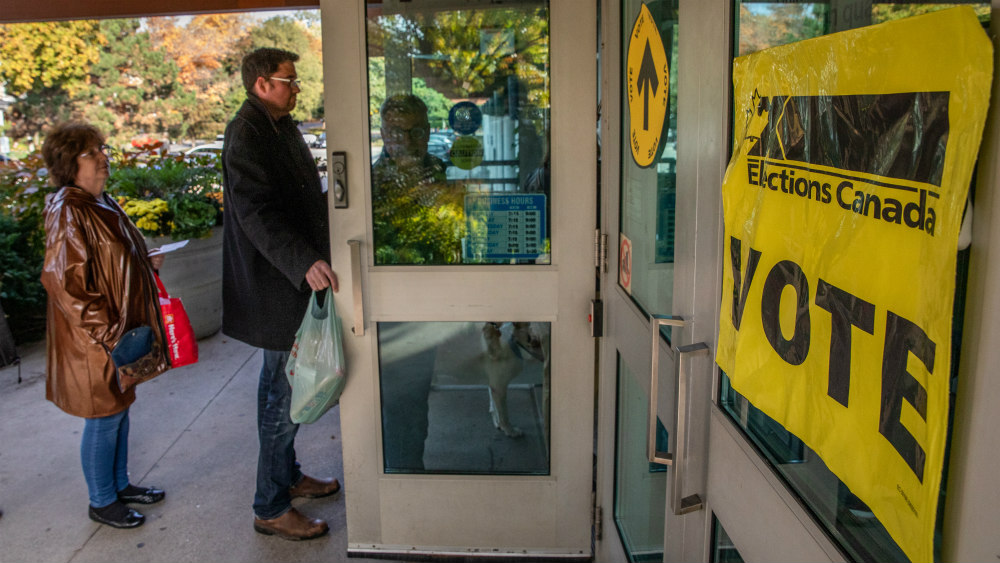
Political disagreements often end these days with the exclamation, “How could you possibly vote for that person!” We focus on the particular candidates, and as Christians we consider and dispute the wisdom, prudence, and morality of voting for a specific person. But what about voting itself: When is it good? When it is it bad? When does casting a ballot become an act of sin? We asked a range of Christian leaders across the country to consider the question and got back a range of answers.

Take responsibility

Voting for the right candidate for the wrong reasons is sin, just as voting for the wrong candidate for the right reasons is not a sin. Do we intend to further an evil agenda with our vote? Does our vote represent an indifference to the suffering and plight of others who will be hurt by the policies of that candidate? Do we vote and then just walk away, thinking that we have no other responsibility to love our neighbors in this regard? If we want to know if and when voting becomes a sin, we must take pains to examine the motivations of our hearts.

— Nathan White, pastor of Christ Reformed Baptist Church, Lookout Mountain, TN.

Christians must follow their conscience, as Romans 14 describes. That conscience should be informed by the Holy Spirit, Scripture, reason, and wise voices in the church. We have to accept that followers of Jesus vote differently as they seek to be faithful to him.

It is wrong, however, to vote for someone who isn’t a morally decent person, whose character falls below the minimum standard required to handle the responsibility of governing. And Christians must focus on those who are marginalized and oppressed in our society: the unborn, minorities, women, the poor, and others who suffer injustice.

There will always be tensions in voting our values. We need wisdom and grace to navigate that.

—Michael W. Austin, moral philosopher, Eastern Kentucky University.

Vote with love

Voting for someone is a sin when it is done out of misdirected love. We will all make wrong political decisions because both our knowledge and discernment are imperfect. But all our votes should be cast, however imperfectly, out of love for the coming kingdom of God. When our vote is cast out of warped love—for security, prosperity, national identity, or white supremacy—it is sinful.

This does not mean motivation trumps impact; it means the desires that motivate our political action change not only how we vote but what kind of flourishing we seek for our communities. The desires that animate our political participation are dangerous not only for the way they can inspire wrong political action but for the way they can corrupt our communities and our own souls. Misdirected love results in policies and people that harm our neighbors.

Kaitlyn Schiess, author of The Liturgy of Politics: Spiritual Formation for the Sake of Our Neighbor.

Consider what the Bible calls “sin”

I am uncomfortable calling any vote a “sin,” since the Bible never mentions voting. It does warn that “when the wicked rule, the people groan” (Prov. 29:2). So, if I were voting, I might consider first God’s concern for the people groaning. Scripture offers this instruction from beginning to end. The wisdom tradition tells us to “Open your mouth for the mute, for the rights of all who are destitute. Open your mouth, judge righteously, defend the rights of the poor and needy” (Prov. 31:8–9, ESV). And our King Jesus said that his rule is good news because it sets the oppressed free and proclaims justice for the poor. As we follow Jesus, that seems like it should be our priority.

—Jordan Kellicut, pastor of Oakland Drive Christian Church, Portage, MI.

The Bible is extraordinarily clear on these matters. I believe it is a sin to vote for someone who will not protect the value of life. Abortion is the watershed issue of our day, and if the church doesn’t stand against it, we will usher in further judgment from God. I also think it’s impossible for a Bible-believing Christian to vote for someone who stands against the nation of Israel. We’ve become so apathetic and lukewarm that we have become cowards. For far too long we have been told that the church must remain silent on the issues. Because we have done just that, our silence has become our surrender and the culture has now devastated this beautiful nation. It is time for God’s people to push back.

— Greg Locke, pastor of Global Vision Bible Church, Mount Juliet, TN.

In the Old Testament, there is a pattern in which God held leaders accountable. If we look at voting as God appointing kings, and sin as their breaking of God’s covenant, then to vote for a sinful king would count as a corrupt vote. God’s punishment of wayward (sinful) kings—which were many—always had a similar theme. The prophets would declare on God’s behalf, “You (king) have turned away from God; you have worshiped false idols, and you have neglected the poor.” These are the things that matter to God, and they should matter to all believers when voting.

—Harlan Redmond, student at Princeton Theological Seminary.

Beware of false idols

I am part of a heavenly kingdom, not an earthly one. A sure way to cement that distinction in my own mind and to free myself of cloying ties and compromise is to stay out of government. I have never voted for a US president, a state representative, or even a mayor.

I asked my dad, a wise Mennonite minister, “When is it a sin to vote?” He said, “It becomes a sin when people place their trust in government and human systems and lose their trust in God and his ability to control the affairs of men.” I couldn’t say it better than that. As Daniel told Nebuchadnezzar, “The Most High is ruler over human kingdoms and gives them to whomever he wishes” (Dan. 4:32, NET).

— Lucinda J. Kinsinger, author of Anything But Simple: My Life as a Mennonite.

The sin arises when we idolize a particular party or candidate to the extent that we deify our ideals and use them as a litmus test of love. In a democratic nation, it’s permissible (and welcomed) to have a wide variety of opinions, but when we elevate one candidate as the only “godly” choice, we can veer toward making anyone who differs into an enemy. The gospel is undergirded by the twin principles of loving God and loving others. If our politics makes brothers and sisters into enemies, we could fail to love, and thus fall into sin.

— Mary DeMuth, Christian author and host of the podcast Pray Every Day.

Vote with repentance

Because we do not vote in a vacuum and have inherited sinful structures in our collective life, voting needs to be accompanied by repentance.

Unless we repent of our shared guilt as Christians in structural injustices, we will continue to turn a blind eye to America’s church-sanctioned sins of racism, xenophobia, homophobia, misogyny, and other iniquities. There is no doubt Christians in every generation have presented dissenting critique against the sins of their age. But the church has never been truly free of worldly entanglements. Exercising our vote to clarify, repair, and seek the common good should be our primary focus, rather than pursuing what is personally beneficial.

Voting not marked by repentance of these sins is doomed to perpetuate injustice and is therefore sinful.

— Peter Choi, director of academic programs at Newbigin House of Studies and pastor at City Church San Francisco.

News

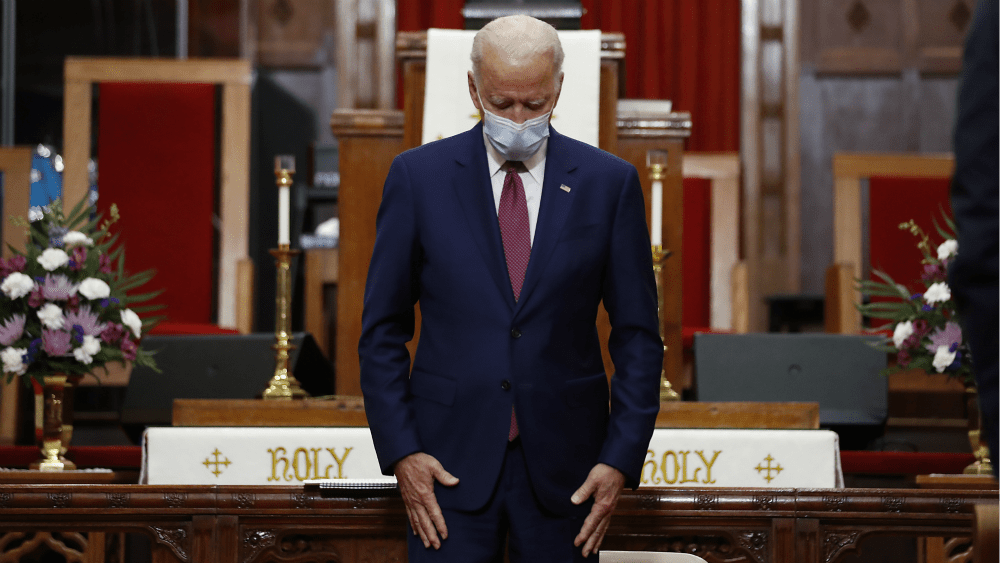
Joe Biden Campaigns on Faith

Outreach may not bring white evangelicals and Catholics together, but hopeful Democrats are emphasizing the candidate’s religious commitments.

Christianity Today August 17, 2020
AP Photo/Andrew Harnik

Going into the 2020 Democratic National Convention, party officials released a 60-second digital ad promoting the presumptive nominee’s Catholic faith. The ad shows former Vice President Joe Biden making Pope Francis laugh during a meeting in St. Peter’s Basilica and speaking with a group of smiling nuns on a street in Rome. In a voice over, Biden talks about the importance of his Catholic faith and how, for him, the nuns epitomized the church’s teaching that “we are our brothers’ keeper,” a biblical idea that shapes his liberal politics.

The Democratic Convention tweeted the video to its 68,000 followers, saying, “This is the kind of moral conviction we need in the president of the United States.”

It will not be the last time the Democrats spotlight Biden’s lifelong Catholicism. A political action committee announced last week it will spend $50,000 on ads highlighting religious reasons to vote for Biden and the convention this week will feature a nun and a Jesuit priest in high-profile speaking spots.

Experts on the historically complicated relationship between American Catholics and evangelicals say this emphasis—primarily aimed at Catholic and mainline Protestant voters—may not help Biden win over white evangelicals, a core part of President Donald Trump’s base. But it also won’t hurt.

“He is viewed as having an authentic faith,” said Richard Mouw, former president of Fuller Theological Seminary and professor of faith and public life. “He may not be the conservative Catholic that a lot of evangelicals would like him to be, but when he talks about his faith, it rings true.”

Mouw was one of the signers of the historic ecumenical document “Evangelicals and Catholics Together,” along with evangelical leaders Chuck Colson, J.I. Packer, and Bill Bright. According to Mouw, the 1994 statement was partly the result of high-level theological discussions about doctrines such as justification by faith, partly the result of political alliances over issues such as abortion, and partly the result of lay evangelicals responding to the heartfelt faith of their Catholic neighbors and co-workers.

Evangelicals might have a similar response to Biden’s religious commitments, Mouw said.

“Most evangelicals didn’t care about the Catholic-Lutheran dialogue on justification. They said I know a Catholic at work and he loves the Lord,” he explained. “People believe Biden’s faith is real. He has a pastoral tone. … A lot of evangelicals who support Trump do worry about his mean-spiritedness and the polarization and we’ve been missing that pastoral tone.”

Mouw told Christianity Today he plans to vote for Biden, despite some qualms about the Democratic Party’s positions on abortion and religious liberty.

These two issues will be the sticking point for many white evangelicals. When it comes to religious outreach, conservative critics of the Democratic candidate will likely argue that Biden is not Catholic enough, according to Baylor University historian Barry Hankins, who has written about evangelical opposition to the first Catholic candidate from a major party, Democrat Al Smith.

In 1928, Smith said he didn’t believe Catholic teaching (at the time) that pluralism and democracy were inherently anti-Christian. He accepted the American set up that separates church and state—and thought it was a good thing. Many conservative Protestants, looking at authoritarian Catholic regimes in Europe, didn’t believe him. Biden, in some ways, faces the opposite problem. He disagrees with church teaching on some issues and evangelicals do believe him.

“He’s more serious about his Catholicism than a lot of Catholics are, but he still found his way to the pro-choice position on abortion,” Hankins said. “A lot of Catholic Democrats seem to be in this tension. The autonomy of the individual is kind of central to what their politics are all about and that’s in tension with the social teachings of the Catholic Church.”

Hankins added, though, that a major-party politician doesn’t need to resolve the difference between the ideals of American freedom and Christian freedom to win the election in November. He said that while Biden’s liberal Catholicism may not win many evangelical votes, even a few percentage points could matter in a close election.

White evangelicals may also choose not to vote, said Shaun Casey, former director of the US State Department’s Office of Religion and Global Affairs under Secretary John Kerry, and the author of a book about how John F. Kennedy became the first Catholic president despite Protestant opposition.

“There is a growing dissatisfaction among evangelicals with Trump,” Casey said. “They know Trump’s weaknesses: His immorality, his incoherence, his rage and incompetence. But I don’t see it leading them into the Democratic Party.”

Casey said Biden is smart to talk about his Catholicism in the campaign, regardless. It’s a point of personal connection with many voters. And when Biden talks about how his faith formed his character, sustained him in hard times, and taught him kindness and empathy, many will see a stark contrast with Trump.

Biden has learned from previous Catholic candidates, Casey said. He knows to avoid the open conflict with conservative Catholic bishops that got Kerry into trouble in 2004 and, simultaneously, not to cede the subject of religion to the Republicans.

Biden will also use his faith to emphasize his inclusive vision of America, as Kennedy did when Protestant leaders—including evangelist Billy Graham, Christianity Today editor L. Nelson Bell, and Trump’s childhood pastor Norman Vincent Peale—questioned whether a Catholic could faithfully uphold the Constitution. The Kennedy campaign found that many Americans were offended by the narrow view of who was really an American, and would vote for inclusivity and pluralism.

Biden’s campaign will work to show that the candidate cares about all Americans—even white evangelicals.

“We don’t write anybody off in this campaign,” said Joshua Dickson, Biden’s national faith engagement director. “I know how diverse evangelicals are in terms of their backgrounds, in terms of how they look at their faith and how they practice, and in terms of the issues they care about."

Dickson has been inviting evangelicals, along with other groups of religious leaders, to listening sessions, where they’re asked their opinions about the big issues in the campaign and the stakes of the upcoming election. Though there are differences, the campaign sees common commitments too.

“The core values are the connection point: loving your neighbor, fighting for justice, and upholding the inherent human dignity of all,” said Dickson, who is an evangelical himself.

Richard Mouw has been invited to two sessions and spoken to multiple evangelical leaders who have met with the Democrats. He will join a listening session later this week. Mouw plans to bring up the party’s positions on abortion and religious liberty.

“There are real issues,” he said. “It’s very important that Biden send out a signal that he cares about communities of faith and people of conviction—even convictions that are different from his own.”

Gestures might not be enough to bring evangelicals and a Catholic candidate together, Mouw said, but they won’t hurt.

News

COVID-19 Concerns Accelerate Homeschool Movement’s Growth

Continues to trend more secular, as safety and flexibility are given top priority.

Illustration by Rick Szuecs / Source Image: RyanJLane / Getty

Parents across the nation abruptly became de facto home educators this spring, when the coronavirus pandemic disrupted school-as-usual. Buildings were shuttered, courses were moved online, and children were sent home with extensive lesson plans and an assignment for their parents: emergency homeschooling.

Heading into a new school year, with districts adopting new plans for in-person, hybrid, and online education, many families are considering homeschooling on a more permanent basis. A national poll conducted by RealClear Opinion Research found 40 percent of families are more likely to homeschool because of their experiences during the pandemic. At the National Home School Association (NHSA), the phone hasn’t stopped ringing since June, and the email inbox has been hitting its capacity daily.

“It has just been explosive growth,” said NHSA executive director J. Allen Weston. Though the NHSA includes secular and religious families, it partnered with the popular evangelical company Abeka for a summer webinar catering to first-time homeschoolers. The association projected it would reach one million paying members by September.

Homeschooling numbers were rising before 2020. The percentage of school-age children taught at home in the United States rose from 1.6 in 1999 to 3.3 in 2016, the most recent numbers available from the US Department of Education. Much of the growth has come from “urban secular families . . . who want more freedom and flexibility,” according to Kerry McDonald, senior education fellow at the Foundation for Economic Education. While evangelicals remain a significant part of the homeschool landscape, today only 16 percent say the most important reason to homeschool is religious instruction, and only 5 percent say moral instruction. The leading reason to homeschool, according to parents, was school safety and “environment”—a concern that will likely increase as the coronavirus rolls on.

NHSA and other homeschool groups see an almost unprecedented opportunity for outreach. When it became clear that the spread of the coronavirus would impact schooling, SPED Homeschool, a nonprofit oriented toward families with special-education students, rebranded many of its resources for “pandemic homeschoolers.”

“We were focused on the ‘What do I do today?’ ” said SPED CEO Peggy Ployhar. “We can think about what we don’t have, but what do you have? And how can you take advantage of that during this time?”

Now homeschooling organizations are trying to pivot from helping people in an emergency to helping them make home education more sustainable. The new wave of parents hasn’t been thinking for very long about homeschooling and often doesn’t know what it takes.

“It surprises a lot of parents to learn they really haven’t been homeschooling, at least by our definition,” said Weston. “Most people have total misconceptions about what homeschooling is.”

For people tired of uncertainty and disruption, homeschooling can be really appealing. “Oddly enough, homeschooling has been the most stable option,” said Shannon Truss, executive director of WEB Tutorial, a homeschool co-op in Nashville that normally meets in a Methodist church but does not require families to sign a statement of faith.

Truss said the pandemic has affected homeschoolers too. Many are part of co-ops and make homeschooling a very social activity. Quarantines and shutdowns interrupted their regular gatherings and the community that comes from meeting in person.

WEB homeschoolers will miss that community this fall, too, but the group’s model emphasizes students’ time management while providing online tutorials. The hybrid model made for a gentler transition in the spring and makes homeschooling more stable than the alternatives. Truss says she can reassure new parents that they will “find a way to do this,” because WEB is small and flexible.

In some ways, though, the pandemic didn’t change things. It just emphasized existing realities and accelerated current trends.

Joyce Burges, cofounder of National Black Home Educators (NBHE), is a longtime homeschooler and also a member of her local school board. She thinks the whole education landscape was already shifting toward an increase in distance education and an emphasis on flexibility. The shutdowns just revealed what many already knew.

“With or without a pandemic,” Burges said, “families needed options.”

She sees similar trends in curriculum. As more different types of families consider homeschooling, the calls for diverse resources increase, according to Burges.

Homeschool organizations couldn’t have anticipated the national interest coming from the challenges of the pandemic. But they say they’re prepared to meet the opportunity and help parents become real homeschoolers.

Advice for first-time homeschoolers from the pros:

Relax. There are a million things to worry about, but you can take a deep breath. “We see parents of all education levels, including high school dropouts, doing incredible things with their children, and the resources that exist online now fill in all the gaps that might exist,” said J. Allen Weston.

Embrace the opportunity. Shannon Truss calls homeschooling “an opportunity for your child to experience learning differently.” She recommends asking students what they’re interested in and supporting their exploration.

Teach what you know, learn as you go. Teaching at home is about “implementing what you can and learning the rest as you go,” said Angela Valentine, a Google for Education certified trainer who works with NBHE. Lean on your strengths and outsource weak spots.

Be flexible. It isn’t often that families are given the space to reexamine their educational options. Finding the right fit will be a process, and new home- schoolers should be ready to make adjustments.

“There are as many different ways to do homeschooling as there are homeschooling families,” said Truss.

Ask for help. It’s okay if you don’t know what you’re doing. Find other educators in your community or extended network and ask for their advice, said Joyce Burges. Learn from their experience—and especially their mistakes. Valentine says reaching out to other parents navigating distance learning for the first time is an important support resource. “We used to say, ‘It takes a village,’ ” Valentine said. “It’s the same thing now.”

Paula Ramirez is a reporter and digital producer in Nashville.

Have something to add? See something we missed? Share your feedback here.

News

Satellite Ministries Cross Boundaries. That’s Their Promise and Peril.

From democratic Israel to theocratic Iran, Christian TV defends its right to exist.

Illustration by Nicole Xu

GOD TV celebrated too soon.

The 25-year-old Christian broadcasting corporation was granted a license for a new Hebrew-language channel in Israel, and the CEO wanted to praise the Lord.

“God has supernaturally opened the door for us to take the gospel of Jesus into the homes and lives and hearts of his Jewish people,” said CEO Ward Simpson, former director of the Brownsville Revival School of Ministry, in a video posted online. “They’ll watch secretly. They’ll watch quietly. . . . God is restoring his people. God is removing the blindness from their eyes.”

It was a public relations disaster. An outcry from Orthodox Jews and anti-missionary groups led Israel’s Cable and Satellite Broadcasting Council to reconsider GOD TV’s seven-year license. Council chairman Asher Biton claimed the company had misrepresented the channel as something that offered content for Christians when it was really programming designed to convert Jews.

GOD TV scrambled to take down Simpson’s video and clarify its purpose. GOD TV would not try to convert Jews to Christianity. But it would preach Jesus as the Jewish Messiah, consistent with the beliefs of Israel’s approximately 20,000 Messianic Jews.

It wasn’t enough. Eight weeks after GOD TV was awarded the license, the broadcasting council revoked it. The new TV channel, where people would talk about Jesus in Hebrew, went dark.

American evangelicals have been broadcasting the name of Jesus into Israel since 1977, after Trinity Broadcasting Network (TBN) founder Paul Crouch had a vision that Revelation 14:6–7 foretold the new communications technology: “Then I saw another angel flying in midair, and he had the eternal gospel to proclaim to those who live on the earth . . . . He said in a loud voice, ‘Fear God and give him glory, because the hour of his judgment has come.’ ”

As he recalled in his memoir, Crouch was alone in his house when he read those verses and heard God speak the word “satellite.”

Satellite ministries expanded throughout the Middle East in 1995 when Christian publisher Terence Ascott realized how many Arabs watched TV. He convinced 20 Christian groups to join together to launch SAT-7. The organization started with two hours of Arabic programming and now broadcasts on four channels 24 hours a day in Arabic, Turkish, Dari, and Farsi.

TBN, SAT-7, and the other satellite ministries that have followed them into orbit serve the diverse Christians living in the region. In the complicated geopolitics of the Middle East, Christians are often minorities and look to the TV for spiritual support.

The satellite ministries also enable non-Christians to hear the gospel in the privacy of their own homes. In places where proselytization is regulated and conversion can bring severe consequences, TV can be the only way someone hears the Christian understanding of the life, death, and resurrection of Jesus.

As the satellites beam their Christian programming to waiting rooftop dishes, they cross boundaries—geographical, political, cultural, and legal. Then the satellite ministries sometimes find themselves, like GOD TV, defending their right to exist.

In Israel, this is not hard, according to Ron Cantor, regional director for GOD TV. “This is free, democratic Israel, and I expect that the government will back our freedom of speech and religion,” Cantor said. “Thank God this is not Iran—or I would already be in jail.”

He has a point. Iran allows freedom of worship for the more than 100,000 Armenian and Assyrian Christians, but only in their native languages, not Farsi, the language spoken by 800 times that number of Iranians.

Today, however, four Farsi-language Christian satellite networks broadcast into Iran and reach a growing number of converts from Islam. Hundreds have been arrested on national security charges labeling them “Zionist Christians.”

“The accusation of Zionist Christianity is just an excuse to persecute us,” said Hormoz Shariat, president of Iran Alive Ministries, which runs Shabakeh 7, a Farsi-language Christian channel. “As Christians, we have to love all nations.”

The message seems to be popular. Though Turkish soap operas and BBC News are the most-watched TV programming in the country, nearly 1 in 12 Iranians listed a Christian channel as their favorite in a 2017 survey.

The Iranian government estimates that 60 percent of the population has a satellite dish on their roof, even though it is illegal. Outside estimates say between 300,000 and 1 million Iranians have converted to Christianity in recent years.

Mike Ansari, president of Heart4Iran Ministries, said programming that portrays Christian Arabs and Messianic Jews talking about their love for Jesus, Israel, and Muslims can impact Iranian viewers. Most have never spoken to a Jew nor seen a Christian who looks and talks like them. The goal of Heart4Iran Ministries’ Mohabat TV, however, is not to promote Israel, but to share the gospel.

“We want Iranians to see there is a huge community of believers leading the Christian movement,” Ansari said. “Especially those from a Muslim background.”

The channel frequently airs testimonies of converts and takes phone calls from inquirers. Ninety percent of viewers are believed to be Muslim.

Once those phone calls come in, though, ministry gets very complicated. If a caller requests to meet a Christian leader in Iran, Heart4Iran Ministries will first arrange to leave a Bible in a designated location. Following up, they ask the caller the color of the tract left inside.

About 20 percent of inquiries are from intelligence agents, Ansari said. Real inquirers face serious risks. In July, a dozen Christians were arrested in Tehran after an informant who had infiltrated their house church exposed them to the authorities.

Just as Shabakeh 7 and Mohabat TV became a problem for authorities because they broadcast in Farsi, GOD TV was seen as a problem because it broadcast in Hebrew. English-language Christian programming is not controversial, since it is aimed at a Western audience.

If GOD TV gets the chance to appeal its case in court, there is reason to believe it would be successful. In 2006, Daystar won a case allowing it to re-launch. And Israel has a strong, national commitment to civil liberties.

“There may be many Israelis who stand against the channel because of its content,” said Dan Sered, a leader of Jews for Jesus in Tel Aviv, “but there are many more who would stand for its right to exist.”

But whether they come into conflict with media regulators in democratic Israel or secret police in theocratic Iran, satellite ministries will keep crossing boundaries in the Middle East. They will keep beaming the name of Jesus to waiting, upturned dishes. And they will keep speaking the truth of the gospel.

“Over time, there is great power in the media to bring change to people’s thinking,” Shariat said. “But the Enemy is very alert about it.”

Jayson Casper is Middle East correspondent for Christianity Today. Additional reporting by Jeremy Weber.

Have something to add? See something we missed? Share your feedback here.

Correction: The print version of this article incorrectly stated that Farsi was spoken by eight times more Iranians; the correct multiple is 800. CT regrets the error.

Apple PodcastsDown ArrowDown ArrowDown Arrowarrow_left_altLeft ArrowLeft ArrowRight ArrowRight ArrowRight Arrowarrow_up_altUp ArrowUp ArrowAvailable at Amazoncaret-downCloseCloseEmailEmailExpandExpandExternalExternalFacebookfacebook-squareGiftGiftGooglegoogleGoogle KeephamburgerInstagraminstagram-squareLinkLinklinkedin-squareListenListenListenChristianity TodayCT Creative Studio Logologo_orgMegaphoneMenuMenupausePinterestPlayPlayPocketPodcastRSSRSSSaveSaveSaveSearchSearchsearchSpotifyStitcherTelegramTable of ContentsTable of Contentstwitter-squareWhatsAppXYouTubeYouTube