News

How Two California Megachurches Kept Worshiping

John MacArthur takes a stand against regulations, while Greg Laurie finds creative ways to comply.

Christianity Today August 3, 2020
Edits by Mallory Rentsch / Source Image: Courtesy of Grace Community Church / Harvest Christian Fellowship Photo by Nicole Shanks

Two California churches were so eager to meet last weekend that when their services began, worshipers erupted in applause.

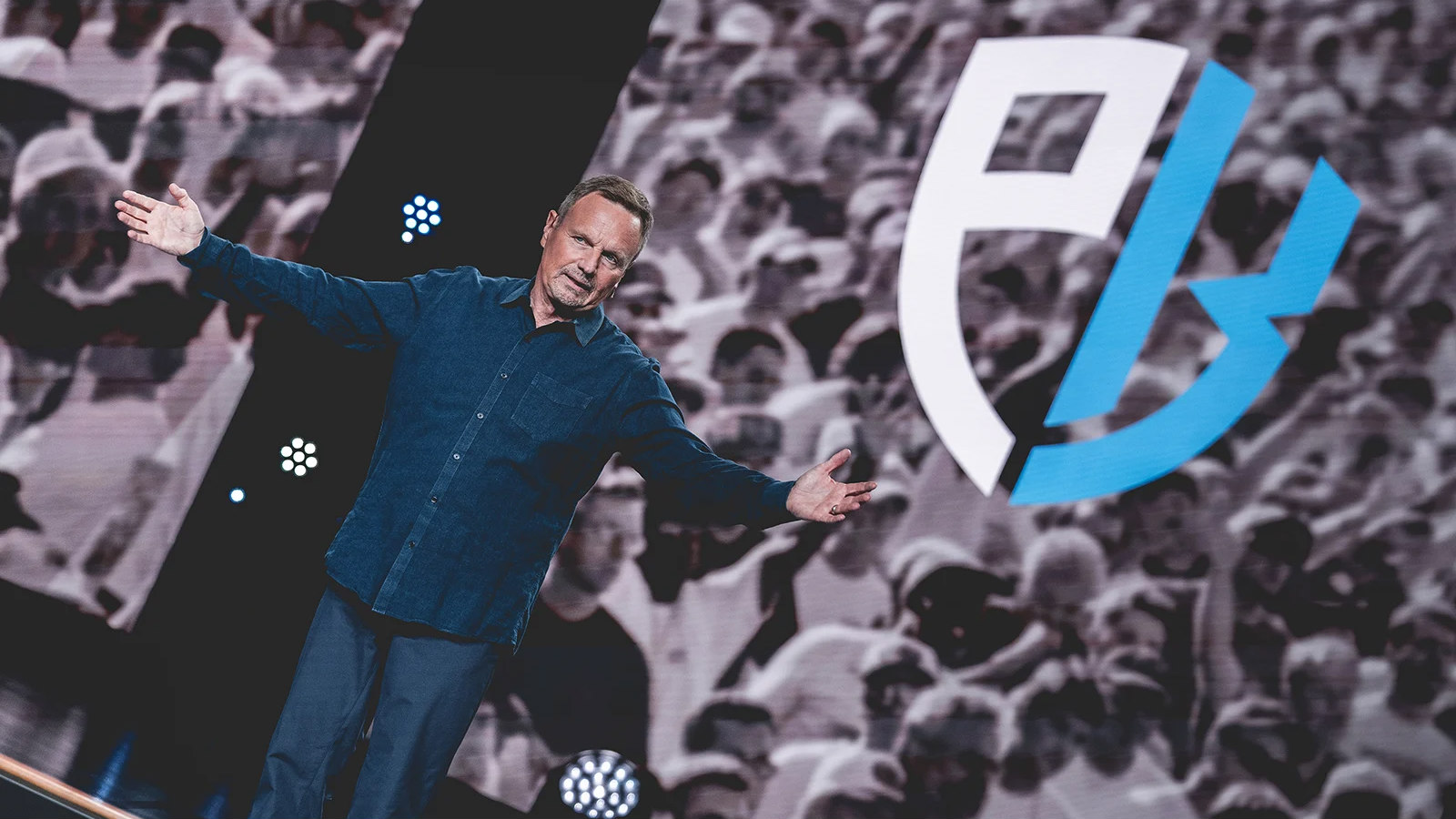
In Sun Valley, congregants filling Grace Community Church’s 3,500-seat sanctuary rose and cheered, some documenting the moment with their iPhones, when pastor John MacArthur opened the second week in a row of in-person services.

MacArthur—who has taken an outspoken stand against churches yielding to government regulations on worship gatherings—said this Sunday was “a very special day for a more abundant joy” since the congregation was together in person once again.

The Grace to You preacher received so much attention for his stance—from the elders’ viral post on the church’s website to a segment on Tucker Carlson’s Fox News program—that the church added an additional 1,000 chairs outdoors yesterday. Prior to the pandemic, attendance at the church’s three services averaged around 8,000 combined. On Sunday, most attendees were not wearing masks, social distancing, or avoiding contact, as MacArthur told Carlson, they “didn’t buy the narrative.”

The congregation sang “We Gather Together,” which MacArthur pointed out was written when Dutch Protestants met for church despite being forbidden by their king. MacArthur preached on Jesus’ role as divider and judge, saying that in recent months, “I’ve never heard so many people talking about death on such a superficial level. You’re talking about eternity, eternal hell or eternal heaven.”

An hour away in Riverside, California, worshippers at Harvest Christian Fellowship were greeted with cheeky pink and purple signs that said, “Smile with your eyes (and wear a mask)” and “Just leave room for your Bible—and another 5½ feet.” It was the third Sunday that Harvest met in a white tent half the size of a football field to comply with state orders restricting indoor worship. After the first week of meeting under the tent, pastor Greg Laurie said, “Our church loved it,” so Harvest added a second morning service.

Yesterday, volunteers scanned attendees’ foreheads with infrared thermometers to take their temperature before they entered the tent, where rows of six chairs were spaced about six feet apart. Masks were required—though, as in many places, not all wore them properly—and signs directed eager worshipers to wave at rather than touch each other.

Laurie, a longtime Calvary Chapel leader whose 15,000-member congregation joined the Southern Baptist Convention a few years ago, discussed in his sermon how people are prone to respond to the pandemic, the economy, and social unrest with anger and frustration. He referenced the debate over masks as one divisive example. He told the vocal crowd, “During this pandemic, God wants to use you. People are angry and scared, so you need to look for opportunities to share the love of Jesus wherever you go.”

Nicole Shanks / CT

MacArthur and Laurie have each led their respective congregations for around 50 years, as they’ve grown into two of California’s biggest megachurches and their ministries gained national followings. While Grace and Harvest services have always looked very different—suits and organ music versus Hawaiian shirts and praise bands—the contrast is heightened as both find ways to worship in person during the coronavirus pandemic.

For many Christians, how churches meet during the pandemic isn’t merely a matter of style or structure. These decisions reflect their theology, with leaders explicitly calling out their priorities as a church and what they believe God would have them do in response to the current circumstances.

California reissued shutdown directives last month as the virus rebounded, ordering places of worship to “discontinue indoor singing and chanting activities and limit indoor attendance to 25 percent of building capacity or a maximum of 100 attendees, whichever is lower.” As happened in Nevada, some churches sued, saying the ban is unconstitutional.

Leaders at Grace opposed California’s stay-at-home order as it extended through the spring but agreed to “submit to the sovereign purposes of God” and stay online. But a few weeks ago, under the new regulations and after 21 weeks of canceling typical services, their response changed. MacArthur and Grace elders posted a 2,200-word “Biblical Case for the Church’s Duty to Remain Open.”

In a week, 21,000 people signed onto the statement, agreeing that “the honor that we rightly owe our earthly governors and magistrates (Rom. 13:7) does not include compliance when such officials attempt to subvert sound doctrine, corrupt biblical morality, exercise ecclesiastical authority, or supplant Christ as head of the church in any other way.”

Jonathan Leeman, a Southern Baptist who has written multiple books about faith and politics, raised concerns in a post for 9Marks that Grace’s statement doesn’t leave much room for faithful Christian leaders to come to other conclusions for their own churches. “Say, ‘We’re free to do this’ all you want,” Leeman said. “But take great care before you say, ‘And you have to do this too.’ Don’t sacrifice our spiritual freedom for your political freedom.”
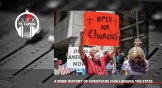
MacArthur, who is 81 and celebrated 50 years of ministry last year, worries that Americans’ level of concern for their physical health during COVID-19 has become a detriment to their spiritual health—and the latter determines their eternal fate. Barna Group found that 1 in 3 practicing Christians stopped going to church in any form during the pandemic.

He has voiced his frustration with how few big churches are continuing to meet in spite of state regulations or coronavirus risks. “Large churches are shutting down until they say January,” he said in his update Friday. “I don’t have any way to understand that than they don’t know what a church is.”

Andy Stanley’s North Point Community Church, with 38,000 attendees in the Atlanta area, was the first major megachurch to delay Sunday worship gatherings in its building until 2021, though the church will still gather in smaller, in-person groups that can practice social distancing. J. D. Greear’s 12,000-member Summit Church in North Carolina has transitioned to a house church model for the remainder of the year. The proportion of pastors who don’t anticipate returning to normal in-person gatherings in 2020 jumped from 5 percent at the start of July to 12 percent last week, according to Barna.

During Sunday’s sermon, MacArthur suggested that churches that close are not true churches. “There has never been a time when the world didn’t need the message of the true church,” he said. “I have to say, ‘true church.’ I hate to think of that, but there’s so many false forms of the church. Let them shut down.”

The congregation laughed then cheered.

Some critics have questioned why Grace Church didn’t meet outside or adjust its indoor gatherings to meet health department guidelines rather than resort to a form of civil disobedience. Others brought up the risk of infection, since experts suggest church contexts, particularly with large crowds not practicing social distancing, are particularly susceptible to and responsible for several recent outbreaks.

“Given the flare-ups in some places, the churches that reopened have been following in many cases some rigid standards, but, at the same time, is that enough?” LifeWay Research executive director Scott McConnell told the Religion News Service (RNS), noting a recent drop in reopenings among California churches as cases spike. “Those questions I think will increasingly be asked.”

Phil Johnson, executive director of MacArthur’s Grace to You ministry, said in a tweet that moving gatherings outdoors to comply with state regulations wasn’t an option for Grace due to the size of the congregation and the California heat. He also said, “you don’t have to shut down the whole church” just because people might catch an illness.

Laurie, whose church borrowed a giant tent from evangelist Nick Vujicic for its recent worship setup, sees the outdoor setting as “our newest response to keeping people safe in California.”

“We don’t have to be in the sun, and we were easily able to sit in distanced seating groups and still feel like one big happy family,” Laurie told CT. Signs at the service acknowledged the change with an upbeat attitude: “Same Church. Fresh Message. New Experience.”

Nicole Shanks / CT

Laurie, 67, has seen the bright side of the pandemic adjustments from the start. He celebrated “spiritual awakening” that took place online as more viewers accessed his sermon livestreams. One of those was President Donald Trump, and Harvest received an additional bump in viewers as Trump tweeted that he watched the Palm Sunday service. (Laurie belongs to the president’s evangelical advisory board.) To date, Harvest has received 80,000 online professions of faith and has sent Bibles to a quarter of the new believers that joined online.

Laurie shares concerns about closed churches with fellow evangelicals. He said he believes the local church cannot be replaced by online worship and he fears government overreach in regulating worship during the pandemic. However, he has also spoken out against downplaying the impact of the virus.

“I’ll be honest with you,” Laurie told the Los Angeles Times in April. “One of the things that kind of irritates me is the way some people are not really responding appropriately to the very real threat of the coronavirus. … Sometimes people are just ignoring it as though this has not been asked of us, and I think we want to be considerate of others.”

Fellow Southern California pastors have suggested that whether leaders see the coronavirus as a continued threat often determines the level of precautions they will take around meeting. The outlook has become increasingly politicized, with Trump supporters half as likely as detractors to say they are concerned about rates of infection and death from the virus.

In the spring, Laurie tried to convince pastors to shut down in-person services as the coronavirus spread. “I know you may see this as an act of great faith, but I think in many ways you’re testing the Lord more than you’re trusting the Lord,” he said in a Wall Street Journal article.

The Harvest pastor and revivalist also remains sensitive to how the coronavirus is turning into another issue stirring division and disagreement in the body of Christ. “When Christians love one another, they are a powerful witness. But when they are angry at one another, they are a poor witness,” he said in Sunday’s message. “What we need right now is less outrage and more outreach.”

In a LifeWay Research survey released last week, more than a quarter of pastors (27%) said maintaining unity amid conflicts over reopening was one of the biggest pressures they faced. They worried about the politicization of mask wearing and social distancing and how different members of their congregation regarded each other as a result.

MacArthur on Friday acknowledged there are church members who might not feel comfortable at indoor gatherings or might want to wear masks and social distance. “We love you just the same in doing whatever the things are you feel safer in doing,” MacArthur said, noting that masks and water would be provided in the new outdoor seating, where the livestream was projected outside a seminary building.

For the most part, Christians who fear that their right to worship freely is being taken away believe this is not the time for winsomeness. MacArthur stands by the church’s decision to reopen enough that he’s willing to risk the legal ramifications or pursue a legal battle, he said.

The Los Angeles County Public Health Department is looking into Grace Church for not complying with its restrictions on indoor worship and singing. “We are investigating reports that services were held indoors,” the department said in a statement to CT on Monday.

“We remind all houses of worship, consistent with other business sectors that also had to close indoor operations, that services must be delivered outdoors or virtually only at this time due to the current levels of COVID-19 spread. If the levels of spread were much better and control was sustained, we could return to reopening limited indoor operations for these and potentially reopen additional business sectors.

Books

N. T. Wright: The Pandemic Should Make Us Humble—and Relentlessly Practical

We can’t know for sure why it’s happening or how to stop it. But Scripture calls us to grieve with God’s Spirit and get to work serving others.

Christianity Today August 3, 2020
Illustration by Rick Szuecs / Source images: RealPeopleGroup / Getty / Andre Ouellet / Unsplash / Cynoclub / Envato

Between around-the-clock news reports, interviews with public health experts, and pundits hashing out the pros and cons of different disease-fighting strategies, we’re hardly at a loss for information and perspectives on COVID-19. Yet there are still many questions we struggle to answer with complete confidence: Why has this happened? What should we do in response? And where is God in all of this? In God and the Pandemic: A Christian Reflection on the Coronavirus and Its Aftermath, theologian and author N. T. Wright shows how Scripture speaks to our confusion and uncertainty. Andy Bannister, director of the Solas Centre for Public Christianity in Scotland, spoke with Wright about his book.

God and the Pandemic: A Christian Reflection on the Coronavirus and Its Aftermath

God and the Pandemic: A Christian Reflection on the Coronavirus and Its Aftermath

HarperCollins Children's Books

96 pages

$5.92

Many Christians have already written books about the pandemic—everyone from John Lennox to John Piper, and even people with names other than John. What inspired you to contribute your own book?

Back in March, Time magazine asked me if I would do an article on the pandemic. It got a rather provocative headline: “Christianity Offers No Answers About the Coronavirus. It’s Not Supposed To.” I wanted to say that this drives us toward the Romans 8 position, where the Spirit groans within us with groans beyond words (v. 26)—this is an extraordinary thing for Paul to say. And what it says to me is that we are supposed to be humble in the face of this, not to think we should know all the answers.

After the article appeared, I began to get feedback. People emailed me to ask, “How can you say that?” And I was informed about what people were saying on Twitter (I never look at Twitter myself). All the while, I kept hearing people use Scripture in a way that seemed less than fully adequate. The book is an attempt to explore how Scripture, in its entire narrative and flow, really speaks to the circumstances we’re experiencing today.

When COVID-19 hit, it seemed many of us were taken by surprise. Do you think the Western church has been living with comfort and security for so long that we have forgotten how to deal with darkness, suffering, and crisis?

Absolutely! I was talking to a senior church leader a few weeks ago about this, and he remarked: “You know, Tom, we don’t do lament very well. We’re not used to it. But nor do we celebration terribly well either. What we mostly seem to do is complacency.” And I think he’s right. I keep hearing Christians asking, “Could this be the end of the world?” And I want to remind them that things like this have happened again and again. For example, in 1917–18, there was the great Spanish flu pandemic, during which churches in some parts of the world were shut for a year. We forget that we have been here before.

Furthermore, for my baby boomer generation, which grew up after World War II, we haven’t had a war on our territory. We haven’t had a pandemic. Sure, we’ve had a couple of economic crises, but we’ve managed to weather those, more or less. So we’ve just muddled along and carried on as though nothing too bad is going to happen. We forget about history.

I was fascinated when I recently reread the letters of Martin Luther, one of which I quote in the book. Luther had to cope with this kind of stuff every few years, either for himself or for people in neighboring towns who cried out, ”Help! We’ve got a great epidemic. People are dying. What do we do?“ Luther talks about obeying the rules concerning taking medicine, helping practically where you can, and not getting in the way and giving the disease to others if you might be infectious. He was very pragmatic, effectively saying, This is how we cope. Let’s not make a big theological fuss about it.

Your book draws on plenty of Old Testament themes, especially from the Psalms and Job. Concerning the latter, you argue that “part of the point of Job is precisely its unresolved character.” Do you think Christians today seem to struggle with ambiguity because they lack a firmer grounding in the Old Testament?

I think the New Testament has a place for ambiguity as well. There are many places in the New Testament which end with a kind of dot-dot-dot, question mark, because that’s called living by faith.

Overall, I think part of our problem is the rationalism of the last two or three hundred years in the Western world, which has soaked into the church because the rationalist critics of Christianity have said things like: “Aha, look, modern science shows us that Christianity is false!” In response, rationalist Christians have said, “No, let’s show how it is all completely rational!” That can lead to us wanting to have the answer to everything, and so we want to say things like: “Because God is sovereign, he must either have done this deliberately or at least permitted it deliberately.” We think that we should be able to see what he’s up to. But I really don’t think we are given that kind of access.

One of my favorite moments in the New Testament is in Paul’s letter to Philemon about the slave Onesimus. He writes, ‘Perhaps the reason he was separated from you for a little while was that you might have him back forever” (1:15). In other words, Paul thinks that perhaps he might be able to see what God was up to in this situation. But he’s not going to say so definitively.

There’s a humility here that we need. Now that could spill over backwards into an attitude of “We know nothing, so who cares?” That wouldn’t be wise either, because we are given guidelines. But knowing all the details is, as the saying goes, above our pay grade. It’s God’s job. Our job, when God lets us know what we have to do in this particular situation, is to get on with it.

When you talk about the Gospels, you emphasize the example of Jesus standing at the tomb of Lazarus, weeping. What might you say to somebody who isn’t a Christian, who is wrestling with the problem of suffering, and who asks: “What good is a weeping God? I can weep. Anybody can weep. What we need is action; we need something done! How does Jesus weeping help?”

There’s plenty of action in the story, and the action grows out of the tears. As is often the case, in fact, tears in the Gospels sometimes are the crucial element. What they show is that the God who made the world, who became human as Jesus of Nazareth, is not sitting upstairs somewhere, looking down and saying, “Okay, I’ll sort out your mess.” Rather, he’s the God who comes and gets his hands dirty and gets his hands pierced in order to be where we are and to rescue us from there. It’s profoundly comforting to know that when I am grieving, as Paul says in Romans 8, Jesus is grieving with me, and the Holy Spirit is grieving within me. And this is one of the things that marks out the Christian faith as distinct from pretty well any other worldview that I know.

What does the rest of New Testament—and in particular the role of the Holy Spirit—have to teach us about our response to the pandemic?

Romans 8, which I just mentioned, is one of the greatest passages in the whole Bible. When I was working as a bishop, if I was interviewing people for parish jobs, I would sometimes ask: “What’s your desert-island Bible text?” And to make it harder, I would add, “You’ve already got John 20 and Romans 8, so don’t go there. Those are too obvious.”

Romans 8 is full of glory. It’s full of salvation. It’s full of the work of the Spirit. It’s easy to get carried away, however, and imagine that once we’re through the difficult parts of Romans 7, we’re just sailing on a high all the way to Paul’s affirmation that nothing can separate us from the love of God (8:38–39). But you still have to go through the dark tunnel of Romans 8:18–30, especially verses 26 and 27, which speak of the Spirit interceding for us in our weakness.

When the world is in a mess, as it is in general but particularly at times like now, it would be very easy to imagine the church standing back and saying, “What a pity the world is in such a mess. But we at least know the answers.” But no, Paul says that when the world is groaning in labor pains, then even we ourselves—who have the firstfruits of the Spirit, the stirring of God’s new creation within us—are groaning as we wait for our adoption as sons and daughters, the redemption of our bodies (Rom. 8:23).

You might say, okay, so the church shares the mess that the world is in, but surely God knows what he’s doing. Well, in a sense, yes, God knows what God is doing. But here we strike the mystery of the triune God, because Paul says that at that very moment, the Spirit groans within us with inarticulate groanings. Furthermore, alluding to Psalm 44, one of the great psalms of lament, Paul says that the God who searches the heart knows the mind of the Spirit, because the Spirit intercedes for God’s people according to God’s will (Rom. 8:27). In other words, God the Father knows the mind of the Spirit. But the mind of the Spirit is the mind that has no words to say for how terrible things are right now.

This is a very strange business. But what I think what it means is this: that in order to rescue the world, God comes in the person of his Son to take the weight of sin upon himself. And God comes in the person of the Spirit to be the one who groans in the church, at the place where the world is in pain. That is how God then moves by those labor pains from the present state of horror and shame in the world to salvation—the total new creation, which is what we’re promised.

The idea of the Spirit’s grieving and groaning takes me back to something you touched on earlier, namely lament. Throughout the book you say we need to “embrace lament.” Is this something we have forgotten a bit in the modern church? If so, how do we rediscover it?

Yes, I really think some of us have forgotten it. For those in a tradition where we use the Psalms all the time, it helps that we come through lament quite frequently. When I’m praying the Psalms, day by day, I will often hit one of the psalms of lament—and often this is what I need, because these bad things are going on in my life.

At other times I might come across psalms of lament when I am personally feeling quite cheerful. So then, as a spiritual exercise, I try to think my way into the situation of people that I know about around the world: either friends of mine or people I’ve seen on television or in the news who are in a terrible situation now—people in a horrible, squalid refugee camp, or whatever the case may be. And I pray the psalms of lament trying to embrace them in the love of God.

We need to remember that lament is not just for Lent. It’s also built into Advent, as we prepare for Christmas. Those are seasons we can use to develop liturgies of lament that bring the pain of the world into the presence of God, using psalms of lament—like Psalms 22, 42, and 88—that prefigure what Jesus prayed on the cross: “My God, my God, why have you forsaken me?” (Matt. 27:46). Sometimes those prayers come out the other side into the light. And sometimes, like Psalm 88, they simply don’t. They stay in the dark. And there’s a sense that God is with us in that darkness.

Toward the end of the book, you talk about the church and its response to various lockdown orders. You argue that our willingness to suspend in-person gatherings and conduct services online may have accidentally reinforced the secular idea that faith is a private activity. How do we navigate the tension between the call to corporate worship and the importance of public health?

I begin with the point that Luther made that we must not spread infection. That’s irresponsible. It’s playing around with other people’s lives. And if we love our church buildings more than we love our neighbors, then woe betide us. The fact is, most of the churches in the UK are old buildings, which makes it very difficult to deep-clean them. And I take that very seriously.

But on the other hand, I worry that online church can easily tempt us into saying, “Oh, we don’t need to meet in person, because these are spiritual matters.”

So you can worship God in your bedroom, in you pajamas, as much as anywhere else? Well, in a sense you can. But Christianity is a team sport. It’s something we do together. Think of the fruits of the Spirit: love, joy, peace, patience, kindness, graciousness, gentleness, faithfulness, and self-control (Gal. 5:22–23). All of those are things we do together. You can’t be practicing them apart from one another. And so the sooner we can come back together wisely, the better.

As for receiving the Eucharist, yes, we can receive that on the screen, but there is also a sense of fasting, of deprivation, of exile, because the body of Christ—the larger family of the people of God—is not physically present with us.

I’ve long thought that the most important response to evil and suffering isn’t words so much as action, even action that may be costly. Jesus modeled this for us. So, in light of the suffering caused by the pandemic: What should Christians be doing now? How then should we live?

There’s a fascinating passage in Acts 11, where the disciples in Antioch hear from a prophet that there’s going to be a famine (v. 28). They don’t respond: Oh dear, what can this mean? Is God angry with us? Does this mean the Lord is coming back? No, they’re very practical. They ask: Who is going to be most at risk? What can we do to help? And who should we send? The result is that Paul and Barnabas are sent off to Jerusalem with money for the poor church there (v. 29–30).

It’s similar at the start of John 9, the story of the man born blind. Jesus is relentlessly practical and discourages his disciples from asking whose fault this was or whether some sin was to blame (v. 3). It wasn’t actually anybody’s fault. The important question is what God would have us do in response.

So for us, we should start with our neighbors, friends, and family, asking who we could help by bringing some food, tools, or medical supplies. Maybe our church could get involved with something like running a food bank. In short, we should ask: What can we do?

In his wonderful book Dominion: How the Christian Revolution Remade the World, the historian Tom Holland points out that many things the church and only the church used to do have now been taken on by the wider secular society. Thus many doctors and nurses who would not call themselves Christians have picked up this strong imperative to look after people, even at the potential cost of their own lives. That is a noble thing. But in the ancient world, it was only the Christians who did that. So in a sense, some of that Christian ideal has spread out into the world. And we should thank God for that.

But in the church, we have been doing things like medicine, care of the poor, and education from day one. They are deep in the church’s DNA. So Christians should be reclaiming that tradition and holding onto it—and not just when there’s a pandemic going on.

News

Baltimore Pastor Sees Long-Term Solution to Food Insecurity: Black Church Farms

Christian food ministries are stretched to the limit by 2020 needs as crises reveal deeper problems.

Christianity Today August 3, 2020
Illustration by Mallory Rentsch / Photo: Courtesy of Black Church Food Security Network

Some would have seen nothing but a lawn around the black Baptist church in Baltimore, but pastor Heber Brown III had a grander vision—a garden space to minister to people’s physical hunger.

Ten years later, that garden is bearing fruit in a time of need. The Black Church Food Security Network—which was once just 1,500 square feet of grass and a pastor’s dream—has grown to involve 50 congregations across the United States, each using their resources and connections to bring fresh produce from “soil to sanctuary.”

“There is a deep and long history of African American church leaders and Christian congregations that have engaged the issue of agriculture as a pathway to empowerment,” Brown told Christianity Today. “I wanted to do something in addition to prayer and Scripture to meet this need that I was seeing in our congregation.”

Christian food ministries are stretching to their limits to meet the needs of 2020. The COVID-19 pandemic, followed by shutdowns and the subsequent economic crisis, has created an unprecedented demand. Saddleback Church in Southern California has served more than 1 million meals between March and the end of June, with congregation members working more than 10,000 volunteer shifts to feed 165,000 people.

On the other end of the country, the Bowery Mission, the oldest Christian ministry serving homeless people in New York City, has seen a similar spike in need.

“We had a period of time there in April, that we were serving twice as many people as we would ordinarily serve,” said James Winans, the mission’s CEO.

As federal, state, and city aid programs were implemented, Winans saw the need level off. But he expects more hungry people soon, when the ban on evictions is lifted and those behind on bills will be forced to make tough choices.

Winans, like other Christians involved in caring for the poor, also knows there are deeper needs that can’t be solved with one meal here and another there.

“We meet a physical need. We build a trust-based relationship. Over time the spiritual needs become apparent as well and we share God’s Word with them,” Winans said. “We know that we’re serving whole people in a holistic way.”

Some church ministries have also started looking for ways to go beyond the “soup kitchen” model to address the systemic food shortages many people face in America, even when the country isn’t wracked by a pandemic. They’re looking for long-term solutions to what experts call “food deserts” or, pointing to the systemic injustices that create these problems, “food apartheid.”

The United States Department of Agriculture reported in 2015 that about 13 percent of Americans—roughly 40 million people—live in areas where it is hard to get food. In rural areas, that means they live more than 10 miles from a grocery store. In urban areas, it’s 1 mile.

That distance can be difficult for people living in poverty at any time, but it becomes even harder to navigate during times of social crisis. In Minneapolis, when police cracked down on protests against racism and police violence in response to the death of George Floyd, the city closed bridges and canceled buses. This created “famine like conditions” in parts of the city, according to churches organizing aid. Bethlehem Baptist Church set up emergency “pop up” grocery stores to meet the need and a group of churches started discussions about ways to improve food supply in the city.

In Baltimore, Brown points out the need for food is not a new problem, unique to 2020. He’s hoped for systemic change in his community for about as long as he’s been a pastor.

“I’m never going to say that providing food to those in emergency situations is never a good thing,” Brown said. “I will say that food charity is no sustainable solution to food injustice.”

When Brown started growing food in the former lawn of Pleasant Hope Baptist Church, he recruited seniors who had grown up on multi-generational farms before moving north, to lead the project and teach urban volunteers how to farm. The church harvested 1,200 pounds of produce the first year. They also found black farmers to help supply food for sale in urban areas. One of the first they connected with was Aleya Fraser, a black woman who was farming on land once owned by Harriet Tubman.

The church opened a farmers market, and Brown said the work has impacted his preaching, too. “The more I do it, the more I read the Bible afresh and anew, and it’s deeply powerful,” he said.

The single-church project expanded to a network in 2015, after 25-year-old Freddie Gray was killed while in the custody of Baltimore police. During the subsequent protests, the city shut down public transportation. The few stores in the neighborhood were boarded up.

Calls started pouring in to the church with a farm instead of a lawn: “Pastor Brown, can you please give us some food?”

Brown coordinated food delivery for two or three weeks and convinced black churches and black farmers of the need for a more sustained solution. He argued that African American communities, and especially churches, needed to lead this change. Too many times, Brown said, minority communities have depended on outsiders for justice and equality instead of being empowered to build a better society.

“We have outsourced the acquisition of our fundamental needs for far too long,” Brown said. “We feel that it’s an important ministry in terms of helping people to see that God has given them what they need.”

Growing food at the church has several immediate impacts, according to Darriel Harris, a pastor at Newborn Community of Faith Church and a doctoral student at Johns Hopkins University, studying the way social conditions affect health. Harris has made the work of the Black Church Food Security Network part of this research. He has found early indicators that the fresh food is making a difference in a community where many suffer from illness associated with poverty.

Harris is also looking at how cooking classes, offered in the church kitchen, will help people. According to Harris, research has shown that access to healthy food alone isn’t enough. People also need to have the knowledge and skills to know how to use it.Each social problem is bound up with another, and then a crisis—whether it’s caused by policing or a pandemic—makes everything worse.

Brown says it is times of crisis that motivate people to work for bigger changes, however. He hopes 2020 is the year when a lot of Christians will learn to share their resources, like the early church did in the book of Acts, and when more black pastors will look at their lawns and think about what they could grow.

Despite the crisis, Brown is actually pretty optimistic.

“Our organization was born in the middle of a time of social unrest,” he said. “This feels a little bit like home.”

News
Wire Story

Promise Keepers’ Comeback Event Goes Virtual

Tony Evans and Michael W. Smith on the lineup for the first major program of the men’s movement in nearly a decade.

Christian counselor Steve Arterburn presents a session during the Promise Keepers 2020 virtual event.

Christian counselor Steve Arterburn presents a session during the Promise Keepers 2020 virtual event.

Christianity Today July 31, 2020
Courtesy of Promise Keepers / RNS

Thirty years ago, a Christian men’s movement began as a meeting of dozens of men with a prominent former football coach. Its biggest moment was a gathering of hundreds of thousands on the National Mall in 1997.

Now, Promise Keepers is attempting to make a comeback, but not in the way it had planned.

Starting Friday, the organization will hold a free two-day virtual event, bringing together men from more than 65 countries to hear from former sports figures, Christian musicians, and famous pastors and authors. Organizers originally hoped to draw 80,000 men to a stadium outside Dallas for their first major arena-based event in close to a decade.

“We’re showing this to a huge conglomeration of churches in India—it’s going to be translated into Hindi—and all over South America, translated into Spanish, and it’s also being translated into Polish,” said Ken Harrison, the organization’s unpaid CEO for the last two and a half years. “What seemed like a huge disappointment ended up being a huge blessing.”

He said about 500 churches in the US are planning to host public simulcasts of the virtual event, with others choosing to keep their plans private in the midst of the coronavirus pandemic.

The virtual event—prerecorded mostly in Nashville, Tennessee—will feature messages from Dallas megachurch pastor Tony Evans and Indiana-based Christian counselor Steve Arterburn and the music of contemporary Christian artist Michael W. Smith and American Idol finalist Danny Gokey.

Harrison said he expects some women who are “curious” will watch and be able to see for themselves what Promise Keepers is about. But the official response to registrants—estimated at more than 1 million—discourages men from initially watching with the women in their lives.

“We encourage men to participate in the event in a mens-only setting initially,” it said, citing the merits of women-centered events. “There is a different dynamic when men hear these messages together versus in a setting with women/wives/daughters/friends. We encourage men to invite their wives and other ladies to watch in a second session after the men have been able to watch together.”

Asked if the Promise Keepers’ longtime emphasis on men’s leadership might be seen by some as a threat to women’s rights, Harrison said his organization is telling men, not women, how to behave.

“We’re really calling men to be humble, proactive leaders in their homes,” he said. “I don’t feel like it’s my role to tell women how they should be. That is for their pastor and other people.”

Harrison said Promise Keepers continues to focus on reconciliation across races and denominations as one of its “seven promises,” though he said he prefers to use the term “racial unity.”

Brenda Salter McNeil, associate professor of reconciliation studies at Seattle Pacific University, said the focus on racial diversity could have harmed the men’s organization in the past because some were not attracted to that cause.

“In the evangelical world there seems to be a big dichotomy between what people think is spiritual and what people perceive as being social or political and when people cross that line,” she said. “Eventually I thought Promise Keepers died because they tried to push that issue.”

The organization, founded by former University of Colorado coach Bill McCartney—now diagnosed with Alzheimer’s disease and unable to participate in the virtual event—once had a national staff of 345 and now has 28. Its budget, not including events, is $2 million, compared to about $30 million 20 years ago. Its postponed in-person ticketed event in Texas, now planned for next year, will cost $6 million, but Harrison said they still need to raise $500,000 to pay for it.

Harrison said there are many reasons for his organization’s disappearance from the public eye.

“I’ve gotten some complaints from some people that they felt like we got too distracted,” he said, “down too many roads, and one of those roads was that we were too much about racial reconciliation. I don’t agree with that.”

The schedule for the event includes a moment from My Faith Votes, a group whose honorary co-chairmen include US Housing and Urban Development Secretary Ben Carson and former Republican Gov. Mike Huckabee.

Asked if Promise Keepers’ leaders will be encouraging supporters to vote Republican at the virtual event or beyond it, Harrison said they will not.

“We are not going to take on politics in any way, shape or form,” he insisted. “But some of the things we do, talking about justice, standing up for justice, people will come to their own political conclusion."

Harrison cited abortion as an example, saying his organization will encourage a man who “sins” by fathering a child while having sex outside of a heterosexual marriage to support the mother and not abandon their child.

Promise Keepers also plans to turn its attention to global issues of poverty and sex trafficking by featuring speakers from World Vision and International Justice Mission.

“You cannot be a man of God and not stand up for justice—they just go together—and so we really want to call men out to be active, standing up for what’s right,” he said. “I don’t think most men, American evangelical men, have any idea of the wickedness going on across the world in sex trafficking, the absolute horrors that are going on to women and children across the globe.”

Church Life

Scripture Calls Churches to Build a Just Society. Here’s How.

Systemic justice is unabashed obedience to what the Bible has always taught.

Christianity Today July 31, 2020
Illustration by Mallory Rentsch / Portrait: Courtesy of Michelle Reyes / Background Images: WikiMedia / Unsplash / New York Public Library

In the aftermath of George Floyd’s death and as protests raged across our country, I found myself in recurring conversations with pastors and Christian leaders, who, instead of leaning in, chose to disengage with the cultural moment. Whether online or in person, I repeatedly heard the line: “The church just needs to focus on the gospel right now and how the gospel changes hearts.” Breonna Taylor. Ahmaud Arbery. Mike Ramos. Anti-Asian racism. In the face of these tragedies, many evangelical churches channeled their responses toward the spiritual to the detriment of all else, and unless they can be convinced otherwise, they will continue to take this stance with the next tragedy (which we all know is likely).

The tendencies of many American churches fail to heed Scripture’s demand on the people of God to collectively and continually work toward a more just society. Exacerbating this failure is a pervading hyper-individuality. When a community is ravaged by injustice, too many pastors reduce the priority of the church to getting individuals right with God. But the Christian faith encompasses so much more.

God intends his people to be integrally involved as a collective in civic space—repairing, rebuilding, and restoring structures and systems—so that all peoples may flourish. The church exists as an institution for greater social good, and we need to recapture ecclesial responsibility for systemic justice and meaningful change.

God’s People as Alternative Society

From the beginning of Scripture, we see God redeeming not a scattered collection of isolated individuals, but reforming a whole people into an alternative society, “a kingdom of priests and a holy nation” (Ex. 19:6; 1 Pet. 2:9). Their visible presence and just way of life amid ancient empires bore witness towhat life looks like with God as king (Deut. 4:5–8). Tim Keller observes that, in the Old Testament, “Israel was charged to create a culture [systems] of social justice for the poor and vulnerable because it was the way the nation could reveal God’s glory and character to the world.”

Much of Old Testament Law orients toward structures that systemically provide a better life than people otherwise experienced in the ancient world: more humane treatment of the poor, foreigners, widows, and other vulnerable populations; more equitable use of land and resources through laws of gleaning and forgiveness of debt; and cities of refuge and restrictions on punishments. These are all hallmark characteristics of Israel’s legal tradition.

However, God’s people also continually fail to follow God’s law. So God raises up prophets to call out Israel and guide them back to personal and social righteousness. Showing blatant disregard for the hurting renders religion worthless. True religion, on the other hand, as Isaiah declares, loosens the chains of injustice (58:6–7). God calls his people to actively break systems of oppression and create new spaces with just laws.

In the New Testament, the calling remains, and the church in Acts 2 strives to obey by committing to prayer, education, equitable relations, and the provision of housing, clothing, and food. The church prays and hopes for spiritual and systemic change (Acts 4:23–31), liquidates resources to give away (4:32–37), and actively seeks the healing of their community (5:12–16). Scripture paints the church as a community of justice, and this means having a concern for the poor and working toward fair systems and equitable policies for all.

Building Better Systems

Practically, there are ways for churches to build and promote better systems both inside and outside of our walls:

We can implement diverse leadership and share power: Leadership in every church should reflect community diversity. We can assess the demographics of our local community and make sure voices are equally represented and decision-making power is shared. Consider the appointment of Greek Jews to oversee food distribution in Acts 6. Up to this point, Aramaic-speaking Jews constituted the majority and Greek-speaking widows went overlooked and neglected. Realizing the oversight, Greek-speaking Jews are commissioned into leadership. They instinctively keep Greek-speaking widows’ interests in mind and know how best to care for them. We all have our cultural blind spots. If we truly desire to care for the poor and disadvantaged among us and promote healing across ethnic communities, we need to raise up leaders from those communities to direct our church’s ministries and relief efforts.

We can preach systemic justice from the pulpit: Pastors should be trained to see issues of justice throughout Scripture and to approach it both exegetically and homiletically in any passage they preach. If a church only hears about systemic justice one or two times a year, it is easy to regard it as insignificant. Congregations need to hear justice addressed repeatedly to counteract the formational agenda and power of this world and to truly embrace a communal identity as the body of Christ that cares for social good.

We can incorporate systemic justice within whole-life discipleship: Churches can disciple their congregants to identify social-spiritual gaps and understand their own roles in bridging them. Congregants can be trained to collectively use their voices, resources, and platforms to effect real change in society. They can be taught about healthy engagement with protests and marches. The goal is for people in our churches to be equipped to both call out societal injustices and abuses of power and repair and restore what has been damaged. They must understand the necessary balance between calling out and calling in, between critique and engagement.

We can listen, lament, and legislate: As Lisa Fields and the Jude 3 Project advocate, churches can unite around legislation for criminal justice reform, the death penalty, voting rights, education, immigration, and other issues. As the And Campaign’s newest book, Compassion (&) Conviction, attests, the church can participate in “civic and cultural engagement that results in better representation, more just and compassionate policies, and a healthier political culture.”

God calls us to step confidently into the civic space while staying rooted in the gospel of Christ crucified. In this way, in the words of Martin Luther King Jr., the church can truly be the church.

Dr. Michelle Reyes is the vice president of the Asian American Christian Collaborative as well as an author, speaker, and activist in Austin, Texas. In 2014, Michelle and her husband co-planted Hope Community Church, a minority-led multicultural church that serves low-income and disadvantaged communities in East Austin. Her forthcoming book with Zondervan on cross-cultural relationships is called Becoming All Things: How Small Changes Lead to Lasting Connections Across Cultures.

News

Alabama Pastor Resigns After Praying at KKK Leader’s Birthday

Baptist leaders said the controversy was not good for his church.

Christianity Today July 30, 2020
Adrian Sainz / AP

A 30-year-old Baptist pastor in Alabama stepped down from leadership at his country church due to the controversy surrounding his participation in an event honoring Confederate and Ku Klux Klan leader Nathan Bedford Forrest.

Will Dismukes—who leads Pleasant Hill Baptist Church and also serves in the state legislature—gave the invocation at Forrest’s 199th birthday celebration in Selma on Saturday then posted a photo of himself standing in front of a portrait of the first KKK Grand Wizard and surrounded by Confederate flags.

The Facebook post was removed due to backlash, and Dismukes met early this week with leaders from the Autauga Baptist Association and his own congregation in Prattville, the Alabama Baptist reported.

Mel Johnson, lead mission strategist for the association, said the church was caught in the controversy, and following Dismukes’s resignation on Wednesday, “… Autauga Baptist churches can move forward and remain focused toward Great Commission efforts to communicate the gospel and reach our world for Christ.”

Dismukes, a Republican, said he saw his calling both in ministry and in politics. Within weeks of taking office last year as the representative for the state’s 88th district, he was also voted in as pastor of Pleasant Hill, a 100-member Baptist church where he had served as a youth pastor.

Though fellow politicians from both parties have criticized him for his involvement with the Forrest celebration, his position in office has outlasted his place in the pulpit.

Dismukes initially told a local TV station he was surprised by the pushback, saying he “wasn’t even thinking about … Nathan Bedford Forrest’s connection to the Ku Klux Klan” when he shared the post. The Fort Dixie event in Selma also happened to take place the same day as local ceremonies honoring the late US Rep. John Lewis.

Alabama State Legislature

Dismukes, who also holds the position of chaplain for the Prattville Dragoons, a Sons of Confederate Veterans group, blamed the negative response on “anti-Southern sentiment” and “cancel culture.”

In a Politico/Morning Consult poll this month, more than half of evangelicals said they considered the Confederate flag more of a “symbol of Southern pride” than a “symbol of racism.” (43% of Americans overall agreed.)

His resignation comes as pastors face an extra level of scrutiny for their positions and as Americans rethink the place of Confederate leaders and symbols. Last month, Baptists in neighboring Mississippi joined the successful movement to remove the Confederate emblem from the state flag.

Forrest, a Confederate General, was defeated in the Battle of Selma, but has continued to be celebrated there. As historian Thomas Kidd recently wrote for CT, a bust of Forrest was erected in Selma in 2000, stolen in 2012, and replaced in 2015. “Removing monuments to figures such as Forrest should be an easy call for Americans, especially for Christians,” Kidd said. “Forrest was a brilliant tactician, but also a Grand Wizard of the Klan. He committed racial atrocities in the name of a rebellion against the United States.”

Alabama Baptist leaders have spoken up against Dismukes’s ties to Forrest.

Rick Lance, executive director of the Alabama Baptist State Board of Missions, said, “We are saddened and grieved to learn of the recent Facebook post by state Rep. Will Dismukes. … In the wake of tremendous controversy we reaffirm our opposition to any kind of racism.”

Ministries Face the Real Trafficking Crisis During COVID-19

Desperation and isolation put vulnerable populations at risk.

Christianity Today July 30, 2020
Illustration by Mallory Rentsch / Source Images: Velizar Ivanov / Mohammad Aqhib / Amaury Gutierrez / Unsplash / Ryan Klintworth / Lightstock

Human trafficking recently reemerged in the news cycle after a conspiracy circulated on social media in early July about the Boston-based furniture company Wayfair supposedly selling missing children. Wayfair responded that there was “no truth” to the claims, and the baseless suggestions have been debunked. Still, the anti-human-trafficking organization Polaris received hundreds of calls, which interrupted its support for real victims. Human rights advocates say that the Wayfair conspiracy diverts attention from the risks posed to vulnerable groups during the global pandemic.

“Human trafficking is often the darkest consequence of compounding vulnerabilities in people’s lives,” said Ashleigh Chapman, a longtime advocate for ending human trafficking and the founder of a new educational program called JusticeU. “And what the pandemic has done has greatly accelerated and compounded vulnerabilities … that traffickers are looking to exploit.”

With many people stuck at home, stressed, or bored, pornography use has increased—Pornhub’s traffic shot up nearly 20 percent in late March. Sites like OnlyFans, a subscription-based social media platform used heavily by sex workers, have increasingly drawn unemployed people desperate for cash. OnlyFans saw a 75 percent increase in signups in March and April. Glamour magazine reported that up to 10,000 creators were joining OnlyFans daily during the month of May.

“We know that pornography is an entryway for purchasing people for sex,” said Amanda Eckhardt, the executive director of Restore NYC, a faith-based nonprofit that works with immigrant survivors of sex trafficking. “It’s important for the church to know that beyond the shutdown and pandemic, there will likely be a whole new cohort of people who will increase beyond traditional pornography viewing to purchasing sex, which will intersect with the trafficking of women and girls.”

Groups already marginalized because of race, immigration status, or income are at increased risk for trafficking, according to Polaris. Loss of safe housing, unemployment, or other kinds of economic instability during a pandemic all increase opportunities for people looking to exploit victims for labor or sex trafficking, said Chapman.

Even with their organizations working exclusively online, anti-human-trafficking advocates are concerned about facing an uptick in cases during a time when operations may suffer financially.

Restore NYC saw 80 percent of women who were receiving career coaching and support from the ministry lose their jobs in the first four weeks of the city’s lockdown. And 5 percent of the 186 women they served exhibited symptoms of COVID-19. Additionally, their programs had received double the referrals in March than in the same month last year.

With an unstable economy, survivors face short-circuiting their recovery process and the possibility of being trafficked again. Eckhardt said that survivors they worked with told Restore they were considering returning to the streets or a trafficker after losing their jobs.

“We just thought, after a decade of work, this could not be so,” she told CT. The organization quickly set up a cash fund to help women pay their bills—a short-term stopgap.

Even for those who are able or choose to stay in safe homes, dramatic shifts in support systems—moving counseling online, for example—and sudden instability can be emotionally triggering for those who suffer from mental health disorders.

“All of us are going through our own internal struggles like depression or anxiety,” said Stephanie Clark, CEO of Amirah, a New England–based anti-trafficking organization and holistic recovery program. “If you have someone who has PTSD and they are being told, you have to stay home, you’ve lost your job, your safe home could shut down if donations dry up—all of those issues are tenfold for them.”

Amirah’s six-bed home, located outside of Boston, is at capacity and unable to take in more survivors during the pandemic. The preparation of a second safe home, which was about to open, halted during the pandemic. Even if Amirah had beds available, many of the women in their care are immunocompromised.

Women who experience domestic violence remain another group at high risk during the pandemic. As some lockdown restrictions eased in the summer, RAINN reported a record number of sexual violence victims helped—more than 60,000 people in May and June alone.

Isolation increases abusers’ access to victims and restricts the ability of victims to ask for help, said Eliza Huie, author of Raising Teens in a Hyper-Sexualized World and director of counseling at David Platt’s McLean Bible Church. In addition to paying attention to those at risk of addiction and mental illness, churches should also pay attention to the signs of those who may be at risk for domestic abuse.

Half of RAINN’s visitors to its online hotline were minors. Early in March, as schools moved online and many children were stuck at home, the FBI warned parents and educators about the increased risk for online exploitation and abuse, recommending monitoring children’s online interactions. Reports to the National Center for Missing and Exploited Children of predators enticing unsupervised children into creating sexually explicit content nearly doubled, as did reports to their tip line. Some churches reported their remote worship services being “Zoom-bombed” by videos of child sexual abuse, leading the FBI to encourage private Zoom meetings.

Now, as some churches open back up, ministry leaders should prepare for the brokenness people entering their services may be facing.

“What are we doing to make church a refuge?” Huie asked. “How are we making it a safe place for many, who for months have been in very dark places? We need to have people ready to meet and care for them, one way is to speak of these struggles in small groups or from our pulpits.”

Raleigh Sadler, founder of anti-trafficking advocacy group Let My People Go, believes that while traffickers may be pursuing at-risk people, ideally the church should be one step ahead.

“[The pandemic] has exacerbated existing needs and created new ones,” Sadler said. “As things get back to a new normal, we will realize our community has completely changed and shifted to include those who were vulnerable prior to the pandemic and those who are even more vulnerable now. We’re trying to help the church identify and respond to that vulnerability.”

One way churches can help is by reaching out to their local safe homes, said Clark. Churches conducted supply drives for Amirah and delivered meals for the survivors living there.

Members of East Coast International Church have been ministering to disenfranchised groups on the North Shore of Boston for years but have seen unique opportunities due to the pandemic.

“We created COVID care kits to deliver to sober houses and recovery programs and to active addicts,” said lead pastor Kurt Lange. Their church has also been able to deliver groceries to women in low-income housing and provide a “video venue” at its four locations so those without internet can attend worship services.

“This season has shown us that there are many people that are ‘homebound’ even before COVID … and they are connecting with us online,” Lange said. “The newest group of people we are reaching is those that were authentically isolated due to physical disabilities, illness, etc.”

Restore NYC’s church network also rallied to provide material needs and financial assistance, Eckhardt said. Churches can make a difference with basic needs like food, cash to pay rent, and job opportunities for those at highest risk in their communities, she added.

Despite the stress of the pandemic, Eckhardt said that she is meditating on the biblical idea of the Year of Jubilee, pointing to the story in Luke 4 where Jesus read and fulfilled Isaiah 61:1-2 in the Nazareth synagogue:

The Spirit of the Lord is on me, because he has anointed me to proclaim good news to the poor. He has sent me to proclaim freedom for the prisoners and recovery of sight for the blind, to set the oppressed free, to proclaim the year of the Lord’s favor.

“If we were to see Jesus’ ministry come alive fully through this pandemic and economic crisis,” Eckhardt said, “Jesus would be enacting economic justice for the most vulnerable. … I feel that God’s heart right now is so close to women who are in prostitution and being trafficked.”

If you or someone you know is at risk, call the National Human Trafficking hotline at 888-373-7888 or the National Domestic Violence hotline at 1-800-799-7233.

Kara Bettis is an associate features editor with Christianity Today.

Mars Mission: Filling the Earth and Beyond

Our cosmic calling and the creatures we take with us.

Christianity Today July 30, 2020
Illustration by Mallory Rentsch / Source Images: Juli Kosolapova / Daniel Leone / Jacques Le Henaff / Evie S. / Unsplash

We live in an age of wonder when the boundaries of the earth seem to be more porous than ever before. Our reach extends beyond the atmosphere. We speak of earth as the ground we trod but also as a planet, a specific place in the heavens. What does it mean for us to fill the earth when we walk on another planet?

This morning NASA launched a new mission to Mars with a launch period. It has me thinking about our place in the world, our place among the worlds, and our neighbors in space.

The Mars 2020 mission will place a new rover on the surface of Mars by Feb. 18, 2021, if all goes according to plan. This mission takes the next step in searching for life and preparing for human space travel. The car-sized rover, named Perseverance, will resemble Curiosity, the rover that landed on Mars in 2012 and still remains active. It will have a whole new suite of instruments, however, and will land in an exciting new location: near the Jezero Crater, on the edge of Isidis Basin, which contains the remains of an ancient river delta. It will collect and package samples that can be returned to Earth by a future mission.

I believe that God calls us to explore space, to see what God has made, to share our love and wisdom, and to care for creation. But we cannot go alone. We travel with a host of other creatures—the animals, plants, and even bacteria that live with us daily and keep us alive. God calls them as well, and we cannot understand our call until we understand theirs. Questions about the journey, where and when and how we go, involve other species. We cannot go alone, technically or morally. We take others with us. And that requires understanding our interdependence.

Planetary Protection

For more CT articles on Mars:

Why Does the Red Planet Call to Us?

The exploration of Mars pushes us to the very limits of our technology as we attempt to discover new life, while keeping it separate from Earth life. NASA has detailed protocols for return samples, making sure that alien organisms, no matter how improbable, could not escape to harass us or our environment. NASA has already brought back samples from the Moon (Apollo 11–17, 1969–1972), solar wind (Genesis, 2004) and comet Wild 2 (Stardust, 2006), as have Soviet missions (Luna 16, 20, and 24, 1970–1976). The Japanese Aerospace Exploration Agency (JAXA) returned samples of asteroid Itokawa (Hayabusa, 2016). Both agencies have plans for future missions.

Lisa Pratt, a specialist in extreme biology, has the odd title of planetary protection officer (PPO). She certifies sample-return missions, making sure they meet national and international standards for safety. She ensures that scientists think through the details of contamination, plan properly, and install redundant safety measures. Mars sample return will get extra scrutiny because Mars has a better chance of harboring life than the Moon, comets, or asteroids. The principle remains the same: protect Earth from alien life.

Pratt has another responsibility. She protects Mars from Earth life. What if we “found” life on another planet only to discover we had brought it with us? Or, what if we destroyed the locals before we knew they existed? It would be a horrible lost opportunity. We would lose out scientifically, unable to study a new kind of life. We would lose out relationally, never knowing our neighbor. Space scientists care deeply about Mars and about learning all we can there.

Planetary protection involves protocols for sterilizing spacecraft before they leave Earth. Each of us walks around in a cloud of microbes, countless tiny organisms living around, on, and in us. These symbiotes live by the billions on every surface we touch. Like good neighbors, they rarely bother us. Often, they help us by digesting our food, keeping us healthy, and protecting us from other organisms. But what is good for us may not be good for Mars. Space engineers construct special clean rooms, where air and surfaces have been sterilized. They use heat, chemicals, and radiation to scrub away as much biology as they can while assembling spacecraft. They seal them in shells then launch those shells through the atmosphere to burn away any life that remains.

The PPO does not make these decisions alone. Planetary Protection was first established by the Outer Space Treaty in 1967. An international committee of scientists designs and reviews the policies that Pratt implements.

Even with all this caution, thousands of extreme organisms can survive the process. Adapted to survive decades of drought and famine on Earth, they can harden their surfaces and slow their metabolism, waiting for a warm, damp environment in which to grow. Even these organisms are unlikely to survive the cold, dry, radiation of space. And yet, just to be sure, we keep Earth robots away from Martian locales where liquid water may still flow. Ironically, we cannot search for life in the most promising places, places where we might destroy it.

Most space scientists agree that protecting Mars will become far more difficult, perhaps impossible, with a human mission. Millions of miles of void separate us from Mars. Our ingenuity is starting to bridge the gap, but we cannot neglect the ingenuity of our microbes. Bacteria have colonized Earth from the upper atmosphere to the deep subsurface. It seems inevitable that microbes will accompany us to Mars along with any plants and animals we bring intentionally.

Planetary Expansion

The exploration of Mars pushes us to the edges of our theology as well. It brings us face to face with God’s command in Genesis 1:28 (NRSV): “Be fruitful and multiply, and fill the earth and subdue it.” The first time I read this in the context of space exploration, I thought, “Excellent. Mission accomplished.” Humans have been fruitful and multiplied; we have filled the Earth. We are nearing eight billion people worldwide, 800 times as many as in the time of Jesus, much less Moses or Adam and Eve. Hardly a species has not been changed by our presence. We have domesticated many plants and animals, exiling countless more to nature reserves. We have changed the chemistry of sea and air so much that creatures in the farthest, deepest, widest wild have had to change their way of life. Truly, we cover the face of the Earth. Truly we have subdued it.

And then, a thought occurred to me. Are earth and Earth really the same? For most of Christian history, earth referred to the dirt below our feet, the land we inhabit, and the extent of humanity. It did not become a planet until the 16th century, when Copernicus named it one of the wandering stars. Earth became a proper noun. Which earth was God talking about? Shall we fill the heavens, with dominion over every rock in space, every patch of dirt? Or have we already achieved our goal?

On the fifth day, God made the creatures of sea and sky. God commanded them, saying, “Be fruitful and multiply and fill the waters in the seas, and let birds multiply on the earth.” (Gen. 1:22) Is our earth their earth? Perhaps they were meant to fill the waters above as well as the waters below. The two commands come only six verses apart. Should they not be interpreted the same way? Job reminds us that God has plans for many species; and not all of them relate to humanity.

Neighbors in Space

For me, space ethics is love of neighbor writ large. It seems abstract, though it becomes more concrete as we explore the solar system. It also provides context for decisions we make daily about other species on Earth. They are not just scenery, but fellow actors—if not equals then wards. The stage is surprisingly small, and the parts intertwine.

Some have argued that we should stay home for precisely this reason. In “Religion and Rocketry,” C. S. Lewis argued against space travel. We know we are fallen; why would we bring our fallenness to the stars? More recently, Christian and secular ethicists alike have urged us to wait, asking us to put our own house in order before heading out. Margaret McLean emphasizes our ecological responsibilities here on earth, while Lucianne Walkowicz highlights social responsibilities. De Witt Douglas Kilgore and Gabrielle Cornish explore the ways that nationalism, colonialism, and race shape our hopes for life in space. I share their caution, but I also have hope for the journey.

I believe in self-reflection and contemplation and changing myself before trying to change others. But I also know that I cannot make the change on my own. I need to help others, and I need others to help me. This applies to me personally, to my family, my nation, and even to the planet Earth. God calls us to seek and serve the other, even the alien other. And God calls us not just as individuals, but as members of a larger body. So, I think there is something to be said for space travel. Our wanderlust must be balanced by stewardship, but it will never go away. There is a “come and see” beyond our atmosphere, and we will not know what we went out to see until we see it. It may be alien life. It may only be a new appreciation for the life we bring with us.

Travelling Companions

Space science provides insights here as well. Since the Apollo missions, NASA has researched environmental control and life support systems—creating bubbles of Earth life beyond the Earth. On long-term missions, such as a human mission to Mars, it is impossible to imagine bringing enough food, air, and water for the journey. It would have too much mass to launch into space. It would take up too much volume in the spacecraft. That means we need to bring other organisms with us: bacteria, plants, and animals. Abiological systems have proven less efficient at recycling waste and maintaining the environment. Early work focused on plants like yams and lotus flowers to clean the air and water as well as provide calories for astronauts. Later researchers began to consider the role of insects and fish. More recently, we have learned to appreciate the efficiency and flexibility of bacteria. In addition to caring for our bodily symbionts, we can grow colonies that turn carbon dioxide and waste into clean air, clean water, and edible food.

Every pilgrimage reveals something about home. Thinking about systems in space helps us understand similar systems on Earth, how we depend on other species, and how they depend on us. It shows us that we are part of a larger whole and that God has a plan for all of it. Space travel reminds us of God’s care for the lily and the sparrow. It brings us face to face with a plan for salvation that does not end at humanity. Our final destination will be reached in community, one species among many amid worlds without end.

Lucas Mix studies the intersection of biology, philosophy, and theology. A writer, speaker, professor, and Episcopalian priest, he has affiliations at Harvard, the Ronin Institute, and the Society of Ordained Scientists. He is currently project coordinator at Equipping Christian Leadership in an Age of Science, supporting churches and Christian leaders using the best of science and theology. He blogs on faith, science, and popular culture.

News

John Ortberg Resigns from Menlo Church

Elders cite “pain and broken trust” as the church launches a new investigation of son’s volunteer work with children.

Christianity Today July 29, 2020
Images: Courtesy of Menlo Church and Google Maps

In this series

John Ortberg, popular Christian author and speaker, has resigned as pastor of Menlo Church, a megachurch congregation outside of San Francisco. His resignation is effective Sunday, August 2.

“I have considered my 17 years as pastor here to be the greatest joy I’ve had in ministry,” Ortberg said in a statement. “But this has been a difficult time for parents, volunteers, staff, and others, and I believe that the unity needed for Menlo to flourish will be best served by my leaving.”

In November, Ortberg was placed on leave after Menlo Church elders learned he allowed a volunteer who had admitted being attracted to children to work with kids at the church and in the community.

Ortberg had first learned of the volunteer’s admission in July 2018. He did not inform other church leaders or the youth sports team that the volunteer coached. Church leaders did not learn of his actions until Daniel Lavery, Ortberg’s son, sent an email blowing the whistle.

The elder Ortberg returned to the pulpit this spring after the elders hired a lawyer to conduct an inquiry into the matter.

But controversy at the church flared up again after Lavery revealed the volunteer in question was his younger brother and the pastor’s youngest son, a fact that had been withheld from the congregation. Lavery, former friends of the Ortberg family, and other critics of the decision have called for the pastor to step down.

Questions were also raised about the inquiry into possible misconduct, as the lawyer the church hired did not speak to parents or to any children or youth who the volunteer had worked with.

No allegations of misconduct on the part of Ortberg’s youngest son have been made.

Earlier this month, a spokesman for the church’s elders told Religion News Service that their pastor had betrayed the trust of church members and leaders. Rebuilding that trust would be difficult if Ortberg remained as pastor, the elders said in the July 29 statement announcing his resignation.

They also said the church is currently organizing a new, more extensive investigation.

“Our decision stems from a collective desire for healing and discernment focused on three primary areas,” the elders said in a statement. “First, John’s poor judgment has resulted in pain and broken trust among many parents, youth, volunteers, and staff. Second, the extended time period required to complete the new investigation and rebuild trust will significantly delay our ability to pursue Menlo’s mission with the unity of spirit and purpose we believe God calls us to. Third, in this coming season John needs to focus on healing and reconciliation within his own family.”

On Ortberg’s final days as pastor, he will address the congregation during an online service this weekend. He has served as Menlo’s pastor for 17 years. Before that, he was a teaching pastor at Willow Creek Community Church near Chicago.

In his statement, Ortberg said he regretted “not having served our church with better judgment.”

“Extensive conversations I had with my youngest son gave no evidence of risk of harm, and feedback from others about his impact was consistently positive,” he said. “However, for my part, I did not balance my responsibilities as a father with my responsibilities as a leader.”

Ortberg, 63, tendered his resignation to the church’s elders this week. The decision to end his call as pastor has to be approved at the church’s annual meeting, now set for August 30.

In consultation with denominational officials, church elders plan to bring on a transitional pastor. They also plan to add new elder at the upcoming congregational meeting.

“The Elder Board acknowledges that it is ultimately accountable for creating an environment of trust and mutual respect which has been sorely tested these last few months,” according to the statement. “We feel called to provide stability to Menlo Church in this time of significant transition but are working to add new and diverse voices on the board.”

News

‘The Blessing’ Sung Around the World: 100 Virtual Choirs Spread Worship Anthem

How a familiar Old Testament benediction became a viral hit during the pandemic.

Christianity Today July 29, 2020
Elevation Worship

[Read in Indonesian, in addition to Spanish and Portuguese]

Just a couple of weeks before the coronavirus pandemic shut down the US, Kari Jobe held a songwriting session with her husband, Cody Carnes, and Elevation Worship’s Steven Furtick and Chris Brown. Together, they set to music one of the Bible’s best-known benedictions, Numbers 6:24–26:

The Lord bless you
and keep you;
the Lord make his face shine on you
and be gracious to you;
the Lord turn his face toward you
and give you peace.

When they introduced “The Blessing” at an Elevation Church campus near Charlotte, North Carolina, on March 1, Jobe told worshipers that the lyrics represent “the heart of the Father over us as his kids” and invited them to receive the song as “a blessing over you and your family and your children.”

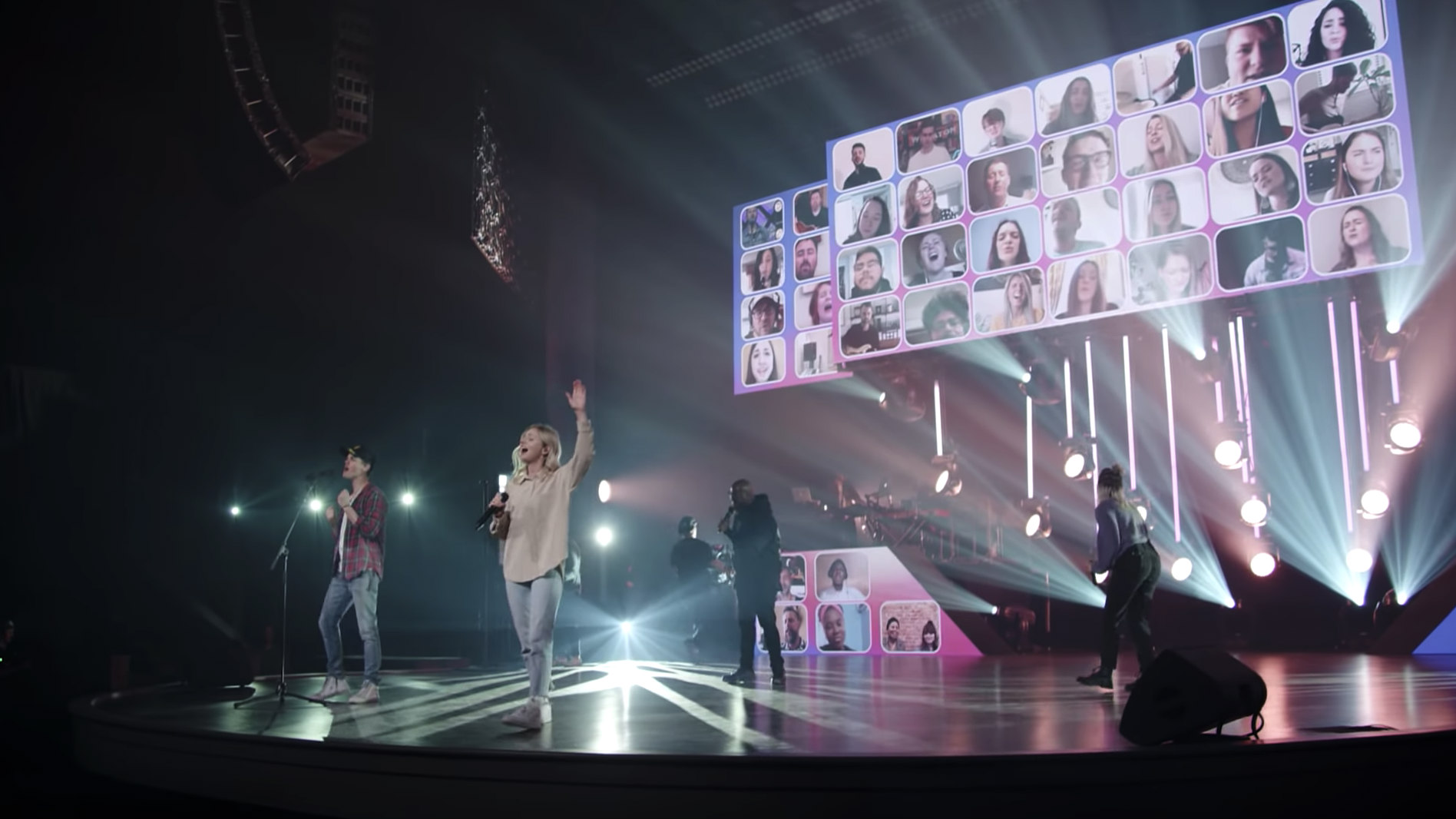
They had no idea how many Christians would want to hear and sing out those words as the pandemic spread in the months to come. In just five months, “The Blessing” has become a chart-topping hit and viral sensation covered by more than 100 virtual choirs around the globe.

“Because this song is based on Scripture, the message is timeless, and we wanted to release it as quick as we could knowing the effect it could have on people ’s hearts and spirits immediately, as it did ours,” Jobe told The Christian Beat. “God knew it would be something we could hold onto during a season of our lives that ’s full of uncertainties and unknowns.”

The 12-minute video of the live performance at Elevation premiered on March 6 and has over 21 million views. One of those early viewers was Alan Hannah, assistant lead pastor at Allegheny Center Alliance Church in Pittsburgh, who helped organize the first virtual choir to cover the song.

Inspired in part by the Nashville studio singers whose cellphone recordings of “It is Well With My Soul,” garnered 1.3 million views on YouTube, Hannah and fellow Pittsburgh pastor Jason Howard of Amplify Church contacted local worship leaders to participate by recording themselves singing “The Blessing.”

Nearly 30 churches contributed to the final version, which was released on Easter Sunday. The idea was to “come together as a church and sing this song over our city as a blessing in a time of uncertainty and fear,” Hannah said.

Their compilation launched a global trend. Within 24 hours of its premiere, “The Pittsburgh Blessing” caught the attention of Tim and Rachel Hughes, lead pastors at Gas Street Church in Birmingham, England.

The Hugheses reached out to the churches and ministries in their networks to assemble a virtual choir that would represent the United Kingdom. The UK Blessing premiered on May 3. “It’s been a beautiful thing seeing it come together,” Tim Hughes told Premier Christianity.

Over 100 virtual choirs have since created versions of the song, declaring God’s blessings over cities, countries, and whole continents.

Beyond the US and England, compilations have been made in Australia, Burma, Chile, Canada, France, Ghana, India, Indonesia, Ireland, Italy, Lebanon, Madagascar, Malaysia, Mexico, the Netherlands, Nigeria, Romania, Spain, Singapore, South Africa, South Korea, Sweden, Vietnam, and Zimbabwe. “The Arab World Blessing” features singers from 16 Arab-speaking countries in the Middle East, North Africa, the Arabian Peninsula, Egypt, and South Sudan.

The project has given churches the chance to unite behind a common message. In Australia, “this is the first time this has happened,” the organizers of the choir wrote. Three hundred churches participated in the video, which featured images of the Australian landscape and wildlife, volunteers packing meals, dancers, and First Nations people.

In New York City, the virtual choir video acknowledged the city’s role as the epicenter of COVID-19 deaths and also the late-spring protests over racial inequities and violence. The video included drone footage of New York City landmarks juxtaposed with images of field hospitals, doctors, and protesters.

“NYC Blessing” included 125 singers from 100 churches singing in eight languages, including some of the largest churches in the city, like the Christian Cultural Center and Redeemer Presbyterian.

The video’s organizer, Bonny Andrews, founder of the ministry Transform Cities, came to the New York City from India less than a year ago. Before the lockdown, he used to pray for the city every day on his ferry ride. He sees the project as an act of love for the city, in the spirit of Jeremiah 29:7, a song of lament and hope.

The goal of “NYC Blessing,” Andrews said, is to inspire cities around the globe to sing blessings over their communities using songs that are unique to their cultures. “We want to fill the Internet with song, because a song can go where a sermon cannot,” he said.

Accompanying the words of “The Blessing” have been acts of blessing for communities in need. The churches involved in “NYC Blessing” have served meals to community members and secured masks and personal protective equipment for frontline health care workers.

The 65 churches represented in “The UK Blessing”—ranging from Catholic and Orthodox to Assemblies of God and Church of England congregations—have served 400,000 hot meals since the beginning of the COVID-19 lockdown.

“The church is never about a building. The church is for its community, and so it adapts. The church doesn’t just proclaim these words over its community, it demonstrates it,” Hughes said.

Irish churches took the idea and crafted a virtual choir with the inflection of the Emerald Isle. Over 300 churches from every county provided footage of members singing “Be Thou My Vision.”

“We wanted to honour that inspiration, whilst at the same time, honouring the unique history and culture of our island. So we chose a song that would resonate across the island, with every denomination and cultural grouping, one that could be used as a platform to sing a Blessing over our land, all our key-workers, and those they are caring for,” organizers wrote in the YouTube description.

Worship songs are typically a slow burn, taking months to transition from popularity on Christian radio to being incorporated on church set lists. But “The Blessing,” now No. 2 on Christian Copyright Licensing International’s most popular songs list, jumped to the top thanks to the viral YouTube covers. (CT also covered the global appeal of the No. 1 song on the list, “Way Maker.”)

“The Blessing” was able to spread quickly in so many languages in part because the words are relatively simple and easy to learn or translate. It repeats the passage from Numbers 6 as its only verse with a chorus of amens and three bridges at the end.

Since the initial video of “The Blessing” premiered in March, Bible Gateway has seen growing interest in Numbers 6:24–26. Engagement in the passage and related searches for “blessing” are up 73 percent worldwide over last year.

“I have cried so many times as I’ve watched different people all over the world declaring the blessing over their families, their churches and their nations," Jobe said. “That brings so much peace, especially in a season of disappointment, uncertainty and fear like we have all been waking through this year.”

Back in May, Elevation Worship acknowledged the global appeal of “The Blessing” by performing the song with a live global choir.

Editor’s note: You can now read or share this article in Indonesian, Portuguese, and Spanish as 1 of 150+ CT Global translations.

You can also now follow CT on WhatsApp and Telegram.

Apple PodcastsDown ArrowDown ArrowDown Arrowarrow_left_altLeft ArrowLeft ArrowRight ArrowRight ArrowRight Arrowarrow_up_altUp ArrowUp ArrowAvailable at Amazoncaret-downCloseCloseEmailEmailExpandExpandExternalExternalFacebookfacebook-squareGiftGiftGooglegoogleGoogle KeephamburgerInstagraminstagram-squareLinkLinklinkedin-squareListenListenListenChristianity TodayCT Creative Studio Logologo_orgMegaphoneMenuMenupausePinterestPlayPlayPocketPodcastRSSRSSSaveSaveSaveSearchSearchsearchSpotifyStitcherTelegramTable of ContentsTable of Contentstwitter-squareWhatsAppXYouTubeYouTube