News
Wire Story

Churches Plan to Host Students During Remote Learning

In some communities, empty buildings and eager youth ministers offer safe places and supervision for families facing school closures.

Christianity Today July 27, 2020
Justin Sullivan / Getty Images

Remote learning will be the rule for schoolchildren in Winston-Salem, North Carolina, for at least nine weeks this fall as the city tries to stem a surging coronavirus caseload.

But that doesn’t necessarily mean they’ll all be staying home. Some could be in church instead.

That’s the vision at St. Timothy’s Episcopal Church, one of several churches in Winston-Salem hoping to host remote-learning sites for small groups of socially distanced kids.

If the bishop approves the idea, as many as 30 students would gather daily—spread across three buildings at St. Timothy’s campus—in the mornings.

Church volunteers would enforce health protocols, tutor, and lead prayers to begin and end the day.

“We know in our faith that it’s not good for us to be alone,” said St. Timothy’s Rector, Steven Rice, in a reference to the line in Genesis. “Some socialization among people of their own age will be a great benefit (to the students). And if both parents have to work, at least half the day is better than nothing.”

From Connecticut to Hawaii, congregations are seeking ways to support families still smarting from last spring’s sudden adjustment to home-based learning during the pandemic lockdown. They’re exploring how underutilized church buildings might be put to a new use that allows education to continue while freeing up parents to work and attend to other responsibilities.

Proposals range from hosting students during online classes to providing study hall space for them to work independently.

In such efforts, youth ministry experts see a promising opportunity.

“This is a way of reimagining children’s and youth ministry during a pandemic in a really amazing way that serves families and meets concrete needs,” said Angela Gorrell, assistant professor of practical theology at Baylor University and author of Always On: Practicing Faith in a New Media Landscape. “You can connect with kids in your neighborhood who might not otherwise be a part of your children’s and youth ministry.”

Congregations hope these plans can help reduce the acute stress they sense in their communities, especially among parents who can’t easily pivot to work from home and supervise children all at once.

In some cases, longstanding partnerships with districts are bearing new fruit.

Consider rural Graham County, North Carolina, where 8,500 people reside amid the Great Smoky Mountains. Locals depend largely on tourism jobs, such as cleaning second homes owned by residents of Atlanta and Charlotte. When the pandemic hit, 16 churches—Dry Creek Baptist, Eternal Believers and 14 others—became sites where families every day could pick up school lunches to go, along with breakfast for the next morning.

At least six Graham County churches also received mobile hotspot devices from the district, said Pastor Eric Reece of Robbinsville United Methodist Church, which received one of the devices.

That made them oases in what Reece calls an “internet desert,” where connectivity in homes is unreliable or unavailable. Robbinsville students were able to get their assignments and complete online coursework at his church when they picked up lunch.

Now Robbinsville UMC is gearing up to offer 40 hours a week of drop-in study hall access this fall. With Graham County schools operating at reduced capacity and having kids learn virtually on select days, students will be able to drop by the church with a parent any time between 8 a.m. and 4 p.m., log on and work in the fellowship hall. Two adults from the church will be there to supervise.

To respect social distancing, no more than 10 children will be allowed at a time.

“On their day that’s virtual, if they don’t have Wi-Fi at home, they can come here,” Reece said. “They can use their (district-issued) Chromebooks to go online and stay caught up on their work.”

In New Haven, Connecticut, the Greater New Haven Clergy Association announced this month that as many as 15 congregations are prepared to host children on days when they’re expected to learn virtually, which will be one to three days per week, depending on grade level.

Remote sites are needed, clergy say, because New Haven schools found that thousands of students were not engaging in school virtually from home. Among the reasons: no internet at home or no parental oversight of the learning process.

What role New Haven churches will have, if any, remains to be seen.

Among the topics of discussion: Will school buses bring kids to and from churches? Will schools send staffers to supervise remote learning or leave supervision to church volunteers? Will churches lease space to the district for remote learning or offer space free as a ministry to families?

“I’m not looking for any money to do this. I just see a need, and I don’t want money to be a hindrance to why we can’t get it done,” said Steven Cousin, pastor of Bethel African Methodist Episcopal Church in New Haven.

If technology supports are needed, Cousin said churches might seek in-kind donations from corporate sponsors.

Boise Kimber, pastor of First Calvary Baptist Church in New Haven, said that if churches provide a service to schools, they might deserve compensation.

“We have to have that conversation with the district and see what they’re willing to do if we take care of this for them,” Kimber said.

In some cases, churches and schools can build on past cooperation.

Our Redeemer Lutheran Church in Honolulu has rented out space in its former elementary school to nearby Voyager Public Charter School for almost a decade. The church also temporarily housed another school when that one suffered a flood.

Now Voyager urgently needs extra space in order to reduce density by spreading students out across a larger campus footprint. Our Redeemer’s solution: For a nominal fee, the church will provide an extra 8,000 square feet for a year in what used to be its high school building.

“The ‘annexed’ space makes it possible to spread our elementary grades out on our main campus to accommodate all-day, everyday face-to-face instruction for our K–2 learners, and 2 days/week for grades 3 through 6,” said Voyager Principal Evan Anderson in an email.

There are some challenges to hosting students in churches, from extra sanitation requirements to liability concerns, but optimists believe those can be managed by following guidelines from governments, denominations and insurers.

Still, some faith leaders regard it as too risky for their congregations to undertake.

“It’s a huge issue: People can’t bring their kids to work, and many don’t have the sort of jobs where they can work from home,” said John Cager, president of the Los Angeles Council of Religious Leaders and pastor of Ward African Methodist Episcopal Church. “But there are few states as litigious as California. You bring the kids in and even if the district provides the supervision, what’s the church’s exposure if someone’s kid gets sick? … Everyone wants to do ministry, but no one wants to get sued doing ministry.”

In locations where churches feel able to help, districts are expressing gratitude.

“Not every family has a strong safety net of support for children, so we are leaning on our community partners of all kinds to help us create multiple safe places and spaces where children can learn and access their lessons,” said Brent Campbell, spokesperson for the Winston-Salem and Forsyth County Schools in an email. “Faith-based partners and others are offering to open their doors.”

News
Wire Story

Supreme Court Rejects Nevada Church’s Appeal to Reopen Like Casinos

Conservative justices say 50-person limit for houses of worship is “obvious discrimination.”

Christianity Today July 24, 2020
Ethan Miller / Getty Images

A sharply divided US Supreme Court denied a rural Nevada church’s request late Friday to strike down as unconstitutional a 50-person cap on worship services as part of the state’s ongoing response to the coronavirus.

In a 5-4 decision, the high court refused to grant the request from the Christian church east of Reno to be subjected to the same COVID-19 restrictions in Nevada that allow casinos, restaurants, and other businesses to operate at 50 percent of capacity with proper social distancing.

Calvary Chapel Dayton Valley argued that the hard cap on religious gatherings was an unconstitutional violation of its parishioners’ First Amendment rights to express and exercise their beliefs.

Chief Justice John Roberts sided with the liberal majority in denying the request without explanation.

Three justices wrote strongly worded dissenting opinions on behalf of the four conservatives who said they would have granted the injunctive relief while the court fully considers the merits of the case.

“That Nevada would discriminate in favor of the powerful gaming industry and its employees may not come as a surprise, but this Court’s willingness to allow such discrimination is disappointing,” Justice Samuel Alito wrote in a dissent joined by Clarence Thomas and Brett Kavanaugh.

“We have a duty to defend the Constitution, and even a public health emergency does not absolve us of that responsibility,” Alito said. “The Constitution guarantees the free exercise of religion. It says nothing about freedom to play craps or blackjack, to feed tokens into a slot machine or to engage in any other game of chance.”

Kavanaugh also wrote his own dissent, as did Justice Neil Gorsuch, who said:

In Nevada, it seems, it is better to be in entertainment than religion. Maybe that is nothing new. But the First Amendment prohibits such obvious discrimination against the exercise of religion.

The world we inhabit today, with a pandemic upon us, poses unusual challenges. But there is no world in which the Constitution permits Nevada to favor Caesars Palace over Calvary Chapel.

David Cortman, senior counsel for Georgia-based Alliance Defending Freedom representing the church, said in an email sent to the Associated Press late Friday that they were disappointed in the ruling but will continue to work to protect Calvary Chapel and others “from discriminatory policies that put religious groups at the back of the line for reopening.”

“When the government treats churches worse than casinos, gyms, and indoor amusement parks in its COVID-19 response, it clearly violates the Constitution,” he said.

The group of Nevada churches challenging the policy included Southern Baptist congregations, and leaders of the Ethics and Religious Liberty Commission were also disappointed in the decision.

“Nevada from the start should have relied on pastors and religious leaders to be partners in combating Covid-19 as they have apparently done with casino magnates,” said ERLC president Russell Moore. “As virtually every court and almost every religious organization has affirmed: the state has legitimate rights and obligations to protect public health in an emergency such as this. Every restriction, though, must be both rooted in compelling interest and be consistently applied.”

The governor’s office didn’t immediately respond to a request for comment.

Calvary Chapel Dayton Valley appealed to the 9th US Circuit Court of Appeals last month after a US judge in Nevada upheld the state’s policy that allows casinos and other businesses to operate at 50 percent of normal capacity.

The appellate court in San Francisco is still considering the appeal, but it has denied the church’s request for an emergency injunction in the meantime. Its ruling July 2 pointed to the Supreme Court’s refusal in May to strike down California’s limit on the size of religious gatherings.

The church in Nevada’s Lyon County appealed to the Supreme Court six days later, asking for an emergency injunction prohibiting the state from enforcing the cap on religious gatherings at least temporarily while the justices consider the merits of the case.

“The governor allows hundreds to thousands to assemble in pursuit of financial fortunes but only 50 to gather in pursuit of spiritual ones. That is unconstitutional,” its lawyers wrote in their most recent filing to the high court last week.

The church wants to allow as many as 90 people to attend services at the same time — with masks required, sitting 6-feet apart — at the sanctuary with a capacity of 200. Other secular businesses in the state that are allowed to operate at half capacity include gyms, hair salons, bowling alleys and water parks.

Nevada’s lawyers said last week several courts nationwide have followed the Supreme Court’s lead in upholding state authority to impose emergency restrictions in response to COVID-19.

“Temporarily narrowing restrictions on the size of mass gatherings, including for religious services, protects the health and well-being of Nevada citizens during a global pandemic,” they wrote.

Alito said in the lead dissent that by allowing thousands to gather in casinos, the state cannot claim to have a compelling interest in limiting religious gatherings to 50 people — regardless of the size of the facility and the measures adopted to prevent the spread of the virus.

“The idea that allowing Calvary Chapel to admit 90 worshipers present a greater public health risk than allowing casinos to operate at 50% capacity is hard to swallow,” he wrote.

Kavanaugh said he agreed that courts should be “very differential to the states’ line-drawing in opening businesses and allowing certain activities during the pandemic.”

“But COVID-19 is not a blank check for a state to discriminate against religious people, religious organizations, and religious services,” he wrote in his own dissent. “Nevada is discriminating against religion.”

News

Hagia Sophia’s Muslim Prayers Evoke Ottoman Treatment of Armenians

As Turkish president Erdoğan joins hundreds in celebration, Christians in the diaspora mourn their lost homeland and cultural heritage.

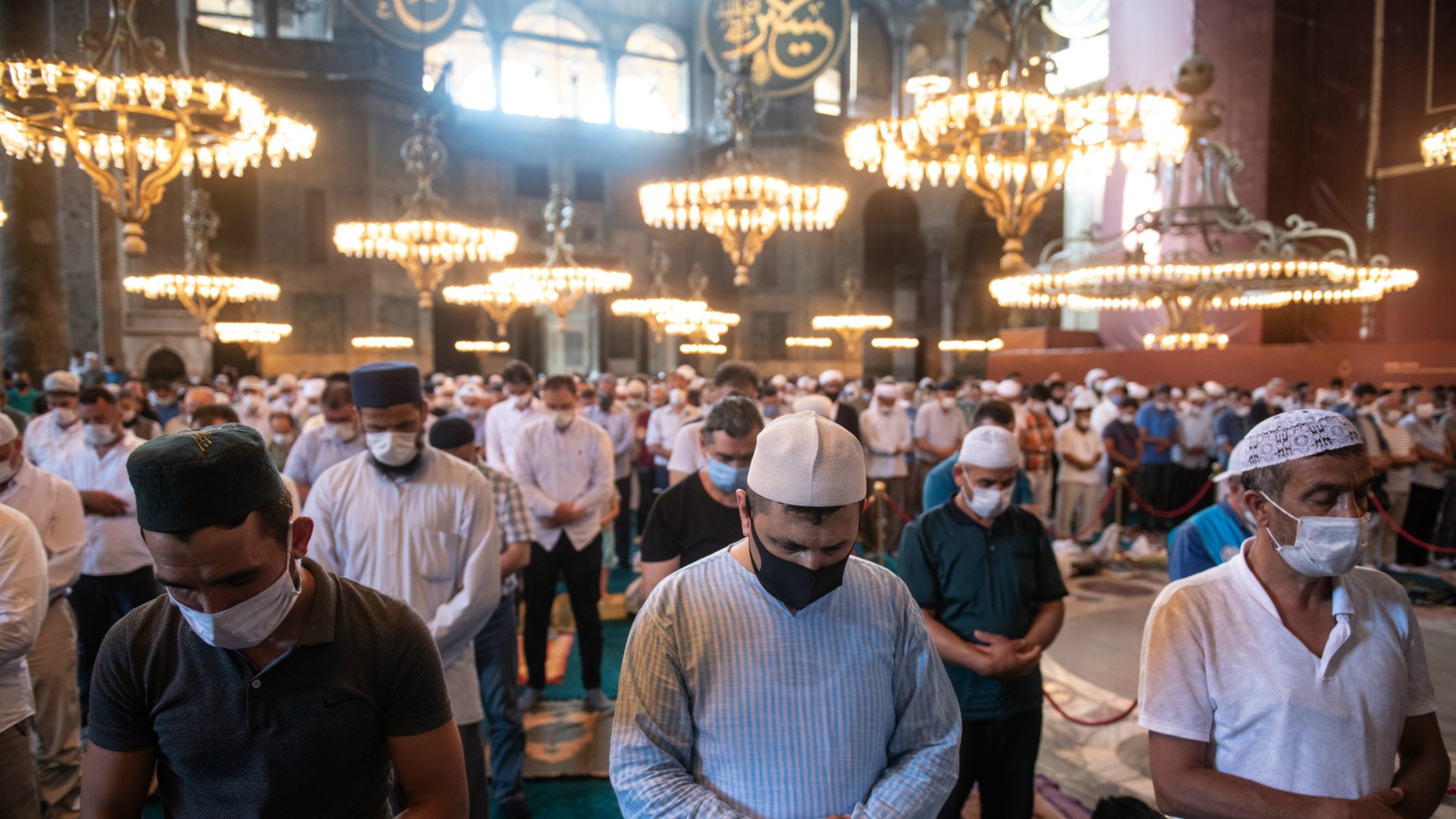
Hundreds of people pray inside Hagia Sophia Mosque during afternoon prayer after its official opening on July 24 in Istanbul, Turkey.

Hundreds of people pray inside Hagia Sophia Mosque during afternoon prayer after its official opening on July 24 in Istanbul, Turkey.

Christianity Today July 24, 2020
Burak Kara / Getty Images

Declared a mosque in principle, Hagia Sophia is now a mosque in practice.

Following his decree earlier this month, Turkish President Recep Erdoğan’s joined a coronavirus-limited 500 worshipers to perform Friday prayers in the sixth-century Byzantine basilica, underneath the covered frescoes of Jesus and the Virgin Mary.

Hundreds more gathered outside.

International condemnation resounded after the Turkish Council of State ruled to revert the UNESCO World Heritage Site back to its Islamic status. Conquered in 1453 by Ottoman sultan Mehmed II, the massive church was turned into a museum by the founder of the modern Turkish republic, Kamal Ataturk, in 1934.

Underreported in much of the criticism was a wider complaint.

“The action of the Turkish government evokes heavy memories on the desecration and destruction of holy sites of the Armenian people and other Christian nations by the Ottoman government for centuries,” said Garegin II, Supreme Patriarch and Catholicos of All Armenians.

There are an estimated 11 million Armenians worldwide, including 3 million in their modern nation-state.

Representing the diaspora from the Holy See of Cilicia, in Lebanon, Catholicos Aram I went into more detail.

“Soon after the Armenian Genocide, Turkey confiscated thousands of Armenian churches and transformed them into bars, coffee shops, and public parks,” he said, “ignoring the reactions and appeals of the international community.”

As Erdoğan is doing again now—and not just to the Hagia Sophia.

Turkey has assured the frescoes will be uncovered for all visitors (3.7 million last year) outside of prayer times—and now without a museum entry fee. More than 400 other churches continue to serve the 1 percent of Turks that are Christians.

But Erdoğan’s remarks in Turkish revealed a wider agenda.

“The resurrection of Hagia Sophia is the sound of Muslims' footsteps all around the world,” he said, “… a salute to all those symbolic cities of civilization from Bukhara to Andalusia.”

The geography stretches from Central Asia to Spain, casting Erdoğan in the shadow of the caliphs. And the date of first prayers, June 24, corresponds to the signing of the 1923 Lausanne Treaty that established the Republic of Turkey—ending the Ottoman Empire and 1,300 years of the Islamic caliphate.

Erdoğan—who as a boy dreamed of restoring the Hagia Sophia as a mosque—has hinted the treaty now constricts Turkish sovereignty. And while there is no suggestion Turkey will undo its provisions to recognize its Armenian Orthodox, Greek Orthodox, and Jewish communities—with constitutional guarantees for freedom of religion—renewing Islamic prayers represents a long history of disregard toward their Christian cultural heritage.

“I’m not surprised by the declaration of Erdoğan, it was very much in line with historic Turkish policy,” said Arda Ekmekji, a Sorbonne-educated archaeologist and dean of arts and sciences at Lebanon’s Armenian evangelical Haigazian University.

“Ataturk was the only exception to extremist Turks camouflaged as Europeans.”

Ekmekji, author of Towards Golgotha, a translation of her grandfather’s journey from Izmir to Jerusalem fleeing genocide, highlighted the 1913-14 Armenian Orthodox Patriarchate census in Turkey.

At that time, 1.9 million Armenians lived in 2,925 villages, hosting 2,538 churches, 451 monasteries, and 1,996 schools.

Following the genocide, she said, their homes were tallied and assigned by number to relocated Balkan Muslims. Laws were passed to transfer ownership of “abandoned” properties.

And while some religious buildings were able to be kept by church-based foundations, the law required a set number of local stakeholders. As the population dwindled, these also passed to the state.

In 2005, the Turkish government prevented research into original property deeds.

“The Ottoman records … must be sealed and not available to the public, as they have the potential to be exploited by alleged genocide claims and property claims against the State Charitable Foundation assets,” read the order.

“Opening them to general public use is against state interests.”

Today, Turkey hosts only 75,000 ethnic Armenian citizens, with less than 15 active churches. Whereas most of eastern Turkey used to be known as Western Armenia, the vast majority now live in Istanbul.

In 1974, UNESCO documented 913 Armenian heritage buildings declared empty, 464 vanished completely, 252 in ruins, and 197 in need of restoration.

One such basilica could fit inside the Hagia Sophia. The 7th century Cathedral of Mren, located near Kars on the Armenian border, like others, “could crumble to the ground any day now,” said Christina Maranci, professor of Armenian Art and Architecture at Tufts University.

She believes Turkish policy toward Armenian heritage is often one of “slow bureaucracy and purposeful neglect.”

The former is to blame, she says, for the three years she spent obtaining permission to do 3-D laser scanning of Mren. This imaging technique is often the first step in a restoration process. But it can also be the final, lasting memory, should the structures collapse.

The latter is seen through a quote given by a frustrated Turkish Minister of Culture.

“What we are up against is an undeclared policy by certain narrow-minded individuals within the state, of discrimination against Armenian monuments,” said Husseyin Celik, in 2002.

“The fear of these policymakers is that if Christian sites are restored, this will prove that Armenians once lived here and revive Armenian claims on our land.”

But there is more than just neglect and bureaucracy; there is also appropriation. While Mren has been left alone to decay, Maranci recalled early-career visits to the 10th century Cathedral of the Holy Apostles in Kars, which in 1993 was turned into a mosque.

Celik belongs to the ruling AKP party in Turkey, which during Erdoğan’s early years as prime minister (from 2003–2014) liberalized religious space for both Muslims and Christians. While a 1935 statute states that no new religious foundations may be established, during this time many Protestant churches were able to register as “cultural foundations.”

While continuing to refuse the word “genocide,” Erdoğan reached out to Armenians to console over the historic “deportations.” In 2011, a Restitution Decree provided a legal channel for compensation or property retrieval by dispossessed communities. And in 2018, the Syriac Orthodox Church received back 50 properties, including its oldest surviving monastery.

But progress has been slow.

In the same Tur Abdin area on the southeastern border with Syria, the Federation of Syriac Associations said 2,500 churches and 300 monasteries remain. Meanwhile, a 2014 decision to restore 11 properties to the Greek Orthodox Church has not yet been implemented.

Maranci, herself a granddaughter of a genocide survivor, lauded the efforts of many Turks to address the historical injustice. Chief among them is Osman Kavala, who was instrumental in helping secure funding and permission for her work on the Cathedral of Mren.

Kavala is celebrated worldwide for the work of his Anadolu Kültür (Anatolian Culture) foundation, in restoring the ruins of Ani on the Armenian border. A UNESCO World Heritage Site, Ani was once known as the City of 1,001 Churches.

He is now in prison, on what Maranci believes are trumped-up charges of trying to overthrow the regime.

“Many Turks want to preserve the monuments,” she said, “but maybe don’t feel comfortable saying so in the current climate.”

But for Elizabeth Prodmorou, former vice chair of the US Commission on International Religious Freedom, cultural heritage is akin to human security. It enables minority populations to create community, as well as preserve their history through periods when they may have lacked official protection.

“Hagia Sophia raises the global profile of the cultural heritage policy in Turkey,” she said, “that has been erasure and destruction at worst, or else appropriation.”

Within her role as director of the Initiative on Religion, Law, and Diplomacy at Tufts University, Prodmorou highlighted Turkey’s recent efforts to expand this policy even further.

Last year the government requested an agreement with the United States to regulate the trade of Turkish artifacts. Under the auspices of the US Cultural Property Implementation Act, which intends to curb illegal looting of artifacts, Ankara claimed provenance over the entire Turkish cultural heritage, stretching from the prehistoric period to 1923.

The wide timeframe defines Turkish control over all history within its modern borders, inclusive of civilizations earlier than the state and perhaps of an Ottoman ethos laying claim to its empire.

These factors, along with the modern republic’s failure to live up to its UNESCO obligations, have led the US Association of Art Museum Directors to petition the State Department to deny Turkey’s request.

“The greatest threat to Turkey’s rich cultural heritage isn’t looting from nonstate actors,” Prodmorou said, “but from the Turkish state itself and its openly declared neo-Ottoman revisionist project.”

And as with the Hagia Sophia, this project has taken a turn away from conciliation.

In 2011, Erdoğan ordered the removal of a 100-foot sculpture in Kars, depicting a Turk and an Armenian shaking hands. He pledged the full support of the Turkish army to Azerbaijan, currently involved in border skirmishes with Armenia.

And since the release from prison of American pastor Andrew Brunson following the advocacy of President Trump, Erdoğan continues a policy of quietly denying residency permits to longstanding foreign leaders of the Protestant community, while Turkish law denies believers the right to train their own pastors.

In its turn to religious nationalism, Turkey may be pursuing a restoration of its worldwide Islamic leadership. Alternately, Erdoğan may simply be appealing to his electoral base.

But overlooked in much of the Hagia Sophia controversy is the damage conversion may do to the 1,500-year-old structure itself. Icon-covering curtains may have to be drilled into the walls. And a prayer carpet increases a destructive humidity.

“Turkey is putting aside the health of the monuments for other political issues, and in the meanwhile, they are falling down,” said Maranci.

“Once we’ve lost them, they are never coming back.”

News

Lukewarm Faith Shrinks as More Say Religion Is ‘Very Important’ or ‘Not at All’

Pew: Of 34 nationalities, Americans have declined the most in connecting belief in God to morality.

Christianity Today July 24, 2020
Illustration by Mallory Rentsch / Source Images: Sven Hagolani / Kapás Csilla / EyeEm / RapidEye / Getty Images

The personal importance of faith is increasing in much of the world, according to a survey of more than 38,000 people across 34 countries spanning 6 continents.

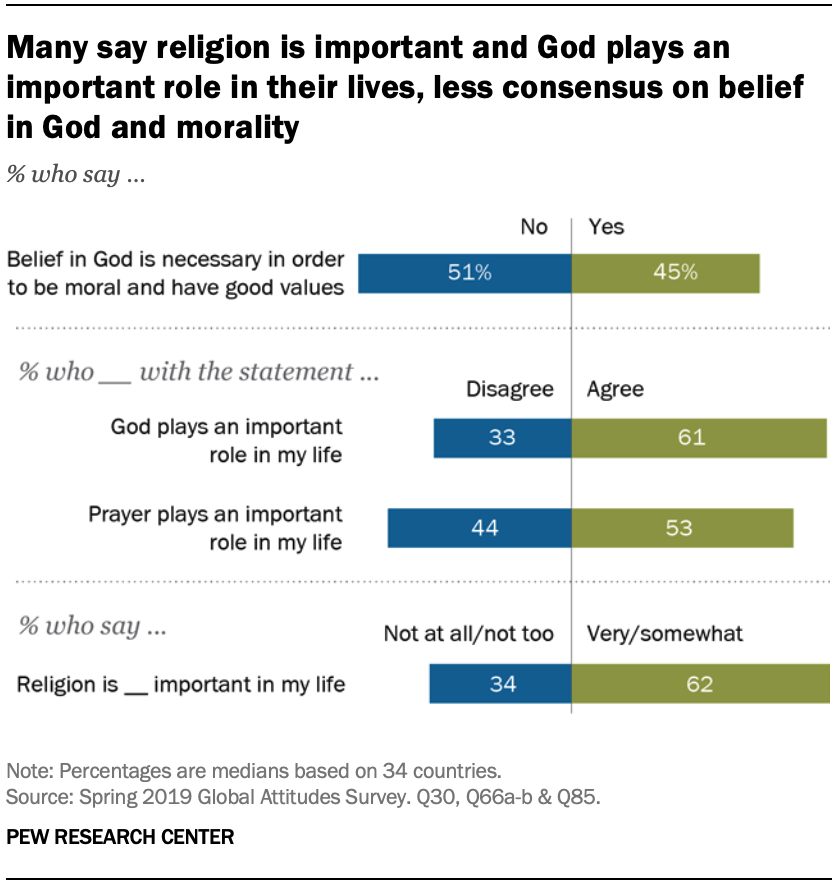
In an analysis released this week, the Pew Research Center found that 61 percent of respondents to its Global Attitudes Survey last year agreed that “God plays an important role” in their lives. Similarly, 62 percent said religion is very or somewhat important in their lives. [Note: Percentages are medians based on the 34 countries.]

The proportion of people who say religion is “very important” in their lives is rising in 19 countries, and nearly across the board in the Global South, including Argentina, Brazil, India, Indonesia, Kenya, Nigeria, and the Philippines.

Religiosity is particularly vigorous in the Middle East. Since 2007, Lebanon has seen an increase of 20 percentage points in residents who say religion is “very important” in their lives, from 50 percent to 70 percent. In Israel, barely a quarter of residents said religion was “very important” in 2007. Last year, 39 percent agreed.

Even in some European countries, middle positions on religion are shrinking as those who view religion as “very important” or “not at all important”—as opposed to “somewhat important” or “not too important”—are growing.

For instance, Germans who place high importance on religion have grown since 2002, as have those who give it no importance. Greeks and Dutch exhibit the same subtle shift away from moderate views on religion toward the two poles.

Of the 34 countries surveyed, lukewarm perspectives on religion have decreased in 24 countries in favor of stronger views on the importance of religion (“very” or “not at all”). Proportions have stayed the same in 4 countries, and in 6 countries more people now choose the middle positions of religion being “somewhat” or “not too” important than in previous years.

Since the decline of the USSR, religiosity has seen a major boom in several Soviet Bloc states, especially Russia and Bulgaria. This is matched by rises in the rate at which people say God plays an important role in their personal lives. The proportions of Russians and Ukrainians who say God is personally important to them has risen in the last three decades by about 10 percentage points each.

And while those in South Asia, Africa, the Middle East, and South America are considerably more likely to say religion is important in their lives, nearly half of Europeans still say the same.

Religiosity, however, is not necessarily the same as active, orthodox faith. Pew research has previously found that while most Europeans (71%) identify as Christian and significant majorities in Western Europe support paying church taxes, far fewer believe in God as described in the Bible or hold to historic Christian social positions.

Likewise, numerous European populist movements appeal to Christianity as a unifying force, but “these movements are primarily interested in defending Christianity as a cultural heritage (and as a bulwark against Muslim immigration and influence), not as a matter of living faith,” wrote Thomas Albert Howard in his CT review of Is Europe Christian? by Olivier Roy.

The United States is something of an outlier. A full 7 in 10 Americans say God plays an important role in their lives. A similar segment says religion is important to them, with nearly half (47%) saying it is “very important,” while 16 percent say it is “not at all important.”

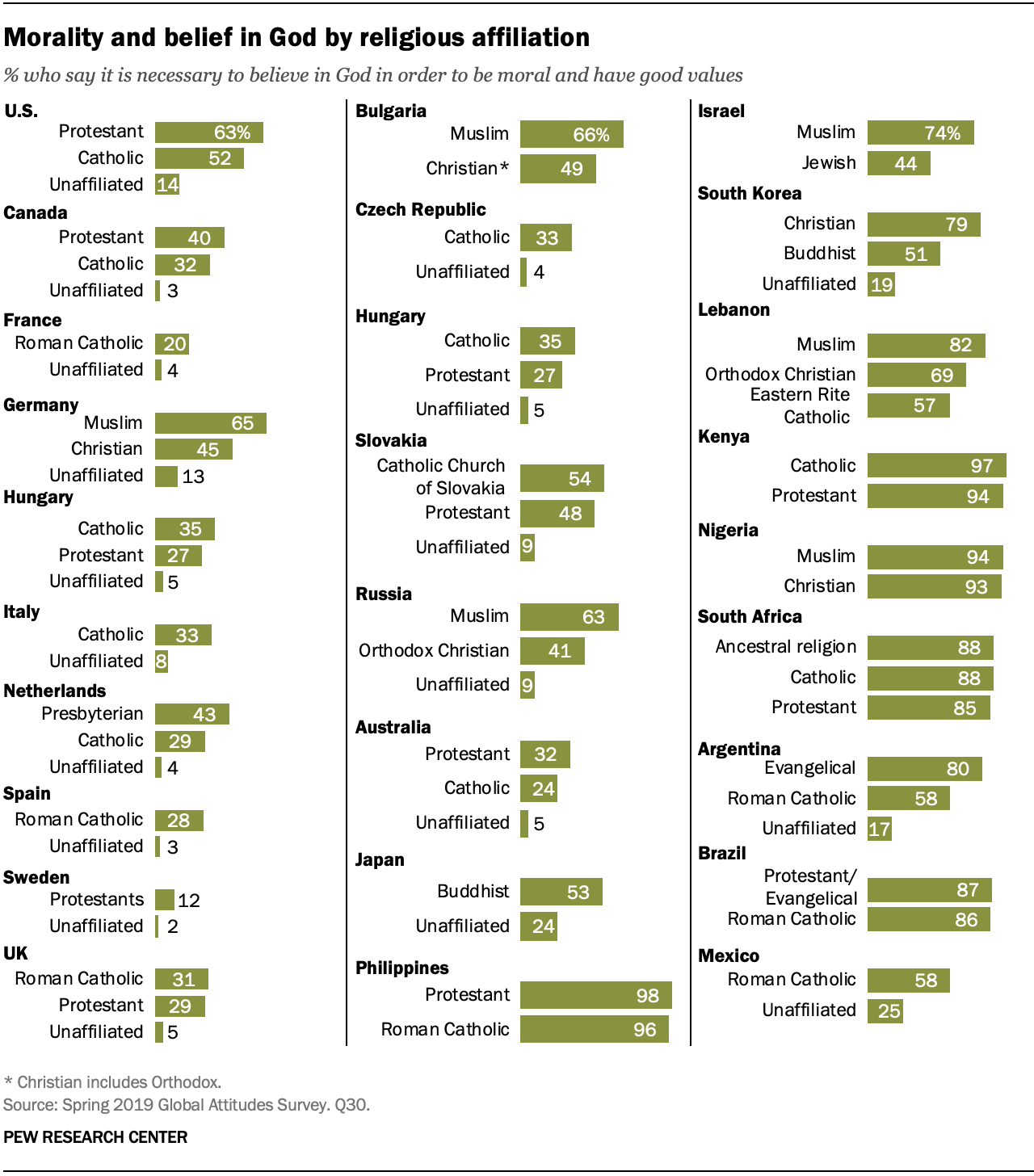
American Protestants are somewhat more likely than American Catholics to say God plays an important role in their lives (95% vs. 84%). Approximately 3 in 10 religiously unaffiliated Americans say the same (29%).

These findings align with another Pew report from last year that found most people around the world want religion to become more important in society. Among Americans, nearly three times as many said religion taking on more importance in the country would be a positive change (51%) compared to those who said it would be a negative shift (18%).

In this week’s analysis, about half of respondents across the 34 nations agreed that prayer plays an important role in their lives (53%), and about half say belief in God “is necessary in order to be moral and have good values” (45%).

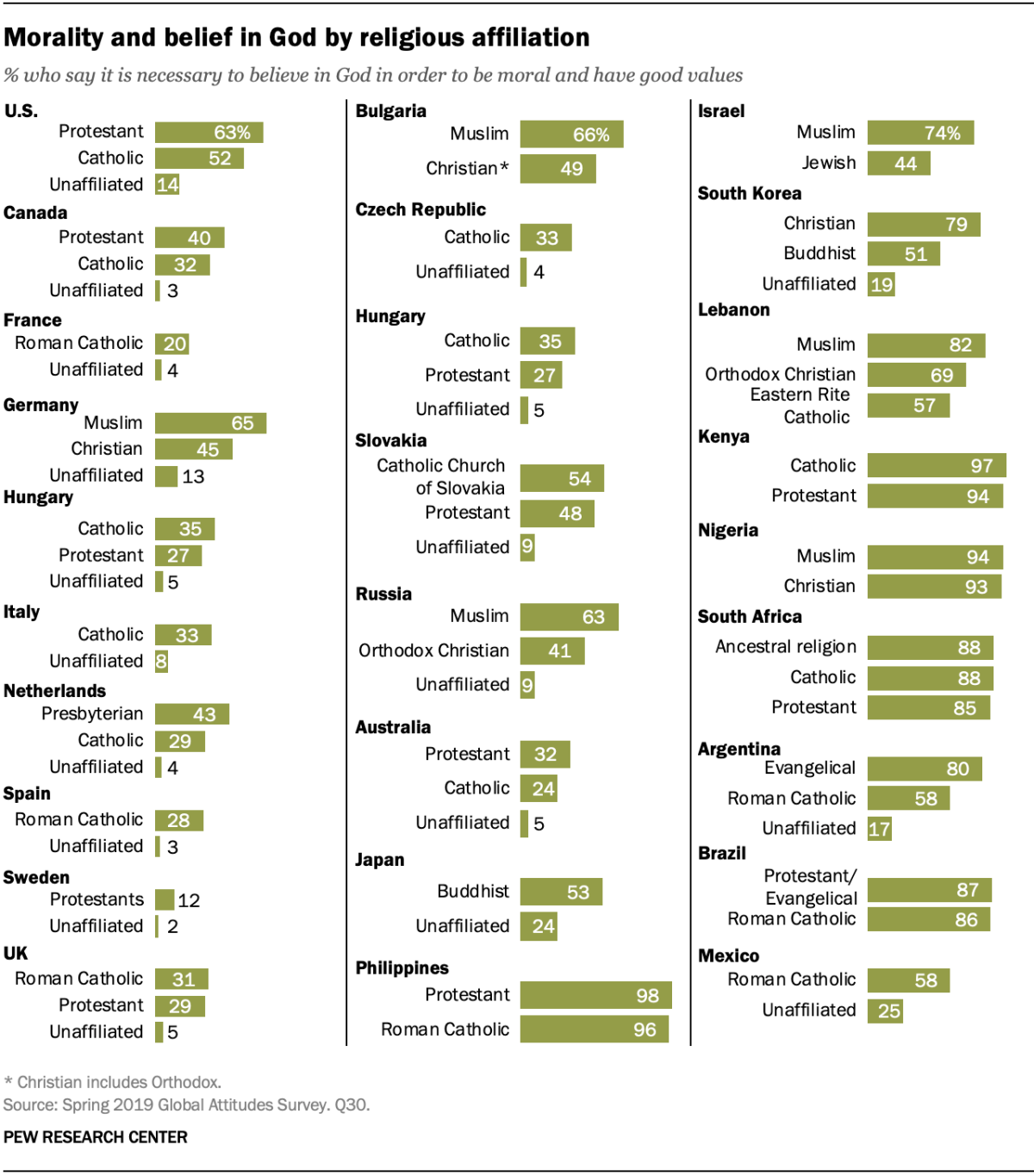
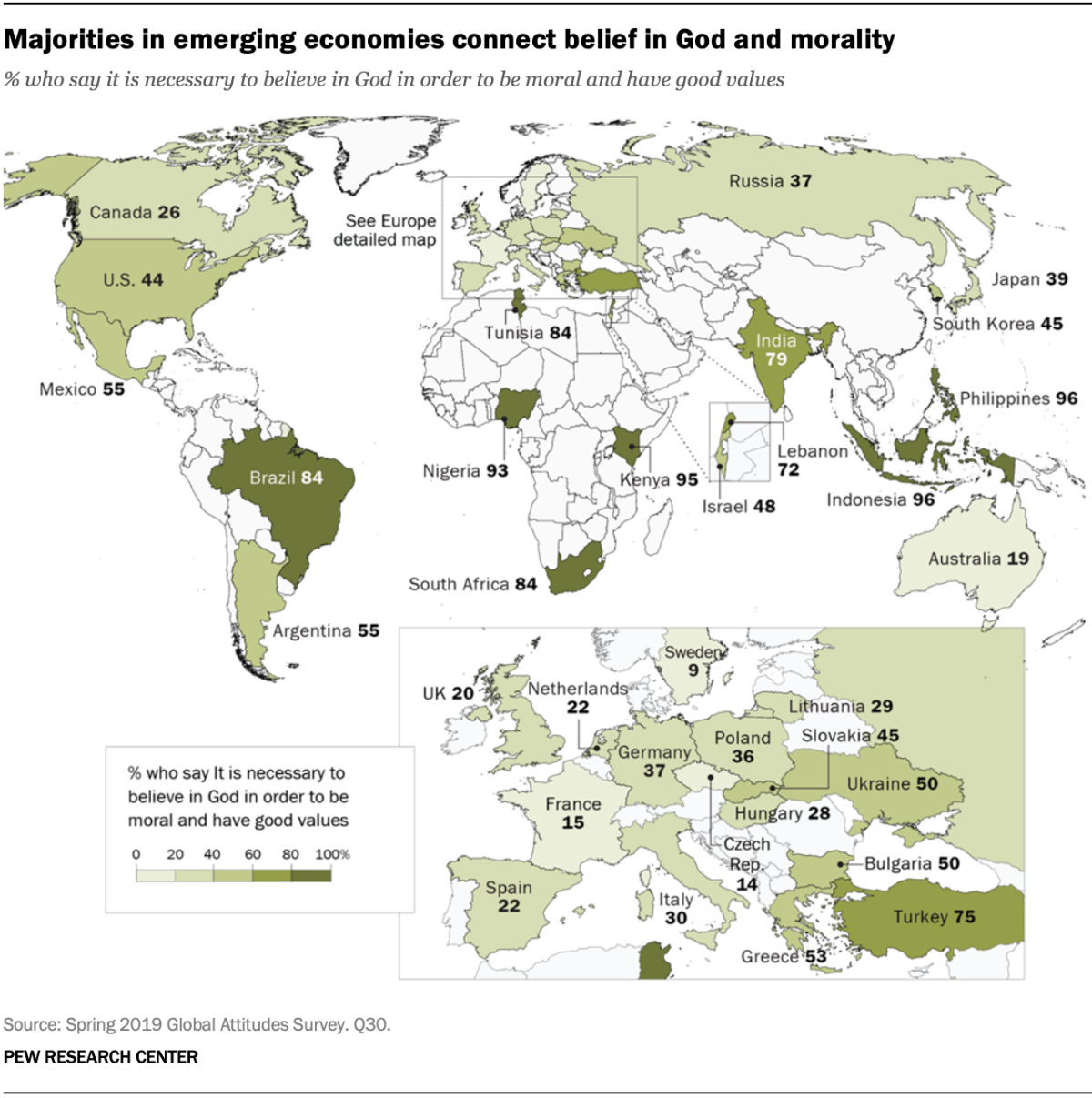
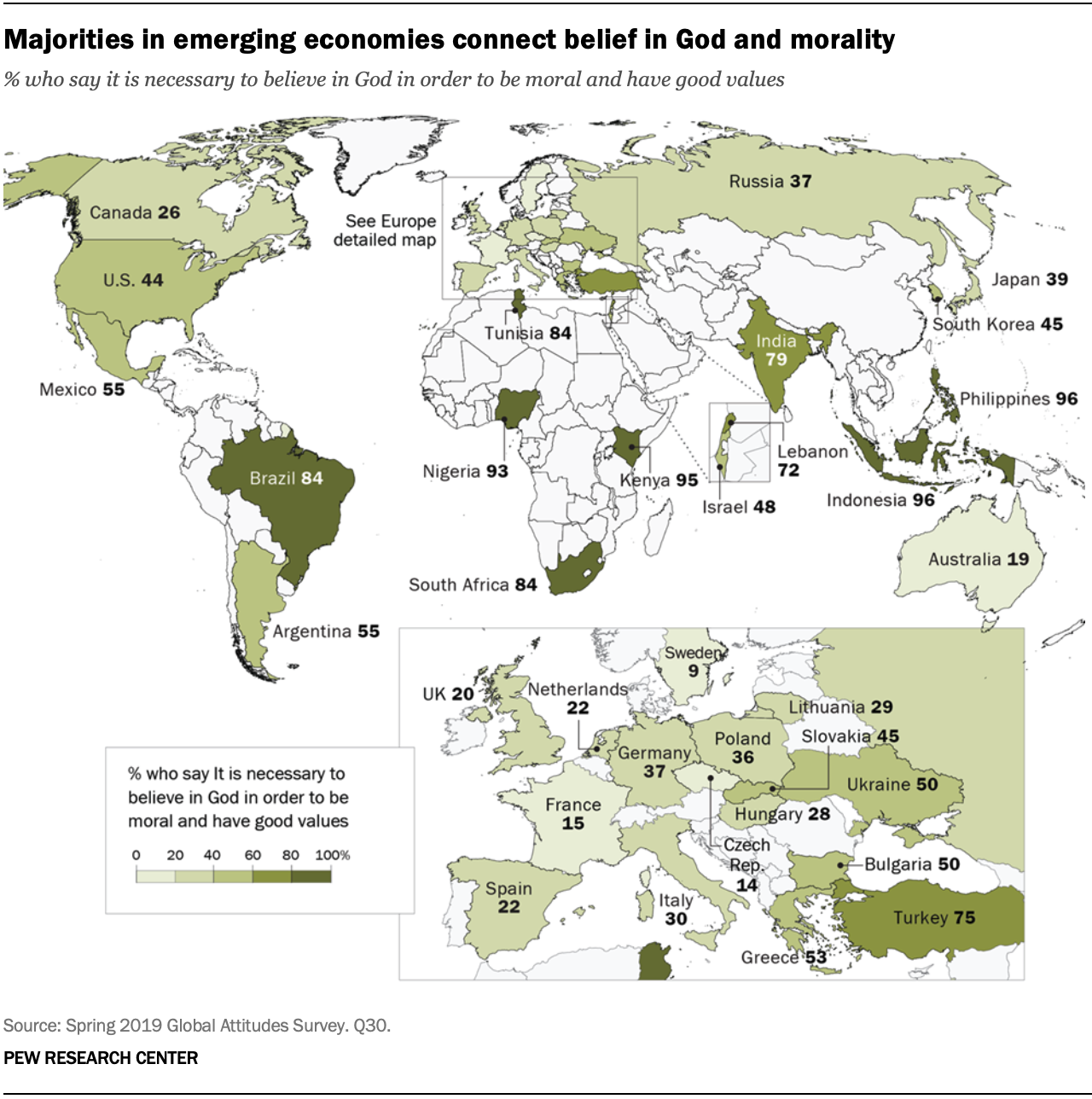
Among Americans, last year 44 percent said belief in God is a prerequisite to be moral—14 percentage points fewer than in 2002, and the biggest decline among all the nations in Pew’s survey. The biggest increases: Bulgaria, up from 33 percent to 50 percent; Russia, up from 26 percent to 37 percent; and Japan, up from 29 percent to 39 percent.

More than 6 in 10 American Protestants connect belief in God to having good values, while about half of American Catholics and 14 percent of religiously unaffiliated Americans say the same.

Western and Eastern Europe have even smaller shares who say the same: 22 percent and 33 percent, respectively.

People in Southeast Asian and African countries are the most likely to say belief in God is necessary to be moral and have good values. More than 9 in 10 in Indonesia, Philippines, Kenya and Nigeria agree, while more than 8 in 10 in South African, Tunisia, and Brazil say the same.

Researchers found that the percentage who say belief in God is necessary for morality correlates fairly strongly with GDP per capita. Specifically, those living in wealthier countries with more advanced economies are less likely to associate belief in God with good morals than those in emerging and developing economies.

Again the US is an outlier, with its high GDP per capita and relatively high rate of those who say belief in God is necessary for morality.

Even within countries, people who have higher incomes are generally less likely to say it is necessary to believe in God in order to be moral. Of the 34 countries surveyed, the discrepancy is greatest in the United States, where those with “lower income” say morality requires a belief in God at a rate 24 percentage points greater than those with “higher income.”

Pew also found that “people in emerging economies are more than twice as likely as people in advanced economies to agree that prayer is an important part of daily life.”

Across the world, young people, those with more education, and those on the ideological left are all less likely to associate belief in God with morality than older people, those with less education, and those on the ideological right. Slovakia was the only nation out of 34 where those on the ideological left were more likely to connect belief in God to morality (by a margin of 16 percentage points).

For this analysis, Pew surveyed 38,426 respondents across 34 countries from May 13 to October 2, 2019.

Church Life

Black Books Matter

There’s much more to read than racism woes of suffering and struggle.

Christianity Today July 24, 2020
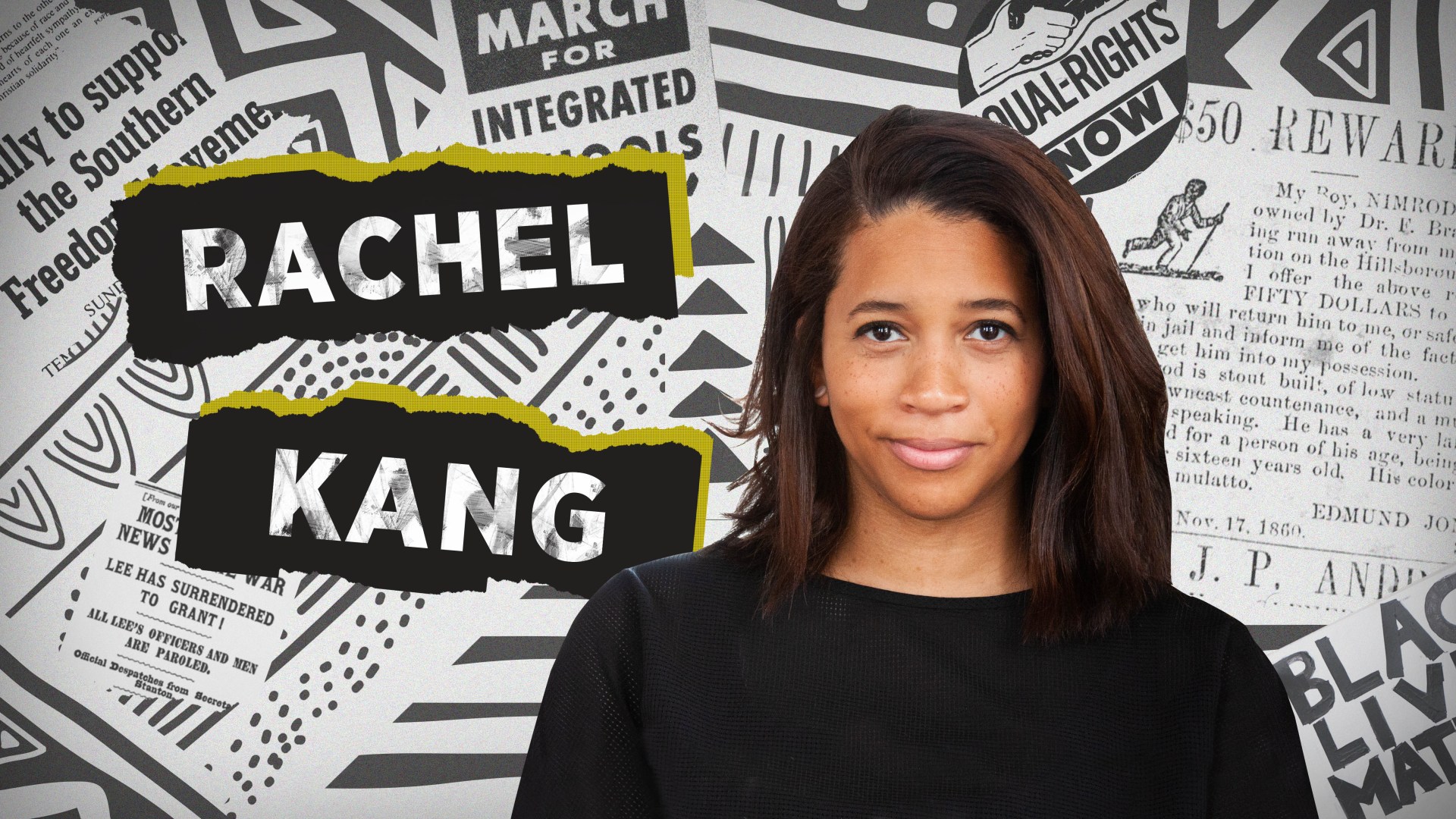
Illustration by Mallory Rentsch / Portrait: Courtesy of Rachel Kang / Background Images: WikiMedia / Unsplash / New York Public Library

I am preaching to myself when I say black is beautiful—that black is brilliant and bold, and that books written by black men and black women matter.

In May, after reading Playing in the Dark by Toni Morrison, I realized how much of what she writes about—the white gaze—is exactly what formed and reinforced my own literary collection. As I surveyed my shelves full of poetry and plays; nonfiction and fiction; Christian and non-Christian, I realized the bindings on all my books, save one, were bare of titles by black men and women. To look at my stacks would be to conclude the superiority of Shakespeare, Didion as the dream, and Voskamp as a voice esteemed with highest value.

Nigerian writer Chimamanda Ngozi Adichie describes reading Chinua Achebe and Camara Laye and experiencing a transformation in which she went from writing stories about “white girls with blue eyes to writing about girls with skin the color of chocolate, whose kinky hair could not form ponytails.” I, too, found myself thick in the midst of transformation, ordering Listening for God by Renita J. Weems and In Search of Our Mothers’ Gardens by Alice Walker, and saving to my to-be-bought wish list The Water Dancer by Ta-Nehisi Coates , Well-Read Black Girl by Glory Edim, and Native by Kaitlin B. Curtice, just to name a few.

When books like How To Be An Antiracist and So You Want To Talk About Race recently rose to the top of The New York Times Best Seller List as a consequence of riots and protests in many cities, part of me celebrated the amplification and elevation of important and informed black voices. Yet, black men and women offer immeasurably more than stories of suffering and struggle, more than mere resources on racism to relevantly revisit our nation’s painful past.

Rebecca McLaughlin writes that books are passports into “the wayside world” of those who are least like ourselves, a holy holding of sacred stories. “A book is a labor of love,” says Kate Murphy, pastor of The Grove, a multiethnic community church in East Charlotte, North Carolina. “Words have power,” she says, “to create and power to embody. And so I think the gift of being able to read bell hooks, or Toni Morrison, or Alice Walker, or Nikki Giovanni is that they’re so generously saying, ‘Here is the most sacred and real and true thing about my life, and I’m sharing it with you.’”

There’s a technical term for this kind of sacred story sharing called “windows and mirrors.” Jevon Bolden, an editor, literary agent, and CEO of Embolden Media Group, explains, “You get to see a mirror of yourself when you read someone’s story. You get to enter someone else's experience and actually see yourself, which means that you're being reflected. You’re seeing them as human, and you’re seeing you as human.”

Lucretia Berry, anti-race/ism curriculum specialist, founder of Brownicity, and author of What LIES Between Us, argues for the importance of reading as a means of seeing ourselves represented in books. She then adds, “We also need to see windows … so that we see the experiences of others. That helps us expand; that helps grow and cultivate our compassion when we know the stories of people that live a life that's different than ours.”

This kind of immersion is ultimately what dismantles what Chimamanda Ngozi Adichie calls “the danger of a single story,” the idea that if you show or see a people as “only one thing” over and over again, the one thing you see is who they become to you.

If ever there were a group of people that could and should understand this concept, it would be believers in Jesus. As Christians, we hinge our hope on the words and witness of ancient storytellers and scribes who looked and lived lives so diametrically different than our own. The paradox is obvious: We’ll listen to racial and culturally diverse voices from the Bible, but not from the rest of life.

Black voices resound beyond tales of woe and tears. #BlackJoy. There is art and beauty, intellect and originality, adventure, romance, and imagination.

Black voices resound beyond tales of woe and tears. #BlackJoy. There is art and beauty, intellect and originality, adventure, romance, and imagination to rival C. S. Lewis, J. R. R. Tolkien, Beverly Lewis, and Stephen King. “When you talk about history, when you talk about literature, we have been shaped to believe that the most important literature comes from white America,” says Kelvin Walker, superintendent of the Christian and Missionary Alliance’s Metropolitan district. “Even theologically, we have been shaped to think that the deepest thinkers, theologically; that the right thinkers, theologically, are Western, white theologians. And we don't hear from a lot of our classrooms that we should be reading Soong-Chan Rah, or Esau McCaulley, Brenda Salter, or W. E. B. Du Bois.”

Believers’ bookshelves should portray the kingdom of heaven we so passionately preach. If we long for the seats in our churches to be filled with black bodies and brown bodies and white bodies together, we can start with our shelves and surround ourselves with stories reflecting a love for others without boundaries experienced through reading others’ books.

Our compassion, our communities, and our very communion with Christ relies on the sacred stories and testimonies that surround us—stories, like Christ’s, which superiority and supremacy once sought to silence and snuff out.

So buy the books, believer. And not just the ones about antiracism, but the romantic ones too. Black men and women really do offer more than just a peering glass into the past. We are prized people of God, stamped with imago Dei and standing with pen in hand to pour out plot and poetry and prayers with unbridled power, perspective, and personality. Slavery and suffering did not forge and force this out of us. It was there all the time—given and gifted by God with all his unconditional compassion and creativity.

Recommended Reading

Things Fall Apart, Chinua Achebe (Penguin): A novel about society and life in Nigeria at the time of the arrival of Europeans in the late 19th century.

Americanah, Chimamanda Ngozi Adichie (Anchor): A novel about a young Nigerian woman who encounters struggle after immigrating to the United States to study.

Gifted Hands, Ben Carson (Zondervan): An autobiography of one man’s journey from poverty and prejudice to finding his own intellect and imagination in his becoming of a neurosurgeon.

The Water Dancer, Ta-Nehisi Coates (One World): A lyrical, fictional exploration of slavery narrative and fantasy.

Well-Read Black Girl, Glory Edim (Ballantine): A collection of creative contributions from members of the book club and online community Well-Read Black Girl.

Jazz, Toni Morrison (Vintage): A rhythmic and lyrical storytelling of characters in love and in conflict.

All Along You Were Blooming, Morgan Harper Nichols (Zondervan): A collection of illustrated poetry and prose on themes of becoming, grace, purpose, and joy.

In Search of Our Mothers’ Gardens, Alice Walker (Mariner): A collection of nonfiction pieces on womanhood, motherhood, feminism, and creativity.

The Color Purple, Alice Walker (Penguin): A novel about African-American women living in a suppressed social culture in the South in the 1930s.

Listening for God, Renita J. Weems (Touchstone): On longing for communication and communion with God through seasons of silence.

Rachel Kang is a writer of prose, poems, and other pieces, and the creator of Indelible Ink Writers, an online community of creatives. You can connect with her at rachelmariekang.com and follow her on Twitter & Instagram @rachelmariekang.

Books
Review

I’m Awash in Christian ‘Content.’ But Am I Living Like Christ?

Jon Tyson’s celebration of joyful, countercultural faith offers a convicting heart check.

Christianity Today July 23, 2020
Illustration by Mallory Rentsch / Source Images: Aaron Burdon / Daniela Torres / Anton Khmelnitsky / Unsplash / Tony Baggett / Getty Images

W hat voices are loudest in my life?

Beautiful Resistance: The Joy of Conviction in a Culture of Compromise

Last fall, I wrote this question on a sticky note and posted it near my desk as a reminder to examine who I’m listening to and what I’m being formed by. Between the endless streams of social media posts, the cacophony of podcasts and playlists, and the ever-expanding pile of books on my nightstand, I had no shortage of distractions from the voice of God in my life.

What we listen to forms us. The most persistent voices—including the quiet ones whispering lies we’re too distracted to notice—can indelibly shape who we are, changing our thoughts, attitudes, and actions. We can say all the right words on Sundays and in small-group settings, but when the explicit spiritual agenda has been lifted, how do we live? Are we being shaped into the image of Christ or the image of the world?

In Beautiful Resistance: The Joy of Conviction in a Culture of Compromise, Jon Tyson, pastor of Church of the City New York, challenges believers—particularly those in the United States and other Western contexts—to resist the cultural syncretism of our age. Identifying heart postures, attitudes, and actions that our culture drives us toward, he leads us back to the countercultural, higher call of Christ.

What does it look like to live as a Christian in the world? What does it look like to model the way of Christ, moving beyond spiritual talk to actually walking as one shaped by the gospel? These are the underlying questions Tyson poses.

A Stirring Gospel

I came to Beautiful Resistance familiar with Tyson’s teaching. I listen to Church of the City’s sermon podcast on a near-weekly basis, and I appreciate how Tyson relates the gospel to our current moment, especially as it bears on New York City, where he lives and serves. He deftly weaves together scriptural truth with revival history, current events, and a spiritual hunger to see God launch fresh waves of faith. Tyson doesn’t teach an overly individualistic self-help Christianity or a sleepy moralism that quotes Scripture but lives as if the Holy Spirit is no longer active. Rather, he preaches a stirring gospel, true to its source and confident that God is at work in the world today.

Beautiful Resistance exemplifies this sort of teaching. Developed from a series of sermons Tyson preached in 2018, the book is a call to counteract the discipleship of our culture with a deep spiritual formation founded in the way of Jesus. It’s a call to devote ourselves to the way of Christ—through worship, rest, fasting, hospitality, honor, love, sacrifice, and celebration—so that the church can shine like a city on a hill.

Tyson frames his book with the story of Dietrich Bonhoeffer, whose commitment to Christ compelled him to boldly oppose Hitler and the Nazis—the dominant forces of his day. As Bonhoeffer witnessed German churches capitulating to Nazi powers, he determined that believers needed a deeper discipleship, one that cultivated what Tyson describes as an “unflinching loyalty to the cross.”

Tyson doesn’t draw direct parallels between Nazi Germany and the United States, and he doesn’t explicitly name any recent controversies involving evangelicalism and partisan politics, but he is clearly concerned with how such compromises harm the church that God loves. And he’s concerned that our culture is doing a better job discipling us than the church is.

As the world becomes more polarized, the church seems to become more polarized with it. As the world lashes out in contempt and vitriol toward political and cultural opponents, the church does the same—despite the fact, Tyson reminds us, that Jesus taught his disciples to love their enemies. As the world embraces fear and hate and stubbornly clings to any power it can grab, the church too easily and too often follows suit.

In eight of his nine chapters, Tyson identifies a worldly posture or attitude that he sees the church easily falling into and fleshes out the Christian alternative. His examples include idolatry (both of religious moralism and of cultural values), busyness, fear of those who are ethnically or culturally different, and contempt for those with different beliefs. He points out that unless we’re paying attention, we’ll naturally follow the paths our culture is shepherding us down.

None of the attitudes or practices that Tyson recommends are new to the teachings of Christianity, but setting them alongside their worldly counterparts provides a convicting heart check. How have I idolized morality or religiousness? How have I drowned out God’s voice with constant busyness? How have I harbored fear or contempt toward those different from me?

Christians in the West don’t lack Christian content. We have plenty of resources for digging into doctrines like the Trinity, the imago Dei, the Incarnation, the Resurrection, and so on. But ideas and doctrines, while essential, are not compelling apart from lives that emulate Christ. The way we carry ourselves in the world is just as important as the creeds we profess. As Paul wrote in 1 Corinthians 13:2, “If I have the gift of prophecy and can fathom all mysteries and all knowledge … but do not have love, I am nothing.”

This gap—a lack of love, for God and for neighbor—is what Beautiful Resistance seeks to address. And although it takes a careful look at the way culture is forming and shaping us, it’s not a book about what’s wrong out there. It’s about what’s wrong or off-balance within the church. It’s a mirror to see the mote in our own eye, a test to learn whether we are salt that’s lost its flavor.

Before Tyson tackles the loves and loyalties that compete for our devotion, he spends a chapter homing in on the church. He writes briefly about the church’s failings in recent years, but he doesn’t stay there for long. Instead, most of chapter one focuses on the church’s three core identities as the bride of Christ, the temple of God, and the body of Christ. This grounding is crucial for readers in a culture that elevates all manner of rival identities—professional, socioeconomic, sexual, political, and everything in between. Digging into the church’s true identity helps us define ourselves solely by our relationship to God.

This realignment is the first step toward countering our cultural formation. If we’re the people of God, if we’re his church, then the way we live should reflect that.

A Shining Light

In the parable of the Good Samaritan, Jesus illustrates the hypocrisy of the religious elite by presenting the Samaritan, an outcast from Jewish society, as the one who best embodies the command to love one’s neighbor. While the priest and Levite cling to fear and self-preservation, the Samaritan risks his safety to help the beaten-down traveler.

The blindness of the religious elite in this story should catch our attention. Roads at the time were notoriously dangerous, and there were strong cultural and contextual reasons for the priest and Levite to avoid stopping to care for a stranger left for dead. Their actions are logical. But they aren’t actually right.

Every culture has conventions and norms that shape default attitudes and behaviors. Some of these norms develop in response to legitimate fears and dangers. But what happens when they put our own needs or desires at the center, rather than God and his love for the least and the lost? What happens when cultural norms take stronger root in the church than the call to “love your neighbor as yourself” (Mark 12:31) and to love your enemies? During his Sermon on the Mount, Jesus asks, “If you love those who love you, what reward will you get? Are not even the tax collectors doing that?” (Matt. 5:46).

There are parts of gospel living that sit well in our cultural context, and those parts are important, but it’s the parts that run counter to our culture that demand the firmest degree of commitment. Where our culture holds those different from us at arm’s length, we need to show hospitality and honor. Where our culture drives us toward spiritual apathy and cynicism, we need to foster a hunger to see (and celebrate) God’s work in the world. Where our culture drives us to cling to power and privilege, we need to sacrifice for the good of others.

Yes, these things are always important for Christians to do, but in a cultural context that normalizes the opposite, countercultural faithfulness is what enables the gospel to shine.

Without ragging on the church or the culture, Beautiful Resistance candidly confronts the ways God’s people are being shaped for compromise, with or without their knowledge. Tyson’s heart is clearly for God’s people to catch a vision of God’s work, in and through us, as we joyfully devote ourselves to the way of Christ in a world that desperately needs a shining light.

Meredith Sell is a freelance writer and editor living in Denver, Colorado.

News

Sex Offenders Can Find Hope in Christ But Not Necessarily a Place at Church

Most Christians believe offenders belong at worship. Most congregations aren’t prepared to welcome them.

Christianity Today July 23, 2020
Erin Clark / Lightstock

Churches that suspended in-person gatherings during the pandemic have pledged not to welcome their congregations back until they’re sure they can be safe. While the risk of coronavirus spread is the major concern right now, LifeWay Christian Resources is urging leaders to use their reopening plans as a chance to also revisit their policies to prevent sexual abuse.

Most pastors see their churches as safe places that protect against abuse and offer healing to victims, but protocols vary by congregation.

At the Family Empowerment Center, a church in Chicago’s Rogers Park neighborhood, pastors and staff are trained to pay attention to new faces. During one Sunday gathering before the pandemic, they noticed a visitor intently watching children in the congregation. They met him, learned his name, and later found him listed on a sex offender registry. His Facebook page also turned up unsettling posts about children.

The church had a plan in place for cases like his, developed based on conversations with the local alderman, police officials, and other church leaders. Tony Silker, an associate pastor at the Christian and Missionary Alliance congregation, had a conversation with the man on his next visit, explaining what they found. Silker said he could not return; if he did, the staff would call the police.

Silker gave the man information about another church in the neighborhood that ministers to people struggling with sexual addiction and urged him to get the support he needed.

The staff at Family Empowerment Center are trained to interact with registered sex offenders because they expect sex offenders to enter their church. The church works with the homeless and other vulnerable populations in the high-crime crevices of the neighborhood.

The church’s after-school program is called “Safe Haven” for a reason. “People who live in our neighborhood know what it’s like outside of our doors, and they send their kids to us because they know we have procedures set up to deal with it,” Silker said.

But not all churches expect sex offenders to walk in the doors, and not all offenders will show signs of suspicious activity, a criminal background, or unsettling behavior. In fact, many groom churches to let their guard down.

A prominent Southern Baptist congregation in Memphis is currently being sued by the parents of a teenage volunteer they say was abused by a former staff member when the church ignored the “red flags” and concerns raised against him. The former Bellevue Baptist Church employee is currently in prison for sexual battery by an authority figure.

Over the past decade, LifeWay’s OneSource program has reviewed 416,000 ministry staff members and volunteers through its partnership with BackgroundChecks.com, which screens for appearances on the national sex offender registry as well as other criminal records. About 1 in 5 of those checks have discovered a misdemeanor or more serious crime, but far fewer reveal sexual offenses.

“Taking a holistic approach is important. A church that just does a background check is a little bit more at risk because less than 10 percent of predators have ever been caught,” said Steve Case, senior corporate counsel for Brotherhood Mutual. He recommends church screenings start with a background check but also include an application, personal and professional references (that the church actually contacts), and an in-person interview.

So what happens when screenings, independent research, or self-disclosure uncover a registered sex offender? (While individuals can land on the sex offender registry for other crimes, this article uses the term to refer to those who have been convicted of crimes involving minors.)

In many cases, like at the Family Empowerment Center, church leaders will have to instruct the person not to return. Some states prohibit sex offenders from attending church. Many more ban sex offenders from being on the premise of schools or childcare facilities, which could include a church with a daycare, preschool, or after-school program.

In Tennessee, which currently bars its 13,000 offenders from houses of worship, a proposal to allow offenders to participate in church if they had a pastor’s written permission failed to advance in the state legislature this year. Over the past few years, lawsuits filed in North Carolina and Indiana have challenged state restrictions, saying it’s unconstitutional and an unfair burden on free exercise of religion to keep sex offenders out of churches altogether.

Even if they’re legally permitted on the church property, not every congregation is the right place for ministering to a registered sex offender. Experts agree that no church should permit an offender to attend unless its leaders have received training specifically around legal requirements, children’s safety, and the habits of abusers. Churches must prioritize protecting the congregation.

Boz Tchividjian, a lawyer and the founder of Godly Response to Abuse in a Christian Environment (GRACE), suggests obtaining the offender’s court file, talking to the parole officer assigned to the case, and verifying whatever the sex offender tells the church leadership.

Tchividjian said the way sex offenders talk about the crimes they committed can reveal the state of their heart and if they are ready to participate in worship or ministry.

“If they marginalize and minimize their behavior, [the sex offender is] not in a position to even be served,” he said. “If you get to the point where the person is sorry and an open book, that’s a different story. They are teachable.”

Experts also recommend having offenders agree in writing to submit to a set of guidelines, such as not speaking with children in the congregation or avoiding the children’s ministry space. The congregation must also be informed of their presence and the terms of their attendance.

Jimmy Hinton, a pastor and abuse survivor advocate whose father is serving time in prison for abusing children, said this kind of transparency and disclosure are crucial. Without it, he said, “church leaders have the benefit of being in the know and the power of keeping everyone else in the dark.”

A decade ago, most churches supported the idea of allowing sex offenders to attend. In a 2010 Christianity Today survey of pastors, church leaders, staff, and members, nearly 80 percent of respondents agreed that sex offenders belong in church as attendees, with supervision, and subject to limitations.

While Christians may believe that sex offenders should be given an opportunity to change and see their lives transformed in Christ in the context of a local congregation, the reality is that many churches lack the manpower and resources to provide adequate support and safety, according to attorney Rob Showers, an advisor at large with Church Law & Tax, a fellow CT publication.

Churches that already have an addiction support program like Celebrate Recovery may be better suited to help, as would large churches with large staffs, which could help supervise a sex offender every time he or she is on the premises. Some congregations or ministry programs are established specifically to disciple those living in on the margins.

Sonrise Church in Hillsboro, Oregon, welcomes people who are homeless, previously incarcerated, or in recovery at its Light My Way campus. According to the church website, about 10 percent of attendees are registered sex offenders.

Leading the ministry is Clifford Jones, a former convict who earned a degree from New Orleans Baptist Theological Seminary’s Bible college program in Angola Prison, where he served a 13-year sentence. He later pastored in Angola and served at two churches in Louisiana before moving to Oregon to lead Light My Way.

“Everybody needs a safe place to worship where they don’t feel like outsiders and outcasts. We created this church to help people who feel ostracized to feel the goodness of God without wondering who’s looking at them,” Jones said.

But Light My Way relies on more than goodwill to help attendees. The church is only open to adults, and it has specific entrances, exits, and restrooms to keep attendees away from other parts of the building. It also meets for worship on Saturdays when no one else is using the building.

The engine of ministry at Light My Way is committed mentors and volunteers who walk alongside former inmates and sex offenders. Jones has developed relationships with the Washington County Department of Correction, parole officers, and court officials. He said the church works hand in hand with parole officers during a parolee’s probationary period. Its website notes that offenders who actively participate in social environments focused on healing and recovery reduce their risk of recidivism.

Whether or not a church welcomes a sex offender can depend both on its resources and the severity of the offender’s crimes as well as the offender’s attitude toward recovery.

One church planter told CT that he had to turn away a sex offender since his young St. Louis congregation lacked the resources to monitor him and keep children safe. The pastor, himself a recovering alcoholic and drug addict, was particularly concerned that the sex offender downplayed the potential threat and risk of relapse.

Though the sex offender was hurt, he complied with the pastor’s request and moved on to another small church. The church planter notified the pastor of the new church about the man’s sex offender status.

As more stories of sex abuse and coverups come to the forefront, GRACE has seen its caseload grow from one or two investigations at a time to more than 10.

Brotherhood Mutual’s Legal Assist helpline receives at least one call a week from a church seeking guidance about a sex offender in the church. Hinton also gets more consultation requests.

“Only the churches that can delve in and get good legal counsel that walks through this should undertake it,” Showers said. “It’s a wonderful ministry that can go wrong in so many ways.”

Christianity Today’s ‘Bible Project’ Story Wins a Top Award from the Evangelical Press Association

Paul J. Pastor reported on an increasingly popular way to engage Scripture in the 21st century.

Christianity Today’s ‘Bible Project’ Story Wins a Top Award from the Evangelical Press Association
Photo Courtesy of Paul J. Pastor

Even as the Bible has remained the center of Christian faith for hundreds of years, engaging God’s Word has evolved. For years, the majority of early-Church believers were illiterate. What’s more, they had little access to texts in their first language.

With the advent of the Protestant Reformation, the number of translations available began to climb, along with a focus on individual Bible readership. But even as the proliferation of types of print Bibles has rapidly increased in recent decades, so have other forms of Scriptural engagement, especially as digital technology has entered the picture. Enter, Bible Project, a Portland-based animation studio that has taught millions about Old and New Testament stories, literature, and key themes through its video shorts that break down the ancient texts in accessible, entertaining, and educational ways.

Last year, writer Paul J. Pastor profiled the team’s work for Christianity Today in “How the Bible Project Is Using Video to Get People into Scripture Again.” The Evangelical Press Association (EPA) awarded Pastor’s article first place in its “Cause of the Year” award, a category that changes on an annual basis. In the most recent award season, the cause was Bible literacy.

“The opening paragraphs are worth the price of subscription,” wrote the EPA judges, commenting on Pastor’s description of a Bible Project video short of Job. “Vividly narrating video is a fraught undertaking, but this captured me.”

The judges continued, “A narrative matryoshka masterpiece. A story about two guys telling stories from the great story of God and humanity, hoping people integrate that story into their stories.”

“Biblical literacy is close to my heart,” said Pastor. “We frequently position it in ways that aren’t compelling or that carefully deal with the history or formation of the Bible. Often, we’re not answering the questions people are really asking.”

But Pastor found that the Bible Project’s series excelled at “distilling deep concepts into readily accessible themes.”

“It’s really excellent content. It honors the questions and the personhood of the person engaging it,” he said. “It never dumbs the Bible down.”

Among many demographics, the ministry has especially resonated with a group that some Christians have been tempted to write off.

“The Bible Project’s metrics undo many common assumptions about biblical literacy or interest today,” said Pastor. “The fact that their average donor for a crowd-funded project is a young male in his late teens to early 20s, is amazing to me. It so effectively spoke against this false narrative that guys don’t care about the Bible and that coastal or progressive areas don’t care about the Bible.”

Pastor has spent most of his life in his home state of Oregon, but his career did have a Chicagoland interlude. After graduating from Western Seminary, he joined Christianity Today in 2011 after he was nominated for an editorial residency with former CT publication, Leadership Journal.

“We, in just a matter of a couple of months, packed our little red station wagon,” said Pastor.

“We had a one-and-a-half-year-old and second one on the way. We loaded up a cooler with dry ice and beef and drove here sight unseen.”

Since high school, Pastor had written songs, poetry, fiction, and creative writing, but CT was his first step into publishing.

“While I’d been writing for a long time, I had no formal journalism experience. I was a blank slate” said Pastor. “I showed up to CT with passion and openness. Numerous mentors there gave of their time to help me grow.

The residency turned into a fulltime job, then various editorial positions over the next several years before his family returned to Oregon, where he engaged deeply with the tight knit and influential community of Christian writers rooted in the Portland area, including Luis Palau, Donald Miller, John Mark Comer, and many others.

“Portland is a small town in the Christian and publishing communities,” said Pastor. “Everyone knows each other, and there’s a wonderful spirit of collaboration.”

Though deeply connected in the city, the Pastor family makes their home on a creekside property east of Portland, where he works from a custom home office and Emily, Paul’s wife, is an artist.

“The community is basically a village in the woods,” he said. “It’s very pristine.” They homeschool their three children and are active in local nature study, education, and the arts.

Because of this lifestyle, Pastor hasn’t had to shuffle much of his life around due to COVID-19. Instead, he’s continuing with his creative projects, including his present full-time role as an editor for WaterBrook and Multnomah, two of Penguin Random House’s Christian book imprints. He is also an author, with his 2016 book, The Face of the Deep re-releasing from David C. Cook on August 1, 2020, a multi-volume devotional series (The Listening Day) available from Zeal Books, and a forthcoming (2021) collection of poetry, titled Bower Lodge, with a contract soon to be announced .

In addition to the EPA’s recognition, Pastor said many who reached out with feedback were excited that CT had covered the Bible Project.

“It was a great glimpse into the minds and hearts of Tim Mackie and Jon Collins, and the extended impact that their work is having,” wrote one reader.

“The piece has been a prompt for many people to think more deeply about how and why they read the Bible instead of simply consuming it.” he said.

Pastor has long been passionate about encouraging and promoting Biblical literacy through his own work and this drive encouraged him to move forward with the piece after a CT editor reached out.

“It was a good article for CT because it traced the cutting-edge growth of a historic Christian discipline—Bible engagement,” said Pastor. “The freshness and depth of the ‘story behind the story’ lent itself to the careful work that CT does in long-form profiles like this.”

CT continues to serve as a home for Christians from a variety of backgrounds to engage and learn from each other, says Pastor.

“I appreciate that CT remains a space for balanced, well-reasoned discussion. Dialogue, based on strong reporting and careful work, is in decline these days. CT is still a space where that slower, more careful, and very important work gets done for Christian readers, and many beyond the Christian community too,” said Pastor. “It’s always an honor to publish my work in CT.”

Morgan Lee is Global Media Manager at CT.

www.pauljpastor.com

@pauljpastor

News

Bible Reading Drops During Social Distancing

Daily engagement had already been declining, but worsened during the pandemic, according to the annual State of the Bible report.

Christianity Today July 22, 2020
Claudine Chaussé / Lightstock

The COVID-19 pandemic is shifting Americans’ Bible engagement, with many who are socially distanced from their spiritual communities turning to Scripture less and those who have lost loved ones to the virus reading it more.

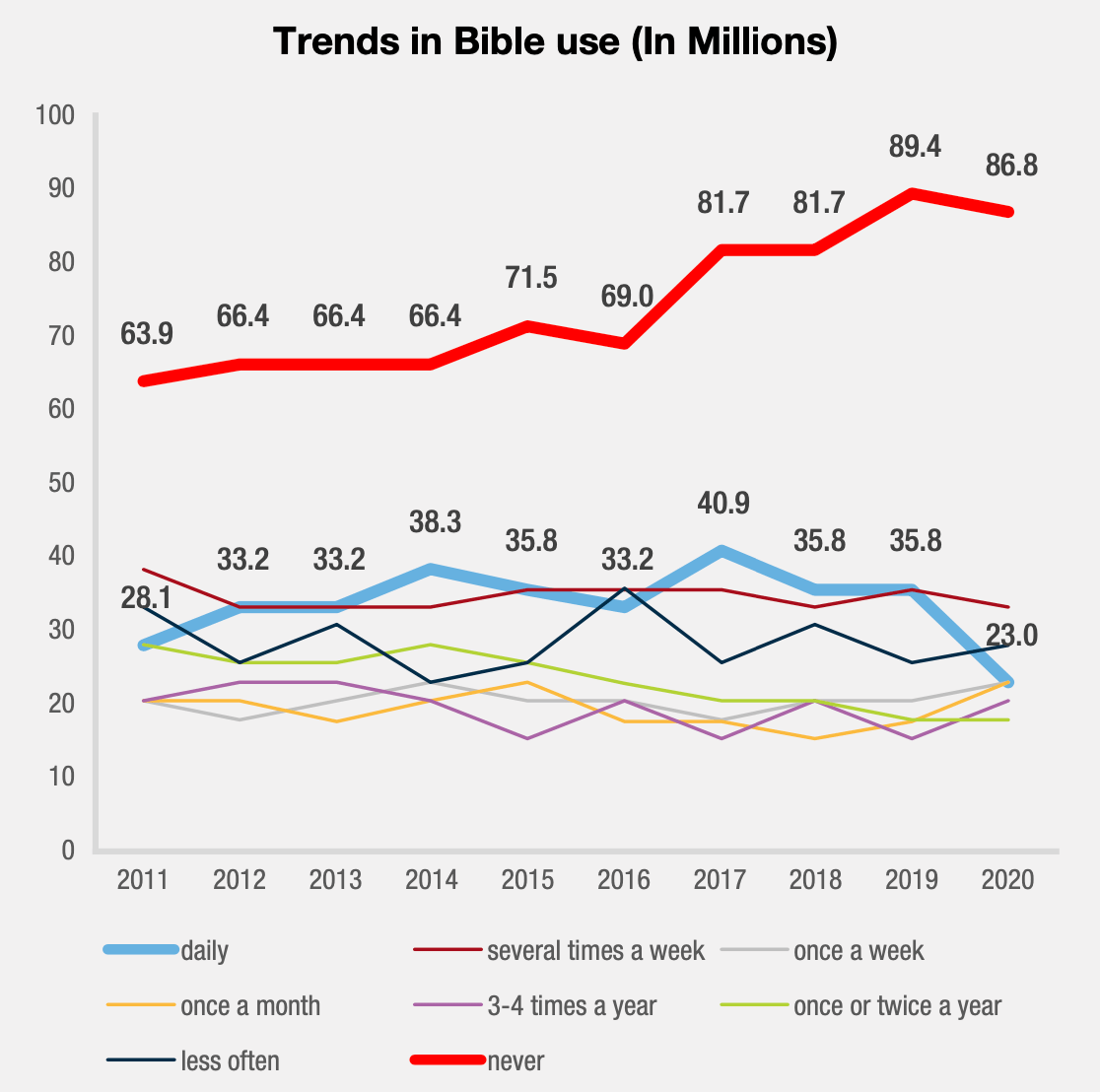
Between early 2019 and 2020, the percentage of US adults who say they use the Bible daily dropped from 14 percent to 9 percent, according to the State of the Bible 2020 report released today by the Barna Group and the American Bible Society (ABS).

A decrease of 5 percentage points in a single year was unprecedented in the annual survey’s 10-year history; between 2011 and 2019, daily Bible readers had basically held steady at an average of 13.7 percent of the population.

But the decline continued during the initial months of the coronavirus pandemic, and by June, the percentage of daily Bible users had dropped to 8.5 percent.

Amid the pandemic, a larger decline occurred among the Americans who say their choices and relationships are shaped by the Bible, a group ABS calls “Bible engaged.” In January, 27.8 percent of American adults were Bible engaged. By June, after months of quarantine and church closures, that figure was down to 22.6 percent.

“This study supports the idea that the church plays a significant role in benefitting people’s wellbeing and Scripture engagement,” said John Farquhar Plake, ABS director of ministry intelligence. “To increase Scripture engagement, we must increase relational connections with one another through the church. The pandemic—and now this survey—have shown that when relational church engagement goes up, so does Scripture engagement, but when it goes down, Scripture engagement drops with it.”

State of the Bible 2020 / ABS and Barna Group

Overall, about a fifth (22%) of US adults interact with the Bible multiple times a week, not counting Scripture use at church, according to a January survey. More than a third (35%) of Americans say they never read the Bible—unchanged from last year but up from 25 percent at the annual report’s inception in 2011. Sixty percent read the Bible four times per year or less.

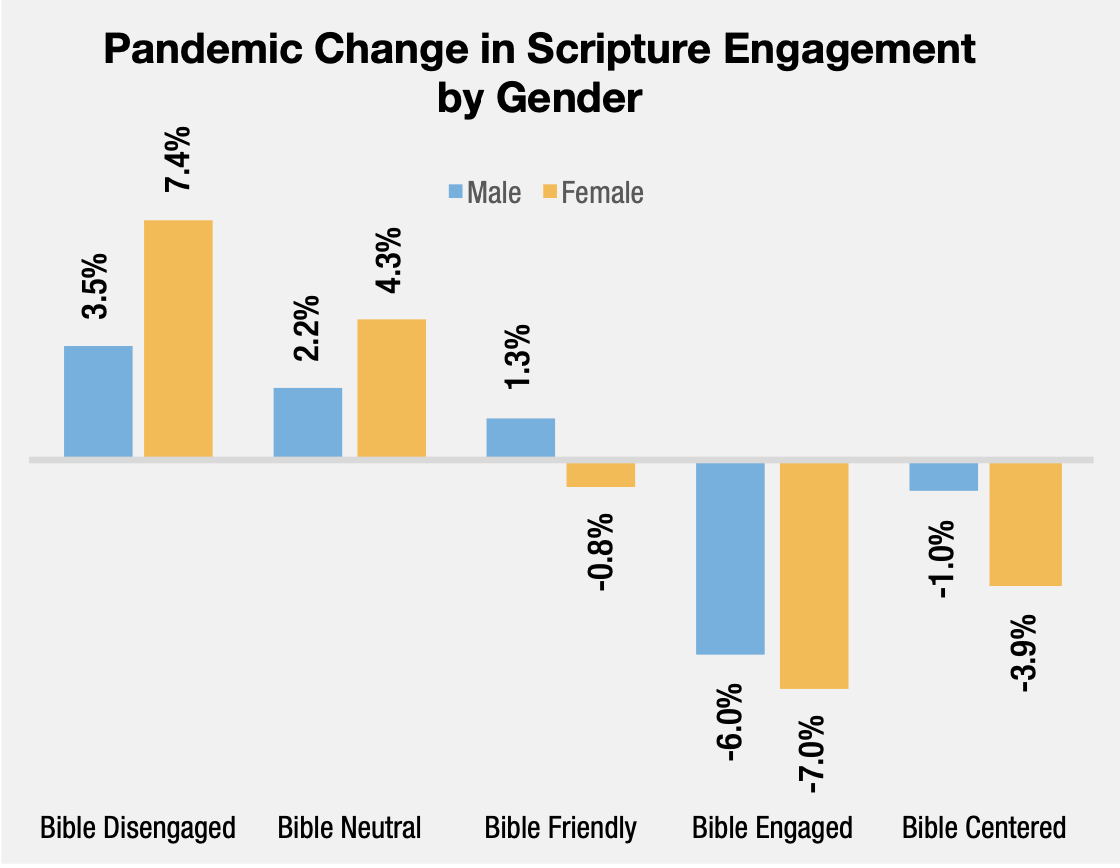
In January, women were slightly more Bible engaged than men (19.1% vs. 18.8%) and 2 percent more likely than men to be “Bible centered” (a Barna and ABS designation for individuals with the highest level of influence from Scripture in their daily lives).

But that changed when the pandemic hit. Women lost more ground than men in Bible engagement, and levels of engagement evened out among the genders for the first time in the survey’s history. Women’s Bible engagement dropped by 7 percentage points between January and June, compared with 6 percentage points for men. The number of women considered “Bible centered” in January dropped by 3.9 points by June compared with 1 point for men.

State of the Bible 2020 / ABS and Barna Group

The drop could be related to life adjustments women were forced to make as they juggled work from home and caring for children who previously attended school or daycare, the report speculated. A lack of in-person connection with churches and small groups also could have played a role, according to the report.

“You can’t download a hug,” said Donald Whitney, professor of biblical spirituality at the Southern Baptist Theological Seminary. Lack of encouragement from “physical presence” with other believers “can diminish our engagement in the spiritual disciplines because when we’re together, we’re encouraged to stay faithful to the things of God.”

One way to reengage with Scripture is by meditating on it, said Whitney author of Spiritual Disciplines for the Christian Life. Christians should “read big, meditate small,” he said, reading a larger passage and then spending a few minutes thinking about one verse or phrase. Praying the passage and coming up with an illustration are two ways of mediating suggested by Whitney.

Measuring the pandemic’s affect on American spirituality was a major reason ABS supplemented its January survey of 2,010 people, conducted alongside Barna, with a June poll of 3,020 Americans. The pandemic doesn’t seem to have changed the overall percentage of Bible readers, according to the follow-up study, but Americans who lost loved ones to COVID-19 were more likely to increase their Bible use.

About half (49%) of Americans with a family member living in their household who died of coronavirus said they increased their use of the Bible—2.3 times more than average. Thirty-six percent of those with a neighbor who died of the virus increased their Bible use (1.7 times more than average), and 33 percent of those with a close personal friend who died increased their use (1.6 times more than average).

When the pandemic hit in March, there were initial signs it might be having an overall positive effect on American spirituality. Three of the largest online evangelism ministries—Global Media Outreach, the Billy Graham Evangelistic Association, and Cru—all reported increases of people seeking online information about knowing Jesus. The spike in curiosity was corroborated by ABS, which found more Americans exploring the Bible for the first time in June than January.

But apparently the spike in curiosity didn’t translate into engagement. In June 13.1 million fewer Americans were Bible engaged than in January. Within that overall decrease, the “Bible centered” segment was most impacted, decreasing by 9.7 million.

Church closures during the pandemic likely impacted the decrease in Bible engagement, according to ABS.

“Faith communities have demonstrated incredible resilience, innovation, and empathy through the pandemic,” ABS president and CEO Robert Briggs said. “But this survey reveals that a big opportunity still remains for Christian organizations to make an impact on Scripture engagement.”

During the pandemic-necessitated lockdown, 48 percent of practicing Christians met virtually with their churches using a streaming service that allowed them to watch but not be seen or heard, according to ABS, and 14 percent did not participate in any Christian church services.

Chris Hall, president of the spiritual formation ministry Renovaré, said disruption of life rhythms likely hurt Bible engagement. Prolonged stress also could have affected Christians’ ability to digest and live out Scripture, he said.

To counter a pandemic-prompted morass in Bible engagement, Hall said, “learn to read the Bible in a new way.” That could include using a Bible app that plays music as a person reads or a Bible app that reads a selected passage aloud over and over.

“Think about the possibilities that the pandemic is offering,” he said, “rather than simply what is negative.”

The annual report also showed that millennials read the Bible more frequently than any other generation, with 26 percent reading it multiple times each week. That’s consistent with previous findings that practicing Christian millennials know the Bible as well as or better than their parents and grandparents. Adults aged 74 and up are the least likely age group to read their Bibles multiple times each week, with only 10 percent doing so.

While most Bible readers (65%) prefer a printed version, millennials are about as likely to read the Bible digitally (52%) as they are in print (48%). Americans who live in a household that owns a Bible (77% of the population) are as likely to use a Bible app as those without a Bible in the house (56% vs. 55%).

African Americans have the highest level of Scripture engagement among racial groups in America, another finding consistent with longstanding trends. Some 27 percent of African Americans are Bible engaged, compared with 24 percent of Hispanics, 18 percent of Asians, and 17 percent of Anglos.

ABS plans to publish additional analysis of Americans’ Bible engagement each month between August and December.

David Roach is a writer in Nashville.

Ideas

Shaming Can’t Fix Racism. But Guilt Can.

Staff Editor

Guilt is about action with a clear path to redemption. Shame leaves us stuck in our sin.

Christianity Today July 22, 2020
Illustration by Mallory Rentsch / Source Images: José Martín Ramírez Carrasco / Alejandro Luengo / NordWood Themes / Felipe Pelaquim / Unsplash

[Ler em português]

In the days following the death of George Floyd at the hands of Minneapolis police, a swift substitution occurred on my social media feeds. Out went updates from my loved ones’ lives. In came reshares from strangers’ accounts, posts about racial disparities in policing, and about racism in America more broadly.

Initially, I was thrilled to see this. I’ve written on policing, including its racial dynamics, for the better part of a decade. Whenever enthusiasm for changing our criminal justice system has ebbed, I’ve asked why and wondered if white Americans will ever make a durable commitment to reform. Maybe this time was different, and that commitment had occurred.

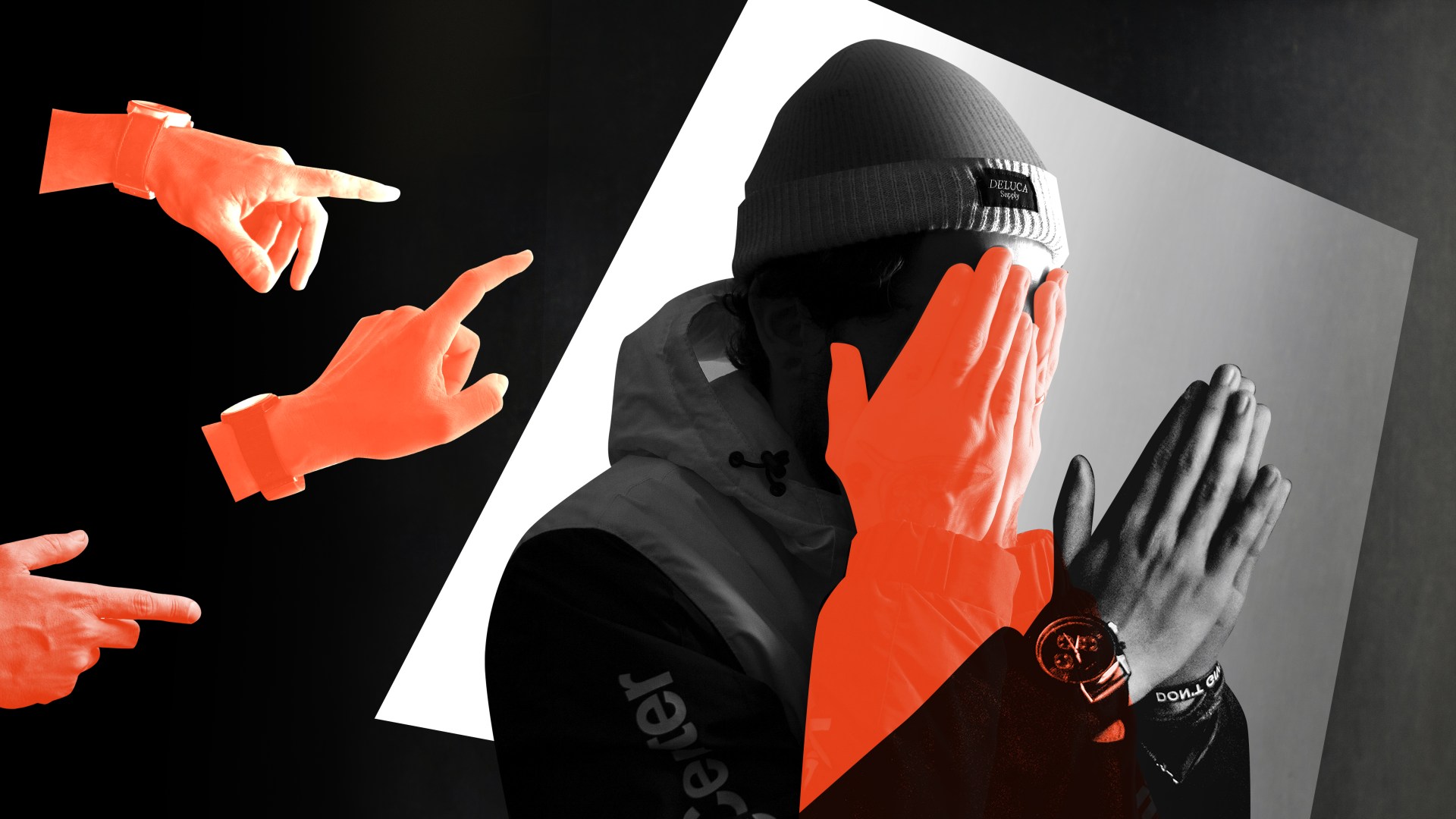
But then the conversation shifted. Informed by sources like Robin DiAngelo’s White Fragility, which topped bestseller lists all summer, the posts developed a tic of shame. One popular post particularly struck me. The image itself calls for nuance and discretion in grappling with racism. Then there’s the caption. White people “can never ‘get it right’ in this conversation,” it says. “White people are the oppressors and benefit from oppression itself—for us to get racial justice ‘right’ is, by definition of our whiteness, impossible.”

I started noticing this framing all over. Well-intended white Christians newly in pursuit of racial justice, adopting the language of our national conversation on race, began to speak of racism as an irreparable sin. They talked of racism as a stain on the souls of white people that cannot be washed away. Though rarely so blunt as that caption, much of the content I encountered reduced down to basically: “White people like you and me are inherently, unalterably shameful.”

This rejection of redemption unsettled me. Racism, of course, is a horrific wrong. It has been and continues to be a great evil in our country. It devalues people made in God’s image, people for whom Christ died. It is insidious, and it is used to justify a whole host of other sins. But it does not make us irredeemable, and when we speak as if it does, we diminish the work of Christ.

If we believe God delivers us from evil (Rom. 7:24-25) and removes our sin as far as the east is from the west (Psa. 103:12), if we believe we are made into new creations in Christ (2 Cor. 5:16-19), we will not speak even of racism as a permanent stain on ourselves or other people. Is racism more powerful than the blood of Christ? Is racism the one wrong Jesus did not conquer? If it is not—and I am saying it is not because no evil exists unvanquished by Christ (1 Cor. 15:54-57)—then our confrontation of racism should reflect this truth.

Why would Christians act otherwise? I suspect the culprit is our society’s growing fixation on shame and our own adoption of its vocabulary and assumptions.

To understand shame’s nature and power, consider three contrasts with guilt. First, guilt is about action while shame is about identity. Guilt says, “You did a bad thing.” Shame says, “You are a bad person.” Second, guilt is usually individual and shame communal; shame subjects you to the judgment and exclusion of the crowd. Third, guilt allows for a clear path to redemption via repentance, but our individualist culture has no means of restoration for those who are shamed, as former CT editor Andy Crouch has ably explained. Thus, guilt can motivate us to positive transformation, but shame anchors to despair and correlates with addiction, violence, and suicide.

Responding to racism with shame commits the theological error of reducing the reach of redemption.

Responding to racism with shame commits the theological error of reducing the reach of redemption. But that’s not all. In a cruel irony, it also tells a story that discourages true pursuit of racial justice.

The shame-story says all white Americans benefit from racist systems and are therefore—as that caption put it—“oppressors” who “by definition” can’t “get racial justice ‘right.’” We need not downplay the gravity or systemic nature of racial injustice in our country to recognize how this storyline leaves white Americans in an inextricable bind: Because we can’t change our identity, we will always be shameful.

Some people, hearing that story, will simply reject it. They’ll deny the story’s premise of racial injustice as a means of escaping its conclusion of inescapable shame. Others will react by embarking on a permanent penance of anti-racist self-education and advocacy. This looks good on Instagram, but—much like the self-help wellness culture it eerily resembles—it isn’t motivated by love and a hunger for justice for our neighbors and family in Christ. It’s self-focused, performative (Matt. 6:5), and therapeutic, better for not feeling like a bad person than actually fostering justice. Most, however, exhausted by shame, will do nothing. This is “basic psychology,” argues author Fredrik deBoer: “People need to feel that their efforts have some meaningful possibility of creating positive change.” Why seek change if change is impossible?

“But with God, all things are possible,” Jesus said (Matt. 19:26). Rather than shame, we might repudiate racism with the conviction of Paul in 1 Corinthians 6 (paraphrased): “Do you not know that wrongdoers will not inherit the kingdom of God? Do not be deceived! Racists will not inherit the kingdom of God.” And then to our fellow Christians and ourselves, we add, “And this is what some of you used to be. But you were washed, you were sanctified, you were justified in the name of the Lord Jesus Christ and in the Spirit of our God.” In Christ, we are redeemed already. Ours remains to show our redemption as real, as Paul adds, not acting as we did before but rather glorifying God and, in the Spirit, acting like the new justice-loving creations we have become.

Bonnie Kristian is a columnist at Christianity Today, a contributing editor at The Week, a fellow at Defense Priorities, and the author of A Flexible Faith: Rethinking What It Means to Follow Jesus Today (Hachette).

Editor’s note: You can now read or share this article in Portuguese as 1 of 150+ CT Global translations.

You can also now follow CT on WhatsApp and Telegram.

Apple PodcastsDown ArrowDown ArrowDown Arrowarrow_left_altLeft ArrowLeft ArrowRight ArrowRight ArrowRight Arrowarrow_up_altUp ArrowUp ArrowAvailable at Amazoncaret-downCloseCloseEmailEmailExpandExpandExternalExternalFacebookfacebook-squareGiftGiftGooglegoogleGoogle KeephamburgerInstagraminstagram-squareLinkLinklinkedin-squareListenListenListenChristianity TodayCT Creative Studio Logologo_orgMegaphoneMenuMenupausePinterestPlayPlayPocketPodcastRSSRSSSaveSaveSaveSearchSearchsearchSpotifyStitcherTelegramTable of ContentsTable of Contentstwitter-squareWhatsAppXYouTubeYouTube