News

Christian Giving Rebounds to Pre-Pandemic Levels

Most evangelical churches and ministries tightened budgets yet saw steady donations this spring.

Christianity Today June 11, 2020
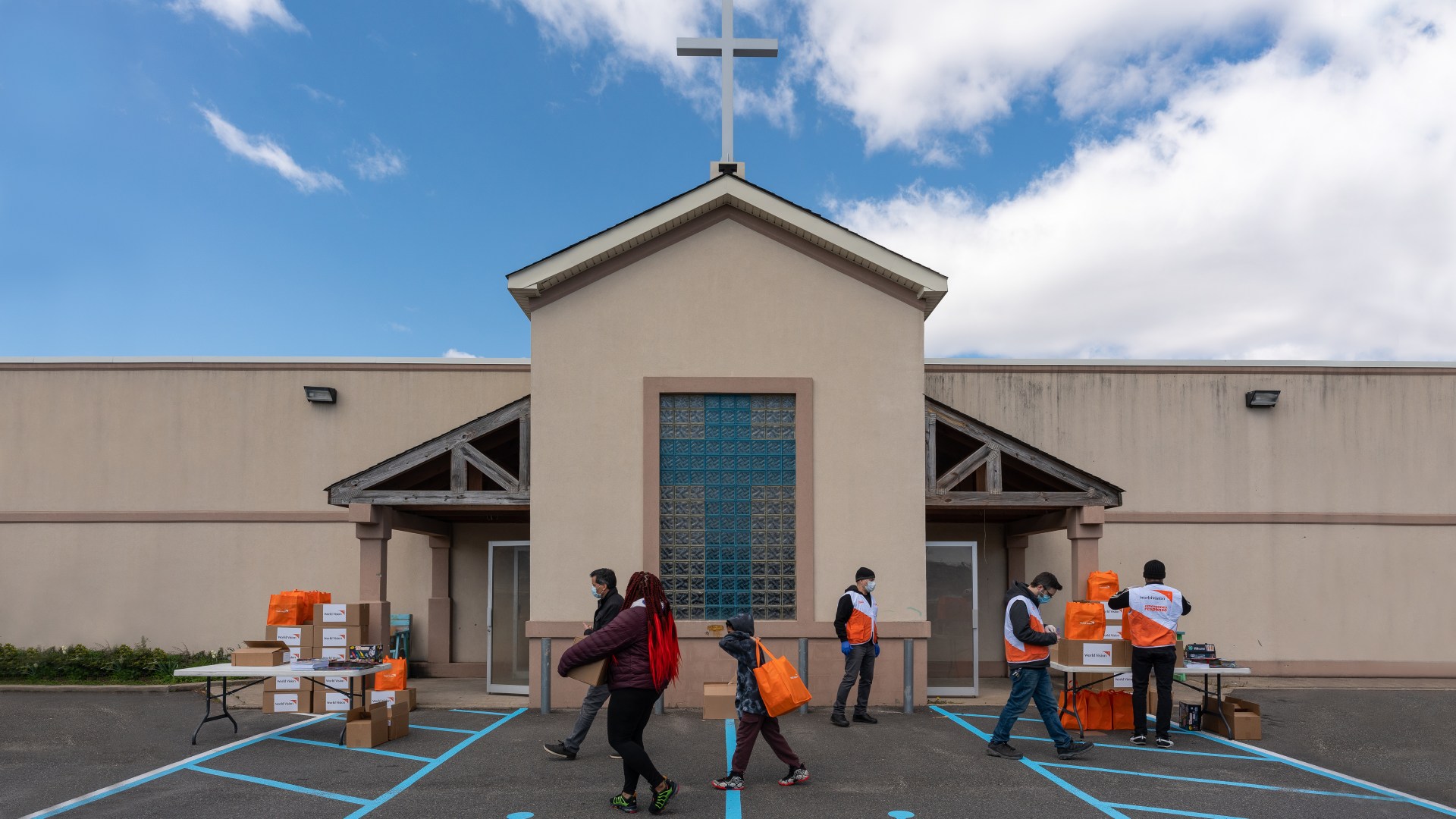
David Dee Delgado / Getty Images

When the US economy shut down in March due to COVID-19, financial predictions for churches and other ministries were dire. But a new survey suggests those predictions may have been overblown.

Most evangelical churches and ministries saw giving remain steady or grow during the height of stay-at-home restrictions, according to a survey of more than 1,300 Christian ministries released last week by the Evangelical Council for Financial Accountability (ECFA).

Among those surveyed, total cash giving in April 2020 equaled or surpassed April 2019 giving levels at 66 percent of churches and 59 percent of nonprofits. An even greater percentage of churches (72%) and other Christian nonprofits (61%) said their April 2020 cash gifts met or exceeded January 2020 levels, when the economy was booming and the stock market’s Dow Jones Industrial Average was approaching its all-time high.

Those healthy giving levels have translated into economic optimism. More than half of the leaders were optimistic about anticipated cash gifts in May through July, while 27 percent were uncertain, and just 15 percent were pessimistic.

ECFA analyst Warren Bird told Christianity Today that churches and other nonprofits with cash on hand may want to consider putting their “money to work in doing ministry” rather than continuing “to hold [their] breath in fear that [their] circumstance is unusual and the bottom is just about to fall out.”

That’s a different outlook than ministries had two months ago. The State of the Plate poll, released April 23, found 65 percent of churches had seen giving decreases since mid-March. “For pastors and church staff, there will be difficult days ahead,” predicted State of the Plate founder Brian Kluth. Similarly, the Barna Group reported in a March podcast that 62 percent of US pastors said giving was down at their churches.

But the initial economic nosedive reversed in the span of a month as giving picked back up and Congress made small business loans available through the Paycheck Protection Program. (Sixty percent of churches and 81 percent of other Christian nonprofits either applied or planned to apply for one of those loans, according to the ECFA survey.)

For analysts, the key questions now are whether the positive outlook will hold and if any segments of the Christian world are being left behind.
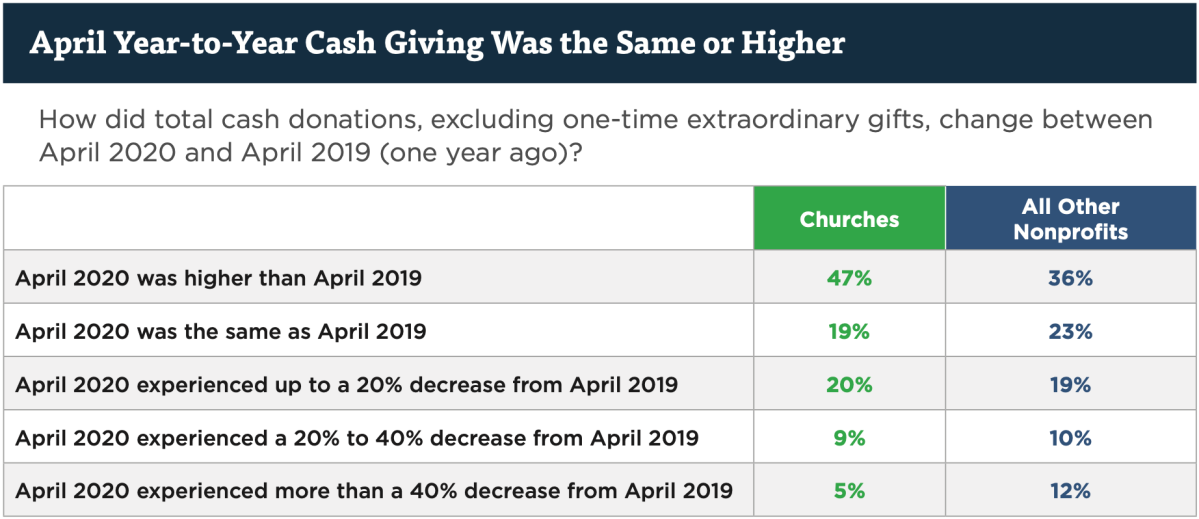
ECFA

The situation at Southridge Church in San Jose, California, has paralleled national trends. Giving dipped 25 percent in March, pastor Micaiah Irmler said, before picking back up in April and expanding in May. The congregation, which has conducted drive-in services during the pandemic, has a $580,000 annual budget and is in the midst of a capital campaign to purchase its first building.

Southridge’s giving has moved almost entirely online because of the coronavirus, up from about two-thirds online before the pandemic. Nationally, ECFA found 64 percent of churches saw an increased percentage of online giving between January and April.

“From what I’m hearing here in the Silicon Valley, we’re not going to be hit that hard,” Irmler said of the church’s finances. His greatest uncertainty involves Bay Area tech companies like Google and Twitter that decided during the pandemic to let many employees work from home permanently. “The only thing that has me somewhat nervous,” he said, is how many church members “might move out of our area” to decrease their cost of living.

Despite the overall optimism, ECFA’s findings were not all positive. About 1 in 5 churches (18%) and Christian nonprofits (20%) have established hiring freezes for nonessential roles. Eleven percent of churches and 14 percent of other nonprofits have reduced the number or hours of part-time staff.

Among Christian nonprofits, smaller organizations are less optimistic about cash gifts than their larger counterparts. Forty-six percent of nonprofits with annual budgets of under $500,000 expressed optimism about gifts in May through July. The number fell to 40 percent among nonprofits with budgets from $500,000 to $999,999. Optimism was higher in all other budget categories, peaking at 67 percent for nonprofits with budgets over $10 million. (Among churches, optimism levels were similar across all budget sizes, around 70 percent.)
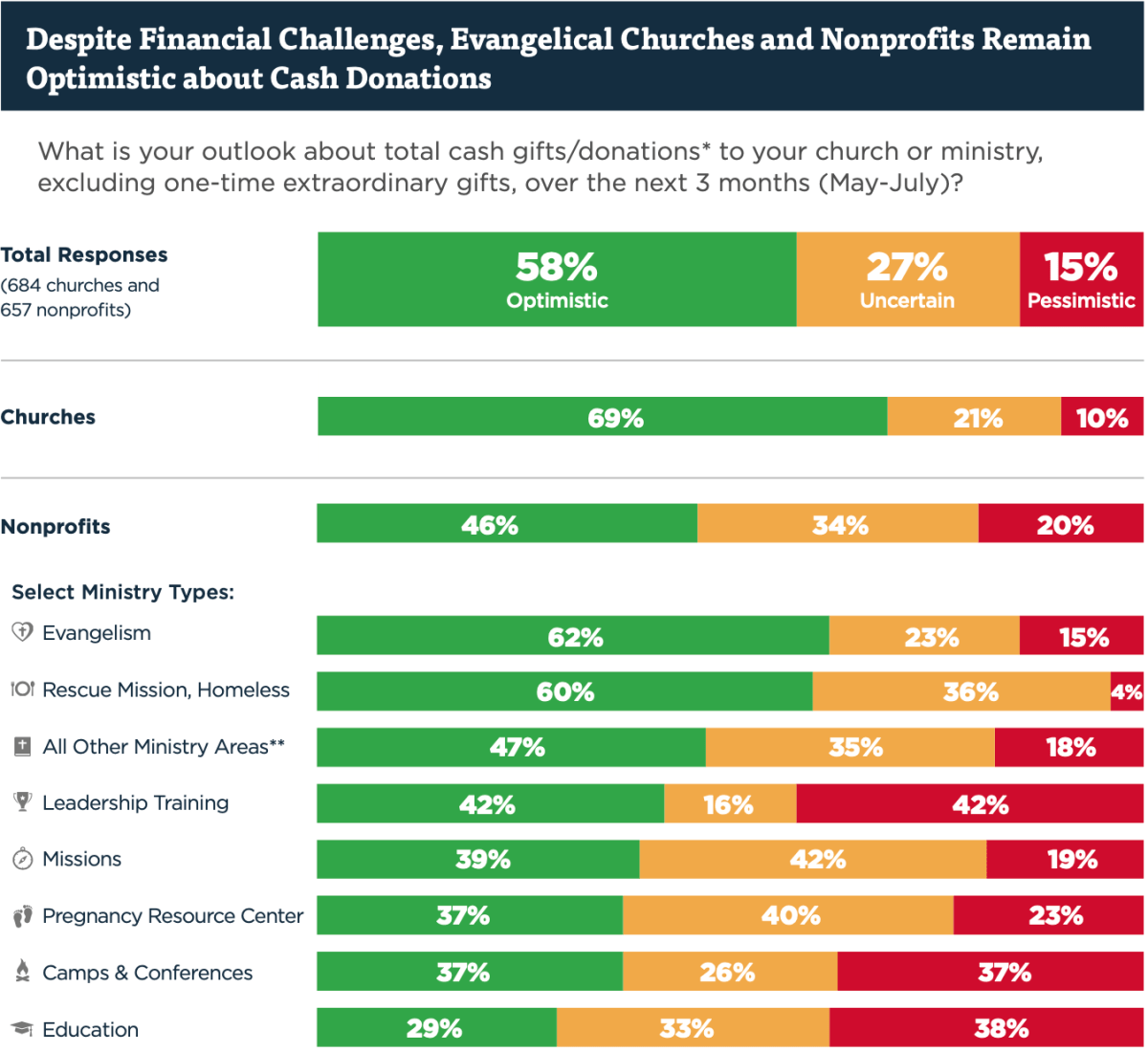
ECFA

Raleigh Sadler, executive director of the small Chicago-based anti-human-trafficking ministry Let My People Go (LMPG), expressed tempered optimism about the organization’s financial outlook. Between March and mid-May, the ministry’s receipts dipped 40 percent before beginning an upward trajectory in late May. LMPG has pursued larger donors to fill the gap as it waits for small and mid-size givers to recover financially.

Initially, “everyone was starting to lose their jobs,” said Sadler, LMPG’s only full-time employee. “People were scared. Everyone was uncertain, so they were pulling their purse strings.”

A segment of the evangelical world where economic hardship may not be reflected in ECFA’s report is African American churches. Bird told CT he isn’t aware of any research that examines the correlation between ethnicity and church giving during the coronavirus pandemic. However, the COVID-19 hospitalization rate for African Americans is approximately 4.5 times that of white Americans, according to the US Centers for Disease Control and Prevention. Anecdotal evidence suggests the disproportionate impact of the coronavirus has taken a toll on black churches, many of which struggled to apply for or receive stimulus grants.

America’s largest black Pentecostal denomination, the Church of God in Christ, has seen seven of its bishops die from coronavirus, ABC News reported. Pastor A. R. Bernard of Christian Cultural Center in Brooklyn, New York, said the pandemic caught “many traditional black churches” off-guard because they lacked a “digital footprint” that permitted them to move worship and giving online with ease.

Still, the overall financial story for churches and ministries—at least for now—is reflected in the ECFA report’s title: “Optimism Outweighs Uncertainty.” ECFA will continue to monitor church and ministry finances during the pandemic, with a new report every quarter for the next year.

David Roach is a writer in Nashville.

Ideas

Jesus and the Disinherited

Howard Thurman still speaks to the church.

Christianity Today June 11, 2020
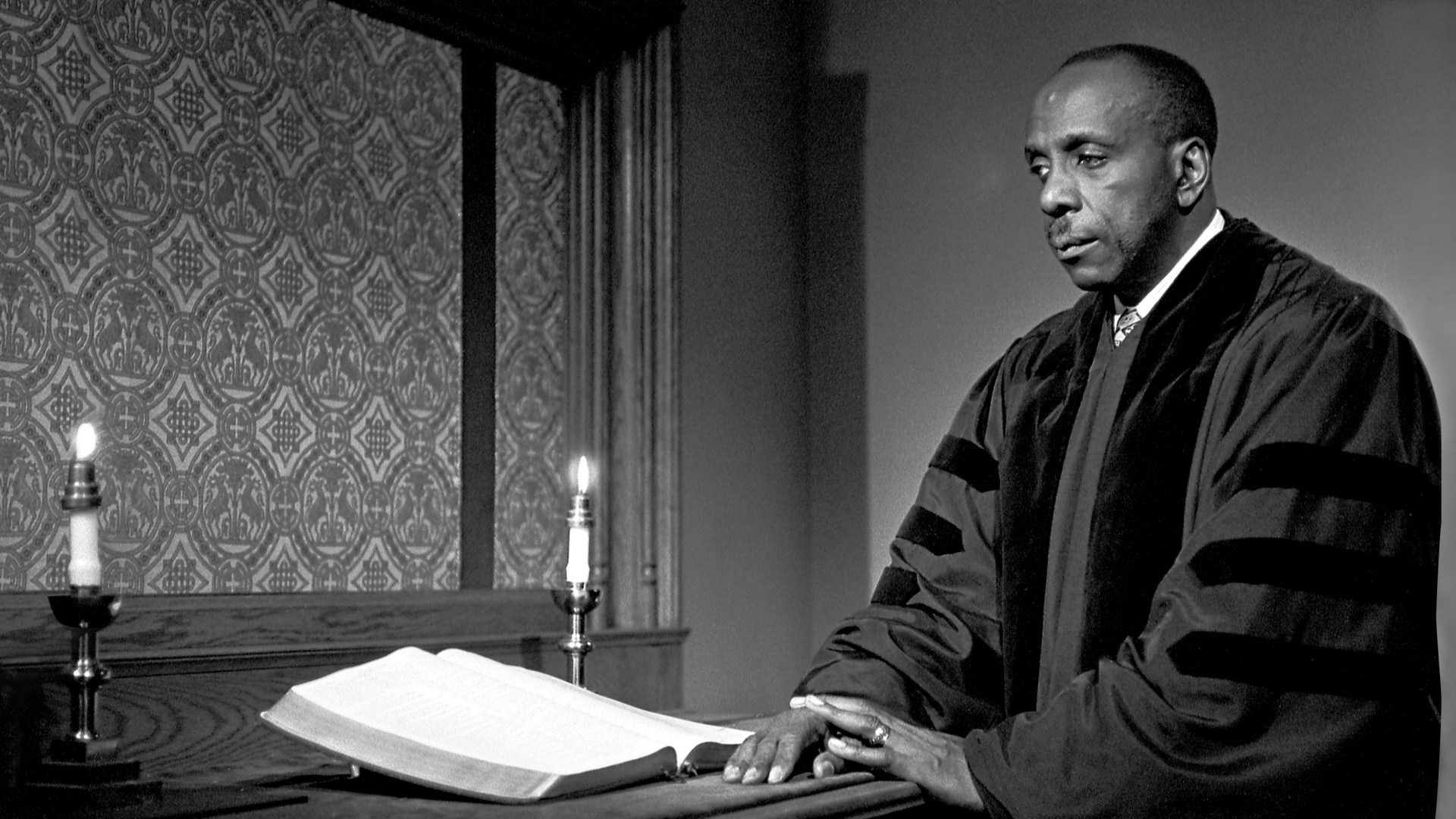
Photo by Boston University Photography

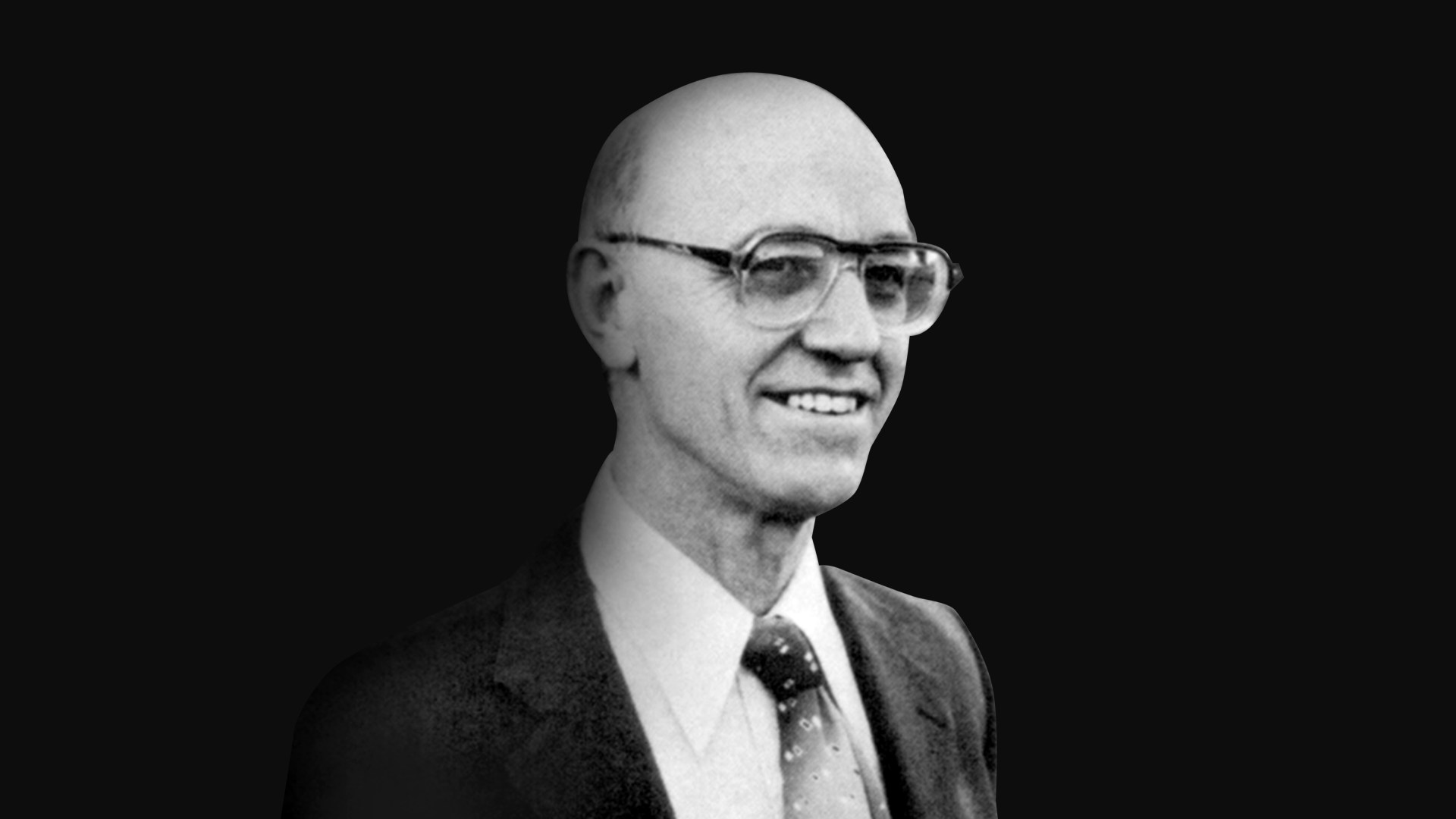
Howard Washington Thurman (1899–1981) played a leading role in many social justice movements and organizations of the twentieth century. He was one of the principal architects of the modern, nonviolent civil rights movement and a key mentor to Dr. Martin Luther King, Jr. From The Howard Thurman Papers Project.

What does Jesus offer to a people who live with their backs against the wall? This is the question with which Howard Thurman began his landmark work, Jesus and the Disinherited, in 1949. The work became an intellectual pillar for the burgeoning civil rights movement in the 1950s. Howard Thurman, an unorthodox mystic and prophet, served as a spiritual mentor to civil rights leaders in the mid-century black freedom struggle. Until recently, Thurman’s work was not as widely known or studied among white Christian communities as it deserved to be. But our current historical moment offers new impetus to return to this spiritual giant and particularly to his seminal work on Jesus.

In Jesus and the Disinherited, Thurman recounts a conversation he had while on a six-month speaking tour of South Asia in the 1930s sponsored by the Student Christian Movement, a group co-sponsored by the YMCA and YWCA. At the time, India struggled for independence from British colonialism. After one of his talks, Thurman describes a conversation with a young Indian lawyer who made this observation:

What are you doing over here? I know what the newspapers are saying about a pilgrimage of friendship and the rest, but that is not my question. What are you doing over here? … More than three hundred years ago your forefathers were taken from the western coast of Africa as slaves. The people who dealt in the slave traffic were Christians. … The men who bought the slaves were Christians. Christian ministers, quoting the Christian apostle Paul, gave the sanction of religion to the system of slavery. … During all the period since then [emancipation] you have lived in a Christian nation in which you are segregated, lynched, and burned. Even in the church, I understand, there is segregation. … I am a Hindu. I do not understand. Here you are in my country, standing deep within the Christian faith and tradition. I do not wish to seem rude to you. But sir, I think you are a traitor to all the darker peoples of the earth. I am wondering what you, an intelligent man, can say in defense of your position.

What does the religion of Jesus offer to those with their backs against the wall?

Jesus and the Disinherited was the fruit of Thurman’s answer to this challenge. What does the religion of Jesus offer to those with their backs against the wall? Thurman began by focusing on Jesus’ situation as a poor Jew living in occupied territory with no civil protections, an outsider in his own land. For the Jewish people in Jesus’s day, their most urgent concern was their “… attitude toward Rome…. And Rome was everywhere. No Jewish person of the period could deal with the question of his practical life, his vocation, his place in society, until he first settled deep within himself this critical question.” As a non-citizen, living under a violent and oppressive regime, Jesus’ life, ministry, and death happened as one with his back against the wall.

Thurman went on to argue how people who live in such predicaments are pursued by “the three hounds of hell”: fear, deception, and hatred. Ironically, each hound can be heeled and used as a tool for surviving personal and systemic oppression. Fear can focus the mind and train the body to avoid situations and encounters which could lead to violence or death. Deception can keep the oppressor in the dark regarding an individual or community’s real feelings, motivations, actions, and even aspirations. And hatred can steel the resolve of those who find themselves facing overwhelming odds. But, Thurman argues, allowing fear, deception, or hatred to become the ruling ethos of the dispossessed comes with a significant price. Habitually adopting any one hound of hell ultimately takes its toll on the humanity of the oppressed, further stealing from them their dignity and their ability to reimagine the world and work for genuine social transformation.

Thurman’s gambit was that Jesus, subject to the same temptations as every dispossessed person, pursued a path distinct from the perils of adopting fear, deception or hatred as a means of survival. According to Thurman, Jesus began with the simple idea that, “Every man is potentially every other man’s neighbor,” that “Neighborliness is nonspatial; it is qualitative. A man must love his neighbor directly, clearly, permitting no barriers between.” From Thurman’s perspective, wherever the spirit of Jesus “appears, the oppressed gather fresh courage; for he announced the good news that fear, hypocrisy, and hatred, the three hounds of hell that track the trail of the disinherited, need have no dominion over them.”

Living in a day when police routinely abuse authority, when racial disparity distorts human identity, when it is accepted to discriminate against migrant children and deny individuals the right to legally seek asylum; in which current taxing and spending policies favor the rich and powerful, balloon the debt, and have produced the widest gap between the rich and the poor in over 100 years; in which the highest office of the land consistently expresses a profound ambivalence regarding the common humanity of all peoples; a time in which an ecological catastrophe is upon us and a pandemic surrounds us— Thurman’s words resonate.

In Jesus and the Disinherited, Thurman insists that to fight and struggle against oppressive powers and principalities requires a spiritual reservoir that can only be filled through the practice of spiritual disciplines like silence, contemplation, meditation, and prayer. Jesus “recognized with authentic realism that anyone who permits another to determine the quality of his inner life gives into the hands of the other the keys to his destiny.” Thurman warned his peers during the mid-century civil rights struggle against severing the labor of working for social justice from the spiritual roots, which give such work its vigor and sustaining power. Thurman reminds that the way of Jesus was trod by one with his back against the wall and that only by connecting to the Spirit of life and justice can we sustain movements for social change.

Christian Collins Winn is associate professor of theology at the Global Center for Advanced Studies, Dublin, Ireland and Teaching Minister at Colonial Church in Edina, Minnesota.

Speaking Out is Christianity Today’s guest opinion column and (unlike an editorial) does not necessarily represent the opinion of the publication.

News
Wire Story

J. D. Greear Urges SBC to Retire Historic Gavel from Slaveholding Preacher

A day after his “black lives matter” address, the Southern Baptist president suggests replacing a 150-year-old relic.

Christianity Today June 10, 2020
Butch Dill / RNS

For most of their history, Southern Baptists have opened their meetings with a gavel named for a slaveholder.

The president of the nation’s largest Protestant denomination now says that gavel should be retired.

“Southern Baptists, I think it is time to retire the Broadus gavel,” said J. D. Greear in a Wednesday statement. “While we do not want to, nor could we, erase our history, it is time for this gavel to go back into the display case at the Executive Committee offices.”

The gavel, first used by SBC officials in 1872, was named for John A. Broadus, a Confederacy supporter and a founding faculty member of the Southern Baptist Theological Seminary, the SBC’s flagship seminary.

The SBC president said he had felt uneasy using the gavel at the 2019 meeting in Birmingham, Alabama. He was aware of Broadus’s racial views but also said he “did seem to change some of his positions later in life.”

Greear said the gavel’s presence was sending a mixed message from a denomination that was founded in 1845 in defense of missionaries who owned slaves.

“Here we were, a convention of nearly 48,000 independent, autonomous churches, meeting in a city that has been filled with (a) horrific history of civil rights abuses, making historic moves in the areas of diversity, abuse, and mission, using a gavel named after a Southern Baptist who owned slaves and was deeply involved in our founding,” he said.

Greear said he learned months after the Birmingham meeting that denominational presidents have a choice in what gavel they use. His office said no vote is required for that decision.

“The Broadus gavel is the one that has been used continuously to open the convention since 1872, but others were incorporated as well,” he said.

Greear is considering his options for which gavel to use next year but cited two named for missionaries.

According to a historical note in the denomination’s 1939 Annual, the Broadus gavel was given to the SBC at its meeting on May 9, 1872.

“The Rev. J. A. Broadus of South Carolina, presented to the Convention a mallet for the use of the President, which he had brought from Jerusalem for that purpose,” according to the note.

The Annual detailed the denominational presidents through whose hands the gavel had passed.

“If this gavel had the power to tell us what it has witnessed, we should be thrilled by its story,” reads the Annual. “As numberless points of order have been raised and all sorts of tangles rose to the surface, it has sent forth its sharp, decisive, imperious mandates in obedience to the parliamentary umpires in the chair.”

Greear’s statement came a day after he declared in an online address—that replaced one he would have given at the now-canceled annual meeting—that Southern Baptists should say “black lives matter.”

“Of course, black lives matter,” he said. “Our black brothers and sisters are made in the image of God.”

Greear added, though, that he didn’t align with Black Lives Matter, the organization founded in 2013.

“I think saying bold things like ‘defund the police’ is unhelpful and deeply disrespectful to many public servants who bravely put themselves in harm’s way every day to protect us,” he said. “But I know that we need to take a deep look at our police systems and structures and ask what we’re missing. Where are we missing the mark? And I’ll say that we do that because black lives matter.”

Greear was asked by Religion News Service in late May if there was any consideration of not using the Broadus gavel in 2020 or in future meetings.

“I was planning on using the Judson gavel or the Annie Armstrong gavel this year in Orlando,” he said in response. “Adoniram Judson was a missionary that inspired me and I named my son after him. Annie Armstrong demonstrated the missionary spirit that I believe Southern Baptists should be about.”

He added in his new statement that Armstrong “fought to send the first female African American missionaries” and Judson “was one of the first missionaries to travel to Burma, working there 30 years translating the entire Bible into Burmese and planting numerous Baptist churches.”

Ideas

Justice Too Long Delayed

President & CEO

It’s time for the church to make restitution for racial sin.

Christianity Today June 10, 2020
Jeremy Cowart

“Your brother’s blood cries out to me from the ground.” – Genesis 4:10

We at Christianity Today deeply love the church. Serving the bride of Christ, growing her love for God, and telling the story of her redemptive and transformative work in the world is the heart of what we do. We do not revel in the history of her sin. But we cannot love our brothers and sisters well if we cannot tell their story in truth. And we cannot tell their story in truth if we cannot confess our participation in it. The Bible is honest about the flaws of even the most remarkable people. We should follow its example.

Two original sins have plagued this nation from its inception: the destruction of its native inhabitants and the institution of slavery. Both sprang from a failure to see an equal in the racial other. As Bishop Claude Alexander has said, racism was in the amniotic fluid out of which our nation was born. There was a virus present in the very environment that nurtured the development of our country, our culture, and our people. The virus of racism infected our church, our Constitution and laws, our attitudes and ideologies. We have never fully defeated it.

The first slaves arrived upon these shores before the Pilgrims, before there was a Massachusetts or Connecticut. Slavery had been established for 113 years when George Washington was born and 157 years when the Declaration of Independence was written. Nine of our early presidents were slaveholders. Slavery meant husbands and wives, parents and children were violently torn apart and never saw one another again. It meant white men repeatedly raped hundreds of thousands of black girls and women. American Slavery As It Is, published in 1839 with extensive sourcing by Theodore Weld and Angelina Grimké, writes that slaves:

are frequently flogged with terrible severity, have red pepper rubbed into their lacerated flesh, and hot brine, spirits of turpentine, &c., poured over the gashes to increase the torture; that they are often stripped naked, their backs and limbs cut with knives, bruised and mangled by scores and hundreds of blows with the paddle…that they are often hunted with blood hounds and shot down like beasts, or torn in pieces by dogs; that they are often suspended by the arms and whipped and beaten till they faint, and when revived by restoratives, beaten again till they faint, and sometimes till they die; that their ears are often cut off, their eyes knocked out, their bones broken, their flesh branded with red hot irons; that they are maimed, mutilated and burned to death over slow fires.

This is the institution that endured on American soil for nearly 250 years. We shudder when we think not only of the physical torment but of the social suffering—the sense of humiliation and abandonment, that the white society around the slaves was often deaf to their cries and did not view them as human and worthy of love—and we wonder at the profound wound it would leave in the collective consciousness of a people. Slavery in the antebellum economy was one of the most powerful engines of wealth creation in the history of our people. It generated economic and cultural capital that flowed downstream into affluent communities, as well as opportunity for labor and investment and educational institutions that supported research, innovation, and quality of life. Yet it left African Americans utterly desolate.

Only about 42 percent of white Christians believe the history of slavery continues to impact African Americans today. Yet slavery was a symptom of the virus, not the virus itself. Even after the abolition of slavery, the ideology that had supported and formed around slavery endured. The symptom passed. The virus persisted by mutating.

The collapse of Reconstruction and the rise of Jim Crow imposed racial segregation and oppression in the South until 1965. Since plantation owners still needed cheap labor after the Civil War, they exploited their sharecroppers and tenant farmers and often treated them just as brutally as they had before. Lynchings terrorized black families and enforced a regime of domination and control, while southern legislators found ever more creative ways of preventing blacks from voting or defending themselves and their property. In the North as well, especially as great numbers of blacks fled the oppression of the South and sought work in factories in northern cities, systematic discrimination in the housing and labor markets made it virtually impossible for African Americans to finance home ownership and build generational wealth.

Many progressive policies only deepened the social and economic divide between blacks and whites. Social security laws in the New Deal era effectively excluded the vast majority of blacks from federal retirement assistance, and the GI Bill was thoroughly ineffective at supporting home ownership and only meagerly effective at funding college education for black veterans returning from war. As a matter of policy as well as prejudice, blacks were forced into neighborhoods of ever-deepening poverty, and very few could climb their way out. Young people growing up in proximity to violent crime, surrounded by joblessness, family breakdown, addiction, and despair, could not secure a quality education, a home, or a fair shake in the job market. All this is to say nothing of the collapse of the American criminal justice system in the second half of the 20th century, which led to over-incarceration and increasingly violent clashes between law enforcement departments and the communities they serve.

Others have told this story in greater detail. We believe it is important to keep telling it in the pages of Christianity Today. The result of the story is a catastrophic wealth gap: The median net worth of black families in the United States today is one-tenth the median net worth of white families. Sixty-two percent of black children born between 1955 and 1970 were raised in poor neighborhoods, compared to 4 percent of white children. Results for the generation born between 1985 and 2000 were even worse, with 66 percent of black children raised in poor neighborhoods compared to 6 percent of white children.

The only way to explain the story above is the persistence of racial prejudice and its enshrinement into the apparatus of government. Allow me to borrow (but use in a different way) a metaphor from the scholar Wendy Doniger. Two explorers enter a cave filled with the most elaborate spiderwebs. One of them cannot locate a spider, and thus refuses to believe it exists. You see the webs, replies the other. The spider is implied. Racial prejudice is the implied spider that has woven the web of policies and practices, inequalities and abuses that have constrained black Americans now for four hundred years.

What role did the church play?

Of course, some white Christians strove at great length and great risk to abolish slavery, and many shed their blood in the war that emancipated slaves in the Southern states. Rightly interpreted, the Bible at the center of the church has been an enormous force not only for the redemption of sinners but for the advancement of justice and charity. But the exceptions were far too few. A multitude of Christian communities, including evangelical communities, were silent in the face of slavery or even complicit in it.

In fact, complicity is not a strong enough term. Much though it grieves us as people who love the church, it may be that the most monstrous sin of the white church in America was shaping a theology of racial superiority in order to legitimize and even encourage the institution of slavery. Slavery was not only permissible, many white Christians argued, but beneficial insofar as it brought gospel and culture to a benighted people. Even on the eve of the Civil War, preachers spurred on the secessionist cause by arguing it was part of God’s “providential trust” in the Southern states “to conserve and to perpetuate the institution of domestic slavery as it now exists.” If God had ordained the racial hierarchy, who were we to overturn it?

Many of the same ministers who defended slavery in the antebellum South likewise defended the racist systems that followed after the Civil War. Many Protestant denominations split as their Southern branches defended slavery and white supremacy before and after the war. Christian ministers and lay leaders participated in lynchings, in the Ku Klux Klan, and in the defense of segregation. Although an increasing number of evangelicals came to support the civil rights movement, many evangelicals with our strong beliefs in individualism were ill equipped to recognize and dismantle the ways in which racial inequalities had been systematized in government and the marketplace.

Even after the institution of slavery faltered, the theology endured. It pronounced divine approval over racial bias and rationalized countless means of enforcing prejudice against African Americans. Bryan Stevenson puts it well: “The great evil of American slavery wasn’t the involuntary servitude; it was the fiction that black people aren’t as good as white people, and aren’t the equals of white people, and are less evolved, less human, less capable, less worthy, less deserving than white people.” White churches were not only complicit in writing this fiction; they gave it the imprimatur of God.

The name of Phalaris is not much remembered in the 21st century, but in classical antiquity it was infamous. The tyrant of Agrigentum on the island of Sicily, Phalaris is known for a gruesome instrument of torture: a hulking bronze bull, hollowed on the inside, set over a fire. As victims were forced into the bull and roasted alive, the nostrils of the bull rendered the screams of the dying into a sonorous groaning that filled the palace with music. You might be a guest at the feast, unaware that your entertainment came through the agony of others.

Today’s generations may say we did not invent the bull of racial injustice. But we have benefited from it. The resiliency, creativity, industry, and indomitable faith of African Americans in spite of all they have suffered is nothing short of miraculous. We have all benefited not only from their labor but also from their innovations and entrepreneurialism, their art and music, their films and poetry and books, their hymns and preaching. The transformation of black suffering into economic abundance for America, as well as art and passion and brilliance, has enriched our feast in the palace. Perhaps we can honestly say we did not know what our brothers and sisters were suffering. Now we do. So there’s only one thing to do: put down our forks and get our brothers and sisters out of the belly of the bull.

These are painful realities in a complex world. The United States has been an extraordinary force for good, a powerful advocate for democracy, human rights, and economic opportunity. The ideals it champions have brought hundreds of millions out of poverty and oppression, and its technologies and innovations and art have changed the lives of practically every person on the planet. Likewise, the American church has advanced the cause of the gospel of Jesus Christ in countless ways, from sending missionaries to translating the Bible to supporting and staffing ministries that bring light and life to every corner of the world. And yet, historically, far too often, American evangelicalism has been silent on, complicit in, or an apologist for racial inequality. As Alexander Solzhenitsyn wrote, “The line separating good and evil passes not through states, nor between classes, nor between political parties either—but right through every human heart—and through all human hearts.”

How then should we respond?

Two biblical narratives have been on our minds. The first (from Acts 10) concerns the apostle Peter, who believes that as a Jew he should not associate with people of other nations. Jew and Gentile, he thinks, should remain divided. Yet God shows him in a vision that he should not call unclean what God has made clean. He goes into the home of a Gentile named Cornelius, preaches the gospel, and the Holy Spirit is unleashed. This is a watershed moment in the spread of the gospel to non-Jews, when Peter recognized that what he thought was righteous was actually unrighteous.

Likewise, it’s time for white evangelicals to confess that we have not taken the sin of racism with the gravity and seriousness it deserves. The deep grief and anger over the death of George Floyd is about more than police brutality. It’s about a society and culture that allowed for the abuse and oppression of African Americans over and over and over again. We have been a part of that society and culture, and sometimes we have been the last to join the fight for racial justice. Christianity Today’s own record in this regard is mixed. Neo-evangelicals generally believed it was enough to preach the message of salvation and trust that justice would follow as a matter of course. It hasn’t. What we thought righteous was unrighteous. We repent of our sin.

But repentance is not enough. The other biblical narrative that comes to mind is the story of a tax collector in Jericho. Zacchaeus was a collaborator with the occupying Roman authority, and by adding his own extortionary fees, he plundered the wealth of his neighbors and enriched himself. Jesus encountered him and shocked the crowd by going to his home. Salvation came to the house of Zacchaeus on that day. He proclaimed, “Look, Lord! Here and now I give half of my possessions to the poor, and if I have cheated anybody out of anything, I will give back four times the amount” (Luke 19:8).

Zacchaeus had not personally designed the unjust system of Roman taxation. But he had not denounced it either; he had participated in it and profited from it. So Zacchaeus did not merely repent of his ways; he made restitution. He set up what we might call a “Zacchaeus fund” in order to restore what belonged to his neighbors. Are we willing to do the same? Black lives matter. They matter so much that Jesus sacrificed everything for them. Are we willing to sacrifice as well?

Perhaps the country is not ready to make reparations. But the history of racial injustice demands personal and corporate response. Perhaps the church can lead the way in biblical restitution. I am aware of one “Zacchaeus fund” in Atlanta, where Christians who believe that African Americans have been subjected to four centuries of injustice and plunder are beginning to do their humble part to make it right. A majority-black committee assigns the funds to support rising black leaders in the church and in the marketplace. It will not be enough, but it will be something. What if there were Zacchaeus funds in every city and believers gave sacrificially, so our brothers and sisters could be restored and so our neighbors could see once again the Christlike love that overcame the world?

We have hope. We believe in the God who brings healing where there is brokenness and life where there is death. We believe that love is stronger than death. We have served in churches of all colors, and have seen the Spirit of Jesus at work.

The bride of Christ is beautiful. She can overcome this plague. Let us all do our part.

Timothy Dalrymple is the president and CEO of Christianity Today .

Editor’s note: You can now read or share this editorial in Spanish, Portuguese, French, Korean, Indonesian or Chinese (Simplified and Traditional)

You can also follow our best articles on our new Telegram channel. Come join us!

Theology

I Have Only One Hope for Racial Justice: A God Who Conquered Death

Christians coming to terms with racism need to be re-enchanted by the Resurrection.

Christianity Today June 10, 2020
Gina Ferazzi / Getty Images

The entire globe is convulsing with social unrest and protests. Almost every day, I wake up to an endless stream of news that tempts me to despair. I look at the persistent racism and systemic oppression that mars our society, and I see no hope that things will change. I see political leaders failing to unify and not divide the country, and my trust in the system falters. I look at a church that so often views everything through the lens of a particular political party and not the gospel, and I feel downcast.

I take some small comfort in knowing that white Christians are stepping up to participate in public protests, analyze their organizations, and make room for change. But nonetheless, I’m still left with questions: Are black Christians seeing a momentary spike in sympathy, or is something deeper at work? Is a significant segment of the white evangelical church ready to join the fight for justice, or will the coming weeks and months see a return to the status quo? What will happen when there isn’t a steady stream of videos showcasing the undeniable face of black suffering?

There is an even more urgent question than whether white evangelicals participate in this movement. Our ultimate aim is not to secure allies; it is to secure freedom. With that in mind, can we really hope to slay or at least deeply wound the monster of racism that is so deeply imbedded in American culture?

In the context of this question, I sometimes go looking and praying for a sign. I need some signal that God has not abandoned us to human vice, that it is possible, in the words of Samwise Gamgee, for “everything sad … to come untrue.” I want to find room for hope when the reasons for it seem in short supply.

Where does my hope come from? Not from the usual places. Not from the fact that we’ve added more faces to our marches. My trust goes much deeper—to the Resurrection, and the way in which it reconfigures our spiritual imagination. God has a long history of giving his people a belief in the seemingly impossible.

Scripture reminds me of this story.

In the Gospels, the Pharisees ask Jesus for a sign that they might trust him. Instead of some trick or miracle that might comfort them in the moment, Jesus points toward something greater. He says to them, “For as Jonah was three days and three nights in the belly of a huge fish, so the Son of Man will be three days and three nights in the heart of the earth” (Matt. 12:40).

When the disciples on the road to Emmaus say, “We had hoped that he was the one who was going to redeem Israel,” Jesus reminds them that it is necessary for the Messiah to “suffer these things and then enter his glory” (Luke 24:21, 26).

In both responses, Jesus points to the Resurrection. He knows that what his people need is not some small signal of God’s presence that can be dismissed as a coincidence. What we need is a sign of his victory. The feeding of the 5,000 or the walking on water is great, but if it can all be unraveled by death, then what is the point? If the Roman Empire has the ability to stop Jesus, then what is to keep the current empires from stopping us?

We need a hope big enough to overcome death itself. The Resurrection, then, is not a mere sign. It is a hermeneutical key that unlocks the mystery of God’s purposes. It is the power that overcomes principalities.

As I survey the history of race relations in America, I see this truth in play.

My ancestors knew that, in order to secure their freedom, slavery had to bend to the will of God and be destroyed. They knew that the Jim Crow era, despite its oppression, was not more comprehensive in its power than the Resurrection. We introduced Jim and Jane Crow to a Resurrection-empowered hope, and the civil rights movement was born. Similarly, what evidence do we have that today’s racial divisions can be defeated and that our societal sickness is not unto death? Our answer is the same: the empty tomb and the risen Christ.

Instead of looking for more signs, we need to be re-enchanted by the Resurrection. Instead of looking at the problems facing the church and the world through the lens of our Twitter feeds, we need to remember that Christ is risen and rules over all. His power applies to all of our enigmas. Racism and systemic oppression are not more difficult to overcome than death. And our hope for a transformed society comes directly from the risen Lord.

Let me be clear. This doesn’t mean that God is our genie and that we can rush into any arena assuming that he will rescue us from any folly or grant every request. It doesn’t mean that Christians can never feel discouragement. Here’s what it means: Our limited imaginations do not form the boundaries of what God can do. Humans have limited power; we can maim and kill or be killed. We can make promises of social unity that we often lack the power to actualize. But a God who has defeated death—and called to himself a people who understand the full scope of his victory—is unstoppable.

That belief in an unstoppable God is precisely what made the early church so difficult to control. It made them dangerous.

After the birth of the church, “Christians became a nation within a nation, a new oikoumene or universal commonwealth that spanned the known world, crossing traditional cultural barriers,” writes Gerald L. Sittser, author of Resilient Faith: How the Early Christian “Third Way” Changed the World. “Their primary loyalty was to fellow believers, not nation or race or tribe or party or class.”

How do we regain that vision today? How do we claim a resurrected Christ as our reason for hope?

I must confess that much of my life has been spent doubting the Resurrection. I don’t question whether it occurred—I am convinced that the tomb remains empty. But I do often wonder whether the world is truly a different place. Things seems to go on as they always have: The rich exploit the poor. Evil triumphs over good. Going low appears to be much more profitable than going high. Racism sweeps our land, and the weakest among us suffer the most.

As I watch the news these days, I see genuine expressions of sympathy for the black situation in America. But I don’t simply want people to feel sorry for us. I want freedom. And in my best moments, I remember where that hope for freedom resides. It resides in the God who conquered death. Although the full fruition of that freedom will not come on this side of heaven, nonetheless, I am not forbidden the beginnings of it here and now. By desiring freedom now, I am not turning America into the kingdom. I am demanding the right to live and love and work as a free black child of God.

The defeat of death is God’s great triumph. It reshapes the Christian imagination, forever obliterating the limits we place upon our Creator. As the protests press on, then, I pray today and every day that we remember the Resurrection, when the entire cosmos became something different. We have yet to realize the full scope of that change.

Esau McCaulley is a priest in the Anglican Church in North America, an assistant professor of New Testament at Wheaton College, and the author of the forthcoming book Reading While Black: African American Biblical Interpretation as an Exercise in Hope (IVP Academic). Speaking Out is Christianity Today’s guest opinion column and (unlike an editorial) does not necessarily represent the opinion of the publication.

News

Trapped in Lebanon, Sudanese Students Find Refuge at Seminary

For international students, COVID-19 has created an educated, isolated, displaced community.

Christianity Today June 10, 2020
Courtesy of ABTS

While Liberty University came under criticism for allowing students the option to stay on campus during the coronavirus outbreak, many other schools were also faced with a dilemma concerning the 1.1 million students who came from abroad.

According to a Quartz survey of 36 universities who host a third of the United States’ international students, 26 told those students to leave campus.

Penn State gave three days notice. Harvard gave five. Duke, among others, offered emergency financial aid to help international students return home. Princeton allowed their residency to continue—until the end of the semester.

But Sudanese students at Lebanon’s Arab Baptist Theological Seminary (ABTS) did not have a choice—even with tickets in hand.

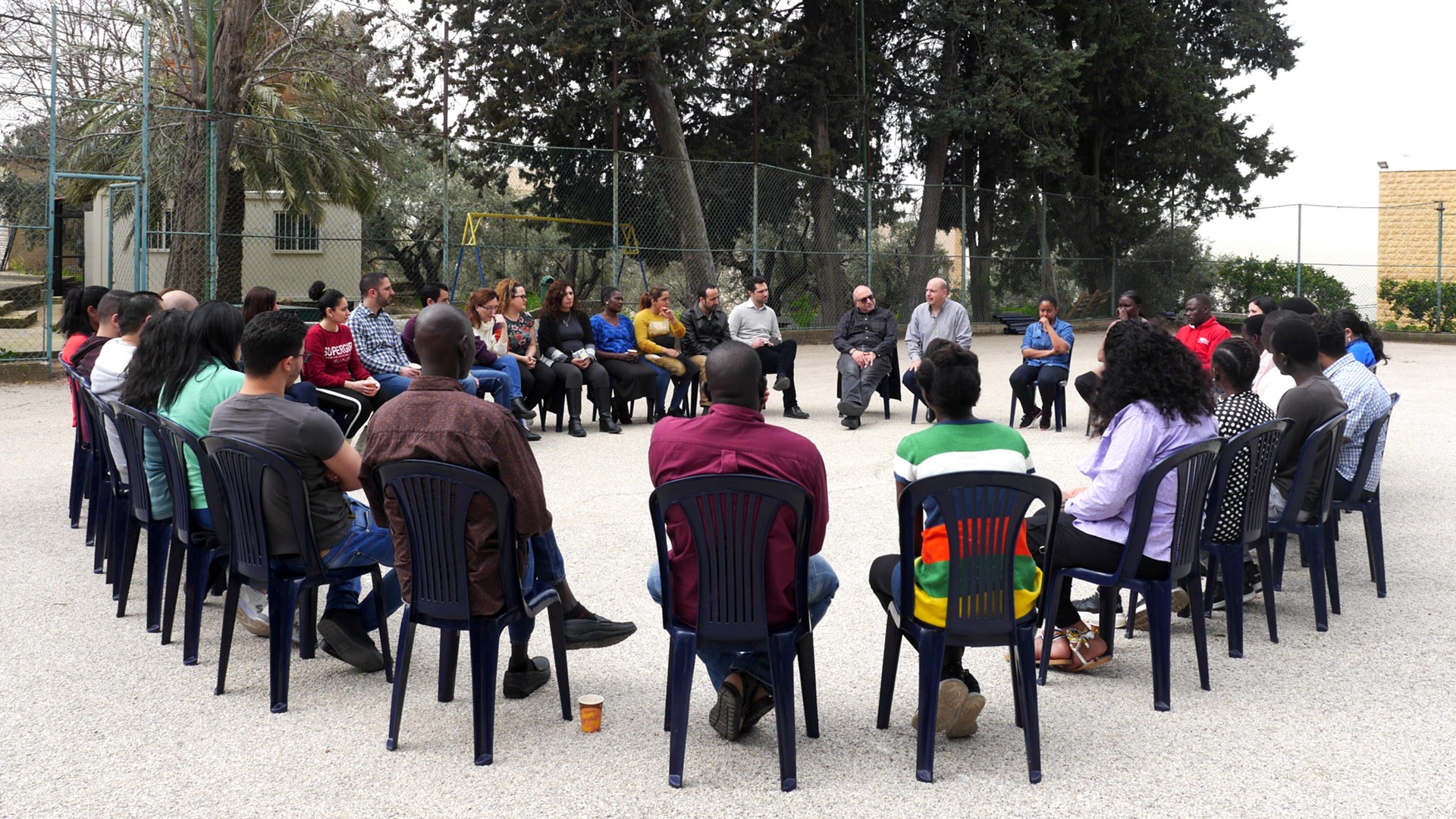
Lebanon was one of the first nations to implement COVID-19 restrictions. Its first case was recorded on February 21, and by March 9 schools were shut down.

Four days later, at a regularly scheduled seminary picnic, Bassem Melki prepared to break the news.

“It was a joyous atmosphere,” said the ABTS dean of students, “but I had sadness in my heart because I knew what I had to say.”

Founded in 1960 and located in the mountains overlooking Beirut, the seminary has a total enrollment of 160 students. Twenty-six are Lebanese, and the majority of ABTS students pursue distance learning in its online certificate program from as far afield as Iraq, Algeria, and Chad.

Campus dorms host only the school’s 34 international students pursuing bachelor of arts or master of arts degree programs in theology. Melki told these residential students that it was time to fly home.

Many cried.

“I felt my dream was canceled,” said Noha Kassa, a 28-year-old first-year student from Khartoum.

“It was a wise decision by the seminary, but it didn’t feel right or fair.”

Having only arrived in Lebanon last October, Kassa’s life was once again thrown into chaos. An active participant in the Sudanese revolution the year before, she had enrolled in ABTS—the seventh in her family to do so—to prepare for ministry back home.

The transitional government in Sudan has granted new freedoms, Kassa said, that include sharing the gospel. And despite the patriarchal culture even in the church, the prominent revolutionary participation by women has created new pioneering opportunities.

She hoped to be a role model.

Now, she would have to return to work, and with her part-time ministry at the Bahri Presbyterian Church, she would have little time for theological study.

“‘Okay, God, what’s next?’” Kassa asked. “‘When will this be over?’”

On March 15, Lebanon announced a state of medical emergency. Among its provisions was a complete sealing of the nation’s borders—at midnight three days later.

If anyone wanted to leave, the clock was ticking.

The ABTS international student body on campus included 6 Egyptians, 5 Syrians, 2 Moroccans, a Palestinian, a Yemeni, 18 Sudanese, and 1 South Sudanese.

No one expected the Yemeni student to go home. The seminary worked with each of the other nationality groups to determine the best course of action. But the weight of preparation fell on the largest contingent.

ABTS paid the change-ticket fees to advance students’ return date from the end of the semester to March 16. Quickly the Sudanese students packed their bags, loaded the bus, and prepared to run the gauntlet through Beirut International Airport.

They didn’t even get to leave campus.

With no advance notice, Sudan closed its borders also. Fortunately, the students had not yet boarded the plane. With a layover planned in Addis Ababa, they would have been stuck in Ethiopian quarantine.

But back on campus, they were a health risk. Single students shared a small dorm room with two twin beds. Married students lived in a communal house with 16 apartments and a shared kitchen.

And the Sudanese are very social.

“Living together, they became like a family,” said Elie Haddad, ABTS’ president.

“The only thing we can do is care for them and keep them safe.”

In the end, only the Egyptian students and the South Sudanese student were able to return home in time. The rest were put on strict lockdown.

Single students were moved to one per room. Everyone was given hand sanitizer, masks, gloves, and instructions on social distancing. Kitchen use was restricted to one family at a time, with sterilization procedures carried out after use. Off-campus trips were restricted to a weekly walk to the local grocery. If they touched anyone along the way, their clothes had to be washed immediately. No one was allowed in from the outside.

“The rules are hard,” said Kassa, “but they keep us safe.”

Eventually the students settled into a boring routine. The first two weeks were crucial to identify if someone was infected but asymptomatic. After that, though remaining vigilant, restrictions relaxed somewhat.

In terms of emotions, Melki said that the students were divided. Some wished they were back home with family. Others saw the silver lining.

“God allowed us to stay, and it is better,” said Youssef al-Nour, a 36-year-old second-year student from the Nuba Mountains region of Sudan. He is afraid for his family if the new coronavirus spreads rapidly.

“They don’t realize the danger they are in. It is not like malaria; there is no cure.”

Within the confines of campus, however, he and his 27-year-old wife Susanna—also a student—are safe. Much safer than if they had to risk contagion traipsing through crowded airports back to a substandard medical system.

Nour, also encouraged by the recent revolution, hopes to open a Sudanese missions agency. Susanna, born to a Muslim father but raised by her Anglican mother, wants to better connect the church to society, especially through the service of its women.

But now, instead of contemplating contextual theology, they tend the campus garden.

“Corona[virus] changed everything,” said Susanna. “Still, the seminary is our home.”

While the whole ABTS community meets weekly over Zoom, socializing with colleagues can continue—outdoors and six feet apart. Prayer and worship sessions remain a vital part of campus life.

“We have a certain freedom here,” said 49-year-old Rafed al-Bitar, a third-year student from Syria. “We can play, walk, and the campus is wide open.

“We are a little stressed, a little bored, and a little uncomfortable. But if you keep yourself safe, you keep others safe also.”

Unlike the others, Bitar did not come to Lebanon for seminary. With his wife, Heba, and two children, they arrived as refugees seeking asylum in Canada. While waiting out the process, he learned of ABTS and enrolled. His children went to school at a nearby orphanage.

Sharing the family house with Youssef, Susanna, and others, as Syrians they were challenged by the cultural and dialect differences with the Sudanese.

When invited over for “coffee,” Heba heard an Arabic word meaning “cheese.” Returning the invitation, when Bitar bade the Sudanese to “enter,” they heard him say “leave.”

But eventually, Bitar and Heba won praise from the ABTS administration for serving as parental stand-ins for the younger students. Unable to travel home themselves, they now serve their adoptive “family.”

“It is a hard life, it is not easy, but we can get through it,” said Heba.

“We thank God for the seminary and the administration. We are cared for so much better than others.”

By April, ABTS was able to rework the curriculum to shift the residential program online. Life is far from returning to normal, but at least education continues.

As does ministry—on campus. Making use of the empty guesthouse, the seminary is providing free accommodation for 32 doctors and nurses on the frontlines of COVID-19 care, so that they can socially isolate from their families. They keep separate from the students, but can rest together in community.

Off campus, Bitar’s outreach to fellow Syrian refugees is on hold. And despite Canada’s rejection of his emigration application, while at ABTS his geographical preferences changed.

“We will serve God wherever we are,” Bitar said. “But our country needs us more than the West.”

They now plan to return to Syria as soon as the borders open—whenever that is.

Ideas

Politics as a Strange Rite

Staff Editor

Even Jesus was tempted with political power.

Christianity Today June 10, 2020
Source Image: Grafissimo / Getty Images

The rapid evolution of religiosity in the United States is by now a familiar story. The decline of American Christianity “continues at a rapid pace,” Pew Research reports, while the religiously unaffiliated, or “nones,” grew from 16 to 26 percent of the country from 2007 to 2019 alone. Evangelical churches are retaining more members than their mainline counterparts, but evangelicalism too is losing cultural cachet and overall population share.

Yet we would be mistaken to conclude Americans are becoming less religious. We live in a secular age, as philosopher Charles Taylor famously argued, not because we have lost our human instinct to worship but because the object of our worship is no longer assumed. We have options. We can seek meaning, purpose, and community outside the church and institutional religion altogether, and increasingly so, as Tara Isabella Burton details in her forthcoming Strange Rites: New Religions for a Godless World (Hachette, June 16, 2020).

“We do not live in a godless world,” Burton argues in subversion of her own subtitle. “Rather, we live in a profoundly anti-institutional one, where the proliferation of internet creative culture and consumer capitalism have rendered us all simultaneously parishioner, high priest, and deity.” Armed with a doctorate in theology from Oxford and a journalist’s eye for anthropological curiosities, Burton delves into self-focused “new religions” as disparate as SoulCycle and Harry Potter.

What odd creatures people are, I kept thinking while reading, confident in my own strength to resist such alien liturgies. Yet there’s a more insidious temptation in what Burton dubs “remixed” religion, a siren song away from Christ that—unlike fixation on wellness culture or Hogwarts fan fiction—isn’t as easy to identify as a superficial contender for our souls. That age-old lure is politics and its consuming pursuit of power, demanding an allegiance from us we owe only to God.

“You know that the rulers of the Gentiles lord it over them, and their great ones are tyrants over them,” Jesus warned his disciples when the sons of Zebedee sought seats of honor at his right hand and his left. “It will not be so among you,” he charged, “but whoever wishes to be great among you must be your servant, and whoever wishes to be first among you must be your slave; just as the Son of Man came not to be served but to serve, and to give his life a ransom for many” (Matt. 20:20–28, NRSV).

This call call to humility, service, and even self-abnegation… goes against our every fallen instinct.

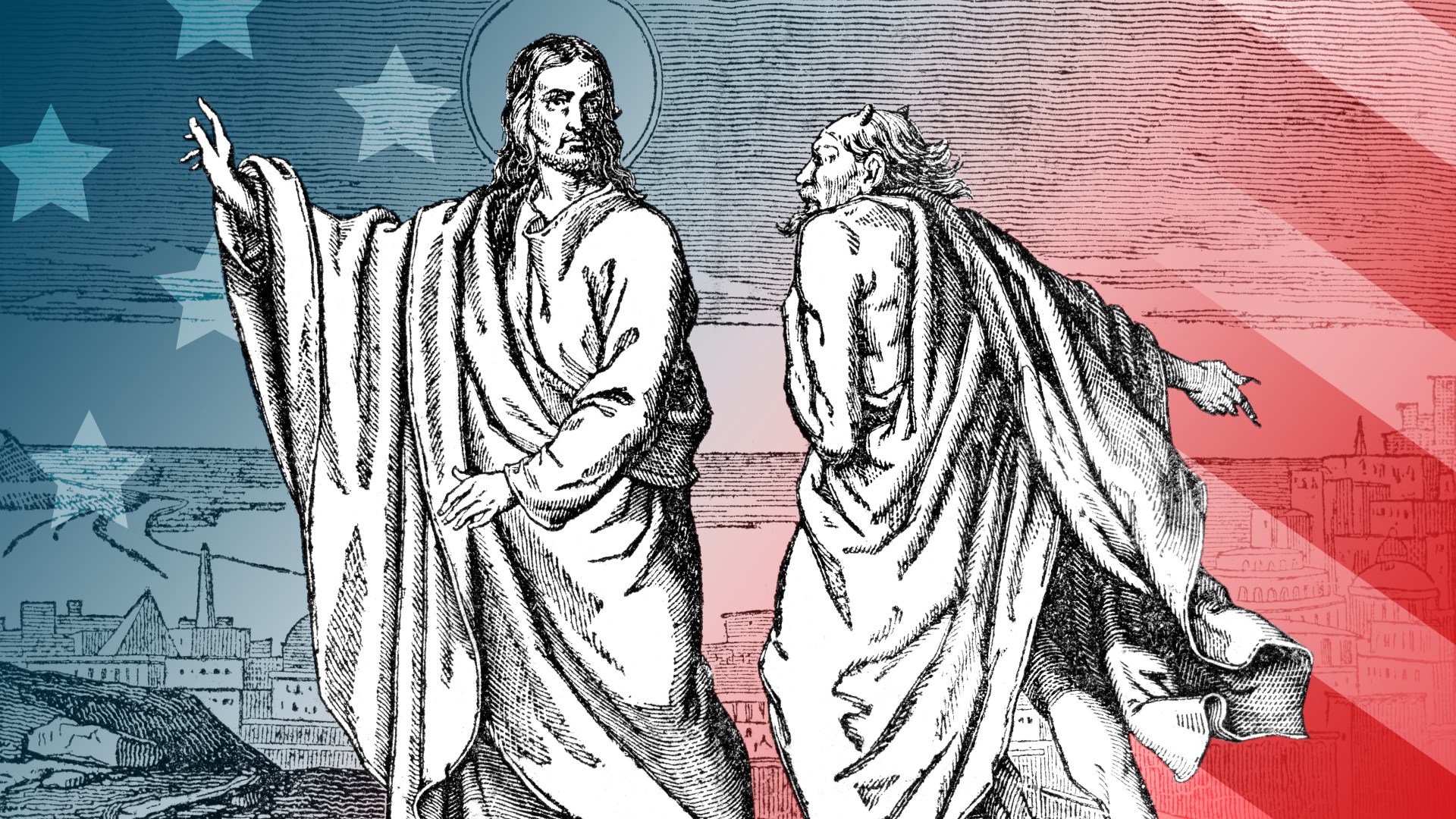
This call to humility, service, and even self-abnegation is integral to Jesus’ invitation to the upside-down kingdom of God, where the last are first and our weakness is occasion to display God’s strength—and it goes against our every fallen instinct. “All one’s ways may be pure in one’s own eyes,” as Proverbs 16:2 (NRSV) observes, allowing us to convince ourselves we only seek political power with the best of intentions and the purest of principles. But if good intentions and principles were a sure guard against idolatry, Satan couldn’t have tempted Jesus with “all the kingdoms of the world … their glory and all this authority” (Luke 4:5–6). It is the very potential to do good, in fact, that often makes the idolatry of politics and power so enticing. That is never truer than in times of intense political strife and opportunity, such as our present moment of pandemic, racial protest, and presidential campaign.

Burton’s Strange Rites trains its political coverage on three new movements, each born online but eager to reshape the offline world. First is the social justice movement—“social justice warriors” in the pejorative—critical equally of tradition and the rationalism and capitalism of the liberal order. Second is the “culture of Silicon Valley … [techno-utopians who] envision an equally radical account of human potential.” Third is what Burton dubs “new atavism,” a broad category encompassing everything from the “intellectual dark web” to the “black pill,” their commonality a vision of a hierarchical world where one makes meaning through sheer willpower—bootstrap existentialism, sometimes with a heavy dose of racism and misogyny.

Burton argues compellingly that these rising movements function as religions for their adherents, but I wondered if she was letting more traditional political alignments off too easily. Though certainly the content of a civil religion matters, the mere fact of it matters, too. When we so deeply invest ourselves in politics, particularly politics as acquisition of power, any political movement can provide us with the fixtures of faith: beliefs, rituals, saints, virtues, heresies—and an idolatrous claim of our allegiance.

Conventional political loyalties can be just as religious as the new trio Strange Rites examines, I suggested in a conversation over email. Burton agreed, pointing to the partisan fervency of many “white evangelicals, who overwhelmingly voted for [President Donald] Trump [and tend to] vote along GOP party lines.” Some “pockets of white evangelicalism” are particularly vulnerable to the “intuitionalism” and “best-self-ism” of remixed religiosity, she told me, especially those given to prosperity gospel teachings, interest in conspiracy theories, and instinctive distrust of established authorities. Mainstream Democrats have had difficulty “in recent years, around mobilizing behind a strong candidate the way, say, Trump voters have,” Burton noted, but a left-wing version of Trumpian civil religion is plausible: Oprah Winfrey once described then-candidate Barack Obama as a rare politician “who know[s] how to be the truth.”

The temptation of political power is sly. It confuses us about reality in a social climate Burton described to me as already ambiguous “about what is ‘real’ (physically, spiritually, socially, biologically).” Like the Devil in the desert, it lies about what we can have and what we should want, encouraging at once undue fixation on our present world—politics as a source of meaning, purpose, and community we ought to find in Christ—and too little true love for neighbor and enemy alike, especially those with politics unlike ours. “Our citizenship is in heaven,” we are too often inclined to forget, “and it is from there that we are expecting a Savior, the Lord Jesus Christ” (Phil. 3:20). That hope “is the same yesterday and today and forever” (Heb. 13:8), no matter what politics we face or what strange new rites arise around us.

Bonnie Kristian is a columnist at Christianity Today, a contributing editor at The Week, a fellow at Defense Priorities, and the author of A Flexible Faith: Rethinking What It Means to Follow Jesus Today (Hachette).

News

Died: Francis I. Andersen, Scholar Who Used Computers to Study the Bible

He found ‘awesome reality of a living God’ in the grammar and syntax of Hebrew Scripture.

Christianity Today June 10, 2020
Photo from Perspectives on Language and Text / Eisenbraun

Francis I. Andersen, an Australian scholar who spent more than 35 years analyzing the syntax of the Hebrew Bible and created a powerful computer dictionary of the Scriptures’ clauses, phrases, and text segments, died last month at the age of 94.

Andersen started transcribing the oldest complete Hebrew text of the Bible into machine-readable form in 1971. It took him eight years to finish. Working with A. Dean Forbes, a seminary graduate who was researching a computer’s ability to recognize speech, Andersen developed a database of all the orthographic units of Hebrew Scripture, with seven different layers of syntactical information.

Today, the Andersen-Forbes database is used by Logos Bible Software, with a syntax search engine and phrase-marker graphs that open up the grammatical structures of ancient Hebrew. It is one of the research tools available in the “Clergy Starter” package, as well as other Logos software.

The database demonstrated the vast potential for digital Bible study just as the personal computer was being developed and made widely available. It was also a feat of Hebrew linguistics and Christian devotion.

Stuart Barton Babbage, an evangelical Anglican leader in Australia and one of Andersen’s spiritual mentors, said that Andersen “brought the machines of science into the service of the Church and the proclamation of the Word of her Lord.”

Andersen was also the author of the Anchor Bible commentary on Habakkuk, and co-author, with David Noel Freedman, of the series’ commentaries on Hosea, Amos, and Micah. Andersen loved the academic problems of understanding ancient Hebrew, but those who knew him said his deepest motivations were evangelical.

“Right to the end Frank loved to talk about the Scriptures, the different forms of Hebrew that could be seen in the books of the Bible, and what was going on in the world of scholarship,” wrote Andrew Prideaux, a campus minister at the University of Melbourne. “But most of all, Frank wanted to talk about the goodness and love of God.”

Andersen was born in Warwick, Queensland, Australia, in July 1925. He remembered his rural childhood as happy and wholesome, with people helping each other through droughts and depressions, regularly reciting the Lord’s Prayer, and singing “God Save the King” at parties.

His cultural Christianity became personal at the University of Melbourne, where Andersen earned a master’s degree in chemistry, enrolled in a doctoral program, and then felt God prompting him in a different direction. Babbage, who was friends with C. S. Lewis and a supporter of Billy Graham, encouraged Andersen to switch from the sciences to the humanities. Andersen got a degree in Russian and then, with more encouragement from Babbage, agreed to take a position teaching at Ridley College, an evangelical Bible school in Melbourne.

The school didn’t need a Russian scholar, but it did need someone with expertise in the Old Testament. Babbage said evangelical scholarship had been “plagued with pedantry” and needed someone who “could bring a touch of originality and creativity to the discussion of controverted issues or the solution to textual obscurities.”

As he later recalled, “Frank needed little encouragement.” Andersen decided to re-direct his academic career again and become an expert in Hebrew linguistics.

He went to Johns Hopkins University on a Fulbright scholarship in 1957 to study with William Foxwell Albright, the Methodist expert in biblical archaeology who had authenticated the Dead Sea Scrolls in the late 1940s. Andersen also worked closely with William Lambert Moran, a Jesuit scholar who showed how the study of obscure cuneiform texts from ancient Egypt could illuminate grammatical problems in Biblical Hebrew.

Andersen returned to Ridley in 1960 but only stayed for three years before he accepted a position at Church Divinity School of the Pacific, the Episcopal seminary in Berkeley, California. He taught classes on the Old Testament and continued researching arcane grammatical problems. His first major academic work was titled The Hebrew Verbless Clause in the Pentateuch. Then he wrote The Sentence in Biblical Hebrew.

At the same time, Andersen began his groundbreaking work using a computer to study the Bible. The seminary was part of the Graduate Theological Union, which connected Andersen to professors and students at seven other institutions in the area. It was also located near Silicon Valley, the emerging center of technological innovation, where people were figuring out how to make silicon semiconductors, integrated circuit chips, and microprocessors, as well as ways to network computers to share information. Andersen connected with A. Dean Forbes, who had graduated from Pacific School of Religion, one of the seminaries in the consortium, and then got a job as a project manager at Hewlett-Packard Laboratories in Palo Alto.

The two men started computerizing the syntactical information from Hosea, Amos, and Micah. Andersen and Forbes finished the first syntactical concordance in 1972 and then started on Ruth and the rest of the minor prophets. When they finished those in 1976, they began work on Jeremiah.

At the time, it was not clear how the computer concordances would be useful. They could not be made available to pastors or even most Bible scholars, who didn’t have access to research computers. But David Freedman, Andersen’s collaborator on three Anchor Bible commentaries, recalled being amazed at the “incalculable quantities of esoteric analytical data” the computer concordances could produce on the understudied minor prophets. And the possibilities presented by the advancing computer technology were too exciting to ignore.

“His delight and enthusiasm for his self-appointed task of creating new and extraordinary Bible dictionaries [were] contagious,” recalled scholar E. Ann Eyland. “His imagination in his choice for tools and methods has resulted in work of inestimable value for Biblical scholarship.”

Andersen left Berkeley after 10 years and took an academic position in New Zealand and then Australia. He returned to the United States in 1988 to teach at the New College for Advanced Christian Studies, in Berkeley. He taught at Fuller Theological Seminary from 1993 to 1997, before retiring to Melbourne at the age of 72.

As Andersen worked on obscure grammatical problems of Hebrew Scripture, he also reflected on the spiritual importance of his work. He wrote religious poetry in conversation with his translations and his own devotional experiences.

“You know how brokenly and with what shame / my tongue took on your dreadful, mighty name,” Andersen wrote in one poem, referencing his work on the Hebrew in Exodus 15:26. In another poem, Andersen wrote, “I love you, Yahweh, and with merry mind / and singing hands shout, ‘Joy! You are my Joy!’”

Andersen’s piety and scholarship were fused in his commentary on Job, which he published with InterVarsity Press. He analyzed the structure of the text, and well as the ancient poetic language. But Andersen made clear that those tasks were interesting and important to him because he believed the text was a revelation of God.

“It is presumptuous to comment on the book of Job,” he wrote in the introduction to his commentary. “It is so full of the awesome reality of a living God. Like Job, one can only put one’s hand over one’s mouth (40:4). But God has revealed himself, preserving at the same time the inaccessible mystery of his own being. So we must attempt this impossible thing which he makes possible (Mark 10:27). However forbidding, he fascinates us irresistibly until, by ‘kindness and severity’ (Rom. 11:22), he brings us in his own way to Job’s final satisfaction and joy.”

One of Andersen’s sons died shortly after he finished the book. His wife, Lois, died in 2010. Andersen is survived by his sons David and John, daughters Nedra and Kathryn, and his second wife, Margaret.

News

The Songs and Scriptures of George Floyd’s Houston Funeral

His final memorial echoed biblical themes of justice accompanied by the “full soundscape of gospel history.”

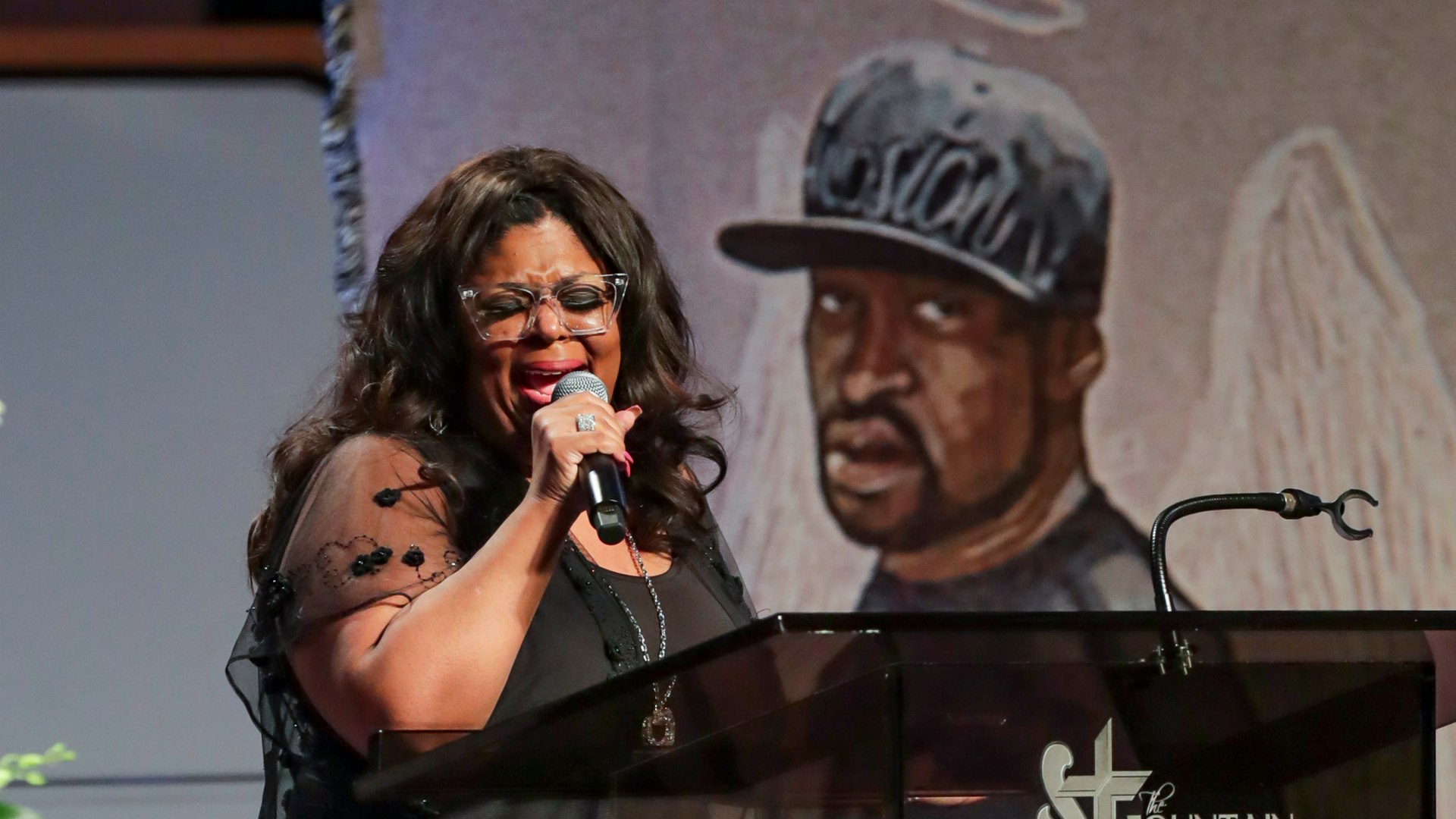
Kim Burrell sings "God Will Take Care of You" at Floyd's funeral in Houston.

Kim Burrell sings "God Will Take Care of You" at Floyd's funeral in Houston.

Christianity Today June 9, 2020
Godofredo A. Vásquez - Pool / Getty Images

The liturgy of Tuesday’s homegoing service for George Floyd reflected the Christian landscape of his hometown and the rich legacy of gospel music in the black church.

More than 500 loved ones, community leaders, and guests gathered at a Houston megachurch, Fountain of Praise, to remember a man whose death launched a movement.

The lineup for the service, the final memorial before Floyd’s burial that afternoon, included leaders of some of the most influential black megachurches in Houston as well as remarks from national figures like Joe Biden (by video) and Al Sharpton, who gave the eulogy.

Gospel greats Kim Burrell and Kurt Carr and R&B artist Ne-Yo were among the performers whose music carried mourners through the nearly four-hour event.

Thousands watched the funeral livestreamed online from Fountains of Praise’s sanctuary, where about 6,000 people came through during a public viewing the day before. The congregation is one of the largest Southern Baptist churches in the state. Pastors Remus and Mia Wright know Floyd’s cousin and reached out to his family to host the funeral. They opened the service by reading the opening lines from several psalms—121, 91, 34, 46, and 24—emphasizing God’s help and presence in times of trouble.

The crowd, many dressed in white, stood and swayed as the 10-person Houston Ensemble sang from the choir loft, where they were spread out for social distancing.

The service began with Andrae Crouch’s “The Blood Will Never Lose Its Power”: It soothes my doubts and calms my fears and it dries all my tears / The blood that gives me strength from day to day, it will never lose its power.

“The music is very important in both mediating the grief and also leading people into the notion of celebration,” said Tammy L. Kernodle, a musicologist at Miami University of Ohio and president of the Society for American Music. “There’s an arc that takes place emotionally but there’s also an arc that takes place musically.”

Remus Wright referred to the service as a celebration of life. It was also a celebration of the change they see stemming from Floyd’s legacy.

As Houston Mayor Sylvester Turner asked: Who would have thought that the name of a man who grew up in the city’s Third Ward, “the Tre,” would now be mentioned around the world? “But what folks meant for evil, God has turned it out for good,” he said (alluding to Gen. 50:20).

After the more traditional hymns, the service included a Sam Cooke protest song, “A Change Is Gonna Come,” playing while a local artist painted Floyd’s portrait; Kirk Franklin’s “My World Needs You,” accompanying a video montage; and Ne-Yo singing a tearful a cappella version of “It’s Hard to Say Goodbye.”

“They gave us a glimpse of the full soundscape of gospel history,” said Kernodle, an expert in African American music. “That’s not just for [Floyd’s] family. That’s also for those who are listening on a larger plane. That’s also a message to America. … No matter where you are generationally, no matter where you are denominationally within black Christendom, there was something that was offered that you could relate to, that you knew.”

Bob Darden, gospel music scholar at Baylor University, described the music as “a really well thought-out and powerful mix” that was “at times just mesmerizing.” He noted the straight-ahead praise and worship of Nakitta Foxx’s “We Offer Praise” and the long, emotional draw of Michael Tolds singing “My Soul’s Been Anchored.”

Fellow African American pastors from Houston spoke at the service, including Bill Lawson of Wheeler Avenue Baptist, Ralph Douglas West of The Church Without Walls, and Gusta Booker of Greater St. Matthews Baptist.

Their messages too were filled with biblical calls for justice as well as familiar lyrics from more hymns and gospel songs. Remus Wright referenced “in times like these we need a Savior.” West quoted a full stanza of “We’ll Understand It Better By and By”:

Trials dark on every hand,
And we cannot understand
All the ways of God would lead us
To that blessed promised land;
But he guides us with his eye,
And we'll follow till we die,
For we'll understand it better by and by

Quoting familiar songs evokes a generational connection to the black church tradition. “It’s almost a type of blood memory that’s taking place in the music,” Kernodle said. “Those lyrics also are trigger points that take us back to the memories of how we’ve overcome in America at these different points. It really speaks to how there’s such a strong marriage between what’s actually being sung and what’s been preached.”

Giving tributes alongside Floyd’s family, Cyril White, who leads the ministry To God Be the Glory Sports, was able to share personal reflections from when he played exhibition basketball alongside Floyd in the ’90s.

He described how they’d pass around the Proverbs to read a verse or two at a time. He read 6:9-11 in his memory: “How long will you lie there, you sluggard? When will you get up from your sleep? A little sleep, a little slumber, a little folding of the hands to rest—and poverty will come on you like a thief and scarcity like an armed man.” He said Floyd’s death had woken them up. His ministry plans to open a sports center in Floyd’s name on a three-acre property in the Houston area.

One white pastor, Steve Wells of South Main Baptist Church, also gave remarks commemorating the courage and witness of Floyd’s family and community. The mostly African American crowd applauded when he quoted 1 John 4: “If anyone loves God but hates his brother, he is a liar.”

“You could have said, ‘We don’t need to hear from any white people today. You have been silent long enough. You can be silent today.’ But you invited the whole community together,” he told the mourners.

Biden—who spoke by video—was the only other white speaker. He also quoted Scripture and songs, asking, “Why does justice not roll like a river or righteousness like a mighty stream?” (Amos 5:24), and quoting lyrics referencing Psalm 91: “He will raise you up on eagles’ wings / Bear you on the breath of dawn / Make you to shine like the sun / And hold you in the palm of His hand.”

Sharpton’s eulogy chronicled Floyd’s importance in moving forward the push for racial justice. He evoked Matthew 21:42 and said, “God took an ordinary brother, from the Third Ward, from the housing projects—the stone that the builder had rejected … and made him the cornerstone of a movement.”

Immigrants in the Image of God

Trinitarian theology offers a solution for fair immigration reform.

Christianity Today June 9, 2020
Illustration by Mallory Rentsch / Source Images: Portrait Courtesy of Jenny Yang / Unsplash

In this series

Christianity Today asked a group of contributors how, if at all, the Bible should inform what a nation expects of immigrants. This is one of five essays in the series.

Those of us who grew up in the evangelical tradition are all familiar with proof texting. Whether it’s about drinking alcohol, gender roles, or predestination, most of us have, at some point or another, cherry-picked our favorite verses from Scripture and used them as weapons against those with whom we disagree.

In recent years, few issues have become more subject to proof texting than illegal immigration. Those who favor amnesty point to the many Old Testament commands to welcome the alien and stranger in our midst; those who support deportation point to New Testament verses where Paul directs churches to obey the temporal authorities of the Roman Empire.

Although both sides may be driven by a desire to obey Scripture, proof texting and cherry-picking rarely, if ever, provide us with sound answers. If we truly want to honor God, we must take the witness of the entire Bible into account—starting with the very first chapter.

In Genesis 1, we learn that “God created mankind in his own image” (v. 27), which is the basis for the historic doctrine of the imago Dei. This belief that each person is made in God’s image establishes the basis of every person’s identity and has inspired generations of activists to defend human dignity.

As I reflect on the border crisis and how some of the most vulnerable people impacted by COVID-19 are immigrants working in essential jobs, I’m reminded not just of the individual aspect of the imago Dei, but of its communal aspect as well. God is a triune God—one who, from the beginning of time, has revealed himself as three persons, co-equal in glory, majesty, and love. God made us to be in relationship with him and also to be in relationship with one another.

Trinitarian theology should inform our approach to immigration policy. We are responsible to one another and responsible for one another. We share in each other’s joys and in each other’s sufferings (1 Cor. 13). When we speak out and say that the things as they are now are not the way they should be, we’re pointing to a better way, to a hope that resides in the coming of the kingdom of God.

We have a responsibility to each other. We have a responsibility to immigrants.

Crucially, Christ’s command to bear with one another in love and to love our neighbors as ourselves comes right before he is betrayed and handed over to his sacrificial suffering and death. Christ calls us to love one another in John 15, but then he immediately shows us what that love looks like. It is a love that sacrifices and a love that costs—and it is the only kind of love that is sufficiently powerful to reconcile us to God and to each other. The calls to Trinitarian unity and respect for one another can only be rightly understood in context with Christ’s death on the cross.

As soon as God creates man imago Dei, he institutes marriage and the family as the basic institution of human flourishing. By deporting individuals who have been here for decades— many of whom were born or brought here through no choice of their own—we drive a wedge between those whom God intends to be together, creating trauma and pain that can cycle forward for generations.

With the dignity given to them by God, migrants have a responsibility to the receiving country as well. We live in a prosperous nation that guarantees freedom of religion and freedom of speech. It is unsurprising that so many want to come here and understandable (if heartbreaking) that they’ll do anything to get here. But just as we fail to honor migrants when we tear their families apart, it’s also fair to expect immigrants to be law-abiding, contributing members of society through work, support for their families, and community integration.

Several DACA (Deferred Action for Childhood Arrivals) recipients who work at World Relief are already helping provide immigrant legal services in several of our US offices. Ana Jara, for example, has helped many in southern California fill out various applications to get a green card or to naturalize. Thousands of others continue to pursue higher education, serve in our military and open restaurants and small businesses, while others are leading churches and discipling hundreds to follow Jesus.

Pastor Noe Carias received national attention when, after living in the United States for 25 years and pastoring a vibrant Assemblies of God church in Los Angeles, he was detained and ordered to be deported from the United States. After advocacy from many in Southern California, as well as the head of the Assemblies of God, George Wood, Carias was released in September. Jara and Carias exemplify in so many ways the many immigrants who are contributing economically, socially, and spiritually to our country.

A growing number of evangelicals are calling for a middle way on immigration reform. Based on the recognition that we all are made in the image of God and are responsible to one another for our choices, many church leaders have affirmed an Evangelical Call for Restitution-Based Immigration Reform. This approach rejects both amnesty and mass deportation as overly simplistic, and instead creates a path where migrants who have entered illegally or overstayed their visas can admit their violation of law, pay a series of fines over the course of seven years, and eventually work their way toward becoming a Lawful Permanent Resident, all contingent on paying taxes and maintaining a good record without serious criminal convictions.

It’s an approach, in short, that combines justice and mercy, compassion and equity, dignity and responsibility—an approach that honors the difficult and paradoxical call of Christ on our lives. Just as our reconciliation with God came at a cost, so likewise must the reconciliation between migrant and state comes at a cost. My hope is that more believers will investigate restitution-based immigration reform and share their support of it with their elected officials.

Above all, however, I hope that we can begin to look beyond the individualistic model of contemporary American culture and remember that we are made in the image of a triune God who created, redeemed and sustains us as we continue to fight for a more perfect union.

Jenny Yang is vice president of advocacy and policy at World Relief and the coauthor of Welcoming the Stranger: Justice, Compassion and Truth in the Immigration Debate.

Apple PodcastsDown ArrowDown ArrowDown Arrowarrow_left_altLeft ArrowLeft ArrowRight ArrowRight ArrowRight Arrowarrow_up_altUp ArrowUp ArrowAvailable at Amazoncaret-downCloseCloseEmailEmailExpandExpandExternalExternalFacebookfacebook-squareGiftGiftGooglegoogleGoogle KeephamburgerInstagraminstagram-squareLinkLinklinkedin-squareListenListenListenChristianity TodayCT Creative Studio Logologo_orgMegaphoneMenuMenupausePinterestPlayPlayPocketPodcastRSSRSSSaveSaveSaveSearchSearchsearchSpotifyStitcherTelegramTable of ContentsTable of Contentstwitter-squareWhatsAppXYouTubeYouTube