Theology

Don’t Let Jean Vanier (or Other Heroes) Off the Hook

The rhetoric around fallen leaders often erodes our high call to holiness.

Christianity Today February 26, 2020
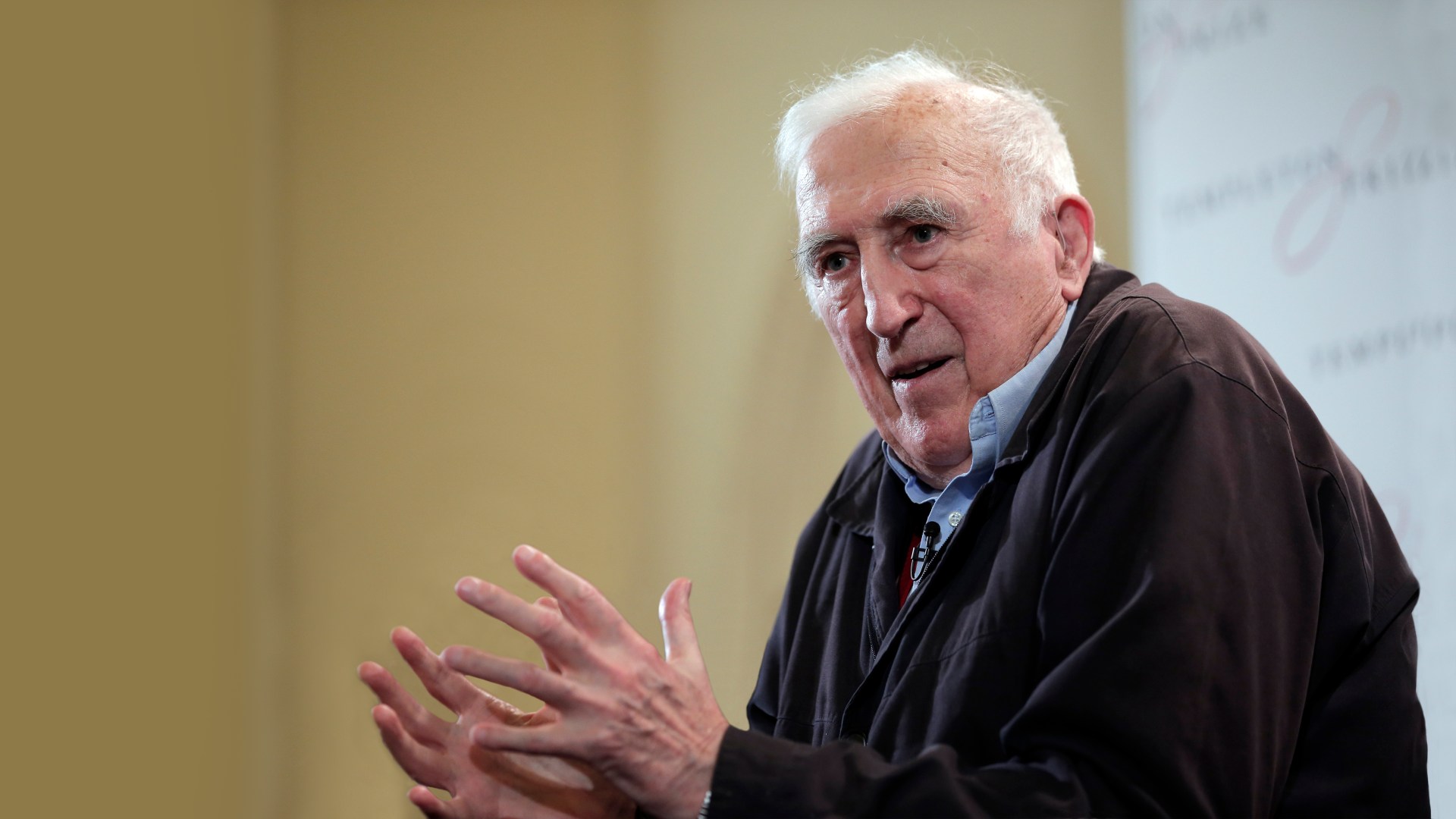
Lefteris Pitarakis / AP Images

L’Arche International recently published an internal report revealing the news that Jean Vanier, its founder, sexually abused women for decades. In the report, the leaders of L’Arche unequivocally condemned Vanier’s abusive behavior. They sought forgiveness from the victims while also lauding the victims’ courage to come forward and testify.

Along with many others, I was devastated by the news. After Vanier won the Templeton Prize, I contacted him about a possible interview. When his secretary was on vacation, he sent me a personal response that said, “From Jean, yes we can meet, tell me when you can come, peace.” Although I was never able to go, I cherished the invitation. I had been quoting Vanier in my writing for years. And in the seminary classes I taught, I repeatedly used Vanier as a role model of incarnational community and an exemplar of what it means to manifest Christ’s presence in the world.
As news about his abuse ricocheted across the globe, many of us took to social media to express our reactions and to collectively grieve. Many echoed Mark Galli’s question about sinful leaders: “What are we to make,” he writes, “of everything they taught, if their lives exhibited anything but what they taught?”Others have opined that if we were more realistic about human nature, we wouldn’t be disappointed. “The lesson, surely,” Michael Coren tweeted, “is that nobody should be placed on such a pedestal.” Still others have wondered if we should have heroes at all.

They’re right, of course, but only in part. Scripture does tell us that “There is no one righteous, not even one” (Rom. 3:10). Hebrews 11 and other parts of the New and Old Testaments highlight people of faith with grievous sins and fatal flaws. So yes, God uses even the most broken among us. And yes, we have to be cautious about whom we venerate.

And yet, this language of “not putting people on pedestals” is often used to let people off the hook and soften their mistakes in the public eye. More importantly, this rhetoric often erodes our understanding of righteousness and the high calling to holiness. Scripture, experience, tradition, and reason demonstrate that some believers are indeed more righteous than others. Their private lives correspond to their public lives. What you see is what you get. They are honest, without guile, and unduplicitous. Their holiness is simple and uncomplicated.

I think of Zechariah and Elizabeth, John the Baptist’s parents. The Gospel of Luke tells us, “Both of them were righteous in the sight of God, observing all the Lord’s commands and decrees blamelessly” (Luke 1:6). Then of course there is Mary, the mother of Jesus, who was “highly favored” by God (Luke 1:28) and chosen to be the theotokos, mother of God.In other words, we can and should affirm heroes of the faith and even “put them on pedestals,” to a point at least. We should expect righteousness of them (and of ourselves). And we should also seek to enable that righteousness whenever possible.

“We tend to think that loyalty means always taking the side of the leader to whom we want to be faithful,” writes Galli in reference to another fallen leader. “Loyalty instead means doing everything in your power to make the leader not only a better one but a more faithful disciple of Jesus Christ.”

Mary, Elizabeth, Zechariah, and many others like them today are our spiritual heroes, our exemplars. Even the Apostle Paul had the gall to urge the Corinthians to imitate him (1 Cor. 4:16) and to follow his example even as he followed Christ’s example (1 Cor. 11:1). We do in fact need icons of Christ, living examples who show us that it really is possible to love like Jesus.

Many like Jean Vanier will fall, yes. But many more, by the grace of God, will rise up.

Marlena Graves is the author of The Way Up Is Down: Finding Yourself by Forgetting Yourself (IVP, July 2020) and A Beautiful Disaster: Finding Hope in the Midst of Brokenness (Brazos Press, 2014). She lives with her husband and three daughters in the Toledo, Ohio area.

Theology

The Cross Changes Everything

Why the Crucifixion is the center of our theology—and our lives.

Christianity Today February 26, 2020
Maica / Getty

The cross of Christ is the center of salvation. It is the crucial point, the place of convergence where everything about the gospel comes together. If you interrogate Christian faith and ask, “In one word, how does God save sinners?” the response of a healthy faith will be instantly and confidently to pick out the Cross.

Of course a healthy faith will also ask, “Please, may I have more words than one?” The Cross is meaningfully central only when it is recognized as the center of something vaster. Salvation in seven terms might include, along with the Cross, the Incarnation, the Resurrection, and the Ascension, not to mention the Father, the Son, and the Holy Spirit. Salvation in 20 words could be explicit about even more ideas that are presupposed in a shorter answer. O for a thousand words to sing my great Redeemer’s praise, to paraphrase Charles Wesley! Christian faith is fluent and eloquent when it comes to salvation; speaking as a theologian, I would love to tell you about salvation in as many words as you will permit me. But just as strong as the impulse to elaborate on the greatness of God in the work of salvation is the impulse to condense the whole message to the key point.

Yet the condensed statement is always meant to call to mind the larger reality. Whenever we say anything about the Cross, we are almost always using a figure of speech called metonymy. A word functions as a metonym when we use it to refer to something else, usually something larger to which it is closely related. When Paul says he boasts only “in the cross of our Lord Jesus Christ, through which the world has been crucified to me, and I to the world” (Gal. 6:14), he is using one thing (a large, wooden object used for executions) to refer to something else: the death of Jesus and its effect in reconciling us to God. Similarly, when Christians sing songs about the wooden object itself, we are well aware that what we cherish is not just “the old rugged cross” as such, but the Son of God who used that cross in his work of seeking and saving. The Cross means Christ crucified. All of this flashes across the Christian mind in an instant when the Cross is mentioned.

Now think vaster: When we speak of Christ crucified, something else also flashes across the Christian mind: the presence of Christ risen and ascended, in whose almighty presence I am writing these words and you are reading them. The One who says, “I was dead, and now look, I am alive for ever and ever!” (Rev. 1:18). And behind that risen One is the infinite depth of his eternal personhood as the Son of the Father in the fellowship of the Holy Spirit in the perfect life of the blessed Trinity. All of this is implicit in what Christians say about the death of Jesus. We never mean just the death of Christ in an isolated way, as if it were cut off from his entire life, his preexistence and exaltation, or the Father and Holy Spirit with whom he indivisibly accomplished our salvation.

The apostle Paul knew this. When he said he “resolved to know nothing … except Jesus Christ and him crucified” (1 Cor. 2:2), he meant he was focusing on the central point, not that he was ignoring the Resurrection or the Holy Spirit (both of which he goes on to say much about in 1 Corinthians). But Paul leads with the Cross: “For what I received I passed on to you as of first importance: that Christ died for our sins according to the Scriptures” (1 Cor. 15:3). Paul started his world-changing message with the Cross and centered his life-transforming message on the Cross. He knew how to indicate the total reality of God’s salvation, but he also knew how to focus.

The early church knew it. The Apostles’ Creed tells a very short version of the life of Jesus, jumping straight from “born of the Virgin Mary” over 33 years of life to the final days: “He suffered under Pontius Pilate, was crucified, died, and was buried. He descended to the dead.” For a short creed, that is a lot of emphasis to put in one place. Yet this focus on Jesus’ death falls right in the middle of a creed that teaches the full counsel of the Trinity and of God’s work from Creation to “the resurrection of the body, and the life everlasting.” The creed has the Cross at its center but all things at its circumference.

Charles Wesley knew it. His hymn “And Can It Be” rivets our attention on the sacrificial death of Christ: “How can it be that thou, my God, shouldst die for me?” But that astonishing death in the foreground has an entire world of doctrine as its background, from the immortal Son who, out of free and infinite grace, “left his Father’s throne above,” to glorified believers “clothed in righteousness divine” and approaching “th’eternal throne.” This is a hymn about the death of Christ that somehow also celebrates all the works and ways of God and invokes God himself.

Paul knew it, the early church knew it, Wesley knew it, and we know it today. Recognizing the centrality of the Cross is not just an exercise in precisely calibrating our doctrinal emphases or of taking care to be theologically correct. It is a matter of deep, spiritual reality.

The centrality of the Cross changes everything. When you receive the Good News that Jesus died for you, the result is like dropping a rock in a smooth pond: The ripples radiate outward to the farthest edges of reality. It is the death of Christ that enables us to die to ourselves. It is his death that justifies us before God’s perfect righteousness, that sets us free, that gives us courage to face persecution. The community centered on the Cross is a great company of people reconciled to God and each other through the Cross. People centered on the Cross know how to die, learn how to live, and love like they’ve been forever changed by the love they’ve received.

This is the open secret of how Christians attend to the death of Christ. All through the season leading up to Easter, we get a series of reminders of the Crucifixion, and we all know that it means more. The Cross reminds us of the entire sweep of salvation, and the sweep of salvation reminds us of the infinite love of God. When we see the cross, we recognize instantly that it stands for the death of Jesus, which stands in the center of the perfect incarnate life and glorious resurrection of the eternal Son of the almighty Father. It’s never the Cross by itself but the Cross as the center. Christian faith knows this: It knows to emphasize the Cross. But emphasizing it means lifting it up for special notice, never isolating it.

Fred Sanders is a theologian who teaches in the Torrey Honors Institute at Biola University. He has written, edited, or contributed to several books, including The Deep Things of God: How the Trinity Changes Everything. He blogs at ScriptoriumDaily.com.

This piece is part of The Cross, CT’s special issue featuring articles and Bible study sessions for Lent, Easter, or any time of year. You can learn more about purchasing bulk print copies of The Cross for your church or small group at OrderCT.com/TheCross. If you are a CT subscriber, you can download a free digital copy of The Cross at MoreCT.com/TheCross.

News
Wire Story

Chinese American Churches on the Frontlines of Coronavirus Vigilance

Attendance has dropped as much as 50 percent this year.

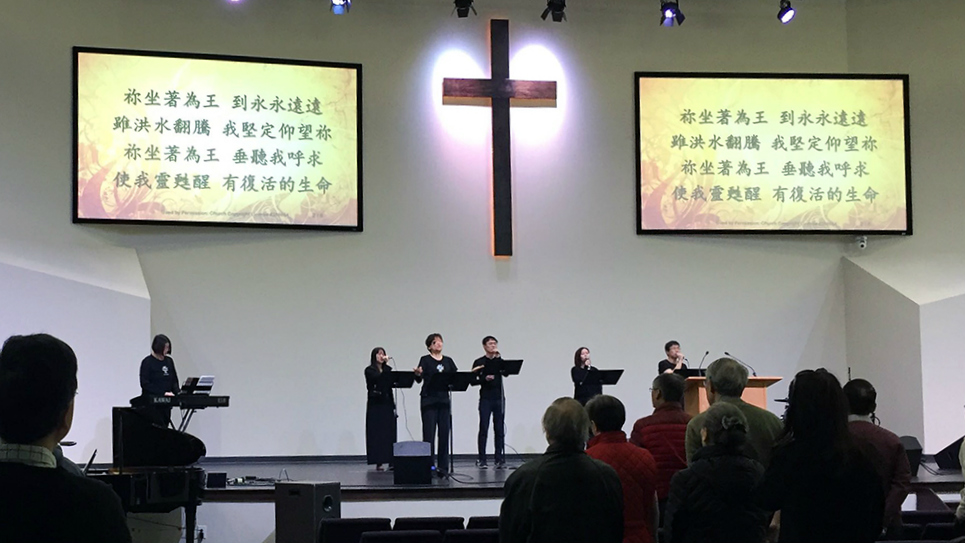
Musicians lead worship at Raleigh Chinese Christian Church on Feb. 23 in Cary, North Carolina.

Musicians lead worship at Raleigh Chinese Christian Church on Feb. 23 in Cary, North Carolina.

Christianity Today February 25, 2020
Yonat Shimron / RNS

There has been no sustained community transmission of the coronavirus in the United States so far, and many Chinese churches such as Raleigh Chinese Christian Church (RCCC) are doing their best to keep it that way.

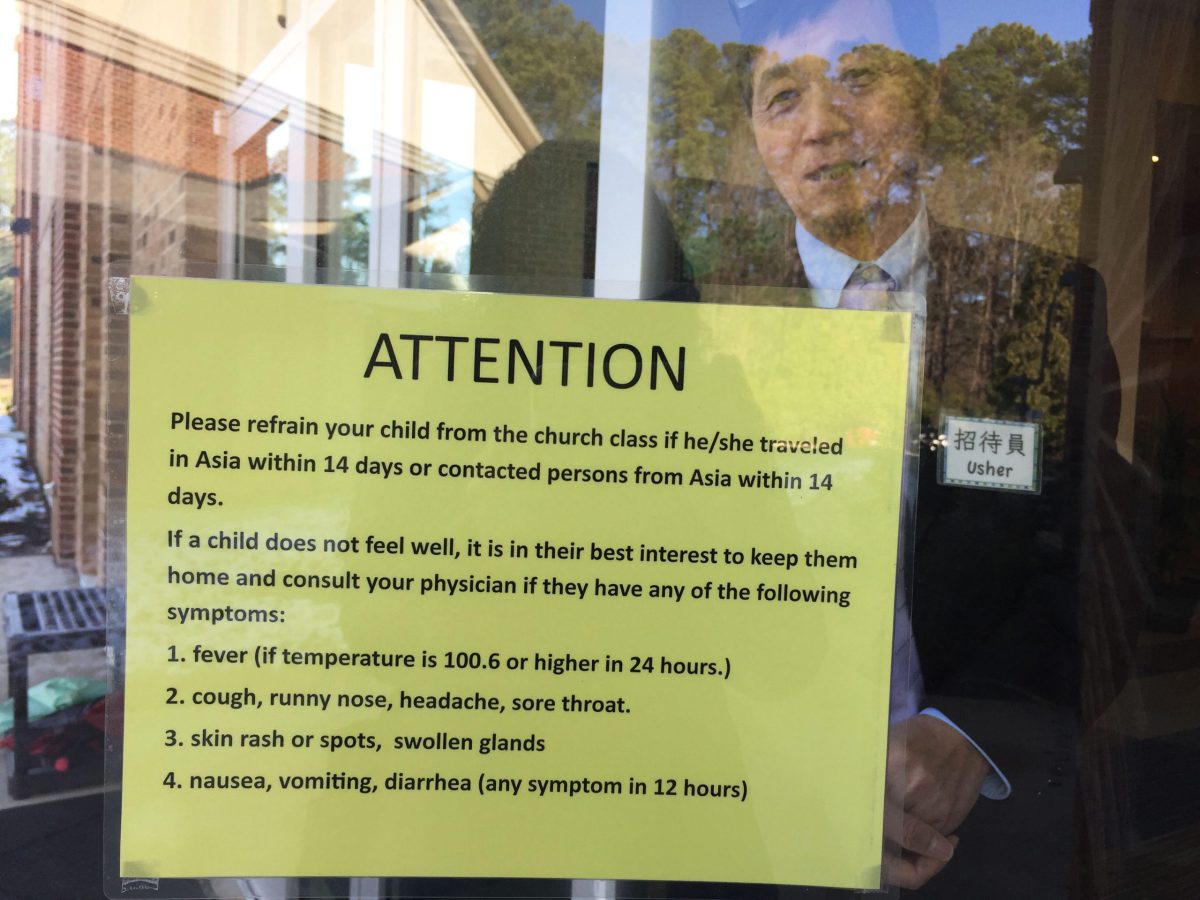
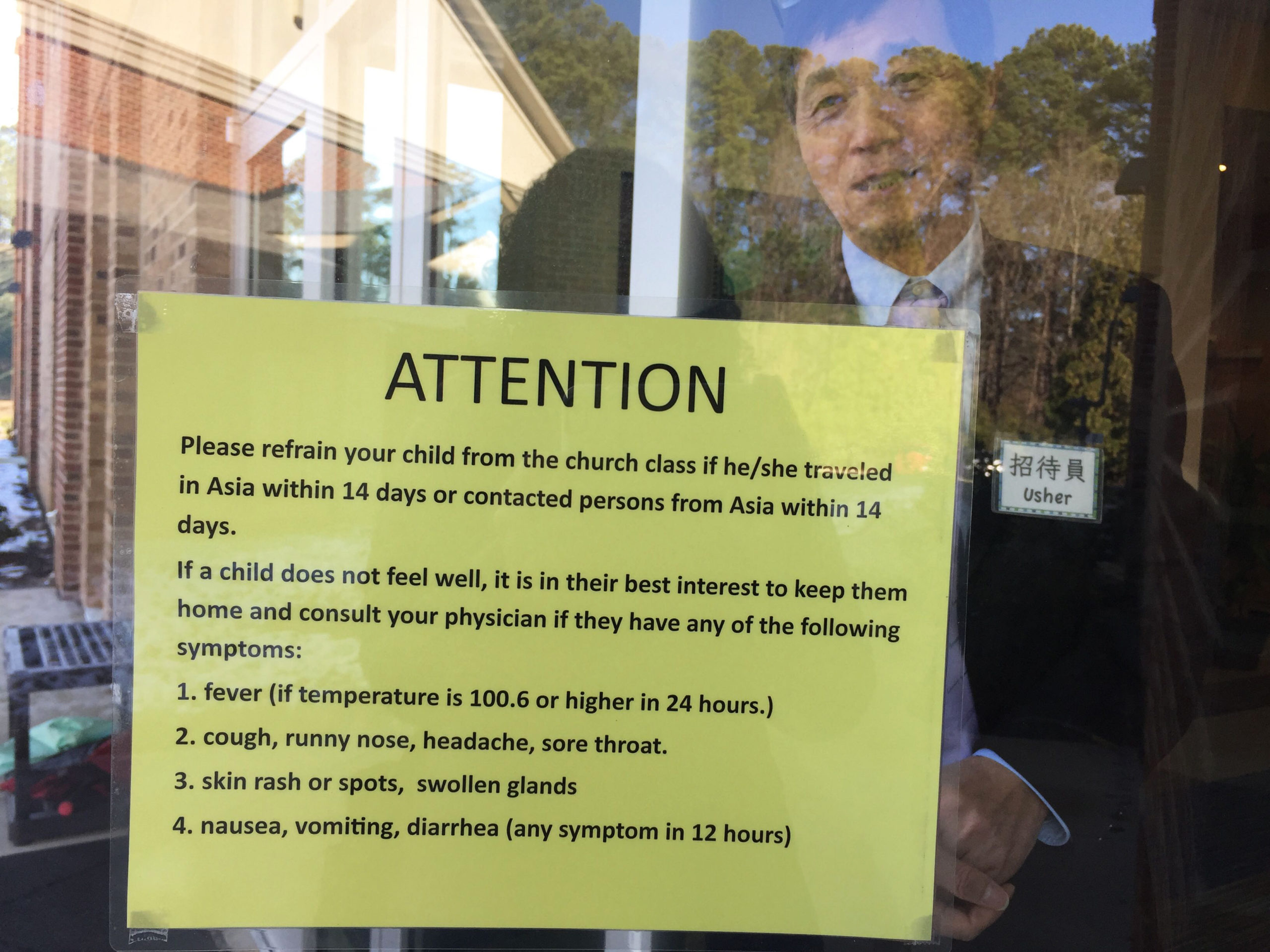
Taped to the entrance of the church’s glass doors is a yellow notice with the word “ATTENTION” in capital letters. It warns parents not to bring their children to church if they’ve traveled to Asia in the past 14 days.

Churches such as RCCC—a nondenominational congregation with services in Mandarin, Cantonese, and English—have taken it upon themselves to self-quarantine, in keeping with Centers for Disease Control guidance.

Many others have taken additional precautionary measures, such as canceling small group gatherings, Sunday lunches, and other communal events.

“I think there’s caution,” said Jerry Miller, RCCC’s youth pastor. “There may be a little bit of fear mixed in with that too, which is understandable.”

The outbreak of the virus, which began in Wuhan, China, has sickened thousands and has killed more than 2,700 people. At least 35 people in the US are infected with the so-called COVID-19 virus—all linked to overseas travel, including 18 people evacuated from the Diamond Princess, a cruise ship docked in Yokohama, Japan.

No Americans have died from the coronavirus thus far, and those infected have not spread it to the wider community.

Still, it is the Chinese American community that has borne the brunt of the health scare and it has also been the one to implement wide-ranging safety precautions.

The virus impeded communal celebrations of Chinese New Year, which fell on January 25. The lunar holiday is typically a time when hundreds of millions of people travel in China to reunite with family.

Stateside, parties, get-togethers, and other holiday celebrations were nearly all called off.

Attendance at US Chinese churches dropped as much as 50 percent beginning in late January. It is slowly beginning to pick up, according to half a dozen pastors interviewed for this story.

“We’ve all been impacted in very similar ways,” said Carter Tan, English ministries pastor at Grace Chinese Baptist Church of Richmond, Virginia.

Tan, whose church is part of the Southern Baptist Convention (SBC), said many US Chinese churches have members grieving the loss of family or friends who have died in Wuhan, a city of 11 million people in central China.

“We have one woman whose father passed away because of the coronavirus last week,” Tan said, adding that this isn’t just affecting those in China. “It has hit home pretty personally.”

The major airlines—Delta Air Lines, American Airlines, and United Airlines—suspended service to mainland China on January 31, so any Chinese Americans headed to China for work, school—or the funeral of a loved one—are unable to go. Chinese nationals who were visiting the US before the air travel restrictions were put in place cannot return home; so too, Americans who happened to be visiting China before the epidemic started.

The sign outside Raleigh Chinese Christian Church warns parents not to bring their children to church if they traveled to Asia in the past two weeks.Yonat Shimron / RNS
The sign outside Raleigh Chinese Christian Church warns parents not to bring their children to church if they traveled to Asia in the past two weeks.

Chinese Americans are mostly secular; 52 percent do not affiliate with a particular religion. But 31 percent consider themselves Christians and 15 percent are Buddhist, according to a Pew Research Center survey.

Most Christian Chinese Americans are Protestant and describe themselves as evangelical. Nondenominational and Baptist churches dominate.

There are between 200 and 250 Chinese churches affiliated with the SBC, said Amos Lee, executive director of the Chinese Baptist Fellowship of USA and Canada. Most are small with about 100 members, but there are larger ones, especially in the big cities such as San Francisco, Los Angeles, and Dallas.

To avoid contagion, Lee said Southern Baptist Chinese churches have been advised to use individualized pre-filled and sealed Communion cups containing grape juice and a wafer.

Many churches are used to pre-filled Communion elements and have been using them since the global SARS epidemic in 2003, Lee said.

Chinese Baptist Church (CBC) in Raleigh set out a basket with face masks at the door, though Jane Pan, the pastor, said few have taken advantage of them.

“We did have some that wore face masks in the beginning, but not anymore,” said Pan.

The church, located a few blocks from North Carolina State University, has canceled its Chinese student fellowship meetings this month. The fellowship, which includes about 40 students, may resume meeting in March, though no decision has been made.

Likewise, the church has called off Sunday’s communal lunch after services.

Charlotte’s Chinese Baptist Church changed the way it serves Sunday lunch. Instead of having people line up buffet style, it now arranges plates heaped with food on a table and servers wearing face masks and gloves hand them to church members.

“Our church is on alert,” said Kevin Fu, a lay leader. “That’s not just our church. It’s the whole Chinese community.”

A Chinese American woman bows her head in prayer at Raleigh Chinese Christian Church on Feb. 23 in Cary, North Carolina.Yonat Shimron / RNS
A Chinese American woman bows her head in prayer at Raleigh Chinese Christian Church on Feb. 23 in Cary, North Carolina.

Chinese restaurants and grocery stores in the US and across the world have reported sharp sales declines.

In response, Chinese American churches and nonprofits have also been fundraising for the people of Wuhan. Chinese Americans from across the Carolinas donated toward an effort to buy boxes of face masks.

Other organizations have offered help, as well. Samaritan’s Purse, for example, donated 78 pallets of medical supplies and personal protective equipment through the US State Department, said Kaitlyn Lahm, a spokesperson for the North Carolina-based ministry.

World Vision distributed masks to 50,000 people in the impacted province.

The New York Times reported that several donations from overseas faith-based groups have not been well received. Local officials have rejected some donations because they fear trouble for cooperating with what the centralized government considers to be illegal organizations. The government in China recognizes five faiths, but at the same time it co-opts state-sanctioned religious organizations.

Cathy Kimball, a resident of Cary who attends CBC Raleigh, said that despite the difficulties, church members are not isolated. Social media has allowed Chinese Americans to stay in touch with friends and family in China, primarily through WeChat, the Chinese messaging and social media app.

“Everybody is involved discussing the topic,” said Kimball, a 56-year-old permanent resident who has lived in the US since 2003 and manages a local Chinese news site. “We don’t feel alone.”

Just when things will return to normal is hard to say.

“There’s a lot of uncertainty as to what to expect,” said Lee. “We really don’t know what the whole picture is like. So people are taking it cautiously.”

News
Wire Story

500 of Korea’s 1,000 Coronavirus Cases Tied to Shincheonji Church

(UPDATED) COVID-19 outbreak prompts 750,000 to petition South Korean president to outlaw apocalyptic movement deemed a cult by Christian leaders.

Workers wearing protective gear spray disinfectant against the new coronavirus in front of a Shincheonji church in Daegu, South Korea.

Workers wearing protective gear spray disinfectant against the new coronavirus in front of a Shincheonji church in Daegu, South Korea.

Christianity Today February 25, 2020
Kim Jun-beom / Yonhap via AP

SEOUL — An apocalyptic sect whose leader claims he is an angel of Jesus has become the biggest cluster of coronavirus infections in South Korea, which now leads the world in cases of COVID-19 disease outside of China.

President Moon Jae-in has put his country on its highest alert for infectious diseases, ordering officials to take “unprecedented, powerful” steps to fight a soaring viral outbreak tallying 1,100 cases and 11 deaths, mostly linked to a congregation and a hospital.

Globally, more than 80,000 people have been infected in 37 countries, and more than 2,700 have died.

More than 400 of those infected have been directly linked to a single house of worship, a Daegu branch of the Shincheonji Church of Jesus, Temple of the Tabernacle of the Testimony—viewed as a cult by mainstream Korean Christian organizations—where a woman in her 60s attended two services before testing positive for the virus. Nationwide, the Korea Centers for Disease Control and Prevention (KCDC) attributed 501 of 977 cases (as of the last breakdown on Feb. 25) to Shincheonji members.

Officials are also investigating a possible link between churchgoers and the spike in infections at the Cheongdo hospital, where more than 100 people have been infected so far, mostly patients at a mental illness ward.

Health officials were screening some 9,300 church followers, and said that 1,261 of them have exhibited cough and other symptoms. Late Tuesday, Shincheonji provided a list of 212,000 members which the government pledged to screen for respiratory symptoms, reported Yonhap News Agency.

Among them, four had traveled abroad in recent months, including one to China, although that trip came in early January and was not near Hubei.

More than 1,000 churches and other facilities operated by Shincheonji in South Korea have been closed, and members have been told to instead watch services on YouTube. The sect’s teachings revolve largely around the Book of Revelation.

Health and city officials say the “patient zero” who first tested positive had contact with some 1,160 people, both at the church, a restaurant, and a hospital where she was treated for injuries from a car accident.

Shincheonji blamed the woman for the spread of the disease, saying it has been advising followers since late January to stay home if they had traveled overseas or were experiencing even mild cold-like symptoms. Sect officials said the woman assumed she was having the common cold.

Shincheonji, which translates as “new heaven and new earth,” was established in 1984 by Lee Man-hee, who has been accused by mainstream Christian groups as a false prophet or a cult leader. The sect describes Lee as “the Promised Pastor,” an attendant of Jesus sent to testify what he claims are the fulfilled prophecies from Revelation.

“Shincheonji followers believe Lee Man-hee is immortal and has an eternal life,” said Ji-il Tark at Busan Presbyterian University in South Korea. “To propagate their belief, they often approach their relatives and acquaintances or sneak to other churches without telling them they are Shincheonji members.”

Tark said Shincheonji followers are likely more vulnerable to virus infections as they often sit very closely on the floor during services. Attending the sect’s gatherings “isn’t an option, but a requirement.”

“This disease case is seen as the devil’s deed to stop the rapid growth of Shincheonji,” Lee told his followers, according to images published by Yonhap and noted by Reuters. “Just like the tests Job went through, it is to destroy our advancement.”

The sect said in a statement it was fully cooperating with government quarantine efforts and accused mainstream church groups of spreading false claims, such as that it initially instructed followers to keep silent about the illness.

A petition asking Korea’s president to dissolve Shincheonji gathered more than 750,000 signatures in four days, almost quadruple the threshold (200,000 in 30 days) that requires the Blue House to publicly respond. However, church leaders worry such a move could give the government an excuse to do the same to regular religous groups later, Yong J. Cho, general secretary of the Korea World Missions Association, told CT.

Cho said that many in Korean society "do not understand the differences well enough" between cultic groups and regular churches. He told CT that Shincheonji used to be secretive and kept a low profile in regular churches, but in November 2019 the group announced a graduation of almost 104,000 trainees (as noted on the massive banner above the now-closed Daegu church).

“Almost all churches have been affected by the strong threats from [Shincheonji],” said Cho. “No Christian leaders say that we have to show [special] love to them. Individually, we have to treat and cure the patients same as any other ones in Korea.”

Based on his review of Christian discussions on social network services such as KakaoTalk, Cho said it’s “difficult to say what percentage of Korean Christians think that this is divine judgment on the cult.” However, many do see it as “the right time to disclose the dark side” of the group.

Shincheonji is Korea's largest heretical movement, with branches in 40 countries, according to Bareunmedia (Right Media). In a June report entitled “South Korea’s Major Heretic and Pseudo-Religious Groups,” the media group—which focuses on educating non-Koreans about Korean Christian heresies—said Shincheonji’s method of propagation through innocuous surveys and secretive Bible studies causes more problems for Korean missionaries sent abroad “than any other issues with language or cultural differences.”

Workers wearing protective gears spray disinfectant against the coronavirus in front of a Shincheonji church in Daegu, South Korea.Lee Moo-ryul / Newsis via AP
Workers wearing protective gears spray disinfectant against the coronavirus in front of a Shincheonji church in Daegu, South Korea.

President Moon said his government had increased its anti-virus alert level by one notch to “Red,” the highest level. The step was last taken in 2009 to guard against a novel influenza outbreak that killed more than 260 people in South Korea. Under the highest alert level, authorities can order the temporary closure of schools and reduce the operation of public transportation and flights to and from South Korea.

Moon said the outbreak “has reached a crucial watershed,” and that the next few days will be critical. “We shouldn’t be bound by regulations and hesitate to take unprecedented, powerful measures,” he said.

Shincheonji tried to defend itself from growing public anger directed at the group.

In a video statement posted on its website, church spokesman Simon Kim said Shincheonji has shut down 74 local churches and other facilities since its church member in Daegu became the first patient to test positive for the virus on February 18.

Earlier Sunday, Daegu Mayor Kwon Yong-jin said there were concerns that the number of those infected in the city could see yet another massive increase because authorities were launching intensive examinations of church members with virus-related symptoms.

South Korea earlier informed Israel that a group of tourists who traveled to Israel and the West Bank for a week this month tested positive for the virus upon returning home. Israeli and Palestinian health authorities asked people who were in close contact with the tourists to quarantine themselves.

South Korean health authorities said Sunday that 18 of the 39 South Koreans who had made the group pilgrimage later tested positive for the virus. The 21 others were being tested. Forty-one Catholic churches in their neighborhoods halted Sunday Masses and other gatherings.

The news led a dozen nations to place warnings or restrictions on travel to and from South Korea, according to Yonhap.

Additional reporting by AP writer Hyung-jin Kim and CT editor Jeremy Weber.

Theology

Black Theology Sings of Freedom

To be black and to be Christian is to remember the brutality of our experience and the brilliance of our resistance.

Christianity Today February 25, 2020
Illustration by Mallory Rentsch / Source Images: Nicolas Castro / Lightstock / Chanan Greenblatt / Jason Blackeye / Unsplash

But a caged bird stands on the grave of dreams his shadow shouts on a nightmare scream his wings are clipped and his feet are tied so he opens his throat to sing.

The caged bird sings with a fearful trill of things unknown but longed for still and his tune is heard on the distant hill for the caged bird sings of freedom.

Maya Angelou

Sometimes I wake up in the middle of the night just to touch him, to lay my hand on him and whisper a little prayer. I am reminded of all the families who prayed over children who never returned again. You just never know.

Prayer can seem like all we can do for young people that look like my son. Imani Perry, in her letter to her sons entitled Breathe, lamented, “There are fingers itching to have a reason to cage or even slaughter you. My God, what hate for beauty this world breeds.”

I know the feeling. Just last summer, during a run, an older white man started taking pictures of me and telling me that I “didn’t belong here.” On the walk home, I stopped, bowed my head, and cried. These were not tears of weakness. I cried because I felt what many of those who looked like me have felt: the tragedy of blackness in an unloving world. My tears were my song, with a “fearful trill of things unknown but longed for still.”

When I arrived home, I told myself: You are black. You are known. You are loved. You must survive. I understand the caged bird a little better now. In its weakness, he opens up his throat still. The caged bird must sing.

Still.

Here, then, is the dilemma, and it is a puzzling one, I admit. No Negro who has given earnest thought to the situation of his people in America has failed, at some time in life, to find himself at these crossroads; has failed to ask himself at some time, “What, after all, am I? Am I an American or am I a Negro? Can I be both?” —W. E. B. Du Bois

All of my work since…has involved an effort to relate the gospel and the black experience—the experience of oppression as well as the struggle to find liberation and meaning. —James Cone

I have thought about Angelou’s poem since that day. How do we sing in a world where we are bound? It is the question that I have had to navigate amid anger, loss, loneliness, and a world in which those who look like me are not given the benefit of humanity. It is the crossroads at which Du Bois found himself wondering, “What after all, am I?” What after all, our pain? What after all, our meaning?

Our history cries out: cries of little babies torn from their homeland; of mothers and fathers jumping overboard to escape from hell; of bruised and abused bodies; of broken promises and policies; of beautiful children lifeless in the streets and over social media.

I have come to see that theological reflection often begins at the place of tears and pain. It is in this place that black people have had to struggle. It is here that we have had the audacity to survive, to sing. And we in America today can’t understand this song without understanding the brilliance of black theology. I wouldn’t be able to make it in this cruel world without it.

Since its emergence in the 1960s, black theology has tried to respond to the cries of its people. J. Deotis Roberts, a pioneering black theologian, spoke of this struggle. He was attending a meeting at Duke University where Jürgen Moltmann, the German theologian, presented a paper on his theology of hope on the same night Martin Luther King Jr. was assassinated. The next morning, Roberts stopped Moltmann and asked what his theology had to say to black people in America. Moltmann admitted he had no answers. It was then, Roberts writes, “that the seed of ‘black theology’ began to germinate in my own mind.”

As it was for Roberts, so it was for James Cone, whom many would deem the “father of black theology.” Much of theological reflection had failed black people by not focusing its theological interpretation on the experience of black life in America. But both Cone and Roberts, James Evans writes, “suggest that the radical critique of American racism inherent in the black power movement is the source of contemporary black theology and prophetic black Christianity.”

These theologians embodied the good news of the gospel bound to the black voice. As they strained, they dreamed for themselves and for us today of “things unknown but longed for still.” Not content to leave the task of theology in the past, they continued to reflect deeply on the meaning of Christianity for black people today.

Refusing to concede Christianity to its white abusers, or the rejections of various movements within the black freedom struggle, they “based their legitimacy on the fact that African American Christianity was the result of the encounter of black people with the liberating essence of the gospel,” wrote Evans in We Have Been Believers: An African American Systematic Theology.

This theological reflection, he said, is “central to the ongoing life of the African American church.” The very resistance, the straining to fix one’s throat to sing, was evidence that these caged birds still had life. One could hear this singing in the womanist moral and religious reflection of black women or the recent movement for black liberation and love in the context of Black Lives Matter. This singing can still be heard in the voice of black folk in all types of Christian traditions. We refuse to allow the story of our pain, our resilience, and resistance to be forgotten.

As Miroslav Volf writes about remembering rightly in a violent world, “To remember a wrongdoing is to struggle against it.” To be black and to be Christian is to remember the brutality of our experience and the brilliance of our resistance. It is to remember, as Cone writes, “God’s message of liberation in an unredeemed and tortured world.”

We remember so we must struggle. We’re still here.

Sing.

But there is one who does not forget—Jesus of Nazareth, who is the Christ of God. He does not forget poor, dark, despised bodies. —M. Shawn Copeland

We should ask God to increase our hope when it is small, awaken it when it is dormant, confirm it when it is wavering, strengthen it when it is weak, and raise it up when it is overthrown. —John Calvin

One of the greatest gifts of black theology is the hope of freedom. It keeps us going. The brilliant scholars of black theology, our prophetic poets, embodied the slogan “black is beautiful” in contrast to a world of oppression, dehumanization, negative stereotypes, and destructive policies. They modeled the freedom of the black mind to tell our own stories, to proclaim the good news of love, and to see the story of God in the black experience.

Black people have embodied the revolutionary power of the gospel of Jesus—and yet, in many ways, we are still bound, our feet are still tied, our wings still clipped. What do we do as we stand on the grave of dreams, seeing through our bars of rage?

This is the question before those called to bear witness to the liberating beauty of the gospel in a world that constantly pushes people to the margins. It is quite easy to ignore when your wings work just fine, when your song is not in a strange land but in the realm of the familiar. Black theology in its reflection of the living memory of Jesus and its praxis of solidarity tunes our ears to that voice.

Dietrich Bonhoeffer once observed, “we have once learnt to see the great events of world history from below, from the perspective of the outcast, the suspects, the maltreated, the powerless, the oppressed, the reviled—in short from the perspective of those who suffer.”

And Lord knows black people have suffered while interpreting Jesus in the soil of racism, oppression, and the psychological damage of trauma. From below, we remember loss—of land and place, power, and people. From below, we witness. From below, we have created a hope that the world in all its cruelty could not crush.

From below, we invite the church to learn the ways of the penniless preacher out of the poor side of Nazareth and, as Cone writes, to fulfill its task of preaching and living the liberating gospel of Jesus Christ in the world today.

The question remains: What do we do?

We sing. We refuse to succumb to the cruelty of the world. We refuse to ignore the pain and cries of those who suffer. We refuse to not be moved. We refuse to give up hope.

See, black theologians have had to do this in the worst of times. We are still struggling with what Eddie Glaude, an expert in African American religious history at Princeton University, calls the value gap. These are the structural practices in America, and even in the church, that reflect the belief that black minds, lives, and communities are less valuable than others. Having to survive and thrive while also bearing the deep wounds of tragedy and trauma will teach you about hope not just as a concept but as a testimony and discipline.

It teaches you that you must hold on—to Jesus and to one another. Hold on when you’re tired and don’t feel like holding. Hold on when your throat is dry, your wings are clipped, and your feet are tied. Hold on to your song.

Cornel West was right to say that black theologians play a critical role in being Christian today. Their reflection “begins by negating white interpretations of the gospel, continues by preserving their own perceived truths of the biblical texts, and ends by transforming past understandings of the gospel into new ones.” These theologians have long promoted “a gospel that empowers black people to survive and struggle in a God-forsaken world.” At the heart of this good news is the fact that Jesus doesn’t simply come down but also comes with. He is the divine deliverer who is also “a human exemplar of pain and agony.”

And pain and agony are stepping stones to freedom. Liberation and resurrection are the unbreakable cords of hope. On the other side of the darkness of Friday, the silence of Saturday, is the good news that on Sunday, freedom is coming.

It’s like the freedom of the body bound to slavery that Baby Suggs speaks when she preaches in Toni Morrison’s Beloved: “Here in this here place, we flesh; flesh that weeps, laughs; flesh that dances on bare feet in the grass.” It’s the taste of liberation that the spirituals speak of when they sing, “Freedom, oh freedom / Oh freedom ova me!” even though freedom is at a distance.

As long as we have this body that God has given us, this theology, we have life, we have strength, we have hope, we have freedom.

We must flesh. We must weep. We must laugh. We must play.

We must hope against hope. We must live. We must love. We must be free.

The bird knows there is One who does not forget. The caged bird must still sing.

Danté Stewart is a writer and preacher currently studying at the Reformed Theological Seminary. His previous pieces for CT include “ Why We Still Prophesy Hope ” and “ Martin Luther King Jr.: Exemplar of Hope.

Theology

25 Black Theologians Who Have Grown Our Faith

Scholars and authors reflect on the significance of African American leaders in the church.

Christianity Today February 25, 2020
Illustration by Mallory Rentsch / Source Images: Chanan Greenblatt / Jason Blackeye / Unsplash / Jason R. Warren / Getty Images

More than 15 years ago, one of the theologians on this list—Bruce L. Fields—asked the question: What can black theology teach the evangelical church?

Protestant leaders in the US have been asking a similar question since black theology began gaining momentum 50 years ago. Writers in Christianity Today’s own pages discussed African American leaders’ necessary work in dismantling white superiority in the American evangelical church and wondered about the place of the movement in the greater body of Christ. In the decades since James Cone and J. Deotis Roberts developed the “seed of ‘black theology,’” theologians have risen up across traditions and denominations to powerfully assert how the faith and fight of black Christians embodies the gospel.

Their teachings and leadership have inspired the black church across generations—and challenge the church at large to think more deeply about the biblical call for justice, an end to oppression, and freedom in Christ.

This year for Black History Month, CT reached out to several black Christian leaders to hear about a few of the African American theologians, past and present, who have had the greatest impact on their faith. Here are the names they shared.

Octavia Albert

“There’s a reason black preachers often quote their mothers and grandmothers from the pulpit—these women are among the wisest theologians of the church. Octavia Albert, a former slave and author of The House of Bondage, is case in point. Albert’s Louisiana home became a gathering place for blacks in the Reconstruction era. She captures their stories, some 250 years of black history, from her kitchen table and challenges the vestiges of chattel slavery with the gospel of Christ. She writes, ‘When I pause and think over the hard punishments of the slaves by the whites, many of whom professed to be Christians, I am filled with amazement … We know we have passed from death unto life because we love the brethren.’ Albert didn’t have a title in the academy or church but, like many women in our congregations, she bleeds Bible.” – Nana Dolce, writer, Bible teacher, and instructor for The Charles Simeon Trust

Vincent Bacote

“As a professor of theology and director of Wheaton College’s Center for Applied Christian Ethics, Vincent Bacote has facilitated many opportunities for evangelicals to thoughtfully engage around issues of discipleship, politics, and culture. He’s been faithfully and fruitfully plugging away at Wheaton … for more than 20 years.” – Ed Gilbreath, executive editor at InterVarsity Press

Brian Bantum

Brian Bantum, a theology professor formerly at Seattle Pacific University, now at Garrett-Evangelical Theological Seminary, has helped stretch and deepen the study of race and culture as it shapes and is shaped by our expressions of Christianity. His books Redeeming Mulatto: A Theology of Race and Christian Hybridity (Baylor University Press, 2010) and The Death of Race: Building a New Christianity in a Racial World (Fortress Press, 2016) are both refreshingly bold in their honesty and insight.” – Ed Gilbreath

Charles Octavius Boothe and Eric Watkins

Charles Octavius Boothe, born into slavery in Alabama in 1845, became a Baptist pastor and the author of a book on Christian doctrine that was reprinted in recent years by Lexham Press. Eric Watkins is a current pastor in the Orthodox Presbyterian Church and a homiletics scholar. “The gospel of Jesus Christ lives best on the ground, among regular folk, living the grinding vicissitudes of daily life. Eric Watkins’ The Drama of Preaching: Participating with God in the History of Redemption and Charles Octavius Boothe’s Plain Theology for Plain People both explore that practical sweet spot where ethics and epistemology meet for God’s called-apart people. Though they wrote more than a century apart, both ‘make it plain’ by connecting Scripture, story, identity, purpose, and action that’s useful for anyone teaching God’s Word—whether in private discipleship or in public proclamation.” – K. A. Ellis, director of the Edmiston Center for the Study of the Bible and Ethnicity at Reformed Theological Seminary (RTS) Atlanta

Keith Augustus Burton

Keith Augustus Burton, a religion professor and director of the Center for Adventist-Muslim Relations at Oakwood University, wrote The Blessing of Africa: The Bible and African Christianity. Burton’s research “traces the story of biblical Africa and the place of the Bible in the land of Ham” and focuses on “the relevance of the biblical narrative for African Christians as well as Scripture’s influence on African Christianity.” Reading his book helped reveal how “we can’t understand our faith without the centrality of Africa,” said Ralph Basui Watkins, associate professor of evangelism and church growth at Columbia Seminary.

Kelly Brown Douglas

Kelly Brown Douglas is the canon theologian at the Washington National Cathedral and dean of the Episcopal Divinity School at Union Theological Seminary in New York City. One of the first 10 black women to be ordained a priest in the Episcopal Church, she is known for her writings on womanist theology, sexuality, and racial justice. “It was Douglas who allowed me to say that my Christ was and is black. Douglas’s book The Black Christ gave me permission to call my Jesus what and who he is. He was African, he was black, and he is still African and black to me today,” said Ralph Basui Watkins.

Carl Ellis

Over his 50-year career in ministry, Carl Ellis has pastored and taught at several churches and seminaries, currently serving as senior fellow of the African American Leadership Initiative for the Reformed Theological Seminary. His books Beyond Liberation: The Gospel in the Black American Experience and Free at Last?: The Gospel in the African-American Experience were among the top titles recommended by recommended by Mark Croston, national director of black church partnerships at LifeWay Christian Resources. Croston also listed authors Howard Thurman, J. Deotis Roberts, James Cone, Thabiti Anyabwile, and Dwight N. Hopkins, advising fellow Christians to “read theologians you agree with and some you we may not agree with. Reading theology is like eating fish. Enjoy the meat and avoid getting choked by the bones.”

K. A. Ellis

K. A. (Karen) Ellis is an advocate for global religious freedom and currently serves as director of the Center for the Study of the Bible and Ethnicity at the RTS Atlanta. “My older brother sent me a recording of Karen speaking on the impact of Phillis Wheatley, one of the first African American missionaries. From that point on, I was intrigued and wanted to know who this woman was. As I began to listen to more of her work, it was refreshing to hear a black woman speak so passionately about the needs of the persecuted church and educating on African American missionaries. Having served on the mission field and typically being one of the only women of color, this was refreshing. Karen’s teachings spurred me to dig deeper to learn more about the rich heritage of African American missionaries and their contributions,” said Jennifer Lucy Tyler, author and missionary

Cain Hope Felder

Cain Hope Felder, the longtime Howard University School of Divinity professor who published the Original African Heritage Study Bible, died last year and is remembered for highlighting the role of black people in Scripture. “There were and continue to be a relatively small number of African American biblical scholars. I had few role models, and so I sought out Dr. Felder during my time in DC as a pastor who was also doing PhD studies. Dr. Cain personally encouraged me in my academic pursuits and helped legitimize African American hermeneutics,” said Dennis R. Edwards, associate professor of New Testament at North Park University.

Bruce L. Fields

The author of Introducing Black Theology: Three Crucial Questions for the Evangelical Church, Bruce Fields teaches biblical and systematic theology, specializing in the book of Philippians and liberation and black theology. “Fields was the first African American faculty member at Trinity Evangelical Divinity School, hired while I was a student there. He struggled to challenge evangelicalism while modeling personal faith in Jesus and high regard for the Scriptures,” said Dennis R. Edwards.

Lisa Fields

Lisa Fields is the founder of the Jude 3 Project, an apologetics ministry designed for black believers. Last year, Fields released Through the Eyes of Color, a curriculum addressing common apologetics questions. “Her work to cast a contemporary vision for black apologetics is bold and innovative. Her Courageous Conversations events, which bring together black scholars from a broad range of theological perspectives, offer a dynamic model of gracious and productive theology in action,” said Ed Gilbreath.

Lemuel Haynes

Revolutionary War-era pastor Lemuel Haynes is remembered as the first black man ordained as a preacher in the United States, where he led mostly white congregations in New England during his 40-year ministry career. He was Calvinist like fellow African American authors of that era, turning to God and his providence. “As a pastor, Haynes seemed always to be possessed with thoughts of the welfare of his congregation. Their salvation was paramount. His sermons made explicit the centrality of the cross of Christ and were rich in both theological instruction and practical application for his hearers,” wrote pastor and author Thabiti Anyabwile.

Fannie Lou Hamer

“A poor, sharecropping black woman is not who many first think of when they imagine a ‘theologian,’ but that is exactly who and what Fannie Lou Hamer was. Although her formal education stopped at sixth grade, she learned theology in the worn wooden pews of rural black Baptist churches and at the feet of her mother. She employed her knowledge of the Bible to develop a sophisticated political theology that led her to become one of the most notable activists in the civil rights era. Hamer’s combination of courage in the face of racism and faith in God inspire my own efforts for racial justice today.” – Jemar Tisby, founder of The Witness: A Black Christian Collective

Robert E. Hood

Robert E. Hood was a theologian and historian specializing in race and religion. Ordained in the Episcopal Church, he was an assistant to Desmond Tutu in the mid-1980s, a professor at General Theological Seminary, and director of the Center for African American Studies at Adelphi University. He wrote Must God Remain Greek?: Afro Cultures and God-Talk and Begrimed and Black: Christian Traditions on Blacks and Blackness. The former was among the works that “pointed me back to Africa as a starting point for my theology and understanding of my faith,” said Ralph Basui Watkins.

Dwight N. Hopkins

A theology professor at the University of Chicago Divinity School, Dwight N. Hopkins specializes in black theology and liberation theology. He has written or edited more than a dozen books on the topic, with research spanning decades and continents to offer global perspectives on black theological movements. He is known for his multidisciplinary approach and visited Fuller Theological Seminary last year for a lecture “on the tangible lessons from Martin Luther King Jr. on the relationships among race, economic hardship, and theology.” Mark Croston recommended his book Introducing Black Theology of Liberation, which follows the history of black theology.

Mahalia Jackson

Known as the Queen of Gospel, Mahalia Jackson was a singer involved in the civil rights movement and sang before Martin Luther King Jr.’s “I Have a Dream” speech. “One of my greatest heroes in the faith might not be considered a theologian by our standards, but I believe she was. Mahalia Jackson was a gospel singer and activist who brought sorrows to life and shined bright the glory of Jesus, our only hope. Her words and passion consistently remind me to endure in this Christian faith,” said Trillia Newbell, author and speaker.

Willie James Jennings

Willie James Jennings teaches systematic theology and Africana studies at Yale Divinity School and is known for his award-winning book The Christian Imagination: Theology and the Origins of Race as well as a commentary on Acts. He is in the midst of a project on the intersection between race, Christianity, and private property. “His thorough scholarship sets an example for all of us,” said Dennis R. Edwards.

Donald H. Matthews

A writer and researcher in the areas of African American religion, social ethics, and pastoral care, Donald H. Matthews is the author of Honoring the Ancestors: An African Cultural Interpretation of Black Religion and Literature as well as multiple works focusing on economic and sexual abuse in the black church. In Honoring the Ancestors, Matthews analyzes Negro spirituals and black scholarship to showcase the African foundations in African American religious practice. “In Matthew 2, it is recorded ‘that out of Egypt I have called my son.’ Where you start your theological journey shapes how you see the faith. If we start in Europe, we get a mutated form of the faith, and we miss its origin,” said Ralph Basui Watkins.

Benjamin Elijah Mays

“Christians today would benefit from the profound teachings of Benjamin Elijah Mays (August 1, 1894-March 28, 1984). Mays, a Baptist minister and the sixth president of Morehouse College, is attributed as one of the great architects of the civil rights movement and a direct mentor to Martin Luther King Jr. His belief that all people are given a unique assignment from God has helped shape the call of God upon my life and others, to compassionately respond with the prophetic proclamation that redemption, justice, and empowerment is for all people.” – Parnell Lovelace, adjunct professor of African American leadership at Biola University’s Talbot School of Theology

Dwight McKissic

Dwight McKissic is senior pastor of Cornerstone Baptist Church in Arlington, Texas. “McKissic’s work was incredibly affirming for me as a black girl educated in mostly white Christian schools. His book Beyond Roots: In Search of Blacks in the Bible was a revelation of the fuller story; that God’s redemptive plan has always included people like me. It is a must-read for biblical education and a powerful tool for advocates of biblical justice.” – Dorena Williamson, writer and children’s book author

Love Sechrest

Love Sechrest, now the vice president of academic affairs at Columbia Theological Seminary, was a longtime professor at Fuller Theological Seminary and served two terms as the Society for Biblical Literature’s cochair for the African American Biblical Hermeneutics section. She is the author of dozens of papers on race and the Gospels, the Pauline Epistles, and Revelation. Her latest book, Negotiating Privilege: Race Relations and the New Testament, will be published by Eerdmans. “Sechrest is a New Testament scholar whose presence and work motivates my efforts,” said Dennis R. Edwards.

Mitzi Smith

Decades after first hearing the call to preach and teach, Mitzi Smith became the first African American woman to earn her doctorate in New Testament from Harvard University in 2006. Since then she has taught and written about the New Testament and early Christianity at Ashland Theological Seminary and Columbia Theological Seminary, penning titles such as The Literary Construction of the Other in the Acts of the Apostles: Charismatics, the Jews, and Women and Toward Decentering the New Testament: A Reintroduction. “Smith is a womanist scholar who teaches me to pay attention to details in biblical texts that I might miss because of my own social location,” said Dennis R. Edwards.

Gardner Taylor

Considered “one of the most influential homileticians of the 20th century” and the “dean of the nation’s black preachers,” Gardner Taylor’s ministry career spanned from the 1930s to his retirement in 1990. He helped found the Progressive National Baptist Convention with Martin Luther King Jr. and faithfully pastored and preached over 2,000 sermons through the decades. At age 93, a few years before his death, he told CT’s Leadership Journal: “Sometimes there are arid stretches where God does not seem real. Our Lord expressed it supremely at Calvary: ‘My God, my God, why hast Thou forsaken me?’ Over and over again, I’ve experienced that. But if my preaching in those times has had any attractiveness, it has been because people have heard me express what many of them were going through. Often with pain, I might add.” Trillia Newbell said she has recently been reading Taylor’s works; many of his sermon series have been compiled into volumes by year or topic.

Howard Thurman

“I wish that more Christians knew about, and read, the work of Howard Thurman. His magnum opus, Jesus and the Disinherited, unravels and demystifies much of the white normative construct of Christianity that has been problematic in the US for various reasons. In its pages, Howard recovers the narrative of a marginalized Jesus without political convenience. Yet all people—those who wield power and those without access to power—find themselves challenged by the graphic descriptions of the ‘hounds of hell that dog the footsteps of the disinherited,’ and the persistent the ethic of love. Thurman’s work, along with others like Kelly Brown Douglas, J. Deotis Roberts, Jacquelyn Grant, and Dwight Hopkins have challenged my embedded understanding of God, and helped me begin to see the expanse of the image and the kingdom of God.” – Dwight A. Radcliff Jr., director of the William E. Pannell Center for African American Church Studies at Fuller Theological Seminary

CT has featured additional figures in African American church history in the list below:

Why This Lawyer and Academic Want to Share Christianity Today with Their Friends

A Colorado couple shares why they can’t stop bringing up CT articles to the Boulder community.

Why This Lawyer and Academic Want to Share Christianity Today with Their Friends

Jim and Katy Carpenter’s love of nature, culture, fitness, and learning makes living in Boulder, Colorado a nearly perfect place for them.

But Boulder hasn’t stayed their personal secret. “More and more people are engaged in these activities as others make Boulder a destination spot,” said Jim, a lawyer at a local law firm. “Boulder is more politically and socially liberal than when we first moved here, there are more restaurants celebrating a foodie culture, and the rise in housing prices causes more affordable housing issues.”

For her part, Katy works as an adjunct faculty member in the school of education at the University of Colorado, Boulder, an institution which the couple says has greatly influenced their lives.

“Boulder is a classic university town, where people appreciate thoughtful dialogue and want to learn,” she said.

In addition to its Christian community, Boulder has a sizeable Jewish and Muslim population, they note. But for many, including the hundreds of scientists and academics who make their home in the city of 100,000, “people are respectful of religion but it’s not what guides their life,” said Jim. “There are elements of self-reliance, independence, wealth, and love of the outdoors and fitness that can be elevated to an almost idolatrous level of importance.”

At its worst, that means that churches can find it hard to get people to attend Sunday services, with so many people taking advantage of the weekends to head outside. But these activities can also provide residents with a strong sense of community.

That’s true for the Carpenters who have resided in the city since 1971 and have spent much of that time outside, be it hiking, biking, snowshoeing, or running.

In that time, “CT articles have come up on long runs, bike rides, hikes, cultural events and dinners. Those articles are helpful because of the ways they provide a framework for thinking about the issues we face in our community,” said Katy. “They help to shape many of our conversations.”

Take, for instance, Katy’s running group, which has met three times a week since 1999.

“We spend a lot of time together running and talking,” said Katy. As one of the few evangelicals in the group, over the years, she’s shared Christianity Today articles with her friends to give them a better sense of the faith. Most recently, she shared the former editor in chief Mark Galli’s editorial calling for Trump’s removal.

“Most of the people in my running group are not church attenders but they are very open to conversations from me,” she said. “The article helped them understand that the word evangelical didn’t mean being totally behind everything Trump stood for.”

The article also encouraged people in her church small group, she said

“Before the editorial, not everyone was a subscriber to Christianity Today,” Katy said. “They are now.”

The Carpenters recently decided to become CT Sustaining Partners after seeing an invitation in a recent issue.

“We realized how often CT articles have impacted many of the people in our own community of faith over the years and how often the articles have come up in conversation as we have tried to navigate many issues,” said Jim. “That realization, and our small awareness of current financial challenges for print journalism, led us to support CT financially.”

Part of Jim’s appreciation of CT is due to its international coverage.

“As the church grows in the majority world, it’s very interesting to me about how this is continuing to change our global picture of Christianity,” he said. “We have been fortunate enough to visit South America a number of times. To learn about the growing Pentecostal movement in South America and Africa in CT is really helpful. Christianity Today provides a distinctive Christian perspective on the global, national, and local issues facing our world today, and helps followers of Jesus to faithfully interact with that world.”

The Carpenter’s are longtime readers of Christianity Today and began reading the magazine at the recommendations of pastors and other friends in the mid-1970s.

“We still have copies of an article from 1975 with a variety of quotes from different authors about Jesus, and an interview with Annie Dillard from 1978,” said Jim.

Don’t expect their love of CT to fade anytime soon.

“We often end up in our discussions with our community of faith and friends,” he said. “When we read something that resonates with us and would resonate with them, we encourage them to read it.”

“We think that CT deals well with the tension of maintaining biblical standards within our current cultural context,” said Katy. “In a city like Boulder, that is a wonderful perspective to read each month. It helps us to be thoughtful as we engage in relationships in our community.”

Morgan Lee is digital media producer at Christianity Today.

Theology

Going Vegan for Lent Can Orient Us to Christ’s Calling

Following church tradition and the Bible could help us steward creation through our diets.

Christianity Today February 24, 2020
Source Images: Dima_sidelnikov / Sommai Larkjit / EyeEm / Getty Images

In recent years, environmentalists and animal rights activists have called for Christians to commit to veganism during Lent. But while the practice may be growing as a lifestyle choice, fasting from animal products is an ancient Lenten tradition far predating current interest in veganism. As Christians around the world begin the observation of Lent, contemporary thinkers consider how the practice of fasting squares with current science on the impact of cutting meat and dairy from our diets, calling believers to think of the practice not only as a deeply personal part of their spirituality but also as something with social and ethical implications.

Though vegans are a tiny minority worldwide, a 2018 study reported that two out of three Americans had reduced their meat consumption in recent years, citing expense and health concerns as primary reasons for doing so (though environmental impact was also a frequent concern).

Yet thousands of years before veganism became popular, the Bible and Christian tradition included fasting as a way of maintaining healthy attitudes toward food and stewarding the earth responsibly. Dave Bookless, an expert in biodiversity conservation who serves as the director of theology for A Rocha International, pointed out in an interview that fasting from meat and dairy at certain times of the year has long been a Christian tradition. “Lent is traditionally a time of abstinence,” said Bookless, a part-time vicar of a multicultural congregation in London. “In quite a lot of Christian cultures, if you look back through Christian history, people were vegetarian during Lent. That was quite a common thing in many parts of the world. And it’s still a common thing in some Christian traditions.”

As CT mentioned in 2006, some evangelicals have rediscovered fasting in older traditions. For instance, Orthodox Christians regularly abstain from animal products on Wednesdays and Fridays, as well as in the weeks leading up to Easter and during other parts of the liturgical cycle. Fasting has also been a Catholic practice for centuries: Many Catholics abstain from meat on Fridays, opting for seafood instead. Today, while some may remain skeptical, fasting during the Lenten season is part of many Protestant traditions.

Scripture contains myriad instances of fasting, most of which are total fasts from food and drink: Christ’s total fast in the wilderness (Luke 4:1–2), David’s for the life of his ailing child (2 Sam. 12:13–23), Esther’s for her people (Esther 4:16) and Nehemiah’s fasting and imploring God to save Israel (Neh. 1:4). In Scripture, fasting is a means of repentance and of crying out for God’s attention and help. But fasting doesn’t necessarily require total abstention from food: it can also mean the simple avoidance of meat and dairy, as in the case of Daniel (Dan. 10:3). John the Baptist (Matt. 3:1–4), as a consumer of locusts and honey, was not strictly a vegan, but through his ascetic diet and lifestyle often causes him to be considered the father of monastic fasting traditions. These Scriptural examples set the precedent for Christian traditions of abstaining from animal products, particularly during Lent.

Leslie Leyland Fields, an Alaskan writer and educator, says that decisions made about food are inherently spiritual. In her book The Spirit of Food,Fields observes that Christ instituted the taking of Communion, requiring us to eat and drink to commune with the body of Christ, as one of his last acts on earth, imbuing eating and drinking with significance. According to Fields, we praise God when we give conscious, prayerful consideration to how to eat with thanksgiving. “In all of its aspects–growth, harvest, preparation, and presentation–food is given as a primary means of drawing us into right relationship toward God, toward creation and his people.”

For Bookless, Christians steward creation when choosing to abstain from or limit one’s consumption of meat. “It’s very clear that the Bible tells us to have compassion toward animals,” he said. “In Psalm 145 verse 9, it says that the Lord had compassion on all that he has made, and that has implications for how we treat animals.”

Bookless argues that factory farms that use unsustainable, inhumane practices violate God’s call to steward the earth and its creatures. “Some of our modern, intensive, industrial farming methods go plain against the teaching of Scripture on having compassion for God’s creation,” he said. Therefore, purchasing, preparing, and eating meat raised on this kind of farm could be seen as ethically, and perhaps even biblically, questionable.

Daily meat consumption is relatively new in human history. According to Wilson J. Warren, author of Meat Makes People Powerful, global consumption of meat skyrocketed after World War II, driven by globalization, federal aid to factory farms, and expanded consumer markets—as well as hefty advertising from the meat industry. Beef in particular—the most resource-hungry of all meats—has been aggressively marketed to Americans. (Consider, for instance, the 1984 “Where’s the Beef” campaign, or the 1993 “Beef: It’s What’s for Dinner.”) This widespread marketing continues today: In 2019, the American beef industry spent over $40 million on advertising alone.

In 2020, Americans are on track to eat more meat than ever before. And despite the recent introduction of a plethora of meat alternatives, the USDA predicts that Americans’ consumption of meat will only increase over the next decade.

Bookless said the consumerism of the food industry can lead Christians to make poor choices. “We live in a society of excess where we’re encouraged to have more food, more possessions, more stuff. Advertising feeds this insatiable hunger.” The spirit of consumerism is in direct opposition to Christ’s call to store up treasure in heaven.

Fasting, on the other hand, can be a way to break from consumerism and its inherent idolatry. “In our culture today, there’s the risk of having an idolatry of money and possessions and giving in to our appetites,” Bookless said. “The challenge to cut down on meat consumption can be a rejection of some of that idolatry.”

The United Nations has stated that the livestock industry is a primary contributor to climate change. One way to address this is for consumers to change their diets. According to a recent study in Nature, swapping out animal products for more sustainably-sourced vegan alternatives could help lower greenhouse gases. Ensuring a balanced diet would be challenging, though possible. The authors caution consumers to replace meat with “nutritionally sound” alternatives.

When considering issues of food and climate change, it is important to recognize that not all populations have easy access to nutrient-dense, high-iron foods, let alone an overconsumption problem. Others may face health concerns that do not allow them to limit animal products (pregnant or breastfeeding mothers, for instance, or those who are anemic).

Christian writer and thinker Karen Swallow Prior uses the term “reducetarianism” to describe how one can be more conscious of the amount of animal products in one’s diet and try to source those products ethically and sustainably.

For someone considering trying out veganism, Bookless suggests a gradual introduction, avoiding animal products just one or two days a week. “I don’t say every Christian should go vegan,” Bookless said, “but we probably need to greatly reduce the amount of meat we eat, for environmental reasons.”

Lenten fasts, long a part of Christian tradition, provide a way for Christians to orient themselves away from the idolatrous overconsumption and consumerism of Western culture and back toward Christ, who reminds us to seek first the kingdom of heaven (Matt. 6:33). For Fields, fasting is also a way for us to draw near to our fellow Christians. “Even [food’s] intentional absence, through fasting, pulls us toward a deeper dependence on God and one another.”

Fasting during Lent (or any time of year) can provide spiritual strength. “To learn to say no is spiritually very freeing,” said Bookless. “To learn restraint can help us greatly in our walk with God.”

Elyse Durham is a writer in Detroit.

Heed the Humble, Evade the Exalted

Christians can differ in their votes, but the priorities of Jesus seem pretty clear.

Christianity Today February 24, 2020
Illustration by Mallory Rentsch / Source Images: Courtesy of Angela Denker / Photo by Courtney Petty

In this series

I went to Baptist Bible Camp, donated to missionaries, attended the Catalyst and Exponential evangelical conferences, led worship to Hillsong in the early 2000s, had DC Talk’s, “Jesus Freak” on cassette, and completed a Bible pledge in high school and college that meant I read a chapter every single night, even after coming home from a frat party.

In seminary, I learned the word evangelical was simply taken from the New Testament Greek word for share the gospel. Later I learned that during the Reformation, followers of Martin Luther were called Evangelische, and the word is still used there today to refer to Lutherans, Calvinists, and Protestants regardless of their political affiliation or position on social issues.

Evangelical as a political category is a recent phenomenon, and one I find generally unhelpful, as it has led Christians to be categorized in ways that have little to do with the gospel itself.

Some of my peers in ministry refuse to even say “E”vangelical anymore, opting for the more academic sounding “Ehv”angelical. They want to signal their dismay with cable news evangelicals who back President Donald Trump for the sole sake of political power.

Me, I still say “E”vangelical in much the same way I say JEsus, with the long e. So much of American evangelicalism has shaped me for the better. I went to Baptist Bible Camp and youth group at the evangelical church because I recognized early on how early evangelicals I met in the ’80s and ’90sweren’t wishy-washy. They were proud to be “all-in” for Jesus.

Later, as a sportswriter in Florida, surrounded by the Bible-thumping coaches of the gridiron, I appreciated the commitment and the single-mindedness with which American evangelicals approached their faith. Later still, tasked with traveling the country and researching Christians who had voted for Trump, most couldn’t fathom a Christian who wasn’t Republican. In my liberal urban neighborhood of Minneapolis, I heard the opposite. People couldn’t fathom a Christian who wasn’t a Democrat.

Lines had gotten blurred. Evangelicals who had learned the lessons of the Cold War against an atheist Soviet Union taught a version of Christianity steeped in patriotism, a strong America, and support for veterans and active military members. Others, specifically evangelicals of color, descendants of slaves and daughters of migrant workers, stressed freedom from oppression, economic justice, and the corrosive effects of wealth and power.

For me, a white evangelical eager to safeguard the label, it’s essential I heed messages resounding from churches that have never enjoyed center stage among American Christians, but nonetheless have changed our country through civil rights and workers’ rights and community support of families. The marginalized, poor, and suffering preach an evangelical gospel independent of power or dollars or television air time.

Our chief devotion must be to the voice of Jesus, even as we engage in American politics in 2020. Christ’s clarion call is not to partisanship but to personhood, to love, and to truth.

A cursory reading of Luke’s Gospel features Jesus tempted by satanic lures of power and wealth in chapter 4, but who then takes on the mantle of prophetic power on behalf of the poor.

What might it look like to support a government that “proclaims release to the captives, recovery of sight to the blind”— that works to let the oppressed go free?

Jesus goes on in Luke to proclaim the poor and the hungry and the mournful as blessed.

In Luke 6, Jesus warns that those who are rich, full, and laughing now will suffer woe. In chapter 9, Jesus demands that his followers first deny themselves and take up their crosses; that there is no profit to gaining the whole world if they lose themselves and their integrity.

In Luke 14, Jesus describes a banquet where the righteous should aspire to the lowest seat, for whoever exalts themselves will be humbled and the humbled exalted. What would it look like to govern according to Kingdom principles, instead of governing to protect what’s “ours” until the Kingdom comes?

This is just the beginning. In Luke 18, Jesus exalts a lowly widow over an outwardly pious Pharisee, who gives great sums of money and follows all the religious rules. In Luke 20, spies sent by the religious leaders try to trap Jesus, asking him if it was right to pay taxes to the emperor.

Jesus responds with their trickery in mind. He says taxes belong to the emperor and not to God. You can follow the law without making money and taxes into gods.

In Luke 22 the disciples argue over who is the greatest. Jesus responds by declaring himself to be servant of all. What would it look like to elect political officials who see themselves as public servants?

In Luke 23, as Jesus carries his Cross, he speaks to the women who have followed him and served as disciples. On Calvary, he promises the criminal next to him that he will be with Jesus in paradise. With his last breath, Jesus dwelt with those whom society rejected and incarcerated. Lastly, in Luke 24, women go to the tomb, despite being mocked by the men. They tell the disciples what the angel told them, that Jesus had risen.

The women had the message of resurrection, but like many marginalized preachers, they were ignored. Still they were evangelicals in that moment, and their witness to the gospel gave birth to a movement.

I believe faithful Christians can read all of these passages from Luke and determine how we ought to conduct ourselves as political citizens and members of the public square—despite our party affiliation and presidential preference. Both Democrats and Republicans can be public servants, can seek an America where Jesus’ witness is proclaimed and his message of love, freedom, justice, and truth is not ignored.

Angela Denker is an ELCA pastor, journalist, and author of Red State Christians: Understanding the Voters Who Elected Donald Trump.

Must Pro-Life Mean Pro-Trump?

We have placed too much faith in the political calculus and not enough faith in God’s power.

Christianity Today February 24, 2020
Illustration by Mallory Rentsch / Source Images: Courtesy of Karen Swallow Prior / Photo by AnneClaire Helene

In this series

This wasn’t at all how I imagined it would be.

I had long hoped for a president who was unabashedly pro-life, one who would stand with the tens of thousands who attend the March for Life each year to mark the anniversary of Roe v. Wade. (Four of the last six presidents opposed abortion; one of these addressed the march via video.) Some might think of such an act as only symbolic, mere virtue signaling. But symbols have power. So when Trump became the first president to join the March for Life this past January, it was a historical moment both for the pro-life movement and in the history of American politics.

Yet, standing far in the back of the crowd that day, listening to the president echo the polished phrases which we pro-lifers have carried in our hearts and on our banners all these years, I was unsettled. I heard truth being spoken, but not love. The letter did not reflect the spirit. Praise for the dignity and sanctity of human life from a man known for verbally abusing his critics, mocking the appearance of women, and fending off two dozen accusations of sexual assault rang hollow. This was not what I had pictured a pro-life presidency to be. The old adage rose to the surface: Be careful what you wish for.

When the Israelites elected to worship Baal, they didn’t do so with evil intent. On the contrary, they bargained that Baal would save lives because Baal was believed to have the power to bring about prosperity and fertility. Fealty to Baal was, a kind of backup plan in case God didn’t work quickly or satisfactorily enough. The Israelites thought they could have their Baal and their Yahweh, too, so to speak.

To be clear, I am not saying that voting for any particular candidate is the same as worshipping Baal. Rather, the Israelites’ assimilation of pagan beliefs and practices while placing too little faith in God’s provision and plan spurs us to ask: When does our faith in politics overtake our faith in God? Can we support some kinds of sin to prevent other sins? At what point do our actions imply that God wants us to do wrong because he needs us to help him do right?

Scripture is sufficient to guide us, yet the Bible is short on detail when it comes to modern democracy and presidential elections. Christian conscience plays differently in a constitutional republic than it would under a king we had no choice in choosing.

We cannot hold in contempt those whose convictions lead them to vote differently. Some Christians see our two-party system as a kind of single-option tyranny: we are forced to decide between the lesser of two evils. Other Christians believe we are obligated to vote for a good candidate, regardless of their chances of winning.

All our votes are based on a calculus. But human calculus cannot account for the calculus of God. As David French recently argued, “Theological truth can also create a pragmatic reality. Over time, perhaps the best method of cleansing our political class of the low, narcissistic characters who all too often occupy public office is to stop voting for them.” I believe God honors most a vote cast in faith for the most godly candidate, no matter their electability.

When I became pro-life decades ago, I was convinced that abortion was a problem to be solved politically. When my state didn’t have sufficiently pro-life candidates, I ran for lieutenant governor of my state on the Right to Life Party ticket. When I protested with many others at abortion clinics, part of our strategy involved challenging unjust laws by being arrested and processed through the courts. When a federal case in which I was an original defendant went before the Supreme Court, I slept on the sidewalk overnight to get a seat in the court the next morning. Legalized abortion on demand came by way of politics, so we would get rid of it likewise.

Or so I believed.

I still believe justice demands laws that protect the lives of unborn children. I believe such laws will be enacted only through the political process. But I have come to understand that we have placed too much faith in the political calculus and not enough faith in God’s power.

Among all the forms of injustice we face today, I believe abortion is one of the most urgent because it is a life-or-death matter. Yet, like all life-or-death matters, abortion never occurs in a moral, social, or political vacuum. Except for rare cases of dire medical necessity, the desire for an abortion arises from a woman’s belief that—for any one of far too many reasons—it is better to destroy her unborn child than to let him or her live. This thinking plays out based on a vision of outcomes that excludes or minimizes the possibilities of overcoming whatever fears, wants, or needs play a starring role in the drama unfolding in the mind of the mother (or father). Where there is no vision, people do indeed perish (Prov. 29:18; KJV)—especially the most vulnerable ones.

The way people in a community imagine their life together is referred to by philosophers, anthropologists, and sociologists as the “social imaginary.” This shared vision for our collective life is reflected in our laws, religion, institutions, economic systems, government, values, and (again) our symbols. Because everything we do is influenced by the values of the people and institutions around us, the social imaginary is at work in both our public policies and our private decisions. Our consciences are formed in community. Although in modern society, we think of abortion as a personal matter, it is a decision made very much within a social imaginary. We have widespread abortion today because we exist in a social imaginary that values human life less than other ideals such as individualism, materialism, autonomy, and self-construction. Yet, God designed us as human beings—made in the image of a trinitarian Creator—to be social creatures. From the start, we are all interdependent—each life forming from a biological union, each life dependent upon the mother, both her body and her will. There is no protecting the child apart from the mother. But the power of the social imaginary can sway a woman toward or away from abortion.

This power makes it quite possible that our president—who was once a vocal advocate for abortion—is becoming genuinely opposed to abortion. (Given the growing number of politicians who vote against abortion but demand them for their own wives and mistresses, it’s impossible to be certain.) I hope and pray it is so.

But this is also why, even more than laws alone, the character of our community—especially our faith community—matters. Community forms and reforms us even (especially!) when we don’t realize it. Our votes do more than support the policies we favor. Our votes shape the character of our community and ourselves in ways that will outlast our laws. Our votes demonstrate where, and in whom, we ultimately place our trust.

Karen Swallow Prior is professor of English at Liberty University.

Apple PodcastsDown ArrowDown ArrowDown Arrowarrow_left_altLeft ArrowLeft ArrowRight ArrowRight ArrowRight Arrowarrow_up_altUp ArrowUp ArrowAvailable at Amazoncaret-downCloseCloseEmailEmailExpandExpandExternalExternalFacebookfacebook-squareGiftGiftGooglegoogleGoogle KeephamburgerInstagraminstagram-squareLinkLinklinkedin-squareListenListenListenChristianity TodayCT Creative Studio Logologo_orgMegaphoneMenuMenupausePinterestPlayPlayPocketPodcastRSSRSSSaveSaveSaveSearchSearchsearchSpotifyStitcherTelegramTable of ContentsTable of Contentstwitter-squareWhatsAppXYouTubeYouTube