Jump directly to the content

Feature

Muslim Followers of Jesus?

Believers from Muslim backgrounds are trying to forge new identities in Islamic cultures. The debate over their options has grown furious.


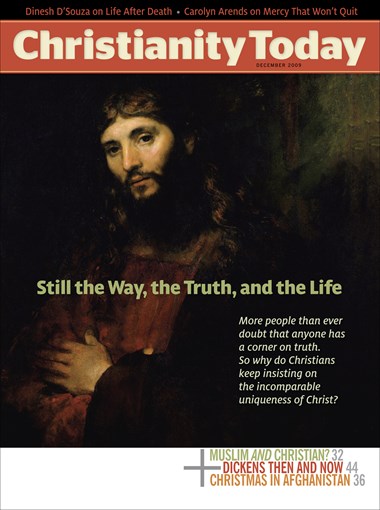
Can one be a Muslim and a follower of Jesus? Tens of thousands believe so, and in this third installment of the Global Conversation, Yale University scholar Joseph Cumming describes the furious debate their example has fueled. The question of following Jesus while remaining within a practicing community of Muslims has great importance in regions where the two faiths contend. It also serves as an important example of a wider challenge. As the gospel moves across cultural boundaries, those who respond will answer its call in different ways. As missions historian Andrew Walls has written, "Conversion to Christ does not produce a bland universal citizenship; it produces distinctive discipleships, as diverse and variegated as human life itself." The gospel must be contextualized, but how far can contextualization go without violating the gospel? And who sets the boundaries? —The Editors

In 1979 my best friend decided he saw himself not as a "Christian," but as a "Messianic Jew." John had come from a secular Jewish background and was actually a practicing Hindu before he met Jesus. Then, for three years he was active in a Bible-believing Christian church. But now John felt called to reconnect with his Jewish roots, join a Messianic synagogue, keep a kosher home, and raise his children Jewish. He saw no contradiction between following Jesus as Messiah and identifying—ethnically and religiously—as Jewish.

Like most Christians in the 1970s, I initially reacted with skepticism, quoting biblical texts I thought rejected kashrut (the Jewish dietary laws) as contrary to our liberty in Christ. I gradually learned that those texts could be understood differently, and came to respect the legitimacy of the fledgling Messianic movement—but not before I hurt my friend by my hostility to his effort to explore his identity as a Jewish follower of Jesus.

The wider Jewish community also reacted negatively. Most saw Messianic Judaism as simply repackaging centuries-old efforts to convert Jews, destroying Jewish identity. To them Messianic Jews were not Jews at all. Recently, however, some Jewish scholars have cautiously suggested that Messianic Jews who faithfully observe Torah and halakha, who participate constructively in the life of the Jewish community, and who pass on Jewish traditions to their children are in error but must be recognized as fellow Jews.

In the 1980s a similar movement began among Muslims who had come to faith in Christ. These were Muslims who trusted Jesus as Lord and divine Savior, believed Jesus died for their sins and rose again, and insisted this did not make them ex-Muslims or converts to the Christian religion. They wanted to remain within their Muslim community, honoring Jesus in that context.

Reactions from both Muslim and Christian communities have varied widely. On the Muslim side, some have persecuted these believers, while others cautiously accept them within their communities. On the Christian side, defenders see them as "Messianic Muslims" whom we should accept—just as we accept Messianic Jews—as authentic disciples of Jesus. Critics argue that Islam and Judaism are different, that Muslim identity cannot be reconciled with biblical faith.

Mixed Faiths, Mixed Reactions

When Nabil had a life-transforming encounter with Jesus, he remained within the Muslim community, participating in Muslim prayers. As his love for Jesus became known to family and friends, some followed his example, but others actually attempted to murder him. After being imprisoned for his beliefs, he decided he no longer considered himself a Muslim. He saw Islam as the system responsible for persecuting him. Today Nabil considers himself a Christian. But some who followed him in faith still see themselves as Muslims.


Related Topics:
None
From Issue:
December 2009, Vol. 53, No. 12
More from Christianity Today

The Latest in Movie News, June 17, 2013

Box office returns, Shrek on your TV, casting news, and Russell Crowe.
It's the Thoughts That Count

It's the Thoughts That Count

Why Christians can't be careless about the consumption of popular culture.
A Better World For Kids

A Better World For Kids

Economist Charles Kenny offers a contrarian take on global poverty.
Why World Relief's Jenny Yang Feared Speaking on Immigration

Why World Relief's Jenny Yang Feared Speaking on Immigration

The 33-year-old daughter of immigrants has become a leading voice behind the Evangelical Immigration Table.
Get Instant Access
Christianity Today Magazine
Subscribe now for a year (10 issues) at $24.95 for print, iPad, and instant web access.

International Orders

Comments

Displaying 1–3 of 347 comments

Pawan Kumar Aryan

November 16, 2012  10:36am

"Mazhar Mallouhi Comments on Insider Movements", Swami Dayanand BHarti Ji mailed this article to our group today. After reading the article, I realised that the attitude you discussed in your article is not the same attitude Indian and western Christians keep for Hindus. (May his shanti=peace be upon us), due to inherent caste division among Hindu samaj=society. Indian Protestant and Catholic Missions applied more sinister attitude. While doing good work of samaj seva they failed to saturate low-caste converts with love rather some of them invoked hatred not only against the cultural heritage but also against the High Caste Hindus (so-called but reality of Hindu samaj=society ). I am from an Arya Samaj Hindu family. I have no experience as both of you had. But, I witnessed that Indian Christian missions are preying upon the carcasses of negativity due to caste division in Hindu cultural heritage.

Report Abuse

dayanand

November 16, 2012  2:28am

We both have the same struggle and same view but living in a different world. I am a Hindu and bhakta of Bhagavan Muktinath (Jesus). I can share my views with you but I cannot post it here. Swami Dayanand Bharati

Report Abuse

Elijah simiyu

October 26, 2012  10:45am

Glory be to God who does all things well. When we read the word of God, we conclude that, He is not a man that would lie. He is a covenant keeping God. The covenant that was made to Abraham, we see it being fulfilled in yeshua. He is God of miracles, the people of Moses', elijah, elisha etc era sow them. The miracles of yeshua proves it all and they are still happening in yeshua name. What else do we need? Jesus says, i am the beginning and the end, which Jesus do Muslim don't ignore? Read the word. God bless

Report Abuse
See All 347 Comments
You must be a Christianity Today subscriber to post comments
(on articles open to the public, you must at least register for a free account).
Login
or
Subscribe
or
Register

Don't Miss

Want to Change the World? Sponsor a Child

Want to Change the World? Sponsor a Child

A top economist shares the astounding news about that little picture hanging on our refrigerator.
The Stand-in Church

The Stand-in Church

Sometimes we speak the gospel from the bottom up.

The New Televangelists

The New Televangelists

I had to look past celebrity ministry to learn how to really pastor.

more | current issue

Books & Culture

Writing for the Reader

Writing for the Reader

A conversation with ...

Today's Christian Woman

Kirk Cameron: Love is Worth Fighting For

Kirk Cameron: Love is Worth Fighting For...

The 1990s teen heartthrob...

Out of Ur

Tweeting the (other) SBC

Tweeting the (other) SBC

Oh be careful little...

Gifted For Leadership Blog

Habits of the Heart, Part 1

Habits of the Heart, Part 1

Why routine spiritual...

Facebook

CT eBooks & Bible Studies


Shopping