
Church attack prompts nationwide protests
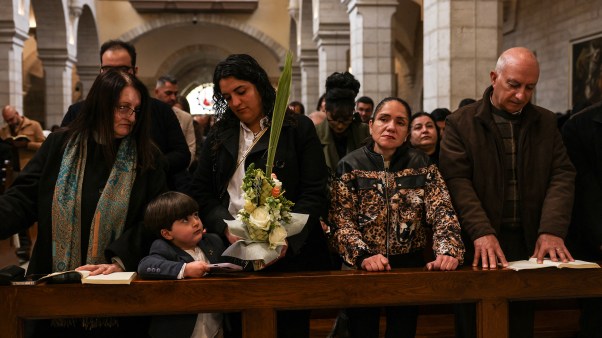
Christians in Nigeria have called on their government to respond to a surge in attacks by Fulani herdsman, such as a Mbalom church shooting that killed nearly 20 people. Protestant and Catholic organizations launched unprecedented public protests, including one in May to correspond with a mass burial for recent victims, and demanded that President Muhammadu Buhari stop the violent cattle owners, who are mostly Muslim. Fulani attacks, mostly occurring in the “middle belt” between Nigeria’s predominantly Christian south and predominantly Muslim north, have begun to outpace violence by Islamist terrorist group Boko Haram, whose own death toll has eclipsed ISIS’s.
Guatemala follows US embassy to Jerusalem
Amid the furor over President Donald Trump’s decision to move the United States embassy in Israel from Tel Aviv to Jerusalem in May, Guatemala’s President Jimmy Morales, an evangelical Protestant, more quietly made the same move the same week. It was a signal of greater pro-Israel sentiment among Latin America’s growing Protestant population. Both the Central American nation and neighboring Honduras—which has also pushed to relocate its embassy—now boast Protestant populations of more than 40 percent. The rise of Pentecostal traditions across the region has brought Christian Zionism with it; Guatemala’s ambassador said her country would be “blessed” through its support for Israel.
Family of terrorists bombs trio of churches
A family of six suicide bombers belonging to a local ISIS affiliate set off explosives at three Indonesian churches in May, killing seven worshipers and injuring at least 40 more. The attacks occurred on a Sunday morning at two Protestant churches and one Catholic church in Surabaya, the second-largest city in the archipelago. The incidents heightened concerns over radicalization in the world’s most populous Muslim country, with both Christian and Islamic leaders condemning the violence. Indonesia had historically served as a model for pluralism among its six recognized faiths, due to friendly relationships with its 10 percent Christian minority; however, political persecution has climbed in recent years.
Remaining US Christians freed
For the first time in six years, there are no American Christians in North Korean prisons. Following a pair of meetings between Kim Jong-un and US Secretary of State Mike Pompeo, the world’s most religiously restrictive country released three US nationals who had been jailed for a year or more. The trio, all Christians, returned with Pompeo in May, before a planned denuclearization summit between Kim and President Donald Trump was canceled. Open Doors, which ranks North Korea as the world’s No. 1 persecutor of Christians, and other religious freedom advocates had called on the president to bring up the plight of the estimated 50,000 North Korean citizens who remain imprisoned for their faith.
Willow Creek elders apologize to Hybels accusers
After weeks of defending founder Bill Hybels against accusations of misconduct from former female colleagues and church members, Willow Creek Community Church elders issued an apology for initially dismissing the women who came forward and characterizing their stories as lies. Hybels denied any wrongdoing but stepped down from the Chicago-area megachurch this spring in the wake of the claims of sexual comments and advances. Even with Hybels in early retirement, Willow Creek elders have pledged an investigation into the new allegations and a review of the church’s culture.
Christians criticize border policy separating families
Evangelical advocates for immigration reform oppose a Trump administration measure to deter border crossings by prosecuting adults detained by the US Border Patrol and separating them from their children. After an initial drop following Trump’s election, border apprehensions are on the rise again as asylum seekers flee violence in Central America. The zero-tolerance policy forces underage migrants into US care as unaccompanied minors. “The US government should do everything in its power to keep arriving families together, not separate them,” said World Relief. Since October, more than 700 children—including 100 under age 4—were separated, according to federal data reported by The New York Times.