Ideas

Borrowing Faith When Doubt Creeps In

Contributor

The certainty of another believer can guide us back to the truth.

Illustration of a person falling through a void of doubt and confusion while reaching toward a golden life line.
Illustration by Xiao Hua Yang

As a teenager, I co-led my first small group with a friend, guided by an older woman from our church. During a discussion on faith, I decided to be vulnerable and share my own doubts about God to encourage others to open up.

After the meeting was over, the woman pulled me aside to caution me about setting a good example for the group. Her message was kind, but clear: Doubt was unbefitting a rising leader.

Over the years, my doubts have shifted. While I no longer question God’s existence or identity, I still wrestle with his sovereignty and goodness, wondering why his actions—or inactions—sometimes seem at odds with my understanding of who he is. 

I’m not alone. A 2023 Lifeway Research survey found that only half of Americans have no doubt that God exists—and half of those with a Christian background say they have gone through a “prolonged” period of doubt at some point in their lives.

Of course, doubt is not a modern problem. Humans have struggled to trust God since the Garden. The Bible portrays doubt as a common feature of our fallen human condition—even for the holiest among us. From Abraham and Sarah to “Doubting Thomas,” uncertainty has marked the lives of God’s people for millennia. Countless saints throughout church history have wrestled with disbelief, many of whom endured a “dark night of the soul,” as John of the Cross described it.

But the recent and widespread rise of doubt in the West is reflected in part by the steady decline of Christianity. In the United States, this has been termed “the Great Dechurching,” with approximately 40 million former churchgoers no longer attending. 

Along with “human suffering” and “conflict in the world,” two of the highest sources of doubt in America, according to Barna, are “past experiences with a religious institution” and “the hypocrisy of religious people.” The abuse crisis in the church reminds us that religious certainty can too easily be weaponized, and many Christian leaders and institutions have wielded it for evil. 

As I’ve experienced myself, the church can be an inhospitable place for the doubting—a reputation many have earnestly sought to remedy over the years. Instead of being “merciful to those who doubt” (Jude 1:22), we’ve too often condemned them.

And while far more can be done to accommodate faith struggles in the pews, it is equally worth cautioning against the other extreme. That is, in our attempts to encourage doubters and avoid weaponizing certainty, we must not lose sight of our call to be people of faith.

We live in an incredulous generation—an age of unbelief and religious deconstruction, in which suspicion permeates the very air we breathe. On both sides of the ideological aisle, people who place their wholehearted trust in any one set of beliefs have been dismissed as naïve “sheeple” who lack critical thinking skills or fail to “do their own research.”

If we’re not careful, the church may follow the cues of our culture and join in its effort to nurture skepticism  and enshrine cynicism. Some Christians say it’s natural, even healthy, to live in the perpetual push-and-pull between faith and doubt. A few have gone as far as saying faith somehow needs doubt to function properly—painting doubt as a virtue to nurture rather than a tension to continually resolve by faith. 

At first, such rhetoric can seem reassuring, especially to those who occasionally struggle to keep the faith. But for those, like me, who have found themselves deep in the dismal abyss of chronic doubt—more akin to despair—this is a depressing prognosis. In such times, I clung to a shred of hope that my season of doubt was temporary, and that I would someday regain a modicum of the unwavering faith some Christians seem to possess in abundance.

The Bible tells us that faith is essential. “Without faith it is impossible to please God” (Heb. 11:6).

Scripture repeatedly praises simple, childlike, dependent trust in God and encourages us to be like obedient sheep rather than rebellious goats (John 10:27, Matt. 25:32–22). And while we may have different natural capacities for it, we are all called to live “in accordance with the faith God has distributed” to each of us (Rom. 12:3).

Take my husband. He has the spiritual gift of faith (as listed in 1 Corinthians 12:9). A frequent pattern in our marriage is him calmly responding to a crisis with “Everything is going to work out.” To which I ask, “But how do you know?” and he says, “I just do.”

Rather than always finding this encouraging, for someone like me—cursed with an anxiety diagnosis and a theology degree—his unwavering faith can sometimes be irritating. 

It’s not as if he’s never experienced situations that threatened his faith. Our first pregnancy ended in a miscarriage, and the birth of our daughter was marked by a traumatic moment in which my husband had to run down the hospital corridors at midnight, yelling for help.

Yet he constantly challenges me by living out the Bible’s most concise definition of faith: “confidence in what we hope for and assurance about what we do not see” (Heb. 11:1).

As author A.J. Swoboda put it, “Faith thrives in the tension of mystery, where we trust even when we don’t fully understand.” Faith isn’t about having all the answers, but about trusting the one who does—sometimes blindly.

When Thomas touched his resurrected Lord and finally believed, Jesus said, “Blessed are those who have not seen and yet have believed” (John 20:29). He also told his disciples, “You will receive whatever you ask in prayer,” but only “if you have faith and do not doubt” (Matt. 21:21–22). The one who doubts, Scripture says, “is like a wave of the sea, blown and tossed by the wind. . . . Such a person is double-minded and unstable in all they do” (James 1:6, 8).

I have been that wave-tossed person in past seasons of spiritual wrestling, and I can say this verse aptly describes the emotional reality of doubt.

The psychological theory of cognitive dissonance tells us our brains are hardwired to desire resolution and that uncertainty is an uncomfortable, untenable place to stay long-term. As theologian Brad East wrote for CT, “Doubt is a ladder, not a home.”

Perhaps this is why we are already seeing the cultural tides begin to shift from chronic doubt back to belief. Recent survey data suggest that the deconstruction movement—the swell of people leaving faith or rethinking their beliefs—may be slowing. And the precipitous rise of “nones” (those claiming no religious affiliation) and “dones” (those leaving the church) has plateaued.

At the same time, stories of unexpected conversions are popping up everywhere. From celebrities and influencers to cultural elites and academics, high-profile figures are finding their way to Jesus, or at least cultural Christianity, in the most unlikely ways. Time and again, faith has proven it can rise from the ashes of doubt.

“There is no suffering greater than what is caused by the doubts of those who want to believe,” wrote Flannery O’Connor in a letter to a friend in spiritual crisis. “But I can only see it, in myself anyway, as the process by which faith is deepened.”

I think now more than ever, discontented doubters will be looking for bold believers. They will be seeking out Christians with a resilient faith—not one that’s glib and unrelatable but one that has been tried, tested, and has triumphed, one that has peered into the abyss of a life without God and stepped back from the edge.

One such well of encouragement can be found in the spiritual lives of past saints—those who persevered in faith despite their struggles with doubt.

Theologian Søren Kierkegaard, like me, wrestled with his mental health, calling depression his “most faithful mistress.” In his pseudonymous work, he wrote that “doubt is thought’s despair” and that despair is a “sickness unto death.”

Kierkegaard acknowledged both the constructive and destructive aspects of doubt. He wrote, “I think I have the courage to doubt everything,” but he also wrote, “One of the most crucial definitions for the whole of Christianity” is that “the opposite of sin is not virtue but faith.”

While our doubts can sometimes be illuminating, Jesus calls his followers to act from a posture of faith, not out of doubt. As the apostle Paul said, “Whatever does not proceed from faith is sin” (Rom. 14:23, ESV). Doubt is natural, yes, but faith is supernatural. As Kierkegaard observed, faith is a “leap”—and “without risk, there is no faith, and the greater the risk, the greater the faith.”

We also have saints alive today whose faith serves as a gift to the church for the doubting. But beyond praying for those who are struggling spiritually (which is the best place to start!), how might these people help?

The answer isn’t brow-beating disapproval and condemnation; nor is it a Pollyannaish optimism that dismisses spiritual struggles with a tone-deaf platitude and a smile.

Surely steadfast believers, especially those of us with scars from healed spiritual wounds, have more to offer than a sympathetic ear, a generic word of encouragement, and a polite prayer.

Yes: We have our testimonies—our public witness to the ways God has revealed himself to us. And we shouldn’t feel discouraged from sharing them with doubters (perhaps out of fear that it might alienate or shame them), because our testimonies aren’t acts of self-congratulation; they’re lifelines.

Our testimonies are like “totems” from the film Inception: personal markers of God’s past faithfulness that remind us of what’s real when life feels like a dream—or a nightmare. Such stories are akin to the stones of remembrance God commanded the Israelites to set up as monuments to his fulfilled promises (Josh. 4:4–9). We need such tangible markers outside of ourselves to tether us to truth.

I’m so grateful Jesus didn’t leave us to walk this journey of faith alone but instead sent the Spirit to continue his work in and through the church as his ongoing bodily presence on earth. Scripture makes it clear that every task of the Christian life, including rebuilding the scaffolding of our faith, was divinely designed for community.

As Dietrich Bonhoeffer wrote, God has willed that we should seek and find his living Word in the witness of a brother, in the mouth of a man. Therefore, the Christian needs another Christian who speaks God’s Word to him. He needs him again and again when he becomes uncertain and discouraged, for by himself he cannot help himself.

Doubt thrives in isolation. In fact, Satan does his best work when there are no advocates around to speak a better word to us or for us.

Scripture tells us that those who lack the shield of faith are unable to withstand the enemy’s attacks (Eph. 6:16), which leaves them susceptible to the same cunning work the Devil’s been up to since the Garden—to make us doubt God’s goodness, faithfulness, and sovereignty.

Yet in one of the most powerful scenes in Scripture, the apostle John sees Satan (whose name means “adversary” or “accuser”) being defeated by Jesus and the saints: For the accuser of our brothers and sisters, who accuses them before our God day and night, has been hurled down. They triumphed over him by the blood of the Lamb and by the word of their testimony. (Rev. 12:10–11)

Ultimately, our doubts are not dispelled through argument or experience. Only Jesus’ blood and the testimony it produces in our lives has the power to combat the Devil’s schemes—his endless prowling, devouring, and accusing (1 Pet. 5:8).

Whenever we lend or leverage our faith for weaker brothers and sisters—until they’re strong enough to carry it themselves—we wage war against the powers of darkness.

In the end, our salvation is founded not on our faith but on Jesus. Jesus is the ultimate stone of remembrance. He is our cornerstone. So we fix our eyes on him as the “pioneer and perfecter” of our faith (Heb. 12:2). Faith doesn’t mean we never doubt. It simply means we trust Jesus enough to bring our uncertainty to him, knowing he will never pull away from us in our moments of disbelief, anger, or questioning but that he will draw near and invite us to do the same (James 4:8). 

Such trust is straightforward, but that doesn’t make it easy. “It is much harder to believe than not to believe,” O’Connor wrote to her doubting friend. But to anyone struggling, I echo her advice: “If you feel you can’t believe, you must at least do this: keep an open mind. Keep it open toward faith, keep wanting it, keep asking for it, and leave the rest to God.”

Even if all you can do right now is whisper a prayer, let this be your tiny mustard seed of faith: “Lord, I believe; help my unbelief!” (Mark 9:24, NKJV). By God’s grace, it is enough.

Stefani McDade is theology editor at Christianity Today.

News

Americans Think Church Should Look Churchy

Survey shows most don’t like trendy, modern buildings.

Illustration showing a church building split down the middle with each half representing a modern or traditional church interior.
Illustration by Mike Haddad

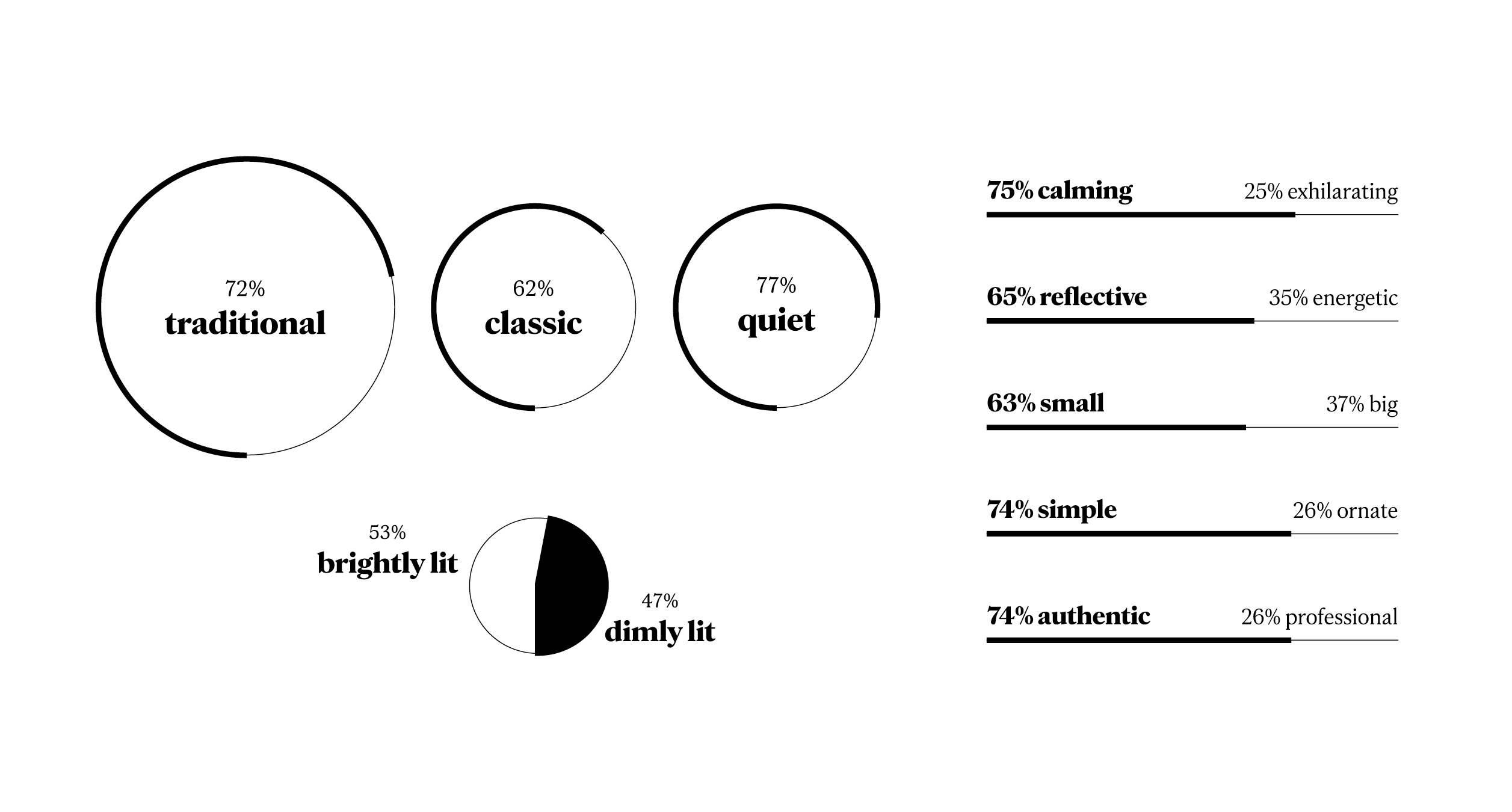
Outreach-minded evangelicals have often argued that church buildings need to be less “churchy” to draw in would-be seekers. But that might not actually be true, according to recent research from Barna Group and Aspen Group asking a representative sample of 2,000 Americans questions about the architecture of sacred spaces.

When Americans close their eyes, they can picture a church. Even if they rarely or never attend one, they have an idea of what a church should look and feel like—and a preference. That preference is quite traditional. 

Nearly 90 percent of Americans say a church should be “easily identifiable,” and 8 of 10 say they want the building to “reflect the beauty of God.” There are some, to be sure, who prefer that churches feel modern (38%) and trendy (28%), but most Americans want religious spaces that feel more timeless and transcendent.

Graphs about the ideal church building
News

Canadian Pastors Struggle to Address Assisted Death

And other news from Christians around the world.

Digital collage of a doctor and a hospital bed

Illustration by Blake Cale

Most Canadian evangelicals have not heard their pastor speak about medical assistance in dying (MAID), even as the legal bar for euthanasia has been lowered and the number of deaths has rapidly risen to nearly 5 percent of all deaths annually. “The silence has been deafening,” Heidi Janz, a disabilities ethicist who has tried to rally churches against the law, told Christianity Today. “We’re just collectively shrugging our shoulders.” The rapid acceptance of MAID and the sharp increase in the number of deaths from about 1,000 in 2016 to more than 13,000 a year caught many clergy by surprise, according to Paul Charbonneau, an evangelical Anglican chaplain in Ontario. “You can’t put the genie back in the bottle once this thing is let out,” he said.

United States: Evangelical philanthropist sentenced

Wall Street investor and evangelical philanthropist Bill Hwang was sentenced to 18 years in prison for fraud. Hwang’s investment firm collapsed in 2021 after it was discovered he had been misleading lenders to manipulate stock prices. About $100 billion in market value disappeared overnight, and banks lending the firm money lost $10 billion. The federal court judge said the amount was unprecedented and that Hwang’s request to avoid prison was “ridiculous.” Hwang’s previous investment fund also admitted to fraud in 2012. He gave to hundreds of religious nonprofits, including Fuller Theological Seminary, the Museum of the Bible, Ravi Zacharias International Ministries, Bowery Mission, and Redeemer Presbyterian Church.

Mexico: Baptists can’t go home

Local leaders in the villages of Coamila and Rancho Nuevo refused to allow 150 Baptists to return to their homes. Members of the Great Commission Fundamental Baptist Church, part of an Indigenous group of Nahuatl speakers, have been denied health care since 2015 and repeatedly told they must participate in Catholic festivals and give money to the Roman Catholic Church. They fled their homes after electricity was cut and access to the Baptist church was limited by armed men in April 2024. Hidalgo state officials worked out an agreement with local leaders that would allow the Baptists to return, but the officials didn’t intervene when the terms were not upheld. The Mexican constitution protects religious freedom and the rights of Indigenous communities. But Christian Solidarity Worldwide’s advocacy co-director Anna Lee Stangl noted, “This means little in the absence of enforcement and accountability measures for village leaders who continue to openly break Mexican law.”

Brazil: Crucifixes okay in courtrooms

The Supreme Court ruled 11–0 that religious symbols may be displayed in public buildings as long as they reflect the country’s Catholic heritage. Evangelicals have long opposed the privileges given to Catholics in Brazil. In 1891, an evangelical sermon against religious symbols in public buildings inspired a man to break into a courtroom and destroy a crucifix. A judge said Brazil is still secular, despite crucifixes in courtrooms, because “the legal foundation . . . does not rest on divine elements.”

France: Seminary enrollment grows

The Faculté Jean Calvin, a theological school for Reformed and evangelical ministers, had a record enrollment of 48 new students in the fall of 2024. The school in Aix-en-Provence near Marseille was called the “last chance for France’s languishing Calvinism” when it was founded in 1974. Fifty years later, new growth has come through online enrollment and international students from former French colonies.

Netherlands: Ark replica headed to Israel

A floating recreation of Noah’s ark is being renovated in preparation for relocation from Dordrecht to Israel. The ark was built by Dutch carpenter Johan Huibers and has been visited by more than 100,000 tourists since 2008. But it costs about 300,000 euros ($308,000) per year to maintain. Investors agreed to finance the museum—but they want it in Tel Aviv. The plan is to sail the ark to Dover, Antwerp, Dunkirk, Bordeaux, Lisbon, and several other cities before arriving in Israel sometime in 2026.

Italy: Art asks about animals and God

The granddaughter of Hollywood legend Audrey Hepburn is painting pictures of sacrificial sheep and goats in Tuscany. “Why do people do this thing in the name of God?” Emma Ferrer asked. “Where is God for that animal? Does the animal perceive God in those final moments?” She will have her first art show, The Scapegoat, in New York City in 2025.

Sudan: Evangelicals face dire need

Sudan Evangelical Alliance leader Rafat Samir said evangelicals are facing critical shortages of food as the conflict between military factions continues into a third year. Evangelicals are not aligned with either side and are often suspected of being Western spies, Samir said. The UN has dispatched 17,500 tons of food, which will only feed about 6 percent of the people in dire need. 

Rwanda: Church tax considered

The government agency tasked with regulating religious groups has drafted a bill to tax churches after President Paul Kagame criticized pastors for getting rich while they “squeeze even the last penny from poor Rwandans.” The country has seen the rapid growth of Pentecostal congregations that preach the prosperity gospel. But critics accuse Kagame of attempting to squelch potential dissent. “You know once you say something,” political commentator Ivan Mugisha said, “your church is going to be in trouble.”

Malaysia: Call for Bible in schools

A member of parliament called for the Bible to be taught in public schools in the states of Sarawak and Sabah, arguing, “Knowledge of Scripture is a unifying force and an essential component in educating young people in pluralism.” The country’s official religion is Islam, but Christians make up a slight majority in the two states. John Ilus, a politician from Sarawak, said the schools in the region were founded by missionaries and that their Bible-focused curriculum “fostered a tradition of tolerance.”

Nepal: Churches are finally legal

Fifteen Christian denominations have finally registered with the government, achieving legal status 17 years after the former Hindu kingdom officially became secular. Applications were ignored for years, but a Christian lawyer named Prakash Karki pushed successfully for change in 2020. The number of Christians in Nepal has increased more than 500 percent in the last 20 years.

South Korea: Meeting planning sparks controversy

Evangelical leaders are upset that key national organizations were not involved in plans for the next World Evangelical Alliance (WEA) General Assembly, set to be held in Seoul in 2025. The WEA worked directly with the pastors of two large churches—Presbyterian Junghyun John Oh and Pentecostal Younghoon Lee—but not with the Christian Council of Korea or the Communion of Churches in Korea. The WEA is made up of regional and national alliances, and the General Assembly is usually planned in cooperation with member organizations. Some evangelicals have also raised questions about WEA engagement with Catholics, the World Council of Churches, and Muslim groups, which they say indicates an ecumenical liberalism.

News

Growth Is Good. Survival Is, Too.

Japan’s Christians still pray for revival. But endurance is its own reward.

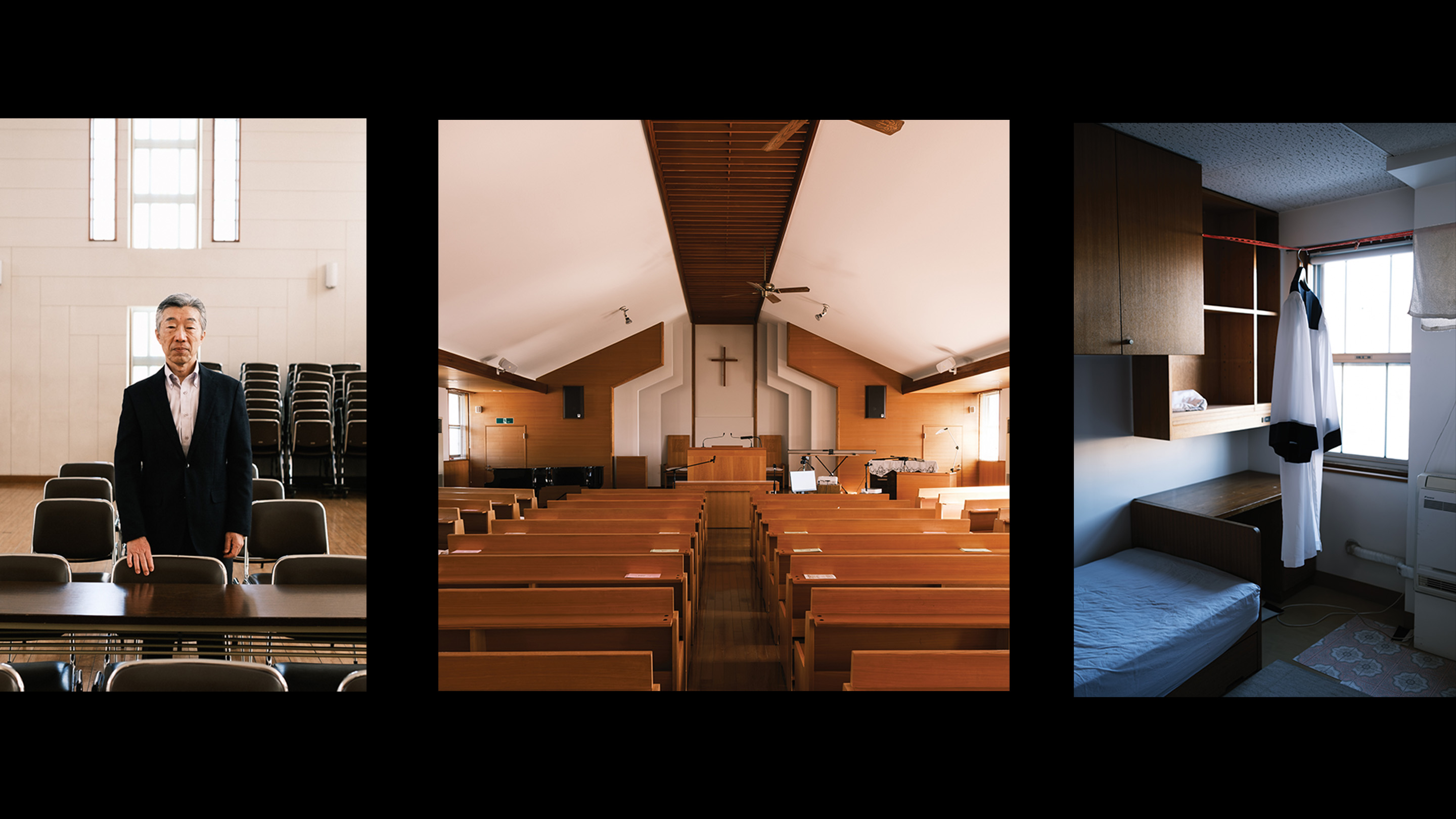
Man stands in empty church surrounded by empty chairs and empty pews in Japan. On the left is a pastor's vestment hanging.

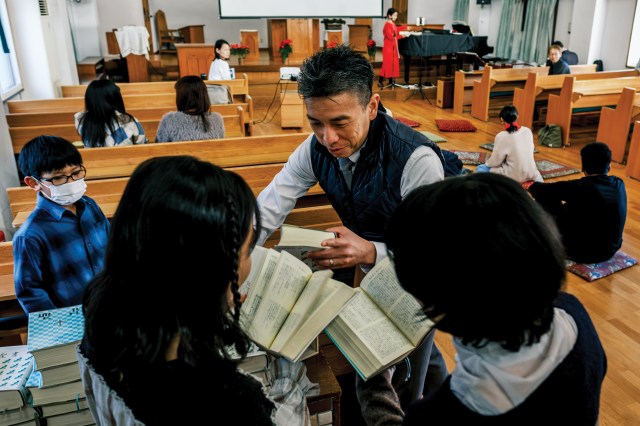
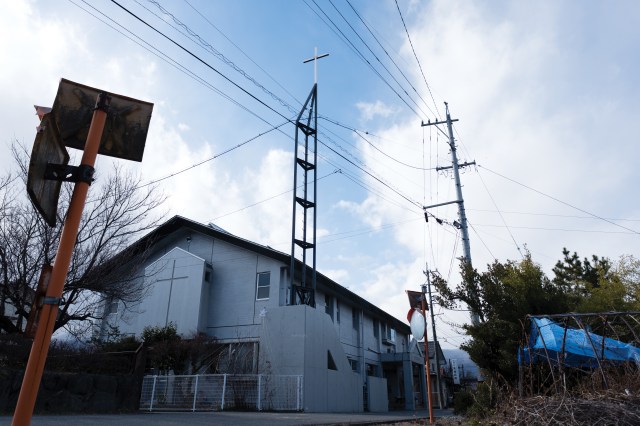
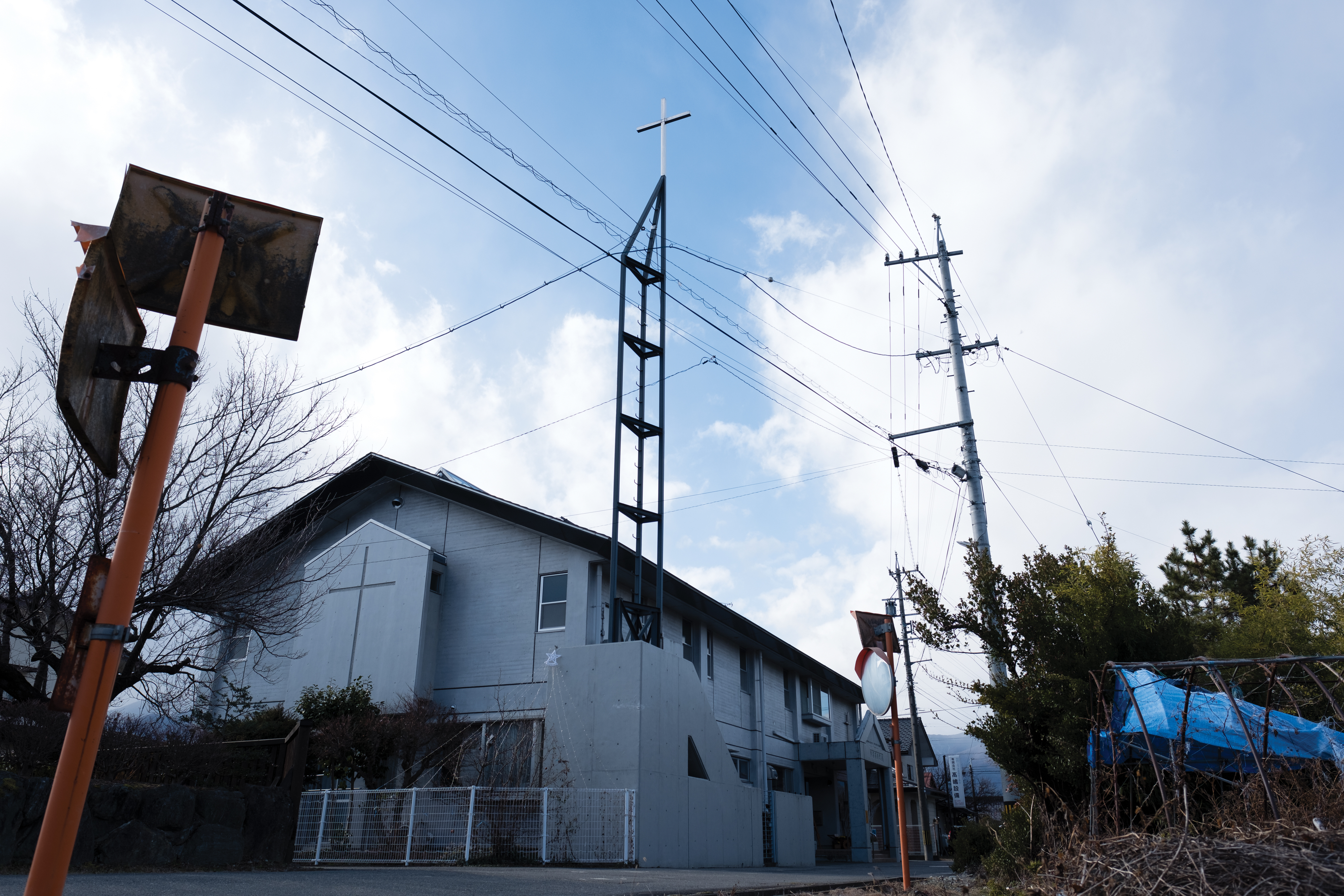
Left: Akasaka Izumi in a classroom at Japan Bible Seminary. Middle: Mizuno Akiko's church in Ina. Right: Pastor's vestment hanging in Japan Bible Seminary.

Photography by Ben Weller for Christianity Today
Akasaka Izumi at his office in Japan Bible SeminaryPhotography by Ben Weller for Christianity Today
Akasaka Izumi sitting in his office at Japan Bible Seminary

Akasaka Izumi’s office is only slightly larger than a bachelor’s closet. The principal of Japan Bible Seminary has just enough room for a desk, some bookshelves jammed with theology volumes, and a coffee table.

We sipped from dainty cups of dark coffee while Akasaka eyed the clock. We were scheduled to talk with a pastor on Zoom at 2:30 p.m. At 2:31, when the pastor had not appeared, Akasaka began fidgeting.

“Something’s wrong,” he muttered, picking up his cellphone. “I better call.”

“It’s only been one minute,” I pointed out. But he dialed the pastor anyway. “Yes, but you know, we’re Japanese.”

It’s not so much that the Japanese people hate tardiness, I learned, as they hate being inconsiderate. Such civility so impressed the Spanish Jesuit priest Francis Xavier, who led the first Christian mission to Japan in the 16th century, that he urged only the highest quality missionaries be sent to the country. His successor, Cosme de Torres, was equally enamored with Japanese culture. He wrote in a report to Rome, “If I should strive to write all the good qualities and virtues which are found in [the Japanese], I should run out of paper and ink.”

Five hundred years later, the West is still fascinated with all things Japanese. But the country’s culture is a stumbling block when it comes to evangelism, one missionary told me: “Japanese culture is beautiful. It’s near perfect.”

How do you show near-perfect people that they too desperately need the gospel?

Within missions circles, Japan is known as a “missionary graveyard,” a place where the best efforts bear little fruit. The country has one of the world’s largest unreached people groups. The more than 125 million people there have fewer than 10,000 churches, including Catholic and Orthodox ones. Christians account for less than 1 percent of Japan’s population.

According to 2016 data from the Japan Congress on Evangelism, 81 percent of Protestant churches in Japan have fewer than 50 attendees. About a third have fewer than 15. Nearly three-fourths of pastors were more than 60 years old then, which means many still serving are now in their 70s.

Many pastors feel unable to retire because there are few trained younger pastors to fill their spots. A 2018 Tokyo Christian University survey found that 6 percent of churches don’t have a pastor. A similar number of congregations share a pastor with another church.

These dire statistics are what brought me to Japan to meet Akasaka at Japan Bible Seminary in Hamura, a semi-rural municipality about a two-hour subway ride from central Tokyo. I spent about two weeks in Tokyo and Sapporo, meeting Christian leaders and missionaries from various backgrounds, to get a sense of the future of Japan’s church.

Japanese Christians are brutally frank about their situation. Akasaka speaks at more than 40 churches across the country. He sees a trend: white-haired pastors preaching in buildings occupied only by a handful of white-haired congregants. Akasaka, at age 64, is often the youngest among them. “It’s discouraging,” he said, sighing. “It’s discouraging for the older generation to not be able to see younger energy. They don’t know how to attract younger people, and they’re not even successful in passing their faith to their own children and grandchildren.”

Tales of demise abound. I heard of a Mennonite group in Hokkaido that planted 10 churches. Today, only two are still operating while the other eight sit empty, the children and grandchildren of worshipers long gone occasionally opening windows to air out the stale sanctuaries.

Or consider an American missionary who, in the 1960s, envisioned planting 100 churches across Japan. As the story goes, he planted about 40, of which only about a dozen have surviving buildings. Of those, two still hold services; some of the others house widowed pastor’s wives.

When Akasaka was a student in Michigan in the late ’80s, people would ask him, “When do you think a revival will happen in Japan?” He would reply, “When Japan’s economy hits the ceiling and plummets, maybe then people will turn away from Mammon and turn to God.”

In the ’90s, the economy tanked and never fully recovered. Last year, the Japanese yen sank to its lowest point in 34 years. “I’m still waiting for that revival,” Akasaka told me.

There have been almost, maybe, not-quite revivals. After World War II, hundreds of missionaries, mainly from the United States, arrived in Japan with food, clothing, and Bibles to fill the “spiritual vacuum,” as General Douglas MacArthur called it. “If you do not fill it with Christianity,” MacArthur warned, “it will be filled with communism.” He called for 1,000 American missionaries to go to Japan, and more than 1,500 responded within five years.

After losing the war, Japan was spiritually and physically defeated. People were scraping by on meager potato rations. They were shocked by the devastation of two atomic bombs and the revelation that Japan’s emperor wasn’t an all-powerful god. Most missionaries were earnest in their desire to heal Japanese souls and bodies. With the help of wealthy Western donors, they built churches, schools, and hospitals and won thousands of converts.

“But I’m hesitant to call it a revival,” Akasaka said. “The missionaries came with power and prosperity—and the gospel.” Churches were packed and an evangelism tent could draw hundreds. People were hungry for something—but was it the gospel or the power and wealth represented by the white benefactors whose country had chastened theirs? “When the missionaries left,” Akasaka said, “people lost interest in Christianity.”

But then, starting around the late ’70s, another church planting movement budded, this time mostly through the efforts of local Christians. Those were exhilarating, optimistic years, a period of rapid economic growth during which Japan surpassed the United Kingdom in purchasing power parity per capita. Many were called to ministry; most of the pastors I met, including Akasaka, attended seminary during that period.

In 2003, when Japan Bible Seminary hired Akasaka as one of its few full-time faculty, they were expecting the student body to grow. At the time, the school enrolled around 60 students.

By 2010, it was clear to Akasaka—and to the 30-something evangelical seminaries in Japan—that enrollment was declining instead. This year, Japan Bible Seminary had just five new enrollees. And that’s a relatively large number—many Japanese seminaries can count their students on one hand. Some years, there are none.

In Shūsaku Endō’s novel Silence, a Portuguese Jesuit priest commits apostasy after years of seemingly successful missionary efforts in Japan. When another priest confronts him, he declares,

This country is a swamp. In time you will come to see that for yourself. This country is a more terrible swamp than you can imagine. Whenever you plant a sapling in this swamp the roots begin to rot; the leaves grow yellow and wither. And we have planted the sapling of Christianity in this swamp.

Endō’s work is fiction, but I saw similar discouragement among many Japanese Christians. While churches in neighboring countries such as China, South Korea, and the Philippines are booming and multiplying, Japanese churches are withering and dying. Are there not enough planters? Or is there actually something wrong with the soil? And if so, why would anyone want to plant in Japan?

Lam Wai Chan certainly did not want to. Everything he heard about Japan scared him: One of the hardest fields in the world. Lovely for tourists, terrible for missionaries.

Lam was raised in a Chinese Buddhist home in Singapore. The first Christian in his family, he worked for five years as a correspondent for Japanese media, then entered seminary in 2009. For some reason, Japan kept popping up in his mind like a poltergeist, unsettling him. “I couldn’t get rid of it,” Lam told me. “I tried to forget it. I tried not to think about it, but it was always there.”

Lam Wai Chan preaching at Nerima Church of God, TokyoPhotography by Ben Weller for Christianity Today
Lam Wai Chan, pastor at Nerima Church of God, Tokyo.

He didn’t want to be rich. He didn’t want to be famous. “I just wanted a peaceful, easy life.” It is one thing to suffer 
for God’s mission. Who wants to suffer for a mission that’s bound to fail?

His first year in seminary, a local Church of God pastor asked Lam to consider succeeding him. Lam, then a staunch Methodist, politely declined, using the excuse that he felt called to Japan. The pastor’s eyes lit up. “Oh! We have Churches of God in Japan!” he said. “I’ll introduce you to one.”

Eventually, the pastor connected Lam with Kanemoto Satoru, pastor of Nerima Church of God in Tokyo. Reluctantly, Lam found himself on a 10-day visit to Japan. It didn’t win him over. Japanese churches were so tight-knit, so closed-off, so… Japanese. He felt awkward and alien, like ketchup on a bridal dress. He felt he could never belong.

Then during lunch, Kanemoto and an elderly deacon pushed a piece of paper toward him, asking if he would return as a missionary.

Lam was 37 at the time. Cowed under the gaze of two elders nearly twice his age, he signed the agreement.

He returned to Singapore in a panic. What had he done? He tried to back out, but alternative career paths closed before him. Unexpectedly, his wife Janet received a job offer from a bank in Japan. “Why are you still fighting this?” she asked her husband. “It’s so clear God wants you to go to Japan.”

So by April 2013, when they arrived in Tokyo with their dog, Lam had decided that if God wanted him to serve in Japan, he would bring his A-game.

“I didn’t think I was going to save the world,” Lam recalled. “But I did think I was better than them. That I’m a plus.” He had grown a youth ministry in Singapore and led plenty of Bible studies. He figured he could bring his expertise and revitalize the comatose youth and the wasting church. “I was thinking, maybe they’re short-handed. Maybe they don’t know how to do it, maybe they’ve been stuck in Japanese churches for so long they don’t know the latest trends in ministry.”

That first year, Lam sat in the backseat of a car on his way to a conference. Kanemoto was driving and talking to another pastor in the front seat, discussing all the problems of churches and seminaries in Japan. By then Lam had heard it countless times. There is just no solution to this, he thought. And it struck him: “If it were me, I would have thrown in the towel.” Yet here were these two men still agonizing over it, still serving.

They are the beautiful remnants, Lam realized. “We like to talk about Japan’s less than 1 percent Christians as something horrible. But that 1 percent is a story of God’s divine provision—that no matter how bad the oppression is, you still have that 1 percent.”

Hand on a bible in a church in JapanPhotography by Ben Weller for Christianity Today

Lam said he heard God tell him, They have faithfulness. What about you? There’s a lot to learn from the Japanese church. Be humble and learn, and you’ll see how it is me who sustains and preserves my church.

In 2019, Kanemoto abruptly retired at age 71. Fewer than 20 members remained in the church. They asked Lam, by then an assistant pastor, to take over as senior pastor. Lam accepted. But inside, he was trembling. “I felt like I was taking over a sinking ship.” He wept on his knees, begging God for guidance. “What do you want me to do? I can’t do a thing. I’m a Singaporean, for goodness’ sake.”

Lam felt God say, Offer the church back to me.

“Okay,” Lam remembers responding. “You preserve your church then. You save your church.” And then he let go.

As the new senior pastor, Lam intentionally avoided making big changes. The worship is the same as it’s been for decades, with traditional hymnals and a piano. His main initiative has been focusing on prayer at the church’s weekly after-service meeting. There, they pray for specific needs and people, for family members and friends and newcomers who don’t know the Lord.

So when their church slowly doubled in size, they knew whom to thank.

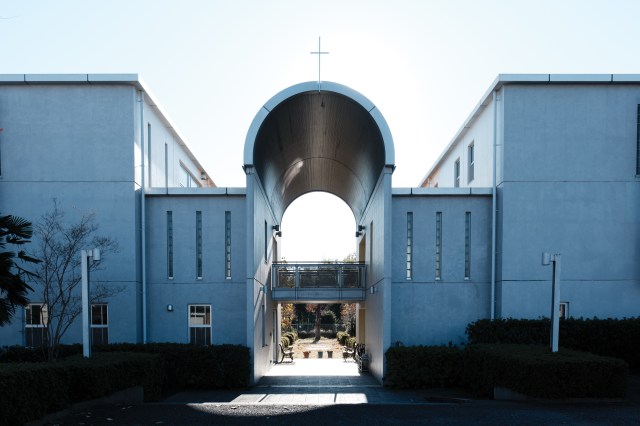
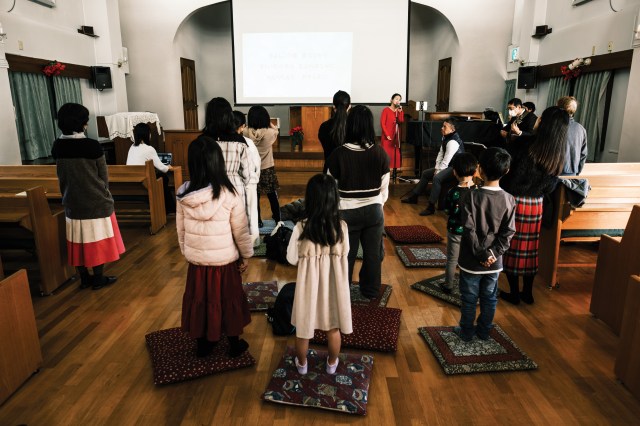
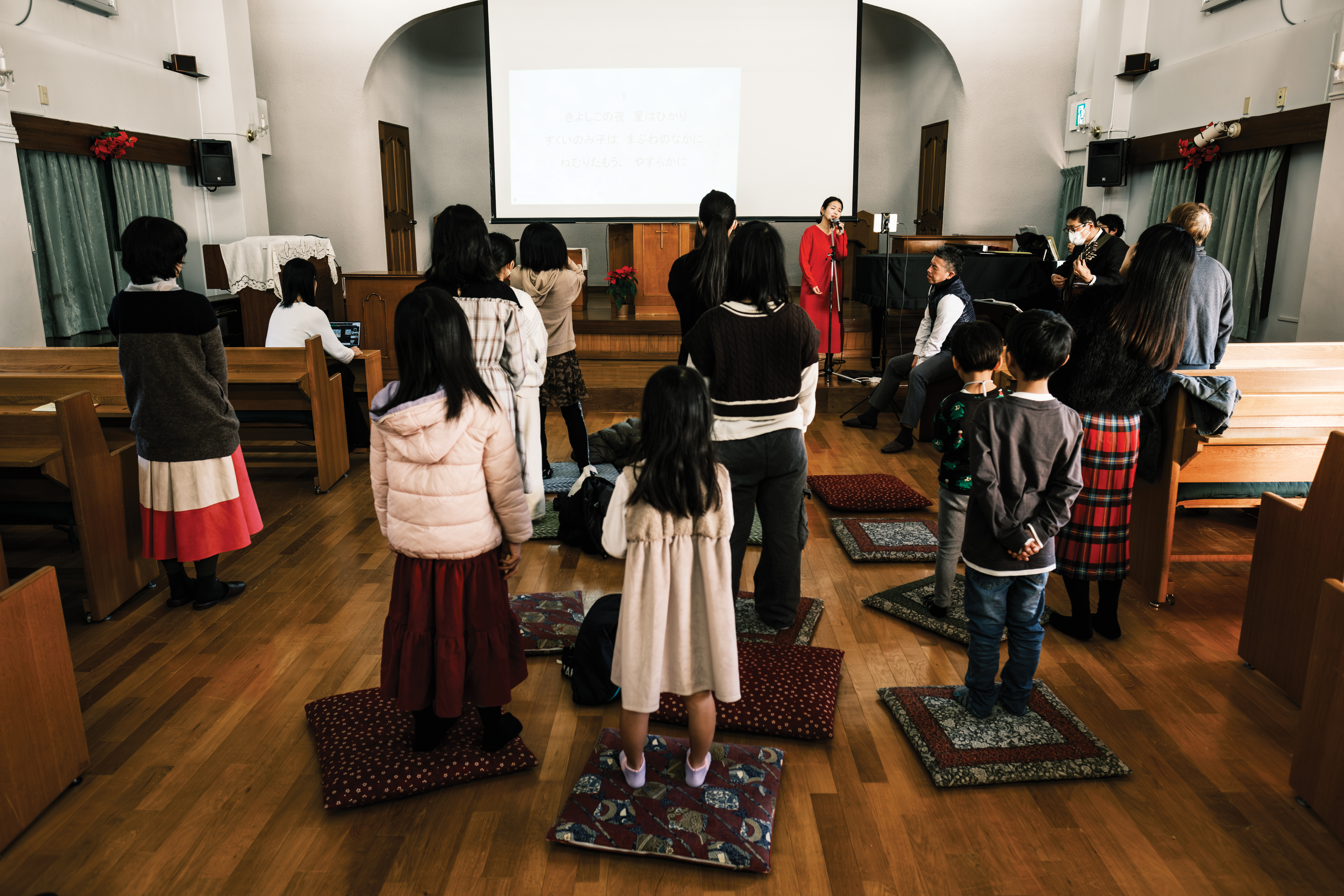
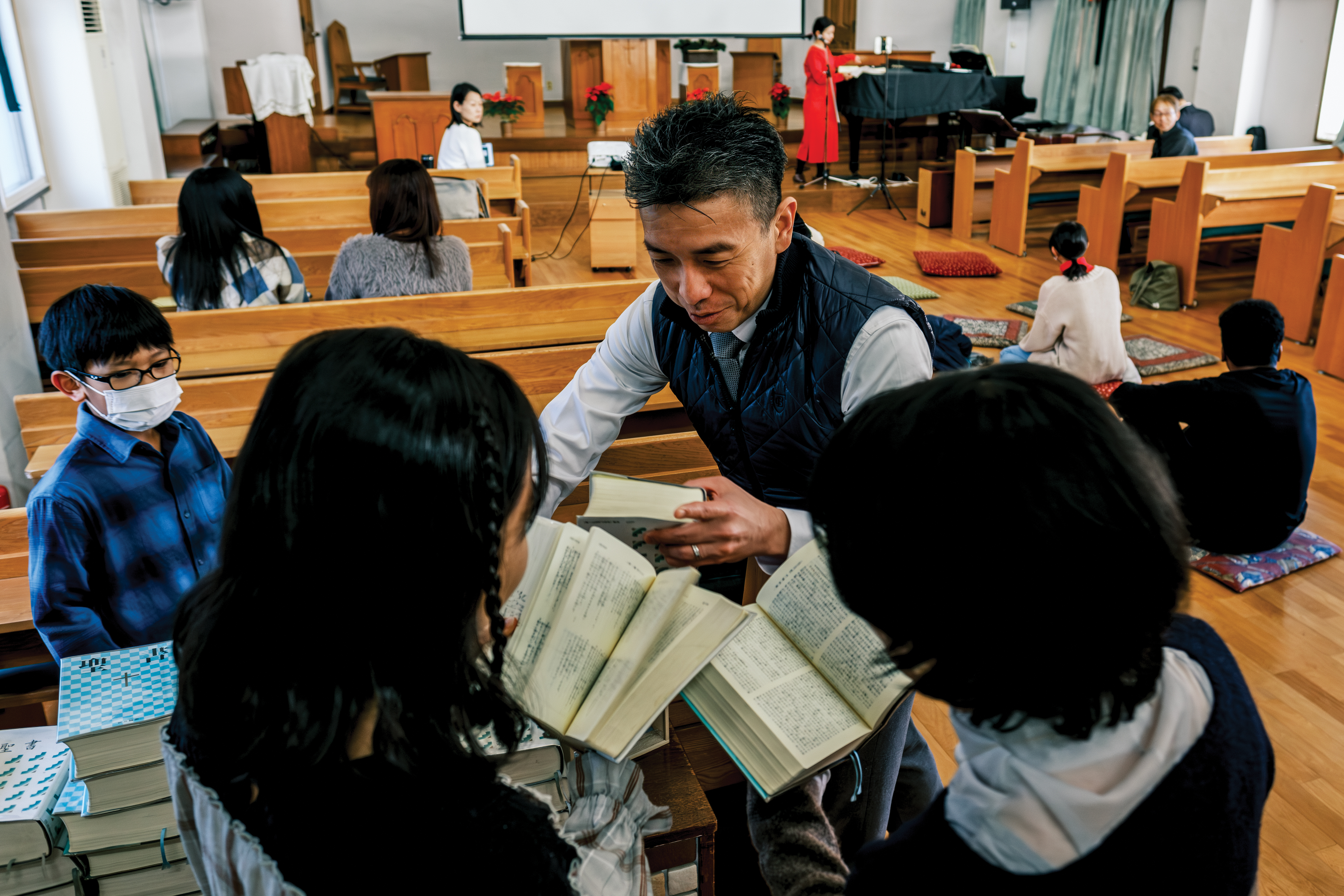
I visited Nerima Church of God the year it celebrated its 99th anniversary. It’s a cream-colored three-story building tucked between homes in suburban Tokyo. The 9 a.m. service, the first of two, is designed for children: Church members pushed the wooden pews with emerald-green velvet cushions to the side so that the children—about 10 of them, ages 2 to 8—could worship in the middle of the high-ceilinged sanctuary.

That Sunday, I watched the children dance, sway, and stomp to contemporary worship music. Lam squatted on a cajon, slapping away on the hand drum, while one deacon strummed a guitar and another shook a tambourine. For the sermon, copastor Ando Rieko used hand-drawn doodles to tell the parable of the sower while the children sat cross-legged before her. After they recited Matthew 13:23 from memory—perfectly—Lam raised his palms to pantomime an applause. He chuckled, looking delighted and proud.

Five years ago, Nerima Church of God had eight Sunday school teachers and one little girl. Now they have a full service for a dozen children.

At the 10:30 a.m. service, a family of three visited for the first time. They weren’t believers, but the teenage daughter attended a private Christian K-12 school where Rieko is headmaster and she wanted to check out the church. That’s typical of how the congregation has grown: Unchurched people just walk in, even though Lam does no special programs, marketing, or evangelistic events.

God told Lam he would preserve this church, the pastor said. “And he has never failed me once in these five years.”

Lam hears what outsiders say about the Japanese church; he used to say the same things. “I hear, ‘Oh, we need to give money, we need to support them, poor thing.’ No, it’s not ‘Poor thing’! Try surviving in such a harsh environment.”

He says the story of the Japanese church is the story of how God himself moves the church forward: “There’s a powerful testimony here.”

Boie Alinsod, President of the Japan Council of Philippine Churches, stands at a busy street in Shinjuku, Tokyo.Photography by Ben Weller for Christianity Today
Boie Alinsod, President of the Japan Council of Philippine Churches, in Shinjuku, Tokyo.

Japanese Christians may offer a powerful testimony, but at less than 1 percent of Japan’s population, they don’t have room to shrink much further.

Yoshinaga Kouki, a 44-year-old pastor in Sapporo, told me he worries about the future of Japan: “Even I, as a Japanese person, am not sure how to most effectively share the gospel in a culturally relevant way to bring more people to know Jesus.”

That stark reality has some church leaders wondering: What about turning to people who aren’t Japanese?

Japan’s population decline—driven by aging and an abysmal birth rate—is one of the world’s great demographic crises. But the number of foreign nationals has reached a record high of about 3 million, up 50 percent from a decade ago. And their churches—Filipino, Vietnamese, Nepalese, Chinese—are thriving.

Takashi Fukuda, the Asia-Pacific director at Wycliffe International, estimates that about 20 percent of those foreign nationals are Christian. If he’s right, that would amount to roughly 600,000 believers who are not accounted for in the Japanese government’s tally of 1.9 million Christians.

As a former missionary in the Philippines, Fukuda has built connections with multiple Filipino churches in Japan. Their members have Japanese spouses, neighbors, and colleagues. They have half-Japanese children and grandchildren who speak flawless Japanese and not a lick of Tagalog or English. And they’re eager to partner with Japanese churches.

Fukuda sees them as an untapped mission force. “There is a big need for collaboration between the Japanese church and ethnic churches,” Fukuda said. He is among those who have pushed for more visibility of Japan’s ethnic minority Christians within the leadership circles of 
Japanese evangelicalism.

At the 2023 Japan Congress on Evangelism, a gathering of around 1,000 denominational leaders, pastors, and missionaries to the country, attendees participated in the first ever “Global Night” to highlight Japan’s growing ethnic churches. It was the type of event that became standard fare at similar gatherings in Europe and North America decades ago. Fukuda called it a “major breakthrough.”

Others have joined this cause. When Iwagami Takahito first became general secretary of the Japan Evangelical Association (JEA), one of his priorities was to facilitate and strengthen the cooperation of evangelical churches across ethnicities and cultures.

“It’s the key for future missions in Japan,” he said. “We’re getting old. We don’t have enough evangelical power. But these ethnic groups are very active, very eager to witness Jesus Christ. If we work together, I think they will encourage us, empower us.”

The idea of turning to diaspora groups to revitalize the church is not new. In Europe, evangelical immigrants have become the main drivers of church growth. But Japanese Christians are only now warming to the idea.

One of the main speakers at the congress’s Global Night was Boie Alinsod, president of the Japan Council of Philippine Churches. Alinsod immigrated from Manila to Tokyo with his wife and 11-year-old twin daughters to start a ministry for Filipino immigrants. They partnered with a Japanese church, Shinjuku Shalom Church, which had been instrumental in helping Alinsod launch his own church in Manila two decades earlier.

Alinsod remembers feeling burdened for Japan after visiting in the early ’90s and being shocked by what he saw. At one Sunday worship service, only four people showed up: the church’s pastor, his wife, and their two children.

“It’s the exact opposite of what’s happening in the Philippines,” Alinsod recalled thinking. “In the Philippines, there’s an explosion of the gospel.” At the time, his own church was expanding quickly and preparing to plant another. But in Japan, the gospel seemed stuck. “I thought maybe, maybe, the Lord can use us Filipinos in some ways to help, to give something to the Japanese church.”

Alinsod returned to Manila and called his church to pray for Japan. Seven years later, in 1998, Shinjuku Shalom invited Alinsod to help build a ministry for Filipinos in Japan. The Filipino congregation fasted and prayed for 40 days, and then the Alinsods moved to Tokyo.

Twenty-six years later, the church Alinsod founded in Tokyo, Shalom Christian Fellowship, has multiplied to five church sites and 24 small groups, with more church plants on the way. “We’re reaching people,” Alinsod said. “People are getting saved, being discipled, and our disciples are turning into leaders serving the church.”

They are almost all Filipinos.

Alinsod’s vision to partner with Japanese churches to reach the Japanese has not quite materialized. Some Japanese pastors have felt they are already stretched too thin to manage a new partnership. Some have felt that what works for Filipinos won’t work for the Japanese.

But Alinsod has been praying for a breakthrough. In March 2014, the Japan Council of Philippine Churches began gathering pastors annually to pray for Japan. Since then, other organizations have joined in, including the JEA.

“There’s hope in the nation,” Alinsod said. “As long as there are people like us who will stand to represent Jesus in the nation, even our short prayers will really matter. Maybe not now; maybe we cannot see that. But God is faithful. We will one day know the effect of our contribution to this nation.”

As with Lam, a Singaporean who found himself inexplicably bound to a Japanese congregation, other pastors are stumbling into cross-cultural ministry.

Fukui Makoto is a 64-year-old pastor in Futako-
Tamagawa, Tokyo, once a rural neighborhood that now gleams with department stores, trendy coffee shops, and the Rakuten global headquarters (about half its employees are from India). Fukui planted Tamagawa Christian Church and pastored it for 33 years. It was a typical Japanese congregation—until an American family showed up one Sunday morning in 2022. Then an Indian family came, followed by Korean Americans and Sri Lankans. None of them spoke more than a few basic Japanese phrases.

Fukui panicked. What was he to do? He began preaching in both Japanese and—by his estimation—“broken English.” With the help of a translation service, he prints sermon notes in English and provides copies for English speakers.

He still doesn’t fully understand why they decided to attend his church when there are other English-speaking international churches in Tokyo. And he still doesn’t know how to integrate all the worshipers into one church body. But his vision for the church has changed. For whatever reason, God saw fit to create some version of the multicultural scene from Revelation 7:9 at his church.

There’s no good alternative, said Masanori Kurasawa, a 72-year-old pastor in Chiba. “We need to take our eyes outside Japan. We need to see where God is moving now.” Masanori was the first Japanese pastor to tell me he feels “very optimistic” about the future of the church in Japan—mainly because of Japan’s growing diversity. When he retires, a young Korean pastor will succeed him. What will the Japanese church look like decades from now? He gave me a wistful smile. “I very much wish to see it, if the Lord allows me.”

In Silence, Endō likened Japan to a swamp. But Fukui prefers a different analogy. Japan is like cherry blossoms, he said. It’s not easy to accurately predict when they’ll bloom, and different trees bloom at different times.

As a new pastor more than 30 years ago, Fukui prayed for his church to grow. “Now, I understand people grow at different paces,” he said. “Some bloom early, some late. Pastoring a church is like raising children. You just have to continue to love. So God told me to love and wait.”

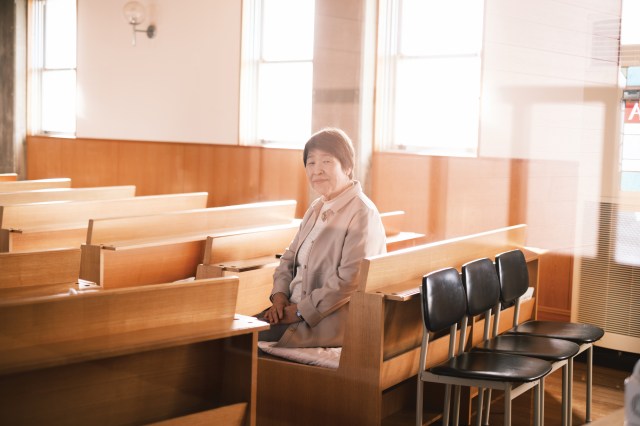
Mizuno Akiko, pastor at Ina Gospel Church, sits in a church pew in Ina City, Nagano PrefecturePhotography by Ben Weller for Christianity Today
Mizuno Akiko, pastor at Ina Gospel Church, Ina City, Nagano Prefecture

Back at Japan Bible Seminary, in Akasaka Izumi’s office, pastor Mizuno Akiko’s smiling face appeared on Zoom at 2:33 p.m. She was three minutes late. She had some technological problems, she said, apologizing profusely.

It had been another busy day for Mizuno. Every morning, the 73-year-old rises at 5:30 a.m. and reads her Bible. She records a daily devotional explaining one chapter of it. She does some light exercise then breakfasts on yogurt, bread, a banana, and coffee. And then the church doorbell starts ringing as people drop by for meetings, Bible studies, counseling, or help.

By the time she retires to bed around midnight, her eyelids are heavy.

Her life is not what she had envisioned nearly half a century ago as a 26-year-old fresh from seminary. Youthful and full of zeal, she took over as pastor of a new church plant in Ina, a city surrounded by rice paddies, pear trees, and cows in the mountainous Nagano prefecture.

The church started with about 10 members, mainly from two families. They met at a house. When Mizuno arrived, a deacon told her, “We won’t be able to provide a lot for you, but I promise you, you won’t starve.”

That was in 1977. At first, her work seemed to take off. On the opening day of her new children’s ministry, about 100 neighborhood children showed up. They threw their shoes off in a heap and squeezed into her tiny home where the church met, steaming the windows. The community—even non-Christians—was extremely welcoming, bringing her food and helping care for her elderly father when he fell severely ill. Everyone in the neighborhood knew about the church.

The congregation increased to about 40 members and became self-supporting in five years. It outgrew the little house and moved into a new church building (which also served as Mizuno’s home).

Mizuno got ambitious. It was the 1980s, when American televangelist Robert Schuller was pioneering church growth strategies that transformed the imaginations of evangelicals in the United States—and hers as well. Schuller’s model, epitomized by his polished, wide-reaching broadcasts and his shining Crystal Cathedral, dazzled Mizuno. She brainstormed evangelism tactics for her own church to draw crowds and win souls. “I was very energetic,” she said. “With my ideas and energy, I would drive the church to do programs.”

Event followed event, and 10 years later, “my church got physically tired and spiritually thirsty,” Mizuno said. “And I didn’t notice their thirst. I had lost sight of loving my members because I was focused on programs and church growth.” By the time Mizuno realized her error, the church had shrunk by half. Many had flocked to a seeker-friendly church that did not require much commitment. The remaining half was withering, spiritually dry.

Mizuno almost gave up. “I was so down emotionally, spiritually, and mentally that I didn’t have the confidence to continue serving or even to continue living as a human being,” she recalled. “I was so engrossed with doing something that I forgot to be a person who loves God and people.” She prayed: “Lord, help me be that person.”

Mizuno downsized and reset. Instead of focusing on growth, she focused on helping each person in the church meet God. She did start one new project: She encouraged everyone to read a chapter of the Bible with her every day. Most did. It changed their conversations, she said. People talked about what they read. Together, she and the church have read the entire Bible 10 times over two decades, and they’re still going. The congregation has grown to about 120 members.

As a young pastor, Mizuno had prayed about marrying a fellow pastor and building a church together. Today she is still single and is unlikely to retire until she’s 80. But she’s content. She might not be rich, she said. But she never starved, just as promised, and she has stayed faithful to her calling. At the end of her life, she plans to tell God, “I’ve made some mistakes, but I was fully committed to loving you and loving your people. That’s what I wanted to do, and that’s what I was able to do.”

In Akasaka’s office, we bowed our goodbyes to Mizuno and left the Zoom meeting. I could tell that Akasaka was moved. He had known and respected Mizuno for years but had never heard about her struggles.

As the principal of a seminary with falling enrollment, it’s easy for Akasaka to feel disheartened. His board of directors decided against offering online classes—a common growth strategy—because they value in-person fellowship among the students and professors. They also voted against running a marketing campaign for the school, because they believe full-time ministry should be a calling.

Akasaka agreed with the board’s decisions, but he sometimes wonders if they were the right choices. “I don’t know. We are just trusting in God, waiting to see what he will do.”

Is Japan a swamp?

“Certainly the situation looks like that. There are no other words to describe it.”

Years ago, when he was still pastoring a church, Akasaka lamented the rise of wedding chapels in Japan. Christian-style weddings in churches, complete with choirs and altars, are extremely popular among the Japanese. It made him sad and frustrated that “fake” wedding chapels were grander and more popular than genuine churches.

One day, a woman in her 50s with an earnest, eager face told Akasaka, “This means God is preparing Japan for a revival. If a revival takes place now, we’ll need more pews, and I’m praying that God will one day fill the pews in those fake churches with real Christians!”

The woman’s childlike faith convicted Akasaka. “Her prayer became my prayer. I realized I cannot give up on Japan.”

Panorama of Ina in JapanPhotography by Ben Weller for Christianity Today
Ina sits in a river valley between the Minami (Southern) Alps and Chuo (Central) Alps mountain ranges.

Before leaving Japan and flying back to my comfortable home in megachurch-packed Southern California, I grabbed tea with one of the students at Japan Bible Seminary.

Nakamura Mizuki is 30. He felt pulled to enter full-time ministry when he read John 21, where Jesus tells Peter, “Feed my sheep (v. 17).” It took him eight years to enter seminary because he was afraid. He was afraid he wasn’t worthy; he was afraid of poverty; but he was mostly afraid of failure. He had heard pastors sighing, year after year, “This year, still no baptism.”

He’s still afraid. Can he really do this? But he remembered Moses asked the same thing when God called him from the burning bush. God replied, “I will be with you” (Ex. 3:12).

“If this is God’s will, then I trust him,” Nakamura said. And so he is also excited. “I hope to share God’s heart with the church. I hope to share the gospel to many, 
many Japanese.”

That’s another reason Akasaka said he has not given up on Japan. “God has called people to serve Japan,” he said—people like Mizuki and Mizuno, like Alinsod and Lam. “God has not yet given up on Japan.”

Correction: An earlier version of this story gave the wrong name for the seminary Nakamura Mizuki addends. He attends Japan Bible Seminary. The earlier version also gave an unclear figure for Japan Bible Seminary’s enrollment in 2003. The school enrolled around 60 students at the time.

Sophia Lee is a writer based in Los Angeles.

Ideas

Invasion Theology

Thorns and thistles may be the Bible’s classic metaphors for evil. But did the biblical writers ever meet kudzu?

A gardener's hand carefully prunes the encroaching plants that are overtaking the space.
Illustrations by Tim McDonagh

In late spring across the Eastern United States, the shrub Lonicera maackii enters into its glory. It enrobes itself in cream-and-white blossoms that smell of citrusy syrup and drift to the ground as the days warm. By early autumn, its branches pop with shiny, pulpy berries that can linger into winter, a Christmas backdrop as lovely as mistletoe or holly.

October is the best month to kill this plant. But if you’re busy then, really anytime will do.

East Coasters and Midwesterners once loved Lonicera maackii, better known as Amur honeysuckle. It was introduced into the US in 1898 by Niels E. Hansen, a Lutheran horticulture professor dispatched by the Department of Agriculture to scour the world for exotic plants that Americans might want to take for a spin. He told his students that he felt, as a botanist, he was “doing the Lord’s work.”

Hansen journeyed from Europe to China—by wagon, by train, and, for 700 miles, in a sleigh. He bagged carloads of specimens, shipping them back across the Atlantic. Among the first few hundred seeds was Amur honeysuckle.

The Department of Agriculture liked what it saw in this fast-growing, fruity shrub. It imported more from Britain and from Manchuria, the honeysuckle’s homeland. From the 1930s to the ’80s, the government’s Soil Conservation Service distributed the plant to farmers and landowners across the United States to curb erosion and restore wildlife habitats.

We all make mistakes.

By the 1960s, folks from Chicago to Cincinnati were cursing the bush as a weed. Amur honeysuckle, also called bush honeysuckle, spreads like gossip and is nettlesome to eradicate. It leafs earlier than other trees and clings to its leaves longer, robbing native wildflowers and saplings of sunlight. It excretes chemicals into the soil that stunt nearby plants. It boosts tick populations.

In short, Lonicera maackii is the worst. It’s banned from being sold in several states, and at least ten others blacklist it as an invasive species or as a “noxious weed.” Where I live in Kentucky, a region that supplies much of the nation’s valuable hardwood timber, forest managers watch helplessly as Amur honeysuckle floods the understory and smothers future generations of trees.

Bush honeysuckle simply wears people out. Billy Thomas, a forester at the University of Kentucky, calls it “a booger” and “our old nemesis.” He says for anyone with ears to hear, “If you’ve got one or two plants on your property, now’s the time to get them out of there.”

I’ve obliged. Over the years, I’ve sawn, hacked, and poisoned the plant away from the edges of my property. I’ve trucked away more than 30 cubic yards of brush. I nearly lost a finger to a chainsaw while chewing into a 20-foot-tall thicket. More than once, I’ve slipped and fallen on the berry mash that accumulates underfoot when wrangling the felled limbs.

Maybe it’s a kind of spiritual discipline. Gardeners tout weeding as the surest way to grasp all the Bible’s talk of thorns and thistles; we don’t fully contend with the curse of the ground until we sink actual shovel into hard dirt. “We could stand side by side, Adam and I, he in his skin shirt and I in my grubby jeans, hoeing, stopping to tear out an upstart cocklebur,” the writer Virginia Stem Owens mused in Christianity Today in 1976. “We inhabit the same spiritual space.”

I can’t disagree. Spend a day rescuing a strawberry patch from a tide of Bermuda grass—disentangling the tentacular runners of one plant from another—and you’ll relate to Christ’s parable of the wheat and the tares in ways you wished you didn’t.


Likely thousands of sermons have contemplated weeds. Some are weirdly laudatory.

Augustine, in his fight to prove the material world was not evil, argued that thorns and thistles, as part of God’s creation, were, in fact, good. He envisioned weeds as a sort of biological Babel, a divine gift to restrain our worst impulses. “Even such herbs have their measure and form and order, which whoever considers soberly will find praiseworthy,” he wrote.

In a similar vein, Charles Spurgeon preached a real downer of a message in the late 1800s. While Londoners likely were readying their spring gardens, the Baptist pastor delivered 5,200 words about thorns and thistles, as if to brace his congregants for the toil that lay ahead. He said—Chin up!—that weeds are a sign of God’s mercy: The Fall could have been worse. Instead, the resulting curse does not strike Adam directly but “glances obliquely and falls upon the ground whereon he stands.” (Did Spurgeon ever wake up blistered from poison ivy the day after clearing a fence line?)

Figurative weeds have infested every sphere of existence, Spurgeon assured his congregants at Metropolitan Tabernacle—from the natural world, where ships are tossed at sea, to the social order, where hucksters swindle and families disintegrate, to the “little world of your own self.” Weeds will grow unbidden for everyone, for the righteous and the unrighteous. “All the prudence and care, ay, and all the prayer and faith that you can summon to your help, will not keep you clear of these thorns and thistles,” Spurgeon said.

As sermon fodder, Scripture’s weed metaphors are a capacious bunch, coming in a surprising variety much like weeds themselves. The Old Testament writers described evildoers as briers (Mic. 7:4) and rebellious people as thorns (Ezek. 2:6). Jesus, for his part, likened false prophets to thistles (Matt. 7:15–16). He told his disciples, in his story about the sower, that thorns represent “the worries of this life and the deceitfulness of wealth” (13:22). He bore a crown of thorns at his crucifixion.

Invasive plants are dominating every inch of the space.Illustrations by Tim McDonagh

All those weeds descend from their root metaphor in Genesis, where thorns and thistles first poke through the dirt as consequences of sin, standing in for dysfunction and toil (3:18). A common characteristic unites the nuisance plants of the Bible: We brought them upon ourselves through the door of our disordered desires.

But Moses, bless him, didn’t know about Amur honeysuckle when he penned Genesis. He probably didn’t foresee a globalized world where weeds would jump continents, or a world where our speech and politics betray a subtly revised understanding of evil—not as a product of our own hearts but as a foreign incursion.


The first recorded instance of the term invasive species may have been in a British colonial journal in 1891, around the time Spurgeon preached his weed sermon. But plants and animals have been hitchhiking the world in earnest from the dawn of colonization.

We Americans have imported exotics since Christopher Columbus first dropped anchor. He’s thought to have brought lettuce, actually an Egyptian innovation, to North America. Also he brought the cow. Seafarers carted tomatoes and potatoes from the New World, where they originated, to the Old World and back again. Other favorite non-natives include honeybees and, though their belovedness is debatable, cats.

Some species, however, multiplied without our blessing. In Argentina in the 1830s, Charles Darwin stumbled upon impenetrable fields of European artichokes and thistles stretching for miles where “nothing else can now live.” (He also called it “an invasion.”) In 1898, the same year Hansen pocketed his first honeysuckle seeds, H. G. Wells published his novel The War of the Worlds, styling his Martian “red weed” after Elodea canadensis, an aggressive North American stowaway sea plant that now excels at clogging European waterways.

Today, there are more than 11,000 non-native species in the United States (the official count includes viruses, bacteria, and fungi). The result is that, according to US Geological Survey data, if you live in Hawaii or Napa Valley or Miami or Monroe, Louisiana, immigrant flora and fauna now define your landscape.

Not all exotics are weeds, and not all weeds are invasives. A weed, generally speaking, is any plant in our personal environments that gets on our nerves. When Spurgeon spoke of weeds as a metaphor for sin and evil, invasives weren’t yet a thing. He almost certainly had native plants in mind.

When exotic species turn on us, however, biologists slide them to the naughty list. Non-natives get labeled as “invasive” when they leap ecological fences and begin destroying wildlife or harming people. Some invasives—particularly in the animal kingdom—inspire our terrified fascination: mussels clogging municipal water systems, pythons strangling the Everglades, giant spiders parachuting into New York. But some plants among the invasive ranks may surprise you. Burning bush? Its foliage is striking, but it spreads like, well, wildfire. Bamboo? You’ll never be rid of it. English ivy? Something called tree of heaven? And wait, daylilies?

It turns out there are people who study runaway plants and animals. The field of invasion biology sprouted in the early 1980s, a few decades after English zoologist Charles Elton published The Ecology of Invasions by Animals and Plants, which popularized the idea that invader species could overwhelm and harm indigenous wildlife. Today, hundreds of invasion scientists publish in their own scholarly journals. They produce tomes of research, striving to understand when a non-native turns bad and when it is just fine.

A field with such loaded vocabulary—colonization, alien species, biological pollution—has sometimes, unsurprisingly, run afoul of cultural censors. Food and plant writer Michael Pollan, for example, is no fan of “nativist” gardening. Plants will inevitably spread on boats, by planes, and in bird droppings, so even many biologists don’t draw a line in the sand between all natives as “good” and non-natives as “wicked.”

Yet as it happens, the reexamination of weeds has coincided with a shift in the ways Americans talk about moral evil.


Just as invasion science was taking off, presidential candidate Pat Buchanan turned the language of “culture wars”—a term popularized in 1991 by sociologist James Davison Hunter—into a battle cry. At the 1992 Republican National Convention, Buchanan railed against the sinister agenda liberals wanted to “impose” on America.

Dubbing the struggle a religious and cultural “war,” Buchanan struck a tone in many ways similar to that of a conservationist warning about environmental threats. He painted the nation as an unspoiled tract of land, calling Democratic ideas “not the kind of change we can tolerate in a nation that we still call God’s country.” He spoke of the need to shield “small towns and communities” from the “raw sewage of pornography that pollutes our popular culture”—as if provincial places were unacquainted with sexual temptation before it encroached like some kind of escaped bacteria.

The invading-horde rhetoric has only grown more intense since. Consistent references to immigrants and refugees as a disease-carrying “invasion” are a relatively recent political phenomenon. President Donald Trump has branded his opponents as hazardous pests by labeling them “vermin.” In a video debuted at the National Religious Broadcasters convention in 2024, then-candidate Trump was draped in messianic garden metaphors in an AI-modified play on Paul Harvey’s iconic “So God Made a Farmer” speech: God wanted someone to “fight the Marxists” and other looming threats. “God looked down on his planned paradise and said, ‘I need a caretaker.’ So God gave us Trump.”

Even the administration’s repeated invoking of “the enemy within” is invader talk masked in introspection. Neither Trump nor Vice President JD Vance has deployed the phrase in service of self-reflection. In a February speech in Germany, Vance used it explicitly to reference those he sees as opposing nativist agendas; after the speech, he met with the leader of a growing political party that embraces racial ideals from Germany’s Nazi past.
Of course, no one is shocked anymore by othering language in politics. And Republicans don’t practice it alone: Remember when Democrats, led by Minnesota governor Tim Walz, tried branding conservatives as “weird”? The impulse is understandable. Christians know they have an enemy out in the world seeking harm. I, too, am wary of the Devil’s schemes.

But then, there’s the Bible. From the opening pages, it invests a lot of ink imploring us to examine ourselves, often with tricky turns of phrase. God alerted Cain, Scripture’s second soil-worker, that “sin is crouching at your door” (Gen. 4:7). Like an invader! Except God was not cautioning about some outgroup; he was calling out the sin already at work inside Cain’s angry heart.

Exoticizing shrubs has its uses. But exoticizing evil—or other people—endangers the soul. Jesus chided the Pharisees that their fixation on foreign evils had blinded them to the weediness of their own sin: “For it is from within, out of a person’s heart, that evil thoughts come” (Mark 7:21–22).


Spurgeon put it more practically for his audience in London. Anyone who looks will “find great crops of thistles springing up in their hearts,” he said, “and they have to keep the sickle of sacred mortification going to cut them down.”


Our most loathsome invasive plants weren’t foisted upon us. Almost without exception, we loosed them upon ourselves.

Kudzu is the quintessential American case study. Gardeners fell in love with this fuzzy vine, a cousin to peas, when it was introduced in the Japanese pavilion at the 1876 Philadelphia world fair. Its three- to four-inch leaves resemble mittens. It grows wicked fast, capable of covering the length of a subway car in a single season. Plant it as an ornamental, and in no time its shady foliage could cover a front porch or an unsightly bare patch like some tropical gift wrap.

A Quaker couple, Charles and Lillie Pleas, were the first farmers to grow kudzu commercially. In the early 1900s, they sold mail-order root crowns and seedlings from their North Florida nursery. (The post office briefly investigated them for mail fraud, skeptical that any plant could be as prolific as they advertised.)

Then in the late ’30s, kudzu took off. Relentless cotton cultivation had ravaged Southern soil. Researchers found that kudzu swaddled the dirt so tightly it all but eliminated erosion. Also, cows had a taste for the plant. So states stuck it on road banks. Farmers blanketed fields with it. The feds grew a hundred million seedlings and paid farmers to plant them.

No one cheered kudzu more loudly than a Baptist pastor’s kid named Channing Cope. A newspaper editor and self-taught conservationist, Cope tried kudzu for himself on his Yellow River Farm near Atlanta. By the 1930s, he was convinced the exotic plant could deliver Southern farmers from struggle.

Invasive plants are dominating every inch of the space.Illustrations by Tim McDonagh

Cope boosted kudzu on his daily radio show for Atlanta’s WCON, recorded from a rocking chair on his front porch, and in his newspaper column with the Atlanta Constitution. He showed government agents and foreign officials around his kudzu fields. He founded the Kudzu Club of America, which at one point encompassed more than 20,000 members; held an annual convention with “kudzu queen” pageants; and aimed to plant 8 million acres of kudzu across the South.

Cope spoke about the vine in revivalistic tones. “A strange ecstasy lifts Southern growers’ hearts and exalts their language when they get together to praise kudzu,” Cope said during an interview in Reader’s Digest in 1945. In his Constitution column, he called the plant “the Lord’s indulgent gift to Georgians” and said hundreds of thousands of acres awaited “the healing touch of the Miracle vine.” In The Farm Quarterly in 1949, Cope wrote, “The South believes the Almighty had its cottoned-out gullies and hillsides in mind when he designed the wonder crops, kudzu.”

Cope died in 1961, a modest celebrity in the South. You’ve probably heard the rest. Things got out of hand, and we fell out of love with kudzu. Old cars disappeared in ropy clouds of green. Barns were crumpled and trees uprooted beneath kudzu mats weighing hundreds or thousands of pounds. Monikers piled up: “the vine that ate the South,” “cuss-you,” “strangling vine,” “foot-a-night vine,” “mile-a-minute vine.”

Today, kudzu is an adversary of the Department of Agriculture and the governments of more than 30 states. It has trekked as far as Oregon. Researchers calculate it has cost the forestry industry alone hundreds of millions of dollars. If the vine has sunk its meaty tubers into your land, thoughts and prayers to you.


Kudzu’s tale is one of unintended consequences. Cope, like Hansen with his honeysuckle, clearly meant well. He knew of the vine’s penchant to transgress; in his 1949 book Front Porch Farmer, Cope said cultivating the vine was fighting “fire with fire.” He just believed we could contain the fire.

We couldn’t. The flames were fanned by what theologian Reinhold Niebuhr called “collective egoism”—the concept that sin not only infects us as individuals but also knocks the whole of society out of alignment. So even our best contributions to the world carry the potential, for reasons we don’t understand, to miss their mark and muck things up.

No obvious sin lurks behind the tragic story arc of many invasive species. Cogongrass, a razor-sharp grass in the Deep South that destroys every plant in its path and intensifies wildfires, debuted in Alabama in 1911 as packing material from Japan. What exactly is the lesson there?

Matthew Henry, the great English Presbyterian minister, saw a kind of Pandora’s box in non-native plants. Preaching at the outset of the 18th century, when gardening with alien plants was largely an aristocratic hobby, Henry seemed suspicious of the growing affection for exotics. He heard a warning in the prophet Isaiah’s singling out of Israel’s “imported vines” (17:10). “This was an instance of their pride and vanity,” Henry wrote in his influential Bible commentary. Their “ruining error” was “their affection to be like the nations,” he said. Not content with what they have, “they must have flowers and greens with strange names imported from other nations.”

As far as I know, the Bible doesn’t pooh-pooh botanical variety. Martin Luther famously wrote to a friend, in a letter now housed at a museum in Wittenberg, “Just get me even more seeds for my garden, if ever possible many different varieties.” But Henry’s concern was that coveting fruits beyond those God has already given us can reveal weediness in our own hearts. What might he have said to Cope?

The Kudzu King, as Cope was known, battled his own inner invasives. Records show his mother divorced his minister father when Cope was 13, alleging “cruel treatment.” At age 14, Cope was arrested for breaking into a safe at a Louisville library and stealing $125. (Yet only a year later, Cope, as a young Navy seaman, dove from a boat in Rhode Island to save a drowning man.)

Cope held onto scraps of his Baptist upbringing throughout his life; he wrote a Christmas column in 1947 declaring to Constitution readers that Jesus was the only leader in history who offered durable hope. Even so, in a 1949 Time magazine profile, Cope comes across as a glutton with a bourbon problem.

Some biographers have portrayed Cope as a vainglorious fool. Maybe he was. Or maybe we see what we want to see when we flatten people as if they were plants. Perhaps, more charitably, Cope simply over-relied on kudzu to cover the scars of his own struggles.

Cope’s tangled legacy highlights an insidious tendency of framing evils as invasive: We mythologize them. The internet buzzes with apocryphal claims about kudzu—that it covers millions of acres throughout the United States, that it’s devouring an additional 150,000 a year, that at night it carries away children sleeping beneath open windows. But the US Forest Service’s own data vary wildly. The vine covers 2 million acres, it says. Or maybe 7 million. It only spreads by 2,500 a year. Actually, it might be in retreat.

Bill Finch, an Alabama horticulturalist with newspaper columns and radio programs of his own, contends that “the vine that ate the South” in fact didn’t. He calls kudzu “the most silly plant hoax of the past century.” He took his case against the lore all the way to the pages of Smithsonian magazine. Finch even says kudzu is not that hard to kill. Just mow it regularly. Or buy a few goats.

Christians know better than to overlook evil, of course. Where there are weeds, they must be pulled. But dealing with sin does not require mythologizing it—the way Pat Buchanan characterized small towns as spotless and vice as a toxin sent by city folk. In fact, in the weed wars, sensationalizing often obscures the real problems.

Consider salt cedar, a feathery invasive bush from Eurasia that plagues the American West. It has been accused of guzzling water and draining desert water tables. Now, some invasion biologists challenge that claim as urban legend, saying it distracts from the true culprit: human overconsumption of water.


In the South in particular, kudzu is a favorite sermon illustration for sin. (You can Google it.) And in many ways, it’s apt: Sin is only countered with vigilance. Libertine ideas come to the church from “the world,” not from biblical exegesis. But the image has limits. Sin, like most invasives, is tracked in on the boots of churchgoers.

Invade is a personifying word. In its earliest Latin use, it implied hostility with agency. Invasion rankles when we apply it to, say, desperate immigrants—a mother cradling an ailing child certainly does not feel hostile. And invasion should grate when we apply it to sin, because sin has no agency of its own. For nearly two millennia, the church has taught that everything God made is good and that evil is not a force in itself but a corruption of the good.

We challenge the goodness of God’s creation—and perhaps deceive ourselves—when we begin to think of evil as if it were a foreign creature we can vanquish. We step into something like a zero-sum game: It’s us or the invaders.

That’s a game we cannot win. Armed with all the herbicides in the world—or all the prayer and resources and state power we can amass—we still won’t beat the briers. Spurgeon taught that the weeds will always be with us: “The world will always go on bringing forth thorns and thistles” until Christ comes. The tares growing up among the wheat, Jesus said in his parable, are ultimately for him to sort through and uproot at the end of the age (Matt. 13:40–41). It’s a remarkably liberating little story, when you ponder it: The only task given to the wheat, or “the people of the kingdom,” is to be wheat (v. 38).

Why bother fighting weeds then? Does Adam’s mandate to tend the earth still apply if humans aren’t really capable of putting it all to rights?

I put the question to Jim Varick, a retired botanist who lives on 60 wooded acres outside Cincinnati.

“I don’t pretend to know the answer to all of those things,” he told me. Jim and his wife, Julie, have been schlepping bags of invasive garlic mustard (courtesy Europe, 1868) and Japanese stilt grass (courtesy China, 1919) out of the forest for 20 years. “I need to do what he’s called me to do today. And I feel like he’s called me to restore his creation.”

They finished off their bush honeysuckle long ago. As if by magic, a carpet of wildflowers unfurled on the forest floor. “It’s a great feeling, conquering the woods,” Julie Varick said.

The Varicks harbor no illusions about saving the Midwest from invasives. They’re content to steward the small places God has given them, to create glimpses of what life may someday be without weeds. What if a child could sit on the ground and read Jesus’ words about the flowers of the field, then look up and see not woods choked by honeysuckle monoculture but actual flowers—and know that her Father cares for her?

The couple also helps lead a restoration effort on the 70-acre former golf course where their church put up a new building a while back. The congregation, Horizon Community Church, is eradicating invasive plants and rewilding what was once a sea of lifeless turf. They are partnering with Cincinnati Nature Center and organizing workdays and planting truckloads of native trees, shrubs, and grasses.

Jim said he imagines creation as a work of art brushed by the hand of God—balanced, with just the right colors and proportions of negative and positive space. But over the centuries, we spliced in exotic invasives that bled across that canvas like a wound.

“We’re going in there with this beautiful, moody Dutch master painting, and we’re saying, ‘Oh, wouldn’t it be better if it had some bright cheery flowers over here and some happy trees over here?’ And now when we look at it, we’re not getting the message that God intended for that painting.” No one is trying to vandalize anything, Jim said, but “I feel like that has to grieve his heart, when he’s given us this beautiful thing and we, in our infinite wisdom, have decided, ‘That’s really a great start there. But we can do it much better.’ ”

There’s room for disagreement. Go ahead and plant that saw palmetto in your front yard in Massachusetts, if you’d like, even though it most definitely doesn’t belong there. It won’t spread.

Just exercise caution. After all, thinking we could do better than God is what got us booted from the Garden in the first place.

It’s also what led my neighbor to plant invasive English ivy beside her driveway. This summer, I’ll spend a few sweaty hours yanking strands that have crept into my yard—a liturgy, if you will, that calls me ever inward to manage the native sin of my own heart. Pro tip: Pull ivy when the soil is damp for a satisfying snap of the roots. Next year, they’ll be back.

Correction: An earlier version of this story gave the incorrect year that Charles Spurgeon preached a sermon on thorns and thistles. The sermon was published in 1893; the year he preached it is unknown.

Andy Olsen is senior features writer at Christianity Today.

Theology

What’s Truly Mortifying

Contributor

Lenten habits of voluntary suffering—what Christians have long called “mortification”—help us to imitate Jesus and join in his work.

The silhouette of a man with the crown of thorns in him
Christianity Today March 5, 2025
Illustration by Mallory Rentsch Tlapek / Source Images: Getty

Growing up as a Methodist, the church calendar oriented my childhood around twin poles of Christmas (and Advent) and Easter (and Lent). Advent was my favored season of the two: Waiting with a pile of presents in view is not so difficult. And I could grasp the significance of Easter—apart from chocolate—but Lent’s long demand of denial and suffering was much harder to embrace. 

This 40-day season before Easter is when Christians prepare to celebrate Jesus’ death and resurrection. Lent began, as best we know, in the fourth century. It is a time of repentance, of introspection and reflection, and frequently of some kind of fasting, a decision to refrain from ordinary goods so we might more clearly see who God in Christ is inviting us to be. 

Lent also invites us to recover the deeply Christian language of mortification—of putting to death aspects of our lives to make room for God to grow the image of Christ in us.

This is a difficult work for any Christian but perhaps particularly for Protestants, for we have a history of skepticism of this kind of self-denial. In his Institutes of the Christian Religion, the Reformer John Calvin famously wrote that Lenten practices are false imitations of Christ. The famous Baptist preacher Charles Spurgeon likewise found it inconsistent to talk about fasting, even during Lent, because Christ has already been raised from the dead. “How can the guests of the bridegroom fast while he is with them? They cannot, so long as they have him with them” (Mark 2:19).

As a child, I’d have been happy for this skepticism, as Lent mainly seemed like a time when desserts and candy were off the table. But as an adult, I’ve recognized the benefit of self-denial. Though I have been saved and am being saved by the work of Christ (1 Cor. 1:18), the things I desire and the ways I desire them too often run sideways to the life God means for me to have.

By the time I came around to Lent and mortification, however, I was no longer a Methodist. I had become a Baptist, and many Baptists do not regularly celebrate Lent, moving from Christmas to Easter without much fanfare. 

I’m not suggesting Baptists actively choose to reject the practices of Lent: self-discipline, prayer, and fasting. But suffering is not an aspect of Christianity we tend to discuss, much less something we see as needing to be taken up on purpose. The suffering we do discuss tends to be extraordinary—persecution and martyrdoms—or else the subject of prayer for divine relief—from illness or some other hardship undeserved. 

These are both good ways to talk about suffering, as the ordinary kind happens to all of us and the extraordinary kind may very well happen to someone in service to Christ. Perennial evangelical interest in Dietrich Bonhoeffer, Foxe’s Book of Martyrs, the recently Oscar-nominated documentary of the story of the 21 Coptic martyrs—all of this illuminates our minds and prepares us for courage, should it be needed. Suffering could happen to you or me or any of us, these stories say, so we must be ready.

For all that, I no longer think those discussions of suffering are sufficient, though I understand why it may feel that way: Because suffering is incredibly ordinary, there’s a sense in which we need not talk about it. Suffering appears hand in hand with the arrival of sin in the world in Genesis: It is there between the man and woman, between humans and the earth. It multiplies between brothers, between peoples, in our bodies. It is the aches that come with being middle-aged as much as the pains that come—necessarily yet somehow still unexpectedly—from being alive and in relationship with others. Perhaps we don’t talk more about suffering because we all know the subject so well.

Yet mortification strikes me as different, for—in both its ordinary and its extraordinary forms—most suffering happens to a person. But mortification is a suffering which we undertake willingly

These acts of fasting, prayer, and conscious self-denial are not (or should not be) an attempt to work our way into God’s good graces. Mortification is rather a response to God’s grace (Rom. 8:13), a response to God’s invitation for us to be joined to Christ in every part of our lives, to be attentive to the ways in which our lives become immune and asleep to God. “Wake up, sleeper, rise from the dead, and Christ will shine on you” (Eph. 5:14).

This is why mortification is an appropriate preparation for Easter. We become able to watch and pray as Jesus asked in Gethsemane (Matt. 26:41) because we have taken on the habit of watching and praying, of denying our appetites in small ways that we might deny our appetites when it counts. The practices of mortification are meant to break us out of our ordinary rhythms and to remind us that suffering and death are themselves deeply ordinary—and deeply ordinary means God uses to heal our dullness of ear and heart that we may more fully receive and rejoice in the Good News we celebrate at Easter.

In recent years, there has been no shortage of Christian resources offering a therapeutic approach to suffering, proposing that suffering is not something we must bear but something we may escape. I am married to a talented therapist and believe that counseling is often appropriate and necessary and that the ways we cope with suffering often do unacknowledged harm to those around us. There are many whose ordinary sufferings are abundant, many who bleed for years in silence like the woman who touched Jesus’ garment, and therapy may help them heal. It may even be a way to better understand and experience God’s grace.

But the place for therapy is those spaces in which the ordinary means of living break down. The aim of therapy is to return people to their lives with new tools and approaches to living through ordinary life. It is not intended to—and cannot—help them escape future suffering.

When therapeutic concerns become the primary frame for approaching the Christian life, extraordinary suffering become difficult to countenance and taking on suffering willingly becomes nearly impossible to understand. Suffering will find us in its ordinary form, for we are creatures in a world in which sin operates. But sometimes, Paul writes, taking on suffering is how we better understand the love of God. 

In Colossians 1:24–26, Paul commends us with these words: 

Now I rejoice in what I am suffering for you, and I fill up in my flesh what is still lacking in regard to Christ’s afflictions, for the sake of his body, which is the church. I have become its servant by the commission God gave me to present to you the word of God in its fullness—the mystery that has been kept hidden for ages and generations, but is now disclosed to the Lord’s people.

In this passage, Paul draws together his own sufferings, which continue in the way and mission of Jesus, with the vocation given him by God. The afflictions he undertakes, he notes, are not of his own choosing, but in imitation of Christ’s own suffering. Paul does not see himself as repeating Jesus’ suffering, but he makes sense of his own suffering in light of Christ’s. The disciple is to expect no easier time than the master. 

Paul’s voluntary suffering and his mission from God are inseparable here. Yet by his own witness, Paul invites those of us who do not take up this extraordinary vocation to ask about our own callings, to wonder how we might also participate in the singular mission of God. The practices of Lent find their full orientation here, in our joining the work of God in Christ by the power of the Spirit. 

When we accept the invitation to be Christ’s disciples, we also accept an invitation to live—and suffer—like him. That suffering may be extraordinary, like Paul’s, or it may be the smaller mortification we can choose during Lent, like sacrificing precious time to make room for intentional prayer, omitting a meal to meditate on Scripture, or denying ourselves other ordinary pleasures to better join in the larger work of God. Mortification attunes us—in our habits and appetites—to what God is doing. 

Paul’s framing here also reminds us that practices of mortification are not taken up for our own sake alone, as if the goal of fasting, praying, or meditating on the Scriptures were personal spiritual excellence. In connecting his own suffering to Christ’s calling and the wider church, Paul teaches that any hardship chosen in imitation of Christ is undertaken as a member of the body. Practices of fasting, praying, and Scripture reading are best done in the company of others and, as Paul writes, “for the sake of his body, which is the church.”

In book 1, chapter 14, of On Christian Doctrine, Augustine of Hippo uses an analogy of the healing of an injury or illness. Sometimes, he writes, wounds are healed by things contrary to them, and sometimes they’re healed by things like them. Sometimes a bandage is applied to stop the bleeding, but sometimes mild versions of the things afflicting us—a kind of vaccination—are introduced to help the body learn to defeat them. Sometimes, the bleeding must be stopped, and yet one cannot wear a bandage forever. Eventually, Augustine concludes, the body must learn what to do when the difficulty is introduced again. 

Mortification is like this. We take on small difficulties not only because suffering cannot be avoided, nor merely to continue the struggle against sin. We take them to be better able to join in the good work of Christ.

Myles Werntz is author of From Isolation to Community: A Renewed Vision for Christian Life Together. He writes at Taking Off and Landing and teaches at Abilene Christian University.

Ideas

I’ve Seen Firsthand How PEPFAR Works

As a medical missionary, I use PEPFAR-funded meds to save unborn babies, new mothers, and fellow church members from needless, ugly deaths from AIDS.

A girl with AIDs medication, a hospital bed, and doctors.
Christianity Today March 5, 2025
Illustration by Christianity Today / Source Images: Getty

I hope you never have to watch someone die of AIDS. 

I’ve seen it happen too many times during my years as a medical missionary in Kenya. Whether it’s a little boy whose every breath carries a horrifying squelch because his lungs are full of fluid or a young mother whose body seizes and shakes from brain inflammation, a sense of helplessness hits me every time. Once someone’s immune system is fully destroyed by HIV, all the medical interventions in the world can’t help.

I’m grateful, though, that in my daily work I am able to help HIV-positive people live normal, healthy lives because they’re on antiretroviral medications. These medications are paid for by an American program, the President’s Emergency Plan for AIDS Relief, commonly known as PEPFAR. Funded by the US government since it began under the Bush administration in 2003, PEPFAR provides medication to HIV-positive people across the world, keeping them alive and preventing the spread of HIV to their families, including their unborn babies. 

My patients, colleagues, and even fellow church members in Kenya rely on PEPFAR for these essential medications, and at my hospital we aggressively test people suspected of having HIV so that we can avoid those ugly, terrible deaths. My salary as a missionary is covered by private donations from churches and friends back in the States, but many of the drugs and supplies we use in our daily work come from programs funded by the US government as well as international institutions.

I’ve been reminded of that sense of helplessness and horror at imminent death from AIDS over the past few weeks as I have considered the future of PEPFAR. The program is not part of USAID, the federal foreign aid agency singled out by the Trump administration for particularly aggressive budget cuts, but USAID does distribute PEPFAR funding, and its inspector general monitors the program’s work.

On January 24, clinics around the world that are funded by PEPFAR via USAID received a stop-work order. That directive has thrown HIV-positive patients across the world into confusion and chaos. Secretary of State Marco Rubio put out a waiver a few days later, but it has not resulted in any clinics on the ground receiving funds they need. The situation seems to be that unelected bureaucrats were actively trying to stop those payments; many other contracts for lifesaving work have been canceled.

Even if that obstruction goes away, however, resuming proper patient care won’t be as simple as flipping the on-off switch. The infrastructure and supply chains that clinics and hospitals like mine rely on to distribute medication were also affected by the stop-work order. Some providers won’t be able to get medications even if the money does come through.

The situation is further complicated by a legitimate scandal inside PEPFAR: A few weeks ago, it came to light that PEPFAR-funded service providers in Mozambique had performed abortions. This is absolutely forbidden under US law and represents a grave violation of the spirit by which PEPFAR has worked for the past two decades.

Investigations are still ongoing, but concerns about smuggling abortion care into PEPFAR’s mission first came to a head during the Biden administration. Last year’s reauthorization of the program was only accomplished after a tense battle, and it was given a one-year reauthorization rather than continuing the previous pattern of five-year reauthorizations.

The good news is that this scandal, bad as it is, reveals just how carefully PEPFAR has been spending its money over the years. It is demonstrably not a wasteful or corrupt program.

On the contrary, the abortions were uncovered because the program has always been strictly scrutinized, and this is the first time in two decades anyone has found this kind of violation. (You can read their previous oversight reportsyourself.) Any attempts by pro-choice activists to misuse PEPFAR have run into the ironclad structures built in from the beginning. And in the brief time since this scandal came to light, PEPFAR has already instituted new compliance measures to ensure this doesn’t happen again. 

My own experience matches this public record of accountability. From what I’ve seen, PEPFAR runs the tightest ship around when it comes to foreign aid. And I’ve never seen PEPFAR interfere with Christian ministry. In fact, many medical facilities receiving PEPFAR funds are explicitly Christian institutions where hospital chaplains preach the gospel to people while they’re waiting for their appointments. The legacy of Christian medical missions in Africa means that a lot of critical health infrastructure—including care for HIV and tuberculosis—happens in clinics and hospitals run by Christian denominations. PEPFAR has not tried to change that model.

Decades ago, American Christians rallied in support of PEPFAR. A key moment came when Senator Jesse Helms—a small-government, pro-life conservative if ever there was one—held a tiny, HIV-positive, African baby in his arms. 

He immediately became a supporter of the initiative that would become PEPFAR, writing, “I know of no more heartbreaking tragedy in the world today than the loss of so many young people to a virus that could be stopped if we simply provided more resources.” Helms knew that a small portion of the federal budget could make a huge impact, just as we know today that cutting PEPFAR will barely make a dent in our national debt—or even one year’s budget deficit.

(The national debt is over $36 trillion. Annual federal spending is north of $6 trillion. This year’s deficit is around $2 trillion. PEPFAR’s entire annual budget is around $6 billion. That’s 0.1 percent of annual spending and 0.3 percent of this year’s deficit.)

Helms’s realization is just as necessary today, and American Christians’ advocacy for PEPFAR remains necessary too. Millions of people rely on this program for medications keeping them alive. At minimum, if the US is going to stop funding PEPFAR’s work, we must have a plan for slowly transitioning the financial responsibility to other payers (perhaps through missions organizations like African Mission Healthcare). Simply letting this work lapse—letting millions of fellow Christians and others of all ages, including presently unborn children, die a painful death from a preventable and manageable illness—is not a morally defensible approach.

One of Christianity’s greatest practical accomplishments is the very idea of a hospital—a place where sick people would receive care regardless of their ability to pay. And, historically, this work was often the product of what we’d now call public-private partnerships. Throughout late antiquity, Christians in Rome and Byzantium used government funds to build institutions of incredible generosity. PEPFAR is only the latest chapter in the legacy of Christian charity using state capacity to bring about incredible, lifesaving changes.

HIV and AIDS are elements of a fallen world. They are, in a real sense, already defeated by Christ and will be finally eradicated in the new creation. But for now, God is glorified when HIV is suppressed and new infections are prevented.

The capacity that PEPFAR has built over the past two decades has convinced me that this federal program is the most prudent way to accomplish that good work. Yet at the very least, there is an infrastructure here that must be preserved, even if the federal government no longer provides this vital funding. Our African brothers and sisters who depend on PEPFAR’s medication are hoping and praying, however, that American Christians will not allow our government to renege on this commitment.

I wish I could bring everyone who has power over PEPFAR’s survival to my mission hospital. I wish they could see how a relatively small amount of money has done incredible good. I wish they could meet the hardworking people who rely on PEPFAR to survive. God has blessed America richly with an abundance of resources. There are few better ways to steward that blessing than keeping people alive.

Matthew Loftus lives with his family in Kenya, where he teaches and practices family medicine. You can learn more about his work and writing at MatthewAndMaggie.org.

Ideas

The Bible’s Challenge to Technofans and Technophobes

Columnist; Contributor

In Scripture, the wicked drive technological progress. But the righteous often redeem it.

Pixel art of a demon with fire bolts flighting a stained glass cross with sparkles.
Christianity Today March 5, 2025
Illustration by Abigail Erickson / Source Images: Getty

The first time we encounter new technology in the Bible, it has a dark side.

Human beings are exiled from the Garden in Genesis 3. Cain kills Abel in the first half of Genesis 4. Then, in the second half, we hear about six innovations—cities, tents, livestock farming, musical instruments, bronze, and iron—which change the way human beings live from that point onwards (4:17–22).

These represent major technological leaps forward. To this day, we refer to the dominant eras of ancient societies using these categories: “civilizations” (as opposed to nomadic groups), “farmers” (as opposed to hunter-gatherers), the Bronze Age and then the Iron Age (as opposed to the Stone Age).

You might think that the writer of Genesis would want to associate these advances in technology with God’s people. We generally do this when we tell the story of industrial, economic, or medical progress. (I do it myself!) But Genesis does the opposite. It clarifies that none of these transformative innovations came from the godly line of Seth, whose arrival marks the start of people calling on the name of the Lord (4:26). Rather, all these new technologies emerged from the wicked line of Cain. Indeed, they appear in Scripture sandwiched between two murderers: fratricidal Cain (4:8) and violent, vengeful, polygamous, boastful Lamech (4:23–24). This gives technology an inauspicious start.

It gets worse. Nimrod, the original warrior-king and a descendant of Ham, founds great imperial cities of the ancient Near East like Uruk, Akkad, and Nineveh (Gen. 10:8–12). Arrogant people build the city of Babel in explicit defiance of God’s purposes (11:1–9). Both Nineveh and Babylon oppose and oppress God’s people over the next few thousand years. Innovations like stone cities and wheeled chariots enter Scripture under a cloud, sometimes ending up reduced to rubble or submerged under the sea (Josh. 6:15–21; Ex. 14:1–31). Iron beds and weaponry likewise appear in association with God’s enemies (Deut. 3:11; Judges 4:3), while his people fight with mere tools.

If this were the whole story, then it would imply that technological progress is evil: idolatrous in origin, oppressive and violent in nature, and exploitative in effect. (Many today view artificial intelligence in this way, for example.) In that scenario, technophobia would be entirely appropriate. We would hold the responsibility of raising the alarm, resisting the allure of new devices, raging against the machine(s), and rejoicing in their destruction.

Scripture, however, contains another strand to the story of technology. Yes, the wicked introduce new inventions like tents and cities, chariot wheels and livestock farming, lyres and pipes, bronze and iron. But as Genesis shows, the righteous quickly adopt and often redeem these technologies. Abraham and his family live in tents and herd livestock. Musical instruments appear in the Jacob story (Gen. 31:26–27). Joseph feeds the known world from a city (41:48–56). And in the New Testament, we read that Abraham himself has his heart set on a city whose designer and builder is God (Heb. 11:10).

More significantly, God himself chooses to dwell in a tent, where people sacrifice the livestock they farm. Then he takes up residence in a city, in a building fitted with bronze, iron (1 Chron. 29:7), and chariot wheels (1 Kings 7:15–16, 33). People are summoned there to praise him on the lyre and the pipe.

Notice: Nothing is left unredeemed. Every piece of technology introduced by the Cainites is appropriated for the worship of Israel’s God. Jerusalem itself emerges as the biblical ideal of a city. Scripture describes it as the joy of the whole earth, the one of whom glorious things are spoken (Ps. 48:2; 87:3). Jerusalem becomes a central image of the church and the heart of the new creation (Rev. 21:2).

On the whole, then, the Bible gives an ambivalent vision of technology, accounting for both its sinful origins and righteous appropriations. New tools, machines, devices, and systems are often introduced by wicked people for dubious or evil reasons, including greed, pride, lust, and power. Yet they are also taken up and turned for good by the God who created music, medicine, metal ores, and physical laws. Both of these were true of cities, metallurgy and farming; they will be also be true of the internet, mobile technology and AI.

This presents a challenge to both technophobes and technofans. We must not live in fear, burying our discoveries underground because we do not appreciate the goodness of God and his ability to redeem all things. But nor should we adopt new technologies without asking some searching diagnostic questions: Who made this? For what purpose? To whose glory? What good does it make possible? What sins does it encourage? How will I guard against them? How can it be used to worship and serve, to love God and love my neighbor?

All these questions have been asked for thousands of years, and all of them need to be answered afresh in each generation. May God grant us wisdom.

Andrew Wilson is teaching pastor at King’s Church London and author of Remaking the World: How 1776 Created the Post-Christian West.

Church Life

Spiritual Growth: There’s an App for That

Megachurch pastor Tim Timberlake wants you to find intimacy with God on your phone.

Tim Timberlake preaching at Celebration Church
Christianity Today March 5, 2025
Screenshot Celebration Church

Twenty-five million people have downloaded the Glorify app. Tim Timberlake, a multisite megachurch pastor based in Florida, hopes more will soon. He is the latest online influencer to announce on social media that he is partnering with Glorify.

“If you’re looking for a way to deepen your time with God, this is it,” Timberlake posted on Instagram. “Let’s grow together!”

The prayer-and-devotion app, which has 81,000 ratings on the Apple store, is part of a growing global industry of wellness tech, with annual revenues of around $1 billion. People track their sleep, steps, and stress. They work on mindfulness, meditation, self-affirmation, and feelings of peace and well-being. They open their phones to pray.

Timberlake spoke with Christianity Today about the challenge of finding intimacy with God in the midst of a busy schedule and whether there’s danger in depending on an app for spiritual growth.

This interview has been edited for length and clarity.

Why did you want to partner with Glorify?

Me and Henry Costa, the founder of Glorify, had an opportunity to meet at a mental health retreat, and we sat down and ended up talking for three or four hours. I just loved his heart for the kingdom of God and his vision to help people incorporate Scripture into their daily lives.

You’ve been a pastor for a while. Is this a major challenge—preaching a sermon and seeing people not really hearing it or counseling people and seeing them not take really take it in?

I believe the majority of people who would consider themselves Christians or followers of Jesus would say that, somewhere along the week, they read Scripture. But that same demographic of people would also say that they have a very hard time retaining the Scripture that they read. I believe that the reason they have a hard time retaining the information is because of how they approach it. The thing I love about Glorify is how it doesn’t just give you Scripture; Glorify gives you opportunities to navigate Scripture in different ways.

You can worship in it. You can have guided prayers in it, meditation in it, write notes in it. You can follow a devotional in it. You have content that is curated specifically for the topics and the areas where you need guidance. 

Glorify is the most user-friendly devotional app I have used. Not only is it content that you consume; it’s helping you build a tangible relationship with God’s Word.

When you started using it, did you did you notice it sort of shaping your spiritual life?

It has offered me meaningful ways to connect with God. 

There are moments where my life is super busy, my schedule is so packed, but I can open the Glorify app, and it gives me a daily devotional that can connect me with God in the time parameters that I have. It also allows me to quiet the noise around me with meditation. The app provides powerful and immersive experiences in a busy world on a busy day. 

It’s not just about convenience. It’s about deepening that intimacy with God. It has been very transformative.

With this partnership, are you primarily a spokesman, or are you writing devotionals or giving Glorify content? How does the partnership work?

I’ve encouraged them to leverage whatever little influence God has given me to further this vision for the kingdom of God. Whatever I can do!

We’re talking through some devotionals. We’re talking through more content. We’re talking through a variation of different things that I’m excited about. 

I am super honored and humbled that they have entrusted me with influence on this platform to speak to some of the highlights of people’s lives and some of the low moments of people’s lives—because people who are on this journey with the Glorify app are experiencing both. You have people who are leaning into this content because they’re experiencing a great season and they are grateful and want to return honor and worship to God. And then you have some people who are on the app, and they’re suffering and looking for an answer.

Does a devotional app like this disconnect you from Christian community, though? Like, I should be in a Bible study. I should be in church and learning from other people’s faith. But this puts me in a kind of isolated spiritual position. It’s just me and my phone. Don’t I need other people for spiritual growth?

If you desire to utilize it in the context of community, it creates great conversation. You actually have conversations starters to kickstart a small group.  

I believe that anything can be utilized to isolate yourself. A hardcover Bible could be used to isolate a person if they want to just read it by themselves on the page. 

When YouTube first came out, there was a lot of fear that people would just sit at home and utilize YouTube. But now churches are using YouTube to stream services. It’s connecting people with the Word of God.

You can utilize it however you see fit, but Glorify can be used as a powerful tool and resource in the context of community. 

What about the concern that apps including Glorify are taking our data? Do you worry about that at all? 

No, I don’t worry about that. The information that you share with Glorify is kept safe, is kept private, and I feel very good about that.

If someone downloads the app, maybe for Lent, where should they start? 

When you first download the app, the app asks you a few questions—kind of leads you with the curated path to the content that you need to get to. 

I would say the best thing to do would be to unplug with one of the meditations and listen to the soothing voice that guides you and leads you and gives you direction about what you should do in that moment. For me, it allowed me to unplug and really disconnect. That puts me in a state where I can now read the Word and go even deeper in the subject matter that I’m being led into. The devotion or the meditation might bring up a topic, and then you can go read something about that topic or pray through that topic or something like that. 

One of the most powerful things, I think, is the journaling—writing what you hear from God. My generation has really lost the art of journaling, and it offers that right in the app.

I think that one of the beauties of the app is it can walk you through Scripture. You can go through an eight-part series about obstacles you face in your journey and the steps that you can take to navigate these obstacles, or you can use it to reset your mind and soul in the middle of your day. You open the Glorify app in the five minutes or ten minutes that you have, and you’re refreshed. 

I love the research they put into it. They’re constantly tweaking, constantly making it better.

My heart has always been to help people grow in their faith. Glorify aligns with that mission and is equipping users with practical tools to experience the presence of God on a daily basis.

News

What Is Christian Radio Missing? Dad Rock.

The upstart station Iron-FM sets out to reach male listeners with classic songs, a gospel message, and lots of distortion.

A vintage-looking collage of a man playing guitar and a drum set.
Christianity Today March 4, 2025
Illustration by Elizabeth Kaye / Source Images: Pexels, Wikimedia Commons

After 30 years working at rock radio stations, Matt Talluto lost his job during the pandemic. It felt as if he’d lost his purpose.

But in his searching, jobless and defeated, Talluto found Jesus. His whole family came to faith. He started listening to Christian talk radio and got a job as an evening DJ with Hope 100.7, a Strong Tower Christian Media station in the Dayton, Ohio, area. 

As a new Christian and longtime rock enthusiast, Talluto started to discover old-school Christian rock by groups like Audio Adrenaline and Pillar—music that, for him, “sounds just as good as mainstream rock” with the “positivity of God attached to it.” He also noticed that none of it was playing on Christian radio. 

He started dreaming of a way to return to the rock music he loved while preaching Jesus, “the coolest dude ever born,” to fellow hard-music fans. So he built his own streaming station in his basement. 

Last year, Talluto shared his project with his general manager. The interest was almost immediate; Strong Tower wanted to branch out to new formats and began projecting how much capital it would take to eventually turn Talluto’s basement streaming channel into a full-blown terrestrial station.

He had a particular audience in mind: dads. Specifically, men aged 25–51, “the dads who are taking their kids fishing, camping, and hunting,” Talluto said. 

For now, Iron-FM—“where one man sharpens many”—is a streaming station that “keeps it loud while sharing the Word of God.” It’s geared toward the male listeners Talluto set out to reach, with taglines like “Whether you’re on the job site, hitting the gym, or driving the kids to practice, we’ve got the soundtrack to keep you fired up and inspired.” As a dad in his mid-50s with two young adult children, Talluto is creating the station he would want to tune in to.  

Christian rock has never had a home on the radio. Stations like K-Love focus on contemporary Christian music (CCM). Christian bands like Skillet and Thousand Foot Krutch get more airplay on secular rock stations, where their edgier music fits the sound profile. Even the burgeoning Christian alternative rock scene and festival circuit of the 2000s didn’t transfer into a radio play.

“Christian radio shut the door on rock fans a while ago,” said Mike Couchman, an operations manager for Joy-FM. Some successful rock groups like Paramore and Twenty One Pilots once participated in the Christian rock scene, he said, but they pivoted to the mainstream. 

Christian stations had tried to segment—seeking younger audiences with alternative and hip-hop—but the experimental period was short-lived, and most settled on the CCM music that had the biggest appeal. Air1, a station owned by K-Love’s parent company, was originally envisioned for Christian alternative but ended up focused on the popular contemporary worship.

“The assumption these days is that if you want to reach anyone under 30, you need something worship-oriented,” said Couchman.  

Obadiah Haybin, who hosts an evening show for Way-FM and previously worked as a programming director for RadioU (a Christian rock/alternative station based in Ohio), said that Christian rock shifted as rock declined across the industry during the early 2000.

“Christians live in the world; their listening habits reflect the mainstream,” Haybin told CT. “By the 2000s, it wasn’t rock artists who were driving culture and trends; it was hip-hop artists.” 

Haybin also pointed out that Christian rock’s core Gen X and millennial audience seemed to age out of the genre by the 2010s, and there wasn’t a rising generation of new fans to replace them. Young Christians had access to hip-hop, EDM, and easier access to secular music. 

As Christian radio went all in on adult contemporary, the gender gap grew. Women in their 30s and 40s are the core audience for Christian radio, which tends to play popular artists like Lauren Daigle, Brandon Lake, Tauren Wells, Elevation, and Hillsong, whose fans are mostly women.

“I love Lauren Daigle, but her music isn’t mine,” Talluto said.

Christian rock groups like Thousand Foot Krutch, Skillet, Pillar, and P.O.D. have a predominantly male listenership, and Iron-FM is a test case to see if their fans will tune in to a Christian rock station.

Recent data from Nielsen shows that radio is still overwhelmingly the most frequently used ad-supported audio medium for Americans. Adults over the age of 35 spend three-quarters of their listening time on broadcast radio—mostly talk, adult contemporary, and classic hits.

Talluto’s project falls closest to the latter category; the majority of the music Talluto plays on Iron-FM is the Christian equivalent of classic rock. He relies on ’80s, ’90s, and 2000s songs, the music of Gen X and millennial youth-group kids.

And while that may appear to be a flaw in the business model—where is the new music going to come from?—it may actually be the feature that makes it work. The target audience is adult men (dads in particular), most of whom formed their music preferences as teens. 

Iron-FM’s playlist includes familiar old-guard artists like Petra, Whitecross, Glenn Kaiser (of the Resurrection Band), and Audio Adrenaline. Talluto said he’s eager to feature new artists on the station, but it hasn’t been his focus. (Neither has the Christian hardcore scene, “with the Cookie Monster vocals,” which doesn’t interest him.)

Steve Shore, a programming manager for K-Love, thinks that rock could be poised for a comeback, not just in the Christian niche but across the music industry. He said that the genre has been on the outs for the better part of two decades and that interest in classic rock may be a sign of a major shift. 

“Rock kind of died everywhere, not just in Christian music,” Shore said. “But my teenage kids and their friends were listening to classic rock during the pandemic, and those are the kids who are going to be starting the next wave of bands.” 

New signs of life may be appearing in the genre already. Despite the loss of some of the touring infrastructure that used to support the Christian rock scene (and midlevel artists across the music industry), fans of the genre say that there is a lot of emerging music to love. 

Bands like Behold the Beloved and Gable Price and Friends are making the kind of music Talluto’s listeners tune in for: straight-ahead rock with powerful vocals, distortion, and plenty of driving, four-on-the-floor drumming. 

Iron-FM will be a case study for those in the industry watching to see if Christian rock is going the way of oldies and classic rock, or if it’is poised for a comeback. In 2019, data from Nielsen revealed that men between the ages of 25 and 54 listen to radio at just slightly higher rates than women and that they are more likely to prefer rock. 

Tate Luck of Way Loud (a rock streaming station run by WayFM), told CT that over the past nine months, the station’s listenership has almost tripled. Luck took over as programming director in May of 2024 and shifted the station’s music selection from a niche, alternative-rock flavor to mainstream rock. 

Like Iron-FM, Way Loud is geared toward men, said Luck. The tone is more masculine and “sarcastic,” and the music is curated carefully so as not to venture “too far into the pop side or too far into the metal side.” 

“Mat Kearney is about as soft as we go,” Luck said. 

Talluto said that he sees signs in the industry that the timing for Iron-FM is right.

“You see Winter Jam selling out night after night,” he said of the yearly Christian music tour for which Skillet is this year’s headliner. “Brandon Lake is filling arenas by himself with no opening act.” 

Lake, a popular worship artist who has recently pivoted toward a heavier sound with songs like “Count ’Em” and “Hard Fought Hallelujah,” does seem to be attempting to appeal more directly to rock fans. It’s another sign that some in the industry are recognizing a young audience looking for Christian music that isn’t CCM or contemporary worship. 

Luck said that the harder music coming from worship artists is a phenomenon that might also point to an untapped market for Christian rock. Songs like Elevation Worship’s “RATTLE!” are “rock songs with worship lyrics,” and they get airplay on Way Loud. 

Last month, Skillet frontman John Cooper told CT that rock speaks to alienated and disillusioned young people, especially men. Talluto agrees and said that the intensity of rock music also speaks to the current cultural moment. 

“Since COVID, there’s been a revival. We’re no longer talking about left and right or blue and red; we’re looking at good and evil,” said Talluto. “Rock digs deeper. I don’t know if it’s the distorted guitars or the loud voices. There’s freedom to shake things up a little.”

Although Talluto said dads are his target audience for Iron-FM, rock music may be speaking with unique power to a cohort of young men. Notably, Christian rock bands like Skillet and Thousand Foot Krutch attract younger male audiences while holding on to older fans. Talluto said that one of the most rewarding parts of creating Iron-FM has been discovering new music with his 21-year-old son, who is also a new believer and is into the same music.

“Rock has always been a connection between us,” said Talluto. “And Christian rock has reignited that.” 

addApple PodcastsDown ArrowDown ArrowDown Arrowarrow_left_altLeft ArrowLeft ArrowRight ArrowRight ArrowRight Arrowarrow_up_altUp ArrowUp ArrowAvailable at Amazoncaret-downCloseCloseellipseEmailEmailExpandExpandExternalExternalFacebookfacebook-squarefolderGiftGiftGooglegoogleGoogle KeephamburgerInstagraminstagram-squareLinkLinklinkedin-squareListenListenListenChristianity TodayCT Creative Studio Logologo_orgMegaphoneMenuMenupausePinterestPlayPlayPocketPodcastprintremoveRSSRSSSaveSavesaveSearchSearchsearchSpotifyStitcherTelegramTable of ContentsTable of Contentstwitter-squareWhatsAppXYouTubeYouTube