Church Life

The Man Tackling the Masculinity Crisis

Jason Wilson’s rite of passage for young Detroit men is helping them become spiritually, emotionally, and physically healthy.

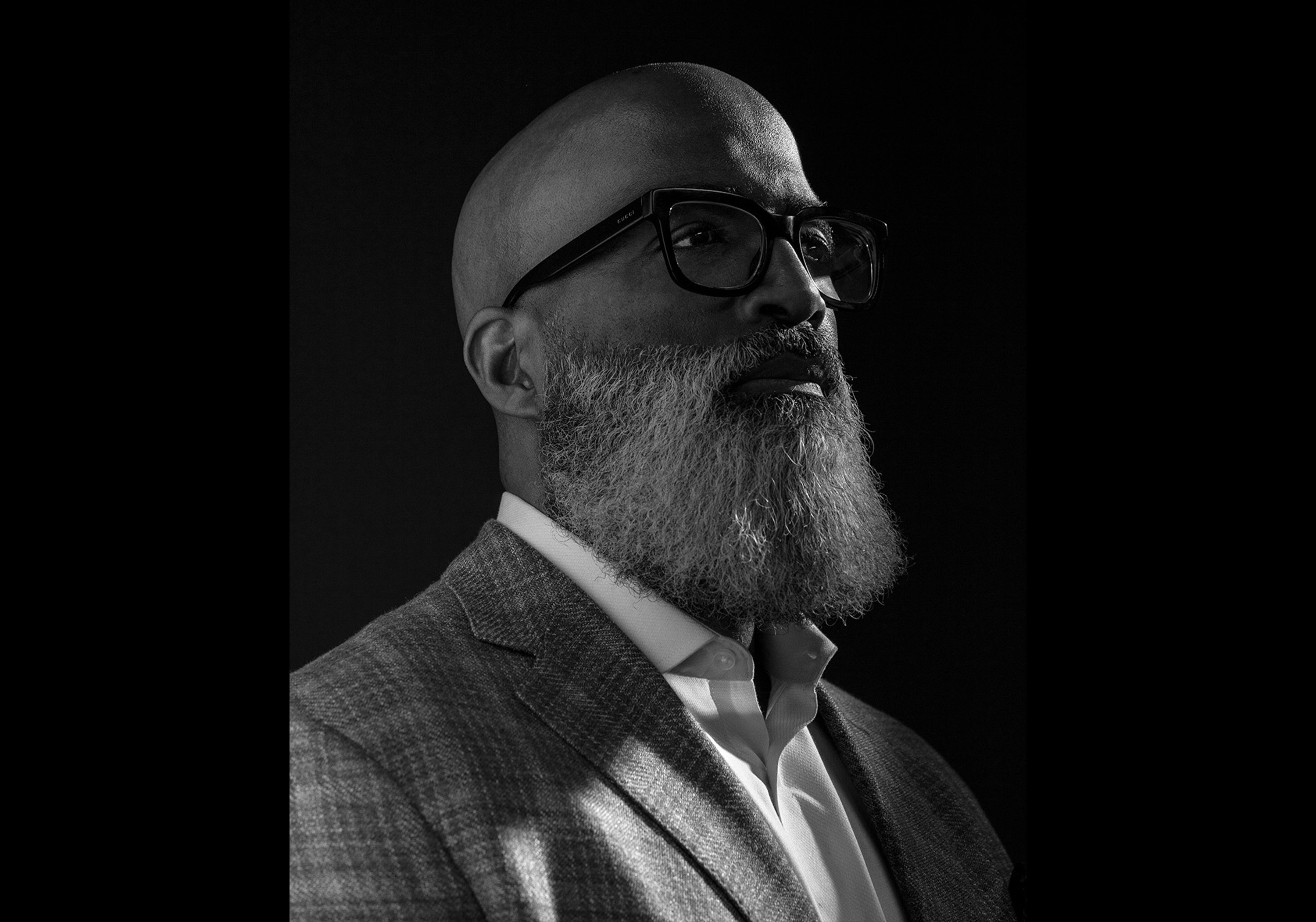
Black and white portrait of Jason Wilson

Photography by CJ Benninger for Christianity Today

I stood at the perimeter of a room carpeted with tatami mats, watching a troop of young boys recite scriptures and creeds and reflect on their emotions. They were preparing to engage in battle—specifically, Brazilian jiujitsu. “I will not be mastered by my emotions,” they said in unison. “Instead, I will rule over them.” 

This is The Yunion, Jason Wilson’s nonprofit that offers leadership training and support for youth in the Oakman Boulevard Community of Detroit. Symbolically, the modest three-story brick building sits between a flourishing Catholic church and blocks of blighted houses, acting as a sinew for the two worlds.

The core ministry of The Yunion is the Cave of Adullam Transformational Training Academy (CATTA). The cave is a rite-of-passage program that uses emotional training and martial arts to develop African American young men. In this densely populated and ignored neighborhood in Detroit, the Cave of Adullam has a waiting list of over 800 youth. 

Wilson isn’t seeking to be a master of machismo. Despite more than 1.5 million followers on Instagram and other platforms, numerous celebrity endorsements, and multiple popular books on masculinity—Cry Like a Man, Battle Cry, and most recently The Man the Moment Demands—Wilson does not give trite or tweetable definitions of what it means to be a man. Instead, he and his training academy live in the liminal space between traditional manhood and the modern awakening of mental and emotional health.

Shaquille Hall

Jason Wilson says goodbye to CATTA students at the end of a class.

I met Wilson 15 years ago when we were both in the Christian hip-hop scene and he was a music producer and DJ. Wilson and his wife, Nicole, started The Yunion in 2003 as a record label, giving youth and artists in their city of Detroit a healthy alternative to destructive hip-hop narratives. Instead of being restricted by toxic expectations in hip-hop culture, he decided to be the man the moment demanded—their first compilation album, Genocide, audaciously platformed nearly as many female rappers as male rappers. 

He’s coached celebrities who find themselves feeling empty despite their fame and fortune, and he’s collaborated with people like entertainment personality Charlamagne tha God, speaker Mel Robbins, and sports commentator Stephen A. Smith. He was featured in Laurence Fishburne’s ESPN documentary on the Cave of Adullam and received a President’s Volunteer Service Award from President Barack Obama. But above fame and accolades, Wilson adopts Jesus’ “come and see” model of discipleship that is cognitive and corporeal. 

Wilson soon realized that he had to compete not only for teens’ ears but also for their hearts. A year after releasing Genocide, The Yunion pivoted from a record label to a nonprofit. Twenty years later, Wilson has captivated the ears and hearts of young men through a hands-on, holistic approach.

American manhood gives men license to “hunt, fight, and procreate,” as Wilson puts it, but he wants to put smiles and tears on the faces of warriors who have only known how to be intimidating. In a world where angry and frustrated dilettantes pontificate theory into podcast mics, Wilson trains young men to become emotionally healthy and to channel their emotions into physical discipline. Wilson invites these boys into his life. They know his wife, they’ve sparred with his son, they eat at his house. They witness his confidence around kings and his veneration of the lowly (Ps. 138:6). 

Research on teen dating relationships that studied their interpersonal and stress management skills observed that “the lower the score for these dimensions of Emotional Intelligence, the more violence is exercised.” In some circles, anger is the only socially acceptable emotion for men to express without their masculinity being questioned. When men are unable to express all of themselves, they may often default to violence, whereas Scripture shows that we have the power to be both angry (Eph. 4:26) and gentle (Prov. 15:1). 

While many “hypermasculine” influencers demonstrate manhood as monolithic and often toxic—using masculinity as a distraction for their anger, loneliness, and depression—Wilson is training young boys to be the men our moment demands. He is using his platform to address the question “What does it mean to be a man?” head-on. 

There is no shortage of internet pundits prepared to give an apologetic for what maketh a man. One of the largest groups, a decentralized online movement of men known as The Red Pill community, has evangelized millions through podcasts, conferences, and social media, an ecosystem dubbed the “manosphere.” Their ideological framework positions itself as the salvation from the perceived societal domination of feminism, traditional relationship structures, and fluid gender dynamics. 

The Red Pill movement consists of incels (involuntary celibates), men’s rights activists, passport bros (Western men who travel abroad to find partners), pickup artists, and more. Some writers have explained the rise of the manosphere as a result of men feeling their “diminishing social status,” as researcher Lisa Sugiura put it. The sentiment is shared by Red Pill enthusiasts like Andrew Tate, Logan Paul, the late Kevin Samuels, and others. 

If there were an ideal mascot for The Red Pill movement and misogynistic masculinity, Jason Wilson would meet the physical criteria. With 27 years of martial arts experience, his bald head, well-manicured white beard, and muscular build raise speculation of a former life as an NFL linebacker or an aged John Henry. 

There was a time in Wilson’s life when influencers like Tate or Samuels would have set the tone for his understanding of masculinity. However, after losing two brothers to gang violence, being shot at while in his car, and facing numerous near-death encounters solely to assuage his need to “be a man,” Wilson found his toxic lifestyle left a lot to be desired. 

Wilson’s reclamation of masculinity and emotional health didn’t come in the aftermath of a gang shootout, though he’s experienced that. It didn’t come in the form of a three-point sermon once he surrendered his life to the Most High, though he did that. It arrived later in his adult life.

“My mother developed dementia, and she needed more,” Wilson told me in an interview. “I couldn’t help her just providing the money she needed.” He calmed his mother when “she was getting anxious or agitated because she couldn’t remember.” He painted her nails and massaged her scalp. There aren’t many YouTube videos in the manosphere exhorting this type of masculinity.

In a culture that doesn’t believe men’s emotions matter—a Pew Research Center study showed more than half of Americans say we don’t value men who are “caring, open about their emotions, soft-spoken, or affectionate”—Wilson is creating a space for boys to deeply explore themselves through physical exertion, discipline, and protection. He is teaching them adaptability, interpersonal skills, intrapersonal skills, stress management, and more. But most importantly, he is cultivating in them a heart for the Lord. 

First Samuel 22 describes how David took refuge in the cave of Adullam as he was fleeing Saul’s wrath. David was soon joined by 400 men, and “every man who was desperate, in debt, or discontented rallied around him” (v. 2, CSB). Just as the men in 1 Samuel felt comprehensively depleted and needed resolution, men in Detroit are bringing themselves and their boys to the Cave of Adullam to find direction and healing. CATTA is a place of refuge but not a place of permanence. It is a place to be sanctified and sent out from. Once students pass their initiation test, they leave the cave to pursue new endeavors. 

On the wall of the dojo where youth learn self-defense are painted the cave’s commitments, such as the one about ruling one’s emotions, a reference to 1 Corinthians 6:12. The teachers call themselves shärath—“servant” in Hebrew. 

“Fathers find healing watching their sons go through what they’re going through [at CATTA]. So many men didn’t have this,” shärath Chris Norris told me. “The traumas they haven’t fully healed from, didn’t know or remember was there, it comes up.” 

To become healthy men, the boys learn how to grapple with their opponents and how to wrestle with trauma. Studies have shown the importance of communities fostering “resilience through social transformation rather than placing the onus of rising above significant adversity on Black boys and young men experiencing trauma and hardship.”

Wilson tears down the divisive wall of masculinity in order to free men from what he calls “emotional incarceration.” Just as adult men need community, young boys should not be abandoned to fend off systemic injustice, community violence, and the generational trauma passed down from parents who never learned to explore or express their emotions. Fathers who have young boys should never concede to their trauma as if it’s too late for them. There is no moratorium on growth and healing. 

Boys from various neighborhoods enter the cave like it’s the capstone of their day. Some walk in with their fathers behind them. A few meander along, towing the weight of anxiety and off-brand clothing. There is an obvious absence of women. Despite the diversity of their family dynamics and socioeconomic statuses, the boys and men have exchanged their façades of toughness for gi uniforms that prepare them for Brazilian jiujitsu training—and for training in emotional regulation, restraint, and even how to properly shake hands or use dining etiquette. The Yunion’s website boasts that 78 percent of “CATTA students have improved their GPA by one letter grade without academic tutoring!”

One father, Vaquero Tyus, praised the cave for being a community that fosters resilience in his son. “My son lost his mother this time last year, and [CATTA] has been physically and mentally enriching for my son,” he said. “He’s growing, he’s more confident, he’s more disciplined, he’s praying more. It’s a blessing for me to have Jason as a part of my son’s life.”

Wilson’s emotional stability training is as paramount as the jiujitsu techniques he teaches his students. 

“It is encouraging these days to see more men learning how to speak about emotions, but sadly, most of those same men do not know how to feel them!” he said.

Wilson also addresses bullying, mental health, and depression—top concerns for his parents. One hundred percent of parents who reported that their kids were victims of bullying shared that after graduating from CATTA, they were no longer bullied.

Wilson is teaching boys how discipline, through martial arts and contemplation, can help keep their emotions stable in moments of stress. The subversive wisdom of attaching practices seen as sensitive and weak to acts of strength is unique and efficacious. These boys leave the cave prepared to defend themselves from bullies—and more importantly, to defend themselves from destructive emotions that desire to master them.

While churches and individuals can silo themselves in either-or categories—as intellectual rather than emotional, as practical rather than thoughtful—Wilson sees Christian manhood holistically. Wilson himself is a “comprehensive man,” as he writes in The Man the Moment Demands, who is open to evolving and who “embodies both courage and compassion, strength and sensitivity—a man guided by the good in his heart, rather than fear of how he could be perceived.” 

Wilson understands the principle of embodying multiple roles—maneuvering between them while also knowing which are primary. He details ten identities that make a comprehensive man: fighter, provider, leader, lover, nurturer, gentleman, friend, husband, father, and son. Instead of balancing each equally, Wilson teaches his students to tip the scales toward “what matters most.” Some things deserve more attention than others, like God and family. 

When asked about the greatest commandment, Jesus answered that his followers are to “love the Lord your God with all your heart and with all your soul and with all your mind and with all your strength” (Mark 12:30). This holistic, comprehensive love is embodied most fully in Christ: Jesus can be viewed as the paragon of a comprehensive man. He mastered the full integration of heart, mind, soul, and strength. Jesus was a panacea the moment demanded—every moment. Jesus was focused but welcomed distractions. He studied, taught, retreated, and practiced presence. He was spontaneous and long-suffering. He was a lamb and a lion, demonstrating sensitivity and strength. 

While the church can fall into the dangers of monolithic manhood where, for instance, highly theological pastors focus on the mind and more missional pastors pull on the heart, our churches must also embody the diversity of comprehensive selfhood. Churches compelled to do good often lean toward strength, while churches with a growing desire for interpersonal work and contemplative practices tend to move people toward the soul.

Wilson has witnessed the benefit of avoiding the world’s illusion of balance to tip the scale toward Jesus’ teaching. “I saw what the hypermasculine or monofaceted manhood looks like,” he told me. “And no one was at peace. No one was happy. My desire is to be home resting with Abba, so anything that could get in the way of that just ain’t worth it. So that’s what keeps me grounded.”

Shaquille Hall
Jason Wilson has an encouraging conversation with one of CATTA’s elementary students about overcoming his emotions while an assistant instructor looks on.

As I quietly observed the class from a corner, I couldn’t help but notice a younger student struggling to accomplish many tasks. With each failure, his belligerence mounted. His behavior soon became a disruption for the whole academy. 

Once the nagiyds (CATTA’s title for understudy and leader) had little success in regulating the situation, Wilson approached the student and knelt on the mat to meet him at eye level. Using both hands, he held the young student’s head with gentleness and intention. The boy’s attempts to escape him were futile. After 15 minutes of eye-rolling, adolescent grunts, and loud whispers, he sent the student back to his practice.

“That young boy just told me that a demon told him that he wasn’t special,” he explained to me. “This is the stuff we deal with.” 

What appeared to be a physical tussle or an emotional outburst was a spiritual intercession. 

“I prayed for him,” Wilson said. “And I told him, ‘That’s a lie!’ ”

After their interaction, the student improved his performance, with clearer focus and a calmer demeanor.

This scene encapsulates Wilson’s approach. He recognizes that our struggle is not against flesh and blood (Eph. 6:12). He has the courage to address the lies people believe while compassionately praying for restoration. 

That may be the root of what most men need, not just boys. 

Jason wilson and a group of young men standing in a body of water after a baptismShaquille Hall
Jason Wilson (far right) and Chris Norris (second from left) lead two fathers to baptize their sons in the Detroit River at Belle Isle.

Sho Baraka is editorial director of the Big Tent Initiative at CT.

Books
Review

Always on the Go but Never Away from Home

A classic novel captures the tension between the church’s devotion to particular places and its mission to the ends of the earth.

Pieces of paper showing a painting with horses, indigenous people; priest
Illustration by E S Kibele Yarman

Churches are governed by a paradoxical brand of Newtonian physics: One law of ecclesial motion commits them to stay at rest. Another commands perpetual movement.

Ministry leaders often speak of churches being planted. That metaphor suggests an ideal of rootedness and stability, of devotion to particular people in particular places. Unless persecution drives them underground, churches tend to be visible and fixed. They don’t pitch tents in Toledo one Sunday then drag them off to Wichita the next.

This duty to stand still is more than pragmatic. God’s Word calls the church to be anchored to the gospel, lest his people end up “blown here and there by every wind of teaching” (Eph. 4:14). In Christ, the church’s cornerstone, believers are meant to enjoy a safe, nourishing, familial life together.

Yet for all these signals of permanence—of home—the body of Christ is constantly on the go. Churches reach out to their neighbors and communities with evangelistic witness and compassionate aid. They add new members, build new structures, and launch new campuses. They send missionaries to make disciples across the globe.

This interplay of rootedness and motion dates to Christianity’s earliest days. Paul and his apostolic partners undertook long, wearying journeys to sow and sustain churches. Members of those churches eventually undertook their own journeys, forging the pattern that prevails to this day. In obedience to Christ, we leave home to reproduce it elsewhere. 

Faithfully navigating this tension is challenging in any environment. But its difficulty is stark amid the geographic vastness, hardscrabble living, and cultural friction that frame Willa Cather’s 1927 novel, Death Comes for the Archbishop. With luminous prose and tenderhearted character sketches, the book captures the perennial push and pull between the “church somewhere” and the “church everywhere.”

Cather’s story follows the lives and labors of two 19th-century French Catholic priests, Jean Marie Latour and Father Joseph Vaillant. The pair meet in seminary, forming an odd-couple friendship. Latour, strapping and handsome, hails from a distinguished family. Vaillant, sickly and unprepossessing, has a modest upbringing. Latour, eventually made the titular archbishop, excels intellectually; Vaillant, in personal piety. Over time, a shared calling to missionary service forms a tight bond.

An early posting deposits them on Lake Erie’s Ohio shores, where they first acclimate to frontier frugality. Then, Latour receives a daunting assignment: His superiors in Rome have appointed him bishop over a new diocese in the American Southwest, encompassing lands Mexico ceded upon its 1848 military defeat. 

Here the novel’s action begins in earnest, with episodic chapters punctuated by illuminating flashbacks. Latour and Vaillant, his chosen companion, survive a perilous trek to New Mexico. But they run into trouble right away, because local leaders don’t know who they are or why they’ve come. 

This confusion is understandable. Spanish missionaries evangelized this sprawling territory centuries prior, but syncretism and superstition have crept in since. Many far-flung communities have retained only a rudimentary faith. In certain remote outposts, no one can recall seeing a living priest.

Latour and Vaillant work tirelessly to restore order—but ironically, their pursuit of stability necessitates habits of itinerancy. Hardly a page passes without the bishop and his trusty deputy mounting their mules to traverse rugged mountains and craggy trails, fortified by meager rations. They visit communities longing to have Mass celebrated, confessions heard, marriages blessed, and children baptized. They encourage the good priests, censure (and eventually evict) the bad ones, and bring new recruits up to speed. They cultivate good relations with tradesmen, government officials, and Native American emissaries.

In all this, they help the church gain a firmer foothold. For many of the novel’s characters, this proves providential. One woman, rescued from an abusive, murderous husband, finds shelter and purpose among nuns serving in Santa Fe. Another, enslaved to a viciously anti-Catholic family, seizes a rare chance to steal away. Latour welcomes her as she kneels in the church’s sacristy and prays in tearful relief. 

As such episodes attest, an institutionally robust church can offer a haven in a heartless world. Yet Latour and Vaillant also encounter a fair share of corrupt or tyrannical priests, men who exploit serflike parishioners barely scraping by. Content in their ecclesial fiefdoms, these priests think little of the church’s mission.

Latour and Vaillant are resolutely missional, gladly suffering constant privation and occasional brushes with death as they rack up mule miles. Their sincerity and sacrifice are easy to admire.

But neither is immune to the lure of homier pursuits. Without the intense demands of travel and visitation, Latour might content himself tending his orchard or drawing up blueprints for his beloved cathedral project. Vaillant might withdraw into contemplative seclusion or busy himself cooking sumptuous meals. Give or take some Protestant harrumphs, these are good things! But they tend to dampen missionary ardor.

The church’s home-and-away dynamic stretches Latour and Vaillant nearly to the breaking point. How do they avoid getting snapped in half? In large part, their success comes because each priest is strong in areas where the other is weak. They check each other’s worst impulses.

Of the two, Vaillant has the higher drive for soul winning. Where Latour is reserved, Vaillant has a knack for friendship. Midway through the book, he gallops off to Arizona with ambitious plans to reach the unreached. Latour often restrains his flights of fancy, reminding his zealous lieutenant of the mundane burdens of overseeing a diocese.

For his part, Vaillant repays these gentle admonitions with the gift of himself. Plopped into a strange and forbidding landscape, Latour suffers bouts of loneliness and melancholy. The evening the beleaguered woman appears at the church door, his own soul is enduring an especially dark night. Eventually, the bishop summons Vaillant back from Arizona, craving his warm Christian fellowship, which the latter is grateful to supply.

The church’s missional character doesn’t lend itself to fine-tuned formulas for staying and going. Some should saddle up and ride. Others should stay home in case someone knocks. But everyone needs a friend—in Jesus, and in the unlikely companions he calls to our aid.

Matt Reynolds is senior books editor at Christianity Today.

Ideas

Living Water for the Faithless

Staff Editor

While the church may be riddled with failure, Jesus will not fail her.

Pencil drawing of a fountain of living water on a pink background.
Illustration by Benjamin Schipper

“Come, see a man who told me everything I ever did” (John 4:29). These were the Samaritan woman’s words that she couldn’t help but share with her town when Jesus offered her living water instead of the string of men she’d been with. Jesus, holding together the starkness of her personal history and the offer of grace, didn’t sugarcoat her sin. Instead, he offered a way through it—as the promised Messiah, the Savior of the world, who left his disciples’ mouths agape.

The sort of community Jesus built among his first followers pulled from every corner of the ideological spectrum, from nations that were enemies and from sinners and the self-righteous alike. So when he prayed for his followers—who would make up the Christian church—he prayed repeatedly for them to abide in him. He prayed for unity, that the many members of his body would be one as he and the Father are one (John 17:21–22). 

He still prays for us today (Rom. 8:34). And we need it.

As I talked about the cover for this issue with editor in chief Russell Moore, he mentioned the impact of seeing Peter’s denial (Luke 22:54–62): 

We believe that this scene conveys much more than human tragedy and pathos. Jesus, after all, foretold not only what Peter would do in denying him but also what Jesus himself would do through Peter: “And I tell you that you are Peter, and on this rock I will build my church, and the gates of Hades will not overcome it” (Matt. 16:18). If all we saw in the Gospels was a heroic, stalwart apostle Peter, then we would lose heart. We might even doubt that the church could withstand a time of secularization, dechurching, repetitive scandal, and global threats.

The church is our mother. She is also the bride, beautifully adorned and awaiting Christ, the bridegroom. And like all mothers and brides (along with other biblical metaphors for the church, like warriors, temples, and households—see page 72), the church is not perfect this side of Genesis 3. Nevertheless, the church is the place where we learn, through apprenticeship, of the width and depth of God’s mercy and grace—just as Peter learned of it beside two fires (Luke 22:55; John 21:9).  

The church is vital to our spiritual health. In a 2015 CT article titled “The Church Is Your Mom,” Tish Harrison Warren wrote, “For most of Christian history, a relationship with God was inseparable from a relationship with the church.” The church is not an optional “extra.” While staying clear-eyed to ensnaring sin, we must persist in celebrating the church as the central community of redemption and reconciliation that Jesus is building. Jesus doesn’t forsake his church; neither can we.

Russell Moore also said this issue’s cover reminds us that “the glory and beauty and strength of the future isn’t found in the face of Peter or in those of the onlookers. It’s found in the background, on the back cover, in a bird in flight.” The rooster represents all the ways we fumble and fail, but “if all we could hear was the rooster’s crow, we would hear the death knell of the church.” Redemption is at hand. Moore continues,

But look closer. On the pillar behind this scene is the shadow of another bird—a dove—the sign of the promised Holy Spirit, who would fall on a church filled not with geniuses and strategists but with fishermen and peasant women. The dove—like the one Noah sent out from the ark—returns with signs of life. In its beak is a branch from the Tree of Life in the new creation, beyond all we can see or imagine. That’s why we remain confident that the church we love will triumph. The rooster struts, but the dove flies. The rooster crows, but the dove carries a word like tongues of fire.

In this issue, you’ll see evidence of those tongues of fire, even in dark and challenging places. 

You’ll read of Japan’s unique challenges for pastors, who minister in hard soil (p. 32). In London, podcaster Justin Brierley creatively approaches apologetics (p. 56), while in Detroit, Jason Wilson redefines manhood (p. 80). Andy Olsen invites us to think about how sin crouches at our door like an invasive species (p. 62), while theologian Andrew Torrance reminds us that our redemption is knit into God’s story from creation (p. 46). 

We recognize that individuals, institutions, systems, and churches are—along with all of creation—both beautiful and broken, in need of Christ’s living water like the Samaritan woman. Yet in God’s economy, there is no person, no thing, no institution, no church that is beyond the pale of redemption. 

So we pray, looking forward to that redemption, “Come, Lord Jesus.” And as we look around us now, we say, “Come and see.”

Ashley Hales is editorial director for print at Christianity Today.

Church Life

Church Hurts for Pastors, Too

Guest Columnist

Church hurt travels in both directions—from the pews to the pulpit and in reverse.

A pastor stands at the center of a gathered crowd.
Illustration by Keith Negley

When a first-time guest comes to my church after belonging to a different congregation in the area, I brace myself. We used to call them “church shoppers,” those looking for a different youth program or sermon style, but now they are more often the walking wounded. They are not so much shopping as fleeing, cagey and cautious, wondering if they can risk pain to get involved in another church. They proceed to tell me a story—often one of abuse of pastoral power.

When congregants tell me their experiences of what many label “church hurt,” I believe them. Some pastors do wield power inappropriately. Yet when pastors tell me their own stories of church hurt, I also believe them. I can’t think of a time when I’ve sat with a pastor who didn’t have several stories: congregants who turned into bullies, volunteers who caused damage because they didn’t get their way, or an elder who went rogue. Members of the flock, too, can cause damage to good-hearted and hard-working pastors.

While I’ve heard congregants say, “The church hurt me,” I’ve never heard a congregant confess, “I hurt the church.” Similarly, I’ve heard many pastors say, “These congregants bullied me,” but I’ve yet to hear one say, “My use of power caused unnecessary pain and hurt.” Church hurt travels in both directions—from the pews to the pulpit and in reverse. Given these complexities, what are we to do?

We must start by understanding the power dynamic. Almost all congregants and pastors sense a power mismatch, and both sides feel at a disadvantage. Congregants see pastors as very powerful, while pastors see themselves as very human—and they see some congregants as powerful, especially when they form a mob.

It might surprise congregants to learn most pastors feel more vulnerable than powerful. When I was a young pastor, a particularly harsh critic would exaggerate his case in meetings. I thought he was being dishonest. Maybe he was, but over time I realized that because he felt a power imbalance he would overstate his case to match his perception of my power. This also can help explain the tendency for gossip. Some people gossip because they are emotionally immature, but others do it to power up. Feeling weak, they form a team to offset their perceived power imbalance. Too often, that team quickly becomes a mob.

In my early meetings with congregants, I learned that my words carried more weight than I thought they did because I was the primary leader and Bible teacher. I often don’t consider how opening the Bible each week affects a church’s power dynamics. Pastors come with a natural intimidation factor that we can be blind to. When a pastor manages the staff, the budget, and the pulpit, that is a lot of power—felt or not.

And church power is unlike any other organizational power because of the way we baptize it. Some pastors truly believe they are God’s only authority for the church. They’re rare—and dangerous. Yet there’s also the challenges of two warring ministries, both convinced they were doing God’s will while gossiping and wreaking havoc in one another’s lives. Sometimes our earnestness for the mission can cause us to violate the fruit
of the Spirit.

While some church hurt is a result of evil behavior and systemic cover-up, most of it is a result of unmanaged triggers and assumptions rather than of ill intent. When our assumptions about God, ourselves, and others don’t match those around us, we get triggered and reactive. Our next move is often where the damage occurs, and it is difficult to notice these things in ourselves. But we can all learn to notice and manage our triggers to increase the chance of deeply connecting with others.

One of the great tragedies of church hurt is how closely it is tied to faith deconstruction. I ran into my own intense deconstruction in the late 1990s after a stint as a trauma chaplain. I needed time to detangle my assumptions about healing and God’s intervention with what Scripture actually taught. In the same way, people recovering from church hurt need time to detangle their experiences with church people and leaders from their faith in Jesus.

I find some deconstruction to be necessary for faith to survive. But too often, people deconstruct their entire belief in God because of their experience in church. The Western church is already hyperindividualistic, and too many deconstruct into a personalized, customized faith that doesn’t require the difficult work of loving and serving the body of Christ. As counterintuitive and vulnerable as it might be, the best place to work out deconstruction is in the local church, discussing it with others, bringing hurts into the light for recovery and perspective.

Again, for some, the hurt is genuine trauma and should be treated as such. While some have endured horrific spiritual abuse, most of us weren’t abused; we were burned. Fire can consume, but it can also forge. My hope is that we are forged by the fire of church hurt, not consumed by it, and that our church hurt would grow our empathy rather than our bitterness.

To start, we can carefully listen to how we talk about our experience to see if we are more burned or forged. A healthy posture to emulate is that of my friend Steve Carter. Steve served on staff at Willow Creek Community Church when its former senior pastor, Bill Hybels, left a wake of destruction in the aftermath of spiritual and sexual abuse and cover-up. Although Steve was hurting, he said, “The church didn’t hurt me; five people hurt me.”

I find that stunning. I am prone to exaggerate and generalize my pain, but his simple comment has helped me test my own language around my church-hurt experiences, both as a congregant and as a pastor. Our best hope to rightsize the power dynamic is to rightsize ourselves: We are human-sized, limited in actual power—but worshipers of the One True Power.

Steve Cuss is the host of CT’s podcast also called Being Human.

Theology

Easter Is God’s Story, Not Ours

Our salvation is just an appendix in Christ’s redemption of all creation.

An illustration featuring Jesus in the center of a field of bubbles, each depicting a different story from the Bible.
Illustration by Maggie Chiang

One of the most quoted Bible verses of all time is John 3:16: “For God so loved the world that he gave his one and only Son, that whoever believes in him shall not perish but have eternal life.”

Yet its interpretation is often shaped more by the lens of our own lives than by its theological context. When read according to modern proclivities, it can lead the hearer to believe that God’s primary motive in creating the world and sending Jesus was out of his love for humanity—and, by extension, that God’s story is ultimately about us and our salvation.

This subtly casts us as the central subjects in the story of redemption, making us the authors and arbiters of meaning and relegating God to a character in our stories—a figure we can define to fit our narratives and employ for our own ends.

In the church, this can look like consumer-oriented services, self-centered worship songs, numbers-driven missions, a transactional view of salvation, and an overemphasis on individual spiritual growth.

But the gospel is not primarily about our redemption. It’s not centered on us and what we can gain from God, but it’s ultimately on God in Jesus Christ. By shifting the focus away from ourselves, we discover a far greater story—one where God’s love, glory, and eternal purposes take center stage, inviting us to find our true meaning and joy in Christ.

Every created thing exists because of God, through God, and for God (Rom. 11:36). The New Testament makes these points specific to Christ. All creation exists in, through, and for Christ (Col. 1:16), “the Alpha and the Omega, the First and the Last, the Beginning and the End” (Rev. 22:13). In the end, Christ will reign over the entirety of creation “so that God may be all in all” (1 Cor. 15:25–28). In the words of theologian David Fergusson, “The world was made so that Christ might be born.”

So while it may feel central to our stories, any personal experience of salvation is merely an appendix to the central plot. 

God’s all-encompassing purposes of reconciliation go well beyond individual salvation to the restoration of creation under Christ’s lordship. Far from diluting the gospel’s imperatives or sidelining its call to repentance and discipleship, this reading of God’s cosmic story deepens our understanding of our place in God’s creation. It invites us to live out our faith in light of the reality that there is nothing truer, nothing greater, than following Christ.

To show what a difference this makes, we’ll consider two ways of telling the gospel story: one centered on us and one centered on God. As we’ll see, the meaning of Easter shifts profoundly depending on which story we adopt.

When centered on us, the story begins with viewing creation primarily as a home for humanity. In the beginning, all creation was declared by God to be “very good” (Gen. 1:31). We might call this God’s “Plan A.” In this view, the Garden of Eden represents a paradisal environment in which we are designed to live in harmony with God, provided we make the right choices. However, we chose disobedience, disrupting this harmony and forcing God to change plans.

When centered on God, the story begins with God’s decision to bring the world into existence—not as an end in itself, but to find its end in God. Creation is not primarily about us but about the reflection (or imaging) of God’s glory, goodness, and overflowing love.

Humanity is then created in God’s image—not to find inherent value and dignity but to reflect God in the world. This calling anticipates the coming of the Son, “the image of the invisible God, the firstborn over all creation” (Col. 1:15). In this way, God blesses humanity and declares it good.

Yet God also warns that if humans seek to become like God on their own terms, by eating from the Tree of the Knowledge of Good and Evil, they will be separated from God and their lives marred by death. When Adam and Eve disobey, this is what takes place.

So begins the reconciliation story—in which God awakens his creatures from their deluded fictions to restore their harmony with God’s story.

When centered on us, Israel’s history is about God making a deal with a particular people—one that hinges on their participation and response. My grandfather, the theologian James Torrance, called this kind of conditional response a “contract” rather than a true “covenant.”

In this view, we read the text as though there is a contractual agreement between God and Abraham: “If you will be my people, then I will be your God”; “If you keep the law, then I will be faithful to you.” This frames God’s relationship with Israel as legally and morally conditioned on the people’s faithfulness. And when Israel fails to uphold its side of the bargain, the relationship deteriorates, resulting in exile and separation from God.

When centered on God, God’s relationship with Israel through Abraham (Gen. 17:7) is a divine covenant because it is rooted in God’s unconditional promise: “I will be your God, and you will be my people” (Lev. 26:12, NLT). Then, 430 years later (Gal. 3:17), God clarifies the expectations of this chosen people—in sum, “I am the Lord your God,” therefore “keep my commands” (Ex. 20:2–17; Lev. 22:31). Israel’s religious identity is not self-chosen but given to them as characters in God’s narrative.

Even in times of defiance, Israel’s identity remains intact. Their rebellion can only ever reflect a resistance to their true nature, a pretense of being other than who they truly are.

This is because, as biblical scholar Jon Levenson writes, while “Israel’s capacity to sin may have proved more powerful than their love for God . . . God’s love for them proves more powerful than sin.” The apostle Paul explains to the Roman church that “as far as election is concerned, they are loved on account of the patriarchs, for God’s gifts and his call are irrevocable” (Rom. 11:28–29).

Yet Israel’s defiance reflects a broader human tendency: the impulse to “play God” by defining ourselves according to our own fictions, set in opposition to God’s story of creation.

When centered on us, Jesus is viewed as “Plan B,” a response to humanity’s failure to uphold its side of the relationship with God. In this framework, God the Father makes an agreement with the Son to fulfill the law on behalf of sinful humanity. By becoming incarnate, suffering, and dying on the cross, the Son takes on our punishment, satisfying God’s justice and enabling forgiveness. This act bridges the separation caused by sin, opening the way for a renewed relationship between God and humanity.

In this narrative, Jesus is not the ultimate purpose of creation but a means to humanity’s ultimate end: eternal life in a perfected state. Achieving this, however, requires we accept redemption through faith. Creation’s story, therefore, depends not solely on God’s actions but also on human choices. To attain everlasting life, God requires repentance and commitment to faith in Christ, placing the story’s culmination partly in human hands.

This perspective ultimately frames creation’s story as a divine negotiation with human autonomy. God creates a world with the capacity to find value in and of itself—independent of God’s purposes. God then sustains this world, guiding humanity in its search for purpose while carefully respecting our self-determination. Made in God’s image, all humans possess a capacity for judgment, creativity, and self-direction that allows us to pursue our own independent ends. 

In this view, creation’s story remains unfinished until humanity embraces Christ through faith to achieve eternal life and ultimate fulfillment. Here, the central question of Easter becomes “How do we integrate Christ into our personal journey of salvation?”

When centered on God, creation is not an end in itself but a part of God’s eternal purpose, culminating in Jesus Christ. Christ is not a “Plan B” in response to humanity’s failure; rather, he reveals the true end of creation. In the Incarnation, God’s living Word enters creation’s story as a human who both reveals the truth of God’s story and is subjected to the false narratives that humanity constructs.

On one hand, God does not leave creation’s story in human hands but brings it to its intended conclusion through the incarnate Son. By the Holy Spirit, we are united to Christ, who embodies true humanity and defines our true roles, identity, and belonging in God’s story. Christ is not merely a path to wisdom, righteousness, and redemption—he personifies these qualities and invites us to walk as he walked (1 Cor. 1:30; 1 John 2:6).

On the other hand, Christ steps into humanity’s sinful stories of death and disorder. He fully embraces the human condition, taking upon its fatal consequences as “the Judge judged in our place,” to borrow Karl Barth’s phrase. Through the Resurrection, our false narratives are exposed as fiction and swept away by God’s redemptive power.

The story of Easter is thus not about balancing or neutralizing sin but about the collapse of sin’s false narrative under the weight of God’s grace and truth. In Christ, creation is brought to the eternal conclusion God had always ordained for it.

Now that we know Easter’s song isn’t ultimately about us, we’re left with important questions: Where do we fit in? How then is God for us? The answer lies in the profound yet puzzling truth that God is for us because God is for God. When viewed through a Trinitarian lens, this begins to make sense. 

The reason for creation is rooted in the eternal love between the Father and the Son in the Holy Spirit. Creation naturally flows out of this love—beginning in the Father’s love for the Son and finding fulfillment in the Son’s reciprocal love for the Father, all through the Spirit. In this way, both the beginning and end of creation are rooted in the eternal life and love of the Trinity. This means, as Augustine observes, that while “every [human] is to be loved as a [human] for God’s sake,” “God is to be loved for His own sake.”

Creation only exists because God determined that God’s love should overflow into something new—something other than God. The world is not meant to merge back into God but to exist as a gift—which the Father gives to the Son and the Son returns to the Father, all in the Spirit. 

This divine exchange revolves around the Incarnation. The Father sends the Son to identify with creation so that, in and through him, creation can return to the Father. In this way, God is for us in Christ by enabling us to be for God in Christ. According to Augustine, it is “by [Christ that humans] come, to [Christ] they come, in [Christ] they rest.”

This is how creation finds its perfection—by being drawn together in Christ into the triune exchange of life and love.

When we grasp this truth, we see that creation is part of something far greater than it could ever be in and of itself. We cannot, then, find perfection solely within our intrinsic nature. If we reduce God’s purposes in the gospel to our personal salvation or renewal, we miss the larger story. Our ultimate purpose is not found in ourselves but in God, as we are invited to share in the eternal giving and receiving of love that defines the triune God. Only by participating in this divine communion do we discover our true identity and the perfect purpose for which we were created.

What does this mean for how we understand reconciliation today? Too often, Christians reduce the gospel’s meaning to the way we secure a place in heaven after death. But this misses the heart of its message. The Christian life is not merely preparation for a distant hope; it is an invitation to participate in Christ’s kingdom here and now. Through the revelation of Jesus, we are called to embrace the beauty and goodness of God’s new creation in the present day.

Still, many of us resist this call. We may reluctantly serve God out of obligation, hoping to earn a future reward. Yet in our hearts, we do not relish how Jesus’ commands—such as charging us to care for the sick, the hungry, and the strangers among us (Matt. 25:35–36)—will upend our comfortable lives. But this mindset reveals a troubling question: If we have no desire to live in God’s kingdom today, what makes us think we would desire it tomorrow? Without realizing it, we can become impostors, professing faith but defying its transformative power.

So where is our hope? It does not lie in imperfect actions or half-hearted beliefs but rests entirely in God. The Resurrection is not just a historical event but also the source of all true and lasting hope. God’s power brings us new life, far beyond what we can achieve for ourselves.

The gospel of Jesus invites us to awaken from our finite tales into the reality of God’s story—to breathe in the resurrection life that has already begun and extends into eternity. It thus poses to us a question: Do we want to wake up?

Andrew Torrance is a professor of theology at the University of St Andrews. His latest books include Accountability to God and the coauthored Beyond Immanence: The Theological Vision of Kierkegaard and Barth.

Theology

The Church Is Fragile—And Unshakable

Columnist

We can be grieved about the state of the church, but we can still love and fight for it.

A stained-glass butterfly breaks out of a stained glass window.
Illustration by James Walton

The burial plot of Jesus is a mess. More accurately, the Church of the Holy Sepulchre in Jerusalem—marking what is thought to be the tomb Jesus occupied for three days—is a mess.

“The warring Christian monks make responsible maintenance of the sacred structure impossible,” wrote author and former Catholic priest James Carroll. “As a result, the roof beams rot, the walls crumble, the leaking gutters channel rainwater into the sanctuary instead of away.”

Carroll notes that turning the holy site into a fancy building, originally by order of Emperor Constantine and modeled after the imperial palace, was part of degrading the site, not preserving it. And, in Carroll’s thought, the old structure’s decay is still inevitable even if it really is the spot where Jesus was raised from the dead.

“That the Incarnation of Jesus Christ means He made His home in this particular thicket of turpitude,” Carroll continues, “does not mean that eventually the ancient basilica will be spared from final collapse.”

He’s right, up to a point. Jesus’ promise to build his church upon a rock such that “the gates of hell shall not prevail against it” (Matt. 16:18, ESV throughout) is not a promise that any particular congregation—much less any particular structure—will itself survive. In fact, the point is reinforced by the passage itself, which has divided the church over whether the “rock” is referring to Peter’s ongoing apostolic office.

Part of what Jesus communicates in his Patmos revelations to John is that churches are more fragile than we think. A church can lose its lampstand. A church can die. A church can hear the knocking on the door but refuse to have ears to hear. We need to be aware of this, Jesus said, if we are to “strengthen what remains and is about to die” (Rev. 3:2). But that’s not all Jesus told us.

A good number of us—seeing all the decadence and decline, infighting and carnality in whatever the evangelical church might now be—are all too aware of the fragility of the institutions and movements we love. In the face of that, maybe we need to be reminded that the church is also stronger than we think. And that leads me back to Revelation.

Many Christians—especially evangelicals who grew up with bizarrely speculative prophecy charts and end times theories—tend to love the first and last few chapters of Revelation but find the chapters in between confusing and disorienting.

For instance, John in his vision is told, “Measure the temple of God and the altar and those who worship there, but do not measure the court outside the temple; leave that out, for it is given over to the nations, and they will trample the holy city for forty-two months” (11:1–2).

Foggy passages like this, or those referencing “a time, and times, and half a time” (12:14), can come across as coded words meant for somebody else, perhaps the long-dead Christians who lived during the reign of a hostile emperor or future Christians at the precipice of final judgment. But Revelation specifically says it was written for the reader—for each of us—regardless of where we might be in time and space (1:3).

Remember that Jesus told us the temple was his body. It would be torn down, and he would raise it up again in three days (John 2:19). The temple is also where the dwelling place of God is, and the New Testament identifies that as the church, the living stones that make up God’s house, built on the cornerstone that is Christ himself (Eph. 2:20; 1 Pet. 2:5).

Why, then, is John told not to measure the outer court pictured before him in the vision? That outer edge, Jesus tells John, will indeed be beleaguered and besieged. But it is only the perimeter. What can be seen as destroyed and wrecked does not affect the Holy of Holies within, the altar at which sins are forgiven, through which peace is found with God.

The disaster in the outer court is for three and a half years—the perfect number of seven divided in half. In other words, the tumult is real, but it’s not unexpected and it will not last forever. The outer walls we can see before us are not, in fact, conquered. God has given them over to the nations, but just for a little while.

The church will sometimes make us grieve, but not as those who are without hope. Forty-two months seems like an eternity, but it’s not.That’s why we can still love the church.

We can work to keep it from being overtaken by marketers or politicians or scoundrels—to allow such would be to join the trampling nations in the outer court. And we can do that work of love without despair because the altar remains. The temple abides. The church is worth loving and fighting for.

When J. R. R. Tolkien’s son Michael was on the verge of losing his faith due to the nonsense and villainy he had seen in the church, Tolkien wrote in a letter to his son that, for him too, “the Church which once felt like a refuge, now often feels like a trap.” But Tolkien wondered if “this desperate feeling, the last state of loyalty hanging on,” was itself a blessing.

This, Tolkien wrote, gives us the moment “to exercise the virtue of loyalty, which indeed only becomes a virtue when one is under pressure to desert it.” The father thus advised his son to go to church—with people who annoy you, with an organization that may exasperate you.

The Church of the Holy Sepulchre is not what we would hope—from the structural disrepair to the tacky souvenirs that can be bought outside its doors. In time, the building will collapse. Maybe one day, it will be forgotten altogether.

What difference does this make? It’s not wise to speculate about what our experience might look like after the resolution of all things under the lordship of Christ. But maybe, just maybe, in the kingdom to come, one of us might wish to visit the former tomb of our Lord. We might ask, “Where on this transfigured map is the Church of the Holy Sepulchre?”

And perhaps Jesus will say to us, “Why seek the living among the dead? I’m right here, and I’ve been here all along.”

Structures are fragile. The resurrected Christ—and his church—is not.

Russell Moore is editor in chief at CT.

Portrait of Sophia Loibl looking into the light with a dark background
Testimony

I Was Sold into Slavery. Jesus Set Me Free.

In the Thai Muslim community where I lived, enslavement was all I knew. Then God spoke into the darkness.

Photography by Lauren Decicca for Christianity Today

My earliest memory is of crying inside a locked supply room. My mother had sold me as a temporary child laborer, as she often did. When she returned to pick me up after a few days, she dropped me off at another shop, then another. I was only 3 years old.

When I was around 4, we traveled to a home in Bangkok, where a man was waiting for us. He gave my mother 2,000 Thai baht (about $58), and she laughed.

I wondered if I would stay there for a few days—but my mother never came back.

I became a slave laborer to the man, the imam of the neighborhood’s Muslim community. He had four wives, and he lived with his fourth wife and their ten children. The imam allowed me some homeschooling, but I mostly learned how to cook, clean, serve, and be a devout Muslim.

At night, I slept in a tiny room that could only be unlocked from the outside, like a cage. Sometimes, when I felt too tired, I would only pretend to pray and work. When the imam found out, he would hit me and lock me in my room for three days without food or water.

As I grew older, I felt my heart calcifying; I became cold and reserved, completing my tasks mechanically. It was too painful to dream of any alternative. I had not seen the outside of the home all this time.

When I was 18, I became pregnant by the imam. Every night after a hard day of work, I came back to my room, belly swelling, and looked out my small window, wondering, Why am I here?

I delivered my baby girl at home, and the imam took her away immediately. I didn’t see her again for years—I had no idea what her name was or where she had gone.

At 25, I was pregnant again. Life felt unbearable. That’s when I began hearing a gentle whisper in my ear: It’s okay. Just stay alive.

Abstract photo of clouds reflected in a puddlePhotography by Lauren Decicca for Christianity Today

I didn’t know who or what this voice was, but it comforted me; it was powerful yet gentle. As the time came to deliver my second baby, the voice kept reassuring me: It’s going to be okay. This baby was also a girl, and she was also taken away from me immediately.

One night not long after the birth, I awoke at three in the morning to the voice telling me to escape through the window. I was confused, but the voice said, It’s time.

As I was contemplating whether to jump—my room was on the second floor—the imam’s sister knocked on my door. She entered and brought in a young girl, around 6 or 7. I took one look at the child’s face, so much like my own, and knew she was my first daughter. They could only stay a moment, and after they left, I felt at peace, for I had bargained with the voice just before they had come in, saying, “If I jump, you have to promise I’ll get back everything I have lost.”

Finally seeing my daughter made me trust that voice a little more. So I jumped and escaped on my own.

A woman in the community took pity on me and sent me to seek refuge with her brother in another town. There, I hid behind my burqa as I worked at a store. Physically, I was free, but mentally, I felt trapped.

During this time, a US Army officer working at the American embassy began pursuing me romantically.

“Do you want to see America?” he asked one day.

This was the first time another person had ever invited me to do something of my own will. I felt he could help me get away from Bangkok, so I followed him to Chicago.

It was not the fresh start I had hoped for. During the next six and a half years, the man abused me. I tested positive for HIV, developed tuberculosis, and landed in the hospital, wrecked with despair. All the money I had earned while working in Chicago at a flower shop, at a grocery store, and as a cleaner went toward my medical bills.

Soon I had nothing left, and the officer sent me back to Bangkok. I never saw him again.

For three months, I languished alone in a hospital bed. My legs became paralyzed, and though I could hear what went on around me, I could not move or see, and I could not remember my name or who I was.

During this season of torment, I silently called upon every god I knew—yet nothing happened. An American friend visited and talked about Jesus with me, asking, “Why don’t you ask Jesus to be your savior?” Unable to say anything or acknowledge that I had heard, I cried out to Jesus in my heart: If you are with me, come save me.

But my condition only worsened. The doctors asked my relatives to prepare for a funeral. By then, my mother had passed away, so my brother and aunt came to pick me up, even though none of us had ever met.

Afraid that my illnesses were contagious, they placed me in a small house far from their homes in the village as they waited for me to die.


I went for six weeks without food or medicine, only water, which my aunt came in to give me from time to time. Yet strangely, I never felt like I was alone, because the voice that had spoken to me all those years ago spoke again: Live.

In that little house, I understood that it had been Jesus’ voice all along, and in his presence, I slowly came back to life. My wounds healed and my spirits lifted. Then one day, it seemed as if Jesus was telling me, Come out.

I stumbled out of the wooden house like Lazarus. My family, the villagers, and the doctors who had tried to heal me were all shocked. They wondered if I was a completely different person, maybe an identical twin.

A pastor in Bangkok had visited me while I was on my deathbed in the hospital. After my miraculous healing, he brought me to a ministry called The Well to help me recuperate. I told him I wanted to learn more about the voice that had brought me back to life, and that’s when I gave my life to Jesus.

The pastor helped me enroll at a Baptist seminary in Bangkok, where I received my biblical studies certificate. I wondered where this new life in Christ would take me.

It took me to the one place I didn’t want to go. Not long after I graduated, I felt God calling me to return to the the Muslim community I had escaped. Go back, God said. Learn to forgive and love them.

The community still had both my daughters, and they didn’t want to return them to me because I had become a Christian. But I slowly reestablished connections. I brought food and had meals with people. I accompanied elderly women to the hospital and shared how Jesus had befriended and saved me.

About eight years after I returned to the community, the imam who had enslaved me called on the phone. He said he was dying of cancer and wanted to see me.

I sat next to him as he lay bedridden, and he asked me to forgive him. And then he said, “Can you give me bread and coffee?”

I was stunned. He had locked me up for years. Why should I forgive and serve him? What was I even doing, sitting there next to him?

Then I remembered Jesus and his command to forgive and love my enemies. I took the bread and gave it to the imam—and the chains in my heart broke. I felt true freedom at last, from this man and all those terrible years.

Later, right before he died, the imam asked if I wanted to have my daughters back. He didn’t need to ask twice. Today, my two daughters, now 25 and 32, live with me.

When I jumped out of that window, I asked God to give me everything back. He kept his promise: He kept my daughters safe and returned them to me. When I was locked away, he was my friend and savior. When I was dying, he brought me back to life.

What’s more, he has transformed my suffering into an open door to minister to other people in dire situations living in Thailand, including prostitutes, abandoned children, and those who have been trafficked or are without homes.

I am living proof that God is working in the darkness. And all the ways he has loved me are glimpses of the everlasting life I now treasure in him.

Rakthai Sophia Loibl is the founder of the Bangkok-based ministry Walk with Love.

Isabel Ong is East Asia editor at Christianity Today.

Ideas

Keller’s Threefold Hope for Renewal

Tim Keller didn’t see national revival during his ministry. But he prayed that we would.

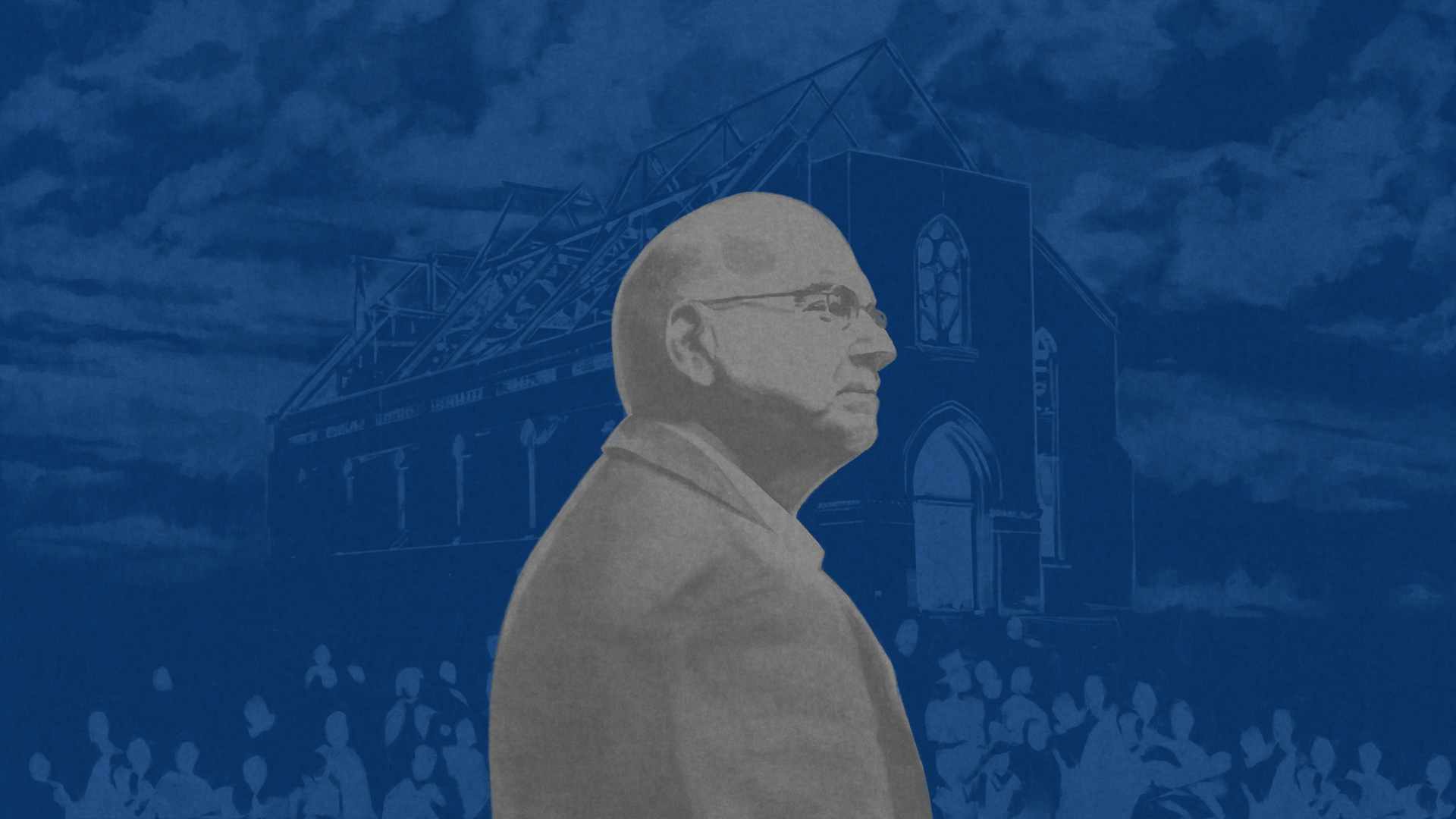
A black & white illustrated portrait of Tim Keller against blue backdrop featuring a church building being rebuilt by a crowd of people.
Illustration by Adam Parata

I first met Tim Keller nearly 20 years ago at the inaugural conference of The Gospel Coalition while covering the event for Christianity Today. I had recently written the 2006 CT cover story “Young, Restless, Reformed,” about the New Calvinist resurgence then popularized by figures like John Piper, Albert Mohler, and C. J. Mahaney. Keller became one of the most important leaders in that movement, especially by inspiring church plants in the world’s most influential cities.

But in 2007, Keller was not yet a household name. He hadn’t published his 2008 bestsellers The Prodigal God and The Reason for God. Even then, however, Keller had begun to help Christians navigate the social and academic pressures driving down church attendance, especially in urban areas and universities. Keller was early to recognize this secularizing trend. In the past 25 to 30 years, some 40 million Americans have left the church—the largest and fastest religious transformation in American history.

When Keller died in 2023, he was still working toward a unified Christian response to this shift occurring across nations and institutions, training urban church planters and devising evangelistic strategies. Together, he and I founded The Keller Center for Cultural Apologetics. In annual retreats and online cohorts, we continue to build on what so many learned from Keller, applying an unchanging gospel to an ever-changing culture.

Not everyone agreed with how Keller counseled Christians to engage with this “great dechurching,” though. And the roots of that division go back to the origins of the Young, Restless, and Reformed movement.

At CT 20 years ago, we weren’t just trying to be clever when we described this nascent movement as “restless.” Keller represented a more academic and urban wing of the movement, comfortable in the neo-evangelical institutions where he studied, taught, and published.

But in the 2000s, a more populist wing of this Reformed movement adapted the methods of shock jocks and standup comedians to bring disaffected young men into the church. Other populists criticized denominational leaders as corrupt, out of touch, and lacking in zeal to confront cultural elites, largely through partisan political activism.

This populist-institutional divide has widened, especially as the United States continues to move away from Christianity. And the not-so young and Reformed remain restless, often directing their ire toward each other.

Keller lamented these divisions. He didn’t dwell on them, however, even as they intensified near the end of his life. He remained focused on the same evangelistic projects that had occupied him since moving to New York City and planting Redeemer Presbyterian Church in 1989.

Keller was the first to insist that his ideas weren’t novel. The Bible and historical Reformed confessions directed his teaching, from his start as a small-town pastor to his legacy as one of the most globally well-known evangelical preachers. When looking to the future, Keller looked backward for guidance.

When he cofounded The Gospel Coalition in 2005, he lamented how evangelicalism had declined since the previous generation of leaders like Francis Schaeffer and John Stott. Reaching back even further for a model of maintaining orthodoxy amid modernity, Keller turned to one of the most influential pastors in American evangelical history, the 18th-century New England revivalist Jonathan Edwards.

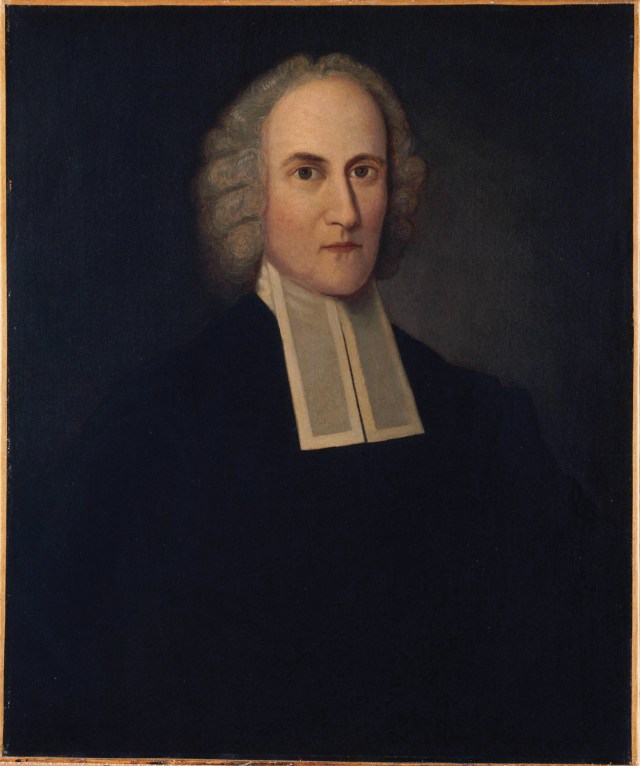
Painted portrait of Jonathan EdwardsAlamy
Jonathan Edwards (1703–1758), American theologian and revivalist.

Keller lauded Edwards as theologically orthodox, pious, and culturally engaged. The problem, as Keller saw it, was that when Edwards died, evangelicals couldn’t hold together these three traits. While they flowed separately in different ministries, Keller bemoaned that they didn’t always join together in one mighty spiritual river. He believed that if Christians could unite these three streams once more, we would see an end to the spiritual drought of the post-Christendom West.

He never quite saw that happen. Indeed, the populist-elite division stems the spiritual tide. But two years after his death, we find that Keller has left us enough clues that could, if the Lord wills, guide the church into faithful and effective mission for the 21st century.


J. T. Reeves was a senior at Wheaton College in 2023 when he and his friends drove down to Wilmore, Kentucky, to join the Asbury Awakening, along with an estimated 50,000 people who flooded the university campus over 16 days of prayer and worship.

Asbury’s events resonated with Keller’s description of the central role of prayer in past awakenings. As he wrote in his paper “The Decline and Renewal of the American Church” (first published in its entirety in 2022):

There is always corporate prayer—extraordinary, kingdom-centered, prevailing prayer. Prayer not merely for our individual needs but for the power and gospel of God to be manifest (Acts 4:24–31). This is prayer beyond the normal daily devotions and worship services and, as much as possible, should be united prayer, bringing together people who do not usually pray together.

The Asbury outpouring was a model collaboration between institutional leaders who resisted outside influences and students who followed the unpredictable leading of the Holy Spirit. Reeves wrote how the revival jolted him into a deeper prayer life and how God awakened him from a spiritual haze accelerated by “the current of our screaming algorithms.” Corporate prayer seems less plausible when we’re scrolling ourselves to death.

Compared to older generations, you’re less likely to hear younger adults today describe their “quiet time” and more likely to learn about their “rule of life” or “daily liturgy.” Edwards would understand—as a teenager, he adopted 70 resolutions for his life. To follow suit today, we need habits that keep us from reaching for the smartphone every spare moment. Hearing from God often requires taking out the earbuds.

“Spiritual renewal brings an extraordinary sense of God’s presence, of increased communion with God (1 John 1:3), of ‘joy unspeakable and full of glory’ (1 Peter 1:8),” Keller wrote in 2022. Only God knows if we’ll see unspeakable joy wash over the country in our lifetimes. If we do, it probably means younger adults are practicing the “liturgy of the ordinary,” as Tish Harrison Warren put it, seeking and sensing God’s presence in all of life.

Keller modeled this life of prayer, this evangelical thirst to taste and feel the love and presence of God. In the tumultuous days of the COVID-19 pandemic and George Floyd protests, criticism of Keller increased, especially from populist corners of the Reformed community. Institutions creaked and cracked under pressure. Many leaders lost their bearings and moorings. Longtime friendships fractured under the pressure of social media spats.

As he fought for his life after his 2020 diagnosis of terminal pancreatic cancer, Keller grew more patient, joyful, hopeful, and forgiving, even though he was blamed for much that had little or nothing to do with him. The power of his prayer life was evident.

When he died, tributes poured in from across the Christian community. Cardinal Timothy Dolan offered St. Patrick’s Cathedral in New York for the memorial service. Few Christian leaders could boast a better ministry résumé than Keller’s. But in eulogies published across mainstream publications, I didn’t see much discussion of his accomplishments. Instead, I saw repeated homages to his pious character, in private as in public.

Whether populist or elite, skeptical or institutional, younger Christian leaders should aspire to his example as he followed Christ in prayer. Spiritual outpourings such as the Asbury Awakening come neither from central planning nor from social media condemnations but by patient and persistent prayer from God’s people.


Even though Keller counted friends among institutional elites, he shared many populist critiques of Western cultural decay. As Christianity declined, he observed that the Enlightenment had failed to deliver cultural solidarity and meaning. Families, neighborhoods, and institutions—such as the academy—have faltered without a unifying vision provided by Christianity. This resulted in “greater isolation, loneliness, anomie, anxiety, and depression,” Keller wrote in 2022. He continued,

As the percentage of the population going to church declined, and as the radical individualism of the West became more pervasive, the original Enlightenment vision of a society based on secular human reason alone came largely to pass. But it has not led to unity at all. Western society in general and U.S. society in particular are polarized, fragmented, and ungovernable as everyone adopts their own meaning in life and moral values.

One example of renewal comes from the life of Molly Worthen (who wrote a tribute after Keller’s death for The Atlantic). Worthen had reached the pinnacle of her academic field with a PhD from Yale University and articles in The New York Times. She taught history at the highly ranked University of North Carolina at Chapel Hill. She looked forward to a long career as a respected public intellectual.

But she wasn’t fulfilled. She entered the academy looking for truth, yet it seemed that the purpose of the academy had evolved into something less certain and clear—more political posturing than searching for knowledge. In an interview with Southern Baptist pastor J. D. Greear, she mentioned how she sometimes wanted to believe as evangelicals do. Greear could hardly ask for a better prompt. Knowing her academic inclination, he put her in touch with Keller.

At Keller’s recommendation, Worthen read N. T. Wright’s The Resurrection of the Son of God, which challenged her with overwhelming evidence for the bodily resurrection of Jesus. C. S. Lewis’s Space Trilogy opened her imagination. Combined with Greear’s urgent appeals, these resources eventually led Worthen to confess faith in Christ, wading into the waters of baptism at Greear’s Southern Baptist megachurch wearing a “Jesus in my place” T-shirt.

Worthen is hardly alone in turning to Christianity amid dissatisfaction with modern life, which feels increasingly unlivable to many. Sarah Irving-Stonebraker, another professional historian, tells the story of her adult conversion in Priests of History. When Keller published The Reason for God, New Atheists such as Ayaan Hirsi Ali were riding a wave of cultural skepticism toward organized religion, from evangelical Christianity to radical Islam. Yet by 2023, Hirsi Ali had become a Christian too.

“The only credible answer [to the decline of the West] . . . lies in our desire to uphold the legacy of the Judeo-Christian tradition,” she wrote of her conversion. At first, some wondered whether Hirsi Ali had only fallen in love with the Western culture that delivered her from abusive expressions of Islam. Subsequent interviews indicated deeper spiritual transformation that caught the attention of Richard Dawkins, who has taken to calling himself a “cultural Christian.”

High-profile conversions reveal one path toward influencing and ultimately changing culture-shaping institutions. Revival could come again from the top down, as it did under Jonathan Edwards’s grandson Timothy Dwight, who was the president of Yale University during the Second Great Awakening. But Hirsi Ali’s conversion suggests a possible revival from the bottom up as populist dissatisfaction spreads across the West, especially with elite institutions enforcing divisive identity politics around sexuality.

Though Keller was more identified with the elite strategy than the populist alternative, he personally experienced revival on the margins. Keller and his InterVarsity Christian Fellowship friends at Bucknell University could hardly count on support from the administration or professors as their chapter grew overnight during the Jesus Movement of the 1970s. And no one I know was predicting revival on the Upper East Side of Manhattan in the 1980s after nearly a century of steady church decline.

Toward the end of his life, Keller anticipated widespread dissatisfaction with the Enlightenment and its aftermath. Like the populists, he saw an opening for the gospel as the sexual revolution turned bitter.

At least since the 1960s, a historical, orthodox sexual ethic has hampered the appeal of Christianity in the West. Between 2012 and 2016 in particular, popular perception of Christian views on sexuality shifted from embarrassment to harassment, especially among cultural elites. Once dismissed as prudes, Christians became ostracized as bigots in the culmination of a long-building shift in how individual identity develops across the West.

“The triumph of the modern self and of the sexual revolution for the loss of Christianity’s credibility can’t be over-estimated,” Keller wrote in 2022.

The Christian sex ethic is seen now as unrealistic and perverse. This is massively discrediting and makes biblical faith implausible to hundreds of millions both inside and outside the church. . . . The idea that you simply discover and express yourself is an illusion. Nevertheless, this view has swept society and is seen as common sense.

But when I talked to Keller just a month before he died, he could see the outlines of a shift in popular circles. Witness secular feminist Louise Perry with her 2022 Case Against the Sexual Revolution. Or Christine Emba’s Rethinking Sex from the same year. J. K. Rowling’s relentless feminist critique of transgender ideology combines the elite influence of an enormously wealthy author with populist disregard for institutional pressures. And President Donald Trump’s successful 2024 campaign channeled populist anger toward institutions—media, schools, entertainment, and hospitals—that have foisted unpopular transgender policies on the public.

The sexual revolution has led to a sexual recession, Nancy Pearcey observes in her 2023 book The Toxic War on Masculinity. By pushing the sexes away from each other and then turning them against each other, the sexual revolution has failed to deliver on its promises of progress.

Far from needing to update our theology, we can hold to orthodoxy to keep from being swept into the dustbin of history with cultural fads. It may not always be in season with popular culture, but God’s law is always good. If you want to write tomorrow’s headlines, stick with the old, old story—the gospel wins out in the end.


As much as any other Christian of his generation, Keller engaged with the hardest arguments against Christianity. He defended the gospel and proclaimed Christ in some of the most hostile settings of the elite West.

Keller approached these exchanges with the biblical assumption that his opponents were made in the image of God. Before he identified where Christians and non-Christians disagreed, he tried to affirm something good and right in a religious skeptic’s outlook on the world.

He approached people with curiosity, not speaking contemptuously or dismissively. He acknowledged some critiques of the church as valid. And he didn’t pretend that Christians have everything figured out. His apologetics assumed that, in a secular age, Christians have many of the same questions or doubts as non-Christians.

Yet anyone who has listened to his sermons knows Keller didn’t coddle his left-leaning Manhattan neighbors. He challenged them—directly, forcefully. He exposed them as believers—in something or someone that would inevitably fail them. And he invited them, with passion and pleading, to trust in Christ alone for the forgiveness of their sins and the life everlasting.

It may surprise some to learn what Keller prioritized for the church in an increasingly secular society. “Christian education, in general, needs to be massively redone,” he stated in “The Decline and Renewal of the American Church.”

We must not merely explain Christian doctrine to children, youth, and adults, but use Christian doctrine to subvert the baseline cultural narratives to which believers are exposed in powerful ways every day. We should distribute this material widely to all, flooding society, as it were, with it.

Like many populists, Keller saw the need to prioritize Christian education for spiritual formation. He saw the temptation for those inside the church to lose their way, especially when they’ve been inundated with the values of elite institutions.

The thing about exposing secular cultural narratives around identity and progress—to take just two examples—is that Christians aren’t immune to them. It’s not as if only non-Christians think that happiness can be found in accumulating goods and experiences, or that a political party can help them feel secure in the world. And the pursuit of institutional power drives populists as much as elites. Regardless of our religious or political beliefs, we’re all shaped by similar goals and desires. The real questions are: For what? For whom? And how?

To use institutional and cultural power for good, Keller believed, Christians need counter-catechesis. For instance, the world says power should be wielded to enact vengeance. In contrast, how can Christians exercise power in ways that don’t turn victims into victimizers or compound injustice with injustice? How can we love our enemies in obedience to Jesus?

Keller didn’t exactly recommend removing ourselves from the secular world. But he did believe that Christians need “moral ecologies”—especially churches—to help us live what we profess.

To this end, he labored through Redeemer City to City to help start more than 2,000 churches since 2001. He commended vocational groups that shape Christians working in specific professions and valued the role of singles in churches. Like many evangelicals before him, Keller saw deep power in small groups united in prayer, confession, Bible study, and practical support.

These moral ecologies have become more important in the past two decades, when the internet has made it far easier to live according to the cultural narratives of the world than according to the Scriptures. Social media can create moral ecologies too—but often negative ones that form around what a group opposes. Such communities fail to produce the fruit of the Spirit. They don’t help disciples of Jesus pursue the good, including love for the outgroup.

It’s hard to imagine widespread spiritual revival that doesn’t bear the fruit of the Spirit. What would the world find compelling in a church that mirrors society’s own sins?

Instead, non-Christians will find refreshment in a church that puts down the smartphones to pray together. Choking on the dust of loneliness kicked up by the sexual revolution, they’ll discover true belonging among Christians who have counted the cost and followed Jesus. Betrayed by the Enlightenment, they’ll follow the river of life to the light that will never be extinguished (Rev. 22:1, 5).

With history as our guide, revival in the 21st century will be a spiritual torrent fed by three streams—personal piety, biblical orthodoxy, and cultural engagement. These streams will bring spiritual refreshment to lands parched by the failed modern pursuit of individual identity apart from Christianity.

The time is right for evangelical elites and populists to collaborate once more. We agree on many of the problems. We agree on many of the solutions. And we can unite as Christians around an apologetic method grounded in biblical theology and adorned with spiritual fruit.

Christians, whether elite or populist, shouldn’t feel comfortable in this world. We should feel restless for our forever home with God in the new heavens and the new earth. Maybe revival won’t come in our lifetimes. But every revival starts with Christians desperate to catch a glimpse of that future on this side of eternity.

Tim Keller didn’t see that national revival during his ministry. But he prayed that we would.

Collin Hansen is vice president for content and editor in chief of The Gospel Coalition, executive director of The Keller Center for Cultural Apologetics, host of the Gospelbound podcast, and the author of Timothy Keller: His Spiritual and Intellectual Formation.

Culture

NYC Pastor Rich Villodas on Subversive Anger and True Forgiveness

A conversation with Russell Moore on living out the challenges of Jesus’ Sermon on the Mount.

On a recent episode of The Russell Moore Show, pastor and author Rich Villodas discussed anger, forgiveness, and faithful family members who make it possible to rise to the challenge of Jesus’ Sermon on the Mount. This interview has been edited for clarity. 

Russell Moore and Rich VillodasIllustrations by Ronan Lynam

Russell Moore: Can you tell us about the influence your grandfather had on your life?

Rich Villodas: I became a follower of Jesus at 19. At that time, about 15 family members came to faith in Christ in one night in a small church in Brooklyn. After that remarkable encounter, I had lots of questions.

Thankfully, my grandparents were down the block from where I lived. My grandfather Marcus, at that time in 1999, was quite ill.

I walked down the street and said, “Grandpa, I have lots of questions about what happened on that Sunday.” He said, “Why don’t you sit next to me?” I sat next to him on his bed, shoulder to shoulder, and three hours later, we had had our first conversation about the Bible and Jesus and prayer.

And then he said, “Why don’t you come back tomorrow? Let’s do it again.” So I came back the next day, and we did it again. And that was my rhythm for eight months—four to five days a week, two to three hours each time. I sat shoulder to shoulder with my grandfather as he taught me about the Scriptures, theology, prayer, humility.

He gave me two assignments throughout those eight months. One was to memorize entire psalms, and the other was to live the words of Jesus, specifically the Sermon on the Mount.  That was how I started following Jesus.

I wish everyone had what I received in those eight months with my grandfather, patient and unhurried. After those eight months with him, he passed away. But what a deposit in my life.

RM: I’m assuming that as you were writing your book [The Narrow Path: How the Subversive Way of Jesus Satisfies Our Souls], you were teaching through the Sermon on the Mount at your church.

It seems to me that when it comes to Jesus’ Sermon on the Mount, you have to either make strange the familiar or familiarize the strange.

Would most people in your congregation be those for whom this was new, where you had to make it familiar? Or do you think most people were overly familiar—that they were used to the words and you had to get around that familiarity and numbness to show them the strangeness? 

RV: The challenge with a question like that, at least in my context in Queens, is that our church is so diverse. There are 80 nations represented in the neighborhood and 123 languages spoken. Our church is generationally diverse, theologically diverse, and politically diverse, which makes this congregation one of the most dangerous and stressful places on the planet to preach.

But I think more people would be unfamiliar with the Sermon on the Mount. And many who are familiar with it are used to hearing it in a particular light. For example, those who are familiar with it often hear, “This sermon is not meant for me to live but to show how inadequate I am to live it and then to lead me to throw myself at the grace of God.”

That’s opposed to a different mindset: “Let me throw myself at the grace of God first and ask God to help me to live it.” The emphasis Jesus puts on the Sermon on the Mount is on living it.

I find myself having to toggle back and forth. Some folks need to be made familiar with the language, and others need to see it from a different vantage point.

RM: There are people who look at the Sermon on the Mount and say, “This is really hard, and it seems impossible to do. And that means I’m inadequate and not the kind of person that Jesus is calling.”

And then there are people who say, “Well, this is obviously impossible to do. Jesus just wants us to reflect on God.” Both of those views can lead a person away from what Jesus is doing.

RV: To look at Jesus’ words directly, toward the end of the Sermon on the Mount, he says things like “Everyone who hears these words of mine and does not put them into practice” is like a person who builds their life on the sand (Matt. 7:26). As Jesus comes to the culmination of this amazing sermon, the greatest sermon ever taught, his emphasis is on practicing it.

This emphasis is true even in Matthew 7—one of the most terrifying passages in the Bible, where Jesus basically says, “You’ve prophesied in my name, you’ve cast out demons in my name, and on that day, I’ll say, ‘I never knew you’ ” (vv. 22–23).

I used to think that Jesus was exclusively talking about someone’s personal relationship to him. They were doing the right stuff but had never really made a commitment to receiving Christ as Savior.

That might be part of it, but I think when Jesus said, “I never knew you,” he was also talking about the path we’ve chosen to take.

It’s more like he’s saying, “You’ve never submitted yourself to my teachings. You’ve never submitted yourself to my way of life.” It’s not about a personal faith thing; it’s about your outward life.

I think we let ourselves off the hook very easily by saying that Jesus doesn’t expect us to submit to a certain way of life—that all he wants is a relationship with us, and how we live and follow him is secondary. We say, “If we can get there, great. But if we can’t, don’t worry—we have the grace of God.” 

We do need to be reminded of the scandalous grace of God that forgives and pours out love and mercy. And that same God is also calling us into a relationship, to follow Jesus in a particular way right here, right now. We need to not just have faith but live faithfully in the way of Jesus.

RM: Let’s talk about some of these specific issues people are struggling with. One of those issues is anger. A lot of people, when they hear what Jesus says about anger, think immediately of people who are quarrelsome, who have screaming fits.

How do you help people see where they fit into these warnings about anger when it can look so different for different people?

RV: Some people grew up in households where they didn’t have permission to be angry. That was an emotion that, as a Christian or maybe as part of a particular culture, was frowned upon.

Frederick Dale Bruner, the New Testament scholar, really helped me to understand anger. The word that Jesus uses there is not about momentary anger when something happens. Jesus is talking about an anger that is subterranean. Bruner says it’s a kind of anger that gets expressed through resentments, and it ultimately results in contempt.

Jesus says, in short, “You’ve heard it said, don’t murder, but I tell you, if you’re angry at your brother or sister, you’ve already committed murder in your heart” (Matt. 5:21–22).

And then he talks about this word raca in that same context. Raca is basically a word to describe cultural harshness with a level of contempt in our souls. When you look at our world right now, the world is raca everywhere. We have allowed this low-grade sense of resentment to stockpile in our hearts to such a degree that it’s weighing us down.

When we think about anger, we think about the Inside Out film, where Anger is this red, fiery guy who’s explosive. That’s the only kind of image we have of anger. But anger is also something that seethes down low. It’s resentment. It’s a way of diminishing others that we’re carrying deep in our souls, which leads to contempt.

This is why I think that lying happens more inside the church than outside the church. We know as good cultural Christians how to hide our anger through being nice and warm and hospitable.

Jesus is talking about this subterranean resentment that ultimately leads to contempt.

There’s lots of anger in the church—in the evangelical church, in the Pentecostal church, culturally, politically. So much of that has been bubbling up over the years. And now we’re at a place of significant anger, contempt, that raca that Jesus talks about.

RM: What about somebody who says, “I think I’m resentful about some things that have happened to me”—perhaps a broken marriage or relationship—and has a lot of anger. What can they do with that? 

RV: I think about it in two ways: interpersonally and individually. Interpersonally, having spaces where we can wrestle faithfully with what’s happening in our interior lives helps us to move beyond that moment.

My wife, Rosie, and I have been married 19 years. In the first few years, I found myself having a hard time when she was sad or angry. I did not know what to do. I would personalize it. I would minimize it. I’d say, “You know what, I’m going to go grocery shopping. I’ll be back in two hours.” 

We found ourselves stuck when it came to this part of our marriage. I remember going to a therapist and saying, “When my wife gets angry, I just don’t know what to do. I make matters worse.” And he said, “Rich, the next time she’s angry, I want you to do one thing: I want you be angry along with her.”

There was something incarnational about that. When someone is angry, sometimes we need to step into that space with them.

If we have spaces—friendships and communities—where people can be angry along with us, we can create a space where there is enough patience and exploration to then ask ourselves, “Is there something beneath the surface that this anger is pointing to?” 

Individually, I think the language of lament is important in naming our anger, because what lament does is open us up to lifting our minds and hearts to God. We allow God to have access to a significant part of our tender hearts in that moment, to give us a different social imagination about what’s going on.

Lament—naming what’s beneath the anger and lifting that to God—can be a significant pathway to getting to the core of what our anger is revealing. Anger is usually secondary and symptomatic of something deeper. And God can handle it.

When we find ourselves stuck in those moments, the best thing to do is to behold Jesus. This is why I believe the Sermon on the Mount is the most important set of teachings in the entire Bible. If you want to know exactly what path to take, the words of Jesus are where to go.

RM: In abusive families, churches, and systems, I’ve noticed that people will often use the language Jesus gives about forgiveness and nonretaliation to tell people, “Don’t seek accountability. If you’re seeking justice in this case, that means that you’re not Christlike, because Jesus would tell you to let this go.”

How do you help somebody in that situation who thinks, I’m not forgiving in this radical way that Jesus has instructed? Especially when there are people in this person’s life saying, “If you keep bringing this up, you’re disobeying Jesus.”

RV: To read Scripture is to look at the ultimate goal, the telos, the hope of what Jesus is teaching us. But we often don’t see the time it takes or the pathway to get there. Jesus says to forgive someone “seventy times seven” times.

I wonder what it would look like for us to forgive in a way that is transformative and not performative. Sometimes I’m trying to strictly obey the Bible, but there’s nothing happening on the inside. In those spaces, there must be room for discernment and nuance. 

One of my favorite books about forgiveness is called Don’t Forgive Too Soon. A lot of Christians will hear that and go, “Whoa, we’re being really unbiblical.” But it’s easy to forgive someone in word while our hearts are not there.

Does Jesus want us to say, “I forgive you,” when our hearts are far from him? We’re talking about a God who wants to transform us from the inside out. He wants not just external obedience but internal obedience and alignment to his ways.

Rich Villodas is an author and the lead pastor of New Life Fellowship in Queens, New York.

Russell Moore is the editor in chief at Christianity Today and leads its Public Theology Project.

News

Church Kitchens Are Getting Chopped

More congregations are trading casseroles for coffee shops.

Illustration of a church building on a cutting board with the kitchen portion of the building cut away.
Illustration by Mike Haddad

Church kitchens are disappearing. They are disappearing from rural, suburban, and urban churches. From liberal and conservative churches, contemporary and liturgical, megachurches and the medium-sized.

One by one, across America, as buildings are remodeled and new construction replaces old, kitchens are getting scrapped.

No one tracks exact numbers—there’s no census of fellowship halls—but architects who specialize in sacred spaces told Christianity Today that the trend is hard to miss.

“I can’t remember the last time I was asked to design a big kitchen,” said Jacob Slagill, who teaches architecture at California Baptist University and designs church buildings for evangelicals. “A small kitchen, maybe.”

Newly built or remodeled churches typically have a space with a sink and a coffee pot, Slagill said. Possibly a microwave. But no expanse of countertop suitable for chopping carrots, potatoes, and onions to go into a big pot of soup. No oversized refrigerators for Jell-O salads. No industrial ovens large enough to cook three or four casseroles at once. Churches these days don’t have a lot of cupboards with drawers labeled “forks and knives,” “spoons,” and “serving utensils.”

That kind of space is gone. Or at least it’s going away.

A recent exhibit of religious architecture in the 21st century curated by architect Amanda Iglesias included more than 40 churches from around the world. Only five had dedicated spaces for gathering around food.

“Culture has changed,” said Katie Eberth, an architect with Aspen Group, a leading firm in the field of church design. “It’s not part of the culture now, the church culture, where you have 20 women who come together and make a meal. Today we order Panera or Jimmy John’s.”

When new clients sit down with Aspen architects, Eberth said, they don’t often ask for kitchens. They are most likely to start the conversation with their needs for more space, more parking, or more rooms for Sunday school and youth groups. 

The architects ask them to set the specifics aside, for a moment, and have a larger conversation. One of the first questions Eberth likes to ask is “How do you define your community?” Then they start to talk about the vision for the church, their aspirations, and their congregation’s values. 

Hospitality comes up a lot, according to Eberth. But when people talk about what that should look like in the physical construction of a building, they don’t talk about fellowship halls with long folding tables where everyone can sit together. They talk about a café serving coffee and pastries in the foyer.

“The lobby is becoming more important, because it extends people’s time at church, before and after a service,” Eberth said. “That’s where people—especially younger people and new people—are going to connect.”

If Aspen clients do talk about the possibility of a church kitchen at some point in the process, they are generally dissuaded by the cost, the additional permitting required by city and county governments, and the lack of volunteers. Who is going to work in the church kitchen?

Historian Gretchen Buggeln, author of Temples of Grace and The Suburban Church, said this part of congregational life has changed dramatically over the last 50 years, driven by larger cultural and economic transformation in America. In 1970, about a third of married women with children under 18 had jobs outside the home. By 1980, that had increased to 51 percent. By the 2010s, more than 70 percent of mothers were part of the US labor force.

“Churches don’t have people to run a kitchen,” Buggeln told CT. “You have to have at least half a dozen people who can show up and cook.”

In her research on church buildings, Buggeln found there were always some people who questioned the cost of kitchens. Women in the 1950s and ’60s frequently fought with building and finance committees, justifying kitchens’ expense and arguing for better equipment. Those women saw the kitchen as their domain. Decades later, when they talked to Buggeln about the physical building, they were more likely to talk about the kitchen than any other part of the church.

“They remembered working together,” Buggeln said. “What was important to them was the actual people working together in the kitchen to prepare food, getting to know each other through shared work. That’s going away now.”

The change is significant to us now, but most churches, for most of church history, have not had kitchens. The oldest known buildings dedicated to the purpose of Christian worship—in the ancient Middle East cities of Dura-Europos, Aqaba, and Megiddo—didn’t have kitchens, and neither did the great Gothic cathedrals of Europe, such as Notre Dame, Chartres, and Westminster Abbey. American Christians in the 1800s really liked picnics, packing food to eat after revivals, outdoor baptisms, and Sunday school socials. But they didn’t have kitchens.

The age of church kitchens didn’t really get going until rapid urbanization started in the 1880s.

“The city offered saloons, amusement parks, and pool halls, places designed to attract and corrupt young minds with fun,” historian Daniel Sack writes in Whitebread Protestants. “Churches were just one competitor in the free market of entertainment. . . . The church had to use every tool at hand, including food.”

Potlucks, youth group socials, and charity fundraisers became so important in congregational life that by the 20th century, it wasn’t uncommon for critics to say the social activities overshadowed anything sacred. Religion scholar Martin E. Marty, for example, said that for a lot of Christians in America, church life and “the machinery of church life, smoothly oiled, takes the place of the deity.”

Most congregations, however, saw social activities as outreach. Kitchens brought people into church, where they could be fed, body and soul.

Some Christians say that despite broad cultural changes over the last 140 years, church kitchens still do this. When architect Rick Archer sat down with a committee to talk about some renovations at his own church, Grace Northridge Anglican in San Antonio, the first thing he said was “Let’s do the kitchen.” The committee agreed.

Food serves an important function in the life of the congregation, Archer told CT, and the kitchen is also an emblem of the invitation to the altar. 

“It’s so much at the heart of who we are as a people,” he said. “When we gather around a table for a meal, it’s an extension of the gospel.”

A bigger kitchen can be a means for Christians to love their neighbors. An Evangelical Free church in Blackduck, Minnesota, for example, developed a funeral ministry because it had a large kitchen.

“This is a rural community, way north,” said pastor Dwight Warden, who retired in 2023. “Funerals were a big thing, and people would come to town for funerals and need a place to come together. These were not necessarily members, or even churchgoers, but our church would serve them. The bigger kitchen made it possible.”

Blackduck Evangelical Free remodeled its kitchen in 2011, expanding a tiny older space and installing a large refrigerator, a dishwasher, three ovens, and lots of cabinets. It was a serious financial investment. But it created new opportunities for outreach. 

The church started a monthly Monday night meal that connected the congregation with members of other churches and community groups, including a women’s bowling league. The space was used for birthdays and graduation parties. And in the spring, when everyone desperately needed to get out after a long winter, the church would host a Wild Game Feed, serving venison, buffalo, duck, grouse, or some other meat harvested by local hunters.

“A kitchen isn’t just for coffee and donuts, though we always had coffee and donuts after church,” Warden said. “The Wild Game Feed, we had 250 to 300 people come to that every year, and some of these are people who would never darken the door of a church.”

Other congregations have decided a big kitchen requires too much work, doesn’t serve their needs, or won’t help them serve their communities. 

“A big fellowship hall . . . if it’s not in use, it just leaves the church feeling kind of empty,” Iglesias said. “A big kitchen can be limiting. Churches are living organisms, and the architecture needs to be living too. Churches adapt.”

Architects who specialize in sacred spaces told CT that adaptation might lead to more child care co-ops or coworking spaces in American churches. There could be renewed interest in designs that elicit feelings of awe, with extra emphasis on art and natural light. 

In the past, church needs were met in the kitchen. But now, people seem hungry for something else.

Daniel Silliman is senior news editor at Christianity Today.

addApple PodcastsDown ArrowDown ArrowDown Arrowarrow_left_altLeft ArrowLeft ArrowRight ArrowRight ArrowRight Arrowarrow_up_altUp ArrowUp ArrowAvailable at Amazoncaret-downCloseCloseellipseEmailEmailExpandExpandExternalExternalFacebookfacebook-squarefolderGiftGiftGooglegoogleGoogle KeephamburgerInstagraminstagram-squareLinkLinklinkedin-squareListenListenListenChristianity TodayCT Creative Studio Logologo_orgMegaphoneMenuMenupausePinterestPlayPlayPocketPodcastprintremoveRSSRSSSaveSavesaveSearchSearchsearchSpotifyStitcherTelegramTable of ContentsTable of Contentstwitter-squareWhatsAppXYouTubeYouTube