
Church Life

If Anyone Would Come

Self-denial is an essential step on the road to joy.

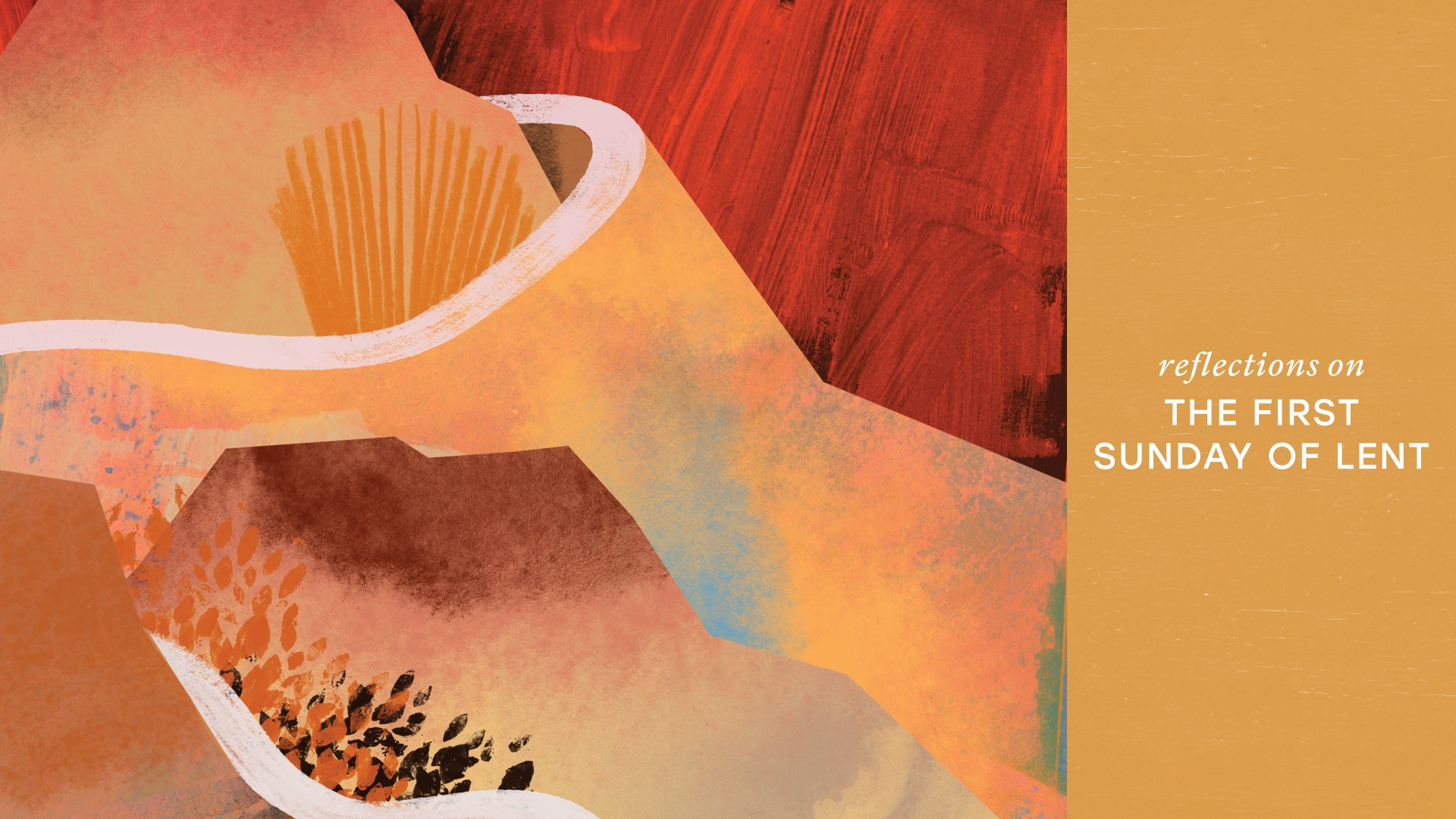
Reflections on the first Sunday of Lent.
Illustration by Keith Negley

Matthew 16:24

The road to joy, for Jesus, ran through Jerusalem. It was a path of self-denial, sacrifice, and death—before it was the passage into joy, redemption, and glory.

So it is for all who would follow in his steps. To walk with Jesus is to take the way of the Cross. To enter his kingdom is to knowingly and willingly choose the joy of self-denial.

How can we say the “joy” of self-denial? True joy doesn’t take the long way around pain; it doesn’t take a shortcut toward glory. True joy moves through hardship. True joy goes with Jesus through Jerusalem. The way is narrow, and the gate is small, but freedom and joy await the disciple who stays on the path.

Jesus said, “Whoever wants to be my disciple must deny themselves and take up their cross and follow me” (Matt. 16:24). This is rightly understood to be one of Jesus’ most intimidating challenges. But it is also one of his most subversive invitations. “Get off the road that leads to death,” he’s saying. “Choose instead this unexpected way to the good life—through denying and dying to self.”

Indeed, our denial is an essential step in becoming like Jesus. Dallas Willard wrote that “a shift toward self-denial is needed to reorder the … human self in subordination to God. … Christian spiritual formation rests on this indispensable foundation of death to self and cannot proceed except insofar as that foundation is being firmly laid and sustained.” What is the self-life that is being denied and laid down? It is the old self which needs to be put off. It is the old life that wasn’t so appealing anyway.

To deny ourselves and follow Jesus is the most freeing and wonderful thing; it is to let go of what wasn’t working in the first place. The new, selfless life that takes its place is the truly good life—a new heart devoted to God, a life of honesty, vulnerability, acceptance, friendship, communion, and purpose.

To be sure, self-denial is not the same as self-rejection. Self-rejection occurs when the soul says to itself, “See, everyone was right. I’m an awful person. I’m a failure and a mistake.” Self-rejection also says, “I am not so secure in myself, so I must rise and prove myself, must fight and defend myself.” This is not the way of Jesus, and it’s not self-denial. It is a rejection of what God has made and declared good. How do we know when we are practicing self-rejection and not self-denial? Self-rejection leads to shame, hiding, and self-criticism. It also makes us critical and demanding toward others. (We’re critical of others when we believe God is critical toward us.)

Self-denial, on the other hand, leads to a joyful submission to the Father. It is the freedom to reject the ways of the world—its anger, greed, and envy. Self-denial is an active choice to become like Jesus in his radical inner simplicity and wholehearted devotion to the Father. It is what the late Tim Keller called a “blessed self-forgetfulness.”

And unlike self-rejection, self-denial frees us to love and serve others purely. (We’re merciful toward others when we believe God is merciful toward us.)

Self-denial, then, is both the most difficult thing in the Christian life and the simplest. Laying down our lives can’t happen just once; it’s a complete surrender we make moment by moment, every day. Only if we truly embrace Jesus’ self-denying, non-defensive death on the cross can we believe we are accepted into his Father’s delight.

Yet in this tension of challenge and invitation, remember who supplies the strength and wisdom for a life of self-denial. It is Jesus. He provides all we need to follow in his self-giving love—namely, his Spirit. As we abide in him, walking by his Spirit, we come out with complete joy (John 15:11).

In a world consumed with earning, showing, and defending, self-denial seems like a radical and dangerous thing. But in the right-side-up kingdom of Jesus, it is the safest, simplest, and happiest place. In him, we lack nothing and have everything. Will you receive it? Will you deny yourself, take up your cross, and follow Jesus into full and eternal joy?

Lord Jesus, thank you that you are with me. I did not choose you, but you chose me and appointed me to die to myself and take up your life. Grant me your strength and wisdom to choose this life, not just once, but every moment. My life is yours. Lead me, by your Spirit and your self-giving love, into everlasting joy.

Jeremy Linneman (DMin Covenant Theological Seminary) serves as lead pastor of Trinity Community Church in Columbia, Missouri. He’s the author of Pour Out Your Heart: Discovering Joy, Strength, and Intimacy with God through Prayer. Jeremy and his wife, Jessie, have three sons.

Church Life

I Have Calmed and Quieted My Soul

Our management strategies for anxiety are not enough. Let us hope in God’s presence and power.

Reflections on the second Sunday of Lent.
Illustration by Keith Negley

Psalm 131

In our life with God in this world, we often need to sit quietly and be honest with ourselves. What worries and anxieties are occupying our minds and governing our behavior more than they should? Sitting quietly is difficult.

We don’t like what happens when we do. All the ghosts and goblins from below, which we have so effectively silenced in the hurry of each day, suddenly come to the surface. When we are still, we often scroll. We scroll through algorithms available to us for the silencing of the inner panic. But when we resist the scrolling, we are often left with lingering pains, insecurities, and thoughts that worry us and, more than we realize, control us.

While we may be effective at managing our interior lives, our management never leads to healing. At best we can numb our pain with our distractions, but the Book of Psalms offers a different path. In the presence of the Lord, we acknowledge these pains and worries, allowing them to come to the surface. The good news, however, is that the Lord never brings things to the surface that he doesn’t intend to heal.

“Oh Lord, my heart is not lifted up; my eyes are not raised too high; I do not occupy myself with things too great and too marvelous for me” (Ps. 131:1, ESV).

There are many things we can offer up to the Lord and say, “This is too much. Only you can carry me through.” There are a lot of things that shouldn’t concern us, and worrying about them never makes things better. It only diminishes us. Jesus gives us examples of worrying about money, possessions, and what tomorrow may bring (Matt. 6:34).

But even more, I wonder if we might need to offer to God the management of our interior lives and emotional entanglements. There might be wounds from friends, intimates, and family that linger and torment us, creating a sustained inner dialogue that simply rehearses the pain over and over. There might be moments of humiliation and failure at work or in our marriages that make us shrink back and cringe at ourselves. Our management strategies haven’t brought healing or resolve, only lingering pain, and like cancer, the wounds only grow and fester.

Let us sit quietly with the Lord, being honest with him and ourselves, saying, “Oh Lord, I recognize I don’t have what it takes to heal these wounds. They control me more than I control them. They are too great for me.”

“But I have calmed and quieted my soul, like a weaned child with its mother; like a weaned child is my soul within me”(Ps. 131:2, ESV).

For an infant, dependent upon a mother’s milk, every meal is an emergency, every hunger pang a panic. Only after the consistent experience of being fed, never going without care and attention, does a child learn that when hunger comes, it’s going to be okay. Food has always come, and it will come again. The infant can sit in her mother’s lap without groping and grasping because she has grown an instinct of being settled, even when the feelings of neediness and hunger arise.

While an infant grows an instinct of being settled, we must be intentional about it. “But I have calmed and quieted my soul.” I am intentionally seeking God’s presence, taking a deep breath, and remembering all the times he has been my help. As an infant cannot feed herself, neither can we appropriately heal our wounds and emotional entanglements.

Our management strategies have left us like unweaned children, groping and grasping, anxiously seeking out ways to feel safe in this world. Every emotion is an emergency and every pain a panic. Growing in spiritual maturity requires remembering we have never gone without care and attention from God. When the pain and sadness come, it’s going to be okay. The Spirit has always been near, and he will be near again.

“O Israel, hope in the Lord from this time forth and forevermore” (Ps. 131:3, ESV).

We must be honest with ourselves. At times our interior entanglements and worry have governed our lives more than we’d like to admit. We are tossed to and fro by our anxious thoughts, and our own management strategies haven’t been effective. In fact, they have distanced and desensitized us from the experience of God’s presence and love for our healing and renewal. Let us seek the Lord, opening ourselves to him, hoping not in our self-management but in his presence and power. From this time forth and forevermore, lay your management strategies and safety schemes down. Hope in the Lord and his goodness.

John Starke is lead pastor at Apostles Church Uptown and lives with his wife, Jena, and their four children in New York City. He is the author of The Possibility of Prayer (IVP) and The Secret Place of Thunder (Zondervan).

Church Life

Rejoice in Our Sufferings

Dwelling with Jesus means viewing our trials through a new set of eyes.

Reflections on the third Sunday of Lent.
Illustration by Keith Negley

Romans 5:3–5

Rejoice in suffering. It may sound ridiculous, if not offensive, especially to those of us walking through the very real fires of life. For most, to rejoice in life means trying to remove as much of our hardship as possible. And to be clear, we shouldn’t be weird people who actively pursue suffering. Life isn’t some kind of bizarre spiritual CrossFit where actively punishing ourselves somehow brings us closer to God.

Still, one of the most astounding implications of dwelling with Jesus is that we can now view our suffering through a new set of eyes. It may honestly feel like a mystery that takes the whole journey of life to fully unpack. But when suffering occurs—and for all of us it’s not an if but a when—we recognize God’s invitation to enjoy his very real presence with us.

Paul was writing to a people like us who experienced the hard things of life—a people who faced the sort of challenges leading them to understandably question all these wonderful doctrines of salvation that Paul had written about. Like some of us may ask, “If we’re really doing all this gospel-centered life right, should life be this hard?”

Paul’s reply: actually, yes.

Part of working out our salvation is growing in awareness of the Lord’s presence. Absolutely in those moments when we’d naturally expect to feel his presence, times of sweet communion or satisfying moments of ministry when there’s absolutely no doubt that God really loves us. It’s right to savor and enjoy God in those times, but not just in those times.

Working out the profound implications of Good News is learning to trust the presence of Christ with us in all things—even those horrible things that keep us up at night drowning in the sorrow of helpless tears.

Again, we don’t celebrate suffering itself. Rather, we boast “in” our afflictions. That’s a critical distinction. We’re not masochists who think pain itself is good. May we be compassionate people who grieve with those who suffer very real pain. Because into that grief, we can also offer real hope. Hope that even if we may never fully understand the “why” of suffering—at least on this side of glory—knowing the “who” invites us to trust in God’s character. To trust that there is a divine meaning to the hard things we endure, meaning that even lets us rejoice believing that we are being shaped to reflect his good glory to our world.

Our suffering produces endurance. As a runner training for a marathon has to believe, those grueling practice runs are building endurance for the race. Knowing your aim can help give meaning to what may feel like torture.

And this endurance produces character. I chuckle when newlywed couples offer marriage advice. Not that it’s unhelpful, but there is a weight girding the wisdom offered by couples who’ve endured through long, hard years together and come out stronger. Character isn’t developed like heating up a quick dish in the microwave; it requires the slow cooker of life that sometimes doesn’t even look like it’s cooking.

And demonstrated character then leads to hope. It’s important to recognize that the nature of hope is that we don’t yet have what we’re longing for.

Persevering in hope can make you feel silly, but this journey of hope grows our trust in who God is. Even as it feels like so many other promises of our world ultimately disappoint, God will never let you down.

This isn’t just sweetly sentimental. God’s love is an on-the-ground, dirt-under-the-nails kind of presence. It’s the demonstrated love of a Savior suffering on a real cross that speaks hope into the darkest of places.

It’s the kind of hope where you discover that even if everything else in this world feels like it’s against you, God is for you, and that’s enough.

In the countercultural ways of God, suffering isn’t just something to be endured, but the mystery of his loving hands forming us in beauty. Trust that God loves you like this, and even if your hands are trembling, rejoice in your suffering.

Dan Hyun finds joy in equipping the church to experience God’s presence in cultivating a deeper passion for reconciliation, justice, and mission. He is the founding pastor of The Village Church in Baltimore and author of The Bible in 52 Weeks.

Church Life

In the Rush of Great Waters

This Lent, may we remember the Cross as those who know the depth in which we need it.

Reflections on the fourth Sunday of Lent.
Illustration by Keith Negley

Psalm 32

Many years ago, I had a student who shared with our class that he had killed a motorcyclist in a car accident.

I was teaching a creative writing class. Every class period, we opened by looking at a writing prompt that I had projected onto the large screen. One evening every week, students would come in and quietly unzip their backpacks. You didn’t hear voices, just the quiet scratches of pen on paper. It is a sound that we don’t hear much of in classrooms anymore. Every week, the large white screen revealed a different prompt. One week it said, “They never noticed me, but I noticed them.” Another week it read, “Of all the things I have learned, this was the most important.”

We got to know each other well in that classroom. Students who thought they were terrible writers discovered the power of their own voices. We learned from the lives of one another. We grew one pen scratch at a time.

One week in particular, the prompt read, “Do you forgive me?” That’s when my student read to the class his story of a car accident that was his fault, where he killed a motorcyclist. He told us that the experience destroyed him. He dropped out of school. He developed severe depression. He pulled away from friends and family and spent nearly two years in isolation and self-loathing.

Psalm 32:3–4 encapsulates how he was feeling. “When I kept silent, my bones wasted away through my groaning all day long. For day and night your hand was heavy on me; my strength was sapped as in the heat of summer.”

He went on to tell us that his life was changed by an unexpected display of forgiveness. He wrote a letter to the parents of the man he had killed. He expressed his sorrow for the accident and shared how grieved he had been by their loss.

Psalm 32:5 reads, “Then I acknowledged my sin to you and did not cover up my iniquity. I said, ‘I will confess my transgressions to the Lord.’ And you forgave the guilt of my sin.” That is exactly what the parents who had buried their son did. They wrote my student a letter and forgave him for the accident, but that wasn’t all they did. The letter included an invitation. They invited my student to join them for dinner. They gave him the seat of the son they had lost. They made him a meal. They showed him pictures. They told him stories of the boy they had loved. And in this unbelievable act of compassion and kindness, my student found grace and healing.

Psalm 32:1–2 reads, “Blessed is the one whose transgressions are forgiven, whose sins are covered. Blessed is the one whose sin the Lord does not count against them.” My student would return every year to have dinner with the parents of the man he had killed. And every year, they would open their home, and their memories, and offer my student forgiveness.

I have never forgotten this story. It is one of the clearest examples I have seen of the image of God in the image bearers of God. The sacrifice of these parents changed the life of my student forever. They lost one son and yet found the strength to redeem someone else’s. He went back to school. He found a therapist. He experienced the healing and restoration to his life that being washed from sin through grace always offers those of us who know the depths of which we need it.

This Lent, may we all approach the remembrance of the Cross with the heart of my student. I hope you remember the God who has remembered you. I hope you will accept the grace that has been freely given.

Psalm 32:10 says, “But the Lord’s unfailing love surrounds the one who trusts in him.”

My prompt that day that was projected on a giant white screen said, “Do you forgive me?” This Easter season, may we all remember how Christ gave his life in answer to that question. “Yes,” the Lord responded. And then he hung his head and died. The church has been living ever since.

Heather Thompson Day, PhD, is the founder of It Is Day Ministries, a nonprofit organization that trains churches, leaders, and laypeople with a gospel-centered communication approach. She has authored nine books, including I’ll See You Tomorrow and What If I’m Wrong?

Church Life

Nor Be Weary

Enduring under a set of disciplines for a season prepares us for greater joy at the Resurrection.

Reflections on the fifth Sunday of Lent.
Illustration by Keith Negley

Hebrews 12:5–7

I’ve ridden a bicycle across the state of North Carolina. Twice. Mostly.

In full disclosure, we didn’t cross the entire state. In fact, a good chunk of the ride was in South Carolina, but that’s beside the point. Two days on each trek. Up and down the rolling hills of the Carolina Piedmont on the way to the coast. One hundred and fifty miles on a heavy, iron-framed, used bicycle in the sweltering humidity and heat of mid-September. It was unbearable and nearly physically broke me. But we did it.

My father had (for reasons that remain unknown and mysterious to me) decided that it would be a great bonding exercise for him, myself, and my younger brother. We were going to support a national nonprofit organization’s fundraising efforts by riding in their 150-mile event. He enrolled us and promised it would be a lot of fun and push us to do something significant together. Looking back, he was right. But the fun and the significance of it, even 30 years later, is also remembered alongside the agony.

To be able to ride a bike 150 miles in the course of two days requires significant stamina and energy. It’s not a thing that most of us can get up in the morning and decide on a whim to do that day. It requires preparation, training, and—dare I say—discipline.

So Dad took my brother and me out on longer and longer training rides through the hot summer to train our bodies. They weren’t optional. They weren’t fun. These training rides were discipline, but they developed a capacity and an ability to actually enjoy 150 miles of biking to the beach.

The 40 days of Lent are a slog for people like me who are used to the instant gratification and immediate reward lifestyle of our current culture. Yet the effort of observing a season of repentance, prayer, fasting, and almsgiving to increase my affections for Jesus is worth it. Just like my father’s grueling training rides, enduring under a set of disciplines for a season prepares us for greater joy at the Resurrection. They may even help us find greater joy in the here and now as we journey by faith to the New Jerusalem.

The writer of Hebrews understands the dynamic of our need for discipline and the Father’s good and holy purposes for us. We’re encouraged to not disregard or belittle the processes and practices of discipline God puts us under. When corrected, even rebuked, we’re encouraged not to grow weary of the process of formation. Ultimately, the application is for us to “endure hardship as discipline” (Heb. 12:7). The discipline of God is for our good, and to avoid, spurn, or reject his careful formation of us is to circumvent becoming like Christ.

Yet there is more to discipline than just getting better or stronger. Enduring the hardship and correction the Lord places us under is a sign of a unique identity we have from God. Hebrews 12:6–7 tells us, “The Lord disciplines the one he loves, and he chastens everyone he accepts as his son … God is treating you as his children.”

When we experience the hardship of spiritual discipline and correction, we’re really experiencing the loving training and formation of the Father. We’re not prison inmates being punished for our crimes, nor unruly students being barked at by an uncaring teacher. We’re beloved children being shaped into mature saints, able to experience surprising resilience and sustained joy until we are together with our Father forever.

Biking to the beach, and all the training rides along with it, built a lasting memory with and affection for my father, even if it took blood, sweat, and tears—the stuff of enduring hardship—to attain. The hardship and discipline from our heavenly Father will build a lasting capacity for joy and eternal delight when he brings us home. Don’t lose heart, nor be weary.

Jeremy Writebol serves as lead campus pastor at Woodside Bible Church in Plymouth, Michigan, and is executive director of Gospel-Centered Discipleship. He has authored several books including Pastor, Jesus Is Enough. He is married to Stephanie and has two children.

Church Life

Have This Mind Among Yourselves

How do we understand Palm Sunday as a triumphal entry to Jerusalem when it leads to betrayal and death?

Meditations on Palm Sunday.
Reflections on the fifth Sunday of Lent.

Philippians 2:5–11

Palm Sunday celebrates the triumphal entry of Jesus into Jerusalem, riding on a donkey and being regaled with praise by the masses. To call it that, though, demands that we know how the story ends. Jesus was riding to his betrayal, false imprisonment, and torturous death. On the face of it, there is little that is “triumphant” about that, but this is how Jesus always works in accordance with his Father’s plan. The glory (or triumph) comes through sacrifice. Philippians 2 shows us this.

In Philippians 2:5 (ESV), believers are called to “have this mind among yourselves.” What mind? That “which is yours in Christ Jesus.” Paul doesn’t tell us what our shared mind and perspective should be like. Rather, he describes Jesus to us, because it is in him that we have this mind (perspective, thought process, values, beliefs). So let’s consider Jesus together.

Jesus set aside equality with God. He did not cling to his rightful status as over and above all. This doesn’t mean he gave up his deity but that he voluntarily became unglorified and unheavenly. He went the opposite direction of every human instinct; we cling to whatever status and power we have. (Why do you think HOA presidents, school librarians, and assistant retail managers can be such tyrants? Why do you think we so readily yell at our kids?) We won’t relinquish reputation for anything. He released his willingly.

In setting aside his rightful status, Jesus emptied himself of glory and became a servant. Serving is weakness. Serving is invisible. Serving is a job we relegate to those who are “unskilled” or considered lower in society, even if we are too genteel to say it that way. We seek glory and to be associated with the powerful. We yearn for fame, whether that is a few hours of going viral on social media or professional success. We name-drop and airbrush stories to enhance our reputations. Jesus did the opposite; he reversed the way we are to designate value, and he did so because he is the definer and giver of all true glory. In the economy of God’s kingdom that Jesus ushered in, the last shall be first and the poor in spirit are blessed.

Jesus did all this by fully, wholeheartedly, joyfully submitting to his Father’s will. It is easy to think, because of our own sinful limitations, that God’s plan was foisted on Jesus or that Jesus drudgingly stepped into the role of rescuing servant in order to save humanity. That is not the case at all. From before the world began, for all eternity, Jesus and the Father have been of one mind and heart. When Jesus set aside his status and glory and power, He did so “for the joy set before him” (Heb. 12:2). He did so in order to glorify the Father (John 17:4). And he did so in order to save sinners who could not save themselves (Rom. 5:8).

Here we see the beautiful backwardness of God’s kingdom—or maybe it’s more true to say that we see how God’s kingdom upends our broken backwardness. Through humility, Jesus was glorified. Because he set aside status, the Father put him on the throne. Because he laid down his life for the world, one day the world will bow before him in reverence. Under the rule of Jesus, humility is the pathway to true glory. The triumphal entry exemplifies this. Jesus rode to the lowest, most humiliating point in all of human history, and through that came the triumph over sin and death.

Now we return to the question of “What mind?” What mind are we to have among ourselves? That which is so fixated on Jesus that we value what he values, love what he loves, and pursues what he pursued. That which is as submitted to our heavenly Father’s will as his was. That which single-mindedly pursues the Father’s glory as he did. That which takes joy in the glorification to come as we submit to the Father and follow Jesus.

Barnabas Piper serves as a pastor at Immanuel Church in Nashville. He is the author of The Pastor’s Kid and Belong. He is married to his wife, Lauren, and has three children.

Church Life

Unless a Grain of Wheat Falls

Jesus died for me to reap a harvest of resurrection.

Meditations on Holy Tuesday.
Illustration by Keith Negley

John 12:23–25

How can I ever get over Jesus? I still see him from far off, ever near, always before me, glorious glory as of the only begotten, full of grace, full of truth (John 1:14). Or rather, long did he wait, watching for me to come home from the strange country where I exiled myself (Luke 15:11–32).

I still don’t know how to get over all this glory or if it is wise to try. The doxa afterglow is leading me home. He is clothed in splendor, wrapped in death so as to raise us up and never be alone. His life seemed a flash in the pan. The limp in the hip, how I’ll never forget (Gen. 32:22–32).

God died for me to reap a harvest of resurrection.

“The Pharisees said to one another, ‘See, this is getting us nowhere. Look how the whole world has gone after him!’” (John 12:19).

Would that it were true.

Consider Jesus, the author of Hebrews encourages us. See him, who has endured such hostility by sinners against himself, so that you will not grow weary and lose heart (Heb. 12:3).

Some Greeks asked to see Jesus, and his only reply was about death and life and the meaning of everything (John 12:20–22). How he is a kernel of wheat falling all the way into the earth to die.

Unless. But.

Unless a kernel of wheat falls to the earth and dies. But if it dies …

The whole world hangs on to an if.

How can there be joy from all this death? A kernel of wheat must fall to the earth and die if there is to be a harvest. You, Lord, are a grain of wheat crushed to become the bread of life, and we are partakers of the bread of heaven, partakers who shall hunger no more (John 6:35).

He shall lose none of us whom the Father has given him but raise us up on the last day. This is the will of the Father (John 6:39–40).

I have presided over 125 funerals. I saw my first wife die of cancer. Death is the stifling, smothering, mildewing darkness stalking and plaguing us all. Don’t let anybody tell you any different. Don’t let anybody try to sell you some saccharine bill of goods as if death doesn’t matter and is of no concern. Death is the last enemy (1 Cor. 15:25–26). It is the thief of Christ’s glory that comes only to steal, kill, and destroy (John 10:10). Jesus took on death. In our place he stood condemned. John 12 says he is a grain of wheat falling down into the earth. I wonder if it was dark there, in the land of death, in the heart of the earth. Were those three days long? How weary and lonesome love must be. Have any of us dared to love as you have loved?

If I ascend to heaven, You are there; 
If I make my bed in Sheol, behold, You are there.
If I take up the wings of the dawn,
If I dwell in the remotest part of the sea, Even there Your hand will lead me,
And Your right hand will take hold of me.
If I say, “Surely the darkness will overwhelm me,
And the light around me will be night,”
Even darkness is not dark to You,
And the night is as bright as the day.
Darkness and light are alike to You.
(Psalm 139:8–12, NASB)

Lord Jesus, as you contemplated falling into the earth to die, did you consider that even in that shadow land, the dark would not be dark if the Father walks with us through the valley of the shadow of death? The darkness of death deterred you not. The glory of laying your life down has lightened the world.

Evan Welcher is a pastor of Grace Baptist Church, Vermillion, South Dakota, and the author of Advent: A Thread in the Night, Nightscapes: Poetry from the Depths, and Resplendent Bride: Essays on Love & Loss.

Church Life

Even to Death

Jesus models what it looks like to stumble into the presence of God—hurting but hopeful.

Meditations on Spy Wednesday.
Illustration by Keith Negley

Mark 14:32–42

Even the best of friends sometimes fail to show up when we need them. Sometimes, they fail because we haven’t expressed our needs clearly. Other times, they fail because they don’t recognize the severity of our situation, are overwhelmed by their own challenges, or are preoccupied with others.

The apostle Paul, facing a death sentence at the hands of Nero, wrote to Timothy in his final letter: “At my first defense, no one came to my support, but everyone deserted me” (2 Tim. 4:16). Yet Paul, strengthened by his faith, added, “May it not be held against them.” God allows his children to go through intense trials and seasons of abandonment. He uses these tests to strengthen our faith and help us see whether we trust Christ as we stumble forward, falter, or experience both.

From his words, we sense no bitterness or grudge. Instead, Paul sounds like Jesus, praying, “Father, forgive them, for they know not what they do,” (Luke 23:34, ESV). While Paul’s example should lead us to gratitude, Jesus’ example should lead us to worship. Unlike Paul, Jesus could never say, “I am the chief of sinners,” because he knew no sin.

Jesus’ suffering was not just for the sake of the gospel—it was because he bore the weight of humanity’s sin. And to think, Jesus willingly entered into suffering for us—for you.

What should astonish us about Jesus is that in his deepest time of need, when his closest companions—Peter, James, and John—failed to empathize with him, God’s suffering servant retreated to the Father’s presence like a ship seeking safe harbor in a raging storm. “In you, Lord, I have taken refuge” (Ps. 31:1) captures the essence of Jesus’ prayerful retreat. Battered but anchored by faith, he paused to find the strength to continue. Jesus was exactly where God had ordained him to be: in the garden, preparing to drink the cup of God’s righteous judgment for his people.

Jesus models what it looks like to stumble into the presence of God—hurting but hopeful. He approaches the Father in weakness yet displays perfect strength. Mark’s gospel emphasizes Jesus’ emotional suffering, describing him as “deeply distressed and troubled” and “overwhelmed with sorrow to the point of death” (Mark 14:33–34). Some view emotional suffering as sinful, but we know it’s not, because Jesus—the sinless sacrifice—experienced it. Jesus cried out in faith, entrusting his pain to the Father. When we bring our anguish to God, the safest harbor, we please him.

Moreover, Jesus’ anguish reveals his love for us and the weight of his task. For the joy set before him, he endured suffering. Jesus in Gethsemane teaches us how emotions, when acknowledged and submitted to God, can deepen intimacy with the Father. Emotions are like fire—they provide warmth and light when handled rightly but can become destructive when mishandled.
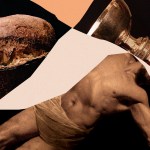
On this Spy Wednesday, let us marvel at our suffering servant who became our Savior by enduring the cross and its shame. May we marvel at Jesus as he leads with his “weak foot forward,” encountering betrayal by his inner circle and by Judas. Judas selfishly drank from the cup of betrayal, but Jesus drank from the cup that was ordained for him alone—God’s cup of wrath.

The cup Jesus was about to drink represents far more than physical suffering; it is the cup of God’s righteous judgment. In the Old Testament, the “cup” symbolized God’s wrath toward sin (Isa. 51:17). Jesus willingly submitted to bear that judgment for us. His agony wasn’t just about the physical pain but the spiritual weight of humanity’s sin. When he prayed, “Yet not what I will, but what you will” (Mark 14:36), Jesus demonstrated perfect surrender, inviting us to trust God even in our darkest moments.

As we experience loneliness and betrayal, may we resolve to trust the one who remained faithful, even to death. Like Paul, may we declare, “May it not be held against them. But the Lord stood at my side and gave me strength” (2 Tim. 4:16–17).

So how do we rely on God during deep emotional anguish? First, like Jesus, we must slow down to acknowledge the weight we are carrying. Second, make space to bring that to the Lord. Even a simple breath prayer can help at the moment, such as:

“Father, draw near to me as I draw near to you.”

“Jesus, help me trust you in this moment.”

“Holy Spirit, guide my thoughts and give me rest.”

Set aside time for longer moments of prayer, not as an obligation to live up to, but because you have one who is always for you—even to death. Finally, pray boldly, and surrender your will boldly—the Father’s heart is for you. He will hold you in his steadfast love.

Jamaal Williams is lead pastor of Sojourn Church Midtown in Louisville, Kentucky, and president of Harbor Network. He is the coauthor of In Church as It Is in Heaven. Jamaal lives in Louisville with his wife, Amber, and their five children.

Church Life

When the Hour Came

This Maundy Thursday, let us remember the extreme length and the profound depth of Jesus’ dying love.

Meditations on Maundy Thursday.
Illustration by Keith Negley

Luke 22:14–20

At long last, Jesus came to the climactic hour for which he had been born. We rightly remember his birth with happy celebration. And we rightly remember his death with hushed reverence. We are on holy ground.

We call this day of Holy Week Maundy Thursday because of our Lord’s words that evening: “A new commandment [Latin: mandatum] I give to you” (John 13:34, ESV).

Luke’s account of the occasion points us toward two heart-melting gospel realities.

One, Jesus did not save us at a safe distance, as if by remote control. He threw himself into our salvation with wholehearted abandon. His body was shattered. His blood gushed out.

As Jesus and his disciples observed the Passover, he explained the extreme length and the profound depth of his dying love for us:

“And he took bread, and when he had given thanks, he broke it and gave it to them, saying, ‘This is my body, which is given for you. Do this in remembrance of me.’ And likewise the cup after they had eaten, saying, ‘This cup that is poured out for you is the new covenant in my blood’” ( Luke 22:19–20, ESV).

The old covenant depended, in part, on our obedience. That is why the last two words of the Old Testament are “total destruction” (Mal. 4:6). We disobeyed extremely. But our covenant betrayal did not defeat our covenant Lord. Far from backing out, he pressed in more devotedly. He sent his only Son as our all-sufficient Savior. That’s why the New Testament concludes with “the grace of the Lord Jesus” (Rev. 22:21)—the final word of endless hope.

Let’s be clear about God’s covenantal arrangement with us now. We are not bringing our strengths to the table while God brings His strengths to the table so we can cobble together a team win. No, the new covenant is all of God’s grace alone. And he does not lower his standards. His grace goes so far as to internalize his holy law down at the deepest substratum of our inmost beings (Heb. 8:8–13). That profound renewal is good news for everyone fed up with being “prone to wander,” as the old hymn says. And Jesus sealed our new covenant hope by his very blood. He did not hold back at all.

Two, Jesus did not limit his outpouring of love to his passion and cross long ago. Yes, his atoning death was “once for all” (Heb. 7:27, ESV). To quote the Book of Common Prayer, he made upon the cross “by his one oblation of himself once offered, a full, perfect and sufficient sacrifice, oblation, and satisfaction for the sins of the whole world.”

The finality of the Cross is the gospel message that I, as a minister, love to declare. It is the gospel we all love to hear.

But in addition, our risen Savior, through his Spirit, visits us in Holy Communion with real-time experiences of his endless grace. By calling us to eat and drink, he is saying, “My dying love for you is so real you can taste it! Come. Take it in. Be renewed.”

Holy Communion is a feast. Jesus fills our hearts again and again, reassuring us that our repeated sins in this life cannot deplete his finished work on the cross.

This evening, as we receive Holy Communion in our churches, it might be like that moment in Tolkien’s Return of the King, just after the siege of Gondor. The sound of those distant horns had declared that Rohan was coming to the rescue. Then after the battle was won, Tolkien tells us that, for Pippin, “never in after years could he hear a horn blown in the distance without tears starting in his eyes.”

Our rescuing Savior is both a solid historical reality to be remembered and a vivid present experience to be savored. Tonight we will come to him as we are, with all the ruins and regrets of our sins. We will remember, with awestruck reverence, his total commitment to saving us from it all. And our eyes may well flood with tears.

“Do this in remembrance of me” invites us there. Why hold back at all? He didn’t. And he doesn’t.

Pastor Ray Ortlund is the president of Renewal Ministries and a canon theologian in the Anglican Church in North America. Ortlund gradutated from University of Aberdeen (PhD) and was ordained into Christian ministry by Lake Avenue Church, Pasadena, in 1975.

Church Life

By His Wounds

On Good Friday, the sinless one became the sin bearer for our healing.

Meditations on Good Friday.
Illustration by Keith Negley

1 Peter 2:22–24

Good Friday joins together two staggering truths: “He committed no sin” and “By his wounds you have been healed.”

No Sin

Sin is so common its absence is stunning. We are a people acclimated to depravity, others’ and especially our own. As soon as self-awareness dawned on us, we began a running relationship with sin. Of course, sin is not natural. Sin did not exist when God made our first parents. Adam and Eve brought sin into the world with all its power to unmake the goodness God made. Therefore, sin perverts the natural or original order of things. Sin has been so long with us that, though unnatural, it feels common. We might rightly ask ourselves, How will we ever escape it?

But Jesus “committed no sin.” Jesus is as uncommon as sin is common. Not only did the Lord not sin; he didn’t even use his words to deceive. That’s the Serpent’s way. With forked tongue, the Devil trades in half-truths and outright lies. He is the Father of Lies, and we have been his children. So observant human beings are stunned when one enters history who committed no sin and never deceived. If we can, we ought to imagine purity from heart to lips, from behavior to speech. Not even reviling and suffering could make him break God’s holy law. Jesus was like us in every way, except without sin (Heb. 4:15).

Sin Bearer

Even more stunning than Jesus’ perfection—if something could be more stunning—is that “he himself bore our sins in his body on the tree, that we might die to sin and live to righteousness.” The one without sin became the one sin bearer.

Ineffable.

Peter makes certain to remind us “he himself bore our sins.” In other words, the Lord Jesus did not delegate sin bearing to another. He chose no subordinate to run his holy errand. Angels are ministering spirits sent out for the sake of our salvation (Heb. 1:14). Christ commands legions of angels. Yet Jesus, he himself, personally shouldered the great burden of our sin. The work of redemption belonged uniquely and solely to him. He himself.

Moreover, the Lord “bore our sins in his body.” The carrying of sin was not a fantasy, an intellectual abstraction, or merely a spiritual principle. Rather, sin bearing had physical consequence. As the writer of Hebrews teaches us:

For it is impossible for the blood of bulls and goats to take away sins.
Consequently, when Christ came into the world,
he said, “Sacrifices and offerings you have not desired, but a body have you prepared for me;
in burnt offerings and sin offerings you have taken no pleasure. (10:4–6, ESV)

The Father prepared a body for the Son because other sacrifices and offerings were not desirable. The Father took no pleasure in them. The temple sacrifices and offerings were but pointers to another body, a human body, specifically prepared to bear sin. In this body, broken for us, the Father found pleasure and delight. In that body a new possibility was opened for us—“that we might die to sin and live to righteousness.”

But how?

Wounded Healer

“By his wounds you have been healed.” The sinless one became the sin bearer for our healing.

Those physical wounds on a rugged cross by God’s grace became the healing agent in our salvation. On the cross, Jesus Christ became heaven’s apothecary, dispensing the one medicine our souls desperately needed—his blood.

Flesh torn to ribbons by a Roman whip. Head punctured with the crown of thorns. Metal nails pounded through wrists and feet. Side lanced with spear. What wounds are these? Wounds that healed not themselves but others. Wounds that healed you. How could Jesus be stricken and we be strengthened? How could Jesus be tortured but we be treated? How could Jesus be harmed so grotesquely but we be healed so completely?

Thabiti Anyabwile serves as a pastor at Anacostia River Church in Washington, DC, and is the president of The Crete Collective. The author of several books, he’s happily married to Kristie and is the pleased father of three adult children.

addApple PodcastsDown ArrowDown ArrowDown Arrowarrow_left_altLeft ArrowLeft ArrowRight ArrowRight ArrowRight Arrowarrow_up_altUp ArrowUp ArrowAvailable at Amazoncaret-downCloseCloseellipseEmailEmailExpandExpandExternalExternalFacebookfacebook-squarefolderGiftGiftGooglegoogleGoogle KeephamburgerInstagraminstagram-squareLinkLinklinkedin-squareListenListenListenChristianity TodayCT Creative Studio Logologo_orgMegaphoneMenuMenupausePinterestPlayPlayPocketPodcastprintremoveRSSRSSSaveSavesaveSearchSearchsearchSpotifyStitcherTelegramTable of ContentsTable of Contentstwitter-squareWhatsAppXYouTubeYouTube