News

South Korea’s Protests Are Bringing Some Christian Families Closer

Differing opinions on Yoon’s impeachment are driving kin apart. But a few parents and children are finding more common ground.

Thousands of people protest in Seoul, South Korea, near President Yoon Suk Yeol's official residence calling for his arrest after his impeachment.

Thousands of people protest in Seoul, South Korea, near President Yoon Suk Yeol's official residence calling for his arrest after his impeachment.

Christianity Today January 22, 2025
NurPhoto / Getty

On a bitterly cold December day last year, Jeon Jeehoo decided to join a protest.

After wrapping up her part-time job as an English tutor at a hagwon—a Korean cram school—Jeehoo rushed to the subway. Ordinarily, the trip from her workplace to the National Assembly building in Seoul would take one and a half hours. But the station was in total chaos as crowds of people were also out and about, arguably for the same reason.

Jeehoo hopped on a bus, which made little progress fighting traffic. So she got off midway and started walking along a bridge across a river—one typically only used by cars, not pedestrians—toward the legislature, where thousands were gathering to call for President Yoon Suk Yeol’s impeachment.

Before participating in this protest and several others later on, Jeehoo meditated on Micah 6:8, which says, “He has shown you, O mortal, what is good. And what does the Lord require of you? To act justly and to love mercy and to walk humbly with your God.” The church cannot turn its back on society, Jeehoo thought.

Trudging across the bridge, the 24-year-old student and InterVarsity ministry leader at Sookmyung Women’s University clutched hand warmers in her pockets to soothe her frigid fingers. A frosty wind slapped her face.

As she drew closer to the protest site, she saw people waving light sticks that flashed bright green, purple, and pink hues in the air. The sounds of upbeat K-pop music—alongside loud cries repeatedly chanting, “Yoon Suk Yeol, step down!”—flowed into her ears.

Jeon Jeehoo (second to left) with her church friends at a protest to impeach President Yoon Suk Yeol at GwanghwamunCourtesy of Jeon Jeehoo
Jeon Jeehoo (second to left) with church friends at a protest to impeach President Yoon Suk Yeol at Gwanghwamun.

Jeehoo’s father, Jaehyung, had arrived at the same protest site earlier that day. The crowd was overwhelming and felt eerily reminiscent of the Itaewon crowd-crush incident in Seoul in 2022, where more than 150 people died in a narrow alley while celebrating Halloween. He tried to text Jeehoo to warn her of the crowd, but cell service on the messaging app KakaoTalk was not working, and phone calls only worked after he left the protest’s vicinity, when the motion to impeach Yoon failed after members of the president’s People Power Party boycotted the vote. 

Seven years earlier, the father and daughter had participated in another protest against former president Park Geun-hye, who was impeached in March 2017 and charged with bribery, extortion, and abuse of power. As Jeehoo shouted protest slogans demanding Park’s impeachment for hours in the freezing cold, her throat became raw and she tasted blood.

This protest would be similar, Jeehoo surmised. The protest against Park had a solemn atmosphere that was “full of resentment,” she said. But the mood around the National Assembly building was cheerful, with people dancing, singing, and wearing creative costumes.

One week later, when the second motion to impeach Yoon was passed, the mood turned jubilant as thousands of protesters—with an estimated 417,000 people present at its peak—let out a rapturous cheer outside the National Assembly.

Fifty-year-old Moon Chan and his twenty-year-old daughter, Hyein, who had arrived at the protest site feeling anxious and expectant, were among them. Chan had often driven Hyein to K-pop idol concerts but had never attended a single one. At the protest, however, he found himself waving a light stick from her favorite idol group beside her.

Hyein, meanwhile, saw an elderly man dancing to the Girls’ Generation song “Into the New World” when the news broke. A middle-aged woman standing in line for the restroom looked around and quietly took in the scene before saying, “Thank you for your hard work,” to a group of young people near her.

Older generations of Koreans excel in protests, but here they had warmly welcomed elements of younger Korean culture that felt unfamiliar, like singing K-pop songs that were not part of the traditional protest repertoire, Hyein thought. “Seeing their flexibility and willingness to adapt made me realize they were far more open-minded than I had thought,” she said. The Moons remained until evening, snapping photos of themselves with the National Assembly as their backdrop.

Protests have erupted across Seoul in the wake of Yoon Suk Yeol’s ill-fated martial law attempt. Almost every city in the country, from Daejeon to Busan to Jeju, held protests on its streets, outside their city halls, or in front of the Republican Party’s buildings.

Some of the protests were organized by rival political activists who use YouTube to garner supporters and livestream the gatherings. Some were led by civic organizations not affiliated with any religion or political party, such as Candlelight Action, which held the protest Jeehoo and her father participated in. Others arose organically, as angry citizens found each other in plazas and squares.

On December 3, Yoon rocked the country by issuing a nationwide emergency martial law, declaring that there were “anti-state” forces sympathizing with North Korea that threatened to cause South Korea’s downfall. The last time martial law was imposed in the country was in 1979 after Park Chung-hee, the president and a military dictator, was assassinated.

Armed soldiers surrounded the National Assembly building, preventing lawmakers from entering to cast their votes on the martial law declaration, which was formally lifted the next day. Members of the National Assembly then voted to impeach Yoon for abuse of power on December 14, throwing the country into further turmoil.

Protesters singing the song “Happy” by Korean pop rock band Day6 in Seoul when Yoon’s impeachment motion was passed on Saturday, December 14.

Tens of thousands of Koreans have since thronged the streets. Intensifying tensions between pro- and anti-Yoon supporters have exacerbated generational and gender-related rifts in Korean society. Many congregated outside the National Assembly, while others demonstrated in front of the People Power Party’s headquarters. Hundreds of Yoon’s supporters and opponents also spent weeks campaigning outside the president’s home in Yongsan, central Seoul.

Yoon’s supporters are predominantly elderly or young men, while those protesting against Yoon largely comprise women in their 20s and 30s.

“Mothers and fathers openly disapprove of their children’s activism, while some young South Koreans speak online of severing ties with their parents over their support of Yoon,” noted a report in the South China Morning Post.

In central Seoul, a large crowd gathered to oppose Yoon’s impeachment, calling the parliament vote invalid and championing for the president’s reinstatement. Pro-Yoon protesters waved American flags and chanted “Stop the Steal” in English while bearing posters with the slogan, even as peddlers hawked bright red MAGA-inspired caps bearing the words “against the unlawful impeachment.”

Yoon’s supporters see similarities in their president’s predicament to that of United States president Donald Trump, who was impeached twice. They say South Korea’s opposition Democratic Party stole the April 2024 legislative election by winning 175 out of 300 seats at the National Assembly. Yoon also suggested that election fraud was the reason why he failed to impose martial law in the country.

Similar splits have occurred in Christian circles. Many evangelical Korean churches are supportive of Yoon, whom they view as pro-America and capable of defending South Korea from communist influences.

One of the most prominent voices in this space is Jun Kwang-hoon, the pastor of Sarang Jeil Church. “If President Yoon hadn’t declared martial law, the country would already be in the hands of North Korea!” he shouted during a demonstration in early January.

Yet close to two-thirds of the pastors polled in a survey last month favored impeachment. Around 700 pastors from the Presbyterian Church of Korea held a public prayer meeting in the Yeouido neighborhood calling for Yoon’s impeachment.

Jeon Jeehoo (far right) with friends at at the Yongsan office of the President of South Korea. Courtesy of Jeon Jeehoo
Jeon Jeehoo (far right) with her university friends at at the Yongsan office of the President of South Korea.

But the Jeons and the Moons have largely been spared these fissures. In fact, rather than tearing them apart, the protests have helped to bridge intergenerational divides between parents and children.

Long before the country’s political unrest, the Jeon family sought each other out. Jeehoo would confide in her parents about struggling to have an intimate relationship with God. They would also chat about interesting books they had read or political developments in the country. Even now, they often share life’s highs and lows with one another.

Since attending the protests, Jeehoo’s parents have stopped labeling younger generations as indifferent to politics and not brave enough to demonstrate publicly against an issue or a person in power.

Sixty-year-old Jaehyung, Jeehoo’s father, experienced martial law firsthand in the ’70s and ’80s, living under Park Chung-hee and Chun Doo-hwan’s authoritarian dictatorship, and during the 1980 Gwangju Uprising, where around 200 civilians were killed while protesting against Chun.

As Yoon’s short-lived martial law announcement broke, Jaehyung worried history would repeat itself as younger Koreans seemed less invested in politics.

But when Jaehyung turned up at the National Assembly that cold December day, he was surprised to see so many young Koreans showing up to protest. He felt heartened that young people wanted to mark this significant moment in South Korea’s history.

Joining the protests with her parents and receiving their support for her political activism also made her feel “very happy and proud,” Jeehoo said.

Chan, a member of Onnuri Church, also previously held stereotypes of young Koreans, thinking they lacked historical awareness and preferred individualism over collectivism. What he witnessed at the protest challenged his perceptions of that generation. He saw young people displaying resilience and creativity, expressions of hope and aspiration that were “vibrant and innovative,” he said.

“Seeing them create and lead their own unique protest culture while actively and diversely voicing their opinions [makes me] think that this younger generation possesses many qualities that surpass those of older generations,” he added.

It was a “blessing” to share similar values with her father, Hyein said. Many of her friends are struggling to understand their parents’ views, and vice versa, as they disagree over whether Yoon should be impeached.

On January 15, Yoon was apprehended after barricading himself in his residential compound for weeks and resisting an initial arrest attempt two weeks prior. Police formally arrested Yoon four days later. When a court extended Yoon’s period of detention for up to 20 days, his supporters stormed a court building, destroying office equipment and furniture, with 40 people suffering minor injuries. On January 21, Yoon made his first public appearance at his impeachment trial.

Upon hearing of Yoon’s arrest, Chan clapped and cheered with relief and joy, praising God’s sovereignty and justice. He thought of Revelation 18:10, which says, “Woe! Woe to you, great city, you mighty city of Babylon! In one hour your doom has come!”

Jeehoo joined a protest at Gwanghwamun with her university friends the day before Yoon’s arrest. As she and thousands of other protesters marched toward City Hall, waving handmade Korean flags, she listened to middle and high schoolers making passionate speeches.

An elderly man held up a sign that said, “Feminism saves democracy.” Another elderly man earnestly sang a K-pop song, stumbling slightly over its fast-paced rhythm. An elderly woman smiled and said, “Thank you for your hard work.” A young mother tightly gripped the hands of her two children as they marched along.

“The protest chants and those who shouted them were diverse rather than uniform,” Jeehoo said. “We applauded each other’s flags and laughed together.”

Additional reporting by Jennifer Park in South Korea.

News
Wire Story

Trump Halts Refugee Resettlement Program

After welcoming thousands of families in recent months, agencies are “heartbroken” over an executive order to temporarily suspend admittances.

Two people wait at airport for Syrian refugees holding balloons and sign
Christianity Today January 22, 2025
Andrew Renneisen / Getty Images

Incoming President Donald Trump has halted for at least 90 days a refugee admissions program that resettled 100,000 individuals fleeing persecution in fiscal year 2024, including nearly 30,000 Christians.

By an executive order on Monday, Trump suspended the US Refugee Admissions Program (USRAP) “until such time as the further entry into the United States of refugees aligns with the interests” of the nation, ordered the secretary of Homeland Security to submit a report in consultation with the secretary of state within 90 days of the order regarding whether resumption of the program “would be in the interests of the United States,” and declared the order effective January 27.

A similar executive order went in place during the start of Trump’s previous term in 2017, Christianity Today reported, putting refugee families in limbo and churches’ plans to help families resettle on hold; the refugee ceiling was cut to a record low of 18,000 a year.

A majority of refugee resettlement agencies in the US are faith-based—including Church World Service, Lutheran Immigration and Refugee Services, Bethany Christian Services, and World Relief, the humanitarian arm of the National Association of Evangelicals—and several had to lay off staff, close offices, or shut down entirely as a result of the cuts, CT wrote.

This time, Trump ordered the cabinet members to submit reports every 90 days on the program until he deems its resumption is in the nation’s best interest.

The Southern Baptist Ethics & Religious Liberty Commission (ERLC) responded with optimism. “We are hopeful that this reevaluation will lead to improvement in the process that will better facilitate persecuted people finding refuge in the United States,” ERLC President Brent Leatherwood told Baptist Press. “Southern Baptists maintain a deep and abiding concern for persecuted people across the globe—especially fellow Christians.”

Messengers to the 2023 SBC Annual Meeting passed a resolution stating, “We implore our government leaders to maintain robust avenues for valid asylum claimants seeking refuge and to create legal pathways to permanent status for immigrants who are in our communities by no fault of their own, prioritizing the unity of families.”

But refugee resettlement organizations and religious liberty groups, particularly World Relief, lamented Trump’s order. World Relief called the order “drastic” and urged Trump to reconsider, while yet expressing gratitude that the program might resume.

“We’re heartbroken by this decision,” World Relief President and CEO Myal Greene said in a press statement. “At a time when there are more refugees globally than ever in recorded history, including many persecuted on account of their faith, the United States should be doing more—not less—to offer help to those in need of refuge.

“Nevertheless, we’re grateful that the president’s order today still leaves room for resettlement to resume later this year, and we pray he will indeed resume resettlement as soon as possible.”

In the first three months of fiscal year 2025, more than 27,000 refugees were admitted in the US, World Relief reported, 2,241 of whom World Relief resettled in collaboration with local church partners nationally. Nearly 70 percent of those fled a threat of persecution in Afghanistan, the Democratic Republic of Congo, Myanmar, Syria and Venezuela, all of which except Venezuela are included on the 2025 World Watch List of the 50 most dangerous countries for Christians.

“The United States lacks the ability to absorb large numbers of migrants, and in particular, refugees, into its communities in a manner that does not compromise the availability of resources for Americans, that protects their safety and security, and that ensures the appropriate assimilation of refugees,” Trump said in his order. “This order suspends the USRAP until such time as the further entry into the United States of refugees aligns with the interests of the United States.”

Trump reserved the right of the secretaries of state and homeland security, during the suspension, to jointly decide to admit refugees on a case-by-case basis, “but only so long as they determine that the entry of such aliens as refugees is in the national interest and does not pose a threat to the security or welfare of the United States.”

In urging Trump to reconsider the executive order, Matthew Soerens, World Relief’s vice president of advocacy and policy, pointed to research focusing on the beliefs of Trump’s supporters.

Particularly, a 2024 Lifeway Research study found that 71 percent of evangelical Christians believe that the US has a moral responsibility to receive refugees, and a 2022 Pew Research study found that majorities of Republicans, Democrats, and Independents believe receiving refugees should be a goal of US immigration policy.

“Most evangelical Christians voted for President Trump in 2016, in 2020, and again in 2024,” Soerens said in a press statement. “They did so heartened by pledges that he would secure our borders and protect Christians from persecution, but most did not anticipate that he would halt a longstanding, legal immigration program that offers refuge to those persecuted for their Christian faith.”

In fiscal year 2024, the US resettled 100,034 refugees of all backgrounds, World Relief and Open Doors US reported in October 2024, including 29,493 Christian refugees from countries on the 2024 World Watch List.

The fiscal 2024 resettlement figure was the highest number since 2016, the result of the Biden administration’s rebuilding the refugee resettlement program after it reached lows during the Trump’s first administration, even before of the COVID-19 pandemic.

Nadine Maenza, president of the International Religious Freedom Secretariat and a former member of the US Commission on International Religious Freedom, has pointed out the influence US policy has on the ability of refugees to find an open door anywhere.

“When the US drops their numbers, countries around the world all drop their numbers, and when the US increases their numbers, it has the effect where all the other countries increase their numbers,” Maenza said upon the release of the October report from World Relief and Open Doors US “So when we close our doors, guess what happens? Other countries close their doors and it becomes an even larger problem in the world.”

Theology

Cynicism Could Cost Us Our Souls

Columnist

An opportunistic or despairing attitude makes sense—unless you have the kingdom of God.

Daniel in the Lion's Den
Christianity Today January 22, 2025
Illustration by Christianity Today / Source Images: WikiMedia Commons

This piece was adapted from Russell Moore’s newsletter. Subscribe here.

This past week, I talked to a friend who was discouraged by the politicization of everything. She wanted a break from social media division and conversations that all end up as political arguments. So she found a Christian women’s Bible study in her community and signed up, hoping it could give her connection with others, a reminder that there’s more to life than the news cycle. Then she discovered that the Bible study speaker had been part of the January 6, 2021, Capitol attacks.

I winced, imagining her disappointment, and immediately thought of others facing the same kind of legitimate dispiritedness.

Imagine the Pentecostal Christian who trusted the “prophet” who seemed to know all kinds of personal details about people in his audience. What must she think when she realizes this was not the Holy Spirit but the man’s ability to scan social media feeds ahead of time, to pretend to have a spiritual gift when it was all just a marketing technique? Or contemplate what it must be like to be inspired by a pastor speaking at the presidential inauguration only to see him, within hours, offer a personally branded meme coin for people to buy. It would be hard not to see all this and not be disillusioned.

The danger, though, is that at least for some of us, disillusionment can easily give way to cynicism. The cynicism of our moment comes in at least two forms. One is an opportunistic kind of cynicism. This is the kind that determines that no one is really sincere and that the whole world is divided into two simple categories: hucksters and marks. The opportunistic cynic decides, then, to learn how to be a huckster. Anyone who doesn’t is a sucker or a loser, in this view.

That makes things much easier for the opportunistic cynic because, among other things, it gives an immediate intellectual shortcut. One need not actually think about what’s true and what’s false, what’s real and what’s fake, what’s right and what’s wrong. All the opportunistic cynic has to think about is what works. Once the cynic knows who the “friends” and who the “enemies” are, he or she has the template needed to cheer on the right side and to denounce the wrong one.

The other kind of cynicism is instead despairing. If opportunistic cynicism is self-advancing, despairing cynicism is self-protecting. Once I stop expecting actual goodness or sincerity in other people or in institutions, I feel like I can’t be hurt anymore, or at least not hurt as much.

I think often about the late pastor Eugene Peterson’s saying how creatures like crabs and beetles have an initial advantage over other forms of life because they have exoskeletons, protective bone systems on the outside, to protect them from disaster. Cynicism can seem to offer that kind of protection: Nothing can disappoint you if you’re pre-disappointed.

“Creatures with endoskeletons (that is, with their skeletons on the inside, like kittens and humans) are much more disadvantaged at first, being highly vulnerable to outside danger,” Peterson wrote. “But if they survive through the tender care and protection of others, they can develop higher forms of consciousness.”

Cynicism protects us from some initial hurt, but in the end, it filters out not only the genuine danger and fakeness we rightly want to avoid—it ultimately filters out everything and everyone. We no longer expect any goodness or authenticity or grace, anywhere. We stop seeking. We stop asking. We stop knocking at that door.

But even for those of us who decide we want to avoid cynicism, there are pitfalls. After all, one way to pretend to be free from cynicism is to act as though any negative assessment of reality is itself cynical.

The most cynical people I know are those who wave away any sense of lament or warning with “Why don’t you just talk about all the good things?” That’s not only its own form of covert cynicism but a cynicism factory because, in the fullness of time, most people come to see the difference between truth and propaganda.

So how do we respond to a troubled time without cynicism? The church is in genuine crisis on multiple fronts. So is the nation. So is the world.

Lately, I am drawn to the Book of Daniel. In the ninth chapter, Daniel—an exile from Judea in Babylon—wrote that he studied the Scriptures of old and determined “the number of years that, according to the word of the Lord to Jeremiah the prophet, must pass before the end of the desolations of Jerusalem, namely, seventy years” (v. 2, ESV throughout).

That itself was a reckoning with reality. After all, Jeremiah was controversial because he said that Babylon would indeed carry the people of God away and that it would be 70 years before they would return. The people wanted to hear other prophets, those who said the crisis would soon be over.

If Daniel had been cynical, he might have just denied there was a problem and busied himself with learning how to bow to Nebuchadnezzar’s golden image whenever the music started. Or he could have simply given up altogether and decided that Jerusalem was gone, that all that he could hope for was to be left alone in Babylon.

Instead, the text reveals, Daniel turned to the kind of prayer that recognized how dire the hour was yet also remembered that God is a God of mercy and of grace, that he had delivered his people from Egypt and that he could deliver them again.

“Now therefore, O our God, listen to the prayer of your servant and to his pleas for mercy, and for your own sake, O Lord, make your face to shine upon your sanctuary, which is desolate,” Daniel prayed. “O my God, incline your ear and hear. Open your eyes and see our desolations, and the city that is called by your name” (vv. 17–18).

God’s sanctuary was indeed desolate. Daniel was free from the deluded cynicism to say otherwise. And he trusted all that could change, because he was also free from the cynicism that gives up on hope.

Some of us struggle with seeing the depths of our crisis. Some of us struggle to see that the Spirit is still on the move, and that any Babylon can fall, as the Apocalypse puts it, “in a single hour” (Rev. 18:19).

We can help each other to remember all of that. And when one of us stumbles under the weight of cynicism, others of us can bear the burden for a while, to keep the prayers and hope and memory going until the hurting one can hear it again, can see it again.

Cynicism makes sense right now. It seems that the arc of history is bending toward it. But we know that the arc of history is skewed, and has been since our first ancestors brought death upon themselves in the Garden. We know that something’s gone awfully wrong with the world and that this is not how it’s supposed to be. That’s why we are looking for something different, for another king, another kingdom.

Let’s keep our sanity by reminding each other that cynicism will one day seem crazy.

Russell Moore is the editor in chief at Christianity Today and leads its Public Theology Project.

News

Died: Arthur Blessitt, Who Carried a Cross Around the World

The evangelist set a world record for longest pilgrimage and kept going for 43,340 miles.

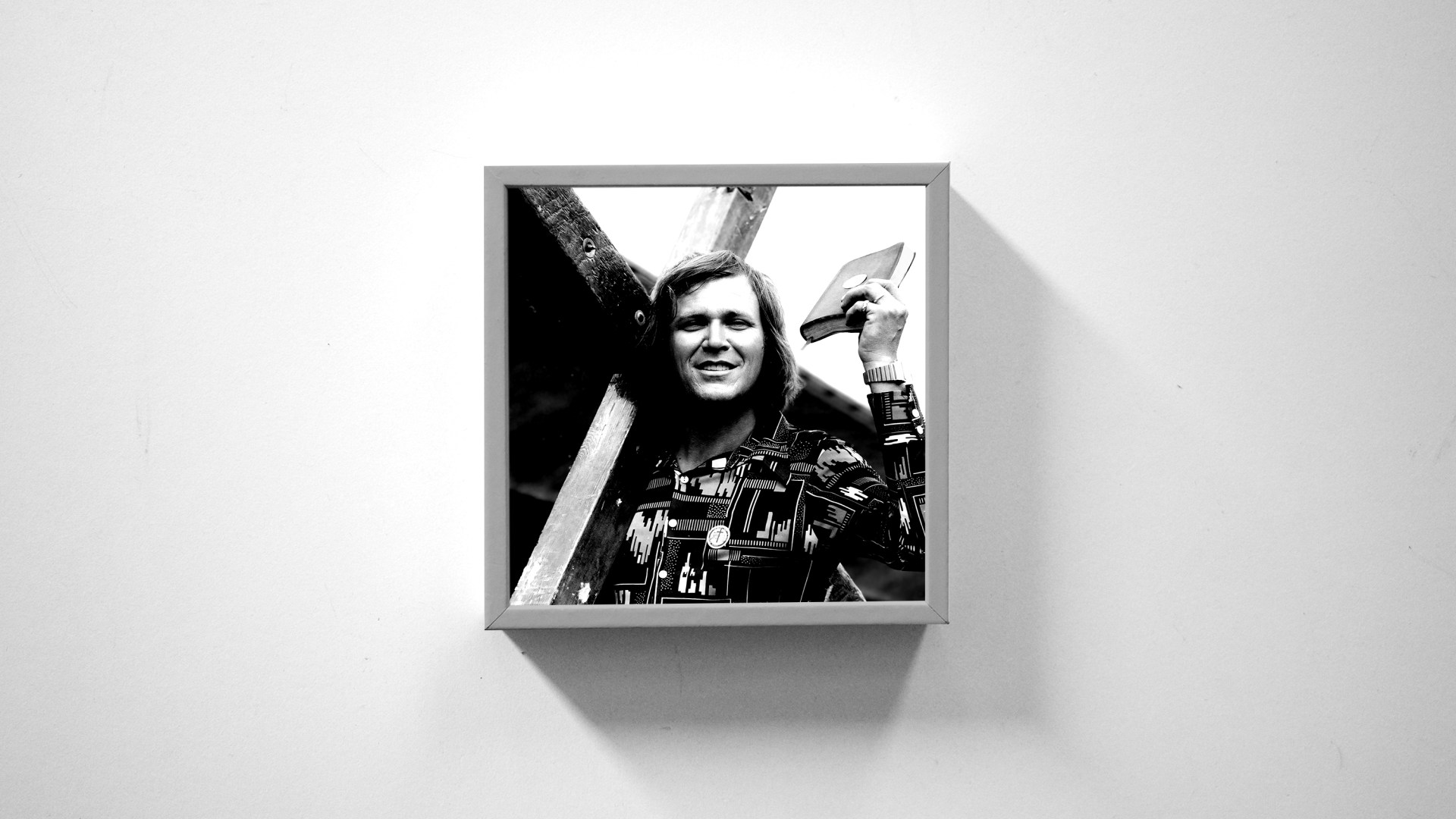
obit style image for evangelist Arthur Blessitt
Christianity Today January 21, 2025
Photo by Antony Matheus Linsen/Fairfax Media via Getty Images / edits by Christianity Today

People had a lot of questions when they saw a hippie minister with slightly shaggy hair hauling a 12-foot cross with a wheel across North America, South America, Europe, Asia, and Africa, hauling it down highways, up mountains, into deserts and jungles, through war zones, through cities and remote villages, and into countries where he did not know the language or understand the customs.

They asked what he was doing. Where he was going. And most of all, why.

Arthur Blessitt would answer with the gospel. He would say, “Jesus, man, he loves you,” and tell them the cross was a sign of how much. He would say, “If you would like to know Jesus and invite him into your heart, please pray this prayer with me now, Dear God, I need you …

Blessitt did that for 43,340 miles, by his count. Which worked out to about 86 million steps and shoes he had to resole or replace several times every year. 

He started in Hollywood in an impractical pair of sandals that he quickly replaced and went across the country to Washington, DC, and then on to 323 other countries, island groups, and territories. He set a Guinness World Record for longest ongoing pilgrimage and kept going for several more decades after that. He carried his cross all over the world for more than 50 years.

In his not-so-humble moments, Blessitt called this “one of the most dramatic and enduring pilgrimages in the history of man.” But he would also say his own role should not be overinflated. What had he done, except walk? Except be obedient to the voice that told him to go? 

“I was just a donkey and pilgrim, lifting up the cross and Jesus,” Blessitt said

Everywhere he went, people asked him to explain himself, and he told them about Jesus.

The evangelist died on January 14, 2025, at the age of 84. In a final statement posted to his website, Blessitt said he was looking forward to walking in glory. 

“These feet that walked so far on roads of dirt and tar will now be walking on the streets of gold,” Blessitt wrote. “Ready to see Jesus again!”

Blessitt was born on October 27, 1940, in Greenville, Mississippi, to Virginia and Arthur Blessitt. The elder Arthur served in the Air Force in World War II and was stationed afterward in Texas, Louisiana, Mississippi, and Louisiana again. 

The family was not especially religious but attended a Baptist revival when young Arthur was 7. It was held in a bush arbor—a temporary structure in the woods, made of brush and branches piled on top of fresh-cut poles—and the boy wanted to go forward during an altar call. Blessitt’s parents said he was too young to make a decision for Jesus. On the way home, as he recalled in his memoir, he pleaded and pleaded until his father hung a U on the dark Louisiana road, headed back to the revival, found the minister about to leave in his car, and said, “My son wants to give his life to Jesus.”

Blessitt told everyone he knew about his newfound salvation, leading his sister to Christ and handing out tracts and talking about Jesus in the bars where his father went to drink—until the elder Arthur, too, accepted Jesus. 

Blessitt felt a call to ministry when he was 15 and went to Mississippi College and then Golden Gate Baptist Theological Seminary to prepare. He got ordained in a Baptist church and lasted one semester in seminary before feeling compelled to spend all his time evangelizing.

He ended up in Elko, Nevada, preaching in the brothels that were legal in the state, and then in Los Angeles, where the 1960s counterculture was exploding. In West Hollywood, he found a whole generation experimenting with drugs and music, new lifestyles, and new ideas, all searching for something better than their parents had given them.

“Kids are totally disillusioned with the phony concept of life,” he told a British reporter seeking to understand the hippie phenomenon. “They are contemptuous of the great American dream of money, two cars in the garage, cooler TV, coziness, and complacency. Jesus offers life: L-I-F-E.”

Blessitt, experienced at evangelizing in bars, made his way through the clubs on the Sunset Strip, including the famous Whisky a Go Go, before deciding to start his own: a nightclub for Jesus. 

It was a safe and free place for people to go—strung-out kids, street hustlers, bikers, drug dealers, drag performers, and rock musicians. Blessitt gave out coffee, Kool-Aid, bagels donated by a Jewish deli, and New Testaments with psychedelic-looking covers. His wife, Sherry, said he should call it “His Place,” so he did, and he made a big cross to hang on the wall. 

The cross came down when His Place was evicted by the landlord. Blessitt carried it outside, chained himself to it, and announced he was going on a hunger strike to protest this blatant attempt to banish Christian witness from Sunset Boulevard. He fasted for 28 days, Blessitt later wrote, before the owner of another building offered him a building for His Place.

Blessitt was only in the new location for a little while, though, when he heard Jesus speak to him. 

“Not in an audible voice,” Blessitt later explained, “but in my heart and mind. I know HIS voice.” 

Jesus said, “I want you to take that cross that is hanging on the wall in His Place and carry it across America.”

Blessitt said, “Thank you, Jesus, wow!”

There were lots of reasons to think this was a bad idea, but the 29-year-old evangelist was committed to being obedient to what he heard God say, regardless of the consequences. A few hundred people, including his wife and young children, gathered to see him start off on Christmas Day 1969. He led the crowd in a chant:

“Give me a J.”

“J!”

“Give me an E.”

“E!”

He spelled out Jesus and then asked, “What does that spell?”

The crowd said, “Jesus!”

Blessitt said, “What does America need?”

And they answered, “Jesus!”

He headed to DC. It wasn’t only the nation’s capital that needed Jesus, though, so after arriving in the summer of 1970, Blessitt decided to continue to Florida. But it wasn’t only America, either, so he went to Canada, and then to the ends of the earth. 

Blessitt wrote about his journeys in his diary and later his memoirs with boundless cheerfulness. He had an apparently inexhaustible optimism for what he believed God was doing and always ran into people ready to hear how Jesus loved them. He told stories of amazing encounters, dramatic conversions, and miracles. Though ordained a Baptist, as time went on he increasingly spoke like a charismatic.

“Well, TODAY THE GLORY FELL!” he wrote in the late 1980s. “I know it’s strange, but there is a moment on almost every walk in every country where the glory comes, when there is liberty—there is a breakthrough.”

Following the Spirit could be dangerous. Blessitt wrote that someone tried to set his cross on fire in Indiana and a group of men on motorcycles stole it in Assisi, Italy. He was thrown in jail multiple times and assaulted by police at least once. He was chased by an elephant in Tanzania, a crocodile in Zimbabwe, a green mamba in Ghana, and men with stones in Morocco. 

In America, he was shot at several times. Once, Blessitt said he jumped in a ditch and hid. Another time, he didn’t know why he hadn’t been hit. Maybe the men just missed, he reflected later, or maybe an angel had intervened, deflecting the bullets.

Blessitt ignored a doctor’s advice to get surgery for an aneurysm when he first set out and was fine, which he considered a miracle. He made up his mind to ignore all danger from then on. If he believed he was called by God, that overrode everything else.

“The call of God is not conditional,” Blessitt wrote. “I’d rather die in the will of God than live outside it.”

That commitment wasn’t a burden, for Blessitt, but a great adventure. People didn’t realize how exciting it could be to serve Jesus, he said. When he thought back at the end of his life to what he’d done and where he’d been, he couldn’t help but exult. 

“Thank you Jesus for calling me to evangelism,” Blessitt wrote. “I have preached in houses of prostitution, homosexual churches, Hell’s Angels camps, rock festivals, in bars, nightclubs, go-go clubs, nude clubs, love-ins, on the streets, on sidewalks, on porches, in football stadiums, at automobile races, wrestling matches, dirty movie-porno clubs … even an occasional church!”

Blessitt is survived by his first wife, Sherry; his second wife, Denise; sons Arthur Joel, Arthur Joshua, Arthur Joseph, and Arthur Jerusalem; and daughters Gina, Joy, and Sophia. 

He asked that there be no funeral or memorial services.

“The greatest thing you could do would be to go out and lead one more soul to be saved,” Blessitt said. “Share Jesus with someone today.”

Correction: A previous version of this article misstated Blessitt’s age at his death.

Books
Review

Pilgrim Charity and Pilgrim Cruelty Aren’t Easily Separated

Their treatment of Native populations appears hypocritical. But evangelism and conquest furthered the same underlying mission.

Different old artworks of the pilgrims, the Mayflower, and Plymouth Rock.
Christianity Today January 21, 2025
Illustration by Mallory Rentsch Tlapek / Source Images: WikiMedia Commons

In 1623, former Mayflower passenger Edward Winslow rushed west from Plymouth to visit Ousamequin, the Pilgrims’ Pokanoket ally and protector. Ousamequin was gravely ill and hadn’t eaten for days. Winslow found him surrounded by powwows “in the midst of their charms for him” and by women rubbing his extremities to keep him warm. 

The guest from Plymouth examined the Pokanoket leader’s mouth and discovered that his tongue was “exceedingly furred.” Winslow used his knife to scrape away pus and relieve Ousamequin’s swelling before feeding him some “conserves.” Within a half hour, Ousamequin had considerably improved, and Winslow treated others in the village who were ill. “I see the English are my friends and love me,” Ousamequin declared. “Whilst I live, I will never forget this kindness they have showed me.”

Winslow spent the night in conversation with Corbitant, another local native leader. They talked about religion after Corbitant asked Winslow why the English prayed before meals. Winslow explained that all good things come from God and it is appropriate to thank him. The Pilgrim visitor equated the English God with Kiehtan, a creator deity known to Algonquin peoples.

These were intimate, tender, and hopeful moments, but within weeks relations between the Plymouth settlers and the Natives took a very different turn. Ousamequin warned the Pilgrims that the Massachusett people, located to their north, intended to attack the English settlement. The Massachusett were traditional enemies of the Pokanokets, Ousamequin’s people. Ousamequin recommended a preemptive attack.

Pilgrim leaders heeded his advice. They sent Captain Myles Standish and a small party of men to an English outpost on the rim of Massachusetts Bay. Standish and his soldiers encountered two Massachusett men, Wituwamat and Pecksuot, who apparently boasted of having killed Europeans. The Plymouth visitors feigned good intentions, then surprised their Native counterparts. Standish grabbed a knife hanging from Pecksuot’s neck and stabbed him to death. Others in the group murdered Wituwamat. The English killed around nine Massachusett in all before returning to Plymouth. They brought Wituwamat’s head with them and displayed it on a pike above Plymouth’s fort.

“Oh, how happy a thing had it been, if you had converted some before you had killed any!” John Robinson, the Pilgrims’ pastor, wrote from the other side of the Atlantic. Robinson was baffled. Why had Standish acted in this manner? He lacked Christian “tenderness.” God would not approve of such barbarism.


How could the Pilgrims exhibit such a mixture of charity and cruelty? How could hopes for Native conversion devolve into bloody treachery and conquest? Were the Pilgrims hypocrites? Were they and their descendants not true Christians?

In The Wars of the Lord: The Puritan Conquest of America’s First People, Calvin Theological Seminary professor Matthew Tuininga argues that the English settlers of New England were not hypocrites. It wasn’t despite their Christianity that they conquered and decimated Native peoples. Instead, both evangelization and violence served the same broader purpose. Daniel Gookin, a Massachusetts Bay magistrate, referred to Native missions as a “War of the Lord” that freed souls from bondage to Satan. The Boston minister Increase Mather likewise referred to the 1675–1676 King Philip’s War as a “War of the Lord” in which God triumphed over his enemies. The English preferred peaceful conquest to bloody fighting. Either course, however, served the cause of Christ.

This book is a bracing corrective to simple morality tales. As Tuininga observes, prior generations of white Americans portrayed English colonists as well-intentioned men and women who established religious liberty and democracy in New England. Yes, Natives lost most of their land, but that was an inevitable byproduct of establishing conditions in which future Americans could flourish.

Nowadays the Puritans—Tuininga’s not-overly-accurate shorthand for most English settlers in New England—receive much more critical appraisal. While some American Christians still lionize the Pilgrims, contemporary books and curricula often depict them as rapacious racists who “used Christianity as a tool to justify the enslavement and genocide of innocent Native Americans.” Tuininga contends that “the reality is more complicated and disturbing.” Puritan theology “was not mere window dressing.” It animated both Edward Winslow’s anticipation of Native conversions and Standish’s murders of Wituwamat and Pecksuot. 

The Wars of the Lord is a landmark history of 17th-century New England. Most historians narrate events in a single colony, such as Plymouth or Massachusetts Bay. Tuininga, by contrast, weaves together the histories of many English jurisdictions, not only the above but also New Haven, Saybrook, and Connecticut. The granular points of theology and church-state relations differed in the various colonies, as did the tenor of English-Native relations. Many scholars, moreover, take seriously either theology or political developments, specifically English interactions with Natives. As Tuininga notes, however, the Puritans “did not separate the spiritual and the secular.” He likewise maintains a broad scope.

If readers need encouragement to plunge into this capacious history, they should know that Tuininga combines sharp analysis with a readable and even entertaining narrative. There are familiar characters, such as the Pilgrims, Ousamequin (whom the Plymouth leaders called Massasoit), Massachusetts Bay governor John Winthrop, and Mary Rowlandson, who wrote about her captivity during King Philip’s War (named for the Pokanoket chief Metacom, who went by “Philip”). Tuininga also introduces a procession of less familiar Native leaders, such as Awashonks, a female Sakonnet chief whose people supported but then abandoned Metacom during the mid-1670s war.

Awashonks is a paradigmatic example of Native persistence and adaptation. Like Metacom, she had rejected Christianity and resisted English encroachment onto her people’s land. As King Philip’s War turned in the favor of the English, though, Captain Benjamin Church of Plymouth Colony visited Awashonks with an overture of rum and tobacco. She wisely made him sample the rum to make sure it wasn’t poisoned. Then she struck an agreement with Church. Her men would fight for the English in exchange for “liberty to sit down in quietness on their lands.” The Sakonnets didn’t trust the English to honor their word, but they felt that an alliance with the settlers was their best chance.

King Philip’s War was a costly victory for the English. Approximately 10 percent of military-age colonists were dead, many towns were ravaged, and economic losses were immense. But fewer than half of all Natives survived the war. Many survivors were enslaved or reduced to servitude, and many more lost their land. Awashonks was right to be suspicious of English intentions. Her people lost almost all their territory.

It is surprising, perhaps, that the English also won the other “war of the Lord.” By the early 1670s, a large number of Wampanoags in what is now Southeastern Massachusetts had embraced Christianity, and the trend continued after the war as well. Certainly, some Natives rejected Christianity, as Metacom and Awashonks had done. But for many survivors, Tuininga explains, “Christianity became the key ingredient that held their communities together and enabled them to preserve their culture.”


One weakness of The Wars of the Lord is its overreliance on Puritan as an explanatory category. The label makes sense for the earlier portions of the story, those involving the Pilgrims (a separatist faction of the broader Puritan impulse within English Protestantism) and the founders of the Bay Colony.

It’s a less helpful term for the 1670s. Benjamin Church was the grandson of a Mayflower passenger, Richard Warren, who was one of the merchants who invested in the colony. Church and many other men of his generation probably did understand Natives as in some way in thrall to Satan, but they first and foremost were animated by a lust for land that transcended theological or religious boundaries. Missions to Natives, moreover, were never a central concern for most English settlers.

Tuininga’s narrative skill and solid research more than make up for this weakness, and the book’s greatest strength is his thoughtful approach to the American past. He ends his story with a conversation between Daniel Gookin and Waban, one of the earliest Massachusett converts to Christianity and the longtime leader of the Natick “praying town.” Waban complained to Gookin about the fact that the English did not accept Christian Natives as equal members of the body of Christ. Gookin pointed out that Jesus and his disciples also suffered unmerited persecution. “Waban, you know all Indians are not good,” Gookin observed. “So tis with Englishmen … and this we must expect while we are in this world.”

In his account of the dialogue, Gookin gave himself the last word, but the point was fair. English and Natives alike were a mixed multitude, and broad historical developments rarely hinge on the relative morality of opposing groups of people. Tuininga writes at great length about the “deplorable consequences” of English settlement without making them about “deplorable” individuals.

The Wars of the Lord is an antidote to contemporary political debates about the American past, which are not so much about the facts of history as about the relative importance placed on them. When it comes to 17th-century New England, should one focus on English settlements and the development of their religious and political institutions? Or on the Native peoples and their resistance to English conquest? How much time should one spend on the “deplorable consequences” for Natives versus the opportunities that drew waves of European immigrants to New England? 

Tuininga demonstrates that the best response to these and related questions is simply to write good history. In its message, moreover, The Wars of the Lord is an appropriate mixture of thanks and lament. Natives “lamented, and still lament,” he concludes, “the injustices and tragedies that devastated their people and the way Christianity was used to justify it.” Conversion did not erase the sting of conquest. At the same time, Native Christians remained “thankful for the gospel and the hope it provided.”

There is no reason 21st-century American Christians should not partake of these mixed emotions when reflecting on their nation’s past. It is hardly surprising that English colonists, despite their professed allegiance to Jesus Christ, put their own interests above those of the peoples they displaced. After all, as the Protestant theologian Reinhold Niebuhr once observed, “The good news of the gospel is not the law that we ought to love one another.” We, like our forebears, often fail to do so. “The good news of the gospel is that there is a resource of divine mercy which is able to overcome a contradiction within our souls, which we cannot ourselves overcome.” Thanks be to God.

John G. Turner is professor of religious studies and history at George Mason University. His forthcoming book is Joseph Smith: The Rise and Fall of an American Prophet.

Ideas

The Peace Church that Changed My Life

Anabaptism is 500 years old. Its distinctive witness—on Scripture, community, and more—is a treasure worth defending.

An engraving of Anabaptists being persecuted and burned at the stake.
Christianity Today January 21, 2025
Wikimedia Commons / Edits by CT

I became an Anabaptist because of George W. Bush.

Well, not so much Bush personally—though the former president’s wars in Iraq and Afghanistan were the context in which I began to grapple with what Jesus said about enemies. But I mostly mean the embrace of Bush and his Republican Party by American evangelical culture in the early 2000s.

Those were God-and-country years, kind of like these. We didn’t hear about “Christian nationalism” back then (the preferred nomenclature was “theocracy” and its variations), and certainly the GOP platform was different than it is today on key points. Bush himself was, in retrospect, a much more conventional figure than the next Republican to hold his office.

But the sense that we evangelicals had an ally in Washington, that there was no real question whom a true Christian would support, that being a good Christian was very closely tied to being a good American, that it was perfectly appropriate to play videos in church services that explicitly likened the sacrifices of American soldiers to the salvific death of Christ—all that was as much in the air in 2004 as in 2024.

Anabaptism, which marks 500 years today, felt like a revelation.

I was first attracted by the tradition’s deep skepticism of politics and power and its simple, obedient reading of biblical commands to peace—a reading reinforced by the testimonies of the early Anabaptists, many of whom were martyred by fellow Christians for their faith. With time, I also came to love and admire Anabaptism’s distinctive prioritization of robust community life and high expectations for ordinary Christians’ knowledge of the Bible.

I spent about a year learning about Anabaptism before a move to a new city gave my husband and me the opportunity to join an Anabaptist church that would eventually become a congregation of Mennonite Church USA (MC USA). Our church had a handful of ethnic Mennonites, people whose families had been in the tradition for generations, in some cases with relatives in the Amish community. But most of the church consisted of people like me: refugees of Bush-era evangelicalism looking for a church that would ask more of us.

We wanted our lives to revolve around church. We wanted a community where living in walking distance of one another and getting together multiple times a week, both for church and just to hang out, would be normal and expected. In our church’s first phase, before I arrived, many members even lived in community houses, eating and gardening together and sharing their resources.

The houses broke up as people started getting married, from which you can infer—if you hadn’t already—that the congregation was overwhelmingly people in our mid-20s. I don’t say that dismissively; we were young but serious, and the influence of the Anabaptist tradition was an orienting force for our enthusiasm.

The first winter there, my husband and I joined both a small group and a sermon discussion group, which meant spending (because we did not have our own building and so worshiped on Sunday evenings) three nights of every week on church. We loved it.

It was sometime after our church had formalized its Anabaptism by joining MC USA that I began to realize we had a problem—and not just our congregation, so far as I could observe, but the larger body. 

I’m not interested in besmirching a church that was deeply formative for me and where I still have many dear friends. So instead, I’ll simply say that I think we did an excellent job of fostering the Anabaptist distinctive of thick community life, but we didn’t do such a good job of maintaining our early congregational focus on theology and Scripture. We never stopped preaching the Word, but when a denominational discernment process about gay marriage exposed disagreement in our ranks, it became apparent that many of us had not absorbed the historic Anabaptist view of the Bible as an authoritative rule of Christian life.

This shift was also apparent when I attended a theology conference at the denomination’s flagship seminary with several women from my church. Many of the offerings at this event were baffling. Relatively little would have been recognizable to the founders of our tradition.

One session, burned into my brain, posited that Jesus was transgender. A friend attended to find out what the argument could possibly be; she said the speaker had said that because Jesus had no human father, he could only have an X chromosome, and because he presented as a man, he was therefore trans. As my friend gave this report, I thought I could faintly hear Menno Simons spinning in his grave.

It may come as no surprise that MC USA, though delayed by the pandemic, ultimately voted to change its theology on gay marriage to an affirming stance. More conservative churches have largely left the denomination, forming conferences of their own.

In some cases, the conservatives retain historic Anabaptist distinctives. But in others, they’re slipping away from the tradition’s defining stances on peace and politics, looking increasingly like any other evangelical church. The progressives, too, are dipping into politics, and both camps—as I wrote for The New York Times in 2022—are doing so without the grounding of a theological tradition concerned with how to do that well.

The result, as Anabaptist scholar John Roth wrote at Plough, is that their “political witness” often “basically aligns with the partisan divisions of the broader culture.”

Of course, it’s not as if the future of Anabaptism in the West depends on Americans swayed by the winds of politics and culture. Ultimately, it depends on God, and even humanly speaking, Old Order Mennonites, the Amish, the Bruderhof (the publishers of Plough), and similar traditions remain much as they have for decades or centuries.

But the kind of Anabaptism that was crucial to the growth of my faith as a young adult—distinctive and traditional but not insular or anachronistic—does seem to be in jeopardy here. Its withering would be a great loss.

Though a cross-country move has landed me in an Anglican church for a variety of reasons, I still consider myself an Anabaptist. I realize the forebears of the tradition might disagree, to which I can only say that I aspire to imitate them more than I do.

I hope the movement they started will be robust and vibrant another 500 years hence, if the Lord tarries. I hope it will be available to other Christians, especially young ones, who may be inspired by their model of radical commitment to Christ.

Bonnie Kristian is editorial director of ideas and books at Christianity Today.

News

Canadian Government Considers Changing Churches’ Tax Status

Proposal startles religious groups even in a month of major political upheaval.

An Anglican minister prepares for worship in Canada

An Anglican priest in Toronto prepares for a worship service.

Christianity Today January 21, 2025
Nick Lachance/Toronto Star via Getty Images

Canadian politics are rarely dramatic. But in the last month, the country has been in a turmoil as finance minister Chrystia Freeland quit hours before she was scheduled to deliver an economic update, amping up the infighting in Canada’s governing Liberal Party and pushing Prime Minister Justin Trudeau to announce he will resign after a decade in power. The country is also roiling over the new American president’s proposed 25 percent tariff on Canadian goods and divided over how to respond to Donald Trump’s offhand suggestion that the United States should annex its northern neighbor.

Meanwhile, Canadian Christians were startled by another development: a formal recommendation that the governing party consider taking tax-exempt status away from churches.

The Standing Committee on Finance, which includes representatives from four of Canada’s parties, issued a report in December with 462 recommendations. Item 430 recommends Canada “amend the Income Tax Act to provide a definition of a charity which would remove the privileged status of ‘advancement of religion’ as a charitable purpose.”

In other words, churches should no longer be considered charities, and donations to churches should not be eligible for tax deductions.

“I was kind of surprised that the finance committee thought, Yeah, it’s a good idea. We should do that,” said Levi Minderhoud, policy analyst for the Association for Reformed Political Action Canada.
While Canada has seen a shift away from religious affiliation in recent years, 53 percent of people still identify as Christian, according to the last census. Canadian law is also rooted in British legal tradition, where churches have been classified as charitable organizations for hundreds of years. While tax-exempt status can be seen as a privilege given to Christians, it extends to other religious groups as well and is grounded in the recognition that the government’s authority is limited when it comes to spiritual things.

“The idea [is] that the state isn’t really in charge of the church, doesn’t tax the church in the same way that it gets to tax individual citizens,” Minderhoud said. 

Some in the Liberal Party want that to change, though, and are apparently unconcerned with the long-established legal precedent.

Religious groups, including the Evangelical Fellowship of Canada (EFC) and the Canadian Centre for Christian Charities (CCCC), have written to the new finance minister, Dominic LeBlanc, to oppose the idea. LeBlanc, who replaced Freeland and has been seen as a possible replacement for Trudeau, declined to comment for this article.

The Conservative Party—looking ahead to the expected 2025 elections—is assuring religious groups that it will not take away their charitable status. 

“The Conservative Party of Canada believes in the freedom of religion,” shadow finance minister Jasraj Singh Hallan told Christianity Today in an email. “We were the only party to oppose this measure. … So it becomes clear that we need an election to get a Common Sense Conservative government elected to protect religious freedom.”

The Conservative Party is currently leading in the polls by more than 20 points. Most observers think the Liberals will lose a no-confidence vote in Parliament in March and then the subsequent election. The proposal to change churches’ tax status isn’t likely to shift any votes in their direction—and they probably can’t move forward with the idea anyway. 

“This is not a realistic political thing right now,” said Ray Pennings, executive vice president of Cardus, a nonpartisan Christian think tank based in Canada. “But it does speak to a cultural narrative that is being pushed by some in which the intrinsic value of religion is no longer understood as a public good.”

Some local governments have already made moves to tax churches. In 2018, Nova Scotia decided that parts of the property of about 20 churches across the province were not tax exempt because they provided childcare centers during the week. In 2022, Iqaluit, in the territory of Nunavut, decided nonprofits would no longer be exempt at all. The two churches in Iqaluit—one Catholic, one Anglican—were told they would need to pay the government $38,000 and $29,000 each year, respectively. Church leaders described that as a “crushing financial burden,” which would likely force them into delinquency.

If the churches are forced to close, that would have negative impacts on the community, according to Christians who live there. 

“These churches are the forefront in helping the poor and the needy and those who are hurting,” Looee Arreak, an Inuit gospel singer, told the Canadian Broadcasting Corporation. “We see families that are in trauma, in shock, trying to fundraise for the funeral cost of a loved one that has [died by] suicide because of post traumatic stress disorder. If you’re going to tax the churches, at least put the [funeral] costs down.”

EFC public policy director Julia Beazley made a similar point in her letter to the finance minister. 

Cardus has done a lot of research in recent years on the financial benefit, or “Halo Effect,” of churches and found that the average congregation’s positive socioeconomic impact in the community is more than ten times the value of tax exemptions and credits. Similar studies in the US have found that urban congregations contribute more than $1 million each to their local economies.

Paul Rowe, professor of political and international studies at Trinity Western University, a Christian university in British Columbia, said these churches are also filling needs that would otherwise fall on the government. In Vancouver near where he lives, for example, First United Church – Vancouver Downtown Eastside does a lot of work ministering to people who are homeless or struggling with addiction.

“You take away their charitable status, and they’re going to be completely dependent on some kind of government handouts,” he said.

Rowe said the proposal is unlikely to move forward, given the precarious position of the Liberals. But he doesn’t think the idea is going away. 

He said taxing churches might cause a backlash on a national level now, but that doesn’t mean it wouldn’t be palatable in some regions. Quebec, for example, has more negative views toward religion than other parts of Canada. 

And perhaps the proposal from the finance committee is a sign the idea is growing more popular. A poll in 2022 found that 37 percent of Canadians thought churches should keep their tax-exempt status, while 35 percent would approve of it being taken away. The rest had no opinion.

So even though the proposal doesn’t seem like it’s going to go anywhere, in the midst of the general political turmoil, religious groups say they are still alarmed. 

“The Recommendations politicize charitable status … and set a dangerous and destabilizing precedent for the charitable sector,” Deina Warren, CCCC’s director of legal affairs, wrote to the finance minister. “The contributions and positive impacts of religion ought to be affirmed and fostered in a diverse, multicultural, multi-religious society such as Canada. This proposal does the exact opposite.”

News

Trump Opens Second Term with Bold Promises

With nods to his widening base and prayers from Christian leaders, the president acts fast on campaign priorities like immigration.  

President Donald Trump speaks at inauguration

Christianity Today January 20, 2025
Chip Somodevilla / Getty Images / Bloomberg via Getty Images

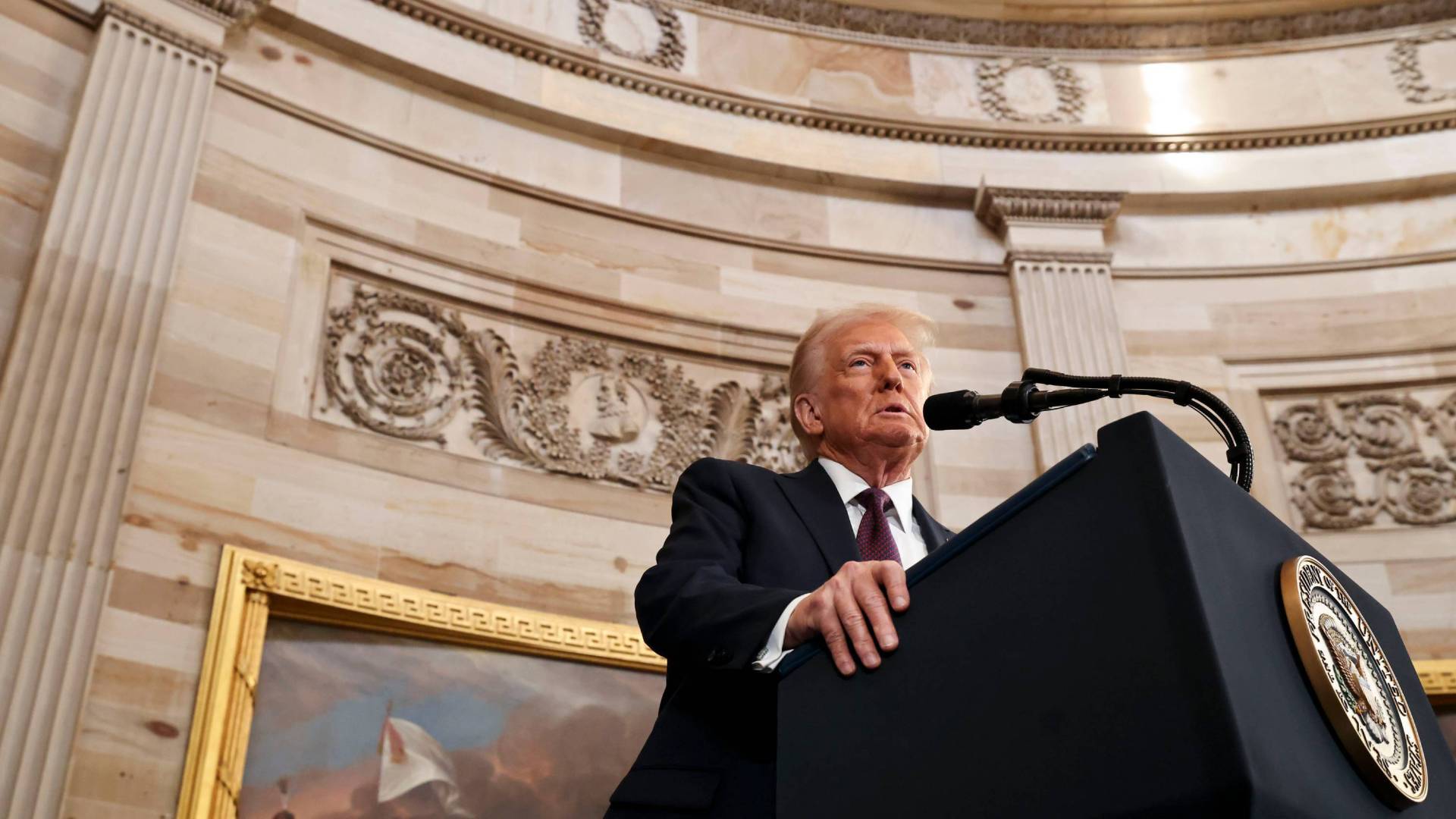
In the Capitol Rotunda surrounded by politicians, a lineup of tech CEOs, and select faith leaders, President Donald Trump began his second term in office with bold promises for America’s coming “Golden Age.”

The president claimed not just a national mandate but also a divine mandate, repeating that he had been saved from last year’s assassination attempt so that he could “make America great again” and pledging that his administration “will not forget our God,” as he rattled off plans to swiftly act on immigration, energy and climate policy, and trade.

“I return to the presidency confident and optimistic that we are at the start of a thrilling new era of national success,” Trump said during his inaugural address in a ceremony moved inside because of harsh winter weather in Washington and broadcast to supporters watching in DC’s Capital One Arena.

“But first, we must be honest about the challenges we face. While they are plentiful, they will be annihilated by this great momentum that the world is now witnessing in the United States of America.” 

Incoming presidents often strike a balance between cordiality to the outgoing administration, calls for the country to unify as a whole, and clarity around their own new direction, but “that’s not Trump’s style, and never has been,” according to Amy Black, professor of political science at Wheaton College. 

In his speech, the incoming president painted an unsparingly dark picture of the nation under President Joe Biden and attacked the current state of politics as radical, corrupt, and vicious.

“My recent election is a mandate,” Trump declared, “to completely and totally reverse a horrible betrayal, and all of these many betrayals that have taken place, and to give the people back their faith, their wealth, their democracy, and indeed their freedom.”

With a bigger base of supporters—Christian activists with pro-life posters stood alongside social media influencers and trade workers in line for his inauguration-weekend rally—Trump’s return to Washington comes in contrast to eight years ago. 

Instead of Trump facing skepticism from his own party or members of his own administration, Republicans for the most part have embraced his “Make America Great Again” direction, and he has nominated loyalists to his cabinet spots.

“I would say that people are less afraid now to be openly supportive of Trump,” said Vanessa Valentino, a Catholic whose family traveled from Chicago to Washington to celebrate Trump’s second term. “People are a lot more comfortable now to wear a Trump hat.”

During the four years since 2020, Trump and his allies have had time to think and plan for a return. “There is a specificity to some of the promises that I do think shows the difference between a first and second term,” Black said. 

What inauguration ceremonies fail to capture is that bold visions can get caught in the slower cogs of America’s political processes, from the courts to Congress. 

“Some of these things he will have the power to do singularly as the chief executive. But some of what he’s promising isn’t possible with just the president alone,” Black said. 

Certain announcements on Monday were policy reruns: Trump promised to declare a national emergency over the southern border and reinstate his COVID-19–era “Remain in Mexico” for asylum seekers. Others were new: Trump pledged to have an American flag planted on Mars, rename the Gulf of Mexico, and end requirements for auto makers to cut greenhouse gas emissions.

The administration is preparing to scale up deportations of undocumented immigrants and freeze refugee resettlement. 

“As Christians who believe that God established the family at the beginning of creation, we cannot sit silently as policies are proposed that would entail family separation on a horrifying scale,” World Relief president and CEO Myal Greene said in a statement. “We urge the administration to prioritize deportation of those with violent criminal convictions and to find more humane alternatives, such as working with Congress … for longstanding members of our churches and communities.”

After Trump once again won the white evangelical vote while making significant gains among Hispanic Christians, Christian supporters celebrated the president’s inaugural pledges, with some conservatives noting his statements that there are only two genders and that he would dismantle diversity, equity, and inclusion programs in the government.

“Such a strong inaugural address by [Donald Trump]!” Clint Pressley, president of the Southern Baptist Convention, posted.

The indoor ceremony began late, and the schedule was adjusted for Trump to be sworn in immediately after Vice President JD Vance, with Trump apparently forgetting, perhaps in the rush, to place his hand on the Bibles being held by First Lady Melania Trump—the same two from the 2016 inauguration—as he took his oath of office. 

The inauguration included prayers from two Protestant pastors, two Catholics, and a rabbi—each calling for prayer and asking God to help Trump and the country in the four years ahead. Another scheduled prayer, from Imam Husham Al-Husainy, was cancelled.

“Give our leader wisdom, for he is your servant, aware of his own weakness and brevity of life,” said Cardinal Timothy Dolan, echoing King Solomon. “Send wisdom from heaven that she may be with him.”

Monday’s ceremony was Franklin Graham’s third time praying at an inauguration, following four inaugural prayers by his father, evangelist Billy Graham. Graham’s prayer provoked applause from Republicans in the audience at points: “We come to say thank you, O Lord,” he prayed. “Father, when Donald Trump’s enemies thought he was down and out, you and you alone saved his life and raised him up with strength and power by your mighty hand.”

In an energetic benediction, Lorenzo Sewell, pastor of 180 Church in Detroit, quoted the entire closing of the “I Have a Dream” speech to recognize Martin Luther King Jr. Day. He concluded, “Go forth now with these words of President Trump’s emblazoned on our hearts. As long as we have pride in our beliefs, courage in our convictions, and faith in our God, then we will not fail.”

Sewell is newer to the circle of religious clergy associated with Trump. He spoke at the 2024 Republican National Convention and has hosted Trump at his church.

Mika Edmondson, pastor of New City Fellowship in Grand Rapids, Michigan, said on social media that praying for one’s leaders could also mean “praying that the Lord will restrain them from their own worst impulses.”

Some familiar faces were relegated to the background. Paula White, who led Trump’s faith outreach during his last time in office and prayed at the previous inauguration, sat in the audience this time. During the campaign, Trump told her the next faith office would be directly involved in the Oval Office, but he has not made official announcements or appointments. 

Greg Laurie, who belonged to the team of spiritual advisers during Trump’s first administration, asked for prayer for the president on social media and said he was grateful that “many committed Christians have been put in positions of influence around the president.”

With the ceremony moved inside, ticket holders instead queued up, some overnight in the freezing cold, to secure their place in Capitol One Arena, where Trump also held a rally Sunday night. 

Others abandoned their bags at the security checkpoint outside the arena when they realized they had to choose between keeping their possessions or securing their seat inside.

Owen Strachan, the director of the Dobson Culture Center, shared a prayer for Trump that came with a caution: “Pray for your current leader, but put your hope and trust in Christ and Christ alone.”

Inkwell

The Age of Fluidity

Elastic language for yesterday, today, and tomorrow

Inkwell January 20, 2025
Painting by John Martin

EACH PLATITUDE rolling off my pastor’s tongue sounded like metal scraping against the side of a cheese grater. I’m either nine or eleven or thirteen and already an atheist. Even though it must have been around 2010, the early-to-mid ’90s wave of agnostic grunge filled my eardrums and swayed me toward ecclesial skepticism. In hindsight, the anti-religious-institution arguments I absorbed through pop culture weren’t very logical or compelling. But the clothes and personas seemed way cooler than any I’d ever seen at my church, and that itself was logical and compelling enough for my unformed frontal lobe to toss out religion altogether.

The part that got to me wasn’t so much the community or the moral ideas or the character of Jesus, but the language. It was the apathetic yet stylized drawl—overly rehearsed and spliced together like a knockoff MasterClass outline of how an emotional speech should go: when to get loud, when to whisper, where to drop thesis and insert joke. To this day, every time I hear the words gracefaith, or the Word of God says, I still hear my pastor’s voice reverberating through them. The breathy hushed exposition and superficiality—I wanted to get as far away from church as possible. And so I did. I basically committed to the least Christian lifestyle I could dream up, which is still a pretty surefire way to end up in jail. Which I did.


ON THE SUNDAY of the final day of my sentence, the inmates were given a choice to either go to church or stay in our cell. A surprising number chose to remain in their cells, the one they had spent the other 24 hours per day in—an impulse I couldn’t personally relate to. Alongside a small group of others, I sat through the prison missionaries’ hodgepodge of Christian language via acoustic songs and unplugged sermons. A showcase of all the words I’d grown to hate so much. But this time around, I was physiologically shaken, my cynicism totally eradicated. I immediately and uncontrollably burst into tears. The words sounded different, new, the opposite of artificial—real and true and raw. And for the first time, the gospel was real and true and raw.

After the ministry team shared, I said a prayer with them, letting all the language my old pastor drilled into my mind fall out of my own mouth. They finally weren’t platitudes—they were desperate, shaky, and powerful.

The seven years that followed were an intensive training camp of relearning the Christian vocabulary, taking the words wrung of meaning and drenched with cynicism and restoring them to life. Sometimes, I drift back into skepticism, and other times, I jump so far to the other end of the spectrum that it turns into naive optimism.

Yet regardless of which direction the pendulum swings, I’ve come to a conviction: Words come to life when they’re most needed.


C. S. LEWIS NOTES, “As everyone knows, words constantly take on new meanings.” I’m fascinated by how words carry power and even more fascinated by how words that have power one day might lose it the next; why phrases that ignite one generation to faithfully follow Jesus turn into a dead orthodoxy that their kids roll their eyes at.

Over time, words lose buoyancy. Say a word 50 times fast, and after 49 times, it’ll sound like gibberish. Language is always evolving—it’s stretchy and subject to trends. Take a Google Ngram Viewer tour through Christian history and you’ll see how our phrases rise and fall in popularity. Nowadays, many “Christians” are dropping that moniker altogether because of its association with nominative evangelicalism and subbing in “follower of Jesus.” The words born again and believer blew up in the ’70s and ’80s, peaking in 2010, and have been declining each year since. Jesus freak was originally a pejorative that littered Elton John songs, until bands like DC Talk co-opted it—only for it to descend back into obscurity a few decades later.

Gen Z doesn’t “go to church,” they “attend gatherings.” During sermons, they don’t say “amen” and “hallelujah,” they say “wow” and “yup.” They cringe every time someone throws a definite article in front of “Holy Spirit.”


OUR WORDS SHIFT when we need to express something our current vocabulary can’t. Wineskins get old, and so do we. New language is fresh, but as it ages, it loses its edge, and, in the worst case, enters the realm of cliché. This is one potential hazard for Christian terms, what the writer Jonathan Merritt calls “fossilization.” It’s a side effect of a hyper-transient culture: The words aren’t forgotten but overused, until we become so cynical toward them that we refuse to let them have any power.

Language gets fossilized when it’s loaded with too much history. But another problem arises when there’s not enough history. Lots of vocabulary that was meaningful even two generations ago are eclipsed by “cultural amnesia”—the tendency to remove the past, along with its traditions, taboos, mores, and norms, from our daily consciousness. It’s basically the state of being ahistorical: forgetting what lies behind (literally) and straining toward anything novel that lies ahead.

But, as historians Will and Ariel Durant note, language is one of the few “connective tissues of human history.” If our language has no historicity, it gets driven and tossed by the cultural seas of the present moment—a reality hauntingly demonstrated by lexicographer Peter Sokolowski’s confession that those in his profession now pay attention to TikTok trends to modify their definitions.


FOR THE MODERN Christian who has a vested interest in staying in touch with the ancient, this fluidity threatens the power of our words.

Theologian Marcus Borg pointed out that spiritual vocabulary loses both its meaning and power due to “spiritual illiteracy.” People no longer hear these terms as if they’re resounding out of their ancient origins. Rather, they only hear their contemporary distortions. Henri Nouwen commented on this struggle:

When we wonder why the language of traditional Christianity has lost its liberating power for those who live in the modern age, we have to realize that most Christian preaching is still based on the presupposition that we see ourselves as meaningfully integrated with a history in which God came to us in the past, is living under us in the present, and will come to liberate us in the future.

For many, this just isn’t the case anymore. A few years back, Merritt partnered with the Barna Group to take the pulse on religious vocabulary. They found that only 13 percent of self-identifying Christians were having spiritual conversations once or more per week. When pressed about why they don’t have more religious conversations,

Some admitted they felt confused about what spiritual words actually mean. In many cases, the confusion doesn’t necessarily result from lack of knowledge or experience. Sometimes, it’s the opposite. People in insular religious communities might have used some words so often they don’t know what they mean anymore. The words have become shopworn.


ALL THIS BEGS the question: Is there any use in trying to renew old terms? Or should we just let them die and dream up new ones? Do we spend an hour each Sunday drilling in church history and etymology, or do we just flow with the zeitgeist?

If we’re a product of our time and place, which everyone of course is, we’ll naturally adopt new terminology in order to communicate with our context. So, I don’t think there’s any real need to intentionally pursue trendy, relevant terminology—chances are, this will just happen by virtue of being a human in the third millennium.

But in a hypermodern age like ours, there’s still merit in renovating older phrases that connect us to something historical, even when they sound tacky. Not in a nostalgic sense, as if trying to recreate the past, but in a transformative sense, paving the way for the needs of our milieu.

Because of fossilization, it took a jail cell to wake me up to the authenticity of the Christian language. For some of my friends, the pull toward ahistoricity is why they left the faith. Both ends of the spectrum harm, which is why I think a third way, a way of renovating terms according to our present needs, might be the water needed for parched lips.


WHILE I HAVE the utmost respect for language scholars, the process of pruning terminology most often correlates to the needs of God’s people rather than academic movements. When language renovation is left up to small bands of elites, it gets obscured for everyone else.

This is the driving tension that the characters in R. F. Kuang’s novel Babel wrestle with. The speculative novel follows a group of intercultural Oxford students studying in the prestigious university’s language department, housed in a literal tower called “Babel.” During their studies, they come to find that Babel is more than a linguistics undergrad program—it’s the British Empire’s tool for centralizing authority, using language to make a more powerful Britain rather than to create a better world.

The students grapple with the question, “Can we live with the consequences of making language a privilege of the elite, or do we fight to give language back to the people?” They ultimately choose the latter, toppling the tower that dominated communication and decentralizing language for the masses.

It’s fiction, but this story constantly repeats itself in real life. For one, Babel’s arc played out in the mid-20th century via a philosophical movement called post-structuralism.


BASICALLY, GUYS LIKE Jacques Derrida wanted to deconstruct interpretive structure. Things themselves—a dog, a novel, a gesture—couldn’t have meaning, because whatever meaning was imposed on them would be steeped in the interpreter’s worldview.

Post-structuralists deconstruct because they think power dynamics clandestinely lie behind everything: Books shouldn’t be enjoyed because they’re just a tool to keep you distracted. Family is just a construct to keep you too busy to fight corruption. But, in earnest, it’s just fake activism, muddying up terminology for the sake of displaying enlightenment.

In The Best Minds, writer Jonathan Rosen details his own coming of age during the height of post-structuralism’s popularity. Although Rosen was captivated with the movement at first, he began noticing that their lingual gymnastics often minimized the concepts they deconstructed. Derrida or Foucault invoked examples of mental illness to describe how authoritarian powers—the state, the government, the spectacle of society— dominate the masses. True madness was created by the corrupt powers of society, they said; to be deranged was to lack the willpower to resist their control.

Rosen especially struggled to swallow their lectures after visiting his lifelong friend Michael Laudor in a mental ward. Growing up together, Rosen had had a front-row seat to Michael’s brilliance and sociability, as well as to his slow decline into hospitalization for his paranoid schizophrenia. This promising Yale student now stumbled while stringing sentences together, thought he was constantly under surveillance, and could barely read the pages of the books he’d read voraciously his whole life. According to post-structuralists, Michael’s suffering was brought on by a “social construct” that arose from “disciplinary discourse.” Was Michael’s issue simply his own lack of willpower?

Of course not. No amount of post-structuralist prose was going to dismantle his schizophrenia. This was a real neurological disorder, not an academic exercise, and it was chewing up his best friend’s personality.


LIKE THE TRENDINESS of words, post-structuralism came and went. The grand total of their efforts amounted to a feverish paranoia toward authority, a feeling that still haunts the world today. It minimized peoples’ sufferings, taking terminology away from those most in need of it. As Francis Schaffer commented on post-structuralism, “In it, language leads to neither values nor facts, but only to language.”

If they proved anything, it’s that language in the wrong hands, be it a cranky professor or a selfish pastor or a corporate demagogue, can be stripped of its potential to unify. And so, like Kuang’s Babel and Genesis 11’s Babel, the post-structuralist’s tower toppled.

Language doesn’t exist in some esoteric third space, like a Cartesian museum display. Language needs community, needs to pass through lips, needs to be tasted as it moves beyond our vocal cords and enters the throes of daily life—person to person, soul to soul. It’s the connective tissue of the masses, not an academic privilege.

Despite how often Scripture’s been abused by those with power, it is and always will be a rhetoric of revolution for those without any. For a native Greek linguist, the Bible is not very complex. It’s written in laymen’s vocabulary—the kind of casual language you’d use while making a shopping list with family. After reading through the New Testament for the first time, Augustine admitted feeling disappointed. Augustine was the equivalent of an elite Ivy Leaguer, on par with the philosophical heavyweights of his day. But the Bible was written for poor agrarian farmers in an epoch where the literacy rate was only around 10 percent.

Accessible language was a necessity. If the Bible had been written at the caliber of, say, Immanuel Kant’s Critique of Practical Reason—arguably one of the most dense and difficult volumes ever written—then the Bible wouldn’t have been for everyone; it would’ve only been for the Kants and Foucaults and Derridas. As Mark Strauss writes,

There is nothing archaic, solemn or mystical about the kind of language used by the inspired authors of the New Testament. It is the Greek of the street. . . . Just as God took on the form of common humanity when he revealed himself as the living Word, so his written Word was revealed in language that the person on the street could understand.

By using the language of the lowest common denominator, the Christian vocabulary enveloped the entirety of the population, making itself available to all.

Babel and the post-structuralist mindset remind us that language is for the people and serves a purpose. This means that language will always keep evolving and changing because the needs of the people will always be evolving and changing. We’ll always need new ways to communicate our longings, our losses, our jumbles of emotion. To centralize language, like how the Catholic church centralized doctrine before the Reformation, is simpler and more efficient—but only for the arbiters making the calls.

For everyone else, it limits expression. This is why Martin Luther’s efforts to decentralize the Bible, putting Scripture into the hands of the people, was in its own way a toppling of Babel. It took the language of the Christian movement and restored it to its original purpose: a rhetoric of transformation for the lowly, meek, and mourning.


I’M STILL A recovering cynic. Sometimes, I go weeks where every noun in the Christian vocabulary feels dry. But then, a need comes. A desire that can’t be quenched. A loss I can’t ignore. And like a faucet slowly turning, words like trustcontentmentgratitude, and hope start dripping afresh, like sunlight crackling through the spaces in a floorboard. It’s a process, but I’m slowly learning to stand more in line with the psalmist who wrote, “How sweet are your words to my taste, sweeter than honey to my mouth” (Ps. 119:103).

Language is always pointing to something beyond itself. God’s name isn’t actually “God,” but what philosophers call a signifier. It’s the thing that points to the signified—which in God’s case is the Divine Creator, Father of Jesus.

By one scholar’s count, God is given 967 different signifiers throughout the Bible. He’s infinite, self-subsistent. Attaching one finite name from a finite language just doesn’t do the trick. Different signifiers help emphasize different parts of his being (Father, Son, Spirit), angles of personality (wonderful counselor, wise king), and patterns of behavior (advocate, comforter). But none of them would be sufficient on their own.

Their multiplicity is necessary. Sometimes, we just need to express something that nothing in our current vocabulary can. And so we perpetually search beyond our present borders to praise the God without any.

But I don’t ever want to neglect the arsenal of classical Christian terms. It’s like drawing water from a deep well: locating the originality in old words and making adjustments when dry words need animation, always on the hunt for new ways to say old things rather than new concepts to reshape old ideas. To borrow biblical language, we are always putting old words in new wineskins—remembering that the beauty of treasures in old chests is evergreen and not simply nostalgic.


THIS IS WHY I like picturing Christian vocabulary as elastic, rather than static or plastic. Static means no change; plastic means total change. But if something’s elastic, it can bend to accommodate new functions while also snapping back into place.

For me, this is a perpetual project. Every once in a while, I need to redefine or shelve a phrase with too much baggage. Other times, I need to challenge the popular understandings of words like grace. But I remind myself that for every half-hearted, inauthentic, or dead pronunciation of faith, there are millions of Christ followers around the globe clinging to the word faith as if it’s the only thing keeping them moving.

This is why even the most fossilized words can be brought back to life, why post-structuralism’s attempts to control language can’t help but fail, why earnest attempts to worship always supersede academic exercises. The Christian vocabulary rushes alongside the downtrodden, the promising student who lost it all because of schizophrenia, the 18-year-old kid hitting his lowest points in a jail cell.

Babel, post-structuralism, fossilization, and ahistoricity all reveal one central truth: Despite our best efforts to manipulate language—subbing in trendy terms, sticking to old fossils, or trying to control them altogether—words will always be empowered by those who realize their utter and absolute dependence on God.

Everything else is just semantics.

Griffin Gooch is a writer & speaker with a Master’s in Theological Studies from Fuller Theological Seminary. 

addApple PodcastsDown ArrowDown ArrowDown Arrowarrow_left_altLeft ArrowLeft ArrowRight ArrowRight ArrowRight Arrowarrow_up_altUp ArrowUp ArrowAvailable at Amazoncaret-downCloseCloseellipseEmailEmailExpandExpandExternalExternalFacebookfacebook-squarefolderGiftGiftGooglegoogleGoogle KeephamburgerInstagraminstagram-squareLinkLinklinkedin-squareListenListenListenChristianity TodayCT Creative Studio Logologo_orgMegaphoneMenuMenupausePinterestPlayPlayPocketPodcastprintremoveRSSRSSSaveSavesaveSearchSearchsearchSpotifyStitcherTelegramTable of ContentsTable of Contentstwitter-squareWhatsAppXYouTubeYouTube