Ideas

The Unrecognized Great Awakening

Americans talk about Civil Rights as a political movement. But as MLK well knew, it was more than that. It was a revival.

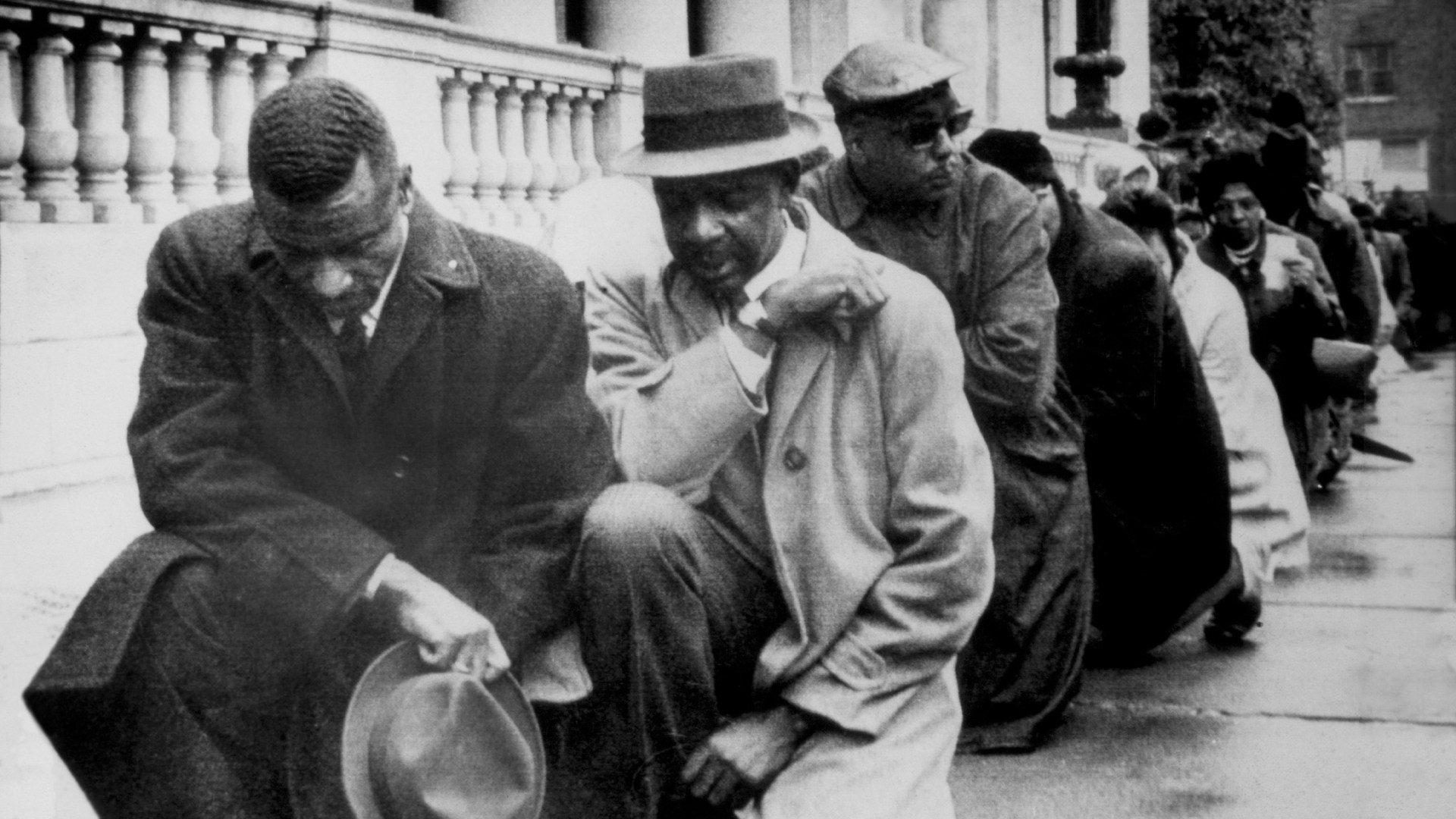
Protesters Kneeling Before City Hall on April 6, 1963 in Birmingham, Alabama.

Protesters Kneeling Before City Hall on April 6, 1963 in Birmingham, Alabama.

Christianity Today January 20, 2025
Universal History Archive / Contributor / Getty / Edits by CT

Prophet or activist? Pastor or social reformer? In the six decades since his death, the testimony and legacy of Martin Luther King Jr. has been so extensively documented and analyzed that it seems almost asinine to imagine posing a new question about his life and work or the Civil Rights era more broadly.

But I want to propose that King has been mislabeled—or, more precisely, that even many of his admirers have missed a title he deserves: revivalist.

It’s well recognized, of course, that the Civil Rights Movement under King’s leadership pulsed with the gospel of the kingdom. But what I’m saying is not merely that King and many lesser-known activists were Christians whose efforts were motivated by their faith in Jesus. Rather, I want to suggest that this was not merely a political movement that used biblically inspired strategies like nonviolent demonstration. It was a spiritual movement of great awakening, even a widely unrecognized Great Awakening in the grand tradition of grassroots American revivals.

What does true awakening look like? Biblical and historical records can help us discern how God awakens nations to the love of the Father in the way of Jesus.

Christ’s own ministry should be our first example. Amid social upheaval and political violence, Jesus begins teaching in the synagogues of Galilee. He declares that the Spirit of the Lord has anointed him to “proclaim good news to the poor,” “freedom for the prisoners and recovery of sight for the blind, to set the oppressed free, to proclaim the year of the Lord’s favor” (Luke 4:16–21). Then he hits the streets, preaching repentance because “the kingdom of heaven is at hand” (Matt. 4:17, ESV).

This is not a just a good sermon topic. It’s a blaring announcement of the arrival of a new age. And Jesus does not just speak his Good News. He makes a public demonstration of its reality, confronting the injustice of illness and death itself, releasing the health care plan of a heavenly administration. 

With the touch of a hand, he heals the sick, raises the dead, and embraces the outcast. These are acts of love and peace but also destruction of the order and norms of a sinful and sorrowful world. We don’t call the earthly ministry of Jesus an awakening, but it is the awakening that would spark all others. In the backwaters of Galilee, often on the margins of society, Jesus inaugurates the greatest liberation movement in human history, introducing the higher standard to which all will ultimately be held.

In the first days of the church, we see a time of awakening, too, marked by a growth of practical human wisdom and the visible working of the Holy Spirit. God in Christ destroyed “the dividing wall of hostility” between Jew and Gentile in the early church, creating one new humanity, “members of [God’s] household” from every tribe and tongue (Eph. 2:11–22).

Acts 2 records a profound moment for this unity: God’s reversal of the division of the Tower of Babel. It is only by the power of the Holy Spirit that people from all over the known world—“Parthians, Medes and Elamites; residents of Mesopotamia, Judea and Cappadocia, Pontus and Asia, Phrygia and Pamphylia, Egypt and the parts of Libya near Cyrene; visitors from Rome (both Jews and converts to Judaism); Cretans and Arabs” (vv. 9–11)—could all understand the disciples’ proclamation of the gospel at once. 

“Aren’t all these who are speaking Galileans?” the crowd wonders. “Then how is it that each of us hears them in our native language?” (v. 7–8). The answer is that this was an awakening, only possible with the supernatural grace of the Spirit.

The distinct eras of divine activity in American history that we call awakenings are similarly marked by exposure of depravity and pursuit of social righteousness—by repentance and public revival. As Christian History explained in 1989,

It is of major importance to remember that awakenings are not simply times of enhanced personal religious experience. Awakenings have social impact. In the wake of spiritual awakenings comes social restoration. Corrupt, immoral, unjust, and ungodly people and societies can return to honesty, purity, justice, and holiness. Culture can be transformed; but first must come transformed people.

The awakenings were not masterfully designed through central planning from the corridors of ecclesial power. They relied on organic, individual responses of obedience after definitive encounters with the Lord. 

The best known of these movements, the Second Great Awakening (c. 1795–1835), produced moral-reform movements around public education, social services, women’s suffrage, and the establishment of abolitionist societies in the United States and the United Kingdom. From William Wilberforce and the Clapham Sect to Harriet Beecher Stowe and the New England Congregationalists, supernatural encounters with the awakening glory of God led to new pursuit of justice and public demonstration of God’s love.

This outpouring of measurable institutional reforms in addition to mass salvation should not surprise us. As Wilberforce observed, it is “the glory of Christianity, to extinguish the malignant passions; to curb the violence, to controul the appetites, and to smooth the asperities of man; to make us compassionate and kind, and forgiving one to another; to make us good husbands, good fathers, good friends, and to render us active and useful in the discharge of the relative, social, and civil duties.”

The Third Great Awakening ran through the 1930s, and I am not the first to suggest that we should recognize a Fourth Great Awakening beginning in the mid-19th century. But the awakening I see is not the rise of the Religious Right, as has been proposed elsewhere. It is the Civil Rights Movement, which exhibited that same pattern of calls for repentance and revival followed by tangible social impact.

Perhaps those—Christian or not—who aren’t active participants in the Black worship tradition have undervalued or overlooked the hand of God in instigating and sustaining this movement and its transformation of American society. Granted, a significant portion of African American spirituality and theological interpretation has been archived in songs and stories preserved through oral tradition instead of publication.

But whatever the reason, historians and theologians alike have failed to acknowledge or embrace this awakening led by the Black church (or, indeed, to embrace the Black church itself). The unholy segregation between predominantly Black Protestant traditions and predominantly white evangelical traditions has extended to how we perceive the movement of the Spirit in our own recent history.

The Civil Rights Movement under the leadership of Martin Luther King Jr. was not a revival in the sense of a mass public proclamation of the gospel of salvation. But from my vantage within America’s freedom experiment, its defining characteristic was mass demonstration of the fruits of salvation (Matt. 7:15–20).

And that public demonstration was only part of the work. A significant and necessary part of this awakening happened in hidden prayer meetings, in countless hours spent on the floor, crying out to God for help. The Holy Spirit came upon those who waited in this undignified travail, releasing specific strategies for confronting the dark powers of oppression within society. 

Like the early church disciples and the abolitionists of the Second and Third Great Awakening, men and women of all ages became possessed with unshakeable hope in Christ after receiving visions, dreams, and divinely inspired ideas through prayer. Those deep movements of the Spirit may not have been visible in the newspapers, but much of the Civil Rights activism the papers did document poured from this well.

“We experienced something extraordinary in the freedom movement, something that hinted at a tremendous potential for love and community and transformation that exists here in this scarred, spectacular country,” said Civil Rights activist Rosemarie Freeney Harding, who worked with King and served in the Mennonite tradition for many years. “For a lot of people in the Movement, our participation gave us a craving for spiritual depth.”

In this Fourth Great Awakening, millions surrendered to tenets of the lordship of Jesus. Embracing the Beatitudes, they responded to government-sanctioned persecution with the fruits of the Spirit. They embodied the spiritual longing of a generation and made prayer a form of nonviolent direct action. The soundtrack of the movement was songs of intercession and eternal hope in the promises of God, and the spiritual transformation undergirding this pursuit of social righteousness was no less robust simply because the change didn’t occur at a public altar call. 

On May 17, 1957, 25,000 Negro Americans arrived at the Lincoln Memorial for a three-hour prayer vigil called the Prayer Pilgrimage for Freedom. The purpose was to commemorate the anniversary of the landmark 1954 Supreme Court decision Brown v. Board of Education, to demonstrate support for new Civil Rights legislation, and to arouse the conscience of the nation to continued pursuit of freedom and equality.

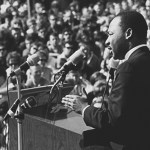
In his first major outing as the newly elected president of the Southern Christian Leadership Conference, a young Martin Luther King Jr. spoke to the crowd. He delivered a brilliant prophetic rebuke to Washington, charging leaders in both major parties with a “dearth of positive leadership,” betrayal of “the cause of justice,” and “a high blood pressure of words and an anemia of deeds.”

“We come humbly to say to the men in the forefront of our government that the civil rights issue is not an ephemeral, evanescent domestic issue that can be kicked about by reactionary guardians of the status quo,” King said. “It is rather an eternal moral issue.”

But later, King would conclude his speech by making an explicitly revivalist appeal—an appeal that was met with the enthusiastic affirmation of the crowd, whose responses are here in parentheticals:

Let us not despair. Let us realize that as we struggle for justice and freedom, we have cosmic companionship. This is the long faith of the Hebraic-Christian tradition: that God is not some Aristotelian “unmoved mover” who merely contemplates upon himself. He is not merely a self-knowing God, but an other-loving God (Yeah) forever working through history for the establishment of his kingdom.

And those of us who call the name of Jesus Christ find something of an event in our Christian faith that tells us this. There is something in our faith that says to us, “Never despair; never give up; never feel that the cause of righteousness and justice is doomed.” There is something in our Christian faith, at the center of it, which says to us that Good Friday may occupy the throne for a day, but ultimately it must give way to the triumphant beat of the drums of Easter. (That’s right)

King’s fervent engagement with Scripture, appeals to fellow Christians to imitate Christ’s love, and declarations of the victory of God over evil amount to half the speech.

In King’s leadership and the work of thousands of faithful activists, the Civil Rights Movement was a radical force of societal transformation that unashamedly marched under the banner of the lordship of Jesus. It awakened the conscience of the nation and continues to captivate hearts and inspire hope for the oppressed. It should be recognized alongside earlier awakenings for its reshaping of US public life and the American church.

As we simultaneously commemorate King’s life and welcome a new presidential administration into power, leading up to Black History Month, may we be provoked by King’s timeless words—and hear them not only as an activist’s speech but also as a revivalist’s sermon. It is time for the whole body of Christ to step out of suspicion and into love, to recover our shared inheritance from this unrecognized awakening. 

Rev. Jonathan Tremaine “JT” Thomas (@jontremaine) is a missionary; the president/CEO of Civil Righteousness, which is a movement of holy activism; and the senior advisor of justice and reconciliation to New Room for Seedbed.

Ideas

It’s Time for a New Era of Christian Civility

Healing political division requires we revive the lost virtue of civility, grounded in universal human dignity.

Two people in red and blue jackets sitting on a bench together.
Christianity Today January 17, 2025
Illustration by Elizabeth Kaye / Source Images: Pexels

Over the past few years, our society has continued its trend toward increased political polarization, as the share of people swinging to the far left and right increases. In fact, a recent poll shows that nearly half of US voters believe those in the opposing political party are “downright evil.”

As a result, the public square can be a volatile and even violent place to engage. This is something I experienced firsthand while working in the federal government from 2017 to 2018. In Washington, I observed two equally dehumanizing extremes: explicit hostility and deceptive politeness.

The politicians who most often make the news are those who are overtly aggressive and willing to trample anyone in their path to gain power. Others appear polished, poised, and polite—but their behavior masks ulterior motives. For example, one of my supervisors used our shared Christian faith to disarm and manipulate me. She would smile and invite me to pray with her at lunch, only for me to later discover she had been undermining me to our superiors.

My experience was so dispiriting that I fled politics and Washington altogether to write a book aimed at helping myself and others think more clearly about our deeply divided era and the ways we each might be part of resolving our crisis of polarization and dehumanization.

Turning to Scripture and great thinkers of the past to help me process what I had endured, I reflected on timeless questions: What does it mean to be human? What respect do we owe each other by virtue of our shared humanity, beyond our differences and disagreements?

The Bible reminds us that humanity is a conundrum defined by both nobility and wretchedness: We were made for community with God and others, but we are also selfish and fallen. We thrive in cooperation but are always threatened by our inclination to put ourselves above others.

As philosopher Blaise Pascal noted, “The more enlightened we are the more greatness and vileness we discover in man.” We are the pinnacle of God’s creation, uniquely bearing the divine image, yet also capable of base and ignoble conduct. Likewise, Augustine’s concept of humanity’s “lust to dominate” explains that both overt hostility and false politeness arise from the self-love of our sinful nature rather than a love that sees and respects others as fellow persons created in God’s image.

I came to realize that our present division requires far more than mere courtesy or politeness. We need to usher in a new era of civility—a virtue that has been all but lost in our country. And for Christians, civility is rooted in the imago Dei—the inherent dignity we all possess as beings created in God’s image. This foundation is crucial for flourishing across our differences today.

What changes must we make as a society, and especially as a church, to usher our nation into a new era of civility, founded on the Christian principle of universal human dignity? There are at least five.

First, we must stop confusing civility with politeness.

As I’ve already alluded to, there is an essential and often-overlooked difference between civility and politeness, and confusing the two has lost us the ability to speak the truth in love to each other.

Politeness is manners, etiquette, and technique—it’s a type of behavior—whereas civility is a virtue far deeper and richer than mere conduct. Instead of focusing on the form of conduct, civility gets to the motivation of any given action.

Civility is a disposition that recognizes and respects the common humanity, the fundamental personhood, and the inherent dignity of other human beings. In doing so, civility sometimes requires that we act in ways that appear deeply impolite, such as conveying difficult truths or engaging in robust debate—facing meaningful differences and important issues head-on.

As I’ve written for CT before, Jesus himself was not always polite, but he was continually civil.

Civility both requires certain actions and restricts other actions. It requires that we stand up for ourselves and be willing to speak hard truths in love, but it never lets our disagreements devolve into dehumanization or violence that violates another person’s imago Dei.

Today, some Christians seek to overcorrect for what they think of as a culture of suffocating politeness by supporting leaders and pundits who exhibit a brash delight in delivering hard truths and puncturing hypocrisy. Yet this approach often ends up fostering hostility and aggression and falls prey to the same dehumanizing attempt to control others that is evident with patronizing politeness.

In other words, politeness lies in superficial conduct, while true civility requires us to speak truth in love while recognizing and respecting the fundamental dignity of those we disagree with.

Second, we must stop making an apocalyptic religion out of politics.

The “religionization” of politics has led many believers to elevate political stances to the level of doctrinal orthodoxy—such that they become litmus tests for Christian identity. This, in turn, has led to us publicly question the faith of those who have differing views from us and to reduce complex individuals to political caricatures.

Increasingly, evangelical Christians on both sides of the aisle have become emboldened to say that anyone who disagrees with them on certain hot-button issues is not a true Christian at all. We often judge a person’s faith on whether they think the “right” way or support the “right” person.

But politics has not just become a religion—it’s become an apocalyptic religion. Some evangelical Christians have come to justify any behavior necessary to “win” a political battle or election, including dehumanizing political opponents and even fellow believers.

This political approach is often informed by a certain theology. In 2022, Pew Research found that over 60 percent of evangelical Protestant Christians said they believe “we are living in the end times.” While this is not an unbiblical belief in itself, it can be dangerous when paired with a dominionist mentality.

Such apocalyptic thinking is nothing new in Christianity. It’s important for us to be students of history, as a close study of the past can temper the false notion that ours is the worst or most perilous era for Christians. For example, Martin Luther thought he was living in the end times and, during the Protestant Reformation, falsely accused the pope of being the biblical Antichrist figure—a line of reasoning that provided ideological ammunition for violence toward Catholics.

Claiming we are on the brink of civilizational and cosmic collapse is useful for fundraising and winning elections. It raises the stakes of policy debates and election results and scares people into donating and turning out to cast their ballots. But this high-stakes mentality can be deadly, as it clouds our ability to see the image of God in those we perceive as political enemies.

Third, we should start viewing people holistically instead of reductively.

We often reduce people to their worst moments or views in isolation of their humanity. This can happen in one of two ways: One, we fixate on something they said or did of which they are probably not proud but which, thanks to technology and social media, has been immortalized and widely circulated. Or two, we boil them down to the views they hold (or the politicians or pundits they support), instead of seeing them in the full context of who they are as human beings.

Though we are all fallen and fallible, we’ve come to view the world through a cheapened simplicity: black and white, right and wrong, good and evil. We’ve adopted a strange perfectionism, where we expect those around us to make no errors in judgment, past or present—while forgetting that every one of us is defined by both greatness and wretchedness, as Pascal wrote.

It is time we start “unbundling” people—seeing vices in light of virtues and recognizing the complexity of human beliefs. Unbundling is a mental framework we can use to help us see the parts in light of the whole, mistakes in light of victories, and any views we deem as wrong or misguided in light of nuanced reasoning and motivations.

In essence, we must perceive each other’s irreducible worth as persons created in God’s image, a value which transcends all our differences. As human beings, we are each an amalgamation of contradictory impulses and desires. We are each imperfect in our knowledge and our conduct.

Unbundling means we resist the tempting impulse to see people or politicians as merely Republicans or Democrats. It means we recognize our mistakes or disagreements while being mindful of the basic respect we owe each other as fellow human beings with inherent dignity.

Fourth, we should only draw lines in the sand where they really matter.

We can remember adiaphora, which essentially means “indifferent” in Greek. This idea was popularized during the Protestant Reformation and the subsequent decades of religious wars. In an era where Christians were killing one another over numerous secondary theological differences, this word helped believers keep in mind the essentials of their faith.

Adiaphora distinguishes core Christian tenets, like Christ’s divinity and resurrection, from nonessentials, like views on infant baptism and transubstantiation.

The fact that Christ was God incarnate—who lived, died, and rose again on the third day—is nonnegotiable for the Christian faith. But reasonable minds can and have disagreed on many other theological, doctrinal issues or aspects of faith and practice, such whether the Bible should inform us on public policy regarding fossil fuels or tax reform or education.

As Augustine once wrote, “Love, and do what thou wilt.” In any given situation, determine how the love of God and the love of others might apply, and then act—in that order. We must approach disagreements on public policy or lesser issues with grace, recognizing room for differing interpretations, even within the household of faith.

Fifth, we must revive curiosity, instead of judgment, as our first instinct.

Humility leads us to another vital ingredient of Christian civility: curiosity. Today, political disagreements often become moral indictments. In our conversations with people we disagree with, we subconsciously think, Because you support this presidential candidate or hold this view on this issue, I know everything about you.

By contrast, curiosity is based in the recognition that every one of us is infinitely complex and comes to our views about the world for many different reasons. It acknowledges that people approach and answer life’s foundational questions differently and can come to different conclusions about how our faith and Scripture should inform public life today.

Curiosity also requires the humility and modesty to realize that none of us will ever have all the answers, at least this side of heaven. We must accept our natural limits as finite human beings who only “know in part” (1 Cor. 13:12)—otherwise, we essentially place ourselves on par with God, which was the original sin of humanity.

Instead of assuming we know all about someone based on their political stance, we should ask them more questions and listen patiently for their answers—without planning our next response. And the next time we’re debating someone with a different view, instead of presuming they are wrong and we have perfect knowledge on the subject, we should say, “Tell me more!”

In many cases, we may find that we are all more alike than we think. And in others, as we hear from another person’s perspective, we may learn new insights we’d never thought of before.

Regardless, we must cultivate a humble curiosity about people and the experiences that led them to their views of the world. Honoring people’s stories and respecting their perspectives are foundational to the task of reviving civility in our divided world.


Lastly, the apostle Paul lays out a wise and helpful biblical blueprint for Christian civility in Romans 14, offering us valuable insights on how to welcome differing views among believers without judgment.

As Julien C. H. Smith previously wrote for CT, this passage outlines Paul’s prescription for a polarized church in Rome, where Jews and Gentiles were divided and “the truth of the gospel was being challenged by a myriad of small grievances that threatened to turn neighbors into enemies.”

As paraphrased by The Message, Paul begins the chapter by saying, “Welcome with open arms fellow believers who don’t see things the way you do. And don’t jump all over them every time they do or say something you don’t agree with—even when it seems that they are strong on opinions but weak in the faith department. Remember, they have their own history to deal with. Treat them gently” (Rom. 14:1).

The apostle explains that we need to accept that Christians will think differently on many issues rather than try to convert everyone to our ways of thinking. He cautions against harsh criticism over dietary choices and holy days, instead emphasizing mutual respect and unity—advising that “each person is free to follow the convictions of conscience” (v. 5, MSG).

In summary, he urges believers to “make every effort to do what leads to peace and to mutual edification” and not let arguments over secondary matters such as these “destroy the work of God” among them (vv. 19–20).

These are words of wisdom for our moment, vital for ushering in a new era for Christian civility. Our sovereign God can handle our disagreements, along with the workings of elections and the cosmos, without our help or interference.

Embracing these principles can help heal fractured communities and repair the tattered social fabric in both Christian and secular circles. Let us navigate these divided times with grace, respect, and a renewed commitment to seeing the imago Dei in everyone around us.

Alexandra Hudson is the author of The Soul of Civility: Timeless Principles to Heal Society and Ourselves.

Ideas

Racial Unity Is Out of Style

Contributor

Christians’ race debate is increasingly a battle between those blind to the sin of racism and those convinced racism and sexism are the only sins.

A black and white silhouette of a face made of paper
Christianity Today January 17, 2025
Illustration by Christianity Today / Source Images: WikiMedia Commons

Cultural sentiments can change in unexpected ways. People are complicated, and the direction of our discourse is often unpredictable. After losing the presidential election, Democratic Party leaders are learning—or should be learning—this the hard way. It turns out demographics aren’t destiny after all.

Some have called this change in the spirit of the day a “vibe shift.” But whatever we call it, for better or worse, it’s clear that many in our society began to feel differently over the last four or eight years about what’s valuable and prudent. In the flash of an eye, old terms, narratives, and frameworks lost their power.

With that context, it’s time to consider how race relations in the American church have actually worsened over the past half decade or so. The sentiment seems to have shifted in such a significant way that the once-popular racial-reconciliation project is now passé in many spaces. Even the term racial reconciliation feels corny and cringeworthy to some. But the problem is much bigger than semantics: I see the church’s racial and partisan divide growing at a moment when society most needs an example of a Christian ethic that destroys racial barriers and the dividing walls of partisan hostility (Eph. 2:14).

So why does it seem that the American church’s racial-unity experiment is no longer fashionable? Why do many of us no longer want to be unified? 

Intrachurch race relations have been far from perfect. Yet events like MLK50 in 2018 offered hope that we could head in the right direction by bringing together diverse leaders with credibility in their respective communities. Seven years later, after right-wing backlash and much of the melanin leaving these organizations and denominations, assembling a similar group of leaders might prove more difficult.

More broadly, many of the Christian influencers who were on the cutting edge of the national racial-restoration effort appear to have given up and resolved to focus on their own church communities instead. I sympathize with that response because many of those who stuck their necks out to profess historical, biblical truth about race and pursue racial unity were professionally and reputationally punished. They were kicked out of churches and ministry jobs and had their careers sabotaged. I applaud those who stood up for themselves. 

Therein lies one of the primary reasons I believe Christian race relations have soured: a bitter reprisal from some on the church’s far right. Those who had an aversion to even talking about racial justice lashed out, engaging in fearmongering rather than debate and scaring people away from even the most constructive conversations about race. They seized on the excesses of progressivism to discredit racial-restoration efforts altogether. 

By design, their heavy-handed approach squeezed all the compassion out of their tribe. To even mourn for George Floyd or Breonna Taylor, in their telling, was to be brainwashed by wokeness. And this wasn’t just wild talk on the internet. It shaped major Christian institutions and sent race relations backward in the church.

A second factor aggravating all this was the reaction from some on the far left. The response to bad behavior can also be bad, which is why Frederick Douglass publicly disagreed with and separated himself from some abolitionists. Though they agreed on the wickedness of slavery, Douglass knew methods still mattered. That was not bothsidesism. It was an honest, impartial, and comprehensive critique from someone who wanted justice and order, not merely any win for his side.

Plenty of racial-justice efforts have been sincere and constructive, but inside and outside the church, the cause has also been misused as a vehicle to launder other progressive issues, like undermining the nuclear family. A lucrative industry emerged with no intention to actually solve the problem. 

Regrettably, instead of confidently responding on our own terms as justice-conscious Christians, too many of us simply mimicked popular secular thinkers. Christian racial-justice efforts became a knockoff or repackaging of projects with no foundation in our faith. We religiously regurgitated their language without sufficient critique, even self-righteously berating fellow Christians who hadn’t memorized the vocabulary.

Like the Christian nationalists we were opposing, we dabbled in the dark arts of identity idolatry, casting aspersions against entire groups of people while demanding all grace for our own in rituals of self-justification and self-exaltation. Most regrettably, we lost sight of the importance of holiness, following secular activists into positions that undermined the authority of Scripture and sanctity of life. 

The race debate in much of the church increasingly became a battle between those who were blind to the sin of racism and those who believed racism and sexism were the only sins.

Where do we go from here? Our resentments do not glorify a Savior who congregated with and died for tax collectors, zealots, prostitutes, and thieves. Remember, Christian unity is a command, not an option (1 Cor. 1:10).

We can throw up our hands and maintain our contempt for one another—but it will come at a cost. Every time we give a lesson or sermon on the Christian love ethic, we’ll do so with a measure of hypocrisy. Every time we tell our children about the necessity of grace and mercy, the stench of insincerity will betray us. Every time we pray, “Thy Kingdom come,” we’ll do so under the shadow of false pretense. 

Without deeds of reconciliation to match these words of love, grace, and unity, the wider society will continue to question if we really believe what we say. Our divisions rob the church of credibility. 

This is why we can’t give up on racial reconciliation in the church. We must have the moral imagination and determination to find a greater unity, working with and learning from nonbelievers without being indoctrinated by them. 

Even when that work seems impossible, I take inspiration from elders like Barbara Williams-SkinnerJo Anne Lyonpastor Bob Roberts, and John Jenkins. If they’re still committed to pursuing racial unity after decades of disappointments, so am I. We’ll need new approaches and possibly new language, but the endgame must remain redemption, never retribution. 

Not everyone is ready to move forward constructively, but we need a remnant—a coalition of the faithful who are willing to overcome past slights to pick up the cross. Those who are willing to lower themselves to help up their neighbors. Whether in style or out, self-sacrificial pursuit of racial unity is a Christian responsibility. It’s a kingdom prerequisite. 

We can either follow the vibe or follow the Spirit.

Justin Giboney is an ordained minister, an attorney, and the president of the AND Campaign, a Christian civic organization. He’s the coauthor of Compassion (&) Conviction: The AND Campaign’s Guide to Faithful Civic Engagement.

News

Assessing the Israel-Hamas Peace Deal: Amid Tragedy, Cautious Optimism

Dozens of hostages are slated for release, but at what cost?

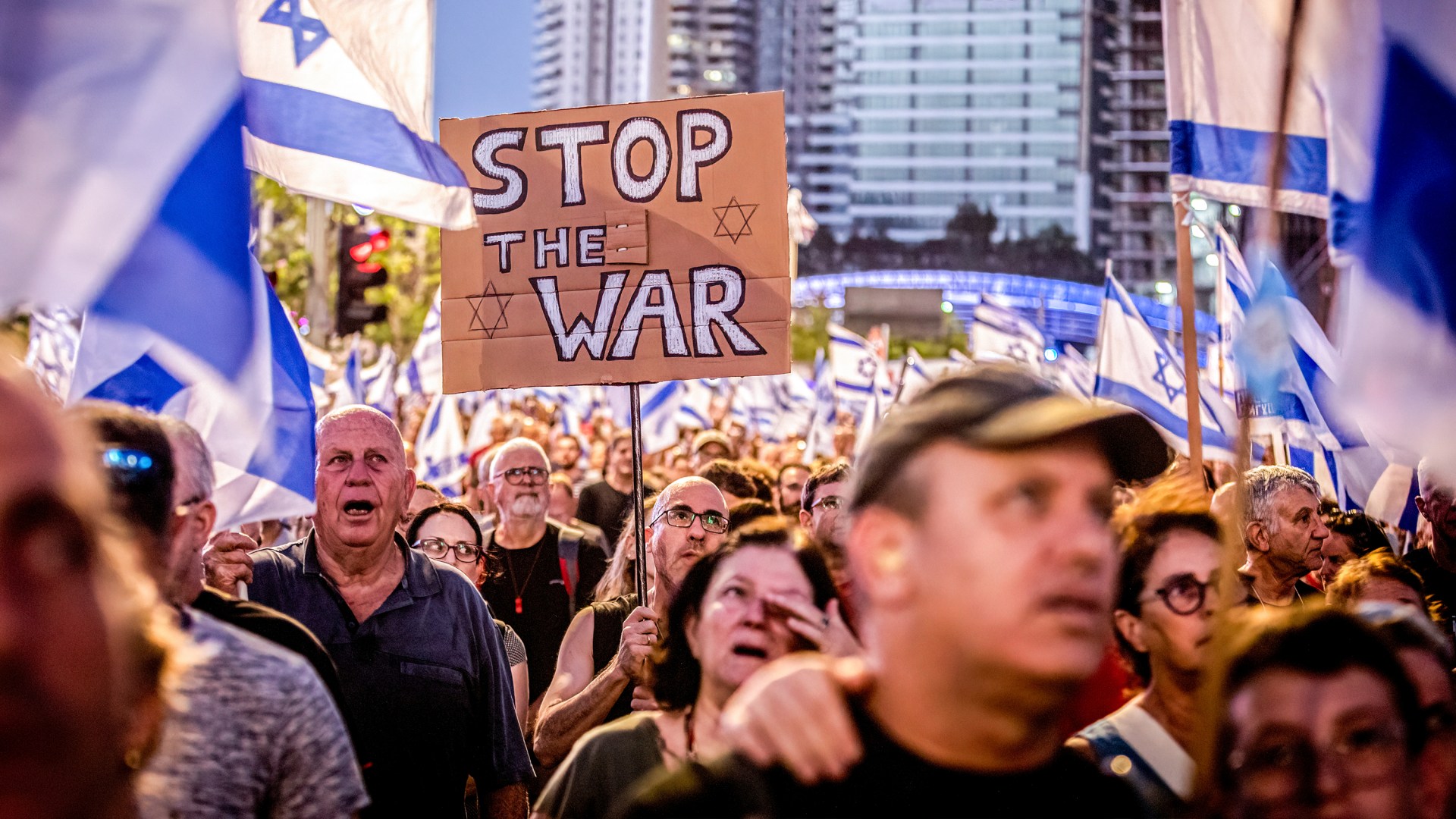
Protesters gathered at dozens of locations across Israel calling to end the war in Gaza for a hostage deal.

Protesters gathered at dozens of locations across Israel calling to end the war in Gaza for a hostage deal.

Christianity Today January 16, 2025
SOPA Images / Getty

After 15 months of war and failed negotiations, Israel and Hamas agreed Wednesday to pause fighting and to begin exchanging hostages imprisoned in Gaza for Palestinians in Israeli jails.

The deal brings hope for Palestinians facing food shortages and widespread death and destruction, but its terms are controversial for an Israeli public traumatized by the October 7, 2023, terrorist attack—and wary of security concessions. Israel’s cabinet still has to give the deal its blessing.

Phase one involves a six-week ceasefire and the exchange of 33 men, women, and children (or for those who perished, their bodies) for hundreds of Palestinian prisoners. Similar past exchanges freed hardened militants who turned around and committed acts of violence against Israelis.

For instance, in 2011, Hamas exchanged one kidnapped Israeli soldier for 1,000 Palestinian prisoners. One of those prisoners was Yahya Sinwar, the now-dead Hamas leader who engineered the October 7 cross-border attacks that left 1,200 dead and 250 people taken hostage. 

“The basic principle is you don’t negotiate with terrorists who say, ‘We’re going to kill you anyways, and that’s the reason for our existence,’” said Israel Pochtar, an Israeli pastor at Congregation Beit Hallel, a church he founded 17 years ago in the city of Ashdod, 23 miles north of Gaza.

Dozens of members from his church left Ashdod to serve in the Israel Defense Forces (IDF) after October 7, even as the church grieved the loss of the youth leader’s son, a 20-year-old who had grown up in the church and was serving on the front lines when Hamas attacked. Congregation Beit Hallel currently has 30 men, some in leadership positions, serving in the reserves.

Pochtar can see Gaza from his 30th-floor apartment, an unnerving proximity for him in light of another requirement attached to the deal: Israeli troops will withdraw to a buffer zone less than a mile wide along Gaza’s eastern border. Though he and others are glad dozens of hostages are scheduled for release, they ask, At what cost?

IDF troops spent the past 15 months in Gaza clearing Hamas strongholds—many stationed under hospitals and mosques and throughout hundreds of miles of tunnels—and establishing security corridors to prevent weapons smuggling. Some analysts believe an Israeli troop withdrawal will be a green light for the remaining Hamas fighters to regroup and rearm. 

Still, Pochtar empathized with the families of the hostages: “As a father of three, if my children were kidnapped in Gaza, I would just want my kids home.”

The initial phase of hostage releases will take place over several weeks and includes female soldiers, children, and civilians who are more than 50 years old. Two of the three American hostages may be part of the initial exchange. 

A November 2023 ceasefire deal freed more than 100 hostages from captivity in Gaza. Israeli officials say there are 98 hostages, including four taken prior to October 2023, though analysts suspect one-third are dead.

Also part of the arrangement between Hamas and Israel: Gazans return to what homes they may still have, and the flow of aid increases. The tragedy for families in Gaza has been immense; according to the Hamas-run Gaza Health Ministry, more than 46,000 Palestinians have died since October 2023. (That estimate does not distinguish between civilians and Hamas combatants.)

The ceasefire is scheduled to begin on Sunday. If it holds, another round of talks addressing Gaza’s “day after” plan for governance will begin 16 days later. Negotiators from Qatar, Egypt, and the United States, including Trump’s Middle East envoy and members of the Biden administration, helped broker the agreement.

Both sides could face significant roadblocks in phase two. Israel wants assurances that Hamas will be eliminated as a political option and crippled as a terrorist enterprise. Hamas wants a pathway to survival. 

One little-reported outcome: Pochtar knows Hamas members who have come to faith in Christ. He is praying for gospel intervention in the weeks ahead: “Anyone who comes to Jesus gains the power to forgive and the desire to bring the gospel to your enemies.”

Israel hasn’t officially approved the deal and has accused Hamas of backpedaling on some aspects of the agreement. But the delay could also be related to “coalition politics” among Israeli Prime Minister Benjamin Netanyahu’s Likud party, stated The Times of Israel. According to reports from Israel on Thursday evening, a small security cabinet will vote on the cease-fire on Friday, followed by a full cabinet vote on Saturday.

Since the ceasefire announcement, Israeli airstrikes have killed 83 people, including 23 children and 27 women, a spokesperson for Gaza’s civil defense said Thursday. The IDF told CNN they “conducted strikes on approximately 50 terror targets across the Gaza Strip.”

This is a developing story.

Culture

When Insurance Denies Your Child’s Treatment

I’ve been angry. I’ve been frantic. This time, I’m watching for the Lord.

Torn strips of paper showing a child's face and an insurance claim form.
Christianity Today January 16, 2025
Illustration by Elizabeth Kaye / Source Images: Getty, New York Public Library, Wikimedia Commons

Eight days before Christmas, our health insurance told us they would deny our son’s critical mental health treatment, effective mid-January, on our wedding anniversary. 

Merry Christmas!

I use the word critical to describe the treatment our son needed because, while it is not exactly a matter of life and death, it is important, expensive, and rare. His condition has improved significantly because of it, and we’d been feeling more hopeful about his health than we had in years.

“Hello, I hope you are doing well,” the email read. “Our utilization management team has determined that the treatment needs for your child are not meeting medical necessity. If you disagree with this decision, you have the option to appeal. Additionally, the provider can request a peer-to-peer review with our medical director.”

You can bet that we disagreed with this decision. But we didn’t immediately register its ramifications. We had other important things going on—working, caring for the rest of our children, putting food on the table, attending to Advent.

When your children have experienced an early childhood full of adversity, like ours have, the effects are long-lived and pervasive. You make hundreds of visits to pediatricians, specialists, psychiatrists, psychologists, therapists, pharmacies, group classes, workshops, conferences, educators, school districts, social workers, hospitals, and consultants. Each visit has its own set of phone calls, emails, privacy agreements, referrals, releases of information, billing, pre-authorizations, insurance estimates, health portal logins … You get the idea.

This administrative burden on people who are already sick results in new harms. A Wall Street Journal writer compellingly described how chronic aggravations of this kind can contribute to a kind of madness.

None of this justifies violent retaliation, like the recent murder of a health care CEO. I do not condone personal revenge or killing. I do understand the deep, painful frustrations that cause many to view the alleged murderer as a kind of Robin Hood of healthcare. The denial of an important medical claim, especially for a child, almost always causes a certain amount of freaking out.

This is an upheaval with major consequences. Most obviously, of course, the child doesn’t receive crucial care. Less obviously, you suffer a blow to your idea of being able to fulfill a parent’s basic job: to protect and provide. You find yourself in a hellish place where you are utterly responsible and ultimately powerless.

These losses often play out in a way that resembles the initial stages of grief: existential denial (“They can’t do that”) and anger (“How dare they”). It is tempting to spend a lot of time and energy in these states after hearing about what insurance won’t cover. The adrenaline can help propel you through the effort needed to fight for your child’s safety.

But not this time. This time I experienced a kind of withering. It was not my first rodeo. I knew by now that the company very well could and most probably would deny the treatment. I also wasn’t angry, exactly. I was fallen myself—so it made sense to me that “the insurance people,” in their fallen way, produce a fallen system that produces harms for vulnerable children.

Plus, it was the Christmas season, and we didn’t have a tree yet. We were hosting dinner with family in a few days. Our oven had conked out. This time, I had no fuel to flare my indignation.

Even so, my spirit was beguiled by a different response: frenetic effort. We will fight this. We will beat them at their own game. We will crush them with a preponderance of evidence. Open season on determinations of medical necessity!

Effort is seductive—so many avenues of action look promising. You can make urgent calls to the insurance case manager. You can send them emails. You can call customer service. You can ask to speak to their supervisor. You can draft an appeal. You can append supporting documentation. You can “document, document, document.” You can call all the providers within a hundred-mile radius for alternatives. You can recruit experts to corroborate medical need. You can find out whether the insurance uses the InterQual or the Calocus-Casii criteria to determine medical necessity. You can call your state’s insurance ombudsman. You can call the state commissioner on insurance. You can call your elected representatives. You can scroll through CoverMyMentalHealth.org. You can retain a lawyer. You can mount a GoFundMe for out-of-pocket medical expenses in case you need to cover the tens of thousands of dollars that the treatment costs (sometimes private pay is an option; sometimes it is not).

I did some of these things, but I confess that I did not do them all. It’s not actually that easy to carry out such a campaign or retain a lawyer in the final weeks of the calendar year. There just aren’t that many business days at December’s end; everyone is on holiday and sending you automatically to voicemail.

I did not know whether I was called to drop everything to contest this decision in the last week before Christmas. In church, we had just lit the fourth candle of the Advent wreath, representing peace. “We celebrate the announcement of the coming of the Prince of Peace,” the worship leader had said, soothingly, “and the greatness of God’s love revealed through the Christ child.”

Perhaps I was affected subconsciously by all this peace talk. But I found I just couldn’t keep feuding, not in the midst of the holiday, even if I deeply disagreed with our insurance’s decision. I didn’t know whether that was foolhardiness or faith. Maybe it was both.

Instead, two images kept coming to mind. One was of the prophet Elijah coming to the end of his rope, running away, and collapsing in the wilderness, only to be fed fresh baked bread and cool water by a ministering angel (1 Kings 19). And the second image was of the weaned child of Psalm 131:2, not concerned with matters too great or wonderful but calmed, quieted, and content with its mother. 

I don’t want to hyperspiritualize our situation or paint ourselves as the prophets of old in a deadly fight with the Jezebel of health insurance. Yet I did feel keenly that the journey had been too much and that there was just not much we could do about any of it.

I also suspected that the allure of frenetic effort was more about distracting myself from the more grievous reality—that God could bring healing to this child if he wanted to, instantly and involving no insurance at all. Is the Lord’s arm too short? What does the appeal process look like for years of unanswered prayers?

I remembered King Jehoshaphat’s prayer in another situation of bewilderment and powerlessness. “Our God, will you not judge them?” he prayed. “For we have no power to face this vast army that is attacking us. We do not know what to do, but our eyes are on you” (2 Chron. 20:12).

He and his people stood before the Lord. Then they heard, “You will not have to fight this battle. Take up your positions; stand firm and see the deliverance the Lord will give you, Judah and Jerusalem” (v. 17).

Maybe I am not withering at all. Maybe I am taking up my position and standing firm, watching.

Maybe this watching is shaped by the example of Mary, whose faithfulness to the purposes of God meant watching her beloved son suffer and die, with no life-saving intervention possible from her effort or anyone else’s. Within this tangle of hopelessness, the hope was present, invisibly at first. But for those watching, God would give eyes to see something completely new.

The Lord has not yet brought our children healing, at least not in a way that I can clearly see. And he may not. That is a matter too wonderful for me—and I merely a child. I wish I knew how to write an appeal to end all appeals and to smite the insurance executives with a peer-to-peer review the likes of which they have never seen. But I don’t know how to do that either. 

Now that Christmas has passed, my meager efforts will have to suffice. I will write the appeal I know how to write—this is the position I have to take up, the only way I know how to stand firm and watch for the deliverance the Lord will give. We’ll see how it goes. 

Wendy Kiyomi is an adoptive parent, scientist, and writer in Tacoma, Washington, whose work on faith, adoption, and friendship has also appeared in Plough Quarterly, Image, Mockingbird, and The Englewood Review of Books. She is a 2023 winner of the Zenger Prize.

Theology

Spiritual Gifts with Strings Attached?

Contributor

How the concept of reciprocity can build up the church.

Several gifts set in a row with their ribbons connected.
Christianity Today January 16, 2025
Illustration by Elizabeth Kaye / Source Images: Pexels

I can still remember sitting at the desk, shading the tiny white bubbles gray as I made my way down the page, No. 2 pencil in hand. I was about 13 years old, and I had never taken a multiple-choice test quite like this. What would the results say about me, and what would that mean for my future?

The answers wouldn’t showcase my math or social studies skills but my spiritual gifts. The test was the culmination of a class I had been taking at my church. Over the course of several weeks, we sat inside a sparse, utilitarian classroom to learn about how the Holy Spirit gives each of us special abilities to use in ministry. I was eager to know how God would use me to build his kingdom. 

When all the bubbles were tallied, I stared at the results with a mixture of pride and trembling. The gift of teaching came out strong. Giving scored high, too. The gift of mercy barely registered, which felt a bit embarrassing. Some other gifts I could scarcely define. What did the gift of prophecy mean? Would I be able to peer into the future?

Thirty years later, I can say the results were spot-on in some ways, especially when it comes to teaching. But I’ve also realized the test may not get a passing grade. Its individualistic approach to spiritual gifts misses the mark.

The apostle Paul focuses more on spiritual gifts than any other biblical writers do. And yet I can’t picture him poring over a self-guided spiritual-gifts assessment or proudly identifying as an Enneagram Type One. Paul wasn’t interested in personal empowerment or self-discovery. 

The word gift is part of what confuses the matter. In English, a gift can be something we give to another or a strength possessed by an individual. We might say, “She has a real gift with words.” That’s not what Paul had in mind.

Paul used the word charisma to refer to various ministries to which God calls believers. Charisma, or “gift,”  has its source in the Greek word for “grace” (charis). Spiritual gifts, as we call them, are grace with flesh on. We are gifts to one another.

To find out why Paul speaks of spiritual gifts in this way, we must consider how he understood grace. We usually associate grace with God’s unmerited favor in saving us—as we should. But first-century believers wouldn’t have been belting out “Amazing Grace,” because grace wasn’t a religious word back then. It signaled the social glue that bonded humans to one another in a mutually supportive relationship. 

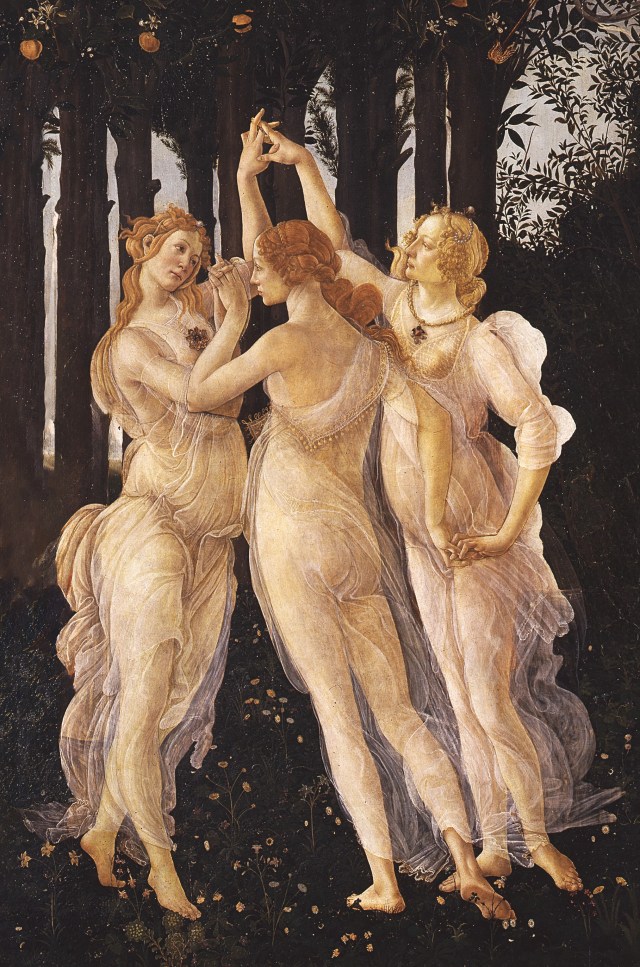
A little art history can help us understand what grace would have meant to Paul and the early Christians. The Three Graces from Greek mythology illustrate how people thought about grace in Paul’s world. A painting of the Graces features a trio of young women dancing, each joining hands with the others to form a circle. In this detail from Sandro Botticelli’s painting “Primavera” from the 1400s, the women’s clothing is nearly transparent; like the generosity of a gift, nothing is held back. Together, they represent the three dimensions of grace: the generosity of the giver, the gift itself, and the gratitude the gift evokes.

A painting by Sandro Botticelli showing the Three Graces.Wikimedia Commons
Primavera by Sandro Botticelli

Grace, it turns out, always needs another. One grace by itself would be incomplete—a gift received without gratitude, for example. The women in the painting stand on tiptoes, suggesting motion. Their graceful dance of reciprocity illustrates their bond of friendship. That’s grace, first-century style.

In the modern West, we value a gift with no strings attached because it preserves our autonomy—we aren’t beholden to anyone. In Paul’s collectivist context, gift giving was never an isolated act but part of a perpetual dance between giver and receiver which created interdependency and ongoing delight.

A gift of grace was an invitation to enter into community, as well as the privileges and obligations that came with it. To accept a gift meant to accept all it entailed, including the duty to return grace to the giver by using the gift in an honorable way. In other words, gifts came with strings attached—in the best way.

Whenever Paul speaks of “grace” that is “given”—and he does so at least 12 times in his letters—he is referring to specific ministry assignments. He says, “To each one of us grace has been given as Christ apportioned it” (Eph. 4:7). He’s not talking about salvific grace; neither is he focused on individual superpowers. He’s about to list ministry roles. His language here matches what he says about his own ministry earlier, in chapter 3, when he claims, “This grace was given me: to preach to the Gentiles the boundless riches of Christ” (3:8). 

The circular dance of grace is evident in Paul’s writing. For him, the grace God gives is more of a ministry assignment than a particular ability. And Paul is explicit about the purpose of these ministry assignments: 

So Christ himself gave the apostles, the prophets, the evangelists, the pastors and teachers, to equip his people for works of service, so that the body of Christ may be built up until we all reach unity in the faith and in the knowledge of the Son of God and become mature, attaining to the whole measure of the fullness of Christ. (4:11–13)

Paul doesn’t speak of spiritual gifts as divine packages that arrive on individual doorsteps but as people sent to build up the church. As we offer our service to our church communities, we give the gifts of those ministries to others. We become the gifts. 

The gifts, or graces, God has given his church are people who cultivate collective maturity by doing what God called them to do. These gifts don’t work in isolation, and they aren’t ours to withhold. As we learned in Sunday school, our little lights weren’t meant to be hidden under bushel baskets. They were meant to shine.

Paul calls all of us to use our God-given gifts on behalf of others. We don’t activate our gifts by focusing on ourselves but by collectively stewarding God’s graces. The pressures of life or the dynamics of our congregations can make us into wallflowers, but we were made for the dance floor.

To withhold our spiritual gifts—our ministries of service and our very selves—is to impoverish our communities. Paul writes that “to each one the manifestation of the Spirit is given for the common good” (1 Cor. 12:7). We don’t just receive the gifts of the Spirit; we are the Spirit’s gifts for one another. 

And these gifts have strings attached. If the church refuses to receive someone working to fulfill their ministry assignment from God, the dance of grace comes to a screeching halt.

Paul’s grace—his calling from God—was to bring the gospel to the Gentiles. Grace compelled Paul to deliver the gift by serving a church that did not always know what to do with him. 

Paul announced himself to the Galatians as “Paul, an apostle—sent not from men nor by a man, but by Jesus Christ and God the Father, who raised him from the dead” (Gal. 1:1). Paul understood his calling as divinely directed. He had been sent. He was a gift. He knew he had no choice but to respond to God’s grace by serving others, even when his service came with great suffering and personal sacrifice. 

I wonder if our spiritual-gifts assessments and personality tests might limit us to our comfort zones when we could be meant for more. Graces don’t always align with our natural gifts and abilities; sometimes God calls us to serve the church in ways that are uncomfortable. The point is not self-fulfillment but service.

Mercy was my lowest score on the spiritual-gifts test I took in the ’90s. Based on that test, it was fitting for me to become a Bible professor rather than a hospice nurse. A caregiving role is not a natural fit for me. However, God recently gave me a new assignment supporting a family member with dementia. To my surprise, the journey has been sweet so far. I can sense the Spirit’s empowerment as I collaborate with fellow believers who are also there to help. I would have missed so much by saying no to this assignment.

That spiritual gifts assessment didn’t get it quite right. It assumed I needed to look within myself to discover a hidden spiritual superpower that would help me decide how to spend my life. A better approach is to prayerfully ask God, together with our community, where he wants each of us to serve and then seek to steward those opportunities faithfully. Callings are often discerned communally. 

We need each other to become the kind of Christian community through which God’s presence is made manifest to the world. That’s the only way we can experience the fullness of God’s grace in every sense of the word. 

Carmen Joy Imes is associate professor of Old Testament at Biola University and author of Bearing God’s Name and Being God’s Image. She’s currently writing her next book, Becoming God’s Family: Why the Church Still Matters.

Books
Review

Would You Rather Be Free from Sin or from State Regulation?

For Christians, the answer is clear. But that shouldn’t entail a light regard for religious, economic, and political liberty.

A snake with pieces made of a column
Christianity Today January 16, 2025
Illustration by Mallory Rentsch Tlapek / Source Images: WikiMedia Commons

We use the words freedom and liberty frequently but often loosely and inconsistently. In his new book, Called to Freedom: Retrieving Christian Liberty in an Age of License, Brad Littlejohn clarifies the uses and abuses of these terms and constructs a Christian account of liberty to incorporate its various dimensions. Well-written, clear, and concise, the book should not fail to illuminate and stimulate.

Littlejohn, founder of the Davenant Institute, begins by identifying some paradoxes that provoke the need for such a book. Unlimited freedom is impossible for humans. We’re inevitably in bondage to something. Yet some sorts of bondage are liberating, while others are dehumanizing. Our present culture seeks ever-increasing freedom yet has fallen into some of the worst kinds of bondage. The first chapter thus surveys various conceptions of freedom. Littlejohn aspires to “present an alternative account of freedom that navigates among the various poles.”

The second and third chapters discuss freedom as it pertains specifically to salvation in Christ. Littlejohn first discusses “spiritual freedom,” which Christians receive in justification. He describes justification as a once-for-all freedom from the burden of doing good works to earn everlasting life. He distinguishes such spiritual freedom from the absence of political and moral restraints. Littlejohn then turns to “moral freedom,” the Spirit’s gradual liberation of Christians from bondage to indwelling sin. Here, he gives extended attention to ancient pagan virtue theory, acknowledging both its useful insights and the ultimate vanity of non-Christian virtue.

The remaining four chapters address freedom in various dimensions of broader social life. Chapter 4 focuses on “political freedom.” Here, Littlejohn compares two competing philosophical theories: liberty of political right and liberty of political rights. The former characterized traditional societies that used constraints and incentives to steer their people toward making good choices that furthered the common good. The latter characterizes modern liberal societies dedicated to limited government and individual freedom.

Littlejohn notes strengths and weaknesses of each conception. He also compares the tolerance of early liberals, which still presumed the existence of objective right and wrong, from more recent libertine versions of liberalism that glorify lifestyle diversity for its own sake. Littlejohn advocates a third way of thinking about political liberty: the “liberty of law” or “freedom as self-government.” From this perspective, the real danger isn’t authority itself but arbitrary authority unconstrained by law.

Chapter 5 reflects on freedom in light of modern technology. Littlejohn recognizes the goodness of technology insofar as it brings “the original hidden glories of creation to full expression” and mitigates the curse against sin described in Genesis 3. But we’re prone to seek a false freedom through technology, a liberation from the limits of creaturehood. Littlejohn thinks the digital realm is especially dangerous in this regard. Perhaps worse, biotechnology threatens to transform the purpose of health care from restoring an ailing body to overcoming human nature. Just because we can do something doesn’t mean we should.

Chapter 6 turns to freedom in the marketplace. Littlejohn identifies two competing visions of economic freedom: One focuses on individual liberty (especially for consumers), and another pursues collective liberty for the nation as a whole. He believes most American Christians think of a “free market” as maximizing consumer choices, but he argues that consumerism proves to be a false freedom. He also discusses the enslaving vices of both greed and prodigality, claiming that the “right relation of the Christian to wealth is one of grateful detachment.”

The final chapter considers religious liberty. Littlejohn suspects that our modern intuitions about freedom are most likely to mislead us here. He says Christians have “strong grounds both theological and prudential” to support “generous protections and exemptions for individual conscience claims.” But he warns against turning religious liberty into libertinism or allowing it to weaken the church’s public witness.

To this end, he first describes Martin Luther’s conception of religious liberty, which resembles modern ideas. He then outlines the “classical Protestant theory of religious liberty,” with which he sympathizes. The latter held that civil leaders can’t coerce the conscience but have authority to promote Christianity, support the church, and prohibit false teaching and worship that harm the community—although it’s often wise for leaders not to wield this authority. Littlejohn urges his readers to “get real” about religious liberty and recognize that every society embodies some vision about what is right and wrong.

Littlejohn’s work has a great many strengths. One of its overarching themes might be framed as a choice: Would you rather be inwardly free from bondage to sin while remaining outwardly unfree, or enjoy maximal outward freedom while remaining inwardly enslaved? Consider the virtuous Christian locked in prison for his faith and the “free” American addicted to alcohol, pornography, or shopping. Littlejohn deserves commendation for clearly explaining why the first scenario is preferable to the second.

A related and equally helpful theme running through the book is that a society with many outward freedoms will function well only if its citizens are virtuous, or inwardly free. As Littlejohn puts it, “a free government … depends on a virtuous people.” He notes that citizens capable of governing themselves won’t need draconian laws or ubiquitous policing (chapter 4), that people who are honest in business won’t require numerous economic regulations (chapter 6), and that a community marked by the virtue of tolerance can exist peacefully amid differences when granted religious liberty (chapter 7). Only morally mature people will use outward freedoms well. Outwardly free societies with morally immature people face many troubles. Littlejohn also deserves credit for highlighting these important truths.

Because Littlejohn deals with so many issues that intersect with competing claims about liberty, most readers will probably find themselves arguing with him at one point or another. For my part, I wonder if, in his understandable zeal to expose dangerous false promises in what we typically call the “free market” and “religious liberty,” he has understated the genuine goodness of these freedoms and granted too much authority to civil leaders to constrain them for a nebulous “common good.”

To be fair, Littlejohn seems to assume a readership prone to be naively enthusiastic about free markets and religious liberty, and he wishes to challenge them. Had he envisioned theocratic socialists as his primary audience, his emphases undoubtedly would have differed. Littlejohn also isn’t overly political, in the sense of prescribing specific public-policy positions, and when he does venture into this territory, he ordinarily identifies both strengths and weaknesses of various opinions. Moreover, he states that prudence often advises civil officials not to exercise all the power they have in principle.

That said, it’s worth raising a few issues. On a general level, Littlejohn at times seems to jump from the observation that without certain virtues, people won’t use their outward freedoms well the conclusion that civil officials may therefore legitimately restrict these freedoms. But although the observation is valid, the conclusion doesn’t necessarily follow. On what basis do civil officials have authority, for example, to restrict market transactions or prohibit non-Christian religions for the “common good” when no force or fraud is involved?

Perhaps instructive is Littlejohn’s understanding of civil authorities as “fathers of their people” who ought to “exercise paternal care” for them. There is some similarity between fathers and civil magistrates, but there are also so many differences that it seems dangerous to invoke this analogy as grounds for specific government regulations. For one thing, fathers have extensive authority over even minute details of their children’s lives. On that analogy, civil officials could regulate almost anything. Perhaps even worse, the analogy presumes that citizens are children. This seems to work at cross-purposes to Littlejohn’s oft-stated ideal that citizens be morally mature and self-governing.

We see another reason for Littlejohn’s openness to extensive government authority in his support for the “classical Protestant theory of religious liberty.” He explains this theory as follows: In Romans 13 and 1 Peter 2, God calls civil authorities to punish evil and praise the good (although not, contra Littlejohn, to “reward” or “promote” the good). The natural moral law defines what is evil and good. The Ten Commandments summarize the natural moral law. This means, in Littlejohn’s telling, that civil officials have authority to enforce the “full scope” of the Ten Commandments.

But there’s a problem with this reasoning. The fact that civil officials punish evil and praise the good doesn’t entail giving them jurisdiction over all that is evil and good. What’s more, the natural moral law—what we know about right and wrong from the testimony of nature—doesn’t provide nearly enough guidance for civil authorities on which religion to promote or restrain. The testimony of nature itself doesn’t reveal truths about the Trinity, atonement for sin, the church, and other core matters.

At best, Littlejohn’s belief that civil magistrates may restrain non-Christian worship and proselytizing needs more extensive argument. Could Scripture provide it? One might appeal to the precedent of Old Testament kings under the Mosaic theocracy, which is exactly what many pre-modern Christian theologians did. But since contemporary political communities are not God’s holy people, in redemptive covenant with God, such appeals are highly problematic. Littlejohn briefly glances at these issues but doesn’t really discuss them.

At one point, Littlejohn states that Christians can disregard ungodly rulers when they issue clear commands to transgress Scripture. Yet in other cases, he argues, we can cheerfully tolerate them. Are there really no other instances when Christians might justly disregard such rulers? When rulers act contrary to the laws of their own community, for example, shouldn’t citizens commit to following the law instead?

Littlejohn himself, when discussing political freedom as liberty under law, appeals to the classical notion that law should be consensual. In other words, it ought to emerge from “time-tested customs and communal practices, unwritten laws that written laws should respect.” This is indeed a noble idea. But if we take it seriously, it requires the people to have a great deal of independence to forge their own ways of life, which entails corresponding limitations on civil authority. It would have been interesting to see Littlejohn develop this theme and reflect more on its implications.

Even if Littlejohn’s conception of the extent of civil authority needs further defense, his larger perspective on Christian liberty is solid, insightful, and sometimes eloquent. Called to Freedom usefully clarifies the issues at stake, even if it doesn’t settle all of them. It should stimulate, but not end, important discussions on what it means to be free.

David VanDrunen is a professor of systematic theology and Christian ethics at Westminster Seminary California. He is the author of Politics after Christendom: Political Theology in a Fractured World.

News

How Pepperdine University Is Helping Fight the LA Fires

When water was in short supply, the Christian school’s reservoirs helped out.

An LA County helicopter does a water drop on the Palisade Fire in Los Angeles.

An LA County helicopter comes in to make a water drop on the Palisade Fire on January 11, 2025.

Christianity Today January 15, 2025
Photo by Jon Putman / NurPhoto

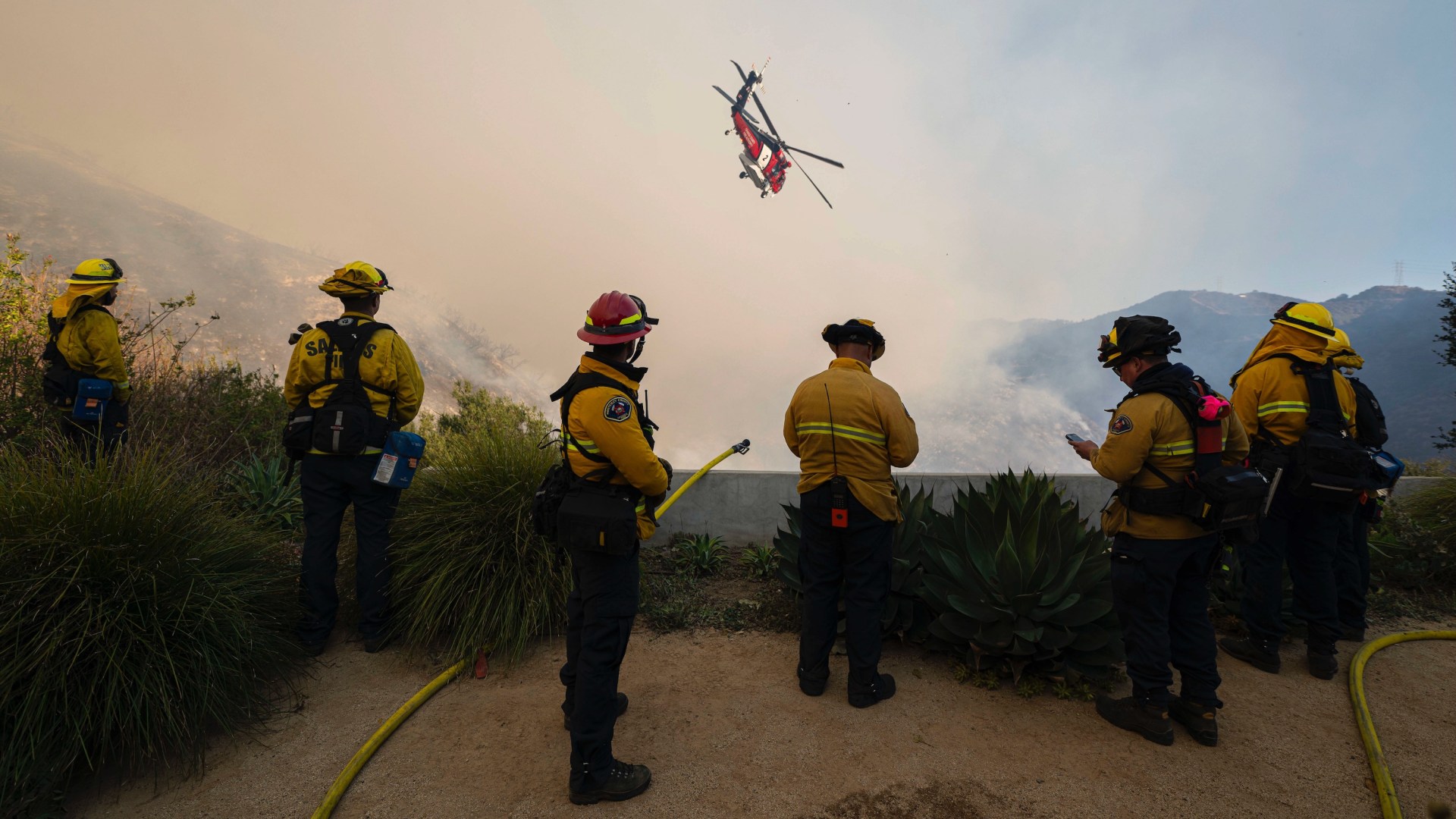
Even as wildfires burn neighborhoods nearby, destroying the homes of some faculty and students, Pepperdine University is starting its spring semester by helping local firefighters in Los Angeles. 

With firefighters in the area facing water shortages, the Christian university in Malibu has provided essential help by giving them access to the university’s two water reservoirs, which hold the school’s recycled and treated water. Helicopters suck up the water and can transfer it to firefighters on the ground or make water drops over the fires. 

California governor Gavin Newsom shared a video of an LA County Fire Department helicopter pulling water from one of Pepperdine’s lakes, saying, “Multiple water refills in just a matter of minutes.”

“Pepperdine has a close, long-lasting relationship with the Los Angeles County Fire Department,” said Ricky Eldridge, associate vice president at Pepperdine University and leader of the Center for Sustainability, in a statement to CT. The school ensures “its lakes are available for them, along with any other jurisdictions fighting fires in the region (e.g., Cal Fire).”

The two lakes exist because Pepperdine designed its Malibu campus in the early 1970s with both fire safety and water conservation in mind. The school reports it has saved 4 billion gallons of water since 1972—enough to fill over 6,000 Olympic-sized swimming pools. 

“This duty arises out of our belief that we are called to respect and care for the awesome gifts that God has bestowed upon us,” the university said in its sustainability policy

Due to the tens of thousands of acres burning in the Los Angeles area, water supplies available to Los Angeles firefighters started to run short during the initial wildfire attack last week. The water shortages produced dramatic scenes, like a man begging a firefighter to turn the little remaining water on his home, according to The New York Times

The problem was like putting too many straws in a cup of water, said Cal Fire public information officer Colin Noyes. 

If you put one straw in a cup of water, “it’s going to take a while to empty it,” he said in an interview with CT. “But if you put too many [in] all at once trying to do all these different things—and you use the same water supply—you’re going to have issues, no matter where you are around the state.”

Santa Ana wind gusts of up to 70 miles per hour have continued to threaten Los Angeles this week, which could lead to “explosive fire growth,” according to the National Weather Service. As of early Wednesday, the Palisades Fire was 18 percent contained, and the Eaton Fire was 35 percent contained. The fires have killed at least 25 people, and over a dozen are missing.

Pepperdine just survived the Franklin Fire in December, with students sheltering in place in the campus’s fireproof buildings. The school reported that the Franklin Fire in December burned brush that helped keep the Palisades Fire from spreading to Pepperdine.

Since the construction of the campus in 1972, Pepperdine has used recycled water as its main water source for irrigation and fire fighting. Drinking water, which becomes wastewater, is sent to one of two treatment facilities: the Tapia Water Reclamation Facility or the Malibu Mesa Water Reclamation Plant (a facility that Pepperdine helped pay to build). The water is then recycled back into the lakes. 

Eldridge said Pepperdine is unique in that approximately 97 percent of campus irrigation comes from recycled water. 

Additionally, the material collected from the bottom of the lakes during routine maintenance becomes a natural fertilizer around campus.

Water conservation has been a top priority at Pepperdine to try to combat the historically water-scarce region.

“Water supplies may only last another 20 years,” Pepperdine’s website states. “Many consider water availability the most considerable environmental concern facing California.” 

The university is also helping firefighting by allowing helicopters to land in Alumni Park, a large green space on campus. Additionally, the campus is being used by the city of Malibu’s Emergency Operations Committee as a temporary headquarters and by SoCalGas as an incident command center. 

Pepperdine has been no stranger to wildfires since the construction of its Malibu campus in 1972. The university has helped firefighters with several past fires, like the 2018 Woolsey Fire.  

The fire resistance of campus structures, combined with a shelter-in-place policy that was developed with the LA Fire Department, is why the Pepperdine community can remain rather than evacuate like its neighbors when fires approach. The policy has been implemented several times, including during the Woolsey Fire in 2018 and the Franklin Fire early last month.

When LA firefighters use the Pepperdine lakes, the school takes extra maintenance measures. 

“At certain times,” Eldridge said, “including when the region is experiencing ‘Red Flag’ conditions or the fire department is indicating they may wish to use the lakes, the university proactively increases the amount of water available in its lakes for fire suppression purposes. It also has the ability to efficiently and effectively raise and replenish its lakes as necessary to support fire resources at a rate consistent with fire department operations and demand.”

Pepperdine’s ability to control the water level in its lakes ensures that the increased use will not diminish the school’s water supply for the spring semester. 

Due to the fires, the school delayed in-person classes. It has started the spring classes online and is preparing to return to in-person classes on January 21. 

In a Monday briefing, president Jim Gash emphasized Pepperdine’s commitment to the local community and stressed the importance of praying and drawing near to God as the process of rebuilding continues into the coming weeks.

“I am confident, too, in the steadfast hope we have, even in the midst of ongoing trials,” he told the school last week. “As Paul reminds us in 2 Corinthians 4, ‘We are hard pressed on every side, but not crushed; perplexed, but not in despair; persecuted, but not abandoned; struck down, but not destroyed.’ And as the Psalmist assures us in Psalm 46, ‘God is our refuge and strength, an ever-present help in trouble.’”

Correction: An earlier version of this story misstated that Pepperdine’s recycled water can be used for everyday tasks like laundry. It is used solely for irrigation and fire suppression.

News

The 50 Most Dangerous Countries for Christians Get More Violent in 2025

Around the world, believers increasingly confront the threat of murder, unlawful detentions, abductions, and property destruction.

The silhouette of a person falling in the earth
Christianity Today January 15, 2025
Illustration by Kumé Pather

Sometime in the past year, Daniel stopped meeting his Christian friends at cafés for tea and long talks about their faith. 

Daily life had grown too dangerous in the country of Yemen, a poor country in the Arabian Peninsula, currently in its tenth year of civil war. Daniel (his pseudonym for security reasons) has felt the discouraging effects of this isolation, which felt necessary to his community because of increasing violence against Christians in the country. 

“I am really afraid that these people are on their way of not having a strong faith,” he said. But the current geopolitical climate means his loneliness is likely to persist. 

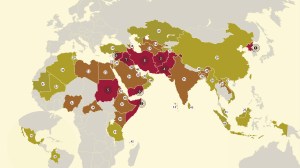
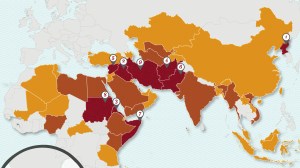
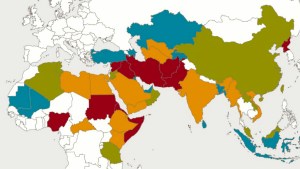
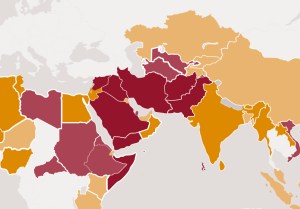
The relentless bloodshed of civil wars and other deadly conflicts in Yemen, as well as in Sudan, Somalia, and Myanmar, has traumatized many and left them homeless or bereft of loved ones. Increasingly, these hostilities have crippled the local church, according to the 2025 edition of the World Watch List (WWL), released today by Open Doors. The number of Christians subjected to violence worldwide increased in 2024, researchers said, and among the 50 countries where persecution is most severe, 29 reported an increase in violence.

Yemen ranks No. 3 on this year’s WWL, thanks to the decade-long conflict ostensibly between the Houthi ethnic rebel group and the central government, but one where Saudi Arabia, the United Arab Emirates, and Iran have all sought control. A weak national government and the Houthis’ rise has left minorities like Christians exposed in the nation of 34 million and shut down their house churches.

In areas controlled by the internationally recognized government, the church hardly fares better. Some Christians have been arrested for leaving Islam and “blaspheming” the religion. In its last reporting period, Open Doors learned of authorities detaining Christians solely because of their faith or because of the false accusations of family members or others as a way to harass them. 

Beyond the threat of violence, Christians suffer from hunger, often cut off from social circles, food, medical attention, financial help, or other resources because they don’t show up to the mosque on Fridays. Houthis have blocked the country’s harbors, limiting what enters the country and forcing people to rely on their connections in the black market. 

“I would love to see people on their Facebook pages or whatever social media saying, ‘Hey, we are praying for you, Yemen!’” Daniel said. 

In Somalia, the Islamist militant group and al-Qaeda affiliate al-Shabab has killed Christians merchants on the spot. But community and family members may also betray loved ones who have converted from Islam, and those accused may face death threats.

Myanmar, a country where Christians make up 8 percent of the population, now sits at No. 13, rising four places from 2024. Most Christians hail from half a dozen ethnic-minority parties. In the Kachin region, Christians have been subjected to what has been described by one activist as a “slow genocide,” particularly after the military coup in 2021. 

Though neither country ranked in the top 50, Russia and Ukraine now sit at No. 56 and No. 69 respectively on WWL’s 2025 list. In Ukraine, much of this persecution pertains to war and an ongoing power struggle within the Orthodox Church. After the government banned the Russian Orthodox Church in 2024, it closed numerous congregations.

In Russian-occupied areas of Ukraine, Russian forces and affiliated groups have targeted churches outside the Russian Orthodox Church. In one incident, Russian militants, or “cossacks,” have seized Ukrainian Greek Catholic churches in Ukraine’s Donetsk region and barred would-be attenders. Russian forces sentenced a priest to 14 years in prison when he opposed the integration of his Ukrainian Orthodox Church diocese into the Russian Orthodox Church.

Meanwhile, in Russia last year on Pentecost Sunday, gunmen in Dagestan, a predominantly Muslim part of the country, attacked two Orthodox churches and a synagogue and killed a priest and more than half a dozen security officers. The government also punished Christians for allegedly discrediting the Russian Armed Forces, distributing religious literature, and conducting unspecified missionary activities.

Violence is one of six categories Open Doors uses to judge the danger a Christian faces in any given country, and it includes killings, detentions without a proper trial, abductions, and property destruction. Christians most at risk for this type of terror include Nigeria and Pakistan, which both earned 16.7 points, the maximum score and the highest of any country. The 20 countries with the highest violence scores include 15 countries in Africa, 3 in South Asia, 1 in Southeast Asia, and 1 in Latin America.

Overall, more than 380 million Christians live in nations with high levels of persecution or discrimination. That’s 1 in 7 Christians worldwide, including 1 in 5 believers in Africa, 2 in 5 in Asia, and 1 in 16 in Latin America.


The violence index for sub-Saharan African countries listed among the 50 most dangerous in the world for Christians has risen by an average of one point since the WWL’s 2023 list. The region is subject to an “incessant flow of attacks on Christians and Christian communities by Islamic terror groups,” Open Doors said.

Sudan’s civil war, fought between its army and an alliance of regional militias, has had devastating consequences for its population, including Christians. WWL’s most recent research period reported 44 Christians killed, 100 Christians sexually assaulted, and 100 Christian homes and businesses attacked. Sudan includes people from both Arab and Indigenous African backgrounds. Christians, who make up the majority of the latter, can face persecution for both their faith and their ethnic identity. Currently, the civil war has displaced more than 11 million out of Sudan’s 49 million people. 

The number of Christians killed for faith-related reasons from October 2023 to September 2024, the period Open Doors analyzed, dropped from 4,998 to 4,476. Researchers attributed the drop to a reduction in violence against Christians in Nigeria, with 3,100 deaths recorded in the 2025 WWL compared to 4,118 in the 2024 WWL. Yet they cautioned that this data should not be interpreted as evidence that attacks on Christians by Boko Haram, Fulani herdsman, Lakurawa, and other groups have decreased. Instead, the violence no longer concentrates in Nigeria’s North Central region but now exists along the borders between Burkina Faso and Mali and Chad and Cameroon. 

Outside Nigeria, the number of Christians killed for their faith increased compared to last year (1,376 in WWL 2025 versus 880 in WWL 2024), largely due to increasing violence in places like the Democratic Republic of the Congo (355 in WWL 2025 versus 261 in WWL 2024) and Burkina Faso (201 in WWL in 2025 versus 31 in WWL 2024, as a result of the action of jihadist groups affiliated with the al-Qaeda network). 

Nearly 5,000 (4,744) Christians around the world were detained without trial, the highest number since 2020. India (No. 11) had 1,629 detentions recorded during the period covered by the report.

The number of attacks on churches or other public properties linked to Christians (which includes the closure of churches), fell from 14,766 cases reported in 2024 to 7,679 in 2025. Much of this comes from Open Doors changing their estimates in China, where researchers cannot confirm reports and data. Where numbers cannot be verified, estimates are given in round numbers of 10, 100, 1,000, or 10,000, assumed to be higher in reality. In the 2024 WWL, they reported 10,000 attacks, compared to 1,000 this year.

In Rwanda, Open Doors said the government closed 4,000 churches, citing unmet building-code issues and pastoral and theological requirements. 

The number of Christians raped or sexually harassed for faith-related reasons rose from 2,622 in WWL 2024 to 3,123 in the WWL 2025 reporting period. The 2025 report acknowledged the challenge of gathering these numbers, given victims’ trauma and cultural taboos. Another sensitive data point: the number of forced marriages of Christians to non-Christians. Open Doors reported that the number increased from 609 cases in WWL 2024 to 821 in the WWL 2025 reporting period.

Acts of violence often force Christians to leave their homes in search of safety elsewhere. Open Doors recorded 183,709 Christians seeking safety in their own countries in WWL 2025, a reduction in comparison with the 278,716 cases in WWL 2024. The number of people leaving their own countries rose from 16,404 in the WWL 2024 to 26,062 in this year’s report.

In most cases, this forced migration cannot be measured precisely, so once again researchers estimated by order of magnitude, emphasizing that estimates are conservative and represent the “absolute minimum” of attacks and atrocities, meaning the actual figures are likely much higher.Open Doors approximated that Azerbaijan forced out 10,000 Christians for faith-related reasons during the reporting period. CT’s 2023 report noted that 100,000 ethnic Armenians had left the Nagorno-Karabakh region after Azerbaijani forces entered. Open Doors said that there are ethnic and political reasons present in this conflict and that the faith component is present but not acute.

In some countries, persecution has driven the church underground, making it hard for researchers to track information on its well-being. This year’s list ranked China as No. 15, up from No. 19 in 2024, noting that “the era of the church’s relatively open presence fades deeper into memory.”

Afghan Christians have responded to the Taliban by marginalizing themselves further, limiting the government’s scope of repression. The Taliban is reportedly working to erase Christian presence in the territory, so most believers have gone underground to avoid being judged by the Taliban’s Islamic courts. Tiny communities meet in homes, trying to share the gospel in a hostile environment.

However, this isolation also makes it challenging to verify potential attacks on Christians. As a result, though Open Doors ranked Afghanistan No. 10 this year, down from No. 1 in 2022, they scored it a 5 for violence, the lowest among the top 10 countries overall.

Algeria went from the 15th to the 19th position, with its overall score dropping by two points since Open Doors reported no new attacks on churches. While this appears to be an encouraging sign, the government’s closure of all Protestant churches in the country has left no room for new attacks. Without violent incidents—and without churches—Algeria’s overall score decreased.

The Christian community in Gaza has shrunk from around 1,000 to barely 700 since the Israel-Hamas War began in October 2023. At least 300 Christians have left the region, with at least 43 reported deaths in Gaza. Open Doors ranks the Palestinian Territories (which includes the West Bank) as No. 62.

Though the Middle East and Africa continue to be dangerous places for Christians, some countries in Southeast Asia and Latin America have improved. 

In Indonesia, the number of attacks on churches and the number of deaths decreased significantly in a time when the country was focused on electing a new president. Efforts to combat terrorism helped the violence score of the fourth-largest nation in the world drop from 11.5 points to 5.7 points, and the nation now ranks No. 59 compared to No. 42 in 2024. In September, Pope Francis visited Jakarta, Indonesia’s capital, as part of an effort to promote interfaith dialogue, especially significant given Indonesia’s status as the largest Muslim-majority country. 

In Colombia, the presence of guerrilla groups and drug cartels with significant territorial control had created a situation where anyone opposing their objectives, including churches, could become a target of violence. In February 2024, a ceasefire reduced violence against Christians, and the country’s total score dropped by two points, placing it at No. 46.

Open Doors also included Nicaragua as a hopeful case, arguing the situation could have been worse without the sanctions imposed by the European Union in 2022 and by the United States and Canada in 2024. These sanctions target 21 individuals, including President Daniel Ortega and his wife, Vice President Rosario Murillo, and involve asset freezes and travel bans. 

During the 12-month World Watch List reporting period, 94 Christians—mostly Roman Catholic priests, but also pastors and missionaries—were expelled from the country. Nicaragua ranked 30 in WWL 2025, the same position as the previous year.

CT previously reported the WWL rankings for 2024, 2023, 2022, 2021, 2020, 2019, 2018, 2017, 2016, 2015, 2014, 2013, and 2012, as well as a spotlight in 2010 on where it’s hardest to believe. CT also asked experts in 2017 whether the United States belongs on persecution lists and compiled the most-read stories of the persecuted church in 2019, 2018, 2017, 2016, and 2015.

Read Open Doors’ full report on the 2024 World Watch List here.

Methodology

Open Doors scores each nation on six components and each category can receive a maximum score of 16.7 for a maximum total score of 100. Researchers consider a score of  more than 40 points as high.

Their methodology takes into account violence, as well the pressure to reject their faith that believers experience from neighbors, friends, extended family, and society as a whole. The total score is determined based on answers from an extensive questionnaire.

  • Private life: the inner life of a Christian and his or her freedom of thought and conscience.
    “How free has a Christian been to relate to God one-on-one in his/her own private space?”

  • Family life: pertaining to the nuclear and extended family of a Christian.
    “How free has a Christian been to live his/her Christian convictions within the circle of the family, and how free have Christian families been to conduct their family life in a Christian way?”

  • Community life: the interactions Christians have with their respective local communities outside their families.
    “How free have Christians been individually and collectively to live their Christian convictions within the local community? How much pressure has the community put on Christians by acts of discrimination, harassment or any other form of persecution?”.

  • National life: the interaction between Christians and the nations they live in. This includes rights and laws, the justice system, the state, and other institutions.
    “How free have Christians been individually and collectively to live their Christian convictions beyond their local community? How much pressure has the legal system put on Christians? How much pressure have agents of supra-local life put on Christians by acts of misinformation, discrimination, harassment or any other form of persecution?”

  • Church life: the collective exercise of freedom of thought and conscience, particularly as regards uniting with fellow Christians in worship, service, and the public expression of their faith without undue interference.
    “How have restrictions, discrimination, harassment or other forms of persecution infringed upon these rights and this collective life of Christian churches, organizations and institutions?”

  • Violence: deprivation of physical freedom, serious physical or mental harm to Christians, or serious damage to their property. This is a category which can affect or inhibit relationships in all other areas of life.
    “How many cases of such violence have there been?”
Inkwell

Chalk Songs

Inkwell January 15, 2025
Photography by Luke Stackpoole

1. Cutting Enough

A time cutting enough to reawaken
some original instinct of prayer.
When the turn to words is a form of sloth.

2. Little Inscription for the Family Bible

The liars and the testifiers and the martyrs of water.

Thaddeus, Theta, bonecancered Carla,
who went out screaming being like an inverted birth.

Let us say a word for all those who died of God,
their hearts, we hope, a little lighter now without us in them.


3. Little Flames

We blinked out.

One by one,
grief by grief,

we who had kept you
you

blinked out.
You grew

into the spaces
between us

until you were as everywhere
as a gas leak.

One real prayer
would set the sky on fire.


4. Somewhere This Side of Sanity

Somewhere this side of sanity
let me have one glimpse of you God.

I have grown tired of gazing at the seams in things,
believing that there are seams in things,

that all reality is ventilated with an absence
that both is and annihilates vision.

If prayer then prayer to be free of the need for it.
If renunciation then of the need to renounce.

To stand neither bored nor alarmed
looking out on your life

like a child’s chalk-drawing a child watches
washed away by a storm.

Christian Wiman is a poet, the former editor of Poetry Magazine, and Author of Zero at the Bone: Fifty Entries Against Despair, along with many other books.

addApple PodcastsDown ArrowDown ArrowDown Arrowarrow_left_altLeft ArrowLeft ArrowRight ArrowRight ArrowRight Arrowarrow_up_altUp ArrowUp ArrowAvailable at Amazoncaret-downCloseCloseellipseEmailEmailExpandExpandExternalExternalFacebookfacebook-squarefolderGiftGiftGooglegoogleGoogle KeephamburgerInstagraminstagram-squareLinkLinklinkedin-squareListenListenListenChristianity TodayCT Creative Studio Logologo_orgMegaphoneMenuMenupausePinterestPlayPlayPocketPodcastprintremoveRSSRSSSaveSavesaveSearchSearchsearchSpotifyStitcherTelegramTable of ContentsTable of Contentstwitter-squareWhatsAppXYouTubeYouTube