Theology

‘Shrewd as Snakes’?

Chinese Christians understand Jesus’ seemingly contradictory directive.

A snake making the shape of a dove
Christianity Today January 28, 2025
Illustration by Mallory Rentsch Tlapek / Source Image: Unsplash

The Bible seems to give snakes a bad rap from the outset.

Scripture depicts the serpent as evil and deceptive, from tempting Adam and Eve to disobey God in Genesis to representing the Devil in Revelation (Rev. 12:9).

Yet at one point early in his ministry, Jesus portrays snakes in a positive light.

In Matthew 10:16, he tells his disciples: “I am sending you out like sheep among wolves. Therefore be as shrewd as snakes and as innocent as doves.”

Here, Jesus is sending out his disciples to proclaim the gospel. He exhorts them to travel light: to not stock up on any gold, silver, or copper or bring along extra clothing, sandals, or a staff. He encourages them to find rest in strangers’ homes and to leave a town if no one there extends welcome.

Jesus also tells the disciples to be vigilant, as persecution and suffering will arise. Yet he assures them that they will have help in the form of the Holy Spirit, who will empower them when they are arrested and give them words to respond when they face judgment before earthly governors and kings.     

In between doling out practical advice and declaring the Spirit’s ever-present nearness, Jesus issues that startling command to his disciples—and us. It’s a posture Jesus wants us to adopt in a perilous environment: that of a docile lamb surrounded by bloodthirsty beasts, displaying a crafty and cunning attitude while remaining pure and loving within.

Some may find Jesus’ saying hard to reconcile with other biblical principles, such as ridding ourselves of all malice and deceit (1 Peter 2:1). The word shrewd also carries a negative connotation, and adopting such a characteristic may sound a little reprehensible for the believer who longs to be transformed into Christlikeness rather than a cold-blooded, reptilian disposition.

In place of shrewd, some Bible translations have picked words like wary (New English Bible), cautious (Good News Translation), or wise (English Standard Version) to more accurately convey what Jesus is saying here: We are to be discerning, attuned, and responsive to what takes place around us as we endeavor to make Christ known. The Chinese Union Version may be closest to the word’s intended meaning here: It renders shrewd as ling qiao, which means “being ingenious” and “displaying finesse.”

This Lunar New Year is the Year of the Snake. According to the Chinese zodiac, those who are born in this particular year are intelligent, intuitive, and enigmatic. Chinese culture often depicts the snake as a spiritual being with hidden power, and many folk tales and legends extol the slinky reptile for its acuity and agility.

The snake’s uncanny ability to shed its skin also commonly symbolizes renewal or rebirth, and Chinese people who overcome difficult challenges often say they have shed off a skin layer.  

This is why Jesus’ statement in Matthew 10:16 may not appear as paradoxical to Chinese Christians. Instead, it is instrumental in shaping how believers in China respond to, and live under, religious oppression.

Many Christian leaders in the country leaned on this Bible verse while enduring the brutal Cultural Revolution from 1966 to 1976, when all churches were shut down and resistant leaders were imprisoned or sent to labor camps.

The remnant of Christians retreated underground. Sometimes they held prayer meetings and worship services in hideout tunnels, caves, or dense forests. More often, they met at homes in the night without turning the lights on.

I visited Wenzhou, the southeastern city known as China’s Jerusalem, in the early 2000s. A church elder and I climbed to the rooftop of a magnificent, newly built church, where he pointed to a hilly, tree-covered area about one or two miles away. His church met for worship services there at night during the Cultural Revolution. A watchman would stay at the foot of the hill, and when he spotted the police approaching, he would turn the flashlight on and jiggle it. The congregation would then disperse into the woods.

Churches like these survived and thrived under the religious ban. They adeptly navigated dangerous situations, never giving up on praising God and pleading with him for help in times of need. Whenever they deemed that the worst had passed, they resurfaced to evangelize relatives, friends, and acquaintances or minister to the sick and needy. Many within and outside China were surprised that the number of Protestant Christians increased threefold to fivefold in this period.

Many house church leaders have also clung to this verse in the reform era, which began in the late 1970s and lasted until 2012, when president Xi Jinping became the Chinese Communist Party’s general secretary. The government lifted the religious ban in 1979, and Ningbo Centennial Church was the first to reopen.

In 2016, Wang Yi of Chengdu’s Early Rain Covenant Church, who is currently imprisoned for his religious beliefs, preached a sermon on Matthew 10:16. In it, Wang shared the example of an elderly house church leader in Henan and how he embodied a snakelike shrewdness, or ling qiao, in spreading the Word.

This house church leader first shared the gospel in his village and established a church. When the authorities detained him for spreading Christianity and then released him, he left the village for the county town, where he continued to evangelize and establish churches. Again, the police detained and released him. He left the county town for the provincial capital to continue the Great Commission.

After getting arrested for the third time, he was not discouraged. Instead, he left the province for the capital city of Beijing, where he continued to build churches and expanded his church network in other parts of the country. I have heard similar stories many times during my field research.

Other leaders might have decided to remain in familiar places and continue their preaching in the surrounding areas. But house church leaders like this often adopted a different strategy: When the police came, they would dodge them by fleeing to other counties or provinces, which were under different police jurisdictions. Avoiding clashes with the authorities meant there was no hindrance to evangelism, and churches thrived in the “border regions” (bian qu) that intersected with two or three counties or provinces.  

Because the house church leaders kept moving from one place to another whenever opposition to the faith arose—rather than choosing to remain and causing opportunities for greater conflict—the Holy Spirit was able to work through them to allow the gospel to grow and take root in China. This is also what Jesus says to his twelve disciples as he sends them out: “When you are persecuted in one place, flee to another” (v. 23).

In many ways, the house church leaders exemplify Matthew 10:16. But they also embody another popular Chinese idiom: xu yi wei yi.

The phrase refers to yielding outwardly while remaining steadfast inwardly, and it uses the snake’s character to describe a strategy of adaptability without direct confrontation. Just as the serpent maneuvers and weaves through its environment, we can adopt an outward appearance of compliance while preserving inner principles.

This is one way Christians today are responding to suppression in China. Under religious repression, millions of believers are worshiping God clandestinely. They are accommodators who yield to the authorities outwardly while remaining steadfast in faith and evangelism.

To be clear, Matthew 10:16 is not about accommodating compromises and failures, as Wang Yi warns in his teachings. Jesus is not encouraging believers to seek personal gain or license to sin but to artfully and boldly share the Good News amid the threat of oppressive forces—a threat that may sometimes mean death.

While I was in Wenzhou, I participated in some churches’ Christmas feasts. At the time, there was no need to be wily in carrying out evangelistic efforts. Christians lived public lives. Believers and nonbelievers would mingle at large events, enjoying delicious food, singing and dancing, and hearing the story of Jesus’ birth. Many churches would also organize revival meetings between Chinese New Year’s Day and the Lantern Festival.

Nowadays, it is no longer possible for churches in Wenzhou or elsewhere in China to hold such large-scale evangelistic gatherings at Christmastime. Since 2018, through the National Committee of the Three-Self Patriotic Movement, the party-state has imposed harsh restrictions on approved churches under the clout of a Sinicization of religion policy.

The country’s revised regulations of religious affairs consider house churches illegal, and the government is actively shutting down churches, many of which have splintered into small groups to continue meeting discreetly. Dozens, if not hundreds, of house church leaders who refused to bend to the party-state have been jailed.

As we begin a new year in the Chinese calendar, Jesus’ exhortation in Matthew 10:16 is one we can contemplate and meditate on, even if we are not facing dire persecution. In what ways can we practice accommodation without compromise as we follow Jesus? How do we evangelize faithfully without inviting scrutiny from the powers that be?

While Jesus’ statement may sound contradictory, I’m reminded that wisdom, adaptability, and perseverance are essential in a world that is often hostile to our beliefs, especially for persecuted believers in China today.

Just as a snake sheds its skin to renew itself, we can continue to adapt and grow in our faith, drawing strength from the knowledge that our ultimate hope lies in Jesus’ promise that he is with us always, to the very end of the age (28:20).

Fenggang Yang is a professor of sociology and the founding director of the Center on Religion and the Global East at Purdue University. He is the author of Religion in China: Survival and Revival under Communist Rule.

Church Life

To Disciple Kids Well, Help Their Parents

Tired, lonely parents struggle with superficial family discipleship programs. But by caring for parents’ faith, the church cares for the whole family.

A vintage photo of a family leaving church together.
Christianity Today January 28, 2025
Stockbyte / Getty / Edits by CT

Parenting advice is never in short supply. 

If you’re a parent, you’ve seen all the tips, “life hacks,” and opinions perpetually flowing through social media, well-intentioned friends, and even your church community. You know the internet is full of Christian bloggers’ ideas for spiritual growth while you have a newborn, for organizing your schedule, for fun family devotions, for involving your children in cleaning the house. On Instagram in particular, you may have gotten the impression that family faith formation is predictable, even easy, for those who simply follow a good plan.

But real life doesn’t work that way. Parenting is hard and often unpredictable, and it’s further complicated by stress and our culture’s idolization of productivity and worldly success. Many parents find themselves feeling isolated, tired, and daunted by the prospect of yet another project to complete.

Discipling our children, of course, is not a project to check off our lists. But too often, the American church presents family discipleship as a matter of success, programs, and achievements. We should be introducing our particular children to a life deeply formed around the image of Christ, but instead we tend to land on one-size-fits-all programs, spiritual busywork that leads us toward works-based perfectionism or parental burnout and guilt. 

However good our intentions, this is not how a child’s faith flourishes—nor is it good for parents, whose well-being is always tied to whether our children are flourishing. How can the church better support families who want to be faithful but feel stretched thin?

The first step is to be more realistic about faith formation in the home. Overwhelmed by the demands of day-to-day life, parents often rely on their local congregations to disciple children and may ask for a program to help accomplish this task. 

Unfortunately, the kind of activities churches tend to suggest—family devotions and other activities—are frequently rote and superficial. They don’t settle deep within the person or encourage authentic relationships and genuine transformation. They don’t delve into the real and sometimes tough questions that parents and children might be wrestling with in this broken world. Unsurprisingly, then, when family life gets too hectic, these programs are some of the first commitments to be cut.

The solution is not more programs or special tips. What we need is faith enacted in our daily lives. We are formed through everyday habits and experiences. “Faith is learned as it is woven seamlessly into the fabric of daily life,” as Traci Smith writes in her book Faithful Families. Authentic Christian faith is not a program but a communal journey of being daily formed into the image of Christ.

Our children learn this kind of transformational faith from us, not a workbook. They’re watching us, observing their parents and congregations, asking questions to make meaning of how we live. They want relationships with room for honest dialogue to learn what it means to live as a follower of Jesus. A child’s faith is nurtured in the unnoticed everyday moments of life, like when a mother reminds her son of his identity in Christ, or when a father holds his daughter close for a small and desperate prayer.

There is no guarantee of success as the world understands it in spiritual development. Sometimes we will have the great joy of seeing our children learn to trust in God, but sometimes the parenting journey is wracked with grief and suffering. Rather than handing out more programs, the church should support families in every season by offering practical help, especially in stressful seasons: childcare, meal trains, and listening ears. This kind of care isn’t overtly spiritual, but it lifts weight off parents’ shoulders and leaves them with more wherewithal for discipleship in difficult seasons.

Pastors and other church leaders should also attend carefully to parents’ spiritual formation. By caring for parents’ faith, the church cares for the whole family. The “mouth speaks what the heart is full of,” as Jesus taught us (Luke 6:45), and parents whose faith is growing in depth and maturity won’t need busywork and programming to disciple their children. 

We often default to direct teaching when we think about children’s discipleship, imagining that if we have all the correct answers and tell kids exactly what to do, they’ll grow up well. But that isn’t how children learn best. They pay attention to what we say and how we handle conflict. They see where our churches invest time and money. These things are not lost on a child, and they are what teach children what is worth pursuing in life.

We will inevitably have some programs too, of course, but they should be designed to avoid spiritual busywork and foster intergenerational community. Instead of always shuttling kids off to age-segregated classes, let them forge connections with believers of various ages and life stages. Parents should not be their only models for the adult Christian life. And our programs should support weary parents and caregivers, too, with prayer, mentoring, Scripture, fellowship, and pastoral care.

Program-focused approaches to children’s discipleship may seem like the easier and more measurable option—as if we could check a box and call our discipleship work done for the day. But discipling is not a project to be efficiently completed. It is a way of life, and it is in the unprogrammed moments of daily life that churches can help families thrive.

Mimi L. Larson is the executive director for Center for Faith and Children as well as an assistant professor of educational ministries at Trinity Evangelical Divinity School. She is the coeditor of Bridging Theory and Practice in Children’s Spirituality: New Directions for Education, Ministry, and Discipleship.

Ahyuwani Akanet is the managing director for Center for Faith and Children.

Lindsey Goetz is the resource director for Center for Faith and Children and author of The Gospel Story Hymnal

Books
Review

The ‘Real’ Francis of Assisi Includes the Stuff of Legend

A new biographer finds that consulting the spotty historical record only gets him so far.

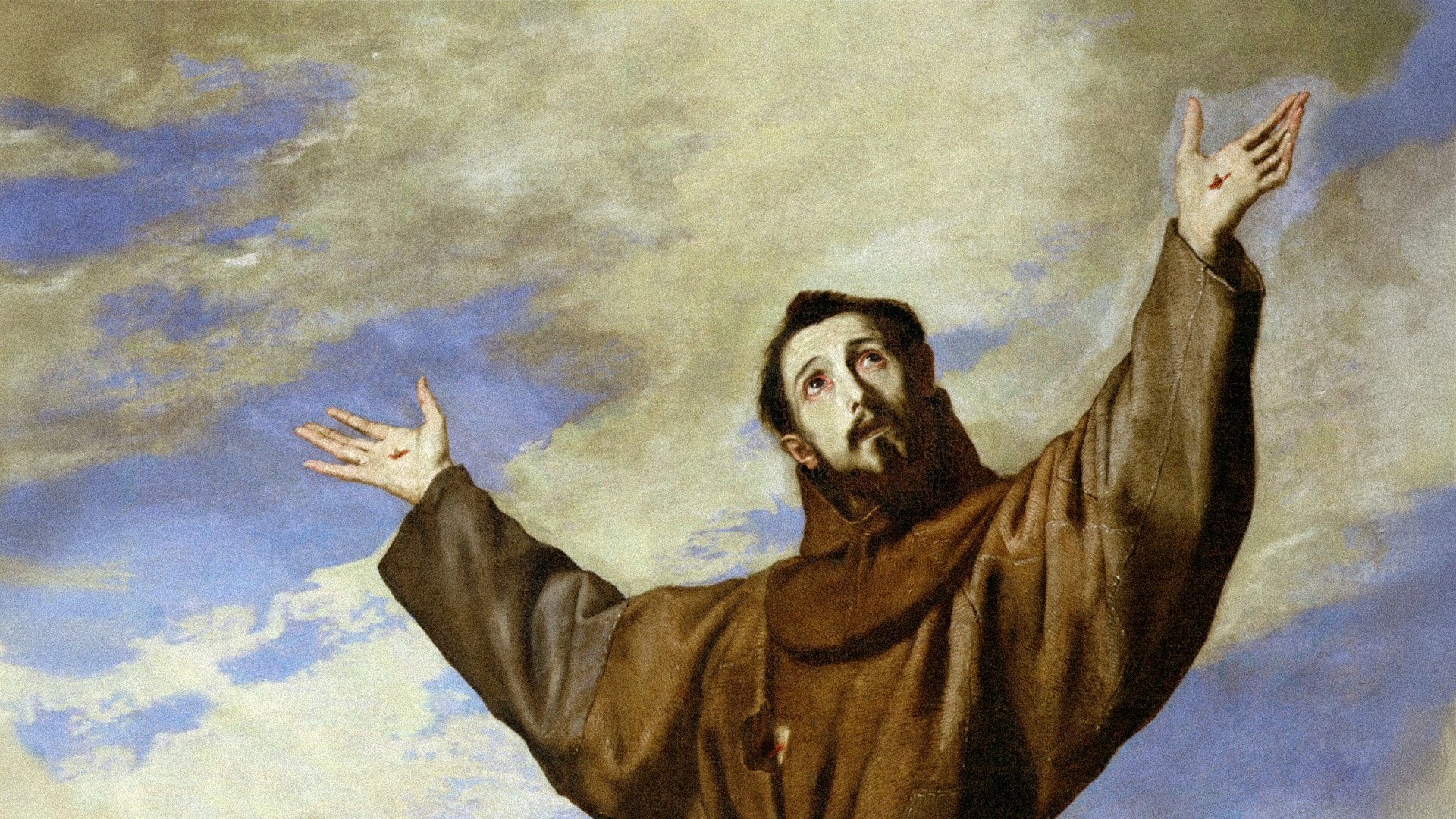
Francis of Assisi with holes in his hands
Christianity Today January 28, 2025
Edits by CT / Source Images: WikiMedia Commons

Late in the fourth century, a group of seven monks from a Jerusalem monastery went on a sightseeing trip to Egypt. But this was no ordinary vacation.

Traversing mountainous crags and rocky hillsides, they visited hermits, ascetics, and monastic groups. They went with the hope of seeing miraculous and abnormal occurrences, and they found even more than they were looking for. Along the way, they also evaded more than a few robbers, had some sketchy meals, and faced crocodile attacks, reminding us that road-tripping has always been an extreme sport. We know about their trip because one of them (whose name we do not know) wrote a book in Greek about the voyage after returning home. Then their abbot, one Rufinus of Aquileia, diligently translated this book into Latin, and it became a bestseller.

The hermits documented in this travelogue range from strange to stranger to really out there. They loved God deeply—no one doubts that. They were also radical misfits, decidedly incapable of living in regular society, holding down “normal” jobs, and worshiping in “normal” churches. But then, by the time Rufinus’s monks were traipsing around the Egyptian countryside to see a more feral version of themselves in the (literal) wild, radical misfits already enjoyed an established presence in the church, dating back to the locust-eating and camelhair-shirt-wearing John the Baptist.

Extraordinary believers—and our fascination with them—have always been a part of the story of Christianity. But one radical misfit in particular, Francis of Assisi, seems to loom larger—and provoke greater fascination—than any other. His life story, shrouded in legend, continues to inspire many unlikely groups, including the 1960s hippies, a group of more secular radical misfits who sometimes claimed Francis as their patron saint.

The Christian misfits did not lead comfortable lives. For this reason, among others, they tended to make others uncomfortable as well. Maybe that is part of their charisma, suggests Volker Leppin in his biography Francis of Assisi: The Life of a Restless Saint, newly translated after first being published in German.

For a historian like Leppin, a professor at Yale Divinity School, Francis is a toothsome puzzle, an enticing Rubik’s cube with no perfect solution. There are so many sources to draw from but so little certain knowledge. Questions exist even about his name. We know he was born to a wealthy merchant family in the latter decades of the 12th century. We know he turned his back on his family and started caring for the sick and the poor in his hometown and beyond. At a time and place that generally considered poor people invisible, he became famous for his poverty, even acquiring the nickname poverello (Italian for “poor man”) in his own lifetime. He was a poor celebrity—an incongruous concept, especially in the Middle Ages.

Francis wished for something akin to a monastic existence, yet he refused to join an established order. Eventually, he founded his own brotherhood of mendicant monks, who took vows of poverty and depended on charitable provisions. Although he was a natural leader, he was uncomfortable with leadership—even to the point of backing away from leading the Franciscan order he had inspired.

While marching time and again to the beat of his own drum, he managed to remain at peace with the Catholic church of his day. Over time, his order became incredibly popular. His influence on one follower, Clare of Assisi, led her to create a similar mendicant order for women. He met such prominent and powerful individuals as Pope Innocent III and Sultan al-Malik al-Kamil.

Stories like these lend themselves to factual verification. But other claims are more miraculous in character. Some sources note that he experienced stigmata—the marks of Christ’s wounds—in his own body later in life. Perhaps, living so much like Christ, he could not help taking on certain physical signifiers of saintliness.

But at this point, facts begin slipping away, and theories sneak in instead. A truly serious modern, secular historian might just get a little itchy under the collar right about now. Stigmata? Really? What are we going to talk about next? Saints who flew?

Still, the factual stuff alone already presents an impressive body of knowledge. Surely it can yield a coherent biography without compelling the biographer to sift through speculation. Not so fast, Leppin warns. These punctuated elements don’t get us to the real Francis, he argues, just as a laundry list of dates, relationships, friendships, and basic professional achievements can’t sum up the significance of any individual. People are complicated, and people in love with God are perhaps more so than most.

Why was Francis the way that he was? And was he really the way any of the sources portray him, including the most challenging and contradictory source of all—his own writings? The historical and the hagiographical mingle seamlessly, tormenting anyone who would separate fact from fiction. But then, people are never just a collection of facts. Nor are their personalities fixed through all of life.

This seems especially poignant in the case of someone like Francis, so much larger than life. Just who was he emotionally and spiritually? This question, ultimately impossible to answer adequately, fascinates and haunts Leppin in this biography. He admits that the book took shape as something other than a straightforward historical inquiry. “It is a biography,” he writes, “and yet at the same time it is a book about the difficulties of writing a biography, and specifically a biography of Francis of Assisi.”

Given the difficulties involved, why undertake such a project? Why, in other words, is it important to capture the true core, heart, and spirit of this particular man who died over a thousand years ago?

As I read through Leppin’s own elegant wrestlings, I was reminded of a much less elegant lecture I used to give on Francis and Clare when I taught an introductory world history course at a state university in the Bible Belt. The students, wide-eyed, had a hard time understanding most of these saints’ life choices. Clare’s desire for a “celestial spouse,” in particular, usually caused giggles and raised eyebrows. They wondered, Who talks about God this way?

But a commitment to serve the sick and the poor? This they could understand. Such are the saints we all still desire today—those who give their lives for others in our self-centered age. Every person wants to be seen and known more deeply, and in the story of Francis my modern students found someone who understood this and cared enough to treat others accordingly.

The age of radical misfits in the church is not over, of course. There is a reason modern saints, like Mother Teresa or Dorothy Day, still fascinate us. In their countercultural willingness to love and serve others above themselves, they offer 21st-century versions of Francis and his ilk. In the process, they remind us that self-sacrificial living is just as shocking and abnormal today as it always has been.

Here, it seems, lies the difference between Francis and the other monastics of his age: Instead of removing himself from the world into the safety of a monastery, Francis always placed himself in positions of utmost discomfort, especially of the physical sort. He understood, as Leppin writes, that “it was in vain to flee the world if there was no direction in which to flee. Of course he was profoundly shaped by the circumstances of his external life, being sent into the world to all people and to all creatures. But the power for this was rooted in his intensive relationship with God, Christ, the angels, and the saints.” We cannot, it seems, understand Francis without understanding the rich spiritual life that drove all his actions and decisions.

Leppin lays out his cards up front: Every biographer of Francis must wrestle with the hagiographical tradition alongside more typical historical facts and methods. When it comes to understanding a saint, a historian can only go so far. Even if we knew all the facts about Francis, they would not make him less complicated—perhaps only more.

This is appropriate: Studying saints has never been a strictly historical enterprise. It has always involved acknowledging the significance of the spiritual realities as they bear upon the material world. Rufinus’s pilgrim monks knew this, it seems, when they set out to investigate strange hermits and holy men. And Leppin, toward the end of this book, quietly comes to a similar conclusion, siding to some degree with the hagiographical Francis. In being open to stories and legends that can’t be verified with absolute certainty, Leppin reminds us that the church’s saints still retain a powerful grip on our hearts and minds.  

This is especially true for believers, and even for evangelicals in the post-Reformation age. Unlike Catholics, of course, evangelicals do not pray to saints, incorporate them into their worship, or involve them closely in their communal and personal spiritual lives. Still, the saints’ love for God intrigues evangelicals too, and their disruptive behavior can still achieve that most revolutionary disruption of all: bringing sinners to know God.

As Leppin notes of his subject, “In the distance we meet a man who was seeking but never found his purpose in life fulfilled. And a man who simply will not let us grasp him either.” But somehow Francis has pointed so many others to God over the past millennium, and that is what true sainthood is really about.

Nadya Williams is the author of Cultural Christians in the Early Church and Mothers, Children, and the Body Politic: Ancient Christianity and the Recovery of Human Dignity.

Inkwell

How an Old Language Haunts Us

Resurrection of a mother tongue

Inkwell January 27, 2025
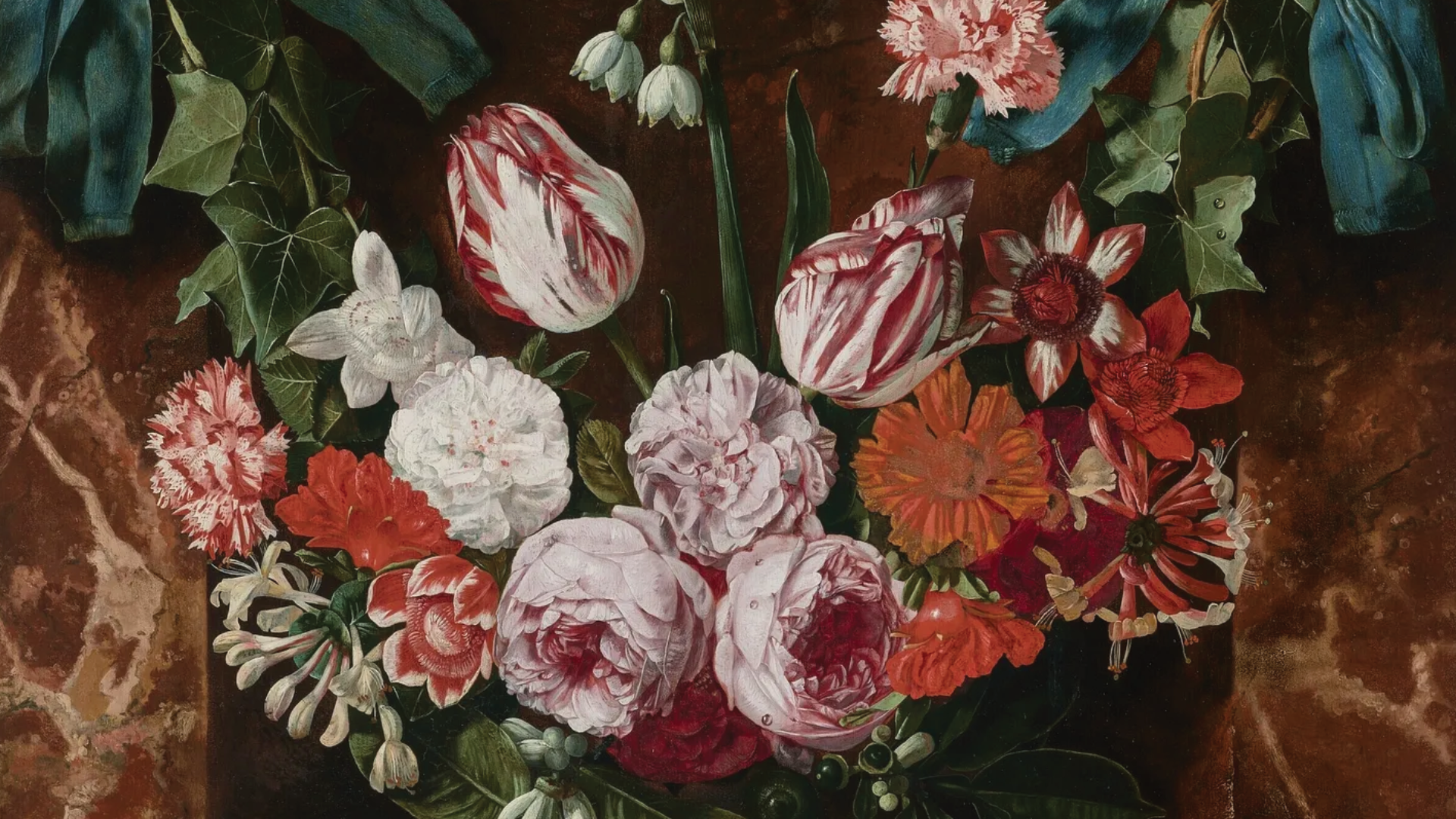
A garland of tulips, roses, and lilies by Carstian Luyckx

THE CREATOR OF THE FIRST American dictionary believed there was an original language of humankind. Noah Webster called it Chaldee, and he believed it was the common language spoken before the Tower of Babel threw the world into confusion. For hours on end, the haughty Monarch—as he was called by his contemporaries—would sit at a desk with dictionaries piled around him, tracing words from languages as varied as Finnish, Arabic, and Sanskrit back to their supposed pre-Babelic roots. The obsession somewhat stained his otherwise important contributions to lexicography.

It’s Webster who comes to mind while I’m sitting in a sea of fellow editors at a conference, listening to his modern-day heir, Peter Sokolowski. “I think of words as translations before they are definitions,” says Sokolowski, Merriam-Webster’s editor at large, rattling off a rapid succession of words in French and Latin to showcase their evolution into English.

Even if Chaldee is a myth, there is still the mystery of how one language seeps into and becomes another, how words are not only trees with branches but deep subterranean roots. The English dictionary helps us understand English words, but the words themselves are descended from waves of historical translations and mistranslations requiring explanations. Anglo-Saxon, French, Latin, Old Norse, Greek, and numerous others were welded and fused and manipulated to make English, now the most-spoken language in the world.

If galaxies are formed from the dust of exploded stars, how many expired languages has it taken to form English? Would Webster have seen this latest lingua franca as one more attempt to return to a time before Babel, when the night sky glimmered in slightly different places?

What are syllabic breakdowns and pronunciation keys, after all, except a desire to define, standardize, and unify? Against the curse of chaos and misunderstanding, miscommunication and muteness, we sit by candlelight, bent over desks to compile our dictionaries, assuaging the inward ache of a lost Chaldee.

“Translation,” wrote the missiologist Andrew Walls, “is the art of the impossible.”


ON THE MORNING I began preschool at the Jewish Community Center in Cleveland, I experienced something of a dimensional warp. Until then, I had been cloistered away in an apartment padded by the remnants of my parents’ home country: Korean words, Korean food, Korean ways of doing things. To suddenly enter a world where nothing was familiar—not sound, nor sight, nor smell—was so shocking that my mother, who could hardly speak English herself, had to sit outside the classroom the entire year lest I cry inconsolably, which I still did many days.

From the start, American English for me was fused with the sounds and tastes of Jewishness. The letters of the English alphabet were blended with words like shalom and tinged with the salty taste of snack-time matzo; songs like “Wheels on the Bus” merged seamlessly with “Dreidel, Dreidel.” It seemed natural to see dads with yarmulkes standing in the pickup line, and for the class bulletin board to be lined with die-cut menorahs. On Halloween, I dressed up as Queen Esther for both the preschool’s Purim parade and our Korean church’s fall festival.

Over time, bolstered by the glimpse of my mother’s elbow on the other side of the glass, I began to speak. I learned to sharpen my Ss and Rs, excavate vowels, and conjure novel sounds like th and ph. The three syllables of beuh-rae-deuh were compressed into the monosyllabic bread, and sentence structures were upended from object-verb to verb-object.

But as my English expanded and flourished, it began to drown out my Korean. Each evening, I sat at the same table of bap and banchan, metal chopsticks in hand, exchanging the same dialogues with my parents I had as a preschooler. Meanwhile, the makings of the adult world—history, politics, science, economics, psychology, literature; gossip, slang, idiom, jokes— were things I could increasingly engage with only in English.

When we moved school districts in seventh grade, I changed my name from Kyoung Ah to Sara, a final act to lock Korean out of my public mode—to keep it, privately, as the language of my childhood and my family home.

Now, as an adult, I find myself wandering in a desert somewhere between Babel and Pentecost. Korean-English dictionary in hand, I puzzle together the missing limbs of a language that feels as close to me as my mother. Beneath my every English word, there is a haunting of my first language: a stilted child still confined to that one-bedroom apartment in Ohio.


I’VE COME TO REALIZE that to strangle a first language, and to attempt for the rest of your life to toggle back and forth between two tongues, is exhausting and namelessly frustrating because that is the very nature of translation.

Biblical scholars know this well. Translation “does unimaginable violence to the text,” says Robert P. Carroll, a violence as sudden and final as the events at Babel. “It wrenches the text from its home in the ancient cultures and languages, deports that text and exiles it in foreign languages and cultures.” As the people, so their language: with the curse of Babel, “the Lord scattered them from there over all the earth” (Gen. 11:8).

The earliest translators of the Scriptures knew the curse of Babel too. They were familiar with the daunting task of casting the Holy Words of God in the mold of another language. Saint Jerome, who helped translate the Bible into Latin in the fourth century, wrote in a letter:

Each particular word conveys a meaning of its own, and possibly I have no equivalent by which to render it, and if I make a circuit to reach my goal, I have to go many miles to cover a short distance. To these difficulties must be added the windings of hyperbata, differences in the use of cases, divergencies of metaphor; and last of all the peculiar and if I may so call it, inbred character of the language.

Ruakh—breath, wind, spirit—is exiled as simply “spirit,” and through the telephone game of translation, we get “ghost,” a concept completely alien to the original culture. A wordplay between qayits (“summer fruit”) and qets (“end”) must be laboriously explained. How can words like temple, blood, glory, and king make the jump across chasms in language, time, and space to even remotely communicate what they meant to their first speakers? Our papery lexicons scorch to ashes in the fiery brightness of the pronouncement of God.

In our shifting between lingual spaces, we are shaping bricks in the heart of Babylon and squinting at the sky. We are like blind amnesiacs groping for a memory wiped clean. We are like exiles who have been too long from home—like an immigrant child snipping away more and more pieces of her first language until only ghosts remain.


IN THE SPRING of 2024, I began studying biblical Hebrew, learning the evocative “alephbet,” God’s elbow on the other side of the glass. It was the first ancient language I had ever learned—unfamiliar letters, painful verb constructions, vocabulary that washed through me like water. But when I traced the khettet, and yod on my Hebrew app, I realized there was something holy about writing on this tablet of glass the same letters that God himself etched on tablets of stone.

The Jewish author Aviya Kushner describes her family’s heated discussions about Genesis 1:1 and the Hebrew language at the dinner table. “For as long as I can remember,” Kushner recounts, “my mother has been trying to convince us that grammar is a universe, and that the tiniest parts of grammar tell a story.” Because ancient Hebrew has no written vowels, the same trilateral word can be read to mean different things. The whole verb changes with the addition of tiny dots and dashes. So much of our views of the world and of God come down, in the end, to the presence or absence of minuscule ink blots.
The complexities of translating Hebrew reminds me of what the theologian Walls says: that the Incarnation was the ultimate act of translation. I imagine the waw and the zayin, the mem and the nun, the sacred prophecies and psalms and laws and records bubbling off the page and thickening with sinew, joining together to form hairs and irises, intestines and aorta, swaths of skin—birthed into the world with a loud cry that rends the universe.
What’s more, says Walls, Jesus was translated not into abstract language but into “a person in a particular locality and in a particular ethnic group, at a particular place and time.” Jesus spoke and taught in Aramaic, a dialect of Hebrew. He wore sandals and touched lepers, making new what was ruined just by saying the word, because he was the Word.
At Pentecost , that Word multiplied impossibly: a violent wind and tongues of fire, transforming the Babelic pronouncement. Not a complete undoing back to Webster’s Chaldee, but a glorious redeeming of every tongue.

The crowds, once dispersed in confusion, gathered in bewilderment, “because each one heard their own language being spoken” (Acts 2:6). Parthians, Mesopotamians, Asians, Egyptians, Romans, and Arabs heard “the wonders of God” in their own heart languages.

“Amazed and perplexed, they asked one another, ‘What does this mean?’” (v. 12). What does this mean?


THE FIRST TIME I read Psalm 23 in Korean, I wept. The Korean translation I read used the word heem for “strength,” a fragrant word recalling encouragement (Heem neh) and compassion (Wae iruhkae heemiupni?). Words woven through tens of thousands of unremarkable moments in my life—shouted playfully while getting out of the car, whispered through a closed bedroom door, stated plainly over a bowl of Spam and rice.

When I came to the part about the Lord preparing the table, it was as if I were sitting in my childhood bedroom again, listening to the clinking and hissing sounds of my mother getting dinner ready. The whole house filling with the aroma.

Some barren places, I learned, are receptive only to the gentle rain of a first language. In Acts 21:40, chapters after Pentecost, the apostle Paul calms a hysterical crowd in just this way by speaking to them in their native tongue, and his: Aramaic. It was the language that supplanted Hebrew beginning in the eighth century BCE when the Jews were scattered across the Assyrian Empire. Then, in Paul’s time of Roman occupation, Aramaic had become the language of home, shot through with longing and the remembrance of a troubled past.

I am comforted like that Pauline crowd each time I catch a snatch of conversation between passing strangers in Korean, each time I hear my mother’s voice on the other end of the phone. Sister, mother, child—these are what my first language calls me.

But it’s Jesus’ name, the way I first learned it—Yesunim—that stirs me most. Yesunim, I whisper, and the warmth of wind and fire accompanies the prayer; the sound of dry bones stirring, of mud bricks alchemizing into celestial stone.

Translation, I know now, is not impossible for him.


ONE NIGHT, while asleep in my college dormitory, I woke to my childhood name being called outside the window. By then, I had spent years going by the name Sara. But it was unmistakable: Kyoung Ah yah! Kyoung Ah yah! Just like how my mother would wake me on school mornings.

Out the window, a huddle of Korean girls looked up from the stone courtyard of Balch Hall, not at me but at the window just above, from which I could hear another Kyoung Ah laughing back at her friends. “Kyoung Ah is like Katie,” my mother had told me a long time ago. “It’s a very popular name for girls your age in Korea.” But having grown up in exile in Midwest America, often the only Korean in the school, I had not encountered another one until that night.

Afterward, I would sometimes wonder what the Kyoung Ah in the room above me was doing. Was she studying at her desk like I was, two Kyoung Ahs stacked neatly? When I called my mother in New Jersey, I wondered what my Kyoung Ah twin would say to her mother in Korea. In the daytime, were we two Kyoung Ahs living parallel lives, and at night, were we two Kyoung Ahs heading off to dream in two different languages?

But it is not that simple; sometimes I dream in Korean too. And when I hear my own voice, I spot it: a slick of Korean rounding out my vowels. A ribbon of light tied like a promise around my displaced words.

Mother tongue; heart language: ontological words that evoke our first encounters with the world—intimate like lullabies in the dark from a time before we spoke, mysterious like the soundscape of the womb in which we were knit, trembling with the glory of what was supposed to be, what is, and what is yet to come. In its visceral pronouncements, I am unmade and remade. The curse of Babel is undone.

When I hear my name called, Kyoung Ah yah, my head turns reflexively at the sound. I am like one who has heard the voice of Jesus through the haze of sleep, his words recalling a language before my own. His voice echoes in the stone courtyard at night; summons the preschooler crying and unable to speak. To the young child still sitting in the one-bedroom apartment, he says, tenderly,

Talitha, cumi.
Little girl, arise.
Ahgaya, irunah.

His words to me, like himself, are three in one.

Sara Kyoungah White is an essayist & print features editor for Christianity Today. 

News

Trump’s First Week Sends Shudders Through Immigrant Churches and Ministries

The president plunged communities into fear, upended life for thousands of refugees, and moved to stop charities from helping immigrants already in the US.

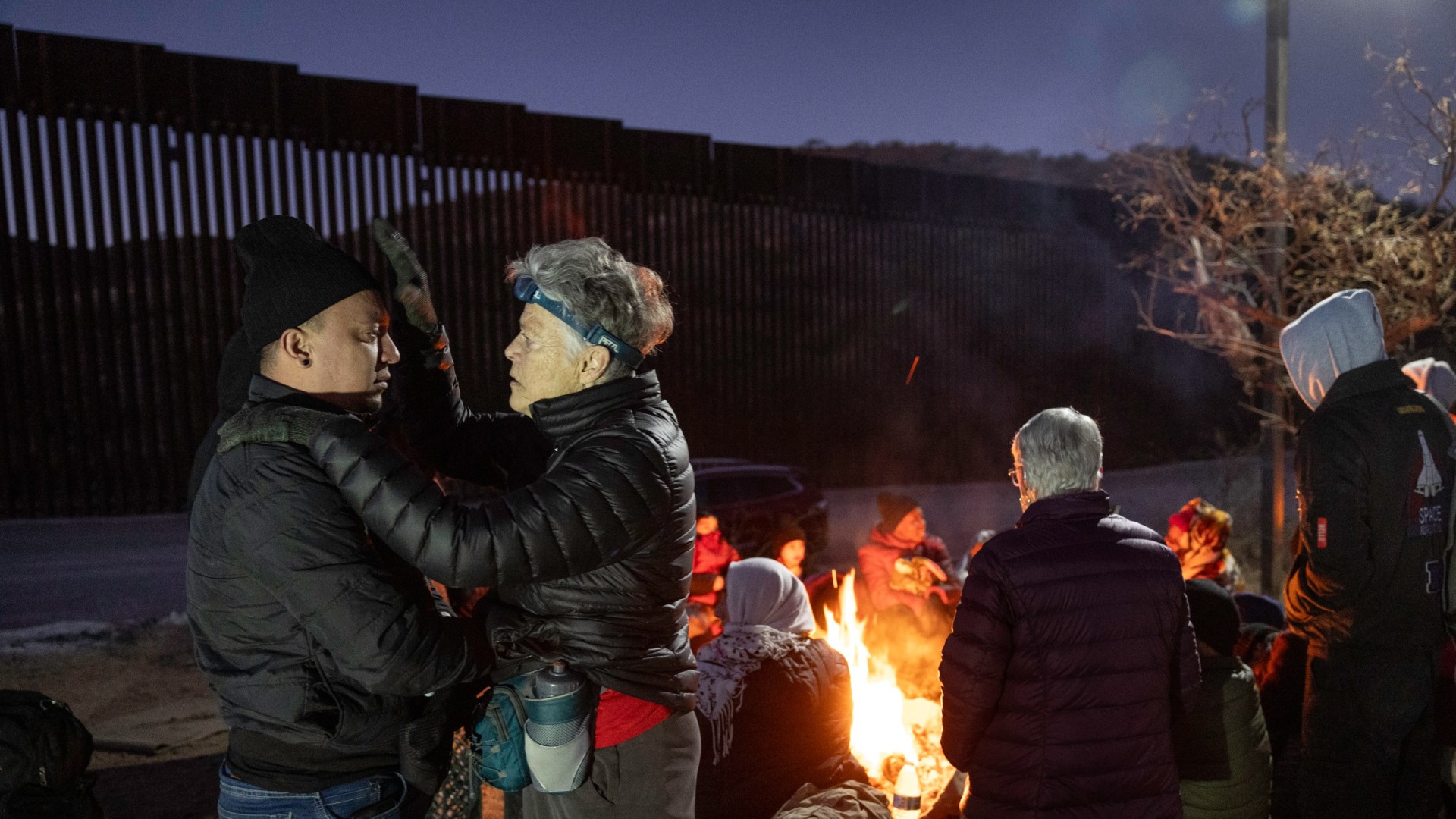
A minister in Arizona prays for a Colombian migrant waiting to be picked up by border patrol the night before Donald Trump's inauguration.

A minister in Arizona prays for a Colombian migrant waiting to be picked up by border patrol the night before Donald Trump's inauguration.

Christianity Today January 27, 2025
John Moore / Getty Images

On the evening of January 20, Ángel and his wife relaxed on the bed in the room they rent from a family they know only a little. The woman looked at the same message on her phone she had been reading for what felt like forever: Your case was received, was all it ever said.
Eight months ago, Ángel applied for a program that allowed Nicaraguans to enter the United States legally and work for a couple of years. The message from the American government did not change after Ángel came to Los Angeles on a tourist visa to rejoin his wife, who thanks to the program was already working as a hotel housekeeper. The message did not change despite promises from the business that had charged roughly $4,000 to “sponsor” them for the program, or despite their later realization that the business was defrauding them and the US government.

Ángel and his wife weren’t foolish to hope. The Biden administration designed the program, called humanitarian parole, for people like them—a way to flee the dangers of Nicaragua, where armed robbers had twice broken into their home, without violating America’s borders. Courts had upheld the program. And Ángel was the kind of immigrant Americans might welcome: an accountant who had worked for a consulting company helping Christian ministries overseas.
But this time, they both knew there was no point anymore in checking. President Donald Trump had just terminated the program, within hours of returning to the White House. This time, when the phone went dark, a beacon of hope blinked off.

“We’re heartbroken. We have to change all our plans,” said Ángel, who fears he will be deported if he uses his full name. “We keep hoping to find some light in all of this.”

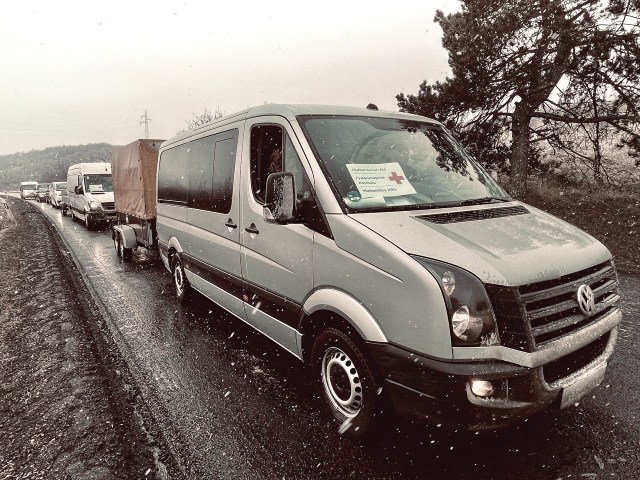
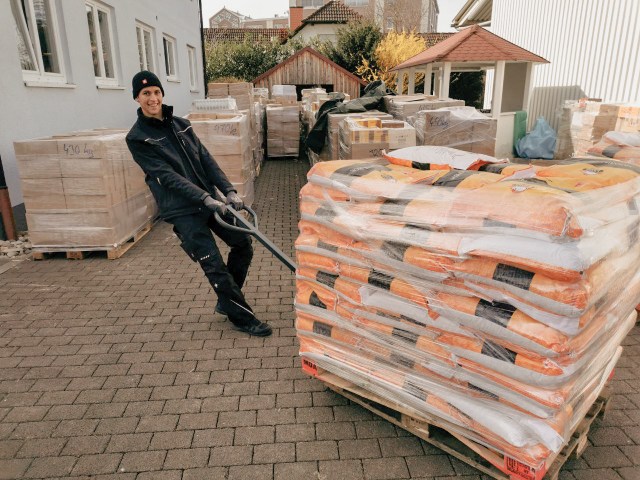
In the first week of Trump’s second term, a flurry of executive orders and policy memos thrust immigrant communities nationwide into anxious uncertainty. Millions of people like Ángel, in the country with permission from federal authorities, now wonder what that permission is really worth. Thousands of refugees, already approved by the government and with plane tickets in hand for resettlement to the US, are learning that the government has cancelled their travel.

The president made curbing immigration his central 2024 campaign issue, promising “the largest deportation in history.” On his first day in office, he moved swiftly on that pledge, signing ten executive orders and issuing other proclamations aimed at reshaping nearly every facet of the country’s immigration system.

Thousands of screening appointments for asylum seekers were abruptly deleted. Biden-era parole programs, which allowed migrants from certain countries to come to the United States for a limited period and work, were ordered to close. All refugee resettlement was halted indefinitely. Immigration and Customs Enforcement (ICE) gained expanded powers to deport undocumented immigrants without legal proceedings.

And in a shock to ministry groups late Friday, the administration suspended funding to organizations, most of them faith-based, that assist refugees already living and working legally in the country. The announcement was one in a series of moves apparently designed to thwart charity toward foreign-born groups.

The developments are a jarring plunge on the roller coaster that refugee resettlement has ridden in recent years. More than 100,000 refugees came to the US in 2024, a 30-year record and a dramatic change from record low numbers during the first Trump administration.

Refugees come to the United States fleeing violence or persecution, often persecution for being Christians. Getting approval for resettlement can take years and involves multiple international organizations, including vetting by federal agencies. Many advocates say the refugee program has suffered collateral damage in political debates over illegal immigration.

Ryan Dupree, a pastor at First Baptist Church of Columbia in South Carolina, has helped many refugee families build a new life in America. His church planted a congregation led by refugees from Myanmar. He’s watched state politicians in the past try to stop resettlement programs, confusing refugees with undocumented immigrants. “It was toxic,” Dupree told CT in an interview. “It was a lot of misinformation. That just makes our ministry harder when we are trying to help people who are coming here from a hard situation.”

The dizzying pace of the administration’s actions has been “a lot to process,” said Susan Sperry, who oversees the Chicago offices of World Relief, the humanitarian arm of the National Association of Evangelicals. What the administration “released on Day One is essentially what took four years to do, policy-wise, in the first term.”

Especially significant for churches and faith-based ministries: The administration on Tuesday removed longstanding restrictions on conducting deportation raids in schools, houses of worship, and hospitals. Immigration authorities have historically discouraged agents from entering so-called sensitive locations to enforce immigration laws, except in special cases.

The events of the last seven days are not merely a return to 2017 Trump policies. Multiple ministry leaders told CT they are “next level” and “unprecedented.”

Just as school districts from California to Kentucky to New York are emailing staff about what to do if ICE agents show up on campus, pastors at immigrant churches are briefing parishioners on their legal rights during encounters with immigration enforcement.

Rev. Gabriel Salguero, pastor of The Gathering Place, an Assemblies of God congregation in Orlando, Florida, said “these changes have sent a chill down the spine of the Latino evangelical church.”

Salguero, who also leads the National Latino Evangelical Coalition, is especially concerned by the prospect of ICE agents entering church buildings or waiting outside after worship services. He said he’s gotten “hundreds of calls and texts” from pastors nervous about how the sensitive locations change could affect activities, ESL classes, and food pantries. A teacher in New Jersey phoned him, worried about parents who have stopped sending their children to school.

“We don’t ask people about their citizenship status to give them Communion or to provide food for them,” Salguero said. “We’re just trying to follow the gospel mandate to love our neighbor.”

No group felt the effects of last week more immediately than refugees. Even before the inauguration, World Relief, one of the nation’s ten resettlement agencies, had begun notifying refugee families scheduled to fly to the US that their trips had been cancelled by the State Department.

By Day Four of the new Trump administration, more than 500 cancellations had poured in. World Relief staff began calling and visiting relatives—many of whom had been waiting years to reunite with their loved ones and were busy planning airport welcome parties—with the grim news that they would have to wait months, perhaps years, for another chance. The organization expects hundreds more cancellations this week. Global Refuge, a Lutheran resettlement agency, by Saturday had received 1,499 cancellations.

Trump’s halt to the refugee program is for 90 days, though staff at multiple agencies said they anticipated it would last much longer. In total, the ban affects more than 10,000 refugees previously approved to travel.

Immigrant ministries also scrambled over the weekend to make sense of a new administration memo sent Friday afternoon that appears to bar them from using government funds to assist refugees already in the United States. The memo, which was reviewed by CT, orders aid groups to stop refugee services programs such as job placement, English classes, and housing assistance if they are paid for by federal grants. That includes services provided to Afghans who served with the US military during the war.

“Effective immediately upon receipt of this Notice of Suspension the Recipient must stop all work under the award(s) and not incur any new costs,” the memo says, referring to State Department grants. This comes on top of an executive order earlier in the week directing the government to scrutinize federal funding to any nonprofit “providing services, either directly or indirectly, to removable or illegal aliens.”

How much teeth these orders have in the long term is uncertain. Nonprofit groups are still assessing their impact, but they are planning for the real possibility that it could decimate their ability to serve vulnerable communities. According to government records, ministries last year received hundreds of millions of refugee assistance dollars that could be frozen.

Refugee aid groups will need to rely on churches and community groups “more than ever,” said World Relief vice president Matthew Soerens.

As for the promised great deportation: Only one week into the new administration, it had yet to fully materialize. By the end of last week, the White House announced that ICE agents were arresting between 500 and 600 people a day—fewer people than ICE arrested on an average day during much of the Obama administration.

But it’s still early. And the rhetoric may already be having its intended effect.

In Los Angeles, Ángel and his wife are weighing their options. They know they will have to leave the US—her parole will expire at the end of the year, and on Thursday the new president authorized ICE agents to strip people of their parole status even if it wasn’t expired.

The couple doesn’t want to go back to Nicaragua, but they don’t want to apply for asylum in America, either. They’ve heard rumors that Nicaraguan authorities seize the properties of people they know will not return. The Nicaraguan government, Ángel says, has informants everywhere and “knows when a person has requested asylum.”

They’ve considered going north to Canada. Or maybe they could someday get an employment visa and return to the US. They want to have a child someday. They just don’t know.

“I keep hoping this president has taken away all the opportunities because something better is coming,” Ángel said. “In truth, I still think the United States is the promised land.”

With additional reporting from Kate Shellnutt.

Andy Olsen is senior features writer at Christianity Today.

Church Life

We’re a Broken People. But We Still Break Bread.

In the wilderness of western Uganda, we feast on peanut butter and malaria meds and gardening tips.

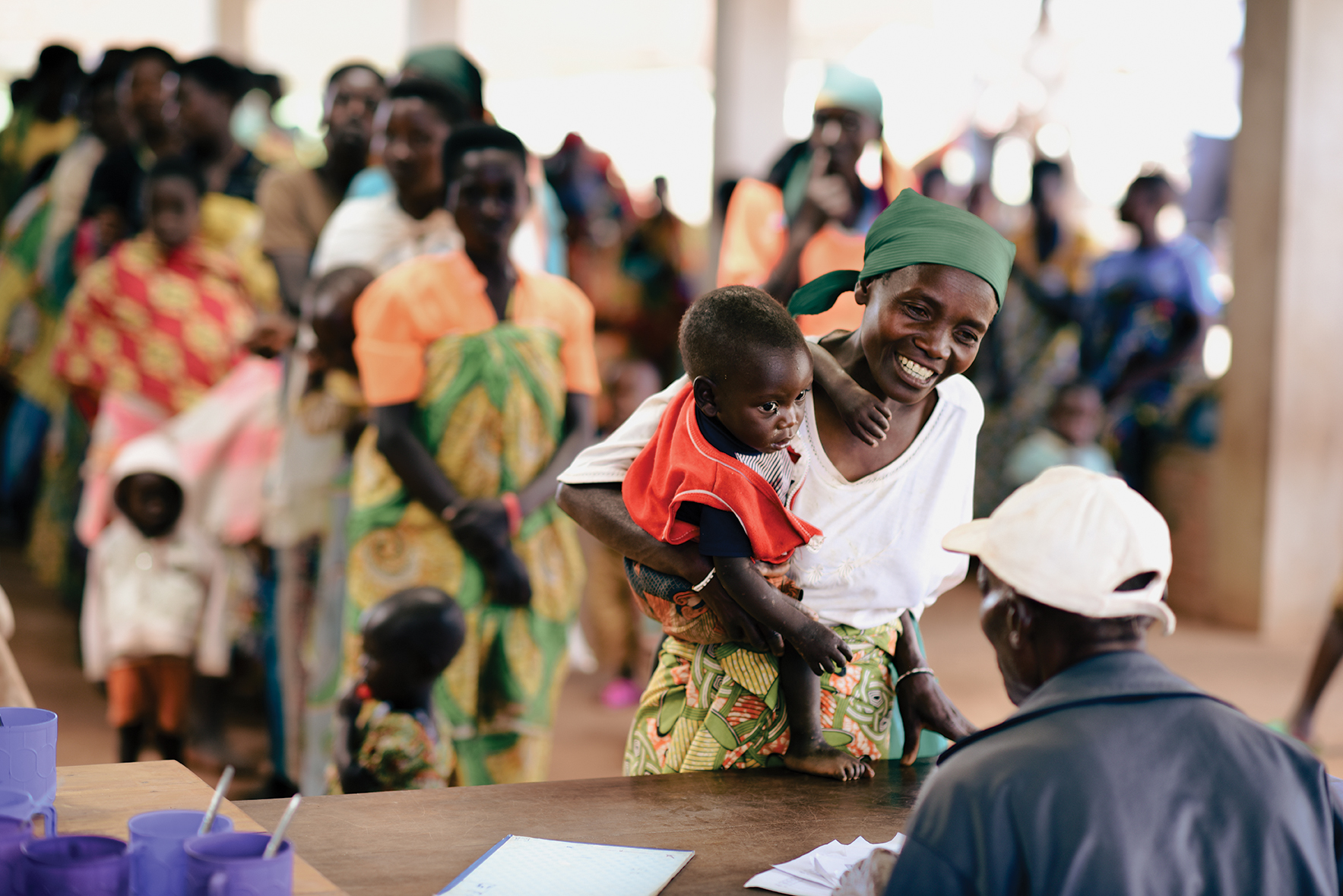
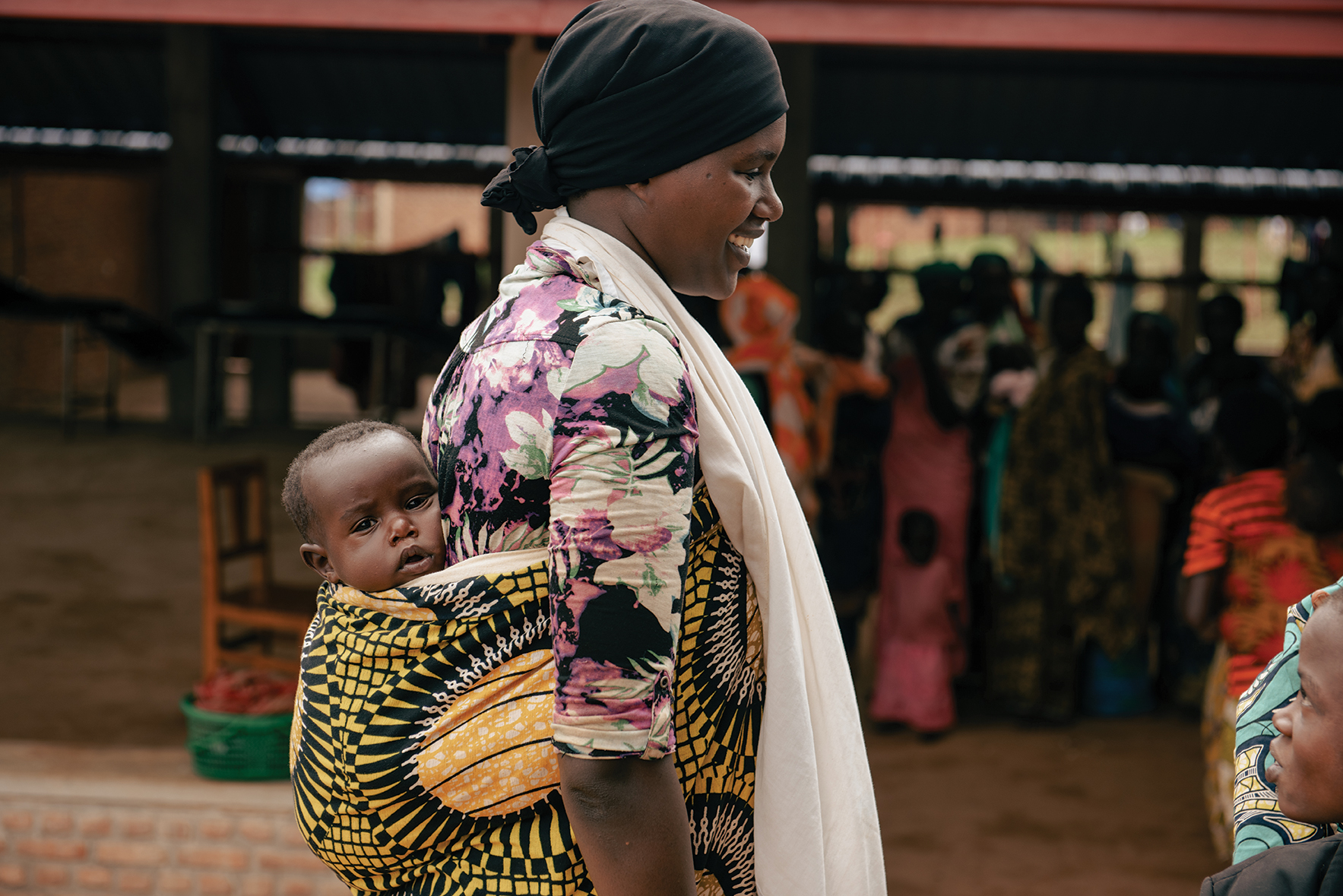
Morning queues at the Bundibugyo clinic include Ugandan and Congolese women and babies.

Scott Myhre

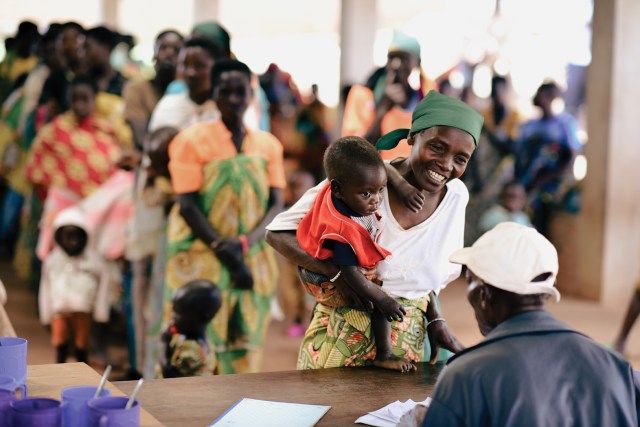
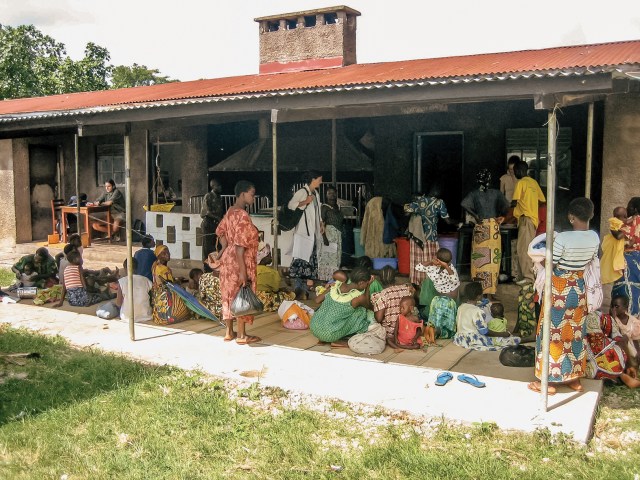
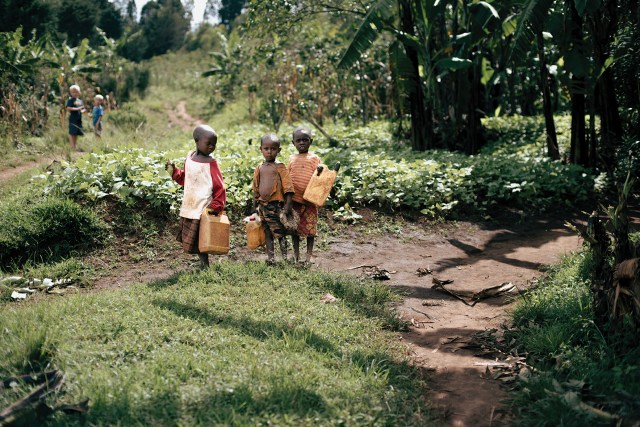
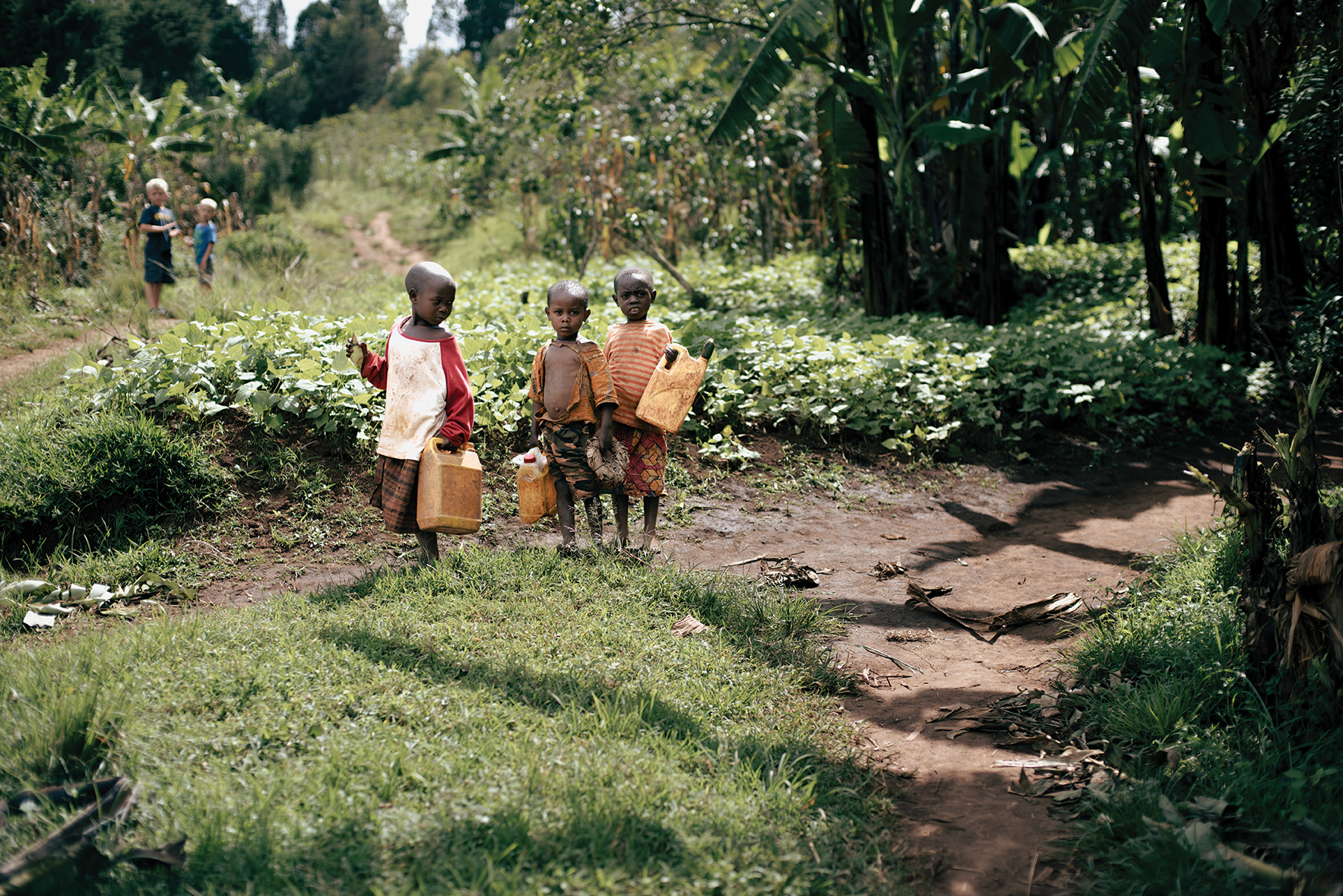
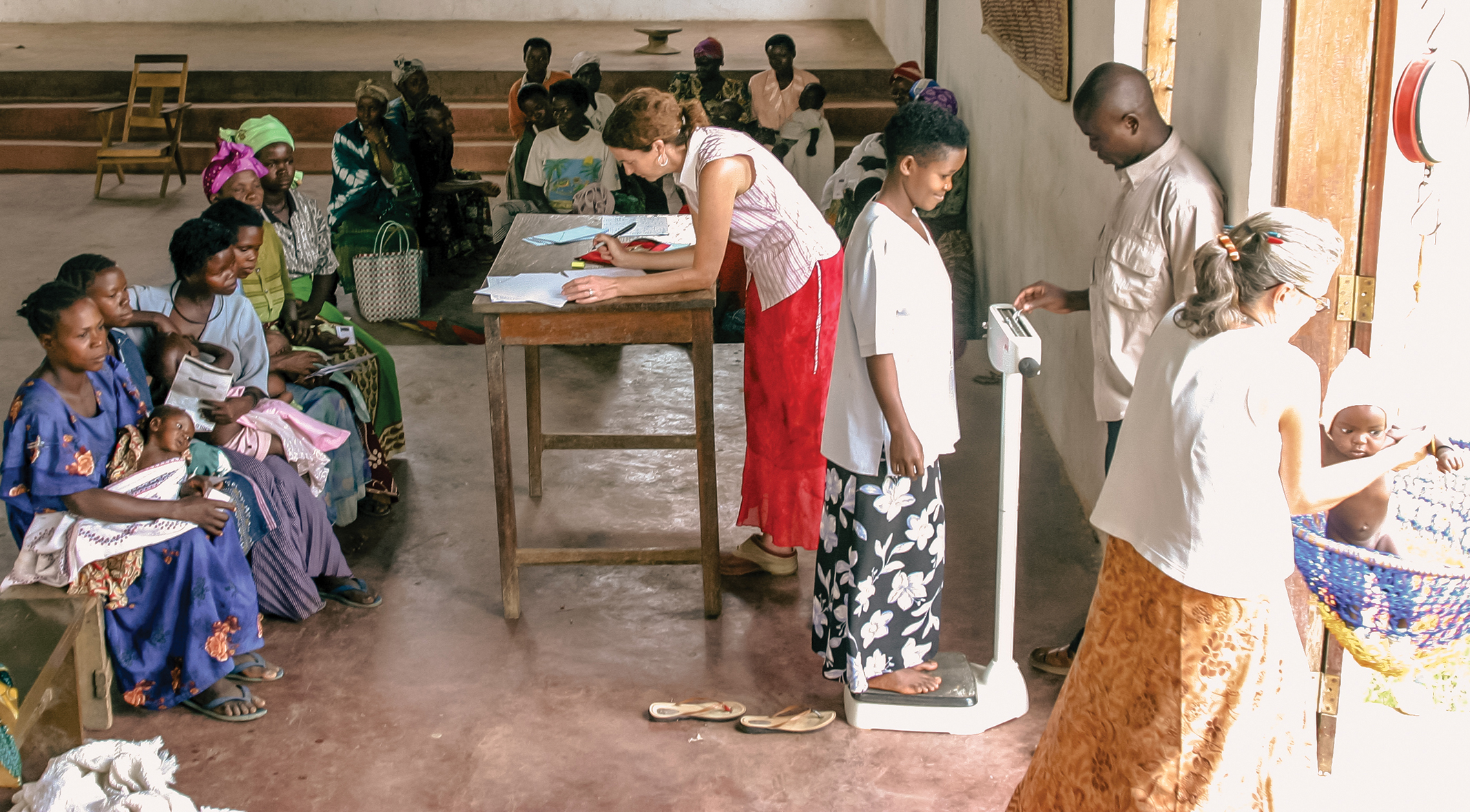
The chattering buzz arrives in the morning like a party. Mothers greet one another, laughing over their mishaps along the muddy miles they walked to get to this clinic in Bundibugyo, at the western edge of Uganda. A fortunate few came by boda, a rugged motorcycle that tackles footpaths while several adults and kids squeeze onto the seat.

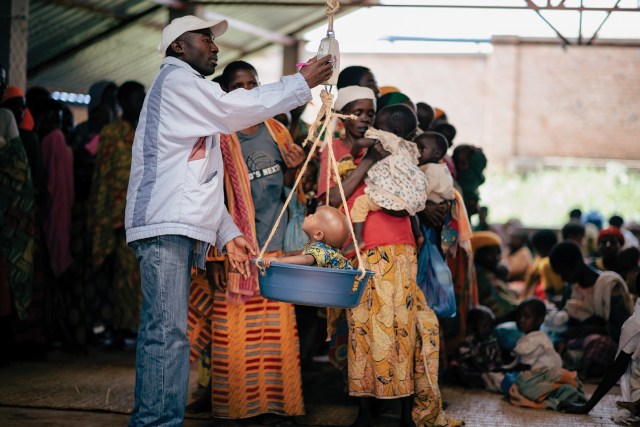
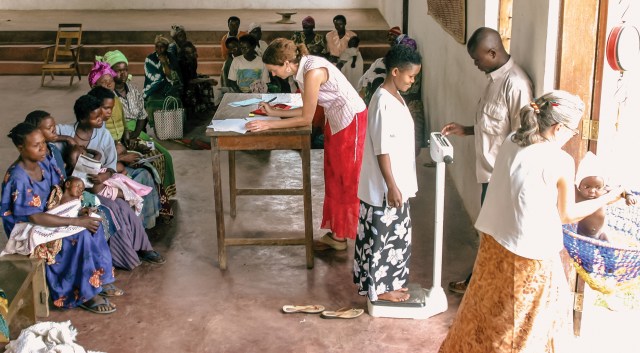
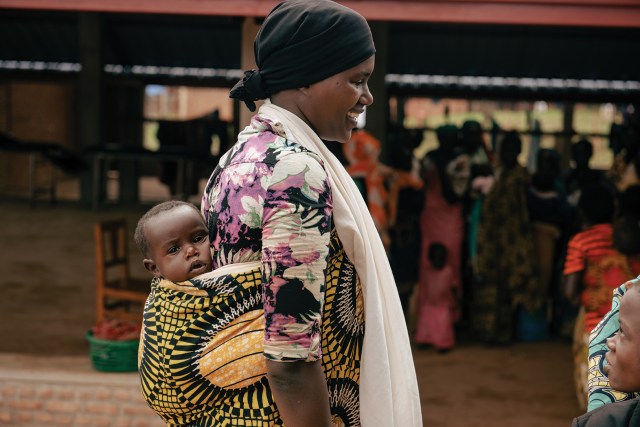
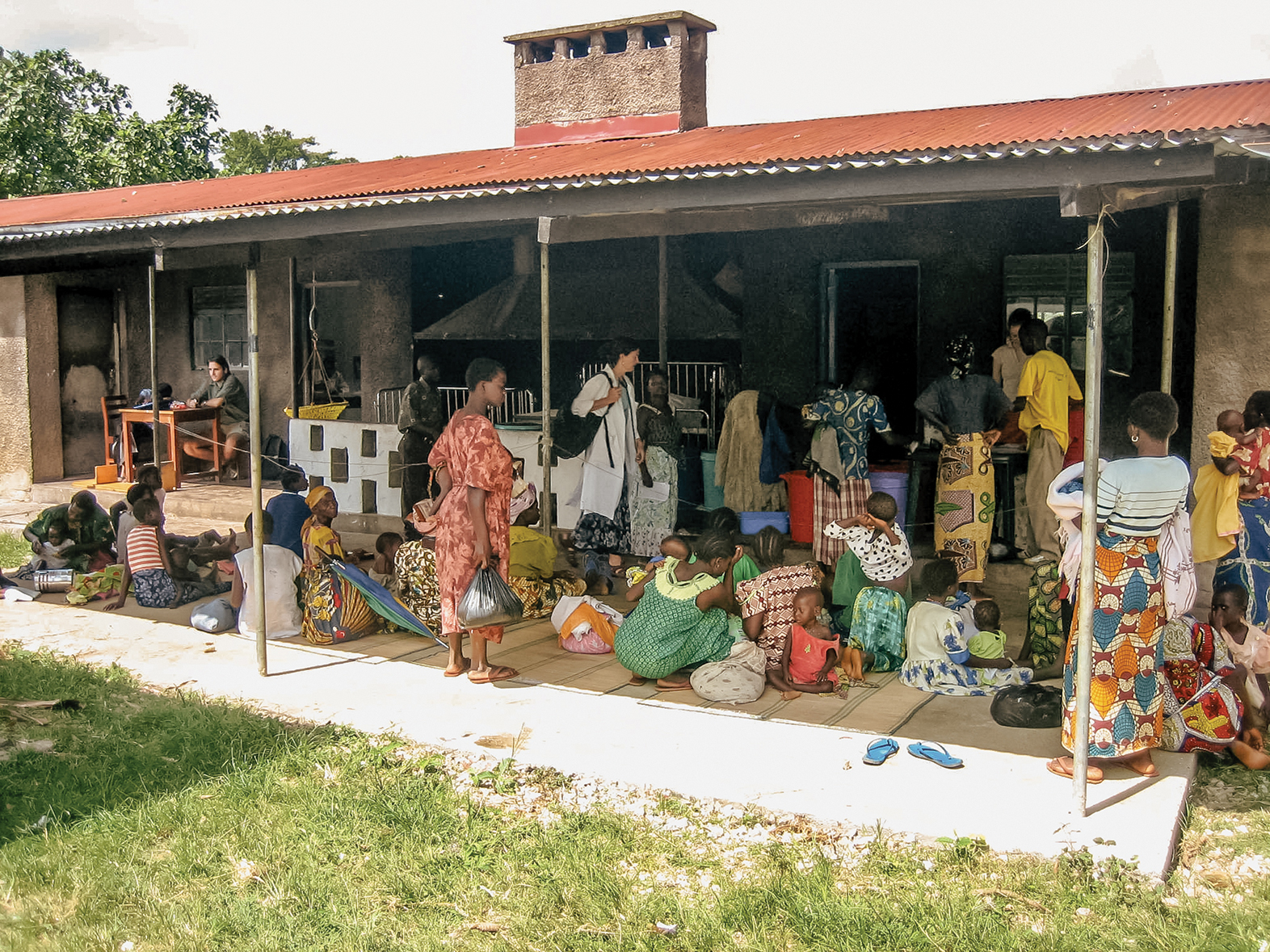
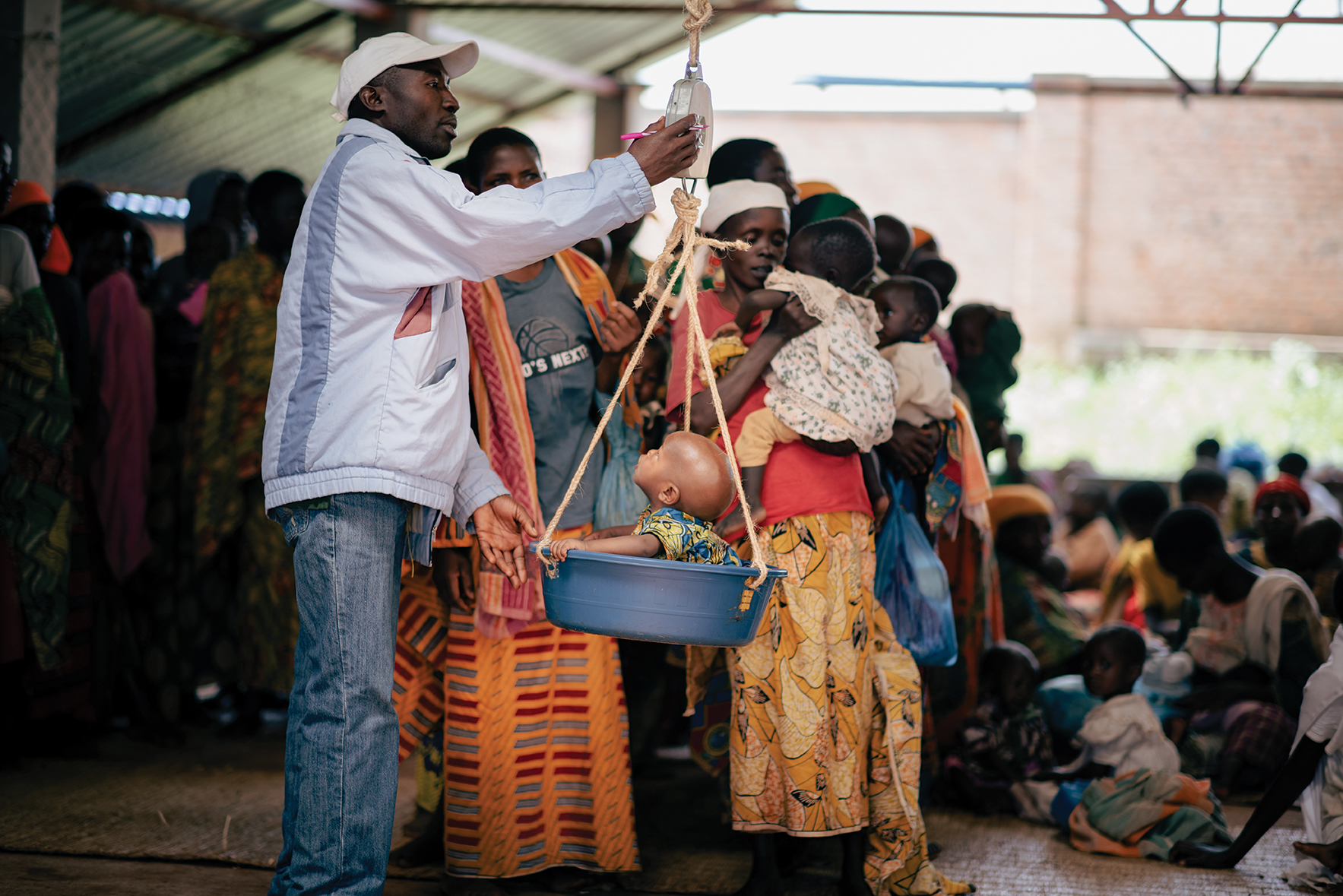
The women untie infants and toddlers from colorful kitengi cloths that snug the babies to their backs, then crowd inside the clinic, where a dozen wooden benches are arranged beneath a tin-roofed porch. More patients queue up in the main intake area. They stack handwritten medical records on a table. They undress their children and place them to be weighed in a crocheted rope basket dangling from a scale.

The mood is nothing short of festive. As a missionary and pediatrician who lives and works here, I see it all the time.

Clovis, a dedicated member of the clinic’s nutrition team, enters each child’s name in the register while I talk to the first few women in line. Mercy’s nine-month-old son can’t yet sit, and his thin limbs make his head look heavy. 

I ask if he’s her first baby, guessing she might have had trouble breastfeeding. “Yes,” Mercy offers, “but he was born after seven months, not nine.”  

Photo by Scott Myhre

More of her story emerges: Mercy has given birth prematurely three times. The first two babies died at birth. This third infant is her only survivor. A blood smear test shows his small body teems with malaria. Like all these mothers, Mercy is seeking help and leaning into the hope around her. 

Another mother in line, Agnes, wears a smile that belies her struggles. Two of her six children are in our nutrition program. She crosses back and forth over the Uganda-Congo border between her relatives on one side and her husband’s family on the other, subsisting from their small gardens. Like Mercy, Agnes kept searching for solutions, and her confidence grew when her kids started eating. Now the younger one, licking his fingers, is eating a locally made peanut paste we provide many of the children who come to the clinic. 

Malnutrition is sobering and sorrowful. But our clinic is a place of hope and action—it’s a place of provision in a little stretch along the Albertine Rift that runs west of Africa’s Lake Victoria.

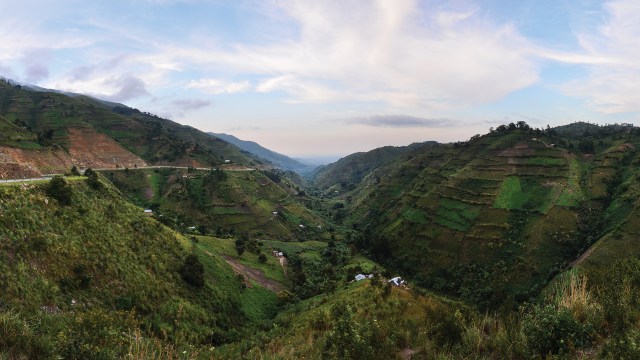
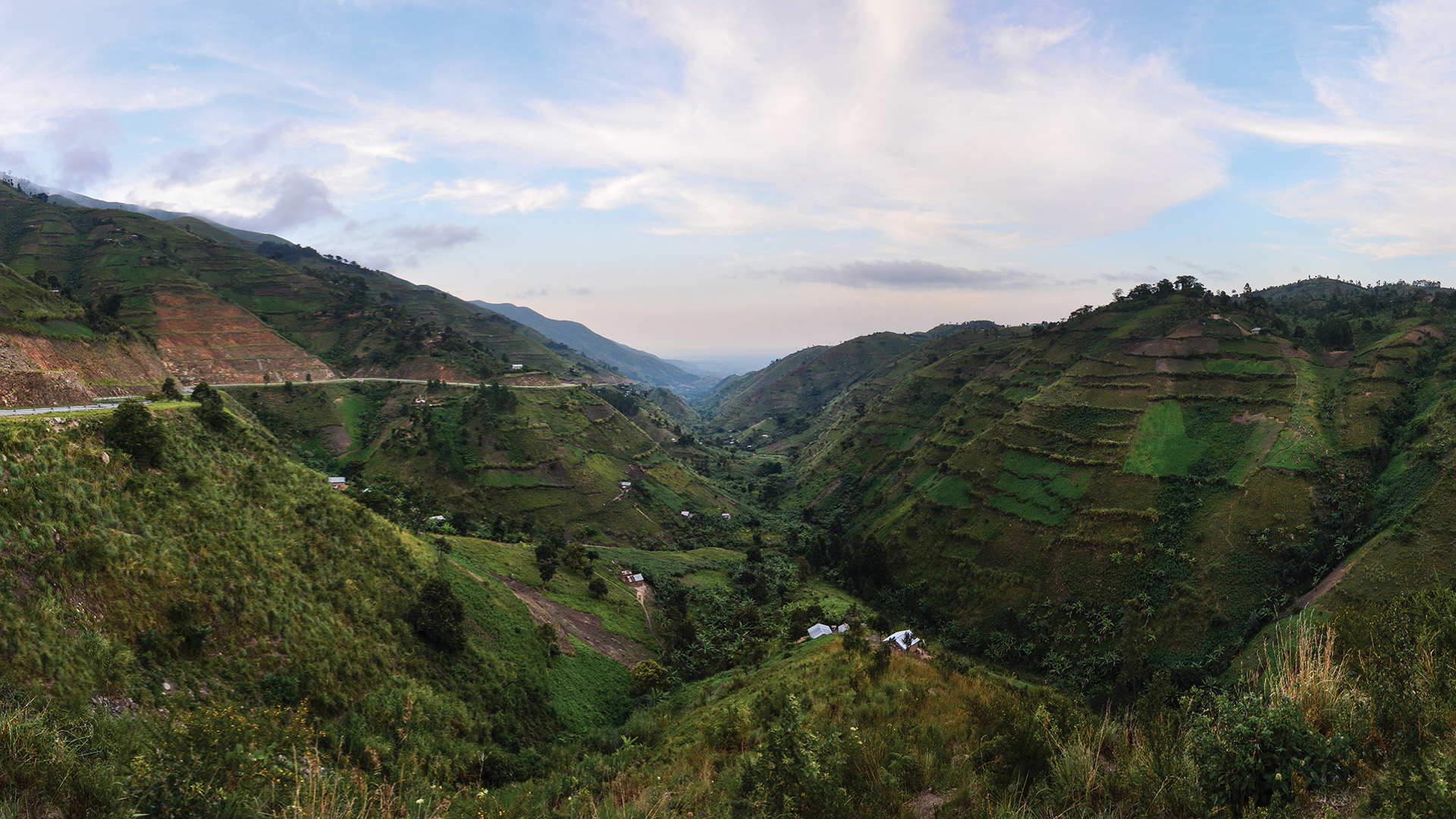
The rift is a long line of mountains, volcanoes, valleys, and lakes that mark the boundary between ancient tectonic plates slowly fracturing the continent. It is also a border between countries and realities, one that marks the historical limits of colonial powers and that is frayed by armed conflict and greed for resources.

Miseries incubate in our remote, rainforest region. There’s a strain of Ebola named for our district. Bundibugyo is one of the poorest parts of the country, where wages average $3 a day. 

Agnes’s cross-border migration for medical and nutritional aid puts her among thousands of Congolese who have been uprooted from villages attacked by the Allied Democratic Forces, a rebel group operating on both sides of the border. Our region is contested and contradictory: both densely populated and wildly biodiverse, rich in rare minerals and poor in disposable income, bursting with potential for growth yet struggling to thrive.

Our circumstances are similar, in many ways, to those that fed Israel’s skepticism in Psalm 78: “Can God really spread a table in the wilderness?”

God’s people here are enmeshed in all the challenges of this wilderness: the hunt for drinkable water, secure homesteads, and food. They also struggle to ensure survival of the youngest and oldest, peace with neighbors, a sense of place and purpose, and to be seen by God.

But I think this is the perfect place for God to prepare a feast.

Our small cross-cultural mission group has for more than three decades invested in concrete answers to wilderness dilemmas. That includes schools, churches, Bible translation, and youth development. And importantly, child nutrition programs in western Uganda, eastern Congo, and central Burundi. We live locally in simplicity and partner with churches and communities that are making all things new. That includes little bodies beset by hunger.

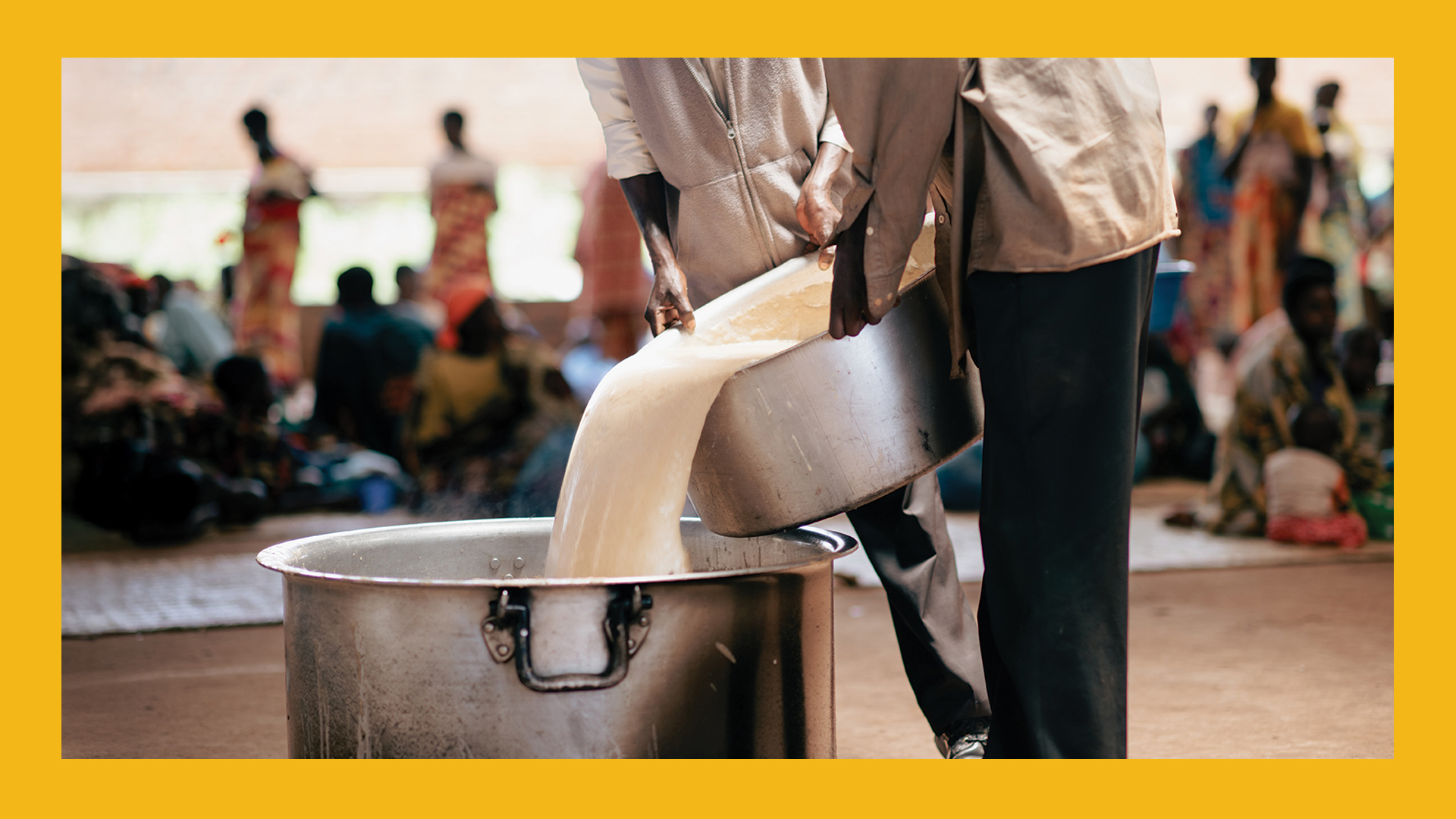
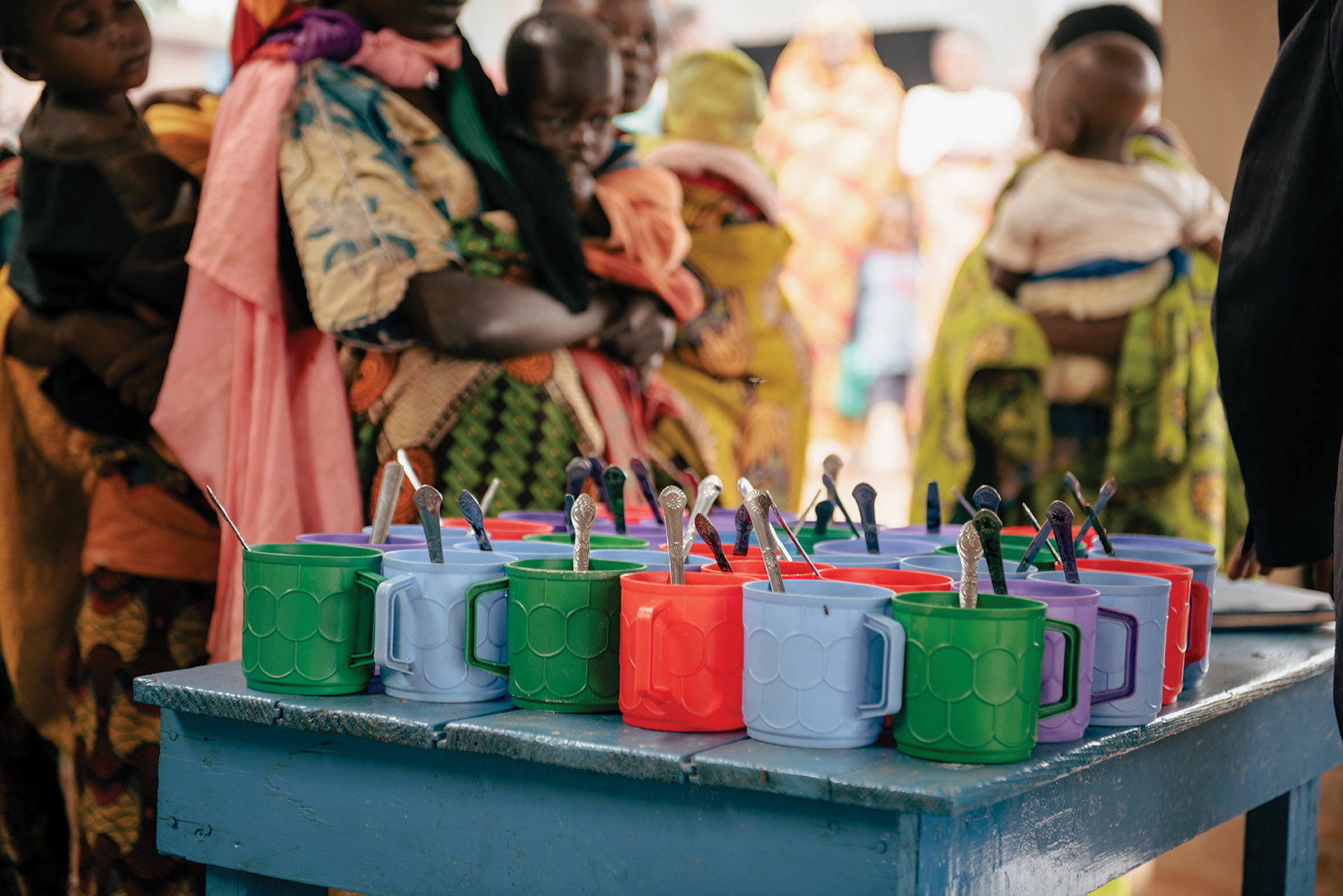
Some of the children arriving for today’s clinic will qualify to be admitted to inpatient wards for further treatment. Many will receive a peanut butter–like paste called Plumpy’Nut, which we source through various United Nations programs, or fortified milk or packets of flour to take home.

Sometimes, however, we can’t get what we need, and our community improvises supplemental foods of its own. 

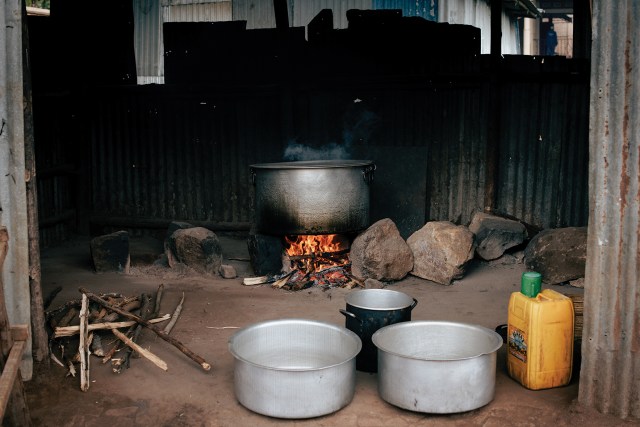
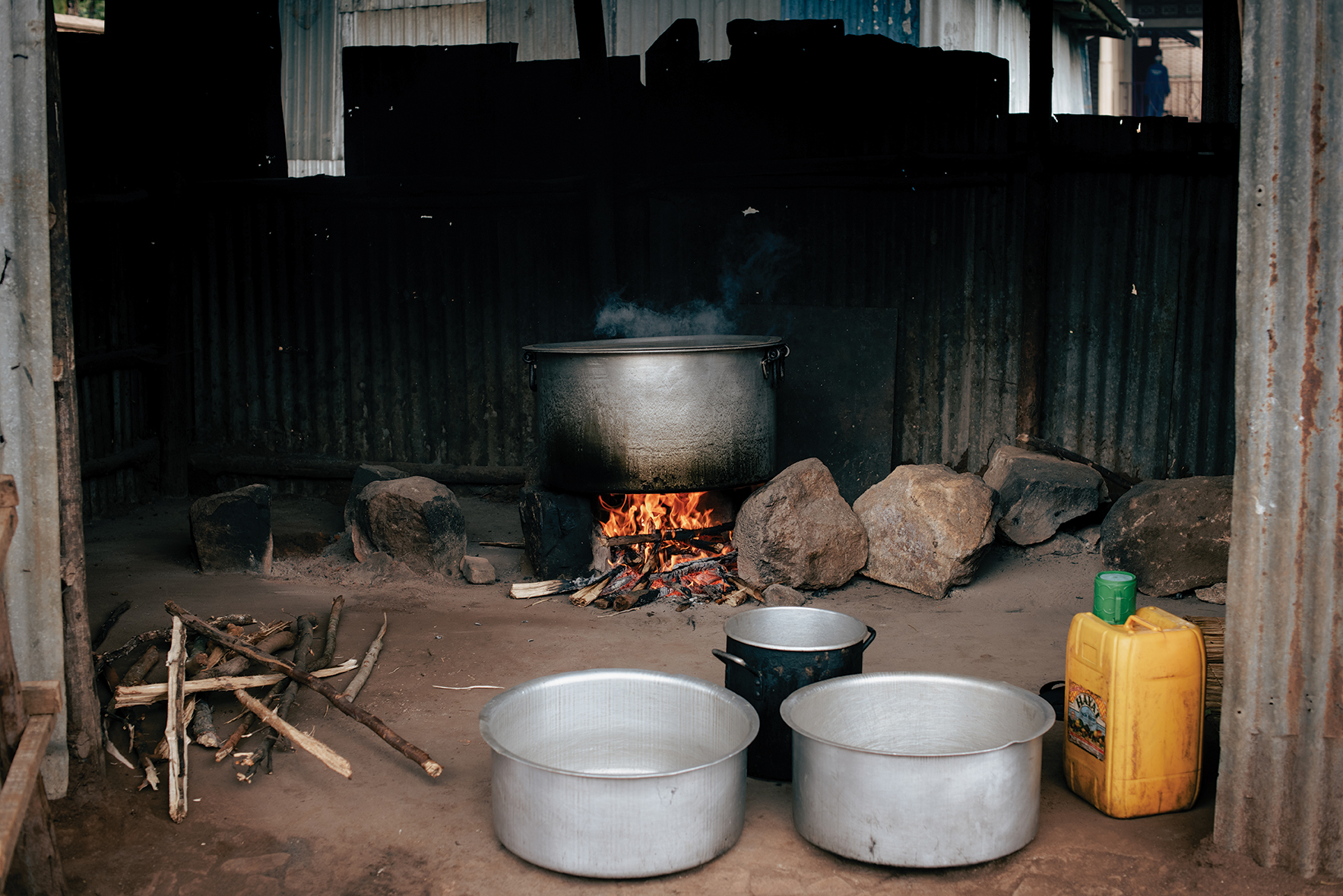
Peanuts and soybeans grow in these jungle parts, also moringa trees with nutritious leaves. All these can be combined to make a tasty peanut-based puree. (Plumpy’Nut is free, but when we purchase peanut paste made locally, we are helping to grow businesses.) Gardens of sorghum grains and maize stalks added to the soybeans yield heaps of complementary protein that can be dried, roasted, and milled into a blend that families use to cook a wholesome porridge. 

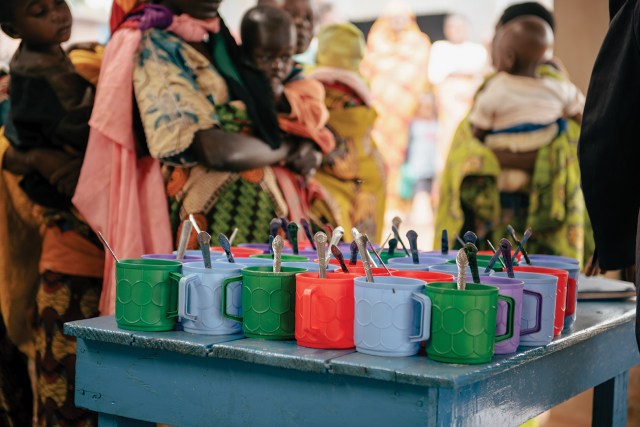
Serge, as our ministry is known, enables these communities to fill the hunger gap at rural hospitals and clinics. There the food is portioned out, wounds are bandaged, and ills are treated. One of us examines a child whose frailty has not yet responded to care, while another peels boiled eggs for the day’s arrivals, while the mothers listen to a Bible story and a nutrition lesson. 

This is what a feast in the wilderness looks like. 

Along this African rift, hunger has a thousand faces. Visit any one of the programs and you will find countless variations on the stories of Mercy and Agnes. A child may be orphaned and unfed because his mother lacked access to a postpartum blood transfusion. Another might start breastfeeding but wean prematurely because his mother has become pregnant again, bowing to pressure to solidify her marriage ties or beset by the unavailability of appropriate family planning. A family might be underfed because their ancestral garden has been subdivided too many times over the generations. Another may be fighting tuberculosis. And still another may be born to a family struggling to feed the children after paying school fees.  

By the time 10 or 20 new children enroll in the day’s clinic, their collective stories hold the weight of a broken world. 

Childhood malnutrition, injustice in the distribution of land, family conflicts, untreated disease, droughts, floods, and wars. Blame the world, the flesh, the devil, or all the above, but it’s the smallest humans who suffer.

Jesus delights to bring life to the least likely places, and it’s his story that brings hope in these stories. On earth he wandered just such a wilderness and fed those who came to hear him. 

From his first miracle providing wine for a wedding; to multiplying the five loaves and two fish; to his final moments with his followers around the Passover meal, sharing food was central to the community Jesus was creating. The table became a window on the unseen realities he spoke of. Jesus called himself the bread of life, his body given and broken to save us all.

Photo by Scott Myhre

To relieve suffering and to fix the harm that mars creation is a holy and worthy calling that our mothers, aunts, neighbors, nurses, and nutritionists at Bundibugyo embrace. Tying such tastable truth to the substance of eternity, to the life we arc toward, tethers Jesus’ work and the acts of his followers to the hidden glory we long for. These meals are some of God’s “nodal points of relationship,” as Miroslav Volf and Ryan McAnnally-Linz call them in their book, The Home of God—material things that connect humans to one another, to creation, to life, to God, to home. East and central African cultures grasp this meaning deeply: Love is never just a concept but always an embodied action. 

In the African rift, in spite of 21st-century evils, a cultural tie to Eden persists. At the site of abutting tectonic plates, languages and stories intersect: a diversity of gifts in the body of Christ for creating a new table. 

Whether outsiders who come to this remote area or those who find themselves here by birth, all bring their loaves and fish. Some bring clinical training, donors, or just a determination to see change. Others bring gardening techniques, communication skills, or courage to innovate. Jesus intentionally commissions this mixing of humanity because none of us adequately embodies the answers alone. Those sent to serve and those who receive blend the nuts and grain, the stethoscopes and explanations, the alertness to acute need and the willingness to take risks. 

Together, we create feasts that daily broadcast this truth: the status quo of hunger and injustice is not the end of the story. Jesus continues to call us into the wilderness, where he provides both the tangible necessities of survival and the behind-the-veil goodness of his presence. He shows the church how to embrace places of paradox. In these rural, marginalized places with their limited options, the table is spread with peanut butter and pencil stubs, vitamins and malaria medicine, Bible teaching and gardening tips. 

One day, the lion will lie down with the lamb. For now, a few groups of nurses meet mothers, people who speak one language stumble through another, workers with two dozen years of schooling engage patients with two, families who have nothing to spare take in an orphaned niece and tell their story to people who have the internet at their fingertips. Like sparks, ideas fly, hope shines, and everyone moves a step closer to home.

Real home, where the feast never ends. 

J. A. Myhre is a pediatrician and missionary serving in Africa with the ministry Serge. She lives with her husband in Bundibugyo, Uganda, and is the author of the Rwendigo Tales series for youth.

Church Life

When Refuge Is Still Ruin

Syria’s war split refugee families across oceans and continents. A church is trying to help.

Photo by Nadia Bseiso

Lama Marwan Alhazzouri lived with her husband and young sons in Homs before the war in Syria began in 2011. She had never left the city, Syria’s third largest, where she grew up and married at 17. 

With its wide boulevards and tree-lined neighborhoods, Homs bustled with business, an oil refinery, and agricultural production. Sunni and Alawite Muslims, Orthodox and Catholic Christians—diverse groups lived in adjoining enclaves, their ancient mosques and churches dominating the skyline.

Lama had no reason to venture elsewhere. Her parents, grandparents, and older sister Shatha Marwan Alhazzouri, all lived nearby. Her husband, Tarek Fouzi Masharka, worked a 10-minute walk away. Almost every afternoon she walked to see her parents. She even did it in heels, she recalled with a grin, her dangly gold earrings winking on both sides of her face.  

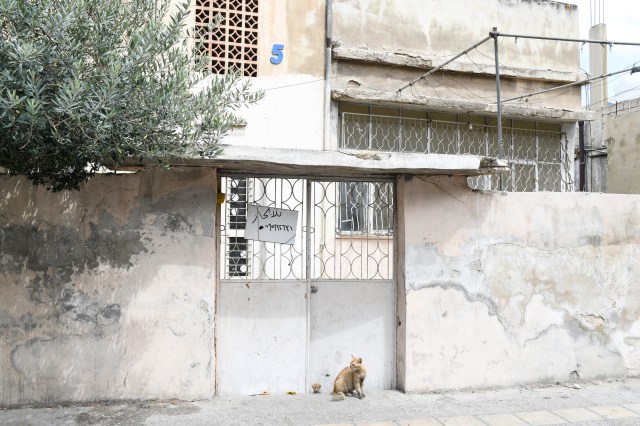
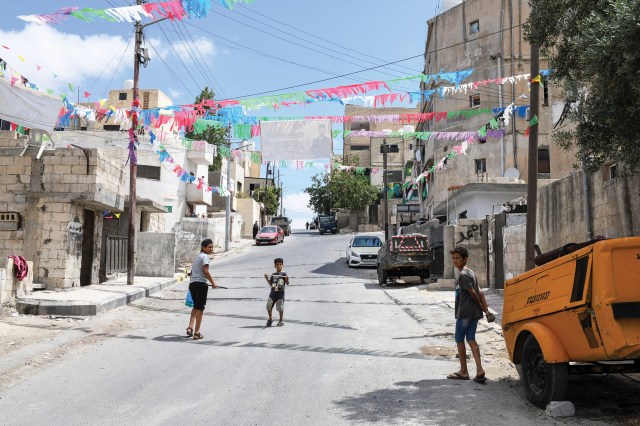
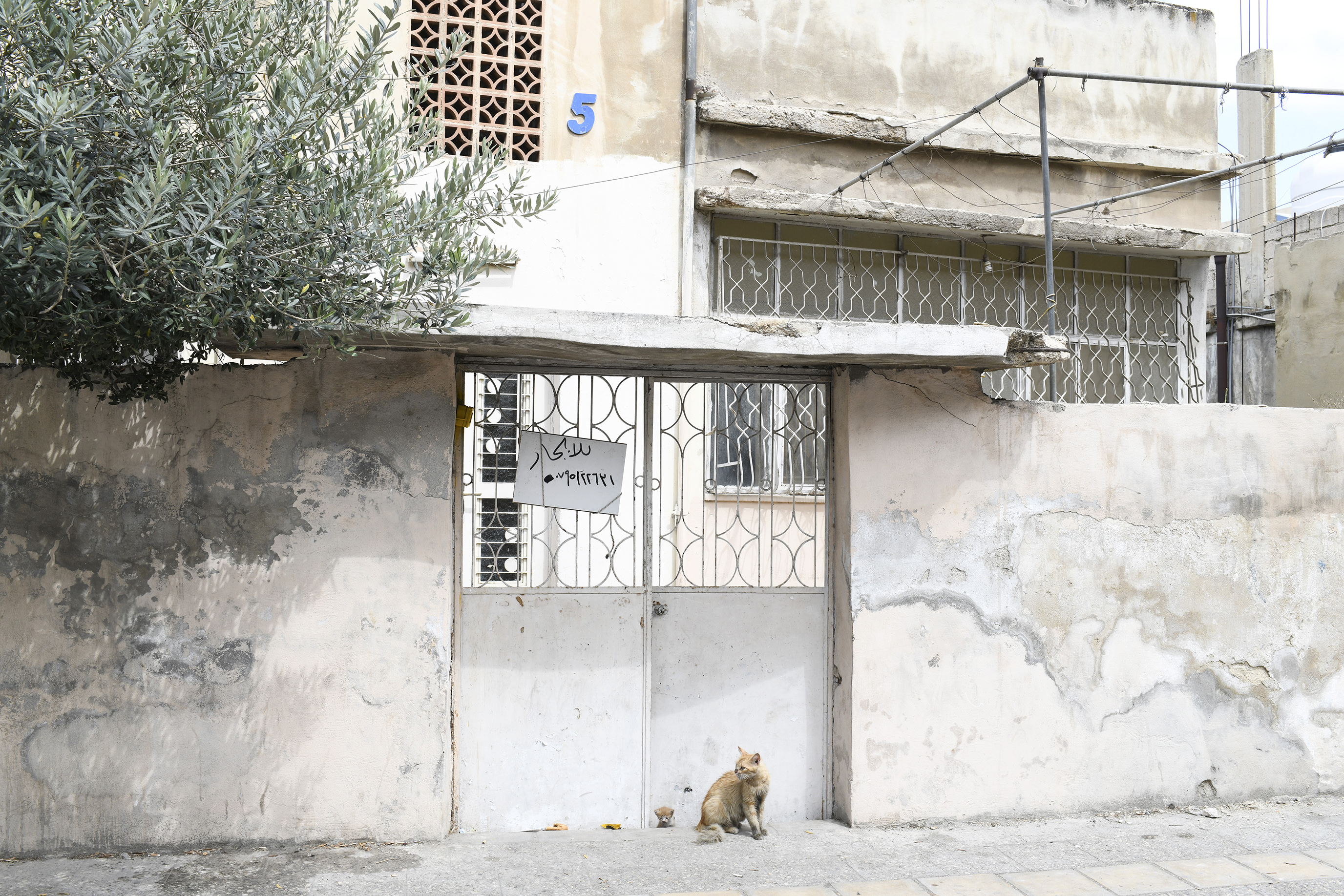
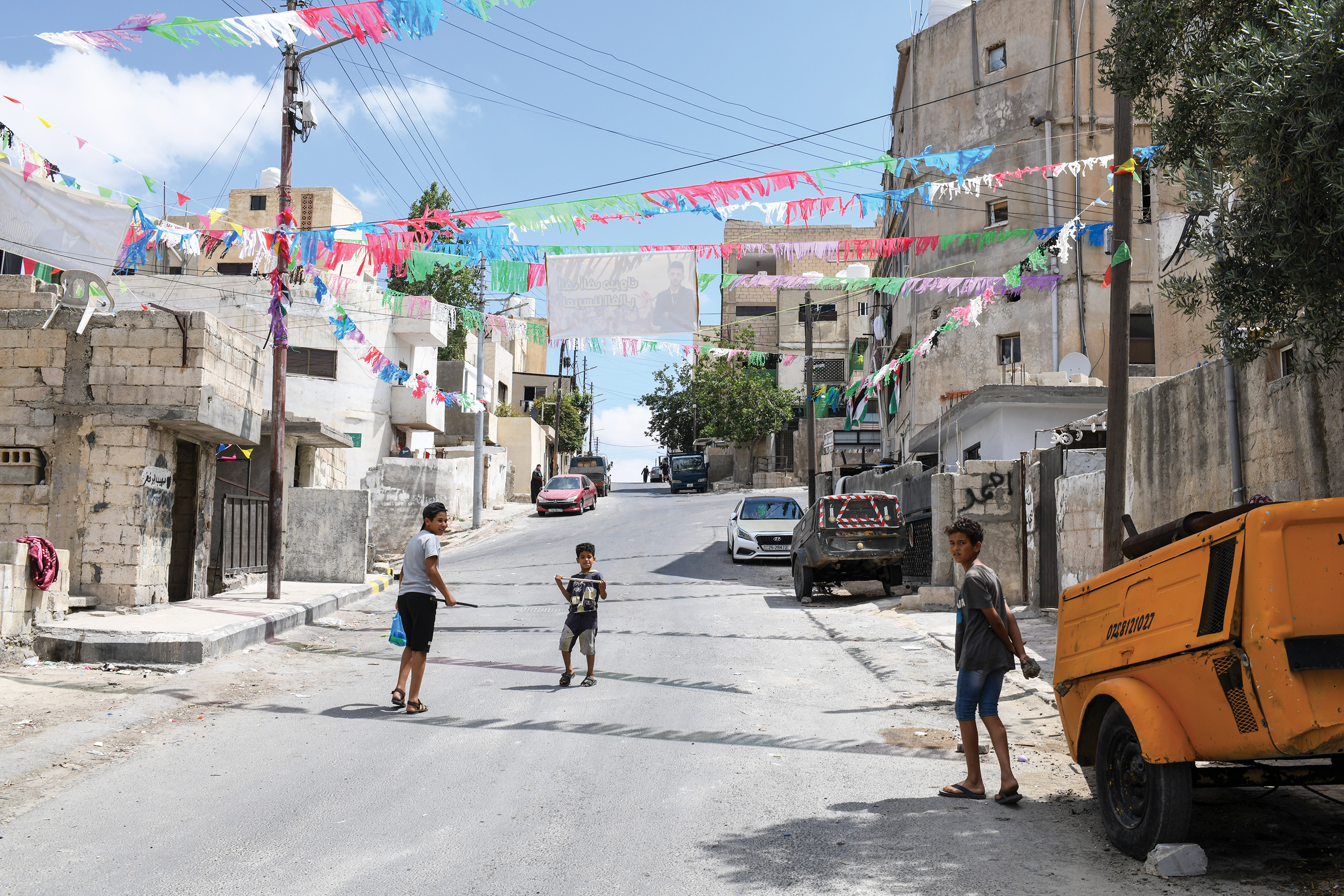
Now she lives in Jordan. She wears shoes like a man, she joked, to navigate its hilly streets—a commentary on how the war changed everything. 

Photo by Nadia Bseiso
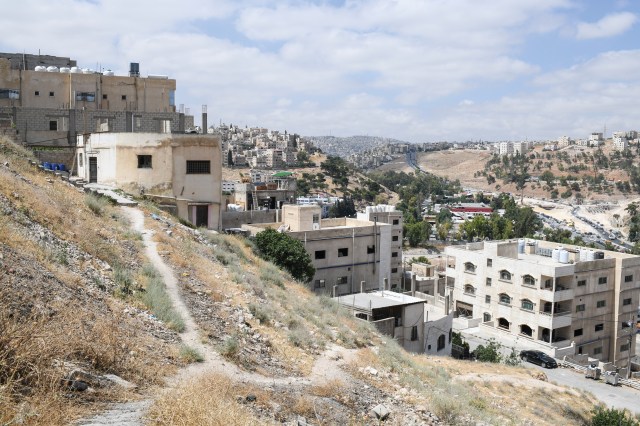
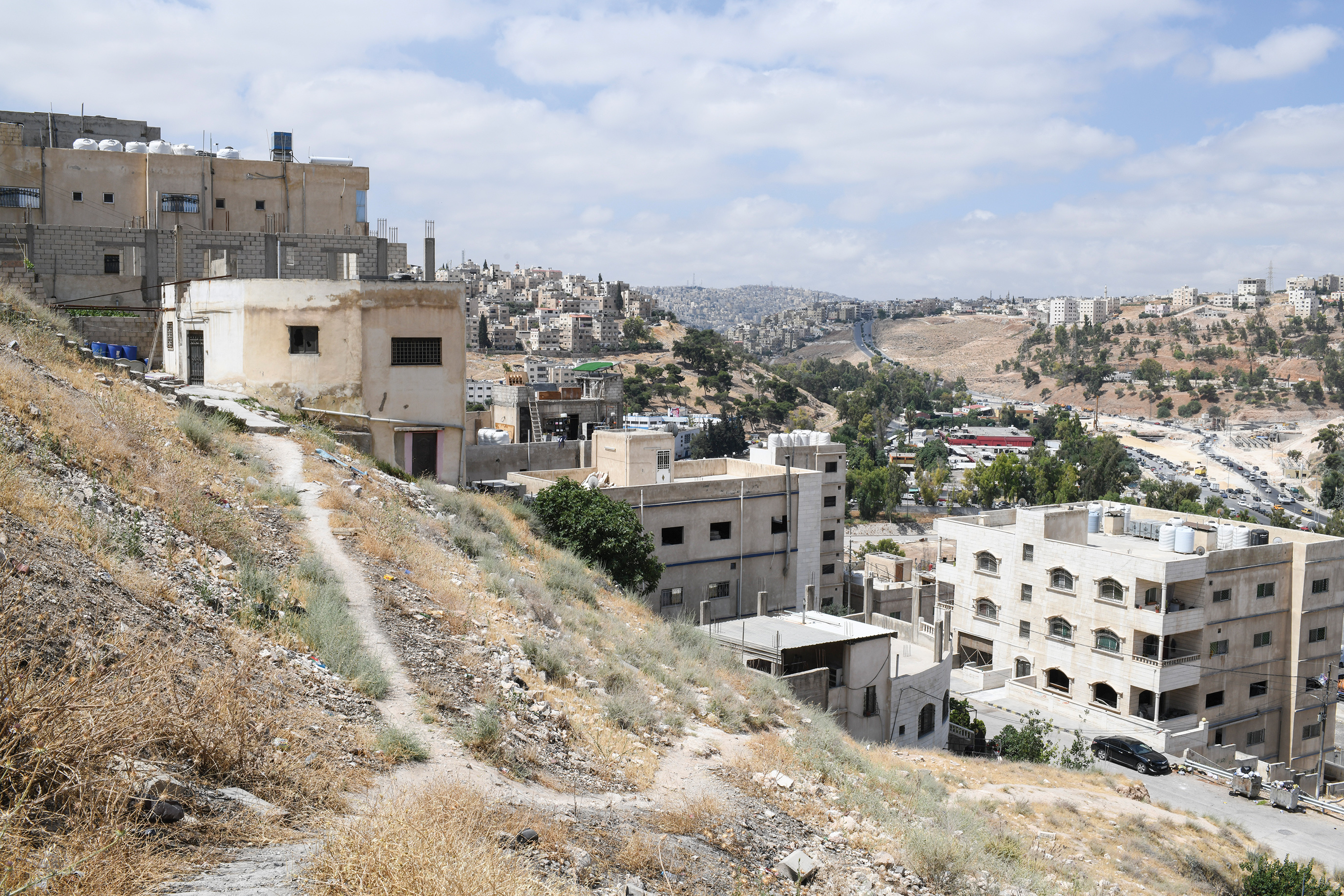
View of Amman hills from Marka. Jordan.

Lama and her relatives fled Syria in 2012 to settle in Marka, a district in east Amman, the capital of Jordan. Known in ancient times as the “city of seven hills,” Amman now spans 19 hills. Its population of more than 4 million is roughly quadruple that of Homs. Yet Lama acclimated easily to life in Jordan at first, adjusting to the topography, the Jordanians’ Arabic accent, and new customs. With her parents living next door and her sister upstairs, she didn’t feel like a stranger in this strange land. The family spent Fridays together as they always had, with Lama’s mother cooking for everyone. 

But then the war stretched from months to years, and then to more than a decade. Lama’s daily life began to shift. More than a million Syrians took refuge in Jordan, testing public services and housing. With tens of thousands of war victims from Iraq already in Amman, resentment among Jordanians simmered. Refugees crowded stores and pushed up prices. 

At the same time, Lama’s close-knit family, now refugees at the mercy of international dictates, began to scatter. First her brothers Ihsan and Husam left. Ihsan immigrated to Washington State while Husam and his wife were allowed to resettle in Canada. 

Next, Lama’s sister Shatha, along with her husband and their then-five daughters, moved to California. 

Other relatives found sanctuary in Lebanon and Sweden. When Lama’s parents, approved for resettlement by the UN Refugee Agency, moved to Washington State in 2022, it was the final blow.

“When my siblings left, I hated [Jordan],” Lama said. “I hated it so much.” Only she and her sister Nuha remain in Marka.

“This isn’t called spreading out, it’s called ruin,” Shatha said, her black headscarf emphasizing the fierce expression in her thickly mascaraed eyes.

“When you take a family and break it up like this, that’s not dispersion—it’s destruction.”

Shatha is now an American citizen. In late 2022, she returned to Jordan for five weeks to visit her sisters, savoring her last hours with Lama and Nuha before parting again. Over glasses of sweetened verbena tea and bowls of mixed nuts, they reminisced about their life in Homs, their flight to Jordan, and their challenges as refugees.  

The family fled Homs early in the Syrian conflict, before rebel forces there were squelched by Bashar al-Assad’s regime. At first, Lama didn’t want to leave Homs to shelter in Damascus. Even when they decided to leave, she and her relatives thought their stay in the Syrian capital would be temporary. But after 10 days in hotels converted into temporary housing, they learned the road to Homs had become blocked by explosions. Assad’s army was takng men of military age by force. Lama’s husband was in danger of conscription, so crossing the border to Jordan became their next best option.

Gradually, in small groups, the family twisted their way toward safety by way of Dara’a, staying some days in border camps before trickling into Jordan and finally to Marka. 

The situation in Jordan is bad, Tarek said. “There’s no aid—not from the UNHCR, not from the UN,” he said, using the acronym for the UN Refugee Agency. “And there’s no work. If you want to get a work permit, you have to pay monthly to social security … and if you don’t have work … how are you going to pay that?” 

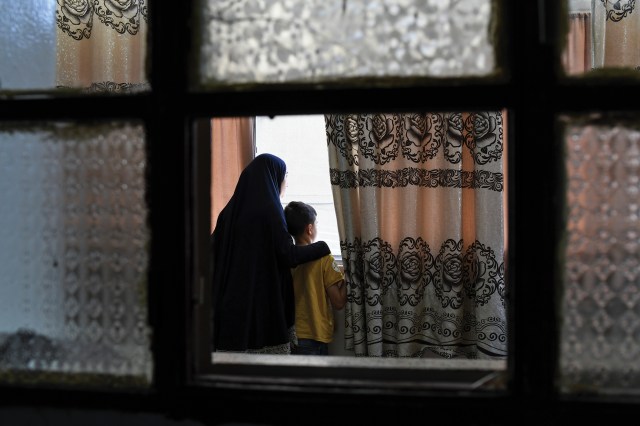
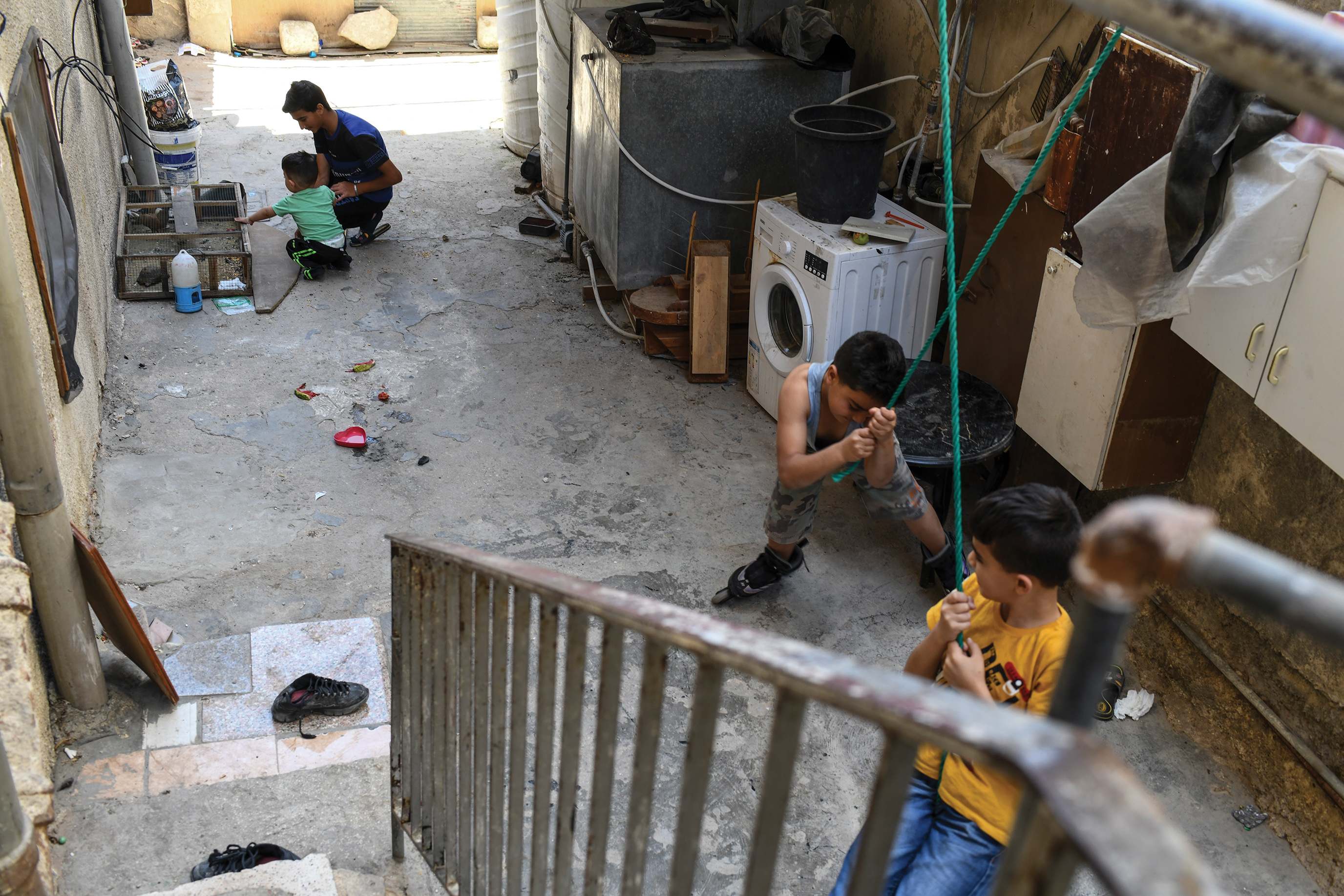
Tarek has not been able to work, so Lama’s two oldest sons, both in their late teens, dropped out of school to help support the family. The boys slouched quietly on the living room’s periphery, listening to the adults’ conversation. 

Finding steady work is not the only challenge for Syrian refugees in Jordan. Many families are saddled with niggling paperwork issues—whether byproducts of mismanagement, bureaucracy, or blatant corruption, no one really knows. Nuha’s husband, Mohamad, cannot get official refugee status, and also cannot return to his homeland.

Maysoon, another marooned relative, lives alone in the apartment below Lama. As a single adult she has her own refugee file with the UN. Because of this, she was left behind when her family members were resettled. Her parents and siblings are now in Canada, France, Sweden, and the United States. Without the presence of a father, brother, or husband in a society that values male protection, she finds herself particularly vulnerable. 

Lama believes humanitarian organizations receive plenty of financial aid but do not distribute it equitably. Some families receive rent supplements, while theirs has ended. Some families are resettled together, yet theirs has been scattered. “There’s no justice,” Shatha and Lama said over and over.

Photo by Nadia Bseiso
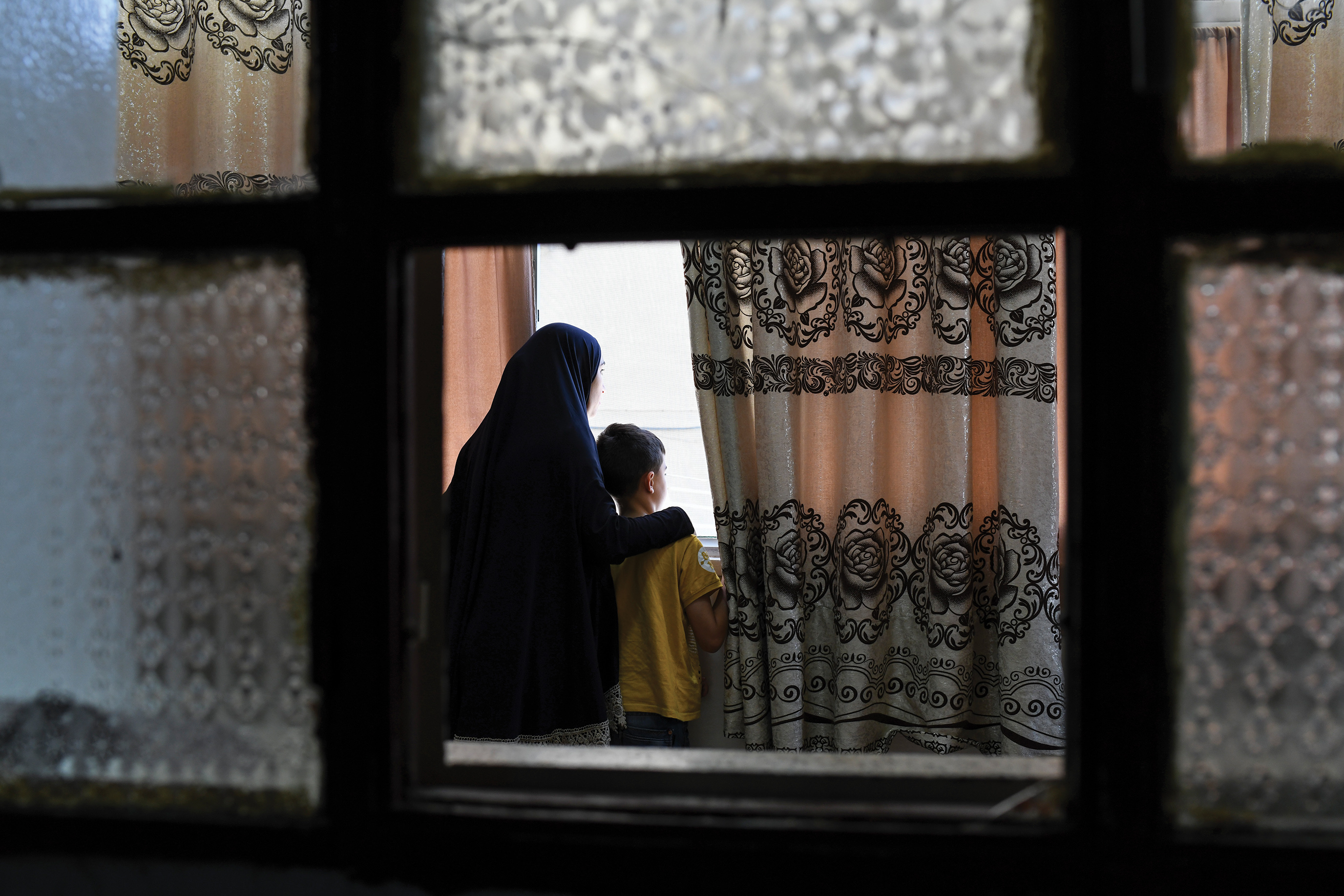
Lama and her son Qusai at their home in Marka, Amman – Jordan.

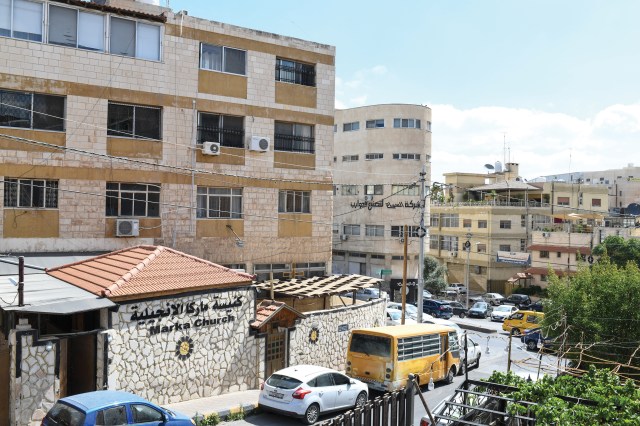
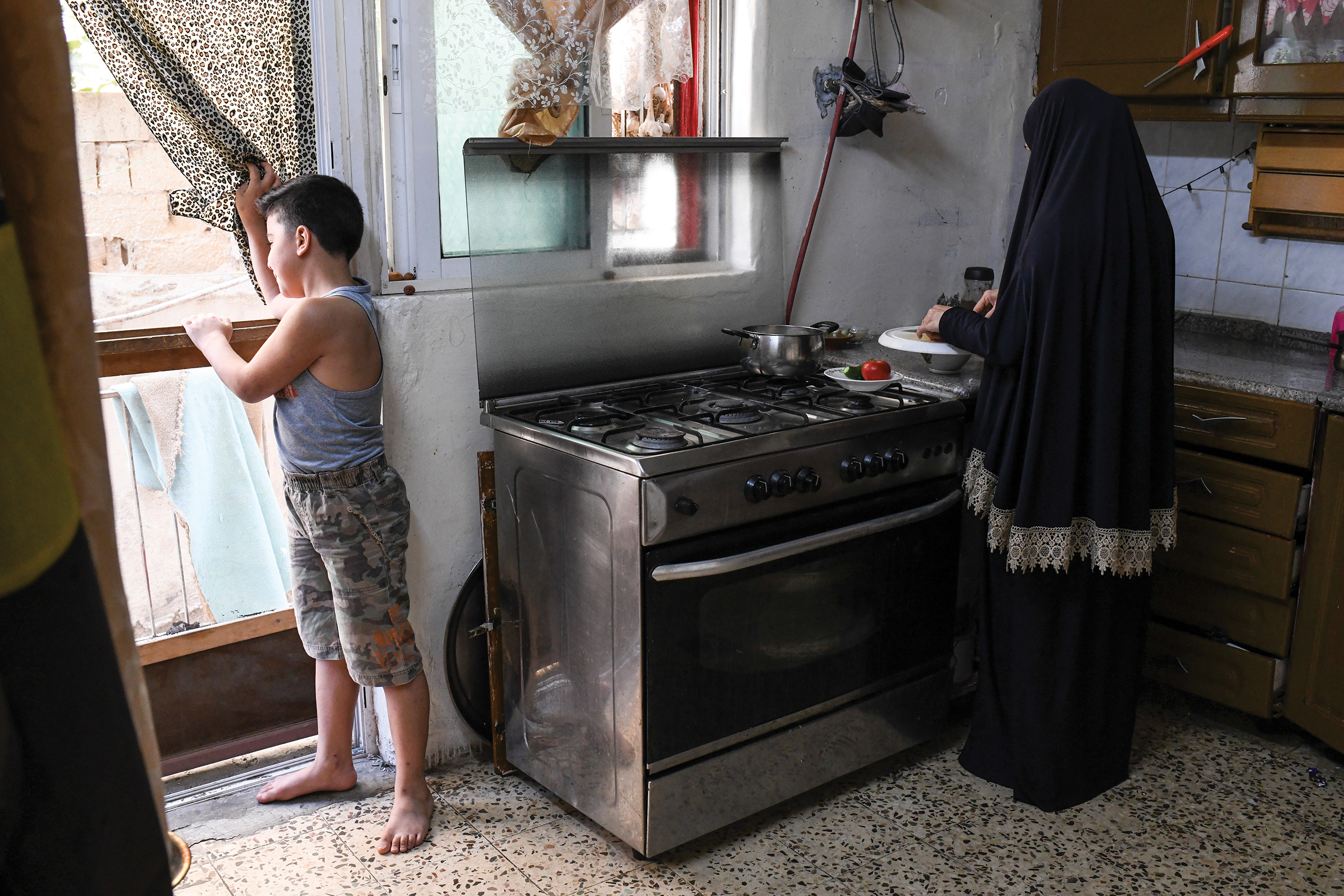
Where Lama’s family found support, surprisingly, was at a local church. Christians from Marka Church visited them multiple times. They forged a friendship with a church member living in their neighborhood. When the family first arrived, teams from Marka Church delivered heaters, blankets, and mattresses. They brought staples like oil, rice, sugar, bulgur wheat, tomatoes, and mortadella. Lama’s family also participated in Marka’s fruit and vegetable voucher program, which partners with a local produce shop. 

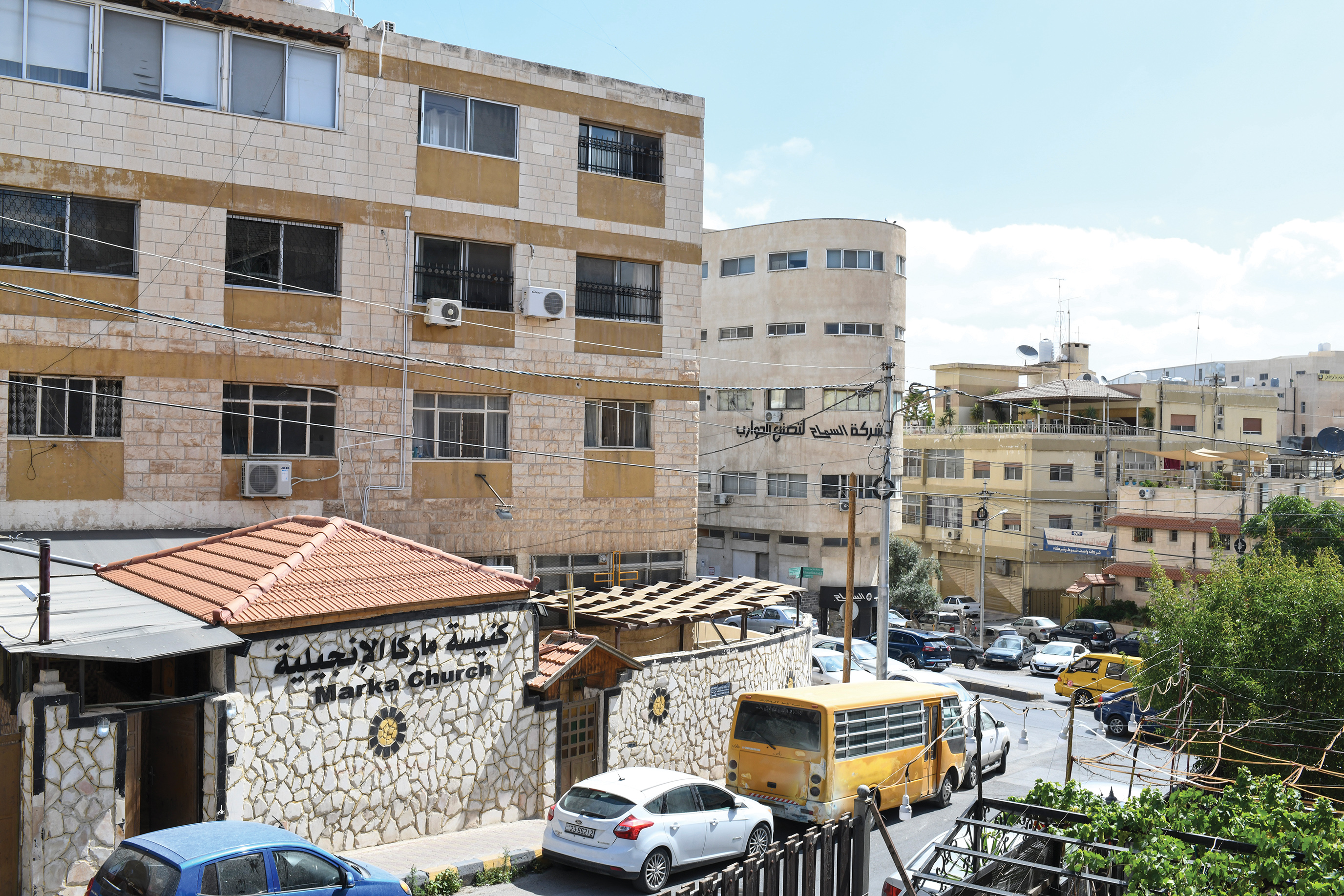
The Nazarene church sits a block off Marka’s main thoroughfare, a street that rides a ridge of hills, shuttling commuters in grimy white buses and green-tagged public transport vehicles between Jordan’s two largest cities, Amman and Zarqa. Restaurants, clothing and accessory stores, banks, pharmacies, and cell phone providers line the congested boulevard. On either side lie Marka’s residential buildings, limestone-faced apartments surrounded by olive trees and rows of scrappy cypress.

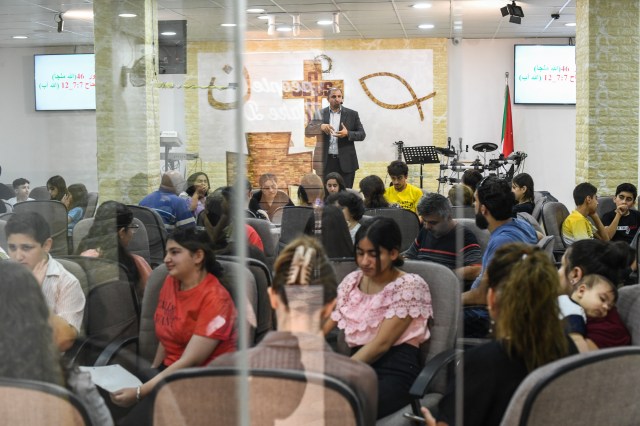
Though Christians comprise only 3 percent of Jordan’s population—about 250,000–400,000 of more than 11 million—the Jordanian church pulls disproportionate weight in caring for the needs of close to 1.5 million Syrian and Iraqi refugees. Among evangelical churches in particular, Marka Church has led with creativity and innovation since 2004, when its pastors began outreach to refugees from the Iraq War. 

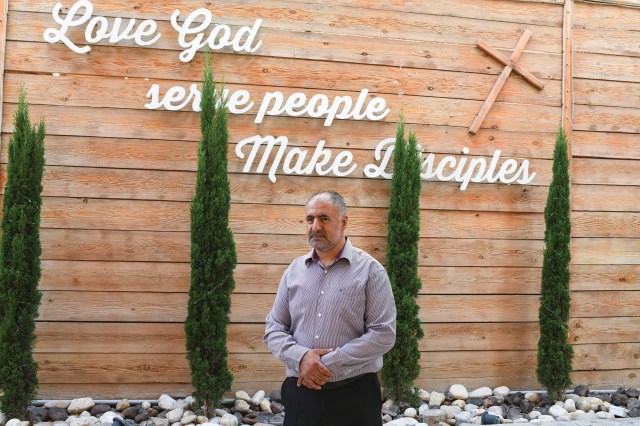
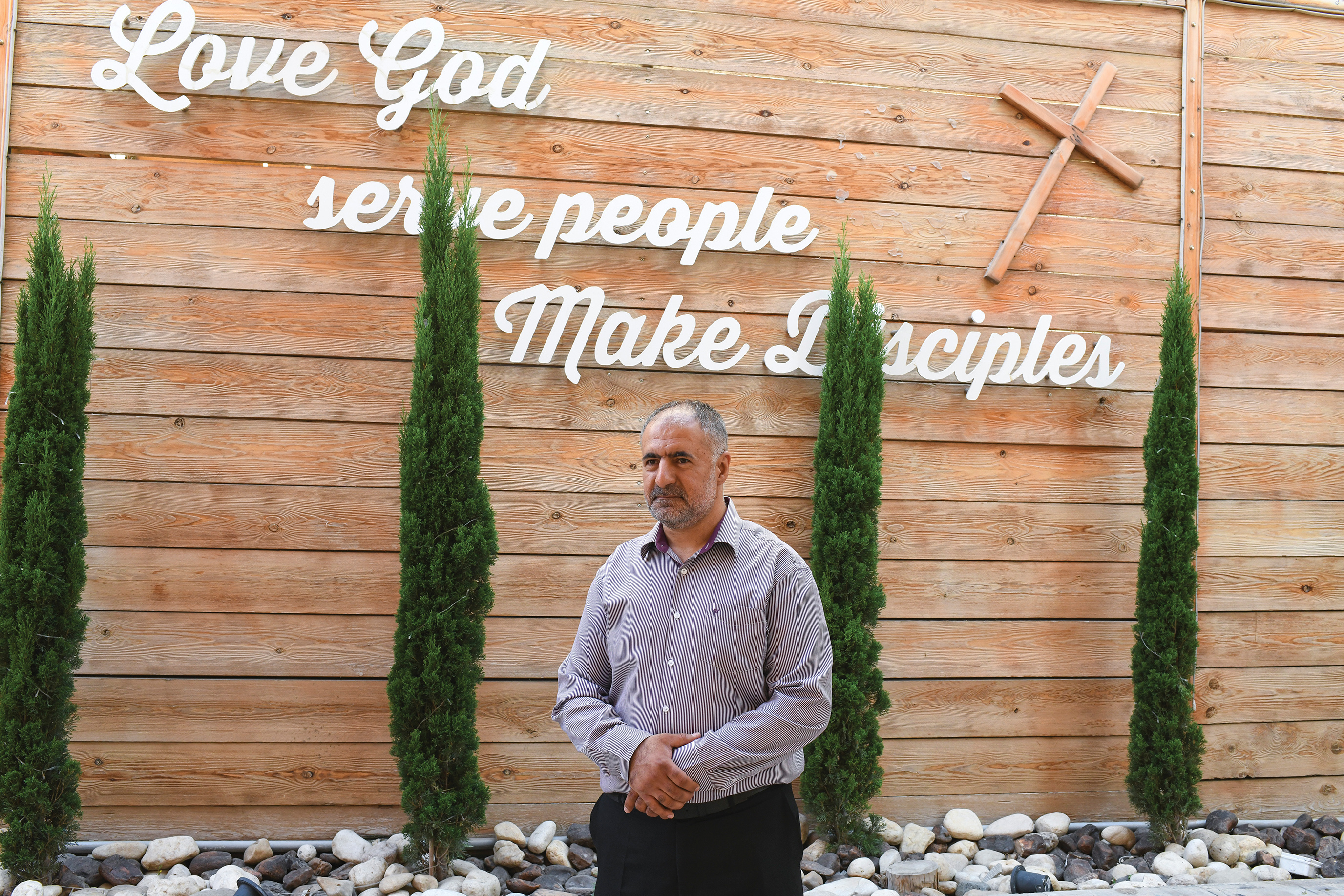
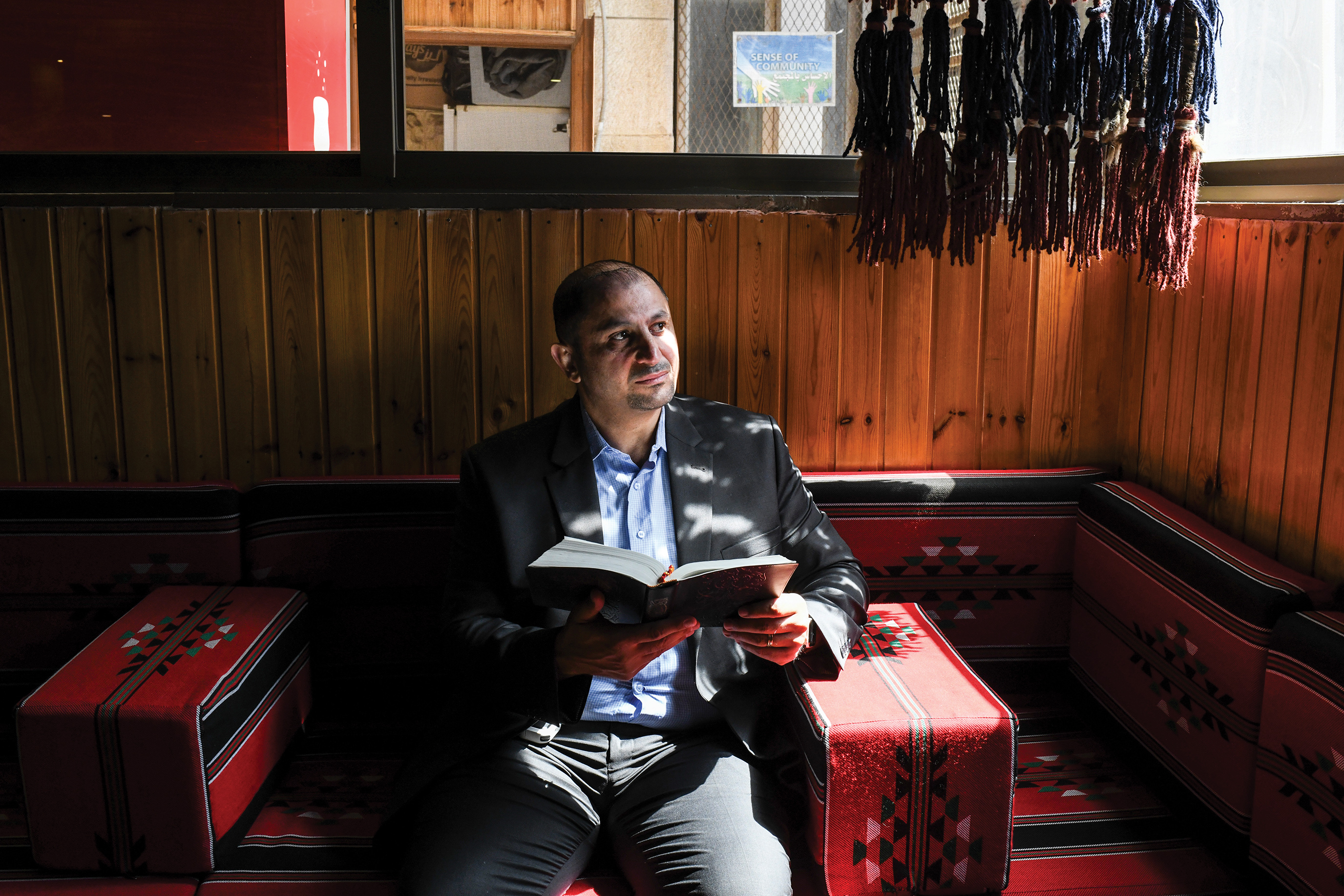
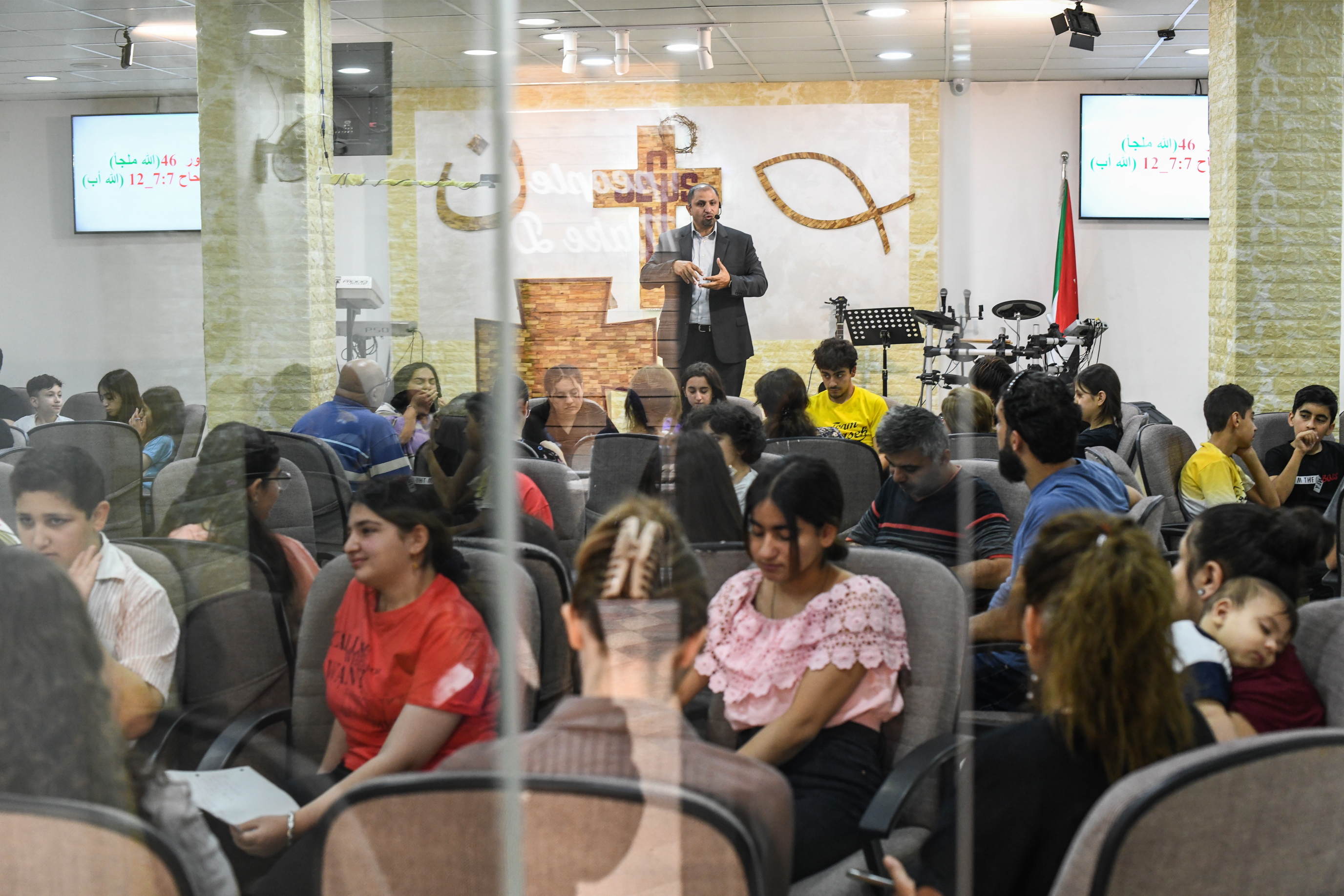
The overarching goal of Marka Church is mercy and truth meeting together, said Pastor Haytham Mazahreh, quoting Psalm 85:10. The church recently launched an aid organization, Sense of Community, which serves as an umbrella over a variety of mercy ministries meeting physical needs in the community. 

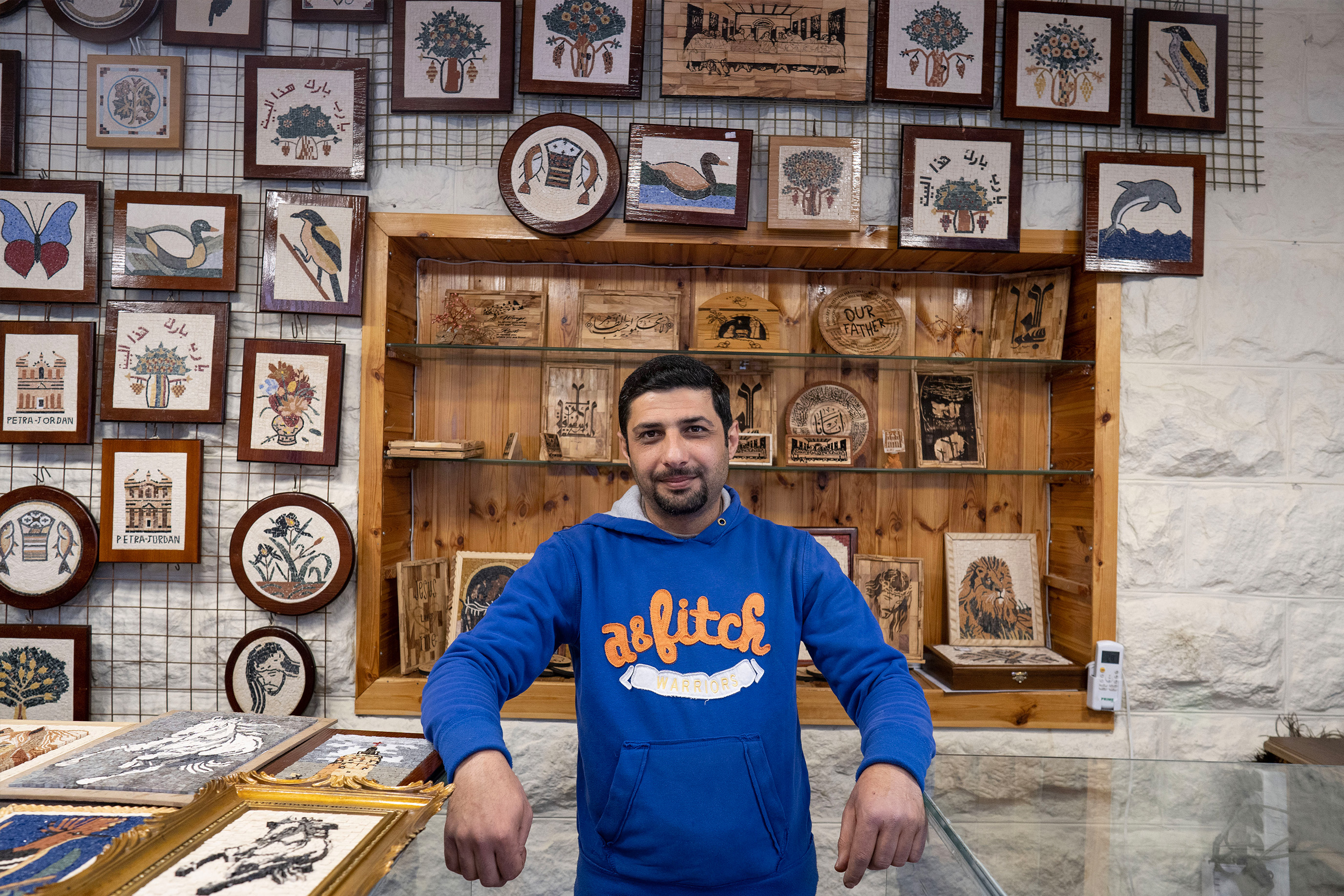
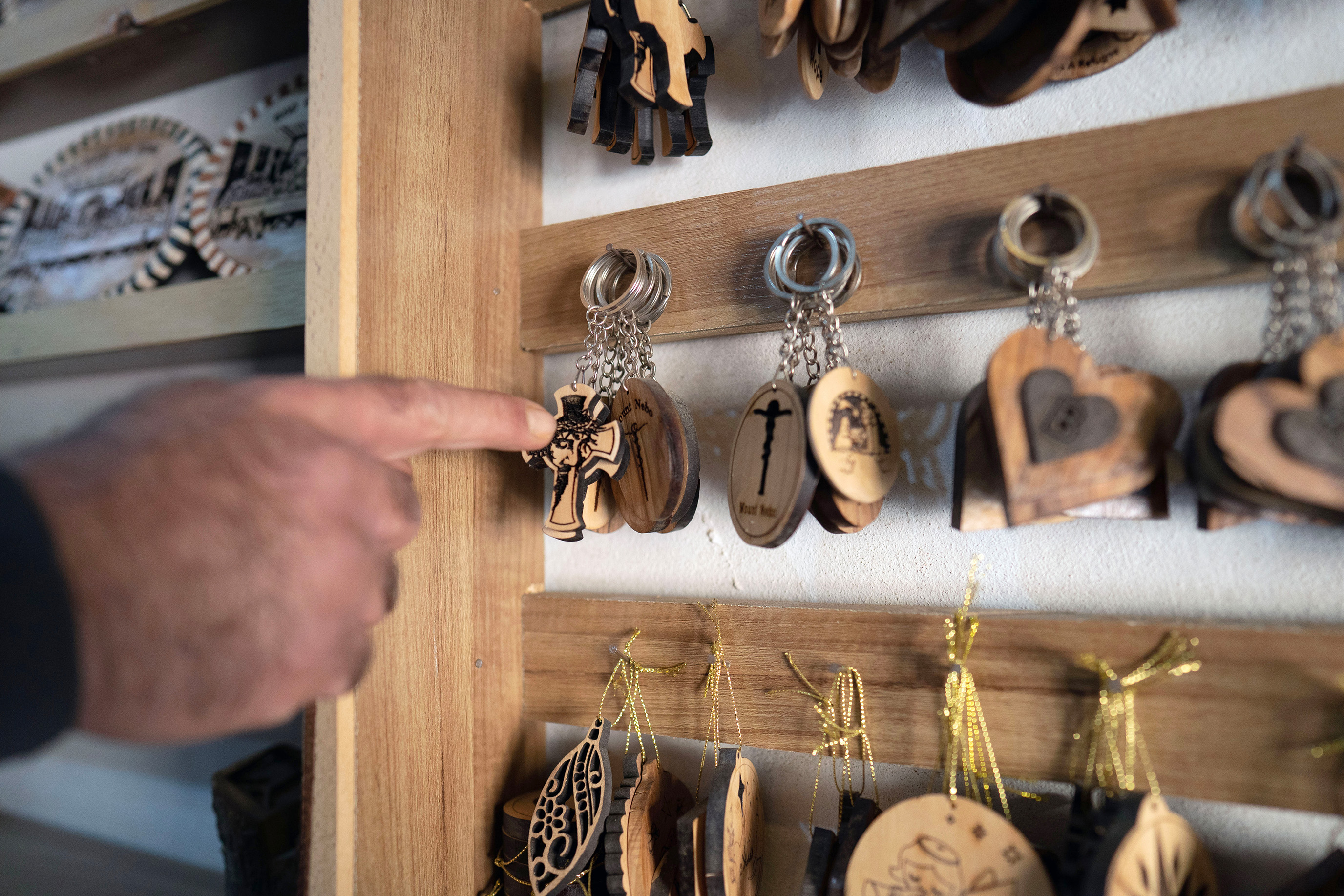
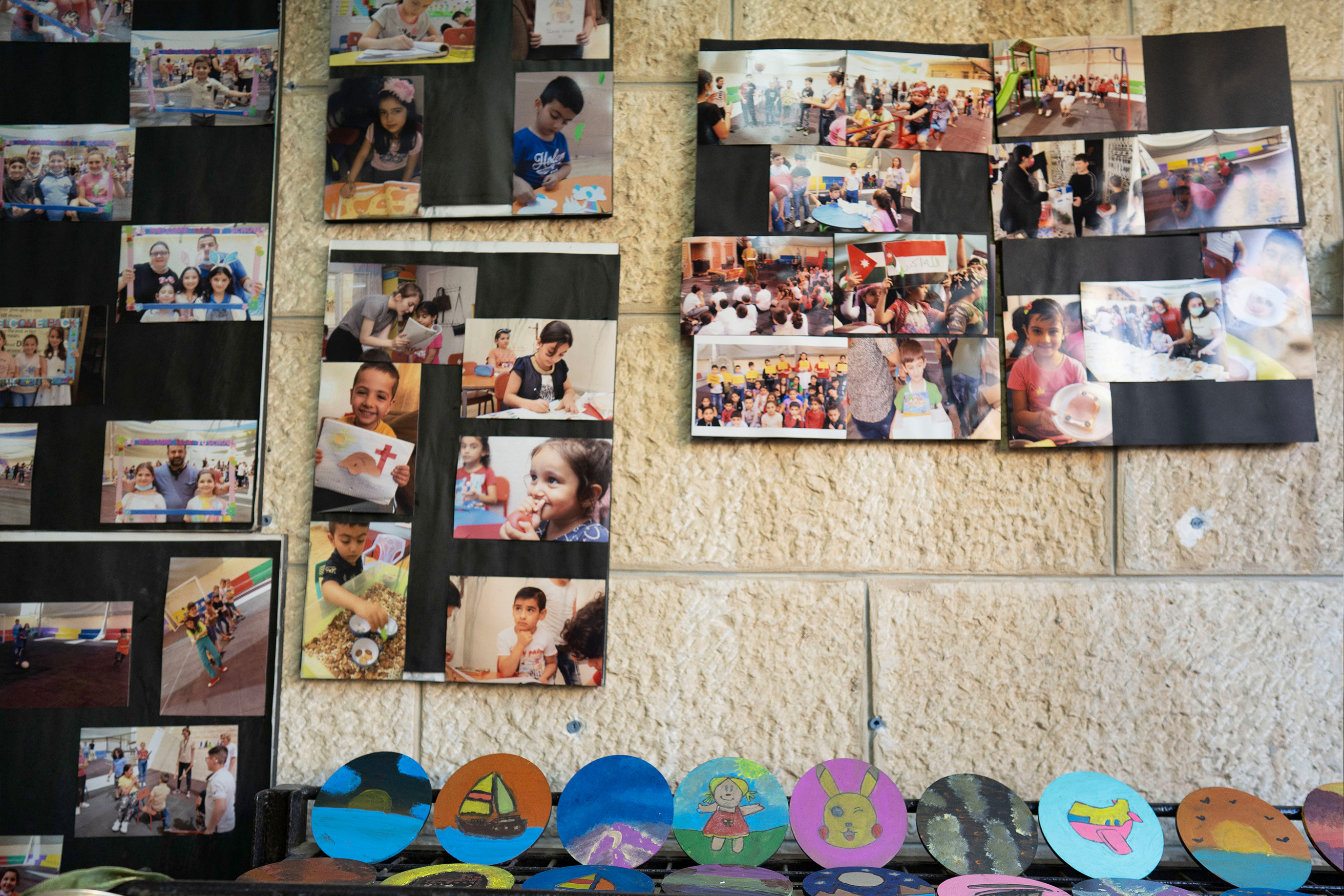
A permanent clinic operates on the main church building’s third floor, staffed by general practitioners, eye doctors, dentists, and physical therapists. They serve anyone in need—Iraqi, Syrian, Palestinian, Jordanian, or other. Across the street, Good Shepherd Center provides education for around 130 Iraqi Christian children, who are unable to study in local schools. Handcraft workshops around the church’s campus supply vocational training and income to mainly Iraqi refugees.

Mercy flows beyond Marka Church’s walls as well. Pastor Ibrahim Nassar and another leader, Intesar Mazahreh, served for years with the church’s neighborhood visiting team—a vital component of ministry in a region where home visits form the foundation of social interaction. 

“This is an opportunity to care for [refugees], comfort them, even without giving them anything,” Ibrahim said. “It makes a difference—it makes a difference that someone is asking about them.”

Ibrahim also pastors Church of Glory, an Assemblies of God congregation nextdoor. With his soft voice, salt-and-pepper scruff, and bushy eyebrows, he greets refugees like an eloquent, Spirit-filled bear. The Syrian conflict, coinciding with the rise of Islamic State militancy in Iraq and Syria, sent fresh waves of the persecuted to Jordan. Pastor Haytham invited Ibrahim to join Marka’s visiting team.

Intesar Mazahreh, a petite woman whose first name in Arabic means “victory,” joined the visiting team in 2015 after having a dream about serving refugees. Five mornings a week, she and others met for prayer, Bible study, and worship before breaking into small groups to visit two or three households each. These visits involved listening to people’s stories, encouraging them, and praying for them. 

Initially the church also supplied a variety of household needs, she explained.

“When they came, they could hardly rent unfurnished apartments—without anything, gas, heaters, cushions, nothing—this is how their needs were,” she said. When their needs were greater, she added, “they liked to listen more to the words about Christ and about peace and love and mercy.”

Barred from legal employment in Jordan, Iraqi refugees struggle to settle in Marka. Many Syrians, on the other hand, have been in the country for nearly a decade. Though they still face financial challenges, they have become like Jordanians in many ways, more self-sufficient and networked within the community. As refugees’ needs change, the visiting team’s work morphs. Currently, church visits focus more on sharing the Word and discipling believers.  

The seeds of love planted by the visiting teams help soften local attitudes toward the evangelical church, too. Everyone from Syrian Muslims to Iraqi Christians—usually from Orthodox and Catholic backgrounds—have been helped by Marka Church. Suspicion and fear melt away when confronted with unconditional love. 

“Those people stood with us,” one refugee said. “Those people have love. Those are the people who visited us—nobody asked about us except them.”

Lama and her family also praise the help they received from the church. They miss the early visits of Marka teams and make do with less and less aid, as other crises, regional and global, take precedence over the plight of trapped Syrians. Their crisis has gone on for so long, Lama said, “the world has gotten bored.”

Last year, as a winter storm dropped flurries of snow and canceled three days of school, Lama set laundry to dry on racks around her apartment. “The days have all become like each other now,” she said, sitting beside a softly whooshing kerosene heater.

In spite of the time difference, Lama talks with her mother in Washington State every day, with Shatha in California, and with her brother in Canada. (In April 2024, Lama’s father died; she never saw him again in person.) 

Sometimes she recalls their Fridays together before their dispersion—mornings with fattet hummus for breakfast, afternoons with stuffed vegetables, kubbeh, or grape leaves made by her mother.

After Shatha visited Lama in Jordan, she returned safely to the United States in January 2023, packing Middle Eastern bread and carrots in her suitcase as a taste of home. The cooked carrots made her husband happy, she said. Shatha talks now about Welcome Corps, the then newly launched US State Department program allowing Americans to privately sponsor refugee families for resettlement. Could Welcome Corps help bring Lama and Nuha to the United States? Could American churches help them the way Marka Church helped them in Jordan?

Until then, she waits—for a successful way to bring her sister to America and to reunite, at last, what remains of her family.

Esther Kline, a pen name, is an American writer living in Amman, Jordan.

Church Life

Espresso in Exile

A Cyprus café ministry has irritated local authorities. It’s also inspiring imitators in the Muslim world.

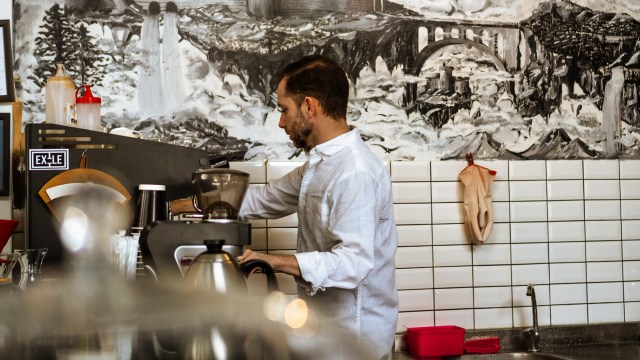
Ryan Keating launched Exile Coffee and Wine in Cyprus after learning the coffee business in Turkey.

Photo by Hagin Bengo

This is the story about a coffeehouse.

It’s a business with a public face, with people who show up every day and make it go. It could be your local coffeehouse—perhaps tucked under awnings on a downtown street, the hum of conversation mixing with the aroma of freshly ground beans, where the barista knows your name and starts your order before you can say it.

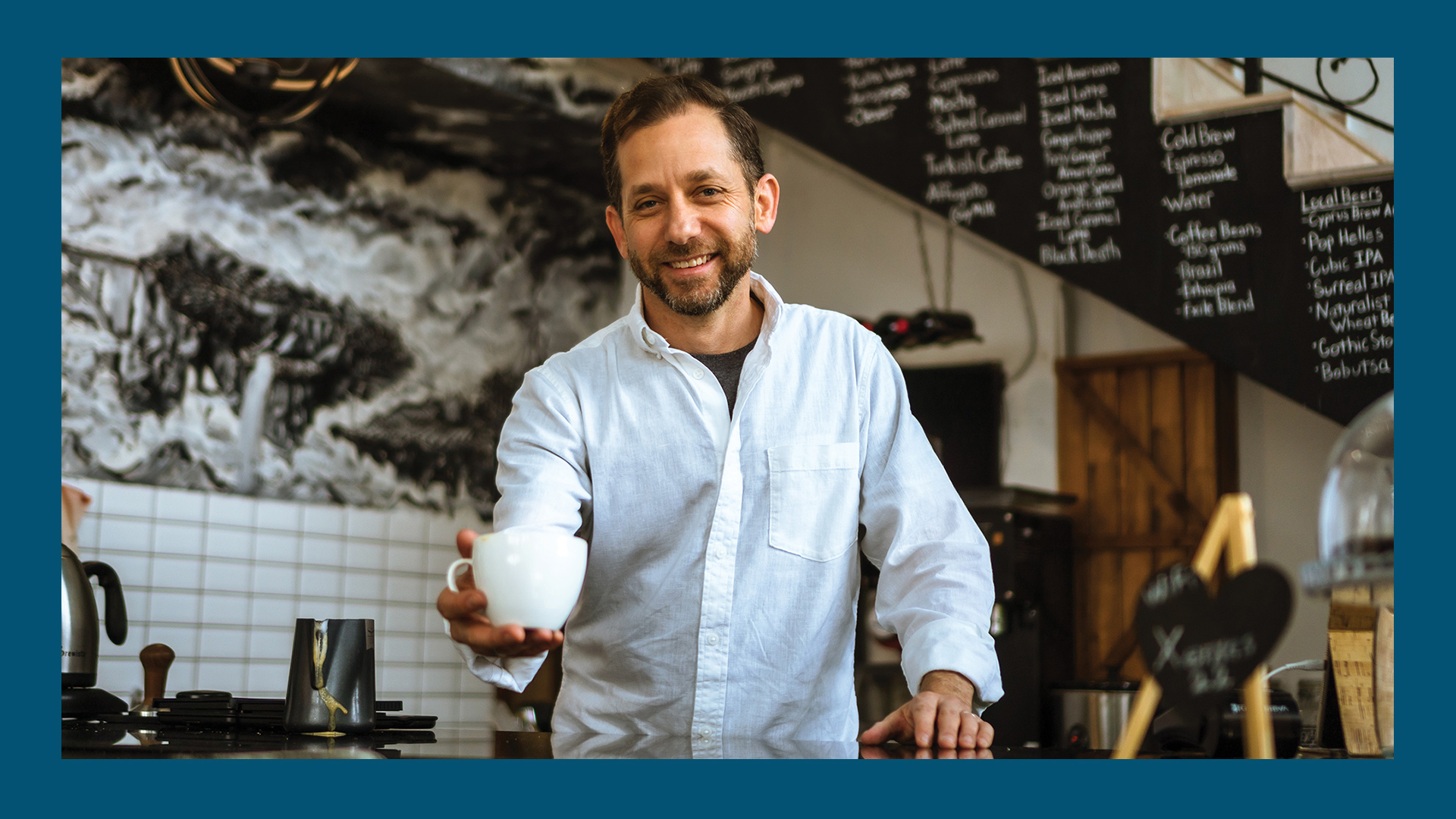
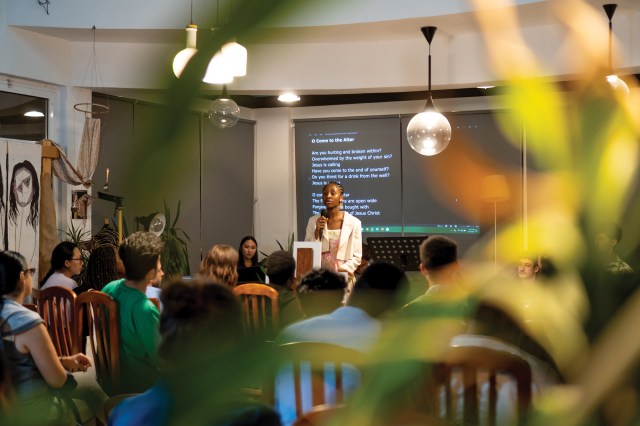
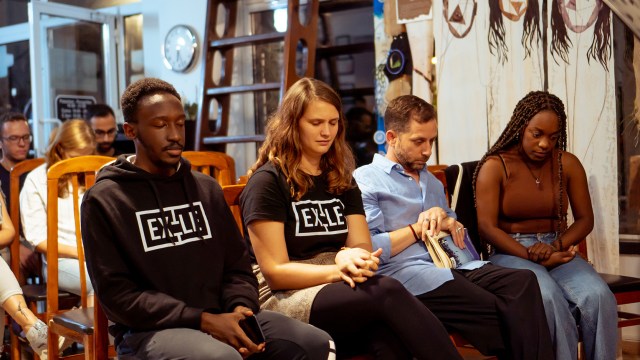
Exile Coffee and Wine is like that, except the menu comes mixed with ministry, and big ideas percolate in the people who run it. Ryan Keating is the coffeehouse’s 47-year-old face and the catalyst behind the community that has grown up around the business in Northern Cyprus.

By morning, Keating is at the shop roasting beans or going over the day’s menu. A few hours later, you might find him up the coast at an ecotourism farm, leading a discipleship training seminar for young people from around the world, talking about creation and the work of Alvin Plantinga. By afternoon Keating is back at the coffeehouse, prepping food in the kitchen and going over the evening’s wine selection. In between, he might put on a tie for a court appearance, then take it off to help with an olive harvest. Or he might find some time to write poetry (he recently published a book of poems). 

Photo by Hagin Bengo
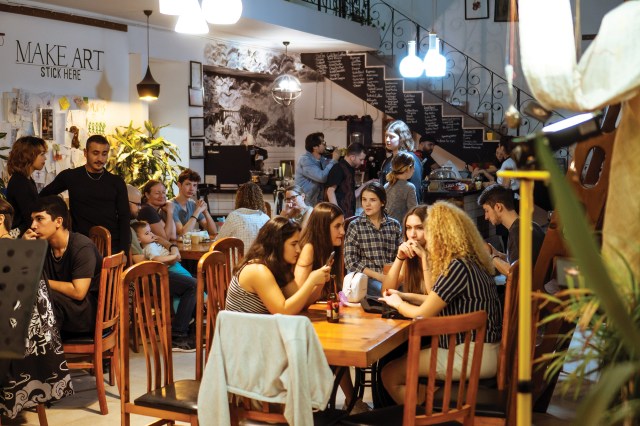
Exile stays open late, offering pizza nights and wine pairings and a revolving menu.

For Keating, the 24 hours of a day seem measured by a different clock. It is as if, by sharing time in community, Keating has learned how to have more of it. 

When I first visit the café it’s late in the day for caffeine, but we are cupping anyway, tasting coffee from a lineup of demitasses. Freshly made coffee breaks down into five observable parts, explains Keating—sweetness, body, acidity, flavors, and finish. We are drinking Arabica beans from Ethiopia that Keating roasted himself. 

“We might pick up fruity or herbal or floral notes. Is it tarragon or black tea or bergamot, something herbal? Or sometimes it might be negative, and it could taste like grass,” he observes as we sip. (The variety we are drinking is fruity, he says.)

A slant of Mediterranean light spills over the bar top. You really can taste those things? I ask. 

“It’s not about equipment, it’s just about attention,” Keating says. “It’s about paying attention to what you’re tasting and learning from other more experienced tasters. If one of them is telling me there’s tarragon or apple here, then hopefully I can taste that, and learn.”

Coffee beans can release a thousand flavor compounds when roasted, ground, filtered, and poured. An expert taster can unearth them all in one sip. The taste varies based on where the coffee is grown—the climate and altitude, for instance—and when it’s harvested. What season? What’s growing nearby? Beans generally should be roasted lightly, to preserve those delicate flavors.

It takes skill and time to learn all that the coffee is saying, and that kind of experience comes at a price. Merely paying attention doesn’t lead to automatic success. Rather, it requires patience, generosity, and knowing failure is always lurking. (Oh, you don’t pick up the apricot notes?)

Those are lessons that Keating, like many Westerners who work in Muslim-majority parts of the world, will have to learn sooner or later.

Keating discovered that coffee tasting, which he learned as a hobby while teaching and working on his doctorate in Turkey, could become a transferrable skill during years of working as a missionary—first in Turkey, and now in the divided island nation of Cyprus. It led to coffee roasting, to importing and exporting beans, to opening cafés and training others in the business. 

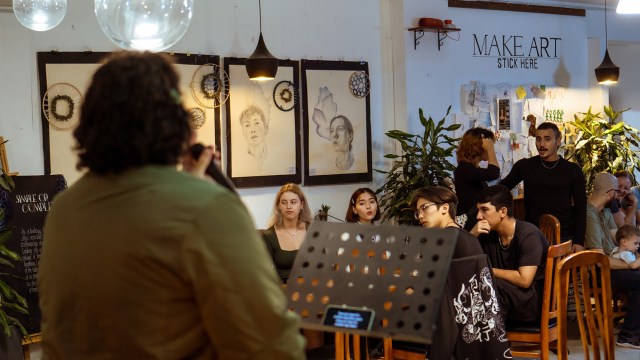
The coffee trade fed Keating’s interest in winemaking, which led to hosting meals and to organizing events, from art shows and piano concerts to worship services and Bible studies. All the while, what the café really does is crack open ways to connect with the community.

For an American in the Middle East, that’s no small achievement. 

“I love the café,” he says, “but I love it because of the way it fuels the other things I do.”

Those other things include helping to start fellowships and churches of new and old believers. They include yearly discipleship training programs that draw a small and diverse group of global participants—most in their early twenties— to Cyprus for three months. 

Students learn how to think theologically while working with their hands. They spend mornings in seminars taught by Keating, among others, and afternoons working in a nearby olive grove or behind the counter at Exile. They learn to be part of the café’s community. 

On Sundays, the café’s first floor turns into a worship area, hosting three distinct congregations: an African group, as well as separate English- and Turkish-language services. Keating usually preaches at one of the services. He sees to all the coffee roasting himself and usually makes food for café events. “I came into this work because I believe ministry training is incomplete if I am not modeling the sacredness of work and giving people skills,” he says.


Keating arrived in Northern Cyprus with his wife Vanessa and four children in 2017. Before that, the family lived for a decade in Turkey, where Keating joined in church planting and launched a business that included three coffeehouses in Ankara, the capital. 

A century ago, Western missionaries built and staffed schools and hospitals in this part of the world as a comprehensive way to share a Christian message. Keating thinks of street-fronting businesses in the same way: A good coffee shop should employ locals, model Christian service, show hospitality, and provide a brick-and-mortar setting for other ministries. 

As a 16-year-old exchange student, Keating fell in love with Turkey, a majority Muslim country that straddles Europe and Asia. He graduated from Biola University, earned a master’s degree from Yale, and returned to Turkey with Vanessa to start a ministry and a family there.

The couple’s time in Turkey was marked early by tragedy. In 2007, three friends, fellow church planters, were tied up and murdered, their throats slit by Islamic extremists who showed up at their office posing as seekers. The Malatya murders made global headlines. Keating had to help identify one of the victims. 

Speaking to a gathering a year later, Keating said he learned, “Martyrdom is deadly. But it is worth it.”

He added, “People aren’t lining up to go to the hard places of the world. This is not because God isn’t calling them there. It’s because you might die there.”

His own family’s time in Turkey would come to an end in a different but also abrupt way. In 2016, authorities canceled his residency permit “for reasons of national security” while Keating was helping to plant churches, running coffee shops, and working on his PhD. The charges (which have not been dropped) came amid a nationwide crackdown on Western Christian ministries and the much-covered arrest and trial of American Andrew Brunson, forcing the Keatings to leave. 

Northern Cyprus wasn’t a logical next stop. Turkey invaded the island in 1974 to prevent a Greek takeover, and the northern third, where the Keatings live, is a de facto state administered by the same Turkish government that deported him. Northern Cyprus is still not formally recognized by the United States or any country besides Turkey. A buffer zone patrolled by the United Nations divides it from the autonomous Republic of Cyprus, which occupies the rest of the island.

Despite his experience in Turkey, Keating welcomed the chance to work again among Turks. He and his family could also learn what it means to be in exile.

“I was forcibly removed from my home, yet I had lots of options that many people in exile don’t have,” he said. “I could have gone anywhere. I could have returned to America.” 

After arriving in Cyprus, however, Keating found himself asking God for a clear vision for why he should stay. He began doing what he knew how to do—roasting coffee and training people for ministry. He traveled to other Turkic countries, developing ministry connections in Kyrgyzstan and other parts of Central Asia. As he got to know Africans in Cyprus, he visited Nigeria too.


Cyprus sits about 150 miles off the coast of Israel and Lebanon in the eastern Mediterranean. Even before the apostle Paul landed here on his first missionary journey, the island hummed with busy ports at the intersection of Europe and Asia. Today, it’s not unusual to track one or two US carrier groups just offshore, pulled there by nearby military conflicts. (Cyprus often morphs into a launchpad for aid to victims of wars in the region; lately it has warehoused humanitarian supplies for Gaza.) Neither is it strange to see refugees arriving by the boatload—from Iran, Iraq, Lebanon, Afghanistan, Yemen, Libya, Israel, and elsewhere.

Keating saw the importance of the divided island nation as more than a transit lounge for displaced people. He prayed for God to make Cyprus “a deep well for the blessing of the nations.” His prayer led to a new understanding about the Asians, Africans, Greeks, Turks, Europeans, and Americans living around him, he says now. It spurred a vision for recruiting young people from Central Asia, Europe, and Africa to train for ministry. The three-month discipleship course in 2023 included young people from Belarus, Germany, Sierra Leone, Uganda, Kyrgyzstan, and California.

As he watched students grow, he knew he wanted to cultivate in particular the coffee and wine businesses, “things that teach the value of time and investing in a place.”

Photo by Hagin Bengo
On Sundays, the café turns into a worship space.

Along Northern Cyprus’s coastal road—an area once home to Barnabas, the disciple who traveled with Paul—hay bales, olive trees, and low-slung farmhouses mingle among resorts built with Russian money. The only church in Northern Cyprus is one the government considers a museum, built where Barnabas is buried, just up the road from the city of Famagusta—a commercial hub with a deepwater port fronting the eastern Mediterranean.

Exile Coffee and Wine sits on a busy downtown street. The coffee bar and seating area occupy the first and second floor of a corner building that in its former life housed an online betting shop, and before that a fish market. Keating says it needed “a lot of work.”

The labors have paid off. As customers arrive in the cool of the morning, voices drift from ground-floor tables to the opened second floor, a mezzanine with additional seating. A window-lit alcove upstairs is reachable by a ladder, while an open hallway lined with shelves serves as a closet for giveaway clothes. A sign reads, “Only take 3 items, please.”

The café stays open late into the evening. Wednesday is pizza night and Friday is open mic night, a community staple. Families from the congregations that meet at the café on Sundays join unchurched twentysomethings and local students. Coworkers come for drinks and entertainment.  

Exile staff pair regional wines with the menu, which Keating plans. He usually insists on making the food (lasagna, the night I was there), then advertises it on social media in English and Turkish. Audience participation is robust, and the mic stays open for hours. Musical numbers might range from an old Turkish hymn to Broadway hits and are interspersed with poetry recitations. If the electricity goes out, which is not uncommon, regulars jump up to keep the night going with light from their phones. 

“We don’t have a big army of God here,” says Steve, a church team member who did not provide his last name because of security concerns. “We have yeast, a little thing, that changes from inside.”

As open mic night ends during my visit, Milad Rezapour cleans up behind the counter, giving direction to a barista-in-training from Germany. Rezapour first met Keating in Turkey, after he and his brother Hamed left Iran. His brother, like Keating, was kicked out of Turkey in 2020, and Rezapour decided to join him here.

Rezapour became a Christian in Turkey. He said he quickly felt pressure to do traditional “church work.”  But “here Ryan is happy running a coffee shop and teaches us how to do all this ministry for God’s glory,” he said. “This is a big change for me. I have a job and it is for God’s glory. When I am making a drink or helping a customer, I am showing God’s glory. In Turkey I could not take my Bible in the street, but as a barista I can show God’s love and make friends.”

Helene Coleby, who’s from Germany, worked onboard a ministry ship before coming to the discipleship training program. She thought she was headed overseas to serve in missions, but as her time in Cyprus draws to a close she is thinking more about returning home. She’s feeling more confident, she says, about living as an exile, a Christian among many nonbelievers in her hometown. “I want to take the skills I’ve learned here about hospitality and community and the truth of the gospel back to a place I care about deeply.” 

Others who come here for training choose to return home too, spreading the work of Exile in their own parts of the Muslim-majority world. Umed is from Dushanbe, the capital of Tajikistan, an ancient city built along a Silk Road trade route and known for its tea culture dating back millennia. 

“My grandfather drank tea—green or black—but younger people drink in the coffee shops now,” he explains to me by phone.

Umed already had a coffee business of his own, started as part of a women’s ministry run by his mother. But Keating helped him professionalize it after Umed attended the discipleship training sessions in Cyprus.

“Ryan helped us grow a good coffee culture,” Umed says. “Our coffee is the best quality and he helped us with roasting, with understanding that it’s about how it smells, how it looks, and how it tastes. I can call him for help anytime.”

Umed manages the shop while his brother runs the counter and roasts the coffee beans they sell. Two thousand miles from Famagusta, Umed’s shop employs refugees and runs a kitchen like Exile. Umed and his family also work with a local church to manage shared space and ministries. 

Now after a few years of pursuing his “deep well of blessing” prayer, Keating finds the work in Cyprus possibly more intense than it was Turkey: “Here we are seeding the clouds for workers in ministry.” 

Photo by Hagin Bengo
Ryan Keating launched Exile Coffee and Wine in Cyprus after learning the coffee business in Turkey.

It carries risks, too. 

In 2021 local Cyprus authorities detained Keating for 11 hours while police raided the café and his home. They confiscated a box of Arabic- and Farsi-language Bibles. They released him only after friends raised $20,000 in bail by bonding deeds to their property and vehicles, including a tractor.

Local officers accused Keating of not having a license to make wine, yet Keating was able to produce licenses for operating the café and for winemaking. The Bibles were sent by a friend and used for people in his congregations, he said, but a charge of illegally importing Christian materials remains against him. 

Keating makes a court appearance every month or so to hear the judge delay the case, again and again. The court continues to hold his passport, but so far a judge has been willing to release it when Keating needs to travel. He attributes the trouble to “a localized network” of bureaucrats who target foreigners and especially Christians.

Some may hope to wear him down. Keating said, “I don’t enjoy quitting and I don’t mind fighting.”

He isn’t afraid of running out of time in Cyprus either. For all his challenges, Keating sees ministry in a new way after years of learning from experience and paying attention. “The lesson of exile in the Old and New Testament is that God uses it to teach his people to seek God above all else and to love the nations. That’s what I want to impart.”

Mindy Belz is editor of the Globe Issue and former senior editor at World magazine. She reported this story from Famagusta, in northern Cyprus.

Church Life

A River (of Aid) Runs Through It

Church volunteers in western Ukraine are the hub of a global network channeling provisions to war refugees and the front lines.

Photo Courtesy of Bible Mission Global (BMG)

The air raid sirens rarely sound in Chernivtsi. The evidence of war seldom reaches this city of 300,000 in southwestern Ukraine that sits about 25 miles from the Romanian border. Residents are spared the buzz of the killer drones, the concussive bomb blasts, the shattering glass, the howl of ambulances, and the cries of the injured. 

“We just don’t have anything significant for the Russians to bomb,” says a pastor.

Chernivtsi is a town of cobbled streets, whimsical hotels, mustachioed statues, and dreamy gardens. It’s home to a university whose grounds hark back to the Austro-Hungarian Empire. Its brick-oven pizzerias and cozy cafés conjure a European holiday, not the edge of a war zone. 

The relative peace and quiet, though, hasn’t insulated residents from suffering. The New York Times calls Chernivtsi and western Ukraine the “back office of the war,” a place of determined efforts to help alleviate the hardships brought on by Russia’s invasion. Chernivtsi, in particular, feels like the beating heart of that effort—pumping medicine, blankets, transportation, food, and encouragement to those in harm’s way all over the country. It is the center of a global supply chain helping Ukrainians survive. It has also been a waystation for tens of thousands who’ve fled the fighting, often arriving with only a small bag of possessions. 

But hearts grow tired. Now, two years after the war began in 2022, once-robust outside humanitarian aid has slowed, diverted by crises elsewhere in the world: The February 2023 earthquake in southern Turkey that killed almost 60,000 people and left 1.5 million homeless. The war in Israel and Gaza. 

“I can understand people’s thinking. When their life is not in danger, why should they share the fat piece of bread they have when we are so far away? We are the same way,” says a young pastor in Chernivtsi who, like other pastors interviewed for this story, requested anonymity for fear of being targeted in wartime. “When the war in the Middle East began, we watched on TV and we prayed, but not so often.”

Vyatcheslav Nagirnyak, an energetic organizer who coordinates much of the aid in Chernivtsi, says that in the beginning everyone gave Ukraine’s war victims “the last of what we had.” Churches and Christians in the West also were supportive. “They filled our hands when we would not have had anything more to give. We are a big Christian family.”

Now the family is weary, and so is Ukraine. Russia’s relentless bombings have worn down resolve. Rising prices have also taken a toll, particularly in the bitter winters. The price of wood is up, along with the cost of fuel to run generators that are increasingly needed to maintain electricity. Some churches say they are paying ten times more per month for heating than they paid when the war began. 

Photo Courtesy of Bible Mission Global (BMG)

Yet help for the displaced, wounded, bereaved, and traumatized is a persistent need. And volunteers, even in a nerve center like Chernivtsi, are worn thin.

“Yes, we are all weary,” says Volodymyr Vasylovych, a 55-year-old pastor. “But God gives the strength. Everyone asks if we are tired. Yes, but so what?”

Slava Lesyk, a tall, salt-and-pepper-haired pastor with rectangular glasses, laughs when he recalls his efforts to help when the war began.

On February 24, 2022, Lesyk had jolted awake in his 18th-floor Kyiv apartment to the sound of explosions. He grabbed his wife and child and prayed that God would show them what to do. He pulled on a sweatshirt and jeans and ran down to the street. Panicking people were driving erratically, crashing into each other, leaping from their cars, and running away. They looked like mice fleeing an angry cat. 

In a daze, Lesyk went to a pharmacy. He bought some iodine and two styptic pencils. He went back to his apartment and sat on the sofa, staring in shock at his little paper bag of “war supplies.”

“It was just so ridiculous. How could God use people like me, so naive about war, so primitive in my thinking?” he says, laughing. Yet now, he realizes, God loves to use people who don’t know what they’re doing, as long as they’re available and willing to show his love.

“He used us to [eventually] deliver thousands of tons of humanitarian aid shipments to people in need,” Lesyk says.

Even in their shock, Lesyk and others jumped into action through networks of local churches that spanned the nation and the globe. There were no official directives from administrative offices; this was an organic movement of the Holy Spirit, like a heartbeat. 


As in other cities, it wasn’t hard for Christians in Chernivtsi to find people in need; they were on the roads, at the border crossings, stuck in endangered areas, and weeping in the wreckages of their homes. Within just a few months, the war had displaced 8 million Ukrainians inside their country (out of a population of 43 million) and sent an additional 6 million Ukrainians across borders to other countries, creating the largest refugee crisis in Europe since World War II. 

“I told the people in my church, ‘You be salt and light to these people! Hug them! Be with them! Serve them!’ ” says Mikhail Prodan, a Pentecostal pastor. 

Everyone knew the churches could not serve everyone. Yet people opened their homes and churches opened their doors. One church fashioned makeshift mattresses from rolls of thick construction foam and lined its sanctuary and overflow balcony with sleeping spaces. Church members from Chernivtsi carried steaming pots of tea to cold and exhausted people waiting in line at the nearby border with Romania. They gave refugees blankets, food, and Bibles. They asked people where they wanted to go and coordinated with churches at those destinations to welcome them. Chernivtsi’s Christians even cleaned, sanitized, and restocked the border crossing’s reeking bathrooms. 

As aid poured into Ukraine from abroad, pastors in Chernivtsi and other cities partnered with international groups like Bible Mission Global (BMG), a German nonprofit that supports local churches across the former Soviet Union and Central Asia. It also partners with International Cooperating Ministries (ICM), a US-based ministry working with churches around the world. BMG and ICM together have built 358 churches and church-based community centers in eastern Europe, Russia, and Central Asia—72 are in Ukraine.

With ICM’s help, in the past two years BMG has distributed more than 2,000 tons of food, clothing, blankets, cookstoves, firewood, Bibles, children’s gospel materials, bicycles, and generators from their warehouse in Niedernberg, Germany. They’ve sent 100 trucks from Germany to Ukraine, along routes through countries like Poland, Czechia, Hungary, Austria, and Romania. 

The trucks are unloaded at four warehouses that serve as distribution hubs in Ukraine—Chernivtsi, Uzhgorod, Lutsk, and Kyiv. Coordinated by BMG’s Ukraine director Roman Zlydennyj, Ukrainian believers come to the hubs with vans, load up with supplies, and drive them to churches in the 22 regions where Ukrainians are in need. 

Another US-based organization, Mission Eurasia, has also used warehouses in Chernivtsi as hubs to distribute more than 300,000 food packages to displaced families. More recently, the group, which is led by Ukrainian pastor Sergey Rakhuba from Nashville, began staffing mobile medical clinics to serve in areas of fighting.

“The greatest needs are often found in heavily damaged villages and towns close to the frontline, as well as in communities where large numbers of displaced people are concentrated,” says Rudi Myhovych, a neurologist and president of the Christian Medical Association of Ukraine.

Sasha Riabyi, who pastors a church on the outskirts of Kyiv, coordinates with the church networks and warehouses in Chernivtsi. Riabyi works as national director for US-based nonprofit Novi Community. He has funding and other support from groups like the Mennonite Central Committee, the American Ukrainian Relief Association, and Friends of Ukraine. “We are acting to solve all kinds of needs on a daily basis,” Riabyi says.

He often travels to the frontlines himself—to places like Kherson, Zaporizhzhia, and Kharkiv, with trucks loaded with food supplies and coffee. “I don’t go as a tourist,” he says. “We are often following the soldiers in.”

International support is crucial to Ukraine’s frontline war efforts. In Germany, BMG ran into trouble when officials limited sales of food staples to Ukraine out of concern for shortages at home. But a staff member knew a truck driver, who knew the owner of a Turkish market in Germany. 

The staff member had coffee with Muhammed, the truck driver, to explain the situation. “What do you need?” Muhammed asked. 

In that way, a Turkish-owned grocery supply chain sent food to Ukraine, which church volunteers unloaded from Muslim-owned trucks. In a similar story, German Christians bought 20 tons of surplus rice from a Chinese restaurant in Hamburg, then put them on trucks bound for Ukraine. It worked so well they did it again a few months later.

Photo Courtesy of Bible Mission Global (BMG)

Christians in Chernivtsi, like so many other Ukrainians, have also helped troops through countless smaller and more eclectic efforts. (At least three-fourths of Ukrainians know someone who’s been killed or wounded in this war, so soldiers are on everyone’s minds.)

Church volunteers, ranging from grandmothers to young students, gather to pray and sing while making camouflage netting for troops, stringing fishing nets over wooden lattices and weaving in strips of camo fabric. 

Church families buy knee pads and waterproof boots. They save empty cans, stuff them with rolls of cardboard, and pour in melted wax to make “trench candles,” so soldiers can have light and warmth in the cold. 

These are delivered to the military checkpoints near the “zero line” by church volunteers willing to take the risks every month. It’s a round trip of about 20 hours, depending on weather and war conditions. 


Chernivtsi and its Christian community are not unique in their efforts, but residents use its unique setting away from the war to help others.

Denys and Daria Kovalenko lived in Mykolaiv, a port and shipbuilding city in Ukraine’s south that came under attack in the war’s early hours in February 2022. An enormous queue of people waited for medicines at the pharmacy where Daria worked. She had served 860 people by closing time that afternoon, when more air raid sirens sounded. She ran to the market for supplies but found the shelves empty. The couple, both pharmacists, spent the next nights in bomb shelters and on mattresses in narrow apartment corridors. When they saw the airport on fire, the Kovalenkos threw documents, a few clothes, and some snacks in a suitcase. 

They spent weeks on the run. As they drove away from Mykolaiv, they passed burned military vehicles and saw bodies in the streets. They called friends, trying to figure out what to do. Eventually, a family friend in Chernivtsi called a church that agreed to help them. When Denys and Daria arrived at the Pentecostal church in the village of Chahor, about five miles south of Chernivtsi, a young family took them into their home.

They “accepted us, not even knowing who we were or what we were doing,” Daria says. “The first day we arrived, we took a little walk, and the family entrusted their two-year-old child to come with us.” 

Nominally Orthodox but practically agnostics, Denys and Daria found themselves attending the worship services. “It was weird,” Daria says. “But we saw the difference. … It was like the difference between heaven and earth.” 

Together they embraced this familiar yet also new faith. They moved into the church, where volunteers had started a pharmacy for displaced people. Denys and Daria run it now, a big stockroom lined with long, tall rows of handmade shelving full of donations from humanitarian groups. 

“There’s so much we don’t yet understand about faith,” Daria says. “Like our pastor was telling us we need to love our neighbor. When I first heard that, I burst into tears. Forgiveness and love are so hard … particularly when I think about the Russians.”

 Denys says they need to pray for the Russians. “We have to pray for them to have wisdom so they will leave our country.”

“Our life has changed so completely,” he continues. “Before the war, we wanted to get our life arranged in a material way. You know, get a house, a car, the next thing and the next. But then we had to run with just a little suitcase. Now we are living in a church! We have nothing. No house, no car, but we are happy. We have what is truly important.”

Photo Courtesy of Bible Mission Global (BMG)

Pastors and Christian volunteers say only a small portion of those displaced by the war have experienced such clear conversions. But all experience God’s love through his people serving them during the worst experiences of their lives.

Those serving in Chernivtsi and other cities also say the worst of times have included some of the best of times.

“What we are doing and how we are serving as Christians right now has never happened in the life of our church,” explains Riabyi, the pastor near Kyiv. “Before the war there would be about 30 people at our church, and to invite one or two non-church people was a real challenge. Now I text out a message to invite people to the church to pray, and I can have over 200 or 300 people in the church, and this is a church with 100 seats. And it will include people from the community who did not know they wanted to pray before the war. People are listening and trying to understand God, and they are turning to God. These are difficult times but there is a purpose in the difficulty.”

In Chernivtsi, aid coordinator Vyatcheslav Nagirnyak says, “In the first months of the war we were witnesses to miracles that the Lord did. We prayed, God answered and provided what we needed. So we felt like we were living in the book of Acts.”

Despite the persistent military stalemate, the shortages, and the weariness of Ukrainians everywhere, Nagirnyak’s confidence in God’s power has not ebbed. He’s seen too much light in the dark rubble of war. It’s just that now the context is even more urgent: “Now,” he says, “we see that we are actually living in the book of Revelation.”

Ellen Vaughn, an author and speaker based in northern Virginia, reported this story from Chernivtsi, Ukraine. Her latest book is Being Elisabeth Elliot.

With additional reporting by Mindy Belz.

Church Life

In From the Cold

How Siberian farmers have turned gospel faithfulness into economic success.

A boy plays in the snow during Siberia's notoriously cold winter.

Photo courtesy of Rudolf Langeman

Far from Kremlin leaders in Moscow and the frontlines of war in Ukraine, Mennonite Brethren and Baptists today farm tens of thousands of acres of land in Russia. They are using state-of-the-art machinery to do it, growing agribusinesses along with grain and livestock in a place with some of the coldest winters on earth: Western Siberia.

The economic progress among Siberia’s Protestant population is little noted but breathtaking. Thirty years ago, the residents of Apollonovka and Solntsevka, remote villages in the flat region west of the city of Omsk, lived in wooden cabins with outdoor toilets. Now, many reside in brick, ranch-style houses that would fit into many neighborhoods in North America. The Protestants had few private cars before the 1991 breakup of the Soviet Union. Today they drive luxury cars from Japan and China. Contact with the West, once prohibited, now happens round the clock. The farmers and business owners here use smartphones to keep in touch with relatives in Germany, Canada, and Paraguay. 

Theirs is not an overnight success story. Baptist and Mennonite immigrants built their prowess in large-scale agriculture over generations, in a journey marked by perseverance and ingenuity, as well as setbacks. One ingredient, they say, is that economic success has remained embedded in church life—from before the Russian Revolution, through the Communist era, and into the current Russian Federation. 

“We preach Christ crucified” was a verse ensconced behind the pulpits of many Soviet-era churches, says Alexander Scheiermann, bishop of the Evangelical Lutheran Church in the Urals, Siberia, and the Far East. According to him, the 1 Corinthians reference was intended not least of all as an admonition for preachers not to veer from their primary topic. The Siberians in the Omsk region today see adherence to that gospel message as essential to their success in business and in growing food.

Photo courtesy of Rudolf Langeman
Baptism in Neudachino, east of Omsk, in front of the words, “I believe”.

And they do know how to feed people. At Apollonovka, a settlement founded by Mennonites from Ukraine in 1911, one grain operation farms 12,850 acres. At Medvezhe, 13 miles to the west, Willock Farm works more than 15,000 acres. The farm mainly produces wheat, plus other cereal crops and legumes.

“We have been able to supply people with bread and work. This has helped our congregation, for we have the practice in our church of paying the tithe. If business is good, then things are also good for our church,” said Jakob Dirksen, one of Apollonovka’s village directors.

As these farmers watched Soviet-era collective farms fail, they leaned into their heritage and a global network of like-minded farmers to improve operations, turning collectives into self-made cooperatives. A Canadian Mennonite farmer with Russian roots provided interest-free loans after visiting Apollonovka in 1997. That led to the construction of a feed mill. Next came a bakery that employs locals and makes food more abundant in a region lacking in transport. 

Farm employees have learned to diversify along the way—becoming feed mill operators, butchers, beekeepers, bakers, veterinarians, auto mechanics, sawmill owners, carpenters, and painters. A younger generation has opened successful businesses in construction materials and truck sales. 

Willock Farm launched a second enterprise called Sevmaster to produce farm machinery and supply its 50-plus employees with indoor work during the long winter months. Sevmaster, run out of a neighboring village, produces harrows, rollers, discs, and carts for hauling planters sometimes connected to aging machinery once imported from North America. (Willock once imported much of its equipment from North America. Now buyer has become supplier: China is beckoning for the Anabaptist-made implements.)

Mennonites arrived in the western reaches of the Russian empire in the late 1700s, driven by European persecution of Anabaptists and the quest for farmland. They began moving to Western Siberia in 1890, and by 1915 over 80,000 ethnic Germans lived in Siberia. The number of baptized Mennonite adults throughout Russia peaked at 120,000, near the onset of World War I. 

The immigrants faced hostility during the war, followed by the Bolshevik revolution that ushered in Communism. By 1937, all Baptist and Mennonite pastors in the Omsk region had been “eliminated” and their churches shuttered, according to a report from Mennonite lay historian Peter Epp. Most elderly ethnic Germans still living today in Apollonovka and Solntsevka grew up without fathers or grandfathers.

When the Mennonites were allowed to restart church life after World War II, “there were only grandmothers around who still knew anything about our Mennonite past. But they were afraid to talk,” reported Alexander Weis, a now-deceased pastor among the Baptists in Slavgorod.

Somehow, a great awakening followed and churches grew, only to be followed by another new low in the 1990s when the breakup of the Soviet Union led to hardships in Russia’s outer enclaves and made emigration easier. Many of the German Russians moved back to Germany. 

But large families remain the norm in the Omsk region, which borders Kazakhstan. Thirty years later, some of those who left for Europe have returned to what turns out to be opportunity in Siberia’s open spaces. 

The church in Slavgorod lost more than a thousand members from the 1970s to 1990s, but attendance is now back up to 400. A Mennonite Brethren congregation at Solntsevka baptized 34 people in 2022 and now has 217 adult members meeting in a brand-new sanctuary. A congregation in Isilkul with 15 members at the breakup of the Soviet Union now has 130. In Apollonovka, the community of about 900 dedicated a larger church building in 2018 with 230 baptized members and more often in attendance. 

Photo courtesy of Rudolf Langeman

While church regeneration is evident everywhere, luring people to and keeping them in Siberia is still a hard sell. Membership in the registered Baptist congregations in Omsk city dropped from 3,000 to 2,000 over the past two decades and has not recovered. Faith alone will not sustain communities without adequate incomes. That’s why new agribusinesses are so important. 

Economic development also curries favor with the state. In Omsk, the Mennonite and Baptist congregations have never registered with the state, and their religious activities are essentially illegal. Their “houses of prayer,” which can seat hundreds of occupants, officially are private dwellings owned by individuals. “Improper” usage of private dwellings is becoming a government issue elsewhere in Russia, but not in the Omsk region.   

Local authorities are fond of the evangelical entrepreneurs. Siberians, on average, receive more government subsidies than other Russians and can access cheap loans. The state provides subsidies for newborns and for the construction of new homes. Continuing economic success and high birth rates make these villages rare beacons of light in Russia, where nationwide birthrates have plummeted, and the Mennonites’ progress has attracted further state investment on the barren, forsaken plains of Western Siberia. 

At the same time, the enterprises of Apollonovka have voluntarily taken on projects serving the common good. When a road between Apollonovka and Medvezhe was needed, Willock Farm trotted out its road grader and plowed a route through the steppes without waiting for official consent. Apollonovka had long suffered from seasonally high water. So volunteers heightened road surfaces, deepened ditches, and diverted the excess water into a swamp. Willock and other Mennonite and Baptist firms covered two-thirds of the cost.

Photo courtesy of Rudolf Langeman
Residents dine in the hinterland of Omsk.

Any success and favor, though, the evangelicals attribute to God’s blessing. They believe God has blessed them also for displaying loyalty to the Bible’s commandments and fealty to the ways of their forebears. Preaching Christ crucified, they say, has kept them off the barricades. Despite pressure, most avoid political questions, disputes, and protests.

They also believe success and survival depend on balancing obedience to the Word and compromise with earthly powers. 

Compromises have meant adopting Russian as their mother tongue. In Apollonovka, only children’s classes are held in their ancestral Low German. Adults speak Russian and services are held in Russian. Most adults know Low German and may use it among themselves, but mastery of Russian allows them to thrive in the business world and to carry on mission work. Three hundred miles north of Apollonovka, that means working among local drug addicts and ex-prisoners in the heart of Siberia. Over the years several dozens of Mennonite families from Omsk have resettled in the north to hold services and work among those who live there.

“We do not remain on location because life is better or easier here. We have made our choice and want to share in the fate of the peoples of Russia. All of us here are a part of Russia,” said Peter Epp, the lay pastor and historian who lives in Isilkul.

No one forgets when their forefathers refused to compromise.

In the 1950s and ‘60s, Nikita Khrushchev’s government launched programs to force atheism on the children of believers. Fathers in the Omsk region went to prison. The head of the Mennonite Brethren, Nikolay Dikman, served two sentences of hard labor in the rugged coal mines of arctic Vorkuta. Now 95 years old, he is venerated not only for opposing communism, but for protecting the church and its families. 

Others were imprisoned too. Many died under hard labor, including the grandfather of Jakob Dirksen, one of the two owners of Willock Farm, who died in 1985.

For these faithful, church life—with its two-hour services and long meals and fellowship—is a kind of reunion, a celebration of what Mennonites and Baptists have survived. Choir festivals and feasts are a payoff for enduring the hardships of living in a rural setting with a harsh climate and harsh realities.

These believers know their success is unique to their rural context and heritage, and they also have never expected the state to supply them with happiness. They expect that to come instead from God and their church community.

William E. Yoder is an American writer living in Kaliningrad, Russia.

addApple PodcastsDown ArrowDown ArrowDown Arrowarrow_left_altLeft ArrowLeft ArrowRight ArrowRight ArrowRight Arrowarrow_up_altUp ArrowUp ArrowAvailable at Amazoncaret-downCloseCloseellipseEmailEmailExpandExpandExternalExternalFacebookfacebook-squarefolderGiftGiftGooglegoogleGoogle KeephamburgerInstagraminstagram-squareLinkLinklinkedin-squareListenListenListenChristianity TodayCT Creative Studio Logologo_orgMegaphoneMenuMenupausePinterestPlayPlayPocketPodcastprintremoveRSSRSSSaveSavesaveSearchSearchsearchSpotifyStitcherTelegramTable of ContentsTable of Contentstwitter-squareWhatsAppXYouTubeYouTube