Church Life

The Little Farms That Could

Whether drying seeds with computer fans or fashioning water filters from barrels, a global agriculture ministry combats poverty with improvisation.

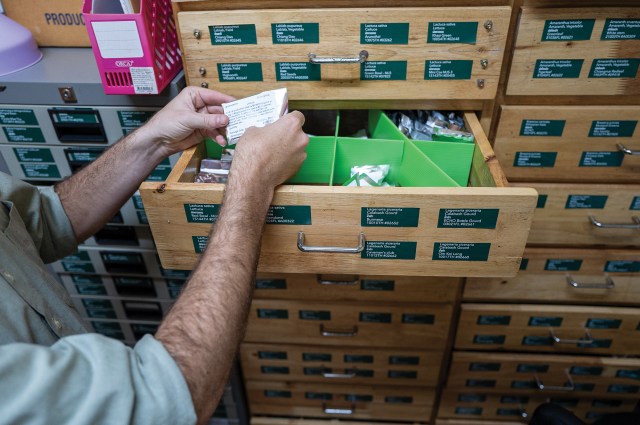
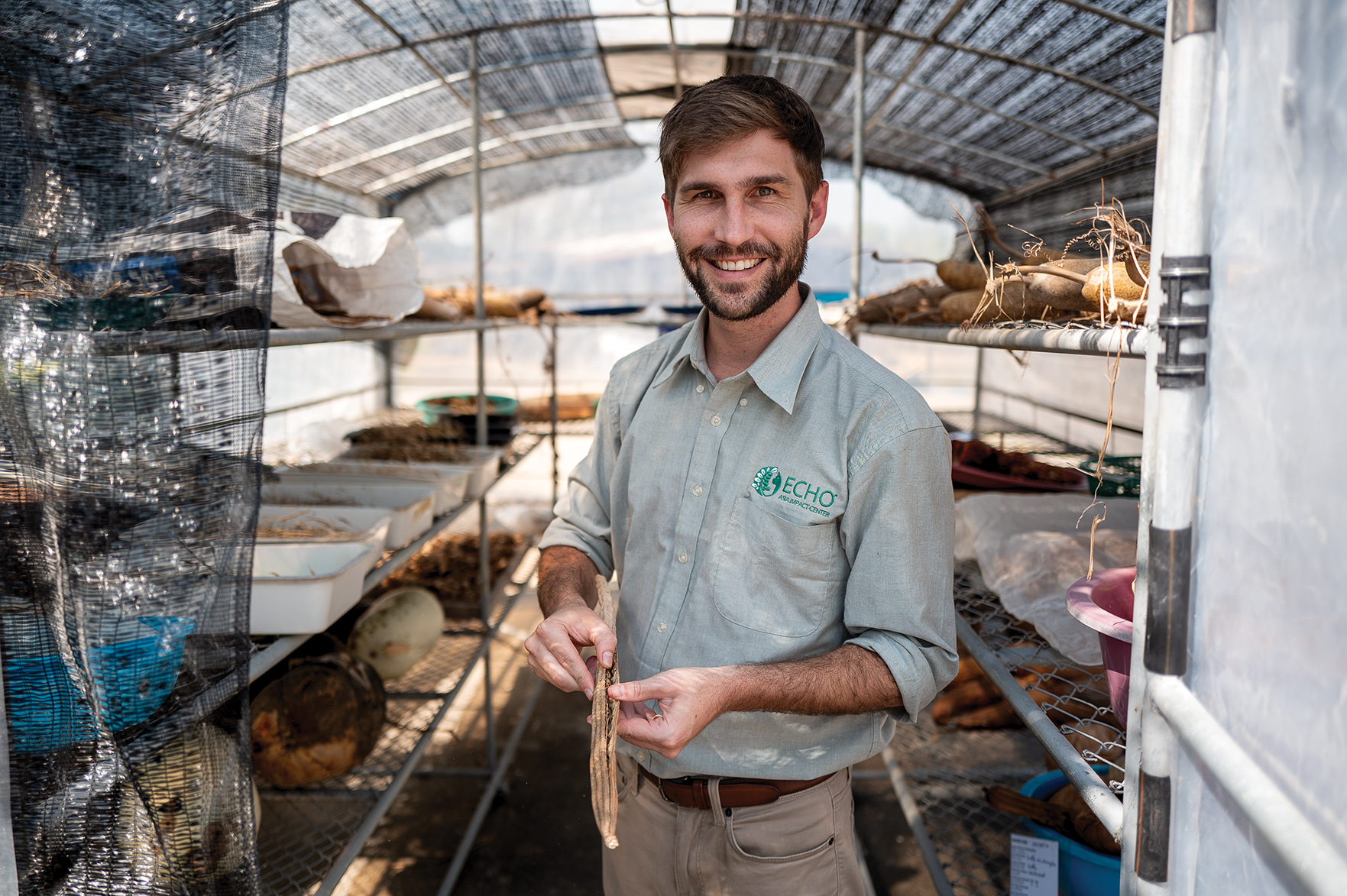
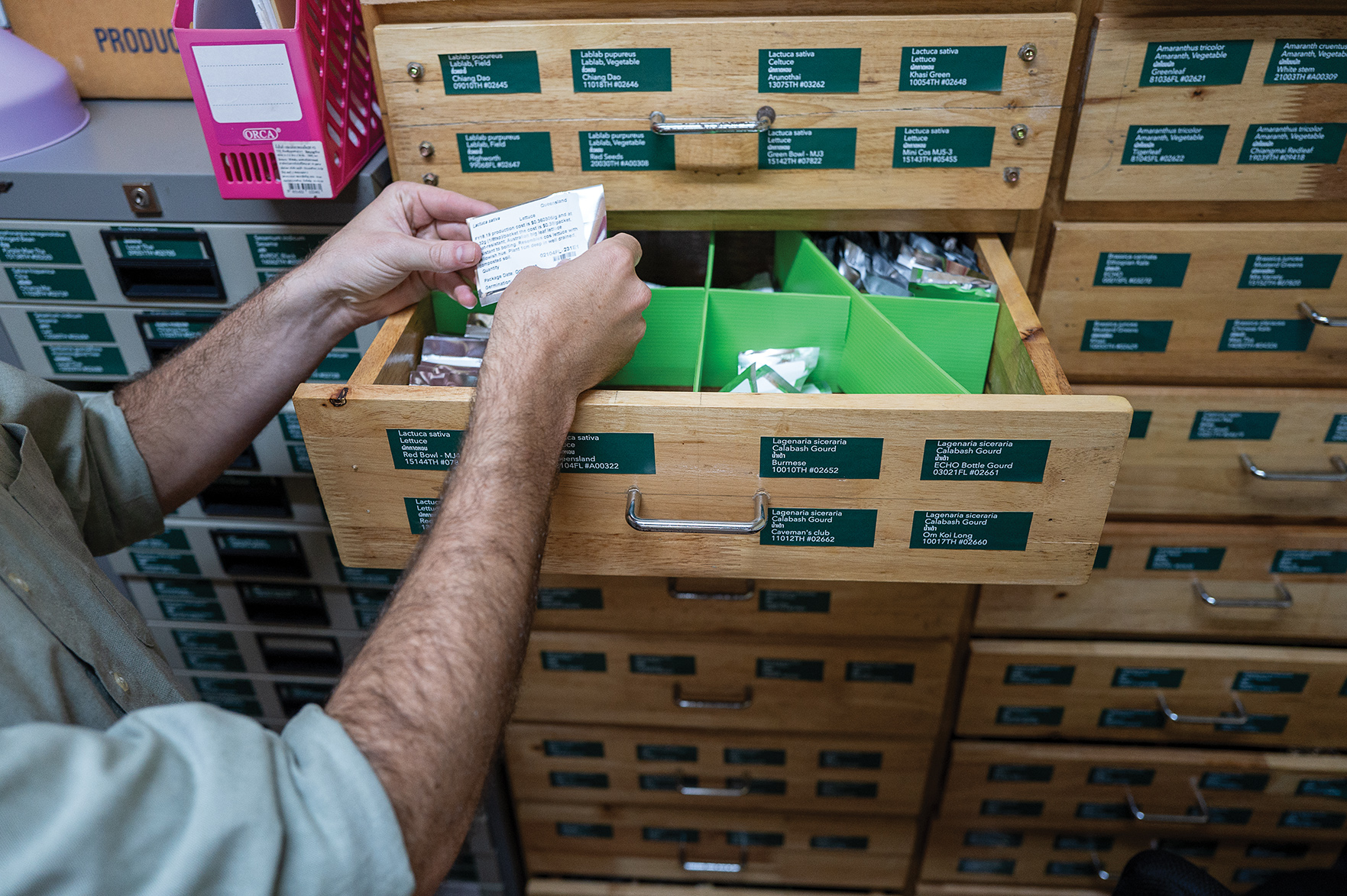
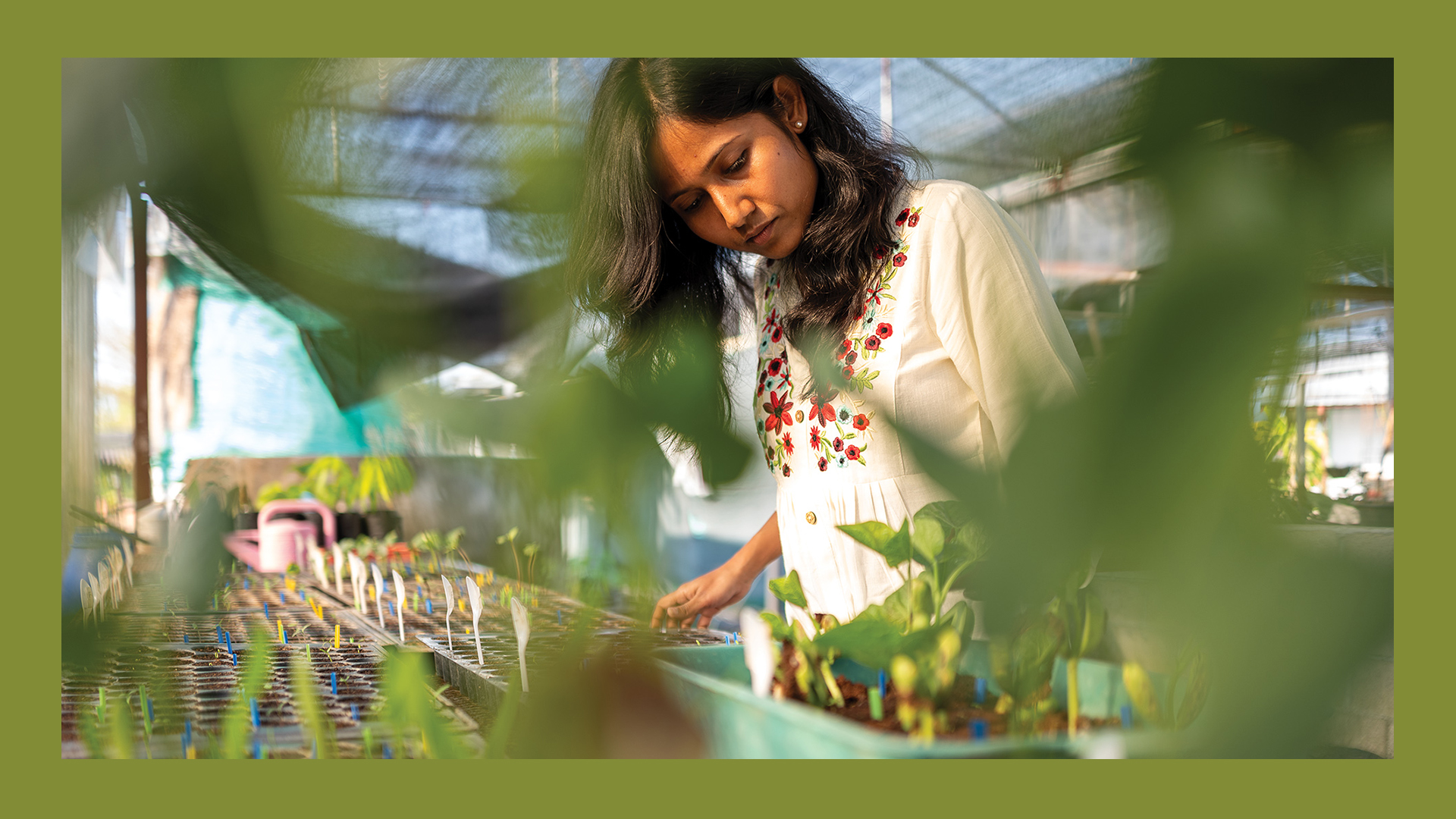
Manali Dutta, an intern at ECHO Asia Impact Center in Chiang Mai, Thailand, conducts germination tests with seeds from the seed bank.

Photo by Tim Barker

In the fight against world hunger, Patrick Trail sees weapons everywhere. A bike pump, for instance.

Farmers in the jungles of Vietnam or the floodplains of Cambodia may not have money to buy a vacuum-sealing machine, which they could use to preserve seeds and store them for future planting. So Trail, who leads the ECHO Asia Impact Center in Thailand, found ways to improvise. He took apart a bicycle pump and rebuilt it to suck air rather than blow it. Then, with a glass jar and a piece of tape, he used the pump to remove oxygen and moisture from a handful of seeds.

And just like that: dirt-cheap seed saving.

In fact, Trail and his coworkers have found that across locations and with different seed varieties, the bike pump works better than most vacuum sealers, which cost hundreds of times as much. Contrary to popular belief, “cheap can be good too,” he said.

A large majority of people in Southeast Asia live in rural areas, where agriculture is the dominant livelihood. But farming is getting more difficult. Rising energy prices and limited access to credit are hitting farmers at the same time that climate change is making temperatures and rainfall more volatile. Farming smarter, in Asia and elsewhere, is key.

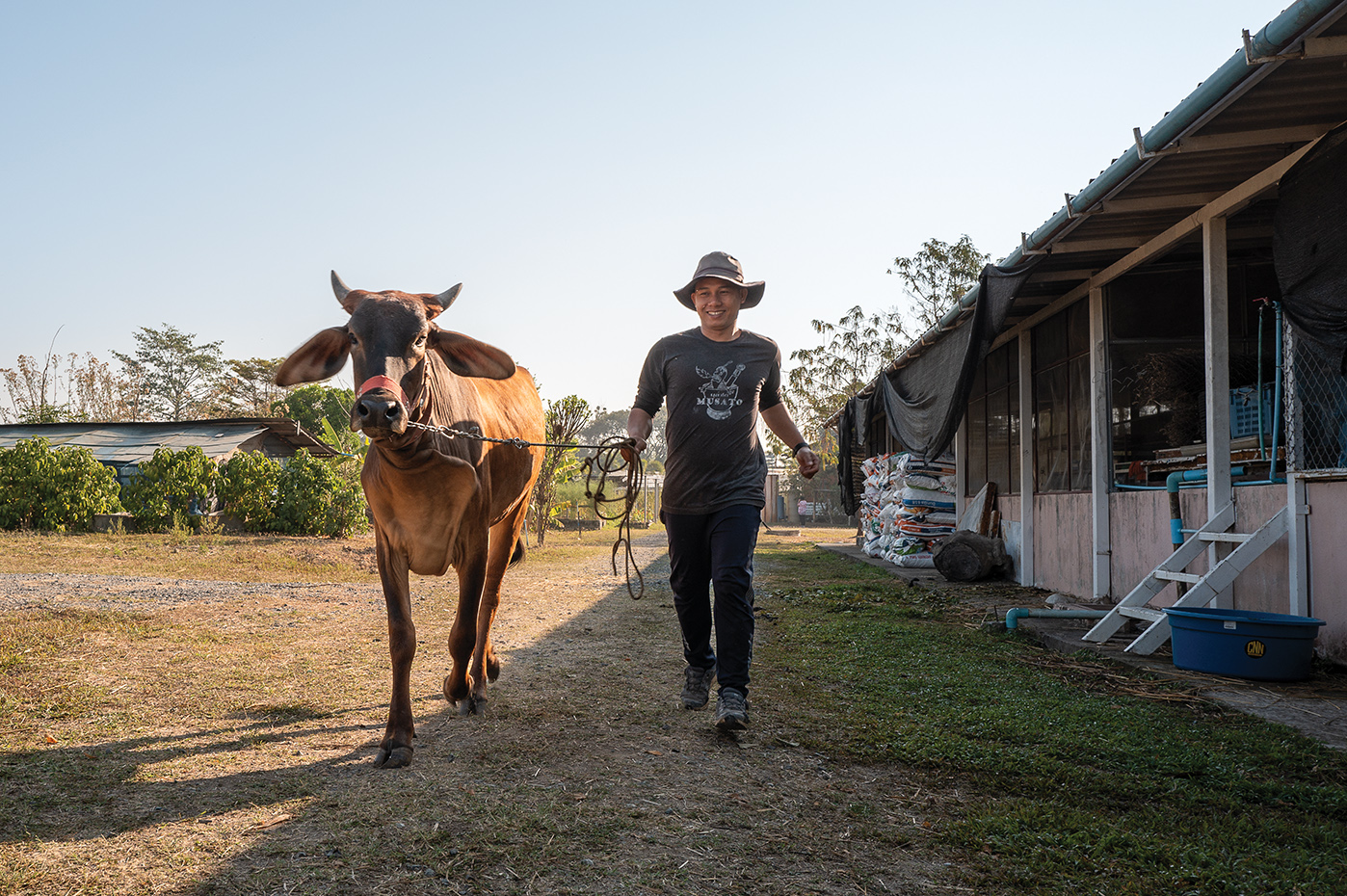
On a seven-acre farm outside of the city of Chiang Mai, staff are experimenting with ways to turn waste into resources. Some of the experiments are stunning in their simplicity: A ballooning black plastic tarp traps gases released by decomposing pig manure, and a pipe transports the gas to heat pig feed. Black soldier flies eat food scraps and leave behind their grub-like larvae, which is harvested as chicken food. 
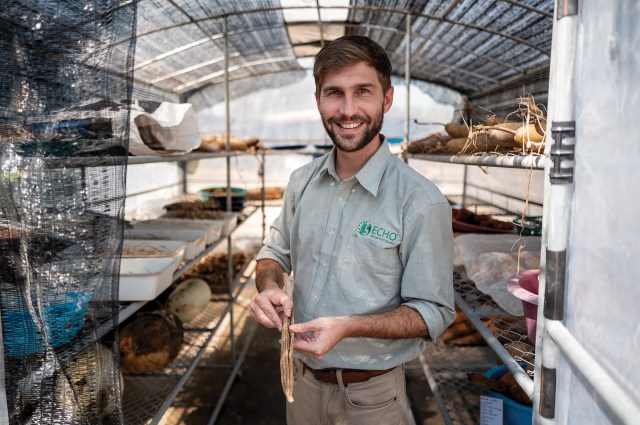
Photo by Tim Barker

Other projects are more technical: Workers tinker in the kitchen to find tasty ways to cook plants like the leafy chaya and Spanish needle, which are edible and nutritious but not generally viewed as food in Asia. They dry seeds in a cabinet using four light bulbs and a cheap computer fan. They heat wood chips and plant scraps in a metal barrel to make biochar, a charcoal used to filter water.

“You got all these resources available, but people might just not know, with a few simple techniques, how to take advantage of them,” Trail said. “We’re all about turning waste into value.”

The farm in Thailand is one of three such sites around the world operated by ECHO, a Florida-based organization that shares its knowledge, research, and seeds with missionaries, development workers, and local pastors. (The idea of using a bicycle pump for a vacuum, for example, didn’t originate with ECHO, but the organization has tested and refined it for use in specific contexts.)

ECHO and its network in Asia exist to improve small-scale farming in impoverished rural areas. In addition to research and training, ECHO maintains a seed bank for underutilized and hard-to-find seeds that thrive in Asia, hoping to ensure farmers have access to them for generations. 

For 40 years, the Christian organization has been providing resources for frontline agricultural workers. Especially as the climate warms and governments close their doors to missionaries, ECHO sees its role as increasingly important for ministry across the globe. Christians with expertise in sustainable farming are often welcomed where traditional missionaries are not. 

“There’s a growing demand for holistic approaches,” Trail said. “We’ve seen pastors come to us saying, ‘We are planting a church to share the gospel, but of course we’re going to help our neighbors with food insecurity [because] they’re hungry and their children are malnourished. Jesus met people’s physical needs, so why wouldn’t we?’”
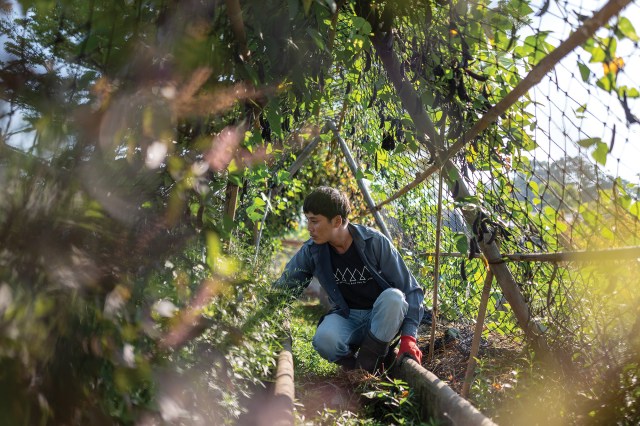
Photo by Tim Barker

ECHO’s original vision was small. In the 1970s, American businessman Richard Dugger went on a mission trip to Haiti and returned home to Indianapolis overwhelmed by the poverty and need he saw. He founded the Educational Concerns for Haiti Organization (ECHO) to find long-term solutions to food scarcity in Haiti. 

In 1981, Martin Price became ECHO’s first executive director and broadened the organization’s focus from Haiti to the entire world. He emphasized agricultural research, training, and providing seeds for groups already in the field: agricultural missionaries, Peace Corps officers, and Christian nonprofit groups like World Vision. The H in ECHO was switched to stand for “hunger.”

During Martin’s tenure, missionaries sent him questions by mail, and he responded with hand-typed suggestions, according to Abram Bicksler, the group’s president and CEO today. Martin kept in touch with a growing network through long-distance calls and trips to visit projects. 

“Back in the day before Google, we served as the Google for sustainable agriculture for the developing world,” Bicksler said. “Even to this day we get a lot of requests; it’s just moved online.” 

ECHO purchased a 7.5-acre demonstration farm in Fort Myers, Florida, in 1991, where researchers experiment with best practices. ECHO began its first seed bank there. Today the farm is 57 acres with training facilities, administrative buildings, and a bookstore. About 10,000 visitors tour the farm each year.

The advent of the internet allowed ECHO to grow its global agricultural network. In the mid-1990s, ECHO began its first international conference, now held annually. Its ranks swelled with not only missionaries, but also indigenous pastors, aid and development workers, and environmental academics. Roughly a quarter of ECHO’s network today are non-Christian organizations.

“We invite anyone to come to our conference, but really we see this as a gospel issue,” Bicksler said. “Our example is Jesus, who ministered through holistic, spiritual, and social healing.” 
Through an online community, ECHO members find resources and exchange knowledge. In one recent thread, someone from Kenya asked for suggestions on dealing with drought. Another member recommended water harvesting trenches. A few weeks later the Kenyan farmer posted a photo of a water pool she’d captured using his technique.

ECHO opened its first global farm in Chiang Mai in 2009. In the following years, it opened farms in Tanzania and Burkina Faso to contextualize the organization’s practices and ideas for Africa. Like the farm in Florida, the overseas centers are repositories of information and laboratories for best practices.

Along the way, ECHO’s work in the development community has led some people to Jesus. When Manali Dutta from Calcutta, India, arrived at the ECHO conference last October, she immediately felt drawn to the people at ECHO. “I felt like I’m one of them, like a part of the family, even though I just met them,” she said. 

She grew up in a Hindu home but never felt connected to her family’s faith. Instead, Dutta always sensed someone was protecting her, like hands waiting to catch her if she fell. When she shared this with a conference attendee, he told her: “Do you know what, you are actually talking about the Bible.”

As they discussed the gospel, Dutta felt like she finally found what she had been looking for. 

Dutta traveled to the Chiang Mai farm for a three-month internship, where she cared for the farm and the seeds, putting to use her master’s degree in zoology and at the same time learning more about her new faith. “Wow, it feels so joyful, it gives so much inner peace,” Dutta said. “I feel like I’m not alone, I know God is always there for me.” 


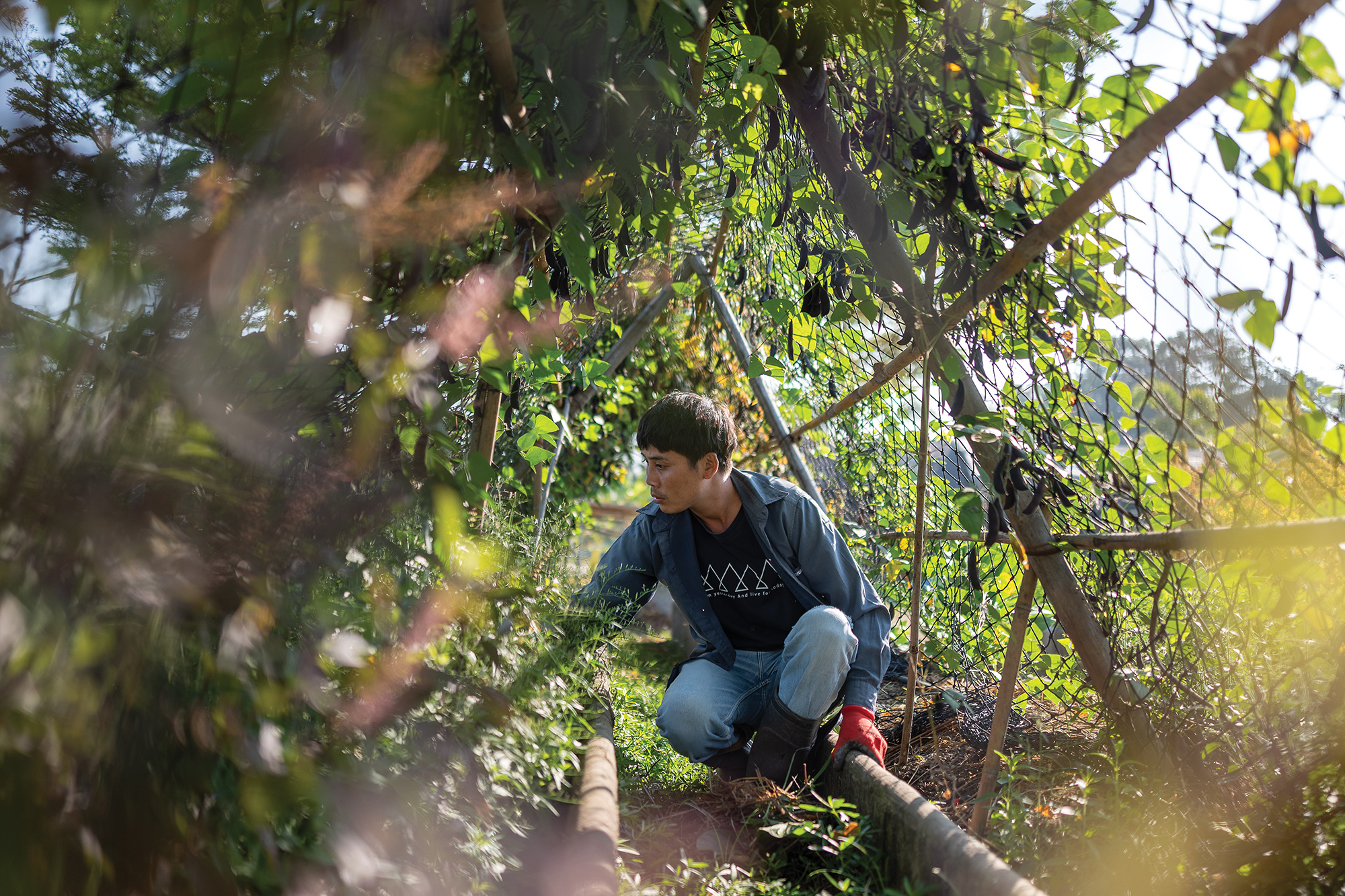
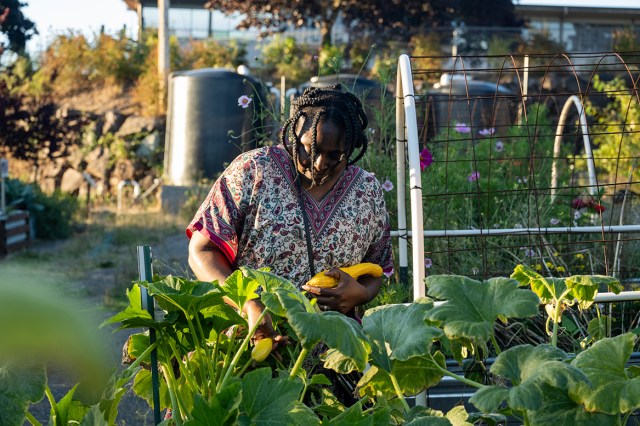
Under the sweltering mid-February sun, Trail walks me through row upon row of plants growing in raised beds—stalks of quinoa and sesame, green jack bean and tobacco (for natural pest control), brilliant red amaranth and drooping calabash gourds. Some plants have to be protected by strips of shade cloth. Others are watered by plastic water jugs that workers peppered with holes and buried in the soil, filling them with water to drip-feed certain beds. 

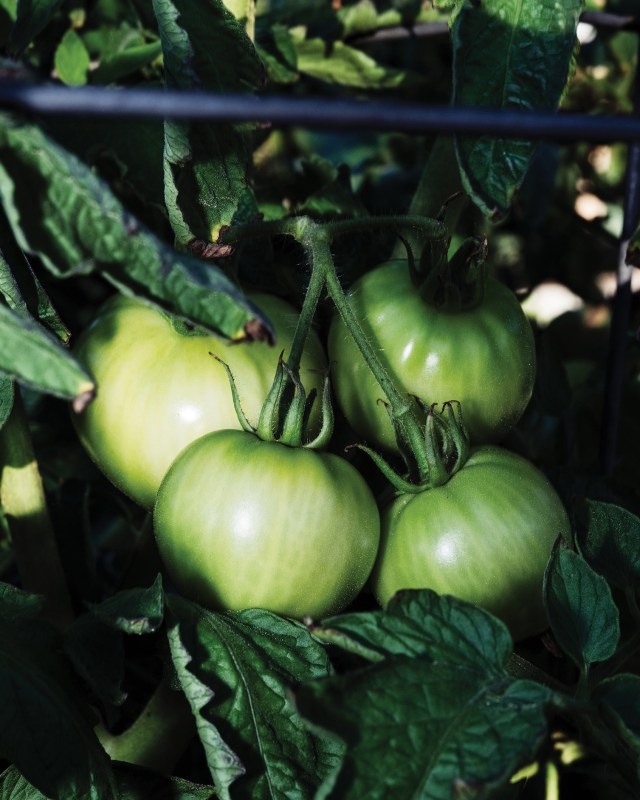
Trail points to green tomatoes hanging heavy on the vine, noting that, while the fruit would be ready to harvest in two weeks, he plans to keep them on the vine another six. Tomatoes left to rot on the vine will leave mature seeds—perfect for collecting and saving in the seed bank. 

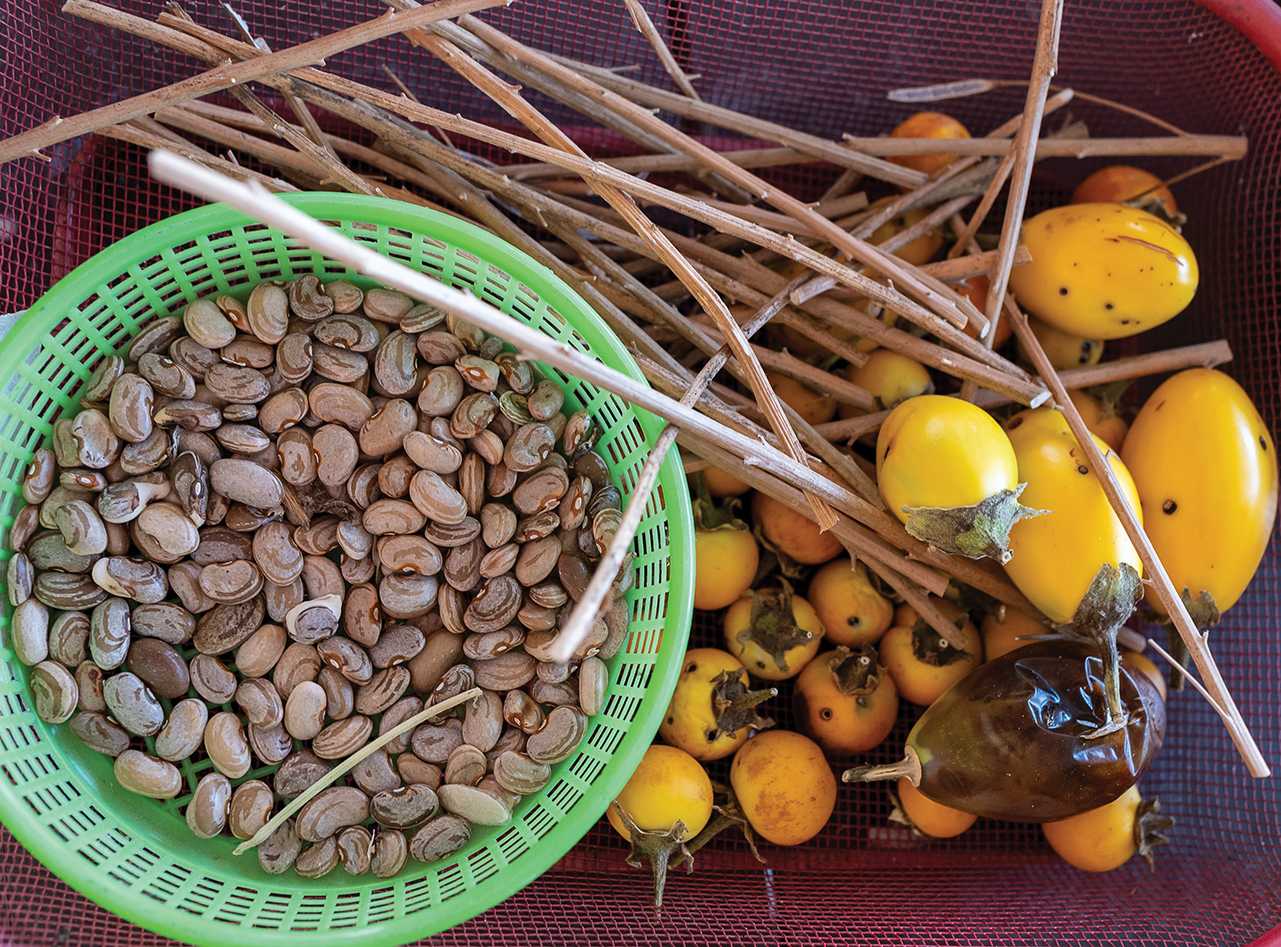
Seed saving works like this: ECHO staff cut up the overripe tomatoes, scooping out the seeds and soaking them overnight. The seeds ferment, breaking down the mucilage, a gelatin-like protective coating. Workers rub away that outer pulp with a screen, then dry the seeds in the sun or an open-air rack. Dry seeds are vacuum sealed and stored in a chilled, insulated seed bank. 

Every seed requires different techniques: some plants, like lettuce, produce thousands of seeds. Others, like jack bean, only have about eight per pod. 

The seed bank is the centerpiece of the Chiang Mai farm. It houses around 200 varieties of seeds, most of which produce food for humans or livestock or can be used as cover crops or natural pesticides. ECHO collects and exchanges seeds with local farmers, as well as with partners across ECHO’s networks, said Rattakarn Arttawutikun, the farm’s agricultural operations manager. 

ECHO also trains its local partners to save and store seeds, because only local communities can ultimately ensure the stability of future crops. (And ultimately, sustainable farming practices are only useful if communities choose to adopt them.) Country-specific seed banks are becoming more important, Trail says, as Southeast Asian countries tighten restrictions on bringing seeds across borders.

“If [farmers] know how to save, how to clean well, how to dry well, they will be able to save the seed longer,” Arttawutikun said. The seeds in ECHO’s seed bank last between three and ten years. “With our technique, it’s available a whole life,” she said. So “the next generation, they don’t have to worry about that.”
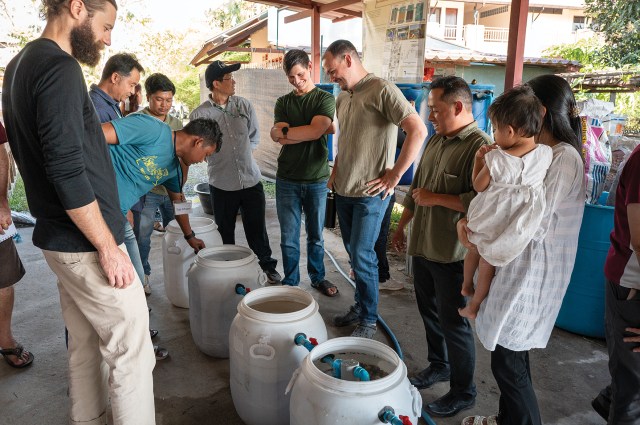
The biggest barrier to creating seed banks in impoverished areas is cost. In humid, hot climates, it’s difficult to keep seeds cool and dry. ECHO Asia’s seed bank occupies an insulated, climate-controlled room, chilled by an air conditioner to a steady 50 degrees Fahrenheit. Inside, shelves are lined with plastic bins noting the seed names and filled with vacuum-sealed bags of seeds. Should the electricity go out, the farm has a backup generator. And should a fire or other disaster destroy the seed bank, there are more seeds in a deep freezer. Every year, ECHO staff does germination tests to make sure seeds remain viable. 

ECHO’s setup, however, is too expensive for farmers in places like rural Laos. So ECHO experiments with lower-cost storage designs, such as structures built from earth-filled bags and insulated with sawdust or rice hulls to keep heat and humidity out. 

To help disseminate this kind of knowledge, ECHO partners with local pastors who are farmers themselves, who have congregations made up of farmers, or who are trying to reach out to farmers. The thinking is that communities benefit by learning about nutritious new crops or natural ways to control pests, and pastors can build trust by helping families improve their livelihood.

By using the Chiang Mai farm as a resource center, “We have this opportunity to take on the risk,” Trail said. “Farmers just don’t have much margin. It’s risky to try anything new. So one of the benefits is that [we can] just try and fail and try and fail until we find things that work.”

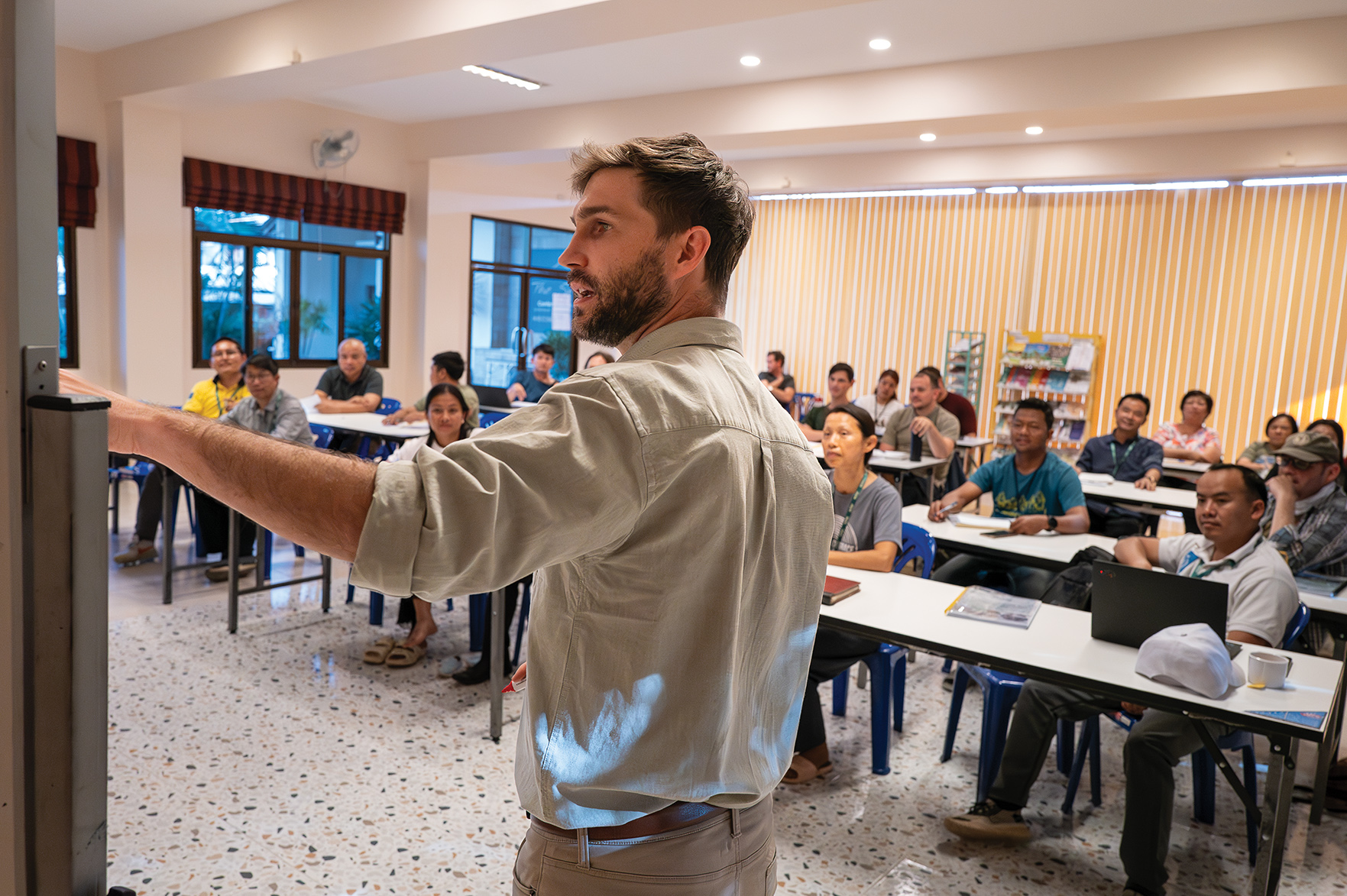
On the day I visited ECHO farm in early 2024, 25 people from eight countries—including Thailand, Myanmar, India, and the United States—were finishing up a weeklong course on tropical agriculture and development. Most of the participants had little to no farming background. 

One worked at a children’s home in Myanmar and had come to learn how to build a garden to feed the children. Another was a missionary who grew up on a farm in Pennsylvania and planned to do community development work in northern Laos. “We’re getting really excited about [taking] a holistic approach,” he said, requesting his name not be used because of the Lao government’s restrictions on missionaries. “I believe the community has resources and we want to help people value that and use that.”

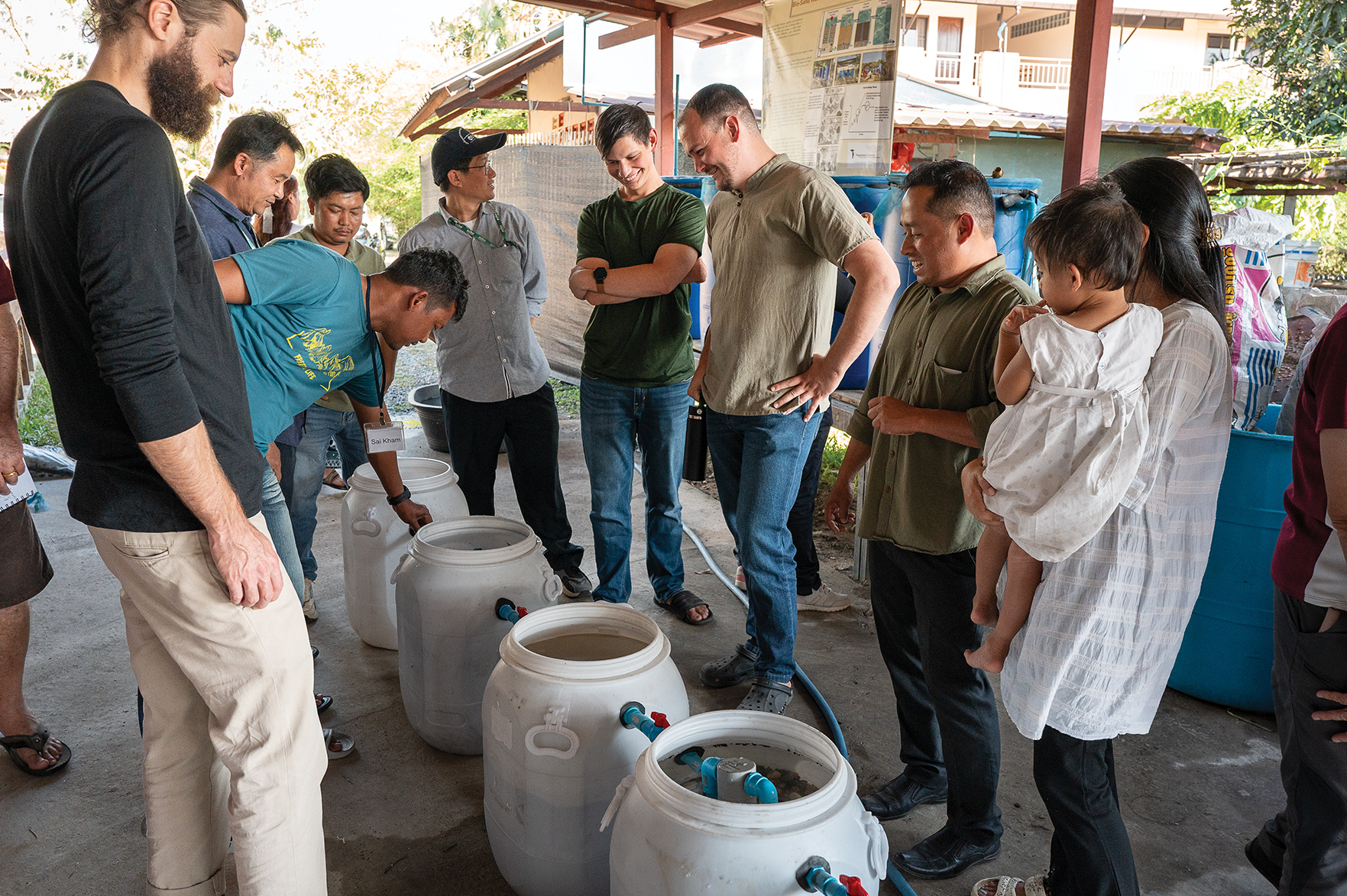
On the last afternoon of the course, students sat in a classroom learning about four-barrel water filtration systems. The training to build these systems is ECHO Asia’s most popular class.

After Myanmar’s coup in 2021, many of ECHO’s partners working with displaced people along the Thailand-Myanmar border urgently needed low-cost water filtration. Trail had heard about a four-barrel system that only required plastic trash cans, pipes, rocks, charcoal, and sand. The team did some research and tried to build one. 

Once they found a design that worked, they shared it. They held workshops on how to build the system. Now dozens of these water filtration systems—which fit well in a school or a church—are in use. 

Participants Albert “Jelly” Molsom and her husband, Abel Debbarma, said they hope to take what they learn in the course to a Christian retreat center they help run in southeastern India. They want to build a demonstration farm where they can grow food to feed guests, and they want to train locals to set up backyard gardens and raise small livestock. Molsom’s parents are farmers, but “everything is new for us,” she said, gesturing to the water filtration system. 

A Singaporean missionary to Chiang Mai named Philip, who requested his last name not be used, came to the course with three colleagues. His specialty is biblical counseling, but he also wanted to incorporate some community development into his work.

The Thai church Philip partners with told him it had a training center 45 minutes outside the city with plenty of land to build a farm. The only problem: Philip is from urban Singapore, with very little experience in agriculture. “We needed something more systematic, and this course fit,” he said. “It’s better than learning from YouTube or whatever source. Now we have a proper way to learn.”

Philip said the training taught him not just what to do, but why. “If we have a good harvest, we share it with the community,” he said. “If we have good seeds, we can share it with the community. It helps to build trust and build relationships and that presents the opportunity to share the gospel.” 

Peter Jan de Vries, an environmental consultant for the Christian nonprofit SIL International, came to ECHO’s farm to network and learn more about the challenges facing farmers in the region. After the training, he traveled to Indonesia to teach Christians how the Bible relates to farming and to demonstrate building the water filtration system. 

What ECHO is doing, de Vries said, “is the practical implementation of the mustard seed—that you have to start with the small farmers. You’re not doing it to immediately change the world, but you start changing [it] through people who have no one else to take care of them.” 

He added: “And it really supports the growth of God’s kingdom because, if you help people where they are, where their challenges are, then they are also very open. [They wonder] Hey, why are you doing this instead of just selling a product? You’re trying to help us. That is the testimony in itself.”

Angela Lu Fulton is CT’s Southeast Asia editor. She reported this story from Chiang Mai, Thailand.

Church Life

Stealing Death’s Sting

As China’s population ages, few receive end-of-life care. Christians are helping the elderly face death with hope.

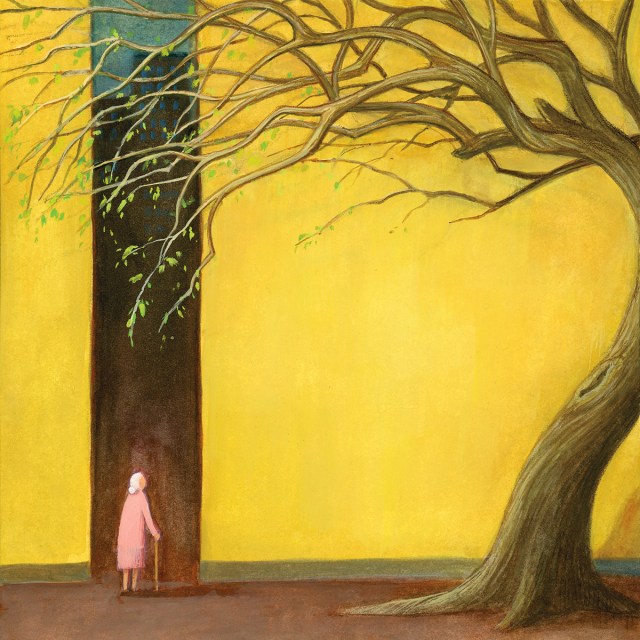
Illustration by Xinyue Chen

Part I

When a 70-year-old man infected with anthrax bacteria asked church members to visit him, Xi Feng Zhao joined, even though for the past week he’d suffered his own bout of nerve pain with sleepless nights. He and the other church caregivers arrived to find a man wracked with pain. They had to cover their noses. Some vomited because of the foul odor. 

Zhao, known to many as Brother Faithful, didn’t hesitate to go to the patient’s bed. He was overcome to realize that the pain he had suffered for the past seven days and nights was preparing him to care for the person in front of him.

The man with anthrax was the director of the anticorruption bureau in Harbin, an industrial city of nearly 10 million people in China’s northeast. He had a reputation for strict integrity and impartiality. He did not know how he contracted the disease but, after he fell ill, many Christian lay people and pastors visited him and urged him to come to faith in Christ. But when sin was mentioned, he could not admit he was a sinner, not someone like those he had caught in his work.

But the day Zhao visited, something broke. The director surrendered to God’s holiness and sovereignty.

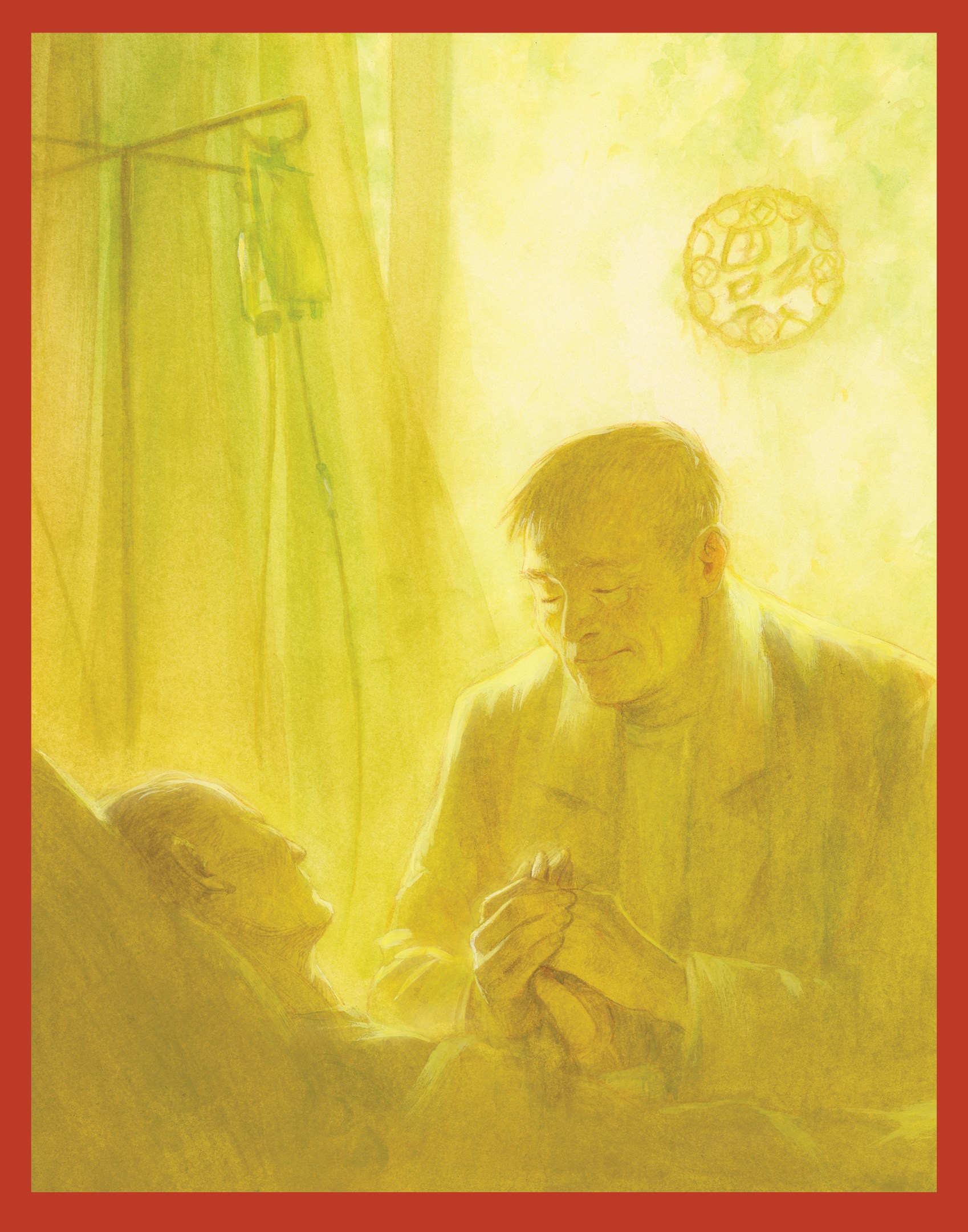
The two men held hands and shared each other’s pain. Zhao started to sing hymns. The man cried. More surprising, he started to pray and to confess that he was a sinner needing God’s forgiveness. One half of his face, festering from infection, grew more distorted as he cried, yet the other half could not hide the joy of release. Zhao held tight his hand and prayed for him. Both men were filled with peace and joy, even as they shared the man’s highly contagious tears and saliva.

Within a week, the director was dead.

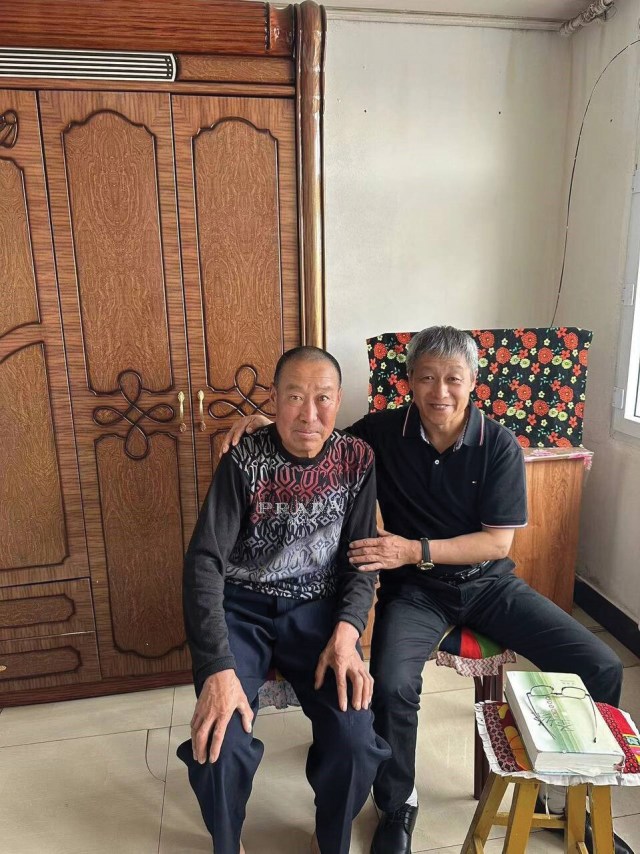
Photos courtesy of Brother Faithful and Pastor Li

In China, end-of-life care is still developing, and spiritual care is often left out. Nurses and doctors who see the hospital as a field of physical healing may fail to see that a patient’s spiritual needs cannot be met by healing the body.

Experts say China’s once-surging population is aging and shrinking. By mid-century it will have up to 200 million fewer people, while the median age will climb from 38 years old to 50. China also has the world’s highest number of patients with terminal cancer, with 6,000 deaths per day from cancer, according to the 2020 World Cancer Report.

At the same time, the current trend of one-man authoritarian rule makes reforms to health care systems challenging and elder care a low priority for most officials. Those hardships are acute in China’s rural areas, where the elderly receive pensions that are just a fraction of what the elderly in urban areas receive.

Enter Christian groups like Zhao’s and the Golden Apple Life Care Team, which began in 2017 as a ministry to China’s rapidly aging population and to the critically ill. 

The deepest problem triggered by illness, according to Golden Apple founder Pastor Li, is the loss of the value and meaning of life. “These patients have psychological anxiety and despair in addition to physical pain. Only when a person has a correct understanding of life can he see the value and meaning of life and thus complete his farewell on earth calmly and peacefully. Only when he is filled with love can he have hope instead of despair.” 

As the founder of the Golden Apple Life Care Team, Li observed through his years of exploration and practice that for a seriously ill patient, medical care must be combined with spiritual care for healing to happen. The team’s track record has drawn attention from wider clinical circles. 

In 2018, Liu Jin, a Beijing-based psychological counselor with a PhD in sociology, grew frustrated as she visited critically ill patients. Often she found herself wrapped up in their despair, dragged with them to the edge of death’s abyss. She joined her teammates on patient visits in silence, only to return to her office and cry. In the midst of this helplessness and pain, she began to understand that God had brought her into critical care ministry not to use her talents and abilities, but to fulfill her own life.

Liu says she could not face the truth of death if God had not led her to a wide place and given her the power of the Holy Spirit. She also learned from Li and his Golden Apple care team about the simple gift of care.  

“Are you all right?” Li would gently ask, drawing near to a patient. And the patients’ faces, which were gray and stiff, blossomed into expression, some eyes red with tears. To them, Li is a messenger of love.

With such examples, Liu said, “God has given me a true knowledge of life and death through serving the flesh that is weak and broken . … My life grows in patience and tolerance, and I see more and more the meaning and value of service itself.” 


Zhao, for all his decades of critical care ministry, has never received formal theological training or a day’s salary from the work. Though he dropped out of elementary school, he seized the opportunities created by China’s economic reforms and opening in the 1990s to become a wealthy businessman. But he squandered his money with eating, drinking, gambling, and chasing women, he says. He was a “society big brother” with bodyguards in front and behind him during the day—but at night he couldn’t sleep because of the emptiness in his heart.

During those years his Christian mother and sister prayed for him. He found a church where a man greeted him with, “Brother, who are you looking for?” Brother Faithful was immediately in tears, discovering he believed in the gospel. That day he went from being a “big brother” in society to a brother in Christ. 

He began reading the Bible with thirst and hunger every day. But the turn of his life was greeted by cursing from his wife and abandonment by his friends. That experience helps him, he says, to stand firm in care ministry when doctors and nurses want to throw him out and patients are indifferent.

“Where the gospel is to break through, there are bound to be forces of darkness that stand in the way. God allows persecution to come in order that our faith, having been tried, may truly persist,” Faithful says. 

Scolded on a first visit to see a patient, he has learned to come back the next day with a meal he has prepared to share. 

Photos courtesy of Brother Faithful and Pastor Li

One patient he met this way was Xie Zishan, an executive at a large business group in one of China’s three northeastern provinces. Hospitalized with leukemia and suffering from high fever, Xie maintained a violent temperament. Over and over, he forced doctors, nurses, and Zhao out of the ward. 

One day, Xie had a high fever that wouldn’t go away. His joints hurt and he was bleeding in many places. His wife said to Zhao, “Pray for him, and if his fever goes down, our whole family will believe in your God.” 

Zhao replied, “I prayed and asked God to change his life, and whether the fever goes down or not, God is true and righteous.”

Xie’s fever did go down, and he trusted Jesus then and there. 

Zhao never tells patients they will be healed if they believe in the Lord, but he helps them through prayer to see that they are sinners needing the Savior’s forgiveness and cleansing. It helps that he, along with others in his church, cook and serve meals for the sick.


Through Golden Apple’s ministry, views on life and death are being reshaped. Confucius said, “If you don’t know life, how can you know death?” Yet facing death directly is not a strength of Chinese culture today, according to Li.

Traditionally, Confucianism and Taoism have seen death as a natural part of life, like the change of seasons alternating with the gathering and dissipation of qi (the rhythmic energy that constitutes all things). Morality and meditation pave the way to an afterlife. 

But modern Chinese are greatly influenced by atheism and materialism. For most people, death is not a familiar, controlled, and necessary process of life, but a mysterious and terrifying black hole that destroys all meaning and hope.

“We used to think of the body as the whole of life,” says Li, “so when the body is coming to an end, we are scared. But if you know that the body is just a vehicle, you can understand that though outwardly we are wasting away, yet inwardly we are being renewed day by day. When your inside is satisfied with love, you will find that love transcends time and space, and perfect love drives out fear.”

Li’s Golden Apple care team, working with Liu Jin and caregivers like Zhao, has developed a curriculum around life and death as part of its innovative approach to elder care that has helped thousands in their final days. The course, “Life Care for the Critically Ill,” has become popular in wider Chinese circles. The team is helping churches in Beijing, Shanghai, Guangdong, and Shandong to establish their own hospital ministry teams.

As China has tightened religious restrictions, some large local churches have been returning to more “underground” methods, like meeting in small, in-home groups. As many house churches begin to look for new ways to reach out to their communities, China’s elderly and critically ill populations are the kind of groups that are easy to overlook but in urgent need of the gospel message.

Li and Zhao see the church as precisely the right group to help China’s aging population see that hope in this life is anchored in hope for the next. 

“After understanding what life is, when going through their own difficulties, they will gradually realize that things are not so miserable after the fear is removed. It is then that they can make the right judgment and choice, face death with no fear, and live life with no regret,” Li said. 

Illustration by Xinyue Chen

Part II

“Auntie” Niu, at over 70 years old, was reluctant to socialize when she moved in with her son in Beijing several years ago. Instead, she made a hobby of buying health care products, taking all kinds of fraudulent health care telemarketing calls. When her son told her to avoid such schemes, she grew angry and sullen. 

Niu was widowed at an early age. She worked hard to bring up a son and a daughter, but her daughter committed suicide in her 20s. Her son, too, was depressed. Had he not met the Lord, Niu says, both her children might be dead. Niu was known as a strong person, but she grew to feel that fate had abandoned her.

Her son thought it might help Auntie Niu to participate in something he’d heard about called the Life Storybook program, where she could work with a dozen other seniors to do crafts and games and participate in sessions where she would craft stories from her own experiences. In these storytelling workshops she could sort out her life, from birth to old age, helping her understand the struggles and recapture the good memories.

The program is an innovation of the Golden Apple Life Care Team, a ministry that aims to reach older Chinese people with physical and spiritual care.

Niu gave the Life Storybook group a try. But she wanted to quit after only a few lessons. For her, family memories were full of pain and unpleasantness.

Her perspective gradually shifted, however, with the guidance of mentors and in the company of other group members. Niu recalled that as a rural midwife, she had saved the lives of many unborn babies and newborns in the countryside. Time after time, her perseverance had brought joy to mothers after the pain of difficult deliveries. Niu realized that others in her group—both the elderly and the younger participants who accompanied them—were attentive to her stories. Soon she grew confident enough to share more. Her memories of saving babies became a comfort in a life that seemed to have lost purpose.

At the end of 12 “storybook sessions,” Niu became more actively involved in the program. She volunteered to promote it. She participated a second time. She testified in the class that “looking back at my life again, I don’t think I have any regrets anymore.”

“There are many Christian teams that provide what the elderly need, but we want to help them enter the depths of their own souls and truly know life, through our companionship and guided by our professional skills,” said Liu Jin, a Christian psychologist and counselor in Beijing who helped to develop the curriculum.

“The renewal of life is the renewal in the soul, and we can renew it every day if we want to. The same is true of the elderly, and the power of their life renewal will amaze people,” Liu said.

Combating depression, which is pervasive in China’s senior community, is one of the program’s major goals. Depression in the elderly can lead to rapid physical decline, pseudo-dementia, and even self-harm and suicidal thoughts. 

“The elderly, like other psychologically vulnerable groups, suffer from a deep sense of loneliness. But behind the loneliness are two deeper issues. One is the fear of death. The other is the loss of a sense of worth that comes from the loss of control,” Liu said. Physical incapacity exacerbates feelings of loss, which can lead to the collapse of values.

“Older people are more likely to avoid relationships than younger people and become trapped in self-imposed isolation,” the psychologist said.

More and more churches and Christian teams across China have become involved in senior care ministries in recent years, reaching out to help their communities at a time when the church finds itself under more state scrutiny. According to Golden Apple, the Life Storybook program has also found its way into non-Christian social care institutions, where seniors from different backgrounds of various religions participate in the courses.

The elderly in China, one Chinese pastor told CT, “have an important place in missions.”

Eva Chou is a journalist living in Shanghai. 

Church Life

Feast of Eden

Closed to outsiders and plagued by addiction, a Vietnam village tuned its radios to a California preacher. It has bloomed into a showcase for Hmong culture and an unlikely tourist destination.

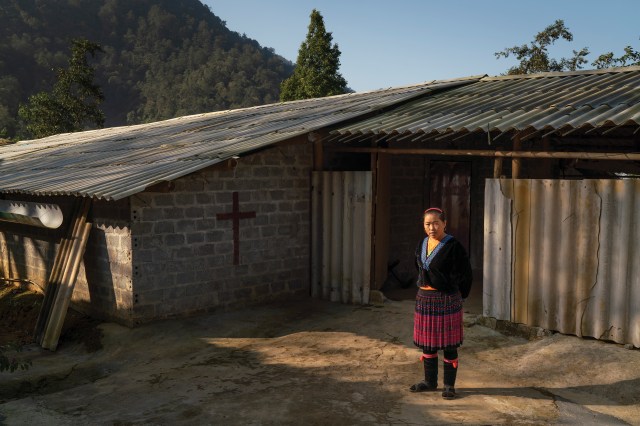
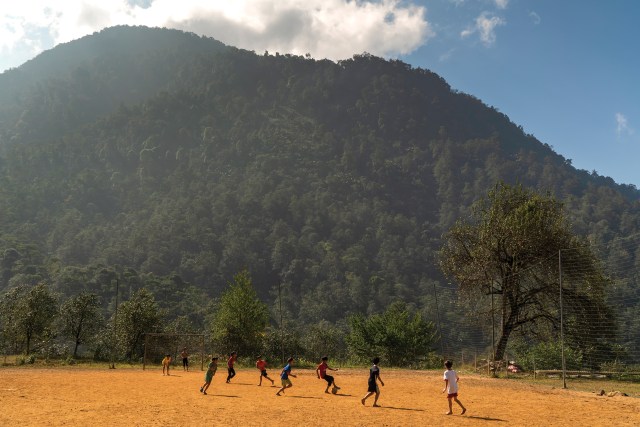
Photo by Tim Barker

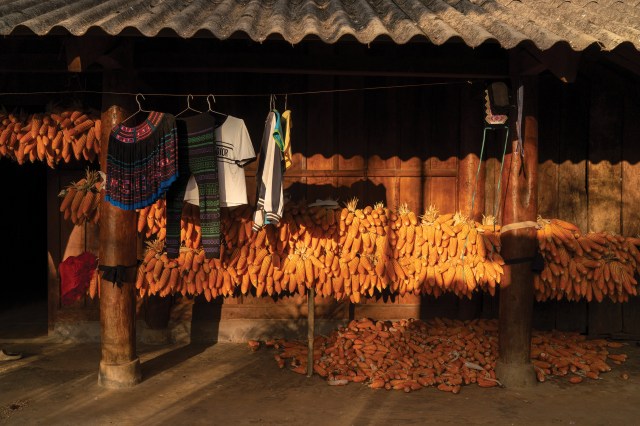
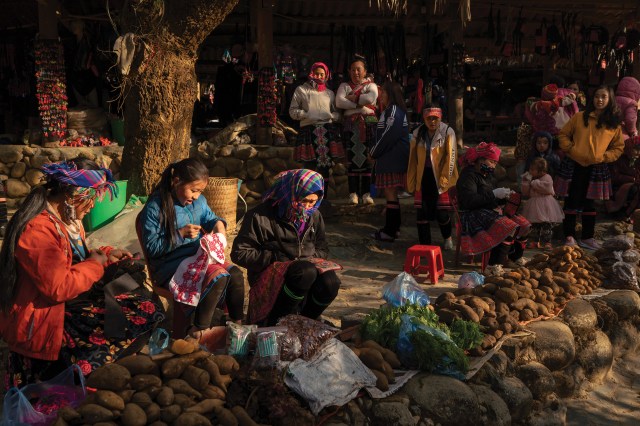
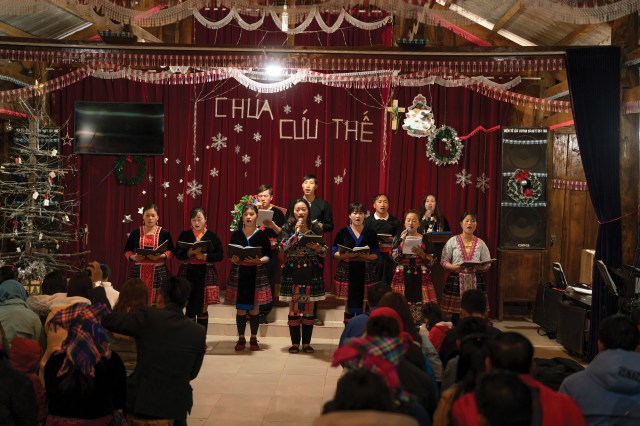
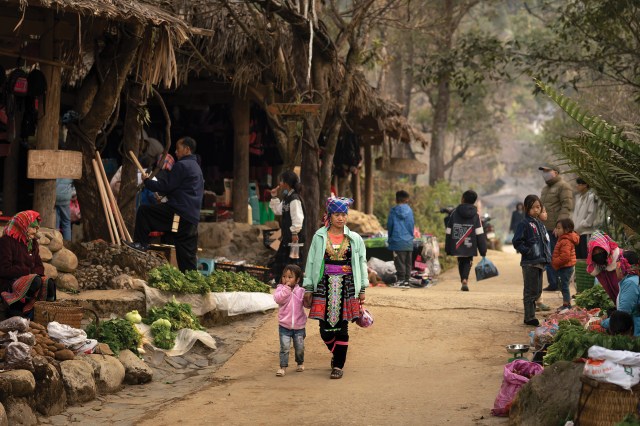
On a chilly Saturday morning, Hmong women sit in the sun and chat while embroidering and selling their harvest of jicama. In the marketplace behind them, a woman uses chopsticks to flip balls of dough in sizzling oil. A man displays handmade knives atop a wooden box. 

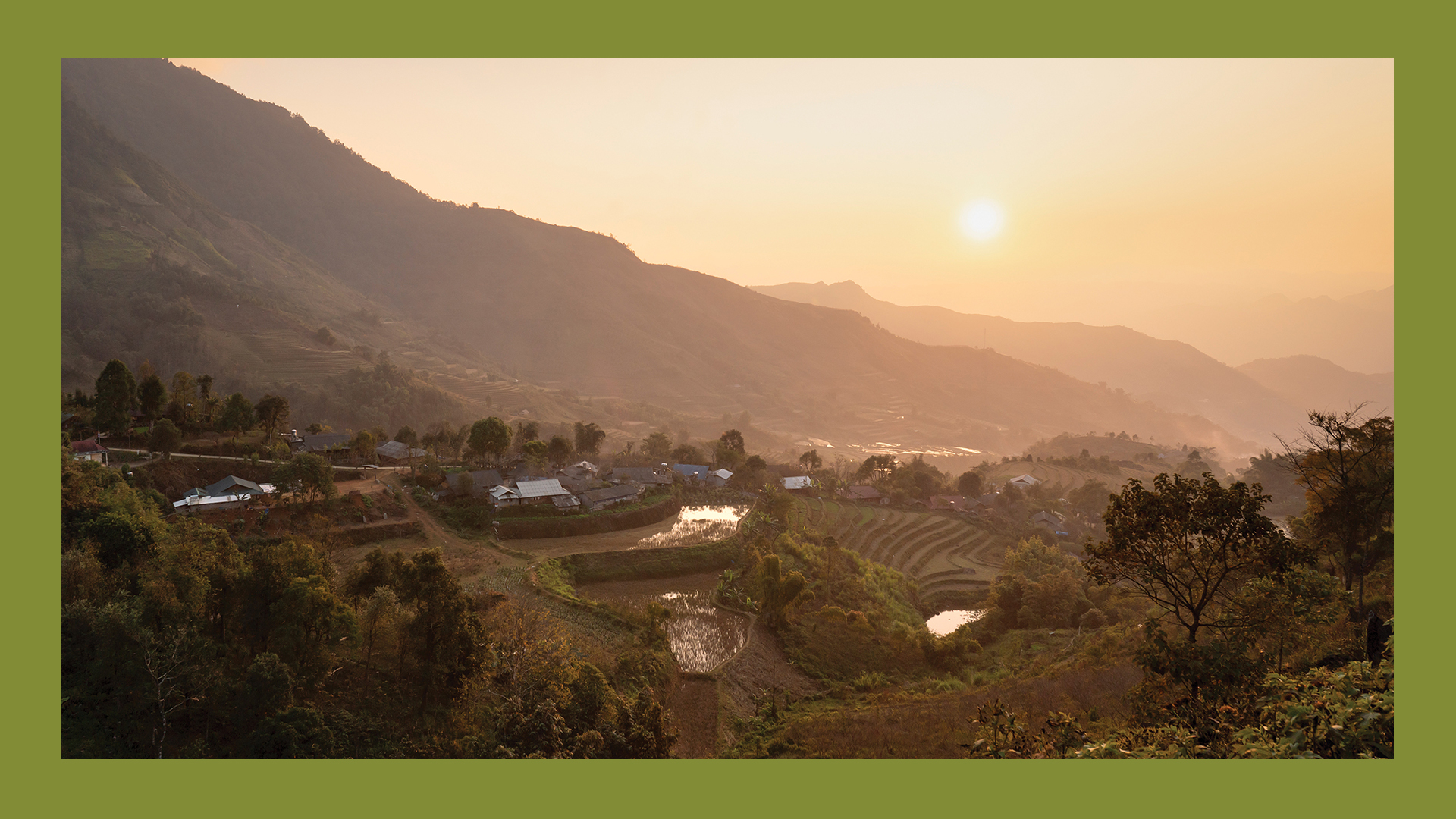
The Hmong village of Sin Suoi Ho, home to more than 100 families in the highlands of northern Vietnam, draws weekend shoppers from nearby Hmong and Dao villages, as well as tourists from the capital of Hanoi. Until just recently, getting here required an 8-hour, 250-mile trip past terraced rice paddies and up winding, teeth-chattering dirt roads that reach high into the mountains. 

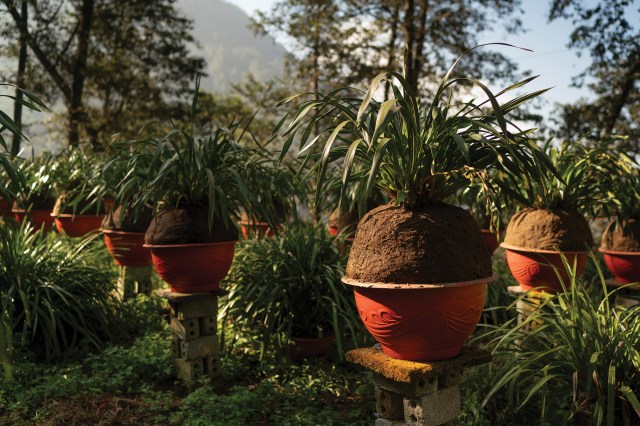
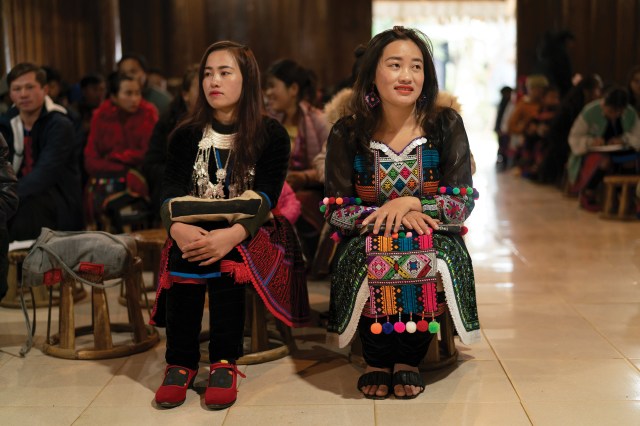
The shoppers browse stalls filled with colorful hats, bags, and clothing. They examine pillowcases covered with traditional Hmong embroidery. They snap selfies in Hmong dresses and giggle at elaborate silver headdresses. Beyond the market, visitors stroll along a lane lined with potted orchids for sale. They eye young men lashing peach tree branches to motorbikes (the budding limbs will go to another market to be sold as decorations for Tet, Vietnam’s lunar new year celebration).

The tourists come not only for the wares but also to partake in a story of transformation—a story of economic advancement and changed hearts.

Photo by Tim Barker
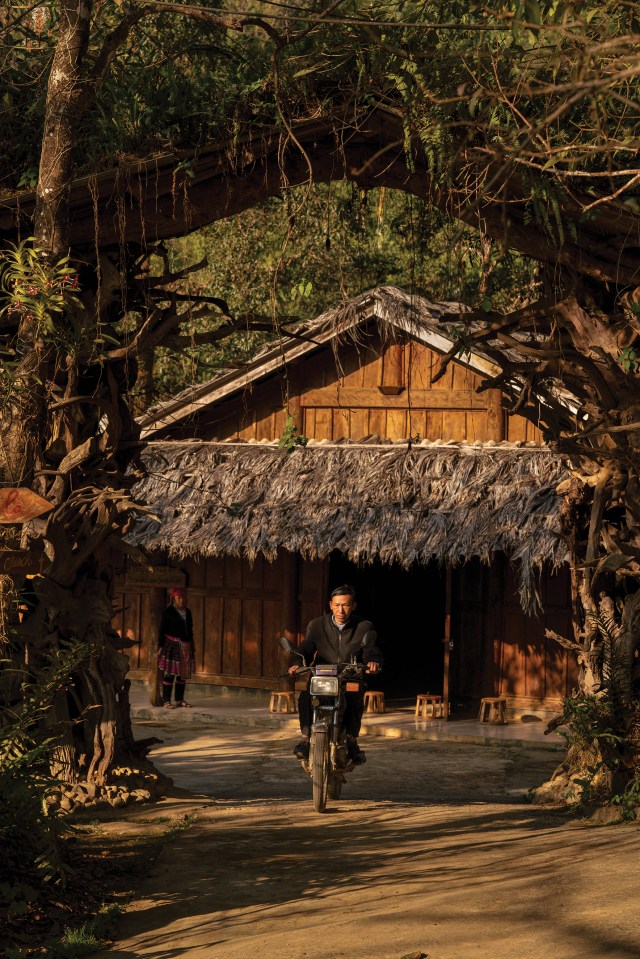
Pastor Chang A Hang drives his motorbike through the gate outside the Sin Suoi Ho church.

Fifty-nine-year-old Chang A Hang is a witness to the change. I find him sitting in a plastic chair outside his store next to the marketplace. Children gripping ice cream cones drop coins into Chang’s outstretched hand. The lines etched into his face and the weary look in his eyes betray the hard life he’s lived.

For much of Chang’s life, Sin Suoi Ho was the poorest village in Lai Châu province. He and his family often lacked rice to eat. Residents grew opium poppy, and Chang, along with most of the village, was addicted to opium. Chang was also one of the village’s 10 shamans, responsible for curing the sick through the spirit world, yet tormented by spirits himself. 

In 1992, villagers began hearing the gospel through a Christian radio broadcast. Faith spread quickly, despite government persecution. Chang at first brushed the new religion aside. But everything changed in 1998, when he says that one night he saw a spirit float to the bed where his wife lay fast asleep. The next morning she was deathly ill. Powerless to help, Chang asked the village pastor to come and pray for his wife. She was healed immediately. 

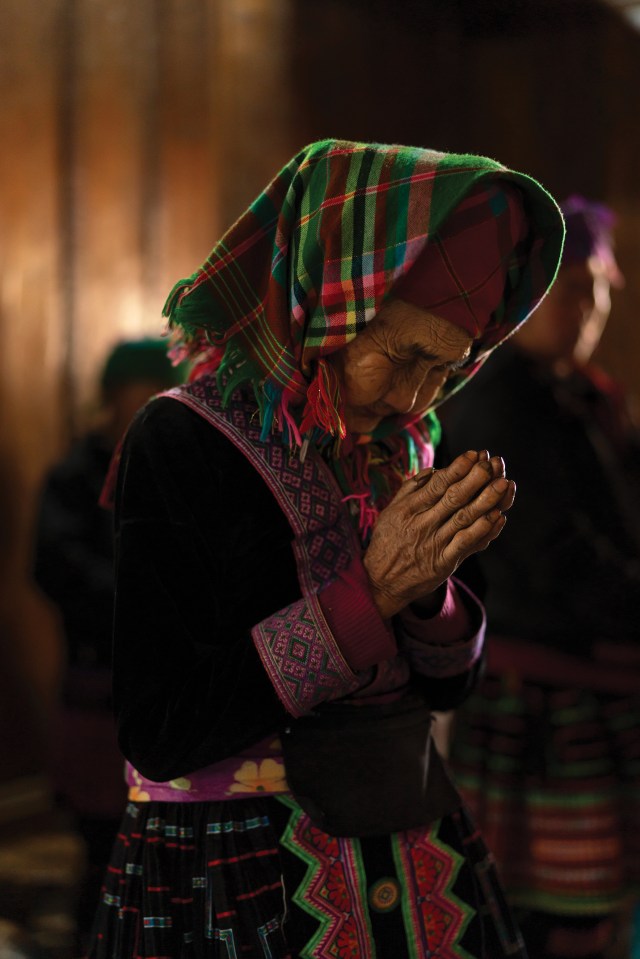
The encounter changed Chang completely; he is now a pastor too, working in a nearby village church. Thirty years later, the majority of Hmong families in Sin Suoi Ho are Christians, save for about 20 families.

For these converts, the gospel has manifested itself not only in personal transformations but in community-wide change. Village pastor Hang A Xa, who prayed for Chang’s wife, taught villagers to apply the Bible to every aspect of their lives. They detoxed from their addiction. They gave up opium cultivation and grew orchids instead. They cleaned up their village and built a road. Because the Bible declared that men and women were equal, parents stopped the practice of demanding prohibitive bride prices, and they allowed young women to complete more schooling. 

And against all odds, Sin Suoi Ho became a tourist destination.

Villagers tell their story in religious terms, not economic ones. Across Vietnam, Christian belief has faltered among Vietnam’s majority Kinh population, who possess more of the country’s freedoms and wealth. But in ethnic-minority communities like Sin Suoi Ho—only 11 miles from the Chinese border, in a sensitive region where the Vietnamese government prohibits outside visitors—Christianity has spread.

Vietnamese pastors say the country’s rapid economic growth and the trappings of wealth are obstacles to sharing the gospel in the cities. In hardscrabble places like Sin Suoi Ho, however, the good news can bring beauty, flourishing, and a taste of Eden.

Vang A Chu, the associate pastor in the village, noted that Adam and Eve’s sin forced them out of the Garden. Yet in Sin Suoi Ho, “Jesus has come to earth and now we have freedom.” 

“Where we live is Eden,” he said. “And we have to take care of our village.”


The Hmong people originated in China and began spreading to the mountainous areas of Laos, Vietnam, and Thailand in the 18th and 19th centuries in search of agricultural opportunities and to escape persecution from the Qing dynasty. 

During the Vietnam War, the United States recruited Hmongs in Laos to help fight against the Communists. Hmong soldiers, led by General Vang Pao, blocked Hanoi’s Ho Chi Minh Trail in Laos and rescued downed American pilots. After the US military withdrew, many Hmongs were targeted by the communist government in Laos, leading thousands of Hmongs to resettle in the United States and other Western countries. Many Hmong refugees converted to Christianity. Their history of resistance led the government in Vietnam to view them suspiciously. Decades of government attempts to resettle, develop, and assimilate the Hmong left them “marginalized by programs that purport to development,” wrote anthropologist Tam Ngo in The New Way: Protestantism and the Hmong in Vietnam.

Photo by Tim Barker
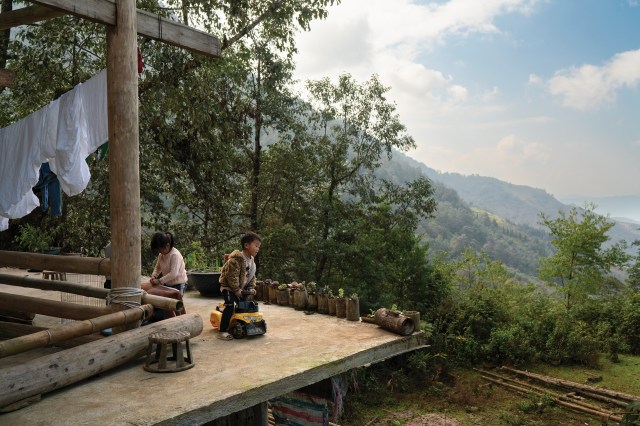
Children play on the second floor of a building site next to Xa Cha restaurant in Sin Soui Ho.

Foreigners and missionaries had largely fled Vietnam by 1975, but the Far East Broadcast Company (FEBC) continued broadcasting the gospel into the country in minority languages. Beginning in the 1980s, Hmongs in Vietnam started tuning into a broadcast from a Hmong pastor in California who went by the radio name John Lee. Families, then whole villages, came to Christ. The new Christians started sharing the gospel with other Hmong villages. 

Initially, Lee didn’t realize the impact his program was having in Vietnam, according to Reg Reimer’s Vietnam’s Christians: A Century of Growth and Adversity. By the late ‘80s he was receiving thousands of letters from Hmongs in Vietnam who had accepted Christ and wanted to learn more about the faith. Today more than a third of the 1 million Hmong in Vietnam are Christians.

Some Hmong villages saw their standard of living improve as they abandoned religious practices that required expensive animal sacrifice and learned to read in order to study the Bible.

Nowhere is the transformation more apparent than in Sin Suoi Ho, now a burgeoning destination for tourists who want to experience “untouched” Hmong life. In the 1980s, the village was no more than a few wooden houses in the jungle. Neighboring communities called it “Opium Village,” yet growing opium was never profitable; it left villagers poor, sick, and addicted.

Former village chief Hang A Lung first came across Lee’s program, Source of Life, in 1992 on a radio gifted to him by local government officials. He kept listening, as it was the only program in his native Hmong language. Soon he was hooked. Speaking in a melodious lilt, Lee incorporated Hmong folktales into his teaching to help Hmongs understand the gospel. 

A Lung was struck by Lee’s declaration that Jesus is the only way to heaven. During the rice harvest that year, he and his family became the village’s first Christians. They burned their altars to the spirits and their traditional burial clothes. “We prayed to Jesus to come into our house,” remembers A Lung’s daughter, Thi Do, who was 13 at the time. 

Christians from a neighboring Hmong village came to teach the family more about Christianity and joined them in sharing the gospel with other families. Some, unhappy with Hang’s eagerness, reported them to the authorities. 

Fearful that conversion to a “Western” religion would lead Hmongs to resist government power, local officials arrested and beat the new Christians. They confiscated radios, Bibles, and cassette tapes. Thi Do’s husband was beaten so badly that he could only eat rice porridge for weeks. Police held her brother-in-law in a house and tied him to a table. He gnawed through the rope to escape. 

At the time, Thi Do said, their faith was so strong that they didn’t think about turning back. Other families joined their number: Villagers came to Christ after miraculous healings or finding freedom from the constant fear of spirits. By 1995, about 20 more families had turned to Christian faith. They started to gather for weekly worship in homes or in the jungle to avoid detection. 

Most were still addicted to opium. Some worshipers smoked before and after services. One day while studying Matthew 5:16 (“Let your light shine before others, that they may see your good deeds and glorify your Father in heaven”), the believers felt the Holy Spirit convicting them to quit. “We had to stop using opium so that we could shine for other people to know about God,” said A Lung’s son, A Xa.

Church leaders brought addicted believers up into the jungle-covered mountains to help them detox. They cooked them meals, massaged their aching bodies, and washed their soiled clothes. To help pass the time, they taught them about God and sang worship songs. When withdrawal kicked in, they stopped them from running back into the village. 

Returning to the village at the end of a two-week detox session, most eventually relapsed. But the few who stayed clean led the next group into the jungle. Some returned seven times before they could completely kick the habit, A Xa said.

It took 10 years, but by 2005 every Christian in the village had stopped using opium.


Escaping opium’s grasp was the first step of Sin Suoi Ho’s transformation. Next came breaking the village from cycles of generational poverty.

After deciding to become a pastor at age 20, A Xa went to study the Bible with other Hmong Christians in Yunnan, China, and later in Hanoi, despite having only a primary school education. Each time he returned to the village, he’d teach about the Bible and how it applied to everyday life. He led a small group—the first one in 2005, after which members went on to lead their own. By 2010, 100 villagers were trained to lead house church–like groups. 

God called Christians to be witnesses, A Xa taught. So villagers needed to clean their homes and their village. Both humans and livestock shared the village roads. Feces, food scraps, and trash littered the ground. Even inside their homes, chicken and pigs roamed free. A Xa taught them that cleaning their living spaces prevented disease and sicknesses from spreading and was a way to take care of the land God had given them. 

“It will be like salt and light to other villages,” said his sister, Thi Do. “They will know about God, that God is good, and that Christians are good, not bad.”

Next, A Xa taught villagers about setting goals and planning ahead, rather than being content with subsistence farming. He taught basic business skills to help them make more money for their labor. He pushed against the Hmong tradition of early marriage, where girls wed as young as 13 and cut short their education. He encouraged parents to keep both their sons and daughters in school.

A Xa also advocated against the custom of marriage dowries. Traditionally, a Hmong man’s family would pay the wife’s family a large dowry, saddling the newlyweds with debt and effectively selling the bride to her husband’s family.

To combat this, A Xa had to lead by example. His own daughter became the village’s first bride to not seek a dowry when she was married. (All three of his daughters graduated from college, another pioneering act.)

None of these changes happened overnight. Some villagers protested against A Xa’s ideas. “It’s so difficult to change people’s minds,” he said. “If we didn’t have the Bible, we couldn’t change.” 

Another first: Residents decided to grow orchids to beautify the village in 2011. They trekked out to the jungle to find them and planted the orchids outside their homes. Then visitors from around the border region began offering as much as $42 to buy the plants. (Orchids are a common decoration for Tet.)

Sensing opportunity, villagers grew the flowers in earnest, making three times as much from selling orchids as they did their traditional crops. Today in Sin Suoi Ho, the orchids grow in pots and cover off-season rice fields. Growers train them to bloom during the week of Tet, when they fetch the highest price.

By 2012, A Xa and the new village chief, Vang A Chinh, realized the village needed a working road. It would make it easier to transport their rice crops to markets where they could sell it for more money, and it would allow people to visit the remote community.

The two men approached local officials. Would the government provide cement if the village provided its own sand and gravel? The officials agreed, then taught villagers the basic steps for construction. And the people of Sin Suoi Ho came together to build three miles of road.

Next, they opened a Saturday market. To lure customers, villagers put on roadside performances showcasing Hmong singing and dancing, catching the attention of passing motorists. Tourism grew, and the government began holding up Sin Suoi Ho as a model for local development without any outside help. 

The persecution of Christians in Sin Suoi Ho gradually eased too. A Xa’s church, which is now part of the Christian and Missionary Alliance denomination, earned official government recognition in 2011.

When they talk about their success, A Xa and other villagers don’t withhold their strategy: “If it was only based on the work of humans, we can’t change,” Vang, the associate pastor said. “Now you can see the village looks beautiful. It’s because we use the Bible for living our life.”

In 2015 the government officially recognized Sin Suoi Ho as a tourist destination, an act that effectively removed government restrictions on outside visitors. That sealed the transformation: A village once persecuted and isolated could now host visitors from across Vietnam and from around the world.

Photo by Tim Barker
Early morning outside the Sin Suoi Ho market held on Saturday mornings.

Families opened up their homes to tourists. They set up beds in their living rooms and extra seats at their tables. Those who couldn’t house visitors could sell their orchids, their vegetables, livestock, and handiwork—all at higher prices. They could run herbal baths or rent out Hmong dresses.

By the time the COVID-19 pandemic hit in 2020, Sin Suoi Ho saw about 100,000 visitors a year.

“When I was a kid, I never dreamed Sin Suoi Ho would become a tourism destination,” said Vang A Chinh, the village chief, sitting in the courtyard of his homestay with a creek flowing through a jungle-like garden and outdoor café. “After we became Christians, we learned how to make a plan for our lives and work to follow that plan. God changed Sin Suoi Ho into this.”

The pandemic paused tourism for two years. Villagers focused on growing orchids, cardamom, and rice. They built new bungalows and guesthouses. And they waited for the tourists to return.


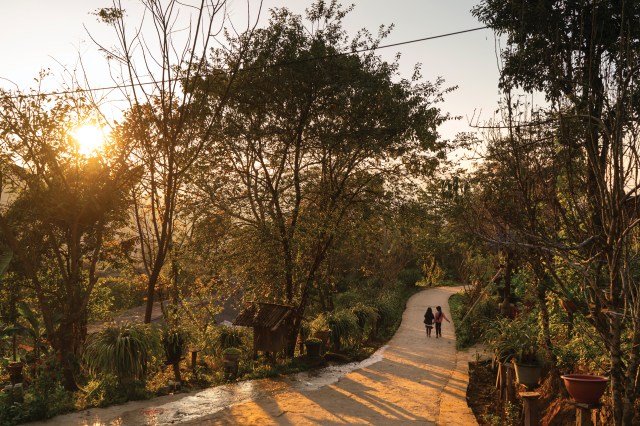
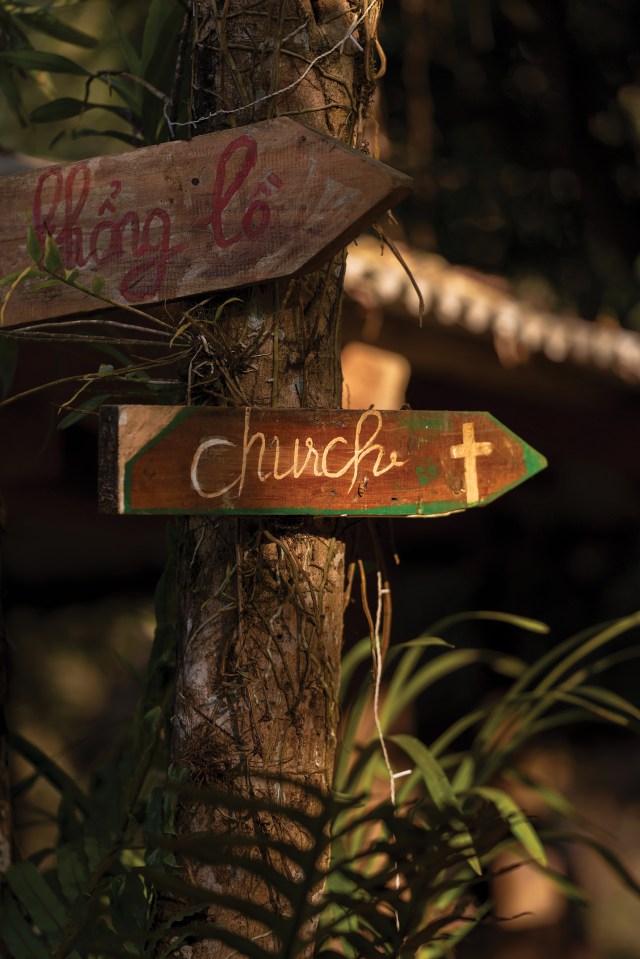
Today, the main road in Sin Suoi Ho is clean and paved, running up the mountain past the thatched-roof church framed by an imposing gate made of curved tree branches. A woman dressed in a patterned Hmong jacket and skirt—over sweatpants—talks on her smartphone while a buffalo and her calf feed on a nearby tuft of grass. Further up the mountain, a coffeeshop overlooks the village and beyond—to rice paddies and jagged layers of blue mountains. 

The owner of Ka Sha Coffee is A Xa’s daughter, 28-year-old Hang Thi Su. Rather than wearing traditional Hmong clothing, she’s dressed in a fuzzy brown jacket and jeans as she snaps photos for her Facebook account to promote the village. Not only was she the first woman here to sidestep an early marriage and graduate from college, but she was also the first to marry someone who is not Hmong (her husband is Kinh, Vietnam’s largest ethnic group). She is Sin Suoi Ho’s only English speaker. 

When Thi Su and her sisters went to college, villagers called them lazy and whispered that they’d lost their way. “But [my father] didn’t care because he knows us, he knows what we are studying and what we are doing,” Thi Su said. “Now parents say, ‘Go to school and be like them.’”

Since returning in 2018, Thi Su has taken to heart her father’s exhortations that tourism doesn’t just help the village financially but is also an opportunity to share the gospel. When tourists visit, she introduces them to time-honored Hmong traditions like handwoven hemp clothing, harvest season dances, or tuj lub, a game where competitors try to knock each other’s giant spinning tops off balance.

But she’ll also tell them about traditions they’ve left behind: flutes and drums used in religious rituals, shamans, and bride kidnappings. She repeats the story of how God brought their village from filth to beauty, from addiction to freedom, from barrenness to bounty.

“Everything we do is for God, not only to make money,” Thi Su said. “I hope we can keep the Hmong culture, we can share our culture with the world, and we can share the gospel through our culture.”

Angela Lu Fulton is CT’s Southeast Asia editor. She reported this story from Sin Suoi Ho, Vietnam.

Church Life

A Seattle-Area Ministry Wants More Cooks in the Kitchen

Hillside Church helped refugees grow vegetables. Now it’s growing a whole community around food and preparing immigrants for culinary careers.

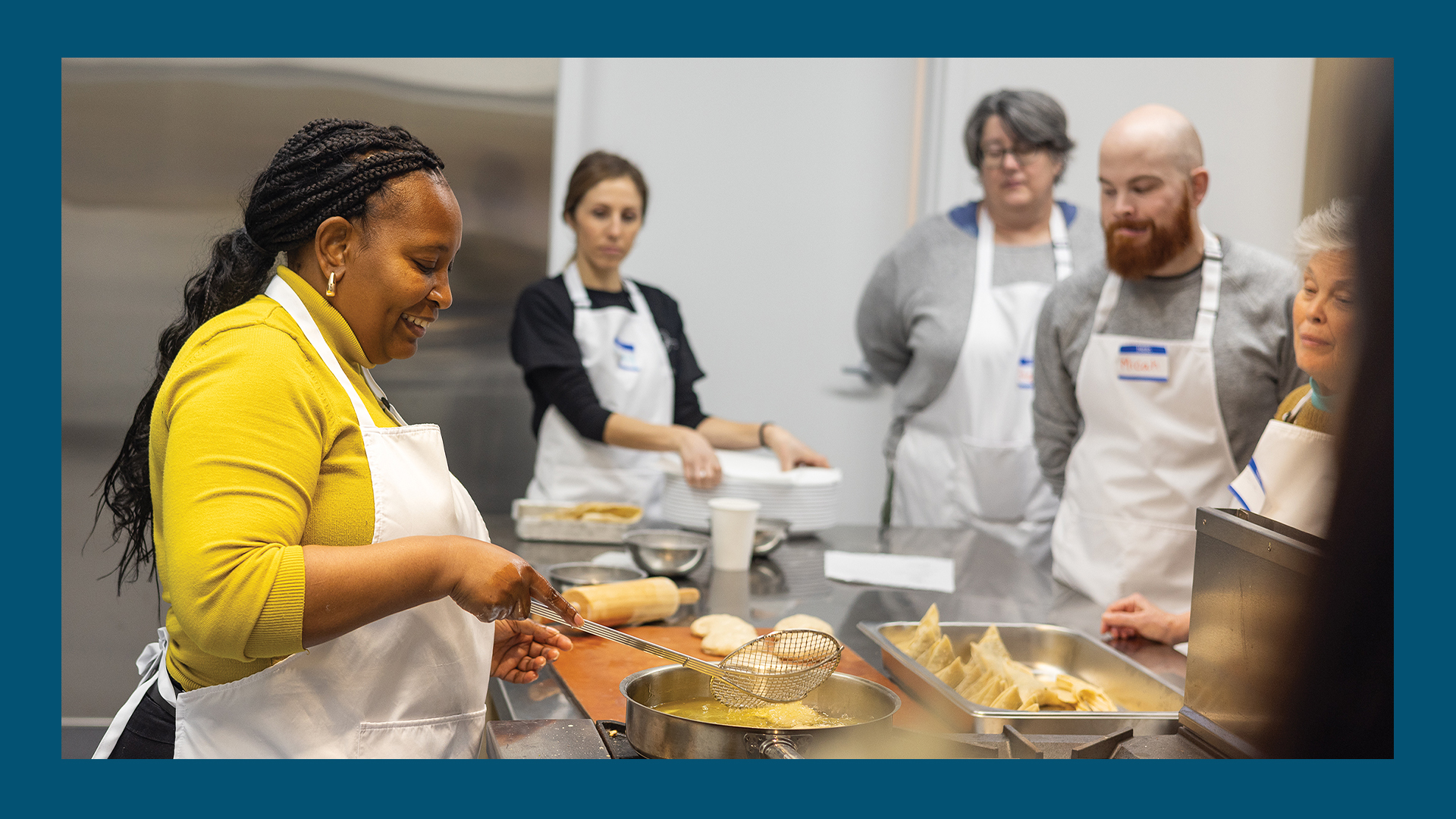
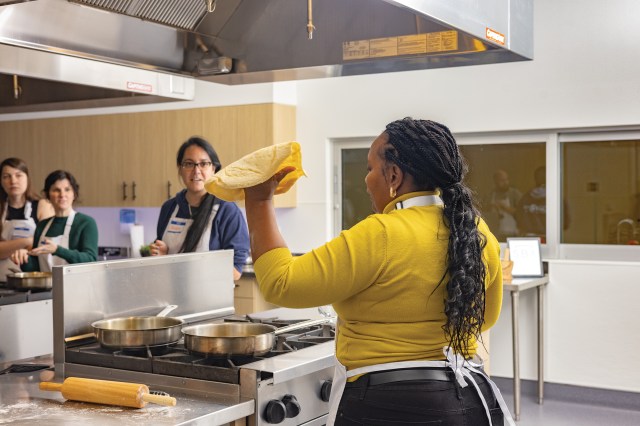
Margaret Chege teaches students how to make Kenyan sambusas and mandazis in the World Relief Community Learning Kitchen.

Photo by Reva Keller

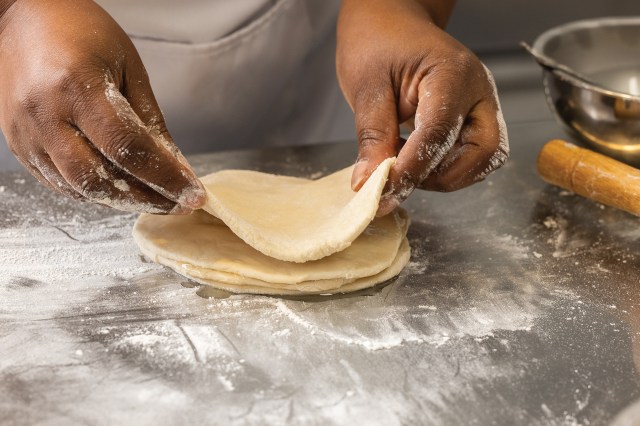
Margaret Chege rolls out golf ball-sized pieces of dough, drizzles oil on top, and drops one ball of dough onto another. 

“This is Kenyan tortilla,” she says, pressing down. “We use it to wrap sambusas.” 

Sambusas are crispy, deep-fried triangular pastries stuffed with all sorts of savories—spiced beef, lamb, potatoes. Chege is here to demonstrate how to make sambusas and mandazis—pillowy, nutmeg-scented doughnuts—at the first cooking workshop of the World Relief Community Learning Kitchen. Hosted at Hillside Church in Kent, Washington, the workshop attendees on a Wednesday morning include mothers who hired babysitters, a home economics teacher, and a mother-and-son cooking team. 

Chege chose these fried snacks because they remind her of home. “In Kenya, we like tea, and we eat sambusas and mandazis with tea,” she tells the class. “Anytime we see sambusas or mandazis with tea, we think, ‘Oh, now we are home.’” 

As she teaches, Chege radiates confidence and pride. She came to western Washington from Kenya in 2013 with her three children. She grew up in Nairobi’s Kibera slum, the largest slum in Africa and the third largest in the world. There, as many as 50 households may share a latrine. Chege remembers how sometimes people walked carrying bags of flour, leaving a powder trail so they wouldn’t lose their way home. 

Photos by Chona Kasinger
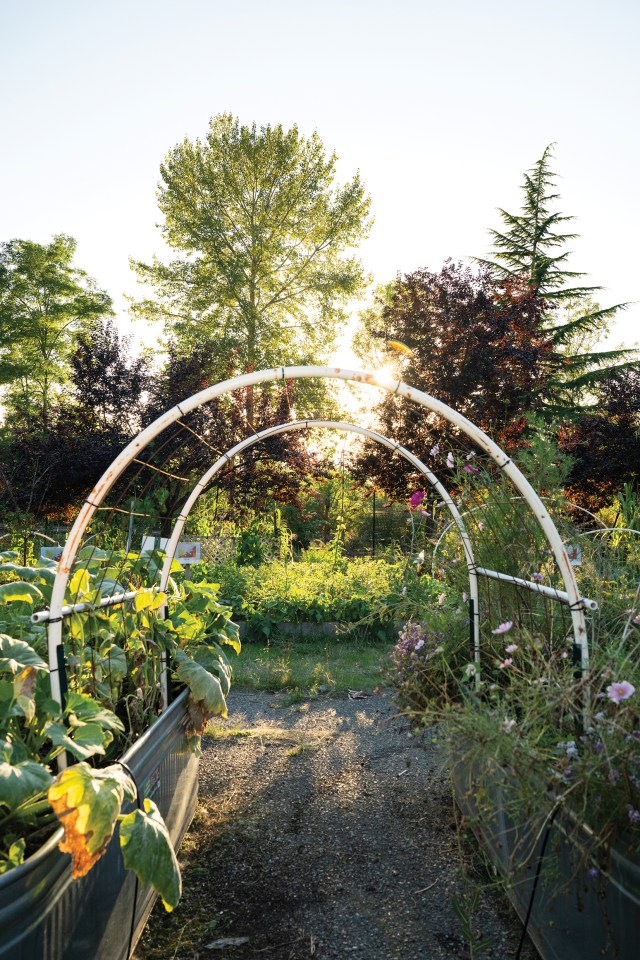
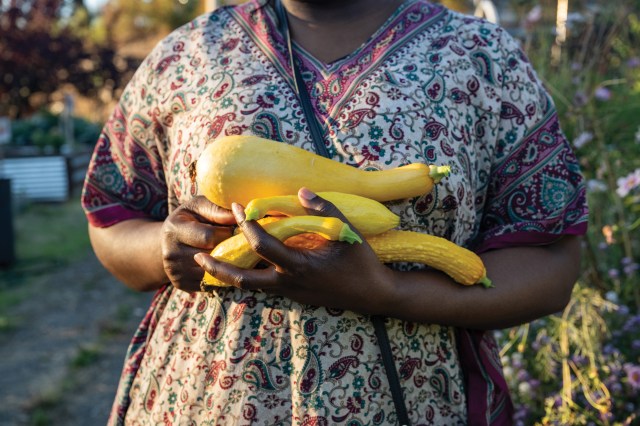
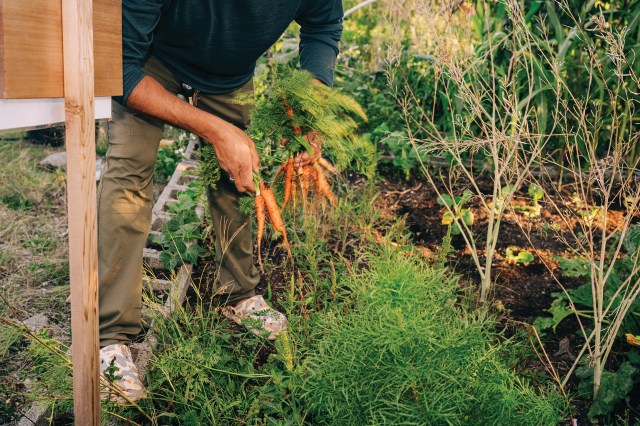
In Paradise Parking Plots—a parking lot converted to community gardens outside World Relief’s training kitchen—immigrants grow produce from their mother countries.

She learned how to make sambusas and mandazis as a young girl, helping her mother stuff beans in dough and sometimes beef, if they could afford it. She remembers following her mother through the streets, hawking bags of the hot food. Her mother died when she was 12 years old, and then it was just Chege and her sister selling treats to make ends meet. She was in high school when she wore her first pair of shoes. 

Chege rolls out more balls of dough. Oils them. Stacks them one over another. And then she flips the whole pile onto a dry hot pan, spins it around to let the bottom toast evenly, and slowly peels off each thin layer. Now they are ready to be stuffed with ground beef and cilantro. 

After all the labor of making the wrappers, Chege hands her students a tip: “Usually, I just buy Mexican tortillas from the store. I think they taste even better!” 

Chege has come a long way since she and the children arrived in the United States. She was reunited with her husband, who had already been in America for years and had earned asylum, but she barely saw him; he was working 16 hours a day. Chege remembers walking to Safeway to buy a bag of flour to make sambusas—something to remind her of home—and being overwhelmed by the endless aisles of products. When she mustered up the courage to ask where she could find flour, the cashier couldn’t understand her thick accent. She returned home flustered and fatigued. She was finally in America, where she didn’t have to worry about armed groups kidnapping her son or people forcing genital circumcision on her two daughters. She felt safe here. But she also felt utterly alone, lost, and homesick. 

And now here she is, in a brand-new commercial teaching kitchen, using her mother’s recipes and sharing childhood memories.

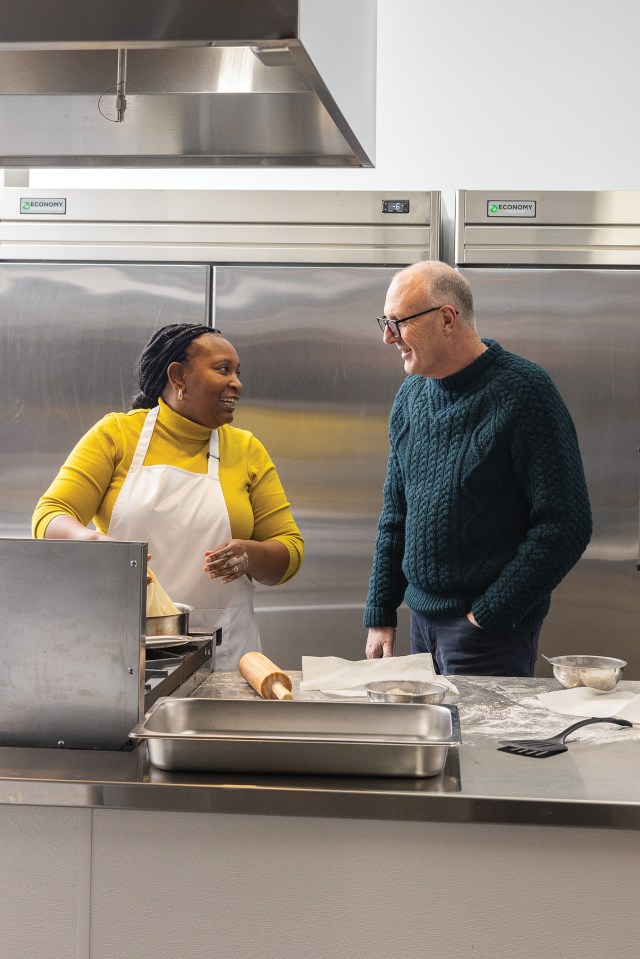
Standing outside the kitchen, Everett Tustin, the senior pastor of Hillside Church, peeks in one last time before retiring from the office. His heart feels full. Tustin knows Chege and her story—she and her family are members of the church. He also knows the story of World Relief kitchen coordinator Jeff Reynolds, who’s there to supervise the event. Reynolds too is a member of Hillside Church. 

Tustin knows how much it took for World Relief to finally open this kitchen, years after dreaming and planning and fundraising. Tustin had also long dreamed of a church that reflects and serves the community. This kitchen—and the people who made it happen—are a manifestation of years of prayers. Now he’s proud and full of joy: This is it. Except he couldn’t have imagined it like this. 

The kitchen is a 1,215-square-foot room that’s fully certified to make food to be sold to the public. Under state law that means it’s not only a teaching center, but potentially an income-generating enterprise for the community. Four student cooking stations surround an instructor station in a light-filled space where teachers and learners can mill about. A camera over the main station allows students to watch techniques up close on a TV monitor. 


When he first became the pastor of Hillside Church in 2012, Tustin had a hazy vision of where he wanted to lead its ministry. At the time, the average Hillside church member was around 60 years old and white. Yet a third of the population of Kent is foreign born. 

The city’s housing costs—lower than nearby Seattle—and growing diversity attracted refugees and immigrants, who saw opportunities to settle and build businesses. At Kent’s public schools, kids speak more than 80 different languages. The city has halal markets selling whole goats, Afghan bakeries offering sesame seeded barbari bread, and churches worshiping in Ukrainian and Russian. 

This isn’t the Kent that Tustin once knew. He grew up in a rural farming and dairy town 20 miles away called Enumclaw, where the population of 4,000 was majority white. His world got larger after he married his wife, Rhonda. They did ministry in Chicago, and he pastored churches in Washington and Idaho for 11 years. They spent another nine years overseas, serving in Kenya, Bulgaria, and Poland as Nazarene missionaries. Then, with aging parents and two adult daughters back in the United States, Tustin accepted the senior pastor role at Hillside and the couple returned to Washington state.

Tustin had grand plans for the congregation. He wanted a more intercultural and intergenerational church. He wanted it to reflect the community’s growing diversity and serve its needs. But how to start?

The first change Tustin made was to hire a new worship leader. He wanted people on stage to represent the community of Kent. He hired a Black man from Detroit whom he had met in Poland while he was leading choir workshops. Later, the worship leader moved back to Poland, and Tustin hired another worship leader, this time a man from Trinidad. Next, he hired an assistant pastor from Barbados, and a woman from Liberia as the children’s ministry leader. The congregation also voted in new church board members from diverse backgrounds. 

Photos by Chona Kasinger
In Paradise Parking Plots—a parking lot converted to community gardens outside World Relief’s training kitchen—immigrants grow produce from their mother countries.

The shift in leadership led to both subtle and unsubtle changes. Worship services became more expressive—people pumped their arms and shouted, or let out tribal whistles and yodels. At times it was extemporaneous and organic, as people from African countries spontaneously asked if they could perform a duet or a song. Sometimes they sang in Swahili, Spanish, or French. Services didn’t always start or end on time. A growing number of the congregation didn’t speak fluent English or spoke with strong accents.

For some longtime church members, the changes were too much. It was uncomfortable, it was different, and it stopped feeling like home. Many left to find other churches. 

It was a hard season for Tustin. He had difficult conversations with congregants who were unhappy and uncomfortable. He worried about tokenism, then worried about how to help the church not only catch his vision but lead it. It was like stretching a rubber band. How far could he pull without it snapping?

Often, Tustin wondered how the early churches did it, with all their cultural and linguistic differences between the Jews and Gentiles, the Hellenists and Romans and Hebrews. 

“They just powered through,” he said. “There’s no evidence of them stopping and saying, ‘OK, let’s make this easy. Let’s make this comfortable.’ It seems like they just slammed right through it, and they broke down all those barriers.” 

That first year of pastoring Hillside Church, Tustin walked to the local office of World Relief, which at the time was just down the road, and introduced himself as “the pastor of that church up the hill.” He asked if there were ways they could partner. 

It was a natural move. The Christian resettlement agency provides refugees and immigrants with housing services, English language classes, employment, and immigration legal services. In those days, in the early 2010s, refugees and asylum seekers from Afghanistan, South Sudan, the Democratic Republic of Congo, and elsewhere were walking into Tustin’s church and asking for help. For baby food. For immigration advice. Tustin often directed them to World Relief.

The two ministries’ relationship began to grow. In 2016, World Relief held listening sessions with the local refugee-immigrant community, hosted at various sites including the church. They asked, What would help you thrive? What are your needs, struggles, dreams? 

Attendees expressed a yearning for community. They wanted a space to connect with others, with their cultures, and with nature. Living mostly in small apartments without yards, they missed growing their own produce like they did in their home countries. They also had no safe place for their kids to roam and play.

Hillside Church is near multiple public transit lines, close to many schools and apartment complexes housing refugees and immigrants. It also had a massive parking lot that stood mostly empty and often flooded the neighboring middle school with rain runoff. So the church donated 1.5 acres of the parking lot to World Relief to develop it into a community garden. 

Over several years, with funding from King County and other organizations, and with help from about 1,500 community volunteers, Hillside’s asphalt desert became Paradise Parking Plots, a community garden with 44 plots and six raised beds. It also includes rain gardens, cisterns, and flood-control bioswales, which collect rainwater before it can swamp the middle school.

Photos by Chona Kasinger
The Paradise gardens are a place to create friendships: watering each other’s plants, sharing tips on gardening in a new climate, and learning about one another’s produce and seeds.

At any given time from April through September, people from 16 different countries are planting and harvesting in the Paradise plots. They pay $40 to lease a plot for the entire growing season. Two brothers from Bhutan, for example, have planted mustard greens to make the Nepalese staple gundruk, a mix of fermented and dried greens that’s pungent, tangy, and full of flavor, perfect with a bowl of rice or stewed into soup. 

Another refugee, a bee farmer from Ukraine, grows wild strawberries using seeds from Ukraine, plus rows of organic tomatoes and beets to make borscht, the East European beet soup staple. 

Another, a farmer from Kenya, made $1,200 in one growing season selling his tomatoes at the farmers’ market. 

But the Paradise gardens are not just a place for immigrants to grow produce from their mother country. It’s a place to create friendships. They water each other’s plants, share tips on gardening in a new climate, and learn about one another’s produce and seeds. 

From the start, World Relief was intentional about making this a community-supported project. Local companies have donated seeds and supplies. Neighbors have volunteered time and expertise to help maintain and improve the garden. Occasionally on Sundays, the gardeners hold a farmers’ market at the church parking lot where church members can shop and engage with them after service. 

Once the gardeners had a space to grow food, they needed a space to cook it. Hillside had a small, underutilized kitchen. The church donated it and some adjoining rooms to World Relief to turn into a commercial teaching kitchen. 

The project took seven years to finish. (As workers tore out walls from a church building that dated to 1968, they found lots of things that needed fixing.) In June 2023, World Relief and Hillside Church finally soft-launched the kitchen. In January 2024, they opened their first cooking workshop, where Margaret Chege demonstrated how to make mandazis and sambusas.

“This kitchen is a representation of conversations,” said Jeff Reynolds, World Relief’s kitchen coordinator, who oversees the cooking programs. The kitchen will continue to host workshops from chefs such as Chege, and it will also offer a free, three-month curriculum to help refugees and immigrants kickstart culinary careers, so that they don’t have to start out making minimum wage as dishwashers. It will also offer nutrition classes to help families navigate food deserts and American markets that are full of highly processed foods.

Reynolds is particularly excited about starting a preservation class dedicated to curing, pickling, and fermenting garden produce. 

The project has gifted him with a new community too. He graduated from culinary school and worked in kitchens for many years, then in alcoholic beverage sales until he was furloughed in 2021 during the pandemic. That was when he and his wife started attending Hillside Church. A relatively new believer, Reynolds told his pastor, “I don’t know how my knife skills can bring people to Jesus.” Tustin told him about the kitchen project and introduced him to World Relief. And now here he was, teaching people from around the world how to properly dice onions without slicing off their fingers. 

Sometimes there are language barriers and cultural misunderstandings. But that’s part of the ministry, Reynolds said. “You have to insert yourself into the uncomfortable. There’s no other way to do it. And as uncomfortable as that is, at the end, man! It changes your life.” 

Chege, too, had to push through discomfort. She and her family visited Hillside in 2014 after her oldest daughter, who was attending the church’s youth afterschool program, kept begging her parents to check it out. That first Sunday, they sat at the back. After the service, Chege’s husband went up to greet Tustin, and Tustin greeted him with the few Swahili phrases he remembered from his two years in Kenya: “Habari yako? Karibu. Jina langu ni Ev.” “Hello, how are you? Welcome. My name is Ev.” 

“I was like, wow. It’s my first time hearing white people speak Swahili,” Chege recalls. Immediately she felt a little more at home.

Tustin invited them to an after-service church picnic at a local park. When they arrived, Chege’s husband told her, “This is amazing. This is the exact park where I used to do daily prayer walks, asking God to find a way for you and the children to join me in America!” 

They became regular attenders at Hillside. It was awkward at the start for Chege. She would leave for home almost immediately after the service. She was frustrated when people kept asking her to repeat herself or looked at her blankly because they couldn’t understand her accent. “So I think, ‘I’m just not supposed to talk,’” Chege recalled. “That was a big challenge for me.” 

Tustin and his wife kept encouraging her. Your English is good, they told her. At their urging she hosted a small group at her home, where she served chapati or mandazi and tea, or, if she had time, sambusas and tea. People from other East African countries came to the group. Sometimes they worshiped in Swahili. 

Chege eventually grew more confident interacting with English-speaking church members. “I gained understanding,” she said. “It’s not their fault they cannot hear my language because we have a language barrier. I became more patient in listening more and trying to explain in different ways.” 

There’s a painting hanging in the church sanctuary. It’s called The Table. It features a large, wooden table in the shape of a cross, with Jesus in a white robe sitting at the head, and people of various skin shades dining before him. 

Tustin’s wife Rhonda painted that picture during the pandemic years—when the nation was upside down with civil unrest and racial tension—and she had her church family in mind. It’s a vision of reconciliation, of holy communion at the feet of Jesus, of a table where family members can feel so safe that they will freely voice their thoughts, disagree and forgive, compromise and celebrate.

It’s the vision that Tustin had for his church 12 years ago when he moved to Kent. The reality is not as beautiful or peaceful as the painting. The reality is messy, hard, and frustrating, and oftentimes disappointing. 

Photos by Chona Kasinger
In Paradise Parking Plots—a parking lot converted to community gardens outside World Relief’s training kitchen—immigrants grow produce from their mother countries.

Tustin turns 62 this year. He doesn’t know how many years he has left as the senior pastor of this church, and he likes to quote an Indian proverb: “Blessed is he who plants trees under whose shade he will never sit.”

He still has yearnings for his church that have not come to fruition. But, Tustin said, “I feel like the vision of the things we’re trying to do is bigger than my lifetime.” 

What he is already seeing, however, sometimes brings tears to his eyes: listening to the kitchen workshop, seeing Chege and Reynolds lead, bumping into the Afghan women who gather for sewing classes in the church basement three days a week, watching church members from all walks of life pray over one another. 

Each moment reminds him: It’s not his table. It’s the table Christ built, when he bore all sin and brokenness on the Cross and invited the whole world to join his family. It’s the table he set when he said, in the Gospel of Mark, “Whoever does God’s will is my brother and sister and mother.” ′

Sophia Lee is global staff writer at Christianity Today. She lives with her family in Los Angeles.

Church Life

Grace in Gangland

Amid violence and shortages, a Haitian pastor dares to believe that Jesus still fills the hungry.

Photo by Octavio Jones / Genesis

For the last few years, Haitian pastor Octavius Delfils has been preaching through the Gospel of John.

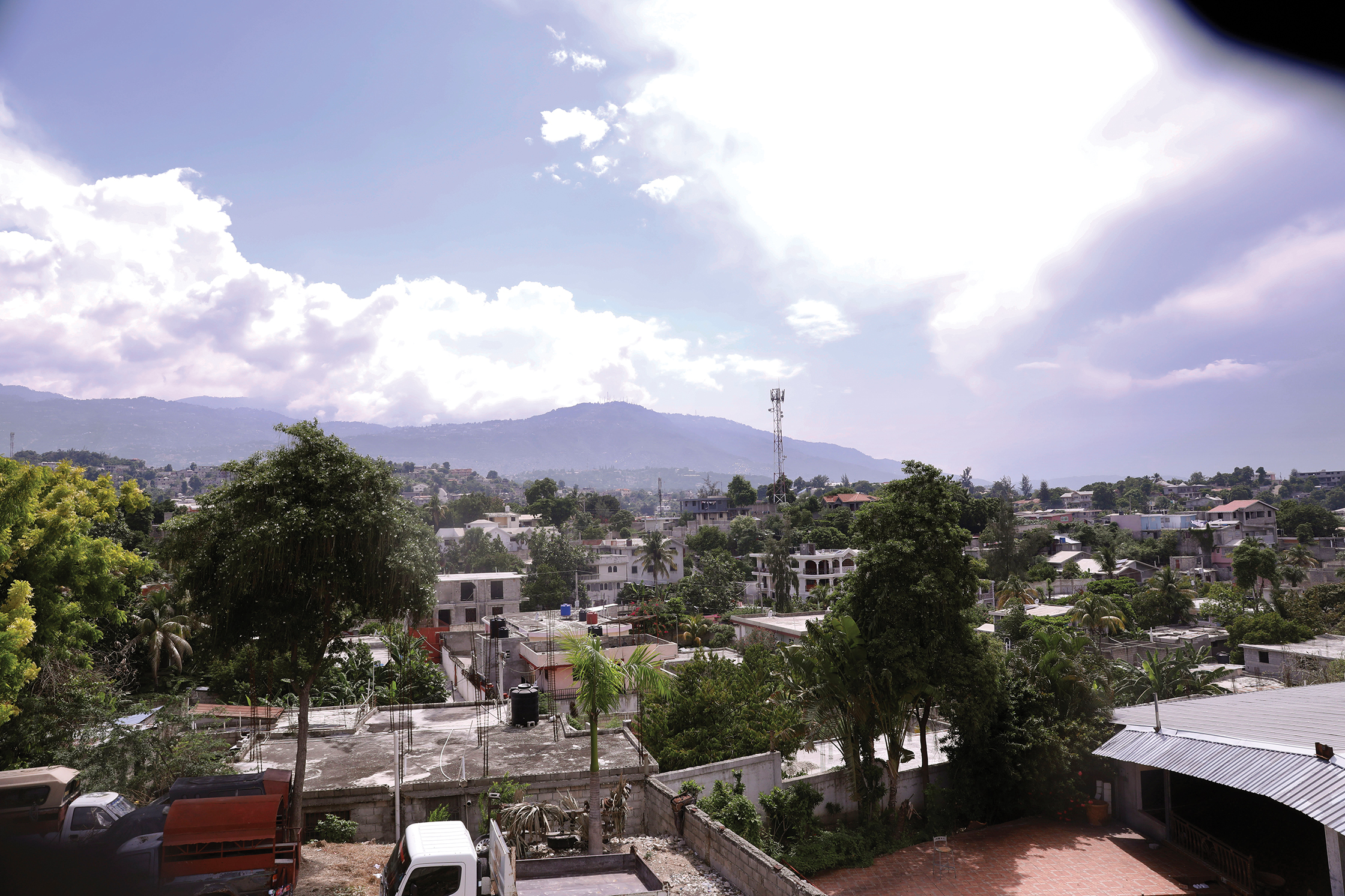
Throughout that time, Haiti has endured a presidential assassination, a 7.2-magnitude earthquake, and a spiral of gang-fueled violence that has plunged the Caribbean nation into an even greater crisis than did the devastating 2010 earthquake that killed an estimated 200,000 people. 

Another alarming trend: Nearly half the Haitian population is facing acute hunger. By the end of 2023, 97 percent of the population in some cities faced severe hunger, with most Haitians surviving on one meal a day.

Given the string of calamities, some pastors might consider turning to topical sermons: How should Christians respond to violence? To disaster? To poverty?

But Delfils feels his congregation in the country’s capital, Port-au-Prince, is better served by focusing on Jesus’ words in the fourth Gospel:

“I am the good shepherd.”

“I am the bread of life.” 

“The thief comes only to steal, kill, and destroy. I came that they may have life and may have it abundantly.”

Photo by Octavio Jones / Genesis
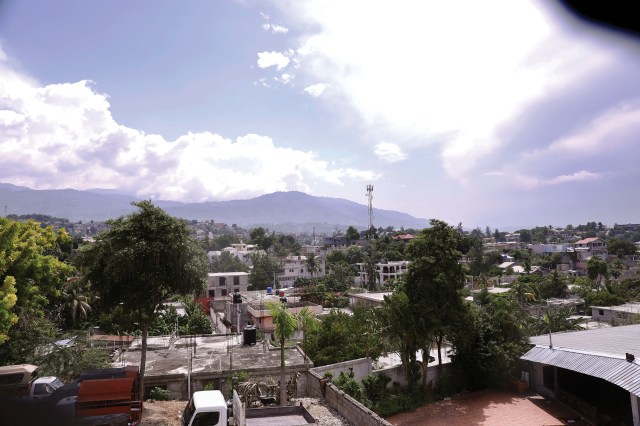
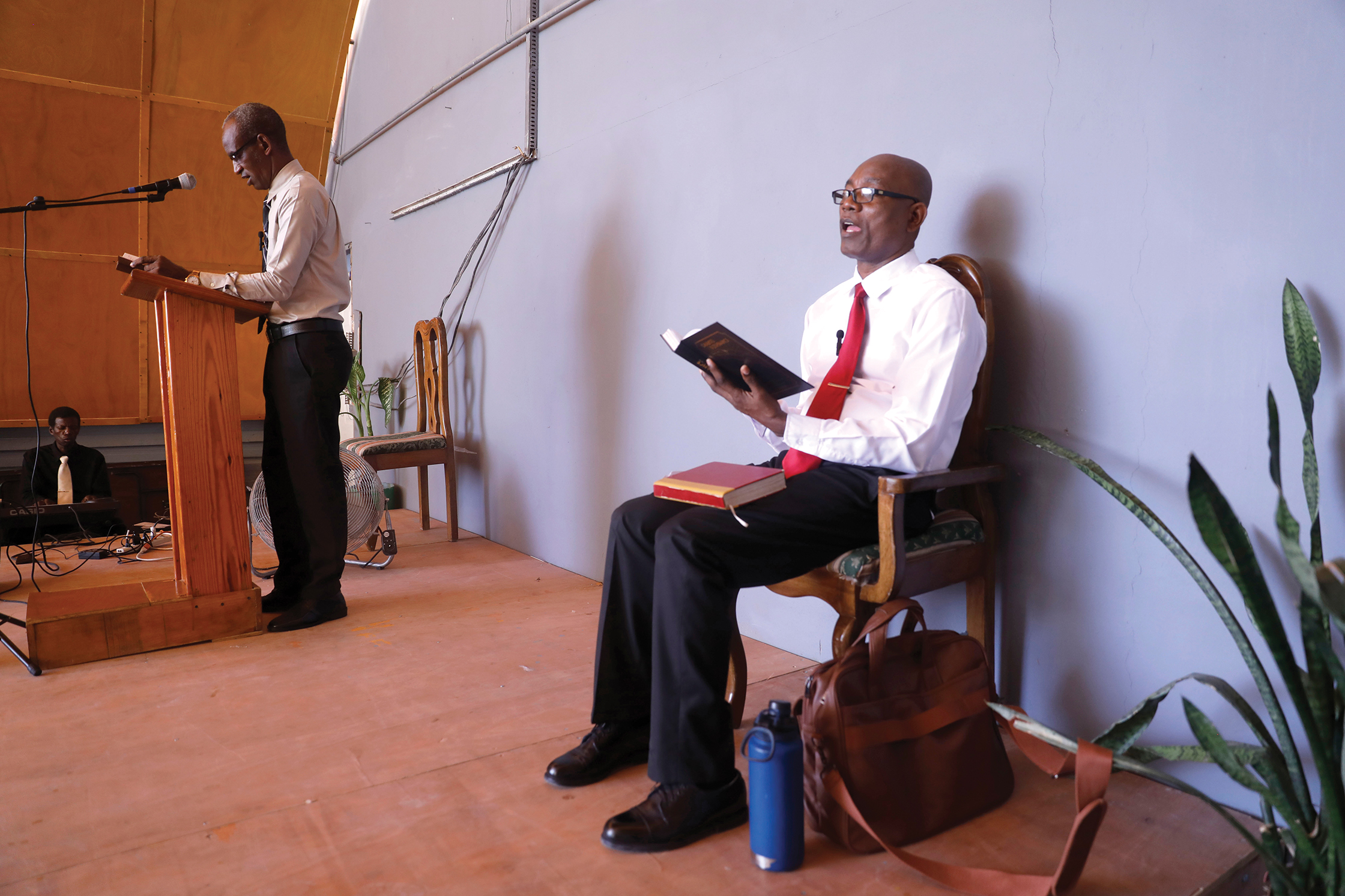
Pastor Octavius Delfils, at his church in Port au Prince, where he has served since 2010. For years now he and his congregants (about 70 in 2021) have battled high gas prices and shortages, and dangers from the gangs that now control the city.

What does abundant life look like in such dark days? How does a local pastor shepherd a congregation scattered across a dangerous city? How does a minister tend to bodies and souls hungry for daily bread and bread from heaven?

For Delfils, the answers are more ordinary than heroic. He preaches through the Scriptures in his local church. He feeds hungry children in his corner of the city. And as many Haitians flee the country, he stays.

Staying put is its own ministry in a nation where many aid organizations, foreign mission groups, and government entities no longer can run big programs because of perilous conditions. Daily provision now comes more modestly—often methodically, block by block, and sometimes pastor by pastor. 

“I know that it’s dangerous,” Delfils says. “But I know that the Lord is there.”

Looking for danger is part of the pastor’s daily routine.

When he wakes in the morning, Delfils and his wife listen to the radio to plan their day. Is it safe to leave the house for groceries? For gas? Scanning Facebook and WhatsApp sharpens the picture, as ordinary Haitians offer intel on what parts of the city to avoid. 

The situation changes daily. Gangs may block a neighborhood street for a few hours or a few days. Other parts of Port-au-Prince remain no-go areas, too unsafe to visit. Some areas are so treacherous that residents have abandoned their homes. 

That includes Delfils.

The pastor once was building a home across town, after losing his previous house in the 2010 earthquake that leveled much of the capital. But now it’s too dangerous to visit his new home. Thieves took the water pump from the well outside. Delfils heard they stole building materials from the yard. A relative recently finished a house in the same neighborhood, only to have it looted.

“They came inside and took everything, all the furniture,” the pastor says. “Everything is gone.” 

For now, Delfils leases a house near the congregation he serves that’s part of the Reformed Presbyterian Church in Haiti. 

Photo by Octavio Jones / Genesis
Pastor Octavius Delfils, at his church in Port au Prince, where he has served since 2010. For years now he and his congregants (about 70 in 2021) have battled high gas prices and shortages, and dangers from the gangs that now control the city

These days, sections of the city that once bustled with motorcycles and vendors and women carrying babies on their backs are now hushed. Running essential errands means heading out and coming back as quickly as possible. Often, Delfils says, “it’s like we are prisoners in our homes.” 

As hard as other hard times have been in Haiti, Delfils, 55, says this is the worst he’s seen. Since Jovenel Moïse, Haiti’s last democratically elected president, was assassinated in 2021, entrenched gangs have filled a power vacuum and now control most of Port-au-Prince.

They also control major roads leading into the city—severing vital routes that businesses, hospitals, and aid groups depend on for transporting goods. Attempts at crossing gang-controlled areas risk extortion, robbery, or kidnapping.

Even in churches, long seen as sanctuaries, many leaders and worshipers no longer feel safe. Some church buildings have been attacked and looted. In one high-profile kidnapping, gunmen killed a deacon and snatched his wife outside a Baptist church on a Sunday morning. In another incident, assailants kidnapped members of a worship team during a live stream service.

The world was shocked when, in October 2021, the 400 Mawozo gang abducted a missionary team of 16 US and Canadian citizens outside Port-au-Prince. The gang demanded $1 million for each member of the group, most of whom remained in captivity for 61 days before escaping.

But Haitians are by far the most common targets for kidnappers, and the ransoms demanded are usually much smaller. Kidnappers sometimes pluck children from the street and demand whatever a family can afford. 

Most church gatherings have been spared, but many church members wonder: How now shall we gather?

For Delfils, the answer hasn’t been easy, but it’s been clear: We keep coming to the house of the Lord. 


Preparing for Sunday mornings starts on Mondays. 

As Delfils studies the Gospel of John for his sermon, he also studies any hot spots near the church to make sure worshipers can get to the building. Usually, they can. But occasionally, blocked roads make access to the area impossible and some decide to
stay home.

One woman told Delfils that two Sundays she was stopped by armed men in the street on her way to church. (They eventually let her pass.)

Another pastoral task: How to shepherd the flock during the week? Delfils describes this as one of his biggest burdens. He wants to be able to visit church members, but often it’s too unsafe or roads aren’t accessible. 

Photo by Octavio Jones / Genesis
Pastor Octavius Delfils, at his church in Port au Prince, where he has served since 2010. For years now he and his congregants (about 70 in 2021) have battled high gas prices and shortages, and dangers from the gangs that now control the city.

While phone calls and Facebook messages help, the pastor longs to be in living rooms with his church members and next to their hospital beds, helping them face the traumas of their everyday. 

“We had one lady who was kidnapped at her work,” Delfils says. “She’s a nurse and she was working during the night and people came with weapons and kidnapped her.” At least three of his church members have been chased from their homes and can’t return. One family has chosen to stay in a dangerous area, and Delfils worries about them.

Some members are burdened for their pastor. When a gang briefly took over Haiti’s main fuel depot and triggered a severe gasoline shortage, friends dropped by Delfils’s home to share a few gallons with him, making sure he could drive to church on Sunday morning. 

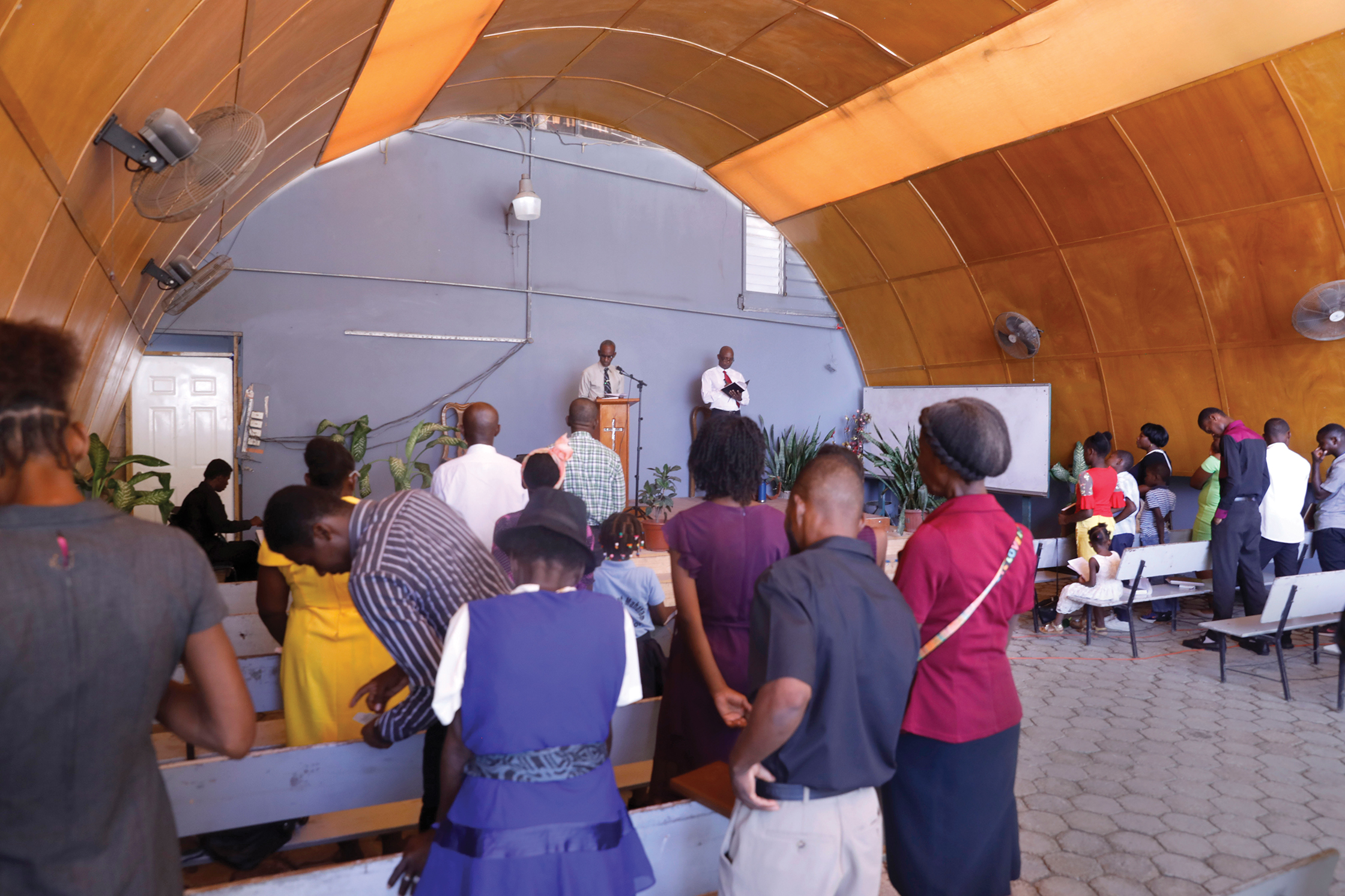
Travel may be complex, but the heart of Sunday services remains simple: The congregation sings, prays, confesses their faith, listens to the pastor’s sermon, witnesses baptisms, and takes the Lord’s Supper. Delfils says the ordinary means of grace strengthen God’s people for extraordinary times. 

People sometimes question whether they should meet in person, but Delfils insists that the church remain open. “I explain that we need to continue to serve the Lord,” he says. “We can do that.” He says while online meetings are occasionally necessary, “the fellowship of the church—we cannot replace that. . . . We don’t want to miss being face-to-face.”

Another thing that can’t be replaced: the Lord’s Supper. The church has been able to buy bread and still has enough communion cups to keep serving the congregation. 

Once a month, the Lord’s table stands as a reminder: Jesus is living bread, broken for sinners living in a broken world. And sometimes the Bread of Life surprises his children with joy. 


In John 6, Jesus is concerned about a crowd of hungry people.

They’ve been following him in a remote place and listening to his teaching. Jesus asks one of his disciples where they can buy bread so the people can eat. Philip balks at the impossibility of the question, but Andrew points out a boy with five loaves and two fish. 

Jesus feeds the 5,000.

Photo by Octavio Jones / Genesis

In much of Haiti, hunger seems like an impossible problem. The UN World Food Program (WFP) reports the country has one of the world’s highest levels of food insecurity, with more than half of its population chronically food insecure and 22 percent of children chronically malnourished.

Between August 2023 and February 2024 alone, the price of food rose by 22 percent, making it even less affordable for millions of Haitians.

Delfils translates the statistics to daily life: A single meal from a street vendor can cost about a day’s wages for a typical Haitian worker. For some, wages are far lower and food far more expensive. Delfils estimates the average family subsists on one meal a day. 

“I don’t know how people are living with the money they make,” he says. “It’s a miracle they are.”

Delfils hasn’t miraculously fed 5,000 people, but he has methodically fed 500. That’s the number of children who attend the school Delfils helps to run. He’s taught at the Christian school for years, and his church has long met on the grounds. But when missionaries associated with the project had to flee the country, Delfils and local workers kept the K–12 school going. 

For many children, the daily meal of rice, beans, and meat is a literal lifeline. Donors outside Haiti help fund the food budget that’s almost as much as the budget for salaries. Delfils finds children and their parents aren’t just hungry for food. They’re hungry to learn and grow—to keep coming to school, despite the dangers. 

When the church organized a Vacation Bible School program over the summer, 300 children showed up. In the comfort of a secure compound, “they spent the days learning from the Word, playing games,” Delfils says. “It was a lot of joy.”

It was so much joy, a couple dozen of the children kept coming back for Sunday school on Sunday mornings, joining church members already gathering to feed on fellowship and the Bread of Life Jesus revealed himself to be in the Gospel of John.

Delfils says that gives him hope at a time when many concerned friends and family members are urging him to leave Haiti. The people need a shepherd, he says. And Haiti needs the church. 

“The only place where change can start is for the church to listen to the Word and live the Word, and people will see how we have hope in the midst of the catastrophe in Haiti,” he says. 

“I believe only the Lord can do something for Haiti.”

Jamie Dean is a North Carolina-based journalist with two decades of experience in domestic and international reporting.

Church Life

He Befriended His Family’s Murderer

A neighbor killed a pastor’s wife and children during Rwanda’s genocide. Years later, they’re preaching together.

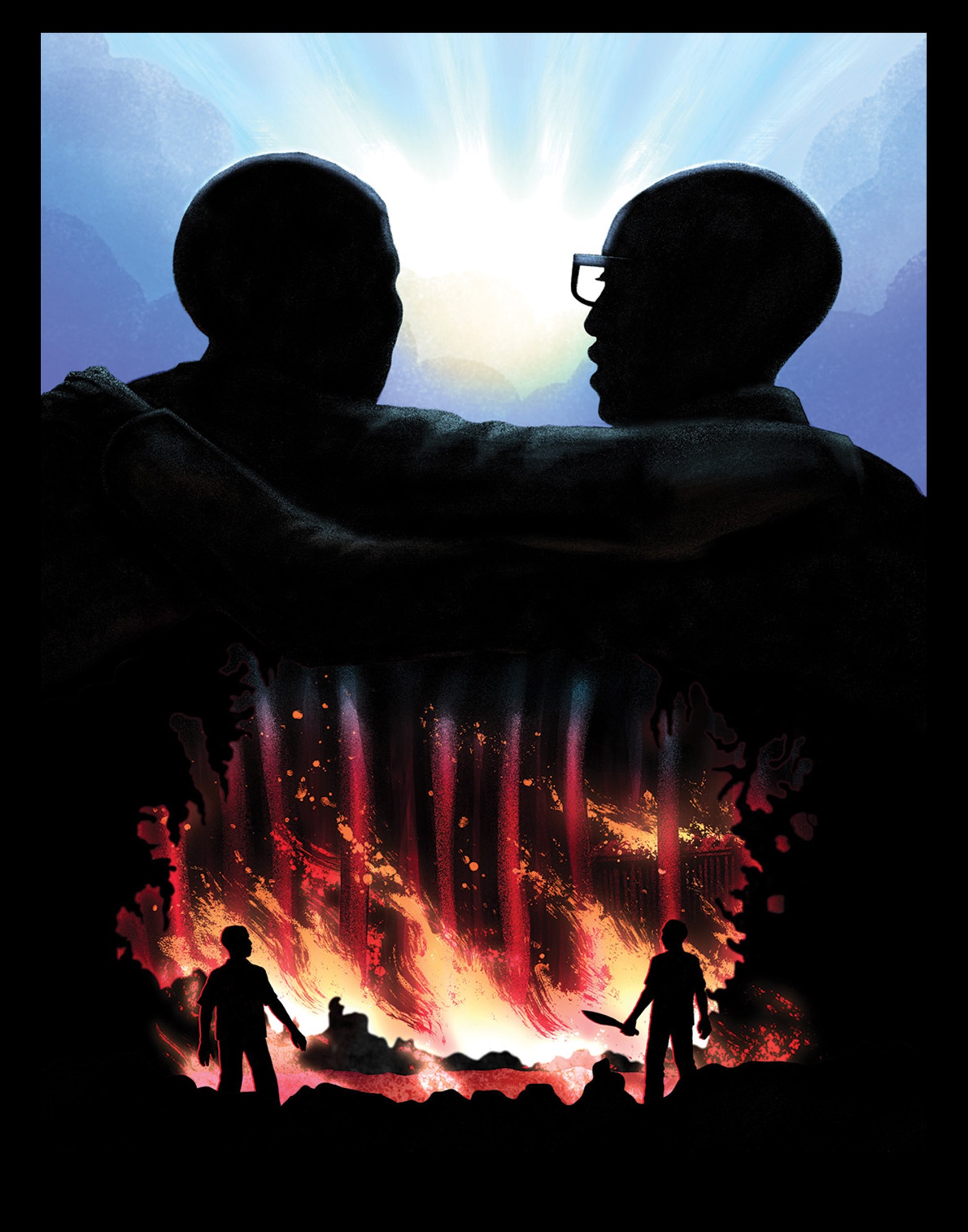
Illustration by Matt Williams

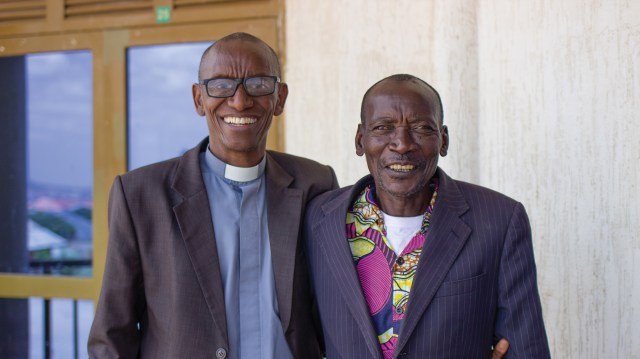
Gahigi Stephen and Sendageya Matias were once neighbors in a small village near Rwanda’s border with Burundi. Stephen, a Tutsi, is tall and slender with a broad smile. A pastor, he had a wife and children and a small farm where he raised cows. 

Matias, a Hutu, has widely spaced dark eyes, a humble manner, and a ready smile. He and Stephen were friends. Once, when the pastor saw that Matias was in need, he gave him a cow—a gift that provided milk, manure for crops, and extra income.

In April 1994, Stephen knew that something terrible was going to happen. He had heard about killings in other areas. In the rural countryside, the machetes had all been sharpened. 

Stephen and his family fled their home. If they could only get to the border with Burundi, perhaps they’d be safe. They and other Tutsis from the village ran through fields of sorghum, pushing through thick jungle bushes in the night. As they neared the border, there was a burst of gunfire. Stephen saw friends and neighbors running one second and then punched down by bullets the next, lying still in the dirt. Stephen and his family were surrounded. He saw Matias, his Hutu neighbor and friend in the darkness, a machete in his hand. The man’s face did not look right.

“I was filled with hate,” Matias says now. “The government supported us; they told us to go and kill. The district officials told us to get going, do your work, massacre them all.” 

Matias was 37 at the time. He felt like Satan was twisting his mind. “I was in a terrible state. I would kill people and take their clothes. Even the women we found dead, we would take their clothes.

Illustration by Matt Williams

“I went to Pastor Stephen’s family with so much hate. I wanted to do harm even though he had given me a cow. I killed the rest of his cows. I killed six of his family.”

In the chaos of that horrific night, after Stephen recognized his neighbor among the angry mob, the pastor became separated from his family. He ran again through the bush. He heard a child crying. He stopped. In the dim light he could see a boy, about four years old, whimpering near the base of a tree, blood all over him. 

“My heart!” Stephen says with tears even now, three decades later. In his confusion and terror, he had almost not recognized his own son. He rushed to the tree and knelt in the dirt. He whispered to the child, “Who am I? Who am I?”

“Papa!” cried his son.

Stephen scooped up his only surviving child and ran and ran and ran. He and his son made it to Burundi.

In 2024, Rwanda marked the 30th anniversary of its genocide, which began after assailants shot down a plane carrying the presidents of Rwanda and Burundi. Rwanda’s Hutu-led government blamed the crash on Tutsi rebels, unleashing a campaign of systematic killings of Tutsis. They used machetes, guns, and clubs to kill 800,000 people in 100 days.

“Rwanda was completely humbled by the magnitude of our loss, and the lessons we learned are engraved in blood,” President Paul Kagame said at an April 2024 ceremony.

When the genocide was over and almost a million people lay dead, Stephen returned to his village. Matias was arrested and thrown into prison, along with tens of thousands of his fellow perpetrators. 


Stephen had survived. But each day was excruciating for him. “How could innocent people be killed like this?” he says. “I was full of hate. I didn’t want to see or hear people like Matias. So much pain. In Rwandan culture, men are not supposed to cry. I had my life and my little son; I was lucky. But I had lost everything else. My wife, my other children, my aunties, my parents, my sisters. I was hungry. I was poor. Nothing!”

It was hard to pray. When Stephen did, pouring out his pain to God, there was only silence. Then one night Stephen felt God say to him, “I want to take away your pain. I have preserved you to use you. I want to use you to show my glory.”

Stephen wept and punched his fists in the dirt. He sobbed all night. Then, impossibly, in the morning he began to feel rest. “I began to feel a new mind,” he says. “Christ, on the cross, said, ‘Father, forgive them, they don’t know what they’re doing.’ My boss Jesus Christ went through this. I began to take small steps.”

In taking those steps, Stephen discovered that forgiveness could mean life for him. Without forgiveness, he would spend the rest of his years in a bitter monotony of mental torture and anger. And if Christ had the power to forgive, then surely he would share that power with Stephen. 

It wasn’t merely an internal mental or spiritual process. Forgiveness required small, active steps—doing what Stephen perceived God was telling him to do. 

So the pastor went to preach the gospel at the stinking, overcrowded prison where Matias and other killers were behind bars. When Matias saw the pastor in the crowd in the prison yard, he hid. He knew Stephen had come to kill him. And he understood why. 

Photo courtesy of ICM
Ellen Vaughn, an author and speaker based in northern Virginia, reported this story from Kigali, Rwanda.

Stephen did find Matias. He told him a few simple facts. Because of Jesus, Stephen told Matias, he had forgiven him for killing his family. He told Matias that if he repented, God would forgive him. God could make him new.

No. Matias couldn’t believe it. Too good to be true. Impossible.

But eventually, Matias began to believe Stephen’s sincerity, and the power of his forgiveness helped him believe his message. He confessed his crimes to God, to Stephen, and to government authorities. He told Stephen where his family’s bodies had been thrown on that dark night years earlier. Stephen found a measure of closure in news that he could bury their remains. 

After almost 10 years in prison, Matias was released. He’s in his late 60s now. Most days he meets up with Stephen. “He drives me in his car,” Matias says. “I share food with him. We want to carry this message of forgiveness and reconciliation all over Rwanda.” 

They speak to Rwandan groups and visitors to tell their story and show the miracle of their rekindled friendship. Matias speaks simply about the darkness of the past. He doesn’t philosophize. “I was saved. I felt my guilt removed. Now Stephen and I are friends.” 

Stephen feels the same way. He says that forgiveness and a desire for reconciliation don’t come from human determination, but from the power of the Holy Spirit. 

“After the genocide I had many enemies,” he says. “Now, because I forgave, I have no enemies. And I have a friend. Matias.”

Ellen Vaughn, an author and speaker based in northern Virginia, reported this story from Kigali, Rwanda. Her latest book is Being Elisabeth Elliot.

Church Life

Grown Old in ‘A Wild Place’

During 64 years in Thailand, Allan and Joan Eubank have planted churches and started schools and ridden elephants and sent a dance troupe to the White House. They’re not done yet.

Photos by Todd Brown

The main road to the home of Allan and Joan Eubank runs through Maejo, a district of Chiang Mai that once brimmed with rice fields. Today, many of the watery fields have been built over with shops and gas stations. Nearing the house that Allan Eubank designed and built 30 years ago, there’s newer development too: basketball courts, a community center, and a church the Eubanks helped to start.

I arrive to mud underfoot in their unpaved driveway and rain pinging off the tin roof. It’s the wet season in northern Thailand, and the water is rising in a rice field visible just beyond the porch. Rain slushes off mango and banana trees in the yard.

“When we first came to Thailand, we had no hot water and no phone,” said Joan, who was 28 years old when she joined her husband on this mission field in 1961. “To call home to talk to my folks, I stood in line once a year at midnight and waited to reach them in Texas. I paid 80 baht for three minutes [about $4 at the time]. That was our only connection to home, besides returning to the States every four years.”

Photo courtesy of the Eubank family

Allan, who speaks in a deep marbly Texas accent, said, “It was a wild place then. Everyone had guns or knives and was ready to use them. But God was with us.”

Joan is 92 and Allan is 95. The couple have called Thailand home for almost 64 years. At the start, they seemed an unlikely pair to land on any mission field.

Joan Hovis left college her freshman year to join the United Service Organizations, which supports active-duty military personnel, as a singer. She eventually auditioned for Rodgers and Hammerstein, the composer-lyricist duo that revolutionized the American musical. She starred in numerous Broadway shows they created and in 1950s television shows. 

Photos by Todd Brown

Joan first met Allan at a USO show in Korea in 1953, where he was serving with the Army Corps of Engineers. “She had an aura of goodness,” he recalls. 

After helping with the show, Allan wrote to Joan and followed her career. A geological engineer, he left the army after the war to join the Texas oil boom. It was a gold-rush time to work for Standard Oil, but Allan couldn’t shake a nagging call to the mission field.

Joan was living in New York by then, where she became friends with Julie Andrews and an understudy for Broadway star Barbara Cook. She traveled to London to perform in the West End production of the musical Plain and Fancy, then to Brussels to play the lead role in Rodgers and Hammerstein’s Carousel at the 1958 World’s Fair. She won the lead for the traveling Broadway hit Oklahoma!—which took her across the United States and to Fort Worth, Texas.

Joan says she was learning that it “wasn’t hard” to be a Christian in show business at that time, but she was “serving myself when I wanted to be serving others.” 

By 1958, Allan had won acceptance by the Disciples of Christ mission board and enrolled at Brite Divinity School in Fort Worth, where he reconnected with Joan. When the Oklahoma! tour ended in 1959, they married. They had a son, David, the following year. In 1961, they set off for Thailand.

Now, more than six decades later, both missionaries retain vivid recall of those early times. They also can recount in detail the Thai people who would make up all their next chapters together. 

As the rain slacks outside, we sit at a round table off their kitchen before large bowls of khao soi, a northern Thai curry noodle soup. Around us the walls are covered in photos and Thai art. Through open windows doves coo in the yard. As they talk, the Eubanks complete each other’s sentences. Allan acknowledges he talks too much and prompts Joan to share more of her own stories.

Joan had a stroke in November 2022 that affected her short-term memory and forced her to slow down. She uses a walker now. She works a soft toy in her hand to strengthen weak muscles, but her eyes still sparkle with warmth and interest in everyone at the table. 

Joan will sing when asked—a classical, lyric soprano that can overcome a voice shaky with age. She’s also quick to correct Allan on details surrounding their early beginnings and the struggle to make Thailand their home. 

Following language training in Bangkok, the family (now including a daughter), moved in 1963 to the village of Sam Yaek, 50 miles from the capital. 

“Bangkok was more cosmopolitan than I expected,” Joan says, “but when we got out in the country, we were 20 years without phones or hot water.” There were no schools or good roads. A generator provided electricity at night. 

“We had help, we had community, Joan was teaching, and soon we had three children,” Allan said. They eventually had a fourth.

By then Allan already had made his first foray to the Burmese border in an effort to meet with the Talako, a remote sect of the Karen tribe that had not been reached by Christians. The team, which included a doctor, nurse, and local guides, had to cross three jungle-covered mountain ranges to reach the Talako chief at Laytongku village, a 21-day trip. They traveled by train, then up the Kwai River by boat. After resting the night at a mission hospital, the team rode elephants for 12 days to reach the village.  

There would be more arduous expeditions year upon year, and times also when the missionaries were warned to stay away. It was 2008—decades later—before Allan first baptized a Talako man. 

“They expected the white brethren to bring power and prosperity, but all we brought was Jesus,” Allan said. 

“There were no churches in that whole border area,” Allan said. “Now there are twenty.” 

Two years ago, when Allan was 93, he returned to help dedicate a pair of churches, one of which had more than 100 members and was in Laytongku.

The Eubanks crossed a long list of barriers. They helped bring Christian teaching to the Lao Song villages that surrounded Sam Yaek. (The Lao Song originated in Laos and Vietnam and held to a blend of animism and Buddhism and the worship of ancestral spirits.) 

In the 1990s, Allan worked alongside his son David to further missionary work among the Wa people, another ancient people group living in areas of Burma and China bordering Thailand. The Wa were known as headhunters, opium producers, drug lords, and communists. But as conversions and churches increased, the Wa sought mission leaders like Allan to help establish schools, orphanages, and health care, and for help translating scripture.  

With each breakthrough, the Eubanks say now, they underestimated the power of spiritual warfare and had to learn new ways to confront it. They are candid about facing their own temptations too. They would redouble their prayers against evil and work harder to get to know local people, especially those captive to spirit worship and idols. Sometimes they had to listen more and talk less.

Photos by Todd Brown
The entrance to Jordan Pond, where the Eubanks have hosted about 300 baptisms.

As they did, the Eubanks found many were weary of poverty, empty rituals, spirit houses, and shelves of carved images. They encountered people longing for lasting hope. Sometimes Allan simply laid his Bible on a shelf next to Buddhas or idols, he said, and that was enough to spark a conversation and curiosity about Christ.

“Our battle, like Ephesians 6, is not against flesh and blood. This I wasn’t taught in seminary,” he says.

In 1980, with Joan’s training in theater and growing cross-cultural experience, the Eubanks brought to life a new kind of dream: they started a Thai folk-dance troupe. 

Some Christians opposed traditional dance and drama performances, called likay, because they drew on pagan traditions. But the Eubanks were determined to use Thai music and instruments in worship, and they saw a way to incorporate Christian themes and stories into likay—popular events that drew many Thais who would never attend church. The Eubanks consulted with music teachers at Payap University in Chiang Mai. Eventually, they partnered with the university to form the troupe. Its first dance was based on Psalm 150; later performances acted out parables.

The Thai Folk Drama Troupe was successful enough to go on international tour in the 1980s and 90s, visiting China, Japan, Singapore, Europe, and the United States. It performed at the White House in 1987, and in Manila at the Lausanne II Congress on world evangelization in 1989.

The Eubanks helped start the Thai Christian Foundation to accept donations to further the arts and fund local health, education, and development work. 

Thailand’s Christian numbers remain low—only about 1.2 percent of the total population—but Allan still sees results from missionary efforts. “Even though there aren’t many Christians, I think Christian missions have changed Thai society,” he says. “We saw schools spread, and kids become teachers all over the rural areas, leading to more good work, roads and electricity.”

Photos by Todd Brown
The Eubanks host Bible studies in their living room.

The Eubanks’s work spread within their own family too. Son David founded Free Burma Rangers, an international humanitarian medic corps based in neighboring Burma (or Myanmar). Three daughters all are teachers: Ruthanne, a drama teacher in Kosovo; Laurie teaches in Japan; and Suwannee teaches art in Beijing. The couple have nine grandchildren and two great-grandchildren who are part Thai. Grandson Dave Dawson married Mint, a Thai from the Lahu and Wa tribes the family continues to work with.


It’s late afternoon and the two Burmese women who help Joan in the kitchen are serving us coffee and brownies with cream at her request. Both refugees, they want to tell me how they became Christians, and Joan translates. The women first learned about Christ in Burma, but it’s easy to see how they benefited from a long-standing network of missionaries across the region, generations of people like the Eubanks who took on spiritual warfare and faced down their own temptations in order to reach people groups who had never heard about Christ.

“The mission taught us: Don’t retire on the field,” Allan says. “But you immerse yourself in the culture and the language, and it becomes your life.”

When it came time to leave active service, the Eubanks received a call to a church in Texas. As they prepared to leave Thailand, Allan says he realized, “I heard the Lord call me to Thailand, but I never heard him call me home.”

Joan says she felt the same.

Instead of moving back to the United States, they retired from their mission agency and used their Thailand-based foundation to carry on their work, with others taking over much of the organization. They built their Chiang Mai home, and it became a hub for family, friends, and expat Christians. 

Joan and Allan served on the mission field for 39 years and now have served in the same field as retirees for 25. “The joy of being here is that God can use us late in life,” Allan says.

The couple no longer travels to the States. Everyone in the family is usually together in Chiang Mai for Christmas (and plans to be again in 2024). 

Was there ever a time you wanted to give up? I ask as the afternoon darkens toward evening.

“Yes!” they both answer at the same time.

But Allan pauses as the rain beats down again outside, then says, “Staying on has helped us to learn that God can use weak and poor people like us.”

On any day they are surrounded by a community of fellow believers, members of their own family but also many Thai locals whom they’ve led to Christ. Allan has built other houses adjoining his property for some of them, with a church just down the road where they remain active. At a watering hole behind the house dubbed Jordan Pond, Allan says he and other church leaders have baptized 300 people over the years. When the rains let up, Allan has a ready list of more candidates for baptisms.

Mindy Belz is editor of the Globe Issue and is former senior editor at World magazine. She reported this story from Chiang Mai, Thailand.

Church Life

Meals with Jesus

A note from the editor.

Photography by Jen Judge

Back at the turn of the century, I sat under moonlight on a charred log with a clutch of Sudanese women making coffee over an open fire.

It was the most absolute darkness I’d ever experienced. No one for perhaps a hundred miles had electricity. Before us, a circle of Sudanese church leaders with a sprinkling of rebel guards spoke quietly. Behind us, barely a mile or two, soldiers from Sudan’s army mustered in garrison towns, eager to overtake this area. 

The lights of a star-filled sky suffused the arid ground where we sat, an encampment near the Ethiopian border of Blue Nile State. Surrounding villages housed thousands of Christian South Sudanese, who hunkered down in their huts amid an armed conflict with the government that was already nearly 20 years old by the time I arrived in 2000. 

War survivors still drink coffee, and they want to show hospitality to guests. The women spread green unroasted beans in a shallow tin held over glowing coals. Under darkness they relied on the crack of the coffee beans to know when they were done. Once the beans had browned, they passed the tin around for us to smell then ground it fine using a wooden mortar and pestle. 

One of the women set the jebena, a pear-shaped Ethiopian coffee pot, over the flame, sieved the coffee into it, then nestled it into the coals to heat. Soon the aroma rose in the night air, a multitude of herbs, caramel, and spice. A slight woman lifted the jebena and strained coffee through a mat of woven dried palm leaves into our small tin cups, serving the men first then us. 

I wanted that thimble of coffee never to end.

A man began to sing an Uduk hymn. Everyone joined, an African harmony sung in five-tone scale that I imagined drifting out over this cloaked continent and rising to the heavens. I have the recording of it still. Listening a quarter century later I see the Sudanese faces shining with faith and joy. I taste the richness of the coffee and feel the peacefulness that could envelop a wartime night. 

Whether by starlight, candlelight, sunlight, or overhead light, meals with Jesus transform our days. Yet sometimes we don’t realize we are having them. A simple coffee made possible by some of the poorest people on earth became a stilled moment of communion during some of my hardest reporting days.

Food and cooking “stop us dead in our tracks with wonder,” writes author Robert Farrar Capon in The Supper of the Lamb. “Even more they sit us down, evening after evening, and in the company that forms around our dinner tables, they actually create our humanity.”

The Old and New Testament writers understood this. Feasts are for remembrance, for strengthening our communities, for serving, and for welcoming strangers. Jesus straddled the opulence of the Roman world and the agrarian society of ancient Israel, and he shows his people how to feast at a groaning board or at a spare table with a piece of bread and a sip of wine.

Christianity Today’s Globe series began as a way to spotlight snapshots in the life of the church around the world. For this year’s Globe issue, we selected writers who could travel the world—North, South, East, and West—to see how the church is answering at quarter-century the ancient question found in Psalm 78: Can God set a table in the wilderness?

One way we know the church of Christ is alive in the world—despite news of scarcity, scandal, and division—is to see it feeding people literally and equipping them spiritually.

In this issue we meet a pastor in Haiti who feeds 500 children at a K-12 school despite gang-led roadblocks and the flight of Western aid. 

We see how the church-run supply lines of Ukraine persist, then cross enemy lines to learn how Mennonite farmers for more than a century have worked Russia’s Siberian soil into crops feeding communities near and far.

In Vietnam we visit a once-seedy village of opium addicts, transformed through one-by-one conversions into a brimming market town that draws many visitors. 

At a seed lab ministry in Thailand, Asians learn to revive local crop strains to combat food scarcity. Explains the director, “We’ve seen pastors come to us, saying, ‘We are planting a church to share the gospel, but of course we’re going to help our neighbors with food insecurity. Jesus met people’s physical needs, so why wouldn’t we?’”

Jesus indeed came to earth prepared to meet physical needs. This strengthened communities as it also was a way to the heart, the mind, and the soul. Meals with Jesus became material assurance and also metaphor.

At the home of Mary and Martha, at Peter’s house, and Matthew’s home. Out in a desolate place. In Cana, Capernaum, Bethany, and Jerusalem. By Jacob’s well in Samaria in the heat of day. On the sea at night. And there on the beach at the dawn of a new day. 

We have a glad Savior who quit the table of the Upper Room and took on death so he could fry fish, break bread, and share wine—or water drawn from a well or fresh-roasted coffee­—into eternity with us.

The stories here are only a foretaste of a global church that today is feeding and caring for neighbors around the world. Eat and drink up.

Mindy Belz is editor of the Globe Issue and is former senior editor at World magazine.

Ideas

Meet the Christian Cyborg Who Named His Brain Chip Eve

Elon Musk’s first Neuralink recipient is a believer, both in God and in the future of cybernetic enhancement.

A brain made from a microchip with a man's face
Christianity Today January 27, 2025
Illustration by Christianity Today / Source Images: Getty, WikiMedia Commons

It’s officially been one year since Noland Arbaugh, a 30-year-old Christian, became the first human recipient of a Neuralink brain-machine interface chip.

In 2016, a spinal-cord injury from a swimming accident left Arbaugh with quadriplegia—able to breathe and speak but unable to move his arms or legs. Now, with the Neuralink implant, nicknamed Telepathy, Arbaugh can control a computer cursor just by imagining movement, allowing him to play chess and engage with others on social media.

The brain chip bypasses Arbaugh’s damaged nervous system and transmits movement-related signals to Neuralink’s computers, where a supercomputer processes the data and translates his thoughts into action. While the implant enables Arbaugh to interact with technology in groundbreaking ways, it only sends data out of his brain—it cannot receive or modify input.
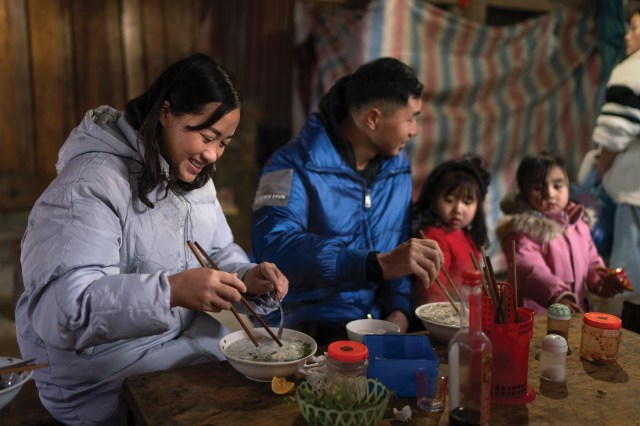
Neuralink is a company formed by SpaceX and Tesla co-owner and engineer Elon Musk with the mission to “create a generalized brain interface to restore autonomy to those with unmet medical needs today and unlock human potential tomorrow.”

Many are praising this advance in neurotechnology, especially for its ability to enhance the quality of life for those who suffer from neurological disabilities, like Arbaugh. Yet others have raised significant ethical concerns, including data privacy and security, potential risks for users, and equitable access.

After seeing Arbaugh post about his faith last year, CT reached out to ask him how he grapples with the implications of this technology—its promises as well as its ethical and theological tensions. He shared about the abundance of Christians in the neurotechnology field, the reasons he named his brain implant Eve, and his spiritual journey throughout the process. This interview has been edited and condensed for clarity.

Can you tell us a little bit about yourself and where you come from?

I’m from a smallish city called Yuma, Arizona. It’s basically in the middle of a desert. It was always hot here. I grew up in a nondenominational church, around 2,000 members. My mom started going to a church here when I was a little kid. I worked with her. I worked at a summer camp for kids when I was in college. So I was always in the church. I was a student leader at my church when I was in high school. And so it was fun growing up; it was a really good time.

My college studies were international studies with an emphasis in politics and diplomacy. I wasn’t planning on using that specifically for anything. I was always interested in politics, and I was always interested in the world in general. And so it seemed to fit with my interests, but ultimately I was going to use it to possibly go to law school.

How did your accident change your life and faith?

Within the first year after my accident, I had just met someone, and the first thing he asked me was “Do you ever consider suicide?” I think it’s a valid question for someone in my position. A lot of people struggle with whether or not it’s even worth living at this point. I need someone to help me with just about everything in my life. I’m an incredible burden on all those around me.

I’ve been incredibly blessed to have a family who was willing to take me in and to ultimately just love me and say that it is worth still having you around. I believe personally that that day that I was injured, it was not an end to my life, but a beginning in a lot of ways. I believe God saved me that day. The path that I was on before my accident is something that I’ve thought about tremendously.

Even though I grew up in the church, when I went to college I definitely didn’t live a godly life at all for years. And I wasn’t planning on it. My goal was to go and do everything I want to do when I’m young, and then when I get older, I’ll settle down and turn back to God—I’ll do it on my time, on my terms. Obviously, that didn’t happen, but I was on a path to destruction, and God saved me that day. There were times where I was incredibly angry, bitter. But ultimately, I knew in my heart that I would always turn back to God. And so I’ve always felt as if I had a purpose.

I found very early on that maybe my purpose is not to be a Job. I’m sure many people believe that they are Job in their lives, that their story is Job’s. I thought very early on that maybe I was one of Job’s children who got killed in a terrible accident and my mom is Job—and I am her tribulation.

How would you describe your reasons to apply for Neuralink?

I had no idea what Neuralink was when I first was given the opportunity to apply. My buddy called me one day and said Neuralink opened up their human trials: “Do you want to get a chip in your brain?” We applied right then and there over the phone. He filled it out for me. We made some jokes about it just because I wasn’t taking it incredibly seriously. I said I wanted an Iron Man suit in the application letter.

In the process of becoming the first patient, did you talk about your faith in your daily life?

No, I don’t think it came up at all, honestly. Not at first, at least. In this field, I don’t expect to see a lot of religious people—in the tech field, the medical side of things. But then we started meeting people face-to-face, and they met with me and my mom. My mom is very open with everyone about her faith, so it very quickly became known who we were.

And I was blown away by the number of people who shared our beliefs. I think about everyone that I met on the medical side; the vast majority of them were Christians. We very quickly connected with all of them on a very personal level. And it became more of an open discussion.

When I went in to do my surgery, the last thing I did before they put me under anesthesia was ask if I could pray over the room. And so I prayed over all the surgeons and the nurses and everyone that was a part of this. My prayer was put on the hospital intercom, and even Elon was listening in by phone. I especially prayed for my mom because I knew she was going to be a wreck while I was having brain surgery.

How has this whole process of getting an implant and meeting those people influenced your faith?

It made me step out of my comfort zone quite a bit. I was always very afraid about excluding people from this process or offending people. I thought it was my responsibility to be a good advocate for Neuralink. Posting for the first time on X about my faith was one of the most nerve-racking experiences of my life. I was extremely afraid. I was more afraid about posting about my faith than I was about the brain surgery. The brain surgery was so simple!

I noticed you named your implant Eve. Why is that?

There were a few different reasons why I chose the name Eve. I’ve always loved the name Genevieve. And then there’s WALL-E and EVE, or Eva. So I thought that’s kind of cute, being robotic and everything. I also said we’re on the eve of something great with Neuralink. Then, obviously, God made Adam, and he gave Adam a helper named Eve. And I always like to throw in a little joke: Adam and Eve cursed humanity, and so I said maybe it’ll be the same thing with me and this implant.

Elon Musk has mentioned two other goals for the future of Neuralink apart from helping people with spinal injuries: He said it could help us prevent the AI overlords from overtaking us. And he said it could help us to have a kind of enhancement, like an extra brain connection to a computer, so he can finally work on his electric-airplane business. What do you think about those goals?

I’m really excited about that sort of future. I believe that cybernetic enhancement is really fascinating. I know when that day comes, it might be a much different story about how it’s implemented and how it’s controlled. I don’t believe that’s ever stopped us from moving forward in the past. You would hope that it would give people pause to think through the ramifications—to think through exactly what direction we’re going and how it is handled.

You are training the Neuralink machine, but the machine is training you as well to learn to move the cursor by thought. How do you feel about that? And how is your brain data protected?

I learn the little quirks of the implant and the software side of things just as much as it learns from me. Who knows what I’m changing in the brain just from having this implant? Maybe that will become apparent in five or ten years.

Neuralink has my data; I don’t care what happens in 50 years. As far as my data goes, very specifically, they’re allowed to do whatever they want with it. I don’t do anything bad on my computer, so I’m not worried about my data. I feel confident that my data is stored safely with Neuralink since they have good cybersecurity and firewalls.

Are there any boundaries in what you want the machine to be trained in?

I don’t want this to become a situation where you can control people’s minds, control people’s thoughts—where you can write onto someone’s brain things that you would like them to see or hear or act. But I think there is almost an infinite number of applications, such as being able to input and output different languages. So those sorts of things I’m really excited for. Again, I’m blown away by what the Neuralink is capable of, and it’s just implanted in my motor cortex.

Neuralink now has specific motor-cortex data which could be duplicated in an Optimus Robot from Tesla. There are many technological possibilities we can think of. But how might you personally, as Noland Arbaugh, the first Neuralink patient, make a difference for the future of technology?
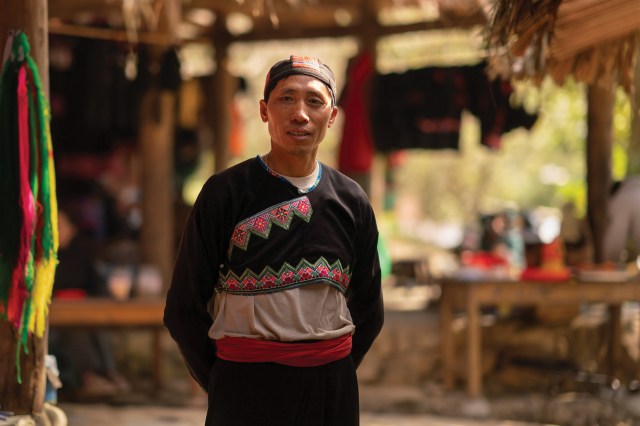
I have a vision of what the brain-machine implant can be used for, and I hope that those visions come true in 50 years. Anything technology can be used for good or bad. The internet, telephone, and any technological advancement can be used for good and bad. It is a tool for humans to use. I am extremely positive on that front—that the people who will use this, the vast majority of them, will use it for good.

I have no doubt in my mind that there will be people who use it negatively. That is just a fact of life. But that goes for everything in our world. Humans are good and evil. And this technology shouldn’t be hindered because of that. I don’t think it will be, so it gives me a lot of hope for the future. I think the good will far outweigh the bad.

You’re very aware of your position and role as the first patient, and you’re an ambassador for Neuralink, but you also have a chance to talk with the developers. Do you think, as a Christian, you have something special to bring to the table in the ethical discourse surrounding this technology?

I hope this is something that I am more comfortable talking about as time goes on. It’s not something that I am extraordinarily well-versed in. I do believe that as a Christian, I have a unique perspective on all this. I have found that a lot of people I work with on the Neuralink side also share my beliefs, and they also share my vision of wanting to help people with disabilities first.

As a Christian, I hope to give this discourse an extra layer of something that maybe they’re missing if they’re just looking at things from the business or tech or science side of things. Hopefully, I can be there to bring a different perspective—and ultimately my platform to spread the Good News so that, if nothing else, people might hear about Jesus.

Some see human beings as essentially just slow computers held together by meat—reducing us to the biological. What do you think of that?

If we were just the body, if everything was just neurons firing in our brain, we wouldn’t be who we are. Our conscience gives us our morals in the world, and I believe all of that comes back to God ultimately. Without our conscience, we have no connection with God. But how much of the brain can you take away and still have a conscience? Where is it located? If we took away half of the brain, would you still have a conscience?

As a Christian, how do you view the human body, the bodily resurrection, and the soul?

There’s a lot to look forward to in the Resurrection, and it’s not just about a bodily resurrection. It’s not just about being in our perfect bodies. It’s about having a complete resurrection of the soul and of being finally in the presence of God. I do want a body that is perfect, but even more I want this desire for sin to be gone.

We talked about faith and technology. Some Christians say technology distracts us from God. What is your view?

Yeah, it’s something I’ve thought a lot about. It’s something that I am not sure I fully appreciate but I’m working toward—because anything can become an idol in our world. Anything can become a distraction, something that we treasure in our heart more than God—and that has nothing to do with the item. We need to learn to treasure God first and to be able to put aside these distractions.

That doesn’t mean they aren’t still useful. It doesn’t mean we can’t still push the boundaries of things. I’ve been given this opportunity to be a part of this study and to use the Neuralink for whatever I want, for as long as I want. And what am I going to do with it? After eight years of being paralyzed and not being able to do anything, am I going to take this and now turn away from God because I don’t need him anymore?

I have just been reading The Reason for God by Tim Keller. He says that what people don’t realize is that freedom is not about being free from every constraint. It’s about finding the constraints that give you the most freedom—the freedom that comes with being a Christian.

Maaike E. Harmsen is theologian earning a PhD in new technologies and Reformed philosophy.

News

Apologist Wesley Huff Goes to Modern-Day Mars Hill: Joe Rogan’s Podcast

The even-keeled Canadian scholar is amassing a growing platform to defend and explain early biblical texts after a viral debate and popular interview.

Joe Rogan and Wesley Huff
Christianity Today January 27, 2025
Illustration by Elizabeth Kaye / Source Images: Youtube

Apologist Wesley Huff’s modest YouTube following of around 1,200 surged to 450,000 this month. Hundreds have reached out to say they have picked up a Bible, started going to church, or professed faith because of something he said. His parachurch organization, Apologetics Canada, is fielding record levels of interest.
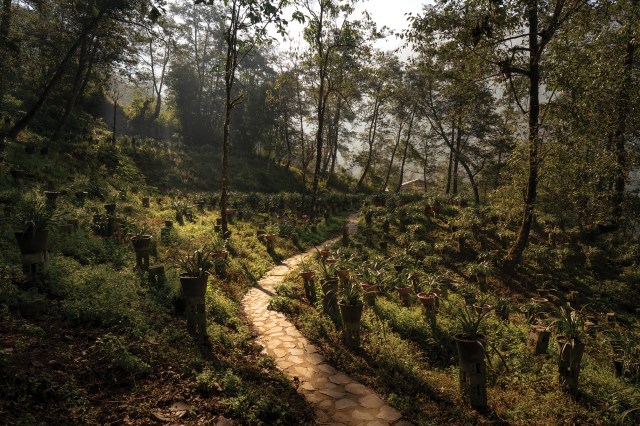
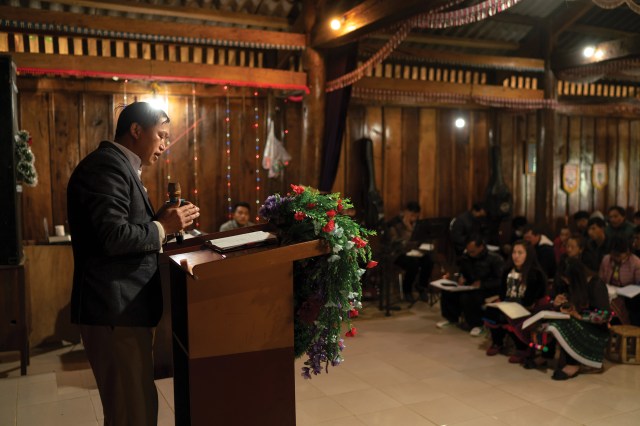
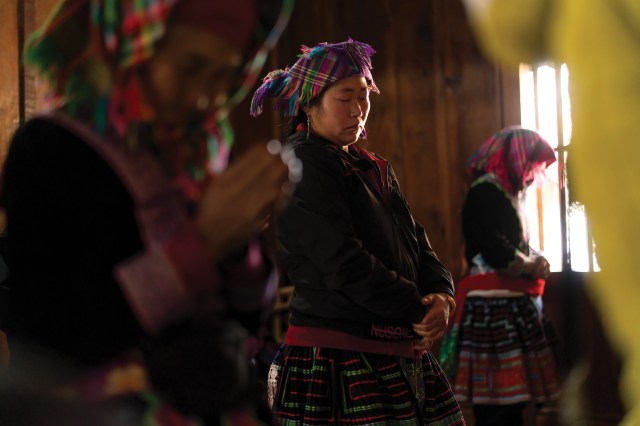
It’s a spotlight the 33-year-old Canadian PhD student never expected.

But on January 7, Huff became the first biblical scholar to join the ranks of over a thousand celebrities, fitness gurus, philosophers, scientists, authors, activists, conspiracy theorists, and skeptics who have appeared on the most popular podcast in the world, The Joe Rogan Experience.

Huff landed an invite to the show after a viral debate on YouTube with a former Rogan guest got the host’s attention. Rogan, a comedian and fighting commentator, has branded himself a truth seeker, building a massive audience around his winding, off-the-cuff interviews with friends and guests over the past decade.

Huff presented historical evidence for the accuracy of the Scripture and asked the host what he thinks of Jesus. Christian listeners celebrated his episode as a sign that Rogan’s skepticism has been shifting toward openness to faith. Since the show has 33.5 million followers across Spotify and YouTube, some commentators suggest Huff’s interview could represent “the single widest-reaching broadcast of the gospel message in history.”

It’s all a bit overwhelming. Huff said he’s offsetting his imposter syndrome by reminding himself that only God could orchestrate such an unexpected connection.

“I’ve felt more reliant on the Spirit’s leading than I have for a long time,” Huff said.

In his testimony, Huff recounts how he was suddenly paralyzed from the waist down at age 11, then totally healed four weeks later. He remembers it as the craziest month of his life. This month might rank second, he told CT, and become another turning point in his faith story.
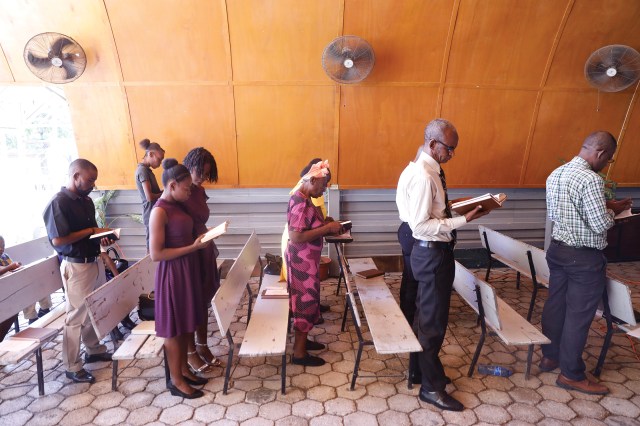
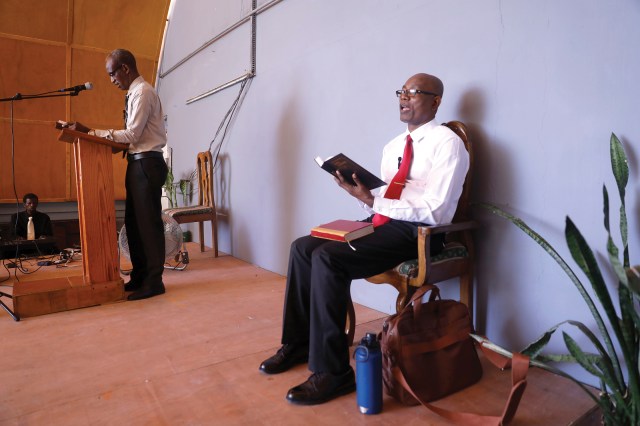
The attention began in December, when Huff—who researches early Christian manuscripts, ancient languages, and scribal transmission—posted the full two-hour video of his debate with Billy Carson, an author who claims aliens visited ancient civilizations and denies the Crucifixion.

With restrained patience, a library of scholarship behind him, and a kind, Southern Ontarian lilt in his voice, Huff defended Scripture and dismantled the authority of certain noncanonical and plagiarized texts cited by Carson, such as the Gospel of Barnabas

The debate went viral, and Carson, who didn’t want it released, threatened Huff with a cease-and-desist letter. Meanwhile, Rogan sent Huff a direct message on Instagram to ask him on his show.

The invitation came on Christmas Eve, right as Huff and his wife were scrambling to find a missing stocking, but the apologist immediately agreed to an in-person interview scheduled less than a week later.

Rogan’s podcast draws a largely young male audience, and around 90 percent of its guests are men. Huff considers himself a “semi-regular” listener. A doctorate student at University of Toronto’s Wycliffe College, he has made several videos in response to Rogan’s inaccurate claims or questions about the Bible over the years, including the theory that New Testament stories came from psychedelic mushroom hallucinations.

Rogan has been widely criticized for spreading misinformation, entertaining conspiracy theories, and platforming false ideas. His fans appreciate his openness and curiosity, his willingness to change his mind, and the way his conversations can really go anywhere.

By the time Rogan asked him on the show, Huff already knew Rogan’s interview style and propensity for tangents; his historical interest in figures like Marcus Aurelius, Genghis Khan, and the pharaohs; and his growing interest in Christianity, with the influence of repeat guest Jordan Peterson.

“I think the purpose of a conversation like this is to make inroads with someone like Rogan,” Huff said in an interview with CT. “When you see Paul, when he’s at Mars Hill, he’s speaking to his audience, and he’s drawing from his audience’s perspectives. And he’s not necessarily giving a go-in-for-the-kill gospel presentation, but he’s relating it to the gospel.”

Huff also likened his approach in the interview to the approach of Paul in 1 Corinthians 9:9–23: “To the Jews I became like a Jew, to win the Jews. To those under the law I became like one under the law (though I myself am not under the law), so as to win those under the law.”

During the conversation, they wandered from talk of verifying ancient documents to creation myths like the Babylonian Enuma Elish to ancient Egypt and the pyramids. Huff also pushed back on what he saw as Peterson’s use of Jesus as a moral figure rather than a teacher.

Toward the end, Huff asked Rogan a question directly: “What do you think of Jesus?”

“Well, it certainly seems like there’s a lot of people that believe that there was this very exceptional human being that existed, so the question is ‘What does that mean?’” the host responded. “Does it mean he was the son of God? Does it mean he was just some completely unique human being that had this vision of humanity and this way of educating people and spreading this ideology that would ultimately change the way human beings interact with each other forever?”

https://www.x.com/solamediaorg/status/1882096323215737001

Huff said he was impressed by his answer.

“He’s not a Christian; he doesn’t profess to be a Christian. But I could tell he was mulling over things much in the same way that when Jesus talks to his disciples in Mark chapter 8 and asks the question ‘Who do you say that I am?’” Huff said. “I could tell that he was thoughtfully engaging with who the person of Jesus was, especially since we’d spent a good amount of time talking about the fact that there is a historical Jesus, a fact that he’s questioned in the past.”

Evangelicals shared clips from the show on social media, mostly applauding Huff’s research, direct answers about Christian beliefs, his willingness to say “I don’t know” when asked about topics beyond his expertise, and his instinct to offer correction for any instances he misspoke or made mistakes during the unscripted interview.

Some were Rogan fans excited to hear an explicitly Christian voice on the podcast, and some tuned in for the first time out of curiosity.

https://twitter.com/HonestYPTweets/status/1877739394183864626

Denny Burk, pastor and biblical studies professor at Southern Seminary’s Boyce College, called Huff’s interview a “masterclass of careful scholarship and Christian apologetics.”

Australian pastor Stephen McAlpine blogged about Huff’s concise gospel presentation to Rogan’s “sweary, sweaty” audience, who may go unreached by typical apologetics.

“Huff is proof that, although many an apologetic argument in this current anxious age has switched from issues of reliability and historicity to issues of meaning and purpose, you cannot have one without the other,” he wrote. “After all, all sorts of ‘woo-woo’ can offer you meaning and purpose, but if they cannot be backed up by reality or reliability, then they are on shaky ground. There is a good chance they cannot hold the weight they promise to hold.”

Commenters watching the Carson debate remarked on Huff’s demeanor, the way he could offer correction and evidence without gloating or shouting down his opponent. Perhaps that’s partly because of his Canadian roots, he said, but it’s also a deliberate effort to avoid being a “bombastic” debater.

Huff cited the lines before and after the popular apologetics verse “Always be prepared to give an answer to everyone who asks you to give the reason for the hope that you have” (1 Pet. 3:15), which instruct Christians to “revere Christ” and speak “with gentleness and respect.”

“I’ve always felt very convicted that it’s about the hope more than it’s about winning an argument,” he said. “People are going to ask questions about the reason of hope you have, not necessarily that you’re going out there defending and tearing down arguments, although I think that there’s a place for that.”

YouTube and social media have emerged as new platforms for gospel proclamation and evangelism; some speakers are informative and winsome, some get views for being combative and reactive. Online apologists are seeing fruit and whispers of a revival, viewership numbers tick up and as follows share testimonies of new belief and changed minds.

In addition to a video series called “Can I Trust the Bible?,” filmed on the ground in Egypt with Apologetics Canada, Huff has a personal YouTube channel to share response videos and explainers with titles like, “Onomastic congruence – how names show the Bible’s accuracy” and “Is God’s name Jehovah or Yahweh?”

With a new level of attention around him and his work, Huff said his focus remains working with Apologetics Canada to equip the church to respond to a new era of apologetics questions from the spiritual but not religious, from people turning to New Age, from anyone hurting and looking for hope.

He quoted Blaise Pascal: “Make religion attractive, make good men wish it were true, and then show that it is.”

“That’s what we at Apologetics Canada want to do,” he said. “We want to make people wish that Christianity was true by the way that we act, and then we want to show them that it is true. It’s been a real gift to be able to have more people be aware of the ways that we are attempting to do that.”

Huff said he remains in touch with Rogan and, during the show, left him a memento.

Huff cut out Egyptian papyrus in the exact shape of an ancient scrap believed to be the oldest record of a New Testament text and copied the bits of Greek script by hand.

“You for real nerded out,” Rogan chided as he held up the facsimile of a fragment known as P52.

The verse on the parchment comes from John 18, where Jesus proclaims, “Everyone on the side of truth listens to me,” and Pilate responds, “What is truth?”

addApple PodcastsDown ArrowDown ArrowDown Arrowarrow_left_altLeft ArrowLeft ArrowRight ArrowRight ArrowRight Arrowarrow_up_altUp ArrowUp ArrowAvailable at Amazoncaret-downCloseCloseellipseEmailEmailExpandExpandExternalExternalFacebookfacebook-squarefolderGiftGiftGooglegoogleGoogle KeephamburgerInstagraminstagram-squareLinkLinklinkedin-squareListenListenListenChristianity TodayCT Creative Studio Logologo_orgMegaphoneMenuMenupausePinterestPlayPlayPocketPodcastprintremoveRSSRSSSaveSavesaveSearchSearchsearchSpotifyStitcherTelegramTable of ContentsTable of Contentstwitter-squareWhatsAppXYouTubeYouTube