Ideas

Pakistan’s Christians Fear Forced Marriages. Punjab Court Ruling Brings New Hope

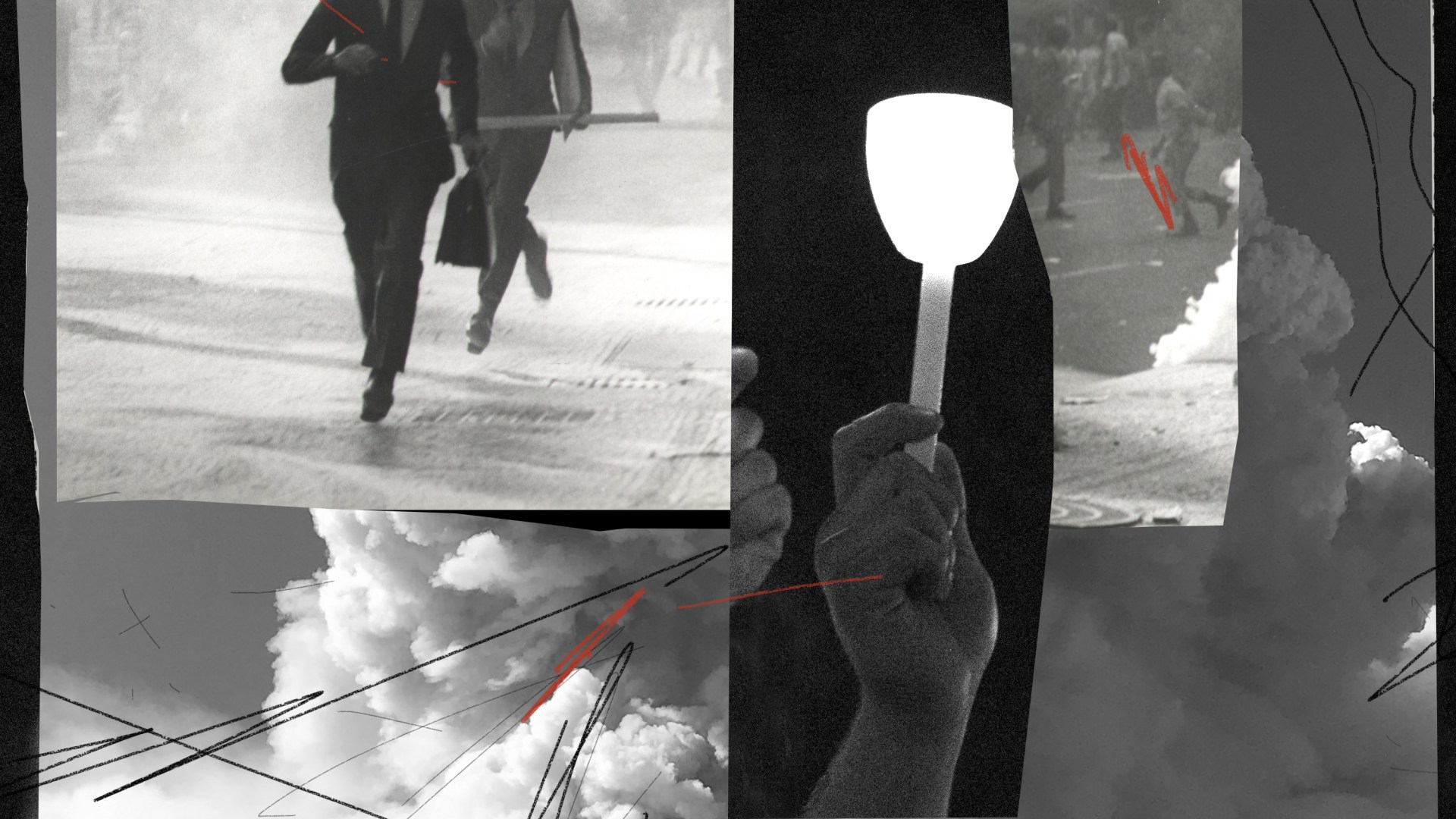
Church leaders and human rights experts weigh in on whether raising the legal age is sufficient in shielding minors.

Christianity Today May 31, 2024
Illustration by Abigail Erickson / Source Images: Getty

Nearly one in five (18.3%) Pakistani girls are married before age 18, according to data from 2017 to 2018, with over half becoming pregnant as children. Many of these girls are of Christian or Hindu faiths that collectively make up 3.5 percent of the population, which is majority Muslim.

While the government has officially banned child marriage, discriminatory laws and lack of enforcement have allowed the practice to persist. Most child marriages are arranged by families, but an estimated 1,000 girls are abducted, converted to Islam, and then forcibly married to their abductors each year. These child brides face heightened risks of pregnancy-related health complications and maternal mortality.

A recent ruling by the Lahore High Court could provide another tool for advocates and church leaders trying to protect Pakistani girls. In April, it struck down a provision of the 1929 Child Marriage Restraint Act that set the minimum marriage age at 16 for girls but 18 for boys. Deeming this definition of a child as “discriminatory and unconstitutional,” the court directed the province of Punjab to revise the law with a uniform minimum age of 18 for both genders.

The judgment cited Pakistan’s constitutional guarantees of gender equality and protection of women and children’s rights and presented data showing how adolescent pregnancy is one of the leading causes of death for 15- to 19-year-old girls.

“We, as a nation, woefully lag behind in all major indicators, and half of our population cannot be lost to childbearing at an early age while its potential remains untapped,” wrote Justice Shahid Karim. “Equal opportunities for females mean equal restraint on marriage as the males.”

As Punjab becomes the second Pakistani province (out of four) to adopt 18 as the minimum marriage age for both genders, advocates have faced challenges trying to toughen and enforce penalties on those who violate existing laws.

Shortly after last month’s ruling, the Provincial Assembly of the Punjab introduced a bill that would result in severe penalties for adults engaging in child marriages as well as for those facilitating such unions, including parents or guardians. Offenders could face imprisonment of up to two years and/or a substantial fine of up to 2 million Pakistani rupees (about $7,200 USD).

While many Christian and other religious minority groups support such legislation and are thankful for the court’s ruling, not everyone agrees on its efficacy. CT asked four leaders on whether the legal system is effective in curtailing forced marriages and conversions. Their responses are arranged from “no” to “maybe” to “yes.”

Asher Sarfraz, chief executive, Christians’ True Spirit, a ministry for children in poverty, Lahore

The Lahore High Court’s decision, as triumphant as it may sound, is insufficient without a societal shift. Passing an order at the judiciary level will not bring any change, because the order has to be implemented by law enforcement agencies. If these agencies are not willing to carry the change and to allow victims’ families to feel secure in bringing their grievances to them, and to assure that unbiased procedures would be followed to bring justice, then no amount of judgments will lead to a change.

Child marriage is strongly knitted into the culture of Pakistan, and breaking the age-old chain requires a total shift not only in the mindset of people but also on the various levels of law enforcement authorities, who have to help uphold the law and carry out unbiased actions. Therefore, I believe there will be no impact on cases of forced conversion and forced marriages.

In 2014, the Pakistani supreme court mandated the government to organize a federal task force to promote religious tolerance and to set up a council to monitor the rights and safeguards provided to minorities under the constitution. But even after ten years, it has not been fully implemented.

Making child marriage unacceptable in Pakistan relies on educating the public, training judges and officials, and challenging the religious beliefs that justify child marriage. Ending this pernicious practice will require a multipronged effort uniting government, civil society, and communities nationwide.

Ruby Naeem John, codirector, Bethel Evangelistic Organization, Islamabad

I am not sure whether the changes to the Child Marriage Restraint Act will prevent forced marriages, because I believe that by only changing the law, change will not happen. The mentality of people also must be changed.

In general, the church in Pakistan needs to strengthen and disciple families through family ministry, and churches must do a better job educating Christian families about the consequences of marrying off their minor daughters or letting their sons marry minor girls.

Unfortunately, in the last few decades, Christian boys haven’t prioritized education and thus end up economically weak. At times, Christian minor girls are inclined to marry Muslim men because they see their financial future secure with them. We need to help economically empower our Christian boys. Christians must learn to take responsibility for their actions and not blame everything on forced conversions.

I do agree that there are genuine cases of abduction and forced conversion of minor girls, and that strict implementation of the law in the future may curtail this crime.

Peter Jacob, executive director, Centre for Social Justice, a research and advocacy organization

We welcome this new decision from court that comes nearly 100 years after the 1929 Child Marriage Restraint Act was enacted, a progressive and historic decision that sought to protect the rights of women and, especially those who are minority.

More than 70 percent of girls who are abducted or who willingly flee with Muslim men, and then are converted and married, are underage. If this law is implemented in letter and spirit, it will help prevent forced conversions.

The advantage of having the law is that at least people can have recourse to law and justice. That said, laws do not become operative by themselves—they only serve as a deterrence. The judges know it, the lawyers know it, and that awareness contributes to implementation of the law indirectly. Nevertheless, in case of a violation, the matter has to be brought to the court in the process of law.

This bill, at least, is a step in the right direction, even though no one can use it to challenge any marriage right now, until all legal formalities are complete and it becomes a law. But the mere presence of such a bill will at least have persuasive value.

According to UNICEF, 18.9 million girls in Pakistan are married before they attain the age of 18 and 4.6 million before they turn 16. Anybody contracting marriage with a girl under 16 is already against the law. Those violations are already happening and can be stopped by exercising the existing law.

Azhar Mushtaq, general secretary, Pakistan Bible Society, Lahore

The proposed legislation, once implemented, will fundamentally counter the reprehensible practice of forced marriages involving minors, particularly girls as young as 12 or 14 years old. At such an impressionable age, these children can easily be subjugated through threats and coercion into marriages. The law recognizes that an 18-year-old is more developmentally equipped to evaluate such a monumental decision.

However, the harsh reality is that even adults can fall victim to being deceived, compelled, or abducted into marital arrangements. So, while the legislation cannot eradicate all instances, its core purpose is to erect legal safeguards to protect society’s most vulnerable—innocent children—from being exploited and robbed of their formative years.

Despite present judicial measures and oversight, bad actors can still exert insidious influence to intimidate and pressure a minor girl into falsely professing a consent she doesn’t actually possess in her heart and mind. This law endeavors to be a safeguard defending these vulnerable young lives from such repugnant coercion.

Undeniably, there are certain areas in Pakistan where the implementation of this law may prove challenging. These areas are dominated by influential individuals, and law enforcement agencies are powerless against them. The masses in these regions operate according to their own whims, disregarding the law.

But this legislation represents vital progress in recognizing and combating what is inexcusable, and one hopes that this will become a shield for those that are most susceptible to exploitation through such antiquated and abhorrent marital practices.
Theology

Kwame Bediako Still Defines the Debate on African Culture and Christianity

Seven leaders weigh in on the late Ghanaian scholar’s provocative legacy 20 years after his best-known book.

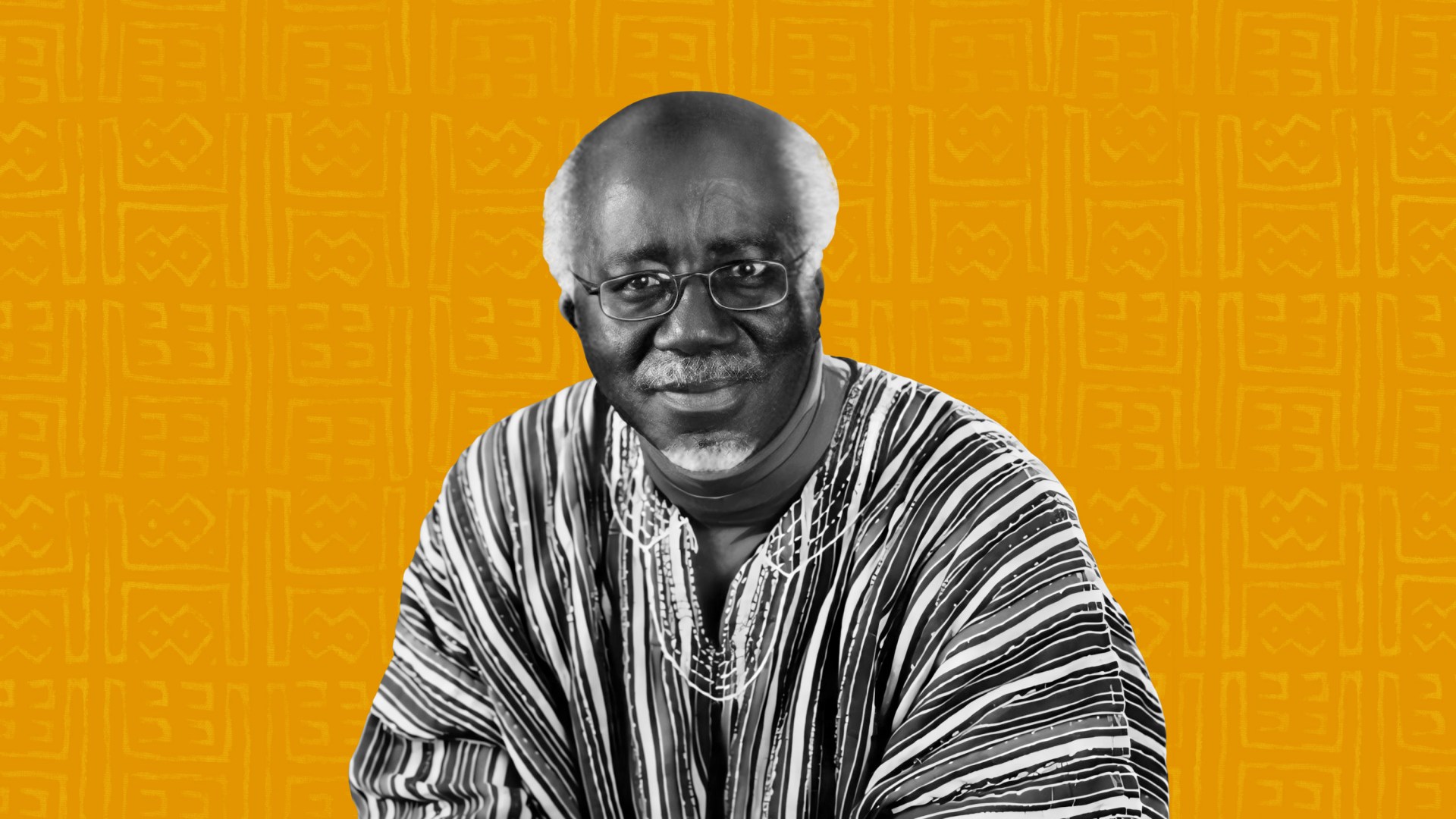
Kwame Bediako

Kwame Bediako

Christianity Today May 31, 2024
Illustration by Christianity Today / Source Images: Courtesy of Gillian M. Bediako

Jesus and the Gospel in Africa: History and Experience (Theology in Africa)

Jesus and the Gospel in Africa: History and Experience (Theology in Africa)

Orbis.

124 pages

What Luther and Calvin are for evangelical Christians globally, Kwame Bediako is for many African evangelicals. From his dramatic conversion in 1970 to his death in 2008, Bediako was the primary architect of and inspiration for theological work that grappled with the realities of African culture.

On this 20th anniversary of the publication (by Orbis Books) of some of Bediako’s most influential essays in Jesus and the Gospel in Africa: History and Experience, his memory still reverberates across the continent, as indicated by the seven reflections collected below on his ongoing influence.

Born and raised in Ghana, Bediako was a professing atheist studying existentialist literature as a doctoral student in Bordeaux, France, when an awareness of Christ as the truth powerfully overwhelmed him while he was showering. He finished his degree in French literature but turned his powerful mind to the Bible and theology, later completing a second doctorate in Aberdeen, Scotland, under missiologist Andrew Walls, who called Bediako “the outstanding African theologian of his generation.”

Bediako attended the First International Congress on World Evangelization in Lausanne, Switzerland, in 1974, meeting other prominent Majority World evangelicals including René Padilla, Samuel Escobar, and Vinay Samuel. At that time, he conceived the idea of a research center on the relation between the gospel and African culture. With support from his denomination, the Presbyterian Church of Ghana, that vision was realized as the Akrofi-Christaller Institute of Theology, Mission and Culture (ACI) in 1987.

While self-consciously evangelical, Bediako sought connections between the gospel and African traditional religion. He argued that the gospel’s success in Africa “shows clearly that the form of religion once held to be farthest removed from the Christian faith [i.e., African animism] had a closer relationship with it than any other.”

Bediako contended that Jesus Christ speaks to us in terms of our “human heritage.” In one of his essays, he argued eloquently from the New Testament, especially the Book of Hebrews, that Christ was our “elder brother” fulfilling the mediatorial function that African traditional religion ascribed to ancestors.

While rejecting claims of radical continuity between African religion and Christianity, Bediako also differed from the emphasis on radical discontinuity associated with Nigerian Byang Kato, first general secretary of the Association of Evangelicals in Africa. That tension between Bediako’s and Kato’s views on the interaction between the Christian faith and African culture persists today and appears in two of the reflections presented below.

Ebenezer Yaw Blasu, research fellow, Akrofi-Christaller Institute, Akropong, Ghana

I first met Kwame Bediako in 1988, when I was a Presbyterian student pastor. He was busy sorting books in what is now ACI’s Zimmerman Library. In our brief conversation, he exhorted me to ensure “Africanness” in my ministry. I listened, but without enthusiasm. At the time, my main theological inspirations were Karl Barth and John Macquarrie, who did not say anything about indigeneity in doing theology.

In 1990, I was invited to speak at an evangelistic outreach in Ottawa, Canada, on the role of Christianity in transforming indigenous cultures. Suddenly, Bediako’s earlier exhortation resonated in my mind. As if by divine intervention, I ran into him in Accra on my way to the airport. He excitedly handed me a new book he had published, Jesus in African Culture: A Ghanaian Perspective. Reading this book while in flight highly informed my message and contributed significantly to its success. For the first time, I spoke as an African evangelist outside Africa, to the glory of God.

Bediako believed that the theological education curriculum in Africa should equip Christian leaders for their task by connecting them with the redeeming, transforming activity of the living God in the African setting. If Africa is now a heartland of Christian faith, he insisted at a 1996 workshop, then “a positive affirmation of African Christianity, and not merely an African reaction against the West,” should be the driving force in curriculum development.

Kwame’s work has liberated my mind by establishing the undeniable truth that Christianity is not a “Western religion,” nor are Westerners the final arbiters of Christian theology and faith. Genuine theology needs contextual inputs, including those from indigenous or grassroots experiences. Hence, African Christianity needs to and can produce African theologies that contribute to the theological thinking of world Christianity.

Seblewengel Daniel, director, East African Sending Office, SIM, Addis Ababa, Ethiopia

Kwame Bediako was my PhD supervisor. His lectures were both intellectually stimulating and spiritually nourishing. He was equally committed to the deep rootedness of the Christian faith in the Scriptures and its authentic indigenous expression.

Bediako strongly advocated for a continuous engagement between gospel and culture. He asserted that people should engage their pre-Christian heritage with confidence in the power of the Spirit to guide and illuminate them. Conversion, he said, is not abandoning one’s heritage altogether and taking on a foreign identity but turning to Christ with the totality of one’s being. The divine encounter, therefore, will enable one to be an authentic African Christian.

Kwame was a charismatic preacher and teacher. The depth of his knowledge about and commitment to the church in Africa was beyond description.

Professor Bediako was very warm toward his students and had a delightful sense of humor. He took great interest in our lives and the lives of our family members. He made time to visit students in their homes, and he and his wife, Mary, invited us to their home for meals.

I value his unwavering dedication to empowering female theologians. He intentionally pursued affirmative action in his institute by appointing women to higher leadership positions.

Aiah Foday-Khabenje, former general secretary, Association of Evangelicals in Africa; country director, Children of the Nations, Freetown, Sierra Leone

Kwame Bediako’s groundbreaking work Theology and Identity framed theology in terms of self-identity as a foundation and hermeneutical tool for theological reflection. Jesus and the Gospel in Africa is a collection of articles on how Christ could be the answer to the questions Africans ask about issues relevant to their context, in contrast to the questions raised by missionary Christianity from the West. It demonstrates how God can speak to Africans in African idioms and through hearing in African mother tongues what God has done.

Bediako’s theological beliefs were inspired by his personal experience and how some church fathers practiced their faith in the context of the Greco-Roman culture. Bediako believed that it was possible for people to connect with Christ through their cultural beliefs, without the gospel having to reach Africa through Western missionaries.

One might assume that Bediako’s quest was simply about putting an African face on theology, providing Christian truth with contextually sensitive illustrations and applications. However, these aspirations for African theology were more complex and diverse than contextualization. They also involved an attempt to identify a correlation between Christianity and African culture, or between African traditional religions and the Christian worldview. This aspect of his project has raised doubts about the orthodoxy of his approach.

Diane Stinton, associate professor of world Christianity, Regent College, Vancouver, Canada

Under Bediako’s supervision of my PhD studies on contemporary African Christologies, I came to appreciate his enduring contributions to theological scholarship. He highlighted Africa’s role in Christian history, recovered the importance of primal religions to the flourishing of African Christianity, insisted on an integral identity for African Christian believers, integrated African Christianity into mainstream studies of Christian history and theology, and emphasized vernacular and informal expressions of theology.

After completing my PhD, I helped to launch a master’s degree program in African Christianity at Daystar University in Nairobi, inspired by its equivalent at ACI and graced by Bediako’s inaugural lecture in 2006.

A central conviction within Bediako’s scholarship and ministry was the tremendous significance of mother-tongue Scriptures in Africa. Against the denigration of African languages, cultures, and religions by many Western interpreters, Bediako followed his mentor Andrew Walls in seeing African Christianity as a living demonstration that the gospel is “infinitely translatable.”

Bediako exemplified what Kenneth Cragg called “integrity of conversion.” He exhibited an all-encompassing faith that gathers up “the broken fragments of our history”—a phrase from a Kenyan Anglican Communion prayer that he loved to quote—and places them before Jesus to be redeemed.

Kayle Pelletier, lecturer, South African Theological Seminary, Sandton, South Africa

As a seminary student sensing God’s call to theological education in Africa, I took a course on African traditional religion (ATR). There, I encountered Kwame Bediako for the first time. In the early 2000s, Bediako was one of the few African theologians whose work was readily accessible.

Now, after 20 years of doing theological education in Zimbabwe and South Africa, I find myself returning to Bediako to better understand why Africa remains such a syncretistic religious environment even though Christianity has been on the continent for more than a century.

Responding to derogatory Western estimations of ATR, Bediako rightly placed value on the primal religious conditions that enabled the gospel’s acceptance in Africa. Bediako sought to define an authentic African Christian identity through the African people’s pre-Christian religious experiences and beliefs. However, connecting similar, continuous elements of pre-Christian beliefs with Christian beliefs has only exchanged Western philosophical and cultural influence on Christianity for African influence, contributing to a syncretistic, tradition-accommodating gospel. Scripture, through which we must interpret any pre-religious culture imbued with general revelation, transforms belief and practice into its biblical image, creating an authentic Christian identity for all.

Nathan Chiroma, principal, Africa College of Theology, Kigali, Rwanda

As a young African theologian (originally from Nigeria), I attended two of Kwame Bediako’s seminars in Ghana. He encouraged me, as a young African theologian, to cultivate in-depth theological contemplation ingrained in my African background. Through his works and life, he gave me the confidence and inventiveness with which to approach theology.

One of Bediako’s significant contributions to African theology was the concept that African Christians can practice genuine Christianity within their own cultural expressions, dispelling the myth that Christianity is solely a Western or white man’s religion. He provided me with a model for doing theology in a way that is true to the gospel and the African context, challenged me to traverse the intricacies of religion and culture from a biblical perspective, and prompted me to reassess my preconceptions about African Christianity that had been taught from a Western perspective.

Bediako profoundly influenced many African theological institutions, originally established by foreign missionaries, that taught Western concepts out of step with our African context. His writings have been instrumental in transforming schools to better align with our local perspectives. In addition to redefining the bounds of African Christianity, his dedication to contextual theology has promoted a more inclusive and representative theological debate.

Casely Essamuah, secretary, Global Christian Forum, and Ghanaian native

Before his conversion, Kwame Bediako was an atheist who had arrived at his conclusions intellectually and with such conviction that he couldn’t keep them to himself. After his conversion, he believed that an intellectual life without reference to the living God and the living Christ was futile.

Bediako pursued scholarship in a community that had prayer and worship at its center. He saw scholarship as an opportunity for service and enlarged vision, not merely to please the academy but to equip local church leaders—hence, his insistence that ACI should be located in Akropong, the heart of Presbyterianism in Ghana, and not Accra, the political and educational capital of Ghana. Furthermore, the institute also requires that all master’s and doctoral theses must have abstracts in local languages. It is no wonder that the center he initiated continues to thrive and flourish in his absence.

Books
Review

After Covering Global Disasters for Decades, Nicholas Kristof Is More Hopeful Than Ever

The New York Times reporter’s memoir can refine our perspective on pursuing justice in a fallen world.

Christianity Today May 30, 2024
Illustration by Mallory Rentsch Tlapek / Source Images: WikiMedia Commons

I’ve got my top summer reading recommendation ready for you. In fact, I’m recommending you buy two copies of the book, Nicholas Kristof’s Chasing Hope: A Reporter’s Life. There are two reasons why.

Chasing Hope: A Reporter's Life

Chasing Hope: A Reporter's Life

Knopf

480 pages

I’ll get to the second eventually. But the first is more straightforward: This is a memoir from someone who has led one of the most dramatically interesting lives of the last half-century, as an acclaimed foreign correspondent and columnist for The New York Times.

If you make a list of the world’s most shattering and consequential conflicts, catastrophes, and convulsions over the last 40 years, the odds are very high that Kristof was present to witness them. So too are the odds that someone was threatening to shoot him: warlords smuggling conflict diamonds in the Congo, Sudanese soldiers roaming the deserts amid the Darfur genocide, Egyptian security gangs wielding straight razors in Tahrir Square, Israeli soldiers patrolling the dark streets of Beirut, ragged teenagers marauding with AK-47s in West Africa, or nervous American soldiers trying to contain an Iraqi mob robbing a bank in Basra.

There is an even longer list of terrifying events where the weapons were being directed at people standing next to Kristof. Such scenes involve Tiananmen Square protestors being massacred by the Chinese army, heroin traffickers in Afghanistan, security forces in collapsing Communist regimes in Eastern Europe, or rioting mobs parading heads on pikes in Indonesia.

The book’s narrative would be implausible as a movie script, but it’s irresistible as personal storytelling because there is no hint of bravado, attention seeking, or adrenaline addiction. We simply find ourselves following a very sincere human who, over a lifetime, keeps taking small steps to go see what is happening to other humans who are suffering unspeakable brutality in the hidden corners of our world.

As he goes, he finds himself sharing the unseen terror borne by millions of ordinary people when history’s great catastrophes unfold. And once among them, Kristof becomes the steward of their stories. When, for instance, a weeping rickshaw driver desperately pedals his cart through a hail of bullets in Tiananmen Square, trying to get the motionless body of a bloodied protester to safety, he gives Kristof his commission with a shout: “Tell the world! Tell the world!”

In this case, Kristof (and his journalist wife, Sheryl WuDunn) fulfilled that sacred commission well enough to earn a Pulitzer Prize for their coverage. But such accolades are complicated, as Kristof seems to know: “We were feted as heroes while our Chinese friends who had contributed so much to our reporting were jailed or in hiding or worse.”

Comparing notes on catastrophe

This is not only a book about an exceedingly interesting and thoughtful life. It also poses interesting questions. How ought humans to live with eyes wide open in a fallen world of so much suffering, violence, injustice, and death—yet so much courage, love, undeniable beauty, and pulsating life?

This is why I recommend buying two copies—and with a specific suggestion. Treat yourself to one, and share another with a family member or friend of an older or younger generation. Read it together and compare notes.

For baby boomers, Gen Xers, and millennials, the narrative will take you back through certain seismic and shattering moments of world history. This is helpful, because it’s strangely easy to lose sight of generational trials you’ve already weathered when you are constantly assaulted with the screaming ferocity of today’s apocalypse economy—the outrage industry that demands your obsessive attention to every terrible thing that is surely ending the world.

Chasing Hope helps us see the elevated, longer arc of human events. From this vantage point, you can see the harrowing climbs and treacherous passages through which you and the world have already passed. It doesn’t make current challenges go away, but you may find it puts them in a less catastrophizing, more steadying, even encouraging perspective.

The truth is, there is little that transpires in a given year—let alone in a given 24-hour news cycle—that has the significance, gravity, or peril of a hundred things that shook the world over the last half-century. For example, exactly 30 years ago, the Rwandan genocide unleashed an orgy of murder that saw 800,000 innocent men, women, and children brutally hacked to death within a few short weeks. Nothing happening now or within the last 10 years—nothing—comes close to the speed and scale with which the genocide inflicted terror, death, and tragedy.

At the time, I was a 31-year-old prosecutor at the US Department of Justice. The UN sent me to Rwanda to direct its genocide investigation immediately after the war. That experience changed my perspective on everything that has happened in the world since. It doesn’t lead me to minimize or disengage from the tragedies of today. In fact, I’ve spent most of the last 30 years with my colleagues at the International Justice Mission immersed in today’s heartbreaking struggles to overcome slavery, violence against women and children, and police abuse.

But when I consider the longer arc of the human story, I find I can do this work with an elevated perspective. Much like Kristof in Chasing Hope, I am actually more encouraged and optimistic than ever.

For Gen Z readers, Kristof’s memoir will give you an intimate and authentic primer on the great train of global events that profoundly shaped and traumatized the world you inherited. You could consult Google and get a quick, metallic-tasting AI blurb on each event as you hear it mentioned in disjointed conversations over the coming years. Or you could treat yourself to a deeply human and coherent chronicle of contemporary history through the compassionate, questioning, loving eyes of a farm kid from Oregon who tried to honor the spirit of the world’s most vulnerable people—including Kristof’s refugee father—by telling some of the hardest stories of his day.

I think you’ll find that Kristof’s larger story offers an orienting frame and inspiration for dealing with the rushing scroll of tragedy shorts and screaming trend lines that surround our brains and send the walls of panic closing in. Grant yourself a book-length summer sabbatical from the culture’s newsfeed neurosis and let Kristof’s history transport you to a higher frame of reference.

And then talk about it with your book-club buddy from another generation. What was it like to be alive through these catastrophic and chaotic global events? Who saw things more clearly and wisely at the time, and why? What should good people have done? What should good people do now?

Christ’s heart for the world

These are especially urgent questions for people of Christian faith, who profess to know what Jesus would teach about living in a fallen and violent yet beautiful and worthy world. A world that, according to this same Jesus, he is relentlessly at work redeeming through his grace and through those who follow him.

Although I don’t know if Kristof is a believer, he seems thoroughly Jesus-curious—or, as my kids would say of so many friends, “Christian adjacent.” Kristof writes with a rare appreciation for the earnest, unnamed Christians who are serving, healing, and loving in the most Christlike ways in the hardest places.

In Chasing Hope, many of his most exemplary heroes seem to be following Jesus. Some are famous, like Archbishop Desmond Tutu and Jimmy Carter. But most you’ve likely never heard of: Dr. Catherine Hamlin in Ethiopia, Dr. Tom Catena in the Sudan, Sister Rachel Fassera in Uganda, Dr. Denis Mukwege in the Congo, or the good people of the First Presbyterian Church of Portland, who sponsored his refugee father in the 1940s and made Kristof’s story possible.

For years, Kristof has written a New York Times Christmas column with earnest questions for Christian leaders about Jesus, the Bible, and the behavior of Christian people. As he has come to appreciate IJM’s Christian community around the world and their work addressing slavery and violence among the vulnerable poor, he has asked me similar questions over the years—especially about evangelical Christians in America.

For decades, IJM has been inviting American Christians to recover the biblical teaching about God’s love for the world and Christ’s passion for justice. Indeed, over 27 years, a generation of American Christians has helped power an IJM movement that has brought freedom and healing to hundreds of thousands of people who were enslaved, imprisoned, beaten, raped, and robbed in the world’s poorest communities. It would be a shame for American Christians to lose Christ’s heart for the world and for the vulnerable, leaving their preoccupations more inward, tribal, resentful, political, and fearful.

The Christian faith teaches that every person in the world—of every nation, tribe, and tongue—is of infinite and equal worth. Jesus taught that if people are hurting and in need, the relevant question is not Are they my neighbor? but Will I show mercy and love? Will I treat them as I would want to be treated if I were enslaved, imprisoned, beaten, raped, or robbed?

This is what makes Kristof’s life story such a welcome provocation for Christians old and young. In his writing and reporting, he seems to act as if Christ’s teachings about the world and its people are true, even though he may not share Christian beliefs about his divinity and the kingdom of God. What, then, should we make of those who do profess these beliefs but don’t act as though they are true?

More provocatively, what if they brought their beliefs and actions into greater harmony, radiating authenticity, courage, humility, and joy? Over a generation, I (like Kristof) have witnessed that such lives of Christlike beauty are, indeed, possible. And around the world, I see a new generation of everyday saints quietly doing justice, loving mercy, and walking humbly with their God.

As I write this, I am in South Asia, coming from a profound day with two young women of faith (one from Nebraska and one from Bangladesh) who are partnering with IJM colleagues and local authorities to bring healing to women and girls ravaged by sexual violence. Like Kristof, they are chasing hope—and finding it. And by their lives, they testify not only that the teachings of Jesus are true, but that he himself is true.

Gary Haugen is the founder and CEO of International Justice Mission. His books include Good News About Injustice: A Witness of Courage in a Hurting World.

Church Life

How to Flourish as a Creative Minority

An Orthodox Jew advises American evangelicals on how to keep—and pass on—the faith in an increasingly pagan culture.

Christianity Today May 30, 2024
Illustration by Christianity Today / Source Images: Unsplash

Consider this a dispatch from my neighborhood to yours. Christianity Today doesn’t typically publish Orthodox Jewish writers, so you might consider me a distant cousin, writing in an effort to understand and encourage American evangelicals as they adjust to a dominant culture that is increasingly postmodern and even pagan. While Jews see this era as but another chapter in a long journey, many American evangelicals seem to have lost their ballast—and with it, the cohesion and vision necessary to flourish as a minority.

What can this distant cousin offer? Let me take you on a tour of my community. Anchored by the rules of Shabbat (Sabbath), we live one day a week (plus major holidays) as if we were, as one visiting pastor friend remarked, “from the 1950s,” before automobiles, television, and apps came to dominate daily life.

Streets fill with people walking—to a neighbor’s house, a park, a prayer service, a celebration—and we encounter many familiar faces and get caught up in conversations along the way. Weekly life is sustained day in and day out by a strong set of place-based institutions working in tandem—schools, synagogues, restaurants, charities, and interfamily networks—together creating a string of close-knit communities across the country.

How is this different from what CT readers most likely observe and experience in their daily rhythms? Socialized to believe that their culture was the majority, it seems Christians have invested much less than Orthodox Jews in four key elements of faithful living required to thrive as a minority: educating children separately from the broader society, marking space and time to bolster community cohesion, strengthening local institutions, and reducing the influence of secular media.

From my vantage, it appears that American Christians in general and evangelicals in particular are perplexed as to how to handle a world in which they are but a minority. Nationally, many Christians are trying to reshape the majority culture and political landscape as if their own future depended on it, creating a backlash against the faith that makes sustaining and enlarging it even harder.

What would truly help American Christians pass the promise of their faith to subsequent generations? Here are a few practical suggestions from my experience living embedded in an Orthodox Jewish community, where those four elements constantly shape daily life for me and my family.

First, educate children separately from the broader society and make that learning a lifelong part of the faith. Jews are famous for our focus on learning. We are, after all, the “People of the Book,” and learning Torah is the central element in our faith.

But there is another rarely stated reason religious education is so important to us: Historically, only Jews who emphasized learning in Jewish schools and absorbing Jewish ideas were able to transmit their iden­tity to subsequent generations; every­one who did not do so assimilated. As such, religious Jews build schools everywhere we go and (speaking from personal experience) take on enormous hardship to ensure that our children only go to such institutions. Public schools are not an option. And while some homeschool, most Jews believe that communal educational settings inculcate values and knowledge that could not be replicated otherwise.

Second, mark space and time in ways that can sustain culture, values, rituals, and identity. Education is only the start if a minority identity and set of beliefs are to be transmitted generation to generation. We must deliberately develop for our community—and especially our youth—an independent culture, backed by its own history and narrative and instilling a sense of quiet strength (and belief in the ultimate vindication of our beliefs).

Engagement and even partial integra­tion with mainstream society is permissible, but it should be done in ways that do not undermine our community’s values and cohesion. Practically speaking, it is okay to live in a city, go to a secular college, and work in a big company, as long as you live and mainly socialize with your own community. It is essential to observe Sabbath and major holidays.

This observance is a “setting aside” that involves both space and time. Sabbath and major holidays do more to bond and interweave the community than any other practice. They force our communi­ty to live within walking distance of each other (no driving is allowed on these days), to temporarily isolate ourselves from the surrounding society (use of phones, televisions, and other devices is also banned at these times), to pray and eat together (families with families), and to celebrate our unique history and culture (through Torah read­ings, speeches, and classes). These days are a vital element in Jewish continuity. As a famous Jewish maxim says: “More than the Jew has kept Shabbat, Shabbat has kept the Jew.”

Third, establish a dense network of local institutions to support individ­ual communities as well as the broader diaspora (or for you, the global church). Jewish communities establish a wide network of institutions wherever we go—synagogues, schools, mikvot (ritual baths), cemeteries, gemachim (free-loan funds), professional support networks, and so on. The unique Jewish mix of individualism and communalism encourages this de­velopment, but surely thousands of years of minority life must have nurtured the habit.

When you live in small communi­ties that must survive without the help of (and sometimes in opposition to) the government, you must quickly develop new mechanisms to support yourself. These various social institutions—some formally established, many operat­ing ad hoc or on the margins in smaller communities—play crucial roles not only in helping people but also in bonding them together in a way that builds social cohesion, identity, and resilience.

Fourth, reduce the impact of mainstream media. Jews establish our own media outlets and carefully regulate what information is consumed, especially by children. For Christians, this is where publications such as CT and its partners are so essential.

Media aimed at children are especially important. While my kids are active borrowers of books from the local library, and I encourage them to read a wide variety of carefully selected classical literature and history, we also subscribe to compelling Jewish magazine and book subscriptions. Some Orthodox Jews (my­self included) have found it is better to use radios rather than televisions and to carry older-style cell phones instead of smartphones. Kids in my community typically get their own phones at a later age than elsewhere in America, and our schools do not allow phones anywhere near a classroom. (On the Sabbath and major holidays, there is no access for anyone, of course.)

A Christian reader may counter that Jewish rules seem legalistic. Yes, Jewish rules are indeed commands. This is a key difference in our faiths, and Christians seem to enjoy a liberty that Jews do not. I wonder, though, if community-held “constraints” would bring Christians greater freedom. Could they leave you unhindered by the burden of trying to change the majority culture and free instead to pursue joy as a flourishing minority?

This framework is not incompatible with the Christian emphasis on evangelism. If Christians built place-based church community around the four practical elements above, Christianity might return to the fervency of its formative years—before Constantine—when the faith was all about building close-knit, countercultural communities distant from power in ways that offered the world a bold new vision.

Strengths latent in Christianity could again become apparent if Christians offer a great counter to our mainstream culture, which has done so much to atomize and isolate us from one another. For example, Sabbath-keeping has always been a central tenet of both our faiths. I have met many younger Christians with an interest in recovering Sabbath rhythms and the community they engender.

But, as rabbi Jonathan Sacks warns, becoming “a creative minority” is “not easy, because it involves maintaining strong links with the outside world while staying true to your faith, seeking not merely to keep the sacred flame burning but also to transform the larger society of which you are a part. This is, as Jews can testify, a demanding and risk-laden choice.”

Jeremiah saw the destruction of Solomon’s temple and his people taken captive to Babylon, but he shared a hopeful—and practical—vision. He instructed the Jews:

Build houses and settle down; plant gardens and eat what they produce. Marry and have sons and daughters; find wives for your sons and give your daughters in marriage, so that they too may have sons and daughters. Increase in number there; do not decrease. Also, seek the peace and prosperity of the city to which I have carried you into exile. Pray to the Lord for it, because if it prospers, you too will prosper. (29:5–7)

Twenty-six centuries ago, Jeremiah foresaw that it is possible to not only survive as a creative minority but to flourish in a way that contributes to and shapes the surrounding society. Long accustomed to living in exile, Jews have fully internalized this message. Amid a paganizing culture, what will American Christians choose to do?

Seth D. Kaplan, a lecturer at the Paul H. Nitze School of Advanced International Studies at Johns Hopkins University, is author of the new book Fragile Neighborhoods: Repairing American Society, One Zip Code at a Time.

News

Died: Sam Butcher, Artist Who Created Precious Moments

His porcelain figurines sold millions while he built a church inspired by the Sistine Chapel.

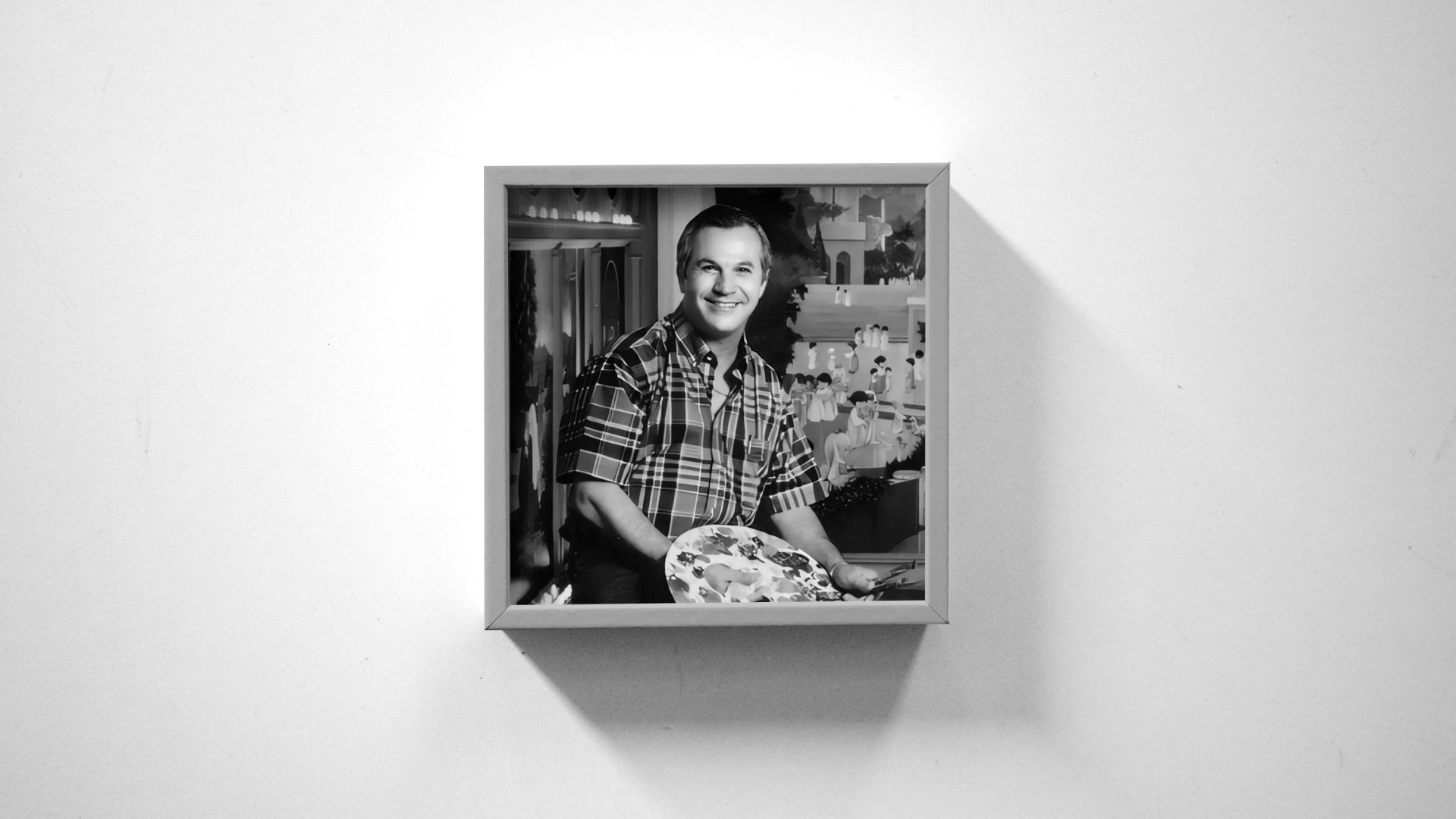
Sam Butcher Precious Moments painting obit image
Christianity Today May 30, 2024
Precious Moments / edits by Christianity Today

Sam Butcher sometimes struggled to explain why Precious Moments figurines, his signature artistic creation, became such a cultural phenomenon. Half a million people joined special collectors’ clubs to get them. The manufacturer released 25 to 40 new ones every year. And Butcher, an art school dropout, earned tens of millions of dollars in annual royalties.

“I’m still … trying to figure out what it’s all about,” he once said. “I’m just an artist. I just license my art.”

But if you asked the women and men who bought the porcelain statuettes—rosy-cheeked children with teardrop-shaped eyes that filled mantels, shelves, tables, and curio cabinets—they could tell definitely you.

“They’re cute,” an Illinois woman explained to the Chicago Tribune. “And they have an inspirational title that has a lot of everyday meaning.”

A man in East Tennessee who collected more than 200 with his wife said he found the figurines irresistible. He always had to pick them up to read the titles on the bottom. One was called “God Loveth a Cheerful Giver,” and it was a little girl with a wagon full of puppies to give away. Another said “I Will Make You Fishers of Men,” and it was a boy with a pole and line, hook snagged in the waist of his smaller friend’s pants.

“I really like the little sayings,” the retired postal worker told the Knoxville News Sentinel.

A woman at a collectors’ club at a Lutheran church in Moline, Iowa, said the figurines were just “silly things” that nevertheless “grow on you,” but her friend, who started collecting Precious Moments pieces after she got her first as an anniversary gift in 1979, said she felt they were more than that.

Each had a special meaning. Each connected to something that she treasured.

A figurine could memorialize an occasion or mark the importance of a relationship.

A collector who had shelves specially built for her Precious Moments figurines in her home in Alabama told the Montgomery Advertiser that she bought one for each of her three daughters. Another topped the cake for her and her husband’s 25th anniversary.

The figurines could somehow capture the way people felt about the very biggest things in their lives.

“From motherhood and family to friendship and encouragement to love and marriage to birthdays and graduation,” said a woman in Olathe, Kansas, “there is a Precious Moments figurine to help you express your emotions.”

A teenage collector with cancer bought hers as she went through treatment. She said they just made her feel better. A woman in Ohio said she got attached to each one individually, because “it feels like falling in love each time you buy another figurine.”

A collector in Hanover, Pennsylvania, got her first on her honeymoon. She collected another 136 in the next six years, and displayed them all in her living room.

“When you look at them,” she told her local newspaper in 1987, “they are just so precious! There’s no other word.”

Sam Butcher, the artist behind all of that, died on May 20. He was 85.

“He was an artist of love, a messenger of the divine, a shepherd of miracles,” the family-written obituary said. “He taught us that the best mode of transportation through life is often a leap of faith, and that after you leap and before you land, is God.”

Butcher was born on January 1, 1939, in Jackson, Michigan, to Evelyn and Leon Butcher. His mother’s family was from Lebanon. His father was an auto mechanic. Most of the family was mechanically inclined, but young Sam liked to draw, according to a Precious Moments company history. The family moved to Redding, California, when he was a boy, and he loved drawing so much he would salvage rolls of paper from a factory dump near his home.

His artistic talents were encouraged by a teacher named Rex Moravec and his mother, who pushed him to go to art school. Butcher got a scholarship to California College of Arts and Crafts in Oakland, California, but dropped out in 1962 when his wife got pregnant and they couldn’t afford a doctor.

They had a second child the year after that, and then five more. Butcher got a job as a janitor, dishwasher, and short-order cook at a restaurant he remembered to the end of his life with revulsion.

At that time, Butcher’s life took a spiritual turn. His wife, Katie, wanted to raise their kids in a church, so they attended a Baptist service near their home. The first Sunday, Butcher accidentally stole a hymnal. The second Sunday, he returned it, had a conversation with the minister, a man named Royal Blue, and committed his life to Christ.

The minister also helped Butcher find work that might feel more meaningful. The young artist got a job at the international offices of Child Evangelism Fellowship and moved his growing family back to his home state of Michigan.

Butcher started in shipping but soon got himself promoted to the art department. He did illustrations and comic strips and worked on a kids TV show, where he got the nickname “Quick Draw Sam.”

Butcher left in 1974, partnering with his friend Bill Biel to start a greeting card company they called Jonathan & David. Butcher started developing the trademark style—cherubic kids with soulful eyes in nostalgic and sentimental scenes—and quickly saw there was a hungry market. At a convention in Anaheim, California, Christian bookstore owners ordered so many cards that Butcher and Biel had to get help from vendors at neighboring booths to write down all the orders.

Eugene Freedman certainly saw their potential. The CEO of a giftware company called Enesco Imports, he saw Butcher’s drawings at a convention in 1978 and knew he wanted to turn them into porcelain figurines.

Butcher was initially resistant but allowed Freedman to work with a Japanese sculptor to produce a prototype. The first figurine was two kids sitting back to back on a stump, called “Love One Another.” When Butcher saw it, he later recalled, he got on his knees, took it in his arms, and cried.

They had a deal. Working with the sculptor, Yasuhei Fujioka, Enesco and Jonathan & David turned 21 of Butcher’s drawings into figurines, manufactured the little statuettes, imported them to the US, and started selling them.

They expected to be successful. But they were shocked at just how successful.

“It was really strange to me at the beginning,” Bob Feller, who became director of Enesco’s Precious Moments division, later said. “We had a gift line that turned into a phenomenon. People got so involved. We couldn’t believe it.”

In 1980, they launched Precious Moments collectors’ clubs, offering members limited edition figurines if they paid a membership fee, plus the chance to meet with sales reps, hear about forthcoming figurines, and connect with like-minded collectors in their areas. In the first six months, 300,000 people joined.

By 1995, there were more than 500,000 Precious Moments club members in the United States and more than 30,000 shops selling the figurines at prices ranging from $25 to $300. The following year, Enesco made more than $200 million on Precious Moments products, according to The Wall Street Journal. Butcher got more than $50 million in royalties, with a guaranteed annual minimum of $15 million.

With his sudden success—and sudden wealth—Butcher decided he was going to build a chapel. He was inspired by a trip to Italy, where he saw Michelangelo’s art at the Sistine Chapel.

Butcher wanted to be, he said, “an artist in the service of the Lord.”

He didn’t know where he should build it. So, when he got back to the US, he asked God to guide him and went on an impromptu cross-country road trip. Late at night on a highway about 200 miles east of Oklahoma City, with nearly 300 miles still to go to St. Louis, Butcher had a feeling.

“Something very holy was in the car,” he said. “I was so affected that I drove off and parked at the side of the road. I just remember it was very, very quiet and amazing.”

The next day, he learned he was in Carthage, Missouri, found a real estate agent, and bought 17 acres of property. He built a church and started to paint it: 84 murals, covering 5,000 square feet, all with biblical themes done in the Precious Moments style.

He designed 30 stained glass windows. The 15 on the east side depicted Psalm 23. The 15 on the west, the Beatitudes. He ordered marble for the floors from Italy, crystal chandeliers from Czechoslovakia.

The most ambitious part was probably the ceiling. It was 1,400 square feet, 30 feet off the ground. He spent about 500 hours on his back on a scaffold, painting Precious Moments angels and puffy clouds.

It was “very difficult,” Butcher told the Kansas City Star. “Very, very difficult.”

He felt a deep discouragement come over him, but, as he later told one of his sons, God gave him the strength to continue.

Newspapers in the area started to refer to him as “the Michelangelo of Missouri.” Where Michelangelo painted the Last Judgment in the Sistine Chapel, Butcher put a host entering paradise. One looked like his father driving a pink convertible, another like his teacher Rex. There were children he’d known and soldiers who’d died and lots of angels, and all of them had the teardrop-shaped eyes that so many found so moving.

“I think he had to be inspired by God to paint all this,” a visitor from Coweta, Oklahoma, told one reporter.

At the same time, Butcher’s personal life got very hard. Before he could finish a home for his family to live in in Carthage, his marriage ended in divorce. Butcher decided he wouldn’t move into the house by himself, so he stayed in the garage, where he painted until he fell asleep.

Then, the year after the chapel opened, one of his eldest sons died in a car accident.

“I really, really was shook,” Butcher later said. “I didn’t know how to handle the situation. I continued to ask the Lord to give me an answer, to tell me why this had happened.”

He was diagnosed with bipolar disorder. His children took over the day-to-day operation of Precious Moments. Attacks of depression grew more frequent.

After a second son died in 2012, one lasted around a year.

“I had anxiety, hatred, bitterness, fear. All that filled the room in my heart,” he told The Joplin Globe. “I couldn’t see the Lord anymore.”

One day, while lying in a hospital bed, however, he felt an amazing sense of calm come over him. He couldn’t see God. But God could see him. The Lord, he said, reminded him of the time that he came into his life, back at that Baptist church in Northern California, and he felt better.

Butcher started painting again after that. But he turned to a new style, painting works of modern art. He experimented with cubism and primitivism, inspired by Pablo Picasso and Paul Gauguin. There were no teardrop-shaped eyes in the new paintings. Nothing sentimental. Instead, thick-bodied men and women wearing few clothes danced, played, and slept in fields of flowers.

Butcher got so absorbed in the painting, he said, he would sometimes forget to eat or even button up his shirt.

“I’m just a messy old artist,” Butcher said. “I just really wanted to serve the Lord.”

As he was dying, Butcher told his family he was with the Father, Son, and Holy Spirit and it was beautiful.

He was preceded in death by his ex-wife, Katie, and their two sons, Phillip and Timothy. Butcher is survived by his children Jon, Tammy, Debbie, Don, and Heather.

A photo of Tanya Glessner
Testimony

To Guard Against the Monsters in My Life, I Became a Monster Myself

A lifestyle of violence and addiction nearly destroyed me, but it brought me to the foot of the cross.

Christianity Today May 29, 2024
Courtesy of Tanya Glessner

I grew up in Kansas City, Kansas, in a home filled with chaos. Home was an ever-changing address, with my parents’ fights the only constant. My dad enjoyed his plethora of drugs, and my mom enjoyed pushing his buttons and being the victim. They finally decided to call it quits when I was 11 years old, but not before I got some startling news: The man I had called my father wasn’t really my father.

My grandma revealed the truth to me in an angry, drunken stupor right before breaking the news of the divorce. It was absolutely crushing. I had grown up with two younger half-brothers from my mom and the man who I thought was my dad. But now I learned that I also had two younger half-sisters on my biological dad’s side. I couldn’t help taking this revelation as a message that I was unwanted and didn’t belong. This paved the way for a series of poor choices that led me to the foot of the cross.

My biological dad made minimal effort to see me before he died of cancer in 2008. After my parents’ divorce, I lived with my mom and two younger brothers. She continued to choose men who were prone to addiction and violence. When they turned those violent tendencies on me, I decided it was better to become a monster than to let myself be devoured by one.

I started beating girls up at school and being rewarded at home for my victories. I was eventually expelled, leaving me to complete my schooling that year in the mental health ward of a hospital. Once I returned home, I ran away repeatedly and would stay with friends until their parents turned me away. My mom, having had enough, sent me to live with my grandma in Fort Scott, where I started my freshman year of high school.

But I was kicked out soon enough after a confrontation with my teacher, and I finished the school year elsewhere. During my sophomore year, I moved back home, and my mother and I got along like rabid dogs. When my 16th birthday came along, I went to school, dropped out, went home, packed my bags, and moved in with a friend in Fort Scott. This lasted about two years before I started bouncing back and forth between there and Kansas City.

My mother’s mirror image

Over the next 20 years, I gave birth to two sons of my own and married a man that was the sum of every man I had ever known. He was wild, abusive, addicted to anything that made him feel good, and promiscuous. I became the mirror image of my mother, mastering the art of pushing my husband’s buttons and then playing the victim, always convincing myself I could change him. It took over a decade before I realized I could never win this war. Finally, I filed for a divorce and decided to leave him for good.

At first, I handled everything well. I went to work, raised my boys, and occasionally had a girls’ night out on weekends when the kids were with their dad. I kept myself busy to keep my focus off the unbearable emotional pain I had pushed far below.

Eventually, though, it made its way to the surface, and I began to unravel. Girls’ night turned into every weekend. Every weekend turned into a meth addiction, which caused me to lose my job. Now bills were piling up, and I had to find a way to make money without disrupting my addiction.

I made a phone call to a friend I grew up with in Kansas City, who helped arrange a source of meth I could sell. Everything moved quickly from there. Within a few months, I was making a few thousand dollars a day and spending it just as quickly. My house was a revolving door of addicts, boyfriends, guns, and drugs. I started using the needle and decided it was best to send my children to live with my grandmother.

After a boyfriend broke both of my wrists, I had a lawyer draw up papers leaving my children to my grandmother in case something worse happened. I knew I was either going to end up dead or in prison. My addiction took precedence over everything in my life. At this point, all I wanted to do was die, but that was all about to change.

Making amends

Three years into my addiction, I found myself at a complete stranger’s house, suicidally depressed, injecting a needle filled with a large amount of meth into my vein. As the needle fell to the floor and landed in the old carpet like a dart, I collapsed to my knees on the verge of losing consciousness and cried out to God to save me. I wasn’t prepared for how he would choose to respond.

As a child, I had attended various Catholic and Christian schools alongside public schools, and my grandmother was a strong Christian believer. Perhaps, having spent so much time with her, I knew in that desperate moment that salvation could only come from God.

A few weeks later, I stopped at a house to drop off some drugs. When I arrived, I saw a woman I had bad history with, so I confronted her and put her in the hospital. I was arrested a week later and found myself facing 21 years in prison, so when I was offered a plea agreement of 8 years, I gratefully accepted it.

After spending three months in county jail, I started attending the ministry group organized by a local church for inmates. Toward the end of one service, I approached one of the church members. We prayed together, and I accepted Jesus Christ as my savior.

I received a Bible and some reading materials, which I delved into eagerly. I read the Bible so frequently that the pages started to wear out, and I had to carefully tape them back together. I found solace in verses like Jeremiah 29:11, which speaks of God’s plans for his people, and 1 John 3:18, which speaks of expressing love with actions rather than mere words.

As I sat in county jail, my mind began to recover from the effect of all the drugs. I found myself overwhelmed with remorse for what I had done, and I wanted the opportunity to make amends with the woman I had hurt. I slid my back down the cold, white cinder-block wall and adjusted my orange jumpsuit. I pulled my knees into my chest, clung to my Bible, looked up with tears running down my face, and asked God to make the way.

The next morning, an officer pulled me into the hallway to inform me that my victim had just been arrested. Because of my good behavior, he said, the authorities didn’t feel it was fair to ship me to another county to be held until I was sent to prison. Instead, they would let me decide whether I wanted to be housed with this woman or relocated to another jail. My head spun in disbelief, because this is not something that happens normally! I knew right then that God had heard my prayer, and this was my opportunity to put up or shut up.

As my victim entered the jail pod, you could see the fear all over her face. She went straight into her cell and crawled up into her bunk. I gave her a few minutes and then made my way over to her door. I told her she was safe and invited her to eat with me. In the following weeks, I managed to reconcile with her. We both expressed our apologies and started setting aside time every day to explore the teachings of the Bible.

We exchanged Scripture passages that resonated with us and even marked, signed, and dated our favorite verses in each other’s Bibles. Occasionally, I still glance at those pages, and it never fails to bring tears to my eyes, witnessing to how God worked within the confines of that jail. I’ll always cherish the memories of how God started to mend my brokenness. It’s incredible how he turned the devil’s plan to destroy me into something positive, spreading waves of healing to everyone around me.

I spent the next seven years in prison, earning all my good time. The experience was overwhelming, but I used the time to grow closer to God, and I established a godly reputation among the prison staff and my fellow inmates. I became a leader of a women’s Christian ministry inside the prison, and I started prayer groups in the dorms. Women sought me out for guidance, friendship, and prayer. I also tutored women for their GEDs, filed their taxes, and cut their hair. God used me in countless ways and continued to grow me in the process.

God never wastes a hurt

I was released in 2020, and, soon afterward, I married my high school sweetheart, who works as a paramedic. Adjusting to his schedule took some getting used to, as did the experience of being a stepmother. During my husband’s absence for 48-hour periods, I readily assumed various responsibilities.

Each morning, I diligently woke up to prepare breakfast and lunch for the children before driving them to school. I assisted them with their homework, accompanied them to their sports activities, and provided care when they fell ill. It was important to me to create a healthy routine as a family.

During this period, I also started rebuilding other relationships in my life, including the one with my brother Canaan. We didn’t have many opportunities to talk while I was in prison, so it felt good to reconnect with him.

He was employed as a millwright and journeyed across the globe for work, which meant I didn’t have the chance to see him frequently. However, we made sure to stay connected through phone calls and occasional text messages to let each other know we cared.

Fortunately, he managed to join me for Christmas during my first year out of prison, and it was truly special to share that time with him. I recall making a conscious decision not to take any pictures that Christmas because I wanted to immerse myself in the present moment, rather than being preoccupied with my camera. Little did I know this decision would later bring about regret.

In May of 2021, my brother was found dead in a Colorado hotel room from a fentanyl overdose. He was away on a job when he died. We had been planning his 38th birthday party, but now we were planning his funeral.

After dealing with the initial impact of my grief, I decided I wanted to do whatever I could to help families that might be suffering in the same way. I began mentoring incarcerated men and women as well as recovering addicts in my community. I sponsored a fundraiser to bring awareness to issues of mental health, addiction, and the relationship between them.

I also wanted to help diminish the stigma attached to seeking mental health services. We seek medical help when our bodies fail, so why wouldn’t we seek other kinds of help when life seems overwhelming? As part of this calling, I recently accepted the position of president on the board of directors for the Salvation Army and Compassionate Ministries in Fort Scott.

God never wastes a hurt. He is using my past to brighten others’ futures. I pray that God will continue to use my words to give voice to those who need it. When he pulled me out of the darkness, he gave me one hand to cling to him, and one hand to pull someone else out.

Tanya Glessner is the author of The Light You Bring, a memoir, and Stand Up Eight, a collection of personal testimonies. She has also published several daily prayer journals and is currently at work on a daily devotional.

Theology

How to Face the Headlines with Hope

The Papua New Guinea mudslide is yet another reminder that our world is not as it should be. But take heart! Christ has overcome the world.

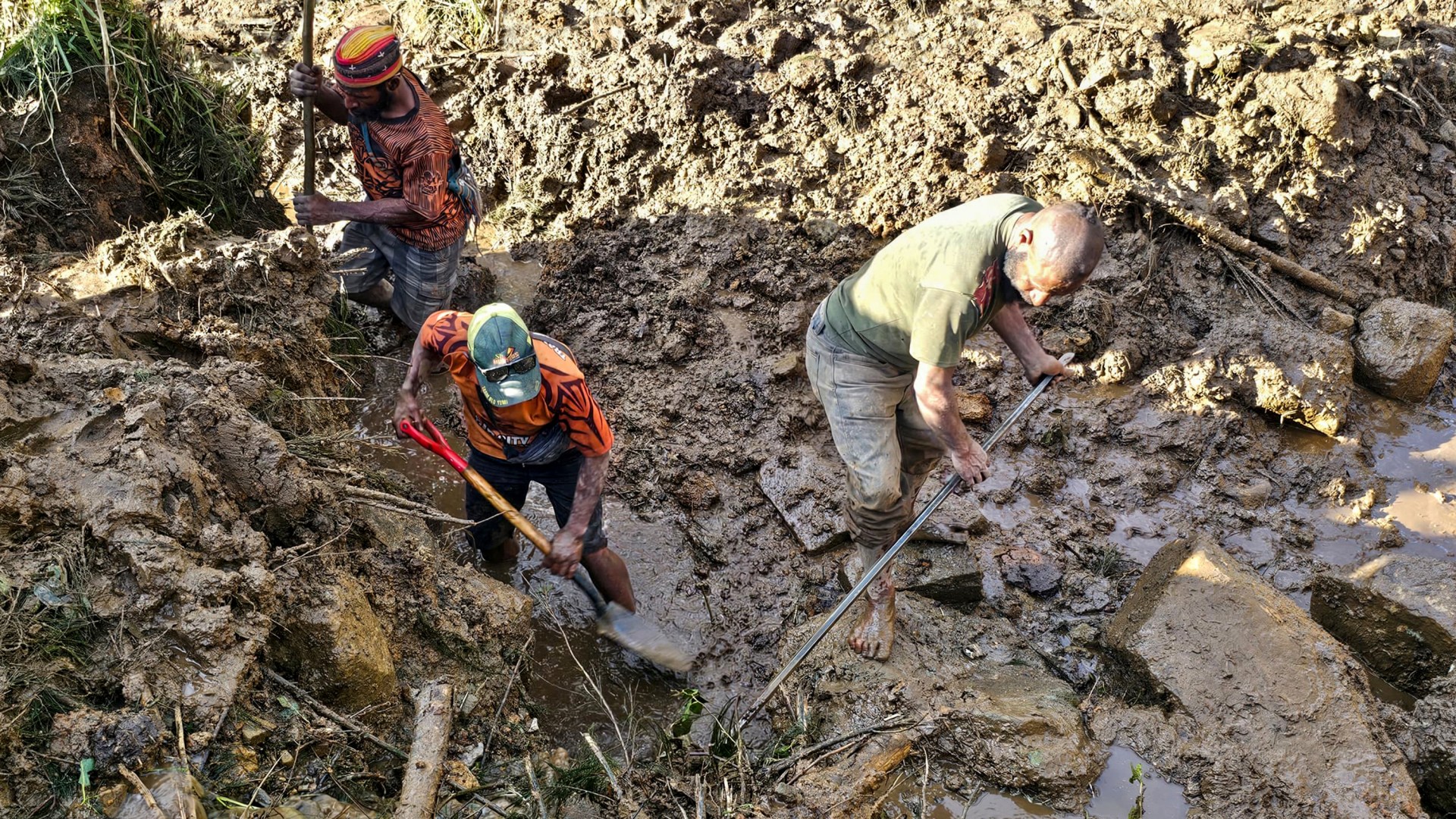
People dig through debris at the site of a landslide in Papua New Guinea.

People dig through debris at the site of a landslide in Papua New Guinea.

Christianity Today May 29, 2024
Emmanuel Eralia / Getty

Family members sit atop boulders, weary from lifting rocks to search for bodies. Men with shovels bend under the weight of sorrow and effort as they work to leave literally no stone unturned. Disaster has struck again: A massive mudslide in Papua New Guinea on Friday morning buried an estimated 2,000 people alive, covering dozens of homes and an elementary school.

By now, it seems safe to assume that anyone not yet rescued from under as much as 26 feet of debris has died. I flip from story to story, looking for more information, but eventually I have to stop. I’m starting to feel claustrophobic myself, imagining a roar of mud and rock waking me from my early morning slumber.

I had an all too similar experience with the video of the bridge collapse in Baltimore earlier this year. As I watched, I remember realizing I was holding my breath. The night lights of Baltimore glittered in the background. It was almost cinematic—I might have mistaken the scene for the beginning of a 1980s rom-com, the city shot right before the credits roll—were it not for the dark silhouette of the ship hitting the bridge, reminding me of the truth: There were trucks and workers on that bridge as it fell. I couldn’t see their faces, but I was watching people die.

And it’s not just Baltimore and Papua New Guinea. Over the past year, as producer of CT’s news podcast, The Bulletin, I’ve been exposed to many tragedies from afar. I’ve read photographic essays about Ukrainians who retrieve dead Russian bodies from the battlefield, scrolling through to get the gist and trying not to linger on the graphic images. I’ve read accounts of school shootings and racially motivated crimes and had to pause for a deep breath. I’ve scanned reports of famous personalities who’ve died and felt the familiar twinge of distant sadness. And I myself am no stranger to death.

Yet for all that, sometimes when I encounter tragedies like these, a thought flits across my mind: It could have been worse. I stop myself short, embarrassed. Have I become indifferent and callous? Or have I simply seen too much?

I’m not alone in wondering. As early as the 1970s, researchers began to raise an alarm about how visual depictions of violence could be detrimental to viewers, especially children. After seeing violent footage of the 9/11 attacks or school shootings, for example, research subjects reported greater distress than those who had only heard or read about the same events.

These results were hardly a surprise. Participating, even vicariously, in the suffering of others can bring great pain, anxiety, and sometimes lasting trauma. If a death in one’s own family could destroy a small, known universe, how can the human mind comprehend loss on a far larger scale?

Separation by pixels only makes so much difference. We don’t need to be flesh-and-blood witnesses for suffering to make an indelible mark, and our digital media environment is designed to make us witnesses of tragedy daily. Doomscrolling past one troubling headline after another can lead to increased feelings of frustration, worry, and despair. Is it any wonder three in four Americans say they’re “overwhelmed by the number of crises facing the world right now”?

The constant stream of local and global suffering we see on our screens can leave us weary, numb, or disillusioned. We may let lapse the kind of presence and care to which God calls us. Desensitized, we learn to gloss over “smaller” tragedies, letting only mass casualties provoke our sorrow, instituting a hierarchy of grief and forgetting the gravity of every marker of sin and death in this broken world.

Both science and Scripture confirm that God never designed us to be Atlas, carrying the whole world’s suffering on our shoulders. Jesus came to bear that weight for us (1 Pet. 2:24). Yet God did create us to “carry each other’s burdens, and in this way … fulfill the law of Christ” (Gal. 6:2). He formed mirror neurons in our brains so that even at the cellular level we could understand one another’s pain. He commanded us to comfort each other from the wellspring of comfort we ourselves have received (2 Cor. 1:4)—a task that, admittedly, can seem almost impossible amid a continual onslaught of bad news.

So how do we fulfill the commandment to love our neighbor as ourselves when we’re not sure we can bear their stories of sorrow?

In my work at The Bulletin and beyond, I’ve benefited from advice from author and therapist Aundi Kolber, who encourages us to protect against an uncharitable numbness by caring first for ourselves. “When Jesus says, ‘Love your neighbor as yourself,’” Kolber told me in an interview, “we have to recognize the wisdom of ‘yourself’ is included there.”

Practically speaking, that means scrutinizing my media intake, creating time limits for engagement, and resisting the tendency toward consuming media in isolation. Kolber recommended reading or listening to the news as a “single-minded” activity, not as part of our regular multitasking routines. This lets us attend to our bodies’ responses of anxiety or discomfort while “witnessing from a place of dignity and integrity.”

For others, different boundaries may be more helpful, according to our personalities, our wounds, and the individual capacities with which God has equipped us. On a recent episode of The Bulletin, host and CT editor in chief Russell Moore noted that some Christians may need to step back from media consumption for a season to instead engage deeply with Scripture. For others, said cohost Mike Cosper, a conscious differentiation between public and personal life may be helpful.

Whatever practical changes we make to our media habits, though, it will still be difficult to bear witness to the suffering of the world, to sit with the statistics about the war in Gaza, stories of gun violence, or testimonies of racial injustice. Our tenderness to tragedy will prove more durable if it’s anchored in community lament.

In lament, “we sensitize and strengthen our hearts,” writes singer-songwriter Sandra McCracken. Whether in a Sunday morning worship ritual of the prayers of the people, a Wednesday night prayer service, or a special gathering for a specific tragedy, corporate lament offers us an outlet for the emotions that might otherwise overwhelm us.

Together, we name injustice and tragedy and place it within the greater narrative arc of God’s redemptive faithfulness. We are reminded that God cares about the headlines, that he reigns over all worldly leaders (Dan. 2:21), that not even the “smallest” tragedy escapes his notice (Matt. 10:29). It is here, says author Sheila Wise Rowe, in grieving and growing with others, that we discover “our pain and anger are transformed and mobilized from expressions of despair into signs of hope.”

In all this, one thing is sure: God calls us to respond to suffering. As I scan the headlines each week, preparing a new episode of The Bulletin, I try to scrape off the calluses that build up on my heart.

When my eyes catch on a story that details great hurt, I often pray, Come quickly, Lord Jesus (Rev. 22:20). When I read statistics about disasters, I pause to remember that each number represents a name, a person for whom Christ died. As I scan the unfamiliar faces in newspaper pictures, I call to mind those faces I do know—family and friends in need, folks I support in grief care groups. We’re all bound together in our longing for redemption in the midst of a broken world, and I ask God to “break my heart for the things that break the heart of God.”

Finally, I look for ways to act, whether through a donation to a faraway cause or direct care in my community. I may not be able to offer a cup of cold water to a Ukrainian widow, but I can send funds overseas and care for widows in my church. I may not be able to solve the conflict in the Middle East, but I can seek to be a peacemaker in my workplace and in my neighborhood. Even in the face of the very worst news, I am not powerless—and God is not powerless either.

“In this world you will have trouble,” Jesus told his disciples. “But take heart! I have overcome the world” (John 16:33).

Across the millennia, we offer a heartbroken amen. This world is not as it should be, as each day’s headlines make clear anew. But those headlines need not send us into despair or make us cower in protective indifference. Though sin, death, and the devil make the news, Christ has overcome them all.

Clarissa Moll is the producer of Christianity Today’s weekly news podcast, The Bulletin.

Books
Excerpt

‘I Thought I’d Be Further Along by Now’

An excerpt on risk, worship, and spiritual growth from The Expectation Gap: The Tiny, Vast Space between Our Beliefs and Experience of God.

Christianity Today May 29, 2024
Illustration by Elizabeth Kaye / Source Images: Getty, Unsplash

We often think we should be further along in our life of faith than we actually are. This tendency is connected to how we read the Bible, how we compare ourselves to others, and then how we reinforce these dynamics in our faith communities.

I want to point out upfront that it is quite possible that we should be further along. I am not suggesting that we get lazy and stop worrying about spiritual growth. I am proposing that our attempted solutions to this gap are the fundamental problem. The gap may be real, but our solutions are often fruitless.

Many of us spend too much spiritual energy—and, frankly, guilt—trying to be something God did not ask us to be. We then spread that expectation around our faith communities and perpetuate the cycle. If we can notice the attempted solutions, and therefore the stuck cycle we are in, and get off that treadmill, we can open our souls to an encounter with God that can cause growth.

Let’s start by looking at the way we relate to the Bible. We each bring many assumptions to our reading of Scripture. We project our assumptions onto the page and read those assumptions back from the page, thus reinforcing our stuck patterns. Assumptions are always easier to see in others than in ourselves, and when we’re confronted by our own assumptions, it can be arresting or even threatening at first. When we look at the dynamics between Jesus and the Pharisees, much of their hostility was because Jesus was rummaging around in their assumptions, threatening what they thought they knew about Scripture.

We could explore many assumptions related to our reading of Scripture, but I want to focus on those that relate to the spiritual progress we’ve made in our faith. Let’s begin with a well-known story from the New Testament—Jesus’s invitation to Peter to walk on water:

Immediately Jesus made the disciples get into the boat and go on ahead of him to the other side, while he dismissed the crowd. After he had dismissed them, he went up on a mountainside by himself to pray. Later that night, he was there alone, and the boat was already a considerable distance from land, buffeted by the waves because the wind was against it.

Shortly before dawn Jesus went out to them, walking on the lake. When the disciples saw him walking on the lake, they were terrified. “It’s a ghost,” they said, and cried out in fear. But Jesus immediately said to them: “Take courage! It is I. Don’t be afraid.”

“Lord, if it’s you,” Peter replied, “tell me to come to you on the water.”

“Come,” he said.

Then Peter got down out of the boat, walked on the water and came toward Jesus. But when he saw the wind, he was afraid and, beginning to sink, cried out, “Lord, save me!”

Immediately Jesus reached out his hand and caught him. “You of little faith,” he said, “why did you doubt?”

And when they climbed into the boat, the wind died down. Then those who were in the boat worshiped him, saying, “Truly you are the Son of God.” (Matt. 14:22–33)

One helpful aspect of systems theory—the science of healthy and unhealthy relationship patterns—is the way it teaches us to notice the whole rather than the individual. On our own, we are prone to look at one person in a story and relate to that one person, but systems theory’s gift is that it helps us gain a more holistic view.

An individualistic approach to this passage might ask, “How can I step out in faith this week? What is Jesus beckoning me to do?” A systems approach says, “Wait just a hot minute—11 of the 12 disciples stayed in the boat. They still benefited from witnessing something astonishing, and they all ended up worshiping Jesus.”

In this story, most of Jesus’ disciples—92 percent, to be precise—did not step out in faith at all. In fact, they sat in the boat and watched as their impetuous and bold friend stepped out. Is the only right interpretation of this story that Peter was the good disciple and all the others were bad? Maybe rather than trying to be like Peter this week, we should try to be like one of the other 11. This week, less Peter, more Thaddaeus. Perhaps we could start a campaign: #TeamThaddaeus.

We tend to assume we must always be like the main character of any Bible story. But the reality is we will grow in Christ sooner once we accept that we are very much like ourselves, and none of us can—or should—always be like the main character of any given Bible story.

If you are prone toward action like Peter was, then go for it. You may well be a personality type that is energized byrisk. You may also be prone to act first and think later.

But what if you are the kind of person who, when invited to do something new or risky, first creates a spreadsheet to assess all options, along with a cost-benefit analysis? By the time you’re done listing all the risk liabilities, a soaking-wet Peter and a laughing Jesus are back in the boat with you. Is that bad? Can you love spreadsheets and risk mitigation plans and still walk by faith? Or must we all be like Peter all the time? What is it about us humans that draws us toward carrying the pressure and guilt of thinking we really should be someone else?

This leads to a second vital point. If we look carefully at this text, it ends with all 12 of the disciples worshiping Jesus in astonishment. Maybe the text is more about being astonished at Jesus than it is about us taking a faith risk. Maybe the central point of this story is Jesus’ power, not Peter’s faith steps. Those of us in cultures that place a high value on performance and improvement are prone to see every story in the Bible as “something I need to work on,” but much of Scripture is actually designed to help us worship our astonishing God. In other words, maybe Peter isn’t the main character of this story; maybe it’s Jesus.

What if most of the stories in the Bible are designed to primarily evoke a worship encounter with God rather than a self-improvement task list? We would do well, particularly those of us in production-based cultures, to be suspicious of our relentless need to improve and grow. If we’re reading the text with our minds always thinking we have something to work on, we may be missing the heart of God. Maybe God is less concerned with our improvement and more concerned with our worship.

The text clearly shows we can stay in the boat, watch our friend almost drown, and still end up worshiping Jesus. Now there is a sermon waiting to be preached! “Friends, this week, I don’t recommend stepping out in faith. I recommend staying in the boat and watching your friend take steps. You’ll end up worshiping Jesus either way!”

Steve is the author of Managing Leadership Anxiety: Yours and Theirs and The Expectation Gap. He is the founder of www.capablelife.me and has served in a variety of pastoral roles for 26 years, the majority of those years as a lead pastor.

Taken from The Expectation Gap: The Tiny, Vast Space Between Our Beliefs and Experience of God by Steve Cuss. Copyright © 2024 by Steve Cuss. Used by permission of Zondervan. www.harpercollinschristian.com

Books

Boy Meets Girl, Fans Meet Jesus?

As Christian romances make their way to theaters, their writers are seizing opportunities for evangelism.

Christianity Today May 29, 2024
Illustration by Mallory Rentsch Tlapek / Source Images: Getty / WikiMedia Commons

This spring, Someone Like You, based on the Christian romance novel by author Karen Kingsbury and produced by the newly formed Karen Kingsbury Productions, was released in theaters across the US and Canada. The movie—a tale of grief, romance, and a secret frozen embryo sister—grossed about $5.9 million.

Kingsbury’s accomplishments as an author and movie producer are impressive and, in many ways, singular. Over 25 million copies of her books are in print. Someone Like You was a New York Times bestseller.

But Kingsbury isn’t alone in her success. Female writers—romance writers in particular—dominate the Christian fiction market, claiming eight spots on the top-ten author list in 2023.

Since the mid-20th century, opportunities for these women who write—first in Christian bookstores, then on television, and now in movie theaters—have been expanding in response to growing audience demand. Along the way, these evangelical women have gained a kind of religious authority, crossing over from sentimental fiction to biblical interpretation and theology. Hidden behind paperback covers and movie posters picturing prairie scenes and happy couples, these texts deliver serious evangelistic messages for Christian women to consume and share with others.

The roots of Christian romance can be traced to authors like Grace Livingston Hill and Eugenia Price. But the genre as we understand it today really began with Christy (1967), Catherine Marshall’s story of a young woman in the Great Smoky Mountains. As secular romance novels became more sexualized in the 1970s and ’80s, women began to look for faithful alternatives. With Janette Oke’s Love Comes Softly (1979)—Marty moves out West, marries a single father, finds community, and grows in faith—the genre was established. According to Reading Evangelicals, Love Comes Softly sold “an average of fifty-five thousand copies a year for twenty years.”

In the decades since, authors like Oke, Beverly Lewis, Francine Rivers, and Kingsbury have been writing love stories imbued with Christian themes. Though romance is at the heart of these novels, their plots also take on real-world suffering, including suicide (Love Comes Softly), abandonment (The Shunning by Lewis), abuse and assault (Redeeming Love by Rivers), and grief (Someone Like You). The spiritual support they offer is particularly relevant to readers who’ve experienced similar hardships. Characters pray and get saved, worship and read the Bible. Endings are happy—and redemptive.

From the outset of the genre, Christian romance has had missional intentions. Many novels today include back-of-the-book discussion guides with Bible passages and devotional prompts. Oke has stated, “I see my writing as an opportunity to share my faith. … If my books touch lives, answer individuals’ questions, or lift readers to a higher plane, then I will feel that they have accomplished what God has asked me to do.” Kingsbury has defended Christian stories not just as escapes but as an “unbelievable force” in our faith journeys.

But Christian romance hasn’t only had success in print—a good thing for the industry, given declines in Christian book sales. For decades now, these texts have been adapted for television. Christy was a CBS miniseries from 1994 to 1995. Titles like the Love Comes Softly series (beginning in 2003), Hidden Places (2006), The Shunning (2011), and The Bridge (2015) became made-for-TV movies on the Hallmark Channel, appealing to audiences looking for heartwarming programming. More recently, Hallmark has produced television spinoffs of When Calls the Heart (2014–2024) and When Hope Calls (2019–2021), offering expanding storylines created within Oke’s oeuvre.

Now, Kingsbury has taken the book-to-television strategy one step further. After releasing four made-for-TV movies with Hallmark, she opened her own production company in 2022. Karen Kingsbury Productions released The Baxters on Amazon Prime in March, the month before Someone Like You hit theaters.

Christian romance novels aren’t exclusively sold in Christian bookstores; the Hallmark Channel, though certainly family- and faith-friendly, isn’t an exclusively Christian network. But for Christian romance writers, the move to streaming services and movie theaters does represent the biggest opportunity yet for more mainstream attention—and for expanded ministry.

Rivers’s 2022 Redeeming Love, a retelling of the Book of Hosea, models the kind of attention Christian romances might achieve as they move to theaters. The movie adaptation earned only an 11 percent positive rating from critics. But it also achieved a 95 percent positive rating from viewers and opened fourth in the box office its opening weekend. (Someone Like You found critics and viewers in closer alignment—a 46 percent positive rating from the professionals and a 96 percent positive rating from audiences.)

For both Rivers and Kingsbury, these creative projects are meant to do more than impress critics or make money. They have evangelistic goals—not just providing clean entertainment for women who are already Christians but drawing in secular audiences. Indeed, both authors have highlighted the opportunity for fans to take their non-Christian friends to the movies. Kingsbury has even offered crowdfunded tickets through her “Share the Hope” campaign.
Here again, discussion questions and reading guides make evangelistic intentions explicit. Rivers put out two study guides just prior to the release of her film—A Path to Redeeming Love: A 40-Day Devotional and Redeeming Love: The Companion Study. The story of Redeeming Love, she says, is “meant to bring people to Christ, and … to offer a tool for us to share our faith with people who don’t know Jesus at all.”

For her part, Kingsbury offers both a six-part discussion series and a seven-part Bible study on the Someone Like You website. Connecting passages of Scripture with plot points in the film, the Bible study discusses difficult personal themes like the loss of Kingsbury’s brother and the health challenges of her son (he portrays Matt Bryan, one of the film’s male leads). Through the study, Kingsbury addresses an audience of readers who intimately know her work, offering a space for longtime fans to experience spiritual growth.

But her discussion questions are doing something different. Here, Kingsbury speaks to a non-Christian viewership, addressing their concerns about grief and betrayal, forgiveness and peacemaking. “What questions have you had about God?” she asks. “What is your source of truth?”

Someone Like You has left theaters but will remain available for group events through the Faith Content Network. This platform provides access to the movie and its digital resources until streaming becomes available later this fall. With five additional novels listed as “coming soon” on Kingsbury’s website and the announcement of a second film, it seems her mission across multiple mediums is only just beginning.

As Christian romance writers bring their stories to film and streaming platforms, so too are their opportunities for evangelism expanding. With trust in pastors declining and church attendance plummeting, authors like Kingsbury might occupy a unique and unprecedented position—trusted by longtime readers and drawing in new viewers, casting the Christian story as relevant and compelling, hoping that “boy meets girl” becomes “fans meet Jesus.”

Emma Fenske is a third-year PhD student in the History department at Baylor University. Her research centers on recovering the cultural, political, and theological identities of evangelical women through mass media and pop culture.

Inkwell

The Unexpected Consequences of Mysticism

An alluring buzzword that should not be taken lightly

Inkwell May 26, 2024
A view from a villa, with a woman seated at a fountain and an avenue of statues by Samuel van Hoogstraten

MY SISTER SAYS her favorite weather is the moment just before a storm where the earth rolls and yawns with thunder. When she was little, she would ride her bike in looping circles in front of the house while the air crackled and the green trees shook silver, ignoring calls to come inside before the sky purged itself of electricity. She revels in that moment of cosmic surrender, where it all finally comes crashing down.

That affection for the full-bodied chaos of cleansing is a little sliver of mysticism in my sister. The natural world, her imagination, and the joy of the presence of God all met in each arc of her bicycle. I’d venture we can all picture some version of this, the wild innocence of mysticism caught in real life. Mysticism is a siren’s call to the modern Christian contemplative and I am not immune to its allure. It’s fashionably, tastefully eerie. In a world allergic to uncertainty, mysticism extends an invitation to come and sit awhile with what we do not understand, to peer into luminous darkness and encounter a God who is bigger than not only our answers, but our very questions. Mysticism calls forward with a crooked finger from the shadows of Medieval monasticism and affirms our wonder, our doubt, and our imagination. But mysticism is not all wisps of incense and a poetic sense of agnosticism. To dabble in mysticism is to dabble in suffering.

Medieval mystics pursued a method of contemplation often categorized as the “Mystic Path,” a three-step process of purgation, illumination, and union. Practicing ascetics would strip themselves of all detritus preventing their understanding of and intimacy with God. God would respond by illuminating their minds and souls with the presence of Christ, leading them to a final, loving union with the anguished Lord. The imagination is mysticism’s weapon of choice for cutting down the divide between the material and the divine, but that imagination finds purchase in the body, both ours and Christ’s. The imagination becomes sacramental in the mystical life.


JULIAN OF NORWICH depicts her mystical experience of Christ’s pain and subsequent reflection in her Revelations of Divine Love. Julian appeals to God for three requests: to suffer, to understand the suffering of Christ, and to physically receive his wounds. Her passionate love for Christ moves her to request physical suffering as a means of intimacy with Christ. Julian’s prayers for agony are answered in a debilitating illness which leaves her desperately gazing at a crucifix while the room darkens around her, stripped of any thoughts but those of the man on the cross. She describes an illumination of her mind as Christ imparts his “familiar love” to her, giving her deeper understanding of this love and his nature. The body of Christ is both the means to and the end of her communion.

Given the affective nature of mystical theology, it is unsurprising that the process of sanctification would be experiential more than cognitive. However, it is important to recognize that Medieval mystics viewed suffering as consequential to a desire for Christ more than a motivation in and of itself. Furthermore, they emphasized the loving suffering of Christ over their own pain. Contemporary scholars theorize that the mystic propensity for suffering was a response to a Medieval world where mortality haunted ordinary life; that a culture riddled with pain, sickness, and hard work resulted in theologies to make sense of them.

We have not erased suffering from modernity, but we inoculate ourselves from it by sensationalizing it in media and romanticizing it in history. We are inundated with casual grief and yet woefully unprepared to weather or articulate it. Even suffering that finds its method and measure in the body of Christ is a daunting and perilous endeavor. But that craving for that gasping moment of cleansing, the first cacophony of downpouring rain, runs back deep into the world’s story, into the very marrow of what it means to be human. In small ways, we revel in the notions of spring cleaning, grueling endurance runs, a good cry, and drastic haircuts. The purgation plays a counterpoint melody to the shimmering charm of materialism, chanting, “if you just get rid of this, everything will be fixed.”

Mystic purification looks different. It is a subtraction by addition. In order to cleanse ourselves, we take on the suffering of Christ. As simple as those words are, that much harder is the task. So how do we do mysticism now? In embracing the benefits of mysticism, how do we safely chart a course through this element of Christ’s suffering in our bodies and imaginations?


FOR INSPIRATION, I turn to the other place where we discover Christ in our bodies and imaginations: the arts. Art has midwifed human suffering for millenia, but what would it look like for art to escort us through suffering as a means of grace? The arts lend methodology to imagination, giving us audio-visual language for the transcendent. From my first middle school role as a scruffy orphan, theatre has been the art that shepherds my spirituality. The word becomes flesh first onstage and is enacted in my body, as it does in its fullness when I cup the Eucharist in my hands on Sunday. My theological questions have always met a kind of resolution when I step into a dusty, paint-scented theatre, begin stretching, and let my thoughts escape through my limbs. So as I mused over mystic suffering one autumn afternoon, among a smattering of page numbers and browser tabs, I eventually asked the stage.

Aristotle describes proper tragic theatre as creating a release of spiritual and emotional toxicity called katharsis, which translated means purgation. He says, “Tragedy, then, is an imitation of an action that is serious, complete, and of a certain magnitude… effecting through pity and fear the proper purgation of these emotions.” Ancient theatre arose from a mimetic instinct to re-enact cosmogonic myths and embody ritual, but the specific structure of Greek tragedy was designed to communally release grief and evil more than simply entertain. Like the Mystic Path, the plays elicited emotions in their audience which prompted physical responses, and through this process, the griefs and impurities–called miasma–were cleansed for the community.

In addition to this, Aristotle requires tragedians to include what he calls a “Scene of Suffering” in their dramas, which he defines as “a destructive or painful action, such as death on the stage, bodily agony, wounds and the like.” Witnessing and communally experiencing suffering through the imagination offered Greek populations a healing method of emotional purgation. The involvement of the audience exceeded mere viewing, incorporating their reactions and responses into the performance the same way liturgical church services involve the congregation.


YOU MAY BE piecing together the realization that had me gasping in the silent library that October afternoon as I pored over Julian’s story: The Passion of Christ fulfills the requirements for an Aristotelian tragedy. Tragedy hinged on a scaffolding of rules, one of them being the three unities: time, place, and action. Our tragic hero Christ faces a reversal of fortune from the Last Supper to the cross which spans twenty-four hours within the city of Jerusalem, meeting these requirements and leading us to the Scene of Suffering which the actor and spectators share like Eucharistic bread and wine. Aristotle fittingly writes that a tragedy will “thus resemble a living organism in all its unity.” So does our salvific tragedy gasp for breath on the cross.

“For the Passion was a noble, glorious deed performed at one particular time through the action of love,” writes Julian, offering further evidence that understanding the Passion as a healing theatre accurately communicates the mystic experience of transformation. Mystics beginning their path turned to the suffering body of Christ to purge themselves of unrighteousness; actors and spectators entered the theatre laden with fear and anger they wished to expunge through the performance. As the mystics ascended the stair steps of the crucified Christ, they were simultaneously stripped of their sin and given love of God, which led to suffering of their own. The audiences of Greek tragedies were encouraged to weep and mourn from their seats in the amphitheater, to enter into the suffering onstage. Thus cleansed, the mystics savored a painfully glorious intimacy with God. The Greeks exited the theater, healed of their miasma and unified as a community–a further connection with the mystics, who were also moved to love for their neighbors as a consequence of divine intimacy.


THERE IS SOMETHING transformational, healing, and unifying about experiencing pain through performance. Performance creates a sacred space that simultaneously provides intimacy and detachment, through which the suffering of salvation can be endured and explored in such a way that the spectating mystics leave the process healed, beautified, and brought near to the feet of Jesus. Aristotelian performance theory offers suffering a skeleton, a liturgy for us to journey through as we taste mysticism in modern life. When mysticism asks us to enter into Christ through our imaginations, and we feel unmoored in the painful darkness, theatre teaches us how to make sense of the mystery without demythologizing it. We learn to pray in Greek tragedy.

Christian theology is often a study in reversals, where the last are first and suffering somehow leads to restoration. The Mystic Path invites us to the theatre of God, where tragedy heals and darkness becomes light. Julian’s words echo the declarations of Isaiah 53, where the prophet cries, “With his wounds we are healed.” Entering into the death of Christ baptizes us in a suffering that affirms the truth of our cleansing through his demise. Together we descend the steps of an amphitheater, laden with aching evil, and sit while we watch that ache enacted for us on the body of our Tragedian, somehow making us well.

Carolyn Etzel Branch is a current graduate student at Duke Divinity School, pursuing a Master of Divinity with certificates in Theology & the Arts and Anglican Studies.

addApple PodcastsDown ArrowDown ArrowDown Arrowarrow_left_altLeft ArrowLeft ArrowRight ArrowRight ArrowRight Arrowarrow_up_altUp ArrowUp ArrowAvailable at Amazoncaret-downCloseCloseellipseEmailEmailExpandExpandExternalExternalFacebookfacebook-squarefolderGiftGiftGooglegoogleGoogle KeephamburgerInstagraminstagram-squareLinkLinklinkedin-squareListenListenListenChristianity TodayCT Creative Studio Logologo_orgMegaphoneMenuMenupausePinterestPlayPlayPocketPodcastprintremoveRSSRSSSaveSavesaveSearchSearchsearchSpotifyStitcherTelegramTable of ContentsTable of Contentstwitter-squareWhatsAppXYouTubeYouTube