News

The 50 Countries Where It’s Most Dangerous for Christians in 2026

From Syria to Sudan, believers around the world face increasing oppression and persecution.

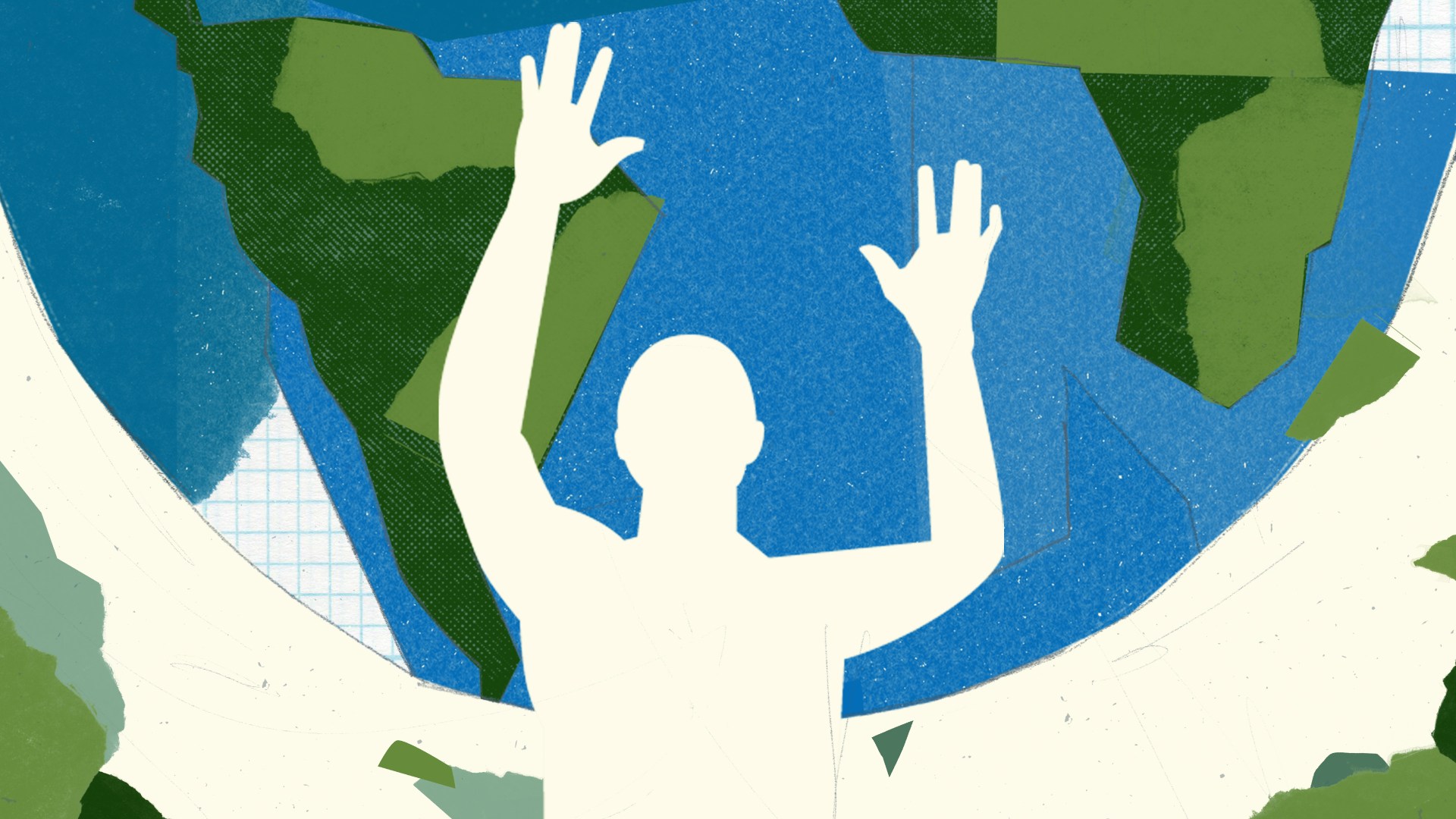
A paper cut out collage of a figure reaching up and pieces of a globe.
Christianity Today January 14, 2026
Illustration by Kumé Pather

Pastor Edward Awabdeh had just finished serving Communion at the Evangelical Christian Alliance Church when he noticed members fiddling with their phones and whispering nervously to their neighbors. Many in the Damascus, Syria, church had received notifications of a suicide bombing at the Mar Elias Greek Orthodox church, located only 15 minutes away. 

Syrian security forces suddenly entered from the rear of the church and evacuated the congregation within a few minutes. But even as congregants filed out peacefully, many feared for their friends’ and relatives’ safety at Mar Elias, where they learned that the June 22 bombing last year had killed 22 Christians and wounded at least 60 others.

“This was our hardest day,” Awabdeh said. “But most concerning is the general atmosphere of extremism [in the country].”

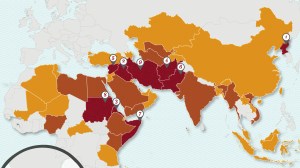
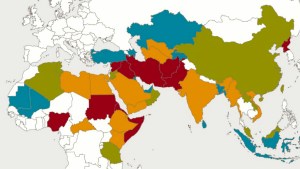
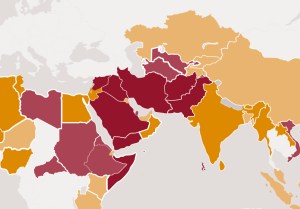
Persecution monitor Open Doors agrees. In the 2026 edition of its annual World Watch List (WWL), the nonprofit listed Syria at No. 6, up from last year’s ranking of No. 18. The country is the only newcomer to the top 10 most dangerous places to be a Christian and received a near-maximum score of 90 in Open Doors’ methodology. 

In Open Doors’ previous reporting cycle, which ends each September, zero Syrian Christians died for faith-related reasons. For the 2026 report, Open Doors verified at least 27 deaths of believers. 

The fall of the Assad regime in Syria occurred in December 2024. Shortly after, Ahmad al-Sharaa, the leader of the rebel coalition and head of the jihadist group Hay’at Tahrir al-Sham (HTS) appointed himself as the country’s interim president and established Islamic jurisprudence as the main source of legislation in the transitional constitution. 

Open Doors stated that power remains fragmented in the country, leaving space for extremists to harass Christians. Fear prevails among the few Christians who remain in the northwest city of Idlib, where the HTS base also contains ISIS cells and a Turkish military presence, as well as in central Syria due to a lack of local security and extremist intimidation.

In the larger cities of Damascus and Aleppo, Islamist actors have called for conversion to Islam through trucks laden with loudspeakers in Christian neighborhoods. They have placed posters on churches demanding payment of the sharia-mandated jizyah tax (historically levied on non-Muslims) for those who refuse. 

The situation for Christians is more tolerable in Syria’s coastland regions and the Kurdish-ruled northeast, Open Doors stated. Still, Syrian authorities closed 14 Christian schools in the northeast that refused to adopt a new Kurdish curriculum, denying education to thousands of students. 

Awabdeh has hope for Syria. Evangelicals enjoy “ten times” more freedom now than under Assad, he said. Authorities sent security forces to guard all Christian areas during Christmas, and the head of police in Damascus visited his church to offer holiday greetings. Officials also recently gave permission to build a community center on Alliance-owned land in the capital, which the previous regime had denied for more than three decades.  

Yet Awabdeh remains troubled that the government is not reining in extremism. Officials say all the right things about minorities’ rights, he says, but there was little accountability following the Syrian forces’ massacre of Alawites last March and during armed militias’ killings of Druze Muslims last July. 

In the southwest region of Druze-majority Sweida, armed men entered the apartment of one of Awabdeh’s church members and held him at gunpoint. They stole everything and destroyed all the Christian symbols in his home. A moderate Muslim shaykh told Awabdeh that some Islamic militants believe they have the right to loot non-Muslim properties. 

Syrian Christian emigration continues to grow. Open Doors estimates that only 300,000 believers remain, down from a pre-2011 total of 1.5 to 2 million, which was 10 percent of the population at the time. 

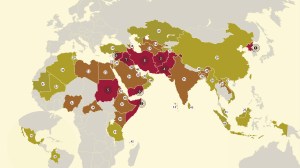
Globally, more than 388 million Christians live in nations with high levels of persecution or discrimination for their faith. That’s 1 in 7 Christians worldwide, including 1 in 5 believers in Africa, 2 in 5 in Asia, and 1 in 12 in Latin America. The total number rose by 8 million since last year, reflecting a steady increase over time. Per the 2019 WWL, 1 in 9 Christians worldwide resided in high persecuting countries.

The dramatic rise in Syria’s rank on the WWL should not distract from persistent persecution in the rest of the world. Open Doors noted two broad trends in particular: fragile governments and state-induced isolation. 

Within the past 5 years, 5 of the 14 sub-Saharan African countries on the WWL have overthrown their governments and two have suspended their constitutions. In the democratic nations of Nigeria and Ethiopia, jihadist and rebel groups prevent the state from extending security and stability throughout its territory.

As a result of similar fragile governments elsewhere, Open Doors marks “Islamic oppression” and “organized corruption and crime” as two of the top three drivers of persecution in 10 of those 14 nations. 

In the past decade, the average persecution score for the sub-Saharan region has increased from 68 to 78 out of a scale of 100, while the violence score (1 of 6 markers tracked by the list) has increased from 49 to 88 percent of the total category. This includes killings, detentions without a proper trial, abductions, and property destruction. 

Ten years ago, 6 sub-Saharan nations ranked among the 20 most violent countries for Christians worldwide. This year’s list ranks 12 countries from the region in the top 20, including the only three with a maximum score: Sudan, Nigeria, and Mali. 

Sudan (No. 4) rose one place in this year’s list due to violence directed at Christians. The civil war, ongoing since 2023, has displaced nearly 10 million people, equal to the population of Greater London or Bangkok. Nationwide, the conflict has damaged hundreds of churches, with Christians targeted in the Darfur, Blue Nile, Nuba Mountain, and capital regions. 

The rebel Rapid Support Forces in Sudan, which held much of the capital of Khartoum for nearly two years, destroyed several Christian schools and churches, including the Sudan Presbyterian Evangelical Church and the Evangelical Church in the Omdurman neighborhood. After the country’s national army regained control last March, it proceeded to bulldoze a Pentecostal church. 

Yet Nigeria, ranked No. 7, attracted global attention last year when US president Donald Trump rebuked the nation and threatened military action over the persecution of Christians. Listed in the top 10 since 2021 and registering a maximum violence score for eight consecutive years, Nigeria suffers from farmer-herder land conflict mixed with religious intolerance and jihadist oppression.

While experts dispute the root causes of violence against believers, Nigeria recorded the overwhelming majority of Christians killed because of their faith in the 2026 WWL, with 3,490 deaths out of 4,849. Fellow sub-Saharan nations followed, with the Democratic Republic of Congo (No. 29) tallying 339, and Burkina Faso (No. 16) with 150. 

However, not all persecution comes from Muslim sources. In Ethiopia (No. 36), the Orthodox Church, which is historically linked to state power, put pressure on Protestant communities that often face hostility at the local level. Despite a 2022 truce signed with the government, armed groups in the regions of Amhara and Oromia burned, demolished, or looted 25 churches, said Open Doors. 

Open Doors highlighted other African countries for its second trend—government surveillance and oppression. The overall score for Algeria (No. 20) has increased 7 points to 77 since 2021. The government’s systematic closures of churches have resulted in an estimated three-quarters of Algerian believers no longer being part of an organized Christian community, Open Doors stated. Believers who meet privately to worship continue to risk arrest. 

But the highest-ranked example comes from China (No. 17). Despite registering a score of 79, this increase to its all-time high did not result from any change in the level of violence. Instead, pressure on the church increased from the publication and enforcement of new regulations on the use of the internet and social media

Preaching can only be hosted on registered websites, through the official Catholic and Protestant associations. Church leaders must support the Communist Party and a socialist system while refraining from fundraising, doing outreach to youth, and distributing Bible apps and religious material. 

The new rules in China fit a pattern of increased regulation since 2018 and coincide with repression against previously tolerated independent churches, Open Doors said. Some of these larger fellowships now meet quietly in groups of only 10 to 20 believers. Government officials may accuse unregistered house church pastors of “provoking trouble,” and these pastors face suspicions of fraud if they collect offerings. 

https://datawrapper.dwcdn.net/xp7RP/3/

Despite the lessening of violence levels in some still-oppressive nations, the statistics collected by Open Doors remain disturbingly high globally. Christians killed for their faith in countries including Nigeria increased by nearly 400 cases compared to the previous reporting period. 

Acts of violence also forced Christians to leave their homes in search of safety elsewhere. In the 2026 WWL, Open Doors recorded 224,129 Christians who were internally displaced or became refugees, in comparison with 209,771 cases in the prior reporting period. Believers from Nigeria, Myanmar (No. 14), and Cameroon (No. 37) suffered the most this way. 

The number of cases of Christians who have been physically or mentally abused (including beatings and death threats) for faith-related reasons increased from 54,780 to 67,843 in the 2026 WWL. Nigeria, Pakistan (No. 8), and India (No. 12) had the most instances of such abuse. The total number of Christians sentenced to prison, labor camps, or mental hospitals for their faith increased from 1,140 to 1,298, with India, Bangladesh (No. 33), and Eritrea (No. 5) leading the list. 

Meanwhile, the number of Christians raped or sexually harassed for faith-related reasons rose from 3,123 to 4,055, with Nigeria, Congo, and Syria as main offenders. The report acknowledged the challenge of gathering these numbers, given victims’ trauma and cultural taboos. 

Another sensitive data point: the number of forced marriages of Christians to non-Christians. Open Doors reported that this figure increased from 821 to 1,147, with Nigeria, Pakistan, and the Central African Republic (No. 22) as the top three. 

Other indications of violence went down in the newest reporting period. Attacks on houses, shops, businesses, or other property belonging to Christians fell from 28,368 to 25,794 cases, with Nigeria, Sudan, and South Sudan (ranked outside the top 50) topping the chart. Attacks on church properties declined substantially from 7,679 to 3,632, with Nigeria, China, and Niger (No. 26) the most prominent offenders. The number of abducted Christians decreased from 3,775 to 3,302, with Nigeria, Sudan, and Mozambique the most dangerous for that category. 

In many cases, figures cannot be measured precisely, so Open Doors sometimes reports round figures of 10, 100, 1,000, 10,000, and 100,000, depending on the situation. Its researchers emphasized that estimates are conservative and represent the “absolute minimum” of attacks and atrocities, meaning the actual figures are likely much higher.

Open Doors also described improving trends for Christians in certain countries on the 2026 WWL. Muslim-majority Bangladesh fell to No. 33 from No. 24 because of a 20 percent reduction in its violence score, following the relative calm after the 2024 overthrow of its government. The country’s interim prime minister, Muhammad Yunus, has also made several positive statements about religious freedom, though his commitment may be tested during next month’s elections.

In Malaysia, ranked just outside the top 50 most dangerous nations in which to be a Christian, the high court issued a groundbreaking ruling that recognized the role of police forces in the 2017 abduction of pastor Raymond Koh. The court ordered the government to reopen the investigation and pay a fine for every day of Koh’s disappearance, which has now reached a total of over $7 million USD. 

Finally, although religious freedom conditions are not improving substantially in Cuba (No. 24), Mexico (No. 30), Nicaragua (No. 32), or Colombia (No. 47), there has been an increase in local and global religious freedom advocacy on behalf of believers in these countries. Churches in these contexts “show remarkable resilience and creativity” in serving their vulnerable populations, the Open Doors report noted.

CT previously reported the WWL rankings for 2025, 2024, 2023, 2022, 2021, 2020, 2019, 2018, 2017, 2016, 2015, 2014, 2013, and 2012, as well as a spotlight in 2010 on where it’s hardest to believe. CT also asked experts in 2017 whether the United States belongs on persecution lists and compiled the most-read stories of the persecuted church in 2019, 2018, 2017, 2016, and 2015.

Read Open Doors’ full report on the 2026 World Watch List here.

Methodology

Open Doors scores each nation on six components, and each category can receive a maximum score of 16.7 for a maximum total score of 100. Researchers consider a score of more than 40 points as high. 

Their methodology takes into account violence as well the pressure to reject their faith that believers experience from neighbors, friends, extended family, and society as a whole. The total score is determined based on answers from an extensive questionnaire.

  • Private life: the inner life of a Christian and his or her freedom of thought and conscience.
    “How free has a Christian been to relate to God one-on-one in his/her own private space?”
  • Family life: pertaining to the nuclear and extended family of a Christian.
    “How free has a Christian been to live his/her Christian convictions within the circle of the family, and how free have Christian families been to conduct their family life in a Christian way?”
  • Community life: the interactions Christians have with their respective local communities outside their families.
    “How free have Christians been individually and collectively to live their Christian convictions within the local community? How much pressure has the community put on Christians by acts of discrimination, harassment or any other form of persecution?”
  • National life: the interaction between Christians and the nations they live in. This includes rights and laws, the justice system, the state, and other institutions.
    “How free have Christians been individually and collectively to live their Christian convictions beyond their local community? How much pressure has the legal system put on Christians? How much pressure have agents of supra-local life put on Christians by acts of misinformation, discrimination, harassment or any other form of persecution?”
  • Church life: the collective exercise of freedom of thought and conscience, particularly as regards uniting with fellow Christians in worship, service, and the public expression of their faith without undue interference.
    “How have restrictions, discrimination, harassment or other forms of persecution infringed upon these rights and this collective life of Christian churches, organizations and institutions?”
  • Violence: deprivation of physical freedom, serious physical or mental harm to Christians, or serious damage to their property. This is a category that can affect or inhibit relationships in all other areas of life.
    “How many cases of such violence have there been?”

Additional reporting by Sofía Castillo
Books

Christian Writer Daniel Nayeri Dreams from Home

Lying on the floor of his mauve-walled writing shed, the celebrated YA author writes himself around the world.

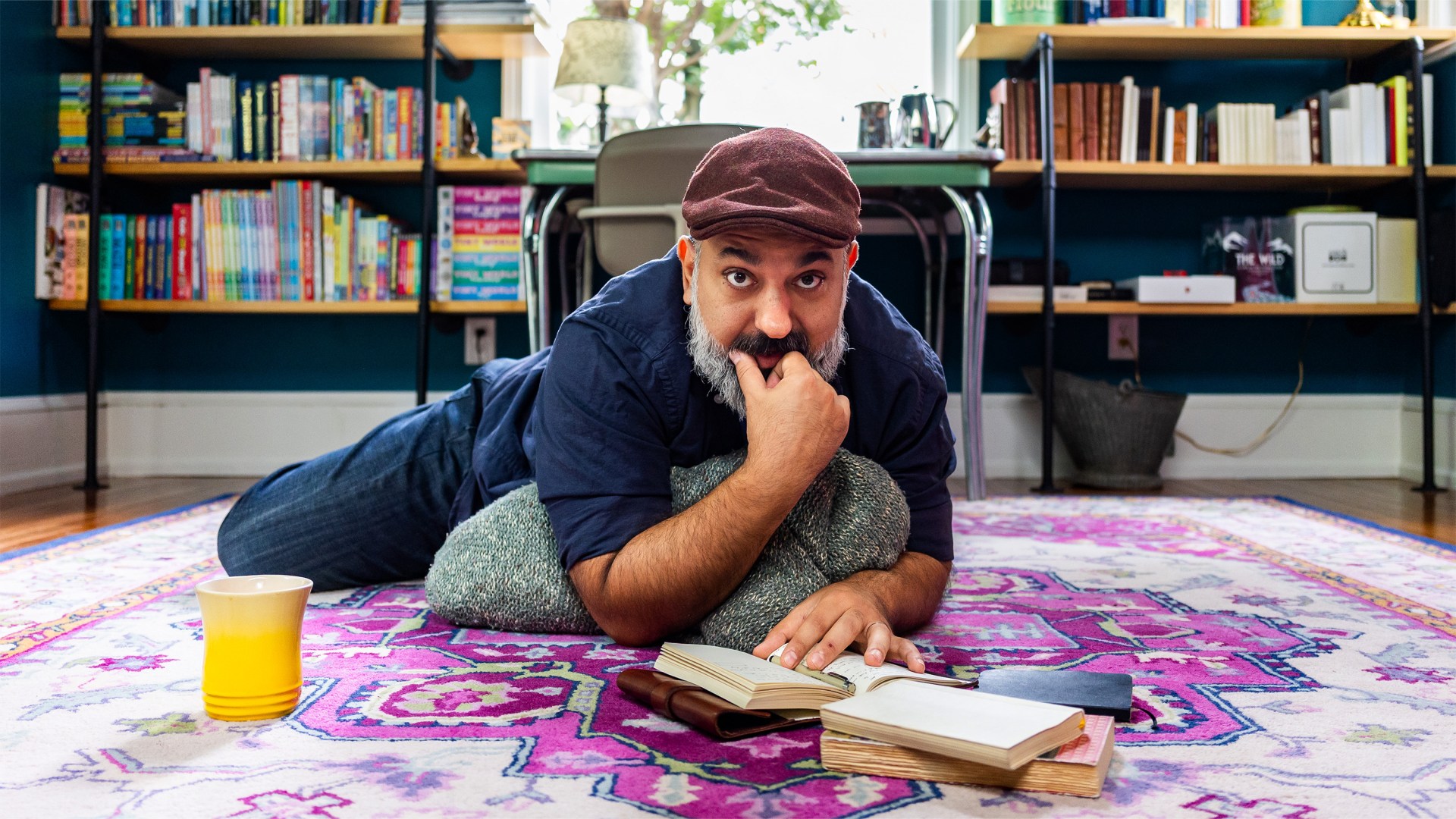
A image of Daniel Nayeri on the floor with books.
Christianity Today January 14, 2026
Image courtesy of Leandro Lozada

The night before my flight to meet Daniel Nayeri, I happened to catch a lecture by Paul Kingsnorth. On the surface, the two writers have little in common. Daniel was born in Iran, and Paul lives in Ireland. Daniel primarily writes fiction for younger audiences; Paul writes essays, and the few novels he has published are decidedly not kid friendly. Yet in the 36 hours I would spend with one author, I couldn’t stop thinking about what the other had said.

I drove from my Louisville home to Port Royal, Kentucky, to hear Kingsnorth’s lecture, held in one of the only buildings in the small rural town that could accommodate such a large audience—the local Baptist church. Speaking from behind the pulpit, Kingsnorth made a startling claim: The hearths have gone out.

The hearth, Kingsnorth elaborated, is what makes a house a home. It’s a symbol of warmth and community, he writes in Against the Machine, because “staring into the smoky fire with family or neighbours was the genesis of the folk tale and folk song which tied the culture together.” Today, the metaphorical flames that once warmed our living rooms have been replaced by the “digital fires” of smartphones and social media platforms. According to Kingsnorth, when digital hearths flicker into existence, home devolves into a dormitory—stripped of activity and personality, it becomes the place you sleep when you’re not at work.

Kingsnorth’s lecture came at just the right time for me. I’ve been married for a year and a half. My wife and I hope to have children soon, Lord willing. I want our house to be a home, not just a dorm. But how do we keep our hearth burning?

When I got on the plane to Charlotte, North Carolina, to meet Daniel Nayeri, I was traveling in search of warmth.

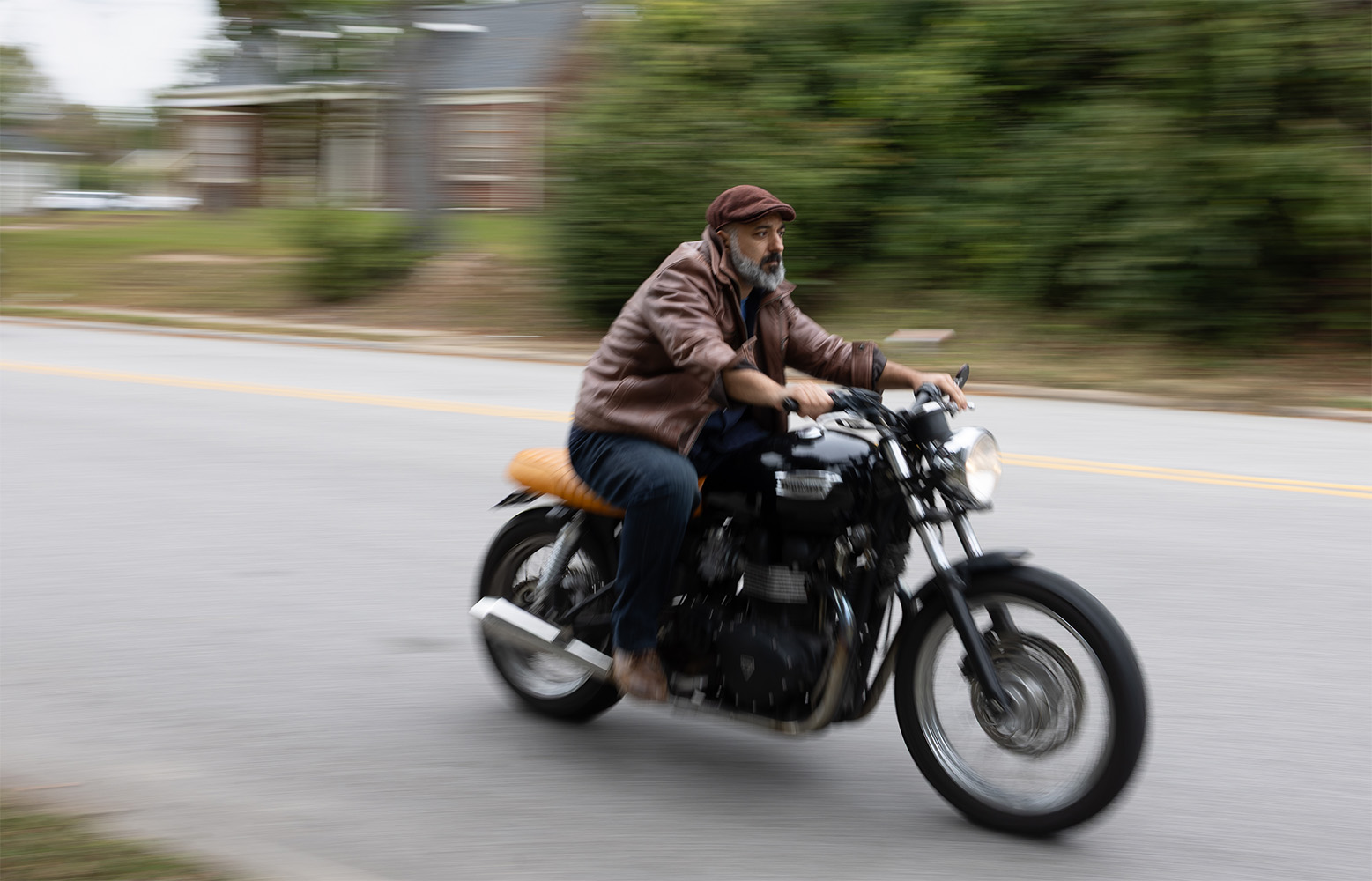
Daniel and his 13-year-old son picked up my photographer friend and me from the airport in a big ol’ Ram truck. A Texan by birth, I was pleased. But not long after we piled in, Daniel informed us that the truck belongs to his wife. He drives the only vehicle cooler—a motorcycle.

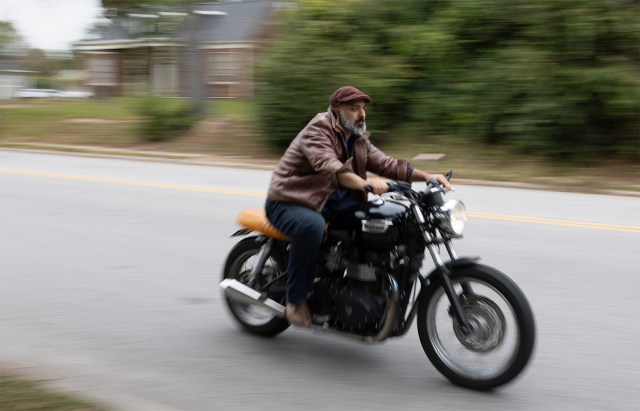
Daniel riding his motorcycle.Image courtesy of Leandro Lozada

When we first made plans to profile the novelist, I imagined my friend and I would rent a hotel room for a night. Daniel insisted we stay with him. His house in Rock Hill, South Carolina, is sky blue with copper gutters that adorn it like jewelry. The living room boasts a shelf with dozens of carefully selected picture books. Art hangs on every wall alongside shadow boxes of rocks, shells, and other treasures the family pockets on vacations.

Daniel and his wife, Alexandra, have used their extra space well, a talent they learned by living in much smaller quarters in New York City. Daniel found good work there as a literary agent and then an editor. But after 80-hour weeks in the publishing industry burned him out, he quit and worked as a pastry chef. The (slightly) more reasonable hours and tactile labor were good for Daniel. He started writing again. He knew if he went back to his apartment after early-morning shifts, he would sleep or get distracted, so he sat on park benches and subways instead, typing away on his iPhone. Eventually, he’d write four novellas by this method, compiled into the 2011 collection Straw House, Wood House, Brick House, Blow.

The book is creative, experimental, and strange, each novella set within a different genre: Western, dystopian, hard-boiled detective, and fantasy. Daniel’s love of stories is apparent on every page. Four years after the collection, he published a volume about the craft of writing, How to Tell a Story. The interactive book operates like a game of Mad Libs, offering scenarios for readers to fill in with characters like Dapper Fox, Evil Wizard, and Robot and settings like Coliseum, Heaven, and Mystery Cave, teaching motivation, conflict, and resolution along the way.

After giving me a quick tour of the home, Daniel got to work in the kitchen, with its ginormous fridge and gleaming silver island. (Because of his culinary background, a fitted-out workspace is nonnegotiable. He drinks out of deli containers like characters from The Bear.) That night, we feasted on Korean food—kalbi (beef ribs) marinated for hours before Daniel browned them in the oven and served them with egg-yolk-anointed white rice and sides of kimchi. As we did before every meal, we held hands and prayed.

Making conversation with Daniel and his family is easy. Daniel is a talker. He compares American politics to the theatrical stylings of World Wrestling Entertainment and waxes eloquent about his affinity for the Apostles’ Creed. Alexandra (who has authored two picture books) asks the questions. She asks us what we think heaven will be like. She asks about the “top ten things” to know about me (I think I got to five). She asks which books we’d bring to a desert island.

As wonderful as they are to live in, whole homes rarely make for good literature, and Daniel’s characters mostly grow up in dysfunction. His newest book, The Teacher of Nomad Land: A World War II Story, follows Babak and Sana, two orphaned siblings living in Iran during World War II, with Russia and the UK controlling either side of the nation’s border. The siblings fall in with a group of nomads and, to make himself useful, Babak shoulders a chalkboard and starts teaching. The Teacher of Nomad Land declares the value of learning in times of strife. Last year, it won the National Book Award for Young People’s Literature, and CT’s editor at large, Russell Moore, named the book one of his favorites of 2025.

The next morning, after a breakfast of homemade cherry scones and clotted cream, Daniel showed me his dedicated writing space—a charming backyard shed with mauve walls and doors the same hue of pink as the Sour Patch Kids gum he offered me. The shed has plenty of windows but no internet connection. Daniel has long given up writing on his iPhone. Now he drafts his books by hand in a journal. In fact, he’s abandoned smartphones entirely and uses one of the “dumbphone” alternatives.

The shed contains a rug, a few chairs, and plenty of books. Juggling sticks sit ready at a desk in case Daniel gets stuck and needs something to do with his hands. That said, Daniel doesn’t usually write at his desk. He writes on the floor.

All writers have their rituals, and this is his—stomach down, a pillow propping up his chest, one leg splayed out behind him. He arranges journals and reference books on the floor just in front of his face. On a typical day, he enters his pink-and-purple shed in the morning, prostrates himself, and writes until lunch, doodling when he gets stuck.

“Iranians work on the rug,” he told me. “I prefer the ground. I’ve always preferred the ground.”

It’s the perfect posture for an author of children’s books and middle-grade fiction. Chairs and desks are the necessities of old age; the floor is the domain of the young. It’s playful. So is Daniel. He talks in silly voices and laughs at puns. Yet as with any kids’ book worth its muster, the playfulness comes with profundity.

After Daniel gets up from the floor, he shows me the journal in which he handwrote the original draft of Everything Sad Is Untrue, his most well-known book. The genre-bending memoir, written from the perspective of Daniel’s 12-year-old self, tells the true story of his family fleeing Iran after his mother’s conversion to Christianity. The title comes from J. R. R. Tolkien’s The Return of the King, when Samwise Gamgee wakes to see the resurrected Gandalf and asks hopefully, “Is everything sad going to come untrue?”

Even with its unapologetic portrayal of faith, the book received high praise from secular publications, including NPR and The Washington Post. “‘Everything Sad’ is a modern masterpiece—as epic as the ‘Iliad’ and ‘Shahnameh,’ and as heartwarming as ‘Charlotte’s Web,’” read the New York Times review.

Tucked into the pages of the writing journal like a bookmark sits a piece of paper printed with a famous quote from The Brothers Karamazov. I recognize it as one of the epigraphs in Everything Sad.

I believe like a child that suffering will be healed and made up for, that all the humiliating absurdity of human contradictions will vanish like a pitiful mirage, like the despicable fabrication of the impotent and infinitely small Euclidean mind of man, that in the world’s finale, at the moment of eternal harmony, something so precious will come to pass that it will suffice for all hearts, for the comforting of all resentments, for the atonement of all the crimes of humanity, of all the blood they’ve shed; that it will make it not only possible to forgive but to justify all that has happened.

Here, agnostic Ivan Karamazov is embroiled in a painful conversation with his brother Alyosha, a steadfast believer. They argue over how God can exist given the world’s suffering. Eventually, Ivan concedes that he believes something profound will appear at the end of time to make sense of all the bloodshed.

The passage has special significance for Daniel. For the two decades he lived in New York City, he attended Tim Keller’s Redeemer Presbyterian Church. On the Sunday after 9/11, Redeemer printed the famous passage from Fyodor Dostoevsky in the bulletin. Daniel cut out the quote with scissors and kept the piece of history. He still has it memorized.

Like a kid at show-and-tell, Daniel displays another of his books. This one, sadly, is now out of print. The Most Dangerous Book: An Illustrated Introduction to Archery really does recount the history of archery—but it’s also a toy that “turn[s] into a bow and shoot[s] paper ammunition.” As the back cover explains, this is “a weapon of mass instruction.” “What about ideas that are less bad?” Daniel asks in an introduction that reads like a manifesto. “Nothing ideas. Boring ones. Tepid ones. How are those dangerous? Reader, believe me, those are the most dangerous.” Boredom is more than a nuisance for Daniel; it’s a threat.

Fear of boredom fits Daniel as naturally as the leather jacket he wears while riding his motorcycle up and down the street for us to take pictures. When Daniel was my age—late 20s—he “wanted nothing more than to be a travel writer,” he said, journeying to exotic locations and penning pieces for Outside Magazine and National Geographic. He wanted to be the Anthony Bourdain of desserts, seeking out the best confections, smiling at the camera. But he doesn’t ride much anymore. When he’s not traveling for work, he’s content to stay home.

The man who longed to live out of a suitcase has become a homebody. He has his fitted-out kitchen, a room full of board games, a space for his son’s homeschooling, his writing shed. Why leave?

In his what-makes-a-house-a-home criteria, Kingsnorth listed “the coming together of man and woman in partnership,” “the education of children,” the “cooking, storing, and eating of food,” and the limiting of technological distractions. Daniel and his family check the boxes of Kingsnorth’s rubric, though they aren’t Luddites. Alexandra has an iPhone, and their son has a Nintendo Switch, but nobody texted during meals. They’ve learned how to keep the hearth burning without completely eschewing technology.

Before my friend and I left, Daniel pulled out puff pastry, spinach, and mushrooms to make lunch. His son put on music full of synth and drums. Someone tossed me an apron. As I helped cook, dancing around the kitchen with Daniel and his family, I was invited into their circle of warmth.

Really, I already had been invited into it, before I even bought my plane ticket. Anyone who has read Daniel’s writing can feel the heat radiating from his words, whether he tapped them into an iPhone in New York or scrawled them in a leather journal in South Carolina. With Daniel’s characters, I’ve traveled the 11th-century Silk Road and navigated a bus ride to school in Edmond, Oklahoma. But the fuel propelling his adventures has always been the desire for home.

Through both his work and our weekend together, Daniel taught me that making a house a home doesn’t mean insularity or avoidance of the world. He’s curious and free-spirited. But when he’s under the copper gutters, he turns his attention not toward a screen but instead toward his family, the blank page, or the mound of flour in front of him. In fact, it’s his rootedness that allows him to write such great adventures. As Kingsnorth observes, sitting in a smoky living room can be the precondition for the best folk tales and songs. And when it comes to pulling chairs around the coals, Daniel isn’t selfish. He extends hospitality physically with his scones and figuratively with his stories.

There’s something else essential to hearth-centered homes—something Kingsnorth, though himself a Christian, didn’t mention in his lecture. Daniel and his family are believers. Along with two millennia of Christians, they believe in God the Father Almighty, in Jesus Christ our Lord, in the Holy Spirit. With Dostoevsky’s characters, they believe like children that all the suffering and absurdity of this life will be justified. And with Samwise Gamgee, they believe that all the sad things will come untrue. That’s the story underneath all the other stories that keeps the embers burning. The church is their spiritual home no matter their geographical location. It’s mine too.

Before I knew it, I was on the plane back to Kentucky, enjoying the grilled cheese sandwich Daniel had packed for me in a brown paper bag. I arrived in Louisville late that night, and my wife picked me up from the airport. After she parked the car in our driveway, I stayed still for a moment, looking at our home in the dark.

Our house is different from Daniel’s. His is old, predating both world wars. Ours was built six years ago. The siding is gray instead of Daniel’s blue, and our gutters are a conventional white. Inside our fridge, instead of blocks of nice cheese and marinating beef, I find dairy-free alternatives for my wife and chicken ready to be tossed in a pot for our favorite soups. Our bookshelves differ from Daniel’s too. Sure, we also own The Brothers Karamazov, The Lord of the Rings, and (recently autographed) books by Kingsnorth. But as bookish Kentuckians, we also own inordinately more Wendell Berry.

As I struggle to find room on the shelves for all the books Daniel gave me, I think of the Kentucky farmer and writer. In an essay called “Family Work,” Berry wrote that all places have the latent possibilities to become homes. To realize these possibilities, all that’s required is “the time and the inner quietness to look for them, the sense to recognize them, and the grace to welcome them in.”

My wife and I have all the ingredients we need: We come together in partnership, we cook and store food, we share stories, and we cling to our beliefs. My time with Daniel was wonderful. Yet I was eager to get back to my house. That’s a good sign. It means our place is more than a dorm. It’s a home.

Jonathon Crump has written for The Gospel CoalitionCommon Good, Christ and Pop Culture, and other publications. Follow him on Substack.

Ideas

How to Do Your Own Research About Vaccines

Contributor

A doctor shows how to inoculate yourself against foolishness with a shot of wisdom.

Several medical syringes and vaccine vials.
Christianity Today January 14, 2026
Peter Stark / Getty / Edits by CT

The CDC recently scaled back its schedule of recommended vaccines, removing vaccines for hepatitis A and B, meningitis, rotavirus, and others in a change that makes the US vaccine schedule look more like it does in countries that have socialized health care, such as Denmark. That change comes as more Americans are choosing to skip or delay certain vaccinations (though most parents vaccinate their children according to the schedules set by health authorities).  

Overreach by health authorities during the COVID-19 pandemic reduced trust in institutions. It has not helped that many of those same health authorities recently latched on to claims about transgender medicine for children that aren’t defensible from a scientific perspective, much less a religious one.

Trust is far more easily broken than it is rebuilt, and statements about loving your neighbor are unlikely to convince people who think vaccines are harmful. Yet we should not allow our reactions to government overreach to override our God-given reason and cause harm. With more people refusing the MMR (measles-mumps-rubella) vaccine, new measles outbreaks have occurred, as well as a handful of deaths—something not seen in the US for decades. 

We do have to think critically about the recommendations and pronouncements that come down from the government and major medical associations, because their actions, like all human behavior, may be motivated by ignorance, foolishness, or pride. Most parents will want to follow whatever vaccine schedule the Centers for Disease Control and Prevention (CDC) puts out, since those schedules are generally based on careful studies of how effective those vaccines are. 

There’s nothing wrong with that—in my practice in Kenya, I see plenty of children with pneumonia, diarrhea, and meningitis whose parents wish their kids could get all the vaccines American children are given routinely. But for those who wish to investigate further, I want to suggest a few principles for discerning what’s true.

The first principle: Ask, What are the risks of harm and the potential benefit of a vaccine? I’ll start with an example of a vaccine not recommended for American children: the Bacillus Calmette–Guérin (BCG) vaccine, given to children all over the world to prevent tuberculosis infections in the brain. My wife and I had to decide when our last son was born in Kenya whether or not to give him the BCG vaccine.

This vaccine, which uses a weakened form of tuberculosis bacteria to protect against infection, has the risk of causing minor problems like a local skin infection, as well as more rare but more serious side effects. I’ve watched patients die of tuberculosis, but I was also nearly killed by a vaccine side effect years ago, so I’ve seen both sides of the equation. We judged that, for our son, the potential benefit of avoiding infection outweighed the risk of harm caused by the vaccine.

The American Academy of Pediatrics (breaking from the CDC) recently recommended that all children 6 months and older who have never had a COVID-19 vaccine get one this year. This recommendation came because COVID-19 vaccines are effective at preventing emergency room visits. The number of children who die from COVID-19 every year is still low enough that there’s not enough scientific evidence to judge whether the vaccination prevents children from dying in the way other vaccines prevent death. For many families, avoiding the risk of a trip to the ER is enough to be worth taking the risk on a COVID-19 shot. For others, it’s not.

The next principle: When you encounter information, ask yourself, How do I know this is true, and what information might I find to falsify it? One common accusation is that insurance companies pay doctors “bonuses” to vaccinate a certain number of patients in their practice. This sounds like pure corruption—doctors getting kickbacks to inject kids!

So let’s ask how we can find out if it’s true—after all, anyone can write a meme or make a video on a cellphone claiming corruption is rampant, but it’s foolish to make a decision that could lead to the death of your child or someone else’s child based on something you saw on the internet. It turns out that insurance companies do pay for “value-based care” for a variety of metrics (such as how well-controlled diabetic patients’ blood sugars are). Childhood vaccination is one of those metrics.

What might falsify this claim of dollars trumping ethics? Well, if insurance companies are as profit-driven as the rest of the health care system is, they only recoup their investment in these value-based incentives if giving vaccines to children saves them money in the long run. And no one has found doctors saying they don’t believe in the CDC schedule but give the vaccines anyway.  

Maybe those doctors exist, but here’s a more likely explanation: Doctors administer vaccines they think are good for their patients, and they’re grateful that the money helps cover the cost of storing and administering them. Insurance companies save money when the vaccines prevent children from being admitted to the hospital. No conspiracy or corruption there.

All of us want stories and facts that justify what we believe, so one of the most countercultural things Christians can do when we encounter new information is to figure out how it could be wrong. Proverbs 18:17 says, “The one who states his case first seems right, until the other comes and examines him” (ESV). When we’re sitting alone with our screens, we should live out this verse by examining information that may seem right at first but doesn’t hold up under scrutiny.

We have vaccines available to us that our ancestors who buried young children couldn’t have dreamed of. The recommendations for these vaccines rely on scientific reasoning that is freely available for parents to read and decide for themselves. But if you’re going to do your own research, think first about how to research well.

Matthew Loftus lives with his family in Kenya, where he teaches and practices family medicine at a mission hospital. His book Resisting Therapy Culture: The Dangers of Pop Psychology and How the Church Can Respond is forthcoming from InterVarsity Press.

Books
Review

It’s Not Just What We Teach, but How

A new book on public schools—and the public square—looks beyond culture-war battles to deeper questions of pedagogy.

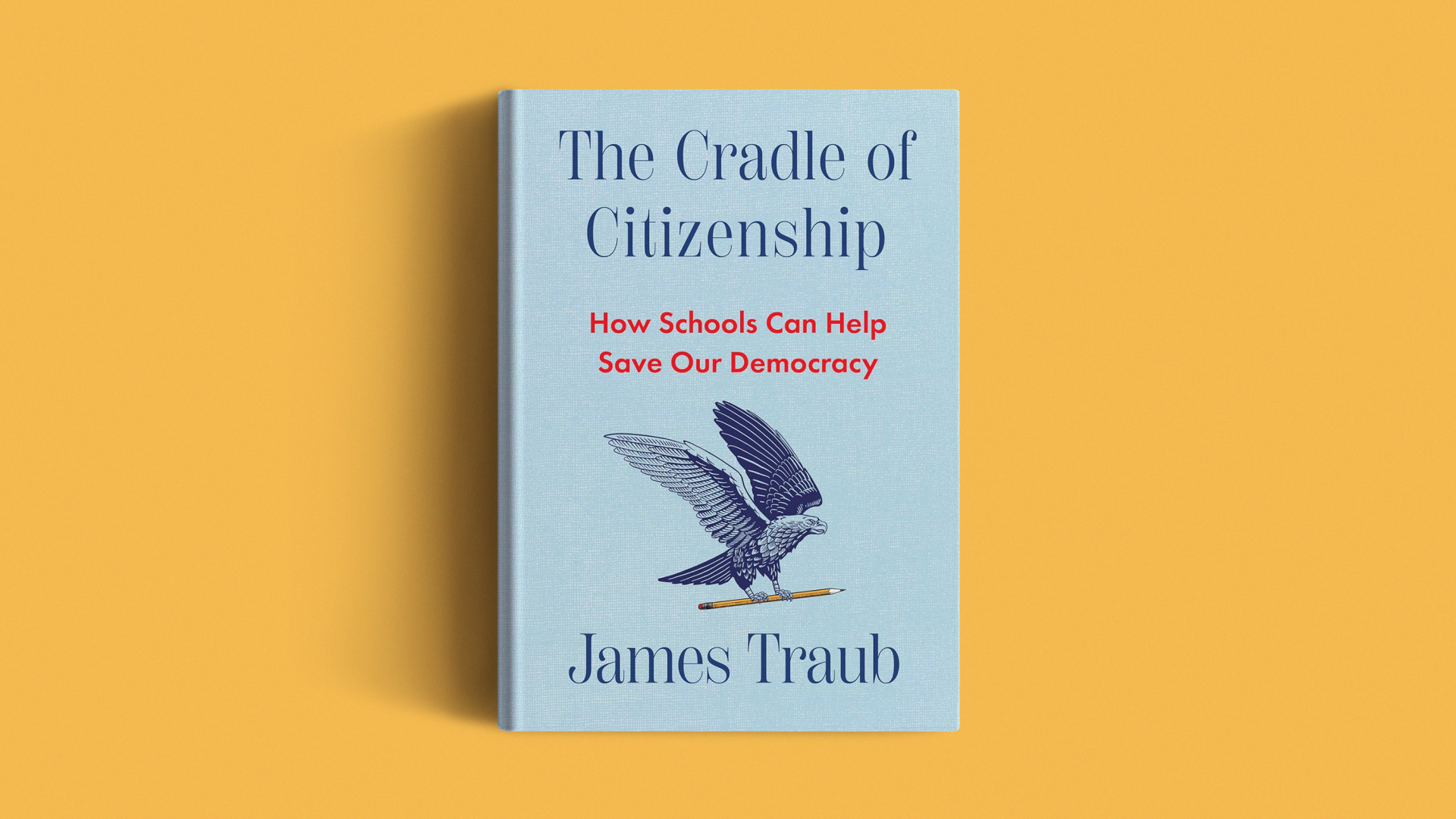
The book cover
Christianity Today January 14, 2026
Illustration by Christianity Today / Source Images: Getty, W. W. Norton & Company

A couple of lifetimes ago, back at the tail end of the second Bush presidency, I was working as a reporter in my rural Massachusetts stomping grounds. The small papers I wrote for had me covering pretty much everything, including area public schools.

At least in this neck of the woods, school board sessions were relatively tame affairs, revolving around the mundanities of budgets and building plans. Sometimes conversations turned testy over teacher layoffs or tax hikes, but they never felt like skirmishes in the culture wars. Townsfolk weren’t rushing the microphones with partisan diatribes, nor were board members auditioning to be the next Sean Hannity or Rachel Maddow.

Two decades later, I can’t say whether that neighborly spirit prevails. Elsewhere in the country, though, it’s not unusual to see school districts riven by ideological rancor. Angry parents make news airing grievances over curricula, library books, and transgender policies. Activist groups use their clout to pressure unobliging officials.

Are American public schools fated to be perpetual battlegrounds? Journalist James Traub doesn’t think so. In his latest book, The Cradle of Citizenship: How Schools Can Help Save Our Democracy, Traub—an influential voice in education policy circles—strikes a cautiously optimistic tone. Yes, he concedes, political division and acrimony can pull students and teachers into a destructive vortex. But schools can do more than merely weather these storms, he says, envisioning them as essential in reacquainting a polarized society with its better angels.

Banishing the demons, in this view, requires a renewed focus on both the doctrines and the arts of good citizenship. Traub asks how public education can inspire a better understanding of American history, a closer familiarity with the workings of American government, and more dependable habits of disagreeing without coming to blows. “Just as an increasingly coarse and intemperate culture is infecting our schools,” he writes, “so a conscious and thoughtful effort to promote civic education can help knit us back together.”

The Cradle of Citizenship combines careful reporting and trenchant analysis. Traub toggles between firsthand accounts from classroom visits across the country and broader attention to the ideas, institutions, and historical currents shaping contemporary debates about equipping students to preserve and enrich the public square. Along the way, he exposes readers to diverse perspectives on what schools should teach and—crucially—how they should teach it.

Naturally, if regrettably, a great deal of everyday education discourse tends to obsess over the whatwhile scanting the how. Ask many Americans how to improve the nation’s civics curriculum and they’ll gravitate toward specifics: more on the Founding Fathers and their glorious ideals, say, or more on the victims of state injustice and popular prejudice. Hence the fervor in so many local dustups over textbook pages devoted to this or that person or cause.

Traub pays due regard to these red-versus-blue dynamics shaping today’s educational landscape. He visits Florida, seeking on-the-ground reactions to woke-proofing projects spearheaded by the state’s governor, Ron DeSantis, as well as the backlash at schools in progressive enclaves. He covers dueling narratives of America advanced by The New York Times in its 1619 Project and the first Trump Administration’s rival 1776 Commission. 

Speaking of Trump, Traub wastes little time tallying his offenses against civic concord. I’ll admit to wincing at the book’s introduction, which flays Trump for menacing democratic norms and peddling a cartoonishly chauvinistic brand of American patriotism. 

I’m a firm, if mild-mannered, never-Trumper, so I can’t dispute this assessment, even if I would’ve welcomed more naming and shaming of the president’s left-wing foils. But Traub’s denunciations, easily swappable with a thousand others before, had me bracing for a wearying trudge down well-worn paths.

Thankfully, however, the book aspires beyond tendentious pleas to restore a consensus shattered by red America. Traub comes off as a moderate liberal, appalled by Trump but conspicuously uneasy with progressive excesses. He laments both hyperpatriotic mythology and crude revisionism, woke zealotry and anti-woke table-turning, silence on systemic racism and the dogmas of diversity seminars.

Traub cares a great deal, then, about the content of the lessons American students learn. He cares, as we all should, about whether those lessons are historically accurate and ideologically fair-minded. He advocates a civics curriculum that fortifies distinctive American ideals while honoring the diverse strains of American identity and experience. 

But some of Traub’s deepest passions emerge when he looks beyond red and blue squabbles over American self-understanding. He wants to disabuse readers of any suspicion that public school teachers function as ideological foot soldiers, dutifully relaying orthodoxies handed down from on high. In his observation, “most teachers are deeply committed to keeping partisan politics, including their own, out of the classroom.” Closer to the point, he argues, other factors shape those classrooms more profoundly than what we see in the headlines.

Most important is pedagogy, the methods and goals of teaching. In its most illuminating moments, The Cradle of Citizenship presents questions more urgent—and, to my mind, more interesting—than whether to emphasize George Washington’s heroic deeds or his entanglements with slavery.

Like politics, pedagogy comes in conservative and liberal flavors, though often each side’s politics and pedagogy run along parallel tracks. Traub notes, for instance, the influence of Hillsdale College, whose curricular guides favor both conservative ideas (favoring limited government to bureaucratic meddling) and approaches (preferring a syllabus of “great books” to faddish modern alternatives). 

Many, however, reject this kind of package deal. Traub classifies himself as a “political liberal but a pedagogical traditionalist.” He takes after thinkers like E. D. Hirsch, the author of the 1987 book Cultural Literacy who countered educational progressives and their fondness for “critical thinking” by insisting that schools should stock students’ minds with abundant stores of concrete knowledge. Throughout his book, Traub finds kindred spirits among blue-state teachers who chafe under policies discouraging paying detailed attention to demanding texts.

This pedagogical traditionalism includes an ambivalence toward philosopher John Dewey, renowned for developing “child-centered” education theories in the early-20th century. Dewey and his progressive disciples—understandably—wanted to leave behind dry lectures and rote memorization, dictated from teachers with unquestioned authority to desk-bound children bored out of their minds. Without such a shift, he worried that children would never find their place in a complex modern democracy.

Decades downwind from Dewey, Traub shows how public schools have channeled Dewey’s ideals into the work of molding mature, engaged citizens. Many schools seek to cultivate adaptable skills—reading comprehension or argument analysis—rather than presuming to transmit a foundational body of knowledge. They encourage teachers to lead with relatable discussion questions rather than a decree of books opened to page so-and-so. And they amplify civics lessons outside the classroom, organizing visits to city halls, trips to local museums and monuments, mock legislative debates, and other extracurricular supplements.

Traub never dismisses these approaches outright, and he has little patience for conservative critics who deride “action civics” as mere pretext for dragging impressionable teenagers to Black Lives Matter rallies or climate protests. He agrees that schools can meet students on their own terrain, that they can creatively make American history and government interesting and relevant. 

Yet schools do students a disservice, he argues, when they fail to declare what young Americans should know and resolve to teach it well. If the Constitution, the Civil War, or the Civil Rights Movement seems like a tale from a dusty attic, the answer is never to stow them away. It is to empower talented teachers to return to the source materials and make them crackle.

Pedagogical progressives might protest that the purpose of discussion prompts is launching classes into the relevant material, not bypassing it. But as Traub notes, this technique only goes so far. 

In one revealing anecdote, he mentions an Oklahoma City teacher who, while introducing the Constitution, invites students to pick other examples of “framers.” She’s a good teacher, and her brainstorming exercise gets the conversation humming. But the students struggle to think beyond celebrities, sport stars, and familiar historical icons like Martin Luther King Jr. “Perhaps,” Traub speculates, “they had brought a very remote idea closer to themselves.” Yet they gained only the shallowest acquaintance with Jefferson and Madison or checks and balances.

Somewhat surprisingly, Traub credits a largely red-state (and, commonly, conservative Christian) phenomenon—classical schools—with coming closest to realizing his educational vision. The classical public charter schools he visits embrace pedagogical traditionalism unapologetically, speaking confidently of truth, beauty, and virtue. They immerse students in challenging books, keep discipline tight, and minimize digital distractions. Where the public-school consensus zigs toward accommodating students’ felt needs, classical schools boldly zag.

What especially delights Traub is how classical schools succeed on terms set by educational progressives. “The child-centered pedagogy that has dominated schooling, or at least school doctrine, for much of the past century, seeks to foster inquiry, critical thinking, open discussion, and debate,” he observes, and this—not heavy-handed indoctrination—is precisely what he discovers in most classical classrooms.

Beneath these questions about what and how to teach American civics, though, lurks an even trickier question: whether schools should train students for citizenship in the first place.

Traub believes they should. Otherwise, why write the book? And most readers, I suspect, nod instinctively at the notion of enlisting public schools as guardians of a broad, commonly held, democratic culture.

Yet I wonder whether we’re sometimes too quick with that instinct. Civics, after all, touches on more than the bare facts of history or the mechanics of bills becoming laws. It addresses the way we order our loves and loyalties.

Christianity leaves ample space for measured, nonidolatrous attachment to earthly polities and nations. In many respects, Romans 13 commands it. Yet Christian parents are right to raise our kids to be more attentive to God’s eternal kingdom than a to single nation born in 1776. 

How do public schools handle families like that? Or, for that matter, radical parents who raise their kids to see America as a wicked place? Or crunchy parents who ground their children’s identities in family farms instead of 350 million anonymous strangers?

In a big, diverse country, home to many such outlier perspectives, what entitles public schools to play arbiter? Sure, dissenting oddballs are free to indulge their beliefs at home—and free to set up rival schools teaching rival doctrines. But public schools, by nature, accept all comers. How aggressively can they evangelize nonconformists?

As it happens, I align with Traub more than the previous paragraph might suggest. I believe public schools should make efforts, however modest and circumspect, to uphold a common American identity, one grounded in appeals to liberty and the pursuit of happiness—one that itself implies a freedom to inhabit other, weightier identities. 

But no civics program can (or should) resolve every last dispute about our renderings unto Caesar. We all benefit from principled educational pluralism, with a healthy assortment of schools—public, charter, private, and home-based—serving the common good by leaning into their peculiarities, not flattening them. Like the Dutch Reformed thinker Abraham Kuyper, I don’t regard the resulting mosaic as a reluctant sigh of squishy relativism. I recognize it as the hand of God’s common grace governing his world.

Traub acknowledges the folly and futility of demanding educational uniformity, and he does “not believe our wildly heterogenous society can be shoehorned into a single kind of school or curriculum.” Yet he clearly places a higher premium on strengthening public schools than letting alternatives flower. Public education, he approvingly writes, “is the only social institution that operates on all citizens and does so from early childhood to the edge of adulthood. School is a powerful civic force whether we wish it to be for not.”

With its deliberate focus on the civic aims of public schooling, The Cradle of Citizenship never intends to reckon with the civic value of schooling in all its forms. The full implications of educational pluralism—and brass-tacks matters like vouchers and parental choice—lie mostly beyond its scope. That said, I hope readers on all sides of these debates can appreciate its able defense of a public-spirited pedagogy that steers clear of tribalistic ditches.

Matt Reynolds is a writer and a former CT editor. He lives with his wife and son in the suburbs of Chicago.

News

As Iran Cracks Down on Protests, Christians Speak Up

This time, believers in the Iranian diaspora are praying more explicitly for the fall of the country’s rulers.

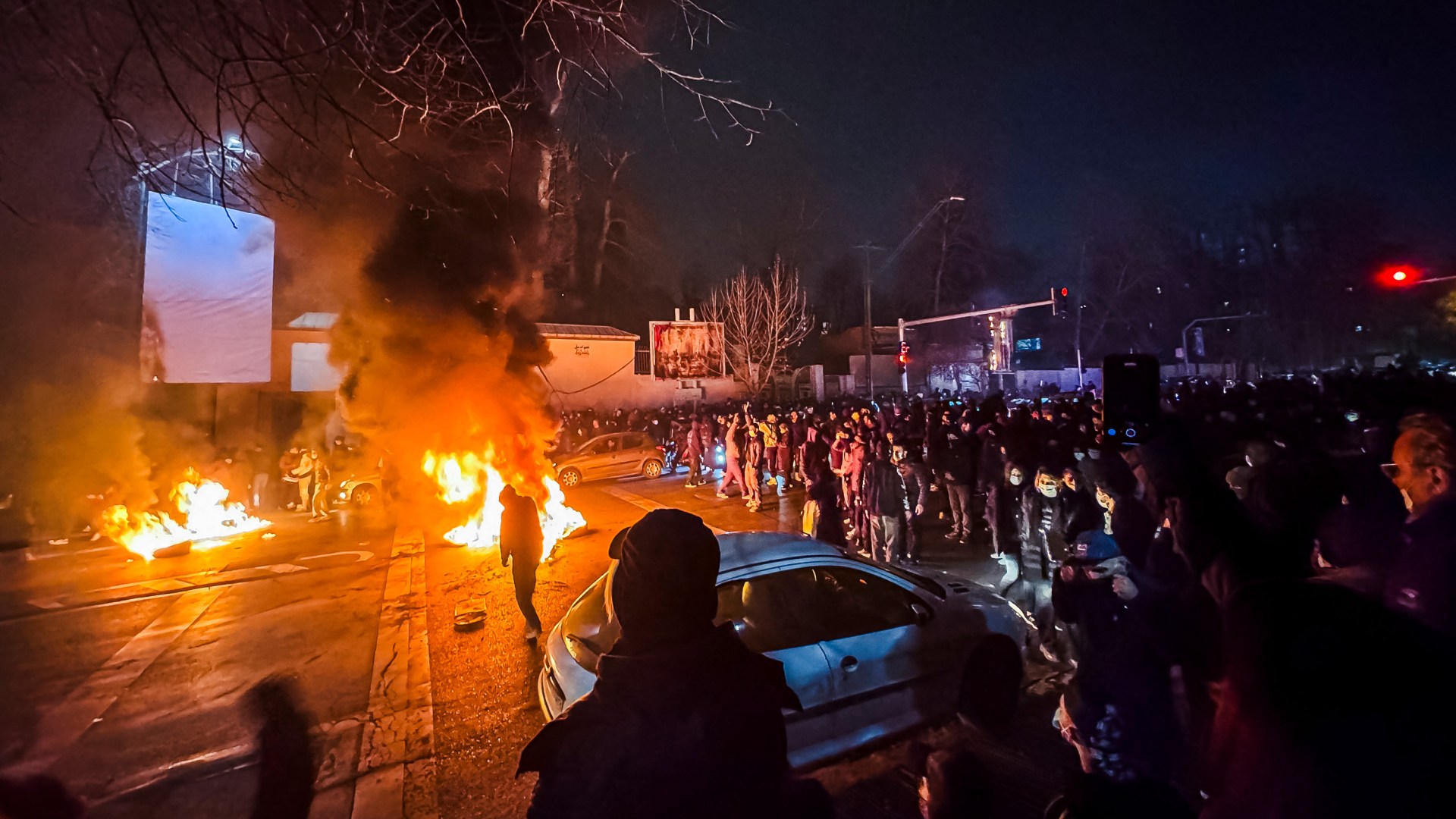
ranians blocking a street during a protest in Tehran, Iran on January 9, 2026.

Iranians blocking a street during a protest in Tehran, Iran on January 9, 2026.

Christianity Today January 13, 2026
MAHSA / Contributor / Getty

Mansour Khajehpour and his wife, Nahid Sepehri, understand what is at stake in the ongoing Iranian protests. They remember the 12 days they spent in a Tehran prison for their faith two decades ago. 

In the ’90s, the Islamic regime launched a wave of intense persecution directed primarily against Christians involved in evangelism and church ministries. One of Khajehpour and Sepehri’s Iranian Christian friends received death threats before he was found dead. Authorities arrested the couple, leaders at a Presbyterian church in Tehran, in 1996.

After the courts released them on bail, Khajehpour fled the country. His wife and young daughter followed him three months later. 

Today, they live in a Seattle suburb but still have relatives in Iran. They also serve a large network of Iranian house churches through their church, Crossroads at Lake Stevens, and through Sepehri’s work as executive director of the Iranian Bible Society. 

They and other overseas Iranian ministry leaders noted that Christians in Iran—who number close to 1 million, according to some estimates—are voicing their support for the recent wave of protests. This is a recent shift, as Iranian Christians in the past tended to stay away from politics. Compared to previous protest movements, this one is more widespread, with support from a broader cross section of the population. For many, it has brought hope for change. 

“The message that I hear from the Christians in Iran is a message of solidarity—a message of the theology of resistance,” Khajehpour said. 

Since December 28, tens of thousands of Iranians have flooded city streets across all 31 provinces to protest against the regime. They have set mosques ablaze, torn open bags of rice—throwing the contents into the air—and chanted for the return of the former shah’s son.

The Islamic regime has responded with brutality. Casualties mounted in recent days as the death toll rose to at least 2,000, with some estimates placing the total closer to 20,000. The regime shut down the internet on January 8, but some Iranians found ways to bypass the blackout to post videos on social media showing widespread uprisings and the regime’s bloody crackdown. One of Khajehpour’s Seattle church members said police shot two of his nephews—Christians from the city of Shiraz—but both are recovering. 

“It’s come to the boiling point right now, so people are fed up,” said Sasan Tavassoli, cofounder of Pars Theological Center, a London-based virtual seminary for Iranian church leaders. “They want a complete break with the Islamic regime, and they want the regime to be gone.” Tavassoli is a former Shiite Muslim from Iran who came to faith in Christ in 1985 and now lives in the United States. 

The protests began when the bazaari—merchants and traders who have historically been aligned with the Shiite clerical establishment—in Tehran took to the streets as Iran’s rial dropped to a record low of 1.42 million to the dollar. Bazaari played an important role in the 1979 Islamic Revolution that ousted the shah and placed Islamists in power.

While uprisings since then have focused on election reform or greater freedoms, the current protests are anchored in basic survival needs. Beyond the plummeting of Iran’s currency, the nation is also undergoing an acute energy and water crisis. In November, Iran’s president discussed relocating Tehran—a city of nearly 10 million people—to the southern coast due to the severity of the water shortage. 

David Yeghnazar, executive director of Elam Ministries, a US-based organization supporting the Iranian church, said a Christian inside Iran told him it was “impossible for people to know what it’s like unless they come and live here.” The Christian went on to say, “So much hope has been drained from people that it’s almost like they’re numb to life.” 

Yeghnazar, a native of Iran, said unprecedented US support has emboldened protesters, but “time will tell” whether the movement succeeds. In the past week, US president Donald Trump threatened to respond if the regime used brutal force against protestors. 

Since the 2022 protests, which erupted after 22-year-old Mahsa Amini died in police custody after allegedly violating Iran’s hijab law, the geopolitical landscape has shifted dramatically, injecting new hope into Iran’s resistance movement. Israel’s surgical strikes in Lebanon and Syria have crippled Iranian proxy groups, and separate but coordinated US and Israeli strikes in June degraded Iran’s nuclear and ballistic-missile program. 

In the wake of the US intervention in Venezuela, the Trump administration warned that it will no longer tolerate the presence of Tehran and its proxy group Hezbollah in the South American country.

Iranian Christians are speaking up too.

“The people have endured oppression and pain for so many decades, and across the country, there’s a deep longing for justice and freedom that is shared by many, including Iran’s Christians,” Yeghnazar said.

Iranian believers have historically distanced themselves from protests, Tavassoli said. During the 2009 Green Movement, a series of protests sparked by disputed election results, he remembers Christian television networks airing praise-and-worship programs for their viewers inside and outside Iran as the regime fired at protesters, killing 30 people. Despite the regime’s efforts to block communication, the interference wasn’t continuous, and some viewers still had occasional access to Christian television programming. 

“Back then, Christians thought that we shouldn’t be involved in politics,” Tavassoli noted. “That’s not our place in society.”

In 2022, Iranian churches and Christian leaders openly criticized the regime for the first time during the “Women, Life, Freedom” protests that resulted in more than 550 deaths. Now Tavassoli said he is seeing even more proactive anti-regime and pro-democracy voices from Iranian churches inside the country and Christian media outlets outside the country. 

“It’s just becoming a lot more accepted that we need to show solidarity with what’s going on in Iran,” he said. Ministry leaders are also addressing concerns about the Islamic regime in a more confrontational way in their teaching, preaching, and social media posts, he added. They are praying more explicitly for the fall of the country’s rulers and promoting a free Iran in which Christians can return and help rebuild the nation. 

Yeghnazar said his team organized a prayer call last Friday with 160 Iranian ministry leaders, including one or two from inside Iran. “There’s such heartfelt pain for the people that have suffered for so long,” he said.

Yeghnazar, who is based in the United Kingdom, said Iranians are sharing the gospel with people in the midst of the protests. He hears reports of Iranians experiencing dreams and visions of Jesus and said some are coming to faith. 

Yet over in Seattle, Khajehpour is concerned about the dark days ahead. “We have a group of people inside Iran that are the masterminds who trained Hamas leaders,” he said, referring to the Islamic Revolutionary Guard Corps, the country’s elite military and security force. He believes this group is behind the bloody crackdown in recent days and will strike again. He also noted the lack of peaceful transitions of power during the past 1,400 years of Islamic history.  

“Let’s pray that God places this on President Trump’s heart to get involved,” Khajehpour said.

Over the weekend, Trump said it “looks like” Iran crossed the administration’s red line of brutal crackdowns, forcing Washington to consider “strong options” against the regime. “Iran is looking at FREEDOM, perhaps like never before,” the president wrote on social media. “The USA stands ready to help!!!” 

Iranian Parliament speaker Mohammad Bagher Qalibaf responded by threatening to strike US military assets and Israel if the United States used force against Iran. Iranian supreme leader Ayatollah Ali Khamenei accused Washington of igniting the uprising. 

Yeghnazar said the unrest could endanger Christians because the regime often blames external powers and accuses believers of foreign influence. “They’re told to sign … confessions saying they’re Zionists or they’re working against the government,” he said, adding that many Christians are resisting the pressure. “So at a time like this, anyone who is not supporting the government is under greater risk.”

He believes several hundred Christians are currently imprisoned in Iran for their faith. 

Still, Tavassoli said a newfound hope exists among both Christians and non-Christians in Iran, partly centered on the potential return of the shah’s son, Reza Pahlavi, who has spent most of his life in the US in exile. 

Tavassoli has observed strong support for Pahlavi among Christians inside Iran, noting that the crown prince has expressed his desire to serve as a transitional figure who respects the will of the people. Last April, Pahlavi acknowledged on social media the persecution of Christians in Iran and extended Easter greetings to the Christian community.

As events unfold in Iran, Christians are praying for justice and for the church to remain anchored in its mission. 

“It is right to pray that every Iranian would live in a free and just country,” Yeghnazar said. “But there’s a real deep understanding among many believers that whatever change might come, the deepest longings of every Iranian can only be met in Christ.”

Correction: An earlier version of this article misstated the number of deaths from the 2022 protests.

Culture

Caring Less Helps Christians Care More

Holy indifference allows believers to release political anxiety and engage in constructive civic service.

A person holding umbrella under red and blue rain.
Christianity Today January 13, 2026
Illustration by Elizabeth Kaye / Source Images: Getty

Many Americans say politics induce stress and complicate their physical and emotional health. Christians are not immune to this anxiety. Even those who seek the peace of their cities through the power of the gospel often also express political overwhelm, fear, and anxiety. 

Author Sara Billups sees a connection between personal and political well-being, and she sat down with The Bulletin’s Clarissa Moll to talk about how anxiety manifests in our lives and politics and how practices that encourage surrender and trust can offer an antidote to the stress politics often brings. Here are edited excerpts from their conversation in episode 225.

How do you define anxiety?

Anxiety is a future-facing, ambiguous sense of dread that can cause physical symptoms. Some people are diagnosed with generalized anxiety disorder. Others just tend toward anxiety. There’s often a genetic component, whether generationally or through epigenetics. Many of us experience anxiety because of what’s going on in our communities and the world. 

Anxiety, in and of itself, is not something that we want to eradicate. It’s a natural response in our bodies. Parts of anxiety are lovely. For example, anxious people tend to be imaginative and creative, good storytellers. Anxiety can prompt deeper empathy or a desire to connect. Beautiful gifts can flow from the disposition sometimes. The problem comes when anxiety’s volume goes up too high.

How does personal anxiety influence our politics?

There’s a somatic as well as corporate angle to political anxiety. Political anxiety is not officially in the DSM-5 as a diagnosis, but it is something that many people experience. After the 2020 election, two-thirds of American adults said that the election was a big source of stress in their lives. That number was significantly higher than it was in 2016.

We are anxious as the body politic. Our political dispositions and our culture-war issues are bound to our well-being. The root of anxiety is often uncertainty, a need for control, a grasping or desire to be okay. That’s a very human, natural thing. But we have conflated our well-being with our particular political identities. 

So much of our rhetoric centers on not tolerating difference. We resist reaching across the aisle because maybe we’ll be associated with a certain outcome. It’s easier to say, I can’t reconcile with you because you stand for something that I see as oppressive or a structure that is antithetical to my belief system. That unraveling leads to war against one another. There is no way to reconcile, to heal, to move forward. 

If we begin to regulate the anxiety in our bodies, it can trickle up to better collective understanding. Conversely, when pastors and church leaders model being non-anxious, it can trickle down into a healing effect that can be modeled by and amplified by a congregation. 

We have to be realists. This is deeply uncomfortable work, but it is life-giving personally and collectively. I believe that the church is our best hope still at modeling this kind of reconciliation and healing. Even as a person living in Seattle in the wake of Mars Hill, living in an epicenter of culture clashes, I choose to believe there is a chance for renewal and change.

How can embodiment offer relief from political anxiety?

Church can be a very grounding place to be connected and fortified. A healthy church community can help us think about how to navigate political anxiety. There are about 150 people at my church here in Seattle. One Sunday, we all stood around the sanctuary while one of our pastors held a large rock. She said, “If you’re comfortable, pass this to the person on your right and tell them something you’re carrying. Then the person can say back to you, ‘By the grace of God, I’ll carry this with you.’” That collective, physical exercise brought forth emotion and connection; it was something I’ve rarely experienced in church before. 

Being grounded helps us to serve and care for others. Ignatius of Loyola talks about different binaries, a short life or a long one, fame or disgrace, health or illness. Instead of being focused on the outcome of these binaries, he says we must open our hands in a posture of holy indifference. If we are convinced of God’s goodness, whatever the outcome would be, can we glorify God? Can we move toward that kind of wholeness and conviction? This holy indifference frees us from needing to win. It lets us learn how to lose in the way of Jesus. It helps us relax from striving and be honest. It can help to practice this surrender in a community of people who are willing to do it with and beside you.

Holy indifference seems to require a great deal of trust. When your trust has been broken by your political system or church, perhaps even by your own body because of illness or aging, how do you begin?

I started looking at the lives of the saints that came before me. Thérèse of Lisieux lived a very short life, but she was incredibly wise. She says, I accept for love of you “the joys and sorrows of this passing life.” 

Look back to the desert mothers and fathers, to people who had a life that we would probably categorize as one of suffering but found presence, connection, and community in the midst of affliction. Jesus modeled indifference by his choosing to die, choosing to succumb to the Roman Empire. In the Lord’s Prayer, Jesus prays, “Your will be done.” That’s the perfect example of holy indifference. The hymn says, “It is well with my soul.” This idea is everywhere. When you tune your thoughts to it, it becomes a constant way to form your thinking, to surrender small practical things or large systemic stresses. These examples remind me why I am a Christian. Where else would I go? I am clinging to Jesus.

How do Christians balance the call for stillness with the call to invest—in our churches, in people, in causes, or for civic renewal?

There are so many competing interests and such little time. We all have a lot going on. Holy indifference is really a posture, a way of thinking, and an idea to bring into prayer. It begins with a way of seeing that can then infuse into the practical work that we do to love the people in our lives. This posture can drive us to show up for vulnerable populations, not opting out but having inner acceptance of any outcomes so that we can much more freely pour out into the places that need support. 

Even when we commit to holy indifference, anxiety may persist. The examen is a contemplative tradition where, at the end of the day, you scan back over the day and realize where God showed up. The examen invites Christians to reflect on where you could have done better, where you need to apologize. Then, you set an intention for the next day. When we do that, we can begin to sense God’s love, which is always more than enough. 

God’s love meets our anxiety in that stillness. When we are afraid or flooded, we can ask God to show us his love and consolation and nearness. As we commit to rhythms like this, we begin to notice God more.

In the end, it is not your job to solve, to fix, to reconcile. God wants to draw people to himself. The Holy Spirit is alive and active in you, in your life, in the world right now. You can be less anxious if you accept and realize that it doesn’t all rest on your shoulders. You can be present and love your people well. 

The central question I’ve had since I was a kid is this: When we read to not worry, like the lilies or the birds of the air, what do we do when we feel and carry these worries that we can’t shake? God did not take away my anxiety. Instead, he’s given me the capacity to live well, love my people and my community, and love him in the presence of limitations. He’s enabled me to actually find joy in the midst of them.

Books
Excerpt

Evangelicals, Get Back in the Game

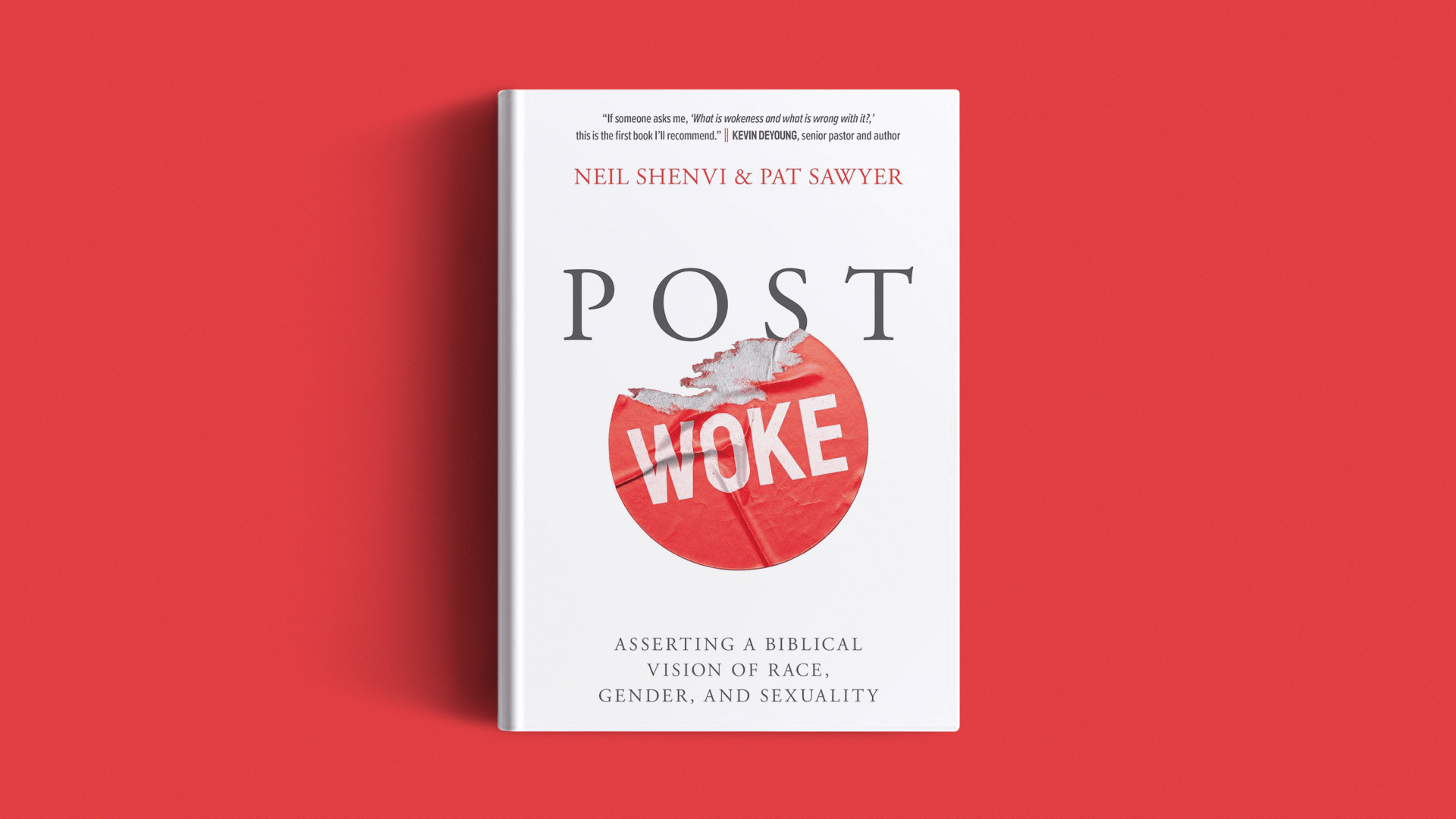
An excerpt from Post-Woke: Asserting a Biblical Vision of Race, Gender, and Sexuality.

The book cover.
Christianity Today January 13, 2026
Illustration by Christianity Today / Source Images: Getty, Harvest Apologetics

Wokeness is the contemporary cultural expression of critical theory, a set of academic ideas that has come to function as a comprehensive worldview. It offers a vision of social reality, knowledge, identity, morality, and justice. It is driven by utopian dreams and longings. It catechizes young people into its central precepts via social media and gender studies classes. And then it sends them out to be its witnesses in Hollywood, and in all California and America, and to the ends of the earth.

This new religion is fundamentally incompatible with Christianity. Its basic assumptions will constantly run up against core biblical truths about God, man, revelation, truth, sin, redemption, authority, hierarchy, gender, and sexuality. These are serious problems that Christians cannot overlook. Yes, we need to think carefully. But we also need to take action.

Therefore, we’d like to offer two admonitions and an encouragement when it comes to opposing woke ideology. First, we need to speak out against critical theory in the public square. Second, we need to keep critical theory out of the church. And finally, we need to trust in God’s sovereignty, love, and power.

One of our goals as Christians should be to influence society for good. Because Christianity is true, the incompatibility of contemporary critical theory and Christianity puts contemporary critical theory at odds with reality itself, inevitably leading to bad policy prescriptions.

For example, contemporary critical theory views all disparities as evidence of systemic oppression and sees unequal treatment as the remedy to be applied as needed until outcomes are equal. This approach guarantees injustice, partiality, and strife all in the name of social justice.

Similarly, contemporary critical theory views all expressions of gender and sexuality as equally valid, views gender roles as inherently oppressive, and believes in questioning all moral norms. This attitude has accelerated the breakdown of the family, producing neglected children, generational poverty, and existential emptiness.

Consequently, we as Christians should be public in our criticism of critical theory and our promotion of a Christian worldview.

One major obstacle to some Christians’ engagement with critical theory is their innate aversion to what is called the culture war—the endless, internecine battle between conservatives and progressives over their vision of public morality, justice, government, and the common good. Some evangelicals view this debate as a distraction from the primary spiritual work of Christians: to preach the gospel. However, this aversion is a mistake.

Jesus expects us not merely to believe the gospel but to live out and act on our beliefs in a way that will positively affect the culture around us. He calls us to be “the light of the world,” “a city set on a hill,” and a “light … on a stand … [that] gives light to all in the house” so that people “may see [our] good works and give glory to [our] Father who is in heaven” (Matt. 5:14–16, ESV throughout). In the same way, Peter writes, “Keep your conduct among the Gentiles honorable, so that when they speak against you as evildoers, they may see your good deeds and glorify God on the day of visitation” (1 Pet. 2:12).

Our good works are meant to be seen and recognized by non-Christians who, even if they reject Christianity and revile us, will be shown what is good and right by our actions.

Christians should do good not merely in the cultural sphere but in the political sphere. Throughout the Bible, God commands earthly rulers to wield their power justly and to do good to those under their authority (Lev. 19:15; Prov. 29:4; Rom. 13:4–5).

Therefore, Christians with any kind of authority ought to strive to do what is right and just in their public office. Yet even Christians without public offices cannot withdraw from working for the common good. In a representative democracy, Christians should try to elect leaders who will do what is right and just.

Laws and public policies affect our neighbor in a myriad of ways. They will affect his education, his access to health care, his living conditions, his safety, and his income. Therefore, Christians should use their vote to elect officials they believe are most likely to enact good laws that will honor God and bless their neighbor.

Here, we should start small. Too many of us ignore local politics and pay attention only to national or statewide elections where, ironically, our votes are the least impactful. So don’t confine “political activity” to pulling a lever once a year. Write a letter to your school superintendent. Speak up at a city council meeting. Send an email to your state representative.

Despite these arguments, some Christians will still reject any kind of cultural and political involvement as worldly. However, they are rarely consistent. Normally, they will still look back on the abolition of slavery in the UK and in the US as a great act of justice and righteousness. But in both cases, Christians were deeply politically involved and invested in dismantling the unjust laws that permitted those systems.

Just laws do not change human hearts and cannot save anyone. But they can genuinely improve the lives of both Christians and non-Christians alike. As Martin Luther King Jr. said, “It may be true that the law cannot make a man love me … but it can restrain him from lynching me.”

Here, it is helpful to distinguish the mission of the church from the work of individual Christians. We agree that the church, as the church, should not be deeply invested in politics. Its primary duty is to preach the gospel to a lost world, administer the ordinances of baptism and the Lord’s Supper, call believers together for corporate prayer and worship, and disciple Christians.

However, individual Christians have callings that go beyond the primary mission of the institutional church. The church is not called to be a doctor or a lawyer or an engineer or a mechanic or a teacher or a janitor. But an individual Christian may be called to any of these vocations. While the church should never turn into a political action committee, it should teach Christians how to steward all of their resources and abilities, including their right to vote, for the glory of God and the good of their neighbor.

Finally, Christians do not need to choose between promoting Christian values in our culture and preaching the gospel. Mere “cultural Christianity” does not save anyone. A person can imbibe and even promote biblical values and still be dead in their sin. If we love our neighbor, we will want them to live in a society where Christian values are widespread even if the people embracing them are not Christians.

What does it look like for Christians to oppose contemporary critical theory in the public square?

Individually, it means one-on-one conversations that don’t avoid hot-button issues like race, class, gender, and sexuality. Of course, the gospel should always be central. But we can’t always avoid all other topics to avoid giving offense. Remember, bad ideas hurt people.

Your neighbors with a transgender-identified daughter may be desperate for someone to offer them a perspective that differs from the 3,000-member Facebook moms group urging them to start puberty blockers. Your coworker may need marriage advice that doesn’t come from The View. You can be gentle and kind and confident and forthright all at the same time.

Culturally, opposing critical theory means opposing it not just in private conversations but in public spaces, where the risk is often greater. In interpersonal contexts, you can establish some level of trust with your interlocutor. When speaking out in the presence of strangers, that trust will not necessarily exist. You may be called racist for criticizing critical race theory. You may be called a bigot for opposing transgenderism. You may be called lots of names. You cannot let that silence you.

By all means, interrogate your own heart. Test your motives. Be honest with God about your own sin. Take the log out of your own eye. But then be willing to tell the truth.

Taking a public stand against critical theory doesn’t mean that we should only be known for this opposition. We can put most of our energy into sharing the gospel, showing hospitality, defending the truth of Christianity, visiting prisoners, or caring for the poor. What we must not do is to refuse to take a stand on issues of great significance merely because they are controversial.

Excerpted from: Post Woke. Copyright © 2026, Neil Shenvi and Pat Sawyer. Published by Harvest House Publishers, Eugene, Oregon 97408. www.harvesthousepublishers.com

News

The 94-Year-Old Hong Kong Cardinal Fighting for Chinese Freedom

For decades, Cardinal Joseph Zen has stood resolutely against China’s Communist government.

A photo of Cardinal Zen
Christianity Today January 13, 2026
Anthony Wallace, Getty / Edits by CT

Three years ago in a Hong Kong courtroom, 90-year-old cardinal Joseph Zen Ze-kiun leaned heavily on his cane. Wearing his black clerical robe and white collar, the white-haired bishop emeritus faced charges of failing to register a legal support fund to help arrested activists during the 2019 pro-democracy protest movement.

Despite his advanced age, Zen shows no sign of slowing down. Last June in a Hong Kong parish he leaned heavily on a different kind of cane—a golden ecclesial monstrance bearing the Eucharist inside. He had just finished celebrating the controversial Latin Mass, reinforcing his position on the conservative wing of the Catholic church.

Savvy in public messaging, Zen—who turns 94 today—in both images portrays himself as a quiet rebel, clashing with governmental and religious institutions. Such commitment marked his ministry especially after his appointment as bishop of Hong Kong in 2002. Mindful of the needs of the poor and the oppressed in the underground Chinese church, the Hong Kong faithful welcomed his own elevation as the Vatican’s recognition of his stance on social justice.

“The purpose of life,” Zen said in an interview after his court appearance, is to be a person of integrity, justice, and kindness.

Yet this does not temper his clear words of rebuke. He called the 2018 provisional agreement between the Vatican and Chinese government to jointly appoint bishops as “blatantly evil [and] immoral because it legitimizes a schismatic Church.”

Open Doors ranks China No. 15 on its World Watch List of countries where it is hardest to be a Christian. Because of Chinese Catholics’ international ties to the Vatican, faced even greater persecution than Protestants. In 1951, the Communist government cut diplomatic relations with the Vatican and six year later organized the Chinese Catholic Patriotic Association (CCPA) to oversee the national church.

Zen was born in mainland China in 1932, one year after the Japanese invasion in Manchuria that eventually contributed to the beginning of World War II in Asia. He moved from Shanghai to Hong Kong in 1948, two years after the then-British colony was promoted to a Catholic diocese. His Catholic family left behind endured persecution from Mao Zedong’s regime, which considered the church a counterrevolutionary entity.

In Hong Kong, Zen attended a Catholic school associated with the Salesian order of Don Bosco. The order was founded in 1859 to help poor boys and young men with no education.

Zen became a priest in 1961 and earned a doctorate three years later from the Salesian Pontifical University in Rome. In 1978, he headed the local order as he concentrated on parish ministry. But when Chinese soldiers opened fire on students peacefully protesting at Tiananmen Square in 1989, Zen felt motivated to serve also the mainland church.

Shortly thereafter he secured China’s permission to spend six months every year as a professor in government-run Catholic seminaries. Though he watched the Tiananmen Square massacre with horror, for the next seven years he remained quiet about his opinions to nurture ties with Chinese officials and the underground church.

Zen described his sojourns in China as a warm welcome and wonderful time. The Communist government had earlier closed the seminaries during the Cultural Revolution—now they were full of students whom he could teach what he wanted. Yet he also realized the limitations. Spies infiltrated their ranks; government officials made up half the board of governors, who gave twice-weekly lectures on Marxism; and even the head of the CCPA could not freely make a call to the Vatican.

“In China, everything is fake,” Zen said.

In 1996, when Zen’s time in China ended, Pope John Paul II appointed him assistant bishop of Hong Kong. One year later, the UK agreed to hand over the territory to China on the premise that Hong Kong would create a pathway to democracy while preserving its capitalist economy, judicial system, and legal rights for the next 50 years. In 2002, Zen assumed sole senior leadership in the spiritual care of his flock.

Almost immediately, he joined the cause of freedom. Zen spoke out against laws against political subversion proposed by the government designed to weaken a pro-democratic civil society. A year later he attended a prayer gathering at the annual July 1 march protesting the handover to China. And when the World Trade Organization held its conference in Hong Kong in 2005, he encouraged activists demonstrating against polices believed to weaken the rights of small farmers while strengthening corporate interests.

In 2006, Pope Benedict XVI appointed Zen as a cardinal. In 2009, Zen resigned his position as bishop. With a higher global standing and less local church responsibilities, Zen dove even deeper into advocacy.

In 2011, he held a three-day hunger strike in response to a new Hong Kong policy to appoint outside officials to the boards of Catholic schools. Taking only water and Communion, he accused the government of “brainwashing” students to support the Communist Party. Yet he urged the faithful not to imitate his fast or begin a campaign of civil disobedience, lest the church lose control of the schools altogether.

Zen lost the battle. But in September 2014, he demonstrated solidarity with mass protests to implement a provision of the handover agreement guaranteeing direct election of the chief executive. China had agreed to permit voting only if the country selected the eligible candidates. As the Umbrella Movement filled the streets, heavy-handed police responded with tear gas and arrests. Some churches opened their doors to offer shelter, toilets, and prayer. Three leading activists called to suspend the protests, and Zen joined them in surrendering to the police. All were then released.

On the second anniversary of the incident, he held Mass on the sidewalk outside government headquarters as demonstrators lined up to take selfies with the popular cleric. The government accused the churches of harboring thugs. But individual officials recognized Zen’s stature. After the cardinal rode a public bus 40 minutes to visit an activist in prison, the guard gave up his seat so the then-octogenarian could sit down.

“If you are faithful to your principles, even the enemy has some respect for you,” Zen said. “But once you submit to their demands, you are a slave.”

Again he lost, as government officials maintain oversight of the election process. But Zen’s attention also turned toward Rome. Aware of warming relations between Beijing and the Vatican, he asked Pope Francis not to visit China. Yet in 2018, the nation and church formalized the provisional agreement on bishops, drawing Zen’s criticism. “Pope Francis needs someone to calm him down from his enthusiasm,” the cardinal said.

Overall, Zen kept good relations with Francis. In his 2019 book, For Love of My People I Will Not Remain Silent, he described how after a Mass in St. Peter’s Square the pontiff approached him and pantomimed a slingshot—symbolizing his role as David taking on giants. And at Francis’ funeral last May, he recalled how the pope once asked him about the pledge he made as a Salesian. After Zen repeated the threefold devotion to the Eucharist, the Virgin Mary, and the pope, Francis responded jovially, “Exactly—devotion to the pope! Don’t forget that!”

Despite his populist appeal in political matters, Zen supported traditional Catholic moral and hierarchical values. In 2021, he criticized Francis’ restrictions on the Latin Mass. In 2023, he questioned the pope’s guidance on offering blessings to same-sex couples. And in 2025, he warned against the pontiff’s Synod on Synodality for talk about a “democracy of the baptized” that might wind up including Catholics who do not regularly attend church.

Reform is needed because humans are sinners, Zen said of Francis’ popularity among youth, including among many in Hong Kong. But it is also dangerous and should not undermine the apostolic priesthood. Reform—as in the Protestant Reformation—once cost Catholics a “large part” of the church.

Yet as China and the Vatican renewed the provisional agreement on bishops in 2020, 2022, and 2024, Zen pointed his ire not at Francis but at the pope’s chief adviser, Cardinal Pietro Parolin. The main architect of the accord focused more on diplomacy than faith, Zen said, and even engaged in “willful lies.”

Zen preferred the long game.

“Communist power is not eternal!” he wrote to conclude his 2019 book. “If today they go along with the regime, tomorrow our Church will not be welcome for the rebuilding of the new China.” 

Until then, Zen wished to preserve the freedom of Hong Kong. When protests erupted again in 2019 over a law permitting extradition to mainland China, Zen and four other public figures created the 612 Humanitarian Relief Fund to assist the many arrested demonstrators with their legal fees. He was accused of collusion with foreign forces and convicted on the charge of running an unregistered entity.

The court confiscated his passport and issued a $512 fine.

“In this moment, there are the persecutor and the persecuted, the strong oppressors and the weak, suffering people,” Zen said. “We have to be on the side of the weak.”

A Commitment to the Gospel Is A Commitment to Diversity

Rev. Dr. Gabriel Salguero shares how the Gospel teaches us to love our neighbors and build bridges.

Rev. Dr. Gabriel Salguero
Alexis Mendez

Is it possible to build bridges between the white evangelical Church and evangelicals of color in America? Rev. Dr. Gabriel Salguero believes it is and that this reflects a true commitment to what the gospel calls us to do.

“Bridge building between the different parts of the Church has always been critical,” says Salguero. “Scripture calls us to be a global Church. It is at the heart of the gospel—the Church was born in diversity on the day of Pentecost.”

This mission is something Salguero has been faithfully working toward throughout his life. Whether growing Latino-led, multi-ethnic churches in NYC and Orlando, founding and running the National Latino Evangelical Coalition (NaLEC), or working with and writing for organizations like Christianity Today, Salguero is constantly working to build bridges and lead others to follow Jesus.

“I think this passion is formed by my pastoring and prophetic calling, both of which I take seriously,” Salguro said. “Both of my callings are informed by the people I serve and the gospel I preach.”

While working on his PhD, Salguero was called to relaunch The Lambs Church in Times Square. This was the first Latino-led, multi-ethnic church that Salguero and his wife, Jeanette, led. A few years later, they were also called to pastor in a church in Orlando, and then they planted a church of their own. 

“Our passion, pastorally speaking, is to reach everyone we can in their heart language—the whole gospel to the whole world,” said Salguero. “It has a Latino flavor because I am Puerto Rican, and so is Jeanette, and we have to be true to who we are, even though our associate pastors are a diverse group of men and women.”

Salguero and Jeanette continued their work in Latino-led ministries when they co-founded the National Latino Evangelical Coalition (NaLEC). The organization was born out of a weekend prayer meeting and a need for a collective Latino Evangelical voice to speak to and from issues that impact the Latino community in the United States.

“Our commitment is to be gospel-centered, and we are non-partisan,” said Salguero. “We aim to lead from gospel centrality, not partisanship, and we try to bring the gospel to bear in any issue we talk about.”

All of this work has shaped how Salguero sees the needs of the American church today and why he believes that the impact of Christianity Today’s Big Tent Initiative is so important for building bridges between white evangelicals and evangelicals of color.

“What Christianity Today is doing with The Big Tent Initiative is overcoming the invisibility of groups that have not been heard by others; it is battling polarization and isolation,” said Salguero. “This is a gospel mandate. These are all things Jesus called us to do.”

While pursuing his M.Div, Salguero first interacted with Christianity Today. During that time, he could pick up new issues of CT Magazine at the seminary library. After graduating, he made sure to become a subscriber himself and continues to read the magazine to this day.

“I love Christianity Today,” said Salguero. “It is a gift to the Church because it is thoughtful, and it has such a diversity of voices. Whether you agree with an article or not, you get the sense that the author has thoroughly investigated what they are writing, and I appreciate that about CT.”

Salguero believes that leaders of organizations should be deeply read, and Christianity Today is one of the resources he uses to continue learning. Whether it is finding new books to read from Christianity Today’s book reviews or looking for articles on specific topics, Salguero uses Christianity Today as a hub for information from a gospel-centric perspective.

“Christianity Today is a resource, a conversation partner, and an amplifier of voices,” said Salguero. “From a wide variety of topics such as spiritual formation, women in leadership, and Christian nationalism, it is good to hear other perspectives. Who else has that breadth?”

Another way that Salguero has seen Christianity Today grow over the years is by breaking through echo chambers. He is impressed that CT has intentionally broadened the themes of their articles so they are not just themes that concern middle Americans or white evangelical Americans. 

Salguero has specifically seen CT grow beyond their echo chambers by offering article translations in multiple languages.

“CT publishes in Spanish now,” said Salguero. “The translation of CT into Spanish is a good faith effort, and I have seen the fruit of it. I can share articles with Spanish-speaking members of my church who don’t speak English.”

Salguero has also noticed how Christianity Today is working to highlight and platform a diversity of voices. While he believes CT is doing good work in this area, he believes more can be done so that those voices aren’t marginalized or only used for specific topics such as immigration, criminality, or racism, but are also called on to be experts in the full breadth of their lived experiences. 

“There needs to be a broadening of understanding that minorities are not just to be called upon or platformed on minority issues,” said Salguero. “If the dominant culture is free to talk about everything, why are we not free? It is a major problem in journalism writ large, and Christian journalism has not overcome it.”

While Salguero acknowledges that Christianity Today still has work to do in overcoming this bias and that growth is needed, he is also thankful for the heart of CT to commit to this work. 

“When you try to do this work, it is hard work,” said Salguero. “Every cross-cultural experience is difficult, and you make mistakes, but I am thankful that CT is listening to how the Spirit is blowing.”

The hard work that Christianity Today is doing to create a diversity of voices and expand translations is more important now than it has ever been in the past. The United States has changed drastically over the last 20 years. There was a demographic boom with many upcoming leaders who are bilingual and bicultural. Now two-thirds of Latinos in America are born in the U.S., and many of them are building institutions, navigating political spaces, and generally impacting the culture and direction of our nation. 

Salguero believes that the best way for Christians to navigate all of these changes is with a generous heart and an open mind. He believes the way forward for our country is to have a posture of empathy and deep listening and is thankful for the way that Christianity Today is leading this work.

“I am thankful to CT for having the courage to be vulnerable to listen to other voices,” said Salguero. “It takes courage to listen. Sometimes it takes more courage to listen than to speak.”

Ideas

Studying Pain ‘Causes Me to Pine for Eternity’

A clinical psychologist explains her research on the brain, suffering, and culture—and what she’s learned about God’s beautiful design.

A collage of brain scans and an image of Jesus ascending to heaven.
Christianity Today January 12, 2026
Illustration by Elizabeth Kaye / Source Images: Getty, Unsplash, WikiMedia Commons

Scripture calls the church one body with many members, an image that expresses a spiritual reality through a physical one. It can be tempting to think of this idea—many members, one body—as pure metaphor, a gesture to the symbolic closeness between members of the church, and nothing more.

In her postdoctoral research on chronic pain at Stanford University’s School of Medicine, Yoonhee Kim, a Christian and a psychologist, views the scriptural idea of human interconnectedness as integral to our understanding of our brains and bodies. Kim’s clinical findings at Stanford, as well as her predoctoral work at Johns Hopkins School of Medicine, emphasize how tangibly our relationships with others and our cultural contexts shape our emotions, minds, and bodies.

Recently, Kim and I connected for an interview about her work. She explained why we need to understand physical suffering in the context of social factors and how the biblical view of human beings as embodied creatures formed to live in community can help us approach one another with wisdom and care. The conversation has been edited for clarity, brevity, and length.

In your work at Stanford’s children’s hospital, you call pain a “biopsychosocial” phenomenon. I’m used to thinking of physical distress as a purely material phenomenon. Can you help me understand the factors that contribute to our experience of bodily pain?

Pain is entirely processed in the brain and functions as the alarm system for our bodies. Let me give you an example: You put your hand on a hot stove. The receptors from your hand send signals up your nervous system to the brain, alerting various parts of the brain with this information. The brain quickly assesses the situation, concludes the hand needs protection, and sends down a pain signal to the hand, which prompts you to jolt your hand away from the hot stove. Over time, your brain recognizes that the danger is no longer there, which allows the pain signals to dial down and eventually stop.

This is clearer to understand for acute pain—the sensation of a hand on a hot stove, breaking a leg, stubbing your toe, et cetera. Now, in the case of chronic pain, or pain that lasts for more than three months, there may or may not be an external trigger. For example, a teen girl may complain of undiagnosable abdominal pain for months. An initial threat or stimulus, like food poisoning, may have triggered pain signals. But even if the danger is gone—that is, the food poisoning has been resolved—the nervous system has become sensitized and therefore continues to send pain signals, prompted by smaller, nonthreatening triggers. The fire is out, but the fire alarm is still ringing.

Because pain is produced by the brain and the brain is shaped by our experiences, relationships, environment, past traumas, and more, pain can reflect not just what’s happening in the body but how safe or threatened the brain believes we are.

Drawing connections between our brains, bodies, and interpersonal relationships opens up some questions about faith and the nature of reality. How does your faith factor into your work?

My research and clinical practice are motivated by a desire to understand God’s creation, design, and vision for how our bodies are intended to work. All these things are done in pursuit of my ultimate goal, which is to know God. I am constantly praying for wisdom, asking the Holy Spirit to guide me in the larger arc of my work and in my moment-to-moment interactions with patients and clients.

Your research posits that if I think of pain as an exclusively physical phenomenon, I’m mistaken. It sounds as if pain emerges from a deeply relational, as well as material, place. This is interesting to me because we belong to a faith tradition that conceptualizes people as embodied spiritual beings. How have your findings interacted with your understanding of human beings?

I am continually in awe of God’s design. Our brain is a physical organ, yet it integrates information from our memories, emotions, and social contexts. This implies that something as complicated, intricate, and entirely physical as the brain is shaped by our individual lives, which then impacts our body.

Rewiring a brain that is on high alert requires strategic reengagement with the world. Regularly attending school, joining family game nights, spending time with church community, [and] receiving mental health support are all tools that can be effective for healing the brain. But the effectiveness of these tools is also dependent on culture, because people need to find forms of reengagement that make sense for them.

The research on relationships—peer relationships, familial relationships, and community—is also astounding. It highlights how much God has made us relational beings. Strong relationships can buffer the negative impact of pain while negative relationships can exacerbate it. In my clinical work, we’ve seen stunning progress in children and adolescents when we implement this type of “biopsychosocial,” or embodied, approach.

Your research isolates race and culture as factors that can impede or aid families and children in their treatment of physical pain. Why do you see these factors as significant?

Social dynamics, culture, and race all impact how we perceive, interpret, and respond to physical pain. This is much more pertinent in the case of chronic pain, during which the brain is continuously integrating external messages from our surroundings and culture to assess if we are still in danger and in need of protection.

In our research at Stanford, we saw different cultures and ethnicities exhibit different perceptions, experiences, and responses to pain. For example, Asian and Asian American children and adolescents do not fit into some of the existing narratives about how family dynamics can mitigate or exacerbate pain. There are two complicating factors: First, Asian youth usually report lower levels of pain, which has led mainstream medical literature to assume that Asian youth are suffering less. Second, parent behaviors that are typically believed to exacerbate chronic pain outcomes in white families—like allowing kids to receive special attention or miss school—do not lead to the same outcomes in Asian American families. Some kids and teens learn to rely on these accommodations, which can unintentionally reinforce pain-related sensations and behaviors. However, these accommodations do not have the same exacerbating effect in Asian American youth.

My hypothesis is that Asian American youth underreport pain due to stoic, collectivistic cultures and culturally specific dynamics in Asian American families cause behaviors that sometimes go against mainstream research. These are vast generalizations, but I’m working to understand these discrepancies by studying the relationship between cultural and physiological factors. 

It’s interesting that your research points so concretely to our interconnectedness. The biblical narrative describes us as members of a single body, and again, to be frank, I often read this as pure symbolism—like an organizing metaphor for how I can think about my interconnectedness with other people. I rarely think about how our experience of our physical selves is so intensely shaped by one another. How does your understanding of the biblical narrative interact with your research?

My work gives me hope. In eternity, we will have glorified bodies where our nervous systems will not go haywire and misinterpret stimuli. My exposure to the work and my own experiences of chronic pain keep me aware that this is not where my body is to settle. It causes me to pine for eternity.

It also leaves me in awe of God’s redemptive power. Despite the brokenness of this world, he has equipped us with tangible, workable tools to rewire our brains and to relearn in a manner that is consistent with his beautiful design.

Finally, my research causes me to marvel at the diversity of people, communities, and cultures. Our bodies may be the same across time and culture, but they are profoundly shaped by the worlds we are nested in.

Yi Ning Chiu writes the newsletter Please Don’t Go. Previously, she was the columnist for Inkwell, Christianity Today’s creative NextGen project. 

addApple PodcastsDown ArrowDown ArrowDown Arrowarrow_left_altLeft ArrowLeft ArrowRight ArrowRight ArrowRight Arrowarrow_up_altUp ArrowUp ArrowAvailable at Amazoncaret-downCloseCloseellipseEmailEmailExpandExpandExternalExternalFacebookfacebook-squarefolderGiftGiftGooglegoogleGoogle KeephamburgerInstagraminstagram-squareLinkLinklinkedin-squareListenListenListenChristianity TodayCT Creative Studio Logologo_orgMegaphoneMenuMenupausePinterestPlayPlayPocketPodcastprintremoveRSSRSSSaveSavesaveSearchSearchsearchSpotifyStitcherTelegramTable of ContentsTable of Contentstwitter-squareWhatsAppXYouTubeYouTube