Culture

Mary Told Us What She Knew—In Song

Christians have to look beyond the typical Christmas carol lineup for music that captures the deeper themes of the Magnificat.

Christianity Today December 15, 2023
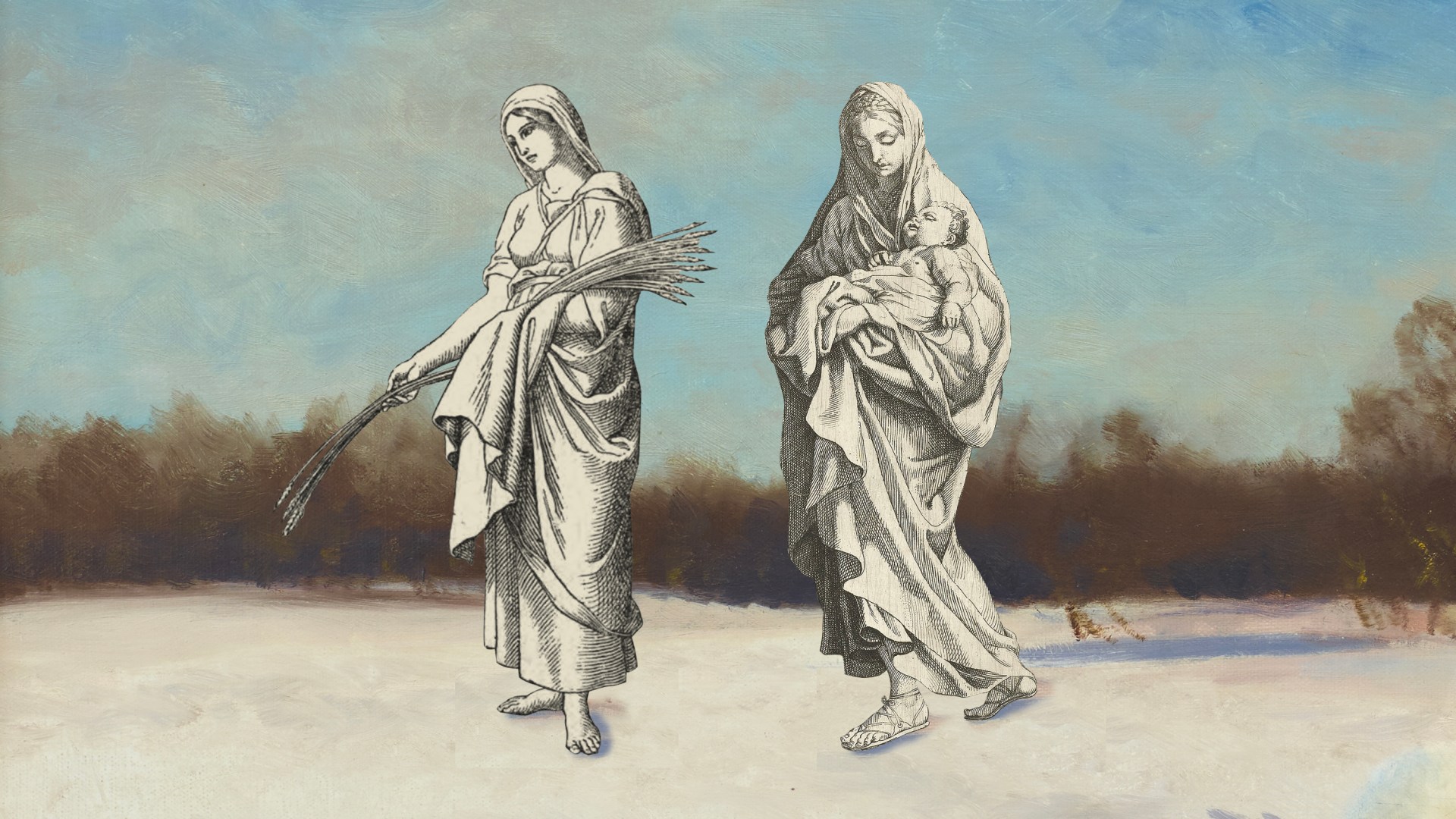
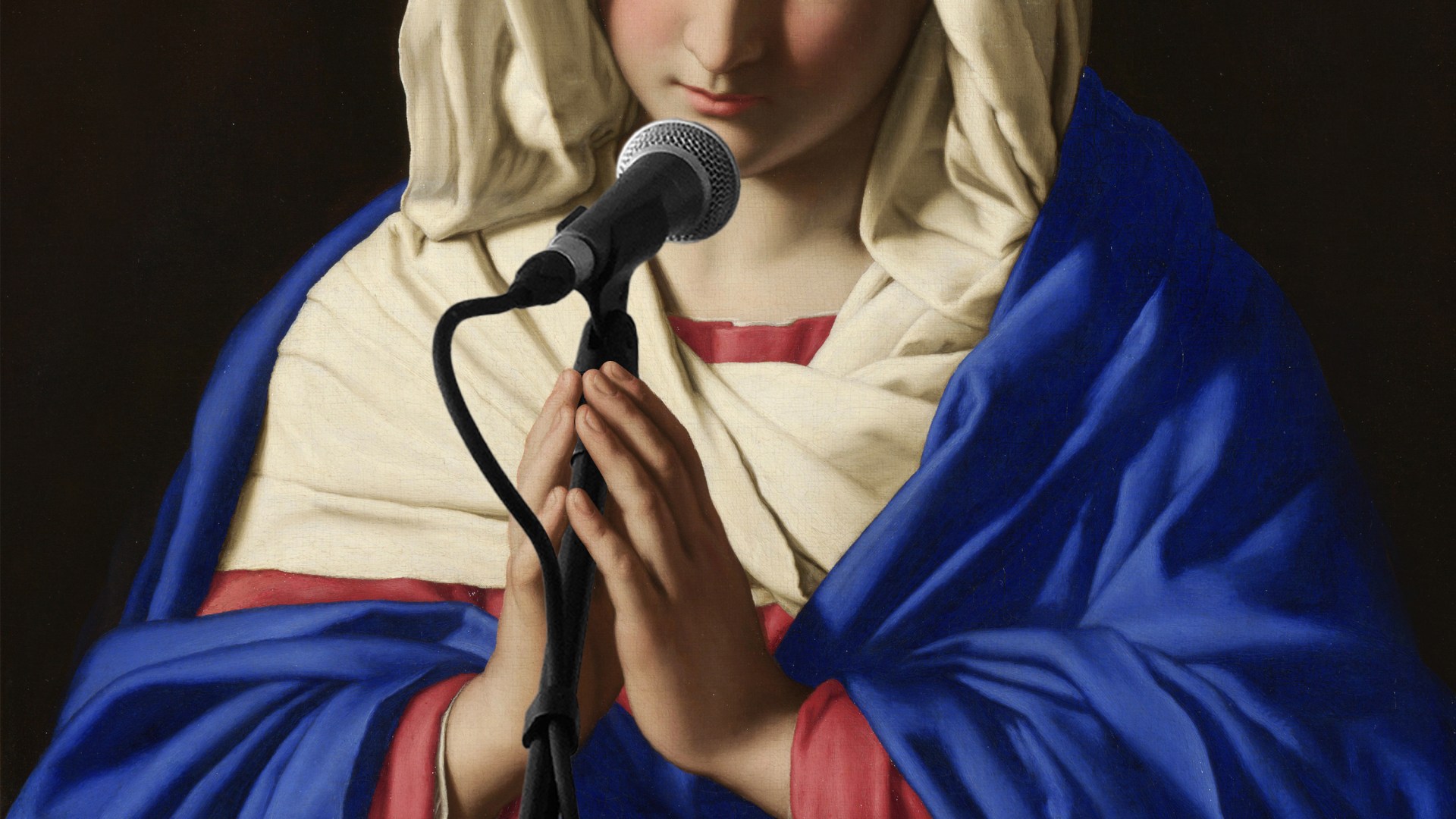
Illustration by Christianity Today / Source Images: Unsplash / WikiArt

Without question, the most popular contemporary Christian song about the figure of Mary is “Mary, Did You Know?”

Mark Lowry and Buddy Greene’s 1991 hit has come to occupy a singular position in the Christmas music canon. It seems like almost every popular vocalist with a holiday album has covered the song: Carrie Underwood, CeeLo Green, Mary J. Blige, Rascal Flatts, Jessica Simpson, Kenny Rogers, Dolly Parton, Patti LaBelle.

The Advent ballad showcases a singer’s emotional and vocal range—from the quiet strains of the first verse to the climactic bridge that invites a passionately belted delivery. It has also been the subject of thoughtful criticism and silly send-ups in recent years.

Why is it that “Mary, Did You Know?” has become the musical avatar of Mary in popular imagination when musical settings of the words of her canticle (Luke 1:46–55), also known as the Magnificat, offer a glimpse of her inner life and courageous response to her singular, miraculous encounter with God?

Mary’s song begins in Luke 1:46–48, “My soul glorifies the Lord and my spirit rejoices in God my Savior, for he has been mindful of the humble state of his servant.” (Magnificat is the first word in the Latin translation, Magnificat anima mea Dominum, “my soul magnifies the Lord.”) The text reflects on God’s faithfulness, his scattering of the wicked and dethroning of the powerful.

“The Magnificat is all about power structures being upended,” said Amy Orr-Ewing, author of Mary’s Voice, a new book of Advent reflections. “The justice theme goes throughout the Magnificat.”

Mary’s experience and persona often serve to underscore the mystery, peril, and intimacy of the Incarnation (in carols like “Silent Night” and “What Child Is This?”), but it’s hard to capture the weighty themes and scope of the Magnificat in a contemporary pop or worship song. Yet across centuries of church history, we find a rich body of music that illuminates Mary’s song and lifts her voice rather than casting her as a supporting character in the Nativity account.

During the Middle Ages and the Renaissance, the Virgin Mary was a venerated intercessor who occupied a powerful position in the Christian imagination. The church has produced an expansive library of music devoted to Mary—antiphons, polyphonic motets, mass settings, and hymns.

In post-Reformation Christendom, Mary’s prominence in worship declined in most Protestant traditions. Martin Luther and other Reformers rejected the belief in Mary as a mediator between God and humanity. According to theologian Else Marie Wiberg Pedersen, “Luther breaks with tradition by pulling down Mary from all pedestals and highlighting her not as a princess wearing red slippers” and “audaciously presents her as someone very ordinary, not someone unique.”

Orr-Ewing sees the Protestant discomfort with or indifference toward Mary as potentially impoverishing. “I wonder if the Protestant fear of Mary means that we lose some of the wonder of the Incarnation,” the apologist told CT.

She also suggests that the words of the Magnificat are an antidote to an overly sentimental or bloodless image of Mary, instead showing us “a woman who lives under occupation, who speaks with defiant hope.” Meditating on and listening to the words of the Magnificat during Advent can direct our attention to the God of miracles and justice.

Large-scale choral and orchestral works like the Magnificats of J. S. Bach and John Rutter convey the epic scale of the themes and context of the Magnificat. They capture the paradox of the birth of Christ, the co-mingling of God’s power with humanity’s vulnerability. They also voice Mary’s multidimensional perspective and rich understanding and embrace of her role in God’s plan of redemption (rather than wondering, “Mary, did you know?”).

When Rutter composed his multimovement Magnificat (completed in 1990), he was inspired by feast days and festivals for the Virgin Mary celebrated throughout Latin America and Spain. The work voices wonder, joy, and confidence. Rutter supplements the text with lines from the 15th-century English poem “Of a Rose, a Lovely Rose.”

The first movement opens with a jubilant instrumental section featuring trumpets and a vocal entry by the sopranos and altos, declaring, “Magnificat anima mea Dominum.”

The fifth movement, Fecit potentiam (“He has shown strength”), begins with a marking of marcato—“with strong emphasis”—and an opening section featuring the bass voices and varied, forceful rhythms, reflecting Mary’s acknowledgement of a powerful God who is on the side of the lowly and humble.

Rutter’s Magnificat pays homage to Bach’s setting (composed in 1723), which also features multiple movements, each with its own affect and character. Bach’s Magnificat was first performed in Leipzig, likely for the Feast of the Visitation of Mary in July, then later that year for Christmas in a performance that included four seasonal hymns interspersed with the original movements.

The work draws attention to themes of power and justice through musical gestures and scoring: Fanfare motives accompany a choral fugue in the seventh movement, Fecit potentiam, and descending scale gestures in the eighth movement, Deposuit potentes (“He hath put down the mighty”), depict the downfall of the powerful.

Both Magnificats feature musical impressions of quietness, victory, serenity, joy, and even violence. These settings elevate Mary’s song; it becomes an epic sermon heralding the imminent arrival of the Messiah and its profound meaning for those who walk in darkness.

Choral and orchestral settings of the Magnificat have been relegated to concert halls and a small number of churches with the means and musicians to perform such works. While not as grand in scale, there are a number of contemporary settings of Mary’s song by worship artists and songwriters, each highlighting a different facet of the Magnificat.

Some versions separate the text from the figure of Mary entirely, choosing a line of text or particular theme to spotlight and elaborate. Chris Tomlin’s “My Soul Magnifies the Lord” (2009) borrows text from Mary’s song for its chorus, but the rest of the lyrics are either original or taken from other scripture and make no mention of Mary:

My soul, my soul magnifies the Lord My soul magnifies the Lord He has done great things for me Great things for me

The song is singable, inviting the congregation to join in Mary’s refrain, “My soul magnifies the Lord,” without referencing her directly.

Keith and Kristyn Getty’s “Magnificat” (2011) adapts the text of Mary’s song, preserving her point of view in an ethereal, strophic song without a refrain, preceded by a choral arrangement of the Wexford Carol (a traditional Irish carol) and followed by a striking string interlude. It’s not a congregational song, but it incorporates many of the major themes of the full Magnificat text:

My soul will magnify the Lord;
I rejoice in God my Savior,
In the wonder of His favor.
For He has done great things for me;
He was mindful of His servant.
Every age shall call me blessed.
The Hope of Abraham come
In the giving of a Son;
For He who promised is mighty
In remembering His mercy.

Iowa-based singer-songwriter and worship leader Allie Crummy completed and released a setting of the Magnificat in November after years of considering how to adapt the text.

“This is one of the first gospel presentations,” said Crummy. “I love hearing how Mary responds to the news. Her response is ‘Yes, the powerful will be brought down!’ The gospel is good news for the poor and lowly.”

“Lift Up the Lowly” blends text from Mary’s song with original lyrics, drawing out the theme of God’s care for the lowly. She sings:

O strength of God, scatter the proud in the thoughts of their hearts O strength of God, topple the powerful from their thrones O strength of God, lift up the lowly

The rich text of the Magnificat can be a source of hope, comfort, and joy. In Mary’s Voice, Orr-Ewing tells the story of encountering the words of Mary while sitting in a cathedral for an evensong service, through Henry Purcell’s four-part choral Magnificat (17th century):

I had spent that day sitting in the public gallery of a court supporting someone who was giving evidence in a criminal trial concerning childhood abuse. Mary’s words expressing hope on behalf of the poor, the humble, and the powerless felt especially meaningful that evening in the aftermath of the horrors of trauma recounted in that courtroom. Until this point, Mary had been a somewhat remote figure for me. A woman often depicted wearing blue clothing in paintings, idealized as the perfect mother of a cherubic baby.

The voice of Mary models hopeful rejoicing in waiting, even in suffering. The words “My soul magnifies the Lord” take on new and deeper meaning because of the figure of Mary, a vulnerable, oppressed Jewish teenage girl tasked with carrying the Messiah.

“We live in a season between the first and the second arrival of Christ,” said Orr-Ewing. “We journey and invite God into our journey in light of those two arrivals. That’s where Mary is journeying, in waiting.”

Theology

What a Satanic Statue Says About American Religion

Move over, Santa. This year’s Christmas controversy is about the devil.

Christianity Today December 15, 2023
CSA Images / Getty

Chestnuts roasting on an open fire. Jack Frost nipping at your nose. Yuletide carols being sung by a choir. And folks lighting candles for a goat-headed satanic mannequin. Even the most wonderful time of the year is stranger than it used to be.

I’m referring, of course, to the public display of Baphomet erected at the Iowa state capitol by the local Satanic Temple. This erupted into the public debate in response to a social media post by Rep. Jon Dunwell, an ordained pastor in the Christian and Missionary Alliance.

Dunwell argued that he, like most Iowans, finds the figure to be repellent and offensive—but that the state allowed it to be placed there on the grounds of government neutrality on religion and First Amendment rights. The state did insist, he said, that the group not use an actual goat’s head.

Yet the goat god is not actually worshiped by Satanists. Most of them are, in fact, atheists for whom “Satan” is a metaphor for freedom from rules and norms. As Aleister Crowley and, later, the Satanic Bible explain it: “Do what thou wilt shall be the whole of the law.” These Baphomet statues are often a performative ruse—tried several times in different states and localities—along the same lines as the atheists who claim belief in the Flying Spaghetti Monster to ridicule belief in God.

These gaudy goats exist to make a point in the culture war—namely, that public places shouldn’t allow Christmas crèches or Hanukkah menorahs and so forth. The devil displays are just a means to an end. It’s not so much about whom the followers love as about whom they hate, which is religious people—especially the kind that would be outraged by a devil in the capitol. Shock and repulsion from religious people aren’t merely unintentional byproducts; they’re the whole point.

That’s where the devil worship gets perilous, and not just for occultists.

C. S. Lewis, in response to a critic, argued that the fundamental problem of the age—one that he saw in the emergence of Communism, Nazism, and fascism—was devil worship. As Lewis explained, he did not mean that people would knowingly worship the devil. The temptation, he argued, was to accept an ideology to the point of concluding that “desperate diseases require desperate remedies and that necessity knows no law.” Because one’s enemies are so evil, the theory goes, one should see the side one is on as “the supreme duty and abrogates all ordinary moral laws.”

“In this state of mind men can become devil-worshipers in the sense that they can now honor as well as obey their own vices,” Lewis wrote. “All men at times obey their vices: but it is when cruelty, envy and lust of power appear as the commands of a great super-personal force that they can be exercised with self-approval.”

“It is under that pretext that every abomination enters,” Lewis wrote. “Hitler, the Machiavellian Prince, the Inquisition, the Witch Doctor, all claimed to be necessary.”

Whether one names the devil “God” or “Jesus” or “progress” or “history” or “the Race” is of no importance—for what one ends up with is Satanism all the same.

In an interview with Charlie Sykes, journalist Tim Alberta cites the three temptations Satan offered to Jesus in the wilderness. He notes that the language Jesus uses to rebuke the devil here is echoed later on, when Jesus says to his own disciple, the apostle Peter, “Get behind me, Satan!”

Peter did not have a goat-headed idol on the shelf somewhere. In fact, not long before, he was the first disciple to announce his belief that Jesus is “the Messiah, the Son of the living God” (Matt. 16:16). But, Jesus said, Peter was setting his mind not “on the concerns of God, but [on] merely human concerns” (v. 23). More specifically, Peter wanted to defeat the enemies who would crucify his Lord.

Yet what strikes me about that moment is not just what Jesus said but where he said it: in the region of Caesarea Philippi. Caesarea Philippi was, as New Testament scholar Craig Keener explains, “pagan territory, near a grotto devoted to the worship of the woodland deity Pan; Herod had also dedicated a temple for the worship of Caesar there.”

And this brings us back to the head-fake religion of the goat idol in Iowa.

We recognize the goat-man hybrid as satanic, even without reading the plaque placed on it. As historian Jeffrey Burton Russell argues, the image of the devil in our cultural memory—with horns and hooves—incorporates the imagery of the Greek god Pan: the deity of wildness and wilderness, sexual expression, and freedom from restraint.

Caesarea Philippi—which was bound up with goat-god worship, named by and for the very political system that would crucify Jesus—is where Jesus chose to ask, “Who do you say I am?” (Matt. 16:15) and where he promised Peter “on this rock I will build my church, and the gates of Hades will not overcome it” (v. 18).

If Satanism were as obvious as painted pentagrams and antichrist Nativity sets, we could denounce it and rest easy that we’re on the other side of it. But the more pernicious forms of Satanism are those that offer a what of “Christianity” with a how of something else, those with the goal not of persuading our neighbors but of defeating them. For when we surrender to this strategy, we end up with a culture that’s “Christian”—but only in the sense that a Christmas tree is, not in the sense that the cross is.

It’s awful when we name our idols Baphomet, but it’s also awful when we name them according to our side’s pet causes. And worst of all is when we ascribe worth to the ways of the devil while claiming the name of Christ, trying to convince ourselves that we’re fighting for God. You can do this from the Left or the Right, with hedonism or hypocrisy. It all leads to the same place. That’s the temptation of the moment—and not one of us is exempt from its lure.

The devil you know is awful, but the devil you don’t know can be far worse.

Russell Moore is the editor in chief at Christianity Today and the director of its public theology project.

Theology

Escaping High-Control Religious Groups

President of Cult Information and Family Support explains how Christians can aid loved ones through the long journey out.

Christianity Today December 15, 2023
Illustration by Mallory Rentsch / Source Images: Getty

In CT’s coverage of the Korea-based sect Shincheonji, sources touched on the difficulty that family and friends often face when trying to help loved ones see the truth about the high-control religious groups they’ve joined and when helping them to get out. Once participants do leave such groups, it’s still a long journey to rebuild their lives and—for those who come from Christian backgrounds—to repair their faith.

CT talked to Tore Klevjer, a Christian counselor based in Wollongong, Australia, and president of Cult Information and Family Support, about his own experience in the Children of God group, how he counsels former members of high-control religious groups, and how churches and Christians can better help people coming out of those environments.

This interview has been edited and shortened for clarity:

CT: Not only are you a specialist in cult-related counseling but you also have had personal experience in a new religious movement. Can you share more about that?

Klevjer: I grew up in a Christian home in Byron Bay, Australia. After my mother passed away, I was traveling around Europe when my girlfriend broke up with me and married someone else. I felt depressed and developed an ever-increasing dread of going back to Australia, where I felt a life of nothingness awaited me. At the time, I was vulnerable and disillusioned with life. It was then that I was recruited into the Children of God, a group geared toward hippies that received lots of media coverage as a “sex cult” for some of its practices.

I met them in Amsterdam while hitchhiking through Europe. Their happiness, zeal, and apparent freedom from the norms of society sucked me in. I felt a strange nagging feeling that something was wrong, yet was unable to pinpoint exactly what it was. It felt like the movie The Stepford Wives, where I had stepped into a surreal world of seeming perfection, which I have since realized can only be achieved through extreme control.

Over time, they taught me to smuggle goods across borders, exchange currency on the black market, and misrepresent myself to businesses and churches to gain their support. If I ever balked at my deceptive practices, I was asked, “Don’t you have the faith for it?” Sin became totally subjective.

We were told to renounce families and former friends because “a man’s enemies will be the members of his own household” (Matt. 10:36). I changed my name to Abel and wrote a letter to my father telling him that I had only one father now, and that was God. It broke his heart.

When the group announced a push into Asia, we went to India and spent four years teaching religious education in schools and colleges there.

When did you start to realize something was off, and how did you leave the group?

In my final year in the group, they introduced a new phase of retraining where we were belittled, scrutinized, criticized, and exorcized. In my frustration, I turned more and more to my Bible and less and less to the group’s writings for comfort. This caused me to question the Children of God until the group kicked me, my wife, and our five children out.

After returning to Australia, recovery was intense. I had been institutionalized by Children of God for 11 years and now had no idea of how society worked and had very little money. At the same time, I slowly realized that I had been duped and had wasted some of the best years of my life. I was drinking heavily, my marriage was on the brink of disaster, and I was in such an emotional state that I would cry uncontrollably whenever we sang hymns at church.

I eventually built a faith I could call my own from the ground up. It’s now been 39 years since I left the cult.

After leaving the group, I wanted to examine how people can be led down a system of belief where they end up betraying their own moral compasses and are duped into believing ridiculous fabrications. I devoured many books on the topic of healthy and unhealthy belief systems and formalized these studies with a counseling degree.

Over the years, I have counseled many distraught families who have lost loved ones to cults of various religions and assisted many ex-members toward recovery.

Evangelicals often think of the term cult as a group that deviates from biblical orthodox Christianity (like a group that denies the divinity of Jesus). What is your approach?

Most of us working in this area prefer a more sociological definition that defines a cult as a group that controls, coerces, or abuses a person’s rights and freedoms. This kind of control can also happen within orthodox belief. For example, a church can be doctrinally correct while still controlling members legalistically using guilt and fear.

To understand this topic, it is helpful to look at other high-control systems such as domestic abuse. In an abusive relationship, a person’s sense of self is systematically undermined until they become totally reliant on and compliant to their abuser. They become participants in their own abuse, feeling they cannot function outside of the system. They are cut off from outside influence, and their behavior, information, thoughts, and emotional responses are controlled. Individuals remain in religious controlling environments for the same reasons that a person remains in an abusive relationship.

Why do you think it’s important for Christians to think of the term cult sociologically rather than theologically?

First, many churches think that if their congregation is taught good theology, they will not fall prey to a cult. My dad used to say, “Stick to the Bible, son. It hasn’t deceived anybody yet!” While that may be true, people can use the Bible in very deceptive ways. If members or ex-members are willing to examine good methodical teaching around some central doctrines, it can go a long way in dispelling the myths they are taught. However, there is much more than doctrinal beliefs that leads someone into a cult, such as the process of gradual coercion and the withholding of controversial information.

Second, if a person leaves a cult, a church’s priority is often to restore good theology. They don’t recognize that we are dealing with a person who has been spiritually abused and manipulated and needs time to heal. Often the former members feel as though they don’t fit in, they have issues with authority figures (which may include counselors or pastors), and they rebel against structure. They need to be accepted and shown tolerance as they process all they are going through.

It’s important that Christians don’t try to do their thinking for them, but rather present various ideas for discussion, allowing the ex-members to come to their own conclusions. Bible teaching needs to be approached with great sensitivity, allowing for questions, discussion, and disagreement.

In your counseling practice, what are your first words to a former member of a high-control group?

“It’s not your fault. You’re not stupid to have joined.”

There is usually a lot of shame around having been led up the garden path, and when they look back at the crazy things they once believed to be true, they can think that only people who are slightly insane or gullible could have not only swallowed such nonsense but taught it to others. Recognizing the recruiting process and learning how they were actively set up and targeted is a great initial reset and foundation to grow from. The science around our human need to belong and experiments in the area of social compliance tell us that anyone can be vulnerable given the right circumstances.

Walk us through the process of counseling someone who’s been involved in a high-control group.

There are many issues that arise, including relationship issues with loved ones, boundaries and how to say no, critical thinking, loss of identity, and loss of meaning and purpose.

Assessing their physical needs and mental health is a good starting point. Do they have food, a roof over their head, and a family network? Or are they alone with no support? Do they need medical intervention?

I have spoken to many people who have attended therapy after being in a cult who said, “The psychologist didn’t get me!” Secular counselors tend to either downplay the cult experience and focus on childhood issues, or they expect the client to educate them on their cult experience. The client comes away feeling as though they have just paid good money to educate the therapist. To be effective in this area, a counselor needs to “get it.” Explaining how mind control happens and what cults have in common is a great place to begin. This helps a client to normalize what has happened to them and not to feel isolated and alone.

A helpful biblical principle to remember is that God’s initial purpose was to create us with free will. A controlling cult takes that away. So if I can bring a person back to a point where they are able to think for themselves and guide them in a good direction without imposing my own worldview, I call it a success. True conversion is a work of the Holy Spirit after all.

In cases when the client is from a Christian background, when and how do you bring up faith and the church?

I never assume that I should discuss theology. Sharing the gospel with someone who is recovering from having a so-called “gospel” shared with them can be very triggering. Sometimes I will ask a client how they see their faith after leaving, and that is met with mixed responses. Mostly the client will want to wait and see, then reassess it at a later date. Sometimes they will have specific questions relating to Bible interpretations or twisted Scriptures from the cult. There are often phobias instilled in them that if they leave “God’s highest will,” he will judge them, so it becomes important to identify and dispel irrational fears.

If a client is still reading their Bible, I would recommend that they change to a different translation than the one the cult used. This helps them to read it with new eyes and not automatically see the cult’s interpretation. It can also be helpful to give a client permission not to read their Bible for a time until things settle, and to rather focus on other spiritual disciplines or to reflect on God’s creation and his attributes of love and mercy.

Remember that this person has been hurt spiritually and has trusted someone who said they had the truth. They are not ready to have someone else tell them the same thing. They need love and care and space to heal at their own pace. Church attendance may never feel comfortable for them, and if they attend at all, they may just want to be a part of a small group fellowship. It is important that they learn to make their own decisions and think things through for themselves. Things like prophesies, “words of knowledge,” and over-spiritualizing experiences can all be very triggering to a person who has been manipulated.

If we discover that a loved one is part of a high-control group, what should we do?

Try to maintain the relationship and communication at all costs. Making direct statements like “You’re in a cult!” or “You’re deceived!” are not helpful. Cult members have often been warned that “a man’s enemies will be the members of his own household” (Matt. 10:36), so to confront their group will be to fulfill prophecies given to them by their leaders and further prove the group to be correct. It’s important not to drive them further into the group.

Ask yourself what need the group is fulfilling in your loved one’s life. Is it the need for acceptance and community? Are there broken relationships? Addiction issues? A dominant or controlling parent? Sometimes there are family issues that need to be addressed for the person to want to be a part of home life again.

Get in touch with someone well-versed in how cults operate for some specific coaching on your situation—there is good information available on ways to relate to a cult member. This is seldom an issue that can be fixed with a logical approach.

How can the church be better prepared to protect its sheep from high-control religious groups?

Churches can look inward and remember that cult-like control exists on a sliding scale. Ask yourself if your church is legalistically controlling its congregation. We must remember that the Pharisees in Jesus’ day lived moral but extremely legalistic lives, placing laws and expectations on the backs of others while at the same time not seeing their own need and poverty of spirit.

Also, cults disciple their members—they teach them and make them teach others. They memorize Scripture on key topics. It grieves me to see Christians being entertained at youth groups with things like pie-eating competitions while neglecting good apologetic-based teaching that they can understand and use to articulate their own beliefs. Biblical teaching around the signs of the second coming of Christ could prepare them to identify false prophets.

Churches are also letting down our youth by not educating them on the topic of cults and deception. Perhaps they assume that if they are taught the Bible, they will be safe. Education around manipulation, coercion, and social compliance are helpful, as well as identifying personal vulnerabilities that could be exploited: uncertainty about the future, a lack of good friendships, or a transitional time of life such as college.

It has been said that “a fence at the top of a cliff is far more effective than a hospital at the bottom.” We need awareness in our churches and more teaching in our youth groups. Young people who are in the process of figuring out their lives are especially vulnerable.

Theology

Have Yourself a (Less) Scary Little Christmas

The looming new year can be anxiety-inducing—but God has all the mercy, grace, and rest we need.

Christianity Today December 15, 2023
Illustration by Mallory Rentsch / Source Images: Getty / Unsplash

The glitz and glamour of the Christmas season are here, but you and I both know there’s a ball waiting to drop at midnight on December 31 that has us more uncomfortable than we care to admit. And that discomfort is the very thing I want to ask you to face: the impending fear of the new year.

If only we could be sure that the new year contained, well, new things for us. New as in good, of course. New as in hopeful, optimistic, exciting. If that were how new years worked, we wouldn’t be feeling so uptight. But lurking behind the new of the new year are all its unknowns and the fears they foster in our hearts.

Questions hover like ornaments dangling from the tree boughs: What will the new year bring? Can I get on my feet financially? Will these health concerns resolve? Can I find some reconciliation for this broken relationship? Will this career opportunity I’ve been working for all these years finally come to fruition? Will I find love?

Yuletide carols with saccharine choruses can do only so much to keep these fears and questions tucked away. But what if we didn’t keep them tucked away? What if we tried three experiments this Advent and Christmas season?

I know what you’re thinking: Is Christmas really the time for experimentation? Don’t I have shopping to finish, gifts to wrap, parties to attend, and family to fight? You do, but wouldn’t you also like to enter the new year with less trembling hands and a more trusting heart?

Experiment 1: Pause

What would it look like for you to let some things go? Go with me here for a second. When Christmas comes around, none of our regular responsibilities end. We layer ribbons and bows on top of our already busy lives: more commitments, more consumption, more chaos.

But what if you could subtract this year instead of only adding? We all have some things we can pause—or let go altogether. We may even reach the New Year and find the world hasn’t missed a beat in their absence, but our hearts will be beating at a more peaceful pace. With a friend or a spouse (and a cup of hot chocolate to keep things cozy, of course), make a list of what you can let go.

There’s a freedom to this practice, which is also an expression of trust. You’re coming before the Lord as a finite human being and submitting your humanity to him. You’re leaving room for his grace and mercy to deescalate the fear and anxiety that have become commonplace at year’s end.

Experiment 2: Pray

One of the things I love about texting is that my wife and I can constantly be in conversation, keeping our lives more deeply entwined. We’re almost always aware of what each other is doing, how the other is feeling, and what good and anxious things the other might be facing. We also give each other plenty of space, but texting often allows us to stay communicative with one another and, even more important, to pray for each other well.

Our prayer life should be a similarly constant conversation with God. Ongoing prayer teaches us to fill him in on all the details, to understand that nothing is too small to share, and to develop an increasingly open and vulnerable heart in his presence.

What you need in the new year is mercy and grace, and if you have the Lord, you have access to all the mercy and grace you could possibly need. Practice ongoing prayer this month and see how it shapes your anticipation of January 1. It’s true that God doesn’t need you to tell him these things. But you do. And he wants you to come to him without ceasing (1 Thess. 5:17), like the needy children we all are.

Experiment 3: Play

The jolliest time of the year can so easily sap all our jolly. But what if, after pausing some obligations, you intentionally incorporated time for rest and play into your holiday schedule?

This is easier said than done, but doing something fun with a friend is not mere frivolity. “The Sabbath was made for man, not man for the Sabbath” (Mark 2:27), and making time for play can give our bodies and souls some much-needed—and sanctified—rest.

There’s nothing radical in these experiments, of course, nor are they as simple to practice as they sound. But as a source of peace amid the mayhem of the Christmas season, they can draw us closer to the One who invites us to cast all our anxiety on him because he cares for us (1 Pet. 5:7). Even with a new year looming, the old hymn rings true: “The hopes and fears of all the years are met in thee tonight.”

Ronnie Martin is lead pastor of Substance Church (EFCA), director of leader renewal for Harbor Network, and the author of several books, including The God Who Is With Us: 25-Day Devotional for Advent (B&H).

Theology

True Hope Cannot Be Manufactured

What happens when we embrace the limits of our strength?

Phil Schorr

I pray that the eyes of your heart may be enlightened in order that you may know the hope to which he has called you, the riches of his glorious inheritance in his holy people, and his incomparably great power for us who believe. That power is the same as the mighty strength he exerted when he raised Christ from the dead and seated him at his right hand in the heavenly realms. — Ephesians 1:18-20

A hard truth—the kind that makes us wince—might not be the best way to start off a Christmas devotional, but just hang with me as I explain: Hope takes a lot of work. Yes, Jesus brings us ultimate hope, but like many aspects of Christian faith, living with hope doesn’t always come easily. The story of our faith might include some scenic sunny days on the Sea of Galilee, but it is based on a cross. We know, if we’re honest, that the journey is not going to be easy, so let’s digest some truths that can nourish us and build up this thing called hope.

In Ephesians 1, Paul writes to the church about the reality of hope and how it isn’t tied to anything that the church itself can accomplish. That offers some relief: It isn’t about what we can do. No, hope takes the stage when the church stops trying to pull it off themselves and places their hope instead in the power of Christ and his authority over all things.

It sounds simple to just “let go and let God,” as the pithy tagline goes, but think again. Try to remember the last time that you had to stop trying to pull things off on your own and allow someone to do it for you—work projects, parenting, or even your own ministry. This level of trust and release of control can feel next to impossible. We love to say that we place our hope in Jesus, but it’s so much easier to place our hope in our own skill sets and abilities. That’s why hope takes work, because it is work to let go of control.

Realizing the limits of my own strength helps me rely on Jesus to be the author of hope in my life. In Ephesians 1:19, Paul speaks of the immeasurable greatness of God’s power. In comical contrast, I wake up each morning in my 49-year-old body and I limp. Sleep is now apparently a contact sport, and when I go to the gym, my goal is to stretch enough to not be sore when I get up the next morning. My strength has limits. But Ephesians makes it clear that the strength of the one who actually gives us hope is immeasurable. There are no limits to his greatness and power. None. That is truly something we can all place our hope in, no matter the circumstances.

Here’s the kicker: The authority of our all-powerful King has actually been bestowed on us out of the riches of his grace, and it lives inside us as Christians. We can tap into the authority of our creator this Christmas season to allow his strength to flow in and through us. In the midst of all the hubbub of the season, with the inevitable weary minds and sore bodies, allow your hope to be found in his strength and authority. It’s better that way.

Reflection Questions:


1. Reflecting on the concept of hope, how does the realization that hope requires letting go of control resonate with your own journey of faith? In what areas of your life do you find it challenging to surrender control and trust in God's power?

2. As Christians, we have access to the authority of our all-powerful King. In what ways can you tap into his strength and authority during the Christmas season, amid the busyness and weariness?

Carlos Whittaker is a storyteller, speaker, and author of Moment Maker, Kill the Spider, Enter Wild, and his latest release, How To Human.

This article is part of The Eternal King Arrives, a 4-week devotional to help individuals, small groups, and families journey through the 2023 Advent season . Learn more about this special issue that can be used Advent, or any time of year at http://orderct.com/advent.

News
Wire Story

Most US Christians Back Israel’s ‘Bold Measures’ to Combat Hamas

But they still want to see civilian casualties minimized, negotiations, and political solutions for lasting peace, according to a new survey.

Christianity Today December 14, 2023
Alexi J. Rosenfeld / Getty Images

Most American Christians have been following the conflict between Israel and Hamas. Ultimately, they say they want negotiations, Hamas to be subdued, and a result that benefits both Israel and Palestinians.

Almost 9 in 10 self-identified Christians in the US have kept up with the current war between Hamas and Israel, according to a Lifeway Research study sponsored by The Philos Project. More than 2 in 5 say they have been following the events closely since the war began (44%).

Another 42 percent say they have heard several updates since the war began. Few (13%) say they knew the two sides were fighting but not much more. Only 1 percent say they weren’t aware of the war at all.

“American Christians have been following the war between Israel and Hamas, and two-thirds of those who attend church most often say their church has prayed for peace in Israel,” said Scott McConnell, executive director of Lifeway Research.

“While a majority of American Christians support military action by Israel now, a much larger group believe lasting peace must come by mutual agreement of Palestinians and Israelis.”

In general, US Christians (52%) believe America does too much in trying to solve the world’s problems. Another 30 percent say the US is doing the right amount, while 12 percent say the nation does not do enough. Fewer (6%) aren’t sure.

Specifically with Israel, however, 50 percent of US Christians believe America is doing the right amount to help. A quarter (26%) say the US does too much in trying to help Israel. Around 1 in 6 (16%) say America doesn’t do enough, and 7 percent aren’t sure.

American Christians tend to have nuanced perspectives on the circumstances surrounding the war between Israel and Hamas but clear views on the reality of Hamas, the rights of Israel, and the need to protect innocent lives.

Three in 4 self-identified Christians in the US (75%) say Hamas is “an extremist group that is isolated from most other Arabs who live in Israel and neighboring countries.” More than 4 in 5 (83%) agree Israel “must take bold measures to defend itself against Hamas’s decades-long campaign of terrorism against Israel.”

Most American Christians (88%) say Israelis have the right to determine their own statehood and government. Around 3 in 4 (76%) say the same about the Palestinians’ governance. A similar number (74%) agree Palestinians “have the right to defend themselves and the land their families have lived on for generations.”

Fewer (31%) believe “the Palestinian people in Gaza are responsible for the attacks carried out by Hamas.” Less than half of US Christians (43%) say most of the Palestinian people in Gaza have supported Hamas’s fight, while 31 percent disagree, and 26 percent aren’t sure.

“The Israel-Hamas war is the latest episode in a series of long-standing disputes in the region, and American Christians are aware these relationships have been complex,” said McConnell. “Most American Christians recognize the rights of both Israelis and Palestinians to defend themselves while also wanting Hamas’s terrorism to be stopped.”

On some of the underlying issues concerning the Palestinian people, US Christians are more divided. They are split on whether Israeli control of Gaza and the West Bank is an illegal occupation (36% agree, 40% disagree). A plurality (45%) say Israeli settlements beyond the agreed-upon borders are illegal, but 24 percent disagree and 31 percent aren’t sure. While 43 percent disagree that the “armed rebellion of Palestinians against Israel” is a natural response to being mistreated by Israel, 39 percent agree.

US Christians are more likely to believe Israel’s blockade of Gaza since 2005 has hurt Palestinian people more than Hamas. Half (50%) say the blockade has oppressed Palestinian people who have no option of leaving, while 26 percent disagree and 24 percent aren’t sure. A third (33%) believe the blockade has prevented Hamas from obtaining weapons to use against Israel. More (43%) disagree, and 25 percent aren’t sure.

“The widespread agreement we see among American Christians on defending the human rights of Israelis and Palestinians is absent when we look at specific tactics taken in recent years to address disagreements,” said McConnell. “American Christians disagree with one another on disputes over land and how Israel has sought to minimize ongoing terrorism.”

Most US Christians believe Israel and Hamas view civilian casualties as justified in the conflict. Slightly more than half (52%) say Israel appears to consider civilian casualties justified in the pursuit of military goals. Even more (77%) say the same about Hamas. As a result, most Christians want to minimize civilian deaths, and many want to see a ceasefire in the region.

US Christians are split between wanting their fellow believers to advocate for Israel to fight Hamas to achieve specific results and to advocate for a ceasefire.

Most (53%) say Christians should champion strong measures to minimize civilian casualties. Around 2 in 5 (42%) believe Christians should support an immediate, complete ceasefire to stop the killing. Other options find less support: 39 percent want freedom from oppression for innocent Palestinians, 38 percent back Israel fighting until all hostages are released, 33 percent support Israel fighting until Hamas surrenders, and 30 percent believe Christians should advocate for the formation of a self-governing Palestinian state outside of Israel.

One in 5 (21%) believe Christians should support “justice for all Hamas fighters who participated in the October 7, 2023, massacre.” Fewer say none of these (2%) or that they’re not sure (7%).

“When asked to respond to the war from a Christian perspective, most American Christians advocate for preserving lives including civilians, those fighting, and hostages,” said McConnell. “This desire to preserve life coexists with a desire among the majority of American Christians for Israel to seek justice and save future lives by subduing Hamas.”

When asked what the optimal outcome for the conflict would be, most Christians prefer some type of negotiations (56%), and a majority prefer an option that begins with Israel subduing Hamas (53%). Almost 3 in 10 (29%) believe it would be best for Israel and Hamas to negotiate an enduring ceasefire that results in the release of hostages.

Around a quarter (26%) prefer for Israel to subdue Hamas and resume negotiations with other Palestinian leaders on a permanent political solution to disagreements. Two smaller groups also want Israel to subdue Hamas and either establish long-term security over and control of Gaza (15%) or consolidate civil and military control over both Gaza and the West Bank (12%). Another 15 percent aren’t sure, and 3 percent say none of these.

Specifically, 88 percent of US Christians believe lasting peace in the region requires a mutually agreed-upon political solution between Israel and Palestinians, while 8 percent disagree. Additionally, 81 percent support the goal of a two-state solution in which Israel and Palestine are self-governing with national borders respected by all, with 11 percent disagreeing.

US Christians doubt Israel can only achieve a good result through military force. Two in 5 (41%) say the nation can secure a positive, long-term outcome solely through military force, but 47 percent disagree. American Christians are even more skeptical of the Palestinians’ need for fighting, as 16 percent say they can achieve their national aspirations solely through violence. More than 3 in 4 (77%) disagree.

Most say their church has made some type of response to the war. Almost half (45%) say their congregation has prayed for the peace of Israel and/or Jerusalem.

Fewer say within their church they’ve seen condemnation of the killing of innocent civilians (18%), condemnation of Hamas’ attack on October 7 (15%), support voiced from church leadership for Israel (14%), appeals from church leadership to stand by Israel’s side during this war (10%), support voiced from church leadership for Palestinian Christians (9%), or appeals from church leadership to stand against the oppression of Palestinians (7%). For 18 percent of US Christians, none of these have happened at their churches, and 25 percent aren’t sure.

As they’re following the news about the conflict, 59 percent of US Christians believe news stories often over-simplify reasons for events in the war. Additionally, more than 2 in 5 believe the media is biased in their conflict coverage, but they aren’t sure in which direction.

Around 3 in 10 (31%) say the mainstream media’s coverage of the war is objective. More than 2 in 10 (22%) say the press is skewed toward pro-Israel views in how they report. Meanwhile, 22 percent say the media is skewed toward anti-Israel views. Another quarter (26%) aren’t sure.

Despite the doubts about objectivity, most US Christians (56%) say the media has influenced their opinions about Israel. Around a quarter say they’ve been influenced by the Bible (27%) and friends and family (26%). Close to 1 in 8 point to personal experiences with Jews (13%), positions of elected officials (13%) and their local church (12%). Another 10 percent say national Christian leaders.

Fewer say teachers or professors (6%) or personal experience with Palestinians (5%) have influenced their opinions. Almost 1 in 8 (13%) aren’t sure. US Christians are more likely to say they have met an Israeli (41%) than a Palestinian (27%). Around 3 in 10 (31%) say neither, and 25 percent aren’t sure.

In general, American Christians are more likely to have a positive perception of Israel (65%) than negative (23%). That positive perspective seems to stem more from the practical than the prophetic.

When asked what has positively influenced their opinions about the country of Israel today, US Christians are most likely to say Israelis have a right to defend and protect their state (60%).

Additionally, 47 percent say the nation is the United States’ closest ally in an unstable region, while 44 percent say Israel is the historic Jewish homeland. More than a quarter (28%) say Jews needed a refuge after the Holocaust. Meanwhile, 32 percent point to Jesus being a Jew, 30 percent say Israel is important for fulfilling biblical prophecy, and 28 percent say the Bible says Christians should support Israel.

“While a noticeable minority of American Christians are critical of some of Israel’s policies prior to October 7, 2023, a majority have positive views of Israel and feel a strong response to the terrorist attack is warranted,” said McConnell.

“Support for the defense of Israel does not supersede American Christians’ desire for civilian lives to be preserved, for negotiations to take place and to continue praying for peace.”

Editor’s note: A selection of CT’s Israel-Hamas war coverage is now available in Arabic, among eight other languages.

Theology

This Christmas, Let’s Remember Jesus’ Maternal Lineage

The book of Ruth’s narrative reminds us that God’s salvation is not simply accomplished through “heroic” men, but that women, too, play a vital role.

Christianity Today December 14, 2023
Illustration by Christianity Today / Source Images: WikiMedia Commons

I grew up in Japan in a household where my mother was a follower of Jesus but my father was not a believer. My mother took my siblings and me to church each week and played a central role in my faith formation. Consequently, I recall her presence in most of my Christmas memories, such as attending Christmas Eve worship services, acting in Nativity plays, and sharing about Jesus and the “meaning” of Christmas with others. Within my family, my mother was the primary figure who modeled Christ, and she has played an indispensable role in fostering my faith.

Many Christians may resonate with my story, especially those who grew up in a family where the mother was the sole parent who followed Jesus. Indeed, a 2019 Barna study of Christian homes in the United States points to the prominent role of mothers in their children’s faith. Teens consistently identified mothers as the foremost figures who pray with them and talk with them about matters relating to the Bible and faith. “Over and over, this study speaks to the enduring impact of mothers—in conversation, companionship, discipline and, importantly, spiritual development,” researcher Alyce Youngblood concluded. For many believers, belief in Jesus would not have been a reality without the role and legacy of family matriarchs in their lives.

The Advent season provides an opportunity to meditate on Christ’s love, but it also gives us a chance to appreciate his maternal lineage, particularly of his great-ancestor Ruth. I propose that the story of Ruth serves as an Old Testament Advent story. For Christians, Advent carries a specific connotation of “the coming of Christ at the Incarnation.” But the term also broadly means “the coming of an important event, person, invention, etc.” In this regard, the Book of Ruth looks forward to the advent of both King David and Jesus. The connection between Ruth, David, and Jesus is especially evident in Matthew’s genealogy, which includes Ruth, along with four other women: Tamar, Rahab, Bathsheba, and Mary (Matt. 1:3, 5–6, 16).

God’s love and character are made manifest through the female characters in the unfolding of Ruth’s narrative—a reminder that God’s salvation is accomplished not simply through “heroic” men, but women also play a vital role in God’s redemption story. Reading the Book of Ruth as an Advent story provides an opportunity for us to reflect on God’s attributes especially expressed through women, both in the Bible and in our personal lives.

Divine provision and inclusion

The Book of Ruth takes place during a spiritual and physical crisis when the Israelites have repeatedly committed “evil in the eyes of the Lord” (Judges 2:11). An Old Testament Advent story, it builds the expectation of a coming savior and communicates the message of faith to the Gentiles.

God’s provision for people’s physical and spiritual needs through a lack and fulfillment paradigm stands out in this book. Naomi, who lacks food, receives sustenance in Bethlehem. Naomi loses her husband and sons but receives a “son” through Ruth. Ruth, who is a widow, finds a husband. Most of all, during the days when the people lacked an earthly king, God initiated an Advent plan to provide Israel’s future king.

The advent of Obed’s birth (and one day Jesus’) hinges not only on God’s chesed (“kindness”) but also on the chesed that human characters display to one another in the story. For instance, Naomi blesses Boaz for not abandoning her and Ruth, and Boaz praises Ruth’s pursuit of him as a representation of God’s steadfast love.

Ruth’s story affirms that this love is also welcome to the Gentiles. Throughout the book, the author refers to Ruth as a “Moabitess.” Ruth’s Moabite identity shocks the original audience, as the Moabites consistently pose a physical and spiritual threat to Israel. For instance, Balak, king of Moab, tries to curse Israel (Num. 22–24), and the Moabites lead the Israelites to worship the gods of Moab (Num. 25:1–3; Judges 10:6).

In contrast to the Moabites’ negative depictions, Ruth the Moabitess enjoys inclusion into the Israelite community. She marries an Israelite and immigrates to Israel. She promises Naomi, “Where you go I will go, and where you stay I will stay. Your people will be my people and your God my God” (Ruth 1:16). The elders of Israel even pray that God may make Ruth like Israel’s matriarchs, Rachel and Leah.

Ruth’s commitment to God, Naomi, and Boaz results in her inclusion into the Israelite community—despite her Moabite identity—and the privilege of giving birth to a son, which leads to the births of King David and, ultimately, of Jesus.

Thus, throughout the book, God and people—whether Israelite or Gentile—extend and experience kindness. As an Advent story, then, the Book of Ruth paints a beautiful picture of inclusion into God’s community—one that is not strictly hereditary but open to all who believe and commit to Israel’s God.

A mother’s love

Besides opening a window into the inclusivity of God’s salvation plan, the Book of Ruth also points to the faithful love of God expressed through the exemplary actions of women. Especially noteworthy is the character’s willingness to endure suffering, which plays an essential role in the story of Advent.

The Japanese Christian author Shusaku Endo believes that the maternal nature of Jesus appeals to Japanese non-Christians. In his book A Life of Jesus, Endo states:

The Japanese tend to seek in their gods and buddhas a warm-hearted mother. … With this fact always in mind I tried not so much to depict God in the father-image that tends to characterize Christianity, but rather to depict the kind-hearted maternal aspect of God revealed to us in the personality of Jesus.

What Endo refers to as the “maternal aspect of God” lies in Jesus’ willingness to submit himself to suffering.

One of the most frequently repeated passages in the Old Testament, Exodus 34:6 reads, “The Lord, the Lord, the compassionate and gracious God, slow to anger, abounding in love and faithfulness.” The Hebrew term rachum, often translated as “compassionate,” is related to the noun rechem, which means “womb,” and thus implies how God expresses a mother-like nature. As this characteristic of God is often mentioned in contexts that deal with Israel’s sin and rebellion, God’s compassion naturally involves enduring human unfaithfulness.

Although the term rachum does not appear in the Book of Ruth, the story nevertheless exemplifies how Ruth endures suffering with her mother-in-law. Naomi experiences much distress in losing her husband and two sons. In agony, she states that YHWH’s hand “has turned against me” and that the Almighty “has afflicted me” (Ruth 1:13, 21). She even warns her daughters-in-law that she cannot remarry and that she will not be able to provide future husbands for them. She thus instructs her daughters-in-law to each return to her “mother’s home.”

Despite Naomi’s warnings, Ruth decides to accompany Naomi and join her in her suffering. Ruth is said to have “clung” to Naomi. The Hebrew term for “clung” (davaq) is the same term used to express the deep commitment of a husband to his wife, as well as how people ought to “hold fast” to God. Even though Naomi warned Ruth of God’s “hand” in her predicament, Ruth’s confession So may YHWH deal with me reflects her resolution to share in Naomi’s suffering even to the point of death. Ruth’s relentless love for Naomi is later described as better than “seven sons.”

Just as Ruth left her homeland and “clung” to Naomi and endured difficulties, Mary also bore, birthed, and accompanied Jesus to and from Egypt despite hardship. Jesus, through the Incarnation, took on flesh to bear our suffering, just like a mother would for her child.

Awaiting the promised One

Just as the Gospels recount the nativity of Jesus, the Book of Ruth looks forward to the birth of King David (Ruth 4:17–22) and recounts how God provided the birth of a king during a time of rampant violence and sin. Both stories share a similar setting: a time of national disaster that highlights the world’s need for a savior. They also share a similar plot line, including marriage, a child’s birth, and a female figure who travels to Bethlehem. Both serve to communicate how God works through the lives and actions of ordinary people and contrasts their faithfulness with the sinful patterns of the world. The exemplary natures of these human characters anticipate Christ, who serves as the paradigm of Christian faith and conduct.

This Advent, may Christians around the world celebrate the mother-like love of God that relentlessly pursues us, willingly endures suffering with us, and graciously accepts all who repent and believe. I hope that the Advent story of Ruth encourages mothers to rekindle their commitment to “cling” to God and their children. May Christians extend God’s love by accompanying those who are suffering in this season. And for those who are personally experiencing hardship, may you find encouragement in a God who graciously suffers for us, even to the point of sending his only begotten Son to earth for our salvation.

Kaz Hayashi (PhD, Baylor University) is the associate professor of Old Testament at Bethel Seminary/University in Minnesota. He was born and raised in Japan, attended high school in Malaysia, and now resides in Minnesota with his family. He is a fellow of Every Voice: A Center for Kingdom Diversity in Christian Theological Education.

Books

My Top 5 Books for Christians on Daoism

Where to start when navigating the diffuse and complex tradition of thought and religious practice dating back to the very beginnings of Chinese civilization.

Xi Wangmu (The Queen Mother of the West), a goddess most often associated with Daoism.

Xi Wangmu (The Queen Mother of the West), a goddess most often associated with Daoism.

Christianity Today December 14, 2023
Illustration by Christianity Today / Source Images: WikiMedia Commons

The following books were selected by Easten Law, assistant director of academic programs at Princeton Theological Seminary’s Overseas Ministries Study Center. Law’s research focuses on Chinese Christianity and Chinese religions.

Daoism is a diffuse and complex tradition of thought and religious practice dating back to the very beginnings of Chinese civilization. It arose during the Spring and Autumn/Warring States period (770 to 221 B.C.), when scholars and sages debated the nature of humanity against a backdrop of war and social instability. At that time, Daoism emerged as a way of thinking and living contrary to Confucianism and later evolved into an institutionalized religion during the late Han Dynasty around A.D. 100 to 200.

In Daoism, Laozi (老子), who is revered as a divinized sage and immortal, is believed to have penned the Daodejing (道德經), or “Scripture of the Way and Its Power/Virtue.” This collection of 81 short poetic chapters seeks to guide readers toward attaining a sagely disposition capable of discerning right action in every circumstance with effortless wisdom. The earliest copy of the Daodejing we have dates to around 300 B.C.

Another great Daoist text, the Zhuangzi (莊子), compiled sometime during the third century A.D., is a collection of whimsical parables and provocative teachings that strive to reverse the human desire for control and certainty in favor of a flexible, discerning simplicity that can adapt to every situation. Daoist religion also embraces the physical body as an important part of obtaining enlightenment, believing our bodies to be microcosms of the universe. Its practices often center physical exercises, meditative techniques, and collective rituals to strengthen our connections to the vital energies (qi 氣) that flow through us in order to harmonize ourselves and our communities with the cosmos.

The books recommended here provide a range of perspectives on Daoism for all levels of interest.

For the casual and curious: The Tao of Pooh by Benjamin Hoff

This was the very first book about Daoist thought that I read as a college student. It remains a classic introduction for curious Westerners seeking a cultural bridge for understanding some of Daoism’s philosophical foundations.

Hoff spotlights A. A. Milne’s beloved Winnie the Pooh as an exemplar of Daoist living: one who is optimistically simple yet discerning. This stands in contrast to other characters like Owl, Rabbit, Piglet, and Eeyore, who each embody a worldview in opposition to the Dao.

Contrary to initial impressions, Pooh is no dimwit. Rather, he is a sage. Hoff skillfully integrates teachings of the Daodejing, Zhuangzi, and various Chinese writers into an integrated whole that challenges modern lifestyles driven by work and worry.

The book is an enjoyable and lighthearted introduction to Daoism that creatively captures some of its core traits without the complexities of its history and culture. Some may be turned off by its individualistic “self-help” tone, but I believe it remains the most applicable and accessible introduction to Daoist thought for the average reader.

For the more serious inquirer: Daoism: A Beginner’s Guide by James Miller

While The Dao of Pooh delivers a fun introduction to Daoist concepts, it is woefully inadequate for those seeking a serious understanding of this 3,000-year-old tradition. James Miller’s introduction to the Daoist tradition is one of the best I have encountered, in part because of the book’s creative organization.

Miller selects eight key themes for understanding this complex tradition: identity, way, body, power, light, alchemy, text, and nature. After an outstanding historical introduction that succinctly orients the reader to Daoism’s key figures, movements, and eras, each chapter provides a well-curated selection of historical and textual examples that reinforce each theme’s importance to the Daoist faith. This provides readers with a clear focus to ground their learning without getting lost in details. While textbook-like, this book is a clear and accessible introduction to the broader Daoist tradition.

For the comparative perspective: The Gourd and the Cross: Daoism and Christianity in Dialogue by Sung-hae Kim

There are very few English-language texts that bring enough expertise in both the Christian and Daoist traditions to conduct meaningful comparison. Sung-hae Kim’s collection of essays is one of them and is a rewarding read for Christians pondering the intersections between Daoist and Christian faith.

A Roman Catholic nun (Sisters of Charity of Seton Hill) and former professor of Asian religions at the Jesuit Sogang University in South Korea, Kim’s essays are the product of extended dialogues with Daoist priests.

After an introductory chapter assessing Daoism through a Christian perspective, Kim offers a series of comparative essays bringing Christian and Daoist beliefs into conversations that build common ground while also respecting real differences.

For example, the Dao is compared with the reign of God, Jesus Christ is compared to a Daoist sage, and the concept of freedom is compared in the writings of the Zhuangzi and the New Testament. Kim’s theological reflections provide meaningful resources for bridge-building between Christ and the Dao.

For the scholarly-minded: The Taoist Body by Kristofer Schipper

The Taoist Body has become a classic for understanding the everyday lived expressions of Daoist religion, thanks to Kristofer Schipper’s unique experiences as an academically trained scholar and an ordained Daoist master.

In the 1960s and ’70s, Schipper immersed himself in the Daoist world of Tainan, a Taiwanese city famed for its dynamic religiosities. Recognizing that the Daoist tradition was better understood in action than in thought, he became the first person of European heritage to be initiated as a priest in the Zhengyi Dao lineage.

The Taoist Body contains thick descriptions of the many practices, rituals, and festivals that animate Daoist living at the grassroots level amid villages and local temples. While somewhat romanticized, Schipper’s detailed exposition of Daoist exercises and liturgies illustrates the many ways Daoist principles are baked into every aspect of traditional Chinese rural life. Moreover, Schipper ties his observations together with philosophical and ritual texts, showing the reader why Daoism is something to be practiced and physically experienced rather than understood and intellectually known.

For the globally astute: Dream Trippers: Global Daoism and the Predicament of Modern Spirituality by David A. Palmer and Elijah Siegler

If Schipper’s The Taoist Body brings us into a close encounter with the local heartbeat of Daoist practice, David Palmer and Elijah Siegler document how this complex faith is adapting to a modern globalized world.

Dream Trippers is a decade-long ethnographic study of Daoist practitioners from both sides of the Pacific. On the one hand, the text explores the ways in which Daoism is being practiced by Chinese Daoist monks at Huashan, a holy Daoist mountain, and how they are working to reclaim their heritage amid modern China’s social upheavals and transformations. On the other hand, the text also follows a group of Americans experimenting with Daoist faith and practice to address their own individual and social challenges.

More importantly, the book chronicles encounters between the two groups as they seek common ground in their culturally constrained spiritual quests, revealing a messy confluence of old and new Daoisms working themselves out in a global age. Behind the stories, the authors provide meaningful historical surveys of Daoism’s renewal in China as well as its reinvention in the United States. This is a remarkable study that highlights the complexities of spiritual seeking in today’s world across oceans and cultures.

(Bonus) Jumping into the Classics: Recommended translations of the Daodejing and the Zhuangzi

In all the books above, much will be said about the Daodejing and the Zhuangzi. Both are rewarding reads of literary beauty and philosophical wisdom. But a quick search will yield numerous translations, and it can be hard to discern which translation of the text to pick up.

I highly recommend Stephen Addiss and Stanley Lombardo’s translation of the Daodejing . For me, Addis and Lombardo’s translation does the best job holding the literal meanings of the classical Chinese together with a poetic English phrasing. The text includes a helpful glossary of key terms.

Burton Watson’s translation of the Zhuangzi is the most highly regarded and provides a curated selection of the text’s best stories and teachings.

Editor’s note: CT now offers more than 500 articles in Simplified Chinese and Traditional Chinese. Curated lists in this religious literacy series for Christians include the best books for better understanding Islam (in five regions), Hinduism, Buddhism, Sikhism, the Druze, Daoism, Confucianism, and the sinicization of Christianity in China. CT also offers a top 5 books list on Orthodox Christianity, among scores of subjects.

Books
Review

A Conservative Evangelical Defense of Disney

Its progressive turn is real. But its most beloved films are surprisingly compatible with many aspects of a Christian worldview.

Christianity Today December 14, 2023
Illustration by Christianity Today / Source Images: WikiMedia Commons

I have had the privilege and blessing of visiting Disney World in Florida many times in my life, both as a child and as a father. Each time I go, I come away with the unshakeable belief that Disney World is, to borrow and invert a phrase from Narnia, a place where it is never winter but always Christmas. Every day, Walt’s park in sunny Orlando offers twinkling lights, colorful parades, magical shows, and breathtaking fireworks; but that is not the primary reason why I compare it to December 25.

Disney and Apologetics: Exploring the Moral Power and Theological Significance of Disney Stories

Disney and Apologetics: Exploring the Moral Power and Theological Significance of Disney Stories

518 pages

$17.99

Every day at Disney World is Christmas Day because everyone—from the workers to the visitors, the entertainers to the street sweepers, the princesses to the ride operators—treats each other with kindness, patience, love, and joy. It is simply in the air, that yuletide spirit that draws the best out of everyone, that restores their childhood innocence and fills them with song, laughter, and good cheer. If only everyone felt and acted like this year-round, it would be, to borrow a phrase from Middle-earth, a merrier world.

In nearly every Disney animated film, I feel that same spirit and catch a glimpse of a world where hope and love, faith and joy really do win out in the end. Snow White’s goodness is rewarded, Pinocchio learns self-sacrifice and becomes a real boy, Dumbo rises above the bullies to find strength and purpose in the big ears he had once thought a liability, and Bambi survives death and trauma to win friendship, maturity, and love.

The creators of Narnia and Middle-earth, who did not care for film in general, especially did not care for these, Walt’s first four feature-length fairy tales; neither did they care for the many other films that would follow in the wake of Cinderella. But I believe their dismissiveness was unwarranted, because Lewis and Tolkien filled their fantasy stories with the same virtues that Walt Disney highlighted in his animated musicals: courage, justice, self-control, prudence, patience, friendship, loyalty, self-sacrifice, faith, hope, and love.

Evangelicals are right to be concerned with Disney’s recent turn toward progressive values on gender and sexuality, as reflected in films like Lightyear and Strange World. Yet evangelical critiques of Disney often run deeper than conflicting stances on culture-war matters. Disney, the argument goes, teaches children that they must always follow their heart. If by “heart,” Disney merely meant one’s emotions, then the critique would be a valid one.

But for Walt himself, and for those animated films that have remained closest to his vision and legacy, the heart more often means what it means in Scripture: the center of our being, our will, that part of ourselves into which believers can accept Christ. The protagonists of the best Disney films fail when they trust their immature and unstable emotions, their greed or envy or willfulness. It is only when they learn properly to follow their heart—not to thine own self be true, but to thy true self be true—that they achieve their dreams. Think of Aladdin, Simba, and Hercules, or Ariel, Rapunzel, and Anna: Only when they make the right choices, guided by virtue rather than impulse, do they grow into the true heroes or princesses that they are inside.

As an English professor and father who has, until 2022, defended Disney’s feature films against the critiques of many of my fellow evangelicals, it was with great joy that I read Disney and Apologetics: Exploring the Moral Power and Theological Significance of Disney Stories, written and edited by Jeremy Scarbrough and Pat Sawyer.

This timely, much-needed book is really two books in one. The first volume, “Disney as Doorway to Apologetic Dialogue,” offers an extended defense of Disney’s animated musicals as being compatible with many, though not all, aspects of the Christian worldview. The second, “Disney and the Moral Imagination,” offers a fine and spirited collection of essays that take up individual films as well as specific themes like the nature and power of music, virtue, beauty, imagination, and hope. Rather than attempt to cover both volumes, this review will focus only on the first.

Universal, objective goodness

Scarbrough and Sawyer do not mince words in their apology for Disney. In their first chapter, they lay down clearly and boldly the thesis they will defend:

The grand moral meta-narrative running throughout the majority of Disney’s canon of animated classics from 1937 to 2021 depicts an arguably theistic world: Good triumphs over evil; an agape-like, sacrificial love is the highest virtue; and faith and hope in the Kingdom-ever-after is foreshadowed and built upon the bonds of love and community.

Although they springboard off the analyses of such thinkers as Charles Taylor, Alisdair MacIntyre, and James K. A. Smith, Scarbrough and Sawyer bring their own unique perspective to the Disney films that have delighted and instructed families for nearly a century.

At the core of the Disney oeuvre, they discern an optimism that is yet willing to look evil and injustice in the face. As in the creation-fall-redemption-restoration storyline that anchors the sacred narrative of the Scriptures, Disney films often invite their viewers into a once-good world that has fallen on bad times but that will, through the courage, faith, and sacrifice of its protagonists, be brought back into harmony. Often, say the authors, we

encounter an unmistakable evil or appalling injustice, and we almost always encounter an undeniable optimism that the Good, a right-order or proper relationship, will prevail, that the individual is significant, that there is an ever-after happiness where suffering and injustice is eclipsed by the light of love and kindness, and an awakening conviction that the beautiful soul and virtuous character is directly connected to the Kingdom.

Far from offering weak-kneed, sentimental, pie-in-the-sky-by-and-by endings, Disney films, Scarbrough and Sawyer insist, “are quite effective at awakening our desire for Beauty, our hope in Goodness, and our convictions of Justice.” The films may not offer a specifically Christian worldview grounded in Scripture and in the life, death, and resurrection of Christ, but they do offer transcendent standards of beauty, goodness, and justice, ones that rise above any one age or culture. Neither the existence of a right order, nor the significance of the individual, nor the goodness of love, kindness, beauty, and virtue can be extracted from a Darwinian, materialist, survival-of-the-fittest worldview.

What, then, does Walt offer in his films? Influenced by his membership in the Order of DeMolay, which the authors describe as “an organization for developing leadership skills in young men,” Walt adopted for himself, and then integrated into his films, its non-sectarian values: “filial love, reverence for sacred things, courtesy, comradeship (encouraging strong ties of membership, loyalty, and trust), fidelity, cleanness (which includes respectful thoughts, actions, and words), and patriotism.”

Though not equivalent to Christianity, this package of values did allow Walt to unite both sacred and secular perspectives into “a shared celebration of artistic beauty, moral virtue, family, community, and the significance of faith and trust.”

By means of this package, Walt established a pact with American families from all denominational backgrounds. Rather than speak in the specific theological language of Christianity, he used “the art of animation, music, and storytelling to reinforce the conviction of a universal, objective goodness which triumphs over evil and is connected to the fostering of virtue within the individual and beauty within community.” By so doing, he aimed at achieving what America’s secular-progressive public schools have failed to do: preserving and passing down a moral education grounded in objective standards.

Disney movies have, in their own way, cried out for tolerance, fairness, and equality, but not, as our public schools do today, as fashionable values cut off from, if not opposed to, the wellsprings of traditional morality.

The virtues that the protagonists of Pinocchio, Beauty and the Beast, Moana, The Lion King, Aladdin, The Little Mermaid, Cinderella, The Sword in the Stone, and The Princess and the Frog must learn transcend the categories of self-interest, utility, and duty. They are linked instead to what the authors call “a created order—a way-things-should-go,” and to what Aristotle called their telos: their purposeful end, what they were meant to be and should be in a world properly ordered.

Disney has long envisioned a world in which the virtues of “faith, fortitude, hope, humility, courage, compassion and an altruistic love” are set against the greed, egoism, and injustice of villains who flout the moral order. Those virtues are individual, but they are not individualistic, for they help to bring about a kingdom where such virtues can flourish for all:

Both the Judeo-Christian story of reality and Disney’s Kingdom-oriented moral metanarrative emphasize that the Kingdom is one in which justice is realized—good triumphs over evil—but also that injustice and moral depravity are ultimately issues of character, requiring a reorientation of the heart for those who choose to seek the Kingdom and to live in light of the goodness expected from those who wish to become a citizen.

Justice and dignity

Were this all that Scarbrough and Sawyer offered their readers, it would be enough. But they venture even further in their defense of Disney, wrestling with contemporary narratives of diversity, equity, and inclusion.

How does the Disney message compare with the claims of progressive social justice? As before, Scarborough and Sawyer do not mince words in declaring their thesis: “Disney narratives want us to question perspective, while pointing to a higher grounding for truth. They entreat us to identify with and care for hurting and alienated individuals, but also to look to a higher goodness-beyond-just-ness.”

Like the novels of Charles Dickens, Disney movies frequently allow us to see the world from the point of view of dispossessed people, like orphans (Oliver & Company), the Roma community (The Hunchback of Notre Dame), “street rats” (Aladdin), undervalued women (Mulan), indigenous peoples (Pocahontas), and outlaws (Robin Hood).

But most of the time, they do not reduce such characters to their race, class, or gender. Individual dignity, not identity politics, is the message taught by Disney. It is instructive, and an aid to virtue, to open ourselves to the perspective of marginalize characters, but pre-2022 Disney films do not erase the fact that good and evil, virtue and vice, are real things that exist apart from any one group.

“In The Lion King,” Scarborough and Sawyer do well to remind us, “Scar and the hyenas overthrow the institutionalized narrative. The previously marginalized were now liberated, but the land knew no justice. When the king returned, the traditional power structure was re-established, yet goodness and justice reigned because there was a proper order.”

The same goes for the return of King Richard at the end of Robin Hood and the re-enthronement of Triton at the end of The Little Mermaid, as well as for the royal marriages that end so many of the princess films. Not all hierarchy is illegitimate or dehumanizing. Christians do, after all, look forward to being citizens in a kingdom ruled by a holy and just but merciful and loving king.

Social justice advocates can and do point out injustices that need to be remedied, but a purely secular ideology of social justice cannot provide a firm foundation for the inherent value and worth of every human being or offer a firm hope for the triumph of justice. “Theism,” Scarborough and Sawyer argue, “provides the only substantive basis for Justice, and the Jewish and Christian perspectives offer the most robust grounding for intrinsic human dignity and vision for human community.”

This, I hope, most evangelicals will agree with, but Scarborough and Sawyer go one step further, suggesting that Walt Disney, by means of his creative, non-sectarian approach, was able to participate in a parallel enterprise that complements, rather than imitates, the message of the gospel: “We submit that Disney attempts to mediate (not necessarily knowingly or always successfully) between these perspectives—advocating for consideration of perspective and care for the alienated, while also appealing to objective truth and right-order.”

The church, I would submit, is desperately in need of just such a dual perspective if we are to heal the polarization that has crept from the public square into our sanctuaries. Perhaps we all need to take a trip to the Magic Kingdom and breathe in its Christmas air.

Louis Markos is professor in English and scholar-in-residence at Houston Christian University, where he holds the Robert H. Ray Chair in Humanities. His books include On the Shoulders of Hobbits: The Road to Virtue with Tolkien and Lewis, Apologetics for the 21st Century, and the forthcoming My Life in Film, due out in 2024.

Theology

O Tread and See that the Lord Is Good

Advent wreaths, labyrinths, and the Stations of the Cross help me grasp the gospel anew.

Christianity Today December 14, 2023
James O'Neil / Unsplash / Edits by CT

A few years ago, the women’s ministry at my Presbyterian church spent the weekend at a Catholic prayer retreat. The days were full of reflection and prayer, and I spent one afternoon wandering around the forested grounds. It was here that I first encountered the Stations of the Cross.

Each station consisted of a large boulder with a metal placard depicting a part of the Crucifixion story, like Pilate condemning Jesus or Jesus being nailed to the cross. The stones were placed by a bubbly creek, deep within a canopy of oaks and maples, and I initially expected a nice trek through nature and little else. But as I meandered along, the physical markers made the cross—and the whole story of the gospel—resonate within me anew.

Like other practices of embodied worship, including prayer labyrinths and Advent wreaths, the Stations of the Cross help make our faith tangible. They’re a bulwark against Gnosticism and distraction, reminding us that, in Jesus, we follow a God who became flesh (John 1:14), a God we’re to love with our physical bodies as much as our heart, mind, and soul (Mark 12:30). And they’re a reminder, too, of God’s work in and through us as well as the generations of Christians before us who developed and preserved these storied practices.

Scripture is laden with calls to remembrance. “Remember the wonders he has done,” says Psalm 105, while 1 Corinthians 11:24 tells us to practice Communion in “remembrance of me.” The Stations of the Cross give us space to reflect upon that which is always worth remembering: that we are saved by the grace of God through the sacrifice of Christ, and that God is not done with his physical creation but remains active among us, working to redeem and renew the world.

The unrushed physicality of this practice was a boon to my prayer life that afternoon—the Stations are meant to be walked in a slow, meditative manner—and as I wandered, I found my prayers becoming more focused and less abstract. Prayer labyrinths are designed for a similar effect.

Labyrinths look like circular mazes, but they’re walked in two phases. First, we seek the center, physically bringing prayers, pleadings, and questions to God. Then, after reaching the center, we go back to the labyrinth’s edge, preparing to return to the world renewed for God’s service, refocused on the gospel, and drawn out of our distraction-prone minds and emotionally overladen hearts to a truer communion with Christ.

The Stations and labyrinths don’t ignore our weary bodies, as we may be apt to do. Instead, step by step, they bring us closer to God—not despite our tired legs, broken hearts, and sweaty hands, but by and through them.

Though commonly associated with Catholicism today, both practices are believed to have their roots in the pilgrimages of early Christians, who would retrace the steps of Jesus as he approached the cross. Stations and labyrinths provided a local alternative to difficult, dangerous, and expensive pilgrimages, allowing Christians in the early church and the Middle Ages to experience an embodied journey of prayer and remembrance on an attainable scale.

The basic concept of a labyrinth is even older, dating to the ancient Greek story of Theseus and the Minotaur. Christians repurposed the idea, first using a labyrinth for devotion at an Algerian church in the fourth century. In addition to serving as a miniature pilgrimage, early labyrinths also represented the twists and turns of the Christian journey. They became increasingly popular in early medieval churches through the ninth and tenth centuries, spreading across the European continent in the church’s second millennium.

And prayer labyrinths aren’t the only physical marker of the gospel with roots in a pagan context. The Advent wreath also stems from ancient Greco-Roman culture—where wreaths of laurel and olive branches were worn as crowns to symbolize greatness and wealth—and from Germanic tribes in early medieval Europe, which used evergreen wreaths to symbolize hope for spring.

The church found new and better uses for these wreaths. Their evergreen fronds were made to symbolize both eternal life through Christ and the everlasting nature of God. Red berries and prickly leaves from holly trees served as a reminder of the blood of Jesus and his painful crown of thorns.

Though less ancient a tradition, Advent candles encourage meditation and remembrance, much like the patient and progressive Stations of the Cross. Often displayed on or near the Advent wreath and slowly lit in the weeks leading up to Christmas, the candles remind us of the “already but not yet” tension our faith holds so dear. We rejoice as we move closer to Advent—yet we are keenly aware of the pain and sorrow that fills this world, and we remember with hope that Jesus will come again.

The gospel is a marvelous picture of redemption. But we are easily sidetracked, forgetful of the wonder in the stories, verses, and sermons we know so well. These physical reminders of our faith can bring us back to attention, making space for reflection and embodiment, allowing us to grasp the beauty of the gospel once again, step by step, turn by turn, candle by candle.

Rabekah Henderson is a writer covering faith, architecture, and the built world around us. She lives in Raleigh, NC, and has been featured in Mere Orthodoxy, Common Good, and Dwell.

Apple PodcastsDown ArrowDown ArrowDown Arrowarrow_left_altLeft ArrowLeft ArrowRight ArrowRight ArrowRight Arrowarrow_up_altUp ArrowUp ArrowAvailable at Amazoncaret-downCloseCloseEmailEmailExpandExpandExternalExternalFacebookfacebook-squareGiftGiftGooglegoogleGoogle KeephamburgerInstagraminstagram-squareLinkLinklinkedin-squareListenListenListenChristianity TodayCT Creative Studio Logologo_orgMegaphoneMenuMenupausePinterestPlayPlayPocketPodcastRSSRSSSaveSaveSaveSearchSearchsearchSpotifyStitcherTelegramTable of ContentsTable of Contentstwitter-squareWhatsAppXYouTubeYouTube