Confined to Dirty, Low-Wage Jobs, Pakistani Christians Still Face Persecution and Poverty

Decades ago, converts thought the country would be a refuge from the caste system. Today, they are subject to discrimination, including stricter blasphemy laws.

Christians worship at a Catholic church in Lahore, Pakistan.

Christians worship at a Catholic church in Lahore, Pakistan.

Christianity Today July 6, 2023
Betsy Joles / Getty Images

Two Christian Pakistani teenagers, one 18 and another 14, were arrested in their homes in Lahore in May 2023 on charges of blasphemy after a policeman claimed he heard them being disrespectful of the Prophet Muhammad.

Among Muslim-majority countries, Pakistan has the strictest blasphemy laws. People jailed under these laws risk a sentence of life in prison and worse still, even death. Christians and other religious minorities make up a mere 4 percent of Pakistan’s population, but they account for about half of blasphemy charges.

As if navigating blasphemy laws weren’t hardship enough, Christians who live in major cities like Lahore are often relegated to poorly paid and hazardous jobs like sanitation work. The nation of Pakistan was created 76 years ago but during this time the lives of its Christian citizens have grown ever more difficult.

As a scholar of world religions, I have studied how the evolution of a hardline version of Islam in Pakistan has come to shape this country’s national identity and contributed to the persecution of its Christian minority.

Hindu converts to Christianity

Many Christians in Pakistan trace their religious affiliation to the activities of missionary societies during the 19th and early 20th centuries in the Punjab region of what was then British-ruled India.

Early evangelization efforts by both the British and Americans in Hindu-majority India focused on upper-caste Hindus. The evangelizers assumed that these elites would use their influence to convert members of the lower castes. However, this approach led to few converts.

The caste system is a tiered socioeconomic system that consigns people to a particular group, or caste. In Hinduism, this system is part of its religious worldview. People are born into a particular caste.

There are some 3,000 castes in India, each associated with a range of occupations. People from the lowest castes are often expected to do work that is considered “polluting,” such as skinning animals, removing the bodies of the unclaimed dead, and cleaning toilets. Because castes are rigid categories, their members are blocked from upward mobility.

In the late 19th century, American missionaries in India decided to focus directly on the least advantaged and began to baptize Hindus of low or no caste. The missionaries’ new approach proved successful, in part because conversion to Christianity offered hope of escape from Hinduism’s caste system. By the 1930s, for example, many members of the largest menial caste in India’s Punjab region had converted to Protestant Christianity.

In 1947, the country of Pakistan was carved out of Indian territory to establish a homeland for Muslims, who were a minority in India. The section of the Punjab where most Christians lived became part of Pakistan.

The majority of those Christians chose to remain in the newly created Pakistan. They believed that they would fare better there because, in principle, Islam rejects social divisions like castes on theological grounds.

Lower socioeconomic status

In practice, after the creation of Pakistan, not much changed economically or socially for the Christians who stayed: The caste system continued to exist in the new country.

Even today, most Pakistani Christians living in major cities are consigned to poorly paid jobs in the sanitation industry. Pakistan’s government has adopted a systemic policy of reserving sanitation posts for religious minorities.

Newspaper ads for sanitation workers, including by government agencies, explicitly call for non-Muslims. One of Asia’s Catholic news agencies, UCANews, reported that in May 2017, the Hyderabad Municipal Corporation issued a call for 450 sanitation workers, offering contracts that required employees to be non-Muslim and to take this oath: “I swear by my faith that I will only work in the position of a sanitary worker and not refuse any work.”

In Pakistan’s northwest city of Peshawar, as many as 80 percent of Christians are sanitation workers. According to the 2022 census, 3.27 percent of urban Pakistanis living in Punjab province are Christian. However, in Lahore, Punjab’s capital city, Christians account for 76 percent of sanitation workers.

Subject to widespread discrimination, Christians are often refused other work. Confined to low-wage jobs, Christians experience widespread poverty, even in the relatively prosperous Punjab.

A 2012 survey in Lahore found that, for Christian families of five, the average monthly income was US$138—a per capita daily income of 92 cents—which is well below the poverty line defined by the World Bank. In contrast, during the same year, the average monthly income for all Pakistanis was US$255.

Blasphemy laws target minorities

The condition of Christians only worsened when Gen. Muhammad Zia-ul-Haq, Pakistan’s dictatorial president from 1978 to 1988, started the Islamization of the country.

Originally, for example, Pakistan’s blasphemy laws were general in nature. They punished offenders who wounded the religious sensibilities of other people. Only a handful of charges were filed until Zia added several Islam-specific clauses to this nonsectarian code.

These changes included making blasphemy against the Prophet Muhammad punishable by a minimum sentence of life in prison, and possibly death. Since Zia’s rule, hundreds of blasphemy cases have been filed.

Anthropologist Linda Walbridge, writing about Pakistani Christians, notes that by the 1990s these “Christians certainly believed they were the targets of systematic oppression.” That oppression, she observed, came largely “in the form of laws that have increasingly been used against them.”

Indeed, laws intended to protect Islam have sometimes been used against Christians and other minorities to settle personal scores or business disputes. In one incident, a Christian couple refused to pay back their Muslim employer who had lent them money. A mob burned them alive after he accused them of blasphemy.

The father of one of the arrested teenagers told The Christian Post, “Our Muslim neighbors have known us for years, and they know we would never indulge in anything that could hurt their religious sentiments.”

Prosecuting authorities reviewing the teenagers’ case may lean in their favor, but if the past is any indication, the authorities themselves will face intimidation, threats, and accusations.

Myriam Renaud is a scholar of religion and serves as affiliated faculty at DePaul University. This article originally appeared on The Conversation.

News

Two Congregations Force LGBT Debate on Evangelical Covenant Church

UPDATE: One church has left voluntarily and another voted out over human sexuality.

Awaken Church in Minnesota is seeking to remain in the Evangelical Covenant Church.

Awaken Church in Minnesota is seeking to remain in the Evangelical Covenant Church.

Christianity Today July 5, 2023
Google Maps

UPDATE (July 5): The Evangelical Covenant Church (ECC) has removed Awaken Church in St. Paul, Minnesota, over “policies and practices that are inconsistent with the denomination’s human sexuality guidelines.”

Delegates to the ECC annual gathering voted the church out on June 30. Awaken—which allows for same-sex marriage and the full participation of LGBT members in church life—is the second church in the ECC’s history to be removed involuntarily.

Weeks before the meeting, Quest Church, in Seattle, decided to voluntarily remove itself from the ECC over LGBT inclusion rather than face a vote at the meeting. In its letter announcing its withdrawal, Quest’s pastor Gail Song Bantum said ECC “has become a space that prioritizes doctrinal uniformity on a singular issue over relational unity in areas that are non-essentials of faith.”

“We are always grieved when fellowship is broken,” said Tim Rodgers, chair of the Covenant Executive Board, after the vote on Awaken Church’s removal. “We pray for God’s blessing on Awaken and the Covenant Church as we each continue to join God in mission.”

“Having a position, as we know in all other aspects of life, does not does not prevent us from loving people well and growing in love for others,” said ECC President Tammy Swanson-Dranheim to the annual gathering.

———-

The Evangelical Covenant Church (ECC) does not ask its pastors to subscribe to extensive statements of faith. The denomination wants church leaders to unify around six essential doctrines concerning salvation, the Bible, the significance and mission of the church, the role of the Holy Spirit, and freedom in Christ.

And since 2015, it has also asked ECC ministers to refrain from participating in same-sex weddings.

That last detail has become a sticking point for some ECC pastors who have changed their position on whether or not faithful Christians can be in same-sex relationships—and whether or not that should be a litmus test for fellowship.

“We agree on 99.9 percent of things,” said Micah Witham, an LGBT-affirming pastor at Awaken Church in St. Paul, Minnesota. “This one matter … I would contend is a nonessential.”

This summer the denomination’s pastors will vote on whether or not to expel Awaken and Quest Church, in Seattle, for their positions on LGBT issues. The Covenant Executive Board voted in October 2022 to remove both from the roster of ECC churches after pastors from the Washington State and Minnesota congregations participated in same-sex weddings.

This isn’t a new fight for the ECC. In 2018, the denomination suspended a North Park University chaplain who officiated a wedding for two men. The following year, First Covenant Church, a prominent and historic Minneapolis congregation, was expelled after church leaders said they would affirm LGBT members, host same-sex weddings, and ordain married gay people.

Some hoped the decisive action would settle the issue. But Dan Collison, pastor of First Covenant, said at the time he didn’t think the conversation was over.

“Ultimately, it becomes a question of what is love about and what is inclusion about,” he said.

The denomination, founded by Swedish immigrants in 1885, has long emphasized theological diversity and the importance of freedom in Christ. New members are taught that a lot of Scripture is open to interpretation and faithful Christians can differ on peripheral issues. Doctrines that are considered nonnegotiable in many Christian traditions—such as the proper way to baptize a new believer—are deemed open for reasonable disagreement in the ECC. The denomination seeks to “stand in the center” and allow a lot of leeway on everything else.

But more than 850 US congregations do not all agree on whether the theology of human sexuality is periphery or center. For many, the authority of Scripture is at stake.

In the last few years, however, the main divide is over whether or not to fight about the issue.

Paul Lessard, executive minister of the ECC’s church health initiative, said several pastors have petitioned the annual gathering to reconsider the position on marriage it established in 1996, when it issued a statement affirming “heterosexual marriage, faithfulness within marriage, abstinence outside of marriage.”

In 2004 the Annual Meeting made this statement the basis for the ECC’s “policy, practice, and guidelines,” positions that pastors must agree to support in their ordination vows. The Annual Meeting voted again in 2015 to keep its established position on marriage. Each time, the denominational gathering has voted against adding those petitions for reconsideration to the agenda.

“It’s perceived as squashing the conversation, but it is actually the people saying, ‘No, we don’t want to have that conversation. We don’t think we need to open the conversation,’” Lessard told CT.

Some ECC ministers who have become affirming have accepted this and chosen to voluntarily withdraw from fellowship. By choosing not to leave, Awaken and Quest are forcing the ECC to have the conversation.

“People have started to voluntarily remove themselves over issues of human sexuality,” Lessard said. “If they choose to stay and be involuntarily removed, it is because they are seeking to be prophetic.”

Quest pastor Gail Song Bantum said on Facebook that the decision to force removal was intentionally disruptive, but that’s necessary to shift a culture.

“My life’s call has always been about shifting existing cultures toward greater diversity and possibility,” she wrote. “I trust that this removal process and the conversations that emerge will press all of us to acknowledge and be honest about where we are on the spectrum of truly embodying difference and liberation.”

Quest, which was planted by Eugene Cho in 2001, currently describes itself as “fully affirming” and says on its website it welcomes everyone “including, but not limited to, Lesbian, Gay, Bisexual, Transgender, Intersex, Asexual, and Queer folks” to all levels of involvement in the church.

At Awaken in St. Paul, however, Witham said the church is not trying to be prophetic but just “faithful to the people and the context in which we find ourselves.”

He said, “We’re just asking to stay, not that people change their posture or position.”

The division over sexuality is commonly thought of as a fight between progressives and conservatives, but some in the ECC say the deeper issue is the lack of racial diversity in the denomination.

“You don’t see any non-white denomination going through this battle,” said Shaun Marshall, an ECC pastor who served as the denomination’s director of congregational vitality. “You don’t see any nonwhite Christian denomination battling back and forth.”

According to Marshall, both the inclination to “rewrite the Bible” to accommodate changing social mores and the impulse to kick people out for straying from traditional Christian positions are evidence of “whiteness.” He wants the denomination to discuss that when it gets together in June.

“When you focus on deconstructing whiteness, all the fear and control will become apparent on both sides,” he said. “Focus on repenting for the ways you have bowed down to the idolatry of whiteness.”

Top church leaders have also expressed concern that conversations about LGBT issues are distractions. In 2019, the president of ECC warned about “groups … diverting our focus away from topics such as immigration, mass incarceration, justice, and evangelism—matters that have never needed the presence of the faithful more than they do now.”

In 2023, however, church leaders will be forced to vote on what do about Awaken and Quest, deciding whether or not there’s room in the ECC to agree to disagree on human sexuality.

Most observers think they know what the answer is.

“Part of being a Covenant church is agreeing to stand in the same space on these issues,” Lessard said. “What’s interesting in the conversation is the sense [from the affirming ministers] that ‘if you knew what I knew, if you knew the people I knew, if you read what I read, you would agree with me.’ We are saying ‘We know those people, we read those books, and yet we continue to land on the same position.’”

News

The Young Christian Who Took Johnson & Johnson to Court

Hanna Wilt testified to God’s presence in a terminal diagnosis while pursuing a case against the pharmaceutical giant over its baby powder.

Hanna Wilt, pictured with family friend Linda Emerson, filed a lawsuit after her terminal cancer diagnosis.

Hanna Wilt, pictured with family friend Linda Emerson, filed a lawsuit after her terminal cancer diagnosis.

Christianity Today July 5, 2023
Courtesy of the Wilt family

When Hanna Wilt was 22, she was diagnosed with abdominal mesothelioma, a rare cancer usually linked to asbestos exposure. Doctors gave her six months to live.

Her young life became consumed with horrific symptoms and brutal cancer treatments. This cancer fills the abdomen, starving the patient. But she lived several years beyond her prognosis.

In that extra time, Wilt wrote pages and pages of poetry that was recently published as a book. Her peers selected her to share her testimony of living with a terminal diagnosis at a chapel service at Covenant College, where she was a senior at the time.

“You read through Scripture, and all of a sudden you’re confronted with all this pain and suffering and questioning. The answer we’re met with is a God that saves us by dying for us,” she told the student body in 2019. “I don’t think we can begin to comprehend God’s love and grace until we allow ourselves to confront the difficult questions like pain and suffering. If we constantly keep pulling our bedsheets over our head, we cut ourselves off from the opportunity to experience God showing up in the ways he promises to.”

With that extra time, she also filed a lawsuit against Johnson & Johnson.

Wilt was one of thousands of people who have alleged that the talc-based baby powder, which scientists discovered was sometimes laced with asbestos, caused aggressive cancer. Asbestos is often found in the same mining locations as talc.

Johnson & Johnson is now working on getting a court to approve an $8.9 billion settlement for the lawsuits, in a saga that also has the company appealing to the US Supreme Court. But the outcome of the thousands of cases, including Wilt’s, is still uncertain.

Wilt was an athlete and had used Johnson & Johnson baby powder daily for much of her young life, including when she was a baby. She rode horses and ran track. She did not smoke. But she contracted a disease that typically affects older men with a lifetime of asbestos exposure through construction jobs. Her lawsuit alleged that the company knew of the risks of asbestos in its product but hid it from consumers.

When Wilt was diagnosed in 2017, the company had not acknowledged that there was asbestos in its talc-based baby powder. In 2019, the FDA announced that there was asbestos in a batch of it, and Johnson & Johnson issued a voluntary recall. In 2020, when Wilt filed her lawsuit, Johnson & Johnson pulled all its talc baby powder from US store shelves, citing lower sales. Johnson & Johnson still denies the cancer links to its talc baby powder; it now sells cornstarch-based powder.

Cancer patients involved are divided over whether the proposed settlement from Johnson & Johnson is a good deal. The amount would be split among tens of thousands of litigants and distributed over 25 years. For the Wilt family, the ongoing lawsuit is about “justice for this huge corporation that is playing this game,” said Wilt’s sister, Kate Kiesel, in an interview with CT.

“It was never about her wanting to get [Johnson & Johnson] back,” she said. Kiesel said Wilt was upset that the company was selling a product to be used on babies that it knew could be poisonous. She saw participating in the lawsuit as a matter of speaking for those who could not speak themselves.

Growing up, Wilt was always the one of the six Wilt siblings to challenge adults, her sister remembered. Kiesel recalled telling her during the lawsuit, “God made you this way … you are such a truth-teller and you’re not afraid of anyone.”

Sam Wilt, Hanna Wilt’s brother, said his sister “always felt a strong sense of what she believed in and was quick to jump into confrontation to defend her view or cause.” He noticed her suffering “both sharpened her convictions but also softened her around the edges. She didn’t spend a lot of time dwelling on the lawsuit.”

Being a plaintiff in a major case against a pharmaceutical company while fighting terminal cancer wasn’t easy. Wilt had to do a deposition with a cross-examination from Johnson & Johnson attorneys while she was at home being taken care of by her mom, Kiesel remembered. Their mom was deposed too.

Wilt managed to graduate from Covenant as her civil case met setbacks in New Jersey.

Johnson & Johnson used a creative legal strategy known as the “Texas two-step.” In 2021, the company created a subsidiary in Texas, transferred all liability over the baby powder claims to that subsidiary, and then had the subsidiary file for bankruptcy. Bankruptcy puts lawsuits against a company on hold.

In filings in Wilt’s case after the company’s bankruptcy maneuver, Johnson & Johnson lawyers noted that the company in the case “ceased to exist” and that “no further action may be taken to prosecute the talc-related claims,” absent a new court order.

Wilt did not see the outcome of her case. For five years she fought the cancer. She had a HIPEC surgery where surgeons removed her uterus, spleen, appendix, greater omentum, one ovary, and part of her large intestines. The doctors then filled her abdominal cavity with a hot chemotherapy bath for 90 minutes before sewing her back up. The recovery from that surgery alone was hellish. She said at the time that she had never experienced such pain.

When the cancer returned again, she had to repeat the HIPEC surgery. Surgeons opened her up, but the cancer was so embedded in her tissue that they couldn’t do anything. After that surgery, Kiesel remembered that their mom went to tell Wilt the news in her hospital room. She said, “God’s going to take care of me. It’s okay.”

Wilt died last February, at age 27. Her mother, Hope Wilt, decided to carry on her lawsuit.

“Hanna wanted to do it and I also believe these powerful companies should be held accountable for the damage they do,” Hope Wilt said in an email.

Since Hanna Wilt’s death, an appeals court ruled against Johnson & Johnson’s bankruptcy tactic. In March, the company said it would appeal to the Supreme Court. Johnson & Johnson has stated that the bankruptcy is meant to “efficiently resolve the cosmetic talc litigation for the benefit of all parties.”

As her family awaits the outcome of her case, Wilt has other legacies.

“Nothing has taught me more about God’s tenderness and willingness to redeem all things through his Son than losing Hanna has, even as it’s put the literal fear of God in me for his wildness and uncontrollability,” said Sam Wilt.

A few months before she died, Hanna Wilt and Kiesel began putting together a book of her poetry, interwoven with reflections from her senior testimony at Covenant. Kiesel recalled that as her sister deteriorated, vomiting and in pain in the middle of the night, she would write poems. She would text them to Kiesel in the morning.

A year after Wilt’s death, Kiesel published the book, titled I Would Live for You.

“There’s not many resources of, ‘Your suffering is not going to go away. And God is still good, and he is with you,’” Kiesel said. “No one really wants to hear that, almost especially when they’re a believer, I feel, because you expect to be healed.”

Kiesel, who witnessed so much of her sister’s sickness, said that she thinks people think of eternal life as “what you can fall back on” rather than something that informs how you live every day.

Theologian Kelly Kapic endorsed Wilt’s book. He had her as a student at Covenant, and they talked regularly about suffering as she went through her treatments. Kapic’s wife had had cancer and chronic pain, which he wrote about in one of his books, Embodied Hope.

When Wilt was back in New Jersey for treatment, she would send him long emails and texts about her suffering and thoughts about God. He mostly just listened, told her he was praying for her, and “helped me feel not alone,” she said in her 2019 testimony.

Thinking back on their correspondence, Kapic told CT that “God was not a theory or a nice answer, but he was her comfort.”

One day Kapic texted her and did not hear back. Her sister responded that Wilt had died. Kapic remembered bawling in his office.

“It was one of the most painful texts I have ever received,” he said. “She was so very young. It had been such a hard pilgrimage for her.”

One of the last poems in her posthumous book is titled “What I Mean When I Say That I’m Happy.” Wilt wrote, “I have to have more time / I want more time / I am ready for more. / I think God has been talking to me all along.”

Theology

Philippians Is Full of Pithy Sayings. The Chinese Bible Tells Me So.

Phrases like “rejoice in the Lord” and “to live is Christ” in Mandarin reveal the wisdom of Paul’s exhortations.

Christianity Today July 3, 2023
Illustration by Abigail Erickson

As I was growing up in Malaysia, my parents would send me to Mandarin lessons after school. Despite their best efforts, I was particularly resistant to learning Chinese. Consequently, most Mandarin lessons went in one ear and out the other, particularly the ones about chengyu (成语).

The four-character idioms called chengyu are a popular way in Mandarin to state a meaning, moral, or teaching. Part of their appeal lies in their ability to express powerful ideas in a concise, proverbial manner.

In theory, each chengyu I labored to remember should have pressed the collective wisdom of our ancestors into my reluctant heart. But it was a lost cause. After all, how could a child reared on American cartoons and comics possibly value esoteric phrases like meng mu san qian (孟母三迁), which extols how Chinese philosopher Mencius’s mother moved to different neighborhoods three times to improve her child’s chances of success? My family’s move abroad when I was 10 years old ended further hopes of progress.

Now, pastoring a Chinese church in New Zealand and rediscovering my mother tongue as an adult, I still struggle to memorize chengyu. But when my virtual Mandarin-language teacher, who is based in China, brings up these idioms, his eyes brim with excitement as he shares not only their vernacular use but also their fascinating backstories.

Chengyu sum up stories, principles, or lessons from Chinese history. Some retell humorous folktales as proverbs for daily life. Others connect China’s 3,500-year-old written history, including pre-Qin dynasty writings like Confucian poetry classic Shijing (诗经), to our present-day hopes and anxieties.

Both ancient and modern chengyu are used in written conversations and taught in classes today to provide insights into the Chinese worldview, which values observing filial piety, prioritizing collective benefit over an individual’s, and honoring our ancestors’ wisdom. To memorize and use chengyu is to enact a “cultural performance” that enables us to develop or maintain relationships in that particular milieu.

If chengyu are like portraits that illustrate moral or ethical principles, how can they contribute to fresh ways of understanding Scripture? In my Mandarin lessons, I’ve learned that the Book of Philippians is a favorite among Christians in China. Like the church in Philippi, they are considered outsiders in a society that demands loyalty to a “great leader” and the official party line.

For a relatively short letter, Philippians speaks a lot about becoming wise. The Greek verb phroneō (φρονέω), which means “to have understanding” and to “be wise,” appears ten times in this letter (compared to once each in Galatians and Colossians and nine times in the much longer Romans). The meaning of this word extends beyond intellectual assent. It invites us to cultivate an attitude, to carefully consider a scenario, to set our minds on a way of thinking.

“Thinking” with the Philippians, then, is like chewing on chengyu. Through reading the Chinese Bible, I’ve discovered three particularly punchy chengyu that are helpful reminders in living out our faith every day.

Pursuing unity

In Philippians 4:2, Paul pleads with Euodia and Syntyche, members of the church in Philippi, to reconcile by asking them to “be of the same mind in the Lord.” In the Chinese Union Version (CUV), this phrase is translated into four characters: zhu li tong xin (主里同心). Mandarin readers will know that the second half of the phrase means having the “same heart.” In reading this phrase as chengyu, we see that Paul encourages them not to simply concede mentally but to seek unity of heart in the Lord.

The nature of Euodia and Syntyche’s conflict escapes us. Were they arguing over money or missions strategy? Did they disagree on whether winsome speech or righteous anger was the best response to “enemies of the cross” (Phil. 3:18)? Or, as a youth pastor once joked, did they fall for the same guy?

Only by re-envisioning their seemingly irreconcilable differences through the eyes of Christ can two (or more) quarrelers begin to “be of the same mind in the Lord.” It’s the same attitude that Paul mentions earlier in the letter when encouraging brothers and sisters to be “like-minded” (2:2). It also reflects the humility that Christ exemplified as he walked toward death and resurrection (2:5–11), making reconciliation truly possible.

How many difficult conversations in church could have turned out differently had I memorized Philippians 4:2 as chengyu? Perhaps I would have sought to win over a brother in Christ and not the argument at hand or to empathize more sincerely with a sister in Christ.

Recovering joy

If seeking authentic reconciliation amid conflict isn’t a perennial issue that believers face, struggling with mental health challenges might be. In the past five years, antidepressant use has jumped 53 percent among children and teens in New Zealand. Pastors and parents feel the weight of an anxious generation fighting to experience hope and joy.

In this context, telling my congregants to “rejoice in the Lord” (Phil. 4:4) frequently feels like yet another trite, simplistic cliché. The follow-up directive to “not be anxious about anything: (4:6) is rarely more assuring.

But what if we treated this phrase as a chengyu to chew over rather than a quick fix to dispense? In Mandarin, our source of joy is placed upfront: kao zhu xi le (靠主喜乐), or “trusting the Lord, rejoice.” Read in this light, the phrase is less a command to follow (“Put on a happy face!”) and more an introduction to Someone outside ourselves whom we can rely on.

To rejoice in the Lord, we must rest in the knowledge that the most undeserved death in history is the source of our greatest joy, even as our experience of mental health challenges may continue to persist. We look to Christ, who “for the joy set before him … endured the cross, scorning its shame, and sat down at the right hand of the throne of God” (Heb. 12:2). In doing so, he upends our expectations of where true joy can be found.

Paul’s life also reflects this principle of rejoicing in God through trusting in him. The apostle’s imprisonment advanced the gospel both into the highest halls of power and into the hearts of brothers and sisters now emboldened to speak the Word without fear (Phil. 1:12–14). Pondering the story behind Paul’s suffering allows us to behold the glory of Christ. So again, Paul will say, “Rejoice!”—not as a command but as a chengyu pointing to Jesus, our only source of true delight in an anxious age.

Longing for new life

Paul’s instructions to the Philippians emphasize the importance of seeking unity and joy in Christ. But the beginning of his letter highlights a foundational belief that undergirds his exhortations: “For to me, to live is Christ and to die is gain” (1:21). In Mandarin, this paradoxical phrase can be rendered as a pair of chengyu: huo shi ji du, si you yi chu (活是基督,死有益处).

The Mandarin word for “profit” (益处) particularly resonates with the Chinese culture’s penchant for accruing material wealth. The word reappears when Paul lists his impeccable credentials and earthly achievements like a chartered accountant (3:4–6), only to say, “But whatever were gains (or profits) to me I now consider loss for the sake of Christ” (3:7). In other words, only Jesus is priceless. Flush the rest away.

Now that I have children of my own, I feel the sinful urge to define profit and gain like Mencius’s mother once did: a college acceptance, an honorable career, a family, and kids. Yet the gospel gives us a better way to see profit and loss. Because of Christ’s death for our sins and life beyond the empty tomb, life in Christ is of invaluable worth, and death is merely a doorway to everlasting gain.

One way I’ve recently been trying store up Philippians 1:21 in my heart is to visualize and pray for brothers and sisters who cling to this proverb from countries that are hostile to their very existence. I think of my Mandarin teacher’s hope for repentance and revival in his house church and how this chengyu is a daily reality for him. I recall a testimony of a formerly devout Muslim who held intense hatred for Christians but later accepted Jesus as his personal Savior.

As Simo Ralevic, a Serbian Christian, shared, “For Christians in the West, I wish you persecution. Then you will know the sweetness of Christ. … Out[side] of Christ is only death. In Christ is life.” Encountering stories of believers facing persecution in the global church encourages us to take up our crosses daily, precisely where God has placed us.

Reading contextually

Wider culture wars have conditioned us to be wary of cultural interpretations of the Bible. In Reading Romans with Eastern Eyes, missiologist Brad Vaughn (formerly known as Jackson Wu) rightly warns against blindly using “contextual” interpretations to co-opt Scripture for political or social purposes.

But approaching Philippians with Eastern eyes need not jettison our theological heritage. It can draw us toward drinking more deeply from the inexhaustible riches of Christ, our wisdom (1 Cor. 1:30). I’m confident God does not waste anything: not my mixed heritage, my childhood struggle to memorize chengyu, or my Mandarin-language classes.

Theologizing between cultures is like sitting in an estuary, a tidal space where the saltwater of open sea and the freshwater of inland rivers mix, according to Chloe Sun, professor of Old Testament at Logos Evangelical Seminary. As water currents converge and diverge within the same transitional space, they form a rich and fertile habitat for maritime life. Likewise, when we read Scripture in liminal ways, we learn new ways of telling the timeless story of a wise and loving Savior awaiting his citizens of heaven (Phil. 3:20).

God’s grace frees me to mine the depths of Scripture through my Western roots, while appreciating how Eastern ways of collecting and presenting wisdom can contextualize the message of Christ. My Mandarin teacher’s house church in China and my immigrant church in New Zealand may be continents apart, but through our weekly lessons, our stories interweave and a forgotten tongue reawakens. As we find chengyu—or “true words” in Mandarin—in Philippians, our hearts grow wise.

William HC is the pastor of a Chinese church in Auckland, New Zealand. He uses a pseudonym, as he ministers and supports believers in sensitive contexts.

News
Wire Story

Steven Furtick’s Elevation Church Leaves the SBC

The megachurch, known for its popular Elevation Music, has voluntarily withdrawn two weeks after the recent Southern Baptist annual meeting.

Steven Furtick, pastor of Elevation Church

Steven Furtick, pastor of Elevation Church

Christianity Today July 3, 2023
Jackoo012345 / Creative Commons

Elevation Church, a North Carolina megachurch known for its popular music and charismatic pastor, has left the Southern Baptist Convention (SBC).

In a letter sent to the SBC’s Executive Committee in Nashville and to the Baptist State Convention of North Carolina, Charlotte-based Elevation Church said it was “withdrawing its affiliation with the Southern Baptist Convention effective immediately.”

The letter was published by Baptist Press, an official SBC publication. A spokesman for the North Carolina Baptist Convention confirmed receiving the letter.

“We have no plans to make a public announcement on this decision—we have too much to do in reaching a world that needs the love of Jesus,” the letter reads. “Should your Credentials Committee decide to make this decision by Elevation public, we will only respond with a copy of this letter to anyone inquiring about the notification.”

Elevation did not respond to a request for comment.

The SBC’s Credentials Committee is charged with determining if churches are in “friendly cooperation” with the nation’s largest Protestant denomination. That cooperation includes giving to SBC causes and closely following the SBC’s doctrine.

Earlier this year, five congregations—including Saddleback Church, which was one of the largest SBC churches in the country—were expelled from the SBC for having women pastors.

The SBC’s statement of faith says only men can hold that office.

During their recent annual meeting, Southern Baptists passed a proposed constitutional amendment that would bar churches that have women pastors of any kind. That amendment must be ratified in 2024.

By some estimates, about 2,000 SBC churches have women serving in pastoral roles—including supporting roles like associate pastors, children’s pastors, and music ministers.

Elevation’s letter gives no reason for the church’s departure after more than two decades in the SBC. However, Holly Furtick, wife of Elevation pastor Steven Furtick, is described as a church cofounder and preaches on a regular basis.

According to data submitted by the church to the SBC, Elevation averaged 10,185 attendees each week and had $103 million in donations for 2021. The church gave $10,000 to the SBC’s Cooperative Program.

A recent study found that Elevation is one of four megachurches whose songs dominate the market for contemporary worship music.

Ryan Burge, a political scientist from Eastern Illinois University, noted that Saddleback Church and Elevation—which reportedly baptized 1,725 people in 2021—accounted for about 2.5 percent of the baptisms for the entire SBC, which has more than 40,000 churches.

The SBC has seen declining baptism and membership numbers for more than a decade. The SBC lost nearly half a million members from 2021 to 2022 and 1.5 million in the last three years. In 2022, the SBC reported 13.2 million members, down from 16.3 million in 2006.

Despite leaving the SBC, Elevation plans to keep partnering with Southern Baptist churches, Chunks Corbett, a leader at Elevation, wrote.

“Please know that our withdrawal from affiliation in no way means that we will withdraw from praying for you and your ministries and mission work in the future—we are all on the same side!”

News

After 140 Years, Alliance University Will Close

Formerly Nyack College, the school was in bad financial shape for several years. The loss of accreditation earlier this week forced a reckoning.

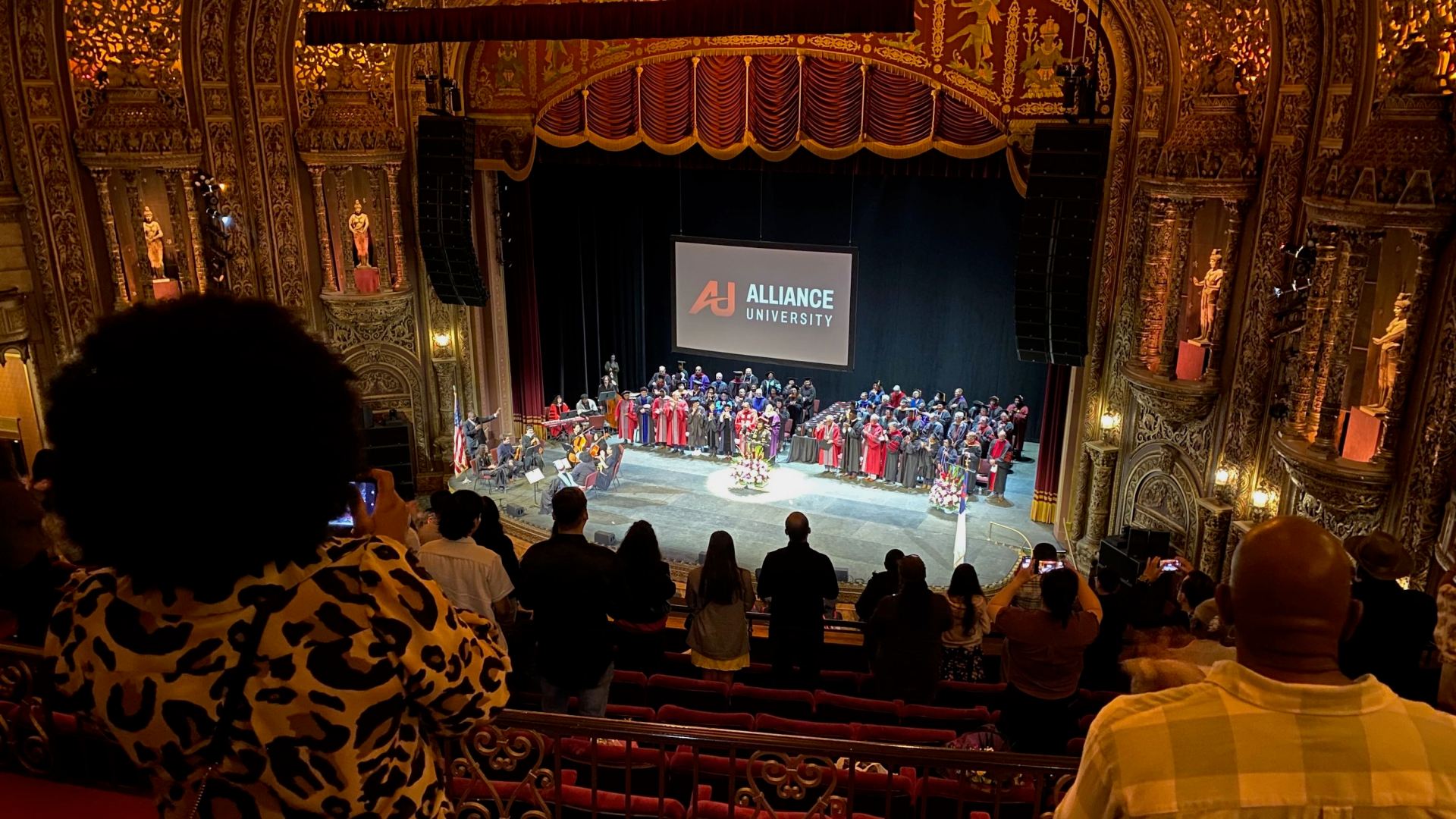
Alliance University held its graduation in May. The school is hoping to host another graduation for students finishing in August when it officially closes.

Alliance University held its graduation in May. The school is hoping to host another graduation for students finishing in August when it officially closes.

Christianity Today July 1, 2023
Courtesy of Alliance University

Alliance University, a 140-year-old Christian & Missionary Alliance (CMA) school in New York City, will close on August 31 after years of financial struggles.

Known for much of its history as Nyack College, Alliance is the latest casualty in the financial crisis in Christian higher education . At least 18 Christian colleges have closed since the pandemic. But Alliance is also unique among US evangelical schools as one of the most ethnically diverse, with a student population that this year was 34 percent Latino, 30 percent Black, 11 percent international, and 9 percent Asian.

The parent denomination of the school, the CMA, began in New York City in 1880, and Alliance was founded not long after as an educational institution for missionaries and those in ministry. Alliance graduates like pastor A. R. Bernard lead many New York churches.

The CMA provided significant financial support to the school when it was in trouble in recent years. It is considering continuing the programs of Alliance Theological Seminary, which is part of the university.

The school’s board voted on Thursday night to shut down Alliance University’s operations, and school leadership informed staff, faculty, and students on Friday and began layoffs. Alumni, even knowing the financial straits of the school, used the same word over and over in interviews: “shock.”

“This is very sad,” said Chris Smith, who graduated in 2010, worked on staff at the school in various capacities, and served on the school’s alumni board. “The texts, calls, FaceTimes, DMs [direct messages] I’m getting is a lot.”

“They had something so special,” said alumna Heather Beers-Dimitriadis. “That school changed my life in ways I could have never imagined.”

With an announcement like this coming during the summer, communication about the closure happened by email and Zoom. The school had to send a letter to current students, and then to 683 students who had been accepted for the fall.

Alliance provost David Turk said 106 students are planning to graduate by the end of August, and he thinks that number will grow with students completing courses over the summer. He is planning a Zoom call with all the students after the July 4 holiday. Alliance is looking into holding a final graduation ceremony in August that could also be a chance for the Alliance community to grieve and worship together.

“The students deserve a ceremony,” said Turk. “We need some sort of closure as a community, all dressed up in gowns.”

Morgan Morrison had a year left in her master’s in mental health counseling at Alliance. She had heard that the school was dealing with financial problems, but the news on Friday caught her by surprise.

“There’s a lot of uncertainty amongst my classmates,” she said. She’s trying to figure out what credit hours will transfer elsewhere, and where she might go to finish her degree. Two months is a short time for students to find and enter a new program.

President Rajan Mathews, who came to the school in 2021, said in an email to CT that his heart “aches” for the faculty, staff, and students, as well as “the city and our churches and institutions that are now denied our qualified and motivated students.”

“As a Christian, I ultimately look for reason and purpose through the faith that is centered on our Lord Jesus the Christ,” he said. “He does all things well. In that is my ultimate hope and stay through all this.”

The decision to close came on the heels of the school receiving a notice on Monday that it was losing its accreditation. The Middle States Commission on Higher Education (MSCHE) cited the school’s finances as the main reason for the action. The removal of accreditation meant Alliance could not accept incoming students and had to instruct returning students about transferring schools.

“The last week has just been an up and down of total despair and then looking for different ways to rescue things, then facing up to the reality of what is and what will be,” Turk said.

Turk was a student at the school in the early 1970s and has been on staff for 45 years and provost for 21 years. This week, as he navigated angry Facebook comments from alumni, he thought through all the people and institutions he could blame for the closure of the school. But he came to the conclusion of accepting that “this is what is happening in higher education across the country.”

Alliance’s auditors had warned that the school was in danger as a “going concern” in previous years. For years, the school operated with massive deficits—including a $10 million deficit in 2019. Enrollment had been declining for years, but the pandemic worsened the situation. Mathews, a telecom executive, took over as president in 2021, bringing a business mind to a Christian school deep in debt.

Mathews saw an improving outlook with enrollment and fundraising up this past year. But MSCHE surprised Alliance leadership with placing it on “show cause” status this spring, meaning that Alliance had to prove why its accreditation should not be revoked.

Alliance had a hearing before the accreditors on June 21 but did not convince them of the school’s financial hopefulness.

“All we were asking for was a bit more time to prove our financial case,” said Mathews.

Several education experts CT interviewed said that accreditors now are quicker to pull accreditation for schools in financial trouble, to keep students from enrolling in failing institutions.

Some Alliance alumni said the problems were long-term and embedded.

“Years of bad decisions,” Smith said. He saw a “lack of innovation” from the board and leadership prior to Mathews. “Alumni weren’t a priority for those in leadership.”

Beers-Dimitriadis, who served on the alumni board also and is the daughter of an alum, said the school did little fundraising among alumni and pursued outside “big-fish” donors instead. She said the alumni board was dissolved entirely in 2019.

Whatever the long-term problems that led to this moment, the school has a 140-year legacy of ministry in New York and around the world.

In an address at Mathews’s inauguration, Anne Snyder, an Alliance board member and the editor in chief of Comment Magazine, remembered attending the school’s commencement in 2015.

“A 79-year-old grandmother ascended the stage and collected her diploma for the first time, followed by a Chinese woman in a wheelchair, followed a single mother, followed by an ex-offender. Here was a Christianity I could believe. Here were the Beatitudes unspoiled and put into practice,” she said. “Instead of expressing fear that a great Christian heritage was losing ground, as I was hearing in other evangelical and Catholic circles back in 2015, there was compassion in their testimonies, the scent of hope anchored in humility and fervent faith.”

Shirley Hoogstra, president of the Council for Christian Colleges and Universities, ticked through a list of Alliance’s major achievements as an institution: a degree program at Fishkill Correctional Facility (which Turk said Houghton University in Houghton, New York, would likely take over as a teach-out partner), a “vibrant arts program” with a gospel choir, and a path for older adults to earn their degrees. She noted that Alliance had trained hundreds of church leaders in New York and “seeded hundreds of missionaries and educators around the globe.”

“The legacy of Alliance is being the affordable and accessible Christian college opportunity for the five boroughs of New York, as well as for students from around the country who wanted to participate in multiethnic and multicultural experience,” Hoogstra told CT.

In its long history, Alliance enrolled students who were refugees from the Vietnam War, and in 2021 it enrolled and covered tuition for refugees from Afghanistan. The denomination has been closely involved with immigrant churches and refugee resettlement, and many of the professors at the school were immigrants themselves. When the Afghan refugees arrived in New York to start classes, professors who were immigrants from Poland and Hong Kong met them with coats and bedding.

“I think that [Alliance] fulfilled the mission laid out by its founder,” said Turk, of serving the community through various mercy ministries. Turk counted last year that Alliance students, through programs where they are interns or doing other work, have connections to more than a thousand social services in the New York metro area, from hospitals to public schools. “We truly served the community of New York.”

The CMA has other denominational schools, like Toccoa Falls College in Georgia and Simpson University in California.

The King’s College, also in lower Manhattan near Alliance’s campus, is the only other CCCU school in New York City and is also facing the threat of imminent closure because of a financial crisis.

King’s also lost its accreditation at the beginning of June, but it is appealing the decision and has said it is in talks with another Christian college about a potential partnership. The removal of accreditation means that it cannot accept incoming students, which worsens its outlook.

Turk said for the past month or two he has been in touch with The King’s College’s board and interim president about a merger or collaboration of some kind, a conversation that is still ongoing because Alliance retains its state education charter despite shuttering its programs.

“King’s has had this wonderful history of large donors which Alliance University has never had,” he said. “But Alliance University has a charter from the state of New York, which we don’t lose. We also have program approvals for many graduate programs and professional programs that King’s does not have. It would make sense to bring both together.”

Students, meanwhile, are moving on. Accreditors have detailed procedures for when a school closes, including requiring the school to help students transfer to other programs if they wish and make sure records are preserved.

Alliance has teach-out agreements with schools including Asbury Theological Seminary, Manhattan Community College, Eastern University, Fordham University, Gordon-Conwell Theological Seminary, Houghton University, and Messiah College, among others. Students can transfer to these schools with all of their Alliance credits to finish their degrees.

“I guess the next steps for us all are just to make the space to grieve,” said Morrison, the master’s student. “God will provide for sure!”

News
Wire Story

Supreme Court Sides With Christian Who Won’t Make Gay Wedding Sites

Ruling: Colorado can’t “force all manner of artists, speechwriters, and others whose services involve speech to speak what they do not believe.”

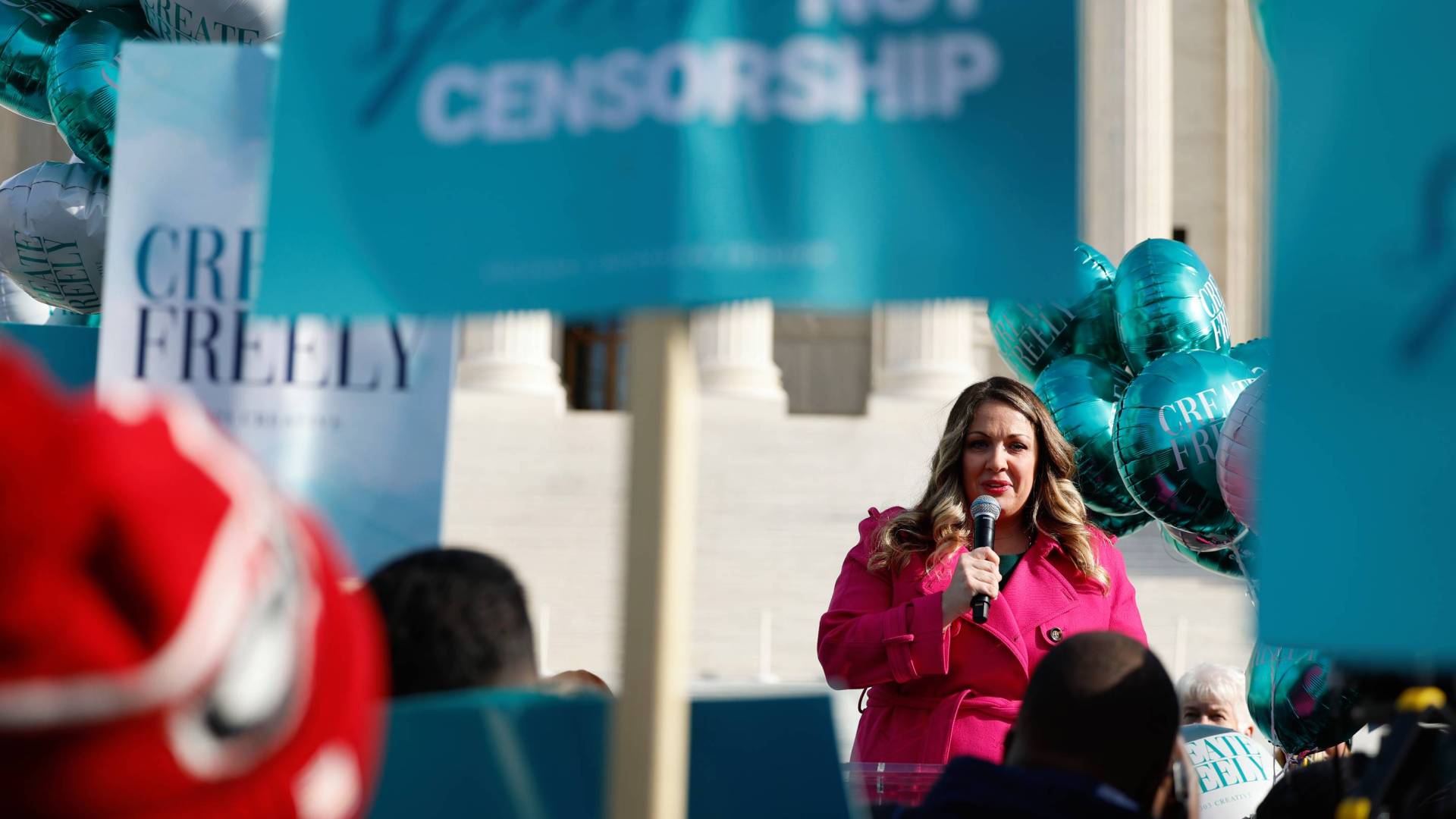
Lorie Smith, owner of 303 Creative

Lorie Smith, owner of 303 Creative

Christianity Today June 30, 2023
Anna Moneymaker / Getty Images

The US Supreme Court delivered a First Amendment victory Friday to a Christian designer who objects to creating custom websites for same-sex weddings.

The high court ruled in a 6–3 opinion the state of Colorado would violate the free-speech rights of Lorie Smith by requiring her to design a website for a ceremony that conflicts with her conscience. The decision provided an important legal win for the rights of Christians and other faith adherents in a series of cases involving the intersection of religious freedom and same-sex marriage.

In the majority opinion, Associate Justice Neil Gorsuch said the state “seeks to force an individual to speak in ways that align with its views but defy her conscience about a matter of major significance.”

As the Supreme Court “has long held, the opportunity to think for ourselves and to express those thoughts freely is among our most cherished liberties and part of what keeps our Republic strong,” he wrote. “The First Amendment envisions the United States as a rich and complex place where all persons are free to think and speak as they wish, not as the government demands.”

The high court’s decision broke along ideological/political lines. Nominees by Republican presidents made up the majority, while justices nominated by Democrats were in dissent. Chief Justice John Roberts and Associate Justices Clarence Thomas, Samuel Alito, Brett Kavanaugh, and Amy Coney Barrett joined Gorsuch in the majority. Associate Justices Sonia Sotomayor, Elena Kagan, and Ketanji Brown Jackson dissented.

The head of the Southern Baptist Ethics and Religious Liberty Commission (ERLC) applauded the justices’ action.

“If the government can compel an individual to speak a certain way or create certain things, that’s not freedom—it’s subjugation,” ERLC president Brent Leatherwood said in a news release. “And that is precisely what the state of Colorado wanted.

“Thankfully, the court has stepped in to say that individual rights may not be paved over by a zealous government. Colorado’s scheme of compulsion and coercion against creators has failed once more.”

Leatherwood said the opinion’s implications “extend throughout the nation: People are free to speak, create, and operate in ways that are consistent with their deepest-held beliefs—even when those beliefs are deemed culturally unpopular.”

Alliance Defending Freedom (ADF), which represented Smith in the case, praised the decision as “a win for all Americans.”

The high court “rightly reaffirmed that the government can’t force Americans to say things they don’t believe,” said ADF President Kristen Waggoner, who argued before the justices in December on behalf of Smith. “The court reiterated that it’s unconstitutional for the state to eliminate from the public square ideas it dislikes, including the belief that marriage is the union of husband and wife.

“Disagreement isn’t discrimination, and the government can’t mislabel speech as discrimination to censor it,” she said in written comments.

Smith expressed gratitude for the ruling.

“For me, it’s always about what message is requested, never the person requesting,” Smith said in an ADF release. “I hope that, regardless of what people think of me or my beliefs, everyone will celebrate that the court upheld the right for each of us to speak freely.”

Supporters of LGBT rights decried the decision.

The opinion “is a dangerous step backward, giving some businesses the power to discriminate against people simply because of who we are,” said Kelley Robinson, president of the Human Rights Campaign, a leading LGBT organization. The LGBT community will not permit the government “to erase us—we will fight back,” Robinson said in a written release.

Smith, owner of 303 Creative in the Denver area, designs websites for a variety of causes and clients, however, including people who identify as LGBT. She will not create websites for same-sex weddings, however, because of her belief as a Christian that marriage is only between a man and a woman.

She challenged a public accommodation law—the Colorado Anti-discrimination Act (CADA)—out of concern the state would seek to compel her to design websites for same-sex ceremonies if she expanded her business to include wedding services. The CADA includes “sexual orientation, gender identity” and “gender expression” as protected classes. A federal judge and the 10th Circuit Court of Appeals in Denver ruled in favor of the state.

In a 7–2 opinion in 2018, the Supreme Court decided in favor of Colorado cake artist Jack Phillips in a similar case under the CADA. Phillips had declined to design and decorate a cake for the wedding of two men.

The high court’s decision in that case, however, was not an expansive victory for religious freedom. The justices found the Colorado Civil Rights Commission demonstrated “religious hostility” toward Phillips, owner of Masterpiece Cakeshop, but said similar facts in different contexts may produce different rulings.

In Friday’s opinion, Gorsuch said previous Supreme Court rulings have illustrated “the First Amendment protects an individual’s right to speak his mind regardless of whether the government considers his speech sensible and well intentioned or deeply ‘misguided,’” quoting a specific case.

“Generally, too, the government may not compel a person to speak its own preferred messages,” Gorsuch wrote.

“As surely as Ms. Smith seeks to engage in protected First Amendment speech, Colorado seeks to compel speech Ms. Smith does not wish to provide.”

Colorado’s logic “would allow the government to force all manner of artists, speechwriters, and others whose services involve speech to speak what they do not believe on pain of penalty,” Gorsuch wrote.

Quoting from a lower-court dissent in the case, he wrote, “The government could require ‘an unwilling Muslim movie director to make a film with a Zionist message,’ or ‘an atheist muralist to accept a commission celebrating Evangelical zeal,’ so long as they would make films or murals for other members of the public with different messages.”

The high court acknowledges the important role public accommodations laws play in protecting against discrimination, but it “has also recognized that no public accommodations law is immune from the demands of the Constitution,” he wrote.

In a dissent longer than the majority opinion, Sotomayor said the high court for the first time gave “a business open to the public a constitutional right to refuse to serve members of a protected class.”

The Colorado law “targets conduct, not speech, for regulation, and the act of discrimination has never constituted protected expression under the First Amendment,” she wrote.

The opinion came in 303 Creative v. Elenis.

News

Some Southern Baptist Women Worry About a ‘Narrowing’ Complementarianism

Recent debates have left them discouraged and uncertain about what’s next for female leaders.

Christianity Today June 30, 2023
Sonya Singh / Baptist Press

On the ten-hour drive home from the Southern Baptist Convention (SBC) annual meeting in New Orleans, Leah Finn had questions.

Finn felt like she should know enough to understand the changes that 12,000 Southern Baptists approved at their gathering in mid-June. She had been following the proposals for months, she knew the rules of parliamentary procedure, and her husband, Nathan Finn, serves as a trustee on the SBC Executive Committee.

With the rejection of Saddleback Church’s appeal, it was clear the convention held a strong consensus against women as lead pastors and preaching pastors and would be willing to break fellowship over the issue. But what about women in other roles?

The SBC moved to change its foundational documents to reiterate its stance: amending its constitution to explicitly state that cooperating churches must restrict “any kind” of pastor to qualified men and rewording its faith statement to say that “pastors/overseers/elders” are male.

Many Southern Baptist leaders advocating for the new wording saw it as a way to clarify their shared complementarian convictions. But some women have quietly worried that the changes, and the surrounding debate, could call into question or further limit their place in the denomination.

Leah Finn thought of her friends who serve as ministers at SBC churches, teach at SBC seminaries, and pursue degrees at SBC schools and wondered how the decisions would affect them in the years ahead.

She and her husband ended up writing an op-ed for Baptist Press, the SBC’s official outlet, lamenting how the annual meeting left female leaders “uncertain about their future in Southern Baptist life.” Some wonder what moves could come next, and others are disappointed that so much of the current discussion focuses on what women can’t do.

“The biggest thing for me, following this debate, is that I feel like we haven’t had a conversation about how women can be used in the church,” said Courtney Reissig, a messenger from Immanuel Baptist Church in Little Rock, Arkansas, where she serves as discipleship content director. “It’s been primarily focused on the restriction, which I believe the Bible affirms, but then the question comes up, ‘So where do women serve?’”

“The pastors who push the limitations should also equally provide pathways for women to serve in their churches within the bounds of the Baptist Faith and Message,” she said.

Southern Baptist women themselves can be hesitant to speak up with their concerns, afraid that publicly questioning the recent moves could get them labeled as liberal or egalitarian. About a dozen women CT spoke with at the annual meeting expressed reservations about the changes to the constitution and statement of faith but didn’t want to go on the record.

After the Finns’ Baptist Press piece went live, “I had several women reach out to me and say, ‘Thank you for saying this. You voiced what we’ve been feeling,’” Leah Finn said. “So many are afraid to say, ‘We are complementarian, but we feel uncomfortable with this amendment.’ It’s narrowing things in a way we felt like the Baptist Faith and Message was [already] narrow, and our constitution was narrow, and it’s narrowing it even more.”

This is the first year the SBC has disfellowshipped a handful of its 47,000 cooperating churches for having women in lead pastor and preaching positions.

Many saw the departing churches as a slim minority in the solidly conservative, complementarian denomination, while others suggested female pastors were more prevalent. Virginia pastor Mike Law, who originally proposed the amendment, cited a handful in his area, while Kevin McClure in Louisville tallied a sample of SBC churches whose websites name women pastors, including over children’s, youth, and worship ministries.

Under the new constitutional language of “only men” being appointed as “any kind of pastor” in SBC churches, complementarian women serving on staff may wonder if their title or their role could get their church reported to the credentials committee, the SBC body that recommends whether churches meet the requirements for cooperation. (Only since 2019, as the SBC moved to make mishandling abuse grounds for dismissal, has the committee been tasked with evaluating churches in violation.)

Mark Dever, pastor of Capitol Hill Baptist Church, spoke on a panel in favor of the amendment at a 9Marks ministry event during the meeting in New Orleans. He disagreed with the notion that women on church staffs could fear being “targeted” for their roles as a result but instead said churches need to take responsibility for ensuring the wording of their titles is clear and aligns with Scripture.

“A church could have a woman function in a way that I think there’s no biblical problem with, but because they’re calling her by a title that’s the same as elder, pastor, bishop, then that’s problematic, though the role that she’s filling may not be,” Dever said.

Critics of the amendment to restrict all pastor roles to men—which must pass at a second vote in 2024 to be enacted—contend that the independent, autonomous churches that make up the convention have the freedom to appoint their own ministers. And decide what titles to use for them.

Amy Hébert, a Southern Baptist pastor’s wife in Texas and a graduate of SBC-affiliated Criswell College, believes the amendment is “overreaching.”

“It will force churches to decide whether to remain in the SBC,” Hébert said. “Each church can choose whether they want women to be titled ‘pastor’ versus ‘minister,’ et cetera, so it may not cause the women to lose their roles, [but] it may cause a loss in the SBC.”

Hébert said that her female friends in the SBC fear more restrictive moves will follow. Southern Baptists are still speculating how or whether the denomination will address churches who use pastor titles for women, and whether there will be scrutiny on women in ministry beyond the titles they use.

“I’ve heard people say in this discussion, ‘Well, it’s not enough that the children’s pastor not be called pastor if there’s a staff member that’s doing pastor-like things.’ Which sounds great until we appoint the group that’s going to determine what those things are,” said former SBC president and Summit Church pastor J. D. Greear, speaking at a lunch hosted by Baptist21 during the annual meeting.

“At our church, we don’t have any pastors that are women. We do have a children’s director who’s a woman, and she oversees male volunteers. I know some faithful brothers that would say that’s actually a violation of 1 Timothy 2.”

A couple SBC churches with women in copastor and associate pastor positions have voluntarily stepped away from the convention in the weeks since the annual meeting, including Elevation Church, the megachurch led by Steven Furtick in North Carolina, and First Baptist Church Gainesville in Georgia. Both congregations had been called out online for including female pastors on staff.

Some advocates of the amendment responded to their exits by suggesting the SBC’s “clarifications” were having their intended effect.

Supporters say the recent moves around women in pastoral roles are a necessary safeguard against theological drift in the SBC. The only woman to come to the mic in New Orleans to address women pastors, Sarah Clatworthy, spoke out in favor of the amendment.

“We should leave no room for our daughters and granddaughters in the generations ahead to have confusion on where the SBC stands,” said Clatworthy, a messenger from Lifepoint Baptist Church in San Angelo, Texas. “Let them know Scripture is our authority and not the culture.”

But another prevalent perspective among SBC women wasn’t voiced from the floor: that of the children’s ministry directors, worship leaders, Bible study leaders, Sunday school teachers, mentors, and missionaries who wish they could focus on the work of ministry without having to defend their place.

“I just want to serve. I just want to be able to talk about Jesus. And I want that to be affirmed,” Kristen Phelps, a New Orleans Baptist Theological Seminary trustee and messenger from New City Church in New York, told CT. “At the core of it, it’s not about the word [pastor]. It’s about women and their role in the Great Commission … and including women in ministry actually gives us a fuller picture of God.”

With the autonomy of local churches, several women who said they have the assurance of their own pastors told CT they feel like they can continue to serve in their roles without being wrapped up in the tensions on the denominational level.

“As Southern Baptists continue to reaffirm our commitment to biblical complementarianism, we must also be crystal clear that God calls and gifts women to vocational ministry,” the Finns wrote in Baptist Press. “We should affirm their godly callings joyfully and unequivocally, without clearing our throats or apologizing for the equally biblical principle of the priesthood of all believers. Our sisters’ ministries advance the kingdom.”

Female enrollment is up at SBC seminaries, and programs for women in ministry are expanding. Women have better representation than ever on SBC committees. Young female missionaries continue to outnumber men on the mission field.

But most Southern Baptist churches could be doing more to involve and disciple female leaders. A resolution passed this year urged pastors to equip women in their churches, acknowledging the “countless women who serve among us as missionaries, writers, apologists, teachers, mentors, and leaders” and that their contributions are “absolutely vital and too often unrecognized.”

Less than 10 percent of evangelical churches have a full-time staff member overseeing women’s ministry, according to Becky Loyd, director of Lifeway Women, a division of the SBC’s publishing arm.

“I do hope that we begin to talk about things like pay and title equity for women who are doing the same types of ministry jobs that men are doing in churches. I also believe there are opportunities for churches to fund more full-time staff positions to focus on ministry to women,” Loyd told CT by email.

“When 90 percent of women who are leading a ministry at churches are not part of a full-time staff, how are they growing and developing? How are they integrating their reaching and teaching for women into the mission and vision of the church? This is the biggest issue I see related to women in the church.”

https://www.instagram.com/p/CtpbMDVv3YL/

Jacki King is one of those women’s ministers, on staff at Second Baptist Church in Conway, Arkansas, where her husband is lead pastor. She has also raised concerns about pay parity and women’s involvement.

A suggestion going into a new week post #sbc23 for pastors: Find some sisters on your staff, in your church, within the SBC & have a conversation with more questions than answers,” she tweeted. “It’s not enough to merely have them at the table, engage them.”

Reissig, at Immanuel Baptist, said she doesn’t fear for the future of her position in the church where her pastor makes space for women to serve. But she believes the current focus on women’s roles—in a denomination still grappling with its response to sex abuse by pastors—is misguided.

“We are missing an important part of the biblical passages that speak to who can and should serve in the office as pastors. The Bible limits the office of pastor to qualified men, so I think it does a disservice to women who serve when unqualified men are put in the office,” Reissig said. “If we want to be consistent with the Bible, we should be as committed to the biblical qualifications of the office as we are to limiting women from the office.”

Women made up 30 percent of the 19,000-person crowd at the annual meeting; pastors’ wives, women on church staffs, and female church members are all welcome as messengers if sent by their church. A majority who attended in New Orleans say they plan to return for the 2024 gathering in Indianapolis, according to a survey of registrants.

And they’re continuing to ask questions—behind the scenes and publicly—about what further moves or messaging might come.

“My prayer is that the conversation about women in ministry turns from boundary-making to equipping and empowering. Pastors and male ministry leaders, we need you to change the conversation,” said Loyd at Lifeway.

“For women who worry about ripple effects, I think they need to evaluate their current situation and decide if it’s a place where they have opportunities to grow in their gifts and calling. If it’s not, then they need to find another place,” she said. “I understand the fears and have dealt with them myself, but our God is a God of abundance, not scarcity. If he has given a woman gifts, he’s going to provide a place for her to use them.”

Theology

Today’s Arab Women Theologians Have Plenty of Past Exemplars

From desert mothers to modern scholars, the Middle East has long featured females leading from the margins—and sometimes near the center of patriarchal power.

Christianity Today June 30, 2023
Illustration by Mallory Rentsch / Source Images: WikiMedia Commons

The Middle East today is at a kairos moment in time. As women across the region fight for their rights and freedoms, the tectonic shift is felt also in Christian academia. What was once a trickle of female theologians has developed into a growing number of developing leaders, enabling and emboldening other women to rise in leadership.

While only Protestant churches have yet ordained female priests—in Lebanon, Syria, and the Palestinian territories—other similar bold figures are modeling an emerging path of spirituality within patriarchal Arab society.

But their own inspiration is found in the past.

As members of the first Christian communities, Eastern Christian women—deaconesses, historians, theologians, and martyrs—articulated their faith and theology centuries ago. However, their stories are not well known even in our region. But it is remarkable that two of the largest remaining Christian communities in the Arab world, Coptic and Maronite, have known historical female leadership. Within the rich and complex ecclesial context of the Middle East, their legacy continues to shape our theological thought as evangelical women today.

Desert mothers

Observing the full moon rise above today’s Egyptian desert in the land where Saint Anthony (A.D. 251–356) originally established monasticism as a lay movement, I am reminded how spirituality was crafted by asceticism. The desert fathers left a heritage of wisdom celebrated by many today who seek spiritual discipline.

But we often overlook the desert mothers.

These Ammas (from the original Syriac) were Christian ascetics who also inhabited the deserts of Egypt, Palestine, and Syria in the fourth and fifth centuries, whether in monastic communities or as hermits. Both men and women respected them as spiritual exemplars of maturity and wisdom, imparted through teaching, preaching, and their own sublime examples.

St. Syncletica of EgyptEdits by CT / Source Image: WikiMedia Commons
St. Syncletica of Egypt

Amma Syncletica of Alexandria (d. around A.D. 350) led a community of women who desired to serve God, with religious insights highly esteemed in the writings of Pope Athanasius the Great.

Amma Sarah, the fifth-century hermit from Egypt’s Wadi Natroun desert, was known for her asceticism, courage, and spiritual teachings. As a well-educated reader, she was concerned that her heart be fully upright in her pursuit of God.

Amma Theodora (d. A.D. 412), a renowned spiritual guide, met Saint Anthony multiple times and was a colleague of Archbishop Theophilus of Alexandria.

Though these desert mothers desired solitude, they did not see cultural norms for women as obstacles to their calls or their pursuit of God, keeping relationships as role models in their daily study and prayerful life.

For modern-day Christians seeking to be faithful in their spiritual lives in a complex context like today’s Middle East, the core practices of desert mothers can provide rich insights. The monastic framework encourages the integration of spirituality and theology, with the Word of God and spiritual disciplines at the center.

Through times of solitude, these desert mothers produced profound theological works—lacking sorely in the Arab world today, especially those written by women.

‘Daughters of the Covenant’

Strolling down Star Street in the old city of Bethlehem today, I can see the sanctuary of the Syriac Church of the Virgin Mary. From the outset, Syriac Christianity offered women positions as deaconesses and consecrated virgins. Literary sources contain frequent references to this from the fifth century until the tenth century, in both the western (Maronite) and eastern (Assyrian/Chaldean) traditions of Syriac Christianity.

Several of the earlier texts mention the Bnat Qyama, “Daughters of the Covenant,” alongside references to deaconesses. These were women who had taken vows of celibacy and simplicity, working in the service of Christ. Not only did their women’s choirs (generally comprised of consecrated virgins) lead worship, but their hymns also provided essential instruction for believers about the Bible, theology, and Christian community. Their remarkable teaching and liturgical ministry can be traced through at least the ninth century.

Jacob of Sarug (d. 521), for example, mentioned the women’s choirs as “female teachers” (malphanyatha, in the feminine plural), whose singing declared the “proclamation” (karuzutha, corresponding to the Greek kerygma) in the liturgy. Syriac sources describe the Daughters of the Covenant, cherished for their melodious conveying of scriptural truth, as conversant with exegetical, ascetic, and hagiographic literature, demonstrating a culture where women were concerned about theological education in its many forms.

A Maronite mystic

Hannah Ajaymi was born in 1720 to a Maronite family in Aleppo, Syria. But she became known as Hindiyya due to her dark olive complexion, etymologically linked to the Arabic name for India. By the time she was 17, she was considered a model of piety in the spiritual disciplines, including oral prayer and fasting. Uninterested in marriage, she considered herself espoused to Christ.

Hindiyya’s determination to establish a religious congregation indicated her dedication to Christ, and she became the foundress and mother superior of a group of monastic women. Her first convent formed in Aleppo in 1753, but she frequently traversed the Lebanese mountains and founded four monastic communities overall.

Hindiyya was unusually well read in Arabic religious works, with a considerable collection of her own publications. Her major work, Sirr al-Ittihad (Mystery of the Union), is the first-known rare Arabic account of a mystical experience between Jesus and a Christian woman. And her Al-Durar al-Saniya (Precious Jewels) is a significant theological work—over 400 pages of spiritual counsel for her nuns. Hindiyya died in 1798.

While modern-day Lebanon struggles to rise out of ashes and debris, the contemporary Maronite church has developed room to discuss the role of women, with its 2022 synod dedicated to their particular mission. Hindiyya was revered as a saint at certain times in her life, but at other times was seen as a heretical threat to the established order. Yet as a prominent priest told me, “It is about time the Maronite church reopens Hindiyya’s file.”

Mother Irini

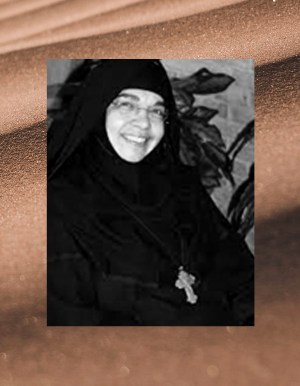
Known as Ummina in Arabic and Tamav in Coptic (“Our Mother”), Irini is a modern-day example of a desert mother. Born Erene Yassa in 1936, she became mother superior of the Old Cairo convent of St. Abu Saifein and played a major role in the revival and reformation of Coptic monasticism for women. She was consecrated as a nun in 1954 and wrote many meditations on biblical teachings, mystical visions, and physical sickness.

Mother IriniEdits by CT
Mother Irini

Finding inspiration in the life of fellow Alexandrian Amma Syncletica, she gave up her family wealth to pursue a path of poverty. She passed away in 2006.

Mother Irini is well known and treasured by many Egyptian Christians as a female leader within the Coptic revival. Copts honor her spirituality alongside the cherished figures of Pope Cyril VI (1959–1971) and Pope Shenouda III (1971–2012).

Endowed with great spiritual vision, she employed her gifts to teach and guide both her nuns and frequent visitors—male and female—who sought out the wisdom of her monastic community. Not only did she lead a life of prayer, but she was also a gifted manager. And as the sincerest flattery for her spiritual stature, popular acclaim exaggerates her visions and miracles, similar to historic male Egyptian saints like Abanoub and Mina.

By enhancing the convent’s library with publications about godly women, Mother Irini expanded space for women in the Coptic church, where men are usually the official representatives. Renewal had previously been centered on male monasticism, but today there are hundreds of nuns and mukarrasat (consecrated virgins) in Egypt, serving the poor and recalling the traditions of ancient times.

But as mirrored in other Eastern churches, her example has inspired women outside the convents as well, stimulating renewed engagement in theological education.

Modern scholars

There are several prominent examples who follow in their heritage:

  • A monastic of the Coptic Orthodox Church, Mother Lois Farag is a lecturer at Luther Seminary who authored St. Cyril of Alexandria, A New Testament Exegete: His Commentary on the Gospel of John and Balance of the Heart: Desert Spirituality of Twenty-First Century Christians.
  • The young scholar Dina Tarek has produced substantial works in both biblical studies and spiritual theology through the School of Alexandria Foundation.
  • Souraya Bechealany, a former secretary general of the Middle East Council of Churches, has two doctorate degrees in theology.
  • Roula Talhouk, an anthropologist and a practical theologian, supervises doctoral students at Saint Joseph University of Beirut.

Marked by deep spirituality, these women are leading a new generation of female Arab theologians—within a diverse theological landscape where their presence has often been unrepresented, their voices ignored, and their contributions unacknowledged.

Lois FaragEdits by CT / Photo Courtesy of Lois Farag
Lois Farag

In many ways their emergence has been sparked by a Protestant egalitarian vanguard, which in turn cross-pollinates the evangelical churches with a greater respect for their historic brothers and sisters.

In the land where Christianity was birthed but where its numbers are currently dwindling, these shining female stars remind us that through the empowering of the Holy Spirit and with the prayers of the global church, the glorious gospel will continue to be proclaimed, bringing both present and eternal hope to an aching region.

Grace Al-Zoughbi (PhD, London School of Theology) is a Palestinian Christian from Bethlehem. She is an assistant professor of theological education at Arab Baptist Theological Seminary, in Beirut, and serves as an accreditation officer with the Middle East and North Africa Association for Theological Education.

Theology

The Word Made Fresh: Taglish Bible Translation Brings Streets of Manila into Church

After 16 years and plenty of controversy, the Philippine Bible Society completes its Pinoy Version.

Christianity Today June 29, 2023
Illustration by Christianity Today / Source Images: Getty

When the Philippines Bible Society (PBS) first released the New Testament translated into Taglish—a mix of Tagalog and English used by urban dwellers in the Philippines—five years ago, Filipino Christians were in an uproar on social media. Many decried it as irreverent or blasphemous to translate the Word of God into a colloquial language more commonly seen on the Internet or heard at the supermarket.

So Anicia del Corro, a PBS translation consultant who spearheaded the project, started holding talks, giving interviews, and writing articles outlining how her team conducted research and painstakingly translated the New Testament from the original Greek. She stressed that the Bible’s target audience was Gen Z and millennials in Metro Manila, a region made up of 16 cities and 13 million people.

In contrast, when PBS launched the entire Bible translated into Taglish earlier this month called Ang Bible Pinoy Version, Del Corro felt relieved that the burden was no longer on her to do the explaining: At a launch party attended by nearly 500 people, pastors and leaders shared their personal experience using and preaching from the Pinoy Version. Jayson Genanda, pastor of Malaya House Church, said that when he leads a Bible study he makes sure to look at the Taglish translation to get the meaning of a passage.

“The users themselves are the ones promoting it,” Del Corro said. “They know people who can’t understand the Word in other translations can use Ang Bible Pinoy Version.” (Ang mean “the” in Tagalog and Pinoy is an informal term referring to the Philippines or Filipinos.)

Ang Bible Pinoy Version, which took 16 years to complete, is the first completed Bible translation in a mixed language, Del Corro said. Mixed languages arise in bilingual populations and are different from creole or pidgin where people speaking different languages create a shared language. It’s also distinct from code-switching, she noted, as Taglish doesn’t just borrow English words but integrates Tagalog grammar into the structure of those words.

Many pastors and churches accustomed to reading the Bible solely in English or in Tagalog frowned upon the informal mixing of languages in the sacred text. Beyond the initial uproar, in 2020, the debate over the translation heated up again when a Catholic bookstore posted an ad for the New Testament translation. “Very liberal word choices can lead to the text not being taken seriously,” wrote one commenter. Others said the Bible loses its “richness and contextual meaning” when translated into Taglish and that the Word shouldn’t conform to the world.

But Del Corro and others believe the translation can bring the Word of God to a new generation of young Filipinos in the language in which they speak, read, pray, and think. Bible sales reflect that interest: in the first year, the Taglish New Testament sold 100,000 copies, the most PBS has ever sold for a new translation. Already, the completed Bible has sold out of its first printing of both the Catholic and Protestant Bibles.

“It’s the way people speak, that’s why it is so close to the individual,” Del Corro said. “They think that it’s too easy, the Bible should be more difficult…But we in the Bible Society, we want to make sure that people understand it.”

Taglish’s colonial roots

The Philippines is home to more than 120 languages, with Filipino–a dialect of Tagalog–as the national language. (Filipino and Tagalog will be used interchangeably in this article).

The evolution of language in the country is largely shaped by colonization. Spain’s 300-year rule resulted in Spanish words sprinkled into the vernacular, Spanish surnames, and a Philippine-Spanish creole. When the United States took over for 50 years from 1898-1946 (with the exception of three years of Japanese rule during World War II), Americans set up the country’s public school system and introduced English. With the import of American culture and democracy, at the time “almost everything American was considered good by Filipinos,” Del Corro wrote.

Even after the Philippines gained independence in 1946, Filipinos continued to use English in the media, education, books, and business settings. “Knowing how to speak English was the mark of an educated, cultured person,” Del Corro said. English joined Tagalog as the official languages of the Philippines. While Tagalog or other regional languages are used at home, English was used at school and at work.

This changed in the ’70s when then-President Ferdinand Marcos declared martial law to retain his rule. Upset, people began to push against the status quo and protested in Tagalog. “The language of the expression for freedom was Filipino,” Del Corro said. After Marcos’ dictatorship ended, the use of Filipino continued to grow in everyday life, except in “formal” arenas like church, school, and the government.

Because many of the educated class were still trained in English, the two languages began to mix, creating Taglish. By the turn of the millennium, Del Corro began to notice Taglish take off as the internet and texting tore down the barrier between how language was spoken and how it was written. She began to float the idea of a Taglish translation of the Bible with the PBS.

Today, Taglish is heard on the streets of Manila, seen on billboards, and used by news anchors and characters of TV dramas. It’s the language used online, and ironically it’s also the language that the Pinoy Version’s detractors used to post comments disparaging the translation. At churches in Metro Manila, sermons are commonly in Taglish.

The creation of a Taglish Bible

In 2007, PBS held a workshop to train translators for the Pinoy Version, most of whom were in their 20s. Del Corro outlined what the translation would not include: vulgar or tabloid language and language identified with a particular group, such as the LGBT community. From there, the group discussed and documented how young people spoke. Del Corro found their responses matched her research of the language.

Scripture comparison of John 3:22


Magandang Balita Biblia (most widely used meaning-based Tagalog translation)


Pagkatapos nito, si Jesus at ang kanyang mga alagad ay nagpunta sa lupain ng
Judea. Nanatili siya roon nang kaunting panahon na kasama nila at nagbautismo
ng mga tao.

Pinoy Version


After nito, pumunta si Jesus at ang mga disciples nya sa Judea. Nag-stay sya dun
ng ilang araw kasama sila at nag-baptize sya ng mga tao.

Good News Translation


After this, Jesus and his disciples went to the province of Judea, where he spent
some time with them and baptized.

There was also the question of how long a Pinoy Version translation would be useful, especially as the language was changing fast. Would the language have altered so much in the time it took to translate that it would be outdated at its release?

Del Corro proceeded cautiously, finishing the translation of the book of Mark into Taglish in 2008 and then conducting research to see how it would be received. It wasn’t until 2012, after they also translated Galatians, that the PBS Board of Trustees finally green-lit the New Testament translation. The four-person translation team spent about four years translating the text from its original Greek into Taglish. With input from Protestant and Catholic Bible scholars, the translation meets the standards of the United Bible Societies.

“Because it is the Word of God, we want to show our Bible users that we were not taking this lightly,” Del Corro said. “We had to be absolutely sure about its faithfulness to the Greek and Hebrew."

The Pinoy Version is still mostly Tagalog. In some instances, it uses English words or phrases that better convey the emotion or improves the flow of a passage. For instance, in Mark 14: 35-36 during Jesus’s prayer in the Garden of Gethsemane, the Pinoy Version changes the way Jesus addresses God from Ama, a more religious way to address God the Father, to Tatay, a more intimate term. The translators also added the English word “please” to Jesus’s prayer for God to take away the cup of suffering, which expresses pleading that doesn’t have a counterpart in Filipino.

The Old Testament translation, which began at the start of the pandemic, was easier as Del Corro had already laid out the framework and principles for writing and translating into Taglish. They formed four small teams to simultaneously work on different books of the Old Testament along with translation consultants to check up on the work.

One common criticism they have received is the use of the Tagalog word bobo for “fool” in Proverbs 19:1-3. People reacted by saying that “it’s too strong, it’s too hurting if you say the word bobo,” Del Corro said. Yet she counters that the team compared the words available and bobo was the best fit: It was straightforward, still appropriate to be used at the pulpit, and expressed the meaning of the verse well.

As for concerns about the constantly shifting use of Taglish, Del Corro admits that between the time of translating the New and the Old Testament, Taglish terms had changed as different borrowed words became more common. That means some of the same expressions are written differently, yet she believes readability is most important.

“We want to reflect the actual use of the language and [in the] actual use of the language you are not consistent all of the time,” Del Corro said. “When we use language, you shift from one to the other, as long as your audience can understand….we don’t have a problem.”

In about 10 to 15 years, she believes that the translation will need to be updated as the language continues to evolve, compared to about 20 years for other meaning-based translations. For now, PBS is working on a digital version of the translation to make it more accessible.

Taglish in written form

One of the reasons the Pinoy Version is seen as irreverent is because even though the language is commonly used in everyday conversation, people view the written form differently, said Rei Lemuel Crizaldo, coordinator of the World Evangelical Alliance’s Theological Commission.

“We are an oral culture in the Philippines,” he said. “Writing is a totally different universe, the universe of permanence and scholarship and formality. People can agree on different things verbally…but when you start to ask them to sign a document, it’s a totally different conversation.”

Until recently, Filipino literature was written in pure English or pure Tagalog. Only romance paperbacks, which captured how the people speak, used Taglish.

Scripture comparison of Mark 14:36

Magandang Balita Biblia


Nanalangin siya, “Ama ko, Ama ko! Magagawa mo ang lahat ng bagay. Alisin mo sa akin ang paghihirap na ito, ngunit hindi ang kalooban ko kundi ang kalooban mo ang masunod.”

Pinoy Version


“Tatay, please, kung pwede lang po, wag nyo po sanang hayaan na maranasan ko ang paghihirap na ito. Tatay, alam ko pong kaya nyong gawin ang lahat ng bagay. Wag nyo po akong hayaang maghirap. Pero, sige po, kung ano ang gusto nyo, yun po ang masusunod, hindi yung gusto ko.”

Good News Translation


“Father,” he prayed, “my Father! All things are possible for you. Take this cup of suffering away from me. Yet not what I want, but what you want.”

This is a barrier that Crizaldo sought to break down. When Crizaldo decided to pen a book about prayer in the early 2010s, he debated over what language to write in. If he wrote in English, the book could reach a wider circulation, yet his goal was to reach the youth in the Philippines. That brought its own challenges: Millennials like himself could not read straight Tagalog because of their schooling, but Gen Z couldn’t read straight English because “the further you are from the fear of colonization, the lesser handle you have on the language,” Crizaldo said.

So he decided to write in the language of the youth, Taglish, even though it meant the book would be looked down upon by the literary community. Around the same time, his friend, Ronald Molmisa, wrote a groundbreaking book about Christian dating in Taglish called Lovestruck. Lovestruck went on to become a bestseller and now has a total of eight editions.

When Crizaldo’s Connected Ka Ba? (Are You Connected?) launched in 2013, the public’s first response was amusement that a book would be written in Taglish. Pastors questioned if it could be taken seriously or quoted in an academic setting. But when he started hearing from young people, “Oh, Pastor Rei, it sounds like you’re talking to me,” he felt he was on the right path.

His second book, Boring Ba Ang Bible Mo? (Is your Bible Boring?) was also published in Taglish. The bestselling book ended up winning the acclaimed Filipino Reader’s Choice Award in 2015 in the Inspirational/Religious category. Crizaldo said the award showed that Taglish could be taken seriously.

Crizaldo believes that Lovestruck and his bookd helped pave the way for more authors to write Christian books in Taglish and was surprised at the negative backlash against the Pinoy Version of the Bible. “Young people loved it,” he recalled. “But it was the pastors who vehemently reacted that it disrespects the Word of God because the young people are laughing while reading it.”

Today, Del Corro is continuing her crusade to break down barriers to Taglish by writing the first academic book in Taglish about the phenomenon of using a heterogeneous language in Bible translation. She wants to “show that Taglish is already intellectualized, I can express anything as a linguist and a scholar in Taglish.”

Speaking the language of the young people

Over in Quezon City, just north of Manila, Pastor Jorge de Ramos of Capitol City Baptist Church said that when he first read the translation, he found it “fun.” During a Christmas party with his family, he used the Pinoy Version in the reading of the Christmas story and people began to giggle. “It’s not irreverent, but it really departed from the very, very formal-sounding reading of Scripture.”

Today, De Ramos said he uses the translation when preaching from the pulpit. During sermon prep, he starts with the Pinoy Version for his hermeneutics and exegesis, then goes into the Greek and other translations. During the sermon, he’ll put Taglish Bible verses on the screen for the congregation to read together, which he finds much easier for the congregants to grasp.

But he’s found that not everyone is equally receptive. When he asked a former millennial staffer for his thoughts about the Pinoy Version, the young man frowned and said he didn’t like it because he found it irreverent. De Ramos was initially surprised as he was part of the target age group for the translation, but then realized that he was from Batangas, a Tagalog region south of Manila.

Even though they hear broadcasts in Taglish, ethnic Tagalogs take pride in their language and don’t consider Taglish the proper way to speak. “Perhaps conversationally they tolerate the corruption of the beauty of their language, but in literature such as the Bible, they find it not appropriate,” De Ramos said.

De Ramos had to get used to preaching in Taglish himself: His fifth-grade teacher drilled into him the idea that “ if you start your sentence in English, finish it in English. Don’t mix it up with another language. When you start in Filipino, finish in Filipino.” In the early 2000s, he heard famous Manila preacher Ed Lapiz preach in Taglish on the radio for the first time. Initially, it made him feel uncomfortable, but as Taglish became more common, he started to wrestle with whether he should use it from the pulpit.

“I went through a process of adjustment,” De Ramos said. “It’s either me insisting on being a purist or adapting to the way the audience would like to hear it.”

Because Manila is a melting pot of people from different regions with their own languages and has a strong Western influence, some of his congregants weren’t native Tagalog speakers. So “for the sake of the gospel,” De Ramos decided to deliver his sermons in Taglish.

De Ramos admits that the translation has been polarizing with pastors and Christians–even those within the same church–landing on either ends of the spectrum. But for him, what matters is the Word being spread.

“To me, as long as the word of God is proclaimed, and people can understand and grasp it well to the point that they can make crucial decisions about Christ, then I think we've done the job,” he said.

Apple PodcastsDown ArrowDown ArrowDown Arrowarrow_left_altLeft ArrowLeft ArrowRight ArrowRight ArrowRight Arrowarrow_up_altUp ArrowUp ArrowAvailable at Amazoncaret-downCloseCloseEmailEmailExpandExpandExternalExternalFacebookfacebook-squareGiftGiftGooglegoogleGoogle KeephamburgerInstagraminstagram-squareLinkLinklinkedin-squareListenListenListenChristianity TodayCT Creative Studio Logologo_orgMegaphoneMenuMenupausePinterestPlayPlayPocketPodcastRSSRSSSaveSaveSaveSearchSearchsearchSpotifyStitcherTelegramTable of ContentsTable of Contentstwitter-squareWhatsAppXYouTubeYouTube