No More Pentecost Monday? French-Speaking Evangelicals Debate Defense of Christian Holidays.

Proposal to secularize the civic calendar prompts controversy.

Christianity Today June 26, 2023
Paul Rysz / Unsplashed

Debates about the place of Christianity in public life regularly resurface in Europe. Recently, after the Pentecost Monday holiday, the mayor of Grenoble, France, sparked controversy when he argued French society has evolved beyond religious days off. Pointing to the large number of secular people who dont follow the church calendar and Muslims who celebrate different religious days, Éric Piolle proposed removing Christian holidays from the civic calendar.

The French currently celebrate Easter Monday, Ascension Day, Pentecost Monday, the Assumption of the Virgin Mary, All Saints Day, and Christmas. Those days off could be replaced, Piolle said, by days to commemorate key moments in French history.

We asked five evangelical leaders from French-speaking Europe: Should Christians embrace proposals to replace public religious holidays with secular ones?

Pierre-Sovann Chauny, systematic theology professor at the Faculté Jean Calvin, Aix-en-Provence:

No. Removing Christian religious feasts from the civil calendar should be rejected. We need to maintain an awareness of what French history owes to Christianity and should continue to emphasize the public character of the spiritual life of Christians. These holidays also provide Christians with opportunities to bear witness throughout the year to the life, death, resurrection, and reign of Christ. Finally, the existence of these holidays consolidates our religious freedom. Their removal could, on the contrary, be a step toward persecution.

Fabien Fourcasse, pastor of the Evangelical Baptist Church of Amiens:

I'd say no. It’s our tradition. Besides that, the presence of religious holidays on the calendar expresses something of God's plan for society. Too often, believers confine themselves to God's plan for the individual. By celebrating these holidays publicly, we indicate that God has a plan for the whole of creation: humankind, but also animals, plants, minerals, and so on. But promoting the presence of Christianity in the public sphere calls on believers to proclaim and live according to God’s plan, and allow more people to know Christ.

Victoria Déclaudure, author and Assemblies of God pastor in Angers:

I’d say yes. No biblical text requires evangelical believers to celebrate any particular day. Some of the proposed secular holidays, such as the celebration of the end of slavery or the advance of women’s rights, would resonate very positively with the gospel. It’s hard to imagine doing away with Christmas or Easter, though, which are deeply rooted in European culture and history, and which are celebrated by everyone according to their own sensibilities.

Jean-René Moret, author and pastor of the Evangelical Church of Cologny, Switzerland:

Yes. There are no mandatory holidays for Christians, according to the New Testament. Following Paul, one can consider all days as equal, or pay attention to particular days (Rom. 14:5). The situation where Christians have been able to determine the calendar of entire societies is atypical; our mission is not to maintain it. On the other hand, where possible, we should insist that believers of different faiths be allowed to take the days off they need for religious holidays.

Gilles Boucomont, author and Protestant United Church of France pastor in Paris-Belleville:

Let’s reevangelize the country instead of fighting over days! Massive de-Christianization means that having mainly Christian dates for public holidays seems out of step with the realities of French society. Only 10 percent of Christians are somewhat devout, and some of these holidays don’t even unite all French Christians, like August 15, celebrating the Assumption of Mary, and Ascension Thursday, which isn’t even celebrated by Catholics in other countries, like Spain.

Theology

There Is an ‘I’ in ‘Testify’

Self-centered testimonies have been abused. But not sharing our story can be equally selfish.

Christianity Today June 23, 2023
Illustration by Mallory Rentsch / Source Images: Getty

I miss the word I.

Some have sworn off saying “I” because we’ve abused it. Instead of listening, we’ve spoken for others as if our personal experience is universal. The word I can be shamed and scrutinized: Who are you to center yourself? and What makes your personal anecdotes relevant or reliable? In other circles, Christians overreacted to the extreme of a hyper-individualistic faith by leaning toward a hyper-collectivized vision of religious belief.

Yet the reality is that healthy faith communities are made up of a diverse array of individuals who each have unique, distinct, and personal experiences of God. And perhaps what people crave most today is the language we often keep to ourselves—our stories of direct encounter with God.

Eugene Peterson says that the “language of personal intimacy and relationship” is “our primary language,” which we “use to express and develop our human condition.” Thus “we must become proficient” in “the speech of love and response and intimacy.”

While the language of information and motivation “are no less important in the life of faith,” he says, they become “thin and gaunt” if not embedded in personal language. Informative talk can be “reduced to list making,” while motivational talk can be “reduced to crass manipulations”—both of which keep us from actual shared life with God and one another.

While it might seem selfless to avoid using I, there’s a surprising kind of ego in never sharing our own experience. To withhold our own stories is to withhold intimacy and opportunities for deeper interpersonal connection. In fact, sharing our individual testimonies can be a selfless act in service of our communities and the world.

To avoid saying “I believe” is to forget that our beliefs are shaped in community. To never say “I need” is to underestimate the generosity of others. While “I” language can become self-centered, to avoid it entirely can become a different kind of self-centeredness.

As a writer and pastor, I’m most uncomfortable obeying God when he asks me to risk saying “I.” And, at the same time, the most transcendent moments I’ve experienced have been possible because someone else took that risk.

So, I’m a convert to first person—uncomfortable but converted. And I’m encouraged to discover we’re part of a rich tradition that honors a first-person faith.

I’ve been moved by Augustine’s courage to speak “I” to God with tender intimacy: “Say to my soul, ‘I myself am your rescue.’ Say it in such a way that I hear it.” And when I wonder, Is it okay to long for God to speak to my soul? I am reminded of Augustine’s petition. By the end of his Confessions, I am thinking no longer of Augustine but of his God.

I’m drawn in by Teresa of Avila, who boldly wrote, “I had a vision which I will share with you now.” While I’ve never had a vision like hers, her story rings true with the God I know. And when I wonder if God really engages us, I recall Teresa’s visions and choose to trust the mysterious prompts from the Source outside my own imagination.

I can see myself in Thomas Merton’s autobiography: “I was in my room. It was night. The light was on. … And now I think for the first time in my whole life I really began to pray—praying not with my lips … but praying out of the very roots of my life and of my being.” For a faith hero like Merton to invite me into his room and prayers assures me that the same God is present with me in my own room and prayers.

Although their contexts are nothing like mine, I find my hunger for God in their hunger, my wrestling in theirs. I need to watch the lives of others, to hear their fears, and to be invited behind the scenes of their perseverance in the faith. In fact, it’s often easier to believe in the God who’s at work in someone else’s story.

Because these and other first-person testimonies have strengthened my faith, it’s with obedience and hospitality that I choose to not keep my stories to myself.

Withholding my testimony may seem humble, but perhaps it’s a sign that I think my story belongs only to me. Maybe it denies the reality that I owe all I am and all I have to God—and that every lesson I learn is not for my sake alone. And so, it’s the sense of connection to God and to others that presses me to share my own small self in this way. For when individuals choose to share their lives with one another, they truly become a community.

In the New Testament, Paul is my hero because he is unashamed to speak of his faith in the first person. As an apostle, Paul had the authority to speak for God—and yet he so often spoke out of his own humanity: I was in need; I have suffered; I press on; I want you to know.

In his second letter to the church in Corinth, Paul uses I with passion: “I was given … I pleaded with the Lord. … I delight … I love … I fear” (2 Cor. 12). He also confesses both “I am weak” and “I am strong.” And while he says “I know” in many of his letters, he’s also not afraid to say “I do not know” (2 Cor. 12:2–3). “I hope” is one of Paul’s most common assertions—but even more often, he says “I want.”

Paul’s intention is not to talk about himself for the sake of it but to embody the truth of God. He trusts that even in this one, ordinary life, something of God can reveal itself. This is no less than a healthy Christology—that as God became human in the person of Jesus Christ, he invites us to allow him to become human in us.

Such an invitation is exhilarating, terrifying, and way too close for comfort. We would rather climb up into sycamore trees to get a glimpse at God from a safe distance (Luke 19:4). But Jesus calls us down to look in our eyes and say, I’m coming to your house today.

As much as we think we want to meet God in person, it’s much easier to talk about God than to talk directly to a personal God who wants to be welcomed into our homes. But when we take the risk to let God draw near to us, we can share our encounters with the world. And when we testify—saying “I” from a life lived with God—it points not to us but to him.

Scripture tells us that Christians overcome by the blood of the Lamb and the word of our testimony (Rev. 12:11). Perhaps the blood of the Lamb is powerful precisely because it was so personal—that is, in the person of Christ. And maybe that’s what makes our testimonies so potent: Their origin in a human heart empowers them to connect with another heart.

A testimony is not merely “‘telling your story’ or ‘using personal illustrations,’” homiletics professor Anna Carter Florence says, but “both a narration of events and a confession of belief: we tell what we have seen and heard, and we confess what we believe about it.”

This kind of personal speech is vital not only for our mutual edification but also for our witness to the world. In a post-everything age, it’s meaningful to offer our small stories of Someone outside us taking us by surprise. The unique voice we owe to the world is one that grows out of our engagement with a transcendent God who shows up in our human lives.

Theologian Andrew Root describes what happens when a pastor shares another family’s story of encountering God with his congregation: “There was a paradox here, because it wasn’t about them, but it had everything to do with them. It was about the God who moved directly in their lives. It was about their witness now coming to the entire congregation (and from the congregation to the world) of an encounter with the God who is God.”

The people and places where faith is flourishing today are not necessarily those with the most persuasive arguments, the most articulate theology, the biggest churches, or the best ministry strategies.

Rather, daily spiritual renewal is happening wherever humans are willing to take the risk to open their lives to God and to one another. The revival of our personal faith and renewal of our communities may be waiting for us to stop working so hard for big, public things, to attend to the small ways God works in our ordinary lives and declare them to this world starved for the mysteries of God.

Mandy Smith is pastor of St Lucia Uniting Church in Brisbane, Australia, and the author of The Vulnerable Pastor: How Human Limitations Empower Our Ministry, Unfettered: Imagining a Childlike Faith Beyond the Baggage of Western Culture, and a forthcoming book due to be released by NavPress, Fall 2024.

How We Stay in Church Matters as Much as Why

Spiritual abuse survivors who join a new congregation still need to heal from their hurt.

Christianity Today June 23, 2023
Denys Amaro / Unsplash

People are leaving the church today for numerous reasons—from spiritual or sexual abuse by leaders, church division, legalism, or hyper-politicization. A recent Barna survey found that two of the top sources of doubt for most believers are negative past experiences with a religious institution and the hypocrisy of religious people.

But not all who’ve had a bad experience with a faith community choose to leave church or Christianity altogether. Some remain in the congregation that wounded them, often held there by treasured relationships or a sense of loyalty to the institution. Others attempt to hit the reset button by starting afresh in a new church, denomination, or tradition.

In any case, those past wounds don’t disappear. In fact, new church experiences layered on top of old may exacerbate the pain for some of those who stay. Today’s pews are full of people who bear scars—or still-oozing wounds—from church hurt. We often talk about why people should stay in church, but sometimes that’s the wrong question. Instead, I think we need to talk more about how we stay in church.

I’ve had to answer this question for myself as a survivor of church hurt. I’m now attending a different congregation, but the journey to stay connected to the local church in the wake of the abuse hasn’t been easy.

I’m also learning from how others have navigated their relationship with the local church after being wounded by their brothers and sisters in Christ. And what I’ve found is that those who choose to stay connected to a local faith community despite their trauma have wise insights about trust, forgiveness, and discernment—which are valuable not just for those who’ve been hurt, but for the entire body of Christ.

Name and claim the specifics of your church hurt.

When it comes to processing church hurt, it helps to know that you are not alone and that others have had similar experiences. But it’s equally important to identify the source of your own trauma and separate it from other abuse narratives in the church at large.

Rachel Baker, a pastor’s wife, described her thought process after a painful experience in a previous congregation: “In order to begin the process of healing and forgiving it became imperative that I pinpointed the ‘who’ behind the hurt. Once I was able to identify ‘who’ had actually done the hurting I was able to separate them from the church as a whole. Suddenly, I wasn’t really experiencing ‘church hurt’ but rather ‘relational hurt.’”

That distinction can be very helpful. A shattered relationship with another church member can leave deep wounds and spill over into other friendships in the congregation. That kind of hurt may be a part of a larger constellation of damaged relations that swirl around a spiritually abusive leader—or it may be limited to a struggle between two individuals. That’s why it’s important to identify the source and scope of the hurt.

But for many, this pinpointing isn’t possible. While not every experience of church hurt leads to religious trauma, repeated patterns of moral injury and spiritual abuse is far more pervasive than an isolated relational breakdown.

One woman told me she saw many instances of male leaders misusing their power, lying, and hiding immorality. Now she struggles to keep her heart open, combating cynicism and the urge to withdraw. She credits her time spent with a licensed professional counselor as instrumental in helping her stay connected to church. “There’s been a great deal of weeping, confessing my own sinful responses, and opting for obedience over despair,” she said.

There is a rise in awareness in some church circles of the need for congregations to become trauma-informed to better minister to survivors of spiritual abuse.

In the early years after my own experience of spiritual abuse, Christian counseling and sessions with a mature spiritual director helped me acknowledge and process my pain and begin healing—and learn how to deal with the bad advice I was getting from others.

A few well-meaning friends met my confusion, anger, and sadness with clichés like, “Well, you know there’s no such thing as a perfect church! And even if there were, you or I would ruin it the moment we walked in the door.” I’d already read the Epistles and knew the Bible was full of case studies of imperfect churches.

But a good counselor helped me understand that this kind of response is a form of spiritual bypassing that wasn’t meant to comfort me as much as it was aimed at easing the discomfort my pain caused them. A similar instinct influenced Job’s friends in their (wrong) responses to his suffering.

Instead, holistic healing from church hurt requires honestly acknowledging the nature and extent of our pain—instead of trying to “move on” too quickly from it.

In a bonus episode of The Rise and Fall of Mars Hill podcast, Mike Cosper interviews Christian therapist Aundi Kolber, who studies the effects of spiritual trauma on our bodies—referencing work like Bessel van der Kolk’s influential book The Body Keeps the Score. “We carry the scars, we carry the harm. … And at some point, I do believe the body says, Enough,” Kolber said. “I believe that is the grace of God.”

As Russell Moore notes, the same thing can happen in the body of Christ as a whole: “What is not repaired is repeated—and what is not reformed cannot be revived.”

Change churches, denominations, or traditions.

For many survivors, however, the primary reason they end up staying in church is because they join a different congregation, denomination, or tradition.

Spiritual abuse can often reshape our priorities, perspective, and preferences. For instance, if a survivor was harmed by a narcissistic leader or a flashy megachurch, he or she might seek out a local church with a decentralized leadership structure or a smaller, simpler congregation. Or survivors from a corporate church setting might look for a community that operates more like a family than a business.

Yet others were burned by churches that presented themselves as healthy families on the outside but were dysfunctional on the inside. And unfortunately, solid doctrine alone does not automatically create a healthy spiritual community.

Counselor Jeff VanVonderen reminds us that the New Testament’s model for a healthy church is a place of support, love, and space to be in process. He suggests observing how members interact with one other to identify whether it is a strong community or whether it is a potential petri dish for spiritual abuse.

Wendy Alsup was a part of the now-defunct nondenominational Mars Hill multisite megachurch in Seattle. More than a decade later, she now lives in another part of the country and attends a small denominational church plant.

“I simply have maturity and wisdom now about what kind of leader to look for that I didn't have years ago,” Alsup said. “I used to be enamored by dynamic preaching and fast growth. Those things make me nervous now … I have no use for big Sunday morning productions and can barely stand to be a part of them anymore.”

Even still, there are many survivors who left abusive congregations but have not yet found or joined another church home for various reasons, including the pandemic. In fact, as Mike Moore says in a piece for CT, these chaotic past few years have left many believers stuck in “ecclesial purgatory,” uncertain on how to reengage with church.

After seven years at a rural church ruled by a narcissistic pastor, someone I know visited another church in town with her husband shortly before COVID-19 struck. After so many lonely years at their previous congregation, this former missionary couple had hoped to finally enjoy an embodied community. But due to some serious health issues, they’ve been unable to attend in-person services.

I asked my friend what keeps them connected to the church and nourished spiritually, and she listed several things. Beyond watching Sunday services and communicating with the leadership team of their local church, they fellowship with long-time spiritual friends and take advantage of the variety of teaching and devotional material available online.

“We believe that there is something powerful about our faithful connection to a local church body, even when that church body is not necessarily faithful to us,” she said. “We believe God can be doing a work in us and through us despite what we see and experience, and despite the hurts. It’s hard. It’s painful. We wish it was different. But we persevere.”

In the early days of my own church hurt, when attending Sunday services felt too fraught for me, I maintained connection with the body of Christ by joining a community Bible study and seeking out other ways to serve God alongside fellow believers. My goal wasn’t to leave the church for good, but to figure out how I could stay.

And while I was seeking God’s wisdom in moving forward, I knew I had to guard my heart against bitterness toward my former church and engage in the ongoing work of forgiveness—partly so I wouldn’t bring that baggage with me into my next community.

Trust looks different in the wake of church hurt.

Yet even if we can locate our trauma, process it in therapy, and find a new congregation where we feel comfortable, staying in church may still leave us survivors with a defensive posture toward future church leaders.

This emotional distance is meant to act as an early warning system in recognizing power abuse before it can cause us harm. Such self-protection can come from the wisdom of lived experience, but it can also be a barrier to future growth and new relationships. This is the delicate balancing act survivors must navigate on a long-term basis.

And while we may never be able to reclaim the kind of innocent trust and rosy optimism we once had, there are ways to master our mistrust.

Years ago, a former pastor with a painful story of church hurt told me that instead of trying to mute the voice of his inner skeptic, he’d learned to manage it—by acknowledging it as a form of self-protection against future harm. And when we welcome our inner critic to church with us, we can actually “right-size” that voice's influence far more effectively than if we try to ignore or silence it. This, in turn, will help us remain present to God and those around us instead of staying emotionally distant.

For survivors, it can also help to remember that our sensitivity and discernment can actually serve the mission of the church in the long run.

“Women and men of courage are stepping forward to say, ‘This is not Christ’s vision of the church, of leadership, of relationships.’ They are demanding more of us as leaders,” pastoral care professional Chuck DeGroat noted in a CT interview. “They are willing to do the hard work of dismantling toxic systems and relationships, of naming harmful realities, of moving toward hope and truth in love.”

One man told me he had an insider’s view of a corrupt pastor’s financial misconduct and abuse of power before resigning from his position as elder. “I no longer automatically trust or respect anybody just because they have a title, position, or influence.” He’s attending a new church—albeit with little involvement beyond Sunday services—but he remains hypervigilant for signs of power abuse.

And while he often considers making a quiet exit from his current church, he has chosen to stay: “I know I will answer to the Head of the church, and his suffering greatly outstrips my own.”

“I don’t want to use my experience with ‘Ezekiel 34 shepherds’ as an excuse to disengage from Jesus,” said another friend who left her staff position at a mid-sized church after a painful, protracted conflict. “The thought of forsaking Jesus himself makes me cry.” Her words reveal the importance of pursuing deeper connection to Christ despite—or perhaps precisely because of—the grief she continues to process in prayer.

The apostle Paul emphasized Christ’s headship to at least two struggling congregations. His prayer in Ephesians 1:18–23 emphasized that the resurrected Jesus holds all of the authority and dominion over every human institution and government—even at a time when the predominant culture told a different story.

In his letter to the Colossian church—which was under attack from false teachers who preached a different gospel—Paul affirms that Christ “is the head of the body, the church; he is the beginning and the firstborn from among the dead, so that in everything he might have the supremacy.” (Col. 1:18)

Survivors know better than most that not everything that happens in a congregation reflects Jesus’ character and authority. But remembering that Christ is the Head of his Church offers us clarity and perspective on the actions of our local body of believers. As pastor Benjamin Vrbicek says, our hyperawareness of “bad shepherds” points to a “deeper longing for good shepherds—and ultimately, the Good Shepherd.”

Scripture makes it clear that God doesn’t have a Plan B if his church fails him—even though we’ve failed in countless stunning and terrible ways over the past two millennia. Our spiritual fathers and mothers in the faith remind us through the ages that the church will always need reformation. And that reformation includes those of us who’ve been hurt.

Michelle Van Loon is the author of seven books, including Becoming Sage: Cultivating Meaning, Purpose, and Spirituality in Midlife.

Church Life

Blind Band Revives Traditional Worship in Lebanon’s Churches

Group seeks to open the eyes of Arab hearts through oriental quarter-note melodies.

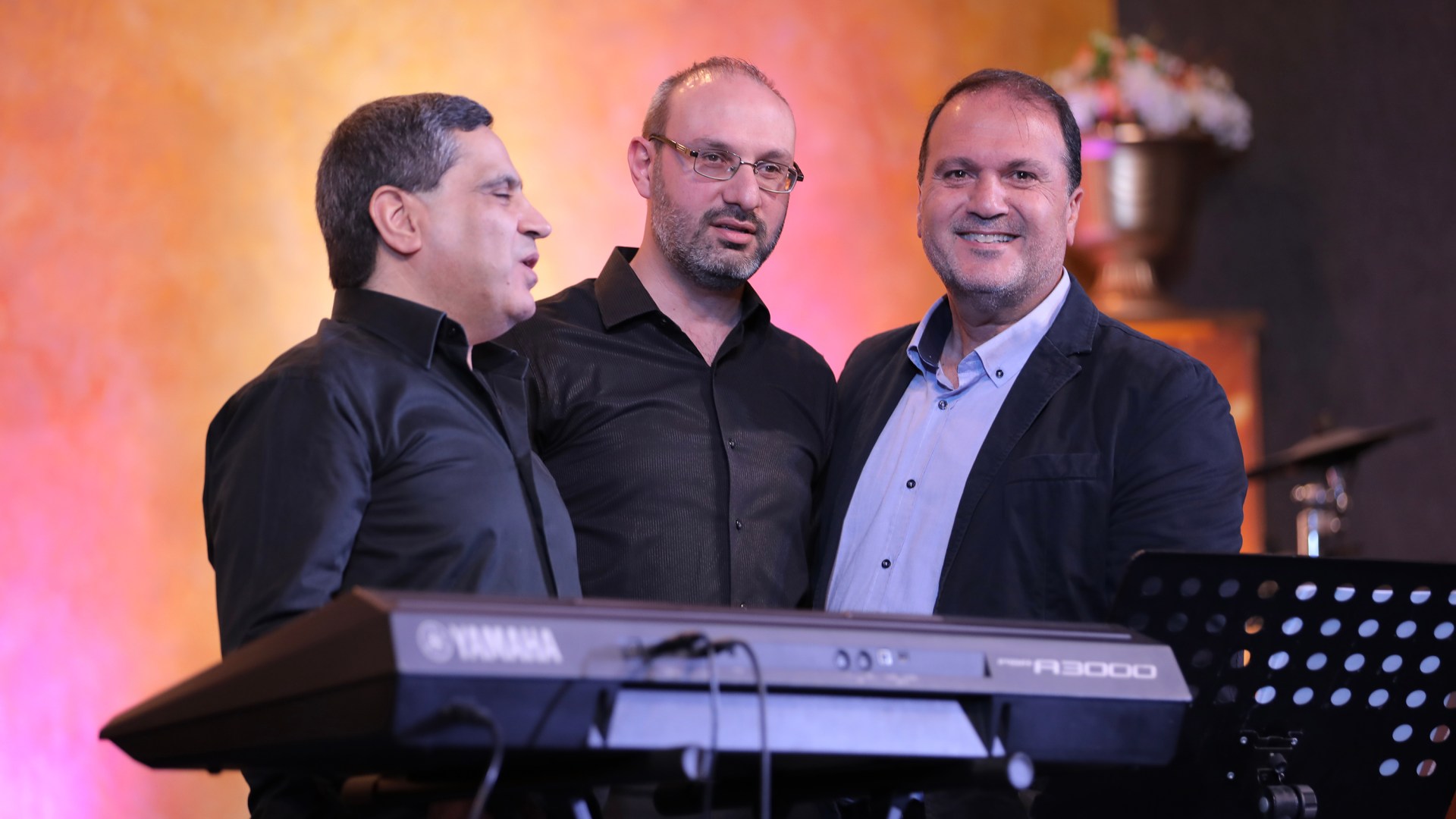
Boutros Wehbe (right) partnering with blind musicians in Lebanon.

Boutros Wehbe (right) partnering with blind musicians in Lebanon.

Christianity Today June 23, 2023
Courtesy of Horizons

The captivating music emanates from a humble room in a quiet suburb of Beirut. Music made uniquely “oriental” by its use of quarter notes, the sounds created by the musicians practicing inside are different from ones a Western ear would be used to.

Well suited to stringed instruments such as the oud and violin, the melody is surprising to hear emanate from an organ and piano. With the mere roll of a dial, modern electronics can recreate the notes—but not without the skill testifying to the musicians’ talent.

The quality draws in neighbors occasionally peering through the door.

Boutros Wehbe, a warm, cheerful man in his 50s, is one of the founders of I Can See, a music group set up two years ago with the aim of preserving the traditional forms and styles of Lebanese music.

“It was a dream for me,” he said, “to find musicians like these guys to play oriental music within the churches.”

“These guys” are not only professionally trained—they are also legally blind.

Wehbe, however, is fully sighted but a self-confessed untrained singer. Despite being the composer of two evangelical worship CDs, he is unable to read music. The words and notes he weaves together are all created in his head. But this only amplifies the professionalism and expertise of the others, displayed in their ability to quickly pick up on his ideas and make his creations a reality.

Each musician comes from a background of music training mostly within the context of Lebanon’s schools for the blind.

The group includes Milios Awad (“The Maestro” on piano), Ziad Pawli (double organ), Fadi Homsy (drums), Mohamad Rammal (darbuka), and Gabi Khalil (violin). Among them are many years of musical experience in restaurants and nightclubs, as well as with well-known Lebanese singers and musicians.

None would say that being blind has been a hindrance to what they have been able to achieve, evidenced by their capacity to create music of such a high standard.

“In Lebanon they are surprised when they see a blind person doing anything,” said Milios, laughing. “Once, someone asked me, ‘How can you play the violin when you can’t even see your fingers?’ I said, ‘I don’t need to see my fingers. Even sighted people, when they play the piano, they close their eyes.’”

Cherishing the multireligious heritage of Lebanon, Wehbe has brought together individuals from Orthodox, Maronite, Catholic, and Muslim backgrounds. Despite their differences, a sense of friendship and unity is palpable as they practice together. Their faith, diversity, and love of music shapes the work that they do.

But it is also free and infectious. Mohamad became a Christian largely through the witness of the group, while his brother and part-time member, Ali, remains in his Muslim confession.

“We want to serve God through music,” said Fadi, Mohamad’s brother-in-law. “This was Boutros’s dream, and it is to glorify him.”

Milios, who is Catholic and one of the most experienced of the band, has played in the past with Lebanese legends like Toni Kiwan and Samir Yazbek. He said his walk with God has deepened through the band.

“It’s my first time playing such hymns, and I love most of them,” he said. “And let me tell you, I really respect people like Boutros and Fadi, because I respect anyone who is living truly his faith.”

The enjoyment they have in one another’s company is also clear as they joke together, including about who should drive the car. There is an ease and a joy in their common vision to see Lebanese oriental music preserved and treasured.

But for the last hundred years, Christian music in Lebanon, especially evangelical, has been highly influenced by the West, said Nour Botros, manager of BeLight FM, based in Beirut. He called Wehbe “anointed” and plays his songs within a mix of contemporary and traditional praise on the noteworthy Christian radio station.

Early missionaries translated many hymns into Arabic, a process repeated in the 1990s by international trends in worship music, he said. The latter then sparked an imitative indigenous creativity, mostly from Egypt and highly popular among young people. A Westerner walking into a church in Lebanon will often hear familiar tunes, even if they are unable to understand the words.

“We listen to English-language worship a lot, and it impacts our creativity,” said Botros. “To hear God’s praise in traditional style is beautiful, and honors our heritage as Arabs.”

In the southern city of Sidon, members of the audience stood up and danced as the troupe performed the gospel-infused lyrics.

“I acknowledge you as my King Here is my life in your hands Do with it what you want Come and reign in over my heart.”

These words were brought to life as Fadi shared his testimony. Once, when he was trying to find the stairs in a still-under-construction office building, he fell from the second floor into an empty elevator shaft. Landing in the basement amid jutting iron prongs, somehow he suffered only the slightest of injuries.

“I should have been dead,” Fadi told the amazed audience. “But as God miraculously saved my life, he can also save us also from our sin—if we believe in him.”

In addition to Wehbe’s creative outlet in I Can See, he is the senior director of field ministries for Horizons, a Lebanese organization working alongside churches to disciple and equip them in ministry.

Part of his calling is to let churches know that they can produce music themselves. Through concerts, guest worship leading, and his simple infectious style—not to mention the partnership with the physically challenged—he offers a pattern that everyone can imitate.

“We have talents, and we have the Holy Spirit working inside us,” he said. “So why all the time do we want to use outside melodies?”

Unfortunately, despite the best efforts of I Can See, members fear that Western styles may have already displaced the traditional. Milios blames the modern addiction to phone screens. Wehbe chides Christian media for “following the cheap music around the world.”

Fixing it will take time, he said.

Lebanon is a country in the depths of an economic crisis. People are struggling financially, and businesses are closing. Musicians and music teachers are not exempt. The Lebanese National Music Conservatory described empty classrooms and dusty pianos, images reflective of the experiences of many in Beirut.

However, this group and the musicians in it are seeking to demonstrate a different story. Their faith in Jesus and love of music, as well the vibrancy with which they express the gifts and passion they have been given, expresses confidence in something greater than their circumstances.

“My joy is found singing to the Lord,” Wehbe says. “God will provide everything we need, as we proclaim the gospel through the beauty of traditional oriental music.”

Church Life

Transgender Teens, Pronouns, and Preferred Names: Youth Pastors Grapple with New Questions

In evangelical churches, Gen Z is forcing a discussion on LGBT hospitality.

Christianity Today June 23, 2023
Sushil Nash / Unsplash

With transgender identity continuing to rise in the US, evangelical pastors are challenged to think through how they might welcome a trans person attending their church. For many conservative pastors, this scenario may still be a hypothetical. But odds are, for the youth in their congregation, the question of how to relate to their transgender peers is already a reality.

Nearly 20 percent of those who identify as transgender in the United States are between the ages of 13 and 17, which means that most teens today go to school alongside students who identify as trans.

High school and college students have ushered in an influx of questions and scenarios that their church leaders and mentors hadn’t faced growing up. They’re considering their witness in contexts where some can see it as hateful or discriminatory to believe gender remains tied to biological sex.

Northview Church in Carmel, Indiana, holds a biblically orthodox view on gender and sexuality, and high school pastor Jude Wright knows how sensitive the topic can be. He encourages students to lead with relationships with their friends and classmates, citing the example of Jesus meeting people where they were.

“There was a generation where they just tried to pound truth and pound Bible without having relationship,” said Wright. “And that’s just not the culture we live in nowadays.”

Among the youth group of about 150, students regularly ask questions about sexuality and gender. In response, Wright first points to the love and compassion in God’s character, emphasizing his goodness in the midst of identity struggles and confusion.

“They’re asking … if God is good, can you prove it to me? How can I experience that for myself?” Wright said. He believes churches can reflect that goodness as they respond to these questions with empathy, love, and sensitivity.

As transgender identity becomes more prevalent, more surveys and testimonies reflect the challenges faced by those who are transgender, including verbal harassment, physical attacks, and sexual assault. The 2022 National Survey on LGBTQ Youth Mental Health Survey reported that the majority of LGBT teens experienced depression and that trans individuals specifically considered suicide at a higher rate than others.

Many transgender youth are raised in Christian families and identify as Christians themselves. The most comprehensive survey data comes from the National Center for Transgender Equality, an advocacy group, which found that 19 percent of those who had previously been part of a religious community left “due to rejection.” Evangelical pastors strive to be sensitive to those struggling with gender dysphoria and uphold Christian teachings on gender and sexuality.

“When I started in youth ministry six years ago, students were still asking about evolution, miracles, and the problem of evil,” said Cris O’Brien, youth pastor at Eau Gallie First Baptist Church in Melbourne, Florida. “Those questions have ­… largely been displaced by questions about sexuality and gender.”

Because this is what students are thinking and talking about so much, the church “cannot afford to sit on the sidelines of this conversation,” he said. Those working to understand gender identity are “sheep without a shepherd” and need to hear the truth in love.

Shane Pruitt, director of Gen Send, has seen the same trend.

“I used to get questions all the time about ‘How do I reach my Muslim friend—or some other world religion—with the gospel?” said Pruitt. “Now I’m more often getting questions about how ‘How do I reach people who identify as LGBTQIA with the gospel?’”

Church policies

Even churches that believe people are created by God as male and female have varying approaches and policies around transgender youth. In a private Facebook group with over 11,000 youth leaders from a variety of backgrounds, a post on the subject of gender pronouns drew a slew of comments.

Using a child’s preferred pronouns can be an “essential piece of their mental health,” said one person. Another wrote that using nonbiological pronouns is against “the Truth of God’s word,” putting “souls at stake.”

“They need truth, and not a continuation of the twisted agenda trying to shove its way into the church,” wrote another pastor. One group member said her church addresses everyone as “friend” to avoid pronoun miscommunication.

On the 9Marks site last year, pastor Zach Carter wrote that his previous church offered a written policy that included what to do if a transgender student attended youth group activities. The policy required that participating students “live and present according to their biologically assigned sex.” This included biologically correct pronouns, dress, appropriate bathrooms, locker rooms, assigned sleeping arrangements, groups, and classes.

Some churches without specific guidance or policies have incorporated conversations about gender identity into sermon series, which can influence youth group conversations.

Aaron Swain, pastor of students and operations at Freedom Church in Lincolnton, North Carolina, said the church covered the issue of transgender identity in a sermon titled “Beauty, Brokenness and the Gender Binary” that “portrayed God’s plan for human sexuality as good and beautiful.”

“It was not our goal to complain about people with whom we disagree,” he said. “We pushed our members to view their transgender neighbors and coworkers with genuine care and sympathy—not with disdain, jokes, or mockery.”

Swain frequently digs deeper into the sermons during youth meetings, recently walking students through 1 Corinthians and addressing issues like the nature of marriage, sexuality, divorce, and gender roles.

“I also host a Q&A night once a semester where students can ask me anything. I regularly receive questions about LGBTQ+ issues,” Swain said. “The thrust is always the same: Hold out God’s design as good and beautiful, love your LGBTQ+ neighbor with genuine affection, and point everyone to the gospel of Jesus Christ.”

Pruitt said students are eager to speak openly about the issues.

“It’s the leaders who are nervous about these discussions,” Pruitt told CT. “Silence isn’t an option if we’re going to reach a generation with the gospel.”

Former student ministry leader Seth Stewart wrote about the time a student approached him and announced he was transgender. Stewart said he prayed silently as the student spoke, and then he thanked him for his vulnerability.

“I then told him that his story deserved to be heard in all its complexities, because he is a unique person created in God’s image,” Stewart wrote. “I told him it would be an injustice to have this conversation in the last 20 minutes left of youth group, when he deserved far more.”

Stewart said he asked a few more questions and then asked the student if he would meet another time to talk in more depth.

“Before we parted ways, I told him I believed in a traditional, biblical sexual ethic, that I didn’t want him to be surprised in our future conversations when I did not affirm same-sex attraction or gender transition,” Stewart added. “Nevertheless, I was interested to hear his full story.”

Stewart’s church decided to add details to its bylaws about transgender identity, including how to communicate truth to students and share information about students and their questions within the church.

The pronoun debate

Among Christians, pronouns are one of the most discussed and controversial elements of hospitality toward transgender people.

“We should respect the conscience of the believer who cannot bring themselves to use someone’s preferred pronouns and the convictions of the believer who feels like using those pronouns is lying and unloving,” said David Sanchez, who works through gender and sexuality issues as the director of ethics and justice for the Christian Life Commission of Texas Baptists.

“We can also admire the efforts of believers who use someone’s preferred pronouns with the intention of wanting to build a lasting relationship where they can show Christ’s love."

Mike McGarry, founder and pastor at Youth Pastor Theologian, said his view on pronouns has changed over time.

“For the sake of evangelism, I simply use the gender and name that visitors ask me to use,” McGarry told CT. “But for students who grew up in the church or whom I already know … I share with them that using their preferred pronoun is really hard for me.”

McGarry said he tries to use their preferred names most of the time, which can allow him to take a more gracious posture toward a nonbelieving student.

When guiding youth leaders in ministry, McGarry recommends sticking with coed groupings to help avoid difficulties for those who struggle with gender identity. Asking them not to join a group with their preferred gender would feel “disingenuous,” he said.

McGarry said he doesn’t allow sexuality or gender conversations to dominate the ministry’s priorities.

“I engage the LGBTQ issue similarly to the mental health crisis: They are frequently mentioned in subtle ways as application points when the biblical text addresses it,” he said. “But, in general, the youth leadership team works to cultivate a ministry atmosphere where students who are struggling are welcome and know that we want to support them as we lead them in accordance with Scripture.”

More conservative entities like Focus on the Family have also put out resources for youth leaders and parents. Though they do not advocate using nonbiological pronouns, they direct people toward compassion-based responses that recognize the many factors surrounding gender dysphoria, including the “spiritual, psychological, social and possibly biological.”

Across the country

Leaders at churches in urban and more liberal areas of the country like New York City and Washington State, which has one of the most dense populations of LGBT individuals, regularly encounter the issue, especially among young people.

In Seattle, youth minister Katy Faust finds herself welcoming kids she calls “pre-Christian” to youth group. With mixed company of both lifelong churchgoers and newcomers, Faust said she grounds her teaching in compassion and the reality of the body.

“We always circle back to the reality that we are a body and soul in unity and that our bodies are not an obstacle to our true selves,” Faust said. “Our bodies tell us something true about how we are to live.”

Faust said because she “front-loads” teachings with a “robust apologetic of the human person” and a Christian worldview, topics like pronouns, gender, and sexuality are already anchored in established ideology from which to teach.

The emphasis on empathy and compassion was universal among those CT spoke with for this story. In a sermon streamed online, pastor Josh Howerton told the audience he’d be talking about transgender issues, requesting that no one clap or say “amen” during his preaching that day because it could be “very painful” and misinterpreted as “being against” those individuals.

Given the quick rise of transgender identification in the United States, it’s not surprising that churches are playing catch-up with the issue. Several evangelical pastors working with youth told CT they believe it’s possible to maintain orthodox Christian standards while loving transgender youth with compassion and truth within the context of relationship.

“The reason [Jesus] is able to approach people and not affirm everything they do, and still have it lead to transformation,” said Wright, the pastor from Northview, “is because he always builds relationship equity at the beginning of his encounters.”

News

Let There Be Lite: Offline Bible App Launches in Africa, Asia

Millions have downloaded YouVersion’s new “lite” app, designed for mobile users without access to broadband internet.

Christianity Today June 23, 2023
Olumide Bamgbelu / Unsplash

Bible apps have brought a trove of resources to anyone with a smartphone—and an internet connection.

But after hearing feedback from Christians in places where people can’t access or afford high-speed broadband, the team behind YouVersion’s Bible app recently launched an app that doesn’t need a connection.

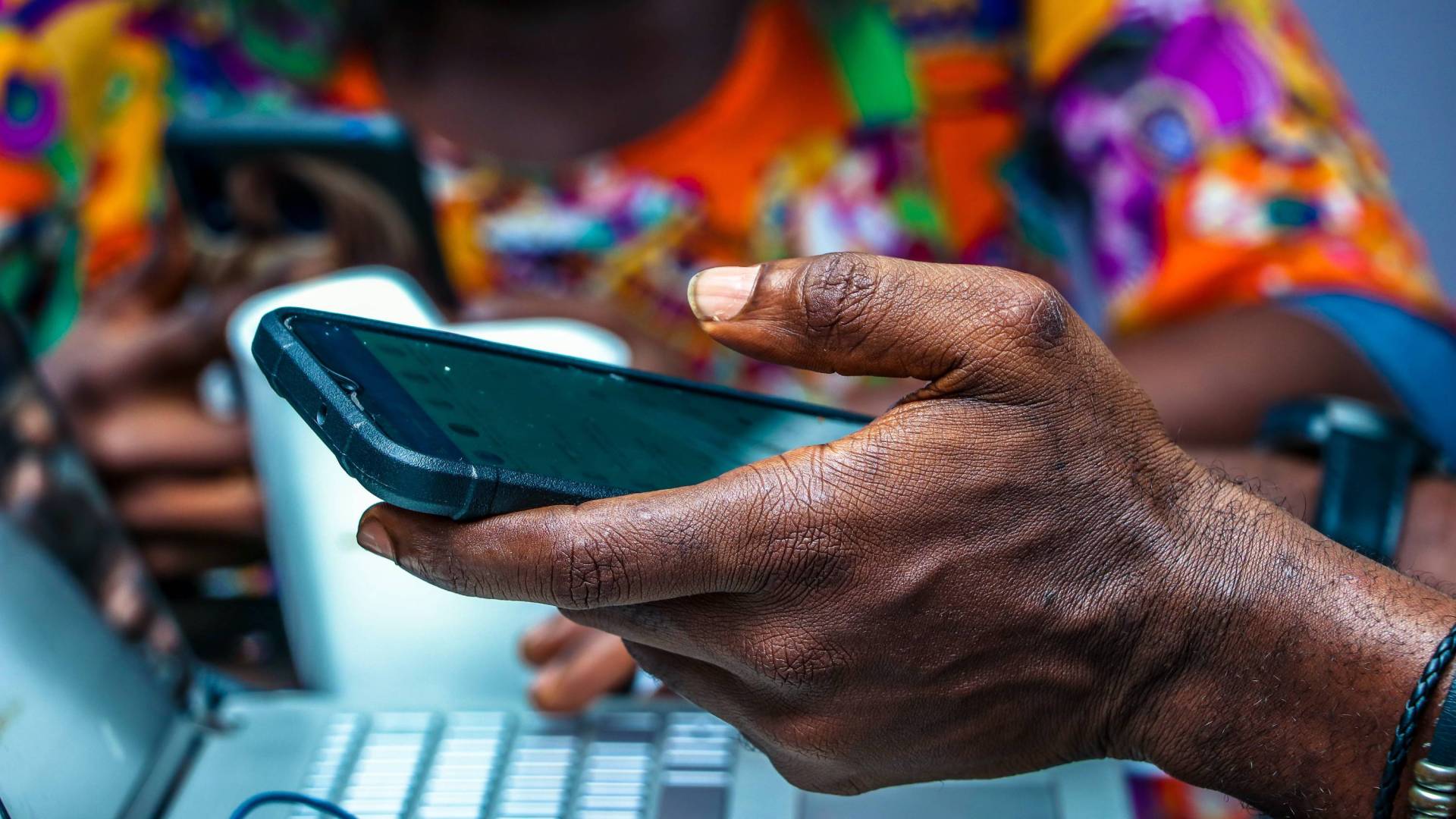
Designed for users in sub-Saharan Africa and Southeast Asia, the Bible App Lite is a space-saving app that, once downloaded, can be used entirely offline. It still includes YouVersion’s key features: the Bible reader, audio Bibles, verses of the day, and prayers.

So far, more than four million people have downloaded the lite version of the app, and it has reached the top 10 in the Google Play store in 17 African countries and the No. 1 spot in Kenya, Uganda, and the Democratic Republic of the Congo, according to YouVersion.

Globally, more than a billion people don’t have access to affordable broadband internet, according to a 2020 report published by the Alliance for Affordable Internet. Though mobile broadband prices are dropping, Africa remains the region with the least access, the report found.

While most towns have internet connectivity, many of Africa’s rural areas still struggle with it, said Kevin Muriithi Ndereba, a lecturer at St Paul’s University and a pastor in Kenya.

He told CT that sermons, Bible plans, and Bible commentaries can be difficult to retrieve online. He listens to Bible podcasts only to have them cut off midway through his drives.

Muriithi Ndereba has encouraged “offline pastors” to remember their pastoral care does not depend on whether their phone has a strong internet connection. “Do not be anxious about your lack of technological tools,” he wrote for The Gospel Coalition Africa in 2020. “Do not fear the unfamiliar online platforms.”

Ministries have worked to provide Bible resources to Christians in Africa in a variety of formats, including radio and TV broadcasts, audio Bible players, and e-readers. The app offers the searchability and ease of online Bibles but with content that can be downloaded to be available offline.

A handout photo shows the Bible App Lite displaying Psalm 35 in Malagasy, the language of Madagascar.

YouVersion heard positive feedback from early users involved in the app’s pilot program in Africa last year. One called it the best Bible available without data, and another shared how he read the Bible for the first time because of the app.

YouVersion, developed by Life.Church in Oklahoma, partnered with the global Bible ministry Biblica to create the lite app.

“For most of us in the developed world, always-on data is a fact of life. We barely think about how much data a particular app consumes, or if we will have a reliable cellphone connection,” said Mark Finzel, Biblica’s vice president of digital innovation. “This is not the reality for much of the developing world. Internet speeds and costs vary significantly from one country to another.”

The goal was to give users as many features as possible without requiring mobile data. “The freedom of offline functionality is key,” he said.

Beyond Africa, Bible App Lite has since launched in India, Nepal, Pakistan, Myanmar, and Bangladesh, with plans to expand to additional countries in the next few months.

“Our desire is to reach every person, in every part of the world, with God’s Word in their heart language,” said Bobby Gruenewald, YouVersion’s founder and CEO, in a statement. “This new app enables us to reach tens of millions of new people that were difficult to reach with the media-rich Bible App.”

News

Train Up a Child: Ukraine’s Christian Schools Model Wartime Education

Evangelical-led movement offers family atmosphere and biblical values increasingly attractive to the beleaguered nation.

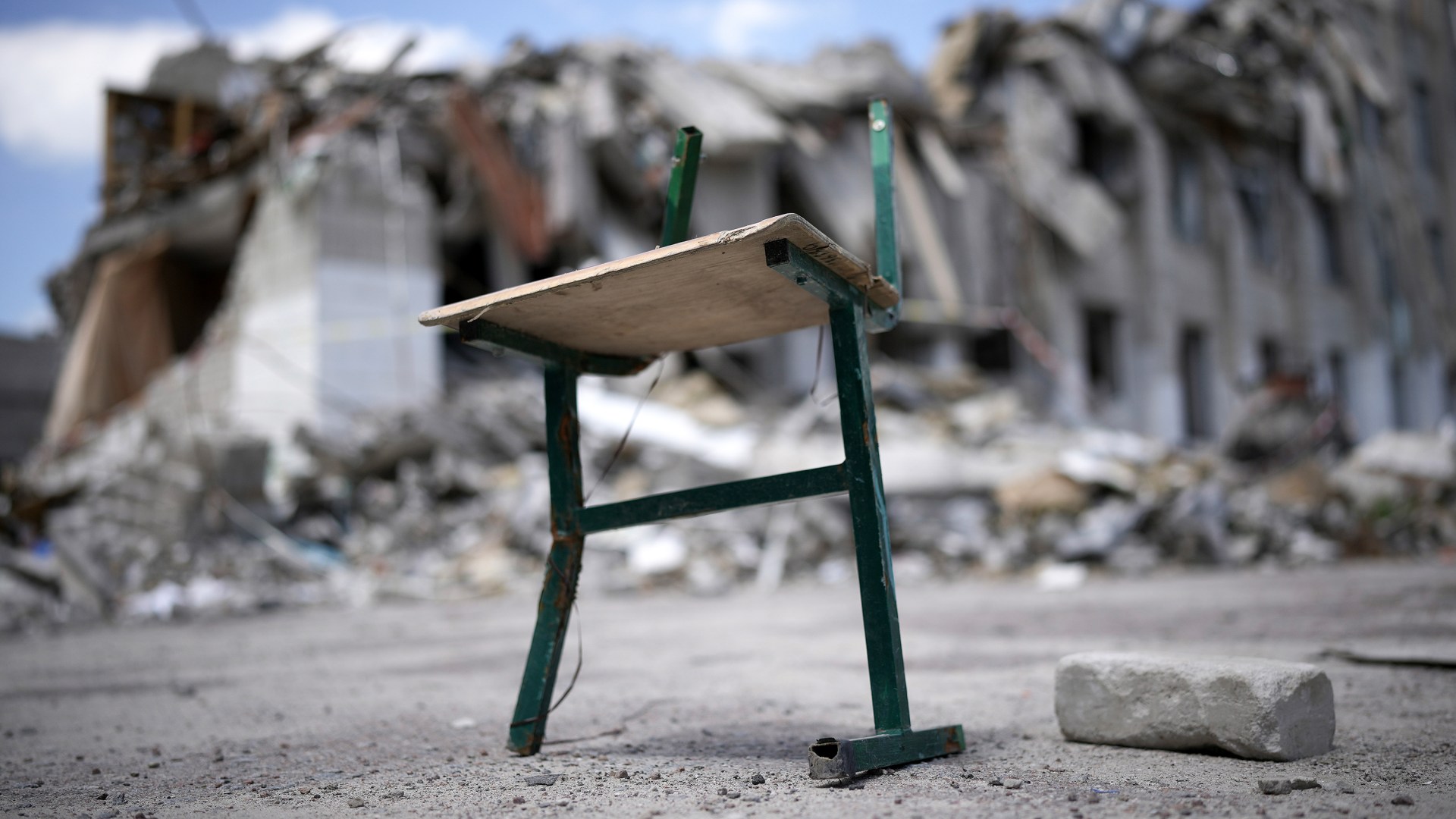
What remains of a school that was hit by a Russian cruise missile in Ukraine.

What remains of a school that was hit by a Russian cruise missile in Ukraine.

Christianity Today June 22, 2023
Christopher Furlong / Staff / Getty

As air raid sirens blared down the hallways, Tetiana Garkun hurried her middle school students outside the My Horizons Christian School campus into the designated bomb shelter.

Located in Khmelnytsky, 200 miles southwest of Kyiv, Ukraine’s capital, the school’s children moved in orderly fashion—a sign of how accustomed they’ve become to Russian missiles targeting military installations in nearby Lviv.

They prayed, waited for the all-clear signal, and returned to their Bible class.

Garkun’s own children, daughters aged 16 and 17, were similarly composed. Confident high schoolers who only a few years earlier were sharing their faith in Ukraine’s secular education system, they follow after their great-grandfather, a Pentecostal pastor sentenced to death by magistrates in the Soviet Union.

Times have changed, as have education authorities.

“The government encourages us to teach our students how to be Christians and live godly lives,” said Garkun. “They see that we are needed in these horrible days.”

She had earlier led the students in a discussion prompted by the official state health education curriculum: What helps us live a long life?

Model answers included a good diet, avoiding smoking, and participation in sports. But amid war, these answers no longer apply, she said, and even her prepared integration of Christian material hardly satisfied her own soul. In years past, she recited Ecclesiastes 7:17: “Do not be overwicked, and do not be a fool—why die before your time?”

However, she pondered, what about when the righteous are killed by Russian evil?

“When we follow God’s rules and truth, we lead happier and healthier lives,” Garkun said. “But I am honest. I have doubts. And I let the children know it is okay—we can be sincere with God.”

Daily devotions, regular chapel, and close-knit relations have helped sustain a teaching staff struggling to manage massive disruptions to work and family life. Garkun said her best friend, an Orthodox Ukrainian, has grown deeper in her faith since she joined the Christian school.

But across the nation, 54 percent of teachers state they need psychological support, while 61 percent of children show symptoms of severe stress. Over 3,000 schools have been damaged, with more than 400 destroyed.

Only 28 percent of students remain in full-time, in-person education.

My Horizons provides counselors and is able to remain open because of its readily accessible bomb shelter. Schools lacking such safety are required to teach online, said Tatiana Chumakova, director of the International Alliance for the Development of Christian Education (known by its Ukrainian acronym, MAPXO in Cyrillic characters or MARHO in English). So are all schools in Ukraine’s eastern and southern regions, closer to the frontlines.

But so far, God has protected the burgeoning Ukrainian Christian school movement, she added. Despite being in nearly every big city, not one of her alliance’s 40 institutions has joined the tallies of physical damage.

But this is not true of the war’s human toll.

Countless students have been displaced, with many reenrolling in MAPXO schools in the west. The director of Word of Life School in Lviv was killed on the frontlines while serving as a paramedic. And Chumakova’s own story is shrouded in trauma, dating back to 2014.

While working then at Gloria Christian School in Donetsk, she said, Russian soldiers stormed the campus and gave everyone 20 minutes to leave. The facilities were then given to the local separatist movement and turned into a military base.

For the next eight years, the civil conflict divided the nation along a mostly stable line of contact, until Russia’s February 2022 invasion exploded hostilities once again. Today, she said, nearly 10 percent of Ukraine’s more than 15,000 schools are located in occupied territory.

And the rest hear constant air raid sirens.

“It is difficult to conduct school activities when there are constant rocket attacks,” Chumakova said. “Our only desire is that the Russians leave, and stop killing the civilian population of Ukraine.”

Having relocated to Kyiv, in 2016 she was invited to lead MAPXO. It formed in part because one year earlier the European branch of the Association of Christian Schools International (ACSI) was pushed by the conflict to close its headquarters in the Ukrainian capital, shifting instead to Budapest.

At that time, Christian schools existed but could not be known as religious. Keeping a secular system after its 1991 independence from the Soviet Union, Ukraine’s law of education allowed for the establishment of private schools but was subject to the separation of church and state.

Wiggle room developed in 2005, when Ukraine allowed public schools to teach morals and faith in a curriculum designed with the help of the Orthodox church. But in 2015, education that was specifically Christian in character received a boost after authorities decided it was discriminatory to allow secular citizens the right to form schools but to deny the same right to religious citizens.

The education law was amended, and Ukrainian evangelicals took advantage.

By 2021, of 89 specifically religious institutions, 70 were run by Baptists.

“The law was a real miracle of God,” Chumakova said. “But it appears that it is the pastors and parishioners of evangelical churches who think more about the Christian education of their children.”

The MAPXO website advises parents across the interdenominational spectrum. Its statement of faith is orthodox yet broad, while members are asked to be mindful of divisive theological positions. Eight of its schools are run by Greek Catholics, and the organization coordinates a yearly conference where all are welcome.

“Given the pressures and chaos of modern life, and the constant clash of worldviews and values,” the alliance states, “your desire to protect your children is completely justified.”

For Pride month, the Ministry of Foreign Affairs, the Ministry of Culture, and several leading Ukrainian companies adapted their logos with rainbow colors.

"In Christian schools we seek to live according to God’s Word,” said Iryna Sidliarenko, director of the River of Life school in Kyiv. “We check the curriculum, and teach our students to distinguish good from evil.”

Additionally, said Garkun, many believing parents dislike pre-Christian folklore traditions that enter into secular education.

For example, Didukh is a harvest gathering where people stitch wheat stalks into dolls, understood to host the spirits of ancestors. Kupala Night is a summer solstice wreath-making festival with hints of witchcraft, she said. And even St. Andrew’s Day, celebrating the apostle who brought the gospel to Ukraine, contains traditions that involve divination.

But when CT asked why interest in Christian education is growing, Ukrainian sources did not list such culture-war topics prominent among parent motivations. Alongside believers’ desire for biblical integration, they cited their schools’ focused individual instruction, close cooperation with teachers, and an atmosphere of love and respect.

Many parents enroll after their children suffer bullying elsewhere.

Founded in 1998, River of Life is a K–12 school with grades ranging between 5–15 students. My Horizons has 250 students, capping each class at 18. But the geography of war is pushing their enrollment in opposite directions. Amid widespread displacement, the Kyiv school’s student body is down about 30 percent, while this year the Khmelnytsky campus added 70 children.

Coming from private schools in Kherson, Kharkiv, and Kyiv, new students buttress revenue. My Horizons, said Garkun, has the best reputation in her city, attracting many especially with its strong emphasis on English language instruction.

But while her husband maintains his construction work as a tile layer, her brother had to return his children to public school when his business failed. With an average tuition of $150 per month, Christian education was affordable to the pre-war middle class. Now, many are struggling.

Help came from West Virginia.

After hearing about the conflict in Ukraine, the second-grade class at Wood County Christian School in Williamstown raised $1,000 by collecting quarters. It has contributed to an overall collection of $136,000 donated by ACSI, allowing 5,000 students in over 50 Ukrainian schools to continue their education.

Others provide in-kind help. My Horizons received digital learning tools from Grace Christian School in Raleigh, North Carolina. And by September, MAPXO anticipates receiving Ukrainian-language access to the ACSI Europe Christian School Improvement Platform, worth $5,000 in development expenses.

“God is faithful,” Sidliarenko said. “We keep praying, and see his miracles.”

Two new schools were established during the war. But the blessings have come amid great loss.

Over 450 Ukrainian children have been killed since the war began, with nearly 1,000 injured. Two-thirds of children have been displaced by the war, 1 in 5 of whom have some sort of disability.

Concern for such children entered Garkun’s grammar lesson. The curriculum called only for teaching the modal verb can, so she included those who can’t—as in cannot walk, run, or think as the other children in the class.

What can we do to help them now? she asked. For in heaven, they all again can.

Service projects at the school have included teachers visiting wounded soldiers in the hospital, as students prepare care packages. And within the constraints of their parents’ poverty, they raised money to provide care for a local girl with cancer. And somehow, amid all the national suffering, the student worship team continues its praise.

Garkun’s own daughters named “love” as My Horizon’s distinguishing feature.

“We are blessed as a family to have our kids in such a school,” she said, “to see God everywhere, in everything.”

Editor’s note: CT offers select articles translated into Ukrainian and Russian.

You can also join the 7,800 readers who follow CT on Telegram: @ctmagazine (also available in Chinese and Russian).

News
Wire Story

Hundreds of Nigerian Christians Killed in Recent Attacks

Officials blame fighters targeting “ethnoreligious minorities as well as houses of worship and religious ceremonies.”

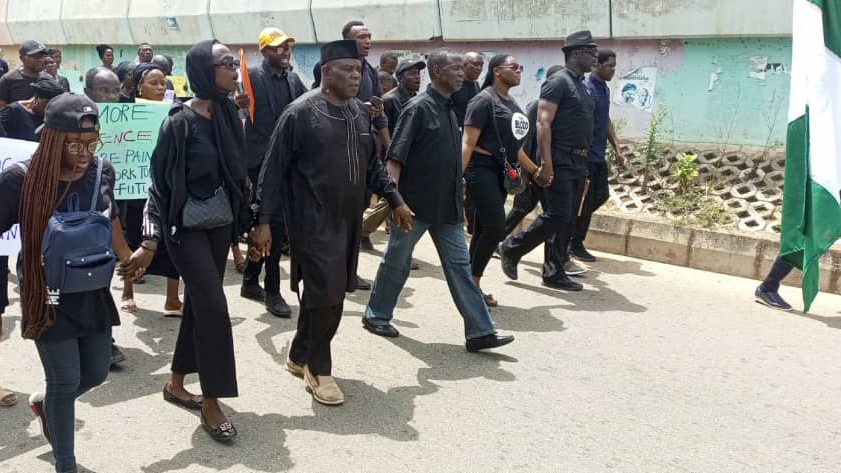
A peaceful protest in Nigeria.

A peaceful protest in Nigeria.

Christianity Today June 22, 2023
Courtesy of Baptist Press / Christian Solidarity Worldwide

At least 450 Christians have died in a series of attacks on Christian villages in three northcentral Nigerian states since May, according to reports from religious freedom advocates.

Christian death tolls include at least 300 in several attacks in Plateau state spanning May 15–17, according to reports from Morning Star News (MSN) and CSW (Christian Solidarity Worldwide); more than 100 in attacks spanning May and June in Benue state, MSN and the US Commission on International Religious Freedom (USCIRF) reported; and 43 in Nasarawa state in mid-May, MSN reported.

Tens of thousands were displaced, according to MSN and CSW. Whole villages, dozens of church buildings and thousands of homes reportedly were destroyed. Grain was looted.

MSN quoted Christian leaders in blaming the attacks on militant Fulani herdsmen.

“As our people are fleeing, herders are occupying these areas and grazing freely on our farms,” MSN quoted a press statement signed by Samuel Door and Ephraim Zuai of the Shitile Development Association in Benue. “Though due to the fear of general insecurity it is difficult to move from village to village to gather exact statistics, hordes of lives have been horrendously eliminated in several villages across the land, such that the whole land is thrown into wailing and mourning.”

USCIRF referenced many of the attacks as ethnonationalist in a report it released June 9.

“Nigeria is home to a plethora of armed actors committing violence with dire implications for religious freedom. In several regions of the country assailants have targeted ethnoreligious minorities as well as houses of worship and religious ceremonies with violence,” USCIRF said in the report, “Ethnonationalism and religious freedom in Nigeria,” which referenced violence spanning June 2022 through May.

“In some areas, armed actors include ethnonationalist militias seeking to wrest territorial control from government authority. Ethnonationalist fighters in Nigeria have politicized religion and attacked civilians based on ethnoreligious identity,” USCIRF wrote. “These fighters commit some of the most egregious atrocities and human rights violations of any actors in the country. This is particularly true in northcentral Nigeria, where ethnonationalist fighters affiliated with the predominantly Muslim Fulani community attack vulnerable Christian civilians with impunity.”

But the predominantly Christian Igbo community in southeast Nigeria has also targeted Muslims, USCIRF wrote in its report.

“Additionally in southeast Nigeria, ethnonationalist fighters affiliated with the predominantly Christian Igbo community have at times targeted Muslim civilians as a part of their campaign to secede,” USCIRF said. “In both northern and southeast Nigeria, ethnonationalist fighters have been implicated in attacks against both Muslim and Christian worshippers.”

In the latest attacks on Christian communities, at least four pastors were killed, according to several MSN reports.

On June 4, militant Fulani killed Mangmwos Tangshak Daniel of the Nigeria Baptist Convention in Kantoma village, and Shadrack Ayuba of the Assembly of God Nigeria church in Ntin Kombun village, both in Plateau, MSN said, attributing the report to Timothy Daluk, chairman of the Mangu Local Government Area Chapter of the Christian Association of Nigeria (CAN).

On May 8 in Benue, militants killed pastor Dominic Dajo of St. Peter Catholic Church in Hirnyam village, and his wife, MSN said. On May 11 in Nasarawa, Fulani killed pastor Daniel Danbeki of the Evangelical Church Winning All in Takalafiya village, MSN said, along with his wife and 41 others in an attack spanning several hours.

Nigerians staged a peaceful protest May 25 in Jos, Plateau, as the attacks continued, CSW reported. The killings have included 130 deaths in 23 communities in the Mangu and Riyom Local Government Areas in Plateau, CSW said. The attacks displaced tens of thousands, destroyed thousands of homes and damaged farmlands and food barns.

CSW press officer Reuben Buhari called the attacks “a sad testament to Nigeria’s incapability to protect its own citizens.”

The attacks follow the killings of more than 200 in Christian areas in Benue and Kaduna state in March and April following Nigeria’s election season.

Kiri Kankhwende, CSW press and public affairs team leader, has called the longterm violence “deeply distressing” but “not at all uncommon” in the region.

“The unaddressed insecurity has now metastasized and constitutes a threat to Nigeria’s territorial integrity, with serious implications for the region, the continent and the wider international community,” Kankhwende said April 18.

In other reports from the region, 16 members of the Bege Baptist Church in the Chikun Local Government area of Kaduna, abducted in May, were released June 4 after a ransom was paid, CSW reported June 6.

The 16 were among 40 abducted from the congregation May 7 by armed Fulani militants, CSW said, but many had managed to escape.

Despite the Fulani ethnicity of the assailants, Muslims contributed to the ransom that included a motorcycle, CSW reported.

“I confirm and give thanks that all 16 are now back home,” CSW quoted John Joseph Hayab, Kaduna state chair of CAN. “We are grateful to the local Muslims who contributed towards the ransom, and pray that from now onwards the two religious communities will work together to bring this painful era of kidnapping, violence and killings to an end.”

Fulani militants are among several violent extremist groups active in Nigeria, including Boko Haram and the Islamic State West Africa Province, Christian persecution watchdog Open Doors reported in 2023 in ranking Nigeria as the sixth most dangerous nation for Christians.

Ideas

Can Christians Do Yoga? Indian Believers Weigh In

Contributor

Surveying the spectrum of Christian views on the traditionally Hindu practice, from wellness to spiritual caution.

Narendra Modi, prime minister of India, practices yoga with hundreds of people at the United Nations to mark the International Day of Yoga on June 21, 2023.

Narendra Modi, prime minister of India, practices yoga with hundreds of people at the United Nations to mark the International Day of Yoga on June 21, 2023.

Christianity Today June 21, 2023
Christina Horsten / picture alliance / Getty Images

Today’s observance of the International Day of Yoga, proclaimed by the United Nations since 2015 and led by Prime Minister Narendra Modi of India during his visit this week to New York, underscores yoga’s global popularity.

Although not a religion, the ancient Eastern practice is mentioned in the sacred scriptures of Hinduism such as the Bhagavad Gita. A Sanskrit word meaning “union” or “yoke,” yoga aims to unite the body, mind, soul, and universal consciousness, allowing its practitioners to experience freedom, peace, and self-realization.

The practice of yoga involves various physical, mental, and spiritual techniques, including breathing exercises, postures, relaxation, chanting, and meditation. Different styles of yoga exist, each with its own focus and approach to achieving a “unitive state.”

The roots of yoga can be traced back to the Rigveda and the Upanishads. One of the most well-known texts is the Yoga Sutras, written by Patanjali around 200 B.C. In this foundational text, the ancient scholar describes yoga as the cessation of the fluctuations of the mind.

Yoga holds spiritual significance, aiming to control the mind, attain a detached witness consciousness, and liberate oneself from the cycle of birth and death, as stated on one yoga website.

Since assuming office in 2014, Modi’s government has actively promoted yoga as both a cultural and spiritual practice. Yoga has been a prominent soft power tool for India’s foreign policy.

However, a massive study conducted by the Pew Research Center of almost 30,000 Indian adults found that 6 in 10 said they never practice yoga—including 6 in 10 Hindus. Only 35 percent of respondents reported having “ever” practiced yoga, with 22 percent practicing monthly or less and a mere 7 percent practicing daily.

According to the Pew survey, Hindus were “not the religious group most likely to practice yoga in India.” Jains (62%), Sikhs (50%), and Buddhists (38%) all ranked higher than Hindus (36%), while Muslims (29%) and Christians (24%) in India ranked lower.

Pew found that only 3 percent of Christians practice yoga every day, the least likely of the six religious groups compared. Sikhs (14%) were most likely to be daily practitioners, followed by Buddhists (12%), Jains (11%), Hindus (7%) and Muslims (6%).

Political inclinations also played a role, as 38 percent of Indians with favorable views of Modi’s BJP party reported practicing yoga, while only 31 percent of non-BJP supporters said the same.

While yoga’s spiritual roots lie in Hinduism, a Pew survey conducted in Western Europe asked adults if they considered yoga not just as exercise but also as a spiritual practice. The results indicated that many individuals in Western Europe—a regional median of 26 percent, including 4 in 10 Swedes, Portuguese, and Finns—embraced yoga from a spiritual perspective, acknowledging its significance beyond physical exercise.

CT queried a Hindu professional yoga expert, who has been practicing for eight years and teaching for five, on her view of whether yoga is just exercise or also has spiritual significance.

CT then asked five Christian leaders to answer the question: Is yoga too Hindu for Christians to practice? Their responses are arranged from yes to no:

Pinky Choubey, a Hindu yoga teacher, Noida, Uttar Pradesh:

Yoga certainly has spiritual significance. When you go deeper into the practice of yoga and perform meditation, your senses will develop toward spirituality. It certainly is connected to Hinduism. Whoever follows the Bhagavad Gita gets connected to yoga automatically.

Yoga is far more than just physical exercise; it is spiritual exercise. In the words of Swami Sivananda, “The practice of yoga leads to communion with the Lord. Whatever may be the starting point, the end reached is the same.” Yoga manifests itself as four major paths: Karma, Bhakti, Raja, and Jnana. In Karma yoga, the active aspect of mind is involved; in Bhakti yoga, the emotional aspect; in Raja yoga, the mystical aspect; and in Jnana yoga, the intellectual aspect.

Calling yoga a mere exercise is a shallow definition. Hinduism and yoga are woven together. People are becoming aware of this fact more and more in recent times.

Jaykar Kristi, a former Hindu sadhu (ascetic) who practiced yoga for 10 years before becoming a Christian; now a pastor in Indore, Madhya Pradesh:

Christians should not practice yoga. Yoga means union–so union with who or what?

When we practice yoga, it leads us to become devoid of any thought—that’s the whole purpose. Yoga teaches how to modulate one’s breath. It is based on the control and manipulation of breath and in this way, it aims to achieve thoughtlessness.

But we as Christians pray consciously, as well as in the Spirit, and we pray using our minds. Just as the Bible says in Mark 12: We are called to worship the Lord with all our heart, with all our soul, with all our strength, and with all our mind.

Yoga generally starts with Sun Salutation (Surya Namaskar), which is the practice of worshiping the sun. Christians worship the Creator, not the creation. We bow down before the living God alone.

Sunita Howell, principal, Caleb International School, Gurugram, Harayana:

For me, yoga is definitely a Hindu practice. It stems from an awareness of the Purusha, the supreme power untouched by affliction and its causes. Yoga is practiced with the chanting of “Om” [a sound considered sacred and ancient in Hinduism and other Eastern religions].

Self-awareness leads me to confess that I am a sinner who needs outside help. I receive that help in Jesus alone.

Leela Manasseh, a leader with Global Spiritual Care Networks and Singles Asia, Bengaluru, Karnataka:

Yoga by itself is a form of worship. I know of several Christians who are into yoga and practice it while reciting the Psalms. Personally, I am not for yoga as there are alternate exercises for better health and immunity.

If Christians like to get into yoga, I don’t judge them; but personally I refrain from it.

Dorcas Isaac, retired principal, Mysuru, Karnataka:

I am presently attending three yoga classes per week. I have found that yoga is scientific, and that “Om” is just a sound. Shanti means peace, … [and] yoga exercises make us flexible, active, and energetic. Today yoga is taught in schools as part of physical education and not as part of the Hindu religion.

Several Christians come to my house once a week to join the yoga class. We are all finding the exercises very useful. Even though its origin is in Hinduism, and we are practicing all the asanas (yoga poses), I think it is okay. We recite Bible verses instead of Sanskrit shlokas (stanzas) and mantras.

We don’t think there is anything Hindu about it. We are happy with the results of yoga. We have been doing it now for 3–4 months. We consider yoga as scientific exercise.

Mohit Singh, lay preacher, Methodist Church, Noida, Uttar Pradesh:

I don’t think that yoga is too Hindu for Christians to practice. Any Christian who wishes to take up yoga should be clear about the reasons for opting the same.

In my case, it was purely driven by getting some guided exercise regimen to help me lose weight and get fitter. While there are other options available like Zumba and Pilates dance classes, I found them immoderate for me, while yoga class was more gradual in its approach.

Initially, when I went for the yoga class, I was taken aback to see the instructor and students chanting Om and Gayatri mantra both before and after the class. [Gayatri is the name of the goddess of the Vedic meter in which the verse is composed, and a mantra is a sacred utterance.]

As one of the students I was required to conform to this ritual. However, I did not follow that path and instead remembered my God and prayed to him by calling out his name and asked his guidance in this new venture where I was trying to make my physical body healthier.

I believe that if your intentions are right, God will not feel offended and will provide a way to deal with such tricky situations. While no one forced me to recite any of the mantras, I kept praying to God and performed the exercises that the instructor was describing.

I recollect myself deliberating over the various asanas that are practiced in yoga to be “poses honoring the [Hindu] gods.” However, I continued to do them purely from an exercise point of view and not to please any [Hindu] deity. Hence, I would like to sum it up by saying that as long as our intentions are clear and we do not chant the mantras, it should be okay—for God looks at the heart.

News

Ukrainian Refugees Find Christian Welcome—in Russia

Offering food and shelter, Russian evangelicals are caring for the Donbas’s displaced. But in the face of Ukrainian frustration, dare they offer pastors for its empty pulpits?

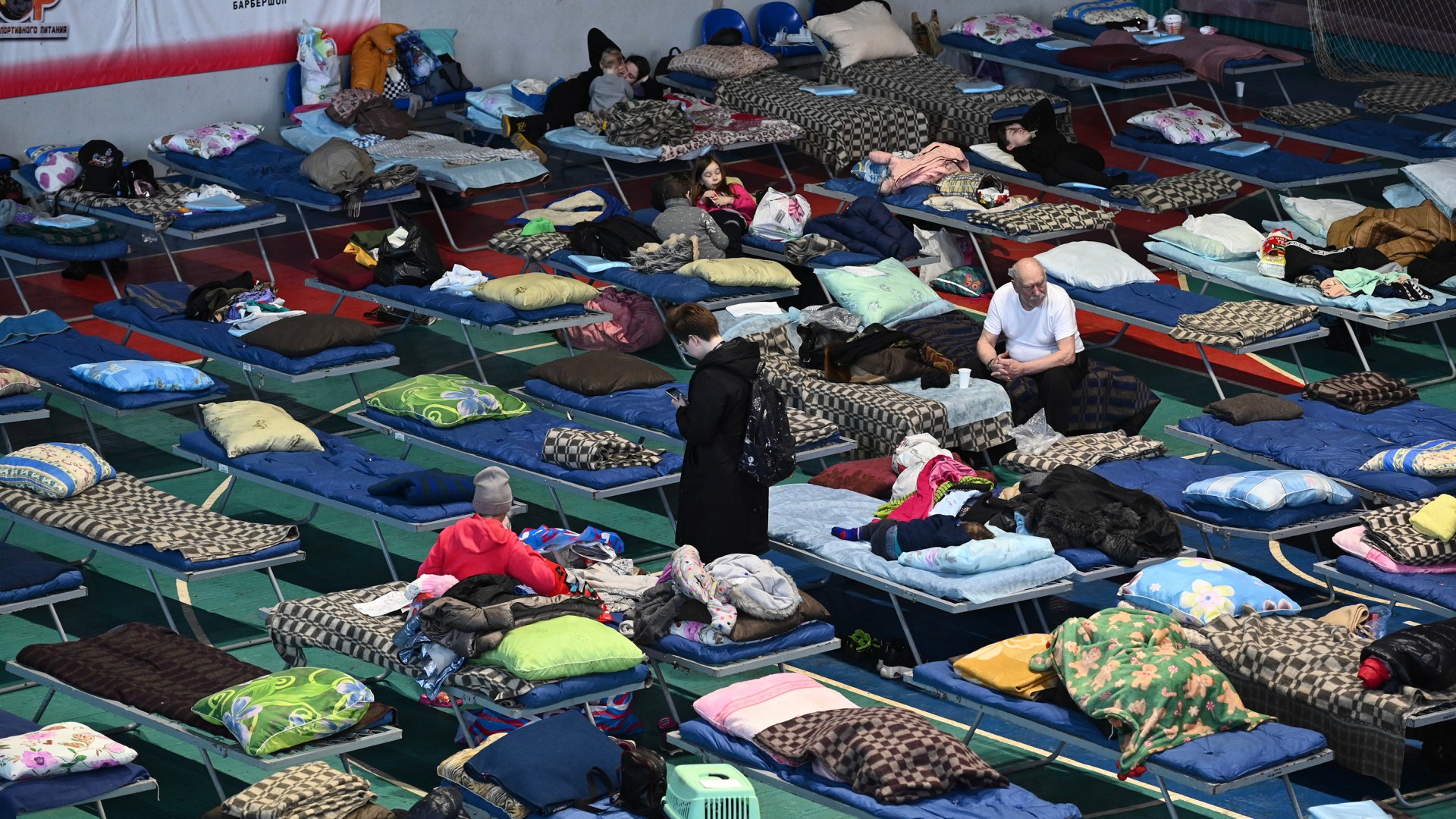
A temporary accommodation centre for Ukrainian evacuees in Taganrog, Russia.

A temporary accommodation centre for Ukrainian evacuees in Taganrog, Russia.

Christianity Today June 21, 2023
Anadolu Agency / Contributor / Getty

Disoriented and disheveled, the elderly Ukrainian woman stayed put in her seat. After several hours in a Temporary Accommodation Center (TAC) in Taganrog, Russia, 70 miles east of her month-long basement shelter in Mariupol, Ukraine, officials encouraged her to get on the bus—to somewhere else.

Earlier that day, she had been discovered by Russian soldiers and ushered through a humanitarian corridor to the first processing location east of Mariupol. From there she was dispatched to one of 800 such sites established throughout Russia, which are located anywhere from nearby Rostov to Moscow to Vladivostok on the Pacific coast.

Official papers registered her for temporary residency in Russia and access to its medical system. She was given a warm meal, new clothes, $142 in rubles, and a SIM card—though not a mobile phone. She could apply for citizenship if she desired.

All she wanted was to die.

Grandma, where are you going? Is someone coming to meet you?

No one is coming. Nobody wants me.

You have to go to a shelter. You can’t stay here.

I don’t want to live any longer. I wish I had died in the shelling.

Where are your children, or grandchildren?

I don’t know. They left. I can’t find them.

Government employees had done their duty. But after this exchange, a Russian evangelical volunteer sprang into action. After a few phone calls, she placed the woman with a local church family. The next day, she located the granddaughter.

“When we are genuinely involved in their lives, they see the love of Christ,” said Tanya Ivanenko. “They hug us, kiss us, and remember our names. Against the backdrop of war, we give them a little hope.”

Ivanenko did not provide the care, but she shared the grandmother’s story last year on a Russian evangelical church’s refugee coordination channel on Telegram, the region’s popular messaging app. The communication was verified by Pavel Kolesnikov, former co-chair of the advisory council for the heads of Protestant churches in Russia.

The council oversees relief, including over $3 million donated by affiliated unions, he said, impacting 200,000 Ukrainian refugees.

“The church in the West needs to know we are helping also,” he said. “The effort in Eastern Europe is more visible, but we are doing what we can.”

Since the war began, over 14 million Ukrainians have been displaced from their homes, with 8.2 million escaping abroad. The great majority of them have fled west, with Poland recording 1.6 million refugees and Germany 1 million. Through February, the United States has accepted more than 270,000.

But nearly 2.8 million have gone to Russia. Why would they flee into the arms of their enemy?

It may not have been their choice.

Some simply took the first route to safety, with an estimated 11 million Russians having Ukrainian relatives. But Ukraine has accused Russia of forcibly displacing residents of the Donbas, the eastern region subject to a Moscow-backed separatist conflict since 2014. This includes children, with Kyiv officials saying nearly 8,000 have been deported. A Russian spokesperson said 1,000 Ukrainian minors are receiving care, and that some had been adopted and given citizenship.

“There is certainly a group of people that have been moved out of Mariupol who will not mind being in Russia,” Maria Ivanova from the Helping to Leave Fund, a Russian group created to assist the reluctant, told The Guardian. “But we know of hundreds who were moved against their will. That is extremely worrying.”

Some evangelical pastors, however, have spoken of the mixed feelings of congregants who fled the Donbas before the invasion. Yet many are nonetheless thankful for their lives in Russia, compared to continued life in the embattled region.

Prior to the war, Russia had already established 270 TACs to process similar cases. And prior to 2014, 1.6 million Ukrainians were already living in Russia, primarily as migrant laborers. Within a year of the Donbas conflict, there were a million more. Overall, 800,000 from the region were given Russian passports.

Beyond family and employment, some have an ethnic connection.

A 2021 national survey identified 22 percent of Ukraine’s population as native Russian speakers and 36 percent speaking the language primarily at home. In the western and central regions, 90 percent said they were “Ukrainian,” but only 70 percent said the same in the east and south.

A more limited survey that same year of the capital Kyiv, the Donbas city of Luhansk, Odessa on the Black Sea, and Simferopol in Crimea yielded an array of responses. “Ukrainian citizen” was selected by 37 percent of respondents, while “Russian-speaking citizen of Ukraine” was selected by 34 percent. Nearly 1 in 5 (18%) simply said “Russian.”

Donbas residents may have been disproportionately inclined to flee east.

Ukraine’s 1991 referendum on independence from the Soviet Union tallied an overall 92 percent yes vote. But even as then-president Boris Yeltsin did not oppose Ukrainian separation, support dropped to 84 percent in the Donbas oblasts of Luhansk and Donetsk. Counting the local electorate to measure apathy or boycott, regional support for independence fell further to 68 and 64 percent, respectively.

Donbas is a shortened phrase for “Donets Coal Basin” and served as an industrial center throughout the USSR. Its major cities were founded by a Scot and a Welshman in the 19th century. Official policy relocated Russians to the ethnic republics, while others came specifically to work in the steel factories.

After independence, the local economy shrank as Ukraine struggled to build a national political identity inclusive of its Russians, Tatars, Jews, Bulgarians, and Romanians.

“We were not insistent enough in promoting a national culture back then,” said Nadiyka Gerbish, a celebrated Ukrainian author. “There were economic and spiritual initiatives, but when the war broke out, I wished we had done more.”

After 2014, a sense of urgency pushed Gerbish and many others to address root issues within the Russian-backed separatist conflict. Living in Ternopil, 265 miles west of Kyiv, she reached out to local libraries in the Donbas. The government-backed Ukrainian Book Institute sponsored initiatives in its non-occupied areas. And celebrities, artists, and businesses launched cultural festivals in the border regions.

Her own writing turned toward refugees—comprehensively. My Name is Miriam tells of an Iraqi Kurdish family in Europe, who at Christmas learns of another refugee child named Isa, the Muslim name for Jesus.

Her book is now incorporated into the national curriculum, and a percentage of royalties are donated to buy books for the internally displaced in Donetsk and Luhansk. And since the Russian invasion, 10,000 copies are being printed for free distribution to Ukrainian refugee children in Eastern Europe.

“I deliberately chose a ‘far-away’ perspective to help Ukrainians welcome their Donbas countrymen,” Gerbish said. “Now it applies to all of us.”

Moscow, however, painted the Ukrainian efforts to preserve and enhance the unity of the Donbas as suppression of its Russian minorities. Agreements in 2014 and 2015 that were coordinated with the European Union and signed in Minsk, the capital of Belarus, created space for self-governance once fighting ceased—but it never did.

Each side blamed the other, while observers blamed both.

But it was the promotion of the Ukrainian language that drew the ire of some in the Donbas.

A 2012 law gave regional status to minority languages for use in courts, schools, and other government institutions, in places where minority populations reached a 10 percent threshold.

The law was replaced in 2019, however, to require the use of Ukrainian in nearly all aspects of public life, while media outlets were made to include Ukrainian versions alongside minority languages. Exceptions were allowed for several ethnic communities, English, and other European languages.

Russian was excluded.

Ukrainian president Volodymyr Zelensky, a native Russian speaker, has warned that the war will further undermine the language, associating it forever with “explosions, murders, and crimes.”

But in Russia, many refugees have a different association.

“These children had their childhood stolen from them, but they have an amazing ability to recover and forgive,” said Vera Izotova, director of the Wheat Grain Fund (WGF), serving the Donbas since 2014. “The mothers, though, have bitterness.”

Inspired by Jesus’ teaching in the Gospel of John, the organization opened in 1993 and has since shared the Good News with over 300,000 children throughout Russia. Izotova was born in Ukraine, and as a 19-year-old college student was sent to a mental hospital by Soviet authorities for her faith. Eventually released, as an adult, she chose to stay in Russia as a witness while most of her family emigrated to the US.

Dedicated particularly to disadvantaged people and special needs children, WGF has worked in 11 former Soviet republics and Mongolia. Previous outreach to contested areas include the 1991–1994 Georgia civil war and the two Chechnya conflicts between 1994 and 2003.

Izotova supports the Minsk Agreements, and a federal solution for Ukraine is reasonable, she believes.

But it is spiritual salve that WGF says it brings into areas of political dispute. In each, it preaches reconciliation, bringing the same message to the TAC in Taganrog. Amid aid distributed to refugees in need, its workers put on a Good Samaritan puppet show for children and mothers.

Due to Ukraine’s “anti-terrorism operation” in the Donbas, Izotova heard many stories about children spending months in their basement shelters—long before Russia’s 2022 “special military operation.” WGF gave them a chance to play, while marionettes asked the biblical question: Who is your neighbor?

“The Ukrainian is your neighbor,” Izotova said, conveying the puppets’ answer. “It is a very hard message, but in need of peace and healing, this is the first step in burying the hatred.”

The Russian Baptist Union spoke similarly in an address to Vladimir Putin at its quadrennial congress last year in May, themed “The World Needs Christ.” Assuring the Russian president of their prayers, they also petitioned God for the “early establishment of peace” in Ukraine.

“Lack of brotherly love and disregard for God's commandments leads people to mutual hatred and enmity,” delegates said. “The recipe for healing the evil that corrodes the human soul … is reflected in [our congress’s] motto.”

The speech noted Baptist efforts in international peacemaking, the upholding of family values, and the provision of assistance to “refugees from Ukraine, and all those affected by military action.”

Gerbish appreciates the help given the needy. But she rejects overtures of reconciliation, crafting a critical metaphor to call instead for repentance.

“If a church wants to help orphans, it shouldn’t kill the parents,” she said. “If Russian evangelicals want to help, they should do what is possible—however small or discreet—to stop the war that creates these refugees.”

Indeed, beyond Christian charity, Russia sees its humanitarian outreach as an extension of its “special military operation.”

“Every day we see reports from the war front,” said Olga Timofeeva, parliament chair for the Development of Civil Society, Public, and Religious Associations. “But I want to say that … helping refugees, many of whom are children, is the spiritual front, and just as important today.”

Sergei Ryakhovsky, head of Russia’s largest Pentecostal union, echoed her remarks.

“We have a clear Christian mission for our peoples in Russia and Ukraine,” he stated. “Serving those going through pain and suffering, and giving them hope.”

His denominational church in Penza, 700 miles northeast of Taganrog, is ministering to 1,600 refugees from the Donbas. Essential aid is provided, but also entertainment.

The medium and message, however, were different than Izotova’s scriptural focus. Children watched the film My Terrible Sister, in which two siblings overcome mutual dislike and eventually realize they cannot live without the other.

“To some extent, this embodies what is happening today between the peoples of Russia and Ukraine,” said Sergey Kireev, the Pentecostal pastor in Penza. “But the children hardly drew that line. They just drank lemonade, ate popcorn, and were happy—which means we accomplished our mission.”

This is a mission some Russian Pentecostals extend to the front lines, praying for soldiers and distributing New Testaments. And recently, it includes consideration of placing new pastors in empty churches. Ryakhovsky estimates that up to 25 percent of the occupied Donbas is evangelical, but as pastors fled, their congregations—especially women and children—were left behind.

“We are not your enemy, trying to cause you more pain,” Kolesnikov said of evangelical colleagues in the area. “Whatever the situation is now, we will listen first and then provide any spiritual support we can.”

Located in Zelenograd, a Moscow suburb, as general secretary of the All-Union Commonwealth of Evangelical Christians, he is taking stock of pastorless fellowships in the Donbas region. Should it become necessary, he will explore how to link them with sister denominations in Russia.

He sees a developing similarity to the re-registration required of houses of worship after the annexation of Crimea. But however Russians and Ukrainians differently consider the territory, its churches needed new licensing or they would have been lost, he said. Donbas may or may not require the same, pending the outcome of the war. But pastoral care is needed now.

“They are God’s churches,” Kolesnikov said. “Godly pastors can serve them selflessly, and then give them back.”

Kolesnikov knows this will not satisfy Ukrainians, who want clear denunciation of the war. As the Lausanne codirector in Eurasia, he tells them that only God can stop it, even if all Russian evangelicals rallied against it. But consistent with their heritage, most keep separate from the state and politics.

He hopes for reconciliation, viewing the war as a test for the global church.

“We have to pray for each other,” Kolesnikov said, “and keep our unity.”

And continue to help the vulnerable. The Catholic charity Caritas is assisting refugees sent onward from Taganrog, including to Novosibirsk, 2,300 miles away. Among foreign-linked Protestants, Rick Renner Ministries works through the Good News church in Moscow.

These contributions by evangelicals have drawn recognition in Russia, including favorable reports on local television. Inside the TAC, volunteers limit their witness to loving service and answering questions. But alone, while facilitating refugees’ safe arrival to relatives, they share the gospel and offer to connect them to local churches.

Many have told them: We weren’t expecting this treatment. You treat us differently. You must be Christians.

And sometimes, a believer will bless them back.

As church volunteers escorted a 76-year-old Ukrainian woman to their congregation in southern Russia, she shared her faith in Jesus as they sang hymns together. Exhibiting no bitterness, she told of her basement shelter, severe shortages of food and water, and painful blisters on her feet.

From there, the team purchased train tickets for her to meet her sons in Sochi. Tears of joy flowed as the family connected by telephone after a month with no news or contact. And as they parted, the grandmother urged the volunteers to memorize the Psalms, which sustained her throughout her ordeal.

“God alone saved me, but look how much he loves me,” she said. “After all, he sent me you.”

Editor’s note: CT offers select articles translated into Ukrainian and Russian.

You can also join the 7,800 readers who follow CT on Telegram: @ctmagazine (also available in Chinese and Russian).

addApple PodcastsDown ArrowDown ArrowDown Arrowarrow_left_altLeft ArrowLeft ArrowRight ArrowRight ArrowRight Arrowarrow_up_altUp ArrowUp ArrowAvailable at Amazoncaret-downCloseCloseellipseEmailEmailExpandExpandExternalExternalFacebookfacebook-squarefolderGiftGiftGooglegoogleGoogle KeephamburgerInstagraminstagram-squareLinkLinklinkedin-squareListenListenListenChristianity TodayCT Creative Studio Logologo_orgMegaphoneMenuMenupausePinterestPlayPlayPocketPodcastprintremoveRSSRSSSaveSavesaveSearchSearchsearchSpotifyStitcherTelegramTable of ContentsTable of Contentstwitter-squareWhatsAppXYouTubeYouTube