Theology

The Theological Foundations of Natural Science

Why the Christian worldview is the foundation of the method and spirit of science.

Christianity Today November 29, 2022
Illustration by Mallory Rentsch / Source Images: WikiMedia Commons / Getty

In my university teaching experience, my Chinese students often tell me, “From the very start of our elementary school, we have been taught to ‘believe in science.’” This is accepted even in the West. Many people adopt a view shared by the philosopher Bertrand Russell, among others, that natural science can bring about “definite knowledge.”

Natural science involves the human activities of interpreting empirical observations by reasoning through induction. However, in the realm of theology and metaphysics, there is a set of beliefs that the natural sciences cannot prove or disprove by simply applying scientific methodology. Therefore, science in itself is not neutral. Science has a set of beliefs on which its epistemic feasibility hinges that do not arise from within its own methodological system, and science as such cannot be an object of its own belief system. Even more, it has no right to call on people to believe in it.

Causality and “idols”

When natural science uses theoretical models to interpret and describe natural reality, it presupposes that every phenomenon or thing that comes into being has a cause of its existence and that nothing can arise out of nothing. The inability of physicists to explain the phenomena observed in the double-slit experiment led some scientists to wonder whether various natural phenomena happen outside the laws of natural causation. This, however, did not cause the scientific community in general to give up using scientific theories to explain the causal laws behind all phenomena.

Stephen Hawking’s interpretation of the Big Bang theory insisted that, strictly speaking, the universe did not arise from absolute nothing, but rather a certain natural “First Cause” created, so to speak, the point of singularity. If the universe could have come into being without a cause, then any natural phenomenon could also come into being without a cause. If that were the case, then scientific theories are equivalent to random shooting in the dark. This stands against the accepted view among scientists that all theoretical models assume rationally explainable laws of cause and effect.

Cause and effect, however, are not objects of sensory experience. We believe that everything in this world is governed by causality not because we have observed causation by our senses (e.g., every time an object is thrown from a certain height, it undergoes freefall at the same rate of acceleration) or because we have formed a habit of thought from such observations.

It is a fact that we experience many unexplainable phenomena in nearly countless events in real life. For example, my body may show symptoms, the causes of which the doctor cannot explain. My computer may malfunction, but professional technicians cannot find the cause. Even Hawking could not explain what the First Cause of the universe was. Nor could he argue that the Big Bang event was generated without cause. Why? Basic rationality. No one—Christian or non-Christian—can think rationally if he or she gives up causality. Even if the explanation fails, we still believe that everything that comes into existence must have a cause.

In addition to causality, natural science must accept some concept of God as “Being Itself” in a broad philosophical sense. This is because natural scientists believe that all flux and all becoming must rely on something immutable as their ultimate basis. Otherwise, natural phenomena can randomly occur for no reason. For example, although Hawking called himself an atheist, he was actually a pantheist in the strict sense of the word. He believed that nature is God and that God is nature. For him, the creator of the universe was the unintelligent law of nature.

None of these metaphysical and theological beliefs can be proved or falsified by scientific evidence. The scientific nature of scientific theories lies in the fact that they are falsifiable. Yet natural science itself must be based on unfalsifiable beliefs to be established. Christians believe that God created time; he created everything out of nothing and created male and female in his own image. These beliefs can be neither proved nor falsified by natural science.

Given such a case, then, should Christians “just believe”? From the Christian viewpoint, do numerical data, scientific data, or even theoretical models bear any significance? Natural science and any knowledge system must be based on some basic presuppositions of a certain worldview and thus have no factual neutrality. Does this mean that all the so-called knowledge systems are only different nonobjective “belief systems” that cannot communicate with one another?

In fact, the birth of natural science was based on the premises of the Christian worldview. Francis Bacon, the father of the modern scientific method, presented the method of induction for natural philosophy within the framework of the “creation-fall-redemption” worldview of Reformation theology (to borrow a concept from Albert Wolters). Bacon pointed out that when Adam was created, God commanded him to manage the garden, to study every creature according to its kind, and to name all kinds of creatures. After the Fall, humankind no longer regarded the natural revelation that God established in the experiential and sensible world as the basis of knowledge but rather chose to rely on its own reasoning to determine the truth, thus producing all kinds of intellectual idols.

Bacon proposed “four idols,” of which the idols of the marketplace and the theater particularly highlighted the ideas of the Reformation. By marketplace, he referred to the exchange of meanings through linguistic signs. Bacon pointed out that we use language to express our understanding of the world and that many symbols in language are concepts that are neither innate nor developed through sensory experience; our minds create them when we attempt to comprehend the world. When we use these fictional ideas (objects that are neither visible nor tangible, that are extraneous to the sensible world created by God) to interpret our experiences, we repeat Adam’s sin of eating the forbidden fruit.

The term theater refers to philosophical or cognitive systems, which, according to Bacon, are like plays written by playwrights. Theories in natural science, too, are devised by humans to explain the information we observe through experience. A scientific theory is not the truth of natural reality itself but a human interpretation of natural reality. We can bring our theories closer and closer to the truth of nature through induction, but if we believe that scientific theories themselves are truths, then we make an idol out of inductive reasoning.

Bacon insisted that the discipline of natural science consists of the activity of the redeemed mind performed in the process of sanctification. One who is born again in Christ seeks to exclude conceptual idols and seek the manifest glory of God in creation through the light of Scripture. Incidentally, Johannes Kepler, a pioneer of the scientific revolution, also coined the famous phrase that natural science is the activity of regenerate Christians to “think God’s thoughts after Him.”

Worldview and natural science

The Christian worldview is the foundation of the method and spirit of the natural sciences. Regenerate Christians should not restrict their reading to Scripture and forget that this is the Father’s world. Otherwise, they will fail to see the world in light of Scripture. “The heavens declare the glory of God; the skies proclaim the work of his hands” (Ps. 19:1). The Creator has left all kinds of glorious evidences in all that He has created. No one can examine this evidence neutrally without any theological presuppositions: The methods of natural science themselves presuppose a biblical worldview.

Meanwhile, we must bear in mind that neutrality and objectivity are two different concepts. When a court declares that the prosecution wins or loses the case, the court no longer maintains neutrality between the prosecution and the defense as it did at the beginning. The court should move in the direction of objective judgment when it gets closer to the position of the prosecution or the defense. (Strictly speaking, under the rule of law, the principle of the presumption of innocence means that the court was never neutral to begin with.)

Of course, human beings must never pretend to be the judge or jury when facing the Lord, who judges all things. That is, while scientific research does not carry any neutrality, we should strive to be objective. The objectivity of scientific theories lies in excluding the idols of subjective reasoning so that our theoretical models can come closer and closer to the truth of natural reality, even though we can only arrive at an understanding of the finite and never attain to the absolute objectivity of God.

It is impossible for us to use scientific evidences to prove or disprove the existence of God or his creative work, because God and his actions are not within the scope of natural scientific inquiries. However, if scientists do not accept the biblical worldview, not only will scientific theories no longer be able to objectively explain scientific data and information, but the methods of science will also lose their metaphysical foundation.

If science becomes the object of “belief,” then it is no longer science but superstition. The object of faith proper to natural science must be the God self-revealed in Scripture. For this reason, natural science as such must always treat itself as the object of rational criticism. Only then can science be called science and succeed in bringing objective knowledge to the human race.

Shao Kai Tseng is a neo-Calvinist Taiwanese Canadian theologian specializing in studies on Karl Barth. He is the author of multiple books on theology and philosophy.

This article is translated from the preface of the Chinese book Above All Things: The Romance and War of Christianity and Science by Ji Dian and Xiao Zao, ©2022. Used by permission of ReFrame Ministries.

Translation by T. N. Ho
News
Wire Story

Former Southern Seminary Prof Sues SBC Leaders for Labeling Him an Abuser

David Sills admitted to misconduct but claims he has been “falsely attacked” by Southern Baptists and their investigative firm.

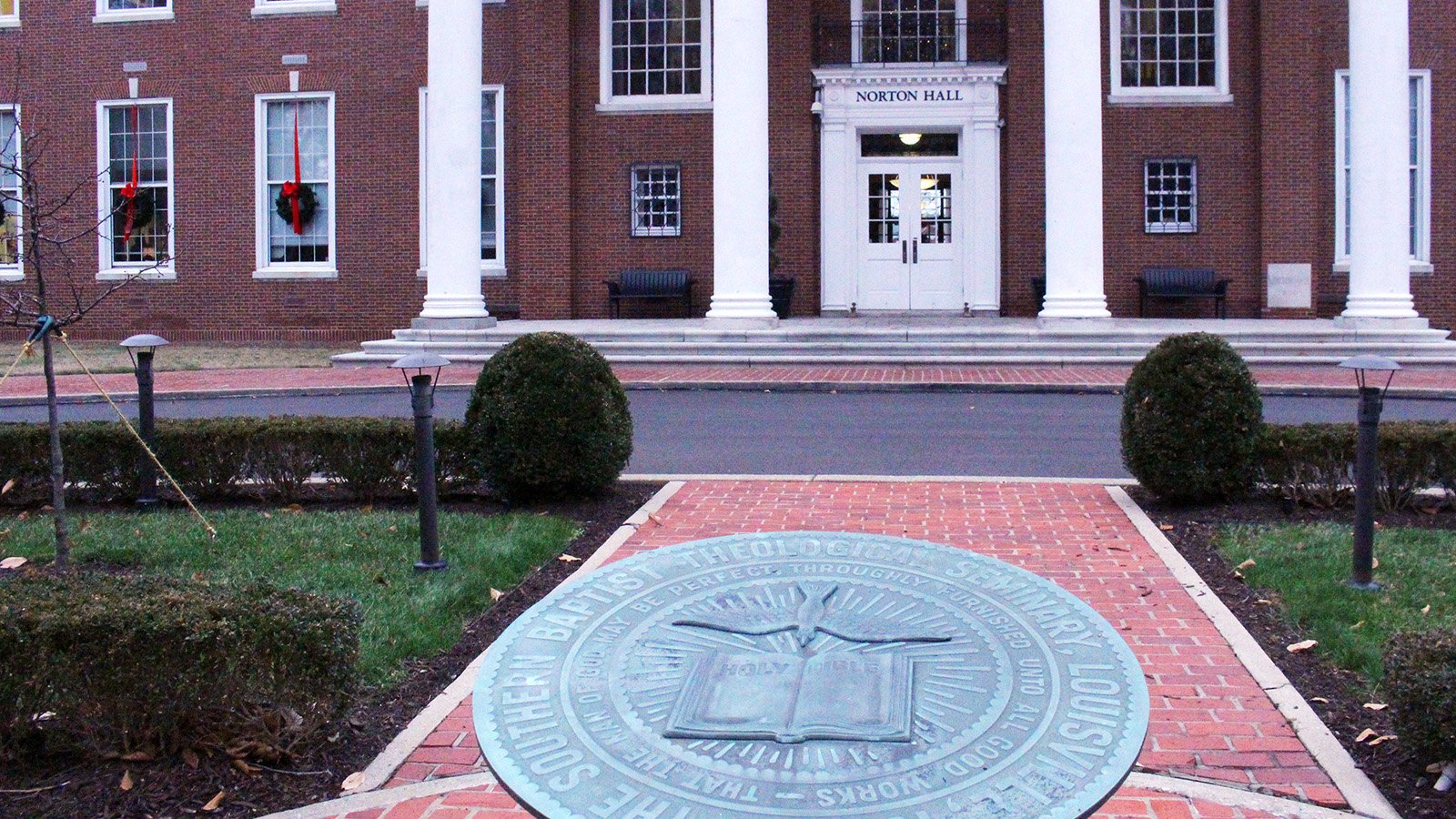
Southern Baptist Theological Seminary in Louisville, Kentucky

Southern Baptist Theological Seminary in Louisville, Kentucky

Christianity Today November 29, 2022
Adelle M. Banks / Religion News Service

A former seminary professor and missionary who admitted sexual misconduct has sued a group of Southern Baptist Convention leaders and entities, claiming they conspired with an abuse survivor to ruin his reputation.

In a complaint filed November 21 in the Circuit Court of Mobile, Alabama, David Sills, a former professor of missions and cultural anthropology at Southern Baptist Theological Seminary, admits he lost his job in 2018 due to what he called “morally inappropriate consensual intimate” conduct with a student.

Sills claims the situation was consensual and alleges that SBC leaders, including Southern’s president, Albert Mohler, turned his confession against him, labeling him as an abuser.

They did so, according to the complaint, as a public relations stunt, aimed at improving the SBC’s reputation during a national sexual abuse scandal. That public relations effort, according to the suit, included an investigation by Guidepost Solutions into SBC leaders’ handling of alleged abuse cases, which was made public earlier this year.

“David Sills was repentant and obedient to the rules of the SBC,” the complaint alleges. “Defendants saw him as an easy target; a bona fide scapegoat.”

The complaint names Southern seminary and Mohler, as well as the SBC’s Executive Committee, SBC President Bart Barber, and his predecessor Ed Litton as defendants, along with several other leaders. Also named as a defendant is Lifeway Christian Resources, a research and publishing arm of the SBC, and Guidepost Solutions.

It also names Jennifer Lyell, a former seminarian and vice president for Lifeway, who has repeatedly alleged that Sills was abusive, an allegation Mohler has also made on social media and in an interview for a documentary about the denomination’s response to its sexual abuse crisis.

Guidepost “perpetuated a false narrative in a Report, in exchange for payment and in concert with Defendants,” all of which ruined Sill’s reputation and labeled him as an abuser, according to the complaint.

Guidepost declined to comment, as did Lyell. The SBC Executive Committee and several other SBC leaders did not immediately respond to requests for comment.

“Lifeway was made aware of the lawsuit last week. Our legal team is in the process of reviewing the complaint and we do not have any further comment at this time,” said Carol Pipes, director of corporate communications.

Mohler also released a statement defending its handling of allegations against Sills.

“The Southern Baptist Theological Seminary has followed best practices in this matter and has nothing to hide,” he said. “We will make this truth clear in any forum necessary and we will do so vigorously.”

In an email, Lyell said has told the truth and will continue to do so.

“I do not need to be under oath to tell the truth—and there are no lies that will shake my certainty about what is true,” she said. “This is why the most egregious, cruel lies do not leave me without hope when those asserting them are reckless enough to do so in a form that not only allows my witness but provides a clear means by which it will be formally provided.”

David SillsBaptist Press / Religion News Service
David Sills

Sills’ lawsuit reinterprets a widespread understanding that, rather than bolster the SBC’s credibility in preventing sexual abuse, the denomination’s treatment of Lyell has been a public relations disaster. The case has long been used by critics to show the SBC’s tendency to mishandle such allegations.

Lyell first came forward with allegations of abuse against Sills in 2018, reporting them to her then-supervisor Geiger and to Mohler and other seminary leaders. Mohler told Carolyn McCulley, the director and writer of the documentary Out of Darkness, that Lyell from the start had alleged Sills had been sexually abusive.

This past summer, Mohler issued a statement, saying that the abuse allegations had been investigated and confirmed. “Statements made by Sills in the course of our confrontation clearly confirmed the allegations of abuse,” he wrote in a statement posted on Twitter.

Sills resigned in 2018 after being confronted with the allegations, but the reason for his resignation was not initially made public. Sills, considered an expert at training pastors in the developing world, also lost his job as president of a missionary group called Reaching and Teaching, and was disciplined by his Louisville, Kentucky, church.

When he was hired by a different mission group, Lyell informed Baptist Press, an SBC publication, that he had been abusive and offered to write a first-person account of the abuse. Instead, Baptist Press wrote its own article about her experience.

At the last minute, the story was changed to say Lyell had had an “inappropriate relationship” with Sills. Though Lyell asked that the article be changed, Baptist Press officials and leaders at the SBC Executive Committee initially refused. Lyell eventually resigned from Lifeway, citing backlash from the article and harassment.

Baptist Press eventually retracted the article. The SBC Executive Committee apologized repeatedly to Lyell and reached a settlement with her.

The subsequent criticism from abuse advocates eventually led to calls for an independent investigation into how SBC leaders had treated abuse survivors. Leaders at the SBC Executive Committee tried to head off the investigation and, when they could not do that, tried to derail it.

Those attempts failed. The resulting Guidepost investigation and report found that SBC leaders had mistreated abuse survivors for years and downplayed abuse in the nation’s largest Protestant denomination.

“In service of this goal, survivors and others who reported abuse were ignored, disbelieved, or met with the constant refrain that the SBC could take no action due to its polity regarding church autonomy—even if it meant that convicted molesters continued in ministry with no notice or warning to their current church or congregation,” investigators wrote.

Attorneys for Sills claim that Guidepost never contacted their client, who is mentioned repeatedly in the Guidepost report. They also claim that allegations by Lyell, Mohler and others were part of a campaign to “falsely attack the honesty and the character of David Sills and Mary Sills, casting them as violent criminals.”

The complaint also alleges that Lyell wrote to Religion News Service, asking to review an article being written about the SBC abuse crisis, saying she “intended to advance her false narrative by taking a hand in the actual writing of an article by RNS.”

However, attorneys misidentified an email from Lyell, which was sent to a pair of ministers, not to RNS. Mississippi lawyer Don Barrett, one of the attorneys representing David Sills and his wife, Mary Sills, said that part of the complaint was in error.

Sills declined to speak to RNS.

Barrett declined to discuss the specifics of the lawsuit. However, he said that false allegations of abuse are harmful to efforts to protect women.

“The truth will come out in this litigation,” he said.

Church Life

German Bible Translator Introduces Readers to ‘God’s New Reality’

Theologian Roland Werner’s modern version Das Buch, now in its third edition, resonates with the unchurched and surprises the faithful.

Christianity Today November 29, 2022
Illustration by Mallory Rentsch / Source Images: WikiMedia Commons / Getty

Roland Werner wears many hats, and most of them have something to do with the Bible.

Whether he’s preaching at the interdenominational congregation that he founded four decades ago in Marburg, writing devotionals and books about church history, lecturing on intercultural theology, or chairing a meeting of the German branch of the Lausanne Movement, the theologian and linguist’s life revolves around God’s Word.

He might be best known among Germany’s evangelicals for Das Buch (“The Book”), his popular Bible translation in modern German. The New Testament was first released in 2009, and a new version including the Psalms was published in 2014. Earlier this year came the third edition, this time with the addition of Proverbs.

Werner, age 65, discovered an affinity for languages at an early age. As an adolescent, he was already studying Latin, Greek, and Hebrew. Arabic and several African languages followed later. A year as an exchange student in the United States helped perfect his English. His familiarity with these and other languages combined with his love of Scripture made the role of Bible translator a natural fit. He is currently working with a team to translate the Bible into a North African language.

This new version of Das Buch comes almost exactly 500 years after Martin Luther published his first Bible translation, known as the Septembertestament. While there was much fanfare a few years ago to mark the 500th anniversary of the Protestant Reformation, Werner laments that this milestone has gone largely unnoticed.

“You heard almost nothing about the [Septembertestament anniversary], neither in the churches nor in the news,” he said.

The Christus-Treff congregation founder hopes that his translation gives readers a fresh chance to engage with the Bible, even when more traditional translations are sometimes overlooked. He spoke with CT about the latest Das Buch edition, his other translation projects, and how rendering a verse in a new way can help readers understand the Bible more deeply.

This interview has been edited for length and clarity.

Before we talk about translating Scripture, I’d like to ask you about reading Scripture. What was the first version of the Bible that you really engaged with?

Roland WernerIllustration by Christianity Today
Roland Werner

When I was in first grade, my mother would have me read to her from a German children’s Bible while she ironed clothes. Later, there was another Bible for older children that I also read. When I was 13, I tried to read the whole Luther translation, but I gave up at some point.

The first Bible that I read all the way through was called The Way: The Living Bible. I spent a year in Seattle when I was 16 as an exchange student, and during that time I read both The Way and the King James Version. So, before I read the entire Bible in German, I had read both a modern translation and the Authorized Version in English.

Speaking of English translations, I understand that Eugene Peterson’s The Message helped inspire you to start working on Das Buch.

Indirectly, yes. I had heard about The Message and had received a copy at some point, although I must admit that I didn’t read the whole thing. In 2007, a friend from Australia came to visit. During our time together, he brought up The Message and asked if it could be translated into German. I told him that it wasn’t possible. It’s a good translation, but Peterson is so idiomatic and steeped in American culture that a direct translation into German just wouldn’t work. I explained that someone would have to do something similar, just in German. Then he said, “Well, why don’t you do that?” I said, “Okay, why not?” and started that very night.

A few days later was the Frankfurt book fair. By then, I had a preliminary translation of the first four chapters of Matthew. I showed it to a publisher friend of mine who was at that time leading the Stiftung Christliche Medien [a German Christian media foundation]. He and some of his colleagues looked at it and decided that it was different enough from other modern German translations to have its own flavor and sound. So he said, “Yeah, let’s do it.”

Das Buch is, like The Message , a dynamic-equivalence translation, right?

Yes, but my translation is actually more literal than Peterson’s. Much more literal. I didn’t feel free to go too far away from the text. People tell me that Das Buch is very readable and that unchurched people can understand it easily. I tried to replace or at least alternate some of the heavily religious terminology that may be prone to misunderstanding with a dynamic equivalent. But there are some parts where I was even more literal than Martin Luther. So it’s sort of in between [dynamic-equivalence and a more literal translation].

Once you started working, how quickly did you make progress? What were the biggest challenges?

Well, we had a Christian youth festival in Bremen where I was the chairman, and we wanted to give the Gospel of John to every participant. Somehow the board agreed to use my version of John, which wasn’t ready yet, so I was under a little bit of pressure. I basically prepublished John for that festival in 2008. I did the rest of the New Testament in about a year. Whenever I had some time—for example, while traveling or even if I was sitting with my wife watching television—I would work on it.

I translated directly from the Greek. I’m very old fashioned, so I didn’t use any of the fancy Bible translation gear that is around today. I just put the Greek text into a Word document and worked from that. During that time, I did not read any German versions. That way I wouldn’t pre-impregnate my mind with a possible German rendering. Instead, I would occasionally look at translations in cognate languages. Versions in Dutch, Norwegian, English, and even non-Germanic languages like French, Spanish, or Italian would often give me ideas for a new way to render a verse in German. I wanted to make sure that it would have its own unique sound.

Why was it important to you to present biblical concepts in new, sometimes surprising, ways? For example, in some verses “kingdom of God” (Gottes Reich) is instead rendered “God’s new reality” (neue Wirklichkeit Gottes).

The word surprising is actually the answer. I wanted to surprise people and make them think. Maybe I’ve gone too far here or there; I don’t know. In fact, I’ve backtracked in new editions on some of these expressions. [However,] I’m aware that my Bible translation is not the only one in German. Anyone who is really interested in studying in depth will probably have another version at their disposal so that they can compare. My goal is for a new phrasing to have a surprising effect that helps people better understand the exciting content of this life-changing book.

When you look at the Greek word basileia, which is usually translated as “kingdom” in English or “Reich” in German, it’s actually a more dynamic concept than either of those words convey. When you hear “Gottes Reich,” it sounds like a country. But that’s not what is meant. It’s the expanding reality of God’s authority over this world and over our lives. That’s what I’m trying to communicate.

This latest edition includes Proverbs, in addition to the New Testament and the Psalms. You’ve said that Proverbs was especially tricky to translate into German. Why is that?

I found translating the Psalms challenging, but Proverbs even more so. Proverbs employs a condensed and finely honed poetic language, and Hebrew itself is a very [concise] language. It’s tricky to translate in a way that is both clear in today’s context and true to the poetic beauty of the original.

Another challenge is that the concepts in Proverbs come from a rural environment in ancient Israel. I had to decide whether I would take them as they are or transfer the underlying image into something that is more recognizable today. Ultimately, I felt that changing the illustrations would stray too far from the original text. Even so, you sometimes have to add a little additional information or at least make it into a full German sentence for it to make sense. [Translating directly word for word] doesn’t work. I tried to be concise, poetic, and to follow the flow of the Hebrew language while still making it understandable. That was a big challenge.

Das Buch has readers in the Landeskirchen (regional mainline churches supported by church taxes) as well as in the Freikirchen (independent churches supported by donations). These two groups of German Christians can have very different cultures. Why do you think your translation bridges that gap?

I’m a member of the Landeskirche. There is a strong evangelical wing within that church, and those would be the Bible-reading people. People know me in that part of the body of Christ because that’s where I belong. In the free churches, they mostly know me because I was involved in some nationwide [evangelism] functions over several decades. Those who would consider themselves broadly evangelical, meaning Bible-interested, Bible-reading Christians, might be interested in my translation just to see how it can inspire them in their personal Bible reading.

You used the word evangelical, which in German would be evangelikal. American Christians sometimes get confused about the difference between that word and the similar term evangelisch. What’s the difference?

Evangelisch actually just means “Protestant,” while evangelikal has more or less the same meaning that evangelical has in the United States or Great Britain. That term only came to Germany in the 1960s. People are still debating whether that is a helpful term, especially because of its connection to a certain kind of evangelicalism that part of the church in America seems to adhere to that is foreign to us. It conjures up images of a political stance, which is not what the word evangelical was originally supposed to mean.

German Christians used the 500th anniversary of the Protestant Reformation in 2017 as an opportunity to promote Bible reading and engagement. Five years later, how do you evaluate those efforts?

There were many encouraging examples of people becoming more interested in the Bible. As a whole, however, I would almost say that the Landeskirche in Germany missed a chance. There was a narrative saying that the main point of reformation was the discovery of individual freedom. And, of course, that is true; Luther said that the individual stands with his or her conscience before God. But where do they stand? On the authority of the Bible. That’s what Luther meant. He didn’t just mean abstract freedom in an Enlightenment sense, but that’s what it was made out to be in a lot of the official presentations.

Language study and translation work has taken you to Africa many times over the past several decades. What can Christians in the West learn from their fellow believers in Africa and other Majority World contexts about engaging with the Bible?

Our post-Enlightenment worldview in the West tends to cut out the miraculous. In Africa and other non-Western contexts, the reality of the spirit world is much more of a given, and it’s much closer to everyday life. In some missiological thinking, one speaks of “the [excluded] middle.” The Western mind acknowledges the natural realm that can be explained by science, and then there may or may not be some sort of abstract higher being. In between there is nothing. For someone from the Majority World, the reality of dreams, visions, spirit beings, curses, possessions, and so forth is so much more real and taken for granted. Because the Bible comes from a situation where there was a very similar worldview, it speaks so much more directly [to people outside the West].

In 1998, you wrote an essay for Christianity Today about the spiritual climate in post–Cold War Europe. You expressed a hope that despite the challenges that churches and ministries were facing, “the fruit they are producing is real and will last.” Do you still have the same perspective over two decades later?

I think I would still adhere to that. I’ve just come from a meeting in Bavaria that was run by a coalition of evangelists from the United Kingdom. They invited young people from all over Europe who are interested in evangelism. There were people from Iceland, Albania, Georgia, Spain, Italy … I was very encouraged. Yes, we’re not so strong, but we’re there.

Additionally, the new reality is the many migrants that live in Europe. There is a strong spiritual movement among them. For example, at a Berlin Landeskirche on any given Sunday morning, you might have 10 or 20 mostly elderly Germans sitting in the church service at 10 o’clock, and then the same church building will be packed with Africans for a service in the afternoon.

James Thompson is an international campus minister and writer from the state of Georgia.

News

Died: Jason David Frank, Power Ranger Who Pointed to Christ’s Power

He trusted in God’s strength because “Jesus didn’t tap.”

Christianity Today November 28, 2022
Jason David Frank / edits by Rick Szuecs

Jesus didn’t tap.

It wasn’t a joke to Jason David Frank. It wasn’t just a T-shirt or the first Christian line of mixed martial arts apparel or just the cool, multicolored tattoo he bore prominently on his forearm.

It was a statement of faith: We are weak, but he is strong; people are frail and fail and succumb to sin, but Christ bore all human weakness and conquered sin; dying he destroyed death. His love never fails. Jesus doesn’t tap.

“To me, he’s the true champion, he’s the only champion,” Frank told the Houston Chronicle in 2010. “There’s really only one true champion who’s been through, like, enduring pain, and that’s Jesus.”

Frank—who became famous for playing the Green Ranger and the White Ranger on the kids’ TV show Mighty Morphin Power Rangers, developed and taught his own form of martial arts called Toso Kune Do, and launched the Jesus Didn’t Tap line of apparel—died on Saturday, November 19. He was 49. It has been widely reported that he died by suicide.

Fans reacted to news of his death with anger, disbelief, empathy, bitterness, sarcasm, and sadness.

“[I’m] in shock and sad and don’t know how to take this. … jesus didn’t tap remember jason? why did you tap out like this????,” one fan wrote on Twitter.

“That’s sad man!” another said. “He’s been fighting for a min[ute].”

Fans gathered on Frank’s official Facebook page on Monday morning after the Thanksgiving holiday to celebrate his life and share how much he meant to them. They talked about watching Frank on the Power Rangers and meeting him at comic-con events, and shared how he encouraged and inspired them.

“I don’t usually allow ‘famous’ deaths [to] affect me all that much,” one fan wrote on Facebook. “This … is different and hurts.”

Frank was born in Covina, California, on September 4, 1973, to Ray and Janice Frank. He and his brother, Erik, started taking karate lessons when he was 4 and his brother was 6.

Martial arts schools were popping up across the country at the time. Military veterans who had studied karate, judo, or tae kwon do while stationed in Asia started opening dojos, offering classes to children, and organizing regional and national competitions. The Franks studied with Louis Casamassa, a Marine who had been stationed in Japan. He opened a school in Covina in 1972, teaching his own fighting style, which would today be recognized as “mixed martial arts.” He called it “Red Dragon.”

Jason David Frank learned the Red Dragon style and earned his black belt at age 12. He competed on the karate tournament circuit at 18, and then opened his own Red Dragon Karate dojo.

He found fame at 20, when he was cast as Tommy Oliver, the Green Ranger, in a new kids’ show adapted (and using some footage) from a Japanese TV series. Mighty Morphin Power Rangers told the story of five “teenagers with attitude” who were recruited and given special powers to fight evil alien sorceress Rita Repulsa and her apparently endless array of intergalactic monsters and demons.

In the first season, Frank’s character is brainwashed by Repulsa and sent to defeat the teens with the Sword of Darkness but is ultimately freed from the evil spell and turns against Repulsa to save Earth.

The first episode premiered a week before Frank’s 20th birthday. By the end of 1994, Power Rangers had sold nearly $1 billion in action figures.

Frank’s character proved so popular he was written into the show after the initial narrative arc was finished, reborn as the White Ranger, the leader of the Power Rangers. Frank left the series in 1997 but returned regularly to reprise his role in the extended Power Rangers series.

Frank sought to translate television success into his own chain of martial arts schools. He launched Rising Sun Karate Academy, with dojos in Texas and California, teaching his own mixed martial art: Toso Kune Do, which he said meant “Way of the Fighting Fist.”

Frank was hit by personal tragedy in 2001. His first marriage ended in divorce, and his friend and fellow Power Ranger Thuy Trang died in a car accident at 27. Then he was devastated by the death of his brother, Erik, of a heart illness at 29.

So many people told him to turn to God in his grief that Frank was at first annoyed but then decided he was receiving a message.

“People were telling me I need God and all that stuff, and I was like, 'If one more person tells me that, then that is what it is,’” Frank recalled.

A short time later he became involved in an evangelical church in Crosby, Texas, where pastor Keenan Smith ran a feats-of-strength outreach ministry called Team Impact. Frank was moved to commit himself to church, follow Jesus, and combine his renewed faith with the discipline of mixed martial arts. He invested $50,000 and started Jesus Didn’t Tap with fellow Christian fighter Patrick Hutton.

The clothing line caught a wave of renewed concern about the lack of manliness in American evangelicalism and a revival of interest in “muscular Christianity.” Hundreds of churches across the country launched amateur fight clubs and mixed martial arts competitions as a way to attract, encourage, and disciple men.

Many criticized the attempt to Christianize fighting competitions. Eugene Cho, then a pastor of a church in Seattle, told The New York Times he thought people were being evangelized for the sport, not for the gospel.

Shirl Hoffman, author of Good Game: Christianity and the Culture of Sports, said it was “a locker room religion, not so much orthodox evangelicalism as a hodgepodge of Biblical truth, worn-out coaching slogans, Old Testament allusions to religious wars, and interpretations of St. Paul’s metaphors that would drive the most straight-laced theologian to drink.”

Frank, for his part, understood the mixed reaction.

“Either you like it or you hate it. It’s one or the other,” he told one reporter. “People are going to snicker and laugh or go, ‘wow that’s awesome.’”

In the first year, Frank sold $250,000 worth of Jesus Didn’t Tap clothing, he told reporters at the time. And he had deals with distributors in Great Britain and Australia. Some people bought the clothing as a joke, but Frank was convinced the message might still touch them and help them recognize the power of God’s love.

“He love[s] us when we are down on the mat struggling to get back on our feet, not just when we are on top of the world pounding away,” one company message said. “He loves us the same when we lose seven fights in a row as he does when we win seven fights in a row. His love is the same for us before, during, and after the fight. His love never changes.”

Frank did not speak openly about mental health struggles, but many fans who took pictures with him at comic-cons around the world recounted how he was kind and encouraging and helped them deal with depression and anxiety. He inspired them to set personal goals, work out, and take up martial arts.

Frank’s daughter, the actress Jenna Frank, posted a tribute to people who resist suicidal thoughts on her Instagram in July 2021.

“Congratulations for making it this far,” she wrote. “Please keep on fighting.”

Frank continued to travel and connect with fans in the United States and abroad in 2022, even as he grappled with crisis in his personal life.

He is survived by four children from two marriages: Hunter, Jacob, Skye, and Jenna. His last film, Legend of the White Dragon, which was partly funded by fans in a Kickstarter campaign, is scheduled for release in 2023.

News

Indonesian Churches Organize to Aid Earthquake Survivors

After a powerful quake hit the island of Java this week, a network of local Christians raced to help.

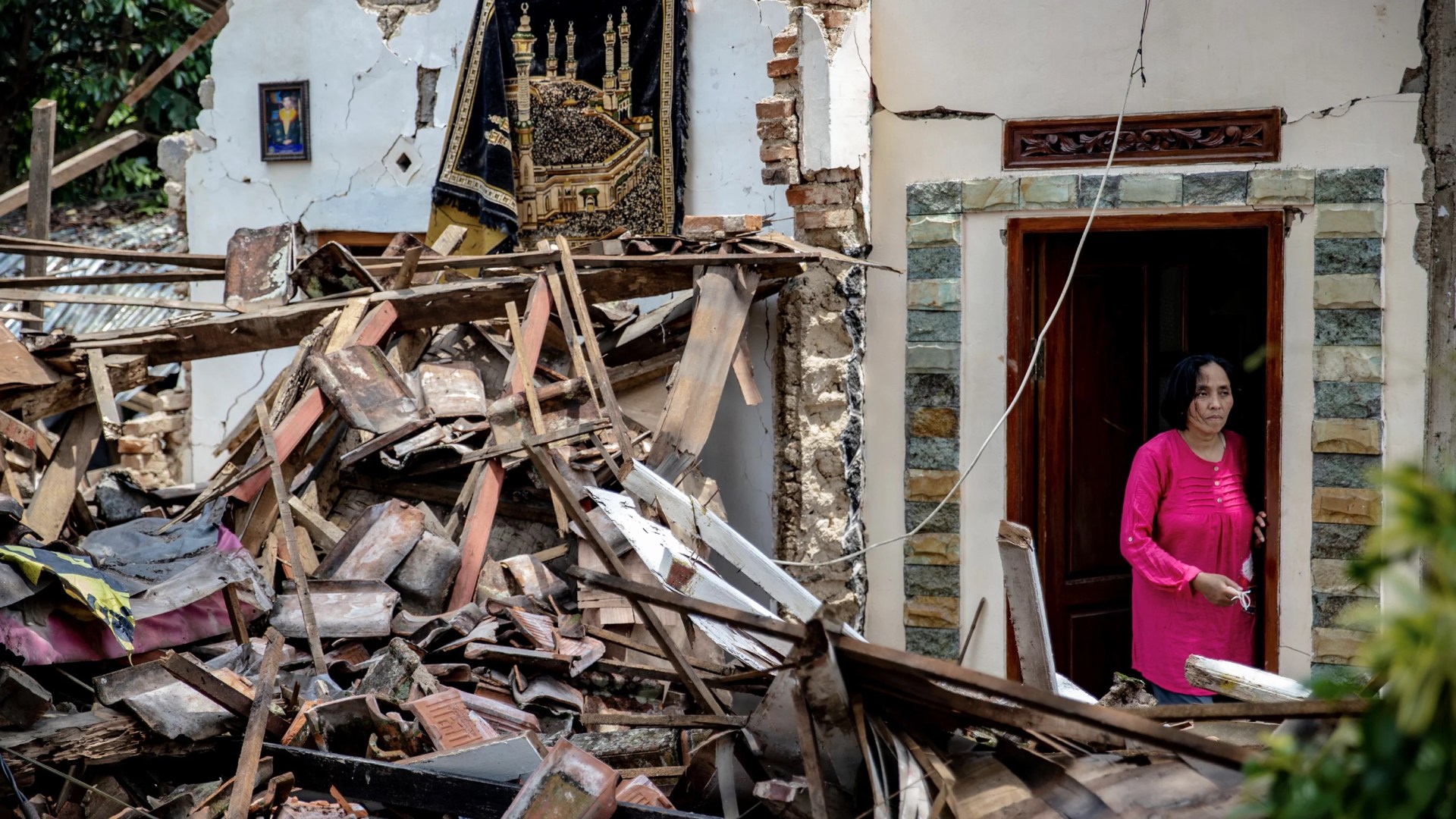
A survivor of this week's earthquake in Cianjur, Indonesia

A survivor of this week's earthquake in Cianjur, Indonesia

Christianity Today November 24, 2022
NurPhoto / Getty Images

When Denny Tarigan arrived in the remote village of Gasol, the earthy smell of wet soil assaulted his senses.

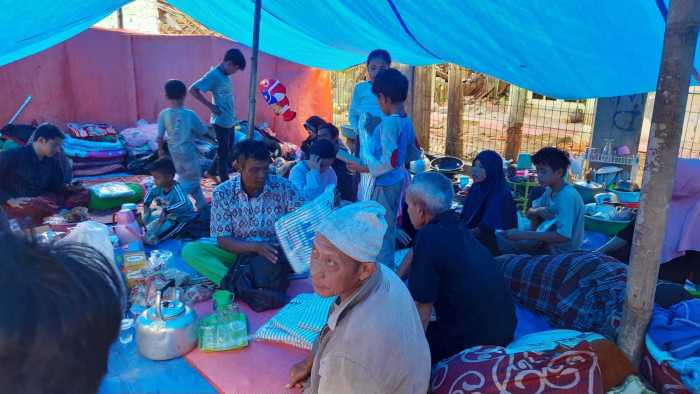
The sound of ambulance sirens permeated the air. Cars and motorcycles filled the narrow dirt roads. As the Indonesian Christian aid worker looked around, he saw blue makeshift tents lined with mats and blankets that were full of earthquake survivors, including children and the elderly.

What he also saw: smiles on the villagers’ faces.

“The people are strong enough to survive this,” said Tarigan, who took a 10-hour car ride from his hometown of Yogyakarta to Cianjur, the regency where Gasol is located, on Wednesday.

“Most of them just don’t know what to do after this,” he said. “For now, they think that they need help from the government and other [disaster relief] agencies.”

While it is common in the United States for churches to engage in disaster relief, in Indonesia most humanitarian aid is provided by government agencies, international NGOs, and Muslim aid groups.

It is only in the past several years that Indonesian churches have started to engage in disaster relief, said Effendy Aritonang, the Indonesia country director for Food for the Hungry and secretary of the executive team of Jakomkris, the Christian Community Network for Disaster Management in Indonesia.

Engaging the aftermath

When the 5.6-magnitude earthquake occurred on Monday morning, Aritonang, Tarigan, and other members of Jakomkris kicked into action.

Made up of Indonesian nonprofits and churches, the team called for a coordination meeting to begin identifying needs and figuring out who could provide assistance.

A Mennonite group showed up to provide clean water. About 10 doctors and 20 nurses from a Christian medical fellowship arrived to help overwhelmed hospitals treat patients. A Presbyterian group provided hygiene kits and services for the disabled, while a Pentecostal group set up kitchens for those affected in five different locations.

Villagers in Gasol are staying in tents in case aftershocks occur.

The help was sorely needed: By Wednesday, 271 people—many of whom were children—had died and more than 2,000 were injured as the quake flattened homes, destroyed schools, and set off landslides. With roads blocked and electricity down, the full extent of the damage remains difficult to assess—especially in the hilly areas of Cianjur, which is home to 2.5 million people.

Tarigan said Jakomkris’ main duty is to establish a coordination post that can serve as a communication hub. The post has been set up in a local church, Gereja Kristen Pasundan Cianjur. Besides serving as an information-sharing center for Jakomkris’ partner agencies to send aid where it is most needed, it will also be a physical space to store donations and food pouring in for affected Indonesians.

Jakomkris is also assisting the Communion of Churches in Indonesia (Persekutuan Gereja-gereja di Indonesia, or PGI) in issuing daily situation reports for churches and Christian agencies that are providing aid.

Tarigan said one of the most difficult parts of his time on the ground has been a firsthand glimpse of the extensive damage that the earthquake has inflicted upon many homes.

“I believe another earthquake will happen again someday,” he said. “It will take a long time to rebuild houses with a stronger structure again. It costs a lot of money, and the people don’t have [enough funds].”

Becoming a strong pillar

What Jakomkris is currently doing is novel to a certain degree.

That is because churches in Indonesia have historically focused inward on meeting the spiritual needs of believers rather than outward to the needs of the community, Aritonang said.

In 2017, seven Christian organizations gathered together to discuss what it would look like for Indonesian churches to become “a strong pillar” in their communities in the face of natural disasters that continually pummel the archipelago. (Indonesia, which is made up of more than 17,000 islands, is no stranger to earthquakes, tsunamis, and volcanic eruptions due to its location on the Ring of Fire.)

That led to the creation of Jakomkris, which educates the Indonesian church about the need to engage in disaster relief and how to equip congregations to provide a timely and sustainable response. It connected churches and nonprofits around the country so that regardless of where a disaster strikes, local churches can quickly jump into action.

Their first opportunity to respond came in 2018 when a 7.5-magnitude earthquake hit the island of Sulawesi, causing a tsunami. The twin disasters killed more than 4,000 people and injured more than 10,000. Jakomkris was able to send groups that rebuilt 300 houses, built several churches, and provided mobile medical clinics.

Yet getting churches on board has taken some effort.

Aritonang has found that churches that have been affected by disasters themselves have become the most active in the network, as they understand firsthand the importance of such ministry.

For instance, in October an earthquake hit the island of Sumatra, where the headquarters of a Lutheran denomination is located. “That quickly opened their eyes, and just a week ago they started to form a disaster response team,” he said.

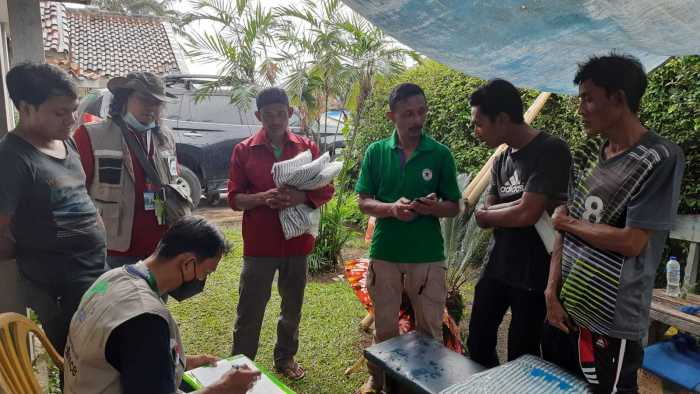
Members of Jakomkris speaking to village leaders in Gasol to compile data on vulnerable groups and their needs.

Mark McClendon, CEO of CBN Indonesia, has lived in the country for 35 years. Within 24 hours, he said, CBN’s teams were at Limbangan Sari, another quake-hit area in Cianjur, to distribute food and shelter kits and to care for children’s psychological health after the traumatic event. By Friday, their medical teams will arrive to care for people who may have breathing issues or are vulnerable to infections.

Local churches across Indonesia have been slow to respond to natural disasters in the past, he added. But it’s a different story now compared to 20 years ago.

“The church has matured collectively,” McClendon said. “We see local churches doing incredible acts of kindness, sacrificially donating [items] and managing resources to be an active participant in restoring, rebuilding, and serving when disasters happen.

“It didn’t used to be like that,” he said. “We would sweep in and local churches would join us and ask if there were things to do that they could help with. Now it’s almost the other way around. We see the local church taking on more responsibility, in the context of community, to serve in almost every disaster.”

Christian-Muslim collaboration

Christian aid groups and churches in Indonesia are not alone in their disaster relief efforts.

Many Muslim aid groups, such as Barisan Ansor Serbaguna Nahdlatul Ulama (Banser) and the Muhammadiyah Disaster Management Center (MDMC), are on the ground alongside Christian ones, noted Tarigan.

“Their numbers are bigger than ours. We work with them and share information with them,” he said.

To Tarigan, Christian aid groups can learn from Muslim humanitarians in terms of becoming more responsive. “We pray and hold meetings [before taking action]. It takes too long,” he said. “The Muslims will come first to help clear the roads and buildings.”

A minority in a majority-Muslim country, Indonesian Christians can demonstrate they are equally part of the country and bless their fellow countrymen by standing with them amid disasters, Aritonang said.

“We would like to let the community know that we are the body of Christ,” he said. “It becomes an open door for us to go to them and say ‘Yes, we are your brothers and we would like to share your burden and serve you in this need.’”

News

Christian Schools Building ‘Consortium’ for Hispanic Theology Education

With $5 million from Lilly Endowment, three Los Angeles institutions “got ambitious.”

Azusa Pacific is partnering with two other Hispanic-serving institutions in Southern California.

Azusa Pacific is partnering with two other Hispanic-serving institutions in Southern California.

Christianity Today November 23, 2022
Google Maps

Three Christian colleges in Southern California are working together to build a broad path to theological education for Hispanic students. Azusa Pacific University (APU), Life Pacific University (LPU), and Latin American Bible Institute (LABI) have received $5 million from the Lilly Endowment Pathways for Tomorrow Initiative to develop a shared Spanish-language curriculum that focuses on Hispanic theology and supports Latino students going into ministry.

“To receive this from the Lilly Endowment gives us a five-year runway to help create these systems,” said Robert Duke, Azusa’s interim associate provost. “Five years from now, my thought is that we will have created a kind of a theological consortium here in Southern California around Hispanic theology and Spanish-speaking pastoral training in ways that, without the seed money, we may not have just had the ability to do.”

The program will include coaching for Hispanic students and pastors and address accessibility and affordability issues, according to organizers. Nearly half of residents in Los Angeles County, California, are Hispanic or Latino, according to 2021 Census data, but only 14 percent of those over the age of 25 have a bachelor’s degree—20 points behind the general population. Each of the three institutions will offer different degrees through the program, including bachelor’s, master’s, MDiv, and DMin degrees. The colleges will also develop noncredit, coaching, and bivocational curriculum for Hispanic students.

The Lilly Endowment, a philanthropic foundation that supports the causes of religion, education, and community development (and has given money to Christianity Today), created the Pathway for Tomorrow Initiative “to help theological schools strengthen and sustain their capacities to prepare and support pastoral leaders for Christian churches,” according to its website.

The initiative has granted funds to 355 colleges in the United States and Canada, in amounts ranging from $39,000 to nearly $8 million. Azusa was one of 16 institutions given a grant in the third and largest round of funding. The school received $4,999,904, to be shared with LPU and LABI. The partnership is a little unusual for higher education, according to Duke, who was the principal author of the proposal, but also a key selling point. The schools have promised a collaborative effort, allowing prospective students increased flexibility across the region.

The program is currently in the process of bringing on a director who will oversee the grant and coordinate between the three institutions.

Christopher Coble, the endowment’s vice president for religion, said he has seen more theological schools pursuing strategic partnerships, like the one the three L.A. schools are forming to serve Hispanic students.

“Many theological schools believe that their paths to the future depend on their abilities to form strategic partnerships with other schools and church agencies,” he said. “These grants will help seminaries develop innovative and collaborative approaches to theological education that we believe will strengthen their efforts to prepare and support excellent leaders for Christian communities into the future.”

That innovation—from a new curriculum that originates in Spanish rather than being translated, to a cooperative agreement that allows students to seamlessly transfer—is critical, according to Coble, to strengthening efforts to prepare Christian leaders for ministry.

“Theological schools play an essential role in ensuring that Christian congregations have a steady stream of well-prepared leaders to guide their ministries,” he said. Since 1980, more Christians have spoken Spanish than any other language, CT reported last month. More than 413 million Christians are native Spanish speakers, according to the World Christian Database, compared to 250 million with English. Latinos born in America tend to prefer English worship more than Latino immigrants do, but Spanish continues to be a large part of many Hispanic churches. “Spanish is our mother language, and it’s at the core of our roots. Spanish is the second [spoken] language in this country,” Jorge Ramos, a pastor in Hickory, North Carolina, told CT. Ramos, a native of Cuba, leads a small church that mainly serves first-generation Hispanics. “The truth is that in the foreseeable future there will continue to be immigration of people who only speak Spanish,” he said. “And if we want to reach them, we have to be here for them.”

That idea is the foundation for much of the three colleges’ planned program. The Spanish-language theological education will be not only a more accessible option for many Hispanic students but also a much-needed support for the ministerial needs of many Spanish-speaking congregations in the US. Developing the program, the three schools focused on the importance of cultural context, said Daniel Ruarte, vice president of academic affairs at LPU and an APU graduate. “Contextualizing is so important because Hispanic church leadership in the US is very different than in Latin America, Europe, or other areas,” Ruarte said. “There’s a strong desire among Hispanic students to learn and grow theologically. There just haven’t been programs that have gone about it in the right way, until now.” Hispanic and Black Americans are the least likely to be enrolled in college or have a bachelor’s degree, according to a Pew Research Center report published last month. At the same time, Latinos make up a growing share of all students enrolled at postsecondary institutions—increasing from 4 percent of all postsecondary students in 1980 to 20 percent in 2020. APU, LPU, and LABI are currently all Hispanic Serving Institutions (HSI). They, like nearly 600 other HSI designated schools, provide expanded resources for Hispanic students, who make up at least a quarter of the full-time equivalent enrollment. The three colleges have previously shared lecturers and event resources, but the grant represents an opportunity to dream bigger, Duke said. “A lot of this is using these next five years to kind of reimagine what theological education can look like when people work together,” he said. Organizers hope that the program will be something that other schools in other cities will be able to replicate, forming consortiums and borrowing the curriculum or developing their own. There are other major cities, after all, with large communities of Spanish-speaking Christians. “I'm really hoping this generates a much wider conversation,” Duke said. “What can we create here that can be transferable to those other areas in their context?”

Though the three schools have been planning this project for several years, now that they’ve received $5 million, the work has really just begun. The question at the heart of the partnership still requires lived-out answers: How can we serve our Hispanic community better? “We started dreaming and we got ambitious,” Ruarte said. “Now we’ve got to do it.”

Theology

3 Popular Misconceptions About Advent

Christian leaders from Brazil, Colombia, France, and the Philippines weigh in on mistaken beliefs about the season.

Christianity Today November 23, 2022

For liturgy-loving Christians, Advent is a season of anticipation, marked by a posture of hopeful and expectant waiting.

But for many evangelicals, it may pass by almost unnoticed and unobserved, whether due to an unfamiliarity with the church’s liturgical calendar or a cynicism toward Catholic practices.

Advent means “arrival” or “appearing” and comes from the Latin word adventus. Each year, the season begins four Sundays before Christmas and lasts until December 25. It is divided into a period that focuses on Christ’s second coming and another that focuses on his birth. (Orthodox Christians observe a similar event, the Nativity Fast, from November 15 to December 24 before the Nativity Feast on December 25.)

Advent began in fourth- and fifth-century Gaul and Spain as a season intended to prepare believers’ hearts for Epiphany (January 6), not Christmas. Epiphany is a day to commemorate the Magi’s visit after Jesus’ birth (in the West) or Jesus’ baptism in the Jordan River (in the East).

Today, Advent customs may include reading and praying through an Advent devotional and lighting one of four candles inside an Advent wreath each Sunday, corresponding to four weekly themes: hope, love, joy, and peace. Most wreaths also include a centrally placed candle to symbolize Jesus, the Light of the World.

Yet, in parts of the Majority World and in countries where Catholicism is the dominant religion, evangelicals do not typically observe Advent.

French evangelical churches ignore Advent as part of “a gut reaction against anything that is liturgical, because it smacks of Catholicism,” said Gordon Margery, a Baptist lecturer at the Nogent-sur-Marne Bible Institute who lives outside of Paris.

Few “historic evangelical, Pentecostal and neo-Pentecostal churches” in Latin America participate in Advent, says Colombian pastor Dionisio Orjuela. “Only churches like the Lutheran, Anglican and Episcopalian (along with the Catholics) observe the Advent season.”

CT spoke with Christian leaders from Brazil, Colombia, France, and the Philippines to find out more about how these misconceptions may be addressed, particularly in majority-Catholic contexts.

Misconception 1: Advent is an exclusively Roman Catholic practice.

“Most Protestants today have no idea what occurred in the church for nearly a thousand years. Yet they are confident of one thing: Whatever did occur during the premodern era is not worth our time and can only corrupt Christianity,” wrote Midwestern Baptist Theological Seminary professor Matthew Barrett earlier this year.

On the whole, the church calendar was seen as a Catholic invention. Protestants who were suspicious of innovations and trying to get back to the practices of the New Testament church got rid of it. (The Puritans never celebrated Christmas, much less Advent, either.)

This sentiment might very well apply to evangelical perceptions of Advent, where many regard the season as a predominantly Catholic ritual that has little to no purpose or relevance for one’s spiritual life.

But evangelicals all around the world today, from the Philippines to Brazil, do take part in Advent.

“These evangelicals come from historic denominations (e.g., Anglican, Reformed, Lutheran, Methodist) which take seriously the historical development of worship and make allowances for historical conditions in their practices while seeking to be faithful to implement biblical principles in contextualizing worship,” said Timoteo Gener, president of FEBIAS College of Bible in the Philippines.

In Brazil, Advent is the liturgical season that has received the most acceptance among evangelicals, says Daniel Vieira, director of the Lecionário project.

In Vieira’s opinion, experiencing the liturgical calendar well helps to develop a “sacramental vision of reality” that combats religious consumerism and re-emphasizes spiritual formation and discpleship.

That is why helping believers to distinguish between Advent and Christmas is a vital need for the Brazilian church right now, he adds.

“The biggest difficulty is to better understand the difference between Advent and Christmas and to observe Advent in an appropriate way, with the help of traditional Christian practices and a lectionary, a tool that we have been promoting in Brazil.”

Misconception 2: Advent is not biblical.

Some evangelicals may also hold the perception that Advent is not biblical because it is nowhere mentioned in Scripture.

Evangelicals often find themselves “divorced” from church history and tradition. Some may come from Low-Church backgrounds that place greater emphasis on topical preaching and personal piety than on following the historical church calendar to order services or using call-and-response prayers communally.

But recovering an understanding of church tradition can shed light on why Advent is a biblically grounded season in which believers may shape their faith according to God’s Word and truth. “Evangelicals should study [church] tradition, for we are not the first to seek answers to difficult questions and problems in theology. However, we must not elevate the tradition to inviolable, authoritative status,” wrote Baptist theologian Roger E. Olson.

Advent reflects the Bible in highlighting the centrality of Christ and his salvific work, Episcopalian priest Fleming Rutledge argues.

“Advent always begins in the dark. But there is a ‘but,’ and we find it revealed in the story that the scriptures tell,” Rutledge wrote.

“That is the Advent message: In a world of profound darkness and distress, pervasive sin and evil, we look to the one true light—Christ Jesus, the Son of God.”

Some Christians might hold the view that liturgical worship should be patterned only after New Testament texts and not on its historical development over the centuries, says Gener, the Filipino theologian.

But the formation of the Christian liturgical year—Advent included—goes back to how the early church incorporated cultural practices of their day into their worship life.

“Jewish synagogue practices and festivals were assumed and shared by Jesus and his disciples, and these practices were refashioned by Christ’s disciples in light of the Christ event, which evolved later into historic Christian worship,” Gener said.

Lula Derœux, a Baptist pastor in France, finds it meaningful to observe Advent even if the Bible does not explicitly mention it: “If the Bible doesn’t tell us how and when to celebrate the birth of Christ, the Bible encourages us to remember and to build our relationship with God.

“Our need to celebrate, to prepare our longing hearts and to praise the Lord in the waiting transcends all cultures and all ages.”

Misconception 3: Advent is only about Jesus’ birth.

Since Advent comes before Christmas on December 25, there is an assumption that it simply is a lead-up to celebrating the day of Christ’s birth.

However, when Christians first observed Advent, they anticipated the return of Christ, not his birth. This changed in the Middle Ages when Advent became a time to remember and celebrate the incarnation of Jesus, even as the “traditional” approach to Advent remained.

“Advent spirituality is not a time to meditate on the actual birth of Christ. According to tradition, we ought not to sing Christmas carols until Christmas itself, for Advent is not a time to celebrate the birth of Jesus in the manger but a time to long for the coming of the Savior,” wrote Robert E. Webber in Ancient-Future Time.

Advent was originally a time of fasting and self-reflection too, CT executive editor Ted Olsen wrote.

To Vieira, Advent is a “penitential” season that affords believers a time for discipline and intentional repentance.

“A deep reflection on the liturgical tradition shows us that Advent embodies a tension of joining the enactment of the old covenant peoples’ expectation for redemption and the new covenant peoples’ expectation for the consummation that will come with the second coming of Christ,” he said.

Some traditional hymns and readings during the Advent season reflect a yearning for Christ’s return, says Margery.

“I think particularly of ‘O Come, O Come, Emmanuel.’ One sings it generally as a sort of plea for Christ to be born, putting oneself in the place of the saints of Israel who longed for his coming. But I have the impression that it is echoing the final prayer of Revelation [22:20, ‘Come, Lord Jesus’].”

The eschatological longing that Advent encapsulates is a key component of the season that cannot be overlooked.

“Scripture’s prophecies of the Promised One often have layers of meaning and multiple fulfillments,” wrote CT print managing editor Kelli Trujillo in the introduction to CT’s 2022 Advent devotional.

“They frequently point toward a fulfillment in the prophet’s own time but also direct our gaze toward the Messiah and his first coming as well as the Second Advent we await.”

“To be in Advent is to dwell in the ‘already/not yet’ of the kingdom of God,” said Derœux.

“It allows us to remember the promises of the Lord and the extent to which he cares for us. The patience and preparation it took to give a Savior to humanity is breathtaking, and to be able to not only remember but to live this particular time [out] is a blessing.

“We could read the whole Old Testament and see an Advent, a dawn to a new beginning.”

Editor’s note:

CT’s 2022 Advent daily devotional, The Promised One, is available for free downloading and printing in seven languages: English, Chinese (Simplified and Traditional), Spanish, Portuguese, French, Korean, and Indonesian.

You can also read the daily devos online, choosing your language (including Russian) via the yellow links.

Church Life

The Seed of Korean Christianity Grew in the Soil of Shamanism

An awareness of the spirit world was a crucial component in missionary efforts to spread the gospel.

The painting entitled Munyeo sinmu (무녀신무, 巫女神舞) and made by Shin Yunbok in the late Joseon (1805) is a depiction of a mudang performing at a kut.

The painting entitled Munyeo sinmu (무녀신무, 巫女神舞) and made by Shin Yunbok in the late Joseon (1805) is a depiction of a mudang performing at a kut.

Christianity Today November 23, 2022
Illustration by Mallory Rentsch / Source Images: WikiMedia Commons / Unsplash

Protestant missionaries arrived in Korea in the 1880s with a burning desire to share the gospel to the locals.

This was the golden age of Protestant missions, and missionary records captured detailed impressions of Korea’s political, social, and spiritual atmosphere.

The missionaries were perplexed to find almost no evidence of religious life there. Some even defined Korea as a nonreligious country where Confucianism merely served as a philosophical and moral guide for living.

They were wrong.

As they settled into their new lives, the missionaries soon realized that shamanism was a core religious belief in Korea. American missionary Homer B. Hulbert used the term “spirit-worship” for the animist, nature-worshiping practices he observed there, while fellow missionary George Heber Jones opined that Korea was rich in religious phenomena that comprised a mix of shamanism, Buddhism, and Confucianism.

Shamanism “appealed” to the Korean person’s soul and “inspired him with fear,” while “Buddhism appealed to his heart and inspired him with admiration and Confucianism appealed to his mind and inspired him with respect and veneration,” Jones wrote in The Rise of the Church in Korea.

These missionaries also grew to recognize how influential shamanism was in shaping and contextualizing the Christian faith in the Korean context.

Shamanism provided a deep awareness of the spirit world, which cultivated fertile space for evangelism. The female shamans’ spiritual power and authority also proved instrumental in growing a network of “Bible women” in the country.

How Christianity arrived in Korea

Korean scholars were the first to introduce Catholicism in the country. In the 1700s, a group of young local scholars who had studied Jesuit missionary Matteo Ricci’s The True Meaning of the Lord of Heaven in Chinese dispatched Korean representatives to China. In 1784, these representatives came back to the Korean peninsula and brought Catholicism with them.

As Catholicism in Korea grew significantly, so did antagonism against those who professed this faith. The 18th and early 19th centuries were marked by persecution and martyrdom, and the greatest outbreak of persecution occurred in 1866 under Korean imperial regent Taewŏn’gun’s rule. Following his abdication in 1874, Queen Min initiated treaties with foreign powers, which opened doors for Protestant missionaries to arrive in Korea.

Christianity has grown rapidly in Korea since then. One in five of the total population identify as Protestant and 8 percent as Catholics according to a 2015 nationwide census.

Yet shamanism remains a potent and pervasive force in Korean society, and an estimated 50,000 shamanic ceremonies are held in greater Seoul annually.

A deeply rooted animism

Shamanism is a folk religion based on the belief that human beings can interact with various spirits, including spirits of ancestors or of inert objects such as trees and the moon. It began in Siberia and existed in Korea well before the tenth century B.C. While there is no accurate record of who brought shamanism into Korea, archaeological data points to the Bronze Age as the period it arrived in the peninsula.

While shamanism exists worldwide, Korean shamanism is unique in terms of the costumes shamans wear, the spirits they interact with, and (most of all) the way they communicate with the spirits. Most shamans around the globe contact the spirit world by going into a trance and “leaving” their bodies. Korean shamans, however, invite the spirits to come “into” them.

Mudang, or female shamans, typically lead rituals (kut) by performing songs and dances with accompanying music and preparing offerings to please the spirits invoked. (Baksu, or male shamans, also exist but are less common.)

For these rituals, mudang dress in elaborate rainbow-hued ceremonial outfits that come decorated with jade pieces. Their goal: to help their clients receive clarity or assistance in almost every aspect of life, whether in selecting a child’s name, choosing an auspicious date for a wedding, or ushering in a good harvest.

Otherworldly encounters

One of the most crucial components of Korean shamanism’s meaning-making process is the presence of countless spirits in the world.

The early missionaries noticed this very aspect in Koreans’ everyday lives.

“Spirits are everywhere and are likely to turn up at any corner. Even door-hinges and chopsticks may be the abode of spirits who have power to change a man’s whole destiny,” Hulbert wrote in “Korean Folk Tales.”

The pervasive reality of shamanism in Korea meant that the early missionaries did not have to explain the existence of the spiritual world or the omnipresence of God to Korean people because these concepts already existed in their worldview.

However, Christianity was seen as a foreign intrusion on a shamanistic religious system, and in turn, both Catholic and Protestant missionaries held largely negative perceptions of shamanism. But while the Catholic missionaries dealt mostly with Confucianism in the Korean context, Protestant missionaries confronted shamanism head-on.

American missionary Horace G. Underwood unabashedly called the shamans “idolaters” when he first encountered Korean shamanism. Fellow American missionary Henry G. Appenzeller, meanwhile, insisted that shamanism was merely superstitious and lowly.

Praying in the Spirit

The Great Pyongyang Revival of 1907 changed these missionaries’ views on shamanism and the spirit world.

While the Korean church grew exponentially from 1897 to 1906, Korea was in a tumultuous political situation due to a conflict between Russia and Japan over control of Korea. The Russo-Japanese War (1904–1905) destabilized Korea economically, politically, and socially. The Pyongyang Revival, which spread across the peninsula, arose from this painful political background.

During this nationwide movement, believers participated in mass confession and repentance, exorcism and healing, and intense corporate prayer, all of which were often accompanied by loud weeping.

“The whole audience began to pray out loud, all together. The effect was indescribable—not confusion, but a vast harmony of sound and spirit, a mingling together of souls moved by an irresistible impulse of prayer,” said American missionary William Blair of his experience there.

These revival meetings had a profound impact on foreign missionaries’ perceptions of Korean spiritism. Some missionaries who were once extremely critical of exorcism or healing ministry changed their attitudes during these gatherings, wrote historian Sung-Deuk Oak.

Many missionaries abandoned cessationist views and testified that miracles could happen. They came to accept the traditional Korean view of spirits and acknowledged the role of shamanism in Protestant success in Korea.

“I am convinced that the devil can work now in opposition to Him exactly as he did 1900 years ago,” American missionary Charles A. Clark wrote.

Naming God in Korean

Identifying an indigenous name for “God” in Korea also led missionaries to change their perspectives on shamanism.

Some missionaries advocated the adoption of a traditional divine name like Hananim (하나님), which refers to the highest god or the “heavenly king” in shamanism.

Using a vernacular Korean word that people were familiar with could facilitate the acceptance of Christianity’s monotheistic practice, said Scottish missionary John Ross. Since Korean people already had the notion that Hananim was supreme among the gods and other spirits, Ross saw an opportunity for critical contextualization.

Other missionaries like Horace G. Underwood felt that it was prudent to avoid using Hananim precisely because Koreans were familiar with the term’s shamanist roots. Some alternative words or names he experimented with included Ch’amshin (참신), or “true god,” and Syangjyu (샹쥬), or “high lord.”

Underwood’s wife, Lillias, also opined that Hananim in the shamanist context was the Old Testament equivalent of Baal: “Over all the objects of worship, they believe, is the great Heavens, the personification of the visible heavens, who, as nearly as I can discover, is identical with the Baal referred to in the Old Testament.”

When missionaries did use the name Hananim in conjunction with the power of the Holy Spirit, Koreans became intrigued by the Christian message.

While preaching a sermon at a local market, American missionary Samuel A. Moffett appealed to the notion that the Holy Spirit could conquer all other spirits. “I am not afraid of your evil spirits because I know the Great Spirit, Hananim,’” he proclaimed.

“If he loves me, no other spirit can hurt me. And the proof of his love is that he sent his only Son, Jesus, to die for me and save me.”

By using the name Hananim as a bridge between Korean shamanism and Christianity, Moffett and other like-minded missionaries effectively proclaimed the message and evangelized to the local people. The Christian message of liberation and love was an extremely appealing option to Koreans who constantly lived in fear of evil spirits.

Glimpses of the Trinity

Some missionaries went further by affirming the presence of spiritual elements in Korean shamanism, contending that they were the less-complete form of the Christian gospel. They observed that Korea’s founding story, the Tan’gun myth, bore remarkable similarities to the Trinitarian view of God.

In the Tan’gun myth, Hwan’in (“creator”) sends his son Hwan’ung to the world in human form to help human beings who are leading miserable lives without divine guidance. Hwan’ung marries a bear-woman and gives birth to Tan’gun, who goes on to establish the Korean kingdom.

Hulbert, the American missionary, used the Tan’gun myth to explain Christian monotheism and Trinitarian theology. Hwan’in was a reflection of Creator God; Hwan’ung, the Holy Spirit; and Tan’gun, the incarnated Jesus Christ, Hulbert wrote in “Korean Folk Tales,” a 1902 paper for the Korean branch of the Royal Asiatic Society.

Rather than imposing their theology as truth, missionaries like Hulbert sought to identify points of contact between Christianity and Korean culture. They began by asking the question “How can I translate the message of Jesus Christ for people whose theology or philosophy is completely different from mine?”

Whether the missionaries believed in the Tan’gun myth is a secondary issue. What is important is that they used a modus operandi that was helpful in translating their message. It was the “starting point to decode the cultural and theological genealogy of Protestantism, a new religion in modern Korea,” wrote Oak, the historian.

A woman’s domain

Another distinguishing feature about Korean shamanism was that Korean society viewed it as a “woman’s religion” because shamanistic practices were predominantly female-led. Female shamans ministered to housewives of various classes, and even the highest and best-educated classes called for them when they were in trouble, according to American missionary J. R. Moose.

As a result, female shamans made more money than any other class of women in Korea. Even though they were often perceived as lowly outcasts in Korean society, they also wielded significant spiritual power, as they were the only ones who could perform seances and communicate directly with the spirits.

Nowhere else was this power more evident than in the anbang, the innermost quarters of a Korean home. Off-limits to men and foreign missionaries, only Korean women were invited into this private space where wives would exercise their authority.

In the intimate sphere of the anbang, women’s public powerlessness transformed into private strength. Female shamans provided “cathartic compensation and limited redress for Korean women’s otherwise miserable state,” wrote Laurel Kendall in Shamans, Housewives, and Other Restless Spirits: Women in Korean Ritual Life.

Here, female shamans revitalized the whole house and all who dwelt within through their rituals and spiritual exchanges. They exorcized demons, healed the sick, appeased household gods, and freed the family’s restless dead from hell, according to Kendall.

The shamanistic rituals (kut) that were held in these spaces also allowed women to release their han and “recharge” their spiritual power.

Han, which may be experienced individually and collectively, refers to a deep sense of unresolved bitterness, pain, anger, and grief due to ongoing oppression and unjustifiable suffering. Three types of kut were typically performed: the healing kut, prosperity kut, and funerary kut. Women who released their han through kut often experienced healing from their afflictions.

Saturated in the Word

Like the female shamans, Korea’s “Bible women” served as intercessors, healers, exorcists, and spiritual mentors.

Since a preexisting social norm accepted female shamans as religious authorities within the sphere of the household, Korean evangelists, or Bible women, found fewer barriers to entry within Korean households.

These Bible women played a significant role from 1895 to 1945. Trained at schools established by mission boards toward the end of the initial period of Protestant missions in Korea, the Bible women zealously shared about Jesus with their compatriots and promoted women’s literacy and empowerment in the country.

“Korean Bible Women were successful in their work of evangelization because they utilized the women’s anbang network and borrowed the authority of other female religious figures in the anbang, specifically that of the mudang (female shaman),” religious studies scholar Lee-Ellen Strawn argued.

“The Bible woman is sent for to pray and sing Psalms,” American missionary Mary Scranton said. “When anyone gets tired of trying to propitiate the evil spirit, it is the Bible women who must come and take down the fetishes and burn them. They are called upon to cast out devils, as well as to offer the fervent effectual prayer for the healing of the sick.”

Korea’s Bible women not only prayed for healing of physical bodies but also attended to women’s spiritual needs, eased their inner struggles, and provided spiritual guidance. Their faithful witness in these household spaces also led to some female shamans’ conversion to Christianity.

One female shaman became a Christian after meeting a Bible woman who shared the gospel with her, according to American missionary J. R. Moose. She was able to understand the Holy Spirit as one who had authority over countless other spirits.

And while some newly converted former shamans still used herbs and prayed for healing as they were accustomed to doing, they appealed to the Holy Spirit in these rituals. Their awareness of the spirit world enabled them to fully accept the Holy Spirit’s power and authority.

An indigenized faith

Shamanism persists in Korean culture today, and mudang continue to be active practitioners of this folk religion. Additionally, few Korean Christians are aware that the word they currently use for God, Hananim, has shamanist roots.

Nevertheless, shamanism’s influence on Christianity does not mean that religious syncretism—the amalgamation of various religious beliefs and practices—was ever an issue.

Missionary documents show continuity with the Korean spiritual framework and reveal two principles at work in the missionaries’ evangelistic efforts.

First, the Koreans were spiritual people who acknowledged the ubiquity of various spirits. The missionaries did not have to explain the existence of the spiritual world or the omnipresence of God because those concepts already existed.

Second, the spirits had strong control or authority over Koreans, no matter whether they were practicing shamanists or not. This openness and awareness of the spirit world provided myriad opportunities to share about Christianity.

Some theologians and missionaries criticized the presence of shamanistic elements within Korean Christianity for fear that this would dilute doctrinal orthodoxy. But ensuring continuity with the past fostered Christianity’s rapid spread in Korea and engendered a unique, indigenized form of the faith there.

Today, the spirit of the Pyongyang Revival remains strong. Many Korean Christians practice healing and exorcisms and engage in creative ways to express their faith, such as through praying aloud in groups (called tong-sung prayer), attending early-dawn prayer meetings, and visiting prayer mountains.

Shamanism has provided various avenues through which Christianity could assimilate into Korean culture and achieve indigenization. While missionaries from the West successfully harnessed shamanist beliefs to contextualize the faith in their time, the result of their efforts is not syncretism but an enduring, indigenized Christianity mobilized primarily by local Korean Christians.

Soojin Chung is an assistant professor in the department of practical theology at Azusa Pacific University.

News

Christians Remain a Minority Down Under, but Gen Z Aussies Are Open

New survey finds just 6 percent of Australians are heavily involved in the faith.

Sydney, Australia

Sydney, Australia

Christianity Today November 23, 2022
LeoPatrizi / Getty Images

Australian Andrew Thorburn was forced to resign last month, just over a day after being named CEO of a professional football club in Melbourne. The reason? His leadership role at City on a Hill, an evangelical Anglican church with traditional Christian views on homosexuality and abortion.

The episode seems to reflect the state of Australian spirituality more broadly, as an overwhelming majority of the country isn’t involved in church and more than a quarter have negative attitudes toward Christianity, according to a recent report.

Released this month by the research firm McCrindle, The Changing Faith Landscape in Australia found that just under half (46%) of Australians claim Christianity as their religious affiliation. Yet only 16 percent attend a Christian church at least monthly, and just 6 percent say they are “extremely involved” with practicing their Christian faith.

Despite the trends, researchers also noted fertile ground for evangelism as most Aussies are open to changing their religious views.

“There’s certainly a sense in Australia that we are a secular nation and that Christianity clings to the edge of the conversation, useful for a comment or sound bite when needed but not required for policy, etc.,” said Stephen McAlpine, a blogger and national communicator for the Christian ministry Third Space. “It very much feels like an ‘away game’ not a ‘home game.’ I think that we can play that to our advantage because most Aussies are not rejecting something they know from the past and did not like. They’re simply not aware of Christianity.”

A third of Aussies do not identify with any religion or spiritual belief, while another 13 percent hold spiritual beliefs without identifying with a specific religion. Six percent practice religions other than Christianity.

The Australian religious landscape is more secular than in the US, where 64 percent identify as Christian and about 30 percent as religiously unaffiliated—often referred to as “nones.”

Older Australians are more likely to identify as Christians than their millennial and Gen Z counterparts. More than half of boomers and nearly three-quarters of the oldest generation still consider themselves Christian.

Church abuse scandals—including sexual abuse scandals at the megachurch Hillsong and in the Australian Catholic Church—have taken a toll on public opinion of Christianity in Australia. Twenty-eight percent of Australians have a negative view of Christianity, 14 percent are neutral, and 27 percent are warm toward Christianity.

“Church abuse” tops the list of factors that negatively affect people’s perception of Christianity, with 74 percent staying it has a “massive” or “significant” influence on their view. Close behind are hypocrisy, judging others, and religious wars.

For younger generations, the church’s stances on homosexuality and gender roles have a significant negative impact. Nearly half of Gen Z says the church’s teaching on LGBT issues negatively affects their view of Christianity. That compares with 26 percent among the oldest generation.

Thirty-four percent of Gen Z and 20 percent of the oldest generation are influenced negatively by the church’s teaching on women’s roles.

A significant minority of Australians—11 percent—doesn’t know a single Christian. The figure is even higher among Gen X at 16 percent.

Yet the report contained a silver lining for Christians. Aussies have positive views of the church and are open to changing their spiritual views.

“Most ordinary Australians” are “still open to talking about faith, and research again suggests that personal relationships are the biggest way to promote the gospel,” said Akos Balogh, external engagement manager for Moore Theological College in Sydney and former CEO of The Gospel Coalition Australia.

“While I can’t speak for all churches and ministries, there is growing awareness that personal relationships are indeed a key to reaching non-Christians. This shouldn’t surprise us: The Bible speaks about the missional importance of living godly lives among non-Christians.”

Almost half (46%) of Australians are “extremely” or “very” open to spiritual conversation involving views different from their own. The percentage is higher among younger generations—53 percent of Gen Z versus 34 percent of boomers.

Aussies aren’t just willing to talk religion. They might even rethink what they believe. Almost three in five are at least slightly open to changing their current religious views. Younger groups are most open to altering their views.

There’s also willingness to attend church. About two-thirds of Australians would be at least slightly likely to attend church if personally invited by a friend or family member, including 44 percent of nonreligious Australians.

Additionally, most Australians value the church. Among church work that people highly or somewhat value are looking after the homeless (75%), offering financial assistance and food relief programs (73%), providing facilities to care for the aging (71%), and working to abolish modern slavery (64%).

That creates an opening for evangelistic success if Christians will live out their faith authentically, said Sophie Renton, managing director at McCrindle.

“While less people are identifying with Christianity than years prior, there is still an openness to engaging with faith and church,” she said. “An important part of this is for people who do not believe to see firsthand those in their life who live out a genuine faith. Authenticity is crucial alongside building relationships of trust as avenues for conversation. Investing in real relationships and creating healthy communities are key for creating opportunities to build the church.”

David Roach is a freelance reporter for CT and pastor of Shiloh Baptist Church in Saraland, Alabama.

Books
Excerpt

Love in a Time of Social Conflict

The cross calls us to sacrificial community, especially during a divided age.

Christianity Today November 23, 2022
Illustration by Christianity Today / Source Images: Unsplash

In the August heat of 1965, widespread violence and bloodshed tore through the Watts area of Los Angeles. There were more than 30 deaths. Most of those were perpetrated by the police. There was fire and looting and vandalism.

I'll See You Tomorrow: Building Relational Resilience When You Want to Quit

I'll See You Tomorrow: Building Relational Resilience When You Want to Quit

Thomas Nelson

240 pages

$11.44

At the invitation of Black social groups, civil rights leader Martin Luther King Jr. entered Watts. He later described the protests that followed as “disorganized,” though that was a major oversimplification.

“However, a mere condemnation of violence is empty without understanding the daily violence that our society inflicts upon many of its members,” he said. “The violence of poverty and humiliation hurts as intensely as the violence of the club.”

King wrote about his interaction with a couple of young men in the wake of the weeklong eruption that destroyed many Black businesses that had been the heart of the community.

“We won!” King remembers hearing one exclaim.

He looked at the rubble. The ash. The broken buildings. He tallied the dead bodies.

“What does winning look like?” he asked the youth.

The devastation people are experiencing today is like a wall so high none of us can see the sunlight anymore. Businesses are crumbling. Churches are dividing. A pandemic is raging.

“What does winning look like?” King and those with him asked the youth in Watts. And it is a question we must also ask ourselves today.

Today, America as a country is at war with itself. And we aren’t just at war with people of other races, and we aren’t just at war with Christianity; our divide seems to be a tribalism so strong that it is separating people of the same family and origin.

We are living in a country where Americans feel their political affiliation is their greatest form of identity attachment, more than their race or religion, and yet how that political affiliation plays out in their real-life thoughts, attitudes, opinions, and beliefs is not at all a solitary decision. Our groups are shaping us.

For better or for worse, the social group you identify with will make you look more like Jesus or less like Jesus. And one day we will all have to stand before Jesus and be accountable for how we lived here. Did we sow community? Did we create chaos? Did we will the good for the other?

Scripture says, “They are from the world and therefore speak from the viewpoint of the world, and the world listens to them” (1 John 4:5). This single verse almost answers the question Martin Luther King Jr. must have asked himself implicitly before writing his book. “Where are we from?” is typically asked before “Where do we go from here?”

I believe, especially after reading King’s speech “Beyond Vietnam: A Time to Break Silence,” that he would point us as a nation to 1 John 4:7–8: “Dear friends, let us love one another, for love comes from God. Everyone who loves has been born of God and knows God. Whoever does not love does not know God, because God is love.”

The symbol of the Christian is the cross. It is to pick up the burden of our fellow human beings and walk toward the dusty, long road that leads us to the redemptive work that is found within the kingdom of God.

It is a cross that belongs to all nations. It is a cross that has no dominant language. It is a cross that does not belong to a country or a political party or a denomination. The cross belongs to the King of the world on whom all authority has been given both in heaven and on earth (Matt. 28:18). The cross belongs to Christ. And Christ is the unifier of us all.

Heather Thompson Day is an associate professor of communication at Andrews University. Seth Day has served as a pastor and campus chaplain.

This essay was excerpted from I’ll See You Tomorrow: Building Relational Resilience When You Want to Quit by Heather Thompson Day and Seth Day. Copyright 2022 by Heather Thompson Day and Seth Day. Used with permission from Thomas Nelson.

Apple PodcastsDown ArrowDown ArrowDown Arrowarrow_left_altLeft ArrowLeft ArrowRight ArrowRight ArrowRight Arrowarrow_up_altUp ArrowUp ArrowAvailable at Amazoncaret-downCloseCloseEmailEmailExpandExpandExternalExternalFacebookfacebook-squareGiftGiftGooglegoogleGoogle KeephamburgerInstagraminstagram-squareLinkLinklinkedin-squareListenListenListenChristianity TodayCT Creative Studio Logologo_orgMegaphoneMenuMenupausePinterestPlayPlayPocketPodcastRSSRSSSaveSaveSaveSearchSearchsearchSpotifyStitcherTelegramTable of ContentsTable of Contentstwitter-squareWhatsAppXYouTubeYouTube