Theology

What Our Reaction to Revival Reveals About Us

The Asbury awakening exposes the tensions in modern evangelicalism—and within our own hearts.

Christianity Today February 24, 2023
Lisa Weaver Swartz

The reactions to the spiritual awakening that began at Asbury are almost as fascinating as the event itself. By and large, the response has been one of awe and hope—as countless pastors and lay Christians, including myself, have flocked to Wilmore to get a sense of what’s in the air.

But there have also been numerous critical reactions from many corners of Christian culture that range across the ideological spectrum.

“Revival is more than singing and crying,” I’ve seen some say. “I’ll believe it’s revival when they denounce their toxic and abusive theology,” others have said. Frankly, you can name almost any topic and find someone tweeting or blogging about how the Asbury revival is or isn’t adequately addressing it.

Some say the gathering was too evangelical, not evangelical enough, too socially conscious, not socially conscious enough, too LGBT-affirming, not LGBT-affirming enough, and so forth.

Others have judged these events entirely through the lens of our political polarization—lumping Asbury students in with their complaints against white evangelicals at large and accusing them of being guilty by association. And although several charismatic figures aligned with Trump have endorsed the event, the student leaders, some of whom aren’t even white, have expressed no ties to them.

Such reactions have revealed the fault lines in evangelicalism today that, superficially, represent the anxieties and culture wars of the moment. At their roots, however, many of these criticisms point back to a more fundamental theological anxiety. In asking what should or shouldn’t be celebrated as a revival, we quickly find ourselves asking what is and isn’t the gospel.

As John Frame and Vern Poythress argued (and Tim Keller further developed), “the gospel” might refer to any one of three interrelated paradigms: the gospel as cross, focused on the atoning work of God through Jesus; the gospel as kingdom, focused on the new-making of all things; or the gospel as grace, focused on sinners’ adoption by God the Father.

Emphasizing one aspect of these over the others—as different streams within evangelicalism and the church more broadly have tended to do—has a powerful effect on the shape of ministry and the kind of language used to describe the gospel.

For instance, accentuating the gospel as cross can result in a greater awareness of sin and holiness (think John Stott). Highlighting the gospel as kingdom can lead to a stronger sense of duty around social and cultural transformation (think N. T. Wright). Underscoring gospel as grace can create a community of radical acceptance (think Brennan Manning).

Overemphasizing any one of these gospel perspectives over the others has liabilities as well. Leaning too heavily on the gospel as cross can make the gospel transactional: “I believe the right things, and God forgives me.” With this, you can lose sight of the gospel as gift, and doctrinal orthodoxy becomes determinative of who’s in and who’s out.

An overreliance on the gospel as kingdom can turn into its own kind of legalism, where anyone not devoted to a specific social cause is denying the faith. And if the gospel as grace is framed in a way that overshadows the other two approaches, we can lose sight of orthodoxy or find ourselves endorsing an antinomian spirit of let’s “go on sinning so that grace may increase” (Rom. 6:1).

These lenses can be helpful in thinking about the various reactions to the Asbury awakening.

Those with a gospel-as-cross mentality might feel anxious about whether sin and holiness are being sufficiently confronted or whether doctrinal orthodoxy is sufficiently policed. Those with a gospel-as-kingdom mindset might worry about how the Asbury revival reflects or impacts other relevant social issues plaguing the evangelical community today like racism, political authoritarianism, the crisis of leadership, and abuse in the church.

It seems to me that the gospel-as-grace folks are somewhat content with the recent events, and perhaps this adds one more reason for the other two groups to be critical.

Now, there are good-faith and bad-faith versions of all these critiques. It is always worth asking whether a revival is centered on Jesus and presents him as our only hope in life and death. And in the time I spent at the gathering myself, I found this was unabashedly clear.

Perhaps the most intriguing critique to me comes from disillusioned evangelicals—a community dear to my own heart as, in many ways, I count myself among them.

I’m a child of the ’80s and ’90s. I went to See You at the Pole prayer events, filled out a True Love Waits commitment-to-purity card, and participated in more high-intensity extended worship gatherings than I can count. I’ve even had a couple of encounters with third-wave charismatic events, witnessing everything from promises of healing to holy barking.

For better and worse, I’ve been to all the emotion-driven “mountaintop” experiences the evangelical world has had to offer.

These kinds of hyped events understandably have a bad rap these days, especially for those who are still reeling from the shock of abuse scandals and political power grabs. Thus, a certain amount of suspicion about such events is justifiable.

But skepticism is also unavoidable in our day, since we live in what philosopher Charles Taylor calls “cross-pressure”—the intersection of multiple accounts of belief and unbelief. While the struggle between faith and doubt is nothing new, the age we live in has amplified it by making doubts about the supernatural a default setting, meaning that our imaginations and instincts are inclined to doubt in ways that are uniquely modern.

For Christians whose faith is disrupted by pain or grief, that “disenchanted” narrative has an intensity that doesn’t just call our own experience into question; it calls into question the possibility of spiritual experience altogether. There’s a fine line between rightful discernment and undue cynicism—and for those of us clinging to faith on the other side of grief and loss, that distinction is critical.

Cross-pressure can also cause us to reinforce our views and protect ourselves against healthy challenges to our theological blind spots. By defining faith as right doctrine, right practice, or right politics, we reduce it to something manageable. We also erect borders that can clearly determine who’s “in” and who’s “out.”

But grace is an untamed thing, consistent only in its tendency to defy reason and laugh at our expectations. There’s a lavishness to it, whether it’s in God’s tendency to save the “greatest of sinners” or in the indiscriminate way Jesus dispensed miracles and mercy in his ministry.

Recognizing this fact doesn’t mean we should dismiss concerns about the doctrines inside the chapel and social action outside the chapel. The history of revival should remind us that both matter in the long-term “success” of any movement.

But it does mean we should have humility when grace shows up in ways we did not expect, as well as patience for the work of God that might follow it.

It’s also worth asking whether—like so much else in life—mountaintops in general ought to be viewed with suspicion. Or, to put it differently, what role do high-water events like those of the students gathered in Hughes Chapel have to play in the Christian life?

Some mountaintops are manufactured, and in time they crumble and disappoint. But not all of them are. The fact is that God seems to like these pinnacle experiences. He showed his glory in a sky full of stars to Abraham and in fire and smoke atop Mount Sinai. Jacob wrestled with the presence of God and was never the same again. Peter, James, and John saw Jesus in all of his glory at the Transfiguration. Paul was taken up into “the third heaven” (whatever that means).

Wisdom also pays attention to church history, where figures like Teresa of Avila had profound experiences of intimacy with God, or where John and Charles Wesley had religious awakenings in midlife while already serving and working in ministry.

There are times when God shows up in our lives in uniquely rich, powerful, and humbling ways. They are unpredictable and often fleeting, but they seem to be part of the way he works in the lives of believers. We ought to welcome them for ourselves and others, and we ought to resist responding to them with a wary pessimism.

Perhaps the most important thing we ought to offer those who’ve gathered inside Hughes Chapel is our attention.

When I was there, I saw that the leaders had made a deliberate decision to amplify only the voices of the students and leaders on the campus. Both well-meaning Christian celebrities and grifting hucksters were turned away. There were no lights, smoke, or lasers. There was lots of prayer, Scripture, and testimony. Contrary to the complaints of some on social media, many spoke of God’s holiness, our sinfulness, and Christ’s saving work on the cross.

There was no talk of culture war, no indulging of identitarian hostilities. Instead, the students were crying out to God for relief from depression, anxiety, suicidal thoughts, and addictions. They prayed for their lost friends and family members. They confessed their own sins and asked for holiness. The word “humility” came up again and again.

And this is where my own heart broke.

So much of life in the modern church is designed to compete with the noise and energy of the world around it: celebrity, production, hype, conspicuous consumption of Christian goods. At Asbury, I witnessed a community of young people who found what they were looking for in an entirely different place. They heard stories of a revival at Asbury in the decades before them, got on their knees, and asked God, “Do it again. Do it with our generation. Do it here.”

It reminded me of the best of my own mountaintop experiences, which didn’t take place at big concerts or well-planned retreats. Instead, they happened in ordinary or quiet places: an Ash Wednesday service, a living room, or a monastery basement. Like the folks I met at Asbury, I don’t have words to describe those experiences beyond saying that they changed me and left me with a deeper sense of God’s grace, presence, and kindness.

The administration at Asbury has chosen to return the campus to its regular rhythms. They’ve encouraged other churches and ministries to bring that spirit of awakening home with them, reviving their own communities with a renewed commitment to prayer and worship. The students will return to class, the giant screens on the lawn will be taken down, and the buses and RVs will leave.

My hope is that it will remain a milestone for those who gathered there and met Jesus through songs, prayers, and tears. I hope we’ll continue to see the fruit of revival—a renewed commitment to sharing the gospel, to loving our neighbors, to seeking justice for the poor and oppressed.

Maybe what some sneer at as the foolishness of youth is simply their earnestness. Maybe the inner voice that mocks their naiveté is the voice of the devil. Maybe we don’t know the stories of the young people in that room and what they have suffered.

And maybe we don’t know just how much our own mountaintop experiences have sustained our faith over the years—even on the other side of loss and grief.

As discouraging as the last decade has been, as wary as we may be from the church’s crises of leadership and abuse, Asbury ought to remind us that we can’t predict what God might do at any given time—and that revival is never foreclosed as a possibility for the church. I hope and pray that we all might have the spark of hope to remember our own past encounters with God’s grace and pray, “Lord, do it again. Do it here. Do it with me.”

Mike Cosper is the director of CT Media. He is the host of The Rise and Fall of Mars Hill and cohost of The Bulletin podcasts.
News

Nigerian Christians Explain High Stakes of 2023 Presidential Election

Facing persecution and economic decline, seven leaders share perspectives on a vote that will “make or mar” the future of a religiously divided nation.

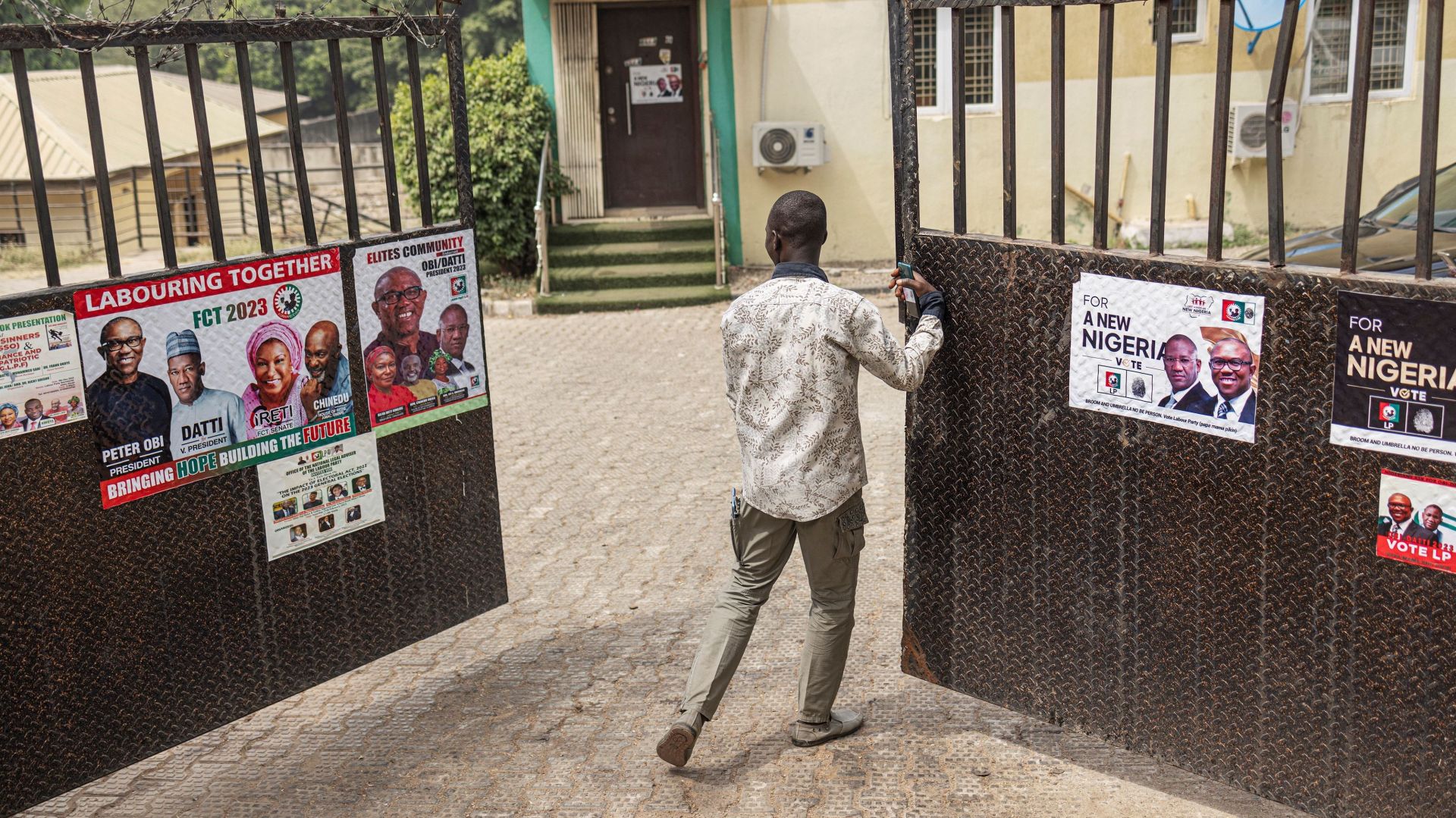
A man opens the gate of Labour Party candidate Peter Obi offices in Abuja on February 23, 2023, ahead of the Nigerian presidential election scheduled for February 25, 2023.

A man opens the gate of Labour Party candidate Peter Obi offices in Abuja on February 23, 2023, ahead of the Nigerian presidential election scheduled for February 25, 2023.

Christianity Today February 24, 2023
Michele Spatari / AFP / Getty Images

Christian leaders in Nigeria are convinced: The outcome of Saturday’s election is crucial.

Against a backdrop of widespread insecurity, persecution, and corruption, on February 25 a record 93 million registered voters will decide the presidency of Africa’s most populous nation. And for the first time since the restoration of democracy in 1999, no candidate has a military background.

One contender is a Christian.

Christianity Today interviewed seven Nigerian Christian leaders, and five directly declared support for their fellow believer, Peter Obi. None indicated any other candidate. And of the 18 candidates seeking office, Obi is one of only three projected to have a realistic chance.

But with no clear frontrunner, Nigeria may face another presidential first—a runoff election. In a nod to the nation’s ethnic diversity, a first-round winner must claim 50 percent of the overall tally as well as at least 25 percent of votes in 24 of 36 regional states.

The West African nation of about 220 million—nicknamed the Giant of Africa—contains roughly 370 ethnic groups, speaking 520 languages.

Each leading candidate represents one of the three largest groups. Atiku Abubakar of the People’s Democratic Party (PDP) is a Fulani Muslim from Nigeria’s north. So is outgoing president Muhammadu Buhari, who at age 80 is completing his second of two constitutionally limited four-year terms.

Bola Tinubu, a Yoruba Muslim from the southwest, represents Buhari’s All Progressive Congress (APC). The incumbent party won elections for the first time in 2015 when Tinubu, the former Lagos governor, offered his considerable political heft. He now openly proclaims it’s “his turn” for the presidency.

The PDP and APC are traditionally Nigeria’s two strongest parties.

The third candidate is Obi, an Igbo Christian from the southeast. A political free agent formerly with the PDP, the Catholic politician joined the then-minor Labour party last May just prior to the primaries. Now he is riding a wave of youth-led popularity, with many seeing in him an alternative to an aging political class.

Beyond the ethnic, regional, and political aspects to the race, there is also the religious: Nigeria is roughly divided 50–50 between Christians and Muslims. All these factors contribute to making this year’s contest far different than the norm. And unwritten rules that in the past attempted to ensure social cohesion have been discarded.

The presidency is understood to rotate geographically between the majority-Muslim north and majority-Christian south. But this election the PDP decided instead to stick with five-time failed candidate Abubakar, perhaps in part to seize the traditionally unified voting bank of northern Fulani peoples that helped bring Buhari to power.

More painful to Christians is the failure of the APC to nominate a split religious ticket. In choosing Tinubu as a southern Muslim, the party feared losing the northern vote and assigned a northern Muslim as his running mate. The Christian Association of Nigeria (CAN)—which represents Protestant, Pentecostal, Catholic, and independent churches—pledged to oppose the Muslim-Muslim ticket, outraged at the breach of religious-political protocol.

Rather than submit to political machinery, Obi struck out on his own. Beside disrupting what had been an emerging two-party system, he also represents the political ambitions of the Igbo.

Following a series of military coups in the 1960s, many Igbo were driven from their homes in northern Nigeria. And in fleeing to their heartland in the southeast, some pronounced the creation of an independent republic. The resulting civil war from 1967–1970 killed thousands; some say the election of an Igbo president would represent a moment of national healing.

The government has made strides to ensure a transparent voting process this year by instituting biometric safeguards on voter identity. But at least 23 officials are being investigated for alleged roles in illegal registration, as authorities scrubbed 2.7 million names from the list.

Additionally, past elections have been impacted by violence and many fear repetition. There have been more than 125 attacks on federal election offices, with 280 polling stations closed in insecure areas. Already one senate candidate has been assassinated, a Labour politician in the Igbo-majority southeast state of Enugu.

Meet the Candidates

Obi’s campaign does not focus on ethnicity but on competence and youth. At age 61 he is the youngest of the main candidates, and his supporters label themselves “Obidients” in reference to the social movement that has rallied around him outside of traditional political structures. Both as a businessman and as former governor of the southeastern Anambra state, the philosophy graduate earned a reputation for thrift and left behind a budget surplus while investing in education and paying salaries on time.

His critics point to his name being mentioned in the offshore accounts investigation known as the Pandora Papers—though Obi was never charged—and a likely inability to govern smoothly if victorious, since he lacks a political base in the halls of government. The Labour party has only two representatives in the House, one in the Senate, and zero governors in the states. To assist in the north, he has chosen a Muslim vice president from the northern Kaduna state.

At age 70, Tinubu also promotes his competency and justifies his Muslim vice presidential choice by saying it reflects the principle that religion should not be a factor in politics. With a Christian wife ordained in a leading Pentecostal denomination, Tinubu downplays any fears of sectarianism. Once exiled for his pro-democracy activism among those who helped lead Nigeria away from military rule, he is credited with generating growth as governor of Lagos, the economic capital, and aims to replicate this success on the national stage.

His critics say that despite increased revenues, Lagos lagged in infrastructure development while political patronage distributed the spoils. Twice cleared on corruption charges, Tinubu was also named in a US Justice Department report about heroin trafficking, though he settled via fine without an establishment of guilt.

At age 76, Abubakar is relying on his long political history while campaigning on a platform of reuniting a divided country—noted by his Christian vice presidential partner from the southern Delta state. An oil sector businessman and former vice president under Olusegun Obasanjo, a Christian who served as president from 1999–2007, Abubakar led that administration’s economic team and instituted a series of successful reforms. Charitable, he established the American University in his northern Adamawa state, which offered scholarships to some of the Chibok girls abducted by Boko Haram jihadists.

His critics say it will be difficult for Abubakar to unite a nation when his controversial geographic candidacy divided his own party. Also accused of cronyism, he is named in a US Senate report for transferring “suspect funds” but faced no trial, while accusations have never been proven in Nigeria. And many Christians are concerned that in transferring power from one Fulani to another, Muslims will continue to dominate the nation’s top offices. Husband to four wives and 28 children, Abubakar controversially deleted a tweet condemning the mob murder of a Christian university student accused of blaspheming Islam.

“My vote is for Peter Obi,” said Emiola Nihinlola, president of the Nigerian Baptist Theological Seminary (NBTS) in southwest Nigeria, citing Obi’s performance as governor. “There are good reasons to fear that a Muslim-Muslim presidency will lead to greater discrimination of Christians.”

“My preference for president is one whom I have identified as a transformational political leader,” said Yusufu Turaki, professor of theology and social ethics at the Evangelical Church Winning All (ECWA) Seminary in the north-central Plateau state, without naming his choice. “He must have a moral and ethical character, and human and social skills.”

“I support Peter Obi because he seems to be the least controversial of the three, and the one least likely to pursue an Islamization agenda,” said Tee Joseph, affiliated with a seminary in Lagos, using a pseudonym to shield his institution amid a climate of political violence. “Tinubu may get emasculated by northern Muslims while the real power will reside in the vice president.”

“It is ok for Christians in the PDP to honor their party allegiance, and the Muslim-Muslim ticket shouldn’t disqualify lower-tier APC candidates completely,” said Gideon Para-Mallam, founder of the Para-Mallam Peace Foundation and a leadership catalyst with the Lausanne Movement. “But this election is a referendum on good governance, and here Obi’s appeal has become irresistible.”

“I support the Labour party because Obi is a younger person with vision,” said Samson Auta, an Assemblies of God Northern Nigeria member serving as northwest regional coordinator for the Interfaith Mediation Center (IMC), “even though he is unlikely to win the election.”

How Will Christians Vote?

Is Auta correct? While Nigerian surveys are often qualified as suspect, Obi has been leading in many—though amid a large percentage of undecideds. Seeking to take this into account, the data and intelligence company Stears studied profiles and peripheral answers to judge that in the case of high turnout for Election Day, Obi would win by a large margin. Otherwise, Tinubu polls comfortably ahead.

In 2019, only 35 percent of the electorate participated, and only twice since 1999 has turnout exceeded 50 percent. Much rests on the youth, as the 18–34 age bracket makes up 84 percent of the 10 million new registered voters and 40 percent of the total overall.

Much also rests on Christians, as a fourth candidate with substantial support in the northern state of Kano—where last month the governor met with clerics who promoted the Muslim-Muslim ticket of the APC as a “jihad”—may further divide the religious vote.

But Nigerian Christians are also divided, having many members in the major parties. Some sources attributed this to historic heritage, others to corruption or political ambition. But Auta estimated his fellow believers would vote 40 percent for Abubakar, 30 percent for Obi, and 20 percent for Tinubu, with the rest dispersed across smaller parties.

Para-Mallam was more hopeful for Obi, estimating 30 percent of the Obidients are Muslim. He thinks Christians would give Obi a minimum support of 60 percent, then 30 percent to Abubakar and 10 percent to Tinubu. But some leaders remain in the camp of the APC, including a few prominent members of CAN.

While most sources found only individual pastors directly endorsing Obi, they also praised the role of the church for promoting political participation this election cycle. Despite what some described as a “cumbersome” registration process, most found the government to be a neutral actor and said Christians have extensively mobilized.

“There is greater political awareness and readiness to vote now more than ever before, because of the sufferings experienced under this administration,” said Samson Ayokunle, vice president of the Baptist World Alliance (BWA), praising also the role of the church in mobilization. “And as the former president of CAN, I stand with my organization against the Muslim-Muslim ticket, in hope the citizens will elect God-fearing figures.”

“If anyone has not registered, it is from personal apathy only,” said Okike Offia, Nigeria country leader for the Navigators. “Pastors and churches have played a very significant role in voter education and mobilization.”

“The Nigerian church has suddenly woken up to the reality of a well laid Islamization agenda, and will certainly not vote for APC, even though they have not publicly endorsed anybody,” said Joseph. “They are likely silent supporters of Obi.”

“Christian unity is assumed, but not factual,” said Turaki. “Political parties have divided us by ethnicity, religion, and region, but this election has given Christians the best potential opportunity to unite their political choice.”

“Religious politics will move Nigeria backwards,” said Para-Mallam. “Muslims have practiced it—first quietly, now louder—while we have been late to the game. But Christians have to give a better example.”

“Christians are learning what it means to be responsible citizens of a nation through political participation,” said Nihinlola. “The church is trying to correct the wrong perception of the past, when politics was considered a dirty game.”

The Key Issues

Asked to list up to five important problems facing Nigeria, five of seven sources cited corruption. Six named insecurity, and an additional six identified the economy. These square with popular perception and global indices.

Afrobarometer polled Nigerians and found an astounding 90 percent say their country is moving in the wrong direction. Poverty encompasses 60 percent, while Nigeria ranks No. 150 of 180 nations in corruption and No. 143 of 163 in national peace. On Open Doors’ World Watch List, it ranks No. 6 of the top 50 countries where Christians face the most persecution.

Analysts say, however, that the main candidates have offered similar rhetoric on these topics—all pledging to reverse course. Some Christian sources say Obi has been a clearer and more focused voice.

“Corruption is like an octopus with many hands that hold a nation hostage,” said Turaki. “Nigeria needs fearless and bold politicians who can address this monster.”

“No Nigerian is safe anywhere,” said Offia. “You neither can sleep in peace at night, nor travel to conduct legitimate business as you could in the past.”

“Unemployment and hyperinflation constitute the pain points most people face,” said Joseph. “I think many will vote against the ruling party because of it.”

The Real Issues

But most sources believed most Nigerians would vote instead according to primordial understandings of identity. Some included Christians among them. Others mentioned an ongoing currency crunch as the government removes paper bills from circulation in favor of a cashless economy, as either a curb on vote buying or a manipulation in favor of the parties with funds.

“Real issues have been shipwrecked in the high seas of political propaganda, with ideologies almost non-existent,” said Para-Mallam. “In Nigeria, parties matter, but to a lesser extent.”

“For Nigeria, specific issues do not carry much weight, as they are usually subsumed under broader ethnic, religious, and regional concerns,” said Turaki. “True national politics cannot develop unless the problem of ethnocentrism is tackled head-on.”

“Unfortunately, most Nigerians will likely vote according to traditional party affiliation and ethnicity,” said Nihinlola. “But it is not certain if there will be vote buying in this election, although citizens are hungry and poor.”

“Every informed and well-meaning Nigerian will vote according to the issues,” said Offia at the Navigators. “But there are those who benefit from the current arrangement, who will go according to religious and regional divides.”

“Most Nigerians will vote based on what they believe will give them the most space for freedom,” said Auta, “to ensure that life can be lived without intimidation or injustice.”

Christians in Crisis

Many sources explained the likely Christian voting patterns in these terms, even as it reflected a religious divide. Many see the cause as existential, and some as politically intentional.

A recently released report by the Observatory of Religious Freedom in Africa tracked killings and abductions in Nigeria over the past three years. Counting all deaths related to terrorism, religious tension, and the conflict between herders (predominantly Muslim) and farmers (predominantly Christian), it remarked that both faiths have suffered terribly.

But Christians suffered more. The ratio between faiths was 2.8 to 1 for killings, and 1.6 to 1 for abductions. But if counted proportionally to the religious demographics in the areas of conflict, the ratios increase in disparity to 7.6 to 1 and 6 to 1, respectively.

The departure from a balanced ticket plays into these fears, as does the possibility of a Fulani succeeding a Fulani. Buhari was prominently named by several as a factor in, if not the instigator of, religious bias.

“The outcome of the elections will certainly impact the level of persecution Christians are experiencing,” said Nihinlola. “If a faith balance is followed in all regions, it should reduce.”

“A Muslim-Muslim presidency will definitely mean more officially endorsed persecution,” said Offia. “The Islamic agenda will be pursued vigorously. The indicators are there and all who have eyes can see it.”

“Neither the APC nor the PDP can be trusted when it comes to Fulanization or Islamization. Neither of the two is healthy for Nigeria,” said Owalalu. “Only a Labour Party can assure that there will be no persecution of Christians in Nigeria.”

“Abubakar as vice president had a history of promoting Christians to high positions in the government, so he is not feared as a Muslim bigot; Tinubu was similar in Lagos,” said Para-Mallam. “But I still fear Islamization can come through democratic processes, and Christians feel safer with Obi.”

“The systemic use of political position to advance Islam or appoint more Muslims to positions of power by the executive arm of government has created more awareness of the need for religious balancing,” said Ayokunle. “If we make the mistake of electing Islamists or corrupt people into power again, the future might not be palatable for Christians.”

Restructuring or Status Quo?

Will it be palatable for anyone? Nigeria is a federal republic with three branches of government, balancing the responsibilities of the central authority with the states. But many sources complained that not only is religious balance disturbed in recent politics, but that the presidency and legislature have grown too powerful vis-à-vis the regions.

Some propose a political restructuring—a few, partition.

Rejected by Buhari, proposals differ and the issue was not a main topic of debate in the election. But the general idea rests in the devolution of authority from the capital of Abuja—perhaps organized around the six major geographical areas.

Yes or no, many see this election as an inflection point: toward greater social cohesion, or more entrenched division.

“Restructuring is about justice and equity,” said Auta. “We have seen agitations and counter-responses between the north, east, and south of the country, which if not properly addressed will worsen.”

“Restructuring will ensure true federalism, and a united Nigeria is far better than several new states,” said Joseph. “But it is at best an elitist matter for a crooked political class, and will not address corruption, the bane of the country’s progress.”

“The 1999 Nigerian constitution was created based upon two contradictory ideologies: liberal democracy and Islamic theocracy,” said Turaki. “The consequences are the ravaging Islamic jihadist groups in the north, and the separatist movements largely in the south.”

“South Sudan is not a viable model for Nigeria,” said Nihinlola. “We have yet to recover from the civil war, and more blood may be shed in the process. And some regions have almost equal numbers of Muslims and Christians, so Balkanization will not solve religious tension.”

“There should be a deliberate rotation of the office of president among the six geopolitical zones in the country,” said Ayokunle. “This would douse the agitation for secession, and every constituent group would have a sense of belonging.”

Eyes of Faith

While Christians have their belonging in Christ, all citizens are part of the nation. But the believing lens is greater—even as this election sets many on edge.

Ayokunle is skeptical: Political behavior has been crude, the government has not resourced the process properly, and violence may scare many away from the polls.

Nihinlola is fearful: Politicians are desperate, and the ethnic, religious, and political divisions are greater than ever before.

Turaki is cautiously optimistic: Despite some hitches, the government has made great effort to ensure the process is open to all.

Joseph is cynical: People are frustrated, while frayed nerves may set the nation on fire, potentially disturbing the elections altogether.

Auta is concerned: Last-chance politicians and ethnic ambitions may spark violence, despite the best efforts of the IMC to put early warning systems in place.

Para-Mallam is nervous: While Obi has momentum, social media popularity and social movement excitement don’t always translate into political results.

Offia is peaceful: This election is a wakeup call to a church that has neglected its responsibility, but God is about to do something significant, one way or another.

But what is it?

“As a Christian I am hopeful,” said Ayokunle. “The God we call upon for the success of this election can cause our government to address all of the above concerns.”

“The church must emphasize the dismantling of structures of injustice and corruption, promoting inclusiveness in government,” said Para-Mallam. “If Christians can do this while in office, it will convince Muslims to vote for them.”

“We are crying for God’s mercy,” said Nihinlola. “We are praying that Christians and other citizens will embrace righteousness and justice to exalt the nation, and that God preserves the gospel, the Christian faith, and the church in the land.”

“The sovereignty of God is over Nigeria,” said Turaki. “Social upheavals often generate human fears and anxieties, but those who trust in the Lord are calm and hopeful.”

“God allowed the current president to be a King Nebuchadnezzar, to force us to repentance,” said Joseph. “Our prayer is for God to take away his fury, forgive our sins, and restore Nigeria.”

“With fervent prayer and submission to the will of God, may we choose the right person—and not from our selfish interest,” said Auta. “This faith is confidence in what we hope for, and assurance of what we do not see.”

“This is a make or mar election,” said Offia. “If we get it right, Nigeria will blossom and flourish. If we get it wrong, it means our cup of suffering is not yet full.”

Theology

What Revivals Can Teach Us

A revival historian looks at four possible lessons from Asbury.

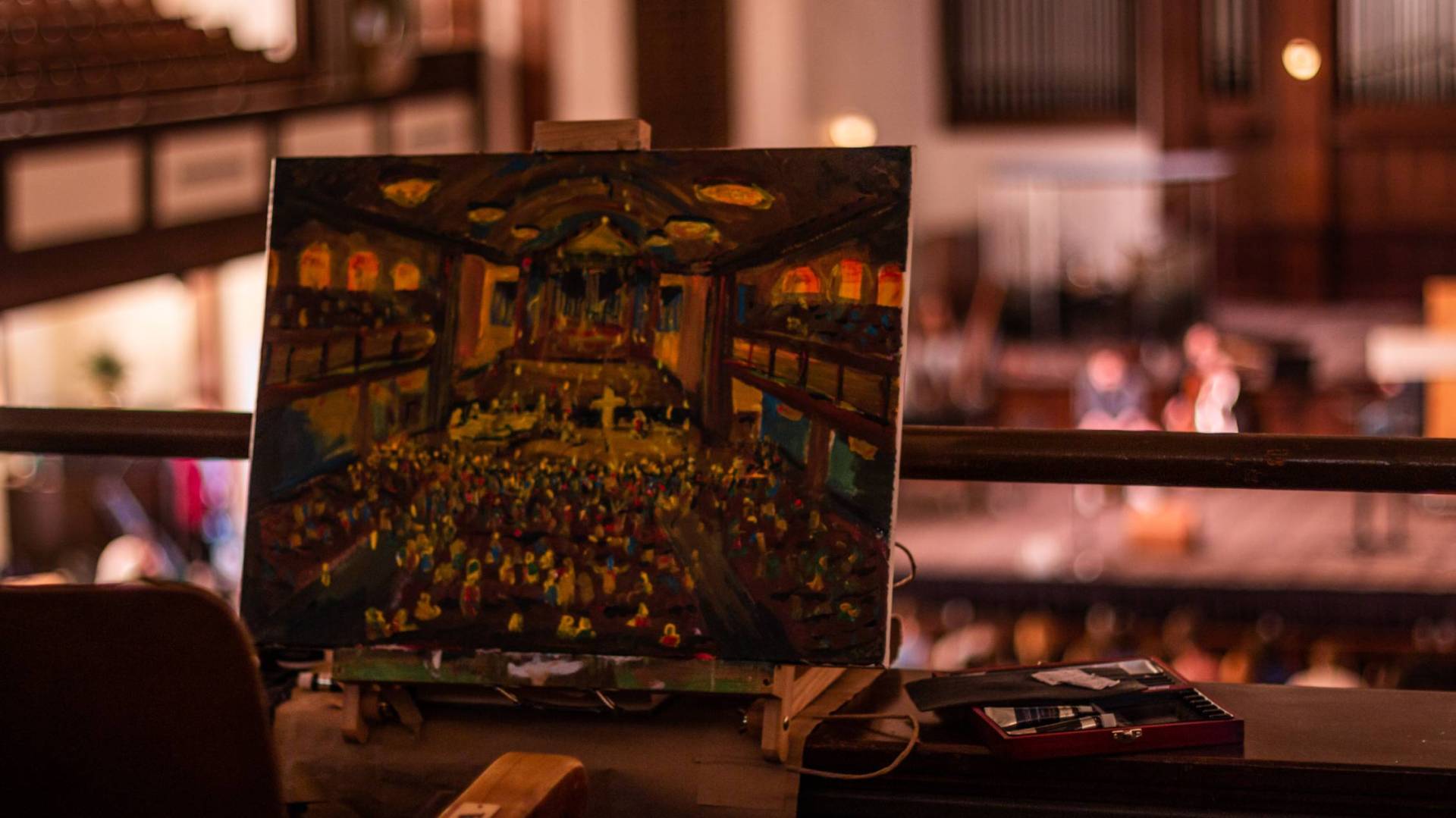
Hughes Auditorium at Asbury University

Hughes Auditorium at Asbury University

Christianity Today February 24, 2023
Courtesy of Asbury University

The best-known evangelical interpreter of revivals, Jonathan Edwards, taught that no one can judge a revival secondhand. Edwards lived prior to telecommunication, but I think he would have said that the spiritual reality of a revival is not available remotely, however technologically sophisticated the transmission might be. The image of the thing is not the thing itself.

So five years after I went to Asbury University to lecture on American religious revivals, I went to see one.

Many believers can recall an exceptional moment in the life of their congregation—perhaps during an unusual sermon, the sort that many preachers offer only once, or a time of great blessing or affliction affecting everyone. On such occasions an entire congregation is united in its clarity and focus on God, and it becomes “one-hearted” or homothumadon, to use the Greek term from Acts of the Apostles.

Remarkably, this congregational feeling—expressed in song and worship, reinforced by short Scripture readings and brief testimonies—is now happening not only at Asbury but also at college chapels across the country. Students and visitors come and go, but the newly gathered experience a sense of “one-heartedness.”

The English word revival denotes a period of time in which a Christian community undergoes revitalization. It has been defined as “a period of religious awakening: renewed interest in religion,” with “meetings often characterized by emotional excitement.”

To call a gathering a revival suggests that an intensification of experience has occurred. A gathered multitude does not constitute a revival. What distinguishes a revival is a deepening of spiritual feeling and expression.

Revivals are corporate, experiential events. There is often a spiritual contagion, causing one person’s experiences to cascade onto others. The term renewal is not as well defined as revival, yet it suggests a return of zeal or vitality to a group of Christian believers who have declined in their devotion.

Since the mid-1700s, reports of Christian revivals from differing regions and cultural groups have shown common themes. Participants speak of their vivid sense of spiritual things, great joy and faith, deep sorrow over sin, passionate desire to evangelize others, and heightened feelings of love for God and fellow humanity.

In times of revival, people may crowd into available buildings for worship services, filling them beyond capacity. Services may last from morning until midnight. News of a revival usually travels rapidly, and sometimes the reports—in person, print, or broadcast media—touch off new revivals elsewhere.

Sometimes people openly confess their sins in public. Another mark of revivals is generosity—individuals willing to donate their time, money, or resources to support the work. Revivals are often controversial, with opponents and proponents criticizing one another. Anti-revivalism arises in the wake of revivals.

There may be unusual bodily manifestations, such as falling down, rolling on the ground, experiencing involuntary muscle movements, laughing, shouting, and spiritual dancing. Another feature may be so-called signs and wonders, such as the healing of the sick, prophecies given, visions or dreams revealing secret knowledge, deliverance from the power of Satan, and speaking in tongues.

Past revivals established new forms of community as well as practical, activist expressions of faith. Revivals refashioned social and ecclesial structures by transferring power from the center to the periphery. People not previously given a voice or a chance to lead have been thrust into the limelight. Women, people of color, the young, and the less educated have all played major roles in modern Christian revivals.

Revivals provoked debates—over genuine versus counterfeit spirituality, the activity and effects of the demonic, the peril of religious fanaticism, the ministry of laypersons, the role of women in the church, the need for new associations among the faithful, and calls for social reform and social justice.

Over the last century, the global church has mushroomed through religious revivals or, as author Mark Shaw calls them, “charismatic people movements.” Such movements stir up vision for the future and what Shaw calls “optimistic fatalism,” that is, a confidence that no problem—personal, familial, or political—is too big or too difficult to resolve.

The common question posed by observers—Is this really a revival?—may not be the best one to ask, since it implies that there is a single yardstick against which every new spiritual movement must be gauged. (Some at Asbury prefer outpouring to revival, thus avoiding any limiting associations of the latter term.)

Because the Spirit is God, the Spirit is infinite—and this means there are infinite ways in which the Spirit may find human expression. Winkie Pratney compared revival to romance. Just as someone who has been in love before may find that being in love with a new person is a new experience, so too the romance of the Spirit will never be exactly the same on any two occasions.

The revivals emerging between 1900 and 1909 in Wales, India, the United States, Korea, Chile, and elsewhere were linked yet showed local variation. People in Wales sang hymns, and many were converted. Those in Los Angeles spoke in tongues. Schoolgirls in India publicly repented of their sins, as did many in the Korean revival. Worshipers in Chile had visions of heaven.

Who can say why one manifestation of the Spirit prevailed in this locality but not that? Scripture says: “Now there are varieties of gifts, but the same Spirit. … To each is given the manifestation of the Spirit for the common good” (1 Cor. 12:4, 7, ESV).

A better question to ask than “Is this revival?” might be “Is this the Spirit?” A recognition of the Spirit’s diverse work should deter us from spiritual snap judgments and from reliance on our own experience as the measure for evaluating everyone else’s.

Spiritual discernment, as Jesus taught, requires us to distinguish “by their fruit” (Matt. 7:20) the genuine from the counterfeit. In his treatise Religious Affections, Edwards made “holy practice” his foremost sign of true spirituality. The problem is that “holy practice” becomes evident only over time, while our trigger-finger Twitterverse passes judgment within seconds. We must engage in patient, prayerful reflection and refrain from snap judgments if we are rightly and biblically to discern.

Four possible lessons from Asbury

Asbury is a revival that’s hard not to like. While there, I saw nothing extreme, outlandish, or cantankerous. People waiting in line for hours were unfailingly polite. Inside the sanctuary, I saw none of the attention-getting behaviors that have often attended revivals of the past and have engendered controversy.

As we sang favorite worship songs such as “Open the Eyes of My Heart,” “Revelation Song,” “10,000 Reasons (Bless the Lord),” and “No Longer Slaves,” I was reminded of stories from the Welsh Revival of 1904–05, featuring hours-long services of congregational singing, without any conspicuous human leaders, and without much preaching—yet with 100,000 converted.

A Chilean woman, speaking through an interpreter, said that the news from Asbury had electrified Latin America. The leaders told us to stand and stretch out our hands toward the south to pray for revival in Latin America. I was reminded of the request sent in 1905 from believers in Los Angeles to Evan Roberts—leader in the Welsh Revival—that he and others might pray for revival in California. He wrote back, assuring them of his prayers. Pentecostals regard the Azusa Street Revival of 1906, at least in part, as an answer to those petitions to God offered up more than 5,000 miles away.

The Asbury leaders confess that they don’t know where things are heading next, but the spiritual DNA of the recent revival points to a few preliminary takeaways:

1. Rejecting the cult and culture of celebrity revivalists

As media evolved over the last century, so too did the celebrity revivalists. Such persons were reputed to be so anointed and Spirit-endowed that their words or physical presence would alter the spiritual atmosphere and usher multitudes into soul-transforming God encounters.

Yet, all too often, the celebrity revivalists failed to live up to their billing. Others showed early promise but later fell into sexual or financial compromise that put an end to their ministries.

But what if there were a spiritual awakening without celebrities? The prince of darkness might become perplexed. How can he undermine a revival in which the leaders eschew the limelight and serve humbly and anonymously for the common good of all? Without a standout leader to corrupt through pride, greed, or lust, how can he scandalize the public?

From the stage at Asbury, leaders spoke out to say, “There are no celebrities in this. The only celebrity is Jesus” and to urge the church to “wake up to the fact that an emerging generation hungers desperately for the supernatural and rebels against any form of religious entertainment.”

2. Rethinking the relationship between spiritual life and digital media

Descriptions of Asbury are likely to sound prosaic: People gather, they sing, they read Scripture, they tell of God’s work in their lives. Isn’t this what happens in countless churches every week? The elusive quality of the Asbury experience will make sense only to someone who has been personally present.

This intangible element—the je ne sais quoi of divine presence and congregational feeling—cannot be transmitted electronically, even if those leading this movement desired to do so.

Asbury is thus a coup for embodied spirituality and against disembodied mediatization. Don’t think that YouTube, Facebook, or TikTok will give you the same experience.

This message may not go over well with everyone. It conflicts with the widespread notion that everything humanly important is electronically transmissible. Asbury is saying, It’s not, and don’t try.

3. Reconciling Calvinist and Wesleyan-Arminian approaches to revival

From the early 1800s onward, Calvinists perceived the specter of Pelagian heresy in the revivalistic focus on human personalities and emotional techniques. Applied to Christian revival, the Pelagian attitude is that “if we ought to have a revival, then we can.” This premise leads to a focus on technique and the methods to make revival happen.

In contrast to revivals “worked up” by human effort, energy, and manipulation, New Light Calvinists conceived of revivals as “sent down” by God’s sudden and unexpected grace. According to a common analogy, a farmer might plow the soil but had to wait for heavenly showers to water the crops.

For Calvinists, the techniques supposedly guaranteed to effect revival were not only mistaken but also akin to blasphemy, since they suggested that something supernatural—God’s holy presence—could be humanly manipulated. Conversely, Methodists and other Arminians often saw the Calvinists’ argumentation as a cloak for complacency or fatalism.

Yet the contrast between Calvinist “revivals” and non-Calvinist “revivalism” is exaggerated. Arminians, who supposedly “worked up” their revivals by human effort, did a great deal of seeking, praying, and waiting on God. Calvinists, who supposedly did nothing but seek, pray, and wait for the “sent-down” revival, labored to kindle into flame the little flashes of grace that appeared among them.

Nothing about Asbury corresponds to the familiar critique of human-centered revivalism. Despite its happening on a Methodist campus, the Asbury revival displays the marks of spontaneity and fidelity to Scripture that Calvinists say are prerequisite to recognizing a “move of God.” (As a Calvinist, I hope that my fellow Calvinists will not oppose it. At the least, I hope that they accept Edwards’s advice by visiting it before passing judgment on it.)

4. Bridging Pentecostal-type revivals and anti-Pentecostal critics

Some evangelicals define revival as “an extraordinary blessing of the ordinary means of grace.” That’s Asbury. The “ordinary means,” such as congregational singing, Scripture reading, and prayer, are reaping “extraordinary blessings” during this season of grace. The Methodist revival tradition might become a balm to help heal the disastrous Pentecostal versus anti-Pentecostal rift.

Methodism sits in a mediating position, situated almost halfway between the furthest fringes of the independent charismatics and the unrelenting anti-revivalism of some confessional Protestants. John Wesley was open to unusual spiritual experiences yet intolerant of disruptive spirituality, strange doctrines, and recalcitrant evangelists who refused fraternal correction.

This Wesleyan attitude of openness with caution may allow for the Asbury revival to bridge a chasm among Christians on revivals. Asbury could encourage Pentecostals and anti-Pentecostals to meet in the Methodist middle and to open their hearts and minds to one another.

As a charismatic, I see a special lesson for my fellow Pentecostals and charismatics. Some parts of the Spirit-filled movement today have drifted from such basics as the Bible, the salvation of the lost, repentance, obedience, and the cross of Christ in favor of throne-room visions, angelic encounters, and end-time speculations. This needs correction, and Asbury suggests how to do this, without turning anti-Pentecostal.

Today it is no longer just the anti-Pentecostals who are limiting the Spirit. When charismatics treat spectacular experiences, or the 1 Corinthians 12 list of charismatic gifts, as the only supernatural phenomena, then this omits a great deal. Scripture teaches that the Spirit is the Convicter, the Converter, the Comforter, the Sanctifier, and the Spirit of Truth, just as he is the Healer and the Gift Giver.

Asbury is a reminder that salvation is supernatural. God’s Word is supernatural. Conviction of sins is supernatural. Compassion for the suffering and the lost is supernatural. We need a broad bandwidth and full-spectrum picture of the Spirit’s works.

A new paradigm for the future

An intriguing author on revival is the social scientist Anthony Wallace. In Mark Shaw’s presentation of Wallace’s theory, “revitalization movements” come in three phases—a problem, paradigm, and power stage.

In the problem stage, people feel that their maps of reality no longer work. The old roads have led to dead ends. In the paradigm stage, a leader or group of leaders emerge who are neither reactionary (clinging to the past) nor radical (rejecting the past). In the power phase, the new paradigm becomes a mass movement.

If we apply these insights to the present situation in the global church, then one might argue the following:

The church needs renewal and reform, yet we are stuck in the problem stage. The old roads have led to dead ends, including the seemingly irresolvable divisions—Calvinist versus Arminian, Pentecostal versus anti-Pentecostal—that sap time, attention, and energy away from a focus on God and the call to evangelism and disciple making. One sign of being in the problem stage is that arguments over revivals have become stale and predictable.

The Asbury revival might represent the paradigm stage. A new paradigm, as Wallace described, will not be wholly new but be a reworking of earlier patterns. In line with this theory, the Asbury approach is neither reactionary nor radical.

The paradigm stage involves leaders rediscovering the New Testament and the roots of their own ideas and practices. Like a tree, the emerging paradigm needs to sink its roots down deep before it can begin to spread its branches.

Challenges to a new movement will come especially in the shift from the paradigm stage to the power stage, when a movement begins to challenge the status quo. Opposition in the power stage will come both from conservatives and from radicals.

If the new paradigm for spiritual revitalization can remain steadfastly centrist—and avoid being captured either by conservatives or by radicals—then there is hope that the new paradigm will become a dominant paradigm, and then widespread and systemic revitalization and reformation in the church may become possible.

Revival advice

As we wait to see what new paradigms may come, let me close with some revival advice, from someone who spent years reading and writing about Christian revivals and who has had opportunity to observe what is happening at Asbury.

If you are a believer and hear reports of renewed experiences of God’s love among God’s people, as well as a deepened desire among them for prayer and worship, then rejoice. Our default reaction—before anything else—should be joy.

Be wary of people who present themselves as experts on the Holy Spirit (even people like me, who write articles like this). No one has the Spirit figured out. Each of us is a learner.

Allow God to guide you and give you discernment, in reliance on Scripture and in conversation with a pastor and other spiritual friends. The Lord desires for you to “discern what is best” (Phil. 1:10). He will not fail you. Recognize that spiritual events, unlike physical, are not accessible to the five senses. Spiritual things must be spiritually discerned—which means discerned through their effects gradually disclosing themselves over time.

Pray for the leaders and participants in revivals and for revival in your own heart. Join together with other believers to pray fervently for revival in your own community. Make common cause with like-minded people from other races, ethnicities, social groups, or denominations. Greater unity with them may be a part of God’s plan.

Following the Asbury model, bring together younger Christians with more experienced leaders. The fire of youth and the wisdom of age are a potent blend.

Michael McClymond is professor of modern Christianity at Saint Louis University. He was the sole editor of the Encyclopedia of Religious Revivals in America, 2 vols., and coauthor (with Gerald McDermott) of The Theology of Jonathan Edwards. His latest book is Martyrs, Monks, and Mystics: An Introduction to Christian Spirituality (Paulist Press, fall 2023).

Theology

As South Korea’s Marriage Rates Decline, Churches Try to Bring Back Romance

But they struggle to promote “I dos” without sidelining single people in their flocks.

Christianity Today February 24, 2023
Changhun Lee / EyeEm / Getty

Married life has not lived up to Jai Kang’s vision of what union in Christ might look like.

Every day, Kang gets her nine-year-old son ready for school and sends him there before heading to work at an insurance company in Seoul. On the weekends, her husband works or plays golf while she cares for her son, leaving her busy and exhausted.

“I’ve been married for 10 years, and I face a lot of difficulties in my daily life,” said Kang. “I want to live according to the Bible, but it is hard to do so because it seems that money, success, and reputation are [more] important to my husband.”

Spiritual matters serve as another point of contention between the couple.

Kang’s husband does not go to church every Sunday because of his demanding work schedule. He is also against sending their son to a Christian school, preferring a public-school education instead to “broaden” their son’s perspective of the world.

Kang’s marital woes, while seemingly minor, may be emblematic of South Korea’s growing disenchantment with marriage within and beyond the walls of the church. Today, many describe marriage and child rearing as burdensome and 65 percent of unmarried Korean women have chosen to go on a “marriage strike.” Many young Koreans say this perception of marriage has arisen because of difficulties they face in securing stable employment and financial security.

Churches are also contending with a shrinking Christian population. The proportion of Protestants in the country has stagnated at 21 percent. More than half of Koreans say they are irreligious. Young people are losing interest in religion, leading more and more Protestant churches to become “sanctuaries for the old.”

While there is no available data on the percentage of Christian marriages in the country and how it is evolving, Korean churches recognize that marriage is in crisis. But despite the best efforts of pastors and the desires of single churchgoers, few Christians are optimistic about seeing change on the horizon.

On the rocks

Tying the knot is important in South Korea because of its individual and communal impact. It signifies a person’s contribution to nation building and the continuation of a family name through childbearing.

But marriage rates are slumping.

Less than half of the country’s citizens aged 13 and older now believe that marriage is a must, according to a November 2022 government survey. Marriage registrations hit a “20-year-low” in 2020 and the country’s fertility rate dropped to 0.78 last year, the lowest in the world for the past three years.

Koreans are also increasingly accepting of cohabitation, with over 65 percent agreeing with the statement that men and women can live together without getting legally married.

Christian marriages are not insulated from these societal changes and challenges, and although many Korean churches have set up marriage ministries, sustained efforts to care for couples are few and far between, say some of the pastors and churchgoers CT interviewed.

The Korea Family Ministry Association, comprising more than 50 family ministry organizations and large churches, holds family-focused fairs and seminars. Onnuri Community Church, a megachurch based in Seoul, regularly organizes a variety of premarital and marriage mentoring programs. To incentivize married believers to have more children, Daegu Dongshin Church in the city of Daegu gives couples who bring their children to its child dedication services a $1,000 USD gift. Other churches have offered couples a sponsored trip to Israel with their senior pastor.

While these ministry efforts appear promising, some Christian leaders think churches can do more to care for the married couples in their midst.

The dire reality surrounding marriages among Christians can be attributed to the Korean church’s “failure” to inculcate a scriptural basis and understanding of matrimony in believers, says Jong Kon Shin, a ministry leader with Family Life Korea.

“The church and Christian leaders have neglected the teaching of marriage and family based on the biblical view of marriage while focusing on the external growth of the church,” Shin said.

It is “rather difficult” to establish marriage ministries in Korean churches, Shin added.

Besides the difficulty in finding people to oversee and lead such ministries, couples who do take part in such programs may experience discomfort in sharing vulnerably about their families and marriages because programs are usually run in a formal setting, making it less conducive for couples to share about their private struggles, he said.

Divorce cases are also on the rise among believers, which reflects how they are becoming more influenced by “secular values,” says Shin.

Kang, who is married with a son, says her pastor and church friends have been a source of care and support for her while she was exploring the possibility of divorcing her husband.

“When I told them that I wanted to get divorced, they prayed for me every day. I do believe God is comforting me, and I decided to take time and try my best with my husband,” she shared.

But churches still lack good role models who can exemplify what a Christlike marriage looks like, says Kang.

“Even if a couple actively participates in church activities, I actually see a lot of disputes between them about money, raising kids, and complaints about how they’re not being good to each other,” she said.

Turning away

Korean men and women both say that their biggest obstacle to getting married is a lack of finances. The second-biggest factor is where they diverged: men said it was unstable employment, compared to women who cited marriage as unnecessary.

Christians in South Korea generally want to get married and face similar financial concerns and social pressures as their nonbelieving peers. But they grapple with an additional source of stress: the church, which many say has stigmatized them for their unmarried status.

Being single is viewed as “incomplete or abnormal in Korean society,” said Michelle Park, an artist who worships at YES Church on Jeju Island.

The church environment appears to be no different. Most pastors are married, and single pastors are viewed as “second-class,” said Steven Chang, English ministry pastor at Hallelujah Community Church in the city of Seongnam.

In particular, single women at church feel “discouraged, disadvantaged, overlooked, and undervalued,” and some pastors may even say snide remarks to them like, “You must be coming [to church] because you are looking for a husband,” Chang said.

They become disillusioned to the point that they decide to leave the church and become “Canaan” Christians, he says.

The term Canaan Christian is a play on its three Korean syllables, where ga-na-an (가나안) is phonetically flipped backward to form the words an-na-ga (안나가), which means “don’t go out” and, by extension, “don’t go to church,” Chang explained.

While the origin of the term is uncertain, it’s used by missiologists and church leaders and also as a form of self-identification without any negative connotations. (Last September, one Canaan Christian published a book featuring interviews with other “Canaan” believers, including pastors and married women with children, on why they decided to leave their churches.)

The number of Canaan Christians comprised 23.3 percent of Korean Protestants in 2017. Chang believes the figure will only increase post-pandemic.

The growth of Canaan Christians, coupled with the diminishing number of believers in South Korea, may mean that there are fewer opportunities to meet and marry a fellow believer. This may affect single Christian women more drastically because the number of women far outweighs men in many Korean churches.

Park is single and wants to marry a Christian man but cites this gender imbalance in church as a difficulty she faces. The church needs to “listen” to single people and “help them to match” with someone in their search for a Christian spouse, she says.

But Young Min Tak, an MBA student in Gwangju who goes to Light and Salt Church, says that he finds it hard to meet someone with strong faith in the church, and that churches aren’t “doing their best job” at encouraging marriage because they have not lived out biblical values in the world.

Dialoguing with feminism

How feminist thought impacts marriage is something the church also needs to talk about, says Park. Her concerns may reflect a larger conversation on feminism sweeping across the country, which ranges from decrying women’s disproportionate responsibilities in the home to bemoaning spikes in gender-based violence and resisting accusations of misandry from Korean men, including current president Yoon Suk Yeol.

Conversations about matrimony in the church, however, can seem rather insulated from the country’s ongoing feminist dialogue.

Evangelical churches in South Korea largely oppose feminist ideology and theology because they are regarded as a “gender-based ideology that feminism promotes,” said Daewon Moon, the senior pastor of Daegu Dongshin Church.

Instead, Korean churches emphasize a “biblical” view of marriage, where man and woman are created equal, have intrinsic value, love and respect each other, and view matrimony as a permanent commitment, says Moon.

Moon has seen a “slow change” take place after encouraging the men in his congregation to serve their wives. He did so by preaching on the contrast between secular and biblical views of power, where Jesus’ life shows how the powerful serve, rather than dominate, the weak.

Moreover, “what is needed is to address emotional and relational issues” in a believer’s life instead of simply teaching biblical truth from the pulpit, said Moon.

“That’s still a new thing for many Korean churches. We need to have a holistic approach to [engender] restoration and reformation and spiritual healing.”

One very recent development in the Korean church, said Moon, is the forming of father-focused ministries.

Onnuri, the Seoul-based megachurch, runs a “father school” that provides support, prayer, and fellowship for men who struggle with living out biblical principles in parenthood. These seminars have been conducted in churches and civic organizations in South Korea, such as the military and in prisons.

Teaching Christian husbands to redefine their priorities is one way the church wants to “break away from the male-dominated patriarchal culture rooted in Confucianism,” said Stephen Cha, Onnuri’s English ministry pastor.

Shifting attitudes

As Korean churches strive to encourage healthy, Christ-centered marriages, many believers hope that congregations will simultaneously affirm a biblical perspective of singleness.

Perceptions of singlehood are changing rapidly, and the proportion of South Koreans who are choosing to stay single has skyrocketed in recent years.

Single-person households in the country rose to “an all-time high of 31.7 percent” in 2020, with the term honjok (혼족) emerging as a positive moniker for people who enjoy solo activities “willingly and confidently.”

Other cultural lingo like bihon (비혼), a term that refers to people who choose to stay unmarried, has emerged in recent times. Its usage is superseding another term, mihon (미혼), which leaves open the possibility of marriage.

Similar shifts are happening in Korean Christian circles, although positive views of singlehood were expressed by the Christian men rather than the women CT interviewed.

Tak, the male Christian MBA student, offered a view of singlehood that affirmed its sacrality. “It is not a sin to live as a single [person] because Jesus and Paul lived as single [men],” he said.

Singlehood has become far more appealing to Dro Bae, a Christian headhunter in Seoul who attends Onnuri Community Church.

Marriage is no longer “a mandatory thing in life,” he said. “I think getting married is not the only right answer. I can live a religiously mature and healthy life without getting married.”

More empathy is needed when pastors and church leaders talk about marriage to Gen Z and millennial Korean believers, Bae adds.

Young Korean Christians are often pressured to get married by the older generation, whose comments typically imply that marriage is essential and that if they devote themselves to God, he will give them a mate, he said.

“The older generation should put away prejudices that young people are not getting married because they are selfish and irresponsible but sympathize with the difficulties they face, acknowledge their thoughts, and then talk about marriage,” Bae said.

“And I hope they don’t impose any burden on anyone that we must get married.”

Translation and additional reporting by Jennifer Park, Joonggi Chae, and Moses Kim

News

‘No Celebrities Except Jesus’: How Asbury Protected the Revival

While tens of thousands flocked to campus, school officials met in a storage closet to make decisions that would “honor what is happening.”

Christianity Today February 23, 2023
Asbury University

The shofars didn’t start until Saturday. With them came the would-be prophets seeking to take center stage at the Asbury University chapel where students had been praying and praising God since Wednesday morning; the would-be leaders who wanted to claim the revival for their ministries, their agendas, and celebrity; and the would-be disrupters, coming to break up whatever was happening at the small Christian school in Kentucky with heckling, harangues, and worse.

But by Saturday, Asbury University was ready.

The school had not planned an outpouring of the Spirit. But when something started to happen in the middle of the first week of February—the middle of the semester, a few days before the Super Bowl—an impromptu mix of administrators, staff, faculty, friends, and university neighbors quickly mobilized. They gathered in a storage closet off the side of Hughes Auditorium and then repurposed a classroom to facilitate and support whatever it was that God was doing.

As word spread, the crowds came, and debates raged online about whether this was a “real” revival, these men and women worked untold hours to make sure that everyone who sought God had food and water and restrooms and everyone was safe. Part of the story behind the story of the revival is the almost invisible work that went into protecting it.

“There were 100 people volunteering at any one time, just to make these services work on the fly,” Asbury University president Kevin Brown told CT. “There was a classroom that got redeployed into almost a command center. If you walked in, there were flow charts on the wall and the whiteboards were covered with information. There was a volunteer check-in station. … It was one of the most impressive technical feats I’ve ever seen.”

The revival began at a chapel service on February 8. Zach Meerkreebs, the assistant soccer coach who is also the leadership development coordinator for the missions organization Envision, preached about becoming love in action. His text was Romans 12.

As he started, Meerkreebs told the students, who are required to attend three chapels per week, that he wasn’t aiming to entertain them. And he didn’t want them to focus on him.

“I hope you guys forget me but anything from the Holy Spirit and God’s Word would find fertile ground in your hearts and produce fruit,” he said. “Romans 12. That’s the star, okay? God’s Word and Jesus and the Holy Spirit moving in our midst, that’s what we’re hoping for.”

Meerkreebs also talked to them about the experience of God’s love, in contrast to the “radically poor love” that’s narcissistic, abusive, manipulative, and selfish.

“Some of you guys have experienced that love in the church,” he said. “Maybe it’s not violent, maybe it’s not molestation, it’s not taken advantage of—but it feels like someone has pulled a fast one on you.”

No one came forward at the end of the service, though, and Meerkreeb was convinced he “totally whiffed.” He texted his wife: “Latest stinker. I’ll be home soon.”

A Black gospel trio sang a final song and chapel ended—but 18 or 19 students stayed. They sat in several clusters: a few along the right wall, a few in their seats, a few on the floor in the aisle, a few at the foot of the stage. They kept praying.

Zeke Atha, a junior, told a documentarian a few days later that he was one of the ones who remained in the chapel. He left after an hour to go to a class, but then when he got out, he heard singing.

“I said, ‘Okay, that’s weird,’” Atha said. “I went back up, and it was surreal. The peace that was in the room was unexplainable.”

He and a few friends immediately left, sprinting around campus, bursting into classrooms with an announcement: “Revival is happening.”

The Wesleyan-movement school has a tradition of revivals and a theology that teaches people to wait and watch for a divine wind to blow. The university is named for Francis Asbury, the early American Methodist bishop who encouraged and celebrated revivals from Maine to Georgia and Maryland to Tennessee.

There are also people in the Kentucky community who have long prayed for fresh revival at the school, including a Malaysian theology teacher who sometimes walked the streets with a cardboard sign that said, “Holy Spirit, You Are Welcome Here.”

Administrators, however, did not immediately assume a revival was starting, even as young men ran around campus shouting it was. Only as the spontaneous prayer service stretched into the afternoon and then evening did school officials realize they might have to make a decision about how to respond.

Meeting in a closet

An ad hoc revival committee of about seven people gathered in the one quiet space in Hughes—a storage closet. According to several people who were there, they pushed aside a drum kit and keyboard and sat knee to knee. Someone found a dry erase board, and they asked each other, “What are we going to do in the next two hours?”

Then they started thinking slightly longer term: “Will students stay all night? What does that look like? Should we leave the sound system on? Should we let students keep bringing guitars into chapel?”

The group decided to have ministers stay in Hughes and have security watch the building but keep it open. They would let the students stay and pray and sing as long as they wanted.

Other decisions they made in the next few days seem, as the ad hoc committee reflects on them now, almost like they happened by instinct. There was no time for drawn-out discussions. They would meet in the storage closet and make decisions minute by minute. Did they want to put up screens for the lyrics of the worship songs? No. Should ministers who spoke on stage stop to introduce themselves? No. Should they put up signs asking people not to livestream? Yes.

“We were just trying to keep up,” student life vice president Sarah Thomas Baldwin told CT. “There are people and they’re showing up and they’re desperate for God. We’re just trying to stay alive and trying to honor what is happening.”

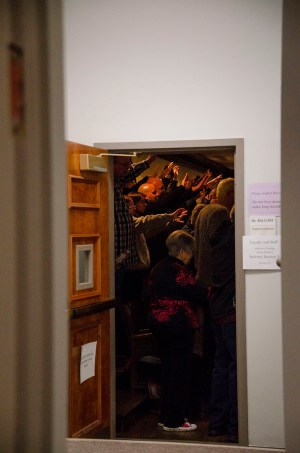
An entrance in Hughes Auditorium

By the second day, word had spread to the seminary, about a football field away, which shares a namesake and tradition but is a separate institution. People started to come from the town of Wilmore too and then the greater Lexington area.

Alexandra Presta, editor of the student newspaper, posted a report online.

“During a call of confession, at least a hundred people fell to their knees and bowed at the altar,” she wrote. “Hands rested on shoulders, linking individual people together to represent the Body of Christ truly. Cries of addiction, pride, fear, anger and bitterness sounded, each followed by a life-changing proclamation: ‘Christ forgives you.’”

Friends from other states started texting Presta, asking her what was happening and also why. She told them she didn’t know. But God still moves.

‘All the Chick-fil-A’

On Friday afternoon, groups of students started to show up from other parts of Kentucky, as well as Tennessee, Ohio, Indiana, even Michigan. Some came from Christian schools. Some from campus ministries. Some just came.

By evening the crowd had grown to about 3,000, and the university had to set up overflow rooms. At the same time, an uncoordinated infrastructure of support began to appear. An Asbury student set up a table and started handing out tea and coffee. She said Jesus told her to. A woman in Indianapolis baked chocolate chip cookies for a full day and then drove down to give them away. A professor went and got cases of bottled water.

Pizza appeared, unbidden, along with homemade potato soup, cake, a table of protein bars, and what one volunteer called “all the Chick-fil-A.” Someone volunteered to start organizing housing and put up signs with QR codes that people could scan to start the process of finding a place to sleep.

School officials didn’t have time to weigh whether they thought the ongoing, unplanned worship service qualified as a revival. Even when it was over, some would be unsure if revival was the correct word. But they did have to decide right then how they were going to respond as people kept coming from further and further away.

“We began getting reports from people seeing stuff on social media about people who were coming, not just from our region, but pretty significant distances,” said Mark Whitworth, vice president of communications. “I don’t remember who it was, but somebody said, ‘Going viral is not necessarily an awakening,’ and we all agreed with that. But the focus was on practical things. Like, does the worship team need to rest, and do we have enough prayer support at the altar?”

Several ministers at organizations that focus on revival and organize prayer meetings, including David Thomas from the Awakening Project and J. D. Walt and Mark Benjamin from SeedBed, encouraged Asbury’s administration to prepare for what was coming.

The ad hoc committee gathered in the repurposed classroom on Friday to discuss what they were going to do. President Brown told the 15 or so people in there that he thought there was one big question.

Volunteers left food—and prayers—for Asbury staff members, community supporters, and students.

“Something really historic and really unique is happening here,” he said. “This is going to outlive us. Well after we’re dead, people are going to be talking about this. Are we going to accommodate it?”

The group quickly came to a consensus that they hadn’t started the outpouring, hadn’t planned any of this, but they were nonetheless called in that moment to be hospitable. They would work to host it and hold it, all the while keeping in mind that they were not in control.

“There was a tension,” Brown told CT, “between ‘How do we maintain orderliness?’ and ‘How do we create space for this spiritual unfolding that we haven’t planned, we don’t know where it’s heading, but we know it’s good and bigger than us?’”

Shofars, exorcisms, and angry prayers

As news of the singing, praying students ripped across social media and “takes” ricocheted around Twitter, TikTok, and Facebook, the team planned and organized, working out the details of how to deal with that tension. So when someone started blowing on a shofar—the curly ram’s horn trumpet that some charismatic Christians have turned into a symbol of MAGA politics and spiritual warfare—the chapel staff didn’t have a protocol for that exact situation, but they knew what to do. They asked the person to recognize the way God had showed up in the chapel and be faithful to the sweet, humble, peaceful spirit of the outpouring.

They did the same thing, Asbury staff told CT, when someone started praying loudly and aggressively. And again when someone started attempting an exorcism—not arguing about demonology or citing university rules, but invoking the authority of the outpouring itself.

“We want to be true to how the Holy Spirit showed up with our students,” said Baldwin, the vice president of student life. “We experienced joy. We experienced love. We experienced peace. There was lots of singing and testimonies. Those became our signposts. This is how, in front of our eyes, we are seeing the Holy Spirit come upon our students, and we want to honor that.”

Most people complied, though a few had to be asked to leave. One street preacher came wearing a T-shirt condemning gay sex and a plan, according to staff, to shout at students about perversion. He was escorted off the property. Another person wouldn’t stop praying aggressively and was told he had to go outside.

When the chapel staff opened up the microphone again for testimonies, they started vetting them first. As an added precaution, the Asbury team held on to the microphones while people talked.

“Saturday and Sunday, we were asked all day long, ‘Can I give a word?’ ‘Give a word?’ ‘Give a word?’” Baldwin said. “Well, tell us your word first.”

Matt Smith, a Wesleyan pastor from a nondenominational church in Johnson City, Tennessee, noticed the ministers holding onto the microphone when he got into the chapel on Monday, February 13. After seeing reports of the revival on social media, he, his youth pastor, and his minister father all drove the four and a half hours to see it for themselves. They were immediately hit by the sweet, peaceful presence of the place, and as ministers, they also noticed the staff working hard.

“I think most of us in the evangelical world have been in a service where someone walks off with a microphone,” Smith told CT. “At the same time, God works through people, so you don’t want to shut that down. You can’t control everything that’s said, but you have to have healthy spiritual oversight.”

Smith said he was impressed with how the ministers maintained the delicate balance. Wesleyans, however, have a long tradition of figuring out how to nurture an outpouring of the Spirit. Once in 1804, the school’s namesake had 20 watchmen carry long peeled rods to protect a camp meeting from frontier ruffians. “The work of God is wonderful,” Asbury wrote another time, when some people showed up to try and take control of a revival in Delaware. “But what a rumpus is raised!”

No celebrities here

On social media, a number of controversial charismatics announced they were headed to Asbury. Todd Bentley, who once claimed God told him to heal a woman by slapping her in the face and who was deemed unfit for ministry by a panel of pastors in 2020, tweeted out “I’m going.” Greg Locke, who found fame defying COVID-19 health mandates and spreading misinformation about the 2020 election, announced he was planning a trip as well.

The staff managed to keep anybody from taking over the microphone, though, and avoided too many disruptive confrontations.

Cleaning the aisles of Hughes Auditorium

There were also Christian leaders who went quietly, just to pray and participate without trying to take the stage. Kari Jobe, the contemporary Christian music singer who won a Dove Award for “The Blessing” in 2021, went to Asbury and went down to the altar. Several students prayed for her, according to Asbury staff, without appearing to know who she was. A leader of the Vineyard Church came and went without announcing anything on social media.

By the time the revival entered its second week, there were regular announcements made about platforming celebrities. Throughout the day, ministers who didn’t stop to say their own names or job titles would say, “There are no celebrities here, no superstars, except Jesus.” The term “radical humility” was used regularly.

There were also announcements that if people were moved by the Spirit to jump up and down, they shouldn’t do that in the nearly 100-year-old balcony.

In the midst of this, the students’ worship continued. Though the chapel could feel crowded and like they were going to be pushed aside by “revival chasers,” many of the young people still testified to the transformation they saw happening.

“I know this campus very well. It’s small,” Alison Perfater, Asbury’s student body president, told a documentarian. “And I know exactly which students on this campus hate each other. Those are the people I have seen praying together, singing together, hugging, crying. … It’s been totally life changing.”

The organization of logistics got a little easier the second week, as things got “operationalized,” according to Asbury administrators. Teams formed for each specific need, and the revival committee said yes to a growing number of volunteers offering professional services—like an event manager from Phoenix who showed up unannounced with a plan to coordinate volunteers. Staff jumped in anywhere there was a need. A human resources coordinator, for example, spent the week answering the phones, as people from around the country and even abroad contacted the school for information about coming.

Seminary students also got involved, sometimes formally, sometimes informally. Hermann Finch, a Methodist youth minister from Zimbabwe who is studying at the seminary, told CT he was asked directions to the toilet. So that’s how he decided to volunteer, pointing people to the port-a-potties for an evening.

Faithful to their part

Going into the second weekend, however, the revival committee decided they would need to announce a limit to their hospitality. The town of Wilmore was overwhelmed, traffic was impossible, and news of the revival was only spreading more rapidly. Tucker Carlson, host of the most-watched TV news show, did a glowing segment on Asbury and told viewers the next day he was “still thinking about it.” Carlson said he “didn’t understand it … but whatever is going on seemed wonderful.” On Friday, former vice president Mike Pence tweeted he was “deeply moved to see the revival taking place at @AsburyUniv!” and noted his own religious awaking at a music festival there in 1978.

Early Saturday morning the school set up two large screens in the grassy semicircle outside the chapel to try to accommodate everyone. An estimated 7,000 people showed up that day—more than doubling the number of people in Wilmore. Most had to stay outside the chapel, even though the temperature reached only the 40s. Some reports placed the total number of weekend visitors around 20,000.

In the classroom-turned-command center, the team discussed concern for students and the school’s responsibility for their education. Nurturing their spiritual experience and formation might, at some point, need to mean the school stopped welcoming people to campus.

The team also talked about the exhaustion of the volunteers. President Brown noted he’d seen one person helping out at 8 in the morning, then again at 1 a.m., and at 8 a.m. the next morning. That incredible generosity wasn’t sustainable, and they needed to find a “horizon.”

At the same time, the school was hearing reports of prayer services at other Christian colleges and universities. At Samford University, in Alabama, one student began singing in the chapel in the evening and was soon joined by hundreds. It kept going overnight and continued the next day. At Lee University, in Tennessee, students were seen running to chapel. One freshman told a local reporter she thought it was just a copycat event until she went herself.

“The Spirit was 100 percent moving in that place,” she said.

Crowds on the green outside Hughes Auditorium

Something similar happened at Cedarville University in Ohio. And there were reports of extended prayer, singing, confession, and testimony at Baylor, Belmont, Campbellsville, Hannibal-LaGrange, Valley Forge, Milligan, and other schools.

“It reminds me of a Christmas Eve service,” Asbury spokeswoman Abby Laub told CT. “We were holding a candle, and now we’re passing it around. And that’s what you want. You don’t want to be the only one holding the candle.”

The ad hoc committee felt a sense of release. The fire was spreading, and they had been faithful to their part. They decided to announced things would be winding down. Starting on Tuesday, February 21, they would limit the service to people under 25 but livestream each night starting at 7:30 p.m. Then they would end on midnight on Wednesday, a full two weeks after a few students stayed in chapel to talk and pray and sing, and then felt a holy wind.

On Wednesday night, a staff member at the front of Hughes Auditorium greeted the room full of students born after 1998. “Welcome to the move of God,” he said.

A few hours later, as midnight approached, a young woman in an oversized gray sweatshirt that read “Zionsville” raised one hand to heaven and led the students in singing Chris Tomlin’s “How Great Is Our God.”

“The Godhead three in one,” she sang. “Father, Spirit, Son. … How great is our God? Sing with me.”

More than 1,000 students did, raising their hands and lifting their voices. The surge of their worship filled the chapel to the rafters, overwhelming the thin audio of the livestream.

“How great is our God,” they sang. “All will see how great, how great is our God.”

Theology

Celebrating Revival in a Cynical Age

The Asbury revival reminds us that God works in ways we cannot control.

Christianity Today February 23, 2023
Illustration by Christianity Today / Source Images: Casey Johnson / Lightstock / Pexels

This piece was adapted from Russell Moore’s newsletter. Subscribe here.

Over the past several weeks, the world has looked to a phenomenon many assumed was of a bygone era: revival.

For some, the Asbury revival has sparked a renewed sense of hope for the future of the church. For others, though, reports of revival are met with something else—a jaded sense of cynicism.

By cynicism, I’m not referring to the professional social media contrarians of whatever sort or tribe—for whom almost anything is an occasion to reignite old fights with whomever they deem to be “the enemy.”

I’m referring instead to those of you who are just disappointed and tired. You’ve seen so much that’s fake that it’s hard for you to believe that anything so extraordinary could be real.

A few weeks ago, my friend Yuval Levin said something in our conversation on my podcast that I haven’t been able to get out of my mind. He commented that most people think of the cynical as the opposite of the naïve—when really, it’s just another way of being naïve. The more I ponder his point, the more I think he’s right.

The apostle Paul told us to “test everything; hold fast what is good” (1 Thess. 5:21, ESV). One type of person throws overboard the hard work of testing by just receiving everything—or, at least, everything preapproved by one’s tribe or ideology or movement.

That’s a lazy mindset that leads exactly where the Bible tells us it will—to inviting wolves who know how to exploit it. But cynicism exhibits the same kind of laziness. One need not do the hard work of testing the spirits if one rules everything as inauthentic from the outset.

For some people, cynicism is based on a kind of materialistic naturalism that assumes the only “real” things are quantifiable. Others may hold to a certain political ideology that assumes the only “real” things are those one can mobilize for one’s cause. Still others might be cynical due to a religious fundamentalism that eschews any mystery that seems out of step with one’s syllogisms.

For still others—many people, in fact—cynicism is the product not of a fighting spirit but of a broken heart. This is not really cynicism in the way we tend to think of it as much as it is a form of self-protection. One can’t be hurt, it’s assumed, if one doesn’t expect much. It’s less jaded than it is just numb.

That’s understandable. Some of the people I know most nervous about events such as the Asbury revival came out of church movements that were themselves the afterburn of some other revival, perhaps the Jesus Movement of the 1960s and ’70s. These Christians sometimes were exhausted by a kind of artificial emotional whipping up—the leaders’ attempts to somehow re-create what they had once known when the fires of revival seemed closer and stronger.

One friend from one such tradition told me he did not question the authenticity of the Asbury revival. As a matter of fact, he—like me—is cheered by it. Still, he said, he is not worried about the students themselves or the school’s leadership. Rather, he’s concerned about the various hangers-on who are drawn to any extraordinary spiritual moment and, ultimately, those who will be there to sell them stuff or use them to gain power.

If you feel nervous or skeptical about the Asbury revival, I would point you to one of the places I have felt the most cynical, exhausted, and disgusted: the Jordan River.

Over the years, I’ve taken groups of seminary students and others to Israel and the surrounding lands to study the Bible in the places where the events of Scripture occurred. Most people on these trips were traveling to the Middle East for the first time.

Many of them remarked about how much they loved Galilee in particular. Sitting in a field near the Sea of Tiberias can give one an imaginative sense of what it must have been like to sit on just such a hill—perhaps in the exact same spot—hearing Jesus teach. Many sites have a similar response.

But then there’s the Jordan.

We have often waited, sometimes a half hour or so, to see the river because some prosperity-gospel evangelist was there dunking busloads of people who came to “rededicate” their lives to Christ. How many of these people, do you suppose, also paid money to these preachers in exchange for some sort of “blessing” they believed they could obtain?

And, of course, one must enter and exit the Jordan River through the gift shops. There one can buy Jordan River key chains, Christmas ornaments, and “genuine Jordan River water.” The place seems so market-oriented and desacralized that I expect if Jesus were to arrive there now, he might turn over the moneychangers’ tables before seeking out his cousin John the Baptist.

Students usually walk away mumbling, “That looked nothing like the Jordan River.” Of course, by definition, it looks exactly like the Jordan River—but I know what they mean.

Do the marketers, grifters, and hangers-on at the Jordan invalidate what happened there? Do they somehow null the fact that Jesus—in that very river—identified himself with us sinners in the waters of baptism? Does the sound of merchants hawking goods drown out the voice that once thundered overhead, “This is my Son, whom I love; with him I am well pleased” (Matt. 3:17)? Not at all.

In the Gospel of John, Jesus escaped religious leaders who sought to arrest him after he spoke what they—rightly—interpreted to be a claim to deity. Where did Jesus go? Right back to the Jordan River, “to the place where John had been baptizing in the early days” (10:40). The Scriptures tell us that many found Jesus there and said, “Though John never performed a sign, all that John said about this man was true” (v. 41).

The novelist Jonathan Miles once wrote, “In the wake of any miracle come pilgrims, and behind them, inevitably, the souvenir-mongers.” If Pentecost were to happen today, people would be taking selfies in front of Simon Peter preaching. Someone would have a Worship Songs from Pentecost album out within months. And many of us would wonder whether that’s what Pentecost was all about—just more hype.

The question for us today is the same one those who found Jesus at the Jordan were asking themselves. Whether we see the signs or not—or whether we can believe our own senses when we do see them—is what we’ve heard about the Son of God true?

We can rest assured that it is.

Revivals are, by definition, fleeting things. That’s why we should be grateful when we see them, as the aftereffects of the wind of the Spirit blowing around us. But that’s true of all our encounters with God. T. S. Eliot reminded us that we perceive only flashes of those unattended moments where it seems that time intersects with something timeless.

Often, we look to some time in our lives when God was extraordinarily active and wonder, What happened back there? Sometimes, because we can’t explain it or repeat it, we wonder whether it was real at all. That’s partly because we too are souvenir mongers. We want to turn those brushes with Jesus into tangible tokens we can control.

We want the Jordan River water vial when what we really need is the One who came up out of that water. Revival—personally or corporately—can remind us that we are not in control but that we are also not abandoned to chaos.

The full effects of the Asbury revival will take years to see. What happened at the Jordan River is, infinitely more so, rippling out through the millennia. Those of us who sometimes grow cynical can make the case—compellingly—that such cynicism is well earned.

But maybe what can break through all of that is to really expect that God might just hear, as he has before, our earnest plea: “Revive us again.”

Russell Moore is the editor in chief at Christianity Today and leads its Public Theology Project.

History

What the Black Church Can Teach Us About Lent

Majority white churches can learn from the spiritual practices Black believers have cultivated for centuries.

Christianity Today February 23, 2023
Illustration by Christianity Today / Source Images: Unsplash / WikiMedia Commons

Lent is a season of darkness just before the light that comes with the celebration of Eastertide—a time where we are reminded of our mortality. It is a period of reflection, repentance, and preparation when we seek the Lord in prayer and commit more deeply to Scripture, in addition to practicing almsgiving or engaging in self-control through fasting.

Each year the season of Lent briefly overlaps with Black History Month—and yet I’ve noticed there are very few resources on the potential ways in which these two traditions might engage.

As a biracial child, I was baptized in the Catholic church with my mom’s white side of the family, but I also spent time with my dad’s side of the family, who worshiped in a variety of Black churches. This created a unique experience for me, where I had some understanding of the liturgical calendar as well as an exposure to the Black church and its traditions.

I loved the liturgy in the Catholic church—the smell of the incense, the reading of Scripture each week—but I also loved the Spirit-filled worship of my Black family on my dad’s side.

Many of the more liturgical spaces I’d worshiped in lacked the celebratory and charismatic aspects of my experience in Black churches, which felt like a significant deficit. So, I tried to find a tradition that made space for both things, which has ultimately led me into vocational ministry within the Anglican church.

The churches my dad’s family attended did not observe Lent, but they faithfully engaged in the spiritual practices associated with it, such as prayer, reading of Scripture, service, repentance.

Their congregations did, however, have jubilant Black History Month celebrations—lamenting and educating others on the dark history and enslavement of our people in this country, while also acknowledging the many achievements of Black people throughout history.

Conversely, the churches attended by the white side of my family observed Lent but did not celebrate Black History Month or incorporate Black church traditions into their practices.

During Lent, we are called to reflect deeply on our faith, consider Scripture, and honor Christian tradition. This seems like an especially significant opportunity as we consider the overlap between Lent and Black History Month. What if majority churches and white Christians engaged in Lenten practices that were informed and shaped by the historic Black faith tradition?

In his recent book Lent: The Season of Repentance and Renewal, Esau McCaulley discusses how, although he was raised in a non-liturgical Black Baptist church, he has since rediscovered the beauty of liturgy through Lent. He also argues that “we should not see the season of Lent as a series of rules but as a gift of the collected wisdom of the church universal.”

And all too often, Black church traditions and their wealth of resources are overlooked in the “church universal,” even during Black History Month. As a result, majority white churches frequently miss the opportunity to press into the rich teachings of Black believers and their embodied way of living out their faith.

What if the intersection of Lent and Black History were an opportunity to celebrate the many achievements of Black believers—and the role Christianity has played in both the oppression and the liberation of Black people?

There are many historic examples of Black Christians who integrated spiritual practices into their public work of furthering the cause of justice. Such figures were engaged in a faithful prayer life, deep Scripture study, and selfless service, both inside and outside the church.

People like Frederick Douglass, Richard Allen, Sojourner Truth, Ida B. Wells, and Dr. King rooted their lives in the teachings of Jesus and allowed them to inform both their private and public lives.

Richard Allen is especially significant since—out of frustration with the ways Black parishioners were treated in the Methodist church—he opened the first African Methodist Episcopal church, one of the few Black denominations that is historically liturgical. Some AME churches celebrate Lent and even publish their own Lenten devotionals.

In many ways, Allen’s establishment of the AME paved the way for Black Americans to establish their own churches of varying denominations and affiliations all over the United States. This has also created opportunities for Black churches to develop their own worship traditions and liturgical practices.

In his book The Black Church: This Is Our Story, This Is Our Song, Henry Louis Gates Jr. writes that “the Black Church was the cultural cauldron that Black people created to combat a system designed to crush their spirit. … And the culture they created was sublime, awesome, majestic, lofty, glorious, and at all points subversive of the larger culture of enslavement that sought to destroy their humanity.”

My aunties who were born in the Jim Crow South are now in their 70s—and they have always remained faithful followers of Jesus, always looking toward the resurrection of the saints. To this day, I find myself in awe of the steadfastness of their faith. Their deep love of Jesus, even during dark times, has been formative to my own faith.

It is in part because of a deep faith in a God of liberation that Black Christians have remained in the faith even when they’ve been sidelined and oppressed by their fellow siblings in Christ throughout history. A commitment to faith and justice, a nonviolent ethic, and African American spirituals have all come out of the deep Christian faith of Black believers, even amid great pain and suffering.

What would it look like if liturgical traditions, especially predominantly white ones, looked to the example of how the Black church has historically engaged in Lenten practices like prayer, service, and repentance?

Prayer in particular has a rich tradition among Black Christians—encompassing the practices of confession, praise, adoration, supplication, intercession, and so much more.

In her 2019 talk on the tradition of prayer among African Americans, Dr. Anita Phillips shares that in many ways our faith and tradition of prayer were born out of suffering. She discusses the fact that as enslaved people embraced the Christian faith, they were not allowed to pray.

An excerpt from Born in Slavery: Slave Narratives from the Federal Writers’ Project, 1936–1938 tells a story that illustrates the dangers faced by enslaved people who were caught praying. In it, a plantation owner overheard an enslaved person praying for his master to have a change of heart so he could enjoy freedom—and the next day, the enslaved man went missing. Later, on his deathbed, the plantation owner confessed to his pastor that he killed the enslaved man for praying.

Despite such risks, the Black church has given a significant place to prayer—and in many ways, it is still influenced by African traditions with its emotive intercession, jubilant music, and celebration. Written prayer, specifically, has played a significant role in both Black church history and liturgical traditions like Lent.

Howard Thurman, an author, philosopher, and theologian, has written a number of prayers that can serve as helpful guides during the Lenten season. One such prayer is “Lord, Lord, Open Unto Me”; with its opening line of “Open unto me, light for my darkness” and its repeated supplication of God, this prayer fits well with the themes of Lent.

There is also an opportunity to reflect on Scripture and the ways of Jesus and what Christians are called into as far as caring for the marginalized. Throughout the Old and New Testaments, our mandate to “act justly and to love mercy” is clear (Mic. 6:8)—to “learn to do right; seek justice” and “defend the oppressed” (Isa. 1:17) and to repent when we fail to do so.

As McCaulley writes, “Lent is inescapably about repenting. Repentance is a change in direction, a Sprit-empowered turning around. Repentance, then, is the first step we make toward God. But to turn toward God we must turn away from something else. That something else is our sins.”

While, of course, Christians are called to repent year-round, there is a focus on this practice during the Lenten season. While recognizing and turning away from our sins should be taken seriously and brings with it a sense of heaviness, there is also space for celebration and a reminder that we are recommitting ourselves to our faith and to God.

As we repent from our personal sins and turn toward God, there is also an opportunity for the majority white church to repent of its collective sins—including its history of complicity with racism and Christian nationalism. More specifically, we should lament and repent of a past in which Black people were unable to take Communion with their fellow white parishioners, contributing to Sunday morning services as the “most segregated hour” of the week.

While most white individuals today are not directly connected to these things in the present, they are part of a past system that has perpetuated them. And as we see throughout Scripture, God recognizes and cares about systemic sin—as evident in verses like Lamentations 5:7, which reads, “Our ancestors sinned and are no more, and we bear their punishment.”

Engaging in the practices of Lent allows us to come face to face with our individual and communal sins, the sins of our ancestors, and the sinful systems and structures that we are part of. But we also celebrate the Good News that God is with us in this process and that he forgives and covers our sin in his grace.

Lent is a beautiful season in the liturgical year—it is a time of spiritual renewal in which we draw closer to Jesus and more committed to furthering his kingdom on earth. And in the overlap of Lent and Black History Month, we have a unique opportunity to press into a deeper understanding of and unity with our Black brothers and sisters in Christ, both past and present.

Kimberly Deckel is a priest in the Anglican Church in North America. She serves as executive pastor at Church of the Cross in Austin, Texas.

News

Christians Assess Criticism of Turkey’s Earthquake Efforts

From delayed emergency response to poor construction, societal anger mounts at manmade failures both before and after natural disaster.

Rescuers work at site of collapsed buildings on February 19, 2023 in Hatay, Turkey.

Rescuers work at site of collapsed buildings on February 19, 2023 in Hatay, Turkey.

Christianity Today February 23, 2023
Burak Kara / Getty Images

As the dust settled on the rubble of Turkish cities, citizens began asking hard questions. Why was the government response so slow, and why did so many buildings fall in the first place?

Some Christians have joined the chorus.

“During the earthquake, some serious mistakes were made,” said Melih Ekener, executive director of SAT-7 TURK, an inter-denominational satellite television ministry with offices in Istanbul. “But with the destruction of cities with large Christian populations, we are feeling more alone than ever.”

The mistakes came both before and after, he said. But the church paid a disproportionate price, as the ancient cities of Antakya, Iskenderun, and Diyarbakir collectively held the majority of Turkey’s Christians—about 1 percent of the overall population of 85 million.

President Recep Tayyip Erdogan has pledged to rebuild affected areas. And with a local death toll of over 40,000 and one million people displaced across a 10-province region roughly the size of Switzerland, any government would struggle, Ekener said.

But nodding his head at a long list of reported failures both before and after the 7.8-magnitude earthquake and 7.5-magnitude aftershock, Ekener said trust in official institutions has been shaken.

The results are tragic.

Not all can be blamed on the government. The earthquake damaged the local airport and road systems, bottlenecking equipment necessary for rescue. Freezing temperatures, lack of electricity, and the sheer scale of devastation handicapped relief efforts.

But three or more days were lost due to poor coordination in the centralizing of effort.

“The system makes sense,” said Ekener. “But it does slow things down.”

One Turkish Christian, requesting anonymity due to the sensitivity of the situation, was blunt, warning there will be consequences for mistakes.

“Earthquakes don’t kill people; the shoddy works of men do,” said the senior ministry leader. “The government failed this test, and many who could have been saved died.”

Elections are scheduled for June but may be postponed.

Analysts remarked that after a 7.6 magnitude earthquake in 1999 killed 18,000 people in northwest Turkey, the army acted quickly to lead the emergency response. But given the nation’s long history of military coups, when the Islamist-tinged Justice and Development Party (AKP) of now-president Erdogan came to power in 2002 it established civilian control over the largely independent brass.

As an unintended consequence, the military, like everyone else, had to wait on the official Disaster and Emergency Management Authority (AFAD). And AFAD, critics remarked, is headed by a graduate of an Islamic seminary with no experience in the field.

“For years, the AKP has packed almost every institution in the country with their staunch loyalists, often purging people with real know-how and expertise,” said Mustafa Akyol, a Turkish senior fellow at the Cato Institute’s Center for Global Liberty and Prosperity and an expert in Islam and public policy. “The result has been a huge loss of quality and competence.”

Following a 2016 coup attempt, the government removed tens of thousands of civil servants, many connected to a rival Islamic movement accused of conspiracy. Other civil society organizations have also been suppressed, and Akyol said an effective, national effort against disasters is impossible in a climate of suspicion against domestic enemies.

Drawing no connection, an AFAD internal report described deficiencies in personnel and earthquake preparedness. It still consisted of more than 10,000 employees.

Erdogan acknowledged “shortcomings” in the earthquake response, pledging to care for every affected citizen. But he also blamed “dishonorable people” for spreading lies and rumors against the government.

Ekener said that after delays, overall coordination has been smooth.

But while the “after” errors have been tragic, critics point to a criminal “before.”

“They failed in this as they failed in every other issue,” stated Kemal Kilicdaroglu, president of the opposition Republican People’s Party (CHP). “This ruling party has not prepared the country for an earthquake for 20 years.”

It is not quite true.

The AKP was elected after a wave of anger at the 1999 disaster, and worked with the European Union on substantial reforms. These included building codes demanding use of high-quality concrete and steel bars, as well as the creation of agencies to monitor compliance.

An additional earthquake tax has raised an estimated $36 billion since 1999.

But this is listed as “general revenue” in the national budget, without clear specification of use. Former officials stated it has been spent on infrastructure and the repayment of international loans. And CHP figures identify a “Gang of Five” political allies of the AKP whose companies have received 24 percent of government contracts in the last five years.

“You have been collecting earthquake tax to protect people for years,” stated Adnan Cakiroglu of the opposition Good Party. “Ten provinces are dying, and you are still waiting for financial aid.”

Millions of dollars more have been raised through “construction amnesties” that excuse the failure to bring structures up to code. In the affected area, 75,000 buildings received such license.

But many other buildings collapsed, despite their certificates of approval. Expert testimony stated that the quake, though massive, would have left properly constructed apartments standing. A BBC report exposed three specific cases in Malatya, Iskenderun, and Antakya.

Following the 2011 earthquake in Haiti, a study in the academic journal Nature calculated that over the previous 30 years, 83 percent of earthquake deaths occurred in nations that were “anomalously corrupt,” using Transparency International’s ratings. In its 2022 report listing from clean to crooked, Turkey ranks 101 out of 180 countries and has polled consistently downward since 2013.

“Look at the debris—collapsed columns were filled with sponge-like substances,” said Ekener. “It doesn’t make any sense, but much is coming to light.”

Perhaps it will prevent similar tragedy in Istanbul. The chairman of Turkey’s Chamber of Geological Engineers warned that a minimum magnitude 7.0 earthquake is “expected” to hit the city in the near future. The mayor, meanwhile, counted 90,000 buildings at high-risk status, with another 170,000 also vulnerable.

It is too late for the southeast. Visiting the area, Erdogan appropriated the equivalent of $530 per affected household, guaranteed rent payments for homeless families, and pledged to rebuild the ruined cities within one year.

“Our geologists say this speed is not the solution,” said Ekener, referencing the known fault lines. “But it doesn’t seem like they will be listened to.”

Even understandable reactions and stop-gap solutions are coming under criticism. Erdogan decreed that all universities will move to online education so that dormitories can receive the displaced.

Ekener, also a drama professor at Marmara University, lamented the long-term impact—following COVID—from a cadre of medical and engineering students now three years without practical laboratory experience.

The government has also gone after the contractors. More than 100 arrest warrants have been issued, with at least four arrests so far. One accused, detained while trying to leave the country, said his buildings were properly certified.

“What will happen if they confess to paying bribes?” asked Ekener. “We are very curious to see what will unfold.”

And the postponement of elections, while necessary, sparks his concern. The affected area voted 55 percent for Erdogan in 2018, but its rural and religiously conservative constituency has expressed much anger at the earthquake response.

The constitution allows postponement of up to one year, but only in the case of war. An AKP official stated such documents are not “sacred texts.”

Their own holy book makes many Turkish Protestants uncomfortable with this criticism, Ekener said. Every church prays faithfully for the president, and the great majority nurture a culture of spiritual—rather than political—focus. And for those in the pews, the strident condemnation from opposition politicians makes them appear no different from those in charge.

The Association of Protestant Churches (TeK) issued a request to all international volunteers. The church is sensitive to avoid holding to a specific political identity. It is extremely important, it stated, not to make any public critique that risks implying the church is partisan.

“We say, ‘It is not a solution to blame anyone,’” Ekener said. “The earthquake will not change this attitude.”

But the anonymous ministry leader thinks it may. On social media, he sees many Christians voice their complaint, no different than the average Turkish citizen. What keeps him—and others—from speaking out publicly is fear.

“It is hard to be courageous in Turkey, especially if you are part of a minority group,” he said. “They can ruin your life.”

Ekener takes refuge not only in God, but in his nation’s secular system.

Unlike previous governments, he said, the AKP follows constitutional guarantees of religious freedom and generally leaves the churches alone. TeK even publishes a yearly report on religious freedom violations.

They are not afraid their rights will be taken away.

“We are a democratic country, and I criticize my government as a public citizen, not from my Christian faith,” said Ekener. “Some people talk, some don’t.”

Books
Review

Reason and Logic Belong to God. So Do Imagination and Myth.

A new book explores what C. S. Lewis believed about the multileveled nature of reality.

Christianity Today February 23, 2023
Illustration by Mallory Rentsch / Source Images: WikiMedia Commons / Unsplash

I still remember vividly the intellectual liberation I felt when I read the first letter of C. S. Lewis’s The Screwtape Letters during my graduate years at the University of Michigan. It was not my first time reading the book; that had taken place when I was a teenager. But when I read it this time, it came alive for me in a new and bracing way.

The Lion's Country: C. S. Lewis's Theory of the Real

The Lion's Country: C. S. Lewis's Theory of the Real

Kent State University Press

160 pages

Secular colleges and universities, like the secular world itself, have a way of convincing students, without them realizing they are being convinced, that the real, solid world belongs firmly in the realm of science and that anything relating to God or heaven belongs in the abstract, invisible world of dreams and wish fulfillment. Reason, in this telling, is on the side of those who keep their eyes fixed below, while those who wish to turn their gaze upward must be satisfied with faith. Growing up means learning to trust reason, face facts, and accept the world as all there is—at least all there really is.

In one fell swoop, The Screwtape Letters tore away the curtain to expose the phony smoke and mirrors behind this worldview. Reason, logic, and argument, Lewis helped me realize, belong neither to the devil nor to the atheists, agnostics, and secular humanists. It is God, the one Screwtape calls the Enemy, who invented these tools and uses them with greater skill, precision, and honesty.

Thus, when his nephew Wormwood shares his plan of using logical scientific arguments to draw his patient away from God, senior tempter Screwtape warns against using such a dangerous strategy:

The trouble about argument is that it moves the whole struggle onto the Enemy’s own ground. He can argue too; whereas in really practical propaganda of the kind I am suggesting He has been shown for centuries to be greatly the inferior of Our Father Below. By the very act of arguing, you awake the patient’s reason; and once it is awake, who can foresee the result? Even if a particular train of thought can be twisted so as to end in our favour, you will find that you have been strengthening in your patient the fatal habit of attending to universal issues and withdrawing his attention from the stream of immediate sense experiences. Your business is to fix his attention on the stream. Teach him to call it “real life” and don’t let him ask what he means by “real.”

I had never heard or read anything like this before! Of course, the omniscient God who ordered the cosmos and gave humanity the gift of reason would be the real supporter of logic and argument. And of course, real life had little to do with the stream of disjointed sights and sounds and smells that greeted me each morning on my drive to work. If there is something real out there, it must be something that lasts, that has shape and form and weight. Animals perceive the world as a flood of sensations without and instincts within, but that is because they lack both reason and a sense of that which is real and true.

The source of all ‘facthood’

As I worked my way through Charlie Starr’s The Lion’s Country: C. S. Lewis’s Theory of the Real, I experienced again that sense of intellectual liberation I had first felt while reading Screwtape’s opening letter to Wormwood. Starr, a professor of English at Alderson Broaddus University who is also an expert on Lewis’s handwriting, has a deep and intimate knowledge of Lewis’s full body of work. In his new book, he marshals that knowledge for a single purpose: to tease out what Lewis had to say in his fiction, nonfiction, essays, letters, and sermons about the nature of reality.

He begins at just the right place, with the contrast that Lewis makes in Miracles between the naturalist and the supernaturalist view of reality. Both know that there must be an ultimate and basic fact on which everything can be grounded; they simply disagree on the identity of that basic fact. “Lewis,” Starr explains, “says that the Naturalist thinks nature is ‘the ultimate and self existent Fact,’ whereas the Supernaturalist thinks ‘God is basic Fact or Actuality’ and ‘the source of all other facthood.’”

Which is not to say that matter is therefore bad or illusory or inconsequential. It was the young atheist Lewis, longing intensely for beauty, who thought that matter and nature were evil. Only after coming to believe in a good God who created the world and became incarnate in that world could he accept nature as a good thing that pointed beyond itself to a “Transcendent Other” that Lewis, in Starr’s words, “would ultimately recognize as the true source of his longing.”

As counterintuitive as it might seem to modern people raised in a post-Enlightenment world that makes a sharp division between fact and fiction, reason and imagination, our experience of literature and myth often draws us closer to reality. It certainly did for Lewis. Starr sums up the false division with commendable brevity: “If it comes from the imagination, it is imaginary. If it is imaginary, it is not real.” He later sums up Lewis’s position with equal brevity: that “myth gives us experiences of transcendent reality, and from those experiences we can abstract all manner of truths about that reality.”

Starr returns often to a key Lewisian distinction between looking at (or studying) something and looking along (or experiencing) that same thing. In “Meditation in a Toolshed,” Lewis discusses the difference between looking at a beam of light breaking into a dark shed and looking along that same beam to see the world outside. While most moderns study myths as objects or artifacts, Lewis embraced them as imaginative vehicles for experiencing the greater, unseen reality that transcends our own. The sad frustration is that, in our current state, we cannot do both simultaneously; we cannot analyze and enjoy, dissect and taste, know about and know at the same time.

At least we cannot do so in our fallen world. In heaven, we will be able to gaze upon the beauty of the Lord and participate in his triune life. One of Starr’s most exciting contentions in The Lion’s Country is that Lewis provides direct insight on this aspect of heaven in his science-fiction novels Out of the Silent Planet and Perelandra, in which he whisks us away to the unfallen planets of Mars and Venus.

In heavenly worlds like Mars or Venus, knowledge might work the way it does in heaven proper: in the highest reality of heaven, there is no distinction between fact, truth, or myth. But on Earth we cannot bring fact, truth, and myth together, either in history or in our thinking except in two instances: in myth, which can give us glimpses of higher reality, and in the Incarnation, where the three came together in the person of Christ—this too, though, is a myth for us to encounter: the myth that became fact.

In an unfallen world, as in heaven, one need not choose between specific, concrete facts and general, universal truths. There, they are one and the same. There, mythic tales that on the earth are lovely but untrue are historically real, without losing any of their imaginative wonder and aesthetic beauty. Indeed, if I may highlight a scene Starr does not mention, Lewis, in the penultimate chapter of Perelandra, allows us to gaze on the eternal essence of masculine and feminine rendered concrete in the guardian angels of Mars and Venus.

Such is the nature of reality in an unfallen world, but, Starr adds in the quoted passage above, our fallen world still affords us some glimpses of that reality. Through myth we catch an echo of a world where soul and body, subject and object, longing and fulfillment become one; where, to borrow a line from the poet William Butler Yeats, we can no longer distinguish the dancer from the dance. In the incarnate Christ, the two actually become one: not just perfect God and perfect Man, but perfect Myth and perfect Fact.

World within worlds

The Lion’s Country offers many insights like these that both connect and open up Lewis’s diverse works. I will just mention two more that I found particularly helpful.

First, Starr connects some of Lewis’s signature distinctions—between history and myth, fact and reality, looking at and looking along—to another central distinction Lewis discusses most fully in Mere Christianity and The Abolition of Man. Whereas the laws of nature define the way things are, the laws of human nature define the way they ought to be.

By introducing the word ought into the discussion, Lewis calls up the distinction between prescription and description. The Law of Nature describes how things are; the Law of Human Nature prescribes how things ought to be. And the facts of human behavior (the descriptions) frequently oppose the fact of how people ought to behave. Nevertheless, for Lewis, Natural Law in prescribing Ought is as real as any descriptive Is.

Both is and ought are equally real and true, though the source of the second is ultimately supernatural, communicating to us a divine facthood that transcends the brute facts of nature. One is not real and the other illusory, or one objective and the other subjective. Rather, they point to what Starr calls “multiple levels of reality,” a “hierarchical complexity” that cannot be accounted for by the limited tools of natural science or naturalistic philosophy.

And that leads to a second insight, a second connection that Starr makes. As Lewis analyzes these hierarchical levels in his nonfiction—particularly in his sermon “Transposition”—so he illustrates them, and thus allows us to experience them, in his fiction. In The Great Divorce, Lewis helps us see that as hell is less real than the earth, so heaven is more real than the earth. On the lower level of the earth, we pursue truth intellectually; on the higher level of heaven, writes Starr, we “meet Truth in person. On Earth, truth is abstract statements one makes about reality. In heaven, truth is concretely real.”

Meanwhile, in Narnia, the stacked levels of earth and heaven morph into a different yet similar configuration. The reason Narnia runs on a totally different temporal scheme than the earth is because Narnia exists in a different dimension that lies along, rather than above or beneath, our own. When Digory and Polly land in the Wood between the Worlds in The Magician’s Nephew, they discover that it is not a place with its own history and inhabitants but a waystation between different worlds.

When they, along with the other five friends of Narnia, make it to Aslan’s Country at the end of The Last Battle, they encounter another space-expanding configuration. Connected, like spokes in a wheel, to Aslan’s Country, they see not the multitude of worlds accessible through the Wood but the perfections of each. These perfections (Plato would call them Forms) lie within the worlds, but they are bigger and more real. Just so, the baby that lay in the manger in Bethlehem was far bigger than the stable, the city, and the world around him.

In his fiction, Starr argues, “Lewis imagines the possibility of vertical, horizontal, and even interior realities, a multiverse of being that is even more than merely hierarchical. Like a cube, it may have vertical realities, horizontal realities, and realities of depth.” Reality upon reality, existence alongside existence, worlds within worlds: all connected, in perception, by the isthmus of myth and, in fact, by the Word made flesh. Such wonders await the reader who, guided by Starr, ventures into the realms of C. S. Lewis.

Louis Markos is professor in English and scholar-in-residence at Houston Christian University, where he holds the Robert H. Ray Chair in Humanities. His books include Lewis Agonistes: How C. S. Lewis Can Train Us to Wrestle with the Modern and Postmodern World and Restoring Beauty: The Good, the True, and the Beautiful in the Writings of C. S. Lewis.

News

Turkish Christians Plead: Don’t Distribute Bibles After Earthquake

Local believers and their Syrian colleagues serve Christians and Muslims alike in cooperative effort at relief aid.

People walk past a destroyed mosque in Hatay, Turkey on February 20, 2023 after earthquakes caused widespread destruction in southern Turkey and northern Syria and killed more than 40,000 people.

People walk past a destroyed mosque in Hatay, Turkey on February 20, 2023 after earthquakes caused widespread destruction in southern Turkey and northern Syria and killed more than 40,000 people.

Christianity Today February 22, 2023
Chris McGrath / Getty Images

An unnamed Turkish man dug through the rubble. The stench from rotting corpses filled his nostrils; the cries from trapped survivors pierced his ears. Finally, he located a little girl he could help, removed the surrounding debris, and gently pulled her from the clutches of death.

And social media cursed him.

The man filmed the whole episode on Facebook Live. And contrary to his expectations, comments of derision poured in from across the country. While his religion is unstated, Turkish Christians warned of similar earthquake exploitation from their brothers and sisters in faith.

When Bibles were distributed in Kahramanmaras, between the epicenters of the 7.8- and 7.5-magnitude quakes that killed 47,000 people along the Turkey-Syria border, local authorities responded by saying they did not want help from the church.

“This is not the way of Jesus; it is opportunistic, and doesn’t work,” said Ilyas Uyar, an elder in the Protestant Church Foundation of Diyarbakir. “We say we are Christians all the time, but it is disgusting to connect this to aid.”

The Protestant Association of Turkey (TeK) has been hard at work to establish guidelines. Last week, after expressing a “debt of gratitude” to all who have prayed and given to support relief efforts, it issued six directives.

Alongside the prohibition of Bibles and evangelistic materials was a basic request to work with the local church to navigate Turkish sensitivities. These included basic requests to coordinate aid, as well as the avoidance of political commentary and unauthorized photos.

But permission is not the only issue. A Christian group from Italy came to Diyarbakir to offer help, Uyar said. They filmed and took pictures and then asked for church assistance to move onward to Kahramanmaras.

Perhaps they will return home and help raise funds. But to spare overburdened local volunteers from playing tour guide, TeK suggested three hubs for communication and collection of donations.

The first is an organization.

First Hope Association (FHA), a disaster relief agency founded by Turkish Protestants, has long cooperated closely with the official authorities. Over 10 tractor trailers have been dispatched to deliver 55 generators, 150 beds, 200 heaters, 3,000 blankets, and 12,000 cans of food.

Over 4,000 people benefit daily from FHA hygiene trucks.

But echoing TeK concerns about Bibles, FHA board chairman Demokan Kileci described his anger at how many Christian organizations are fundraising off the disaster.

Others, he lamented, are well-intentioned humanitarian tourists.

“They fly over a group of 20 people, stay in hotels, and rent cars and to come to the area,” he said. “Meanwhile, our people can’t even find places to sleep.”

Turkey is not backwards, he continued, as it works according to European standards with professionally trained experts. And the church has started to supply psychological support for its many volunteers.

Trauma care workers and programs for children can wait for a month.

Even so, the job is too large for Turkey alone. FHA was designated by the government to facilitate the assistance of Samaritan’s Purse, which has set up a virtual mini-city with 22 tents, a 52-bed field hospital, and a rotating crew of about 100 international disaster relief specialists.

“We offered our help, and they immediately took it,” said Franklin Graham, president and CEO of the evangelical aid association. “We are open about our Christian faith, but did not come to distribute shoe boxes.”

Operation Christmas Child, the popular holiday outreach which has sent 209 million gift boxes around the world, has direct evangelistic and discipleship purposes. But in Turkey, Samaritan’s Purse is focused on the immediate need to save life, Graham said. Working through the US embassy, he praised the Turkish military for helicopter delivery to the parking lot of a collapsed hospital facility outside Antakya.

The local medical profession is devastated, he added.

A week after the quake, Samaritan’s Purse chartered a 747-sized airplane to deliver 600 oversized tents that can shelter up to 1,000 families. More than 900 have received medical care, including 25 surgeries. Graham expects Samaritan’s Purse to be present for up to four months, replenishing supplies every 10 days, and will leave everything behind when Turkey is able to assume local care.

Until then, its staff lament the fires lit in the streets to help people stay warm.

“You look at great suffering, but don’t get paralyzed,” stated Aaron Ashoff, deputy director of international projects, who takes strength from the psalms. “You need to walk into that pain, and then walk out, and say, ‘We’re Samaritan’s Purse, we are going to act.’”

So have the other two TeK hubs.

Many churches and organizations are helping in relief, TeK board member Soner Turfan said. But the sister churches in Diyarbakir and Antakya were identified due to their strong local ministry. His Shema radio ministry has just recently restored its signal to the latter—and survived this week’s 6.3 magnitude aftershock.

“Now we need to broadcast hope, healing, and the love of God,” said Tufan. “To cry with them and share the sorrow.”

Uyar said his church is prepared—and has prepared others.

With a congregation of about 50 members, their numbers are low as discipled believers were sent out to serve in about a dozen TeK churches across Turkey. It has facilitated coordinated relief work, and from Diyarbakir 10 of their members have been dispatched to other areas for earthquake relief.

The Antakya congregation, smaller with about 30 members, had long won a good local reputation in its neighborhood. Now the church’s building has been destroyed, along with about 80 percent of all buildings as the biblical Antioch has been “wiped from the map,” said Uyar.

Diyarbakir was further removed from the quake epicenters, with only about a dozen collapsed structures—including three residences of church members, with an additional four among the thousands displaced as aftershocks continue to rattle their now-cracked apartments. But generous Turkish citizens have “flooded” the city with supplies.

Elsewhere, not enough is getting through.

Road closures and overall devastation mean that village areas are much less serviced, even by the authorities who are working well and doing their best, Uyar said. His church, six hours away from Antakya, therefore decided to rent a warehouse in Adana, only two hours away, as a distribution point for church members serving in eight cities overall.

One now lives in a shipping container in Adiyaman.

Ender Peker, from Mardin, is joined by several others staying in similar quarters, including Eser Gunyel from the Yalova Lighthouse Church in Istanbul. Putting their welding skills to work, they are constructing tarp-covered tin huts complete with a heating unit as they distribute blankets, mattresses, and over 20 tons of food to locals in need.

They left their families behind, since looting ravages the area.

“The first week, we had to take care of our own,” said Uyar. “But we couldn’t sit still.”

The Adiyaman team gained permission from authorities and became the only evangelical presence in the city. There is a Syriac Orthodox church which suffered “irreparable damage,” and a small Protestant congregation whose seven members—one of which was a deaf-mute believer pulled from the rubble—all relocated to other areas for safety.

There and elsewhere, they cooperate with fellow Christians and Muslims alike.

A similar story is reported across the border in Aleppo, Syria. With five churches and four schools—all of which survived the earthquake—the city’s Armenian evangelicals have joined in housing homeless residents fearful of the continuing tremors.

“Each church is responsible for its neighborhood, and not its own dispersed community,” said Harout Selimian, president of the Armenian Protestant Churches in Syria. “Together we give hope of a brighter future—that after destruction, there is resurrection.”

There are 11 members of the Council of Heads of Christian Denominations, who have met regularly for years. The day of the earthquake was chaos; the second day, they gathered and agreed to ring the church bells—calling all to safety.

Protestants, Greek Orthodox, and Muslims all mixed in the courtyard. The Islamic charity stopped by, promising to care for any handicapped Christians with rental and monthly stipends. Salim signed up two Armenian families.

His community had been active in neighborhood service, with a street cleaning initiative, open enrollment in the schools, and distribution of food parcels to the need of the war-torn city. The number of families helped by the church has now doubled from 300—with 25 percent to members, 45 percent to other Christians, and 30 percent to Muslim beneficiaries.

The council also agreed to set up teams of engineers for building inspections. The government has dispatched only three to Aleppo, where 180 buildings were destroyed in the quake. But fearful of the nervous bureaucrats who might mark livable structures for demolition, Christians assumed—and paid for—the work themselves. The official ministry agreed to accept church reports instead.

So far, only a few buildings have been marked “green.” The majority are marked “orange,” requiring imminent evacuation and substantial repairs. “Red” buildings—representing a third of the total—will be brought down.

But the people trust the church, Salim said, and the Middle East Council of Churches is fundraising to pay for necessary renovations. Here, each denomination visits its own member’s homes.

So many, however, are intermingled in the churches.

“We are witnessing a new phenomenon,” said Salim. “The earthquake shook our consciences, as it shook the entire region.”

Will it also shake their faith? Some evidence from Turkey suggests it might.

“We entrusted our lives to Christians, Jews, Armenians, and even atheists,” circulated one viral message on social media. “But we protect our property from Muslims!”

Falsely attributed to a popular Turkish rock star, Uyar said the statement is emblematic of local frustration with contractors who built substandard apartments and neighbors who rummage through the ruins in search of valuables.

But the answer—at this time—is simple sincerity.

Rather than addressing Muslims, the church elder quoted Scripture to his fellow Christians. When you give to the needy, do not let your left hand know what your right hand is doing, Uyar pulled from the Sermon on the Mount. Don’t worry about the fruit, he continued, recalling Jesus’ healing of the ten lepers, only one of whom returned with thanks.

And if extremists accuse them of exploiting the needy, he said, remember the words of Peter: Keep a clear conscience, so that those who speak maliciously against your good behavior in Christ may be ashamed of their slander.

But his most damning salvo came from Paul, applying to well-wishing Christians what the apostle originally addressed to the Jews in Rome: God’s name is blasphemed among the Gentiles because of you.

Maybe in six months it will be time to speak of Jesus.

“When we lay down our lives and ask nothing in return, people become curious,” Uyar said. “‘Where,’ they will ask, ‘does this love come from?’”

addApple PodcastsDown ArrowDown ArrowDown Arrowarrow_left_altLeft ArrowLeft ArrowRight ArrowRight ArrowRight Arrowarrow_up_altUp ArrowUp ArrowAvailable at Amazoncaret-downCloseCloseellipseEmailEmailExpandExpandExternalExternalFacebookfacebook-squarefolderGiftGiftGooglegoogleGoogle KeephamburgerInstagraminstagram-squareLinkLinklinkedin-squareListenListenListenChristianity TodayCT Creative Studio Logologo_orgMegaphoneMenuMenupausePinterestPlayPlayPocketPodcastprintremoveRSSRSSSaveSavesaveSearchSearchsearchSpotifyStitcherTelegramTable of ContentsTable of Contentstwitter-squareWhatsAppXYouTubeYouTube