Books

‘I Will Grieve but not Grumble, Mourn but not Murmur, Weep but not Whine’

What Tim Challies resolved in the wake of his son’s sudden death.

Illustration by Abigail Erickson / Source Images: Getty

On the evening of November 3, 2020, pastor and blogger Tim Challies received the call every parent dreads most. His 20-year-old son Nick had died while playing sports with friends at his college. There was no warning and no explanation—only the disorientation of unthinkable loss and the battle for faith in the goodness and sovereignty of God. In Seasons of Sorrow: The Pain of Loss and the Comfort of God, Challies chronicles his experience from the day Nick died to the first anniversary of his death. Matt McCullough, pastor of Edgefield Church in Nashville, Tennessee, spoke with Challies about his journey of grief.

Seasons of Sorrow: The Pain of Loss and the Comfort of God

Seasons of Sorrow: The Pain of Loss and the Comfort of God

HarperCollins Children's Books

224 pages

$11.21

In your prologue, you mention that you began writing the night you learned Nick had died. How did these early thoughts turn into the book before us?

I had to board a plane right after hearing the news. In the air, I started writing, partly to reflect on what was happening and partly because I needed to tell my blog readers what had happened. At this point, I could only describe what I was going through in real time. It will be years before I might consider writing a book on grief or suffering, because that takes some time and reflection. So I realized the book I wanted to write was similar to what I’ve been doing on the blog all these years—sharing real-time reflections on one man’s experience of the Christian life.

You structure the book in four seasons—fall, winter, spring, and summer—covering the year following Nick’s death. Were you hoping to communicate something about the grieving process through this structure?

As much as anything, I wanted the book to show a chronological flow. I wanted to show some progression from the early days, when I could barely wrap my mind around what happened, to a year later, when I’m still deep in sorrow but also making some progress toward understanding and living with it.

Are there any memoirs of grief and loss that were especially helpful, either for dealing with grief or supplying a model for the book?

Years ago, I discovered a book on grief from the Presbyterian author J. R. Miller, who wrote during the late 1800s and early 1900s. The main idea I took away was seeing grief as God’s call to a ministry of comfort. If a sovereign God has given you this burden, then how will you use it to serve him and his purposes?

I also read books from periods when many more people experienced the loss of a child. I found that perspective very helpful. And there was a poetic element to these books that I think is lacking today. Beautiful ideas expressed with beautiful words—that really caused my heart to soar in some of those sorrowful moments.

Your book is full of searing honesty about the anguish you experienced, but it also radiates confidence in the sovereignty and goodness of God. In an early chapter titled “My Manifesto,” you write, “By faith I will accept Nick’s death as God’s will, and by faith accept that God’s will is always good. … I will grieve but not grumble, mourn but not murmur, weep but not whine.” How did those resolutions hold up in the year that followed?

Early on, my wife and I realized we were either going to trust God in this or we weren’t. We adhere to Reformed theology. We believe strongly in God’s sovereignty, and we profess it all the time. But throughout my life, God’s sovereignty had almost invariably done what I wanted it to do. My wife sometimes reminds me of what I told her in the year or two leading up to this—that we have had an easy life and there’s got to be some sorrow coming.

So I wrote that manifesto early on, hoping it would direct my heart for the long haul of grief. The first days and weeks are difficult. But in a sense they are also easy because you sort of go in one direction: through memorials, funerals, burials, and everything else you need to do. After that, the support starts falling away, and that’s when things can go awry. That’s when I most needed the manifesto, and God was gracious in allowing it to help and guide us through the months to come.

Throughout the book you mention friends who comforted you—many from your local church in Toronto. What have you taken away from their support?

From the beginning, we decided we wouldn’t look askance at anybody’s attempts to comfort us. We were not going to be upset if, like Job’s friends, people sometimes gave unwise counsel. And so we tried to find encouragement from anything, even from comments that could have been hurtful, however well intentioned.

Our church is very multicultural, and every culture grieves differently. But we found the most helpful things were the simple things: people offering help or bringing meals. It helped, too, when the visits weren’t overwhelming—when people volunteered to show up at a certain time with a meal but didn’t stick around longer than a few minutes.

You describe Nick’s death as a stewardship received from God, just as his life had been a stewardship. What does it mean to steward grief?

If we truly believe that God is sovereign, then nothing happens in life that isn’t a call to stewardship in some form. Whatever Providence directs has been given by God for a purpose, and our goal is to receive it well, whether that’s great talent or lots of money or even things we wouldn’t wish—sorrows and losses.

In that way, grief is a stewardship. It’s given by God, and we are responsible before him to use it well, primarily by displaying Christian faith and virtue through it. By this, we prove to the world that Christians won’t turn away from God when things don’t go our way. It has buoyed our own faith and confidence just to know that we truly do love the Lord.

How would you encourage someone whose grief is still fresh, someone deep in despair and struggling to remain faithful?

Finding meaning and purpose in your loss is not the same as saying you are no longer deeply brokenhearted over it. I am broken. I am shattered. I am never going to be the man I was before. I still cry constantly. I still haven’t gone through a worship service without weeping through the singing. This is my reality. But it doesn’t mean I can’t say that God has meaning and purpose in it and that I can serve him all the more in these circumstances.

The book leaves off in the fall of 2021, on the anniversary of Nick’s death. Has your experience of grief changed since then?

What we’ve found hardest are the days that are supposed to bring great joy. Our daughter got married recently, which was a wonderful, beautiful occasion. But we were so aware that Nick was not present. In moments like these, we’ve tried to celebrate, looking ahead with confidence that there will be a day when all our tears are dried.

The Lord has been so good and kind throughout these two years. I think I can really say that all of us love the Lord more now than we did before. We have a more tangible sense of his providence, that he’s directing all things to his glory. And we want to be used by the Lord for his purposes, to be found faithful in all he calls us to.

Ideas

We Can’t Outbreed Unbelief

Columnist

The Virgin Birth challenges our fears regarding projected secularization.

Tim Peacock

Declining fertility rates in the industrialized world are shaking up the future. Not long ago, New York Times columnist Ross Douthat pointed to China’s declining birthrates resulting, in part, from its barbaric population-control measures. He noted that China has now joined the industrialized West in suffering from “a self-reinforcing cycle—in which a less youthful society loses dynamism and growth, which reduces economic support for would-be parents, which reduces birthrates, which reduces growth …”

This birthrate decline has spiritual and not just economic consequences, warns historian Philip Jenkins. In his book Fertility and Faith, Jenkins describes what happens when fertility rates in a society fall behind replacement level. Religious institutions, and belief in religion generally, face steep decline both in numbers and in vigor.

We agree with these concerns. After all, Scripture reveals that children are a blessing from God. We are commanded to welcome children, to train them up in the ways of the Lord, and to conserve the faith for the generations to come (Ps. 71:18). We believe that the family—including the gifts of mothers and fathers and children—is a moral and social good.

That said, we should make sure that our efforts don’t lead us to another kind of fertility crisis—the kind of reproductive Pelagianism that would cause us to think we can outbreed unbelief. To avoid that, we should remember that we believe our Lord Jesus was “conceived by the Holy Spirit and born of the Virgin Mary.”

The Gospels include the genealogies of Jesus to demonstrate that he truly is one of us, connected by his nature and his backstory to the human race. He is truly both the Son of God and a son of Adam (Luke 3:38). And yet, amid these intricate family trees, the angel Gabriel announces to Mary of Nazareth that she will conceive and give birth. Her question “How will this be … since I am a virgin?” is answered with the overshadowing power of the Holy Spirit (1:34–35).

The Virgin Birth is, in a very real sense, the unveiling of a mystery building throughout the entire canon of Scripture. When humanity rebels against God, they are exiled from the Tree of Life, yet there is a future for them. Eve gives birth and, even after her son Abel is murdered by his brother, she gives birth again. There is hope—hope for the promise of an offspring of woman who could someday crush the Serpent’s head.

And yet, the Bible riddles every one of the genealogies with the implied or stated reality: “And then he died … and then he died … and then he died. …” The multiplication of fallen humanity is pictured as a blessing indeed but no remedy for the ultimate crisis. The human story, left to itself, could never grow its way out of sin and death.

The Virgin Birth represents continuity with that human story but also a disruption of it. What was needed was an intervention, something humanity could not accomplish through the “normal” path to the future. The gospel echoes this miracle in that through it, we are “born, not of blood nor of the will of the flesh nor of the will of man, but of God” (John 1:13, ESV). In the Virgin Birth, we see our utter lack of confidence in ourselves and our total dependence on the God who gave us a sign—a sign as unlikely as that a virgin should conceive.

This reminder is perhaps especially necessary in a time when demographic decline is exploited as racialized propaganda by blood-and-soil white supremacy in the so-called great replacement theory. Echoing above the tiki torches of the white-nationalist mob in Charlottesville in 2017 was the chant “You will not replace us. Jews will not replace us.” This hateful propaganda inevitably leads to bloodshed, and it starts with a lie about who is defined as “us” in the first place.

Even as the church rightly rejects this virulent racism, there are subtler things that might tempt us to despair. We might fear “replacement,” not in terms of race, nationality, or culture but in terms of the faith, as data show Christianity in sharp decline and projections suggest that “none” will be the majority American religion by midcentury.

The latter trend ought to alarm us but not undo us. These projections are based on birthrates, a perfectly reasonable diagnostic tool, but we should remember that faith in Christ is not passed on genetically. As Reinhold Niebuhr reminded the church a generation ago, we must always hear “the stinging rebuke ‘God is able of these stones to raise up children unto Abraham,’ a rebuke in the form of a statement of fact which history has validated again and again.”

We should welcome children and support thriving families. We should seek to share the Good News with our children. But we shouldn’t take their salvations for granted, nor should we stop expecting God to redeem those who are far from having Christian upbringings. We should remember that we are the born again, and that the grace of God is not bound by biology. We believe, after all, in the Holy Spirit who can bring life to the most unexpected places of all.

Russell Moore is editor in chief at CT.

If Troubled, Look for God’s Comfort. If Restless, Look for His Lordship.

God’s creation is done, our sin is bearing its fruit, and a little girl with cancer has a big question.

Photographs by Lewis Khan

On the way home from her oncology visits, my daughter Clara and I typically rode in silence with Audrey Assad or Sara Groves playing. Sometimes, I would reach my hand back to hers as she sat in her booster chair. In that year of cancer, in an act of sheer grace, both artists put out albums that applied ice to our swollen hearts.

On one particularly long day of appointments, we were both tired. Clara was bald and nauseous from the chemo. I was exhausted from playing medical quarterback and keeping an upbeat demeanor, smiling reassuringly to my little girl as nurses administered poison.

As we traveled the highway, Assad’s song “Restless” came on, the chorus repeating a line from Augustine’s Confessions,

I am restless, I’m restless
’Til I rest in You, ’til I rest in You
Oh God, I wanna rest in You

I heard a quiet six-year-old voice from the back seat. “Hey, Mom?”

“Yeah?”

She took a deep breath. “Is it a sin to feel restless?”

I paused. Was it? I didn’t know. My mom instincts kicked in, and I realized that she needed to know that it was okay to feel our season’s storm.

“No, honey. God knows that sometimes it’s hard.” She sighed and stared out the window, singing softly with the tune.

It’s been 11 years since that day, yet her question still haunts me. Is it a sin to feel restless?

A restless heart can plague any situation, even those far less extreme than childhood cancer. Our emotional equilibrium is fragile. We slip quickly into frustration and restlessness with a child’s shriek, a car breakdown, a work crisis, or an argument with a loved one.

In the Bible, rest (shabbat; to cease, rest), first appears on the seventh day of Creation. But it’s not just in Genesis that rest appears as the culmination of a creation story. Mythical texts from places surrounding Israel (such as Sumer, the Levant, Babylon, and Egypt) used rest this way as well.

For example, the Babylonian myth Enuma Elish depicts the god Marduk killing other gods and then creating the earth, heavens, and humanity from their remains. After Marduk completes his creation, the other gods tell him, “Let us erect a shrine to house a pedestal / Wherein we may repose when we finish [the work].”

I’m not comparing these myths to Genesis to undermine its divine inspiration; I believe its truth. But we can look at its literary context for a richer understanding of what it would have meant when first recorded. The beautiful stylings of Genesis 1 were written using a now out-of-print genre the average ancient Near East person could process theologically. Rest in these accounts is like the “In conclusion” at the end of a term paper. If the story announces that God is at rest, it signals that the story is closing. There has been a resolution.

So what did it mean when God rested in Genesis? I used to imagine a long nap or a whew as God collapsed into a recliner. I was more than a little off. It actually means—as its first readers would have understood—that God ceased creating and began his reign.

In creation accounts, rest is best understood as an enthronement. It’s like the king sitting down to rule his country or a Star Trek captain sitting in the command chair saying, “Engage.” In the ancient Near East creation stories, labor was stopped so that the god could take up his reign as king.

Photograph by Lewis Khan

Within creation literature, enthronement only happens after the world has achieved complete homeostasis and order. We have a similar concept when making significant transitions. For instance, what needs to be done before a substantial job change? Do you need your desk set up? Are your financials in order and your health care plan in place? Did you finish up those online training modules? Once the essential tasks are completed, when you finally sit at your desk ready to take on your new role and rock it—that’s the rest at the beginning of Genesis 2.

Or how about after a move? The signed purchase or rental agreement doesn’t mean it’s time to rest. It’s still necessary to get the furniture in place, find the elusive forks, set beds up, locate the box labeled “sheets,” and so forth. When all those things are in order, when you can take a breath and start running your home—that’s rest.

Now apply that concept to God in Creation. In six days, he set everything up just right, and it was running well. He rested. When God is at rest, people can trust that everything is in order and God is reigning. God is at his desk; he has the home in order.

How did God provide for cosmic and earthly homeostasis? This is the question creation literature seeks to answer. To learn about how the world worked and who their gods were, the ancient Near East people paid attention to the things necessary for rest (enthronement and reign) to take place.

If you’ve read a few of these creation accounts, you’ve seen that humanity typically had one of two roles. Either they were tasked with the honor of serving and providing for the gods’ houses, or they were given the responsibility of keeping order (the status quo) among humans.

In Genesis, however, God sets up a unique relationship between humankind and himself. First, humanity is given high value. Man and woman were created together, in God’s image (a phrase typically reserved for gods making other gods), and were declared “very good.”

Not only that, but humankind was also made after their provisions were already in place. They arrived on the scene to a fully formed, developed, beautiful ecosystem. Like setting a table for guests, God created humanity after everything necessary for life was in place.

God doesn’t obligate humanity to provide for him. In fact, he doesn’t need anything from us at all. His rest occurs on day seven after he has explicitly and actively created everything people need, a heady contrast to other stories where gods rested once man had been tasked with the role of providing for them. Genesis inverts the ancient Near East expectation of the relationship between God and man. It likely blew the minds of Israel’s neighbors to hear the created order in Genesis, and it still takes my breath away after four years of study.

Augustine’s famous quote, “You have made us for yourself, and our heart is restless until it rests in you,” takes on a new dimension in light of this. For a Christian, rest must go deeper than acknowledging God is seated on his throne. Rest is found when we align our restless hearts with who God is as he reigns.

Jesus alludes to a daily rest mindset when he talks of lilies and birds as examples of God’s value and provision for people in Matthew 6. He reminds his disciples to look at the lilies’ beauty and note his attention to birds. If God cares deeply for his “good” creation, how much more will he care for his “very good” creation—people?

Photograph by Lewis Khan

But one visit with a doctor can send us to our knees, and not just in prayer. How can we find rest then? What about when our feeds are filled with news of terrifying school shootings, politics fraying our nerves, and widespread abuse in churches? How can we tap into that rest when our bosses make unreasonable demands and our kids lose their minds over sandwiches cut incorrectly?

As for me, I met my emotional and spiritual limit in a hospital hallway on a snowy night. In the middle of my worst night during Clara’s hospitalization, a code was called in a room down the hall. Nurses and doctors quietly ran to the room and, with professional calm, saved a child’s life. I walked down the hall carrying a deep sadness for the affliction thrust on sweet children fighting cancer.

I looked out the big window at the end of the oncology ward and watched the wheels of a bus spin uselessly in a snowbank. Passengers came out to push the rear bumper as the bus rocked in its ruts, then flinched as the tires spit muddy snow in their faces. Their endeavors looked hopeless.

The past few months of trauma had thickened my heart, but that series of events made it raw again. I took all my mama bear rage and railed against the omniscient God. With fists clenched, I hurled accusations through my tears. Had he given cancer cells free rein to destroy the children’s bodies on that oncology floor? Instead of God’s boots on the ground, I only saw humans in orthopedic footwear carrying IV bags of imperfect cures. I felt we were on our own, and I was desperate.

In that moment of fury, my heart was restless. I was on the verge of declaring that my purposes for my child were better than God’s, all but asking him to abdicate. I thought all the facts pointed to a God who did not have my daughter’s best interests at heart. I was Eve in the garden staring at a fruit tree: My determination of right and wrong was best. Had I been able to, I would have gone over God’s head and taken things into my own hands. But instead, that night, watching the snow fall and the wheels spin, I let broken cells in a child’s body, part of a groaning creation, give me theology lessons.

In God’s mercy, he met me in that hallway before I grabbed the fruit of mistrust. It wasn’t really information I needed; it was to rest in God’s sovereignty. As the snow piled high, a divine presence stood next to me and agreed with my pain and anger, if not my assessment. His fellowship in my despair surprised me enough to shift my fury back to deep grief.

That dark night I found myself in the company of Jeremiah, of the psalmists, of Hagar and Hannah and the woman of Shunem. My ancient companions and I couldn’t deny the terrors and wrongs that had invaded our lives. We were overwhelmed with grief. But because we acknowledged it to God, we were able to feel the miracle of comfort.

Slowly, I was able to loosen my clenched fists and lean against God’s enthroned knees. Together, we grieved for the families in oncology wards and the detonated peace in my own home. I made the painful decision to let God be God.

Photograph by Lewis Khan

If I could go back to that car ride home and talk to my daughter, sick in her booster seat and wondering in her tender heart if restlessness was sin, I would tell her that troubled is different than restless.

The distinction helps me, and I know it would have helped her too. A restless heart fights God, ignores God, or denies God. A troubled heart agrees with God that his created world has been broken. The mortality we are clothed in (1 Cor. 15:53) wants to grab the fruit of self-sufficiency, thinking it will bring order. In contrast to our instincts, our restlessness is only relieved in submission to—and hope in—God’s reign.

On day seven, when God stopped creating, sat on the throne, and began his reign, Proverbs says that wisdom, personified as a woman, was delighted (Prov. 8:22–31). She rejoiced with Adam and Eve at the ecosystem, the animals roaming, the seas roaring, and the dirt ready for seeds.

Day seven of creation is the only day that doesn’t end in the Biblical account. The first six days have a morning and an evening, but day seven doesn’t get those bookends. We remain in God’s established world with the earth circling the sun and the stars directing navigation.

Wisdom says:

Then I was constantly at his side.
I was filled with delight day after day,
rejoicing always in his presence,
rejoicing in his whole world
and delighting in mankind. (vv. 30–31)

In Proverbs 8, Wisdom describes the blessings of living in the rhythms of God’s created order, which is acting with wisdom. But (perhaps a nod to Adam and Eve) to ignore wisdom is to love death. Simple enough? If only it were easy to bear trouble with a trusting heart!

My grandmother was a woman marked by joy, delight, and humility in her old age. She giggled with amusement at the antics of her great-grandbabies and didn’t keep track of wrongs. One of her favorite pastimes was to look out the window and observe the squirrels and birds in her yard. If you gave her an opening, she’d regale you with backyard stories, always concluding the tale with how wonderful God’s creation was.

To watch her, you would think she had led a charmed life. But she had not. Tragedy was her close companion. A cousin of mine once asked her how she was able to keep a sweet spirit when so many of her peers were unhappy. “One day at a time. One day at a time,” was her answer.

Christians commemorate rest on Sundays as a way to honor God’s reign—not to mimic his ceasing—but it’s meant to be our daily posture. Day seven persists—the household in place, the job active, the world running, and God reigning. The first six days of Creation assure us that God will provide. Rest will evade us when we brace our security by stockpiling shoes, gadgets, and cash.

It will never be natural to walk away from the desire for control. It’s tempting to act as if any provision beyond fulfilling our responsibilities is ours to worry about. When the bills pile up, our first instinct is rarely to remember our dependence on God’s grace and to submit to God’s reign. Troubled can become restless if we aren’t wisely practicing daily submission, with prayer and action laying down our insistence for our way in our time.

Biblical rest allows our troubled hearts to propel us on behalf of God’s kingdom, even when our hands aren’t steady and our tears overflow.

Because of what happened after Creation in Genesis, we live in a foggy day seven that is full of people insisting on their own order. But we weren’t thrown back into the chaos of day one by our sin. God’s order remained, though our relationships were broken and our lives are now full of pain and frustration (Gen. 3:16, 18–19).

I wish I would have had the words to tell Clara what I tell myself now: Watch the birds we drive past, and remember that God cares. One day at a time, rest is found with Wisdom—in knowing the God of creation, the God who set up a beautiful world and put us in it, who loves to be in a relationship with us. This assurance, dear one, is how we can keep our troubled hearts soft when, inevitably, trouble and troubledness come.

It’s not Eden, but it’s still a foggy day seven. Our souls can rest assured in the wise, generous, powerful God seated on the throne and bear trouble alongside him.

Rachel Booth Smith wrties, teaches, and produces study tools. She lives with her family in Minnesota and is completing her Master of Divinity degree at Pillar Seminary.

Reply All

Responses to our October issue.

Edits by Christianity Today / Source Image: Unsplash

The Woman Who Gave the World a Thousand Names for God

I wanted to thank Jordan Monson for the article about Katy Barnwell. It was very true to all I know about Katy. She is the one who, 25 years ago, invited me into the work I am doing now, even though my qualifications were probably lacking at that time. I was also in five of the Luke Partnership workshops, and all that he describes about those is very accurate. In fact, when I read the article, I kept thinking, Yep! That’s Katy! That’s what she does! So I wrote to Katy and told her, “When I think over your life and your decades of work and service, and all the people you have trained or inspired or helped, I remember what Nigerian people often say: ‘Well done!’” When I look at people of such tremendous spiritual stature, I consider myself fortunate to be “tall” enough to see their kneecaps—which is about where my stature comes to by comparison. But they would consider themselves ordinary people who were faithful doing the extraordinary things God called them to do. May I be like them—even a little!

David Abernathy Waxhaw, NC

Moral Middle Candidates Want to Save America (But They Keep Losing)

We lost our message and our way when politics became more about winning than the actual issues we promote.

@LelandAcker (Twitter)

Good article and a truth that believers better take to heart. Christianization of America will demonstrate that many believers are not students of history. Why did believers leave Europe to come to this land in the first place? They wanted freedom of religion, the right to worship God freely without bowing to a government-controlled church or a government that forced one brand of worship. The Religious Right seemed to be deceived by a nonpracticing Christian whose life reflects a life of sin rather than Christ. Now, believers tell other believers that they are lost if they don’t vote the way they do. Even some preachers are espousing this lie as if they were the judges instead of God. I am praying that we all will repent and meet together in love, not hate.

Charles L. Collett Godley, TX

Where the Unborn Are People

My mother had two miscarriages. I wonder what services like those you mention would have done for her and for our family.

Linda Speck (Facebook)

Political Empathy Takes Work

To externalize the problem by identifying it with a “knowledge crisis” externalizes what is an internal and individual evangelical problem. For generations, evangelicals have been warning evangelicals about the deterioration of the Christian mind. No one has been listening. Now, the deterioration has gone so far that many Christians are incapable of properly evaluating our shared reality. The result is influencers pushing strange doctrines of Christianity, strange epistemologies, conspiracy theories, rage, and lynch-mob tactics—all plastered over with Christian language and motions. “Bearing false witness” is in a key commandment. And reality is what we can bear false witness about.

Stephen Wuest (Facebook)

Bring Back Altar Calls

I’m happy that my church doesn’t do altar calls. I’ve seen altar calls used as a form of manipulation many times.

Lora Kay (Facebook)

Emotions are important. Follow-up is where the failure is. We need more emotional commitment to Christ. A transformed life must involve facts, faith—and feelings.

David Nye (Facebook)

I say no to altar calls. And my reasons are not about emotional appeals. Rather, the practice has no basis in Scripture. Nowhere in the New Testament do we see anyone giving an altar call, nowhere is there a command to give altar calls, nowhere is there an invitation to “come forward” or “repeat this prayer after me” or “raise your hand.” There should be an appeal to receive Christ. But regeneration is not spurred by a physical act; regeneration is an inward act of God the Holy Spirit in the soul. The act leads to false professions of faith and people being deceived into thinking they’re saved because once upon a time they walked an aisle, even though they were never born again of the Spirit. The new birth simply cannot be induced by a walk down a church aisle!

Wyeth Duncan (Facebook)

It doesn’t have be found specifically in Scripture to be of benefit. Electric lights are not found in Scripture. These are arguments from a point of silence and thus are on slippery philosophical ground. Many things we do are not found in Scripture. The issue is, are they done in a harmful way or are they done in a way so as to be a help to people?

Don Fawcett (Facebook)

Jesus made a public appeal when he called each of his disciples. It may not be an altar call, but it was an appeal to step out from the crowd and follow him.

Bill Evans (Facebook)

If We Can’t Reason Together, How Can We Worship Together?

Dr. McKenzie brings a wealth of historical knowledge, plus his mantra of “thinking Christianly,” to our cultural debate. We need people with perspective, and that means people with deep historical understanding to parse the noise and help us not only with the facts but with how we need to think as God’s kingdom on earth. For some years, Tracy was my boss at Wheaton and a dear friend. You can’t do any better than giving him a chance to educate the larger audience of believers.

Jack Scott Batavia, IL

Our December Issue: We Wonder as We Wander

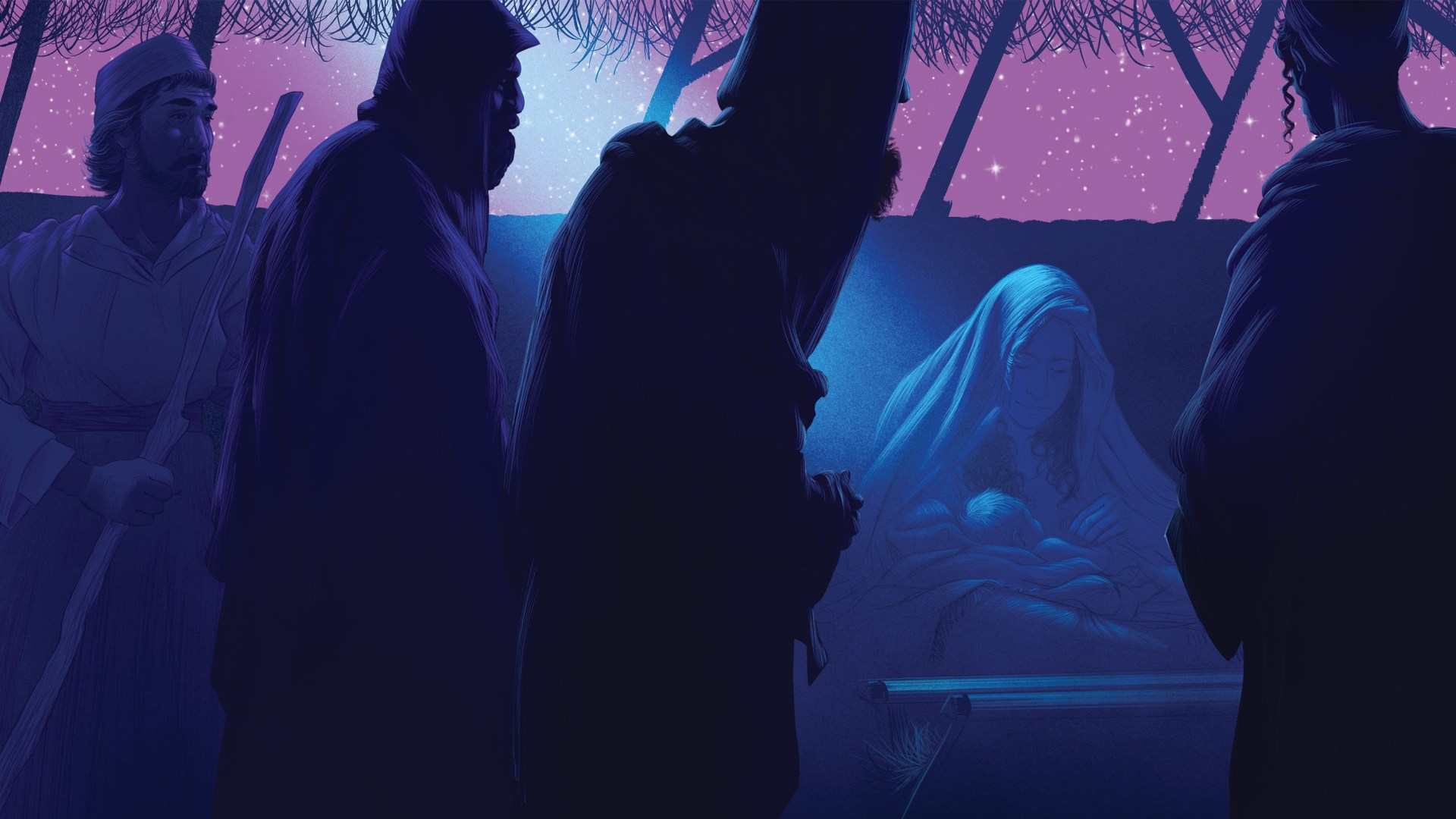
All of us come to the manger as pilgrims.

Unsplash / yokeboy

John Jacob Niles was mesmerized by the melody and lyrics he heard sung out by the poor daughter of a traveling evangelist. Niles was in Appalachia in 1933 when Annie Morgan sang fragments of a song: “I wonder as I wander, out under the sky, how Jesus the Savior did come for to die …” Niles went on to formalize the song, penning additional lyrics for the carol now beloved by many.

It’s an unusual song, compelling in its simplicity and musicality. Unlike many carols that ring with joviality, it is set in a minor key and its final note rings out unresolved—a fitting tone for lyrics that speak of wandering and wondering rather than firm answers and clear resolution. In its own unique way, this mournful song captures something beautiful about the Christian life. It brings to mind those early wanderers and wonderers—the shepherds and Magi who traveled to and from the child Jesus, marveling over what they’d witnessed. And it resonates with the spiritual journeys of Christians today as we experience our own wandering and wondering.

This issue of CT features several such stories. Sida Lei grippingly describes wandering through the rainforest in Cambodia trying to escape the Khmer Rouge. Lei didn’t know of Jesus, but she cried out to God for help. “I began to wonder,” she writes, “Was there actually someone out there watching over me and answering my prayers?”

Rachel Booth Smith grapples with a haunting question asked by her cancer-stricken daughter on their way home from a chemo treatment: “Is it a sin to feel restless?” Smith offers the fruit of long contemplation on this question, exploring what it can look like to trust in God amid trouble.

Our cover story profiles Bono of U2 as he discusses his new memoir Surrender with CT. “Bono identifies himself as a pilgrim, not a sage—someone still on the search,” Mike Cosper writes. Bono’s story highlights not just the questioning aspect of wonder but also the worshipful sense of the word: wonder as in astonishment or awe. Bono famously sings, “I still haven’t found what I’m looking for” in a song about faith, but he also performs portions of Psalm 40 set to music (“40” from the album War). In his interview, Bono discusses parts of his own spiritual journey, from being invited to church by his friend Guggi to the trauma of his mother’s death to his ongoing sense of deep commitment to Jesus.

We can bring both our wandering and our wondering to the manger. There we worship the one who came “for to die,” as the carol says—but even more so, Fred Sanders reminds us, we enter into “the secret of the strange hush of the season” as we adore Jesus for who he is.

Kelli B. Trujillo is print managing editor of Christianity Today.

Theology

Why Christmas Is Bigger Than Easter

The Incarnation exists for the Atonement, but it is also so much more.

Illustration by Michael Marsicano

Wait … is this actually on the Incarnation? If you take up Athanasius’s fourth-century classic On the Incarnation for your Advent or Christmas reading, you’ll likely find yourself asking this very question. For you’ll soon make the discovery that many Athanasius readers make: On the Incarnation is mostly not about the birth of Jesus.

On the topic of the baby in the manger, Athanasius has only a little bit to say. Everything he does say about it is certifiably mind-blowing: “The incorporeal and incorruptible and immaterial Word of God comes into our realm, although he was not formerly distant. … But now he comes, condescending toward us in his love for human beings.” Merry Christmas!

But most of Athanasius’s narrative energy goes into telling us about the risen Lord who died and now lives forevermore. You might wonder where the Christmas in your Christmas reading went.

Part of the problem is that Athanasius has a great mind and a full heart and wants to share the whole truth. Helmut Thielicke once voiced the theologian’s can’t-say-it-all lament in exactly these seasonal terms: “I have to speak about everything at once like the preacher who cannot talk about Christmas without touching on the theme of Good Friday and pointing out that the crib and the cross are hewn out of the same wood.” But to everything there is a season, and we ought to be able to focus on the Incarnation during this season.

I remember the disappointment I felt going to church one Christmas when, for whatever reason, I was especially well attuned to the buildup of the whole holiday. It was one of those years when all the carols were really connecting with me, wherever I happened to hear them. (In fact, I especially enjoy hearing them in the ordinary, secular spaces of commerce and errands. There’s nothing quite like pumping gas and hearing “veiled in flesh the Godhead see; hail the incarnate deity” coming out of the speakers above the pumps!)

All month, I was not only gripped by the great doctrines but also cheered by the general jollification. Then came the Christmas sermon itself at my own church: “Baby Jesus Was Born to Die.” The preacher made the point, strongly and directly, that the real meaning of Christmas was actually all about Good Friday and Easter.

I don’t disagree. I’m evangelical, and this was a good gospel sermon. Theologically, I find the preacher’s point exactly right: The incarnation of the Son of God was directed precisely toward the goal of his death and resurrection. “The crib and the cross are hewn out of the same wood,” and though the crib is a condition for the Cross, the Cross is the main event. Nevertheless, there’s no denying that pang of disappointment, just like Christmastime readers might feel when they pick up On the Incarnation and find out most of its pages are really “On the Crucifixion” and “On the Resurrection.”

What I missed in the “born to die” sermon was a chance to expand my horizons, to lift up my heart, to catch sight of something that the season of Christmas in particular calls my spiritual attention to. What we miss if we turn every nativity meditation into a cross devotion is the chance to view the wider horizon.

What we want to spend time pondering every year is that even if Christmas is for the purpose of Easter, there is nevertheless something about Christmas that is bigger than Easter. Or to translate this from seasons to doctrines, the Incarnation is broader than the Atonement, even though it exists for the sake of the Atonement.

For one thing, the Incarnation is broader than the Atonement because in the Incarnation, the Son of God took on human nature. His goal was to save real people, of course, not just the idea of people. But his method was not to reach down and deal individually with here a person, there a person, or even with particular groups. Instead, the Son of God’s first step in carrying out the plan of salvation was to move into human nature itself, the nature that makes all humans human. He took that nature into personal union with himself. To say the least, this is a very large thought.

A couple of word studies can help us get our minds around this very large thought. When we say that the Son of God assumed human nature, it’s worth noting that the words assume and nature both carry special meanings. Assume means to take up, or to gather in. It is based on a word that early Christian theologians found in Hebrews 2:16: “For surely it is not angels he helps, but Abraham’s descendants.” The word helps is a translation of epilambano, which could be expansively interpreted here as “to lay hold of somebody in order to help them.” The word is also used in the Gospels to describe Jesus reaching out to take hold of people; it sometimes refers to an embrace or a hug. The doctrine of the Incarnation envisions the Son of God laying hold of human nature itself, reaching out to it and drawing it in, taking it on by taking it up into union with himself.

The other word is nature, as in human nature. At the root of this English word is the notion of birth, as in natal: Humans are born (they have natality) and they die (they have mortality). We are all born into human nature. In fact, to be born is to be natus, to have this nature by having this nativity. Yes, the Nativity recognizes the birth of Christ in the flesh, that is, in human nature. ¡Feliz Navidad!

There is something universally human about the Incarnation, both in its raw materials (human nature) and in its implementation (taking up), as well as in its implications. The Son of God took on the human nature that every human has. No human is excluded from this almighty act of God the Son; everyone is implicated.

We should pay attention to this universal aspect of the Incarnation and affirm it without any fear of lapsing into universalism. Universalism is the error that all people are, or will be, saved. But acknowledging the universal character of the Incarnation is something else altogether. It means admitting that humanity itself is the target of God’s redeeming love.

If the Son of God became truly, fully human, then God has invested and reinvested in the human project. It’s possible to imagine other ways that God might have plucked individuals out of the fallen human race. But when God the Father set salvation in motion by sending his Son to be among us, he chose the path of closest contact. He affirmed and reaffirmed humanity as a good idea in spite of its sin and alienation.

The Puritan theologian Isaac Ambrose wrote in Looking Unto Jesus, “If we observe it, this very point of Christ’s incarnation opens a door of rich entrance into the presence of God; we may call it, a blessed portal into heaven, not of iron, or brass, but of our own flesh.” Ambrose was writing from the point of view of full redemption, of course: He was one who did in fact “observe it” and had gone through the portal to communion with God in Christ. The Incarnation is not a doctrine about who is saved. But those who are saved are the ones who can look back and identify Christ’s assumption of human nature as the portal into heaven.

What about unbelievers? The Incarnation stands before them also as an invitation to enter the “door of rich entrance” into the presence of a reconciling God. The Incarnation means that their own nature testifies to them that the Son of God has taken hold of the very thing that they are.

Illustration by Michael Marsicano

Another way to glimpse that the Incarnation is broader than the Atonement is to recognize that a broader set of goals is associated with the Incarnation. Atonement is related to sin and forgiveness, but Incarnation is related to divinity and humanity coming into contact in the person of Christ. By becoming incarnate, the Son made himself personally present to humanity in an unprecedentedly intimate way.

The total gospel message includes two moments: first that the Son of God came to us, and second that he died and rose for us. The two go together seamlessly. We learn that Jesus is Immanuel, God with us, in the first chapter of Matthew. But it is not until the final chapter that the crucified and risen Lord speaks the promise “I am with you always, to the very end of the age” (28:20). We would never want to chop the gospel in half by severing those two moments from each other. There is no need to do so. We can acknowledge both, recognizing that one of them is the focus of Christmas and the other the focus of Easter.

Once again we see that the Incarnation is ordered toward the Atonement but the Incarnation is more expansive. The blessing of God’s presence with us in Christ is so amazing that it can sometimes seem like more than was necessary merely to secure the forgiveness of sins. Medieval Christmas carols, reeling in the giddy overstimulation of pondering the Incarnation, even praised God that Adam had sinned in Eden, since it led to the Incarnation of the Son and exaltation of the human race: “Blessed be the time that apple taken was!” And at least one important liturgical chant intones, “O happy fault that earned for us so great, so glorious a Redeemer!”

This “fortunate fall” idea is a step too far, but it’s easy to sympathize with the feeling. Theologians in the Middle Ages carried out a complicated argument over this scholastic question: If the Fall had not happened, would the Son of God have eventually taken on human nature anyway? Obviously nothing very important can hang on whether we say yes or no to such an absolutely hypothetical question. But in the course of answering it responsibly, we do find ourselves bringing to the surface a host of meaningful questions. The unspeakable blessing of the Son himself being with us in this way seems like too much of a blessing to be just part of a repair job on fallen humanity. We have a sacred intuition that some such ennoblement of human nature must have been part of God’s plan for us all along, Fall or no.

One reason all these questions surface here is that, while reflecting on the Atonement draws our attention to what the Son does for our salvation, reflecting specifically on the Incarnation draws our attention to who the Son of God actually is. Of course it’s possible, even necessary, to focus on who Jesus is while telling the story of his death and resurrection. But at Christmas, attending to the personhood of Christ is unavoidable. The baby we consider in his nativity is not actively doing anything, and we can only stand amazed at his divine identity.

That is why so many of the Christmas carols come back to the note of simple adoration: “Come, let us adore him.” It is also why so many of them pose questions to us like “What child is this?” Adoration for who Jesus is, rather than thanksgiving for what he does, is the secret of the strange hush that steals over us at the center of this holiday. It is why all we can do is celebrate, gather with loved ones, and exchange gifts and gratefulness.

In My Utmost For His Highest, Oswald Chambers says, “After the amazing delight and liberty of realising what Jesus Christ does, comes the impenetrable darkness of realizing Who He is.” It is impenetrable darkness because Jesus is the eternal Son of God, fully as mysterious and transcendent as God.

We have seen that the Incarnation draws us to consider Jesus Christ as taking on human nature and being the divine person of the Son among us. This means we look all the way into his full humanity and as far as we can into his true divinity. That is a vast scope, bringing humanity and divinity together in our minds. And it is why a lot of questions we might have about the full implications of Jesus’ death and resurrection are in fact answered in advance at Christmas, in its invitation to engage in incarnational theology. The child was in fact born to die. But if we have rightly observed what it means for him to have been born, we will have a better grasp of his work of dying and rising.

We typically use the word incarnation in three different senses. First, we can mean the beginning point of the Son’s assumption of human nature (his virginal conception and especially his birth). Second, we can mean the entire earthly life of Christ, from conception through ascension (what Hebrews calls “the days of Jesus’ life on earth,” Heb 5:7). Third, we can mean the state of his being the incarnate one, a state which is ongoing in his ascended humanity. All three are legitimate meanings of the word, but it helps to be alert to which sense a speaker is referring to. In particular, this distinction helps explain why Athanasius’s On the Incarnation surprises us: We may expect it to be about the first sense of incarnation (Christmas), but it turns out to be mostly about the second sense (the story of the life of Christ) with generous doses of the third sense (the ascended Lord’s ongoing ministry from the right hand of God, among his people).

Christmas is also bigger than Easter in a way that is especially obvious in Western culture. It is a bigger holiday, a bigger party for more people. Somehow, of all the special days in the church calendar, it is Christmas that has made its way into the public mind, taken over the secular schedule, and ensconced itself in the popular imagination. Unbelievers and semi-believers celebrate the Christmas holiday. Especially in America, even adherents of other faiths make room for this holiday and find ways to participate. A whole pantheon of not-especially-Christian characters and traditions has emerged to help extend the jolliness as far as possible: Rudolf and Frosty, Scrooge and Buddy the Elf.

At a considerable distance from the religious or theological point of Christmas, the party has taken hold. Easter, by contrast, has never been quite as popular with unbelievers. Easter eggs and pastel colors may show up in stores, but these quickly give way to simple observations of the coming of spring rather than the Resurrection. And Good Friday is strictly an affair for true believers and regular church attenders.

For some reason, people seem to think that Christmas is for everybody. G. K. Chesterton once said that popular misconceptions are nearly always right. I’m sure secular citizens are not feeling drawn to Christmas because they grasp the theology of the Incarnation—the universal good news of the Son of God taking hold of human nature. Nevertheless, Christmas has taken hold of culture. This festival of the Incarnation somehow presents itself to the world as a celebration open and available to all.

Frankly, Christmas’s secular popularity in various cultures remains a bit of a mystery to me—yet there is something profound even in its very shallowness. Why would unchurched or barely churched people join in singing, “Fa la la la la” and decking their halls with boughs of holly with such an obvious sense of well-being and goodwill, when they stand so far away from intelligent acceptance of the profound theological significance of the whole event? Characters in holiday films are perpetually seeking “the true meaning of Christmas” and almost always settling for a theologically inadequate answer.

But perhaps this annual seeking is itself some kind of parable. Maybe the weary world has some distant, befuddled sense that their very humanity gives them all a stake in this annual feast, this least demanding but most inviting public rehearsal of the love of God.

As a young convert to the Christian faith, I would often get grumpy (I felt it was righteous jealousy) about the way shallow, secular, seasonal merriment tended to bury the truth under tinsel and jingle bells. But now I think I am beginning to get it. Even beyond the circle of faith, Christmas spreads the rumor that God is not done with humanity. These days I can hardly even stay mad at Coca-Cola Santa or “Home for the Holidays.” They’re not exactly “on message,” theologically speaking, but I don’t expect them to be. I rejoice with them and join in their merriment, even as they have joined into a movement that they don’t fully grasp.

Similar to how Athanasius’s On the Incarnation can be great Christmas reading that turns out to not be very much about Christmas, Handel’s sacred oratorio Messiah is a much-beloved piece of Christmas music that turns out to mostly not be about Christmas. Christians and non-Christians alike gather to hear “For unto us a child is born” and the angels singing, “Glory to God” to the shepherds. But Messiah runs over two hours and includes not only the Crucifixion and Resurrection but even the Ascension, the mission of the church, the spread of the gospel, and the return of Christ (which is what “The Hallelujah Chorus” is actually about).

In the popular mind, Handel’s Messiah is about the birth of Jesus, but in reality it’s about his entire work as Savior, with its center of gravity in the Atonement. Incarnation is ordered to atonement—this is the gospel we embrace and share—but the message of the Incarnation is bigger than we often realize, and it draws people in. May it expand our own horizons as we come to adore him.

Fred Sanders is professor of theology in the Torrey Honors College at Biola University and the author of several books, including Fountain of Salvation: Trinity and Soteriology and The Deep Things of God.

Testimony

Cambodian Spies Were Watching Me. So Was Someone Else.

After escaping the Khmer Rouge with my siblings, I learned who had been protecting me all along.

Stephen Voss

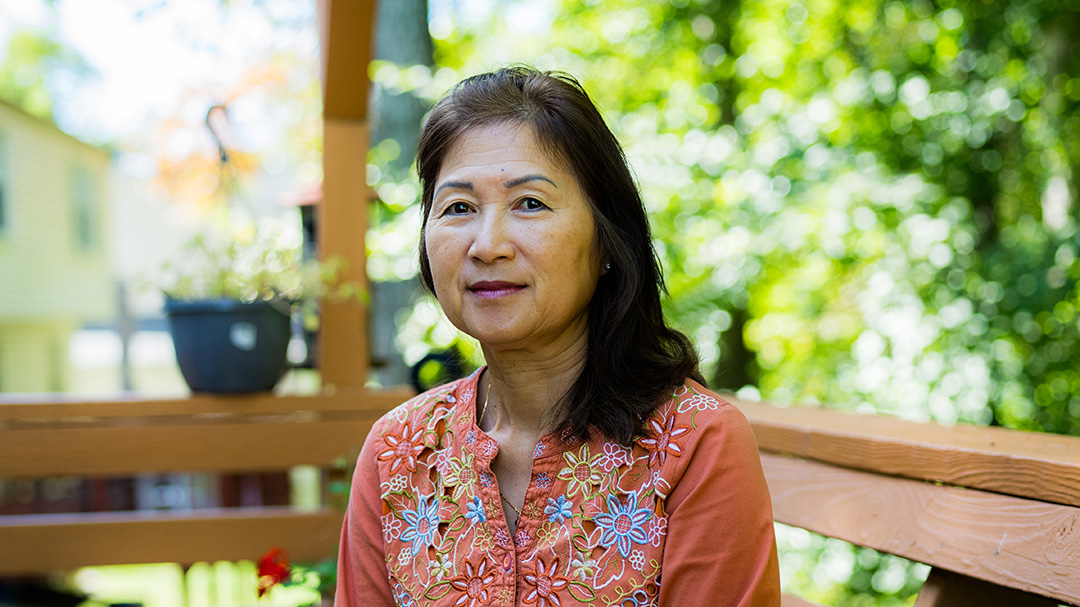
Amazing grace, how sweet the sound that saved a wretch like me.” The first time I heard those words, I was 14 years old. It was a cold, still night at the Khao-I-Dang refugee camp in Thailand.

I’d only been there for a few weeks, and the sensation of safety was still new and surreal. It was hard to really believe I could close my eyes and sleep without fear of being captured, of being found out, of waking to find that a loved one had been dragged away in the night. We had worked hard to get here, to cross the border from Cambodia and find a place where we could live again.

I was lying in my bed when “Amazing Grace” came rippling in through the window. I couldn’t make out the words, but the melody woke something in me. With it came a presence, at once unnamed and familiar. I’d felt it before.

Praying for help

I’d been raised Buddhist in Phnom Penh, Cambodia’s capital. Each morning, my mother would set out a plate of fresh fruit for our ancestors and light incense so that a tendril of smoke would rise like our prayers to them. We sometimes went to the temple, bowing before statues of earth, water, fire, and rain. I remember the great statue of Buddha towering over me. But I never lingered in the temple. As a child, I didn’t have the patience or decorum to sit still so long.

When the Khmer Rouge came, it changed everything. I was ten years old at the time. Like everyone else in Phnom Penh, my family was forced from our home and sent into the countryside to work in labor camps.

The name of God was erased from our world, just like the colorful clothes and the lively city streets of life before communism. No one spoke of him now, except in hushed tones. When the Khmer Rouge split my family apart, sending me away to a child labor camp, my mother knelt over me and whispered, “If you are ever in trouble, Sida, pray to God. He will help you.” Of course, the god I pictured was the great stone statue of Buddha. There was no other god I knew.

It wasn’t long before my mother died, withering away from starvation and sickness. My father too. The Khmer Rouge soldiers came for him, and we never saw him again.

I had four siblings remaining, and it fell to me to keep them safe. Taking my mother’s advice, I prayed to God for help. There were so many times when I needed it. Like the time I had malaria, which rattled my bones with bitter cold and melted my body with relentless fever. Or the times of hunger. So much hunger. Month after month in the labor camps, as we survived on as little as two teaspoons of rice a day, the hunger clawed a relentless pain in our bellies.

One day, the hunger chased me deep into the cornfields. It was illegal to scavenge like this, but I’d dared it many times before. This time, I wasn’t so lucky. The Khmer Rouge’s spies were in the fields, and they caught me. When a machete swung toward my head, I was sure I would die, but I woke up a few hours later with nothing but a welt on the back of my head and no explanation for why I’d been spared.

That was the first time I began to wonder: Was there actually someone out there watching over me and answering my prayers?

Months later, with the Khmer Rouge collapsing after the Vietnamese invasion, I led my siblings on a desperate scramble for safety in the Vietnamese zone. But a soldier fleeing the new regime separated my older sister and me from our three younger siblings. As soon as the soldier was out of sight, we turned and ran back toward our siblings. But we came to a fork in the road and didn’t know which way they’d gone.

I fervently prayed for direction. And I found the answer in my feet, which took the road to the left, where we found our siblings a short distance away.

As we fled the Khmer Rouge, we came across an old temple. It had been a beautiful place of worship once, painted with vibrant colors, scrawled with Sanskrit, and alive with spiritual significance. It had been so long since we’d seen anything that pointed toward a world beyond the strangled life we endured day after day.

Inside the temple, I found an old Buddha statue. It had been broken, torn down, and scattered in pieces, but someone had taken the time to pile the stones back together, so that we could see something of its former grandeur.

I knelt before the statue and prayed. What should we do?

The answer came. I left Cambodia, my four siblings in tow, and we embarked on the perilous journey across the border to Thailand. “It’s too dangerous,” my sister tried to tell me, but I knew something she didn’t. I knew there was someone watching over us.

That didn’t mean it wasn’t frightening. As we crossed the rice paddies away from the Vietnamese zone, soldiers would shout and shoot at us. We waded deep through the paddies, hoping the water would slow their bullets. When we plunged into the dark rainforest, I was frightened of getting lost or stumbling upon Khmer Rouge guerrillas who were known to take refuge there.

Once we did stumble upon them. They were ready with an ambush. As I knelt in the dirt, hearing the footfalls of their rubber sandals and the heavy thud of guns against their palms, I was terrified, but I prayed for help. And when I looked up, the guerrillas were gone.

The very next day, we made it into Thailand. We were safe.

Singing praises

Time after time, I came near to death, near enough to feel its ghostly breath. Yet when I called for help, it came. I began to believe there really was someone out there looking after me.

As I lay on my bed in the refugee camp, with “Amazing Grace” billowing over me, I felt the presence of that someone. He had been there the whole time. He was the reason I was alive.

The next morning, I walked around the camp, asking everyone I encountered about the mysterious music from the night before. Only one woman had an answer. “Oh, there’s a church over there,” she said, pointing.

I didn’t know what a church was, but I knew I needed to find out. So I approached the building and found several ladies gathered inside. “What is this place?” I asked. “This is a church. God’s house. A Christian place,” one of the women explained.

Christian. I had heard the word before, but its meaning was only a vague recollection, the stuff of rumors I’d heard as a child in Phnom Penh. “I heard some singing last night. Was that you?” I asked. “Yes,” she told me. “We often sing. We sing praises to God.”

I came back to the church as often as I could. It wasn’t easy. I had to sneak there after school each day, with my sister making up excuses for my absence from the camp.

When my siblings and I were granted visas to the US, a Catholic church in upstate New York banded together to give us a home. In college a few years later, I found a small Protestant church whose members graciously offered to give me rides to worship services and potluck dinners. In both places, I learned more and more about the God who had watched over me, who had heard my prayers, and whose grace was—and still is!—so amazing.

Sida Lei is a clinical microbiologist living in Springfield, Virginia. She and Monica Boothe, a writer, are coauthors of Two Teaspoons of Rice: The Memoir of a Cambodian Orphan.

The Messiah Is Coming

And his kingdom is global.

Source Images: Longitude / Light Stock / Envato Elements

December is undoubtedly my favorite month. The weariness of a long year begins to slip from our shoulders. If we are lucky, we gather with our families and put other concerns aside. We enjoy amber light pressing out of the windows of our homes and spilling across our lawns. We enjoy trees that shimmer and dance with the memories of our childhoods. We enjoy the smells of bread and cider, the sounds of carols and laughter, and the sight of children tearing their wrapping paper into a thousand pieces.

But December is my favorite month primarily for another reason. As the days grow colder and the nights longer, it’s easy to imagine ourselves under a kind of occupation. Darkness crouches over the earth. Winter looms. The air is melancholy yet charged with a sense of anticipation. The Messiah is coming. We yearn for him. We long for the miracle in which God made himself present in our bitter and broken world.

For many followers of Jesus around the world today, Christmas is not a time of peace. There are no families to gather with, no homes to decorate. They are oppressed and downtrodden. We join with them in crying out for Jesus. For the grace and forgiveness of the gospel, yes, but also for justice. For wrongs to be made right. For love to come and conquer and reign.

Ours is an increasingly global ministry. We are led by outstanding voices in the American church, such as Russell Moore, who has moved into the storied position of editor in chief of Christianity Today. But our editorial team also increasingly reflects and represents the mosaic of the global church. As I write this note, several of our editors are returning from a convening of Asian Christians in Thailand. Editors based in Beirut and Delhi report from their own contexts. And a growing band of global editors cover the work God is doing across the planet.

This growth is powered by generosity. Few organizations cover the global church, simply because it is not profitable. We do it because it is missional. We believe it is a part of our calling. So as you sip your cider and sink your teeth into pumpkin pie, we pray you will remember us. Perhaps even stand with us. Give the gift of the global church to the world. Help us build a capacious and captivating vision of what it looks like, around the world in all its complexity and beauty, to follow Jesus Christ in our time.

Timothy Dalrymple is Christianity Today’s President and CEO. Support CT’s Global Vision: Give a tax-deductible gift here or by check (US dollars only) to: Christianity Today Fund, 465 Gundersen Drive, Carol Stream, IL 60188. Christianity Today is a 501(c)(3) nonprofit organization.

Ideas

Our Advent Waiting Goes Back to Eden

Columnist

At just the right time, God fulfills his promise.

Illustration by Rick Szuecs / Source Images: Wikimedia Commons / Evemilla / Getty

My children grew up with an Advent book that told the story of Jesus’ birth. The book itself taught the art of waiting. Each night, they got to read one new page. As adults, they can still recite the book from memory. I have only one quibble with it: Its retelling of Jesus being dedicated at the temple features Simeon but leaves out Anna the Prophetess.

Deuteronomy 19:15 decrees that “a matter must be established by the testimony of two or three witnesses,” a theme that can be traced throughout the Bible. We need both Simeon and Anna in our Advent imaginations because they are placed there to establish a credible witness. Together, they testify to the fulfillment of God’s promise, a promise given thousands of years earlier to another man and woman.

Consider the pair who greet the Christ child 40 days after his birth, when Mary and Joseph present him at the temple. In Luke 2, Simeon is described as “righteous and devout … waiting for the consolation of Israel,” having been told by the Holy Spirit that “he would not die before he had seen the Lord’s Messiah.” Anna, “a prophet, the daughter of Penuel,” has reached the advanced age of 84.

Her age equals seven twelves, signifying divine completeness. We begin to see that something has happened at just the right time. Her father’s name is aptly drawn from the location where Jacob beheld God face to face yet lived (Gen. 32:30). A man and a woman, waiting expectantly in God’s temple to see God face to face.

Now think back to that earliest of temples, the Garden of Eden. Face to face with God, a man and a woman bore witness to the prophecy of a son who would crush the Serpent’s head. Adam heard and gave a prophetic name to the woman: Eve, mother of all living. Eve heard and, after the travail of childbirth, proclaimed, “With the help of the Lord I have brought forth a man” (Gen. 4:1).

Eve’s exclamation reveals that we have never been good at waiting, that Advent has always taken longer than we expect. Her words communicate less the idea of Look, I have a son! and more Here he is! As James Montgomery Boice notes in his commentary, it’s a proclamation of a deliverer. Though you and I know the wait would be millennia, Eve did not. She expected that Cain was the immediate fulfillment of God’s promise. She couldn’t have been more wrong.

Though Adam and Eve could not live to see the Messiah, Simeon and Anna could not die until they had.

Instead of a life-giver, Cain was a life-taker. In the wake of Abel’s murder, Cain sneered, “Am I my brother’s keeper?” (Gen. 4:9). A question wrongly asked and wrongly answered—not just by Cain, but by all of us.

The wait for the Messiah continued, amplified by the sorrow of amplifying sin. Adam and Eve grew old and died. They did not live to witness the fulfillment of the promise. Another generation took up the wait.

For centuries, in the travail of childbirth, Hebrew mothers who bore sons would have wondered, Is this the one? Sarah, Rebekah, Leah and Rachel, mothers in Egypt, mothers in the wilderness, mothers in Canaan, mothers in exile, mothers in the 400 years of silence, mothers under the fist of Roman rule. Hebrew mothers whispering, Is this the one? Hebrew fathers praying, Send us the consolation of Israel.

Until, at last. At just the right time. And two witnesses appear in the temple of the Lord, male and female, not to hear prophecy but to utter it. Here stands Simeon, lips filled with acclamation. He has lived to see the day. There stands aged Anna the Prophetess, proclaiming, Here he is! She couldn’t have been more right.

Here is the one who is not life-taker but life-giver. Here is the one who asks rightly, “Am I my brother’s keeper?” and answers with “I AM.” The wait is over. Though Adam and Eve could not live to see the Messiah, Simeon and Anna could not die until they had. In Simeon’s old age, God gave him consolation. In Anna’s old age, God gave her pleasure.

Comfort. And joy.

The Advent witness of Simeon and Anna exhorts us to wait in expectant hope. He who promises is faithful. He is coming again. And on that day, every nation, tribe, and tongue will bear witness. A multitude will see the face of God and proclaim, “Here he is!”

News

Prayer and Forgiveness Offered at Texas Execution

And other brief news from Christians around the world.

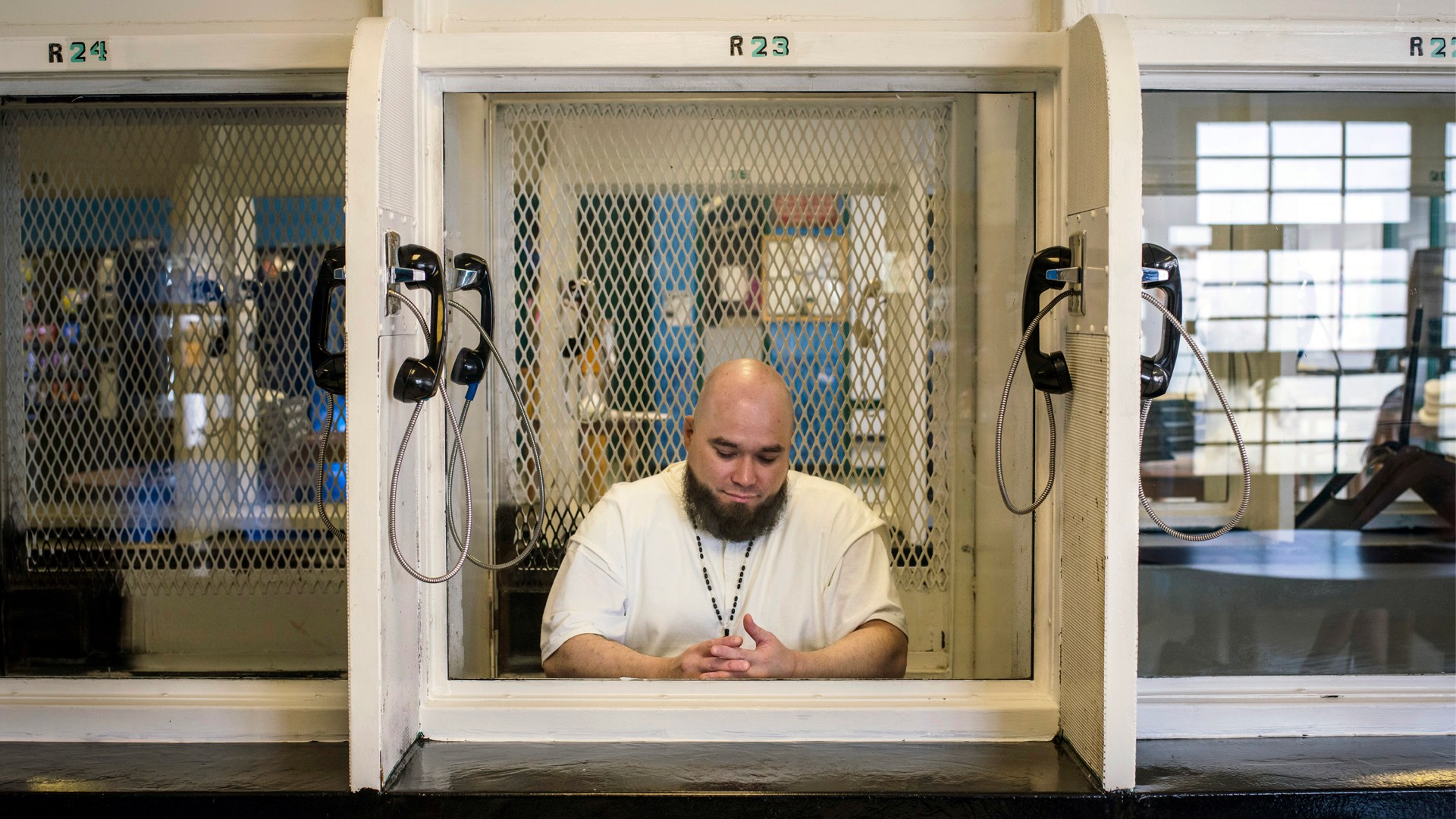
John Henry Ramirez, who was sentenced to death for the murder of a convenience store worker in 2004, in a visitation room at the Allan B. Polunsky Uni​t, a prison in Livingston, Tex​as.

John Henry Ramirez, who was sentenced to death for the murder of a convenience store worker in 2004, in a visitation room at the Allan B. Polunsky Uni​t, a prison in Livingston, Tex​as.

MATTHEW BUSCH / The New York Tim​es / Redux

A convicted murderer who appealed to the US Supreme Court to let his pastor lay hands on him during his execution was put to death in Texas with his minister by his side, laying on hands and praying. Pastor Dana Moore asked that John Henry Ramirez and those witnessing his death would feel God’s presence and peace, and he recited the Lord’s Prayer. In a statement, the brother of the murder victim asked God to have mercy on Ramirez, quoting Micah 7:18: “Who is a God like you, who pardons sin and forgives … ? You do not stay angry forever but delight to show mercy.”

United States: Court won’t hear megachurch dispute

A Florida court dismissed a pastor’s defamation suit against his church’s leaders, saying the First Amendment sharply limits judges’ ability to weigh in on ecclesiastical disputes. The Celebration Church board accused pastor Stovall Weems of “unjustly enriching himself at the expense of the church.” The conflict seems to date to 2018, when Weems claimed he had been transported to the Last Supper. After that, he allegedly made sweeping changes, including new financial arrangements, to protect his “spiritual acuity.” Weems says the fraud allegations are false.

United States: Seminary sells land amid turmoil

Southwestern Baptist Theological Seminary is selling 24 acres of student duplexes and triplexes appraised at $11 million. The Texas seminary once boasted of being the largest in the world, but it faced a 70 percent drop in full-time-equivalent enrollment from 1992 to 2022. President Adam Greenway resigned in September after protests over faculty treatment and reports of an annual operating deficit of $12 million. Greenway was replaced by O. S. Hawkins, who left within a week to be replaced by David Dockery, formerly president of Trinity Evangelical Divinity School.

Colombia: New believer of indigenous people group baptized

The first known follower of Christ among a tribe of the Emberá people was baptized in a river outside Medellín. Southern Baptist missionaries Travis and Beth Burkhalter have been ministering to indigenous widows and refugees from the drug wars since 2010. Travis Burkhalter learned Emberá and shared stories with the new believer—who is called “Sarah” by the International Mission Board—for about three years before she professed her faith in Jesus and asked to be baptized.

Brazil: Facial recognition used in churches

A number of evangelical churches in Brazil, including Restart Project Evangelical Church, are using facial recognition software during worship services. The technology collects general attendance data but also identifies individuals, classifies their moods based on facial expressions, and notes when they are late or absent. Personalized reports can recommend pastoral visits. “Today, who doesn’t want control of their environment?” said Luís Henrique Sabatine of tech company Igreja Mobile. “We found out that the churches really wanted to know about it.” Costs start at $200 per worship service.

Germany: LGBT welcome stirs debate

The Union of Free Evangelical Churches of Germany officially rejected same-sex marriage and sex between people of the same gender in a 2017 paper, but some of its 500 congregations have joined Coming-In, a network of Christians working to encourage LGBT inclusion. The move has stirred debate over whether the assembly can expel people over differing views on the topic. Board chair Ansgar Hörsting pleaded with delegates to have “a conversation, not an exchange of blows.”

France: Council will facilitate reports of abuse

The National Council of Evangelicals in France has launched an online platform for reporting sexual abuse. “Stop Abuse” will advocate for victims and connect them with legal, psychological, or pastoral support. The council formed a working group on the issue in 2019, following the revelation of abuses inside the Catholic Church, and released a handbook in 2021. “The #metoo movement and the latest revelations of sexual abuse and abuse of all kinds in our society have challenged us,” said the council’s former vice president Marc Deroeux. “It was important for us not to ignore them.”

Turkey: St. Nick’s tomb identified

Archaeologists believe they have discovered the burial site of Nicholas of Myra, the bishop who inspired the modern Santa Claus. His remains were stolen and taken to Italy in 1087. A recent excavation uncovered a stone box that appears to have held his body. There is also a marble floor tile with the Greek word for grace on it and a fresco depicting Jesus holding a Bible and making the sign of the cross. There are currently no Christians in the city that Nicholas shepherded, which is now called Demre.

Indonesia: Terrorist killed in shootout

Officials announced that the special counterterrorism force Densus 88 has killed Al Ikhwarisman, the last known member of the East Indonesia Mujahideen (MIT), in a shootout in the Sulawesi mountains. Al Ikhwarisman, also known as Jaid, was believed to be a key member of the terrorist group that pledged allegiance to the Islamic State and attacked and killed Christian farmers in Indonesia. Al Ikhwarisman allegedly murdered four people in 2021. The province’s police chief says the MIT have now been eliminated. Its founder was killed by police in 2016.

Japan: Church history helps modern astronomers

A Byzantine monk helped two astronomers and a librarian refine the modern understanding of the earth’s variable rotation. Records of total solar eclipses allow researchers to reconstruct the drift in the length of a day, but there is little detailed information from before A.D. 800. Three Japanese scholars found, however, that Theophanes the Confessor’s account of an eclipse in 346, four centuries before he was born, contained enough specifics to make a calculation. Theophanes’ source for the eclipse is believed to be a church history written by an unknown Arian.

Apple PodcastsDown ArrowDown ArrowDown Arrowarrow_left_altLeft ArrowLeft ArrowRight ArrowRight ArrowRight Arrowarrow_up_altUp ArrowUp ArrowAvailable at Amazoncaret-downCloseCloseEmailEmailExpandExpandExternalExternalFacebookfacebook-squareGiftGiftGooglegoogleGoogle KeephamburgerInstagraminstagram-squareLinkLinklinkedin-squareListenListenListenChristianity TodayCT Creative Studio Logologo_orgMegaphoneMenuMenupausePinterestPlayPlayPocketPodcastRSSRSSSaveSaveSaveSearchSearchsearchSpotifyStitcherTelegramTable of ContentsTable of Contentstwitter-squareWhatsAppXYouTubeYouTube