News

With Sports Betting Surge, Churches Should Up the Ante on Addiction Recovery

As the Super Bowl pulls in record wagers, more people are seeking help for problem gambling. Christians can pull lessons from the opioid crisis to help with treatment.

A person gambles at a Vegas casino in February as betting odds for NFL football's Super Bowl are displayed on monitors.

A person gambles at a Vegas casino in February as betting odds for NFL football's Super Bowl are displayed on monitors.

Christianity Today February 10, 2023
AP Photo/John Locher

Americans are gearing up to bet billions on the Super Bowl, but the quick expansion of gambling is leaving a trail of addiction in its wake.

Troy Adams is one of those in recovery. When he was a 22-year-old US Marine, Adams went with some other Marines to a Las Vegas casino the weekend before they deployed to Iraq. They played baccarat and won a lot of money. The casino offered them all free rooms and other comps.

“We were young and dumb and didn’t realize why they were doing these things,” he remembered. Years passed without him going to casinos again, but that feeling of winning stuck with him.

Years later, in 2016, he craved that feeling again when a lot of crises piled up: Massive flooding hit his home in southern Louisiana, his brother’s wife died unexpectedly, and his dad was diagnosed with terminal cancer.

“I started going to the casino as an escape,” he told CT. “It became my safe haven and my refuge.” Like any other addiction, he said, “you physically cannot stop. You can’t see a way out.” It began to take over his life.

The science of gambling addiction works similarly to addictive substances. The American Psychiatric Association added gambling to its category of behavioral addictions in 2013, based on research that it is similar to substance abuse in “clinical expression, brain origin, comorbidity, physiology, and treatment.”

It was the first non-substance behavioral addiction to be classified this way, but Americans still don’t see gambling as a potential problem like drugs or alcohol. And churches often don’t see the moral hazards of gambling or the need for recovery ministry for gambling.

Kentucky is one of the few holdout states that hasn’t legalized online sports betting, and Baptists there are using the parallels to the drug crisis to try to halt the legislature’s attempts this session to legalize the industry.

“Kentucky already struggles with drug addiction, and it is immoral for the state to encourage another form of addiction—sports betting,” said Todd Gray, the head of the Kentucky Baptist Convention, in comments to Kentucky Today.

The National Council on Problem Gambling estimates two million Americans meet the “diagnostic criteria” for gambling addiction. (For comparison, about three million Americans have an opioid use disorder.) Being young and male are the highest risk factors. The New York Times reported a 43 percent increase in calls to a national hotline for gambling problems last year.

This weekend, the Super Bowl will draw $16 billion in wagers from Americans, according to the American Gaming Association, up from $7.6 billion last year. The number of Americans planning to place wagers on the game has increased 61 percent from last year, the association found. BetMGM reported that its bets doubled on the Super Bowl in 2022 compared to the 2021 game.

The big game highlights how gambling has exploded since the US Supreme Court removed a ban on sports betting in 2018. Since then, most states have legalized it with few restrictions. Americans bet $92 billion in 2022, according to SportsHandle, a trade publication, up from $58 billion in 2021.

More people are being introduced to gambling. “I haven’t seen an online sports betting ad in almost 7 minutes. Am I dead?” joked comedian Conan O’Brien in a tweet last year. Companies use offers of “risk-free” bets to bring in new customers, reimbursing them for losses. The New York Times in an investigation last year discovered that 18 states made those promotional offers tax deductible for the gambling companies—essentially subsidizing them.

And as has happened in other countries where online sports betting has been legalized, a surge in new people betting means more people with a gambling addiction. As Adams told CT, the problem is that betting can result in a positive outcome—winning money.

But that’s similar to the early days of the opioid crisis, when the drugs were marketed as nonaddictive. Gambling might not be lethal like fentanyl, but the National Council on Problem Gambling has said that the suicide rate among problem gamblers is higher than for any other addiction disorder, and there is a correlation with other substance abuse.

For Adams, Adderall and alcohol use crept in as he stayed up to gamble while working a full-time job. He began stealing money from his cousin’s business and eventually went to jail. He was released into various recovery programs but relapsed and was sent back to jail. His dad died while he was in jail, and he attended the funeral in shackles.

He went in and out of residential recovery programs, some of them better than others, some faith-based and some not. He was “off the bet” for 18 months and then relapsed, and eventually ended up back in jail, and then in another recovery program.

This time the court-ordered recovery program was helpful. After that, he started at a faith-based recovery home that was part of First Bossier, a Baptist church that has one of its pastors focused on recovery ministries.

Adams found a lot of growth there. The church hosts a weekly Celebrate Recovery program that Adams joined in addition to attending a local Gamblers Anonymous meeting. GA and Celebrate Recovery “pretty much saved my life,” he said.

“GA more than anything was the most beneficial—a group of people who understood and didn’t judge you,” he said. “The only two groups of people I’ve met in the world that are not judgmental—or they’re compassionate and understanding—are real Christians and people in recovery. … God still loves me, and I try to live my life that way.”

Recovery ministry veterans see resources

Janet Jacobs has been connecting churches and individuals with gambling-addiction recovery resources for more than 20 years through Gambling Recovery Ministries, affiliated with the United Methodist Church (UMC). She didn’t know anything about gambling addiction when she started the ministry in 2001 at the request of her bishop.

“The UMC, their particular doctrine with regard to gambling is, ‘No,’” quipped Jacobs. “You don’t gamble.”

Now, as well as in 2001, she found very few faith-based resources for gambling addiction recovery. Churches rely on general addiction recovery ministries to help someone with a gambling problem, she said.

One benefit of more than a decade in the pits of an opioid crisis is that churches do have more addiction recovery resources than in the past. But some problem gamblers, she finds, want more specific help than drug or alcohol recovery.

Jacobs said the US Catholic Church has an outreach for its priests or nuns with a gambling problem at a Catholic treatment center, but not something specific for parishioners.

“There really is very little in terms of faith-based outreach to problem gamblers and their loved ones. … It gets lumped in all the different addictions,” she said.

She says there are a lot of non-faith-based resources for addicted gamblers: She finds Gamblers Anonymous meetings and Gam-Anon meetings to be very helpful. She encourages people who may not like a particular GA meeting they visit to try a different GA group that might have a different feel. For churches who want to do outreach, she says they can start by contacting GA and offering to host GA meetings at their facility. That starts relationships, she said.

“Many faith-based organizations or fellowships just don’t go beyond that,” she said. But, “you have to start somewhere.”

Some areas of the country may lack counselors certified in gambling addiction, but she says those certified through the International Gambling Counselor Certification Board “know what they’re talking about.” As a volunteer there, she started a clergy track at the board about a decade ago to offer additional training and certification. She recommends that kind of counseling treatment alongside GA or Celebrate Recovery.

Deborah Haskins, a clinical counselor, got that clergy certification, and she has been training other clergy on this issue. She recently held a training for 16 people from an African-descent Pentecostal church in Delaware.

“We need more faith leaders to understand this is a public health concern,” she told CT. With the recent blanket advertising, “more folks will become addicted. … We are where we were years ago with drug addiction. People still see it as a character defect versus a brain disease.”

Parents look for recovery options for their children

Lisa Gwatney’s son began gambling with friends in college. Soon after he graduated, sports betting became legal. He was an athlete, he was competitive, and, his mom said, he is good with numbers—so he was winning, and he was drawn in.

He gambles on his phone now all the time, Gwatney says. Casinos have targeted him, she said, giving him promos, free alcohol, and flying him out to Las Vegas. He’s tried to self-ban from apps and casinos with his mom’s help, but she said the casinos will offer free rooms in another state where he hasn’t self-banned.

“When people say, ‘What’s the big deal?’ I’m telling you it’s a very big deal,” Gwatney said. “We had this kid with so much promise and watched him be systemically destroyed by an industry that doesn’t care if he’s dead.”

Les Bernal at Stop Predatory Gambling has noted that betting companies ultimately want sports betting users to move to casino games—because then users are playing against the house.

“The states want the money,” Gwatney said. “The losses of addicted people are just acceptable consequences for them.”

Solutions were hard to find, Gwatney said. She found one of the few GA meetings in the area and went with her son to it, only to discover it had stopped meeting. She called the national hotline but said they didn’t have any resources to give to a parent, only to the person with the addiction.

In desperation about a year ago, Gwatney got her pastor and friends to hold an intervention for her son. Their friends were surprised he had an addiction. She did her own research and found a professional to guide them through it, having everyone write him letters and cut him off financially. She asked him to stay and get help in Tennessee, but she said a casino had just offered him free rooms in Detroit—and he went there.

After, she wasn’t sure the intervention was the right choice. She had read a book about drug addiction, Unhooked, which helped her understand the principles of addiction at work in her son. It noted that forcing an addict into recovery rarely works, that the person needs to want help.

She has asked herself what she might have done wrong as a parent—she and her husband had rules for him; they loved him. She cautions other parents to warn their children about gambling the same way they would warn them about drinking and driving or not leaving a drink unattended at a party.

“If I could take this burden from him, I would take it,” said Gwatney.

Friends continue to pray for her son, and Gwatney prays a prayer from a card for a prodigal son every day. It starts, “Lord, protect my son. Build a hedge around him …”

She wakes up every day, she said, and checks her phone to see if her son is alive. She doesn’t know how someone without faith in God could bear something like this. But she was convicted recently that the shame about what her son was going through was a sign “that the Devil wanted to separate us from God’s grace.” She has bought her son health insurance in the hope that maybe he could go into a residential rehab program when he’s ready.

“The folks who are not keeping up with this—even halfway keeping up—are really losing out in terms of outreach to help people,” said Jacobs from Gambling Recovery Ministries.

Gambling Recovery Resources
Gamblers Anonymous
Gam-Anon
National Council on Problem Gambling – Help line and chat
Gamtalk.org
– Recommendations from Janet Jacobs, longtime head of Gambling Recovery Ministries

News

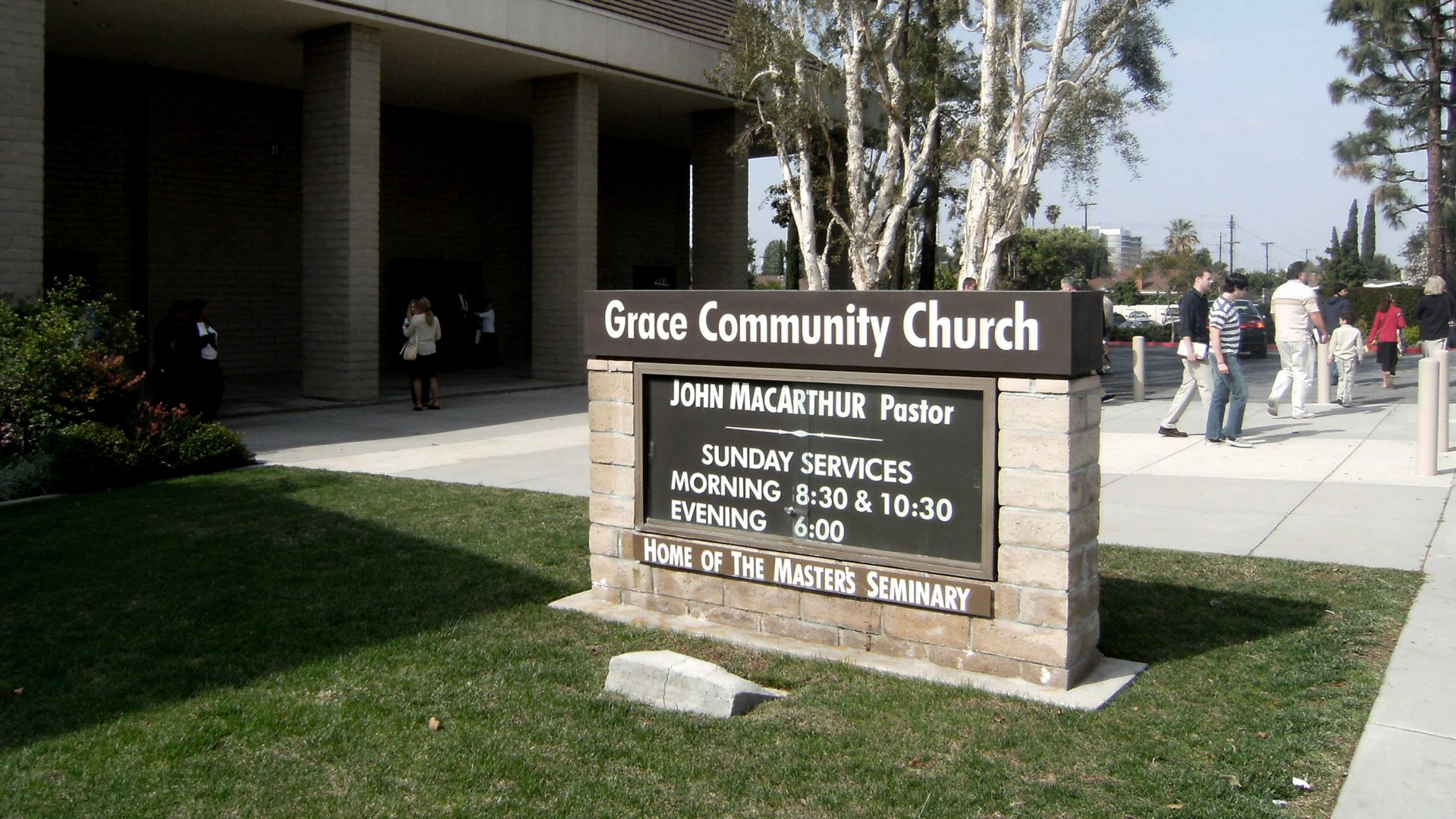
Grace Community Church Rejected Elder’s Calls to ‘Do Justice’ in Abuse Case

While a former leader hopes for change, women who sought refuge in biblical counseling at John MacArthur’s church say they feared discipline for seeking safety from their abusive marriages.

Christianity Today February 9, 2023
Edits by Christianity Today / Source Image: WikiMedia Commons

Last year, Hohn Cho concluded Grace Community Church had made a mistake.

The elders had publicly disciplined a woman for refusing to take back her husband. As it turned out, the woman’s fears proved true, and her husband went to prison for child molestation and abuse. The church never retracted its discipline or apologized in the 20 years since.

As a lawyer and one of four officers on the elder board at Grace Community Church (GCC), Cho was asked to study the case. He tried to convince the church’s leaders to reconsider and at least privately make it right. He said pastor John MacArthur told him to “forget it.” When Cho continued to call the elders to “do justice” on the woman’s behalf, he said he was asked to walk back his conclusions or resign.

It’s been 10 months since Cho left Grace Community Church, and he has not been able to forget the woman, Eileen Gray, whose experience was described in detail last March in Julie Roys’s news outlet, The Roys Report.

Though Cho stepped down quietly, he continued to hear from other women from his former church. They had also been doubted, dismissed, and implicitly or explicitly threatened with discipline while seeking refuge from their abusive marriages. Even at his new congregation, Cho began to meet visitors with connections to Gray’s case, which he saw as a sign of God’s providence.

No, he couldn’t “forget it.”

The more he learned, the more people he talked with, the more the injustice weighed on his conscience and the more concerned he grew about the church’s biblical counseling around abuse.

As Cho wrote in a 20-page memo to top leaders at Grace Community Church last March, “I genuinely believe it would be wrong to do nothing. At the end of the day, I know what I know. I cannot ‘un-know’ it, and I am in fact accountable before God for this knowledge, and if you have labored mightily to read this far, you are now accountable before God for it as well.”

Grace Community Church is led by MacArthur, one of America’s longest-standing and most influential pastors. The Sun Valley, California, megachurch is best known for MacArthur’s preaching and prides itself on its fidelity to the Bible over the whims of the world.

GCC’s reach extends far beyond the crowds that fill its 3,500-seat auditorium for multiple services each Sunday, through MacArthur’s popular books and commentaries; affiliated schools The Master’s Seminary and The Master’s University; Grace to You teaching ministry; and the church’s annual Shepherds Conference.

At the conference last March, Cho taught on “Conscience and Conviction.” He spent the rest of the year living out the lesson. Over the summer and fall, Cho held out a “faint hope” that the 37-member elder board would reconsider Gray’s case, praying that God would soften leaders’ hearts and change their minds.

He wanted to see them correct the mistakes of their past and do better in the future. Instead, he discovered they appeared to be repeating them.

Months after raising his concerns about a 20-year-old case, Cho discovered “another grievous GCC counseling case” in the fall of 2022. A woman reported that church leaders had advised her to move back in with her husband and not get a restraining order despite his documented grooming behaviors, infidelity, and angry outbursts. Though the case settled in January, after the woman sought court-ordered protection last year, two pastors had filed declarations on her husband’s behalf.

“In God’s providence, he kept placing reminders in front of me, completely unbidden. When my wife and I were asked by a friend to pray for a woman my wife happened to know, she reached out in concern, and we were horrified to discover the same awful patterns of counseling were still happening at GCC,” Cho told CT.

“This is when I sadly came to believe beyond any personal doubt that GCC congregants who we still love could effectively be playing Russian roulette if they ever needed counseling at GCC, especially anything involving the care of women or children. I knew I could not pass by silently on the other side of the road, that I needed to help this woman and to call out a warning, or else the blood of the people would be on my head.”

For this story, CT spoke with eight women who recounted how they and others at Grace Community Church had been counseled to avoid reporting their husbands and fathers to authorities, to accept their apologies, and to continue to submit to them.

The victims were regularly quoted Scriptures on forgiveness, trust, love, and submission—and were told to reconcile and return home even in cases where they feared for their safety and their children’s safety.

No one from GCC responded to requests by CT to discuss the church’s counseling philosophy or response to abuse, or to questions about specific cases. Six pastors and elders were contacted for comment by phone and email repeatedly over a three-week period prior to this article’s publication, as well as one former pastor and elder. (Update: Following publication, Grace Community Church released a statement saying that the elders do not comment on counseling and discipline disputes, but that the church “deals with accusations personally and privately.” They defended their counsel as biblical, saying, “Our church’s history and congregation are the testimony.”)

‘You need to make it right’

Cho first read about Eileen Gray’s case last March, after the Roys Report coverage, when he said he had been asked to look over the church’s handling of her case for the elder board. His review, drawing from his legal background and training, became part of an initial internal investigation.

The church discipline happened in 2002, a few years before Cho came to faith at Grace Community Church. Gray had refused to follow leaders’ counsel to lift a restraining order against her abusive husband, David Gray. During a monthly Communion service, MacArthur characterized her decision as unrepentant sin, saying the mother of three chose “to leave … and forsake” her husband.

David Gray, once a teacher on staff at the church, went on to be sentenced for his crimes in 2005: aggravated child molestation, corporal injury to a child, and child abuse. Witnesses and victims backed his wife’s account of the abusive behavior, while church leaders continued to defend him, according to court documents referenced and posted with the March 2022 Roys Report article. David Gray remains in prison.

Cho said many leaders at Grace Community Church refused to read the Roys Report article. Some did and dismissed its findings anyway. Top leaders at the church became defensive, he said, and wanted to protect MacArthur.

To Cho, as well as to seven Christian lawyers who reviewed the material, it was obvious that David Gray was guilty beyond a reasonable doubt and Eileen Gray’s refusal to lift the restraining order to protect her children was objectively reasonable and fully vindicated.

“Now that the facts are indeed known, it is not too late to ‘do justice’ even at this late stage, almost 20 years later,” he wrote to the elder board. “One’s own integrity, and upholding justice and righteousness, and being faithful even in the small things, even for something 20 years ago, all matter immensely.”

Cho expected the church to hold itself to a higher standard than even the secular courts. In Eileen Gray’s case, overseen by then-associate executive pastor Carey Hardy and involving GCC’s longtime pastor of counseling Bill Shannon, he found evidence of mistreatment, bias, and errors in how they handled the case. Eileen Gray was repeatedly disbelieved and accused of being “bizarre,” which wasn’t relevant to the reason for her discipline, and leaders cast doubt on her account despite David Gray’s history of deceit.

“They sided with a child abuser, who turned out to be a child molester, over a mother desperately trying to protect her three innocent young children. And that was and is flatly wrong, and needs to be made right,” Cho said to CT. “Numerous elders have admitted in various private conversations that ‘mistakes were made’ and that they would make a different decision today knowing what they know now. But those admissions mean you need to make it right with the person you wronged; that is utterly basic Christianity.”

While still on the board last March, Cho emphasized the urgency of correcting the record. The elders had called out sin where there was none, he insisted. If they had learned that they’d disciplined a man wrongly accused of adultery, wouldn’t they want to make that right, even if they found out 20 years later?

According to Cho, who served as the board secretary and was responsible for taking notes, MacArthur replied during the March meeting that the comparison didn’t apply to Eileen Gray. The pastor brought up again claims of her “bizarre behavior” and wasn’t inclined to reconsider her discipline.

After that, Cho said, he was told by elder board chair Chris Hamilton that he would need to “walk back” his findings about the church’s mistakes if he wanted to remain an elder. (Hamilton did not respond to requests for comment.) Cho and his wife resigned their membership the next day.

Submit ‘as unto the Lord’

This fall, Cho found himself once again reviewing court filings from a member at Grace Community Church who sought a restraining order against her husband in hopes of protecting herself and her young children from abuse—this time at the woman’s request. Certain parallels to Eileen Gray were immediately clear to him.

The woman told CT she recognized the parallels too. She said when she read about Eileen Gray last year, she thought, This sounds a lot like what I’ve been told. (CT’s policy allows victims of abuse to go unnamed for the sake of privacy and safety; her identity and the details of her account have been verified in reporting this story.)

“Whenever I made moves in the direction of the restraining order, it was, ‘Be careful of the heart of retaliation,’” the woman said. “They were telling me to back off, essentially. … They were saying it was un-Christian of me to seek that legal protection because believers don’t take other believers to court.”

She said she had reported to church leaders evidence of her husband’s infidelity, searches for incest porn, and inappropriate behavior with their daughter starting when she was just a couple years old.

A month after moving back in with her husband at the request of their pastors, she called 911 out of fear during an argument on the road. In court filings obtained by CT, she stated pastor and elder Rodney Andersen told her that she should submit to her husband “as unto the Lord” rather than provoke him. The domestic violence officers dispatched to the scene, she said, told her not to return to home.

Two GCC elders went on to submit sworn statements on behalf of her husband. Andersen’s declaration recounts the husband saying during counseling that he and his daughter had touched tongues while they kissed to imitate a scene in a cartoon.

A declaration from the other pastor and elder, Brad Klassen, said that the woman came to him concerned about pictures taken by her husband but that she didn’t have “evidence” of the abuse. According to her own filing, the photos include pictures of her toddler touching her husband’s pants zipper and her face being sprayed with water as well as selfies with the child while she was naked. Klassen’s declaration said the photos did not contain nudity.

Two other leaders at Grace said they would testify on the wife’s behalf, but the couple reached an agreement in January prior to their court date, so none of the pastors ended up needing to testify. In the settlement, the wife did not retract the abuse claims made against her husband.

In the end, she said, the betrayal of her church—now her former church—hurt the most.

“I hit subzero spiritually. I was doubting if God is real. I thought, If God is real but we’re supposed to submit to church leaders when this is going on, I’d rather die,” the woman said to CT. “Even unbelievers wouldn’t stand for this.”

The woman said she saw the Lord “work sovereignly” to lead her through the process, eventually coming to see that “the failure of the church doesn’t nullify the existence of God or the justice of God.”

“I need to fear God instead of man. Just because someone quotes a verse to you and they’re in a position of authority doesn’t mean they’re doing it well,” she said.

When she challenged the pastors’ advice to return to and trust her husband, she said she was reminded of passages like love “believes all things” and that Jesus said to forgive “seventy times seven” times.

According to her account, the trauma and warning signs weren’t enough—the pastors wanted evidence of physical abuse, “skin to skin” adultery, or a conviction of child molestation before agreeing she had biblical grounds for divorce. She couldn’t wait for that.

‘My safety was not the No. 1 priority’

The cases at Grace Community Church land in a larger debate around what qualifies as abuse and whether Christians should prioritize reconciliation in abuse cases, with the church and its seminary holding a prominent place among conservative biblical counselors and the Association of Certified Biblical Counselors (ACBC).

“There’s a fundamentally different understanding of what abuse is,” said Jonathan Holmes, a graduate of The Master’s University and a pastor and counselor in Ohio, noting that the label—and the most serious responses—often get reserved for physical and sexual violations.

Like fellow complementarians, MacArthur has preached multiple times against women staying with abusive husbands for the sake of marital submission. He taught that women and children should “get to a place of safety” and that perpetrators of domestic violence are no longer behaving as believers and have therefore forfeited their right to marriage.

Yet, as Cho brought up in his letters to key elders last year, a string of women over the past decade said they received different counsel at his church when they feared for their safety or their children’s safety.

Multiple women named Bill Shannon, a pastor of counseling and ACBC fellow, as discouraging them from reporting abuse to police and directing them to stay in homes where they had been threatened with violence. One couple said they observed a counseling session where Shannon failed to advise a member of their family to report a man who had confessed to an incident of child molestation; Shannon told her to “not settle” but did not direct her to leave him, since he hadn’t been convicted.

Shannon is among the leaders who did not respond to multiple requests for comment for this story.

Current and former elders had also raised concerns about Shannon’s “incompetent” counsel. Cho said MacArthur had been warned about the concerns but has defended Shannon and kept him in the same position. According to the GCC website, Shannon continues to provide “formal and informal” counseling to members, teach the church’s premarital and marriage seminar, and preach sermons for an adult small group.

“In the first meeting with Bill Shannon, it was made known that my safety was not the No. 1 priority; it was submission in my marriage,” said one woman, who asked not to be named in this story because she is attempting to move on from her time at Grace Community Church. “My job was not to rile [my husband] up.”

While the woman was hospitalized due to her husband’s physical abuse, Shannon called her and advised her to go home without calling police, she told CT. At times, the torment at home was bad enough that she worried she was going to die, but she said she was told that her situation may be “God’s will for your life.”

In marital counseling, pastors asked wives whether their attitudes contributed to the patterns of violence, anger, and manipulation in their relationships. In some situations, they implied women were looking for fault in their husbands.

“It’s hard for a pastor to conceive of a dynamic where a woman is receiving mistreatment, where at some point along the road, she is not expressly responsible for it,” Holmes said.

This “mutualization” of sin can take place in church settings where both parties are asked to confess and seek forgiveness from each other.

“Our philosophy is that if there’s been abuse, you don’t put them into a room and expect them both to go through the process of getting the log out of their eyes,” said Ken Sande, a Christian mediator who spoke of patterns he’s seen over decades of conciliation ministry, not about GCC in particular.

‘No other choice’

Each of the women CT spoke with said at some point they considered themselves partly responsible for their husband’s behavior or had a church leader indicate they were.

The women were reminded of the biblical directive for wives to submit to their husbands. For years, they had hoped their submission, their faithfulness in marriage, and their desperate prayers would eventually lead to change in their husbands. But when issues persisted and escalated, they sought help and counsel on what else could be done.

“It takes a tremendous amount of courage, humility, and vulnerability to even seek help from the church when there has been abuse in the home,” said Wendy Guay, who spoke to The Roys Report last year about abuse by her father Paul Guay while he was on staff at Grace Community Church in the late 1970s. “Women have hidden, persevered, and tried to handle things on their own until there was no other choice,” she added.

When wives felt like they needed to move out for their safety, they said pastors told them to stay. After they had separated or secured legal protection, they said pastors urged them to reconcile. Women told CT that pastors saw their husbands’ continued involvement in counseling, caring treatment of their kids in supervised settings, and verbal promises that the abuse would stop as indications that they no longer posed a threat.

In some cases, like those of Eileen Gray and the woman who agreed to a settlement last month, leaders at Grace Community Church went on to support the men they had accused of abuse in legal cases. Although churches may avoid legal involvement in marital disputes for liability reasons, it’s not unheard-of to have pastors siding with the accused.

Pete Singer, the executive director of GRACE (Godly Response to Abuse in the Christian Environment), said seeing faith leaders defend a perpetrator in court was part of what prompted prosecutor Boz Tchividjian to start the organization in the first place.

“It’s not unique. It’s unfortunately prevalent in child abuse and intimate partner violence as well. It’s a reflection of how the pastor has been groomed,” Singer said. “If there’s a noticeable power differential, why am I lining up on the side of the person who may be the oppressor and not the person who may be oppressed?”

Discipline as a distinctive

While evangelicals are growing more sensitive to the dynamics of abuse, some conservative communities retain an underlying skepticism around victims-advocacy movements and trauma-informed psychologists, defending the place of the local church in addressing marital conflict.

Former members who reported abuse said they feared church discipline for lack of submission or abandoning their marriage.

While most evangelical churches have formalized disciplinary processes in written policies and bylaws, it’s becoming less common for American churches to follow them in practice and even rarer for a church to publicly announce discipline cases multiple times a year, according to Sande, the Christian mediator.

MacArthur considers church discipline a “distinctive” at Grace Community Church, where elders follow guidelines taken from Matthew 18—first confronting the accused privately, and then with another witness, before publicly announcing cases of discipline that have made it to the third stage of the process, when unrepentance would preclude a member from participating in the Lord’s Supper.

Cho, the former elder, said that at this stage, elders must unanimously approve cases that go before the church body a few times a year, during monthly Communion services.

The women who spoke to CT about their counseling experiences had been members of Grace for years, some over a decade, and had sat in the services when MacArthur announced church discipline. They believed that if leaders didn’t see their situation as grounds for divorce, their names could be read.

‘Time and truth go hand in hand’

Until now, Cho had not publicly spoken about the circumstances that led to him leaving GCC and his advocacy efforts since. He hoped Grace Community Church would look back at Eileen Gray’s case and reconsider the evidence that vindicated her. He repeated pleas to take seriously the concerns about Shannon and the church’s counseling.

After leaving, he kept contacting top leaders at Grace, asking questions and offering to discuss his concerns privately. He emailed MacArthur and Grace to You executive director Phil Johnson, an influential leader and elder at the church. He went back and forth in messages with Carey Hardy, the pastor who oversaw the Gray discipline case and now serves at a church in North Carolina.

His appeals drew from Scripture, sometimes quoting more than 20 verses on reconciliation, wrongdoing, and justice—like James 4:17: “Therefore, to one who knows the right thing to do and does not do it, to him it is sin” (NASB 1995).

Whenever he met with or saw elders in person, the case came up in discussion. He texted and called individual members of the elder board to share concerns.

Cho never imagined himself being in this position and advocating from outside Grace Community Church. Over almost 17 years of membership there, Cho met his wife, began teaching the Word, and rose to leadership on the church’s board of elders .

“I was a vocal loyalist,” said Cho, who now objects to what he sees as “blind trust” among many of the men he used to serve and lead beside.

Last year, when he questioned the decision to discipline Eileen Gray, he said fellow elders suggested they just trust the previous leaders who affirmed it. Cho countered that Scripture commands us to trust the Lord and examine everything (1 Thess. 5:21).

Cho held out hope, thinking of a line John MacArthur was known for saying: “Time and truth go hand in hand.” The truth eventually comes out.

‘Let God take care of the results’

Eileen Gray said hearing about other women who had been “blamed, accused, and often retraumatized” by leaders at Grace motivated her to share her account publicly years later, once her children were adults. Immediately after last year’s coverage in The Roys Report, she said, she learned of even more testimonies of mishandled abuse.

“Would my sharing sooner have brought about change at Grace Community Church or other churches who follow their leadership model? I don’t know, but I feel horrible about the enabling effect my silence has had through the years,” she told CT in an email.

“To this day I have direct testimonies from a multitude of witnesses that Grace Community Church is still following a similar unbiblical and unloving way of treating abused women and children who cry out to church leaders for help while suffering under their abusive husbands and fathers. This is an egregious sin.”

One former member of Grace, once excited to move to California to be able to sit under MacArthur’s teachings, said the faith that had meant everything to her was destroyed by the way the church treated her when she sought help during and after an abusive, unloving marriage.

“The worst thing of all, it wasn’t the divorce—it was my relationship with God. I know God is God and man is man, but I really trusted those people at the church,” she said. “They took that closeness that I had with God away. They made me look differently at men. When I go to church, I feel like the pastors are lying. They left me brokenhearted. … I really feel like I was spiritually raped.”

Grace Community Church has not apologized to Eileen Gray, rescinded its discipline, or made a public statement on the case, nor did it offer a response for this article.

Just days after Christmas last year, Cho sent what he called a “final appeal” to each of the GCC elders. Cho still held out that faint hope—“The Lord has so often done far more than I ever could have thought possible”—even knowing that the board was unlikely to move and that his public stance would upset many he used to serve and worship alongside.

“At the end of the day I need to do what’s right, as the Spirit and my conscience and prayer and counsel and the Word all lead me, and let God take care of the results,” he told CT. “And the man who taught me that was John MacArthur.”

Editor’s note: Over the years, some readers have wondered why we publish evidence of wrongdoing by ministry leaders otherwise doing good in the world. Here’s why we do it.

Must Pastors Report Abuse? Some States Aren’t Clear, But the Bible Is

As a pediatrician-turned-pastor, I believe reporting suspected child harm is our civic and Christian duty.

Christianity Today February 9, 2023
Illustration by Mallory Rentsch / Source Images: Getty / Unsplash

After entering the exam room to greet a 4-year-old patient, I couldn’t help but notice bruises on her arms. Black, blue, green, and yellow—each was in a different stage of healing. Injuries on the arms and legs are typical for young children as they run, grow, and play. But her bruising pattern resembled the imprint of a wire hanger.

While looking through her medical chart, I asked what had happened. The little girl sheepishly explained that she fell while playing hopscotch with her friends. Her stepfather nodded in approval, but red flags erupted in my mind. I continued with her well-child check as if not overly concerned. But as I examined her frail body, more bruising was evident on her torso, back, and thighs—where children do not typically get hurt.

“How did you get so many boo-boos?” I asked. Shrugging her shoulders and lifting her hands, she said, “I don’t know.” That’s when her stepfather quickly interjected, explaining that she was clumsy and often tripped and fell at home. Though it was the first time I’d met her, I had difficulty believing his words, given the 4-year-old’s otherwise normal exam and unremarkable history.

After finishing the checkup, I left the room while contemplating next steps. In my heart, I suspected child abuse. Was the child in imminent danger? It was hard to say. The Spirit persuaded me to call the Division of Child Welfare for advice. After sharing my findings, they directed me to keep the child in my office until they arrived.

This patient was later taken into the custody of Child Protective Services. Unfortunately, a deeper investigation uncovered a pattern of physical and sexual abuse from her stepfather. After many tumultuous years, she now lives with Christian foster parents and is flourishing in a local youth group.

Child abuse doesn’t always leave a visible imprint. It includes physical, emotional, sexual abuse, and neglect. As a pediatrician, mandatory reporting of suspected child abuse was ingrained through my training. With every patient, I proactively looked for signs of potential abuse.

But now as a pastor, I’m surprised by the lack of uniformity in the laws governing clergy reporting between states—and the confusion this causes among my fellow church leaders.

Every state delineates the categories or professions of “mandatory reporters”—that is, individuals who have a legal duty to report actual or suspected child abuse cases. For such persons, withholding this information is a crime and could lead to misdemeanor charges, criminal penalties, and lawsuits.

States like California and New York list specific professions that are subject to mandatory reporting laws—including teachers, social workers, physicians, nurses, counselors, hospital employees, psychologists, and law enforcement officers. And while California treats clergy and pastors as mandated reporters, New York does not.

In New York, this has recently been a topic of discussion as the Child Abuse Reporting Expansion act (CARE)—which would make pastors, priests, and other clergy members mandatory reporters—has been proposed but not passed. Recently, pastors at the Metro District of the Christian and Missionary Alliance (C&MA) and faculty at Alliance Theological Seminary where I serve have been prayerfully discerning how to advocate for abused children and those at risk.

On the surface, mandatory reporting for pastors seems black and white. Unfortunately, it’s much more complicated due to pastoral privilege. Also known as “clergy-penitent privilege,” this rule of evidence forbids legal inquiry into certain types of communication between clergy and congregants. The most commonly cited cases revolve around the Catholic tradition of confession.

Former Chief Justice Warren Burger once wrote, “the clergy privilege is rooted in the imperative need for confidence and trust. The priest-penitent privilege recognizes the human need to disclose to a spiritual counselor, in total and absolute confidence, what are believed to be flawed acts or thoughts and to receive consolations and guidance in return.”

In some cases, this privilege is granted but limited to communication with a pastor. In others, such privilege is denied in cases of child abuse. Still, in some states, the law does not allow for the exception of privilege at all.

An Associated Press review in 2022 showed that clergy members are exempt from the professions required by law to report suspected child abuse in 33 states. This immunity pertains to any information the church deems to be privileged, even if that is alleged or admitted sexual abuse of a child.

In 2020, the Montana Supreme Court unanimously reversed a $35-million dollar judgment against Jehovah’s Witnesses for failing to report sexual abuse. In the court’s view, church staff fell within clergy-penitent privilege according to laws governing child abuse reporting in Montana.

Such ambiguity has caused a great deal of confusion among fellow pastors and clergy members. Some pastors wrestle with the confidentiality entrusted to them. Others are unsure how to best help families while protecting the church from scandal.

As a pastor, I understand the need for clergy privilege. Like many pastors, I’ve also been humbled to work with parishioners through deep-seated sin, which is sometimes egregious.

When the Holy Spirit convicts a congregant of sin in their life, I am often the first person they confide in. Brothers and sisters come to me in brokenness and vulnerability, often seeking my counsel with tears of repentance. They would never confide in me if not for the bonds of trust forged through fellowship, worship, and prayer.

James 5:16 encourages us to confess our sins to one another and pray that we might be healed. Without that disclosure, sin remains hidden and formidable. Shining a light on our iniquities grants us freedom in Christ. Repentance of sin requires a broken and contrite heart—and it is paramount to intimacy with Jesus.

And while most sins will never require disclosure to authorities, child abuse cases always involve offenses that are prosecutable by law.

Understandably, it would be difficult for pastors without training to identify red flags, behaviors, and warning signs around abuse. Many would question their instincts when confronted with these challenging situations. To ensure the safety of the next generation, churches should advocate, train, and educate their pastors, youth, and children’s ministry workers. For instance, Christianity Today’s sister site, Church Law & Tax, discusses 22 facts church leaders should know about mandatory reporting laws.

Thankfully as a pastor, I’ve yet to face suspected or confirmed child abuse cases on my watch—but if I did, I suspect my instincts as a pediatrician would define my actions. This decision is not based only on my civic duty, but on biblical principles.

Regardless of what the state law requires, we have a biblical mandate to protect those without power and a voice. We must speak up for the vulnerable and oppressed—including the unhoused, widows, single mothers, orphans, and innocent children. Time and again in the Scriptures, God calls his people to compassionate care for the least of these in society (Matt. 25:40).

But Jesus further demonstrates how precious children are to the community of faith when he says, “Let the children come to me and do not hinder them, for the kingdom of heaven belongs to such as these,” (Matt. 19:14). He also warns that it would be better for a person to drown in the sea with a great millstone around his or her neck than cause one of these little ones to stumble (Matt. 18:6).

As pastors, our priority is to protect our flock from harm—especially the most vulnerable.

In the story of the Good Samaritan, it is remarkable that a foreigner would treat a Jewish man as his neighbor. But it should be even more striking that the Jewish priest nonchalantly walked by his dying brother in plain sight and did nothing to help him. By doing so, he relinquished a timely opportunity to share God’s love and rejected his sacred mandate to shepherd God’s people.

The Hippocratic Oath reminds physicians to “first, do no harm.” Yet the covenant pastors make with God during ordination goes far beyond any manmade oath. Paul exhorts church leaders to “be on guard for yourselves and for all the flock of which the Holy Spirit has appointed you as overseers, to shepherd the church of God, which he purchased with his own blood” (Acts 20:28)

Cover-ups of child sexual abuse scandals among priests have long tainted the witness of the church. What will we do when we suspect or witness child abuse in our congregations? We can either turn a blind eye and walk by on the other side of the road, or we can follow in the footsteps of the Good Samaritan and potentially save an innocent young life in the process.

Stephen Ko is senior pastor at New York Chinese Alliance Church and Adjunct Professor at Alliance Theological Seminary. He is the author of a forthcoming Zondervan book at the intersection of faith and health.

Learn more about mandatory child abuse reporting laws in the resources provided by Christianity Today’s Church Law & Tax, including this article on clergy-penitent privilege, this state-by-state guide, and this video series on how to reduce the risk of child abuse in your church.

News

Pentecostal Chaplain Killed in Russian Rocket Attack

Yaroslav Pavenko volunteered to minister to Ukrainian soldiers at 14 after militants killed two of his brothers in the War in Donbas.

Christianity Today February 9, 2023
Ukrainian Military Chaplaincy Service / edits by Rick Szuecs

A 22-year-old Pentecostal military chaplain was killed in Ukraine after the troops he was ministering to in the Donetsk region were hit by Russian rockets.

Yaroslav Pavenko’s final words were “I’m going to heaven,” according to the Ukrainian Orthodox military chaplain coordinator. Pavenko was ministering alongside two of his brothers, Volodomyr and Artur, who are also chaplains. Artur was holding Pavenko’s head in the back of a car on the way to the hospital and praying with him when he died.

Pavenko volunteered as a chaplain at age 14, after Russian-backed separatist forces, wearing masks and wielding machine guns, broke into his father’s church and kidnapped four men, including two of Pavenko’s other brothers.

The militants had seized control of Luhansk and Donetsk in 2014 and declared the areas independent of Ukraine. As they fought the government and sought to subdue the Russian-speaking population opposed to separation, the rebels, who called themselves the Russian Orthodox Army, seemed to target Protestant churches

“Their logic is: ‘We brought the Orthodox Church, ours is right and there are no others. Your church is linked to America, our enemy, so we will destroy you,’” Peter Dudnik, pastor of the Christian Center of the Good News Church, told The Christian Science Monitor.

Pavenko’s father Alexander Pavenko’s church, Transfiguration of the Lord, traces its history back to Polish Pentecostal missionaries who returned to the region to preach about sanctification and the gifts of the Holy Spirit in the 1920s after having religious experiences in the United States. The militants also attacked a Roman Catholic priest from Poland and a Greek Catholic priest who opposed separation, warning him, “If you bark any more you will be found with a slit belly.”

On June 7, 2015, the armed militants may have been seeking to kidnap the pastor, but some of the 300 church members said it also seemed like the soldiers just wanted to steal some cars they saw parked outside Transfiguration. They seized four men: two deacons and two Pavenkos, 31-year-old Ruvium and 25-year-old Albert.

The four were accused of “crimes against the Donetsk People’s Republic”—feeding Ukrainian soldiers. According to information pieced together by church members and journalists, they were tortured for hours. The militants released the men early Monday morning, telling them they could go home and putting them in a car around 4 a.m. But as they started to leave, a gunman fired two grenades into the vehicle, killing one and wounding three. The three were then shot to death as they tried to escape from the wreckage.

The Pentecostals were buried in a mass grave with two dozen other bodies. Their corpses were not located for more than a month. When they were found, Russia’s state-owned radio falsely reported the men were killed by Ukrainians, citing a Ukrainian official who did not make that statement.

One member of church told a reporter the militants were “people with dirty souls who want to make things bad” and who hate “everything that is good, everything that is beautiful, and everything that comes from God.” But Alexander Pavenko reminded his congregation they were called to love their enemies and pray for those who persecute them.

“If they wanted to cause me pain, they succeeded,” the Pentecostal pastor said. “But they did not manage to break my belief. It is God who will deal with them.”

Pavenko’s furniture store was also shelled and militants visited his home seven times, attempting to catch him.

A photo from that time shows a somber Yaroslav Pavenko standing with his father and brothers, wearing a red hoodie and holding his hands behind his back. A short while later, he volunteered as a chaplain with the Ukrainian military.

According to the chaplaincy service, Pavenko stayed on the frontlines of the fighting throughout the War in Donbas and continued to serve after Russia’s full-scale invasion of Ukraine in 2022. He became part of a group of ministers known as the “Eastern Angels” and was praised for being reliable, sincere, and self-sacrificing.

Pavenko was ministering to the 26th Artillery Brigade, which operates Polish-made tanks that fire 155 mm high-explosive rounds, when the soldiers came under attack on Saturday, February 4. The chaplain was wearing a helmet and body armor, but a fragment of an exploded Russian shell pierced his body.

“The warrior of Christ laid down his weapon,” wrote Anatoliy Raichynets, deputy general security of the Ukrainian Bible Society, “and went to meet the one whom he loved above all else and faithfully served until his last breath.”

Pavenko is survived by his father, his wife, a young daughter, and several brothers who continue to minister to Ukrainian soldiers.

News

Let There Be Radio: Lebanese Evangelicals Launch FM Station

Persevering amid the world’s biggest economic crisis, BeLight has found an appreciative audience by offering hope and local Arabic worship.

Hosts of BeLight Christian radio in Lebanon

Hosts of BeLight Christian radio in Lebanon

Christianity Today February 8, 2023
Courtesy of BeLight

Radio first brought Nolla Azar fame. Then it brought her Jesus.

Today she uses it to bring others to him, via a new ministry.

“I know how to get women’s attention,” said the host of Listening to You, an afternoon talk show on Lebanon’s BeLight FM. “I use the same methods here, but for a higher purpose.”

Once working with Dubai-based MBC, one of the largest media companies in the Middle East, Azar returned to Lebanon in 2009 after desiring the warmth of home. Frustrated by the lack of opportunities she found in the local industry, she turned instead to social media and became a celebrated influencer.

Doing a podcast for women, she accumulated 275,000 followers on TikTok, boasting 17 million views. Still, she felt empty, complaining often to her mother about dissatisfaction with her finances, career, and love life.

In 2021, COVID-19 isolation sparked a spiritual search. Maronite Catholic by background, she read books about God, watched religious TV, stumbled upon a new and unheralded radio station, and gave her life to Christ.

Today, she is one of its top-rated hosts.

“When I first came [to BeLight], it was hard to balance between entertaining people and being ‘Christian,’” said Azar. “But it is God who brought me here, and when lifting people’s spirits, I redirect them to Jesus.”

She has contributed to the increasing professionalism among a motley crew that is quickly growing in popularity. BeLight began on Thanksgiving Day 2020 as an initiative of Arabs determined to launch a Protestant-led FM station in Lebanon. Many had backgrounds in TV production, but none in radio.

It began with 90-percent worship music, culled from English-language favorites and the mostly Egyptian-composed praise songs popular in Arab evangelical churches. Over time, BeLight increased its spoken content to almost 50 percent, at first through sermon recordings of Lebanese pastors and eventually developing its own unique programming.

And it has won itself an audience. According to an Ipsos advertising survey from last April, it now reaches 300,000 Lebanese, reeling from economic crisis and political turmoil. Its 7.5 percent market share trails the top-ranked pop music stations (which average 11 percent each), but puts it ahead of longstanding Catholic and Muslim offerings.

“We are trying our best,” said Mireille Eid, host of BeLight’s first talk show, Thought for Tomorrow, broadcasting five mornings per week. “People are happy listening to a message of hope, not just all bad news.”

She has grown with the job. With a sonorous voice but no radio training, Eid’s background was in theater and interior design. But her infectious style and transparent nature invites many to call in—requesting prayer or sharing their stories.

Lebanon boasts 18 official religious sects, with BeLight listeners hailing from many.

“Good morning, you beautiful hearts who live in the hope that everything will be more beautiful,” said Sarah, from the Lebanese Chouf, a mountainous region populated with heterodox Muslims called the Druze. “The best thing that happened to me is that I got to know you.”

Some speak of transformation, without the fear found in other countries.

“From my name you can tell my religious background,” said Hassan. “But there is a difference between the god I used to worship, and the one I do now—who took away my sin and shame.”

Officially registered as a cultural radio station, BeLight’s editorial policy is to criticize no religion, nor to issue political opinions. Lebanon’s evangelicals represent about 1 percent of the population, and often lament the nation’s sectarian realities.

So do many Catholics.

“In all theologies there are riches, reflecting Christ who is our only life,” said Fadi Jandah, a Maronite priest who hosts BeLight’s late night I am Thirsty, drawn from Jesus’ last words on the cross. “We are a mosaic, and if you remove a single stone, it is incomplete.”

Jandah’s presence also added to BeLight’s professionalism with 20 years in Christian media, including his church’s FM channel, Voice of Charity—a civil-war-era station that was bombed in 2005 despite its ecumenical nature.

His evening show focuses on prayer, as people finally relax after a stressful day.

“We need to break the fear we have toward each other. It only produces pride and strife,” he said. “It is my joy to represent the full beauty of the church.”

This vision is nurtured by Emad Dabbour, founder and CEO of Lighthouse Arab World, which owns and fundraises for BeLight. Originally from Tunisia, he has lived in Lebanon since 2012 and appreciates the religious freedom and diversity of his adopted land.

But his station’s editorial line concludes with clarity: Share the message of salvation with love and respect.

“Faith comes by hearing,” he said, quoting the apostle Paul’s message in Romans. “We seek to be an encouragement to believers, and a voice for anyone seeking to understand Christ.”

Dabbour is no stranger to professionalism. Since knowing Jesus he has broken ground as a Muslim-background media personality, neither fronting nor hiding his conversion. He has hosted programs on secular TV stations in Lebanon and Tunisia, with additional appearances in Algeria and Egypt. His feature-length movie Son of Her Tears, chronicling the North African life of St. Augustine, won awards at film festivals in the Mediterranean cities of Oran and Alexandria in 2017.

But being a cultural radio station, as opposed to religious, has a financial drawback—advertisements must be open to everyone. As such, BeLight is determined to remain commercial-free, save for its own programming and limited exchange with in-kind service providers.

One frequently aired is for insect extermination.

“We are kind of in survival mode,” said Noor Botrus, station manager. “But listeners tell us: ‘We are in the middle of the storm, and when we listen we feel peace.’”

It is a privilege now unavailable for their sleepless nights.

Last September, BeLight joined many other FM stations in scaling back broadcasting hours. Now static from 1 a.m. to 6 a.m., the station is unable to afford the gas required to keep its four shared transmission towers running on generator power.

The Lebanese government, whose currency has devalued 95 percent since 2019, provides only a few hours of electricity each day. The World Bank has said the economic crisis is likely among the world’s three worst since 1850.

To some degree, BeLight is able to persevere because of its foreign dollar donations. But with a shoestring $800,000 yearly operating budget covering six full-time employees, the recent loss of a major funder has left them $300,000 short.

By comparison, Christian station Joy FM in Lighthouse’s registered base in Florida has $5 million in annual expenses covering 60 employees. But if BeLight’s budget could be exceeded by an additional $150,000 for a second frequency, not only would its near-complete coverage of Lebanon be strengthened across the nation’s crisscrossing mountains and valleys, Botrus said, but its programming could reach 60 percent of neighboring Syria.

The influence is already international. Saudi Arabia represents about 40 percent of podcast downloads of BeLight’s weekly show Simply Mom.

“If we only play worship songs, listeners will be believers,” said Botrus. “But we want to broadcast to everyone, and talk shows can draw them in.”

To keep it going, he has reached out to local pastors and ministries. Though modest in return compared to the overall need, Dabbour recognizes something unique is happening.

“It is a new thing: local believers are giving to another ministry that doesn’t belong to them or their denomination,” he said. “We will always need outside money, but we want to see the local church believe in what we do.”

The Horizons ministry gave a modest financial gift, as did the Pentecostal Resurrection Church of Antelias. An additional 10 congregations contributed food vouchers for listener giveaways, to be picked up in person as callers meet and greet the pastoral staff.

But Arab evangelicals lack a culture of giving beyond their local church, said Charlie Costa, head of Lebanon’s Baptist convention. While 95 percent of ministry projects run on foreign donations, near 100 percent of the collective budget of his denomination’s 27 churches are met through the tithes of its members at home and in the extensive Lebanese diaspora.

That is, until the recent economic crisis. Costa has fundraised abroad to help pay pastor’s salaries as congregations struggle to keep on the lights.

As the Arabic language representative for Chuck Swindoll’s Insight for Living, Costa has long nurtured an online presence through RadioAlive. But encouraged by the opportunity to get gospel-centered content on the local FM wavelength, he has joined others in providing BeLight with their developed programming free-of-charge.

Every bit helps.

“Radio is expensive,” Costa said. “But as a fact of life, we’re all dependent on outside support.”

As evangelical radio has always been in the region, said Jos Strengholt, author of Gospel in the Air: 50 Years of Christian Witness through Radio in the Arab World. A Dutch Anglican priest with 35 years of experience in Egypt, he said the prevailing business model was for Western ministries to purchase airtime alongside local initiatives—getting their headliner’s Arabic-translated message to a Middle East audience.

Lebanese Seventh-day Adventists made the first effort in 1953, with a Beirut studio broadcasting from Sri Lanka. The forerunner of the Middle East Council of Churches got into radio a decade later, from Ethiopia. And TWR (Trans World Radio) issued its Arabic signal in 1965, from the Netherlands Antilles in the Caribbean.

Driven by Western ministries, each relied on Lebanese or Egyptian voices while beaming shortwave or AM frequencies from abroad to reach a wider geographical area. BeLight is flipping the model by fronting the costs and asking local ministries to participate in a national effort. Strengholt hopes it can work, but notes that being specific to Lebanon—with roughly 5.5 million in-country and an equal-sized or larger diaspora—targets a narrower foreign donor base.

He also hopes it can avoid the generic programming of the past. In his extensive archival research, every broadcast felt like John 3:16 with literal translations of copy-pasted Western anecdotes.

“To have such a station is amazing—but make it as contextual as possible to address the real issues in society through the lens of the gospel,” said Strengholt. “If they do, it will win respect for the evangelical community.”

Some content fits his concern. BeLight partners with Praise Live, a Minnesota-based contemporary Christian station expanding internationally. In Lebanon, it provides one hour of English-language worship and talk per day.

Overall, the playlist is only 52-percent Arabic.

Other imported material comes in cooperation with TWR’s Talmatha program, a half-hour daily series titled from the Arabic word for “discipleship.” English- and French-language worship songs are also mixed in throughout the regular airtime.

However, many Lebanese are trilingual, said radio sources, and very cosmopolitan.

But on its own, BeLight created Without Filter, aiming to break local taboos, and Stay Up to Date, discussing technology, film, and social media. It also broadcasts locally produced The Children’s Friend, introducing the youngest Lebanese listeners to Jesus.

It is bringing hope to many in what once was a prosperous nation. The middle class has been hollowed out, with 2 in 5 people reporting difficulty making ends meet and an additional 3 in 10 reporting they are always behind on basic expenses.

But at one church, the response of the poorest was overwhelming.

Saeed Deeb, pastor of the Burj Hammoud Church of God, invited Johnny Jalek, Lighthouse’s mission and development director, to present the sermon to his congregation of lower-class Lebanese and Syrian refugees. The love offering collected afterwards tripled the normal Sunday tithe.

The 3 million lira received, however, now equals only $60.

“So many rich churches can contribute more,” said Deeb.

One that has is Resurrection Church of Beirut (RCB), BeLight’s largest local supporter.

“BeLight plays a crucial role in spreading the diversity, unity, and beauty of the body of Christ, helping listeners connect to God,” said Hikmat Kashouh, RCB’s pastor. “Part of this is the expression of worship in our own dialect, which makes it more heart-felt, attainable, and real.”

Call-in listeners frequently inquire: “Where is Fr. Hikmat’s church?”

Among Lebanon’s largest evangelical congregations, RCB aims to preserve culture and employ struggling artists by offering discounted music classes to the public. Its own praise team has produced 18 original Arabic songs, many included in a 2018 album with a second CD due to be released this autumn.

The station has developed an additional 30 songs in the Lebanese dialect, giving airtime to what once was a relative musical desert. Apart from these efforts, and despite 150 years of evangelical presence, many Lebanese prefer to compose in Egyptian in order to access a wider market. (Egypt’s population of 110 million is the region’s largest, and its Christian proportion of 10 percent also gives it the largest Arabic-speaking community of Jesus followers.)

BeLight believes its playlist of 1,300 Arabic songs includes 90 percent of the highest-quality recordings available. Lebanese worship leaders produced about 450, but with only about 200 sung in their own accent.

For most of its history, the local church translated and developed hymns into standard written Arabic, which no one speaks yet resonated with the richness of biblical language, said Jalek, who is also a worship pastor in a Pentecostal church. Popular music resembled the parlance—including the quintessential Lebanese singer Fairouz—but while Catholics adopted the vernacular somewhat in their devotional paeans to Mary, evangelicals were very reticent.

“We separated our culture from our worship,” said Jalak. “But because we have a Lebanese identity, using the dialect is very attractive because people really relate to it.”

The station is even experimenting with scripture. In cooperation with the Lebanon Bible Society, Jandah provides oral readings of the Psalms, carefully translated from the original language.

The project is somewhat controversial. Some Lebanese say their Levantine tongue is its own language; others protest that proficiency in Arabic is fading altogether in the polyglot nation.

Dabbour is not a purist. Programs on BeLight reflect his linguistic professionalism as a published author—and others as a poet. The goal, either way, is to honor God with homage to Lebanon, bringing hope amid its many troubles.

“We are helping the local church and wider society listen and learn about Jesus from within the Lebanese culture,” said Dabbour. “This is as radio should be.”

Church Life

There’s No Such Thing as a Good Divorce

While divorce may sometimes be warranted and even necessary, it is never a cause for celebration.

Christianity Today February 8, 2023
Jeffrey Hamilton / Getty / Edits by CT

This piece was adapted from Russell Moore’s newsletter. Subscribe here.

Ramon Presson thought he was fine with his parents’ divorce, until he had to play Jesus at vacation Bible school when he was in second grade. This was the childhood memory he submitted to the readers’ essays section of this month’s Christian Century.

Presson writes that any observer would have seen him as resilient after his father left his mother a year earlier. One would have described him as caring and funny, he writes, not hurt or angry.

But he never realized he might be pushing those emotions back until he was assigned the role of Jesus cleansing the temple in the church play. He surprised himself by how much he got into the part.

“I belted out my memorized line between threatening yells and growls, thrashing my whip at the wide-eyed seven-year-old money changers as I knocked over a chair and kicked over a card table littered with fake money,” he writes. “This was not the way we had rehearsed it in class.”

Only after seeing the shock in the eyes of his VBS teacher and the congregation behind her did he realize what he had done. Reflecting on it, Presson sees this experience as a kind of catharsis, “the relief of dropping my mask for a moment and releasing my own anger about the injustice in my house.” That little child didn’t know how to express what was happening inside him, but his version of Jesus did.

This story haunted me as I read philosopher Stephen Adubato’s analysis in Plough Quarterly on, of all things, the movie Mrs. Doubtfire.

Long before debates over drag queens in local libraries or in the United States Congress, the 1990s-era film featured Robin Williams as a divorced dad who donned the disguise of a kindly elderly woman to become a nanny for his own children.

Adubato writes about his experience as a child of parents who had recently divorced, watching this movie with its sentimentalized theme of the “good” divorce, in which the parents don’t fight and love is “the ties that bind.”

Although out of step with 2020s cultural sensibilities in various ways, Mrs. Doubtfire is a “cultural artifact” reminiscent of a thought pattern that transcends the cinema and filters into self-help books and therapy sessions. A “good” divorce, the narrative goes, is one in which both partners can walk hand in hand at their daughter’s wedding—exes who can stay friends as part of one big, happy family.

But the reality, Adubato notes, is quite different.

He cites the recent work of sociologist Elizabeth Marquardt on the inner lives of “well-adjusted” children of divorce. They do not grow up to become arsonists or drug addicts or cryptocurrency grifters, and they’re usually not divorced themselves. What affects these people into their adulthood, she argues, is not the external factors of parents fighting or implicitly blaming them but rather the “radical restructuring of the child’s universe.”

Both Adubato and Marquardt acknowledge that many aspects of the so-called “good divorce” are much better than the alternative, and I agree. I’ve heard of a wife and an ex-wife getting into a fistfight at their late husband’s funeral. (At the time, my grandmother said, “Was he really that much of a prize?”) And I’ve seen horrific situations in which a child is put through endless rounds of custody battles in court.

The Mrs. Doubtfire era did show us some necessary things. For instance, children of divorce often think the marriage’s failure is their fault, and they should be explicitly reassured that such is not the case.

But Adubato rightly notes that the difference we’re making here is not between “good” and “bad” divorce but between “bad” and “worse.”

I firmly believe the Bible gives grounds for when a one-flesh covenant is severed, in which case divorce and remarriage are morally legitimate. I’ve also argued that there are cases (such as an abusive household) where a separation or a divorce is the right thing to do—for one’s children and/or for oneself.

That said, while divorce is sometimes necessary, it is never “good.”

Divorce, after all, is not just the rearrangement of a living situation or the moving of a name from one government registry to another. Divorce is dismemberment. In the union of marriage, a husband and wife are, as Jesus teaches, “one flesh.” In essence, spouses are members of each other’s body.

Yet sometimes dismemberment is necessary.

A person caught in a bear trap might well need to saw off a leg to escape and survive. In that case, dismemberment was necessary. The alternative was far worse. We might even say to one another, “Thank God there was a bone saw within reach!” But we should never pretend that the act of dismemberment is anything other than traumatic—or that the missing limb is anything other than a loss.

The good news, Adubato notes, is that those who suffered as children of divorced parents are often the most committed to making their marriages work. They want to spare their own children from the sort of pain they experienced. And I know of many who lived through the trauma of divorce—as husbands, wives, sons, or daughters—who are now caring for others in similar situations. Some are marriage mentors, while others simply know how and when to hug someone tightly and say, “I love you.”

I don’t know firsthand what it’s like to experience the grief and disruption of a parental divorce. But I do know what it’s like to walk with people through it. Some of them knew their parents had no alternative, but not one of them would dismiss the divorce as inconsequential to their lives.

Years ago, I remember standing at the front of the church after preaching—during the “invitation hymn” in which people could come forward to make public faith in Christ or to ask for prayer at the altar.

A little boy came down the aisle toward me, and I wondered whether he was old enough to know what he was doing if he requested baptism. But as I knelt down, he said, “Pray for my mom and dad, that they don’t get a divorce.” All my mental theological abstractions fell away, and all I could do was feel the tears on my face and see the grief in his.

His pain was enough that he was willing to walk down an aisle—in front of everybody—to ask someone to pray that his world would not collapse. I don’t know the depths of his grief or anger, but I imagine he could have kicked over some chairs, shredded some fake turtledoves, and thrown over some card tables like Ramon Presson.

And I think the real Jesus would have understood.

Russell Moore is the editor in chief at Christianity Today and leads their Public Theology Project.

History

Super Bowl Fans Don’t Need a Linebacker Jesus

Using sports to market Christ has a long history, but Sunday’s iteration might skip the muscles for heart.

Christianity Today February 8, 2023
Illustration by Mallory Rentsch / Source Images: WikiMedia Commons / Getty / Unsplash

This year during the Super Bowl, all eyes will be on Jesus—at least during the two ads sponsored by the He Gets Us campaign.

Aiming to make Jesus more relatable through a massive public relations campaign, He Gets Us has already received plenty of attention and criticism. What fascinates me, as a historian of American sports and Christianity, is its continuity with the past. By choosing the Super Bowl as the moment for its “largest splash” to date, the He Gets Us campaign is standing in line with Christian marketing efforts that date back a century, while also attempting to chart something new.

One hundred years ago, American Christian leaders worried about polarization and irrelevance in a rapidly changing culture. Division threatened to split churches, with modernists and fundamentalists battling for control of denominations. A surging white Christian nationalism, embodied in the second coming of the Ku Klux Klan, wedded a white supremacist understanding of American identity with Christian language and symbols. Meanwhile, many young Americans opted out of formal religion altogether, showing more interest in baseball games and prizefight boxing than church.

Into this moment of crisis stepped a leader in the advertising industry named Bruce Barton.

The son of a preacher, Barton looked at the Christian anxieties of his age through the eyes of his marketing expertise and saw a public relations problem. The image of Jesus had gotten tied up in narrow controversies and outdated modes of understanding. Americans, particularly men, did not find him compelling; Christ did not speak to their needs.

Barton’s solution? Write a book that could demonstrate the human Jesus’ relevance to a changing culture. Focus on Jesus as a relatable guide to modern living and not a divisive figure making rigid doctrinal claims. Put this “real” Jesus—a Jesus concerned with the everyday tasks of ordinary people—in front of the American public and let them respond.

With an assist from marketing tactics honed through Barton’s day job on Madison Avenue, The Man Nobody Knows became a cultural phenomenon and a bestseller soon after its publication in 1925. In its attempt to use marketing methods to present a human Jesus who transcends division, we can see seeds of today’s He Gets Us campaign.

Barton’s characterization of Jesus was significant for another reason: It provided a template that continues to influence Christian engagement with sports. Part of a broader movement at the turn of the 20th century that scholars have labeled “muscular Christianity,” Barton was concerned that the Christian faith had lost its appeal with men.

The Jesus he had learned about as a child, he wrote in the introduction to The Man Nobody Knows, was a “sissified” Christ, one who was “weak and unhappy and glad to die” and who “went around for three years telling people not to do things.”

In contrast to that figure, Barton put forward a Jesus who lived like a go-getting modern man. Life of the party. Athletic and strong. Quick-witted and charismatic. Compassionate and courageous. Barton’s Jesus was the “founder of modern business” who possessed “muscles hard as iron” and “did not come to establish a theology but to lead a life.”

While scholars and intellectuals at the time dismissed The Man Nobody Knows, its influence permeated popular culture long after the critics faded from the scene. It resonated with coaches and athletes in particular, in large part because they felt a new sense that their vocations mattered to God, that they could say of Jesus, “He gets us.”

“I knew I’d found the Jesus I always prayed was there,” one Christian coach explained after reading the book. “It was a relief that the one I worshiped was a man in every sense of the word. He was competitive. He had goals. He was strong physically and didn’t back down from mental and spiritual competition.”

Organizations like the Fellowship of Christian Athletes (FCA) and Athletes in Action (AIA) helped advance this view of a muscular Jesus. As they expanded their reach throughout the sports world after the 1950s, they forged a network of Christian athletes who took comfort in a Jesus who understood the athletic experience—and then they projected that Jesus back out to the American public, serving as advertising agents in their own right.

“He would be an aggressive and tremendous competitor,” Miami Dolphins lineman Norm Evans wrote of Jesus in 1971. “Under the toughness there would be a kind, understanding, patient nature; all the good qualities would be woven in.”

By the 1970s, when the Super Bowl became a major television event, every NFL team had a handful of Christian players like Evans willing to use the platform of the game to sell Jesus to a wide audience. And those efforts have only grown over the years as media coverage of the Super Bowl has expanded and as the Christian subculture in the NFL has matured. There’s not a year that goes by without a player thanking Jesus in some way before and after the big game.

Seen in that light, the He Gets Us campaign is simply offering a new angle on a Super Bowl tradition. By associating Christ with the success and celebrity of prominent athletes, Bruce Barton’s vision from the 1920s marches on today.

There is, however, a key difference worth noting, and here history can help us once again. The Jesus on offer by He Gets Us is not closely tied to Barton’s muscular Jesus. Instead, he’s more likely to look like the Jesus presented in another influential book from the first half of the 20th century: Howard Thurman’s 1949 Jesus and the Disinherited.

Thurman wrote his book as a direct challenge to white Christian complicity in racism and the church’s tendency to favor those with influence and resources. “Too often,” he warned, “the weight of the Christian movement has been on the side of the strong and the powerful and against the weak and oppressed—this, despite the gospel.”

He wanted to consider instead “what the teachings and the life of Jesus have to say to those who stand, at a moment in human history, with their backs against the wall.”

Thurman’s book became a central text for the growing civil rights movement, inspiring Martin Luther King Jr. and other key leaders. By speaking to the “poor, the disinherited, the dispossessed,” Thurman presented a Jesus who not only understood their pain but also had actually lived their plight.

Look at the homepage of the He Gets Us campaign, and this reliance (intentional or not) on Thurman’s vision seems clear. Ads focused on refugees, justice, inclusion, and poverty are prominently displayed. Here is a Jesus who sides with the underdog, who identifies with the marginalized.

In short, we have Howard Thurman’s Jesus presented using Bruce Barton’s methods—and, when the ads run at the Super Bowl, at an event that usually promotes something closer to Barton’s Jesus.

How can these two visions be reconciled?

It would likely be easier for a camel to pass through the eye of a needle. But we might see glimpses of possibility if we focus on the vulnerability and precarity of the athletic experience. The recent example of Damar Hamlin, the Buffalo Bills safety who collapsed on the field in January, leading to a public outpouring of prayer, is a case in point. Perhaps in the suffering and pressure that athletes face, we can see the need for a God who is near and space for a Jesus who stands with those whose backs are against the wall.

Still, the dominant values within sports culture continue to center the cult of success, the distribution of time, attention, and resources based on wins and performance. For Christians in athletic spaces and fans watching on television, Jesus can easily become a guide to achieving wealth, fame, and power rather than a king inviting us to cultivate the priorities and values of a different kingdom.

This is why, for all the skepticism we should have (and all the caveats I’ll make in a second), I see something different and potentially helpful in the He Gets Us ads.

Christians have always viewed the Super Bowl as an opportunity to link Jesus with the ultimate spectacle of American success. Like Bruce Barton, we’ve worked hard to make sure that people associate winning players and winning teams and winning personalities with the Christian faith.

To the extent that the He Gets Us campaign uses the Super Bowl to draw our attention to Jesus’ presence with people on the margins, it provides a helpful nudge.

It’s only a nudge. And it’s only a marketing campaign. It cannot disciple people. It cannot alleviate the material conditions that give rise to inequalities and injustice in our day. It’s money that may well have been put to better use.

But in its own limited way it just might provide a welcome new direction in marketing efforts that have long used sports to shape our understanding of Jesus.

Paul Emory Putz is assistant director of the Faith & Sports Institute at Baylor’s Truett Seminary.

News

Why Chinese Immigrant Pastors Avoid Preaching on the News

On Sunday mornings, congregations tend to focus on Scripture over current events, even after last month’s Lunar New Year shooting.

A man kneels at a makeshift memorial outside the scene of a deadly mass shooting at a ballroom dance studio in Monterey Park, California.

A man kneels at a makeshift memorial outside the scene of a deadly mass shooting at a ballroom dance studio in Monterey Park, California.

Christianity Today February 7, 2023
Mario Tama / Getty

The morning after a mass shooting by a Chinese gunman killed 11 people in a predominantly Chinese suburb during Lunar New Year festivities last month, news and commentators buzzed about the weight of the tragedy for the Asian American community. But many Chinese churches in the US didn’t bring it up.

Current events rarely make it into sermons or public statements from the pulpits at Chinese congregations, a reality that makes them outliers among American churches.

At James Hwang’s Chinese church in Southern California, the pastor brought up the shooting in the area only during the announcements, when he suggested that congregants pray for those affected by the tragedy.

“Most of the brothers and sisters didn’t seem to talk about it either,” said Hwang, a retired pastor and ministry leader.

The majority of Chinese churches in the US leave current events at the door. For some, it’s a deliberate decision to avoid politics in the pulpit for the sake of unity among their flock. They are concerned that discussion of current events may become a distraction or cause divisiveness. They believe that Sunday gatherings should focus on worship, God’s Word, and gospel proclamation, and it’s important to keep that a priority over what’s happening outside the church.

“Jesus’ focus was always on the gospel. He wanted to talk about sin and judgment,” said Kris Wang, who serves as an elder in a Chinese church in Lansing, Michigan. “He didn’t want to blur the focus of the gospel by talking about current events, theology, or political issues.

“I am not opposed to talking about current events in church, but I think we need to be careful about the negative effects of losing focus when responding to current events,” he said.

The immigrant experience

Overall, a majority of American churches address current events from the pulpit. In 2020, 41 percent of evangelical congregations reported that their pastors mentioned the issue of racism in a sermon. More than two thirds of congregations heard about the elections (71%) and the pandemic (82%).

Researchers also analyzed 100,000 sermons preached over a period of 15 years by a representative sample of more than 5,000 pastors. While only 1 percent of sermons mentioned elections, the 2020 report found, more than 70 percent of pastors addressed a political topic from the pulpit.

But the majority (55%) of Protestant churchgoers strongly or somewhat agree that their political views match those of the rest of the congregation, according to a 2022 Lifeway report. Chinese American believers are unlikely to say the same.

Scholar Fenggang Yang interviewed immigrant Christians from mainland China, Taiwan, Hong Kong, and other parts of Southeast Asia while doing research for his 1999 book, Chinese Christians in America: Conversion, Assimilation, and Adhesive Identities. He found that one of the sensitive political issues was the relationship between China and Taiwan, with sharp divides between those who want to see the island reunified with mainland China and those who want independence.

“Everyone had some political positions, but they just couldn’t talk about it,” said Yang, who is also the director of the Center on Religion and the Global East at Purdue University. “When they talked about it, it could result in heated debates without reaching any agreement.”

Instead, Yang says, pastors tried to meet everyone in the middle by calling for “prayers for peace, without mentioning any specifics.”

Twenty-five years later, even though the majority of those in America’s Chinese churches are now from mainland China, the range of political diversity has persisted, with some Christians calling for political reforms in China and others supporting the current government led by the Communist Party.

At one church, “someone just offered a prayer for the situation in Hong Kong and there were members who complained immediately after the service,” Yang said.

Beyond disagreements tied immediately to Chinese politics, whether it’s due to a language barrier, education divide, or the popularity of “self media,” Chinese immigrants are also less likely to be as connected to mainstream US news as native-born Americans, according to Andrew Ong, a Bay Area pastor whose PhD focused on Chinese American evangelicals.

“The news that is important to these communities just may be very different than what is making the front page of The New York Times,” Ong said.

“Immigrants have very different reference points,” said Yang. “Yes, they see [the US] as home, but they have close family members, relatives in China or Greater China, so they are more emotionally invested in that part of the world.”

Asian immigrants are often targets of fake news and propaganda about the US in their native language, and WeChat users are overwhelmingly likely to only be getting their news on the site from Chinese sources. Chinese immigrants may inadvertently join bad-faith WeChat groups, like ones that during the 2020 election attempted to frighten the community out of voting.

Though there may be some spaces where Chinese Christians discuss American elections or where culture wars issues get discussed, “I tend to see these political voices as the outliers,” Ong said.

As the number of attacks on Asian Americans increased in recent years, many Asian American Christians who were born and raised in the US have been quick to speak out. But many immigrant Chinese Christian leaders haven’t joined the chorus.

The contrast in their approach to societal issues and grief around current events reveals different priorities in ministry. Some who grew up in immigrant churches have moved on to other congregations where it’s more of a focus.

“In my experience, the ones who felt the most frustrated have left their churches and sought a better fit,” said Ong.

Chinese Christianity in the US has been shaped in part by a pietism that emphasized “saving souls” as the top priority and saw everything else as a distraction from evangelism. Yang sees a possible link between this theology and Buddhism.

“Buddhists would say, ‘Salvation is all about your own peace of mind. Don’t be disturbed by social, political, or cultural issues around you. When you express opinions as attachment to the world, then that will be an obstacle for you to reach the enlightenment.’ I think that there is that kind of spiritual heritage, The idea of ‘Once you become religious, you stay away from world things,’” said Yang.

Connections to their context

Many Chinese immigrant church leaders still believe that pastors engaging with the news can be valuable to their congregations.

“Talking about current events from the pulpit gives brothers and sisters a biblical or Christian guide and connects them to our own context,” said Calvin Chin, who serves as a minister at Chinese Community Church of Indianapolis. “At the same time, if the pulpit talks too much about current affairs, it can give the congregants an impression that the sermon is just another kind of news broadcast or a commentary on current affairs.”

Pastorally, church leaders can address the emotional needs of the congregation by referencing what people are experiencing and then pointing people to the Word of God, says Daode Chen, a Southern Baptist pastor in Los Angeles.

“Certain current events may bring confusion to the congregation about their faith, so it makes sense to have a minister in the pulpit to interpret that from a biblical perspective,” Chen said. “From a homiletical point of view, public events that are recent and known to the congregation are the most effective in terms of helping communication. Even if the public event is only cited as an example, it can be a blessing for the pulpit.”

Chen also worries about what type of theological message is being sent by not discussing the news.

“By not talking about current events, the pastor brings a dualistic view into the church, limiting the Word of God to the realm of the church,” he said.

Rutgers Community Church in New Jersey was among the minority of Chinese churches that repeatedly made explicit mention of the California dance hall attack, with references in subsequent church prayer letters and scheduled time to remember the community during prayer.

Elder Rumin Zhang believes current events should also prompt churches to take their discipleship responsibilities seriously.

“Jesus reminds us that it is only because of the increase in lawlessness that the love of many people has grown cold (Matt. 24:12),” he said. “In the wake of major social incidents, the church has a responsibility to lead brothers and sisters not to lose their initial love, to care more about those around them, and to let the Lord’s forgiveness and mercy replace all kinds of hatred and grudges in human relationships.”

Pastors should take caution about speaking beyond their expertise, especially when the facts around a particular news item are not yet known, said Tsun-en Lu, who teaches public theology among Chinese churches and ministers to Chinese young professionals in the US.

“When the majority of the congregation has shared the basic understanding of current events, the pastor can make good use of the common concerns to lead the congregation to reflect deeply on their faith,” Lu said.

“However, when it comes to current events that most people do not yet understand, there is too much a risk that the pastor may unconsciously mislead the congregants by interpreting the reality. Unless the pastor himself is an expert on the subject, it is better not to talk about things he does not know enough about.”

Hwang, the California leader who previously oversaw Chinese ministries for the Far East Broadcasting Company, said that while he rarely hears Chinese preachers mention current events, “When they do, even just in a prayer for the needs, I feel the pastor actually cares about people.”

He also sees how important it can be for Christians to think through the news from their grounding in Scripture. Karl Barth famously said, “Take your Bible and take your newspaper, and read both. But interpret newspapers from your Bible.”

“Without knowing and mentioning what is happening in this world,” Hwang said, “sermons become irrelevant.”

News

Turkish and Syrian Christians Rally Relief After Earthquake Kills 20,000

(UPDATED) As death tolls climb and with churches of all denominations destroyed, local believers race to the frontlines of emergency response.

Earthquake survivors wait for news of loved ones believed to be trapped under collapsed buildings in Iskenderun, Turkey.

Earthquake survivors wait for news of loved ones believed to be trapped under collapsed buildings in Iskenderun, Turkey.

Christianity Today February 7, 2023
Burak Kara / Stringer / Getty

Update (Feb. 10): The death toll has now exceeded 21,000 people, marking the worst natural disaster since the 9.0 magnitude Fukushima earthquake and tsunami killed 18,400 in 2011. Authorities announced 18,342 dead in Turkey, with 75,000 injured. Syria has suffered more than 3,300 dead and 5,000 injured.

So far 60 nations have contributed 7,000 rescue workers alongside 20,000 Turkish personnel. The government has provided 92,000 tents, 1 million blankets, and is establishing a container city to support the displaced in the 10-province area populated by 13.5 million people.

CT has updated the text below to provide additional information and a more extensive list of aid groups contributing to relief.

Local Christians were among the first responders to the massive earthquake in Turkey and Syria that left more than 20,000 people dead and tens of thousands injured. They just don’t know how to make sense of it.

“God have mercy on us, Christ have mercy,” said Gokhan Talas, founder of the evangelical Miras Publishing Ministry in Istanbul. “This is our only spiritual reflection right now.”

His first instinct was to go. But as reports came in of deep snowfall and damaged roads, he shifted gears. His wife stayed up all night making phone calls to believers in Malatya, trying to coordinate aid. And with members of his church and Protestant congregations throughout Turkey, they bought blankets, medicines, baby formula, and diapers to send onward to the afflicted areas.

“From this side of eternity, nothing is clear,” Talas said. “But our sweet Lord is suffering with us.”

He warned of scams preying on the outpouring of generosity from around the world, even among the small Turkish evangelical community of roughly 10,000 believers.

Their own supplies are being donated through İlk Umut Derneği—in English, First Hope Association (FHA), a Turkish Protestant NGO working closely with the local Red Crescent and AFAD, Turkey's Disaster and Emergency Management Authority.

Officials said more than 5,000 buildings have been destroyed by the 7.8 magnitude quake. More than 13,000 search and rescue personnel have been deployed, supplying 41,000 tents, 100,000 beds, and 300,000 blankets. Almost 8,000 people have been rescued so far.

This includes pastor Mehmet and his wife Deniz in Malatya, longtime friends of Talas, who spent half the day freezing under the rubble until neighbors succeeded in pulling them out.

Founded in 2014 to assist the refugee flood from Syria, FHA works “shoulder-to-shoulder” with the Association of Protestant Churches, said Demokan Kileci, chairman of the FHA board.

Conveying the first batches of aid in a solid 4×4 vehicle, it took him 14 hours—double the standard time—to drive 440 miles southeast from his home in Turkey’s capital Ankara to Gaziantep, a scant 20 miles south of the epicenter.

One of FHA’s five mobile hygiene units—and a mobile bakery—stayed there. Another two were dispatched to Antakya, the ancient biblical Antioch, and a fourth sent to Kahramanmaras, site of a 7.5 magnitude aftershock.

The fifth went to Diyarbakir, another 200 miles east. Overall, 10 Turkish cities suffered devastation. With Syrian cities included, the distance covered is greater than an imagined epicenter in New York City destroying the eastern seaboard from Boston to Washington, DC.

“We are doing whatever we can to help our country,” said Kileci. “And right now, prayer is the most important.”

Also bringing supplies is Shema Media Group, a Turkish evangelical radio station. Soner Tufan, the general manager, visited Antakya, where the local signal is offline due to lack of electricity. But listeners elsewhere will hear a somber tone.

“Turkey has declared a seven-day period of mourning,” he said. “We have changed our broadcast to slow Christian music, scripture, and news updates.”

Updates are also consistently provided in Turkish and English by SAT-7 Turk, the evangelical satellite TV network with reporters from churches in the affected areas. And Homemade, the first live program aired the day of the earthquake, invited any viewers who needed spiritual support to call.

“Now is the time to bring the light, right at the darkest of times,” the station wrote in a post-earthquake newsletter. “We are raising awareness on how we can help, and continuing to bring Jesus to those who need him the most.”

They can be found in the multiple houses of prayer that have been badly damaged.

The list is long. In Turkey, it includes a Protestant church and the nearby Agape bookstore in Antakya, as well as the Latin Catholic, Greek Orthodox, and Armenian Apostolic churches in Iskenderun. In the same city, Hakan Konur, the longtime pastor of the largest evangelical church in the area, and his wife died in the quake.

Their son survived.

In Syria, Emad Daher, a Greek Orthodox priest, died when the Melkite cathedral in Aleppo collapsed. Emeritus Archbishop Jean-Clement Jeanbart narrowly escaped and was hospitalized. The St. George Syriac cathedral was also damaged, as was a Franciscan church in Lattakia.

But also in Aleppo, the entire base of the Presbyterian church shifted.

“Children were screaming, women were crying, and men were unable to take decisions,” said Ibrahim Nseir. “No one knew what to do.”

Pastor of the church, he went out to the streets, telling people to get back inside for safety. But within a few minutes a nearby apartment building collapsed, sending more panic through the crowds of people—who then scurried to the public parks.

Knowing the pressing need for shelter, Nseir opened the church-affiliated evangelical school to receive the homeless and people afraid their homes would collapse next. By nightfall he was turning away harried families, with his shelter’s capacity maxed out at 600 people—old and young, Muslims and Christians, from every economic segment of society.

Elders, Sunday school teachers, and women’s ministry leaders provided food and water. Most of his church community resides inside.

“I don’t know if I have feelings, I have no time for feelings,” Nseir said. “There is so much trauma, the challenges are huge, and the church must help.”

This includes the global church. Donations can be given through the National Evangelical Synod of Syria and Lebanon, but solicitation was not his main message. Instead his focus was on US-imposed sanctions which have crippled the local economy. Inflation is skyrocketing amid severe shortages of medicine, and observers say the international relief effort will be impacted.

Nseir’s plea was echoed by Syrian patriarchs John X, Ignatius Afram II, and Joseph I, representing the Greek Orthodox, Syriac Orthodox, and Melkite Greek Catholic churches. The theme was taken up by Michel Abs, general secretary of the Middle East Council of Churches (MECC).

“It is a natural disaster in principle, but, by virtue of the imposed blockade, it is to be considered as a man-made disaster,” he wrote in an open letter. “My Christian faith does not accept that.”

The World Council of Churches expressed solidarity with his missive.

President Joe Biden offered assistance to the government of Turkey, as did its often-at-odds neighbors Greece and Armenia. But of Syria, he mentioned only “US-supported humanitarian partners.”

The first United Nations convey finally entered through the one approved corridor between Turkey and Syria.

World Vision has worked with MECC to help get aid into government controlled areas of the latter. With offices just ease of Gaziantep most of its facilities were spared. One of its 200 volunteers and her family perished in the earthquake, as the 48 staff in northwest Syria carried on helping all they can.

The afflicted regions of Turkey are home to many Syrian refugees, while jihadist-linked militias control the bordering area in northwest Syria. Casualties there now exceed 1,500, with slightly more in cities still under the sovereignty of Damascus. The US-backed Autonomous Administration of North and East Syria suffered little.

But people are still terrified—and for good reason. A 5.6 magnitude aftershock was measured the next day. The Syriac Cross is working with the Kurdish Red Crescent to provide temporary shelter in public parks until the displaced are ready to return to their homes. The organization is not registered by Syrian authorities, and thus unable to work in the hardest hit areas.

“In some way we are all connected,” said Metin Rhawi, spokesperson for the European Syriac Union and based in Sweden. “This is why we are affected so much.”

During a telethon to support victims on the Syriac Suroyo TV station, a volunteer cameraman received a phone call that his brother had been rescued from a collapsed building in Adiyaman, Turkey. They had been chatting as the tremors started, when the line suddenly went dead.

The Syriac community is larger in Syria but most aid is going to the suffering in Turkey, through a consortium of local ministries. Dedicated to “the indigenous people of the land,” too often larger aid ministries and local governments overlook the Christians, Rhawi said. Even so, they are helping everyone, as in 2013 when the Syriac Cross’ first relief went to Yazidis displaced by ISIS.

Their press release honored the deceased Protestant pastor Koner, while the Presbyterians of Aleppo were troubled by the death of Fr. Daher. But too often, said the spokesman, Christian sects are not united.

“Catholics, Orthodox, and evangelicals all seem to be on their own side, and to take care of their own dead,” said Rhawi. “But in Christianity, we are all dead in Jesus.”

The alive of all faiths are gathering in churches. Similar to Nseir, the Armenian Evangelical Bethel church in Aleppo has welcomed 500 people every night since the quake. And in Antakya, where 200,000 live in what was once the Roman Empire’s third-largest city, the Sts. Peter and Paul church is one of the few buildings left standing, and taking in the displaced.

Other international Christian relief organizations responding to the crisis include Send Relief, Caritas, and Aid to the Church in Need.

Evangelical church networks include the World Evangelical Alliance, the Middle East and North Africa Evangelical Alliance, and the Convention of Evangelical Churches in Israel.

Also involved are the Armenian Evangelical Missionary Association, the Baptist World Alliance, and Missio Nexus. Orthodox associations include the Antiochian Orthodox Christian Archdiocese of North America and the Greek Orthodox Archdiocese of America.

Indeed, the challenge is immense. The earthquake was the strongest to hit Turkey since 1939, when 30,000 people were killed. And the death toll—certain to rise higher—is the largest in Turkey since 17,000 people were killed by an earthquake in 1999.

But this time, the local church is better equipped. Kileci’s FHA participated in an earthquake workshop in Izmir last October, and has experience in both refugee relief and smaller natural disaster responses.

“Now is the time when people will be reaching out to God,” he said. “And the church must be ready to show them the love of Christ.”

For now, Talas is waiting—and praying. In a week, he hopes to reach the area and encourage local believers spiritually. Once he makes a better assessment of the situation, Miras will begin publishing reflections. Their next bimonthly print magazine will appear in March, dedicated to the earthquake.

His only aim, he said, is to give people hope.

But God’s aim is bigger. Talas expects stories of miracles—as happened in 1999. Mourning now, there will soon be space to rejoice. Christian doctors and engineers are already on their way to the front lines. And like the people of Turkey altogether, believers rallied to help their neighbors.

“This is the test of the church,” he said. “I am proud of my brothers and sisters in Christ.”

Editor’s note: Readers wishing to give donations may access the links under each organization’s name.

News

A Mighty Controversy Is This Lutheran Catechism

The Lutheran Church–Missouri Synod resumes distribution of new annotated volume after detractors push back on essays.

Concordia Publishing House, the LCMS publishing arm, is headquartered in in St. Louis.

Concordia Publishing House, the LCMS publishing arm, is headquartered in in St. Louis.

Christianity Today February 7, 2023
Paul Sableman / Flickr

The Lutheran Church–Missouri Synod (LCMS) has resumed distributing its new annotated edition of Luther’s Large Catechism over the objections of some of the denomination’s most conservative members and pastors.

Luthers Large Catechism with Annotations and Contemporary Applications contains the unaltered text of Luther’s Large Catechism, a core Lutheran doctrinal statement, with 80 essays applying Luther’s ideas in modern society. The book is over 700 pages long.

Concordia Publishing House released the work in mid-January, but two weeks ago, LCMS president Matthew Harrison announced that he had asked the denominational publisher to stop distribution so they could “evaluate the comments and critiques received and revisit our doctrinal process.”

Critics raised concerns that some of the essays, which are not Lutheran doctrine, mishandle current issues like racial justice, human sexuality, and gun rights.

In an email to Christianity Today, Harrison described the controversy as a “handful of quotations were taken out of context to allege some conspiracy to import CRT, sexual ambiguity, and woke issues in general into the LCMS.”

By February 2, he had asked Concordia Publishing House to resume distribution.

https://twitter.com/thelcms/status/1621270143186640905

Harrison said he does not have the authority to halt a publication that has been through the doctrinal review process, and that “while some things might have been expressed more clearly, nevertheless, there is nothing in the content of the volume promoting critical race theory (CRT), confusion of sexuality issues, or any theological position at odds with biblical and confessional Lutheranism.”

He condemned “unchristian attacks” on the editors and contributors of the annotated Large Catechism.

In a Twitter thread that received more than a quarter million views, LCMS layman Ryan Turnipseed first outlined 15 objections within the essay collection and urged Lutherans to contact Harrison with their concerns.

For example, Turnipseed took issue with an essay from Concordia Seminary St. Louis professor Joel Biermann, claiming that the fifth commandment (in the Lutheran tradition, the instruction against murder) denies a biblical foundation for the Second Amendment to the US Constitution.

“The recognition of a legitimate place for the use of the sword within God’s plan for His creation … certainly does not provide a scriptural foundation for a right to bear arms,” Biermann wrote.

The new Large Catechism also includes an essay from pastor and LCMS Black Clergy Caucus president Warren Lattimore on the fifth commandment, with Lattimore writing in a footnote that “the deaths of a number of unarmed Black citizens at the hands of white individuals or police officers sparked widespread protests and turmoil in recent years and especially in 2020. Many churches sought ways to promote racial justice and healing.”

Lutheran pastor and blogger Larry Beane called this description “a leftist interpretation of the George Floyd riots, and a deliberate cherrypicking of crime statistics involving racial breakdowns.”

In a blog post entitled the “Large CRTechism,” Beane said the essays contained “a lot of wokeism” and “a disturbing amount of political leftism being put forth on political hot-button issues.” David Ramirez, pastor of St. Paul Lutheran Church in Union Grove, Wisconsin, agreed and called out “pretty clear terminology and red flags.”

Once Harrison announced that distribution of Luther’s Catechism would resume, Beane urged readers to vigorously attack disagreeable ideas while refraining from attacking people.

“We have the right—and the duty—to write, to make arguments, to express our opinions, and to go after repugnant ideas—avoiding the temptation to go after individuals with whom we disagree,” he wrote.

In his foreword, Harrison called the catechism “one of the greatest resources for Christian faith and living ever produced by The Lutheran Church–Missouri Synod.”

In the denomination of nearly two million members, some moderates were frustrated that Harrison paused distribution in the first place, appearing to question the LCMS doctrinal review process. The LCMS Commission on Theology and Church Relations reviewed and approved the full text of the book.

“Many long-serving, faithful Lutherans were alarmed by Harrison calling for a halt to the catechism’s distribution, perceiving the action as catering to the most extreme far right voices in the LCMS,” said Josh Salzberg, cofounder of Lutherans for Racial Justice.

Harrison is up for reelection to a fifth term at the triennial LCMS National Convention in St. Louis this summer. He faces at least one challenger in Pat Ferry, former president of Concordia University Wisconsin and Ann Arbor. Presidential nominations are due at the end of February.

addApple PodcastsDown ArrowDown ArrowDown Arrowarrow_left_altLeft ArrowLeft ArrowRight ArrowRight ArrowRight Arrowarrow_up_altUp ArrowUp ArrowAvailable at Amazoncaret-downCloseCloseellipseEmailEmailExpandExpandExternalExternalFacebookfacebook-squarefolderGiftGiftGooglegoogleGoogle KeephamburgerInstagraminstagram-squareLinkLinklinkedin-squareListenListenListenChristianity TodayCT Creative Studio Logologo_orgMegaphoneMenuMenupausePinterestPlayPlayPocketPodcastprintremoveRSSRSSSaveSavesaveSearchSearchsearchSpotifyStitcherTelegramTable of ContentsTable of Contentstwitter-squareWhatsAppXYouTubeYouTube