News

Open Doors Gets Dragged into Germany’s Debate Over Christian Persecution

A far-right party introduced a motion to establish an “International Day Against the Persecution of Christians” and cited the advocacy organization’s data.

Christianity Today February 22, 2023
Picture Alliance / Getty

Last month, a member of Germany’s parliament proposed the creation of an International Day Against the Persecution of Christians.

The motion failed. And the pushback from lawmakers even challenged the integrity of the international Christian persecution advocacy organization Open Doors.

The resolution came from the far-right Alternative für Deutschland party (AfD), whose website declares that “Islam does not belong to Germany.” When the party was founded in 2013, it was mostly known for its skepticism toward the European Union.

A couple of years later, however, the AfD’s attention shifted to opposing high levels of immigration to Germany, especially from Muslim-majority countries. Its rhetoric is similar to some other right-wing populist politicians in Europe who have appealed to Europe’s Christian cultural identity, such as Hungary’s prime minister Viktor Orbán.

In his January 27 speech introducing the measure, AfD representative Jürgen Braun repeatedly blamed Islam as the source of persecution.

He cited statistics from Open Doors, including a figure stating that 360 million Christians suffer intense persecution or discrimination worldwide. Following Braun’s remarks, this and other figures were criticized by other legislators as “exaggerated,” “false,” and “completely unbelievable.”

During the debate, legislators from all five of the other parties that hold seats in the Bundestag had spoken forcefully against Braun’s proposal for a new day of remembrance and accused the AfD of using the plight of persecuted Christians to stir up hate or suspicion against Muslims. Some also noted Germany already has two days that have been designated for remembering persecuted Christians: St. Stephen’s Day in the Catholic church and Reminiscere Sunday in Protestant churches.

Meanwhile, Open Doors found that it had surprisingly become a political punching bag on the floor of Germany’s parliament.

‘Rejects the instrumentalization’

Open Doors’ primary advocacy tool is its annual World Watch List, a report that highlights the top 50 countries where Christians experience the highest levels of persecution around the globe. Ado Greve, the press officer for the German branch of Open Doors, distanced his organization from the AfD and the proposed International Day Against the Persecution of Christians.

“Open Doors did not work with the AfD on this proposal,” he told CT. “There was and is no collaboration between Open Doors and AfD. As Open Doors provides information on its website for the general public, everybody can quote it, of course.”

While declining to speculate on the AfD’s motives for this specific initiative, Greve emphasized that “in general, Open Doors rejects the instrumentalization of the suffering of persecuted Christians for political purposes.”

Greve also responded to some of the statements made by Bundestag members that cast doubt on the veracity of Open Doors’ research. The critiques came from representatives Falko Droßmann and Nadja Sthamer of the center-left Social Democratic Party, as well as Boris Mijatović of The Greens Party. Droßmann claimed that the “known evangelical organization” cited in the motion considers Christians to be suffering persecution when they merely live as “minorities in a majority-Muslim or atheist country.”

Open Doors disputed that allegation and pointed to definitions from the United Nations High Commissioner for Refugees and the European Union as standards they use to identify persecution.

“Living as a minority in a Muslim-majority country is not equivalent with discrimination or persecution,” Greve stated.

Droßmann also claimed that Open Doors’ figures were contradicted by another source: the Ecumenical Report on the Worldwide Religious Freedom of Christians, which was published together by Germany’s Roman Catholic and mainline Protestant churches in 2017. According to Droßmann, this report gave “completely different, more detailed figures.”

Greve says Open Doors “welcomes” the Ecumenical Report as another vehicle to increase awareness of the persecution of Christians. He noted, however, that contrary to Droßmann’s claim, it “largely refrains from using figures.” The report itself says the authors decided against presenting “concrete numbers.”

“Therefore, it is not clear in what regard this report contradicts Open Doors’ statistics,” Greve stated.

In response to an emailed request for comment, an aide in Representative Droßmann’s office noted that the representative did not mention Open Doors by name in his speech and declined to answer further questions.

Responsible advocacy

The persecution of Christians has been a problem on Frank Heinrich’s mind since childhood. As an adolescent growing up in West Germany, he helped his parents smuggle Bibles into East Germany and Eastern Europe. He was aware of Open Doors even back then.

Years later, when he served in the Bundestag as a member of the center-right Christian Democratic Union from 2009 to 2021, he tried to raise the profile of Open Doors among his fellow legislators. He found that the information Open Doors shared was generally “taken well” by other representatives.

“I invited them, I quoted them, I [brought them] into meetings with other colleagues,” he said. “[I wanted to] make them aware of our system and the system aware of them.”

During his time in the Bundestag, the Christian Democrats founded the Stephanuskreis (Stephen Circle), a working group that still meets regularly to discuss how to alleviate the suffering of persecuted Christians and other religious minorities.

Since leaving public office, Heinrich was chosen to be codirector of the German Evangelical Alliance, an association that represents many Protestant churches and groups and is a member of the World Evangelical Alliance. Now watching the political process as a former policymaker, he fears that the AfD’s approach to combating religious persecution will be a setback for the cause in German politics. Members of some parties are hesitant to seriously engage with the issue, as they fear they will be linked to the AfD’s anti-Islam rhetoric.

“Their way of discussing the subject is not a Christian way,” Heinrich said. “It’s instrumentalizing a group of persons that need support.”

Greve, the Open Doors spokesperson, emphasized that the organization seeks to advocate for persecuted Christians in a Christlike manner, which includes “calling [believers] to prayer not only for Christians but also for those who persecute them.”

He also insisted that the reality of Christian persecution “receives far too little attention in the Bundestag” and called for “more political initiatives such as support for faith-based organizations and churches” in countries where Christians face maltreatment.

Academic scrutiny

Each edition of the annual World Watch List is audited by the International Institute of Religious Freedom (IIRF). The academic think tank works with a network of scholars around the world and promotes religious freedom for all faiths.

This year’s audit was coordinated by Dennis Petri, who serves as the IIRF’s international director and has previously worked for Open Doors. He led a team of five other scholars who determined that the World Watch List “upheld the quality standards of the previous years.”

“[The auditors] all came to the same conclusion: that Open Doors does its job well,” Petri said. “There’s always room for improvement, minor things. But overall, we found that it’s a serious process.”

One part of the process that can always be further developed, Petri explained, is how researchers justify preferencing one source of information over another. Open Doors draws on several streams of information, including field offices around the world, external experts, and their own analysts. Auditors also suggested additional sources that Open Doors could consider in future reports.

In 2012, Open Doors conducted a major overhaul of its methodology for producing the World Watch List. Petri, who was working there as a researcher at the time, described the previous process as “basic” and “rudimentary.” The changes, which were implemented in consultation with IIRF, made the list “compliant with academic standards.” Open Doors regularly analyzes its methodology and began another review earlier this year.

Jason Bruner, a religious studies professor at Arizona State University, has written extensively on world Christianity and religious violence. In his book Imagining Persecution: Why American Christians Believe There Is a Global War against Their Faith, he cited and engaged with data from Open Doors.

“On the whole, I think they do a reasonably good job of trying to make [their research process] transparent,” Bruner said. “For the most part, they seem to follow numbers that would generally be within the margin of error of other groups that track [religious persecution].”

He also noted that Open Doors often calculates a lower annual total of martyrs than some other Christian research organizations. They seem to use a definition of martyrdom that is “more closely aligned with how Christians historically have tended to think about what a martyr is.”

Bruner appreciates that Open Doors and other similar Christian groups are advocating for their co-religionists around the world, but he sees difficulties in using their data in political debates. Because there is a comparative dearth of data about religious persecution against other faiths, it is challenging for policymakers to consider different forms of religious oppression in context. Additionally, he fears that persecution data can be easily co-opted by “exclusionary nationalist kinds of political movements,” even when that’s not the intention of the researchers.

“I do think [persecution data] can so easily be put to an Islamophobic agenda or other kinds of agendas that, at least in my mind, aren’t substantiated by those same numbers but nevertheless can easily lend their support to groups like the AfD,” he said.

India Prefers Baby Boys. Are Its Christians Any Different?

For most, daughters are “expenditures”; sons are “investments.” Leaders from across the country weigh in.

Christianity Today February 22, 2023
Photo by Surinder Kaur

For many Indian families, gender reveals are less pink or blue parties and more future financial announcements. Baby girls are “expenditures”; baby boys are “investments.”

In communities where children work, girls generally remain at home while boys can earn money at young ages. After their weddings, while sons traditionally stay in the homes they grew up in, daughters move into their in-laws’ households, to whom their parents can pay lavish dowries (including cars or townhouses).

Although dowries are illegal, a punishable offense, and seen as perpetuating poverty for the already poor and the lower middle income groups, they are nevertheless still widely practiced across the majority of the country, regardless of religion. While Christian families may not loudly champion dowries, many continue to practice it under the guise of culture.

Today, India has 9 million “missing” girls in two decades due to sex-selective abortions, according to a Pew Research Center’s 2022 report.

Despite the current significant disparity, researchers found that bias toward sons is waning among all religious groups in India and say that the annual number of missing girls has dropped from about 480,000 in 2010 to about 410,000 in 2019. Though Christians comprise 2.3 percent of India’s population and “only” 0.6 percent of the missing, Pew nevertheless estimates that Christians account for 53,000 of the country’s missing girls.

Are Indian Christians immune from the cultural preference for a boy? Five Christian leaders weighed in on the pressures they see Christians in their own communities experience and what changes, if any, the church has made on this issue over time. CT also spoke to two Christian leaders from the Khasi community, “one of the world’s last matrilineal societies,” about the special place that girls hold in their families and community.

Seema Justin, principal of the Wesleyan English Medium School in Vapi, a city of roughly a quarter-million people in southern Gujarat. Christians make up 0.6 percent of the entire population.

The head of each family, Christian or non-Christian, is a male, and it is the son who carries the family lineage forward. Families who have only boys do yearn for a daughter, because it is a joy to bring up a daughter. But likely more than one daughter is probably not welcomed, whereas more than one son continues to be celebrated.

Though dowry is prevalent in Gujarat, some families “demand” dowries, whereas in others families it is “understood.” If the groom-to-be is a professional, perhaps a doctor or engineer, his family may demand a luxury car or a bungalow. Conservative Christians can fall into any of these categories, but then there are liberal and mature Christians who do not encourage the practice of dowry because of their fear of God and their obedience to God’s Word. Their preference is a daughter-in-law with strong Christian beliefs, who is well educated with good values. Such Christians are on the rise in Gujarat.

But then there are extreme cases, like one of my Christian female friends who grew up in a family with two sisters. Because her mother had three daughters, my friend’s Hindu neighbors believed she would only give birth to daughters herself. She lived with her husband’s family, and when she gave birth to her first child who was a girl, she faced a lot of opposition from her mother-in-law—a practicing Christian—who belittled her and treated her poorly.

During her second pregnancy, my friend’s mother-in-law did not offer her proper food or care. She had to sneak fruit to the toilet and eat it there. Her mother-in-law tried to force her to get a prenatal sex determination and subsequent abortion if the fetus was a girl. However, this friend did not go through with the sex determination and thus spent each day of her pregnancy with struggle and fear as to what would be her fate and the fate of her daughters, if she bore another daughter. After praying and pleading to the Lord to give her a boy child, she did have a boy baby, and she was spared the torment her mother-in-law would have inflicted upon her for having two girls.

“It was only the Word of God that sustained me,” said the woman (who requested anonymity), confirming the story to CT. “If I was not a Christian, I would have committed suicide.”

Suja Phinehas, vice president of Gilgal Mission Trust, an organization that serves lower-caste people through social development projects in the city of Pollachi in Tamil Nadu. Christians make up about 4 percent of the population of 123,000.

Though not spoken about openly, Christian women face pressures to give birth to a male child. If they are not able to give the family a boy child, they may be forced to break the marriage and step out so that the family could get their son remarried. Sometimes women who don’t give birth to male children are denied any part of the family inheritance.

I am a counselor for families, and during my counseling sessions, after the couple has explained the pressures on them for not having a girl child, I counsel them through the Bible and tell them that God created both male and female in his own image and remind them that both the girl child and the boy child are a blessing from the Lord. After speaking to the couple, I also speak to the parents of the groom. In most cases it is the mother of the husband who needs major counseling, as she is the one insisting on having a grandson who carries on the family and the family name.

Most of my counselees have several questions and insecurities for the future of a girl child, especially about protecting the girl from sexual harassment. There are some mothers who were sexually abused as little girls and do not want their daughters to endure this. They state examples of families and friends who had three or four girl children and have lost everything when they had to pay their daughters’ dowries. Other parents’ concerns are financial: A boy child can be an earning member at an early age, but most families do not send girls out to work.

It is easier to convince Christian families as compared to non-Christians. About 75 percent of what I share with them are biblical examples and Bible verses, like 1 Corinthians 11:12, which reads, “For as woman came from man, so also man is born of woman. But everything comes from God.”

I also give illustrations and examples from real life, including stories of families where the son has not taken care of his old parents and where a girl child stood by her parents in their old age. I also tell them how a woman alone is gifted to give birth and how valuable she is.

Change is slowly coming, but it will take a long time for each family to understand and for the outlook of the society to change.

Raaj Mondol, a longtime advocate on the issue of girl children, Delhi. The capital city is home to about 22 million people, but less than 1 percent of them are Christian.

Preference for a son is a part of Christian homes. The Indian church has never acted counter culturally in any way but has always been influenced by what is happening at the societal level, so a lot of these evils, whether it be the practice of dowry, practice of son preference, or domestic violence, are found even in the churches.

No one speaks about these things in the church because of a culture of silence. Sometimes, we even justify these things based on our own interpretation of the Scripture. Some people wrongly quote Psalm 127:3–5, saying that sons are a heritage from the Lord, children a reward from him. Like arrows in the hands of a warrior are sons born in one's youth. Blessed is the man whose quiver is full of them.

We are not discipling people culturally. Our discipling is in terms of spiritual life: that is, how to lead your devotional life; how to read your Bible; how to pray, fast, and evangelize. So Christians continue to follow what they have heard and followed from the life they lived before accepting Christ. When it comes to cultural mindset, there is not much shaping or transformation taking place.

The preference for sons and the practice of dowry are interlinked. South India has a huge practice of dowry even among Christians, and I have heard that some churches even receive a tithe from the dowry the groom’s family gets. In those instances, nobody in the church is going to speak out against it. Widely accepted practice of dowry pressurizes Christian parents to save for dowry for their daughters. All these things also are factors that lead to daughter avoidance, and they cannot be seen as one apart from the other.

These problems arise from how we view women in our society. If we view them as inferior to men and as a second-class citizen or a burden on the father’s head, we will continue these practices. Such mindsets have further consequences, like domestic violence, assault, or harassing or accosting her in public.

We as a church have in a way reinforced these teachings, by using the Scripture to project patriarchal supremacy of the man over woman. And it is not easy for the church to preach otherwise without facing resistance.

Christians are certainly better than the other religions when it comes to gender imbalance because there are various examples of Christians who do not practice these social evils. But I would not credit that to the church sermons but to the individual’s walk with the Lord, their own understanding of taking the Word and letting it refine us and change us. I will credit that to the exposure that Christians are having due to education and good books and the willingness to look outside the box.

Sicily Johnson, Indian Evangelical Mission, Rajasthan Gujarat border. The Rajput Garasia have an estimated population of 465,000, and less than 0.2 percent (around 1,000) of them are Christian.

I worked for 10 years among the Rajput Garasia tribe and especially women. Wives have been beaten by their husbands for delivering a girl child. A man is allowed to have more than one wife if his first wife is either infertile or bears him no sons.

Girls are usually not sent to school but take the goats to graze in the forest. They are married at an early age of 12 or 13. Only boys are sent to the village school, and for further studies they must travel some distance to a town. There were no Christians in the village in 1983, when I went there. We worked very hard to impart moral values among these women, teach them hygiene, and convince them to educate their daughters. We have consistently taught them to treat their daughters as they treated their sons and to not grieve the birth of a girl child.

We opened a hostel so girls who wanted to continue their education would have a place to stay. Though this hostel is open for the Christians and the non-Christians, most of the hostelers come from Christian parents. These accommodations have helped families to continue their daughters’ education. We have a girl who graduated from university, and there are about 65 total girls who completed their 12th and 10th grades last year (2022).

The women of the tribe are now willing to send their daughters for education. They do not want their daughters to suffer the way they did. The Christian women no longer find their daughters to be a burden but count them a blessing.

There is this lady in the village who was impressed by the story of the poor widow who put two small copper coins and Jesus taught his disciples through her example (Mark 12:41–44), so much so that she became the first believer of the tribe. She said, “Your God is so nice. He is noticing the poor lady. I want to know more about this God.” We told her about Jesus’ love and care, and she accepted Christ.

There are about a thousand believers in the village today.

Living in an urban setting now, I see that the Christians are no longer what they used to be a few decades ago. There is more stigma around abortion, Christian couples are aware of the concept of sin, and I know a couple who decided to go for abortion 30 years ago and still feel guilty for taking a life. My husband and I led them through the process of repentance and seeking God’s forgiveness and also forgiving themselves for this horrendous crime.

Mismola Mawlong, women’s ministry leader at Mawkhar Presbyterian Church Shillong, and Leaderwell Pohsngap, former principal of Union Biblical Seminary, Pune, from Shillong. The capital of Meghalaya is home to 196,000 people, and nearly half (47 percent) are Christians.

Mawlong: Descent in our community is traced through the mother’s lineage. The children receive the mother’s title (last name), while the husband continues to keep his. Wealth and property pass from mothers to daughters. Unlike the culture in the other parts of India, the husband moves into his wife’s home, especially the youngest daughter who is responsible to look after her aging parents.

If the girl’s family is a wealthy family, property is divided between all the girl children, but the largest share belongs to the youngest daughter, and she will continue to occupy the ancestral house. If the family is not a wealthy family, then the house and the little property will go to the youngest daughter only. Sons might get a share, depending upon the wealth, but not as equal as the daughters. Because of our customs, sons do not like to take their share from their parents’ house and carry it into their wives’ houses—like my own husband who got a share from his parents, but he refused to take it and bring it to our house.

Although it may sound like these arrangements mean that our society is a women-dominated society, men in no way are regarded less in our community. Men are the breadwinners, and women are supposed to take care of the children and raise them up. Men look after the entire family, the house, the property and take care of the health of the family. Children revere their father. Traditionally, the man is honored by his mother’s family and, as an uncle, is consulted in every decision of the family.

When it comes to heads of the family, the Khasi custom is very beautiful. There are two crowns, not one. Both husband and wife are the head of the family.

We celebrate the birth of both a girl and a boy child equally. No doubt that a girl would inherit the family and become the mother of the family, and thus she is a must. But we need to have both a boy and girl to make a family, so we welcome both.

Leaderwell Pohsngap: There is no history available as to when this tribe began to follow the matrilineal structure, so we would like to believe that it is from the very beginning. Definitely the matrilineal system followed in the Khasi tribe is in accordance with the Word of God. Sometimes when I read the Bible in Genesis, I begin to think that it is mostly matrilineal. It says that a man shall leave his father and mother and be united to his wife (Gen. 2:24). In a way that’s what the Khasi culture follows. When a man marries, he moves in with his wife’s family and the children then follow the name of the mother. The Jewish tribe followed the matrilineal system.

News
Wire Story

After Chaos and Crisis, Beth Moore Still Finds Refuge in the Church

In a new memoir out this week, the Bible teacher opens up about the abuse of her childhood and the people and God who saved her.

Beth Moore speaks with Russell Moore in 2018

Beth Moore speaks with Russell Moore in 2018

Christianity Today February 22, 2023
Courtesy of Baptist Press

There’s a downside to going someplace where everyone knows your name.

Author and Bible teacher Beth Moore discovered that reality in the months after making a public break with the Southern Baptist Convention, which had been her spiritual home since childhood.

Whenever she and her husband, Keith, would visit a new church, the results were the same. People were welcoming. But they knew who she was—and would probably prefer if she went elsewhere. Once the very model of the modern evangelical woman, she was now a reminder of the denomination’s controversies surrounding Donald Trump, sexism, racism, and the mistreatment of sexual abuse survivors.

When Moore would no longer remain silent about such things, she became too much trouble to have around. Even in church.

“I was a loaded presence,” she told RNS in a recent interview.

In her memoir, All My Knotted-Up Life, out this week from Tyndale, Moore recounts how the couple ended up at an Anglican church in Houston, largely at the suggestion of Keith Moore, who’d grown up Catholic and felt more at home in a liturgical tradition. When they walked in, the rector greeted them and asked their names.

When she told him who she was, the rector brightened up.

“Oh,” he said, with a smile, “Like Beth Moore.” Then, having no idea who he was talking to, he added, “Come right in. We’re glad to have you.”

After the service, a handful of women who had gone through one of Moore’s best-selling Bible studies, gathered around her. They knew who she was and wanted Moore to know she was safe in that place and that there was plenty of room for her in the community.

“Can I simply ask if you’re OK,” Moore recalls one of the women saying.

In that moment of kindness, Moore says she felt seen and at home in the small congregation, which became her new church. She could just be herself, not defined by the controversies she’d been through.

“Never underestimate the power of a welcome,” she said.

The kindness of ordinary church people has long sustained Moore — providing a refuge and believing in her, even when she did not believe in herself.

Raised by an abusive father and a mother who struggled with mental illness, Moore has long said that church was a safe haven from the chaos of her home life. In her new memoir, Moore gives a glimpse into that troubled childhood and the faith—and people—who rescued her.

Displaying the skills that made her a bestselling author, Moore tells her story with grace and humor and with charity toward the family that raised her, despite their many flaws and the pain they all experienced.

Moore introduces her late mother, a lifelong chain smoker, with: “I was raised by a cloudy pillar by day and a lighter by night.”

She sums up her late father’s abusive behavior in a simple but heartbreaking sentence: “No kind of good dad does what my dad did to me.”

Moore also tells the story of how she and her sister Gay saved their parents’ marriage when their whole world was falling apart. Moore’s mother had long suspected her father of infidelity. He had always denied it and claimed Moore’s mother, who suffered from severe depression, was crazy and unstable.

Then Gay found a love letter from her dad’s mistress taped to the underside of a drawer in his desk. The two girls sprang into action, calling their father’s lover and telling her to stay away. It was an act of desperation, Moore told Religion News Service, born out of fear that the family would break apart and they’d be left homeless.

“More than anything it was a way to exercise what little power we had,” Moore said, who dedicated her memoir to her husband and siblings, including Gay and her older brother Wayne, a retired composer who passed away two weeks before the memoir was due to be published.

That call, which Moore credits to her “fearless” sister Gay, changed the course of the family’s life. Knowing the truth about her father’s infidelity gave her mom confidence after doubting herself for years.

Moore said her mother’s story resonates with people who have experienced abuse in church—or know that something is not right in their congregation—and have faced opposition. In many cases, their suspicions were correct, she said.

“But they were told they were unspiritual—that they were trying to destroy (the church),” she said. “It’s what we know now as gaslighting.”

Courtesy image / Amazon

One of the most gracious parts of her memoir comes when Moore gives thanks to two of her mentors. The first was Marge Caldwell, a legendary women’s Bible teacher and speaker. Caldwell met her when Moore was first starting out—giving devotions while also teaching an aerobics class at First Baptist Church in Houston.

Caldwell told Moore that God was going to raise her up to teach the Bible and have an influential ministry. For years, Moore said Caldwell attended her classes, even though her style was very different from her mentor.

“I would read the expression on her face—wondering, how on earth did this happen?” Moore said, laughing at the memory. “I knew she loved me so much.”

The other mentor was Buddy Walters, a former college football player who taught no-nonsense, in-depth Bible studies in Texas for years and who instilled in Moore a love for biblical scholarship. When she met Walters, Moore was filling in for a women’s Bible study teacher at her church who had gone on maternity leave. Under Walters’s tutelage, what started as a temporary assignment became a lifelong passion for Moore.

“I don’t think he would have picked me as a student,” she said. “It just was that I could not get enough.”

In the memoir, Moore, who has historically been very private about her family life, also opens up about the struggles she and her husband have faced. In the past, Moore had made comments about getting married young, and that they had struggled, but gave few details.

With Keith’s permission, she shared more in this memoir, in particular about a family crisis that was going on behind the scenes as her public ministry imploded. In 2014, two years before his wife clashed with Southern Baptist leaders over Donald Trump, Keith had been saltwater fishing, near the border of Texas and Louisiana.

While hauling in a redfish—also known as a red drum—Keith cut his hand on the fish’s spine. What seemed like a minor injury led to a life-threatening infection. As part of his treatment, Keith had to go off all other medications, including ones he had taken to manage mental illness and PTSD from a traumatic childhood accident in which his younger brother was killed.

That sent him into a tailspin that lasted for years, one the Moores have kept private until now. They decided to disclose it in the memoir, she said, because discussing mental illness remains taboo in churches.

“It’s such a common challenge and a crisis and yet we are all scared to talk about it,” Moore said. “We asked each other, what do we have to lose at this point?”

Despite the challenges of the past few years, Moore said she has not given up on the church, because it had for so long been her refuge. She knows other people have different experiences and have suffered abuse or mistreatment at the hands of fellow Christians, something she remains all too aware of.

Yet, she can’t let go.

“I can’t answer how it was that even as a child, I was able to discern the difference between the Jesus who is trustworthy with children, and my church-going, prancing-around father who was not,” she said. “There were enough people that loved me well, and in a trustworthy way, that it just won out. I can’t imagine not having a community of faith. That was too important to me to let any crisis take it away.”

Books
Review

Jesus Is the Path to Flourishing. Can the Buddha and Confucius Be the Beginning?

God’s truth revealed in ancient Chinese philosophies can help in evangelism and apologetics.

Christianity Today February 22, 2023
Illustration by Mallory Rentsch / Source Images: WikiMedia Commons / Getty

Confucianism and the Bible agree: Humans are capable of discerning basic moral principles, such as what is good and evil, and we should choose good through our conscience, or general revelation.

Jesus: The Path to Human Flourishing: The Gospel for the Cultural Chinese

Moreover, Paul acknowledges our struggle and hardship in not doing what we want to do and doing what we don’t want (Rom. 7:15–20) because the Christian worldview believes humans have a fallen nature.

But this biblical view of humanity is harder for those with Confucian values to come to grips with. Their worldview says that humans are basically good and that through education and hard work they should be able to conquer weakness.

I’Ching Thomas’s book, Jesus: The Path to Human Flourishing, provides valuable insights into three ancient belief systems: Daoism, Buddhism, and Confucianism. It demonstrates how many of God’s truths, which Chinese people have observed and applied from general revelation, can be understood through these ancient Chinese beliefs and acknowledged when sharing the gospel with people of Chinese descent.

Thomas, a Malaysian Chinese author and speaker who focuses on Christian apologetics in Eastern contexts, hopes to not only share the gospel with the Chinese but also answer the question of why the gospel is necessary for them, as they possess a rich history in their cultural faith traditions.

While charting points of continuity and discontinuity between Christianity and these ancient traditions, Thomas emphasizes that familiarity with this cultural landscape and how it interfaces with Scripture will prove helpful for people who seek to evangelize or develop their faith in this particular context.

Engaging age-old philosophies

Thomas unpacks the Daoist, Buddhist, and Confucian belief systems inherent in Chinese culture that serve as the main contributors to Chinese core values. Her book makes evident that knowing the core beliefs of the Chinese allows us to find greater commonalities between the gospel and their culture, which will enable more conducive and effective evangelistic efforts.

In essence, all three belief systems rely on human effort to attain salvation. In Confucianism, one may develop into a sage-like noble man, or junzi (君子), whose behavior is characterized by virtues like benevolence and righteousness. In Buddhism, one strives to become enlightened and attain nirvana. In Daoism, the goal is to be immortal.

As the book examines these ancient belief systems, it explains how Chinese worldviews have been shaped by each one and how they have contributed to modern-day values that are manifested in daily life.

For instance, Buddhism introduced the concept of reincarnation to the Confucian idea of ancestral veneration. Reincarnation led to the understanding that people could escape hell and take on “good” bodies in their next lives, depending on the quality of their past decisions and actions. Ancestral veneration involves showing respect to deceased ancestors who are thought to “live” on as spirits that can influence what goes on in the real world.

Consequently, when Christians tell their (non-Christian) parents that they cannot perform rites to honor their ancestors, they violate the Confucian virtue of filial piety, upsetting their parents’ beliefs in reincarnation and the afterlife.

Filial piety not only has a bearing on Chinese attitudes toward their ancestors. It also plays out in the Chinese cultural value of respecting and honoring one’s elders. This is most evident during the Lunar New Year, where many Chinese recognize the importance of spending time with relatives and the need to be kind and respectful to them during this festive period, regardless of how frustrating they may be.

Buddhism, Daoism, and Confucianism, Thomas says, were easier to incorporate into the Chinese context compared to more prescriptive beliefs like Christianity. Buddhism is not a canonical religion, while Christianity is canonical as well as exclusive. Confucianism was seen as practical, relating to everyday life and providing society with structure in a time of upheaval. Daoism fit into the traditional Chinese culture of harmony in terms of its dualistic yin and yang beliefs, where yin represents feminine energy and yang represents its counterpart, masculine energy.

Ironically, before these belief systems permeated Chinese thought and worldviews, the Chinese originally believed in an omnipotent, personal God who ruled the world, Thomas writes.

Delving into biblical truth

Along with thoughtful introductions to these belief systems, Thomas also explains how they lead to achieving human flourishing in the Chinese mindset.

Chiefly, she does this by comparing Daoism, Buddhism, and Confucianism’s notions of a good life to the biblical reality of shalom, as defined by Cornelius Plantinga in Not the Way It’s Supposed to Be: A Breviary of Sin:

The webbing together of God, humans, and all creation in justice, fulfillment, and delight is what the Hebrew prophets call shalom. … In the Bible, shalom means universal flourishing, wholeness, and delight—a rich state of affairs in which natural needs are satisfied and natural gifts fruitfully employed, a state of affairs that inspires joyful wonder as its Creator and Savior opens doors and welcomes the creatures in whom he delights. Shalom, in other words, is the way things ought to be.

Responding to common virtues that Chinese people hold, Thomas gives modern-day examples of weaknesses that Confucianism, Buddhism, and Daoism cannot adequately address or remedy. It is here that she demonstrates how biblical faith answers questions of good and evil, life and death, and ethics.

For example, Confucius believed that humans were flawed because of a bad environment but couldn’t account for what made the environment bad to begin with. This is where his knowledge of the corruption of humanity is correct but incomplete—and where this knowledge can be used to introduce the special revelation of Scripture and the Son of God in the person of Jesus Christ to help us flourish.

Preaching the gospel effectively

Jesus: The Path to Human Flourishing offers a fascinating introduction to basic Chinese belief systems and how they manifest today, even when they may not be followed explicitly. It demonstrates an apologetic approach to convince the Chinese people that their culture may not always conflict with Christian beliefs and that Christianity is not just a “foreign” religion.

Confucianism may no longer be the “state religion” in China, but filial piety and investing in education are strong core values that many Chinese people still have. Philosophical discussions on how to be truly human, or how to be a noble man as Confucius taught, are still very practical in daily life.

Similarly, not many Chinese people today will claim to be Daoist, but a significant number have been strongly influenced by the Daoist arts or hold strong beliefs in the efficacy of Chinese medicine.

Acknowledging these influences as well as the strengths and weaknesses of Chinese culture, Thomas presents several important aspects to keep in mind when sharing the gospel: the deep desire to maintain harmonious relationships and dealing with shame and guilt, self-sufficiency, and practicality.

We can not only address the desire of the Chinese to flourish by highlighting areas of convergence when we share about Christ but also weave their beliefs from general revelation with the shalom of the Bible. Doing so can help them realize that Jesus is the path to the human flourishing they desire.

Thomas’s book is helpful for Christians who evangelize to Chinese people, are looking for an introduction to the history of Chinese belief systems, and are involved in contextualization.

Colleen M. Yim has served as a professor at Jordan Evangelical Theological Seminary and an adjunct at Biola University. She has been involved in cross-cultural work since 1991.

A previous version of this book review was published on ChinaSource.

News

Southern Baptist Convention Disfellowships Saddleback Church

Four other congregations with female pastors were also determined to be not in “friendly cooperation” with the SBC, as well as one removed over its abuse response.

Stacie and Andy Wood at Saddleback Church

Stacie and Andy Wood at Saddleback Church

Christianity Today February 21, 2023
Allison Dinner / AP

One of the country’s biggest and best-known megachurches, Saddleback Church, is no longer a part of the Southern Baptist Convention (SBC) after bringing on a female teaching pastor last year.

Saddleback was among five churches with female pastors who were deemed “no longer in friendly cooperation” with the denomination at a meeting of the SBC Executive Committee in Nashville on Tuesday.

The Lake Forest, California, congregation ordained three women from the stage in May 2021, a decision that rattled some Southern Baptists who believe the role of pastor is reserved for men. Then last year, Saddleback selected Andy Wood as Rick Warren’s successor and the church’s lead pastor, and his wife Stacie Wood came on as a teaching pastor.

Warren responded to calls for the SBC to cut ties with his church at the convention’s June 2022 annual meeting, held in Anaheim, California. “Are we going to keep bickering over secondary issues,” he said, “or are we going to keep the main thing the main thing?”

At the time, the credentials committee—the group tasked with recommending whether to disfellowship a particular church—hadn’t come to a decision on Saddleback, saying it wasn’t clear if the SBC’s statement of faith restricted women from any position doing pastoral work or with a pastoral title, or if it just applied to the senior pastor.

“I could talk to you all about what I believe about the gift of pastorate as opposed to the office of pastorate, but I’m not here to talk about that,” Warren remarked, spending most of his time at the mic reflecting on his decades-long history with the SBC.

This week, the committee recommended Saddleback be disfellowshipped, saying the church “has a faith and practice that does not closely identify with the Convention’s adopted statement of faith, as demonstrated by the church having a female teaching pastor functioning in the office of pastor.”

According to the Saddleback website, Stacie Wood has preached in Sunday services three times since her husband was commissioned in September 2022.

Hours after the decision, Warren posted on Instagram, saying, “Friends worldwide: We're so touched by your love! Kay & I love you back! We'll respond to #SBC in OUR time & our way thru direct channels,” going on to list his reach through newsletters, radio, and social media, where the Purpose-Driven Life author has 11 million followers.

https://www.instagram.com/p/Co8eUgcvAmW/

The Executive Committee approved the decision, also cutting ties with two churches that have female senior pastors (New Faith Mission Ministry in Griffin, Georgia, and St. Timothy’s Christian Baptist in Baltimore, Maryland) and two churches that have female lead pastors (Calvary Baptist in Jackson, Mississippi, and Fern Creek Baptist in Louisville, Kentucky).

“As stated in the Baptist Faith and Message Article VI, the SBC holds to the belief that the office of pastor is limited to men as qualified by Scripture,” said Executive Committee chairman Jared Wellman in a statement. “These churches have been valued, cooperating churches for many years, and this decision was not made lightly. However, we remain committed to upholding the theological convictions of the SBC and maintaining unity among its cooperating churches.”

The credentials committee also recommended a single church—Freedom Church in Vero Beach, Florida—be disfellowshipped for issues related to its response to sexual abuse. Despite a growing awareness of sexual abuse in the denomination, the SBC has only acted to remove a handful of congregations since 2020, the majority of whom knowingly employed a registered sex offender as pastor. Others have been disfellowshiped for their stances on LGBT and racial issues.

Churches who lose their place in cooperation with the SBC are no longer able to send voting messengers to its annual meeting, but they can appeal the decision. The next SBC annual meeting is scheduled for New Orleans in June.

Culture

‘Jesus Revolution’ Director: ‘We’re at the Forefront of a Return to God’

Director Jon Erwin discusses his inspiration for the film and how history might be repeating itself today.

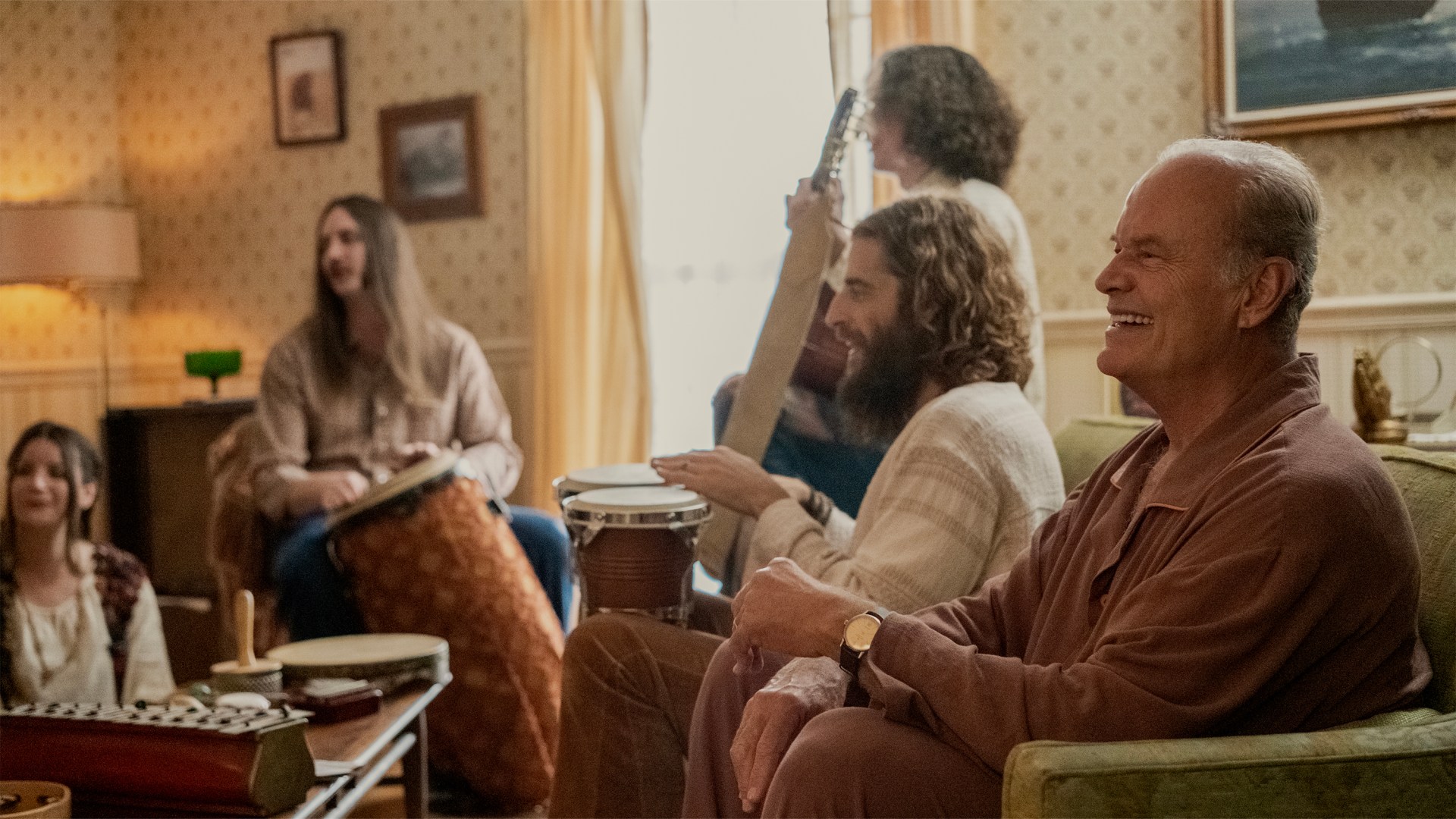
Jonathan Roumie as Lonnie Frisbee and Kelsey Grammar as Chuck Smith in Jesus Revolution.

Jonathan Roumie as Lonnie Frisbee and Kelsey Grammar as Chuck Smith in Jesus Revolution.

Christianity Today February 21, 2023
Photo by Dan Anderson / © 2023 Lions Gate Entertainment

Most people today wouldn’t associate Christians with hippies, but the two have more in common historically than you might think. The new film Jesus Revolution explores how these cultures overlap, how thousands of hippies came to know the Lord—becoming “Jesus People”—and how many of them went on to write popular Christian music.

Without sugarcoating the facts, director Jon Erwin maintains that the gospel can bloom in the unlikeliest of places. In the 1960s and ’70s, when the hippie movement was in full force, hundreds of thousands of people went to Southern California to become “Jesus People.” Time magazine called it a “Jesus Revolution”—a miracle hiding in plain sight.

Erwin has made a career out of the road to Christ. His films portray God working in mysterious ways and in tumultuous places such as an abortion clinic (October Baby) or an equality march (Woodland). He thrives off the tension between fraught situations and characters searching for faith. He usually works with his brother, Andrew, but this time he partnered with Brent McCorkle as his codirector.

Over the course of seven years, the pair kept this film in the back of their minds as they worked on other projects but finally decided to explore the reasons why this movement spoke to them so clearly. The result is one of the most compelling movies I’ve seen this year, and one of the most unlikely stories I’ve seen, maybe ever. Jesus Revolution seems about as believable as a Pixar flick—but as Erwin reminds us, “This actually happened!”

How did you first come across this story?

I first came across the Time magazine [issue], which came out [five years] after the “Is [God] Dead?” [issue]. I wanted to know what happened in those [five years], what changed in the culture? When I finally read the story—which can’t be found online—I couldn’t believe what I was reading. It was a miracle!

How do you make Christian movies accessible for a wider audience?

We’re entertainers first. I want to make you laugh; I want to make you cry. There’s a lot of humor in the movie because of the performances and the whole “squares vs. hippies” thing. But underneath all of that, there’s this universal message about hope. That’s what’s so interesting about it. It’s set in the church; it’s called Jesus Revolution; it’s about a spiritual awakening in America. And yet people who have no affiliation to Christianity love this story.

When a movie becomes popular in America, all kinds of people want to be part of the conversation. I can’t wait for people who have no connection to Christianity—or to any sort of religious beliefs—to watch Jesus Revolution. One of the great things about movies is that they can show you a point of view you’ve never encountered. Movies are this wonderful, vicarious experience where you live through the eyes of someone else for two hours. There’s an opportunity here for people who don’t understand Christianity to see life through a new lens.

Do you think we’re having a Jesus Revolution right now?

Within the entertainment industry specifically, I think there’s an uprising on the behalf of Christianity. I think there’s a resurgence in belief and a sudden increase in spirituality in America, even though church attendance is going down. You can feel an undercurrent of something going on in the industry, in emerging talent, and in a lot of people who usually stay silent. Titans of the industry are now putting God in their work, and it’s an exciting moment to be in the business.

We’re at the forefront of a return to God. The harder things get and the more we need answers, the more we’re going to get movies about Christianity. I can’t think of another time people hated each other this much. It reminds me of what was going on when this movie takes place, in the 1970s. That’s why I can definitely see another one of these movements happening.

Were there any movies that influenced you?

Absolutely! There’s always movies that inspire what I’m making. Jesus Revolution is almost a love letter to Cameron Crowe, specifically to Almost Famous. I love that movie’s sense of relentless, rebellious optimism. I love Crowe’s spirit, the spirit of those classic coming-of-age stories that grapple with difficult issues but do so in a way that values hope and kindness.

What do you hope to do next?

I have a lot of plans. There’s so much opportunity right now. The more audiences support these movies, the more of these we get to make. I’m really immersed in the story of David and in the stories of flawed people, because I’m one of them. People are craving entertainment that is complex and able to be seen and enjoyed by the whole family. So it’s fun to try and make each movie better and better. That way they can be seen by more and more people.

We’ve only scratched the surface on what faith-based entertainment can be. We’re dreaming big and trying to think of what movies we can do that no one else can do. We’re wondering, How can we make the Bible a cinematic universe? How can we put more emphasis on collaboration? I can’t wait to see where those questions take us.

Asher Luberto is a film critic for L.A. Weekly, The Playlist, The Progressive, and The Village Voice.

Theology

Lent Is Not a Vibe

Staff Editor

Even our most beautiful rituals and reflections can’t bring relief from the reality of death.

Christianity Today February 21, 2023
Edits by Christianity Today / Source Image: Getty

I started going to Ash Wednesday services when I was working in New York City, in an office a few blocks from the Cathedral of St. John the Divine. From the sidewalk, the cathedral is intimidating, all filigree and turrets. Inside, though, it’s intimate, quiet, and dark, save for a little light filtered through its rose window.

I went to the cathedral only on special occasions like Ash Wednesday, when the professional choir would sing polyphony and spirituals and Gregorian chants. It was astoundingly beautiful, that music—perfectly tuned and perfectly in time, slipping through the incense and the jewel-toned light. I cried in the pew, got my cross of ashes, and went back to work.

Was it wrong to look forward to a service about a subject—my sin, my death—that I was supposed to face with fear and trembling? Maybe. But how could I help it?

It was the same as when we sang requiems and dirges in my college choir, learning the Latin words for loss and telling the story of the Crucifixion in coloratura. In the Howells Requiem, in Bach’s St. Matthew and St. John Passions, death moved the choir, and death moved our audience. We’d accept our applause, file from the concert hall, and head off to the afterparty, relieved of a burden we didn’t know we were carrying.

This kind of catharsis isn’t an uncommon experience, even among Christians. There can be a strange beauty in the difficult and the macabre, in silence and penitence. “Lent is my favorite season,” a friend recently told me. “Well, not my favorite. That’s the wrong word. You know what I mean.” And I did. “I’m looking forward to Lent,” said another. That’s not wrong, per se. Many of us crave the intimacy with God that can arise in this intentional season of fasting and prayer and almsgiving.

But it’s also true that those of us who tend toward the contemplative (or the mopey) can find Lent suited not just to our spiritual longings but to our aesthetic preferences as well. The psalms of lament, the silences, the flickering candles, the purple, even the shadowy swoop of ashes against a forehead are all, well, pretty.

If we’re not careful, Lent in the life of the church can be like a John Keats ode, a tragic play, or a sad song: there to provide emotional release. When the darkness is done, when the art is finished, life gleams. A loud Manhattan avenue is suddenly brilliant after a dim hour in the cathedral.

Death no longer abstracted

Last year, I was the one providing the Ash Wednesday music. Our small church in Silicon Valley meets not in a cathedral but in a modest, rented sanctuary whose side doors are often thrown open to the sun. Unlike my fleeting relationship with St. John the Divine, I am part of the life of this congregation. The ashes in the bowl are made from the fronds of the palms we waved the year before.

From our place on the stage, my husband and I sang our way through the service. We offered a few hymns and a chant. Others gave readings and prayers. Then, it was time for the imposition. My husband strummed some plaintive chords. From my vantage point on the stage, I watched my fellow congregants, only 15 of them, form a line and approach the altar.

Now there’s a beautiful sight: a community in Christ engaged in tradition, shuffling up a carpeted aisle by candlelight. The guitar music set the scene. There was a lilt to the rector’s words, a poignancy to the cool night air coming through the windows. And I had the perfect view, facing the line of penitents, able to see their somber faces, the dark lines drawn with a finger.

But suddenly, nothing about what we were doing seemed beautiful in the least. This wasn’t death rendered in art. This wasn’t death covered in incense. This wasn’t death abstracted, a meditation I could hold at arm’s length.

When you are in the midst of death, there is nothing poetic about it.

As I heard our rector say each person’s name and then provide the reminder—“James, Lisa, Joel, you are dust, and to dust you shall return”—I looked at their eyes, downcast, their foreheads blackened with ash. All of these people are going to die.

Really, him? And her? And him too? Some were old and some were young, some were sick and some were well. The loss of these particular people was, suddenly, overwhelming: not theoretical but specific, and devastating. I knew which teas she kept in a jar and the taste of the persimmon cookies she made. I knew his laugh, his particular style of prayer. I knew the theological questions they wrestled with and what they did on the weekends and their spiritual gifts, the ways they shaped our collective life.

The loss of each one would be far from an “easeful Death” of which we were already “half in love,” as John Keats put it. It would be bad. Very bad. When my husband stopped his playing for a moment, leaning down so the rector could reach his forehead, I held my breath. Him too?

Remembrance

Ash Wednesday not as a private meditation but as a communal practice; Ash Wednesday in a place I lived rather than a place I visited: This was the remembrance I needed. Watching my brothers and sisters receive their ashes, I recalled, with horror, what death was really like when you experienced it as a mourner. It wasn’t the poignant plot twist in an opera or the tritone in an orchestral score, the carpe diem drama that made life worth living. Death was always an abomination.

In the aftermath of past losses, I’d laid on the ground and wept, suffered stomach pain that wouldn’t resolve, obsessed over regrets and missed opportunities, gritted my teeth, really suffered. When you are in the midst of death, there is nothing poetic about it. It can’t be aestheticized, can’t be made meaningful, even by our most beautiful rituals and reflections and works of art. There is, really, no catharsis to be had. When the woman with the persimmon cookies and the man with the laugh and the man with the questions and the man with the guitar are gone, they’ll be gone.

At least, for now. At least, here. The best sacred music gestures at what’s truly beautiful, beyond any earthly loveliness.

“There is a balm in Gilead,” the choir sang in the cathedral. “World, get out, let Jesus in!” thunders the bass in my favorite St. Matthew aria. Yes, let him! He’ll wipe every tear, bind up every wound, reunite and restore, offer a truer transfiguration than anything we could make to cope with our mortality.

In his new earth, I guess we might not have sad songs at all. That loss would be well worth it.

Kate Lucky is senior editor of audience engagement at Christianity Today.

Theology

Three Black Women Who Preached With the Power of the Holy Spirit

What Zilpha Elaw, Julia Foote, and Sojourner Truth taught me about God’s “withness.”

Christianity Today February 21, 2023
Illustration by Mallory Rentsch / Source Images: WikiMedia Commons

A Methodist woman in Albany, New York, didn’t want to go hear Zilpha Elaw preach. For one thing, Elaw was a woman, and that seemed “unbecoming.” To make matters worse, Elaw was Black, and that violated a sense of propriety and decorum. She didn’t want to go. But her husband persuaded her, and when she heard Elaw preach, she was convicted by the power of the Holy Spirit.

As Elaw recorded in her memoirs, the woman experienced a “quickening,” and “the word was effectually sown in her heart.” She experienced a kind of illumination and was able to read the Scriptures in a way she never had before. For Elaw, that was critical evidence of the work of the Spirit. “The Scriptures become as a new volume,” she wrote, and “develop new and surprising truths to the regenerate soul.” It is almost as if the person reading the Bible is reading alongside God—reading with the Spirit.

As I have read and studied the theology of Black women preachers in the 19th century, I’ve been struck by their pneumatology, their understanding of how the Holy Spirit breathes and blows in the lives of believers. Again and again, women like Elaw bore witness to the withness of the Spirit.

The term withness is not one that 19th-century Black women pastors would use. Yet this idea is demonstrated in their theology and in their lives and ministries. Alfred North Whitehead, a mathematician writing in the 1920s, used the word withness to speak of the body as the source and beginning of knowledge. Relying on the philosophies of David Hume and Rene Descartes, he was trying to interrogate our common understandings of how we know what we know. He argued we know things not just with our minds but with our entire bodies.

But the term can also be applied helpfully to the work and ministry of the Holy Spirit. The power, presence, and promise of the Holy Spirit means that the Spirit is always with us. The Holy Spirit is never far off but is in the world, actively working to reconcile us to one another through Jesus Christ. In John 14:16–17, Jesus promises to send the Spirit as an advocate to live with and guide the disciples. The Scripture also says the Holy Spirit helps Christians bear witness to the trials we face and God’s presence in them. In Romans 8:26, Paul says “the Spirit helps us in our weakness, for we do not know how to pray as we ought, but that very Spirit intercedes with groanings too deep for words” (NRSVUE).

Nineteenth-century Black women preachers in the United States exemplified and testified to the Spirit’s withnessing in their own lives. Facing the perils of racism, sexism, and even potential enslavement, their preaching testified both to a God who knew their suffering intimately and still called them blessed and to the Holy Spirit’s withness.

For Zilpha Elaw, the Spirit’s withness enabled her to preach against all odds, making space for her in a world that denied her humanity. Born in Pennsylvania in 1790, she was an itinerant Methodist minister, preaching as far north as rural Maine, where there were no Black people for miles, and as far south as Virginia, where she ran the real risk of being enslaved. When the Spirit led her to preach in England, British Methodist churches mentioned the presence of “The Black Woman,” not even noting her name. Nonetheless, she preached widely, drawing crowds.

Sometimes, her words were even able to convict the hearts of those who did not see her as fully human. Once in Alexandria, Virginia, for example, she preached to a crowd of enslavers. They thought it “strange” that a Black woman could teach the “enlightened proprietors the knowledge of God”—and even stranger that “in the spirit and power of Christ,” she “drew the portraits of their characters, made manifest the secrets of their hearts, and told them all things that ever they did.”

One historian points out this particular turn of phrase—“all things that ever they did”—is a reference to John 4:29, where when Jesus encounters the Samaritan woman at the well, she comes to believe in him and testifies to her neighbors. In the King James Version, the woman says, “Come, see a man, which told me all things that ever I did: is not this the Christ?”

The Holy Spirit within Elaw enabled her to speak hard truths to people considered educated and wealthy—people who had no doubt heard many more-refined sermons from people who gone to seminary and earned respectability along with their degrees. Yet she was able to preach with a power that convicted, by the withness of the Holy Spirit. The Holy Spirit inspired Elaw, even in her precarity and vulnerability, to proclaim the gospel to powerful white men who enslaved and brutalized people who looked like her.

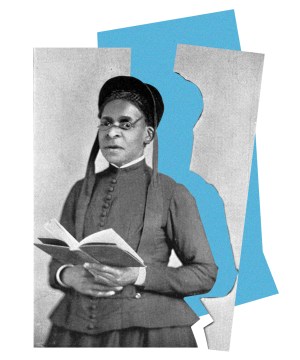
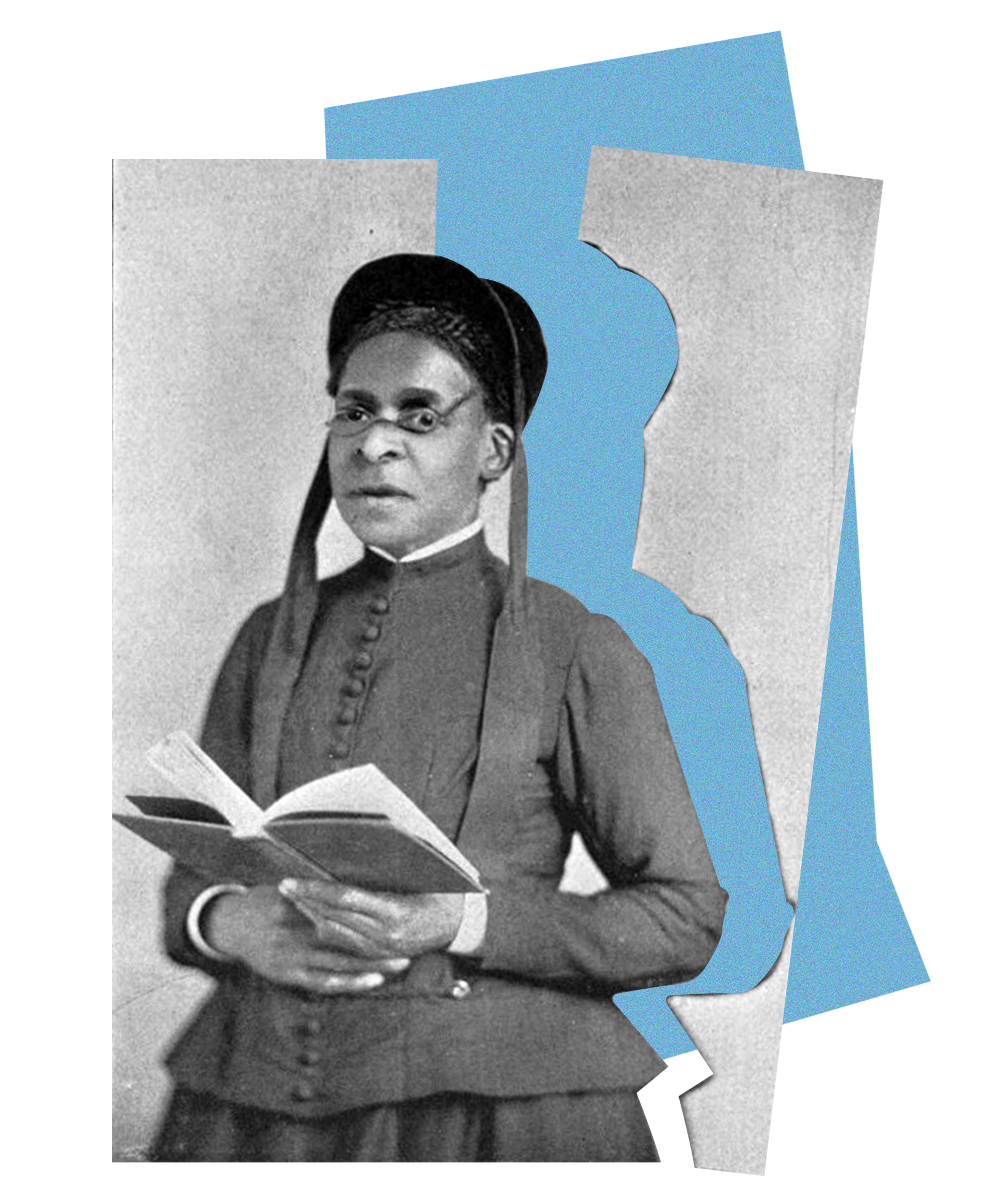
The Spirit’s withness catapulted another woman into itinerant ministry in the years before the Civil War. Julia Foote did not originally believe women could be called to preach. As she wrote in her autobiography, published in 1879, she had “always been opposed to the preaching of women, and had spoken against it” until she had a mystical vision of the Trinity. In the vision, God the Father asked her if she would go wherever she was sent, Jesus washed her and gave her a new robe, and the Holy Spirit gave her fruit to eat. God told her she had everything she needed to preach the gospel. After that, she began to actively evangelize. She became one of the first female elders in the African Methodist Episcopal Zion Church and practiced a biblical exegesis that insisted on her humanity and the humanity of the people to whom she ministered.

Unlike Elaw, Foote didn’t preach to white people very often. At one white church where she was invited to preach early in her ministry, the congregation was segregated by race, and she refused to speak. The Holy Spirit would not accept such barriers and neither would she. The gospel was free for everyone. When she did find a place to preach, she noted the church was overfilled with people desperate to hear the good news.

Julia FooteWikiMedia Commons / Edits by CT
Julia Foote

In another case, Foote was traveling by boat overnight and went to sleep in the ladies’ cabin. A white man came in and, seeing Foote, threw a temper tantrum. He demanded she get up and leave because, as a Black woman, she was not considered a lady. Foote pretended to sleep as he ranted and raved, drawing the attention of the captain, who also implored Foote to rise. She decided, though, as she later wrote, that she thought “it best not to leave the bed except by force.” Both men eventually gave up bothering her, and she remained in her bed the rest of the night.

The Holy Spirit’s withness gave her strength to stay put so she did not acquiesce to the demands of white supremacy. For her, the Holy Spirit’s withness taught her and empowered her to say no to the ways “of the world.”

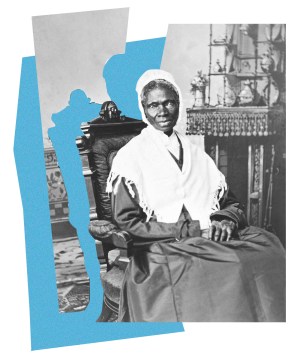
Sojourner Truth’s understanding of the Spirit as withness came from her childhood. Born Isabella Baumfree sometime around 1797, she was raised enslaved on a small farm in Dutch-speaking New York. Her first spiritual experiences came through her mother, known affectionately as “Mau Mau Bett.” Her mother taught her “there is a God, who hears and sees you” and she should “go to God in all her trials, and every affliction.” Truth understood from an early age that God was with her, even as she was beaten.

Empowered by this knowledge, before New York required manumission, she walked from her bondage with her infant daughter.

She found fellowship with several faith communities along the way and eventually ended up in New York City. Here, in midlife, as she served impoverished urban communities, she felt God’s call to preach and lecture. She knew her family and friends would be hesitant about it, so she kept it a secret as she packed only what she could carry in a pillowcase. When she departed, she announced her name was no longer Isabella but Sojourner and explained that “The Spirit calls me … and I must go.”

Truth understood the witness of God, guiding her. The Spirit led her to bear testimony to the cruelty of enslavement, fight for women’s suffrage, speak with Abraham Lincoln, tend to the wounded in the Civil War, and preach to a crowd of 1,200. The Spirit’s withness showed her that every person was a child of God and that God cared about the whole self—body, mind, and soul.

Sojourner TruthWikiMedia Commons / Edits by CT
Sojourner Truth

We know, of course, that God’s character does not change. But the Spirit moves, and by that power, people change. It is common today to view change as a sign of weakness, but in the preaching of Black women in the 19th century, change was a testament to God’s strength and the transformation wrought by the Spirit’s withness.

Truth, Foote, and Elaw all saw how the prophetic and the pastoral are deeply connected, as the Spirit simultaneously calls out sin, changes hearts, comforts the repentant, and opens “regenerate souls” to “new and surprising truths” about the Good News of God’s reconciliation. Many, I think, respond at first like that woman outside Albany who thought Elaw’s preaching would be unbecoming. But like her, we too can be quickened by the Spirit and experience that divine withness if we will listen to the teaching and testimony of these Black women preachers from American history.

Kate Hanch is a pastor at First St. Charles United Methodist Church in Missouri. She has an MDiv from Central Baptist Theological Seminary and a doctorate from Garret-Evangelical Theological Seminary. She is the author of Storied Witness: The Theology of Black Women Preachers in 19th-Century America.

News

Died: Christian Atsu, Ghana Soccer Star who Praised God in Everything

The Premier League winger known for his faith was killed in the earthquake in Turkey.

Christianity Today February 20, 2023
Serena Taylor/Newcastle United via Getty Images/edits by Rick Szuecs

Christian Atsu kicked his last goal on February 5. He ran up to the soccer ball and slammed it with his deft left foot, shooting it past 10 opposing players and a goalie in the fifth minute of extra time. The ball found the back of the net, breaking a 0-0 tie and lifting his team to euphoric victory.

Atsu was a long way from the dirt-and-rock pitches where he learned to play barefoot in Ghana. But through all the changes—from poverty to professional soccer, international fame playing for Ghana, the highs and lows of the British Premier League, and then a new challenge with this team in Antakya, Turkey—he held fast to his faith.

“God’s power has to be manifested in my life for people to see how far he has brought me,” Atsu once told a reporter. “The Bible says it is not by our hard work. … It is not just by my hard work, though I am working hard, but it is the will of God, the grace of God, that has brought me this far.”

The day after he scored the winning goal, February 6, Atsu’s apartment building collapsed in the 7.8 earthquake that reduced the ancient city of Antioch to rubble. He went missing for nearly two weeks. On Saturday, February 18, authorities finally confirmed Atsu was one of the tens of thousands who died in the disaster.

In Newcastle, where Atsu played for four years as a winger and helped the team win promotion to the Premier League, fans applauded him for a full minute before a game on Saturday. Television showed his wife and two young children crying in the stands as 52,000 people in the stadium sung out his name.

“It’s just devastating—he’s 31,” said Johnny Ferguson, Atsu’s pastor at Hillsong Newcastle UK. “One thing I remember Christian being really passionate about was politics in Ghana. He had a real vision to do some good and give back to his community.”

As Atsu’s body was flown back to his hometown on the coast of West Africa, the president of Ghana issued a statement mourning his passing.

“Ghana football has lost one of its finest personnel and ambassadors,” President Nana Akufo-Addo said. “May his soul rest in the Bosom of the Almighty until the Last Day of the Resurrection when we shall all meet again. Amen.”

Christian Atsu and his twin sister, Christiana, were born to Immanuel and Afiko Twasam in Ada Foah on January 10, 1992. Immanuel was a poor fisherman who struggled to catch enough fish in the mouth of the Volta River to provide for his and Afiko’s 10 children. The family’s situation grew direr when Immanuel died in 2004.

At 12 years old, Atsu blamed himself for his father’s death. If he had been working and making money instead of studying at a soccer academy, he said, perhaps the family could have paid for medical treatments.

His father’s final charge to him, however, was to worship God and always use his talents to better humanity. The best way he knew to do that was to keep playing soccer.

“Jesus is the best thing that ever happened in my life and I give thanks to my parents for how they brought me up to know Jesus,” Atsu later explained. “I’m inspired by God who gives me strength each and every day to move forward in my football career. … It will be difficult [to be successful] but you will because God is your strength.”

Five years after his father died, Atsu left Ghana to play professional soccer for FC Porto—the top soccer team in Portugal. He stayed on the bench but then was loaned out to Rio Ave in 2011, where he scored for the first time in a professional game at age 17 and was named the team’s player of the year.

Atsu struggled to adjust to Portugal—“Everything was different,” he said—but he met and fell in love with his wife, and his playing improved rapidly. In 2012, he started playing for Ghana’s national team, earning recognition from the international soccer press. The following year, he signed with Chelsea and moved to the UK to play in the Premier League. The West London club decided not to put him on the pitch, though, and instead loaned him out to a series of lower-league teams.

At the same time, Atsu achieved fame in Africa playing for Ghana in the World Cup and the Africa Cup of Nations. His celebrity rose, but he continued to prioritize his faith. When he traveled with the national team, he shared a room with defender Jonathan Mensah, also a committed Christian, and the pair frequently prayed and worshiped together.

“In the night we have to praise God,” Atsu said, “and when we wake up, we have to thank God.”

Like other Christian athletes, Atsu prayed to win and be successful. But he also believed that God should be praised at all times, in all circumstances.

“What if my football [career] doesn’t work, does that mean that God didn’t listen to my prayers?” he once said. “No. It doesn’t mean that. What is important is that we know God is always there to worship. Even if we fail in our career, we will not be shaken in our belief in God.”

In 2016, Atsu moved from Chelsea to Newcastle, signing a four-year contract for a reported £6.2 million (about $8.4 million). When the then 24-year-old soccer star moved to Newcastle, he and his family started going to the local Hillsong. The church was already attended by several professional soccer players and known, locally, for running a sports program from refugee kids. There were numerous African immigrants in the congregation, including an older couple from Ghana who greeted Atsu like family.

“The first time I came, I loved it so much,” Atsu said. “I felt like I was home.”

In one long interview he gave about his experience at the church, Atsu said the congregation was really the one place in public where he felt himself. He worshiped God like he did as a child at his parents’ house and in private with other believing soccer players.

“In the house of God, I’m normal,” he said. “I’m here to worship God.”

Encouraged by the church and the memory of his father’s charge to better humanity, Atsu started working with Arms Around the Child in 2017. He served as an ambassador for the nonprofit and raised money to help them build a school for orphans in Ghana. His efforts funded the purchase of land and a foundation in 2019, and he personally financed much of the construction. Currently, the school is near completion, according to Arms Around the Child, but still needs paint and school supplies. Fans are organizing to finish the work.

Atsu also gave to help children who had been forced to work have the chance to go back to school, and he quietly contributed funds to the CrimeCheck Foundation to release people from prison. In 2019, he paid thousands of pounds to release a 62-year-old woman serving a sentence for stealing less than $2 worth of grain to feed her family.

When his philanthropy attracted press attention, British reporters suggested he was generous because of his personal experience with poverty. Atsu corrected them. It wasn’t that, he said. He was motivated by his faith.

“This is the will of God for every man—for every man to help his friend, help those really poor in need,” Atsu said. “It is not because of what I’ve been through that is making me do it, no. You have to help your friend when he is in trouble. You have to love your neighbor as yourself.”
Atsu continued to live and worship in Newcastle when he went to play soccer for Hatayspor FC in a newly formed Turkish league in 2022. His luxury apartment in Antakya, like most of the ancient city where followers of Jesus were first called Christians, was reduced to rubble in the February 6 earthquake. There were false reports and false prophecies that raised hopes he had survived, but a pair of his shoes was found by rescue workers on February 14, and his death was confirmed a few days later.

Atsu is survived by his sister, wife, two sons, and a daughter.

News

TIU Announces Plans to Move Undergrad Program Online

Facing enrollment declines, the Illinois university ends in-person and residential learning, except for Trinity Evangelical Divinity School and its law school in California.

Trinity International University

Trinity International University

Christianity Today February 20, 2023
Screengrab / TIU YouTube

When hundreds of college students at Trinity International University (TIU) pack up their dorm rooms at the end of the semester in May, they won’t be coming back to the suburban Chicago campus. Athletes won’t suit up in their white and blue Trojan uniforms anymore. Undergrads won’t get to study together in the library, share meals in the dining hall, or experience other rhythms of campus life.

TIU announced on Friday plans to move its undergraduate program fully online following the end of the semester, among the first Christian colleges to shut down in-person learning as a result of the “new reality” facing higher ed.

“We know this new direction will be unwelcome news for some, but we believe this course of action will enable us to better serve the global church more effectively,” said TIU President Nicholas Perrin and Board of Regents chair Neil Nyberg in a statement announcing the change.

The Deerfield, Illinois, institution—which includes a graduate school and law school in addition to an influential evangelical seminary, Trinity Evangelical Divinity School (TEDS)—will continue to offer in-person education through its divinity school in Illinois and law school in California.

TIU’s media release characterized the discontinuation of its residential undergraduate program as a “transformational strategy” that will “position the University for long-term growth, industry leadership, and continued academic excellence.”

Like higher education institutions across the country, TIU–and its seminary–have seen consistent enrollment declines over the last 20 years. As of last fall, the school had 356 full-time undergrad students on campus.

Friday’s announcement comes almost a year after TEDS cut nearly $1 million in spending since the number of full-time students at the evangelical seminary dropped 44 percent in 20 years. The cut in spending involved the elimination of at least seven faculty positions. At the time, TIU said that budget reduction was the first part of a three-phase process of “creating efficiencies.”

Last year’s cuts and other reductions saved the seminary $920,000 annually, CT reported in April, or about 6 percent of what it spent on operations in the 2021–2022 school year. Spokesman Chris Donato previously stated that the decision was not the result of a catastrophic financial situation, saying TEDS was “taking proactive steps from a position of financial prudence.”

The school has not revealed how many positions will be affected by moving undergrad and grad school programs online; TIU’s website says layoff notices will go out to staff by Wednesday, February 22.

“As Trinity’s president, I also promise that in the midst of this transition we will do everything within our power to aid and assist any of our highly valued staff who are adversely affected by these decisions,” Perrin said.
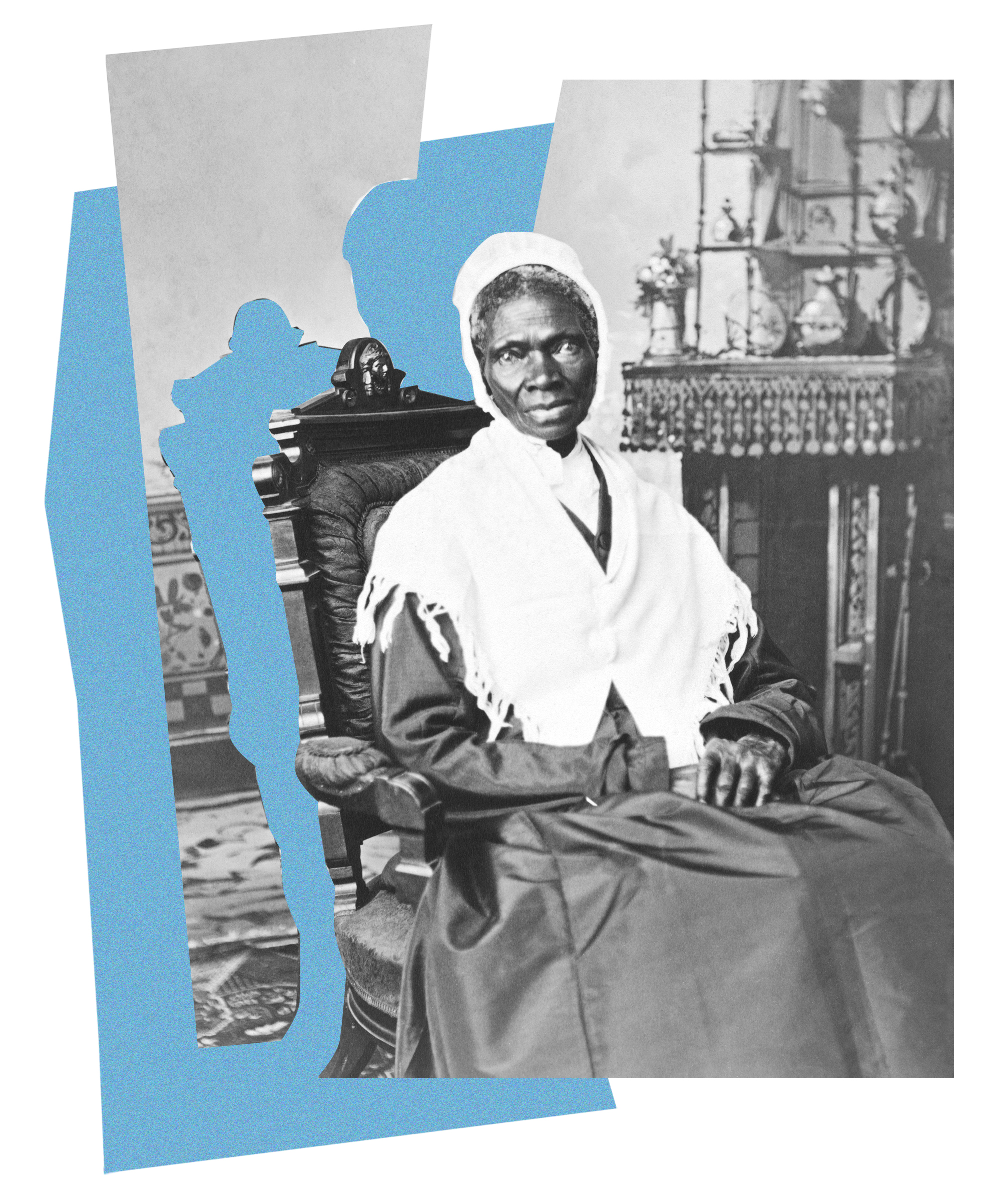
Donato told CT that going into this school year, the administration didn’t anticipate making the move to end in-person undergrad education at TIU: “It was not apparent until late January 2023 that … enrollment declines were continuing rather than abating.”

Next week, students who want to enroll elsewhere rather than continue their degree online are invited to a transfer fair involving other Christian colleges in the area, such as North Park University and Judson University. They have also been offered counseling services to help process the news.

The challenges in today’s college landscape span across evangelical higher ed and date back to before COVID-19. Sixty-five percent of schools affiliated with the Council for Christian Colleges Universities (CCCU) saw traditional undergraduate enrollment drop between 2014 and 2018. Higher education experts also predict many schools will fall off a “demographic cliff” in 2025 and beyond, as the pool of potential college students shrinks because of declining birthrates.

For those evangelical schools that are experiencing growth, many credit the expansion of their online programs.

Abilene Christian University, affiliated with the Churches of Christ, has seen five consecutive years of enrollment growth and now 32 percent of the school’s nearly 6,000 students are online. Thirty percent of the 1,700 students at Northwestern College, a Dutch Reformed school in Iowa, are online. And at Indiana Wesleyan University, there are three times more students logging on to class on the internet than there are visiting the Marion, Indiana campus.

College presidents and administrators at such schools believe this is one of the best ways to overcome enrollment challenges, while also increasing the availability of Christian education and widening their school’s impact. Critics, on the other hand, say online degrees undercuts quality and worry these programs may diminish a Christian liberal arts education.

Last week’s news hit the TIU community hard, with just three months before the semester ends. Parents of current undergraduate students expressed frustration with the decision to end residential and in-person learning in comments on Facebook; alumni offered their prayers that the shift would allow the school to be more effective, as leaders suggested.

“This abrupt announcement fits a pattern with Perrin’s leadership where cuts and major changes to the curriculum are announced quickly and without sensitivity towards those affected,” said Madison Pierce, one of the two departing professors named publicly last year, who joined Western Theological Seminary. “I continue to pray for my alma mater and its leadership with the hope that it regains its place as a prophetic space within evangelicalism.”

In an email sent to Trinity students on Friday, President Perrin said the move online was part of “remaining laser focused on our ‘why.’” He cited the need to reimagine Trinity’s current paradigm, noting enrollment challenges, economic instability sparked by the pandemic and the rising costs of providing residential education.

“We understand that these decisions, while providing long-term vitality, have significant short-term implications,” Perrin said. “I recognize this letter will not answer all your questions, but we intend to provide additional details in the coming days through regular communications, chapels, special gatherings, and other forums.”

In addition to ending in-person undergraduate education at TIU and moving Trinity College and Trinity Graduate School fully online by fall 2023, the institution also decided to close Camp Timber-lee. The Wisconsin camp has lost $2.8 million since it was given to TIU by the Evangelical Free Church in America in 2016.

addApple PodcastsDown ArrowDown ArrowDown Arrowarrow_left_altLeft ArrowLeft ArrowRight ArrowRight ArrowRight Arrowarrow_up_altUp ArrowUp ArrowAvailable at Amazoncaret-downCloseCloseellipseEmailEmailExpandExpandExternalExternalFacebookfacebook-squarefolderGiftGiftGooglegoogleGoogle KeephamburgerInstagraminstagram-squareLinkLinklinkedin-squareListenListenListenChristianity TodayCT Creative Studio Logologo_orgMegaphoneMenuMenupausePinterestPlayPlayPocketPodcastprintremoveRSSRSSSaveSavesaveSearchSearchsearchSpotifyStitcherTelegramTable of ContentsTable of Contentstwitter-squareWhatsAppXYouTubeYouTube