Ideas

Should Christians Support Making Birth Free?

Contributor

In the wake of Roe’s 50th anniversary, four believing experts discuss the merits and challenges of the Make Birth Free proposal.

Christianity Today January 25, 2023
Randy Faris / Getty

Last week marked 50 years since the monumental Roe v. Wade case legalized abortion in our country—and seven months since it was overturned.

Amid the articles discussing implications for the pro-life movement, one argument in Compact Magazine sparked a ripple of related headlines. In it, Catherine Glenn Foster with Americans United for Life and Kristen Day with Democrats for Life of America proposed that to address the financial motives for abortion, giving birth should be made free in the United States.

This proposal isn’t new—Elizabeth Bruenig penned an op-ed with the same title for The Atlantic last year—but the Make Birth Free movement seems to be gaining greater traction in recent days, as people of faith and folks on both sides of the political aisle are lining up to share their thoughts on the subject.

One response for the Institute for Family Studies explains that “making it easier to have a child doesn’t require making birth free”—arguing instead that existing resources should be made easier to access. Another piece for the National Review lists other objections and ultimately argues that the same ends could be achieved through private rather than governmental support.

But what are some other views on the matter? Four pro-life Christian thinkers with a background in politics and family advocacy weigh in on the merits and challenges of the Make Birth Free proposal.

Daniel Bennett, politics professor at John Brown University:

The end of Roe v. Wade was a necessary result for the American pro-life movement, but it was far from sufficient in its fight against abortion. Pro-life Americans—including many Christians—now find themselves in new territory, no longer fighting a constitutional battle but instead one focused on how to best respond in this new environment.

If the end of Roe really does result in more children being born, we must focus on how to support these children, their mothers, and their families with all means at our disposal. This includes continuing to lift up women and children in our private lives, yes, but also being creative in how we marshal government resources to invest in some of the most vulnerable among us.

Americans United for Life has set a high bar in its proposal to make birth free in the United States, modeled on existing programs funding organ donation and essential medical care.

I am encouraged to see an unapologetically pro-life group recognize the complexity of living in a post-Roe world, combining personal efforts with public programs to support the preborn, newborns, and the women who care for them.

Pro-life Americans rightly rejoiced with the end of a constitutional right to abortion. Now, we must be equally zealous in adopting an all-hands-on-deck posture in serving women and children in our midst, regardless of where this aid comes from.

Kelly M. Rosati, former vice president of Advocacy for Children and Community Outreach at Focus on the Family:

I was heartened to see the proposal from Democrats for Life and Americans United for Life calling on policymakers to make birth free in the United States.

There can be no better fiscal or policy priorities than those that elevate practical support for children and families. According to the pro-abortion rights research organization, the Guttmacher Institute, 73 percent of women who have had abortions indicated they chose abortion because they couldn’t afford a baby. A 2022 Kaiser Family Foundation study found the average cost of giving birth is almost $19K, with almost $3K out of pocket for families.

These numbers don’t include the rising price of health insurance premiums and additional charges for any out-of-network care or services required to keep both mom and baby healthy. And these amounts are just the beginning. The Brookings Institute in 2022 estimated from government data that the annual cost of raising a child is now around $18K.

Policies that alleviate these monetary burdens on families aren’t the solution to solving the abortion crisis in our country, but they are most certainly part of the solution. Creating a welcoming environment for new life is critical, both culturally and economically. A proposal to make birth free recognizes the unique, sacred, and practical imperatives to structure a society whose fiscal priorities include welcoming new life and fostering the next generation.

These are the kinds of bold proposals the pro-life movement needs to place high on the agenda—along with providing paid family leave and ensuring health care for moms and babies.

To those with concerns about spending and fiscal accountability, I’d say there are ample places in the federal budget to offset additional spending. It’s all a matter of priorities. Support for childbirth, infants, and families ought to be at the top of our pro-life policy lists.

Lyman Stone, research fellow at the Institute for Family Studies (IFS):

It is laudable to see pro-life organizations getting behind the call to make birth and delivery free for all Americans. If the proposal on offer became law tomorrow, we would have fewer abortions, more healthy babies, and a stronger culture of life in our society.

However, we would also be overpaying for this, as the proposal calls to essentially cover all birth costs in the United States—at a level not even covered by many private insurance plans currently (such as by covering doulas)—and also to provide an allowance for the child’s first two years of life. This is all well and good, but to effect serious change, it would be more helpful to advance concrete policy proposals that are attainable in the short run and at a reasonable cost.

To make birth free, a straightforward option would be to push for a legislative fix to the laws governing Medicaid, allowing presumptive eligibility for pregnant women to be extended from 60 days to 300 days, covering a whole pregnancy and the immediate perinatal period. This would give all Americans a free option without disrupting the private market for people who like their current insurance. Many people would still choose to pay for a more amenity-rich, privately insured birth—but everybody would have a free option, providing some price discipline across the industry.

This approach is a lot more economical and nondisruptive than the current Make Birth Free proposal. If there's an interest beyond that in covering costs for private births, a straightforward option would be to establish a total out-of-pocket, maximum cost for pregnancy-related care. The average total out-of-pocket cost for birth right now is around $3,000, which could be capped at a much lower threshold. This wouldn't cost the government anything, but it would cause insurance rates to rise for people who are not having babies.

Of course, if we believe all of society has an interest in the next generation, paying a little more for insurance to make birth free may be a worthwhile tradeoff. Regardless of the approach, both of these proposals are far cheaper than the $30–$70 billion per year quoted by the Make Birth Free proposal: Total costs would be no more than $20 billion per year, possibly as little as $5 billion.

Rachel Anderson, founder of the Families Valued project at the Center for Public Justice:

The Make Birth Free proposal is one in a series of signals that families in the United States, though occupying a vital and unique place in human society, are themselves in a vulnerable place. Kristen Day and Catherine Glenn Foster illustrate this by citing the out-of-pocket expenses incurred during pregnancy, childbirth, and the postpartum period. But the reality is even more challenging.

Families not only incur new costs when they have a child—they face these costs with even fewer resources than they did before. American households experience, on average, a 10 percent drop in income in the months before and after childbirth. Prenatal medical appointments and the physical realities of late pregnancy often mean time away from work, and many jobs still do not provide adequate paid parental leave.

Researchers at Seattle Pacific University conducted interviews with faith-based employers indicating that even well-meaning organizations are offering, on average, only four to six weeks of paid time off after an employee welcomes a new child by birth or adoption.

Many Americans find that the structures and cycles of their jobs are often out of sync with the rhythms and seasons of family life—creating gaps of lost income, exhaustion, and stress.

Day and Foster’s proposal tackles the needs around health care costs—which many states are currently addressing through expanding Medicaid to cover a full year after birth and cost-effective, culturally sensitive services such as doula care. Pro-family Christians should be on the frontlines of these efforts in their states.

Employers should stretch to provide at least 12 weeks of paid family leave for major family-care events and at least two weeks of paid medical-caregiving leave annually. They should also advocate for public programs that extend family stipends in the months surrounding childbirth and paid-leave benefits to all who work. Last year, a diverse group of Christian leaders convened by the Center for Public Justice offered policymakers such a proposal.

As a society, we have grown used to assuming that families will be able to serve their vital role without making the real shifts needed to assure that they do. Too often, our attitude around families is much like the posture toward the poor criticized in the Book of James: “Go in peace; keep warm and well fed,” while failing to provide the necessary resources to clothe and feed the needy.

The call to make birth free is a reminder that promoting healthy families is work we all need to do.

News

Put Not Your Trust in ChatGPT, for Now

Q&A with a veteran AI engineer and entrepreneur, Tom Kehler, about the limits of the popular chatbot and the wonders of the human brain.

Christianity Today January 25, 2023
Illustration by Mallory Rentsch / Source Images: Getty

Tom Kehler has worked in artificial intelligence for more than 40 years, as a coder and a CEO. He grew up a preacher’s kid and got into mathematical linguistics in high school. After earning a PhD in physics, he wanted to do linguistics with Wycliffe Bible Translators, but “God kept closing that door,” he says, and instead he found himself working with natural language processing in computing.

He had a stint in academia before joining Texas Instruments in 1980, where he began working with top AI researchers. He ended up in Silicon Valley, founding and leading several startups involving AI, including IntelliCorp and CrowdSmart.

Developments in AI appear to be speeding along: This week Microsoft announced that it is investing $10 billion in OpenAI, which created the popular chatbot ChatGPT. One of OpenAI’s top researchers described current neural networks as “slightly conscious.” Kehler has his doubts.

What were the questions about AI in the 1980s when you were first working on it?

“Is it going to replace my job?” In many cases, the answer is yes. We need to be thinking about continuous education—you may not be doing the assembly line, but you may be operating the machinery that does the assembly line. The other question that comes up is this notion of the singularity [when AI outstrips humans]. The sentient question comes up. But I think we’re a very long way from that.

Why is there an obsession with sentient AI?

If you are a person of nonbelief, you want to create something that gives you hope in the future. On the AI side, we want something that will cause us to have eternal life—my consciousness is going to go into eternity because it’s in a machine. I think that drives some of these notions of generalized AI, like [Ray] Kurzweil’s singularity obsession. It speaks more of the human desire than of where we are in terms of our progress.

What do you make of the Google engineer last year who said his chatbot had become sentient and had a soul?

I think he spent too much time with his laptop, honestly. We work with the same kind of large language models. It’s called transformer models. My whole career, I’ve been focused on natural language processing—a field that’s been around for some time. All of those models were built by aggregating information off of things like Wikipedia. It was the echo of human intelligence.

The way these systems work, we’ll say, “This is the number seven.” We keep reinforcing until the neural network can recognize that seven. That correlation of events is the core way AI works now.

Here is a system that will turn my head: You take an empty system, and it has the capability of learning language at the speed of a child. The way kids acquire language is truly mind-blowing. And not just language, but even if you go open the cupboard door—they see something once, and they figure out how to do it.

The system that this Google engineer was talking about, it was given trillions of examples in order to get some sense of intelligence out of it. It consumed ridiculous amounts of energy, whereas a little kid’s brain requires the power of a flashlight, and it’s able to learn language. We’re not anywhere close to that kind of general AI.

We underestimate how little we know about how the brain works. And there’s overconfidence in the tools we have so far. [Computer scientist] Judea Pearl in The Book of Why makes a case that deep learning gives us animal levels of intelligence, which is correlation on inputs and data. That’s going to get really good. That’s what helps us with cool things like ships that can go across the ocean now without any pilot. What we can do with AI is incredibly powerful, but it’s not the same thing as saying this is now an intelligent being.

So where do you want AI to go?

There is scientific evidence that the problems we need to solve are way too complex for any one person. And we need to use collective intelligence to figure out how to solve some of these big problems. I believe AI can be a huge benefit, and not a threat, to human development.

The popular new AI chatbot, ChatGPT—what’s good about it?

It puts in a very accessible form the knowledge that has been captured for a very long time. It’s a very useful utility if you’re asking it general-knowledge questions, like an encyclopedia. It presents it in a much better form than doing a search where you’re going to get a group of links and you have to put the story together yourself.

But you think it has problems too.

It’s taking inputs to build its knowledge. It doesn’t check the truth value or, what’s called in information systems, data lineage. Where did this data come from? Do we know it’s true? It’s translating input text to output text based on some objective.

Let’s say you’re using ChatGPT for taking action or making a decision. What happened over the last six, seven years—in the bad old days of AI—AI was used to manipulate people’s opinions. There were campaigns to mimic the truth but twist it.

You can do that with something like ChatGPT. You can’t use it like how we would use science, where we might make a decision based on science to create a drug. There needs to be a human process of finding out if it’s trustworthy or not.

How do we create a trustworthy chatbot?

If you think about how scientific knowledge or medical knowledge was developed, it’s by peer review. We as a human race have considered that trustworthy. It’s not perfect. But that’s how we normally build trust. You have 12 of the world’s best cardiac surgeons say a certain procedure is good, you’re going to say, “Yeah, that’s probably good.” If ChatGPT told you to do that procedure, you’d better have it reviewed by somebody, because it could be wrong.

I believe it’s ethically critical that we keep humans in the loop with developing artificial intelligence technology. We’ve seen where AI systems can beat somebody at chess, but that’s a skill set. That’s not demonstrating that they can be trusted for the things we humans call wisdom—how to live.

Why does truthfulness in chatbots matter to Christians?

Faith is about the evidence of things hoped for. When people think of faith as just a leap, that’s kind of not true. We have decisions in faith because of evidence.

Now, think about what happened in Christianity when there was misinformation. It caused fragmentation, right? QAnon stuff started to get propagated. Information is getting propagated where its truth value hasn’t been determined. It causes divisions in families.

At the very core, we should be focused on what is true. This notion fits in with Philippians—what is true, what is of good report, what is creating a greater common good. This is the original plan of Christianity, the kingdom of God emerging.

This belief that we can try to find agreement and come together is at the very core of what I have envisioned for artificial intelligence. It’s a scientific principle: We have peer-reviewed evidence that we trust and that moves science forward.

You’ve argued certain mathematical models themselves help build more trustworthy AI.

Every AI engineer on the planet knows about Bayesian applications, because that’s fundamental to most of AI now. Bayesian learning has its roots in a Presbyterian minister in the 1700s.

Bayesian thinking says, “How does evidence change my beliefs?” I form new beliefs based on evidence. You can use Bayesian models to build much richer kinds of intelligent systems, and you can have it be explainable. It can tell you how it got an answer.

The Silicon Valley crowd that really believes in the singularity—that this is the way that we’re going to achieve eternal life—they don’t realize that a lot of the underpinnings of this were invented by people who had a deep faith in God. I find that interesting and fun.

Have you used ChatGPT?

I asked it to write an essay about how large language models will destroy human society as we know it. And it does a beautiful job of saying why this will destroy human society as we know it.

It’s a great piece of technology. I’m not trying to negate it but to say, “This is how far you can go with it.” And I’ve got a deeper ethical problem: It’s a bit of a dangerous thing to start thinking of the machine as superior in intelligence to humans, particularly if it’s not based on any foundation of ethics.

You don’t want an automaton that starts to do things and you don’t know why or how it’s doing them. Explainability is very important. There’s probably not enough elevation of thinking about where this is taking us and where we want to guide it. We need people who are thinking deeply about the spiritual implications.

News

Born Again and Again: Cambodian Evangelicals Celebrate 100 Years

In the century since the arrival of Protestant missionaries, the church has been wiped out by genocide and forced to rebuild. Now “it’s time for the gospel to shine.”

Christians gathered for a kickoff to the anniversary celebration in 2022.

Christians gathered for a kickoff to the anniversary celebration in 2022.

Christianity Today January 25, 2023
Courtesy of Pisit Heng

A festival celebrating the 100th anniversary of Protestant Christianity in Cambodia is coming up this weekend, and Navy Chann’s phone won’t stop dinging.

“Sorry, I have like ten Telegram messages coming in at the same time,” said Chann, executive secretary on the committee planning the celebration, which local believers expect will be the country’s biggest Christian event ever.

The Cambodia Gospel Centennial Celebration is a two-day festival in Phnom Penh commemorating the arrival of the country’s first Protestant missionaries in 1923. Chann and fellow Christian leaders have spent over two years planning the event.

During the final week of preparation, they have stayed in almost constant contact to ensure that every detail is perfect and the celebration’s vision statement is fulfilled: that Cambodia would become “the aroma of Christ in Asia and around the world.”

A large open-air exhibition area with an elaborate layout will welcome those who make the journey to the capital’s Diamond Island district, with zones for exhibitions, concerts and dances, children’s activities, food, and prayer. The main stage area is large enough to accommodate the 10,000-plus attendees who are expected each evening.

While there have been sizable Christian gatherings in Cambodia in the past, many have primarily been led and funded by organizations from abroad. For example, the Billy Graham Evangelistic Association held a rally in Cambodia in 2019, the organization’s first event in the Southeast Asian nation.

But this time, the driving force has been Cambodian believers themselves, including Evangelical Fellowship of Cambodia. Only three of the 18 members of the executive committee are foreigners, and about three-fourths of the $228,000 that has been raised for the celebration has come from inside the country.

Christians gathered for a kickoff to the anniversary celebration in 2022.

Christians from all classes have given their money and time to make the celebration a reality, says Mara Kong, a pastor at New Life Fellowship in Phnom Penh who leads the executive committee. Some have contributed as little as 25 cents because that’s all they can afford, but they still want to support the effort.

“They give because they believe it’s time for the gospel to shine in this nation,” Kong said. “I’ve never seen unity in the body of Christ [in Cambodia] like this before. A lot of people have been praying for Cambodia and dreaming to see … Cambodian people have an encounter with [God]. The prayers have worked.”

Unlikely momentum

There is data to support the sense of progress felt by leaders on the ground. According to the World Christian Database, Cambodia’s Christian population grew more than any country in Southeast Asia from 2000 to 2015; by 2020, almost 3 percent of its population was Christian.

Though a smaller percentage than in several nearby nations, it is a remarkable figure considering that there were nearly no Cambodian Protestants at two points in the last century.

When two American missionary couples from the Christian and Missionary Alliance (CMA) arrived in Phnom Penh in 1923 to plant churches and translate the Bible into the Khmer language, they had little foundation to build on. French colonial leadership forbade Protestant missionaries from entering the country before that.

At the time, the small Roman Catholic presence in the country, dating back to the 16th century, was largely disconnected from broader Cambodian society. Efforts by foreign Protestant Bible societies to translate the Scriptures into Khmer stalled decades earlier. Only the Gospel of Luke and Acts were completed, and the French colonial government opposed the distribution of the translation.

A hundred years ago, the CMA missionaries were able to secure permission for their work and began to see slow but meaningful progress. From these humble beginnings, the Protestant and independent Christian communities increased gradually over the next 40 years, before experiencing a surprising jolt of more rapid growth. All North American Protestant missionaries were expelled from Cambodia in 1965 amid rising anti-Western sentiment, and many feared that the nascent churches they left behind would fade away.

“As it turns out, exactly the opposite happened,” said Briana Wong, an expert on Cambodian Christianity who teaches at Phillips Theological Seminary in Tulsa. “Protestantism actually exploded between 1965 and 1970 (the year that the North American Protestants returned) and continued growing until 1975.”

That growth stopped abruptly in 1975 when the brutal Khmer Rouge regime came to power. Supposedly working to create an agrarian and egalitarian society, the Khmer Rouge terrorized Cambodians with forced relocations, violence, and murder.

“During the Khmer Rouge time, everything from your farm or your field or in your house … belonged to the government,” said pastor Mara Kong, remembering the fear and anguish his family endured. “To pick your fruit, you had to ask the government. To kill your own chicken to feed your family, you had to ask the government.”

His father, who survived, was almost executed when soldiers didn’t realize he had secured permission to cook his own chicken to feed his wife, who was ill. Kong lost 21 relatives to the Khmer Rouge.In the end, approximately 2 million Cambodians died during the regime, including almost all the nation’s Christians.

A miraculous rebirth

After the end of Khmer Rouge rule in 1979, Cambodian Christianity began to be birthed a second time. The few surviving believers started rebuilding their spiritual communities in Cambodia and the heavily populated refugee camps at the border.

“It was to a great extent Cambodian Christians themselves, many of whom had decided only recently to convert, who led Bible studies, carried out ministries of pastoral care, and preached to large crowds of their fellow refugees,” Wong said.

Navy Chann’s decision to follow Christ reflects this. After the Khmer Rouge gained power, she and her family fled on foot for four months, over mountains, through monsoons, and across fighting zones, to reach the Thai border. There they were fed by the Thai government and eventually settled in one of the United Nations’ refugee camps.

While they were living in the camp, some Cambodian friends who had recently become Christians shared the gospel with her. She accepted Christ in 1982, followed by her husband and other family members.

They moved to Canada after being granted refugee status in 1985 but returned to Cambodia 13 years later to serve with World Renew, a Christian relief and development organization. Chann and her husband still live in Cambodia, where they train and support pastors and their families.

“I’ve had a few close calls with death, but I think God has kept me alive for his purpose,” Chann said.

Cambodian and Christian

Today, Christians are a more visible and accepted part of Cambodian society, including in civic life. There are now Christians serving in the government, and Cambodia’s Buddhist prime minister, Hun Sen, is scheduled to attend the Gospel Centennial’s opening ceremony. All of this would have been unimaginable just a few decades ago.

The denominationally diverse body of evangelicals that have come together for the Gospel Centennial Celebration reflect the variety of churches currently ministering across Cambodia, both in the larger cities and in rural villages.

Most congregations are Protestant or independent, with prominent groups including the CMA-affiliated Khmer Evangelical Church, the Foursquare Church of Cambodia, and indigenous church-planting associations like the Living Hope in Christ Church.

David Manfred, an American missionary who has served in Cambodia with the CMA since 1995, has noticed a shift in attitudes toward Christianity across Cambodian society.

“For decades, there has been a sense that to be a good Cambodian, you have to be Buddhist,” he said. “I think there is a growing sense that that is not necessarily true. You can be a Christian and be a good Cambodian too.”

Christian leaders hope that the celebration will continue to spread that conviction and combat lingering stereotypes, such as that Cambodian believers do not respect their elders or their culture. Pisit Heng, a worship leader and songwriter who is serving as the Gospel Centennial’s production director, made sure to include performances of traditional Khmer music and dancing in the event’s program in addition to contemporary-style praise and worship songs.

“To have our culture in our performances shows people that we still care about our traditions,” said Heng, who also serves as executive director of the Bible Society in Cambodia. “We can adapt our traditions; we’re not going to get rid of them.”

Social media has also been a useful tool for showing other Cambodians what their Christian compatriots are really like. Being able to glimpse worship services and prayer groups online has helped more people have an open mind toward churches.

Younger leaders like Heng, age 43, are uniquely equipped to take advantage of these opportunities, and their elders in the Cambodian church have purposefully retreated into an advisory and mentoring role.

A strong connection between the generations exists, but the decision makers are mostly middle-aged. Older leaders like pastor Barnabas Mam rejoice that after years of hard labor, they are able to coach emerging leaders and witness the churches growing and maturing.

“I wish that my mentors could have lived to see this with their own eyes,” Pastor Mam said, his voice breaking with emotion. “It’s so sad; they were all killed by the Khmer Rouge. They dreamed to see it, but I am so blessed to live and see it happen in front of me.”

James Thompson is an international campus minister and writer from the state of Georgia.

News
Wire Story

Survey: Hispanic Protestant Churches Are Young, First Gen, and Growing

As the Latino population climbs in the US, researchers say their congregations excel at fostering community and engaging new people.

Christianity Today January 25, 2023
Ismael Paramo / Unsplash

Hispanic churches in the United States face unique challenges but are finding success in building community within their congregations and reaching those outside their walls.

Lifeway Research partnered with two dozen denominations and church networks to include what is likely the largest number of Protestant Hispanic congregations in the US ever invited to a single research study. Sponsored by Lifeway Recursos, the Billy Graham Evangelistic Association, and Samaritan’s Purse, the study surveyed 692 pastors of congregations that are at least 50 percent Hispanic.

“For decades, the Hispanic population in the US has been growing exponentially, and it is imperative for churches to be informed about the specific needs of this community,” said Giancarlo Montemayor, director of global publishing for Lifeway Recursos. “This study will help us to continue the ongoing conversation of how to serve our brothers and sisters in a more strategic way.”

Congregational snapshot

The study reveals a picture of Hispanic churches that are newer, younger, and more effectively evangelistic than the average US Protestant church.

Most Hispanic Protestant churches (54%) have been established since 2000, including 32 percent founded in 2010 or later. Fewer than 1 in 10 (9%) trace their history prior to 1950.

Not only are the churches relatively new, but most people in the congregations are also new to the United States. The majority are first generation Americans (58%), born outside of the country. A quarter are second generation (24%), with parents who were born outside of the US. And 17 percent were born in the US to parents who were also born in the US As a result, a majority conduct their services only in Spanish (53%), while 22 percent are bilingual.

https://datawrapper.dwcdn.net/08mhi

Half of the churches (50%) are in a large metropolitan area with a population of 100,000 or more. Around 3 in 10 (31%) are located in small cities, 9 percent are in rural areas, and 8 percent are in suburbs.

In the average Hispanic Protestant church, a full third of the congregation (35%) is under the age of 30, including 18 percent under 18. Another 38 percent are aged 30-49, and 28 percent are 50 and older.

“The growth in the number of Hispanic churches in the US has been remarkable,” said Scott McConnell, executive director of Lifeway Research. “While some of these congregations were started within Anglo churches—14 percent of Hispanic congregations in this study currently are conducting services within a church that is predominantly non-Hispanic—the missional impetus has clearly come from within the Hispanic community itself as two-thirds of these congregations are led by first-generation immigrant pastors.”

In US Hispanic Protestant churches, the average worship service attendance is 115. Like most other churches, they’ve not yet fully recovered from the pandemic. In January 2020, prior to the COVID-19 pandemic, the average attendance was 136. Still, 13 percent of churches are currently around their pre-pandemic levels. And 32 percent say they’ve grown in the past three years, despite the pandemic.

Almost every Hispanic Protestant pastor (99%) agrees, including 94 percent who strongly agree, their congregation considers Scripture the authority for their church and their lives.

Around 7 in 10 (69%) say their church has the financial resources it needs to support their ministry, which include some aspects that are common among most other Protestant congregations. Most Hispanic Protestant churches say they regularly offer weekly adult small groups or Bible studies (74%), weekly prayer meetings (66%), and weekly children’s small groups (52%). Fewer have weekly youth small groups (45%), weekly young adult small groups (40%), one-on-one discipleship, or mentoring (34%), evening large group Bible study (25%), or evening praise and worship (24%). Just 3 percent say they offer none of these.

When asked about moving weekend worship service participants to small groups, 42 percent of pastors say at least half of their adult churchgoers are involved in group Bible studies, including 15 percent who say at least 75 percent are connected to a small group. Around a third (34%) say fewer than 1 in 4 churchgoers also are members of small group Bible studies, including 9 percent of pastors who say none of those attending worship services are involved in groups.

As to what hinders their congregation from participating more regularly in church activities, most pastors point to long work hours for their churchgoers (61%). Others say extended family gatherings (35%) and personal hardships or crises (30%). Around a quarter point to recreational or entertainment pursuits (26%) and lingering fear of COVID (24%). Fewer say sports activities (20%), a preference to watch online (18%), lack of transportation (17%), school events (13%), or caregiver responsibilities (11%).

“Many of the activities within Hispanic Protestant churches look similar to those in non-Hispanic churches in the US with worship services, prayer meetings, Bible studies, and Sunday School classes being common,” said McConnell. “But pastors of Hispanic congregations are quick to point out immigrant families often have less time for church as many are working long hours, have family traditions and are impacted by American cultural distractions.”

Evangelistic outreach

Almost 4 in 5 pastors at US Hispanic Protestant churches (79%) say they regularly schedule opportunities for members to go out and share the gospel.

Specifically, most pastors say their outreach activities in the past year included church members inviting people to church (86%), using social media to share church activities (74%), children’s special events like VBS, Easter egg hunts, or Fall festivals (59%), community programs like food distribution, toy giveaways, or providing clothing (58%), and church members sharing the gospel in conversations (56%). Additionally, some congregations did door-to-door evangelism (30%), evangelism training (24%), and provided financial support for a new church start (12%). Hardly any churches (1%) say they have not been able to do any of those recently.

Their outreach seems to be effective, as close to half (47%) say 10 or more people have indicated a new commitment to Christ in the past year, including 24 percent who have seen 20 or more such commitments. Fewer than 1 in 10 (9%) report no new commitments.

As they’ve reached these new individuals, pastors say most are sticking around. Almost 3 in 4 (73%) of those new commitments have become active participants in the life of the church, according to pastors. As a result, 88 percent of Hispanic Protestant pastors say they consistently hear reports of changed lives at their churches.

https://datawrapper.dwcdn.net/Rc1Kw

“Hispanic congregations are very active in engaging new people,” said McConnell. “Not only is there much evangelistic activity in Hispanic churches, but God is also blessing them with new people who commit to following Jesus Christ.”

Building community

As new members join Hispanic Protestant churches, they become part of congregations that are actively trying to grow together, according to their pastors. Almost 9 in 10 (88%) say their church has a plan to foster community in their church, including 53 percent who strongly agree.

Pastors point to numerous activities as vital to building a strong sense of community within their congregations.

At least 9 in 10 say praying together (96%), studying the Bible together (95%), choosing to get along and promoting unity (93%), welcoming those from different cultures and backgrounds (93%), choosing to be transparent and accountable with one another (89%), and checking-in or noticing when others are absent (90%) are very or extremely important aspects of unity in their churches.

Additionally, most say the same about members working together to serve people in the community (79%), socializing outside of church (81%), and sharing resources with each other (74%).

Most pastors say they’ve heard about their church members engaging in each of those actions at least a few times in the past month.

“Fellowship among believers in a local congregation is something the Bible communicates should be taking place,” said McConnell. “Hispanic churches take this seriously and invest in these relationships.”

Pastoral portrait

Among pastors of US Hispanic Protestant congregations, 93 percent are Hispanic themselves. Almost all (95%) are the senior or only pastor of a congregation, while 5 percent are Hispanic campus pastors with a multi-site church. More than half (56%) serve as a full-time pastor, 27 percent are bi-vocational, 10 percent are part-time, 6 percent are volunteer, and 1 percent are in interim positions.

Almost half of pastors in Hispanic Protestant churches (48%) are between the ages of 50 and 64. Pastors are more than twice as likely to be under 50 (37%), including 4 percent under 30, than 65 or older (16%).

Almost 8 in 9 pastors (85%) are male. Two in three (66%) are first generation Americans, while 15 percent are second generation, and 19 percent are third. Close to 3 in 4 are college graduates, including 44 percent who have a graduate degree, while 17 percent have some college and 10 percent have a high school education or less.

Theologically, 4 in 5 (79%) pastors at US Hispanic Protestant churches self-identified as evangelical. Around 1 in 6 (16%) say they’re mainline.

News

After Shooting, California Churches’ Lunar New Year Celebrations Turned Solemn

Blocks away from the Monterey Park and Alhambra crime scenes, some Asian American pastors adjusted services and offered prayers to address the tragedy.

Christianity Today January 24, 2023
Eric Thayer / Getty Images

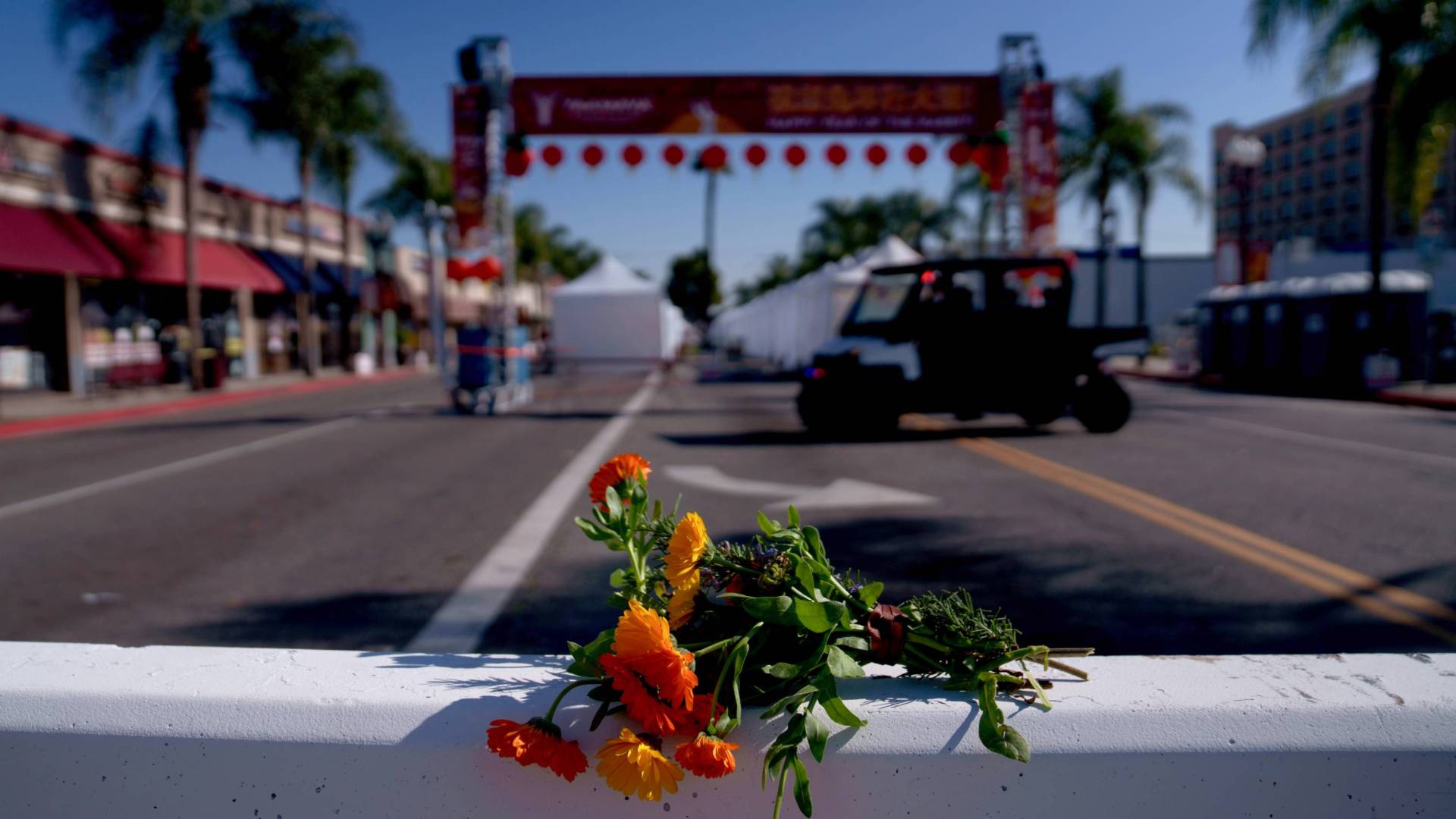
Last weekend, pastor Jesse Chang had prepared to gather with his church in Monterey Park, California, for worship and a Lunar New Year potluck. Instead, his wife woke him up early Sunday to tell him a nearby shooting had killed nearly a dozen people.

He quickly realized everything about the service would need to change. His predominantly Asian and Latino congregation, River of Life, meets in a building just four blocks from the crime scene.

With a 65 percent Asian American population, Monterey Park in Los Angeles County is considered the nation’s first “suburban Chinatown.” The shooting occurred Saturday night inside the Star Ballroom Dance Studio, just an hour after the conclusion of the city’s Lunar New Year festival blocks away.

The suspected gunman, 72-year-old Huu Can Tran, then entered a second dance studio in the nearby city of Alhambra and was disarmed before fleeing the scene. Tran was found later the following day in a white van in nearby Torrance where he died of a self-inflicted gunshot wound.

The mass shooting was the first of two to take place in California this week. At least 7 people were killed in two related shootings on Monday in Northern California’s Half Moon Bay. The suspect, 67-year-old Chunli Zhao, was apprehended shortly afterward by police.

But on Sunday morning, many details about the Monterey Park shooter’s whereabouts and motivations were still unknown, placing Chang in a difficult position.

“They hadn’t found the shooter yet and because where we meet is so close to the event, we asked whether we should even meet because people might be fearful of coming down,” he said.

The young church, planted in 2020, was forced to gather online and cancel Lunar New Year festivities because their location had been closed off due to the investigation. Chang shifted his sermon to focus on lament in Psalm 13, encouraging congregants to bring their emotions before God, then broke everyone into online video chatrooms for discussion.

“It was hard, but I think it was what we needed to do,” said Chang, who wanted to allow congregants a space to process their “grief and lament” and “mourn as a community.”

Three miles away in Alhambra, two blocks from the second ballroom, Mandarin Baptist Church of Los Angeles was also gathering for worship.

A 60-year pillar of the city’s Chinese immigrant community, Mandarin Baptist draws over a thousand people to worship each week, but English pastor Garrett Ho said the celebratory holiday was marked by an uneasy dissonance.

“On the one hand, we had people who dressed up for Lunar New Year, children who were wearing Chinese dress and red outfits. We had a photo area set up so that people could take pictures,” said Ho. “But there was also a somberness because that celebration had been tainted. I think that was heavy over us.”

A pastor in the church’s English service prayed for God’s “justice and mercy” to prevail, but Ho said they wanted to be cautious before saying more because the news had broken so late at night and information was still trickling.

Several pastors who spoke with CT said they were the first to alert some members of their congregations of the shooting.

Community leaders gather for a prayer vigil.

Back in Monterey Park, Chang worked with members of the Clergy Community Coalition, a network of pastors in the Greater Pasadena area, to host a Solidarity Prayer event outside City Hall that garnered attendance from dozens of community members.

“The church has to be on the streets, and in the parks, grieving with people, lamenting with people, being present,” said John Lo, who helped organize the event and pastors Epicentre, a predominantly Asian American church in Pasadena. “Really, what happens on Sunday morning is just the setup for the church that happens from Sunday afternoon to the next Sunday morning.”

Those gathered were able to pray for city officials, including the mayor and city council members. The vigil, which was put together in mere hours, was a result of longstanding ecumenical relationships Lo said the organization has built among churches in the region and city leaders.

“I feel very fortunate to have been working with pastors who are ahead of me in understanding what it means for us to engage in our community not just in crisis—but as part of the normal flow of what it means to be the church,” said Lo.

According to Chang, who has pastored in Monterey Park for 15 years, the pace at which many Asian American churches, especially immigrant churches, engage on cultural issues can take a slower and more muted approach. He acknowledged that he himself isn’t used to mobilizing his congregation at this speed.

Up in Alhambra, Ho says he’s waiting to debrief with Mandarin Baptist’s other pastors, acknowledging that the church’s three congregations—English, Cantonese, and Mandarin—may be responding to the tragedy in ways particular to their demographic and cultural differences.

“I’m not sure if this is us as an immigrant church or just a more established church, but we have to be careful,” said Ho. “We don’t want to overreact. But at the same time, we need to respond.”

“How do we lead our church members through the process of grief and their understanding of what took place? That is a question before us. I think we’re still processing it.”

News
Wire Story

United Methodists Lose 1,800 Churches in Split Over LGBT Stance

The initial departures, mostly concentrated in the South, represent around 6 percent of the denomination—not as dramatic as the “schism” some feared.

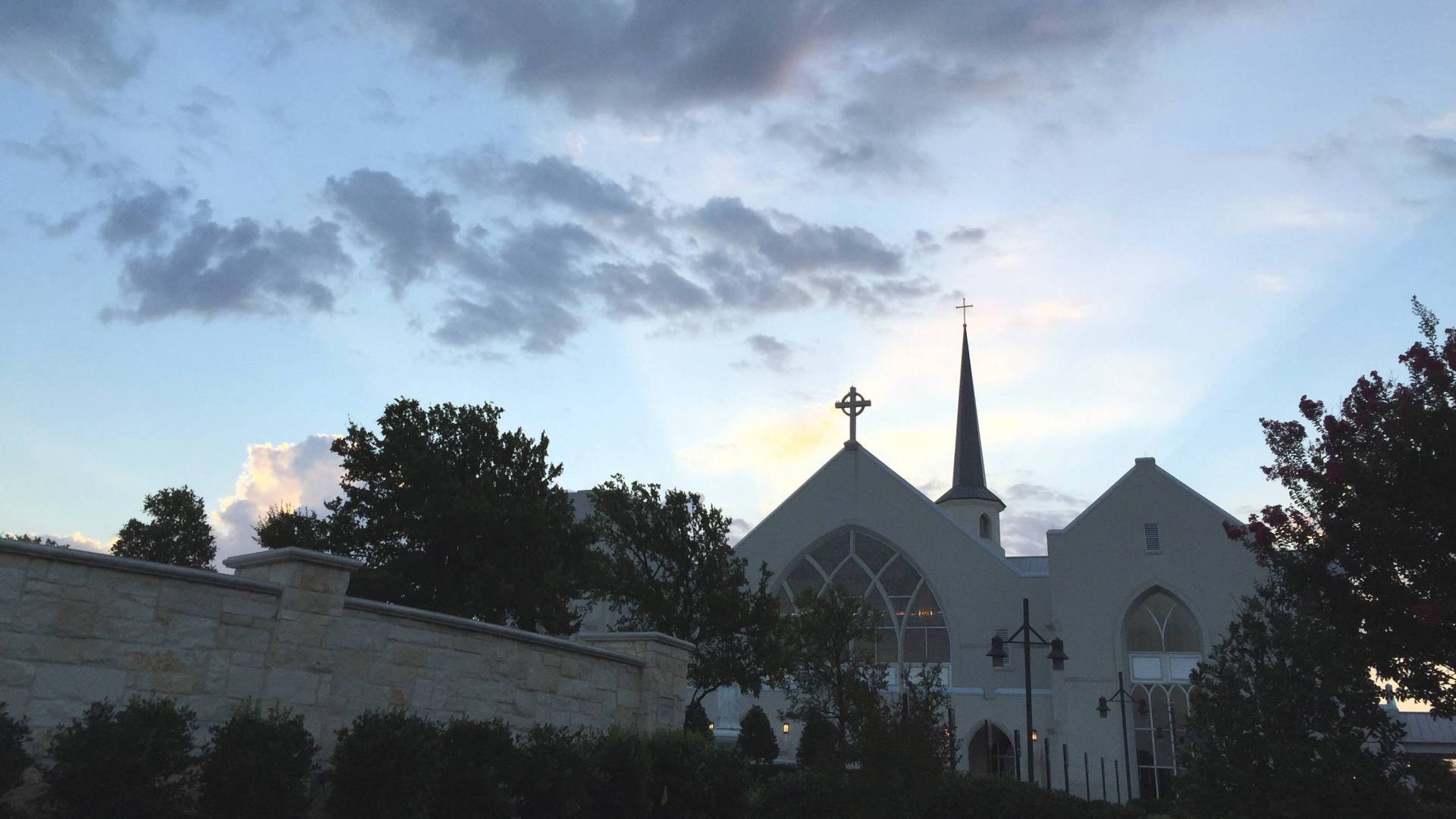
White’s Chapel in Southlake, Texas, disaffiliated last year. It had been one of the country's largest UMC churches.

White’s Chapel in Southlake, Texas, disaffiliated last year. It had been one of the country's largest UMC churches.

Christianity Today January 24, 2023
Todd A. Porter / Flickr Creative Commons

Update: Disaffiliations approved by UMC conferences now total more than 5,800 churches as of June 16, 2023.

Nearly four years ago, the United Methodist Church approved an exit plan for churches wishing to break away from the global denomination over differing beliefs about sexuality, setting in motion what many believed would be a modern-day schism.

Since then, a new analysis has found, it’s fallen well short of that.

That analysis of data collected by the church’s General Council on Finance and Administration shows 6.1 percent of United Methodist churches in the US—1,831 congregations out of 30,000 nationwide—have been granted permission to disaffiliate since 2019. There are no good figures for international departures among the estimated 12,000 United Methodist churches abroad.

The denomination’s disaffiliation plan gives churches until December 31 to cut ties, and many have already made known their desire to leave. Those churches can take their properties with them after paying apportionments and pension liabilities. Others are forcing the issue through civil courts.

But whatever the final tally may be, the analysis suggests the country’s second-largest Protestant denomination—numbering 6.4 million US members and 13 million worldwide—may weaken but is unlikely to break.

“You think of a schism as 50 percent or even 35 percent (split),” said Scott Thumma, director of the Hartford Institute for Religion Research and a lead researcher for the 2020 US Religion Census. “This is not a real schism.”

The 1,831 church departures come as United Methodist bishops say they’re battling misinformation from conservative groups that encourage churches to leave the denomination for the newly formed Global Methodist Church, which has declared it will never ordain or marry LGBTQ people—the crux of the conflict.

In turn, the Global Methodist Church and groups like the Wesleyan Covenant Association, a network of theologically conservative churches, argue that the denomination’s regional conferences are making it prohibitively hard for churches to leave.

The high-stakes duel has hit some regions of the country harder than others. But four years into what has been depicted as a breakup of the denomination, the picture is less climactic than anticipated.

“Some are leaving but the number of churches and members moving forward is far larger,” said Hope Morgan Ward, retired bishop of the North Carolina conference. “It is important to focus on who is staying and moving forward in the continuing United Methodist Church.”

The past year has brought “mixed emotions,” according to Bishop Thomas Bickerton of the New York Annual Conference, who leads the United Methodist Church’s Council of Bishops. Bickerton described it as a “period of disunity.”

In March 2022, the United Methodist Church announced a third delay for the 2020 meeting of its global decision-making body, the General Conference. Delegates were expected to consider a proposal to split the church in 2020. Then came the COVID-19 pandemic.

The final delay prompted some Methodists to go ahead in May and launch the Global Methodist Church rather than wait for the outcome of a General Conference meeting.

In the meantime, the denomination’s 54 US-based regional bodies called conferences have been approving disaffiliations at their regular meetings and at a flurry of special sessions.

The Texas Annual Conference, a region that covers East Texas with headquarters in Houston, lost 302 of its nearly 600 churches—the most of any conference, the analysis reveals.

Analysis of the denomination’s data shows the largest number of churches choosing to leave are located in the Southeastern and South Central US

The five conferences with the greatest number of exiting churches are in Texas, North Carolina, Alabama, and Indiana. These five conferences, with two in Texas, account for 57 percent of all departures. Contrast that with Bickerton’s own New York conference, where no churches have left yet, though six are discussing it, according to the bishop.

The Southeastern and South Central conferences tend to be more conservative and evangelical in their beliefs, said Will Willimon, a retired United Methodist bishop and a professor of the practice of Christian ministry at Duke Divinity School. Politically, they vote Republican and are far more resistant to gay rights.

“Those wishing to disaffiliate will deny that, but to me it’s another instance of how the Methodist movement has a long history of being very influenced by secular worldly political matters,” Willimon said.

The United Methodist conflict is just the latest upheaval over sexuality for Protestant denominations in the United States.

Hundreds of churches left the Episcopal Church after it elected its first gay bishop in 2003. They formed the Anglican Church in North America, which now has nearly 1,000 churches. Likewise, a change allowing same-sex marriage in the Presbyterian Church USA’s constitution led many congregations to break away.

The Rev. Keith Boyette, who heads the Global Methodist Church as its transitional connectional officer, said views on sexuality are only one reason churches leave.

“I believe, for many of the churches, that’s just been a presenting issue, and that the reasons why they want to leave are much more significant,” he said. “Some have grown weary of the never-ending conflict.”

Bickerton doesn’t disagree.

“Our provision that allows for disaffiliation is based on a church reaching the conviction that they can’t stay a part of the denomination over matters of human sexuality,” said Bickerton, president of the Council of Bishops. “What we find is that people are using that paragraph to disaffiliate for other reasons.”

Some don’t want to be part of organized religion or don’t like the denomination’s apportionment system or aren’t happy with their current pastor or disagree with the actions of their bishop—or a leader in another part of the country or world, according to the bishop.

The result has been a messy disaffiliation process in some conferences.

Some churches have taken to suing conferences to be allowed to leave immediately, including 38 churches in the Western North Carolina Annual Conference.

The Wesleyan Covenant Association has called on its network of churches to withhold apportionments, or pooled giving, to those conferences it believes are making it more difficult for congregations to leave.

And in recent weeks, the bishop of North Georgia Annual Conference announced she was temporarily blocking any of its churches from leaving the denomination, citing the spread of “defamatory” misinformation.

In addition, it now appears not all exiting churches are joining the newly formed Global Methodist Church.

Only 1,100 churches have joined the Global Methodist Church since it launched in May—98 percent of them located in the US—according to a recent announcement from the new denomination. That means the new denomination has absorbed 58 percent of departing United Methodist churches in the US

White’s Chapel near Fort Worth, Texas—one of the largest United Methodist churches in the US, with a membership of 16,000—disaffiliated last year, saying it hopes to create its own network of like-minded Methodist churches.

Frazer Memorial, a church of 4,000 members in Montgomery, Alabama, opted to join a smaller denomination known as the Free Methodist Church.

And the The Woodlands, a church of about 14,000 members north of Houston, has yet to decide if it wants to affiliate with the Global Methodist Church.

The Rev. Rob Renfroe who recently retired as a pastor of The Woodlands said he believes the Lonestar State is leading in disaffiliations, in part, because it’s simply easier to do so there.

“What we’re finding in Texas is that, where there is a fair and open process for disaffiliation, that many churches are doing so,” said Renfroe, the president of Good News, a theologically conservative advocacy group within the United Methodist Church.

But Boyette argues the numbers joining the new denomination are “close to being miraculous” given what he said is a costly and cumbersome process in many annual conferences.

“I believe that the powers that be in the United Methodist Church have been surprised by the number of churches that desire to disaffiliate in some annual conferences,” Boyette said.

This conflict over sexuality coincides with an ongoing decline in membership within the denomination.

The United Methodist Church dropped from 7.7 million members to 6.4 million in the US over the past decade, a loss of 1.3 million members. The average age of its members is 57. And it is closing more churches than starting new ones. The effect of the split will add to those losses.

The 1,831 disaffiliating churches may ultimately include up to 400,000 members (though departing churches are unlikely to bring all their members along; some may switch to another United Methodist church). The denomination will also lose an estimated $23 million in annual contributions to the denomination—about 5.5 percent of the denomination’s pooled giving.

Bickerton said the losses aren’t just financial.

The denomination also is losing voices and perspectives he believes are important, though he is resigned to the fact that some churches will choose to leave. United Methodists must bless them as they depart, he said.“I would always say to people that when we’re together, we’re a better reflection of Jesus than any of us are by ourselves, which is to say that we need that divergent thought,” Bickerton said. “We need conservatives and liberals and moderates in order to be the body of Christ that we proclaim to be.”

News
Wire Story

Work Hard, Pray Hard: How Pentecostalism Took Off Among California Laborers

Mexican Americans looked to the vibrant faith for hope, healing, and respite, writes scholar Lloyd Barba.

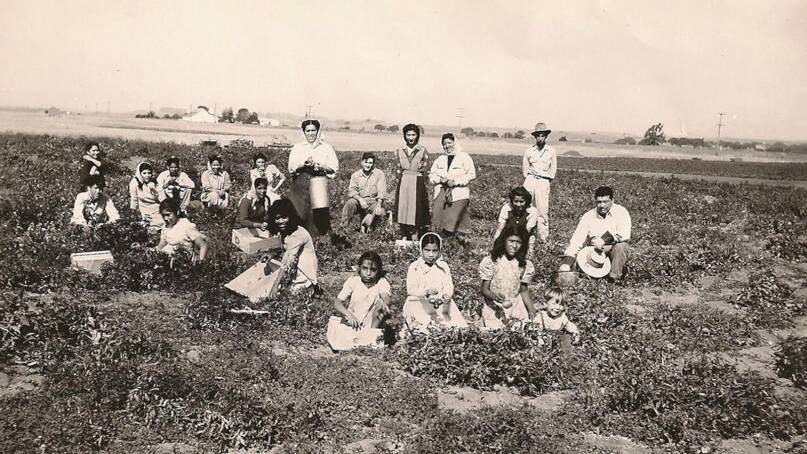
Members of a Salinas, California, church in the mid-1940s. Standing on the far right is Manuel Vizcarra, the eventual presiding bishop of La Asamblea Apostólica de la Fe en Cristo Jesús (AAFCJ).

Members of a Salinas, California, church in the mid-1940s. Standing on the far right is Manuel Vizcarra, the eventual presiding bishop of La Asamblea Apostólica de la Fe en Cristo Jesús (AAFCJ).

Christianity Today January 23, 2023
Courtesy of Milca Montañez-Vizcarra / RNS

The farm labor history of California has often been told through the plight of agricultural laborers during the Depression era and the efforts, beginning in the early 1960s, of the United Farm Workers to improve working conditions of Mexicans in the fields.

But to Lloyd Barba, a professor of religion at Amherst College, this history isn’t complete without factoring in religion, particularly the stories of California’s Mexican farmworkers who embraced Pentecostalism, a Christian movement generally seen at the time as a “distasteful new sect” with “cultish and fanatical tendencies.”

“I think about how often Latino history is told as labor history, and that makes sense … but where are the laborers going?” Barba said. “If we’re going to get a more balanced and accurate Latino history, we have to look at Latino religious life.”

In his recently released book, Sowing the Sacred: Mexican Pentecostal Farmworkers in California, Barba writes about the Mexican and Mexican American Pentecostal agricultural workers who built houses of worship in the state’s agricultural towns, who turned to “divine healing” for injuries they sustained working in the fields and whose worship style inspired civil rights leader Cesar Chavez to incorporate music and singing in his union organizing.

Barba also writes about the role of women in these church spaces “who were the foundation of the church,” despite not given ministerial credentials to become preachers. They raised money for the building of churches by selling food and made the worship spaces look holy through their handmade goods, such as doilies and fabric embroidered with biblical phrases, Barba said.

“To do a material history of this Mexican Pentecostal movement is to do women’s history,” Barba told Religion News Service.

The book traces the development of Pentecostalism among migrant laborers between 1916 and 1966, before the heyday of the National Farm Workers Association, which later became the United Farm Workers. Barba felt it important to “describe a moment where the exploitation of Mexican workers is at its worst.”

Barba, in his book, recounts how “divine healing” was seen as a pragmatic way to care for impoverished workers who lacked regular access to medical care. For laborers working in tough conditions, it was about “hard work and fervent worship … work by day and worship by night,” Barba said.

“People are getting hurt. People are contracting tuberculosis. People are seeking out healing when there’s not a health care system in place to provide those kinds of services,” Barba said. “Whether we’re talking physical healing, or what we now refer to as mental health and counseling, these are spaces that offered respite in an otherwise punishing world.”

Worship services “would call for people who were sick to come up and to be healed,” Barba said. There was a “spectacle” side to it, he added, “in that it was a very public kind of ritual.”

In the book, Barba cites a flier distributed by La Iglesia Apostólica Cristiania del Pentecostés that invited residents in the Imperial County city of Calexico to revival services held “under the direction of the Holy Spirit.” These services were outdoor and presided by a Mexican orator and pastor who lived in Los Angeles. “All are invited. Bring your sick and God will bless them,” the flier declared.

Barba writes about the “sonic elements of services,” which included “collective singing, exuberant worshipping, guitar playing, percussive striking, hand clapping, and shouting ‘aleluya.’”

The “vibrancy” of this sacred music inspired Chavez to later incorporate it into his organizational tactics. Barba wrote of the working relationship between Chavez—who at the time served with the Community Service Organization—and Mariano Marín—a Pentecostal preacher and pastor—who led his immigrant congregation in the midst of Operation Wetback, which resulted in a mass deportation of Mexican nationals.

Through this partnership, Chavez witnessed Marín leading worship services out of a house in the San Joaquin Valley town of Madera and noticed a contrast between “the sonic and material world of Pentecostal and Catholic music,” Barba wrote.

Chavez recalled in his 1975 autobiography visiting a little church in Madera of a dozen men and women, describing “more spirit there than when I went to mass where there were two hundred.

“These people were really committed in their beliefs and this made them sing and clap and participate. I liked that,” he wrote. “I think that’s where I got the idea of singing at the meetings. That was one of the first things we did when I started the Union. And it was hard for me because I couldn’t carry a tune.”

For Barba, who hails from Stockton in the Central Valley, it’s noteworthy that this religious movement grew in rural agricultural areas.

He sees the influence of those early immigrant houses of worship today in the Spanish-language church signs across California’s Central Valley. A church that used to be “First Baptist Church” in many cities in the Central Valley may now be “Iglesia Bautista,” Barba said, adding that he also knows of church services in Mixtec among Indigenous Mexicans arriving in the area.

“Because of a large—first Mexican but more so now Central American—influx into the agricultural fields in California, you can note a very visible transformation of the religious demography,” Barba said.

News

Baptisms Turn Deadly with South African Floods

Christians must find ways to adapt to impacts of climate change, experts say.

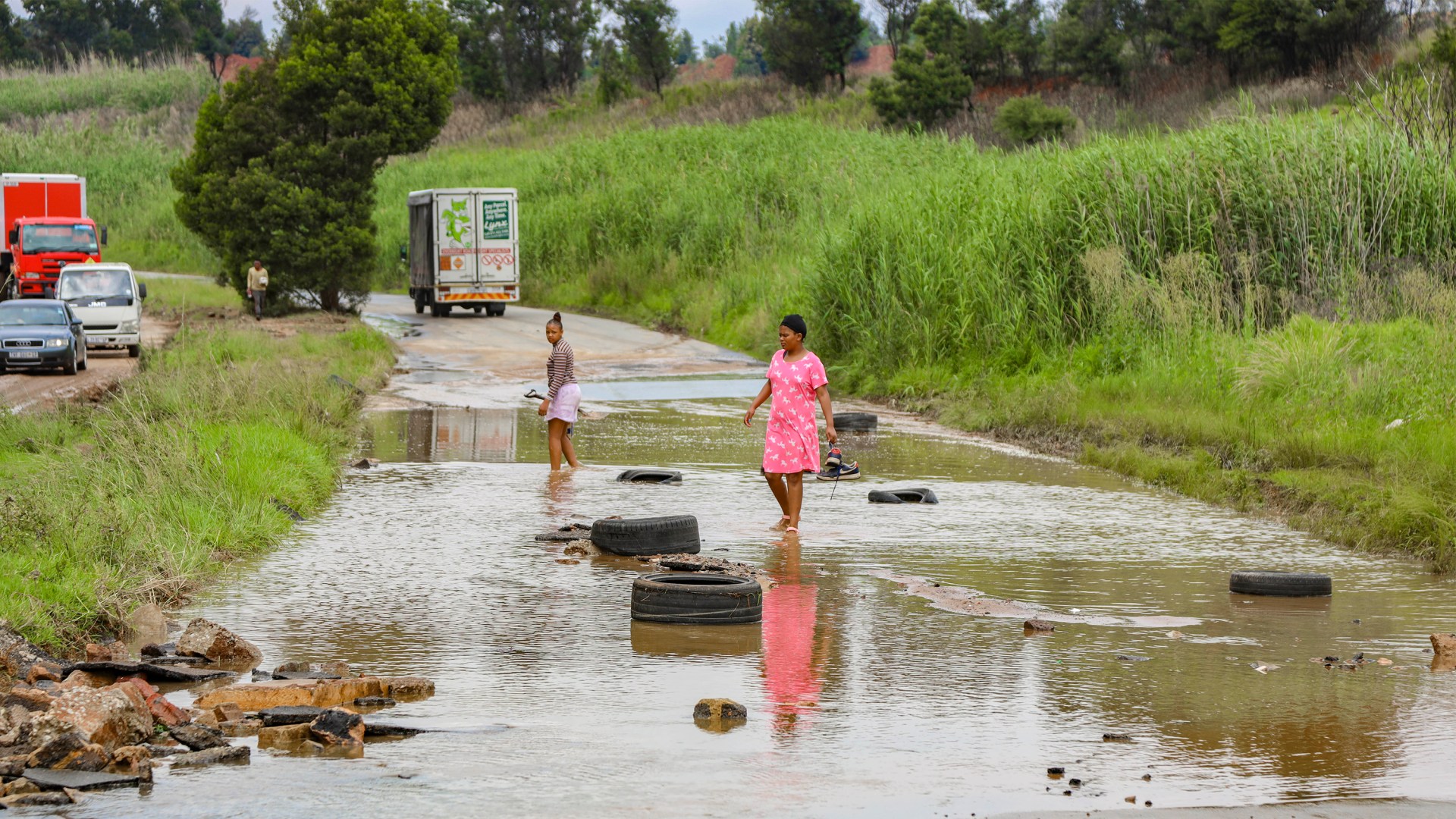
Heavy rains linked to climate change have displaced thousands in South Africa.

Heavy rains linked to climate change have displaced thousands in South Africa.

Christianity Today January 23, 2023
Gallo Images / Getty

South Africa is reeling from the shocking death of 15 people, including a three-month-old baby, during a river baptism that went wrong last month.

The victims were swept away December 3 by floodwaters in the Jukskei River, which flows through a number of suburbs in Johannesburg, South Africa’s biggest city. The pastor conducting the baptism ceremony, identified by local press as Kind Kupe from neighboring Zimbabwe, was rescued by other members of his church.

The church is part of the Johane Masowe group, started by an indigenous, itinerant preacher in 1930s Zimbabwe. Adherents are known for their prominent white robes and preference for outdoor worship.

Some in South Africa are blaming church leaders for the tragedy.

"I know that baptism is something that has been happening for a very long time, but for someone to be baptized at a river with that heavy flow of water is dangerous," a resident of Alexandria told the News24 website.

Nomusa Bandile, who lost her teenage daughter in the flood, labeled the pastor a “cruel fraudster.”

Some academics, however, are pointing to the tragedy as an example of how humans have trouble adapting to climate change.

“Without proper information filtering to the grassroots on climate change, we are likely to see more tragedies,” said Sibusiso Masondo, an associate professor in the school of religion, philosophy, and classics at the University of KwaZulu-Natal.

He said traditionally in South Africa, lakes, rivers, and the ocean were seen as significant in both cleansing and healing rituals.

Indigenous churches connect this tradition with the Christian ritual of baptism, centering much of their faith and worship on outdoor immersion ceremonies.

“African religion has an element of respect for nature and dependence on her for provision,” he said. “It is up to them to adapt to the weather changes that we currently observe.”

South Africa has been hit by deadly floods more frequently in recent years, making open-river baptisms more dangerous.

Last April, floods and landslides hit the country’s Eastern Cape and KwaZulu-Natal Provinces after heavy rains that in some areas exceeded 11 inches in 24 hours. The floods killed more than 400 people, displaced 40,000 others, and destroyed over 12,000 homes.

A coalition of research groups, including the University of Oxford’s School of Geography and the Environment and Princeton University’s Department of Geosciences, concluded that the probability of such heavy rainfall had doubled due to human-induced climate change.

“An event of this magnitude would have been rarer in a 1.2°C cooler world,” they wrote. Going forward, the scientists said, heavy rainfall events “are projected to increase in frequency and magnitude … with additional global warming levels.”

The heavy rains that hit South Africa’s Gauteng Province in early December sparked another humanitarian disaster affecting 40,000 people, according to aid agencies.

Previous floods have also killed people getting baptized. In December 2021, a minister and one of his congregants drowned during a river immersion after heavy rains in South Africa’s Free State Province.

South Africa’s Commission for the Promotion and Protection of the Rights of Cultural, Religious and Linguistic Communities said that while people have the right to exercise rituals such as water baptism, greater levels of responsibility are needed from both leaders and members.

“The practice of a person’s faith should always ensure the protection and preservation of one’s life and dignity,” the commission said after the Jukskei drownings.

But Retief Müller, a South African researcher and associate professor of mission and world Christianity at Norway's VID Specialized University, cautioned that people are quick to blame marginal groups as a way of avoiding complexity and complicity. The Johane Masowe churches have not adapted their religious rituals to the new challenges of climate change, but then neither has South African society as a whole.

“This is not to defend the pastor, but it is important to be aware of the wider context,” Müller said. “Given what we know of the history of xenophobia and anti-foreigner sentiment in various parts of South Africa, including in the Johannesburg area, negative feelings against this church leader might have existed even before the tragedy.”

Ten of the victims have been confirmed as South Africans; at least one was Zimbabwean.

The danger is not always easy to see ahead of time either. Drownings have also occurred in the region’s rivers when they are not flooding.

In 2021, eight members of an apostolic church group drowned in Zimbabwe during a ceremony along the Mazowe River, in the north of the country. Church leaders had ordered the men to retrieve a “holy stick” tossed into the river. The one who retrieved the stick first would be the next leader of baptisms in the church.

The tragedy occurred at the height of the Zimbabwean dry season, when rivers are at their lowest.

Müller said Africa’s long history of rituals associated with water preceded the introduction of Christianity, but life in the city may have blunted some church leaders’ sense of what is safe.

“In times gone by, ritual practitioners might have had greater knowledge of the characteristics of bodies of water and weather patterns by virtue of their lifestyles that were closely tied to the natural environment and the geography of the land,” he said.

“I would not assume malicious intent on the part of the church leaders. Insufficient knowledge of the environment and how to coexist with it is more likely the real culprit.”

News

US Allows Individuals to Sponsor Refugees

Americans can now independently resettle those fleeing war and persecution. Christian resettlement agencies are largely on board.

An individual sponsor of an Afghan refugee couple did a maternity shoot for them in Washington, DC, last year.

An individual sponsor of an Afghan refugee couple did a maternity shoot for them in Washington, DC, last year.

Christianity Today January 20, 2023
Paul Kiekhaefer

Last year, Mark and Jackie Sawyer cosigned a lease for a couple they’d known for a short time—because the couple had recently arrived from a refugee camp overseas.

The Sawyers didn’t realize the headaches and the friendship that would come with joining a group of friends from their Washington, DC, church to sponsor the resettlement of Afghan refugees. They ended up raising $30,000 for the couple, who were expecting their first baby, and staying in relationship with them beyond the initial three-month resettlement period.

This week the pilot program the Sawyers took part in has officially launched through the US State Department, allowing individuals—rather than resettlement agencies alone—to commit to sponsor a refugee for resettlement.

Through Welcome Corps, groups of at least five Americans can apply to sponsor a refugee together and commit to raising at least $2,275 per refugee. For 90 days they would help refugees transition by securing housing, finding jobs, and enrolling children in school.

“You don’t have to have it all figured out,” said Sawyer. “It’s certainly not easy, but it’s probably more doable than you think.”

Refugee resettlement typically goes through nine nonprofit resettlement agencies. These groups, mostly faith-based organizations such as the evangelical agency World Relief, contract with the government to assist and support refugees through their first months in the United States—then often extend the help longer term through the groups’ own funding.

The agencies have been hit by the steep decline in refugee admittances to the US over the past several years, but they have decades of experience in this work and are preparing to be resources for individual Americans stepping into it through the new program.

“I think it’s a great idea, a great opportunity for the general public to get engaged,” World Relief’s senior vice president of advocacy and policy Jenny Yang told CT about the new program. “It does expand community support for the refugees in general, especially where there is not a refugee resettlement agency in a community.”

World Relief, the humanitarian arm of the National Association of Evangelicals, has an office in Illinois, but there is no resettlement agency in the lower two-thirds of the state. This program would allow a vetted sponsor—like a group at church—to help a refugee resettle in areas where agencies don’t have staff or offices.

The Welcome Corps program is for refugees who are already in the pipeline to come to the US, although the State Department plans to eventually allow individual sponsors to advocate for a particular refugee overseas to receive admission to the US.

The advocacy for a particular refugee is a feature of the successful Canadian program that this new initiative is based on. Canadian churches have worked to reunite refugee families split across the oceans by committing to sponsor those stuck in refugee processing.

The US government hopes through this new program to find an additional 10,000 sponsors for 5,000 refugees. Refugee admissions have been well below the Biden administration’s goals: The US admitted fewer than 26,000 refugees in fiscal year 2022 when there were 125,000 spots available.

The refugee number doesn’t include thousands of Ukrainians and Afghans admitted through humanitarian parole, a separate immigration category.

The low admission numbers aren’t because of a lack of volunteers to resettle refugees but because the government’s refugee admission infrastructure is recovering from deep cuts under the Trump administration and other bureaucratic bottlenecks.

“It is worth stressing that the ability to resettle refugees domestically has not been the fundamental challenge of the last two years,” said Krish O’Mara Vignarajah, the head of Lutheran Immigration and Refugee Service (LIRS), a resettlement agency, in a statement supporting the new program. “The Biden administration must prioritize the streamlining of refugee admissions, which remain regrettably low this fiscal year.”

For Christians who may not have the thousands of dollars to individually sponsor refugees through this new program, World Relief’s Yang said they could still volunteer and help refugees through the existing World Relief programs. She encourages people who live in the vicinity of a World Relief office to work through that means.

World Relief, Send Relief (the humanitarian arm of the Southern Baptist Convention), and Samaritan’s Purse already had programs where volunteers would commit to supporting a particular refugee family for several months—but that was in conjunction with their organizations’ work. Thousands of churchgoers stepped up through those programs in the first months after the Afghanistan withdrawal.

Last year the Sawyers and six others from their DC church began praying about participating in the pilot version of the program, sponsor circles. They wanted to make sure they could commit not only to the 90 days but also to remaining a part of the refugees’ lives afterward. They agreed to go for it.

Once approved, they had a training call with an umbrella organization—not one of the resettlement agencies but a local nonprofit with knowledge about community resources. They could contact the local organization with questions, but otherwise the Sawyers’ group sought out their own resources.

Their eight-person sponsor circle had assets: One person in the group had previously volunteered with refugees through World Relief. Another was a former social worker.

Last summer they were matched with the Afghan refugee couple expecting a child. A lot has gone well: The couple recently had their baby, and a photographer in their group did a maternity shoot. The mom has started attending a software coding boot camp with the goal of working from home. The father has a job in accounting, which he got through a job placement agency where Sawyer was volunteering before. They had worked together on the man’s résumé and did a mock interview.

But the sponsors needed the umbrella organization for certain things, like figuring out how to manage the finances for the couple’s housing. “Housing was a nightmare,” Sawyer said. Landlords would back out when they found out that the mom was pregnant or that the family were refugees. That’s how the Sawyers ended up cosigning a lease with the couple.

Sawyer says usually someone from their circle sees the couple every week. “I count them as friends,” said Sawyer. “We weren’t sure if they would want to become friends or how involved they wanted to be after the 90-day commitment was up. But they have stayed in touch.”

Evangelical support for refugees has increased dramatically since the Afghanistan withdrawal and Russian war in Ukraine, events that brought tens of thousands of Afghans and Ukrainians to the US.

Christian resettlement agencies were largely supportive of the Welcome Corps program, even if agencies might be swamped with requests for help or support from individual sponsors.

Church World Service, one of the nonprofit agencies, said the program was “an important evolution to expand refugee resettlement.” Vignarajah, the head of LIRS, called the program “forward-thinking” but added that the government should ensure “sponsors are sufficiently equipped with the necessary resources and know-how to ensure the best possible outcomes for refugee families in their care.”

For the Sawyers, a more fundamental issue is that the couple they are helping is in legal limbo. They are in the US under humanitarian parole, Sawyer said. Congress has so far declined to establish a more permanent solution for those Afghans.

“From a faith-based perspective, this is one of the ways we can fulfill the Christian call to love and welcome the strangers,” Sawyer said about being a sponsor. “And as an American—the US has been involved in Afghanistan the entirety of my adult life. … I cared about these issues a lot. This is the least we could do to help our allies in a place where we have been involved.”

Theology

We Live in Babylon, Not Israel

Biblical history reminds Christians to serve and build a kingdom not of this world.

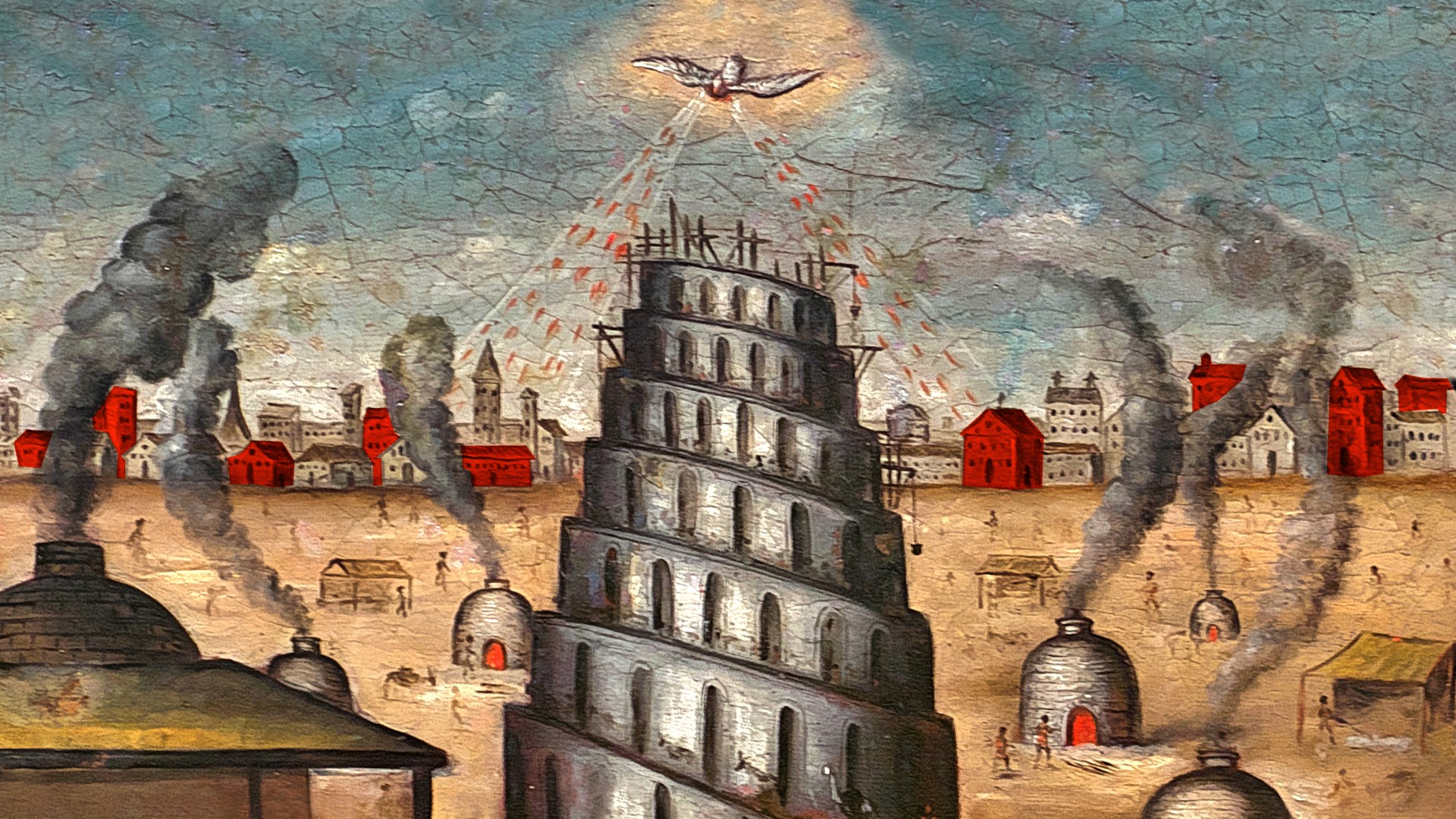
The Tower of Babel in Babylon.

The Tower of Babel in Babylon.

Christianity Today January 20, 2023
WikiMedia Commons / Edits by Christianity Today

Late last year I asked on Twitter, “Do we live in ancient Israel or a modern Babylon?”

Put a different way, to what extent are biblical lessons regarding life in the Holy Land normative for Christians who live as religious minorities—that is, in “unholy” lands dominated by non-Christians?

Looking back to ancient Israel, the emphasis was on purity, not evangelism—God sent Ishmael and Esau into the wilderness, told Joshua to destroy the Canaanites, and instructed Ezra to insist that the Israelites put away foreign wives. To make the Holy Land holy, God commanded a zero-tolerance policy: There shall be no abominations among you.

The Holy Land was humanity’s greatest opportunity to live in a new kind of Eden, where God chose a particular nation to become its inhabitants. He provided commandments so they would know how to act and promised them (in Deuteronomy 28 and elsewhere) that if they obeyed, all would go well.

God established ancient Israel as a model nation for the world—a perfect test case of whether good rules would cultivate a good people.

The Israelites were warned not to follow the “detestable ways” of other nations while living in the land (Deut. 18:9). But God’s rules and statutes were not just for the Israelites; they were also for any stranger that stayed in the land (Lev. 18:26, 28).

In this way, the Old Testament is highly location specific—the ancient Israelites’ charter was designed to protect the purity of the land God had given them. They were to cleanse it from defilement and then preserve it as holy.

Evangelism was not a priority. When some Israelites married foreign women, leaders did not celebrate an opportunity to evangelize the newcomers and increase the numbers of Israel. Instead, they looked on such intermarriage with horror.

The prophets were indignant when the Israelites trashed their semi-Eden. Jeremiah—the prophet whose godly fury led to our word jeremiad—wrote, “This is what the Lord says: … ‘I brought you into a fertile land to eat its fruits and rich produce. But you came and defiled my land and made my inheritance detestable” (Jer. 2:5, 7).

And yet Jeremiah had a very different tone when he spoke to Israelites living not only outside the semi-Eden but also in the anti-Eden, the city of Babylon:

This is what the Lord Almighty, the God of Israel, says to all those I carried into exile from Jerusalem to Babylon: “Build houses and settle down; plant gardens and eat what they produce. … Also, seek the peace and prosperity of the city to which I have carried you into exile. Pray to the Lord for it, because if it prospers, you too will prosper.” (Jer. 29:4–5, 7)

Other parts of the Old Testament also indicate that Israelites outside the borders of Israel should have a very different political agenda than those inside. For instance, God banned soothsayers from ancient Israel (Deut. 18:10–12), yet Daniel was appointed to oversee the enchanters, the sorcerers, and the other wise men of Babylon (Dan. 2:48).

Daniel thought and acted independently from these ungodly people, but nowhere did he indicate a plan or desire to wipe them out. As a stranger in a strange land, he had to coexist with them—which makes him a role model for us. For at least 66 years, from 605 to 539 B.C., Daniel lived and worked under Babylonian authority, always trying to serve a strange public while remaining true to God.

In the process, Daniel faced down death threats, as did three of his friends. When Nebuchadnezzar set up a 90-foot-tall image of gold and commanded all his officials to bow down and worship it, Shadrach, Meshach, and Abednego did not harangue the assembled pagans. They merely refused to bow. But that was enough to get them arrested and thrown into a fiery furnace, from which God preserved them.

The Israelites publicly tolerated differences while following God’s commands in their own lives and within their own households. Daniel prayed in his own house but did not demand public prayer or Bible reading in Babylonian academies. The books of Ezra, Nehemiah, and Esther show how other Jews living in Persia—part of an empire with 127 provinces and a vast number of ethnic groups and languages—lived peaceably under laws not their own.

In the Old Testament, all idols in the land of Israel were to be destroyed. And yet in the New Testament, the apostle Paul never tried to remove pagan altars and idols from public streets in the city of Athens (Acts 17:17–31). He and the gospel writers emphasized proclaiming the Good News of Christ at every opportunity, without calling for the imposition of biblical law.

Again, the Bible is location specific—proper action in one place was not proper in another.

We even see this in the work of Jesus. He drove the Jewish moneychangers out of the temple, the holiest place in the world, but did not drive Romans out of any other places. Israel had already become a most unholy land by A.D. 70, when Roman soldiers destroyed the temple. After that, one land was not considered holier than others.

The great tragedy of ancient Israel was that God’s people sinned in a land that of all lands should have been the least conducive to sin. If ancient Israel’s laws, given by God, did not bring about righteousness in this most hospitable of environments, how likely are holiness laws to succeed in less favorable environments?

Old Testament history teaches us not to be prideful in thinking we can create earthly utopias or even sustain the ones handed to us. The lesson is this: Sin comes from within, not from our surroundings. God taught humanity that sin crouches at our door even in the best of environments, whether the original Eden or Israel’s semi-Eden. He has shown us our desperate need for Christ and the necessity of accepting no substitutes.

As early Christians came to understand the meaning of Israel’s history, they were ready to understand the New Testament’s emphasis on evangelism. The Jewish answer to the question “Who is my neighbor?” was at the most “Your fellow Jew.” But Jesus added to that understanding by saying anyone in need is our neighbor—and by including women, Samaritans, and even enemy soldiers among God’s people.

Jesus’ embrace of others strengthened early Christians. Instructed to take the gospel into all nations and not concentrate on defending one, Christians were free to evangelize and admit into their church fellowships anyone who confessed faith in Christ, regardless of pedigree, past sins, race, or ethnicity.

Without a land to preserve but with a gospel to proclaim, the primary directive for early believers was to bring in the sheaves rather than to try enforcing biblical law.

As “Christian nationalism” now spreads across America and some other countries as well, we can learn from our predecessors: We have no holy land or temple to defend, but churches should aspire to be model cities in God’s kingdom—where, by his grace, individuals can and will be changed from the inside out.

Dr. Olasky, now affiliated with two institutes, Discovery and Acton, is a PCA elder and the author or coauthor of more than 30 books, including The Story of Abortion in America.

addApple PodcastsDown ArrowDown ArrowDown Arrowarrow_left_altLeft ArrowLeft ArrowRight ArrowRight ArrowRight Arrowarrow_up_altUp ArrowUp ArrowAvailable at Amazoncaret-downCloseCloseellipseEmailEmailExpandExpandExternalExternalFacebookfacebook-squarefolderGiftGiftGooglegoogleGoogle KeephamburgerInstagraminstagram-squareLinkLinklinkedin-squareListenListenListenChristianity TodayCT Creative Studio Logologo_orgMegaphoneMenuMenupausePinterestPlayPlayPocketPodcastprintremoveRSSRSSSaveSavesaveSearchSearchsearchSpotifyStitcherTelegramTable of ContentsTable of Contentstwitter-squareWhatsAppXYouTubeYouTube