Ideas

The Outsized Role of Christian Schools in Arab Israeli Politics

Established in the Ottoman era, Western-birthed educational institutions continue to play a leading role in shaping the public discourse of Israel’s Palestinian citizens.

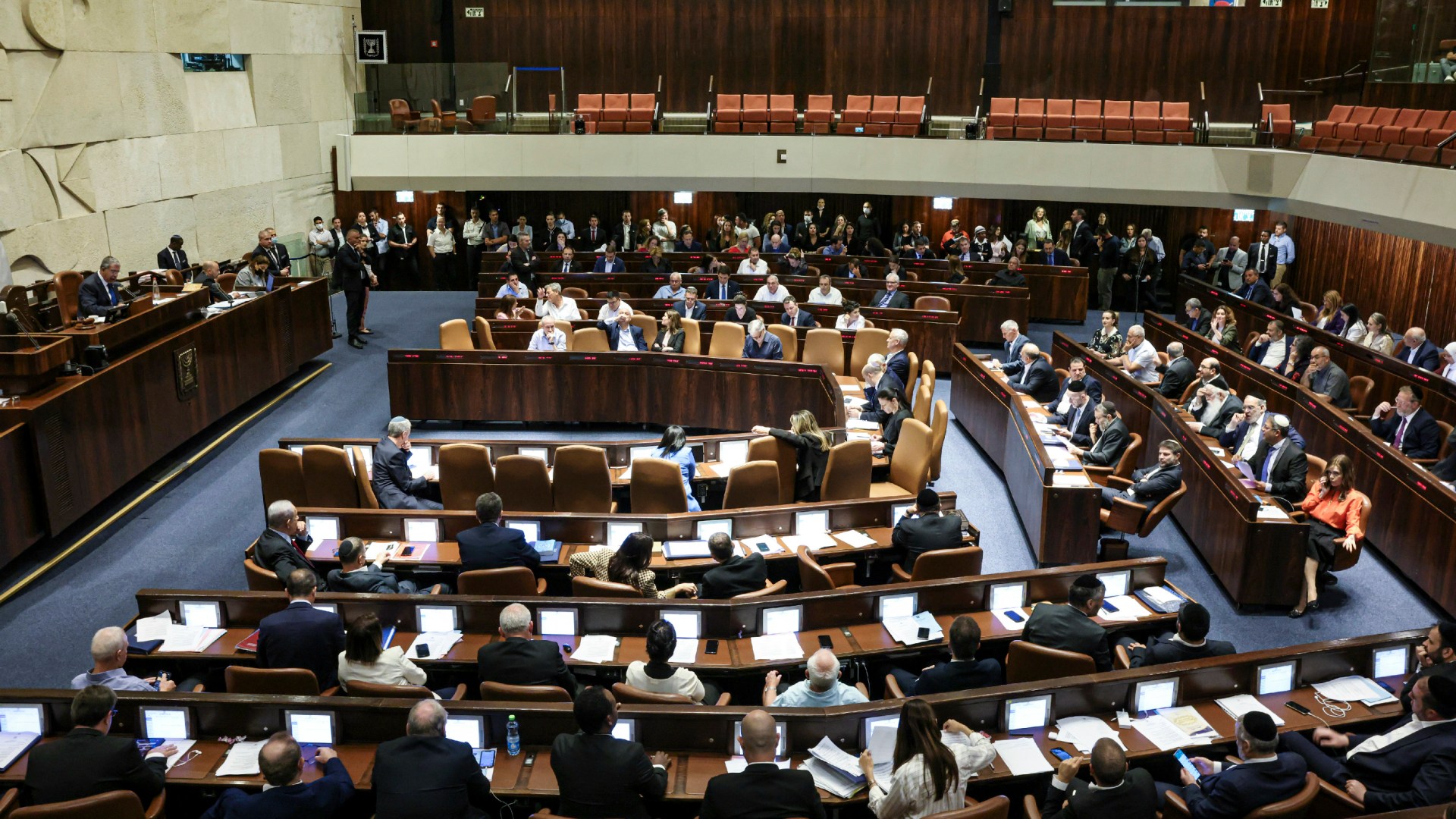
Knesset members voted on June 22 to dissolve Israel's parliament, sending the country to its fifth general election in just over three years.

Knesset members voted on June 22 to dissolve Israel's parliament, sending the country to its fifth general election in just over three years.

Christianity Today October 31, 2022
Stringer / Picture Alliance / Getty Images

Amid the recent chaos of Israel’s elections has been one overlooked constant: Arab lawmakers educated in Christian schools.

Of the 13 Arab members in the Knesset (MKs), Israel’s 120-member parliament, five are graduates of church-owned institutions.

Four of them are Muslim.

Across the Jewish state, 30 Christian schools educate 25,000 students—40 percent from Muslim families. This represents 5.5 percent of all Arab students, making the representation of their alumni in the Knesset much higher than in the general population.

Arab Christians total 140,000, or about 1.5 percent of Israel’s 9 million population and 7 percent of Arab Palestinian citizens. Catholic schools predominate, comprising 75 percent of Christian institutions, alongside Greek Orthodox, Anglican, Church of Scotland, Baptist, and independent bodies.

Better known—at least in Israel—are leading graduates in other sectors of society. Fahed Hakim directs the Nazareth Hospital, Johny Srouji is a senior vice president at Apple, and Salim Joubran served as a justice at the Supreme Court of Israel.

As Israel faces on November 1 its fifth election in three years, a handful of Christian school graduates populate the various electoral lists. Previous MKs served in three of the four now-disbanded Joint Lists of Arab political parties (excluding Islamists), and in two of the Jewish leftist groups, Labor and Meretz.

In the last four elections, no Israeli politician has been able to form a sustainable government. This deadlock is the result of deep and uncompromising fragmentation in the political scene, strangely caused by a single politician: former prime minister Benjamin Netanyahu, nicknamed “Bibi.”

Known internationally for his 15 years in office, his right-wing policies, and his eloquent speeches, Bibi has also been indicted on accusations of bribery, fraud, and breach of trust. According to Israeli law as interpreted by the High Court, a trial of a prime minister does not disqualify them from service, only a conviction. Many believe that if he returns to power, Netanyahu will use his position to manipulate the judiciary to avoid prosecution.

Traditionally, the Israeli political scene is divided between right- and left-wing parties on the basis of a possible settlement with the Palestinians, and less according to economic policies. Netanyahu’s polarizing figure, however, has moved several right-wing parties from his own right-wing coalition into an opposing “anti-Bibi camp.” The amalgam includes left-wing socialist Zionists, right-wing liberals, and even an Islamic party, that struggled this year to maintain its coalition, collapsed in June, and ushered in another round of voting.

Amid such a fragmented scene that adds to the complication of governing a country torn by an ongoing conflict, Christian schools have emphasized tolerance and unity.

Emerging during the darkness of illiteracy during 18th- and 19th-century Ottoman rule in Palestine, Christian schools in Israel were founded by Western churches eager for service in the land of the Bible—the Holy Land. Hospitals, orphanages, and homes for the elderly were also among the European- and American-established institutions that became a beacon of hope and enlightenment for the local Christian community. Laying a foundation for modern education, this Christian advantage was maintained over the years.

The demographics of minority status, however, dictated a moderate Christian ethos. Emphasis was placed on moral values, and less on sharing the gospel. Muslim students are not obliged in most schools to attend Mass, chapel, or Bible class, with diversity championed as a social ideal.

Back in 2015, failure to receive the just allotment of Israeli government support—similar to charter schools in the US—prompted a 26-day strike by the Christian school system. During this time, which ended with a one-year reprieve, several graduates spoke out in favor of their alma maters.

“These are schools that have brought good for our society,” said Ayman Odeh, a Muslim MK, Haifa school graduate, and head of the communist party-affiliated Hadash, which led the Joint List. “When we speak about the West we talk mainly about colonialism, but there is a small enlightened aspect, like the Terra Santa school established 300 years ago” in Nazareth and Acre.

Zuhair Bahlol, a journalist and former MK with the Labor party, argued the case before a special Knesset assembly called to deal with the strike.

“These schools graduate the salt of the country,” said the Muslim graduate of Terra Santa’s Acre campus, “[and] export to the marketplace high-ranking people in their contribution to Israeli society.”

Similarly, Yousef Jabareen, a Muslim MK with the Hadash party, advocated for Christian schools before the Knesset education committee in September 2015.

“I will emphasize that we Arab Knesset members … most of us are graduates of these schools,” said the Nazareth-based St. Joseph Catholic school graduate. “Maybe this fact alone says something about the quality of these schools, and [their training in] political, social, cultural, and academic leadership.”

Jabareen is a law professor at Haifa University. And he is not alone among alumni of Christian schools; the excellence of these schools has helped the Arab Christian community in Israel achieve the highest percentage of university students, according to a 2021 report by the Israel Central Bureau of Statistics.

And of the politicians, Christian school alumni are known to be hard working.

Ousama Saadi, a Muslim lawyer and graduate of the Christ Church-affiliated Galilee School in Eilabun, was named the most active MK in parliament by Shakuf, an Israeli organization that monitors the work of MKs. Ranked No. 6 is Aida Touma, a Christian MK with the Hadash party, a graduate of St. Joseph Catholic school in Nazareth.

Other Christian school graduates in the Knesset include Sami Abu Shehadeh, head of the Balad Party, and Ghaida Zoubi from Meretz, a Jewish leftist liberal party.

Mtanes Shehadeh, a Christian political scientist at the Mada al-Carmel think tank and a former MK and chairman of the Balad party, told CT that “the culture of St. Joseph Catholic School in Nazareth had the largest role in forming my political awareness and national identity”.

And as operational director of Nazareth Baptist School, I can say that—regardless of their specific political views as Arab Palestinian citizens of Israel in the complex situation they live in—the politicians these Christian school have created are enlightened.

In general, they hold dear to universal human rights positions in a hostile parliament, seeking a political resolution that will end the occupation of the West Bank as well as proposing laws to remedy inequalities between Arab and Jewish citizens of Israel. Unfortunately, their success has been minimal.

Yet today, Christian schools are once again threatened by developments with the state.

A reform of the Israeli primary school system in 2008 called “New Horizon” provided substantially more teaching hours, which naturally was accompanied by a 30–40 percent wage increase. Christian schools, however, were not included in this adjustment.

Last week, the government approved another major increase in the wages of New Horizon teachers, leaving Christian schools behind again and thus widening the recruitment and retention gap even more. This will jeopardize the quality of Christian schools, as staff will tend to move to the public school system due to the much higher wages. It will also hold Christian schools back in terms of offering enough teaching hours and programs relative to public schools.

Due to the current political climate and the ongoing conflict, Israeli government officials will not appreciate the political product of these Christian schools when their alumni hold views that are not mainstream. However, officials will surely appreciate the multitude of Christian school graduates who disproportionately fill key positions in the Israeli marketplace.

During the pandemic, for example, great appreciation was given to the doctors in Israeli hospitals who were on the frontlines of the struggle against COVID-19. The percentage of Christian doctors is more than double their percentage in the general population. A similar trend occurs in the technology industry, as high numbers of graduates of Christian schools are contributing to the vibrant Israeli tech scene.

My hope and prayer is that the Israeli government would appreciate our Christian schools’ contribution to society and work with them to avoid undermining their unique heritage.

And in light of the high academic standards and the values of openness, acceptance, and diversity that the graduates of Christian schools received, their involvement in the Israeli and international marketplace comes smoothly.

“My school gave us an education in values, with tolerance for all regardless of religion or race,” said Ghaida Zoubi, a Muslim MK with Meretz who graduated from St. Joseph Catholic School in Nazareth. “Its mission was to give back to your society, on the basis that the community is larger than the individual.”

Botrus Mansour is operational director of Nazareth Baptist School.

Speaking Out is Christianity Today’s guest opinion column and (unlike an editorial) does not necessarily represent the opinion of the publication.
News

Five States to Vote on Abortion Rights This Election Day

Christian pro-life activists have their eyes on a record-high number of ballot measures, including state constitutional amendments.

Christianity Today October 28, 2022
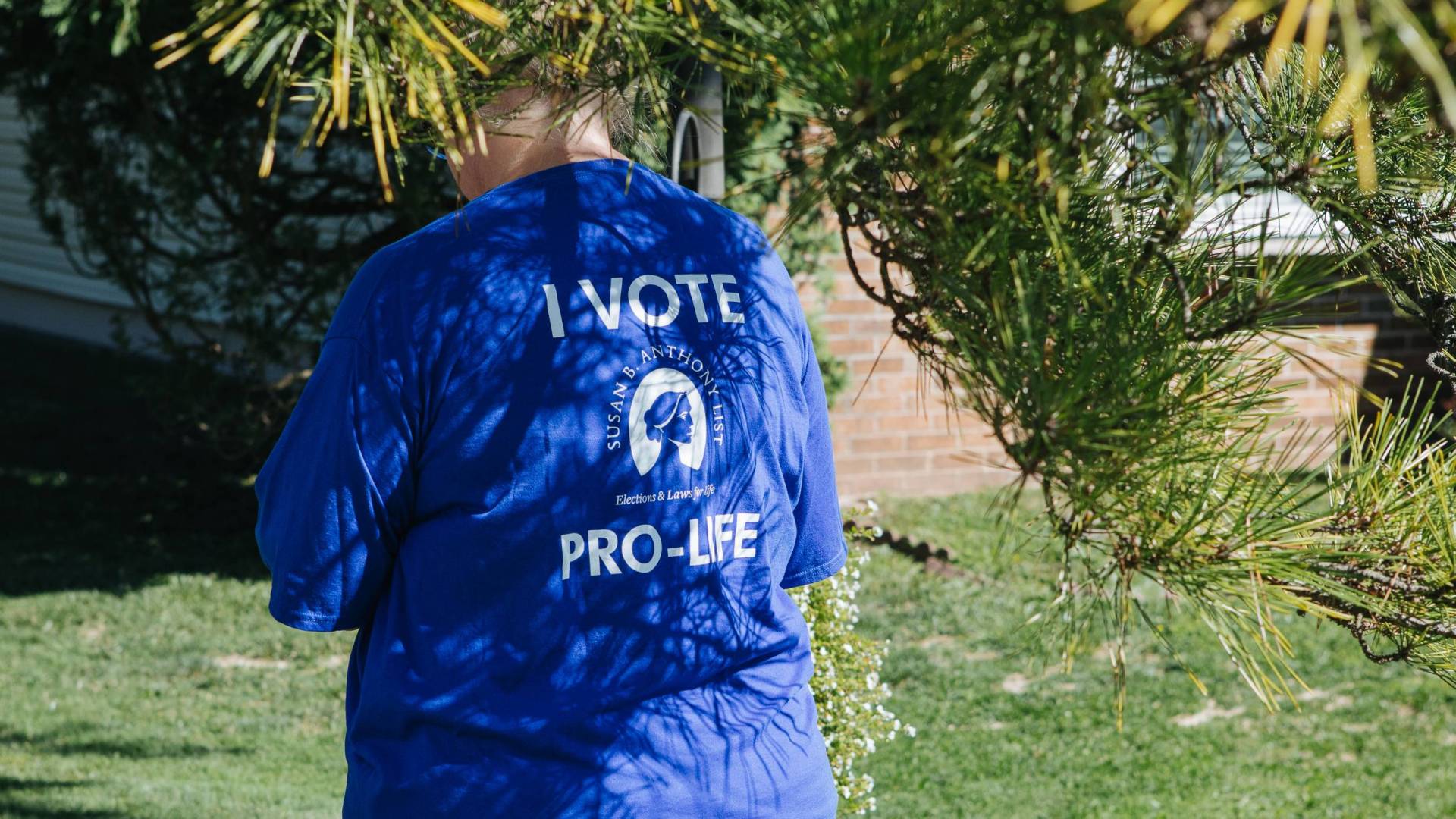
Michelle Gustafson for The Washington Post via Getty Images

For decades, pro-life advocates argued that overturning Roe v. Wade would enable each state to determine its own abortion policy. Abortion measures will appear on five state ballots on Election Day this year, the most in US history.

But the country got its first glimpse at post-Roe abortion referendums months before November 8. Back in August, Kansas became the first state to vote on abortion rights, rejecting a ballot measure declaring the state constitution “does not require government funding of abortion and does not create or secure a right to abortion.”

Activists saw the outcome, fueled by record turnout from young women, as a sign of enthusiasm from pro-choice voters. Last week, Pew Research Forum released its latest polls, which show that Democratic voters are nearly twice as likely as Republicans to consider abortion a very important issue (55% to 29%).

Soon, voters in Michigan, California, Vermont, Montana, and Kentucky will also vote on the issue of abortion rights without a federal abortion law in place.

“My hope is that the Kansas amendment’s failure can serve as a reminder that the deliberate and thoughtful work of the pro-life movement must continue as we change one heart at a time, state by state,” Southern Baptist Ethics and Religious Liberty Commission president Brent Leatherwood said in August.

While some states could bolster the legal rights of the unborn and infants born alive at any stage of development, voters in other states could codify a woman’s right to reproductive choice in the state constitution and allow abortion at any stage of pregnancy.

Christian pro-life advocates warn the proposed changes up for vote in Michigan and California go far beyond the right to an abortion.

Michigan

In Michigan, a 1931 law outlawing abortion took effect after the Supreme Court issued its decision in Dobbs v. Jackson Womens Health Organization in June. Though Michigan attorney general Dana Nessel promised not to enforce the law, abortion providers filed suit in April 2022 arguing that the law is unconstitutional. A state court judge agreed, and in September she invalidated the law.

Now voters in the Great Lakes State will decide whether “reproductive freedom” belongs in the Michigan Constitution. But the language in Proposal 3 opens the door to consequences beyond abortion access for adult women. Christen Pollo, spokeswoman for Citizens to Support MI Women and Children, raised concerns that the Michigan ballot initiative bestows reproductive freedom, including the right to an abortion and sterilization, on every citizen, including minors. While the amendment is billed as restoring Roe, “we’re giving children the right to abortion and sterilization,” Pollo said.

Since abortion is currently legal in Michigan, Proposal 3 has unnerved even some progressives.

“This is not a left and right, a Christian or atheist issue. It’s not about whether we want to grant freedom or autonomy,” said Caroline Smith, the PR director for Progressive Anti-Abortion Uprising. “It’s about common sense and understanding that women deserve better than Prop. Three.”

“We have seen across the board overwhelmingly that this is not about partisan politics,” Pollo said. “It’s not even about pro-life versus pro-choice. People across the spectrum are voting ‘no’ because it’s too extreme.”

California

California voters will decide on an amendment to the California Constitution stating, “The state shall not deny or interfere with an individual’s reproductive freedom in their most intimate decisions, which includes their fundamental right to choose to have an abortion and their fundamental right to choose or refuse contraceptives.” The amendment needs a simple majority of votes to pass.

California allows abortion until the point of fetal viability and later if necessary for the mother’s life or health. The state’s Reproductive Privacy Act, passed in 2002, specifies that women have a “fundamental right to choose to bear a child or to choose and to obtain an abortion.”

Opponents of California’s ballot initiative warn the new language places no limits on abortion, opening the door to late-term abortions.

“It is hard to read this text and not think that it is designed to legalize all abortions, including late-term, third-trimester abortions of healthy babies from healthy mothers,” John Gerardi, executive director of Right to Life of Central California, wrote in the Fresno Bee.

Vermont

In Vermont, voters will decide on a constitutional amendment stating that “an individual’s right to personal reproductive autonomy is central to the liberty and dignity to determine one’s own life course."

Abortion is already legal in the state, and adding it to the state’s constitution would prevent future voters from abolishing abortion by overturning current laws. Like California, the Vermont ballot initiative needs a simple majority to pass.

Montana

In Montana, pro-life groups hope to establish protections for all children born alive, even those born after an abortion.

The law would require that infants who are born alive after an attempted abortion, an induced labor, a cesarean section, or another method receive medical care, and it would impose fines or prison sentences on medical professionals who failed to provide such care. According to the Family Research Council, 18 states currently have similar laws.

Kentucky

Voters in Kentucky will decide on Constitutional Amendment 2, which states that nothing in the Kentucky Constitution gives citizens the legal right to an abortion.

Four other states—Tennessee, Alabama, West Virginia, and Louisiana—already have constitutional amendments declaring that their state constitutions do not provide the right to an abortion. Legislators craft these amendments to prevent judges from determining that a state constitution implicitly guarantees the right to an abortion.

According to Kentucky state Rep. Joseph Fischer, Constitutional Amendment 2 “assures that no Kentucky court will ever be able to fashion an implicit right to abortion from the language of our state Constitution. There will be no Roe v. Wade decision in Kentucky.”

Church Life

More than 1 in 10 New Southern Baptist Churches Are Hispanic

Leader of Send Network Español opens up about church planting’s diverse future in North America.

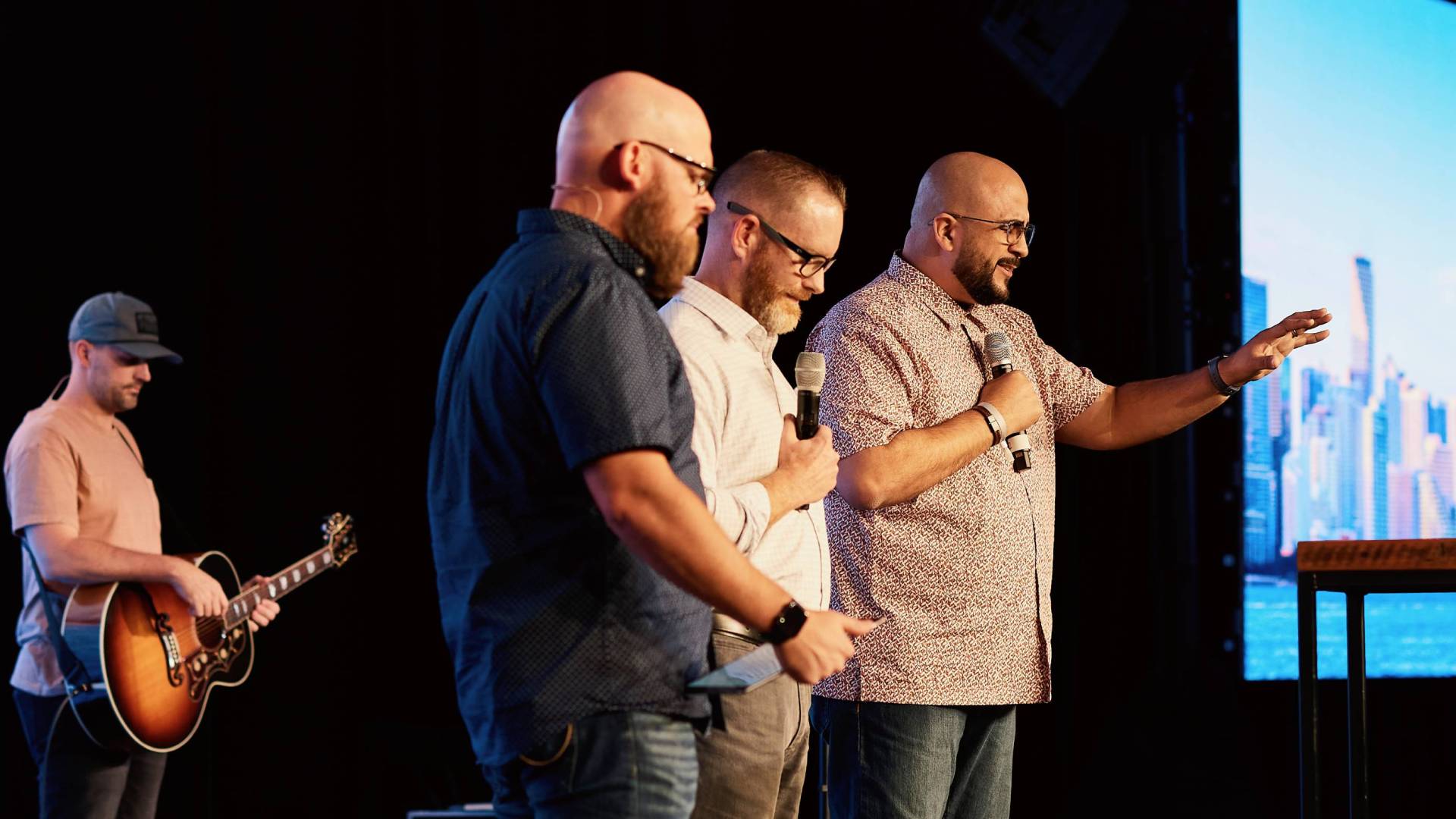
Félix Cabrera (far right), the new vice president of Send Network Español, prays during a regional gathering of church planters and missionary leaders in Miami.

Félix Cabrera (far right), the new vice president of Send Network Español, prays during a regional gathering of church planters and missionary leaders in Miami.

Christianity Today October 28, 2022
Send Network / NAMB

The Southern Baptist Convention has launched its most focused effort to plant churches among the Hispanic community in North America with the expansion of Send Network Español this fall.

“Since 2010, Send Network has planted almost 10,000 new Southern Baptist churches throughout North America, of which more than 1,000 are Hispanic churches,” said Félix Cabrera, a native Puerto Rican with more than a decade of church-planting experience. “Because of this and the tremendous growth of the Hispanic community, the organization’s leadership saw the importance of allocating resources specifically to this sector.”

In October, Send Network, church-planting arm of the Southern Baptist North American Mission Board, announced new ministry values and leadership. Cabrera will serve as vice president of Send Network Español and has commissioned eight regional “champions” of Hispanic church planting across the United States. The rollout of changes follows record-high funding for Send Network, with $68.9 million given by Southern Baptists through their annual Annie Armstrong Easter Offering.

A new website, SendNetworkEspanol.com, offers specialized resources for Hispanic planters, many of whom are ministering among populations who come from Catholic backgrounds and families who moved to the US for job opportunities.

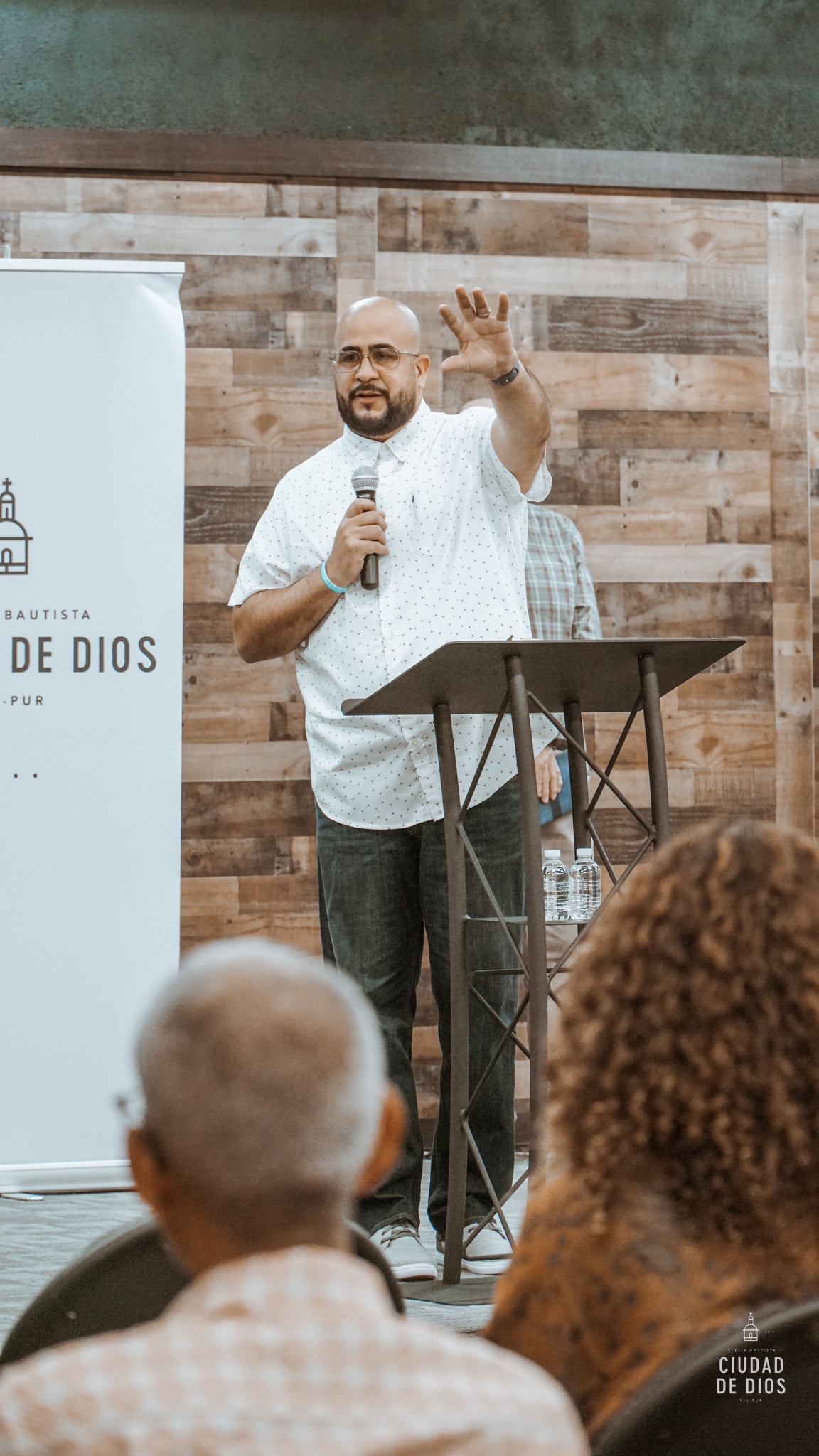
Félix CabreraCourtesy Iglesia Bautista Ciudad de Dios / Send Network
Félix Cabrera

CT talked with Cabrera, who helped establish more than 50 churches, starting with Central Baptist in Oklahoma City, about the diversity among US Hispanics, the importance of work in Hispanic faith and life, and the time investment often required for church planting in this context.

What motivated this new strategy, and what are the main changes you expect after the consolidation of Send Network Español?

The launching of Send Network Español basically provided an official framework to the efforts we had been doing as a pilot project. Since we started and to date, we have prepared between 50 and 60 men who are already planting churches or are ready to do so in the near future. We also established the importance of creating a website that would not consist of a simple translation of everything we do in English but would have specific and contextualized content.

In taking on the role of vice president, I have been given the opportunity to lead a team that is working in the seven NAMB regions. Within each of those regions, we have a leader who is training, providing resources, and collaborating with churches, as well as identifying the fastest-growing Hispanic communities to bring our efforts to that area.

Send Network Español is the dream of many Hispanics who for years have been asking God to open doors and raise awareness of the great harvest that is ready within the Hispanic communities. This is a dream come true.

What has your experience been like with church planting here in the United States? What challenges have you encountered?

Well, maybe 20 or 30 years ago, the Hispanic reality in the United States was totally different. The rapid growth that this social group has had in the last 20 years has created a landscape in which the population not only grew in numbers but also in diversity.

When you start working with the Hispanic church in the United States, perhaps the first thing you notice is that everyone comes from different backgrounds. We are Hispanic, yes, but we come from 21 different countries. A second challenge that makes the diversity even greater is the different generations—that is, the differences between those who migrated from other countries and those who were born in the United States. We can no longer reach them with one-language strategies as we used to.

On the language issue in particular, what changes have you noticed?

When we talk about Hispanics we can’t just say, “All Hispanics are the same because they speak Spanish.” It is necessary to understand that not all Hispanics in the United States speak Spanish and that, even in the cases when the language is the same, we are socially, economically, culturally, and contextually very different.

The Hispanics who speak Spanish are generally the first generation, the migrants. But according to the census, they are perhaps 34 percent of the US Hispanic population. The challenges are very different when we talk about second- or third-generation Hispanics, who represent more than 60 percent of the Hispanic population in the United States. They mostly prefer to speak English.

For our ministry, this means that we must make an effort to reach each individual in the language of their heart so that they can respond to the call of Jesus Christ and become part of a church.

Are there specific cultural challenges?

We know that migrants come to the United States seeking a better quality of life, what we know as the “American dream.” But for us Christians, their presence here is an opportunity to share the gospel of Jesus Christ and for them to know that God has a better dream for them through Christ. God wants to save them and transform their lives.

The Hispanic comes with one thing in mind: work. So these people think that they don’t have time for church, that they don’t have time for God. Also, it is true that most Hispanics see this better-life pursuit from a Catholic context. In the Catholic tradition there is a correlation between working for your sustenance and your works for God; that is what you do to get results.

Many of the migrants have been educated in a religion that takes part of their beliefs from the Bible and part from elsewhere. They come from contexts where they were given wrong ideas about God and the Scriptures. That’s why it is very important to have leaders who are well trained in theology, leaders who know the Scriptures well, so that they can give answers to people’s honest questions.

What lessons have you learned?

I learned that in order to plant Hispanic churches in the United States, you need to take time to get to know the culture of the people and understand that you cannot assume that all people have the same background. You need to understand their context, their reality, and their individual challenges—particularly, those who went through the challenge of migration.

For those who migrated to enter the United States, as we said, their huge priority is to provide for their family and to do anything for their family to prosper economically. That is why in planting churches among these communities, it is important to put the emphasis on meeting them where they are and begin to serve them by providing help with their basic needs.

It is also important to establish relationships with them and let them see in our own lives what it means to be a Christian, because many of them don’t even have an idea of what the church is, and they were told to beware of any non-Catholic religion. They only know what the Roman Catholic Church looks like in their countries of origin, and that’s it. So, establishing relationships that will pave the way to eventually share the gospel takes time, perhaps much more time than in the Anglo context within the United States, because this has always been a Protestant country. As we see, in the Hispanic context the priorities are reversed, and it takes more time.

However, in contexts where there are second- and third-generation Hispanics, the challenges are very different. The objective there is to plant churches with services in English, or bilingual, depending on the needs.

With experience, we have learned that by planting a church with services in English, we are able to bless not only second- and third-generation Hispanics but also other ethnic groups that are looking for more racially and culturally mixed churches. We have multicultural churches with Asians, Africans, and people from various countries.

What trends or patterns have you observed in church planting?

Well, the way we operate, in most cases it all starts with an Anglo church that realizes that their community is changing, that there are more and more Hispanic people there. This Anglo church feels the responsibility to reach these groups with the gospel, but they recognize that there are barriers—not only linguistic but also cultural. So, they communicate with their local conventions and they redirect them to us so that we can help find a man (leader) who would be able to plant a Hispanic church in that community. Sometimes they have already identified a man who has felt the call; sometimes we have to look for him. But in both cases, we provide training and make sure that he really has the calling and the skills necessary to start a church.

Other times, there are established Hispanic churches that are in one city or in one region, and they want to reach out to another city where there is another growing Hispanic community. Then they contact us.

A big part of our job is to train those leaders who will pastor the church plants in both theology and the practical side of church service. We develop an intensive internship program to prepare and train leaders, and then we ensure that they are confirmed by the local church before they are sent out to serve. They must be well trained but, above all, compassionate leaders who can show the love of Christ to those who have gone through so much hardship.

Theology

Something Fake and Wicked This Way Comes

When our Halloween celebrations domesticate evil, we often miss a chance to see true darkness through the light of Christ.

Christianity Today October 27, 2022
Linda Raymond / Getty

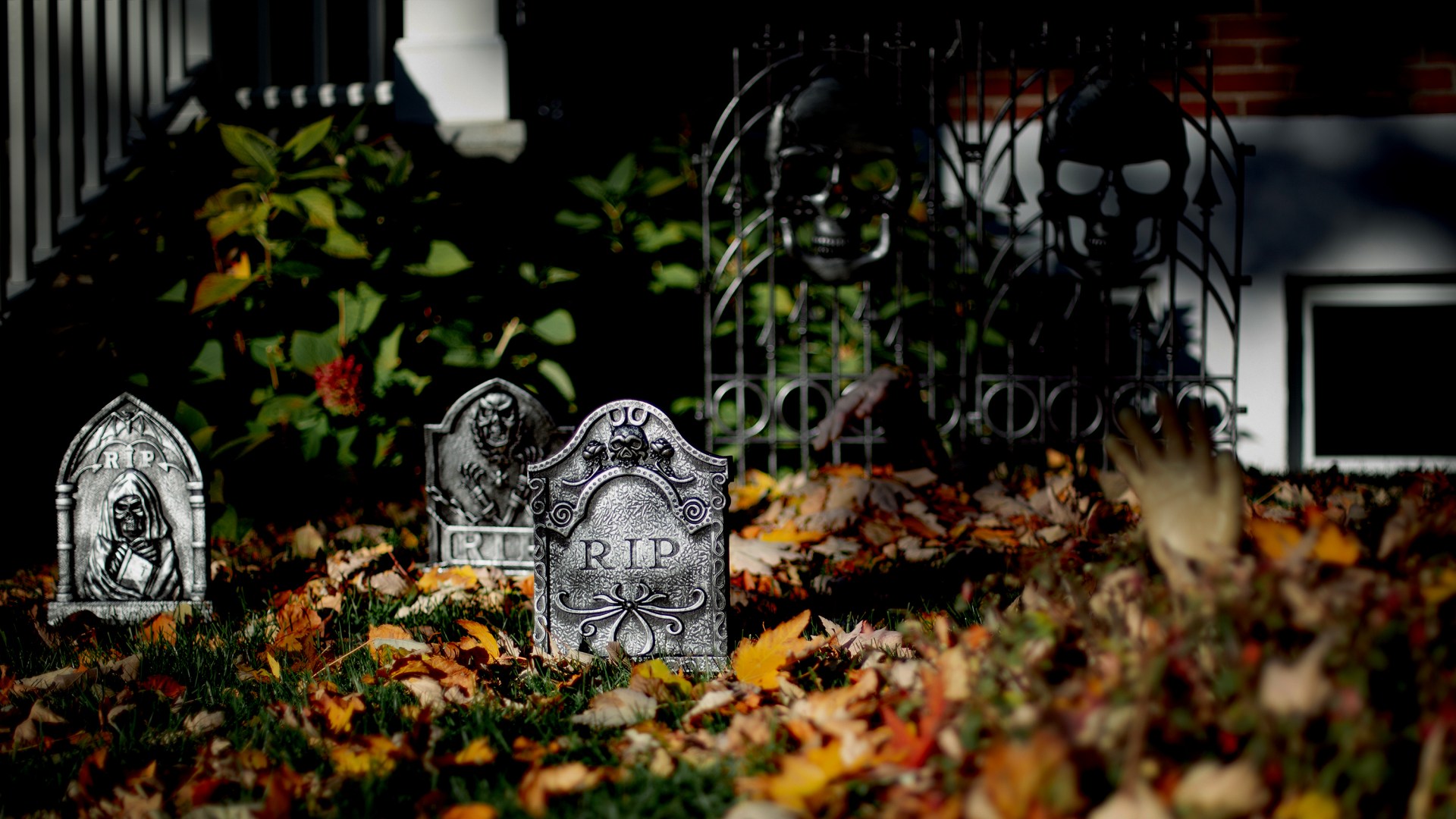
Last October, my three-year-old developed an attachment to our neighbors’ Halloween décor. On our frequent walks to visit the enormous inflatable cat, I fielded questions about other yard displays. When we passed a house featuring plastic tombstones with corpses climbing out of the ground, I wasn’t sure how to answer the question “Mom, what does that mean?”

Another mother recently shared on Twitter that her neighbors have erected an eight-foot-tall zombie skeleton dangling a terrified child figurine upside down by his foot. She asked, “How scary is too scary for Halloween yard decorations?”

It’s a question I share. But behind it is another important question for Christians to ask: Why are so many people so fascinated with evil and death?

Americans spend 10 billion dollars annually on Halloween. In a culture that usually ignores death and dismisses the supernatural, the holiday stands out as a pressure release. Once a year, we express our repressed need to talk about these things.

As evidenced by a recent New York Times article titled “How to Live with a Ghost,” our annual obsession with the undead, the paranormal, and the macabre reveals our increasing curiosity about dying and our belief in evil. By reducing these mysteries to yard décor and costumes, we seek to domesticate and control our fears. Even the most garish Halloween rituals can be understood as religious—an attempt to answer the questions that haunt us.

But domesticating darkness is a false solution for believers and unbelievers alike.

“There are two equal and opposite errors into which our race can fall about the devils,” wrote C. S. Lewis in his preface to The Screwtape Letters. “One is to disbelieve in their existence. The other is to believe, and to feel an excessive and unhealthy interest in them.”

In the modern West, people tend toward both errors. On the one hand, they claim enlightenment from the superstitious religion of our ancestors. All that stuff about evil and hell was just fearmongering, the reasoning goes. Satan isn’t real; he’s just a figment of the medieval imagination.

On the other hand, however, there are few true materialists among us. Even after discarding the religious categories of the previous generation, the “nones” and the “dones” seek to fulfill an enduring religious hunger. They do so often through the very channel that historic Christianity has deemed off limits: occult activity.

“[Catholic] priests are fielding more requests than ever for help with demonic possession,” writes Mike Mariani in a cover story for The Atlantic titled “American Exorcism.”

He quotes Yale historian Carlos Eire: “As people’s participation in orthodox Christianity declines, there’s always been a surge in interest in the occult and the demonic,” leading to a “hunger for contact with the supernatural.”

This craving for supernatural contact is on full display during Halloween. However, it’s often paired with an insistence that our fixation on the powers of darkness is just for fun. The result is a strange sort of play therapy: People act out the stories they’re most afraid of in hopes of proving to themselves that they’re sovereign over these narratives.

The problem, of course, is that evil will not be tamed. No amount of exposure therapy or “spiritual experience” will give us power over darkness and death.

According to the Christian tradition, that’s both bad news and good news. The bad news is that our fears—however subconscious, however seemingly fictional—are real. Death is coming for us all, and it’s not our friend. We have an enemy who seeks to steal, kill, and destroy (John 10:10).

The good news is that we’re not left to face these fears in our own strength. Historic Christianity respects the power of evil and death without cowering to it. We renounce Satan and his work and put our faith in the One who conquered the grave.

For Christians on Halloween, that means two things.

First, we ought not shame people for their curiosity—even their interest—in evil. We can affirm the deeply human instinct to acknowledge spiritual realities, however trivially they are presented. Validating that instinct is not the same as blessing or participating in every cultural practice surrounding Halloween. (I’m still not a huge fan of the yard zombies.)

But rather than dismiss it outright, Christians can look for ways that our faith gives language to human intuition about animate darkness.

In an essay titled “Something Evil This Way Comes,” Fleming Rutledge quotes from Columbia University professor Andrew Delbanco’s book The Death of Satan: “Our culture is now in crisis because evil remains an inescapable experience for all of us [and yet we have lost our] symbolic language for describing it.”

Rutledge responds by arguing that “Christians do still have that symbolic language for evil, and it’s the best and most robust account of evil that there is.”

Christianity answers the questions that Halloween asks.

Second, Christians can bear witness to the light that will never be overcome by darkness (John 1:5). Our collective intellectual and moral power is not sufficient to control evil or even to stop its handmaiden, death. Try as we might, we remain vulnerable.

We die, and our loved ones die and are lost to us. Christian hope doesn’t soften any of this. We diminish the gospel when we rebrand evil as impotent or death as a “graduation” to heaven. Our hope lies instead in the One who has conquered these things in his own body and who will one day destroy them forever.

Saint Patrick was a missionary to Ireland during a very dark time in its history. The famous prayer attributed to him, “St. Patrick’s Breastplate,” boldly describes evil: devils, incantations, idolatry, witches’ spells, “every cruel and merciless power that may oppose my body and soul.”

But the focus of the prayer is not the description of darkness. Patrick’s resounding emphasis is on the breastplate that protects him:

Christ with me,
Christ before me,
Christ behind me,
Christ in me,
Christ beneath me,
Christ above me

Christian hope names the darkness but clings to the light. Our faith is strengthened when we face the gravity of death and embrace our need to be rescued from evil.

In this way, we remain connected to those who have died—not through séances or ghost hunting but through a shared belonging to Christ. In him, even our grief is hopeful, as we anticipate resurrection.

As believers, we learn to pray in the dark. Historically, at least, the church has prayed in the dimness of Easter morning. When the rest of the world is asleep and the sun is just about to crest the horizon, we say together, “The light of Christ! Thanks be to God.”

Hannah King is a priest and writer in the Anglican Church in North America and the associate pastor at Village Church in Greenville, South Carolina.

News

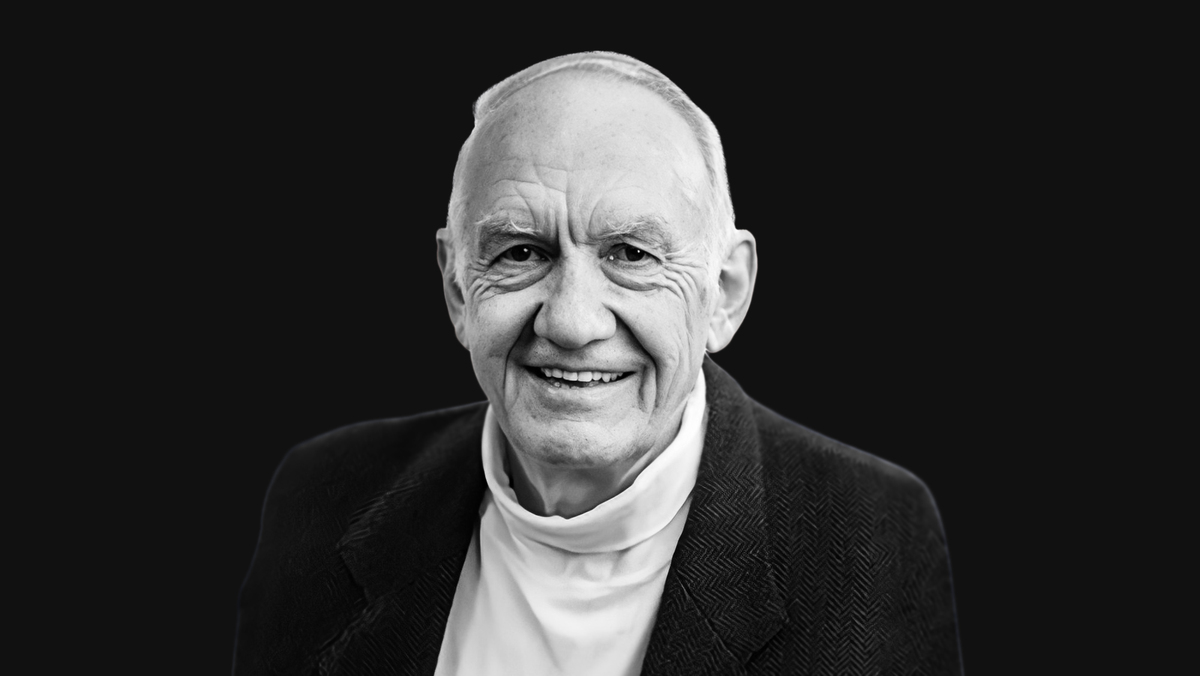
Died: Gordon Fee, Who Taught Evangelicals to Read the Bible ‘For All Its Worth’

A New Testament “scholar on fire,” he believed Scripture was an encounter with God.

Gordon Fee

Gordon Fee

Christianity Today October 26, 2022
Regent College / edits by Rick Szuecs

Gordon Fee once told his students on the first day of a New Testament class at Wheaton College that they would—someday—come across a headline saying “Gordon Fee Is Dead.”

“Do not believe it!” he said, standing atop a desk. “He is singing with his Lord and his king.”

Then, instead of handing out the syllabus like a normal professor, he led the class in Charles Wesley’s hymn, “O For a Thousand Tongues to Sing.”

Fee, a widely influential New Testament teacher who believed that reading the Bible, teaching the Bible, and interpreting the Bible should bring people into an encounter with a living God, described himself as a “scholar on fire.” He died on Tuesday at the age of 88—although, as those who encountered him in the classroom or in his many books know, that’s not how he would have described it.

Fee co-wrote How to Read the Bible for All Its Worth with Gordon-Conwell Theological Seminary colleague Douglas Stuart in the early 1980s. The book is now in its fourth edition and has sold around 1 million copies, becoming for many the standard text on the best way to approach Scripture. Fee also wrote a widely used handbook on biblical interpretation, several well-regarded commentaries on New Testament epistles, and groundbreaking academic research on the place of the Holy Spirit in the life and work of the Apostle Paul.

“If you had asked Paul to define what a Christian is,” Fee once told CT, “he would not have said, ‘A Christian is a person who believes X and Y doctrines about Christ,’ but ‘A Christian is a person who walks in the Spirit, who knows Christ.’”

In the same way, Fee argued that studying the form, history, and context of Scripture is worthwhile because it is not “mere history.” Done correctly, biblical interpretation is a touch of lightning.

“We bring our exegesis to fruition when we ourselves sit with unspeakable wonder in the presence of God,” he wrote. “We must hear the words with our hearts, we must bask in God’s own glory, we must be moved to a sense of overwhelming awe at God’s riches in glory, we must think again on the incredible wonder that these riches are ours in Christ Jesus, and we must then worship the living God by singing praises to His glory.”

As news of his death spread on social media, ministers and seminary professors from across the evangelical spectrum shared which of Fee’s books meant the most to them. Western Theological Seminary New Testament professor Wesley Hill said God’s Empowering Presence was one of the most influential texts he had read. Greg Salazar, a Presbyterian Church in American pastor, wrote that he is using Fee’s commentary on Philippians for a sermon series. Peter Englert, a minister at a nondenominational church in New York, praised Fee’s commentary on 1 Corinthians.

Southern Baptist Theological Seminary professor Denny Burk, who disagreed sharply with Fee on the issue of women in ministry, said Fee was “one of the most influential New Testament scholars who has ever lived.”

Fee was not a household name for most evangelical churchgoers, but that may only underscore the significance of his contribution.

“None of my church members could tell you who Gordon Fee is,” wrote Griffin Gulledge, pastor of Madison Baptist Church in Madison, Georgia. “But every one of them has benefitted from his work. I bet that’s true in tens of thousands of churches.”

Handling Scripture with care

Fee was born to Donald and Gracy Jacobson Fee in Ashland, Oregon, on May 23, 1934.

His father Donald was a skilled carpenter and an expository preacher in the Assemblies of God. Fee grew up noting the difference between his father’s careful sermons, unpacking the meaning of the Bible, and some of the more wild and free-form approaches taken by other Assemblies of God ministers.

Many Pentecostals seemed to think that planning and study would inhibit the Holy Spirit, Fee later said. They would grab one phrase of Scripture and then speak off the top of their heads, trusting God could guide their words if they were flexible and spontaneous. Some would not even choose their sermon text ahead of time, flipping open the Bible and asking God to lead them in the moment.

The results did not always testify to the power of the Holy Spirit.

Fee’s father, on the other hand, believed God honored preparation and the Scripture, just like a fine piece of wood, should be treated with skill and care.

“My father was the first scholar I had ever met,” Fee wrote, “even though in those early years I didn’t recognize it. Still, his passion for truth and determination to dig down deep into the Scriptures … rubbed off on me.”

Fee decided to follow his father into ministry. He went to Seattle Pacific College (now University), where he met and married Maudine Lofdhal, who was also the child of an Assemblies of God pastor. After graduating with a masters, Fee took a pastorate in the growing suburbs south of the Seattle-Tacoma airport and, to make ends meet, also started teaching English at Northwest College (now University), the Assemblies of God-affiliated school in Kirkland, Washington.

Fee discovered he loved teaching. He loved it so much, he said, that it made his teeth ache.

He struggled for several years with a conflict between a calling to ministry—he and Maudine discussed becoming missionaries to Japan—and a calling to academia. The turning point came, Fee later recalled, when a colleague said, “Gordon, just because you want to do it doesn’t mean God is against it.”

Fee realized that “of course this too could be a calling of sorts.” He decided to go to the University of Southern California to pursue a doctorate in New Testament studies, focusing on textual criticism. He wrote his dissertation on Papyrus 66, a nearly complete copy of the Gospel of John that is believed to be one of the oldest surviving New Testament manuscripts.

Even as he embarked on an academic career, though, he felt some tension between his identity as an academic and a Pentecostal. He got a teaching position at Wheaton College, and found he was the first Pentecostal that many of his colleagues had ever met—and certainly the first who had a doctorate in biblical studies.

Influence on the NIV

His fellow Pentecostals in the Assemblies of God, meanwhile, did not always celebrate his success in academia. He once told an older man about his academic research only to receive a warning about the spiritual dangers of scholarship.

“Better a fool on fire,” the man said, “than a scholar on ice.”

As he prayed about it, though, Fee realized that was a false choice. He could be “a scholar on fire.”

He taught at Wheaton for five years and then took a position at Gordon-Conwell Theological Seminary. He was there for more than a decade before moving to Regent College in Vancouver, British Columbia, where he taught New Testament until he retired.

Fee wrote academic and popular commentaries on 1 and 2 Corinthians, 1 and 2 Timothy, 1 and 2 Thessalonians, Philippians, and Revelation. He wrote in-depth studies on the Apostle Paul’s Christology and pneumatology. He edited the influential New International Commentary series and also worked with the Committee on Bible Translation, the team of scholars responsible for the New International Version of the Bible, for more than 30 years. According to Wheaton biblical studies chair Douglas Moo, NIV readers “encounter his translation suggestions on almost every page.”

Fee’s most significant contribution, however, may have come out of teaching Sunday school. He found that many adult Christians, some of whom had spent their whole lives in church, didn’t know how to read the Bible. They understood chapters and verses, and may have even memorized some passages, but often didn’t understand significant differences between different parts of Scripture.

“What’s the difference between a short story and a poem?” Fee asked. “You don’t read a poem the way you read a short story, or a short story the way you read a poem…. Why anyone would ever want to level that out as if it didn’t make any difference…. It makes all the difference in the world! God chose to do it this way. This isn’t Gordon’s discovery. God did this.”

He and Old Testament professor Douglas Stuart published How to Read the Bible for All Its Worth in 1981. Fee, slightly exaggerating, said his editor at Zondervan sent it to every Bible teacher in North America. “I don’t know how many hundreds of copies he sent,” he said, “but within a year the sales went off the charts.” The fourth edition was published in 2014.

Gifts of the Spirit

Fee’s position as a leading Pentecostal Bible scholar at prominent evangelical institutions meant he was occasionally embroiled in theological controversies. In the 1970s and ’80s, he was drawn into a Pentecostal argument over whether speaking in tongues was the “initial evidence” of the infilling of the Holy Spirit. Some accused him of “throwing out” the founding doctrine of Pentecostalism.

“I do not throw out initial evidence,” he said. “I throw out the language, because it is not biblical, and therefore irrelevant.”

Fee also supported women in ministry, based on his reading of the New Testament. He supported the Christians for Biblical Equality and was a contributing editor to the collected volume, Discovering Biblical Equality: Complementarity without Hierarchy, writing commentary on 1 Corinthians 11:2-6 and Galatians 3:26-29.

Fee also wrote about the role of the Holy Spirit in the New Testament church: “The New Testament evidence is that the Holy Spirit is gender inclusive, gifting both men and women, and thus potentially setting the whole body free for all the parts to minister and in various ways to give leadership to the others. Thus my issue in the end is not a feminist agenda—an advocacy of women in ministry. Rather, it is a Spirit agenda.”

That position brought him more criticism than anything else he wrote. Fee said he was “blacklisted” in some evangelical circles.

“I’ve put up with a lot of balderdash,” he told Charisma magazine. “I just can’t get over that some people think gender comes before gifting.”

Fee mostly tried to avoid controversies, though, focusing on his classes and teaching people to read the Bible so it changed them.

“Gordon’s rigorous classes were even more singularly known for their encounters with his Lord,” said Regent New Testament professor Rikk Watts. “He taught thousands of students around the world that one could be a ‘scholar on fire.’”

Fee died at home in New York. He was predeceased by his wife in 2014. He is survived by his children Mark, Cherith Nordling, Brian, and Craig. Memorials are being planned for New York and Vancouver.

Correction: An earlier version of this article misstated the name of Christians for Biblical Equality.

News

Thailand’s New Abortion Law Faces Both Buddhist and Christian Opposition

With abortions now legal up to 20 weeks, the two faiths share common cause but not common effort on the sanctity of life.

The ELM Team, a pregnancy center in northern Thailand, teaches about fetal development.

The ELM Team, a pregnancy center in northern Thailand, teaches about fetal development.

Christianity Today October 26, 2022
Photo Courtesy of The ELM Team

Starting today, abortions are legal in Thailand up to 20 weeks, an extension of the current 12-week limit. It’s a stark turnaround in the Buddhist-majority country, which until February 2020 banned abortions with some exceptions.

That’s when Thailand’s Constitutional Court struck down the statutes in its criminal code that had imposed fines and prison terms for those who perform or receive an illegal abortion, declaring the law to be unconstitutional. As a result, the Thai parliament passed the 12-week abortion law last year.

The Southeast Asian nation’s abortion restrictions have historically been stricter than much of the rest of the world as Theravada Buddhists (which make up more than 90 percent of the population) believe abortion is a sin that violates the first Buddhist precept forbidding the killing of any living thing.

Yet the shame in Thai society surrounding unwed mothers and teen pregnancies, as well as economic stress, has long led women to get abortions through illegal means or by claiming mental health exemptions. This month’s change in abortion regulations reveals a shift in concern from the unborn baby’s life to the mother’s situation.

Some Thai Christians and Buddhists are speaking out against the new abortion law, citing a common concern about the sanctity of life. They are also working at the grassroots level to prevent abortions by providing sex education and pushing for greater government aid for single mothers. Several Christian ministries work to counsel women who experience unplanned pregnancies as well as those who have already had abortions.

As abortion remains a taboo topic, Thai society lacks a united movement. Yet Katie Miller, director of the Education, Life, Mothers (ELM) Team, a pregnancy center in northern Thailand, noted, “We are quietly equipping and empowering women to know how to choose life in Thailand.”

Statutes and shame in modern Siam

Before the Constitutional Court ruling, abortions were illegal except in cases of rape, incest, pregnancies of women under the age of 15, fetal impairment, or harm to the mother. Any woman who underwent an illegal abortion could be imprisoned for up to three years, while anyone who performed an abortion could spend up to five years in prison.

In practice, Thai doctors gave a broad interpretation as to what constituted harm to the mother, including harm to her mental health, according to a 2018 report by the World Health Organization’s Southeast Asia office. The report noted that about 30,000 abortions take place in public hospitals each year.

Yet most abortions in Thailand are done in private-sector facilities or unmarked abortion clinics, or they are self-administered. The WHO report estimated that, in total, between 300,000 and 400,000 abortions occur every year in Thailand.

While most Buddhists would consider abortion to be against the first of the five Buddhist precepts, Thai society operates within an honor-shame mentality, sources noted. If a young girl gets pregnant, her parents will often pressure her into quietly having an abortion to save face with the community.

Khaisri Sirinumboontavee, 51, a social worker at a hospital in the northeastern city of Udon Thani, said that as a Buddhist, she does not want abortions to happen. “But if there is a real necessity, like a person who is pregnant and is not ready, they should have a solution and a safe alternative.”

She fears for the life of the mother who seeks out dangerous and sometimes deadly illegal abortions. Some take off-market abortion pills purchased at pharmacies. Others visit unsafe illegal clinics. According to the WHO, abortions are estimated to contribute to 10 percent of maternal deaths.

Sirinumboontavee is also concerned about women who are not yet ready to have a baby and end up abandoning, neglecting, or abusing the child. She worries it would lead to a host of other problems: “It is like dying even though they are alive. It then becomes a social issue.”

Pro-life Buddhists and Christians

Yet many Buddhists hold to a more conservative view. Phongsiri Sirisuwanjit, 61, a child rights lecturer and devout Buddhist in Chiang Mai, called the law “inappropriate” in Thai society. “Buddhists consider abortion and the killing of a child a sin,” she said. Many interpret abstaining from taking life to include abortion, suicide, murder, capital punishment, and euthanasia. Engaging in these activities brings bad karma, they believe, which will influence the status of a person’s next life.

Buddhist leaders who have spoken out about the issue include well-known monk Phra Ratchadhamanithet, who has called women who have an abortion “spoiled” as they wanted to have sex but are “not ready to take care of the child.” Bhikkhuni Dhammananda, a female monk, has said abortion is murder, which violates Buddhism, and if a woman chooses to get an abortion, she is sinning and invoking bad karma. However, she believes a woman has a right to choose but must accept the consequences of the decision.

In the minority is Phra Shine Waradhammo, a Buddhist monk who supports LGBT rights and joined 20 pro-choice activists in front of the National Assembly of Thailand in 2021 advocating for greater abortion access. He told Reuters his stance has sparked outrage among fellow Buddhists.

The Network Against Free Abortion, headed by two doctors including the president of the National Federation of Medical and Public Health Practitioners, also pointed to the Buddhist belief in the sanctity of life in a letter submitted to the Thai parliament. It outlined their opposition to the abortion law, noting it would violate the beliefs of medical professionals as well as the unborn baby’s right to life.

This is an area where Christians, which make up about 1 percent of the Thai population, share a common cause with Buddhists. Pastors Chukiat Chaiboonsri, 48, and Paponsun Eakkapun, 24, of Creation Chiang Mai Church said Christians must make it clear they disagree with the ruling.

“Thai Christians believe that God is a God who is love and [that] man has no right to destroy anyone's life or breath because God is the God who gives life and breath to man,” the pastors told CT by email.

Chaiboonsri and Eakkapun quoted Genesis 2:7 and Exodus 21:22–25 as support for God’s high value of the unborn. They have spoken to their church about the law and say it is imperative to make sure congregations across the country support the sanctity of life.

Chaiboonsri and Eakkapun believe Thai Christians must take action in their communities. One way Creation Chiang Mai does this is through youth groups. Their church’s youth group instills biblical principles, teaches about sex and purity, and helps young adults discern what laws are outside the will of God. Topics of sex and abortion are rarely discussed in Thai homes, so the pastors encourage Christian parents as well as the church to have these uncomfortable conversations.

“Every church must look to the new generation because they will grow up to be church leaders in the future,” wrote Chaiboonsri and Eakkapun.

Prevention and the love of Christ

Sirisuwanjit, who works with the Ministry of Social Development and Human Security, believes education from a young age is key to curbing the number of abortions. She hosts lectures and interactive training in schools in Chiang Mai for children and teachers about the problems teenagers face, including safe sex to prevent unwanted pregnancies.

The curriculum she uses encourages students to bring their concerns—whether bullying, suicidal thoughts, or sexual pressure—to appointed student leaders for help. Students are often more comfortable approaching other students, she said, and programs like this make it easier to address problems sooner. More serious concerns are then brought up to teachers.

“We should have a more proactive campaign to prevent abortion,” said Sirisuwanjit. “The most effective way to do this is by preventing unwanted and teenage pregnancies.”

In the case of unwanted pregnancies, she points to the need for the Ministry of Public Health and Human Security and the Department of Mental Health to provide resources for childcare and support.

Chalermkwan Chutima, 51, director of the Upstream Family and Community Learning Center, also believes education is important to prevent abortions in Thailand. Her nonprofit, which provides resources and training to parents and teachers, works to address problems at the source instead of trying to solve problems that have run a long course “downstream.”

Chutima, a former program coordinator at International Justice Mission who has written extensively on the issue of abortion in Thailand from a Thai Christian’s perspective, said the root cause of the abortion issue is complex: Sex, pregnancy, and abortion are intertwined with issues like domestic violence, a patriarchal society, and a lack of support for women. In the case of teen pregnancies, society places the blame solely on the young mother, while the father and his family do not take responsibility for the baby. Filled with shame, the mother sees abortion as the only answer.

“Although women have the choice to terminate or not terminate their pregnancy, decisions often come from social pressures shaped by patriarchal ideology,” she said.

Chutima believes that Thais—including Christians—need to work on fixing the root of the problem, while the Thai government should provide better assistance, healthcare, and protection for these mothers.

Upstream works with families to help them play an active role in talking with their children about sex to prevent pregnancies. Through the workshops, she seeks to adjust attitudes in the communities to support rather than condemn women. Temples, churches, and schools are encouraged to provide psychological and social support for pregnant women and their families.

Chutima believes that by helping “heal the wounds of the heart and spirit” of these women, Christians can display the nonjudgmental love of Christ to non-Christians. They can also show that Christians are pro-life both before and after the baby is born.

“People who have had an abortion will not feel like Christians are stigmatizing and punishing them with the law of God without understanding the assistance we are providing,” she said.

Walking with women

Groups like Samaritan’s Creations hope to do just that. The Christian nonprofit works with women in the red-light district of Bangkok and seeks to show them the love of God through discipleship, job training, education, and counseling.

Cofounder Kay Killar said that in her work, she assumes all women in the sex industry have had at least one abortion. Even when abortion was banned, “it is common knowledge among bar workers where to go to get an abortion,” said Killar, who is ethnically Thai. She and other members of the group counsel women who are facing unplanned pregnancies as well as those who have had abortions.

She sees teen pregnancy as a major driver for abortions and believes that Thais need to address the issue of teen pregnancy rather than “one outcome of teen sexual activity,” she said. “The harder issue to address is lack of parenting, especially due to poverty.”

The ELM Team also seeks to walk with women who see abortion as their only option. The international and local staff of the pregnancy center meet with women in crisis pregnancies and provide information about fetal development—which many are unfamiliar with—and encourage women to get ultrasounds. Miller, the ELM Team director, said that when a Buddhist woman hears her baby’s heartbeat, it helps her realize there is life within her.

The mother is paired with two staff members who come alongside her as mentors during her pregnancy and for up to two years after birth. The Christian organization also trains and equips Thai churches to share the gospel and teach fetal development curriculum in local schools and with mothers one-on-one. Miller hopes that as the pro-life message spreads, more people will come to their centers in Chiang Mai, Bangkok, and an upcoming location in Hat Yai in southern Thailand.

“I am hopeful that there will be more women who want to get involved … as a result of the ruling,” Miller said. “We must be diligent in educating about life in the womb, and then God will work to enlighten believers toward the need to stand up for the rights of these precious babies.”

News

Study: Gen Z Wants to Know More About Jesus

Despite long-term trends away from religion, Barna Group finds openness in teens.

Christianity Today October 26, 2022
Rachel Coyne / Unsplash

Half of teenagers around the world say that Jesus is loving, trustworthy, and wise.

“The rumors of Christianity’s demise among younger people are greatly exaggerated,” said David Kinnaman, CEO of Barna Group. “That’s, I think, a really important story.”

The evangelical polling firm has released the first part of a three-part study on teenagers from 26 countries around the world, looking at their views on Jesus, the Bible, and justice. It’s the largest survey Barna has done in its 38-year history, working with seven partner organizations to survey nearly 25,000 representatives from Gen Z who are between the ages of 13 and 17.

Barna found that in the United States 65 percent of teenagers identify as Christians—a notably high number when compared to declining rates of religious identity. Globally, 52 percent of teens identify as Christians. Beyond that, the majority of teens surveyed have positive things to say about Jesus, and roughly six out of ten say they are motivated to know more about him.

The study found “a lot of just openness, country over country,” said Daniel Copeland, lead researcher on the project.

“We titled this study ‘The Open Generation’ because that is the kind of glaring thing when you look at this data,” Copeland said. “You don’t see any closedness around the globe. You don’t see any rejection.”

The Barna study is one of a number of efforts to identify the religious commitments of Gen Z. Researchers are curious whether the next generation, typically defined as those born between 1997 and 2012, will continue the trend away from organized religion. The two generations before them, millennials and Gen X, have reported less and less religious affiliation over the years. As Pew Research Center recently reported, the decline of Christianity, in particular, shows no sign of stopping in the US.

But Gen Z could be different. The oldest members of Gen Z were 9 and 10 when Facebook opened user accounts to everybody and 11 and 12 when the housing crisis rocked the world economy. Whether or not those and other big cultural changes have impacted Gen Z—and if so, how—remains an open question for researchers. Studies like Barna’s are just beginning to probe.

This study focused on those who are currently teenagers, cutting off the oldest members of Gen Z, but the evangelical researchers said the data collected in the global survey was “hopeful.” Not only do about 60 percent want to learn more about Jesus, but that same number say they trust the Bible to tell them about him. After Scripture, young people said they would rely on family (60 percent) and clergy (52 percent).

“I think that underscores so many of the positive findings of the study,” Kinnaman said. “Despite all the changes, there are still some real conventional ways in which they’re thinking about religion and the role of community and the role of sacred Scripture and Christianity in their lives.”

In a narrower study released in 2021, Barna found that 70 percent of teens in the US identified as Christian. Eight out of ten of those Christians said it was important for them to share their faith, and they had had a conversation with someone about Jesus in the previous year.

Barna’s research appears to be supported by findings from the American Bible Society. A 2021 study from the latter found that the vast majority of Gen Z say they’re curious about the Bible and two-thirds reported they wanted to read the Scriptures more.

Not all the available survey data agrees, however. The Survey Center on American Life found that Christian identity among Americans had dropped eight points from millennials to Gen Z, with only about 56 percent of those born after 1996 saying they were Christian. More than a third told the Survey Center that they were religiously unaffiliated “nones,” continuing the trend that many religious surveys have seen.

It’s not clear why Barna found more Christians than other surveys, but researchers say that even with this very optimistic picture, there are some dark spots. About half said they didn’t believe the Crucifixion was a historical event, and only a third said they believed Jesus rose from the dead. Nearly a third say they think Christians are hypocritical.

It’s possible that some from Gen Z who identify as Christians will lose their faith in the years to come. In a previous report, Barna found that 57 percent of millennials who were raised Christian dropped that religious identity later. Copeland said the reality is that some of the Gen Z teens’ hardest and most spiritually challenging years are still ahead.

“Are they following the trends of millennials, or are they plotting their own path?” Copeland said. “It’s kind of hard to say, but what we recognize is that they represent a really unique cultural moment.”

Books

Q&A Natasha Sistrunk Robinson: Call for the Wailing Women of Color

The editor of “Voices of Lament” on how public injustice demands public sorrow.

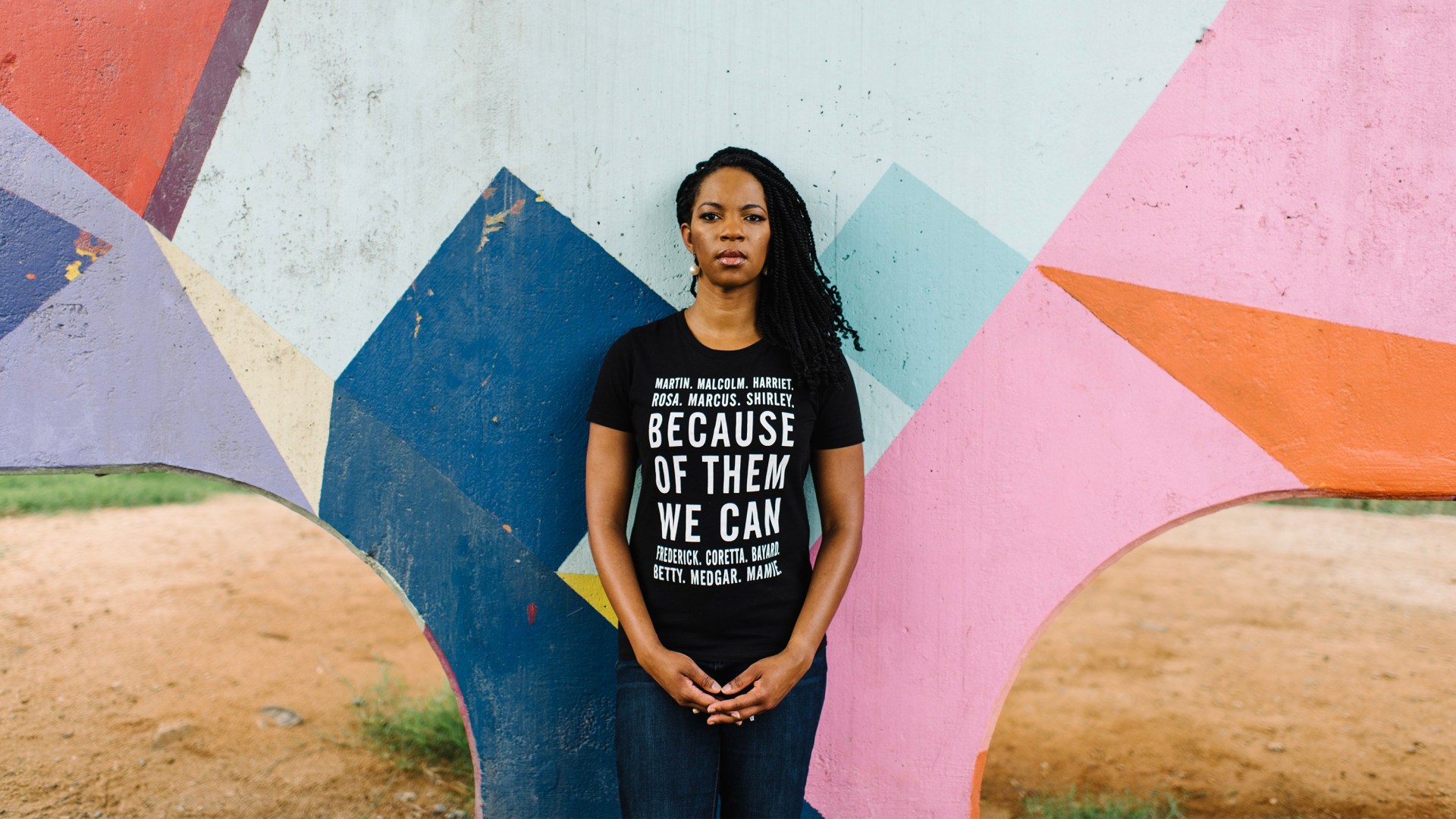
Natasha Sistrunk Robinson

Natasha Sistrunk Robinson

Christianity Today October 26, 2022
Photo by Yuri Vaysgant / Courtesy of Natasha Sistrunk Robinson

In the fall of 2019, author and speaker Natasha Sistrunk Robinson moved to Alabama with her husband and daughter. When the pandemic hit in early 2020, she found herself doubly isolated in a new location.

After reading the book of Jeremiah, a particular passage “really jumped out at me,” says Robinson. It was 9:17–21, “where God tells the prophet Jeremiah to call the wailing women to wail until they are exhausted from crying so much. They’re wailing because the men have been taken out of the public square, and the children have been taken out of the streets, and ‘death has climbed in through our windows.’”

The story seemed very relevant to the moment. “Death was a thief climbing into our windows too,” says Robinson. “It was all around us, with the reality of the pandemic on top of all the racial injustice of that year.”

Inspired by the Old Testament model of lament, she started working on a book titled Voices of Lament (Baker Publishing Group, 2022), which features 29 women of color writing on themes of longing, injustice, and suffering.

Robinson, who now lives in North Carolina with her husband and daughter, hosts the podcast A Sojourner’s Truth and runs T3 Leadership Solutions and Leadership LINKS. She is currently a doctoral candidate in urban leadership ministry through a joint program between North Park and Fuller Theological Seminaries.

CT spoke recently with Robinson about her latest book and the community of women who contributed to it.

During the summer of 2020, you were reading through Jeremiah and the Psalms and thinking about lament and injustice. Tell us more about that journey.

As a Black woman, I was thinking about all the ways that our men had been taken out of the public square—whether by violence or mass incarceration, and so on. And of course, this is the George Floyd summer.

Psalm 37 ended up being an encouragement to me, in conjunction with the text from Jeremiah 9. God is very clear that he’s going to deal with the righteous, and he’s going to deal with the wicked, and he’s going to deal with them very intentionally.

I was looking at the women who were probably professional mourners and Jeremiah calling on them in a very difficult time, because they know what to do. He’s saying, “Teach your daughters how to wail, and teach us as a community how to wail.”

I thought about all the ways that women of color have modeled the spiritual practice of lament. I reached out to Kristie Anyabwile, one of our contributors. I told her that I thought God wanted to speak through women of color, and I asked for her input.

We started praying and going back and forth about the idea. I thought surely the world but certainly the church in our country needs this. And I felt like we were the ones to speak into the moment.

How did you go about putting together this group of women?

I am in relationship with a diverse community of people, and as I began this project, it was very important to me that it reflected who God is among women of color. If we are wailing, it’s like a chorus—singing or crying out in the wilderness—but we are singing in harmony, meaning everyone’s not singing the same note.

In the book, there is almost equal representation of Hispanic women, Asian American women, and African American women, and there’s about equal representation among Indigenous women, as well as global citizens. It was very intentional for me to have intergenerational representation too. Each of these women are serving the Lord in different ways.

We’ve built a beautiful community through writing this book.

What made you decide to make this book a compilation rather than just write all of it yourself?

At my age, part of the fight for justice is sponsoring people. It’s creating access and opportunity for people. About half of the women in the book already had a platform, and about half did not. I could have chosen only women with platforms, but I wanted to call on women who may not be well known but who have a heart for God, are faithful to the text, and have trust within their own communities.

Was it difficult to find a publisher?

There’s a narrative out there about women of color not being able to sell books in the Christian market. There’s a reason why that narrative exists. It’s not the women of color, and it’s not the quality of their education, research, or writing ability. I believe that it’s a systemic injustice in terms of how we go about publishing people and how we go about marketing and platforming them.

I’m so thankful for the work I’ve done with this publisher and that they were willing to put in the work and take a risk on this project. My prayer has been that this project becomes a classic, because that will also set a new precedent about what women of color can do as far as selling in the industry.

Was there anything about the process of editing this volume that surprised you?

The essay by Ka Richards wrecked me, as someone who served in the military. I learned how our government and military basically used her people as allies to fight on our behalf during the Vietnam War. Her people lost generations of their men and boys, and we didn’t fulfill our promise to them. Even to this day, her people, the Hmong, are still impacted.

I was heartbroken and so repentant because of how we treated her people. In a year when violence against our Asian American sisters and brothers was on such a rise, editing her story was a reminder of how arrogant we can be as Americans.

What are your prayers and hopes for the book?

One thing I’ve witnessed in my own life through the women who raised me and the women that I’ve been privileged to share time and space with is that we generally don’t abandon God when things get hard. That’s a testament to the church, because right now, we see so many young people leaving the church. There’s a prophetic witness to hearing from people who have been through hard things and stayed. These women love God and love the church, despite itself.

Talk about your view of community and how it shapes your theology.

I like to remind people when I’m discipling that the Bible is an Eastern book, and so it is concerned about the communal and how God is shaping a group of people to respond to him in very specific ways.

In Revelation, we see God drawing people to himself from every tribe, language, nation, and people group, and we see them worshiping around the throne of the Lamb. And my thing is that when we’re not listening to the different people groups that belong to the Lord, that are in relationship with the Lord, then I think we’re missing a part of how we see God.

And so I think it’s a part of spiritual discipline and part of our own discipleship to be intentional in reading more broadly. We will see God more clearly.

How do these ideas shape your vision for Christian female leaders?

Oftentimes in our discipleship, we talk about the individual—God blessing me and my house, God blessing my church and blessing my project. But that’s not what we see in the biblical text. I want readers to see the faithfulness of God to people groups across time.

In the biblical text, there are times when women are doing massive things to advance the kingdom, but we often gloss over them or think of the women as a footnote instead of as leaders playing an important role. I wanted people to experience the faithfulness of these female contributors by getting to know them and their stories.

This Is Not the Most Important Election of Our Lives

Michael Wear, founder of the Center for Christianity and Public Life, on the state of American politics, what’s at stake in the midterms, and the temptation to “ultimatize” our issues.

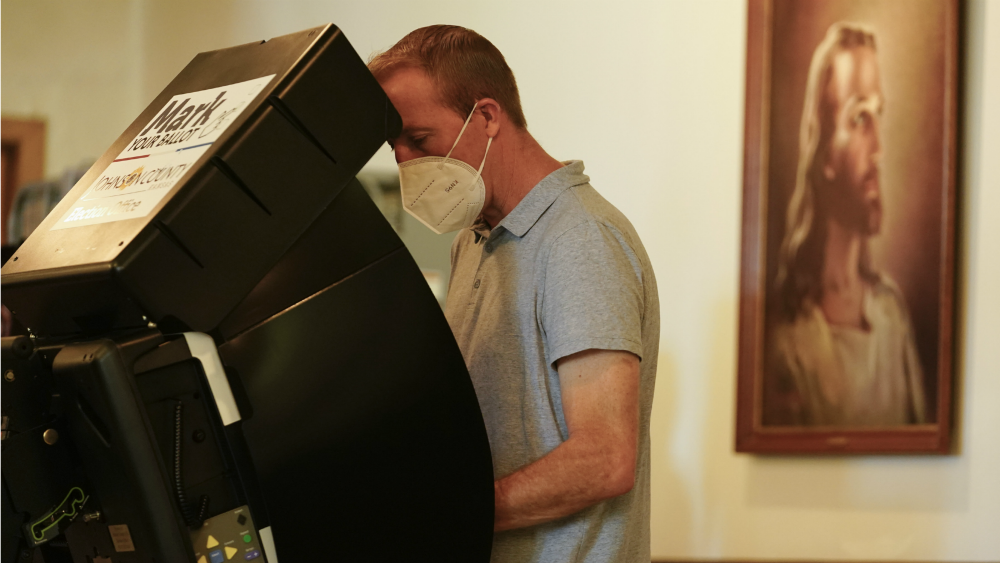
A voter casts his ballot in the Kansas Primary Election at Merriam Christian Church on August 2022 in Merriam, Kansas.

A voter casts his ballot in the Kansas Primary Election at Merriam Christian Church on August 2022 in Merriam, Kansas.

Christianity Today October 25, 2022
Kyle Rivas/Getty Images

Midterm elections are a time for reassessment—an invitation to evaluate the party in power, but also the political process itself, the health of the body politic, and the effect it’s all having on people’s souls. Two years after Joe Biden won a presidential campaign he characterized as “a battle for the soul of the nation,” voters are heading back to the polls with concerns about inflation, abortion, immigration, polarization, Christian nationalism, and even the future of American democracy.

According to Michael Wear, founder of The Center for Christianity and Public Life, this is an opportunity for believers to reconsider their civic engagement. “Politics needs people with joyful confidence who seek security not in politics but in Jesus,” he argues. “We can break the vicious cycle.” CT started the conversation by asking him to assess the upcoming midterms.

We’re in the final stretch to Election Day. What do you think the 2022 elections say about the state of American politics?

I struggle to find coherent, substantive conversation on anything in these midterms. There are individual races, of course, where there are issues that are getting substantive debate, but it seems clear to me our politics continues to devolve.

We now just get gestures towards issues. Candidates are not actually dealing with the substance, not actually showing an interest in offering a perspective or policy proposals—which means the winner of these midterms won’t really have a policy mandate.

Michael WearThe Center for Christianity and Public Life
Michael Wear

What I do hear is a lot of talk about existential crisis. But the more we load onto our politics, and the higher the stakes, the harder it becomes to really have a democratic process. If an election is a binary choice about the most fundamental questions—which is what both sides are offering—that’s too removed from the critical day-to-day work of governing.

If the election is about whether we have or don’t have a democracy anymore, then how are the voters supposed to speak to what they want to see happen on immigration policy? Or taxes? I worry that what the voters are trying to communicate becomes almost incomprehensible, because there is so much noise.

A lot of Democrats talked about their faith when running for president in 2020. But now I don’t hear that from Democrats in house, senate, and gubernatorial seats in 2022. Did they take away the lesson that talking about faith doesn’t work?

There are some candidates who are. But generally, you’re right. They’re not.

I think there is a sense among Democratic strategists—some Democratic strategists—that talking about faith is a concession. Polarization is making it so that there is a perceived disincentive to identifying with your political opponent in any way, or identifying with people who disagree with you in any way. In a country where, unfortunately, faith is put into those same types of political buckets, there is a strategic decision that gets made not to talk about faith, even if that is a genuine part of who the candidate is.

But there’s also a problem on the other side. Faith gets filtered down into the political system and gets instrumentalized.

I have really become concerned with the laying on of moral burdens on people for the vote that they take or even just the views that they hold. The moral castigation that is poured on like, white evangelicals, for a position that comes up in a poll, when the truth is the average American has a lot of other things they’re thinking about, things that are more of a legitimate pull on their time than a nuanced political issue.

Too often we look at policy issues as matters of eternal destiny, and not matters of prudence where we can and should have healthy debates. Christians often talk about people who voted for a candidate—whether it’s Donald Trump or Hillary Clinton or Joe Biden—as if their vote was a vote for everything that that person did and said. And that’s just not the reality of voting.

But when we load up our politics with these moral burdens, there’s no room for prudential disagreements, because everything is ultimatized.

It’s been a few years now but you worked on faith outreach for the Barack Obama administration. Halfway into Joe Biden’s first term, how do you think his administration is doing with faith outreach?

At the agency levels, there are staff who are doing a really good job at faith outreach. I thought this was true with the Donald Trump administration too: There is always good work going on at Health and Human Services, at FEMA, at State, at Housing and Urban Development. That is one of the key legacies of the George W. Bush administration and it’s now embedded in our government.

But I do think the White House’s engagement of faith could be more public facing. It would have been helpful, given everything we face with polarization and religious divisions. And it would still be helpful.

My wife just mentioned in an offhanded way that our church is hosting two Afghan families. This is through a State Department program. I would love to see a little more energy devoted to telling those stories. I think there are a lot of good stories and capital that is being left off the table.

Do you think there’s a fear that calling attention to a program like that will make it political? Like if it’s quiet, it’s nonpartisan, but if anyone knows about it, then it will be toxic and polarized and partisan.

To the extant that that’s true—I don’t want to say that it is—that’s really sad.

I would say, it is fascinating what people want to polarize and what people don’t want to polarize. We’re happy to let things get partisan when it cuts in our direction.

You’ve launched a new nonpartisan organization, the Center for Christianity and Public Life (CCPL). What need do you see that isn’t being met by other organizations that help Christians engage in politics?

Well the kinds of challenges we face are not the kinds of challenges that will be met solely by a single organization. We want CCPL to be a blessing by contending for the credibility of Christian resources in public life and for the public good.

I do think that too often Christian organizations have seen the only purpose for engaging in public life is to advance a set of propositions—to advance a position on an issue or two. That can be essential work, but that is not our vision of what is needed now.

What Christianity has to offer is not a set of policy positions but a life. Jesus is inviting you into a life, and that life has all kinds of resources for public life. Our confidence is that as people take up and try for themselves—for instance, whether gentleness is viable in public life—they will see the value and that will have an impact that’s different than electing a candidate or getting a bill passed.

In a recent piece at CT, you talked about a different kind of polarization you see in America right now between those who turn their politics into an idol and those who don’t care about public life. There’s a tremendous pull to those two poles. In your experience, what moves people away from those two bad options?

A number of things move people. Personal experience matters a great deal.

What was surprising to me years ago, but now I see as a basic sort of sociological fact, is that those who are actually involved in civic life are the least likely to make politics an idol. You would think the people who are involved are the ideologues and utopians. But no, the people who are actually involved, who are up close to how things work and how things don’t work, who’ve dedicated a year or five years to a real need in their community, they often have a healthy ambivalence.

Healthy ambivalence is good. It’s an idea that I take from Calvin University philosophy professor Jaime Smith, that Christian politics should always be tinged with a reservation and recognition of the real limits to simple ideas and policy plans.

The people who don’t have that are the people who approach politics as a source of entertainment, as a sport. Those are the people who think things are so simple—they’ve put too much faith in their ideas and policies and have set themselves up for the disappointment that drives people to just say they don’t care anymore.

The other thing I’ll say is that so many people haven’t been presented with a vision of politics that could be motivated by something other than self-interest. Let’s view politics as a forum for loving our neighbor, a forum for faithfulness. I believe that can move people.

News
Wire Story

California Baker Sued for Discrimination Wins Free Speech Case

Ahead of another Supreme Court case over same-sex wedding clients, judge defends cake-maker’s First Amendment rights.

Christianity Today October 25, 2022
iStock / Getty Images Plus

A California judge has ruled in favor of a Christian cake designer in the latest court decision regarding the conflict between religious freedom and same-sex marriage.

Eric Bradshaw, a Superior Court judge in Kern County, said in an October 21 opinion the state violated Cathy Miller’s freedom of religion and speech when it decided she unlawfully discriminated under California law by declining to design a cake for a same-sex wedding celebration.

Bradshaw’s decision is the latest in a series of court actions over several years regarding wedding vendors—such as cake designers, florists, photographers and artists—who refuse to provide their services for same-sex wedding ceremonies because of their biblically based belief that marriage is only between a man and a woman.

While the US Supreme Court has issued multiple opinions in support of the free exercise of religion in recent years, cases involving the conscience rights of wedding vendors have resulted in conflicting opinions across the country.

“This court has rightly affirmed that people of faith should be able to live out their deeply held religious beliefs in the public square,” said Hannah Daniel, policy manager for the Southern Baptist Ethics & Religious Liberty Commission.

“As tension continues to grow between our culture’s shifting beliefs on issues of gender and sexuality and the beliefs of many religious Americans, rulings like this provide important indicators that religious speech and expression will continue to be protected.”

A similar case will be before the Supreme Court in early December.

The justices will hear oral arguments December 5 in 303 Creative v. Elenis, an appeal by Lorie Smith, a Colorado graphic artist and website designer, of a ruling against her by the US 10th Circuit Court of Appeals in Denver. Smith challenged a state law that mandates she use her business for same-sex weddings if she does so for ceremonies between a man and a woman.

It is the ERLC’s “hope that they, too, will rule favorably for the protection of religious liberty and conscience rights,” Daniel told Baptist Press in written comments.

California’s Department of Fair Employment and Housing (DFEH) brought an action against Cathy Miller, owner of Tastries Bakery in Bakersfield, after she declined in 2017 to design a cake for the celebration of the union of Eileen and Mireya Rodriguez-del Rio, who were married in 2016. DFEH decided Miller was guilty of discrimination based on the sexual orientation of the women.

In his decision, Bradshaw said, “uncontroverted evidence showed that Miller’s sincere faith permeates her life and work” and she established her shop’s “design standards to conform to her Christian faith in the Bible and what she believes the Bible teaches regarding marriage.”

According to its written standards, Tastries not only declines to design wedding cakes that “contradict God’s sacrament of marriage between a man and a woman” but also designs such as those that promote marijuana use, feature “explicit sexual content,” or display “anything offensive, demeaning, or violent.”

The evidence also showed Miller and her bakery serve and employ lesbian and gay people, Bradshaw wrote. They also serve each person, regardless of sexual orientation, who purchases items in the bakery case or requests a custom item, if the latter design does not violate the shop’s standards, he said.

In his decision, Bradshaw said the state “failed to prove that defendants intentionally discriminated against Eileen and Mireya because of their sexual orientation. The evidence affirmatively showed that Miller’s only intent, her only motivation, was fidelity to her sincere Christian beliefs.”

“The substantial burden the state seeks to impose on defendants’ free exercise of religion … is not justified by the state’s legitimate interest in preventing discrimination where, as here, the evidence affirmatively demonstrates there is a less restrictive means to achieve the state’s objective,” Bradshaw wrote.

Miller’s referral of the couple to another bakery “was, and is, reasonable under the circumstances, and fulfills the requirement of ‘full and equal service,’” according to Bradshaw’s opinion.

Miller and Tastries’ “pure and expressive speech is entitled to protection under the First Amendment,” Bradshaw wrote. “DFEH’s enforcement action seeks to compel Miller and Tastries to express support for same-sex marriage, or be silent.”

Among other current cases involving vendors who decline to provide their services for same-sex ceremonies because of their biblical convictions:

  • The US Second Circuit Court of Appeals in New York City heard oral arguments Sept. 28 in an appeal by Emilee Carpenter, a photographer and blogger, of a federal court decision rejecting her challenge to a New York law that requires her to photograph same-sex weddings.
  • Chelsey Nelson, a Louisville, Kentucky, photographer and blogger who declines same-sex weddings, won an injunction against the city’s anti-discrimination Fairness Ordinance in August from a federal judge.
Apple PodcastsDown ArrowDown ArrowDown Arrowarrow_left_altLeft ArrowLeft ArrowRight ArrowRight ArrowRight Arrowarrow_up_altUp ArrowUp ArrowAvailable at Amazoncaret-downCloseCloseEmailEmailExpandExpandExternalExternalFacebookfacebook-squareGiftGiftGooglegoogleGoogle KeephamburgerInstagraminstagram-squareLinkLinklinkedin-squareListenListenListenChristianity TodayCT Creative Studio Logologo_orgMegaphoneMenuMenupausePinterestPlayPlayPocketPodcastRSSRSSSaveSaveSaveSearchSearchsearchSpotifyStitcherTelegramTable of ContentsTable of Contentstwitter-squareWhatsAppXYouTubeYouTube