Books
Review

C.S. Lewis Was a Modern Man Who Breathed Medieval Air

As both a writer and a scholar, his work hearkened back to a “slow, contemplative, symphonic world.”

Christianity Today March 10, 2022
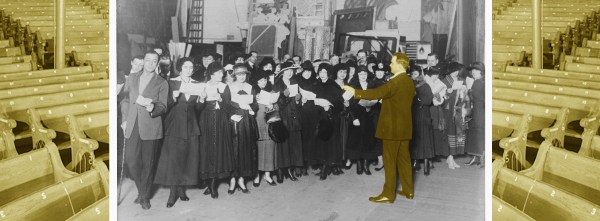
Illustration by Rick Szuecs / Source images: Steve Johnson / Unsplash / Public Domain CCO / Raw Pixel / Levan Ramishvili / Flickr

In the prologue to The Lord of the Rings, J. R. R. Tolkien tells us two things about his beloved hobbits that identify them as medieval in their thinking and their behavior. First, their relationship to technology is distinctively premodern: “They love peace and quiet and good tilled earth: a well-ordered and well-farmed countryside was their favourite haunt. They do not and did not understand or like machines more complicated than a forge-bellows, a water-mill, or a hand-loom, though they were skillful with tools.”

The Medieval Mind of C. S. Lewis: How Great Books Shaped a Great Mind

The Medieval Mind of C. S. Lewis: How Great Books Shaped a Great Mind

IVP Academic

176 pages

$15.56

Second, their taste in books runs toward old masters like Dante, Chaucer, and Thomas Aquinas; they would not have enjoyed or understood the radical originality of novels by modern writers like James Joyce, Samuel Beckett, Marcel Proust, or Virginia Woolf. Indeed, “they liked to have books filled with things that they already knew, set out fair and square with no contradictions.”

Later in his epic, Tolkien extends this medieval ethos to the members of the Fellowship. When Gandalf questions Saruman the White as to why he is now Saruman of Many Colors, he is gravely disturbed by Saruman’s reply.

“‘White!’” he sneered. ‘It serves as a beginning. White cloth may be dyed. The white page can be overwritten; and the white light can be broken.’” Gandalf responds in turn, rebuking Saruman’s Enlightenment understanding of wisdom: “In which case it is no longer white … and he that breaks a thing to find out what it is has left the path of wisdom.”

Aragorn, who will eventually be crowned king of Gondor, expresses an equally medieval understanding of morality when he responds to the confusion of Éomer, nephew of King Théoden of Rohan. In a world so filled with strange signs and wonders, Éomer asks, “How shall a man judge what to do?” Aragorn replies: “As he ever has judged . . . Good and ill have not changed since yesteryear; nor are they one thing among Elves and Dwarves and another among Men. It is a man’s part to discern them, as much in the Golden Wood as in his own house.”

The British Boethius

Like his friend Tolkien, C. S. Lewis was a man who loved all things medieval and who infused all that he wrote with a premodern ethos that hearkened back to an older, more traditional understanding of technology, books, wisdom, and morality. In his new book, The Medieval Mind of C. S. Lewis: How Great Books Shaped a Great Mind, Dante scholar Jason Baxter unpacks the full extent of Lewis’s medievalism. Just as Michael Ward demonstrated in Planet Narnia that Lewis keyed each of his seven Narnia Chronicles to one of the medieval planets, so Baxter demonstrates that the medieval worldview colored not only Lewis’s apologetics and fiction but his scholarship as well.

It is this Lewis, Lewis the scholar, whom Baxter, associate professor of fine arts and humanities at Wyoming Catholic College, compares to Boethius, a thinker who bridged the classical and Middle Ages by synthesizing the best of pagan learning and harmonizing it with Christianity. By translating medieval thought into a vernacular that the modern man could understand, Baxter argues, “Lewis became a British Boethius, the philosopher whom he once described [in The Allegory of Love] as the ‘divine popularizer,’ who had helped to create ‘the very atmosphere in which the [medieval] world awoke.’”

Modern readers are often shocked by Lewis’s aversion to cars and newspapers. And yet, Baxter explains, behind Lewis’s “irascible, curmudgeonly lamentations about newspapers and cars stands a well-thought-out conviction that the whole world picture had changed, from the slow, contemplative, symphonic world … to the world of speed, bustle, and machine.” The rise of the machine may have freed us from laborious chores, but it had social, spiritual, and psychological repercussions that altered our very view of reality. Even as it enlightened certain areas of science, it brought darkness to our perceptions of the world, ourselves, and others.

Baxter carefully ferrets out the nature of this darkness by mixing phrases from Lewis’s The Abolition of Man into his own analysis:

Lewis irreverently calls the hallowed scientific revolution a period of “new ignorance” because he believed that by choosing to focus on quantifiable measurements to the exclusion of all other types of inquiry, modern science had brought modern culture into an ethical and social desert, on account of its willful suspension of “judgements of value” and its decision to strip nature of all “qualitative properties” and to “ignore its final cause (if any), and treat it in terms of quantity.”

This shift from qualitative to quantitative has led, in part, to that disenchantment of the world that Lewis struggled against in his fiction and nonfiction alike. In fact, as Baxter convincingly argues, Lewis saw this disenchantment as a more direct and insidious “evil enchantment” through which the modern world sought “to suffocate the supernatural sentiments within.” In resisting the hegemony of the machine, Lewis also resisted the ways in which a mechanistic view of nature and man robs us of our full humanity. As an educator, Lewis the scholar sought to restore to students a medieval mindset capable of what Baxter calls “the right sentiments of praise and admiration for creation.”

As we have lost our appreciation for that “slow, contemplative, symphonic world” that was the medieval cosmos, so we have lost our delight in the kinds of books medieval people loved, books that held up other criteria besides mere originality. The “greatest authors of the medieval period,” Baxter explains, were “shapers, composers, and recyclers of old materials. Chaucer, Boccaccio, and Malory borrowed and translated, but also mended, updated, and altered. They wrote traditional poetry in the sense that they felt it their chief task to dress old stories in new garb.”

To help us get into the medieval mind, and thus understand Lewis better, Baxter quotes a well-chosen passage from the Roman writer Macrobius that influenced Lewis both as a scholar and a writer, one that captures perfectly the medieval love for literary recycling: “You know how a chorus consists of many people’s voices, and yet they all produce a single sound. … That is my goal for the present work: it comprises many different disciplines, many lessons, examples drawn from many periods, but brought together into a harmonious whole.”

We may be impressed today by the vastness of space or by the unexpected twist at the end of a postmodern novel or film, but that experience is of a different order from the awe, wonder, and love that the medieval readers felt toward Dante’s great epic or the ordered cosmos upon which it was patterned. They felt at home in their universe and with their books in a way we no longer do. Things made sense; they had a clear order and purpose, a carefully crafted wholeness that pervades Lewis’s work.

For the British Boethius, schooled in ancient manuscripts and the medieval cosmological model, the “important thing,” writes Baxter, “was not necessarily inventing or concocting in an original style, but to renew, recycle, enliven the original, so that the old vision could be credible to those who live in an incredulous age.” Thus did Lewis allow us to breathe the air and experience the atmosphere of a world that was haunted and enchanted by the divine.

Beyond reason and niceness

Just as medieval cosmology and literature were holistic in their desire to fashion a thing of beauty that held heaven and earth, past and present, in balance, so medieval philosophy and ethics sought a higher fusion of divine and human, head and heart. Thus, whereas post-Enlightenment thought enthrones reason (ratio, in medieval parlance), medieval thinkers championed a deeper form of understanding and perception they called intelligentia.

For Boethius, Baxter explains, “Human beings spend most of their lives processing the world through ratio, the reason-using, argument-generating, fact-seeking rational faculty, but in exceptional moments the more elusive, intuitive, contemplative grasp—intelligentia or intellectus—opens up within and transcends ratio.” Although Lewis was a champion of reason and knew how to wield it, he fills his fiction and nonfiction with numinous moments in which we encounter a Presence that transcends reason.

In such moments, Baxter writes, we are filled with “the sense of the distance between our world and the world beyond, the ontological terror it produces, as well as the shrinking feeling experienced by the merely mortal creature, who is overcome by a desire to hide.”

While modern analytical philosophy seeks ever to dye the white cloth, darken the white page, and divide the white light, medieval philosophy yearned for a higher synthesis that yokes the transcendent with the earthly and the universal with the particular. In Lewis, Baxter argues, we encounter a good kind of mysticism that transcends the self without losing it, leading to a union with God that does not break down the distinction between God and man.

In Lewis, one finds a transcendent yet intimate morality that does not change from age to age or culture to culture. Baxter, showing keen insight into Lewis’s medieval ethical vision, writes that modernity “thinks of the apex of virtue as being nice,” whereas “ancient languages and primitive religions treat holiness as … a frightening and terrifying power that goes far beyond mere goodness.”

In a truly numinous chapter titled “Deep Conversion and Unveiling,” Baxter offers a parallel reading of Dante’s Purgatory and Lewis’s Till We Have Faces that affords original insight into what it means to move beyond mere niceness and goodness to holiness.

Once Dante has worked his way through all the levels of purgatory and entered the Garden of Eden, he is supposed to be pure of sin and clean of will. And yet, several cantos later, as Baxter observes, he is hotly berated by Beatrice and must “repent to the core” by offering up a full and painful confession of his deepest, most primal sins.

In a similar way, when Orual comes before the gods at the end of Lewis’s novel, she must do more than atone for her sins. She must, as Baxter puts it, “let her inner self be known,” unveil her “lifelong secrecy and self-deception,” and “let go of her hatred and resentment.” In the medieval minds of Dante and Lewis, half measures will not do. If ratio is to give way to intelligentia and niceness to holiness, then we must open ourselves not to the inert, deistic God of the Enlightenment but to the active, triune God Dante glimpses at the end of his pilgrimage: a God of light who woos and pursues, pervades and invades.

Only once we stop hiding from ourselves and God, writes Baxter, can we “come into the full presence of God, who is now a ‘Thou,’ encountering divinity in all of its purity and loveliness and mercy, and even fearful intimacy. Only this can wash away our fierce clinging to the small loves of this world, our twisted possessiveness, and can make us clean.”

Only by such means can we get back on the path of wisdom from which we have strayed.

Louis Markos is professor in English and scholar in residence at Houston Baptist University, where he holds the Robert H. Ray Chair in Humanities. His books include Lewis Agonistes: How C.S. Lewis Can Train Us to Wrestle with the Modern and Postmodern World and Restoring Beauty: The Good, the True, and the Beautiful in the Writings of C.S. Lewis.

Theology

‘This Is My Body,’ Broken into Three Views of Communion

Christian tradition diverges on the nature and meaning of the Lord’s Supper.

Christianity Today March 9, 2022
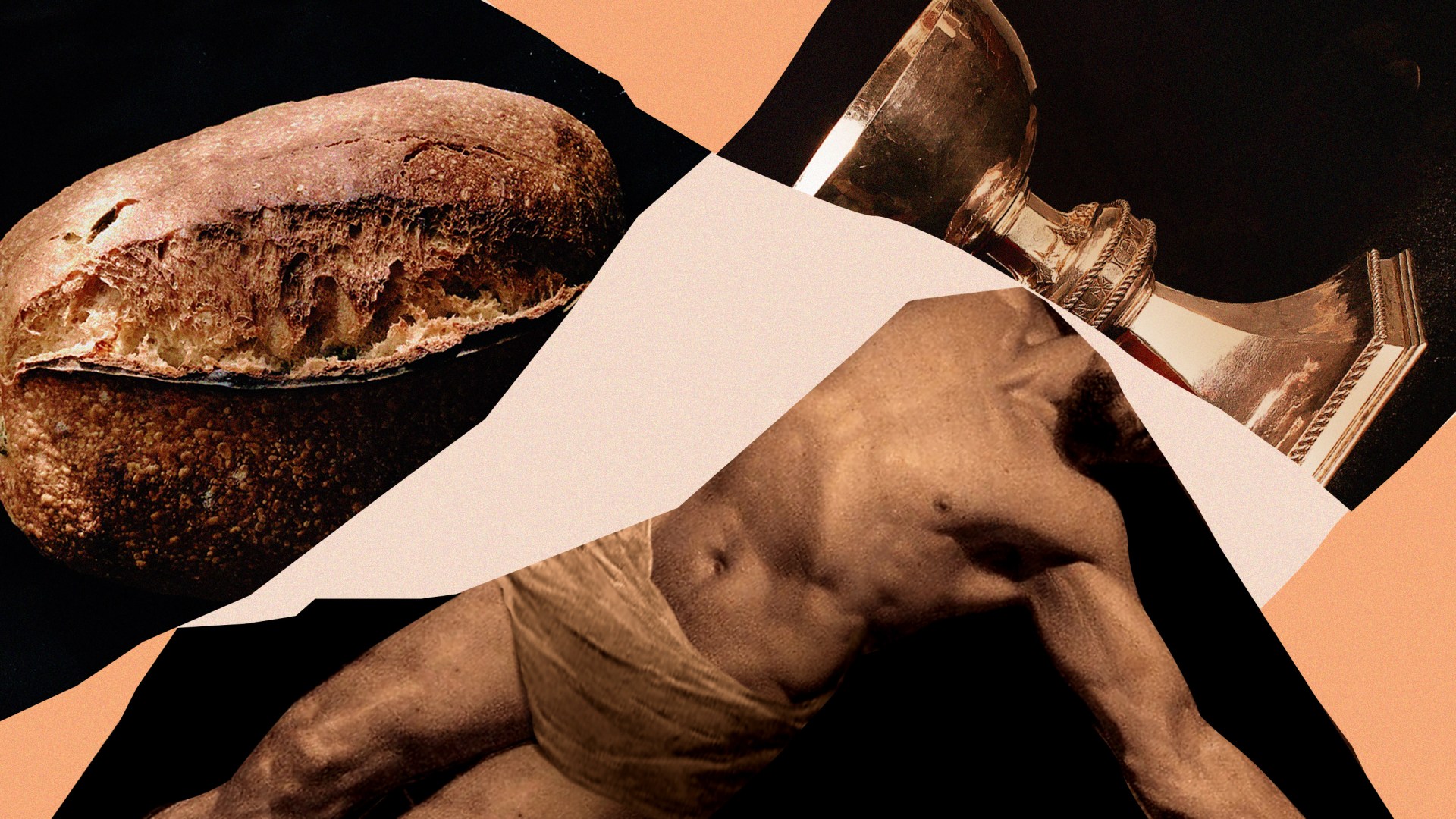
Illustration by Mallory Rentsch / Source Images: WikiArt / James Coleman / Mau Mar / Unsplash

Lent is a season of preparation in which Christians get ready to celebrate the momentous events of Christ’s death, resurrection, and ascension.

Some use this season as an opportunity to draw near to God by engaging in confession, fasting, and meditation on Scripture. The Lord’s Supper has long been seen as one such occasion, and yet this sacrament is interpreted in a myriad of different ways across the Christian tradition.

The scene in the upper room on the night before Jesus was crucified is no doubt familiar. There Jesus Christ took some bread, drew his followers’ attention to it, and said, “Take, eat. This is my body.” He did something similar with a cup of wine saying, “This is my blood.”

I imagine Jesus’ disciples had a similar thought to the Jews who heard his controversial sermon in John 6 (“My flesh is real food and my blood is real drink.”) and said, in essence, “This is a difficult statement, who can even understand it!”

The difficulty of these statements about bread and body, wine and blood is no doubt proved by the diversity of interpretation that has arisen in the years since Christ first uttered those words. And although we probably won’t get close to unifying around a single perspective, we can attempt to gain a better understanding of the range of options.

In my view, approaches to the Lord’s Supper fall along something of a spectrum. As I see it, there are three main families of locations on the spectrum, each with various family members who are conceptual cousins to one another.

We might name these families according to the manner in which they think Christ is present in the Eucharist: Bodily, Spiritually, or Normally. I will attempt to plot these points on the spectrum as though they were cities on a map, according to where the main proponents of each Family resided.

The Bodily Family of views believe that when Christ says a piece of bread is his body, he means it literally. Figuring out how that can be the case is what distinguishes the cousins within this family.

For instance, the official view of the Roman Catholic Church—call this the “Rome” view—is : “transubstantiation,” where the “trans-“ prefix indicates a “change” to the “substance” of an object. For Roman Catholics, the substance—or the “what it is”—of the bread changes to no longer be bread, but the body of Christ.

This is, of course, all while there is no change in the appearance of the object itself: it still looks, smells, and tastes like bread. Roman Catholics believe that the substance of something can be separated from how it appears. For them, the object that appears to be bread is not bread but the body of Christ.

The next stop on the conceptual spectrum in the Bodily Family are what I call German views. These are the purview of Lutherans, for instance, but can also be found among Anglicans and the Eastern Orthodox. These perspectives believe with their Roman cousins that Christ meant his words literally, but contrary to the Romans, hold that the bread continues to exist as it appears.

There are (at least) two versions of German views, and we can plot these on the map as German cities. A “Wittenberg” view holds the body of Christ to be “in, with, and under” the bread, as the Lutheran quip goes.

In medieval theology, this view was called “consubstantiation” (con- “with”); the "substance” of the bread and the “substance” of the body of Christ existing with one another. But I assure you, most Lutherans dislike that term!

Another German view—let’s call this the “Nuremberg” view (for the 16th century Lutheran pastor Andreas Osiander)—holds that the way in which the body of Christ and the bread of the Eucharist are related is like the way the two natures of Christ are related in the Incarnation.

If you are looking for a term for this view, impanation is the one used in the tradition. Like the incarnation refers to being enfleshed (in- “into” + caro, carn- “flesh”), impanation refers to being embreaded (im– “into” + panis “bread”) as it were.

Moving along the spectrum from the Bodily Family, we come to the Spiritually Family. This family likewise holds that the bread and wine remain as they were but attempts to characterize the spiritual presence of Christ in the Eucharist.

“Geographically” we move from the cities of Rome, Wittenberg, and Nuremberg to “Antwerp,” where we meet Edward Schillebeeckx, a Belgian Dominican of the last century. The name for the view he proffered is “transignification.”

Although a Roman Catholic, Schillebeeckx thought the distinction between the “what it is” of an object and “how it appears” was overplayed—and what he felt was important instead was the meaning of an object. For this view, the “change” (trans-) in the bread and wine of Communion is in their meaning (signification-).

According to Schillebeeckx, meaning is found in community. When our community—the Church whose head is Christ—designates an object that appears to be bread as “the body of Christ,” true participants in the community will embrace that meaning. Although this view did not catch on in Roman Catholic circles, those Protestants befuddled by the Bodily Family might find Antwerp a suitable residence.

Moving into more properly Protestant locations within the Spiritually Family, we come to “Geneva,” which characterizes the views of many contemporary Reformed and Presbyterian Christians.

In this view, the Holy Spirit uses the bread and the wine as vehicles to catalyze a connection between Christians and the risen Christ. Where this connection takes place is in the heavenly places (hence the “Lift up your hearts” of the Sursum Corda), but the Lord’s Supper is an occasion for this union with Christ to occur.

“Canterbury” is the next stop on the spectrum within the Spiritually Family; there we meet the view of Thomas Cranmer. Although his views on the Eucharist changed over his life, his mature view is referred to as a sacramental parallelism. That is, we receive the body and blood of Jesus on a spiritual level that usually, but not always, runs parallel to our receiving the bread and wine on a physical level.

For Cranmer what was important was that we feed on Christ in our hearts. Eating the bread of the Eucharist can contribute to that, but this spiritual feeding can occur even if we never taste the bread or wine.

The Normally Family of views believes that Christ is present in the Eucharist in just the same way he is normally in any location in the world at any given time.

In virtue of the divine attribute of omnipresence, these Christians hold that the Word is in all places, and therefore there isn’t anything special about the bread and the wine itself. Rather what is special about Communion, they believe, is what it motivates you to think about.

Another Swiss location, “Zurich,” serves as the most popular location within the Normally Family, and here we might find many contemporary Christians in Baptistic and Pentecostal traditions. Here the bread and wine serve as “visible words,” emphasizing the cognitive aspect of our actions associated with bread and wine.

One of my former professors quipped that for views in Zurich, the bread and the wine serve as flashcards for Jesus. See bread? Remember Jesus! See wine? Remember Jesus! Here the Lord’s Supper serves as an opportunity for remembrance and thinking deeply about Christ and his work—but not necessarily an occasion for a unique encounter with his presence.

Finally, we round out the Normally Family with another city, “Philadelphia,” a center of the Friends or Quaker tradition. According to this perspective, not only is Christ not uniquely present in Communion, but the practice of Communion is not normally done. We might take this to be the most extreme location on the spectrum for nearly removing itself from the spectrum altogether.

From my perspective, the most attractive view biblically, historically, theologically, and even philosophically, is “Nuremberg”—within the German lineage of the Bodily Family. I am especially attracted to the way this location on the spectrum points to the Incarnation.

Matthew’s Gospel tells us that a Virgin will conceive and give birth to a Son, and he will be called Emmanuel, which means “God with us.” Christians hold that when the Word became flesh to dwell among us, one divine member of the Trinity took on a second, human nature. In this regard, there are two unique but united substances in the person of Jesus Christ: both divine and human.

This longstanding thread of interpretation of the Eucharistic uses the Incarnation as a means for explaining how a piece of bread could be the body of Christ. That is, in a similar manner as Christ is both God and human, the object we eat at the Lord’s Supper is both bread and the body of Christ. In this way, bread and body are unified in a sacramental union, by a similar union as occurs in the Incarnation, which is a hypostatic union .

In the Incarnation, we see the lengths God went to be with us—so far that he became one of us. Likewise, in the Lord’s Supper, we see a God who continues to be present in our midst. By viewing the Eucharist through the lens of the Incarnation, the Word made flesh and the flesh made bread both attest to the reality that God is indeed with us.

James M. Arcadi teaches at Trinity Evangelical Divinity School and is the author of An Incarnational Model of the Eucharist.

10 Biblical Terms I Wish Christians Had in English

How the languages of the indigenous in Panama, a community in Siberia, and people in Papua New Guinea shape their understanding of God.

Christianity Today March 9, 2022
Illustration by Rick Szuecs / Source image: Prixel Creative / Lightstock

You’ve probably read the articles about foreign-language words that don’t have an immediate counterpart in English. As a German, I immediately think of schadenfreude, that apparently untranslatable term for, well, schadenfreude—the guilty joy you feel in someone else’s misfortune. Kudos to you virtuous native English speakers for not having your own word for that smug feeling.

Other foreign words are also woven seamlessly into daily life, like the Swedish ombudsman, the Finnish sauna, or the Italian pizza. There are many others, of course, especially in a language like English that derived its uncommonly large dictionary from the treasure chests of many languages.

Then there are the words that haven’t made it into the English dictionary yet, though they’ve achieved notoriety as beautiful but untranslatable terms. (As a translator, I’ll add that “untranslatable” isn’t exactly true. It’s just that we don’t have a word-to-word equivalent.) This includes terms like Danish hygge, which alludes to a sense of cozy comfort in the company of others, or the Finnish sisu, the concept of hidden inner strength in times of adversity. These words enrich how we view the world and offer insights about their cultures of origin. (Again, I apologize for schadenfreude!)

What if we could similarly peel back linguistic barriers to see how other languages and cultures view God through the language they use? For almost five years I’ve been collecting and curating data about how languages around the world translate the Bible in different and often insightful ways. Here are a few examples of words I wish we had in English to understand and communicate with God more deeply:

1. Mär: pick one thing and one thing only (Teribe)

English has a richer vocabulary than most when it comes to translating the Greek word pistis as both “faith” and “belief.” But these words’ power as a testimony of faith are weakened by their non-Christian usages in English (“I believe that it’s going to rain tomorrow” or “I have faith in you, young man!”). I wish we could introduce a powerful term for faith like “mär,” used in Teribe, an indigenous language spoken in Panama. It means “pick one thing and one thing only.” That’s radical Christian faith.

2. Dao / 道: reason; path toward right living; speech (Chinese)

When John refers in his Gospel to Jesus as the Word, it’s a powerful echo of the act of creation in Genesis where God speaks the universe into being. John probably intended us to make this correlation, but it’s only one of many. In fact, his original Greek term, Logos, is a central concept of Greek philosophy, encompassing a large spectrum of meanings that through the centuries has included reasoning, the principle that permeates all reality, and the intermediary between God and the cosmos.

It’s easy to see how potently this term expressed the truth about Jesus Christ, building a meaningful bridge to the broader culture to which he was communicating. It’s possible that no language has ever found a perfect translation for Logos, but Chinese Bible readers encounter a translation that might be equally robust. Most Chinese Bibles translate Logos as Dao, the central term in every Chinese religious and philosophical tradition to describe reason and a path toward living right. Amazingly enough, it also means “speech.” In a remarkable overlay of two different but very rich and ancient cultures, Dao paves the way for us to understand John’s original message more deeply.

3. Yumi: we and you (Tok Pisin)

Some languages have a distinct advantage over English (and Greek, Hebrew, and Aramaic) in their pronouns. English speakers use an ambiguous we, but many languages distinguish between an inclusive we (“you and I and possibly others”) and an exclusive we (“he/she/they and I, but not you”).

For example, the disciples ask Jesus on the boat during a storm, “Teacher, do you not care that we are perishing?” (Mark 4:38, ESV). But who is included in that “we” who are perishing? Speakers of Fijian, Tok Pisin, and hundreds of other languages are forced to make an inference in this case (and in 2,352 other cases in the Bible), with deep theological implications.

Do the disciples believe that Jesus could also die? Is his sharp rebuke that follows based on their belief that he actually could die? Translation teams have differed in their interpretation, but the Tok Pisin translators chose the inclusive yumi to include Jesus among those who could perish. They noted that the disciples had waited against their better judgment and existential fears until they felt the danger to Jesus (and themselves) was too great not to wake him.

4. Dios y’ayucnajtzcapxɨɨybɨ: God’s word-thrower (Coatlán Mixe)

In secular use, a prophet is someone who foretells the future. In the Bible, though, prophets go beyond predicting the future to proclaim the words of God now. Readers of the Bible in Kuna, a language in Panama and Colombia, understand this broader meaning when they read about a prophet as “one who speaks the voice of God.” Papua New Guinean Ekari Christians call a prophet “one who speaks under divine impulse” (gokobaki tijawiidaiga wega-tai). And readers of the Coatlán Mixe Bible in Mexico are privileged to encounter a particularly vivid term in “God’s word-thrower.”

5. Ña̱ kúꞌu̱ ini yo̱ sa̱ꞌá ña̱yuu xi̱ꞌín yó: us loving others (Tezoatlán Mixtec)

Love is an abstract noun; it doesn’t denote an object (like table or tree) but refers to a quality or an idea. Greek and English are full of abstract concepts like love, but many other languages can’t support abstract nouns with no person or thing attached to them. What then do you do with a central text like “Love is patient; love is kind; love is not envious or boastful or arrogant” (1 Cor. 13:4, NRSV)?

When Tezoatlán Mixtec Bible translators in southern Mexico were forced to try to understand the context of this passage, they realized that the text is not talking about some intangible, nondemanding quality but the nuts-and-bolts love of people loving people. Translation consultant John Williams said that the context “led [them] to conclude that 1 Corinthians 13 is not a love poem, but more of a rebuke to the Corinthians, showing how they were not loving one another.” As a result, the familiar English translation of “Love is patient” sounds very different when back-translated from Tezoatlán Mixtec: “That we love other people is that we give strength inside for them.” I wonder whether Tezoatlán Mixtec pastors are less likely to use this gritty passage in weddings than officiants who read our more abstract, romanticized English version?

6. Sen: intimate form of “you” (Tuvan)

You may have a murky memory from your high school French, Spanish, or German class about two different ways to address people—with a formal or an informal form of you (tu versus vous, versus usted, du versus Sie). English used to have this, too (you versus thou), but it was discarded some time ago from active vocabulary. French, Spanish, and German Bible translations all use the informal you throughout. But translators of other languages felt it was unnatural and confusing to omit a distinction used in their everyday speech.

Since the Greek text itself does not provide any immediate clues as to which form of address should be used, translators have to analyze the social standing of the main characters in each situation, especially in the Gospels and the Book of Acts, to make decisions about how to translate.

In Tuvan, a language in south-central Siberia, Jesus’ disciples speak to him during his ministry with the formal address. This is understandable because Jesus is their teacher, and we expect disciples to address their teacher with respect. But this might be surprising: After the resurrection, his followers speak to Jesus with the informal you, indicating a new intimacy to their risen Lord and Savior: “Lord, you know that I love you” (John 21:16).

7. Bideezhí: her younger sister (Navajo)

Jesus’ friends Martha and Mary were siblings. That’s what the Greek text tells us. What neither the Greek nor the English tells us is who was older and who was younger. For hundreds of languages, that’s a vitally important detail because they don’t have words for “just” brother or sister; their words need to indicate the birth order.

Overwhelmingly, the translators for these languages designate Mary as the younger sister of Martha. Why? Because Martha is typically named first, and she’s the one doing the housework. Are these irrefutable facts? Not necessarily, but they are the results of a careful analysis of the text and a detail that heightens our understanding of Jesus and his ministry.

8. Ambum: turtle (Aekyom)

Remember the story in the Gospel of Luke where Jesus had 12 turtles? It’s unlikely, unless you’ve read the Bible in Aekyom, a language in Papua New Guinea. People who speak this language count their age according to the number of times river turtles come up on the banks to lay their eggs. So when Jesus went to Jerusalem with his parents, he had 12 turtles. Imagine the turtle wealth of Methuselah!

9. P’ijil-o’tanil: heart wisdom; p’ijil c’op: word wisdom; p’ijil jol: head wisdom (Highland Tzeltal)

The Hebrew word chakam that is translated as wisdom in English is the heart of the book of Proverbs. But its wisdom isn’t just intellectual and philosophical; at times, it’s also practical, ethical, or religious. Most people can’t adequately express the rich range of meanings encompassed in that single term wisdom, but the approximately 40,000 speakers of Highland Tzeltal in southern Mexico can. They use three different terms to refer to the different kinds of wisdom in the book of Proverbs: P’ijil-o’tanil is “heart wisdom,” p’ijil c’op stands for “word wisdom” (also used for knowledge), and p’ijil jol is “head wisdom” (also used for insight or understanding).

10. Diri: engrave your mind (Ngäbere)

Human language is a marvel, one that opens pathways to remarkable spiritual insights. Each successive insight in the global conversation between speakers of thousands of languages and God can enrich our understanding of who God is and how he works in our lives today. As Ngäbere speakers in Panama and Costa Rica might say, may the Holy Spirit use these new teachings to “engrave your mind” with God’s heart wisdom, word wisdom, and head wisdom as you do the hard work of loving other people.

You can find all of these and thousands more examples at the United Bible Societies (UBS) Translation Insights & Perspectives tool at tips.translation.bible.

Jost Zetzsche is a professional translator who lives on the Oregon coast. Since 2016 he has been curating UBS’s Translation Insights and Perspectives (TIPs) tool. His latest book is Encountering Bare-Bones Christianity.

Theology

Where the Wartime Stock Market Is, There Your Heart Will Be Also

Putin’s war on Ukraine has thrown the world into economic crisis. How should Christians lament the financial fallout?

Christianity Today March 8, 2022
Illustration by Mallory Rentsch / Source Images: WikiMedia Commons

War is upon the world. But videos of tanks, airplanes, and explosions are not all that fill social media timelines.

Many are worried about the stock market. Brokerage accounts, 401(k)s, and 529 plans have endured the twists and turns of a roller coaster these past two years—the pandemic, ensuing inflation, and geopolitical unrest have been relentless.

Last week, while the opening bell reverberated down Wall Street, and the clank of Russian tanks silenced the streets of Kyiv, some on Twitter concerned themselves with a falling market and a falling country.

Discussions followed in 280 characters or less, prompting a friend of mine to ask if it is right to feel anger when online concern centers on the stock market while lives are being lost. Unsurprisingly, as with most ethical issues, I believe the answer to that question is both yes and no.

In an episode of BBC’s Sherlock, the no-nonsense detective trips a smoke alarm, causing his suspect to glance at a hidden safe containing precious intel. When our world is on fire, what we first look toward reveals what our hearts desire most.

Ukraine is on fire, and the duet of greed and worry resound their cacophony throughout the world. These are poor reasons to focus on the market. The Christian life is one of overweighting eternal treasure and underweighting earthly gain, but crises like this confront us with the serpent’s slithering proposition: You can be like God and have it all. Earn all you can, and panic if you don’t.

The war in Ukraine provides an opportunity to repent—to forsake our greed and worry and embrace the spiritual practice of lament. It is not enough to try to stop our lustful aspirations for riches or our dogged fear of uncertainty. We need something, or rather, someone, to face and embrace.

“Lament is what happens when people ask, ‘Why?’ and don’t get an answer,” N. T. Wright wrote in a piece for Time magazine. “It’s where we get to when we move beyond our self-centered worry about our sins and failings and look more broadly at the suffering of the world.”

Wright penned these words concerning the onset of COVID-19, but two years later, during this Lenten season, we find ourselves asking the same question: How long, O Lord?

Repentance over our self-centered worries is the first step of lament and should be the believer’s first instinct in times of tribulation. But just as there are unholy reasons to be anxious about falling stock prices, there are also holy causes for concern. Namely, bear markets harm the welfare of society and further the plight of the poor.

In the immediate aftermath of the incursion, the Russian market lost 45 percent of its value. It has only regained approximately half of what was lost, and Russian central bank interest rates have eclipsed a jaw-dropping 20 percent. These are devastating consequences both for Russian citizens who do not support a tyrannical invasion and for foreigners invested in emerging markets. Although US stocks have rebounded, oil has surpassed $115 a barrel, the highest it’s been since 2008.

Market volatility and rate swings have a much broader impact than just individual investment accounts. Lower share prices lead to increased costs of capital for businesses. It is difficult to raise money by issuing new shares or incurring new debt if your stock price is low, since freefalling share prices make investors and lenders nervous. Increased costs of capital lead to higher costs of living, as businesses raise the cost of goods to cover their expenses.

In short, war is expensive for the whole of society—but it is particularly hard on those in lower income brackets.

Ignoring cost-of-living implications from global conflict, market volatility has a significant impact on working-class people. The two primary indicators for financial stability in the West are home ownership and retirement account savings. Forty-five percent of recent retirees indicated that the lack of work options, along with health issues and family care needs, contributed to their exit from the workforce.

The median retirement account value for retirees aged 65–74 is $164,000, which is difficult to stretch to the average life expectancy of 80 in the US. That means even small changes in stock prices and interest rates can have enormous implications for families who are depending on 401(k) distributions.

But what exactly should lament look like when the world is in the midst of economic war?

While modern scholarship often attributes a three-party authorship of the Book of Isaiah, dissenting research argues that chapter 40’s shift in tone belongs to the same Isaiah of Jerusalem. If this is true, then Isaiah 40 is not addressed to exiles—but rather to those in Israel who are afraid, staring down a relentless army that is hellbent on stealing, killing, and destroying.

What is Yahweh’s response when those he loves face barbarous warfare at the gates of their city? What is the word of the Lord for those who fear the enemy, mourn the dead, and have nowhere to turn? What is God’s response when tyrants make the wells run dry and the savings accounts dip low?

Comfort. “Comfort, comfort my people.” “Speak tenderly.” “Every valley shall be raised up, every mountain and hill made low..” “And the glory of the Lord will be revealed” (Isaiah 40:1-5).

God’s lordship over all things includes the stock market and the world stage. It includes our concerns about how we will pay the bills, how the poor will survive, and how the persecuted will be avenged. It also includes the Lord himself blessing the dying, soothing the suffering, and pitying the afflicted.

So the next time your Robinhood account flashes red rather than green, remember that you are free—free to pause and pray for your finances, your family, and your neighbor. You are free to manage your money without greed or fear but with a heart of stewardship and sympathy for others.

You are free to ask God, “Why?” and to grieve the loss of life and welfare in the meantime.

You are free to repent and lament.

Will Sorrell (MDiv, MBA) oversees values-based investing at OneAscent. He and his wife are members of Grace Fellowship in Birmingham, Alabama.

Ideas

Go Ahead. Pray for Putin’s Demise.

Contributor

The imprecatory psalms give us permission to push boldly against evil.

Christianity Today March 8, 2022
Jamie Lorriman / Getty Images

I saw an image last week that I cannot shake: a Ukrainian father gripping the face of his young son’s lifeless body, which is entirely covered in a blood-stained sheet except for a halo of blond hair. This grief-stricken father presses his face against his son’s hair, clinging to him, desperate and broken. I close my eyes to pray and I see this image.

When I think of it, I am heartbroken. But I also feel angry. I brush up against something like a maternal sense of rage. An innocent child was violently killed because Russia’s leader decided that he wanted a neighboring sovereign country as his own.

The violence in Ukraine makes me, like many of us, feel powerless. I watch helplessly as tanks roll into cities, as civilian targets are shelled, as the lives of whole families are viciously snuffed out. What do I do with this anger and heartbreak?

As I discussed recently with David French and Curtis Chang, I find myself turning again and again to the imprecatory psalms. Each morning I’m praying Psalm 7:14–16 with Vladimir Putin in mind: “Behold, the wicked man conceives evil and is pregnant with mischief and gives birth to lies. He makes a pit, digging it out, and falls into the hole that he has made. His mischief returns upon his own head, and on his own skull his violence descends” (ESV).

An imprecation is a curse. The imprecatory psalms are those that call down destruction, calamity, and God’s judgment on enemies. Honestly, I don’t usually know what to do with them. I pray them simply as a rote practice. But I gravitate toward more even-keeled promises of God’s presence and mercy. I am often uncomfortable with the violence and self-assured righteousness found in these kinds of psalms.

But they were made for moments like these.

In seminary, I had a Northern Irish professor who lived through the Troubles, the 30-year ethno-nationalist violence in Northern Ireland. He saw violence against the innocent firsthand.

When he was younger and a seminarian himself, he rewrote a psalm for a class assignment. In it, he prayed that any terrorist who made a bomb would have it blow up in his face. His American professor pulled him aside, chastised him for using such a violent image, and told him he needed to repent. My professor, reflecting on this memory, told me he realized then that his American professor had never witnessed unprovoked violence against innocents and children.

These psalms express our outrage about injustice unleashed on others, and they call on God to do something about it.

I strongly tend toward Christian nonviolence and pacifism. But I recognize that in the past, there have been times when calls to peace have been based in a naïve understanding of human evil.

In Who Would Jesus Kill?, Mark Allman recaps 20th-century theologian Reinhold Niebuhr’s view that “Christian pacifists have an overdeveloped confidence in human goodness; they believe that the gospel law of love is enough to rid the world of violence and evil.”

“For Niebuhr,” he continues, “such an approach is not only naïve, but heretical.” It’s based on a view of human nature that is fundamentally wrong: a stubborn insistence that we humans are not that bad and not capable of true evil and injustice.

The peace movement of the ’60s often embodied this naiveté. With its rejection of the idea of sin and evil and call to “make love, not war,” it often turned a blind eye to the depth of human depravity in the world. It assumed that humanity was in an upward arc of progress that ended in utopia. But if we are naive about how dark human darkness actually is, our prayers and hopes for peace end up being flimsy covers for corruption and destruction.

The imprecatory psalms name evil. They remind us that those who have great power are able to destroy the lives of the weak with seeming impunity. This is the world we live in. We cannot simply hold hands, sing “Kumbaya,” and hope for the best. Our hearts call out for judgment against the wickedness that leaves fathers weeping alone over their silent sons. We need words to express our indignation at this evil.

Those of us who long for lasting peace cannot base that hope on an idea that people are inherently good and therefore unworthy of true judgment. Instead, we find our hope in the belief that God is at work in the world, and he is as real—more real—than evil.

We hope that God will enact true and ultimate judgment. We look to him who knows every Ukrainian and Russian by name, who loves them more than I can understand, and who will avenge wrong and make things right.

We don’t forgo vengeance because we think that human evil is not worthy of vengeance but because we believe God is the avenger. We do not hope for peace only because we are indignant over unjust violence but also because we believe God is indignant and his judgment (not ours) can be trusted.

Psalm 35:6–8 asks God himself to act: “Let their way be dark and slippery: and let the angel of the Lord persecute them. For without cause have they hid for me their net in a pit. … Let destruction come upon him at unawares; and let his net that he hath hid catch himself: into that very destruction let him fall” (KJV).

Very often in the imprecatory psalms, we are asking that people’s evil actions would ricochet back on themselves. We are not praying that violence begets more violence or that evil starts a cycle of vengeance or retaliation. But we are praying that people would be destroyed by their own schemes and, as my professor prayed, that bombs would explode in bombers’ faces.

If you’re like me and you gravitate to the seemingly more compassionate, less violent parts of Scripture, these kinds of prayers can be jarring. But we who are privileged, who live far from war and violence, risk failing to take evil and brutality seriously enough.

I still pray, daily and earnestly, for Putin’s repentance. I pray that Russian soldiers would lay down their arms and defy their leaders. But this is the moment to take up imprecatory prayers as well. This is a moment when I’m trusting in God’s mercy but also in his righteous, loving, and protective rage.

Editor’s note: CT’s Russia-Ukraine war coverage, including the plea of four evangelical seminaries, the evacuation of the “Wheaton of Ukraine,” a protest letter by hundreds of Russian pastors, and churches receiving 100,000 refugees in Moldova, can be found here. Select articles are offered in Russian and Ukrainian.

You can now follow CT on Telegram: @ctmagazine (also available in Chinese and Russian).

Theology

Can a Podcast Fix Your Bible-Reading Habits?

The Bible in a Year and The Bible Recap started 2022 as the most popular podcasts and have held onto listeners verse by verse.

Christianity Today March 8, 2022
Illustration by Rick Szuecs / Source images: Soundtrap / Thom Bradley / Tim Wildsmith / CDX PDX / Jon Tyson / Unsplash

The Bible is the best-selling book of all time, but in a new technological era, podcasts about the Bible are topping charts as well.

Two podcasts geared toward reading the Bible in a year swiped the No. 1 and No. 2 spots on Apple Podcasts January 2022, as Christians restarted their Bible-reading plans.

The Bible in a Year with Father Mike Schmitz has taken the top podcast spot for the past couple Januaries, and The Bible Recap with Tara-Leigh Cobble ranked second this year. But their sustained popularity and the proliferation of Bible podcasts reveal something deeper than an annual resolutions bump.

During the pandemic, when people are reassessing priorities and picking up new rhythms, the podcast platform is offering believers another way to get in the Word and study alongside a community of listeners.

Cobble, who lives in Dallas, is the founder of D-Group, which organizes small group Bible studies focused on discipleship. As a next step in her mission to keep the Bible front and center for Christian discipleship, she started The Bible Recap four years ago.

The podcast came out of her own love for Scripture and a desire to help others “overcome any obstacles that keep them from reading, understanding, and loving God’s Word,” she told Christianity Today. It’s been downloaded more than 80 million times.

The Bible Recap is a chronological journey through the Bible. Each day, there is a reading assignment for listeners to complete on their own and a podcast episode where Cobble—in about eight minutes—breaks down Scripture, often zooming in particularly confusing passages. The episodes end with a “God shot,” where Cobble delivers what she calls a “snapshot of God and his character.”

“It’s not a deep theological dive, but just a five-minute breakdown of what I read,” said Jerri Ann Henry, a listener in Washington, DC. “What makes it work for me is that it’s tied to my Bible reading and makes things short and simple.”

In addition to the podcast, followers can join Cobble on Patreon, paying monthly for extras like transcripts and a short prayer podcast (The Bible Kneecap). Nearly 10,000 patrons from around the world support the community today.

“I’ve been blown away by the wide range of people I’ve met who do The Bible Recap,” Cobble said. “From five-year-olds who listen with their moms to 95-year-olds who listen on their desktop computers to a Hindu student at a university in Mumbai.”

If listeners keep up with the daily readings and episodes, they will finish the full Bible in one year. Cobble plans to keep doing the podcast each year, adding updates and revisions along the way: “There’s always something new to learn about God.”

Cobble is currently reading through the Bible for the 15th time. She says the more she repeats the cycle, the more she wants to continue reading.

“The things we think about change our lives, the things we learn about change our minds, the relationships we build with God change our hearts,” she said. “Even at eight minutes a day, people attest to the fact that their hearts are falling deeper in love with God as a result of listening to this short podcast.”

Reading the Bible in a year is a goal for many Christians, but the success rate is low. According to Lifeway, only 11 percent of Americans have read the entire Bible. And yet, there is good news: The American Bible Society’s 2021 State of the Bible report found 24 percent of adults reported reading Scripture more frequently last year than they had the year before.

The report’s authors noted that as more Americans engage Scripture for the first time, “these new Bible explorers often find the Bible difficult to navigate and understand … they will also need relational guides to help them and digital tools to improve their access to Scripture.”

More than half of Bible readers under 40 prefer the Bible in app, digital, or audio format, the 2021 report found, with about a quarter of all Bible readers saying an app was their first-choice medium and 8 percent saying audio. Apps and podcasts have made it more accessible than ever to listen—no need to make your way through a stack of tapes or CDs to hear a book of the Bible.

In some ways, Bible podcasts are a callback to a time before written text was widely available and Scripture was read aloud. Meditating on Scripture with others, through podcasts, creates a new devotional experience—one that may be “stickier” and more appealing to auditory learners or inexperienced readers.

“It’s helpful to remember that for the bulk of human history, this is how people consumed Scripture,” said Cobble. “Because most didn’t have access to a Bible, and even if they did, most people couldn’t read.”

The popularity of Bible podcasts follows more accessible audio Bible features through Bible apps like YouVersion and Dwell, which have brought Scripture to our headphones, where we can listen as we commute, walk, or do chores. The podcast form adds an additional degree of structure, with a host as a guide to offer commentary and pacing out the passages in a manageable way.

Listeners can also speed up or slow down the audio to meet their individual needs for listening. Listening also embeds people in a community of other fans who are following along with the same passages each day. Because the episodes land each morning in subscribers’ feeds, listening becomes an easy, practical habit.

In his book, Habits of the Household: Practicing the Story of God in Everyday Family Rhythms, Justin Whitmel Earley writes about the power of ritual in shaping our spiritual lives. Mornings, he says, are one of the most important times to form habits—things like prayer, Scripture reading, and gratitude. Though phones can be a distraction from spiritual formation, they can also be used in positive ways.

“It’s ironic I listen to Scripture on my phone while ignoring my phone,” wrote Earley, meaning he shuts off social media and email while listening to the audio Bible. “Redeeming our use of technology is much less about banishing it than cultivating the patterns of using it well.”

Ascension Press, the Catholic publishing company that produces Bible in a Year, never expected the incredible success it’s seen.

“Our very modest goal was to place near the top of the Religion & Spirituality charts,” said Marisa Beyer, associate general manager of media at Ascension. “We were completely stunned when the podcast shot to the No. 1 spot on Apple Podcasts in all categories when it launched in January 2021.”

As of January 2022, Bible in a Year had seen 125 million downloads and had 3 billion minutes of total listening time. Unlike the shorter Bible Recap, Father Mike Schmitz reads through the passages of the Bible and includes commentary, reflection, and prayer for episodes of about 25 minutes each day.

Whitney Athayde listened through Bible in a Year in 2021 and said it helped her finally finish the entire Bible for the first time.

“Father Mike is filled with the Holy Spirit,” said Athayde. “It was just enough context and encouragement to motivate me and keep me going. Athayde said that even though she’s Presbyterian, not Catholic, the podcast still resonated, and was accessible, to her.

The Bible in a Year Facebook group has over 100,000 members, and Ascension hears testimonies from listeners who returned to church, broke free from addiction, or reconciled with family members as they followed along with the podcast.

“Most importantly,” Beyer said, “people are learning to truly hear God's voice in Scripture, and that brings us such joy.”

Other Bible-focused podcasts are drawing in the Bible-curious. The Bible Project podcast, for example, lasers in on particular themes to study in Scripture. For the past seven years, the project’s cofounders Timothy Mackie and Jonathan Collins have made connections through the broader story of Scripture and talked through difficult questions in the text.

They discuss the Bible as friends, with Mackie speaking as the Bible scholar and Collins as the creative storyteller.

“Because you’re listening to real people explore a topic in an unscripted way, it’s a learning environment that feels less intimidating and more engaging than taking a class or reading a book,” said Mike McDonald, chief global focus and strategic relationships officer at The Bible Project.

The ministry also offers videos, classes, and other resources, but the podcast has drawn people in with how it mirrors “the way biblical authors often used repeated words and patterns to help listeners connect what they are hearing to other parts of the scriptural collection,” McDonald said.

He too noted that podcasts harken back to ancient days when Scripture was read aloud, prayed over, and meditated on in a large group. The Bible Project’s new app, launched this year, includes an annotated podcast experience that highlights key biblical passages from the episodes and give space for listeners to pause and dig deeper on their own.

“Our goal is that the podcast, videos, resources, and app experience become a motivator for people to pick up a Bible and learn how to read and meditate in their own communities,” said McDonald.

For those not quite ready to study on that level, another Bible podcast is sparking interest from the faith-curious. The Bible Binge, hosted by Jamie Golden, Knox McCoy, and Erin Moon, highlights Bible stories in a more casual way. The hosts, who are Christian, say their pop-culture-saturated approach isn’t “out of disrespect, but in an effort to better understand the stories.”

The show isn’t a read-along and instead offers episodes focused on Bible characters like Joseph and Job as well as discussions on faith topics and Christian culture (like “Jesusween” and Hobby Lobby). Golden said she’s surprised by the number of listeners who were not previously engaged with the Bible or a church community. “We have found all these people who have either left the church or never been a part of one,” Golden told CT. “I’m a firm believer that the Word never returns void, because people have heard these stories and been moved by them.”

Like The Bible Recap, The Bible Binge has a Patreon upgrade. Listeners can also join the Bible Binge Seminary, a community of over 2,700 people who pay $5 a month for extra content like ad-free episodes, Q&As, and a book club. Golden said the “seminary” includes a wide variety of people, from Christians to Jews to Muslims, ranging in age from their 20s to their 60s.

With over six million downloads of The Bible Binge, it’s clear there is a hunger for the content, though Golden asserts there are no overarching goals for evangelizing.

“We can be the people that are watering a seed someone else has planted, or maybe we’re planting a seed, holding it loosely,” she said.

“Because we’re not connected to a church, it doesn’t feel like there’s an agenda there. I think it’s fueled a lot of people finding something they could hold on to.”

Ericka Andersen is a freelance writer in Indianapolis and host of the Worth Your Time podcast.

News

Ministries Evacuate as Russians Reach Irpin, the Evangelical Hub of Ukraine

Churches in the “Wheaton of Ukraine,” a suburb of Kyiv, help residents escape war as one member gives his life to save a fleeing family.

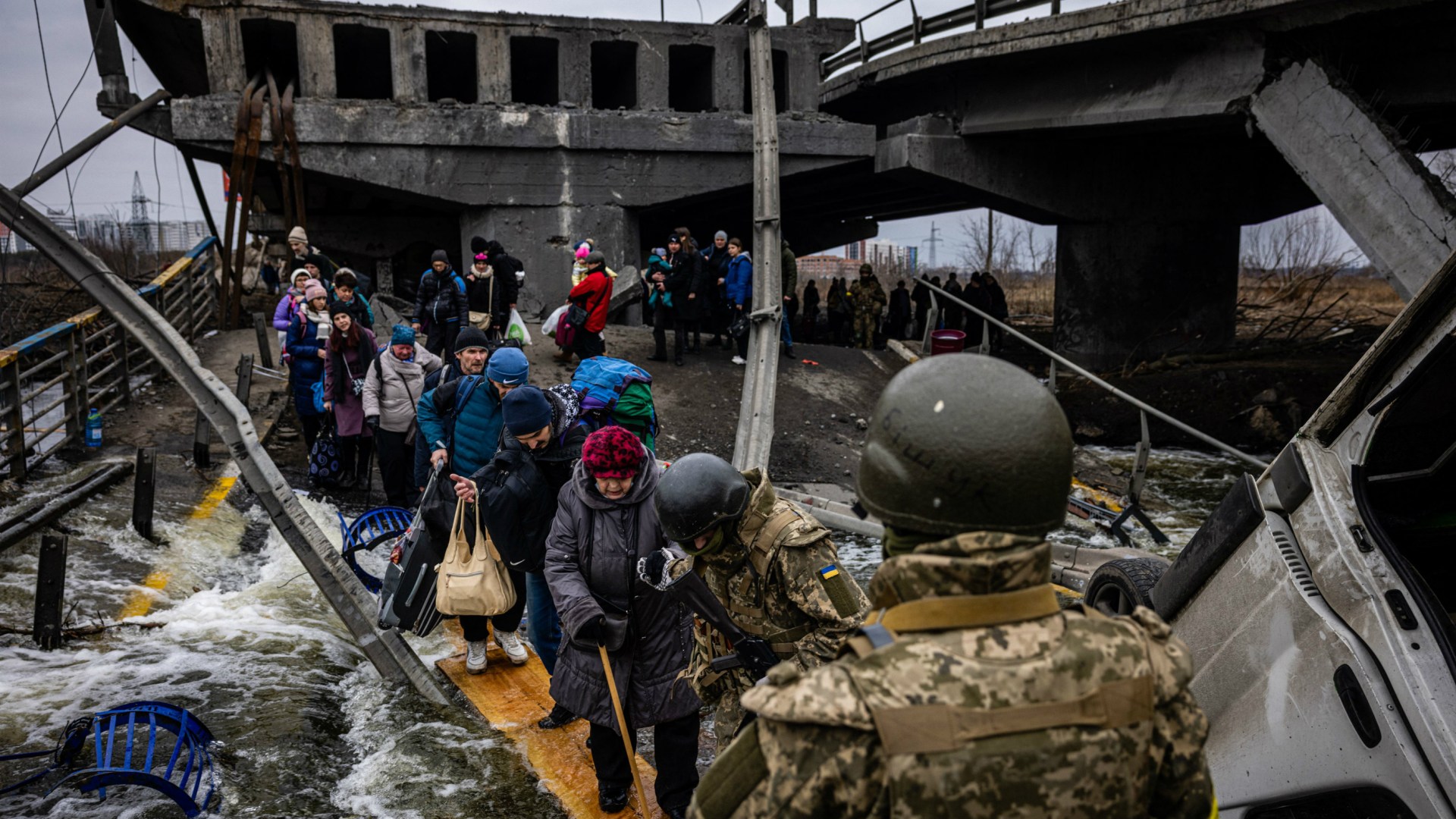
Evacuees cross a destroyed bridge as they flee the city of Irpin, northwest of Kyiv, on March 7, 2022.

Evacuees cross a destroyed bridge as they flee the city of Irpin, northwest of Kyiv, on March 7, 2022.

Christianity Today March 7, 2022
Dimitar Dilkoff / AFP / Getty Images

Anatoly, a 26-year-old member of Irpin Bible Church (IBC), is with the Lord.

His last act on earth was to carry the suitcase of a young mother and her two children, hurrying them across Irpin’s collapsed bridge to safety from Russian shelling.

All four died, when a bombshell landed in the middle of their would-be humanitarian corridor. Eight total died in the suburb of Kyiv yesterday, as Russian troops pressed hard to encircle the Ukrainian capital.

“Anatoly was deeply spiritual, with a good Christian character,” said his pastor, Mykola Romanuk. “When he saw a need, he tried to help.”

Negotiations over the weekend led to several ceasefires for civilian evacuation, only to be quickly broken. Each side blamed the other, and Russia has denied targeting civilians.

But Ukrainian sources describe cities now littered with bombed schools, hospitals, and residential districts—not least in Irpin, known in evangelical circles as the “Wheaton of Ukraine.”

After the fall of the Soviet Union, Ukraine’s “evangelical patriarch” Gregory Kommendant invited Christian ministries to join him in his hometown, 16 miles northwest of the capital, where he served as president of the All-Ukraine Baptist Union.

As of a few days ago, about 25 ministries operated out of Irpin, including Child Evangelism Fellowship, Youth With a Mission, Youth for Christ, the International Fellowship for Evangelical Students, and Samaritan’s Purse.

Once home to a single evangelical church, Irpin now boasts 13.

“We were here for 20 years, and neighbors never set foot in our church,” said Romanuk. “Now they are living in our basement, praying with us, and have become our friends.”

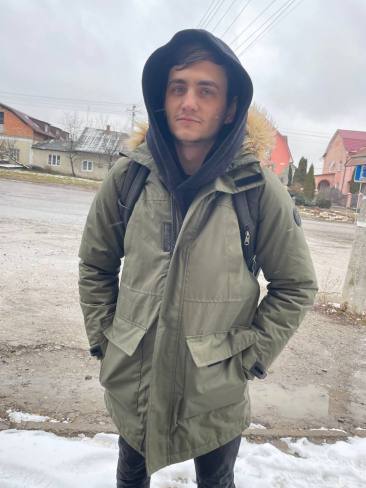
Anatoly, a 26-year-old Ukrainian Christian, was among the civilians who died in Russian attacks on Sunday.

Describing Irpin as “secular,” Romanuk described his 700-member Baptist congregation as the largest church in the city of 60,000 people. But now, only a team of five remain, called to stay behind and minister to those under siege.

Led by the head of the missions committee, a deacon’s wife—a real estate agent—is the chief cook. She prepares three meals a day for 200 people, as others volunteer to evacuate the shellshocked citizens to western Ukraine.

Since the war began, the church has transported 100-200 evacuees every day, Romanuk said. As the Russians approached, they bused out 3,000. Early on, the government took notice of their efforts and thereafter directed everyone to the church.

Anatoly was one who returned.

Originally from Luhansk in the Donbas region, he began attending Irpin Bible Church in 2020, becoming a member last year. An IT professional in a local company, he served in media ministry with Romanuk’s son.

After evacuating his wife Diana and other family members to safety in the west, he joined the church’s skeleton crew on Friday. The shelling began in earnest on Saturday, and they hustled out as many people as they could, crossing the bridge the Ukrainian army had damaged to slow the Russian advance.

On Sunday he went missing. Friends worried, prayed, and scanned social media for photos of the dead. They saw his sneakers in one, his sweater in a second. A few minutes later, the third photo revealed his face.

“We miss him very much, it is a tragedy for his family and the church,” said Romanuk. “God has a plan beyond our understanding, but it is difficult.”

Igor Bandura, a fellow pastor at IBC, is now counseling Anatoly’s brother, in Lviv. Deep in grief, he is trying to find someone to take the reverse journey, 335 miles back east to Kyiv, for the funeral.

“We had to leave everything behind. Some of us did not even have time to take the necessary clothes with us,” said Bandura, vice president of Ukraine’s Baptist Union. “We don’t know what fate has befallen our homes. We don’t know if there will be a place to come back to.”

At least there is a way back in. The nearby suburb of Bucha—home to the president of Ukrainian Evangelical Theological Seminary (UETS) in Kyiv—is completely under Russian control.

But Ivan Rusyn refuses to evacuate.

“This war has completely redefined my understanding of mission and holistic ministry,” he said. “You cannot show compassion from a distance.”

Rusyn and his seven remaining colleagues coordinate relief from the offices of the Ukrainian Bible Society, where he sleeps at night on the floor.

The seminary is now only 1,000 feet from the front lines.

Evacuated on Friday, today UETS sent the final nine of 300 faculty, staff, students, and family members to safety in the western part of Ukraine. But each day his team sends a bus to Irpin with daily food, water, and medicine.

“It is a catastrophe,” he said. “There is fear in the eyes of the children.”

Tearing up from the experience, Rusyn said he carried the disabled on his shoulders to reach the evacuating buses. But then he spoke of his joy, seeing the smiles on Ukrainian soldiers who know that the prayers of pastors and priests remain.

“Our commitment is that no one here will be left hungry,” he said, promising to stay in the capital as long as President Volodymyr Zelensky. “Christian leaders that remain in Kyiv and other cities are the incarnated witness of Jesus Christ.”

But it is felt elsewhere, too. Care for the 1.7 million refugees is being given across Eastern Europe. Many have given up their beds, said Sergey Rakhuba, president of Mission Eurasia, and are now sleeping on mattresses.

“I’m devastated, tired, and overwhelmed,” he said, currently supervising work in Poland. “My heart has broken into a million pieces.”

But his organization was also based in Irpin, and the 12 staff members who remain in Ukraine have reorganized in two western cities.

There is a catastrophic shortage of medicine, he said. But an even greater need for pastoral care.

“I asked for their prayer requests,” Rakhuba said, recalling with tears. “The refugees mention their husbands, their fathers, and their sons—and when they hug you, they don’t let go.”

Born in Donbas, he married his Russian wife in 1983 and lived in Russia for the next 15 years. He often heard them call Ukrainians “brothers.” Mission Eurasia relocated to Ukraine from Moscow in 2007, due to government pressure against foreign influence. But today’s complete change in spirit is jarring, and makes him think of the demonic.

“Irpin became a spiritual capital,” Rakhuba said. “Alongside the military aggression, now it is a place of spiritual warfare.”

Mark Elliott, editor emeritus of East-West Church Report, once was on the faculty at Wheaton College—and watched the American evangelical relocation to Colorado Springs. The comparison to Irpin was obvious, especially once ministries started coming from Moscow.

“It was both a push and a pull,” he said. “Increasing Russian restrictions facing non-Orthodox believers and institutions, over against the robust religious tolerance of Ukraine.”

For 70 years the nation was under the bondage of Soviet communism, Rusyn said. But the church used well the 30 years of freedom that followed. If it is not protected now—he calls for a no-fly zone to be imposed—its loss will sour the taste of freedom for Western friends who are doing their best to help, but whose governments stop short of full involvement.

“We preached the gospel, we sent missionaries, we haven’t harmed anyone,” he said. “Our message to the Russians is just leave us alone.”

Zelensky has called for a more robust sanctions plan—even a full embargo.

The weekend’s damage has been far wider than Irpin.

In Mariupol, where an estimated 200,000 people are trying to flee, one of the few buildings remaining intact is Central Baptist Church. Built in the early 1990s, the founding pastor’s daughter said people originally complained that the basement was too big.

Yesterday, as shelling closed a negotiated corridor, over 75 people gathered below for Sunday worship.

https://twitter.com/eric_costanzo/status/1500589430742163457

Less fortunate, reported pastor Vyacheslav Voronin to Taras Dyatlik, Overseas Council regional director for Eastern Europe and Central Asia, was the Baptist congregation in Izyum, established in 1998. Located near the fighting in the region of Kharkiv, the church served the displaced until it was hit last night by a Russian shell and caught on fire. Most families are now evacuating to western Ukraine.

And in the seaside port of Odessa, Alexander Boichenko returned after evacuating his family to continue serving in his church’s disaster relief center. Three weeks ago, they were planning the June wedding of their daughter.

“My wife leaned in and whispered quietly, ‘Might this be forever?’” he said. “I smiled at her comfortably, but my soul burst into tears.”

His work is not in vain. Ukrainian sources are all clinging to God.

“The most important task for the church right now is to continue preaching,” said Rakhuba. “Churches have become a lighthouse of hope.”

This is despite the “brutal and inhumane” aggression of the Russian army, whose tanks are pressing toward Kyiv, said Bandura.

“But we pray and work—with hope and faith—that God will prevail,” he said, “and reveal his glory in Ukraine.”

The significant damage does not deter them.

“We might lose our campus, but after a conflict there is a chance to build anew,” said Rusyn. “Evangelical churches will become stronger and an integral part of our society.”

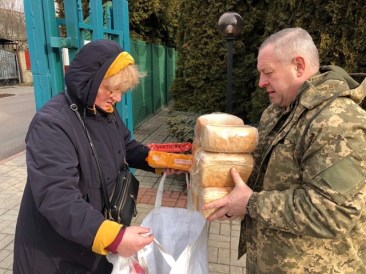
Staff from the Irpin Bible Seminary distribute bread to refugees and those at a local hospital.

The scattered believers will do what they can.

Irpin Bible Church had 67 small groups before the war, said Romanuk. His pastoral team will contact each member, and offer whatever help possible.

But then he will encourage them: Each one should form a new small group, wherever they are, and join the local evangelical church.

Today, however, he evacuated also. Headed west to his family in Lviv, his Google calendar notification reminded him a 400-person pastoral conference was about to begin back in Irpin.

“God has given us a new ministry,” Romanuk said. “Our conference is now with the homeless, the handicapped, and the nonbelievers of our town.”

News

Moldova Welcomes 100K Ukraine Refugees, With Evangelicals Opening Doors

The neighboring country focuses on hospitality while hoping Russian violence doesn’t cross its border.

Christianity Today March 4, 2022
Nikolay Doychinov / Getty Images

Eugen Cozonac has spent the past week focused on refugees.

More than 112,000 have crossed Ukraine’s southwestern border into his home country of Moldova, a landlocked nation that’s not much bigger than the state of Maryland. As a cabinet-level director within the government, Cozonac arranged facilities to receive donations and house refugees—everywhere from exhibition halls and sports complexes to film studios and resorts.

As he worked on Tuesday, his cellphones pinging from companies and volunteers, Cozonac paused to remember a certain group of refugees who had come to the capital city of Chișinău to escape an invasion from Russian-backed fighters: his own family.

It was on March 2, 1992—30 years ago to the day—that the Transnistria War erupted in the area now along the Moldova-Ukraine border. Cozonac was a kid at the time, fleeing with his parents and brother. Their house was bombed.

Like fellow Eastern European neighbors and the rest of the watching world, the people of Moldova did not expect the recent Russian invasion of Ukraine to happen so suddenly, to send a million people from their homes in just a week. But they have long known the threat from Russia.

On Wednesday, Moldova applied for membership into the European Union (Ukraine and Georgia have as well), and its president reiterated a call for Russia to withdraw the 1,000-plus troops that have remained in the country since the war three decades before.

Amid the escalating violence and the steady demand for humanitarian aid, Cozonac said he’s been able to stay focused in part because of his experience as a refugee and the faith he discovered then. During his family’s displacement, Cozonac started reading a children’s Bible and attending church. Now, he says, “I have a sense that I’m in the right place at the right time, in God’s providence.”

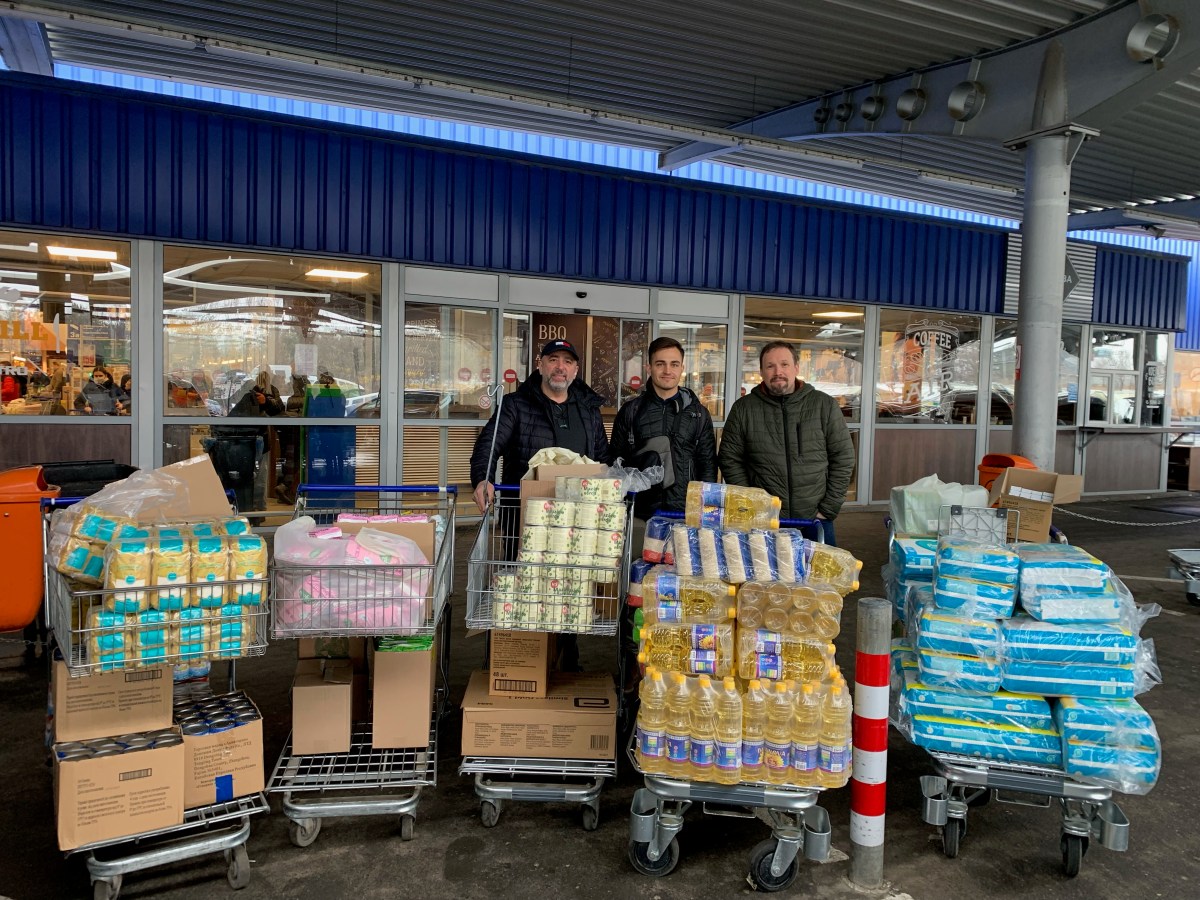
Evangelicals have also kept focused on what they can do to serve the initial wave of refugees—about half of whom are passing through on their way to Romania and half of whom need to stay longer. The demand for assistance has taken their minds off their grief over Ukraine and the possibility of violence coming their way.

Cozonac’s church had begun planning for refugees about 10 days before the war began. Kishinev Bible Church, Church Without Walls, Mission Eurasia, and others from Moldova’s evangelical minority have been showing up around the clock at border checkpoints, with vans full of supplies and offering free rides to shelter.

They’re manning tables with water, sandwiches, and Bibles and telling weary arrivals where they can go to warm up, get a free SIM card, or just rest.

“If you’re sitting and thinking, you’re worrying about things you can’t control,” said Evghenii “Eugene” Solugubenco, pastor of Kishinev Bible Church. “We’re going to do the work that’s in front of us. We’re going to help that person and then help someone else.”

Alex Belev (left) and Eugene Solugubenco (right) shop for supplies for refugees.

Kishinev Bible Church set up a booth about a mile into Ukraine to offer food, information, and spiritual care 24/7 to people while they were still in the lines, where they’ve had to wait for half a day or more to enter Moldova.

In Chișinău, Cru and Church Without Walls turned their buildings into refugee hostels, with pastor Alex Belev immediately announcing that the church was “ready” and willing to help. Cru has hosted up to 80 people a night, and local ministries bought a laundry unit and refrigerator for the building. Similarly, among the Eastern Orthodox (90% of the population), monasteries have also opened up to new arrivals. Christian summer camps have offered up their spaces too, but those will be a last resort since many don’t have heat and it’s below freezing at night.

Belev is meeting people at the border crossings each day. On Thursday, at the Palanka crossing point, he connected with a family with 15 children: 12 foster children and three homeless children they picked up on their way.

“They are not denying entrance to anyone, even if the person doesn’t have all the right documents for them, their children, or their transportation,” said Belev, who arranged for the family to get food and shelter while they procure the documents to travel into Europe. “Every person can be safe from war, from threat to their lives. Every person who arrives to the territory of Moldova receives food, accommodation, warmth, and care.”

More than 1,400 families from Protestant churches have signed up to receive and help refugees, said Nicholai Vozian, president of the Union of Churches of Moldova, in a call on Monday. He told the Council of the Euro-Asian Federation of Evangelical Christian-Baptist Unions that churches were “overburdened.”

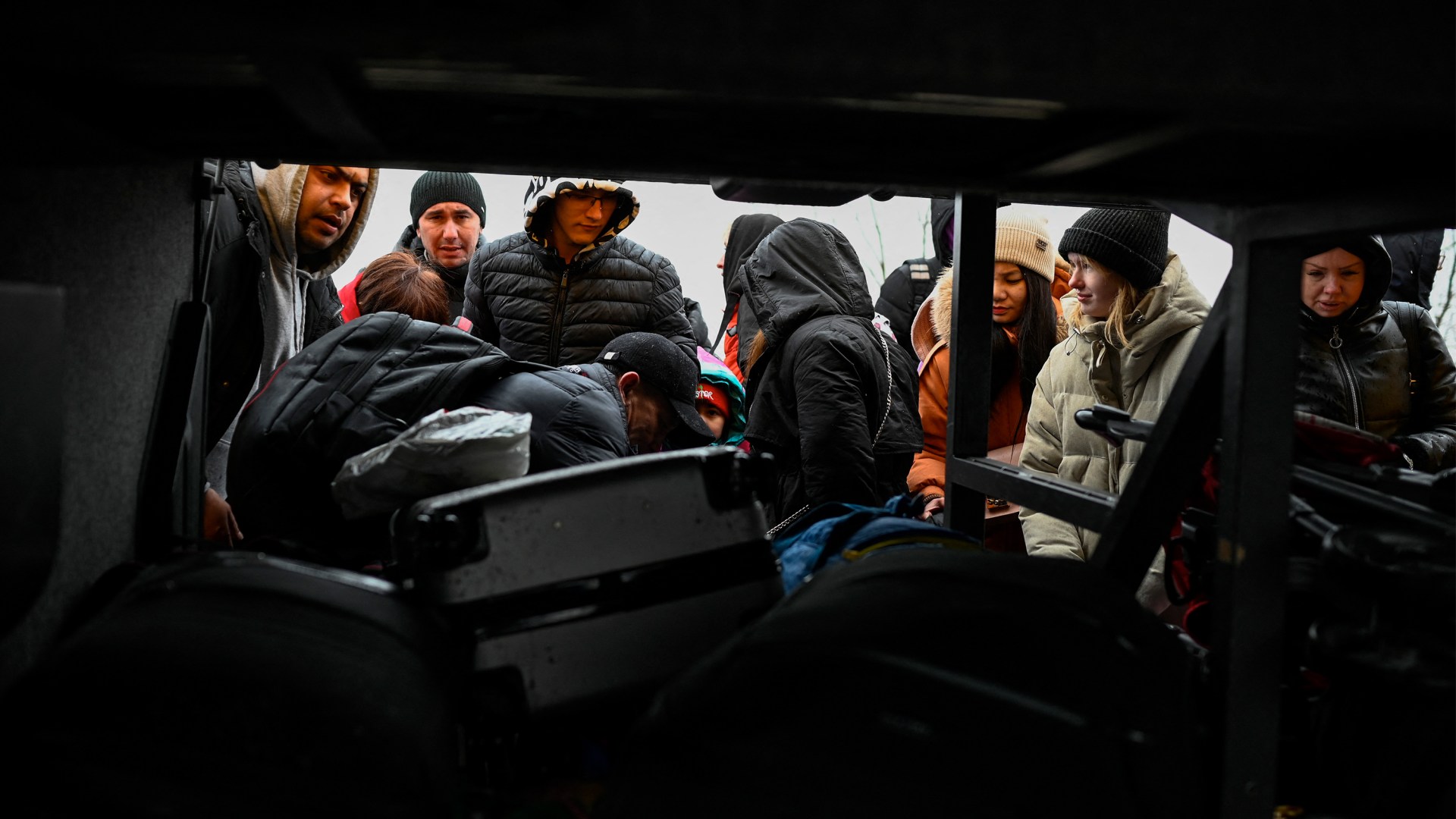
Moldovan evangelicals minister at the border with Ukraine.

But leaders say they also sense God at work in their efforts. Solugubenco described seeing “small miracle after small miracle” with how smoothly the partnerships have gone between his community, fellow Christians, and the government.

Over the weekend, he shared on Facebook that the church spent $3,500 on a vanload of food and supplies like toilet paper for the refugees, and a donor immediately sent $3,500 to cover it. Within the past couple days, a Samaritan’s Purse team has arrived to help too.

After last Sunday’s service, when he preached in Russian on the faithfulness of God, Solugubenco spoke with refugees attending for the first time. There was a “big old guy” from Mykolaiv who came to Moldova with his family. He was feeling useless and wanted to help. Solugubenco turned around, spoke with a member of the congregation, and arranged for the refugee to get a woodworking job.

After past struggles with corruption, Moldovans are now scrambling to help in any way they can and even trusting the government enough to send them money to assist with humanitarian aid. Cozonac returned to his homeland last August to serve in the new Moldovan government after 20 years living in the US. He sees the current generosity as a signal that “a new set of values” taking hold.

“What struck me upon returning from the diaspora,” he said, “was how many people started telling me, ‘I pray’ … or how many people throw in their speech ‘Lord-willing’ or ‘we need to pray about that.’”

Cozonac believes people’s greater willingness to acknowledge God and faith at peacetime—by Orthodox and Protestant alike—has led to this greater desire to love their neighbors.

Especially during the first several days, the refugees arrived traumatized and overwhelmed. They’d continue weeping or remain silent when Christians went to speak with them.

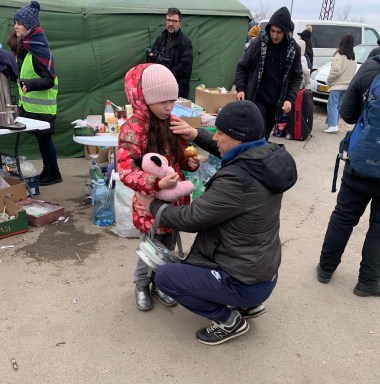
“So then we just open our arms, and if they are willing, we hug them and start praying for them. In our prayer, we ask God for peace, God’s mighty mercy, and protection for everyone,” Belev said, asking for Christians around the world to pray for endurance so the church in Moldova can continue to minister to the refugees. “The Scripture passages that we mainly share with them are those that that talk about God who can restore destroyed lives, destroyed country, and about a sovereign God who can intervene into any situation.”

News

Church Asks for Help Feeding People and Animals in Ethiopia

Christians share grazing pasture as climate crisis devastates the region.

Christianity Today March 4, 2022
Elias Meseret / AP Images

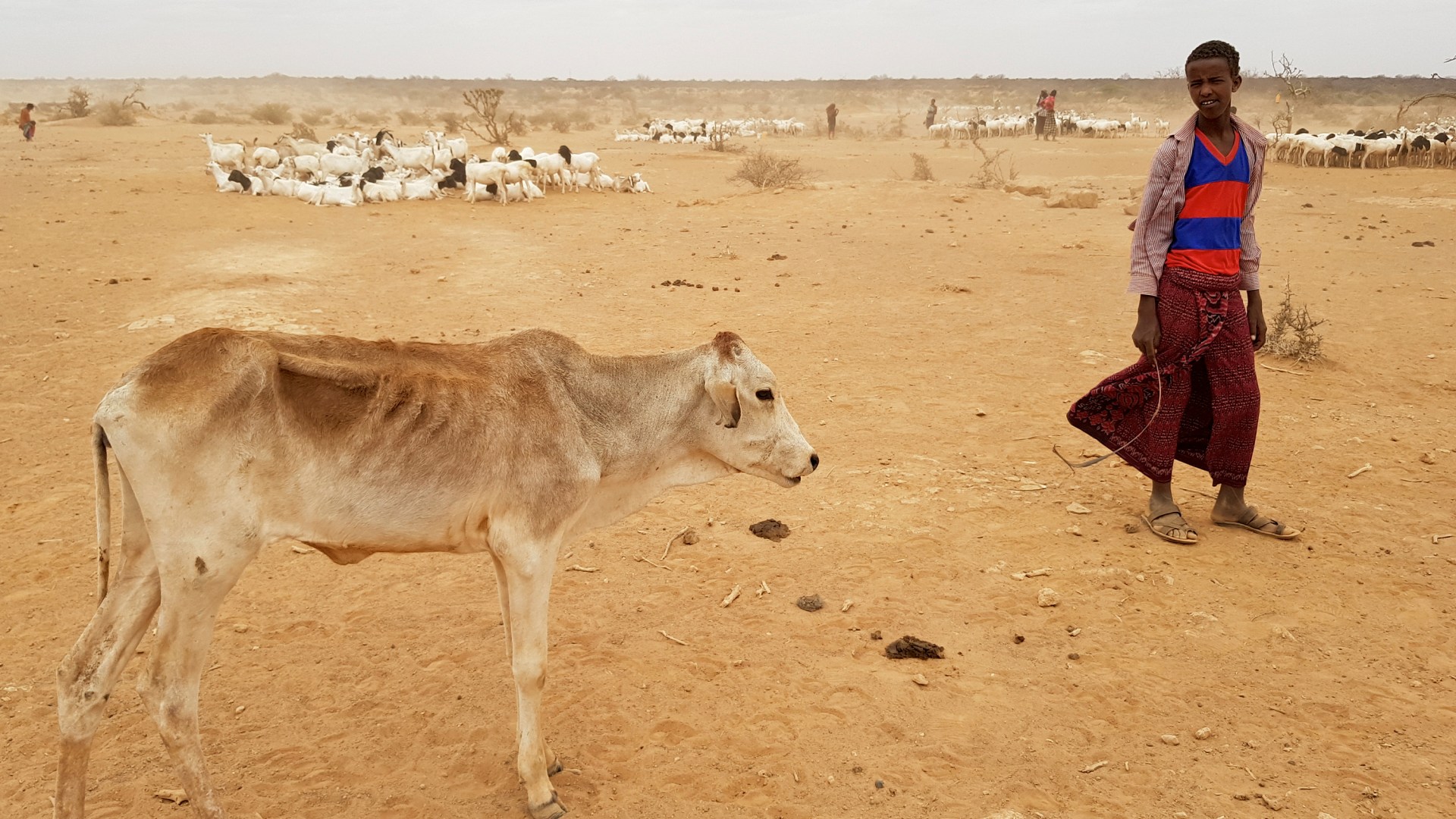
In one picture, dozens of pale-skinned cattle lie dead or dying in the baking heat. In another, a cow with its bones visible beneath its skin drinks from a green plastic bowl of water supplied by its owner.

“The situation is heartbreaking and painful,” said Yishak Yohanes Dera, president of the South Ethiopia Synod of the Ethiopian Evangelical Church Mekane Yesus (Place of Jesus).

As the senior official of one of Ethiopia’s leading Protestant churches, with more than 10 million members, Dera is appealing for help to prevent starvation in four of country’s low-lying regions. They are in the grip of a devastating drought.

He is talking to aid agencies, faith-based organizations, and government bodies, asking them to “come to Borena and save the lives of our people.”

The church, which is part of the World Lutheran Federation and has associations with the Missouri Synod Lutherans and the Reformed Church in America, has dispatched its humanitarian and development organization to work in the Borena Zone, in the Oromia Region. This is one of the worst-affected areas.

In Borena alone, 420,000 people urgently need food aid, Dera said, while more than 400 schools have no water, and most of the children have left.

“The situation is expected to worsen,” he told CT. “During this lean period, more animals are expected to die. This may push many children, women, and old-aged people into famine and unexpected death.”

More than 90 percent of the 1.2 million people in Borena live off their flocks of sheep, cattle, goats, and camels. The loss of water leads to loss of livestock, and loss of livestock to loss of livelihood.

World Vision reported last June that across six countries in East Africa, more than seven million people are on the edge of starvation in a crisis caused by climate change, COVID-19, and ongoing military conflicts.

In Oromia and the neighboring Somali Region, UNICEF reported in February that nearly a quarter of a million children are malnourished, and that 6.8 million people across the four affected regions—Oromia; Somali; Afar; and the Southern Nations, Nationalities, and Peoples’ Region—would need humanitarian assistance by mid-March.

UNICEF warned that children were at risk of contracting diarrhea, a major cause of death among children under five, from drinking contaminated water.

“As humans it is so sad to see such a disaster,” said Wondimu Wallelu, an official from the Ethiopian Evangelical Church’s Development and Social Services Commission who is working to deliver aid in Borena. “On the other hand, it is pleasing to have opportunities to reach these communities through aid from our partners.”

The commission has received a grant for 23.5 million birr (about $470,000) from the German protestant church aid agency, Bread for the World, to help feed people in Borena. The money will be used for food for children and breastfeeding women, fodder for livestock, and to rehabilitate wells that have dried up.

But the needs are massive, and hard to fill, for both humans and animals.

More than 240,000 animals have died from starvation across southern Ethiopia in recent months, and more than two million bales of hay are needed to keep the survivors alive.

The church’s humanitarian organization and the 16 other aid agencies operating in Borena are currently only able to supply about 154,000, according to Wallelu.

Oromia, which is the home province of Prime Minister Abiy Ahmed, is familiar with natural calamities, including outbreaks of locusts, invasive thorn scrub that takes over pastures, and drought. But lately, the frequency and intensity of the droughts has been increasing, Wallelu explained.

“Back in the 19th and 20th centuries, droughts occurred once in every eight years, and the impact was relatively insignificant,” he said. “Very recently, drought has been occurring every two years.”

This is not unexpected. The US Agency of International Development analyzed trends in Ethiopia a decade ago and found that “substantial warming across the entire country has exacerbated the dryness.” If trends continued, the US government said, “warming will intensify the impacts of droughts.”

Borena’s Christians are praying and encouraging one another and sharing what they have. Districts that still have grazing available invite neighbors to bring their livestock, Ethiopian Evangelical Church leaders said.

In the Killenso Parish, for instance, a Turkuma congregation is hosting 10 families and their 300 cattle from a neighboring district.

In Yavelo town, congregants collected 120,000 birr ($2,341) during a single Sunday service to help with relief efforts.

These are the small fragments of hope in a desperate and much wider regional climate crisis that is also gripping parts of neighboring Somalia and Kenya.

In mid-February, the UN Food and Agriculture Organization's director for emergencies and resilience, Rein Paulsen, said the lower-than-expected rains from October to December had placed the entire Horn of Africa on “the brink of catastrophe.”

Forecasts for the next rainy season, from March to May, are not hopeful. If there is another drought, that will be region’s worst dry spell in 40 years, according to the UN’s Office for the Coordination of Humanitarian Affairs and “one of the worst climate-induced emergencies seen in the Horn of Africa,” the agency said last month.

In Ethiopia, the drought is compounding other domestic problems that include a war in the northern Tigray region that has displaced more than two million people.

The Ethiopian Evangelical Church works there too, and in the neighboring Amhara region, to help internally displaced people, according to Abeya Wakwaya, a commissioner for the church’s humanitarian organization.

He said the church was originally founded more than a century ago to preach the gospel and meet the material needs of people in Ethiopia. In the 1970s, the church adopted a mission statement committing to serve “the whole person.” In these dry days, however, it is hard to keep body and soul together.

In the midst of ethnic conflict, war, and more climate crisis on the horizon, though, the Christians believe that mission is more important than ever.

“We have to be exemplary,” Wakwaya said, “to show it’s possible to help each other.”

Books
Review

Meet the Middling Musician Who Helped Launch the Gospel Music Industry

Homer Rodeheaver was an unexceptional trombonist. But he had an ear for great songs and a knack for promoting them.

Homer Rodeheaver

Homer Rodeheaver

Christianity Today March 4, 2022
Illustration by Mallory Rentsch / Source Images: WikiMedia Commons

Like most kids growing up in mainstream Protestant denominations in the mid-20th century, I associated the name Homer Rodeheaver—if it came up at all—with hymnals and gospel songs, most notably my grandmother Allie’s beloved “The Old Rugged Cross.” As an adult immersed in Black gospel music, I’ve paid little attention to the mostly sketchy scholarship on Rodeheaver. His Billy Sunday–styled revivalism, mass community sings (involving mostly white singers), and trombone-heavy stylings seemed to barely intersect with my work. His association with Sunday was especially troublesome in an Elmer Gantry sort of way.

Homer Rodeheaver and the Rise of the Gospel Music Industry (Music in American Life)

Homer Rodeheaver and the Rise of the Gospel Music Industry (Music in American Life)

University of Illinois Press

350 pages

$32.00

As it turns out, I was wrong on nearly every count.

Homer Rodeheaver has quite a lot to do with all kinds of gospel music, as Kevin Mungons and Douglas Yeo demonstrate in their fascinating, eminently readable biography of a wildly underrated and rarely appreciated figure who made a significant impact on sacred music, Black and white. Homer Rodeheaver and the Rise of the Gospel Music Industry introduces readers to a man who was clearly long overdue for a scholarly reappraisal.

Mungons is a well-respected writer and researcher; Yeo a master of the trombone, having performed with major symphonies and taught at the university level. Together, they untangle a number of personal, professional, and musical knots in Rodeheaver’s fast-paced, eventful, and woefully underdocumented life.

Barnstorming the nation

In the authors’ telling, Rodeheaver emerges as a complex, creative, entrepreneurial marvel, capable of predicting (and profiting from) future trends in sacred music. They reveal how he was able to promote African Americans and their gospel songs even as he (apparently) turned a blind eye to some of the mechanisms of the Ku Klux Klan. All told, the book raises the possibility that Rodeheaver had a more enduring impact than his original patron, Billy Sunday.

Coming of age just after the dawn of the 20th century, Rodeheaver was a young man of unexceptional musical skills. Even so, he was blessed with a mightily engaging personality. People liked him. Throughout his life, they trusted him. They wanted him to succeed. And they invariably helped him to succeed.

The authors explore Rodeheaver’s modest (but by no means impoverished) beginnings in rural Hocking County, Ohio. As he grew up, his sprawling religious family was feeling the early influence of the revivalism movement sweeping the American South and Midwest, fueled by evangelism from the likes of Dwight L. Moody and newfangled gospel songs from Ira D. Sankey, William Bradbury, Philip P. Bliss, and others. At Ohio Wesleyan University, the young Rodeheaver took up public speaking, acting, singing, selling hymnals door to door, and—for whatever reason—playing the trombone.

In the hands of what Mungons and Yeo describe as Rodeheaver’s “effervescent, outgoing personality,” the trombone became his personal “brand,” his distinguishing characteristic as he led the singing for ever-larger revivals, community sings, and evangelistic meetings. Here Yeo’s expertise yields a significant insight: “Homer’s trombone playing wasn’t very good.” But for a man with a million-dollar personality (and plentiful ambition), it never really seemed to matter.

From there, Rodeheaver gravitated to the regional revival circuit, moving from one evangelist to the next, leading the music that was essential to the boisterous services. All the while, he was becoming something of a draw himself, and by 1908, he had connected with the influential “fraternity” of gospel music publishers in Chicago. The twin sides of Rodeheaver’s professional life—as a charismatic song leader and a gospel publisher with an ear for great music—fed and empowered each other. He learned quickly that the secret to success (besides a winning personality; an adept, instinctive understanding of how to generate media coverage; and, well, a trombone) was singing the songs people wanted to hear—and then turning around and selling them those very songs.

Within the pre–World War I revival circuit in the United States, Billy Sunday was the dominant figure: a passionate orator who achieved rock-star status in Middle America for preaching the gospel to mammoth, adoring crowds. To Mungons (who is also a musician) and Yeo, there was a certain inevitability to the ultimate partnership between the nation’s fastest-rising song leader and its preeminent evangelist. Young, folksy, dashingly handsome, and very single, Rodeheaver eventually replaced Sunday’s longtime song leader Fred G. Fischer, and by 1910 the team was barnstorming the nation.

What separated Rodeheaver from the song leaders affiliated with other top revivalists (many of whom were also adopting trombones) was his early relationship with the Chicago gospel publishing houses. His innate likability endeared him to publishers and popular gospel composers alike, and his hymnals and songbooks became staples of the Billy Sunday tours, which routinely packed purpose-built 10,000-seat arenas night after night, creating an inexhaustible demand for the songs they featured. In time, Rodeheaver founded his own hugely successful publishing house.

Fueled by a catchy and inspirational (rather than evangelical) theme song, “Brighten the Corner Where You Are,” Rodeheaver’s star eventually eclipsed that of Sunday’s, who found the crowds dwindling in the post–World War I era. Rodeheaver recorded “Brighten the Corner” dozens of times, performed it thousands more, and hawked it throughout his life as an example of the power and importance of community singing, the central theme of his career. His popularity was such that he was able to withstand the lone major scandal of his career: allegations by a Miss Georgia Jay that Rodeheaver had callously broken off their engagement.

Homer Rodeheaver training chorus girls.Illustration by Mallory Rentsch / Source Images: WikiMedia Commons
Homer Rodeheaver training chorus girls.

From medium to medium

Rodeheaver, who had foreseen the decline of the great revivals, watched his publishing company flourish, as it purchased (or bought the copyrights to) the hymns and gospel songs the nation wanted to sing, including “The Old Rugged Cross.” When much of the gospel publishing industry faltered in the 1920s, Rodeheaver bought the failing houses—and their vast stores of hymns and songs. He was also among the first major religious artists to move into the new recorded music industry, and in short order he took ownership of popular recording studios and a seminal religious record label, Rainbow Records. When radio emerged as the next big thing, Rodeheaver was there, too. Somehow, write Mungons and Yeo, he unerringly “leapfrogged from medium to medium,” mostly with great financial success, well into the 1940s.

Rodeheaver eventually became friends with the most promising of the young generation of evangelists, Billy Graham, along with Graham’s longtime song leader Cliff Barrows, who also incorporated a trombone in the team’s early days. But a punishing travel schedule, one that would have exhausted a much younger man, soon took its toll, leading to Rodeheaver’s death in December 1955.

Beyond providing a detailed biography, Mungons and Yeo also devote fascinating chapters to Rodeheaver’s importance to the early days of the recorded music industry, his unwavering support of African American spirituals, and his complicated relationship with Jim Crow. While Rodeheaver forged friendships with well-known African Americans of the day, including Thomas Dorsey, he also participated in segregated evangelistic meetings and saw some of his best-known copyrights used and subverted by the Klan. From today’s standpoint, of course, these things are wholly unacceptable. But the authors also make a persuasive case for the genuineness of Rodeheaver’s lifelong support of African American causes and his love of Black sacred music.

Like virtually all the books in the University of Illinois’s much-honored Music in American Life series, Homer Rodeheaver and the Rise of the Gospel Music Industry fills in significant blanks in our understanding of different aspects of music history. Mungons and Yeo elevate their contribution with meticulous detail and research; a penchant for finding fascinating, revealing stories and anecdotes; and a sparkling, highly readable prose style that’s all too rare in most academic books.

Robert F. Darden is professor of journalism, public relations, and new media at Baylor University. He is the author of two dozen books, most recently Nothing but Love in God’s Water, Volume 1: Black Sacred Music from the Civil War to the Civil Rights Movement and Nothing but Love in God’s Water, Volume 2: Black Sacred Music from Sit-Ins to Resurrection City.

Apple PodcastsDown ArrowDown ArrowDown Arrowarrow_left_altLeft ArrowLeft ArrowRight ArrowRight ArrowRight Arrowarrow_up_altUp ArrowUp ArrowAvailable at Amazoncaret-downCloseCloseEmailEmailExpandExpandExternalExternalFacebookfacebook-squareGiftGiftGooglegoogleGoogle KeephamburgerInstagraminstagram-squareLinkLinklinkedin-squareListenListenListenChristianity TodayCT Creative Studio Logologo_orgMegaphoneMenuMenupausePinterestPlayPlayPocketPodcastRSSRSSSaveSaveSaveSearchSearchsearchSpotifyStitcherTelegramTable of ContentsTable of Contentstwitter-squareWhatsAppXYouTubeYouTube