Ideas

How Seminary Downsizing Cuts into Community

Contributor

Selling a residential campus comes at the cost of embodied fellowship.

The Kerr building on Gordon-Conwell's Hamilton campus.

The Kerr building on Gordon-Conwell's Hamilton campus.

Christianity Today May 19, 2022
WikiMedia Commons

There is no good news coming from freestanding seminaries, and there hasn’t been for some time. Gordon-Conwell Theological Seminary closure of its campus in Hamilton, Massachusetts, is simply the latest in a string of downsizing among evangelical seminaries.

Trinity’s Divinity school (TEDS) recently downsized its faculty, and Fuller Theological Seminary consolidated its campus and programs a few years ago, shortly after Moody Bible Institute. The persistent attention to “the future of theological education” signals nothing more than the reality that whatever comes next will not be like what we once had.

There is always a temptation to market this future as a “pivot”—a courageous choice toward a brighter future. But talking about the sale of a residential campus in this way neglects the truth of what is lost. I’d like to tell you a little about what may soon be lost, with the hope that we might imagine another way forward for theological education.

Theological education is not like other forms of education. In evangelical spaces especially, it seeks to train those who are discerning a call to ministry. A “call to ministry” is a notoriously vague sense that may grow in intensity, but that may also get lost in the busyness of life. To heed this call, you must listen for it. You also must receive it from others. As a wise friend told me recently, you cannot hear someone’s call for them—but you can sometimes hear an echo.

As an adjunct instructor at Gordon-Conwell for the last seven years, I often heard these echoes.

When you teach a semester-long, in-person course, you get 30-plus hours, week after week, to form individuals into a community. It is a short-term community with clear and limited goals. Everyone in this course should meet the following learning objectives and should be able to reproduce what they have learned in some form at the end of the term.

But if you as the teacher are paying attention, you can do something else too. Beyond learning objectives and the content of systematic theology—as a teacher in a theological classroom—you get the rare opportunity to echo the vocational call of the students in your care.

To do this, you need to know who is in the room. You need to learn their names of course, but you also need to learn where they are from, why they are studying at Gordon-Conwell, and what they hope to learn. You need to observe how they sit in the classroom, who they sit with, even where they sit.

If they never spoke, you would notice. (If they always spoke, you would notice that too.) If they were late or unkempt, if they were absent or upset—all of these were cues to me as a teacher to check in, to try and draw someone out and hear a little about what they carried with them in their souls as they sought to learn with me.

My subject areas are Christology and theological anthropology. This means I’m interested in how God was a human person and how human persons relate to God. Over the years, I came to see that my teaching objectives and reading requirements were less important than my attempt to hear that echo.

I could choose any one of several patristic texts to reach these goals, or I could first listen and look for these echoes.

So I took walks with students and ate meals and drank coffee with them (so much coffee!); I hosted them at my home, sat on my porch, and played board games. Sometimes they cooked for me, or often I cooked for them.

In the classroom, I tried to create space for them to find and speak in their own voice. I traded formal written papers for projects that were open-ended; I’d receive written research papers and lyric essays, sermons, and PowerPoint presentations, and, once, a painting. My pupils were artists and musicians, scholars and preachers, teachers and poets.

When I allowed my students to speak in their own voices, I could better affirm the echoes of their respective passions. I could see how God had called them in their own particularity to speak of the risen Christ in their own ways. And once I saw it, I could honor it. I liked to think about it as taking the form of the old benediction of St. Patrick. I’d imagine my soul kneeling before the presence of Christ I saw in each one and bearing witness to what I saw.

I loved them with my whole heart.

I’ve come to see teaching as a form of hospitality—certainly one of its more rigorous forms. And as the teacher, I always retained professional boundaries that I might not have observed had I been hosting friends in my home. But for a time, I sought to host the presence of others and make God’s love tangible to them in an embodied form.

I wasn’t the only teacher who did this by any means. In fact, it was the ability of some teachers and administrators to listen for these echoes that made going to Gordon-Conwell such a valuable experience. Sure, some students might remember a particular lecture or intellectual argument during their time at the seminary. But many more remember sledding on cafeteria trays, sharing meals in the apartments, or walking up a giant hill for an 8 a.m. Greek class.

They remember barely passing a Hebrew exam and getting caught in the rain and eating at a faculty member’s home. They remember meeting a colleague who began as a sparring partner and eventually became a friend. They remember eating and worshiping with Christians from all over the world.

They remember the professor who prayed with them after getting difficult news, the one who wrote a card and left it in their mailbox, the one who brought a cake for the class. If you prayed for them, they remembered—if you prayed with them, they’ve not forgotten it. They remember, as the saying goes, not what you said but how you made them feel.

It is difficult for younger Christians like me to feel too optimistic about pivots to the “future” that don’t include our whole bodies. Sure, theological content can be put online, and I’m told you can “gather” a classroom online as well. Though I’ve taught online, I’ve never been successful at offering hospitality through the internet. If it’s possible, I can’t do it.

The only way the Christian faith can remain coherent, indeed, is if there is a body—the incarnate Christ seated at the right hand of the Father and present among us in his body of believers.

Gathering is necessarily clumsy and expensive. And love doesn’t scale—it multiplies.

Love takes the time and effort to sit in an office with a crying student, to offer an hour when you have essays to grade, to eat a meal at a long noisy table and give up on the privacy of a quieter space. It takes showing up with your whole self.

The intangible goods a residential seminary can provide do not show up on balance sheets or year-end reviews or accreditation reports. But they are written on countless hearts.

I am not naive about the financial constraints of higher education. I started teaching at Gordon-Conwell in 2014, which I am told was their “last good” financial year (no correlation, I hope). Since that year, the decline in student enrollment has been precipitous.

There are many reasons for this, but the lack of interest in formal theological education surely mimics the decline in denominational churches and the rise in the secularization of American culture. Some of this decline should have been anticipated long ago. As I like to joke, everyone was reading Charles Taylor for years, but no one was thinking about its effects on the budget.

But some of the decline did come by surprise. The coronavirus pandemic forced students to move entirely online and made a residential requirement even more difficult. The increase in inflation and costs of living make a residential community expensive, and the multiyear commitment to study almost absurd.

It is undoubtedly true that the future of theological education will not be like its past. But to give up on residential learning altogether is to give up on the good of particularity and hospitality, of difference and community. These goods are expensive, yes, but they are far too valuable to lose.

That is why I still believe in residential education, and I always will—because it was in the offices and homes of last generation’s teachers that I heard the echo of my own call. Sadly, there are few institutions of evangelical theological education to employ people like me, and there are no long-term options to replace them. If I want a seat at the table of theological education, it’s likely I’ll have to build that table myself.

Perhaps the question of the future of theological education is wrapped up in the question of the future of American religion as a whole. How can we sing the song of Zion in a foreign land?

Personally, I am both brokenhearted and tenacious. I am running my own experiments in theological education, where I bring my best courses to local churches and parachurch organizations. I host “theology dinners” in my home, where we talk about a question and share a meal together.

Most of all, I am working to replicate the space I once had—to echo the calls of young Christians seeking to follow God in a difficult world. It is hard and expensive, and it doesn’t scale. There is no money in it, but there wasn’t much money in adjuncting either. Perhaps in that way, it was good preparation.

I fear that without these dedicated spaces to learn and live together, the call of the Lord can go unheard in the lives of young believers. To hear these calls is expensive, but the cost of an unheard call is much higher.

If you are one of my students reading this, I hope you are still learning to speak the good news of the risen Lord in your own voice. And if you ever need to hear an echo reminding you of your call, you know how to reach me.

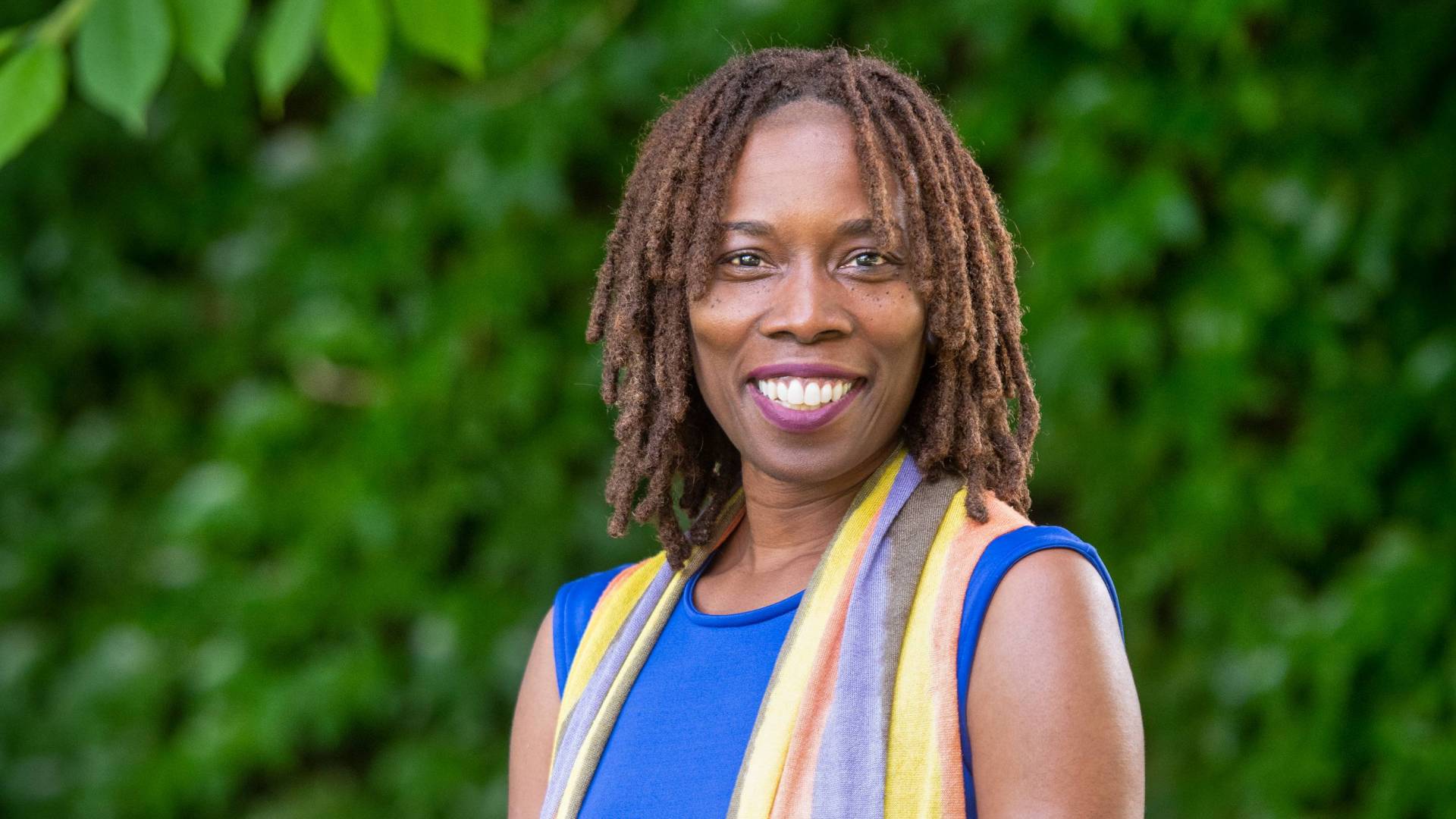
Kirsten Sanders (PhD, Emory University) is a theologian and writer. You can read about her work and contact her at kirstensanders.com.

Speaking Out is Christianity Today’s guest opinion column and (unlike an editorial) does not necessarily represent the opinion of the publication.

News
Wire Story

Evangelical Pro-Lifers Clash Over Criminalizing Abortion

Ahead of a potential ruling to overturn Roe v. Wade, Founders Ministries’ Tom Ascol and other “abolitionists” voice opposition to longstanding “incremental” approach, calling for penalties for women.

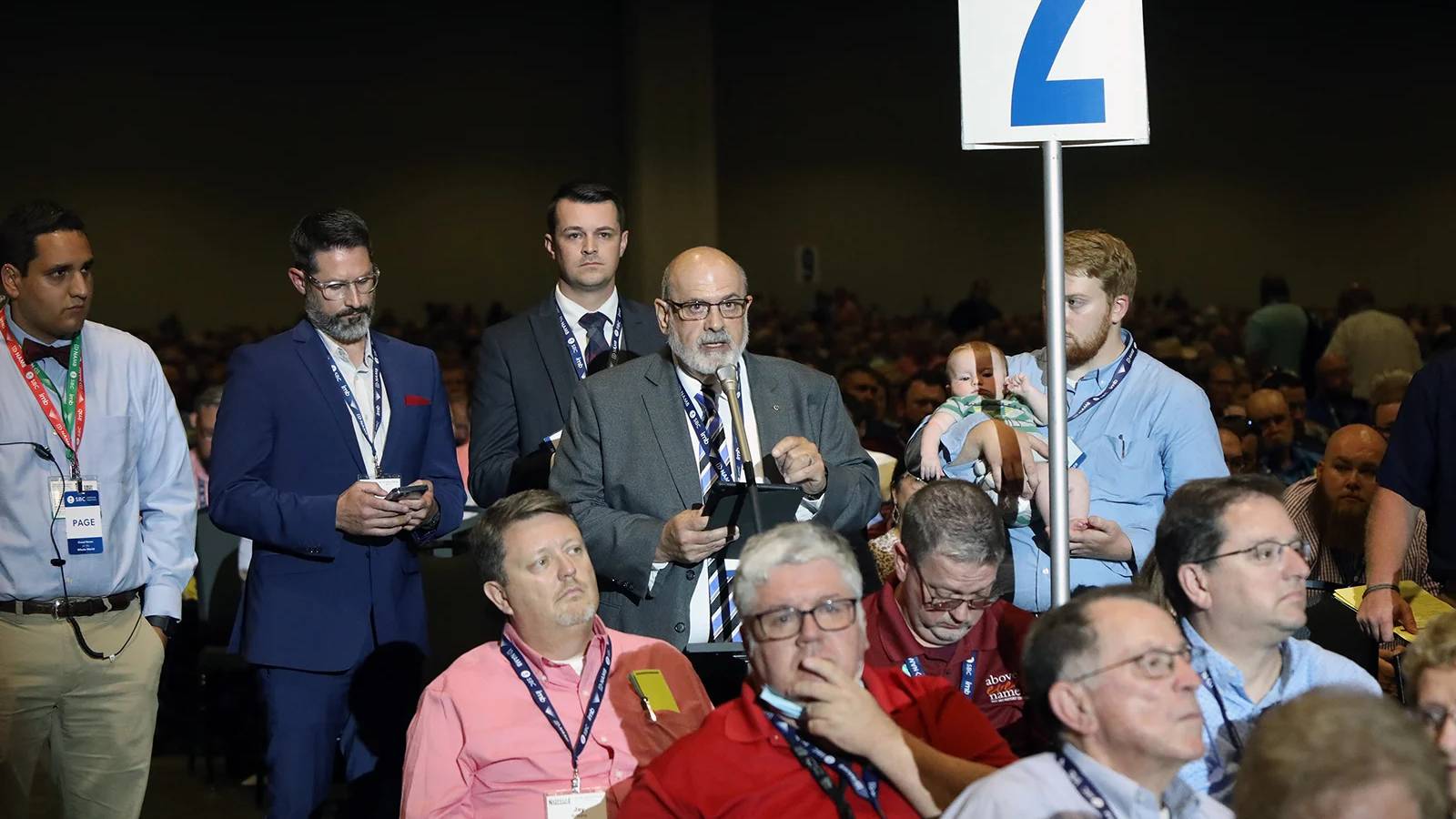
Bill Ascol, shown here at the 2021 Southern Baptist annual meeting, is involved with the Free the States Action Fund, an abortion abolitionist group.

Bill Ascol, shown here at the 2021 Southern Baptist annual meeting, is involved with the Free the States Action Fund, an abortion abolitionist group.

Christianity Today May 19, 2022
Kit Doyle / Religion News Service

The way Florida Southern Baptist pastor Tom Ascol sees it, there is little difference between a woman who chooses to end her pregnancy and a hit man.

Both pay someone to end a human life, his argument goes, and so both should face criminal charges. “It’s like saying if I don’t murder someone, but I just contracted a murderer to murder someone I’m not culpable,” he told Christian radio host Jeff Schreve on Tuesday.

The analogy is not uncommon—Pope Francis has made similar “hit man” comments. Ascol also believes that women who have abortions should be charged with homicide and face potential jail time. And Ascol criticizes “pro-life industry elites,” who, he says, get in the way of ending abortion in America.

Ascol, a leading candidate for president of the Southern Baptist Convention, is part of a small but growing movement of abortion abolitionists who reject the idea that abortion should be allowed if a mother’s life is endangered or in cases of rape or incest.

The movement prompted a bill, now pulled by lawmakers in Louisiana, that would have treated abortion as a homicide.

Abolitionists recently accused the National Right to Life Committee, Americans United for Life, the US Conference of Catholic Bishops and the SBC’s Ethics and Religious Liberty Commission (ERLC) of betraying the anti-abortion cause after the groups drafted an open letter opposing criminal penalties for women who have the procedure.

“We state unequivocally that we do not support any measure seeking to criminalize or punish women and we stand firmly opposed to including such penalties in legislation,” the letter read.

https://twitter.com/tomascol/status/1525084575831101440

Ascol, who declined a request for an interview, called for Brent Leatherwood, acting ERLC president, to be fired for signing the letter. In an article for Founders Ministries, a conservative organization headed by Ascol, the pastor laid out his conviction that abortion should be treated as a homicide, and this week he repeated his points on Twitter.

To back his claim, Ascol pointed to a resolution passed at the SBC’s 2021 annual meeting calling for abortion to be abolished and for it to be treated as murder.

The dispute between abortion foes who see themselves as abolitionists and those who call themselves “pro-life” will likely heat up if, as expected, the Supreme Court overturns Roe v. Wade in June, as rival anti-abortion groups compete over who will determine the shape of abortion limits in red states.

Carol Tobias, president of the National Right to Life Committee, who signed the letter to state legislators, said she and leaders of other groups are focused on saving babies, not putting women in jail. She worries that politicians and groups that favor abortion rights will use bills like the one in Louisiana to drum up support for their side.

“They are going to say, look, all of you women who’ve had an abortion, you’re going to end up in jail. Do you want your daughter in jail? Do you want your sister or your neighbor in jail?” she said.

The letter had already been in the works before the Louisiana bill made national headlines, said Tobias, but she believes such proposals take the focus off the goal of preventing abortions.

“The focus will be on what kinds of penalties will be assessed, rather than talking about a baby with fingers and toes and a heartbeat,” said Tobias. “The primary reason we are doing this is to save those babies.”

Tobias adds that there’s little public support for criminal penalties for women who have abortions. A recent Pew Research survey found that 14 percent of Catholics and 18 percent percent of Protestants—including a quarter of evangelicals (24%)—say a woman who has an illegal abortion should face jail time. Overall, 14 percent of Americans would support jail time, while 16 percent would support fines or community service as a penalty.

According to data from the Centers for Disease Control and Prevention, there are about 25 times as many abortions in the United States each year as homicides, meaning that charging women who have abortions with homicide could require a massive expansion of criminal investigations and prosecutions.

Richard Land, former president of the ERLC and a longtime abortion foe, opposed the SBC’s abolitionist resolution.

He defended the so-called incremental approach, saying it has reduced the number of abortions. That approach, he wrote in a recent essay, is far better than doing nothing while demanding a total ban.

“What if I came upon a wrecked school bus that had plunged into a river with 60 children onboard? Since I can’t save all of them, should I then do nothing?” he wrote. “I think not.”

The ERLC’s Leatherwood told Religion News Service in a statement that Southern Baptists seek “an end of the abortion regime in America,” while showing compassion­, which is in line with last year’s resolution and other previous SBC resolutions.

“So, because this is the clear will of our churches, this will be the direction we continue working in as we seek to end abortion, save lives, serve mothers and support families,” the statement said.

James Silberman, director of communications for Free the States Action Fund, an abortion abolitionist group, said the failure of the incremental approach to restricting abortion led to the rise of abolitionist groups, who were inspired by anti-slavery groups of the 1800s.

Baptists in Oklahoma, including Bill Ascol, brother of Tom Ascol, played a key role in the movement’s growth. Silberman said that the abolitionist movement got a shot in the arm after the state Baptist Convention opposed legislation in 2019 that would have abolished all forms of abortion.

That fueled a backlash, said Silberman.

Silberman said he was glad to see this month’s letter from national groups opposing penalties for women who have abortions. “The abolition movement grows when the pro-life movement and pro-life leaders oppose abortion bills,” he said.

The American Life League, a Catholic group founded in 1979, has long called for the abolition of abortion, focusing on training activists to oppose new Planned Parenthood clinics and publishing materials about church teaching about the sacredness of human life. Dwain Currier, the organization’s director of public policy, said that many people who oppose abortion are willing to compromise—something his group wants to change. “We need to start training people that evil is always evil,” Currier said.

But the group has largely stayed out of politics, Currier said, because almost all legislation about abortion includes some kinds of exceptions.

In his radio interview, Tom Ascol also cited politics as a problem. Pro-life elites oppose abolition, he said, because it would hurt their fundraising.

“I have to tell you, at least with some of these organizations, I’m becoming fully convinced that’s precisely what’s going on,” he said.

Tobias said she has heard such criticism in the past from groups that support abortion rights. She said the conflict between abolitionists and groups like National Right to Life is counterproductive.

“I want us focused on winning elections to save babies,” she said.

News

Exodus, Judges, or Nehemiah: Lebanon’s Evangelicals Assess Surprising Election Victory

Amid a rapidly collapsing nation, Christians hope surge of new politicians opposed to traditional sectarian parties will follow biblical parallels.

A woman casts her ballot in parliamentary elections on May 15, 2022 in Beirut, Lebanon.

A woman casts her ballot in parliamentary elections on May 15, 2022 in Beirut, Lebanon.

Christianity Today May 19, 2022
Marwan Tahtah / Getty Images

On the eve of Lebanon’s parliamentary elections last weekend, Resurrection Church of Beirut (RCB) called for a prayer meeting. The short meditation focused on Psalm 147: heal the brokenhearted and sustain the humble—but cast the wicked to the ground.

Mired in economic crisis, many Lebanese blame a corrupt political class.

Three years ago, a massive popular uprising shouted “all of them means all of them” against the traditional sectarian parties. But within a few months, protests fizzled as COVID-19, the Beirut port explosion, and a World Bank-labeled “deliberate” financial depression drove many to despair.

For many, emigration seemed the only answer.

Hikmat Kashouh called out to God.

“Confuse many in the election booths, and encourage others,” prayed the RCB pastor. “Cause them to vote for those you desire.”

One of Lebanon’s largest evangelical churches, only 35 members from the main Baabda campus prayed along with him. The turnout mirrored that of the nation, which initially reported that participation dropped to 4 in 10 eligible voters. Very few expected significant movement in the political map.

“For three years we have cried out to God, reflecting his love as we ministered to everyone regardless of religion,” said Nabil Costa, executive director of the Lebanese Society for Educational and Social Development, also known as the Baptist Society. “And then at the fourth watch of the night, when everyone was losing hope, God said, ‘I am still here.’”

Most evangelicals, he said, supported civil society candidates associated with the uprising. From a total of one member of parliament (MP) in 2018, their number surged this week to 14 in the 128-seat body, which is divided equally between Muslims and Christians.

It represents a “new opportunity,” said Costa.

The ruling political alliance, anchored by the Christian-led Free Patriotic Movement (FPM) and the “Shiite Duo” of Hezbollah and Amal, lost its legislative majority. While the Muslim component maintained its grip on its 27-seat sect-based share, the FPM fell from 24 to 17 seats as other Sunni and Druze allies also lost ground. Its place of Christian leadership was partially taken by the Lebanese Forces (LF), which rose from 15 to 19 seats.

Voters choose between several often multi-party electoral lists in their district, with candidates distributed according to their sectarian affiliation. A preferential vote can be given to one person on the chosen list, regardless of sect. Candidates appeal to their co-religionists, but allied others can help them.

Christians, however, gave 30 percent more votes to LF than FPM.

Riad Kassis had previously supported one of them.

“For many years, they didn’t live up to their vision,” said the international director of Langham Scholars, a global ministry founded by John Stott. “Sincerity, though important, does not build a nation.”

Refraining from naming his prior allegiance in order to avoid polarizing his ministry, Kassis appreciated their love for Lebanon and stated commitment to reform. Others would be less generous and would label FPM and LF among the corrupt traditional parties.

But required by Lebanon’s arcane system to travel 45 minutes to his village of family origin, Kassis cast his vote for a pro-uprising list of change—yielding a Sunni MP. His victory, and that of civil society representatives elsewhere, he said, was “almost a miracle.”

It is akin to the Exodus, he said, escaping from years of bondage in sectarian rhetoric, mismanagement, and corruption. While they may lose their way a bit before reaching Canaan, he hopes the journey will not take 40 years.

It has already been three decades since the end of the civil war.

Jean Moussa, therefore, had a different biblical comparison.

“Like in the book of Judges, without a king, everyone did what was right in his own eyes,” said the LF liaison to evangelical churches. “These new MPs may be a little like Saul, who could go good or bad.”

Lebanon’s 15-year conflict ended in 1990 with a political settlement that rebalanced the three sect-based centers of power: a Maronite Christian president, a Sunni prime minister, and a Shiite speaker of parliament. The system encourages consensus, but often produces gridlock.

During the 2019 uprising, LF ministers resigned from the cabinet in order to align with the protests. Positioning themselves on the side of change, the party is nonetheless rejected by many of the post-war generation as its head, Samir Geagea, was a militia leader.

But singled out for prison as other warlords divided the political pie, Geagea came out “clean,” said Moussa. In 2016, he made a deal with Michel Aoun, who as head of the army was his fierce Christian opponent during the civil war. But after granting him the presidency to end a two-and-a-half year vacuum, Geagea soured on the partnership as FPM increasingly gravitated toward Hezbollah.

With an Islamic orientation, their name means “Party of God.”

LF stands for secular national sovereignty, said Moussa, while the Shiite militia aligns Lebanon with Iran and Syria. In exchange for electoral support, FPM gives “Christian cover” to Hezbollah’s arsenal of weapons, considered “resistance” against Israeli aggression. LF sees it as a quid pro quo to protect corrupt politicians—and a threat to use against them.

Moussa expects the two ascending forces to form a cohesive parliament bloc, in the “same trench” fighting for political and economic reform. But he is wary that Hezbollah or others may pry them away, as they earlier did with the FPM.

Joe Costa fears an impasse.

“The new parliament will be welcomed by a catastrophe,” said the director of ShiBiFeed, an evangelical outreach to youth. “The economy was stable for a few months before elections, but this is a temporary illusion.”

Still officially pegged to the dollar, the national currency lost 90 percent of its value during the economic crisis. The central bank intervened for several months, but the lira plunged another 30 percent as electoral victors were being announced.

Joblessness has tripled since the crisis began, with 3 in 10 Lebanese now unemployed. Nearly 8 in 10 live below the poverty line, with 36 percent in extreme poverty.

But it may have been despair, paradoxically, that buttressed the fortunes of pro-uprising forces, Costa said. The primary Sunni leader boycotted elections, leaving a void. And while many ordinary citizens stayed home, it was the committed youth who remained dedicated at the polls.

The mindset is changing.

“The underdog mentality has replaced fatalism,” he said. “And instead of leaving, we’re fighting.”

Pleased with the results, he compared the new MPs to Nehemiah. Where the people once laughed, with unity, strategy, prayer, and humility, they can rebuild Lebanon—as the prophet once did for Jerusalem.

It was a position the FPM had in 2005, said Nicolas Haddad. Once an LF supporter, the Lebanese Cru leader flips the political Christian betrayal. The Cedar Revolution ended Syrian occupation, as Aoun and Geagea cooperated. But the latter then joined Sunnis and the Shiite Amal party to squeeze out the FPM, aligning Lebanon with Saudi Arabia.

And then again in 2019.

“The uprising started out honest,” said Haddad. “But the LF jumped on board and turned it against the FPM, while the media joined the chorus.”

It is a “great achievement” they did so well, he added.

Now resident in Florida, Haddad was one of about 130,000 Lebanese voting from the diaspora—more than double the total from four years ago. Well aware of the American concern about Hezbollah, he wants to put the FPM alliance in context.

“Personally, I am not for their weapons, especially after they used them in Syria,” he said of the militia’s intervention on behalf of the regime. “But without them, does our army have the ability to defend us against Israel?”

Israel occupied Lebanon from 1985 to 2000, with a month-long war in 2006. The two nations dispute ownership of offshore natural gas reserves, adding to current tensions.

But FPM is likely to review its alliance, Haddad said. Since 2019 they felt abandoned as Hezbollah hewed more closely to Duo partner Amal, viewed by the Christian party as one of Lebanon’s most corrupt entities.

The approach toward Resistance weapons could be the crucial question facing new MPs—and all Lebanon. Some accuse activists in the pro-uprising movement of being soft on the Shiite militia; Hezbollah accuses them of carrying a US-Israeli agenda.

“They must navigate a very delicate line, said Martin Accad, founder of Action Research Associates (ARA). “It could split their ranks, and the traditional parties know this.”

Accad resigned as chief academic officer of Arab Baptist Theological Seminary in late 2020, after the Beirut explosion, to join his life of faith to the public square. ARA worked with emerging political leaders, but also the previous MPs who resigned from the parliament at the time of the uprising. At times called in to arbitrate disputes and facilitate collaboration, Accad said they have good relations with two-thirds of the new opposition MPs, two of whom participated in ARA training workshops.

If his advice is taken, they will not provoke the Party of God.

“The top priority of change MPs must be to build a strong state,” said Accad. “If their primary objective is to disarm Hezbollah, it will reinforce the stalemate and will likely lead to violence.”

The best strategy, however idealistic, is rebuilding Lebanon’s failed institutions, winning the trust of grassroots Shiites. This includes the provision of social justice, Accad said, something which aligns perfectly with civil society movements.

And also, biblical injunction.

“It may be that God brought them here, for this purpose,” said Accad. “This is a unique chance in the history of Lebanon; we need prayer and wisdom not to miss it.”

Hope is high, but elation should be tempered. Sources said with no clear majority, there are no guarantees that polarized politicians can get anything done. This includes the next constitutional steps of electing a new speaker, prime minister, and president—let alone coming up with a plan to rescue the ailing economy.

In a late announcement, Lebanon revised the turnout figures to 50 percent.

But at RCB, Kashouh urged the three dozen faithful—and the many more praying in spirit. Cry out to God in repentance, he said, like the sinful woman who anointed Jesus’ feet with her tears. And no matter how corrupt Lebanon’s politicians may still be, remember the unjust judge.

“Even he responded to the pleas of the widow,” said Kashouh. “How much more will God’s heart be moved, when his children pray with persistence.”

News

After Shooting, Churches Navigate China-Taiwan Tensions Under the Surface

While Presbyterian Church in Taiwan has historic ties to the push for independence, most Chinese congregations in the US avoid highlighting the ongoing political polarization.

After the Irvine Taiwanese Presbyterian Church shooting, clergy gather for a prayer vigil at Christ Our Redeemer AME Church.

After the Irvine Taiwanese Presbyterian Church shooting, clergy gather for a prayer vigil at Christ Our Redeemer AME Church.

Christianity Today May 18, 2022
Jae C. Hong / AP

As soon as they heard that a gunman attacked a Taiwanese church in California on Sunday, some Taiwanese correctly assumed political motives.

The clash between the desire for Taiwan’s independence and the desire for its reunification with China has a long history with current relevance. Still, among diaspora churches in the US, the issue typically lingers beneath the surface.

At Chinese-speaking congregations, where Christians from mainland China worship together with those from Taiwan and Hong Kong, pastors usually want to avoid stirring political division. Even some predominantly Taiwanese churches may have members that fall on either side.

But a smaller number of older, Taiwanese-speaking congregations—like Irvine Taiwanese Presbyterian Church, where the shooting took place—are more likely to see the issue as a significant part of their cultural and theological background. Though the Southern California church belongs to the Presbyterian Church (USA), it also has a close, deep-rooted relationship with the Presbyterian Church in Taiwan.

“Presbyterian Church in Taiwan is a church that advocates for Taiwan independence,” said T. N. Ho, a Taiwanese Christian and a former elder of a Northern California Bay Area Chinese Church. “Other Chinese churches do not have a clear-cut position.”

The biggest Protestant denomination on the island, the Presbyterian Church in Taiwan has long defended the island’s people and culture—spanning from the 19th-century missionaries who prioritized preserving indigenous leaders and traditions to the church’s political stances favoring democracy over Chinese nationalist rule in the 1970s, ’80s, and ’90s. The church’s symbol is Moses’ burning bush: “burning but not destroyed.”

“Because of these historical factors, the Presbyterian Church in Taiwan can be said to be a faith-based organization formed by many grassroots Taiwanese and their children,” wrote Mock Mayson, a Taiwanese columnist. “Many of the Presbyterian churches overseas were formed by Taiwanese who escaped the tyranny of the Chinese party state in the early days … and supported the independence movement in Taiwan.”

The US is home to as many as an estimated 697,000 Taiwanese Americans, and about half live in California. A reporter in Taiwan commented on Twitter that targeting US church of aging Taiwanese Americans, a religous gathering, “makes no sense,” but as far as investigators can tell at this point, the gunman saw the victims as representing a political stance he violently opposed.

The shooting suspect, David Wenwei Chou, was born and raised in Taiwan but considers himself Chinese. (China currently claims Taiwan as its territory.) He left notes in Chinese in his car stating he did not believe Taiwan should be independent from China. Chinese social media circulated photos of Chou indicating that he was a leader of a Chinese pro-unification organization in Las Vegas.

Though they’re familiar with the context for such animosity, Christians on the island are confounded by the nature of Chou’s crime, which echoes other terrorist attacks in the US. He barricaded the church doors with chains, nails, and glue. He came armed with a pair of handguns and Molotov cocktails, prepared to take lives.

“The issue of gun control in the United States is almost incomprehensible to us Taiwanese who are not in the United States,” said Ray Peng, missionary trainer and chairman of We Initiative Taiwan, a mission mobilization organization. “Today, in Taiwan, if friends with different political spectrums were to ‘express their opinions’ in a venue with different ideological camps that may be hostile to each other, it would only be a verbal and physical confrontation. It would not escalate into a deadly international incident.”

Because the congregation fought back to subdue Chou, ultimately only one victim in the crowd of 30–40 died, with five more hurt. On top of the grief over the tragedy, his attack has led pastors to reexamine the role of political polarization in their own churches.

As a disciple of Jesus, “the ‘unification vs. independence’ issue is not my focus, nor should it be the focus of the church,” said evangelist Kris Wang, a Taiwanese American and an elder at Lansing Chinese Christian Church in Michigan. “In the face of China’s military power that continues to threaten the safety and freedom of the people of Taiwan, I can understand that many Taiwanese people have a hostile mentality towards China. But as a Christian serving the Chinese church, my calling goes across and beyond political boundaries.”

Still, the political and cultural realities continue to affect diaspora churches. Newer generations of immigrants are more likely to come from mainland China, while many of those who arrived more than 50 and 60 years ago came from Taiwan and Hong Kong.

Over the past decade, political tensions have ramped up between mainland China and Taiwan. Conflict between the US and China has escalated, as Taiwan’s president Tsai Ing-wen forges closer ties to the US and China’s president Xi Jinping consolidates power and strengthens its military.

“In the Chinese Church in North America, there are indeed conflicts and tensions between people from the two sides of the Taiwan strait,” said Gloria Huang, who works for Chinese Christian media in the US. “It is related to the Asian concept of ‘saving face’ (therefore not being able to disagree respectfully and with charity), and it has impact on the decision-making structure of the church.”

Huang said some newer churches of predominantly mainland backgrounds want to host only preachers from mainland China, while some Taiwanese Christians prefer to worship among fellow Taiwanese rather than Chinese as a way to prioritize their distinctives.

Pastor Albany Lee at Irvine Taiwanese Presbyterian Church described his congregation saying, “We use our own language and culture to worship God.”

Jocelyn Chung, a Taiwanese American in Southern California, wrote for USA Today about the significance of holding onto Taiwanese identity. “We come from elders who endured decades of silencing of the trauma that shaped their lives, resisted linguistic erasure and immigrated to a new land where they passed their resilient hope to their descendants,” she said. “We carry their forged hopes, voices, pain, resistance and stories with us.”

A recent CT article by Alex Tseng, a theologian who considers himself “a Christian from Taiwan” but not “a Taiwanese Christian,” addressed the Presbyterian Church in Taiwan’s significance in informing and shaping Christians’ political views.

“A church that exists as the internal basis of a nation has a prophetic duty to call society to ‘act justly and to love mercy and to walk humbly’ (Micah 6:8),” he wrote. “Presbyterians in Taiwan have historically stood at the frontlines to resist tyranny on behalf of their non-Christian neighbors.”

But Tseng cautions against a “Christian nationalism” or civil religion as the basis for their solidarity.

Several Chinese Christian leaders reiterated to CT a desire for believers to transcend the divides over reunification or independence.

“Under the current antagonism between pro-China and pro-Taiwan, if Christians at home and abroad can specifically find some concrete and practical intersection of issues on how to improve the island’s political and social ecological environment and form a plan for cooperation and improvement instead of merely speaking of unity in an empty manner,” said Christian writer and columnist Chris Hsiung, a resident of California from Taiwan, “perhaps hatred can be reduced and it can serve as a starting point for peace and tolerance.”

Peng gave an example: The day after the tragedy at Irvine Presbyterian Taiwanese Church, a joint prayer vigil at the nearby Christ Our Redeemer Church gathered pastors across races.

“It was the most concrete and powerful proclamation of the unity of Christian community,” Peng said.

Other Christians from Taiwan do not believe it is possible to absolutely “separate politics from religion.”

Pai Hsu Wen, a seminarian at Reformed Theological Seminary from Taiwan, points out that for Christians, the “unification vs. independence” issue is related to Christian faith.

“Freedom of religion is important for the church,” he said. And “the political vehicle behind the choice of unification or independence is directly related to the value of human life, the freedom and its limit of social action in society, the rule of law, the human rights of different faiths, as well as the welfare of the people.”

Interviews for this article were conducted in Chinese and translated into English.

Theology

The Gospel Doesn’t Always Have to Come with a House Key

The power of introverted hospitality in an extroverted world of church ministry.

Christianity Today May 18, 2022
Illustration by Mallory Rentsch / Source Images: Panuwat Dangsungnoen / the_burtons / Getty

Perhaps the most difficult area for me as an introverted Christian woman and pastor’s wife has been the biblical call to hospitality and our culture’s interpretation of this calling.

Popular Christian discussions of hospitality are often centered around women, especially homemakers, and include strikingly extroverted elements of actively inviting over neighbors and strangers, making meals for a crowd, instituting an open-door policy, and embracing noise and mess.

While I have benefitted from and been challenged by such views, they often feel like impossible standards I will never be able to meet.

But then I remember that Jesus had no home on earth to invite others into. When he sat with the woman at the well or crossed the sea to purge a single man of his demons, he wasn’t trying hard to attract crowds at a neighborhood block party. Sometimes, no one could find him—he was off on his own, displaying suspiciously introvert-like tendencies.

And yet he embodied hospitality—which translates from the Greek to love of the stranger—in everything he did, to everyone he met.

Henri Nouwen wrote in Reaching Out: The Three Movements of the Spiritual Life that the term hospitality “should not be limited to its literal sense of receiving a stranger in the house—although it is important never to forget or neglect that!—but as a fundamental attitude toward our fellow human being, which can be expressed in a great variety of ways.”

When we remember Jesus, the concept of hospitality breaks out of its enclosed husk and is revealed for what it truly is: the eyes to see the marginalized and lonely, the heart to embrace those in pain, the ability to offer an unhurried and loving presence in a world that is busily rushing by. And this is something we can and must cultivate as believers, no matter our personality or temperament.

Being an introvert does not exempt me from following Christ in loving my neighbors, but it also does not mean I have to love others just like extroverts do. The gospel doesn’t always have to come with an actual house key—but it does have to come with a key to our hearts.

The extroverted ideal of hospitality

Susan Cain traces the rise of the Extroverted Ideal throughout history and in many cultures in her book, Quiet: The Power of Introverts in a World that Can’t Stop Talking.

As a culture, we have come to see the ideal self as gregarious, energetic, action-oriented, and thriving when among people. “Introversion—along with its cousins sensitivity, seriousness, and shyness—is now a second-class personality trait,” writes Cain.

Discussions around Christian hospitality usually lean toward the same extroverted ideals. For example, The Turquoise Table by Kristin Schell sparked a nationwide movement of placing a picnic table in the front yard to connect with neighbors and strangers. Other books and articles suggest frequently hosting dinners and issuing a standing invitation to all the neighborhood kids.

More introverted writers such as Rosaria Butterfield, who wrote The Gospel Comes with a House Key, acknowledge that introverts may need “to prepare for [ministry] differently than others might,” but still advocate for the same extroverted lifestyles of nightly meals with the community, neighborhood block parties, and regularly hosting homeless families.

Not to say that such “radically ordinary” things are not commendable—they are, immensely so. But all these seem to suggest that the only way to faithfully show hospitality is to transform our homes into Christian communes of a sort, or at least to actively support those who do.

As an entire family of introverts, a brief experiment in inviting congregants to our house every week failed spectacularly for us. What could a life of ordinary, radical hospitality look like for us? For someone like me, who suffers physical symptoms of illness when subjected to prolonged social interaction, is the only answer to simply pad a subpar extroverted lifestyle with more me-time?

The power of introverted hospitality

In an interview, Rosaria Butterfield speaks of her neighbors Ken and Floy Smith, who were instrumental in bringing her to faith and inspiring her own vision of hospitality. “At their home, the door was wide open. People were always in and out of the house—people from church and people not from church.” Ken, a minister, would warmly welcome all who came.

This is extroverted hospitality at its best and most beautiful. But I would argue that it’s not for everyone, and it’s not the only way.

In contrast, I remember my friend Rebekah. When I was in college, I took a year off to live and serve at an orphanage in South Korea. The first few months were some of the most difficult in my life as I struggled with loneliness and depression.

During this time, I had a friend in Seoul named Rebekah who I would visit from time to time. In her little apartment, I would sit on the yellow couch and look out the window as she puttered around in the next room. Sometimes she’d have some soft music playing. We took walks together in the beautiful Korean fall and had deep discussions over tea in cafes. We read books, watched movies, and ate together. Her quiet friendship was a balm for my soul.

Both Rebekah and I are introverts. Had she opened her home to a steady stream of interruptions and invited over 10 of her friends each time I visited, her hospitality would have quickly lost its depth, power, and intimacy. Her door was guarded, and it magnified her ability to be hospitable toward me in the ways I needed at the time. She modeled to me how a life of love can flow from the rhythms and guardrails of solitude.

Through remembering friends like Rebekah, my husband and I have learned to give ourselves permission to embrace our own introversion in our hospitality and ministry. Instead of forcing ourselves to host weekly dinners, we take conversations outside the home and mostly during the workday.

Each month we ask God who he might be leading us to, and then we pursue spiritual friendships in places like nature trails, coffee shops, or a quiet corner of the church. And we really enjoy these times with beloved friends both new and old.

When we do have people over, it’s scheduled, intentional, casual, and usually in smaller groups. We balance these with time alone and time with our family, carefully tending our schedules as best we can while leaving room to be flexible. Our door is not always open, but our neighbors and friends know we’re here for them with all our hearts when they need us.

Introversion is not an unfortunate handicap to our culture’s extroverted ideals of hospitality. It is a uniquely powerful form of hospitality on its own. As introverts, we give in depth what we lack in breadth. We meet with the one man on the other side of the sea and the woman at the well, rather than the thousands on the hillside or the crowds ripping off the roof.

We are mindful of the ways God has created us and unashamed to embrace our need for time alone. Our solitude is not only life-giving for us, but overflows into the life of the world. Our kind of hospitality is vital to the health of the church.

The communal call and moveable tent of hospitality

We often make hospitality a highly individualistic call. But the church is called to practice hospitality together. We need extroverts, introverts, and all those in between.

Maybe you, like me, wouldn’t be the best fit for the church welcoming team and struggle to invite neighbors over. But maybe you are an administrator, organizing events that bring others together. Maybe you are an artist, creating beauty that draws out the longings of our hearts.

Maybe you are a gifted listener, opening yourself to interruptions from colleagues as opportunities to show compassion. Maybe you’re a professor, offering a space for your students to not only learn but to be heard and loved. Maybe you make it a point to always stop and talk to the homeless man on the street.

Whatever your temperament, whatever your vocation and gifts, we all need a greater vision for hospitality that extends beyond the walls of our houses. We need a vision for hospitality that is more like Jesus.

When we free ourselves from other people’s conceptions of hospitality, we can be free to discover our own unique ways to bless those around us. And we can begin to carry a heart of hospitality wherever we go.

I will never forget how our family was sitting together in a hotel room one morning while on vacation, when the housekeeper came in to clean. She had a nasty attitude toward us as she made the beds, and I felt my own heart begin to seethe. My mother-in-law, an introvert, had been quietly watching from a corner.

All of a sudden, my mother-in-law got up, took hold of the other side of the sheet, and said to the housekeeper with a smile, “Let me help you.” The housekeeper was stunned speechless, as was I. This was a hospitable heart in action, and it was disarming in its power and beauty.

Jesus has promised that when we love and obey him, he makes his home in us (John 14:23). It is to this home, above all, that we invite others when we meet them with a spirit of generosity, welcome, and care. His home on earth is more like a moveable tent than a fixed mansion, going with us wherever we are, and he is the tender host to all who enter.

Thanks be to God for his church, for all the manifold ways he shows hospitality to a lonely and hostile world. Thanks be for the long table of his great feast, which we can taste even now—be it in a bustling home in the suburbs or in a quiet apartment in Seoul.

Sara Kyoungah White is the senior editor of the Lausanne Movement. She has a BA from Cornell University and has worked as a freelance editor, journalist, and writer. She lives in Grand Rapids, Michigan, with her husband, Brian, and two children.

News
Wire Story

Buffalo Pastors Respond to Loss of Community ‘Pillars’

After a mass shooting targeting Black grocery store customers, local Christians consider all they lost.

A memorial outside of Tops market in Buffalo, New York, where 10 people were killed on May 15.

A memorial outside of Tops market in Buffalo, New York, where 10 people were killed on May 15.

Christianity Today May 18, 2022
Scott Olson / Getty Images

Soon after a white 18-year-old shooter targeted Black customers of a community grocery store in Buffalo, New York, on Saturday, Denise Walden, executive director of Voice Buffalo, a social justice and equity organization, was coordinating clergy to offer grief counseling and help families immediately and, she hopes, for the foreseeable future.

She was also grieving personally: She knows the families of most of the 10 people killed in the massacre.

“This is going to take more than a week, more than a month, more than six months,” said Walden, a member of the clergy team at First Calvary Missionary Baptist Church, a predominantly Black congregation in Buffalo. “We need long-term solutions and support.”

Walden’s 25-year-old organization is a local chapter of Live Free, a Christian organization that has in recent years focused on preventing community violence, which now has new questions to answer, Walden said, about “the hate that caused this person to come into this community and create such a horrible, violent violation to our community.”

She said more resources are needed to counter hate in general and to cope with the reaction from Buffalo’s Black community. “When tragedy strikes and those things are not in place,” Walden said, “we create an environment that can become even more dangerous because people don’t know what to do to process their grief and their trauma.”

Walden, 42, spoke with Religion News Service about her connections to the people who died on Buffalo’s East Side, who the community has lost and what it needs now.

The interview has been edited for length and clarity.

The massacre on Saturday occurred at a grocery store in your neighborhood. How did you react to the violence that happened there?

I’m a seven-minute walk away from the grocery store. It’s our community store. We’re there regularly. As far as how I reacted, I think I’m still trying to figure that out. For me it was, how do I show up with and in my community, just being a resource and, hopefully, a person to bring some peace and love that are all much needed in this time. And just being as comforting to those who are closest to the pain from this as possible.

You were one of the officiants of a vigil on Sunday outside the Tops grocery store. What words did you find to say?

It was hard. I think we know that there’s a need for comfort. There’s a need for love in our community. And that was the word, reminding people that we are still a strong community; reminding those of us that live here that in spite of this heinous act that we’ve seen, this is still home. This is our home.

You helped notify family members of those who were killed. Was that an unexpected responsibility or have you done that in the past?

That is definitely an unexpected responsibility. I’ve done little bits of it in my clergy capacity. For our organization it’s completely different and completely new. And I’ve never had to show up that way in something so tragic, and also something that is so closely impacting me as well.

It must have been very difficult.

Difficult doesn’t even describe it. I don’t think that there are words that can describe what was felt by these families and especially when our community is already in such a deep period of grief just still coming out of the pandemic. And then to now have loved ones ripped away from (them) so violently. That’s very difficult news to deliver to anybody.

Some of those lost have been described as church mothers or community mothers and a deacon—people who may have helped others cope when something like this happens in their community.

They are some of the matriarchs and the pillars of our community. They will be missed in ways that I don’t think I can do justice to describing, but who bring joy to this community. They’re the ones who help stand and hold this community together. Check those of us that need to be checked when we need to be checked. They are such an instrumental part of our community. I know some of them have snatched up my kid, like, “Hey, young man, get it together.” That is a huge loss to our entire community.

How will faith leaders address the mental health needs that there are now?

One of the asks that Voice and our partners have been consistently making is for culturally responsive services — people who understand there is some generational trauma here. People that they can feel a sense of community and trust with. There are very big cultural dynamics at play here. We’re working really hard to coordinate faith efforts alongside mental health providers and we’ve had a call out for faith leaders who are also licensed in providing (such) services.

Is that clergy of color who would understand some of the cultural and long-term dynamics here?

Yes, that can do grief counseling, trauma, counseling, all of those types of things. But we’ve also put out a call to clergy to just be a presence in this community. Just be a presence of peace, a presence of comfort, a presence of love in this community. Because at the end of the day, that’s what’s going to help us start to process. That’s what’s going to help us start to heal.

Before the shooting, what were you planning to do this week?

I was getting ready to go to my sister’s graduation. She’s graduating with her second master’s degree and with honors. We were planning a great family Saturday to just all be together before I was leaving out of town. (But) I need to be here with my family. That’s my actual family, my husband and my children, but I also need to be here with my family that is my community. And so, for that reason, I won’t be traveling, and I’m grateful because she understands.

Church Life

Leading Psychologist Bridges Trauma Healing and the Black Church

Incoming American Psychological Association president Thema Bryant’s “psychology for the people” approach is already helping break Christian stigmas around therapy.

Christianity Today May 18, 2022
Courtesy of Pepperdine University

Thema Bryant’s calling to psychology started when she picked up her family’s home telephone as a pastor’s kid growing up in Baltimore.

Her father, Bishop John R. Bryant, led Bethel African Methodist Episcopal (AME) Church—one of the biggest congregations in the city and the oldest in Maryland.

“People would often call our home in moments of crisis,” said Bryant. “When people are in a moment of crisis, it often doesn’t matter who answers the phone, they kind of get started with whatever the issue is, and I was always drawn to bearing witness and to being willing to hear and listen and to encourage from very early on.”

Bryant went from being a curious and compassionate pastor’s daughter to a clinical psychologist specializing in trauma. Last year, she was named president-elect of the American Psychological Association (APA) and will begin her term in 2023.

Although she will be the fourth Black woman to hold the position, Bryant believes her background sets her apart and offers critical insight into the mental health needs brought on by the COVID-19 pandemic, particularly among the Black community. A recent profile of Bryant in The Washington Post was titled “Meet the psychologist drawing from the Black church to reshape mental health care.”

Bryant grew up in a faithful family; her mother was also a minister, and her older brother became a pastor. As an ordained elder in the AME church, she is unapologetic about grafting her approach to psychology in her faith.

“I believe there are many different callings,” said Bryant, a psychology professor at Pepperdine University and director of the school’s Culture and Trauma Research Laboratory. “I think when people hear the word ‘calling,’ they think solely preaching, but there many different ways that God can utilize us. I feel that God has called me to emotional healing, so I entered the field of psychology.”

The church has looked to mental health professionals to help respond to the onslaught of burnout, anxiety, and grief in recent years. Back in February, Bryant spoke at a conference held by Wesleyan Holiness Connection and Point Loma Nazarene University. The theme: “Pastoral Ministry in Times of Trauma.”

The concerns are even more acute in many Black communities, where even before the pandemic, pastors and ministry leaders functioned as de facto first responders, problem solvers, advocates, and therapists.

COVID-19 compounded the issues weighing on their congregants, which in turn compromised the mental health of these pastors and leaders, said Dawn Baldwin Gibson, executive pastor of Peletah Ministries. Her organization provides emotional and spiritual support to Black pastors and lay leaders in North Carolina.

“I am looking forward to seeing what Dr. Bryant will do with this moment,” said Baldwin Gibson.

Leaders like those at Peletah are among a new generation that’s working to shift how Black Christians address mental health struggles.

“I grew up with the saying, ‘What goes on in the house stays in the house’ or ‘You don’t air your dirty laundry.’ However, there is a beautiful Scripture in Proverbs that talks about how there is safety in a multitude of counselors,” said Baldwin Gibson. “We really try to engage that conversation, that you can have Jesus and a therapist.”

In addition to the stigma around mental illness in society and in the church, racism has been a factor that’s “resulted in a lot of people suffering in silence,” Bryant said. Black Americans may feel the pressure to keep their problems a secret to avoid any more negative associations with their community.

They may also fear bias or discrimination by mental health professionals themselves. Last October, the APA apologized for the harm it’s caused people of color over its 130-year history.

“When African Americans do seek care, there is an assumed bias that prevails and a lack of trust in the providers that plays a really large role in terms of the continuation of care,” said APA chief diversity officer Maysa Akbar.

Public health researchers suggested that Black Americans were at greater risk for post-traumatic stress disorder and other psychological ramifications of the pandemic as their community bore more illnesses, death, grief, economic decline, and social disruptions than the white population. Even Black churches remained closed and online-only far longer than other traditions.

As Bryant continues her work in trauma healing and steps into leadership at the APA, Black Christians are more sensitive than ever to mental health concerns. One journal article said the pandemic aftermath poses an opportunity as “COVID can legitimize confronting personal problems and thinking strategically about how to solve them in an environment of less stigma and skepticism than typically greet recommendations for improved mental health.”

Atlanta minister and psychologist Alduan Tartt, a member of the APA, says that Bryant’s approach of destigmatizing therapy is already making a difference in his practice.

“The number of Black men who are seeking therapy is at an all-time high. With campaigns such as ‘It’s okay to not be okay’ and some of the high-profile suicides and other efforts, it’s becoming manly to discuss your feelings, so that you don’t negatively affect your families,” he said. “Psychology used to only be behind closed doors, so stigmas were allowed to exist, but now people are seeing that it’s not about straightjackets and lying on a couch.”

Baldwin Gibson has similarly seen church leaders involved in her ministry undergo emotional breakthroughs from attending therapy after years of skepticism and overlooking their own mental health needs.

“I heard Dr. Bryant say in an interview that ‘Busy doesn’t mean healed,’” said Baldwin Gibson, who is reading the psychologist’s new book, Homecoming: Overcome Fear and Trauma to Reclaim Your Whole, Authentic Self.

“That resonated with me because so many of us are going at breakneck speed, but we have to take the time to write, journal, take the walk, take time to breathe and focus on what it means to take care of ourselves.”

Bryant’s work at Pepperdine includes leading graduate-level research on the trauma around abuse, trafficking, genocide, and racism, as well as the role of religion in recovery.

“People always hold up that Jesus forgave quickly. Right. That Jesus said, ‘Forgive them, they know not what they do.’ But I what I want to point out to you is that forgiveness is different than reconciliation,” she said during remarks to pastors at Point Loma Nazarene. “Some of the reason people can’t heal is because we are forcing them to reconcile with people who aren’t sorry… Jesus forgives us, but to be reconciled with God requires repentance.”

Bryant recalled a woman in her Bible study sharing that her father sexually abused her, but that the woman had forgiven him and dropped her children at his house to attend the group.

“What have we taught that you believe I am going to applaud you for that?” said Bryant, who has shared about her own experience as a survivor of sexual assault. “So I said to her, ‘Sis, you are not going to be able to stay today. I am going to give you the handout. I need for you to get those kids, and next month, we have childcare here, so you can bring them here.’”

She wants all types of communities, including churches, to benefit from what scholars are learning about trauma healing, mental health, and faith.

“I use this mantra ‘psychology for the people.’ What that means is I am trying to cross barriers—economic or cultural barriers that withhold information that can be helpful to communities that need it the most,” she said.

“What we know about mental health or psychology should not just be in the academy. Many of us conduct research and it gets published in journals and the general public often can’t access those journals unless they are a part of a university and access them in the library.”

Bryant dispenses insights and advice on reality shows, TikTok, and in her podcast Homecoming, which was highlighted by the NAACP. Her teachings sometimes incorporate dance or poetry. While Bryant is navigating new territory, she draws from those who came before her.

“The first Black woman to lead the APA, Dr. Jessica Henderson Daniel, who is also AME, is my mentor, so we don’t arrive where we arrive by accident,” she said. “As a field, we have to be to holistic and respectful of integrating and acknowledging people’s faith. I will not be the first person to focus on these issues, but I do want to build on that legacy.”

Culture

Eurovision Win Offers Momentary Joy for Ukrainians

“In the midst of a horrific, diabolical invasion,” Christians celebrate their country’s recent victory in the global song competition.

Kalush Orchestra of Ukraine are named winners of the 66th Eurovision Song Contest on May 14, 2022 in Turin, Italy.

Kalush Orchestra of Ukraine are named winners of the 66th Eurovision Song Contest on May 14, 2022 in Turin, Italy.

Christianity Today May 17, 2022
Giorgio Perottino / Getty Images

Ukraine’s evangelicals cheered alongside their country people and the rest of Europe last week when Ukraine grabbed the Eurovision crown for the third time. On Saturday, Kalush Orchestra took home the top honors for “Stefania” as 25 countries competed in the finals of the competition hosted in Italy, which won the event last year.

“This win makes us feel supported and gives us a certain pride of being Ukrainian with our own history and local aesthetics,” Denys Kondyuk, who leads the missiology department at the Ukrainian Evangelical Theological Seminary (UETS) in Kyiv and who writes film reviews in Russian and Ukrainian, told CT.

“Solidifying our cultural identity in a time of war is a victory and this is a statement that Ukraine is not Russia and has both its own tradition and contemporary art forms,” he said.

Although Kalush Orchestra wrote the song before the war, many Ukrainians have interpreted its imagery, written to honor one of the band member’s mothers, to refer to their motherland.

“It serves as a reminder of peaceful times, recalling not only a family’s story, but also the history of the nation itself,” said Kondyuk.

Though “Stefania” includes a nod to “wisdom of Solomon,” few participating songs include religious themes and the only evangelical that Kondyuk can recall ever participating was Finnish singer Nina Åström, who competed in 2000.

“I see Eurovision as an opportunity to discuss why certain bands are popular and what questions about our society we may ask, or get an answer to, if we discover the existential need people are filling with these songs.”

Kondyuk’s UETS colleague Fred Heumann is the rare American who closely follows the widely popular singing competition. (More than 180 million people tune in.) The head of MusicWorks International, for the past 10 years Heumann has been teaching Ukrainian seminary students and organizing conferences for worship leaders in the country.

Following Ukraine’s musical victory, Heumann spoke with global media manager Morgan Lee about what made “Stefania” a hit, the emotional reactions to the win he’s seen on his social media feeds, and Ukraine’s 2016 Eurovision winner’s surprising Christian connection.

What's your take on the winning song?

In “Stefania,” Kalush Orchestra has infused Ukrainian folk music, melody and instruments with hip-hop verses. It’s a catchy (in Nashville, we would say “hook-y”) pop song. It certainly is not the typical EDM or Euro-pop that usually comes from Eurovision.

The song hits the right notes—nostalgia for an earlier, simpler time and for family and rootedness. The Ukrainian (and to a larger extent, Slavic) focus on motherhood is very obvious in the culture for me, and this reflects it. It’s the first song entirely sung in Ukrainian to win and it’s resonated with my Ukrainian friends, students, and colleagues who are scattered across Eastern and Western Europe, far from home, some having seen and experienced horrific things happen to their families and country.

“Stefania” follows in the tradition of Jamala’s “1944,” the Ukrainian song that won in 2016. This piece told the story of the emotional upheaval of Stalin's forced deportation of the Tatars from their homeland.

Jamala sang from a personal point of view, as a Crimean Tatar herself, with a chorus in the Tatar language, as her great-grandmother and her family were deported and some died in that forced relocation. The song fused Ukrainian folk music lyrics and instrumentation with pop, and was also a veiled commentary on the Russian annexation of Crimea in 2014.

“Stefania” follows in that tradition—very different from the Eurovision stereotype with a seamless fusion of traditional folk and pop.

How are Ukrainian evangelicals reacting to the Eurovision win?

The comments in my social media feeds about “Stefania” have been intense with pride. To them, it’s a pre-victory victory in a nation racked by a hellish war, an acknowledgment and confirmation once again that Ukraine is a nation with a unique and valuable history and culture, and a moment of joy in the midst of a horrific, diabolical invasion.

I’ve seen memes with pink pork-pie hats [as popularized by Kalush Orchestra’s lead singer] on everything, and jubilant singing at watch parties. Some have also expressed appreciation that the event allowed, or at least didn’t stop Kalush Orchestra from mentioning Mariupol and Azovstal.

Even more inspiring is remembering that the nation with the winning song hosts the competition the following year. Next year in Kyiv…maybe even in Mariupol? You can be sure that Ukraine and Ukrainian evangelicals will do all they can to make that happen. May God give grace to make it so.

In recent years of the contest, have there ever been any Christian artists or songs that have gained any acclaim through Eurovision?

While I’ve watched more Eurovision than most Americans, I’m not aware of any Christian artists (as opposed to an artist who happens to be Christian) that rose to fame through Eurovision.

One interesting note is that Jamala's music director from her 2016 win is Andrey Chmut, an amazingly talented Baptist jazz saxophone player who has recorded with US jazz pianist Bob James and has been an instructor for us at UETS. His sister was one of my students and his band “Kvant" has performed at three of our conferences.

I love that Jamala, one of Ukraine’s top pop artists and an ethnic Crimean Tatar Muslim, brought in Andrey for his impeccable musicianship and humble leadership. I also love that Jamala shows up at his Black gospel-inspired concerts and sings with them.

Have Ukrainian evangelical churches generally been supportive of the arts and artists?

Like North America and Western Europe, music is the primary art that Ukrainian evangelical churches have been supportive of. My observation is that art and artists are perceived to be utilitarian in the church context. In fact, until recently, churches mostly just sang poor translations of western songs into Ukrainian or Russian.

In my decade teaching and mentoring in Ukraine, we have pushed and trained for a resurgence in the Ukrainian voice in evangelical musical worship, in those that might be considered charismatic or Pentecostal. We have tried to encourage more artists and pastors to work and plan together and for churches not to treat music as filler space.

To what extent have evangelicals engaged Eurovision as an evangelism opportunity? What further opportunities do you see?

I can’t imagine that any country in Europe would allow any song that was overtly evangelistic. Keep in mind that each participating country hosts national competitions first and the winner then represents the country in the international event. Some well-meaning evangelicals who don’t understand the way it works may have tried, but certainly haven’t gotten through.

I was in Kyiv when Jamala won Eurovision for Ukraine in 2016, and also when Kyiv hosted the event the next year. The best opportunity I saw to effectively represent Christ at Eurovision was when some of our UETS staff members and several of our students volunteered to work behind the scenes.

Their presence was a great opportunity to further show that evangelicals in Ukraine are not a cult, but normal folks who have seen their lives changed by Father, Son, and Holy Spirit.

Are there any new Ukrainian praise and worship songs that have been written since the war?

When I visited Ukraine last November and December, I heard new songs from the past year. As you may have picked up on, I usually visit Kyiv in May for our national Music in Worship conference, but obviously did not travel there this year.

With so many churches unable to meet safely in public, my sense is that most musical worship playlists would include songs that are familiar and known by heart—you can’t use projection lyrics in an air-raid blackout. That said, I've seen poetic expressions from students and friends and have heard about a new song that has just been written that is powerful. I’ve asked for a copy—maybe we can share it later.

Ukraine has a poetic soul—what else would you expect when their national hero, Taras Shevchenko, was a poet? I think the Ukrainian church is teaching us and will teach us more about the place of lament in our worship.

Is there anything else you'd like to add?

Eurovision has never just been about the song. It’s a competition that also takes into account the opinion of the country as well as the spectacle and the production. Having lived and worked in the UK, it was always interesting to listen to the very snarky, tongue-in-cheek commentary. You had to watch Eurovision, but you had to act as though you didn't take it seriously.

In Ukraine, watching the competition seems more a matter of national pride and identity, a coming-of-age process that showed you were just as good (and better) than the rest of Europe, or at least the “Euro-version” of Europe that lately has included Israel and Australia!

I am not a Eurovision expert, but there is nothing like it. It has to be watched to be understood at all and the over-the-top spectacle, production, staging, passion, outfits, national fervor can be a lot for Americans. Will Ferrell’s very funny movie from 2020, Eurovision Song Contest: The Story of Fire Saga, comes close, and even features a medley with many Eurovision winners, including Jamala.

News

Gordon-Conwell to Sell Main Campus, Move to Boston

After a decade of enrollment decline, leaders began to see the seminary’s biggest financial asset as a liability. They hope relocation could be the big change they need.

Christianity Today May 17, 2022
Screengrab / Gordon-Conwell Theological Seminary

After years of declining enrollments, budget deficits, and deep faculty and staff cuts, Gordon-Conwell Theological Seminary has decided to sell its 102-acre main campus in Hamilton, Massachusetts.

The historic evangelical seminary plans to relocate to Boston, where many of its students live already, while continuing to operate satellite campuses in Florida and North Carolina and offering online degree programs.

President Scott Sunquist told CT that if the bold move is successful, the seminary will be “on better financial ground than it has been in 30 years.”

The Hamilton campus—a hilltop property just outside the metro area that was previously owned by Carmelite Catholic monks—has an assessed tax value of about $54 million. Gordon-Conwell is set to begin discussions about amending its zoning with the Hamilton city council on Tuesday. If the town agrees to put the property into a commercial overlay district, the value could significantly increase.

The money from the sale of the property will go to Gordon-Conwell’s endowment. That will allow the seminary to lease classroom and office space in Boston, hire back a few faculty for positions that have been left unfilled, and remain solvent without dramatically increasing enrollment.

“We plan on growing,” Sunquist said. “But we won’t have to grow much if we can stay steady.”

Gordon-Conwell’s enrollment has declined from 1,230 full-time equivalent students in 2012 to 633 in 2021, according to data from the Association of Theological Schools. Tax records show that from 2016 to 2019, the school ended each year with an annual deficit between $600,000 and $2.4 million.

The challenges are not unique to Gordon-Conwell. Many seminaries are facing declining enrollments with the declining birthrates and increased secularization in the US. There are about 4 million fewer people in Gen Z than in the millennial generation, and 44 percent of those born after 1996 do not identify with a religious tradition. Only about a quarter of those under 26 attend a religious service once a week or more.

Evangelical seminaries are also grappling with the tensions and divisions within evangelicalism. Gordon-Conwell is one of the largest in the US and has produced many notable Christian leaders, including Tim and Kathy Keller, Mark Dever, Kevin DeYoung, Esau McCaulley, Diana Butler Bass, and Ben Witherington III.

The school played a major role defining and shaping evangelicalism in the 20th century, along with Fuller Theological Seminary and Trinity Evangelical Divinity School. But the three schools have each struggled to maintain the trust of churches, donors, and prospective seminarians amid polarizing arguments over race, gender, abuse, sexuality, and the fraught political choices of the 2010s and 2020s.

Trinity cut nearly $1 million in spending this year, eliminating multiple faculty positions in the face of a financial crisis. Fuller closed three satellite campuses in 2018 and voted to sell its property in Pasadena, California, the following year. The planned relocation was blocked, however, by a development deal the school had previously signed with the city.

When Sunquist became president of Gordon-Conwell in 2019, the New England Commission of Higher Education informed him the seminary was “in danger of not meeting the Commission ’s standard on Institutional Resources.” Over the next two years, Sunquist cut about $1.2 million in expenses—eliminating some staff and faculty, and leaving multiple faculty positions unfilled.

The school also sold some student apartments and 20 acres of property to make ends meet. Those measures did not address the underlying problems, however, or put the school in a sustainable position going forward.

“We can’t run an institution like this, continuing to cut to the bone,” Sunquist told CT. “You can’t cut your way to success. Either you do something as dramatic and radical as relocation, or you make incrementalized cuts and die.”

When administrators assessed the school’s finances, the maintenance of the 102 acres in Hamilton, where the seminary had been located since its formation in 1969, stood out as a significant cost.

The location didn’t seem to serve seminarians as well as it once did, either. Currently, 60 percent of those studying at the Hamilton campus commute to school. Many choose to live in Boston. Gordon-Conwell also started offering completely online degree programs in 2017 and has seen more seminarians earn degrees without ever setting foot in Hamilton.

The campus was also the school’s largest financial asset—at least on paper. But seminary leaders worried the asset was becoming a liability and “would just suck the money out of us,” Sunquist said.

The administration considered relocating to Charlotte, North Carolina. Ultimately, however, it was decided Gordon-Conwell didn’t want to lose its deep connections and commitments to New England. The school settled on Boston, where it could build on and further develop connections with diverse churches and more easily pull students from the metro area.

According to Sunquist, they have not settled on a specific location in the city, but think they will be able to lease offices that are accessible by most of the city’s subway lines. The school’s Campus for Urban Ministerial Education, which offers night and weekend classes, is located in Roxbury.

The two founding institutions, Boston Missionary Training Institute and Philadelphia’s Conwell School of Theology, both started in urban Baptist churches. Sunquist is promoting the move to Boston as a return to the seminary’s roots.

“We’re leaning into our heritage and our sense of calling,” he said. “Our essential DNA has always been diverse and urban. We have this embedded-and-gathered model and we want to bring the education to where the people are.”

Hamilton will not vote on amending the school’s zoning until the fall at the earliest. The transition is expected to take several years. A plan for the move will be presented to the Gordon-Conwell board in October.

Claude Alexander, a North Carolina pastor and chair of the Gordon-Conwell board, said dramatic changes should not be unexpected, even as the seminary remains committed to its mission. (Alexander also serves as the chairman of the board of Christianity Today.)

“The history of the church reminds us of the permanence of mission and the transience of modality,” he said. “So too the seminary. Our mission is permanent. Our modality can and should change.”

Correction: A previous version of this article said Gordon-Conwell would look for a location near “six to eight” subway lines in Boston. Boston has five subway lines, plus a commuter rail and four bus routes.

Videos

Reimagining Biblical Womanhood Part 2: Continuing the Conversation

More “real talk” about the personal and professional challenges facing Christian women in leadership.

Christianity Today May 17, 2022

Following the tremendous response to the first “Reimagining Biblical Womanhood” webinar in March, and the audience’s request for more, CT recently reconvened the panelists for a continuation of their conversation about women’s journeys in the church. In this follow-up webinar, Kat Armas, Beth Allison Barr, Amanda Benckhuysen, Nicole Martin, and Joyce Koo Dalrymple are back to answer questions from the audience and share more wisdom from their personal and professional experience as women leaders.

Our Panelists

Kat Armas

Kat is a Cuban American writer and podcaster from Miami, Florida, who holds a dual MDiv and MAT from Fuller Theological Seminary where she was awarded the Frederick Buechner Award for Excellence in Writing. Her first book, Abuelita Faith: What Women on the Margins Teach Us About Wisdom, Persistence and Strength, sits at the intersection of women, Scripture, and Cuban identity. She also explores these topics on her podcast, The Protagonistas, which centers the voices of Black, Indigenous, and other women of color in church leadership and theology. She has written for Christianity Today, Sojourners, Relevant, Fuller Youth Institute, and Missio Alliance. You can check out more of her work at katarmas.com.

Beth Allison Barr

Beth is the author of the bestselling The Making of Biblical Womanhood: How the Subjugation of Women Became Gospel Truth. She received her BA in history (with a minor in classics) from Baylor University and her MA and PhD in medieval history from the University of North Carolina at Chapel Hill. She is also the author of The Pastoral Care of Women in Late Medieval England, and writes regularly on The Anxious Bench, a religious history blog on Patheos, and has contributed to Religion News Service, The Washington Post, and Christianity Today. Her work has been featured by NPRand The New Yorker, and she is actively sought as an academic speaker. She recently was named the James Vardaman Professor of History, an endowed chair at Baylor. She is also a Baptist pastor’s wife and mom of two great kids.

Amanda W. Benckhuysen

Amanda is a pastor, speaker, and biblical scholar. She currently serves as the director of Safe Church Ministry for the Christian Reformed Church in North America. In this role, she helps equip churches in abuse prevention, awareness, and response. Previously she was professor of Old Testament at Calvin Theological Seminary. She is the author of two books, The Gospel According to Eve: A History of Women’s Interpretation and Immigrants, The Bible, and You. She earned a BA from Queen’s University, MDiv from Calvin Theological Seminary, and her PhD from the Toronto School of Theology at the University of St. Michael’s College.

Nicole Martin

Nicole is senior vice president for ministry impact with American Bible Society. She also serves as an adjunct professor at Gordon-Conwell Theological Seminary, is active in ministry at Kingdom Fellowship AME Church in Maryland, and formerly served as the executive minister at The Park Church in Charlotte, North Carolina. She’s the author of two books, Made to Lead: Empowering Women for Ministry and Leaning In, Letting Go: A Lenten Devotional. A nationally recognized speaker, Nicole has been inducted into the prestigious Dr. Martin Luther King Jr. Board of Preachers at Morehouse College. She earned a BA from Vanderbilt University, a MDiv from Princeton Theological Seminary, and a DMin from Gordon-Conwell. she resides in Baltimore with her husband, Mark, and their two daughters.

Joyce Koo Dalrymple (moderator)

Joyce is a pastor, speaker, and podcast host. She most recently served as the pastor of discipleship and connections at Wellspring Alliance Church in Wheaton, Illinois, and minister of women and discipleship at Reconcile Church in Duluth, Georgia. A former television journalist and attorney, she frequently guest preaches at local churches and speaks at women’s events and retreats. She co-hosts Adopting Hope, a podcast from Christianity Today about foster, adoptive, and spiritual parenting. Joyce received a BA from Stanford University, a JD from Boston College, and an MDiv from Metro Atlanta Seminary. She and her husband, Tim, live in Wheaton with their three daughters, including one they adopted from China.

Webinar Transcript

Kelli Trujillo: Good morning. Thank you so much for joining us for this special Christianity Today event, part two of our Reimagining Biblical Womanhood webinar. We are so glad to have you here. My name is Kelli Trujillo and I’m an editor for Christianity Today, and it’s a joy to welcome all of you. Most of you are here because you were part of our part 1 webinar two months ago, and during that lively discussion we didn’t have adequate time to engage with your questions, so that will be a main focus of our time today. And if you haven’t been able to watch part one yet, you will find a link to it in a follow-up email that we will send in the next few days, and in the chat.

This webinar is part of CT’s Big Tent Initiative, which is headed up by my colleague and friend Ed Gilbreath. Our Big Tent Initiative is driven by CT’s desire to better represent the growing racial, ethnic and generational diversity of the North American church, and to foster unity among Christ’s followers.

Our moderator today will be Joyce Koo Dalrymple, who is a pastor, speaker, and the host of CT’s podcast Adopting Hope. And like last time, our panelists will be Kat Armas, who is the author of Abuelita Faith; Reverend Dr. Nicole Massie Martin, who serves as Senior Vice President at the American Bible Society; Dr. Beth Allison Barr, who is the author of The Making of Biblical Womanhood; and Dr. Amanda Benckhuysen, who is the author of The Gospel According to Eve.

Our webinar today will continue our discussion about the unique challenges Christian women face, and the unique opportunities that Christian women have in the world and in the church.

Now, as we get into discussion regarding some of these challenges, it’s important to say up front that we recognize how divisive this subject can be, and we know that Christ followers from various Christian traditions have different perspectives on some of these issues. And you, our viewers, likely represent denominations and churches that have different views on these matters. We value each of you and are glad you all are here. It’s our hope that our webinar will be charitable, gracious and empowering, and honoring of those different perspectives, and that our discussion will foster unity as we seek to follow Jesus in the various places to which He has called us. We at CT are passionate about advancing women’s stories and ideas for the kingdom of God, and elevating women storytellers and sages of the global church, so I am really looking forward to our discussion today.

Without further ado, it’s my privilege to turn it over to our moderator, Joyce Koo Dalrymple.

Joyce Koo Dalrymple: Thank you, Kelli. During the first webinar, many of you asked for me, so we are delighted to be able to offer this bonus webinar where the same lineup of amazing panelists are back with us today, and this time they’re going to answer your questions directly. And if you were with us last time, you know that these panelists speak with such wisdom, not only from their scholarship but also from their life experience and from their walk with the Lord as women leaders in the church and in their professions. So thanks for being such an active and engaged audience. We received so many great questions that you submitted ahead of time. Our format today will be to address some of those questions first, and then take live questions from the chat. We won’t have time to address all of your questions, but we will do our best to get through as many as we can.

So let’s do it. This opening question, I’m going to pose to all of the panelists. And hello, panelists, as you get on the screen. It’s great to see you all. What is something God is teaching you right now in regards to your calling as Christian female leaders? And maybe I’ll start with you, Amanda, if you don’t mind. What is God teaching you right now in your calling?

Amanda Benckhuysen: Yeah, when I first went into ministry, I felt a strong call to preach and teach the gospel, and along the way I felt like I was encountering all these road blocks. So I got diverted from that original call to sort of attend to issues around gender, and trying to address why women can be in ministry, and address issues of sexism that I was encountering. And I think one of the things I’ve been learning is to keep the main thing the main thing. And the main thing is God called me to teach and preach the gospel, and if I find myself so diverted from that original call, then I need to sort of assess, Am I in the right space, and am I finding myself focusing on the right things. Because I never felt a call to sort of advance women’s issues, it was more I felt a call to serve the church. So just to keep that in mind, and when I do encounter those discouraging moments where you encounter sexism or road blocks, to either let them sort of just not get you down, or to realize, I am encountering too many of those in my current situation, maybe I need to find a new place to express my call.

Joyce: I love that reminder to go back to what the main thing is that God has called you to do. And sometimes when you’re advancing women’s… Addressing the obstacles that women are facing, you’re actually advancing also the gospel in how you’re doing that. So I’m sure you’re doing that in all these different ways.

Nicole, would you mind going next?

Nicole Massie Martin: Sure. It’s so great to be back with you all today, and I’m super excited about the conversation. So the hard part is I don’t think God is ever teaching me one thing at one time; there’s always, like, a hundred things. So there’s always in the background something about patience, the spiritual discipline that is the hardest for me, dare I say for all of us. I think God is consistently teaching me to be patient, to stop expecting instant results and instant gratification from the work that we do, especially in ministry, but to really be patient for the process of sowing seeds and seeing harvest and knowing that I may not see the harvest immediately. I think that’s just a discipline for ministry in general. What does it look like to serve in ministry in a way that means you may never see the fruit of your labor, and you may never be able to see the impact that you’ve made. I think that was strongest for me in the pandemic, having to be on Zoom even like this. You can’t see head nods, you can’t see whether or not something is landing. So I’m learning this discipline of being faithful to show up however I need to show up, to say what needs to be said, or teach what needs to be taught, or preach in a way that says, I have done my work in showing up and being faithful, and I must trust God to the rest. That’s really hard. That’s really hard because I always want to see it but I have to trust.

And I think the other thing that God is teaching me is how to be confident in the way that I show up. I think all people in ministry have pressure to show up in a certain way. There is a lot of pressure – I’ve been watching a lot of commentary on the pressure on athletes and sports figures where they have to perform and they’ve got to perform for the fans, and they’ve got the pressure of the endorsements and the sponsors, and all of these things. Sadly, if we’re not careful we can make those same kind of connections in ministry and feel like, I’ve got to show up happy all the time, or I’ve got to show up – every sermon’s got to be my best sermon that I’ve ever preached, and every lecture has to be the one that a student emails me about and says, You changed my life. But that’s unrealistic, and I have to trust that God allows me to show up in that moment in the way that I need to show up. And again, back to that first lesson, really leaving the results up to God.

Joyce: Amen. That’s such a great reminder, being faithful and leaving the rest to God, yes. Kat, would you mind going next?

Kat Armas: Sure. I’m so happy to be here, and just forgive me – I’m getting over a sinus infection and a cold, so if I sound like I’m under water, that’s why. So I – same as you, Nicole – I feel like God is always teaching me so many things at the same, exact time. But one of the things that’s at the forefront of my mind right now… So I just finished the manuscript to my second book and in this book I’m looking at…Thank you, yeah. So in the second book I’m looking at different scripture and different Bible verses, and seeking wisdom in places that maybe these verses haven’t been really excavated much. Or I want to look at wisdom in our dreams, or wisdom in the stars. As we read the story of Jesus, the star was a huge part of His birth story. So I’m looking at these verses and these places in the Bible where traditionally haven’t been studied. And one of the things, it brings me back to when I first began sort of my journey into this women in the Bible and all of that. I was in a setting where it wasn’t very affirming for women in scripture, and I remember sitting down and thinking, You know what, I’m just going to… I was in seminary at the time and I said, I’m just going to do my own research paper. And I literally started, and like I did it in research paper form, because that’s all I knew how to think at that time. My brain was just in that. And I said, I’m just going to write a research paper for myself. I was like, I’m just going to start digging into scripture, I’m going to start digging into resources that I have never read before and things I have never found before. It felt very similar to me writing this new book, and it was this sort of treasure hunt. It felt like I was just pulling out these gems. It was just a reminder that the wisdom of God is abundant. A lot of times we live under this scarcity mindset just because of our culture and the world that we live in, but there is an abundance of wisdom to be found in the Bible and across time and history.

I talk about in Abuelita Faith our ancestors, the people who came before us, the cloud of witnesses. That’s something I was reminded. Specifically just if you seek you will find. I believe that God is a God of liberation, God is a God of healing. And if we are seeking that out as women, as allies, if we are looking for that wisdom, that liberation, that healing, we will find it. I believe that. So yeah, it’s just one of those at the forefront of my mind, let’s keep digging and searching, and let’s keep being expectant and remaining expectant to find that.

Joyce: Amen, amen. I love that we’re kind of a treasure hunt, and that imagery of God does reveal things to us, and what we need in the moment too, as we are seeking Him. So thank you, Kat. And last, Beth, would you like to go?

Beth Allison Barr: I’m really glad you had me go last because one of the things that God has really been teaching me is what my role is in all of this with women, and my role really is to help empower other women to be in ministry. That has become really clear to me, and the message that I’ve been getting from God is to stay the course. One of the things I teach, Sunday School – which I love teaching Sunday School – and I’ve been teaching through the book of Acts. The last couple of weeks we have been talking about sort of the hard part, the beginning part of Paul’s missionary journeys. One of them, of course, is when he gets beaten so badly that they leave him for dead. The next sentence after that is Paul got up and went back to the city. That has just been sticking with me because I think the Christian journey is not easy, what God calls us to do is not easy, but we are called to be faithful and to persevere. And sometimes that being faithful and persevering is really in helping other people to do their jobs.

So I love that I’m standing here with all women who are called to be preachers and pastors, and I am staying the course to help you fulfill your calling.

Joyce: Thank you, Beth. Just speaking for myself, but I know for others too, what you are writing about, what you’re speaking about, it is empowering, it is encouraging us to persevere, and we know that we are not alone because of all of the panelists and what you are doing in faithfully following your call. So for the sake of time, for the following questions I’m just going to have a couple panelists answer and just jump in as you feel led.

First, no matter what church tradition or background we’ve come from, as women we face similar struggles and joys, but sometimes we can experience a sense of competition or division on certain issues. Patricia asked, How can we promote unity in supporting and encouraging each other? Great question, Patricia.

Nicole: Yeah, I would love to answer Patricia’s question, or at least take a stab at it. I’ve experienced that on a number of levels, and one of the things I was really wrestling with, even as I wrote my first book, was how do you manage the dynamics of women in complementarian environments and women in egalitarian environments. Because to assume that women in egalitarian environments where everyone understands that a woman should be and could be ordained, and that she should move forward, to assume that she doesn’t have barriers is to miss the whole calling that women have. And at the same time to assume that a complementarian woman, or woman in a complementarian environment, doesn’t have opportunities is also to miss the context that she is in. So I think one of the things that we can do is to really dig deep and own and be supportive of our collective barriers. So whether you are a mom who is working or a mom that’s decided to work from home, if you are a woman who is teaching a women’s Bible study versus a woman who is teaching a class, there are still real barriers, internal barriers, external barriers. So how do we support one another without judging that person’s contexts.

That’s especially important for me because I have often felt called to be in contexts that didn’t really resonate with who I was. As a person of color, I’ve felt called to be in a predominantly white context, and I found that to be really difficult. The last thing I needed was another person of color saying to me, What are you doing, what a dumb idea, why are you a part of that group. What I need in that moment is to say, You know what, you stand firm, you be who God has called you to be, you perform your task. So maybe one of the things we can do is to really be supportive of each other in spite of the barriers, to kind of resist judgment when we are looking at another person’s context, and maybe ask questions as opposed to making statements. So what do you need in a complementarian environment, what would be helpful for you right now? Maybe even what don’t you need right now. Because if me telling you to leave your church is not what you need or not what you called to, then how can I help you in what you have right now. So it’s probably just a layered response to say, Let’s withhold judgment, let’s be supportive, but also let’s lean in and really listen to what the Holy Spirit is calling us individually to do. Because if some of us aren’t in these hard places, then who will bear witness, and maybe that is a calling, that you’re called to be in a hard place and not everybody is going to get it, but we can still support each other.

Joyce: Yes, well said. Any other panelists want to add?

Beth: I’ll just amen Nicole. I think that’s wonderful. That how to answer this question, for women, is one that I get all the time now, and it’s challenging because on the one hand I do believe we are called to speak truth, but on the other hand we are also called to help each other, and to support one another. As a historian, there are all sorts of situations that women are in, and women always have agency in those. They’re always able to make their own decisions, they’re always able at least to some degree fulfill their calling. So I think we need to figure out how to help women in those spaces move forward. So I would also encourage grace on this, that just because we disagree doesn’t mean that we can’t support each other. And that’s really a message that I’ve been trying to get across, that I may disagree with you, but that doesn’t mean I’m not going to support you in what you feel God calling you to do. So I love that, Nicole. Thank you.

Amanda: I want to add to that too. I really appreciated your even noting, our experiences as women are going to be different, and yet we can still support each other, but it takes a bit of curiosity and wonder about each other to be willing to recognize that maybe somebody else’s experience is different, maybe their barriers are different, and how can we kind of come along aside each other in the difference.

I remember when I was in grad school and I did my dissertation on the story of Hagar and Sarah in Genesis 16 and 21. Here you have in the Bible two women who are in a position where they could have supported each other, and yet they don’t. Jealousy and classism and racism and emotional pain and circumstances kind of put them at odds with each other instead of bringing them together. It’s interesting if you read through the history of interpretation on this story, interpreters want to figure out, Well, who sinned in this story, where did this go wrong. And I remember reading John Calvin on this, and he says, Well, everybody sinned, it’s just a big mess, the story. Like, everybody failed and gave way to sin. But then I read Phyllis Trible on this story, and she is a female biblical scholar, and she actually takes a step back and she says that actually it was patriarchy that put everybody in these positions where they felt they had to act in a certain way. And that was really helpful for me, because what it did is it sort of helped me recognize that as women – and as men – we are sometimes put in these positions where we feel like we have to act out a certain script, or where as women we are acting out a sense of scarcity rather than abundance. So we are put in competition with each other rather than coming alongside each other. I thought, if you can just sort of name this thing that I’m feeling inside me toward this other woman is actually a result of patriarchy or a result of sin out there, and it’s a systematic sin. And to be able to name it and then make a conscious effort to resist it, to say, I’m not going to give way to that, I am going to come alongside my sister in faith and support her. So for me, just even that framework has been really helpful in thinking about why is it that we’re acting the way that we are, why do we sometimes feel that sense of jealousy or competitiveness with each other.

Joyce: That’s so good, Amanda. Thank you.

The next question is from Dorothy, and she wrote, I’ve been leading in church settings for more than 35 years. I’d love to hear from a few of these women on how they resist cynicism and bitterness, given the ongoing misogyny that we women face. It’s really hard work, she wrote, exclamation point. What would you say to Dorothy who struggles in a church setting, as well as to others who may experience misogyny in other work places?

Kat: Sure I can jump in here for a second. So first I want to say that, yes, it is so hard. I’m so thankful that we can be really honest about how hard that is. And I can’t say that I don’t experience bitterness and cynicism from time to time. We are all human. So I try to give myself some grace when that happens. But something that I’ve been thinking, I was thinking about the story of Jonah, and this really stood out to me, and it’s something that I keep going back to. God asks Jonah two times – or maybe it’s three times – in the book of Jonah, Jonah, is your anger a good thing? And when I stumbled upon that question, I really started wrestling with it because I thought, What a good question. Is your anger a good thing? And God asks multiple times. And when we think of the story of Jonah or how it’s traditionally been told us, Jonah is like this petulant, I can’t believe that you…they repented and I cannot believe, God, that you’re generous and gracious to the Ninevites. But if you put yourself in Jonah’s shoes, the Ninevites were the colonizers, essentially. They were the empire. I mean, the Ninevites were known to really do horrific things to Jonah’s people. And if we read a lot of Old Testament scriptures – and Jonah would have known a lot of these scriptures – God promised to destroy the enemies of God’s people. That was a promise that God kept saying over and over again: I will destroy your enemies, you will be triumphant. So folks start to question this and think, Well, was Jonah really being petulant or was Jonah just holding God accountable to God’s word. Like, God, you said you were going to destroy them, why didn’t you? Instead, they repented. And then God asks, Well, Jonah, is your anger a good thing? And I ask myself that all the time.

I don’t know if anyone here is into the enneagram. I’m an enneagram 8, and that means that I’m angry a lot. I’m angry over injustice all the time. And when I read that story, and when I read it through that lens of just wondering and questioning, Is Jonah’s anger a good thing, maybe it wasn’t. But maybe a part of it was. And not for him to sit in his anger, and not for him to soak in his anger and to become bitter and cynical. And maybe he does that a little bit. But I’m just focused on God’s question, and I’m just focused on God’s invitation and God’s grace to let Jonah wonder, is his anger a good thing.

I think about Jesus, and His anger wasn’t always a bad thing. Our anger can lead us to be angry about injustice, kind of what Amanda was saying. The system, we can be angry about the system, we can be angry at the things that oppress and keep people in positions where they aren’t liberated, where they aren’t free. And I think that that is a good thing, that kind of anger is a good thing.

So all I want to say is that to kind of wrestle with, Well, where is my anger directed to? Where is my anger, why am I feeling this? And I think that that question: Is it a good thing. And I think it can be a good thing if it’s directed in the right way, it doesn’t sit in the bitterness and the cynicism, but it points to healing and it points to, as I keep saying, liberation and healing and all of these things. So I think for me, not staying in your anger but allowing your anger to be a change for good. Allowing your anger at the system, at the things that we should be angry about, to move us to action.

I remember feeling angry in a lot of ways, feeling so angry. And that is what led me to write that research paper, and to do all that stuff and to do all that reading and to do all that… It was that anger that led me to speak my truth and to stand up to situations where I needed to stand up and advocate for myself.

So I don’t know if this answers your question directly, Dorothy, but I do just want to wrestle with this, Is your answer a good thing, and it can be, and how can we ensure that that anger remains a good thing.

Joyce: Yes, and anger… Sometimes as women we are afraid to be angry because we are kind of told that is a bad thing, and sometimes it can fuel good things to come from it. So that is… I’ve never thought about that from Jonah, and I love wondering and asking that question. And how can we make anger a good thing? We feel it, how can we make it a good thing?

This next question, several women asked: What advice do you have for women called to ministry later in life?

Beth: I can take this one, I guess. I’m not called to ministry in this type of way, however, a lot of women have reached out to me who felt like they had been called into ministry and had not followed that calling because of the churches that they were in. One of the things that I tell them often is that ministry doesn’t have an age limit. It doesn’t have an age limit. So know that there are barriers, that sometimes there are hard things that don’t allow you to go… Like, how am I going to go and get a job somewhere else if my husband is here, or what other circumstances I have, or how can I even go to seminary. But at the same time, we are living in a world that is breaking down a lot of those barriers for women so there are all sorts of seminaries that are creating online options for women. There are opportunities. So I don’t want women to be discouraged by what they perceive as barriers to keep them from doing what God calls them to do. So I just want to say pursue that calling. Whatever age you are, pursue that calling.

Nicole: Yeah, I second that a hundred percent. I’ll never forget when I first started – I think this was maybe, like, my third sermon, I was still very, very fresh – and this woman came up to me afterwards. I think she was well-intentioned – sometimes you can’t really tell. She said, You know, I really can’t listen to someone who doesn’t have blood on their sermon. I was like, Okay, what made you say that. But the point she was trying to make was, I appreciated your exegesis but I need more life experience. Now, that was not a positive experience for me, it was a negative. There are a hundred and one ways that she could have said it. But now – next year celebrating 20 years past my initial sermon, 20 years of preaching the gospel – I think I have some blood on my sermons now. I mean, there is something about life experience that accentuates the reality of the gospel, and of your own convictions. And I think – I would have to lean on Beth Allison and Amanda for this – but I would speculate that there are very few examples of young, young women in the Bible. I mean, a lot of the women selected by God – I’m thinking about Naomi was older; I’m thinking about Rahab was obviously older, she owned her own property; I mean, Mary of course, mother of Jesus, was young. But you fast forward, and you’ve got all of these women. You’ve got Hannah, who is an older woman. You’ve got obviously Sarah. So there are plenty of examples of women in scripture where God waited until there was a seasoning there to be able to really maximize their use in the gospel. And while I wouldn’t demonize or make younger women in ministry feel bad, I would absolutely affirm that there is an added conviction. Not just one that’s nice to have, but one that’s necessary for ministry. You could argue that older women accepting that calling, finally embracing it later in life might even be better off in some ways. So yes, there should be nothing to keep you from living fully.

Joyce: And just from my own personal experience, I entered seminary at 38 years old, had two biological kids already, was in the process of adopting my third while I was in seminary and working part time. But the seminary experience, I felt the call strongly at that point in my life. I loved what I was studying. I was motivated, I think, in a different way than had I gone straight through. And I think God-willing, we’re going to be doing ministry our whole life. And my mom who is in her 70s now, her best years of ministry are in the present right now. And I do think there is so much that life experience and people who are older have to give. So thank you for that question.

The next question is actually something that many viewers also asked. As single women, what ideas or encouragement would you give single women about their calling? And Hannah specifically asked, What advice would you offer in terms of how single women can be discerning in making major life decisions.

Amanda: I can make a few comments. I just want to acknowledge, I’m not single, I’m married, and my husband has been extremely important on this journey, in fact to the point where I’m not sure I would have had the strength and the capacity to enter into ministry and face all the challenges that I faced if it hadn’t been for him. But that makes me think. I think men may have this more naturally, but any woman who goes into ministry, you need to gather around you a community of support, people who are going to invest in you, build you up, carry you through the hard times, be that sounding board when you need to be discerning about things, and I think if you’re a single woman it would be really helpful if you could gather around yourselves that kind of community, whether it’s a sister or a friend or a confidant, or multiple people who you know are in your corner. You know they’re for you, you know they’re cheering you on, and you know that you can go to them and they’re trustworthy. So I just want to acknowledge and recognize how important that is, because you have an internal call but it’s really helpful to have people affirming your call externally.

Kat: I can add. I’m not single, but I haven’t been married too, too long, I’m sure, compared to many folks. One of my good friends, Taryn Gonzalez, she is also a Latina author and speaker. She talks about singleness, and she recently wrote a little Instagram post on it and some reflections on it, which were so helpful. She talks about how in our culture – and this is something that I also love to talk about. Because I got married later. I wasn’t super young when I got married. I like to say that Evangelical Christian culture really worships marriage, really holds marriage to this very unrealistic high pedestal, and I realized after I got married that I love my husband and I love being married to him, but that is not the pinnacle of my existence at all. If it wasn’t for really so much of my sisters and – we say comadre in Spanish – so many of my co-mothers who literally labor alongside me, midwife my dreams alongside me, who bring so much of what I’m doing of my calling, of my ministry. Really, like I said, the act is doula, spiritual doulas in my life. If it wasn’t for them, I also don’t know where I would be in this journey. So something that my friend Karen talks about is that she says, Don’t discount all the other loves that you have in your life, don’t discount all the other relationships that you have in your life. Just because evangelicalism wants to put marriage above all the other relationships doesn’t mean that that’s how it should be or that that’s how it is. Nicole, you mentioned so many women in the Bible who were older when they’re mentioned, but I also think of so many women who were single or recently widowed, or in positions where they did not have a man, and a lot of their story is them trying to survive. And in that it might be looking for a spouse so that they can survive, but they’re leaning on each other in many ways. Ruth and Naomi are leaning on each other. And they’re leaning on just the wisdom that they can find around them. So I just want to say that echoing my friend Karen, don’t discount all the other loves in your life and lean on that, lean on your co-mothers and your spiritual doulas and the midwives in your lives.

Joyce: So good. This next question is from Emma. She wrote, How as a woman did you discern your call to academic or thought-based ministry, like writing and speaking. I’m in an environment where desiring to pursue that kind of ministry is seen as prideful and arrogant. What would you say to Emma?

Beth: I can jump in here because I hear this a lot. So two things. First of all, I actually did an interview with the Baylor provost not too long ago for our graduate students, and she was asked by one of the students, How do you know if you want to go up into higher administration, how do you know if that’s a calling of yours. And I loved her answer, because she just looked at the student and said, Does it bring you joy, is this something that you love doing, is this something that you feel that when you do this it brings together all the gifts that God has given you. And I can say that about what I do as a teacher and as a writer and a researcher, that it brings me joy. This is something that long to do. I know it sounds crazy, but I can’t wait until I can get in the archives and be reading through these manuscripts. I find joy in this. So I think that’s definitely… Does it give you joy, is this something that… Are you exhausted when you go to classes, or is it something that’s life-giving to you? So I think that is not a biblical answer, but it is because I think God has made us to do…He has gifted us to do the callings that we have. So I think that is a way that you can kind of see that.

The second part of your question, Emma, about if it’s prideful or not. I don’t really understand why this question is given to women but it’s not given to men, because isn’t it the same thing for them? Isn’t it the same thing that if they are interested in being leaders or being teachers or getting higher degrees, why is it not prideful for them to do that when it is prideful for women to do. So that just doesn’t make sense to me, that sort of response doesn’t make sense. And then of course the flip side of that is that women have been called, have always been called to do all of these things. So I think you can be encouraged by the biblical exemplars. I was hesitating jumping in on the last question, but one of the things that I find so striking about biblical women is that they are more often than not listed by the men. We’re not told who the men are in their lives. We have no idea about so many of these women. And this is very counter-cultural to most of history. Women are mostly identified by men. They are not that way in the Bible. That’s not their key characteristic. So I just want to encourage you to maybe flip your thinking on that, that God calls us all to do, and all of the things that we have are important. I think part of that thinking also comes from a hierarchy, thinking that some things are more important than others, and this is totally what Paul was pushing against. I don’t know how you can walk away from Paul without getting the image of the body, that we are all important, that God calls us all to do these different things. So even suggesting this idea of pridefulness seems to also suggest that there are some positions that are more important than others, and that women shouldn’t aspire to the more important ones. So if you think about it that way, then maybe that will help you go back to what is God calling me to do, and how can I do that.

Joyce: Thank you, Beth. This next question is one that many people asked, and I think are in situations that are similar. But if you attend a church that holds different views on issues such as women’s role in ministry, what do you do. Jamie says, In an ideal world, I’d love to stay and effect change but the leadership at my church seems to be so adamant on this issue. I want my daughter to grow up with a different idea of what is possible for herself in ministry. I feel a bit hopeless and stuck, as I don’t see an alternative. But I also don’t want to leave this church altogether.

Nicole: I’ll jump in on that one. I want to first say this is not an easy question. We happen to be in a time when people are making a lot of decisions about their churches. They have been a little prior to the pandemic, but the pandemic changed everything and people are trying to decide where to be. And I think there are a couple of really important questions you have to ask yourself when you are trying to decide if you should stay or go for a church. The first is, Am I being fed here. And fed can be interpreted in a number of ways, but ultimately we are called to be parts of communities where we can become more like Christ, where we can hear and understand scripture, where we can really be discipled in an age where discipleship is dying. So I would say that’s got to be a core question.

And then as a woman called to minister, I would still ask the question, Can I use my gifts here. Now, that’s again very, very nuanced. For some women in complementarian churches, they can still use their gifts because they can teach and they can serve in certain contexts. I was in a complementarian environment for a long time, probably longer than I needed to be, but in that space I got to do a women’s Bible study, and man, that was the highlight of my life. Just being with those women who loved God, loved God’s word. It gave me a chance to really grow into my calling. I didn’t stay there forever because I needed to go beyond that, but it worked in that time and I could be there because I was able to use my gifts. I think at the point at which you feel you have gifts that are in you, like Jeremiah says, like fire, and you can’t operate on those gifts, then you do have to leave. You don’t have to leave because the community is bad, you have to leave because there’s a calling on your life, and you have a calling to be obedient to God, and you want the Lord to see you as one who uses your talents and not hides them.

So first, can you grow in this community; secondly, can you use your gifts. But I do think the third question, about your kids, is important also. Can my kids grow here in the image of God. And if you feel that you’re sitting there listening to sermons where someone is saying – I’m extroverting right now, I’m just going to say it – be barefoot and pregnant, that’s a pejorative thing to say, but if you’re hearing that and your kids are hearing that and you’ve got to talk to them about that, that might be a sign. That might be a sign that for the sake of my children, we need to go to a place where they can grow and understand the image of God for their lives.

I’m a pastor’s kid, so I know changing churches is not easy, it is very, very difficult. There are always 18 reasons why you want to stay or why you want to leave. Ultimately, God’s going to show you what to do. But whatever you do, do not allow your church membership to stop you from being obedient to the call of God on your life, or to keep your children from exercising the full call of God on their lives as well.

Joyce: Thank you, Nicole. Oh, Amanda, did you also want to address that question?

Amanda: I just wanted to amen everything Nicole just said. And just maybe add, because I do get this question a lot. Just add that I think there are some ways, if you feel like you can’t leave your church – and there are all kinds of reasons why women choose to stay in a church that doesn’t necessarily allow them to use all their gifts – but if you’re in that situation and you have children, particularly daughters, who you want to expand their imagination about what they could do and be in the church, to just visit other churches where there are women preachers and women in leadership on occasion, just to give them that taste, that flavor, so that they can see that that’s a possibility for them even if it’s not a possibility in their own current church. So it’s just a way to sort of slowly expand their imaginations and even familiarize yourself with what does it feel like to have a woman on the pulpit. Because actually it does feel a little bit different.

Joyce: That’s a great piece of advice because the kingdom of God is so big, and we see a slice of it in our own experience. And to expose ourselves and our children to what God is doing, and through men and women in the kingdom.

I love this next question. I don’t know who submitted it, but thank you to the man who did. Because he asked, What suggestions do you have for the men in the room who want to be allies and partners, and an encouragement to our sisters in ministry or in leadership.

Beth: I can give a two-word response: Elevate women, put women forward for positions, put women forward for leadership teams, for any sort of committees on your church. Put women’s names forward. And encourage women to also step into those positions. And if women say, Well… I had this one pastor tell me that whenever we ask women, they always say no. And it’s like, Well, did you ask them why they said no? Are maybe you holding the meetings at a time that don’t work with women’s schedules? Are you treating it a male space and not making room for women within that space? So I would just say, just ask questions and put women’s names forward as much as you can.

Kat: Yeah, and I’ll add not much more other than… I think I shared this in the last webinar but be a good guest, be like Jesus and sit at an unfamiliar table. Sit under the ministry leadership and teaching of a woman without offering anything but a listening, humble ear. You don’t have to offer anything, you can just listen and just learn.

Joyce: That’s good, Kat. This question is from Rosie, and it’s particularly to Nicole and Kat. Are there particular things that have helped you to flourish as a woman of color in difficult contexts?

Nicole: Yeah, I’m still learning. For me personally, I have found that because I’m often bridging in a variety of contexts, I have to find lots of way to just feel like me. So for me that means because I may work in a predominantly white context, I have chosen to be a part of a predominantly black church, just to have an additional part of grounding. If I’m in places where I’m the only woman, which often happens a lot as well, I do plan intentional girlfriend time. I mean, I have to find it. It’s like, I think I have found that what helps me to flourish is often knowing what I need, which is easier said than done sometimes. Sometimes I don’t know what I need until it’s missing, but I have found that I do need certain things and I’ve got to find that for myself. Finding small pockets of community where I can is so helpful. And also, I’m learning what helps me to flourish is to have allies that can kind of share and respond to things so that I don’t always have that pressure. I’ve been in situations and I’m in one now where I’m helping to guide individuals in communities through diversity experiences and how do you become more diverse and how do you become more sensitive, and there have been pointed times where I just can’t anymore, I cannot tell you anymore what my hair feels like. Please don’t ask me what it feels like, please don’t ask to touch my hair, I just can’t do it. So I have found that it’s always good to have allies who can speak up when I’m tired, who can say, That was a dumb question, without me having to say that. So as much as I need the homogenous communities, I also really, really lean on my wide diversity friends. I need my Latina friends to help me see their experience and to see through their eyes. I need my Korean-American close friend. I need her experience. So that has helped me to thrive as well.

Kat: I’ll just echo that. Very similar to me, I just make sure that I have folks within my own community. I’m Latina but I’m also Cuban, which is different than a lot of other Latinx communities, so I just make sure that I have my spaces, like I said earlier, my comadres, my co-mothers, that I can be myself around and just like you, Nicole, that I can just be me. And also, spaces, I’m a new mom so make sure I have spaces where I can just be a new mom and have new mom questions. So I’m just very intentional about having different communities within my day to day life that I don’t have to do much code-switching, or I can just say whatever I want to say, however I want to say it, in the way that just feels natural to me, speaking Spanglish. In Abuelita Faith – in my book – I make sure to write words in Spanish and not italicize them, and be very intentional about that. So I do try and carve out ways to do that as well, just in my daily life. When I’m interacting with folks I will just speak in Spanish sometimes, and if you don’t understand, I’m sorry, that’s the only word I know how to use. So just being really intentional about that kind of stuff in my day-to-day life. So just making sure I’m intentional.

Joyce: That’s great. We are running out of time but there is one question that came up a lot in the first webinar that we didn’t get to and came in submitted before this seminar. What Bible translation do you recommend. I think it’s interesting to know that many of these translations come with particular theological bent. So I’m going to ask Beth if you wouldn’t mind addressing that question.

Beth: Yes. So I’ve answered this question a lot, so I won’t say anything different. But I think you need to use more than one Bible translation. I think a lot of our problem… This is similar to the question too about churches. I think people sometimes…I have students at Baylor who have only ever gone to one type of church their entire life, and there is more to the Christian world. And Bible translations, every translator is a traitor. There are choices that have to be made, English is not a great accommodating language for biblical languages. It’s actually a really bad one. So that means a lot of choices have to be made by whoever is translating the Bible into English. So why don’t you look at a lot of different choices that made, and people from different perspectives. So that’s my advice, is don’t just use one. And use them from a range of perspectives. I’ll stop there.

Joyce: That’s really good, yes. And this is going to be our final question, and it’s for all the panelists. This is a question Brenda asked: Despite all the challenges and hurts you’ve experienced, what has been the most satisfying part of serving as a woman leader in ministry or in your work?

Amanda: I can go first. It’s this rare privilege to be able to come alongside people in their most vulnerable moments, and to minister to them and to be the presence of Christ to them. And it’s a rare privilege to help shape pastors for ministry. Those sort of sum up both of my callings in the way that I’ve lived those out in my life. I can’t imagine doing anything else, so that’s a great joy. Every time I get to do that, it’s a good day. So you hope there is more of the goodness than the hard stuff, right? And when you encounter too much of the hard stuff maybe it’s time to reevaluate the place in which you’re living out your call. But the call itself is amazing, it’s just a delight, it’s a privilege, it’s life-giving.

Joyce: I see all of us nodding in agreement. We experience that too, yes. Nicole?

Nicole: I totally agree, Amanda. I had the privilege of being invited to speak this past Sunday, which was Mother’s Day. At first I was like, Do I want to preach on Mother’s Day? But who doesn’t want to preach on Mother’s Day? So I had all of the things. Who am I, that God would speak to me? Lord, what am I supposed to share? Is it going to be good enough? I’m tired, will you fill me? All of these things. But just the joy and the honor of being used by God for who I am, not despite the fact that I am a mother but because I am a mother. Not despite the fact that I’m a woman but because I’m a woman. Just that pure joy was enough, and I think the biggest part for me was the car ride home when my 7- and 9-year-old say, Good job, Mommy. That gets me every time. Now, I know they’re 7 and 9, and give it a few years and they’ll be like, So Mom, that third point…I’m sure at some point they’ll be like, You didn’t quite strike it that time. I’m sure that’s coming. But for now, knowing that God can use me and knowing that by His grace we can be used to impact the next generation, what greater calling is there?

Beth: I could just say really fast that I think the greatest encouragement to me is when I point people back to Jesus because of my book, and that’s what I hear from people all the time. Because people are leaving the church over this issue of women in ministry because so many of them just hit so many hard walls and it’s so discouraging. So when I get somebody who tells me that they picked up my book and it pointed them back to Jesus, I’m like, This is all worth it. I wrote in my postscript, there was one woman from China – and I asked permission to use it – but the words in her letter, she said, I found my Jesus again. That just stays with me everywhere. I’m like, This is why I’m doing this.

Joyce: That’s awesome. Kat?

Kat: Beth, that just reminded me of a lot of the feedback that I get from Abuelita Faith is that folks want to read their Bible again, and that to me is like, awesome. Because many interpretations of the Bible have done a lot of harm to a lot of women, and a lot of people in general, so that always makes me so glad when folks tell me that. Because there is so much liberation and so much freedom and so much beauty, so much wisdom to find within the pages of scripture, particularly in the stories of women. Which are often short, right, and they’re so easily read over, and they’re a couple sentences. Like the story of Rizpah, it’s kind of like a sentence here and there, but then when you look into her story, she changed the course of history. So we see this so much that it’s just a quick… We see Tabitha: Oh, she made tunics. But also she’s called to disciple, and also her life was worthy of resurrection. I mean, all of ours are, but she’s one of the, what, three people to be resurrected in the New Testament, the only woman in the New Testament to be called disciple. So it’s these quick, little stories, but they carry so much weight. And I think that that’s where I find… This is what’s satisfying to me. As I mentioned earlier, if you seek you will find and I feel that way. If you seek for these strains of whatever you want to call it in scripture, you will find them, particularly when it comes to the women in the Bible.

That also just leads to my last thing that I was thinking of. We come from, like I said, a cloud of witnesses. We stand on the shoulders of hundreds of thousands, millions of women who have been doing the thing, who have been preaching, and who have been serving, and who have been… Yeah, I share so many of those stories in my book of just women who have been resisting and just sharing the love of Jesus. So I think that that is something…When I look back, I realize this is not new. I am just carrying the baton.

Joyce: Yes. And we do, we stand on the shoulders of all those that came before us, in scripture and in history, and we’re following their footsteps as we continue this work. I have been studying Mary Magdalene, and I didn’t know this, but she was called the Apostle to the Apostles, because she was the first and Jesus told her, Go tell your brothers. Jesus showed up to her first as the risen King. So she was really the first evangelist after the resurrection. She was an apostle to the apostles. And we are continuing in her footsteps and in the footsteps of so many others. So thank you so much. Time has flown by and I know we haven’t been able to address all of your questions. But if you enjoyed this webinar, check out the panelists’ books and blogs, follow them on social media. At CT we do value and elevate the voices of women and we want to continue to do things like this webinar in the future, or other events where we can continue this conversation. It’s been so fruitful today. Thanks so much for joining us, and I am going to turn it back over to Kelli for a few closing remarks.

Kelli: Thank you, Joyce. And thank you so much, panelists. I especially want to say thank you to all the viewers who submitted the really engaging and thoughtful questions that we used today. We weren’t able to get to them all, of course, but I think that the comments just really spoke deeply to questions that many of us are asking.

Please visit us at Christianitytoday.com for more insightful content, and if you appreciate these kinds of conversations please consider supporting our work by becoming a subscriber to CT. We actually have a special subscription offer just for those of you who are viewing this webinar. You’ll see a slide at the end with information about that, and we’ll also send that in the follow-up email along with other resources.

Let me wrap us up with prayer. Father, I pray for each of these panelists, and I especially pray for all of the viewers. I ask, Lord, that you strengthen them to live out your calling in their lives, that you empower them to build up their church communities, that you draw them close as they abide in you, and that you fill them with your rich and deep love. I pray this in Jesus’ love, Amen.

Thanks again for joining us today. May God bless and strengthen each of you as you embody Jesus’ love in your church and community. Until next time, bye.

addApple PodcastsDown ArrowDown ArrowDown Arrowarrow_left_altLeft ArrowLeft ArrowRight ArrowRight ArrowRight Arrowarrow_up_altUp ArrowUp ArrowAvailable at Amazoncaret-downCloseCloseellipseEmailEmailExpandExpandExternalExternalFacebookfacebook-squarefolderGiftGiftGooglegoogleGoogle KeephamburgerInstagraminstagram-squareLinkLinklinkedin-squareListenListenListenChristianity TodayCT Creative Studio Logologo_orgMegaphoneMenuMenupausePinterestPlayPlayPocketPodcastprintremoveRSSRSSSaveSavesaveSearchSearchsearchSpotifyStitcherTelegramTable of ContentsTable of Contentstwitter-squareWhatsAppXYouTubeYouTube