Ideas

Don’t Make the Church Leadership Crisis Worse

We need to renew our spiritual imaginations amid the spiritual-abuse reckoning.

In many ways, it’s an old story. From King David to Ted Haggard, we see leaders rise to power and discover both a sinful sense of entitlement and the opportunity to indulge it. Surrounding them are enablers, fixers, and others willing to just look the other way.

But there is something different about the present moment. What was once hidden in the shadows of corporate suites, movie studios, and pastors’ studies is being exposed on blogs and social media. Survivors of abuse are connecting with one another, telling their stories, and gathering in ways that cannot be ignored.

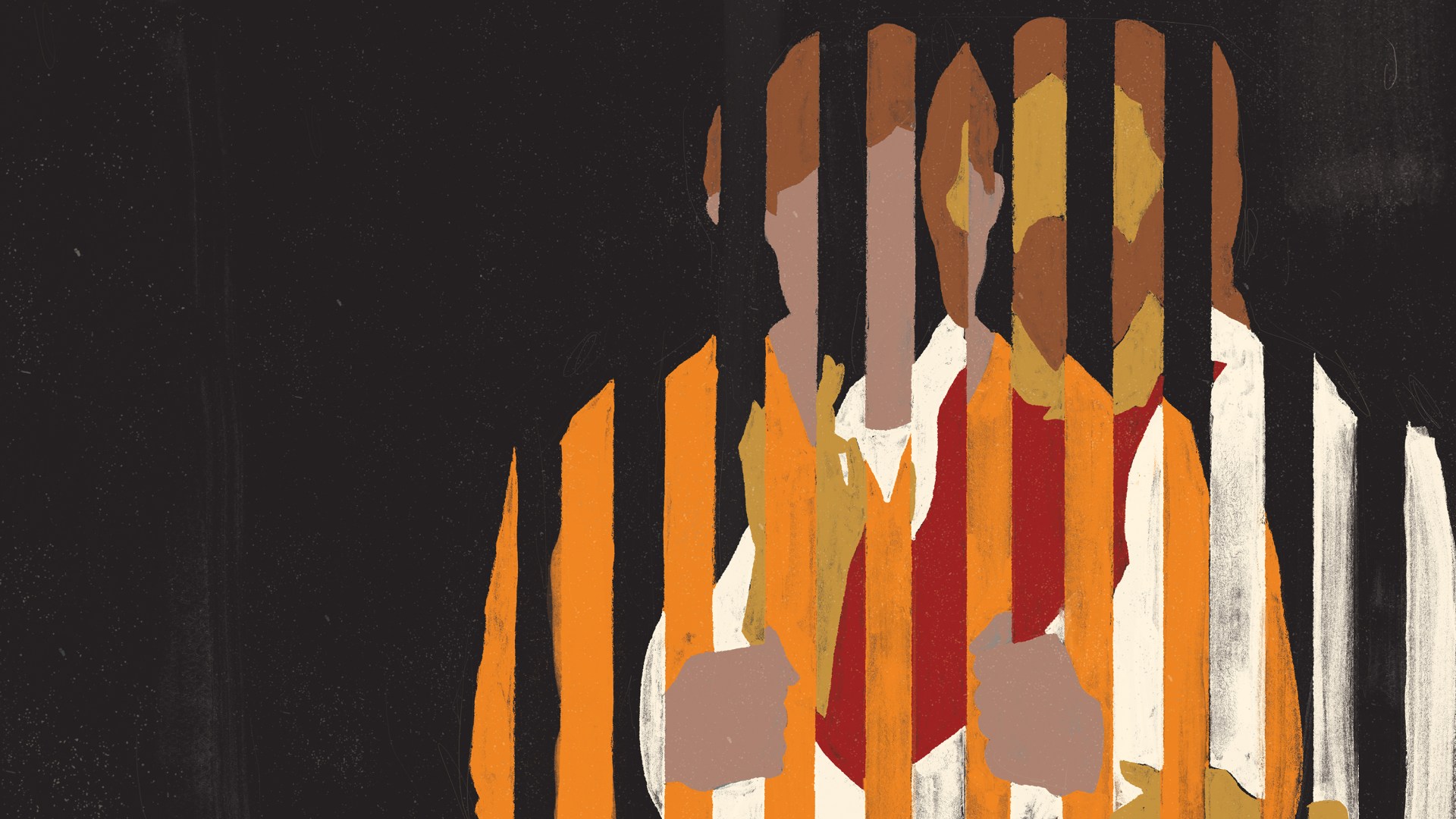
I spent much of 2020 and 2021 researching and telling the story of Seattle’s Mars Hill Church, where behind the scenes of success lay an abusive culture of manipulation and domineering, all oriented around the feeling that the congregation’s spiritual and numerical growth was bound up in a leader who was too big to fall.

In telling the Mars Hill story, we heard again and again from listeners how these events had eerie parallels in a variety of contexts. Churches and ministries found success when they organized themselves around the talent and vision of a single leader. When conflicts or questions of character emerged, all of the incentives were stacked in the leader’s favor.

As these stories continue to emerge—and we see them emerging from churches of every imaginable shape, size, and theological disposition—a cynicism about leadership and authority is spreading in the church. The benefit of the doubt that many pastors received in the past has eroded.

As a result, pastors and others are beginning to push back, raising concerns about false accusations and due process. Many pastors feel torn between a sense that the church needs this moment of reckoning and an anxiety that opportunists are trying to bring them down. But if we aren’t careful in how we respond, we’ll reinforce the logic that created this crisis of character in the first place.

The church’s leadership crisis isn’t simply happening against a backdrop of innumerable moral failures. It also exists in a complex fog of faith and doubt that the philosopher Charles Taylor has described as disenchantment. As Taylor sees it, modernity has fundamentally transformed the moral and spiritual imagination, introducing a steady undercurrent of doubt.

In part, that’s because we’ve been given a material explanation for almost everything. We don’t blame demons for sickness or angry gods for thunder; we point to germs and high-pressure systems. The feeling of falling in love is cast as an impulse to perpetuate the species.

Hearing these stories results in a default mode where our thoughts about the spiritual, supernatural, or transcendent rise out of us only to immediately bump their heads on a ceiling of uncertainty. Even after we find ourselves drawn to Jesus, we come to him with disenchanted spiritual imaginations. That’s as true for pastors and church leaders as anyone. We’re haunted by doubt, but even more so immersed in it—surrounded by stories and ideas that orient us to a world where it’s straining and uncomfortable to imagine God at work in invisible ways around us, even if we yearn to believe it.

This is what makes the phenomenon of the charismatic pastor so seductive—particularly (though not necessarily) when they achieve celebrity status. They stand before us with an apparent spiritual certainty that we lack or struggle with. Then, through their performance as an inspiring, challenging, or entertaining personality on and off the stage, they can stir our emotions and imaginations in such a way that we experience something transcendent—something that feels an awful lot like an encounter with God.

This kind of post-enchantment transcendence is comforting. It doesn’t just silence our doubts about God; it also silences them about humans. Think, for example, of how a politician who you know is lying to you—or at least making promises they’re utterly incapable of fulfilling—can still give you chills or move you to tears.

I’m not saying that we’re trying to manufacture transcendence to hide our faults. But we are drawn to the transcendent and want people to be drawn to it in us. I’ve seen it in my own efforts as a worship leader, trying to craft transcendent experiences.

I’m reminded of the legend of a missionary who found herself newly deployed, homesick, and discouraged. She sat by a pond one day, listening to a group of women singing as they washed clothes and dishes in the knee-deep water. The song was simple and beautiful, a single phrase repeated over and over, and though she didn’t speak the language yet, it moved her to tears with a sense of God’s presence.

As they packed up to leave, she approached one of the women and asked about the song. “Did the other missionaries teach it to you?”

“Oh yes. It was one of the first they taught us,” she said.

“What do the words mean?”

“It means, ‘If you boil the water, you won’t get dysentery.’”

A disenchanted imagination can shape a church in many ways. In the effort to overcome those conditions of doubt, ministry can quickly turn into an enterprise that seeks to compete in the marketplace.

That’s one reason evangelicals have fetishized the kind of leadership typically seen in Fortune 500 companies. We need masters of techniques—marketing, branding, entertaining, managing—that can “work” on the imagination and emotions in ways that are similar to music and that can be entirely effective in the absence of the Spirit of God.

The side effect, of course, is that this invites the ills of the marketplace into the boardrooms of our churches: demands for loyalty at all costs, the expendability and replaceability of workers, and the PR and image management needed to lionize a founder or CEO.

This isn’t to say that everyone leading in these settings is corrupt, and it certainly isn’t to say that God won’t show up in them. Of course he does. But these tools are incredibly powerful, and there’s a price to pay when they become the central organizing principle of our organizations. Spiritual abuse, narcissism, bullying, and domineering can manifest in almost any church, regardless of polity, denomination, theological perspective, or culture.

It’s my sense that the common thread that ties these churches’ stories together isn’t simply character issues, significant as those may be. But we too often overlook the undercurrent of disenchantment. We keep bad leaders around because in response to our default setting of doubt, we’ve created conditions in which character isn’t a qualification for the job. We want someone who can make us feel something.

We keep bad leaders around because we want someone who can make us feel something.

Which brings me back to pastors who are feeling anxiety about false allegations and the erosion of trust happening at this moment. I’ve seen proposals about policies and procedures, about what organizations like CT should or shouldn’t publish, and admonitions about what church members should or shouldn’t pay attention to. In what I think was the strangest example, a writer who occupies the office of lead pastor in a church with a multimillion-dollar budget, who sells books by the thousands, and who speaks on the main stage at some of the largest conferences in evangelicalism was lamenting the fact that leaders don’t have the platform or opportunity to tell their stories anymore.

Implicit in these solutions is a pragmatic urge to manage and message the crisis away. Many church leaders are retreating from the moment to look for ways to mitigate their own exposure to it, often grasping for management tools and techniques that are in the same drawer as the other tools they’ve used to build their dysfunctional empire. Authority wants to justify itself, often through expressions of power.

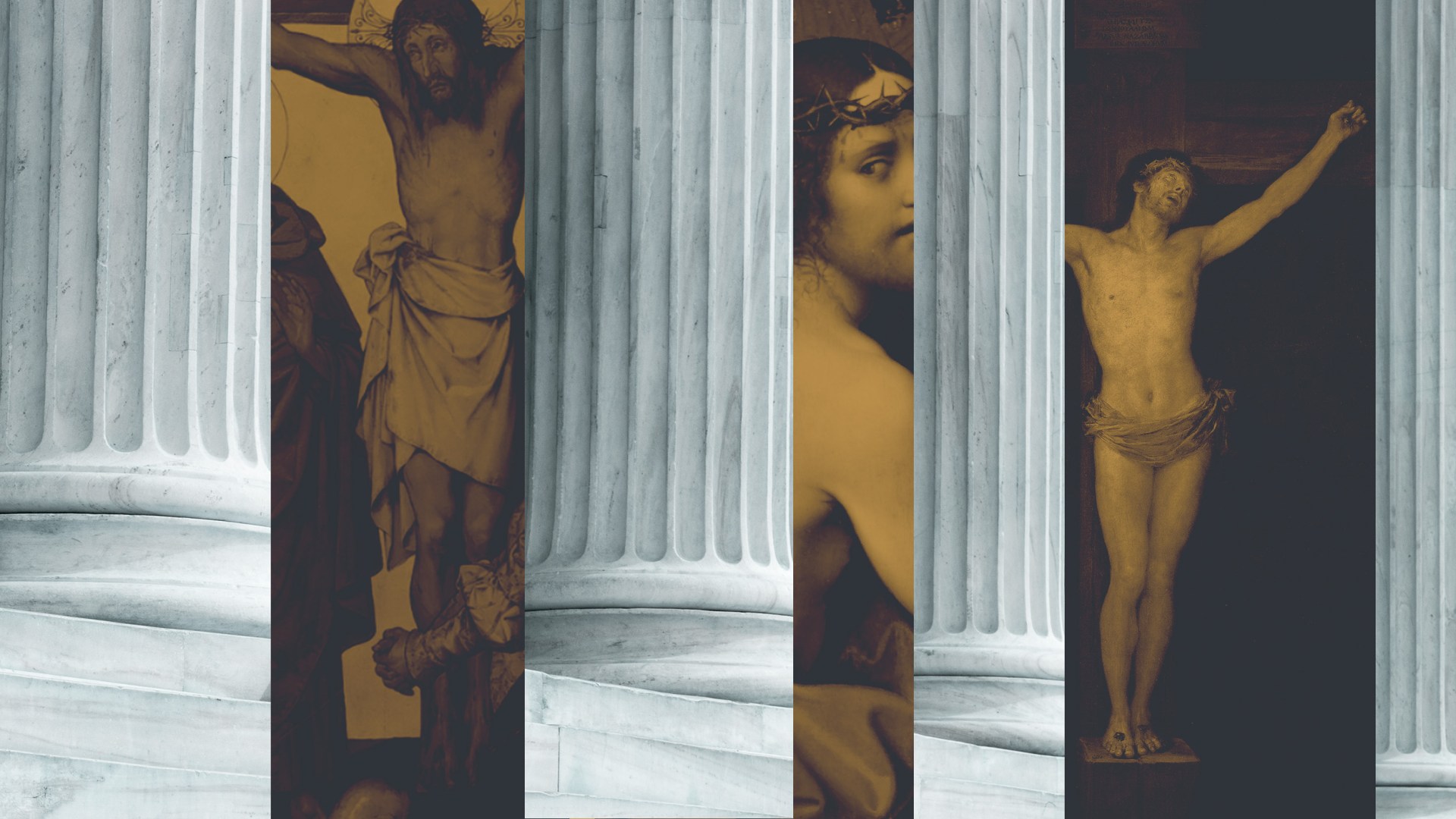
“It shall not be so among you,” said Jesus (Mark 10:43, ESV). The outcome of his leadership and authority was crucifixion—God incarnate falsely accused, beaten, and pierced to take away the sins of the world. We worship a God who knows suffering.

This reshapes not only how we talk about our leaders, but how we talk about those shaped and misshaped by them. As survivors in all corners of our culture have told their stories, a new language has emerged for talking about them. Terms like trauma and vulnerability have become helpful bywords—but there’s a difference between the power of naming an experience and the power of redeeming it. Naming it helps us acknowledge, grieve, and integrate it into our understanding of ourselves.

Redeeming it means that we don’t stop at identifying what was lost; we recover it. Psalm 56:8 tells us that God puts our tears in a bottle and keeps a record of our grief. This means that we never suffered alone, and none of our heartbreak has been forgotten. He catches our tears, and at the Cross he weeps with us.

The Cross is where the true Leader, the true Lord, reveals his perfect character. But it also reveals, in history’s most transcendent moment, that Jesus’ focus is not on trying to evoke feelings in others. Nor is it on stoically demonstrating timeless truth. The truest feeling is when Jesus “took up our pain and bore our suffering” (Isa. 53:4).

Thus Christian leadership is about taking on burdens, including risk. Risk of getting blamed when things go wrong. Risk of getting blamed for others’ failure. Risk of getting ousted for doing the right thing when it makes the wrong people uncomfortable. Risk of false accusation.

But we are not Jesus, so pastors also need to be prepared for accusations against them that are true. The problem may not be polity, or that people are spending too much time consuming the wrong material, or that they’ve gathered around unsavory personalities online; the problem might be what we did or left undone. And if we can’t imagine that to be the case, it’s time to remind ourselves of the pain of the Cross.

The Cross means we meet this cultural moment with tears of our own, not to evoke them in others but rather for the sake of others. Tears of lament for the ways that abuse has tarnished the witness of the church and fractured its unity. Tears of shared grief for the victims and survivors of spiritual, physical, and emotional abuse in the church. And tears of repentance for the ways we contributed to this broken landscape.

But we’re not without hope. Whatever else may come from this season of reckoning in the church, if the church responds with faith and repentance, something better and more beautiful can emerge.

After all, if we die with Christ, we will also be raised with him (Rom. 6:8). After the cross comes resurrection.

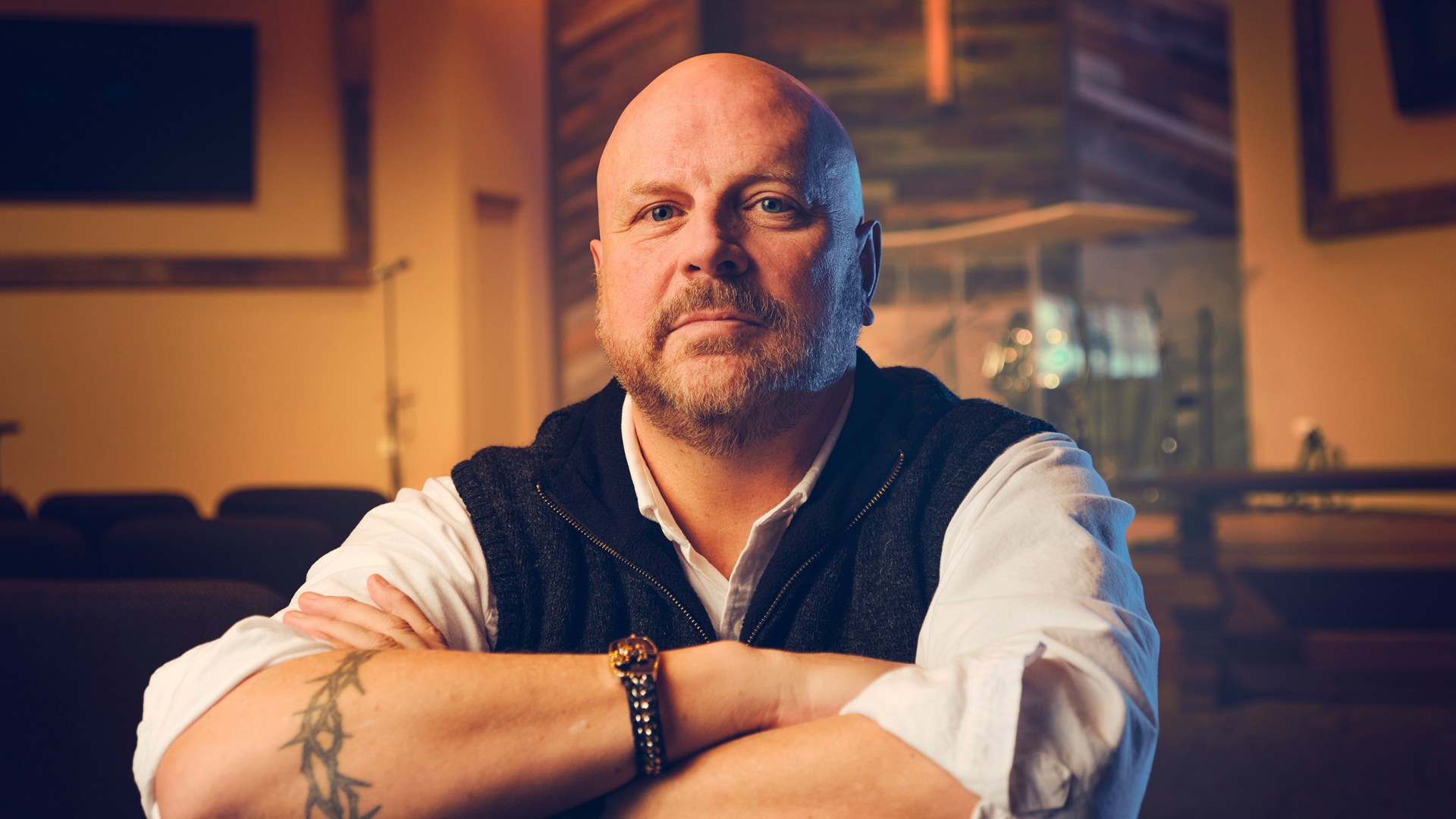
Mike Cosper is Christianity Today’s director of podcasts.

Ideas

Why We Need the Evangelical Jeremiad

Columnist

Speaking about dangers and errors is no failure of love for one’s own community.

Source Images: Wikimedia Commons

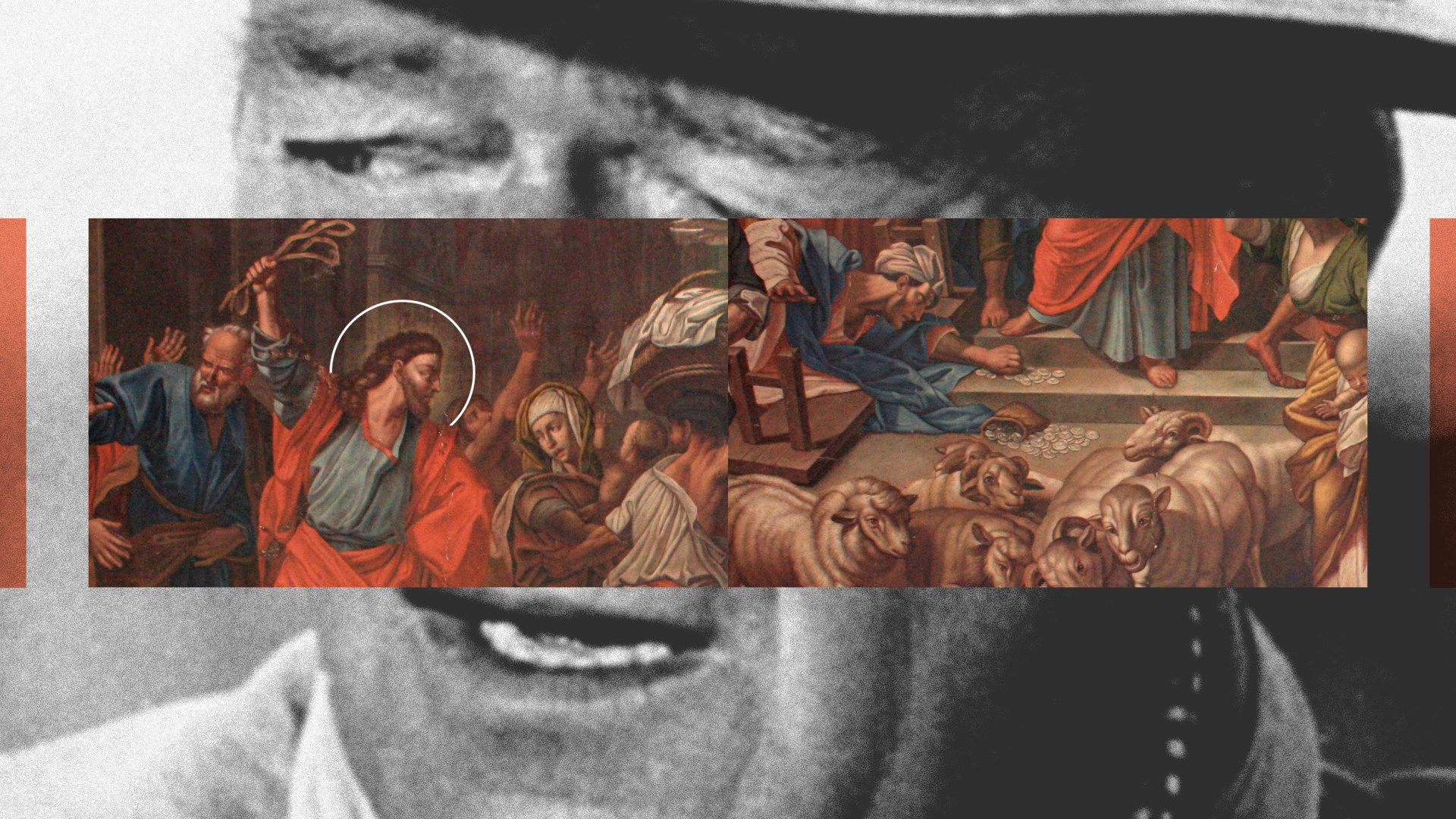
Amid the meltdown within evangelical Christianity, some are warning against the dangers of the jeremiad. A few of these critiques are prompted by books like Kristin Kobes Du Mez’s Jesus and John Wayne, which argues that evangelicalism’s problems are deeper than we think. Usually, though, the jeremiads against jeremiads are directed toward those who are doctrinally fully within the conservative evangelical camp and are warning that something is awfully awry.

It’s confusing to see these anti-jeremiad arguments coming from people who have endorsed jeremiads about the cheap grace of evangelical conversionism contradicting “the gospel according to Jesus” or how evangelical flirtations with relativism and pragmatism would leave “no place for truth.” These older jeremiads were timely and necessary, even if one didn’t agree with every point. But they were certainly jeremiads.

It’s also baffling to be told that speaking about dangers and errors is a failure of love for one’s fellow evangelicals. Years ago I might have expected such a line from the folks who repeat, “Doctrine divides and love unites” and who look for ways to “affirm” everything. But those worried now about jeremiads are not Episcopalians but Puritans—the very ones who have insisted, rightly, that truth matters and who have worked to shore up doctrinal clarity even on issues where evangelicals disagree (such as predestination or women in ministry).

A lack of reckoning can’t ever lead to repentance, back to the signposts pointing the way back home.

Likewise, the people issuing anti-jeremiad jeremiads continue to denounce dangers and errors in the outside culture. They want jeremiads against the abortion culture or sexual anarchy or New Atheism or gender ideology. Oddly, most of those criticized for jeremiads have always been just as clear on those matters as on racial injustice or sexual abuse cover-ups or political captivity. In fact, they’re often clearer on those issues than those who seem to want culture wars (at least culture wars that don’t affect our kinds of churches).

We should not critique evangelicalism (at least not in public), we are told, because to do so would be to curry favor with “the elites.” But what curries favor: Saying to the world that evangelical Christianity is true and beautiful enough that we shouldn’t betray our own stated ideals? Or saying to populist masses (and donors) that we will speak loudly on the issues you agree with us on and remain silent or dismiss as distractions those you don’t?

Of the evangelicals issuing jeremiads, I would be hard-pressed to think of one who has spent any time at all at the “New York cocktail parties” so often imagined. Very many, though, have been cut off by old friends and allies. That’s not because they are too harsh or truthful, but because they direct that honesty to the issues and power centers of which we are not allowed to speak.

Nonetheless, just as those of us who are conservative evangelicals can learn from Jesus and John Wayne and similar critiques, so we can learn from those who warn against jeremiads. The apostle Paul warns against replacing the task of building up with the job of tearing down (2 Cor. 13:10), even as he called us to tear down strongholds raised against the knowledge of God (2 Cor. 10:4–5).

The word jeremiad is, of course, rooted in Jeremiah. The prophet warned that the people of God could not count on the presence of the temple to protect them from God’s judgment on the rot within (Jer. 7). They might tell Jeremiah to shut up (You’re only helping the Babylonians!) or find those who would say, “‘Peace, peace,’ when there is no peace” (6:14; 11:21, ESV throughout). But that lack of reckoning can’t ever lead to repentance, back to the signposts pointing the way back home (31:21).

Still, honesty is not enough. Heartache does not a reformation make. The same voice who refused to call doom “security” or idolatry “faithfulness” also saw a God who has a future for his people, a future that is more “Good News” than the word evangelical could ever fully convey. He pictured a day in which the people of God “shall come together, weeping as they come, and they shall seek the Lord their God” (50:4).

Weeping isn’t forever about heartbreak, though that’s where it must begin. Weeping of grief can turn to the weeping of joy—joy of a hope and a future guaranteed.

And that’s a jeremiad too.

Theology

When the Congregation Leaves Town, Should the Building Follow?

How churches survive “spiritual gentrification.”

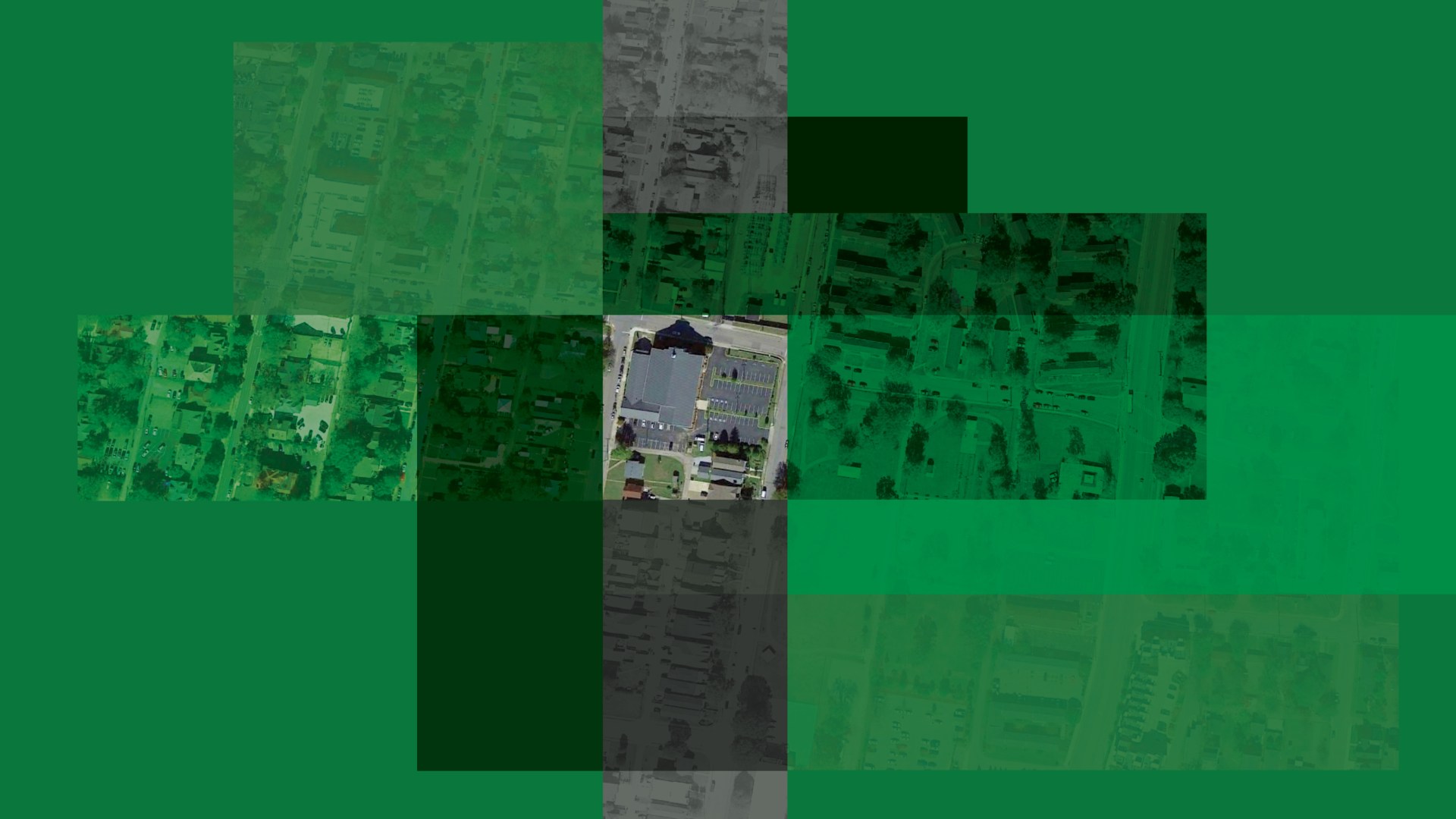
Illustration by Sarah Gordon / Source images: Google Earth

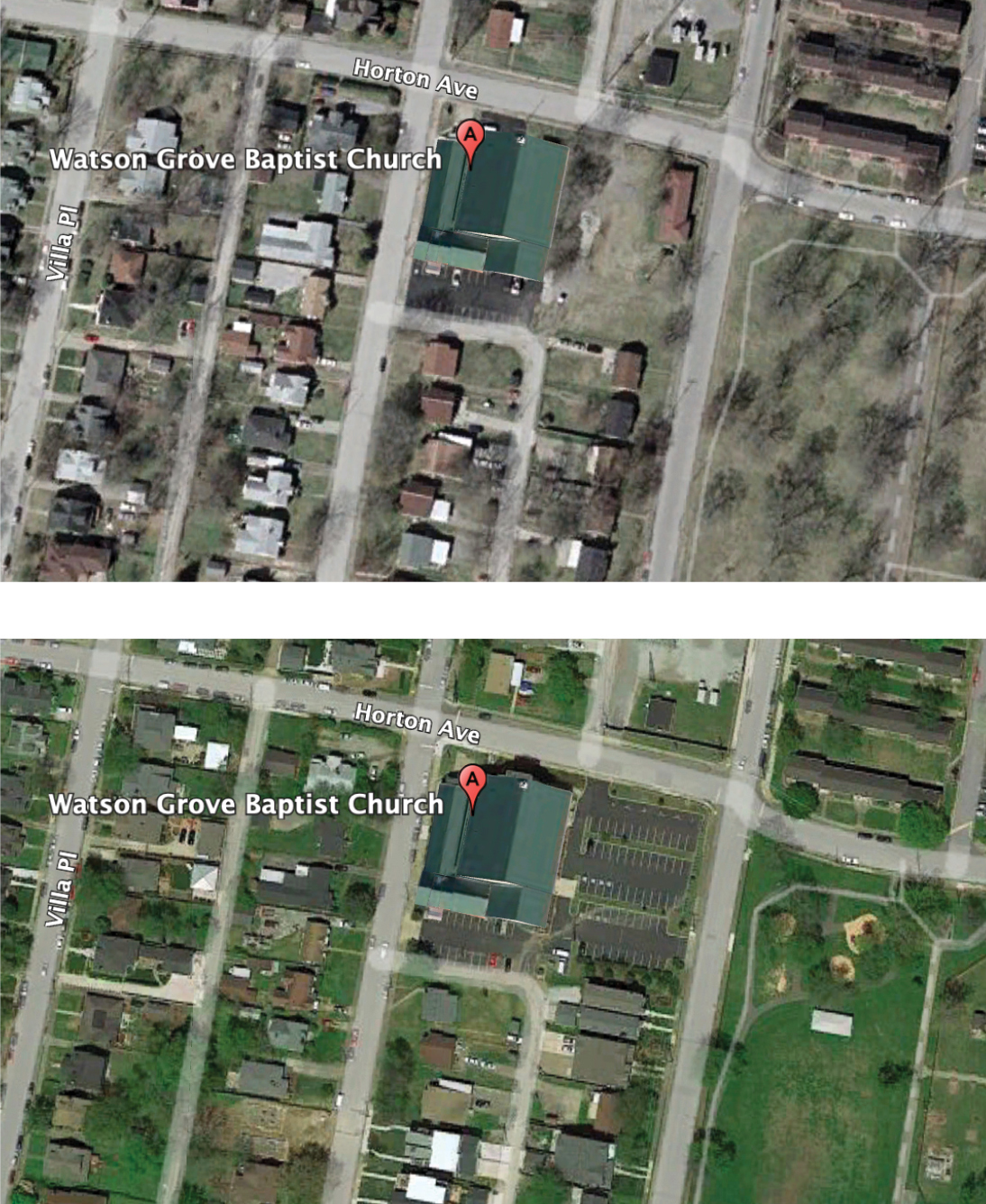
To understand what’s happening at Watson Grove Baptist Church, you have to understand its parking lot.

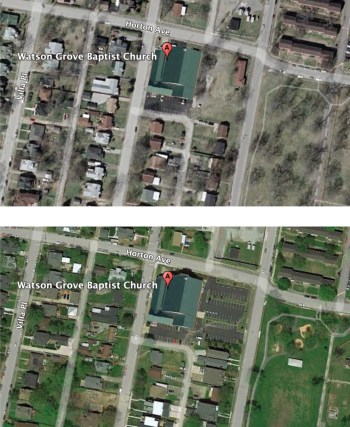
The modest patch of blacktop near downtown Nashville holds 100 cars. It’s framed by a manicured lawn and colorful shrubs and wraps around a group of connected redbrick buildings that has expanded with the congregation over the years.

Watson Grove sits on the corner of 14th and Horton streets in a place called Edgehill, a rapidly developing neighborhood bordered by Music Row to the north and 12 South, one of Nashville’s trendiest neighborhoods, to the south. Edgehill contains both public housing and a commercial district with a lively nightlife and lifestyle-brand stores like Warby Parker.

The church’s parking lot, in some ways, encapsulates the evolving story of the traditionally working- and middle-class African American community around it. It tells of Edgehill’s increasing urban bustle (the church installed speed bumps in the lot as more drivers were cutting through and endangering children crossing it to board the school bus) and of the neighborhood’s struggles with crime (police cars monitor the neighborhood from the parking lot, which hosted a hearse after a teenage girl from the community was killed in a drive-by shooting).

The blacktop also tells of gentrification, of supply and demand. Like Edgehill itself, where home prices have soared in recent years, there is not enough parking lot to go around.

A historically Black congregation, Watson Grove has grown over the past decade from around 300 people to more than 3,000 over two campuses just before the pandemic halted in-person services. Its modern sanctuary seats 750 people. And it became a multisite church in 2019, when it opened its second location in suburban Franklin, Tennessee.

Watson Grove church in 2003 (top) before the expansion of its parking lot (below)Google Earth
Watson Grove church in 2003 (top) before the expansion of its parking lot (below)

But at the Edgehill campus, the influx of new worshipers has not come from surrounding homes and apartments. Most church members have either moved out of Edgehill or have never lived there.

Because there was so little space to put all those commuters’ vehicles, the church increased to four services. Cars spilled out onto the surrounding streets, into the library parking lot around the corner, and into a parking lot offered by a nonprofit a quarter mile away.

“I believe we grew in spite of gentrification” rather than because of it, said John Faison Sr., who pastors the 133-year-old congregation known as “The Grove.”

But some of The Grove’s neighbors, especially new neighbors, haven’t been excited about that growth. They’ve pushed for resident parking permits, which would prevent commuters from parking on the street. So far the church has persuaded the neighborhood association not to go that route.

“We tried to be neighborly,” Faison said. “We shouldn’t be blocking your driveway. However, you shouldn’t be cursing out Black people who are parking in front of your house.”

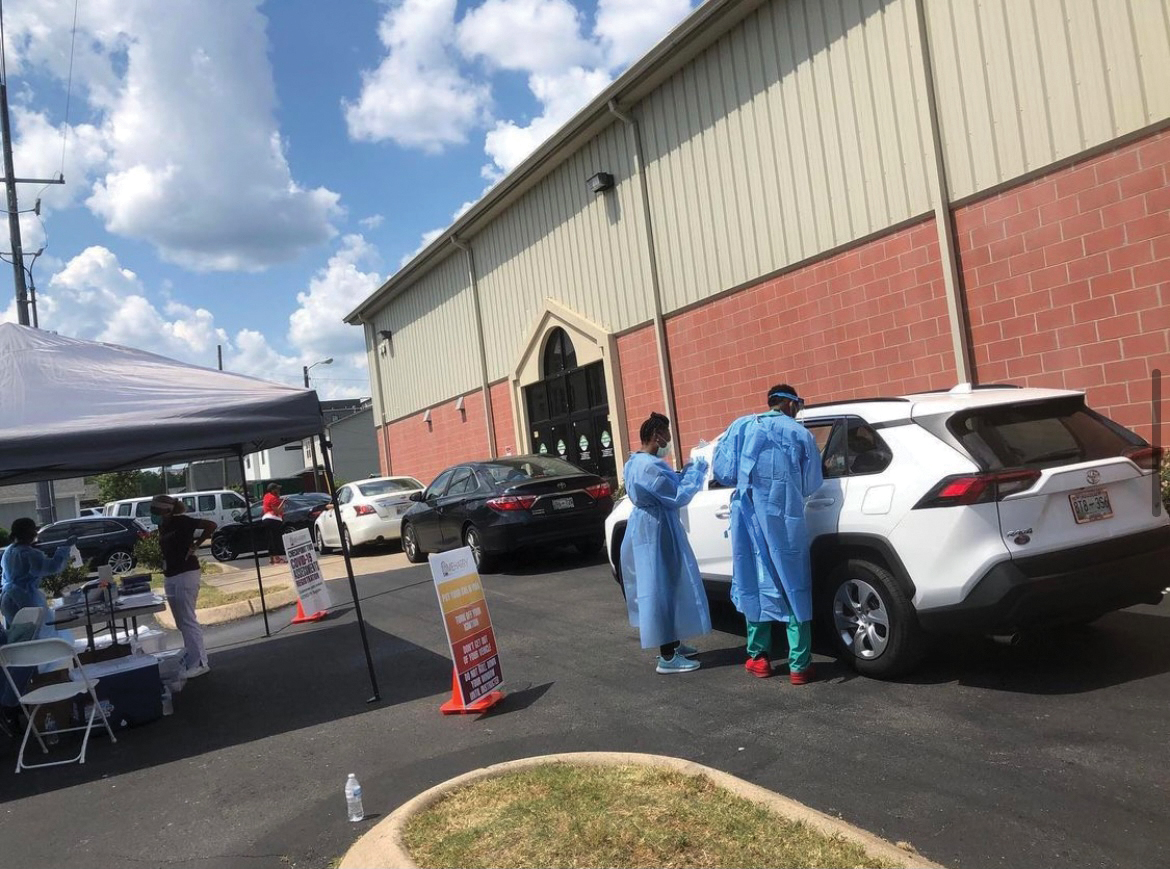
The Grove’s Nashville campus parking lot served its community during the pandemic with COVID-19 tests in June 2020Courtesy of The Grove
The Grove’s Nashville campus parking lot served its community during the pandemic with COVID-19 tests in June 2020

The Grove’s parking woes are a symptom of a larger phenomenon that might be called “spiritual gentrification.” As neighborhoods change, church communities are often forced to reevaluate their identity, asking hard questions: If the people of a church move elsewhere, should the building and pastors follow? How different can a neighborhood become before it’s no longer the neighborhood a church is called to serve?

In other words, who is a church for?

“It makes a church reexamine its call. Every single church is called to make disciples,” Alvin Sanders, a former church planter and president of the nonprofit World Impact, told The Tennessean in 2017. “It has to decide is it there to reach its community even if its community changes? That’s really the biggest pressure.”

Gentrification, a term invented by British sociologist Ruth Glass, is commonly understood as the process of wealthier—often white—people buying and developing property in urban neighborhoods, displacing lower-income residents who can no longer afford to live in the area.

Thanks to troves of census and real estate data, the trend has been heavily studied in recent years. Unsurprisingly, gentrification is complex. When property values in a neighborhood rise, working-class residents sometimes leave and sometimes do not. They may be forced out by unaffordable rent, or they may reap a windfall by selling a home that is suddenly worth a lot. “Gentrifiers” may be higher-income white residents, or, especially in major cities, they may also be higher-income Black and Latino residents.

Often overlooked in studies, however, is faith. A significant impact of gentrification is secularization, sociologist Orvic Pada argued in Biola’s Justice, Spirituality & Education Journal. “Religious organizations are forced to move out of the area, cease to operate due to rising property values, or reconfigure their identity, methods, and approach to cater to a different demographic group,” he wrote.

Churches that provide social services can help “slow down the effects” of gentrification by preventing lower-income residents from being pushed out, according to David Kresta, a researcher with Duke Divinity School. However, Pada observes, “gentrified” church outreach is often simultaneously targeting the wealthier creative class in changing communities—for instance, running cafés, restaurants, and other forms of social-entrepreneurship-as-ministry.

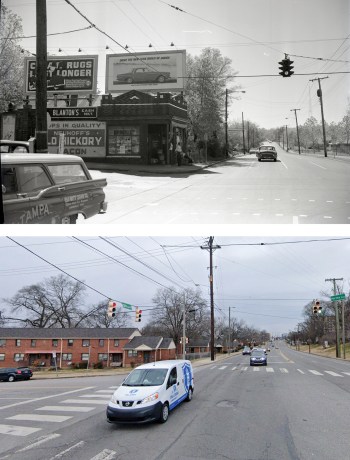
In the 1950s, The Grove’s Edgehill neighborhood was a popular area for African Americans, including many Black doctors, professors, and business owners, Faison said on the Vanderbloemen Leadership Podcast last year. The church building was built by a local Black-owned construction company. But times changed. There was redlining—where banks withheld loans from homebuyers in low-income areas—and white flight. Interstate 65 cut through the neighborhood. The church watched crime rise and education plummet. Public housing was put in.

In contexts like these, Faison said, the Black church was a place where Black people found affirmation, identity, and were “celebrated in a community that saw your inherent value” during a time of segregation and Jim Crow laws. “You’d show up to Black church and, while you were called racial epithets throughout the week, at church you were Deacon Jones.”

The Edgehill neighborhood in Nashville, just down the street from The Grove in 1961 (top) and today (bottom)Top: Nashville Public Library Metro Archives / Bottom: Google Maps
The Edgehill neighborhood in Nashville, just down the street from The Grove in 1961 (top) and today (bottom)

Gentrification has torn at that sense of cohesion in Edgehill. It “impacts our church in manifold ways,” Faison said. “First of all, many of our members can no longer afford to live in the neighborhood and the area they were living … so they have to leave and go to different places. Well, that now separates them from the center of the Black community: the Black church.”

Pastoring an increasingly commuter church, Faison observed his congregants have a harder time attending in-person Bible studies and students have a harder time making it to youth group.

Churches change when their members move out of a neighborhood or to a city’s outskirts. Some churches die: Countless empty urban church buildings, abandoned for myriad reasons by Catholics and Episcopalians and Methodists and Baptists, have been turned into bars and houses and luxury apartment buildings.

Other congregations decide that, to stay faithful to their call, they must abandon their original neighborhood and follow their members.

When Aaron and Michelle Reyes planted a church in Austin, Texas, in 2014 with a core group of 10, they were passionate about reaching the area where Aaron had grown up and creating a church centered on Black and brown communities. Most of their congregants were Latinos and blue-collar families. The East Austin church slowly became multiethnic as other families joined, and now about half of the more than 200 congregants are Latino, joined by white, Asian, and African American families.

In those early years, however, they quickly realized they had a problem. Marketing themselves as a “new” church was not attracting the people they had intended to reach in the changing neighborhood.

“We realized ‘new’ isn’t going to communicate what we want to express,” Aaron Reyes said. It instead communicated concepts like higher taxes and displacement. It sounded more like the coffee roaster down the road and less like a community. “So we started calling ourselves a ‘young’ church.” They also changed their name, from Church of the Violet Crown, which was being used by a lot of gentrifying businesses, to Hope Community Church.

Still, they noticed more of their folks being pushed out of the neighborhood. It was difficult and expensive for many attendees to get to church via public transportation. “As folks were moving, we just knew we had to leave,” he added. They found a building farther northeast, in Austin’s Windsor Park neighborhood.

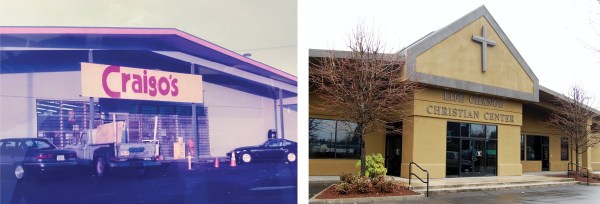
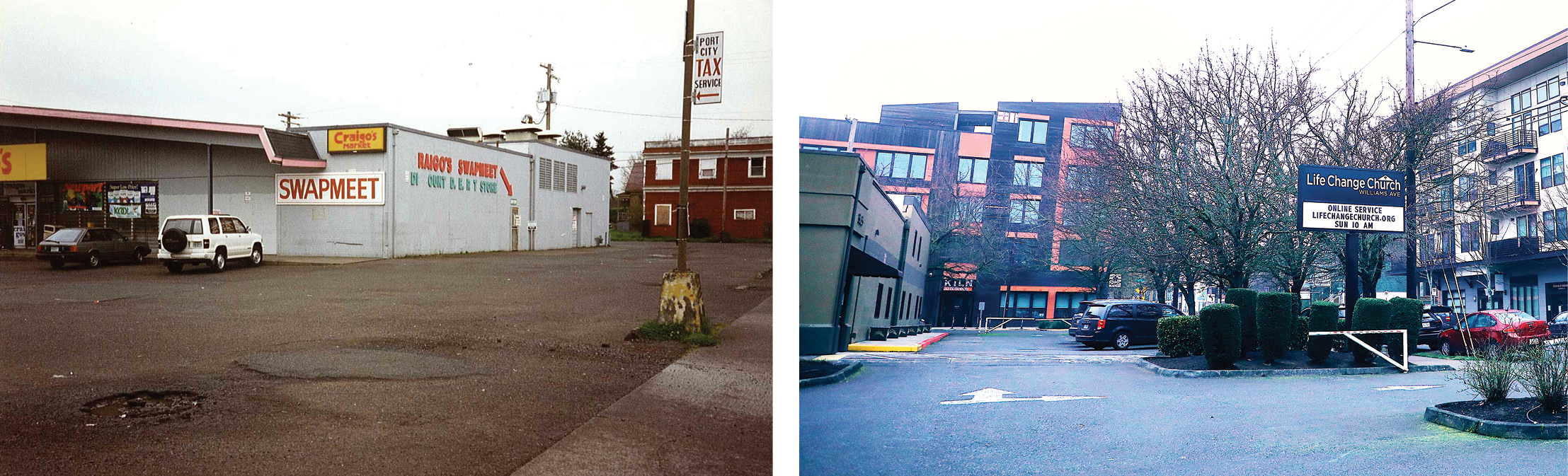
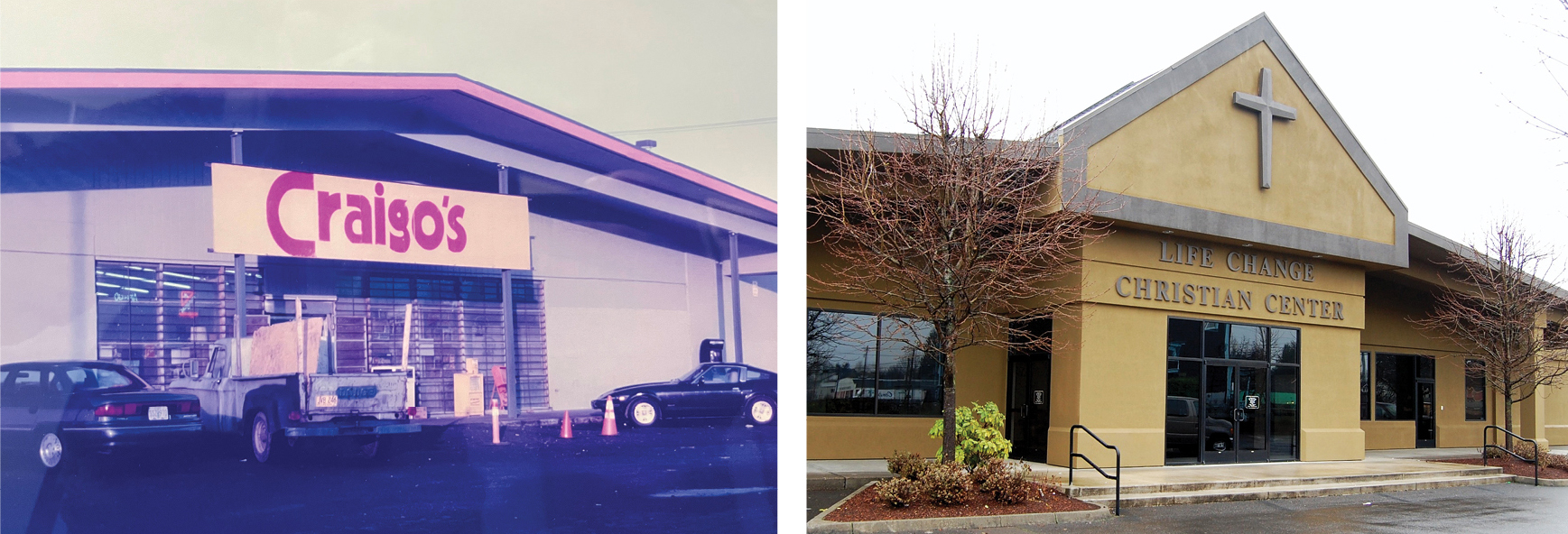
But not all churches go. Many choose to stay. Life Change Church in Northeast Portland, Oregon—a neighborhood known to many as “the Hood”—relocated in the 1990s from a small A-frame on a cul-de-sac where it started in the 1960s to an old shopping complex. Now, according to pastor Mark Strong, the building is “dwarfed by several new developments.”

Life Change Church in Portland, Oregon—once a gas station—has seen the effects of gentrification.Courtesy of Life Change Church
Life Change Church in Portland, Oregon—once a gas station—has seen the effects of gentrification.

In his recent book, Who Moved My Neighborhood?: Leading Congregations Through Gentrification and Economic Change, Strong recounts reading an article about the top 10 “hippest” cities in the US and being surprised to find that Portland was No. 1. And the accompanying photo showed his church’s neighborhood. “Wow,” he thought. “What was once the Hood is now a national Hipsterville!”

His congregation realized that neighborhood change was taking place when they found themselves asking questions such as “What happened to this or that business?” and “Where is this family or that family?”

Strong realized that the problem his congregation faced “wasn’t so much these changes were occurring but that our community was not being included in this new neighborhood narrative,” whether from ignorance of how to seek change or from being exhausted trying to do so.

Strong offers seven steps for how he thinks churches should navigate the often-painful shifts of gentrification and remain resilient: Remember the old neighborhood, recognize the neighborhood shifts, realize the moved neighborhood, reconstruct your moved neighborhood, allow yourself rage, reconcile with the idea, and finally, revamp your church in the new neighborhood.

“Sure, it would be nice if God miraculously healed our pain and immediately restored what has been removed,” Strong writes. “However, he chooses to walk us through the valley and not transport us out of it.”

But generally, his call to churches undergoing similar changes is to stay. “Your neighborhood needs your church. And your church has the potential to be the best neighbor that the people in your neighborhood will ever have,” he writes.

Darryl Williamson and his 150-person church have chosen similarly. The lead pastor of Living Faith Bible Fellowship in Tampa, Florida, could only think of one family, in addition to his, that hadn’t moved in the past decade. He prefers the term “spiritual exodus” to describe their experience.

But like The Grove, instead of relocating with its congregation, Living Faith became more of a commuter church and saw its demographics shift with the changing neighborhood.

Life Change Church in Portland, Oregon—once a gas station—has seen the effects of gentrification.Courtesy of Life Change Church
Life Change Church in Portland, Oregon—once a gas station—has seen the effects of gentrification.

Williamson, who is also a board member at The Gospel Coalition, is careful with the language he uses to describe neighborhood gentrification. Many historically African American churches like his are not populated by people originally from the neighborhood, he said.

After talking to other Black pastors who have ministered for four decades and watching wealthy Black families relocate out of the cities, Williamson is not convinced gentrification “is quite being ‘done’ to us.” Even as someone who admits he left his hometown of Nashville, he pushes against an escapist mindset.

Rather, Williamson is passionate that his church be rooted in its geographical location. “I don’t know that we have discipled people to have responsibility for their neighborhood,” he said. “There are multiple Black communities that have experienced gentrification where what was needed was a greater conversation about how to lead and not just to personally aspire.”

While gentrification tends to secularize a neighborhood, it does, of course, often bring in new churches pastored by outsiders. And just as new neighbors can bring new conflicts, so can startup churches.

“If you’ve been in the neighborhood for 20 years trying to care for a congregation, and Planter A comes in and doesn’t greet you or anything and sets up shop down the road, it is an affront and grievous,” said Thabiti Anyabwile, who founded the Crete Collective, a church planting network that focuses on Black and brown neighborhoods.

“Folks that are planting communities that are in transition are often overlooking churches that already exist,” he said. “And, less politely, they are charging that these churches are less faithful to the gospel. Instead of being a revitalizing force, they are displacing in some cases decades-long or century-long presence.”

All of these pastors have grappled with the question of identity—Who are the people in my church? To whom does the local body belong?

In fact, Anyabwile believes the majority of new multiethnic church plants are not actually in the poorest areas of a city. They are “hood adjacent,” as he refers to it. His view is consistent with research on gentrification showing that gentrifiers tend not to move into very Black or very poor neighborhoods unless, say, the neighborhood is right next to a central business district.

On the other hand, researchers like Duke’s David Kresta have found that white churches in nonwhite neighborhoods can signal as a “beacon or an amenity” for new residents and contribute to further gentrification.

Among others, the Acts 29 church planting network has recognized this problem and recently launched a cohort called Church in Hard Places, sending or supporting a diverse group of pastors in poor neighborhoods—both rural and urban.

“The leadership reassessed that church planting was doing really well in upper-middle-class affluent neighborhoods—reaching white people, basically,” said Tyler St. Clair, a network leader and pastor of a church plant in Detroit. “But we had no traction in poor white and poor Black [communities] all around the world.” Their urban track equips city church leaders specifically to deal with gentrification and poverty.

After watching new church planters “parachute” into neighborhoods and draw people from the suburbs rather than their city block, St. Clair coaches new pastors to plant their lives in a community and learn as missionaries, not saviors. “You should receive the compliment ‘I see you everywhere,’ ” he says. “I don’t just sleep here.”

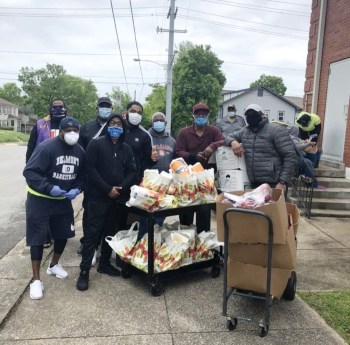
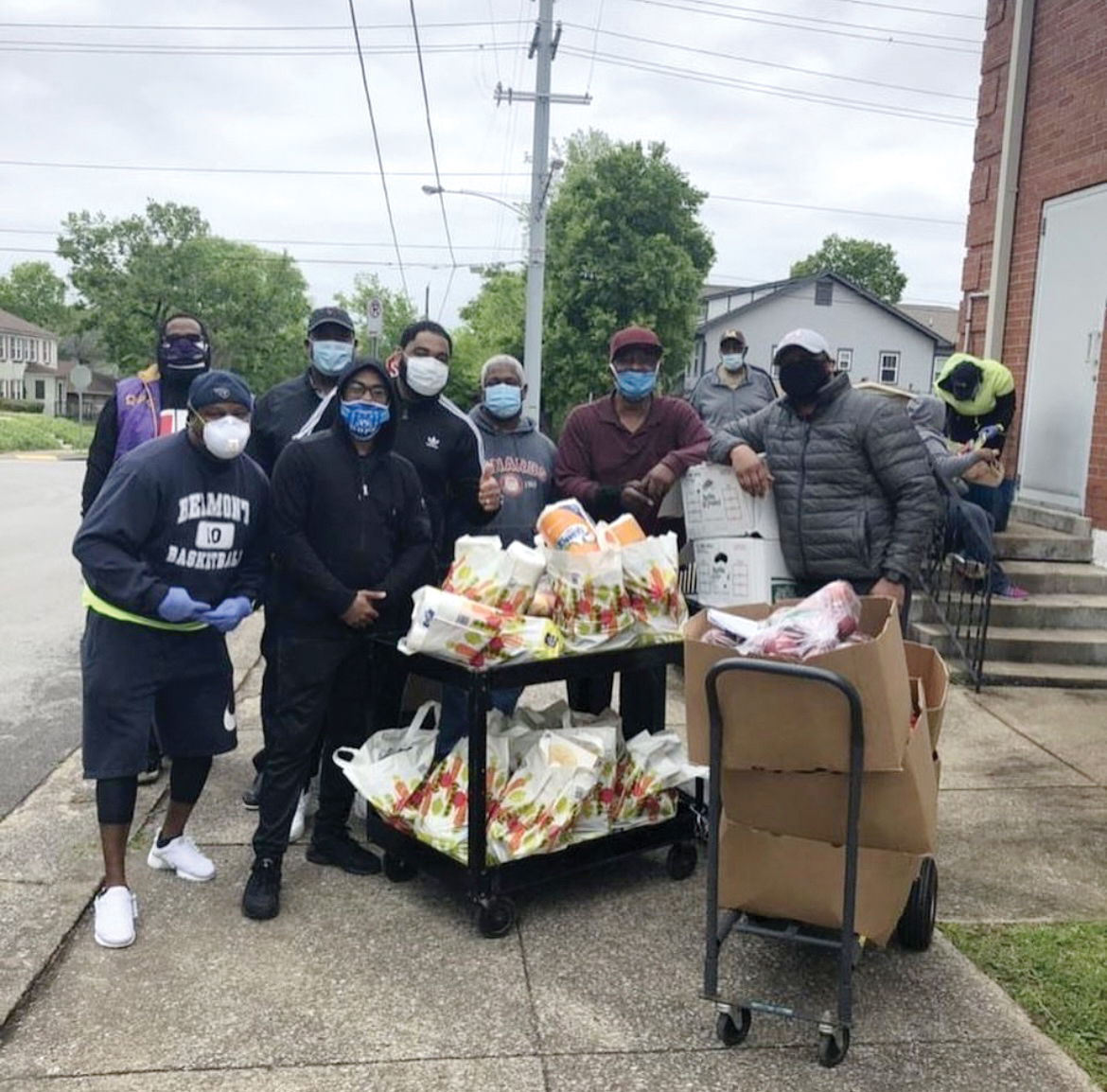
The Grove’s Nashville campus parking lot served its community during the pandemic with a food drive in November 2021Courtesy of The Grove
The Grove’s Nashville campus parking lot served its community during the pandemic with a food drive in November 2021

Faison has observed this tension between his historically Black church and the white church planters that come to his Nashville neighborhood. In the past decade, he says, only one of the 12 churches that were planted near him has survived.

“Their motives will be tested by their willingness to be part of that community,” he said. Instead of connecting with existing neighborhood churches, he thinks, many church plants see them as theologically or ecclesiologically inferior, or as competition. “It’s not even evangelical; it’s economic. It’s seen in how they relate to the community. Their goal is to build a kingdom that’s theirs and like them,” he said.

But Williamson sees the flip side. He sees gentrification as an opportunity for legacy Black and brown churches to “grab the reins” of the multicultural conversation and lead the way, rather than being on the defensive and waiting for majority-white churches to debate the need for racial reconciliation.

He believes Black and brown churches can pursue multiethnicity and attract white brothers and sisters who are allies. “What does that mean for the next generation?” he said. “Who are we in 30 years if there is a mass migration of white brothers and sisters out of white megachurches to Black and brown churches around the city to be led and be discipled and lead and be disciplers?”

He’s not alone. Only one-third of Black Americans think historically Black congregations “should preserve their traditional racial character,” according to a 2021 Pew study. And 61 percent of Black Americans say that historically Black congregations “should become more racially and ethnically diverse,” whether they attend majority-Black churches or not.

And in Portland, while Mark Strong’s church ministers in a gentrifying African American neighborhood, he argues that the “issue of moved neighborhoods is not exclusively a Black neighborhood problem.” All kinds of neighborhoods change, and Jesus is concerned equally about them, writes Strong.

All of these pastors have grappled with the question of identity—Who are the people in my church? To whom does the local body belong?—alongside questions of geography and space. Whether they realize it or not, they have wrestled with a theology of place.

“We don’t want to be a commuter church, we want to be a community church.” John Faison

David Leong, a missiologist at Seattle Pacific University, has been studying this concept for two decades. He says a theology of place starts with a recognition that to be human is to be placed. “Embodiment requires space,” he said in an interview with CT. But it’s not just about the biological reality that we are taking up space and sucking up air. Place demands that we ask, “What does it mean to live in this world?”

Scripture refers to Jesus as being “of Nazareth,” Leong writes in his book Race and Place, signaling that he “came from, and was shaped by, a particular place and the local communities found there” that “defined Jesus’ life and ministry.”

Ultimately, while Leong feels an understanding of place is vital to effective ministry, churches can still flourish even if they’re navigating gentrification imperfectly. “When we look at Jesus’ ministry and, after Pentecost, the ministry of the Holy Spirit, we find that the human boundaries we’ve constructed don’t seem to interfere with God’s work in particular places,” he told CT in 2017.

Aaron Reyes, for one, doesn’t think “theology of place” is the right way to approach the issue of gentrification and understanding church community.

“It’s a theology of people rather than a theology of place,” he said. In the New Testament, he pointed out, churches were described by a group of people rather than an address. The location could be anywhere, in any person’s house (as in Acts 16:40).

Both Leong and Faison say pastors need to figure out their church’s calling. Leong tells churches to be “really intentional” about the decision to stay and commit to a neighborhood even if there is pressure to leave. Those who do stay must be aware of and hospitable toward folks who are being displaced, he said.

“Churches can struggle to turn their direction outward,” Leong said.

Faison also advises pastors, “You have to wrestle with Are you called to this area? Are you called to this space? And for every church it’s a different answer. Maybe I’m called to those people that I serve, but I’m not called to this space.”

For Watson Grove, the answer is clear. Faison says their calling is to be a Black church and not a multicultural one. And yet their calling is not to follow their people out of the city. It’s to minister to their surrounding community.

“We have to adapt to what this community looks like. I cannot be stuck in remembrance only and wanting it to be what it used to be. It just ain’t,” he said. “Our calling is to be a community church. That’s who we’ve been since 1889. We don’t want to be a commuter church, we want to be a community church.”

Kara Bettis is an associate editor at Christianity Today.

Ideas

Don’t Expect Instant Gratification from Your ‘Quiet Time’

Columnist

Fifteen minutes of Bible reading may not turn every day around, but it’ll yield fruit at the right time.

Illustration by Rick Szuecs / Source images: Ales Krivec / Nathan Dumlao / Unsplash

When the first ATM was installed in my hometown in the 1980s, it felt like magic: Insert your card, take out cash.

Since then, we’ve learned to love not having to wait in just about every area of our lives. Products arrive at our doors within a day. Meals in a matter of minutes. Movies, books, and music appear on our devices instantly.

It’s wonderful. And it’s also worth weighing carefully. Rapid delivery teaches us that waiting is an enemy to be eliminated, standing between us and what we desire. With each quicker, more convenient development, we are attenuating our ability to wait.

But being able to wait is distinctly Christian. In fact, it is a mark of Christian maturity. The Bible speaks of waiting on the Lord, of being steadfast, and of bearing the spiritual fruit of patience. While most of us recognize that instant gratification is the habitat we inhabit, few have assessed how “waitlessness” may be forming us spiritually—specifically, how it may be shaping our approach to the Bible.

Around fourth grade, I was taught the spiritual discipline of spending “time in the Word.” Like many, I was encouraged to have a “quiet time,” 15 or 20 minutes in Scripture, preferably in the morning (because, you know, Jesus rose early in the morning). This practice was supposed to calibrate my day, to fill my spiritual tank for whatever the rest of that day might hold.

The underlying message: Have a quiet time, have a good day. Skip a quiet time, good luck. Combine that with an inclination toward instant gratification, and I began to see any quiet time that didn’t yield immediate emotional warmth or peace as essentially a fail.

I grew to approach spending time in the Word primarily as transactional instead of formational. It was a time to get what I wanted, when I wanted it, exactly how I wanted it. And I don’t think I’m alone.

Time in the Word is meant to be not merely informational or inspirational, but relational.

One of the most common frustrations I hear is that, despite daily quiet times, Christians feel God is distant. And judging from the pervasiveness of Bible illiteracy in the church, our daily quiet times may not be yielding the formative effect we hope.

When we think of quiet time as transactional, we treat Scripture as a debit account that offers us meaning or feeling on our timetable. Each day we insert our debit cards and withdraw 15 minutes of inspiration.

Instead, we should take a savings account perspective, where we make faithful deposits, investing ourselves over days and weeks and years without expecting immediate emotional or intellectual yield.

If we stick to a debit account approach, we will studiously avoid the parts of Scripture that take longer to understand, or we will misinterpret them to meet our wrong expectation that they serve our timetable. We will gravitate toward devotional reading over straightforward Bible reading.

By contrast, a savings account mentality understands how to wait. It is steadfast and patient. It knows faithful daily deposits will absolutely yield fruit—in season. At just the right time.

If you have ever walked through the valley of trial, you know what it is like to find years of faithful deposits bearing dividends. A patient, long-term approach is key. The Book of Ezekiel may not fix your day, but it may just sustain you in a lengthy trial if you give it your quiet times. The formational profit of spending time in the Word is more likely to emerge over 15 years than 15 minutes.

Time in the Word is meant to be not merely informational or inspirational, but relational. It trains us to listen to the voice of God in his Word, and it teaches us who he is. It is God inviting us into conversation for the purpose of relationship.

As in any relationship, quality time is essential. But quality time is a function of regularly occurring quantity time. It does not give us what we want when we want it, exactly how we want it. We can’t schedule it or demand it. It happens according to its own timetable and often when we least expect it.

Don’t buy the instant gratification, debit account perspective that you’re owed measurable wins, deep insights, or warm feelings because of your daily quality time with God.

Consider instead that your quiet time is a daily contribution to the savings account of quantity time. Relationships deepen and flourish with patience and steadfastness. In your time in the Word, wait on the Lord.

Black Christian Homeschoolers Are Redefining the Movement

Faithful moms are adapting and developing new curricula as more families of color opt to educate at home.

Photo by Stephanie Eley

Amber O’Neal Johnston likes to say, “In my house, Charlotte Mason has an Afro.”

Johnston is among generations of homeschooling parents inspired by the 19th-century Christian educator. She believes in Mason’s philosophy that children should be treated as full-fledged people and that educators cooperate with God to create a learning environment rich with books, nature, experiences, and ideas.

But as Johnston claimed her Black heritage over the years, things changed. Her once “bone straight” hair is now worn natural. “It’s big. And I love it,” she said during a Zoom interview, showing off a heavy mass of curls behind a white and patterned headband.

Johnston wants her four kids to claim and love their Blackness too—but she noticed how the books on Charlotte Mason reading lists, full of white authors writing about white characters and history, taught a different lesson.

It was her eldest daughter who shifted Johnston’s view when she remarked, “You said we study important things at school. We study only white people.”

Johnston was stunned.

Educating her own kids at home inspired Amber Johnston to create networks and resources for families like hers.Stephanie Eley
Educating her own kids at home inspired Amber Johnston to create networks and resources for families like hers.

Since then, the homeschooling mom has worked to bring Black figures and history into the Charlotte Mason approach. She became a board member for the Charlotte Mason Institute, taking the Victorian woman’s philosophy and infusing a “necessary dose of Blackness into it.”

Five years ago, Johnston started a group in the Atlanta area for homeschooling families of Black children. Her website—HeritageMom.com, named for children being a heritage from the Lord in Psalm 127:3—is now a popular destination for Charlotte Mason families and other homeschoolers seeking resources such as multicultural hymn studies and themed lesson guides on African and African American history.

Homeschooling took off during the pandemic. Between spring and fall 2020, homeschooling rates doubled, from 5 to 11 percent, according to US Census Bureau surveys. The rate grew fastest among Black families, up more than fivefold from 3 percent to 16 percent.

The interest in homeschooling among Black families and other families of color reflects a dissatisfaction with traditional schools that simmered even before COVID-19, according to Cheryl Fields-Smith, a University of Georgia professor who has been studying Black homeschoolers since 2006.

Fields-Smith looked at how religion influenced the homeschooling journeys of African Americans in a study involving two dozen families. She found that fewer parents expressed the idea that “God told me to homeschool” or “This is what Christian families do,” and more believed that their faith empowered them to homeschool once the decision was made.

“There are first-choicers, who know from birth that they are homeschooling, and second-choicers, who have tried one, two, three, or four traditional schools and then decided to homeschool,” Fields-Smith said.

“It becomes a place that’s more viable because of the way school has become.”

Black families, she said, often feel conflicted when leaving the public school system, which the Black community has fought so hard to have equal access to.

Brown v. Board, the Civil Rights Act, the Voting Rights Act, desegregation cases, sit-ins, marches all played a significant role drawing societal attention on inequities in education. Is it every Black person’s responsibility to continue in this struggle, even when many do not believe that equitable education will ever be attainable in public schools?” Fields-Smith cowrote in The Urban Review.

In public and private schools, Black parents continue to worry about unequal treatment, including their kids getting passed over for gifted classes, over-referred to remedial education, and labeled as troublemakers.

For decades, the stereotype of homeschooling was white evangelicals educating in a family setting and teaching biblically shaped lessons from outlets like Abeka and Bob Jones. But much of the recent growth in homeschooling comes from nonreligious families or those whose motivations don’t fit the stereotype.

For many Black Christian families choosing to homeschool today, traditional evangelical curricula can lack the racial diversity and cultural awareness they’d like in their kids’ education. But they still want to integrate their faith. So they’re left in a position like Johnston’s—challenging, adapting, and creating curricula that meets their families’ needs. And as they do so, they’re redefining the homeschool movement itself.

Delina Pryce McPhaull, a Christian, Afro-Latina homeschooling mom in Dallas, also had to think outside of the homeschool boxes as she taught her three children a different perspective on history.

As McPhaull taught her children from a boxed curriculum—which provides all the textbooks, teacher guides, worksheets, and activities—she was also leading a Be the Bridge racial reconciliation group with women from her Bible Study Fellowship.

In the group, McPhaull studied Reconstruction for the first time. She saw more clearly the through-line between those policies, Jim Crow laws, and current racial disparities. It prompted her to see the gaps in her children’s history lessons. At first, she supplemented with other books. Eventually, she wasn’t using the original curriculum at all.

In Christian homeschool curricula, history lessons especially are “riddled with ‘God is on our side’ talk,” McPhaull said. She refused to have her kids sing Americana songs like “Dixie” and “Cotton Needs Pickin’ ” and couldn’t stomach textbook claims that God ordained the US government despite its atrocities against the country’s indigenous peoples.

She took her margin notes and supplemental resources and created Oh Freedom!, a socially conscious homeschool history curriculum centering African American, indigenous, and immigrant perspectives. She also saw prayer and reflection as critical to helping children digest the difficult topics.

“It was important for my kids to understand we were not just studying mess but where God was in the mess,” McPhaull said. “Not in the gross way that justifies, saying, ‘Well this must have been what God planned.’ I wanted them to come out of learning this hard history not with a hard heart … but knowing the ways God worked in those situations for particular people. How they used their faith to carry them forward and build resistance and strength.”

McPhaull always started her own history lessons with her kids by using the ACTS method (Adoration, Confession, Thanksgiving, Supplication). Her original curriculum included time for prayer throughout; the prayer guide is now offered as a supplement to make the material accessible to secular homeschoolers.

In the prayer supplement, McPhaull includes several sets of prompts using the acronym WOKE. One, for example, is: Worship (Remember who God is), Own (Own the ways you’ve fallen short), Kindle (Ask God to ignite desire to care about issues that are important), and Enjoy (Give thanks to God for the things you enjoy).

Oh Freedom! launched in 2019 with a “Woke Homeschooling” Facebook group, which had over 3,000 members. With the increase in pandemic homeschoolers and the racial reckoning set off by George Floyd’s killing in May 2020, the group surged to over 13,000 members, many of whom are white parents hoping to diversify their lessons.

But the growing interest in racially diverse education has also elicited a conservative backlash, with critics using terms like social justice, critical race theory (CRT), and woke to decry such efforts.

“Though I hear from the people who think woke is a four-letter word, I don’t regret using it to name my business,” McPhaull said. “I think it’s actually a great filter. Those who are at a place where they want to start teaching their kids the truth about history won’t be offended by the word woke.”

“The opposite of woke,” she points out, “is asleep.”

In 2019, CT published a cover story on classical Christian homeschoolers moving away from a separationist, homestead mentality toward deeper engagement with society as “salt and light.” The stories of Black homeschoolers show that this kind of engagement has been happening all along.

Before the pandemic, a visitor might have wandered into Castle Rock Community Church in New Orleans and seen a handful of Black children around a cinder-block wall with pictures of a brown-skinned Zeus, Athena, Aphrodite, Apollo, and Poseidon on a large sheet of white paper.

A Black woman wearing red ball-stud earrings prompts, “Zeus would be as strong as an …”

“Ox!” one child yells.

“Oak tree!” another says.

“That doesn’t make no sense, though,” another student interjects.

The class, captured in a teacher training video, is part of Nyansa Classical Community. The classical Christian program features Black and brown images of classical figures and draws on the Black intellectual tradition.

Angel Parham, a sociology professor now at the University of Virginia, founded the program in her early years of doing classical homeschooling with her own children.

Parham saw neighbors in her working-class Black community in New Orleans dissatisfied with their education options and asked, with another homeschooling mom, “What can we do to make this more available?” They started Nyansa, which means “wisdom” in the West African Akan language, as an afterschool program.

When the pandemic shut everything down, Parham translated the material into a 20-week curriculum, adaptable for homeschooling or private schools, featuring a different virtue each week.

A unit on love opens with the story of the Greek goddess Demeter, who lost her daughter Persephone to the underworld god Hades. Jonathan and David’s friendship in 1 Samuel is recounted among the biblical examples of love. African American Lt. John Fox’s story of self-sacrifice in World War II is offered as a modern-day window into the virtue.

Parham describes the Nyansa curriculum as accessible, practical, and liberating. “It’s never been the case that the classical texts are only meant for the white European community,” she said. “It has been the case that the list of texts studied has been quite limited.”

Parham, who grew up Baptist, cites the flourishing of Arabic science in Baghdad in the Middle Ages as an example of non-European engagement with Greek philosophy. She also points out that many African American intellectuals, such as Phillis Wheatley, Frederick Douglass, and Martin Luther King Jr., were classically educated. “They often turned to classical texts and founding American documents to make the argument for their liberation.”

The Nyansa curriculum is now being piloted at several private schools, and Parham expects to make it widely available soon.

“We need to think beyond our own families,” Parham said, dreaming about churches one day offering Nyansa as an after-school program. “There are ways that homeschoolers can enrich the larger conversation on education and reach out beyond themselves.”

In 2016, Johnston started Heritage Homeschoolers with four other families in the Atlanta suburbs. It was her effort to create a homeschooling community where her children and other Black children could see their ethnic heritage mirrored and valued. The group has grown to over 100 families, and a third are new to homeschooling.

Johnston attended public schools; her parents were public-school principals. When her daughters were preschool age, she kept being drawn to the “magical childhood” created by families she knew who homeschooled. Johnston now sees it as God’s way of putting the option before her.

When she began Heritage Homeschoolers, she felt the tension between using the network to promote Black heritage in homeschooling or to promote Black heritage only among Christian families.

“Am I going to require a signed statement of faith like so many groups in my area?” Johnston asked. “If I don’t, I’m not seen as a woman of faith. If I do, I’m effectively cutting off people who fall within the initial vision of the group.”

Fellow “die-hard Jesus lovers” spoke up against requiring Christian commitments, saying they didn’t “want to be part of something that further splinters the Black community” and that allowing a broader range of participants would give them the chance to be “hands, feet, and light.”

So Heritage Homeschoolers is not explicitly Christian, though members still overwhelmingly identify as such. Johnston chose a core team to run hospitality, social media, and other aspects of the group. They are committed believers who pray for each other and the other moms.

Their group meets for camping trips, poetry readings, father-daughter dances, holiday celebrations, book clubs, and more. They don’t pray out loud unless they’re certain all members in attendance are believers, and they don’t proselytize. But the conflict resolution plan in their handbook is taken directly from Matthew 18:15–22. If a member can’t pay dues, they are welcomed without shame or consequence.

“[Our faith] flavors all that we do while still allowing us to embrace families of all or no faith backgrounds,” said Johnston, who recently wrote A Place to Belong: Celebrating Diversity and Kinship in the Home and Beyond.

Homeschooling in Black communities tends to be concentrated among families with higher education levels and income. However, longtime observers are seeing wider demographics, including more working mothers, single mothers, and even grandmothers, start to homeschool—among all ethnicities.

Elle Cole, host of the Cleverly Changing podcast, dedicated a season of the show to the ways parents can make homeschooling work while still bringing in an income. Episodes included “Secrets of a Mom Boss” and “Finance and Entrepreneurship.”

Johnston’s helping families in her community think through creative possibilities. “You have 24 hours a day and seven days a week. Homeschooling doesn’t have to happen between 8 a.m. and 2 p.m.,” she tells them.

As part of a network of homeschooling families in the Atlanta area, Johnston urges parents to adopt a “village mentality” to homeschooling.Stephanie Eley
As part of a network of homeschooling families in the Atlanta area, Johnston urges parents to adopt a “village mentality” to homeschooling.

The pandemic opened up more options with more flexible work schedules for some working parents, but Johnston said, “We’re getting back to a village mentality” to help more families take part.

For example, she supervises a kid in their local group two days a week while his mother works. Those who have the resources to homeschool, she said, can ask, “How can we collectively support families who can’t do it on their own?”

T

oday, many more resources exist for Christian families of color and homeschoolers looking to include diverse perspectives. There are groups like The Melanin Village and Black Family Home Educators and Scholars (cofounded by Fields-Smith) and book lists featuring authors and characters of color. Charlotte Mason for All, a podcast hosted by five women of color, aims to make Mason’s philosophy accessible “to every culture, country, and community.”

But many of the recent innovations come from parents creating resources to fill their particular needs—Black moms like Johnston and McPhaull and Parham—rather than from major homeschooling organizations intentionally looking to improve their offerings.

“I have been very intimately formed by and loved individuals in white conservative evangelical spaces,” said Lainna Callentine, a former ER physician turned homeschool mom and science curriculum author. “When I started calling out some of the loss of cultural awareness in those spaces, saying, ‘This is wounding me. Let’s have a conversation,’ those conversations were never well-received.”

Callentine served for five years as the only Black woman on what was then the otherwise all white, male board of Parental Rights, a group of national homeschooling leaders concerned about government encroachment.

Leaders at the Home School Legal Defense Association (HSLDA), founded by evangelical homeschooling advocate and lawyer Michael Farris, know of these concerns. “We are definitely reaching out. To the extent that we can help their voices be heard and included, we want to do that,” said vice president James Mason, who also leads Parental Rights.

The HSLDA has recently hired Spanish-speaking consultants to connect with the growing Hispanic homeschooling community and started offering workshops geared toward Black, Latino, and other minority groups, said media relations director Sandra Kim. Last year they offered 673 compassion grants, averaging $830 each, to lower-income families who are privately homeschooling.

Susan Seay, a Black mom of seven with 20 years of homeschooling experience, has advocated that state and national conferences include more women and people of color in their speaker lineups but says she has been met with resistance.

“You are sending a message that homeschooling is white, Christian, and exclusive,” said Seay, who hosts a homeschooling podcast called Mentor for Moms. “But at the same time, you’re saying words out of your mouth that it is available to all parents and everybody can do it.”

Callentine said she wanted to be able to connect conservative white homeschooling communities and underserved communities of color, but said she heard fellow leaders label the groups she wanted to include as “Democrats,” “liberals,” and “unreachable.”

The tensions around diversity and race in education have gotten even more divisive among Christian conservatives since then, with recent debates taking off over social justice and CRT. At the 2021 HSLDA conference, one session was titled “Against Critical Theory’s Onslaught: How to Respond to its Manifestation in Critical Race Theory and the Transgender Ideology.”

Callentine, for her part, is baffled. “I scratch my head when I see individuals so consumed with CRT yet not have an interest in their brothers and sisters of color.”

F

or many Black families, a roadblock to homeschooling is confidence. They don’t see people who look like them homeschooling or in the curricula. They’re worried about leaving public education, which is held up in Black communities as a form of uplift.

Once they make the choice, they often feel isolated as the only families of color among white evangelical homechoolers—a factor in why Johnston, McPhaull, and others formed spaces for fellow Black families.

The new curricula and groups might seem like a departure from traditional Christian homeschooling. But their necessity for families of color show that the biblical truth that all people are made in God’s image hasn’t been applied consistently in evangelical homeschooling circles.

As Black families write their stories into homeschooling curricula, they make room not only for themselves, but for everyone.

“I’m hopeful,” Callentine said, “that those coming in will continue to grow in numbers and voice to show the beautiful diversity of God’s kingdom.”

Liuan Huska is a freelance journalist and the author of Hurting Yet Whole.

Ideas

Faith Is More than a Feeling, but Not Less

Contributor

Discipled living demands not only right belief and right action but also right passions.

Illustration by Rick Szuecs / Source Images: RawPixel

When I was in seminary, my husband and I met with a trusted pastor. We told him how we were savoring our courses in systematics and biblical studies. The conversation then turned toward our personal lives. My husband mentioned that he was struggling to spend time in prayer and that he and I were fighting like cats and dogs.

Our pastor matter-of-factly replied, “You know, you can’t have orthodoxy without orthopraxy.”

We were familiar with this idea, but nonetheless it struck both my husband and me like lightning. We had entered seminary to steep in Scripture and good doctrine, but we needed to be reminded that orthodoxy (right belief) and orthopraxy (right action) are so essentially entwined that if we neglect one, we lose the other.

Christians champion this unity of belief and action. But they often neglect another key part of faithfulness: orthopathy.

The word denotes right passions or feelings. It names the reality that we as Christians not only profess the truth of Jesus and practice the things he says to practice, but we also endeavor to do all this in the posture of Christ.

Orthopathy involves a redeemed and transformed interior life. This includes our feelings and emotions. But more foundationally, it involves our motivational structure, our longings, and our desires—that which most deeply drives us. The broader goal of orthopathy is that our total disposition would be changed to be more like that of Jesus.

This idea isn’t new. Isaac the Syrian said that virtue is not simply doing the right thing but doing it with “a heart that is wise in what it hopes for, and whose actions are accompanied by right intention.” Augustine told his flock that any study of Scripture and doctrine must be for the purpose of building up charity, love, and graciousness.

We’ve all seen the ugly results when someone passionate about orthodoxy doesn’t embody the internal disposition of Jesus. They end up destroying people.

All of us are capable of seemingly speaking truth in a spirit of contempt, impatience, pride, or fear. “Standing for truth” without humility or kindness falsifies the gospel we proclaim. You can’t have orthodoxy without orthopathy.

In the same way, you can’t have orthopraxy without orthopathy. If people seek biblically motivated action by, say, caring for the poor or advocating for justice, but they do so without the posture of Jesus, then orthopraxy is lost amid arrogance, legalism, or self-righteous political posturing.

The ultimate vision of Christian orthopathy is the fruit of the Spirit. In Galatians 5, when Paul contrasts this fruit with the “acts of the flesh,” he includes internal states of the heart: impurity, hatred, discord, jealousy, rage, rivalry, and envy.

Someone can be devoted to these acts even as they profess right ideas about Christology, ecclesiology, or human sexuality, and even as they volunteer in a soup kitchen or lead worship. This possibility should make all of us tremble a bit. It’s far easier to declare a view, recite a creed, or give time to a worthy cause than it is to rid ourselves of resentment, pride, or antipathy.

In these passages, Paul suggests that our interior depths, not just our beliefs and actions, must be healed and changed by Jesus.

How then do we cultivate orthopathy? It’s not a matter of will, where we can simply redouble our efforts to “do better.” It doesn’t automatically spring from orthodoxy, so we can’t grasp it through better doctrine. Nor does it inevitably flow from orthopraxy, so we can’t busy ourselves with Christian duties enough to achieve it.

Instead, the shaping and healing of our interior life comes through years of repentance and deep union and communion with God.

Taking on the disposition of Jesus isn’t something we can easily control, manage, or produce on our own. We need the transformation of God. We need the profound healing of Christ. And we need the mysterious leading of the Holy Spirit to help us embody Christian wholeness in its entirety: orthodoxy, orthopraxy, and orthopathy.

Tish Harrison Warren is a priest in the Anglican Church in North America and the author of Liturgy of the Ordinary and Prayer in the Night.

News

Ukraine’s Evangelical Seminaries Plead for Help

“How much longer, Lord?” and “God, break the bones of my enemy” now equal hallelujahs as leaders ask for advocacy and assistance, lamenting the silence by Russian Christians.

A damaged church and burnt car in Irpin, Ukraine, caused by a Russian military attack on March 9, 2022.

A damaged church and burnt car in Irpin, Ukraine, caused by a Russian military attack on March 9, 2022.

Christianity Today March 18, 2022
Kaoru Ng / SOPA Images/LightRocket / Getty Images

One month ago, Taras Dyatlik gathered in Moldova with friends and partners for another 10-day round of mundane seminary meetings. Serving as regional director for Eastern Europe and Central Asia for Overseas Council, he was a lynchpin for strategy and funding for a network of theological institutions in Ukraine and Russia.

Three days later, he was desperately scrambling back to Kyiv. Dyatlik’s family—like much of Ukraine—was under Russian military fire. And the only thing louder than the air raid sirens that would soon pervade his sleepless nights was the silence of his Russian colleagues.

“It’s not a conflict, it’s not a situation, it’s not tension within Ukraine; this is invasion, this is aggression; this is not a special operation,” he said, using the terms employed by most Russians—and too many otherwise cautious supporters in the West.

He emphasized the Bible shows the importance of precision in language.

“It’s not just that Abel died or that Jesus was just betrayed; Judas betrayed Jesus, Cain killed Abel,” he said. “Not just that a man sinned; Adam and Eve sinned. Biblical truth has names, has a cause-and-effect chain.”

Dyatlik’s charged remarks mirrored others voiced at an online roundtable organized Thursday by the Ukraine-based Eastern European Institute of Theology (EEIT). About 500 supporters, partners, and general wellwishers registered for The Russia-Ukraine War: Evangelical Voices, eager to hear from fellow believers on the front lines.

Follow CT’s Ukraine-Russia coverage on Telegram: @ctmagazine (also available in Chinese and Russian)

The attendees, from at least 25 nations and 20 US states, received theological reflection—and raw emotion.

“It’s difficult for us Ukrainians to stay calm when we talk about what is happening in Ukraine,” said Roman Soloviy, EEIT director, who served as moderator. “Most of us men have never cried so much as during the last three weeks. We really need your help, your prayer, and your voice in the world.”

Oleksandr Geychenko, rector of Odessa Theological Seminary (OTS), expressed the shock of all.

“We died with the pregnant woman and her child when the maternity hospital was bombed. We fled with those running from Russian shooting,” he said. “All we were used to is wiped out—now just a wilderness.”

OTS is the oldest of the Ukrainian evangelical seminaries, tracing its history to a 1989 local effort to train preachers and Sunday school teachers. The campus was evacuated at the start of the war as the Ukrainian military took up occupancy in defense of the Black Sea port.

But what has puzzled and discouraged Geychenko most is the position of many Russian evangelicals. A week before the invasion, as tensions were rising with Moscow, he participated in an initiative to craft a joint statement by theological educators in Eastern Europe and Central Asia that would condemn the threat of and preparations for war.

The Russian participants balked, he said. They wanted a generic call to prayer for peace.

“A week later, our cities were hit by missiles and these colleagues started changing their perspective,” Geychenko said. “Unfortunately, the wider circle of Russian ministers, evangelical celebrities, and average Christians have not done this.”

“Most of the experts are wrong when they say that this war is Putin’s war,” he said. “No, this war is supported by a significant portion of Russian people.”

The great challenge, said Valentin Siniy, rector of Tavriski Christian Institute (TCI), is processing the feelings of hurt and betrayal.

Located in Kherson, the first major city to fall under Russian control, his seminary is now occupied by the Russian army. The Ukrainian Orthodox Church labeled these occationally repeated actions “sacrilege.”

Siniy cited the biblical example of Jesus cleansing the temple of money-changers with a whip. “If we are going to hide our fear, our anger behind a mask, then we will be acting like Pharisees,” he said. “… We Ukrainians will need to accept our anger and give it to God.”

He reflected on the Mennonite-influenced history of his youth. But today Siniy is praying the curse of Deborah in Judges 5 upon those who did not come to help. Seeking to direct it against the war itself, he also prays positively that God’s kingdom would more clearly manifest itself in the world.

Ivan Rusyn is more specific.

“Someone has said that the expression ‘How much longer, Lord?’ is as spiritual as the word hallelujah,” he said. “I want to take a step further and say that I have come to the conclusion that the words ‘God, break the bones of my enemy’ are as spiritual as Aaron’s blessing.”

As rector of Ukrainian Evangelical Theological Seminary (UETS) in Kyiv, Rusyn is one of a handful of staff who have stayed behind to help their community. The campus initially served as a hub for ministry to both neighbors and those fleeing war zones further east.

But then it was shelled, his neighborhood fell under Russian control, and he now lives in the office of the Ukrainian Bible Society.

Missile fire, he added, was audible during the presentation.

“This is a full scale, unprovoked war of the Russian Federation against the Ukrainian people,” he said. “The goal is the complete destruction of Ukraine.”

Yet he still sees God at work. Rusyn is learning the meaning of incarnational ministry. Neighbors promise to visit the campus when the war has ended. Bibles are distributed to soldiers and civilians alike.

And he sees an even greater impact.

“The war has brought Ukrainians together,” Rusyn said. “If the church follows Christ, it follows where the need is greatest and stays there.”

Still able to remain safe so far is Stanislav Stepanchenko, dean of Lviv Theological Seminary near Ukraine’s western border. Every day his campus hosts about 100 people fleeing on their way to neighboring Poland or Romania.

The UN estimates more than three million refugees from Ukraine.

“We are the first place they can take a deep breath and get some food,” he said. “There is no fighting in our streets, but we see the war in the eyes of those escaping.”

Coordinating the work of 40 volunteers, Stepanchenko agreed with the imprecatory prayers of his colleagues. He has been praying Psalm 82 and Psalm 55, wishing the aggressors to descend into the pit.

But he and his team find hope in Matthew 25—I was a stranger, and you took me in—and they remind themselves of this in every act of service. Even so, they think of the dozens of children killed in the war, returning frequently to the Genesis cry of Rachel.

“Ukraine is weeping for her children, and refusing to be comforted,” Stepanchenko said. “Why is Putin doing this? Because he can.”

Following Ukrainian President Volodymyr Zelensky’s address to Congress, US President Joe Biden called Putin a “war criminal.”

A theater sheltering hundreds of civilians in Mariupol was shelled on Thursday—despite two large labels of “CHILDREN” painted outside. A neighboring pool complex was also hit, with women and children inside.

The damage throughout Ukraine is considerable. The Russian offensive has largely stalled, with major cities shelled from a distance. Religious sites have not been immune.

Soloviy and Geychenko joined dozens of other clerics and religious freedom advocates to condemn the damage suffered by 28 churches, mosques, and synagogues. The Religious Freedom Roundtable in Ukraine also tallied the killing of four Orthodox priests and the capture of two more (one released since).

Similarly, CBN reported the kidnapping of one of its affiliated aid workers near Mariupol, a woman named Valentine.

The roundtable’s appeal, signed also by the Ukrainian Bible Society, Youth for Christ, and leaders from the Baptist, Pentecostal, Orthodox, Muslim, and Jewish communities, called for Orthodox Church parishes affiliated with Moscow to break ties with Patriarch Kirill of the Russian Orthodox Church.

It has already happened abroad. Churches in Amsterdam and Estonia have announced separation.

Kirill foresees a tense struggle for Orthodoxy in Ukraine, and a recent survey bears it out. Prior to the war, the Ukrainian Orthodox Church (UOC) reportedly had about 12,000 parishes, while the breakaway Orthodox Church of Ukraine had about 7,000, noted Eurasia Daily Monitor. (Though the Jamestown Foundation journal also noted this tally fails to reflect attendance at each parish and requests for transfers that remain unapproved.)

But a recent poll conducted March 8–9 found that more than half of parishioners in the UOC favor breaking relations.

Pope Francis of the Roman Catholic Church and Archbishop Justin Welby of the Anglican Church remain in dialogue with Kirill. Separate communications emphasized an agreed-upon need for peace and justice.

“The church must not use the language of politics but the language of Jesus,” Francis stated. “We are pastors of the same people who believe in God, in the Holy Trinity, in the Holy Mother of God.”

Kirill, meanwhile, told Welby the politics trace back to 2014, alleging Ukrainian efforts to repress Russian speakers in the occupied Donbas region. The problem, his office stated, was that information on both sides of this conflict is “completely different.”

Too many are falling for the propaganda, according to the Ukrainian evangelical seminary leaders—pained particularly by their fellow evangelicals in Russia.

“They believe what is shown on the news,” Dyatlik said, “but don’t believe the witness of Christians from the shelters, from the ruins, from the street fighting.”

He was keen, however, to honor those who have protested the war.

“We know the heroes … who were not silent,” he said, “risking their families and their freedom. We pray for them, we are thankful to them.”

In early March, hundreds of Russian evangelical leaders signed an open letter calling on their government to “stop this senseless bloodshed.”

Putin has labeled domestic opposition to the war as “gnats,” “traitors,” and “scum.”

Nearly 15,000 Russians have been arrested for anti-war protests. Tens of thousands have reportedly left the country since the war began.

Valerii Antonuk, president of the Baptist Union of Ukraine, appealed to Christians abroad. Speaking from the heart of the capital, he said success in Kyiv, indirectly, will impact Moscow.

“Stand with and for us in this spiritual breach, and hold this shield of prayer over Ukraine,” he said. “We pray today that God will allow our country to persevere and win, and to defend the freedom that is so important for spreading the gospel in Ukraine [and] Russia.”

But beyond the call for prayer and advocacy, the evangelical seminary leaders suggested ways supporters can help—alongside essential financial assistance.

Geychenko requested consultation on how theological education can continue in the seminaries’ tattered shape. Having lost all materials but their e-readers, he suggested online libraries abroad can be opened for faculty and graduate student use.

UETS said it is ready to start online education immediately. OTS hopes to do so by April.

Siniy, however, advised beyond theology as many refugees will wind up having to remain a long time in their host nations. “Think about their education,” he said, “not just food and water.”

Ukrainians must organize in their displacement, to start schools for their youth and to plant churches for their families. Pastoral care must be prioritized quickly, as feelings of survivor’s guilt are starting to develop among refugees.

But to close the meeting, Dyatlik offered a theological message—one he said was needed greatly in a post-truth society.

Satan’s first challenge was to get Adam and Eve to question reality: Did God really say? And as this brought sin into the world, requiring God’s initiative to cure, so also can only the Holy Spirit convict the hearts of blinded Russians, he said. Argument and evidence will not help the cause.

Besides, there is too much work to do, and little time to rest.

“Today is the 22nd day of the war,” Dyatlik said. “Now there is no weekend, no Monday, no Tuesday. We are just counting the days.”

Correction: An earlier version of this article errantly quoted Dyatlik as stating that Judah betrayed Jesus, instead of Judas. CT regrets the error.

Follow CT’s Ukraine-Russia coverage on Telegram: @ctmagazine (also available in Chinese and Russian).

News

At the CDC and Emory, Christians Live Out Dual Callings During the Pandemic

COVID-19 fatigue has strengthened and challenged the faith of public health and hospital workers in Atlanta.

Christianity Today March 18, 2022
Edits by Christianity Today / Source Images Courtesy of Nathaniel Smith

Infectious disease physician Nathaniel Smith took on two new roles during the pandemic: acting director of the Centers for Disease Control and Prevention’s (CDC) Center for Global Health and interim priest of his Anglican church plant.

“My interest in faith and medicine come from the same place: the desire to share Christ’s love in practical, tangible ways,” said Smith, a former medical missionary. “They both flow out of my identity in Christ.”

In his role at the CDC, Smith helps his team identify emerging public health threats in more than 60 countries, run treatment programs for diseases ranging from HIV to measles, and support COVID-19 monitoring and vaccination efforts worldwide.

But the isolation of the pandemic urged him toward greater involvement in his local church. He was ordained as an Anglican priest in 2020 and stepped in as interim priest of Atlanta’s Trinity Northside Parish in 2021.

Smith’s CDC office is situated along the Clifton Corridor in Atlanta, a major hub of education, research, and health care that also houses Emory University and multiple hospitals. And Smith is one of many Atlanta-area Christians working there who have lived out a dual calling during the pandemic, seeking to reduce illness through their clinical knowledge and to proclaim Christ in word and deed.

That task started with a swell of public gratitude at the beginning of the pandemic in 2020 but has grown more difficult over time as public perception toward medical recommendations has shifted. And this provides a central challenge for Christians working in public health and medicine at this stage of the pandemic—how to persevere in their faith while wrestling with their limits and trusting God’s sufficiency.

“This is the hardest time I have ever walked through as a physician, as a hospital administrator, and as a laboratorian,” said Dr. Colleen Kraft, associate chief medical officer at Emory University Hospital in Atlanta. “I don’t know how people come through this experience without having faith.”

Kraft is no stranger to high-stakes medicine. She was on the team of infectious disease doctors who treated the first Ebola patients in the United States in 2014 as an anxious nation watched. Thankfully, those patients recovered, and the hospital’s rigorous protocols prevented the deadly virus from escaping into the community. But the experience of the COVID-19 pandemic has been much different.

Working in hospital administration, Kraft is part of the team that makes sure the hospital can handle the COVID-19 surges. She’s addressing logistics and staffing issues, doing things from tracking down reusable hospital gowns when others are held up in the supply chain to staying late to log samples alongside overwhelmed lab technicians to improve morale.

The intensity of her role during the pandemic has kept her from participating in church activities as much as she used to. “I’m missing the ritual of [church] community,” said Kraft. “Sometimes work can feel like a worship community. We are trying to relieve suffering together, and that is worshipful to me.”

As her job intensified during the pandemic, she found herself going back to basics, revisiting old college worship music and her Experiencing God workbook. “It helps me look out for those ‘it could only be God’ moments,” said Kraft, thinking of the times when an “impossible” administrative obstacle somehow cleared by the end of the day.

Fighting misinformation and COVID fatigue

One key struggle for Christians working in health care and public health during the pandemic has been pushing back against misinformation.

Rose Glass is a founding member of the CDC’s 320-member Christian Fellowship Group, created in 2001 for CDC Christians to worship and pray regularly for the CDC’s work and one another. The Christian Fellowship Group hosts weekly lunchtime prayer and Bible studies and had offered monthly worship services before the pandemic.

As a 34-year veteran of the CDC, Glass has been stunned at the misinformation she has witnessed both from political figures and from faith leaders she once admired.

“These messages that the vaccine will kill you, these conspiracies … It’s madness,” said Glass, an ordained minister in a nondenominational church. “But that is what the Enemy wants us to do, to turn against each other.”

Glass lost a cousin to COVID-19 earlier this year because of lax protocols by family members, despite their knowledge that the cousin was high-risk. “That was a low point for me. Your cousins are your first best friends,” she said. “It was so avoidable.”

Nursing clinician and educator Rachel Blanchard has seen new challenges emerge in later stages of the pandemic. Though the pace of ER admissions has slowed, her Atlanta-area hospital now struggles with staffing shortages and sagging morale as travel nurse incentives encourage rapid turnover.

“We have a sense of ‘When will this end?’” says Blanchard, a mother of three who worships at a Methodist church. “How long can we continually find new staff?”

She is finding the need to relax her instinct to plan for every scenario. “I have to let go of what I cannot control.”

Embracing limits

If any lesson has emerged from the pandemic, it is that we do not control our world as we thought we did.

“We had all sorts of preparedness plans,” said Smith. “But so much didn’t go according to plan.”

Kraft says this reality is ushering her into a new phase of faith. “I’m constantly having more and more things to turn over to God—things that I thought I had control over. It makes me yearn for a place that is not this earth.”

This acknowledgement of limits can lead to deeper, more dependent faith.

Jonathan Yoder, who worked on COVID-19 in addition to his role as deputy chief for waterborne disease prevention at the CDC, describes the upheaval of the past two years: “If [something like] this doesn’t lead you to question your faith, you probably aren’t being honest with yourself.”

He appreciates how the pandemic has underscored the simple reality that life is fragile. And that we all must learn to walk in greater humility.

“There have been missteps and we have a commitment to learn from this and get it right,” said Yoder, a Presbyterian. “We must approach it with transparency and humility.”

But he finds that his ultimate hope in Christ gives him freedom to focus on what is essential. The pandemic has shaken loose a new understanding of the Christian walk. “We often think about being a Christian as doing things to show our faithfulness,” said Yoder. “But that’s not it at all—it’s about how faithful he is to us.”

He was initially drawn toward public health as a tool for the common good, a way of bringing shalom to the world God has made. During the pandemic, he has been reminded of the Hebrews 13 passage that describes how Jesus was sent outside the camp to die a death of isolation, mirroring Israelites with infectious disease in Leviticus who were sent outside the camp.

“He suffered for us and experienced physical and spiritual loss,” said Yoder. “Maybe part of the loss of connection that we experienced during COVID will bring us closer to understanding Christ’s sacrifice for us.”

Lessons from the pandemic

Nathaniel Smith has made multiple adjustments during the pandemic. His family moved from Arkansas, where he worked for the state health department in the early months of the pandemic response, to Atlanta so he could work at the CDC.

As he stepped in as interim priest last year, he learned to fit sermon preparation into evenings and weekends. Leading his 100-person congregation amid the COVID-19 waves was an opportunity to see past political divides and to lean into the person of Jesus, he says.

“We learned to love even as we disagreed,” said Smith. As the world turned upside down, his congregation saw that God was still active and in control.

Smith’s faith deepened further as his wife was diagnosed with stage IV breast cancer during the pandemic. The couple was prompted to reflect on God’s faithfulness through years of grueling, at times perilous, medical missionary service in Kenya.

“We have seen the Lord take us through difficult times in the past,” said Smith, “and he will continue to provide in the future.”

Despite the loss and uncertainty brought by the pandemic and his wife’s diagnosis, Smith finds himself tightly tethered to God, believing that his purposes are beyond our understanding.

“If God can draw me close to him and reveal things that are most true, he can do the same thing in our world,” said Smith. “We can come out of the pandemic with a better way of thinking about each other, the world, and God as the source of life.”

Ideas

We Have No More Tears Left

Ukraine’s history has been marked by tragedy and bravery. What can we learn and how can we pray?

Christianity Today March 17, 2022
Illustration by Mallory Rentsch / Source Images: Lisa Fotios / Pexels / WikiMedia Commons

For more than a month, the world watched as Russia began encircling the nation of Ukraine, all the while insisting it had no plans to invade. Now we watch as the horror unfolds daily.

We’ve heard of artillery shells falling on a nuclear power plant. Kindergartens and theaters bombed. Apartment blocks and entire neighborhoods reduced to rubble. A tank obliterating three people in a car. Hundreds of orphans walking into Poland, some unaccompanied, dazed and crying into their scarves.

We’ve seen civilians defusing a live Russian bomb by hand. Residents drinking water from water heaters after weeks of surviving freezing temperatures with no electricity or heat. Air strikes on at least 20 health care facilities, including a maternity ward and a children’s hospital.

The Ukrainian response to such an onslaught has captivated the world. The polling service “Rating” reports that 88 percent of Ukrainians believe they will repel the Russian attack, and 98 percent support the actions of Ukrainian armed forces.

More than two million have fled for safety, but those who remain have hardly surrendered. They are fighting back with Molotov cocktails and hunting rifles in support of their military, which has performed better than anyone—especially Vladimir Putin—imagined.

Peter Wehner wrote in The Atlantic that “what drove support for Ukraine were the human virtues being displayed in a terrible human drama.”

“It was seeing ordinary people—including the young and the elderly—act in extraordinary ways to defend the country they love, against overwhelming odds. It was seeing people do the right thing at the risk of death when nearly every instinct within them must have been screaming: Do what you have to do to survive, even if survival, though not dishonorable, is less honorable.”

He continues, “Whatever fate awaits them—and right now the Russians are laying siege to cities that are home to millions—the people and the president of Ukraine [Volodymyr Zelensky] have shown that love of honor never grows old, even to a world that is sometimes indifferent, weary, and cynical.”

As Martin Luther King Jr. once said about fighting injustice, “If a man has not discovered something he will die for, he is not fit to live.”

In its tragic history, Ukraine has grown familiar with suffering.

I visited the country in 2018 and found the main tourist sites were monuments commemorating human atrocities in their nation’s past. I toured the Famine Museum, a memorial to the millions of Ukrainians who died of starvation in the 1930s when Soviets took over their farms and confiscated their crops.

Other museums recounted the occupation by Hitler’s army in World War II, when Kyiv alone suffered a million casualties—more than the total number of American casualties in the entire war. In the countryside, the fighting destroyed 28,000 villages.

The following day I visited a grassy ravine at the edge of the city. Today Babi Yar is a park, a peaceful sylvan setting, nestled in a neighborhood of shops and houses; but the very name conjures up scenes of genocide. Babi Yar was Hitler’s first act of mass murder in his campaign against the Jews. SS soldiers rounded up the city’s Jews, stripped them naked, and machine-gunned them at the edge of a cliff.

Around 22,000 died the first day and 12,000 the second. More than a million Jewish Ukrainians died in the Holocaust, including many relatives of Zelensky—a Jew, who understandably finds it revolting that Vladimir Putin tried to present him and the Ukrainian government as part of a “neo-Nazi” movement.

Hitler’s defeat led to four more decades of Soviet occupation. When the USSR collapsed, Ukraine at last saw an opportunity to become independent. In 1990, 300,000 Ukrainians formed a human chain in a show of unity, linking hands along a 340-mile route from Kyiv to Lviv.

The next year, 92 percent of the population voted for independence from Russia. In a separate agreement, the new nation gave up its nuclear weapons (the world’s third largest stockpile) in exchange for security guarantees. As one of the signers, Russia agreed to respect Ukraine’s territorial integrity.

Democracy got off to a rough start in Ukraine. If you think US elections are dirty, consider that in 2004, when the Ukrainian reformer Viktor Yushchenko dared to challenge Viktor Yanukovych—the party backed by Russia—he nearly died from a suspicious case of dioxin poisoning.

Ignoring the warning, Yushchenko remained in the race, his body weakened and his face permanently disfigured by the poison. On election day, an exit poll survey showed him with an 11 percent lead, and yet the incumbent government managed to reverse those results through outright fraud.

In one of the little-known twists of history, deaf people sparked a peaceful revolution. On election night, the state-run television station reported, “Ladies and gentlemen, we announce that the challenger Viktor Yushchenko has been decisively defeated.” However, government authorities had not taken into account one feature of Ukrainian television: the translation it provides for the hearing-impaired.

On the picture-in-picture inset in the lower right-hand corner of the television screen, a brave woman raised by deaf-mute parents gave a very different message in sign language. “I am addressing all the deaf citizens of Ukraine,” she signed. “Don’t believe what they [the authorities] say. They are lying and I am ashamed to translate these lies. Yushchenko is our President!”

Inspired by their translator, Natalya Dmitruk, deaf people texted and emailed their friends about the fraudulent elections. Soon other journalists took courage from Dmitruk’s act of defiance and likewise refused to broadcast the party line. Spontaneous protests broke out in major cities, and the Orange Revolution was born.

In Kyiv, 500,000 flooded Independence Square, many of them camping out in frigid weather and wearing orange in support of Yushchenko’s campaign colors. Over the next few weeks, the crowd swelled to a million at times. When outside observers proved election fraud had occurred, courts ordered a new election—and this time, Yushchenko emerged as the undisputed winner.

Ten years later, the Russian-backed candidate that Yushchenko defeated was serving as president. He had amassed a fortune of $12 billion and lived in a mansion complete with a private zoo, a fleet of 35 cars, a golf course, and an underground shooting range—while most Ukrainians were living in poverty. When he halted the new nation’s tilt toward Europe and instead sought closer ties with Russia, Ukrainians took to the streets once again. Parliament ultimately ordered new elections, and a pro-Europe president won.

A bearded guide named Oleg led me through memorials to the “Heavenly Hundred,” a list of names honoring the 130 people killed by snipers firing from government buildings during the 2014 uprising. Another 15,000 demonstrators were injured in the same protest.

“This was an internet revolution,” Oleg said. “As word spread online, taxis began offering free rides to protesters from all over the city. I set up a prayer tent in the midst of half a million protesters and spent 67 days there. We provided a place for prayer, and distributed bread and hot tea to activists and police alike. And now I make trips to the front lines in an armored van, ferrying supplies of food and water to the soldiers and civilians caught up in the conflict in Eastern Ukraine.”

Shortly after the 2014 “Revolution of Dignity,” Russia used the opportunity to seize the Crimea peninsula and two other regions, starting a minor war that set the stage for the full-scale invasion we are watching now.

I think of the poignant poem by Ann Weems, “I No Longer Pray for Peace.” Like many Americans, I feel a sense of helpless despair as I see the death and devastation in Ukraine. How can we pray?

I pray first for the 40 million Ukrainians left behind, struggling to survive as jets scream overhead and tanks target their homes and hospitals.

I pray for the refugees streaming into Hungary, Poland, Moldova, and Romania, as well as the thousands lucky enough to escape to faraway places such as the UK, France, Canada, and the US. I pray for the husbands and fathers who remain in their homeland, risking their lives to repel invaders. I pray for the host families who meet refugees at border crossings and train stations with offers of free lodging.

I pray for the Christian ministries such as Mission Eurasia and New Hope Ukraine, many of which were based in the bedroom community of Irpin, scene of some of the fiercest fighting.

One of the leaders stated in a newsletter email, “We’ve learned to love and to hate on a whole new level. We’ve discovered what it means to hate evil to the very core of our being. And we learned to love the truth. The truth that sets us free. … Many of us just don’t have any tears left. Now we all are just so angry about all the injustices done to us, and we ask the Lord of Hosts to display His righteous judgment.”

I pray for the Russian soldiers. British intelligence has intercepted some of their panicky phone calls home. They were told they would be welcomed with flowers, as liberators, and instead find themselves in the midst of a bloody war against Ukrainians determined to resist. The New York Times issued a report saying that some demoralized Russian units have laid down their weapons and surrendered, or sabotaged their vehicles, to avoid a fight.

I pray for the Russian people, who are hearing an entirely different version of events. It’s a limited military operation, they’re told, with no civilian casualties. Meanwhile, the hostile West is trying to strangle their country economically. Those who protest the war are arrested, and just using the word war on social media risks possible jail time.

I pray for my own country, that we would not grow weary of higher gas prices and a falling stock market or fail to support those who stand up for freedom and justice.

Yes, I also pray for Vladimir Putin. Did not Jesus tell us to love our enemies and pray for those who persecute us? It would take a colossal miracle for a dictator with such ego-driven determination to experience a change of heart—the kind of miracle the exiled Hebrews witnessed in Nebuchadnezzar’s day (Dan. 4).

Tish Harrison Warren wrote recently of the maternal rage she felt while staring at the image of an anguished Ukrainian father holding his young son’s lifeless, blood-stained body: “An innocent child was violently killed because Russia’s leader decided that he wanted a neighboring sovereign country as his own.”

She found an odd kind of solace in the imprecatory psalms, which call down God’s judgment on evil. “This is the world we live in,” she wrote. “We cannot simply hold hands, sing ‘Kumbaya,’ and hope for the best. Our hearts call out for judgment against the wickedness that leaves fathers weeping alone over their silent sons. We need words to express our indignation at this evil.”

For Christians, Putin offers a cautionary tale. After the Soviet Union dissolved, formerly atheist Russia warmly welcomed an influx of foreign missionaries who taught Bible in the public schools, established a Christian university, and organized a host of evangelical ministries. Many of them praised Putin, who rebuilt churches and took their side on Russia’s version of the “culture wars.”

Eventually, though, most foreign-based ministries were forced out by a strategic alliance between Putin and his staunch supporter, the Russian Orthodox Church. The official church gained access to power and government sponsorship, while Putin gained a loyal following.

In light of this, Russell Moore draws a lesson we dare not ignore: “Evangelical Christians should watch the way of Vladimir Putin—and we should recognize it whenever we are told that we need a Pharaoh or a Barabbas or a Caesar to protect us from our real or perceived enemies. Whenever that happens, we should remember how to say, in any language; ‘Nyet.’”

Philip Yancey is the author of many books including, most recently, the memoir Where the Light Fell.

Follow CT’s Ukraine-Russia coverage on Telegram: @ctmagazine (also available in Chinese and Russian).

News

Pandemic Streaming Inspires New Filipino Christian Music Label

A division of Sony Philippines, Waterwalk Records is crossing genre and denominational lines to bring inspirational songs to the online masses.

Christian singer Darla Baltazar

Christian singer Darla Baltazar

Christianity Today March 17, 2022
Courtesy of Sony Philippines

As Roslyn Pineda drew closer to God during the pandemic, she reconnected online with Christian friends she hadn’t seen in years. Though she had been living in Hong Kong for 20 years, she joined their Bible studies back in the Philippines.

And as the general manager of Sony Music Philippines, she began thinking about the significance of Christian music during this global moment.

“Given the many hardships and the monumental losses that COVID-19 has brought about, would it not make sense that people would turn to God? Whether they knew it or not, would they not need more faith-based and inspirational music in their lives?” asked Pineda, who is Filipina.

In October 2021, Pineda and Sony Music launched Waterwalk Records, a Christian label focused on contemporary artists and streaming listeners.

The new label was promising on the evangelistic front and on a business one. Sony’s Christian division, Provident, ranked the Philippines among its top 10 markets outside the US. And the audience demographics were also the most sought-after by churches and companies alike: 16-to-35-year-olds who demand authenticity and consume music through Spotify and YouTube.

“It is an unexplored market that has a huge potential,” Pineda said. “We had to go where the streaming market is. While many of our audience is active in their Christian communities, we also wanted to reach out to those who are non-Christians and/or nonpracticing Christians.”

In the Philippines, top songs on the Christian charts often come from global labels like Hillsong or church networks like Every Nation Music and Victory Church, which has more than 100 locations across the country. Original Filipino Gospel, mostly sung in Tagalog, has also acquired a strong following over the decades through the larger evangelical churches.

Much of the Christian indie music has been inspired by Papuri, a popular music ministry developed by the radio network Far East Broadcasting Company 40 years ago, noted Jungee Marcelo, a Christian songwriter and producer.

Waterwalk Records, though, is not affiliated with a particular church or tradition, and its artists come from a range of denominational backgrounds.

Courtesy of Sony Philippines

Its first dozen streaming singles come from musicians who are active in praise and worship ministries but also in secular entertainment; many of them have built their followings online. All but one are from the Philippines, and their churches are spread across the 7,641-island archipelago, deliberately not limited to the National Capital Region.

While Waterwalk seeks to be “genre-agnostic” and features a generation of artists that transcend Christian music check boxes, the label is holding to some nonnegotiables when it comes to faith. First, songs have to be “theologically sound and Bible-based.” The team guides artists to ensure that their lyrics are aligned with Scripture. “Some lyrics can be empowering, but they are not necessarily gospel-based,” Pineda said.

Second, the artists have to be “strong in their faith and … devout Christians,” who have been walking with the Lord for a while and not brand-new believers. The hope is that such spiritual maturity would reduce the risk of an artist doing things that could cause their audience to stumble and that it would make the music richer, with the authenticity that young listeners were looking for.

Darla Baltazar, 24, who sings and produces music from her bedroom in Manila, is one of Waterwalk’s most popular artists. She shares her songs, her faith, and her process on her social channels. Her most popular song, “No Good Thing” is a “holy groovin’,” jazzy take on Psalm 34.

“I am very serious about my relationship with God,” Baltazar said in an interview with CT. “I can’t fake and force the lyrics. Those words come from my walk with him. God would tell me to share my music so that listeners would find their way to him.”

Baltazar’s chill, smooth, coffee-shop sounds draw in non-Christian listeners, while her lyrics introduce them to gospel truths. She sees fans go from confused to curious to inspired. “I ask my non-Christian Instagram followers why they are following me,” she said. “They like the melody, but the message pulls them in.”

Taiwanese singer Ariel Tsai, another Waterwalk artist, has the same experience.

“They say in the comments section that they don’t know God,” she said, “but they crave for that sense of belonging that they felt through my music.”

Tsai, 27, has gone viral for her Chinese cover songs and now composes piano-driven worship. Her English-language release called “My All and All” came out last year.

“There is so much uncertainty and hardship, which make people think of what is truly certain and what we can hold on to,” she says. “My central message is that God is consistent, and his love does not change. That sense of consistency attracts people to get to know him.”

Baltazar believes pandemic streaming has led to a new acceptance, and possibly even hunger, for gospel-centered music among people on TikTok, YouTube, Instagram, and Spotify.

“Everybody at home was listening to this genre of music,” she said. “It’s why my music multiplied, and people played it in the background while working or studying. They say it’s peaceful and calming.”

Pineda confirms that there was “growth in music consumption in the Philippines during the pandemic across all platforms but most especially YouTube and TikTok. There was also a spike in catalogue songs [of iconic artists] because, during uncertain times, people wanted the comfort of familiar tunes.”

Baltazar thrives off the interactivity on social media, replying to followers’ questions, incorporating their suggestions in the songwriting process, and sharing her reflections on faith. She holds online events—catering to needs in a global pandemic—where she and listeners can experience the music and the message together.

As she describes it, “People tell us about the music they want, and we curate it for the listening party. We divide the program, and there is a 15-minute gospel message. In these events, we listen to Christian music together, not like a concert, but just appreciating it. The listening party can also become evangelistic as we also invite non-Christians.”

Baltazar, a former preschool teacher before going into full-time music creation, loosely describes her affiliation as “Christian indie, or people who make Christian music but outside the typical church congregation.” Her 2020 single “Feet in the Rain,” took off on Spotify playlists, and Baltazar was named one of The Gospel Coalition’s artists to watch in 2021.

“The majority of my listeners are in the US. They’re mostly Christians from the ages of 18 to 24,” she said. “They don’t even realize I’m Filipino.”

Tsai’s followers are an international mix composed of her native Taiwanese and Southeast Asian communities as well as Asian communities in North America. They also found her on Spotify and YouTube.

“My fans know I’m an outspoken Christian,” said Tsai, a successful pop artist before she became known for her Christian music. She is currently under contract with Sony Music Taiwan.

Unlike the Filipino Christians on Waterwalk, Tsai comes from a context where Christianity is not the majority faith.

“People in Asia have biases against Christians and think we can be pushy,” she told CT. “I’ve never thought of releasing a worship song publicly, no pop singer in Taiwan does that. It’s very sensitive here. No artist wants to be officially associated as a hardcore Christian.”

At the same time, she maintains, “I always want to stay true to myself. Christianity is my lifestyle, and I feel that there is no shame in saying that. I make it clear to the audience that the song I release is what I feel from my religion, and that it can give them empowerment.”

https://open.spotify.com/embed/playlist/4ne18eGlLT1IE7oSKMzUcp?si=2cf9cf341c654f31

While the initial list of artists is mainly Filipinos, Pineda envisions making Waterwalk more regional in the future. There will be efforts to reach out to Christian artists in Korea and other countries in Southeast Asia, banking on Sony’s extensive international network.

To date, Pineda says the response from the streaming platforms has been encouraging, opening up Waterwalk’s current playlist to the US market.

As the label continues to release new music, Pineda hopes the project lives up to its namesake.

“Waterwalk is based on Matthew 14:22–36. Everybody remembers that passage of Jesus walking on water. But they tend to forget that Peter also walked,” she said. “We wanted a name that showed something similar: to be bold, stepping out in faith, and something adventurous.”

addApple PodcastsDown ArrowDown ArrowDown Arrowarrow_left_altLeft ArrowLeft ArrowRight ArrowRight ArrowRight Arrowarrow_up_altUp ArrowUp ArrowAvailable at Amazoncaret-downCloseCloseellipseEmailEmailExpandExpandExternalExternalFacebookfacebook-squarefolderGiftGiftGooglegoogleGoogle KeephamburgerInstagraminstagram-squareLinkLinklinkedin-squareListenListenListenChristianity TodayCT Creative Studio Logologo_orgMegaphoneMenuMenupausePinterestPlayPlayPocketPodcastprintremoveRSSRSSSaveSavesaveSearchSearchsearchSpotifyStitcherTelegramTable of ContentsTable of Contentstwitter-squareWhatsAppXYouTubeYouTube