Theology

Ash Wednesday in a Time of War

Putin’s denial of death reminds Christians why we serve a Lord who conquered the grave.

Christianity Today March 1, 2022
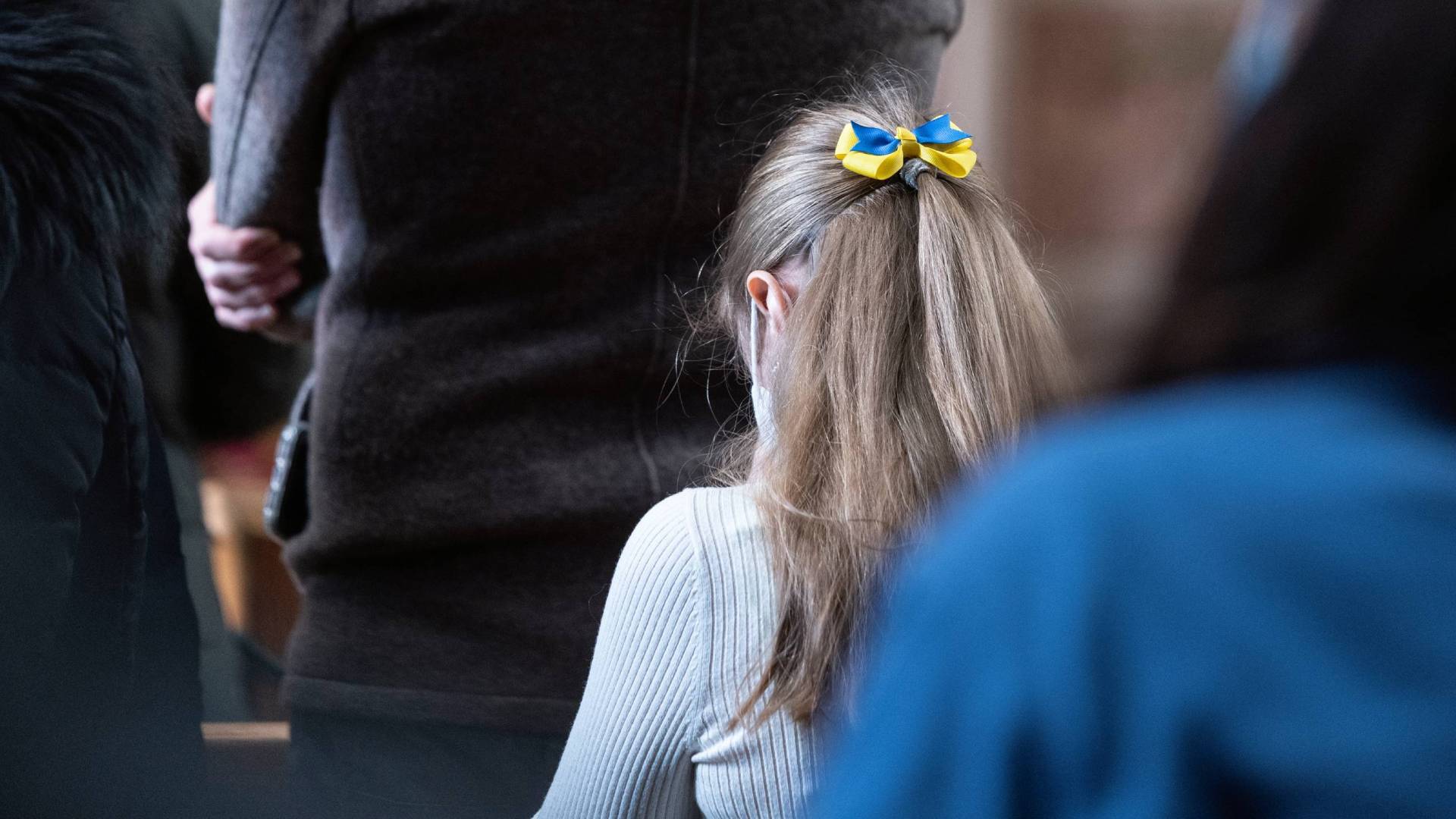
Illustration by Mallory Rentsch / Source Images: Duncan Kidd / Unsplash / Vladyslav Trenikhin / Getty

This piece was adapted from Russell Moore’s newsletter. Subscribe here.

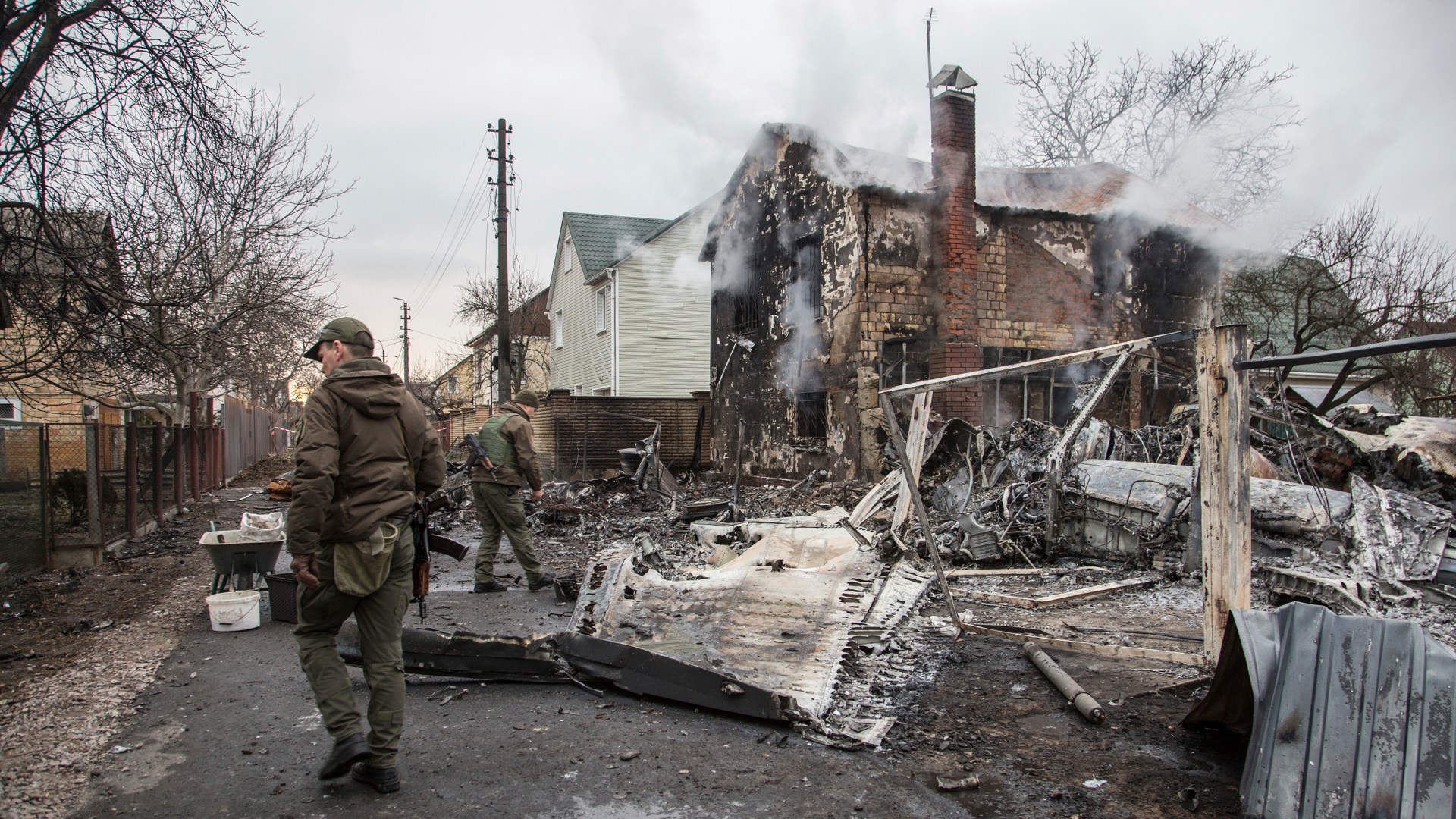
Early in the Russian invasion of Ukraine, some longtime observers of Vladimir Putin speculated that he might soon use what he did before: mobile crematoriums.

These incinerators aren’t for the combatants killed on the other side but for the bodies of Putin’s own troops. Such ghoulish machines would be employed to hide the number of fatalities to avoid humiliation abroad and loss of support at home.

Regardless of whether these experts’ predictions are right, Putin’s impulse is to hide what his invasion will bring for Russian armies: death.

As Christians around the world mark Ash Wednesday, perhaps we can remember that the Christian way of death is opposite of this invading tyrant’s. For both Christians who observe the church calendar and those who don’t, this Ash Wednesday may be especially poignant this year.

Many of us are only just now catching our breath after two years of a pandemic that has killed countless people and upended the lives of everyone who survived it. And on all our television screens and social media feeds are images of brave Ukrainians holding their own against those invading their homes and communities.

In the backdrop of all this are possibilities we almost dare not even mention: a war spreading all across Europe or even, given the evident instability of the Russian dictator, the prospect of nuclear war.

Putin operates out of what intelligence services and diplomats tell us is a nostalgia for the old superpower days of the Soviet Union. To do this, he projects an image—the shirtless warrior riding a horse, for example. The last thing he wants the world to see is the corpses of Russian soldiers. Such would suggest weakness.

The Ukrainians, led by President Volodymyr Zelensky, seem to want the world and their own countrymen to see the opposite: a vulnerable people who are willing to die with honor—and who are in desperate need of help.

Putin’s denial of death is not uncommon in the history of the world, especially in tyrants with delusions of empire. The pyramids of the pharaohs tried to present rulers who could, in some ways, transcend death. So did the images that other emperors employed of their own immortality or even godhood.

To the prince of Tyre, God delivered an oracle through the prophet Ezekiel: “Will you then say, ‘I am a god,’ in the presence of those who kill you? You will be but a mortal, not a god, in the hands of those who slay you” (Ezek. 28:9).

The fallen human view of ultimate power wants to project two things: I can hurt you, and I cannot be hurt. One would be hard pressed to find a better symbol of both projections than the cross of the Roman Empire. Every crucifixion represented a threat—this can happen to our enemies—all from an Eternal City aspiring to godhood.

Jesus upended all of that.

Ash Wednesday is appropriate for wartime because it points to a deeper, and even more dangerous, war. The Bible says the human condition wants to conquer death, but not in the way God intends, through the dependence that comes from eating from the Tree of Life.

Instead, we have listened to a different voice telling us, “You will not certainly die” if only we eat at his direction, in order to become invulnerable, to become “like God” ourselves (Gen. 3:1–6). At the end of that is ashes.

We became subject, the Bible says, to lifelong slavery to “him who holds the power of death—that is, the devil” (Heb. 2:14). The power the evil one has held over us is “fear of death” v. 15). The more we fear death, the more we clamor for the kind of power and glory we can display to forget that we are but dust and to dust we will return.

The gospel answers that slavery to fear not by a display of carnal strength but by the One who was “crowned with glory and honor” through experiencing the very thing we dread most: the suffering of death (Heb. 2:9). The answer to our slavery to fear is what seems to be shameful to a world that loves power: the cry of a desperate infant, “Abba, Father!” (Rom. 8:15).

This Ash Wednesday, Christians all over the world are standing with the people of Ukraine. Various church communions have planned vigils and calls to prayer. And we do so not because Ukraine is the more powerful nation or because we admire their strength in some social Darwinist way.

The church prays with Ukraine because their cause is just and because they, like we, are vulnerable and imperiled, and they know it.

Ash Wednesday is about remembering that we will die, and that’s important. We are told to “number our days” (Ps. 90:12) and to remember that life is a vapor soon to vanish (James 4:14).

But it is also about how we died. Joined to Christ, we have died with him—in the most humiliating and shameful way possible. The way to glory is not the way of Rome, of Russia, or of our own desire to exalt or protect ourselves. The way to glory is the way of the cross.

In wartime, dictators should remember that, win or lose, they will die and that there will be no invading or conquering the kingdom of God. At Ash Wednesday—and all year round—we should remember this too.

Russell Moore leads the Public Theology Project at Christianity Today.

News

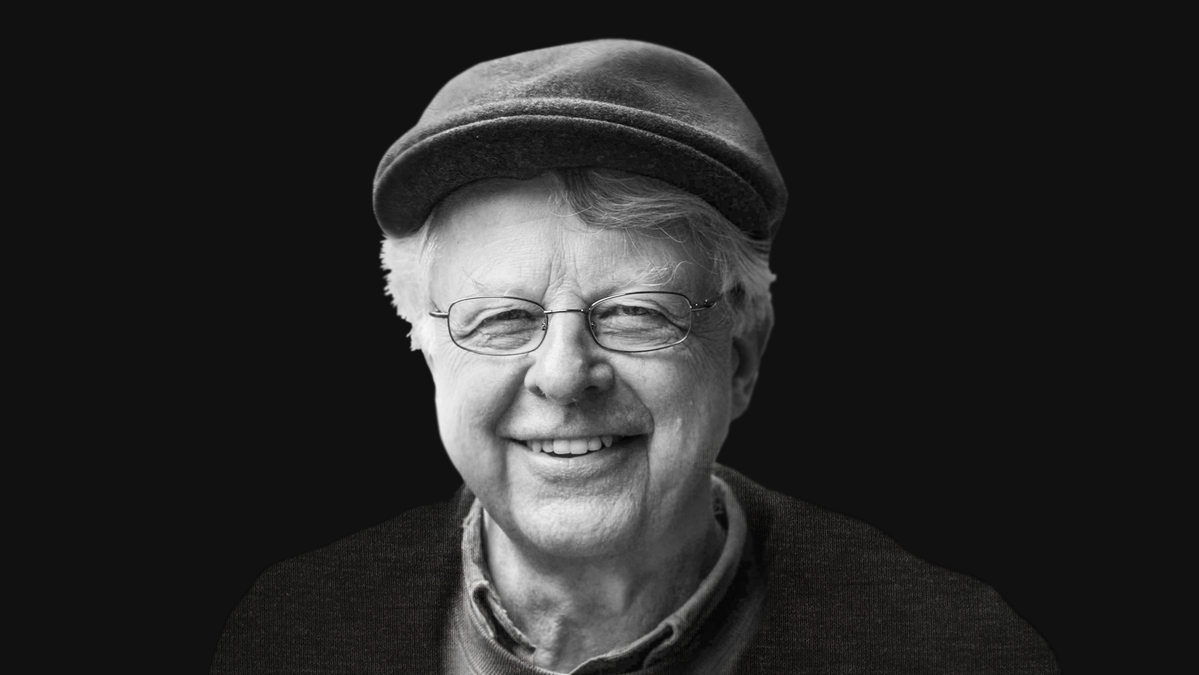
Died: Ray Bakke, Who Believed Christians Are Called to Cities

Urban missiologist urged evangelicals to cross racial and cultural lines for the sake of the gospel.

Christianity Today February 28, 2022
Courtesy of Ray Bakke / edits by Rick Szuecs

Ray Bakke believed that “Jesus loves the little children / All the children of the world,” and he thought evangelicals did too. So he was surprised when so many fled from racial diversity when their children’s schools were integrated.

“It was the biggest shock of my life,” he told CT in 2021. “The whole Moody-Trinity-Wheaton establishment, all of them singing ‘red and yellow, Black and white,’ but when those kids showed up at their kids’ schools, they panicked and they fled.”

Bakke went the opposite direction. He moved his family into Chicago in 1965 and stayed through white flight, racial unrest, riots, bombs, fires, and gangs. He adopted a Black son and became a leading proponent of urban missiology, arguing that the Great Commission called Christians into American cities.

Bakke was a critic of suburban Christianity and a bold voice opposing church growth strategies that embraced and encouraged de facto racial segregation.

“He taught us urban missiology in ways few of us were prepared to see in the ’80s,” said David Fitch, chair of evangelical theology at Northern Seminary. “He gave us a vision for how God works in the teeming diversities of urban centers. He had a giant presence wherever he spent time with pastors and students.”

Bakke died on February 4 at the age of 83. His family requested that CT hold his obit until February 28 to give them time to grieve.

The author of The Urban Christian and A Theology as Big as the City was raised about as far from city lights as one could get. His parents, Tollef and Ruth Bakke, settled in Saxon, Washington, about 90 miles north of Seattle, in a valley between the Cascade Mountains and Lake Whatcom, where a community of immigrant loggers and farmers raised children and cows.

Tollef and Ruth both came from Norwegian families but spoke in different dialects and couldn’t understand each other, so the first language in their home was English. Tollef had once hoped to go to Bible school, but the dream was interrupted by the Great Depression. He had a dairy farm, drove a truck, and was an active member of a local Lutheran church with a deep commitment to personal faith, prayer, and Bible reading.

Ray Bakke was born May 22, 1938, the oldest of four. He was taught Sunday school by “a busted-up Swedish logger,” he told CT, who believed Christians should love God, follow Jesus, and serve the world.

A high school history teacher and football coach encouraged Bakke to go study at Moody Bible Institute and “get a little Bible under your belt.” He left Washington on a bus at 18, with a box of chicken and sandwiches his mother had packed.

“I didn’t know where Moody was,” Bakke said in an interview two months before his death. “When we came down Lake Shore Drive in Chicago, I was in awe of everything I saw. I was captured by Moody.”

Studying to be a pastor from 1956 to 1959, Bakke was exposed for the first time to the racial divisions in America.

One of the people he learned from was Corean Jantz, a piano major and pastor’s daughter from Missouri. Jantz was the pianist for the Moody choir, and her roommate, the choir’s best soloist, was Anita Bingham, a Black woman. When the choir traveled, school officials called ahead to warn churches that the choir was integrated. Bakke was startled to learn that some Christians would refuse to let a Black student into their homes.

Bakke married Jantz in 1960, and the young couple moved to Seattle, where Bakke pastored at a Swedish Baptist church and continued his education at Seattle Pacific University.

As a young pastor, Bakke said, he learned he also had to be a part-time sociologist. To minister to his congregation, he had to understand the social pressures impacting their faith. When a local Boeing plant lost a government contract and laid off large numbers of employees, the effect was felt at the Swedish Baptist church.

“I began, overnight, to lose men,” he said. “When the lunch bucket group, working-class men, are unemployed, they stop coming to church. They’ve lost their identity. If they don’t have a job, they don’t have an identity. These sturdy evangelical believers found it difficult to come to church.”

Bakke decided he needed more education. Then the family suffered a personal tragedy when a daughter died at birth. They buried her and left Seattle. The family—Ray, Corean, and sons Woody and Brian—moved back to Chicago in 1965.

Bakke enrolled in Trinity Evangelical Divinity School and pastored a church in the Edgewater neighborhood of Chicago, where about 60,000 people lived in a 1.25-square-mile area, including immigrants from about 25 percent of the nations of the world. He recognized his cultural context was, in some important ways, similar to the urban context of Christians in the Roman Empire. Paul wrote to churches in diverse metropolises; Augustine wrote about the Trinity while ministering to Christians in the port city of Hippo.

And yet, in an evangelism class at Trinity, he learned there was no major scholarship on urban evangelism and that some even argued that Christianity couldn’t thrive in cities, because the Bible was a rural book for rural people.

As an evangelical, though, Bakke felt called to love God, follow Jesus, and serve the world. And the world’s people were increasingly urban.

“We can all be timid Christians, when faced with modern urban conditions,” Bakke later wrote. “But it is only by living in a city, with a theological vision for the city, that we can attempt to reach the city’s people.”

When Bakke graduated from Trinity, he entered the doctoral program at McCormick Theological Seminary, writing his dissertation on urban pastoral work in the Roman Empire and laying the foundation for a modern urban missiology.

As a doctoral student, he cofounded the Seminary Consortium for Urban Pastoral Education, which is now a school at Christian Theological Seminary. When he graduated, he took a position as professor of ministry at Northern Seminary and joined the Lausanne Committee for World Evangelism as the senior associate for large cities.

Bakke’s work ran against popular trends in the study of evangelism, though. Many evangelicals in the 1980s and ’90s embraced a church growth strategy based on the “homogeneous unit principle” that said more people will convert to Christianity if they don’t have to cross racial, linguistic, or class barriers.

Bakke personally quarreled with Fuller professor C. Peter Wagner about church growth theology.

“Peter once pushed up against the wall of a bookstore,” Bakke said. “He said, ‘If 2 billion have never heard the gospel, isn’t it true that reaching them is more important than your theology of the city?’

“I told him that gangs are segregated and they grow, but that doesn’t mean they’re good. There is something missing if your church growth theology isn’t better than what the gangs are preaching.”

At the same time, integration wasn’t an abstract idea for Bakke. His sons were enrolled in public school, and Woody, his eldest, frequently brought friends who didn’t have enough to eat to the Bakke house. One of them, a boy named Brian Davis, stayed for weeks and then months, until the Bakkes finally asked if he wanted to be a permanent part of the family.

“People talk about how hard it is to integrate,” Bakke told CT. “It only cost me $80 to adopt him.”

In 2001, Bakke cofounded Bakke Graduate University. The school focused on teaching pastors to apply theology to trends in urban migration and the growth of global cities. Two-week intensive courses are held in six continents, and each student must cross an ocean at least once as part of the program. Bakke worked there as chancellor and professor until he retired in 2011.

He continued to be frustrated, though, that so many white evangelicals didn’t seem to believe the Sunday school song about Christ’s love for racial diversity.

“I watched the evangelical movement panic and turn inwards,” he said a few months before his death. “We’ve become fearful as the country has become fearful, and politicians have played on that fear. Too many white evangelicals have forgotten who we are. We are the people who believe in crossing oceans and jungles and talking to people in their own languages. Now we’re moving into all-white neighborhoods and hoping the globalization stuff will go away.”

Bakke said he hoped Christians would reread Psalm 107 when he died and remember that God is on a mission in the motion of people around the globe.

He was predeceased by his son Brian Davis in 2018 and wife, Corean Jantz Bakke, in 2021. He is survived by his sons Woody and Brian Bakke.

News

Ukrainian American Churches Deploy Praise as a Weapon

Evangelical Ukrainian churches in the home of the largest Ukrainian population in the United States wept and prayed Sunday. Having escaped persecution in the Soviet Union themselves, they already have testimonies of God’s faithfulness. 

Christianity Today February 28, 2022
Lev Radin / Sipa USA / Sipa via AP Images

On Sunday, Ukrainian evangelicals in New York City gathered in their churches and wept, vented, and sang, feeling the existential threat to their loved ones and their homeland alongside people around the world.

As President Vladimir Putin put his nuclear forces on high alert, the Ukrainian Americans called their praise songs “weapons of war.” Outside the churches on a blue-skied morning, fellow New Yorkers continued protests against the Russian invasion, with some worshipers joining after their services.

New York City has the largest Ukrainian population in the United States, a community of about 150,000, historically concentrated in the East Village of Manhattan and Brighton Beach in Brooklyn. Thousands had come to the United States as religious refugees, most of them Baptist or Pentecostal, under a special asylum for those fleeing Soviet religious persecution.

In the East Village, some of those refugees attend Cornerstone First Ukrainian Assembly of God, where elderly women in traditional headscarves worship alongside young people in sweatshirts. The Pentecostal congregation now includes Russians, Nigerians, and Belarusians, with services in a mix of Ukrainian, Russian, and English.

Many at Cornerstone have family in Ukraine and fear their fate as the war continues day by day. On Sunday, one woman with white hair wept softly through the whole service.

“What can we do but stay in prayer and cry to God?” said elder Peter Pristash, who lived much of his life in Ukraine and is now a US citizen.

As the nuclear threat escalated tensions, people in the service were in disbelief about how quickly the situation had spiraled.

“Our minds fail to understand: How is this possible in this day and age?” said Pristash before the congregation. “God allowed this to happen, and we do not know why. But we know God is sovereign, and he is on his throne. There are people who think if they kill someone it will accomplish a goal.”

Cornerstone’s worship team that day included a Ukrainian jazz saxophonist, Andrey Chmut, who was touring in the United States and recording an album with American jazz pianist Bob James when the war broke out.

Now he can’t get back to Ukraine, and his wife and young daughter are stuck there. His flight was supposed to leave Monday, but with all commercial flights to Ukraine grounded due to the war, he came to the Sunday service with his saxophone.

“Our hope is in the Lord, the one who holds things together,” Chmut said to the church after sharing his situation and thanking them for prayer. “No matter how things fall apart, the Lord created this world, and he holds things in his hands.” People murmured amens and let out sniffles.

Two of Chmut’s musician friends in Russia who spoke publicly against the invasion are now in prison, he said after the service. Ukrainian culture and the arts were “flourishing” the last few years, but “now it’s in jeopardy. … I don’t want to live under Putin’s regime.”

He played through tears. He was trying to figure out if he could get to Poland, despite not having a visa, and somehow meet his wife and daughter there. All he could think about was a nuclear attack. His wife and daughter “don’t know even how tonight is going to be,” he said.

Even if a nuclear attack happens, Chmut told the church in Ukrainian, “the hope we have is we go home. And we will be together with Jesus, the one we know will help us.” One of the members translated his words to the congregation in English.

During the service, people quietly scrolled through news articles on their phones. Paul Oliferchik, one of Cornerstone’s pastors, acknowledged that many in the congregation might wish they could be in Ukraine since they don’t know how to help from the US.

“Be the nonanxious presence of Christ that transcends human conflict,” he urged them. “Maybe all you have to offer to God is prayer in tears … It is important to create time to lament before God.”

Pristash, the elder, said he was too old to serve in the army, but he had imagined what he would do if he could. “Today our weapons are here,” he prayed. “We can call upon God and pray to him.” He quoted Ephesians 6:12 that “our struggle is not against flesh and blood.”

With a church of people with different backgrounds, Oliferchik said after the service that the pastors have been praying against conflict in the church on this topic. He said they have been unified so far that “none of us wants this.”

Oliferchik was born in Moscow and his parents are from Belarus, though he grew up in the United States. His grandfather was imprisoned for his Pentecostal faith in the Soviet Union. He said his parents were regularly mocked for their faith. Throughout the service, Oliferchik hopped up to translate in Ukrainian or Russian. He and his wife both have relatives in Ukraine.

“This is pure evil from Putin’s regime,” he said. Thinking about his grandfather and the persecution of evangelicals in Russia, he said, “We don’t want history to repeat.”

Communities of Slavic evangelicals grew in the 1990s around US churches, with the largest population of evangelical refugees settling in Sacramento, California, according to historian Catherine Wanner in Communities of the Converted: Ukrainians and Global Evangelism. The 1989 Lautenberg Amendment, which gave special asylum to those fleeing Soviet religious persecution, continues to this day.

Cornerstone has served an “oasis” for immigrants, said Pristash, and he hopes it will be a landing place for anyone who is fleeing Ukraine and comes to the United States.

His church was not alone in its laments on Sunday. A Korean congregation with ties to the church showed up in solidarity and filled the back quarter of the pews. As the church sang “How Great Is Our God” in Ukrainian, the Korean church members sang along in English with hands lifted.

The pastor thanked them for coming, and said afterward how glad the Cornerstone congregation was to have other Christians to “sit with those who were suffering.”

Culture

Kids Can Sing and Shout. How Do We Teach Them to Worship?

From Isaac Watts to Shane & Shane, songwriters have seen the power of music for the minds of young believers.

Christianity Today February 28, 2022
Ocamproductions / Lightstock

In the preface to Divine and Moral Songs for Children, a collection of songs and verse published in 1715, Isaac Watts wrote, “My friends, it is an awful and important charge that is committed to you. The wisdom and welfare of the succeeding generation are intrusted with you before-hand, and depend much on your conduct.”

“What is learnt in verse is longer retained in memory and sooner recollected,” wrote Watts, the English hymn writer and theologian whose works include “Joy to the World” and “O God, Our Help in Ages Past.”

“[These verses] will be a constant furniture for the minds of children, that they may have something to think upon when alone, and sing over to themselves. This may sometimes give their thoughts a divine turn, and raise a young meditation.”

No pressure, parents. Here is a tool that, if used properly and faithfully, may help you inspire “divine” thoughts and worship in your children.

There are a lot of reasons to teach children using music. It promotes language acquisition and literacy, it’s participatory, it captures their attention and sentiment, and it helps them commit important information to memory.

Naturally, we use it to convey some basic ideas about God and the gospel starting at a young age. “Jesus loves me, this I know,” “This is the day that the Lord has made”—these simple phrases are meant to be early, lasting impressions that begin as rote song memorization and hopefully become firm beliefs.

But Christians don’t just aim to use songs as a learning tool. They want to raise kids to become worshipers themselves.

Worship in the Word, a new album out last month by artists Shane Barnard and Shane Everett, known as Shane & Shane, seeks to be a bridge between what we think of as “Sunday school songs” and the music kids will encounter in corporate worship with their parents. They designed accompanying music videos as tools to teach Scripture while modeling worship.

Teaching kids how to participate in musical worship may seem odd or unnecessary. For those who grew up in church services and Sunday school, the transition from singing about God to consciously singing to God was gradual and effortless, in hindsight.

But parents of digital natives are keenly aware that their children have easy access to more music and other entertainment media than any previous generation. As a result, many Christian parents have become more intentional with how they engage their children in worship.

As a “newish” dad, Brett McCracken wrote for The Gospel Coalition, “Fully aware that a few hours at church on Sundays will pale in comparison to the dozens of hours each week they’ll be formed by secular ideas (through friends, school, phones, TV, music, everything), I’m already thinking about what I can do to surround my sons with Christian truth throughout their day-to-day lives. Music is one tactic.”

Now more than ever, searching Christian parents are met with a barrage of musical resources: contemporary worship hits sung by peppy children’s ensembles, Scripture and catechism memory songs, and lullabies so that your kids can fall asleep listening to praise music. And of course, the entire VeggieTales catalog.

With new resources like Worship in the Word and music for kids coming from artists at Hillsong, Bethel, and Elevation, there is also the opportunity (and potential accompanying pressure) to shepherd kids into a particular style of worship.

Learn by doing

Watts’s collection of songs for children included a combination of praise hymns like “Praise to God for our Redemption,” moral verses like “Against Lying” and “Obedience to Parents,” and doctrinal songs like “Heaven and Hell.” Heavy-handed? Yes, but Watts was trying to encourage the singing of lessons or ideas and the singing of praises to God. Contemporary writers of Christian music for children try to encourage this balance as well.

“We’re [singing] about God’s character, who he is, and trying to help [children] connect, to create that bridge of understanding for them,” said Jason Houser, founder of Seeds Family Worship, an organization that creates kids’ songs by setting Scripture to original music.

Balance between music that teaches principles and music that introduces a posture of worship allows children to enter in and explore spiritual ideas interactively, developing deeper understanding as they mature.

Parents can take comfort in the reality that children learn to participate in musical worship as they grow in community. The burden of teaching children is to be shared, even though the foundation is laid at home.

“The number one influence is going to be parents and families,” said Angie Rumschik, early childhood ministry director at Grace Bible Church in Ann Arbor, Michigan. “But I know that when kids go into a main service with their families, the music seems to be what captures their attention. … They’re watching everybody worship together and whatever is going on onstage. That’s exciting to them.”

Over time, children come to understand their prayers and songs as communication with God. They learn by observing and then doing it themselves.

“While the experience of God in worship leads to knowledge of God,” wrote Jerome Berryman and Sonja Stewart in Young Children and Worship, “the primary mode of knowing is by participation.”

If kids learn about musical worship by observing the practices of their families and churches, is kids’ music really necessary? Should children simply participate in worship alongside their parents on Sunday morning?

“I think it’s really important for families to bring their kids every now and then into service, to be a part of that,” said Rumschik. Author Jen Wilkin also argues that families ought to be worshiping together on a regular basis.

“But kids are going to grow up, and they need to make their faith their own too,” said Rumschik. Singing and playing with peers are ways for kids to experience being part of a little faith community separate from their parents.

The playful worship that happens in a classroom or auditorium full of children is valuable. Children engage with spiritual truths with their whole hearts, minds, and bodies, even if their understanding of the divine is in its infancy.

“Some [worship music] does resonate with kids, and some of it is a little bit inaccessible,” said Tad Daniels, CEO of the Worship Initiative. “It’s filled with extended metaphors and language that’s not something you and I might use day to day. We understand it well, and we love to worship with it, but it may be just a little bit out of reach for kids.”

Raising the bar for kids’ worship music

At the same time, said Daniels, much of kids’ music is too simple, both musically and thematically, especially for children in mid to late elementary school. In his view, there just isn’t enough music for kids who have outgrown “Jesus Loves Me” and “Deep and Wide” but are still building a vocabulary of faith.

The artists at the Worship Initiative, a ministry started by Barnard and Everett, are creating music to bridge the gap. The 10 new songs on Worship in the Word, released in January, don’t immediately register as kids’ music. They aren’t overly simple or repetitive, the melodies aren’t trite, and the songs aren’t thematically shallow.

Daniels noted that it was important to keep rich, challenging themes but present them in a vocabulary that would be understandable for an eight-year-old.

“What does it look like to tell kids that Jesus loves? What does it look like to tell kids that God is holy?” said Daniels. “Let’s not pretend that they don’t know anything.”

In “First Things First (Matthew 6),” Shane & Shane sing, “My worry can’t add to Your purpose / My questions don’t hinder Your plan / My future is held in the hollow of Your hand.”

The songwriters considered what it would look like to help kids understand that they can talk to God about their fears. Daniels recounted a conversation with one of the songwriters about the anxiety his children have experienced during the past two years.

This father told Daniels, “I get home from work, and all my daughters do is tell me about what they’re worrying about. … I think my kids are becoming self-protective balls of anxiety.”

Themes of worry and casting cares are woven through the album in songs like “Take Heart” and “You Know Everything.”

Even younger kids can benefit from both intergenerational worship in the sanctuary and specialized kids’ programming. Watts’s vision for the use of children’s music was a one-way educational project. Something more mutual and relational is possible in today’s Christian communities.

“Kids can tap into the wonder that, I think sometimes with adults, gets covered up. With kids, it’s fresh,” said Houser.

“There’s energy and joy,” he said, “And I think that sometimes there’s space for adult worship to just have more energy and express joy and excitement.”

Daniels advises worship leaders to be willing to let go of perfect, polished sets in order to invite kids into worship space and reminds worshippers not to see squirmy, dancing, off-key kids in the service as distractions.

If we take Jesus at his word, that he does want the little children to come to him as they are, we need to allow them to worship in their full childlikeness.

“Jesus said to go to these little ones. These are the example of what it looks like to be in the kingdom of heaven,” said Daniels.

News

During Sunday Siege, Ukraine’s Churches Persevere

(UPDATED) As David is preached on Dnieper River, Russian pastors promote peace from Moscow.

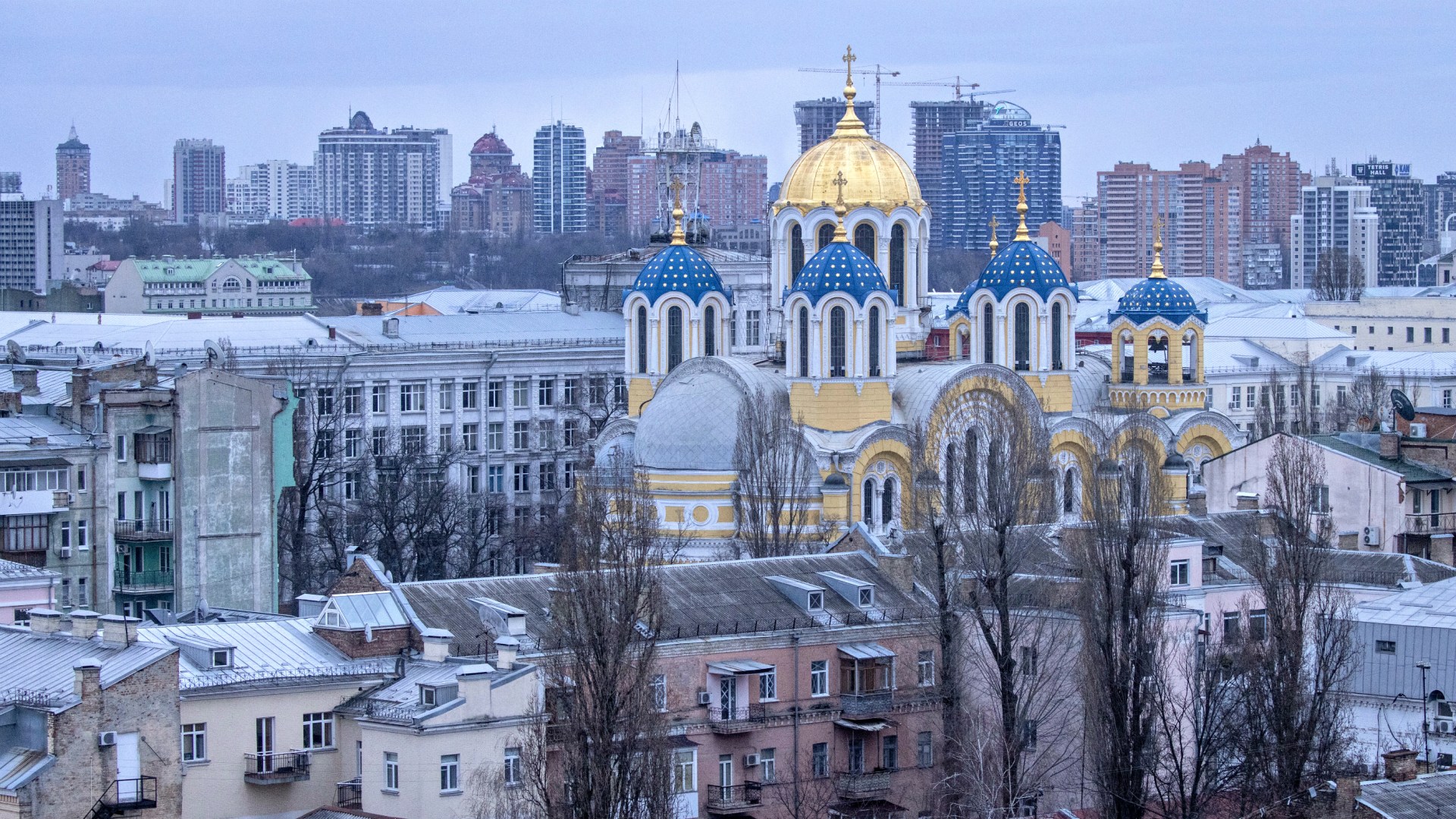
St. Volodymyr's Cathedral is seen against the capital city skyline during a weekend curfew on February 27 in Kyiv, Ukraine.

St. Volodymyr's Cathedral is seen against the capital city skyline during a weekend curfew on February 27 in Kyiv, Ukraine.

Christianity Today February 27, 2022
Chris McGrath / Getty Images

[Українська]

As Russian troops met stiffer resistance than expected from Ukrainian soldiers and citizens in Kyiv and other cities, pastors in both nations adapted Sunday worship services appropriately.

“The whole church prayed on their knees for our president, our country, and for peace,” said Vadym Kulynchenko of his church in Kamyanka, 145 miles south of the capital. “After the service, we did a first-aid training.”

Rather than a sermon, time was given to share testimonies from harrowing days of air raids. Many psalms were offered, and Kulynchenko’s message centered on Proverbs 29:25. Fear of man will prove to be a snare, but whoever trusts in the Lord is kept safe.

Both disruption and ordinary life were on display at Calvary Chapel of Svitlovodsk.

Andrey and Nadya, displaced from Kyiv by the Russian missile barrage on Thursday, exchanged wedding vows amid great celebration.

Scheduled to be married this weekend in the capital, the couple was instead sent fleeing to Nadya’s home church 185 miles southeast along the Dnieper River—with a request for an impromptu wedding.

“In the middle of a war? That doesn’t make sense!” said Benjamin Morrison, with irony. “But during war is when it makes the most sense. What better reminder that even war cannot stamp out love. And what better way to say that we serve a higher King than to rejoice in the midst of chaos?”

They were married on Saturday, as planned.

On Sunday, the congregation of about 80 people—just beginning to swell with newcomers seeking refuge—regathered to hear a sermon on David and Goliath.

“Yes, David still had to fight. Yes, it was still hard and scary—but God was his confidence,” concluded Morrison, an American missionary veteran of 20 years and married to a Ukrainian.

“May he be ours as well, and may he cut off the head of the enemy.”

Ukraine claimed today that 3,500 Russian soldiers have been killed so far. Russia has not released an official casualty figure.

Regarding its own losses, Ukraine’s Health Ministry counted more than 350 civilians dead and almost 1,700 wounded as of Sunday night. The reported tally combines civilian and military casualties, but broke out 14 child deaths and 116 wounded.

Taras Dyatlik, regional director for Eastern Europe and Central Asia at Overseas Council, did the math. If correct, in three days of fighting 40 Russian soldiers died every hour; one soldier every minute and a half.

“These are mostly 19- to 25-year-old children,” he lamented. “The depth of our human brokenness can only be healed by the Holy Spirit.”

Metropolitan Epiphanius, head of the Orthodox Church of Ukraine (OCU), pleaded for the dead with Patriarch Kirill, Moscow-based head of the Russian Orthodox Church (ROC).

“If you cannot raise your voice against aggression,” he stated, “at least take the bodies of Russian soldiers whose lives have become the price for [your and your president’s] ideas of the ‘Russian world.’”

Prior to the war, President Vladimir Putin asserted that Ukraine was simply an extension of Russia, with no historic independent existence. Epiphanius said that the Ukrainian government was seeking to coordinate with the International Committee of the Red Cross to repatriate the dead bodies, yet receiving no response.

Kirill tread carefully, given his flock on both sides of the border. In 2019, the Istanbul-based ecumenical patriarch of the Orthodox Church, Bartholomew I, recognized the national independence of the breakaway OCU, while many parishes in Ukraine rejected this and chose to remain under the Ukrainian Orthodox Church (UOC) which is part of the ROC, as has been historic precedent. (Exact figures for OCU- and UOC-affiliated churches in Ukraine are difficult to determine.)

Expressing his belief that the warring sides will overcome their divisions and disagreements, Kirill called on “the entire fullness of the Russian Orthodox Church to offer a special, fervent prayer for the speedy restoration of peace.”

As a foundation, he cited the common centuries-old history of the two peoples.

Epiphanius, however, closed his message to the patriarch by noting the Orthodox church calendar marks this Sunday for remembrance of the Last Judgment.

Putin ordered his nuclear forces to a higher level of alertness.

Western allies of non-NATO Ukraine increased their sanctions against leading Russian banks and politicians—including Putin. While they stopped short of the financial nuclear option of cutting Russia off entirely from the international SWIFT system for banking transfers, many approved the sending of additional defensive aid to Kyiv.

Meanwhile, 10 regional Protestant seminaries—including Kyiv Theological Seminary and Evangelical Reformed Seminary of Ukraine—put out a joint statement on Facebook that drew more than 650 shares.

“We are called to speak the truth and expose deceit,” they stated. “We … strongly condemn the open and unjustified aggression aimed at destroying the statehood and independence of Ukraine, based on blatant lies” from Putin “which are clearly contrary to God’s revelation.” They noted:

We confess the real and unlimited power of God over all countries and continents (Ps. 24:1), as well as over all kings and rulers (Prov. 21:1); therefore, nothing in all creation can interfere with the fulfillment of the good and perfect will of God. We, together with the first Christians, affirm “Jesus is Lord,” and not Caesar.

We express solidarity with the people of Ukraine. We share the pain of those who have already lost their loved ones. We pray that all of the aggressor’s plans would be thwarted and put to shame. We call on all people of good will around the world to resist the lies and hatred of the aggressor. We call on everyone to petition for a cessation of hostilities and to exert every possible influence on the Russian Federation in order to stop the unmotivated aggression toward Ukraine.

Five seminaries are based in Ukraine. Two, granted anonymity, are based in Russia.

Bolder still were a number of pastors within Russia.

Victor Sudakov, senior pastor at New Life Church in Yekaterinburg, the fourth-largest city in Russia, changed his Facebook profile photo on Thursday to incorporate a small Ukrainian flag. On Saturday, he changed his cover photo to display the flag and the tryzub, the gold trident from Ukraine’s official coat of arms.

The action by the Pentecostal pastor, part of the Associated Russian Union of Christians of Evangelical-Pentecostal Faith (ROSKhVE), drew hundreds of comments. “Brother I always thought and said that you were a brave man,” stated one. “There is no price tag for what you are doing now!”

On Sunday, Sudakov linked to a Change.org petition intended for Russians who oppose the war in Ukraine. More than 960,000 people had signed it as of Sunday evening.

On Friday, ROSKhVE released an official statement quoting the Book of Acts in reference to God’s appointed places for people to live.

“Regardless of the causes, war is a terrible evil,” the group stated. “God has called us to love [and] the primary values should not be the specific outlines of borders, but human souls.”

Praying for peace “to be restored as quickly as possible,” the evangelical union called for fasting “until the divine resolution of the fratricidal conflict.”

Like Kirill, ROSKhVE cited as a foundation the centuries-old history of unity between Russian and Ukrainian evangelicals. Many of the latter’s missionaries, it stated, now serve as pastors and bishops of churches. They are hopeful this will speed an early reconciliation.

“I am so sorry that my country attacked its neighbor,” stated Constantin Lysakov, a pastor at Moscow Bible Church. “No matter how we call this event, no matter how we justify it, … there is no shifting blame when you are repenting. And we all should repent over what took place.”

“There is only one source of comfort in all of this for me,” he wrote on Facebook. “Christ is on the throne, God the Father holds everything in His hands, the Holy Spirit fills the hearts of those who trust in Him and nothing can overcome His might. God does the greatest works of redemption when everything seems hopeless. … I pray for the peace.”

At the outbreak of war, Yevgeny Bakhmutsky spoke similarly.

“My soul is grieved, my heart is torn with horror and shame, and my mind is shocked by human insanity,” said the pastor of Russian Bible Church in Moscow. “We are not politicians, we are children of God. We are not called to remake the geopolitical map of the world to please this or that ruler. … Let the world see that the children of God love and accept one another, not because of language [or] nationality … but because they have been accepted by Christ.”

A scriptural text often cited in Russian evangelical churches the Sunday after the warfare erupted was Psalm 2:1. Why do the nations conspire and the peoples plot in vain?

Other churches focused on solidarity and prayer.

Across Russia on Sunday, the approximately 700 churches within the 26 Protestant unions that compose the All-Russia Commonwealth of Evangelical Christians jointly declared a time of prayer and fasting for peace, said Pavel Kolesnikov, former ARCEC chairman and Eurasia regional director for the Lausanne Movement. “This is our action,” he told CT.

Their prayer agenda included five emphases:

1) For peace between the fraternal peoples of Russia and Ukraine
2) For the authorities and “rulers” to have the fear of God, strength, and will for peacemaking
3) For the safety of the people of Ukraine, as well as Christians living in Ukraine in places of armed conflict
4) For the Church, that God may preserve it from divisions and conflicts amid the aggravated situation
5) Understanding how every association of churches can respond to the needs of people affected by warfare

At his own church, Zelenograd Baptist Church in Moscow, Kolesnikov asked attendees at the morning service to join hands—every man, woman, and child—to pray for peace and wisdom for the governments of both countries. His church has also been collecting supplies, as many Russian churches are, to aid Ukrainian refugees in neighboring nations.

“It is not our war,” he said. “We love our Ukrainian brothers and sisters.”

Joining in the fast on Sunday, the Russian Union of Evangelical Christians-Baptists (RUECB) called on believers to be peacemakers.

“Bless restless nations and send peace, repentance. We are asking for your mercy upon all,” said Sergey Zolotarevskiy, pastor of Central Baptist Church in Moscow, without mentioning the conflict directly.

Oleg Alekseev, pastor of Source of Living Water, the oldest Baptist church in Voronezh in central Russia, used Psalm 2 as the main text for his message.

“The real victories do not happen there, nor does well-being originate there,” he said, referring to the battlefield. “It originates [in the church], when we faithfully [pray for] kings, rulers, and all peoples.”

Ruslan Nadyuk, pastor of Word for the Soul Baptist Church in Moscow, said the appropriate Christian response is one of incessant silent prayer that the conflict be resolved peacefully and according to God’s will. He cited the testimony of James 5:16. The prayer of a righteous person is powerful and effective.

Conditioned during decades of persecution under the tsars and communists, many Russian believers have decided that protesting is useless at best and dangerous at worst. Among the effects was a deepening of their prayer life, said Andrey Shirin, a Russia-born seminary professor in Virginia who surveyed sermons and Facebook comments by Russian pastors on behalf of CT.

“When upheavals begin, Russian evangelicals do not say much about them—particularly when they are political in nature,” said Shirin. “However, Russian evangelicals pray a lot. In fact, they believe this response is the most potent one.”

As Bakhmutsky, the Moscow pastor, stated on Facebook, “Do not rush to judge others through the prism of your culture, situation, and conscience. Do not think of prayer as something insignificant or useless. For most of us, that’s all we have left.”

But some pastors were more direct in their comments.

Yuri Sipko, former head of the largest Baptist denomination in Russia, said that first and foremost, Christians should respond with prayer. Jesus’ response, however, would respond to the events in Ukraine with the words of John 15:13. “Greater love has no one than this: to lay down one’s life for one’s friends.”

For Ukrainians, he said, this should be their wartime guiding principle.

Andrey Direenko expressed his dismay. “Pain, tears, horrors of bloodshed tear our hearts apart,” said the Pentecostal bishop from Yaroslavl in central Russia. “It seems like a nightmare, but it is horrible reality.”

And in the middle of it, ministries responded.

“I ask all families with orphans, as well as families raising children with disabilities and who want to move to safer areas, to write under this post,” stated Nicolai Kuleba, the evangelical ombudsman for children in Ukraine. “Leave comments, provide a number and we will contact you.”

Many churches within Ukraine are providing shelter. But so are those abroad.

“We are but a small church, thus our capacity to help is limited, perhaps up to a few dozen families or so,” said Péter Szabó, who pastors a Presbyterian church in Budapest. “But our greatest hope is not what we can or will do but what our King, the Lord Jesus Christ can and will do.”

Preaching from Acts 13, he reminded that the Christian life is never the series of failures, but that the “golden thread of God’s grace” gives the believer a sure hope for the future.

In desperate need of such perspective, about 78,000 refugees have fled to Hungary, he said. The UN reported a westward migration totaling 386,000, including Poland, Slovakia, and other bordering nations.

Thousands of Ukrainians have crossed into Moldova. At Kishinev Bible Church, a Russian-speaking nondenominational congregation in the country’s capital, several refugee families visited services for the first time Sunday morning.

The church and its partners, ministries whose offices are now turned into hostels, have shuttled refugees and supplies since the war broke out. Evghenii “Eugene” Solugubenco choked up as he preached on a topic he had slated months ago: God’s faithfulness.

“Those words mean little to us when we’re going to lunch in the afternoon after church. But when you’re a refugee they mean more. … I prayed for God to hug these people and let them know he loves them because he’s faithful,” said Solugubenco, who opened with Lamentations 3:23-24. They are new every morning; great is your faithfulness. I say to myself, “The Lord is my portion; therefore I will wait for him.”

“People are usually pretty reserved in this part of the world,” he said. “They don’t come up to the pastor after the service. But today they did.”

And some Ukrainians are seeing the divine.

“Soldiers and officers are telling me they are witnessing miracles from above,” said Oleksiy Khyzhnyak, a Pentecostal pastor in Bucha, 27 miles northwest of Kyiv, which witnessed Sunday’s most severe fighting. “‘It is not our achievement,’ they said.”

Khyzhnyak told Yuri Kulakevych, foreign affairs director of the Ukrainian Pentecostal Church in Kyiv, that rockets reportedly fell without explosion and Russian tanks ran out of fuel. Soldiers, lost in unfamiliar locations, are asking villagers for directions—and even bread.

A Netherlands-sponsored bread mission in Brovary, 15 miles east of Kyiv, is struggling to provide enough. Already supplying neighbors and those displaced from the east, they hope to scale up to include hospitals and the Ukrainian military.

But under pressure from the conflict, their own pool of labor is shrinking, headed west.

“We want to start baking 24/7 from Monday,” it stated, “but at the moment we don’t have enough bakers.”

Morrison can relate. His church, Calvary Chapel, just purchased 1.5 tons of flour. But as many pastors expressed to CT, the situation is draining. Constant air raid sirens give little peace. The immense needs allow little rest.

“This morning I woke up feeling like a truck had run over me,” he said. “But though we are all feeling exhausted, we press forward—believing that Christ has put us here for this moment.”

Additional reporting by Kate Shellnutt.

Correction: Metropolitan Epiphanius is head of the Orthodox Church of Ukraine (OCU), not the Ukrainian Orthodox Church (UOC).

Theology

The Ukrainian Needed Prayer. The Russian Volunteered.

How two Christian friends, divided by borders but united by their passion for evangelism, brought a prayer meeting to tears as war raged.

Alexey S. and Angela Tkachenko

Alexey S. and Angela Tkachenko

Christianity Today February 27, 2022
Edits by Christianity Today / Source image courtesy of Angela Tkachenko

The following dialogue is a retelling of an emergency global prayer meeting held by Lausanne Europe on Thursday:

Angela Tkachenko:

My mother entered my room in the middle of the night. “The war has started.”

I live in Sumy, a Ukrainian city of about 250,000 people that sits near the Russian border. One week ago, my husband insisted that I take our kids and my mother and evacuate. While we made it to the United States, he stayed behind.

I immediately began panicking on Thursday. What was happening in Sumy? Where was my husband? Was he safe? When I finally got ahold of him, he told me he had woken up to the sounds of bombs. He was now snarled in traffic as he tried to drive out of the city. I scrolled through pictures on my phone of long gas station lines and people sleeping in metro stations, and read the government announcement banning men between the ages of 18 and 60 from leaving the country. Will I see my husband again? When? My 93-year-old grandma is alone… my team… my friends… our house….

I struggled to make it through the day. In the afternoon I joined an international prayer call organized by the Lausanne Movement in light of the invasion. When the host asked how I was doing, I cried. I was angry. I felt betrayed, broken, and stepped on by Russia. I told everyone I was scared for my husband and for my friends in Kyiv praying at that moment about whether they should evacuate.

Then the host asked if someone could pray for me. My friend Alexey volunteered. My Russian friend, Alexey.

Alexey S:

I woke up Thursday morning startled to learn that my country had invaded Ukraine. I was in Moscow for a ministry trip, more than 2,000 miles away from my family in Novosibirsk, Siberia. It was a cold morning and I watched the news in silence as I struggled to eat breakfast. Shame that my country was starting a war against another—a country I’d visited no less than four or five times—began to come over me. I felt afraid for the future of the world and I grieved for my Ukrainian brothers and sisters who would live or die in the aftermath of this decision.

I was born and raised in the Soviet Union in Siberia. After the USSR collapsed, I became a Christian at the age of 23 after hearing the gospel preached at my mother’s rehab center. For me, finding faith in Christ was more than accepting that I was God’s child—it was realizing that I had brothers and sisters around the world. One of those was my Ukrainian friend Angela.

I met Angela seven years ago, at the Lausanne Conference in Jakarta. I was struck by her boldness when sharing the gospel. One of her initiatives involved mobilizing teams to enter nightclubs in various Ukrainian cities to initiate conversations with people who would never enter a church! Since then we became good friends and have supported each other in our ministries. In 2018, Angela brought a team to Moscow during the World Cup to share the gospel in the streets. These memories kept coming back as I watched the news.

Later that day, I joined Lausanne’s prayer call and felt grateful to see Angela was also there. It was heartbreaking to hear what she and other Ukrainians on the call were going through. It felt awful that my country was causing her so much personal distress. When the facilitator asked who would volunteer to pray for her, I said yes and began talking to God as I wept.

Angela:

I’ve always loved my Russian friends, even though when I was growing up there were no “Russians” or “Ukrainians.” We all were one nation called the Soviet Union. As a kid, numerous times I hopped on a train at 5 p.m. in Sumy, arriving at 11 a.m. the next morning in Moscow where my aunts and cousins still live. Over time, things changed. In 2014, after Russia annexed Crimea, I soon realized Russians saw the situation entirely differently than me. Few understood where I was coming from. At times, I was mocked.

In 2018, I visited Moscow for a street evangelism trip during the World Cup. For three weeks, we stood in Red Square, sharing the gospel and praying with Russians and those visiting from around the world. Ten months later, 150 teams from Russia had registered for my ministry’s global evangelism day. Many later told us they had previously not dared to preach publicly but they felt inspired after seeing us. I was touched by the bravery and courage of our brothers and sisters in Russia.

Last fall, Alexey asked me over the phone about my dreams for reaching the next generation for the Lord. I told him I was looking for partners to help lead five mission intensives in Russia. Alexey offered to support my efforts and then shared his heart with me. He wanted to unite mission leaders from our countries to pray and fellowship together around a cup of tea. I remember thinking to myself: “This is the type of leader I’d follow, and I know young people would too.”

As I heard Alexey’s heartfelt prayer for me, my family, and my country Ukraine, I could not contain my tears. His pain was real. His words reminded me that I was part of a family not based on nationality, skin color, or status. Only Jesus.

Out of all the people that God could have used to comfort me that day, he used a Russian brother to give me a glimpse of his heart.

Alexey:

After I finished praying, the host asked me to share how I was feeling. I told them I felt terrible. I was utterly ashamed of my country’s actions.

I will never forget the look in my Ukrainian friends’ eyes. Instead of condemnation, I saw compassion. Angela wanted to pray for me. She asked God to show himself to Christians in Russia who felt powerless and afraid. She prayed for revival in Russia and Ukraine, a longing we had shared in our hearts for years.

On the day that Russia invaded our neighboring country, God used a Ukrainian sister to give me a further glimpse of his grace.

Angela:

The enemy wants to divide us these days, sowing hatred and separation between the church in Ukraine and Russia. Indeed, it hurts when I watch some Christian leaders in Russia not taking an open stand for Ukraine. Maybe some think that if they speak up they or their children might be in danger? I know the fear and danger are real, and I try not to judge, as I am not God. It is still painful though.

But I believe that the most important thing for us Christians is to remember that we are one bride, one body of Christ. His blood is in our veins, and we are all united by his Spirit.

Russia is currently bombing my country and killing its people. But, amid this pain, the body of Christ needs to stand together, cry together, and pray together. My good friend Alexey exemplified this.

Alexey:

Brothers and sisters in Russia, Ukraine, or any other country, we all have one Heavenly Father and we are all members of the same family. This is not a war within our peoples. I don’t care about your political views or your theology of power. When one of my loved ones is in pain, I want to be there for you.

To my Ukrainian friends in particular, thank you for being ready to cry and pray with me and for accepting my feelings of fear and regret, despite the fact that I am Russian. This gives me confidence that Satan will be defeated once again, and the church of God will continue to demonstrate the love of Jesus.

Angela Tkachenko is director of Steiger Ukraine. Alexey S. lives in Russia. As told to Sarah Breuel, director of Revive Europe and evangelism training coordinator for IFES Europe.

Follow CT’s Ukraine-Russia coverage on Telegram: @ctmagazine (also available in Chinese and Russian).

Church Life

5 Ukrainian Worship Songs for War and Peace

In the midst of violent conflict, Christians in Ukraine are still declaring their God is “Mighty to Save.”

Christianity Today February 26, 2022
Daniel Schaffer / Unsplash

As the people of Ukraine face war, believers across the country, including many evangelicals, are still gathering to worship the Lord wherever they are.

In international news outlets, we’ve seen images and heard reports of people praying—huddled to intercede in town squares and underground bunkers—as well as finding refuge in churches, and singing in public places. Their perseverance in the midst of tribulation is a testimony to the power of prayer and praise in the darkest of times.

Since Ukraine’s independence in 1991, most Ukrainian worship music consisted of Western praise songs translated into Ukrainian. But as an American professor, missionary, and worship leader who makes regular teaching trips to Ukraine, I’m part of a rising movement encouraging the creation of original Ukrainian worship music—written by and for Ukrainians—including songs represented in this Spotify playlist.

My hope is that someday, Western Christians will start translating Ukrainian songs and singing them in English. As we gather in church this Sunday, let this be a reminder to “Pray for Ukraine.”

1. “God the Great One!” (Prayer for Ukraine)

This is the “national spiritual anthem” of Ukraine, МОЛИТВА ЗА УКРАЇНУ, a hymn that is familiar to most Ukrainians. This version has a video with views of many different parts of the nation. The English lyrics are as follows:

Lord, oh the Great and Almighty,
Protect our beloved Ukraine,
Bless her with freedom and light
Of your holy rays.

With learning and knowledge enlighten
Us, your children small,
In love pure and everlasting
Let us, oh Lord, grow.

We pray, oh Lord Almighty,
Protect our beloved Ukraine,
Grant our people and country
All your kindness and grace.

Bless us with freedom, bless us with wisdom,
Guide into kind world,
Bless us, oh Lord, with good fortune
For ever and evermore.

2. “To You,” by Andriy Hryfel

This song is titled “до Теье”, which means “To You,” which is a pretty well-known song, especially in evangelical circles. The artist, Andriy Hryfel, was a significant young leader, pastor/elder, worship leader and songwriter who died suddenly last year. The translated lyrics are as follows:

I run to You Lord, I run to Your Lord.
The warmth of Your hands restores faith in my every step
Your grace gives me the strength to go
You are my wisdom, in You I can go through everything.

I have longed for you all my life
I look forward to meeting You in heaven

To Thee my love, To Thee my paths,
I obey you again to keep my faith.
I long for you as a baby longs for mother,
As the dry land longs for the rain, I long for You.
I look at you when I am exhausted in the struggle,
I pray to You, because I believe my victory is in You,
I stand on the Word, this world will not overcome Your love

I love you, I live for you, you are my God.

3. “I will Sing,” by Maria Kuchurian & Diana Yakovyn

This is a newer song, written by two recent seminary graduates, which just won a national award for worship music. Here are the lyrics in English:

He is the One who lifts up and surrounds with peace.
His love is great! I will hold on to Him.
When the heart is heavy, He takes away the stone,
Gently hugs. O my holy Jesus!

I will sing, I will sing, I will sing to the Risen King!

His hand is with me. He's near, here, I know
I feel in my heart, I pray to Him!
He warms with love and wipes away tears
Loyal Friend forever. His name is Jesus!

You chose me and set me up, You chose me, raised me up!
You chose me and forgave me, You chose me, raised me!
You chose me and filled me, You chose me, raised me!

4. “The Lord’s Prayer”

The Lord’s Prayer unites Ukrainian Christians, including those in the Orthodox Church, which is the majority religious tradition in the country. At any interdenominational gathering, everyone stands to pray it together as an act of worship. This setting is from an Orthodox Easter liturgy.

5. “Mighty to Save,” by Hillsong Ukraine

The Hillsong song “Mighty to Save,” which came out in 2006, has been sung in Ukraine for almost that long. The video above was recorded just a day or so ago, showing students worshiping together with the lights out—as the battle for Kyiv began not many miles away.

Significantly, this is being sung in Russian, not Ukrainian. It is very important to note that not everyone who speaks the Russian language is Russian, despite the propaganda out there. These are true Ukrainians who happen to speak Russian. Most Ukrainians are functionally bilingual to one extent or another.

Fred Heumann heads MusicWorks International and since 2012 has been working alongside a seminary in Kyiv, Ukraine, teaching students and partnering in conferences for worship leaders.

Theology

Despite Censorship, Chinese Christians Speak Out for Xuzhou Chained Woman

Five believers in China and US offer reflections on the tragedy still dominating WeChat discussions.

Xuzhou woman found in chains prompts Chinese debate on WeChat.

Xuzhou woman found in chains prompts Chinese debate on WeChat.

Christianity Today February 26, 2022
Illustration by Christianity Today / Source Images: Screengrab from TikTok / JJ Ying / Unsplash

Last month, a short video of a “mother of eight children” in the countryside of Xuzhou, a large city northwest of Shanghai, caused an uproar on the Chinese internet. The footage showed a woman with iron chains around her neck answering a visitor’s questions with a slurred accent in a freezing shed with old, cold food on the floor. The image of the poorly dressed woman with disheveled hair and missing teeth shocked the nation.

Millions of Chinese netizens expressed concern for her, wondering if she was a victim of human trafficking and abuse, and criticized the local government ’s inaction. While officials have investigated the situation, the inconsistencies of their reports—as well as lingering questions about the woman’s origin, identity, and mental and physical health—have sustained heated online discussions, although many critical responses have been censored.

Chinese Christians in China and overseas have also spoken out online on behalf of the Xuzhou woman. Last week, one writer, “Li’l Engineer Wan,” published an article questioning why the government, which monitors the movement of citizens in its fight to control the spread of COVID-19, is not able to detect human traffickers and protect women and children. WeChat quickly deleted her article. A day later, FRI Chinese reported that several “Chinese American Christians launched a global Christian appeal in solidarity with the chained mother of eight in Xuzhou.”

CT Asia editor Sean Cheng spoke with five Chinese Christians about the incident (for security reasons, those within China use pseudonyms):

  • Zhang Rumin, pharmaceutical research scientist and elder of Rutgers Community Christian Church in New Jersey
  • Agnes Tan, Christian media worker, Christian counselor, and editor-in-chief of Behold magazine in Los Angeles
  • Jerry An, new media mission pastor and Chinese director of Reframe Ministries in Grand Rapids, Michigan
  • Joseph Jun Yi, pastor of an evangelical church in Beijing
  • Jasmine Qi Wan, member of an evangelical church in Shanghai

CT: As a Christian, how do you see the problems of Chinese society exemplified by the Xuzhou chained woman?

Zhang: The most prominent and serious problem is the discrimination suffered by women. According to media reports, thousands of young women (including female college students) are trafficked and disappeared every year in China. Some of them have suffered a fate similar to that of the Xuzhou chained woman. They are trafficked to the countryside and essentially become sex slaves and fertility machines for men who had difficulty finding a wife. In today’s modern civilization, this is really horrific, dark, unimaginable evil. Given the Mao-era political propaganda slogan of “women holding up half of the sky,” many people mistakenly believe that women have equal social status with men in China. But that is not the reality in today’s China.

The image of the woman in chains cries out at a decibel level that should convict the dark corner of the human heart. Her accusation against her fellow villagers is “Everyone here is a rapist!” Whether it is the longstanding tradition of foot binding in Chinese history (which Western missionaries to China advocated for its eradication), the murder of baby girls by drowning, the trafficking of women into prostitution by human traffickers, or the unbearable suffering like that of the Xuzhou woman in chains, all testify to the total depravity of human beings.

Qi Wan: On the surface, this is an issue of human trafficking. In reality, it’s about the lack of stability at the bottom of Chinese society. No matter how much we cover our bodies with the clothes of civilization today, when we lift up these garments, the inside remains the same: the traditional Chinese beliefs of “passing on the family gene is the bottom line” and “women are inferior to men.” If these women resist and run away, their captors may be punished. Instead, they are deemed “dangerous” and chained.

Incidents like what happened to the Xuzhou chained women are not uncommon in the regions where the Yellow River floods (the provinces of Henan, Anhui, and Jiangsu), where the tough criminal traffickers are often protected by corrupted local officials. People are shocked by the inaction of the judicial administration, but also by the fact that some officials are always thinking about their own economic interests first and are covering up the crimes. These are old illnesses in China that have never been cured.

Tan: This incident is an expression of the ultimate extension of patriarchy: the instrumentalization and objectification of women. Women’s inherent value is seen as inferior to men and women are regarded as lesser beings. This is not only a problem in the general Chinese society, but Chinese Christians may also be influenced by such a culture. Some Christians even use Bible verses such as Genesis 2:18 and 3:13–20 to support patriarchal ideas, ignoring the fact that the Bible makes no distinction between men and women, whether it refers to the grace of salvation in life or the gift of the Holy Spirit to build up the church after salvation.

Before sin entered the world, God created male and female in His own image (Gen. 1:27). The dichotomy of male and female relationships, with the desire to rule over each other, was not in accordance with God’s original intent. In contrast, while the Bible does not advocate for female superiority over men, instead it records heroes and villains, wise people and foolish people, without prioritizing gender. Sexism is actually inconsistent with the Christian faith, and Christians should not use the Bible to endorse a culture of male superiority and female inferiority.

CT: From the point of view of caring for the victims, how can Christians do better?

Tan: Christians should pray for the damage done to these eight children. The victims of this incident are obviously the mother of the eight children first and foremost, but the media and the masses seem to have ignored the eight children growing up in this family, who are in fact direct victims as well. I am concerned about the adult son who went off to work when he was 14 or 15 years old. How does he view women when he enters society? Will he spend his life in frustration, conflict, confusion, and pain that he cannot understand?

Since the video has been released, the second son, who is about 12 years old, has been hounded and bullied by citizen journalists, and has had to handle frequent visits from outsiders looking to donate to the family but also from the police as they investigate the situation. I worry about what kind of self-image, outlook on life, and values he will develop as he enters the key period of adolescent growth.

I noticed in the video that none of the other six children ever approached their mother voluntarily. Will they grow up with a lifelong sense of absence, low self-esteem, anger, or confusion? I am also concerned about who will take care of these children once their father is arrested and their mother is sent to the mental hospital. Who will heal their wounded hearts and correct their distorted vision, besides feeding and clothing them? Who will care about the revision and enforcement of laws regarding children’s welfare and rights?

Jun Yi: From the perspective of the Christian faith, the mother of eight children in Xuzhou was made in the image of God and cherished by God with compassion. Therefore, she has precious dignity that should be respected and preserved. Doing harm to the dignity of another person is an offense to the glory of God and a violation of his law. The beating, chaining, and sexual abuse of the mother of eight is a naked trampling on human dignity. God cares for human souls and he also cares for their well-being in this world.

The other aspect of the matter is social reconciliation requires that people who accuse others realize that they are not totally righteous, but sinners. We may also have in our hearts the lust to commit adultery, the desire to threaten and control others, and to dominate our spouses. The father of the eight children needs repentance and God’s grace as much as we do.

CT: There is currently very strict censorship of speech in China. Speaking out may risk retaliation and persecution. In an environment of increasingly harsh speech control, is it right to ask Christians to stand up for justice? Is it fair to equate silence with complicity?

Qi Wan: Over the past couple of weeks, I have witnessed women trying their best to speak up for women. The most intense discussions and retweets on WeChat are mostly from women. There are also women who show bravery in offline real life. Two female netizens went to Feng County to visit the chained woman with a bouquet of flowers and a card saying “Sister, the world has not abandoned you,” They were not allowed to meet the chained mother.

Instead, several unidentified men forced black cloth bags over their heads and took them to the police station to be interrogated. After a few days of intense questioning, the women were released. However, they documented their lives in detention and gave us a glimpse of another kind of slavery. The female netizens were ahead of many media outlets, not only in seeing the truth, but also in bringing comfort to the chained woman, whom they regarded as their sister.

Whether it’s the women who braved Feng County with warmth, or the women who paid close attention to the aftermath events, they all started with the question “Who is the chained woman?” and then moved on to other questions: “Who am I? As a woman, can I truly escape the fate of being trafficked and enslaved? Can I guarantee that my daughter will not be subjected to the same destruction? Do I also live in sin and have the same evil in my heart?”

An: The Winter Olympics are over and the Chinese community is still concerned about the mother in chains. The situation is much like the praise of the late Dr. Li Wenliang, the whistleblower of the COVID-19 epidemic in Wuhan, two years ago. The courage to speak up is especially valuable today when speech is more tightly controlled in China. To a large extent, what people are expressing is also a backlash against this high level of speech censorship.

Late last year, the Chinese government announced new regulations about religious information services on the internet, which prohibits unauthorized posting of sermons, seminars, lectures, training, and even link sharing. Frankly, as the online censorship in the chained woman case reminds us, Christianity is by no means the only target of online speech control, and Christians are not the only group who face serious restrictions on the internet. Chinese Christians and all other people in the Chinese society are “in the same boat,” and we all endure and experience all kinds of storms together.

Zhang: While it is true that Christians should speak out for righteousness, we also need to be wise and loving in the face of censorship. We should be tolerant rather than judgmental toward brothers and sisters who choose to remain silent or who have different views from us. We should not fall into self-righteousness when condemning evil.

Interview and English translation by Sean Cheng

Theology

This Present Global Darkness

The “angels of nations” described in Scripture remind us that cosmic evil shapes the politics of earthly warfare. Let’s pray accordingly.

Christianity Today February 26, 2022
Oleksandr Ratushniak / AP Images

War is terrible. My wife and her family were in her home country of Congo-Brazzaville (Republic of the Congo) for 18 months, and the sociopolitical forces that took tens of thousands of lives there can only be described as evil. The Great Lakes War that claimed millions of lives in neighboring Congo-Kinshasa (Democratic Republic of the Congo) enlarges the evil to another scale. The darkness of Adolf Hitler’s Third Reich dwarfs comprehension.

Now in 2022, the war in Ukraine brings violent evil to the fore once again and threatens to reshape our global future in ways we can only imagine.

Human selfishness and greed are among the sins that spawn wars: “Where do the wars and where do the conflicts among you come from? Is it not from your passions that make war within your members?” (James 4:1, NAB). Collectively, however, the scale of human suffering at the hands of others also seems to presume a dimension of cosmic evil that defies even our recognition of human depravity.

There are reasons for that. The Book of Daniel speaks not just of a succession of world empires but of the spiritual forces behind them. The angelic prince of Persia delayed an answer to Daniel’s prayers until Michael, Israel’s prince, intervened; the angelic prince of Alexander’s empire would follow (Dan. 10:13, 20–21; 12:1). God had sovereignly allotted times in history for various angels and their empires, but his angelic and human servants must continue to work for his purposes until he causes them to prevail.

The Greek translation of Deuteronomy mentions that God appointed angels over the various nations, and Jewish thought increasingly recognized such heavenly rulers and authorities—what later rabbis called angels over the nations. These beings were typically hostile toward God’s people, but in the end, God would give the kingdom to his persevering people.

Because our king, Jesus, has already come, Satan has been defeated. Jesus’ exaltation corresponds with the angel Michael’s heavenly triumph over the dragon (Rev. 12:7–8).

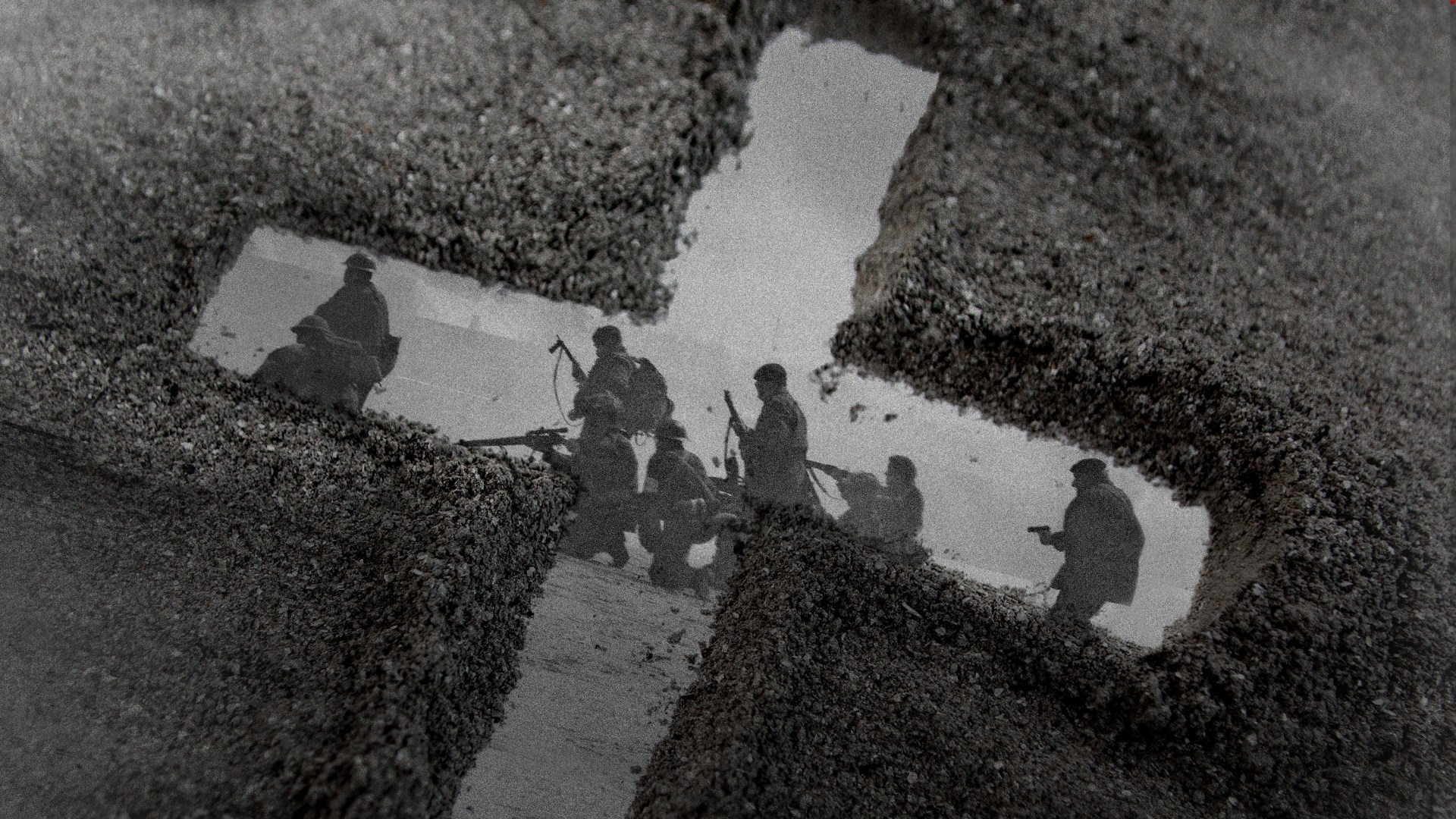
In explaining this story, scholars often invoke the World War II analogy between D-Day and V-Day. In D-Day, the success of the Normandy invasion decided the outcome of the war, and the defeat of the Nazi regime and its allies was merely a matter of time. Yet until V-Day—the final surrender of the Axis powers—battles continued and casualties mounted.

In the same way, all enemies—including the final one, death itself—will be subdued when Jesus returns (Ps. 110:1; 1 Cor. 15:25–26), but his servants face continuing battles until then.

In Ephesians, Paul emphasizes that Jesus is already enthroned above heavenly rulers and authorities (Eph. 1:20–22) and we are spiritually enthroned with him (1:22-23; 2:6). In a letter that heavily underscores the unity between Jews and Gentiles in Christ’s body, this enthronement above angels of nations and empires means that our unity in Christ is greater than all the ethnic and national divisions fomented by such angels. Believers are no longer subject to the prince of this world (Eph. 2:1–3).

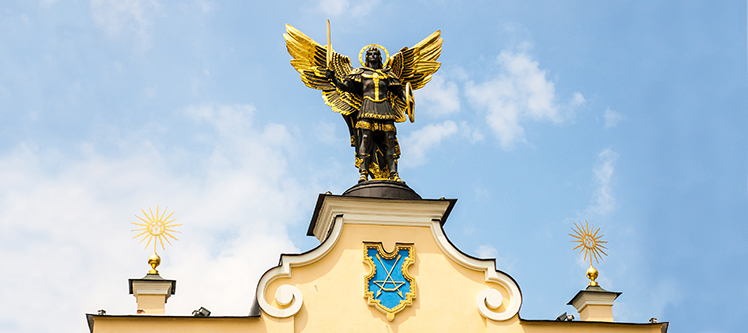
A statue of Michael the archangel in Independence Square, Kyiv, Ukraine.Kipp74 / Getty
A statue of Michael the archangel in Independence Square, Kyiv, Ukraine.

For Paul, this triumph over divisions has spiritual warfare ramifications, even for the interpersonal dimensions of our lives. In Ephesians 4, for example, denying the devil an opportunity means having integrity and controlling our anger (v. 25–27). In Ephesians 6:10–20, it means taking hold of the defensive armor of truth, faith, and righteousness, plus a weapon for invading hostile territory: the mission of the gospel.

I have sometimes seen brothers and sisters trying to engage in spiritual warfare by rebuking and commanding the heavenly rulers. However, this activity misunderstands our role. We are enthroned with Christ, and yes, someday we will judge angels, but we can’t confuse D-Day with V-Day. Scripture expressly warns against reviling angelic authorities (2 Pet. 2:10), pointing out that even their fellow angels can confront them only by divine authorization (2 Pet. 2:11; Jude 9).

Trying to cast down heavenly powers is different from casting demons out of those they afflict on earth. We are the ground forces, not the air force. This doesn’t mean we don’t have a vital role in cosmic-level spiritual warfare. It just means our modern taste for instant results won’t be met.

In the Book of Daniel, God’s answer was immediate (Dan. 10:12). But Daniel persevered in prayer for three weeks before he received his answer (10:2–3). God showed him that empires would rise and fall but the future did not belong to them.

The Book of Revelation offers the same picture: Satan stands behind the beast of a world empire, Babylon the Great. But the future belongs not to Babylon, the prostitute, but to New Jerusalem, the bride.

The Bible reminds us that not all spiritual forces are the bad guys. God is at work even in the present world, and Scripture leads us to expect that prayers can make a difference in times of war and conflict.

Before Jacob would have to confront his brother Esau’s armed band, he wrestled all night with an angel. Although later rabbis thought it was Edom’s guardian angel, it was the Lord himself (Hos. 12:3–5). But the rabbis were right, at least, that winning the spiritual battle first made the difference for the imminent earthly conflict.

The same lesson appears when Moses’ uplifted hands determined the battle against the Amalekites (Ex. 17:11–13). Our earthly actions have heavenly consequences. (See Ephesians 6:12 in the context of 6:10-20, and the likely meaning of Luke 10:17-18.)

Indeed, on the cosmic level, God’s forces easily outnumber the hostile ones. Elisha’s apprentice learned that lesson when God opened his eyes to see the mountain full of chariots of fire (2 Kings 6:16–17). On that occasion, the Lord miraculously blinded an entire army to allow a peaceful resolution instead of a costly human battle (6:18–23).

In another war story, God gave David victory in battle once he heard the Lord’s heavenly hosts marching for him (2 Sam. 5:24; 1 Chron. 14:15). Joshua likewise achieved victory after meeting the captain of the Lord’s army (Josh. 5:13–15).

In other words, God hears us when we pray. In the Book of Daniel, arrogant nations appear as nothing more than pawns in God’s larger plan for history. By contrast, the angel announces that Daniel, the man of prayer, is precious to God (Dan. 10:11).

Here’s why this common theme matters: The final outcome is already decided, but in the meantime, earthly battles continue, and individual lives remain in the balance. The prayers of a righteous person count more before God than the plans of arrogant powers in heaven or on earth.

I confess that, were it not for my faith in Scripture, these claims would sound pretty hollow to me in times of mass suffering. But because I do believe the Bible, I take courage for the future. Likewise, it was my wife’s faith in Christ and God’s Word that nourished her hope and enabled her survival in the face of war in the Congo.

In the current war in Ukraine and other conflicts around the world, we do not yet see all of Jesus’ enemies visibly under his feet, and casualties remain high. But Jesus’ exaltation over angels and authorities and powers (1 Pet. 3:22) has already decided the final outcome of the cosmic war of the ages. We can rest in that truth.

Craig Keener is professor of biblical studies at Asbury Theological Seminary. He is the author of Christobiography: Memories, History, and the Reliability of the Gospels.

News
Wire Story

Ketanji Brown Jackson Thanks God for Supreme Court Nomination

President Biden’s pick would be the first Black female justice.

Christianity Today February 25, 2022
Drew Angerer / Getty Images

Immediately after President Joe Biden introduced Judge Ketanji Brown Jackson as his nominee to the US Supreme Court at a White House event on Friday, the federal appeals court judge stepped up to the podium and appealed to the divine.

“I must begin these very brief remarks by thanking God for delivering me to this point in my professional journey,” she said. “My life has been blessed beyond measure, and I do know that one can only come this far by faith.”

Jackson’s words marked the beginning of what promises to be a historic confirmation process: If approved by the US Senate, Jackson, 51, who currently serves on the D.C. Court of Appeals, would be the first Black woman to serve on the Supreme Court.

“If I’m fortunate enough to be confirmed as the next associate justice of the Supreme Court of the United States, I can only hope that my life and career, my love of this country and the Constitution, and my commitment to upholding the rule of law and the sacred principles upon which this great nation was founded, will inspire future generations of Americans,” she said.

Biden noted the landmark nature of Jackson’s nomination during his introduction, making good on a campaign promise to push for a Black woman on the country’s highest court.

“For too long, our government, our courts, haven’t looked like America,” he said. “I believe it’s time that we have a court that reflects the full talents and greatness of our nation with a nominee of extraordinary qualifications. And that we inspire all young people to believe that they can one day serve their country at the highest level.”

While outlining Jackson’s professional credentials and personal story—such as her two Harvard degrees and family members in law enforcement—Biden argued that she “strives to be fair, to get it right, to do justice.”

If confirmed, Jackson would also be the first federal public defender on the Supreme Court and would bring the total number of women serving on the bench to four—the most in US history.

Jackson did not mention a specific faith tradition in her remarks, so it was not immediately clear whether she would alter the religious makeup of the Supreme Court, which currently consists primarily of Catholic and Jewish justices (Justice Neil Gorsuch was raised Catholic but attended an Episcopal Church in Colorado).

[CT editor’s note: Jackson would fill the spot on the bench left by Stephen Breyer, for whom Jackson served as a clerk during the court’s 1999-2000 term. Breyer, 83, announced his plans to retire a month ago.]

Lawmakers and liberal religious organizations celebrated Jackson’s nomination.

“I applaud the historic nomination of Judge Ketanji Brown Jackson to the Supreme Court. Georgians want a nominee who is fair, qualified, and has a proven record of protecting Americans’ constitutional rights and freedoms. I look forward to reviewing this nomination,” Georgia Sen. Raphael Warnock, himself a pastor, said in a statement.

Longtime racial justice activist the Rev. Al Sharpton, who runs the National Action Network, tweeted out a statement of support for Jackson, calling her “exceptionally well qualified” and possessing the “experience, character, integrity, and dedication to the Constitution and the rule of law to serve on the nation’s highest Court.”

The National Council of Jewish Women also praised Biden’s choice of Jackson.

Religion has been a point of interest in recent Supreme Court nomination battles, particularly the debate over Justice Amy Coney Barrett. When she was nominated by former President Donald Trump in 2020, many observers questioned whether her conservative brand of Catholic faith would influence how she approached issues such as abortion.

Although Jackson reportedly has not ruled on a case narrowly focused on abortion, her appointment nonetheless drew attention of groups concerned about the issue. Jeanne Mancini, president of March for Life Education and Defense Fund said in a statement she expects Jackson to be “a reliable vote for the far left and the Biden administration’s radical abortion agenda.”

Meanwhile, Jamie L. Manson, president of Catholics for Choice praised Jackson as a jurist with “a long and distinguished record of legal work and judicial decisions that protect and advance the constitutional rights of marginalized Americans, including women and pregnant people, immigrants, and people with disabilities.”

Manson also made mention of Jackson’s April 2021 Senate confirmation hearing to serve on the US Court of Appeals. Manson said Jackson expressed “a clear and firm commitment to the principle that true religious liberty involves both freedom of and freedom from religion.”

During that hearing, Missouri Republican Sen. Josh Hawley noted Jackson had served on the board of Montrose Christian School. The Maryland school, which has since been closed, operated under a statement of faith that declared “we should speak on behalf of the unborn and contend for the sanctity of all human life from conception to natural death” and outlined a belief that marriage exists only between a man and a woman.

In responding to Hawley, who said he agreed with the statements, Jackson distanced herself from the school’s beliefs. She said she did not “necessarily agree with all of the statements,” and was not previously aware of their existence.

She went on to express support for religious liberty, describing it as a “foundational tenet of our entire government.”

addApple PodcastsDown ArrowDown ArrowDown Arrowarrow_left_altLeft ArrowLeft ArrowRight ArrowRight ArrowRight Arrowarrow_up_altUp ArrowUp ArrowAvailable at Amazoncaret-downCloseCloseellipseEmailEmailExpandExpandExternalExternalFacebookfacebook-squarefolderGiftGiftGooglegoogleGoogle KeephamburgerInstagraminstagram-squareLinkLinklinkedin-squareListenListenListenChristianity TodayCT Creative Studio Logologo_orgMegaphoneMenuMenupausePinterestPlayPlayPocketPodcastprintremoveRSSRSSSaveSavesaveSearchSearchsearchSpotifyStitcherTelegramTable of ContentsTable of Contentstwitter-squareWhatsAppXYouTubeYouTube