Theology

Divorcing an Abusive Spouse Is Not a Sin

Not only is it morally justified, it also aligns with Christ’s heart for the vulnerable.

Christianity Today March 24, 2022
Illustration by Mallory Rentsch / Source Images: Summerphotos / Bartosz Michalski / EyeEm / Getty

Over the past couple of weeks, I’ve received lots of questions about divorce in the case of abuse. At least some of those questions most likely come from reports of a church disciplining a woman for leaving her allegedly abusive husband. In case you or someone you love is in that situation, let me start with my conclusion: You are not sinful for divorcing an abusive spouse or for remarrying after you do.

The reason this is even a question for people is because they know that the Bible says God hates divorce. In Scripture, marriage is a covenant—meant to embody a sign of the union between Christ and his church. Jesus spoke very strongly against divorce, even framing the law of Moses’ allowance of divorce as a temporary concession to hardheartedness, not as God’s plan for marriage (Matt. 5:31–32; Mark 10:2–12; Luke 16:18).

When a minister in a more traditional wedding service pronounces the couple married and says, “What God hath joined together, let no man put asunder,” this minister is citing the words of Jesus himself.

Even those in the church who rail at the outside world on issues that are unclear in Scripture often tend to mute themselves on divorce, where the Bible speaks emphatically. Usually this is just one more case of tribal culture-war identity politics: There are more divorced and remarried people inside our churches than there are people with other issues.

That’s all true. Even so, I believe the Bible treats the question of divorce in cases of abuse not as a matter of sin for the innocent spouse.

Some people, in the Roman Catholic communion for instance, hold that there is never any moral reason for divorce. Yet even then, the dispute is over whether any institution has the authority to pronounce the marriage dissolved. In that case, the dispute is not over whether a spouse should stay in an abusive situation.

I don’t know a single faithful Catholic priest or bishop who would say that a person should stay in an abusive environment. They would counsel in such situations a removal of the person (and his or her children) and, if the threat of abuse persisted, would keep them away from such a home, even if that meant for life.

As most of you know, I don’t hold to the view that divorce is, in every case, a sin. Along with most evangelical Protestants, I believe that there are some narrow instances in which the sin of a spouse dissolves the marriage covenant and that divorce is warranted in those cases. Almost everyone in this view would see unrepentant adultery as one of those exceptions. And most of us would see abandonment by a spouse as another.

The apostle Paul counseled new Christians in the first century that they were not obligated to leave their unbelieving spouses (1 Cor. 7:10–16). Those marriages were not unholy because of the spouse who worshiped some other god; they were made holy by the one who worshiped the living God.

While God has called us to pursue peace and reconciliation with all people, Paul wrote that in the case of a spouse who walked away, abandoning the marriage, the remaining spouse should “let it be so” and not consider himself or herself “bound,” strongly implying the freedom to remarry.

An abusive spouse, in fact, has abandoned the marriage. Abuse is much worse than abandonment, involving the use of something holy (marriage) for satanic ends. Abuse of a spouse or a child is exactly what God condemns everywhere in the Bible—the leveraging of power to hurt the vulnerable (Ps. 9:18; Isa. 3:14–15; Ezek. 18:12; Amos 2:7; Mark 9:42; etc.). While abuse is worse than abandonment, it is no less than abandonment.

If one spouse abandons the home, the Bible reveals, it is not the fault of the innocent party. And if a spouse makes the home a dangerous place for the other spouse (or their children), that is not the fault of the innocent party either. In those cases, divorce is not a sin but is, first of all, a recognition of what is already the case—that the one-flesh union covenant is dissolved—and the abused spouse should feel no condemnation at all in divorcing.

Suggesting that marital fidelity entails subjecting oneself or one’s children to abuse is akin to implying, based on the Romans 13 command to submit to the governing authorities, that Jesus was immoral for urging those in danger in Judea to “flee to the mountains” in the time of great tribulation (Matt. 24:15–19). God forbid.

According to a 2015 survey, the overwhelming majority of Protestant pastors would say that divorce in cases of domestic violence is morally legitimate. Yet I would go even further to contend that, in many cases, divorce not only is allowable, as it would be for adultery or other forms of abandonment, but is necessary to protect the abused person from further harm.

Both the church and the state have a role in making sure that the abuser does not bully the abused person, which often happens through the deprivation of income or housing. A divorce usually involves society’s acknowledging that the marriage is over, helping to divide resources, and providing some ongoing protection (often through restraining orders or police files) for those who have been abused.

If you’re a minister, you can almost guarantee that someone in your pews or in your immediate community is experiencing domestic violence. Sometimes the victim will have internalized the abusive rhetoric of the abuser and blame herself for bringing on the abuse to her or her children.

Sometimes the one being abused will believe that there is no other option but to stay, feeling trapped in the marriage. In the case of domestic violence, the church has a responsibility not only to alert the relevant civil authorities but also to bear the abuse sufferer’s burdens by arranging a safe place of refuge and meeting other needs.

The very least that one can expect from one’s church is not to be condemned as a sinner for escaping danger.

Recognize that abusers often weaponize spiritual language to cover the abuse. They might suggest that the abused spouses are “unforgiving” if they leave or that they would be sinning against Jesus if they were to pursue divorce—quoting out-of-context Bible verses all the while. As the steward of the oracles of God, the church has a mandate to call such misuse of the Scriptures what it is: a taking of the Lord’s name in vain, in one of the worst ways imaginable.

Divorce for domestic violence is not a sin. It’s about sin all right—but it’s the sin of the abuser, not the sin of the abused who decides to divorce. The abused in our churches and in our communities need to see us applying the Bible the right way, and they need to see us embodying the Jesus Christ who protects the vulnerable.

What God hath joined together, let no man put asunder. Yes and amen. But sometimes Jesus also would have us recognize that man should not force together what God has put asunder.

Sometimes the path to divorce court is not a way to destruction but a road to Jericho. We should look to see who is beaten on the roadside and be for them who Jesus told us to be.

Russell Moore leads the Public Theology Project at Christianity Today.

News

Leading Church Exits Vineyard

National board questions Anaheim pastors’ “spiritually implausible” reasons for disassociation.

Alan Scott preaching at Vineyard Anaheim on Sunday.

Alan Scott preaching at Vineyard Anaheim on Sunday.

Christianity Today March 23, 2022
Screengrab / Vineyard Anaheim YouTube

The “mother church” of the Vineyard movement announced Sunday that it is disassociating from the charismatic denomination.

The division isn’t theological, pastor Alan Scott told Vineyard Anaheim, the California congregation he and his wife, Kathryn, have led for four years. There aren’t any big disputes over the direction of Vineyard USA. No personal grievances causing a rift.

It’s just that the leaders of Vineyard Anaheim believe that God is guiding them to leave the denomination their church helped start. So they are leaving.

“We don’t really understand why,” Alan Scott said in a recording of a Sunday service obtained by CT. “I wish I really could sit before you today and say, ‘Here are the six reasons,’ ‘Here’s our issues,’ ‘Here are our grievances,’ or whatever. … We don’t always know what’s on the other side of obedience.”

A spokesperson for the church declined to speak to CT and pointed to an official statement posted on its website. The statement says the decision is “our best effort to respond to the distinct calling on our church at this time, and a desire to say yes to the Spirit.”

National Vineyard leadership is not so sure that’s the Holy Spirit speaking.

John Kim, a New York City pastor and member of the Vineyard USA board of trustees, writing to the church leadership on behalf of the board in a series of emails obtained by CT, described the statements as “spiritually implausible.”

“Do you understand this lightning-fast, seemingly unaccountable process as having been subject to biblical standards of discernment?” Kim wrote.

According to Kim’s emails, the church’s explanations of its decision-making process, its process of spiritual discernment, its reasons for leaving, and the timeline for departure have left the national leadership in “bewildered astonishment, profound pain, and lack of comprehension.”

The spiritual significance of Anaheim

The association of Vineyard churches, formed in Southern California in 1975, has historically been fairly loose. Individual congregations are autonomous and own their own buildings. The national organization didn’t have a statement of faith for the first 20 years; didn’t set standards or record Vineyard ordinations; and didn’t, until recently, even track the reasons departing congregations gave when they chose to disassociate from the movement.

Vineyard Anaheim isn’t just any congregation, though. It holds serious spiritual and symbolic significance for the charismatic denomination.

Vineyard Anaheim was planted in 1977 by John Wimber, a born-again rock musician who believed Christians should “do the stuff” of the Bible—heal the sick, cast out demons, listen to the voice of the Holy Spirit, and reach lost people with the good news of a God who saves. He combined the practices of “signs and wonders” Pentecostalism with an evangelical commitment to Scripture, developing a movement that could be dynamic and surprising, yet also grounded.

Wimber took over leadership of the Vineyard movement in 1982 and continued until his death in 1997. The church in Anaheim became an unofficial headquarters and, for many, a sacred space.

“While it was not the first Vineyard church, it was undoubtedly the church through which the Vineyard movement was built,” Caleb Maskell, associate national director of theology and education, said in a written statement to CT. “Thousands of pastors and leaders who call the Vineyard movement their family have had profound, life-shaping encounters with God at Vineyard Anaheim.”

J. T. Meyer is one of them. He grew up in the Vineyard—both his parents were pastors—and though he was never part of the historic Southern California congregation, that physical space is special to him.

“I can think of at least a dozen different times where I had really powerful experiences with God at the Anaheim Vineyard at a national conference,” said Meyer, who now leads a Vineyard church in Cleveland. “I can’t speak to whether the decision they’re making was moral or immoral or wise or unwise, but it feels really hurtful. It feels like your parents are selling your childhood home.”

‘The Scotts are very intentional’

Some with close connections to the church feel deeply betrayed by the disassociation. Christy Wimber, John Wimber’s ex-daughter-in-law, who was mentored by him in ministry, said on social media that this is a spiritual hijacking. While Alan and Kathryn Scott may talk about obedience to God, she sees it as a crass power grab.

“The Scotts are very intentional,” she said in an Instagram video. “Listen, I love them. They’re my brother and sister in Christ but … they’ve been very intentional to have that church. Very intentional in what they’re doing now.”

The Scotts were called by the leadership of the congregation four years ago. Alan Scott is originally from Glasgow. He became a Christian at age nine after watching the Jesus film and joined a small group of Christians that became part of the Vineyard. He felt a call to ministry, and he and Kathryn, a songwriter and worship leader from Northern Ireland, planted their first church when he was 27 and she was 24.

The early years were a struggle, but then in 2003, Alan Scott started praying for 100 conversions in a year. The church moved its healing service out into a city street, setting up six chairs and a banner that said “healing,” to evangelize with Pentecostal signs and wonders.

“It located the supernatural beyond the building,” he said on a Vineyard USA podcast in 2020. “Yes, we need everything Jesus has for us in our gathered moments, but there’s something beautiful about engaging beyond the building.”

Scott wrote a book about “unleashing the church to bring life to the city,” and he and his wife applied for the leadership position at the “mother church” of the Vineyard movement. At the time, Vineyard Anaheim only had about 300 people in regular attendance, but a remarkable heritage, 5.7 acres of prime Orange County real estate, and a debt-free building.

A 12-member search committee voted unanimously to hire the Scotts, according to an email sent this month by longtime Anaheim church member Greg Scherer to the national leadership as a representative of the church board.

After the couple’s interview, one woman who had been an influential leader in the church since the 1970s exclaimed, “Do we even need to vote on the Scotts it’s so clear God has chosen them?”

During the interview process, someone asked if Alan Scott was “really Vineyard.” He said, “I am Vineyard to my core,” Scherer recalled. But no one asked whether they might lead the church away form the Vineyard movement. That idea hadn’t occurred yet.

An awkward dinner

The national Vineyard leadership first learned of the Scotts’ plans to disassociate on February 24, 2022. Jay Pathak, the new national director who took over in January, and Maskell went to Anaheim and met the Scotts for dinner at a local restaurant.

Pathak asked the Scotts how they could help lead the Vineyard movement, using their strengths and the strengths of Vineyard Anaheim, according to an account of the meeting he and Maskell wrote for the Vineyard USA board. The Scotts replied that, actually, a decision had been made to leave the Vineyard and they would be informing their staff the next day. They gave Pathak an envelope with a letter.

“As per our conversation tonight,” it said, “we are writing to formally notify you of our decision to withdraw Vineyard Anaheim as a member of the Association of Vineyard Churches USA with immediate effect.”

The Scotts went on to state their affection for the movement was “undimmed” and they would continue to honor the Vineyard, but they were nonetheless parting ways.

After the meeting, Pathak and Maskell contacted Anaheim church board members, calling two and texting a third to ask them to slow the process down.

“Give us time to process their grievances,” Pathak said in the text, “as well as the implications for the church and our whole movement.”

That Sunday, Alan Scott told his congregation he had “a little bit of family news on things that are important to us.” As part of a “process of renewal,” the church was entering a process of disassociation from the Vineyard movement.

Scott said the conversation with the national leaders was just starting and he and Kathryn had “misstepped” by trying to be kind and move quickly. He said he wouldn’t be talking about the details until the process was further along, but he wanted the congregation to know what was happening.

No agreement on the terms of a meeting

A few days later, the Vineyard USA board of trustees reached out to the church’s board to see if it would be possible to discuss the disassociation and other possible alternatives. The national leaders acknowledged that a congregation is legally entitled to separate from the denomination at any time, but they questioned how the process had happened and raised issues of transparency and accountability.

The two boards were in daily conversation for the next 12 days but couldn’t agree to the terms of a meeting or what the proposed conversation should even be about.

“Is Vineyard Anaheim still a local community of believers free to step into the story of God as the Spirit leads?” Scherer wrote on behalf of the California church board. “Or is Vineyard Anaheim primarily a custodian that exists to steward the legacy, memory and history of the global vineyard? And crucially, is she free to pursue whatever God calls her to do whether that lies within or beyond the Vineyard Movement?”

It is not clear from the emails between board members or any of Alan Scott’s teaching and writing what the church might want to do that would be limited by association with the Vineyard.

Kim responded the following day: “Frankly, we confess we do not understand this account of the reasons for disassociation.”

By March 17, Scherer wrote that he was afraid “we may never see eye-to-eye” on what it means to be obedient to the calling of the Holy Spirit.

What does it mean to follow the Holy Spirit?

The disagreement appears to tap into deeper Vineyard tensions over what it means to follow the Holy Spirit.

Some believe the organizational structures of the denomination prevent people from trusting God, taking risks, and following the Spirit wherever it leads. Vineyard pastors associated with the Toronto Blessing, the “Kansas City prophets,” and Bethel Church and Jesus Culture have critiqued what they see as a growing bureaucracy in the Vineyard and an increasing insistence on the importance of accountability.

Vineyard USA has reorganized in the past few years. It now has a leadership team and is developing standards and a process for ordination, as well as church affiliation.

Other Vineyard pastors insist that listening to the Holy Spirit involves discernment. And God’s leading should be discerned in community. They are concerned with the many charismatic leaders over the years who have claimed that their spiritual gifting frees them from any accountability.

“God does speak today!” Rich Nathan, pastor emeritus of Vineyard Columbus, the largest Vineyard church in the country, wrote on social media this week. “But whenever a so-called ‘leading’ is obviously self-seeking, fundamentally dishonest, lacking in accountable discernment, demonstrably hurts others and especially when money or power is involved, you can rest assured that it is NOT God who is leading!”

According to Nathan, “the Lord told me” is “too often used to justify breaking commitments, severing relationships and rationalizing away the hurt we cause to others!”

Christy Wimber told her social media followers that the real problem at Vineyard Anaheim is not the Scotts. The disassociation of the church points to deeper problems that have troubled the movement since John Wimber died in 1997.

“Something is broken in the system,” she said. “There are things here that are obviously pointing to some things that are broken, and that’s okay, because then it’s an opportunity for God to come in and bring healing to the whole of the movement.”

Reasons still unclear

Alan Scott announced the disassociation to the Anaheim congregation on Sunday, March 20, a little more than three weeks after he and Kathryn wrote their disassociation letter. The livestream of the service was turned off for the “family announcement,” and a statement was posted online later that day.

According to a recording of the service obtained by CT, Scott told the church they would change the name from Vineyard Anaheim to something else, but the new name has not yet been decided.

He assured them, though, that many things wouldn’t change.

“We will continue to teach God’s word,” he said. “We will continue to feed the poor. We will continue to heal the sick. We will continue to lead people to Jesus. And by God’s grace and with his power, we will continue to drive out demons, fingers crossed, we believe it.”

The national organization posted a response and answers to frequently asked questions the same day.

“We still do not fully understand the reasons that the leadership of Vineyard Anaheim has chosen to leave the Vineyard movement,” it said. “The stated reasons feel highly insufficient to the magnitude and impact of the decision.”

News
Wire Story

Hillsong Church Founder Brian Houston Resigns

(UPDATED) Top leader of global ministry leaves shortly after megachurch revealed a pair of investigations around inappropriate behavior.

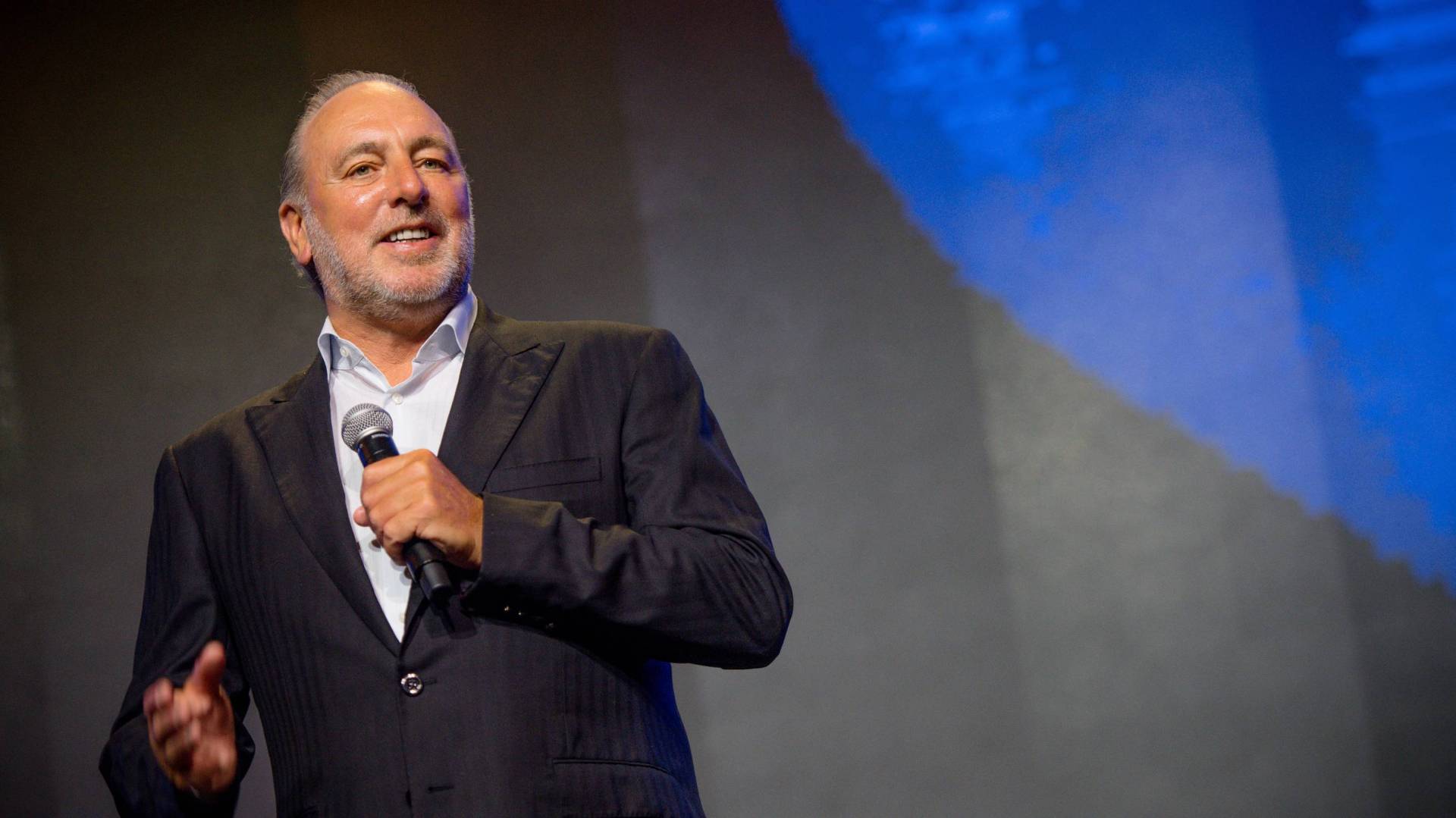
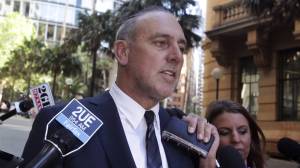
Brian Houston has resigned as global senior pastor of Hillsong Church.

Brian Houston has resigned as global senior pastor of Hillsong Church.

Christianity Today March 22, 2022
Marcus Ingram / Getty Images

In this series

Brian Houston has resigned from Hillsong Church, the congregation he founded nearly 40 years ago and led as global senior pastor.

The boards of the Australian congregation and the global ministry announced they accepted his resignation in a letter posted Wednesday.

Houston had been on leave from the church awaiting his appearance in court on charges he had covered up abuse by his late father.

Last week, news broke that Hillsong had also investigated the pastor in two instances of inappropriate behavior. One involved text messages sent to a female staff member; the other occurred when Houston drunkenly entered a woman’s hotel room after a Hillsong conference three years ago.

The letter from the board stated:

Irrespective of the circumstances around this, we can all agree that Brian and Bobbie have served God faithfully over many decades and that their ministry has resulted in millions of people across the world being impacted by the power, grace, and love of Jesus Christ.

Hillsong Church was birthed out of Brian and Bobbie’s obedience and commitment to the call of God and we are extremely grateful for all that Brian and Bobbie have given to build His house. We ask that you continue to pray for them, and the entire Houston family, during this challenging time.

Last Sunday, Phil Dooley—Hillsong’s interim global leader—apologized to the congregation and pledged to make it a safe place for healing.

“Where trust and aspects of transparency have been lost, we will do our best to rebuild that,” he said.

The church plans to undergo an independent review of its governance structure and processes.

“There is still much to be done and our church leadership continues seeking God for His wisdom as we set the course for the future,” the boards wrote. “We acknowledge that change is needed.”

———-

Earlier story (March 18, by Roxanne Stone and Bob Smietana – Religion News Service): The board of directors of Hillsong, the global megachurch and music empire co-founded by Australian pastor Brian Houston, released a statement Friday addressing two complaints about Houston, including an accusation that the married pastor had spent time alone in a hotel room with a woman in 2019.

The statement, which came as the story was breaking in the Australian press, said the Hillsong board has been “dealing with two complaints made against Pastor Brian over the last 10 years,” and said each was investigated by a board member or “a body appointed by the global board,” and dealt with confidentially.

The other complaint related to an accusation that Houston had flirted with a staff member over text message a decade ago.

Prior to the statement being released, Hillsong reportedly held a video meeting with 800 Hillsong staffers around the world in which interim senior pastor Phil Dooley, who is leading the church while Houston is on leave due to ongoing legal troubles, discussed the complaints for the first time with the church at large. Dooley explained the texts, according to Australia’s ABC News, as being to the effect of, “‘If I was with you, I’d like to kiss and cuddle you,’ words of that nature.”

The second incident, as reportedly detailed in the staff meeting, took place during its annual conference in Qudos Bank Arena in Homebush, New South Wales in 2019. According to ABC, Dooley said Houston had been “drinking with a group.”

“Later that evening, Pastor Brian attempted to get into his room but didn’t have his room key and ended up knocking on the door to the woman’s room,” Dooley reportedly said. “She opened the door and he went into her room.”

“The truth is we don’t know what happened next,” ABC reported Dooley telling the staffers. “The woman has not said there was any sexual activity. Brian has said there was no sexual activity, but he was in the room for 40 minutes.”

The Hillsong board statement said that Houston, 67, had become “disoriented” after taking more than the prescribed dose of an anti-anxiety prescription, mixed with alcohol. “This resulted in him knocking on the door of a hotel room that was not his, entering this room and spending time with the female occupant,” read the statement.

The board’s statement said Houston was also under the influence of sleeping medication at the time he sent the inappropriate texts, “upon which he had developed a dependence.” The text messages ultimately led to the staff member resigning, according to the statement, which also said Houston apologized to the staff member.

“We also worked closely with Pastor Brian to ensure he received professional help to eliminate his dependency on this medication, and this was achieved successfully,” the statement read.

After the hotel room incident, the board said there was an investigation “by the integrity unity,” and that “although all parts of the complaint were unable to be sustained, important elements of the complaint were sustained and the conduct was of serious concern.”

The board’s statement also said they agreed to refund money the woman had donated to the church, “in order to bring resolution in a spirit of love and care,” and to “abide by her request for confidentiality.” The statement said Houston repaid the money to the church.

At the time, Houston agreed to step down from leadership for a period and “take specific action,” but ultimately, according to the statement, he did not take all of the agreed upon steps, “which resulted in the board taking further action in late 2021.”

The statement did not indicate whether Houston would return to his position at the church.

The incidents are the latest controversy to engulf Hillsong, a Pentecostal powerhouse Houston founded with his wife, Bobbie, in 1983. The church, which draws a reported 150,000 to services in 30 locations, has also produced some of the most popular worships songs used in evangelical churches around the world, including “Oceans,” “What a Beautiful Name,” and “Shout to the Lord.”

In January, Houston announced he was taking a leave from his pastoral duties during 2022, in order to prepare for his trial in Australia on charges that he failed to report sexual abuse.

“The result is that the Hillsong Global Board feel it is in my and the church’s best interest for this to happen, so I have agreed to step aside from all ministry responsibilities until the end of the year,” Houston said in the January 30 video announcement.

Houston was charged in August 2021, with concealing a serious indictable offense of another person. Police say his late father, Frank Houston, also a preacher, indecently assaulted a young male in 1970. Court documents allege Houston knew of his father’s abuse as early as 1999 and “without reasonable excuse,” failed to disclose that information to police.

His son has long denied covering up his father’s abuse.

“I think I’m quite a tolerant person, but one thing I’ve really never had any tolerance for is sexual abuse, and especially child abuse,” Brian Houston said in an 2005 interview with the Australian Broadcasting Corporation. “So, I don’t think you could have kicked me in the guts with a bigger blow, in some ways.”

According to Australian news sources, Brian Houston’s trial will be held in late 2022.

News
Wire Story

Voddie Baucham, Tom Ascol Want to Unseat ‘Liberal’ Southern Baptists

The Conservative Baptist Network puts forth its nominees to lead the denomination.

Tom Ascol of Founders Ministries

Tom Ascol of Founders Ministries

Christianity Today March 22, 2022
Video screen grab / RNS

Two Baptist preachers known for their claims that the nation’s largest Protestant denomination is becoming too liberal will be nominated for top roles in the Southern Baptist Convention.

In a statement that blasted SBC leaders for abandoning biblical truth and embracing “radical feminism” and “Race Marxism,” a group of Baptist pastors and professors announced plans to nominate Tom Ascol, president of Founders Ministries and pastor of Grace Baptist Church in Cape Coral, Florida, for SBC president. They also plan to nominate best-selling author Voddie Baucham, a former pastor and dean at African Christian University in Zambia, to lead the SBC Pastors’ Conference.

The statement, posted on the conservative website Capstone Report, said Ascol and Baucham will help turn the SBC away from “wokeness” and back to the Bible and criticized Baptist leaders who worry that the “world is watching” how Baptists behave.

“But we believe that God is watching, that He alone defines our terms and sets our agenda,” the statement read. “And God is not Woke.”

A number of signatures on the statement belong to leaders of the Conservative Baptist Network, which has been critical of current SBC leadership. Among the CBN leaders signing the statement are Lee Brand, the current first vice president of the SBC and a seminary professor; Mark Coppinger, a retired SBC theology professor; Brad Jurkovich, pastor of First Baptist Church in Bossier City, Louisiana; Mike Stone, a Georgia pastor and failed SBC presidential candidate; and Ronnie Rogers, pastor of Trinity Baptist Church in Norman, Oklahoma.

Carol Swain, a retired professor and conservative commentator, and Texas pastor Tom Buck, a conservative social media agitator, also signed the statement.

Ascol joins Florida Baptist pastor Willy Rice as potential candidates for SBC president. Candidates for SBC president are nominated during the denomination’s annual meeting. Current SBC President Ed Litton, an Alabama pastor, announced earlier this month that he will not seek a second one-year term in office—the first time an SBC president has not served a second term in 40 years.

The nominations of Baucham, author of Fault Lines: The Social Justice Movement and Evangelicalism’s Looming Catastrophe, and Ascol, who has produced videos critical of the SBC, are the latest salvo in the “woke wars” being waged in the SBC and other evangelical groups.

A group of vocal critics in the SBC sees attempts to address racial injustice or other social ills as antithetical to the Christian gospel—in messaging that parallels that of Republican leaders and former President Donald Trump.

https://twitter.com/tomascol/status/1506353032828792840

Ascol told The Daily Wire, a conservative media company cofounded by Ben Shapiro, that his concerns and the concerns of his church about the SBC have long been ignored.

“We’re told, you know, there’s nothing to see here. You’re meddling in business that doesn’t pertain to you,” he said.

Ascol has gained a higher profile in the SBC for his opposition to a resolution on critical race theory that passed during the SBC’s 2019 annual meeting. Ascol’s 2021 campaign to rescind that resolution failed.

Stone, who narrowly lost the 2021 election for SBC president to Litton, posted a note on social media endorsing Ascol.

Since losing the election, Stone has missed a number of high-profile meetings of the SBC’s Executive Committee, where he is a trustee and former chairman. He also blamed Russell Moore, former head of the SBC’s Ethics and Religious Liberty Commission, for his loss and sued Moore for libel. That lawsuit was later withdrawn.

Like Ascol, Stone has long been critical of what he sees as a liberal drift in the SBC.

“Tom is a pastor, a preacher, a writer, and a staunch advocate for conservative Bible principles,” Stone wrote on Twitter.

Ascol told Religion News Service in an interview last year that he believes SBC churches have been shaped more by pragmatism than by the Bible in recent decades. As a result, he said, SBC churches are filled with people who think they are Christians but really aren’t.

“We still have churches filled with unregenerate people,” said Ascol, whose ministry produced a documentary that criticized former SBC Bible teacher Beth Moore and former SBC President James Merritt of bringing the “Trojan horse of social justice” into the denomination.

In recent weeks, rumors that Baucham would be nominated for SBC president circulated on social media. Baucham has confirmed those rumors but said he was not likely eligible to be SBC president because he is not technically a member of an SBC church. Though he is the former pastor of an SBC church and was sent as a missionary by that church, Baucham is a member of a church in Zambia.

According to the SBC’s constitution, “Officers of the Convention, all officers and members of all boards, trustees of institutions, directors, all committee members, and all missionaries of the Convention appointed by its boards shall be members of Baptist churches cooperating with this Convention.”

“I have indeed been asked to accept a nomination for SBC President. While I am honored to have been asked, I am not sure I am eligible,” Baucham said in March, according to Christianleaders.com.

Elections for the SBC Pastors’ Conference, which features a series on sermons held the two days before the convention’s annual meeting begins, are not subject to the same rules as the president of the denomination. The vote is usually held during the conference and in the past has been done by voice vote.

Baucham said that if nominated as president of the Pastors’ Conference, he would focus the conference on “biblical preaching” and support Ascol.

“I would love to see a revival of great biblical preaching in the SBC,” Baucham said. “The Pastors’ Conference has the potential to play a significant part in that, especially if it is part of a larger movement that brings a man like Tom Ascol into the SBC presidency.”

Despite the success of the Conservative Resurgence, which ousted more-moderate Baptists from the convention in the 1980s and 1990s and promised a golden age of evangelism and growth, the SBC has seen significant decline in recent years. The denomination lost more than 2 million members since 2006, with no turnaround in sight.

Why Haven’t There Been Any Evangelicals on the Supreme Court?

With their overlapping views with conservative Catholics, not having a seat on the bench may not matter much.

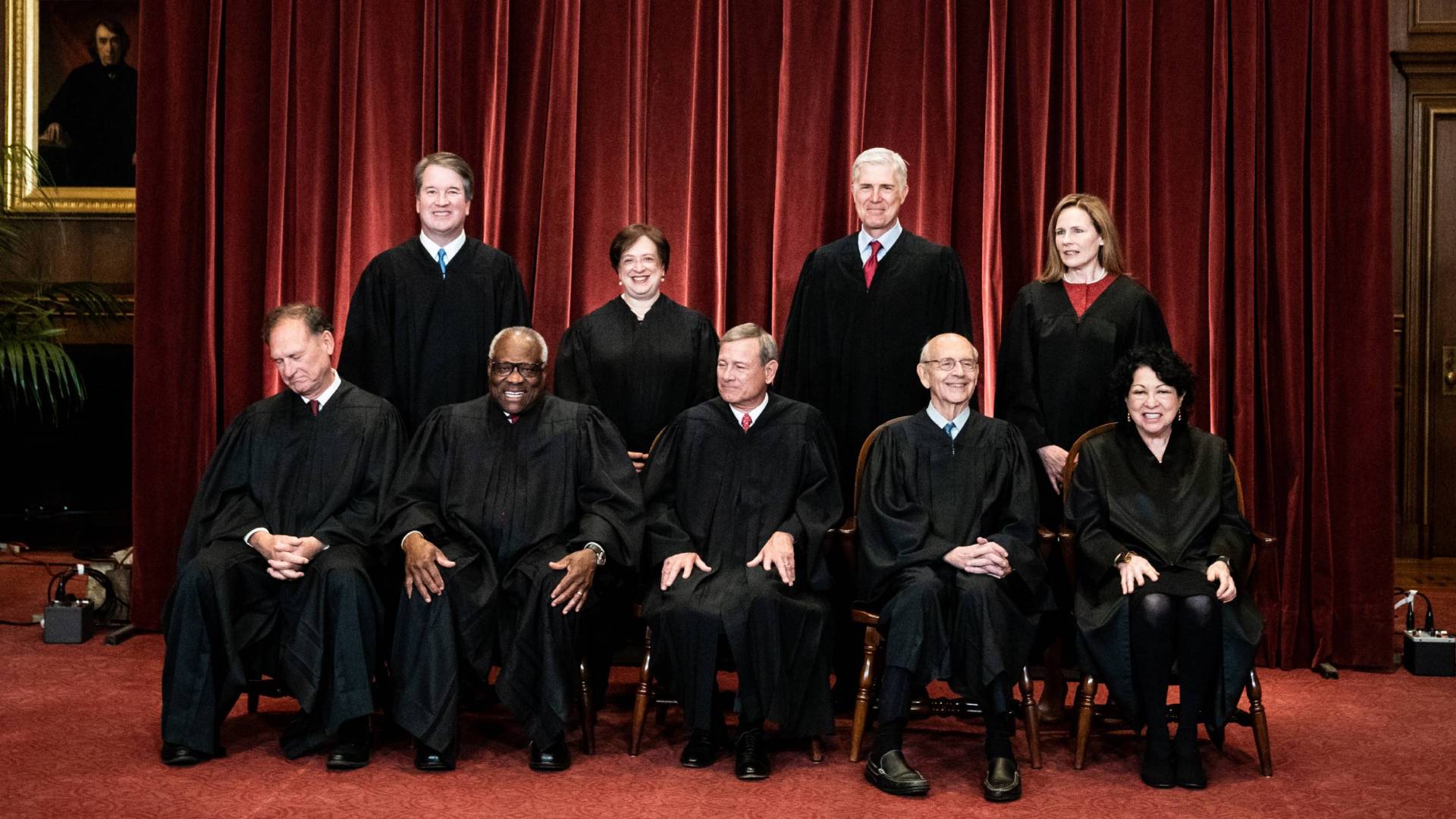
Justices of the US Supreme Court in 2021

Justices of the US Supreme Court in 2021

Christianity Today March 22, 2022
Erin Schaff-Pool / Getty Images

With the nomination of Judge Ketanji Brown Jackson last month, the US Supreme Court could get its first Black female and first nondenominational Protestant justice.

Six of the current Supreme Court justices are Catholic (Samuel Alito, Amy Coney Barrett, Brett Kavanaugh, John Roberts, Sonia Sotomayor, and Clarence Thomas), and with Stephen Breyer’s retirement, Elena Kagan will be the only Jewish justice. In response to a question during her confirmation hearings on Tuesday, Jackson described her faith as “Protestant” and then added “nondenominational.”

When Judge Neil Gorsuch was confirmed to the US Supreme Court in 2017, he ended a seven-year stretch when no Protestants sat on the nation’s highest court for the first time in history. Of the 115 justices appointed to the Supreme Court since 1789, the overwhelming majority have been Protestants, but none have identified as nondenominational or evangelical.

“Since the rise of politically active evangelicals in the 1970s, not a single evangelical has served on the Supreme Court,” Dan Crane, Frederick Paul Furth Sr. professor of law at University of Michigan, told Christianity Today. “It’s not that they don’t care about the court, but they haven’t served on the court.”

The high court’s decisions on abortion and school prayer helped galvanize the Religious Right, but conservatives have focused more on outcomes than the identities behind the bench.

“Activism is usually mentioned as one core distinctive of being an evangelical, but we oppose it on the bench,” CT observed in 2006. “Is this why there are so few top-level evangelical judges?”

The lack of evangelicals on the Supreme Court is partly a supply issue. While evangelicals make up a quarter of the American population, Crane found that they’re just 7 percent of the student body at the country’s top law schools. Harvard and Yale are seen as the Supreme Court “pipeline,” with eight of the nine justices—and nominee Brown—having attended law school there.

There are also differing attitudes among evangelicals around legal scholarship. Crane remembers that when he attended Wheaton in the late ’80s, the faculty discouraged students from applying to law schools. He thinks there’s still some baggage around legal practice—which can be seen as a worldly, greedy profession—and fewer evangelical students want to work to distinguish themselves in elite legal circles the same way they embrace the ambition needed to succeed in other areas like elite sports or business.

It’s also a result of a stubborn current of anti-intellectualism still prevalent in evangelicalism, the same issues Mark Noll addressed in his 1994 book The Scandal of the Evangelical Mind.

“Because evangelicalism comes out of fundamentalism, which is anti-intellectual, American evangelicalism continues to operate in the long tail of this,” Crane said. “It’s not inherent in Protestantism, but it’s a manifestation of American evangelicalism.”

As a whole, evangelicals tend to pursue less formal education than Catholics and Jews. A Pew Research Center study found that in 2014, 7 percent of evangelicals had a postgraduate degree, compared with 10 percent of Catholics and 31 percent of Jewish people.

“The reality of social conservatism: Evangelicals supply the political energy, Catholics the intellectual heft,” Franklin Foer wrote in The New Republic in 2005. “Evangelicals didn’t just need Catholic bodies; they needed Catholic minds to supply them with rhetoric that relied more heavily on morality than biblical quotation.”

Catholic and evangelical legal thought overlap considerably, particularly in their understanding of natural law, which dates all the way back to Thomas Aquinas. But where Catholics have a body of legal thought that is systematized and steeped in logic and scholarship, evangelicals are more likely to appeal solely to Scripture for their natural law arguments, said Robert Cochran, Louis D. Brandeis professor of law emeritus at Pepperdine University School of Law.

“Natural law proponents draw insights from Scripture, but the primary source of natural law—reason—is available to all, creating the possibility of a common legal agenda for people of all faiths and of no faith,” Cochran said. “Evangelicals tend to express themselves and their moral convictions in biblical terms that have great insight, but are less likely to draw the broad support in an increasingly pluralistic society.”

Evangelicals also tend to see the church as the primary cultural institution, encouraging their sharpest minds to pursue pastoral ministry rather than more worldly pursuits.

“Many evangelicals still tend to think in separatist terms,” he said. “They see the church as the primary cultural institution, their brightest young people become pastors, and they focus their attention on what Christ is doing in their church, rather than what he might be doing in law or other aspects of culture.”

Still, a few evangelicals have made the Supreme Court short lists.

Former federal circuit court judge and constitutional law scholar Michael McConnell—a devout Presbyterian—was suggested as a possible nominee during the John McCain and Mitt Romney presidential campaigns. Raymond Kethledge, an evangelical judge from the US Court of Appeals for the 6th Circuit, made Trump’s short list in 2018. And George W. Bush nominated evangelical attorney Harriet Miers in 2005. Kethledge was never nominated, and Meyers withdrew her nomination, and in both cases the judge confirmed was a conservative Roman Catholic (Alito and Kavanaugh, respectively).

But with many of the views and values evangelicals prioritize faithfully represented by the court’s conservative Catholic justices, Christian legal scholars don’t see the absence of evangelicals on the high court as a problem in itself. On the two issues that seem most important to evangelicals—religious liberty and abortion—conservative evangelical and conservative Catholic legal philosophies share common ground.

“To the extent social views influence Court decisions, my sense is that most conservative Catholic and evangelical legal scholars share similar views, so as to outcomes, it is not so important that there be evangelical, as opposed to Catholic, justices,” Cochran said.

And the enthusiasm evangelicals show for conservative Catholic justices is a sign of progress. According to Thomas Berg, that evangelicals will embrace conservative Catholic judicial nominees indicates how closely aligned evangelicals and conservative Catholics now are on social issues like abortion and religious liberty. Berg, the James L. Oberstar professor of law and public policy at University of St. Thomas School of Law, applauds this support as a welcome change from bitter anti-Catholic sentiment so prevalent in the 1960s.

There is the Constitutional prohibition against a religious test as a qualification for holding office, and scholars vehemently denounce the idea of identity politics on the Supreme Court.

“We should want justices who understand that their job is to say what the law is, not what it should be,” said Ernie Walton, associate dean of administration and admission at Regent University School of Law. “Having a justice who understands this and has internalized it is far more important than the religious, ethnic background, or gender of the justice.”

Berg also noted that there are many factors impacting a Supreme Court nomination that have nothing to do with faith tradition but are just the result of chance. Presidents seem to look for relatively young justices who will serve on the court for several decades. An evangelical might have the professional credentials, but the president might look for judges who more align with their political and judicial philosophy.

The qualities that caused Michael McConnell’s name to come up when speculating about a McCain or Romney win likely made him unappealing to Barack Obama. And while Kethledge reportedly made Trump’s short list in 2018, the nomination ultimately went to Brett Kavanaugh.

“Conservative white evangelicals are underrepresented in the [Supreme Court candidate] pool because of educational, cultural, theological differences,” Berg said, “But once you get to the actual decision, so many things affect the decision that even the candidates who reach that point can be knocked out for any number of reasons.”

Berg also emphasized that there’s a difference between Black evangelicals and conservative white evangelicals, and most of his observations pertain to conservative white evangelicals.

Jackson’s friends and colleagues described her to ABC News as having faith that is “private and deeply personal, neither a frequent topic of conversation nor an overly outward display.” The African Methodist Episcopal (AME) Church released a statement in support of her nomination, but the statement did not indicate that she is affiliated with an AME church.

“I’m certain her faith will come up [in this week’s hearings] in terms of how it has informed her views of the world and the law,” said ABC News legal analyst Sarah Isgur, “but I doubt it will be a point of contention so much as a point of pride.”

Isgur was right. Senator Lindsay Graham asked Jackson about her faith. “Personally my faith is very important to me,” she said, “but as you know, there’s no religious test in the Constitution under Article XI and it’s very important to set aside one’s personal views about things in the role of a judge.”

Jackson has rarely spoken at churches, but one instance—her most public faith display—involves her role on the board of Montrose Christian School, a now-defunct Southern Baptist school in Maryland. Jackson served on the school’s board from 2010 to 2011.

At her confirmation hearing for the DC Circuit in April 2021, senator Josh Hawley asked Jackson whether, based on her service at Montrose Christian, she believed in “the principle, and the constitutional right, of religious liberty.”

“I do believe in religious liberty,” Jackson told Hawley, calling religious liberty a “foundational tenet of our entire government.” But Jackson distanced herself from the Montrose Christian statement of faith, telling Hawley that she had served on many boards and did not necessarily agree with every statement those boards might make. And in this case, she added, she was unaware of the Montrose statement of beliefs.

Though there might not be an evangelical on the Supreme Court, that doesn’t mean that evangelicals don’t have influence in the judicial system.

“There are many evangelical judges on the lower federal courts and state supreme courts, as well evangelical lawyers who land top federal clerkships right out of law school,” Walton said. With time, he expects an evangelical will make it to the Supreme Court.

And evangelical legal institutions might be gaining momentum to compete with the traditional Supreme Court pipeline. Walton noted that in 2020 and 2021, over 20 percent of Regent’s law school graduates went on to work in clerkships, earning the school a top-25 ranking in the nation.

So as evangelical law schools produce top-notch legal minds and evangelicals value the changes that come not just through pastoral ministry but every vocational calling, the odds of an evangelical justice could increase.

“God knows what lies ahead of each of us,” Jackson said in a 2011 commencement address at Montrose Christian School. “The best that you can do, as you look forward, is to take the long view.”

News

Americans’ Return to Church Has Plateaued

Two years in, more congregations are open without COVID-19 precautions, but Americans aren’t more likely to show up.

Christianity Today March 22, 2022
Damion Hamilton / Lightstock

Churches waiting for more people to return on Sunday mornings are still waiting, two years into the pandemic.

Over the past six months, nearly all houses of worship have reopened for services and, week by week, more have dropped mask requirements, social distancing, and other COVID-19 precautions. But the latest figures from Pew Research Center show that once-regular churchgoers aren’t much more likely to show up than they were back in September.

While people steadily returned to church services in the first half of 2021, the trend hit a plateau. Going into the third year since COVID-19, congregations and their leaders are left with the reality that the people who worshiped alongside them before may not be coming back.

Around two-thirds of people who usually attend church at least monthly said they were back in the pews in March (67%), roughly the same as in September 2021 (64%).

“2021 had many leaders clinging to the idea that the next season—Easter, the new school year, Christmas, etc.—would bring attendance back to 2019 levels. For most churches, that ‘magic season’ never materialized,” wrote Carey Nieuwhof, former pastor and church leadership strategist, at the start of the year.

“In 2022, the constant cycle of hope and disappointment will give way to the new reality that this is your church. It will become evident that some of the people who said they’re coming back later clearly aren’t coming back—ever.”

Churchgoing evangelical Protestants have returned at the highest rates, but their figures are also holding steady rather than growing: 75 percent attended in March and 72 percent the September before.

Black Protestants remain the most cautious, and under half of regular churchgoers from their tradition are back in person. Fewer reported they had gone to services in March (48%) than back in September (50%).

The recent Pew figures follow what other surveys have indicated and what pastors see in their still-not-full sanctuaries on Sundays. A 2021 American Family Survey found the biggest drop in church attendance among Black churchgoers, older adults, and couples without kids at home.

As CT reported last year, some Christians see the lagging attendance figures as signs of a much bigger crisis for churches, where the upheaval of the pandemic has changed the way people relate to church.

“We have to retrain people from the beginning on why you should bother to assemble,” said Collin Hansen, who wrote Rediscover Church: Why the Body of Christ Is Essential. “I think pastors take that for granted and are going to be surprised how many people never had that vision to begin with and never come back when the all-clear is given.”

Within weeks of COVID-19 taking off in the US, it became clear that livestream and other online service formats would not only keep church life going but in many cases expand their reach.

“While religious congregations as a whole may have experienced a large drop in physical attendance during the pandemic, there’s good reason to believe that virtual attendance is much higher today than it was before the coronavirus outbreak began in early 2020,” the Pew report said.

Black Protestant churchgoers are also the most likely to keep watching services online, Pew found. They’re twice as likely as churchgoers from other traditions to say their only recent church attendance has been online or on TV.

The number of Americans overall who have attended or tuned into a church service exceeds those who say they’re regular churchgoers. While overall reach has expanded, there’s a segment of Christians who used to belong to a church community who aren’t engaging at all anymore: 12 percent of formerly regular churchgoers say they’re not attending in person or watching online.

Pastors are left considering hybrid worship models and whether to invest in growing online engagement even though their church is open in person.

“We now live our lives in a hybrid of physical and digital, and there’s no going back,” Ian Harber wrote in a January article posted by the Southern Baptist Ethics and Religious Liberty Commission. “Of course, we never want to forsake the physical—we are physical beings made in God’s image who are called to gather together in the name of Christ—but we shouldn’t forsake our people to the digital either.”

Books
Review

Israel’s Canaanite Conquest Presents a Question with Four Possible Answers

The story doesn’t have to be a stumbling block, but we should approach it with fear and trembling.

Christianity Today March 22, 2022
Illustration by Mallory Rentsch / Source Images: WikiMedia Commons

There is a problem with the Old Testament. At a key juncture in salvation history, the God of Abraham commandeers one nation in order to destroy another. The aggressor nation attacks the second nation because God has judged the latter guilty. The aggressor is merciless, sparing neither women nor children, expelling the inhabitants from their land, and destroying sacred sites and symbols of religious practice—in effect, wiping them off the map. And, according to the Hebrew scriptures, all this happened by the terrible will of the sovereign Lord of Hosts.

The Destruction of the Canaanites: God, Genocide, and Biblical Interpretation

It is a harrowing moment in the history of God’s people. But I am not referring to the conquest of Canaan by the tribes of Israel. I am referring to the assault on the northern kingdom of Israel by the Assyrians (a little over 700 years before the birth of Jesus) and the campaign against the southern kingdom, especially the city of Jerusalem and its temple, by the Babylonians about 130 years later.

As the historical and prophetic books of the Old Testament testify, the violence against Israel, north and south, wrought by these pagan empires was nothing less than the judgment of Abraham’s God against Abraham’s children. Their sin? Defection from God’s will for their covenant life as revealed in the law of Moses. They were in covenant with the Lord as a community, and they suffered the covenant punishments as a community. The result: mass ruin, political chaos, incalculable suffering, and death (for some) and exile (for others). It is a fearsome thing to fall into the hands of the living God, even—or especially—as his chosen people.

This set of events is not typically the first to come to mind when people, including Christians, wonder about the ethics of the Bible or the character of the Bible’s God. Hands down, that event is instead the destruction of the Canaanites by Israel at God’s command. But there are two reasons for framing Christian answers to questions about the Canaanite conquest with the Assyrian and Babylonian devastation of Israel and Judah:

First, because the human suffering superintended by God according to the Law and the prophets is even-handed; Israel is not exempt. Second, because Christians who read the sacred texts of Israel as their own—that is, as the church’s canonical Scriptures—are typically Gentiles. We Gentile Christians are prone to viewing the Jews as foils in the biblical story, by which I mean that we tend to see them as examples of what not to do. And that is when we aren’t indulging the temptation to follow Marcion in simply expunging parts of the Old Testament from the canon altogether.

But for Christians there is no such option. The question is not whether Gentiles accept the Old Testament but whether it accepts us. The apostles answered in the affirmative, and we have claimed to be Abraham’s children by faith ever since. But just for that reason the Scriptures of Israel are a given for us: a nonnegotiable constituent of the deposit of faith, comprising the twofold written testimony of the apostles and prophets to the good news of Israel’s God. Like it or not, this testimony includes the book of Joshua. How, then, ought we Gentiles who profess faith in the second and greater Joshua to receive and understand this book as the word of the Lord to and for us today?

Facts and interpretations

In response to this question, Charlie Trimm has written a wonderful book, The Destruction of the Canaanites: God, Genocide, and Biblical Interpretation. Even wading into these waters is admirable, since the subject of Joshua and Canaan has become something of a genre unto itself in academic and pastoral scholarship. The books and articles on the topic are many.

Trimm, a professor at Biola University, cuts through the noise in this slim volume, which seeks not to resolve the matter but to frame possible answers for readers. Those readers are not bad-faith interlocutors. They are every one of my undergraduate students and not a few fellow adult Christians. Honest people want to know what to do with the conquest. They want to believe in the God and Father of Jesus Christ, and Joshua is an obstacle. I thus have no doubt that Trimm’s book—concise, accessible, judicious, and well-researched—will prove an invaluable resource in pastoral and classroom settings for years to come.

Trimm organizes the book in two parts. In part 1, he gives an overview of warfare in the ancient Near East, summarizes contemporary scholarship on genocide, and introduces readers to the Canaanites. This provides a foundation for part 2, where he outlines four major options for Christian interpretation of the conquest. Before turning to these options, it is worth mentioning a few facts that stand out in the opening chapters.

First, unlike what some of us may have read or assumed, the practice of herem, or “the ban” (i.e., devoting all the residents of a city to God by slaughter), was not common in the ancient Near East. In fact, outside of a few possible mentions in other nations’ records (and these may have been exaggerations), it appears that Israel is unique in this respect.

Second, genocide is hard to define. Must it include a racial, ethnic, or religious element? Must it aim at the annihilation of an entire group? How should such a group be defined? (For example, could it be a political party, or must membership in it be nonvoluntary?) Does motivation matter or only consequences? For example, is all settler colonialism essentially genocidal? What about the bombings of Nagasaki and Hiroshima?

Third, the difference between various commands given to Israel regarding the Canaanites is striking. Exodus 23, Leviticus 18, Numbers 33, and Deuteronomy 6–7 all contain opposing and sometimes opposed instructions—almost none of which mention herem by name or even describe killing en masse. These discrepancies present numerous moral, historical, exegetical, and theological possibilities for interpreting the conquest.

Trimm boils down these possibilities to four, each a matter of “reevaluation.” The question, challenge, or problem of the conquest might be resolved by reevaluating (1) God, (2) the Old Testament, (3) the interpretation of the Old Testament, or (4) the violence in the Old Testament.

The first option takes the Bible at its word: the God of Abraham commands and approves of genocide. But genocide is intrinsically evil. Therefore, the God of Abraham is evil and thus to be repudiated, disbelieved in, or both. This is the view of “new atheist” Richard Dawkins, for whom “the God of the Old Testament is arguably the most unpleasant character in all fiction.” It is also the view of Eastern Orthodox theologian David Bentley Hart, who writes that “in most of the Old Testament” the God of Israel is “presented as quite evil: a blood-drenched, cruel, war-making, genocidal, irascible, murderous, jealous storm-god.” Trimm assumes, however, that believing this means ceasing to be a Christian. It is the only option of the four that he rules out.

The second option argues that “while the Old Testament records examples of extreme divine violence, we should not accept those violent texts as authoritative for us and should disassociate God from them.” Proponents here, including Walter Brueggemann, Eric Seibert, Thom Stark, and Gregory Boyd, have no interest in exhuming the Marcionite project. They want to preserve the Old Testament. But they see no possibility for harmonizing the conquest with either our consciences or the life and teachings of Jesus. Christians, then, must acknowledge that texts in which God sanctions violence are not authoritative for the church and do not reflect the true character of God.

The third option suggests that the problem lies not in the texts but in our interpretation of them. Perhaps the events narrated in Joshua ought to be allegorized; or to be understood metaphorically, commending nonlethal action or banishment; or to be categorized as hyperbole, so that the Canaanites are not so much exterminated as disarmed—that is, dispossessed and thereby transformed from a threat into mere neighbors.

Both this and the previous option must confront two related questions, though. Did the events depicted in Joshua occur in history? And even if they did not, does the text not clearly refer to slaughtered Canaanites? Even if the dead are merely textual, the text in question is Holy Scripture, by whose word we are (so we believe) formed into the image of Christ. Does Joshua contribute to that formation?

With Job before the whirlwind

The fourth option defends both the historicity of the conquest and its moral and theological legitimacy. Trimm offers many ways of doing this. One is that the wickedness of the Canaanites is the proximate cause of God’s judgment on them through the Israelites. This point is strengthened by the fact that Israel receives virtually identical judgment later in the story. Another route is the uniqueness of the conquest—its “unrepeatability,” in the phrase of theologian Willie James Jennings—as something rooted in God’s covenant promise of the land to Abraham.

A third suggestion sees in the conquest a type or figure of final judgment, in which a far graver sentence is issued than loss of earthly life. (The philosopher Phillip Cary observes that we are all Rahab, living in the walls of spiritual Jericho. Will we open our homes to the Lord? Will our trust in him spare our souls?) Last, some connect the conquest not only forward to the razing of the temple and the expulsion from the land but backward to the Exodus and the Flood. In the story of Noah, in particular, we see God’s fierce judgment at work, when the watery chaos of the grave swallows up the inhabitants of the land, one and all. The book of Revelation offers similarly comprehensive visions of death and destruction.

The philosopher Howard Wettstein has written that the herem texts place us with Job before the whirlwind. We groan and lament yet receive no answer; indeed, we receive questions in lieu of answers. Charlie Trimm has done something similar. He has given the church possibilities. It falls to us, with fear and trembling, to decide.

Brad East is assistant professor of theology at Abilene Christian University. He is the author of The Doctrine of Scripture and The Church’s Book: Theology of Scripture in Ecclesial Context.

News

‘Ukraine Today, Taiwan Tomorrow’? Island’s Christians Warily Watch and Pray

Few Taiwanese churches are willing to speak out on China-related political issues, surprising believers who left Hong Kong. But all leaders call for peace-seeking.

Russia's invasion of Ukraine prompts some Christian leaders in Taiwan to reflect on China.

Russia's invasion of Ukraine prompts some Christian leaders in Taiwan to reflect on China.

Christianity Today March 21, 2022
Illustration by Christianity Today / Source Images: Chiang Ying-ying / AP Images

Several weeks before Russia’s invasion, Ray Peng, the chairman of United Missions of Taiwan, was gathered in Asia with international missionaries who prayed for both Ukraine and Taiwan. Many in the group approached him, as the only Taiwanese in the room, to express their concern for his homeland’s situation.

Yet later when Peng scrolled through his Facebook newsfeed, his friends back on the island were posting cheery photos of hot pot gatherings and vowing to lose weight after stuffing themselves over the Chinese New Year holiday. It felt like his fellow missionaries were talking about a different Taiwan.

“It was really weird,” said Peng. “I don’t know how to explain it.”

He compared the typical nonchalance of the Taiwanese people to his in-laws who live in the earthquake-prone city of Hualien on the east coast of Taiwan. An earthquake once hit while Peng visited them and he was immediately concerned by its strength. But his in-laws brushed it off as they were accustomed to the tremors. Likewise, Taiwanese who have lived under the threat of invasion by mainland China their whole lives go on with daily life without thinking too much about it.

But the cracks began to show on February 24.

The Russian invasion has resonated with many Taiwanese emotionally as they have watched news clips from Ukraine of what could one day become their own reality. Online, some declare it’s “Ukraine today, Taiwan tomorrow,” while pundits debate whether the US military would really come to Taipei’s aid in the case of an invasion by Beijing. TV news stations have recommended what to include in emergency packs (such as Japanese canned bread).

Yet on Sunday mornings, many churches don’t broach the topic outside of naming Ukraine as a prayer item.

Follow CT’s Ukraine-Russia coverage on Telegram: @ctmagazine (also available in Chinese and Russian)

Congregants in the pews span a variety of political views on China-Taiwan relations—from those who want Taiwan’s independence on the one hand to those who wish to unify with China on the other. Still, Christian leaders seek to view the ongoing geopolitical conflicts through a biblical lens and find hope in their faith in a time of uncertainty.

An island divided

While Taiwan is 5,000 miles from Russia’s war in Ukraine, the invasion has struck a chord in the island of 23.6 million residents, which faces its own existential threat.

China claims Taiwan as its territory and has long threatened to use force to bring Taiwan into its fold. Cross-straits relations have ebbed and flowed over the past 70 years, yet the threat has recently intensified due to a confluence of factors: the deterioration of relations between China and the United States; Chinese President Xi Jinping’s consolidation of power and strengthening of China’s military; and Taiwan President Tsai Ing-wen’s increasingly close ties to the West. A top US admiral made headlines last year when he said China could launch an invasion of Taiwan in the next six years.

“If anybody relates to the situation of being a small democratic country living in the shadow of a larger nondemocratic one, I think the Taiwanese have a very unique perspective on that,” said Ukrainian American Alex Khomenko, who has been protesting the war in his current home of Taipei.

Many Taiwanese churches keep politics and faith separate. Pastors avoid discussing perceived political topics from the pulpit to prevent division and arguments. Politics in Taiwan is very divisive: Often legislators from the Beijing-friendly Kuomintang (KMT) party and the independence-leaning Democratic Progressive Party (DPP) break into fistfights over legislation.

At the root of the division is identity. Supporters of the DDP often belong to families who have lived for generations in Taiwan—including under Japanese colonization—while supporters of the KMT have connections to those who fled with the Nationalist army from China to Taiwan at the end of the Chinese Civil War in 1949. Their backgrounds factor into how they view Taiwan, China, and their relations.

To maintain peace, many churches try to stay neutral. David Doong understands this challenge firsthand: As the general secretary of the Chinese Coordination Centre of World Evangelism (CCCOWE), a coalition of Chinese churches outside mainland China, he needs to remain diplomatic on numerous topics—including Taiwan’s status.

He instead stresses what the churches have in common.

“Since we are joined together by the gospel, we need to return to God’s Word. The gospel has criticism for all of our ideologies,” he said.

Doong does not take a political stance when preaching but instead tries to teach what the Bible says about a given topic. He believes a pastor’s job is to equip his or her congregants to view all issues from a Christian worldview. Yet at some point, the situation may become so urgent that pastors have the responsibility to speak out.

“But when is it that time? It’s really an art and many times you can’t see it clearly until after the fact,” Doong said. Pastors are in danger of either becoming self-righteous or staying silent, he added. “It really needs wisdom."

Hong Kongers in exile

The silence on politics in Taiwan’s churches surprised Timothy Lee when he first moved from his homeland of Hong Kong to Taiwan to attend seminary six years ago. He had assumed that because Taiwan was a democracy, churches would be more open to discussing current issues than in Hong Kong. Instead he found there was even less space to discuss anything considered “political” in the church.

This has made it difficult for some Hong Kong transplants to join Taiwanese churches. Thousands of people left Hong Kong after Beijing passed the National Security Law in 2020, quashing dissent in the territory. But when Hong Kong Christians wanted to speak about what they’ve experienced in the last two years, they found Taiwanese Christians were uncomfortable and believed discussing politics was not appropriate at church.

Lee struggled to find a meeting space for the Hong Kongers in his Taiwan Fellowship, which now has 100 attendees. Churches don’t want to be associated with the group because Hong Kong is a divisive political issue. Currently the congregation gathers twice a month at China Evangelical Seminary in Taipei, where Lee works.

The news of the invasion of Ukraine was particularly concerning to Lee and other Hong Kongers in Taiwan. They have already left their homes, many uncertain if they can go back. The war brought back memories of their exodus and renewed fears that their new home could also face destruction.

“I think Hong Kongers in Taiwan have a greater fear of China because we’ve seen in the past two years how it handled Hong Kong,” Lee said. “We never thought they would do this to Hong Kong, but they ignored the international responses and sanctions. So if the international community doesn’t do anything in response to the Ukraine invasion … will [Taiwan] also face this danger?”

The war has also impressed upon Lee the importance of preparing the next generation of Hong Kongers in Taiwan, many of whom are students. It’s a group that has experienced much in the last few years—the disappearance of freedoms in Hong Kong, the emotional toll of the 2019 anti-extradition law protest, the stress of a global pandemic—and has been left feeling hopeless and uncertain about their future. He wants to help them find their identity as Christians and as exiled Hong Kongers, explore what they can do in Taiwan, and set a direction for the future.

Lee believes that as geopolitical changes arrive at Taiwan’s doorstep, its church will be forced to become more vocal about these issues—as some of Hong Kong’s churches did during the 2019 protests. He’s already seen the church take some steps: After the invasion of Ukraine, major seminaries in Taiwan have released statements calling for prayer for the people of Ukraine and Russia, which was uncommon in past crises.

Outspoken Presbyterians

One denomination that bucks the trend of silence is the Presbyterian Church in Taiwan (PCT), the largest Protestant denomination on the island. Historically the PCT has been politically active in support of Taiwan’s sovereignty. In a 1977 statement, the denomination asked the KMT government to declare Taiwan an independent country. Still, even within the denomination, churches are diverse and vary in their outspokenness.

Ng Tiat-gan, the head of research and development in the General Assembly Office of the PCT, said he hopes China does not invade; however if it does, Taiwanese Christians need to stand up and defend their land. “We need to understand God gave us this piece of land and to seek his special mission.”

The PCT released a statement calling for churches to pray for Ukraine as well as Taiwan’s own security and peace.

“Ask the Lord to help us, through the inspiration of the war in Ukraine, to have the will to persevere in defending our homeland,” it stated.

The denomination is also looking for tangible ways to help Ukrainians beyond prayer, such as working with aid groups and seeking to help a PCT pastor in Finland who is opening his church up to Ukrainian refugees.

Ng wasn’t particularly surprised to see Russian President Vladimir Putin invade Ukraine, but he was amazed by Ukrainians’ response in standing up against Russia.

“Taiwan’s situation is different from Ukraine’s in many ways,” Ng said. “But the invasion of Ukraine caused many Taiwanese people to see that when faced with an enemy’s bullying, you need to stand up. It’s not about who will come to help you—many Taiwanese say the United States will come—but we might find that we need to stand up and be self-reliant, and then people will come help.”

Seeking peace

Timothy Liao, who teaches national defense at National Taiwan University, believes that no matter the outcome of the current conflict in Ukraine—whether it ends in a ceasefire; with Ukraine destroyed; or with Russia in decline—geopolitics in the second half of the 21st century will change drastically.

This will have a big impact on missionaries, whose lives have already been upended by COVID-19, and how they spread the gospel. Liao believes missionaries need to understand these global trends in order to find new strategies to reach different countries and people groups.

Liao personally believes the invasion of Ukraine should cause Taiwan to take a careful look at whether it is prepared to face war, what it would do if faced with a precarious situation with China, and how it can seek ways to preserve peace. He wants Taiwan to carefully weigh its current actions in light of what may occur in the future.

For instance, Taiwan recently joined Western-led sanctions on Russia, leading Russia to place the island on a list of unfriendly countries. Liao is concerned that this could lead to Taiwan becoming more isolated, losing access to Russia’s natural gas and getting banned from Russian airspace, which flights from Taiwan usually traverse to reach Europe.

He cautions Taiwanese Christians from quickly demonizing or creating heroes out of people in the conflict. Rather they should try to understand what is happening from different angles so they can have a more balanced perspective and, like Paul says, make “petitions, prayers, intercession and thanksgiving … for all people—for kings and all those in authority, that we may lead peaceful and quiet lives in all godliness and holiness” (1 Tim. 2:1–2).

His church refrains from discussing politics. Yet Liao believes seminaries and Christian think tanks should teach Taiwan’s pastors about the realities of geopolitics so they can better shepherd their congregations.

While the Taiwanese church is filled with differing viewpoints, Doong believes that a crisis could unite the people, much like what is happening now in Ukraine. He and the other Christian leaders interviewed by CT gave several suggestions for how the Western church could support Taiwan’s church should an invasion happen—starting with intercession.

“How do you want the Christians in China to pray for and to show compassion toward [Taiwan believers] if war started to take place?” Peng said.

Liao echoed this call.

“In this chaotic environment, Christians need to hold fast to a faith from on high: No matter what difficulties or dangers of war we face, we all need to have a posture of prayer,” he said. “The most we can do for the churches of other countries is to pray for them, to pray for peace in the world.”

As the world order changes, Christians need to prepare themselves for the difficult times ahead, Doong said, pointing to the exilic paradigm described in the book of Daniel and the letters of Peter.

“A Christian’s hope was never in the rise and fall of worldly kingdoms,” he said. “In the end, this is our hope: that God’s kingdom will come and everything we relied on in this world will be gone.”

Doong noted that this is easy to say during peacetime but much more difficult to live out in times of war. That’s why he believes it’s important to learn from the Ukrainian church in its suffering—not as something to pity but as the “glorious witnesses of the true gospel.”

Angela Lu Fulton is a reporter and editor living in Taipei, Taiwan.

Editor’s note:

You can now follow CT on Telegram @ctmagazine (also available in Chinese).

News

Katy Perry’s ‘Dark Horse’ Prevails Over Christian Rapper’s Lawsuit

UPDATE: The pop star and her team no longer have to pay $2.8 million in damages in the copyright case.

Singer Katy Perry

Singer Katy Perry

Christianity Today March 21, 2022
Matt Winkelmeyer / Getty Images for The Recording Academy

Update (March 21, 2022): After a years-long legal battle between Christian rapper Flame and Katy Perry, “Joyful Noise” did not overtake “Dark Horse.”

A ruling this month in the Ninth Circuit Court of Appeals upheld that the pop star didn’t have to pay damages for copyright infringement for similar synthesized segment that appears in both songs.

Perry and her team had been ordered to pay $2.8 million by a federal jury in 2019, but the district court voided the decision the following year.

Flame (Marcus Gray)’s attorney issued a statement last week saying they were “disappointed by the court’s rejection of the unanimous verdict” from the initial trial.

The case was significant for the music world because of its potential to set a precedent for how the courts will consider future cases alleging copyright infringement.

The appeals decision analyzes Gray and Perry’s songs, focusing on a repeated pattern of notes, called an ostinato. The patterns sound familiar in both songs but are slightly different.

https://twitter.com/sisario/status/1502055867675463681

“The Ninth Circuit concluded that the two songs’ similar ostinatos result only from the use of commonplace, unoriginal musical principles, and thus could not be the basis for a copyright infringement claim,” wrote Eric Ball and Ryan Kwock, attorneys at Fenwick, a firm specializing in technology and intellectual property.

“While Katy Perry comes out victorious as non-infringing in this case, the opinion simultaneously signals the weaknesses in the ‘Dark Horse’ song’s copyright itself,” they said. “If the ostinato in ‘Joyful Noise’ is unprotectable, then the similar elements in the ostinato in ‘Dark Horse’ could be unprotectable, too, thus opening the door to more songs using similar-sounding elements without running the risk of infringement.”

—–

Update (August 1, 2019): Katy Perry and the creators of “Dark Horse” were ordered to pay $2.8 million in damages after being sued by Christian rappers for copyright infringement, The New York Times reported.

The jury calculated the payout for Flame (Marcus Gray) and his collaborators after determining that 22.5 percent of the pop hit’s profits came from beat taken from his song, “Joyful Noise.”

The bulk of the damages will come from Capitol Records, which was fined at $1.3 million. Perry owes $550,000, with her producers and their companies paying the remainder.

—-

Update (July 29, 2019): She stole a beat, ‘cause she liked it? A federal jury sided against Katy Perry, ruling on Monday that her song “Dark Horse” copied from a Christian rap song, the Associated Press reported.

Flame (Marcus Gray) will be rewarded copyright damages due to the similarities between Perry’s hit and his 2009 song “Joyful Noise.”

He has yet to offer comment on the victory after a weeklong trial, which CT reported on below.

According to the AP:

Perry and the song’s co-authors, including her producer Dr. Luke, testified during the seven-day trial that none of them had heard the song or heard of Gray before the lawsuit, nor did they listen to Christian music.

Gray’s attorneys had only to demonstrate, however, that “Joyful Noise” had wide dissemination and could have been heard by Perry and her co-authors, and provide as evidence that it had millions of plays on YouTube and Spotify, and that the album it’s included on was nominated for a Grammy.

Fellow Christian rapper Lecrae was featured on “Joyful Noise,” which came out in 2009, but dropped his name from the suit.

—–

Original post (July 25): The mainstream pop and Christian hip-hop (CHH) worlds collided again this month, as a five-year-old lawsuit claiming Katy Perry stole beats from a CHH song made it to court.

Last week, Perry took the stand before a civil jury in downtown Los Angeles and maintained that she was not familiar with Flame’s “Joyful Noise” (featuring Lecrae) when she created her 2013 magic-themed, pop-meets-trap hit “Dark Horse.” Despite her origins as a Christian musician—then performing as Katy Hudson—Perry said that she was “mostly always listening to…secular music.”

A US District Court judge rejected a summary judgment bid by Perry and several other songwriters last summer, and the trial will continue on Friday, when Flame (Marcus Gray) is expected to testify again.

Flame originally claimed in a 2015 lawsuit that his song had been “irreparably tarnished by its association with the witchcraft, paganism, black magic, and Illuminati imagery evoked by the same music in ‘Dark Horse.’”

Judge Christina Snyder deferred to the opinion of the plaintiff’s musicologist who argued that the songs were similar enough on "five or six" musical criteria and shared unique melodic descents that he believed the plaintiffs' claims.

The same musicologist also took the stand in court last week to support the plaintiff’s case and testified, “I have not seen another piece that descends in the way these two do."

Perry dismissed an argument that her decision to cut the opening beat of the song at her 2015 Super Bowl performance was related to the lawsuit.

Several weeks after the lawsuit was filed in July 2014, Lecrae, who was featured on “Joyful Noise,” distanced himself from lawsuit and later dropped his name from the suit. "I'll say this — I have no qualms with Katy Perry. Love her and if she wants to talk at any point in time, I'm more than willing to that," Lecrae told MTV News.

“I was in Hong Kong [when] the press release went out, and it’s not my song—it's my guy Flame's song and I respect everyone's intellectual properties—but that statement about the witchcraft and stuff, that's not my statement and I don't stand behind that statement.”

“Dark Horse” was released in September 2013 and reached No. 1 on the Billboard charts in January 2014. Six years earlier, Flame’s album was nominated for a Grammy for Best Rock or Rap Gospel Album, and “Joyful Noise” also received a Dove Award nomination.

Along with Flame, fellow artists Da T.R.U.T.H. (Emanuel Lambert) and Chike Ojukwu are also listed on the lawsuit.

CT first reported on the dispute in 2014, noting that Perry, a pastor’s daughter, began her career as a Christian artist and said she kept the faith even after her first single “I Kissed a Girl.” She has since spoken out to say she is no longer a Christian.

News

How French Evangelicals Seek to Serve Abuse Survivors Well

New efforts come amid the Catholic Church’s groundbeaking investigation.

Christianity Today March 21, 2022
Siegfried Modola / Stringer / Getty

Florent Varak had been a pastor for nine years in 2001 when a 15-year-old church attendee disclosed that his father had been sexually abusing him.

“I was just stunned,” said Varak, who at the time pastored Evangelical Protestant Church of Villeurbanne-Cusset in Lyon.

Since the attendee was a minor, Varak believed this revelation required immediate legal action. He called the father into his office and explained that the man would either write a letter to the procureur de la République (district attorney) denouncing himself, or Varak would.

Varak wrote the letter, and the trial took place almost two years after a government investigation revealed that the abuser’s actions were not limited to his son. Varak attended the three-day trial and testified as a key witness. The father was sentenced to 12 years in prison.

Two decades later, French evangelical pastors and church leaders like Varak will have additional tools to help them better serve abuse survivors and address abuse in their own congregations.

Last summer, the National Council of Evangelicals in France (CNEF) published a booklet outlining three approaches—theological, legal, and practical—to fighting sexual abuse within the church and stating a code of ethics for pastors and elders at member congregations and mailed it to CNEF members. In December, the Protestant Families Association (AFP) announced it was partnering with the CNEF and two other French counseling organizations to create an online service independent of the church to help accompany victims.

“The reaction was very positive among our members,” said CNEF vice president Marc Deroeux, who oversees the project.

French evangelicals’ formal efforts to help churches minister to survivors of abuse arrived the same year as a 548-page report documenting abuse in the French Catholic Church. Following the work of the Independent Commission on Sexual Abuse in the Church (CIASE), the Catholic Church has agreed to financial compensation for victims of sexual abuse within its institutions.

The catalyst for the evangelical community’s work, however, comes from a desire for transparency amongst church leaders and members, say those behind the initatives.

Eleven cases of abuse since 2019?

The CNEF, which represents nearly 70 percent of evangelical places of worship in France, first began to track sexual abuse in member churches in 2019 and last year released its findings. Congregations self-reported three cases of sexual assault committed by church leaders and eight instances of pastors coming to the CNEF for advice on how to deal with sexual abuse within the church community.

This number likely greatly underrepresented the reality of the situation, said Valérie Duval-Poujol, vice president of the Protestant Federation of France (FPF) and coauthor of Violences conjugales: Accompagner les victimes (Conjugal Violence: Accompanying the Victims).

“The pastor is often simply relocated to avoid further discussion,” she said of situations of sexual abuse in churches.

With a father who is an FPF pastor and a couples and families psychotherapist, Duval-Poujol grew up aware of the disappointing reality of the evangelical church’s reaction to abuse.

“The culture of protecting the institution at the expense of the victim must be stopped,” Duval-Poujol said. Statistically speaking, sexual abuse happens at a far higher percentage than the numbers reported by pastors suggest, she said. “That means that the women don’t feel safe enough to speak about it to their pastors.”

Varak also pointed out that, in his experience, sexual abuse situations are greatly misunderstood, both inside and outside the church. “The numbers [in my congregation] were just staggering,” said Varak about being a new pastor in Lyon. “[Around] 10 to 20 percent of the people in our [church] community had experienced some sort of abuse.”

Assistance for victims

This summer, the CNEF and AFP hope to launch a service d’écoute, or a listening service for victims of sexual abuse in the church, which will connect survivors to professional counselors.

“The listening service is there to welcome victims and allow them to speak out freely, and to provide people with resources,” said Marc Deroeux, vice president of the CNEF, who is overseeing the project. “It’s also there for organizations to know how to deal with abusers.”

Deroeux made it clear that the listening service will comply with all French laws, notably regarding cases of abuse against minors which will be handed immediately over to French authorities.

In addition to the CNEF’s brochure, the FPF is currently working on its own guide to dealing with sexual abuse in the church. Although the document has not yet been released, it will also serve as a practical tool for all French Protestant churches and members of the FPF.

Duval-Poujol pointed out that while sexual abuse in the church has been a taboo subject in many cultures, social movements have helped bring it to light. Now it’s time to provide proper resources.

“There’s a lack of training [in churches],” Duval-Poujol said. “The pastor either doesn’t believe [the victim] or he questions him/her. When all he has to do is listen to him/her. But #MeToo allowed people to believe the victims.”

A resounding theme of many evangelical leaders in France is that sexual abuse in the Protestant church is not necessarily institutional but rather hidden through shame and guilt. Many French church leaders find the liberation de la parole—opening up about taboo subjects and freedom of speech—with movements such as #MeToo a very productive thing for the church.

“CNEF’s work is a great first step. It’s the beginning of a [long] road,” said Duval-Poujol.

In order to properly distribute materials to educate its member churches, the CNEF is currently trying to publish its materials online to provide access to member churches. However, not all churches are aware of these efforts. CT reached out to four churches, none of whom had either received or were familiar with the CNEF materials.

For Florent Varak, the next step is taking practical actions. “When we built a new facility, we inserted windows on all doors to give a sense of transparency. We minimized the presence of any blind corners.” The church also requires thorough background checks for all staff in order to keep accountability among church members, and they have multiple CNEF posters hung in their church.

Varak is also willing to talk about these issues in front of his congregation. “If it were not for our conviction of the importance of expository preaching, I would probably never have preached about sexual abuses,” he said. “But since they are mentioned in some books of the Bible (Judges, 1 Corinthians, Esther), going through these sacred texts forces the conversation.”

“The real question is whether we have a systemic issue,” Varak said. “If our theology, or our culture, or our structure facilitates this kind of behavior.”

Perhaps that answer is both yes and no. Churches led by charismatic leaders without robust power-sharing policies can pressure people into silence.

“It’s rare, since the French evangelical scene is not as visible as in the US, but it happens,” said Varak. “The strong autonomy of each local church can facilitate an ‘in-house’ mentality—‘What happens in Vegas stays in Vegas’ sort of thinking.”

Varak emphasizes that because evangelical pastors hold no sort of authority to forgive sins through the practice of confession and absolution, they differ from Catholic priests who until 2021 often did not report cases of sexual abuse to French authorities. In that way, evangelical churches’ theology should actually prevent these types of cover-ups from happening.

“We have no sacramental authority for forgiveness, so we can’t minimize sin institutionally,” said Varak. “We also emphasize the priesthood of believers and the importance of being transparent with one another, which should prevent abuses from being masked.”

addApple PodcastsDown ArrowDown ArrowDown Arrowarrow_left_altLeft ArrowLeft ArrowRight ArrowRight ArrowRight Arrowarrow_up_altUp ArrowUp ArrowAvailable at Amazoncaret-downCloseCloseellipseEmailEmailExpandExpandExternalExternalFacebookfacebook-squarefolderGiftGiftGooglegoogleGoogle KeephamburgerInstagraminstagram-squareLinkLinklinkedin-squareListenListenListenChristianity TodayCT Creative Studio Logologo_orgMegaphoneMenuMenupausePinterestPlayPlayPocketPodcastprintremoveRSSRSSSaveSavesaveSearchSearchsearchSpotifyStitcherTelegramTable of ContentsTable of Contentstwitter-squareWhatsAppXYouTubeYouTube