Ideas

Side B Christians like Me Are an Asset Not a Threat

Same-sex-attracted believers pay the cost of discipleship every day. Our witness needs to be heard.

Christianity Today December 3, 2021
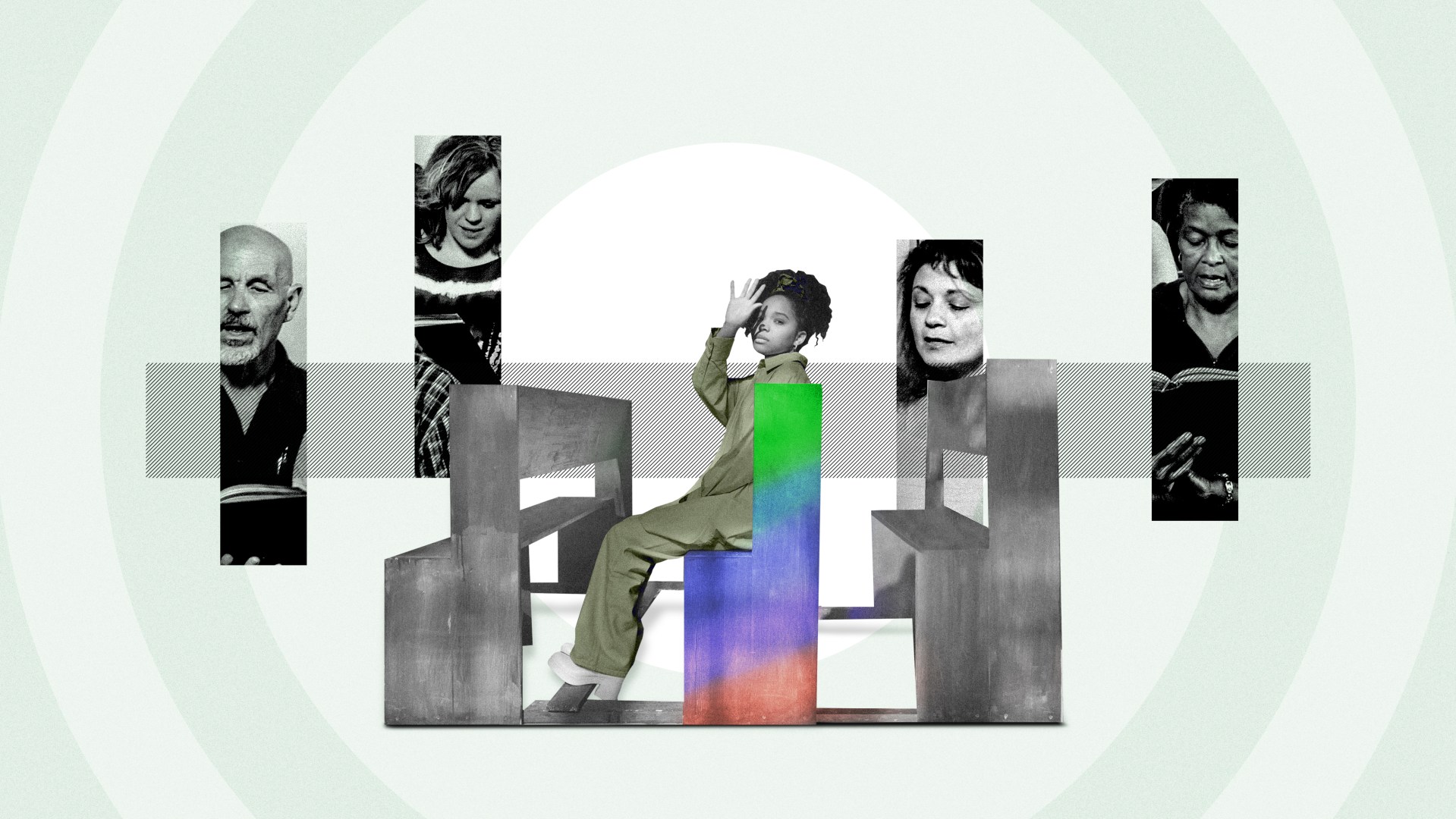
Illustration by Rick Szuecs / Source Images: Jgroup / Getty / Cottopnbro / Pexel

After a recent conference, a gay friend reached out to me with a heartbroken message: “I thought the yoke of Jesus was supposed to be light.” Some leaders responding to the event, he said, were “making it sound like faithfulness to Jesus either means Jesus changing something that he hasn’t changed yet” or “God really [wanting] me to lie to people and just say that I’m not gay anymore.” He felt like crying, he said.

My friend’s story is just one example of the sometimes-tense relationship between the evangelical church and the LGBT community. He and I and others involved in the Revoice community are part of a growing minority of Christians who desire to be honest about both our experiences of attraction and also our steadfast commitment to live in obedience to the sexual ethic presented in the Bible as God’s design for all people, regardless of attractions or orientations.

The conversation about gay identity is not new, but it has become much more acerbic of late. Following the Nashville Statement a few years ago, an increasing number of denominations have released their own declarations concerning marriage and sexuality.

The Presbyterian Church in America and the Anglican Church in North America have both published committee reports or position papers concerning the use of identification language among sexual minorities who are church members. Meanwhile the United Methodist Church is looking to disunify at their next gathering over affirmation of gay unions by some congregations.

All of this is quite personal to me. Friends to the theological left and right of me have attempted to interact with and understand me as a same-sex-attracted Christian. The public square has been less generous. In the years since I first shared my story, public interaction has become more polarized and absolute in its condemnation of Side B Christians like me and others.

From conservative commenters, we hear that any acknowledgment of same-sex attraction is sinful, and progressive writers accuse us of repressing our sexuality and causing suicidality among LGBT teens. Most of the denominational statements mentioned above conclude that using terms such as “gay Christian” range from “unwise” to “sinful” and claim that using these descriptors makes our sexuality of primary importance in our lives.

However, Side B Christians are not a threat but an asset to orthodox churches.

First, sexual minorities who stay in conservative communities do not want those spaces to become affirming. Quite the opposite, in fact. In the face of isolation or outright rejection, we remain in conservative churches because of our commitment to the faithfulness of Scripture. We are convicted that Jesus is better than sexual fulfillment, and many of us have committed to lifetime celibacy because of our belief in the traditional sexual ethic.

As Greg Johnson writes in Still Time to Care: What We Can Learn from the Church’s Failed Attempt to Cure Homosexuality, “Certainly, my faith has cost me more than a tithe, but God ’s people have not let me be alone. My narrative was that Jesus captured my heart. He is worth everything.” This is the testimony of gay Christians who remain in churches with a biblical view of sexual ethics. We have weighed the cost of following Jesus with our minds, hearts, and bodies and have found him to be worth the cost.

Second, we stay in the church based on principle, not for abstract political gains in a mostly abstract language war. Again, it’s hard to be a gay Christian in a theologically conservative church. Both in the body of Christ and in the culture at large, celibacy is a difficult commitment to maintain, especially long term. With it comes a loss of dreams and expectations, especially for those of us who were raised in evangelical churches.

At the height of the purity culture movement, I was a high school student terrified by my attractions and wondering when God was going to give me a miraculous healing followed by a husband and kids. Same-sex attraction was condemned as something that separated me from God, no matter how much I loved Jesus.

Instead of finding support for a probable lifetime as a single Christian, I consistently faced people who were well intentioned but determined to just find me a husband. Yet I stayed, despite loneliness, misunderstanding, and conversational homophobia. I stuck it out because of my deep conviction that my life as a celibate gay Christian was just as much a walking picture of the gospel as any of the marriages I encountered at church. Even today, I experience these same tensions in the church. What has changed, though, are my expectations for how God meets my human need for support and relational intimacy. Instead of longing for marriage, I embrace the deeply connected friends in my life and intentionally cultivate those relationships for a lifetime of love and support.

Finally, our presence is a witness to those both inside and outside the church. A friend once told me that she couldn’t imagine anyone better equipped to talk to Christian teens about living the traditional sexual ethic than a gay Christian committed to celibacy or a mixed-orientation marriage.

She argued that, in a world motivated by the twin mantras of “follow your heart” and “live your truth,” who better to demonstrate a countercultural lifestyle than those who could easily find love and acceptance in both progressive churches and secular culture at large, yet choose to remain faithful to God’s design?

By way of example, a friend of mine recently relayed a comment he received from a teen at his church. The student thanked him for talking to the youth group about his sexuality and commitment to celibacy. “You’re the first person I’ve met in church who is really giving something up for Jesus,” he said.

Statements like this are why we celibate gay Christians declare our sexuality so often and so publicly. We want future followers of Jesus to know that flourishing as a gay Christian is not only possible but life-giving. We want to model what it means to embrace the idea of chosen family and belonging that isn’t inherently connected to sexual relationships. Why? Because the Bible tells us this sort of intimacy and connection is what we’ll all experience in eternity (Matt. 22:30; Mark 12:25).

If we want the next generation to believe that sex and marriage are not the ultimate sources of Christian community, the church would do well to ensure we are not rejecting those whose very existence demonstrates that fact.

Correction: This piece previously included a link and reference to a document that did not in fact represent the views of the Church of the Nazarene denomination. That link has been removed.

Bekah Mason is a mother of two, the executive director of Revoice, and a founding member of the Pelican Project. Speaking Out is Christianity Today’s guest opinion column and (unlike an editorial) does not necessarily represent the opinion of the publication.

Theology

Look for Your Next Leader in the Background, Not the Spotlight

Yes, power corrupts some people. But maybe corruptible people seek power.

Christianity Today December 2, 2021
Greyson Joralemon / Unsplash

This piece was adapted from Russell Moore’s newsletter. Subscribe here.

A famous New Yorker cartoon depicts a flock of sheep grazing before a campaign billboard of a wolf—whose slogan is “I am going to eat you.” Under the frame, one sheep says to another, “He tells it like it is.”

I wince with recognition whenever I think of that cartoon, knowing that Jesus probably did not have blind allegiance in mind when he called his followers sheep. Still, maybe the message of the cartoon helps explain why we end up with so many terrible people in church leadership.

When evangelical Christians point out uncovered scandals or hidden abuse among church leaders, they often quote some version of this line attributed to Lord Acton: “Power tends to corrupt, and absolute power corrupts absolutely.”

But what if that perspective is wrong? A new book suggests it might be—and presents some findings that we as the church should carefully consider.

In Corruptible: Who Gets Power and How It Changes Us, political scientist Brian Klaas argues it’s not so much that power corrupts but that corruptible people seek out power.

Klaas invokes research showing how people in all kinds of leadership positions tend to express the “dark triad” of narcissism, psychopathy, and Machiavellianism. He argues that abusive people are the ones drawn to power in the first place.

So how does this manifest itself in church leadership?

Consider what many expect of pastors and other church leaders: the ability to be expert exegetes, social theorists, political practitioners, skilled CEOs, innovative entrepreneurs, as well as Christlike examples. Who looks at that list of qualifications and concludes, “Yep, I’m the person for the job”?

The answer is twofold: people with a strong sense of calling—and those with an urge for power. When the calling outweighs the thirst for power, the result can be very good. But when the will to power is stronger, the result can be terrible.

Moreover, it’s most often the abusive people who can endure what it takes to get and retain positions of power.

Using the example of rulers like Saddam Hussein and Muammar Gaddafi, Klaas observes how dangerous it is to be a dictator. Notice how many of them end up exiled, decapitated, or torn to pieces by mobs of their own people.

“So here’s the question,” Klaas says. “Who looks at that job and thinks, ‘I want to try that!’?” The answer is, he argues, narcissists and psychopaths and Machiavellian power seekers. These are the ones who think they are special enough to survive the onslaughts that will come. Or they are the ones with enough psychological distance not to care.

Klaas affirms that a certain amount of emotional distance is necessary. On the first day of medical school, his brother was required to dissect a cadaver. Trying to cope with the horror, Klaas’s brother asked the professor whether he should think of the person on the slab in front of him as “a piece of flesh or as someone’s grandpa”—to which the professor replied, “Both.”

Too much emotional proximity would render a doctor (or many other kinds of leaders) emotionally paralyzed, Klaas suggests. But too little proximity may lead to a cold technician who doesn’t see the stakes involved. A president of the United States not only must have empathy for the problems of his or her fellow citizens but must also be able to, if necessary, launch missiles that will wipe out human lives.

The men and women who can make these kinds of decisions—and endure the inevitable backlash—represent two kinds of people: those who are gifted with a unique resilience and those who just love to be in command. And these two groups are very different.

So why do awful people seem to get worse and worse the higher they go? Is power corrupting them? Not necessarily, Klaas writes. It may be that they are just getting better at what they do. Or it may be that they are gaining a wider field of possible options to do more harm.

In the book, Klaas describes Steve Raucci, a school-district maintenance worker who behaved like a power-hungry tyrant. Those who taught or studied where Raucci worked knew how he acted, but for many years, few outside the district limits were aware.

A restaurant patron who screams at the server might be seen only by a handful of people (and God). But someone who acts that way in a large church or ministry multiplies the potential number of people who may observe the behavior. In that case, what has changed is not the level of the leader’s corruption, but the number of people around to witness it and thus the stakes of the leader’s success or failure.

Apostle brothers James and John did not hold powerful positions when they approached Jesus about the seating arrangements in his kingdom, but they sure wanted to (Mark 10:35–40). Yet Jesus warned them about pursuing that kind of domineering power, saying, “Whoever wants to become great among you must be your servant, and whoever wants to be first must be slave of all” (vv. 43–44).

Klaas also explains why cults of personality or institutions of intimidation seem to get crazier over time: “If people are willing to publicly embarrass themselves by spouting obviously absurd lies about the ‘Dear Leader,’ then they’re more likely to be worthy of the regime’s trust,” he writes. “A henchman who parrots absurdities is a henchman worth investing in.”

But what happens when the leader’s absurdities become generally accepted—or at least so commonplace that people become bored with them?

Toxic leaders “keep inventing crazier and crazier myths, constantly testing people within the regime and within society to see who goes along with it and who doesn’t,” Kraas writes. “That strategy creates a ratcheting effect: if the lies don’t get more extreme, your loyalty tests become worthless.”

We’ve seen that a lot in the public square, as well as in the church.

There’s also the problem of survivorship bias, or the “caveman effect.” We often talk about prehistoric cave dwellers as the ones who drew art on the walls of caves. But maybe, Klaas points out, the people who lived in the woods or on the savannas were just as artistic. The difference in this case is that cave walls can preserve what is drawn on them, but animal hides and trees cannot.

I am often asked why there were no white pastors in the South who stood up to slavery or to Jim Crow. While the number is appallingly small, it’s not zero. It’s simply that those who went against slavery or segregation weren’t likely to survive in ministry for very long.

So what does survivorship bias have to do with the corruptibility of leadership? We should pay attention, Klaas tells us, not just to those who sign up for power but also to those who don’t want to be in power. Why do they avoid it?

Again, there are a couple possibilities. Some don’t see in themselves the gifting needed for leadership. But others simply can’t stand the thought of operating in a social Darwinian atmosphere that requires increasing levels of meanness, conflict, and outrage.

In an interview, Klaas gave the example of his mother who once served on their community’s school board. She was a civic-minded person who cared about education and children—exactly the type of person who typically ran for such positions.

However, since school-board meetings can now be as vitriolic and raucous as national political scenes, Klaas is quite sure she would not choose to run today. She would still care about children and education—but to be on the school board, she would have to be the kind of person who could endure death threats, lawsuits, or mistreatments such as being spat on when leaving a meeting. Or she would need to be the kind of person who actually likes such things.

Perhaps, he suggests, we should actively search for the people who don’t want to serve in such positions and find out why. These may be the very people we should recruit to lead. There are parallel examples throughout the evangelical Christian world—from the men and women serving in the secular civic world to those preaching the gospel or leading churches and denominations.

Maybe we should look for the people who love the Bible and the gospel and who don’t see the Sermon on the Mount as a suicide pact that will end their career or ministry.

For years, I heard a colleague in ministry tell younger people that churches and ministries are changed by “those who show up.” That is true. But maybe we need to do a better job seeking out those who don’t want to show up—and ask them why.

I’m not 100 percent persuaded by Klaas’s argument. Power does corrupt—as does the love of money or security (1 Tim. 6:10). Temptations like that can manifest themselves at any time (1 Cor. 10:12–14).

But overall, Klaas’s book helps to explain our present time of tumult and reckoning with abusive Christian leaders and institutions. In some cases, people started out with good motives and eventually lost their way. But some of them, perhaps more than we think, were already wired that way. And maybe—like sheep nodding at a wolf’s campaign billboard—we just don’t want to see or believe it.

Russell Moore leads the Public Theology Project at Christianity Today.

Theology

Singleness Lessons I Learned from the Early Church

The history of Christian celibacy is more complicated than we’d like to think.

Christianity Today December 2, 2021
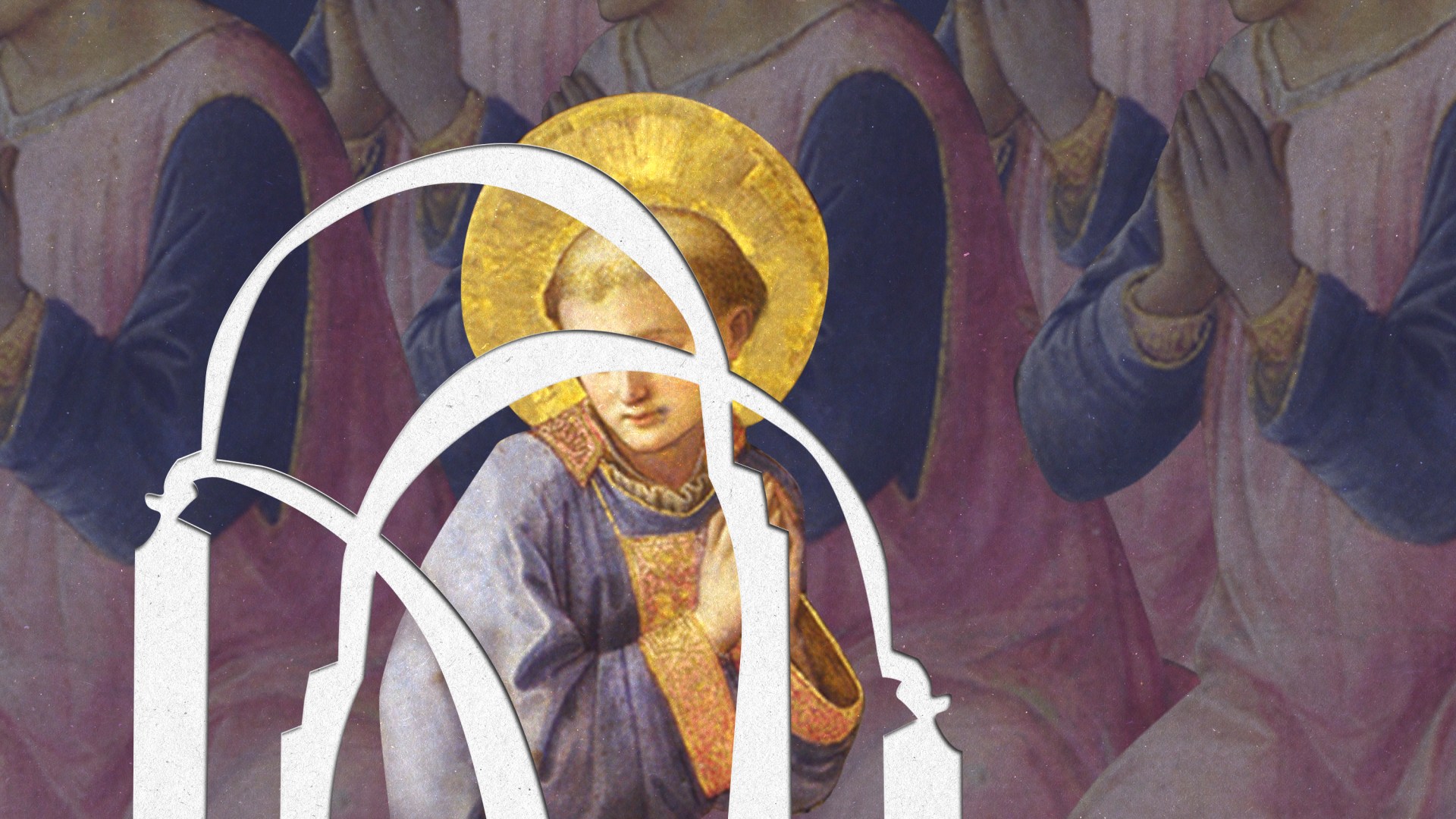
Illustration by Mallory Rentsch / Source Images: WikiMedia Commons

Lately, Christians have cast their minds and social media musings back to the early church on the topics of singleness and sexuality. Much of the conversation centers on past spiritual practices of celibacy and claims about what early church leaders taught about singleness.

Some suggest that early church leaders enthusiastically ‘tore down’ the centrality of marriage within the church. Others argue that the way we understand the (so-called) “gift of singleness” today is a direct inheritance from apostles and the church’s earliest centuries.

As a history nerd, practical theologian, and never-married Christian woman, I may not agree with every supposition, but I’m delighted by the revitalized discussion about how we can see ancient ideas about singleness in a new light. After all, church history is our history, and this ancient era is ripe with fascinating insights (and quite a few conundrums) about singleness—many of which are still relevant to discussions on faith and church life today.

The lessons we can learn from the ancient church about singleness are many and mighty, but they are neither simple nor straightforward. In fact, early church leaders do not offer us a singular narrative about being single. However, when we examine the Christian history of celibacy on its own terms, the conversation yields something far more complex and interesting.

So what does it look like for us to approach this past honestly?

First, a proper historical methodology involves observing the details and nuances of the past, rather than painting it with broad brush strokes.

We must keep in mind that the early church era spanned almost 500 years and multiple continents. In that time and space, there was a great diversity of thought on being unmarried as a Christian. There was lots of agreement, but there was also strong disagreement.

For instance, consider the response to the fourth-century ex-monk Jovinian, who dared to suggest that “virgins, widows, and married women, who have been once passed through the laver of Christ … are of equal merit.” This affirmation of Christians’ shared equality in Christ, regardless of their marital status, eventually contributed to Jovinian being declared a heretic at multiple early church synods during his lifetime.

It also inspired numerous and lengthy critiques by patristic authors, like early church father Jerome (who begged “the reader not to be disturbed if he is compelled to read Jovinian’s nauseating trash”) and even Augustine (who was thankful that the church “opposed this monster very consistently and very forcefully” and who took steps to stop Jovinian from “secretly spreading poisons with all the power which the Lord gave me”).

Or consider that the unmarried Christian life in the eastern sphere of the empire was characterised quite differently to that of the western sphere. For half a millennium or so, each region developed its own independent theological rationales for and practical expressions of Christian singleness.

These are just two examples of how the early church’s understanding of what we call singleness today was genuinely complex rather than straightforward.

Second, engaging with the past depends on a firm commitment to understanding the dynamism of history.

In the recent evangelical re-popularisation of the term “celibacy,” contemporary discussions often define celibacy as a distinct, lifelong, and perhaps formalized commitment to a particular kind of singleness.

Some who make this claim consider celibacy a direct inheritance of ancient historical practice. And yet in its original context the word celibate, from the Latin term caelebs, simply meant “unmarried”—which is the functional equivalent of our term single.

What is more, before the eventual establishment of monastic communities (which is what we typically have in mind when we think of celibacy today), there was a diverse range of unmarried individuals that included itinerant teachers, lone desert dwellers, ascetic sect members, celibate priests, household virgins, widows and widowers, and more.

Not only were the earliest expressions of the unmarried Christian life much more varied, but some of them were also considered theologically problematic.

Take, for example, the Encratites—a second-century Christian sect that emphasised self-discipline through not eating meat, drinking wine, or most importantly, having sex. A cornerstone of Encratism was their rejection of marriage altogether.

The movement was popular for a time, but by the beginning of the third century, early church fathers like Ireneaus and Clement of Alexandria actively opposed the Encratites. They argued that forbidding marriage (and sex within it) was heretical. As David Hunter notes in his book Marriage, Celibacy, and Heresy in Ancient Christianity, “Christian ‘orthodoxy’ now entailed the acceptance of marriage and the repudiation of radical encratism.”

However inconvenient this may be to us as modern readers of history, there simply was no unambiguous approach to or singular practice of “celibacy” within the early church.

Third, engaging with the past requires careful navigation of historical continuity and discontinuity.

We must recognise that the present cultural context of singleness is remarkably different from that of the early church. For example, today’s Christian singles have a degree of personal autonomy in their decisions about why, who, and when to marry. Such marital independence would have been unimaginable for our ancient counterparts. To them, marriage was essentially a social construct and economic necessity—often initiated by their elders or family members, whether they liked the arrangement or not.

In fact, most unmarried Christians in the earliest centuries were not ‘never-married’ virgin adults, but rather widowed husbands and wives. In other words, long-term celibate status largely emerged out of previous marriage!

Even when more formalized practices of consecrated celibacy did begin to develop, the choice to commit oneself to such a life was seen to be a rare luxury and sometimes even self-indulgent. Such a privilege was generally available to only the most socially and financially elite who could afford to turn their back on their families’ expectations.

While we might be tempted to draw a straight line between singleness now and then, there is far more discontinuity than continuity. Of course, this does not mean the past cannot provide any potential insights for the present.

But it does suggest that many questions believers grapple with today are not the same ones our ancient Christian counterparts wrestled with. And as responsible readers of history, we must be careful not to arrogantly superimpose our present concerns onto past practices.

Finally, engaging with the past on its own terms means we must be completely honest about our motivations.

As we speak about Christian singleness today, we must be candid—with ourselves, as much as with each other—about our purpose in appealing to the past. Are we simply hoping to find convenient historical allies to bolster our pre-existing convictions?

In their book, Theology as Retrieval, authors David Buschart and Kent Eilers call this faulty instinct retrenchment. This strategy is motivated by a desire to ultimately fortify the trenches we’ve already dug and planted both our feet and our flag firmly in.

Alternatively, are we so disillusioned with the situation of singleness in the church today that we want to wipe the slate completely clean and start again from scratch? In other words, should we deposit the past wholesale into the present? This is what Buschart and Eilers would call repristination. It nostalgically sees the past through rose-tinted glasses.

What then are we supposed to do? If we should not use the past to retrench our present, nor repristinate the past into our present—then what use is history to us, especially when it comes to the thinking about singleness within the Christian life and community?

Our motivation to understand how our ancestors thought about being an unmarried Christian in relation to God and others should be what historians call ressourcement—which is the effort to study our history with a firm commitment to genuinely understand it on its own terms. That is, we should see the past as a rich resource to draw upon in order to understand, live out, and celebrate singleness in the present day.

But just as importantly, this approach signifies a commitment to actively discern church history according to another standard entirely—not one based on any human terms, but on the terms which God himself has defined through Scripture.

Historical practices of monastic celibacy may have relevance for how we might think about “doing” Christian singleness in community today. Indeed, the writings of many early church fathers elevated the value of singleness in ways that seem utterly wonderful (and foreign!) to us today.

But before we can appreciate the past as a resource for today, we must do some hard biblical work. As we consider whether to adopt certain conclusions or apply spiritual principles from the past, we must hold every perspective up to the light of God’s Word.

First, we honor the Scriptures’ teaching that the body of Christ, experienced within our local church communities, is our primary source of familial identity (1 Cor. 12:12f). Likewise, we resist any wholesale interpretation that early Christians altogether rejected the importance of marriage (because they didn’t).

Lastly, we must seek to understand how and why ancient believers thought the way they did—and whether their conclusions are supported by Scripture.

In much modern-day commentary on the “gift of singleness” (1 Cor. 7:7), there are those who will defend a single interpretation of a particular passage of Scripture as “the way it has always been.” But to be genuine in our effort to treat history as an important resource, we must ensure that it really was always or only interpreted in that way.

And when it comes to “the gift of singleness,” there often wasn’t a single standard interpretation. Even when and where there was, we still need to be convinced from the Word of God that both ancient and modern readers truly got it right.

As historians, we know that history is a valuable resource. Yet as Christians, we ultimately have only one invaluable resource. And in the end, it is only through the lens of Scripture, interpreted by God’s Spirit, that we can discern how and why the history of singleness in the church really does matter in our present context.

Danielle (Dani) Treweek is a theological author, speaker, and the founding director of Single Minded. Her doctoral research on singleness will be published with InterVarsity Press in 2022.

News

Vaccine Debates Are Responsible for 2021’s Fastest-Growing Bible Search Term: Sorcery

Does Scripture warn about Big Pharma? Endorse mask-wearing? Christians Googled for answers in 2021.

Christianity Today December 2, 2021
Michael Ciaglo / Getty Images

In this series

As the pandemic first hit in 2020, Christians sought out Scripture about fear, comfort, and healing. A year later, their Bible searching habits reflect ongoing clashes around COVID-19 responses.

The fastest-growing search term on Bible Gateway in the past year was “sorcery,” which drew 193 percent more queries than in 2020. The boost was inspired not by the recent rise in witchcraft but by arguments against the COVID-19 vaccine.

“The increase in sorceries is related to heightened interest in the Greek word pharmakeia, which, according to the Mounce Concise Greek-English Dictionary of the New Testament means ‘employment of drugs for any purpose; sorcery, magic, enchantment,’” wrote Jonathan Peterson, content manager for Bible Gateway. Analysis of Bible Gateway’s annual trends came from Stephen Smith, senior director of digital projects on the site and the Bible tech guru behind OpenBible.info.

Some Christians have brought up the term when claiming that Scripture prophetically warns against the vaccine and vaccine mandates, since it shares a root with the word pharmaceuticals.

Pharmakeia is used in Galatians 5:20, Peterson noted, where it is listed among the “acts of the flesh” that Paul advises against. In the vaccine debates, Christians are more likely to point out its use in Revelation 18:23, where it’s translated as “magic spell” in a declaration made against Babylon: “Your merchants were the world’s important people. By your magic spell all the nations were led astray.”

https://twitter.com/RyanTurnbull20/status/1438710929504493573

The pharmakeia argument tends to come up in among certain Christians with a focus on end times prophecy, often alongside suggestions that the vaccine represents the mark of the beast from Revelation.

In a USA Today article last summer, a Christian woman in the Hebrew Roots movement cited pharmakeia in Revelation 18:23 as her reason for requesting a religious exemption from the vaccination requirements at the Kentucky hospital where she works.

Danny Gokey, the Christian singer and American Idol star, called it out in a tweet this week, saying, “Revelations also emphasizes how the whole world will be deceived by Pharmakeia. Source: revelation 13:17 and 18:23.”

Before the pandemic, some charismatic leaders would reference “the spirit of pharmakeia” to warn of the spiritual dangers of drug use. Others have suggested that Paul used the term to reference and decry the method for ancient abortions, which were induced through medicinal potions.

The term has been brought into the discussion of “Big Pharma” profiting off the COVID-19 vaccination since the Revelation passage references the importance of “merchants” in Babylon.

Australian pastor Steve Cioccolanti, the author of multiple books about numerology and Donald Trump, recently tweeted, “Is it any wonder Revelation warns us about ‘pharmakeia’ drugs or sorcery? This is a drug mafia replacing Jehovah Rapha.”

This is not a mainstream biblical interpretation of Revelation’s warning against the “mark of the beast,” and it’s not how Christians who focus on the end times have traditionally understood the phrase. New Testament scholar and charismatic Christian Craig Keener shot down arguments that the COVID-19 vaccine could represent the mark of the beast, noting the medical treatment is not accompanied by demands to renounce Jesus or worship a false god.

The individual verse that saw the biggest increase in traffic in 2021 also got a major boost from pandemic debates. Leviticus 13:45-46, which references infected people covering their faces, was 626 percent more popular on the Bible Gateway site than the year before.

“Anyone with such a defiling disease must wear torn clothes, let their hair be unkempt, cover the lower part of their face and cry out, ‘Unclean! Unclean!’” it reads.As long as they have the disease they remain unclean. They must live alone; they must live outside the camp.”

This verse has been employed by Christians or people addressing Christians who want to encourage wearing masks and other public health precautions. An epidemiologist with the Federation of American Scientists shared the passage as an example of “masking and quarantining in the Bible.”

Rhoda Klein Miller, a pastor at Oakridge Adventist Church in Vancouver, reflected on how this passage represents some of the earliest documented community health measures and “God-given directives for disease prevention.”

“Though it took thousands of years for medical science to explain and confirm these practices, we shouldn’t be surprised that the Designer of these bodies knew how to best protect and care for them,” she wrote.

Smith at Bible Gateway found that the verse that saw the second-biggest bump in traffic was a line about Satan in Luke 10:18, which trended when rapper Lil Nas X released his “Satan shoes” in March. In the verse, Jesus says, “I saw Satan fall like lightning from heaven.” It was up 518 percent in the past year.

Bible Gateway saw around 3 million searches a day in 2021, while the popular YouVersion Bible app reached half a billion total installs last month. Most Scripture reading was not focused on COVID-19, with the most popular verse of the year being John 3:16 on Bible Gateway and Matthew 6:33 on YouVersion.

YouVersion announced named Matthew 6:33—“But seek first his kingdom and his righteousness, and all these things will be given to you as well”— as its verse of the year in an announcement yesterday. The passage was shared, bookmarked, and highlighted more than any other on the platform in 2021.

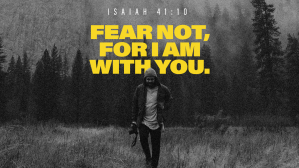
In several countries—Argentina, Ecuador, France, Guatemala, Italy, Mexico, Peru, and Spain—the most popular verse was Isaiah 41:10, which was the top verse overall last year. It reads, “So do not fear, for I am with you; do not be dismayed, for I am your God. I will strengthen you and help you; I will uphold you with my righteous right hand.”

The biggest gain in international Bible readers came from southeastern Europe, where engagement grew in Bosnia and Herzegovina, Croatia, Serbia, and Macedonia. Engagement doubled in Pakistan.

“We’re encouraged to see high levels of Bible engagement again this year because it means people are turning to God and the Bible for answers to their questions,” said YouVersion Founder Bobby Gruenewald in a press release.

News

Supreme Court Abortion Case Holds Signs of Hope for Pro-Life Evangelicals

The conservative-majority Supreme Court appeared willing to side with Mississippi’s abortion ban, which restricts beyond what “Roe v. Wade” allows.

Christianity Today December 1, 2021
Chip Somodevilla / Getty Images

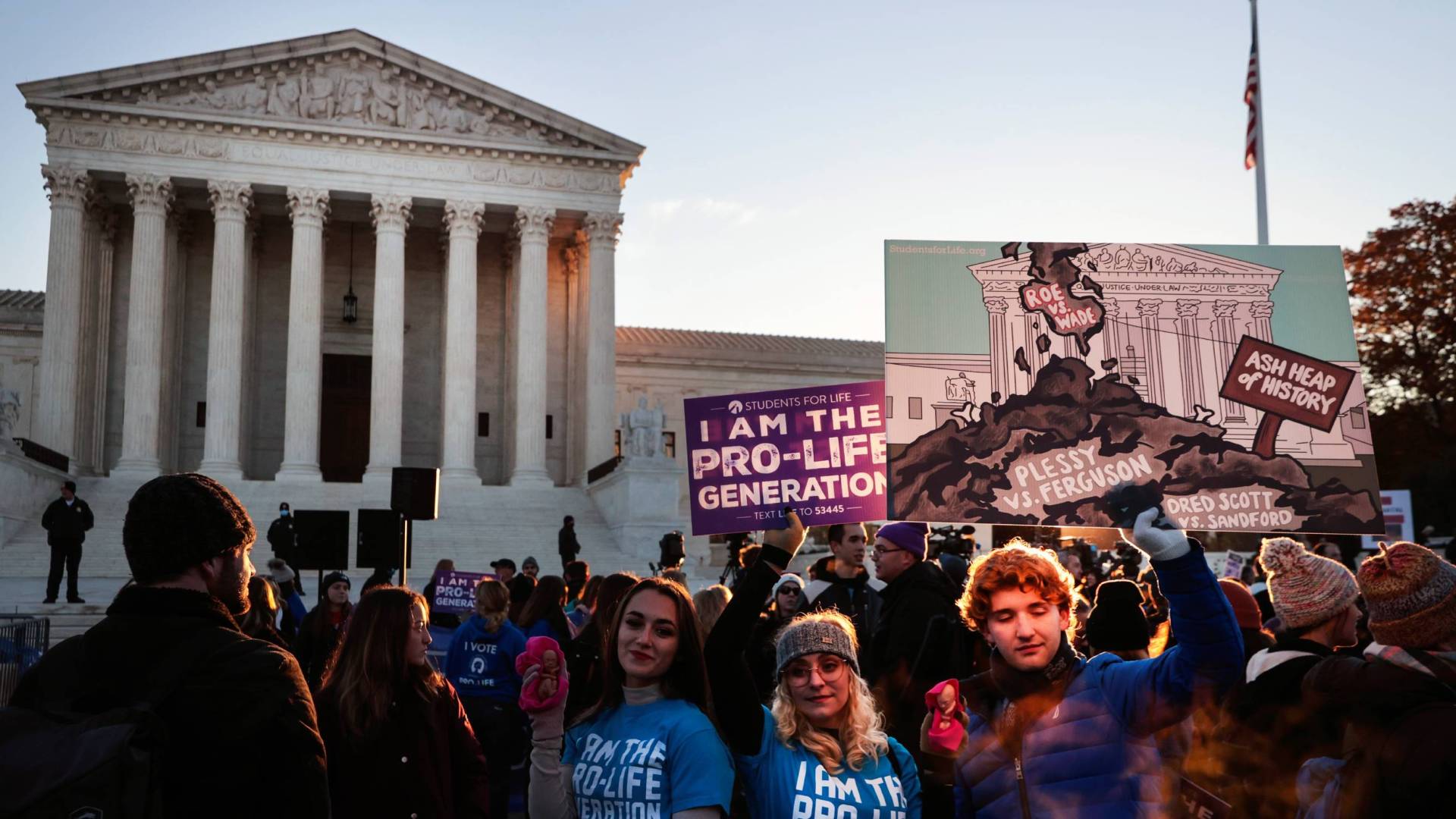
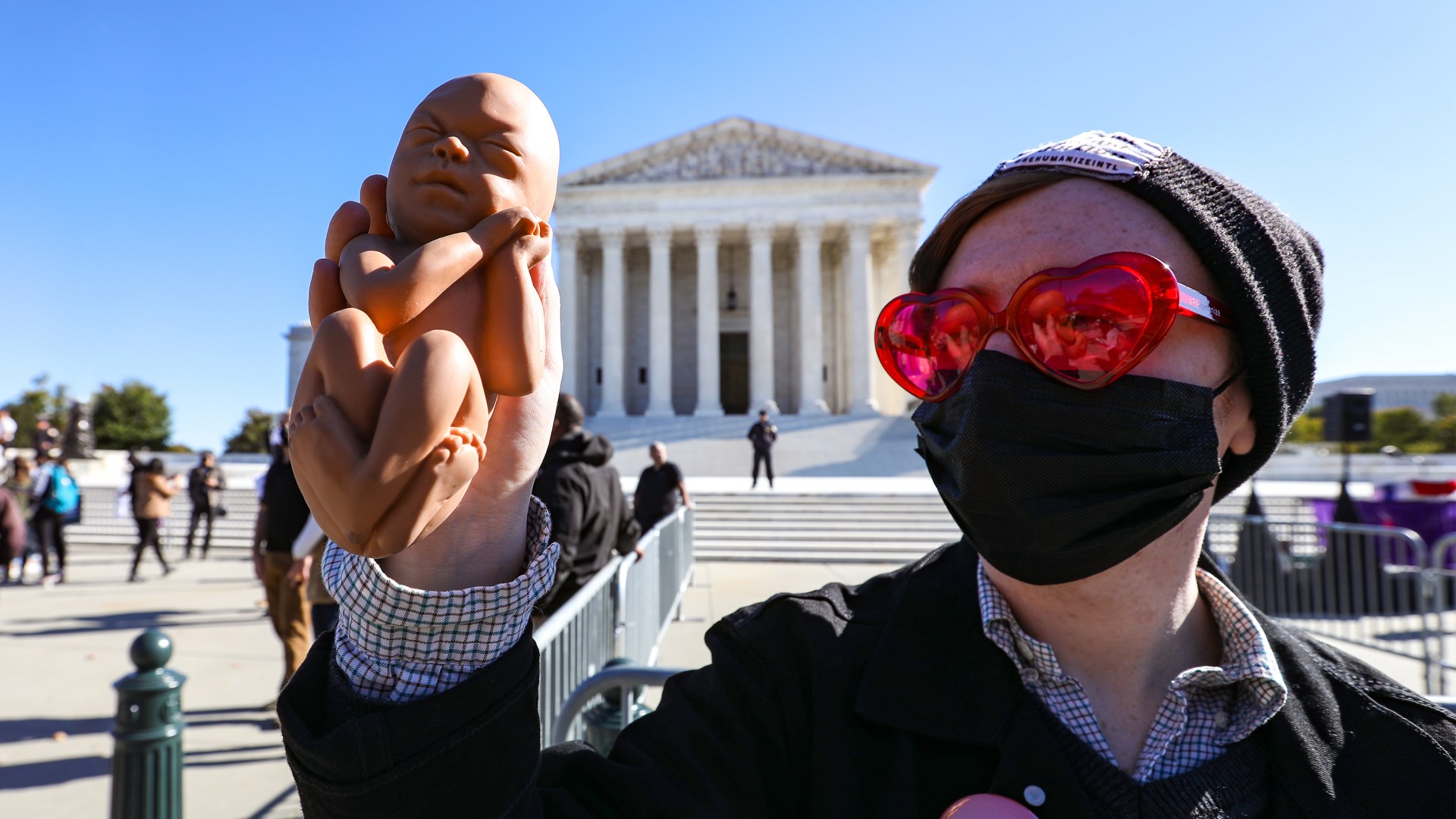
After a long-awaited challenge to Roe v. Wade made it to the US Supreme Court on Wednesday, pro-life evangelicals who had rallied for the cause for decades were encouraged that the conservative-leaning court appeared willing to uphold a contentious Mississippi law that bans abortion after 15 weeks.

The justices’ decision in Dobbs v. Jackson Women’s Health Organization, due in late June, could overturn the country’s landmark abortion rights cases, making way for more restrictive state laws protecting the rights of fetuses in the womb.

White evangelicals—who are twice as likely than the average American to want to make abortion illegal—gathered outside the high court in Washington and, across the country, listened to the oral arguments streamed online due to the pandemic.

But the two-hour discussion—the greatest threat to abortion policy in 50 years of prayer and advocacy—largely skipped over familiar evangelical talking points to focus on the legal grounds for the case.

“Personhood” came up twice in the oral arguments; “mother” and “motherhood” just three times. But “stare decisis,” a legal term meaning the court would stand by historic precedent, got nearly 50 mentions.

“The discussion was purely legal—purely legal in a way that might have surprised some,” said Notre Dame law professor Sherif Girgis in a discussion convened by the Ethics and Public Policy Center (EPPC). “It was really just focused on: Is there a doctrinal path to a middle ground?”

The middle ground Gergis references is whether the court can somehow uphold the Mississippi law banning abortion at 15 weeks of pregnancy without overturning Roe v. Wade. The 1973 decision doesn’t allow states to ban abortion prior to the point the baby is viable outside the womb, around 24 weeks. The EPPC’s Ed Whelan said Chief Justice John Roberts appeared to be seeking a middle-ground argument, while the other five conservative justices—including President Donald Trump appointees Neil Gorsuch, Brett Kavanaugh, and Amy Coney Barrett—signaled that they may be ready to overturn Roe and fellow landmark abortion case Planned Parenthood v. Casey.

Roberts, though, couldn’t settle on what legal marker the court could adopt to move restrictions earlier than the viability standard, which legal counsel for the providers argued balanced protections for the mother and baby.

https://twitter.com/maryrziegler/status/1466075626209570823
https://twitter.com/AnnaKateShelt/status/1466097826266558475

Russell Moore, who leads CT’s public theology project, wrote that, “The Court was wrong to grant human rights on the basis of viability or unviability. And we are wrong when we do the same, despising weakness and idolizing power.”

Justice Kavanaugh brought up that the Constitution is “silent” and “neutral” on abortion. He seemed to suggest that national abortion regulations shouldn’t be up to the Supreme Court.

“Why should this Court be the arbiter rather than Congress, the state legislatures, state supreme courts, the people being able to resolve this?” he asked.

Pro-life advocates and legal experts say they were heartened by what they heard in the oral arguments . Roger Severino, the former director of the Health and Human Services Office for Civil Rights under Trump, said the pro-life movement should “rejoice” at the outcome.

https://twitter.com/RogerSeverino_/status/1466090284425560065

Evangelicals were not directly mentioned in the arguments in the chamber, but Justice Sonya Sotomayor evoked evangelical convictions as she referenced the role of faith in beliefs around when life begins.

“How is your interest anything but a religious view?” she asked Mississippi Solicitor General Scott Stewart, who argued on behalf the state’s ban.

“The issue of when life begins has been hotly debated by philosophers since the beginning of time. It’s still debated in religions,” she said. “So when you say [the right to abortion] is the only right that takes away from the state the ability to protect a life—that’s a religious view, isn’t it? Because it assumes that a fetus is life?”

Evangelical Protestants make up 41 percent of the population in Mississippi (compared to a quarter of the US overall), and the state has one of the highest levels of abortion opposition in the country, with 59 percent saying abortion should be legal in all or most cases.

US Solicitor General Elizabeth Prelogar, who sided with the clinics, argued that women depend on abortion as a “fundamental right” that’s “central to their participate fully and equally in society.”

“For a half century, this Court has correctly recognized that the Constitution protects a woman's fundamental right to decide whether to end a pregnancy before viability,” she said.

Barrett brought up adoption as an alternative to abortion and questioned the argument that women rely on abortion for their standing in society.

The momentum around reversing Roe v. Wade has also drawn more attention to the evolving future of the evangelical pro-life cause, particularly the support and care of a swath of new mothers would require if unable to obtain abortions.

Nathan A. Finn, dean and provost at North Greenville University, wrote for the Baptist Press:

The overturning of Roe must energize local pro-life activism rather than leading to grassroots complacency because of the national legal victory. In a post-Roe world, some women will still want an abortion or believe abortion is their only option. There will still be the need for pro-life pregnancy resource centers in local communities.

In states where elective abortion remains legal, those centers will continue to go head-to-head with abortion clinics. There will also still be young children in need of adoption, perhaps in some places more than there are at present. The church must remain committed to the ministry of orphan care, ready to care for little ones who need a loving home.

News

Died: Marcus Lamb, Daystar Founder Who Believed TV Opened a Window for the Holy Spirit

After setting himself apart from corrupt televangelists and achieving incredible early success, the Christian network chief lived from scandal to scandal.

Christianity Today December 1, 2021
Courtesy of Daystar / edits by Rick Szuecs

Marcus Lamb, the founder of Daystar Television, died on Tuesday at the age of 64.

Lamb and his wife, Joni Trammell Lamb, launched Daystar more than two decades after Paul and Jan Crouch started the Trinity Broadcasting Network, and more than three after Pat Robertson started the Christian Broadcasting Network. But they managed to compete with and eventually rival the older Christian broadcast companies through a combination of business savvy, incredible timing, and the maintenance of an upright reputation.

Later in life, though, Lamb seemed to tumble into one scandal after another. He made headlines for sex, money, and conspiracy theories, not his passion for proclaiming the message of Jesus.

An ordained bishop in the Pentecostal Church of God, Lamb said he had been committed to spreading the gospel as far and fast as possible ever since he preached his first sermon at 15. His official Daystar bios always failed to mention, however, the truth he told newspaper reporters in the early years: The only audience for the first message was a horse in his parents’ barn.

But if he sometimes embellished his history, cut corners, and fell short of his own ideals, that didn’t damper his success at building a Christian television network that reached millions of people around the world.

Lamb, for his part, always explained his mission in the same way.

“Our assignment is to build television stations … so we can reach the most people in the least amount of time,” he said in the early 2000s. “With television, we can curse the darkness and turn on the light.”

As news of his death spread on social media, Lamb was remembered by prominent pastors and ministry leaders for his commitment to evangelism.

“I will always be grateful for Marcus,” evangelist Greg Laurie wrote on Twitter. “He said ‘yes’ every time we wanted to reach more people through Daystar. Millions have heard the good news because he & Joni dedicated their lives to building a platform for the Gospel to reach the world.”

Oral Roberts University president William Wilson called Lamb’s death “a significant loss for the Kingdom of God” and remembered Lamb as “a media pioneer, an entrepreneur, an evangelist, and a pastor to millions of people around the world who watched him regularly on Daystar.”

https://twitter.com/jackngraham/status/1465736645488041992

Warned of COVID-19 vaccines

Before Lamb died on Tuesday, Joni told viewers of their daily show that he had “the COVID pneumonia” and was hospitalized when the oxygen in his blood dropped to dangerously low levels.

Lamb was an outspoken skeptic of COVID-19 vaccines and eagerly promoted unproven, alternative treatments, including hydroxychloroquine, which the US Food and Drug Administration says has no effect on COVID-19, but has been linked to heart rhythm problems, kidney trouble, and liver failure.

In Lamb’s last fundraising newsletter, he touted Daystar as “the only Christian TV Network that has made continuous efforts to warn you about the dangers of the COVID-19 ‘Vaccine’ and to help you with the truth” about alternative treatments.

According to Charisma magazine, Lamb died from complications related to COVID-19, making him one of more than 770,000 people in the US to do so since the start of the pandemic.

Lamb was born on October 7, 1957, and grew up in a Pentecostal family in Macon, Georgia. He became a Christian at age 5 and felt a call to ministry at a Christian summer camp at age 15. When he got back home, he put on a suit and preached his first sermon to the family horse. For the rest of his life, he marked that as the start of his ministry.

After graduating from Lee College (now University), the Church of God–affiliated school in Cleveland, Tennessee, Lamb started preaching seriously. He toured the country doing “Holy Spirit Crusades.” At one, the 22-year-old evangelist met a 19-year-old woman in a Pentecostal church in South Carolina. They got married two years later in 1982.

Called to TV

Most of Lamb’s Holy Spirit Crusades were not very successful, however, and he grew tired of the constant traveling and small crowds. Preaching in Montgomery, Alabama, Lamb’s ears perked up when he heard about an Assemblies of God church that had purchased a broadcasting license but failed to raise enough funds to start a Christian TV station.

He was still thinking about that station in 1983, when he and his new wife went to Israel and saw TV antennae sticking out of the tents of nomadic Arabic herdsmen. Then, standing on the Mount of Olives looking at Jerusalem, Lamb felt God tell him to go start a television station in Montgomery, Alabama.

The Lambs got the licenses to broadcast at a cut rate of $44,000 and managed to borrow enough money from family and friends to buy some used equipment. The low-power station could not even broadcast to the far side of Montgomery, but federal regulations required cable companies include local TV in the basic subscription package, giving WMCF-TV 45 a firm footing in the regional market.

By 1985, Lamb was able to buy an antenna and broadcast at full power. And by ’87, the station known as “45 Alive” had about 1,000 financial supporters, allowing the Lambs to start taking home a weekly salary—a combined $600.

Just as the station was getting off the ground, though, it was knocked back by scandal. The Lambs hadn’t been accused of anything, but the accusations of sexual and financial misconduct against Jim Bakker in 1987 and Jimmy Swaggart in 1988 caused widespread suspicion of all Christian TV.

The Lambs worked hard to distinguish themselves from other televangelists. At one point they even contacted the Montgomery Advisor to say that any financial supporter could come and examine the TV station’s checkbook.

“We’re trying to be different. That doesn’t mean we’re perfect. But we’re purposely not trying to do the same stuff,” Lamb told the newspaper. “The overriding motivation of my heart … is how can we reach the most people with the gospel.”

Launching Daystar

In 1990, the Lambs sold the Alabama station to Trinity Broadcasting, moved to Texas, and bought another TV station. They started eyeing other TV stations when the federal government rolled back regulation limiting the number of low-powered stations that one company could own. The Lambs bought a second station in Georgia, then one in Colorado—each carried in their respective region’s basic cable package—and then managed to start buying stations in major urban markets: Houston, Seattle, Phoenix, and Boston.

On New Year’s Eve, as 1997 turned to 1998, the Lambs launched Daystar Television with about a dozen outlets, broadcasting an inaugural sermon by preacher T. D. Jakes.

The Lambs produced several of their own daily shows and sold airtime to preachers across the US, often luring them away from the other Christian TV networks. Big names on Daystar included Joyce Meyer, Charles Stanley, Benny Hinn, Paula White, and Joel Osteen.

By the early 2000s, the network was grossing about $14 million per year in airtime sales, and another $14 million in donations. To remind himself of the potential moral pitfalls of TV success, Lamb kept a copy of Jim Bakker’s tell-all I Was Wrong displayed prominently in his office.

Confesses to sexual relationship

The reminder of others’ sin did not keep him from his own, however. In 2010, Lamb went on the air with his wife to confess to a sexual relationship with a woman who worked in human resources for Daystar. Lamb described it as an affair and said he took full responsibility for his moral failure while seeking counseling to reconcile with his wife.

Lamb decided to go public with his confession because three former employees were suing Daystar, claiming Lamb and the woman in human resources lied about the moral climate of the company when hiring new staff.

Lamb countersued, claiming the former employees conspired together to extort money from him. Police investigated and dismissed those allegations and Daystar dropped its suit and settled with the employees for an undisclosed sum of money.

Daystar was back in the news in 2011, when an NPR investigation found the television network claimed to give away about three times as much as it actually did. While fundraising, Lamb talked on air about extensive charitable giving, when in fact only 5 percent of donated funds were given away, and the largest single gift was to Oral Roberts University, where Lamb’s three children were attending school.

“When the lights are on and the cameras are on, we’re a ministry. When those lights are off, cameras are off, it doesn’t feel like a ministry,” Lamb’s former executive assistant said. “It is a business making money.”

Jet purchase prompts investigation

There were more allegations of inappropriate financial gain in 2020, when Daystar received COVID-19 relief funds from the federal government and purchased a private jet. Lamb told Inside Edition that the ministry used different funds for the Gulfstream V but then struggled to answer questions about why, if this was a ministry expense, it had been used to fly the Lamb family to Florida for a beach vacation.

“The truth of the matter is, there’s not a lot of people God can trust with money,” Joni Lamb had once told the Fort Worth Star-Telegram in the early 2000s. “It can corrupt, and it does.”

None of the scandals seriously impacted the continued success of Daystar, though, and the TV network continued to expand in the US and abroad. It became the first Christian TV programing to broadcast in Israel (winning a supreme court battle to stay on the air), and expanded to broadcast from Ireland to Kenya to Pakistan.

To the end, Lamb said television was just a way to open a window for the work of God.

“There are tons of people who would never walk into the door of a church,” he said. “But if they have a remote control, they may stop and watch us out of amusement or curiosity. And if they watch often enough, the Holy Spirit will touch them.”

Lamb is survived by his wife and children, Jonathan, Rachel, and Rebecca.

Theology

Viability Is No Way to Judge a Human Life

As the Supreme Court hears arguments on abortion law, bad rulings should get tossed out for good. So should the “surviveability” standard.

Christianity Today November 30, 2021
Anadolu Agency / Getty Images

This week, the United States Supreme Court will hear arguments about the state of Mississippi’s abortion law. Yet both sides know what’s really at stake: At question is not only whether the Constitution guarantees a right to abortion but also whether the state’s interest in protecting fetal life is determined by the child’s ability to live outside the womb.

This is the moment not just for the court but for all of us to see that viability is no way to judge the worth of a human life.

In Planned Parenthood v. Casey, the Court kept the core of Roe v. Wade. However, to determine the state’s interest in protecting fetal life, the court replaced the arbitrary measure of trimesters with a “viability” standard—a scientifically determined idea of whether a child could survive outside the womb.

This idea has led to decades of political and legal debate, but it’s also a cultural issue. Is it right to determine rights and personhood based on such a standard? And how does that affect the way we view human life inside and outside the womb?

In defense of the pro-life position, New York Times columnist Ross Douthat summarizes a key pro-choice assumption enshrined in our law for almost 50 years: that “personhood is often associated with some property that’s acquired well after conception: cognition, reason, self-awareness, the capacity to survive outside the womb.” But this logic cannot be sustained with consistency.

“If full personhood is somehow rooted in reasoning capacity or self-consciousness, then all manner of adult human beings lack it or lose it at some point or another in their lives,” says Douthat. “If the capacity for survival and self-direction is essential, then every infant would lack personhood—to say nothing of the premature babies who are unviable without extreme medical interventions but regarded, rightly, as no less human for all that.”

Douthat’s point is not that pro-choice Americans want to wipe out NICU units and assisted living homes. His point is that they don’t—so the denial of personhood to fetal life cannot be justified even on the terms with which pro-choice people already agree.

In a constitutional rather than biblical context, the viability standard essentially asks the question some of us may pose to justify our own apathy to human suffering: “Who is my neighbor?” (Luke 10:29). The “surviveability” model responds with an appeal to power. The unborn child is unprotected because the unborn child is vulnerable. And yet, in almost every other sense, we seem to recognize that vulnerability calls for more protection, not less.

As Americans, we have an interest in making sure that our country lives up to the promises of the Declaration of Independence and the recognition of “unalienable rights.” We also have an interest in ensuring that the Constitution is not treated as an arbitrarily malleable document, especially when it is interpreted to prohibit even the most basic protections from violence for vulnerable women and their children.

Roe and Casey should be tossed aside forever—and with them the viability standard.

Ironically, the most lampooned statement in Casey makes this same point. In what Justice Antonin Scalia derided as the “sweet-mystery-of-life passage,” Justice Anthony Kennedy wrote, “At the heart of liberty is the right to define one’s own concept of existence, of meaning, of the universe, and of the mystery of human life.”

Of course, Justice Kennedy’s approach is not a good way to interpret the text of the Constitution. And beyond that, it’s not a good way to live one’s life. But at least he recognized in passing that human life is a mystery.

As Walker Percy wrote in The Message in the Bottle, this mystery includes “the need of recovering oneself as neither angel nor organism but as a wayfaring creature somewhere between.” That mystery—sparking the awe that almost every parent experiences when seeing their baby by sonogram or welcoming that baby into the cold, noisy outside world—means that human life cannot be reduced to an object of statistical knowledge. It cannot consist of weighing someone’s independence before deeming them worthy to be called a “person.”

As Christians, we have an even more compelling reason to reject viability as a standard of human worth. It contradicts everything we—both believers and unbelievers—know to be true: Every human baby is born defenseless and dependent. No infant can survive on his or her own. Indeed, none of us can. We are dependent at every moment on the environment around us, even to breathe.

While many of us would love to know everything the resurrected Christ taught his disciples in the 40 days between his resurrection and ascension, we do know that he addressed this very point. To Simon Peter, Jesus said, “Very truly I tell you, when you were younger you dressed yourself and went where you wanted; but when you are old you will stretch out your hands, and someone else will dress you and lead you where you do not want to go” (John 21:18). Jesus reminds us that we are born dependent and powerless and that we die that way too.

The court was wrong to grant human rights on the basis of viability or unviability. And we are wrong when we do the same, despising weakness and idolizing power.

As we did from the very beginning, the church can embody a countercultural respect for the unborn and their mothers, as well as the poor, the elderly, and the sick. Whether the outside world does so or not, we can be the people who love the nonviable—and who recognize that we are nonviable too.

Russell Moore leads the Public Theology Project at Christianity Today.

News
Wire Story

Most Pastors Say 2021 Giving Is on Track

But those who waited longer to resume in-person worship, such as in mainline and African American traditions, still see severe declines in the offering plate.

Christianity Today November 30, 2021
Munneke Productions / Lightstock

Heading into Giving Tuesday and the year-end giving season, most churches don’t seem to be underwater financially, but many are treading water.

Around half of US Protestant pastors say the current economy isn’t really having an impact on their congregation, according to a Lifeway Research study. The 49 percent who say the economy is having no impact on their church marks the highest percentage since Lifeway Research began surveying pastors on this issue in 2009.

Almost 2 in 5 pastors (37%) say the economy is negatively impacting their congregation, while 12 percent say the economy is having a positive impact. Both positive and negative numbers are down from September 2020, when 48 percent said the economy was hurting their congregation and 15 percent said it was helping. The last time fewer pastors than this year said the economy is playing a positive role for their church was May 2012.

The two years prior to the COVID-19 pandemic, 2018 and 2019, mark the only two times in the survey’s more than 12-year history that more pastors said the economy was having a positive impact than a negative one.

“Most churches are taking a deep breath financially following the uncertainty of the height of the pandemic,” said Scott McConnell, executive director of Lifeway Research. “While the official recession ended quickly in April 2020, economic growth has been uneven, and few churches are feeling actual positive impacts from the economy at this point.”

After many churches faced budget shortfalls and decreased giving in 2020, 2021 saw most churches meet their budget and stop the decline in giving.

Seven in 10 pastors say offering levels at least met the budget this year. Almost half of churches (48%) say the giving at their church has been about what they budgeted, while 22 percent say it is higher than budgeted. Around a quarter of pastors (27%) say they didn’t make budget with their giving levels.

Similarly, most churches say their 2021 offering so far matched or exceeded what they received during 2020. More than 2 in 5 pastors (42%) say it’s the same as last year. Three in 10 (31%) say the offering in 2021 is above 2020’s. Fewer than 1 in 4 (22%) say they’re behind last year’s giving levels.

“We see great improvement in the number of churches with a downward trend in giving,” said McConnell. “A year ago, more than a third of churches had seen giving decline, and 13 percentage points fewer say so today. Some of those churches may still be working to get back to 2019 levels, but the number with declining income is back around the historic norm.”

When asked about the specific percentage change from last year to this, 3 in 4 pastors (74%) say it is at or above 2020’s offering, including 47 percent who say it is the same, 9 percent who say it is up from 1 percent to 9 percent, 15 percent who say giving is up from 10 percent to 24 percent, and 3 percent who say the offering at their church has gone up by 25 percent or more.

Still, other pastors note a further decline in giving since 2020. For 3 percent, offering dropped by less than 10 percent. Another 11 percent say it fell 10 percent to 24 percent. Around 1 in 14 churches (7%) say giving decreased by 25 percent or more since 2020.

“Churches where the financial news is bad, it tends to be really bad,” said McConnell. “Among churches with offerings below 2020, the declines are typically steep, double-digit declines in year-over-year giving. These churches are having to radically rethink their ministry.”

While most pastors saw giving bounce back after 2020, others in some demographics continued to struggle with the economic fallout of the pandemic.

In recent years, African American pastors have been more likely to say the economy was having a negative impact on their congregation. In 2021, they were less likely than their white counterparts to say the economy was a neutral force for their church (39 percent to 51%).

African American pastors are also more likely than white pastors to say their giving in 2021 was lower than budgeted (43 percent to 25%). Specifically, they are 3.5 times more likely than white pastors to say their offering was down by 25 percent or more (21 percent to 6%).

Mainline Protestant churches are faring worse financially than evangelical ones. Mainline pastors are more likely than evangelical pastors to say their 2021 giving has been lower than budgeted (32 percent to 24%). Pastors at mainline churches are also more likely than those at evangelical congregations to say their giving is below 2020’s levels (26 percent to 20%).

“Mainline and African American churches were slower to resume in-person worship services amid the pandemic,” said McConnell. “This reduced face-to-face contact appears to have impacted giving in these churches.”

Methodology

The phone survey of 1,000 Protestant pastors was conducted Sept. 1-29, 2021. The calling list was a stratified random sample, drawn from a list of all Protestant churches. Responses were weighted by region and church size to more accurately reflect the population. The sample provides 95 percent confidence that the sampling error does not exceed plus or minus 3.2 percent.

Theology

The Gospel of Advent: Good News for the Season

Daily devotional readings from Christianity Today.

“I bring you good news …” (Luke 2:10). With these words, the angel began a stunning gospel proclamation: The Savior, the promised Messiah, the Lord, had been born! When we think of the gospel—of the Good News—we rightly think of Jesus’ death and resurrection. We think of our sin, of Jesus’ sacrifice, of the salvation and eternal life Christ offers. In this sense, it’s only natural to think of Easter as the “gospel” holiday—it marks the central events that make our redemption possible.

But in this online devotional resource, we invite you to consider what the season of Advent can teach us about the Good News. Many core tenets of the gospel reverberate powerfully throughout Advent’s traditional readings and themes. In Advent, we reflect on the mystery of the Incarnation, on Christ’s purpose as the long awaited Messiah, on our sin and need for repentance, on God’s promises of salvation and justice, and on our firm hope in Christ’s return and everlasting kingdom. We prepare to celebrate the “newborn King” who was “born that man no more may die,” as Charles Wesley’s beloved carol declares. And we’re reminded again and again throughout Advent that the gospel is not just for us, but it is a message of “great joy for all the people” (Luke 2:10)—it’s good news that’s meant to be shared.

As you read and reflect on God’s Word each day during these four weeks of Advent, our hope is that you engage with core truths of the gospel afresh and that, like the shepherds who encountered the Christ child, you glorify and praise God for all the things you hear and see (v. 20).

Kelli B. Trujillo is Christianity Today’s projects editor.

We Begin at the End

An Advent reading for November 28.

Nicole Xu

Advent Week 1: Christ’s Return and Eternal Reign


This week, we focus on the Second Advent: our sure hope in Christ’s return. We explore Scripture’s portrayal of Christ’s power and righteous judgment, and the glorious future we await with God in the new creation.

Read Titus 2:11–14 and Revelation 1:7–8.

We begin at the end. Not at the manger. Not with the Magi offering gifts of worship or the shepherds rejoicing in wonder. Not with Mary’s visit to Elizabeth or Joseph’s angelic dream. We begin not with Christ’s First Advent, but with his Second. Like a mixed-up storybook with the chapters all out of order, the season of Advent—and indeed the entire Christian liturgical year—starts with the end.

It’s not a tame, pleasant, “they all lived happily ever after” ending. It’s beautiful and fearful, awesome and terrifying. It’s an ending that expands far beyond the limits of our human comprehension: He will come again in glory to judge the living and the dead, and his kingdom will have no end.

Advent begins with the eschaton: with Christ’s power and glory, his righteous judgment, his ultimate victory and eternal reign. It shocks us out of our sentimentality about Christmas, inviting us into the far grander and more expansive story of the cosmos, in which the incarnate God who was laid in a manger and went to the cross will one day sit on the throne, and every knee will bow and every tongue confess he is Lord (Phil. 2:6–11).

Like Isaiah’s response to his vision of God’s holiness, our only natural response to contemplating the wonder and glory of Christ’s second coming is to say, “Woe is me! I am a person of unclean lips” (Isa. 6:1–5). As we ponder Christ’s holiness and power, we’re drawn to our knees in repentance and humility. And like Thomas in his encounter with the risen Christ, we too proclaim, “My Lord and my God!” (John 20:28).

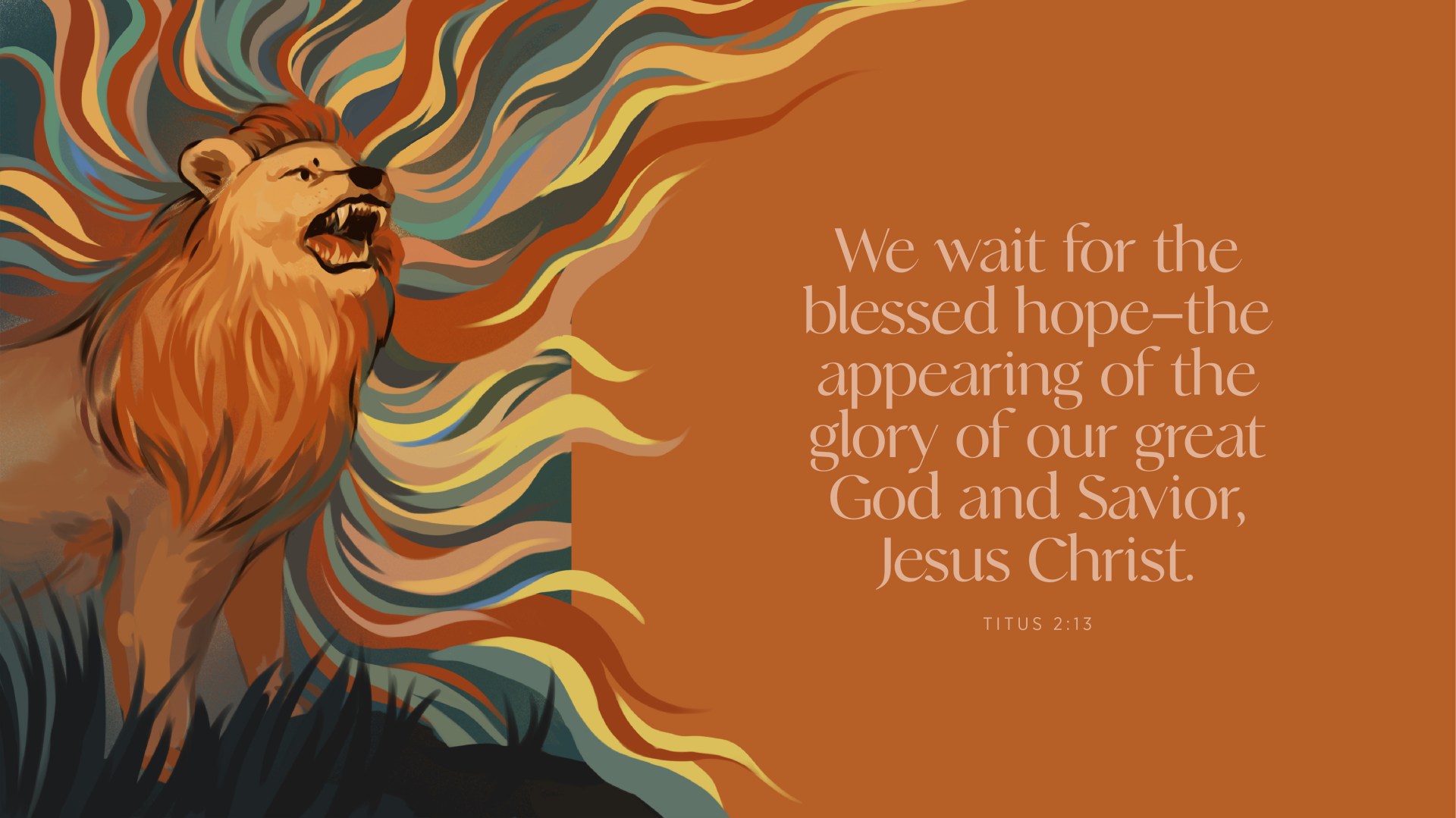
The Second Advent makes plain that to follow Jesus means to surrender all to his lordship in obedience and worship. We respond to Christ’s promised return—“the blessed hope”—with a longing and anticipation that shapes our lives in the here and now, as we say “No” to the temptations of sin and live as people who are “eager to do what is good” (Titus 2:11–14).

When we begin at the end, Advent startles us in just the right way: jolting us out of our comfortable Christianity and familiar discipleship and drawing us into deeper repentance, devotion, and hope. When we start with this eschatological vision, we can then rightly approach the manger—for we know that there, wrapped in swaddling clothes, is the Savior whose glorious return is indeed our blessed hope, “our great God and Savior, Jesus Christ.”

Kelli B. Trujillo is Christianity Today’s projects editor.

Read Titus 2:11–14 and Revelation 1:7–8. (Option: Also reflect on Philippians 2:6–11.)

How does Christ’s future return shape your life in the here and now? As you contemplate Christ’s return, judgment, and reign, how do you desire to respond?

Apple PodcastsDown ArrowDown ArrowDown Arrowarrow_left_altLeft ArrowLeft ArrowRight ArrowRight ArrowRight Arrowarrow_up_altUp ArrowUp ArrowAvailable at Amazoncaret-downCloseCloseEmailEmailExpandExpandExternalExternalFacebookfacebook-squareGiftGiftGooglegoogleGoogle KeephamburgerInstagraminstagram-squareLinkLinklinkedin-squareListenListenListenChristianity TodayCT Creative Studio Logologo_orgMegaphoneMenuMenupausePinterestPlayPlayPocketPodcastRSSRSSSaveSaveSaveSearchSearchsearchSpotifyStitcherTelegramTable of ContentsTable of Contentstwitter-squareWhatsAppXYouTubeYouTube