Ideas

Churchgoers May Remember Song Lyrics Over Sermon Quotes

Columnist

So let’s make sure we’re teaching sound doctrine in worship.

Illustration by Rick Szuecs / Source Images: Miguel Navarro / Getty / Wikimedia Commons

Before you read this article, start by reciting the alphabet in your head.

There is a reason you just fought a strong temptation to hum. It’s the same reason you can remember jingles from childhood and lyrics to your favorite rock anthem, but not the security password you set up last week.

If you can name all 50 states or all 66 books of the Bible, my guess is it’s because of a song. Sunday school teachers, marketers, hymn writers, rock stars, and kindergarten teachers are all well aware that “what is learned in song is remembered long.”

And neuroscience backs this up. Pairing information with music helps our hippocampus retrieve that information with ease. Music is a powerful teaching tool, and before the discipline of neuroscience existed, the followers of Yahweh employed that tool.

Miriam’s Song of the Sea in Exodus 15 was composed to stamp the memory of God’s transcendence onto his people’s consciousness. The 150 psalms, whose words by themselves are perfectly potent, were written to be sung. The children of God understood their need to be reminded by sacred words set to melodies. After all, ours is a long history of forgetting and being summoned back to remembrance. Music plus words equals recall.

But recall is not all that music aids. Words set to music have a profoundly formative effect. Any lyric we hear or sing can yield us either well-formed or malformed, depending on the content of that lyric.

In my youth group in the 1980s, we were urged to destroy the records and cassettes that might train us in the paths of secular music. If you’ve ever downloaded the clean version of a song instead of the explicit version, you recognize the formative power of lyrics. Sacred or secular, the songs we steep ourselves in are shaping us. This should stop us in our tracks. How are the lyrics of our worship music forming us?

Does our sacred music merely move us in the moment or form us for a lifetime of faithfulness?

James 3:1 warns that not many of us should become teachers, because those who teach are judged more strictly. I memorized that verse in the old version of the NIV as “Not many of you should presume to be teachers.” It is dangerous to presume to teach; it is equally dangerous to presume that the music we sing in our services is not teaching. By Wednesday, the pastor’s three sermon points are forgotten, but the chorus of the worship song is still being hummed, its message repeating in our brains.

It matters whether those who lead us in song see their task as creating a mood or a memory. If primarily a mood, lyrics can take a back seat to vocals and instrumentation. If primarily a memory, the lyrics are critically important. Like the Psalms, they should be able to stand on their own, combined with music or not.

But other factors are formative as well. Do we sing music characterized by an individual focus or a corporate one? Is a scriptural connection clear, or are we singing a jumble of vaguely Christian thoughts? Is the congregation’s reaction the primary measure for the value of a song?

In short, does our sacred music merely move us in the moment or form us for a lifetime of faithfulness? To presume to write, select, or lead our sacred music is to presume to teach. It is not a question of if our songs teach, but what.

In an age of widespread biblical and theological illiteracy, leaders must choose those songs with care. Many who will sing them under our leadership are spiritual infants. Imagine if the lyrics of the ABC song were 85 percent accurate. For many, the Sunday gathering is their first encounter with the local church. Before they attend a membership class or Bible study, they will sit in a Sunday service and receive instruction not just in sermon but in song.

As someone who is dedicated to combating biblical illiteracy in the church, my plea to church leaders is this: Choose songs that teach well.

Choose songs that train spiritual children in the language of Scripture, sound doctrine, and spiritual disciplines. Carve memory paths deep in their minds so that right thinking can inform right feeling and right feeling can motivate right doing. Give the children of God the gift of a good memory in an age of formidable forgetfulness. Teach them to sing their ancient faith.


News

Gleanings: November 2021

News of Christians around the world.

Tetiana Shevereva / Unsplash / Edits by Rick Szuecs

Death row prayer case goes to court

The United States Supreme Court stayed the execution of a Texas man who wants his Baptist pastor to lay hands on him and pray as he’s put to death. John Henry Ramirez murdered a convenience store clerk in 2004, stabbing the man 29 times in the process of stealing $1.25 to buy drugs. In prison, he committed his life to Christ and became a member of Second Baptist Church in Corpus Christi, Texas. Ahead of his September 8 execution date, Ramirez sued for the right to have his pastor touch him at the time of death. The court will consider it next term.

RZIM claims First Amendment protection

Ravi Zacharias International Ministries (RZIM) has asked a federal court to dismiss a lawsuit by donors alleging the misuse of funds, because the apologetics organization is registered as a church. According to RZIM’s lawyers, the First Amendment prohibits the court from ruling on “purely ecclesiastical assertions,” such as whether Zacharias conformed to the “moral standards of ‘real’ Christian leaders” or whether the RZIM board exercised appropriate oversight over the famed apologist. According to an RZIM-funded investigation, the late apologist used a humanitarian fund to pay four massage therapists, at least one of whom said he used the money to pressure her to have sex.

Christians disagree over economic protests

Evangelicals are divided over the protests that have roiled Colombia since the proposal of a tax bill that would raise the cost of daily essentials, such as eggs and chickens, while giving more breaks to corporations. On a livestreamed show, pastors of the Misión Carismática Internacional megachurch warned real social change can only happen through prayer and personal conversion. A statement from the Iglesia Cristiana Casa Sobre la Roca network of 32 churches, on the other hand, invoked a noble history of Christian protest going back to Dietrich Bonhoeffer in World War II while reminding believers, “No somos pirómanos, sino bomberos” (“We are not arsonists, but firefighters”).

Billy Graham and Charles Spurgeon banned

A court in the self-declared Luhansk People’s Republic in eastern Ukraine has determined books by Billy Graham and Charles Spurgeon are “extremist” and will now be banned. The Door is Open, by Spurgeon, and Born to Die, by Graham, were seized from the Council of Churches Baptist near the town of Sverdlovsk, near the Russian border. There are now 26 titles on the “State List of Extremist Materials,” including the Jehovah’s Witness magazine The Watchtower and a Russian-language translation of the Gospel of John. According to the Ukrainian government, the Luhansk government is an occupying administration of the Russian Federation and is receiving aid from Russia as armed conflict between the rebels and Ukraine continues.Kenya

Alternatives to orphanages pressed

A Kenyan man who was raised in an institution with 150 other children and only two caregivers per shift asked the United Nations Committee on the Rights of the Child to end support for orphanages. “Instead of removing children from their families because of poverty, why don’t you address poverty within the family to ensure that the children continue to enjoy the care of their families,” Stephen Ucembe said via video. He is backed by Faith in Action, an evangelical-led coalition of child welfare organizations that advocates for more family options. American Christians give about $3.3 billion to international orphanages annually.

Church facilitates thousands of vaccinations

A Mennonite megachurch, in cooperation with local authorities, is vaccinating about 8,000 people against COVID-19 per day. The vaccines are provided by the government of the city of Semarang, and Jemaat Kristen Indonesia’s Injil Kerajaan (Holy Stadium) provides the facilities, pays 100 workers to assist the medical professionals, and gives away free lunches. The church is also providing space for people who need to quarantine. Deaths and infection rates started to fall in Indonesia in September as vaccines became more widely available. Most of the people who have received vaccines at Injil Kerajaan have never been inside a church before.

Hillsong founder facing charges

Hillsong founder Brian Houston stepped down from the church’s governing board amid criminal allegations that he covered up sexual abuse committed by his father, Frank Houston. According to prosecutors, the elder Houston abused a boy in the 1970s, and when the younger Houston learned about it in 1999, he tried to hide it. Brian Houston denies the charges “vehemently.” According to church leaders, he confronted his father, contacted Assemblies of God denominational leaders, forced his father to retire, and ultimately made a public announcement about the allegations. Frank Houston died in 2000. The charges against Brian Houston carry a maximum possible sentence of five years in prison. He will continue to serve as global senior pastor, preaching in Australia and around the world.

Star paid not to stir controversy over faith

Brazilian soccer star Neymar da Silva Santos Júnior is paid hundreds of thousands of euros every month if he avoids statements of “religious propaganda that could damage the image and unity” of the Paris Saint-Germain Football Club. Neymar, popularly known by his first name, is currently one of the highest-paid soccer players in the world and has been quite outspoken about his faith. He once told reporters, “Life only makes sense when our highest ideal is to serve Christ.” His current contract, however, includes a clause that pays him more than €540,000 (roughly $630,000) per month to avoid declarations of faith.

News

Jesus Loves the Brown Pop-Eyed Atewa Slippery Frog

In Ghana, the church is at the center of a bold new conservation effort.

Caleb Ofori-Boateng, a 39-year-old Ghanaian herpetologist, laughs at the idea that he might be a modern-day Noah.

But his life’s purpose has something in common with the famous figure from the Book of Genesis.

Take the new species of small, brown, pop-eyed frog with tiny teeth and a shrill voice that he and some colleagues just described in a scientific journal.

The entire population of the Atewa slippery frog is thought to live in just five clear-running streams in Atewa, a wildlife-rich evergreen forest on a mountain range north of the Ghanaian capital Accra.

But the area is threatened by government-backed plans to mine for bauxite, used to make aluminum. Should they go ahead, mining will likely destroy the forest and kill off the frogs.

Ofori-Boateng and his colleagues at Herp Conservation Ghana, a group he founded, plan to remove some of the frogs and breed them in captivity—in an “amphibian ark”—until it’s safe for them to return to their natural habitat.

“I feel that God is in what I do. And saving species is a godly thing to do,” he said.

Saving species, especially frogs, is what Ofori-Boateng has been doing for the past 15 years, with the support of the church and a strategy he calls “conservation evangelism.” It started among communities near the Atewa Forest.

As a new science graduate and the country’s first locally trained herpetologist working in Atewa in 2006, Ofori-Boateng yearned to share his experiences and discoveries with communities living at the foot of the hills. With no funds to organize meetings, and as a Christian himself, he turned to the churches.

Ofori-Boateng was not a public speaker, but he trusted God would help him. He made a commitment to Christ at the age of 12, five years after his father, a gamekeeper who loved his family, had died. Life was hard—even getting food was difficult—as his mother tried to raise eight children alone. But they trusted God.

“The only thing that kept me was my faith in the Lord Jesus. I was always on my knees, just waiting on him, seeking his help, seeking his assistance,” Ofori-Boateng recalled.

Speaking in public, he relied on that same help. He knew his message was hitting home when a woman at a Pentecostal church came to him and confessed to killing a frog the previous evening. Ofori-Boateng told her she didn’t need to feel bad, but she could stop killing frogs.

“I’m personally convicted,” he said. “I pass on this conviction. And the reference is there, which is the Bible that we all believe in. It’s a conviction that leads to action.”

That action may save frogs, and with it the forest. According to A Rocha Ghana, the local branch of the network of Christian conservation groups, the mountain range supplies water to more than five million people and is home to frogs, spiders, trees, and butterflies found nowhere else in the world.

In addition to the Atewa slippery frog, Ofori-Boateng found another new species of frog. He got to name it after his mother, Afia Birago. The Afia Birago puddle frog was the reason the Atewa Forest was added this year to a list of more than 850 sites the Virginia-based Alliance for Zero Extinction is working to protect. Designations like this raise Atewa’s profile and make it harder for the government to pursue its mining plans, conservationists say.

Big mining ventures aren’t the only threats to Atewa. Hunting, logging, farming, and small-scale gold mining have also taken their toll. Christian conservationists try to help people see the land as something more than profit.

“Where a forest may be seen as simply a source of firewood to start with, biblical truth helps people to see the forest as something to be cared for to the glory of God,” said Murray Tessendorf, director of A Rocha South Africa. “Now it’s cared for in a manner that protects the forest and makes its use sustainable.”

Traditionally in Ghana, village elders and leaders protected nature, albeit through fear, Ofori-Boateng explained.There were prohibitions against fishing in some rivers, cutting down certain trees, or farming close to water, because of the local deities.

Christianity and Islam took away the fear. Only around 5 percent of Ghanaians now subscribe to animism, according to a 2010 census. About 71 percent of Ghanaians are Christian, and 18 percent are Muslim.

“People now believe in a supreme God, and so they are no longer afraid to go into the forest,” Ofori-Boateng said.

This has inadvertently led to abuses against the environment. But it has also led to a powerful opportunity to change attitudes.

Since it began in the village of Sagyimase at the foot of the hills in 2006, conservation evangelism has achieved some dramatic results. In the Volta region, about 120 miles from Atewa, near the Togo border, Ofori-Boateng helped convince the community and local churches to donate land to conservation.

Initially, communities there were unwelcoming. They liked to eat the Togo slippery frog, even though it was endangered, and did not like the idea of giving up land. But by working with local churches, the conservation evangelists managed to convince the community, including the Evangelical Presbyterian Church, to donate around 500 acres of land toward conservation.

“Frogs are important flagships,” Ofori-Boateng said. “If you can convince people to save a frog species, then you’ve already convinced them to save everything.”

Such radical changes in mindset wrought by faith-based conservation have been noticed elsewhere. Tessendorf points to the Indian state of Nagaland, where church-led interventions helped convince local communities to stop slaughtering tens of thousands of Amur falcons during their epic annual migration to Africa.

Beyond the local communities, there are also signs the world is taking notice.

In February, conservation group BirdLife International and others helped convince three global manufacturers—BMW Group, Tetra Pak, and Schüco International—not to use resources taken from Atewa because of the environmental impact of mining.

A Rocha is advocating the whole area be designated a national park.

These efforts have not stopped government plans for major mining operations, however, so Ofori-Boateng is building an ark for the frogs and talking to churches about the need to save them. He believes hope for protecting the forest still lies in the power of people.

“What I am looking at is a united people, people filled with one purpose,” he said.

Pria Ghosh, a program officer with Synchronicity Earth, a London-based conservation charity that partners with Ofori-Boateng’s group, agrees.

“What Herp Conservation Ghana does is empower people and organizations to express themselves, to be heard, and to find the like-minded communities and solidarity necessary to stand up for places like Atewa,” she told CT. “They are making the world listen.”

Ryan Truscott is a journalist in Zimbabwe.

News

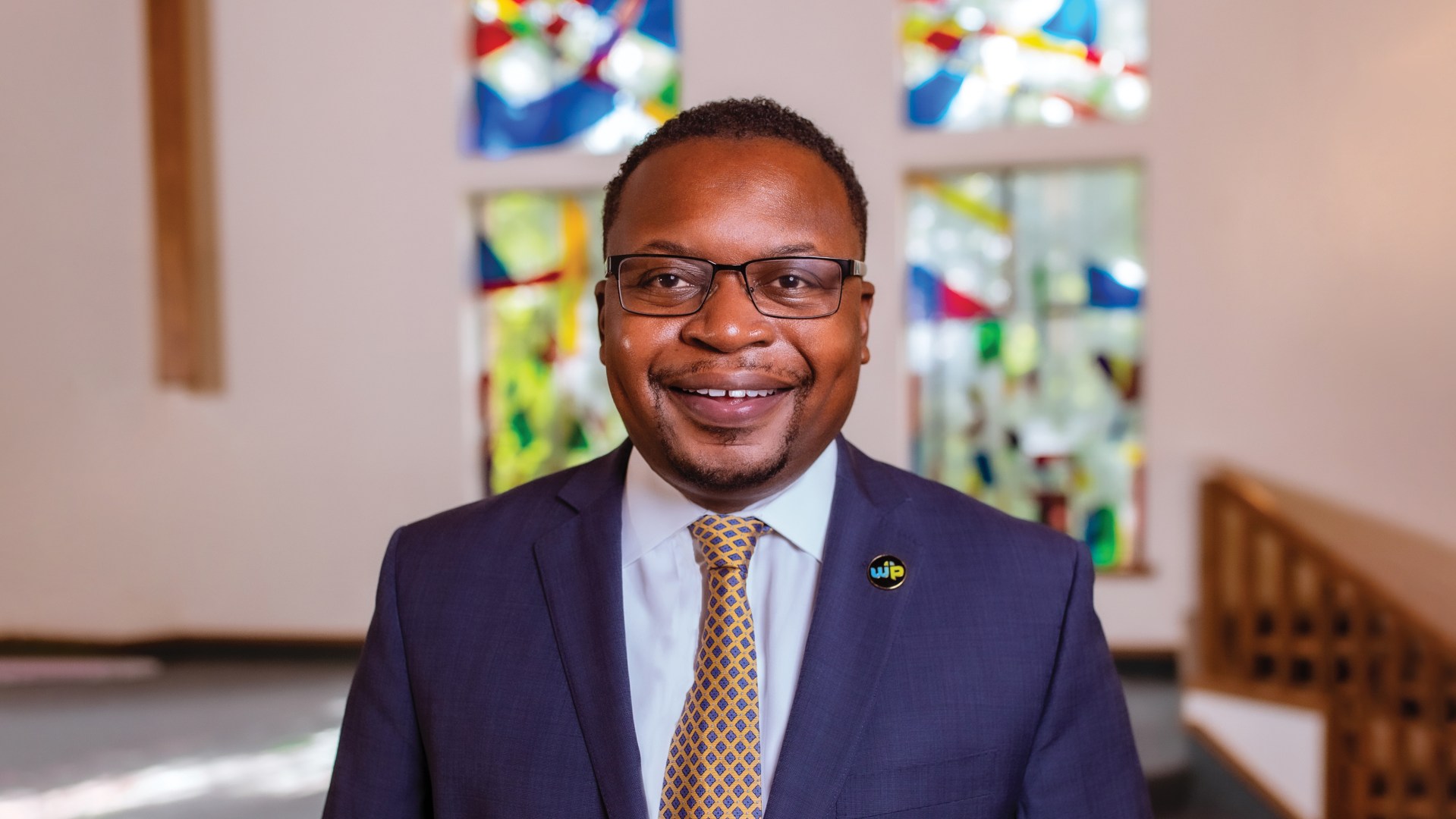
The New President of an Evangelical University Has a Question: ‘What Would Booker T. Washington Do?’

Brian Johnson thinks the answer might make the difference at Warner Pacific.

Chris Jenkins / Warner Pacific University

Brian Johnson wants to be like Booker T. Washington, the African American educator who believed in bootstraps, racial uplift, and the power of helping people help themselves through education.

Johnson, who is in his second year as president of Warner Pacific University, a Church of God–affiliated college with 800 students in Portland, Oregon, knows that’s not the most popular thing for a college president to want to be.

In fact, he already tried to be like Washington at the school Washington founded: Tuskegee University. He was there for three rocky years.

Still, ask him about his vision for Christian higher education and what he hopes to accomplish at Warner Pacific, and Johnson doesn’t hesitate. He wants to apply the things he’s learned from studying Washington. He believes in fiscal responsibility, the unhesitating elevation of the ideal of excellence, and an insistence on opportunities for racial minorities.

If people don’t like it, well, that’s leadership.

“You know, if you’re pleasing everybody, you’re really not getting anything done,” he told CT. “There is a kind of leadership in higher education where you can sit there, say the right platitudes, say the right things, and just keep the ship the way it is. You can last a long time by not having any controversy, by not really telling the culture, telling its board, ‘Hey, we have not been doing this right.’”

Johnson, one of only three Black presidents at a Council for Christian Colleges and Universities–affiliated school, does not think evangelical higher education, or higher ed generally, has been “doing it right.”

Dorothy Cowser Yancy, former president of Shaw University and Johnson C. Smith University, knew Johnson as a student and an administrator. She says he is someone who has the backbone necessary to make changes and he’s realistic.

“When you are a president, sometimes you become a realist. Because you got to get the job done,” she said. “Booker T. Washington was also a realist.”

Johnson’s academic journey didn’t start with Washington, though, but with W. E. B. Du Bois, the Black intellectual who argued that civil rights, not education, was the first step toward equality. The two historic figures were contemporaries and often conceptualized as ideological rivals.

At the University of South Carolina, Johnson studied Du Bois’s writings for his PhD in English. The more he read, the more he was attracted to Du Bois’s more conservative, reform writings rather than his more popular, progressive protest writings.

“Protesting ceaselessly and endlessly about what others are doing was not going to fill my belly,” he said. “I needed to develop a calling.”

He found that calling as an English professor at Gordon College, a Christian school in Massachusetts. Gordon was “almost like the dream job,” said Johnson’s wife, Shemeka. But after a few years, he grew interested in administration. There weren’t many administrative positions open at Gordon, nor did he feel encouraged to go for the positions that did open up.

“For African Americans to be in positions of authority, such as administration, you have to check every single box,” he said. “And even then, you are still given an opportunity where you need to work a miracle.”

Johnson left evangelical higher education to pursue his career at historically Black colleges and universities (HBCUs). In 2006, he went to Claflin University, where he founded an institute for southern African American history. Then he made the jump to administration at Johnson C. Smith University, first as associate vice president for academic affairs and then as chief of staff to the president.

Then, in 2014, Johnson saw the position he thought was the perfect fit for him: president of an HBCU. And not just any HBCU, but the school founded by Washington: Tuskegee.

“I love Booker T. Washington. I find myself Booker T. Washingtonesque,” Johnson said. “I loved the idea of it. But I quickly understood that it was no longer Booker T.’s university.”

Washington preached fiscal conservatism, yet the university was $143.6 million in debt. Washington admonished students to study hard, and Johnson saw some students were doing that, but there was also a concerning party culture at the school. Washington built relationships with white benefactors, but the school had few white donors. Johnson felt the university had strayed from its founder’s original vision, and he thought he was the man to correct that.

His first year at the Alabama school, Johnson decided to lift up the Washington vision by blogging daily commentaries on Washington’s writing.

“Make no mistake, appropriate dress and eloquent speech is quite essential for the university-trained man or woman,” he wrote in one. “Grades alone without accompanying poise, presence and posture will not assure one’s entrance into career fields where appearance often factors into personal prejudices.”

It was not popular.

“People don’t want to be told, ‘Hey, your gold isn’t as shiny as you really think it is,’” said Edward Brown, Johnson’s chief of staff at Tuskegee. “People perceived that as arrogance.”

During Johnson’s second year, the board chair brought in Jim Davis, a professional coach, to help Johnson.

“I felt that he did a pretty good job advancing Tuskegee at a time when they were in a difficult position,” Davis said. “But he wasn’t shy about his own ego.”

In three years, Tuskegee reduced its debt by 9 percent. The university also saw finances and learning assessments improve to the point that the university’s accreditor removed a warning it had issued for noncompliance.

It wasn’t enough, however. Though there’s some disagreement over whether it was Johnson’s decision or the board’s, he stopped being president after three years.

Shemeka Johnson said that was “disheartening,” but she saw her husband learn “how much change you can effect and not be so far ahead of even the culture.”

That’s what Johnson hopes to do better in his current role at Warner Pacific, where he started in August 2020.

The biggest challenge for the Oregon school, Johnson said, is growth. Warner Pacific has 466 traditional undergraduate students and about another 400 in graduate programs and, as with many small universities, depends on tuition as a primary source of revenue. Full-time fall undergraduate enrollment dropped by 22 percent between 2015 and 2019. Warner Pacific is facing deferred maintenance costs and needs to attract more students to grow revenue.

The other issue, for Johnson, is diversity. Warner Pacific has a diverse student body. Roughly 40 percent is white, nearly a third Hispanic, 12 percent Black, 8 percent multiethnic, and 6 percent Asian. It is the first federally recognized Hispanic-serving college or university in Oregon. But Johnson said the administration has historically been mostly white.

Johnson believes that by recruiting more people of color to work at Warner Pacific, he can create opportunities for minorities to help themselves, elevate ideals of excellence, recruit the students necessary to grow revenue, and take care of the school’s budgetary problems.

Making Booker T. Washington–type decisions, he believes, is exactly what Warner Pacific—and evangelical higher ed more generally—needs.

Johnson has already started by filling three positions on his cabinet, two with people of color and one with a white woman. He said he is also committed to keeping some positions unfilled until hiring committees find a qualified minority candidate.

Most people would be dumbfounded, he said, to see “how minimally qualified whites at Christian universities have roles that minorities could occupy,” while minorities are disqualified for the vaguest reasons of “fit.”

“Well, we are going to wait to find a minority to fill that role to get adequate representation,” Johnson said.

Shirley Hoogstra, president of the CCCU, said there are good reasons to prioritize diversity, and the need for diverse faculty and staff is only expected to grow.

Johnson’s path forward will likely lead to conflict. But he thinks that’s what it means to be a leader.

And he believes that’s what Washington would do.

Liam Adams is a journalist in Tennessee.

News

A Court Win for One Pro-Life Med Student Raises Concerns for Others

In Canada, Christians who want to be doctors have questions about religious liberty and their right to express unpopular opinions on social media.

Illuatration by Rick Szuecs / Source Images: Pixabay / Samson Katt / Pexels

Evangelical med students and pro-life physicians across Canada celebrated with Rafael Zaki when the Coptic Christian won a Manitoba court appeal that quashed his university’s decision to expel him over Facebook posts.

But that doesn’t mean they’re ready to start broadcasting their own personal beliefs about abortion, euthanasia, or the value of human life on social media.

“I think it’s fair to say that students are not comfortable disclosing their faith perspective,” said Larry Worthen, executive director of the Christian Medical and Dental Association of Canada (CMDA).

The CMDA regularly hears from students concerned about their rights to hold minority opinions on abortion, which is legal in all stages of pregnancy, and medical assistance in dying, which the Canadian government recently expanded to sick and disabled people without terminal illnesses. Though few students are actually expelled, several every year come into conflict with school administrators because of their faith.

The Canadian Charter of Rights and Freedoms guarantees the “fundamental freedom” of conscience and religion, as well as “thought, belief, opinion, and expression,” but that didn’t keep the University of Manitoba from expelling Zaki over what he shared on Facebook.

Worthen describes Zaki’s situation as “extreme” but says it does raise concerns.

“This seems to us to be quite disturbing and appalling in this day and age, that the Charter rights that were guaranteed under our national constitution were not considered by the medical school in the processing of this concern and issue,” he said.

Zaki, who emigrated to Canada from Egypt as a child, enrolled in the University of Manitoba Max Rady College of Medicine in 2018 with hopes of becoming a doctor. “Through medical training I hope to serve the sick and vulnerable,” he once wrote, “and increase access to quality care and resources for all.”

While still in his first year, however, he posted several controversial things on his private Facebook page. In February, he shared links to American pro-gun videos. Then he shared a 28-page essay he had written for a Sunday school class explaining why he thinks abortion is wrong.

Zaki equated abortion with slavery, forced labor, the Holocaust, and eugenics. He also argued that abortion violates the United Nations’ Universal Declaration of Human Rights, the Canadian Constitution, and his own personal faith as a Coptic Christian.

He called the post a gift for his fellow students. Eighteen of them complained anonymously to the university administration. Zaki met with administrators who accused him of creating an unsafe learning environment. He admitted the posts were unprofessional and agreed to write a personal apology, but the apology was not deemed acceptable.

He wrote another and another, but they were also insufficient, according to the University of Manitoba. After five apologies were not accepted, Zaki was expelled in August 2019.

“He would not and could not change his deeply held religious pro-life beliefs,” Justice Kenneth Champagne wrote in the ruling.

Zaki appealed the university’s decision, arguing his statements were private and protected by the Charter. In an 88-paragraph decision denying his appeal, the university said the statements were public. They directly addressed other students and mentioned the university, at one point joking about becoming a “PR nightmare” for the med school.

The university decided not to consider the religious liberty arguments, however. It said it could not consider the issue because it did not have the necessary jurisdiction to evaluate whether an expulsion over a pro-gun or pro-life Facebook post violated Zaki’s fundamental freedoms.

Champagne rejected that argument and said the expulsion was unacceptable because the university didn’t consider Zaki’s religious rights in the process.

He cited a 1985 court precedent, which found that “a truly free society is one which can accommodate a wide variety of beliefs,” and “the Charter safeguards religious minorities from the threat of ‘the tyranny of the majority.’”

Zaki’s lawyer, Carol Crossman, told CT this is a “landmark decision” because it says the Charter applies to students facing expulsion. What it means for Zaki remains to be seen. He has reenrolled at the school, but the school has the right to restart the expulsion process.

“The story’s not over for Mr. Zaki,” Crossman said. “We hope that going forward that his rights will be respected.”

The story isn’t over for other Christians who want to be doctors in Canada either, according to David Guretzki, executive vice president and resident theologian at the Evangelical Fellowship of Canada (EFC), an organization that represents evangelicals across the country. There are real questions in the country about the limits of religious liberty for pro-life people in medicine and the right to hold a minority view about what proper care might mean.

“There’s sort of an expectation that you can be religious, but just don’t share it with anyone else. Keep it private,” Guretzki said.

At the same time, the Manitoba court case reveals broad cultural disagreements about what it means to keep an opinion private.

“This is sending a signal that your social media is not simply a private statement,” he said. “There is a heavy social and media pressure to stand for a pro-choice position. … It’s socially expected to be the default position. If you don’t hold to that position, the lesson here is you may be in danger in some public-facing professions.”

John Sikkema, a lawyer who represents the EFC in religious liberty cases, also noted that the judge in Zaki’s case did not decide whether the university violated the Christian student’s fundamental freedom to hold a minority opinion, only that the school has to consider those rights when it makes its decision. Charter rights are not considered absolute in Canadian law, and the judge was “judicially conservative,” according to Sikkema, focusing mainly on procedural questions.

“The judge is not deciding the Charter issue,” he said. “He’s implicitly warning the university, ‘There are serious Charter issues here. These are very important freedoms.’”

Pro-life students who dream of becoming doctors may find some encouragement in the decision, according to Nicole Scheidl, executive director of Canadian Physicians for Life, a secular organization that welcomes members with diverse religious and ideological commitments. The court has said that medical students “have rights and they have people who are willing to fight for them,” she said.

Scheidl heard from many alumni of the school who were “appalled” by Zaki’s expulsion. The school went further than many other insitutions have. But she wasn’t surprised by what happened to Zaki, because of how difficult it is for students to express pro-life beliefs.

“When you shut that right down without letting them have that dialogue, I don’t think you do anyone a service,” she said. “I think it’s really important for doctors and medical students and residents to say that this position of not wanting to kill your patients is a reasonable position that reasonable people can hold, and we have a right to practice medicine with that set of beliefs.”

Worthen hopes that evangelicals who dream of someday being doctors will persist.

“Our organization stands behind every Christian who wants to go to medical school,” he said. “I know that God stands behind the students who have these aspirations. God gave them the aspiration, the vocation, the competency, and they should follow God’s call on this and not be intimidated.”

Meagan Gillmore is a freelance journalist in Ottawa, Ontario.

Church Life

The New Head of the World Evangelical Alliance Wants to Talk

Thomas Schirrmacher hopes to lead Christians into conversations, cooperation, and witness.

Carsten Behler

The first thing you notice about Thomas Schirrmacher’s home are the books.

Stuffed into shelves, stacked in piles, and even teetering on top of the toilet, they range from edited collections of Jewish history to works such as Mark Noll’s The Scandal of the Evangelical Mind.

Schirrmacher is the recently elected secretary general and CEO of the World Evangelical Alliance (WEA). He is also the author of scores of books himself.

Of note on Schirrmacher’s bookcases, however, is a title not written by him but in his honor: God Needs No Defense: Reimagining Muslim-Christian Relations in the 21st Century.

Opening with an essay on “humanitarian Islam” by former Indonesian president Abdurrahman Wahid, the edited collection of essays, statements, and treatises—including an essay by Schirrmacher’s wife, Christine, who is a professor of Islamic studies—covers issues related to Christian-Muslim relations and religious freedom.

The volume is a testament to Schirrmacher’s vision: a world where, as the editors said, “Muslim and Christian believers reach across racial, religious, cultural, and political lines to strive for the equal rights and dignity of every human being.”

The authors said Schirrmacher is a man who is driven intellectually, emotionally, and theologically to work with a diverse range of partners in addressing some of the world’s most pressing issues.

The challenge now is to rally global evangelicals to do it with him.

“Sometimes we [at the WEA] are criticized for our friendly interactions with Roman Catholics or Muslims or others, that we are interacting with the Antichrist or entering into spiritual union with them,” he said. “Sometimes certain evangelicals have refused to participate because we have coffee with Pope Francis or meet with Orthodox Christians, Hindus, Muslims, or Sikhs.”

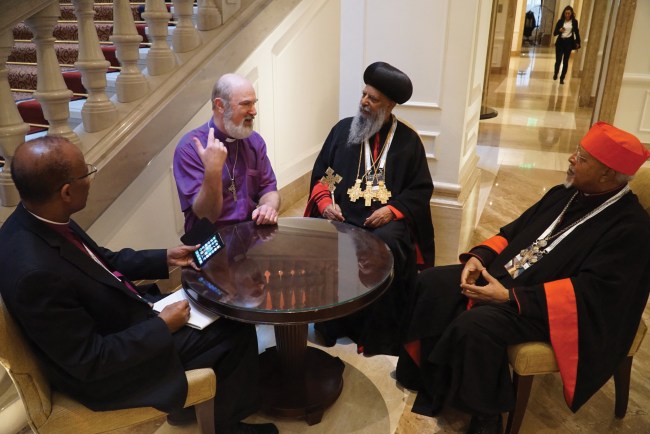
Schirrmacher in conversation with patriarchs from EthiopiaWEA / Martin Warnecke / Courtesy of Thomas Schirrmacher
Schirrmacher in conversation with patriarchs from Ethiopia

The 61-year-old German head of the WEA is convinced, though, that evangelicals from around the world would support these many, many conversations, if they only understood.

“If they understood these meetings give me the opportunity to speak about evangelism from an evangelical perspective,” he said, “then of course they would want me to go.”

Formed in 1951, the WEA is the largest international organization of evangelical churches, representing evangelical alliances in 140 countries and more than 600 million individual Protestants worldwide.

Its roots stretch back to an 1846 meeting between Christians troubled by social injustices such as slavery and concerned about confessional challenges related to the advancement of Darwinian evolution and communism. The group’s aim, according to the original documents, was to start “a new thing in church history, a definite organization for the expression of unity amongst Christian individuals belonging to different churches.”

Today, more than 150 years later, the WEA aims to provide an identity, voice, and platform for millions of evangelical Christians on issues such as human trafficking, peace and reconciliation efforts, and missions.

“The core of what we do at the WEA is speak more strongly for evangelicals on the world stage,” Schirrmacher said.

He is not new to the work. Before he was elected secretary general in 2020, Schirrmacher chaired the WEA’s Theological Commission and served as associate secretary general for Theological Concerns and Religious Freedom. This brought him into close contact with organizations such as the World Council of Churches, the Vatican’s Pontifical Council for Interreligious Dialogue, Indonesia’s Nahdlatul Ulama, and multilateral institutions such as Religions for Peace. He has worked with leaders from diverse religious traditions on critical international issues, including climate change, gender equality, and religious freedom.

Schirrmacher might seem like an odd choice to lead the WEA. He comes from a country where less than 2 percent of the population is evangelical, and his appointment comes at a time when Germany and Europe more generally have a waning influence on global Christianity. Today, three-quarters of the world’s evangelicals live in Latin America, sub-Saharan Africa, and Asia.

Besides that, Schirrmacher’s interreligious work could be seen as being at odds with the force and flow of evangelical sentiment. Evangelicals are not known for cooperating and making common cause with non-Christians, secular groups, or ecumenically minded mainline Christians.

Nonetheless, former WEA secretary general Geoff Tunnicliffe, who has worked closely with Schirrmacher over the years, believes Schirrmacher is the person to unite evangelicals around important causes and spur them to work with new partners. He believes Schirrmacher can get things done.

“There are many complex human and global challenges—evangelism, social justice, global pandemics, poverty, refugees. Building unity and a collective voice for evangelicals is critical at this time in history,” he said.

Tunnicliffe said when Schirrmacher was elected as the WEA’s next leader, it was with these emphases in mind.

“I know of no other leader who has done more for promoting Christian mission, interreligious dialogue, human rights, and religious freedom within a solid biblical foundation,” he said.

Descended from Huguenots—Calvinists who faced severe persecution during the Reformation—Schirrmacher was raised in a family with equal commitments to furthering the global Christian witness and defending religious minorities.

His parents, Ingeborg and Bernd (the latter a pioneering telecommunications professor in post–World War II Germany), regularly hosted missionaries at their home in Giessen, a German university town known for its mathematical museum. They encouraged their son to get to know their guests, including a certain evangelist named Billy Graham.

Inspired by the missionaries he met, Schirrmacher went on to study theology, cultural anthropology, and comparative religion in Switzerland, the Netherlands, California, and Germany. He then served as a pastor in various churches in Bonn—the former capital of West Germany—before founding Martin Bucer Seminary at the age of 36 and serving as rector for 22 years.

In those years, Schirrmacher traveled and taught extensively, learning the contours of global evangelicalism from Lakeland, Florida, to Bangalore, India, and many places in between.

As a testament to the breadth of his international contacts and connections, there is a page on his website called “Favorite Places” that includes his amateur photos of places as diverse as “the eternal construction site of Singapore,” the source of the Nile River in Jinja, Uganda, and the Bellagio fountain in Las Vegas.

Across borders and boundaries, he’s dined and dialogued with presidents and popes, looking for ways evangelicals could partner with world leaders and global religious institutions to address global problems.

At the same time, he’s also sat with everyday Christians from Turkey to Gambia, Indonesia to Brazil, listening to them and learning from their diverse perspectives on faith and life.

Schirrmacher said this has given him both a keenly developed appreciation for the needs of Christians in the Global South and the imperative to use his positions of authority to advocate on their behalf—particularly, he said, when it comes to fighting against the persecution of Christians.

For Schirrmacher, this is a priority, and he wants to see evangelicals “wield their theology to actively contribute to the prevention of violence against other religious minorities.”

His connection to the concerns of global Christians may be one reason he is not viewed as an elite European, detached from the real issues, but instead as a missions-oriented, globally aware Christian who cares deeply for the concerns of the worldwide church.

It is also perhaps because his theological views are consistently conservative.

“I really have not changed my theology since I was six years old,” he said. “Trusting the Bible and in my personal savior Jesus Christ, letting his resurrection and forgiveness guide my view of the world.”

And though some of the issues he cares about can be characterized as “liberal,” he’s also clear that he is “pro-family and against abortion.”

In this, Schirrmacher feels he is following in the footsteps of another Bonn-based theologian and pastor: Theodor Christlieb. Schirrmacher wrote a dissertation on Christlieb in 1985, exploring how the chair of pastoral theology in Bonn in the late 1800s developed a theology of world mission and upheld conservative doctrines against the liberal German theology that was in vogue at the time.

Christlieb founded the German Evangelization Association in 1884 and is seen as the “father of German evangelism” and one of the pioneers of the field of modern missiology.

Encouraged by Christlieb’s example, Schirrmacher does not feel the need to “rewrite systematic theology,” he said, “but to give biblical reasons for mission and go out and do it together.”

The only significant theological shift Schirrmacher has undergone as an adult was along these lines, he said. At age 35, he witnessed the fallout from a missions conference where presenters spent more time critiquing other evangelicals than on missions.

Schirrmacher left frustrated. But also inspired. “It was then that I shifted from fighting fellow evangelicals over theology to seeking unity for mission’s sake,” he said.

His interest in evangelical unity for the sake of global missions not only led him to advocate for greater evangelical ecumenism but brought him into closer relationship with other religious actors as well.

Historically, evangelicals around the world have had “a checkered history of relations with other religions,” writes Pentecostal professor Tony Richie. Sometimes they have been willfully ignorant. Sometimes, outright hostile.

But now, a new movement of evangelicals appears to be cautiously embracing interreligious dialogue and its benefits.

Simone Twibell, director of Intercultural Studies and Ministerial Missions at Olivet Nazarene University in Illinois, writes that evangelicals have increasingly come to see interreligious encounter as another way to “glorify God.”

Evangelicals are coming to the interreligious table trying to find ways to navigate the multiple streams of religious diversity and difference they are confronted with in their day-to-day lives, she said.

But many have also recognized the power of presenting a unified voice with fellow religious actors on things like religious freedom.

The opportunities for alliances can create some tension, Schirrmacher said. Working with other groups on issues such as religious freedom can mean putting aside for a moment some things important to evangelicals.

“Evangelicals are unbelievably dogmatic and conservative, even extremely conservative, on issues like abortion and homosexuality,” he said. “At the same time, on questions of world trade, poverty reduction, and multicultural togetherness, they tick more to the left.”

For Schirrmacher, if there is a choice between which of these to emphasize, it’s clear: He believes it’s time to find ways to cooperate with a broad array of allies and embrace a more global vision to tackle conflict, poverty, pandemics, racism, and climate change.

As he sees it, he’s just continuing the tradition of the WEA.

“What we do today is in line with what we did in 1846,” Schirrmacher said, “when evangelicals came together to fight slavery.”

More than anything else, the man descended from persecuted Huguenots and informed by his experiences with evangelical minorities around the world believes freedom of religion—including the freedom to proselytize—is an inalienable human right.

This conviction has led him to work on a plethora of projects with Catholics, Muslims, and other partners.

As Schirrmacher sees it, the end goal of the WEA is not necessarily to promote world peace, but to pave the way for Christian witness in a world of difference.

From his years working toward that goal, Schirrmacher is particularly proud of helping compose Christian Witness in a Multi-Religious World: Recommendations for Conduct.

Jointly published by the World Council of Churches, the WEA, and the Pontifical Council for Interreligious Dialogue—which together represent 90 percent of global Christianity—the document aimed to provide a road map for how churches, ecumenical organizations, and missions agencies could do their work while remaining humbly aware of the differences in religious convictions and the tensions those differences can foster.

Whether it’s working with Indonesian Muslim leaders to help protect the rights of Christian converts or convincing his fellow evangelicals that he should be sitting at the table with an Orthodox patriarch or a significant Sunni cleric, Schirrmacher said the key is dialogue.

“Talking, talking, talking,” he said. “Unity doesn’t come out of nowhere. It comes from dialogue, two people talking to each other.”

Evangelicals, he said, like to talk. But too often that talking has been aimed at division, rather than unity—distinction, instead of common ground.

“From the grassroots to theological schools, seminaries to institutions and local churches, we should all be talking to each other and with people of other faith traditions,” he said. “Whatever we do, we need to do it together.”

As the new head of the WEA, he wants to bring global evangelicalism into a thousand conversations.

“Above all,” he said, “that’s what I believe I am called to do.”

Ken Chitwood is a writer and scholar of global religion living in Germany.

Testimony

My Body Is a Temple, Not a Fighting Machine

Why I left a promising boxing career behind after coming to Christ.

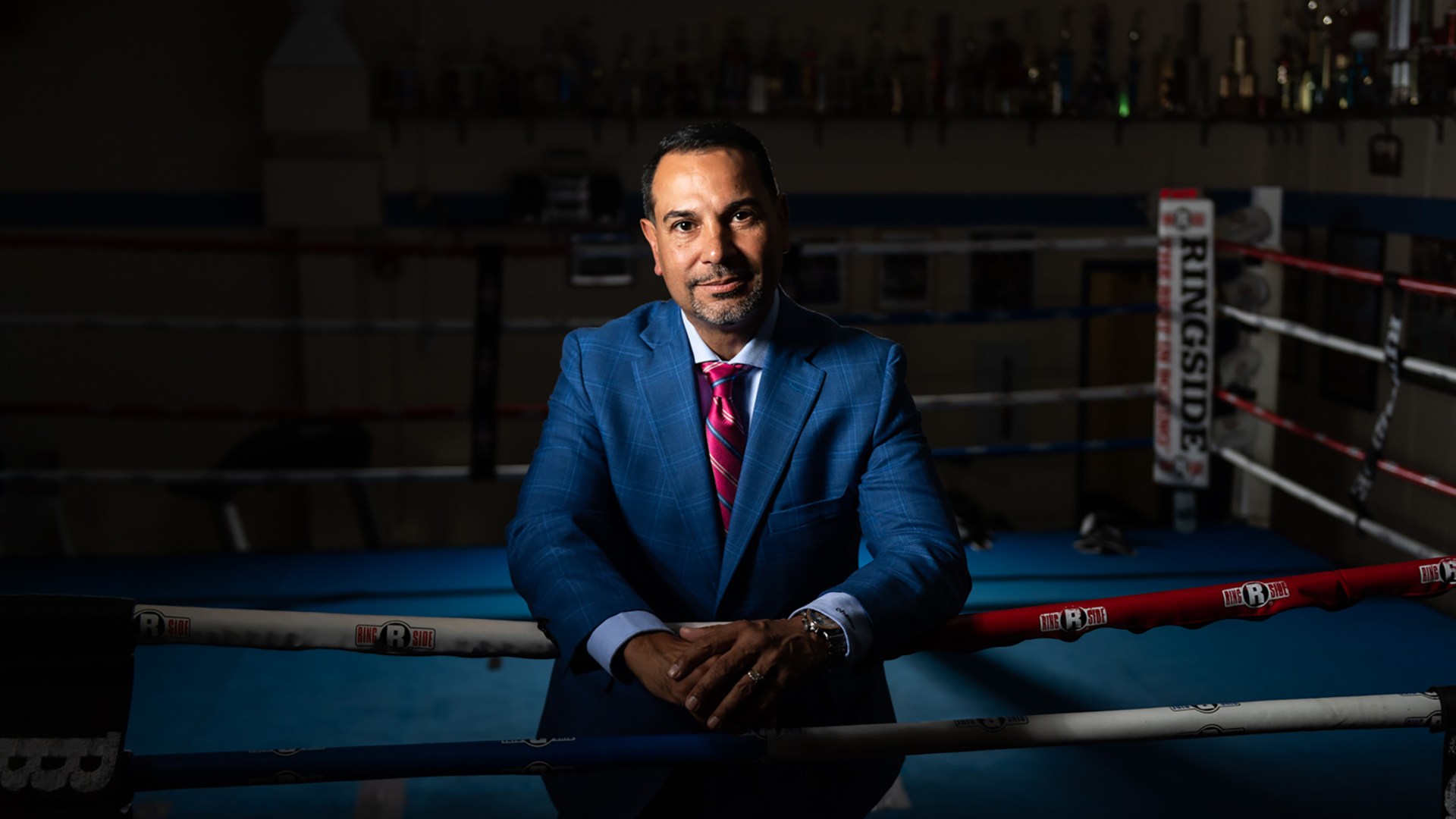
David Nevala

I was born on a Sunday morning in Milwaukee, a first-generation Puerto Rican American. My mother often told me I had received special graces because I was born on the Lord’s Day.

I was baptized and confirmed in the Catholic church and regularly attended Sunday Mass with my mother and sister until I was about nine years old. Eventually, they stopped going, but I continued this weekly ritual. I prayed to God for help, since I was growing up in a hostile environment.

Becoming a champion

Adam was my age, one of many Polish kids whose families had lived in the neighborhood for generations, and he took an unpleasant interest in me. One of his favorite pastimes was following me around and taunting me, drawing on a vast arsenal of racial slurs he had evidently picked up from his father.

One day I came home crying with a bloody nose, and my father demanded to know what had happened. With tears in my eyes, I repeated Adam’s words, including several epithets. “We don’t want you here,” he had warned me. “Leave our neighborhood now!”

I had seen my father angry before, but now I could also see the pain in his eyes. With a stony expression, he said, “The next time you see Adam, you will defend yourself. Then he’ll leave you alone.”

The very next day, my father marched me into the boxing gym. Instantly, I was intimidated by the other men there. They towered over me as they pummeled the heavy hanging bags, sweating and focused. I was pushed in front of a mirror and shown some basic combinations by my future coach and mentor, Israel “Shorty” Acosta. He turned to my father and said with conviction, “Héctor is a natural. He will become a champion.”

Shorty’s prediction was correct, even though my father never saw me compete. He and my mother divorced when I was 12. I prayed often for his return, but there were no calls—no financial support, either. The father I loved was gone.

At the time, my 17-year-old sister had become addicted to drugs while descending into mental illness. And I was still enduring racism, bullying, and gang violence with regularity. Thankfully, boxing provided the structure and support I needed. It taught me dedication, determination, and discipline.

As a successful young boxer, I began traveling around the world representing the United States national boxing team. These travels brought a greater awareness of my own ingrained biases. When we had scheduled bouts in Poland, I assumed everyone there was bad because a Polish kid had bullied me. While visiting Barbados, I came face to face with genuine poverty, beyond anything I’d experienced in Milwaukee.

But if boxing taught me more about myself and my blind spots, it also slowly distanced me from church and my faith. And it entangled me in some unhealthy relationships. Once, at a restaurant, a group of friends and I decided to sprint from the table without paying. The police rounded a few of us up and took us to jail. When Shorty arrived to retrieve us, he was furious. He reminded me that I needed to be a champion both in and out of the ring. With my mother’s permission, he brought me into his own home to ensure I wouldn’t be surrounded by negative influences.

Thankfully, God reentered my life when I attended a Bible study in Colorado Springs while training for an international fight against Italy. I found meaning and purpose through studying Scripture and enjoying fellowship with other men. When I got back home, I wanted to take my faith more seriously, but I was easily distracted. One friend said, “You’re too young. Why would you give your life to God? You need to experience life, revel in your success, and enjoy all the benefits that will come along with being a champion boxer and perhaps one day a millionaire.”

During this time of contemplation, I began turning my gaze toward the 1992 Olympics in Barcelona. I had spent years preparing for this moment. As a teenager, I was a seven-time US national champion, which made me the favored welterweight to represent my country in Barcelona. I was beyond excited.

The Olympic trials pitted me against Jesse Briseno, another American boxer, for a coveted spot on the team. I knew I was in for the toughest fight of my life. When I lost, I was devastated—my dreams of Olympic glory had vanished.

Before the bout with Briseno, I had counted on hearing from major boxing promoters who could advance my career. When they failed to come calling, I felt lost and rudderless, wondering what to do with my life. That’s when I started attending church and Bible studies again, and on December 27, 1992, I purchased my very first Bible. That same day, I gave my life to Jesus Christ.

Walking away

As I began immersing myself in the life of the church, I continued to box. Eight months later, I stepped back into the ring with Briseno, where we fought for the 147-pound US National Championship. This time I knocked him out in fewer than two minutes. That victory breathed new life into my career prospects. The fight was televised, and the publicity landed Shorty and me on the cover of USA Boxing’s magazine, as well as the inside cover of Sports Illustrated. With all this attention, I once again considered turning professional.

At the same time, I was feeling conflicted. I found myself torn by a passage from 1 Corinthians: “Do you not know that your bodies are temples of the Holy Spirit, who is in you, whom you have received from God? You are not your own; you were bought at a price. Therefore honor God with your bodies” (6:19–20). I pictured myself in the ring hurting someone who was a temple of the Holy Spirit. I pictured my own temple getting hit and endangering my body and my brain in a way that God had not intended. Was boxing compatible with the words of Scripture?

After a year of prayer and discernment, I left boxing behind. Walking away was the hardest decision I had ever made. I knew my choice let many people down, and I was devastated by the pain I caused Shorty. At the same time, I felt an overwhelming sense of joy and peace.

Moving on from boxing was a blessing in many ways. For starters, it freed me from many hazards professional fighters face. Promoters often take advantage of the athletes. There is pressure to use drugs and engage in unhealthy relationships. And the threat of brain damage or even death always lingers.

Leaving the ring also allowed me to form a family, pursue God with renewed vigor, and explore career opportunities better aligned with my faith. Today, I head up a Lutheran social service organization committed to the infinite worth of everyone under our care, no matter their circumstances or challenges.

I’ll always be thankful to boxing for providing character-shaping structure and discipline when I needed it most. But only by giving myself to Christ did I discover a calling worthy of my utmost devotion.

Héctor Colón is president and CEO of Lutheran Social Services of Wisconsin and Upper Michigan. He is the author of My Journey from Boxing Ring to Boardroom: 5 Essential Virtues for Life and Leadership.

Reply All

Responses to our September issue.

Envato Elements

What Christian Aid Workers Want You to Know About Afghanistan

Your description of the current situation in Afghanistan, with notes from Arley and Pat, was encouraging. And we really enjoyed the culturally accurate cover picture.

Doug Snyder Hamilton, MT

I could relate to the draw Western workers have to the Afghan culture and its people. The graciousness of the Afghan people echoes the account of Abraham and Sarah caring for their three divine visitors in Genesis 18. I lived and worked in several Muslim-majority countries, and here in Canada, I have several close friends from the Middle East. Their grace and goodness embrace my every visit.

Richard White North Bay, Ontario

1 out of 3 New Guitars Are Purchased for Worship Music

Playing at churches is one of the few ways left to make money playing music. I know atheists who pull $30K a year [at it].

@Eve6 (Twitter)

Safeguard Gaps Leave Refugees Vulnerable to Sexual Abuse, Exploitation

These dangers are real. When my wife was a refugee during war in her country, she was with her family. But a friend ended up in a refugee camp where one of the workers—who was also a minister—raped this friend. Predators prey on the most vulnerable.

Craig Keener Wilmore, KY

Why Christians Keep Preaching to Themselves

I think the author does an excellent work in pointing out sin in the believer, but then we must always be pointing to the Lord as the overcoming power. We cannot pull ourselves up by our own bootstraps. I have left some services feeling wretched as I looked inward. I have also left after some sermons that I felt like worshiping the God who pardons and empowers one so weak as me.

Jacob Bart Cobourg, Ontario

Why Environmental Destruction Is Bad for Worship

Tish Harrison Warren’s point that the health of the creation is intimately entwined with the health of our worship is well taken. However, as a plant breeder, it strikes me as simplistic to use the phrase “engineered homogeneity” to describe the process by which certain crop cultivars gain importance over others. The loss of heirloom apple cultivars is probably mostly attributable to the fact that less than 2 percent of people in the US are involved in farming—fewer of us are tending crops than in 1900. The vast majority of specialty crops in the US are improved by traditional methods of plant breeding—not engineering.

Wendy Hoashi-Erhardt Puyallup, WA

Populism Poses Dangers to Democracy. It Does the Same to Christian Witness.

Alas, the author neglects the fact that throwing two populists into the same basket just because they are both populists is pointless at best, misleading at worst. The differences in content are much greater than whatever similarity they may share in their populist strategy. Decrying populism without regard for its content misses most of the boat and is of little help in our current political context.

Ruedi Giezendanner Tanjung Bungah, Malaysia

As those in power forget they are governing for the people in favor of governing over the people to expand their power, it is not unusual that a necessary visceral movement of the governed rises up as a counterbalance. It is simply false to reduce populism to a “struggle between common people and the elites who exploit them.” It is entirely [McKenzie’s] perspective that those in the populist movement deny original sin within themselves and the image of God in those they oppose. Strangely, we concur with his two conclusions.

Wes Brustad and Matt Nuth Ramona, CA

Understanding Autism from the Inside

Just recently, I came to the understanding that I also fall somewhere on the autistic side of the “neural spectrum.” As it did for Bowman, this discovery came as a clarifying relief to me. The neurodiversity paradigm makes us more, not less, aware of the fact that all of us, wherever we fall on the spectrum, represent a mixture of strengths and weaknesses. A refusal to pathologize ourselves—a refusal to allow ourselves to be declared fundamentally defective, inferior, or unfit for meaningful participation in society—is nowhere near the same as outright denial of weakness. So yes, we autists are “the sick” for whom Jesus came, the “weary and burdened,” the “poor in spirit,” but no more or less than neurotypicals. Far from inclining us to sugarcoat weakness, the neurodiversity lens exposes that it is neurotypicals who tend to deny weakness.

Greg Sellei Wilmington, VT

Well-Intentioned Sin Is Still Sin and Deserves Judgment

God is holy. We tend to forget this. We are sinners. We tend to forget that he views us through the sacrifice of his son, Jesus. We are no different from Uzzah, as we also tend to take God’s holiness for granted.

Smirna E. Medina (Facebook)

Correction: In October’s Reply All on page 11, a comment by @Ben_R_F included the incorrect name of a ex-gay ministry. The name is Restored Hope Network.

The New Prison Ministry Lies in Bible Education

Religious programs, including evangelical schools, are a major force for good behind bars.

illustration by Xiao Hua Yang

The most prominent evangelical mascot for prison ministry in recent memory is, of course, Charles “Chuck” Colson. Known to many as Richard Nixon’s “hatchet man,” Colson later served time in federal prison for crimes related to the Watergate scandal.

Like many prisoners, once incarcerated, Colson turned to faith to reassess his life, sparking a dramatic shift in personal direction that led to his founding of the prominent nonprofit Prison Fellowship. Colson spoke often of the need for Christians to be active in addressing the problem of crime, as well as in the reform of prisoners and prisons.

While widely influential as a prototype, Colson’s efforts pale in comparison to the much broader scope of Christian evangelical involvement in prison ministry today. Both local church groups and large institutions have followed in Colson’s footsteps. Evangelical involvement in prison ministry is both more ecumenical and more widely engaged in than ever before.

While many evangelicals are familiar with prison ministry groups ranging from local church volunteer efforts to larger organizations like Prison Fellowship, newer and lesser-known models for evangelical ministry inside US prisons are drawing from innovative work at some of America’s largest and most violent institutions. This work emphasizes equipping prisoners for their own ministry and equipping prisons with resources from religious volunteers.

As we document through our on-site research, these new approaches are being primarily developed in desperately underresourced maximum-security institutions. Christians continue to be engaged in greater and more creative ways of serving fellow citizens of all faiths in America’s prisons.

Both in the US and in other countries, a growing number of volunteer-based religious programs are the dominant source of prisoner rehabilitation in custodial settings. Correctional facilities face unprecedented challenges: overcrowding, violence, suicide, the prevalence of mental health issues, and the overall aging of prison populations. Rampant violence, extremely high levels of recidivism, mounting taxpayer cost, and difficulty retaining employees typify recent headlines from the world of American corrections. And with the additional challenge of tightening of correctional budgets, prisons lose highly valuable vocational, educational, and treatment programs.

Research shows that prisons do little to meaningfully correct past transgressions of offenders, and the government’s own data demonstrate that incarceration does not meaningfully deter future offending. New research from the nonpartisan Sentencing Project highlights the possibility that mass incarceration could become a permanent feature of American society. While policymakers seem to be at a loss regarding next steps, criminal justice reform is among the few priorities in Washington embraced by both Democrats and Republicans.

Many American prisons have today become so violent that they comprise what Cambridge University prison scholar Alison Liebling calls “failed state” institutions. In failed state institutions, even the most basic levels of safety and control are not provided by authorities. These institutions not only cause more human damage than they prevent but also produce emotionally stunted citizens and actually elevate the likelihood of reoffending.

Two such institutions are Louisiana State Penitentiary at Angola and Mississippi State Penitentiary at Parchman, where we have conducted extensive peer-reviewed research on the impact of religious programs. As the two largest maximum-security prisons in the country—which in 2021 are still referred to by the names they carried when they were slave plantations—both have histories tangled in slavery, convict leasing, and mass incarceration. The majority of people serving sentences at both institutions are Black.

But it is institutions like these where evangelical ministries have been welcomed to pilot new programs to reach prisoners, such as specially designed seminary education options.

Nearly two decades ago, Congress revoked Pell Grant eligibility for convicted felons, removing a valuable collegiate education resource for inmates nationwide as part of the 1994 Crime Bill championed by then-Senator Joe Biden and President Bill Clinton. (The ban was reversed in December 2020.)

For Burl Cain, then the warden of Louisiana State Penitentiary (LSP), the Pell Grant revocation posed a threat both to his job and his personal welfare. Cain viewed collegiate education as a powerful resource for reducing violence and making his prison less punitive. Fearing prisoner unrest and facing continuous overcrowding, Cain reached out to New Orleans Baptist Theological Seminary (NOBTS) to inquire about offering some courses as a gift to his prison. As Cain put it, he wanted the school’s faculty to come “on campus” at the penitentiary.

After initial reluctance, NOBTS decided that instruction at LSP not only fell within its mission but also affirmed its mission—and eventually the school opened a fully functioning extension center on the grounds of the prison. In 2015, NOBTS graduated its first small cohort of trained ministers, developing a tailored curriculum focused on process counseling and conflict management. The seminary at LSP was opened in 1995 and remains operative today with funds raised by NOBTS and other Christian charities. No taxpayer money is used for this work.

Seminary graduates soon found their greatest workload not in the prison’s chapels but in dorms and cell blocks, leading their own small congregations, helping with counseling, and assisting chaplains. Trained in process counseling and conflict management, the seminary grads gave voice to prisoners’ spiritual and mental health needs.

“We pay for this program out of our own pocket as an offering. We’re proud to do it. We certainly don’t force it on anyone,” NOBTS dean Jimmy Dukes told us:

Other programs would be welcome. Where are they? I would say that the best thing that could happen would be where it becomes the norm that people of all faith—whatever—get to tell their story. That would be the best thing. Perhaps then we can begin to discuss genuine rehabilitation and giving people a second chance, and begin to look at nonviolent people in prison. Is their sentence fair? That’s what I would hope.

In what is quickly becoming a new national model, public-private partnerships between prison wardens, religious educators, and faith-motivated volunteers are now operating in 29 states and over 50 maximum-security prisons nationwide. Three seminaries now exist in women’s prisons, the third of which launched earlier this year.

One ministry started by former NFL coach Joe Gibbs has partnered with the College at Southeastern to provide an accredited bachelor of arts degree in pastoral ministry to 30 eligible men. To qualify, candidates must have 15 remaining years to serve of their sentence and complete a college application. Most of the first class of 25 graduates will be voluntarily transferred to minister in other prisons in January.

Paid for with private external funding and endorsed by powerful legislative advocates, a prison reform movement not dissimilar to that initiated by Quakers two centuries ago is now underway in the United States. Motivated by concerns about prison conditions and the dearth of available programming, religious volunteers are stepping up to deliver a new purpose-driven ministry inside America’s failing prison system.

While evangelicals do not monopolize this ministry, they certainly dominate it. An essay in The Atlantic observed that despite Catholics and Protestants being involved in prison ministry, the latter far outnumber Catholics as prison chaplains and volunteers. “There’s a really good reason why the Evangelicals are whooping us [Catholics] at prison ministry,” said one priest. That reason? Protestant Christians told prisoners that there was a place for them in their churches when they were released, and they would help them reenter society.

University of Scranton criminal justice professor Harry Dammer told The Atlantic that evangelicals “have the most intense faith, the most belief that you have to go into prisons and help people.”

Since the 1950s, criminologists have recognized the value of involving previously convicted citizens to help others reform. Faith-based and addiction-focused programs have been particularly active in utilizing peer-based “wounded healers” as assets in rehabilitative programming. Former addicts, for example, are often viewed by those in recovery as the most effective drug treatment counselors—not because they have academic credentials in addiction therapy, but because they have overcome the challenges of addiction.

But the most important aspect of this research has been documenting the benefits of peer counseling for those receiving help, as well as for those offering it. Mentors themselves are often the chief beneficiaries of the relationships they experience with offenders.

We spent five years on site at the Louisiana State Penitentiary exploring the impact of the NOBTS seminary planted on its grounds, observing worship and prayer led by those incarcerated, surveying over 2,000 prisoners, and interviewing prisoners and staff.

Unrestricted access allowed us to observe religious worship and prayer in disciplinary cell blocks, on death row, in the prison hospice, and in prison chapels. We produced several peer-reviewed studies exploring aspects of the penitentiary’s Inmate Peer Ministry program, particularly exploring how it positively impacted inmate adjustment, prisoner misconduct, and self-harm.

What we found is not only that seminary students and those attending prisoner-led congregations reported lower levels of disciplinary convictions but also that they were more likely to report conversion narratives, religious involvement, and new positive self-identities.

As a result, lower levels of misconduct were attributable to these conversion narratives, increased religious commitment, and positive self-identities. In sum, increasing religiosity had a prosocial influence, confirming the significant and positive role religion plays in rehabilitating prisoners.

We’ve additionally studied peer ministry programs modeled on the LSP experience in other jurisdictions, with similar findings. Overall, peer ministry programs increase religiosity while also improving mental health and reducing violence among prisoners. All participation is gratis and voluntary.

What some critics call “conversionism” and “prayer” actually involves vesting prisoners with a level of social and spiritual capital that helps them both survive prison and succeed after release. Prayer and Bible study deliver rich social capital to prisoners, and religious conversion offers a powerful source of identity change.

Faith-based programs are successful in reducing recidivism. There is additional empirical evidence that even the act of simply visiting prisoners has been found to reduce recidivism. Over the past several decades, an entire research literature has emerged confirming the positive and prosocial effects of religion on crime reduction and restorative justice approaches.

There is plenty to criticize about evangelicals’ historical neglect of criminal justice reform. As part of the right-wing political surge of the 1980s, church leaders emphasized “law and order” over addressing the realities of structural racism and social inequality. Aaron Griffith argued in a recent CT piece that much evangelical work in prisons is aimed at religious conversion, noting that “prayer is not enough” to reform America’s prisons and that “for too long, evangelicals have compromised with the punitive politics of law and order.”

But these characterizations ignore the complexities of the issue. The roots of America’s mass incarceration, as historian Elizabeth Hinton has documented, run back to Lyndon Johnson’s Great Society programs—initiatives that, for better or worse, didn’t enjoy wide support from white evangelicals and other conservatives. Today, leaders across the ideological spectrum have begun taking responsibility for their roles in building America’s carceral state.

Additionally, the laws and institutions governing who ends up in US prisons are in many ways separate from those governing how people are treated once inside. It conflates problems to discredit contributions in one sphere because of failures in the other.

And the record clearly shows that, in practice, evangelicals have long played and continue to play an outsized and positive role working inside America’s prisons. Both research and Scripture point to prayer as a key resource of social capital; religious conversion is a key resource for prosocial identity change.

Participation in voluntary religious communities sponsored by evangelicals in fact achieves progressive aims, bolstering the lives of prisoners with social capital otherwise inaccessible to them. Even small-group prayer has been shown to transform people in prison.

Modest interventions like attending volunteer-led Bible studies in prison have been linked to significant recidivism reduction following release from prison. For example, a new study found that a one-week faith-based curriculum led by volunteers as part of a partnership between the American Bible Society and Good News Jail and Prison Ministry reduced posttraumatic stress disorder and enhanced prosocial and virtuous behavior among those in jail.

It is time to take an objective look at the role of evangelical prison ministries. Today’s record shows that evangelicals remain a powerful force for good, willing and eager to bring Christ’s love to their neighbors behind bars. In addition to salvaging collegiate education for prisoners, for example, NOBTS accomplished something more novel: They assumed personal responsibility for the caretaking and rehabilitation of prisoners in some of America’s toughest prisons.

Michael Hallett is professor of criminal justice at the University of North Florida. Byron R. Johnson is Distinguished Professor of the Social Sciences at Baylor University. They are coauthors of The Restorative Prison: Essays on Inmate Peer Ministry and Prosocial Corrections (Routledge, 2021). This essay is part of an ongoing CT series exploring various perspectives and ideas about how Christians engage the criminal justice system.

Ideas

The Church Needs Reformation, Not Deconstruction

Contributor

A short guide to the exvangelical movement.

Illustration by Rick Szuecs / Source Images: Patrick Wittke / Unsplash / Envato

Deconstruction is a buzzword these days. The term exvangelical has emerged as an identity marker and an activist movement. People’s faith stories—and their “losing faith” stories—are often emotional and vulnerable. They grow out of biography and experiences, so Christians struggling with faith need love and listening ears, not merely argument.

Still, we have a responsibility as a church to thoughtfully engage wider cultural conversations around deconstruction. Jesus is the truth that sets us free. Asking hard questions about faith is normal. It’s a necessary part of Christian maturity. But there are better and worse ways to critically assess claims to truth. So take these as helpful guidelines:

First, distinguish between deconstruction and reform. The church is a Christ-made institution, but it is also a sinful institution. It always needs reform. If a person’s frustration with the church arises from the biblical vision of community, that’s not deconstruction. It’s calling the church back to the gospel.

There have always been reformers in the church, and we did not call them deconstructors. This is not merely semantics. To call something to reform (as opposed to simply destroying it) is to implicitly recognize the integrity of its original design.

As an example, I am often dismayed by the misogyny I see in the church. But I also recognize that the notion of women’s intrinsic dignity is given to me by the church itself. Compared to the pagan world around it, the early church elevated the status of women. The idea of innate human equality emerges out of the best of Christian thought. We can’t deconstruct the church while drawing from its very logic, beliefs, and tradition.

Second, avoid inadvertently centering white, Western voices. Often, when white Christians deconstruct their faith due to racism and injustice in the church, they don’t then learn from or join Black, Latino, or immigrant churches. We need to listen more to evangelical people of color who have a legacy of holding together a commitment to both orthodoxy and justice.

Third, steer clear of gimmicks or manipulation. Josh Harris, of I Kissed Dating Goodbye fame, recently received jeers from across the theological spectrum for his $275 course on deconstruction, which he later canceled. But the phenomenon isn’t limited to him. A month ago, I was greeted by a Facebook ad for a deconstruction coach. There is now an industry dedicated to monetizing deconstruction.

Parts of the exvangelical movement drop the doctrinal commitments of evangelicalism but retain the incessant faddishness and marketing gimmickry endemic to it. But the consumeristic shallowness of contemporary evangelicalism needs to be deconstructed—taken apart and subverted—not duplicated.

Last, engage steelmen—the strongest versions of an argument—not strawmen. Many of those who most vocally deconstruct Christianity jettison a thin version of American fundamentalism and mistake it for the whole tradition. But much of what bothers us about certain parts of the evangelical community—for instance, anti-intellectualism, a lack of compassion or concern for justice, enmeshment with political conservatism, a suspicion of mystery—are largely absent in, say, Christian patristic thought.

There has never been a pure, perfect moment in the church. Still, if you look at the broad swath of Christian faith as represented in Catholic, Orthodox, and Protestant thought, a shared tradition emerges—one that offers profound hope in our particular moment.

If a person comes to the point of truly disbelieving the claims of Christianity, there’s honesty and integrity in leaving the faith outright, rather than seeking to reshape it to suit one’s preferences. I respect that. But it’s important to critically assess the actual faith, not a truncated version of it.

What a sinful church needs is not deconstruction but deep construction. We have to forsake shallow critique to build a more faithful vision of the community of Jesus. But we cannot do it without holding to the deposit of faith we’ve received from the historic and global church. We cannot do it without the truth of Scripture. And we cannot do it without the Holy Spirit.

addApple PodcastsDown ArrowDown ArrowDown Arrowarrow_left_altLeft ArrowLeft ArrowRight ArrowRight ArrowRight Arrowarrow_up_altUp ArrowUp ArrowAvailable at Amazoncaret-downCloseCloseellipseEmailEmailExpandExpandExternalExternalFacebookfacebook-squarefolderGiftGiftGooglegoogleGoogle KeephamburgerInstagraminstagram-squareLinkLinklinkedin-squareListenListenListenChristianity TodayCT Creative Studio Logologo_orgMegaphoneMenuMenupausePinterestPlayPlayPocketPodcastprintremoveRSSRSSSaveSavesaveSearchSearchsearchSpotifyStitcherTelegramTable of ContentsTable of Contentstwitter-squareWhatsAppXYouTubeYouTube