Ideas

In Plain Prayer: Why Missionary Families Are Showing Love to Haiti Kidnappers

Response of Christian Aid Ministries and supporters reveals three Anabaptist distinctives that other Christians should find both familiar and thought provoking.

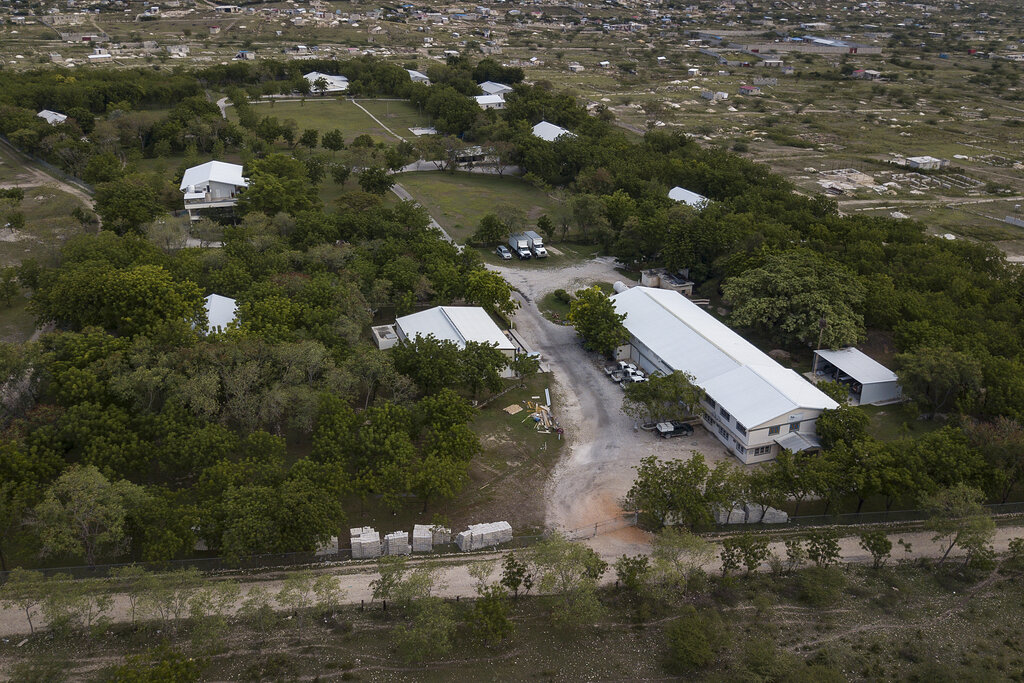
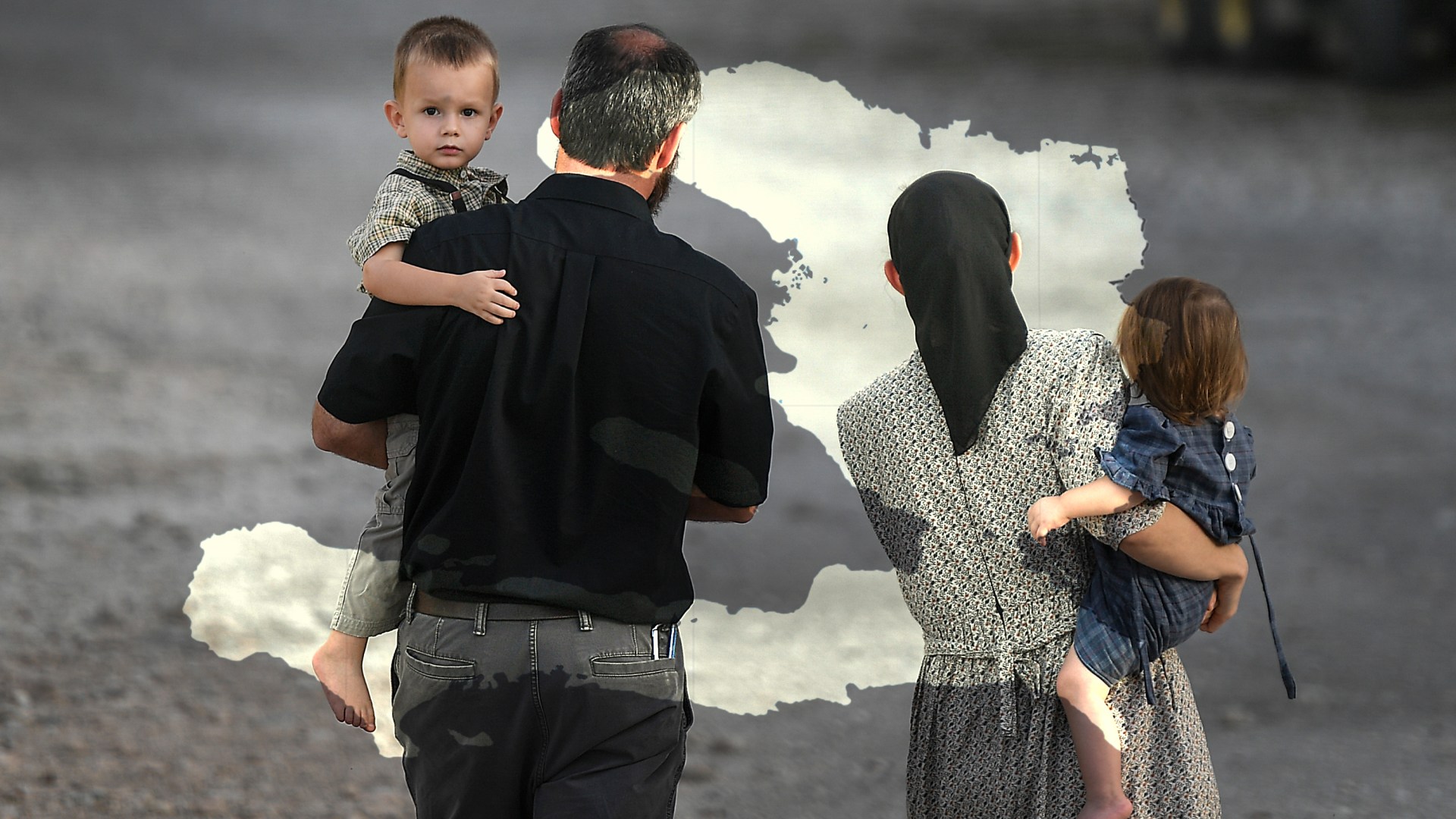
A man and woman hold children as they walk on the grounds of the Christian Aid Ministries headquarters in Titanyen, Haiti on Thursday, Oct. 21, 2021.

A man and woman hold children as they walk on the grounds of the Christian Aid Ministries headquarters in Titanyen, Haiti on Thursday, Oct. 21, 2021.

Christianity Today October 29, 2021
Matias Delacroix / AP Photo / Edits by Christianity Today

Update (Dec. 20): The final 12 Haiti missionary hostages made a daring escape overnight, instead of a paid ransom securing their release after two months, according to new details from Christian Aid Ministries. CAM says the missionaries forgive their kidnappers.

Like many others, we have been following the story of the 12 adults and five children associated with Christian Aid Ministries (CAM) who were kidnapped in Haiti on October 16 and are being held for ransom. The situation is difficult to contemplate, and we join countless individuals around the globe in praying for their release.

Unfortunately, circumstances in Haiti have allowed kidnapping to become all too common, routinely placing the lives of locals—and sometimes those of foreigners—at risk. But although the CAM abduction story fits a sad pattern of sorts, the official response has provoked queries from both religious and secular observers.

The nature and tone of CAM’s public statements and the prayer requests from the captives’ families have surprised many people because they have included prayer for the kidnappers and a desire to extend love and forgiveness to the gang members holding the 16 Americans and one Canadian captive.

Yet these responses did not surprise us. To be clear, we do not personally know any of those being held captive by the gang known as 400 Mawozo, nor are we privy to the private conversations of their relatives. However, the content of the public prayers and the calls to pray for the captives reflect deeply rooted Anabaptist dispositions that we believe the wider Christian community would find both surprisingly familiar and thought provoking.

From Ohio to the world

CAM is a relief and service organization supported by many churches on the more conservative side of the contemporary Anabaptist spectrum—plain-dressing traditionalist Mennonites, Amish-Mennonites, Dunkard Brethren, and not a small number of Old Order Mennonites and Amish. Along with Mennonite Central Committee (MCC), an international service agency that tends to draw support from the more assimilated side of the Mennonite family tree, CAM is one of the larger Anabaptist parachurch agencies today.

Begun in 1981, CAM was originally known as Christian Aid to Romania and grew out of an Ohio-based effort to ship care packages to Eastern Europe in the tense years of the late Cold War. Such gift giving challenged the easy way many Western Christians labeled those behind the iron curtain as the enemy.

Today CAM is involved in scores of countries. In Haiti, where CAM has been active since the late 1980s, its long-term work involves providing school supplies for children, medicines for clinics, and food for the elderly, as well as distributing Bibles and Christian literature. Short-term efforts included rebuilding in the wake of this summer’s earthquake. The hostages had been visiting an orphanage supported by CAM.

Three windows into the Anabaptist soul

In the days since the abduction, CAM and the captives’ families have issued at least ten public statements (from which come all the quotations that follow). In addition to fervent calls for prayer, the statements provide a window into the soul of the Plain Anabaptist community. They also offer an occasion for theological reflection for the rest of us.

What do we see in their response? Plain Anabaptists understand and exhibit their faith in different ways. Some are more comfortable with verbal evangelism than others. The degree to which they limit technology and avoid consumer culture also varies. Still, there is broad agreement on numerous matters, including things that bind them to other Christians.

Plain Anabaptists share many beliefs with evangelical Protestants, including the authority of the Bible, the sovereignty of God, and the availability of salvation through the work of Christ. CAM’s statement that “we commit this situation to God and trust Him to see us through” would likely resonate with many evangelicals, as would the organization’s hope that, regardless of the outcome, “the Lord Jesus [might] be magnified and many more people come to know His love and salvation.”

Much of the group’s language and its choice of biblical references would feel familiar to American evangelicals, including affirmations that “the effective, fervent prayer of a righteous man avails much” (James 5:16b) and that God invites us to call upon his name “in the day of trouble” (Psalm 50:15) and to “pray without ceasing” (1 Thessalonians 5:17).

But alongside these foundational sentiments, we also discover three distinctive refrains that reflect historic Anabaptist understandings of the Christian faith: the imperative to pray for the kidnappers, a nonresistant response to adversaries, and a commitment to forgive.

1) Praying for the kidnappers

In addition to asking supporters to pray for the safety of the captives as well as peace and comfort for their families back home, the CAM statements repeatedly ask us to include the kidnappers in our intercession—presenting them as humans whose actions, as horrifying as they are, do not place them beyond the bounds of love and concern:

  • “The kidnappers, like all people, are created in the image of God and can be changed if they turn to Him. While we desire the safe release of our workers, we also desire that the kidnappers be transformed by the love of Jesus, the only true source of peace, joy, and forgiveness.”
  • “One father of a hostage said this about the kidnappers, ‘We are interested in the salvation of these men and we love them.’”
  • “Many [Plain Anabaptist] children are praying for the people who have been kidnapped, [and] one three-year-old child prayed that ‘the naughty people would become good.’”

This last example, drawn from a young child’s words, illustrates how this fundamental orientation to enemies is passed on in Plain Anabaptist circles from one generation to the next across time.

Although none of the public statements explicitly refer to Anabaptist history, these sentiments enjoining prayer for enemies and longing for the transformation of adversaries is replete in the stories of Martyrs Mirror, the compendium of Anabaptist suffering in the 16th and early 17th centuries. Like the accounts in Martyrs Mirror, the calls from CAM are grounded in appeals to the example of Jesus, who said, “But I say to you, love your enemies, bless those who curse you, do good to those who hate you, and pray for those who spitefully use you and persecute you” (Matthew 5:44).

2) Nonresistance in the face of adversity

A closely related but distinct theological theme is responding to adversity—even dreadful circumstances—within the spirit of Jesus’ teaching in the Sermon on the Mount.

CAM’s leadership explained, “We have received various comments about our position on loving those who wrong us. This teaching, promoted for many years in Amish, Mennonite, and other conservative Anabaptist communities, we believe is God’s desire for all people.” The statement then linked to Matthew 5:10–11 to underscore that when we follow Jesus we love our enemies, bless those who curse us, do good to those who hate us, and pray for those who persecute us. The linked document also included these admonitions from Romans 12:19–21:

  • Do not take revenge on your enemy for doing wrong to you.
  • If your enemy is hungry, give him food.
  • If your enemy is thirsty, give him something to drink.

3) A commitment to forgive

CAM’s requests to pray for adversaries were accompanied with appeals to forgive the kidnappers, regardless of how the situation plays out:

  • “Jesus not only taught us to do these things, but also gave us an example of how to do them. When the Roman soldiers nailed Him to the cross, He called out to God, ‘Father, forgive them, for they know not what they do.’”
  • “A father [of a hostage] said, ‘As a family we are giving forgiveness to these men. We are not holding anything against them.’ Though the past week has been difficult, the families are united in their desire to follow Jesus’ teaching of forgiveness.”

Forgiveness in Anabaptist circles typically means rejecting revenge and extending grace, though it does not necessarily absolve accountability of the wrongdoer.

Confidence in God’s mercy

Underneath all these themes runs a calm and reflective tone, including a profound empathy for the Haitian people. “This time of difficulty reminds us of the ongoing suffering of millions of Haitians,” CAM noted. “While our workers chose to serve in Haiti, our Haitian friends endure crisis after crisis, continual violence, and economic hardship. Despite the difficulties and dangers involved in working there, both our Haitian and American workers carry a vision to minister the love of Jesus in Haiti … [and] to follow in the footsteps of Jesus, who ‘went about doing good’ (Acts 10:38).”

These sentiments demonstrate a posture that may seem at odds with the sectarianism that observers assume for Plain Anabaptist communities. Yet empathy is a close companion to the Anabaptist emphasis on humility, and both grow out of a confident—even if quietly asserted—sense of God’s abiding love and mercy.

As one supporter wrote:

“I have a beautiful mind picture—that of thousands, likely millions of believers joining hands around the globe, their prayers ascending as a sweet incense to the Father of mercies. It matters not so much what denomination, race, or culture; we are all joined in one common heart-rending plea,

Lord, have mercy.”

Donald B. Kraybill is senior fellow emeritus at the Young Center for Anabaptist and Pietist Studies at Elizabethtown (PA) College and Steven M. Nolt is senior scholar and interim director at the Young Center. They are the coauthors, with David L. Weaver-Zercher, of Amish Grace: How Forgiveness Transcended Tragedy.

Ideas

Should Christians Participate in the Day of the Dead?

The Mexican holiday is more prominent than ever. Three evangelicals who’ve seen Día de los Muertos up close weigh in.

Christianity Today October 29, 2021
Maogg / Getty Images

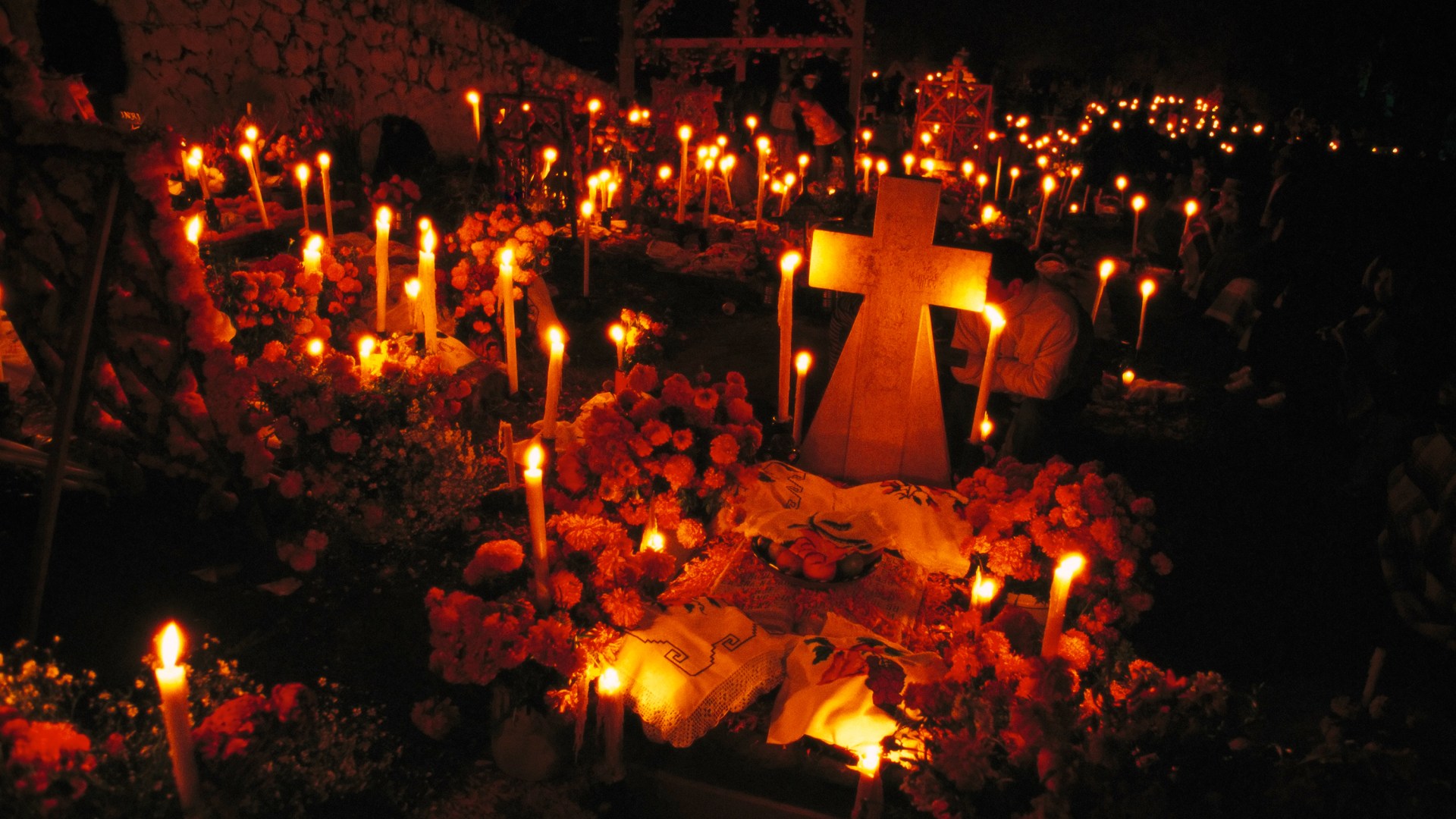
El Día de los Muertos, translated as the Day of the Dead, is a Mexican holiday also celebrated in many US communities. It has roots both in the Catholic observances of All Saints’ and All Souls’ Days and in indigenous Mexican beliefs about the dead.

According to the ancient religion of Mexico, Day of the Dead traditions help the spirits of the dead return to their families, keeping them happy and forestalling the difficulties the dead could inflict on the living. Celebrations vary by region, but they have much in common: altars with offerings to dead relatives, skull-shaped sugar candies, marigolds, incense, votives, and food; candlelit cemeteries; tissue-paper cutouts; and calaverita (“little skull”) decorations everywhere.

CT asked Christians who’ve been in ministry in places where the Day of the Dead is celebrated, “Can Christians participate in good conscience? If so, how?”

Sally Isáis (Mexico City, Mexico): Christians shouldn’t participate at all, given the nature of the holiday.

Every mid-October before the Day of the Dead, my parents would receive a note from my Mexico City school saying, “If your daughter does not bring her part for the classroom offering, she will flunk civics class.”

My mother would say, “I am sorry, but as evangelical Christians, we cannot be part of this celebration, even if it means Sally will not pass the course.” She would then ask the teacher if there was any way that I could make up for not participating. Some years I flunked the course, and other years I was allowed to present another project. My peers were always upset that I would not do my part to decorate the class altar to the dead. My children had similar experiences when they were in Mexico City schools.

Some people see the Day of the Dead as simply a Mexican cultural art form and a family-friendly celebration: colorful, decorative, and dramatic, even somewhat romantic. However, there is a dark spiritual side to the holiday that has steadily increased and become more obvious and unrestrained.

Like other evangelicals in Mexico, I believe the Day of the Dead is about honoring death—not just the dead—and taking part (consciously or unconsciously) in occult practices that God forbids his people to engage in (Deut. 18:10–14).

I asked other Mexican evangelical leaders to weigh in, and they were very consistent on the issue. I haven’t found any evangelical Christians in Mexico who would actively participate in this tradition in which our culture, like the prophet Daniel’s, pushes us to compromise our worship of the one true God.

“Under no circumstance should a truly born-again believer celebrate the Day of the Dead,” says Victoriano Baez Camargo, pastoral leader and former director of the Mexican Bible Society.

Pastor Cirilo Cruz, president of the National Evangelical Fraternity of Mexico, states, “Every altar to the dead has idols. Daniel chose not to contaminate himself with things offered to them.”

Gilberto Rocha and his wife, Clara, pastors of the megachurch Calacoaya, say the normalization of Día de los Muertos shouldn’t be a big factor: “Our basis should be the Word of God and not culture or what is in style.”

“Our participation during these days is that of witnessing,” says Cruz. Many evangelical churches hold all-night prayer meetings and evangelistic outreach efforts during these especially dark days.

At the core of many Mexican Christians’ objections to Día de Los Muertos is its celebration of death. “This celebration is in reality the worship of death. Jesus taught us to celebrate life and that death is no longer triumphant,” says Baez Camargo.

The Rochas note that “Scripture is very clear regarding death: it is the last enemy to be destroyed (1 Cor. 15:26). We cannot celebrate our enemy. We must choose between life (a blessing) and death (a curse).”

“The only death that Christians celebrate is that of our Savior and the life that his sacrifice has afforded to us. We celebrate Jesus, the Bread of Life—not the dead. We participate at the table of Christ, not at the table of demons” asserts pastor Edna Porras.

Believers should not participate in the Day of the Dead. To do so is to play with fire. During the days of Día de los Muertos, we Christians take the opportunity to celebrate and share the life offered to us through Jesus Christ, who conquered death.

Sally Isáis is the director of Milamex, a nonprofit ministry that leads and empowers Mexicans in their calling to walk alongside the Church and serve Christ in all areas of life.

Heidi Carlson (San Diego, California): Christians should avoid ancestor worship, but we can mourn with those who mourn.

I wasn’t born into a family that participates in Day of the Dead rituals. So, when I realized I needed to prepare my children for the festivities in our San Diego neighborhood, the context I primarily drew upon was my upbringing in Africa.

Our Sherman Heights community in San Diego holds the region’s most traditional Day of the Dead festivities, where the local community center hosts a hall of altars and residents participate in a candlelight procession. People set up altars in their front yards with candles, offerings, and photos. Those thoughtfully curated displays are more prevalent on our evening walks than fake cobwebs or other Halloween decorations.

In Mozambique, where I grew up, ancestor worship, as well as ancestor veneration, played an important role in people’s lives. In ancestor worship, the dead aren’t simply honored; their souls need to be appeased, as they can make the lives of the living better or worse. Ancestors are revered as spiritual entities that communicate with family on earth and act as mediators to a distant god. They are a presence in daily life. Fear is a common theme in ancestor worship.

For people across the globe, honoring ancestors can become a fear-filled religion. In cultures where ancestor veneration forms an integral part of cultural identity, Christians who do not participate in the rituals often risk persecution. Their seeming lack of reverence for ancestors might bring shame and bad fortune to the family. It is an apparent rejection of their cultural identity.

Given this understanding, my instinct was to remain separate and not be present at any Day of the Dead events in our neighborhood. Being present at events might hinder my Christian witness, I thought. Others might think I’m tacitly endorsing ancestor worship if I engage in the activities. But these were our neighbors, our community. What was our calling in this context?

Once, during an evening stroll, we met a neighbor sitting on his front porch, carefully curating an altar. His front steps were lined with a beautiful arrangement of flowers and candles, interspersed with framed family photos. He had never done an altar before. But his father passed away the previous year, so this year he wanted to memorialize him. Joyfully, he pointed out photos and shared memories. For this neighbor, the altar functioned as a memorial.

I learned that for many residents, the Day of the Dead is a holiday of remembrance. Sharing stories and the act of communal remembrance can be a meaningful event. Day of the Dead in Sherman Heights is also a festival celebrating cultural heritage.

The secularization and commercialization have made pathways around its connection with the occult and ancestor worship, in the same way that many who enjoy Halloween are not participating in pagan ritual.

Nevertheless, there is no denying the strong spiritual component to Day of the Dead. Some people—even churchgoers—pray to dead relatives and leave food offerings, fearing what will happen if they don’t.

Mixing Christianity with other practices and coming to believe a gospel of works may be glaringly obvious syncretism when I perceive it in others. But there are ways I may be syncretistic, trusting in Jesus and something else, that are not so spiritually different from an offering to a dead relative.

No matter where Day of the Dead celebrants fall on the spectrum or how your neighbors and community celebrate, this is not a holiday to be feared. When I see the smirking skull, I think of Paul’s words: “‘Where, O death, is your victory? Where, O death, is your sting?’ The sting of death is sin, and the power of sin is the law. But thanks be to God! He gives us the victory through our Lord Jesus Christ” (1 Cor. 15:55–57).

When the neighborhood is bedecked with sugar skulls, candles, and pots of marigolds, I engage, asking my neighbors questions about beloved deceased family members and sharing in joy at the memories.

And perhaps I will have the opportunity to share with them the joy and assurance we have because we serve the God of the living, not the dead—the God who welcomes us not because of the rituals we perform but because of the work he did on the cross.

Heidi Carlson is a writer now living in the Kingdom of Bahrain with her husband and four children.

Alexia Salvatierra (Pasadena, California): This is an issue Christians can disagree on, so long as we put our neighbors’ spiritual health first.

Paul had to teach the early church about more than one morally thorny question. Instead of coming down neatly with a list of dos and don’ts, the apostle raised a more fundamental theological principle: How will this choice affect your neighbor?

“‘I have the right to do anything,’ you say—but not everything is beneficial. ‘I have the right to do anything’—but not everything is constructive. No one should seek their own good, but the good of others” (1 Cor. 10:23–24).

As a Lutheran, I understand church holidays as physical reminders of spiritual principles: helpful for people with bodies, whose learning is strengthened by physical experience. All Saints’ Day—one of the traditions el Día de los Muertos stems from—is a vehicle for the biblical message that the body of Christ is both earthly and heavenly, providing a moment of reassurance, a sense of support, and a gift of perspective.

Of course, el Día de los Muertos is not All Saints’ Day. For some, it is a form of ancestor worship or an excuse for a drunken party. For others, it is a time of remembering loved ones and valuing the gift of family.

I was born in Los Angeles, to family who came from the antichurch, socialist tradition in Mexico and saw the holiday as encouraging superstition. I became a Christian in the Jesus Movement of the ’70s.

I joined evangelical Spanish-speaking churches who saw the holiday as promoting a dangerous distortion of the afterlife, distracting people from the eternal consequences of accepting or rejecting Jesus as Lord and Savior, and encouraging pagan beliefs.

When I became a Lutheran pastor, I walked into a debate between pastors who shared the above perspective and others who thought the holiday was a positive cultural practice for its emphasis on the value of family and respect for elders, useful as a teaching tool.

How should Christians respond? Do we participate in the best aspects of the holiday and ignore the worst? Do we absent ourselves and denounce it? In the Lutheran Hispanic context as well as in the Centro Latino community at Fuller Theological Seminary, we can find both perspectives.

It is ultimately a question of evangelism: how we proclaim the gospel in words and deeds so that the love of Christ and the way of Christ are both experienced and named.

At times in the Book of Acts, Paul pointed out God’s presence in the familiar and used that as a signpost to lead people to a saving knowledge of Christ. At other times, he denounced idol worship and sinful cultural practices.

In all of the cultures that I know well, people honor the memory of their dead relatives. I can't imagine why we would consider that in itself to be a sin. As for the altars, or shrines, of Day of the Dead, building a shrine is sinful or not depending on who you are worshiping there. If you are worshiping an idol, then it is a sin. If you are worshiping God, then it is not.

However, in the Latin American context, a Christian would have to do some intentional work to clarify that a picture of a relative at a Día de los Muertos shrine was not being treated as an idol.

It is possible to use Día de los Muertos as an occasion to preach about earthly and heavenly family, to talk about eternal life, to ask what it takes to truly laugh in the face of death—and perhaps to do all that at the table of celebration with “tax collectors and sinners” (Mark 2:15–16).

It is also possible to use Día de los Muertos to talk about how to separate from the world and seek a life of purity and faithfulness, embodying the Word in the refusal to participate.

Whether to participate in the holiday is a question of discernment in context, using the guiding principle of love for one’s neighbor. This is an example of what Martin Luther called adiaphora, a topic about which faithful Christians can disagree without breaking the unity that Jesus prayed for.

Alexia Salvatierra is Academic Dean at Fuller Theological Seminary’s Centro Latino and ordained pastor since 1988.

A reference to Martin Luther’s hymns has been removed because there is no reliable evidence that the tune to “A Mighty Fortress is Our God” was originally from a drinking song.

News

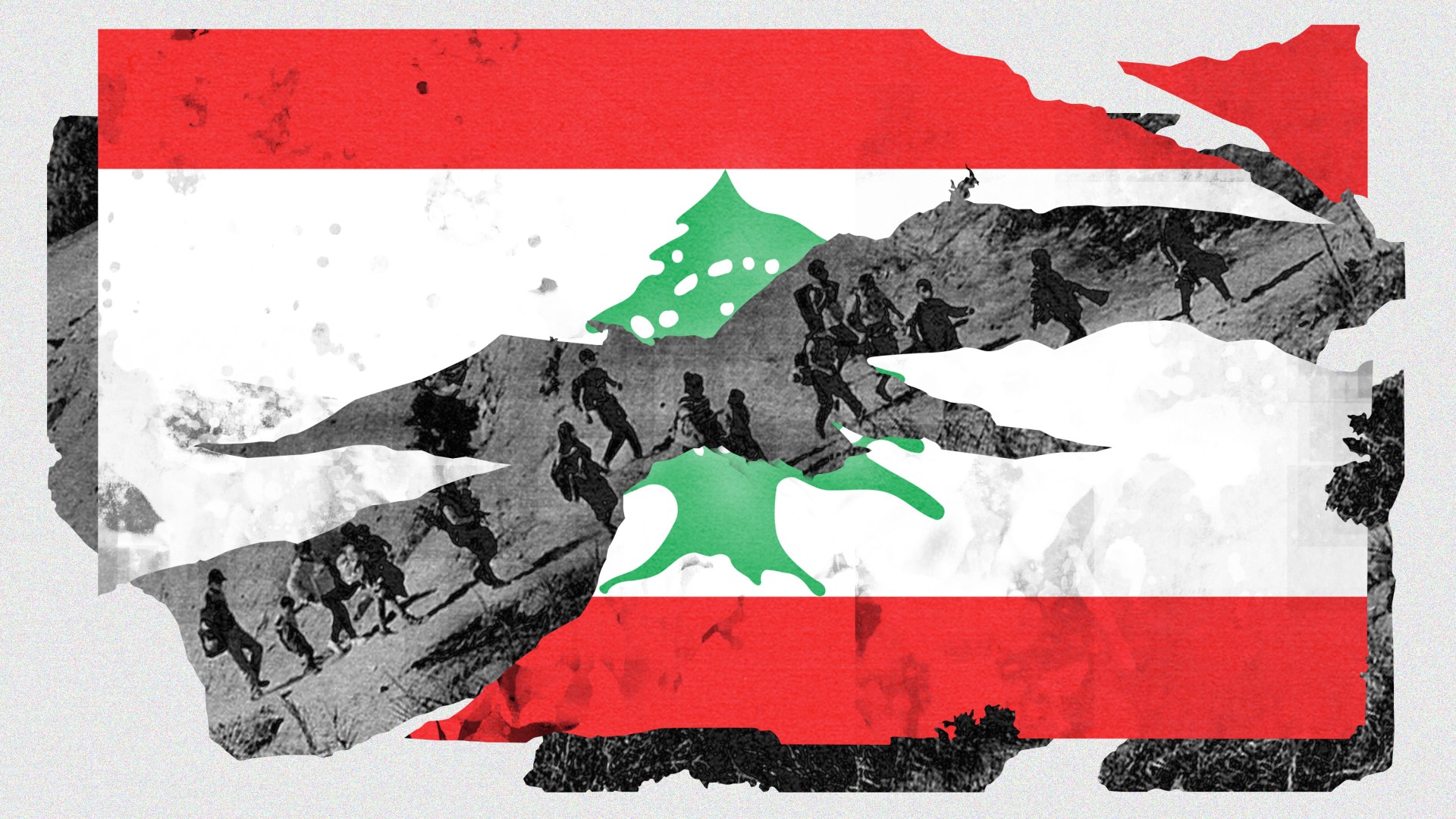
Lebanon’s Christians Resist Exodus from Worst Economic Collapse in 150 Years

Their middle-class salaries now worth peanuts, evangelicals struggle to maintain a faithful presence amid debate over serving God elsewhere.

Christianity Today October 29, 2021
Illustration by Mallory Rentsch / Source Images: WikiMedia Commons / Nick Ut / Getty Images

In 2019, as Lebanon witnessed an unprecedented uprising against its entire political class, evangelical sermons grappled with applied theology:

Whether to join in for justice or honor the king.

Two years later, amid an economic collapse the World Bank says is the worst in 150 years, Lebanese Christians face an even greater pastoral challenge:

Whether to stay and help or escape abroad.

The nation has largely made up its mind.

Estimates indicate as many as 380,000 people have left Lebanon. Every day witnesses another 8,000 passport applications. Food prices have increased 557 percent since the uprising, as the inflation rate has now surged past perennial basket cases Venezuela and Zimbabwe.

Once featuring an economically vibrant middle-class, Lebanon now has a poverty rate of 78 percent. The minimum wage of $450 per month has devalued to almost $30.

“Ask first, ‘Where can I love the Lord, obey the Lord, and serve the Lord—me and my family?’” Hikmat Kashouh, pastor of Resurrection Church Beirut, preached in his recent sermon. “Praying faithfully, we may come up with different decisions.”

Kashouh urged people not to emigrate easily, to seek counsel with church leaders, and to help the suffering whether they stay or leave.

Fellow evangelical pastor Walid Zailaa, however, was blunt in his assessment.

“Your presence is important. How can we enact God’s will if you are not here?” preached the pastor of Faith Baptist Church in Mansourieh. “If you want to search for a better life for yourself and your children, it is your right. But it says to God, ‘You are not able to provide for me in Lebanon.’”

Even the lions and tigers are leaving.

“Lebanon is not fit for man or animal,” said Bassam Haddad, who runs discovery Bible studies alongside relief efforts. “But I am optimistic—not for the country but for God’s work.”

Since 2012, his lay-led church services have met every evening, primarily serving Syrian refugees in the Bouchrieh neighborhood of Beirut. But since the economic crisis began, the number of Lebanese seeking monthly food packages—and spiritual counsel—has more than doubled.

“Our middle class is suffering now,” said Haddad, noting how much donated aid is still conditioned primarily for the Syrians. “We don’t have enough for everyone.”

Also staying amid the crisis is Cybelle Ghoul, a 22-year-old deputy country manager of DT Care, a US-affiliated NGO. After the Beirut explosion, she coordinated the removal of 350 tons of debris every day, while distributing essential relief to the displaced.

“If everyone leaves, no one will remain to help,” she said. “I see it as my responsibility to fight and make Lebanon a better place.”

It is in her blood. A Maronite Catholic, her father was a fighter with the Phalange, a Christian militia during the 15-year civil war that ended in 1990. An estimated 1 million Lebanese fled during the conflict, so emigration is nothing new.

And that was the fourth such wave. Prior to the 1923 mandate that carved Lebanon from the Ottoman Empire, the first wave began in 1880 when sectarian strife and the economic collapse of the local silk industry drove abroad 45 percent of Mount Lebanon’s population.

But even prosperity does not stem the tide. A fifth wave followed the civil war, when increased opportunity and advanced education led 1 in 5 Lebanese men to emigrate over the following 15 years.

There are approximately 5 million Lebanese within their Connecticut-sized eastern Mediterranean state. The diaspora, counting descendants, is 15 million.

Of Ghoul’s 30 closest friends, 15 have left Lebanon. Another 10 are trying.

“People are getting more and more depressed,” she said. “With a friend it is always better, but I have to adapt.”

Her faith in Jesus sustains her to stay. But others are suffering mental health issues, with essential anxiety medicines difficult to find amid an overall medical shortage. As the “bulk” of mental health professionals have emigrated, the national suicide hotline receives over 1,000 calls per month.

They are not the only ones leaving. Over 2,500 doctors and nurses have left Lebanon, 40 percent and 30 percent of the total sector, respectively.

Rana Costa is one of them—and never imagined she would be. An evangelical cardiologist and clinical associate with the American University of Beirut (AUB), she had multiple opportunities to leave, including for medical school. Every time, she chose Lebanon.

After the explosion, she felt an Esther-like sense of purpose that she was there for “such a time as this.” Volunteering frequently in both secular and evangelical NGOs, her professional skills ministered to many who could not afford it.

But her chief ministry is to her children.

“As a mother, I can’t imagine having an option to leave but instead forcing my kids through a trial, just so they can learn a lesson,” said Costa.

COVID-19 had already disrupted two years of schooling for her sons, ages four and seven. And as the crisis snowballed over the summer, she feared that education would be the next casualty.

The government provided only a few hours of electricity per day. Gas station lines stretched for miles. Internet service had been spotty. The AUB medical center warned 150 patients would die if no fuel was immediately supplied to run their backup generators.

“We had to close down our clinics, and without gasoline I couldn’t get there anyway,” she said. “Whatever ministry you purposed to do, you couldn’t do it.”

Now her family lives in Jordan, where God has blessed them with further ministry. Costa is working as the school doctor for the Baptist school in Amman as she explores new volunteer opportunities. And her husband, the chief operating officer for NEO Leaders, has been able to work beyond the office, hands-on in their local projects.

“God doesn’t call us to a life of luxury, but neither to suppress our comfort,” she said. “Serving him can happen anywhere, and least important is the location.”

Costa plans to return to Lebanon after the school year and, in any case, is still in the Arab world. The diaspora, however, is predominantly in Latin America, the US and Canada, and France.

“I have long been bothered when people say God leads them to leave,” said Elie Haddad, president of Arab Baptist Theological Seminary (ABTS). “They always seem to go to the West—and not to places like Yemen.”

At 1 percent of Lebanon’s population, evangelicals are a small community. Anyone emigrating, he said, leaves a “huge gap.” He counsels a sense of calling and a recognition of the gospel opportunities that multiply in times of crisis.

And it is “critical,” he said, that leaders do not leave.

So far, they are not. ABTS’s 35 staff members remain in Lebanon. So do the Presbyterian synod’s 28 pastors—including 14 in Syria. And the Baptist convention’s 21 pastors continue to serve their struggling churches.

“When you know your purpose, it is less easy to jump on a plane for a better life,” said Tony Skaff, pastor of Badaro Baptist Church in Beirut. “We believe ours is to be here as a church, serving Lebanon and the Middle East.”

About half of his 200-person congregation are active in service, blunting the pull of emigration. But 10 have left so far, and another 10 are in the process. Many more are waiting for an opportunity, disproportionate by generation.

“The youth want to leave,” Skaff said. “We would become a church of old people.”

So while the leaders are holding on, it is the second level of service that is shrinking. Of 31 young volunteers trained by Youth for Christ (YFC) since the uprising, five have emigrated.

“I am angry, and people should be angrier,” said Elie Heneine, a YFC staff worker, speaking in his personal capacity. “It is a sellout to pray for the country one Sunday and then to apply for emigration during the week.”

None of YFC’s salaried staff have left, but as volunteers age, they increasingly do. Heneine is working with three in a particular church who are planning to pursue master’s degrees abroad. If so, there will be no leaders to run the church’s youth ministry.

“We cannot drain the country of Christ influence,” he said. “But all I hear back is awkward silence.”

Costa said more evangelicals would emigrate but are reticent to be judged. A recent ABTS blog post warned about the glorification of those who stay. And Nabil Habibi, a seminary lecturer in New Testament, said that some shame those who leave.

But another factor is money.

“We are not heroes who stay, if we work for an evangelical organization,” he said. “Getting ‘fresh dollars’ is like getting gold.”

Lebanon’s economic stability had long been pegged to the US dollar, which circulated freely in the local market. But propping up the stability was a pyramid scheme of national debt. When the government defaulted last spring, the structure collapsed.

Dollars became scarce, and banks would not release deposits. A physical greenback—now available only if sent “fresh” from abroad—has a black-market value over 10 times the official rate, making it possible to keep up with inflation.

Many evangelical institutions in Lebanon are connected to Western churches, mission organizations, and aid agencies. Habibi, previously a Nazarene high school teacher, gets his salary from ABTS partially in dollars. He said he would be a “phony” if he counseled others to stay.

Teachers are among the hardest hit—and without fresh dollars. In many schools, their full monthly salary pays only for a tank of gas. At AUB, better off than most, 15 percent of professors have emigrated. The Association of Evangelical Schools in Lebanon estimates that the private-education sector has lost 10 percent of its teachers, though only 5 percent within their own Christian network.

Similarly, most churches are dependent on local tithes and offerings. Raising money abroad, the Baptist convention has secured two years of support for 12 of its pastors. The Presbyterian synod hopes to do so in the new year.

Habibi’s Nazarene church has received help from its members who have previously emigrated. Such gifts are irregular but do help to provide aid to his 120-person congregation in the lower-class Beirut neighborhood of Sin el-Fil. The poor have few opportunities to leave Lebanon, he said. However, in the last 18 months, five of his church’s leaders have done so.

The frustration fuels not only his ministry but also his political activism.

A member of a left-leaning party that enthusiastically embraced the uprising, Habibi rails at the corruption of Lebanese politics. The national board for public development channels 60 percent of investment through 10 well-connected companies. And of the banks—freezing customer deposits—18 of the top 20 are linked to prominent political elites.

“I fight for justice as a Christian ethic,” Habibi said, “but I don’t believe in my country anymore.”

But where Habibi stays, many other Lebanese believe in their second passport.

Ralph Zarazir fights exactly this spirit.

“I hope they find the light at the end of the tunnel, and still believe in this country,” said the representative of the Free Patriotic Movement (FPM) to the National Dental Board. “They should stay and vote.”

The FPM is a right-leaning Christian party within Lebanon’s democratic but sectarian political system. Executive and legislative positions are apportioned by religion, and the FPM currently controls the presidency and has the largest share of parliament seats. With such prominence comes the ire of both political opposition and revolutionary activists.

But Zarazir looks toward upcoming March elections for validation of their leadership. While recognizing the limitations of the sectarian system, FPM considers itself a defender of historic Christian rights. With due respect to Muslim contributions, he says the nation’s democracy and human rights link back to faith.

“Lebanon exists as it is because of the presence of Christians,” he said. “Otherwise, we would look like Jordan, Saudi Arabia, or even Yemen.”

No official figures exist, but Christians represent roughly a third of Lebanon’s population, as do both Sunni and Shiite Muslims. Previously a majority, Christians are still guaranteed half of parliament. The diaspora is majority Christian.

With earlier access to missionary-developed education, Christians disproportionately rose to business and political prominence. This facilitated not only their means of emigration but also financial remittances to the poor back home.

Zarazir’s office provides discounts for cleanings and cavities. Through connections in Europe, he organizes medical convoys. But today, even the upper class is stretched.

“If they don’t get their quality dental implants, they will leave the country,” Zarazir said. “It sounds foolish to help [the upper class], but if they go, this would devastate the Christian community.”

The economy is devastating everyone, rich or poor. Evangelicals are holding on, struggling to stay. Their personal circumstances are known only to God.

But they are divided about emigration.

From Isaiah 10, Zailaa compared the church to the remnant of Israel, through whom God wishes to rebuild the nation. Drawing from Nehemiah’s broken walls in Jerusalem, he preached that the godly pattern is to run into a crisis, not away from it. And Ruth provides a picture of staying with the people of God, despite suffering.

“God does not have us here by accident,” he said, “and is preparing us for what is necessary.”

The cross calls us to suffering, Kashouh agreed. And he urged people to view their decision as part of the whole church, rather than through an individualistic lens. But overall, he found no clear biblical answer to the question of emigration.

“If you decide to leave Lebanon, we bless you,” he said. “[Whether you are] with us or without us, the Lord shepherds his church.”

News

After Ireland Legalized Abortion, the Pro-Life Movement Split Strategies

Three years after repeal, evangelical leaders navigate pandemic politics to advocate for a more holistic approach rather than another culture war battle.

Christianity Today October 29, 2021
Karen Huber

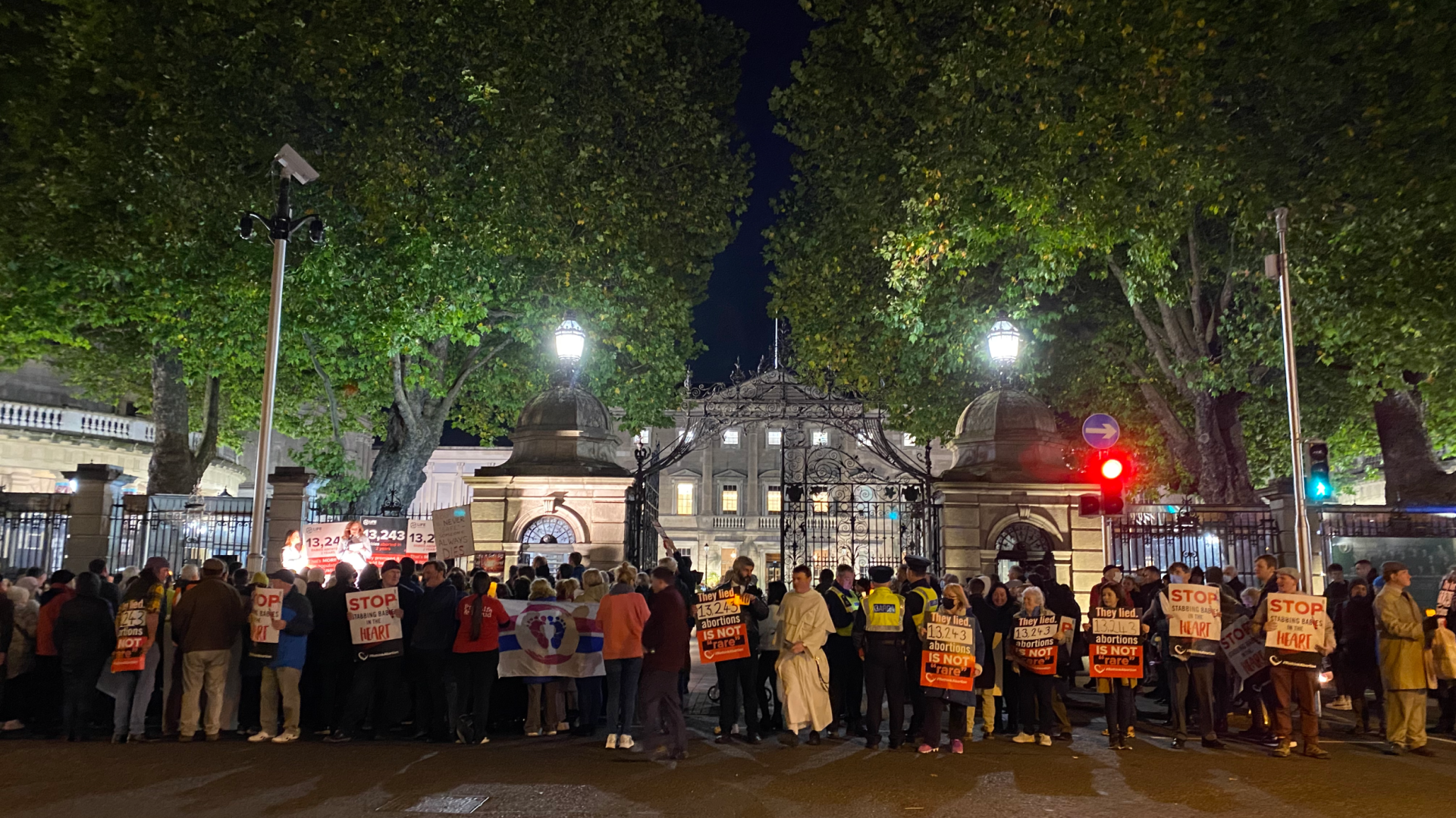
On the first cold autumn evening in Dublin’s City Centre, more than 200 people gathered for a pro-life rally in front of Leinster House, the home of Ireland’s parliament, Dáil Éireann.

In the three years since a national referendum legalized abortion in the country, Christian engagement around the issue has shifted and divided, particularly in the midst of clashing responses to COVID-19.

Now, the country’s abortion law is being reviewed by the Irish government.

Megan Ní Scealláin, a leader with the nondenominational Life Institute, which sponsored last week’s Rethink Abortion rally, said it sent a “message to the Dáil to say that this review must examine the actual facts of the abortion regime. We don’t want a whitewash of reality, and the Irish people deserve an honest appraisal.”

The group is calling for a full assessment of the number of abortions which have taken place since the 2018 law: 13,243, according to official government reports. A mandatory three-year review of Ireland’s abortion laws is set to begin before the end of the year, with some politicians and abortion rights groups advocating for extended access, including the removal of the current three-day waiting limit.

Holding electronic candles and pro-life signs highlighting current abortion rates, demonstrators heard from Christian leaders, politicians, workers at local crisis pregnancy centers, and even the muffled pulse of a heartbeat in utero, through the help of a fetal monitor and microphone.

“It really does my heart good to see everyone out there on this cold night,” Ní Scealláin told the crowd. “We’re not for turning, we’re not for giving in, and we’ll always stand for life!”

Ireland’s vote to legalize abortion is seen as part of a larger cultural shift taking place in the historically Catholic country. After same-sex marriage was legalized through a national referendum in 2015, the hashtag #Repealthe8th began to target the constitutional amendment that essentially outlawed abortion.

It had been in place since the 1980s, and over the years, some 170,000 Irish women have traveled abroad to receive abortions. The repeal campaign was a success, passing with 64 percent turnout and 66 percent of the vote. In December 2018, new legislation regulating abortion up to 12 weeks (after 12 weeks in some specific circumstances, including a threat to the mother’s life) was drafted into law.

Since the repeal, the Christian pro-life movement in Ireland has gone different ways in its approach.

“There’s a group of people who were very activated at the time, and now have basically just said, ‘Well, we lost. Move on,’” said Nick Park, executive director of Evangelical Alliance Ireland. “There’s two other groups that have reacted quite differently, and that is to say, ‘Why did we lose the referendum, and what fundamental changes need to be made?’”

For some, it’s ignited a culture war mentality and a desire to turn back liberal changes being made in Irish society. Park sees himself as part of another group, who have grown more committed to modeling a holistic pro-life ethic.

“Maybe the reason we lost the referendum was because people didn’t believe us when we said we were pro-life, because we’ve not been,” said Park, who also pastors Solid Rock Church of God in Drogheda. “The church in general has not been pro-life in other areas, and that needs addressed.”

Crisis pregnancy centers have seen a steady increase not only in women reaching out for support, but in volunteers offering their services.

“Even before the referendum, I always said, ‘What can I do?’ After the referendum, it really gave me the nudge to say, I want better for women. I want more for women in our country,” said Corrine Claffey Concannon, who directs a new office of the crisis pregnancy nonprofit Gianna Care, which opened last year in County Offaly. “To me, that’s something amazing that came from repeal: that people actually just got up and said, ‘How can we help?’”

The pandemic, though, has accelerated the needs of the vulnerable while deepening philosophical divides among pro-life Christians. Ireland is now facing its fifth wave of COVID-19 after only recently emerging one of the longest and strictest lockdowns in Europe.

Meanwhile, the coalition government, led by Taoiseach (Prime Minister) Micheál Martin, struggles to solve a severe housing shortage, causing house prices to increase by 10 percent in the previous year. Concannon said Gianna has seen more women in crisis “for so many reasons” during the pandemic and a “gaping hole” in government support options.

At the same time, current divisions in the evangelical church over pandemic policies make a collaboration toward a coherent pro-life strategy difficult.

A disillusionment toward the media in the wake of its coverage of #Repealthe8th, which many Christians— including Park, the Life Institute, and Gianna Care—felt was biased and unfair, has fostered mistrust and anti-lockdown, anti-vaccine sentiment. Meanwhile, new reader-funded platforms like Gript have entered the media space offering alternative views that “challenge the stale consensus.”

“I just don’t believe the church is in a place right now where we can move together on [pro-life issues] effectively because we’re so divided ourselves,” said Park.

The human rights-infused evangelical push to protect the vulnerable—the idea that the same pro-life values that lead someone to oppose abortion would encourage them to reduce the risk of COVID-19—stand in contrast to increasingly politicized antiabortion stances of Catholics and Protestants on the right.

“If we cannot address all [pro-life] issues in a reasoned way, then you leave the stage clear for the extremists and that benefits nobody,” he said, referencing new right-wing and “very Trumpian” groups which have garnered more of a following since 2018.

Still, Evangelical Alliance Ireland and new organizations like The Minimise Project and Zoe Community think there’s room to pursue apolitical pro-life advocacy among both Christians and non-believers. The Minimise Project facilitates “constructive dialogue” from a secular perspective, while Zoe Community approaches the issue as Christians, focusing on younger generations.

“For good reason, there’s this conception that a church is where you go to be criticized. But on a real deep level, I hope that in the future a woman in crisis pregnancy will look at a Christian and say, ‘I know that I am not going to be criticized when I talk to this person,” said Katy Edgmon, the director of Zoe Community, which opened in the wake of the new law and trains volunteers to connect with women in crisis. “That’s what I want to see.”

Books

The Paradox of Playfulness

Christians can engage in whimsy not because life is easy, but because life is difficult.

Christianity Today October 27, 2021
Illustration by Mallory Rentsch / Source Images: George Marks / Spiderplay / Getty Images

In the early 1980s, my grandfather was diagnosed with a brain tumor. The surgeons told my grandparents that they were confident in their skill, but it was still brain surgery (in the early 80s!) and not without risk. Still, if he didn’t have the procedure, he would lose his eyesight.

The night before he went under the knife, his nurses were surprised to hear music coming from his hospital room. His four adult children had driven from far and wide and gathered with their mother by his bedside. Instead of worrying or weeping, they were singing hymns.

Were they nervous? Of course. But on the eve of what could be their last morning together, they chose to express their love through play. There were tears, but there was also the joy of voices lifted together—the very same voices that had been blending since my grandparents first set their tots around the piano decades earlier. My grandfather has always espoused the words of one of my favorite hymns: “Heart of my own heart, whatever befall / Still be my vision, O ruler of all.”

I wasn’t at that bedside; I hadn’t even been born yet. But the story has echoed down through our family for decades and changed the way we live, even on the cusp of potential tragedy.

While the influence of play can scarcely be overstated, its importance is commonly overlooked. We are often far too focused on completing the necessary tasks of life to spend time pursuing frivolity. Put another way, who has time to play when the challenges facing us are so very, very serious?

As Thomas Hobbes famously wrote, life can be “solitary, poor, nasty, brutish, and short.” Scripture describes our lives as fading as quickly as “the flowers of the field” (1 Pet. 1:24). We don’t have much time here on this earth, and the time we do have overflows with obstacles, tedium, and heartache. The paradox of play is this: We engage in whimsy not because life is easy but because life is difficult.

Playfulness begins with a first, simple yes. When a smile is offered, do you smile in return? When music plays, will you dance? When the ball is thrown, do you hold out your hand to catch it? Playfulness follows a simple pattern of invitation, permission, and release: We are invited into play (or we invite ourselves). We receive permission to play (or we grant ourselves permission). Finally, there is the release of falling into playfulness—the moment of joy itself.

The paradox of play is this: We engage in whimsy not because life is easy but because life is difficult.

This pattern takes place all over, from Broadway theaters to kitchen tables, from college classrooms to apartment balconies, from nursery schools to assisted living facilities. It is visible in every human age group, culture, and society, as well as the higher tiers of the animal kingdom. Otters, anyone? Dolphins? Dachshunds? According to play expert Stuart Brown, the more advanced the species, the more it plays.

Playfulness is good-natured and a little mischievous. It lives with open hands, not worried about controlling each little detail, but instead available for spontaneity and discovery. Improvisation is playful; so is wonder. Playfulness helps us embrace even mistakes and failure as opportunities. It is a way of moving about in the world ready to be surprised, excited, enthralled, and blessed. Playfulness is key to understanding ourselves and the God who created us, and key to living into the freedom God gives to us in Christ.

I use playfulness rather than play because we tend to think of play as a limited activity. Play can seem binary—we are either playing or we are not—but it’s possible for playfulness to infuse nearly every minute and area of our lives. We can playfully wash the dishes, even if few of us would describe that activity itself as play. It’s possible to be playful in our relationships, our work, our recreation.

We can keep a house playfully and raise children playfully. We can run a meeting playfully, sew a button playfully, and shop for groceries playfully. Even sex can be an inherently playful act. All playfulness involves play, though play is not always playful. For example, an NFL quarterback losing a big game will still be playing football, but likely with grim determination rather than playfulness. When I do speak of play, it will be in reference to undertaking activities of any kind with a spirit of playfulness, rather than engaging in specific play activities.

Playfulness is essential to human flourishing. Abraham Maslow recognized it in his hierarchy of needs, situating it just under physical needs—food, water, shelter—and safety. Play helps meet the deep human need for love and belonging, for esteem and self-actualization (the pursuit of growth, transformation, and wholeness). It is the oil that helps the engine of life run more smoothly. It’s the glue that holds people—and cultures—together. It brings a lightness to the otherwise often heavy tasks of living.

One of best definitions I encountered was from Registered Play Therapist Malaika Clelland, who told me what play does, rather than what it is: “Play is anything that brings us joy and connection,” she said. Bingo.

Playfulness lights up the pleasurable areas of our brains, increasing levels of serotonin, dopamine, and a host of other happy chemicals. It deepens our bonds with one another, increasing trust and rapport. It opens our eyes to new possibilities and ways of thinking, helping us discover new ideas, perspectives, and solutions. When I asked Clelland how play helped in her counseling practice, she smiled and said, “It doesn’t just help. The play is the therapy.”

Some of the best, most successful work is underscored by playfulness. Why else would billion-dollar companies like Google, Facebook, and Amazon feature corporate offices with ping-pong tables, creative seating, botanical gardens, and game rooms? Apple’s headquarters include a thousand bicycles for its employees to get around its vast campus. Sure, a shuttle might be more efficient, but would it be more fun?

Playfulness also helps us innovate. According to Free to Learn author Peter Gray, play “underlies many of the greatest accomplishments of adults.” Working hard, without breaks, whimsy, or creative reset time, can be the enemy of working well. Before Sal Khan founded Khan Academy, a brilliant—and free!—online educational program, he was a hedge fund manager.

“I gotta stay here and look for more investment ideas!” he told his boss as his workday neared its end. His boss told him to go home. “Okay!” said Khan. “I’ll go home and look for more investment ideas!” Finally, his boss clarified his expectations:

You’re not going to help anybody by just … having the appearance of motion. [If you tire] yourself out, then you’re just going to make bad decisions. … When you’re at work, have your game face on … but in order to do that, you’re going to have to have other things in your life. You should read interesting books; you should recharge. That recharging is going to … keep you creative.

This reframing not only transformed Khan’s experience as a financial manager; it sowed the seeds of innovation that later helped him create a brilliant and equitable educational resource. Play can, quite literally, change the world.

While a playful spirit can help our minds flex into new ways of thinking, it also helps shield us from the fear of failure that can cripple true innovation. Playful people trust that mistakes have lessons to teach and missteps can turn into surprising wins. After all, everything from super glue to penicillin was created by accident: Inventors noticed something new and interesting while in pursuit of designing something totally different.

Creative thinkers are often masters of play. Albert Einstein described himself as untalented but “passionately curious.” Thomas Edison loved reading and reciting poetry. Martin Luther King Jr. sang in his church choir. Marie Curie kept a sample of radium on her bedside table as a nightlight.

When we begin reembracing playfulness, approaching our work, rest, worship, and recreation with whimsy, incredible transformation is possible. We become less bound by the fear of failure and more open to transformation and ingenuity. We solve problems faster and with greater ease. We sleep better and experience less stress. We connect more easily with others and more readily see ourselves as part of a team. Most importantly, we are happier.

So if playfulness is really the answer—or at the very least, an answer—in our pursuit of happiness, how do we embrace it? Just trying to have more fun is rarely successful for long. In seasons of grief or exhaustion, when we’re under unrelenting pressure or facing health challenges, the instruction to just be happier can feel oppressive at best and downright cruel at worst.

My friend Kay reminded me of a truly horrific quote from Fiddler on the Roof: “God would like us to be joyful even when our hearts lie panting on the floor.” Ugh, no. Truly, he would not. Last I checked, Jesus is screaming psalms about God’s abandonment while in agony on the cross, not pre-quoting Paul’s admonition to “Rejoice always!” while whistling a happy tune.

Paradoxically, feelings of sadness, loss, longing, and even pain can—and often do—coexist with playfulness. Poet Ross Gay writes that “joy is the mostly invisible … underground union between us. … We might call it sorrow.” Playfulness doesn’t stuff emotions down or ignore them; it doesn’t will them away or tell them they’re unwelcome. It notices, nurtures, and grants permission.

Think of an Irish wake where tears mingle with stories of the beloved. Picture a dose of laughing gas taking the edge off a painful birth. Remember Jesus on the cross, reaching for the intrinsically poetic language of the psalmist to express his anguish.

Often it is suffering that breaks our hearts open to the human necessity of play. People who have it all together—or appear to—love to take themselves much too seriously. But those who know of their desperate need for God and their own fallibility and foibles can begin giving in to the release of playfulness. What grace! What relief! It is perhaps for this reason that Jesus speaks so strongly of the place of sinners in the kingdom of God and the struggle the self-righteous will have in entering it.

As Jesus puts it in Matthew’s gospel: “It is not the healthy who need a doctor, but the sick” (9:12).

And here is what I love about the gospel: Wherever there’s pain and difficulty, ache and sadness, grief and fear, and just getting through the day, there is also hope. This hope tends to show up when we least expect it, shining through the gloom, illuminating the darkness, flitting about like a lightning bug.

Happiness doesn’t have to be earned. If we are looking for playfulness and open to its magic, it will start to break in everywhere, performing its fantastic work on us and in us and through us.

Courtney Ellis is an associate pastor at Presbyterian Church of the Master, a speaker, and an author. This article is an adapted excerpt from Happy Now: Let Playfulness Lift Your Load and Renew Your Spirit (Rose Publishing).

News

Worried Christians ‘Wait and See’ After Sudan Coup

With believers unable to communicate, international advocates weigh in on how the Sudanese church—buoyed by recent religious freedom gains—considers the military seizure of power.

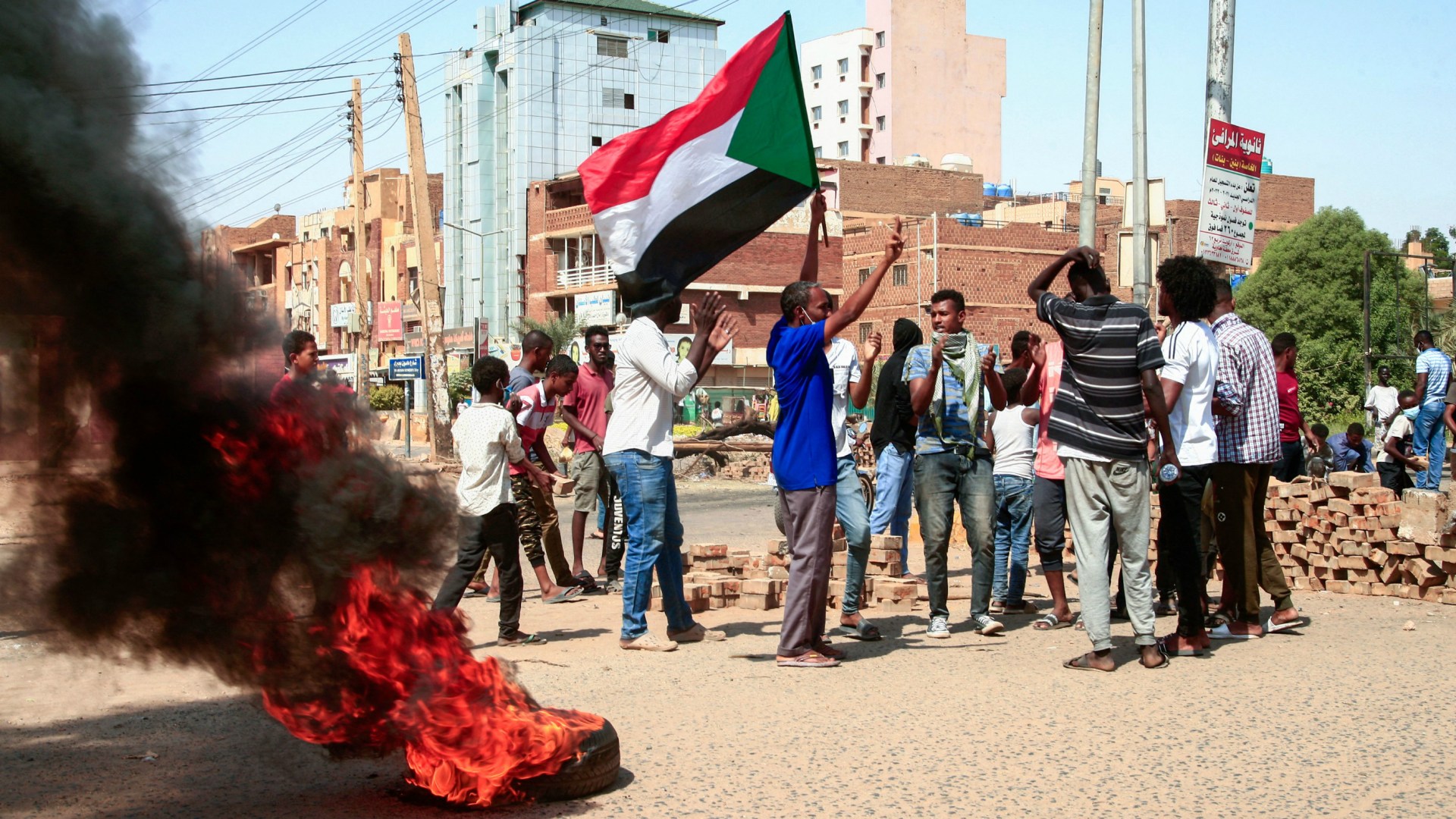
Sudanese demonstrators lift national flags and burn tires in the capital Khartoum on October 26, 2021, as they protest a military coup that overthrew the transition to civilian rule.

Sudanese demonstrators lift national flags and burn tires in the capital Khartoum on October 26, 2021, as they protest a military coup that overthrew the transition to civilian rule.

Christianity Today October 26, 2021
AFP / Getty Images

Amid a near complete phone and internet blackout, Sudan’s Christians are on high alert following a military coup.

Yesterday the head of the North African nation’s transitional Sovereign Council, Gen. Abdel Fattah Burhan, arrested its civilian prime minister, Abdalla Hamdok, his wife, and other officials.

Hamdok, who called the arrests a “complete coup,” called for protests. The Forces of Freedom and Change alliance, which organized the original 2018 revolution that ousted 30-year dictator Omar al-Bashir, called for civil disobedience.

Thousands have filled the streets and were met with repression. Reports say 10 people have been killed and 80 injured.

CT spoke with an American ministry leader who was able to contact a Christian source in Sudan. The leader requested anonymity to preserve their ability to travel. The source was very careful in communication.

“All I can really say is that it is very important to pray for peace and security for all in Sudan,” said the leader, “and that the voice of the people would be heard.”

Meanwhile, a Sudanese Catholic leader felt secure enough to be specific.

“The international community should put their pressure on the junta to value the life of their citizens,” Yunan Tombe Trille, president of the Sudan Catholic Bishops’ Conference, told ACI Africa, “[and] to hand back the power to civil government.”

The military eventually supported the revolutionary movement and in July 2019 agreed to share power within the Sovereign Council. The arrangement: The initial 21 months would be led by a military figure, then 18 months of civilian leadership, followed by elections.

Peace deals with rebels in Darfur and the Nuba Mountains reset the timetable to integrate former fighters into the official military and governance structures. The new date for civilian transfer was not specified. Some reports said it was due next month.

Last month, an attempted coup was put down. Tension has since characterized the military-civilian relationship, as economic gains have been slow to materialize.

Sudan’s cabinet instituted reforms requested by the International Monetary Fund, removing subsidies as inflation skyrocketed 400 percent. And recently an antigovernment tribal group in the east blockaded Sudan’s essential Red Sea port, preventing the arrival of vital supplies.

Other tensions pertain to seeking military reform and oversight, surrendering Bashir to the International Criminal Court, and releasing the results of an investigation into the June 2019 massacre of demonstrators allegedly committed by current members of the Sovereign Council.

Over the last two weeks, pro-military and pro-civilian demonstrators have organized rallies.

A US envoy visited Sudan to warn about leaving the path toward democracy. The coup took place a few hours after his departure. The Biden administration immediately paused $700 million in emergency economic aid. USAID stated humanitarian assistance would continue, of which $386 million had already been disbursed this year.

Burhan suspended the transitional constitution, pledged a technocratic government, and said the military will remain in charge until elections in July 2023. Reports said Central Bank employees have gone on strike, while medical personnel have refused to work at military hospitals.

Sudan’s civilian government had won international praise for its promotion of religious freedom, removing Islam as the state religion, dropping the death penalty for apostasy, and even letting Christians march for Jesus in the capital. Sudanese Christians were greatly encouraged as changes moved their government away from the discriminatory practices of Bashir’s regime.

“Who is behind this move?” reported Agenzia Fides, the Vatican’s news service, quoting an anonymous Sudanese Christian source. “Are they Islamists? A more secular branch?”

The source said there was “great uncertainty and fear.” But sympathies were with Hamdok and the civilian leadership.

“They are good people … who [paid] for their loyalty to the people,” the source told Fides. “They [the military] say they did it to save the revolution but it is an act that definitively buries it.”

Reports said that just prior to the coup, the military asked Hamdok to join in executive leadership. This was not received well.

“The officers want power without losing face,” the source told Fides, “as if people were stupid and not already aware of the maneuvers.”

The arrested include the governor of Khartoum and the spokesman of the Sovereign Council. Sacked along with the others is the minister of religious affairs who had invited Texas pastor Bob Roberts to lead a religious freedom delegation planned for next week.

“How will religious minorities be treated?” said Roberts, global senior pastor at Northwood Church and cofounder of the Multi-Faith Neighbors Network. “It is too early to tell, but they have a right to be concerned.”

Roberts’ initiative would have launched imam-pastor dialogue groups in five cities, joined by David Saperstein, Mohamed Elsanousi, and Mohamed Magid. The latter’s father was formerly Sudan’s grand mufti.

The multifaith group expressed hope for the preservation of religious freedom.

With worry, so did Christian advocacy organizations.

“A window of opportunity towards religious freedom in Sudan could be about to close,” stated Paul Robinson, CEO of Release International. “We need only glance back a few years to Sudan under a hard-line Islamist government, to be genuinely concerned about what Sudan could be like again.”

In 2017, his associate Petr Jasek was jailed for investigating church destruction. Robinson called for Sudan to protect both civil and religious rights. “Please pray that those most basic freedoms—to choose who will rule their country and to decide for themselves which faith they wish to follow—will be upheld in Sudan.”

Christian Solidarity Worldwide (CSW) called for action. “Steps should be taken to ensure that protestors are able to exercise their rights peacefully,” stated president Mervyn Thomas, “and that financial and other punitive measures are imposed on the military until a civilian administration is restored.”

However, Scott Gration, the former Obama-era US special envoy to Sudan, warns against too harsh a reaction. “There is a military legacy that is wise to consider,” he said. “We have to get back to the arrangement of cooperation, despite the feeling to punish the generals.”

The international community must come down hard to reverse the arrests, he said. But civil democracy will be better rooted if the military is a partner in a methodical transition. A son of former missionaries to the Congo, Gration said much more needed to be done to ensure economic success.

When Sudan agreed to normalization with Israel last October, it solidified Washington’s intention to remove the nation from the US list of state supporters of terrorism. But while progress has been made on debt relief, the international community has been slow with foreign investments.

Furthermore, the accord with Israel sharpened lines between religious groups in Sudan. Minorities may have been caught in the middle.

“If Islamist or conservative elements of the military take over,” Gration said, “it will really scare many Christians.”

An unnamed Sudanese diplomat told the Israeli press that the takeover would not dramatically affect the normalization process. It might even advance, he said, as the military can lend stronger support than nervous civilian politicians.

If true, it might align well with larger geopolitical interests.

Reports have said that Egypt has been nurturing its relationship with Sudan’s formal military, while Saudi Arabia and the United Arab Emirates have allied with the Darfur-based Rapid Support Forces, whose commander is also on the Sovereign Council.

Eric Patterson, executive vice president of the Religious Freedom Institute, called them out specifically. “It is important that the international community, especially Arab states and neighbors such as Egypt, actively condemn this coup,” he said.

So far, their response has been tepid. Egypt and Saudi Arabia called for “restraint,” with vague statements to preserve gains and protect unity. The Arab League was stronger, asking all to “fully abide” by the transitional constitution.

But even with that constitution, said retired missionary John Ashworth, many Christians and other religious minorities remained “cautious” about the new dispensation.

“While they were of course happy to see the end of Bashir,” said the longtime Sudan analyst, the experience of Sudanese Christians under every Khartoum regime since independence—civilian or military, democratic or dictatorship, Islamist or simply Islamic—has been of oppression, marginalization, and discrimination.

“They have good reason to wait and see before endorsing any new regime,” said Ashworth.

Whether under Burhan or Hamdok, Sudanese Christians have a biblical mandate to be the people of God under any circumstances, Trille told ACI Africa. The Catholic bishop appears pessimistic that the situation remains the same.

“The church in Sudan has (never) remained silent under the Cross of Christ, despite some changes which took place in Sudan,” he said. “The attitude of the rulers towards the church has never changed.”

News

Ghana Churches Push Law to Combat Promotion of Homosexuality

Parliament is set to debate a controversial bill that would increase sentences for same-sex relationships and ban advocacy rights groups.

Christianity Today October 26, 2021
Nipah Dennis / Getty Images

The majority of Christian churches in Ghana are backing a proposed law that, if passed, could send lesbian, gay, bisexual, and transgender people to prison for five years and those who advocate for their rights for 10.

The controversial Promotion of Proper Human Sexual Rights and Ghanaian Family Values Bill was drafted in part by Edem Senanu, chair of Advocates for Christ-Ghana. He told CT he believes the law is necessary because of the “escalating promotion of the LGBTQIA+ community in Ghana.”

A South Africa-based group that advocates for LGBT rights attempted to organize a conference in Ghana in July 2020 and an LGBT resource center opened in Accra, the capital, in January 2021. Though the conference was canceled and the resource center closed, they raised concern among conservative Christians in the West African country.

“It was an escalation,” Senanu said. “It seemed strange and also an affront that anyone could openly set up an office to promote the LGBTQIA+ community, using their clout and influence and financial resources to recruit young people to join their ranks.”

Ghana law currently prohibits “unnatural carnal knowledge,” a statute carried over from British law when Ghana achieved independence in 1957. The crime carries a three-year sentence but is rarely enforced.

The bill increasing the penalties for same-sex relations was presented to parliament in June by eight lawmakers, led by Samuel George, with the National Democratic Congress (NDC) party currently in the opposition. It is due to be debated after parliament resumes on October 26.

The Christian Council of Ghana, which includes Anglicans, Methodists, and Presbyterians, and the Ghana Pentecostal and Charismatic Council (GPCC), an umbrella group of 200 churches and ministries, issued a joint statement backing the draft law. They urged parliament to pass the bill and President Nana Akufo-Addo to sign it, saying homosexuality is “unacceptable behaviour that our God frowns upon” and “alien to the Ghanaian culture and family value system.”

The two organizations have also argued the law will “help safeguard our cherished family system in Ghana.”

Rights groups like Rightify Ghana, on the other hand, say the bill is a populist ploy to distract Christians and other voters from the real problems that politicians haven’t been able to fix, including government corruption, unemployment, and poor infrastructure.

“There is a belief that when you hate LGBTQ people, you win votes,” Danny Bediako, executive director of Rightify, told CT.

Ghana is one of 32 African nations where homosexuality is criminalized. It is a deeply conservative country, especially when it comes to sexuality and gender roles. About 71 percent identify as Christians. Data gathered in 2016 and 2018 by the pan-African research body Afrobarometer showed that only 7 percent of Ghanaians would like to have an LGBT neighor or not care if their neighbor was gay.

LGBT people in Ghana face blackmail, beatings, ostracism, school suspension, and loss of employment, according to activists. They believe things will likely get harder if the law passes. One provision will disband any organization that serves the LGBT community or defends their basic civil rights.

Rightify Ghana, which trains paralegals and cares for people with HIV in addition to advocating for LGBT rights, would be forced to close if the law passed in its current form, according to Bediako.

According to some activists, it is difficult just to disagree with the predominant anti-LGBT view in the country.

“Anyone who experiences a different point of view from the anti-gay perspective is at risk in Ghana,” said Davis Mac-Iyalla, director of the Accra-based Interfaith Diversity Network of West Africa, an organization that works to build bridges between different faith groups and to promote acceptance of LGBT people.

Mac-Iyalla said the church support for the law is especially frustrating, because many LGBT people in Ghana are themselves committed, faithful Christians.

“It's worrying to see mainstream churches and religious institutions avoiding the main needs and issues affecting Ghanaians but instead talking about human sexuality and promoting hate,” he said. “Many LGBT people live with constant spiritual violence and abuse from their religious denominations or institutions.”

The proposed law has faced sharp opposition from human rights advocates and international Black celebrities, such as actor Idris Elba and model Naomi Campbell. Critics inside and outside Ghana have called on Ghana politicians to reject the law with the social media hashtag #KillTheBill.

Some Ghana leaders are worried the law would alienate international tourists, businesses, and Western nations supporting economic development in Ghana.

Some of the most controversial clauses promote conversion therapy, offering “flexible sentencing” for any convicted person who “openly recants” and requests “approved medical help.” According to the bill, this kind of therapy “reflects the policy to provide support and assistance to persons who, for psychological or biological reasons may become easy prey to lifestyle LGBTTQQIAAP+ persons.”

Another contentious clause in the bill could also impact heterosexual Christians in Ghana. The law includes a “duty to report,” making it a criminal offense not to tell authorities about LGBT people.

Akosua Adomako Ampofo, a professor at the University of Ghana’s Institute of African Studies, says this “potentially criminalizes all Ghanaians.”

“If I fail to report my family member, colleague, or student for any of the offences, I too become a criminal,” Ampofo wrote.

As a Christian commanded by Jesus to love her neighbor, Ampofo argued she couldn’t support such a law.

“When I read the Bill, I cannot find grace or compassion,” she said. “What I find is judgment, and condemnation.”

Paul Frimpong-Manso, president of the GPCC, has acknowledged the bill is not perfect but urged support for the law regardless.

“We are not oblivious of the fact that there is still room for improvement on this bill,” he said in an official statement. “We would continue to pray to the Lord Almighty for strength, wisdom, courage, boldness and sense of conviction for all involved in this process to carry through this divine assignment for God, country and generations yet unborn.”

A majority of the members of parliament appear to support the Promotion of Proper Human Sexual Rights and Ghanaian Family Values Bill, observers say. Some parts of the bill could be amended during debate, though, and there may be some last-minute opposition to the proposed law.

Senanu said he expects it to pass.

“We have the majority,” he said. “The churches have a very strong view of this.”

News

Afghan Muslims Are Asking Questions. These Christians Are Ready to Answer.

From sharing online messages about Jesus to serving in resettlement communities, church leaders approach this missional moment with prayer and patience.

Christianity Today October 25, 2021
Barbara Davidson / Getty Images

Mike Christian and his wife lead a small congregation called the Afghan-American Church of the Bay Area. But their main ministry is not gathering with a dozen or so Afghan believers during the week. It is engaging with the tens of thousands of Afghan seekers from around the world who reach out through messaging apps, social media, and online outlets.

Mike, who was born in Afghanistan and worked alongside the US military there, adopted the name “Mike Christian” after his conversion. It was a signal to fellow Afghans that they could speak with him if they were curious about Christianity. His popular Facebook page shares Bible verses and Christian messages in Dari alongside an invitation to get in touch.

The recent Taliban takeover has created a unique opportunity for some Afghan Muslims to rethink their faith, just as a massive influx of Afghan evacuees are fleeing to the United States for resettlement. It’s the younger generation, and especially the women, Mike says, who are most disenchanted with Islam, and most open to learning about the God of Christianity.

“We receive tons of text messages, emails, WhatsApp, and phone calls from Afghanistan,” Mike told CT in an interview. “They’re saying, ‘We don’t like Islam. We don’t want that kind of religion. We want to become a Christian. Please help us. Show us how we become a follower of Jesus.’”

“I just keep praying,” he says, “‘Lord, you have the power to change Afghan people—to join your church, to seek you and believe in you, to pray and repent.’’”

The couple fields hundreds of questions a day from curious Afghans, describing the good news to them and connecting new believers to nearby house churches. But they are also part of the global network of believers with Afghan connections, helping create resources for churches to better serve their Afghan neighbors—both here and abroad.

“I’m engaged with 30,000 Afghans now,” said Mike. “I don’t remember the Lord telling me to stop. The Lord’s mission is never stopped, so let’s keep going.”

When Mike was working with the military during the War in Afghanistan, he found himself in a dark place and struggling after a deadly mission. He had a series of dreams about Jesus, who called him by name to share the gospel with his people. After joining the underground house church movement, Mike endured intense persecution, multiple imprisonments, and brutal torture for his evangelism efforts before he was able to escape Afghanistan and make his way to the United States.

And although most of the people he engages with are still in Afghanistan, there are a number who live in the US or who are in the process of being resettled here and abroad.

More than 66,000 Afghans call California home, and more evacuees will be resettled there than any other state. The highest concentration of Afghan Americans—some who have been in the US for decades, and some more recent arrivals—live the Bay Area, including in dense clusters of apartment housing around a Fremont neighborhood known as “Little Kabul.”

When the Afghan crisis began, Compassion Network, a group of over 50 pastors and churches around Fremont, began to meet and mobilize. An arm of the local ministry CityServe, they have joined hands to not only welcome incoming Afghan families, but to prepare the existing Afghan community to absorb these new arrivals.

One of the pastors in the network is Sam Knottnerus. Just a couple years ago, he attended a regional gathering of his family of churches, the Evangelical Presbyterian Church’s Presbytery of the Pacific Southwest. At the meeting, they began a campaign to give and pray specifically for the Pashtun people, the largest ethnic group in Afghanistan and one of the largest unreached groups in the world.

After that meeting, Knottnerus said the Lord whispered in his ear, saying he would play a role in serving the Pashtun people. At the time, he was a family pastor in Pasadena. “I told my wife, ‘I’m just saying this out loud so I’ve said it,’” he said. “I don’t know what it means. I don’t know anything about them.”

A few months later, a Presbyterian church in Fremont asked him to apply to become its lead pastor. He discovered its campus was located in Centerville, only a few minutes from Little Kabul. Knottnerus began leading the church—CPC Fremont—in 2020, as it was still navigating COVID-19, unaware of the further challenges ahead as their region now begins to receive and resettle the largest share of Afghan evacuees in the US.

For Knottnerus, it was a steep learning curve to go from knowing nothing about Afghan people to serving as a pastor in the heart of the nation’s largest Afghan community. But he was soon connected to the global network of believers who have experience working with Afghans—from expat consultants and cultural experts, overseas missionaries, and NGO workers to Afghan Christians like Mike—who have curated a pool of shared resources.

He discovered basic things about how to engage with Afghan people in a culturally sensitive way—from keeping men’s and women’s activities separate to not signaling disrespect for the Word of God by placing a Bible on the floor. “Like, don’t serve hot dogs and pepperoni pizza or barbeque pork at your neighborhood cookout,” Knottnerus said.

But experts in engaging with Afghan Muslims see faith conversations as most appropriate within the context of a trusted relationship. Traditional evangelism is almost always seen as premature and ineffective when first approaching Afghan Muslims, particularly those who have just arrived in the US.

“A lot of them have come out of various oppressive religious climates, so they’re religiously abused or traumatized,” says Anthony Roberts, another Christian field expert on Afghan culture, who uses a pen name to write about the history of Christianity in Afghanistan.

“Even though they’re attracted to Jesus and this new faith, it’s still difficult for them to want to engage, because they might be pushed into a situation where they’re going to be re-traumatized by a new system.”

‘God has brought them to us’

National groups like World Relief as well as local leaders have emphasized how the wave of Afghan resettlement represents an unprecedented opportunity to serve Afghans who may otherwise have little to no exposure to Christian witness.

“What we’re seeing now—it’s surreal, it really is,” said John, a ministry worker. “I mean, we spent years—we went over there, learned their language, developed relationships, went deep into their world—and now God has brought them to us in this season.”

A former expat who’s worked with Afghans since 1985 and holds a PhD in Afghan studies, John asked not to use his full name to preserve his nonprofit’s access. Right now, he is working with an NGO at one of the eight US military bases designated to temporarily house Afghan evacuees, where they wait to complete vetting, biometrics, vaccinations, and other processes before being sent to their respective resettlement locations. Over 50,000 arrivals are staying on these US bases, many of which are located along the eastern seaboard, and a few thousand more being hosted in bases overseas.

There are a number of faith-based organizations among the nonprofits helping care for evacuated families on base, including Samaritan’s Purse—which is facilitating a distribution of donations collected from local churches across the country.

Because of his extensive knowledge of Afghan culture and language, John’s role is to provide orientation for the evacuees—to help them understand differences between Afghan and American culture, religion, and government, and to prepare them for potential obstacles they are likely to face while adjusting to society in the States.

He gets the most questions about American values like justice, equality, and freedom—especially freedom of religion and freedom for women. After one class recently, a man came up to thank John for his talk, and then proceeded to offer him an invitation to convert and become a Muslim. As the man shared about the Qur’an and the story of Muhammad, John listened patiently before responding.

“I paused and I said, ‘Thank you for telling me that. I know you care. You are saying this as a sincere man because you have your faith, and your faith is important to you,’” John said.

The conversation also led to an opportunity for John to share about his own religious beliefs. “He had many questions, but our conversation was in a spirit of love and respect—and that’s critical when we exchange views of faith,” he said. “I’m trying to model something for him. I told him, ‘You are free here. You can become a Hindu, or a Buddhist, or a Christian.’”

He says most Afghan Muslims are actually quite open to talking about other holy books, including the Bible, because they are devout people for whom God is real and present in the world. Muslims believe in a number of other holy figures from other religions—including Jesus, who’s revered as a prophet.

“God is part of their worldview, so they respect and understand people who have room for a sovereign God. They listen to us, and we make a connection point at that,” John said. “Although we both believe in one God—the question is what is God like, and how do we know.”

For those who want to engage Afghan Muslims, leaders recommended books like Loving Your Muslim Neighbor, and for Muslim seekers themselves, What is Christianity,” translated from the English one, Beliefs And Practices Of Christians: A Letter To A Friend, by William Miller.

There are a number of basic misconceptions Muslims have about Christianity, such as that they believe in three gods rather than one triune God, or that Jesus is God’s son in a physical sense, rather than a spiritual one—and they resist the idea that Christ would die.

“There are gaps in their understanding, so it will take Christians willing to converse in a friendly way,” says John. “We want them to meet true Christians who will not argue—you can’t argue a Muslim to faith,” he says. Believers should be willing to listen, learn, and discuss but know that at the end of the day “God is the one who changes hearts.”

Mike says he will engage with some people regularly for months, while others take years before they feel comfortable to take any tangible steps toward following Jesus. And for the most part, all he does is share his own testimony and answer their many questions.

“They’re asking a lot about Christianity and about Islam,” Mike says. “‘Why did you become a Christian? What’s the reason you accept Jesus? What do you think about Islam—why did you leave Islam and become a follower of Christ?’”

And for Mike, it all comes back to his experience after that deadly mission in 2007, when he returned to his room that day and began to struggle with questions about his faith.

“Why do Afghans fight with each other?” he recalls thinking. “If they’re called Muslim [Arabic for “one who submits” to God] and our religion is known as a peaceful religion, why are they fighting with each other?”

He remembers reading the Bible for the first time shortly after that, opening up a passage in Matthew where Jesus delivers the Sermon on the Mount. “I just felt something so clean in my inside—I felt more peace and love in that time,” he said. “It made me very excited.”

Today, he is praying for every member of dozens of underground house churches who are still stuck in Afghanistan—and he yearns for his own family, who are also considered targets for being moderate and educated Muslims, to eventually join him here in the US.

“They’re in a very bad situation—there’s no way to get out,” Mike says. “But we just keep praying to the Lord, who has the power to protect all his children, and my family, and all these people in Afghanistan.”

Witness through welcome

Narges Mahdi, who is one of very few second-generation Afghan believers, says that at the end of the day, one of the best ways American Christians can be good witnesses to Afghan Muslims is by accepting them into the country as they are, despite their differences.

“We were not welcomed in Afghanistan, or Afghan culture in general, because we were not Muslim,” Mahdi says. “But for Christians [in America], that shouldn’t be the problem.”

Beyond being persecuted for converting from Islam to Christianity, Mahdi and her parents are also members of the Hazara people, an oppressed ethnic and religious minority group (as Shia Muslims in a Sunni Muslim nation), which, unlike the plurality Pashtuns, are identified by their more Asiatic features. Most Afghan Christian converts are Hazara.

“Christianity is about opening the door for somebody that doesn’t look like you. That’s what my faith has taught me,” Mahdi said. “How you serve people will tell the difference between what it’s like to be a Muslim, and what it’s like to be a Christian.”

Mahdi came to study in the US with a student visa, and she is now going through the asylum process to stay here—while her parents sought asylum in Turkey and applied for refugee status in 2016. They are currently leading a house church there, among other displaced Afghans, while they await approval for resettlement to join Mahdi in America.

“Advocate for Afghan Christians, because they will be killed first. But don’t stop there,” Mahdi said. “Advocate for those who are not Christians—for families that you don’t necessarily agree with, but because their life matters. That’s what Jesus did for us, so that’s what I want to do for people.”

News

Haiti Gang Threatens to Kill Kidnapped Missionaries over Million Dollar Ransoms

Christian Aid Ministries asks for prayer as families of 16 Americans and one Canadian state, “God has given our loved ones the unique opportunity to live out our Lord’s command to love your enemies.”

The sign outside Christian Aid Ministries in Titanyen, Haiti, on Thursday, Oct. 21, 2021.

The sign outside Christian Aid Ministries in Titanyen, Haiti, on Thursday, Oct. 21, 2021.

Christianity Today October 22, 2021
Matias Delacroix / AP Photo

PORT-AU-PRINCE, Haiti — A US religious organization whose 17 members were kidnapped in Haiti asked supporters on Friday to pray and share stories with the victims’ families of how their faith helped them through difficult times as efforts to recover them entered a sixth day.

Ohio-based Christian Aid Ministries issued the statement a day after a video was released showing the leader of the 400 Mawozo gang threatening to kill those abducted if his demands are not met. Haitian officials have said the gang is seeking a $1 million ransom per person, although they said it wasn’t clear if that includes the five children in the group, the youngest being 8 months old.

“You may wonder why our workers chose to live in a difficult and dangerous context, despite the apparent risks,” the organization said. "Before leaving for Haiti, our workers who are now being held hostage expressed a desire to faithfully serve God in Haiti."

The FBI is helping Haitian authorities recover the 16 Americans and one Canadian. A local human rights group said their Haitian driver also was kidnapped.

“Pray that their commitment to God could become even stronger during this difficult experience,” Christian Aid Ministries said.

The video posted on social media shows 400 Mawozo leader Wilson Joseph dressed in a blue suit, carrying a blue hat and wearing a large cross around his neck.

“I swear by thunder that if I don’t get what I’m asking for, I will put a bullet in the heads of these Americans,” he said in the video.

He also threatened Prime Minister Ariel Henry and Haiti’s national police chief as he spoke in front of the open coffins that apparently held several members of his gang who were recently killed.

“You guys make me cry. I cry water. But I’m going to make you guys cry blood,” he said.

An aerial view of Christian Aid Ministries headquarters in Titanyen, Haiti, on Thursday, Oct. 21, 2021.

At the White House on Friday, US press secretary Jen Psaki sidestepped questions about whether the Biden administration would look to halt deportations of Haitians to their home country or consider adding a US military presence on the ground in response to the missionaries’ kidnappings.

“We are working around the clock to bring these people home,” she said. “They are US citizens, and there has been targeting over the course of the last few years of US citizens in Haiti and other countries too … for kidnapping for ransom. That is one of the reasons that the State Department issued the warning they did in August about the risk of kidnapping for ransom.”

Psaki spoke a day after a couple hundred protestors shut down one neighborhood in Haiti’s capital to decry the country’s deepening insecurity and lack of fuel blamed on gangs, with some demanding the resignation of Prime Minister Ariel Henry.

The streets of Port-au-Prince were largely quiet and empty on Friday, although hundreds of supporters of Jimmy Cherizier, leader of “G9 Family and Allies,” a federation of nine gangs, marched through the seaside slum of Cité Soleil.

“We are not involved in kidnapping. We will never be involved in kidnapping,” Cherizier, known as Barbecue, claimed during a speech to supporters.

As they marched, the supporters sang and chanted that G9 is not involved in kidnappings. Some of them were carrying high caliber automatic weapons.

“This is the way they are running the country,” Cherizier, who is implicated in several massacres, said as he pointed to trash lining the streets with his assault weapon.

Amid the worsening insecurity, the prime minister’s office announced late Thursday that Léon Charles had resigned as head of Haiti's National Police and was replaced by Frantz Elbé. The newspaper Le Nouvelliste said Elbé was director of the police departments of the South East and Nippes and previously served as general security coordinator at the National Palace when Jocelerme Privert was provisional president.

“We would like for public peace to be restored, that we return to normal life and that we regain our way to democracy,” Henry said.

Haitians protest carrying a banner with a message that reads in Creole: "No to kidnappings, no to violence against women ! Long live Christian Aid Ministries," demanding the release of kidnapped missionaries, in Titanyen, north of Port-au-Prince, Haiti, on Tuesday, Oct. 19, 2021.
Haitians protest carrying a banner with a message that reads in Creole: “No to kidnappings, no to violence against women ! Long live Christian Aid Ministries,” demanding the release of kidnapped missionaries, in Titanyen, north of Port-au-Prince, Haiti, on Tuesday, Oct. 19, 2021.

Weston Showalter, spokesman for the religious group, has said the families of those kidnapped are from Amish, Mennonite, and other conservative Anabaptist communities in Ohio, Michigan, Wisconsin, Tennessee, Pennsylvania, Oregon, and Ontario, Canada. He read a letter from the families, who weren’t identified by name, in which they said, “God has given our loved ones the unique opportunity to live out our Lord’s command to love your enemies.”

The group invited people to join them in prayer for the kidnappers as well as those kidnapped and expressed gratitude for help from “people that are knowledgeable and experienced in dealing with” such situations.

“Pray for these families,” Showalter said. “They are in a difficult spot.”

The organization later issued a statement saying it would not comment on the video “until those directly involved in obtaining the release of the hostages have determined that comments will not jeopardize the safety and well-being of our staff and family members.”

The gang leader’s death threat added to the already intense concern in and around Holmes County, Ohio, where Christian Aid Ministries is based and which has one of the nation’s largest concentrations of Amish, conservative Mennonite, and related groups. Many members of those groups have supported the organization through donations or by volunteering at its warehouse.

“These kinds of things erase some of the boundaries that exist within our circles,” said Marcus Yoder, executive director of the Amish and Mennonite Heritage Center in Millersburg.

“Many people in the community feel helpless, but they also realize the power of prayer and the power of our historic theology,” he said, including the Anabaptist belief in nonresistance to violence.

The same day that the missionaries were kidnapped, a gang also abducted a Haiti university professor, according to a statement that Haiti’s ombudsman-like Office of Citizen Protection issued on Tuesday. It also noted that a Haitian pastor abducted earlier this month has not been released despite a ransom being paid.

“The criminals … operate with complete impunity, attacking all members of society,” the organization said.

UNICEF said Thursday that 71 women and 30 children have been kidnapped so far this year — surpassing the 59 women and 37 children abducted in all of last year. “They represent one third of the 455 kidnappings reported this year,” the agency said.

“Nowhere is safe for children in Haiti anymore,” Jean Gough, UNICEF regional director for Latin America and the Caribbean, said in a statement. “Whether on their way to school, at home or even at church, girls and boys are at risk of being kidnapped anywhere, at any time of the day or night.”

Kidnappers in Haiti usually demand “an exorbitant sum of money” as ransom and “quote unreasonably high amounts, knowing that the family of the hostage will negotiate down,” Dieumeme Noelliste, professor of theological ethics at Denver Seminary, told CT, citing local sources. “Ransoms are normally paid.”

He said while hostages have lost their lives in past kidnappings, in recent incidents gangs “seem to elect not to harm their victims, preferring to wait until a settlement is reached with the hostage’s family and friends.”

Noelliste, who recently advised CT on how Haitian Christians were impacted by the recent earthquake and assassination, has not heard of a “slowdown in missionary activity and presence in Haiti” following the dual crises. Meanwhile, he said, “Haiti has been reeling under this gang violence and the kidnapping problem for months now.

“They have posed violent acts and mayhem even to churches all over the Port-au-Prince metropolitan area. Just a couple of weeks ago, they attacked the iconic first Baptist Church of Port-au-Prince which is located a stone’s throw from the presidential palace, killing one of its deacons and taking his wife hostage,” he told CT. “I serve on the board of one of the leading seminaries in Haiti. The gangs have forced the school to flee its 70-year-old campus. They have been occupying it for months.

“But none of this made the news here [in the US]. This week’s attack makes the news because it is perpetrated against US citizens,” he said. “My hope is that this incident will result in the tackling of a problem that has caused so much suffering to the already stressed Haitian people.”

“The kidnapping of 17 Christian volunteers is a high-profile story,” Edner Jeanty, executive director of the Barnabas Christian Leadership Center, told CT. “It is unfortunate that it is also presented as the kidnapping of American citizens, as if American Christian lives mattered more than lives of Haitian Christians or the life of any human being created in the image of God.”

Noelliste also noted the lack of a “prophetic voice” in Haiti.

“The church, by and large, thought that as long as it had the ‘freedom’ to preach a truncated gospel, it could remain quiet from the political domain,” he told CT. “Yes, it did a lot of work in social services, and this did much good. But the so-called apolitical stance allowed injustice and corruption to permeate the structures, the institutions, and the social systems of the country unchecked.

“Now not even what the church thought it had under wrap—the freedom to operate unrestrained in the spiritual domain—is guaranteed. Christians are afraid to go to church because they fear for their lives.”

Associated Press writers Dánica Coto in San Juan, Puerto Rico, Aamer Madhani in Washington, D.C., Kantele Franko in Columbus, Ohio, and Peter Smith in Pittsburgh contributed to this report.

Additional reporting by Morgan Lee for CT.

News

Died: Ralph Carmichael, Composer Who Fought for Freedom of Christian Music

Founder of Light Records arranged for Nat King Cole, Duke Ellington, and Elvis Presley; scored “The Blob”; developed folk musicals; discovered Andraé Crouch; and believed any style could glorify God.

Christianity Today October 22, 2021

Ralph Carmichael, a composer and record producer who shaped the sound of contemporary Christian music, died on October 18 at age 94.

A violin prodigy with perfect pitch and a love for jazz chords, Carmichael built his reputation in Los Angeles TV and film studios before turning to Christian music and throwing open the doors for a new generation to use any and every style to sing about Jesus.

When he recorded his best-known song, “He’s Everything to Me,” featured on the Billy Graham World Wide Pictures production The Restless Ones, he brought two guitars, an electric bass, and drums into the studio and kicked off a firestorm of controversy. He featured the new sound in several popular youth musicals and later established Light Records as a label for rising contemporary Christian artists.

“What I have been doing most of my adult life,” he told the Christian Herald in 1986,is waging stubborn battle for the freedom and liberty to experiment with different kinds of music for the glory of God.”

When tributes poured in near the end of his life, many called Carmichael the “father of contemporary Christian music,” a title he sometimes shared with Christian rocker Larry Norman, despite their obvious differences in style.

Carmichael, for his part, didn’t buy into honorific titles or strictly defined music genres.

“I want neither credit nor blame for creating today’s musical forms,” he once told CT. “I ask only for guidance to know how to use them in good taste to reach ‘now’ people with a message that never changes.”

His “now” music would borrow from any style: pop, jazz, country, rock—all packaged with slick arrangements that sounded good on radio and television. Despite these commercial roots, his music became popular in evangelical worship services and influenced a rising generation of Christian music artists.

“I remember growing up going to my church in Kenova, West Virginia, and singing the music of Ralph Carmichael,” Michael W. Smith told CT this week. “I sang in the New Generation Choir every Sunday night—and I just had not heard anything like it. … He brought a fresh new sound to the 1970s that literally changed my life.”

Playing the ‘wrong’ notes

Carmichael was born in Quincy, Illinois, on May 27, 1927. His father, an ordained Assemblies of God minister, noted Ralph’s precocious affinity for music and started him on violin lessons at age three.

When his father took a church in San Jose, California, Ralph joined the local orchestra while still in high school. Insatiably curious about music theory, he often listened to radio orchestras while sitting at the piano, picking out the notes they played. Immediately he noticed a different sound than conventional hymnal harmony—chords with flatted fifths and ninths, jazz progressions that he taught himself to play.

At 17, he enrolled at Southern California Bible College (now Vanguard University), intending to become a preacher like his father and grandfather. Within a few weeks he was organizing music groups to minister at local churches, a passion that soon overshadowed his studies.

Classmates noticed his keen ear—he could write entire scores while sitting in the corner, away from the piano. The music faculty tried to correct his “wrong” notes, but Carmichael persisted, and his 17-piece stage band began playing on a local television station. The resulting show, The Campus Christian Hour, became a regional favorite.

After hearing Evangeline (Vangie) Otto sing on the radio in 1948, Carmichael tracked her down and they started dating. Soon they married, and for a time their musical relationship seemed ideal. A daughter, Carol Celeste, was born in 1949, but Carmichael’s professional obligations seemed to leave little time for his family.

The television show earned an Emmy in 1951, and suddenly Carmichael was very busy. Two Christian record labels were starting in the Los Angeles area—Sacred Records and Alma Records—and both needed music arrangements.

Carmichael also joined the staff of Temple Baptist in Los Angeles. Despite his Pentecostal roots, he was ordained a Baptist minister.

“In those days,” he later said, “I would work for anybody who could afford me, regardless of their denominational affiliation, so long as they named the name of Christ.”

Studio success

As the church grew, Carmichael created increasingly sophisticated musical programs that required the skills of professional musicians. He began hiring studio players for the church’s special events. Soon he was using the same players for his recording sessions with Christian artists.

Always thinking big, Carmichael persuaded the owner of Sacred Records to record a project with full orchestra. He recruited the studio players, paying them union scale, and rented Studio A at Capitol Records. Carmichael chose 12 hymns and wrote arrangements to sound exactly like the popular “dinner music” of the era. When Rhapsody in Sacred Music was released in 1958, it signaled a milestone in the fledgling industry.

Carmichael had discovered his secret sauce—the top-notch Los Angeles studio musicians who could play anything he imagined, with a level of perfection unattainable by the average church group. For the rest of his career, he enjoyed a unique relationship with these first-call players, and many played on his projects for decades.

His new album was discovered by a producer for Nat King Cole, who was planning a new Christmas album. They got along famously—Cole was also a preacher’s kid—and Carmichael ended up touring with him and arranging his studio albums.

For the next 40 years, whenever Hollywood needed a hymn arrangement or a Christmas album, they called Carmichael, the affable minister with the golden ears.

The celebrity musicians included Peggy Lee, Stan Kenton, Bing Crosby, Count Basie, Duke Ellington, Earl (Fatha) Hines, Eddie Fisher, Tex Ritter, Elvis Presley, and dozens more. He spent a year as music director for I Love Lucy, arranged music for several variety shows, and wrote film scores for Finians Rainbow (Fred Astaire) and The Blob (Steve McQueen).

Divorce

Despite his newfound success in the music world, his nonstop schedule took a toll on family life. Carmichael admitted to “indiscretions” and a growing addiction to Dexamyl, which kept him amped up for late-night scoring sessions.

After a year of separation from Vangie, the couple divorced in 1964. Carmichael hoped it would remain quiet, but the family split was reported by the Los Angeles Times: “The Song Is Ended for the Carmichaels.”

He threw himself even more fully into the music, working nonstop. In that difficult and lonely period before he was married a second time to a woman named Marvella Grace and became a father to her three children, he reflected on his failures.

“Until we give ourselves back to God, we can never be free,” Carmichael said in his 1986 autobiography. “Of course, by ‘free’ I surely don’t mean irresponsible. The fact is, the freer you are, the more responsible you become.”

‘He’s Everything to Me’

Social redemption came from an unexpected place. Billy Graham and Cliff Barrows were looking at their crusade audiences and noting a lot of gray heads. Their formula for stadium events seemed flat, and their innovative Youth for Christ music was now 25 years old. They wanted a new film that spoke to contemporary issues, and they wanted Carmichael to score it.

A year earlier Carmichael had experimented with rock-and-roll instrumentation for pianist Roger Williams, turning “Born Free” into a million-selling hit. Now he tried the same with the central song in The Restless Ones, “He’s Everything to Me,” giving it a straight-eighths rhythm and a hint of a backbeat.

The song sold five million copies in sheet music and was recorded by more than two hundred artists.

Was it rock? Sort of. The vocals were sung by a fresh-sounding youth choir, and the song ends with a tympani roll—not exactly a head-banger, and certainly not “rock” to upstarts like Larry Norman. But church leaders offered plenty of criticism, whatever it was.

But Carmichael continued writing in the new style, especially with composer and friend Kurt Kaiser, who called their new style “folk musicals.”

Carmichael continued to expand conceptions of “Christian music” with the discovery of Andraé Crouch, who was directing the Teen Challenge Addicts Choir. Carmichael followed Crouch for eight months, quizzed him about his spiritual commitment, then signed him to Light Records. They became fast friends, and the relationship led to several other Black musicians signing with Carmichael.

Though he viewed himself as a maverick, Carmichael lived long enough to see his music become mainstream. He recorded Strike Up the Band in 1994, a full album of gospel jazz, but found that many stores stocked it on the traditional shelf. The same was true for many of his songs. They became popular with youth groups, and a few were even added to evangelical hymnals, such as “The Savior Is Waiting” and “He’s Everything to Me.”

He scored or produced 200 albums and wrote 3,000 musical arrangements.

Near the end of his life, he donated his music library to the Great American Songbook Archives, Baylor University, and the University of Arizona Jazz and Popular Music Archive. He was inducted into the Gospel Music Hall of Fame and the National Religious Broadcasters Hall of Fame.

Carmichael is survived by his wife, Marvella; children Andrea, Greg, and Erin; and several grandchildren and great-grandchildren.

addApple PodcastsDown ArrowDown ArrowDown Arrowarrow_left_altLeft ArrowLeft ArrowRight ArrowRight ArrowRight Arrowarrow_up_altUp ArrowUp ArrowAvailable at Amazoncaret-downCloseCloseellipseEmailEmailExpandExpandExternalExternalFacebookfacebook-squarefolderGiftGiftGooglegoogleGoogle KeephamburgerInstagraminstagram-squareLinkLinklinkedin-squareListenListenListenChristianity TodayCT Creative Studio Logologo_orgMegaphoneMenuMenupausePinterestPlayPlayPocketPodcastprintremoveRSSRSSSaveSavesaveSearchSearchsearchSpotifyStitcherTelegramTable of ContentsTable of Contentstwitter-squareWhatsAppXYouTubeYouTube