From Eric Liddell to Allyson Felix: Why Faithful Fans Are Drawn to Olympians

Christian athletes testify to the gospel in competition and beyond.

Christianity Today July 23, 2021
Anadolu Agency / Getty Images

“I believe God made me for a purpose. But he also made me fast,” Eric Liddell wrote in a letter to his sister Jenny before competing as a sprinter for Great Britain in the 1924 Summer Olympics.

The 1981 film Chariots of Fire (for my money, the best sports movie ever made) follows the lives of the devoutly Christian Liddell and his Jewish teammate Harold Abrahams at the Paris Games, and actor Ian Charleson, playing Liddell, intones these lines over the film’s sublime final race scene.

Liddell wins the gold medal in the 400 meters, a race that the 100-meter specialist had never run at an international competition. The son of Scottish missionaries, Liddell refused to compete in the 100 meters, which was won by his friend Abrahams, because the opening heats had been scheduled for a Sunday.

Liddell’s decision to remember the Sabbath and forgo the 100-meter competition transformed this national hero into a role model for Christians around the world. This man of remarkable talents was willing to pass up his best shot at athletic glory for the opportunity to properly honor his Lord and Savior.

Certainly, many Christians had competed in the previous modern Olympiads, but none took such a public or principled stand for his faith. Following his Olympic triumph, Liddell returned to China, where he had been born during his parents’ mission in the country. He spent much of the rest of his life in China, serving the poor and teaching the gospel.

During World War II—the last time the Olympics were called off—Liddell was taken prisoner by Japanese forces and devoted the last two years of his life to ministering to his fellow inmates at the Weixian Internment Camp in Shandong Province. He died just a few months short of the camp’s liberation by American forces.

Liddell continues to be remembered by Christians as a modern-day martyr. And nearly a century after he won the gold, his witness has empowered subsequent generations of faithful Olympians to speak out about a purpose beyond the podium.

As millions of fans around the world tune in to the Tokyo Olympics, they aren’t just watching for record breakers and feats of strength. They want to hear stories with echoes of Liddell, people whose faith makes them bolder competitors, caring teammates, and humble victors.

Competing on the highest levels of a sport and on an international stage takes almost supernatural dedication. Christian faith can be a source of hope and inspiration for athletes who feel like the odds are against them.

In my own childhood, I found the story of Dan Jansen, who spoke frequently and openly of his faith, particularly striking. In 1988, the World Champion speed skater learned the morning before competing for Team USA at the winter games in Calgary that his sister had died of leukemia. Jansen, a favorite in both the 500-meter and 1000-meter sprints, fell in both races. Four years later, he again failed to medal despite his world-class status. Finally at the 1994 Lillehammer Winter Olympics, Jansen persevered and won a gold medal in the 1000 meters.

Our draw to Christians in sports is not specific to Olympic athletes, as the mass appeal of figures such as David Robinson, Tim Tebow, and George Foreman has demonstrated over the years. But Olympians find themselves on a unique stage—representing their country before the rest of the world. As outspoken Christians, they, too, become global representatives of the faith.

Today’s Olympic lineup contains Christian athletes whose faith shapes how they compete and how they live their lives outside the games.

American sprinter Allyson Felix, a six-time gold medalist and three-time silver medalist, says her Christian faith inspires her to put on sports clinics for children in the US and abroad, working as a State Department envoy. Jamaica’s Shelly-Ann Fraser-Pryce, a six-time medalist who will be competing in her fourth Olympics in the 100 and 200 meters, has used sports as a ministry and developed a large social media following based on both her prowess on the track and her consistently positive, gospel-informed message.

Why do Christian athletes, both past and present, serve as such a source of inspiration for faithful fans? I spoke with a friend of mine the other day about this very question. He responded with a story from his youth about athletes not on the international stage but on a decidedly local one. He remembered the time a dozen or so players from the local college football team visited with his church’s youth group right after a game. None of these players made it to the National Football League, but that made them no less inspiring to the youth to whom they witnessed. The standout of the evening was the team’s star running back.

“I had watched him explode through holes, shed tacklers, and rush for long touchdowns on several Saturday afternoons,” my friend said. “His reputation made me excited to hear him talk, but what struck me was his size and strength and his utter kindness and humility. He had the largest smile and conveyed genuine concern and goodwill for each person in the audience. I don’t remember a word he said, but I remember his presence—strong, kind, compassionate, and winsome. Utterly Christlike.”

This juxtaposition is part of why we find Christian athletes so compelling. We see the fire and fury they display in competition set against their ability to be good sports between the lines and exemplars of the Christian life outside the lines. It’s a version of being in the world but not of it. They demonstrate the control and confidence necessary to compete as athletes while displaying the magnanimity of true disciples.

That’s why we look to history and to our own times for examples of what was once known as Muscular Christianity. The term took off particularly in the British Commonwealth. (I’ve joked to more than a few friends that share my enthusiasm for Chariots of Fire that the picture should have actually been called Muscular Christianity: The Movie.) Long before Liddell took his stand, British intellectuals such as Thomas Hughes and Charles Kingsley articulated a vision of sports as a ministry.

To them, sports was an institution that cultivated the Christian virtues of discipline and self-sacrifice. Echoes of Hughes’s 1857 novel Tom Brown’s School Days can be heard in every coach who speaks to the character-revealing benefits of sports or in every player who speaks of the brotherhood or sisterhood that develops among teammates.

In the greatest Olympic triumphs, we celebrate that with God all things are possible. Or as Eric Liddell put it, “in the dust of defeat as well as the laurels of victory, there is glory to be found if one has done his best.”

Clayton Trutor teaches at Norwich University in Northfield, Vermont, and is the author of Loserville: How Professional Sports Remade Atlanta—and How Atlanta Remade Professional Sports, which is being published by the University of Nebraska Press.

News

Christian and Muslim Leaders Agree on Legitimacy of Evangelism

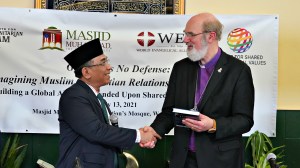
World Evangelical Alliance and Nahdlatul Ulama sign the Nation’s Mosque Statement on sidelines of the 2021 International Religious Freedom Summit, seeking a “harmonious world order.”

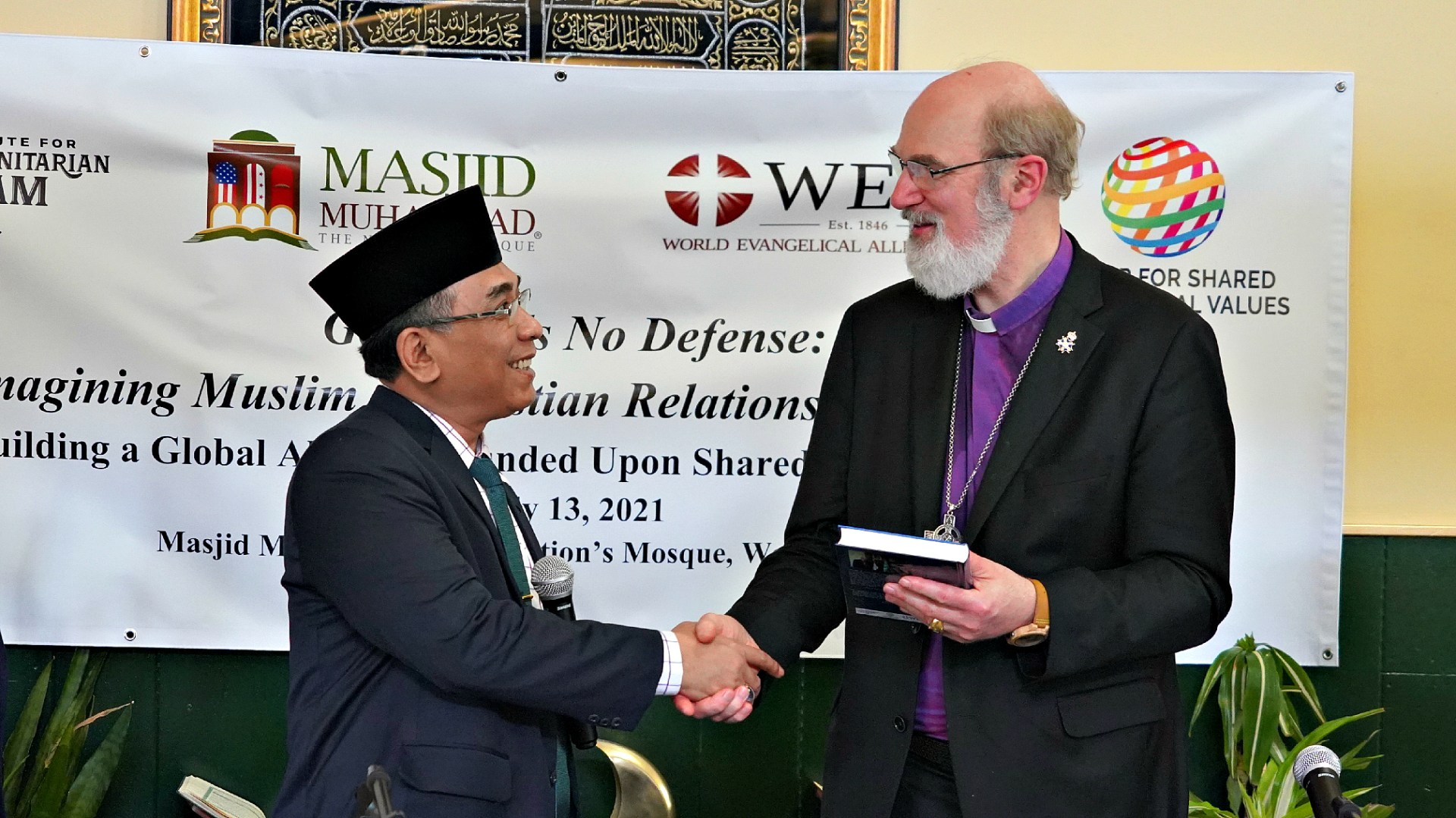
Nahdlatul Ulama leader Yahya Cholil Staquf presents World Evangelical Alliance leader Thomas Schirrmacher with a festschrift at The Nation's Mosque in Washington, DC, during the 2021 International Religious Freedom Summit.

Nahdlatul Ulama leader Yahya Cholil Staquf presents World Evangelical Alliance leader Thomas Schirrmacher with a festschrift at The Nation's Mosque in Washington, DC, during the 2021 International Religious Freedom Summit.

Christianity Today July 22, 2021
Courtesy of World Evangelical Alliance

In this series

The world’s largest Muslim organization accepts that Christians will try to convert its members. A new partnership with evangelicals seeks to ensure this does not lead to conflict.

Last week, the World Evangelical Alliance (WEA) signed a statement of cooperation with Nahdlatul Ulama (NU), an Indonesian association that claims 90 million members worldwide. Established in 1926 to counter Wahhabi trends issuing from the Arabian Peninsula, its name means “Revival of the Religious Scholars.”

“Evangelicals very much aspire to proselytism, and so does Islam. So naturally there will be competition,” said NU secretary general Yahya Cholil Staquf. “But we need to have this competition conducted in a peaceful and harmonious environment.”

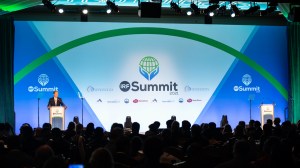
Staquf spoke from the stage of the 2021 International Religious Freedom (IRF) Summit in Washington. On its opening day, he and WEA secretary general Thomas Schirrmacher signed the Nation’s Mosque Statement, along with Talib Shareef, imam of Masjid Muhammad, the first American mosque built by the descendants of slaves.

Calling for “the emergence of a truly just and harmonious world order,” the statement seeks a global alliance “to prevent the political weaponization of identity” and “the spread of communal hatred.”

Schirrmacher called the WEA’s cooperation with NU the product of deep theological dialogue, counter to the academic tendency to downplay truth claims. And as evangelicals, evangelism is at the heart of their effort.

“We are working together for the right to convert each other,” the German theologian said. “Religious freedom does not mean that we agree but that we live in peace with our deep differences.”

But alongside evangelism is coexistence and common ground.

“There have been centuries of jihads and corresponding crusades,” said Thomas Johnson, senior advisor to the WEA’s Theological Commission. “It is time to set a conscious new direction.”

This includes recognition of “deep agreement” in terms of love of neighbor, human dignity, and helping the vulnerable. Johnson is also the WEA special envoy for engaging Humanitarian Islam, the title NU gives to its East Indies cultural manifestation of the faith.

Together with NU’s North Carolina–based institute, they released a festschrift in honor of Schirrmacher entitled God Needs No Defense: Reimagining Muslim-Christian Relations in the 21st Century.

The book prominently features a rebuke to Turkey’s President Recep Tayyip Erdoğan for converting Istanbul’s historic Hagia Sophia cathedral-museum into a mosque.

“That speaks a lot clearer than my voice as a follower of Jesus,” said Sam Brownback, co-chair of the IRF summit. During a plenary session, he held the book aloft, praising it as emblematic of the gathering’s interfaith cooperation.

“There are joyous engagements between Muslims, Sikhs, Christians, and Jews, meeting like old friends,” he told CT. “This is what I have dreamed of—deeper relationships at the leadership level, finding ways to stand up for each other’s religious freedom.”

The anthology’s title comes from Abdurrahman Wahid, Indonesia’s first democratically elected president and the former chairman of NU. A champion of religious dialogue, he and NU sought to model a conciliatory Islam in opposition to trends emerging from the Middle East.

About 87 percent of Indonesia’s population of 275 million follow Islam; roughly 10 percent are Christian. Hinduism and Buddhism comprise the remainder.

In 2019, a gathering of thousands of NU scholars abolished the religious category of kafir—“infidel,” or “non-Muslim”—replacing it with the concept of citizenship in a modern nation-state. The fatwa built upon their 2018 Nusantara Manifesto, criticizing the imposition of sharia law, and their 2016 Jakarta Declaration, decrying extremism and its alleged Islamic justifications.

“If necessary, traditional societies must make changes in their own values,” said Staquf from the IRF stage. “Abolishing the legal relevance of the category of ‘non-Muslim’ will enable us to coexist peacefully with others.”

Officially secular, Indonesia still maintains blasphemy laws. The US Commission on International Religious Freedom counted 39 cases of prosecution between 2014 and 2018.

Indonesia ranks No. 47 on Open Doors’ World Watch List of the 50 nations where it is hardest to be a Christian.

“I appreciate that Humanitarian Islam’s efforts to recontextualize problematic tenets of Islam will take time and much discussion,” said Kyle Wisdom, WEA’s deputy coordinator in the NU working group. “I’m hopeful that this step will lead to a larger discussion within the Muslim world, but that remains to be seen.”

Even so, participants at the Nation’s Mosque Statement signing ceremony compared Indonesia and NU favorably against the Arab world.

“[NU documents] are consistent with Indonesian society, unlike other Muslim nations whose declarations do not match, even if they are correct,” said Shareef. “The ‘word became flesh’ in Nahdlatul Ulama.”

Schirrmacher said he was impressed to find in Indonesia that converts from Islam walk around freely. In signing this cooperative agreement, he said WEA leaders were eager for dialogue to “change something”—even if that is not necessarily the faith of their NU partners.

“We need to continue obeying our religion, but at the same time make peace with others,” said Staquf. “We hope the world will join us.”

Editor’s note: CT offers select articles in Bahasa Indonesia, part of 700+ CT Global translations.

News

Platt’s McLean Bible Church Hit With Attempted Takeover, Lawsuit from Opposition

The suburban DC megachurch’s recent scuffle over race and politics is symptomatic of a broader evangelical rift.

Christianity Today July 22, 2021
Jim Watson / AFP via Getty Images

The Washington-area megachurch led by best-selling author David Platt has affirmed three new elders—but only after a public tussle over politics, race, and alleged liberal drift, plus a lawsuit filed by dissenters.

The conflict at McLean Bible Church is significant not only because of the congregation’s size and influence—with several thousand attendees and a prominent place in the DC church landscape—but also because the incident marks the latest salvo in an ongoing clash within American evangelicalism.

After new elder nominees failed to be elected for the first time in the church’s history, Platt told the congregation in a sermon in early July that “a small group of people inside and outside this church coordinated a divisive effort to use disinformation in order to persuade others to vote these men down as part of a broader effort to take control of this church.”

At a June 30 meeting, nominees Chuck Hollingsworth, Jim Burris, and Ken Tucker had failed to receive a clear 75 percent majority, the margin required for elder election. The total was either just above or just below 75 percent, depending on whether provisional ballots were counted, so a second vote was held July 18, at which all three nominees received at least 78 percent of the vote.

The weeks between the two votes were tumultuous. Platt said in his July 4 sermon that people told voting members, in person and by email, that the elders up for nomination would have sold the church’s Tysons location to build a mosque, with proceeds going to the Southern Baptist Convention (SBC).

Online posts on blogs, Facebook, and email charged Platt with pushing critical race theory, revising biblical teaching on sexuality, and aligning with the SBC despite McLean’s constitutional prohibition of affiliating with any denomination.

Opponents of McLean’s current leadership wrote in a blog posted by the right-wing Capstone Report that Platt—who became pastor of the DC church full time in 2018—was attempting to “purge conservative members.”

Platt also described one email circulating that claimed “MBC is no longer McLean Bible Church, that it’s now Melanin Bible Church.”

“I know it’s so ugly and painful to even hear, but I want to point out the approach that’s being used by people giving leadership to this group in these meetings,” he told the congregation, calling the claims made about him and the incoming elders “unquestionably untrue and in many cases completely unreasonable.”

Platt, the author of Radical, is known for his passionate call to evangelism, missions, and Scripture. What opponents claim as being Platt’s “liberal” or “woke” politics, supporters see as the 42-year-old preacher’s commitment to Christ above all.

“We will not apologize for our increasing diversity or our commitment to humbly address racial issues from God’s Word as we unite together on a glorious mission to proclaim this good Word and our great God in a city where five million-plus men, women, boys, and girls are on a road that leads to an eternal hell and need the good news of God’s love for them,” he said.

While Platt raised concerns that the opposing group deceived members at the Tysons location into voting against the new elders, a lawsuit filed July 15 alleges that church leaders at McLean illegally barred some of their opponents from voting in the follow-up elder election. The suit is pending despite the announced vote outcome. “The heart of the complaint really comes down to truth, transparency, and a free, open, and uncoerced process,” plaintiff’s attorney Rick Boyer told RNS.

Sarah Merkle, an attorney and professional parliamentarian, said the incident highlights the importance in any church of establishing and following sound voting procedures. She added that she is not familiar with the specific policies and procedures at McLean.

“When you don’t follow the rules and it has an effect on a consequential vote, you have now created a huge distraction from your mission,” Merkle said. “If you’re the Red Cross, that’s problematic. If you’re the church of Jesus Christ, that’s really problematic.”

Church leaders say the current round of conflict predates Platt’s pastorate. He became a teaching pastor in 2017 and left the presidency of the SBC’s International Mission Board to dedicate his ministry to McLean the following year.

Under founding pastor Lon Solomon, McLean launched a church planting partnership with the SBC’s North American Mission Board in 2016 while remaining nondenominational. As Solomon transitioned from leadership following a 37-year pastorate, McLean made major budget changes, scaling back the percentage of income spent on personnel and incentivizing staff departures. Both moves raised questions for some members.

“Over the last several years, we’ve watched David take the church—the church we built, the church we love, the church we’ve poured are hearts and souls and lives into—and turned it into a political, stripped-down version of what it used to be,” wrote former elder Mark Gottlieb, who is encouraging members of a group called Save McLean Bible Church to “admit defeat and walk away” after the July 18 vote.

Under Solomon, the congregation had been known as “a holy destination for GOP senators and Bush aides.” Tensions ramped up the past two years amid political turmoil in the DC area and nationwide.

In June 2019, then-President Donald Trump showed up at a worship service and Platt prayed for him from the stage, an action that drew criticism from some in the church. A year later, Platt and African American McLean pastor Mike Kelsey participated in a Christian march following the death of George Floyd, which was construed by some as support for the Black Lives Matter organization. McLean stated in a Q&A on its website that Kelsey’s son held a poster that read, “Black Lives Matter to God.”

Platt’s 2020 book Before You Vote also drew criticism from some church members as being soft on traditional evangelical issues like abortion and sexuality.

Allegations that leaders were seeking to join the SBC in violation of the church’s constitution led McLean to suspend all contributions to SBC causes this month.

In its Q&A, McLean states that it is not Southern Baptist and links to an undated letter from SBC Executive Committee employee Ashley Clayton stating, “The SBC Executive Committee recognizes that McLean Bible Church is an independent, nondenominational Bible church, and they are not affiliated denominationally with the SBC.”

However, Baptist Press, the SBC’s news service, stated in a July 21 article, “McLean Bible Church is a cooperating church with the Southern Baptist Convention, yet like all Southern Baptist churches, remains independent and autonomous in its functionality and governance.”

To some observers, McLean’s conflict seems like a replay of other recent episodes from American evangelicalism, where leaders who appeal to Scripture to address social issues are accused of theological liberalism or secular influence even if they continue to hold traditional Christian views. The level of suspicion around such leaders appears to have grown during the Trump administration and during the reckoning over racism following George Floyd’s death last year.

College Park Church in Indianapolis was accused in a blog post this spring of caving to “ever-increasing social justice infiltration.” Dallas pastor Matt Chandler and former SBC president J. D. Greear both have been accused of being “woke,” and the SBC’s emerging Conservative Baptist Network (CBN) has charged some convention leaders with advocating critical race theory and downplaying the Bible’s sufficiency. CBN-backed candidate Mike Stone received 48 percent of the vote in last month’s SBC presidential election, finishing second to Alabama pastor Ed Litton.

Chuck Hannaford, a Memphis clinical psychologist who has helped churches mediate conflicts for 30 years, said McLean’s troubles are the latest iteration of a broader conflict between younger Reformed Christians and older generations of white evangelicals.

“There is some resistance from what some would consider the old guard in evangelical circles to younger guys” accused of being soft on doctrine in an effort to reach a more diverse audience, Hannaford said. Some older evangelicals “see it as sort of a coup.”

Meanwhile, leaders like Platt see the pushback as its own sort of coup and remain concerned about the influence of opposition fueled on social media and watchdog blogs.

“We want MBC to be a place where people with all kinds of convictions on matters of conscience can thrive,” the Q&A stated. “So wherever possible, we want to work together to move forward together on mission even with our different perspectives.”

Hannaford advises pastors not to make changes too quickly and recommends cooperation from both sides, allowing believers to differ on secondary doctrinal and ethical issues. He also warned against letting tensions swell.

“We have to address conflict intentionally” and “face to face,” Hannaford said. “Putting it off is only going to make it worse. It never goes away on its own.”

Back at McLean, Platt and his fellow elders are urging the church in that direction.

“We have walked through tumultuous days over the last year in the world, surfacing many challenges in our lives, families, our country, the world, and the church,” Platt told CT. “We all need God’s grace to love one another well and to live for the spread of his love in a world that desperately needs what only he can give. And as we walk faithfully with God during these days, keeping our eyes fixed on him, I trust that he will work all these things together for our good and ultimately his glory.”

David Roach is a reporter and pastor of Shiloh Baptist Church in Saraland, Alabama.

Books
Review

Trusting God with Your Illness Is No Prescription for Passivity

Early Americans bore energetic witness to bodily suffering. What can their example teach believers today?

Christianity Today July 22, 2021
Illustration by Mallory Rentsch / Source Images: WikiArt / WikiMedia Commons

Sarah Pierpont often found herself bedridden by sickness. Living in colonial New Haven in the 1750s, she considered it a duty to make record of her pain and its spiritual lessons by writing. She tried to interpret her sickness through her faith and felt worse when poor health left her unable to write. Pierpont lamented both physical and spiritual weakness, noting that her “earthly Tabernacle is often shaking and now seems to be very Tottering.”

The Course of God’s Providence: Religion, Health, and the Body in Early America (North American Religions)

Pierpont found consolation in God’s mercy and wanted to bear witness to it in ways recognizable to those who might pray similarly today. Still, her urgency to write about being sick might startle us. Though the pandemic claimed plenty of recent attention, we don’t usually endorse sickness as a favored topic of conversation. Complaints about one’s aches and pains might cause hearers to wince. Someone too diligent at sharing details of sickness risks sounding like Debbie Downer to contemporary ears.

Not so in the world of 18th-century American Protestants, for whom writing was an important response to the experience of illness. In The Course of God’s Providence: Religion, Health, and the Body in Early America, Philippa Koch brings to life believers from this era who were confident of God’s direction in their earthly affairs.

Koch argues that 18th-century Protestants upheld trust in God’s providence in distinctive ways during sickness. Health and suffering are perennial concerns for Christians, as Koch insightfully observes (and as our current pandemic amply confirms). The author, who teaches religious studies at Missouri State University, trains attention on research currents in the history of the human body and lived religion.

Analyzing a period usually associated with enlightenment and secularization, Koch contests certain common assumptions about the way Americans of the time understood illness. As the conventional narrative has it, in the 1600s American colonists submitted to illness, ascribing their bodily misfortunes to God’s good (if inscrutable) will. Just one century later, however, under the influence of new scientific thinking, they had shifted toward conceiving of bodies as machines that might be fixed when broken, whether God willed it or not.

But this narrative is wrong at both ends. Koch shows that trust in providence invited not passivity but active response to God’s goodness. And later 18th-century ideas about physical matter stayed rooted in providential imagination.

Narrating sickness

The outmoded contrast Koch refutes—between a pious colonial period followed abruptly by a secular age—deserves some blame for letting us think early Americans submitted passively to illness. Misunderstandings of predestination are at fault too. Even colonists most persuaded of the doctrine of election did not think predestination left humans powerless in everyday life. Trust in providence was no prescription for idleness.

To the contrary, Koch shows, divine providence expected much in the way of human action. Sickness was a “pedagogical opportunity,” and pastors proposed many tasks the sick might do in response. For starters, sickness might prompt repentance. While pressing repentance on the sick might seem harsh, Koch insists that calls to repent of personal or communal failings were received positively, as active invitations to grow closer to God.

Repentance and prayer had roles in the sickroom, but the first order of business was reflection. The sick person’s primary obligation was to think. Ministers urged the sick to do what Koch calls “retrospecting,” a particular way of considering the past and “its meaning in terms of their life story and God’s superintendence.” Thinking, speaking, and writing combined in efforts to narrate sickness, a process Koch describes as “a fundamental practice for eighteenth-century Christians, who sought to organize and integrate the physical and spiritual experience of suffering within their life story.” Casting back beyond present difficulties would recall occasions of God’s provision for oneself, for one’s family, or even for forerunners in the faith known from the Bible. Narrating personal pain in the context of a broader arc encouraged sufferers to see how they fit within God’s continual care and mercy.

Koch’s argument drives the book, but her richly textured chapters do more than establish the persistence of providence. She features spiritual writings from both better-known ministers, like Cotton Mather and John Wesley, and some who are less familiar, like Heinrich Helmuth (a German-born Philadelphia pastor), Richard Allen (founder of the African Methodist Episcopal Church), Absalom Jones (America’s first Black Episcopal priest), and Samuel Urlsperger (who oversaw a pietist community in Ebenezer, Georgia). In paired chapters, Koch studies ministers’ counsel on health alongside the perspectives of laymen and laywomen. The pairing illuminates. Clergymen’s guides and sufferers’ diaries reflected a shared understanding. Conversation was not just dictated by elites but went both ways. Ministers like Mather advised readers how to interpret feelings, but these “Wholesome Words” were shaped by their personal contact with suffering, their own weakness, or their witness of the deaths of wives or children.

This reciprocal retrospective writing, Koch argues, both “imagined and created a community .” Religious leaders adapted their teachings on providence in accordance with both the needs of their congregants and 18th-century intellectual developments. New ideas about health and medicine informed responses to colonial epidemics, from smallpox in Boston in 1721 to Philadelphia’s yellow fever in 1793, but prevailing scientific understandings of the body were still shaped by consensus opinions on providence.

To illustrate this persistent providential thinking, Koch devotes one chapter to counsel surrounding birth and motherhood. Unfortunately, she sounds almost defensive about this focus: “Maternity is not a typical focus of intellectual inquiry into topics like providence, the enlightenment, and secularization; yet maternity is a widespread and significant human phenomenon, deeply considered in Christian thought and lived experience.”

The first half of that sentence deserves a richer tang of triumph as the author, locating a scholarly blind spot, demonstrates our need for her analysis. But the latter half underscores the absurdity of that blind spot. That Koch feels compelled to affirm maternity’s status as “a widespread and significant human phenomenon” would be almost humorous if its absence from discussions of “providence, the enlightenment, and secularization” weren’t so scandalous. Maternity is, after all, the precondition of everybody’s existence. At least in “Christian thought and lived experience,” maternity has drawn more due consideration. Christians have viewed birthing and nursing as signs not only of sacrificial love and promise but also, given the dangers associated with birth, of the frailty of human life.

Koch rightly recognizes maternity as relevant to her research. In the 18th century, “male midwives” with more mechanistic models of the body and more interventionist techniques contested traditional midwifery. Nevertheless, debates around women’s health continued to draw on providential views of nature and motherhood. Koch addresses subjects like birth and nursing, although she says less than I would have wished about pregnancy, surely an experience that summons thoughts of providence more than most.

Better “retrospecting”

The Course of God’s Providence provides perceptive analysis of the imaginative world in which Americans at an earlier time experienced sickness and God’s care. Readers should want to understand this for its own sake. But of course, as Koch intuits while writing amidst the pandemic, readers are also looking for insights into themselves and their own era.

The idea Koch excavates from the 18th century is serviceable for our time too. Narrative is a necessary response to sickness. The sick, now as then, might learn to position immediate afflictions in a larger context of faith. We might seek to understand the meaning of suffering and then share insights gleaned from that reflection. This practice goes one better than the current exercise often described as “making meaning,” since it applies shared meaning to the vagaries of individual life. Clear-eyed reckoning with health and God’s purposes is suitable not only for epidemics but also for private suffering, great and small.

Most of us could do better retrospecting about sickness. Mulling this way over every sore throat or stomach bug may sound dangerously self-absorbed, but it also could shift the focus from one’s own sorrows to empathy for others. Among the most painful parts of illness, as Pierpont illustrates, can be its power to silence or marginalize sufferers. The act of writing can draw the sick out of isolation. Thinking in providential ways about sickness both proceeds from community and helps reinforce that community.

The relevance of Koch’s argument is not just that 18th-century Americans could believe in providence but what they did about it. That the voices in this book cast positive light on difficult situations seems not just an example of providential belief but an exercise of that belief—that is, hope. Koch mentions hope, but hope radiates from these characters oftener than acknowledged. The virtue of hope is an active one, anchoring frightful events in sure promises even when the good is hard to see.

That is why retrospecting is so healthy a response. Looking back in that way does not oblige believers to embrace simplistic explanations about God’s purposes. But it does, amid the sorrow of bodily suffering, keep the constant goodness of God squarely in view.

Agnes R. Howard teaches humanities at Christ College, the honors college at Valparaiso University. She is the author of Showing: What Pregnancy Tells Us about Being Human.

News
Wire Story

A Dozen Female Victims Sue Liberty University Over Abuse Policies

The college is looking into “deeply troubling” allegations from victims who say its procedures were “enabling on-campus rapes.”

Christianity Today July 21, 2021
Amanda Andrade-Rhoades / AFP

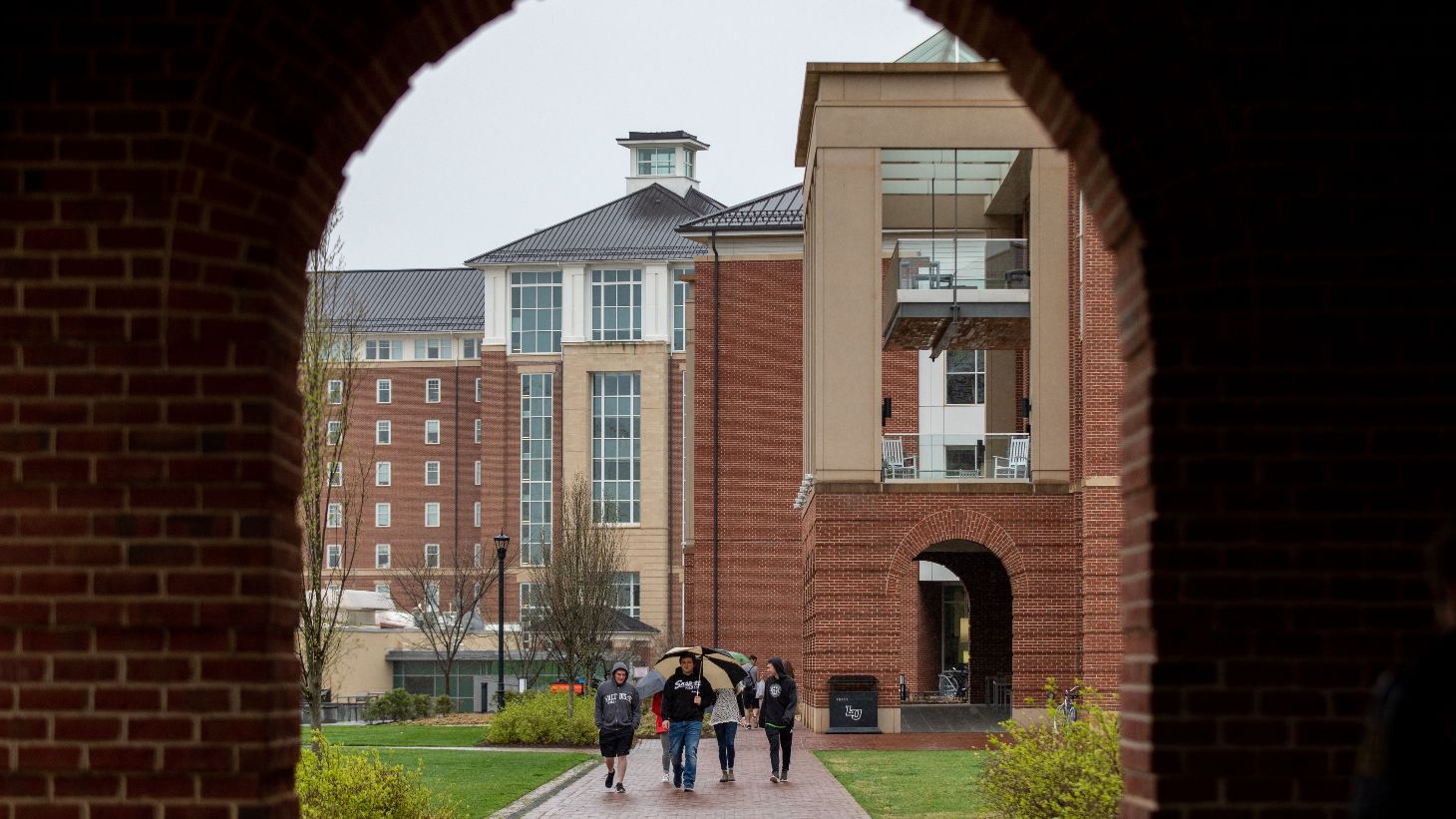
A new lawsuit against Liberty University claims the Lynchburg, Virginia-based evangelical Christian school has “intentionally created a campus environment” that makes sexual assaults and rapes more likely to occur.

The complaint points a finger at the “weaponization” of Liberty’s student honor code, known as the Liberty Way, which it claims makes it “difficult or impossible” for students to report sexual violence. It also claims such violence, particularly by male student athletes, was excused while the women who reported it faced retaliation.

In a written statement, Liberty University said it was looking into the allegations, which it called “deeply troubling, if they turn out to be true.”

The suit, brought by 12 women who chose to remain anonymous, was filed Tuesday in the US District Court for the Eastern District of New York and first reported by ABC 13 News in Lynchburg. The women are said to include former Liberty employees and students and one woman who attended a summer camp on the school’s campus as a minor.

Liberty was aware its “policies and procedures, as written and implemented, were enabling on-campus rapes,” according to the lawsuit.

Some of the women, all identified as Jane Doe in the suit, allegedly were discouraged from reporting they had been assaulted because they were told they would be disciplined for violating the Liberty Way, according to the lawsuit.

Some women who reported their assaults to Liberty’s Title IX office or campus police allegedly were subjected to investigations that presumed they had consented to sex unless they could prove otherwise, the suit said.

Some allegedly were fined or penalized under the honor code, which the lawsuit claims has discouraged other victims from coming forward.

“The Liberty Way and its weaponization by Liberty University, as well as Liberty University’s well-documented pattern of discrimination against women victims and in favor of male assailants, created an atmosphere on campus that was permeated with discriminatory intimidation, ridicule and insult that was sufficiently severe or pervasive to alter the conditions of the education and create a sexually hostile environment” for the plaintiffs, according to the complaint.

The Liberty Way includes guidelines for students’ dress and entertainment and does not permit “sexual relations outside of a biblically ordained marriage between a natural-born man and a natural-born woman.” Disciplinary measures for violating the honor code include points, fines, community service, and expulsion.

The code also prohibits sexual harassment, discrimination, and assault.

In its statement, Liberty noted that the honor code includes an “amnesty policy” to encourage victims to report any assault or discrimination without fear of discipline for their involvement in activities such as drinking or extramarital sex.

“It would be heartbreaking if those efforts had the results claimed in this lawsuit,” the statement said.

“We will immediately look into each of these claims to determine what needs to be done to make things right, if they turn out to be true. Because the claims are made anonymously and go back many years, in one case over two decades, it will take some time to sort through.”

The 12 alleged cases include unwanted touching and harassment by a coworker and rapes by both strangers and acquaintances. One student alleges that she was threatened with expulsion if she didn’t marry her boyfriend after becoming pregnant.

In one case included in the lawsuit, a woman identified as Jane Doe 12, who had attended a debate camp at Liberty in summer 2000 when she was 15 years old, said she was grabbed by a man in a women’s dormitory and carried into a shower, then thrown into a chair in an atrium and grabbed again. She held him off with her feet while he groped her legs and breasts, then bit him when he tried to strangle her, according to the suit.

When Jane Doe 12 called the Liberty University Police Department, she allegedly was forced to ride to the police station in the same car as her attacker, where she allegedly was accused of fabricating the assault and told if she did not withdraw her claim, she would be criminally charged with filing a false report.

She alleges that she was held for eight hours without food or drink, and neither her mother nor a child psychiatrist was contacted. She also was allegedly photographed while naked by a female debate coach and required to wash her hands, destroying any DNA evidence that may have been captured under her fingernails during the struggle.

She said her assailant turned out to be Jesse Matthew, who later was convicted of murdering two female students from Virginia Tech and the University of Virginia, according to the suit.

The women are being represented by attorney John Larkin of Gawthrop Greenwood, PC, which has offices in West Chester, Pennsylvania, and Wilmington, Delaware.

News

Georgia Church Loses Pastor, Then Its Assets, to Regional UMC Leaders

Conservative Methodists worry about their place in the denomination ahead of delayed plans for a split over LGBT issues.

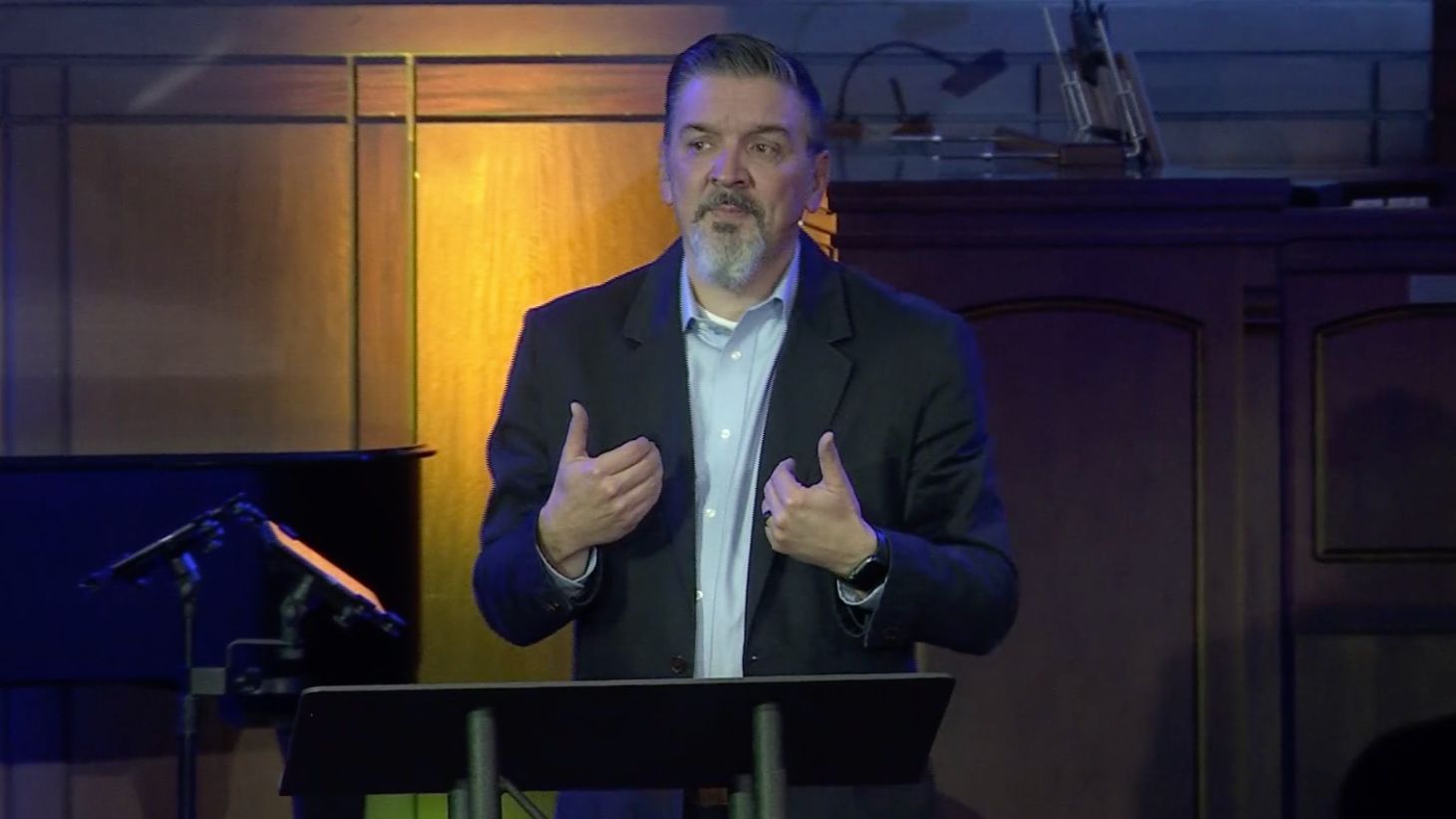
Jody Ray served as the senior pastor at Mount Bethel for nearly five years.

Jody Ray served as the senior pastor at Mount Bethel for nearly five years.

Christianity Today July 21, 2021
Screengrab / Mount Bethel UMC

Regional leaders of the United Methodist Church (UMC) took control of an 8,000-member congregation in suburban Atlanta earlier this month after a lengthy conflict over who should pastor the church.

The North Georgia Conference seized assets of Mount Bethel United Methodist Church in Marietta on July 12, a move that has sparked tensions already roiling over the denomination’s ongoing conflict around same-sex marriage and LGBT ordination.

Back in April, North Georgia Bishop Sue Haupert-Johnson reassigned Mount Bethel’s conservative pastor, Jody Ray, to a role in the regional office involving racial reconciliation and said a new pastor would be sent to the church.

Ray turned down that assignment and left the denomination. In a sermon announcing his departure, he said to his children, “Your daddy did not bow the knee or kiss the ring of progressive theology.”

Such a move by a regional conference “has never happened with a church of anywhere near this size or for this reason,” said Rob Renfroe, a UMC pastor in Texas and president of the Methodist publication Good News Magazine.

Over the past year, Renfroe said, “at least four other senior pastors … were told that they were being moved without the pastor or the churches being consulted,” but those situations were resolved without a takeover by the regional governing body.

All assets of a United Methodist church are held in trust for the denomination, meaning that though a local church technically owns its assets, they are able to be used only for the work of the UMC. When there is a conflict between the church and denominational leaders, the assets can be transferred back to the regional body and administered by them.

In the case of Mount Bethel, which runs both a Methodist church and school in Marietta, the denominational leaders said in their statement announcing the transfer of the assets that “employment, instruction, activities, and worship at the church and Academy will continue, but under the direction and control of the Conference Board of Trustees.” A decision could be made as early as next summer about whether to close the church.

According to the North Georgia Conference, Mount Bethel has resisted the pastoral change by adjusting its governance structure, hiring Ray to lead the church as a layperson, signing a 20-year lease on its building, and not allowing the new pastor to begin as the leader of the church when he arrived on July 1. Mount Bethel says that these circumstances do not warrant the action taken by Haupert-Johnson and the regional body and it is “prepared to defend our rights through the Georgia courts.”

The UMC works on a sending rather than calling model for pastors. Rather than churches interviewing potential candidates and hiring the one they feel is the best fit, a bishop, in consultation with the local churches, sends each pastor in a region to the church he or she feels is the best fit.

Before Ray, Mount Bethel had concerns with its pastoral assignments. During a previous pastoral transition in 2015, the congregation set out to hire their own pastor. The church has reportedly withheld $1.7 million in denominational apportionments since then.

“To deny the appointment of another pastor, to have their preferred pastor resign and stay in the same role as laity, and to withhold compensation from the appointed pastor … to now be shocked they don't actually own the building is a hot mess that has been cooking for a long time,” said Jeremy Smith, pastor of Seattle First UMC and and an influential Methodist blogger at HackingChristianity.net.

Ray said he believed his reassignment could be due to the church not paying its full share to the annual conference for several years. He also thinks the congregation’s support of the Book of Discipline’s conservative stance on the issue of homosexuality may have been a factor.

In an April 26 letter, Haupert-Johnson wrote that the “reassignment of a pastor is not done out of spite. The placement of a pastor is not done as a form of punishment. The reassignment of a pastor is not designed to persecute.”

After the seizure of assets was announced, Mount Bethel issued a statement saying Haupert-Johnson had failed to engage in the denomination’s consultative process. “While she claims she is acting out of ‘love for the church and its mission,’ enlisting attorneys and the courts to seize assets is a strange way for a bishop to show her love for one of the healthiest churches in her conference,” according to the congregation statement.

Conflicts over pastoral appointments have led other conservative congregations to leave the UMC, which is waiting on a delayed vote to split the denomination over LGBT issues. Though the UMC officially does not permit same-sex marriages or clergy in same-sex relationships, the position has not been enforced in its regional conferences, and conservative churches are frustrated when incoming leaders do not share their stance.

“Some have left, and others are contemplating departure,” said Renfroe. “We are working hard for people to hold on until” the legislative gathering in 2022, when the UMC will finally vote on a plan allowing conservative congregations to leave and take their assets with them as they go.

Leaders involved in the Global Methodist Church, the new denomination expected to receive conservative churches after the split, see the bishop’s actions in Georgia as a warning to conservative congregations.

“The events occurring in the North Georgia Conference demonstrate the attitudes and actions of some in leadership of the UM Church toward those who adhere to the historic teachings of the Christian church,” said Keith Boyette, leader of the conservative Wesleyan Covenant Association. “These attitudes and actions will be important considerations as local churches and clergy decide where they will align after an amicable separation is approved.”

Mount Bethel had requested to begin the process of negotiating an early departure, but was told it had to comply with all denominational rules before it would be allowed to begin the disaffiliation process.

“In the absence of a way forward many local churches on all sides of the debate are wondering what the future holds,” said Randall Miller, a progressive church leader in the San Francisco Bay Area and delegate to the global legislative gathering. “Any decisions about a way forward have to be agreed upon by delegates from around the world, including roughly a third of delegates from outside the US.”

With reporting by the Associated Press.

Ideas

On Answering with Gentleness and Respect

Staff Editor

Christians are called to good-faith interactions online.

Christianity Today July 21, 2021
Illustration by Mallory Rentsch / Source Images: Joel Muniz / Joshua Rodriguez / Unsplash

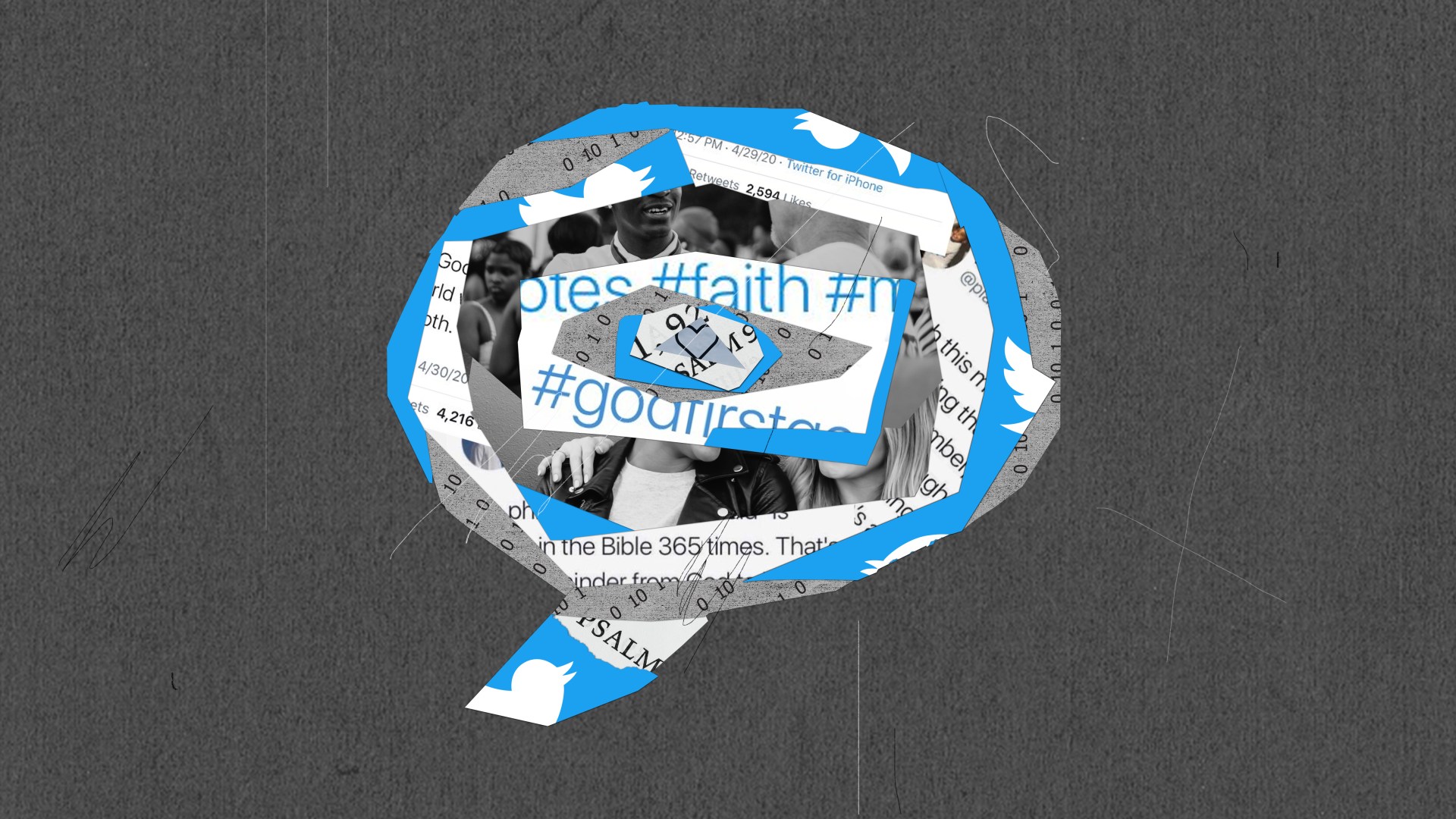
In a June essay, celebrated Nigerian author Chimamanda Ngozi Adichie mourned the decline of good-faith conversation, especially online. The post, titled “It Is Obscene,” promptly went viral.

“There are many social-media-savvy people who are choking on sanctimony and lacking in compassion, who can fluidly pontificate on Twitter about kindness but are unable to actually show kindness,” she wrote. “People who ask you to ‘educate’ yourself while not having actually read any books themselves,” Adichie continued. “People who depend on obfuscation, who have no compassion for anybody genuinely curious or confused. Ask them a question and you are told that the answer is to repeat a mantra. Ask again for clarity and be accused of violence.”

She should know. Adichie’s essay was the culmination of a feud that played out online and off, mixing personal slights and ideological debate. The substance isn’t relevant here, but the way the authors interacted is. And the result of that sort of pernicious atmosphere, as Adichie said, is that eventually people become afraid to ask at all. They become afraid to say the wrong thing, perhaps unwittingly, in the deathless public record of social media: “The assumption of good faith is dead.”

I might qualify that a little—there are contexts, online and off, where I still assume good faith. But the assertion generally rings true.

Though it’s literally my job to air controversial opinions, I approach social media guardedly. I scrutinize my phrasing, not merely in pursuit of clarity for its own sake but also for possible lines of unfair attack. This ought not be.

Christian engagement in public conversation should be distinguished by our thoroughgoing commitment to always speak in good faith, including when it may not be returned (Rom. 12:17–21).

“Always be prepared to give an answer to everyone who asks you to give the reason for the hope that you have,” the apostle Peter advised, adding a classic scriptural admonition to good faith: “But do this with gentleness and respect” (1 Pet. 3:15).

Good faith is not the same as positivity. It’s not niceness. It’s not precisely the same as honesty, though certainly they’re related. To deal in good faith is to speak truthfully and read generously, giving grace for real confusion, because “gracious words promote instruction” (Prov. 16:21).

We show good faith when we don’t “repay evil with evil or insult with insult” (1 Pet. 3:9). Good faith makes space for people to explain themselves when they’re misunderstood and to learn and improve or repent if needed when they are wrong. To interact in good faith is to model the patience, hope, and refusal to dishonor others that Paul lists as attributes of love (1 Cor. 13:4–7). When we engage in good faith, we aren’t weak-willed or too easily swayed, but instead we are combining firm conviction with humility and openness to correction.

Conversely, bad faith isn’t merely trolling, though it often looks and feels quite similar. Someone who speaks in bad faith is the mocker of Proverbs who “delight[s] in mockery” (Prov. 1:22), answers correction with hatred and insults (Prov. 9:7-8), and has thoughts hateful to the Lord (Prov. 15:26). There is a certain cruelty in bad faith, a dodginess, a preemptive preclusion of reconciliation.

Bad faith has a perverse desire for the opponents to be not simply wrong but downright evil, even if there’s evidence to the contrary—a determination, as C. S. Lewis described in Mere Christianity, to “cling to the first story for the sheer pleasure of thinking your enemies are as bad as possible.” Bad faith isn’t interested in instruction if victory is at hand: Better to defeat the wrong person than help them see the right. Bad faith is rope-a-dope. It’s a “weaponization of lies.” Even an accusation of bad faith can itself be an act of bad faith.

The idea of good and bad faith is an ancient one (good faith is bona fide in Latin). Good faith appears in the Magna Carta, which concludes with its signatories swearing that everything they’ve pledged “shall be observed in good faith and without deceit.”

About half a century later, the great medieval theologian Thomas Aquinas listed “treachery, fraud, falsehood, perjury, restlessness, violence, and insensibility to mercy” as vices opposed to liberality, by which he meant generosity (which may be material or, as here, a manner of conversation). Those are all part of bad faith, variants of its deliberate confusion, uncertainty, and malice.

A more recent and instructive mention of good faith may be found in the Wikipedia editing guidelines, where “assume good faith” is named a “fundamental principle” of the crowdsourced encyclopedia that turned out to be a more trustworthy resource than many of us anticipated. That means “assum[ing] that most people who edit are trying to help the project, not hurt it.” Editors are directed to correct sincere mistakes without berating their authors, to offer patience and give a hearing to explanations until it has become clear beyond all doubt that the other person is dealing in bad faith. In all our conversations online, we should do likewise.

Too often, we don’t. Adichie’s essay landed the week the 2021 Southern Baptist Convention took place in Nashville, and the notions of good and bad faith were already on my mind. Following the convention on Twitter, I found myself wondering time and again if arguments and expressions of outrage I encountered were cases of true incomprehension or simply bad faith.

One particularly striking example came via a tweet with photos of a pro-life pamphlet being distributed among the SBC crowd. “Southern Baptists were wrong on the abolition of slavery,” the paper said. “Will we be wrong on the abolition of abortion?” For anyone aware of SBC history—the convention exists because southern Baptists supported slavery and northern Baptists backed abolition—the meaning is easily intelligible: The SBC was wrong to oppose the abolition of slavery and would be wrong again if it opposed the abolition of abortion. But multiple responses to the tweet interpreted it as an endorsement of slavery.

Were those people all tweeting in true incomprehension? Did they misread the pamphlet, or were they perhaps ignorant of this infamous SBC history? Or were they acting in bad faith, choosing to deliberately mistake the pamphlet’s meaning so they could accuse Southern Baptists of expressing (or at least associating with those who express) abhorrent racism?

I truly don’t know. I want to believe it was all a misunderstanding, but “The assumption of good faith is dead,” as Adichie wrote.

All I can do is make sure it is not dead in me; that I have “compassion for anybody genuinely curious or confused”; that I start by assuming people are trying to help and not hurt; that I’m answering “with gentleness and respect” even (especially!) when I or fellow Christians are subject to bad-faith critique.

Culture
Review

The Mountain Goats’ Latest Pandemic Release Looks into the Darkness

In “Dark in Here,” singer John Darnielle explores a bleak but enchanted world—all the way back to the biblical story of Jonah.

Christianity Today July 21, 2021
Lalitree Darnielle / Merge Records

“Even the darkness will not be dark to you; the night will shine like the day, for darkness is as light to you.” – Psalm 139:12

Dark In Here

Dark In Here

MERGE RECORDS

June 25, 2021

In 2016, John Darnielle told Christianity Today his favorite book of the Bible was Jonah. Five years later, “Mobile,” the first single from the Mountain Goats’ latest album, Dark in Here, retells it.

The Jonah story is one that seems to recur culturally—the metaphor of being engulfed by something unfathomably bigger than oneself is always relatable, somehow. Even last month, the world was briefly captivated by the lobster diver who found himself briefly swallowed by a whale, telling the Associated Press that “everything went dark” and he thought “OK, this is it … I’m gonna die.”

So it’s not a stretch to read a morbid belly-of-the-whale joke in the title of the album, Dark in Here—one of an astounding four albums the Mountain Goats recorded last year, and in fact one of three recorded solely in the cursed time-vortex month of March 2020. The other two are this album’s spiritual studio prequel, Getting into Knives, and a solo effort recalling Darnielle’s earlier home recordings, Songs for Pierre Chuvin; a live-in-studio set, the Jordan Lake Sessions, was made later in the year. None of these are really “pandemic albums,” but the Jordan Lake Sessions opens with “The Plague,” a song written decades before COVID. “This is not the first plague!” Darnielle ad-libs after the song. “No! People like me have been singing about plagues for a long time!”

Dark in Here is similar to recent Mountain Goats albums in that it continues the band’s honing of the fuller, soft-edged American folk-rock sound they’ve been pursuing since becoming a four-piece in 2015. The album is not thematic in the way some of their other work is (no professional wrestlers or Goth teenagers here), but it’s very much a piece with Darnielle’s writerly obsessions, none of which are far from the plague-related concerns that have gripped all of us in the last few years: human fragility, neediness, and desperation; the brutality of existence—indeed, the darkness that lurks in all souls, hearts, and minds—and finally, a deep, tragic, tender love for the world and everything in it.

If this all sounds somewhat theological, that’s probably not an accident. Darnielle, raised Catholic, has long been interested in various stripes of faith, including a stint with the Hare Krishnas and a longstanding apparent interest in evangelicalism, from controversies about Larry Norman and alleged satanic “backmasking” on 1970s rock records (the title of his haunting debut novel, Wolf in White Van, is a reference to this lore) to his abiding love of Rich Mullins (whose musical style he seems to inch ever closer to with each album) to his occasional engagement with iconoclastic evangelical thinkers on Twitter.

While 2009’s The Life of the World to Come was the Goats’ only explicitly “Christian” offering (each song’s title was the Bible verse that inspired it), Mountain Goats songs tend to operate in two distinctly religious modes: the enchanted and the apocalyptic. In the former, narratives are populated by wizards, pagan gods, demons, and crystals; in the latter, junkies, murder victims, unhappy lovers, and broken families. Sometimes the two modes work in tandem. It’s always a bleak but enchanted world.

https://open.spotify.com/embed/album/0pxREP6pt2DbPP7beBGCA4?si=w3BkzbVaRQWNfvKE0e1SHAu0026dl_branch=1

For evidence of this, take your pick: Dark in Here features several songs that might be about the rise of demons or beasts (“When a Powerful Animal Comes,” “Let Me Bathe in Demonic Light”), several conversations with dead people (“To the Headless Horseman,” “Arguing with the Ghost of Peter Laughner About His Coney Island Baby Review,” both sad and tender), an elegy for a lost holy place (“Before I Got There”), and one for a haunted place that wasn’t there (“The Destruction of the Kola Superdeep Borehole Tower”).

Dark in Here is a lovely, understated album that gently insists that darkness must be faced, whether in the belly of the whale, the depths of hell, or a balcony in Mobile, Alabama. The speaker in “Mobile” recounts the Jonah story in the verses but always turns it back on himself in the chorus, as he stands “waiting for the wind to throw me down.”

Like Jonah, he demands God’s wrath but seems to feel he himself ought to be the target. “Why do you hold back your fury? / Don’t hold back your fury” are the song’s last words. Lyrically, we leave the protagonist on the balcony, ever trapped in the dark night of the soul; musically, the sweet interplay of guitar, accordion, and piano that closes the song offers hints of tender mercy.

Because while darkness is, well, dark, it’s not necessarily bad. On the title track, the chorus includes the lines “Just beyond your limits / Find the new frontier / I live in the darkness / It’s dark in here.”

It’s somehow reminiscent of a lyric Darnielle sang 20 years ago, on his song “Elijah”: “Feel the fullness of time / In the empty tomb / Feel the future kicking in your womb.” Life in the darkness can also be a life lived in hope, in anticipation of joy in a world to come. As Darnielle sings on the second verse of “Mobile,” “And Jonah emerged from his darkness / Like a dancer crashing through the curtain.”

Joel Heng Hartse is a lecturer in the faculty of education at Simon Fraser University in British Columbia. He is the author of several books including the forthcoming Dancing about Architecture is a Reasonable Thing to Do (Cascade).

Ideas

Cuban Christians Connect Prayers to Protests

United more than ever across denominations, many evangelicals want “homeland and life” over “homeland or death.”

Christianity Today July 21, 2021
Illustration by Mallory Rentsch / Source Images: Anna Moneymaker / Getty Images / Photos provided by CSW

Editor’s note (July 28): CSW reports that the two Cuban pastors highlighted below have been released from prison.

A few days after Hurricane Elsa swept across the center of Cuba, Christians of all denominations joined in a nationwide day of prayer and fasting for their country on Wednesday, July 7. The call was made after months of increasing tension on the island amid severe scarcity of food and medicine and as the number of COVID-19 infections began to rise precipitously and the once-lauded health system threatened to collapse. Church leaders of all denominations reported that they were increasingly under surveillance and had been interrogated and threatened.

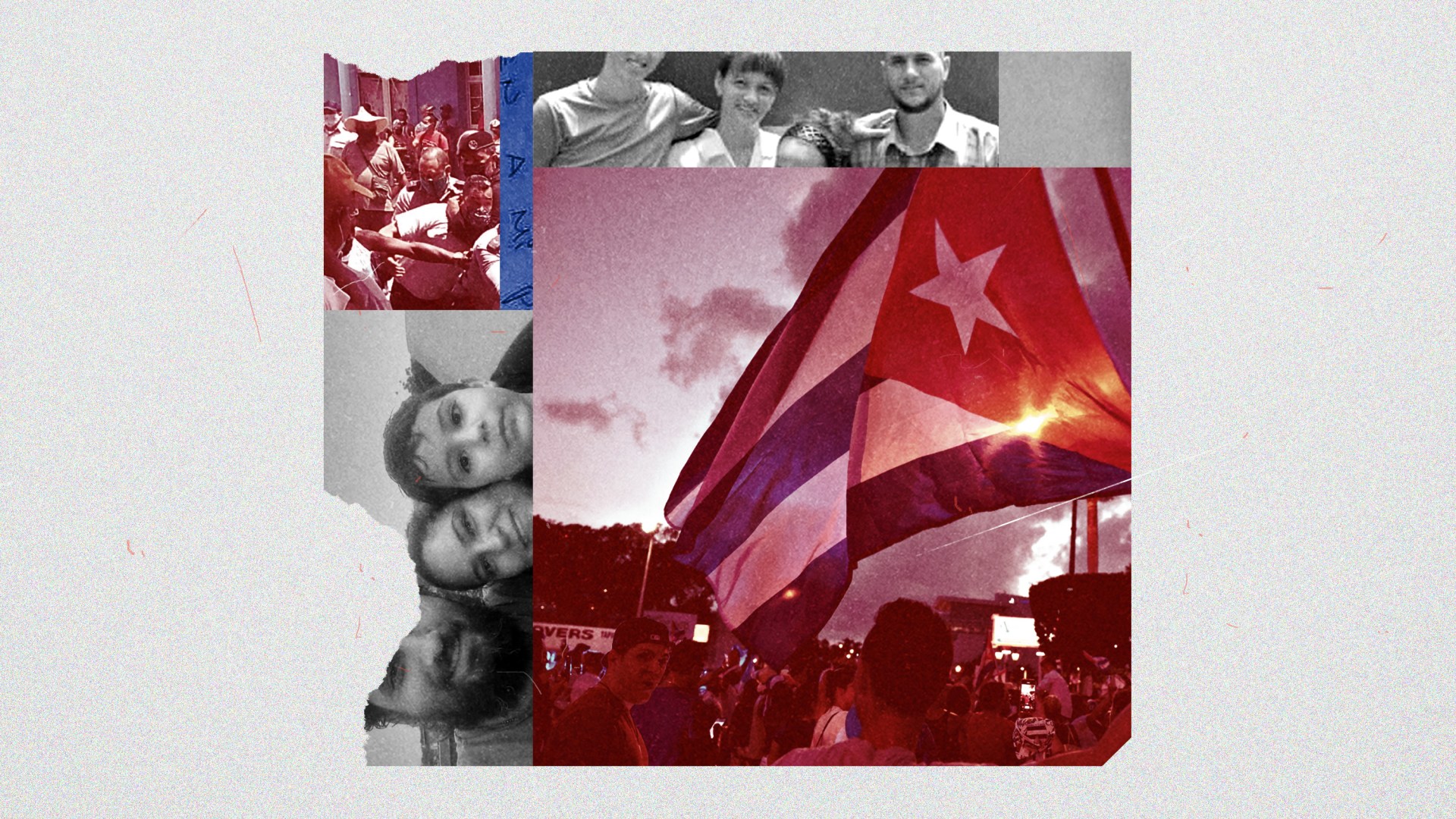
Four days later, on Sunday, July 11 in a town outside Havana, people spilled into the streets and marched peacefully and enthusiastically, calling for freedom and chanting “Patria y Vida” (“Homeland and Life,” the title of a hit song released by pro-democracy Cuban hip hop artists earlier this year and a twist on the Cuban Communist Party slogan “Homeland or Death”). They shouted in unison, “We are not afraid!” The demonstration was recorded and shared live via social media by participants and onlookers and, within hours, similar protests involving thousands of people sprang up in cities and towns across the island.

The spontaneity and magnitude of the protests, the likes of which have not been seen in Cuba since the triumph of the revolution in 1959, caught the government off guard. President Miguel Díaz-Canel went on television and made an explicit call to violence, telling the population that he was giving an order to combat and called for true revolutionaries to go into the streets and reclaim them by force. The military, police, and state security agents, both in uniform and plainclothes, flooded into the streets, beating protesters and detaining hundreds.

The total number of Cubans detained or disappeared is still not known but continues to climb. While a few have been released, most remain detained, incommunicado in prisons, police stations, and state security facilities across the country. Many family members of the detainees have reported that the government plans to charge them with “incitement to delinquency” with the aggravating factor of doing so during the “public calamity” of the pandemic. Threatened prison sentences range from eight to 20 years.

Because of the unplanned nature of the protests, those who went out into the streets were from all walks of life: ordinary Cubans, young and old, male and female, and people of all faiths and none. While some human rights and pro-democracy activists joined the marches, many stayed home, concerned that the government would use their participation as an excuse to condemn them to long prison terms.

Church leaders faced the same dilemma. One Protestant church leader told CSW why he had chosen to stay in his home, despite sympathizing with the protesters. “I wanted to go out with all my heart, but I have been under surveillance by state security for months. I know the authorities are looking for any excuse to arrest me. I believe I can do more here in the trenches than I could have done by going into the streets.”

The leader, who asked to remain anonymous for security reasons, was not wrong. In the days following the protests and detentions he acted as a bridge, putting families of detained Christians in his area—including pastors, other church leaders, and rank and file members—in touch with international advocacy organizations.

Detained Baptist pastors Yarian Sierra Madrigal and Yéremi Blanco Ramírez.Courtesy of Jatniel Perez
Detained Baptist pastors Yarian Sierra Madrigal and Yéremi Blanco Ramírez.

In contrast, two Berean Baptist pastors in the province of Matanzas, which has been one of the hardest hit by COVID-19, decided to march. Yarian Sierra Madrigal and Yéremi Blanco Ramírez, who also work as tutors at the William Carey Biblical Seminary, were violently detained and have been held incommunicado since then. A witness said he saw the authorities set dogs on Sierra Madrigal as the pastor recorded police violence on his phone before he was arrested.

In a statement and exhortation to prayer sent to CSW, his wife Claudia Salazar said, “My husband Yarian and our friend and brother Yéremi are honorable Cuban citizens. They have dedicated all of their youth and lives to serve the church and to serve others. [They are] family men: loving fathers, loving husbands, with an impeccable life testimony. They are not any kind of delinquent, nor are they low-lifes as those who govern this country call them. They are good men. They are men of God.”

Their wives have not been allowed to communicate with the two pastors, who according to the authorities were being held in the Women’s Prison in Matanzas but have now been transferred to a maximum security prison. On July 15, the women were told that their husbands’ cases had been turned over to the public prosecutor’s office and on Monday, July 19, they received news that the two men will face criminal charges. Overcrowded and unhygienic conditions in prisons across the country, in the midst of the pandemic, have led to concern for the wellbeing of all those in detention. The families of the pastors are particularly concerned given that Sierra Madrigal is still recovering from a bad case of COVID-19 and Blanco Ramírez suffers from severe asthma.

In what appears to be another attempt to pressure the family, Salazar and their young son were evicted from their home on Sunday, July 18. The landlord told Salazar that state security had threatened to confiscate the home if he did not throw them out. With nowhere to go, she and her son have taken refuge in their church.

Father Castor José Álvarez Devesa, a Roman Catholic priest in the province of Camaguey and a well-known human rights defender and promoter of religious freedom, also chose to march. He was detained and imprisoned after receiving a severe blow to the head while trying to help another wounded protester. He approached the police and requested medical assistance, which they provided before jailing him alongside other protesters. He was released into the custody of his archbishop the following day; however, a number of Catholic lay and youth leaders and others, including the church organist, in the town of San Nicolas de Bari, remain in detention.

Although the Cuban government attempted to cripple the protest movement by shutting off electricity in some parts of the country and either cutting or severely restricting access to the internet, the protests have continued. Violence has also continued, and despite the difficulties some Cubans have managed to upload to social media graphic video of protesters being beaten and fired upon. There have reportedly been several deaths.

Since the 1960s, Cuban religious organizations, including the Roman Catholic Church and Protestant denominations, have hesitated to overtly criticize the government in any way. Repercussions for doing so have been severe. In the days since July 11, however, this too has changed.

The Catholic Bishop’s Conference, a number of other Catholic groups, and major Protestant denominations including the Evangelical League of Cuba, the Methodist Church of Cuba, and the Assemblies of God have published multiple statements condemning the government’s invocation of violence, affirming the right to peaceful freedom of expression and the validity of the protesters’ demands, and calling on the authorities to listen and respond to them. Over the past week, the statements from evangelical denominations have grown stronger.

On July 18, the Assemblies of God of Cuba published a statement reaffirming the right of all people to express themselves through peaceful demonstrations and reiterated the role of Christians and churches to be peacemakers. The statement also addressed President Díaz-Canel’s statements directly:

“[We] reject the attitude of the President of Cuba by declaring: ‘The order to combat has been given,’ which sparked violent clashes throughout the country. A government that proclaims the inclusion and equity of all citizens must have the wisdom to promote dialogue, not confrontation, between Cubans. We believe that slogans and calls, lacking in peace and sanity and that inflame the people, will not solve the situation in which the country finds itself, but will instead destine the nation to total chaos and destruction.”

Notably, the Cuban Council of Churches—an ecumenical umbrella group of religious associations which maintains a good relationship with the government—and its leaders have remained conspicuously silent.

It seems clear that Cuba, which marks the 62nd anniversary of its revolution on Monday, July 26, has reached a turning point. What happens next will depend in part on how severely the government decides to crack down. The mass detentions and threats of long prison sentences seem to indicate it is pursuing a similar strategy to that of the Black Spring of 2003, when about 75 human rights and pro-democracy activists were rounded up across the island and handed sentences of up to 25 years.

There are, however, marked differences between the situation in 2003 and in 2021. The president is no longer a member of the Castro family. Despite government efforts, there is still some access to the internet, social media, and messaging apps, and a tech-savvy population can communicate across and outside the island in a way that was not possible 18 years ago.

Another critical difference is the deep fear of even appearing to criticize the government, which has characterized much of the population—including churches—for decades, appears to be evaporating. Protestant denominations that were deeply divided and suspicious of one another in 2003 have since come together and united, launching the Cuban Evangelical Alliance in 2019. The World Evangelical Alliance (WEA) affiliate has remained strong despite the government’s punitive measures and threats against its leadership.

An example of this new unity can be seen in the nationwide and interdenominational day of fasting and prayer for Cuba four days before the demonstrations erupted. Many Christians see a direct connection between the July 7 prayers and the events of July 11.

On July 10, pastor Alida León Báez, the respected longtime leader of the Evangelical League and a founding leader of the local WEA alliance, posted on social media:

“On the day of the call to fasting and prayer for Cuba [July 7], after having cried out with groaning and having enjoyed God’s presence, the fast was broken with heavy rain and electrical storms … but later, [there was] a gentle whistle, a calm ministering peace, and [I saw] a beautiful map [of Cuba] drawn in the sky…. My feeling was that God was pleased with this day and that he loves Cuba. Psalm 145:19 ‘He fulfills the desires of those who fear him; he hears their cry and saves them.’”

Evangelical denominations have called for another day of prayer and fasting tomorrow, July 21 from 7 a.m. to 7 p.m. Eastern time, to focus on salvation, healing, and peace in Cuba.

Jatniel Perez, president of William Carey Biblical Seminary in Cuba.Courtesy of Jatniel Perez
Jatniel Perez, president of William Carey Biblical Seminary in Cuba.

In the meantime, the newfound boldness continues. As the president of the seminary where the two detained Baptist pastors tutored wrote July 16 on Facebook:

“Today I received several calls trying to scare me into stopping publishing information about Pastors Yéremi Blanco Ramírez and Yarian Sierra [Madrigal].

They have called some of our pastors, trying to intimidate them.

In case any of you at State Security have doubts about who I am:

I am Jatniel Pérez Feria. National President of the William Carey Biblical Seminary in Cuba and pastor of the Independent Evangelical Church in Velasco, Holguín.

I am responsible for all the pastors and brothers who study in our seminary.

If it bothers [you] that I am saying these things, then you know very well where I live.

If I have to suffer for defending pastors and churches, then here I am, like Paul I am willing to go to prison for defending the cause of the Gospel.

I am not afraid of going anywhere.

You can do what you want with my body but my soul you cannot kill.

I prefer to obey God rather than men…

I love my country. And I love my flag, where God placed me. And I will always defend the Church that Christ bought with His blood.

Grace and peace.”

Anna-Lee Stangl is joint head of advocacy and team leader for the Americas at CSW (Christian Solidarity Worldwide).

Speaking Out is Christianity Today’s guest opinion column and (unlike an editorial) does not necessarily represent the opinion of the magazine.

Church Life

After Challenging Season, World Relief Names New President

Myal Greene is optimistic about resuming robust refugee resettlement programs under the Biden administration.

Christianity Today July 20, 2021
Courtesy of World Relief / Edits by CT

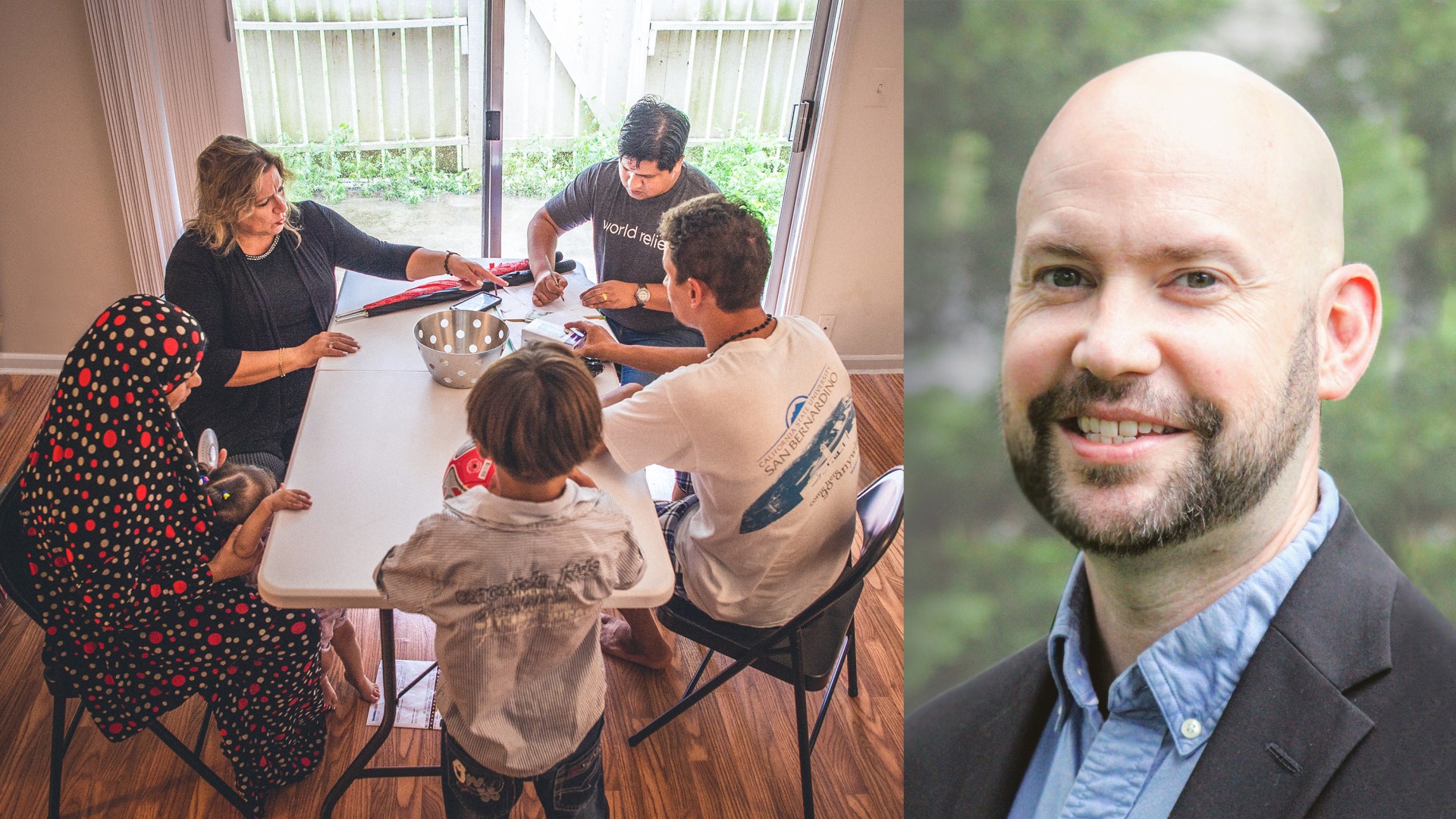
A veteran World Relief staff member who developed models for church partnerships and expanded the ministry’s programming abroad will take over this year as its new president and CEO.

The appointment of Myal Greene follows a challenging season for the organization, the humanitarian arm of the National Association of Evangelicals and a leading refugee resettlement agency.

“We’re certainly going through a season of challenges related to the refugee resettlement program and the COVID crisis that have put strains on the organization—on our operations, resources, and opportunities to carry out our programs and our ministry,” Greene said, “but I’m really encouraged by the resilience and commitment of our staff and volunteers, who faithfully serve no matter the circumstances.”

World Relief had shut down eight of its 27 national offices due to yearly cuts in refugee admissions and resettlement funding under the Trump administration’s restrictive policies. In the past few months, World Relief began ramping up their resources and rebuilding infrastructure under President Biden. Ministry leaders were also among the advocates holding the Biden administration accountable to his promise to raise the refugee ceiling after the move was delayed by months.

Greene is scheduled to take on his new role shortly before the next fiscal year begins in September. His predecessors, Scott Arbeiter and Tim Breene, announced their retirement in February.

Beyond resettling refugees domestically, World Relief also runs a number of international initiatives which continue to serve vulnerable populations in underserved countries in the midst of the worldwide COVID-19 crisis. In his previous role as senior vice president of international programs, Greene increased their funding and more than doubled their global reach in the past two years. He had also previously directed ministry operations in Rwanda and Africa.

Earlier this year, Greene was also involved in a large-scale initiative at World Relief called Forward Together, which developed a strategic plan to increase a focus on fostering greater diversity, equity and inclusion within the organization and across its programs.

“Myal’s deep understanding of our work, his engagement in this strategic refresh and his team-based leadership style uniquely position him for effectiveness at this moment in our journey,” said Steve Moore, chair of World Relief’s board of directors.

Both here and abroad, a key feature of World Relief’s humanitarian work is its reliance on partnerships with local churches and ministries in addition to public or government grants. Since 1944, the Christian nonprofit has focused on engaging with church networks to raise support, advocate, and mobilize volunteers to join their mission.

CT interviewed Greene about his new role and what’s ahead for the ministry.

What has World Relief learned in these first six months under President Biden, and what do you think the upcoming fiscal year will look like in terms of refugee resettlement?

We believe there’s going to be strong support for refugee resettlement from the Biden administration. We’ve learned that they were open to listening to the opinions of stakeholders and we’re really encouraged by their responsiveness, their concern and the seriousness with which they’re taking these issues. We’re encouraged by the ceiling raising to 62,500 for this fiscal year, and we’re optimistic that the ceiling will be raised to 125,000 next year. We’re excited about that. And while this comes with a need for resourcing and organizational capacity building after years of reduced numbers, we know there are many churches and community organizations eager to participate in the process and ready to respond to the opportunity to welcome more refugees into this country.

In terms of future plans for expansion, where was World Relief five years ago, where is it today, and where do you hope it will be five years from now?

We felt very strongly at that time that we wanted to be able to increase the number of resettlement sites that we operated in. And going forward, we see that as a very healthy way to conduct this work—to have more opportunities and locations for resettlement to take place. An increased number of resettlement cases really necessitates a larger footprint. As far as the dream vision, I would say we want to be at a place where we’re able to meet and respond to our full share of those being resettled among the other implementing partners. This means we’re looking at a variety of options to rapidly increase our scale, consider partnership opportunities, as well as open new offices or reopen locations that have previously been closed. I’m very grateful for the leadership of Tim and Scott, who helped World Relief through a very tumultuous season and put the organization in a financial place that we haven’t been at in many years. I’m excited about the momentum that we have to go forward.

How has World Relief grown in the midst of or in spite of the recent challenges it has faced?

The season of ministry where we were less engaged in refugee resettlement allowed us to focus on working with churches and other community activists to offer broader services to the larger immigrant community, not just refugees—to consider how we engage local churches in being part of an environment of welcome for immigrants of all backgrounds. We think about advocacy in terms of relationship to public policy and to public opinion, and what we’ve learned is there are a lot of different messages in churches across the country. So as this has become a very polarizing issue, we see the role World Relief can play in advocating on behalf of immigrants and refugees to churches and faith communities.

How are you preparing to lead World Relief in the midst of the changing landscape?

I’ve worked with World Relief for 14 years, and one of the great things about the longevity of that experience is I’ve seen kind of the ups and downs and how different external crises and events have impacted the organization. That long-term vision helps me ensure that we remain focused on the priorities despite the crises we face.

Most people who know about World Relief think of their domestic work with refugees, but given your background, can you share about the organization’s international side?

Our work overseas is quite robust and dates back to the origins of our organization. We have three major areas of emphasis: The first is humanitarian or emergency response, which is serving people in refugee camps or internally displaced people (IDP) camps, and those returning to their home community—so there’s a lot of synergy and connectedness to the work that we do in the US. The second area of our work is in community and public health, where we’ve found great support from donors and collaboration with USAID and UNICEF. And then the third is a church-based community development initiative, an integrated model where we engage churches in meeting the needs of their neighbors—from economic and social to strengthening marriages and working with children.

What initially led you to join the mission of World Relief back in 2007?

Since I became a Christ follower, I really developed a strong appreciation for God’s love and heart for the poor and the vulnerable. And as I came to learn about World Relief, it motivated me to step out of the work that I was doing before on Capitol Hill to take a two-year assignment—raising support, not even a staff position—to serve in our Rwanda office. Through that, I saw how my life was shaped in ways of seeing and understanding the world. It was very formative for me in drawing my commitment to understanding the role of the church and community development, the importance of engaging churches, and in meeting the needs of the neighbors themselves. It’s kind of been an amazing journey to see God grow and equip me with new skills, helping the organization in different expressions of providing service to the most vulnerable, whether they’re in the US or around the world.

What is one of the most impactful experiences from your long history with the ministry?

Very early in my time at World Relief, I arrived in Rwanda when it was still at the height of navigating the HIV pandemic. We had a very large grant from PEPFAR to do HIV work, and much of it was focused on prevention and the youth. But there was also a palliative care component for people with AIDS. Through those interactions, I spent a lot of time in the home with the women, especially widows with children, who could see the end of their lives in full view. Seeing the hope that they had in Christ and the way that churches could come around them—but also their concerns for the futures of their children—just stuck with me and touched me emotionally. It made me see why our work is so important, so valuable.

Apple PodcastsDown ArrowDown ArrowDown Arrowarrow_left_altLeft ArrowLeft ArrowRight ArrowRight ArrowRight Arrowarrow_up_altUp ArrowUp ArrowAvailable at Amazoncaret-downCloseCloseEmailEmailExpandExpandExternalExternalFacebookfacebook-squareGiftGiftGooglegoogleGoogle KeephamburgerInstagraminstagram-squareLinkLinklinkedin-squareListenListenListenChristianity TodayCT Creative Studio Logologo_orgMegaphoneMenuMenupausePinterestPlayPlayPocketPodcastRSSRSSSaveSaveSaveSearchSearchsearchSpotifyStitcherTelegramTable of ContentsTable of Contentstwitter-squareWhatsAppXYouTubeYouTube