News

Supreme Court Sides with Catholic Foster Care Agency

But majority declines to revisit rules for religious accommodation, over protests from justices Samuel Alito and Neil Gorsuch.

Christianity Today June 17, 2021
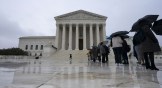
AP Photo/J. Scott Applewhite

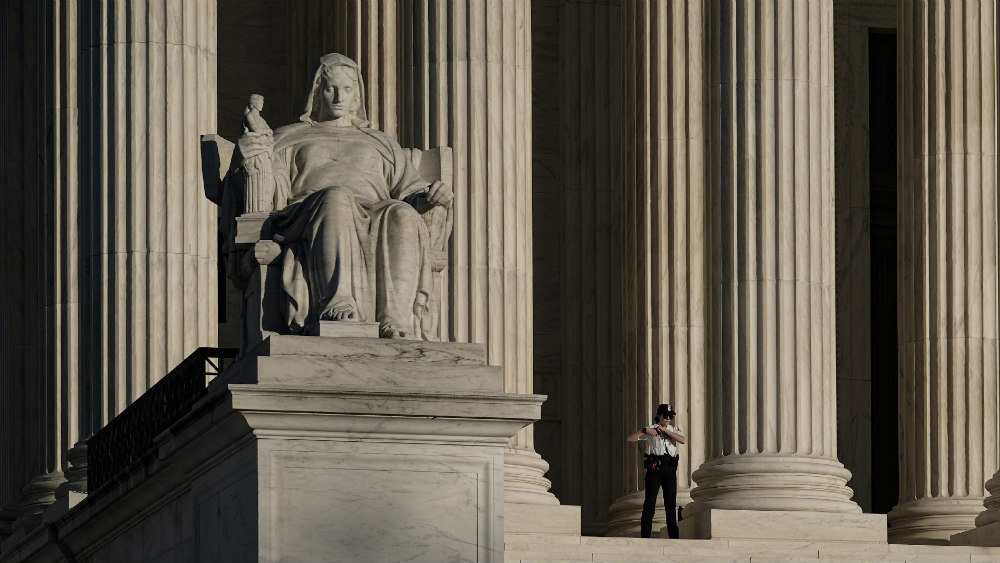
Update (June 17): The United States Supreme Court ruled decisively in favor of a Catholic foster care agency on Thursday, with all nine justices agreeing that the city of Philadelphia violated the First Amendment’s protection of religious liberty when it ended a contract with Catholic Social Services (CSS) over service to LGBT people.

“It is plain that the City’s actions have burdened CSS’s religious exercise by putting it to the choice of curtailing its mission or approving relationships inconsistent with its beliefs,” wrote Chief Justice John Roberts.

Philadelphia claimed the city could not contract foster care services with a Catholic agency that only served married heterosexual couples because of an antidiscrimination law ensuring that everyone, regardless of sexual orientation, has equal access to public accommodations. The court found, however, that foster parenting is not a “public accommodation,” since certification is not available to the public and “bears little resemblance to staying in a hotel, eating at a restaurant, or riding a bus.”

According to the court, there was also no evidence presented in the record that the Catholic agency’s policies ever prevented a same-sex couple from fostering a child, or that it would have that effect.

The majority opinion was joined by justices Stephen Breyer, Sonia Sotomayor, Elena Kagan, Brett Kavanaugh, and Amy Coney Barrett.

The other three justices—Samuel Alito, Neil Gorsuch, and Clarence Thomas—agreed with the judgement but signed on to two concurring opinions arguing the court should go further in defense of religious exercise. They wanted the court to overturn a 1990 precedent written by conservative legal icon Antonin Scalia, which made it easier for governments to justify laws that place a burden on religious activity.

In Employment Division vs. Smith, Scalia said that governments can burden religious practice as long as it is done “incidentally,” and religious activities are not being targeted by the “neutral” and “generally applicable” law.

In Thursday’s ruling, Roberts and the majority said Philadelphia was intentionally targeting the Catholic foster care agency. The law was not neutral toward religion and not generally applicable, since it was written with the Catholic agency in mind. The court decided not to overturn the 1990 precedent.

Gorsuch, in his concurring opinion, questioned the majorities’ decision to “dodge” the critical legal question of the standard for religious accommodation.

“Perhaps our colleagues believe today’s circuitous path will at least steer the court around the controversial subject matter and avoid ‘picking a side,’” he wrote. “But refusing to give CSS the benefit of what we know to be the correct interpretation of the Constitution is picking a side. Smith committed a constitutional error. Only we can fix it.”

Alito made a similar argument—at length. His opinion stretched to 77 pages, 62 more than the majority opinion, criticizing the court for not doing what it should do.

“I would overrule Smith,” Alito wrote. “After receiving more than 2,500 pages of briefing and after more than a half-year of post-argument cogitation, the Court has emitted a wisp of a decision that leaves religious liberty in a confused and vulnerable state. Those who count on this Court to stand up for the First Amendment have every right to be disappointed—as am I.”

Advocates for religious liberty and Catholic Social Services were celebrating the 9-0 decision when it came down, however.

Attorney David French called it “a big win for religious freedom” and celebrated the fact that “every justice concurred at least in the result.”

“Religious liberty should not be a partisan issue,” he said on Twitter.

Chelsea Patterson Sobolik, policy director for the Southern Baptist Convention’s Ethics and Religious Liberty Commission, agreed it was a “huge victory.”

“This ruling in Fulton means that children who need safe, permanent, and loving homes will be served by a foster-care system that welcomes all who are qualified to serve those in need,” she said.

Advocates for LGBT rights expressed disappointment in the ruling but appreciated the narrowness of the majority opinion.

“For years, the religious right has sought a First Amendment license to discriminate against LGBT folks,” wrote David Cole, the national legal director for the American Civil Liberties Union. “They didn't get it today in Fulton. We live to fight another day.”

—–

Original report (Nov. 5, 2020): While the nation focused on counting votes on Wednesday, the United States Supreme Court heard arguments in a case that could dramatically expand protections for religious liberty.

Lawyers for Philadelphia argued that the city should be allowed to discriminate against religious social service providers as long as the rules it uses are “neutral laws of general applicability,” citing a 1990 decision penned by conservative legal giant Antonin Scalia. Lawyers for Catholic Social Services, on the other side, argued the court should reconsider Scalia’s previous ruling in Employment Div. v. Smith, because it established a standard that allows governments to target religious minorities and place significant burdens on what the First Amendment calls their “free exercise.”

“The Free Exercise clause is at the heart of our pluralistic society, and it protects petitioners’ vital work for the Philadelphia community,” attorney Lori Windham argued in Fulton v. City of Philadelphia.

“The city is reaching out and telling a private religious ministry—which has been doing this work for two centuries—how to run its internal affairs. And trying to coerce it to make statements that are contrary to its religious beliefs as a condition of continuing to participate in the religious exercise that they have carried out in Philadelphia for two centuries.”

In 2018, a city official read a newspaper story about conservative Christian opposition to same-sex foster parents. Philadelphia had long contracted foster care services to Catholic Social Services. There weren’t any complaints about the church-run organization discriminating against LGBT people, but the official was nonetheless concerned and brought the issue to the city council. The council changed its contracting policies and passed a resolution opposing “discrimination that occurs under the guise of religious freedom.” The entire process took three days.

Catholic Social Services asked for an exemption from the city, noting it would be happy to refer same-sex couples who wanted to foster to the more than two dozen other agencies that also contract with the city. LGBT people wouldn’t be prevented from fostering, and the Catholic agency shouldn’t be required to give up its religious convictions just because they are unpopular. The city refused, saying the new standards had to be equally applied to everyone.

“A universal clause in every contract bars sexual orientation discrimination,” said Neal Katyal, the attorney representing Philadelphia. “That clause contains no exceptions, and it applies equally to every [foster care agency], religious and secular alike.”

Katyal was appealing to the 1990 case, when the court established “general applicability” as the standard for deciding when a law violates religious liberty. In that case, two members of the Native American Church were denied Oregon’s state unemployment benefits because they were fired for using peyote. They objected that the hallucinogenic was a religious sacrament in the church and should thus be protected.

Scalia, writing for the majority, said laws that specifically prohibit religious activity were not allowed under the First Amendment, but laws that incidentally prohibit religious activity are. As long as the law is not targeted at religious exercise, it is fine.

According to Scalia, this does “place at a relative disadvantage those religious practices that are not widely engaged in.” But that’s unavoidable. Religious minorities will receive less leeway for the exercise of their faith if it’s unpopular and they don’t have the political power to win legislative exemptions for themselves. The other option, he wrote, is “a system in which each conscience is a law unto itself”—pluralism leading to complete anarchy.

As American culture grows more accepting of LGBT people and the court has expanded protections of LGBT rights, religious conservatives have begun to worry that they will be the ones at a “relative disadvantage.” If traditional Christian teaching rejecting homosexual activity as sinful is widely unpopular, then cities and states are not likely to exempt religious organizations from “generally applicable” laws against LGBT discrimination. That could make life difficult for foster care services, Christian wedding cake bakers, evangelical colleges, and others, just as laws against drug use have made it hard for the Native American Church to practice its peyote sacrament.

The standard that Scalia set up has also been applied to Santeria priests who wanted exemption from local animal cruelty ordinances to sacrifice chickens, peace activists who don’t want to pay the portion of their taxes that funds the US military, and, quite recently, churches seeking exemptions from COVID-19 restrictions on public gatherings.

The court has, in recent years, protected religious liberty in multiple rulings, deciding in favor of religious business owners, religious employers, and religious schools. With the recent addition of three conservative justices—two of them Catholic—it does not seem like the court is poised to change course.

Several evangelical groups, including the National Association of Evangelicals, the Council for Christian Colleges and Universities, the Ethics and Religious Liberty Commission of the Southern Baptist Commission, and the Church of God in Christ, have asked the court to use this case to revisit the precedent set by Smith.

Court observers say, however, that the justices may not take the opportunity. They could, instead, say the city of Philadelphia did not meet the standard of a “generally applicable rule” because the council was specifically targeting the Catholic foster care agency. That would be similar to the court’s ruling in Masterpiece Cakeshop v. Colorado Civil Rights Commission in 2018, which focused narrowly on the commission’s process for evaluating the cake shop owner.

The justices might worry that overturning Smith would open up every city and state to unending lawsuits, as people attempt to win exemptions from every possible regulation. “The practical advantage of Smith,” a legal advocate for local governments argued, “is that it is simple. Smith is a bright line rule; no one is entitled to an exception from a valid, neutral, generally applicable law.”

The case is also one of the first heard by the newest justice, Amy Coney Barrett. Barrett clerked for Scalia and is seen as his legal disciple. It would be surprising if one of her first votes overturned one of his landmark opinions.

Justice Sonia Sotomayor, one of the more liberal judges, indicated interest in a limited ruling on religious liberty during the oral arguments.

“If one wanted to find a compromise in this case,” she asked one of the lawyers, “can you suggest one that wouldn’t do real damage to all the various lines of laws that have been implicated here?”

Ideas

Care About Religious Liberty? Defend Religious Minorities.

Why Christians should support the “compelling interest” standard of accommodation.

Christianity Today June 17, 2021
Illustration by Mallory Rentsch / Source Images: Stefano Girardelli / Alicia Quan / Unsplash / CAHKT / Getty Images

For Christians, the rule should be something like this: Protect other people’s religious liberty as you would like your religious liberty to be protected.

Many believers will celebrate today because the Supreme Court ruled in Fulton v. Philadelphia that Catholic Social Services in Philadelphia should be able to continue operating according to its religious principles without getting its contract canceled by the city. That will be hailed as a victory, and it should.

But the freedom of those at a Catholic foster care agency to do their work as committed Catholics wouldn’t have been so precarious if not for a Supreme Court decision from more than 30 years ago—one that upended the status quo of religious freedom law in the United States.

There is lots of data that shows that Christians are becoming more marginal in the US. In the years ahead, it will be important to defend religious liberty legally. But strategically—and more importantly, morally—we need to do that by defending religious liberty for everyone.

That’s not what happened in Employment Division v. Smith, the critical 1990 ruling that set the precedent leading to challenges for Catholic Social Services in Philadelphia. In Smith, the Supreme Court made it much easier for the government to justify actions burdening religious free exercise. Officials were not obligated to accommodate religious practice. In fact, they could make it impossible for minority groups to be faithful to their beliefs and call it “just” and “fair.”

To understand this, let’s go back to 1963. A Seventh-day Adventist named Adell Sherbert was denied unemployment benefits after refusing to accept job offers that would have required her to work Saturday, her tradition’s required day of rest. The Supreme ruled that she should get benefits, and not getting them was an infringement of her religious rights.

The court explained that the government would not always be able to accommodate every minority belief, but it shouldn’t be allowed to make it harder for someone to practice their faith unless there was a really good reason. The key phrase here was “compelling interest.” Further, the court said that the government had to find the “least restrictive means” to accomplish the legitimate goal. That means government must have to try, at least, to accommodate religious practices. The starting place, so to speak, would be to see if you could make it work.

Nearly 30 years later, the court heard another case involving a member of a religious minority who was denied unemployment. This time, it was a member of the Native American Church named Al Smith, who was fired following a positive test for peyote, a hallucinogenic drug central to his church’s religious practice.

According to one attorney I spoke with years ago, advocates for religious liberty were confident the court would use Sherbert’s compelling interest framework and rule for Smith; there was little activity among Christians defending his legal claim. But it’s also possible that Christians weren’t especially interested in rushing to the defense of drug use, or allying with religious practices situated well outside the cultural mainstream.

And then the decision was announced: Antonin Scalia, a stalwart, Reagan-appointed conservative, wrote an opinion shredding the court’s precedent in Sherbert. He declared that so long as a law is neutral and “generally applicable,” states are not required to grant exemptions for religious convictions. That kind of assumption of accommodation, Scalia memorably wrote, would permit a man “to become a law unto himself.” He said that, “To adopt a true ‘compelling interest’ requirement for laws that affect religious practice would lead towards anarchy.”

Real and robust religious pluralism, in other words, would beget chaos. It’s no accident that the city of Philadelphia, which doesn’t want to accommodate the Catholic agency’s unpopular beliefs about marriage and family, appealed to Scalia’s ruling in Employment Division v. Smith.

The Smith ruling was bad for religious freedom. It deferred to the government when laws burdened people’s religious beliefs, transforming a First Amendment right into a privilege.

Scalia’s majority opinion shocked advocates for religious freedom and prompted a bipartisan legislative rebuke from Congress less than three years later in the form of the Religious Freedom Restoration Act (RFRA). More than two dozen states passed similar laws protecting religious freedom in some of the reddest and bluest states, such as Alabama, Hawaii, Idaho, Illinois, Texas, and Washington.

The specter of Smith has nonetheless haunted every freedom of religion conflict in America. Thankfully, the court’s ruling in Fulton v. City of Philadelphia—along with Burwell v. Hobby Lobby, several opinions related to religious services during the coronavirus pandemic, and recent decisions to defer to places of worship in employment matter (Hosanna-Tabor v. EEOC) and provide for the rights of religious inmates (Holt v. Hobbs)—suggests that court may soon be ready to abandon Smith. Perhaps we can finally return to a more faith-friendly standard of “compelling interest.”

Assuming this happens, Christians should recognize the importance of supporting pluralism and coming to the defense of religious minorities. This does not mean embracing idolatry or equivocating on matters of primary importance. But it does require us to extend to others the legal protections we want for ourselves.

Support for religious freedom has become increasingly polarized in recent years. One recent study showed that people’s support for religious rights depends on who is being protected. It has become especially contentious in conflicts between religious practices and LGBT rights.

To a certain extent, these conflicts are unavoidable in the aftermath of Obergefell v. Hodges, Masterpiece Cakeshop v. Colorado Civil Rights, and Bostock v. Clayton County. But some advocates for LGBT equality in American society are eager to follow Scalia’s lead and say that religious accommodations will lead to anarchy. The proposed Equality Act, for example, prohibits people from taking refuge under RFRA if their religious beliefs result in discrimination against LGBT people.

Pluralism, however, can only persist if we choose not to see every conflict as a zero-sum choice, where one side has to lose in order for the other to win. Society can flourish, without all making war against all, if we place a priority on accommodation and attempting to live at peace with our neighbors. Reasonable measures can be taken to protect religious freedom and strengthen civil rights for LGBT Americans.

Returning to the pre-Smith compelling interest framework is one way to do this—and strategically, it is a way to safeguard the right to religious freedom in the years to come. The sooner Christians show they are committed to religious freedom for everyone, the better. That’s not only wise—it’s right, as religious liberty attorneys Luke Goodrich, Asma Uddin, and Southern Baptist ethics professor Andrew Walker have all recently argued.

If we want to show our fellow citizens that we’re serious about strengthening religious freedom, we have to actually be serious about it.

Supreme Court decisions matter. Abandoning Smith’s “generally applicable” framework and returning to Sherbert’s “compelling interest” standard will restore an accurate vision of religious freedom under the Constitution.

But this must accompany Christians embracing religious freedom for everybody, not just for our communities. When religious minorities win, Christians win, too. It’s past time we understood that.

Daniel Bennett is associate professor of political science at John Brown University. He is also assistant director of the Center for Faith and Flourishing and is president of Christians in Political Science.

Speaking Out is Christianity Today’s guest opinion column and (unlike an editorial) does not necessarily represent the opinion of the magazine.

Ideas

The Holy Spirit Sets Us Free For Responsibility, Not From It

Pentecostal spirituality calls Christians to the public sphere—to pour our lives out for others.

Christianity Today June 17, 2021
Illustration by Rick Szuecs / Source images: 20Twenty / Johnstocker /Halfpoint / Envato

The Holy Spirit is not a life hack. We are not empowered by God to avoid responsibility. But too often, the Lord’s name is used in vain in this way.

Last month, a United States federal court had to decide whether a juror in a criminal trial was allowed to wave aside evidence and base his verdict on what he said the Holy Spirit told him. One judge in the 11th Circuit said this is not allowed. A court of appeals decided that actually, it is allowed. According to a dissent from that ruling, this juror “is not capable of basing his guilty verdict on the evidence but instead will base his verdict on what he perceives to be a divine revelation.”

Whatever one makes of the legal matters, the court case raises pressing questions about the charismatic, Spirit-led life; public reasoning; and shared responsibility for the common good. It is an urgent problem when so many Pentecostals, charismatics, and other Christians seem to believe that one evidence of the work of the Spirit is rejection of the need for evidence.

At its best, however, Pentecostal spirituality affirms that the Spirit, the Lord and giver of life, is truly “the public person,” urging believers to take responsibility in the public sphere. The Spirit compels believers into solidarity with the poor, the downcast, the outsider.

The all-embracing Spirit of creation is the same Spirit who rested upon Jesus of Nazareth, accomplishing his identification with humanity, and making possible the pattern of life that reveals the heart of the Father. Those who are led by this Spirit are always drawn—as Jesus was—to the dispirited and downtrodden. Filled with this Spirit, we cannot help but pour out our lives in care for others.

Yet today, too many American Pentecostals have been caught up in conspiratorial thinking. Some have questioned the legitimacy of the 2020 presidential election. Some have defied pandemic guidelines, warning against wearing masks and taking the vaccine. A few have suggested the Spirit makes believers immune to the virus. We should ask how this has happened. Are Pentecostals especially susceptible to political pressures and the meaningless ups and downs of the culture war? If so, why?

Until recently, a majority of Pentecostals in the US opposed direct political involvement, even while they encouraged charitable ministries, calling for societal transformation through revival rather than activism. As a result, Pentecostals have earned a reputation for being “otherworldly.” Allan Anderson, emeritus professor of mission and Pentecostal studies at the University of Birmingham, explains, “They have sometimes been justifiably charged with proclaiming a gospel that either spiritualizes or individualizes social problems. The result has been a tendency either to accept present oppressive social conditions or to promote a ‘prosperity gospel’ that makes material gain a spiritual virtue.”

Although it is surely not what anyone intended, many Pentecostals have come to think of the Spirit as a kind of ultimate life hack, a means of avoiding pain, eliminating difficulties, overcoming obstacles, and assuring success.

Otherworldly Pentecostals tend to think the Spirit’s work is limited to the domain of personal spiritual experience. This way of imagining the Spirit-led life gives rise to a kind of dissociative state. Believers become more and more absorbed in their own experiences, and less and less concerned with the needs of their neighbors.

Dominionist Pentecostals, including those who feel driven to fulfill the “Seven Mountain Mandate,” tend to go another step and think the Spirit’s work is to exalt believers into positions of authority and influence. This way of imagining the Spirit-led life leads to collusion with political and economic powers and a weaponizing or instrumentalizing charismatic gifts for partisan and commercial gains.

But it doesn’t have to be this way. A deeper, truer understanding of the Spirit can set us free.

In The Subversion of Christianity, philosopher Jacques Ellul—who once inquired about becoming a member of the Assemblies of God in France—argues that the Spirit does not coerce or control us, but frees us to live wise, caring lives.

The Spirit, he insists, is “no more dictatorial, authoritarian, automatic, or autosufficient” than Jesus was. The Spirit “liberates us from every bondage and puts us in a situation of freedom, choice, and open possibilities.” The Spirit enlivens our conscience, allowing us to discern God’s will, preventing us from taking refuge in ignorance. The Spirit “makes us fully responsible.”

This is exactly what we learn from a careful reading of Acts. On the Day of Pentecost (Acts 2), Peter stands up with the 11 disciples and declares to the gathered crowd that the outpouring of the Spirit marks the occasion of Jesus’ enthronement “at the right hand of God.” It is the inauguration of the long-desired Day of the Lord.

Years later, however, Peter sees in a vision a sheet lowered from heaven teeming with unclean animals. He is told to eat, but he can’t. He says the animals are unclean. He is told again, but cannot obey until he hears the liberating word of the Lord: “What God has made clean, you must not call profane” (Acts 10:15, NASB).

As Willie Jennings says, these words “have rarely, if ever—maybe never—really been heard in all their redemptive density.” In this unimaginably disorienting moment, Peter is being invited to “take flight with the Holy Spirit into an uncharted world where the distinction between holy and unholy, clean and unclean have been fundamentally upended.”

Jennings concludes:

God works in and from tight spaces, intimate settings of family and close friends, to change wide open spaces of peoples and nations. Peter is now caught up in the revelation of the intimate. God has pushed him over the line that separated Jewish bodies from Gentiles bodies, holy bodies from unholy ones, and pressed Peter to change his speech acts by never again calling anyone unholy or unclean.

Even now, Pentecost remains an unfinished project. Indeed, in some sense, the work has hardly even begun.

Like Peter when the sheet is lowered from heaven, Pentecostals have not yet fully felt the creative power of the breath of God, much less fully acted on that power. But as we do commit to accept the liberation of the Spirit, as we allow the Spirit’s fullness to open the circles of our lives wider and wider, we will find ourselves empowered to live with the creativity that marked Jesus’ life, the originality of mercy perfected in forgiveness, reconciliation, and shared thriving.

We will be free for responsibility. Not from it.

Living with the same Spirit that raised Jesus from the dead requires us to live with what Johann Baptist Metz called “a mysticism of open eyes.” Freed from political innocence and moral scrupulosity, open-eyed mysticism not only notices the suffering of others but actually “takes responsibility for it, for the sake of a God who is a friend to human beings.”

Whatever the law says about the juror who ignored evidence and invoked the Holy Spirit in a criminal verdict, that is not what the Spirit does. The Spirit frees us for the work of discernment and public reasoning, frees us to nurture the common good and care for our neighbors, and frees us toward the cross-shaped patterns of life.

Pastors

How to Fight Peer Pressure Culture in Our Churches

Recent examples of fallen ministries show us that conformity can be dangerous.

CT Pastors June 17, 2021
Illustration by Mallory Rentsch / Source Images: Pille Kirsi / Pexels / Luis Alvarez / Getty Images

We’ve had stunning illustrations in recent months about how an enabling culture is created and perpetuated around toxic but charismatic leaders. High-profile examples have ranged from churches like Willow Creek and Harvest Bible Chapel to Christian organizations headed by Dave Ramsey and the late Ravi Zacharias.

In the case of every single one of these churches and ministries, we see that though these seemingly “too big to fail” organizations were honored through the years for their strong evangelical bona fides, their day-to-day organizational cultures discipled staff through the most destructive kinds of peer pressure.

A culture of peer pressure can be leveraged by manipulative leaders to keep toxic secrets in the dark: “Christians are right to heed scriptural warnings about gossip, secrets, and lies. Yet the American church has also seen a pattern of leaders referencing such teachings to silence and discredit victims and whistleblowers,” CT wrote on the falling-out at Ramsey’s company and others.

The reckoning of these fallen leaders offers those of us in ministry trenches an opportunity to interrogate our own local church culture. That examination can and should include the ways in which we have substituted peer pressure for authentic discipleship. The same social and spiritual tendencies that created unhealthy culture in these fallen ministries often exist in smaller doses in our own local churches.

Healthy community is one way in which God designed faith to be transmitted from one generation to the next (Deut. 6:4–9) and from more mature believers to those young in the faith (Titus 2). A culture of discipleship emphasizes holiness while celebrating the rich diversity of gifts, talents, and experiences God has given to the local body. A culture focused on conformity can communicate that this kind of diversity is suspect or, at worst, sinful.

Many of us have defaulted to thinking of discipleship in terms of transmitting doctrine and Bible knowledge through formal means like Bible studies or sermons, or informal means like podcasts or Christian music. Those are essential and sorely needed components of faith formation, but they don’t happen in isolation. It’s been said that faith is caught as much as it is taught. The values of our particular subculture shape us, perhaps even more powerfully than do our catechisms.

Well-meaning church marketing slogans for our congregations proclaiming that “everyone is welcome” or promising that the congregation is a warm family will seem hypocritical in light of cliquish social dynamics that may be at play among our people.

Those who seem to be outliers in a church may be the ones who might best be able to articulate the unspoken discipleship culture to share their experiences with you: the single person who is patronized or ignored by the married couples, the person who chooses to vote in opposition to the majority of other congregants, the sick or elderly person who is treated as a project instead of a valued member, or the working mom who has been treated like an outsider in a community of stay-at-home moms.

We can see the way social pressure is applied in Scripture when the mother of James and John asks Jesus for her sons to be given insider privilege in Matthew 20:20–28. In response to the indignance of the other disciples, Jesus responds that the world prizes status and recognition, but not in the same way as in the kingdom of God.

Shortly after the Resurrection, when Peter and other followers of Jesus are arrested in Acts 5, Peter tells the authorities that they must obey God rather than men (v. 29)––offering the kind of moral courage that is the fruit of Spirit-filled discipleship.

The pressure toward spiritual conformity was as high in the early church as it is today. Acts 15 details the battle over integrating Gentile believers into a majority Jewish body. While this battle was over interpretation of the law and meaning of the Resurrection, a measure of it had to do with social implications. The apostle Paul calls out the effects of spiritual tribalism in the Corinthian church split over his teaching and Apollo by twice reminding them that divisive cliquishness is not a godly response to the Good News, but a “worldly” one (1 Cor. 3:1–8). James, too, confronts the temptation toward a worldly social pecking order in the early church (James 2:1–13). In other words, there was a whole lot of peer pressure going on.

We are formed spiritually in both family and other social groups, and we learn how the world works as we imitate those with more experience and/or power than we have. This kind of learning doesn’t end when we hit adulthood, though if we’re emotionally and spiritually healthy, our relationship with peer pressure fades as we age and mature in our faith.

Peer influence can be a healthy thing. Those in addiction recovery communities and support groups of all kinds testify to the strength a group provides to encourage positive personal change. Paul encouraged his friends in Corinth to imitate him as he imitated Christ (1 Cor 11:1). Jesus’s call to follow him turned the peer pressure of this world upside down and inside out.

There is no quick fix to changing a culture that has been shaped by peer pressure. But there are a few ongoing commitments we as leaders can make to influence growth for every member in our congregation, ourselves included:

Vigilance. Remain alert and sensitive to the ways in which peer pressure has become a stand-in for meaningful, cruciform discipleship. Think of your leadership team as a group of spiritual anthropologists, invited to study your church’s culture. What trends do you notice among your people? What kinds of things influence their behavior? How do they respond to those outside their “in groups” in your church? In the community?

This kind of observation should be ongoing and accompanied by prayer as you seek to remediate areas of malformation in your midst. If your congregation is characterized by a few cliques, for example, working with a few alpha members of those groups to open up closed circles through service, learning, and fellowship with others not in comfy friend groups may begin to spur change in your culture.

Modeling. Leaders are not immune to the temptation of the closed circle. As we combat the ongoing temptation to form a comfortable, self-protective clique around ourselves, we will contribute to a meaningful change in clannish church culture. We can honor differences as we find ways to platform the stories and experiences of those at the margins of our congregation.

In addition, we can’t assume others will understand that matters of personal preference (such as voting or schooling choices) are not church dogma. Each time we take a moment to clarify our opinions are just that—opinions—we also remind ourselves that we are responsible to steward our influence, using it for the things that carry eternal value.

Formation. The late Eugene Peterson described discipleship as a long obedience in the same direction. Peer pressure might create the illusion that a kind of fast-track discipleship is happening, especially if our congregation is characterized by uniformity in lifestyle and convictions. Conformity in religious behavior is not maturity. Discipleship’s long obedience is cultivated in the context of koinonia—Jesus-centered community with other believers. A clique cannot carry us to the finish line.

C. S. Lewis’s 1944 lecture “The Inner Ring” contrasts the gravitational pull exerted on our souls by the desire to belong with the way in which Jesus can free us to follow him. He writes,

The world seems full of “insides,” full of delightful intimacies and confidentialities, and he desires to enter them. But if he follows that desire he will reach no “inside” that is worth reaching. The true road lies in quite another direction.

Michelle Van Loon is the author of six books, including her latest, Becoming Sage: Cultivating Meaning, Purpose, and Spirituality at Midlife.

News

Southern Baptists Approve Major Investigation Into Abuse Response

Pastors speaking on behalf of victims pushed for a task force to direct inquiry into the Executive Committee.

Christianity Today June 16, 2021
Eric Brown / Baptist Press

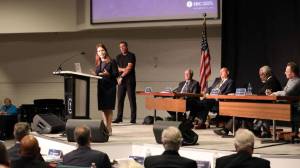
Southern Baptists called on their denomination to launch what would be its biggest investigation into sexual abuse responses and coverup.

While the Executive Committee of the Southern Baptist Convention (SBC) recently commissioned its own independent inquiry through Guidepost Solutions, messengers voted at its annual meeting to transfer oversight of that investigation or launch an additional one.

Thousands of messengers in the convention hall, voting with a wave of yellow cards in the air, supported the move as an additional level of accountability, while few opposed.

“It is the least we can do for abuse survivors. It is worth the extra effort. It is worth the money. It is worth the time and attention,” said Grant Gaines, a Tennessee pastor who made the request for an outside task force with an SBC abuse victim at his side. “If this investigation is worth doing, then it’s worth doing right.”

The newly elected SBC president Ed Litton will appoint the task force to serve as a middle man between third-party investigators and the Executive Committee, a decision-making body within the denomination.

The Executive Committee, though it declined to consider a similar proposal to amend its own investigation just two days before, has agreed and said it will “work expeditiously to apply today’s motion.”

Scrutiny of the SBC’s response to abuse has recently focused on the Executive Committee after letters leaked in the weeks leading up to the annual meeting described leaders dismissing victims, quickly clearing churches of accusation, and resisting broader efforts to address abuse.

According to the motion, the investigation, backed by a group of survivors and advocates, will cover 20 years of allegations of abuse claims mishandled by the Executive Committee. It will also examine the two-year-old committee tasked with reviewing abuse and coverup as grounds for dismissal from the convention.

https://twitter.com/angiechodges/status/1404810502228910096

“I can’t even begin to fathom going through an investigation short of what Gaines proposed,” tweeted Jennifer Lyell, an SBC abuse survivor whose story of being maligned was referenced in the leaked letters. Lyell, who had served for years as a top leader at Lifeway, worried that an incomplete investigation would lead to more “misleading conclusions because of leaders who use their power—and silence—to hide truth” and was thankful to see the widespread support for the task force.

A group of SBC pastors and leaders spoke out as a vocal minority echoing the concerns of victims and advocates, saying the scope and oversight of the investigation had to change. Some displayed green ribbons on T-shirts and social media as a symbol of solidarity with SBC survivors.

One pastor who backed the task force was Troy Bush, lead pastor of Rehoboth Baptist Church in Tucker, Georgia, who blamed the Executive Committee for dismissing an inquiry involving a predatory music minister who had abused at least 10 children at multiple congregations. Bush said those reviewing the claims hadn’t even contacted his church about the allegations before dropping the review.

“Because the Executive Committee didn’t follow through doing what we consider the minimum level of inquiry, they didn’t contact us, any of the victims, or any of the churches involved, we believe the Executive Committee doesn’t have the ability to handle this task force or this investigation alone,” Bush said.

Last week, Executive Committee president Ronnie Floyd announced that the Executive Committee had hired Guidepost to conduct a third-party investigation to review recent allegations. Floyd was implicated in the leaked material, but said it was a “mischaracterization” of his response.

As the convention debated the task force to oversee the investigation, Floyd said, “The Executive Committee respects the messengers. We need this deliberative process. We know this will make this convention stronger, and that is what I want.”

The structure of the convention makes it difficult for its voting messengers to force entities to take action—especially the Executive Committee, which conducts SBC business outside the annual meeting. Motions instead can direct, request, or suggest certain actions.

The motion asking for the task force was initially referred by convention leaders to the Executive Committee itself, but on Wednesday afternoon the convention voted instead in favor of a task force appointed by Litton to be in charge. The task force will present a full report, along with suggested action steps, a month ahead of next year’s annual meeting.

Jared Wellman, a Texas pastor and the most outspoken advocate for abuse victims on the 86-person Executive Committee, tried to get the Executive Committee to amend its own investigation to address those concerns the day before the meeting, but his proposal was rejected. The Executive Committee secretary Joe Knott opposed even discussing Wellman’s proposal, saying “there’s no safer place on earth than most Southern Baptist churches.”

Gaines’s motion was drafted in partnership with North Carolina pastor Ronnie Parrott and in consult with abuse victims. The transferred investigation will be funded through the Cooperative Program, the collection funding SBC missions and ministry. Multiple messengers from the floor spoke up to oppose such funds being used for any investigations.

Another pastor and advocate, Todd Benkert had also proposed the Ethics and Religious Liberty Commission (ERLC) hire an outside audit to track sexual abuse within the convention from “voluntarily participating churches, victims, and witnesses.” His motion was referred to the ERLC, which could opt to do so and report on its findings at future annual meetings.

“I believe the ERLC will give this audit and assessment the best chance to actually be completed and not die somewhere along the way,” he wrote.

Daniel Patterson, acting president of the ERLC, said the commission’s trustees will meet to review the proposal.

“We want to do everything in our power to serve Southern Baptists in the effort to make churches safe for survivors and safe from abuse,” he said in a statement to CT. “This motion will soon be delivered to our Board of Trustees, and I am confident I speak on their behalf in saying that we look forward to discussing together how we can serve Southern Baptists to the very best of our ability for the sake of the gospel.”

The convention on Tuesday adopted a resolution stating they believe “any person who has committed sexual abuse is permanently disqualified from holding the office of pastor.” The convention recommended “all of our affiliated churches apply this standard to all positions of church leadership.”

Southern Baptists also approved a second and final vote on an amendment to explicitly name abuse and racism as grounds for dismissal from the SBC.

Under its earlier policy, the SBC could opt to cut ties with churches that show a disregard for victims of abuse, since caring for the abused comes up in its required statement of faith, the Baptist Faith and Message. The bylaws change makes its stance clearer.

Because Southern Baptists have been talking about strengthening their abuse responses and care for victims for years, some survivors and advocates are waiting to see what will come of the new measures and whether they will result in the change they want to see.

When asked what would be the best outcome for the denomination, Megan Lively—who came forward two years ago with her story of SBC seminary leaders failing to take appropriate action when she reported abuse—said she is looking for “truth revealed, repentance, and a cleansing of the SBC that parallels Jesus cleansing the temple.”

News

Lebanon’s Christian Schools Are Full of Muslims—and They Need Help

Devastating deflation means evangelical and Catholic schools can barely pay teachers and keep classes open. Yet it’s cheaper than ever for the global church to support them.

Christianity Today June 16, 2021
Courtesy of NESN

The 2021 graduating class of the National Evangelical School in Nabatieh (NESN) is entirely Shiite Muslim.

While certainly not the image of a typical Christian school in the United States, it is hardly an outlier in Lebanon, where 35 evangelical schools average student bodies that are two-thirds Muslim.

Located 35 miles south of Beirut, Nabatieh originally had a 10 percent Christian population when American Presbyterian missionary Lewis Loe founded the school in 1925. Based in the city’s Christian quarter, NESN drew students from all sects until the civil war drove the once integrated communities apart. From 1982 to 1985, Israeli occupation forced the school to relocate to the coastal city of Sidon.

When the city was attacked again during the 2006 war, the school’s bomb shelter gave refuge to frightened children. Relative peace since then has allowed the shelter to become a storage room, but less than 40 Christian families remain in the city. Even so, NESN draws from surrounding villages to maintain a Christian share of 10 percent among its 100-some faculty.

But the new crisis facing Lebanon is financial. Year-end inflation for 2020 was 145 percent, as food prices surged over 400 percent. The World Bank judged the economic collapse to be one of the world’s three worst in the last 150 years.

Teacher salaries have lost nearly 90 percent of their value.

Three years ago, NESN’s 100-foot Christmas tree was Lebanon’s largest. This year—as debt equaled the entire operational budget minus teacher salary—the school could not afford even the Charlie Brown version.

A highlight of the school calendar, Christian elements are welcomed by the local Shiite population—including its substantial number of Hezbollah-affiliated families, said principal Shadi El-Hajjar.

Since he assumed leadership in 2013, the student body of 1,400 has more than doubled.

“We teach compassion, forgiveness, and love of enemies,” Hajjar said, “but as culture and practice, not religion.

“This makes us unique, and draws people to the school.”

It was not always this way.

Decades of appreciative tolerance—which included a handful of converts to Christianity—turned into tension during the civil war, said Mohamed Abdullah, NESN general supervisor. The sectarian climate pushed Muslim leaders to object to the school’s Christian education, and for four years they forced classes on Islam to be taught instead.

At the war’s end in 1990, then-principal Munzer Anton stood his ground.

“‘If we teach Islam, then we will also teach Christianity,’” Abdullah recalled Anton saying. “So they agreed to stop both.”

Johnny Awwad, executive secretary for education in the National Evangelical Synod of Syria and Lebanon (NESSL), oversees the seven Presbyterian schools in Lebanon. The war forced this change of mentality in most Muslim-majority areas, and Bible classes instead became ethics. It better fits the Lebanese concept of diversity, he said, where no sect seeks to convert the other.

But Awwad’s educational emphasis is to “live Christ” before his neighbor while challenging the Lebanese temptation toward sectarianism and public religiosity.

For example, Muslim schools in Nabatieh require the hijab.

“We want to encourage an alternative society where the other is accepted,” said Awwad. “We have not betrayed our missionary heritage, but transformed it into an oriental context.”

The heritage stretches back to 1835, when the early missionaries established their first school in Beirut. Their focus on female education—unique for the time period—eventually evolved into the now coed Lebanese American University (LAU). And in 1866, this merger of gospel and universal education founded the Syrian Protestant College—now the American University of Beirut (AUB).

Today AUB is thoroughly secular, though LAU maintains a tie to the Presbyterian Church USA and NESSL, which became independent in 1959.

But support comes from the US government, which last year donated $44 million to LAU for student scholarships. And the university appeals for more, having lost $100 million from its endowment.

“Such campuses are where the battle for the hearts and minds of the youth in the Middle East is won, irreversibly and for a lifetime,” said Michel Mawad, president of LAU.

“They represent the greatest return, [and] on a modest investment.”

But whereas the universities have largely separated from the church, said Joseph Kassab, president of the Supreme Council of the Evangelical Community in Syria and Lebanon, the schools have not—and remain an essential part of Christian ministry.

Which is also social, in service of Lebanon.

“Democracy, freedom of speech, and freedom of conscience all come from our faith,” he said. “By keeping gracious presence among Muslims, our values are absorbed little by little.”

In times of prosperity, the evangelical schools contributed scholars. Graduates led the 19th-century Arab Renaissance, which included the now-standard Arabic Bible.

And in times of crisis, they saved Lebanese lives. During the Great Famine of 1915, starving villagers could send their children to the evangelical boarding school in Sidon as missionaries rode donkeys to facilitate transport.

“We trust that God has used us,” Kassab said, “and we still have a mission.”

But unlike AUB and LAU, evangelical schools receive little outside assistance. The investment necessary, however, is even more modest. The depreciating Lebanese lira means that a pre-crisis $4,000 USD yearly tuition now only costs about $450 per student—if “fresh dollars” can be found. Last year, Lebanon defaulted on its debt, and a lifetime of savings disappeared in what many now label a Ponzi scheme run by the government.

The appeal for funds is made also by Lebanon’s Catholics.

“Our schools don’t need direct help; they need students to pay the salary of the teachers,” said Raymond Abdo, head of the Carmelite order, “and thus preserve our mission among the poor.”

Located in Lebanon’s north, the Carmelites were forced to close two of their five schools because of financial difficulties. In those that remain open, the teachers continue to serve their 2,500 students, despite accepting a 50 percent salary reduction.

In Tripoli, 95 percent of students belong to the Sunni sect.

“Many Muslim families tell me, ‘Father, we want our children to have your values,’” he said.

“We give them the freedom to raise their children in a Christian setting.”

But in Kobayat and Zgharta, the Carmelites desperately try to keep agricultural families in their historic Christian villages. The pull is to the cities, where education is stronger. Many dream to leave Lebanon altogether.

“We have to strengthen the Christian community,” said Abdo. “But if we don’t get help, we will have to continue closing the schools, one by one.”

Altogether, Catholic institutions provide education for about half of private school students, and a third of all Lebanese. As many as 80 percent of these may shut down, reported Vatican News.

France provided $18 million to support Francophone schools (including secular ones) last summer. The Vatican provided $200,000 for scholarships.

Nabil Costa asks for missionary teachers.

The head of the Association of Evangelical Schools in Lebanon (AESL) said its 35 schools serve 20,000 students. With 700,000 private school students total, the evangelicals serve far beyond their 1 percent share of the Lebanese population.

“We share the good news about Jesus, and how he loves everyone,” said Costa.

“But they will only hear this if we provide a first-class academic education.”

Evangelical schools consistently score in the top 5 percent on national exams, he said. And they pioneer the concept of inclusive education for students with special needs (such as autism), aiding both public and non-Christian schools in implementation.

Yet Beirut Baptist School (BBS) is hemorrhaging teachers amid the economic crisis. Twelve of 164 have resigned, emigrating in search of better opportunities abroad. The Lebanese Evangelical School for Boys and Girls (LESBG) has lost 12 of 200, more than in the past 10 years combined.

Costa suspects at least a 10 percent attrition rate across his association.

BBS and LESBG, however, continue to educate students about the Christian religion. And the parents—more than 80 percent Muslim—are pleased, knowing the school respects all faiths.

Steve White, the principal of LESBG, has adopted the old AUB mantra:

This school is for all conditions and classes of men and women without regard to color, nationality, race or religion … [who may] go out believing in one God, in many gods, or in no God. But it will be impossible for anyone to continue with us long without knowing what we believe to be the truth and our reasons for that belief.

Less than a third of evangelical schools are so deliberate, however. Costa encourages AESL members to hold to their heritage, as the Lebanese respect transparency. And though he is clear that the goal is education—both secular and religious—they do “allow the Holy Spirit to work.”

And in common grace the Spirit does, shaping citizens for Lebanon.

Ali Jaber, a Shiite Muslim graduate of BBS, is a pro bono lawyer with the Beirut Bar Association.

“I went to church and learned all the values,” he said. “It made me different from others who were not raised with the same open spirit.”

But with Lebanon in free fall, can the evangelical school system continue to cultivate such students? Does NESN have a future in Nabatieh?

“If the crisis goes on,” said Hajjar, “we will be in trouble.”

Meanwhile, his boss in the synod looks beyond the balance sheet.

“The good Lord who planted us here will not leave us,” said Awwad.

“We are not an accident of history.”

Correction: An earlier version of this story stated NESN closed, not relocated, during the years of Israeli occupation.

Books
Review

Meet the Conservative Evangelicals Practicing ‘Strategic Hibernation’ in the American Northwest

They might embrace their marginal status, but they don’t plan on staying marginal forever.

Christianity Today June 16, 2021
Illustration by Mallory Rentsch / Source Images: Julian Wan / Brooke Cagle / Noah Blaine Clark / Unsplash

In September 2020, about 150 Christians gathered to stage an informal Psalm Sing in the parking lot of Moscow, Idaho’s city hall. They were there to protest the local mask mandate.

Survival and Resistance in Evangelical America: Christian Reconstruction in the Pacific Northwest

Survival and Resistance in Evangelical America: Christian Reconstruction in the Pacific Northwest

Oxford University Press, USA

224 pages

$33.55

Five individuals were cited by police for violating the local order to wear masks, and two were arrested “for suspicion of resisting or obstructing an officer.” One of the event’s organizers was Douglas Wilson, pastor of Christ Church in Moscow, a 900-member congregation with historical connections to Christian Reconstructionism (also known as theonomy), a movement that hopes to see earthly society governed by biblical law. One month earlier on Twitter, Wilson had framed his concerns about the issue in revealing terms: “Too few see the masking orders for what they ultimately are. Our modern and very swollen state wants to get the largest possible number of people to get used to putting up with the most manifest lies.”

In Survival and Resistance in Evangelical America: Christian Reconstruction in the Pacific Northwest, historian Crawford Gribben recounts how in recent decades conservative evangelicals, inspired by assorted strands of theonomy and survivalism, came to settle in the Pacific Northwest. Gribben explores how this group of “born-again Protestants who embrace their marginal status” has thrived in the wilds of Idaho and adjoining states, proposing “strategies of survival, resistance, and reconstruction in evangelical America.”

Turning toward triumphalism

Gribben describes his book as a “social history of theological ideas” based on long-distance interviews of several subjects and in-person fieldwork. Rather than crafting a journalistic exposé or a theological critique, Gribben employs “biographical, institutional, or thematic” approaches.

Previous accounts of Christian Reconstructionists have tended to focus on these believers’ theocratic vision of a future Christian polity rather than their separation from mainstream society. Today, Gribben concludes, these practitioners of “strategies of hibernation” may no longer be as marginal as some have assumed. In a series of illuminating chapters, Gribben astutely examines the history of theonomist migration to the Northwest, the eschatological assumptions underlying the original Reconstructionist vision, theonomic political theory, the movement’s influential educational ideas, and its thoughtful and innovative use of publishing and electronic media.

For these theonomists, present-day survivalism is closely linked to a future reconstruction of a godly society and Christianity’s earthly triumph. Theonomy is a diverse theological movement, arising within a conservative Reformed milieu. Its central ideas were first articulated by Rousas John Rushdoony, a California-based Presbyterian pastor and the son of Armenian immigrants. Gary North, Rushdoony’s estranged son-in-law, is one of many to carry its banner forward into the 21st century. Although theonomy first gained notoriety through its bold application of Mosaic law to the existing political order, more recent adherents have often sanded down its sharp edges.

Among the most intriguing features of Reconstructionism is its view of human history as it relates to Christ’s second coming. For much of the 20th century, American evangelicals were mainly premillennialists, believing Jesus would return to earth before inaugurating a thousand-year reign of peace and prosperity (the Millennium). Premillennialism went hand in hand with pessimism about existing social conditions—if Christ needed to come before things would get better, then why waste much energy on making them better in the here and now? By the 1970s, works like Hal Lindsey’s best-selling The Late Great Planet Earth had popularized a premillennial eschatology that stressed cultural and moral decline and applied apocalyptic prophecies to the Cold War.

Rushdoony challenged this dominant paradigm in the early 1970s, shifting toward a postmillennial view that saw the earthly progress of Christianity as a precursor to Christ’s return. First in a biblical commentary and then in volume 1 of his magnum opus, the pretentiously titled The Institutes of Biblical Law, Rushdoony argued that most believers lacked faith in Christianity’s ultimate triumph. “The whole of Scripture,” he countered, “proclaims the certainty of God’s victory in time and in eternity” (emphasis mine). The saints were called upon to fight for a Christian society here and now, and their victory in this world was assured.

The unalloyed triumphalism of Reconstructionism appealed to some disheartened evangelicals. Douglas Wilson’s evolving theology was shaped by Rushdoony’s postmillennial vision, although he has subtly distanced himself from the more extreme aspects of Rushdoony’s application of ancient Israel’s legal code. Because of years of hard work by Wilson and his followers, Gribben argues, “Moscow may now be America’s most postmillennial town,” with two large, thriving Reconstructionist congregations and members who play important roles in the town’s social and economic life.

In his chapter on the Reconstructionist understanding of government, Gribben carefully examines the historical origins of the movement’s odd coupling of Old Testament legal codes and libertarian politics. While other evangelicals were being drawn to Barry Goldwater’s 1964 presidential campaign, Rushdoony began working for the conservative William Volker Charities Fund. The Fund played a key role in getting libertarian economist Friedrich Hayek appointed to the faculty of the University of Chicago, and it embraced Hayek’s anti-statism.

While Rushdoony advocated the adoption of Mosaic civil law in a reconstructed Christian political order (including stoning those who engaged in homosexual behavior or disrespected their parents), he also embraced a small-government model that would have warmed the heart of Thomas Jefferson. Theonomy’s focus on Old Testament regulations has had little impact on conservative public policy, but Rushdoony and North’s tireless efforts to reconcile Christian principles with libertarian governing philosophies have been quite influential among some Christian conservatives.

Reconstructionists have also shaped evangelical educational theory. Rushdoony first gained attention with his forceful critique of public education. Inspired by theologian Cornelius Van Til’s argument that a neutral philosophical perspective was impossible and that secular and Christian approaches were fundamentally incompatible, Rushdoony advocated Christian alternatives.

By the 1990s, Wilson had become a widely acknowledged authority on homeschooling, promoting a classical curriculum based loosely on Dorothy Sayers’s previously neglected essay, The Lost Tools of Learning (1947). Moreover, Wilson helped found both a seminary and a small residential liberal arts college (ambitiously christened New Saint Andrews) in Moscow. Pacific Northwest theonomists separated themselves from the public school system as part of their strategy to transform society at large. “Before we can enlist in the culture war,” Wilson commented, “we have to have a culture. And that culture must be Christian.”

To promote their educational ideas and socially conservative vision, Wilson and company have creatively used both conventional book publishing (establishing Canon Press) and the internet. Behind all these ambitious efforts is the ultimate goal of cultural renewal or reconstruction. As the community’s organ, Credenda Agenda, put it bluntly, publishing “is warfare.” This campaign included a well-publicized series of debates between Wilson and atheist journalist Christopher Hitchens in 2009 over whether Christianity has been good for the world. (Gribben mentions the interaction with Hitchens at least five times.)

Gribben’s study is a welcome contribution to our understanding of the theonomist movement. His dispassionate, non-alarmist account allows the participants to speak for themselves. Occasionally, however, Gribben seems reluctant to pursue more searching questions, and his appraisal can sometimes be muted. It provides little comfort, for instance, when Gribben reassures readers that while Rushdoony “may not have approved of democracy,” he didn’t actually “approve of its violent subversion.” Allowing subjects to speak for themselves can periodically wander toward accepting their self-portraits. Still, Gribben handles complex cultural and theological questions deftly and with admirable sensitivity.

Two questions

Survival and Resistance in Evangelical America raises a host of fascinating questions that no single work of this sort can answer. Two such questions spring to mind.

First, despite all their dismissals of benighted pietism, isn’t it ironic that Rushdoony, North, and Wilson all ended up following 20th-century evangelicals in disparaging state intervention and embracing libertarianism? Despite the theonomists’ reverence for the Puritans, libertarian assumptions appear to trump the Puritans’ focus on the common good and their conception of the state as a moral agent. As such, their theonomy appears to owe more to Rand Paul than to, say, the Massachusetts Bay Colony’s first governor, John Winthrop. In this sense, is it really accurate to affirm, as Gribben does, that “the Moscow community … has successfully resisted American modernity”?

Second, and more broadly, while theonomy has certainly proven influential in ways unrecognized by scholars, just how seriously should Christians take its theological and social project? Evangelicals can sometimes be taken in by the appearance of scholarship. Answering those who claimed theonomists were weighty thinkers, former First Things editor Richard John Neuhaus once commented acerbically:

One might object that the argumentation of the theonomists is more often obsessive and fevered than well-reasoned, and the pedantry of bloated footnoting should not be mistaken for scholarship. One may also be permitted to doubt whether there is, in the explosion of theonomic writing, one major new idea or finding that anyone outside theonomy’s presuppositional circle need feel obliged to take seriously.

Though downplayed by Gribben, Rushdoony’s circle of fellow travelers should give any thoughtful Christian considerable pause. To note only a few red flags: In the first volume of his Institutes, Rushdoony appeared to flirt with Holocaust denial. Years later, he promoted the work of a writer who endorsed geostationary theory, which denies that the earth orbits around the sun. Gary North was among the most alarmist and apocalyptic of the Y2K prophets—at least until the clock struck midnight at the close of 1999. More recently, Wilson authored a booklet, Black & Tan, that adopted discredited Lost Cause views regarding secession and described the allegedly benign features of antebellum slavery. It is easy (especially in the age of Twitter) to confuse quantity with quality and strong opinions with wisdom.

Biographer Michael McVicar once speculated that Rushdoony was “one of the most frequently cited intellectuals of the American right.” Survival and Resistance in Evangelical America provides an insightful exploration of the larger social and regional contexts inhabited by Rushdoony’s offspring. While strict theonomists remain comparatively few, their influence has been significant in some surprising places. Lamentably, they have usually championed an approach more narrowly ideological than genuinely scriptural.

Gillis J. Harp teaches history at Grove City College. He is the author of Protestants and American Conservatism: A Short History.

News

Southern Baptists Elect Ed Litton as New President

The Alabama pastor, known for his inclusion of women and work on racial justice, beat out Mike Stone of the Conservative Baptist Network in a runoff.

Christianity Today June 15, 2021
Mark Humphrey / AP

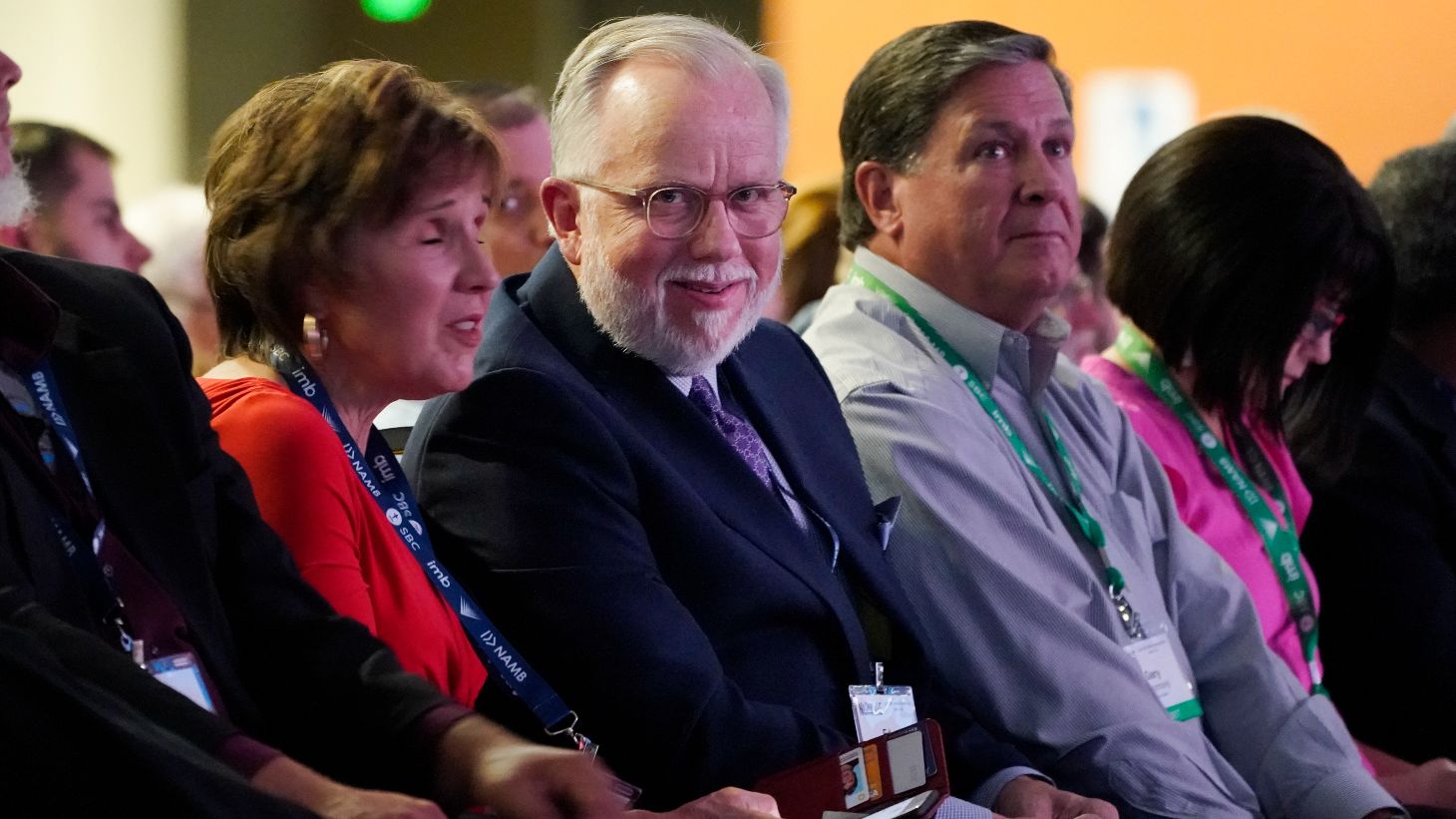
Pastor Ed Litton, championed by supporters as a force for gospel unity and racial reconciliation, was elected the next president of the Southern Baptist Convention (SBC), overtaking the candidate backed by a passionate faction of conservatives.

Litton’s election is seen as a signal of the direction of the nation’s largest Protestant denomination, where infighting has broken out over approaches to race, abuse, and other issues while the Conservative Baptist Network raises alarms about liberal drift and “woke” theology. The close race also reveals how much ground the vocal group has come to hold in the SBC within a year and a half of its founding.

“This vote … shows we desire a leader whose character, humility, and voice for unity represents us a whole over those who call for division,” said Jacki King, who serves on the steering committee for the SBC Women’s Leadership Network.

In a race with no clear frontrunner at a convention with a 25-year-high turnout of more than 15,000 messengers, Litton won out over Mike Stone, a pastor endorsed by fellow Conservative Baptist Network leaders, and Albert Mohler, the longtime president of Southern Baptist Theological Seminary.

Critics of the new network worried that if Stone won, that could cause the denomination to divide on political lines. They were also concerned about leaked letters alleging he resisted abuse response efforts while chair as the Executive Committee. Stone secured the highest level of support among candidates in the first round of voting and won 48 percent to Litton’s 52 percent in a runoff.

Litton is expected to carry on the priorities set forth by outgoing president J.D. Greear and said he would continue Greear’s efforts to appoint women and people of color to denominational committees. Both Litton and Greear use an approved alternate name for Southern Baptists, Great Commission Baptists, as a way to signify a commitment to mission over regional identity.

“We are Great Commission Baptists, and we’re called that for a reason,” Litton said. “Part of what I feel like God has called me to do in this office is to help us remember why we’re family, and what the focus and objective of our family is, which is to get the good news, the gospel of Jesus … to as many people as can hear it.”

Litton’s election followed a lively nomination speech from his friend Fred Luter, the first and only African American president of the SBC. Luter called Litton, pastor of Redemption Church in Saraland, Alabama, a “uniter” who has “uniquely shown his commitment to racial reconciliation.” Luter also said, “In the face of some very difficult and necessary conversation in our convention about abuse, Ed brings a very compassionate and shepherding heart.”

As debates and allegations around critical race theory roiled the SBC, Litton’s conversations with black pastors in his own community led him to speak out about racial justice on the convention level. He has led efforts for pastors in the Deep South to acknowledge and heal from their racist history and joined black pastors like Luter in opposing “any movement in the SBC that seeks to distract from racial reconciliation through the gospel and that denies the reality of systemic injustice.”

Soft-spoken with a short, white beard, Litton has pastored Redemption for 27 years and was a church planter in Arizona before that. He and his wife Kathy represent something of a Southern Baptist power couple. Kathy Litton served as a director with the North American Mission Board before becoming the first woman elected SBC registration secretary in 2019.

The couple also share a testimony rooted in tragedy. Ed Litton’s first wife died in a car crash 14 years ago, as did Kathy’s husband, who was also a Southern Baptist pastor. “We both have a profound sense of suffering and pain in our lives that has changed us, and we believe changed us for the better,” said Litton, quoting Psalm 34:18, that the Lord is near to the brokenhearted.

He spoke to reporters after his election, saying addressing “hurt and pain” requires “intentionality” by churches and describing how the gospel underscores his commitment to racial reconciliation and caring well for abuse victims.

Litton suggested the convention needs humility to listen to one another and come together around their foundational beliefs even though they disagree.

“This is a family, and sometimes families argue in a way that the neighbors get to see it. And that’s kind of what you’ve been witnessing,” he said. “But the reality is we’ll leave this place focused, with a direction, and I believe with a better direction for the future.

He criticized the Conservative Baptist Network in remarks to CT last year, saying, “Honestly, I do not understand why they exist. I do not know a single professor, seminary, or for that matter a single SBC pastor who does not wholeheartedly stand with the inerrancy of Scripture.” The race showcased how influential the Conservative Baptist Network had become. As it held events online and in-person over the past year, the group rallied a campaign to get more churches to send messengers to this year’s convention to vote for Stone and push for stronger condemnation of critical race theory. Supporters turned out with stickers that said, “Stop CRT” and “Beat the Biden Baptists.”

“Tough beat,” tweeted Rod D. Martin, who serves on the SBC Executive Committee and endorsed Stone. “But it’s the work of a single year. We fought the entire denominational machine, plus all their MSM friends. We didn’t win. But this result shows we can.”

For others in the convention, though, Litton’s election signaled a clear win over the new network.

“Some elections are tight and some are blowouts,” said Griffin Gulledge, pastor of Madison Baptist Church in Madison, Georgia. “The margins doesn’t matter as much as the result. The result is an Ed Litton presidency, a commitment to racial reconciliation and abuse reform. That should encourage any and every Southern Baptist, and it encourages me.”

Ideas

The American Church Is a Mess. But I’m Still Hopeful.

Contributor

Attrition rates and leadership failures are only one part of the story.

Christianity Today June 15, 2021
Eric Skwarczynski / Lightstock

A recently leaked letter from Russell Moore describes profound institutional rot, overt racism, and the toleration of sexual abuse inside the Southern Baptist Convention (SBC). (His claims were later substantiated in leaked recordings.) The public square has been consumed with discussing this controversy, especially as the SBC annual meeting is underway.

But the problems Moore describes are not limited to one denomination. Many so-called “moderate” evangelical leaders—those who hold to historic orthodoxy and traditional sexual ethics but speak out on behalf of women and racial minorities—have similar stories to tell. It feels increasingly hard to find institutions in America that aren’t knee-jerk conservative or progressive.

Beyond that, Christian institutions—whatever their doctrine or ideology—often hold in common a thirst for power, an unrepentant self-defensiveness, and a lack of courage that altogether belie the gospel. Many of them don’t seem to function all that differently than institutions outside the church.

In the midst of this upheaval, I’ve watched friends and acquaintances leave the church, others who are in the process of “deconstructing,” and still others (including orthodox church leaders) who are deeply disheartened, even depressed, about the state of the church in the West. We have reason to be discouraged. The statistics are dismal. In a recent survey from Lifeway, two-thirds of young adults reported that they stopped attending church, citing religious or political disagreements with the church or hypocrisy among members. Two recent interviews in CT paint equally dark pictures. What is happening to the institutional church in the United States? It’s easy for me to buy decline narratives—believing things will only get worse. And of course they could. There are examples in church history of Christian populations in certain countries dwindling and nearly disappearing. But increasingly, my hope for the church is found in words that I recite each Sunday in the Nicene Creed: We believe in the Holy Spirit.

When we watch for the Spirit’s presence, we naturally notice those places in our lives where we see fruitfulness and abundance. But ground zero for the Spirit’s work is often in the very places where our resources fall short, where problems seem intractable and unsolvable. As a writer and a priest, I often find myself speaking at gatherings with titles like “The Future of Evangelicalism.” My fellow church-leader friends and I are regularly asked how to fix the problems in the American church, and we regularly get together and talk about how we don’t know. That doesn’t mean we don’t try. We do. We have events, initiatives, and prayer meetings. We read and write books on engaging culture and building institutions. And yet, we are dismayed. It’s easy to double down on strategy. We need better programs, better discipleship, and better training of pastors. We need more money to plant churches and start healthier institutions. We need more Christian magazines, Christian schools, and ministries to the poor and marginalized. We need better essays, columns, and books. We need better leaders, better catechesis, and better political theology. All of this is true. But, in the end, I am not confident that we can drum up a solution. Each year, the problems seem more complex and the darkness within our institutions seems more distressing. But I believe in the Holy Spirit. Because of this, I believe that God is far more invested in purifying and strengthening his church than I am. I therefore live in the full knowledge that I cannot predict the future—I can’t even take a guess. Decline narratives be damned.

We must have a holy skepticism toward any strategy or prediction about the future of the church.

Lesslie Newbigin famously said, “I am neither an optimist nor a pessimist. Jesus Christ is risen from the dead.” Because of the resurrection of Jesus and the Holy Spirit’s continuing work, we cannot be pessimistic or optimistic about the church in America. Who knows what God will do? Who knows how we’ll be surprised? Our call is simply to be faithful in the small sphere we are in, in the ways we can, in the midst of uncertainty.

On his blog, Alan Jacobs expands on Newbigin’s idea. “Is Christianity declining where you are?” he writes. “Is it, rather, growing in power and influence? Is persecution coming for you? Or is cultural success around the corner? None of it matters. Our calling is precisely the same, in what we call times of ease and what we call times of struggle.” Whatever the future of the American church holds, we must simply continue to seek the way of Jesus. Amid broken institutions, we attempt to become truth tellers and work for reform in the imperfect and incomplete ways we can. Though this work is often slow and sometimes quiet, it isn’t merely quietism. We participate in the Spirit’s work. But we believe that the whole will be greater than the sum of our efforts or ability. We believe this because the Holy Spirit is redeeming the church in ways we deeply need and cannot yet imagine. The kids would call this a “Jesus juke”—a somewhat pejorative name for throwing Jesus into a conversation as a Mr. Fix It. It’s a way to invoke God to stop conversation or human effort—an inane social commentary that simply says, “Well, Jesus loves us all,” and presumes there’s therefore nothing more to say. And I admit that a few years ago, I would have thought of this essay as a cop-out.

Yet, if it’s a Jesus juke to admit aloud that our institutions—and our very lives—are beyond our own repair and our only hope is the work of God, then the gospel itself can be dismissed merely as a Jesus juke. The fact is, things are bad in the American church. I’m not optimistic they will get better. But I’m not pessimistic either. Jesus is risen from the dead.

We need to truly understand and mourn the broken state of the American church. I’ll keep having conversations with friends and fellow church leaders, keep weeping over the state of the church, keep working and seeking repentance and renewal. And I have great reason for hope. It’s not a strategy, a new book, a new political candidate, or a new initiative. The Holy Spirit is at work. That is enough for me for today.

News

How to Proclaim the Good News in the Fastest-Shrinking and Fastest-Growing Cities in America

As the US census charts a decade of dramatic changes, two congregations have lived it.

Soap making class at The Maker's Center in Charleston, West Virginia.

Soap making class at The Maker's Center in Charleston, West Virginia.

Christianity Today June 15, 2021
Michelle Thompson

Matt Friend is a proud native of Charleston, West Virginia. But the lead pastor of Bible Center Church will admit that the city has changed.

“There’s definitely a lot less traffic now,” he said.

His home city has the dubious distinction of being the fastest-shrinking city in the United States, according to the US Census. In 1960, Charleston had a population of 85,796. The city has gotten smaller every decade since and now has fewer than 50,000 people.

Preliminary census data released in April suggests that other areas across the country are suffering similar declines. While the American population grew over the last decade, the rate of growth is the slowest since the Great Depression: only 7.4 percent. Three states—West Virginia, Mississippi, and Illinois—lost population since the last time the federal government did its official decennial count. Ten more states saw less than 3 percent growth.

The full census report, scheduled for release in August, is expected to show the results of declining birthrates, life expectancy, and immigration. In the places that have been hardest hit, though, local churches have long seen the impact of demographic decline.

Friend says he can remember as a child going to downtown events like the Charleston Sternwheel Regatta and navigating crowds of tens of thousands. “It wasn’t New York City, but to go downtown Charleston might as well have been New York City for me as a kid. Now it’s not that way at all,” he said.

The nondenominational Bible Center Church began to notice the effects of the change in the community on the church in 2008, after lax regulation of housing mortgages caused a banking crisis and then a financial crisis. Fossil-fuel industry jobs were already in decline in the state, and the recession hit the city’s white-collar work too.

Church attendance declined with the population until 2018, when the leadership began to see small but healthy signs of growth. Now, hit again by the pandemic and COVID-19 health restrictions, they are finding new ways to innovate to reach their community.

The church’s leadership believes that population decline is not a reason to despair but encouragement to find new ways to do the work of proclaiming the gospel and inviting people to worship God.

“Sometimes people will say, ‘There's just no hope,’” Friend said. “And we have to remind one another that there are still 49,000 people here who need Jesus and need the church. Our mission hasn't changed.”

Some of the church’s innovations have been small: they hired an online pastor and broadcast services on their local TV during the pandemic.

Others have been further afield, as the church finds new ways to meet the needs of their city. Michelle Thompson, executive director of outreach, said one of her favorite initiatives is an adult driver’s education program done in cooperation with a local car dealership. The church provides both the lessons and the car for practicing.

“If you've grown up in generational poverty, there's a good chance your family never owned a car,” she said. “And if they didn't own a car, you probably never learned to drive.”

Even more ambitiously, Bible Center Church has built a community center with a technology lab, a woodshed, and an art studio, designed to teach skills to those who need them. Thompson said the key to outreach is listening to the community and meeting people where they are.

“To pastors who are experiencing decline, my encouragement would be to go back and find new ways to connect with people,” Friend said. “Instead of thinking about the people who are no longer in your community, focus on the people who are there and ask the question ‘If I were a missionary, what would I need to do to connect with those people?’”

Of course not every area of the country is declining. Despite the slow population growth overall, some regions are seeing rapid increases in population. In those places, though, demographic change brings other pressures.

Buckeye, Arizona, for example, a farming community of about 6,500 people in 2000, has ballooned to a metropolis of more than 79,000. Buckeye claimed the title of fastest-growing US city in both 2017 and 2018 and hasn’t slowed down yet.

Summit Community Church, a Missouri Synod Lutheran congregation that started in 2003, has grown with the city. In 2006, the church had about 50 people. In 2019, when the congregation moved into a permanent building on Interstate 10, about 2,000 people called Summit their church—a mix of families, retirees, and young adults, as well as lifelong Missouri Lutherans and people who were new to that tradition.

According to lead pastor Nate Schaus, the church and the city have both had growing pains.

“The constant influx of new people and families from the West Coast and Midwest bring with it opportunities for new communities, new schools, new businesses, and new churches—but it also brings some challenges as people try to find community and connection in a rapidly changing city,” he said.

Like Bible Center Church in West Virginia, Summit Community Church has been focusing on outreach: listening to what people need and finding ways to creatively respond.

Recently, the church has focused on finding ways for people who might feel lost in rapidly expanding Buckeye to connect to a community. Sara Fitch, Summit’s community engagement director, said the new residents are looking for that. And older residents, living through the rapid transformation of their hometown, are too.

“Connection and community—even in a large place—has to happen in small chunks,” Fitch said. “That’s part of the reason we do our community outreach. We can get smaller groups of people to serve these causes and these organizations, and then you get connected with those people. Then you have people that you have something in common with, and it doesn’t feel so big and overwhelming.”

The church is also working more to partner with local community organizations. Having a building has allowed Summit to lend meeting space to the local community for events and gatherings, including a recovery group that was displaced during the pandemic.

Fitch’s position was also created to help facilitate more partnerships.

“We recognize that we have all these great community organizations, and we want to partner with them,” she said. “We don't want to create those ministries out of our church. We want to be an asset to the community.”

The church is also building connections with other churches and community leaders. An established relationship with Mayor Eric Orsborn opened the doors for Summit and another church to cohost a recent prayer gathering on the steps of City Hall.

Whether one’s city is shrinking or growing, Schaus says church leaders need to keep an eye on the way their communities are changing.

“If you or your church have been there for more than three years, don’t assume the needs and opportunities are the same,” he said. “Pastors love to exegete the Scriptures for understanding. Take time to exegete your community as well, to uncover ways that you can strengthen both faith in Jesus and community life.”

Apple PodcastsDown ArrowDown ArrowDown Arrowarrow_left_altLeft ArrowLeft ArrowRight ArrowRight ArrowRight Arrowarrow_up_altUp ArrowUp ArrowAvailable at Amazoncaret-downCloseCloseEmailEmailExpandExpandExternalExternalFacebookfacebook-squareGiftGiftGooglegoogleGoogle KeephamburgerInstagraminstagram-squareLinkLinklinkedin-squareListenListenListenChristianity TodayCT Creative Studio Logologo_orgMegaphoneMenuMenupausePinterestPlayPlayPocketPodcastRSSRSSSaveSaveSaveSearchSearchsearchSpotifyStitcherTelegramTable of ContentsTable of Contentstwitter-squareWhatsAppXYouTubeYouTube