News
Wire Story

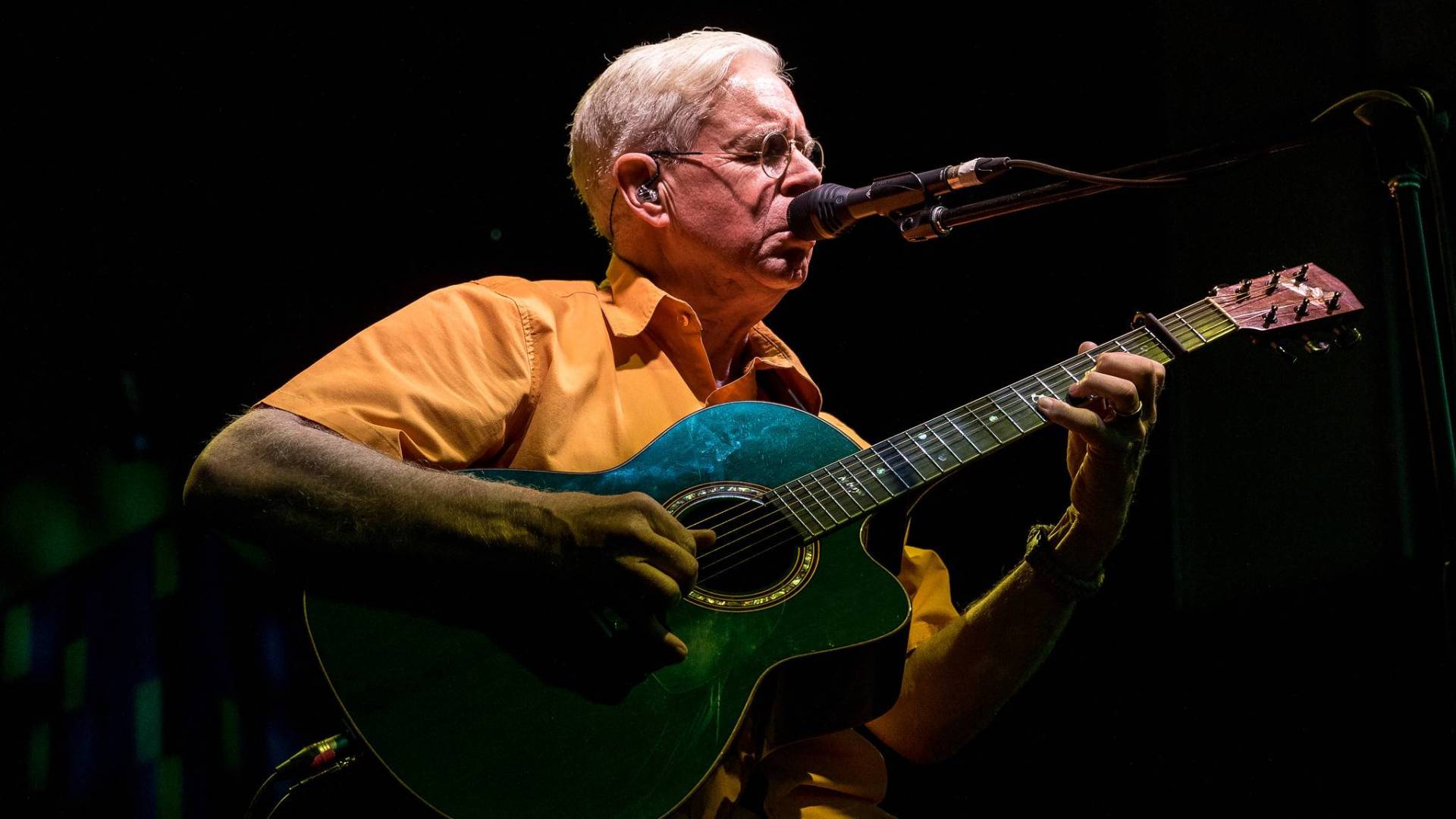
Singer-Songwriter Bruce Cockburn’s Latest Gig? His Church’s Worship Band

After decades away from church, the Canadian folk rocker joined a congregation in San Francisco—without mentioning his musical fame.

Christianity Today October 12, 2021
Coldsnap Fest / Flickr

Bruce Cockburn, the Canadian singer-songwriter, had not attended church regularly in more than 40 years when he walked into the Lighthouse Church in San Francisco three years ago.

He’d come at the request of his wife, M. J., whose spiritual quest, impelled by the death of a friend, led her to the church. Even then, “I told her, ‘I’m not going,’” he said. “I said I was past that. I wasn’t a churchgoing person.”

But M. J. persevered. One Sunday, Cockburn relented and was “completely blown away.”

“I didn’t know any of these people, and they didn’t know me, but love filled the room,” he said of the small non-denominational congregation. “It felt like the church I was waiting for.”

Known for a string of moody folk-rock Billboard 100 hits from the 1980s (“Wondering Where the Lions Are,” “Lovers in a Dangerous Time,” “If I Had a Rocket Launcher”) and his stints playing with The Grateful Dead (“Waiting for a Miracle”), Cockburn had always incorporated Christian theology and imagery into his songs.

Still, Cockburn, 76, didn’t see a reason to mention his musical career, even after he was invited to play in the church’s worship band. “Nobody knew who I was” when they extended the invitation to play, he said. “They needed a guitar player, so they were foolish enough to ask me.”

If, three years later, no one had figured out that the house guitarist has 35 albums and 13 Junos—the Canadian Grammys—to his name, they likely realized it in May, when Cockburn released four songs he’d written as a fundraiser for the church’s programs to assist homeless people and combat human trafficking.

A regular churchgoer in the 1970s, Cockburn quit in 1980 after moving from Ottawa to Toronto. “I never found a church in Toronto that felt like home to me,” he said. “I just kind of stopped going.”

The truth was, “The formal church and I had grown apart,” he said of his decision, even as his faith remained strong.
“It’s a continuing journey,” he said. “I don’t feel I have the corner on understanding anything. I just have a desire to have a relationship with God, a day-to-day thing … I’ve always believed a relationship with God should be central to everyone’s life, and I’ve tried to keep it the center of mine.”

While he doesn’t have “any hesitation” identifying as a Christian, he’s starting to wonder if that’s such a good thing to say in public in the US these days.

If someone asks if he’s a Christian, he still says, “Yes, I’m a Christian, but I got vaccinated.”

Because of pandemic shutdowns, Cockburn hasn’t played live at church for more than a year. But he has played songs for online services and participated in a sermon series about parables. The worship band gives him “a chance to play music other than my own,” he said. “It’s a meaningful way for me to participate.”

One of the songs he wrote for the fundraiser, “Orders,” is “a biblical take on things, the order to love them all,” he said, referring to Jesus’ command to love neighbors.

“Lots of people who consider themselves believers frequently forget that,” he said. “It’s a reminder to myself as much as to anyone else,” he added.

Another song, “Us All,” addresses political polarization in America.

Lots of things divide people, Cockburn said. But “one of the things we all have in common is pain. We have scars that unite us all.”

When asked about where his music comes from, he said they are gifts that “come from God.”

“I still have to filter it,” he said, adding, “Unfortunately, that means God is stuck with me as a filter.”

News

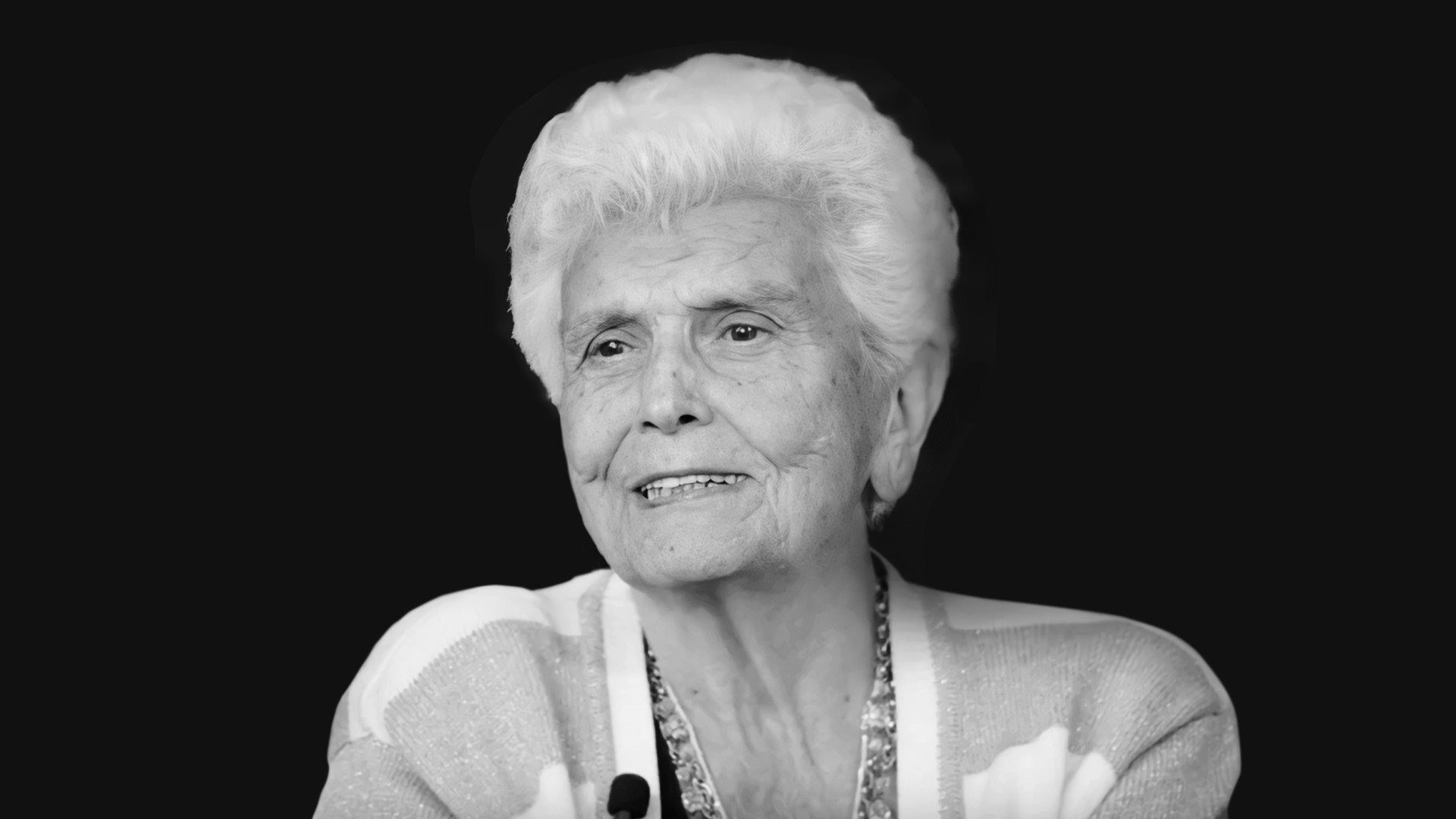
Died: Evelyn Mangham, Who Convinced Evangelicals to Welcome Refugees

After 20 years in Vietnam with the Christian and Missionary Alliance, she saw caring for those displaced by war as simple obedience to Jesus.

Christianity Today October 12, 2021
Courtesy of World Relief / edits by Rick Szuecs.

Churches weren’t always ready to help Evelyn Mangham. When she cold-called them in 1975 seeking sponsors for refugees from the Vietnam War, they often had other plans and other financial commitments.

But in call after call with Christian and Missionary Alliance (CMA) churches, and then any congregation affiliated with the National Association of Evangelicals (NAE), Mangham pushed, quoted Scripture, told stories about Vietnamese people from her 20 years as a missionary, and applied moral pressure.

One pastor told Mangham his congregation couldn’t help because they were in the middle of a building project—working on a new parking lot. She sputtered, “But these are people.”

By the end of the year, she had convinced evangelical churches to sponsor 10,000 refugees from Vietnam, Laos, and Cambodia.

Mangham, who cofounded World Relief’s refugee resettlement program with her husband, Thomas Grady Mangham Jr., died on October 5 at age 98.

Matthew Soerens, the current direct of church mobilization for World Relief, said she was “a remarkable, faithful follower of Jesus.” Jenny Yang, World Relief’s vice president of advocacy and policy and coauthor, with Soerens, of Welcoming the Stranger, described Mangham as faithful and feisty.

“Her love for refugees, for the church, and for her Lord were contagious,” Yang said. “Her impact on the lives of those who are vulnerable will be felt for generations to come, and I know there was a huge celebration for her in heaven as so many people whose lives she touched welcomed her to her eternal home.”

https://twitter.com/JennyYangWR/status/848688774896922626

Mangham was born to George and Lola Breaden in 1922. Her father was the heir of a well-off family in Greenville, Ohio, who abandoned the family business and his inheritance when he heard about the need to spread the gospel in Arabia.

Evelyn’s birth disrupted the family’s missionary call, however, because she was their third child, and the CMA had a rule that missionaries could only take two children to the mission field. George Breaden prayed and asked the denomination to make an exception and send the family anyway. The CMA waived the rule, and the Breadens went to Ma’an, Jordan, in the far reaches of the British-created Emirate of Transjordan.

“Daddy wasn’t happy in Jerusalem, Bethlehem, or Beersheba,” Mangham later recalled. “That was ‘big time.’ He wanted to be at the end of the line, so that’s where we always were.”

It was in some ways an austere childhood. Mangham didn’t have a doll and instead played with half-burnt birthday candles—the longer ones designated the father and mother, the shorter ones the children. But she also recalled joyous times running around with local children, feeding sheep, and petting camels.

Mangham was sent to school in Jerusalem with other CMA missionary children. When it was time for college, she was sent back to the US to study at Nyack College, which was then called the Missionary Training Institute.

“I was alone, and I was so scared, I can’t even remember parts of it,” Mangham said. “I’d just go back to Scripture: ‘Be anxious for nothing, but in everything by prayer and supplication, with thanksgiving, let your requests be made known to God’ (Philippians 4:6, NKJV). And I did that. And I knew that he heard me.”

Mangham met Grady, the son of an Alliance pastor, at Nyack, and the two graduated and married in 1943. Grady, who was originally from Florida, took a position at a church in Georgia for a few years, and then the couple became Alliance missionaries to Vietnam.

The CMA was the oldest Protestant denomination in the French colony. Hoi Thanh Tin Lanh Viet Nam (the Evangelical Church of Vietnam) had more than 30,000 Vietnamese Christians worshiping in about 350 congregations. The CMA also supported about 130 missionaries, who planted churches, trained pastors, translated Scripture, taught people to read and write, and provided medical care in the remote regions of the country.

The Manghams learned four languages and pushed into the interior of the country, to reach the ethnic and linguistic groups that were isolated from the rest of Vietnam. For a while they made their home base in Cheo Reo, in the Central Highlands, about 270 miles north of Saigon.

They traveled the area in jeeps—including one donated by the city of Orlando, Florida, emblazoned with decals promoting the city—over the rutted roads through the jungles. The missionaries’ treks were occasionally dangerous. In 1957, Grady shot a 12-foot tiger that had been accused of killing 200 people.

In 1962, Grady and Evelyn were briefly captured by Communist fighters and forced to listen to a two-hour lecture on class conflict and revolutionary history. The lesson ended with general well wishes for their mission, however. The Communists told the Manghams, “We know you missionaries are here only to help the people of this country.”

North Vietnamese fighters did not always look so kindly on the American missionaries’ presence, though. As US involvement in the war escalated under Presidents John F. Kennedy and Lyndon Johnson, the Manghams and other CMA missionaries occasionally had people shout at them, “Get out and stay out. You are enemies of the people.”

The Manghams served to the end of their allotted time, however, remaining in Vietnam until 1967. Then they returned to New York and went to work for the denomination. They spoke widely in support of missions and were also frequently asked to speak about the war. They supported America’s involvement in the conflict and argued it was a just cause.

When Americans withdrew in 1975 and Communists took over, the couple started getting desperate calls from people they had known who needed to get out. Mangham and two friends started making endless phone calls and found sponsors for thousands of refugees—Christians from the church in Vietnam, but also Buddhists and followers of folk religions.

Mangham told churches they should dedicate time and funds to help the refugees because they were people, because Scripture said to welcome strangers, and because it created “a mission field, backwards.”

But mostly, she argued, it was what Jesus would want.

“It’s what Jesus said, that’s all,” she once explained, quoting Matthew 25. “‘I was hungry, and you gave me something to eat. I was thirsty and you gave me something to drink. I was a stranger’—refugee—‘and you took me in.’ … It’s simple obedience.”

The refugee resettlement program began under the auspices of the CMA’s relief aid agency, Compassion and Mercy Associates. It eventually became part of World Relief. When Grady and Evelyn stepped down in 1987, the organization was resettling about 6,300 refugees per year.

The couple retired to Florida and continued to support refugee work to their ends of their lives. In her 90s, Mangham loved to throw her arms around Muslim refugees she saw in the grocery store and tell them how happy she was to see them, speaking the Arabic of her childhood.

She also frequently urged people to teach their children Scripture and learn to lean on the faithfulness of God.

“I know I’m in his hands. I’m in his hands, and he can do with me whatever he wants,” she said in 2019. “I love to do, I love to be, I love to talk, I love people, and that takes care of it.”

Mangham died a day before her 99th birthday. She is survived by her four children, Ed Mangham, Connie Fairchild, Thomas Grady Mangham III, and Patty Whalen.

“It’s not the loss that overwhelms us,” her son Thomas wrote in a tribute on Facebook. “it’s the thought that we had the honor of knowing, seeing and experiencing what it’s like to live with a Hebrews 11 hero of the faith.”

A memorial is planned for 2 p.m. on Saturday at Good Samaritan Village Church, in Kissimmee Florida.

News

Moving Beyond Hotel Bibles, Gideons in Canada Announce New Name

ShareWord will continue to distribute Scripture, but emphasize church partnerships and equipping Christians for evangelism.

Christianity Today October 11, 2021
mrod / Getty Images

Say “Gideons,” and the vision that comes to mind for most people is Bibles in hotel nightstands and pocket-sized Scriptures passed out to students. It’s a recognized brand, with a well-publicized purpose, but it’s getting a new moniker in Canada.

Gideons International in Canada will now be known as ShareWord Global.

“God has called us to expand our evangelistic efforts internationally and come alongside our brothers and sisters across the world with tools, resources, and inspiration to be faithful—not just to a brand name, but to Jesus himself, who instructed us to ‘go and make disciples of all the nations,'” said Alan Anderson, ShareWord president, in the announcement.

This new name comes a decade after the Canadian branch of Gideons International distinguishing itself from its mother organization, The Gideons International, which is headquartered in Nashville.

There were several reasons for creating an autonomous Canadian organization, Anderson told CT. One had to do with the Canada Revenue Agency’s requirements for reporting money that was being sent overseas. But there were also some ideological differences. The Gideons in Canada wanted to open the organization to women; in the US it remains a men-only ministry.

“Sometimes the methods get confused with the purpose,” Anderson said. “We took a step a back and asked ourselves, ‘What are we trying to accomplish?’”

The Canadian organization also removed the vocational requirement that members be businessmen or professionals and took steps to work more directly with churches.

“We were able to invest far more heavily in partnership, especially partnership with the local church,” Anderson said.

ShareWord will continue to distribute physical Bibles and gave away 2 million in 2020. The Canadian organization also developed a digital app called NewLife to introduce people to the gospel of Christ on their smartphones.

The Canadian organization is putting more emphasis on equipping churches with the tools and confidence to share the gospel.

“We do a fair amount of development and inspiration to people in congregations to be bolder about sharing their faith,” Anderson said.

The emphasis on personal evangelism comes at a time when many schools and hotels across Canada decline the offer to place Bibles in rooms and in the hands of students.

“We’re really committed to how powerful Scripture is, but how much more so will someone receive that if it’s from a person rather than just sitting in a drawer?” Anderson said. “How much more likely are they to open it if there’s someone who's telling them how much it’s meant to them?”

A recent study by Alpha Canada and the Flourishing Congregations Institute reveals there is a great need for a revival of personal evangelism. Their survey conducted earlier this year found that 65 percent of Canadian church leaders reported evangelism hasn’t been a priority for their congregations over the past several years.

Similar research conducted by Barna in the US found that 44 percent of Gen Z feel that it’s wrong to share your personal beliefs with someone of a different faith.

According to the Alpha research, “Perceived antagonism toward Christian values and the Christian church” was the number one reason people aren’t evangelizing.

“In North America, it has almost become wrong to share your faith, and there’s a tremendous social hesitancy to do that,” Anderson said.

But he believes that there’s no better time for an organization like ShareWord to help Christians get past those hesitancies. As ShareWord looks ahead to the next five years, Anderson said he’d like to see partnerships with 5,000 churches, training 100,000 Christians to share the good news.

“If you can get over that fear barrier, it turns out there are more people who are interested than you would think, and there are far less people who are hostile than you would think,” Anderson said. “I think we’ve built up fears that are not necessarily accurate.”

ShareWord will also continue to expand its work in foreign countries, especially as new doors open. Anderson said ShareWord has been welcomed to spread Scripture in Cuba and give bibles to school-aged children in Nicaragua. ShareWord has a footprint in 47 countries with extensive work happening in about a dozen.

Anderson admits says the decision to change the name was not easy. The Gideons are well known, and members of the Canadian organization value that history. But in the end, it was time to leave the name behind.

“If you say the word Gideons to someone, they will immediately have an image of a Bible in a hotel room,” he said, “and our ministry is so much more than that now.”

Books
Excerpt

Philip Yancey: God Can Love ‘A Cynical Sneak Like Me’

An excerpt from the best-selling author’s memoir, “Where the Light Fell.”

Christianity Today October 8, 2021
Illustration by Rick Szuecs / Source images: Courtesy of Philip Yancey / Jimmy Dozer / Wikimedia Commons / Somesh Kesarla Suresh / Unsplash

At a vulnerable time in my spiritual development, I found myself at a Bible college with a 66-page rule book and little emphasis on grace. Other students seemed quite content in the controlled environment. In me, however, the campus culture encouraged more cynicism than faith.

Where the Light Fell: A Memoir

Where the Light Fell: A Memoir

Convergent Books

320 pages

My cynicism gradually softened over the course of my sopho­more year. I found some relief in a new Christian Service assign­ment: “university work.” Four of us male students started visiting a nearby state university every Saturday night with the goal of engaging students in conver­sations about faith.

On our first visit I am dazzled by the plush dorms and student lounges, so different from the utilitarian buildings at the Bible col­lege. Entranced, I study the bulletin boards covered with splashy posters announcing concerts, plays, and other student activities. I want to be one of these people more than I want to convert them.

Strolling through the campus, I notice a group of athletes sitting on a patio. “Where are you guys from?” I ask.

“We’re with the Yale baseball team. How about you?”

“Um, I attend a Bible college down the road, and we came over here to see if anyone wants to talk about spiritual things.” They ex­change smirks. I continue, “You see, in God’s economy …”

“That’s funny,” one of the athletes interrupts. “I didn’t know God had an economy.” His teammates laugh, and blood rushes to my face. I head toward the student center to watch TV.

“Don’t worry, Philip,” my fellow students reassure me when I re­port on my botched attempt at witnessing. “At least you sowed the seed. God’s Word doesn’t return void.”

After that first attempt I spend nearly every Saturday night in the student center, catching up on sports and the news.

Class assignments force me to keep studying the Bible, which unexpectedly captures my interest. I read Ecclesiastes and recognize my own dreary cynicism. I read Psalms and Job and marvel that these sacred books would in­clude such angry accusations against God. Such biblical outbursts are common, though the profes­sors usually skip over them.

I realize I don’t know much about Jesus, apart from the stories I learned in Sunday school. As I study the four Gospels, I encounter more surprises. “You shall know the truth and the truth shall make you free,” Jesus promises, which strikes me as ironic on a campus that stifles freedom. I’m beginning to like this guy. When someone asks him a question, he never uses circular reasoning. He’s enigmatic, elusive, impossible to pin down. Most times, he tosses the question back to the person who asked it.

If Jesus showed up on campus, I wonder, what would the admin­istration do with him? Would he, too, get shot down for questioning his teachers?

My brother, Marshall, has encouraged me to read books by C. S. Lewis. Reading him, I feel a gentle pull toward belief. The book that hooks me most deeply was published the year I entered high school: A Grief Observed. I read about Lewis’s struggle to survive the “mad midnight moments,” then I lift my head and confront the happy-faced students around me, and the oyster shell snaps shut.

Shockingly, the college has hired a sociologist with a degree from Harvard. He assigns Erving Goffman’s book Asylums, a land­mark study of what the author calls “total institutions.” Goffman suggests that institutions such as prisons, military academies, con­vents, insane asylums—and Bible colleges?—progressively condition their subjects so that in time the insiders habituate to their controlled setting. The ability to make a bed so tight that coins bounce off doesn’t help a recruit on the battlefield. It does, however, reinforce a military command structure: “I am in charge, and you must do what I say.”

As if to confirm my suspicions, in one of our private meet­ings the dean of men admits to me that he retains some petty rules simply to teach students to obey. Which gives me an idea for my sociology project.

I distribute a printed survey form to every male freshman and senior, asking such unscientific questions as “Which rule bothered you most on entering this school?” and “Has your attitude of rebel­lion against the school declined since you enrolled?” True to my hunch, the seniors accept, and even defend, rules and policies that freshmen think ridiculous.

When the dean finds a copy of my mimeographed survey in a trash can, once again I land on the faculty’s watch list. “This is an insurrection!” says the college president. “He can’t survey freshmen. They don’t know us!”—which was my point, exactly.

The project helps me separate the school’s subculture from the body of faith it so jealously guards. Perhaps I am resisting not God but people who speak for God. I’ve already learned to distrust my childhood churches’ views on race and politics. What else should I reject? A much harder question: What should I keep?

One scene from the Gospels, in John 6, grabs me. I’ve pictured Jesus as the crucified Messiah, rejected by his own people. But John’s account gives a glimpse of his early popularity. Huge crowds follow him around, dazzled by his miracles and hanging on his every word, eager to crown him as their king. How does Jesus respond? By re­treating to a mountain. Undeterred, the crowds pursue him. The next day, Jesus gives some of his harshest teaching, so alienating the crowd that all but his closest followers abandon him. When Jesus asks his 12 core disciples if they, too, want to leave, they answer, “Lord, to whom shall we go?”

I have always thought of God as an arm-twister, a cosmic bully who schemes to break anyone who dares resist. In this account, Jesus appears wistful, even forlorn, showing no interest in compel­ling belief. Jesus clearly did not use the techniques of Goffman’s total institutions.

From the Bible I am learning about a God who has a soft spot for rebels, who empowers such people as the adulterer David, the cheater Jacob, the whiner Jere­miah, the traitor Peter, and the human-rights abuser Saul of Tarsus. A God whose Son makes prodigals the heroes of his stories.

Could that God find a place for a cynical sneak like me?

Excerpted from Where the Light Fell: A Memoir by Philip Yancey. Copyright © 2021 by Philip Yancey. All rights reserved. No part of this excerpt may be reproduced or reprinted without permission in writing from the publisher.

Why One of Christianity Today’s Longest Subscribers Is Still Reading

“I do not know of any other resource that is seeking to understand the world and the gospel in the ways CT is.”

Why One of Christianity Today’s Longest Subscribers Is Still Reading
Photo Courtesy of Darrell Johnson

Perhaps it’s fitting that for more than 20 years, Darrell Johnson has made Vancouver, British Columbia his home.

“I was born in Duluth, Minnesota—so I’m one of those Americans who from an early age knew Canada existed,” said Johnson, a long-time pastor and professor at Regent College.

Johnson’s ministry began in California, took him as far away as the Philippines, before ultimately landing his family in Vancouver. But it was his Swedish grandmother, who Johnson lived with at various points in his childhood, who started the whole thing.

“She spoke of Jesus in such a compelling way,” said Johnson. “She loved her Bible. Even when I was three years old, she read her Bible to me, with her broken Swedish accent.”

Later, the love of God that his grandmother had cultivated led Johnson to respond to an alter call as a 10-year-old. But after making his way down the church aisle, his mother appeared by his side to lead him away, spurred by his father’s fears of a predatory preacher. During most of his adolescence, Johnson kept up a quiet faith, attending church with his family, but keeping church life at arms length. Then, Martin Luther King Jr. was assassinated on April 4, 1968. As the radio stations played King’s sermons through the night, Johnson knelt and prayed.

“I said, ‘Lord Jesus, I would love to be able to preach you in such a way that lives are changed,’” said Johnson. “That was the moment of surrendering to the call.”

After attending seminary and serving a Presbyterian Church (USA) pastor at several California congregations, Johnson moved across the Pacific Ocean to lead Union Church of Manila in what he now calls his “richest time of ministry.” He arrived in 1985, as the country was in the midst of toppling a dictatorship in what became known as the People Power Revolution.

“I saw 3 million Filipinos demonstrate that the Sermon on the Mount is the only way to live in this world. They took Jesus’ call to nonviolence seriously,” he said. “I saw how the kingdom of God does break into the world through humble, meek people.”

After several years at Union Church, a majority international congregation that served many diplomats, multinational corporation executives, and missionaries, Johnson returned to California for the next decade. Then, virtually out of the blue, Regent College invited him to join their faculty. He and his wife Sharon, and three of their four children moved into what was a very different place than they assumed. (The Johnson adopted their children from the US, South Korea, the Philippines, and Russia.)

“At the beginning, it took us a while just to get used to the fact that Canada is different than the United States, learning to understand the Canadian view of the world and the Canadian way of being Christian,” he said.

Johnson served nearly a decade at Regent before becoming a pastor at the historic First Baptist church in the downtown core of Vancouver. He stepped down after suffering a heart attack and today spends much of his time mentoring other pastors and writing, recently finishing a book on Ephesians and is currently in the midst of a new work on John.

Johnson became a CT subscriber as a seminary student, just several years after the publication celebrated its first decade of existence.

He was immediately captivated by its news section and by its biblical exposition pieces. Today he praises the Testimony section, the last page of the print magazine, where individuals share the specific story that led them to Christ. Johnson credits his longevity as a subscriber with CT’s thoughtfulness.

“I earned my undergraduate degree in physics in theoretical mathematics so I didn’t learn how to write well before going into ministry. I have learned so much from the way CT articles are carefully crafted and thought out,” he said.

Its global focus has also kept him captivated.

“I appreciate reading reports from Africa, Asia, Europe, including reporting from behind the Iron Curtain in the midst of the Cold War,” he said. “The church in the states, and, to some degree, the church in Canada can be inward focused so it’s important to broaden the vision and remind people that God is active and the church is growing all over the world.”

Several recent editorial highlights for Johnson:

Stephanie McDade’s How Could All the Prophets Be Wrong About Trump?

“That, to me, was one of the most disturbing dimensions of the last five years in the political realm. For CT to take that on and do so so carefully was a great blessing.

Mike Cosper’s The Rise and Fall of Mars Hill podcast, Kate Shellnutt’s Bethlehem Baptist Leaders Clash Over ‘Coddling’ and ‘Cancel Culture’, Daniel Silliman’s Ravi Zacharias coverage:

“An example of the capacity to face tough issues and deal with them. A model of how to talk about ‘the stuff’ that happens in the church, not by playing games or being condemning but by dealing with the truth. The courage to deal with the issues before us and to do that with grace and truth.”

CT CEO and President Tim Dalrymple’s recent piece on the Splintering of the Evangelical Soul:

“Tim articulated the nature of the divide without putting down anyone in the process. He wasn’t trying to be conciliatory; he was seeking to name the dynamics of the tension. I admire his capacity to name what we’re facing without a condemning or judgmental spirit. Timothy’s capacity to see the big picture and articulate it is marvelous. He’s such a careful thinker. He has an amazing gift with words.”

While CT is an American publication, Johnson believes it is deeply relevant for Canadian pastors and ministry leaders.

“When I first heard the phrase Beautiful Orthodoxy, I thought I might have gone with words like courageous or compassionate. But the more I’ve thought about beautiful, the more I’ve realized that it really works for Canada,” said Johnson. “The word evokes the worship orientation of the faith and has a more inviting posture towards the world. Who doesn’t want beauty? The search for beauty is all around us. At least in Canada, what will attract people to Jesus is something irresistibly good, lovely … beautiful.”

Johnson often encourages those he mentors to subscribe to CT.

“CT has always been in touch with what’s going on in the church in North America, but there’s a greater depth now. CT is there in the face of all that’s going on in society now,” said Johnson. “CT is an advocate of the truth and grace and wholeness that we have in Jesus.”

Johnson recently decided to support CT financially.

“Under Timothy’s leadership the ministry, which has always been deeply thoughtful, has moved to even deeper levels of insight to, and engagement with, what we are facing in discipleship and ministry today.”

For those who might also consider doing the same?

“I do not know of any other resource that is seeking to understand the world and the gospel in the ways CT is,” said Johnson.

Morgan Lee is global media manager at CT.

News

Good News for Iraq’s Christians: More Autonomy, Less Dhimmitude

As Erbil Christians finally get to govern themselves, Chaldean Catholic archbishop Bashar Warda explains to CT how ISIS freed Christians from the centuries-old understanding that they are second-class citizens.

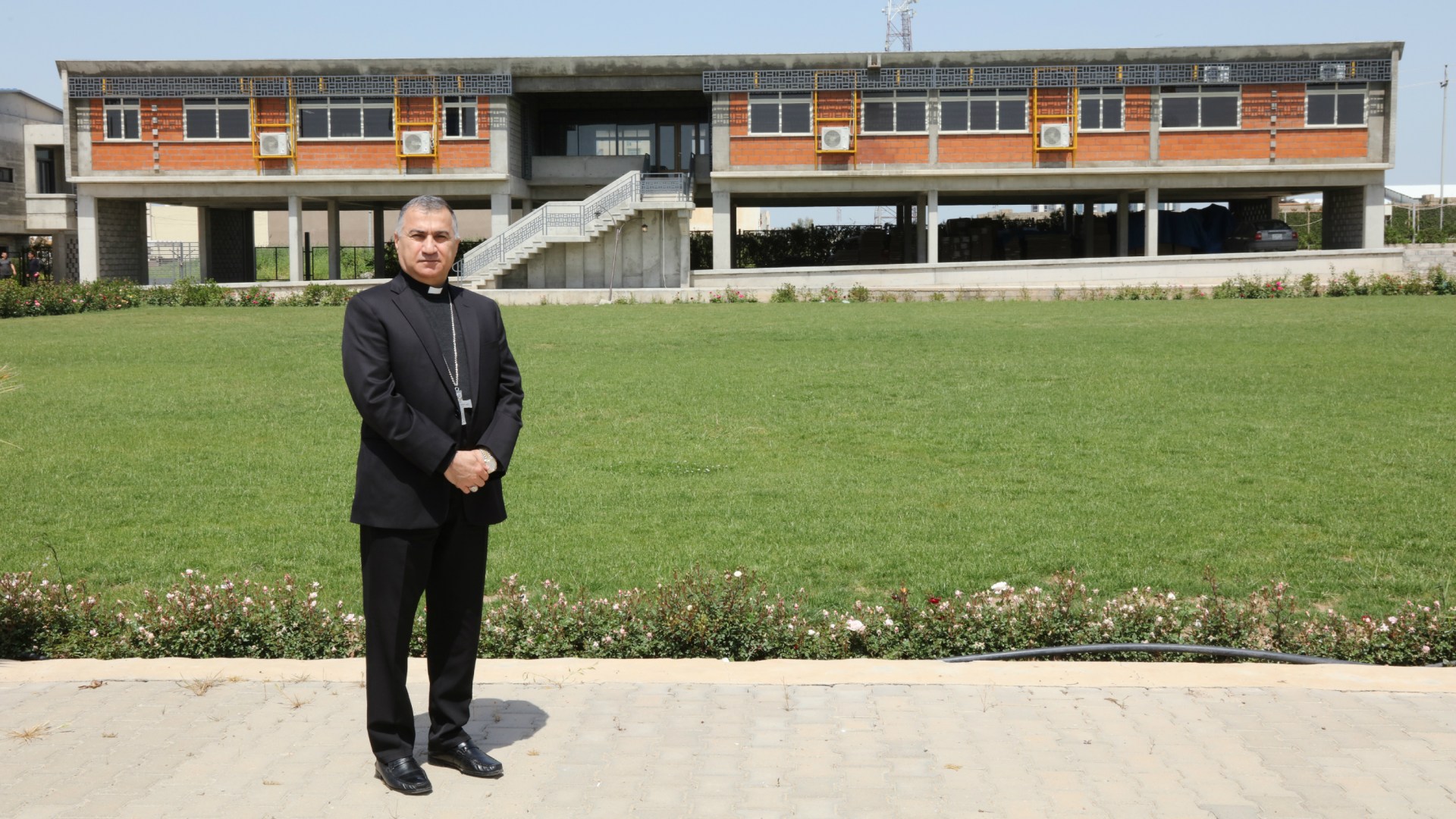
Chaldean Catholic Archbishop Bashar Warda stands in front of the Catholic University of Erbil, located in the Iraqi Kurdistan capital city's Ankawa district.

Chaldean Catholic Archbishop Bashar Warda stands in front of the Catholic University of Erbil, located in the Iraqi Kurdistan capital city's Ankawa district.

Christianity Today October 8, 2021
Courtesy of Bashar Warda

This week, the Christian enclave of Ankawa in Erbil, the capital city of Iraqi Kurdistan, was designated by the autonomous region’s prime minister as an official district with administrative autonomy. Starting next week, Christians will directly elect their own mayor and be in charge of security, among other matters.

Prime Minister Masrour Barzani called Ankawa a home for “religious and social coexistence, and a place for peace.”

Archbishop Bashar Warda, the Chaldean Catholic archbishop of Erbil, called it an “important” and “strategic” decision.

“Our confidence in the future of Kurdistan makes us encourage Christians not only to stay,” he told Kurdistan 24, “but also to invest in this region.”

Ordained a priest in 1993, Warda was consecrated in his current position in 2010. With Iraq’s hemorrhaging of Christians since the 2003 US invasion, Warda’s bishopric in the autonomous Kurdish region soon became a providential band-aid.

Beginning in 2014, ISIS drove Christians from Mosul and their traditional homeland in the Nineveh Plains, and thousands took refuge in Erbil and other cities in the secure northeast. From 1.5 million Christians in 2003, the Chaldean Catholic church now estimates a population of fewer than 275,000 Christians.

Warda has long been investing to turn the tide.

In 2015, he established the Catholic University of Erbil, and has coordinated relief aid from governments and charities alike. The situation stabilized following ISIS’s defeat in 2017.

But freedom does not come from politics alone. Two years ago, Christians endorsed widespread popular uprisings against the political class. Violently suppressed, the movement’s main celebrated achievement was early elections under a new law designed to promote better local and small-party representation.

Polls open on October 10, and a quota gives Christians five of 329 seats in parliament. However, Warda’s Baghdad-based patriarch has called for a Christian boycott, fearing fraud.

Warda wants a Christian revival. Buoyed by the March visit of Pope Francis, he believes that ISIS broke the fundamental religious and cultural underpinnings of Islamic superiority. Christians no longer are seen as second-class citizens.

In an interview on the sidelines of the IRF Summit convened in Washington in July, Warda told CT about his welcome of missionaries, the Catholic way of witnessing to Muslims, and whether a revived Christian influence in Iraq will lead to future church growth.

Since the defeat of ISIS in Iraq, what challenge has been hardest for the church?

With all the displaced people, images of scattered tents immediately come to mind. But the hard part is not to provide them with food, sanitation, or medical supplies. This is not easy, but it is obvious.

The hard part is to restore their dignity. They understand that ISIS is a criminal gang. And they can bear the wounds of the innocent, knowing they had nothing to do with this dispute.

But their question is “Why?” yet also “What now?”

Men are the providers for the family. Sitting around doing nothing, they tell me, “Bishop, we don’t want money; we want a job. I want to deserve my food.”

Suppose there is aid sufficient to rebuild homes, churches, and schools and even to provide jobs. You have said that this is not enough. It does not establish the basis of citizenship and pluralism.

That is true. But without homes, churches, schools, and jobs, the people will leave the country. And then there are no citizens left.

With a rebuilt community, you can go to the government to speak about the constitution, defending the people’s full rights under the law. There is a link. First have the community; then talk about implementing ideals.

Before ISIS, when the community was stable, were you able to seek your rights?

For 1,400 years there was a sort of social contract: Islam is the religion of the nation, and you are the People of the Book. But know that Islam is the honorable religion of God, which means you are second.

In the Quran it says there is no equality between those who believe in Islam and those who do not. Yes, it says they should consult you. But we are the people who are to be “protected.” That means we are always under them and have to pay a social and financial price. There is no jizia [a tax paid to be a protected community under Islamic rule] anymore, but the social price remains and makes you a second-class citizen.

What does this mean in the modern era?

In Catholic marriages, sometimes there are problems. Rather than deal with the issues, some spouses take the easy way out, convert to Islam, and get an immediate divorce. They don’t believe in Islam, but the constitution gives them the right to take the children.

What about the mother? What if one of the children is not willing? No, no, no, we are told, Islam is the honorable religion.

It also means you cannot evangelize. If there is a Muslim coming to your church, asking about Christ, you must tell him, “No, go away; you are a Muslim. I’m not allowed.”

Now after ISIS, I tell Muslims, “No, you’ve broken the social contract.”

For anyone coming to the church asking about Christianity now, we are there. We communicate, provide literature. Of course, I leave the decision to them. But my duty is to inform them and give them a reason for the hope that is in us.

Has the rest of the Christian community in Iraq realized the contract is broken? Can they act accordingly?

It depends on where they are. In Baghdad and Basra, it is a different story. But in the governorates affected by ISIS, we can tell them, “We fulfilled our obligations as Christians. What about you?”

In your opinion, is the social contract broken in Baghdad and Basra?

No. But their lives and challenges are different. They live amid political disputes between parties. It leads to a certain chaos with security, and some act out against the weaker party. There was some direct violence against churches and priests because they were Christians, but in recent years it is more about criminality.

But the culture of Islamic superiority still exists?

Yes, of course. Everywhere. In the entire Middle East.

Do Muslims in Kurdistan accept that the old social contract is broken?

When I speak with imams, they say that ISIS does not represent Islam. Okay, but you haven’t written any apology letter to the victims. They say, “But we hosted you. We welcomed you.” Yes, but write it down: We are sorry for what they did in the name of Allah. This helps history avoid being repeated.

What would happen if they could accept your understanding of this new reality?

They would dig deep in their Islamic history books to discover where it speaks about the dignity of the human being, simply because he is created by God. And then it would change the way they speak. They would use the Quran to demonstrate mutual respect.

It would change religious discourse, but what about ordinary Muslims?

They would know us better.

When I asked authorities for Pope Francis’ mass to be in an outdoor setting, one reason was to get Muslims to see what Christians do in church. They would then realize [Christians] are not there to dance and drink wine. [Christians] are quiet; they celebrate; they chant beautiful music.

I asked the head of the choir to choose Muslim musicians. There were 10 of them. It is a way of approaching the other to say, “This is who I am. Listen to me. Watch me.” Then they can see our adoration and hear over and over that we believe in one God.

Did the visit of Pope Francis change their mentality?

Our young people prepared the stadium, working 16 hours a day for three weeks. When the event was over, the media showed pictures of the stadium and that it was clean. This was not part of our responsibility; trash collection belonged to the government. But the message with the picture said, “These people deserve our respect.”

This meant a lot.

As you try to live out the fact that the social contract is broken and to spread this idea among other Christians, will there be consequences?

We have to have the passion and the patience for dialogue.

I go to meet with extremist Muslims, people who would not expect me at the gates of their homes. I tell them, “Here I am. Are you willing to accept me?”

They haven’t had straightforward answers. They reply, “Islam is the honorable religion of God.” Okay, I respect that, but let’s talk about how to work together.

What are you doing to prepare the Christians in your bishopric to live in this new reality?

Our region receives displaced Christians because it is safe. This has helped me practice my faith freely, and Kurdistan is quite supportive. We are working alongside the government for sustainability of the Christian community.

We have four schools, a university, and a hospital. These provide 460 jobs. It is through education and healthcare that we can become influential. And I want to provide the best services in Iraq.

Phase one was to create the structures. Phase two is to work with universities in America to form an alliance. The Franciscan University of Steubenville has responded. So has the University of Dallas. We are also talking with Baylor University.

It is a long journey. But thank God, the response of Christians in America and around the world has been encouraging. They believe in what we are doing.

Do you welcome missionaries to your witness in the region?

Oh yes. As long as they respect that this is not a land of converting Christians to a new church.

Unfortunately, some come and tell us, “We will tell you about Christ because you don’t know Christ.” How can they say this? They should say, “We would like to share faith with you.”

Yes, [they] are welcome. We have some working as teachers and as professors in the university.

The church here is weak in terms of numbers. We don’t want to divide it further. There are nine churches, and over 15 evangelical groups have come to Iraq in the last three decades. It should be about cooperation and collaboration. Let me be enriched by your faith experience, and I by yours. Missionaries should help me maintain my faith, not weaken me.

If any of my people tell me, “Bishop, I am alive in this new community,” I say, “God bless you.” But let them say so openly. I am not their judge.

Some Western missionaries work among Muslims. How do you advise them to join you in your witness, to help and not to harm?

They must know that evangelization is not permitted. I’m concerned first about their safety. They must have wisdom. It was unfortunate for us to [once] find Bibles in the trash. It is not about distributing the Bible but about whom you offer it to. The Bible is a treasure.

You have said previously that with the social contract broken, Iraqi Christians now have a role of witness—to be missionaries in their society. How can the foreign missionary join with you well?

Come and be with the local church, ready to help.

You will be a teacher in one of our schools—with Muslims. Your example and dedication will draw them to know more about you and about your faith. When they ask you why you left America, you can tell them, “I am a Christian. I believe in Jesus Christ, my Savior. He pushed me to come and help you, even though you are not Christians.” These seeds will grow, and they will want to know more and more.

Come gently, as St. Paul did. Be faithful. Whenever there was a chance to speak about Christ, he would do so, with full respect.

What is the church doing now with Muslims who are interested in Christianity?

We have literature about who we are. I give this to them, they read it, and they come back with more questions.

Is it possible for them to join you and become a Christian?

No, we tell them, “This would endanger your life. You can’t do that.” Then they insist. We work with them for six months, maybe a year, and they still insist. Who are we to tell them no? So then, I baptize them.

I tell my priests, “If you have these cases, God bless you, go forward.”

But I am always clear with inquirers: This is not going to change your religious identity before the law, on your ID card. It may put you in trouble with your family and your tribe. But if you are ready to bear the consequences, God bless you.

Are they able to stay in Iraq?

Some of them stay secretly. Some have decided to leave.

Your colleague Bishop Bawai Soro has researched and found that since Islam came to Iraq, the number of Christians has never increased. Faith is not a competition, but is this something that can change? Might Christians not only recover from ISIS but also grow? Or is it simply your destiny to accept a shrinking community, where all you can do is slow the pace and aim for stability?

I will start with the last one. Stabilize, and lead to a good future. This is not just realistic but practical. I am not a man of wishing but of hope. Hope means that if we work hard together, we can make it. With God’s grace, I think we can preserve a good number of Christians and, among them, influential leaders.

There is hope in these words. But is there also a sense of sadness?

Let’s face it: Committed Christians are shrinking around the world.

We are the salt of the earth. Just be a candle. Christians are not destined to be the most powerful community, only the most influential. It is encouraging to live among a Christian majority, of course. But it also comes with challenges.

Let’s stay with the easier scenario God has given us here in Iraq.

Don’t Let Religious Liberty Claims Mask Bad Faith Arguments

Inconsistent and insincere appeals for exemptions to public health rules are undermining important freedoms.

Christianity Today October 8, 2021
Illustration by Mallory Rentsch / Source Images: R. D. Smith / Atoms / Unsplash / Pixabay / Pexels / Jordan Parks Photography / Joci03 / Getty Images

If you believe in religious liberty only when it’s good for society, then you really don’t believe in it. A sincere commitment to religious liberty requires support for exemptions that allow people to do things you might disagree with, whether that’s Mennonites refusing to serve in the military, Catholics declining to work with same-sex foster parents, or Native Americans doing drugs.

So supporters of religious liberty and robust religious exemptions might feel conflicted about a court ruling in Pennsylvania that rejected religious exemptions to mask mandates in schools. On the one hand, the best information from public health experts says masks are a good, simple way to reduce the spread of the coronavirus. On the other, shouldn’t we support the rights of people we think are wrong?

Religious liberty is too important to let it get misused. It’s not a waiver to avoid all inconveniences in life or, worse, a tool to make political statements. For religious liberty to survive political and legal scrutiny in the future, we must safeguard exemptions against abuse. We can’t let appeals to shared faith or shared “enemies” mask bad faith arguments that undermine our religious liberty.

At the height of World War II, West Virginia schools required students to begin their day by saluting the flag and reciting the Pledge of Allegiance. For Jehovah’s Witnesses these requirements amounted to idolatry, violating their deeply held convictions. They refused, at significant personal cost.

Eventually, the US Supreme Court ruled that these students should not be coerced to participate, famously declaring, “If there is any fixed star in our constitutional constellation, it is that no official, high or petty, can prescribe what shall be orthodox in matters of politics, nationalism, religion, or other matters of opinion, or force citizens to confess by word or act their faith therein.”

In the earliest days of the pandemic, state and local governments scrambled to find ways to slow the spread of COVID-19 and limit its impact on society. They enacted various regulations, including mask mandates and limitations on group gatherings. These usually applied to both public and private spaces, including government buildings, concert halls, businesses, and, yes, churches.

Some of these rules violated constitutional protections of religious liberty because they were not applied consistently across different contexts. Officials in the nation’s capital ignored limits on outdoor gatherings for protests but not for church services, and Nevada’s policies treated churches and casinos markedly differently in setting indoor attendance limits.

In these instances, some churches pushed back—and rightly so. They took their cases to court and won. But they were not asking for a special accommodation because the public health mandates were inconvenient. They demanded the policies be consistently applied.

Other objections, however, had the effect of seeking exemptions from generally applicable policies, where the government had a “compelling interest” in mandating safety measures.

In Colorado, Resurrection Christian School said it would not abide by local health ordinances mandating mask wearing and social distancing in the midst of ongoing outbreaks. And in Pennsylvania, a group of Christian parents with children enrolled in a public school said covering their children’s faces was a violation of their deeply held convictions.

There are problems with these claims, though. Resurrection Christian required students to wear masks last year in accordance with health rules. It was only over the summer that it changed course and adopted an opposing position, citing deference to parental authority. Likewise, the Pennsylvania court pointed out that parents had no objection to their children wearing masks when participating in sports and other activities. Halloween masks are fine, apparently, while masks to prevent the spread of COVID-19 are not.

As the Pennsylvania court found, that’s a little hard to believe.

Being fed up with government policies, while certainly common, is not the same thing as sincere religious opposition. It’s not too much to ask for consistency. Those who want exemptions to do things that the majority of the country think are bad need to be able to demonstrate their sincerity.

Consider Christians claiming their faith should exempt them from new government mandates requiring vaccines for everything from eating in restaurants to working in certain industries. These requests can be difficult to assess. But one thing we can ask is whether people have been consistent. It’s sometimes hard to reconcile cases of people receiving other vaccines or taking common medicines who then argue the COVID-19 vaccine poses an unacceptable burden on their religious convictions.

In Vermont, children are required to get vaccines before they attend public school. Before 2016, just one out of every 200 kindergartners received a religious exemption. That year, the state decided that exemptions for personal, nonreligious reasons would no longer be allowed. Then one out of every 25 students’ parents claimed a religious objection to vaccinations.

It’s possible that Vermonters suddenly found religion, but the more likely explanation is that some parents’ religious opposition to vaccines was not entirely sincere. There’s no way to know what role Christians played in this instance, of course. Nevertheless, we must guard against the temptation to use our faith as a kind of hall pass to avoid the burdens of dealing with new and emerging cultural challenges.

Religious exemptions are important—to the United States and to Christians who believe that their faith will sometimes put them at odds with the dominant culture and require them to do things that the rest of society thinks are bad. If we want to preserve that right, we need to be careful not to claim exemptions whenever we don’t like a new rule.

This does not mean never claiming religious exemptions. It means that we should do so only after necessary prayer and discernment, not out of fear or a knee-jerk reaction to “own” our opponents.

As the first freedom listed in the First Amendment, religion is a privileged concept in America. Government must tread carefully when its actions burden people’s sincerely held beliefs. At the same time, Christians should be judicious about claiming religious exemptions to generally applicable rules. Romans 13:1 tells Christians to “be subject to the governing authorities,” and 1 Peter commands, “Submit yourselves for the Lord’s sake to every human authority” (2:13). And while this does not require blind obedience in the face of clear injustices, it’s surely not license to make an exception for ourselves every time we disagree with something the government does.

How Christians claim religious liberty will matter in the years ahead. We may find that we need more exemptions than we used to, as the country goes through a major shift in religious culture and demographics. The “rise of the nones” is well documented, as is the declining share of Americans who identify as Christians. For exemption claims to be seen as legitimate in the future, we must be consistent and honest when we make them today.

Daniel Bennett is associate professor of political science at John Brown University, where he is assistant director of the Center for Faith and Flourishing. He also serves as president of Christians in Political Science.

Speaking Out is Christianity Today’s guest opinion column and (unlike an editorial) does not necessarily represent the opinion of the publication.

News
Wire Story

Archaeologists Uncover One of America’s Oldest Black Church Buildings

The Virginia congregation, began by free and enslaved Blacks, dates back to 1776.

Christianity Today October 7, 2021
Courtesy of Colonial Williamsburg Foundation / Religion News Service

Archaeologists believe they have discovered the foundation of the original building of the First Baptist Church in Williamsburg, Virginia, one of the nation’s oldest Black churches.

The announcement, shared first with descendants of First Baptist Church members, was officially made on Thursday by Colonial Williamsburg Foundation, which runs the well-known outdoor living museum and historic district in Williamsburg.

“The early history of our congregation, beginning with enslaved and free Blacks gathering outdoors in secret in 1776, has always been a part of who we are as a community,” said the Rev. Reginald F. Davis, pastor of First Baptist Church, in a statement.

“To see it unearthed—to see the actual bricks of that original foundation and the outline of the place our ancestors worshipped—brings that history to life and makes that piece of our identity tangible.”

The discovery of the first permanent structure of the church—which is set to celebrate its 245th anniversary on the weekend of October 9-10—comes after a year of excavation at the site.

Archaeologists located a 16 X 20-foot brick foundation atop a layer of soil that has been dated to the early 1800s. It sits beside brick paving under which was found an 1817 coin.

Tax records have indicated that the congregation was worshipping on the site by 1818 in a building called the Baptist Meeting House, which was likely the congregation’s first permanent home.

Jack Gary, Colonial Williamsburg’s director of archaeology, said he considers these finds to be just the start of continuing research.

“We always hoped this is what we’d find,” he said in a statement. “Now we can move forward to better understand the footprint of the building. Is it the only structure on the site? What else was around it? What did it look like? How was it being used?”

During their search, which started in September 2020, archaeologists also have found evidence of at least 25 human burials at the location.

What remained of the church’s original structure had been covered up by the foundation of a brick church built in 1856 after the first structure was felled by a tornado. Later, it was paved over in the construction of a parking lot. Negotiations between the church and Colonial Williamsburg have brought the church’s history into the open in the last five years.

First Baptist relocated to Scotland Street in 1956. The excavation work at the former site near Nassau and Francis streets will continue as archaeologists seek to learn more about the first permanent structure, pinpoint burial sites and learn more about the spiritual practices of the early worshippers.

The church was started in 1776 by enslaved and free Blacks, defying laws forbidding African Americans to congregate. They started in a brush arbor—a clearing in the woods surrounded by posts and covered with branches—where they met secretly to pray and sing on a Williamsburg plantation. They relocated to a rural area outside Williamsburg before moving to the site where the recent discoveries were made.

Colonial Williamsburg acquired the land on South Nassau Street in 1956 from what became known as First Baptist Church. The foundation razed the building and paid for the construction and land costs for the congregation’s current building, which opened the next year.

“Colonial Williamsburg is committed to telling a more complete and inclusive story of the men and women who lived, worked and worshipped here during our country’s formative years,” said Cliff Fleet, president and CEO of the Colonial Williamsburg Foundation, in a statement.

Ideas

Why Church Shouldn’t Just Be on Facebook

Staff Editor

The reasons worship services should be offline are all too human.

Christianity Today October 6, 2021
Illustration by Mallory Rentsch / Source Images: Dear / Unsplash / Thomas Miller / EyeEm / Getty Images

Every week, in the front lobby, the secretary of the church I attended in kindergarten updated the archive of sermon recordings. This was in the early 1990s, so the archive was a spice rack of cassette tapes, with maybe two or three copies for each sermon, in case multiple homebound church members wanted to listen simultaneously.

That sort of care for those who can’t make it to church on Sunday—whether occasionally or long-term, due to old age, chronic illness, or disability—is uncontroversial. Most churches have long since moved past cassettes to a podcast format or YouTube or CDs, but the basic idea of using technology to bring at least the sermon to those who can’t worship in person is here to stay, and so it should be. Though not a sufficient fulfilment of our duties on its own, it’s easily defensible as an outworking of the Christian responsibility to care for the sick (Matt. 25:36), “preach the word” (2 Tim. 4:2), and “look after orphans and widows in their distress” (James 1:27).

But what about conducting church—or, at least, its group worship and teaching—on Facebook? Many congregations tried this or something similar for the first time during the COVID-19 pandemic.

Facebook reported that the week of Easter 2020, when pandemic shutdowns were just becoming widespread was, “the biggest for group video calls on Messenger and the most popular week of Facebook Live broadcasts from spiritual Pages, ever.” People seemed to take quickly to its ways of connecting when separated by COVID-19.

On Facebook, churches can form “groups” or “pages.” They can host chats and post memes that members and followers will see and respond to. With a good enough internet connection and small enough congregations, they can do Facebook Live sessions, which are like video calls. They can plan events and recommend books, videos, and media.

And Facebook, more than other major social networks, is deliberately courting religious use. The site is testing a prayer request feature, which seems only to differ from regular posts in groups in that you can respond by clicking an “I prayed” button instead of “liking” it. Facebook is also working directly with some denominations and megachurches, hoping to make faith a steady new source of traffic and ad revenue.

Reading up on Facebook’s religious outreach, I was surprised by how positive pastors and other faith leaders were when interviewed about this integration of worship, congregational community, and social media. Some added caveats about misuse of technology or privacy concerns, but they largely welcomed it as a valuable tool for everyday church life. Some even seem to think, as televangelist Pat Robertson once said of television, that it “would be folly for the church not to get involved with the most formative force in America,” that “the message is the same, [and] the delivery can change.”

That thinking is misguided. For all its practical uses in extraordinary circumstances like the pandemic or as a means of including and ministering to those who physically cannot come to services, social media as a space for ordinary group worship will do us more harm than good.

Facebook—and other social media sites—are not simply the next evolution of the cassette ministry or a convenient online centralization of logistics and worship. Their formative power isn’t neutral.

The medium will meaningfully reframe or outright change the message—chiefly, I suspect, by trivializing it and pulling our attention away.

Culture critic Neil Postman wrote Amusing Ourselves to Death in 1985, when TV was the medium under scrutiny. Postman wasn’t a Christian, nor could he know about social media. Still, his chapter on televised church (containing the above quote from Pat Robertson) offers three prescient warnings Christians need as we consider a new medium for worship.

The first is the simplest: It is “gross technological naivete,” Postman wrote, to imagine the message of the church will be unchanged by television, because “not all forms of discourse can be converted from one medium to another.” We realize this in other contexts, recognizing, for example, that singing in your car alone is not the same as singing with a congregation.

This is also true of social media. The exact same worship service, if presented as a Facebook Live video, is substantively different than it would be if experienced in person. The words may be identical, but the message is transformed by its context. That brings me to the second warning:

Putting church services on social media is inherently disorienting, and we may forget that true worship of the triune God, maker of the universe, shouldn’t have to compete for our attention with the inane memes, political screeds, and endless scroll of frivolity we encounter at the same time and place on Facebook. We’d never decorate our sanctuaries with Amazon ads and crude cartoons, but that’s what worship services are surrounded with on Facebook.

If we proclaim “Jesus is Lord” on Facebook, rather than in person, the words won’t change, but the meaning will. The medium puts that declaration of faith on a level with “Vote for this candidate” and “Buy this shirt” and “Get likes for sharing this meme.”

None of that changes Jesus, of course. The difference has to do with us and how we process messages. Maintaining focus on Christ is already an enormous challenge of our time, both in the big sense of having undivided, ultimate loyalty to Jesus and also in the smaller sense of keeping our hands off our phones for two seconds to do something—anything—pertaining to God.

It’s not impossible, of course, for God to call people to himself through a deeply flawed medium, but neither is it wise to deliberately surround worship with distraction when we have more than enough distraction as it is.

“People will eat, talk, go to the bathroom, do push-ups or any of the things they are accustomed to doing in the presence of [a] screen,” Postman wrote of TV worship services. This rings embarrassingly true from my experience of pandemic-time Zoom church, which was better than nothing. But it was no substitute for meeting “face to face, so that our joy may be complete” (2 John 1:12).

Social media is designed for triviality and distraction, to help advertisers and platforms profit in the “attention economy,” and our behavior while consuming it reflects that fact.

My third warning is closely related to the freedom from good constraints that screen-bound worship brings: “The viewer is at all times aware that a flick of the switch will produce a different and secular event on the screen,” Postman noted. That constant choice is a powerful incentive for church to become less about what we need than what we want—whatever will keep us actively listening, whatever will prevent our scrolling onward.

I can slip away any time I like, unconstrained by even the mild awkwardness of walking out of the sanctuary while the preacher’s still speaking. The constraints we feel in person don’t negate our ability to choose what we do. But others’ presence can be a powerful pressure for our good. We need the peer pressure, frankly, to keep us engaged in worship.

I’m not saying that I think online church would be a perfect substitute for in-person church if someone were sitting quietly in a beautiful setting with the church service maximized and ad-free. Undoubtedly, we’ve all realized by now that a church service without face-to-face time or group singing isn’t enough. But we also need to hear about the medium of Facebook itself as a problem.

The temptations aren’t only for those watching, though. An online service tempts teachers to back off from take up your cross (Luke 9:23) and lean into “Please just keep Facebook open, and please don’t browse Twitter or email on your phone.” It makes Christianity less “demanding and serious,” Postman thought, and more “easy and amusing … another kind of religion altogether.”

News
Wire Story

Hillsong Founder to Plead Not Guilty to Abuse Coverup

Brian Houston will go to court in Sydney over alleged child abuse by his late father.

Christianity Today October 6, 2021
Mick Tsikas / AAP Image via AP

In this series

Hillsong Church founder Brian Houston will plead not guilty to illegally concealing alleged child abuse by his father, his lawyer told a court on Tuesday.

Houston did not appear at Sydney’s Downing Center Local Court when his charge was mentioned before a registrar for the first time. His lawyer told the court Houston would be pleading not guilty to the charge of concealing a serious indictable offense of another person, his late preacher father Frank Houston.

The case will next be before the court on November 23.

Police will allege that Frank Houston indecently assaulted a young male in 1970.

Court documents allege that Brian Houston believed his father had committed the crime. Police will allege that the younger Houston failed to disclose information to police that could help secure the prosecution of his father.

Since being charged, Houston has stepped down from the board of Hillsong, the church he founded with wife Bobbie in Sydney in 1983. Now a global empire, the church says 150,000 people in 30 countries attend its services and 50 million people sing its songs each week.

Houston, 64, was in the United States in August when detectives served his Sydney lawyers with a notice for him to appear in court.

He said in a statement at the time he welcomed the “opportunity to set the record straight.”

Houston returned to Sydney last month and was released from 14 days’ hotel quarantine last week.

An Australian government inquiry into institutional responses to allegations of child sex abuse found in 2015 that Houston did not tell police that his father was a child sex abuser.

The inquiry found that Houston became aware of allegations against his father in 1999 and allowed him to retire quietly rather report him to police. His father confessed to the abuse before he died in 2004 at age 82.

Hillsong Church has said repeatedly that it has not been involved in this matter, as Frank Houston never worked for the church, and has defended Brian Houston’s response.

“Upon being told of his father’s actions, Brian Houston confronted his father, reported the matter to the National Executive Assemblies of God in Australia, relayed the matter to the governing board of Sydney Christian Life Centre, and subsequently made a public announcement to the church. Brian sought to honor the victim’s multiple requests not to inform the police,” the church said in a statement in July.

“As a recent development, charges have officially been filed against Brian Houston,” the church said at the time. “We are disappointed that Pastor Brian has been charged, and ask that he be afforded the presumption of innocence and due process as is his right. He has advised us that he will defend this and looks forward to clearing his name.”

Hillsong, known for chart-topping worship music and megachurches across the globe, became its own denomination in 2018. Last year, Brian Houston announced an investigation of its New York City campus, where pastor Carl Lentz had stepped down over infidelity.

Additional reporting by CT.

addApple PodcastsDown ArrowDown ArrowDown Arrowarrow_left_altLeft ArrowLeft ArrowRight ArrowRight ArrowRight Arrowarrow_up_altUp ArrowUp ArrowAvailable at Amazoncaret-downCloseCloseellipseEmailEmailExpandExpandExternalExternalFacebookfacebook-squarefolderGiftGiftGooglegoogleGoogle KeephamburgerInstagraminstagram-squareLinkLinklinkedin-squareListenListenListenChristianity TodayCT Creative Studio Logologo_orgMegaphoneMenuMenupausePinterestPlayPlayPocketPodcastprintremoveRSSRSSSaveSavesaveSearchSearchsearchSpotifyStitcherTelegramTable of ContentsTable of Contentstwitter-squareWhatsAppXYouTubeYouTube