News

Evangelical Colleges Consider Vaccine Requirements for Fall

Most schools opt to strongly encourage inoculation and continue safety measures.

Christianity Today May 20, 2021
Courtesy of Samford University / Stephanie Douglas

Only one of the roughly 140 US schools that belong to the Council for Christian Colleges and Universities (CCCU) is planning to require students to receive COVID-19 vaccines before starting school in the fall: Seattle Pacific University.

The rest will “strongly encourage” vaccines, according to CCCU spokeswoman Greta Hays, while leaving the ultimate decision up to individual students and their families. While the evangelical institutions want to ensure campus-wide health and administrators widely support inoculations, they are also concerned about the impact vaccine requirements would have on enrollment.

At Westmont College, in Santa Barbara, California, the head of enrollment estimated a vaccine requirement could mean the 1,300-student school has 200 fewer students enrolled in the fall.

“For a school our size, that’s a chunk,” said Irene Neller, Westmont’s vice president of enrollment, marketing and communications. “It’s financially driven in many regards. State-funded schools can really be black and white. … But a lot of the private, smaller campuses, Christian or secular, just can’t.”

Evangelical Christian colleges get about 80 percent of their revenue from tuition. Unlike big state schools and Ivy League institutions, they generally can’t rely on big endowments or donors. Year to year, the financial health of the school depends on the number of students arriving in the fall.

Neller said Westmont and other evangelical schools recognize the controversy around vaccinations and also the range of reasons people don’t want to be required to get the vaccine—some motivated by politics, some cautious about the science, and some citing health conditions that make vaccination more dangerous.

Westmont, like many schools, has tested students frequently during the pandemic and managed to avoid any major outbreaks. Neller said she joins a call with dozens of representatives from other CCCU-member schools who discuss ways of keeping their campuses safe while avoiding measures that would push prospective students away.

Samford University in Alabama isn’t requiring students to be vaccinated, but the school sought to boost vaccinations by hosting a clinic on campus in April and May. The clinic helped students “know people getting vaccinated,” said Betsy Holloway, vice president for marketing and communication, and “took away fear that someone might have.”

Marc Smithers, dean of students at Houghton College, said the school doesn’t want to do anything that would prevent students from going to Houghton.

“I really want students to experience the Houghton education, and if something like a COVID-19 vaccine requirement is going to be the thing that ultimately brings them to decide to go somewhere else, I don’t want to be responsible for driving them away from an experience,” Smithers said.

At Houghton, students will discuss the intersection of faith and science and consider the pros and cons of vaccination programs, Smithers said. They don’t have to accept an answer before they arrive.

“Those are important questions that they need to be here in order to wrestle with,” he said. “I think we do a good job at preparing our students for that.”

Seattle Pacific also wants to encourage that dialogue, but only after it has required students to be vaccinated.

“You want to continue to protect your community as your top priority and then, if there are anomalies to that or exceptions, so be it,” said Nate Mouttet, vice president for enrollment management and marketing. “We want to take what we think is best for the entire community first and then allow people to dialogue with us, thoughtfully and intelligently.”

Another factor at Seattle Pacific is the relationship between the school and the surrounding community, said Jeff Jordan, vice provost for student formation and community engagement. While some small colleges are isolated communities, the school is located in Seattle, and many students have internships across the city. Administrators didn’t want to put the wider community at risk.

The university will, however, grant medical, disability, and religious exemptions. To receive religious exemptions, students must write to explain why they are seeking an exemption and then submit a letter from a pastor or another religious leader, written on their behalf. Administrators said students who ask for exemptions will most likely get them, but the school wants to start with a conversation about ethical responsibility, vaccine efficacy, and trustworthiness.

“We have a history of being a pretty wide tent within the Christian faith tradition, and we’re making room for that once again,” Mouttet said.

Not requiring vaccines could also have an impact on enrollment, according to Mouttet. Seattle Pacific has a heavy emphasis on science programs, at both the undergraduate and graduate levels, and not taking the coronavirus seriously would communicate a disregard for scientific consensus to prospective students.

The Chronicle of Higher Education has identified 375 US schools that are requiring vaccinations. About 50 percent of them are private institutions; 48 percent, public.

According to the Centers for Disease Control and Prevention, vaccinated people can return to prepandemic behaviors. They don’t need to wear masks indoors or social distance from each other. A classroom of vaccinated people may look like a normal college classroom.

For the schools who aren’t requiring students to be vaccinated, several questions about health and safety requirements remain. Neller said that all Westmont students, vaccinated and unvaccinated, will likely have to abide by the same restrictions, even if the unvaccinated minority is creating the need for certain protocols.

Smithers said it’s possible the opposite will be the case at Houghton. Vaccinated and unvaccinated students may be held to different standards. Students who haven’t been vaccinated could be asked to test frequently for COVID-19.

“We want to give the individuals who feel strongly that they don’t want to be vaccinated the freedom to do that. But that choice and conviction are not for those who are vaccinated to bear the cost of,” Smithers said.

Still, administrators acknowledge it’s not ideal. Life on CCCU campuses would be easier if everyone voluntarily chose to be vaccinated.

“There are aspects of living in community that are always going to be frustrating,” Smithers said.

Neller agreed, saying Westmont is making “amends” with the reality.

At the same time, she said, “we’ve gone through the most critical moments. … We’re pretty confident we can manage it going forward.”

Books
Review

Twentieth-Century Theology Lost Sight of Something Essential about the Trinity

It’s time to recover the teaching that Father, Son, and Spirit act as one, with no “division of labor” between them.

Christianity Today May 20, 2021
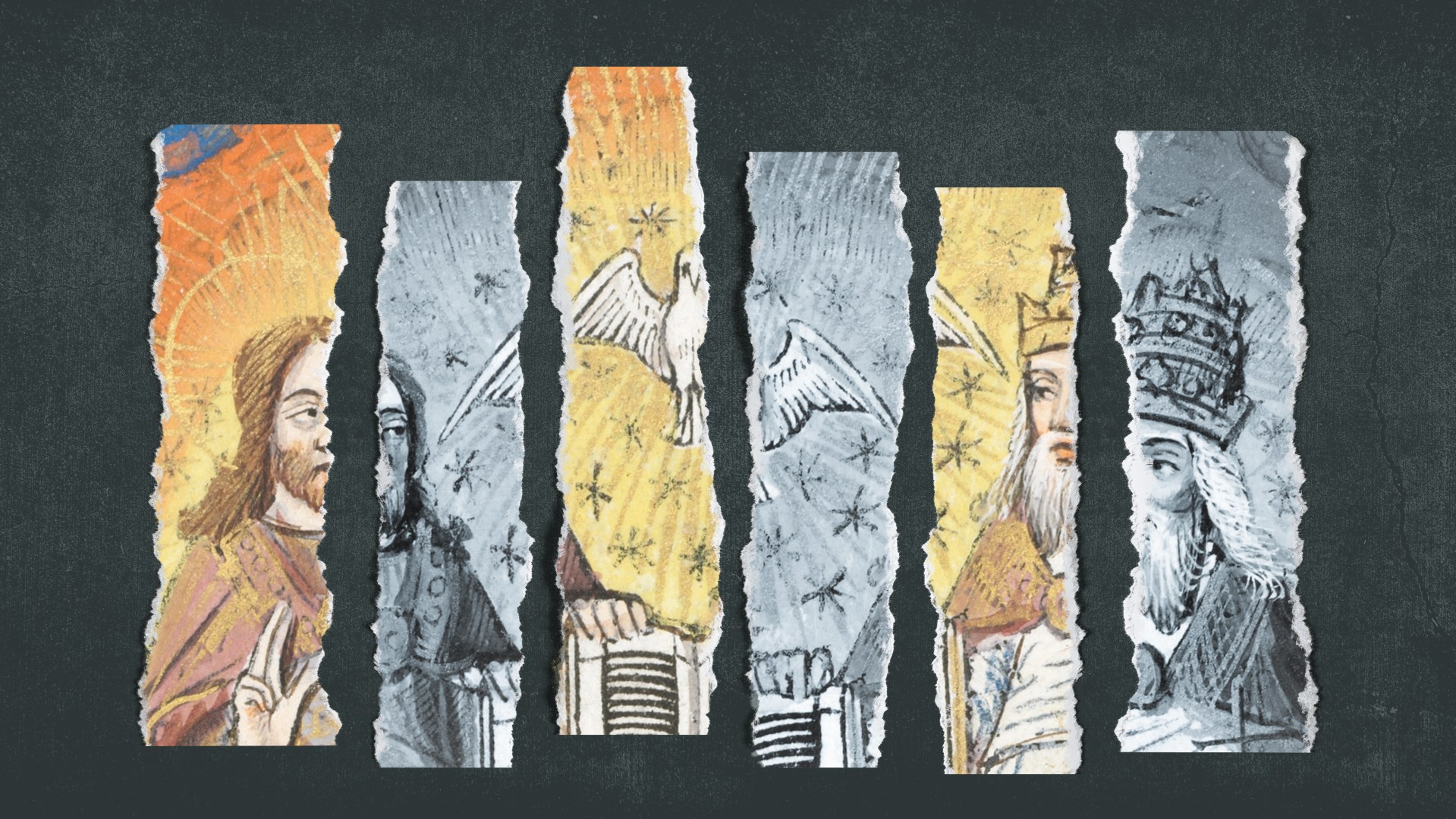
Illustration by Rick Szuecs / Source image: Wikimedi Commons

When our church fathers defended one of the most important creeds (the most important creed, some might argue) in the history of the church—the Nicene Creed—they believed the biblical and orthodox doctrine of the Trinity hung in the balance, and with it, the survival of the church.

The Same God Who Works All Things: Inseparable Operations in Trinitarian Theology

As they muscled their defense into place, they pinpointed several key beliefs as absolutely essential in the fight against heresy. One of these was “inseparable operations,” a belief summed up in a famous Latin phrase, opera Trinitatis ad extra indivisa sunt. What this means is that the work of the Trinity—from Creation to salvation—is undivided. Or as Augustine said with such elegance in his classic, De Trinitate, “As the Father and Son and Holy Spirit are inseparable, so do they work inseparably.” The Father, Son, and Spirit work as one because they are one—one in essence, will, power, and glory.

Enter modernity. The doctrine of inseparable operations—a “rule” once indispensable to Christian orthodoxy and liturgy—has been thrown into question: dispensed by some, severely modified by others. As theologian Adonis Vidu explains in his sobering new book, The Same God Who Works All Things: Inseparable Operations in Trinitarian Theology, “During the past century the rule has gone from being part of the very foundation of Trinitarian dogma to being dodged as one of its greatest vulnerabilities.”

What happened? And why does it matter?

A departure from Nicene tradition

The classical, Nicene tradition labored to preserve Scripture’s witness to the unity of the persons of the Trinity, and likewise their equality. This tradition distinguished the persons according to their eternal relations of origin: The Son is eternally begotten from the Father, who is himself unbegotten, and the Spirit eternally proceeds (or is “spirited”) from the Father and the Son.

Yet these “processions” (or personal properties) do not create three gods since, as the English Puritan John Owen said, “a divine person is nothing but the divine essence, upon the account of an especial property, subsisting in an especial manner.” For example, the church fathers not only said the Son is eternally begotten from the Father (this alone distinguishes the Son as Son); they were sure to clarify that the Son is begotten from the Father’s essence. As the early Christian apologist John of Damascus put it, the Trinity is “not one compound perfect nature made up of three imperfect elements, but one simple essence … existing in three perfect subsistences.” That word “simple” (or simplicity) is critical, guarding the church from turning the Trinity into a collection of separate parts—individuals who can be greater or lesser, superior or inferior.

Everything changed in the 20th century when theologians, departing from the Nicene tradition, began defining the Trinity as a society of separate agents, a society not unlike our human society. In a shocking statement, theologian Colin Gunton explained the new thinking like this: “What it is to be a human person is in this case identical with what it is to be a divine person, and therefore the word means the same at the levels of creator and creation.”

With the rise of what came to be called social trinitarianism, explains Vidu, the divine persons were redefined, as if each person were his own center of consciousness and will, his own distinct individual self. Christian philosopher Richard Swinburne has even proposed a Trinity composed of three individuals. Vidu’s research is revealing: If modern theologians still reserved a place for inseparable operations, they either described the unity of the Trinity in creation and salvation merely as a cooperative enterprise or as a division of labor. But in some cases, the doctrine was discarded altogether because it could not jibe with social trinitarianism’s emphasis on the individuality of the persons.

None of this sits well with Vidu. And as I see it, his theological angst is more than justified. Vidu is onto something when he concludes that modern theology has not only misconstrued but misused this core belief in inseparable operations. He writes, “It does not indicate that within the immanent life of the Trinity there are three separate agents who each have a separate will, a separate knowledge, and a separate love for the others”—as modern theologians assume. “Rather, it indicates that within the essential divine causality there obtain real and irreducible distinctions, that there are subsistent relations that distinguish and define the persons over against each other yet never against the substance.”

That last phrase—“yet never against the substance”—should not be overlooked. What is Vidu suggesting? By treating Father, Son, and Spirit as separate agents with separate wills, and explaining their unity of action as a matter of cooperative enterprise, we have set the persons over against their shared divine substance. Is it any wonder, then, why the charge of tritheism (three gods) has been leveled in recent decades?

Vidu also warns how easy it is to transition from a social definition of the three persons to relationships of supremacy and subordination between them. The Nicene creed unambiguously rejected the idea of the Son being subordinate to the Father—describing Jesus, for instance, as “true God from true God,” begotten “of the same essence as the Father.” But over the past several decades, many major evangelicals have created a new subordinationism, as if the Father has a superior authority and glory to the Son.

This is a sobering reminder that we have been more influenced by modern theology than we think. As clever as it sounds to say that the Son is ontologically equal with the Father but functionally subordinate, we must be discerning enough to see through such a false dichotomy. As Vidu helpfully observes, “A divine person is not one thing and the divine substance another. Rather each divine person is identical with the substance, but under a particular and irreducible relational aspect.”

If Vidu is right, then inseparable operations might just have a future in evangelical theology. But only if we first recognize that there are no individual actions, only Father, Son, and Spirit performing one single action.

Unity of action

The burden of Vidu’s book is to recover the doctrine of inseparable operations and with it the unity of the Trinity, a project long overdue. Vidu’s contribution shines brightest when he puts forward several test cases, including the Incarnation. Is the Incarnation the Son gone solo? Unfortunately, too many modern and evangelical theologians talk this way, as if exclusive actions can be attributed to individual persons.

Vidu enlists Augustine to admonish us: “The Trinity produced the flesh of Christ, but the only one of them it belongs to is Christ.” On the one hand, if inseparable operations is true, then the whole Trinity produces the “action” we call the miracle of the Incarnation. On the other hand, the “state” of the Incarnation—assuming human nature itself—belongs only to the Son.

That is not a contradiction. The singularity of the Trinity’s action stems from the singularity of the shared, common divine essence. And yet, the Son alone takes on flesh because each person may “appropriate” a work of salvation in a way that corresponds to that person’s eternal relation of origin. Since the Son is eternally begotten from the Father, it is fitting for the Father to send the Son to assume a human nature to his person and for our salvation. Or, as Vidu says with such precision, “the persons do not have their distinct actions, but they possess a distinct mode of action within the unity of the same action.”

Therefore, as Vidu argues, while we may look at a particular “created effect”—from Creation to Incarnation—and say that it “terminates” on a particular person, we should also recognize that any action is the one action of the whole Trinity. Vidu returns to an illustration throughout his book to capture this mystery: “Much like the metal object, which is moved by the whole magnet yet attaches distinctly to one of the poles, the human nature of Jesus Christ, the created effect of the mission of the Son, is produced by the whole Trinity yet attached to the Son exclusively.”

This illustration takes on flesh when the book arrives at Calvary. Vidu identifies with penal substitutionary atonement, the belief that on the cross Christ took our place and bore the penalty (divine judgment, eternal wrath) for our transgressions. However, he is quick to point out that some advocates have articulated this doctrine in a way that divides the Godhead. One recurring theory portrays the Father as the angry one in the Trinity, with the Son cast as the loving one. Another speculates that the Cross creates change in God, prodding him from holiness to love. Perhaps worst of all, some claim that, Jesus’ cry of dereliction—“why have you forsaken me?”—means the Trinity is divided at the cross, deity ruptured. Vidu’s recovery of inseparable operations is a needed correction: If penal substitution has any chance of escaping its own worst caricatures, it must avoid depictions that throw Nicene nuance to the wind in an effort to preserve divine satisfaction.

Nevertheless, one criticism should be raised. On the one hand, Vidu is as refreshing as he is honest, predicting the collateral damage should we fail to approach the Atonement within the guardrails of inseparable operations. On the other hand, I finished his atonement chapter still looking for exegetical guidance. If Christ’s cry of dereliction is not a split in the Godhead, how should Christ’s quotation from Psalm 22:1 be interpreted?

Vidu’s compelling theological case could be advanced further by attention to canonical categories. For example, Paul assumes in Romans 5 that Christ is the Second Adam. The first Adam represented his posterity, but his sin brought condemnation. Violating the covenant of creation gave birth to the curse of the cosmos. By contrast, the new Adam, Christ, represents the ungodly, but his fidelity to God’s law is our justification. In that light, the Cross is not a split in the Trinity, but the Son substituting himself and bearing the curse of Adam’s transgression, the law’s condemnation. Sounding a lot like the prophet Isaiah, the church father Gregory of Nazianzus wrote, “[Christ] was in his own person representing us. For we were the forsaken and despised before, but now, by the sufferings of him who could not suffer, we were taken up and saved. Similarly, he makes his own our folly and our transgressions.”

Vidu does not devote extensive attention to various biblical motifs. Nevertheless, by laying the philosophical foundation, he does leave open a window of opportunity. More work needs to be done locating these canonical themes within a Nicene framework, which is fruit still to blossom from the tree of theological interpretation.

Deep dogmatics

The Same God Who Works All Things is a superb example of deep dogmatics, the kind C. S. Lewis once said he enjoyed more than devotional books as long as he had a pencil in hand. Vidu is thorough and persuasive. Convicting—that may be the better word. His book leaves the reader lamenting our neglect and outright misuse of inseparable operations.

But if Vidu has his way, this will galvanize the church to join him in the recovery of Trinitarian orthodoxy. After a century of experimenting with the liberal project on a doctrine as consequential as the Trinity—and yes, I am speaking to evangelicals as complicit participants—the time is at hand to recover our orthodox heritage. And inseparable operations—as affirmed by the pro-Nicene tradition—is the right step to renewal.

Matthew Barrett is the author of Simply Trinity: The Unmanipulated Father, Son, and Spirit. He is associate professor of Christian theology at Midwestern Baptist Theological Seminary, executive editor of Credo Magazine, and host of the Credo Podcast.

News
Wire Story

Supreme Court’s Next Abortion Case Could Be a Pro-Life Turning Point

Evangelicals anticipate a ruling on Mississippi’s 15-week ban as a possible first step toward overturning Roe v. Wade.

Christianity Today May 19, 2021
Alex Wong / Getty Images

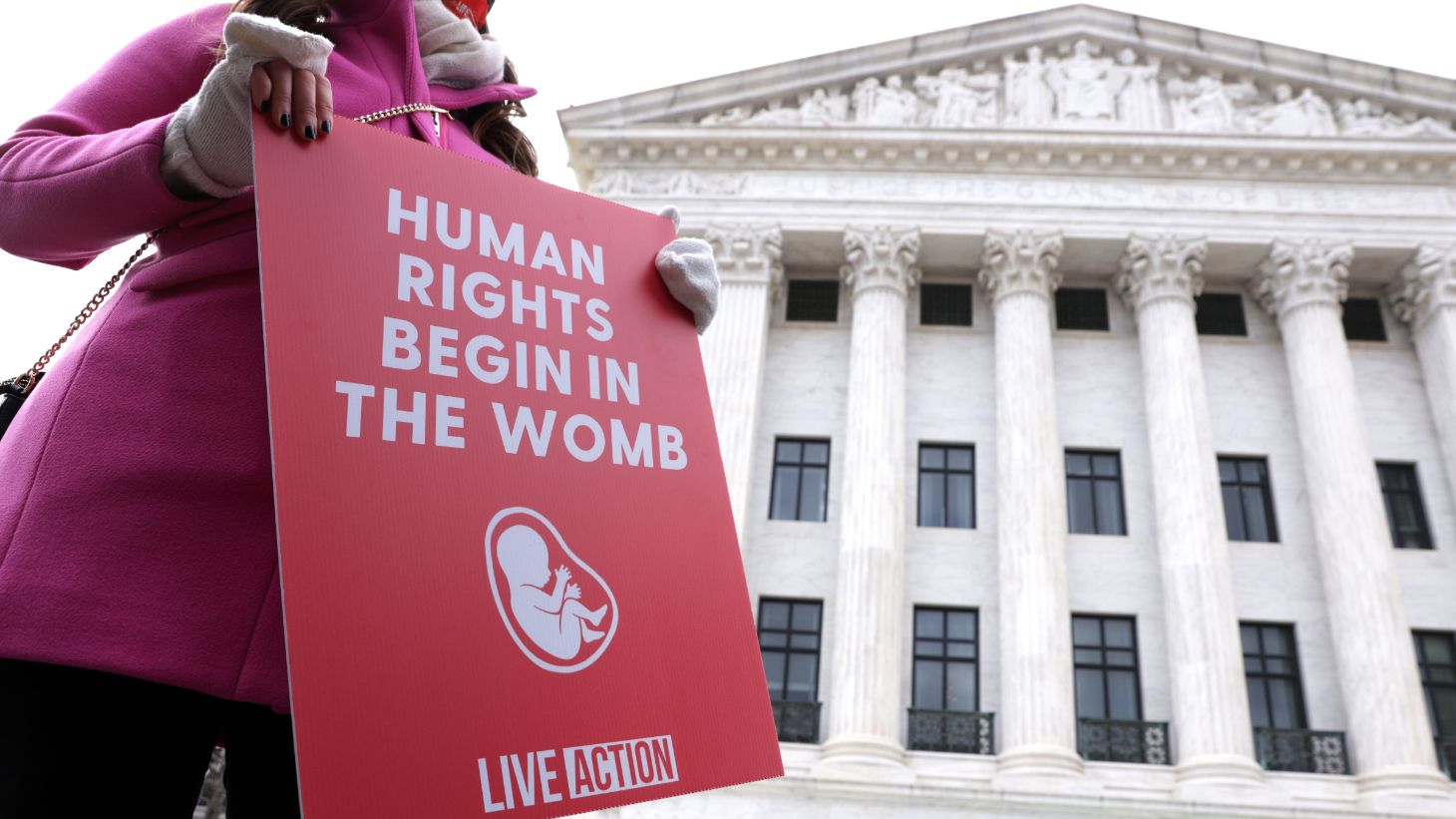
In agreeing to hear a potentially groundbreaking abortion case, the Supreme Court has energized activists on both sides of the long-running debate who are now girding to make abortion access a major issue in next year’s midterm elections.

For many evangelicals, the case could serve as a validation of more than four decades of persistent work and a sometimes awkward relationship with former President Donald Trump, whose three Supreme Court appointments sealed a 6-3 conservative majority. If those justices unite to uphold a Mississippi law banning abortion after 15 weeks of pregnancy, it would mark a first step toward the possible demise of the 1973 Roe v. Wade decision, which established a nationwide right to abortion at any point before a fetus can survive outside the womb, roughly 24 weeks.

Abortion rights advocates, meanwhile, are urgently warning that the case is the biggest threat to decades of rulings that have consistently upheld, with some caveats, a woman’s constitutional right to decide whether to end her pregnancy.

Since the Roe decision, abortion has become a defining theme in American politics, emerging as the sole issue that some voters use to assess which candidates they’ll support. The Mississippi case could emerge as another turning point—with unpredictable results. Abortion opponents may become further emboldened if their long-desired goal moves closer to reality, while an unfavorable decision could spur supporters to intensify calls for dramatic changes to the judiciary.

For now, both sides say they are fully engaged.

“This is huge—it’s saying that for the first time in a long time that we have a pro-life majority on the Supreme Court,” said Katherine Beck Johnson, a lawyer with the conservative Family Research Council. “It will encourage the voting base to get out and vote Republican.”

Jennifer Dalven, director of the American Civil Liberties Union’s Reproductive Freedom Project, said the high court’s decision to hear the case was “really alarming.”

“For more than 40 years the Supreme Court has said states can’t ban abortion prior to viability,” Dalven said. “There is simply no way for the court to rule for Mississippi without gutting Roe v. Wade.”

The case probably will be argued in the fall, with a decision likely in the spring of 2022 during the campaign for congressional midterm elections. Many abortion-rights groups urged their supporters to start mobilizing now.

“There’s never been a more important time to elect Democratic pro-choice women to local and national office,” said one of those groups, Emily’s List. “If the Supreme Court strikes down Roe v. Wade, we’ll need all the help we can get.”

Even if the court does not explicitly overrule Roe, a decision favorable to Mississippi could lay the groundwork for allowing more restrictions on abortion. Bills have been enacted in multiple Republican-governed states that would ban abortion as early as six weeks, and also in cases where a decision to abort was based solely on a diagnosis of Down syndrome.

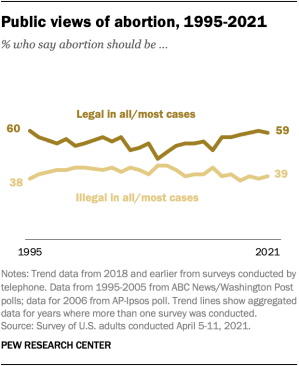
Nationwide polls have repeatedly shown that most Americans support the premise of Roe v. Wade. An April poll from the Pew Research Center found that 59 percent of Americans think abortion should be legal in most or all cases, while 39 percent think it should be illegal in most or all cases. Opposition to abortion is strongest among white evangelicals, just 21 percent favor making it legal, while 77 percent say it should be illegal.

Some abortion opponents, noting those surveys, are skeptical that the Supreme Court would fully overturn Roe.

“The Supreme Court has never led public opinion but followed it when it comes to major issues like slavery, gay marriage, and women’s rights,” said First Baptist Church Dallas pastor Robert Jeffress, who has been a close ally of Trump.

“As long as 70 percent of the American people oppose the overturn of Roe, it will never happen,” he said. “Realistically, conservatives can hope that the court uses the Mississippi case to chip away at unrestricted abortion in our country.”

Charles Camosy, a professor of theological and social ethics at Fordham University, also acknowledged those poll findings. But he noted that the Gallup poll has repeatedly found that more than two-thirds of Americans say abortion should be illegal after the 12th week of pregnancy—a time frame that is in force in several European countries.

“I doubt the court’s majority is willing to totally undo the legal right to abortion,” he said. “More than likely is they will rule that a 15-week limitation does not pose an undue burden on a woman’s right to abortion.”

White evangelicals, who remain among Trump’s most loyal backers, had celebrated his overhaul of the federal courts and his reshaping of the Supreme Court as perhaps his greatest accomplishment. But there remains trepidation after the court surprised them by failing to rule their way in past cases.

“Trying to predict what the Supreme Court is going to do on a state statute on abortion regulation is like trying to predict the path of a hurricane, only more difficult, because there are a lot of things at play,” said Ralph Reed, chair of the Faith and Freedom Coalition and a longtime ally of Trump.

Reed acknowledged that abortion is only a top issue for a small minority of voters but argued that in many competitive congressional and gubernatorial elections, “it could theoretically be the difference.”

“It’s not necessarily the issue that ranks highest in terms of determining one’s vote, but it still matters in terms of intensity and enthusiasm,” he said.

Among 2022 US Senate races where the issue could be a key factor are those in Pennsylvania, North Carolina, Georgia, and Florida.

If the Mississippi ban is upheld, “pro-lifers would be energized,” said Michael New, an abortion opponent who teaches social research at Catholic University of America.

“It would show that the strategy of supporting pro-life candidates for the presidency resulted in a Supreme Court that was sympathetic to legal protections to preborn children,” he said. “Pro-life state legislators in other states would likely pass similar 15-week abortion bans, confident that these bans would also be upheld.”

Albert Mohler, president of the Southern Baptist Theological Seminary, said he was optimistic the Mississippi ban would be upheld, giving abortion-rights groups a chance to mobilize their supporters with warnings of Roe’s demise while infusing abortion opponents with a new sense of optimism.

“Pro-life voters are looking for progress,” Mohler said. “What serves to deflate the vote of pro-life Americans is frustration at the impression of the lack of progress.”

Mallory Quigley of the Susan B. Anthony List, which seeks to elect anti-abortion candidates, predicted the issue would be a “huge motivator on both sides” going into the midterms.

As far as Republicans, she said, “It’s motivating to see how past electoral choices are impacting policy today and then moving forward, what more is to be done.”

Abortion-rights supporter Kelly Baden of the State Innovation Exchange, a strategy center for state legislators who champion progressive values, said the wave of anti-abortion legislation in Republican-led states “shows how much we’ve already lost and how dire our circumstances already are.”

“But we have the power to take it back,” she said. “If and when the courts let us down, we can and must show up at the voting booth.”

News

Is It Discrimination or ‘Do No Harm’? Christian Doctors Gear Up for Transgender Debates

As HHS challenges continue to play out in court, the Christian Medical and Dental Associations provides a more robust position statement on treating patients with gender dysphoria.

Christianity Today May 19, 2021
Heath Korvola / DigitalVision / Getty Images

Update (July 26, 2022): The Department of Health and Human Services (HHS) is moving to expand its nondiscrimination policies around sexual orientation and gender identity, which would have practical and legal implications for doctors who decline certain procedures such as gender transition treatments.

A proposed rule, released on Monday, is meant to better align with the 2020 Supreme Court ruling in Bostock v. Clayton County, which included sexual orientation and gender identity in workplace discrimination protection on the basis of sex. HHS would enforce the revised policy among health care providers receiving federal funds as well as insurers.

HHS noted in the proposed policy that multiple groups have already opposed existing enforcement of the Affordable Care Act’s nondiscrimination policies, called Section 1557, on religious grounds. There are appeals pending in the Fifth and Eighth Circuit courts, and a district court in North Dakota has barred the HHS from enforcing the policies in a way that would require Christians “to perform or provide insurance coverage for gender transition services or restrict or compel their speech on gender identity issues.”

Luke Goodrich, senior counsel at the religious liberty firm Becket, criticized the new rule, which he said attempts to “force doctors to perform gender transitions and abortions. Goodrich tweeted, “Everyone benefits when doctors are free to follow their Hippocratic Oath to ‘do no harm.’ It’s long past time for this Administration to stop fighting against conscience, common sense, and sound medical judgment. And we expect the courts to agree—yet again.”

https://twitter.com/LukeWGoodrich/status/1551720750016602114

——–

As cultural conflicts around transgender identity grow more intense, Christian doctors see a need to be more sensitive to the plights and preferences of people experiencing gender dysphoria while also holding firm to personal and professional convictions around biological sex.

That’s what the Christian Medical and Dental Associations (CMDA) says in an updated statement on transgender identification that leaders hope will inform its 20,000 members as well as the general public.

That balance might be difficult to maintain, though, if federal health officials take the position that declining certain treatments for transgender patients can be considered a form of discrimination based on sex.

Last week, the US Department of Health and Human Services (HHS) announced that antidiscrimination protections under the Affordable Care Act include sexual orientation and gender identity. The current administration’s stance revives a contested interpretation under President Barack Obama.

Though the HHS announcement said the department would comply with religious freedom protections in its enforcement under this interpretation, the decision raises the stakes for two current lawsuits over conscience protections for religious hospitals and doctors who do not perform certain procedures for faith reasons—and it is expected to spur further legal challenges.

“We do know that this is happening. Our fear, as an organization, is we had a temporary reprieve under the Trump administration,” said Dr. Jeffrey Barrows, CMDA’s senior vice president of bioethics and public policy. “We are very concerned and expect that we’ll have an increase in lawsuits and threats against our members and other Christian health care professionals if they do not perform some of these surgeries, prescribe cross-sex hormones, or prescribe puberty-blockers.”

The CMDA’s revised position statement on transgender identification came out last week; at 6,700 words, it’s more than triple the length of its previous statement from 2016, adding more biblical references and medical citations from research and examples over the past five years.

“While we’re not doctrinally backing down, we realized that there were some things we could do, some fine-tuning on how we phrase things, that type of thing,” said Barrows. “For the first time many of our members have been confronted with the whole pronoun issue … and are put in the position of pronouns of using a ‘preferred pronoun’ and think, ‘What does the Bible say about that? As a Christian, should I really do that?’”

Christians in health care should not discriminate or turn away patients based on their LGBT identity and “should respect how a patient wishes to be addressed, including pronoun preferences, within reason,” according to the CMDA.

The organization affirms that patients struggling with gender identity should be treated “with sensitivity and compassion, consistent with the humility and love that Jesus modeled and commanded us to show all people.” The association says it’s out of this sense of care and responsibility that it cannot endorse treatments it believes are harmful and not medically justified.

The position statement says that Christians in health care should not initiate “hormonal and surgical intervention” intended as sex reassignment and takes a stand against doing so through treatments such as alterations to sexual anatomy, uterine transplants, or hormones for children or adolescents.

The CMDA reviews theological, ethical, and medical considerations before taking its positions. The group concluded that participating in gender reassignment “threatens professional integrity by undermining our respect for biological reality, evidence-based medical science, and our commitment to non-maleficence.” The association also defends Christians’ role in offering support to patients who ask for help accepting their biological sex and gender identity.

The conversation around transgender identity, and non-gender-conforming youth in particular, is growing and shifting, as Wheaton College psychologist and gender dysphoria expert Mark Yarhouse discussed with CT last month. Doctors and other health care providers are increasingly seeing those questions come into play in their practices and, according to the CMDA, are feeling the pressure to respond with sex reassignment treatments.

The Biden administration’s guidelines, released on May 10, were framed as an effort to protect LGBT people from discrimination in health care settings that receive federal funding. The HHS document deals with section 1557 of the Affordable Care Act, the same part that has been challenged by religious liberty advocates in court.

Policy experts state that, according to section 1557, “insurance plans across the country may not deny access to medically necessary medications, surgeries, and other transition-related treatments for transgender people if similar services—a hysterectomy, for example—would be covered for non-transgender people.”

Because the vast majority of the US health care system receives federal funding through Medicaid and Medicare, the regulation extends broadly, including to certain providers who decline to perform sterilization procedures and gender assignment for faith reasons.

In two lawsuits, one in Texas and one in North Dakota, the Becket Fund argued on behalf of Christian hospitals and doctors, including the CMDA, that the HHS interpretation of the law violated regulatory requirements and protections under the Religious Freedom Restoration Act, said Becket vice president and senior counsel Luke Goodrich.

While the courts sided with Becket’s case, the outcomes are still being challenged. Last month, an appeals court in the Fifth District (Texas) sent the decision back to the trial judge for reconsideration in light of more recent decisions around gender identity protections, and the Biden administration appealed the injunction granted in the Eighth Circuit (North Dakota).

https://twitter.com/LukeWGoodrich/status/1384596313694605316

The recent HHS guidance, by emphasizing the federal protections for gender identity, could strengthen the religious liberty argument by making it clearer that the interpretation and enforcement of the regulation would put the plaintiffs—who treat transgender patients for everything from “cancer to the common cold”—in the position of having to perform gender reassignment procedures against their conscience or lose out on federal funding.

The “transgender mandate” in some ways is running in parallel to the yearslong legal battle over the ACA’s “contraception mandate,” requiring employers to cover items such as birth control.

“In some ways, this announcement on Monday (May 10) goes further than the contraception mandate because it’s not just that you have to cover gender transition procedures in your health insurance plan, it’s also that you have to perform the procedures yourself as a doctor in the hospital,” said Goodrich, who is also the author of Free to Believe, a book on religious liberty in America. “The very simple solution here is for the administration to adopt a very clear and broad religious exemption that tracks the courts’ decisions in Hobby Lobby and Little Sisters of the Poor.”

So far, the administration hasn’t moved in that direction, but he says losses in court could force them to carve out the protections around gender reassignment that Christians in health care are asking for.

Theology

Moses’ Guide to Postpandemic Parties

How biblical guides to feasting teach us to fear God.

Christianity Today May 19, 2021
Illustration by Mallory Rentsch / Source Images: WikiArt / Melissa Walker Horn / Nathan Dumlao / Unsplash / Flashpop / Zu_09 / Getty Images

When I walked up to my church’s outdoor Easter service, my first thought was a joyful one: “I have missed this so much.” But my second thought was much more unsettling: “I forgot how much I missed this.”

The pain of the pandemic has extended to every part of our lives. Some have lost loved ones. Some have lost jobs. Once-in-a-lifetime celebrations have gone uncelebrated. And many churches have made excruciating changes to our worshiping life. For some congregations, that has meant moving most of what we do away from in-person gatherings and on to the Zoom meetings, livestreams, and conference calls that have dominated our waking, working, and worshiping hours.

Such necessary, difficult decisions have wreaked a great deal of havoc on our lives. But in that moment at my church’s first outdoor gathering, I discovered that some of the damage done has been less obvious. The decision to lock down our churches was a necessary act of neighborly love in difficult times. But humans weren’t made to worship God in isolation. Doing so for an entire year may well have damaged us in ways we’ve yet to fully understand.

The CDC’s announcement that vaccinated Americans can stop wearing masks much of the time is just the latest reminder that, while the pandemic isn’t completely behind us, life is beginning to return to something like normal. While many Americans are prepping to make up for lost time with a “roaring ’20s” style return to social life, the church has an opportunity to embrace something far better: a feast of epic proportions, eaten in God’s presence and alongside our neighbors, a feast that overflows into a just, merciful, and generous way of life.

The problem is that our year under lockdown may raise new complications for the church’s post-COVID feast. Virtual church, and then church in small, masked groups, has become our norm. But as I discovered in our church’s outdoor service, by losing the habit of embodied church, my longing for the hug from an elderly fellow congregant or for the bread and wine shared with my neighbor at the Lord’s Supper has cooled.

Lockdown has numbed my felt need for community and dulled my desire to gather in worship with the corporate body of Christ as one physical body among other physical bodies. I like these ideas in theory, of course. But I don’t miss them in my bones, don’t miss them the way I did the first month I spent trying to make do worshiping in my living room.

As churches reopen their doors, at least in the US, many ministry leaders are wondering if people will come back to the pews, or depend further on online church, or skip out altogether. In the return to normal, churchgoers and church leaders alike need to examine problematic habits and heart lessons we’ve learned during our year of isolation in order to learn to worship God together again.

To help us, we can take a cue from Moses’ words to the people of God during another time of transition, the transition from the wilderness to the Promised Land. Moses knew that times of transition always offer God’s people new opportunities for rebellion and division. The lengthy Mosaic sermon we call Deuteronomy aimed to equip the people to journey through the transition and live the life God had for them, a life Moses summarized again and again as “fearing the Lord.” By “fearing the Lord,” Moses seemed to mean a whole-life orientation toward God, an orientation that included fear, love, awe, commitment, and obedience.

Moses had seen how fearing the Lord came fairly naturally to the Israelites when God was speaking to them out of a blazing fire atop Mount Sinai. But he also recognized that daily life in the promised land would dull their memories and their senses. The temptation to allow the comfort of their “new normal” in the promised land to lead them to forgetfulness would be strong. Israel would have to learn to fear God, again and again. How would the people of God keep fear alive in the days ahead?

Deuteronomy 14:22–27 gives us one strategy that is as unexpected as it is delightful:

You shall eat before the Lord your God, in the place which he will choose to establish his name, all the tithe of your grain, of your wine, and of your oil, and of the firstborn of your herd and flock, in order that you will learn to fear YHWH your God always (v. 23, author’s translation throughout).

The Israelites knew all about tithes. They knew all about taxes and tribute, too. If they were told to bring tithes or the firstborn of the flock to some central worship location, that could mean only one thing: Time to pay up.

But behind the scenes, God is inviting his people to a ritual that will teach them how to fear him. Lesson number one: The God whom they must fear is a King so generous that he takes the tribute his people owe him only to give it back to them as funds for a lavish feast in his presence.

In fact, learning to fear the Lord turns out to have a lot to do with desire. “If the way’s too far for you,” the Lord tells them, “sell your tithe back home and bring the money to me.” Then:

spend the money on everything that you deeply desire, on cattle and sheep and wine and strong drink, and on everything that you deeply desire. And eat it there before the Lord your God and rejoice, you and your household (v. 26).

Why does the Lord invite the people to feast with him? Because he wants them to know, deep in their bones, that their desires can only ever be satisfied at the table of their divine King. And the way to get that knowledge into their bones is through their bellies. Israel will be a people who have tasted—quite literally—the extravagant generosity of their God.

The lesson the Lord is teaching them, though, can’t be learned alone. The feast that the Lord invites them to is a feast in his presence and alongside the full community. Deuteronomy makes it clear that the household that feasts in God’s presence must include “your son and your daughter, your male servants and female servants,” the “Levite in your towns,” the “stranger, the orphan, and the widow” (Deut. 12:18; 16:11).

Learning to fear the Lord together by rejoicing with him at the feast will prepare this community to fear the Lord by obeying his countercultural way of life all year round. That’s why the community that learns to fear the Lord by feasting together in Deuteronomy 14:22 is immediately charged to fear the Lord by also creating the world’s first tithe-funded social safety net, by embracing costly debt forgiveness in the sabbath year, and by placing dramatic limits on debt slavery for their brothers and sisters (Deut. 14:28–15:18). The people that feast together become a family of God-fearers together. The family that fears God together follows God in creating a just and merciful world for all their family members.

Many Christians and churches struggled before the pandemic to recognize just how central feasting together is for our life with God. A hyper-individualistic Western version of Christianity taught many of us to come to church primarily looking for a sermon or worship experience to “feed” us with a “spiritual” morsel, rather than looking for a family with whom to find our deepest desires satisfied by embodied life lived together in God’s presence. We were already often leaning on technological gimmicks within the church and religious community, cultivated in the echo chambers of social media outside of it, rather than on the rich mess of sharing actual tables with brothers and sisters from across the socioeconomic spectrum.

We should have known that, as long as we gather to worship the God who became flesh for us, church on the internet could only ever be church with an asterisk. But our longstanding love affair with technology prepared us for isolation long before the pandemic forced it on us.

Many of us church leaders already knew that we were struggling to foster real community among our congregants. Now, most American Christians have spent an entire year learning to live without the mess of embodied church life, consuming a steady diet of internet church, and like me, finding it far too easy to forget why we need to feel the touch of our neighbor’s hand when we pray or hear the sound of our neighbor’s voice when we sing.

What if we took Deuteronomy seriously? Let’s work through the social anxiety we’ve acquired from all our isolation and the inertia of being able to do everything virtually and make feasting the church’s top priority. Let’s end this pilgrimage through the COVID-19 wilderness with a season of feasting together with God’s people.

We’ve been separated for so long, forced to eat the bread and wine under such strange circumstances. Why not kick off post-pandemic church life with rituals that revel in our embodied existence? We can eat the Lord’s Supper as an actual supper, with food and drink and fellow feasters at our side. And instead of reveling in our newfound technology’s ability to help us “reach” people further and farther away, we can focus on finding ways to come together around the table with the orphans, immigrants, and widows nearby but often not among us.

While we’re not out of the pandemic yet, it’s fitting that as we glimpse the end of this pandemic, the church finds itself amidst the festival of Easter season and anticipating the joy-filled feast of Pentecost.

Maybe it’s time to get cooking.

Michael J. Rhodes is an Old Testament lecturer at Carey Baptist College and an assistant pastor at Downtown Church. He is the coauthor of Practicing the King’s Economy: Honoring Jesus in How We Work, Earn, Spend, Save, and Give.

Russell Moore to Join Christianity Today to Lead New Public Theology Project

Christianity Today May 18, 2021
Eric Brown

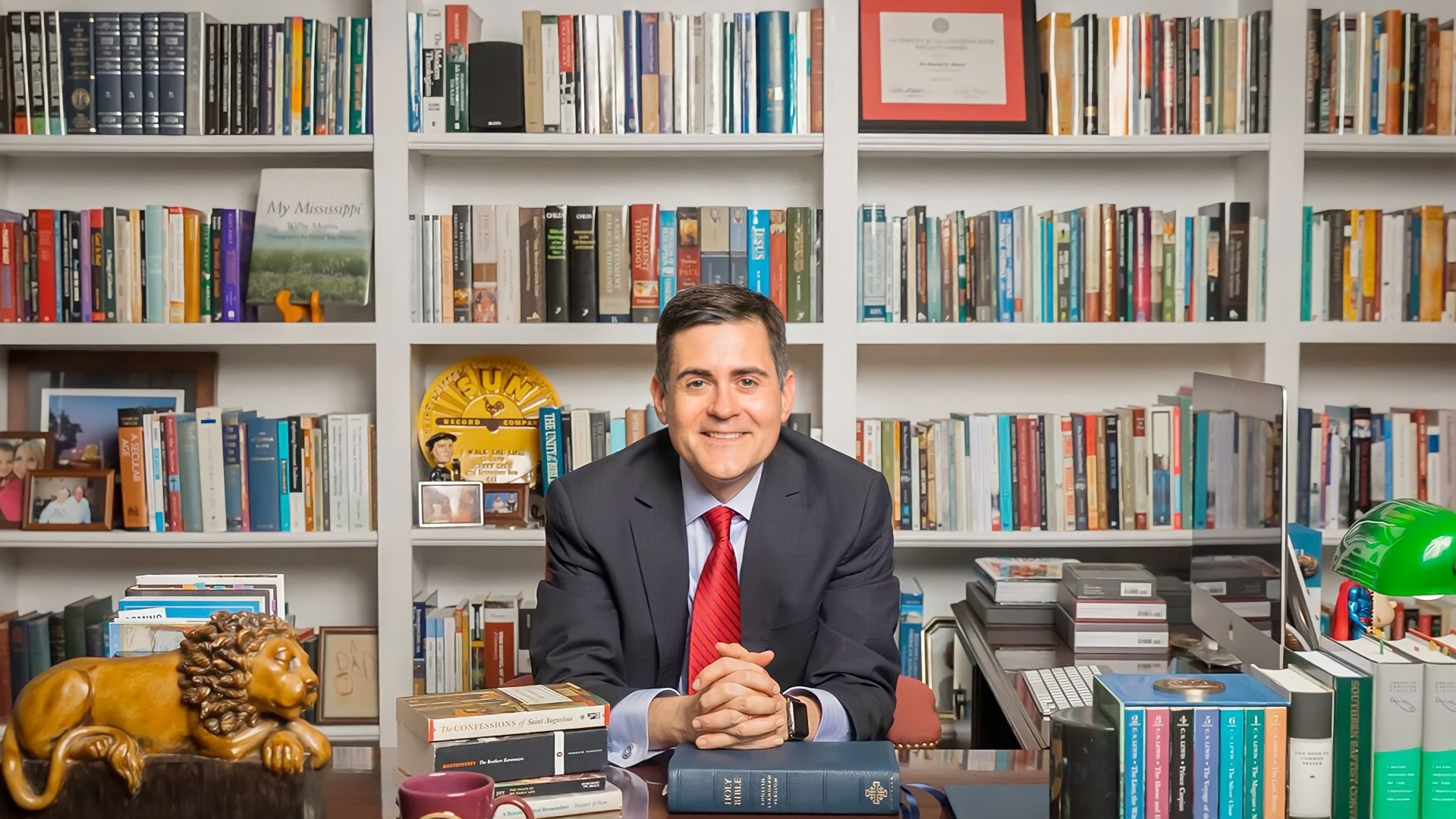
Christianity Today is announcing the hiring of Russell Moore to serve as a full-time public theologian for the publication and to lead a new Public Theology Project.

“We could not be more pleased with the addition of Russell Moore in this role,” said Christianity Today’s president and CEO, Timothy Dalrymple. “Russell has established himself as one of the most significant evangelical voices of our time. He illuminates the relevance of the gospel to the whole of life, from everyday matters of faith to the great debates in our society and culture. Importantly, he does all of this in a voice that demonstrates what we at Christianity Today call beautiful orthodoxy, weaving together a deep commitment to the historic integrity of the church with a generous, charitable, and humble spirit.”

Moore, a native of Biloxi, Mississippi, was appointed in June 2013 as the eighth president of the Ethics and Religious Liberty Commission. Before taking that post he was the dean of the School of Theology and senior vice president for academic administration at Southern Baptist Theological Seminary in Louisville, Kentucky. He joined the faculty there as professor of Christian theology and ethics in 2001 and became dean in 2004. For four years of his tenure at Southern, Moore also served as preaching pastor at Highview Baptist Church.

Moore is also the author of several books on Christian theology, ethics, and living, most recently The Courage to Stand: Facing Your Fear without Losing Your Soul. His first book, The Kingdom of Christ: The New Evangelical Perspective, was adapted from his doctoral dissertation at Southern and examined Christian sociopolitical engagement especially through the work of Christianity Today’s first editor, Carl F. H. Henry. Moore has had a long association with Henry’s legacy; at Southern, for example, he served as executive director of the Carl F. H. Henry Institute for Evangelical Engagement from 2001 to 2009.

Christianity Today was founded by Billy Graham in 1956. In the 65 years since that time, it has served as a flagship publication for the American evangelical movement, serving the church with news, commentary, and resources. It has published the luminaries of each generation, including the theological voices that have shaped evangelical public life and witness. Today it is engaged in efforts to expand its scope, advancing the ideas and stories shaping the future of the church across generations, across communities, and around the planet.

The Public Theology Project will extend and build upon that tradition, seeking to reground and revitalize a beautiful and orthodox public theology for our day. It will convene a broad set of voices on matters of faith in the public square, publish content in multiple media that fleshes out the implications of the gospel for the whole of life, and host gatherings and events. It will also be the main outlet for Moore’s regular writing and his podcast, SignPosts.

“Christianity Today has meant a great deal to me in my faith journey,” said Moore. “I am thrilled to join the team and lead the Public Theology Project. We need to recover a theologically orthodox, intellectually credible, socially engaged, missiologically holistic, and generally connected witness for American evangelical Christianity.” (Moore has also posted a statement at RussellMoore.com.)

Moore will commence his work at Christianity Today this summer.

“We have long enjoyed publishing Dr. Moore, and always hoped we could do more together,” says Dalrymple. “In recent years we worked with the National Association of Evangelicals, American Awakening, and other partners to regather American evangelicals around the first principles of why and how we engage as followers of Christ in public life. When we first began to discuss a Public Theology Project with Russell, we immediately welcomed the opportunity to grow that effort by joining forces on something that matters so much to all of us. We could not have a better leader for this effort than Russell Moore.”

For media inquiries pertaining to this story, please contact media@christianitytoday.com.

Russell Moore Joining Christianity Today to Lead New Public Theology Project

Christianity Today is announcing the hiring of Russell Moore to serve as a full-time public theologian for the publication and to lead a new Public Theology Project.

“We could not be more pleased with the addition of Russell Moore in this role,” said Christianity Today’s president and CEO, Timothy Dalrymple. “Russell has established himself as one of the most significant evangelical voices of our time. He illuminates the relevance of the gospel to the whole of life, from everyday matters of faith to the great debates in our society and culture. Importantly, he does all of this in a voice that demonstrates what we at Christianity Today call beautiful orthodoxy, weaving together a deep commitment to the historic integrity of the church with a generous, charitable, and humble spirit.”

The Creative Mandate for Sandra McCracken

How a singer from Missouri came to love writing for CT.

The Creative Mandate for Sandra McCracken
Chris Cameron | Center Street Recording Studio

Nashville singer-songwriter Sandra McCracken’s work at CT is driven by what she calls the “the creative mandate,” which she also believes is part of being human.

When McCracken first got an invitation to write a piece from CT’s Managing Editor Andy Olsen, she was a little intimidated.

“I didn’t feel qualified as a writer. I thought ‘I’m just a songwriter,’” she said, as her baby Sam bounced on her lap during our recent interview. One piece led to another, and she started writing her CT column, Pending Resolution, in 2017 with eighteen articles published to date.

Her most popular article for CT is “Martha, You Don’t Have to be Mary” with 16,000 readers online plus print readership. She explores how God reveals himself through music, nature, and unresolved circumstances in our lives.

McCracken’s Steadfast podcast celebrates stories of patience that display God’s steadfast love and was added to CT’s network in 2021.

In one episode, “Patience After Catastrophe,” she talks to Jay and Katherine Wolf, co-authors of Hope Heals as they share their story of redemption in the aftermath of a life altering stroke.

“CT has encouraged me to give voice to things, as a writer, as a musician, as a podcaster, and as a curriculum writer. It means a lot,” said McCracken.

Her passion for worship goes back to her early teen years in Missouri. “I would play in church, or I would sing in the choir. My piano playing is directly connected to devotional life, or singing from the hymnal, or writing new tunes from the hymnal.”

At first, she was hesitant to create Christian music for fear of being pigeonholed in that genre before people really listened.

The Builder and the Architect, her first album of hymns, was released in 2005. The track list included “Thy Mercy, My God” and “Rock of Ages.” This album marked an important shift to “facilitate, lead, and write worship songs for churches–what I would call gospel music,” said McCracken.

Do you have a memory of first reading Christianity Today, or an article that spoke to you at one point?

CT’s article “The Joyful Environmentalist,” an interview with Peter Harris and Eugene Peterson about creation care caught my attention. It’s a good example of taking an issue like creation care that could be political, but it’s a biblical idea. We’re supposed to steward the earth. You can have political opinions around it. We should be Christians first, and then citizens of a society. That article was one that expressed God’s affection for creation.

In Genesis, you see this incredible display of His power and imagination in the creation story. And then we’re right in the middle, invited to participate and to go and to do likewise. Even the smallest gestures—connecting with a neighbor, pouring a cup of coffee, hosting a dinner party—the most ordinary things are evidences that God is at work bringing renewal.

Sandra McCrackenChris Cameron | Center Street Recording Studio
Chris Cameron | Center Street Recording Studio

With the different roles you fill in your life as a mother, wife, and songwriter, how do you juggle everything and keep your eyes fixed on Jesus?

I was talking to a friend about the legacy of Larry Crabb, who recently passed away. One of the phrases that stayed with her about his life was his encouragement to ‘live thirsty.’ We were talking and meditating on what that might mean. There’s this sense of leaning into our weakness and our limitations, even while we’re working hard. There can be this giving over of control.

I can do a lot of things. It can be crazy. It can be like ‘Let’s do this trip. Let’s try to make this work. Let’s do this dinner, or even pursuing a project that seems risky. For me, the juggling is all fine, if I’m not white knuckling it. Whenever I’m doing that, it feels like I’m grasping for something, or trying to prove myself.

You can do a lot of things. You can do little things. One is not better than the other. We can do the things we’re called to do joyfully, and let God do his work as we put in our best effort.

Let’s talk about your Pending Resolution column in CT that explores the tension of living in the now and not yet. How does the theme of living in that tension impact your faith and creative work?

Life continues to bring new transitions and surprises. Some of them are wonderful, and some are really unpleasant. We have to live in the middle of that already and not yet and acknowledge that there are things to lament most days. But there are still things to celebrate and praise to be offered. In all circumstances, our response should be praise, even when it’s pending resolution and we don’t know how it’s going to end.

How did you start writing for Christianity Today?

That is a big part of my story. In September I have a book coming out, and I don’t think that would’ve ever happened without this CT column.

When I started, I remember thinking ‘Okay, great I can write one piece.’ Then I quickly thought I was going to run out of ideas. I started realizing the rhythm of the column was its own discipline, its own kind of training to communicate words that were ordinary life but bring them in a way that could be communal and shared with other people.

Starting out, I think my idea of it was having a cup of coffee with a friend. It has been a learning experience for me as a writer. But I’ve been so encouraged by the support from CT over the years.

What have you appreciated about CT?

My connections to CT have been largely relational. I think that says a lot about the people that are a part of CT. I have felt synergy and like mindedness with the ministry. As an observer of CT, there’s such an emphasis on culture, listening, and lifting up uncomfortable things. CT is always trying to listen and have an honest conversation around difficult topics. CT brings things to light that other people don’t want to address, but it’s not to be provocative. CT is willing to take some risks, to make culture, to talk about important issues that other people don’t know how to talk about.

Tell us about your vision for the Steadfast podcast on the CT network.

I love talking with people and hearing their stories. This new season was recorded in 2020 during the pandemic. It became even more of a touch point because I wasn’t out on the road seeing people.

I had been influenced by all these individuals, so it was a way of lifting their voices. A podcast is a unique and accessible way to do that. It’s another way that you can spend time with people and have a meaningful exchange of ideas.

Having that place where we could gather and exchange ideas and affirm things we believe and know to be true was a way to bolster my hope. When your hope falters, you need a friend to say ‘Hey, I see it, here it is.’ I think that’s what community is about. My little dream is that Steadfast would be a gesture that supports community.

You’ve released two albums of hymns, Builder and the Architect and Feast or Fallow. Do you have a favorite hymn writer? What are your favorite hymns?

My favorite hymn writer is Anne Steele. She was a peer of Isaac Watts. She has so many hymns that are down to earth and expressive. She will often take the first line of a hymn that could be affirmation of who God is and the middle verses will trace some of her doubts and questions. Then she comes back to her initial affirmation of God’s faithfulness. I appreciate having a female voice in the mix when you have a lot of male writers that are in hymnals.

Abide with Me” and “How Firm a Foundation” are my favorite hymns. Both of those hymns remind me of Isaiah 43:2: “When you pass through the waters, I will be with you.” This is how God promises his faithfulness to us. Throughout life, I’ve gone back to those hymns and really found comfort and strength in the theology that’s underpinning those words.

What are your upcoming creative projects?

My album Patient Kingdom, is a fitting theme for this season we’re in. Both my music and writing projects have been affected by the pandemic, for better or for worse.

I’m partnering with SmallGroups.com to create a Bible study “Exploring the Psalms: Getting to Know Ourselves and God” that is released later in 2021. There’s also my new book, “Send Out Your Light: The Illuminating Power of Scripture and Song,” coming out on September 14, 2021.

Some of my story, in songwriting and Scripture, is what holds the book together. It’s a book about how Scripture influences our lives and invites us to speak, to recognize God gives us each a light. The light is tested. Then the light is sent out.

Kelsey Bowse is digital marketing associate at Christianity Today. Follow Kelsey on Twitter @ kelseybowse.

News

What Joe Biden Puts in the Collection Plate

Tax records show gifts to three churches, two religious charities, a food bank, and more.

Christianity Today May 18, 2021
Joshua Roberts / Stringer / Getty Images

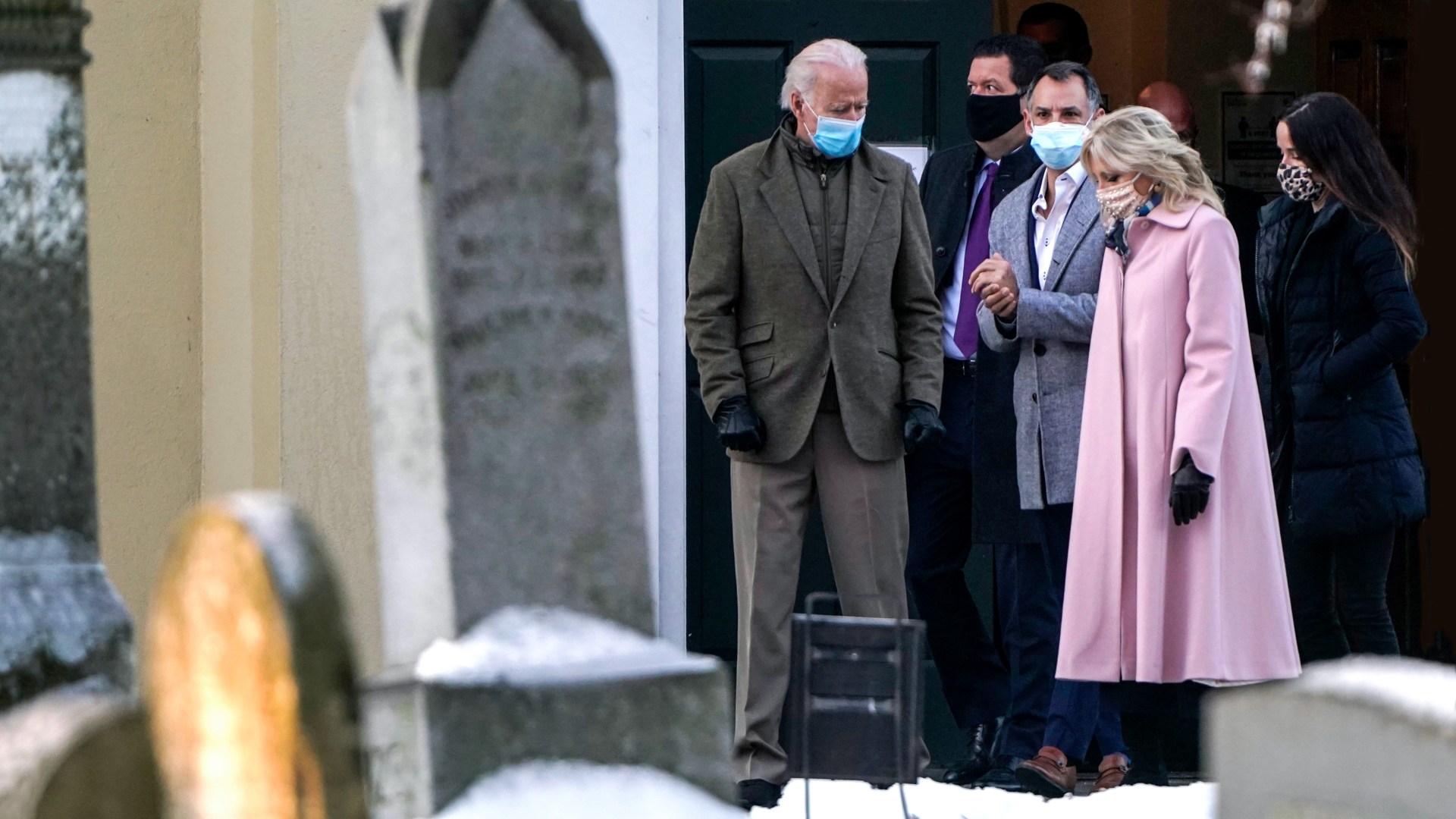
Joe and Jill Biden gave $1,000 to St. Joseph on the Brandywine Catholic Church last year, the Greenville, Delaware, congregation where the president regularly receives Communion and visits the graves of his first wife and two of his children. The Bidens gave another $1,500 to the First Lady’s church, Westminster Presbyterian, a Presbyterian Church (USA) congregation in nearby Wilmington.

According to the First Family’s tax records, released by the White House on Monday, the Bidens also gave to a church in South Carolina, a food bank, a fire department, a firefighter association, two Catholic charities that help the poor, a nonprofit that serves military families, and the Beau Biden Foundation for the Protection of Children, started after the president’s eldest son died in 2015.

The Bidens reported giving away a total of $30,704 in 2020, a little more than 5 percent of their $607,000 income.

That percentage is fairly standard for American families. Only about half of Americans give to charity at all, according to the most recent study from the Lilly Family School of Philanthropy at Indiana University–Purdue University Indianapolis. Among those who give to charity, only about 5 percent tithe one-tenth of their income.

Most give between 2.4 and 6 percent, according to the National Center for Charitable Statistics. People who make between $250,000 and $1 million give, on average, about half of what the Bidens did in 2020.

Barack Obama gave away a similar percentage of income his first year in the White House. His charitable contributions rose over the next eight years, however, and he ultimately gave away $1 million while in office—slightly more than 10 percent of what he earned from his presidential salary and sales of his two autobiographies.

George W. Bush was more charitable than Biden, giving away 10 percent of his income his first year in office. Bush’s giving averaged about 9 percent of the family’s income until 2007, when it increased to 17 percent.

Comparison to Donald Trump is more difficult, since the former president did not release financial information while in office. Trump frequently boasted about his giving, but reporting from The Washington Post shows many of his gifts were in the form of free rounds of golf at his resorts. The New York Times, reporting on leaked tax documents from 2016 and 2017, found that Trump’s most substantial charitable giving was a conservation easement—an agreement not to develop a 200-acre estate an hour outside New York City. Trump apparently gave little to no actual money to charity, though he did donate some of his presidential salary to government agencies.

Releasing the president’s tax information on Monday, the Biden White House called it an “almost uninterrupted tradition.”

Presidents have released financial records since Richard Nixon gave his famous “Checkers Speech” in 1956. The Republican vice presidential candidate, Nixon was accused of having a secret second salary, funded by rich California businessmen. He had an accounting firm release his financial information to the press and gave a speech detailing his family’s economic situation, including the mortgage on his home, the cost of his wife’s coat, and one gift he had accepted from a supporter—the family dog, Checkers.

Nixon did not mention any charitable giving.

From Nixon until Trump, presidential candidates and presidents released their financial information in an attempt to show the American people they are free from any financial corruption. The information also shows how much they give away, and whom they give it to.

The Bidens’ largest gift was $10,000 to the Beau Biden Foundation. They also gave $2,250 to the Ministry of Caring, a shelter for abused spouses founded by a Franciscan friar. Joe Biden’s sister Valerie Owens worked with the organization for more than 35 years and served for a time on the board of directors.

The Bidens gave $1,000 to a third church that neither of them attend regularly: Morris Brown African Methodist Episcopal Church, in Charleston, South Carolina. Morris Brown is the historic Black church where Biden went during the Democratic primary campaign to apologize for his cooperation with segregationists during his time in the US Senate.

Biden’s campaign focused on Black churches in the state, and he won the pivotal South Carolina primary by nearly 30 points.

Culture

Punk Rock Priests Offer Up Their ‘Parallel Love’ in Music and Sacrament

There’s no other band quite like Luxury, Christian indie rockers who journeyed through tragedy and faith to Eastern Orthodoxy.

Christianity Today May 18, 2021
Jared Swafford / Courtesy of Sideways Media

The evangelical indie rock scene of the 1990s can be difficult to explain. A rebellious, unhinged underground movement that emerged from megachurch basements and religious colleges? A generation of musicians who broke ties with conservative Christianity but maintained a fan base built through youth groups and Young Life? You kind of had to be there.

Perhaps no band typifies the many paradoxes of this scene and its fallout than Luxury, formed in small-town Georgia in the early 1990s and still together today. The band itself is also hard to describe: maybe Morrissey fronting Fugazi, with sad Radiohead piano, English-major allusions, androgynous sexuality—oh and by the way, three out of five members of the band are Eastern Orthodox priests. (This is called burying the lede.)

And so Parallel Love, a documentary film by Matt Hinton, cannot help but be as strange and wonderful as the band it portrays and the music scene they stumbled into and (mostly) out of. Hinton’s first documentary, Awake, My Soul: The Story of the Sacred Harp, also touched on uniquely American religious music. His feature on Luxury, originally released for a short theatrical run in 2019, is available on Amazon, iTunes, and other streaming platforms on May 18.

If you’ve already heard Luxury, you may need no convincing that this band is interesting and worth nearly an hour and a half of screen time. For my money, they are quite simply one of the best, most compelling rock bands of all time. Instrumentally, they toe the line between precision and chaos, presenting a snarling, tangled mess of guitar riffs and feral drums anchored by fat punk basslines, overlaid by an ethereal crooning vocal. It’s gorgeous.

What is more fascinating about Luxury, though, is that they manage to almost by definition be the world’s most Christian band (lead singer Lee Bozeman once claimed Luxury was “the only Christian band”) while not sounding anything like what most people would think of as a Christian band. No songs about Jesus; no positive, “family-friendly” lyrics; no altar calls—in fact, it’s quite the opposite: Luxury’s songs are frequently about sex, sadness, and regret.

Yet the music is made by people who grew up in the evangelical milieu—Lee Bozeman and his brother, guitarist James Bozeman, were pastor’s kids—and, clearly, continue to treat their Christian faith with utter sincerity. The band’s non-priest members remain active in their respective denominations as well.

The two scenes that form the backdrop of the film’s title card set the tone: On the left side, the band’s guitarist, vocalist, and bassist, solemn and dramatically bearded, are draped in gold-trimmed robes, carrying giant crosses past a huge icon. On the right, the same men are prancing about at a sweaty, sensual rock show, aggressively attacking guitars and throwing down microphone stands.

The movie, which uses talking-head interviews with the band, critics, and others in the music business as well as archival footage, is more or less historical, chronicling the band’s journey from their roots at Toccoa Falls, a Christian and Missionary Alliance college in Georgia, to their signing with Tooth & Nail Records, the powerhouse independent record label that fueled the ’90s Christian indie rock explosion, to a horrific touring accident that hospitalized the band, to their eventual comeback and journey toward Orthodoxy and the priesthood.

The first part of the film is preoccupied with the question “Why didn’t Luxury ‘make it’?” The answer is most likely that they didn’t quite realize what they were getting into when they signed with Tooth & Nail and joined the church-basement touring circuit.

The film suggests the band signed with a label in the Christian scene because it was part of their social circle at the time, not realizing the implications. It’s difficult to imagine youth pastors being enthusiastic about the band’s raucous cover of Adam Ant’s “Goody Two Shoes” (“Don’t drink, don’t smoke, what do you do?”) or Lee Bozeman’s campy sexiness.

The film touches on this controversial aspect of the band’s early work, and it’s undeniable that the subject matter on Luxury’s first record coyly, if not overtly, flirted with various flavors of sexuality. James Morelos, a former publicist for Tooth & Nail interviewed in the film, calls 1995’s Amazing and Thank You “a queer record, even though they’re straight guys,” and it’s hard to disagree.

While this rock-and-roll flamboyance may have made Luxury an outlier in a music scene that tended to focus more on faith and evangelism, it makes the band’s musical and spiritual growth after the catastrophic van accident all the more intriguing, which is the focus of the film. They maintain a theatrical punk rock dangerousness, but it becomes tempered—whether by age or something else—with a kind of wounded maturity.

By the time we get to the band’s most recent album, its 2019 release Trophies, Lee Bozeman is singing the lyric “Change your life,” on more than one song, with the authority of a man who has had to, more than once. The way he carries himself, you almost want to take him up on it.

The movie was made as Luxury was recording Trophies, and it sort of comes full circle; now fully ensconced in their liturgical lives, the priests in the band seem more comfortable with being some version of a Christian rock band.

Freed from the constraints of an evangelical music scene that demanded a particular performative expression of faith, Luxury has by the film’s end become what you might call a sacramental rock band.

It’s not until the final scenes that the notion of “parallel love” is fully explicated by Christopher Foley, the bassist, who describes how his vocation as a priest helped him understand what the band does:

What does a priest do? A priest is one who … offers something up that then gets returned to us as something life-giving. We don’t take wheat and grapes; we take bread and wine, the work of man’s hands. And that’s what’s lifted up unto Christ, and that’s what gets returned to us as Christ himself, as something life-giving.

The question isn’t “Are you a Christian band or not?” It’s just “Are you, by nature of your life vocation, a priest of creation who offers up … everything that is your matter, you know, your stuff of life—are you taking it and offering it up?” And then if you’re offering it up, are you receiving it as something life-giving?

It’s easy to see a hunger for “something life-giving” in the band after their brush with death, and the moral seriousness and luxurious (eh?) aesthetics of Orthodoxy seem to have been a natural fit for a group searching for that elusive “something more” Christian rockers often vaguely sing about.

A band known for its DIY ethos—“wild and untamed,” as one music critic puts it in the documentary—coming to be associated with an ancient (and, in the United States, “foreign”) faith feels in some ways like the ultimate punk move. (The only other contemporary rock musician I know of who has converted to Orthodoxy, in fact, is Justin Marler, formerly of the doom metal band Sleep and cofounder of the punk-style Orthodox magazine Death to the World, which called Orthodoxy “the last true rebellion.”)

This is more or less where the story of Parallel Love ends, and even if you’re not considering converting to Orthodoxy—which several of the musicians interviewed in the film did, not only the priests in Luxury—when coupled with the rich, dense music of Trophies, it feels quite satisfying. One is left with the notion that any honest art made by a Christian, priest or not, can be an offering.

Luxury’s trajectory from accidental Christian band to purposeful one feels significant. Many of the ’90s indie rock bands from the evangelical scene were pushed toward making music for the Christian market when they were young and not particularly mature in the faith or otherwise.

It’s worth noting that some of Luxury’s peers ended up in very different places: Some of the members of bands they rubbed shoulders with along the way abandoned music for financial reasons (believe it or not, it’s hard to make a living as an artsy Christian rock band!), moved into lucrative mainstream music gigs (the producer of Luxury’s first album now runs live sound for Leon Bridges), or in some cases had public “deconversions” driven in part by what they saw as hypocrisy in the Christian rock scene.

This isn’t to say that converting to Orthodoxy and/or becoming a priest is the only way for ex-Chrindie scenesters to find a spiritual way in the wilderness. While some Gen X evangelicals look longingly toward Rome, Canterbury, or Constantinople as possible ways out of the political and cultural pitfalls of their own traditions, the fact that the Christian rock scene was able to sustain a band as unique and good as Luxury says something about the big-tent ecumenism lurking in “nondenominational” church basements across the country.

Luxury’s cult popularity, captured in Parallel Love, reflects that scene’s openness to a variety of expressions of faith, be they as ancient as the Divine Liturgy or as modern as DIY post-punk records.

Bozeman sings, on Trophies’ “You Must Change Your Life” that “it takes a lifetime and a priest” to understand one’s place in the world. Perhaps it also takes a band like Luxury.

Joel Heng Hartse is a lecturer in the faculty of education at Simon Fraser University in British Columbia. He is the author of several books including the forthcoming Dancing about Architecture is a Reasonable Thing to Do (Cascade).

Hear Joel make his case for Luxury’s best album in an upcoming Zoom discussion with fellow music critics on May 27.

addApple PodcastsDown ArrowDown ArrowDown Arrowarrow_left_altLeft ArrowLeft ArrowRight ArrowRight ArrowRight Arrowarrow_up_altUp ArrowUp ArrowAvailable at Amazoncaret-downCloseCloseellipseEmailEmailExpandExpandExternalExternalFacebookfacebook-squarefolderGiftGiftGooglegoogleGoogle KeephamburgerInstagraminstagram-squareLinkLinklinkedin-squareListenListenListenChristianity TodayCT Creative Studio Logologo_orgMegaphoneMenuMenupausePinterestPlayPlayPocketPodcastprintremoveRSSRSSSaveSavesaveSearchSearchsearchSpotifyStitcherTelegramTable of ContentsTable of Contentstwitter-squareWhatsAppXYouTubeYouTube