News

Evangelical Colleges Consider the Future of Online Education After COVID-19

The pandemic accelerated the push for remote options but also left students longing for in-person community.

Christianity Today February 11, 2021
Leon Neal / Getty Images

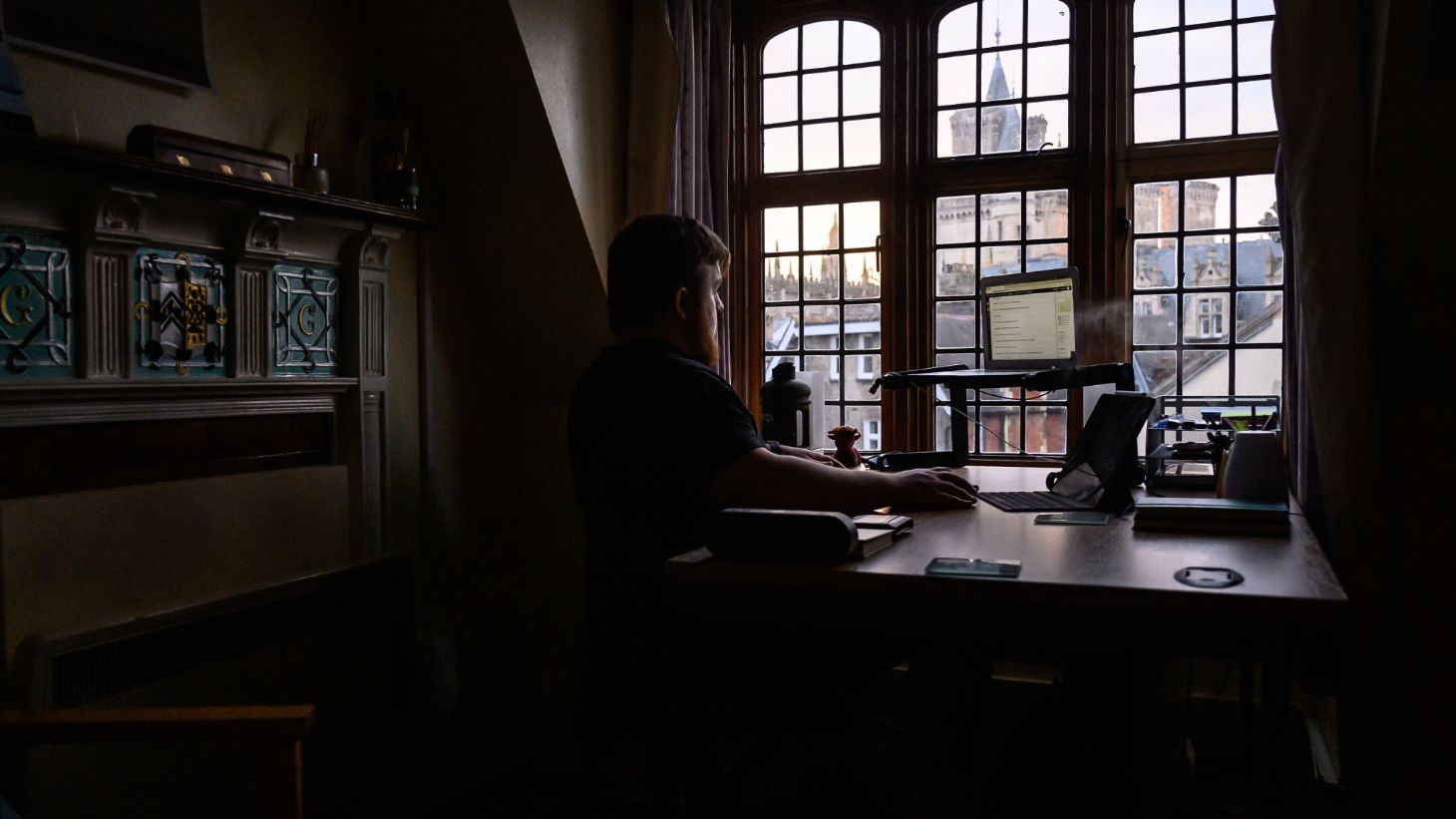
In the fall of 2019, not every instructor at Samford University used Canvas, an online learning management system where they can post assignments and videos of lectures.

By the following year, things were different. “It’s not optional,” said Betsy Holloway, vice president for marketing and communications. “One hundred percent are in Canvas.”

The change, of course, is due to COVID-19. But once the pandemic ends, what elements of the new technology will remain a part of the higher ed landscape? Nearly a year in, administrators at Christian colleges are pausing to assess the real-world experiment with online education.

Recently, a number of schools affiliated with the Council for Christian Colleges & Universities (CCCU) have signed on to work with CampusEDU, a new ed tech company partly owned by the CCCU, which aspires to usher in the next generation of online classes.

Abilene Christian University, Gordon College, Houghton College, Indiana Wesleyan University, John Brown University, Lipscomb University, Ohio Christian University, Oklahoma Christian University, and two institutions affiliated with the Association for Biblical Higher Education (ABHE) have partnered with CampusEDU so far.

Darren Campbell, CEO of CampusEDU, compared most online education to “the Model T,” believing there’s a long way to go to build on the basics. “It’s very text heavy,” he said. “We believe the future of online education is more graphical.”

The company works with institutions to create MasterClass-esque content with highly produced videos of lectures. Current offerings include a New Testament survey taught by Jim Lo at Indiana Wesleyan; Latin I, taught by Ian Drummond at Gordon; and Intro to Computing, taught by Ted Song at John Brown University. Students at participating schools can take courses taught by professors from a partner institution at no additional cost.

“COVID-19 is changing the higher education landscape, and we’re seeing that the flexibility of blending in-person and online education is proving to be an effective model for many of our campuses,” said CCCU president Shirley Hoogstra, announcing the partnership. “It has become clear that we need to provide extraordinary in-person and extraordinary online courses.”

Another for-profit online learning tool, Acadeum, also has a course-sharing consortium, with more than 50 CCCU institutions participating. Through the platform, schools can approve and enroll students in classes developed by other institutions, and then share the data and money for cross-registration.

Rick Ostrander, Acadeum’s vice president for academic partnerships, said the technology gives students increased flexibility, allows institutions to add courses to their current offerings, and helps schools get online more quickly than if they did it on their own.

Ostrander and Campbell said COVID-19 has been a blessing and a curse. Some institutions have expressed interest in signing up, while others have been busy with day-to-day management.

“In some cases, COVID-19 has really kept institutions from thinking about long-term strategic growth initiatives,” Ostrander said.

Schools had been slowly building and testing remote-learning infrastructure for years, with traditional undergraduate enrollment declining and growing interest from adult learners taking classes part-time, high school students in dual enrollment, and transfer students requiring greater flexibility with instruction.

By 2013, about 13 percent of all students at CCCU schools were exclusively enrolled in distance education, according to data provided by the CCCU. By 2018, the most recent year available, that had climbed to 19 percent.

Some schools have sought to create a niche for themselves by developing extensive online offerings. Indiana Wesleyan University launched its first online course in 1996. Today IWU National & Global, a separate school for graduate and online degree programs, serves about 9,000 students.

Matt Lucas, chancellor of IWU National & Global, said schools trying to do more online education may find it is more difficult than they expect. It’s one thing to provide instruction through a learning management system or Zoom to provide instruction. It’s another to offset declining enrollments by recruiting students into web courses, competing with all the other colleges and universities doing the same thing.

“It is really hard to have gravitas in this space,” Lucas said. “Because it is a red ocean. It is a dog eat dog. It has become a commodity to drive down the price of tuition as much as possible.”

Colleges will have to stand out to be competitive in the online education market, said education-technology blogger Michael Feldstein in a piece titled “Online Learning Student Experience is the New Climbing Wall.”

He writes that schools “will have to create distinctive and valuable experiences (online) that are just as meaningful and just as easy as bumping into your professor at the coffee shop or meeting your classmates for pizza at the dining hall.”

At the same time, Christian administrators and experts told CT they think COVID-19 will make prospective students value in-person education more in the coming years.

That’s the bet that Palm Beach Atlantic University is making. While the Christian school has been growing its online-only degree programs—it had five programs in 2017 and will be up to 17 this fall—it’s also doubling-down on traditional, in-person learning, described Melanie Jackson, Palm Beach Atlantic ’s eLearning director.

In response to the pandemic, the school still offered entirely in-person instruction on campus this academic year, with careful quarantine procedures for students who were exposed to the coronavirus. Also, some students received medical exemptions if they wanted to take classes from home.

“It was not entered into lightly,” Jackson said. “We truly feel like the mission of our university is transformation—to aid students to become strong Christian leaders in their communities and in their fields. For many students and for many programs, that transformation for students takes place in the classroom.”

Palm Beach Atlantic installed acrylic plastic shields around each student’s desk and each teacher’s podium, making the classrooms look oddly futuristic. Faculty still need to be familiar with remote-learning tools for students not in the classroom. Professors stream every lecture on Zoom and post assignments on Canvas.

At Samford, where every professor is required to use Canvas, administrators are also thinking about the value of old-fashioned college, in which a few people engage with each other in a decidedly non-virtual room.

“CCCU schools, Samford included, should be able to deliver on that core value proposition,” Holloway said. “A small class that is highly relational, experiential learning. I think there is going to be an acute desire for that.”
Church Life

Pentecostals Lead the World in Conversions, But Not in US Missions

Study: Just a tenth of American missions agencies affiliate with the world’s fastest-growing Christian movement.

Christianity Today February 11, 2021
John Moore / Getty Images

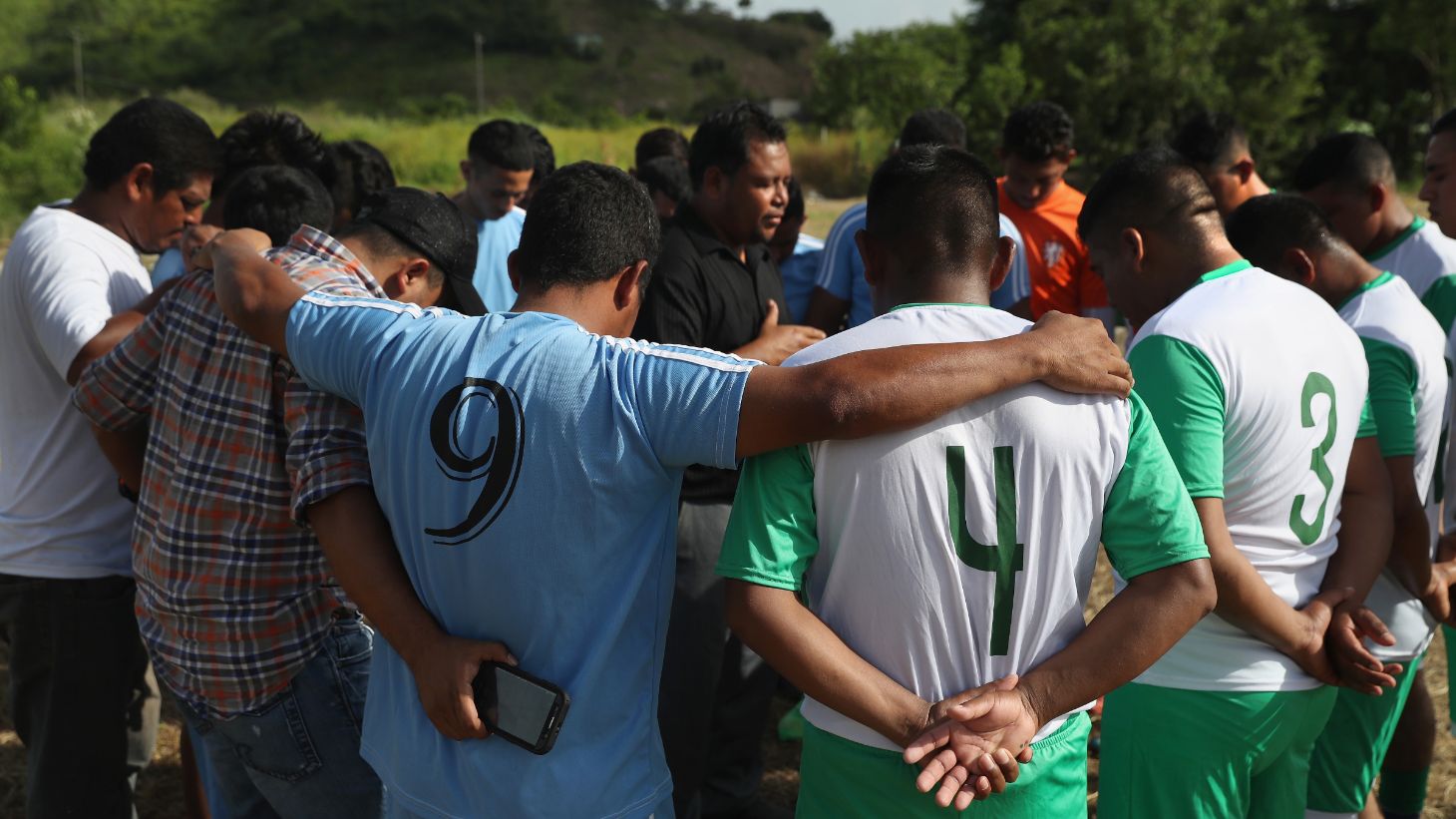
Pentecostalism’s global impact outsizes its organizational footprint, according to a recent study parsing the reach of American Protestant mission organizations.

Pentecostals and charismatics—it’s often difficult to name such a broad and diverse group—comprise 26 percent of all Christians worldwide, according to the Center for the Study of Global Christianity’s 2020 report, and they have a growing presence in the developing world.

Yet only about 10 percent of US missions agencies serving abroad over the past 40 years were affiliated with the popular movement, sociologist Jared Bok found.

“Global Pentecostalism saw its roots historically in the US. Yet despite its growth around the world, in the US itself, it’s evangelical Protestantism that is more dominant,” said Bok, adding that American evangelicalism “doesn’t always affiliate with and sometimes even dissociates with Pentecostalism or charismatic forms of Christianity.”

Bok, inspired by his family’s interactions with US missionaries in Southeast Asia, said he has wondered how big of a role US missions agencies are playing in the growth of the faith around the world.

In a study published last year in the Review of Religious Research, the researcher analyzed a sample of 799 agencies from the North American Mission Handbook, a directory of North American missions organizations, alongside United Nations data on development and Protestant identity. His analysis begins in 1972—the first year that the questionnaire sent out by Mission Handbook included the word “evangelical”— and differentiates between organizations that identify as evangelicals, Pentecostals, both, or neither.

https://datawrapper.dwcdn.net/PIH1C
https://datawrapper.dwcdn.net/XO6Wf

Bok reported that evangelical agencies rose from around 100 in the 1970s to a peak of over 300 in the 1990s, around the time Pentecostal agencies spiked to around 70. (Groups that were neither numbered somewhere in between evangelicals and Pentecostals.)

Pentecostals and charismatics have been more likely to engage in evangelism and publishing abroad, while evangelical agencies are more likely to evangelize over TV and radio.

Generally, sociological research sorts Protestants into subgroups: mainline, evangelical, and black Protestant. But recently scholars have also suggested the importance of differences within evangelicalism between Pentecostals/charismatics, evangelicals, and fundamentalists as key categories.

“Any contribution sociologists can make in breaking apart stereotypes and highlighting the diversity within seemingly monolithic groups is useful,” said Bok, who is an assistant professor at the University of Reno.

“The differences … between evangelical and Pentecostal/Charismatic agencies in terms of what they do and where they operate may have implications for the survivability of their international ministries in the near future.”

In certain countries, government regulations around religious activities can target foreign workers and agencies, in some cases forcing Christians to conclude their work, leave, or find new ways to evangelize. (Bok’s forthcoming research focuses on factors that prompt organizational changes at missions agencies.)

Although both Pentecostals and evangelicals tend to minister in countries where Protestants are underrepresented, Bok found, as he suspected, that evangelical agencies operate more frequently in countries with unreached people. He tentatively concluded that Pentecostal and charismatic agencies have seen more success in deepening the faith of active Protestants or igniting a new practice in those who were Christian in name only.

Bok clarifies that this doesn’t mean Pentecostal mission workers don’t evangelize nonbelievers, but that social networks play a significant role in spreading the faith.

Bok recounts Tulane University sociologist David Smilde’s research in Latin America, which found that “a lot of conversions, especially from Catholicism to Pentecostal/Charismatic Protestantism, happen through social networks—people know family members who are Pentecostal, make friends or meet people in a different town”—meaning not directly through the operations of an American mission organization. Bok suggests that organizations should be studied more with ethnographies or analysis of mission agencies’ materials to provide a fuller picture of reach.

Geographically, the new research adds to understanding of the greater share of global Christians who belong to Pentecostal or charismatic churches. In Latin America, Pentecostal and charismatic mission agencies had a larger presence, while in sub-Saharan Africa, organizations that identified as neither Pentecostal nor evangelical had a larger presence. Few American agencies had a presence in North African/Middle Eastern and former Soviet countries.

Overall, Bok found “less sweeping and more selective” differences between Pentecostal and evangelical missions than he anticipated.

“There is far more that binds these two types of mission agencies together, especially compared to other Protestant agencies (such as mainline Protestant), than divides them,” said Bok.

For example, Bok hypothesized that Pentecostal/charismatic agencies would tend to do less ministry as development increased for countries over time—other scholars have promoted the assumption that Pentecostalism is uniquely appealing to those experiencing poverty. (Others have also documented the popularity of Pentecostalism among the middle class.)

The data did not support the idea that Pentecostal agencies were more interested in low-income countries. But the answer could be beyond the scope of his examination of organizations—Bok again suggests that more personal, community-level evangelism among those in poverty may be at play in those countries.

His study also found the role of denominations in US missions work abroad has shifted.

In the 1970s, over 70 percent of Pentecostal agencies were denominationally affiliated, while evangelical organizations were mostly not denominationally affiliated. By the 21st century, Pentecostals resembled evangelicals in that regard, and only about 25 percent of Pentecostal mission agencies were denominationally affiliated.

The change suggests some agencies began to emerge from independent congregations, said Bok. It also reflects rapid growth in nondenominational Christianity.

One advantage denominational agencies have over their nondenominational counterparts: a more robust missional scope.

“Denominations may indeed provide the networks and scope of mission to allow their agencies to reach wider audiences,” Bok said. “They may not be as prolific in number as nondenominational agencies, but they certainly are making up for it with more ministries per agency.”

What ‘Christianity Today’ Wanted the (White) Church to Hear After George Floyd Died

For 20 weeks, writers of color addressed issues of faith and racial injustice in an online series. Now this work is an e-book.

What ‘Christianity Today’ Wanted the (White) Church to Hear After George Floyd Died

“Can a follower of Christ claim salvation in His cross and at the same time give consent to the suffering racial injustice imposes on others without contradiction?”

That’s what Cheryl J. Sanders, a senior pastor at a church in Washington D.C., challenged readers with last fall. Her essay was the final installment of Christianity Today’s “Race Set Before Us” project, a series that ran for 20 weeks in the aftermath of George Floyd’s killing that focused on the (white) church’s need to address racial injustice. Its authors, which included the And Campaign’s Justin Giboney, the Asian American Christian Collective’s Michelle Reyes, and the Expectation’s Project’s Nicole Baker Fulgham, explored a broad range of topics including disparities in education and school discipline, the ineffectiveness of a colorblind approach to race, and white evangelicalism’s failure to lead and take action for racial reconciliation.

Spearheaded by editor in chief Daniel Harrell, Wheaton College theology professor Vince Bacote also played a key role in bringing the series to life, finding writers and reading through drafts. In the essay launching the series he explained its purpose:

This series will not participate in the politics of guilt, but it will provide a “politics of reckoning.” To reckon is to take up and read, to ask God for eyes to see and ears to hear (Mark 4:23), to understand what the Lord would have happen in our hearts and have us do in the world. To reckon is also to acknowledge that righteousness under God must be done. Justice and peace go hand in hand (Ps. 85:10). Such divine reckoning elicits understanding and empathy, provides vindication and exposes guilt. The politics of reckoning evokes many emotions, but these need not be mere sentiments. Instead, these feelings present opportunities for the Holy Spirit to transform us more and more into disciples who do justice, love mercy and walk humbly with God (Mic. 6:8).

Bacote earned his first CT byline in 1999. Last year, in addition to his work on the series, Harrell also tapped him as one of CT’s three theology advisers, contributed three essays to the Advent devotional, and discussed why Christians stopped talking about the Second Coming on the Quick to Listen podcast.

“I think one of these reasons why it’s so important is that evangelicals have talked about race. You can go back and look through the annals of CT and see that there’s been articles about race at various points in its history,” said Bacote in a webcast about the series over the summer. “But the kind of sustained attention that is needed to get leadership in evangelicalism on this question hasn’t happened. We are in a right time to give leadership on this question and to show evangelicals they can be good news about this issue.”

Among the pieces from the series that stood out to Bacote was an essay by Rachel Kang which argued that “black men and women offer immeasurably more than stories of suffering and struggle, more than mere resources on racism to relevantly revisit our nation’s painful past.”

“Believers’ bookshelves should portray the kingdom of heaven we so passionately preach,” she wrote. “If we long for the seats in our churches to be filled with black bodies and brown bodies and white bodies together, we can start with our shelves and surround ourselves with stories reflecting a love for others without boundaries experienced through reading others’ books.”

“It’s easy to think that certain crisis dimensions of a topic are the only dimensions of a topic that are going to be talked about,” he said. “But there’s other things to talk about besides crisis. There’s everyday life.”

Bacote also called out an essay from Southern Baptist Theological Seminary professor Jarvis Williams, “Black Lives Matter in the Bible.”

“As a black Christian pastor of Asian, black, brown, and white people, I thank God that Genesis 1:26–27 clearly states God created all humans in his image and bestows upon us God-given dignity, and that he promises to redeem us, to reconcile us, and to restore the entire creation through Christ,” wrote Williams. “When black lives are dehumanized and treated as though they don’t matter simply because they’re black, Christians everywhere should be able to stand up and assert without hesitation and with their Bibles open that black lives certainly matter, have dignity, worth, and value, just as non-black lives certainly matter, have worth, dignity, and value.”

“I think that it was really important that we start with Williams making it clear that there’s a way to talk about Black Lives Matter that emerges straight out of scripture,” said Bacote. “There’s probably a certain constituency that thinks, ‘Is this really biblical?’ and they don’t see how the Bible directly connects to questions of race and I think Jarvis’ article was really helpful for that.”

The series gave readers many points to ponder.

“Thank you @CTmagazine for advancing this crucial conversation about racism,” tweeted one reader. “White Christians like me have a lot of self examination to do supported by grace and in hope of redemption.

“Excellent article and scripturally solid. Thank you,” wrote another. “Most helpful to this old white guy.”

One reader even had the chance to connect with one of the authors.

“I had the genuine honor & pleasure of conversing with @GaiusCharles on a panel last night,” she tweeted. “He recently authored a must-read essay in @CTmagazine about white evangelicalism & racial reconciliation. He is on FIRE for the Lord and for justice!”

Convincing of the church to fight for racial justice has not been easy for Bacote but he has persisted in the work.

“If the church is our family, do I just say I’m done with my family because my family still needs to grow up? I’m not leaving my family over that,” he said. “I’m not saying everyone has to invest their energy in evangelical institutions but for those of us called to this, I think it’s important to invest in wisely having these conversations.”

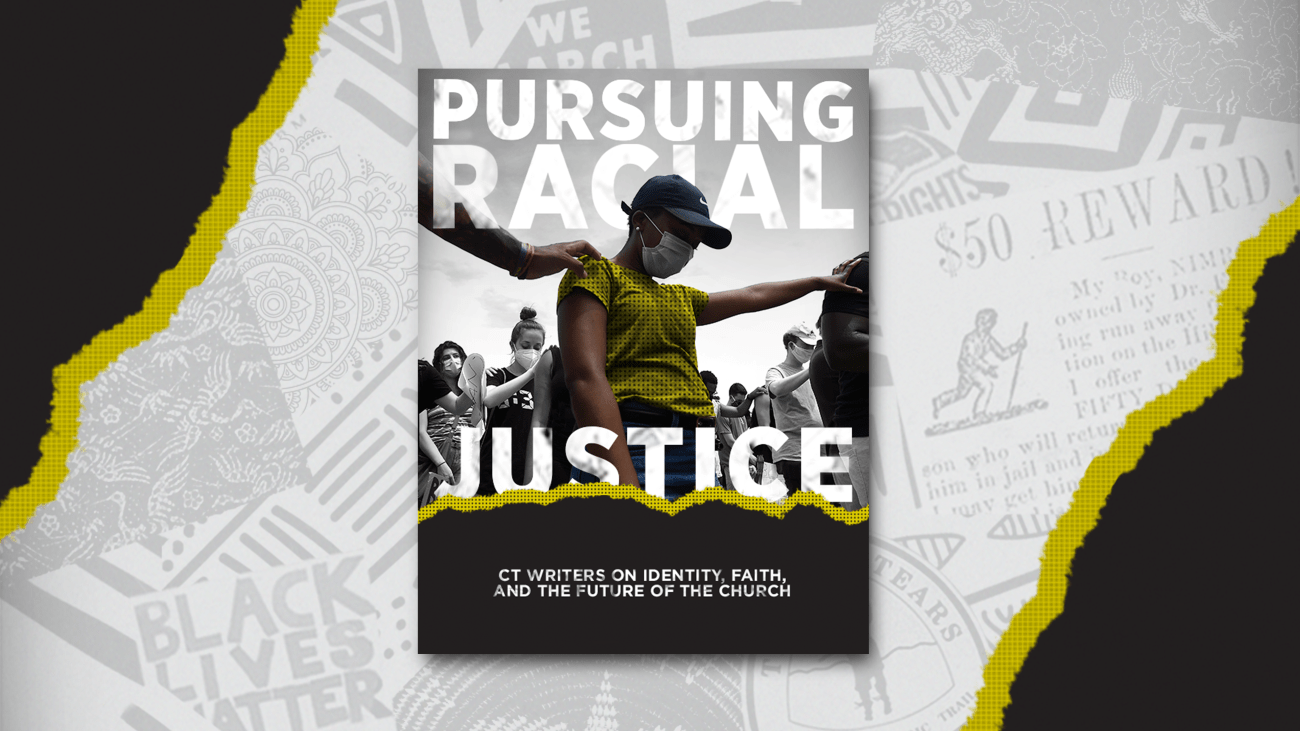
Ed Gilbreath, who was named Christianity Today’s vice president of strategic partnerships last fall, has compiled the essays, plus three new ones more, for a free e-book. Pursuing Racial Justice. The book was recently released (and is available here) and was accompanied by a book launch webinar featuring Bacote and several others.

“Our hope is that this thought-provoking collection of essays on race, faith, and the church will provide individuals and small groups with a dynamic resource for engaging on a crucial topic that continues to challenge us in our churches, our politics, and our everyday relationships,” said Gilbreath.

Morgan Lee is global media manager at CT.

Why Christianity Today is a Welcoming Space for a Third-Culture Christian

As an American who lived in Japan for more than 40 years, Sarah Zosel kept up with the American Church by reading Christianity Today.

Why Christianity Today is a Welcoming Space for a Third-Culture Christian
Photo Courtesy of Sarah Zosel

Growing up and living in Japan for most of her life, Sarah Zosel always felt like, what she describes as, a “third culture kid.” Merriam-Webster defines a third culture kid as, “a child who grows up in a culture different from the one in which his or her parents grew up.” Sarah struggles, like most missionaries do, with (in her case) not feeling Japanese enough when in Japan, but also not feeling American enough when in America. But over the years, one thing she believes helped her keep a pulse on American Christianity while in Japan, and even after moving back to the States, was reading Christianity Today.

Only six months after Sarah was born her family packed up and moved to Japan to become missionaries in Tokyo. Her father was part of the occupation of Japan in World War 2 and was on one of the first ships into Tokyo. He was influenced by some of the other GIs in his unit, and after the war when those GIs wanted to return to Japan in order to minister to the Japanese people, Sarah’s father joined them. The group he was a part of would later form Send International.

Sarah was immersed in Japanese culture from the beginning, but her family balanced that with a strong focus on their faith. When Sarah went into first grade she started attending boarding school during the week. “I remember having a conversation with my mom and accepting Christ very young, probably around four years-old. My parents wanted to make sure they had taught us the gospel and we had accepted Jesus into our hearts before we went away to school. They wanted us to have our faith to lean on during those times away,” recalled Sarah.

Sarah’s faith grew and became her own when she was in high school. She became involved in a group call Hi-BA, which was like a youth group but very serious about prayer and Bible reading. “We were held accountable for our spiritual growth and asked what we had learned in our Bible reading each week when we met,” explained Sarah. The group also did outreach to Japanese students at a local train station once a month. These experiences grew Sarah’s faith. “That was when I really started thinking for myself and making my own decisions,” said Sarah. “I made personal decisions about my faith and I started to see what God was calling me to do with my life moving forward. I had a high school English teacher who really had an impact on my life and I knew I wanted to teach too.”

After getting her English degree from Bethel University, Sarah felt her own call to move back to Japan. In 1972 Sarah and her husband moved to Okinawa, Japan and she started teaching at an international school. The school opened their doors to people other than just missionary children. That meant Sarah had the opportunity to teach and share her faith with kids who weren’t from Christian families, but local Japanese families and other third culture kids as well.

Sarah and her family lived in Okinawa for 28 years. Both of her daughters were born and raised there. Over the years Sarah had grown to believe she would live the rest of her life in Japan, but in 2000 when Sarah’s husband began to struggle with depression and anxiety, they decided to move back to the United States so he could work a less stressful job.

During this transition Sarah was thrown into culture shock yet again. “I hadn’t been planning to move back to the United States and it was a really hard transition for me–even just driving on a freeway, which I hadn’t done for years,” recalled Sarah. “Our first year transitioning back was tough, but when I found the charter school where I ended up teaching it was really helpful for me because so many of my students were Asian. It made me feel more at home.”

Sarah taught at her charter school another 16 years before retiring in 2020. The school was started by a Christian, and while the school wasn’t a Christian school, Sarah was able to teach biblical values to her students in her classroom. Most the students she taught were Hmong and had recently immigrated to the United States, so Sarah could identify with their stories and helped them learn their new culture as she continued to relearn it herself.

“One thing I enjoyed doing here in the states was finding books related to the culture and background of my students,” said Sarah. One book she loved to teach her students was Farewell to Manzanar. The story is about a Japanese student’s experience of adjusting to a southern California high school after spending time in an Internment camp during World War 2. While most of the students she taught in Minneapolis were Hmong, and not Japanese, they were still able to relate to the feelings of the young girl in the book.

After retiring Sarah realized she had more time on her hands for things she loved to do, but had put off because of her focus on teaching. One of these things is reading. Sarah started to pick up various copies of Christianity Today, both old and new to read each day. “I recently decided to read the back issues of Christianity Today that were in various places around the house. I feel like I have been on a spiritual retreat. God has spoken to me through articles about ministry to Muslims; how to help people who are struggling; ideas on strengthening our small group; helping pass on our faith to children,” Sarah said. “I could go on, but in every issue that I have picked up, I have found encouragement for my spiritual life and practical ideas to help the connections that I have.”

Sarah also loves to read books. “I’m keeping Amazon in business,” she joked. She finds a lot of the books she decides to read in the pages of Christianity Today. Recently she’s been reading Richard Foster, Eugene Peterson, James K. A. Smith, and Dallas Willard–and she always keeps an eye out for the books featured in Christianity Today for new titles.

As someone who identities as being “third culture,” Christianity Today helps Sarah understand American Christianity better, but her favorite articles are the ones that relate back to missions. “My favorite CT article of all time is The Surprising Discovery About Those Colonialist, Proselytizing Missionaries by Andrea Palpant Dilley,” said Sarah. “I really like it because of course missionaries are not ‘politically correct.’ It made me think a lot. I was in a book group and read Poisonwood Bible by Barbara Kingsolver. In our book group people were laughing at the missionary who thought he was saying one thing, but saying something else. But having grown up on the mission field I knew missionaries aren’t really like that. This article talks about how sociology shows how places where Christianity was brought by missionaries have become better over the years.”

Sarah recently became a donor to Christianity Today. When asked why she donated Sarah said, “I’m just really thankful. There are so many great articles. CT has helped me through the years, and now that I have more money than I did as a missionary, I feel like I have more to give.”

Caitlin Edwards is marketing and communications strategist at Christianity Today.

News

Hundreds of Churches Threatened by France’s Plan to End Muslim Separatism

As official demands assent that “the law of the Republic is superior to the law of God,” French evangelicals warn attempts to end Islamist terrorism will also harm freedom of religion.

Christianity Today February 9, 2021
Abaca Press / AP Images

(Updated Feb. 12 with CNEF webinar on new comments by France’s interior minister)

Frustrated by years of terrorism inflicted by radical Islamists, France’s parliament is debating a law to end Muslim separatism.

French evangelicals fear their churches will become collateral damage.

“This is the first time, as president of the Protestant Federation of France, that I find myself in the position of defending freedom of worship,” said François Clavairoly.

“I never imagined that in my own country something like this could happen.”

Officially named “the Law to Uphold Republican Principles,” the 459-page bill has been the subject of fierce debate this month, receiving over 1,700 proposed amendments.

The aim, interior minister Gerald Darmanin told parliament, is to stop “an Islamist hostile takeover targeting Muslims” that “like gangrene [is] infecting our national unity.” With Muslims often crowded into the many impoverished banlieues of France’s major cities, officials fear imported extremist ideologies are leading the religious minority to avoid national integration.

In addition, recent terrorist attacks have rallied popular demand for increased security measures. In the last six years, France has suffered 25 deadly jihadist attacks, killing 263 people. Including:

  • In January 2015, 17 people were killed in the Charlie Hebdo attack.
  • In November 2015, 131 people were killed in an attack at the Bataclan music venue.
  • In July 2016, 86 people were killed when a truck drove through crowds celebrating Bastille Day.
  • In December 2018, 5 people were killed in an attack at a Christmas market.
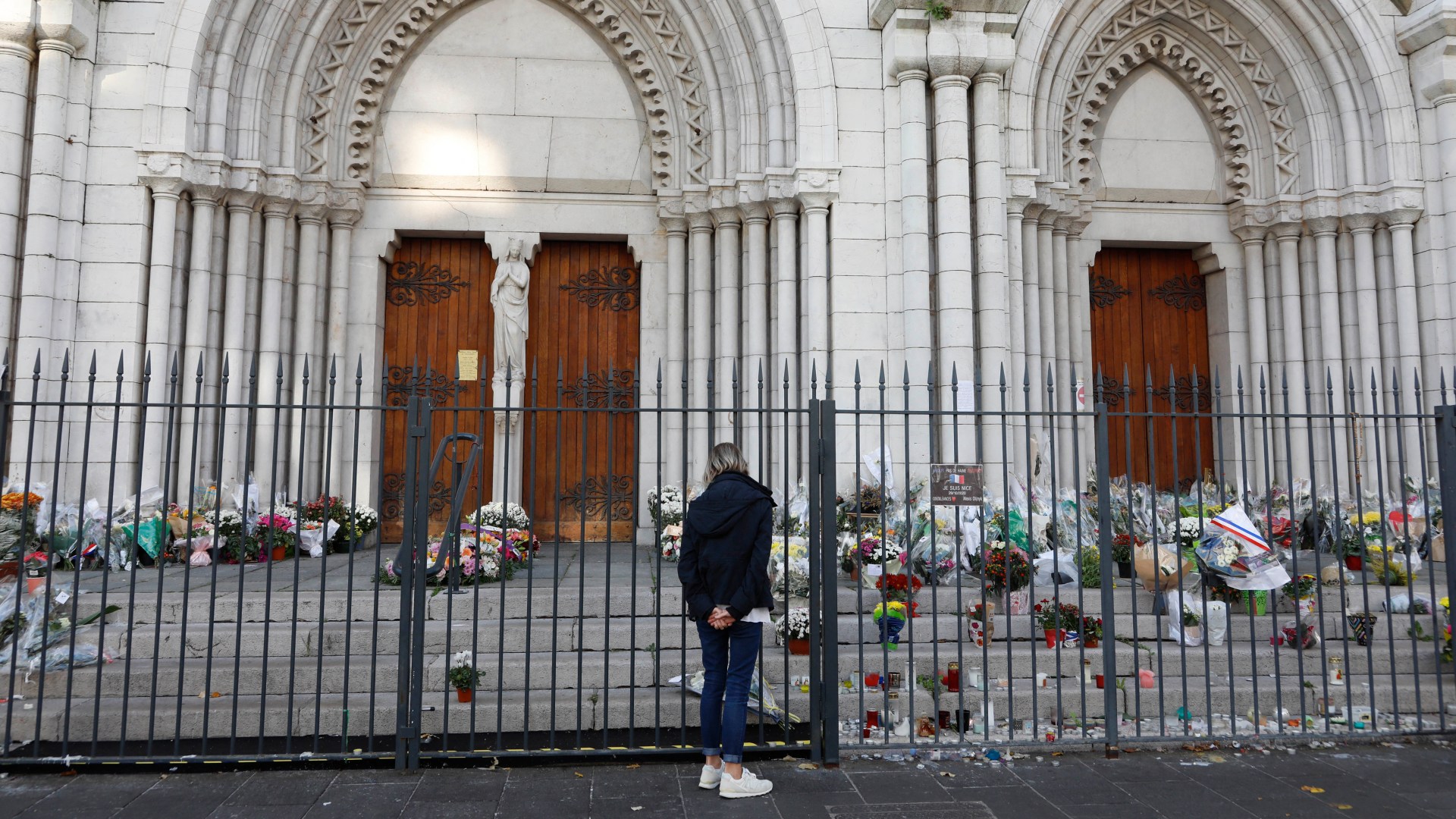
  • In October 2020, 3 people were killed while stabbed at prayer in the Nice cathedral.

In 2018, the European Union’s anti-terrorism chief estimated a total of 17,000 radicalized Muslims in France.

Among the key provisions of the bill are greater monitoring of religious associations. Many mosques have ties to the Muslim world, with imams raised and educated in nations without a heritage of human rights and religious freedom. According to the French Institute for Demographic Studies, nearly 82 percent of Muslim citizens hail from the North African nations of Algeria, Morocco, and Tunisia, where France once ruled as a colonial power. An additional 8 percent come from Turkey.

The bill will prevent non-French citizens from taking control of an association, which will be required to sign a “contract of Republican commitment” ensuring its members honor French values. Foreign funding over $12,000 must be reported to the authorities.

Furthermore, it criminalizes polygamy, forced marriage, and the issuance of “virginity certificates” that Muslims sometimes require of a prospective bride.

The bill seeks to combat the separatist impulse that results in a “counter society,” according to President Emmanuel Macron, who promised such a new law last October. To do so, children starting at age 3 must be educated in the official school system.

And to prevent copycat attacks after the beheading of a school teacher who had discussed the offensive Muhammad cartoons that same month, the “Samuel Paty law” will make it a hate crime to share personal details online.

The proposed law is “useful and necessary,” said the head of the official French Council of the Muslim Faith (FCMF). It is “unjust, but necessary,” said the head of the secular Foundation of Islam.

France already has laws that penalize religious associations for extremist activity. Since 2018, 159 institutions have been closed down, including 13 mosques. And the display of religious markers—such as hijabs and crosses—are illegal in public institutions.

But even prior to this bill, France was expanding the scope of legal monitoring. Last month, a new law allowed authorities to collect information about the religious and political opinions of individuals suspected as a threat to national security. Beforehand, only their activities could be monitored.

“In France, we’ve never before known this strong a push for control,” said Franck Meyer, president of the Evangelical Protestant Committee for Human Dignity (EPCDH).

“It is worrisome for all who defend human rights.”

The measures risk violating France’s founding 1789 Declaration of the Rights of Man, which is given equal weight with the French constitution. But the new bill aims to amend two other historical documents that defined France’s laïcité, establishing its approach to religion especially in its fight against a dominant Catholic church.

In fact, it was Protestants who championed that cause.

Sometimes translated as secularism, laïcité more closely correlates with the American notion of “separation of church and state.”

In 1901, France passed a law to regulate associations, which may be religious.

In 1905, another law governed associations dedicated to religious worship—i.e., churches—providing them with tax exemptions.

(A 1907 law regulated the Catholic church specifically, tasking the state with the upkeep of its historic buildings, and requiring formal state approval of its bishops. This law is not under review in the current bill.)

Together, these statutes established laïcité: the neutrality of the state, the freedom of religious expression, and the relation of registration with the government.

Among its promoters was Francis de Pressensé, a leader of the League of Human Rights and the son of a prominent evangelical pastor.

But today, the National Council of Evangelicals in France (CNEF) is sounding the alarm.

“It’s definitely a serious situation,” said Clément Diedrichs, general director of CNEF. “Laïcité should protect the free organization of religious groups, but this law will allow the prevention of religious expression in society.”

Diedrichs has consulted with Muslims, Jews, Buddhists, and other Christian representatives through the Conference of Religious Leaders in France.

“We have a unanimous position that recognizes the potential risks this law represents for religious liberty,” he said. “No one is content with this law.”

Except, perhaps, the secular voting public. About a third of French citizens consider themselves nonbelievers or atheists.

“The vast majority of French people see the proposed law as no big deal,” said Cheryl Cloyd, an American missionary residing in France for 26 years. “Or even that it is a good, because they want the terrorists to be dealt with.”

As a result, lawmakers are hesitant, said Diedrichs.

“Some who would perhaps agree with us are opting for the security of the country,” he said. “Especially in electoral terms, this choice pays better dividends.”

The Free Will Baptists of France highlighted five aspects of the proposed bill:

  • Churches will have to reregister every five years.
  • Officials will monitor sermons for hate speech.
  • Homeschooling will not be permitted for religious reasons.
  • Declarations of foreign funding will include missionary staff.
  • Religious leaders cannot be educated outside of France.

“Can we speak in France today of zombie laïcité?” asked Jean-Raymond Stauffacher, president of the Union of Evangelical Reformed Churches.

“Everyone agrees to kill radical Islam in the bud, but this law, as it is formulated, is disconnected from its avowed aim.”

Frédéric Baudin, author and pastor of the Evangelical Free Church of Aix-en-Provence, highlighted other concerns. Funding restrictions may make it difficult for some smaller churches to construct their buildings. And nearly all church treasurers are volunteers. Increased reporting will strain them further.

He wondered if the new law would push some to avoid founding an official association, and do things illegally instead.

Baudin said that some in France are “laïcistes” (adding the equivalent of the -ist suffix to the French equivalent of secular, giving it a negative connotation).

“There is an excessive laïcité that takes an anti-religious form,” he said. “True laïcité, on the contrary, is to guarantee diversity of opinion.

“It is a positive neutrality.”

French evangelicals—who overwhelmingly fund their own churches, abide by the law, and practice charity at twice the rate of the average French citizen—say they are not just being paranoid. As officials have discussed the bill’s provisions, they have recently singled out Protestant believers.

“Evangelicals are a very important problem,” said Darmanin, the interior minister, last week. “Obviously not [a problem] of the same nature than the Islamism that makes terrorist attacks and deaths.”

But in another interview, he lumped them together.

“We cannot discuss with people who refuse to write on paper,” he said, “that the law of the Republic is superior to the law of God.”

Marlène Schiappa, the minister of citizenship, even accused French evangelicals of requesting virginity certificates, imitating a supposed American evangelical trend.

“France will win nothing in its fight against Islamic separatism by equating Christianity and Islamism,” said Romain Choisnet, CNEF communication director.

“The first has shaped this nation that the Republic has inherited. The second wants to replace it.”

The interior ministry has since walked back Darmanin’s comments. In a Zoom call with more than 1,500 participants, Diedrichs explained the position of CNEF and related the government official’s promise that “this bad experience will not happen again.”

He also conveyed the government’s reaffirmation of Darmanin’s comments last year—on the occasion of CNEF’s 10-year anniversary—in which the interior minister noted that “being a believer often allows a person to be a good citizen.”

This sort of access is relatively new for evangelicals, made possible by a decade of patient engagement.

But Josias Sarda, an elder in the Protestant Evangelical Church of Pau, in southwestern France, explained that the bill still misses its target completely. According to CNEF, 90 percent of the 2,500 evangelical churches are registered according to the 1905 law that is now subject to amendment.

Muslims, meanwhile, are almost entirely registered according to the 1901 law, including the FCFM established in 2003.

The disconnect is so severe, Sarda wonders if it comes from a spiritual attack. Evangelicals have been growing rapidly in France, and now number 1 million. The nation’s Muslim population, meanwhile, is estimated between 3.3 million and 5 million.

He has proposed creating a new French term: évangéliquophobie.

But radical Islam is a severe threat to France, said Meyer, the EPCDH president, who is also mayor of a small village in Normandy.

He fears the bill may hinder him from taking a Christian stand even in his private capacity—on same-sex marriage, for example.

But while some parts of the bill are justified, Meyer said, from practical experience he knows some provisions are not.

As mayor, he is responsible to monitor every homeschooling family. If there is a problem with extremism, he will know it.

“We believe that the state is taking advantage of this anti-separatism bill to point the finger at the wrong culprits,” Meyer said. “It says that parents who educate their children at home represent a danger to the Republic.”

But while there are 50,000 homeschooled children in France, many more are suspected to be hidden away in “clandestine schools” and indoctrinated into Islamist ideology.

The best form of laïcité, according to Florent Varak, allows evangelicals to reach them. Nearly 4 in 10 Muslims have reported suffering religious discrimination. And while anti-Christian religious freedom violations held steady at a higher level in 2019 (1,052 incidents), anti-Muslim violations rose 54 percent (154 incidents).

“Ours is a good model that allows for atheists and Muslims and Christians to coexist, disagree, and discuss issues together,” said the French pastor and mission director with Encompass World Partners.

“We can leave the issue of integration at the feet of the state and focus on loving our Muslim neighbor, sharing the gospel without fear or pressure.”

So despite the challenge this possible law creates for the church, evangelicals must keep their eyes on Christ, reminds Diedrichs, the CNEF official.

Now is a time for prayer, not grumbling.

“We pray a lot in France for the persecuted church, but when a little problem hits us in France, we wail over our great pain,” he said.

“But maybe now it’s our turn to go through difficulties and to persevere.

“It is normal to disagree with the state. But let us be Christians who, first of all, are proud of our Lord.”

Additional reporting by Kami Rice and Morgan Lee.

Editor’s note: CT now offers dozens of our best articles translated into French.

News

After Military Coup, It’s ‘Time to Shout’ for Myanmar Evangelicals

Despite becoming more vulnerable and disconnected following last week’s military takeover, the country’s Christian minority steps out in prayer and protest.

Christianity Today February 9, 2021
Getty Images

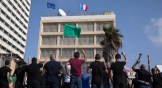
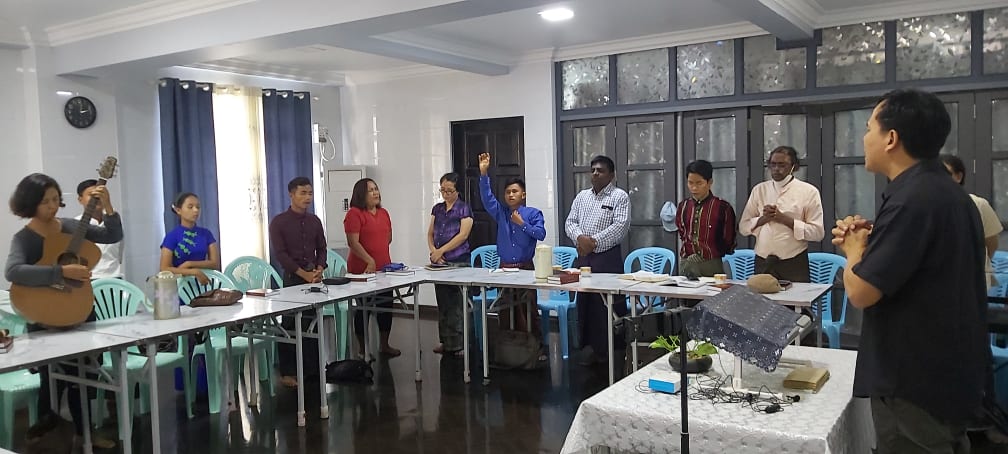
Evangelical pastors in Myanmar have taken to the streets alongside their Buddhist neighbors in the week since a military takeover, believing that God is on the people’s side and praying desperately for him to bring justice.

Amid nationwide internet and phone shutdowns, some churches gathering online due to the pandemic couldn’t connect to worship together last weekend, the first Sunday since the coup in the Southeast Asian nation formerly known as Burma. Hundreds of displaced Christians have been physically blocked out of their towns due to travel restrictions and roadblocks.

Ministries are scrambling to adapt so they can keep encouraging one another and ensure evangelism efforts don’t let up during another dark chapter in their country’s history.

“Our friends and relatives are unreachable, but they will not succeed in suppressing our voices,” said Michael Koko Maung, who leads a national network of church planters.

“On the ground, our brothers and sisters [believers] will continue their movement of peaceful civil disobedience, the drumming of pots and pans, peaceful mass marching demonstrations, and the chants of condemnation to the military. Abroad, we will let the world know that we are fighting back.”

Pastors in his network, Nehemiah Ministries, shared masked selfies of themselves crowded onto overpasses and holding signs at intersections as mass protests continued for a third straight day on Monday.

The unrest began a week before, on February 1, when the military detained civilian leader Aung San Suu Kyi, cut off communication and news networks, and put a commander in charge of the country. The move harkened back to decades of military rule and Suu Kyi’s historic fight as a pro-democracy activist.

The takeover exaggerates existing vulnerabilities for Myanmar’s Christian minority, according to Open Doors. In the past, the military government has upheld Buddhist culture and tradition to the extent that churches become subject to restrictions, one local pastor told the ministry.

Evangelicals make up just under 5 percent of the country’s population and are its largest religious minority. Despite the risk of retribution, some Christian institutions and individual pastors have spoken out. The Myanmar Evangelical Christian Alliance as well as an interdenominational Christian group in Mandalay, the second-largest city in the country, recently issued statements condemning the coup.

“The leaders in high positions in the church have the most to lose. If they are vocal, they and their denominations could be targeted for prison/house arrest, or the military could use deadly force as they have in the past and in many of the former leaders’ memories,” said Ellis Craft, Southeast Asia ministry director for the US-based missions organization Reach A Village.

“The churches that are growing the fastest in Myanmar like Nehemiah Ministries are nearest to the ground and are active in the communities,” said Craft. “It makes sense that they are the ones out there standing up to injustice.”

Maung shared with CT over Facebook Messenger that a small group of leaders were able to meet in his office in Yangon Monday to coordinate ministry activities. Since the coup, they have had to figure out how to get funds to pastors in the field while money transfer apps are down and make plans for continuing house worship in cell groups. (COVID-19 restrictions allow gatherings of fewer than 30 to continue to meet.)

Day by day, more of the network’s pastors have joined the protests. But more than anything, they continue to pray together. “Christians in Myanmar are not timid and coward, but Christians might fight with [their] greatest weapon, prayer and Jesus himself,” Maung wrote. “We also request all of you who sympathise [with] us, pray for us in this fight to overcome sin and Satan’s schemes.”

The recent unrest threatens internally displaced minorities within the country, such as “more than 500 believers, including missionaries, trapped in Kyaukkyi, in the Bago Region” without the aid they need, another local Christian reported to Open Doors. In Chin state, a part of Myanmar bordering India and Bangladesh, believers worry about possible human rights abuses as the military presence increases.

The coup compounds the suffering the citizens of Myanmar have known all their lives, leaders say. Christians, though, continue standing on the promises of God and the hope that he will hear their unceasing prayer just as the government hears the protesters filling the streets.

There’s been “time to pray, time to wait, time to keep silent,” said Maung. “But it’s time to shout.”

News

Southwestern, Baylor Settle With Foundation that Shifted Support After Paige Patterson’s Firing

Three allies of former seminary president agree to ban from leadership in any Texas charities or Southern Baptist entities.

Christianity Today February 8, 2021
Michael-David Bradford / Wikimedia Commons

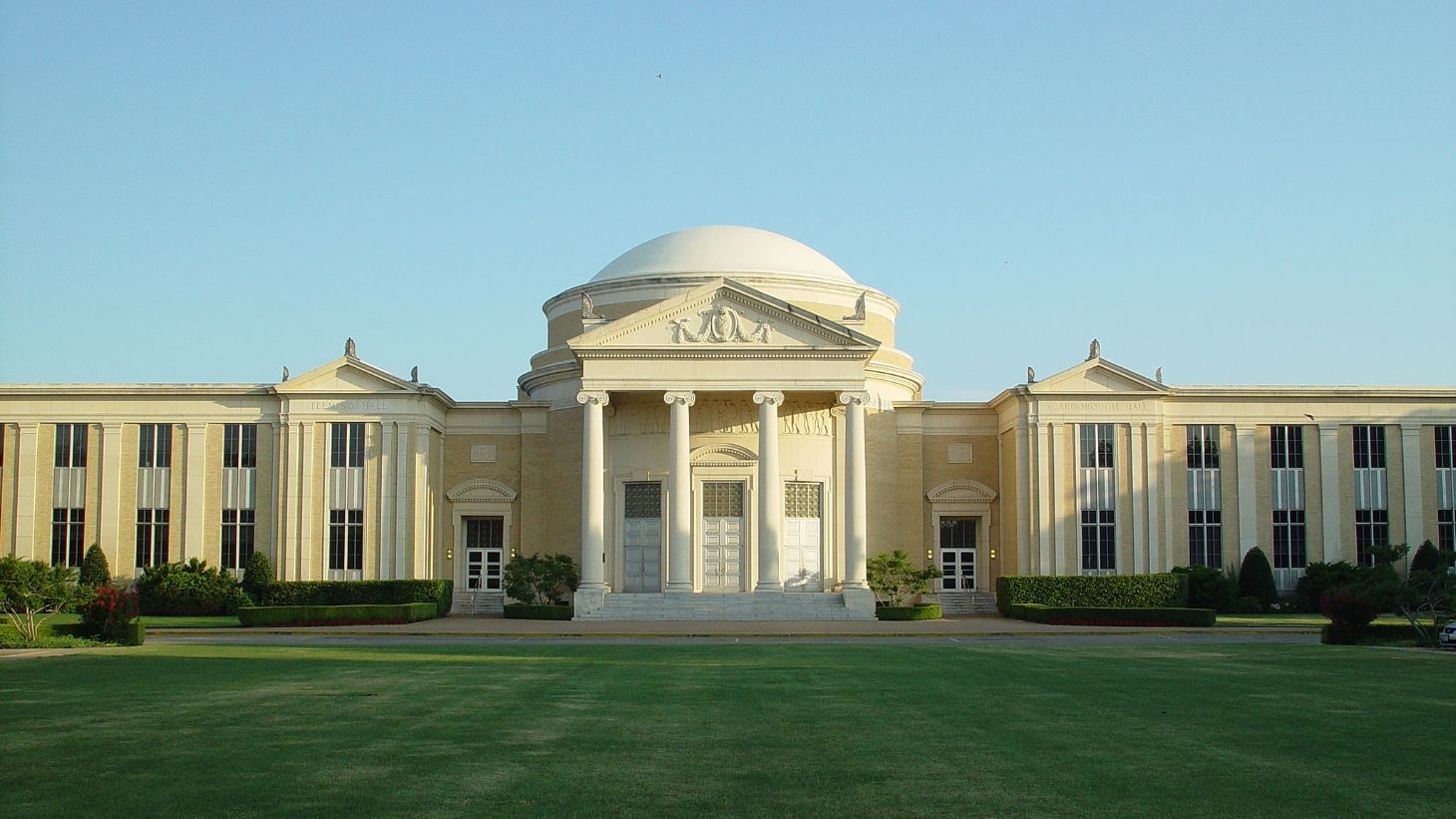
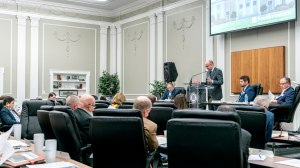
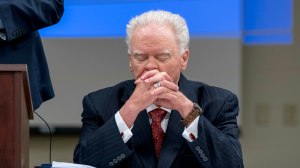
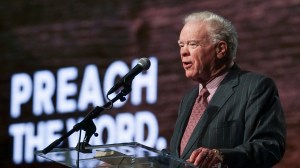
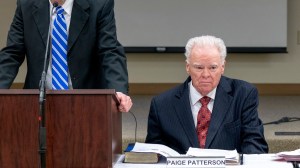
This week, Southwestern Seminary and Baylor University settled a lawsuit with a charitable foundation that restructured its leadership and took control of millions in funding following the firing of Paige Patterson, former president of Southwestern, in 2018.

The two Texas Baptist schools sued the Harold E. Riley Foundation last year, alleging a “secret coup” to divert gifts away from them, despite being designated as the sole beneficiaries of the foundation.

The parties settled in a Tarrant County, Texas, court on Monday, with four leaders from Southwestern and Baylor replacing the board members accused of trying to “seize control of the Foundation and its assets.” Harold E. Riley, the late benefactor and namesake, had set up the organization to fund his alma maters.

The resigned board members—Mike C. Hughes, Charles Hott, and Augie Boto—agreed not to hold any leadership positions or employment at charities in Texas or at any Southern Baptist Convention (SBC) entities. They are not able to serve in “any fiduciary capacity, whether as an officer, director, or trustee,” per the terms of the settlement.

Hughes had been Southwestern’s vice president for institutional advancement under Patterson (2006–2017), and Boto had been a longtime SBC Executive Committee member, serving as executive vice president and interim president two years ago.

Colby Adams, an incoming board member and Southwestern’s vice president for strategic initiatives, told CT he could think of no other instance in which leaders had been subject to such restrictions across the denomination, but “we believe this is a just result, given the inappropriate actions of the persons involved in this matter.”

Boto offered a statement by text message to Baptist Press, saying, “The services rendered by the foundation’s trustees have always been in keeping with Harold Riley’s wishes, as well as in the best interests of both Southwestern Seminary and Baylor University. I trust the new trustees that the beneficiaries have chosen will commit themselves to do those same things. I wish them well.”

Southwestern president Adam Greenway said that the outcome “vindicates” the school’s decision to pursue litigation in the case.

“While painful and costly, this cause of action was necessary to protect charitable donors who deserve the confidence that the purpose of their generous gifts will be fulfilled with integrity and without interference,” said Greenway, who became president in 2019. “This victory is not only for Southwestern Seminary and Baylor University, but for all who are committed to ensuring that resources intended to advance Kingdom purposes are not misused.”

In December 2020, Texas Attorney General Ken Paxton sided with Southwestern and Baylor by intervening in the case and issuing a subpoena compelling testimony from Patterson. Southwestern said seminary leaders say they will cooperate with any further investigation by the attorney general’s office following the settlement of their civil suit.

News

Died: Hershel Shanks, Editor Who Saved Biblical Archaeology from Academics

Hershel Shanks battled top scholars to make the Dead Sea Scrolls available to the public.

Christianity Today February 8, 2021
Biblical Archaeology Review / Edits by Mallory Rentsch

Hershel Shanks, the founder and longtime editor of Biblical Archaeology Review, died on Friday at the age of 90.

With his popular bi-monthly magazine, Shanks trumpeted the latest discoveries at digs across the Holy Land, promoted (and sometimes prompted) fierce archaeological controversies, and tirelessly advocated for public access to the latest scholarship.

Shanks had no credentials in archaeology, biblical studies, or the ancient Near East. He was a lawyer. He nonetheless did more than anyone in recent memory to stimulate biblical archaeology.

“He has a gift—a journalist’s eye, as it were—of spotting hidden nuggets within the world of arcane academic scholarship,” said Eric H. Cline, professor of classical and ancient Near Eastern studies at the George Washington University. “He winnowed wheat from chaff and brought topics, ideas, and new discoveries to a much larger audience of interested readers.”

In scholarly terms, Shanks made the technical research “accessible” to an educated public. But Shanks’s core insight was that the main obstacle between an eager public and academic scholarship was the scholars themselves. The insight was not always appreciated by professional archaeologists.

“His tactic was always to overdramatize the topic and try to marshal public attention to pressure scholars (which usually worked),” wrote William G. Dever, archaeology professor at Lycoming College in Pennsylvania, in a special edition of the Review honoring Shanks in 2018. “Then he would turn to a new, perhaps even more sensational issue.”

Dever served on the editorial board for the Review, but noted he had to resign in protest several times.

“I recall saying once, ‘Hershel, get into epistemology. That’s the next big thing,’” Dever recalled. “Without blinking an eye, he replied, ‘Okay, but what’ll I use for illustrations?’”

Shanks was a born into a Jewish family in Sharon, Pennsylvania, in 1930. His father, Martin, owned a shoe store, and Shanks sold his first pair at 11 years old. He decided not to go into the family business, though, and after earning an English degree at Haverford College, he went to Harvard Law School and became a lawyer. Shanks worked in the Department of Justice for several years, and handled Appeals Court cases. Then he went into private practice in Washington, DC.

At 42, however, he took a yearlong sabbatical that changed his life. He decided to move to Jerusalem in 1972 with his wife, Judith, and their two young daughters, Elizabeth and Julia. Shanks planned to write a novel about King Saul, but instead spent the year visiting archaeological digs with his family.

By the time he was done, Shanks had a new passion. With the support of his wife, an editor at Time-Life books, Shanks decided to leave the law and launch the Biblical Archaeological Society and its magazine.

“I remember telling Hershel that no amateur could possibly understand and interpret the then-burgeoning and complex archaeological research in Israel in any sensible way,” Dever said. “Boy, was I wrong!”

Shanks started the magazine in 1975. Within 10 years, he was sending new issues to more than 100,000 subscribers. Nearly a third of his readers were evangelicals. Most of the subscribers were educated but, like Shanks, not academics. They were just interested in the new insights archaeology could add to their understanding of the context and world of the Bible.

Christopher Rollston, professor of northwest Semitic languages and literatures at the George Washington University, said he understood the reach of the Review when he visited his small hometown in Michigan. He spotted a copy in the local barbershop, and a guy at the lumberyard asked him questions about a recent article.

The biggest test of Shanks’s clout in the field came in the early 1990s, when he decided it was time to make the Dead Sea Scrolls widely available. Though the texts had been discovered in the 1940s, only bits and pieces had been shown to the public—or even to other scholars.

The academics in charge of the study of the scrolls were carefully guarding them until their own extensive research was published. The head of the research project said people who wanted access to the texts were “a bunch of fleas who are in the business of annoying us.” Martin Abegg, a graduate student, recalls being forbidden from sharing information about the scrolls with academics in the US.

Shanks thought this was dumb and persuaded Abegg to let him publish the “bootleg” version of the scrolls that Abegg had reconstructed by computer from a concordance of Dead Sea Scrolls words that was assembled in the late 1950s but kept secret outside of a small group of specialists.

A Preliminary Edition of the Unpublished Dead Sea Scrolls—The Hebrew and Aramaic Texts from Cave Four was published in 1991. The New York Times said it broke “the scroll cartel.”

The same year, Shanks convinced another scholar, Robert Eisenman of California State University, Long Beach, to let him publish a facsimile edition of photographs of scroll fragments he had secretly obtained.

Shanks was sued for copyright infringement and ordered to pay $40,000, but as Lawrence H. Schiffman, Hebrews studies professor at New York University, later wrote, “The lock had finally been broken.” The Israel Antiquities Authority appointed Emmanuel Tov the new head of the Dead Sea Scrolls research team, and scholars published “every scrap of parchment, including unidentifiable pieces” in the next 12 years.

In addition to his work on the magazine, Shanks authored more than a dozen books, including three on the Dead Sea Scrolls, two on Jerusalem, and one on the Temple Mount. He wrote a book on ancient synagogues and another on Jewish jokes, as well as an autobiography, where he briefly recounts his “subtle and complicated” relationship with the Bible and his own struggles reconciling the God of the Old and New Testaments with the pain and suffering he saw in the world.

According to Robert R. Cargill, who took over at the helm of the Review in 2018, Shanks’s great strength as an editor was that he never shied away from controversy.

“He asked tough questions,” Cargill wrote, “and if he didn’t like the answer, or if he felt that someone wasn’t being straight with him, he asked someone else. He welcomed dissenting opinions and often pitted them against one another so that his readers could witness the scholarly debates for themselves.

“That was Hershel’s other great strength: He knew his readers and fought for them passionately.”

Shanks, for his part, said the work was not as altruistic as it might have seemed.

“I didn’t look for the idea that I thought would interest the reader,” he wrote in his autobiography. “I proceeded from what interested me! Then my job was to make the public interested in what I was interested in. My excitement and enthusiasm no doubt helped me along.”

Shanks is survived by his wife, Judith, and his daughters, Elizabeth and Julia.

News

Mexican Census: Evangelicals at New High, Catholics at New Low

Thanks to migration, missions, and Pentecostal flair, Protestants now make up a 10th of the population.

Christianity Today February 8, 2021
Manuel Velasquez / Getty Images

The Catholic majority in Mexico is slipping, as Protestants surpassed 10 percent of the population in the country for the first time ever.

According to recently released data from Mexico’s 2020 census, the Protestant/evangelical movement increased from 7.5 percent in 2010 to 11.2 percent last year.

The Catholic Church has historically dominated the religious landscape across Latin America, but especially in Mexico, which ranks among the most heavily Catholic countries in the region. Today, though an overwhelming majority of Mexicans still identify as Catholic, declines are accelerating.

It took 50 years—from 1950 to 2000—for the proportion of Catholics in Mexico to drop from 98 percent to 88 percent. Now, only two decades later, that percentage has slipped another 10 points to 77.7 percent.

National church leaders attribute the boom in Protestantism to a range of factors, from the influence of Americans and fellow Latin Americans in the country to effective evangelical outreach in indigenous areas.

Pentecostalism dominates the Protestant landscape, and even many of Mexico’s historical denominations—think Baptists, Presbyterians, and Methodists—have been “pentecostalized” in some beliefs and practices, embracing energetic worship, healing, and spiritual gifts.

Nearly a million American-born people live in Mexico, as well as tens of thousands of Guatemalans and Venezuelans, and others from Central American countries. Some of them have brought evangelicalism with them, while others encounter it when they arrive in Mexico, according to Rosa A. Duarte de Markham, coordinator of the department of biblical translation at the Missionary Cooperation of Mexico (Comimex).

Markham also believes that the recent Protestant growth reflects how Mexican society longs for the sense of morality and family values upheld in evangelical churches.

“Mexico has been in mourning for several years due to enforced disappearances. Surely this has led to the search for God as a comforter, to value peace and justice,” she said. “On the other hand, the need to rescue the family nucleus has led mothers and fathers to search in the Word of God for values such as fidelity in marriage, harmony, love of children, honesty, and a healthy lifestyle.”

The 77.7 percent Catholic figure from the recent Census resembles ongoing polling on religious affiliation by Latinobarómetro, which found that the Catholic population in Mexico has hovered around 80 percent for at least 25 years.

The most popular Protestant affiliation in Mexico, according to Latinobarómetro, is nondenominational, at 3 percent of the population in 2018. Overall, Protestants are more active in their faith, with 63 percent of nondenominational Mexicans considering themselves practicing, compared to 41 percent of Catholics.

Fifty years ago, there were very few Protestants in Mexico, but missionary efforts were underway. Over the years, the population grew more committed to evangelism—particularly in areas where the Catholic Church didn’t have as prominent a presence—and the expansion over the past decade shows that their efforts have borne fruit.

“The most important thing is that the Catholic Church had a monopoly on belief for many years, and that monopoly broke most particularly after the Second World War,” said Roberto Blancarte, sociologist of religion and professor at El Colegio de México.

According to Blancarte, there were simply not enough priests in Mexico to meet the needs of all the people. At the turn of the century, there was only one priest for every 6,000 Mexicans, a staggering deficit that left a pastoral void in regions poorer and farther afield than major urban centers. Protestants stepped up to fill that void, sending pastors to rural, indigenous areas.

Today, Mexico’s northernmost states have significant Protestant populations thanks to American influence around the border. The far southern Mexican states of Chiapas and Tabasco have populations that are upwards of 35 percent evangelical, the most of any Mexican states. These are also the states with the largest indigenous populations, Blancarte points out.

“The big change was not missionaries themselves, but the translation of the Bible into native languages,” said Blancarte, referencing efforts by evangelical groups including SIL International. “That allowed many people to read the Bible directly and to have local ministers who develop, in their own language, their own services.”

Experts also saw popular Pentecostal-style worship appealing to indigenous believers’ backgrounds in ecstatic spirituality and magic, as well as ritual Catholics who still adhere to syncretistic spiritual beliefs.

For decades, the growth of Protestantism has corresponded with the decline of Catholicism in other Latin American countries, with dramatic changes in places like Honduras, Nicaragua, and Brazil. Even up until several years ago, Mexico was seen as an exception to the trend.

Now, as Protestantism rises in the majority Catholic country, so do the proportion of Mexicans without ties to organized religions. In the 2020 census, those with no religion rose from 4.7 percent to 8.1 percent. Another 2.5 percent consider themselves a believer but don’t have a religious affiliation.

The religious shifts have begun to foster a greater sense of pluralism and, for some, tolerance. They’ve also influenced the political sphere, according to Blancarte, with evangelicals becoming more visible and powerful, despite there being no monolithic evangelical voting bloc.

“We are still a minority, but we are a majority within this minority, and this gives us some force and the government is starting to look at us to see what we think about certain issues,” said Cirilo Cruz, president of CONEMEX, the National Evangelical Fellowship of Mexico.

Cruz also cautioned against the tendency to be seduced by political power for the sake of having influence and prays that evangelical leaders handle their new position in Mexican society carefully and prophetically.

“We need to be careful in regard to how we grow,” said Cruz. “That our DNA will be biblical. That our DNA will hold values, principles, and ethics emanating from the Word of our God.”

There is little data yet on the trajectory of Mexico’s Protestant community during the ongoing coronavirus health crisis, but church leaders have been adamant about continued evangelization in the midst of the pandemic.

“As for Mexican Protestants, in this time of the COVID-19 pandemic, we have understood that our call is to continue preaching the good news of salvation,” said Markham, “to bring love and hope to a world that is collapsing.”

News
Wire Story

Supreme Court Lets California Return to Church Indoors

Justices lift the total ban on indoor worship, though capacity limits and singing restrictions remain.

Christianity Today February 6, 2021
Matt Winkelmeyer / Getty Images

The Supreme Court is telling California that it can’t bar indoor church services because of the coronavirus pandemic, but it can keep for now a ban on singing and chanting indoors.

The high court issued orders late Friday in two cases where churches had sued over coronavirus-related restrictions in the state. The high court said that for now, California can’t ban indoor worship as it had in almost all of the state because virus cases are high.

The justices said the state can cap indoor services at 25 percent of a building’s capacity. The justices also declined to stop California from enforcing a ban put in place last summer on indoor singing and chanting. California had put the restrictions in place because the virus is more easily transmitted indoors and singing releases tiny droplets that can carry the disease.

“This is a huge win for religious liberty,” wrote Eric Rassbach, an attorney with the religious liberty firm Becket Fund, noting that the state was the only one with a total ban on indoor worship. “40 million people live in CA, and most haven’t been able to worship together for half a year. #SCOTUS has vindicated a core First Amendment right.”

The justices were acting on emergency requests to halt the restrictions from South Bay United Pentecostal Church in Chula Vista and Pasadena-based Harvest Rock Church and Harvest International Ministry, which has more than 160 churches across the state.

Chief Justice John Roberts wrote that “federal courts owe significant deference to politically accountable officials” when it comes to public health restrictions, but he said deference “has its limits.”

Roberts wrote that California’s determination “that the maximum number of adherents who can safely worship in the most cavernous cathedral is zero—appears to reflect not expertise or discretion, but instead insufficient appreciation or consideration of the interests at stake.”

In addition to Roberts, Justice Neil Gorsuch and Justice Amy Coney Barrett also wrote to explain their views. Gorsuch and Justice Clarence Thomas would have kept California from enforcing its singing ban. Barrett, the court’s newest justice, disagreed. Writing for herself and Justice Brett Kavanaugh, she said it wasn’t clear at this point whether the singing ban was being applied “across the board.”

She wrote that “if a chorister can sing in a Hollywood studio but not in her church, California’s regulations cannot be viewed as neutral,” triggering a stricter review by courts. The justices said the churches who sued can submit new evidence to a lower court that the singing ban is not being applied generally.

“As this crisis enters its second year—and hovers over a second Lent, a second Passover, and a second Ramadan—it is too late for the State to defend extreme measures with claims of temporary exigency, if it ever could,” Gorsuch wrote. “Drafting narrowly tailored regulations can be difficult. But if Hollywood may host a studio audience or film a singing competition while not a single soul may enter California’s churches, synagogues, and mosques, something has gone seriously awry.”

The court’s three liberal justices dissented, saying they would have upheld California’s restrictions. Justice Elena Kagan wrote in a dissent for herself, Justice Stephen Breyer and Justice Sonia Sotomayor that the court’s action “risks worsening the pandemic.”

She said that the court was “making a special exception for worship services” rather than treating them like other activities where large groups of people come together “in close proximity for extended periods of time.” In areas of California where COVID-19 is widespread, which includes most of the state, activities including indoor dining and going to the movies are banned.

“I fervently hope that the Court’s intervention will not worsen the Nation’s COVID crisis. But if this decision causes suffering, we will not pay. Our marble halls are now closed to the public, and our life tenure forever insulates us from responsibility for our errors. That would seem good reason to avoid disrupting a State’s pandemic response. But the Court forges ahead regardless, insisting that science-based policy yield to judicial edict,” she wrote.

Charles LiMandri, an attorney for South Bay United Pentecostal Church, said in a statement that he and his clients were “heartened by this order” and “thank the high court for upholding religious liberty.”

Liberty Counsel’s Mat Staver, who represents Harvest Rock Church, said in a statement that he and his clients would “continue to press this case until religious freedom is totally restored.”

The court’s action follows a decision in a case from New York late last year in which the justices split 5-4 in barring the state from enforcing certain limits on attendance at churches and synagogues. Shortly after, the justices told a federal court to reexamine California’s restrictions in light of the ruling.

Apple PodcastsDown ArrowDown ArrowDown Arrowarrow_left_altLeft ArrowLeft ArrowRight ArrowRight ArrowRight Arrowarrow_up_altUp ArrowUp ArrowAvailable at Amazoncaret-downCloseCloseEmailEmailExpandExpandExternalExternalFacebookfacebook-squareGiftGiftGooglegoogleGoogle KeephamburgerInstagraminstagram-squareLinkLinklinkedin-squareListenListenListenChristianity TodayCT Creative Studio Logologo_orgMegaphoneMenuMenupausePinterestPlayPlayPocketPodcastRSSRSSSaveSaveSaveSearchSearchsearchSpotifyStitcherTelegramTable of ContentsTable of Contentstwitter-squareWhatsAppXYouTubeYouTube