Theology

Advent Week 1: He Will Come Again in Glory

Advent devotional readings from Christianity Today.

Christianity Today November 29, 2020
Illustration by Jared Boggess

In this series

Jump to the daily reading: Sunday | Monday | Tuesday | Wednesday | Thursday | Friday | Saturday

Want to print these devotionals or read them in PDF format? You can purchase the full 2020 Advent devotional, along with additional Bible studies and reading guides in our Advent digital bundle.

Sunday: In Between

Today’s Reading: Revelation 1:4–9; 19:11–16; 21:1–5, 22–27; 22:1–5

Almost immediately, the opening chapter of Revelation lifts our eyes up to gaze at a glory that utterly transcends our earthly circumstances. “I am the Alpha and the Omega … who is, and who was, and who is to come’” (1:8). Our Savior “who loves us and has freed us from our sins” will return; “‘Look, he is coming with the clouds’ and ‘every eye will see him’” (1:5, 7–8). John goes on to describe a wondrous vision of Christ himself—an encounter so awesome that John “fell at his feet as though dead” (v. 17).

But right in the middle of these two glorious passages is a line we might easily miss: John’s brief description of his life and the lives of his letter’s recipients. John writes that he’s a “companion in the suffering and kingdom and patient endurance that are ours in Jesus” (v. 9). John wrote Revelation while in exile; it was circulated among a suffering church facing pressure and persecution that would only worsen in the coming decades. Revelation’s initial recipients were living in two overlapping realities: their assurance in the sovereign reign and glorious return of Christ; and their earthly, everyday experience of waiting and suffering.

Some two thousand years later, we still live amid these overlapping realities. Here, between Christ’s first coming and his glorious return, our lives may also feel like a mix of kingdom and confidence alongside waiting and suffering.

It’s no wonder that John’s honest words about suffering and the need for patient endurance are woven in and among his visions of glory, for it is this vision of what is to come that enables and emboldens such endurance. Consider the realities portrayed in Revelation’s grand finale: Christ victorious, riding on a white horse and defeating evil; “a new heaven and a new earth” without sorrow or death, where “God’s dwelling place is now among the people” (21:1, 3); and a Holy City where people from all nations are gathered in the light of God’s glory. With this ultimate, eternal reality in view, any temporal circumstance—no matter how dire—fades in importance.

The idea of patient endurance is repeated several times in Revelation 1–3, often paired with language of overcoming and conquering. Endurance isn’t merely patient but is also tenacious, courageous, strong. And this is what God gives us as we live in the in between. In Christ, as the classic hymn puts it, we find “strength for today and bright hope for tomorrow.”

—Kelli B. Trujillo

Contemplate Revelation 1:4–9; 19:11–16; 21:1–5, 22–27;

and

22:1–5.

How does meditating on this future impact your perspective on current circumstances? Pray, inviting God to strengthen your endurance and enliven your hope for the future.

Monday: Prophesy Hope

Today’s Reading: Zechariah 9:9–17; Romans 5:3–5; 8:18–30

“Hope begins in the dark …” I could never quite shake these words from Anne Lamott’s Bird by Bird. This language of hope has recently become a theme in my life—not in the abstract sense, but as a living activity, a struggle, a commitment, a discipline.

Theologian Jürgen Moltmann rooted the language of hope in the resurrection of Jesus and the praxis of protest. Sometimes hope seems to be the only language powerful enough to counter despair. Or maybe it’s, in Lamott’s words, a sort of “revolutionary patience.”

Whatever hope is, there is something deep within each of us that cries out in expectation. Sometimes it sounds like a whisper, but it is there. Yet, while hope springs from the depths of the soul, it often comes out of the shadows. Hope begins in chaos.

Some days it feels like we have never escaped from under that cloud that covered the face of the earth during the crucifixion of Jesus. The brokenness and weight of our world feels so much like darkness that Elie Wiesel, retelling of the horrors of Auschwitz and the Holocaust, could only call it Night. We have to tell the truth of pain and even the pain of hope.

I sat down with my grandmother some time ago and asked her to tell me about her life. At first she didn’t want to. One can only imagine what deep scars her soul has borne over 80 years. Her stories were hard. It’s difficult to describe what it meant for her to live in the South as a black woman. One word seemed to capture the audacity of survival in the midst of a cruel world: love. “The Lord hasn’t failed me yet,” she said.

Radical, life-changing, community-changing, world-changing love is, after all, the way of Jesus. He came preaching the good news of the kingdom and healing all manner of sickness and affliction. To prophesy hope is a dangerous love.

Martin Luther King Jr. said, “Power at its best is love implementing the demands of justice, and justice at its best is love correcting everything that stands against love.” This is what it means to stand in the world as prophets of love, power, and justice or, to use the biblical language of Zechariah, to be “prisoners of hope” (9:12). Like someone once said, “I don’t know what tomorrow holds, but I know who holds tomorrow.” While tomorrow is on the way, I’m going to prophesy hope today.

—Danté Stewart

This is adapted from a longer article titled “Why We Still Prophesy Hope,” published on October 21, 2019, on ChristianityToday.com.

Read Zechariah 9:9–17

and

Romans

5:3–5, 8:18–30

. Reflect on what hope looks like “in the dark.” How does suffering produce hope and love? How can Christ’s first coming and future return enable you to prophesy hope today?

Tuesday: Come, Lord Jesus

Today’s Reading: John 1:1–5, 14; Revelation 22:12–13, 20

In his gospel, John says, “In the beginning was the Word, and the Word was with God, and the Word was God. … The Word became flesh and made his dwelling among us” (1:1, 14). We have a God who came. He came to make the intangible touchable and the invisible visible. He came to make himself knowable. But our hope is not just that he came; it is also that he is coming.

He’s on his way back. This promise is what can make sense of the pain and frustration we experience on planet earth today. When he comes back, the righteous will be vindicated. When he comes back, he will bring with him your vindication for the ridicule you faced for believing in a God you could not see. When he comes back, all the human beings who tried to make themselves potentates and rulers will be put to the floor, and we will see that there has always only been one ruler of rulers and one King of Kings. All of a sudden, our faith will become sight. The one we’ve talked to and about, we will see .

In Revelation 22, Jesus says, “Look, I am coming soon! My reward is with me, and I will give to each person according to what they have done. I am the Alpha and the Omega, the First and the Last, the Beginning and the End” (vv. 12–13).” John records, “He who testifies to these things says, ‘Yes, I am coming soon’” (v. 20). And it’s as if John has nothing else to say before he closes his letter but this: “Amen. Come, Lord Jesus” (v. 20).

When we look to the future, things may not go the way we want them to go in our nation. The economy may not shape up the way we think it should. More children may be hurt by guns on the street, by sex trafficking, or by drugs. Marriages may struggle, we may face sickness, we may worry about our grandchildren. In all of this, there’s this hope: Even so, come, Lord Jesus.

Whatever we face, we know he’s coming back. One of these days, the sky is going to crack, the angel is going to blow his horn, and all the world will see it together. All of creation will respond as our Lord steps down from the balcony of heaven to say, Now is the time I’ve come to redeem my church. Amen. Come, Lord Jesus.

—Charlie Dates

This article is adapted from a sermon Charlie Dates preached on December 22, 2019. Used by permission.

Meditate on John 1:1–5, 14

and

Revelation 22:12–13, 20,

considering Advent’s dual focus: Jesus came and he is coming again. What does it mean for you to say, “Even so, come Lord Jesus”?

Wednesday: Advent and Apocalypse

Today’s Reading: Mark 13:24–37; Luke 21:25–28

During Advent, we hear passages of Scripture that are infused with the language of darkness, tribulation, and apocalypse. Matthew, Mark, and Luke each have one fully apocalyptic chapter. In Mark 13, Jesus says, “Nation will rise against nation, and kingdom against kingdom” (v. 8, RSV throughout). The passage only gets darker as it goes. “In those days, after that tribulation, the sun will be darkened, and the moon will not give its light, and the stars will be falling from heaven, and the powers in the heavens will be shaken” (vv. 24–25).

Why is Jesus talking like this about death and destruction instead of talking about sheep, shepherds, and heavenly hosts?

In Scripture, apocalyptic writing comes out of catastrophe. The Israelites were a favored people; God had promised them a future of safety and prosperity. But then they were conquered and forced into exile in the Babylonian empire. Humanly speaking, there was no hope for them. When the Israelites found themselves in crisis, it was “a theological emergency.” It was out of this emergency that a new apocalyptic way of thinking took shape. It started with the second half of Isaiah (chapters 40–55)—written during the Babylonian captivity, when everything seemed so hopeless—and it blossomed from there. By the time of Jesus, apocalyptic language was everywhere.

Apocalyptic theology is, above all, the theology of hope—and hope is the polar opposite of optimism. Optimism fails when it is swallowed up in darkness. By contrast, hope is found in something beyond human history. It is found in an incarnate God.

In Luke’s gospel, when Jesus speaks apocalyptically of “signs in the sun and moon and stars” and the “distress of nations,” he ends by saying that humanity “will see the Son of Man coming in a cloud with power and great glory” (21:25–27). He is speaking of his second coming. He’s telling us that our great hope comes not through any human development but through himself. He possesses sovereign power that is independent of human history. In spite of the apparent darkness, God in Christ is shaping our history in accordance with his divine purposes.

Advent tells us to look directly into the darkness and name it for what it is. But this is not the end of the story. Jesus said, “Look up and raise your heads, because your redemption is drawing near.”

—Fleming Rutledge

This is adapted from a longer article titled “Why Apocalypse Is Essential to Advent,” published December 18, 2018, on ChristianityToday.com.

Read Mark 13:24 –37 and Luke 21:25–28.

Which parts of Jesus’ teaching do you gravitate toward? Which are harder to grapple with? How do these depictions of God’s sovereign power over history deepen your hope?

Thursday: A More Important Question

Today’s Reading: 2 Peter 3:8–15

What is taking so long? Why hasn’t Jesus returned yet like he promised? The recipients of Peter’s second letter may have been asking questions like these—questions that continue to echo in our time. Peter addressed them with a strange assurance: first, that God’s timing reflects his patience and saving love (3:8–9) and, second, that the day of the Lord will be fearsome and will involve destruction by fire.

Apocalyptic language like Peter’s (similar to Jesus’ in Mark 13 and Luke 21) certainly gives us pause. What is meant by “destroyed by fire” and “destruction of the heavens by fire”? Is this something we ought to fear?

Earlier verses in 2 Peter provide some perspective for understanding the language of destruction used in chapter 3. In 2:5, we are given a parallel with the time of Noah, where God destroyed the earth by water. That past judgment did not mean God utterly washed away all of creation; similarly, the final judgment by fire likely does not mean God will incinerate the earth to make way for the arrival of the new heavens and earth. As Peter described it in Acts, Christ is in heaven “until the time comes for God to restore everything, as he promised long ago through his holy prophets” (3:21). The new world will come through God’s great restoration and redesign of the world we have now.

Woven within this discussion, Peter poses an important question that deserves even greater focus than our wonderings about God’s timing or what Christ’s return will be like. In light of the coming day of the Lord, Peter asks, “What kind of people ought you to be?” (2 Pet. 3:11) Peter urges a response of holy living and a hopeful anticipation, “looking forward” to the new heaven and new earth (vv. 11–14). We see these themes emphasized in Peter’s first epistle, as he urges believers to live with a joyful confidence and alert, hopeful focus on Christ’s coming (1 Pet. 1:3–5, 13).

We are people of hope, like those already told the ending of a novel full of twists, turns, and unexpected events. We know the end of the story; our knowledge of the amazing ending waiting for us can impact how we approach the present. We may not understand when or how it will happen, but we can trust that the end includes both judgment and vindication for God’s people. How is the news of final judgment a reason for encouragement rather than fear? God is going to make even the best parts of this world better than we can imagine. Judgment, vindication, and transformation are coming. The true Promised Land awaits.

—Vincent Bacote

Ponder

2 Peter 3:8–15.

(Optionally, also read 1 Peter 1:3–5, 13). What questions does this passage raise for you? What emotions does it stir up? How does your hope in the coming “day of the Lord” impact your daily discipleship?

Friday: Waiting for the Party to Begin

Today’s Reading: 1 Thessalonians 4:13–5:11

One of my favorite things to do as a professor is to show movies we might label as “eschatological cinema.” Many of these films focus on the Rapture, an interpretation of 1 Thessalonians 4:17 where “caught up” is understood to refer to an invisible return of Christ when he comes to take his church with him to heaven before the Tribulation begins. The aim of these films is to create awareness that Jesus may return at any moment.

The range of opinions regarding the Rapture and other end times issues is wide, and when we come to 1 Thessalonians 4–5, we could easily find ourselves focusing only on that part of the passage. But there are many other important points about Christ’s return here that also deserve our attention, including what seems to be Paul’s greater emphasis: how to encourage Christians who are alive now regarding the status of believers who have already died. Will they be “left behind” and miss out when Jesus returns?

Paul encourages the Thessalonians (and us) that we do not need to worry about God forgetting those who have died. Christ’s resurrection is a guarantee that death is no barrier to participation in the new world that arrives with Christ’s second coming. Whether we are alive or dead, our relationship with Christ is all that is necessary to be on the guest list when the Day of the Lord comes.

When Christ arrives, it will be a grand entrance, complete with fanfare. It will include “the trumpet call of God” (4:16)—language the Thessalonians would have understood to mean the return of the most victorious leader of all. Unlike any other call of the trumpet, this one raises the dead in Christ, who will join the living to welcome Christ.

We see similar themes in Paul’s first letter to the Corinthians in which he also addresses concerns about death, “the last enemy” that Christ will destroy (15:26). Paul assures the Corinthians that “the trumpet will sound, the dead will be raised imperishable, and we will be changed” (15:52). Death’s “sting” will be rendered powerless through the ultimate victory of Christ.

As we wait for the Day, we are called to make ourselves ready, “putting on faith and love as a breastplate, and the hope of salvation as a helmet” (1 Thess. 5:8). This “thief in the night” arrival will come as a surprise because no one but God knows when this will happen—but it will be the greatest surprise party ever for we who eagerly anticipate his coming.

—Vincent Bacote

Reflect on

1 Thessalonians 4:13–5:11.

(Optionally, also read 1 Corinthians 15:51–58.) How would you describe Paul’s emphasis and tone here? How does hope factor in? Why is it significant that the Second Advent will come “like a thief in the night”?

Saturday: Hope for the Dysfunctional

Today’s Reading: 1 Corinthians 1:1–9

When we read about Christ’s return in 1 Corinthians, it’s important to remember the context of Paul’s letter. The church in Corinth was a deeply dysfunctional community. In Paul’s epistle, we learn of factions in the church who were committed to different leaders, scandalous sexual practices, controversies about meat sacrificed to idols, and much more. Though this Christian community was full of dysfunction, in 1 Corinthians 1:1–9, Paul identifies them as sanctified people (“saints” in King James Version language). He goes on to remind them that God has been generous to them in providing spiritual gifts and describes them as people who “eagerly wait” for Christ’s return. Paul emphasizes God’s grace (v. 4) and commitment to them: “He will . . . keep you firm to the end” (v. 8) In spite of the ways their weak faith manifests in sinful behaviors and attitudes, God’s faithfulness to them (and us) includes God’s commitment to help his people grow and transform into Christlikeness.

While chapter 1 emphasizes that God, through his grace, will keep the Corinthian Christians “firm to the end,” in the same letter, Paul describes Christ’s return and urges the Corinthians, “My dear brothers and sisters, stand firm. Let nothing move you” (15:58, emphasis added). He calls them to a resoluteness that’s inextricably part of waiting for Christ’s return. Despite their faults and failures, Paul calls them to both transformation and determination.

We see a similar picture of resoluteness in another of Paul’s letters: “While we wait for the blessed hope—the appearing of the glory of our great God and Savior, Jesus Christ,” God’s grace “teaches us to say ‘No’ to ungodliness and worldly passions” (Titus 2:11–14).

We cannot read 1 Corinthians or Paul’s other letters without noticing how strongly Paul calls out sin and dysfunction, but as 1 Corinthians 1:8–9 reveals, Paul is addressing these great concerns with a backdrop of great hope. We are called to do our part while God, in his grace, does his work in our lives.

This is an example and an encouragement for us. Chances are, most of us have had our own moments of spiritual dysfunction, but our failures ought not be our main focus. Instead, we look to Jesus, who not only has made reconciliation with God possible but who also is committed to us so that we will be presented to God as blameless when his kingdom arrives. Thank God, his faithfulness is greater than our dysfunction.

—Vincent Bacote

Consider

1 Corinthians 1:1–9

in light of the dysfunctions in this church. (Optionally, also revisit 1 Corinthians 15:51–58 and read Titus 2:11–14.) What does Paul emphasize about God? About spiritual formation? About Christ’s return? How does this give you hope?

Contributors:

Photos courtesy of contributors

Vincent Bacote is associate professor of theology at Wheaton College. He is author of The Political Disciple: A Theology of Public Life.

Charlie Dates is senior pastor at Chicago’s Progressive Baptist Church. He holds a PhD in historical theology from Trinity Evangelical Divinity School.

Fleming Rutledge, an Episcopal priest, spent 21 years in parish ministry before becoming a writer and teacher of preachers. Her books include The Crucifixion.

Danté Stewart is a writer and preacher studying at the Candler School of Theology at Emory University.

Want to print these devotionals or read them in PDF format? You can purchase the full 2020 Advent devotional, along with additional Bible studies and reading guides in our Advent digital bundle.

History

Ten Things You (Probably) Don’t Know About C. S. Lewis

Unusual facts and common misunderstandings that take your knowledge beyond Narnia.

Christian History November 29, 2020
John Chillingworth / Stringer / Getty

In this series

In honor of the birthday of one of the “patron saints” of contemporary evangelical Christianity, we thought we’d offer up ten surprising facts about Lewis to better understand the beloved British writer (and so you can impress your friends at parties … whenever we can have those again).

If you only know C. S. Lewis because of his books about Narnia, then you don’t know Jack very well! “Jack,” is, of course, the name Lewis went by to his friends. This is just one of the many interesting details about him that are not commonly known. Another is the fact he died on November 22, 1963—the same day that President John F. Kennedy was assassinated. Here are ten more tidbits about Lewis that some might find unusual, or even misunderstand.

1. Famous before Narnia

While Lewis is most known for writing The Chronicles of Narnia, he was famous enough to be on the cover of Time magazine three years before the first tale related to Aslan was published. In 1947, Lewis was the featured story for the September 8 issue of Time. The article on Lewis came out a few months after his latest book, Miracles: A Preliminary Study, was released. The reason for this honor was due to his popularity from his fictionalized correspondence between two demons in The Screwtape Letters. A casual look at the cover reveals this, as you see a pitchforked devil on his left shoulder and the wing of an angel over his head.

2. Married the same woman twice

Most are aware Lewis married Joy Davidman Gresham, but did you know he tied the knot with her twice? The first time was on April 23, 1956, in a civil ceremony. He did it as a friendly gesture to prevent Joy from deportation from England (she was an American). Less than a year later, when it was thought she would soon die from cancer, he married her again at Churchill Hospital on March 21, 1957. So, why do it again? Few actually knew about the first wedding, so it was in part because he wanted to declare his love for her before others. This part of Lewis’s life was the subject of the movie Shadowlands that was first produced by BBC in 1985 and later a Hollywood movie in 1993.

3. Cared for a woman married to another man

Admittedly this headline is a bit sensationalized, but it’s true! As a young man, Lewis made a vow to his friend, Paddy Moore, to care for Moore’s mother if he died. When Paddy was killed in World War I, Lewis made good on his promise and lived with Janie King Moore until just before she died. Moore, though separated from her husband, never divorced; however, it is not as scandalous as you might think. Moore’s daughter, Maureen (the future Lady Dunbar of Hempriggs), lived with them for several of those years. Also, Jack’s brother Warren lived in the same household with them for about two-thirds of the time they lived together. While some would have you believe there had to be a sexual relationship, as Lewis scholar Jerry Root has stated, it is really up to the those who make this claim to prove it.

4. Soldier in WWI and wounded in action

Speaking of WWI, Lewis voluntarily enlisted in the British army in 1917. The above-mentioned Paddy Moore was Lewis’s roommate at Keble College, Oxford, where they both received cadet training. They had met shortly after Lewis joined the Oxford University Officers’ Training Corps on April 30, 1917. On November 17 that year, he went to France as part of his service. He rarely said much about his life as a soldier, and so few of his experiences are known. We do know that he was hospitalized with pyrexia in February 1918, and two months later he was wounded on Mont-Bernanchon (near Lillers, France) during the Battle of Arras.

5. Wanted to be a poet

It’s no secret Lewis enjoyed writing, but his original passion was poetry. In 1919, before his 21st birthday, his first book, Spirits in Bondage: A Cycle of Lyrics, was published. Nearly all of the book was written when he was 16 or 17 years old. During that time, Lewis didn’t believe in God, and the material reflects that perspective. The book did not sell many copies. His next poetry book, Dymer, came out in 1926 and also did not sell well. While he never published a new book of poems during his lifetime, he did continue to write them and quite a few were released in a variety of publications during his lifetime. There were so many of them that less than a year after his death, Walter Hooper edited a collection simply called Poems.

6. Wrote three books under different names

Can you imagine Lewis not taking credit for books he wrote? While it may be difficult to consider, it’s true. Early in his career, his first two books of poetry, Spirits in Bondage and Dymer, were both credited to Clive Hamilton (Clive is his actual first name and Hamilton is his mother’s maiden name). Then, before he died, A Grief Observed was published (in 1961) under the pseudonym N. W. Clerk. That book recounts some of the sorrow Lewis experienced after the death of his wife. It was republished the year after his own death with him identified as the author.

7. Taught philosophy before English

While some are aware Lewis’s first full-time job was teaching English literature at Oxford University, far fewer know he had a temporary position (1924–25) as teacher of philosophy at Oxford. One of his degrees from Oxford was Literae Humaniores, which involves the study of classics, philosophy, and ancient history, which qualified him for the short-term post. In fact, he even applied for a philosophy position at Trinity College, Oxford (but failed to get it). The short-term position he did secure at University College, Oxford, was to teach during the absence of Edgar Frederick Carritt (who was Lewis’s tutor in philosophy). Carritt was on leave to teach at the University of Ann Arbor, Michigan.

8. Never was a professor at Oxford

As noted already, Lewis did teach at Oxford. While he taught there for 30 years, he was never given the title of Professor. Instead, he was merely a “don.” What’s the difference? A don in the UK is one who is a “tutor” or “lecturer” of a particular subject. A professor is often the head of a department and has a more flexible schedule. Less than ten years before his death, Lewis accepted a professorship of medieval and Renaissance English at Cambridge University.

9. Tolkien was instrumental in Lewis getting Cambridge position

Lewis was appointed to his professorship at Cambridge on October 1, 1954 (he officially began it on January 1, 1955). Ironically, even though the position was created for him, Lewis initially showed very little interest in it. His friends J. R. R. Tolkien, E. M. W. Tillyard, F. P. Wilson, and Basil Willey all played a role in Lewis getting the position, but Tolkien deserves special mention. As Alister McGrath recounts in C. S. Lewis: A Life: Eccentric Genius, Reluctant Prophet, after Lewis had twice declined the offer to teach at Cambridge, Tolkien wouldn’t let the matter go. He sought clarification from Lewis about why he refused the offer. Lewis thought he would have to move from his home of over two decades and live in Cambridge. This was not so, and thanks to not one but two letters written by Tolkien, the issue was settled. Or, at least everyone thought it was; unfortunately, Cambridge offered the position to their second choice before Lewis contacted the university. Fortunately, that person declined, and Lewis took the position when it was offered to him a third time.

10. Lewis’s encouragement helped get the Lord of the Rings published

Why was Tolkien so willing to help Lewis obtain the position at Cambridge? As you may have heard, they were friends from Lewis’s early days at Oxford. But did you know they were so close that Lewis actually read a version of The Hobbit about five years before it was published? He told his friend Arthur Greeves about it in a letter from 1933: “Since term began I have had a delightful time reading a children’s story which Tolkien has just written.” Not long after the book came out in 1937, Tolkien’s publisher wanted a sequel. As Diana Glyer recounts in Bandersnatch, Tolkien initially declined but eventually reconsidered. Early chapters of the sequel were shown to Lewis on March 4, 1938. Lewis gave feedback to Tolkien that he took to heart, which led to the rewriting of the first three chapters. As you might recall, The Lord of the Ringswas not published until the 1950s, but few know that, had it not been for Lewis, it might never have seen the light of day. Tolkien wrote in his letters about Lewis, “I owe to his encouragement the fact that … I persevered and eventually finished The Lord of the Rings.”

William O’Flaherty is an in-home family therapist, author, and creator of the website essentialcslewis.com and the YouTube channel 90 Seconds to Knowing C.S. Lewis. His latest book is The Misquotable C. S. Lewis: What He Didn’t Say, What He Actually Said, and Why It Matters (Wipf and Stock, 2018).

The Night after Christmas, It Was Still Dark

How the story of the shepherds changes our view of suffering.

Christianity Today November 27, 2020
Illustration by Rick Szuecs / Source image: Tirc83 / Getty

The little Palestinian town of Beit Sahour is believed to sit atop the site where “there were shepherds living out in the fields nearby, keeping watch over their flocks at night” (Luke 2:8). Two churches claim to mark the spot of the angelic visitation.

But that’s just geography. This year I find myself less interested in the where of the fields because I’m more concerned with the when—the “at night” Luke briefly mentions.

The shepherds’ experience of darkness, both before and after their trip to the manger, holds special relevance for a Christmas arriving in the waning hours of 2020.

It’s been a pretty dark year. In the midst of already dire global conditions, the pandemic has plunged the world into what has seemed like an endless metaphorical nighttime.

It calls to mind when God brought the plague of darkness on Egypt, describing it to Moses as “darkness that can be felt” (Ex. 10:21). Once again, something palpable seems to have blanketed the world with all the unknowns, fears, and uncertainties nightfall brings. And as with most nights, we’re weary.

Merry Christmas, right?

Maybe the sentiment is not as incongruous as it feels. Maybe the season of joy is right at home in these conditions. “Advent always begins in the dark,” writes Fleming Rutledge.

For most of my years as a pastor, it has felt as though I’ve been shepherding at night, in the dark. No grand visions. No mapped-out growth strategy. I’ve prayed regularly for the light-up-the-sky kind of illumination realized by the Bethlehem shepherds. Just show me what to do, God, and I’ll do it. But my eyes have never been able to focus very far ahead.

That blindness became amplified by all that happened this year, like moving from twilight to midnight. Suddenly, I couldn’t see two steps in front of me. Staring into a camera week after week to deliver sermons, I couldn’t even see the flock, let alone the fields. Each new crisis in the world begged for a response I didn’t have. Big decisions and future planning became increasingly difficult, even as the need for them intensified.

The Old Testament book of Joel recounts a disastrous pestilence that wreaked havoc on God’s people. It brought widespread, horrific destruction. In reflecting on those events, Eugene Peterson observed, “There is a sense in which catastrophe doesn’t introduce anything new into our lives. It simply exposes the moral or spiritual reality that already exists but was hidden beneath an overlay of routine, self-preoccupation, and business as usual.”

The virus we’re facing may be novel, but the distress we’re experiencing is not. The preexisting darkness has simply grown thicker, making it more difficult to move.

But immobility isn’t always bad. When we can’t go anywhere, we’re left with sitting and waiting. And if we’re still for any length of time, we are more likely to notice what we would have missed otherwise.

Such as those two little words: “at night.”

That first Christmas night created a watershed between epochs of darkness. There is pre-manger darkness and post-manger darkness.

“The shepherds returned,” Luke says, “glorifying and praising God for all the things they had heard and seen, which were just as they had been told” (Luke 2:20).

After everything they saw, they returned to the place they had started. In other words, they went back to that dark night.

All the brilliant, phosphorescent glory that lit up the entire sky did not end their experience of darkness. It was still there, waiting for them on the far side of the manger.

And that was to be expected. The angels hadn’t visited the shepherds to bring a miraculous halt to the rotation of the earth. They weren’t there to banish the night. Glory displayed for one purpose only: to provide the irresistible prompt to seek out Jesus. A flash of light showed the way to a greater light.

This, I have realized, is where I have often gotten hung up. I’ve been praying for a light that will eradicate the dark altogether and get me out of it. I’m looking—aching, at times—for clear, confident revelation that will end my confusion for good. I’ve been waiting for God to solve life for me.

But honestly, that’s more escapism than seeking God’s leading. And that’s not why he gives us light. He shines his beams of revelation to show us the path to Jesus, the light of the world.

We can learn to reframe our questions from “Lord, when will this darkness be over?” to “What is pointing me toward Christ?” As we do, we may find there is significantly more light in the room than we realized.

The angel’s message began with the reassurance that there was no need to be afraid because God’s rescue plan was in motion. It encompassed everything (offering joy for all people) and missed nothing (down to the details of how Jesus was bundled). God’s grasp of history and his utter command of the situation were fully evident.

The birth of Christ happened before the angels arrived, during the unlit hours of the night. The angelic announcement may have shattered the gloom with its brightness, but the miraculous arrival of Jesus occurred much like his resurrection: “while it was still dark” (John 20:1).

God is at work before we see him, absolutely unhindered. Our blindness isn’t his. “Even the darkness will not be dark to you,” the psalmist says (Ps. 139:12). He is not intimidated by all the unknowns of night that stop us in our tracks.

That first Christmas night created a watershed between epochs of darkness. There is pre-manger darkness and post-manger darkness.

Up until then, no one had ever lived in a world where the Son of God had dwelt among us as a fellow human being. Prior to the Incarnation, God had not fully revealed himself.

As the shepherds sat out in those fields, they were living in a world that could see no more than the outlines of God’s redemption plan. The veil could not be pierced.

But then, as Isaiah predicted, a light dawned on the people sitting in that pre-manger darkness. The birth of Christ changed everything. Suddenly, there was physical evidence of spiritual action. The hopes of endless ages were no longer abstract wishes. They were about to be fulfilled within the lifespan of a real live person.

It was the reality of Jesus—not the light of the angels—that stuck with the shepherds. As glorious as the heavenly choir had looked and sounded out in the field, it paled in comparison to the staggering truth the Christ child embodied.

Even as they were filled with wonder, the shepherds were given only the smallest glimpse of what was coming. Their understanding was limited to whatever promise they could imagine from a newborn baby. They didn’t know he would literally calm storms. They didn’t see him heal the sick or raise the dead or feed the crowds. They knew nothing of the Cross, let alone the Resurrection. God didn’t show them the Holy Spirit’s work at Pentecost, the inclusion of the nations, or how the gospel would advance tirelessly around the globe for the next 2,000 years. Yet the shepherds had enough light from that encounter to march back into their dark night rejoicing and praising God.

Sometimes we act as though what we’re going through is pre-manger darkness. When God seems silent, when we are bewildered by our inability to figure out a way forward, we make up a greater void than is truly there. Because in truth, a staggering amount of light has been shed on Jesus since the shepherds. History continues to provide both evidence and explanation.

I don’t mean to minimize or trivialize anyone’s “dark night of the soul.” When you’re in one, it’s painful and disorienting, often to the point of despair. But as believers, our darkness is always post-manger. Our darkness is forever against the backdrop of the light of Christ. What has been shown of him cannot be unrevealed.

And Jesus never leaves our side through each season of darkness. It is those who love us best who stay with us through our worst. You know love is real when it shows up in the middle of the night.

Someday, morning will come. Night never lasts forever. In the meantime, we have Immanuel, God right here with us. And that means we can return to the dark again and again, rejoicing and praising God for the light we have and the one who loves us enough to remain.

We can heed the angel’s call to not be afraid of this present darkness or any other. The one born to us that night is still good news of great joy.

Jeff Peabody is a writer and lead pastor of New Day Church in Northeast Tacoma, Washington.

News
Wire Story

Supreme Court Blocks New York’s Worship Service Restrictions

Update: Colorado and New Jersey also ordered to reexamine attendance limits at indoor worship. 

Christianity Today November 26, 2020
Spencer Platt / Getty Images

Update (December 15): The Supreme Court on Tuesday ordered lower federal courts in Colorado and New Jersey to reexamine state restrictions on indoor religious services to combat the coronavirus in light of the justices’ recent ruling in favor of churches and synagogues in New York.

The high court’s unsigned decisions did not rule that limits imposed by Colorado Gov. Jared Polis and New Jersey Gov. Phil Murphy were improper. But they did throw out federal district court rulings that rejected challenges to the limits.

The High Plains Harvest Church in the rural town of Ault in northern Colorado sued Polis, while a Catholic priest and a rabbi challenged the restrictions in New Jersey.

Last month, the Supreme Court split 5-4 in holding that New York could not enforce certain limits on attendance at churches and synagogues. The high court subsequently ordered a new look at California worship service restrictions that had been challenged.

Colorado told the justices last week that it had amended a public health order “to remove capacity limits from all houses of worship at all times in response to this Court's recent decisions.” That should have settled the matter because “there is no reason to think Colorado will reverse course—and so no reason to think Harvest Church will again face capacity limits,” Justice Elena Kagan wrote in a brief dissent that was joined by Justices Stephen Breyer and Sonia Sotomayor.

No justice noted a dissent from the New Jersey decision.

———-

Original post (November 26): As coronavirus cases surge again nationwide the Supreme Court late Wednesday barred New York from enforcing certain limits on attendance at churches and synagogues in areas designated as hard hit by the virus.

The justices split 5-4 with new Justice Amy Coney Barrett in the majority. It was the conservative’s first publicly discernible vote as a justice. The court’s three liberal justices and Chief Justice John Roberts dissented.

The move was a shift for the court. Earlier this year, when Barrett’s liberal predecessor, Justice Ruth Bader Ginsburg, was still on the court, the justices divided 5-4 to leave in place pandemic-related capacity restrictions affecting churches in California and Nevada.

The court’s action Wednesday could push New York to reevaluate its restrictions on houses of worship in areas designated virus hot spots, though both groups who sued are no longer in zones subject to the strictest attendance restrictions.

The justices acted on an emergency basis, temporarily barring New York from enforcing the restrictions against the groups while their lawsuits continue. In an unsigned opinion the court said the restrictions “single out houses of worship for especially harsh treatment.”

“Members of this Court are not public health experts, and we should respect the judgment of those with special expertise and responsibility in this area. But even in a pandemic, the Constitution cannot be put away and forgotten. The restrictions at issue here, by effectively barring many from attending religious services, strike at the very heart of the First Amendment’s guarantee of religious liberty,” the opinion said.

Though the decision addresses the restrictions in New York in particular, religious liberty expert John Inazu said on Twitter, “I think the Court’s conclusion is correct and makes some important observations, including that these orders cause irreparable harm because they involve restrictions of First Amendment freedoms, and that virtual worship is not a constitutionally sufficient alternative.”

“In other words, worship is absolutely an ‘essential activity’ and to say otherwise is constitutionally incorrect and politically unwise,” he added. Inazu, a law professor at Washington University in St. Louis, said it was the first time the high court had sided with houses of worship challenging COVID-19 regulations, but also that as the pandemic has gone on, Americans have learned more about the disproportionate risks of different activities.

https://twitter.com/JohnInazu/status/1331941472149655554

The opinion noted that in red zones, while a synagogue or church cannot admit more than 10 people, businesses deemed “essential,” from grocery stores to pet shops, can remain open without capacity limits. And in orange zones, while synagogues and churches are capped at 25 people, “even non-essential businesses may decide for themselves how many persons to admit.”

Roberts, in dissent, wrote that there was “simply no need” for the court’s action. “None of the houses of worship identified in the applications is now subject to any fixed numerical restrictions,” he said, adding that New York’s 10 and 25 person caps “do seem unduly restrictive.”

“The Governor might reinstate the restrictions. But he also might not. And it is a significant matter to override determinations made by public health officials concerning what is necessary for public safety in the midst of a deadly pandemic,” he wrote.

Roberts and four other justices wrote separately to explain their views. Barrett did not.

The court’s action was a victory for the Roman Catholic Church and Orthodox Jewish synagogues that had sued to challenge state restrictions announced by Gov. Andrew Cuomo on October 6.

The Diocese of Brooklyn, which covers Brooklyn and Queens, argued houses of worship were being unfairly singled out by the governor’s executive order. The diocese argued it had previously operated safely by capping attendance at 25 percent of a building’s capacity and taking other measures. Parts of Brooklyn and Queens are now in yellow zones where attendance at houses of worship is capped at 50 percent of a building’s capacity, but the church is keeping attendance lower.

“We are extremely grateful that the Supreme Court has acted so swiftly and decisively to protect one of our most fundamental constitutional rights—the free exercise of religion,” said Randy Mastro, an attorney for the diocese, in a statement.

Avi Schick, an attorney for Agudath Israel of America, wrote in an email: “This is an historic victory. This landmark decision will ensure that religious practices and religious institutions will be protected from government edicts that do not treat religion with the respect demanded by the Constitution.”

Two lower courts had sided with New York in allowing the restrictions to remain in place. New York had argued that religious gatherings were being treated less restrictively than secular gatherings that carried the same infection risk, like concerts and theatrical performances. An email sent early Thursday by The Associated Press to the governor’s office seeking comment was not immediately returned.

There are currently several areas in New York designated orange zones but no red zones, according to a state website that tracks areas designated as hot spots.

Ideas

How a Pastor Got Fired Over Cranberries

Worry about present hardships and trouble distorts our faith in God’s future.

Christianity Today November 26, 2020
Illustration by Mallory Rentsch / Source Images: New York Public Library / bauhaus1000 / Getty Images

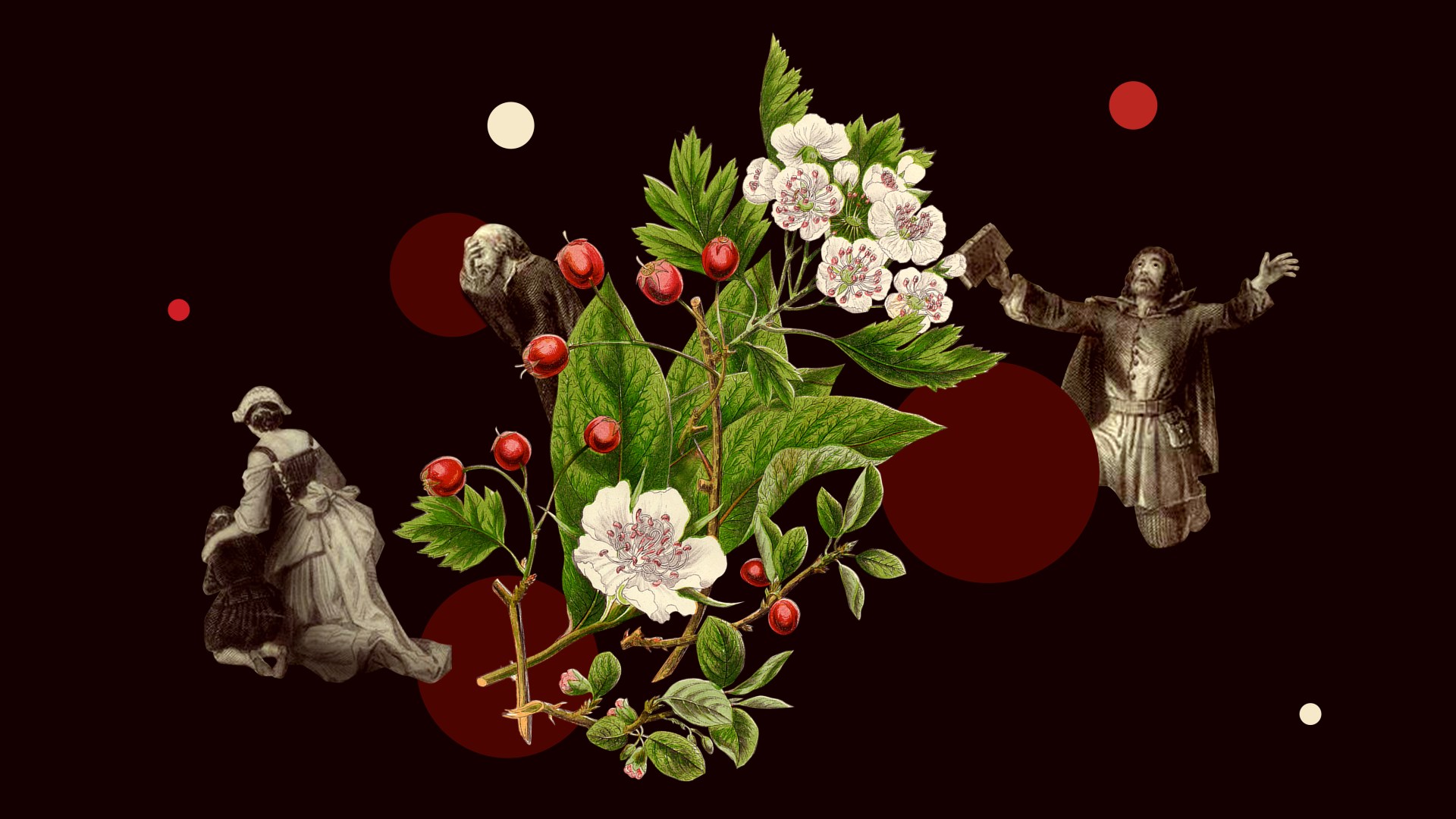
Much has been made among Christians in 2020 about systemic sin—the collective fault of institutions, societies, and their norms and laws to engender injustice and cause harm. Most evident in heated debates over race, politics, policing, education, and the economy, systemic sin implies a capacity for wrong on the part of structures that individuals could not accomplish on their own.

But racism still requires racists; unjust institutions and arrogant corporations require people who are corrupt and arrogant. Systemic sin implicates individual sinners whether we realize it or not. In a previous era, inhabited by those Pilgrims whose gratitude we emulate every Thanksgiving, sin was understood as chronic, spiritual corruption solved by salvation alone. Once saved, redemption pressed the saved sinner into obedience, a good tree bearing good fruit (Matt. 12:33).

Jesus taught his disciples how a wise man built his house on a rock before the rains fell and the flood came, the rock being obedience to Christ in every aspect of life (Matt. 7:24–25). As the Pilgrims courageously crossed the Atlantic for the sake of religious liberty, their courage derived from their conviction that not even a sparrow “will fall to the ground outside your Father’s care” (Matt. 10:29). Shaped by what they long held in their hearts, they viewed their journey’s ultimate end as a heavenly country, a city God had prepared for them (Rev. 21:2). When stalked by exposure and starvation in the New World, they recalled the words of Jesus: If “God clothes the grass of the field, which is here today, and tomorrow is thrown into the fire, how much more will he clothe you—you of little faith!” (Luke 12:28).

They would have been taught by long-winded preachers how God brought hardship into their lives as a mercy, “to wean us from the love of the world” and “to make the glory which shall be showed, and whereof our afflictions are not worthy, the more glorious.” This was hard teaching, no doubt, but it was proven by suffering, and no explanation of Pilgrim character works apart from it.

Yet Pilgrims, as well as their Puritan cousins, for all of their courage and conviction, suffer the caricature of a tightly buckled bunch, repressed and judgmental—puritanical to coin the stern adjective, especially regarding sex or anything fun. Not that our current, anxious age can’t be puritanical too. Gathered in small numbers amid the restrictive pandemic, we’ll still thankfully gobble down turkey without sanctimonious scarlet letters, as long as the turkey was free-range and humanely processed. Immoral are the red-meat eaters, the gluttonous, the glutenous and gravy-laden. Blessed instead are the cranberry eaters, each bite roundly loaded with ten essential vitamins and packed with antioxidants at only 86 calories per serving of sauce. Cranberries fight cardiovascular disease and slow cancer, stave off urinary tract infections and keep bacteria from binding to teeth: This is true salvation, praise Ocean Spray.

No one is sure how cranberries became associated with holiday feasts, though it may have been via the Massachusetts Wampanoags whose gestures of concord toward the Pilgrims later invited war and centuries of violent conflict. The Wampanoags used cranberries for everything from dye to tea. Eschewed by the Pilgrims and too sour (even by Puritan standards), cranberries became popular only once somebody stirred in some honey. Soon after that, bogs became a boon to the colonial economy.

If the pastor was taking sides, he was no longer fit to minister.

In 1767, at the Second Church of Wrentham, Massachusetts, a pastor was fired on account of cranberries. Two congregants got into a dispute over the price of a cranberry crop and whether one owed money to the other. The pastor, a young Reverend Caleb Barnum, decided to play peacemaker. Thinking that money was the issue and could make everyone happy, Rev. Barnum offered to pay the difference in the disputed cranberry price out of his own pocket. Unfortunately, the congregation interpreted his generosity as implicating one side over the other. If the pastor was taking sides, he was no longer fit to minister.

In Luke’s gospel, a man wanted his brother to split the family inheritance evenly rather than have the older brother receive a double portion as law allowed. In Jewish tradition, rabbis had long been called upon to settle such matters. But Jesus did not care. “Who appointed me a judge or an arbiter between you?” he asked (12:14), in a way that would have made Puritan congregationalists proud. “Watch out! Be on your guard against all kinds of greed; life does not consist in an abundance of possessions” (12:15).

Jesus went on to tell of the rich fool who built surplus barns of grain to feed only himself, followed then by a command not to worry about life because God will take care of everything, “you of little faith!” (12:16–34). These are welcome words in our anxious, pandemic days.

Worry and faith are similar in that both relate to the future, the unseen, and the unknown. Worry feeds off our insides, causing heartburn and panic, a sort of spiritual eating disorder that presumes a human capacity for control so long as we exercise and eat right. But no matter how healthy and harsh our diets, how particular our tastes and local our sources, no amount of worry can add a single hour to our lives (Luke 12:25).

“Man shall not live on bread alone,” Jesus said, “but on every word that comes from the mouth of God” (Matt. 4:4). Unlike worry, faith feeds off the Word of God incarnate, the Bread of Life broken, Christ Jesus himself. He is the first and lasting fruit of new creation where love never fails and all will be well and no room will be left on any plate for worry or fear.

John Calvin wrote that to be anxious for food or drink “belongs to those who tremble for fear of poverty or hunger” yet neglect the state of the soul. The Pilgrims knew famine and feast intimately and received both as grace from the Lord.

I understand they weren’t so crazy about corn. Pilgrims mostly regarded corn like we do cat food—more suitable as animal feed. They also thought tomatoes unhealthy, considered swan a delicacy, and believed sweet potatoes to be an aphrodisiac. (So much for being puritanical.) They positively loved beer, but they never celebrated holidays. Not Thanksgiving because who’s ever heard of setting aside just a day to be grateful? Not Christmas because nowhere in the Bible is there any mention of Jesus being born in December. And not Easter because as far as they were concerned, every moment was about resurrection.

Only half of the hundred or so who boarded the Mayflower survived to eat that first harvest feast. The Pilgrims’ bountiful harvest cost them a bounty of human misery, but they construed their loss as the will of God. Survival of hardship elicits thankfulness in ways that ease and prosperity can’t. Adversity clarifies what matters in ways that abundance only obscures. Church history testifies that a persecuted and endangered church always finds itself more reliant on Jesus than does an acculturated and privileged one.

The freedom for which the Pilgrims embarked for the New World was not about personal liberty. They prioritized obedience and fidelity to God, love of the brethren, and justice for all at the sacrifice of self. Their covenant bonds of faith freed them from worry. They were safe in the Lord, and they had each other forever, come what may. In Christ, God had supplied all they needed.

Daniel Harrell is editor in chief at Christianity Today.

News

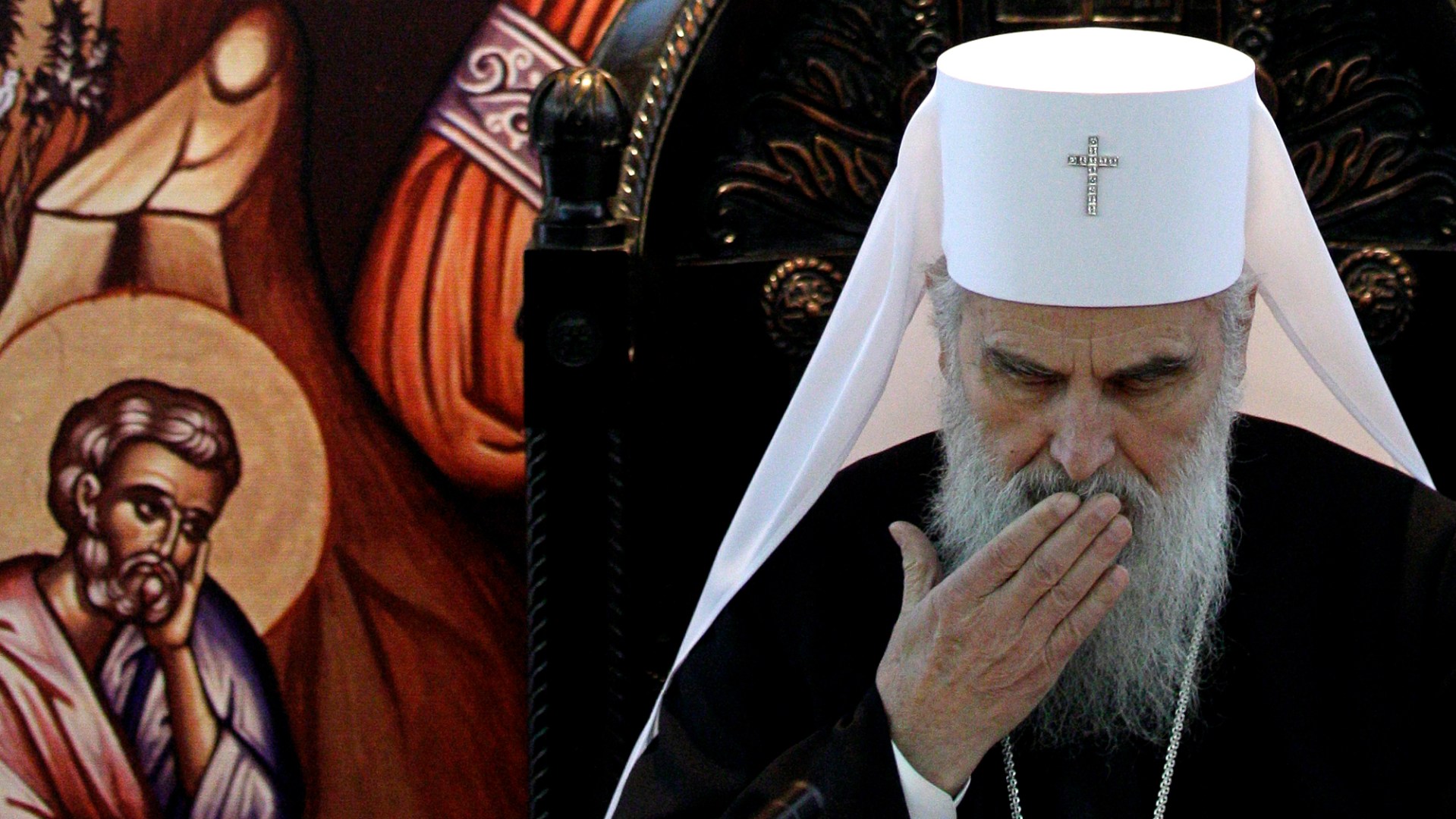
Coronavirus Kills Orthodox Leader Appreciated by Protestants and Catholics

Patriarch Irinej of the Serbian Orthodox Church died after attending funeral of Montenegro counterpart who also had COVID-19.

Patriarch Irinej of the Serbian Orthodox Church

Patriarch Irinej of the Serbian Orthodox Church

Christianity Today November 25, 2020
Darko Vojinovic / AP

Church bells tolled and mourners flocked to light candles as the Serbian government proclaimed three days of national mourning for Patriarch Irinej. The 90-year-old leader of the Serbian Orthodox Church, who passed away November 20, became the world’s highest-ranking cleric to die from COVID-19.

Evangelical leaders in Serbia described him as kind and sincere in his dialogue with them.

The Orthodox lost a towering figure, who nurtured the church through the Soviet era.

“I knew the patriarch as a simple man, modest in his needs, and of strong moral character,” said Zoran Filipovic, an Orthodox priest who served on his staff.

“His greatest concern was the welfare of the church.”

It may have contributed to his death.

The patriarch was hospitalized with the coronavirus early in November, soon after attending the funeral of the head of the Serbian Orthodox Church in Montenegro, Bishop Amfilohije [profiled by CT], who also died from complications caused by COVID-19.

Thousands of mourners, most of them without masks, gathered at the November 1 funeral for Amfilohije in the Montenegrin capital, Podgorica, in violation of pandemic-fighting measures proclaimed by the small Adriatic state’s authorities. The burial turned out to be a superspreader event, with several high-ranking church officials and other attendees later testing positive.

After Amfilohije’s death and Irinej’s hospitalization, Serbian priests have started to appeal for their parishioners to take the deadly virus seriously. They had previously downplayed the threat from the global pandemic and largely ignored bans on large gatherings and preventive measures during prayers and other church services.

Irinej was buried in the main Saint Sava Church in Belgrade on Sunday, the first Serbian patriarch to be interred. Hundreds gathered to commemorate him, with masks and social distancing much more prevalent.

The location was symbolic.

“The completion of Saint Sava Cathedral will go down in history as one of the greatest achievements of his patriarchal service,” said Metropolitan Hilarion of the Russian Orthodox Church, during the funeral speech.

“Filled with true Christian love, and not sparing strength, he always tried to be with his people.”

With architecture and grandeur designed to imitate the Hagia Sophia in Istanbul, Saint Sava is one of the largest Orthodox cathedrals in the world. The cornerstone was laid in 1935; however, after World War II, communist officials in then-Yugoslavia prevented its completion. Its dome was raised in 1989, and Irinej presided over the mosaic installations in 2017.

“Saint Sava will be the new Saint Sophia,” Irinej said with Serbian president Aleksandar Vucic, following Turkey’s reconversion of the Istanbul church-museum into a mosque.

“The temple of Saint Sava will be a magnificent shrine to the pride of the Serbian people, but also to the entire Christian world.”

Following the news of Irinej’s death, Vucic posted on Instagram: “It was an honor to have known you,” alongside a black and white photo of the patriarch. “People like you are never gone.”

And Russian President Vladimir Putin sent a message of condolence, praising the late patriarch for “strengthening the unity of the whole Orthodox world,” according to Serbia’s state TV.

Irinej, who wielded considerable political influence in Serbia, took over the church’s helm in January 2010 after the death of his predecessor, Patriarch Pavle, who was a highly popular and respected church leader in the Balkan country.

At the time, Irinej was seen as a relative moderate and a compromise choice among the factions within the church.

But he continued the Orthodox political theology of symphonia, in which the church and state complement each other in mutual respect, without one dominating the other.

The theory traces back to the fourth-century Roman Emperor Constantine. In 2013, Irinej hosted eight Orthodox patriarchs to honor the 1,700-year anniversary of the Edict of Milan, which established religious tolerance for Christianity.

It was held in Nis, the place of Constantine’s birth, where Irinej served as bishop for 35 years.

Throughout his leadership, Irinej maintained the nationalist stance the Serbian church developed during the wars that cleaved the Balkans in the 1990s. That included beliefs that the Serbs were historic victims of injustice and played on alleged anti-Serb policies in rival Balkan nations as well as the international community.

He often criticized Western policies toward Serbia over its breakaway Kosovo province, which unilaterally declared independence in 2008. He kept close relations with the Russian Orthodox Church, and the populist Serbian president.

Irinej spoke strongly against abortion and homosexuality, but expressed an inclination to join the European Union—if it could accept Serbian culture and religion.

“Our biggest problem is not our centuries-old neighbors,” Irinej said, “but ‘developed’ Europe and the West in general.”

But he was also among the rare Serbian church dignitaries who openly called for improved ties with the Roman Catholic Church. He said the two churches should overcome historic differences.

“His Holiness remained an example of faith and dialogue,” stated the Vatican’s Pontifical Council for Promoting Christian Unity, following Irinej’s death.

“Humble and joyful, totally dedicating his life to God and fostering the spirit of communion within the Serbian Orthodox Church.”

The people responded to his leadership.

In 1959, then-Miroslav Gavrilović took his monastic vows. At that time, 13 percent of the Yugoslav population in territorial Serbia identified as atheist or agnostic. And the 72 percent Orthodox population was riddled with superstition and spiritualist folk practices.

Appointed rector of the Prizren Seminary in 1969, Irinej made Christian education of the priests a priority, which continued through his service as bishop.

“He discouraged the youth from frivolous fantasies, instructing them in their duties towards family, church, and society,” said Filipovic, who served on his diocesan staff in Nis.

“Promoting faith and moral values, Irinej led a mass return to the church.”

According to the last census in 2011, only 1 percent of Serbians now identify as atheist or agnostic, compared to 85 percent Orthodox.

“I don’t have my own program,” said Irinej, during his 2010 enthronement speech, in contrast to previous patriarchal practice.

“Only the gospel, in which the Lord says, ‘Go and preach.’”

During his funeral, the 1 percent Protestant community joined the Orthodox in the nationwide ringing of bells.

Primarily consisting of ethnic Slovaks, most Serbs view evangelicals as a “sect,” said Cedo Ralevic, president of the Union of Christian Baptist Churches, who pastors a church in Nis.

But Irinej was different, he said. They once spent two and a half hours meeting together, ending with a sense of “mutual appreciation.”

Jaroslav Javornik’s experience was similar.

At one official event, Irinej had him sit down next to him, in preference over the many Orthodox clergy.

“He was very kind to me,” said the bishop of the Slovak Evangelical Church, Augsburg Confession. “The dialogue he advocated he also zealously followed, all the days of his life.”

And it is this heritage, rather than the COVID-19 diagnosis, that the Serbian faithful will remember of their patriarch.

“Irinej’s understanding of the church was close to his understanding of the family,” said Filipovic.

“The patriarch sought to open our hearts together, to the Lord Jesus Christ.”

Mladen Aleksic is a Serbia-based journalist. Additional reporting by Dusan Stojanovic of the Associated Press.

Books
Review

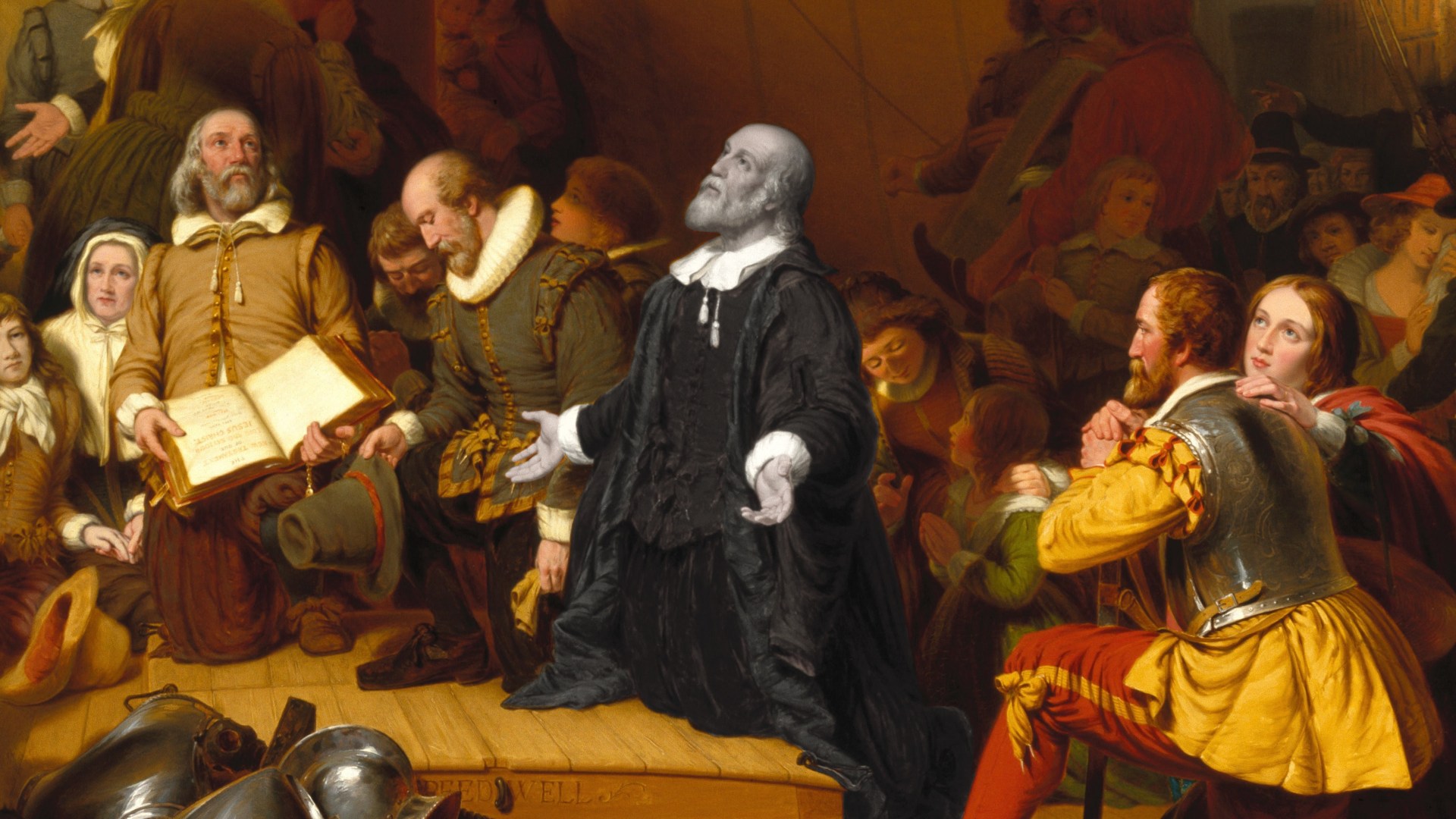
Sometimes, Telling Us More About the Pilgrims Actually Tells Us Less

A new study touches on many factors that shaped life in Plymouth Colony. But the most important one gets lost in the laundry list.

Christianity Today November 25, 2020
WikiMedia Commons

This December marks 400 years since the Mayflower dropped anchor in Plymouth Harbor, and for the past 200 years the story of its passengers has loomed large in American memory. Generations of schoolchildren have learned its basic plot: how a tiny band of plain men and women, desperate for a better life, crossed the stormy Atlantic and endured unimaginable hardships in a strange land where, with the help of their Native American neighbors, they managed to endure and even to flourish.

The World of Plymouth Plantation

The World of Plymouth Plantation

Belknap Press

248 pages

$25.95

But how well do we know this group that the 19th century would christen “the Pilgrims”? Not well at all, as it turns out. With her new book The World of Plymouth Plantation, UCLA historian Carla Gardina Pestana joins a long line of scholars who have tried to set the record straight over the years, seeking to challenge, complicate, and enrich our understanding of the story we think we already know. The result is a book that is generally informative and interesting but rarely edifying.

A Little Bit About a Lot of Things

Pestana rightly laments that we condense the history of the Pilgrim colony into a series of discrete, still-life vignettes: the signing of the Mayflower Compact, the landing at Plymouth Rock, the celebration of the first Thanksgiving. She is correct in noting that Americans have mythologized each of those historic moments. If later generations insisted that the Mayflower Compact was “an early expression of democratic striving,” the Pilgrims in reality gave “no indication of wanting to escape their status as subjects of a king.” Although more than a million tourists flock to Plymouth annually to file past a shrine erected over the Pilgrims’ supposed landing site, “those who designated a rock as the landing site … conveyed an astonishing ignorance about sailing.” And the 1621 celebration we remember as the first Thanksgiving was not what the Pilgrims would have considered a true Thanksgiving holy day but rather an English harvest festival devoid of religious overtones.

Pestana offers these corrections without dwelling on them. Her goal is less to debunk our understanding of these iconic moments than to draw our attention away from them—not because they are unimportant but because they “limit our insight.” By wrenching these events from their context, we not only predictably misunderstand them; we perpetuate our tendency to make the Pilgrims into two-dimensional symbols rather than complex human beings. Pestana’s objective is to reconstruct the Pilgrims’ “world”—to reintegrate “the plantation into its own time and place.”

Toward this end, she tells us a little bit about a lot of things. She begins with the critical contribution of women to the colony’s survival; for all the commemoration of the “Forefathers,” it was “in fact the women, as wives and mothers, who made the plantation a lasting presence in southern New England.” From there she discusses the Pilgrims’ clothing, houses, and diet; their patterns of land use and labor practices; their guns, books, livestock, trading activities, forms of governance, and religious beliefs.

Much of this is brief, vague, and colorless. Her favorite adjective is English, a descriptor that Pestana evidently thinks will convey more to her readers than it probably does. One of her main points is that the Pilgrims sought to recreate the Old World in the New, that they aspired to build a familiar home in a strange land by transplanting English rural culture to North America. And so they brought “English” foods, built “English-style houses,” wore “English clothes.” Her description of what “English” meant in these cases is thin at best, unfortunately. This is not a book that helps readers see its subject.

Pestana’s discussion of the Pilgrims’ religious faith is similarly disappointing. There’s not much of it, for starters, a trait in keeping with the author’s judgment that “a myriad of factors shaped Plymouth, not just the religious experiences of some of the first migrants.” Among these other influences, Pestana includes the colony’s climate, agricultural potential, accessibility to fishing grounds, and its distance from Spanish colonies and the military threat they entailed. She is surely correct that multiple factors shaped the lives of the colonists—this is always and everywhere a truism—but the Pilgrims’ religious beliefs tend to get lost in the laundry list of circumstances that she explores. What Pestana may have viewed as a healthy corrective—paying attention to nonreligious factors that have often been slighted in popular memory—may come across to Christian readers as a secular scholar’s trivialization of beliefs she finds unintelligible.

Pestana insists that the religious radicalism of the Pilgrims “has been over-emphasized,” and she is surely right that one could find English separatists in the 17th century who were even more extreme in their repudiation of the Church of England. But she makes little attempt to understand what propelled these supposedly moderate Protestants to risk their liberty, their possessions, and their very lives to migrate to a strange and forbidding land. When she does try to capture their beliefs, her descriptions fall flat.

At times, the Pilgrims come across as 21st-century consumers. (Many of the Pilgrims had first migrated to Holland because of “the availability of religious options beyond that offered by the English church.”) At other times the author describes the Pilgrims’ convictions as if they are patently bizarre. Upon noting that the Pilgrims were convinced that God punishes sins, she feels constrained to add that they were “far from alone” at the time, as this “represented a common way to think about how God interacted with the world.” After observing that the Pilgrims believed that “God busied himself” with the particulars of their lives, she explains that a belief in divine providence was actually common among “seventeenth-century English people.” While such beliefs are undoubtedly rare among academic historians, they are not quite as exotic in the 21st century as Pestana seems to think.

The Missing Elements

There are two points, above all, that Pestana would have us understand about the Plymouth Colony. The first is that it was more typical than unique for its moment in history. Its existence was shaped by the same categories of factors that shaped all of the Americas from the arrival of Columbus onward. The second is that it was never isolated from the larger Atlantic world. The Pilgrims traded with their neighbors, received a stream of new settlers, welcomed (and then sometimes expelled) visitors, imported books from abroad, and followed political and religious currents in Europe with interest. “Neither first nor unique,” the colony “participated in a growing network of people, ideas, and things.”

Pestana tells us that she is writing with general readers in mind, but the historian who would reach an audience beyond the academy must do two things: She must offer a coherent story, and she must persuade her readers that the story matters to them. The World of Plymouth Plantation falls short on both counts. The author avoids narrative entirely, opting instead for a series of disjointed observations. Nor does she ever meditate on their meaning to the present. Missing from the book is the sense that history can help us see our own time and place more clearly. Absent is the awareness that it can draw us into life-changing conversations with the dead.

This is a shame. Pestana is correct that many factors in addition to the Pilgrims’ religious beliefs contributed to the development of the colony, but among the host of variables that she considers, their religious beliefs—unlike their location and climate, for example—were by far the most readily transferrable and the most relevant to us today. Americans will celebrate Thanksgiving this year amid the most serious health crisis in a century. In the throes of this trial, it might comfort us to hear the Pilgrims’ message that God oversees every detail of our lives—and that, in the words of John Robinson, who pastored the Pilgrims during their Holland sojourn, God uses hardships in order to “wean us from the love of the world.” It might challenge us to remember their conviction that we have no “rights” in the presence of suffering and that the Christian’s only true liberty—here is Robinson again—“is to serve God in faith, and his brethren in love.” Four centuries’ old, their insights are as timely as ever.

In sum, if we bothered to listen carefully to the Pilgrims, we might find that they have much to say to us, that what they have to say might even challenge and change us, but first we must have ears to hear. Pestana cannot help us in this regard, for what is missing most from The World of Plymouth Plantation is any sense that readers might actually learn from—not just about—the people who lived there.

Robert Tracy McKenzie teaches history at Wheaton College. He is the author of The First Thanksgiving: What The Real Story Tells Us About Loving God and Learning from History (IVP Academic) and a forthcoming book We the Fallen People: The Founders and the Future of American Democracy, which releases next summer from InterVarsity Press.

The Case for Vocational Singleness

What if singles spent time discerning a call to “undivided devotion to the Lord”?

Christianity Today November 25, 2020
Illustration by Malte Mueller / Getty Images / Edits by Mallory Rentsch

In a year of sickness and death, civic unrest due to systemic racism, and refugees looking for a place of welcome, the harvest of societal brokenness is plentiful, but the workers are few. In response to this scarcity, Jesus encourages us to “[a]sk the Lord of the harvest, therefore, to send out workers into his harvest field” (Matthew 9:38).

Every Christ-follower is invited to serve their neighbor, but God calls a small and mighty band of Christians to permanently leverage their singleness for kingdom work. For the first 1500 years of the church, many Christians prayerfully asked the Lord whether he was calling them to Christian marriage or to vocational singleness for the sake of the kingdom. What if Christians today once again discerned this question with God? And what if some or even many of them accepted a call to committed singleness and lived that calling to help heal their communities with undivided attention?

In Matthew 19, the disciples respond to Christ’s high standard of marital faithfulness by joking that it would be better never to marry. To their surprise, Jesus responds that some Christians are called to “live like eunuchs for the sake of the kingdom.” He lifts up celibacy from being a curse of the few to a normative and honorable calling. He ends his teaching with an invitation: “The one who can accept this should accept it” (v. 12). In other words, Jesus institutes vocational singleness as a lifetime calling to address the plentiful harvest of societal brokenness.

In 1 Corinthians 7, Paul confirms this new teaching, sharing a practical preference for celibacy to do kingdom work married couples raising kids often do not have the time or financial freedom to do. The “unmarried man,” he writes, “is concerned about the Lord’s affairs…in undivided devotion to the Lord” (vvs. 32-35). Even Reformation-era critics of Catholic celibacy recognized that celibate people had a greater availability for kingdom work. John Calvin, a vocal critic of vocational singleness, recognized this practical benefit in his commentaries on 1 Corinthians 7: “Now the point of the whole argument is this—celibacy is better than marriage because there is more freedom in celibacy, so that men can serve God more easily.”

“The ‘gift-ness’ of being single for Paul,” writes Timothy Keller in The Meaning of Marriage, “lay in the freedom it gave him to concentrate on ministry in ways that a married man could not. … He not only found an ability to live a life of service to God and others in that situation, he discovered (and capitalized on) the unique features of single life (such as time flexibility) to minister with very great effectiveness.”

The strong consensus of Scripture and Reformed thinkers past and present is that Jesus and Paul modeled and spoke of a lifetime calling to leverage their availability in singleness to do more kingdom work.

Unfortunately, some church leaders teach their congregants (directly or indirectly) to assume they will get married while neglecting the Bible’s teachings about discernment. Some Christian young adults chase the idol of romance and default to marriage while ignoring the Bible’s teaching about divorce and child rearing. Others continue in involuntary singleness without leveraging it for the kingdom. Yet even in the Catholic church where celibacy is celebrated, less than 1 percent of Catholics accept a call to permanently give up dating, romance, marriage, and sex for the sake of single-minded kingdom work. There are too few workers for the harvest.

How can our churches raise up more kingdom workers to heal our communities with undivided attention? Our churches need to become places where young adults genuinely discern whether God is calling them to vocational singleness or Christian marriage.

From a young age, parents, teachers, and other leaders can teach our children about the possibilities of both Christian marriage and vocational singleness, building anticipation for a future when they will ask God for his preference. Pastors can equip teenagers with a healthy theology of both vocations and a capacity for general Christian discernment. Then when Christians begin deliberately discerning in their early 20s, pastors can offer four suggestions for wise discernment:

First, seek God’s preference, even if it’s not our preference. Most of the celibate Protestants and Catholics I know still experienced a healthy desire for marriage, sex, and children before committing to singleness for the Lord, so those desires aren’t an indication of God’s preference. As Proverbs 16:9 tells us, sometimes God’s preference doesn’t match ours. In 1 Corinthians 7, Paul says God gives the gift of vocational singleness to some and the gift of marriage to others, pointing to our practical circumstances and our personal mission as evidence for our calling. Sometimes, God has a preference for which gift he wants to give us, and he wants to communicate that to us.

Second, leave the limbo of uncommitted singleness. There’s a big difference between waiting for marriage and accepting a call to permanently give up the prospect of dating, romance, sex, marriage, and children for the sake of the kingdom. Like renting an apartment, many singles might find themselves less committed to their churches or specific ministries because they need to be prepared to reorganize their lives around a future marriage. Plus, the two passages where Jesus and Paul encourage Christians to consider celibacy aren’t commending temporary singleness—they’re commending committed, lifetime singleness. Still, some will genuinely discern for years or decades without clarity from God. Even in temporary singleness, Christians can delete their dating apps, set down their phones, and intentionally use their availability to serve their neighbors.

Third, receive God’s necessary gift of vocational singleness or Christian marriage. In light of the Fall, polyamory and sex without commitment come naturally to us. Celibacy and faithful monogamy do not. None of us inherently have what we need to do either vocation well. When we step fully into either vocational singleness or Christian marriage, we will receive God’s bountiful gift to thrive in our vocation.

Finally, build a family that lasts. God has created each of us in his image to enjoy intimacy in the context of human family—even those called to vocational singleness. Yet celibate Christians struggle to find a permanent, lived-in experience of family that consistently meets their intimacy needs and empowers their kingdom work. Those called to vocational singleness can find committed family by continuing to live with biological family, moving into the home of an unrelated nuclear family, or creating an intentional Christian community of singles and/or marrieds.

To that end, I’ve helped establish an ecumenically Christian brotherhood where men called to vocational singleness can live together permanently, called the Nashville Family of Brothers. We practice shared rhythms of daily prayer and confession, weekly meals, monthly worship, and regular vacations and holidays. Plus, we invest in the mission and community of our local churches, leverage our 9-to-5 jobs for the sake of the kingdom, and enjoy fellowship with parents and their kids in our churches and neighborhood.

What if Christians embraced this renewed practice of discernment? What if every Christian young adult open-handedly offered this question to God and received his wise gift with gratitude? Imagine the impact of tenfold Christians embracing vocational singleness and healing our communities in ways parents often do not have the time or financial freedom to do. Imagine many times more celibate Christians leveraging their kingdom availability to serve as nurses at free clinics, teachers in low-income schools, and pastors radically available to go wherever the gospel is needed.

Discernment between singleness and marriage won’t heal all of the wounds of 2020, but it could lead to more Christians accepting a call to vocational singleness and addressing the plentiful harvest of brokenness in our communities with single-minded devotion.

Pieter Valk is a licensed professional counselor, the director of EQUIP (equipyourcommunity.org), and cofounder of the Nashville Family of Brothers (familyofbrothers.org), an ecumenically Christian brotherhood for men called to vocational singleness.

Speaking Out is Christianity Today’s guest opinion column and (unlike an editorial) does not necessarily represent the opinion of the publication.

News

Tigray Crisis Tests Ethiopian Christians Along Ethnic Lines

As Abiy’s military closes in on TPLF forces, thousands flee to Sudan.

The streets of Humera in the Tigray region of Ethiopia on Sunday, November 22.

The streets of Humera in the Tigray region of Ethiopia on Sunday, November 22.

Christianity Today November 25, 2020
Eduardo Soteras / AFP / Getty Images

The jagged rock spires and steep mountains of the Tigray region in northern Ethiopia are home to some of the oldest churches in the world.

Against that historic backdrop, forces loyal to the central government in Addis Ababa have pushed toward the regional capital, Mekele, fighting soldiers loyal to the Tigrayan People’s Liberation Front (TPLF).

Fierce fighting has raged since November 4, when Ethiopians awoke to see Prime Minister Abiy Ahmed announce that he had sent federal troops to Tigray in response to an attack on the Northern Command Post of the National Defense Force in the region. The once-dominant TPLF, whose relations with the central government had been souring for months, had attacked federal troops.

“The last red line has been crossed with this morning’s attacks and the federal government is therefore forced into a military confrontation,” Abiy said.

All internet and telecommunications have been shut off in Tigray since then, making information difficult to verify. The Ethiopian government says it is making advances that include the capture of the ancient city of Axum, where the church of Our Lady Mary of Zion is believed by the Ethiopian Orthodox Tewahedo Church to host the original Ark of the Covenant.

As they retreated, TPLF forces damaged the Axum airport and destroyed bridges leading into Mekele.

“There was a lot of confusion,” a Christian expat working in the Tigray town of Shire, near the border with Eritrea, told CT. Evacuated by the United Nations last week, he asked to remain anonymous in order to protect his work there. “That first day was the worst, because people were killed, shot, and beat. We heard soldiers trying to hide in homes, and other soldiers trying to find them.”

“Soldiers in our church were killed,” he said. Though the Tigray region is 95 percent Orthodox, many of the federal troops stationed there are from other regions of Ethiopia where Protestantism is more common. “One deacon was captured and imprisoned, and two other [members] were killed because they were in the airport defense.”

He was saddened by the response in his church. “There wasn’t recognition of the individuals who had died. … It was ‘the outsiders,’” he said. “That is where it hits us as believers. These are our brothers.”

Initially, the TPLF denied the attack, and many international news sources have condemned Abiy’s “aggression” and called for peace. However, on November 14,senior TPLF member Sekuture Getachew made a statement on TPLF official satellite television channel Dimtsi Woyane (Voice of the Revolution), in which he stated: “Should we be waiting for them to attack? No, it was imperative to take a thunder-like strike.”

“From what we could gather on the ground, there were orchestrated efforts across Tigray at the same time to attack the Federal Defense Force,” said the Shire-based Christian worker.

“The next day, there were people parading through the streets, celebrating victory and the capture of federal soldiers,” he said. “And parading artillery that they had captured.”

After the conflict started, there was a partisan attitude in the church. “It was almost like, ‘We’re doing it, we are winning.’ And that saddened us,” he said.

Sekuture compared Tigray to “Israel surrounded by big Arab nations … preparing to attack it.” The TPLF has felt increasingly threatened since Abiy brokered peace with neighboring Eritrea, a conciliatory move that was awarded the Nobel Peace Prize in 2019.

Though Tigray composes only 6 percent of Ethiopia’s population, the TPLF has dominated the political landscape since 1991. It was the TPLF-controlled government that fought a border war with Eritrea from 1998 to 2000 in which an estimated 80,000 people were killed. The TPLF has resisted Abiy’s peace by refusing to demilitarize the border it controls.

The determination of Abiy, a devout Pentecostal, to introduce political reforms has increasingly pushed TPLF elites out of power. Over the last two years, many TPLF leaders have been arrested or have fled north to Tigray after being charged with crimes ranging from attempted assassination, incitement of ethnic violence, and embezzlement of government funds. The TPLF refused to join Abiy’s unitary Ethiopian Prosperity Party after the dissolution of the ruling coalition, the Ethiopian Peoples’ Revolutionary Democratic Front, in November 2019.

Since then, the TPLF has worked on consolidating support in its region. Many observers have pointed to Tigray’s regional elections in June as the point of no return.

“The hard line became visible when TPLF decided to conduct a regional election on its own, defying the decision made at the national level,” said Shimels Sisay, a former professor of human rights currently working on Ethiopia’s elections. “Each was accusing the other of being unconstitutional and illegitimate.”

“The central government branded that as a mock election, which Tigray called a declaration of war,” he said. “As a result of this, we are where we are today.”

After the initial attack, loudspeakers announced a rally in the Shire stadium and trucks began rounding up the young men.

“There were some classes going on at the Bible School … they were totally disrupted because the local people did not want to be in a place where they could be found,” said the Shire worker. “They were afraid of conscription.”

Likewise, many of his non-Tigrayan friends and church members fled into the countryside when the fighting began, fearing being targeted on the basis of their ethnicity.

“What we saw is that ethnic identity is much stronger than religious identity, whether you’re Muslim, Orthodox, or Protestant,” he said.

Many organizations have predicted a humanitarian disaster will follow the conflict. According to the UN, 4,000 refugees a day are fleeing across the border to Sudan, where already 30,000 displaced people have gathered.

“As soon as there is the ability to respond, we will,” said Edward Brown, national director of World Vision Ethiopia, which has a large presence across the nation—including 82 staff in Tigray. “We are assuming we are going to have a massive scale-up [of operations in Tigray].”

The cause of the conflict is “part of the broader global narrative around identity and the tribalization of politics,” he said. “But here, it is not just winning or losing an election. It’s life or death: access to land, access to food … the stakes are so high.”

Even before the conflict, over 1 million people in Tigray were in need of daily food assistance, including 40,000 Eritrean refugees. This year has already been marked by a locust plague worse than any in living memory, and the current conflict will interrupt harvests across Tigray.

“On the Monday after it blew up, we started to see the people coming into town with their bags,” said the Shire worker. “Displaced women and children, standing on street corners. Many went to Sudan.”

It is clear to many that the church must be a part of moving Ethiopia forward after this conflict.

“A priest protects the Ark of the Covenant in Axum,” said Brown. “In Ethiopian, covenant (kalkidan) is a compound word meaning ‘promised word,’ based on the biblical, relational understanding: ‘I will be Your God and you will be my people.’”

“There has to be a covenant to keep Ethiopia together. That is much deeper than a negotiation or contract agreement that says, ‘You do this and I’ll do that.’ A covenant is a mutual commitment to relationship with one another,” he said.

“God’s at work [in Tigray], but it’s going to take a church that can rise above all this,” said the Shire worker. “That’s our prayer for the church in this time: How are they going to be the body of Christ there, in the midst of such volatile political and ethnic tensions?”

Correction: An earlier headline described the divide along “tribal lines.” In Ethiopia, ethnic groups are composed of multiple tribes.

News

Research: Racial Minorities Were More Likely to Contract COVID-19 at Churches

Cell phone location data indicated religious gatherings appeared to be a top transmission spot when the pandemic took off.

Christianity Today November 24, 2020
John Moore / Getty Images

New research suggests that, at the beginning of the pandemic, Americans from lower-income or majority-minority neighborhoods were more likely to be infected with COVID-19 through religious gatherings such as churches than those living in higher-income or predominantly white neighborhoods.

Cell phone data was an early indicator that Sunday morning church attendance slowed significantly in the spring. According to a new model published in Nature, it also reveals the disparities in which segments of the population were able to stay at home and reduce exposure.

Researchers at Stanford University found that churches were among the top five sites for coronavirus transmission, alongside restaurants, gyms, cafes and snack bars, and hotels. According to an analysis of anonymous cell phone data, these places tended to have more visitors and longer visits. In all, the model calculates that visits to these sites accounted for 70 percent of transmitted cases during the first several weeks of the pandemic.

The study used mobility data from cell phone users in 10 large US metro areas throughout March and April. They calculated the transmission rate in various neighborhoods by overlaying US Census data with the density of infected individuals in those locations. (They compared it to the New York TimesCOVID-19 case tracker and found the model to be an accurate prediction.)

Even though black churches have generally been the most cautious about reopening, residents in black and Hispanic neighborhoods who met in person during this time carried a greater likelihood of transmission largely due to their higher mobility and more frequent visits to crowded places.

Since contact-tracing efforts weren’t widely available, the cell phone data has stood in to help researchers understand people’s movement around their cities. During the first months of the outbreak, visits to churches and other religious organizations dropped by an estimated 6.18 million in New York, an early hot spot. In Chicago, there were 3.27 million fewer visits; in San Francisco, 1.23 million fewer.

Among the major metro areas in the study, Philadelphia stands out with the starkest disparity. The model indicated that people living in neighborhoods of color faced an infection risk 20 times higher than people living in white neighborhoods, if all activities had fully reopened during the outbreak.

In Atlanta and Dallas, though, infection rates in nonwhite neighborhoods were shown to be near to equal that of whites, while seven other cities fell somewhere in between.

“Philly is the largest poor city in America. We’re dealing with a pandemic, but we’re also dealing with unemployment and racial issues, just to name a few,” said J. R. Briggs, a pastor who knows about a dozen people who have contracted the virus and one who died. “With cases on the rise again, people are feeling discouraged and trying not to lose hope.”

Philadelphia issued another “Safer at Home” order last week, though churches are not specifically shut down. For the most part, pastors have been left to discern how to operate safely amid mandates and orders from both state and local officials in Pennsylvania, said Briggs, who coaches pastors in Philadelphia and around the country through Kairos Partnerships.

Last spring, a leader with the Church of God in Christ, the largest African American Pentecostal denomination, told CT, “Our churches are primarily located in dense urban areas, which are many of the epicenters of this virus.” The denomination’s presiding bishop repeatedly advised churches to follow public health guidelines and refrain from reopening prematurely.

The Stanford researchers found that those living in higher-income neighborhoods were able to reduce their mobility—with remote work arrangements and food delivery—more than low-income residents, who are more likely to be essential workers.

The findings about racial disparities ring true for Elizabeth Rios, whose Passion2Plant network supports black and brown church planters. “Those in poorer neighborhoods have jobs that don’t provide work-from-home opportunities,” she said. “Some who have lost jobs are trying to take any job they can find to make ends meet.”

And even if churches can afford cleaning supplies, hand sanitizer, masks, or other personal protective equipment needed to reopen safely—precautions that weren’t taken into consideration in the Nature models—their congregants may be predisposed to infection due a higher rate of preexisting conditions in lower-income or racial minority groups.

“Consequently, reopening strategies can have a different impact on disadvantaged groups than on the population as a whole, and it’s important to take this into account,” wrote the research team, led by Serina Chang, Emma Pierson, and Pang Wei Koh.

But churches also want to be able to offer gospel witness and spiritual support to the groups hit hardest by the virus. “Practically, the church ought to be the biggest servant to the most vulnerable in creative ways, and we should be a safe space of deep belonging for the lonely and isolated,” said Carlos Rebollar, lead pastor at the recently planted church Sojourn East End in Houston.

Rebollar’s church initially went online but now offers outdoor services, biweekly social gatherings with social distancing, and Zoom community groups.

Given the risk in their communities, pastors of color have been the most conservative about resuming in-person gatherings. This fall, 60 percent of African American pastors said their congregations did not meet in person, compared to 13 percent of pastors overall, per a LifeWay Research survey.

As another wave of the pandemic hits, the Stanford researchers caution that their model is based on data from the spring. It predicts risks for spaces that reopen in full without mask wearing and other precautions used at most churches these days.

“The risk to society of fully reopening a category is not equivalent to how risky it is for you, as an individual, to visit,” they wrote. Other studies have looked at the risk of visiting places like heath care facilities.

Since the beginning of the pandemic, Christians have faced scrutiny as some early global and US “superspreader” events were connected to churches. News media continue to cover Christians meeting in defiance of state orders, such as pastor John MacArthur’s Grace Community Church in California and Sean Feucht’s praise protests across the nation.

Rios worries that Christians are getting mixed messages about the risks of reopening but says they should know that following health guidelines does not insinuate a lack of faith.

“Doing the right thing communicates hope over despair of this season or disregard of people,” she said. “The church has always been the place to find hope in the darkest of moments.”

Apple PodcastsDown ArrowDown ArrowDown Arrowarrow_left_altLeft ArrowLeft ArrowRight ArrowRight ArrowRight Arrowarrow_up_altUp ArrowUp ArrowAvailable at Amazoncaret-downCloseCloseEmailEmailExpandExpandExternalExternalFacebookfacebook-squareGiftGiftGooglegoogleGoogle KeephamburgerInstagraminstagram-squareLinkLinklinkedin-squareListenListenListenChristianity TodayCT Creative Studio Logologo_orgMegaphoneMenuMenupausePinterestPlayPlayPocketPodcastRSSRSSSaveSaveSaveSearchSearchsearchSpotifyStitcherTelegramTable of ContentsTable of Contentstwitter-squareWhatsAppXYouTubeYouTube