News

How the ‘World’s Largest Family’ Survived a Global Pandemic

While other children’s homes have closed, Mully Children’s Family has continued to care for thousands.

Courtesy of Mully Children's Family / Facebook

Dickson Mulli had just returned from a trip to the US and was working at his office in Nairobi when the first case of the novel coronavirus entered the country on March 12. Within days, the government ordered schools to shutter and nonessential workers to work from home. Within weeks, roads leading in and out of the city were closed.

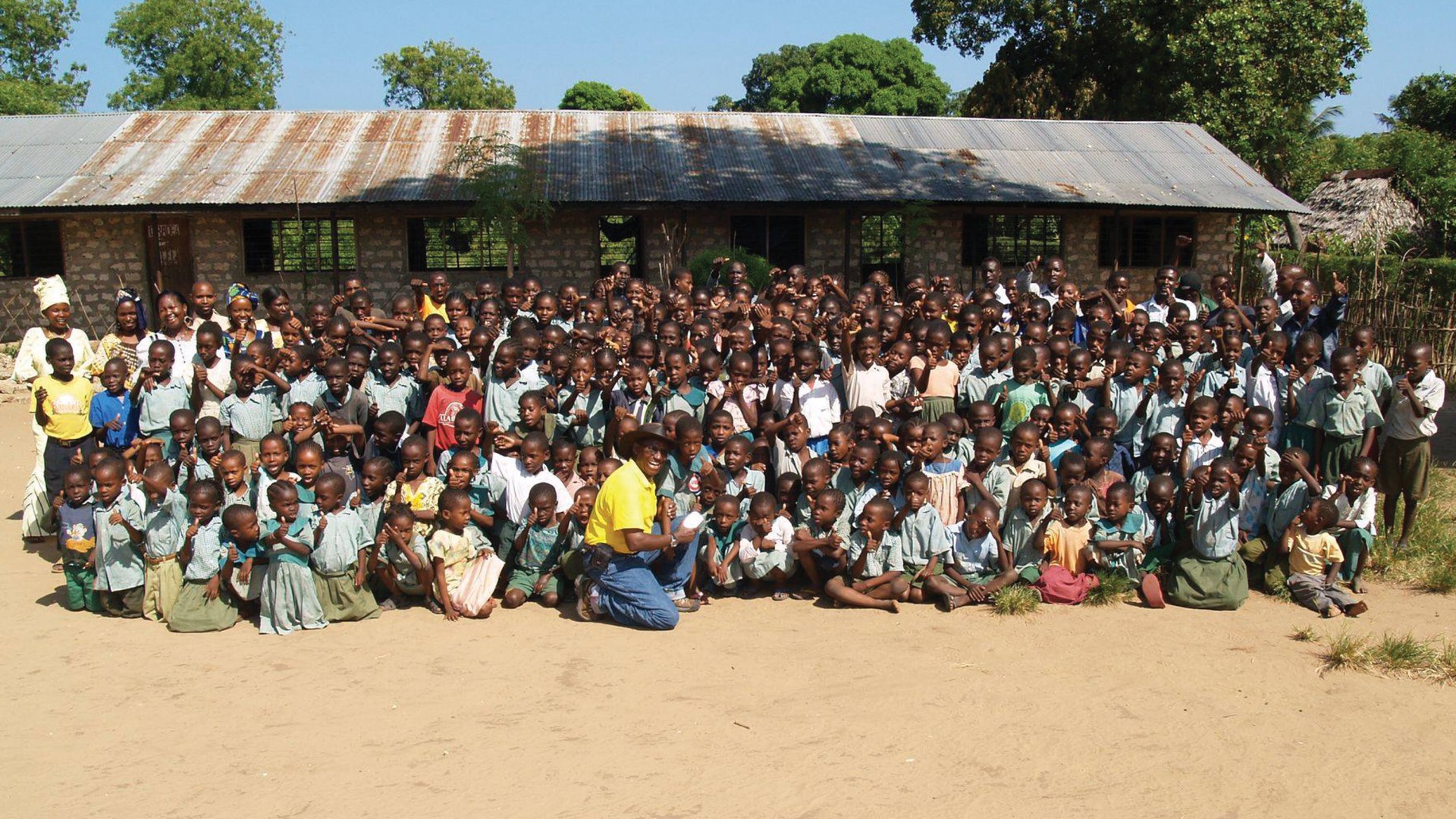
While Mulli was concerned for his wife and one-year-old son, he also worried about the other people he was responsible for feeding: 3,500 former street children rescued by his father Charles’s nonprofit and hundreds of employees.

“When you have all these children and there’s a pandemic, and the roads and the markets are closed, what do you eat, and what do you do?” Mulli said. “During a pandemic, it’s back to basics. It doesn’t matter what kind of car you drive—you need food, you need peace of mind, you need good health—and of course, Jesus.”

Around the world, many children’s homes have been forced to close—for the best, some argue—since they could not guarantee the children’s health or care during COVID-19. But Mully Children’s Family (MCF) has not only been able to house, feed, and educate the hundreds of children in its care, it has also kept them safe and counseled them through the anxieties of an uncertain year.

Mulli—also spelled Mully in Kenya—estimates that in over 31 years, around 23,000 children have come through MCF’s various residential facilities. The organization has become a darling within some Western church circles, a model tale about a Kenyan man investing his life to help Kenyan youth. MCF has in recent years become more self-sustainable and built partnerships with Western funders.

MCF leaders, however, say they are now facing the greatest test in their organization’s history: seeing whether all their preparations and plaudits will be enough to endure a pandemic.

C

harles Mulli grew up as the oldest of ten children in a small village in Machakos County, Kenya. His mother and his father, an often-violent alcoholic, worked as farm hands to provide for their family. But when he was six, Mulli’s family abandoned him to find better work, leaving him in the care of an aunt. “I lived on begging from people house to house; it was terrible,” he said. He finished primary school (eighth grade) at age 17 but never proceeded to secondary school, unable to pay the school fees.

“The only difference between me and the present-day street children is that I never roamed around in town streets or sniffed glue,” Charles wrote in his memoir, My Journey of Faith. “Still, I had many similarities with them. I regularly begged for food from neighbors and wandered a lot in the village, to the point that I became a nuisance. . . . I chose to be ashamed and embarrassed rather than to die of hunger.”

The Mully documentary depicts the extraordinary rags-to-riches story of a man whose meteoric rise from orphaned poverty in Kenya leads him on an unimaginable journey of selflessness.

Determined to make a life for himself, 18-year-old Charles walked the 70-kilometer journey to Nairobi, where he knocked on doors and asked around for work until he secured a position doing housework in a wealthy businessman’s home. The abandonment and abuse by his father sowed seeds of bitterness and anger in young Charles’s heart. By his late teen years, he contemplated taking his own life. But an acquaintance invited him to church. Despite his irreligious background, Charles found Jesus—and was suddenly filled with new purpose.

Over time, Charles rose into management at the man’s agricultural company and eventually started his own company, Mullyways—providing transportation between the capital and local villages. Business boomed; he diversified his entrepreneurial endeavors to oil, gas, and real estate and eventually purchased 50 acres of land in the Ndalani region for future retirement.

But one day on a business trip, Charles was approached by a group of street children who asked to watch his car in exchange for money. He ignored them. Later, he returned to discover that his car was gone. Forced to ride home via bus—possibly one of his own—Charles fell into an existential crisis that haunted him for three years. Why had he ignored the street children? After all, they were just like him! In November 1989, he felt the overwhelming call to leave his companies behind to rescue street children. It was a transformational day.

“ ‘You will never let my children suffer. You have to rescue them and become the father to the fatherless,’ ” Charles said he felt God telling him. “[That] was a big day for turning completely around. I was 40 years old. The following day, I went to the street.”

Charles and his wife, Esther, already had eight children—seven biological children and Charles’s adopted younger sister. They took in three more kids from the street in 1989. Six years later, they were caring for 300.

Today, MCF’s six campuses house or reach roughly 3,500 children.“I went to the street with one purpose: to rescue children. Every child needs food, love, accommodation, education, protection, [a] good and bright future,” Charles said. “Who then will reach to them with that love of Christ? I was one of them, one who is lost.”

Initially, he funded 100 percent of the children’s care from the sale of his businesses; when the money dried up, Charles sold his properties to support his rapidly growing “family.” Now, MCF relies on a combination of farm production and fundraising from chapters in Canada, Germany, and the US. Some donors also sponsor individual children.

Charles’s story—a homegrown leader rising from poverty to tackle his own country’s problems, in contrast to outsider intervention—has inspired Western Christians and donors. It has spawned two biographies and a feature-length documentary about “the world’s largest family.”

“Every child needs food, love, accommodation, education, protection, a good and bright future. Who then will reach to them with that love of Christ? I was one of them, one who is lost.” – Charles Mulli

“It’s not 100 percent foolproof, but the local solutions are a good one; local leadership is a success, rather than a patriarchal approach,” said Wheaton College director of humanitarian and disaster leadership Kent Annan. International aid experts often favor employing local leaders to solve humanitarian problems, since locals are familiar with their own contexts and are accountable to their own communities.

“What my dad once told me—when I asked him why he does what he does or does he enjoy serving the children—he told me he enjoys serving God more,” Dickson Mulli said. “Because when he serves God, he serves the children. When he loves God, he loves them like God intended him to love the children. And when you focus on Christ, then you can be able to fulfill his purpose in other people’s lives.”

T

he bone-jarring road down to Mully Children’s Family in Ndalani winds through a landscape of rocky, steep hills. “Daddy Mully,” as he is affectionately called, is easily identified on the MCF campus with his trademark wide-brimmed leather hat and his frequent, optimistic smile. It’s the tender smile of a father who wants the children to see themselves as part of the Mully family. While his biological children all assist in major decision-making at MCF, six of them still work there full time.

“There’s a satisfaction that comes with helping someone meaningfully in a way that will transform their lives and in a way that they will not repay you back,” said Dickson, Charles’s youngest child and director of MCF’s sustainability projects. His wife, Mary, is a graduate of MCF and runs its child sponsorship program. “That satisfaction is what keeps me working.”
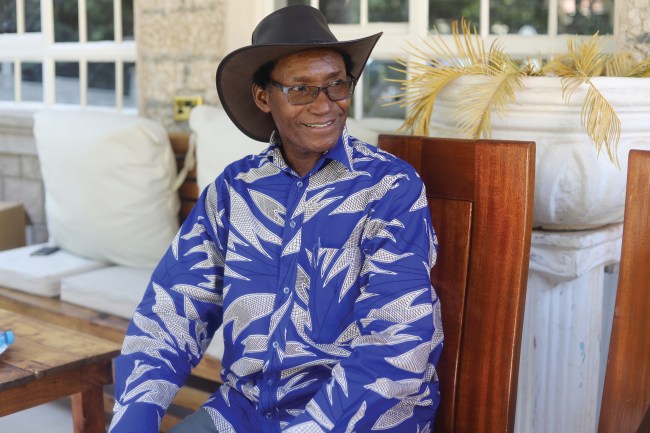
Charles MulliPhoto by Tonny Onyulo
Charles Mulli

MCF’s goal is to meet the essential needs of each child: food, shelter, education, medicine, and love. It also offers services like counseling and rehabilitation for former sex workers.

MCF’s six locations scattered around Kenya each serve a different purpose. Fifty-eight kilometers from where Mulli roamed the village streets, the charity now houses nearly 850 children from birth to age 22 in Ndalani, its largest campus and agricultural center, where many teachers and staff also live. Here, students attend school in the morning and play soccer and enjoy other recreational activities in the afternoon.

Nearby, in Yatta, another children’s home separately cares for 200 child mothers and 90 babies as a safe rehabilitation center for abused girls and those who were rescued from prostitution or child marriage. Similarly, the MCF campus in Kilifi County—about 100 kilometers outside the city of Mombasa—offers a daycare and school for nearly 300 children, many of whom were rescued from child labor or sex tourism.

Eight hours northwest of Ndalani in the highlands, MCF Eldoret houses children under the age of nine. Two other locations in the country provide community outreach such as daily meals and education—one for 250 children in the Kipsongo slums, and one for around 850 children in Lodwar, including Sudanese refugees.

“Many people in Kenya think of me as a stupid person. They think I am a fool,” Charles Mulli wrote in his memoir. “I am bringing tribes together. But in the African mindset, I am supposed to concentrate on my own tribe and build up only them. What I do is contrary to what other people think I should do.”

Like other children’s homes in Kenya, MCF uses a family model to rehabilitate children and grows crops to supplement its outside support. Many of these homes are known officially as Children’s Charitable Institutions. They may function as miniature villages or shelter children in dormitory-style settings and offer education, food, and clean water.

What makes Mulli’s endeavor unique is its scale and its pursuit of self-sustainability, as well as its work to solve the systemic problem of child homelessness by caring for the local community, said Reuben Langat, the US director of partnerships at Missions of Hope International. A Kenyan and former pastor, Langat visited MCF in 2011 and 2012 while learning how to start his own home for street children. (He also helped found Africa Gospel Church Baby Centre, an orphanage for adoptable babies in Nakuru, Kenya.)

“Mulli involved other people from the community, and volunteers could come and visit and support MCF,” Langat said. “The graduates who went through the home became good alumni. That network over time has become a good resource.”

The ability to feed the children off the farm is also an advantage, Langat added. “The challenge comes when a home depends only on Westerners for support.”
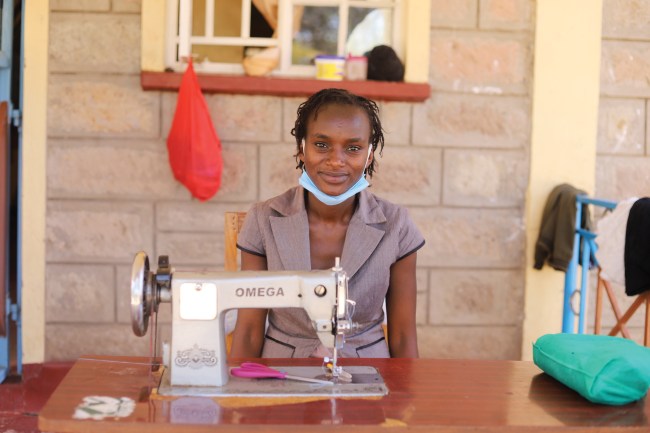
Stella LoukoPhoto by Tonny Onyulo
Stella Louko

I

n 2013, the United Nations reported that there were more than 100 million street children around the world, mostly in Africa and parts of Asia. While data is hard to come by, UNICEF estimated in 2012 that around 300,000 children lived on the streets in Kenya, with about 20 percent of those in Nairobi alone.

“The main drivers to the street are poverty, conflict, and child abuse,” according to University of Toronto professor Paula Braitstein, an epidemiologist who has been studying the well-being of street children and children’s homes for more than a decade. On the streets, children face higher rates of premature mortality, pregnancy, abuse, hunger, HIV, and other illnesses—never mind societal stigma.

COVID-19 has exacerbated these risks. While the Kenyan government has made some efforts to get children off the streets, Braitstein presumes that many street youth are likely threatened with jail when they have nowhere else to go.

Although children on the street face immense challenges and trauma, not everyone sees children’s homes as beacons of hope. Many nonprofits like MCF are facing global scrutiny. As the coronavirus pandemic picked up, nearly 20,000 orphans in Kenya returned home after their orphanages closed. That has raised questions about whether institutions should be housing children who have living family.

As Ade Olowo, the coach for African churches for the Christian Alliance for Orphans, put it: “If the kids have families, then why are they in the orphanages in the first place?” And, he wondered, will the pandemic make people think twice before sending kids back to children’s homes?

In 2017, UNICEF estimated that about 40,000 Kenyan children lived in more than 800 registered children’s homes, and it’s believed that about 80 percent of those children have at least one surviving parent. About half of the children MCF houses are parentless, according to Charles. The others have one living parent or come from street families.

One such beneficiary of MCF, Stella Louko, was picked up by Charles Mulli in July 2002 from the streets of Kitale after she escaped her single mother’s drunken verbal and physical abuse at a young age. “Compared to the street, [MCF] was a palace to me,” she said. “When I joined the home, I felt parental love and I got my basic needs met. I really thank God for everything.”

Even though Langat has started two children’s homes, he believes that family care is the ideal model for children who have families. When his team screened street children to learn about their needs and family situations, he discovered that many of them had at least one parent but were forced onto the streets due to extreme poverty. “We discovered that helping those families improved their lives in terms of farming or do[ing] business,” Langat said. “Helping families helps their children.”

Abandoned children in tightly knit rural communities often do receive some care from neighbors or extended family, Langat said, but “urban areas are a different story.”

Olowo also works with churches and local government agencies to advocate for family care, but he sees the role that quality institutions like MCF play in African societies.

“Orphanages and children’s homes are very important,” he said. “Most pastors know this is the right call [to help street children], but the question is how do we do that. . . . An African church might once a year buy food and take it to the orphanage, but they’re not seeing what is the kids’ story and how do we work with them. We’re having discussions about the systemic problems and how churches can step in to help.”

M

any children’s homes, which depend heavily on funding from the United States and other wealthy countries, have seen drops in donations since the pandemic began impacting the global economy, according to Paula Braitstein.

And Kenya’s economy has not been spared.

“This is an eight-month-plus disaster that people are facing while already working on a shoestring budget caring for a vulnerable community,” Wheaton College’s Annan said.
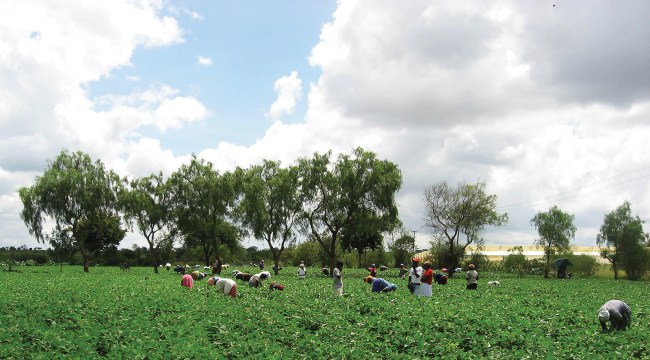
An MCF farmCourtesy of Mully Children's Family / Facebook
An MCF farm

As of late September, Kenya had reported about 37,500 known COVID-19 cases in the country and 669 deaths, the second highest count among East African countries yet still relatively low compared to global rates. Yet the horticultural sector in Kenya “lost half its exports, half its value, and laid off most of its workforce of 75,000,” wrote William Mark Bellamy, senior adviser for the Africa Program of Center for Strategic and International Studies, in June. Around 50 percent of Kenyans were either laid off or furloughed, he said.

MCF was impacted similarly. Its campuses immediately closed down, banning visitors and employees who lived off site. While some employees chose to move onto campus and continue working in order to feed the children, their responsibilities multiplied to cover for missing workers. Dickson’s employees dropped from 500 to 78. Agriculture production slowed. Some staff went without pay. The schools closed, though some Ndalani teachers opted to live on campus and teach a half day. Charles had to figure out how access more water to provide for increased hand washing.

It was a catastrophe unlike any he’d seen, Charles said. “Because we keep orphans, street children, children who have nowhere to stay, this is their home.”

“We were trying to follow government regulations but also needed to feed the children,” Dickson added. “March and April were really difficult.”

But food and finances were only two of their fears. Some of their children suffer from HIV and diabetes. If the virus had entered one of the campuses, it would “have spread like wildfire,” Dickson said.

Much of the staff’s job was comforting the children and repeating the mantra heard around the world: “Wear a mask and wash your hands.” The young women staying at Yatta sewed masks for the hundreds of children in their care under the watchful eye of Esther Mulli. Now, the children run around campus with homemade cloth masks hanging from their necks. They have learned to wash their hands frequently from tubs of water at school and in the dining hall.

“When you have 3,500 children, they look at my parents as their parents and MCF as family,” Dickson said. “We had to assure them, because there was a lot of panicking.”

The pandemic has taught MCF a lot about safeguarding its community and what it means to be part of a giant family, Charles said. So far, he knows of no child, parent, or guardian related to MCF sick with the coronavirus. “Yes, this was a serious attack,” he said. “But we have been protected.”

Dickson sees the hand of God in the midst of the financial struggle. When the pandemic began, he said he turned from worry and despair to seeing the pandemic as an opportunity to pray, love, and “tap into the Holy Spirit.” He compared MCF’s years of investment in horticulture to the story of Joseph in the Old Testament, who interpreted Pharaoh’s dream to predict seven years of plenty in Egypt before seven years of famine.

“You don’t know when you’re doing something [necessary for the future],” Dickson said. “When the drought came during the time of Joseph, the seven years of plenty were important. Now in the pandemic, the fact that we were always doing production of food and being self-reliant in one way or another was a blessing from God.”

Still, as it has done for other ministries around the world, COVID-19 has pushed MCF to lean on faith.

“We know God will provide,” Dickson said. “But this is one of those moments when he really needs to come through.”

Kara Bettis is an associate features editor with Christianity Today. Tonny Onyulo is a freelance print and broadcast journalist based in Nairobi, Kenya.
Books
Excerpt

Christianity Isn’t ‘Becoming’ Global. It Always Has Been.

Why this misperception poses a stumbling block to the spread of the gospel.

Inbetween / Lightstock

Christianity is and always has been a global religion. For this reason, we should never think of it as becoming global.

A Multitude of All Peoples: Engaging Ancient Christianity's Global Identity (Missiological Engagements)

Following the valuable work of prominent missiologists, it has become commonplace among 21st-century Christians to highlight the significant demographic shifts in the global church. The fact that the majority of Christians now live in the Global South has led many to speak of what the scholar Philip Jenkins has called the “coming of global Christianity.”

Contemporary missiologists have drawn needed attention to the demographic shifts of the 20th and 21st centuries and given helpful challenges to what North Park Theological Seminary professor Soong-Chan Rah calls the “Western, white captivity of the church.” However, in noting such developments, there has been an implication that global diversity is exclusively a 20th-century innovation of the Christian movement. Too many people, both Christian and non-Christian, still perceive Christianity as the white man’s religion.

Contemporary missiology has often advanced the church’s cultural self-understanding by highlighting the unprecedented recorded numbers of Christians in Africa, Asia, and Latin America. However, the modern global church has often been presented as emerging from centuries of a Western-majority church, when the reality is quite the opposite in several significant respects.

Take Egypt, for instance, which was home to many of the earliest biblical manuscripts and had an organized ecclesiastical hierarchy no later than the late second century. Ethiopia became a predominately Christian nation in the fourth century and, along with the ancient region of Nubia, functioned under the ecclesiastical hierarchy of Egypt. Syriac-speaking Christian merchants brought Christianity along the Silk Road to the Persian Empire in the early third century, to Central Asia in the mid-fourth century, and as far east as China in the mid-sixth century.

While it is possible that the apostle Thomas brought the gospel to India in the first century, Syriac-speaking Christians reported missionary activity to India no later than the late third century. These traditions spread rapidly across the continents of Africa and Asia and took on indigenous forms at a time when the majority of Northern and Western Europe practiced pagan religion. Despite the persisting association of the Christian faith with Western culture and whiteness, Christianity has always been a global religion that spread from Jerusalem in every direction.

The Western and white captivity of the church is a profound stumbling block to the reception of the gospel. In the Western world, the growth of secularism, agnosticism, and atheism is due in large part to historical atrocities committed by Western Christians. In the non-Western world, non-Christians perceive Christianity as a white, Western, or American religion while seeing the gospel as antithetical to their cultural identity. Therefore, fellow members of a non-Western people group who convert to Christianity are often seen as becoming white, Western, or American.

The church has two interrelated and indispensable tasks going forward: first, the deconstruction of the Western, white cultural captivity of the Christian tradition; and second, the elevation of non-Western expressions of Christianity. The goal here is neither the cultural idolatry of one group nor a prescription for abhorrence of another. Rather, this shift in focus is motivated by the continued realization of the kingdom of God through embracing the image of Christ among every tribe, tongue, and nation.

God has been at work among every nation since the beginning. From the moment God called Abram to be the progenitor of God’s chosen people, the vision for this plan was intrinsically global: “All peoples on earth will be blessed through you” (Gen. 12:3). Along the way, Christianity has often come to be perceived as the historical and cultural possession of a particular region of the world and a particular culture. Recovering a fuller picture of Christianity’s global heritage underscores the fact that God’s kingdom work extends to all the peoples of the world—as it always has.

Adapted from A Multitude of All Peoples by Vince L. Bantu. Copyright © 2020 by Vince L. Bantu. Used by permission of InterVarsity Press, P.O. Box 1400, Downers Grove, IL 60515-1426. www.ivpress.com

New & Noteworthy Books

Compiled by Matt Reynolds.

Majority World Theology: Christian Doctrine in Global Context

Edited by Gene L. Green, Stephen T. Pardue, and K. K. Yeo (IVP Academic)

The growth of Christianity around the globe tends to have an enlivening effect on Christian thought and practice, as different people and cultures develop fresh insights on the faith. The essays compiled in Majority World Theology resulted from six annual gatherings convened by the editors, which featured dozens of theologians, Bible scholars, and pastors from across Asia, Africa, and Latin America. As the editors remark in their preface, “the churches in these dynamic regions have been cultivating the Christian faith in new soil, [and] the Spirit has blessed their work and allowed it to bear good fruit that the rest of the church should be eager to enjoy.”

Songs of the Lisu Hills: Practicing Christianity in Southwest China

Aminta Arrington (Penn State University Press)

A little over a century ago, the China Inland Mission evangelized the Lisu people of Southwest China. Christianity flourished among them at first, but waves of war and government repression nearly stamped it out. In Songs of the Lisu Hills, John Brown University scholar Aminta Arrington explores Lisu efforts to revive their faith in the decades following Mao’s Cultural Revolution. Arrington spent months living among Lisu communities and participating in their daily rhythms of work and worship, observing the intensely embodied shape of their close-knit religious life.

Imprisoned with ISIS: Faith in the Face of Evil

Petr Jasek with Rebecca George (Salem Books)

Petr Jasek awoke in a panic one night after dreaming he had been thrown in prison. Within a few years, that dream would come to feel like an eerie premonition. On assignment with The Voice of the Martyrs to minister to persecuted Christians in Sudan, Jasek was set to fly home to his native Czech Republic when Sudanese authorities seized him. Charged with various forms of subversion and treachery, he was sentenced to life in prison, where he remained for over a year in the company of Islamic State fighters. In his memoir, Imprisoned with ISIS, Jasek recounts how God sustained his faith and courage throughout the ordeal.

Books
Review

20 Questions for the Churches in Africa

Conrad Mbewe, a Zambian pastor, asks them in his book. But there are others worth considering.

Illustration by Cornelia Li

As an ordained minister in the Church of Uganda (a local church within the Anglican tradition), and especially as someone who spent two decades ministering through the International Fellowship of Evangelical Students, I am often deeply troubled by what I see and experience of churches in Uganda, Africa, and beyond. When I reflect on the testimony of Scripture about Jesus’ vision for the community that bears his name and consider the lived reality of churches, both locally and globally, I can’t help but notice a worrisome dissonance.

God's Design for the Church: A Guide for African Pastors and Ministry Leaders (The Gospel Coalition)

God's Design for the Church: A Guide for African Pastors and Ministry Leaders (The Gospel Coalition)

Crossway

288 pages

$15.99

The convictions we hold about the nature and purpose of the church inform how we engage with the Bible. They shape our understanding of what it teaches about God, the gospel of Christ, and its imperatives for living out our faith in the world.

In God’s Design for the Church: A Guide for African Pastors and Ministry Leaders, Conrad Mbewe explores the subject of Christian identity and community in light of Africa’s complex and rapidly changing social context. As Mbewe, a Baptist minister and scholar hailing from Lusaka, Zambia, explains in his introduction, the book aims “to apply biblical principles to what is obtaining in Africa so that we are drawn back to belief and practice that follows God’s design for the church.” His ultimate goal is equipping “those who lead the church” to “do so in accordance with God’s mind.”

I’ll admit that when I first saw the title of Mbewe’s book and looked through its table of contents, I thought he was making some awfully bold assumptions and ambitious claims. But I always appreciate the chance to learn from other African ministers, even those from outside my own tradition. I was eager to see how Mbewe would determine which biblical principles reflect “God’s mind” for the churches in Africa, which he characterizes as “full of zeal,” albeit a zeal that “sometimes . . . lacks knowledge.”

Belonging to the Body

God’s Design for the Church takes the form of a manual. Each of its 20 chapters poses a question Mbewe regards as essential. The questions cover a wide spectrum of topics, including the nature, purpose, and core work of the church; the guidelines and expectations governing church membership; the qualifications for church leadership; the proper practice of worship, baptism, the Lord’s Supper, and church discipline; guidelines for fundraising and missions; considerations of church growth (both numerically and spiritually); and the church’s relationship to other churches and to the state.

In each chapter, Mbewe refers to the biblical texts he considers relevant to the question at hand and then suggests how Scripture should address various maladies that bedevil the churches in Africa. Readers can also look forward to one or two stories in each chapter, drawn from Mbewe’s life or from traditional African cultures, that help ground his arguments in an African idiom. What makes this approach especially welcome is that it defies the traditional dichotomy of theology and practice. For Mbewe, matters of theology are always informed by questions of practice, just as practice is always shaped by theology.

Although Mbewe encourages readers to go straight to the chapters that address questions of particular concern, it is evident that not every question carries the same weight. Two early chapters—“What Is the Church?” and “What Is the Church’s Task in the World?”—lay the foundation for the rest of the book. Mbewe points to two New Testament terms—ekklesia, meaning an assembly of those called out from the rest of society, and the body of Christ—as central to an authentically biblical understanding of the church, which encompasses both the saints who are still on earth and those who have gone to heaven. According to the Bible, he argues, the defining marks of a true church are the preaching of God’s Word, the provision of the ordinances (baptism and the Lord’s Supper), and the practice of church discipline.

The book pleads for African churches to place a high priority on distinguishing true Christians from those who merely flock to church services without showing any evidence of a transformed heart and life. Only genuine converts, says Mbewe, should be admitted as members. He writes:

The only people who should remain in the church are those who show genuine faith and obedience to the Lord Jesus Christ, the great head of the church. This is seen when individuals are doing everything possible to flee from sin and pursue a righteous life. This is also seen in their love for fellow believers and for the God whom Christians worship. Where you have individuals like this filling up the membership of a local church, you can safely say that you have a true church on earth.

Mbewe’s description of the role of church members is instructive: He emphasizes attending church services, sharing in practical fellowship with other believers, participating in the life of the church through exercising gifts of the Holy Spirit, practicing faithful and generous giving, praying for the church, being involved in its various committees, and working toward personal spiritual growth.

These are all, no doubt, vital aspects of belonging to the body of Christ. What’s missing, however, is any sense of how church members should be involved in the wider society, other than preaching the gospel of salvation to sinners. Mbewe doesn’t seem to acknowledge how various forms of work and service outside church walls can be part and parcel of the church’s gospel proclamation. His understanding here draws heavily on Matthew 28:18–20, where Jesus calls upon his followers to make disciples of all nations through preaching the gospel, baptize new believers as a means of formally joining them to the church, and instruct them in Christian doctrine. By “gospel,” Mbewe means “the good news of how God sent his Son, Jesus Christ, to live and die here on earth in order to save us from our sins.”

One gets the sense, from reading, that Mbewe understands the Bible’s view of sin primarily as a matter of personal acts contrary to God’s moral standards. It is not surprising, then, that he treats the involvement of local churches in campaigns of social or political activism as departures from Jesus’ intentions. His comment on churches that work to shape the political direction of their home countries is telling:

Today, we have churches being made to do what Jesus never said in his word that they should be doing. Church leaders sometimes want to use the power of numbers to sway political elections or even to monitor such elections. Is that what the head of the church said the church should be doing? . . . I doubt that Jesus included the swaying or monitoring of elections as one of the purposes of the church.

From this statement, it follows logically that Mbewe would stress the priority of church planting in missions relative to things like caring for the sick and the poor or working to reform unjust social structures. His point is that African pastors and ministry leaders ought to give attention mainly to matters of preaching, teaching, and organizing churches, so as to ensure growth in both the quantity and quality of new members and the multiplication of communities of true Christians. It’s hard to escape the conclusion that Mbewe believes the Bible has little to say to African pastors and ministry leaders concerning the social responsibilities of the church. Could perspectives like these go some way toward explaining the dismal social impact of the continent’s churches, in spite of their celebrated numerical growth?

Further Questions

As I read God’s Design for the Church, I found myself wondering why Mbewe focused on the particular set of 20 questions set forth in his chapter titles. Each of these questions, of course, touches upon important issues for the churches in Africa. But there are others worth considering, such as: What is the Bible? What is the relationship between the Bible and the church? What relevance does the story of Israel have to our understanding of God’s design for the church? What is the legacy of Western missions on Africa’s churches? What is the relationship between the church and the family? Or the church and creation care? What about the relationship between the gospel and the surrounding culture? It matters which questions one asks, because they reflect certain underlying assumptions about what the church is and ought to be.

I also found myself wondering how Mbewe, who rightly emphasizes biblical criteria for discerning the nature and purpose of the church, understands the term biblical himself. Does referencing verses from the Bible suffice to make a position biblical, apart from any appeals to the larger body of Christian tradition and thought? It is evident that Mbewe’s perspectives are grounded in a Baptist way of reading and interpreting Scripture. And although he acknowledges his Baptist biases, especially as they bear on the question of baptism itself, they do permeate the entire book—to the point where I questioned whether a more accurate title might be “God’s Design for the Baptist Church.”

Even so, Mbewe’s voice is a resource for pastors and ministry leaders, who must grapple with the reality that in spite of numerous churches across the continent, there is no commensurate social impact on African societies. I hope it will stimulate deeper conversation on “God’s mind” for the churches in Africa (and beyond).

David Zac Niringiye is an ordained minister in the Church of Uganda and a senior fellow at the Institute for Religion, Faith, and Culture in Public Life. He is the author of The Church: God’s Pilgrim People.

Books
Review

China’s Greatest Evangelist Was Expelled from a Liberal Seminary in America

How John Song sought new beginnings—for himself and his homeland—after a period of disgrace.

Illustration by Rick Szuecs / Source images: Wikimedia Commons / Envato

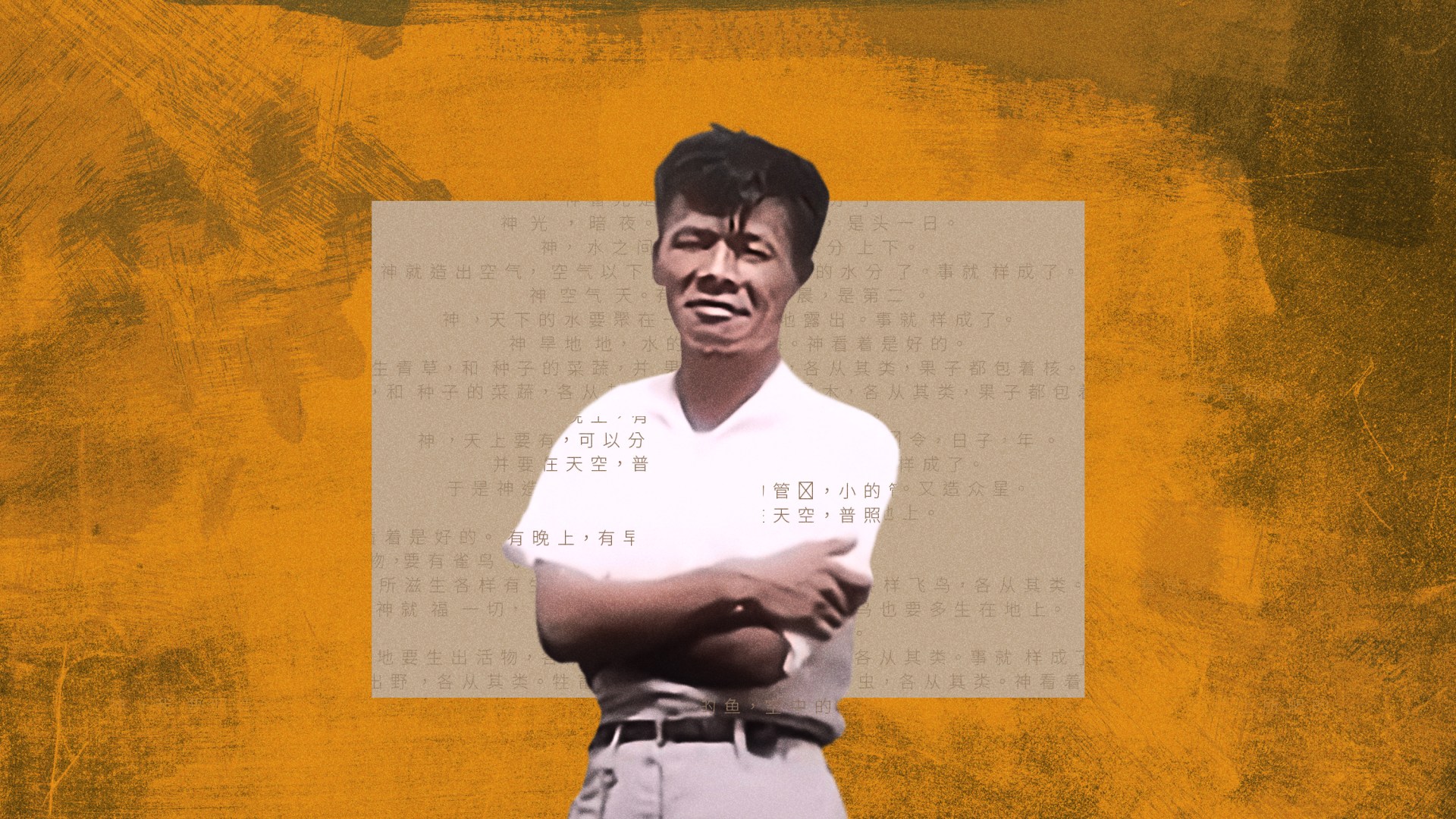
The story of John Song is fairly well-known within the history of Chinese Christianity. In 1920, he left China to study chemistry in the United States, completing a bachelor’s degree in three years and a master’s degree and a doctorate in another three years. He then turned to theology and enrolled in America’s leading institution of liberal Christianity, Union Theological Seminary in New York City. He had an evangelical conversion experience—but seminary authorities thought he was mad and sent him to an asylum. After his release in 1927, Song boarded a ship headed back to China and committed his life to preaching the gospel message.

John Song: Modern Chinese Christianity and the Making of a New Man (Studies in World Christianity)

John Song: Modern Chinese Christianity and the Making of a New Man (Studies in World Christianity)

Baylor University Press

268 pages

$54.99

But there is another side to the story, one fleshed out in a new biography from Boston University global Christianity scholar Daryl R. Ireland. John Song: Modern Chinese Christianity and the Making of a New Man presents a brilliant student living with schizophrenia—one who saw visions, spoke as a prophet of a new age, and decoded divine messages in New York Times crossword puzzles and through “radio schematics” in the four Gospels. At one point, he supposedly fell in love with a supernatural being and married her in the presence of 7,000 honorary queens.

Ireland’s access to previously un-available materials—Song’s student files at Union and some 6,000 pages of personal diaries—enables him to paint a very complex picture. From this basis, Ireland argues that the seemingly divergent accounts of Song’s American background converge into one: the making of China’s greatest evangelist. They are the origin stories of a new man.

When Song returned to China, he was disgraced by his expulsion from Union and his hospitalization for mental instability. Things changed when he met the fundamentalist Methodist Episcopal missionary W. B. Cole. According to Ireland, Cole saw in Song an opportunity to condemn Union for its modernist theology, while Song saw in Cole an opportunity to reinvent himself. Together, they crafted a new account of Song’s troubled past: As Ireland sums it up, “Song had encountered the God made known in Jesus Christ at Union Theological Seminary, and he was rejected because of it.”

This new beginning was key to Song’s revivalist message going forward, just as new beginnings were key for China in the 1920s–1940s, when reformers hoped to escape the country’s feudal past in pursuit of new culture, new life, and a new China.

Song was now a new man—in terms of evangelicalism and modernizing China. For instance, the Nationalist government tried to purify religion by launching the Smashing Superstition Movement in 1928. That same year, Song began his career as a traveling evangelist for the Methodist Episcopal Church, in which he preached a message that Ireland describes as being “tested by spiritual life and science.” With a PhD in chemistry, he had the credentials to defend faith as something more than a superstition that science was smashing.

Song renewed himself time and time again. Initially, when he preached in rural villages, his sermons focused on how the supernatural world penetrated the natural world. After 1931, when Song joined the Bethel Worldwide Evangelistic Band to tour around China’s urban centers, his preaching transformed into a new expression of Holiness revivalism. When his relationship with Bethel ended in 1933, Song again rewrote his sermons to address sectors of society that he had not previously encountered.

Two of Ireland’s final chapters address important themes of early-20th-century China. The first highlights how Song’s preaching was particularly appealing to women. Men and women needed more than just to be saved—Song called them to organize their own evangelistic teams. Vast numbers of women took up this call. Song was offering an alternative to Confucian gender roles and to the secular-feminist vision developing in China at the time.

Likewise, the final chapter covers Song’s divine healing ministry, which offered an alternative to both traditional Chinese medicine and Western biomedicine. In the end, Song’s healing hands were unable to heal himself, and he died in 1944 after years of dealing with an anal fistula.

Ireland advances a theory about Song’s reinvention as part of a larger story of Chinese Christianity’s 20th-century development. Even more, he teases out how Song and Chinese Christianity offered an alternative to the path of exchanging a feudal past for a modern future. This new man and this new religion profoundly influenced the making of a new China.

Alexander Chow is senior lecturer in theology and world Christianity in the School of Divinity at the University of Edinburgh. He is author of two books, most recently Chinese Public Theology: Generational Shifts and Confucian Imagination in Chinese Christianity.

Theology

Bringing Hope and Healing to a War-Torn Homeland, One Footstep at a Time

Why one Congolese refugee believes shoes are a key ingredient for broader change.

Enrico Tricoli / Getty

In his first three decades of life, Emmanuel Ntibonera has been on many quests. Writing in his memoir, Congo Sole: How a Once Barefoot Refugee Delivered Hope, Faith, and 20,000 Pairs of Shoes, he describes being a preteen in the Democratic Republic of the Congo, where he dreamed of forming a boy band with his brothers. But then, as a series of civil wars erupted in the late 1990s, his hopes shrank down to simple survival. When Ntibonera and his family became refugees and fled to Kenya, many days were consumed with the desperate search for food and shelter.

Congo Sole: How a Once Barefoot Refugee Delivered Hope, Faith, and 20,000 Pairs of Shoes

Congo Sole: How a Once Barefoot Refugee Delivered Hope, Faith, and 20,000 Pairs of Shoes

Morgan James Faith

196 pages

$15.83

Only after years of living in the US and studying at Liberty University did his calling finally became clear: He would invite the church in America on his boldest quest yet—to bring hope and healing to his war-torn homeland for the glory of God. To date, this has taken the form of establishing a foundation that distributes used footwear and other forms of relief to those in need. Freelance writer Craig Borlase spoke with Ntibonera about his memoir and his ongoing humanitarian efforts in Congo.

After six million deaths, the Congolese civil wars have finally stopped. Is it too late for people to help?

The war has stopped, but the killing remains. It rarely receives any media coverage outside the country, but women are still getting abused, and the rebels are still attacking the villages. I escaped with my family, but there are millions left behind, and it is not too late to help them. I believe that is one reason I’m alive today—because God has a plan and purpose for me to bring his love to my homeland.

You took 20,000 pairs of shoes over to the Congo, as well as many other resources. What’s next for your foundation?

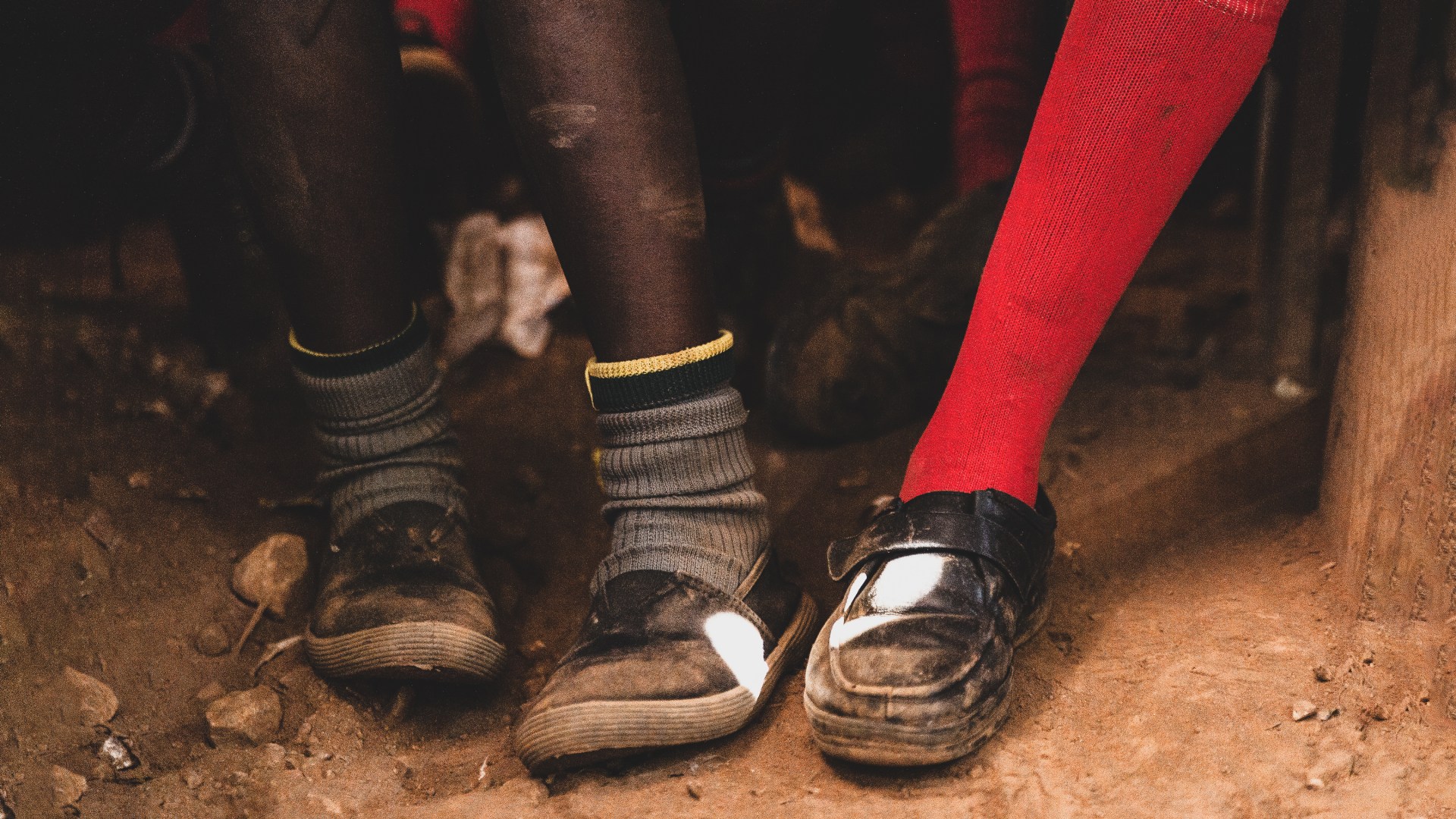
I love shoes because they’re the key to so much change. When kids are barefoot all the time, they are vulnerable to chiggers, which are parasites that burrow into the skin and lay their eggs. This prevents them from going to school. So the simple gift of a pair of shoes brings dignity and opportunity.

I want to do more, though, and that starts with telling people about Congo. Being in America, I’m in a position to talk about my motherland to people who have never even heard of it. There are former child soldiers who need to be brought back home and given an education. There are women who have been raped who need access to health care. There are orphans who need a family and training. That’s why our foundation wants to build a community center that will have a clinic and a school for former child soldiers and orphans born as a result of the mother being raped. It will also have a technical school that will help provide different forms of training in different career fields. We will continue to build schools around the country, because we believe education is a powerful weapon that can be used to change the world.

What do you think American Christians can learn from what God is doing in Congo?

One major thing is the importance of perseverance: the ability to trust that while pain can last for the night, joy comes in the morning. My story is a reminder that God can get you from nothing to something—and that when you trust in God, he will deliver you and will never put you to shame.

America is such an amazing country, full of people with kind hearts who love to give and see lives transformed. I love helping people here see that they are in a position to make a difference in Congo as well.

You describe how a childhood marked by hunger and fear taught you to rely on God through prayer. Do you still feel as dependent on God today?

I pray for safety and for provision in the same way I did when I was younger, but my prayers are also different than they were before. I look at the ministry we’re building, all the things we want to do to help people, and I know that none of it can happen without God.

When I look back at where I have come from and see how God has brought me from nothing to where I am right now, I just want to give him all thanks and praise. But there are so many others back home who are still fearful and hungry, and I want to make a difference there and see lives changed. Thinking about this, and the promises I have made to God to serve him in this way, it always moves me to pray.

You describe briefly how you felt you had gotten too comfortable living in America. Many readers will relate to that. What’s the remedy?

At a certain point, after coming to America, I had to take a look at my life and be honest with myself. I wasn’t praying, and I’d forgotten so much of what God had done for me. But my dad is a pastor, and he helped me get back on track spiritually. Of course, making my first mission trip back home pulled me out of that comfort zone pretty quickly. Being able to reconnect with friends and people from my past reinforced for me how much suffering there still is in my homeland. I had to make the choice to be uncomfortable with that.

From your description, it’s easy for people to think that Congo’s problems are too big and too far away to solve. What gives you hope that things can change for the better?

The hope is in Jesus, isn’t it? As a believer and someone who puts his trust in the Lord, I do believe that he is the source of all our hope. I know that change can happen and that emptiness isn’t the way things have to be.

I know the situation in Congo looks impossible, but with God, all things are possible. And we know that God uses people like you and me to bring change. I believe that we are going to be the answers to the prayers of the Congolese. I believe that God is going to raise people who will change the culture. Even if it is just a small, simple, and humble movement, God can amplify what we do to serve him.

So, yes, change can happen in Congo. Change is happening there already, and the awareness of it is increasing here in America. People are coming together, sitting down, and having conversations about what is going on in my motherland. They’re donating money and shoes, which my brothers and I are able to take to Congo and actually place on the feet of the people who need them. Every visit I make, I see again how much change is happening.

The fact that you and your brothers make those trips yourselves is really important, isn’t it?

Yes. I want to make sure that we deliver exactly what we promise to deliver. So we go ourselves and take lots of photos to show exactly where the donations are going. A lot of people seem to like that. And if it means the foundation doesn’t grow as big or as fast as it could, that’s okay. We are just trying to follow what God wants us to do. He’s the one who makes the change.

Theology

For Pilgrims, Thanksgiving Was a Way of Life

The commemoration we recognize each year came out of a deep view of providence and everyday gratitude to God.

Christianity Today November 23, 2020
Jennie A. Brownscombe / Creative Commons

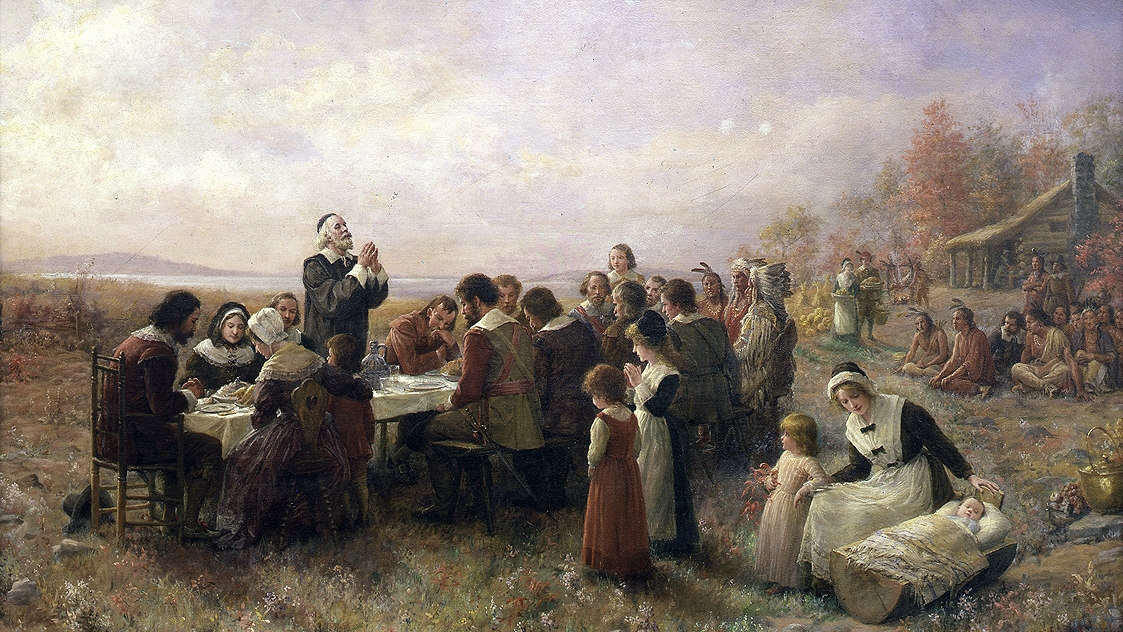
Studying all extant eyewitness accounts of the first Thanksgiving is not difficult. It requires reading just 152 words, written in late 1621 by Plymouth colony statesman Edward Winslow:

Our harvest being gotten in, our governor sent four men on fowling, that so we might after have a special manner rejoice together after we had gathered the fruit of our labors; they four in one day killed as much fowl, as with a little help beside, served the company almost a week, at which time amongst other recreations, we exercised our arms, many of the Indians coming amongst us, and among the rest their greatest King Massasoit, with some ninety men, whom for three days we entertained and feasted, and they went out and killed five deer, which they brought to the plantation and bestowed on our governor, and upon the captain, and others. And although it be not always so plentiful as it was at this time with us, yet by the goodness of God, we are so far from want that we often wish you partakers of our plenty.

The celebration bore marked differences from some traditional portrayals. The 90 Wamponoags present were nearly double the 50 Englishmen still alive after their first grueling winter in Plymouth, down from 102 who arrived on the Mayflower. It probably took place outdoors, in September or October rather than November. They ate more venison and seafood than turkey, berries rather than pumpkin pies.

In some quarters, it has become popular to suggest even deeper differences between traditional American Thanksgiving celebrations and what occurred at Plymouth in 1621. Contrary to the traditional portrayal of families gathered around their tables with heads bowed in prayer, some historians question whether Christian spirituality should be associated with the first Thanksgiving.

James Deetz and Patricia Scott Deetz claimed, for example, that “Thanksgiving as we think of it today is largely a myth.” The original celebration was a “secular event,” which “transformed over time,” because America “needed a myth of epic proportion on which to found its history.”

Indeed, of the surviving Englishmen at the first Thanksgiving, only about half were Separatists, those who came to the New World in search of freedom to live out their Christian faith. The rest were “strangers,” who made the journey out of nonreligious motives.

New England historian Joseph Conforti described the first Thanksgiving feast as “disorderly,” not the mythologized “placid feast dominated by pious settlers.” American religious historian Sydney Ahlstrom described the Pilgrim Fathers as “not theologically minded, nor … self-conscious in their churchmanship.”

Yet Americans long have assumed a spiritual heritage in their Thanksgiving celebrations, from President George Washington’s proclamation “rendering unto [God] our sincere and humble thanks” to Donald Trump’s last year, harkening back to the Pilgrims and saying, “we remember with reverence and gratitude the bountiful blessings afforded to us by our Creator.”

Conflicting interpretations of the 1621 Thanksgiving celebration may make us wonder whether it is reasonable to draw spiritual lessons from the first Thanksgiving. Was it merely a secular harvest festival, or did the Pilgrim Fathers celebrate in deep gratitude for God’s providential care? Even the most cursory reading of Pilgrim literature strongly favors the latter option.

Despite the relative scarcity of primary sources and the wave of historical revisionism, a wealth of spiritual instruction may be gleaned from the first Thanksgiving and the Pilgrims’ approach to providence, gratitude, and the priesthood of all believers.

Thankfulness Flows From a High View of Providence

The Pilgrim Fathers’ assessment of themselves as “partakers” of “plenty” on the first Thanksgiving comes into sharper focus when we consider the mediocrity of their first harvest. Though they brought in 20 acres of corn thanks to the help of their native friend Squanto (who showed them how to grow the strange North American crop), all the Pilgrims’ English crops failed. Yet amid that failure, the Separatists still deemed their first harvest “plentiful” by “the goodness of God” and worthy of a thanksgiving celebration.

The Pilgrim Fathers could be thankful for mixed success because they viewed every good thing in life—no matter how small—as the provision of a sovereign God. A True Confession, the 1596 creed adopted by the Separatists who set sail on the Mayflower, declared, “God hath decreed in himself from everlasting touching all things, and the very least circumstances of every thing, effectually to work and dispose them according to the counsell of his own will, to the prayse and glorie of his great name.”

This was the same doctrine of meticulous providence articulated by the Reformers and upheld in the Reformed tradition up to the present. As John Calvin put it, “God’s providence governs all” such that “nothing takes place without his deliberation.” A quarter century after the Pilgrims landed at Plymouth, the Westminster divines expressed the same doctrine: God “doth uphold, direct, dispose, and govern all creatures, actions, and things, from the greatest even to the least.”

When the Pilgrims decided to leave the Netherlands for America—seeking better economic prospects, continued religious freedom, and a removal from the influence of poor Dutch morals on their children—they knew their journey would be difficult. Yet they believed many potential difficulties “by providente care and the use of good means might in a great measure be prevented.”

In hindsight, “endured” might have been a more appropriate word than “prevented.” The Mayflower encountered serious storms in the mid-Atlantic for days on end, growing so leaky that there was discussion of turning back. However, the captain declared his vessel seaworthy, and the Pilgrim Fathers “committed themselves to ye will of God.”

During their first winter in Plymouth, disease struck the Pilgrims hard. Over a span of three months, half the English settlers died. Of all the married couples among them, both husband and wife survived in just three instances. Still, the Separatists saw God’s providential care. “The Lord so upheld these persons,” Pilgrim statesman William Bradford wrote. After native people fell victim to illness too, the surviving tribes caused the Pilgrims no harm, which they also attributed to providence: “It has pleased God so to possess the Indians with a fear of us, and love unto us.”

Such a high view of providence led naturally to thanksgiving. The smallest positive occurrence in life could not be overlooked because it was a gift of God no less than the major victories. That’s why the Pilgrim Fathers could pause for a thanksgiving holiday following their mediocre harvest and abominable first winter in Plymouth.

Celebrations Stem From a Life of Thankfulness

One of the Pilgrim Fathers’ most striking moments of thankfulness occurred the first Sunday after they reached North America. A scouting party of 16 men returned to the Mayflower with a good report about the land. The collective sense of relief spurred an impromptu worship service. As Bradford put it, “They fell upon their knees and blessed ye God of heaven.”

This scene was not an isolated incident. Bradford’s history of Plymouth references the giving of thanks no less than 30 times. The first Thanksgiving, rather than being an anomaly amid the drudgery of forging a new colony, fell within a rhythm of gratitude in the Pilgrims’ life.

Indeed, the first Thanksgiving may have been the 1621 observance of an annual English harvest festival known as Harvest Home. Some have noted this fact in attempt to deny the first Thanksgiving’s spiritual character. In actuality, it underscores the cyclical nature of thanksgiving in Plymouth colony.

Before the Pilgrims faced each day, they first turned to God in gratitude and intercession. The pattern persisted as half their company died that first winter and as crops failed the next year. Weekly, they took seriously observance of the Sabbath, making preparations each Saturday so Sunday could be spent in uninterrupted worship and rest.

By the time their first harvest was gathered, the Pilgrim Fathers’ response was predictable. Despite a winter of widespread death and a fall of crop failure, they gave thanks, confident of God’s providential care. Leaders of the colony doubled the weekly corn ration, and a holiday was declared so all could “after a more special manner, rejoyce together.”

Collective Thanksgiving Enhanced by Individual Theology

For the Pilgrim Fathers, every believer was responsible before God to apprehend biblical teaching and live it out. Neither theology nor ecclesiastical authority was limited to clergymen. Historically, this doctrine is known as the priesthood of all believers.

For the first nine years of Plymouth’s existence, the colony did not include a single ordained minister. The church, they said, is Christ’s “spirituall kingdome” on earth, which has been separated “from emongst unbelievers” as “a royall Priesthood.” Every believer in the congregation possesses equal worth and responsibility before God.

The concept of the priesthood of all believers predated the Pilgrim Fathers. Yet Separatists—especially the Pilgrim Fathers—lived out the doctrine with unique consistency. A comparison of Plymouth colony with its Puritan neighbors to the north in Massachusetts Bay Colony proves helpful in this regard.

While both groups believed the church should comprise only “visible saints” and that each believer bore individual responsibility before God, a Puritan could not “pursue the implications of his principles the way the Separatists did.” That was because Puritans never separated from the Church of England and its practice of regarding every Englishman as a church member. Only Separatists demanded a confession of faith as a prerequisite for church membership.

In light of that distinction between Pilgrims and Puritans, it is interesting that Plymouth became famous for its community-wide Thanksgiving celebration while Massachusetts Bay attained notoriety largely for the theological contributions of its individual ministers and the universities it founded to train them.

Their daily, weekly, and occasional expressions of thankful worship were communal, not decreed by clergy. Perhaps rigorous adherence to the priesthood of all believers is why the Pilgrims could, at the first Thanksgiving, “rejoice together” that “by the goodness of God, we are so far from want.”

‘Their Trust in Heaven, Their High Religious Faith’

Historians who characterize the first Thanksgiving as more legend than fact, more revelry than spirituality, have cited New England statesman Daniel Webster’s 1820 speech at Plymouth Rock as a key step in formulating the Pilgrim “myth.” While Webster took poetic license with some details (like the importance of Plymouth Rock itself), his characterization of the Pilgrim Fathers as thankful people of faith is borne out by the historical record.

Commemorating the 200th anniversary of Plymouth colony’s founding, he recalled “their conscious joy for dangers escaped; their deep solicitude about danger to come; their trust in Heaven; their high religious faith, full of confidence and anticipation; all of these seem to belong to this place, and to be present upon this occasion, to fill us with reverence and admiration.”

With the passing of 200 more years, we still have reason to celebrate the Pilgrim Fathers’ faith and look to them for enduring lessons on providence and gratitude.

David Roach is a writer, preacher, and professor in Nashville. He holds a PhD in church history from The Southern Baptist Theological Seminary.

Adapted from Strangers and Pilgrims on the Earth: Remembering the Mayflower Pilgrims, 1620–2020 (H&E Publishing). Used with permission.

Ideas

Is The Coronavirus Evidence of a Creation in Freefall?

How does theology explain a pandemic? Basic biology, human sin, or the Devil?

Christianity Today November 23, 2020
Illustration by Mallory Rentsch / Source Images: Museums Victoria / CDC / Rodion Kutsaev / Unsplash

When I first asked whether the coronavirus is evil, the virus was still novel and the panic not quite a pandemic. But as I type now, almost 1.5 million people have died worldwide and the virus proliferates relentlessly, a conflagration with plenty of wood yet to burn as we await a vaccine and its dissemination. What may have seemed to be a controllable fire in the beginning now rages nearly out of control in the United States, India, Brazil, Europe, and elsewhere. Viewing the virus as part of God’s “good creation” presses against our theological sensibilities. Is the coronavirus evil? How can it not be?

“COVID-19 pandemic has wide implications for what Christians mean by the goodness of creation,” wrote theologian Hans Madueme, who leveraged my “hornet’s nest” of a query for an online symposium. As this array of brilliant respondents has written, a virus, no matter how destructive, cannot carry the moral equivalence of human willfulness. But the mere lack of moral willfulness does not make it good.

Viruses are not free agents, but I still wonder about a kind of created freedom in the nature of things—akin to what we know about uncertainty in the quantum realm undergirding the reality we experience. Inasmuch as humans are made from the dust in God’s image (Gen. 2:7), there exists a continuity between Creator, creation, and creature. The free will of God manifests in the moral choices humans make, and is reflected, perhaps, in what we perceive as the random nature of nature.

John Stackhouse labels the virus “a pestilence with no place in the messianic kingdom to come.” Katherine Sonderegger aptly narrated the dreadful landscape wrought by this microscopic legion, a link to Mark 5:9 and to the tyranny of Satan persuasively argued by Gregory Boyd, a virus victim himself. The New Testament easily attributes viral pestilence to the Devil’s work, though God can use it for his own glory. Whether or not we believe this is what we’re witnessing with the pandemic depends on our theology.

As Jim Stump asserted, “science doesn’t get to answer theological questions, but it can certainly prompt us to reconsider whether we’ve done our theology well.” Science prompted me as a pastor to rethink certain aspects of my theology. As Christians, “we walk by faith, not by sight” (2 Cor. 5:7), which means there’s more to reality than what we see. But it doesn’t mean we ignore what we can see. Faith is not fantasy. If theology is going to matter, it too must correspond with the way things are rather than with the way we believers want things to be.

I’ve never been fully satisfied by the delineation of labor between science explaining the how and theology the why. As creator of all things, God authored all that science discovers. We know death and viruses preceded humanity’s appearance on earth, and both play an essential part in biological evolution. “A bad thing might be a good thing,” as Stackhouse reminds. Conversely, a good thing can become a bad thing too, as Sonderegger allows with her mention of privatio boni (the absence of good). I wrote a follow-up editorial in praise of St. Augustine’s reasoning of evil as essentially nothing, a basic nonentity with wholly derivative power. Like a virus, evil extracts its life from the goodness it perverts. Thus evil often gets spoken in terms of what it is not: injustice or iniquity or ingratitude, disorder, disobedience, faith lessness, law lessness, god lessness, and the rest.

By laying the pandemic at Satan’s feet, Boyd asserts that to “take the New Testament’s perspective seriously” is to regard creation as “corrupted at some point by an enemy, to one degree or another.” As for how Satan becomes the Devil, science can’t help us. Tradition surmises he mutated through free will of his own. Theology grants moral agency on Satan’s part, a fallen angel before the fall who then provoked the fall of humans. Stackhouse notes the slithering serpent in Eden (and talking, no less, Gen. 3:1) as evidence of evil’s pre-Fall intrusion. Nevertheless, why allow an angel to become a demon? And why allow a snake in Eden’s grass—not to mention physical death and mosquitoes and the biological necessity of bacteria and viruses?

God so loves the world that he sent his Son to save it (John 3:16), but love can’t be coerced and also be love.

The best I have to affirm remains the free will defense, the logic of love. God so loves the world that he sent his Son to save it (John 3:16), but love can’t be coerced and also be love. Thus God, of his own eternal free will, purposely factors free will into the system for love’s sake and for genuine relationship with people made in his image. Allowing freedom to love means freedom to reject love. Extrapolate this logic to nature as a whole and you have what some see as a hint behind the why of random uncertainty.

Granted, God doesn’t desire a personal relationship with creation the way that he does with people, but the Creator’s relational nature still shows up in the symbiosis of nature. The freedom we experience as humans made from the dust corresponds to the free process wired into dust itself. But just as the free will of people (and angels) can reject God’s love—and do wrong and commit evil—so the free process of creation results in mosquitoes and the diseases they carry—not to mention genetic deformities, hurricanes, and earthquakes, all outcomes of a creation free to evolve and become what it becomes.

To the extent that such explanations remain unsatisfactory, I remind us that theological conjecture at its best remains a sinners’ endeavor. Moreover, as Gerald Bray rightly adds, “God is under no obligation to explain himself to us.” We debate “the problem of evil,” which isn’t really a problem if by problem we mean a puzzle to be rationally solved. Among the factors making evil so evil is its defiance of logic. Even if you blame the Devil, how do you determine what made the Devil decide to become the Devil? Adam and Eve, created as good, had no good reason for choosing badly. They just did it. We do it too. By choosing wrongly, we prove free will exists, but the tyranny of evil is that as soon as we choose it, we are no longer free. As the apostle Paul made clear in Romans 7, our choices set boundaries, and our unavoidably bad choices set inescapably tight boundaries that affect our futures not only in finite time and space but for eternity too. Our freedom constrains to such a severe extent that Paul could only speak of it in terms of enslavement.

Whether due to the wiles of the Devil, the randomness of a very good creation not yet fully free, or the mysterious providence of God, this coronavirus pandemic threatens, constrains, and destroys. It also eventually ends. Immunity and vaccines will take hold. The God who loves us gives us agency and creativity to overcome. But no human-generated immunity or vaccination exists against evil. Sin infects our souls over and over again. That the Son of God had to die to deliver us from evil attests to its truly hideous and destructive nature. Our only hope, thank God, is through Jesus Christ (Rom. 7:25), who starves evil of its power with his own sinless life. “God made him who had no sin to be sin for us, so that in him we might become the righteousness of God” (2 Cor. 5:21). Into this glory, creation groans for its own redemption (Romans 8:21) and one day will have it.

This piece, adapted, was originally published in Sapientia, a periodical of the Henry Center for Theological Understanding, as a rejoinder to a series on the coronavirus and the goodness of creation.

Daniel Harrell is editor in chief at Christianity Today.

Theology

In My Remote Corner of India, Christianity Is Seen as a Cultural Threat

Why I embraced it anyway.

Hage Yanka

Growing up in India, I never imagined I would end up following Jesus Christ. I belong to the Adi tribe, one of the indigenous tribes in the state of Arunachal Pradesh, located in the remote, far northeast part of the country. Members of my family practiced a traditional animistic religion that was popular in our culture.

I considered myself an omnist—someone who believes in all religions. On some level, this even included Christianity. Before my conversion, I occasionally went to church services at the invitation of friends and I would celebrate holidays like Christmas. I also frequently read a Gideons New Testament Bible.

But all the while, I kept idols of all the deities, including the Hindu gods, Buddha, and Jesus Christ. And I visited a variety of places of worship: Hindu temples, a Buddhist monastery, and a gangging, where Adi people pray to a god called Donyi-Polo (in the Adi language, donyi means sun, and polo means moon).

Afraid of Hell

In 2008, a friend invited me to join an evangelistic youth camp organized by the Jawaharlal Nehru Evangelical Union, an organization affiliated with the Union of Evangelical Students of India. I cannot recall all the things I learned at the camp, but I remember asking one of the speakers whether a non-Christian can find a place in heaven. He replied that one can only enter the kingdom of heaven by accepting Jesus Christ as one’s personal Savior.

As someone who had read parts of the Bible before, I was familiar with stories of God throwing all who did not believe in him into hell on the final Day of Judgment. And I was scared of being tormented in a fiery place for all eternity. Driven by a desire to escape that punishment, I decided to accept Christ as my savior. In hindsight, I can see how God, in his grace, led me to the truth despite my shallow understanding of the Bible and Christianity in general.

In Arunachal Pradesh, many people perceive Christianity as a Western religion and therefore a threat to indigenous culture and identity. Christian converts, of course, can retain a good portion of their cultural heritage; they often continue, for instance, to speak, read the Bible, and sing hymns in their local language. But conversion also involves giving up certain rituals that are tightly woven into the fabric of local society, which is viewed by some as an irrevocable loss for “tribal” cultures. In my home state, there is even a formal, registered organization, the Indigenous Faith and Cultural Society of Arunachal Pradesh, which exists mainly to promote, preserve, and patronize traditional Indian expressions of religion and culture.

All of this made me quite uneasy about professing my faith openly and telling my parents that I had accepted Jesus, especially as the first convert in my family. Knowing that this news would make them unhappy, I decided to keep my faith a secret. While away at college I attended church on a regular basis, but I stopped going whenever I came home, lacking the courage to practice my faith in their presence. In fact, fear of being found out caused me to delay being baptized until four years after my conversion.

A turning point came in February 2013, when I underwent major heart surgery after two months of sickness. Doctors had recommended the procedure much earlier, when I was diagnosed with rheumatic heart disease, but my father was too nervous to let me go forward. By 2013, however, we both recognized that I was out of options.

As I lay in my sickbed, my parents and relatives got a firsthand look at the love and care offered by the Christian community. My church and my believing friends helped me financially. This got the attention of my parents, who began to appreciate the value of Christianity. My mother even stopped performing traditional rituals, which she had been practicing for over a decade with the hope of ensuring my continued good health. Neither of my parents became Christians, but they no longer had any problem with my conversion, although some tension remained on account of our clashing worldviews. (Unfortunately, my father passed away in 2015 without knowing Christ.)

During this period of illness, God helped me realize the importance of living a purposeful life. I saw that what matters most is how I live—not how long I live. My health scare turned me away from self-centeredness and molded me into someone motivated to meet the needs of others, regardless of their religion. Serving my community became the way to fulfill the Bible’s second Great Commandment: to love our neighbors as we love ourselves (Mark 12:31).

Growing in Maturity

After accepting Christ as Lord and Savior, I started getting involved in the Union of Evangelical Students of India (UESI), a ministry that equips believing students to transform their campuses for Christ while serving the church and the broader society. I attended many training programs organized by UESI to better understand Scripture. My grasp of the gospel remained very shallow, however, until 2015, when I attended an Intensive Summer Study organized by the North Delhi Evangelical Graduate Fellowship.

At this point, my life took another new turn. I started taking my faith more seriously than ever before. In part, this took the form of developing sustained reading habits. This was an arduous task, since I had grown up in an environment that lacked a strong culture of literacy. But I was eager to know God’s Word on a deeper level and to learn the habits of thinking like a Christian. The more I studied the Bible, the more I learned that the primary reason for being a Christian is not merely going to heaven when you die but is participating in God’s work of establishing and growing his kingdom, on earth as it is in heaven. I started reading Scripture as the long, overarching story of Israel, with every page pointing to the birth, death, resurrection, and eternal reign of Jesus Christ.

Meanwhile, I was pursuing a PhD in economics and starting to gain some experience teaching in undergraduate college classrooms. As I grew in my understanding of the gospel, I started to see my work in a different light. When I began my degree program, I lacked any genuine interest in my research. But the conviction that God had created everything under the sun for our good and his glory helped me integrate my faith with my academics. I realized I had been given a weighty responsibility to pursue and teach the truth about the world, which meant I needed to devote myself to my studies.

When I contemplate my experience as a believer in Christ, I’m always astonished at God’s amazing work in my life. Growing in Christ is a journey where God is the driver and believing communities are his passengers. Without reliable mentors, both within my church and among my Christian friends, my faith would have remained shallow and self-centered. There have been obstacles to overcome, but riding along these bumpy roads has made me stronger, and God catches me every time I fall. My mission today, inside and outside of the classroom, is to care for the world as much as God cares for me.

Apilang Apum is an assistant professor of economics at Jomin Tayeng Government Model Degree College in Roing, India.

To the Ends of the Earth

More than ever, we need the stories of God’s work around the globe.

Photos by Brian L. Frank / Timothy Dalrymple / Jeremy Weber / Courtesy of Rob Congdon

When we were children, my brother and I loved reading National Geographic. We absorbed new issues as soon as they arrived. We also sought out older issues, buying stacks at garage sales until our collection spanned many decades.

Reading National Geographic was like staring at the stars. It reminded us how wondrously small we are. Its blazing images expanded our vision of the startling enormity of the planet, the fecundity of creation, and the diversity of human life. Its stories made clear that our own experience was a tiny fragment in a vaster and more mysterious reality.

It was a humbling recognition, but one that stirred a holy longing. To rise up on our feet, leave the still air of our indoor lives, and go. To wander and explore. To measure ourselves against the horizons of the world. To test our nerve against its dangers. To confront ourselves with ways of being in the world radically unlike any we knew. And to return changed. Wiser and hardier. More capacious. Containing more of the world within our rib cages.

Our prayer is that the issue you hold in your hands will have a similar effect. That it will transport you to far-flung corners of the globe and expand your imagination of what it might mean to follow Jesus. That it will show you the immensity and the beauty of the body of Christ. And that it will stir in all of us that same sacred yearning to go beyond ourselves, outside ourselves, and plunge into the life of a kingdom that knows no boundaries and never ends.

We stand near the close of a profoundly painful year. A global pandemic has brought death and devastation on a colossal scale. Racial and political tensions have torn apart our families, our churches, and our country. We find ourselves disappointed in our leaders, disillusioned with our institutions, and divided against our brothers and sisters.

Which is why it’s so essential to tell stories like the ones in these pages. When loneliness and destruction seem to have carried the day, we remember God is with us. His eye has not left the birds of the air or the flowers of the fields, much less the children of his hand. Jesus still walks among the orchards of central California, in the shantytowns of Kenya, on the mountain paths of Papua, and in the corridors of a Mercy Ship on the African coast, seeking the lost and serving the least through the feet and the hands of those who answer his call.

The world rushes in to tell stories of Christians behaving in a manner unworthy of their calling. Those stories are important, and we do well to reflect on them and give thanks for God’s grace. But just as important are stories of the selfless men and women of the kingdom of God, people in all professions in our own communities and all around the globe who follow the call of Christ in ways that are redemptive, sacrificial, and unimpeachably good.

In fact, the impact of these stories should be greater than the impact of those National Geographic issues I consumed as a child. For these are not stories of mere creation and culture. They are stories of the Creator. There are no real heroes in the kingdom of God—or there is only one, the Christ, who lives and moves within us, who brings light into darkness and life into death. So as we read these stories, we give thanks not only for the vessels who are humble bearers of Christ to a world in need but also for the one who stirs and strengthens them—and us—to do the work of the kingdom.

Consider this issue a glimpse of where CT is headed. The stories and ideas of the kingdom of God can renew the church and transform the world. So we elevate the storytellers and sages of the global church. We offer beautiful storytelling and biblical wisdom. And we hope through our work to see the church become even more beautiful than it already is, and an even more powerful witness.

An already difficult year is growing dark and cold. But as we like to say this time of year, “The people walking in darkness have seen a great light” (Isa. 9:2). The church is still his bride, and God still loves the world.

Timothy Dalrymple is president and CEO of Christianity Today. Follow him on Twitter @TimDalrymple_.

A Single Story Can Change the World

You can elevate the storytellers and sages of the global church. You can help the church become more beautiful and a more powerful witness. Will you join CT in this vision? Give a year-end gift.

Apple PodcastsDown ArrowDown ArrowDown Arrowarrow_left_altLeft ArrowLeft ArrowRight ArrowRight ArrowRight Arrowarrow_up_altUp ArrowUp ArrowAvailable at Amazoncaret-downCloseCloseEmailEmailExpandExpandExternalExternalFacebookfacebook-squareGiftGiftGooglegoogleGoogle KeephamburgerInstagraminstagram-squareLinkLinklinkedin-squareListenListenListenChristianity TodayCT Creative Studio Logologo_orgMegaphoneMenuMenupausePinterestPlayPlayPocketPodcastRSSRSSSaveSaveSaveSearchSearchsearchSpotifyStitcherTelegramTable of ContentsTable of Contentstwitter-squareWhatsAppXYouTubeYouTube