Theology

What Kuyper Can Teach Us 100 Years Later

Evangelicals can build social trust through a commitment to Christian institutions and service to the world.

Christianity Today November 6, 2020
Illustration by Rick Szuecs / Source Images: WikiMedia Commons / Themefire / Brigat / Envato

In a recent, wide-ranging essay in The Atlantic, columnist and political commentator David Brooks explored the decline of social trust in America, which he defines as “the moral quality of a society—of whether the people and institutions in it are trustworthy, whether they keep their promises and work for the common good.” The sharp, deep divisions in America are on prominent display in this week’s elections and the subsequent fears, uncertainty, and misgivings about our electoral system.

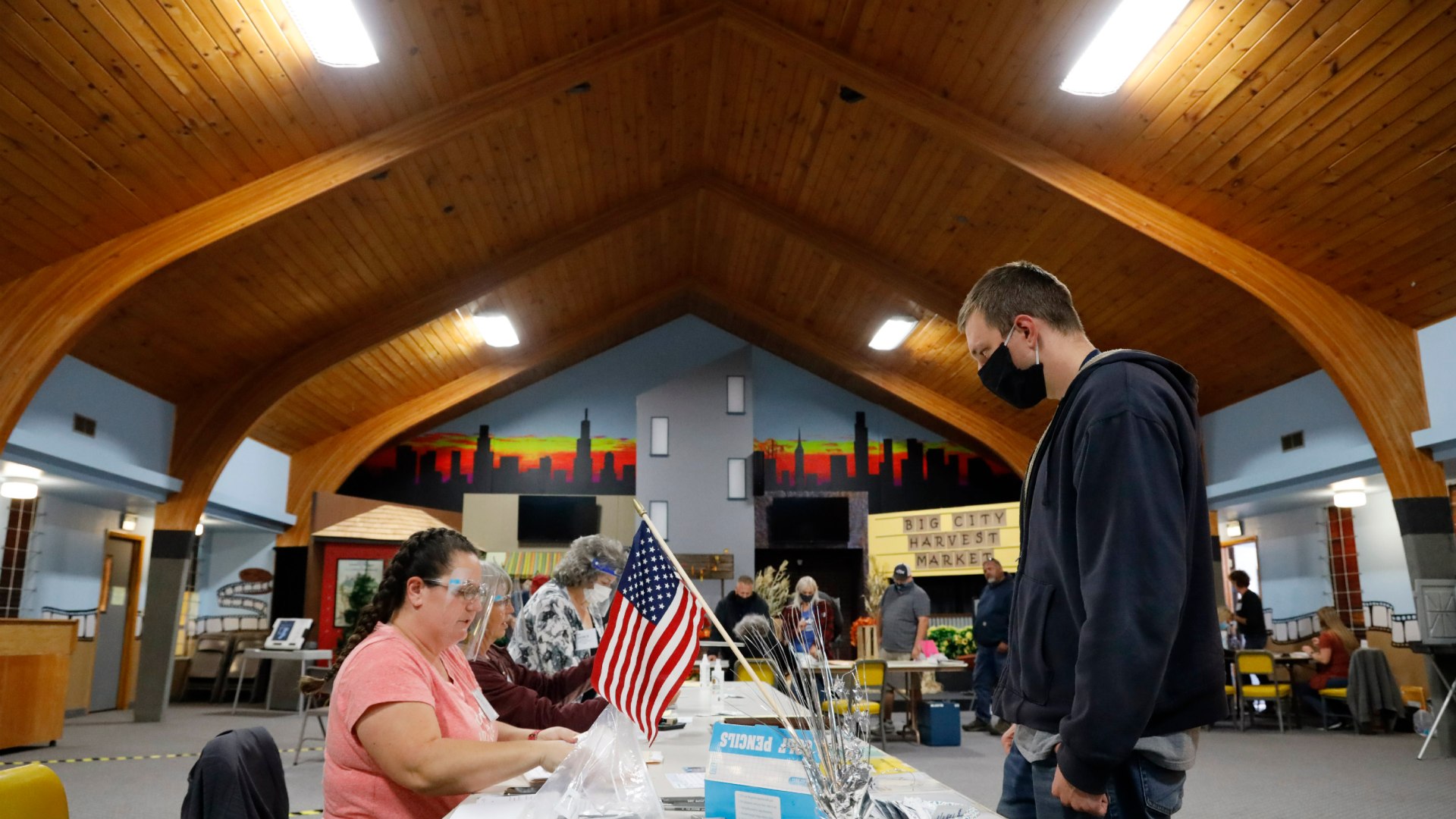
One answer to what Brooks calls America’s “moral convulsion” is a recommitment to reform and renewal of American social institutions. “Social trust,” observes Brooks, “is built within the nitty-gritty work of organizational life: going to meetings, driving people places, planning events, sitting with the ailing, rejoicing with the joyous, showing up for the unfortunate.” It is built through volunteering at polling places and schools, houses of worship, and charities.

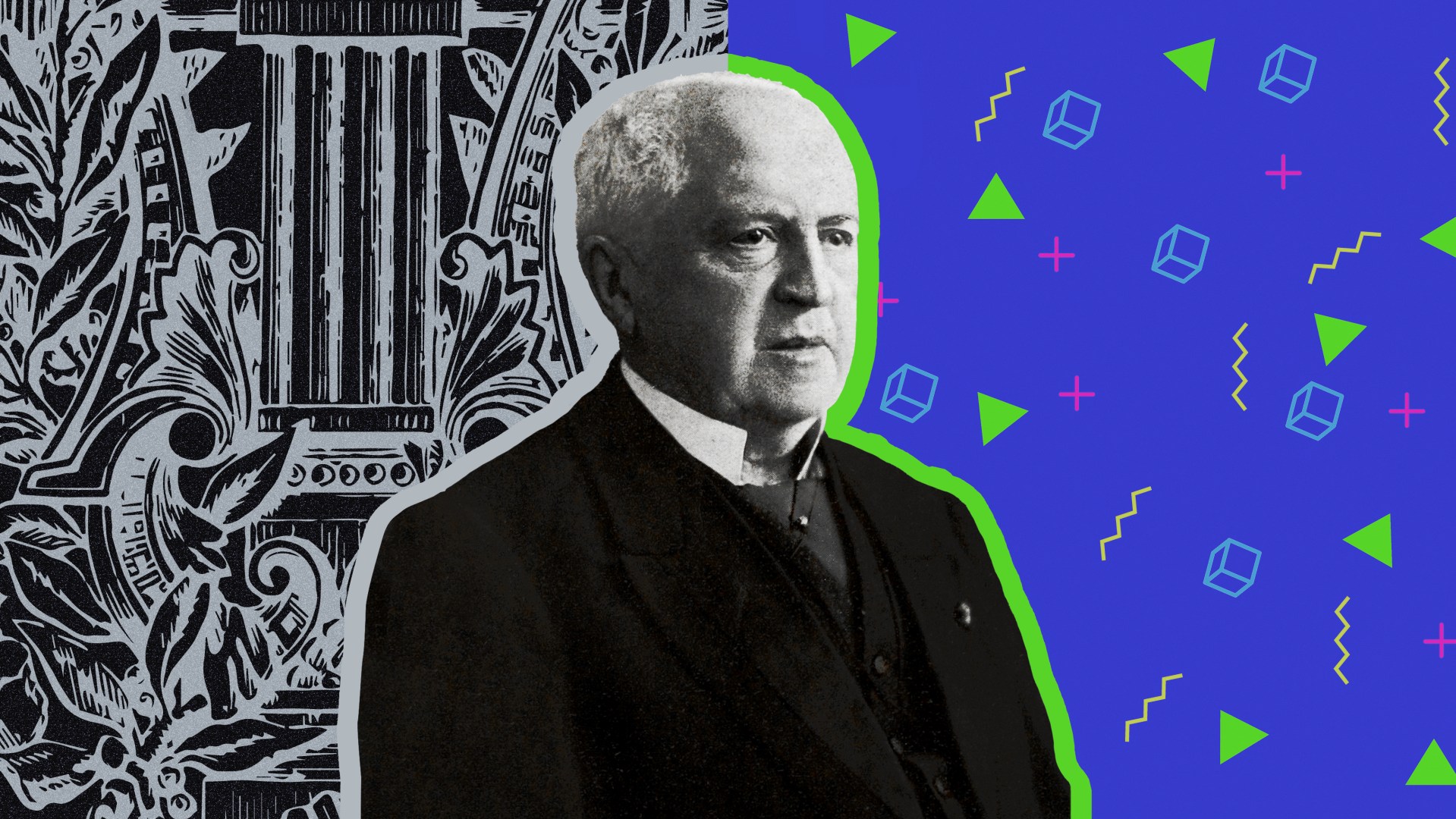
Social trust, in other words, exists within the social and institutional context of solidarity and love, which are expressed in the Pauline mandate: “Rejoice with those who rejoice; mourn with those who mourn” (Rom. 12:15). Brooks was named this year’s recipient of the Abraham Kuyper prize. This year is also the centennial of Kuyper’s death, on November 8, 1920.

The Dutch Calvinist Abraham Kuyper is often introduced with a variety of titles: theologian, pastor, professor, journalist, politician. In reality, Kuyper was an institution-builder—or what we often today call a “social entrepreneur”—par excellence. If the challenge as Brooks identifies it is to reinvest and reinvent social institutions in the 21st century, then the Dutchman provides some important guidance as to how to pursue this pressing task of holistic renewal, even 100 years after his death. Kuyper faced a society with many differences from our own but many similar dynamics as well. Social, economic, and political upheaval and uncertainty marked a Dutch society increasingly divided along ideological and theological lines.

The central insight of Kuyper’s comprehensive program was the priority of the gospel over fallen humanity’s pervasive unbelief in God. The hubris of sinners necessarily leads to idolatry, which takes the modern form of an unbelieving and atheistic revolt against God’s created order. The French Revolution was for Kuyper the most recent and stark example of this pervasive corruption, and in the 20th century, we have seen manifold expressions of this path that leads to death, including violent revolutions, world wars, pogroms, ethnic cleansing, and most recently the political and social challenges of a global pandemic.

The gospel concerns all of God’s originally good and now fallen creation. For Kuyper, this perspective provides a powerful impetus to follow Christ faithfully and fully, both in terms of one’s own individual life as well as corporately as the body of Christ throughout all of society.

A holistic gospel

Isaac Watts’s hymn “Joy to the World” declares that Christ the King “comes to make his blessings flow / Far as the curse is found.” This is one of the central scriptural insights animating Kuyper’s socio-theological vision. Grace—whether preserving (common) or saving (special)—reaches all of life. The idea that our salvation has significance not only for the life to come but also for our lives now is what has attracted so many Christians to the Kuyperian worldview, and it should continue to inspire us today.

Against the comprehensive corruption introduced by the fall into sin, God has acted to maintain the world and save a people for himself. That people, in turn, is called to live redemptively and sacrificially for God’s glory in his world.

This means that the church is tasked with living for the world and not merely seeking to survive in it. It means that Christians proclaim the gospel corporately in worship on Sundays and live out that gospel in their daily lives. The gospel likewise leads us to what Kuyper called an “architectonic critique,” which is a technical way of referring to a world- and life view that brings the radical corrections of special revelation to all aspects of the created order, especially the social order.

Just as the gospel has significance for the Christian life and society, so too unbelief and idolatry have social consequences as well. Turning away from the Creator and seeking ultimate fulfillment in the creation is the hallmark of fallen humanity, taking different forms in different times and places. In the modern world, we may focus on the possibilities of technology and prosperity to deliver us from evil. In our affluence we become enamored of the comforts of this world, forgetting that things are not the way they ought to be and that the Christian should seek ultimate comfort in the knowledge “that I am not my own, but belong—body and soul, in life and in death—to my faithful Savior, Jesus Christ.”

Those are some of the opening lines of the Heidelberg Catechism, a confession from the Reformed tradition that so powerfully shaped Kuyper’s piety and practice. Kuyper’s embrace of a particular stream of Christianity—the Reformed tradition—shows how a commitment to the common good requires rooting in a singular community. Christ himself is the universal King and savior of the world, who nevertheless was born in a particular—and divinely ordained—time and place.

Principles and pluralism

Kuyper was an unsurpassed culture maker, and many of the institutions he founded and led were focused on the edification and formation of the Dutch Reformed community. Even so, Kuyper fiercely defended the need for other groups to have the freedom and means to form their own institutions. And this concern for authentic public pluralism was not simply pragmatic—it was deeply principled. Only when each faith tradition and worldview was allowed to work out of its own principles could a vibrant public square truly be realized. Kuyper defended:

sovereignty for our principle as well as for the principle of our opponents throughout the sphere of thought. That is to say, just as they employ their principle and its corresponding method to erect a house of knowledge that shines brilliantly (though it does not entice us), so we too from our principle and our method will grow our own plant whose stems, leaves, and blossoms are nourished with its own sap.

Institutional and religious liberty was not just something for the Dutch Reformed but something for Roman Catholics, Jews, secularists, and others as well. The common good might only be realized from the contributions of each particular confession to society.

This kind of pluralism has to do not simply with freedom of thought or individual expression but includes and requires the rights to organize and form institutions as well. This means churches, certainly, but also schools, clubs, magazines, unions, and even political parties. The challenge for such institutions is not only to focus on the formation of character and fostering of virtue for their particular group but also to orient those goods toward the broader society.

For the life of the world

In this way, Kuyper championed an understanding of Christianity that was grounded in the formative practices of the local church in worship and oriented toward the good of the world. “The calling of the Christian absolutely does not lie in the sphere of the church alone,” contended Kuyper.

Christians also have a calling in the midst of the life of the world. And the question as to how this is possible, how it is conceivable that a child of God should still be involved with a sinful world, has a brief, clear, and simple answer: it can and must be because God himself is still involved with that world.

As the apostle Paul puts it in Galatians 6:10, “as we have opportunity, let us do good to all people, especially to those who belong to the family of believers.” There is a proper way of prioritizing our duties to fellow Christians, even as we orient those duties to the common good, the good of all people, even to the point of loving those who we consider—or those who consider themselves—our enemies (Matt 5:44).

Social trust can only be restored and regained in the crucible of social life. This requires building and maintaining Christian institutions of all kinds. But it also requires moving outside the walls of those institutions and engaging, challenging, and even serving our neighbors—Christians or not.

Kuyper spent a lifetime building Christian institutions—a denomination, a university, newspapers, a political party. But after his time as prime minister, he spent the better part of a year on a tour around the Mediterranean Sea. The purpose wasn’t just to fulfill a spiritual desire to visit the Holy Land (though that was part of it). Rather, Kuyper wanted to see for himself the diverse expressions of faith and culture in eastern Europe, the Middle East, and Africa. He wanted to meet Islam on its own terms and on its own soil. This led him to greater recognition of the dangers of what he considered to be a false religion. But it also led him to see unexpected commonalities and even ways in which Muslims surpassed Christians, such as their religious zeal and piety. (“The indifference toward Jesus encountered in Christian countries … is virtually unheard of in Islamic nations when it comes to Muhammad,” he wrote.)

We may not be in a position to enjoy a subsidized international tour as a former head of state. But we can easily enough get to know our neighbors next door, across the street, or a few blocks over—and serve with them in community groups. One of Kuyper’s lasting lessons for us must be the dual commitment to building vibrant Christian communities and institutions and to orienting ourselves to the service of Christ in the world—including the world beyond the walls of our houses of worship and the borders of our nation.

Jordan J. Ballor is a senior research fellow at the Acton Institute, an affiliate scholar at the First Liberty Institute, and a general editor of the Abraham Kuyper Collected Works in Public Theology.
News
Wire Story

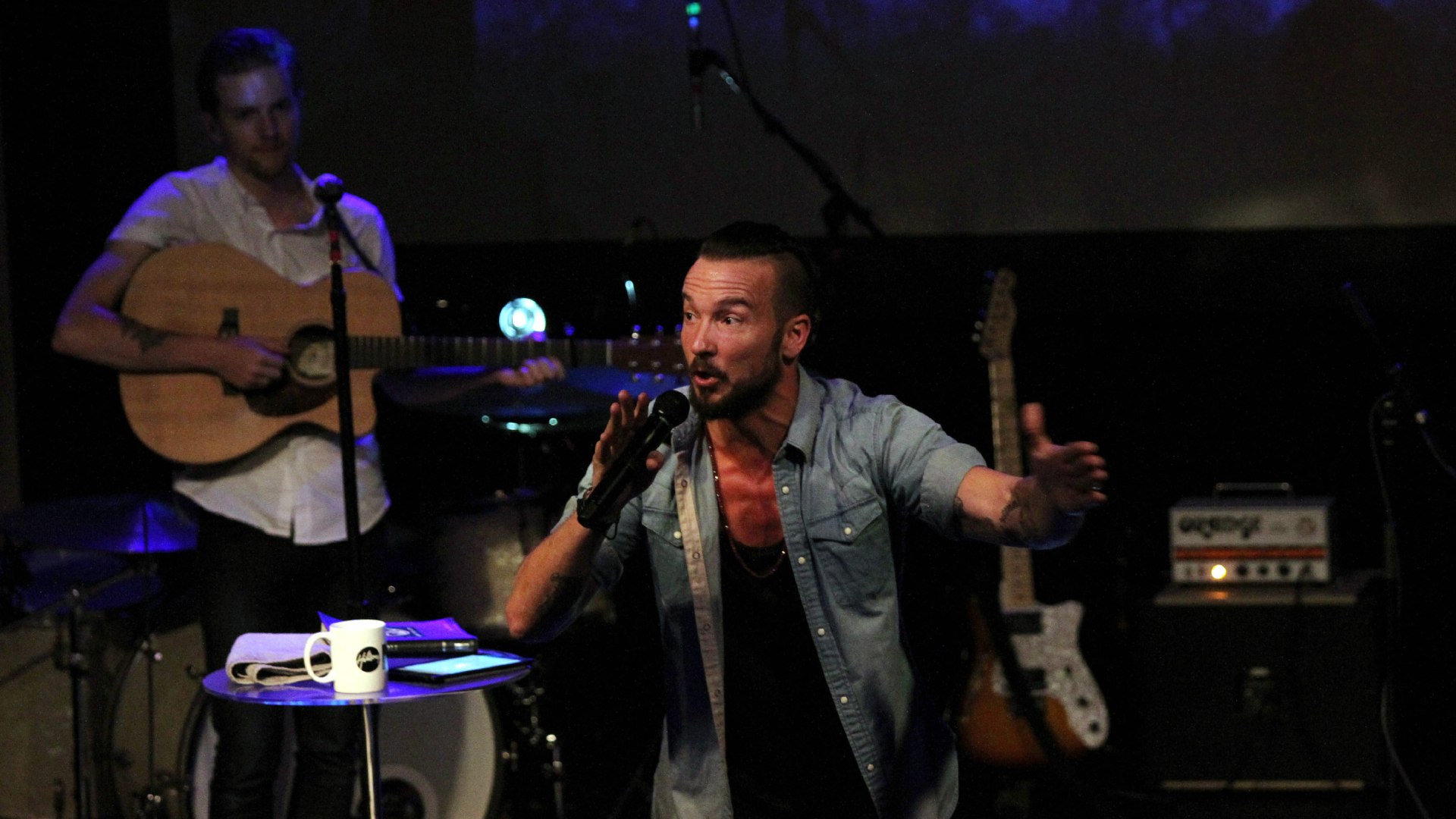
Fired Hillsong NYC Pastor Carl Lentz Apologizes for Infidelity

Update: Hillsong announces an investigation into its New York church, which Lentz helped launch a decade ago.

Christianity Today November 5, 2020
Tina Fineberg / AP

Update (November 12): Brian Houston, global senior pastor of the international Hillsong Church, announced Thursday that an independent investigator will review the “inner workings” of Hillsong’s New York City branch after the firing of its lead pastor, Carl Lentz, last week. “We need a solid foundation for a fresh start and new beginning,” Houston said in a tweet, adding, “The best is yet to come.”

Original post (November 5): In an Instagram post on Thursday, Carl Lentz, the lead pastor of Hillsong NYC, admitted to an extra-marital affair, ending a day of speculation as to why he had been fired from Hillsong.

On Wednesday, Hillsong founding pastor Brian Houston notified staff and members of Hillsong East Coast by email that Carl Lentz had been terminated as lead pastor for the megachurch’s New York City location.

The email, which was obtained by Religion News Service, cited the reason for termination as “leadership issues and breaches of trust, plus a recent revelation of moral failures,” but did not reveal any details beyond that, saying to do so “would not be appropriate.”

“I know this will come as a shock to you, but please know that this action was not taken lightly and was done in the best interests of everyone, including Pastor Carl,” Houston wrote.

In his Instagram post, Lentz admitted to being “unfaithful in my marriage, the most important relationship in my life.”

“This failure is on me, and me alone and I take full responsibility for my actions,” according to the post.

In a statement Houston posted on the church site later in the evening on Wednesday, he repeated much of his initial email but added praise for Lentz’s work at Hillsong and said he was grateful for the years of service Lentz and his wife gave to Hillsong NYC.

“They have a heart for people and we are confident that after a time of rest and restoration, God will use Carl in another way outside of Hillsong church. In terminating his tenure, we in no way want to diminish the good work he did here,” the statement said.

Houston also assured readers that ministry would “proceed as usual,” and the leadership team was “praying that God would bring about an exciting new season for our church and this region.”

https://www.instagram.com/p/CHONe5ODr9z/

Lentz, 41, was one of a number of pastors GQ Magazine has described as “hypepriests” who lead churches frequented by celebrities. Friends and congregants include Justin Bieber and his wife, Hailey Baldwin Bieber, as well as the Jenner sisters.

Lentz, along with Houston’s son Joel, began Hillsong NYC, the first Hillsong East Coast church, in 2010. The church, part of the global network of Hillsong churches, quickly drew attention for the long lines waiting to be “let in” on Sunday mornings—and for the demographic waiting in those lines.

The worshippers who flocked there were—like their lead pastor—young, hip and dressed looking more like they were headed to a rock concert than to Sunday morning church. Indeed, their venue, Irving Plaza in the Gramercy neighborhood of Manhattan, was a church by day and concert hall by night.

Lentz, relatively unknown before taking the helm of Hillsong NYC, became a darling of major media outlets for his hipster dress, his tattoo-covered arms and his celebrity congregants, including Justin Bieber, who according to GQ was baptized by the pastor in the bathtub of Tyson Chandler, a New York Knicks player at the time.

Lentz was raised in Virginia and played basketball at North Carolina State, where he told the New York Post he was “doing my own thing, being my own god.” He moved to Los Angeles to attend King’s College and Seminary, then headed to Australia to join Hillsong’s training program, Hillsong College, where he met his wife, Laura.

He worked in youth ministry in Virginia Beach before moving to Brooklyn’s trendy Williamsburg neighborhood to launch Hillsong’s first US location, according to media reports.

“While I have no doubt in my heart that this is the right course of action, I must mention Bobbie’s and my personal sadness, as we have known Laura her entire life and Carl for well over 20 years,” Houston wrote in his letter.

Pastors Brian and Bobbie Houston founded the original Hillsong Church in 1983 in the suburbs of Sydney, Australia. It now has locations in 28 countries around the world and, pre-pandemic, saw an average 150,000 attenders each week, according to its website.

Hillsong is also known for its popular worship music and conferences.

Neither Hillsong nor Carl Lentz immediately responded to requests for comment.

News
Wire Story

Louisiana Votes to Specify No Right to Abortion in State Constitution

In other states, voters approve “stand your ground” in churches and legalize marijuana.

Voters in New Orleans on Election Day

Voters in New Orleans on Election Day

Christianity Today November 5, 2020
Gerald Herbert / AP

Louisiana’s new constitutional amendment restricting abortion is especially close to Louisiana Baptist executive director Steve Horn’s heart. His adopted 10-year-old son Dru was born after the birth mother sought help at a pro-life pregnancy center.

“It’s hard to get my head wrapped around what could have been,” Horn said Wednesday after the passage of Louisiana Amendment 1 declaring no state constitutional right to abortion nor abortion funding.

The measure was the only such amendment approved in any state Tuesday. A similar measure failed in Colorado, where voters were asked to limit abortions to fetuses no older than 22 weeks.

Louisiana’s abortion measure was among many measures on ballots in 32 states, including Stand Your Ground gun laws for churches in two Alabama counties and various measures regarding racial sensitivity received voter approval.

Horn said Louisiana Southern Baptists advocated for the constitutional amendment, which passed with 68 percent of the vote, the Louisiana Secretary of State’s office reported Wednesday .

“It doesn’t necessarily change anything obviously because of Roe v. Wade, but some people have said that this is the final piece in the state of Louisiana …. of the legislative puzzle, should Roe v. Wade be overturned, that there will be explicitly in the state constitution that there is no right to abortion,” Horn said. “Sometimes we like to say ‘if and when’ Roe v. Wade is overturned. … Even if it is just symbolic, it is an important symbolic vote that the people of Louisiana have spoken.

The bipartisan initiative was authored by a Democratic state senator and supported by Democratic Gov. John Bel Edwards.

“We’ve been recognized by various groups to be the most pro-life state in the United States,” Horn said. “I think this puts an exclamation point on that, and even some hard data.”

In Colorado, voters rejected with 59.17 percent of the vote Proposition 115 that would have limited abortions to fetuses 22 weeks or younger, other than to save the life of the mother. Colorado remains among seven states, including Alaska, New Hampshire, New Jersey, New Mexico, Oregon, and Vermont, as well as Washington, D.C. that do not restrict abortion after a certain point in a pregnancy, Ballotpedia reported.

Voters reinforced Stand Your Ground gun laws for churches in Alabama’s Franklin and Lauderdale counties with constitutional amendments.

Alabama Amendment 5 for Franklin County passed with 71.7 percent of the vote, while Alabama Amendment 6 for Lauderdale County passed with 72.6 percent of the vote, according to the Alabama Secretary of State’s office. As constitutional amendments, the countywide measures required statewide voter approval.

While the churches were already covered under the state’s existing Stand Your Ground law, Franklin Baptist Association associational missionary Larry Dover described the amendments as helpful.

“This was just a way to, I think more than anything, just to give assurance to churches that if some event happened and there had to be some force used, then you at least were somewhat protected by the law if there was physical harm that was about to take place,” Dover said. “Many of our churches, not just Baptist churches, but so many of our local churches are a good way from law enforcement on any particular Sunday. … And if something happened, even if you could get to a phone and call for help, it may be 15, 20 minutes before some help could get there.”

Of the 35 churches in the association, about 25 are in rural areas with only one deputy on patrol for the entire county at night. The association’s most recent church security training, held in the fall of 2019, drew perhaps 50 people from 20 churches, Dover estimated.

Alabama State Rep. Jamie Kiel, a Southern Baptist whom Dover said is a member of Tharptown Baptist Church in Russellville, Alabama, sponsored the Franklin County amendment.

Voters legalized marijuana in Arizona, Montana, New Jersey, and South Dakota and legalized medical marijuana in Mississippi and South Dakota.

Voters in Oregon approved measures that decriminalize possession of small amounts of hard drugs and that allow the medical use of psilocybin-producing mushroom and fungi products (psychedelic mushrooms) in individuals at least 21 years old.

Alabama voters also approved an amendment to remove antiquated, racist language from the state constitution that allowed racially segregated schools. The measure authorizing the Legislature to recompile the state constitution passed with 66.7 percent of the vote, the state reported.

Similar measures failed in 2004 and 2012, National Public Radio has reported. In similar measures, Nebraskans and Utahans removed language from their state constitutions–by 69 percent and 81 percent respectively–that allowed enslavement as punishment for crimes. Rhode Islanders narrowly voted by 52.8 to 47.2 percent to drop “Providence Plantations” from the official name of The State of Rhode Island and Providence Plantations.

Other measures expanded gaming and gambling in Colorado, Maryland, Nebraska, and South Dakota, including racetrack betting, gaming, sports betting and charitable bingo and raffles.

Books

The Bible Makes a Fashion Statement

Theologian Robert Covolo encourages Christians to take matters of dress and style more seriously.

Christianity Today November 5, 2020
Portrait Courtesy of Robert Covolo

At first glance, the worlds of fashion and theology might appear to have little to do with one another. A shallow survey of each might even frame them as opposites, equating fashion with frivolity and ephemerality while painting theology as concerned with matters more eternal and profound. But the truth is that there are more Christians quietly shaping the fashion industry than one might suppose. And major Christian thinkers, from Augustine of Hippo to John Calvin, have had plenty to say about sartorial matters.

Fashion Theology

Fashion Theology

Baylor University Press

216 pages

$41.39

In his new book Fashion Theology, cultural theologian Robert Covolo explores the complex relationship between fashion and theology throughout history, highlighting the richness these disciplines stand to forfeit when they ignore each other. Journalist Whitney Bauck, who reports on the intersection of fashion and faith, spoke with Covolo about the theological depths opened up in the simple act of getting dressed each morning.

Why write a book on fashion and theology?

So many books have been written about the relationship between theology and film or literature or psychology or food. But dress is just as essential to our everyday existence. I realized there was nothing theological out there taking fashion studies seriously beyond a chapter here or there. Fashion studies is an expansive field of theoretical discourse that has spread to universities across the globe. And there has been little to no Christian engagement with it.

The other side of what interested me is that theology itself is a cultural pursuit. We’re always going to be producing theology because culture always has new questions about the relevance of the Christian faith. If we don’t understand theologians within their cultural context, we’re missing an awful lot about who they are.

Augustine, for instance, was a North African in the late Roman republic, dealing with those material and cultural realities. John Calvin was a French Protestant refugee who had to flee for his life during a time of great upheaval. How did his theological mind think about dress? When you look at the details, you actually get to see what this theology looks like on the street. All theology comes from the experiences of the theologians themselves. When you find out so many interesting details about these theologians, it really opens your eyes to how human they were.

If fashion and theology are this interconnected, why are they so often treated as totally separate realms?

They have often been considered divorced from one another because of superficial characterizations of both: that fashion is about appearances, vanity, fad, and thoughtlessness; and that theology, by contrast, is about profundity, solemnity, and what’s eternal. The reality is that once you start drilling into them, neither of those areas of inquiry fits the stereotypes. There has been tension between the two, and I’m not going to sweep that under the rug; some theology is more friendly towards fashion than other theology. But there are just as many resonances as there are dissonances. And we don’t really help the discussion when we don’t recognize that.

Your book spends a good bit of time tracing the history of Western thought with regard to fashion theory and theology. Since so much of that recorded history emerged from the minds of men, I’m curious whether you have any comments about the ways that gender informs the historical relationship between theology and fashion.

Fashion challenges and questions all conventions of social identity, but gender was one of the first, and it’s been the predominant one. It’s a massive subject I intentionally sidestepped. I drew from classic Western theologians in order to give a genealogy. So it’s one vantage point; it is not the be all and end all. The greatest compliment to the book will be when someone writes another book to say it was all wrong. I do hope that someone follows up to emphasize the role of gender—that deserves an entire book in its own right.

You’ve spent so many years of your life thinking about and studying fashion, but the book retains a lot of ambivalence toward it. Why is that?

I don’t feel personally ambivalent about fashion—I feel quite optimistic. Calvin sees fashion as a good gift; Abraham Kuyper and G. K. Chesterton celebrate the conviviality it fosters. I love fashion. But maybe what comes across in the book is that I don’t want to give a simple story of fashion and theology being easy friends that just naturally merge together and imply that any fool should see this. Nor do I want to pit them against each other as enemies. What I want to show is that they have a complex relationship. I want to allow there to be tensions where there are tensions.

If you look at the biblical witness, being dressed, generally speaking, is a great boon within the Bible. As the prophet Isaiah says, “he has clothed me with garments of salvation and arrayed me in a robe of righteousness” (61:10). The Proverbs 31 woman is marked out for being able to make her family stunning (v. 21). Paul assures believers they will not be found naked on the day of resurrection (2 Cor. 5:3). It’s God who is dressing people.

Fashion itself is such a complex phenomenon that we need to address all its expressions in the complexity they deserve: fashion as an art form, as a site for meaning making, how it shapes our political life, our social identity, our economic system, and our public discourse. Fashion may fall a little out of focus right now because so much of our focus is on identity markers like gender, class, and race. But fashion can never be reduced to those things because it constantly references individual taste.

That focus on the individual harkens back to the Augustinian impulse. Augustine deals with the inner self: He’s plunging the depths, and he’s saying there’s a mystery to the person. Fashion emerges from the Augustinian heritage, and it can also be used to return us to the Augustinian heritage, because it says that the personal narratives that make up our lives are the things that are most true about who we are.

What have you learned while working on this book that has most surprised you?

You can’t see the world the same way once you have taken fashion seriously. There’s this robust theology of dress in the Bible. I hope this book helps Christians see that we no longer have the luxury of simply ignoring what fashion is, what it comes from, and how it permeates our lives. Because fashion is deeply intertwined with the modern world, all of us live within the fashion system. We even get the word modern from the Latin modo, which means “presently” or “just now.” So the modern world is permeated with this fascination with the now, the new.

This is not antithetical to the Christian faith. Living in the present tense is part of Paul’s very posture—in Philippians, he spoke of “forgetting what is behind and straining toward what is ahead” (3:13). Anyone who knows Christ is a new creature. And Christians used to see a great resonance between fashion’s celebration of the new and the Christian faith. In fact, on Easter Sunday throughout America in the last century, Christians would come out of church and parade around in their new fashion as a statement that they were people of the Resurrection who believed that God was going to bring them new, glorified bodies.

Theologians aren’t ambivalent about fashion. Over and over again in my study, I cite them saying that fashion points to our ultimate hopes. The reason we’re so fascinated with fashion is because there is an implicit statement of faith you can’t help making, whether you are a believer or an unbeliever: You have hope for your body, you have hope for the new, and you are fascinated with the idea that one day you could be gloriously beautiful.

Fashion plays with that hope. It plays with this idea that we can somehow reframe ourselves in a way that opens up our lives and our stories, our social and political realities. So people are touching on very deep theological themes when they get dressed, without even knowing it. They are referencing the meanings of their lives, and they’re attempting to understand where they’re going and where they’ve been. Christianity tells us a story of where we’ve been, where we’re going, and where hope for the future is found.

What do you think would change for the church if it took fashion seriously?

Once you start thinking about clothing and how it operates, sections of the Bible come alive in a way you’ve probably never noticed. Look at the whole narrative arc of Joseph! But I think it would also help us to be more empathetic or more understanding about our differences. And then we could celebrate what the church is meant to be: a place where people who have a variety of different interests and loves come together around their common faith in Christ.

Also, when we show the relationship between everyday practices and our theological beliefs, Christianity becomes a coherent worldview and not just a private language that we speak when we go to church. I’m hoping that this book will help Christians integrate their lives. It’s not a good thing that we can no longer see how the everyday practices of our lives connect to the richness and depth of our faith. We desperately need the kind of integrated theology that moves beyond ivory-tower academic discussions to show how something very tangible that everybody interacts with actually touches on some of the most significant questions in the Bible.

This book has a lot to say to Christians, but it also has a lot to say to the burgeoning field of fashion theory. How do you think fashion theory would change if its practitioners took theology more seriously?

For fashion theorists, I am destroying the assumption that this is a purely secular discipline. And I’m showing how deeply indebted fashion theory is to Christian theology. I even make the argument that John Calvin helped advance fashion. That’s worth the price of the book right there!

I argue that Augustine is the first fashion theorist. How many people in fashion studies realize that back in the fifth century, a Christian theologian was talking about how fashion works as a complex form of signification in advanced societies? You can’t really understand the rise of fashion without understanding how deeply fashion studies is indebted to theology. And to the degree that fashion developed in the West, even though it is global in its spread—which many fashion theorists believe—then we have to ask serious questions about how the religion of the Incarnation uniquely helped propel it along.

That’s not to say that Christianity is entirely responsible for the rise of fashion, of course. But there is a relationship worth exploring. And it’s not a simple story of theologians hating style and getting in the way of us being expressive. It’s far more interesting than that.

Has anything changed about how you dress in the course of working on the book?

I have come to really enjoy dressing because I can hear the voices of different theologians in the back of my head recognizing what I’m doing and celebrating it. As someone who takes seriously the witness of the church, not just within the 20th century but throughout its history, it gives me so much joy to know how Aquinas or Augustine might view what I’m doing.

At the end of the day, fashion should be received as a good gift. Of course it’s not totally innocent—there is no cultural arena in this world that is. But the point is, I have developed a real love for working within the aesthetic range of the body and recognizing that other people are too. You can’t read about the history of blue jeans without recognizing that people wearing them are drawing from some kind of collective memory, even if they don’t realize it.

I can’t help but think what Calvin would say, which is that every day we should thank God that God decided to include seeing and being seen as part of the created order. Before the Fall, you have Adam looking upon Eve and saying, “Bone of my bones and flesh of my flesh” (Gen. 2:23). There’s a recognition of both sameness and otherness. That is the register that fashion works on: seeing and being seen. Adam receives that with great joy. And that is a call for Christians to once again restore seeing and being seen as something God allows us to participate in. Dress is fundamental to our humanity, and we can approach it as a great way of loving others, celebrating the gift of life, and thanking our Creator for that way of being in the world.

Ideas

Christians Like Me Believe We Must End the Drug War to Win It

Staff Editor

Ballot initiatives decriminalizing drug use may be the best way to fight sinful drug abuse.

Christianity Today November 5, 2020
Illustration by KrizzDaPaul / Malte Mueller / Getty Images / Edits by Mallory Rentsch

Voters in Arizona, Mississippi, Montana, New Jersey, and South Dakota were presented with state ballot measures this year concerning the legalization of marijuana for recreational or medical use. Washington, DC, residents were asked to weigh in on psychedelic mushrooms, with an initiative to effectively decriminalize them by putting their growth, possession, and sale “among the Metropolitan Police Department’s lowest law enforcement priorities.” And in Oregon, a ballot measure proposed making these same “magic mushrooms” permissible for closely supervised medical consumption while decriminalizing possession of hard drugs including heroin, cocaine, and LSD.

Every single measure succeeded, though the questions appearing on the ballot at all would have been unimaginable just a few elections ago—we are only eight years past the first state legalization of recreational marijuana. Our country’s prohibitionary approach to drug use is over a century old, but recent decades have seen a move away from marijuana prohibition, and this election’s mushroom initiatives suggest the drug war, more broadly, may be headed toward a truce. This is a shift Christians can, and do, support according to recent data. However, to support changes in drug laws is not to condone drug abuse, but rather a realization that the drug war has proven itself a moral and practical horror.

The Bible doesn’t discuss drugs. It doesn’t address addiction as a phenomenon with elements of illness, heredity, and moral agency alike; and it never mentions intoxicants like marijuana, psychedelic mushrooms, or narcotics. Yet we do have plenty of scriptural content on recreational alcohol use.

The Old Testament offers vivid accounts of intoxication as a cause of deep harm, like when Lot’s daughters—whom he’d offered up for mob rape in Sodom—enticed him to drink to a point of insensibility so they could have sex with him, behavior that now would be labeled drug rape (Gen. 19:4–8, 30–36). In Leviticus 10:8–10, God tells Aaron and his sons not to drink before going into his sanctuary so they can “distinguish between the holy and the common,” and the prophets and wisdom literature associate drunkenness with foolishness, gluttony, and pride. The New Testament likewise tells us to avoid drunkenness (Eph. 5:18; 1 Tim. 3:8; Titus 2:3).

Yet the Old Testament also labels wine as a good gift from God, a blessing to be given as a model of divine generosity (Deut. 15:13–15) and received as an expression of God’s loving care for his people (Deut. 11:13–14). Wine is used in the Lord’s Supper (Matt. 26:29), it’s recommended as medicine (1 Tim. 5:23) and as solace in misery and injustice (Prov. 31:4–9). Jesus, accused on one occasion of being a drunkard (Matt. 11:19), began his earthly ministry, in John’s account, by turning water into excellent wine so wedding guests could continue to celebrate (John 2:1–12).

Drunkenness is never defined in these passages. We’re left with some ambiguity between Jesus making wine for boozy partiers and the clear bans on intoxication that turns habitual, interferes with worship or duty, or occasions sin. How do we apply such ambiguity to the various intoxicants available in our time? A drug that produces inebriation analogous to five or ten drinks is obviously unacceptable for Christians’ recreational use, but a milder substance whose effect is comparable to one or two glasses of wine may be permissible. In those less certain cases, as in other matters of Christian liberty, we should neither judge (Rom. 14:13) nor tempt (Rom. 14:21) fellow Christians whose faithful conclusions differ from our own.

For those who’d allow mild drugs as licit for Christians, Scripture’s opposition to habitual intoxication remains consistent and adamant. Drug abuse is a sin. So why, then, should the drug war end? If the state wants to discourage sin, why would Christians object?

Because the war on drugs is an obscene failure. It fosters violent, organized crime and makes drug abuse and addiction more dangerous and treatment less attainable. This prudential case against the drug war applies whether you support prohibitionary laws to advance the common good or believe, as I do, that the government steps outside its bounds when it thus meddles with individual liberty.

The evidence of this failure is everywhere. In our criminal justice system, the drug war is a major driver of police militarization, mass surveillance and other civil liberties abuses, and mass incarceration. One in three new prison admissions is a drug offender. Drug enforcement saps police resources, too, with more than 1.4 million possession arrests each year (nearly half of them for marijuana) drawing limited law enforcement attention away from violent crimes like assault, armed robbery, and murder.

Meanwhile, the drug war is big business for organized crime, just like Prohibition was. “[I]f you look at the drug war from a purely economic point of view, the role of the government is to protect the drug cartel,” conservative economist Milton Friedman explained in 1991. “That’s literally true,” he continued, because only cartels and other unsavories with the money and unscrupulousness to get around the law can participate in the artificially lucrative black market for drugs. By banning domestic production and sales, our government grants them a de facto monopoly, and they accordingly smuggle and murder and sell dangerously tainted product.

The immense collateral damage of the drug war has done nothing to advance its promised cure. After more than $1.5 trillion spent over five decades in the United States, drug addiction levels have stayed flat, while our use rate is among the highest worldwide. By historic and international measures alike, our drug war has not helped a whit.

Most tragic of all is that we know how to do better. Our own history offers the example of ending Prohibition. With the return of safe, legal liquor sales, the homicide rate, which had spiked during Prohibition, took a prompt downward turn. Robbery, burglary, and assault rates did the same. We could do the same by ending the drug war.

We could also follow the example of Portugal, which decriminalized all drug possession two decades ago. By 2010, the rate of people seeking treatment for addiction had doubled, and hard drug abuse had fallen by half since the 1990s. Overdose deaths have become rare in Portugal because seeking treatment doesn’t risk harsh punishment. If we had Portugal’s rate, US overdose deaths would have been around 10,000 in 2018. Instead, 67,000 people died.

In the late 1980s and early 1990s, CT published a number of articles on the drug war. Reading these pieces now, the call for the church to wage a war “of goodness—a full-fledged wave of love, compassion, and rehabilitation that helps make drug use unattractive”—rings as true as ever. Profiles of churches doing exactly that are still worth a read, 30 years later. But in those same 30 years, the assumption, as one editorial put it, that a “strong-willed criminal-justice system” would curtail drug abuse has been cast into perduring doubt. The church’s loving war for goodness and grace—alongside an end to the government’s failed war on drugs—would prove a more hopeful and genuinely helpful battle plan.

Bonnie Kristian is a columnist at Christianity Today.

News

Latino Evangelicals Boost Trump in Florida and Texas

The 2020 race draws attention to the varying interests of America’s largest minority group.

Christianity Today November 4, 2020
Joe Raedle / Getty Images

The presidential election results coming out of heavily Latino areas of the US took some by surprise, but affirmed what Latinos themselves have known all along.

More religious than Americans on average, the nation’s largest minority group is a growing part of the electorate. It’s also one that doesn’t vote as a monolith, with political priorities varying in different parts of the country and among Latinos of different national backgrounds.

“There’s a real awareness and awakening to the power of the Latino faith vote,” said Gabriel Salguero, president of the National Latino Evangelical Coalition and pastor of the Gathering Place in Orlando, Florida. “People are realizing, ‘Okay, we could be a determining vote in places like Arizona, Nevada, and Florida.’”

As surveys had projected, President Donald Trump made significant gains among Latino voters overall, thanks in part to campaign outreach directed at evangelicals.

“Latino evangelicals helped Trump to do better than anyone expected in Texas … and in Florida,” said Gastón Espinosa, a professor at Claremont McKenna College who conducted the most comprehensive study of Latino voters leading up to the 2020 election.

National Election Pool results indicated that in Texas, Trump took 40 percent of the Latino vote (about a quarter of the Texas electorate) to Biden’s 59 percent of the Latino vote. In Florida, he took 47 percent of the Latino vote (19% of the electorate) to Biden’s 52 percent of the Latino vote.

The president launched his Evangelicals for Trump efforts at a Hispanic megachurch in Miami at the beginning of the year and held a lively rally among Hispanic voters there just two days before the election.

“His campaign has engaged the Latino community, and you see the influence of the Latino community in his administration,” said Tony Suarez, an evangelical leader and Trump adviser who took the stage to pray and stump for the president.

Suarez, executive vice president of the National Hispanic Christian Leadership Conference, saw Latino voters ignited by Trump’s pro-life stance and policies such as a prosperity initiative directed at Hispanic American job access and his First Step prison reform.

But he also believed Joe Biden’s candidacy was a turn-off for Latinos who were frustrated by the Obama administration’s stalemate on immigration reform and those who fled socialist regimes and do not want to see socialism take hold in American politics.

Latino evangelicals across the spectrum agree that no party has a hold of the demographic. Salguero called them “the quintessential swing voters.” And no single issue—not even immigration—dominates their political interests. Instead, they’re looking at a range of domestic and foreign policy issues.

“I personally know many Hispanic evangelicals who struggle with the question of what to prioritize and who to support: Do we choose the leader who advocates for the unborn or the leader who advocates for immigrant children?” said Alexia Salvatierra, a leader with several Christian immigration initiatives including the Matthew 25/Mateo 25 network and the New Sanctuary Movement.

“It’s only when we understand the history of issues in this country and the various strategies for dealing with social problems like abortion and immigration that we may find a clearer path,” said Salvatierra, also an assistant professor at Fuller Theological Seminary. “Younger Hispanic evangelicals or those who are born here often have a very different perspective than older or recent immigrants—one that identifies more with other racial and ethnic minorities in the US.”

Juan Martínez, former professor of Hispanic studies and pastoral leadership at Fuller, told CT in 2018 that Latinos’ party-defying political stances—such as being conservative on issues like abortion and liberal on issues like education and immigration—will stand out more as they grow to become a larger percentage of the voting bloc.

Latino Catholics and Latino evangelicals view their faith as a core motivation for how they vote and share many positions on social issues. It’s nationality that divides Latinos politically more than religion.

This year, Americans saw the contrast between Latino voters from different backgrounds play out in two major metro areas in US swing states—Maricopa County in Arizona and Miami-Dade County in Florida.

In the Phoenix area where many of the Hispanic voters are Mexican American, according to the AP, the county went for Joe Biden, turning the state blue for the first time since 1996. Yet in Miami, bolstered by Cuban American, Venezuelan American, and Nicaraguan American turnout, Trump went from losing the county by 30 percentage points to Hillary Clinton in 2016 to reach single-digit margins with Biden this year.

“The reality on the ground is typically more nuanced than often recognized. For instance, Cuban American evangelicals in south Florida may have a different outlook from Mexican American evangelicals along the US-Mexico border,” said Daniel Castelo, a bilingual theologian at Seattle Pacific University.

“Many of these communities have experiences of trauma of various kinds. Some have the memories of leaving autocratic regimes, while others have the recent experiences of having family members identified and deported by ICE authorities,” he said. “These experiences of trauma will undoubtedly play a role in how particular groups view President Trump and in turn the Democratic party. Their fears will weigh heavily in terms of what they see as appealing and urgent.”

As Pennsylvania pastor Eli Valentin put it, people who immigrated for political reasons, such as Cubans and Venezuelans, tend to vote differently than those who immigrated for economic reasons, such as Mexicans, Puerto Ricans, and Dominicans. Valentin, who leads The Bridge Church of God (Cleveland, TN) in Allentown, Pennsylvania, supported Biden this election, his first time endorsing a candidate. He said his church includes Latino Trump supporters who—like white evangelicals—prioritize Trump’s stance on abortion.

The 2020 race may result in more attention toward Latino voters in elections to come. “I think it’s time to stop talking about Latinos as a homogenous voting bloc,” said Daniel Bennett, who teaches political science at John Brown University, noting the Republican gains among the demographic in Florida and Texas.

With reporting by Daniel Silliman.

News

Christian Trump and Biden Voters Wait on the Lord … and Ballot Counts

Without a clear victory, Americans keep praying for candidates and the country.

Christianity Today November 4, 2020
Otto Kitsinger / AP Images

Blessed are those who wait on the battleground states.

Evangelicals have joined the rest of the United States praying and anticipating the results of the race between President Donald Trump and Democratic challenger Joe Biden after election night came and went without a definitive winner.

Each told supporters they were confident of their chances in critical states that needed more time to finish counting votes: Pennsylvania, Michigan, and Wisconsin.

Trump told a crowd at his campaign headquarters that he was ahead in the undeclared states and claimed that “we will win this, and as far as I’m concerned we already have won this,” though the races in several states had not yet been called.

At an event in Delaware, Biden said to “keep the faith” while votes were still being tallied late into the night—and may continue to be counted for days to come. “We’re going to have to be patient,” the former vice president said. “And it ain’t over until every ballot is counted.”

Biden went into the night with a substantial lead in the national polls, but Trump did better than expected in Florida and maintained an edge in Georgia and North Carolina. Among white evangelical and born-again Christians, he earned 78 percent of the vote, according to the first 110,000 voters surveyed by the Associated Press for its VoteCast poll. Trump garnered several percentage points more in key Southern states.

With the unusual difficulties of this year, an ongoing pandemic and social unrest, the election delay can feel like a particularly cruel limbo. After a prolonged early voting season and record-high turnout, enthusiastic supporters on both sides are holding on to hope that their candidate will win.

“I am so optimistic,” Delaware Senator Chris Coons said in a prayer call Monday for the Biden campaign, “but in everything we work and pray for, we need to submit ourselves to our Lord and Savior and whatever is the outcome.”

Coons, a lifelong Presbyterian who has spoken up about the former vice president’s faith, called the election a “kairos moment” when “the arc of history may well turn to justice,” but also told supporters that if the outcome goes the other way, they must be prepared to “accept the judgment of our Lord and our nation.”

Dozens of evangelical pastors and worship leaders lifted up the president on the day before the election and specifically prayed that Christians would vote their values.

“We thank you for a president who has embraced you, embraced people of faith,” said Jack Graham, pastor of Prestonwood Baptist Church. “Lord, we ask in Jesus’ name that you will give us victory, a victory that will resound to the ends of the earth.”

“We have seen you move in the past…,” he said, “and now we are believing and trusting in you O God to do it again.”

Overall, Trump appeared to maintain his support among white evangelicals. High evangelical turnout in Southern states, notably Florida and North Carolina, seemed to keep Trump competitive in the electoral college.

Despite Trump’s notoriously brash personality, “I haven’t seen anything the president has done in the last four years that has dissuaded evangelicals that he isn’t their man: his judicial appointments, his executive orders pertaining to religious freedom, the positions of his justice department in key issues,” said Biola University political science professor Scott Waller.

Evangelical support may not help Trump in Pennsylvania, however. Mainline Protestants and white Catholics both make up larger portions of the electorate, and Catholics appear to be the critical swing vote. In a late October poll, just 37 percent of white Catholics approved of Trump’s job performance, and only about one-third said he’d done a good job handling the coronavirus.

The majority of white evangelicals in the state were leaning the other way: Seventy-five percent said the president cares about people like them and 65 percent said they strongly approved of his job performance.

Evangelicals also make up a smaller percentage of the electorate in the yet-to-be-called midwestern states of Michigan and Wisconsin.

The undecided election puts pressure on evangelical leaders who—sensing the strain of increasing partisanship in their congregations—have preached a message of Christian unity, pluralism, and a gospel that transcends earthly divisions.

With the country split over its next president and awaiting the results of a tight election, political scientists say now’s the time to put those ideals into action.

“Trust in our political system and each other is the defining political issue and cultural issue for our time,” said Amy Edmonds, political science professor at Milligan University. “That is something all of us can try to help remedy. Civil society like churches can make a huge difference. We can learn to dialogue, to listen to people who we disagree with, and love our neighbor despite differences.”

Edmonds said if the election results turn contentious, or even if the country sees incidents of violence, it will be important for Americans to uphold a sense of trust in one another and in common decency. This election, the US has faced threats of foreign forces trying to sow discord in the election process and exploit growing ideological divides.

The 2020 race has been compared to the contest 20 years ago, when voters had to wait until December 13 to know the presidential outcome.

“I lived in Florida in the year 2000, and the anxiety only grew as the days went on, and I would expect something even worse this time given that the partisan divides represent something akin to the Grand Canyon compared to a creek, 2020 to 2000,” said Waller at Biola. “There were certainly partisan divides between Bush and Gore, but the divides between Biden and Trump are exponentially higher.”

In his remarks in the early hours of Wednesday morning, President Trump called the delayed counts a fraud and an embarassment, threatening a legal challenge.

As Christians rallied to pray on Election Day, in Zoom calls, text threads, and church gatherings, they prayed for protection against any forces—spiritual or earthly—that would use the election to divide the country.

The church—in its own already-but-not-yet existence waiting for the true kingdom—is particularly well positioned for this moment, leaders say. Many churches continue to gather Americans of differing political persuasions under the banner of Christ. White evangelicals voting for Biden, for example, are more likely than any other demographic to have close friends on the other side of the aisle.

And Christians’ trust in God’s sovereignty and his ultimate rule should free them up for more honest, humble dialogue with those who disagree. “Regardless of our circumstances, we can engage in this messy and uncertain world because we trust that God is in control,” wrote law professor John Inazu, author of the book Confident Pluralism. “Because of our confidence in the gospel, Christians should see not only the challenges of pluralism but also its opportunities.”

Both presidential candidates made faith a major part of their campaign strategy this year. Trump continued to appeal to conservative Christians with Evangelicals for Trump events that enlisted local pastors and members of his evangelical advisory board.

The Biden campaign’s faith outreach included evangelical discussion groups online, op-eds in evangelical media, and radio ads on Christian stations. Though “Never Trump” evangelicals remained a minority, they grew more organized and vocal through groups like Republican Voters Against Trump, Christians Against Trumpism, Evangelicals for Biden, Pro-Life Evangelicals for Biden, and the Not Our Faith super PAC.

“Whoever wins the presidential race will face the daunting task of leading a deeply divided country in the midst of a growing pandemic and serious economic disruption,” said Amy Black, who teaches political science at Wheaton College. “I hope and pray the person inaugurated on January 20 will do everything in his power to bring people together, instill hope, and guide us out of the pandemic.”

You Can Encourage the Church and Inspire the World

Help CT elevate the storytellers and the sages of the global church.

“Christianity Today has always been more than a magazine. Founded by Billy Graham, it was made to give evangelical Christianity a centerpoint of Christian conviction and Christlike love.

Today, we are a global community that advances the stories and ideas of the kingdom of God. The world needs those stories and those ideas now more than ever.”

–CT President and CEO Timothy Dalrymple

Will you help us elevate the storytellers and sages of the global church? Your gift will help to share stories that encourage the church and inspire the world. Give Today.

News
Wire Story

Louisiana Church Arsonist Sentenced to 25 Years

He was also ordered to pay $2.6 million to the three black churches he destroyed in 2019.

Christianity Today November 3, 2020
Gerald Herbert / AP

A Louisiana man who admitted to burning down three predominantly African American churches to promote himself as a “black metal” musician was sentenced Monday to 25 years in prison and ordered to pay the churches $2.6 million.

US District Judge Robert Summerhays of Lafayette sentenced Holden Matthews, giving the 23-year-old man credit for 18 months he already spent in jail, US Attorney Alexander Van Hook said in a news release.

“Matthews admitted to setting the fires because of the religious character of these buildings, in an effort to raise his profile as a ‘Black Metal’ musician by copying similar crimes committed in Norway in the 1990s,” the statement said.

Matthews had shown interest in “black metal,” an extreme subgenre of heavy metal, according to authorities. The music has been linked, in some instances, to fires at Christian churches in Norway.

Matthews told the judge, pastors and congregations of the three Baptist churches that he was deeply sorry and wanted them to know he had recovered his faith in God, The Advocate reported.

He had pleaded guilty to both state and federal charges. Summerhays said that when Matthews is sentenced in state court, that judge may order the sentence to be served at the same time as the federal one.

Matthews pleaded guilty in federal court to three counts of violating the Church Arson Prevention Act and to one of using fire to commit a federal felony.

Summerhays ordered him to pay $1.1 million in restitution to Mt. Pleasant Missionary Baptist Church and $970,213.30 to Greater Union Baptist Church, both in Opelousas, and $590,246 to St. Mary Missionary Baptist Church in Port Barre.

All three were burned down over 10 days in March and April of 2019. The churches were empty at the time of the fires, and no one was injured.

Although race was not considered a motive, Summerhays said, he had to consider that the crime brought the church communities back to a dark time of racial discrimination, the newspaper reported.

“These churches trace their origins to the post-Civil War Reconstruction period and, for generations, were a place for predominantly African American Christians to gather, pray, worship, and celebrate their faith,” Assistant Attorney General Eric Dreiband of the Civil Rights Division, said in the news release. “The churches survived for nearly 150 years but did not survive this defendant’s warped act of hatred.”

The judge asked the Bureau of Prisons to put Matthews in a prison near his family and to ensure that he gets substance abuse counseling and mental health treatment, KATC-TV reported.

The hearing had begun Friday but was cut short after new evidence was introduced. On Friday, clinical psychologist and Louisiana State University professor Mary Lou Kelley—a defense witness—testified that Matthews struggles with anxiety, depression and arrested social development.

Matthews pleaded guilty in state court to three state hate crime counts, two of simple arson of a religious building and one of aggravated arson of a religious building. That sentencing had been scheduled Monday but was postponed with no date set, The Advocate reported.

News

John Piper’s Liberty Convocation Pulled After Election Post

University said Piper’s appearance with J. D. Greear was “unfortunate timing,” falling the same week as his viral article decrying both presidential candidates.

Christianity Today November 3, 2020
Liberty University / Facebook

A week and a half before the election, theologian John Piper shared what quickly became one of American evangelicals’ most-talked-about political opinions of the campaign season.

The Reformed Christian leader wrote about the “sins that destroy people” through the “deadly influences of a leader,” arguing faithful Christian voters shouldn’t only be concerned about abortion, but should also stand against “the culture-infecting spread of the gangrene of sinful self-exaltation, and boasting, and strife-stirring.”

Piper did not name specific presidential candidates or parties, but then he clarified online: He would not be voting for either Joe Biden or Donald Trump.

Though he had called the president “morally unfit” in 2017, Piper isn’t in the habit of speaking out about politics or political candidates. His Twitter feed in recent months is almost entirely Bible quotes and Bible commentary. He’s mentioned Trump just a few times in the past couple years, mostly to pray for him in accordance to Scripture.

So it was, in the words of Liberty University spokesman Scott Lamb, “an unfortunate coincidence in timing” that Piper’s contentious reflection on the 2020 election came out a day after he spoke at the Christian college’s weekly convocation.

Two videos of a discussion with Piper and Southern Baptist Convention president J. D. Greear were removed from Liberty’s social media and its convocation page at the direction of interim president Jerry Prevo. Prevo cited negative feedback and the controversy surrounding Piper’s article, Lamb said.

The now-pulled convocation session was not politically themed. This year marks the 20th anniversary of Piper’s famous sermon “Don’t Waste Your Life” (also known as the seashells message). He teamed up with Greear, whose new book asks What Are You Going to Do With Your Life?, to challenge a new generation with a message about living faithful and missional lives.

The pair recorded the session with pastor David Nasser, the senior vice president for spiritual development at Liberty, on October 12. The two-part discussion aired October 21 and 23.

Comments on Facebook posts promoting the Piper-Greear convocation appeared to be directed at both speakers. One Trump supporter called out “Calvinist heresy!” while several commenters decried “wokeness” and a “social justice agenda.”

Lamb said the feedback over Piper was “a controversy we did not seek out or desire” and came from “both those who would praise us for having him [and] those who would critique us from having him.” He said that it is possible the clips will be restored once the heat of the election season has died down.

Greear said in a statement to CT that he was “disappointed” in the decision to remove the video.

“The sole purpose of our conversation was to challenge Liberty students to consider how God wanted to use their lives in the Great Commission,” he said. “As followers of Jesus, mobilizing ourselves for the Great Commission is the most important thing for us to do, and our commitment to Jesus and his mission is something we can all be unified around.”

The school’s most recent convocation was an election-themed discussion with Republican Senator Ted Cruz and evangelist Tim Lee, a Liberty trustee and an outspoken advocate for Trump. It aired Friday and is still available online.

Liberty’s former president Jerry Falwell Jr. was famously friends with Trump, who visited the school as a candidate in 2016 and returned to offer its commencement address as president the following year. The university, which touts its convocation as the largest weekly gathering of Christian students, has hosted politicians from both parties, including Bernie Sanders during his primary run and former President Jimmy Carter, who spoke at commencement in 2018.

Under Falwell, the university became home to the Falkirk Center, a think tank formed in partnership with conservative political activist Charlie Kirk. The Turning Point USA founder recently criticized Piper while speaking at a Tennessee church, saying the pastor has “no idea what he is talking about politically” and “he should stay out of this space, because he is a fool when it comes to this stuff.”

“So to Kirk, the preacher must stay out of politics, but the politician and his pundit can wade neck-deep into the church,” wrote Matthew Boedy, professor of rhetoric at the University of North Georgia. “Now that is some theology. And some political power.”

In his post, Piper twice wrote his stance was not prescriptive for all Christians (“my way need not be yours”), though it was the perspective that swayed him the most this election.

His position was also misread by some “Never Trump” evangelicals who are campaigning for Biden this election. A group called Christians Against Trumpism ran an ad in the Washington Post thanking Piper among other Christian voices who stood up against the president.

Piper objected to the political use of his name, saying he had had not signed on to the statement.

https://twitter.com/JohnPiper/status/1322214844947456002

His refusal to vote for either major party candidate puts him in the minority among evangelicals.

According to LifeWay Research, only 2 percent of evangelicals are backing a third-party candidate in 2020, compared to 8 percent four years ago.

While abortion ranks among the top political priorities for evangelical voters, evangelicals are less than half as likely as Americans on average to say the president’s personal character is a deciding factor.

https://twitter.com/realmattcarr/status/1320010946241232896
Apple PodcastsDown ArrowDown ArrowDown Arrowarrow_left_altLeft ArrowLeft ArrowRight ArrowRight ArrowRight Arrowarrow_up_altUp ArrowUp ArrowAvailable at Amazoncaret-downCloseCloseEmailEmailExpandExpandExternalExternalFacebookfacebook-squareGiftGiftGooglegoogleGoogle KeephamburgerInstagraminstagram-squareLinkLinklinkedin-squareListenListenListenChristianity TodayCT Creative Studio Logologo_orgMegaphoneMenuMenupausePinterestPlayPlayPocketPodcastRSSRSSSaveSaveSaveSearchSearchsearchSpotifyStitcherTelegramTable of ContentsTable of Contentstwitter-squareWhatsAppXYouTubeYouTube