News

How Can Christians Stand Against Abortion During the Biden Administration?

Advocates offer strategies to uphold the sanctity of the unborn even without the support of Congress and the White House.

Christianity Today January 22, 2021
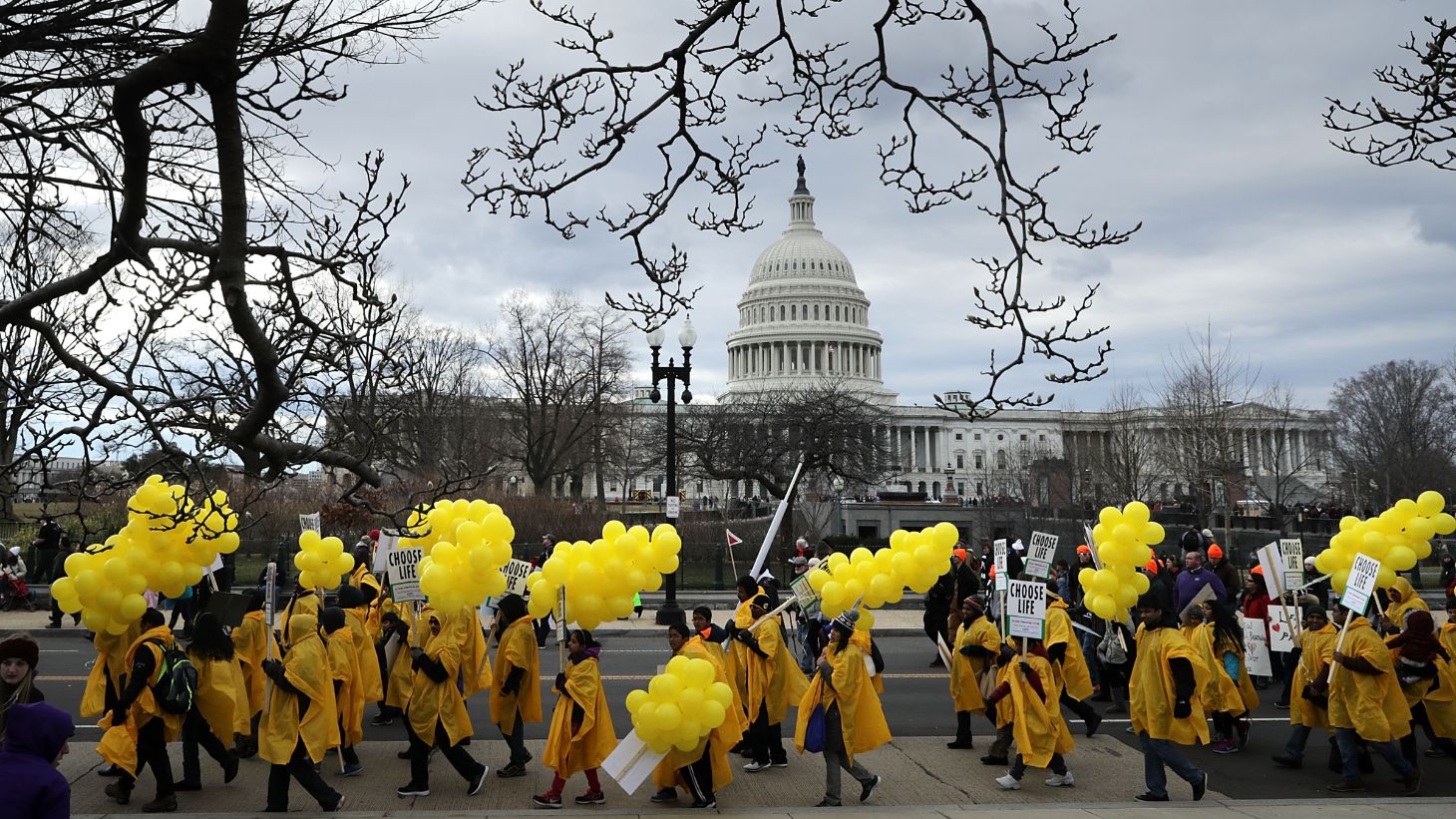
Chip Somodevilla / Getty Images

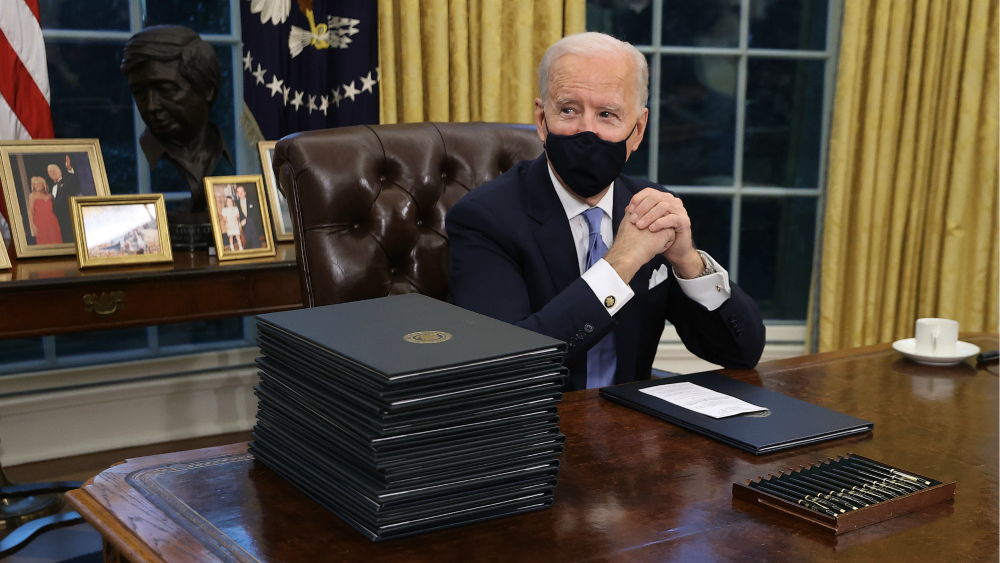
Though reversing restrictions on abortion access was not among more than a dozen executive actions signed by President Joe Biden on his first day in office, it’s only a matter of time before the new administration follows through on its pro-choice platform.

While pro-life groups cheered efforts by the Trump administration to stand against abortion, the incoming president pledged to uphold abortion rights, and Biden is due to overturn the Mexico City policy—which bars the government from funding organizations outside the US that perform abortions—“in the coming days and weeks,” according to the White House press secretary.

What can Christians do to continue promoting the sanctity of the unborn while Biden is in office?

As groups opposed to abortion come together to mark the anniversary of Roe v. Wade and National Sanctity of Human Life Day this weekend, under the new administration, “the bottom line is everything is different,” said Mallory Quigley, vice president of communications for Susan B. Anthony List.

While measures like the Mexico City policy get reversed and reinstated every time a different party assumes the White House, advocates like Quigley consider Trump “the most pro-life president in history” for his efforts to expand typical anti-abortion policies. His administration went beyond the Mexico City policy to offer an additional $8.8 million for international health programs that do not promote abortion. It further restricted Title X funding, barring it not just from covering abortion itself but from going to any clinic that makes abortion referrals.

Similarly, Biden represents a particularly ardent stance in favor of abortion access, going beyond what we’ve seen among previous Democratic presidents. During the campaign, Biden withdrew his support for the Hyde Amendment, which bans the use of federal funds for abortion except in cases of rape, incest, or life-threatening circumstances. He also pledged to codify Roe v. Wadeinto federal law and restore federal funding to Planned Parenthood.

As California attorney general, Vice President Kamala Harris further regulated pregnancy centers by mandating they provide clients with information on abortions—a law the US Supreme Court overturned in 2018. Harris also opened investigations into the Center for Medical Progress after staff members with the pro-life advocacy group secretly filmed Planned Parenthood executives discussing the sale of fetal body parts.

Her successor as attorney general, Xavier Becerra, continued Harris’s legal investigations and pregnancy care center regulations. Christians opposed to abortion worry that if Becerra is confirmed to lead the Department of Health and Human Services, he’ll similarly push for restrictions on advocacy groups and pregnancy centers.

Even with abortion rights advocates securing the White House and majorities in the House and Senate, Christian groups against abortion still believe there are political, cultural, and spiritual resources at their disposal.

First of all, they don’t plan to stay silent now that that pro-life lawmakers are in the minority on the federal level. Before laws and policies can change, the movement must change the narrative around abortion, said Denise Harle, senior counsel with Alliance Defending Freedom.

“Christians should stand up and defend the ability of pro-life advocates to speak,” Harle said. “Women who are considering abortion often do so because they ’ve been told they don’t have any real options. Pregnancy centers provide real hope and practical support to women who often feel they have neither, and Christians should come alongside them offering the same.”

Without control of Congress and the executive branch, pro-life groups see state-level legislation as holding more promise for change.

In November, for example, Louisiana approved an amendment stating that no right to abortion is found in the state Constitution, with 62 percent support from voters. Iowa is currently considering a similar move.

Already this year, several states have introduced abortion restriction bills. Idaho has proposed denying state funding to abortion providers. Montana now has a Republican governor who is expected to back lawmakers’ efforts to prevent abortions after 20 weeks gestation and require each expectant mother to view an ultrasound of her fetus.

In South Dakota, the governor has backed banning abortions of babies with Down syndrome. (Some pro-life disabilities advocates, though, have suggested such “selective abortion” laws aren’t an effective strategy.) And, following earlier restrictions, Missouri reportedly became the first state in the country to no longer perform abortions.

“State legislatures are a much more promising venue for pro-life initiatives than a Democratic Congress,” said David Skeel, professor of corporate law at the University of Pennsylvania Law School. And though the Supreme Court might not be sympathetic to overturning Roe v. Wade, Skeel believes its current composition will be sympathetic to abortion restrictions.

While public advocacy and legal strategies are critical to protecting the unborn, laws alone are not enough. Christians opposed to abortion continue to prioritize the power of the gospel witness as the greatest potential for change in their communities.

“We often talk about ‘defunding Planned Parenthood,’ but the easiest way to do this is by Christians not [having] abortions,” said Roland Warren, president of Care Net, the evangelical pregnancy center network. “Christians have the power to defund Planned Parenthood regardless of what the Biden-Harris administration does.”

Warren cites that many who have had abortions—2 in 5 according to Focus on the Family—were attending church at least monthly at the time of their abortions, emphasizing the need for greater support and discipleship.

During a time when the administration’s policies may lead to promoting abortion and abortion clinics, pro-life pregnancy centers are implementing changes to try to become more accessible and open to women in need. Recently Focus on the Family expanded its My Choice Network, an online network that allows women in the top 10 abortion cities in the nation to find pregnancy resource centers.

The ministry has also offered grants to pregnancy resource centers to update and redesign their websites to allow for online appointment booking. “Those of us who believe that every life should be protected under law should be utilizing and leveraging all available technology to meet and serve women where they are,” said Jim Daly, CEO and president of Focus on the Family.

CT reported last year on how pregnancy centers are rethinking old models and improving community engagement, partnerships, and even their design in order to become more effective.

Above all, Christians opposed to abortion have emphasized the importance of their continued witness amid changes in politics and policies.

“Christians should endeavor to be known as people who will stand in the gap for vulnerable people, loving them for the long term, and committing to the flourishing of the people in our local neighborhoods,” according to Chelsea Patterson Sobolik, policy director at the Southern Baptist Convention’s Ethics & Religious Liberty Commission. “When we humbly serve, in private and in the public square, our actions say something about who God is and what he cares about.”

News

Word or Deeds: Shiite Firebrand Pledges to Restore Iraqi Christian Property

Christians welcome the “solidarity” of controversial anti-American politician and militia leader in advance of expected visit by Pope Francis.

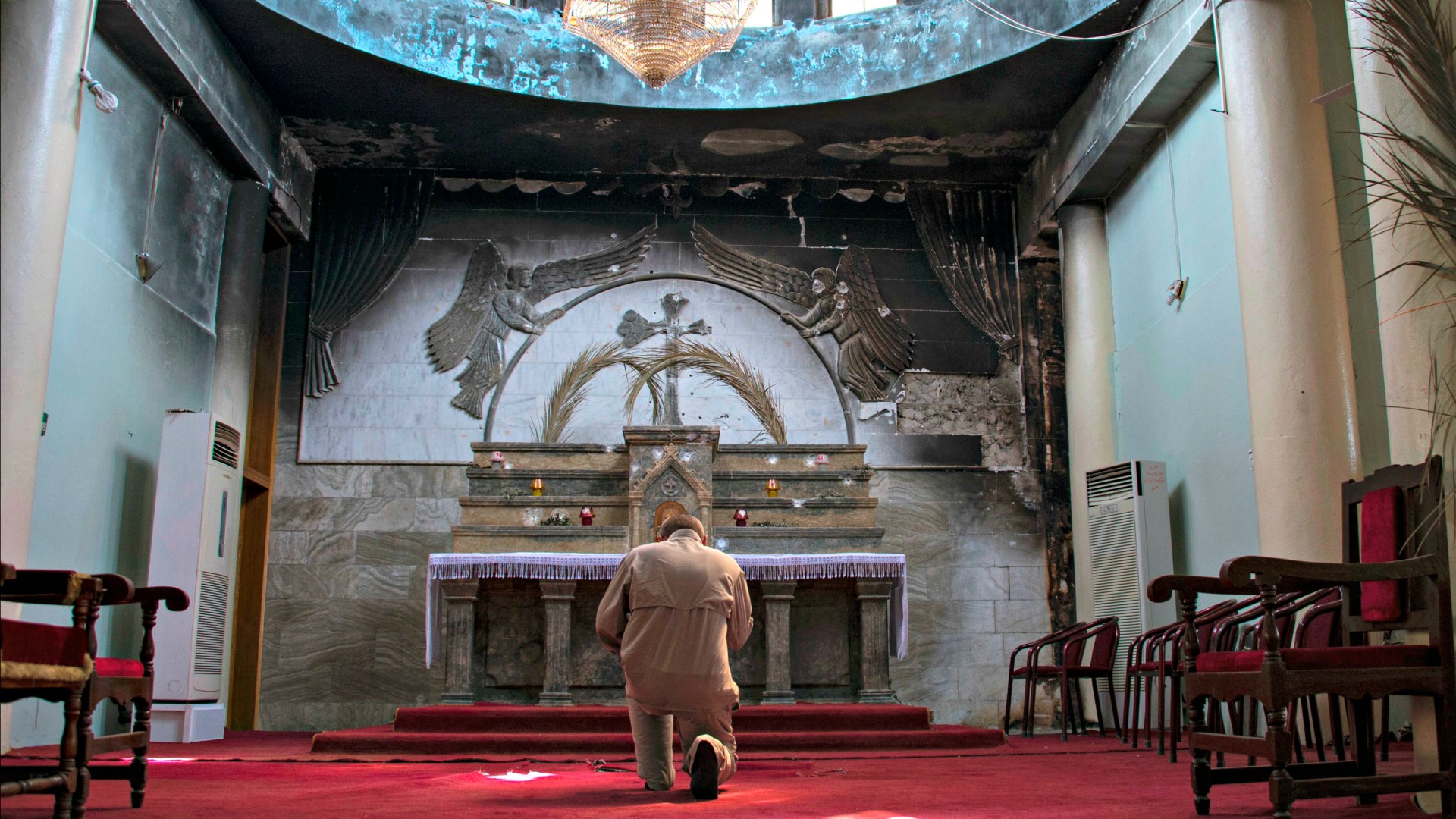
An Iraqi Christian prays in a church in Qaraqosh, a city in the Nineveh Plains near Mosul, in May 2017.

An Iraqi Christian prays in a church in Qaraqosh, a city in the Nineveh Plains near Mosul, in May 2017.

Christianity Today January 21, 2021
Fadel Senna / AFP / Getty Images

If Pope Francis can avoid the complications of COVID-19 travel and get to Iraq in March, he will hear a lot about stolen property. Muqtada al-Sadr, a leading Shiite politician fiercely opposed to the US military presence, has told Christians he will do something about it.

The issue is not new.

As Iraq’s pre-Gulf War Christian population of 1.25 million dwindled to about 250,000 today, opportunistic non-Christians laid claim to their unoccupied homes and lands. The city of Mosul, next to the traditionally Christian Nineveh Plains—where Pope Francis is scheduled to visit— located 220 miles north of Baghdad, provides telling examples of the problem.

In 2010, in the waning days of official US occupation, Ashur Eskrya’s father decided to sell his family home. Years of chaos had depleted the once 60,000-strong Christian population of Iraq’s second-largest city, representing 10 percent of its total. Property values were plummeting. Especially in hindsight, Eskrya felt fortunate to get 25 percent of its market value.

Four years later, his neighbor got nothing.

ISIS invaded Mosul, putting its Christian population to flight. In 2015, the International Organization for Migration (IOM) surveyed 240 individuals displaced by the fighting throughout Iraq. Nearly 9 in 10 (89%) had their homes confiscated.

A 2014 study estimated that ISIS made more money from selling stolen real estate than it did from oil revenue.

After the liberation of Mosul, some Christians returned, including Eskrya’s neighbor. While 42 percent had lost their property documentation altogether, according to IOM, the neighbor was able to enter a lengthy legal process and eventually regain ownership of his home.

But uncomfortable with the security situation, he returned to Erbil, 55 miles east of Mosul in Iraqi Kurdistan, where thousands of displaced Christians still reside.

He lives there today with his children, which is more than a third family can say.

This neighbor benefited from Mosul’s earlier oil boom, and lived in a home valued at $1.2 million in one of the plush city districts. But in 2006, his daughter was kidnapped and killed. In 2012, another daughter tried to emigrate through Syria, and was killed there.

The parents eventually moved to Australia—with the deed to their home. But last year, they were stunned to receive news from neighbors about new renovations. A company was redesigning the home, and presented a deed of ownership.

The case is now being adjudicated in court.

“There are many cases like these,” said Eskrya, president of Assyrian Aid Society–Iraq. “False papers are sold by those connected to influential figures in the justice ministry, who oversee the real estate market.”

Even prior to ISIS, the IOM study noted at least 600 confirmed cases of property seizure in Mosul, mostly from Christian owners residing in the diaspora. Justice Ministry issues began as early as 2006. The official Iraq Property Claim Commission has only been able to enforce 8 percent of its final rulings.

Both the church and the government have tried to rectify things, Eskrya said.

As a safeguard for Christian property, in 2010 a regulation was established requiring sales to be signed by either a church representative or Christian member of parliament.

And in 2017, after the defeat of ISIS, the government created a commission with official church representation that was able to resolve some cases.

“The government is very busy with the elections, the problem of security and militias, as well as the pandemic and the economy,” Raphael Sako, patriarch of the Chaldean Catholic Church based in Baghdad, told CT.

“For them, this is something marginal, and we understand that.”

Recognized as the second-most influential religious figure in Iraq through a study conducted by the US Institute of Peace, Sako consistently meets with national leaders to urge the application of citizenship and rule of law.

Last year, he canceled Christmas to object to the killing of nonsectarian protesters demonstrating against corruption. But this past Christmas, the government honored his longstanding petition, making the holiday a permanent national celebration.

Sadr, the Shiite cleric, sent a representative to offer congratulations, who presented Sako with a new initiative.

Head of the largest political alliance with 16 percent of the parliament’s seats, Sadr also commands the allegiance of many Shiite militia groups. Following the US killing of Iranian general Qassem Suleimani, he led hundreds of thousands of demonstrators to peacefully call for Iraq to expel the American military.

Sadr’s envoy provided Sako with details of how Christians can submit their ownership documents electronically, pledging to achieve justice for their claims. He emphasized this includes properties involving his aligned militias.

“This is the job of the government, not Sadr or a political party,” Sako said, while welcoming the initiative. “But it is a good sign of solidarity.”

Eskrya agreed.

“Sadr alone is not enough, it has to be adopted by parliament and all the parties,” he said. “But we are happy with anyone who tries to help, and I hope that in the end it will show Christians that they still have a place in Iraq.”

Prior to Christmas, Bashar Warda lamented the frustrating lack of progress.

“There is no redress for those who have lost properties, homes, and businesses,” stated the Chaldean Catholic archbishop of Erbil.

“[Many] Christians have nothing to show for their lives’ work, in places where their families have lived, maybe, for thousands of years.”

Given Sadr’s connection to the militias, his initiative has been met with some skepticism. And the US State Department’s International Religious Freedom Report noted another member of parliament who actively facilitated the relocation of Iraqi Sunnis and Shiites into Christian areas, through aligned militias.

But as early as 2016, Sadr was speaking out on behalf of Christian properties.

It may be that he can make a difference.

“This committee shows he is serious, and gives a message to the other militias,” Eskrya said. “And while it has raised awareness of the issue, it is still a sort of gang system, and people suffer if they don’t have good connections.”

As a politician, Sadr has been wily. Often alternating his alliances and political stances, he first supported the nonsectarian protests against corruption, then sent his supporters to attack them. While this action contributed to the eventual petering out of the movement, the demonstrations still forced the resignation of the prime minister and early parliamentary elections.

Both Eskrya and Sako suspected the initiative may be part of Sadr’s effort to position himself as a neutral figure, eyeing next year’s vote.

Sako told CT his lawyer is currently working with the government on about 1,250 cases of confiscated property. Only 50 have been solved so far, though other private initiatives have reported some success.

Several of these files were shared with Sadr.

“They will try,” said Sako. “But we are expecting deeds, and not only words.”

Meanwhile, the patriarch awaits the visit of Pope Francis.

The pontiff has now put his trip to Iraq in doubt, wary of COVID-19 transmission among the expected large crowds. But last week, the Vatican issued an official logo and motto for the visit: “You are All Brothers,” taken from Matthew 23.

“Pope Francis will encourage Christians to persevere, to hope, and to trust their neighbors,” said Sako. “But he will also speak with political and religious authorities about harmonious coexistence.

“They must take care of these Christian issues—as they should for all citizens.”

News

Immigration Ministries Praise Biden’s Day One Priority

Proposed legislation would give 11 million a path to citizenship and prioritize keeping families together.

Christianity Today January 21, 2021
Chip Somodevilla/Getty Images

Evangelical advocates for immigrants and refugees were encouraged by President Joe Biden’s decision to send proposed reforms to Congress on his first day in office. Just hours after he was sworn in, Biden unveiled the US Citizenship Act of 2021.

“I see it as a positive sign,” said Matthew Soerens, national coordinator of the Evangelical Immigration Table. “The new administration is leading on this issue as a day one priority.”

Soerens and others have not yet reviewed the bill that will be sent to Congress but say the proposed legislation is the beginning of a long process toward much-needed reform.

According to the White House, the legislation is “centered on the basic premise that our country is safer, stronger, and more prosperous with a fair and orderly immigration system” and places a priority on keeping families together.

Biden’s plan represents a sharp U-turn after four years of strong opposition to immigration and a policy of making the process more painful, captured most vividly by the separation of thousands of children from their parents under a “zero tolerance” policy on illegal border crossings. Former president Donald Trump’s administration also took hundreds of other steps to enhance enforcement, limit eligibility for asylum, and cut legal immigration.

Biden’s proposals also breaks from Barack Obama’s approach. The former Democratic president promised a sweeping bill but waited five years to introduce it while logging more than 2 million deportations.

World Relief welcomes the change and said a reform bill could help the country live up to its ideals and values.

“We firmly believe that America has a moral imperative to welcome refugees, asylum seekers and other immigrants once again into our nation,” said CEO Tim Breene. “Our hope is that Americans, regardless of political party, will set aside their differences and come together to rebuild an immigration process that will reflect the best of American values and the biblical values that guide many Americans.”

Path to citizenship

The legislation proposes an eight-year path to citizenship for all undocumented immigrants currently in the country. They would first be given documentation—a work permit. Then, after five years of working, paying taxes, and not committing any crimes, immigrants would be eligible for permanent residency, or a green card. Three years after that, immigrants could apply for full American citizenship.

The legislation would also increase the use of technology to enforce security at the border and includes plans to address the root causes of the rising rates of migration from Central America.

Children who were brought to the US in infancy would be eligible for green cards immediately. Going forward, the US would prioritize family reunification when granting visas. Christian organizations have consistently voiced support for both approaches.

“As Christians in America, we should advocate for an immigration system that proves we love people like God loves people,” said Chris Palusky, president of Bethany Christian Services, which uses financial grants from the federal government to help shelter and settle unaccompanied minors.

Observers don’t expect the proposed Biden bill to pass through Congress without changes. There will undoubtedly be some pushing and pulling as legislators tussle over priorities.

Palusky is calling on the nation’s political leaders to seize this moment and come together in a constructive give and take.

“Congress and the Biden administration should make clear to the American people that finding common ground by reforming a broken, unjust immigration system benefits all of us,” he said.

Republican support needed

While Democrats hold a majority in both the House and Senate, the legislation will still need some Republican support to pass. Alex Nowrasteh at the libertarian Cato Institute said that Biden’s proposals will undoubtedly see pushback, but the simplicity of the bill bodes well for an actual discussion.

“The good political part of this bill is that Democrats are finally playing hardball on immigration [and not] presenting legislation already laden with compromised positions,” Nowrasteh wrote. “Instead, they will start with a cleaner and simpler bill and then ask what other senators and congressmen need to get on board, which will no doubt be a lot of expensive security signaling along the border.”

During the Trump years, Americans grew more favorable toward immigration. Gallup polls show that in 2016, about 20 percent of Americans supported more immigration. By 2020, that number had climbed to 34 percent—higher than at any time since the polling firm first started asking the question in 1965.

The Associated Press reports that 71 percent of voters also support the idea of a path to citizenship for immigrants in the country illegally, compared to about 3 in 10 who prefer a program of deportation.

Many Republicans have moved more to the right on the issue, however, prioritizing border security to the exclusion of everything else. Some conservatives, including Senator Josh Hawley and Senator Tom Cotton have already indicated they will oppose Biden’s plan if it doesn’t include increased funding for immigration enforcement.

But since Biden proposed this bill on the first day, the politicians have time to work things out, Soerens said. He will be “watching, praying, and advocating” for progress, in hopes that both sides will come to the legislative process in good faith, with the goal of achieving real reform.

Samuel Rodriguez, head of the National Hispanic Chrisitan Leadership Conference and a former Trump adviser is also calling for a serious, bipartisan effort.

“Democrats and Republicans have all agreed for decades that our immigration system is deeply flawed. It is time to finally comprehensively address these concerns,” Rodriguez said. “Immigrants enrich every sector of society and every aspect of American life. They can no longer be Democratic pawns or Republican pawns in political gamesmanship. Each is made in the image of God and acknowledging their dignity begins with addressing their concern.”

While Congress works out the details of the legislation, Biden has signaled he will immediately repeal or replace many of the changes Trump made by executive order, beginning with the ban on travelers from majority Muslim countries. The administration is said to be considering the various countries eligible for temporary protected status as well as increasing the number of refugees the US admits after the previous administration slashed refugee resettlement to historic lows.

Aid for Central America

Christian advocates for immigrants and refugees are also encouraged that the Biden Administration’s proposal includes substantial aid for Guatemala, Honduras, and El Salvador, in an attempt to address the violence and instability that has caused much of the recent increase in migration. The proposal calls for $4 billion infused into remedies, including foreign aid.

For organizations like the Association for a More Just Society, this is good news. “Central Americans are our neighbors and people looking to migrate are hungry, thirsty and scared after a year of unique challenges,” said Jill Stoltzfus, executive director of the organization that works on human rights issues in Honduras. “We believe aid to the Northern Triangle should be restored so that organizations can effectively confront violence and poverty.”

According to Stoltzfus, the desperate situation of many potential migrants has grown worse than ever with the pandemic and natural disasters, and local civic institutions are in dire need of support. She said that strategic foreign aid to organizations with proven track records strengthening civic institutions in the countries of origin is an effective way of stemming the migrant crisis before it starts, and she and others hope the new administration will embrace this more compassionate approach to America’s global neighbors.

Whatever the administration does, however, the call to Christians remains the same.

“God instructs us to see ourselves when we look in the eyes of the vulnerable,” Stoltzfus said, “and to respond with love.”

Additional reporting from the Associated Press.

Books
Review

Winston Churchill Fought for ‘Christian Civilization,’ but He Rarely Went to Church

A new biography sorts through the British prime minister’s enigmatic faith.

Christianity Today January 21, 2021
Popperfoto / Getty Images

In the popular Netflix series The Crown, Winston Churchill first appears at the 1947 wedding of Princess Elizabeth. Two years removed from leading Great Britain to victory in World War II, the former prime minister enters Westminster Abbey to the sound of a patriotic hymn by Cecil Spring Rice: “I vow to thee, my country, all earthly things above, / Entire and whole and perfect, the service of my love.”

Duty and Destiny: The Life and Faith of Winston Churchill (Library of Religious Biography (LRB))

Tellingly, we don’t hear the second verse, which turns from the United Kingdom to God’s kingdom: “We may not count her armies, we may not see her King; / Her fortress is a faithful heart, her pride is suffering.” The Crown’s way of introducing Churchill may be one of the many liberties that series takes with British history, but it seems appropriate for a politician who was more devoted to his country’s system of government than to the doctrines of the church that Elizabeth still heads.

If you’re enough of a Churchill fan to have devoured Andrew Roberts’s magisterial 2018 biography and yet wanted to read more about religion than Roberts’s brief but trenchant discussion of that topic, you may want to pick up Gary Scott Smith’s short study Duty and Destiny: The Life and Faith of Winston Churchill, part of the Library of Religious Biography series from Eerdmans. (My own entry in the series releases later this year.) The book portrays a statesman driven both by duty to country and empire (“the service of my love”) and by what Smith calls “a profound sense of his own destiny.” Yet the answer to “who or what he believed determined his destiny—God or fate—is ultimately unclear.”

If not a groundbreaking work of original research, Duty and Destiny does manage, in Smith’s words, to synthesize “the many contradictory opinions expressed … by the army of Churchill biographers” about a story of faith that was “complex, colorful, and compelling.”

Unconventional Faith

Alas, only the first of those three adjectives consistently describes Smith’s book. While the writing is workmanlike, we can expect more eloquence and verve from a biography of such a master of the English language.

In addition, readers hoping for a conventional biographical structure may be frustrated that Smith’s telling of Churchill’s life story doesn’t start until chapter 3 or that so important a topic as Churchill’s marriage appears very late, in a chapter on his retirement years. But at least some of that scene setting is necessary, in part to orient American readers to the religious and political terrain of a country that Churchill believed to be a Christian nation, though not in the way many American evangelicals would understand that phrase. (Having previously published histories of religion in the American presidency, Smith does well at several points in Duty and Destiny to draw helpful contrasts between the unconventional faith of Churchill and that of his ally Franklin D. Roosevelt, a committed Episcopalian who was the subject of an earlier entry in Eerdmans’s religious biography series.)

Far less devout than William Wilberforce, Margaret Thatcher, and the other Christian politicians sketched in chapter 2, Churchill nonetheless staunchly supported the establishment of churches whose doors he rarely darkened (save for occasions like royal weddings) and drew freely on the language of Christianity. Indeed, Smith’s analysis is most complex and compelling when it turns to Churchill’s colorful use of religious rhetoric, a hallmark both of his “locust years” in the 1930s, when he cried out from his political “wilderness” like “an Old Testament prophet,” and during the Second World War, when speeches “peppered with references to God … citations and allusions to Scripture, and images of spiritual warfare between good and evil and light and darkness” sought to “inspire, comfort, and assure beleaguered Britons of their eventual triumph.” What such public communications say about Churchill’s private convictions is harder to determine, especially when he “had little to gain politically from revealing what he truly believed.”

Yet while Smith is surely right that “we will never know definitively what anyone believes in his or her heart of hearts,” readers can expect biographers to do more than catalogue the divergent opinions of previous authors. To his credit, Smith doesn’t shy away from one conclusion that will disappoint some of his Christian readers: For all his invocations of “Christian civilization” and “Christian ethics,” Churchill did not believe in the divinity of Jesus Christ, a figure he mentioned just once, by Smith’s count, in five million words’ worth of speeches. At most, the prime minister did “precisely what his contemporary C. S. Lewis … insisted that people could not logically do: profess that Jesus was a great moral teacher while denying his claim to be God.”

While Churchill seemed to hold shifting beliefs about the existence of God, the nature of the afterlife, and the veracity of Scripture, his views on Jesus may have been fixed as early as the late 1890s. During his military service in India, a 23-year-old Churchill read skeptics like Edward Gibbon and William Winwood Reade, debated theology and metaphysics with fellow officers, and scorned Christian missions. (That last critique, at least, didn’t last long. Just over a decade later, as a rising young parliamentarian, Churchill praised missionaries like those who had made central Africans “clothed, peaceful, law-abiding, [and] polite.”)

If only Smith would have returned more often to India, whose control by Britain Churchill “fervently defended” long after that stance became “a major political liability.” He agrees that Churchill’s commitment to the Empire “has rightly been criticized as retrogressive, racist, repressive, and repulsive” and concedes that his imperialist values “seem to clash with Christianity’s emphasis on service, sacrifice, and racial and gender equality.”

But Smith is too quick to exonerate his subject for his treatment of India. I’m not sure Churchill deserves any credit for having “correctly predicted the strife between Hindus and Muslims” that attended the independence he opposed, given that he was one of those “British imperialists who strove to create animosity” between South Asia’s largest religious groups. Smith does note that Churchill “decried [Mohandas K. Gandhi] as a seditious Hindu holy man,” but that passing comment understates the British leader’s animosity toward a man he called “a malignant, subversive fanatic” and falsely accused of faking a three-week fast in 1943.

An Imperial Creed

Of course, that’s the same year that three million Indians starved to death under British rule. Smith quotes historian Arthur Herman’s conclusion that the Bengal famine “would have been far worse” without the British aid that eventually arrived, but he overlooks Herman’s more conflicted evaluation in Gandhi and Churchill: Confronted with “the greatest humanitarian crisis the Raj had faced in more than half a century,” Britain’s wartime leader “proved callously indifferent” and “irrational.” He was “resolutely opposed to any food shipments” at a time when ships were needed for military operations against the Axis powers. Disgusted that his boss seemed to view such humanitarian aid “as an ‘appeasement’ of” Gandhi’s independence movement, Churchill’s handpicked viceroy, Archibald Wavell, had to threaten resignation to change the prime minister’s mind.

This is no tangential matter for a religious biography of Winston Churchill. “Central to many key decisions of his life,” wrote Andrew Roberts, was “this belief that Britain and her Empire were not just political entities but also spiritual ones.” Smith quotes this observation as part of his survey of writings on Churchill in chapter 1, but he doesn’t adequately reckon with it. While he’s surely right to hesitate in ascribing many traditional Christian beliefs to Churchill, Smith would have done well to wrestle more with Roberts’s conclusion that “imperialism was in effect a substitute for religion. … In the absence of Christian faith, therefore, the British Empire became in a sense Churchill’s creed.”

Christopher Gehrz is professor of history at Bethel University in St. Paul, Minnesota. His religious biography of Charles Lindbergh will be published by Eerdmans in August.

News

Biden Invokes Augustine in Call for American Unity

Prayers, Bible verses, and reference to the ‘City of God’ set the stage for the inauguration of a Catholic president.

Christianity Today January 20, 2021
Jonathan Ernst-Pool / Getty Images

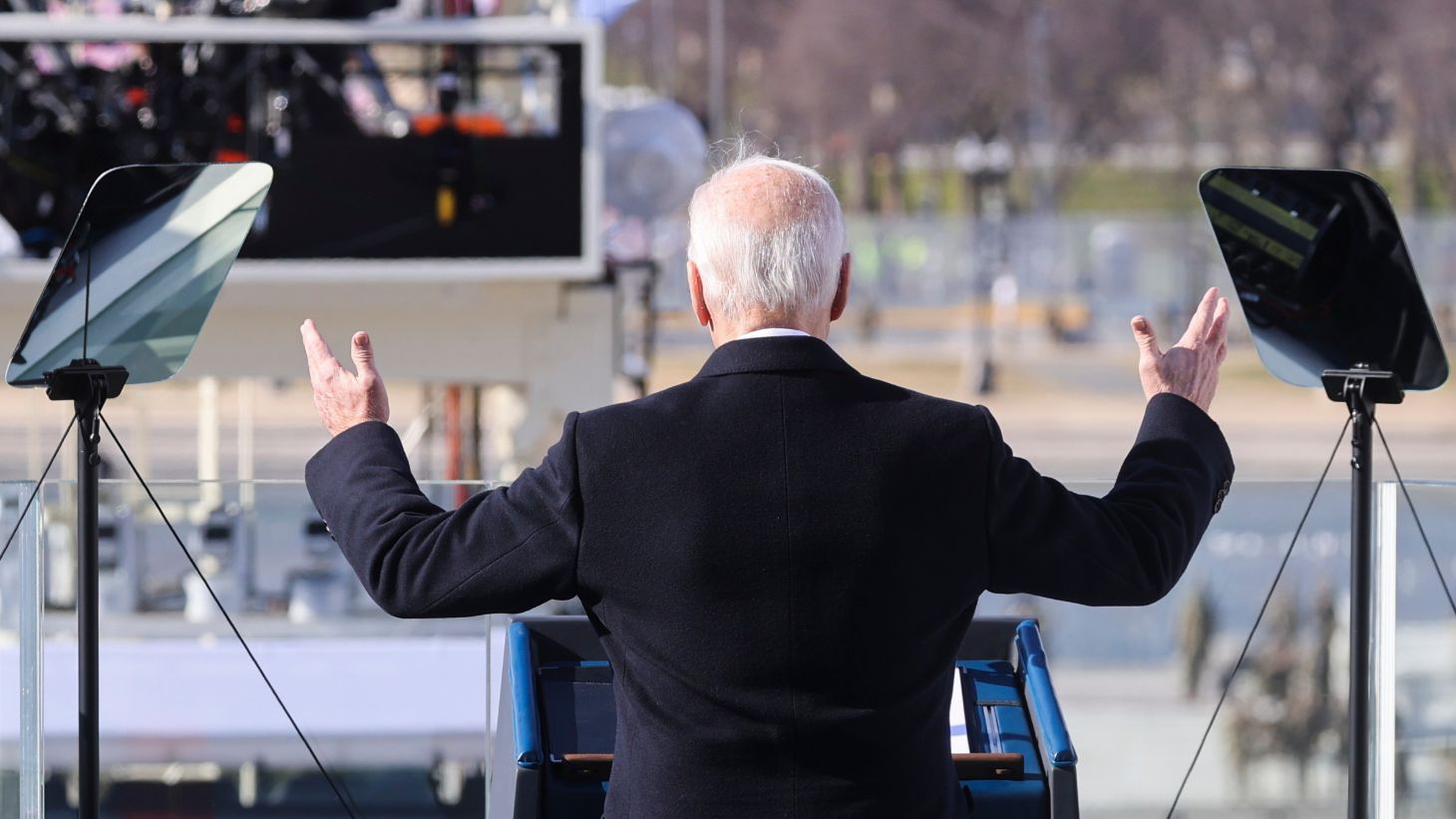
In his inaugural address calling for national unity, President Joe Biden turned to Christian teachings, including the Psalms and Saint Augustine, to acknowledge the pain of the current political moment and his desire to bring Americans together around common values.

Despite the adjustments made to this year’s ceremony, the event offered the typical display of American civil religion—prayers and appeals to national aspirations—with nods to Biden’s Catholic faith throughout.

In his first remarks as president, Biden continued to use the “soul” language that was the mantra of his campaign, saying, “My whole soul is in this, bringing America together, uniting our people, uniting our nation, and I ask every American to join me in this cause.” He acknowledged that, “speaking of unity can sound to some like a foolish fantasy these days. I know the forces that divide us are deep and they are real,” but told Americans that “history, faith, and reason show the way of unity.”

Michael Wear, founder of Public Square Strategies LLC and a previous White House staffer, called the inaugural address “a soulful appeal for a substantive unity” and the best speech of Biden’s life.

“It drew on the deepest sources of meaning Biden could draw on, including faith,” said Wear, who served under President Obama. “Biden was honest in the speech, acknowledging that unity would not be found in agreement on every policy proposal, but in shared purpose and affection.”

As Biden listed America’s common values, like opportunity, security, liberty, dignity, respect, honor, and the truth, he quoted a teaching from Augustine—“a saint of my church”—that “a people are a multitude defined by the common objects of their love.”

The church father shared this view in City of God, where he presented love, not law, as the thing that binds a society together. He taught that “the soul takes on the character of what it loves,” writing, “to see what a people is like, we should look at what they love.”

“It’s apropos for him to use this quote because Augustine’s talking about people as a nation,” said Han-luen Kantzer Komline, an Augustine scholar at Western Theological Seminary. “It’s also kind of a brilliant move to invoke Augustine. Biden is a Catholic, and Augustine is probably the most important theologian for Catholics apart from the apostle Paul himself, but he’s also really important for Protestants.”

But she points out that Augustine also taught that an appeal to common loves, even good ones, is not enough to foster a virtuous society; that requires love of God above all else.

James K. A. Smith, whose book You Are What You Love is based on Augustine’s teaching, also celebrated Biden’s reference.

https://twitter.com/james_ka_smith/status/1351938862659080207

In his address, President Biden went on to quote Psalm 30:5, “Weeping may endure for a night, but joy cometh in the morning.”

“What’s remarkable is not that he quoted the psalms. Plenty of presidents have quoted the psalms in their inaugural speeches, from Woodrow Wilson to Barack Obama. What’s remarkable is how doubly apt his choice was,” said W. David O. Taylor, author of Open and Unafraid: The Psalms as a Guide to Life. “It not only accurately describes the desire of so many Americans, namely that this time of trial come to a certain and swift end; it also aptly describes the story of the psalmist who goes into trouble and comes out of trouble.”

Taylor, a Fuller Theological Seminary professor, noted that Psalm 30 is haunted with death imagery before inviting the community to praise God and expect him to turn their “mourning into dancing.”

https://twitter.com/wdavidotaylor/status/1351951031651983360

“At the moment, for us as Americans, this is aspirational language. We’re not there yet. But Biden sounds the right note by giving voice to the yearning of every human heart, not just during these trying and troubling times, but at every time and in every place where God has rescued us from death into life,” he said.

Biden repeatedly brought up the strain of the COVID-19 pandemic, including asking Americans to join him in a moment of “silent prayer” to remember the lives lost.

The ceremony also included prayers from two members of the clergy: Jesuit priest Leo O’Donovan and African Methodist Episcopal preacher Silvester Beaman—a smaller lineup than the six clergy that spoke at Trump’s 2016 inauguration. It was the first inauguration ceremony in nearly fifty years to not include a white Protestant leader. (Biden’s cabinet nominees are mainly Catholics, Jews, and nonwhite Christians; Pete Buttigieg, an Episcopalian, is the only white Protestant among them.)

O’Donovan, former president of Georgetown University in DC, quoted 1 Kings 3:9 and James 1:5 as he prayed. “For our new president, we beg of you the wisdom Solomon sought when he knelt before you and prayed ‘for an understanding heart so I can govern the people and know the difference between right and wrong,” he said. “We trust in the counsel of the letter of James ‘If any of you lacks wisdom, you should ask God, who gives generously to all without finding fault, and it will be given to you.’”

In a benediction that referenced the place of slaves, indigenous Americans, and immigrants in the US, Beaman charged the country to work against sin and brokenness. “We will make friends of enemies. Your people shall no longer raise up weapons against one another,” he said. “We will lie down in peace, not make our neighbors afraid. In you, O God, we discover our humanity.”

Viewers also celebrated the Christian references offered by the young African American poet laureate who read a composition called, “The Hill We Climb,” written in the wake of this month’s Capitol attack.

“I am no fan of civil religion, but I appreciate that Biden’s faith informs his work and that Scripture motivates him, as it also inspired the words of the poet laureate, Amanda Gorman,” remarked Dennis Edwards, New Testament professor at North Park Theological Seminary.

Kathryn Freeman, a seminary student at Baylor University, agreed.

“The line that stood out the most for me was ‘If we merge mercy with might and might with right, then love becomes our legacy and change our children’s birthright.’ We need both. Mercy without might is weak; might without mercy is abusive. According to Micah 6:8, we need both plus humility to what is good in the eyes of the Lord,” she said.

“Politics is not everything, but it does present an opportunity to right wrongs, to love our neighbor, and bring flourishing for all God's children. Amanda's poem was a beautiful reminder of the best of our American ideals and the hope of an America as good as its promise.”

Church Life

What the Black Robe Regiment Misses About Revolutionary Pastors

Christians calling for clergy to rise up against the government should take a closer look at the complex approaches by America’s early preachers.

Christianity Today January 20, 2021
Spencer Platt / Getty Images

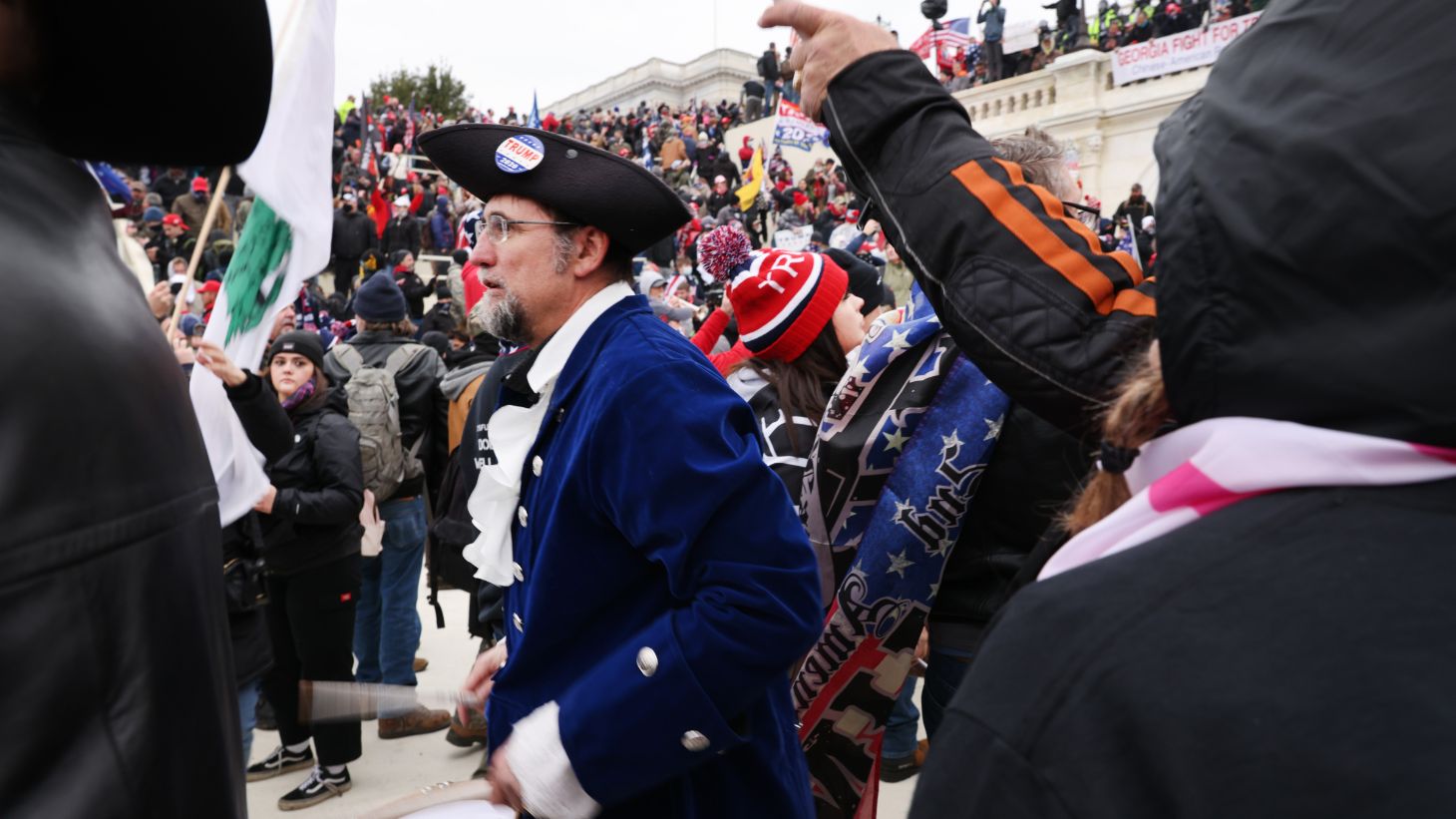
At last month’s Jericho March on Washington, the head of a group called America’s Black Robe Regiment recounted stories about clergy who trained their men to fight in the Revolution and likened their situation to efforts to overturn the 2020 presidential election.

“Where are our pastors today in this battle?” asked Bill Cook, a Virginia minister who was introduced at the event by Eric Metaxas.

Other ministers—including Greg Locke, who prayed at a January 5 rally in Washington—have recently evoked the black robe regiment term and history when calling on pastors to take bolder stances in defense of liberty. A quick Google search reveals several smaller organizations that have also taken up the mantle.

It’s become a rallying cry among a small subset of Christians, some of whom have even used it as a defense for storming the Capitol and some of whom anticipate a literal call to arms during the current unrest.

The main sources for initially popularizing the term seem to be the media personalities Glenn Beck and David Barton. Both have connected their political appeals back to the American founding. In a 2010 rally, Beck called on ministers to form a new “black robe regiment” to proclaim American principles from the pulpits.

Beck appears to have gotten the phrase from Barton, whose WallBuilders Ministry emphasizes the Christian foundation beneath “America’s forgotten history and heroes.” In this approach, patriotism should shape sermons’ content.

A Time for War and a Time for Peace

Many readers may have never heard of the black robe regiment, whether current or historical. Metaxas admitted he wasn’t very familiar with the phrase when he handed the mic over to Cook at last month’s rally, and few raised their hands when he surveyed the pro-Trump crowd for their familiarity.

As a historian of the American Revolution, I want to pause and review how these recent claims line up with what we know about the past. Now, it is true that there was much ministerial support for the American Revolution. Such support mattered quite a bit, given the publicly religious character of the colonies, especially New England, and ministers helped shape how their congregants interpreted events.

In New Jersey, Princeton College’s devout president, John Witherspoon, openly advocated for independence. He preached from his Presbyterian pulpit that the Revolution was a just cause in God’s sight. And he’s remembered as the only clergyman to sign the Declaration of Independence.

Some ministers preached sermons clearly supporting the Revolution, finding support for independence in all sorts of biblical passages. Others like William Emerson, Philip Vickers Fithian, and Timothy Dwight became army chaplains, slogging with the Patriot forces, preaching to them, and working to keep up both their religious and their political zeal.

During the Revolution itself, two incidents captured this strong support.

In early 1776, with the Revolutionary War ramping up, Peter Muhlenberg was serving as an Anglican minister in Virginia. One Sunday morning, he announced his text from Ecclesiastes 3, “There is a time for everything, and a season for every activity under the heavens.” When he completed his homily, he announced, “This is the time of war.” He threw off his black minister’s robes to reveal a military uniform underneath. He strode out of the sanctuary and called for a recruitment table to be set up outside the church. He soon marched off with the regiment that was raised.

In 1780, Presbyterian James Caldwell was serving as both a chaplain and a quartermaster with the army in New Jersey. During a battle at Springfield, the soldiers were running low on the paper necessary to seat their musket balls on their black powder. Caldwell rode off to a local church and grabbed the hymnals, which featured the songs of Isaac Watts (such as “Joy to the World” and “When I Survey the Wondrous Cross”). He galloped back to the troops and began tearing out pages for the soldiers to use. “Give ’em Watts, boys!” he supposedly instructed. Here, even worship was being weaponized!

So far, it seems there is a lot of backing for political preaching in support of American principles. However, since historians have to tell the whole story, a deeper look at some of the dynamics involved can provide a clearer perspective.

The first thing I notice is that despite these influences, no one at the time spoke of a black robe regiment. As historian J. L. Bell has demonstrated, the phrase is a modification of an insult used by the Loyalist Peter Oliver years after the Revolution. Oliver, who had lost home and position, denigrated New England ministers opposed to royal authority as a “black regiment.” The very usage of the term black robe regiment is itself a misquotation.

Pastoral Responsibility and Reflection

Digging deeper, we find the stories of ministers at the time are even more complex.

Witherspoon, for instance, advocated for independence but was no rabble-rouser. His most famous endorsement of independence came in a sermon, “The Dominion of Providence over the Passions of Men.” The first half is nothing but an explication of the doctrine of Providence. Only when he had established that did he seek to interpret current events as grounded within a larger theological system. He admitted that his address was unusual—he had never before introduced politics at all into a sermon. Even then, he gave a carefully reasoned argument for independence. Further, he informed his congregants that the entire Revolution could go astray and fail; it was not inherently good or virtuous.

Other ministers, however, didn’t always follow Witherspoon’s lead. As historians have studied their sermons, quite a few reveal shockingly bad exegesis of the Scriptures. The connections are tortured, the passages are proof-texted, and other impulses take precedence over the clear meaning of the Scriptures being preached—not a legacy to leave behind!

Even Muhlenberg was separating his military service from his religious leadership. He actively took off his clerical robes to assume a military role. That is, he was less a fighting minister than a minister who was subsequently a soldier, without combining the roles.

Finally, we should remember that there were several other cadres of black-robed ministers. Some eschewed politics altogether and sought to care for their flocks. Moravian missionaries, for instance, worked to shelter the Native Americans in their communities from depredations of both sides.

Meanwhile, Loyalist clergy actively opposed the American Revolution. These articulate ministers—people like Jonathan Boucher, Charles Inglis, Samuel Seabury, and John Joachim Zubly—worked to convince Americans that the safest path for their liberties was in submission to the British crown. They insisted that Christian duty lay in following the monarch. Although marginalized and often muzzled, these ministers still preached their political Loyalism out of a sense of conviction. Theirs, too, was a Scripture-informed interpretation of the American Revolution.

All these factors suggest to me that although many American ministers supported American liberty, the way they did so fell on a spectrum of responsibility and reflection. Further, we have to grapple with the fact that other ministers themselves felt deeply convicted to preach against American independence. These warnings remind us to be careful of how we think of our black-robed brigades today.

Christian Freedom

As an American historian, I’m glad when people value the study of history and seek to find connections between the past and the present. Doing so, however, requires some hard work of investigating and understanding the past on its own terms. Our appreciation of faithful Christians in the past should be tempered by recognizing their limitations and even faults.

Because the American Revolution looms so large in our national mythology, we need to take special care not to rely on stories that merely confirm our prior assumptions. Recognizing these historic complexities might help pastors think about how they direct their political efforts today.

First, I hope they recognize that their greatest calling lies in preaching the gospel, not political punditry. The Good News of the kingdom is of eternal import and so relativizes all our seemingly pressing immediate concerns.

Second, the interpretation and application of biblical truths to political matters works best when handled from within a larger system. Here, Witherspoon’s approach to lead with fundamental principles is a good example. Individual issues (or the policy flavor of the month) shouldn’t predominate. Instead, application has to occur against the backdrop of larger theological thinking about human nature and human systems. A more holistic approach can lead to better and wiser public engagement.

Third, approaching political subjects should bring the recognition that other faithful believers might disagree with our position. In a polarized 2021, just as in a divided 1776, we need to recognize that in any given gathering, people may have come to other political convictions. Careful listening will be required to perceive what principles underlie that opposing belief.

Finally, faithful preaching can point people to the appropriate understandings of freedom. When the apostle Paul wrote in Galatians 5:1, “It is for freedom that Christ has set us free,” he was primarily speaking of Christian liberty or soul liberty—the liberty that comes from being freed from sin. He wasn’t predicting modern democracy but proclaiming something accessible under any government. To support that spiritual reality, other liberties are good and helpful. Religious liberty enables believers to practice their faith in their lives and vocations.

Further, Paul points us to the type of political liberty that we should desire—the freedom to do good. The writings of many of the founders show the appreciation that liberty is not for the individual to do what he or she wants but for the opportunity to serve others. This is a deeper and more substantive liberty that we should all desire.

Altogether, faithful attention to advancing that robust liberty of the soul will serve our communities and our nation the best.

Jonathan Den Hartog is professor of history and chair of the department at Samford University in Birmingham, Alabama. He is the author of Patriotism and Piety: Federalist Politics and Religious Struggle in the New American Nation.

Theology

Failed Trump Prophecies Offer a Lesson in Humility

Instead of persecuting prophets who have apologized, we might do better to join them.

Christianity Today January 20, 2021
Matthew Hatcher / Getty Images

The failed prophecies of Donald Trump’s reelection may have damaged the credibility of the US independent Charismatic wing of evangelicalism more than any event since the televangelist scandals of the 1980s. They have led some outsiders to criticize Christianity itself and rightly call us to introspection.

Don’t misunderstand me: I’m Charismatic myself, and the majority of Pentecostal and Charismatic pastors I know were not paying attention to such prophecies. Millions of online views and shares, though, show that many people were.

The first step toward correcting mistakes is admitting that we have made them. As we approach the inauguration of President Joe Biden, some who prophesied Trump’s reelection remain adamant that they were correct. Perhaps the election was stolen or will be overturned, or in some mystical realm Trump is actually spiritually president. Some just change the subject. Unfortunately, their hardcore followers may settle for that.

Others acknowledge that prophecy must be tested and, by affirming Biden’s win, now tacitly concede that they were wrong. Yet certain prophets have drawn the attention of Charismatics and non-Charismatics alike by publicly confessing that their prophecies were indeed mistaken and extending their apologies.

R. Loren Sandford, Jeremiah Johnson, and Kris Vallotton have recently expressed contrition and even repentance for incorrectly prophesying that Trump would win again in 2020. All three urge us to pray for and work respectfully with the new administration.

Their explanations for how they may have initially misheard God’s voice may help in guarding against similar errors in the future. Meanwhile, those of us who might be tempted to tell them, “I told you so” ought to remember that God requires the same humility from us (Gal. 6:1; 1 Thess. 5:19–20).

Their confessions, along the examples of prophets throughout Scripture, offer some useful cautions about the influence of peer pressure, pride, and presumption—and the need for Christians to remain cautious about predictions and open to correction when their interpretations prove false.

Prophets and Peer Pressure

Sandford, who has an MDiv from Fuller, is the only one of the prophetic voices circulating today of whom I knew several years ago. He has a pretty good track record. I am a witness that, by the beginning of President Trump’s first term, he predicted that an economic crisis caused by circumstances outside the US would shake Trump’s fourth year and that subsequent events depended partly on Trump learning to control his divisive rhetoric.

Yet Sandford eventually fell in line with the prophetic chorus announcing the president’s reelection. He now confesses that he allowed the consensus of other prophets to sway his own heart.

“Up until now, I have always sought the Lord on my own, gotten the word first from him and then, and only then, have I compared it with what others were saying,” he wrote in a public apology last week. “My first confession is therefore that I departed from that discipline. I allowed myself to be caught up in a prevailing stream and to be carried along by it. In doing that, I actually compromised what the Lord had already told me years before.”

Peer pressure can be considerable; a messenger urged Micaiah, “the other prophets without exception are predicting success for the king. Let your words agree with theirs, and speak favorably” (1 Kings 22:13). Micaiah stood alone in proclaiming the truth and was jailed for it. (In the US today he would simply lose his market share of social media attention.) Jeremiah was confused because his message contradicted that of all the other prophets (Jer. 14:13).

Peer review has its place; in the church in Corinth, where few converts had been believers more than a couple years, those who prophesied needed to evaluate one another’s words (1 Cor. 14:29); the Spirit enables evaluation (1 Cor. 2:13–16). But it is possible to depend too much on a peer-review safety net: “‘Therefore,’ declares the Lord, ‘I am against the prophets who steal from one another words supposedly from me’” (Jer. 23:30).

Prophets and Pride

All believers hear from God: At the very least, his Spirit testifies to our spirits that we are God’s children (Rom. 8:16). Some are gifted to hear God in clearer ways than others; God has measured out faith for different gifts, and some thus prophesy—hear from and speak for God—more fully (Rom. 12:3, 6).

Unfortunately, if we grow overconfident in our gift, we may speak beyond the measure granted to us. (That is a temptation to which we who have the gift of teaching also may succumb; certainly those with the “gift” of commenting online often do.) Pride can mislead us: We humans have a temptation to take credit for God’s work or gift and make it about us. A gift—whether prophecy, teaching, giving, or the like—does not make us better than anyone else; by definition, it’s something we receive, not based on our merit (1 Cor. 4:7).

Not everyone who hears from God does so on the same level: Visions and dreams are often like riddles that require interpretation, as opposed to God speaking in person as he did with Moses (Num. 12:6–8). Most of us will experience that face-to-face knowing only when we see Jesus at his return (1 Cor. 13:8–12). Impressions and even fairly fluent prophecy still flow through frail vessels. The Lord’s assurance that everything will be all right does not always mean that the outcome will be the only scenario that we suppose “all right” must mean.

The humblest prophets who were wrong have apologized. Even when we speak initially, we must remain humble and frame our opinions carefully where we lack certainty.

Prophets and Presumption

Sometimes we may want to hear one thing from the Lord when he has something different to tell us. Sandford laments that he fell prey partly to “the tendency we have to hear what we want to hear.”

Sometimes we can be tempted to speak simply because people expect our voice, but that can risk drawing on the vaguest of impressions or inclinations, thus filling in with “visions from their own minds, not from the mouth of the Lord” (Jer. 23:16). “I did not send the prophets, yet they ran; I did not speak to them, yet they prophesied. But if they had stood in my council, then they would have proclaimed my words to my people, and they would have turned them from their evil way, and from the evil of their doings” (Jer. 23:21-22, NRSV).

Julian Adams, who prophesied specifically and accurately to my wife and me, also told me that people were expecting him to prophesy about certain coming events. He says that he resisted because the Lord simply hadn’t told him anything about them. He did not prophesy the election outcome. No surprise: The Lord did not show everything supernaturally even to Elisha (2 Kings 4:27).

Although overlap is possible, futurists aren’t prophets. Biblical prophecy is about declaring the word of the Lord, which is more a matter of revealing God’s heart (forthtelling) than about prediction (foretelling). Being a competent futurist—someone who predicts trends based on current events and significant information—has value for planning, but it is not identical with the biblical gift of prophecy. And even futurists are liable to give lopsided predictions when they get their news from only one source, whether on the Right or on the Left.

We also need to be flexible in applying what we believe we have heard. Jeremiah Johnson offered many accurate predictions, including Trump’s 2016 election even when he was a longshot candidate early in the Republican primaries. In his apology, however, he confesses that he read too much into some of what he heard earlier. Because God shows us a purpose for a season does not mean that this will remain his purpose.

Jonah was angry when God withdrew his promised judgment against the Ninevites (Jonah 3:4–4:3), but the Lord reminded Jeremiah that repentance or apostasy would affect outcomes (Jer. 18:6–11). God had his purpose in having Samuel anoint Saul as king over Israel. But Samuel didn’t assume that his earlier instruction meant that God planned for Saul to serve another term if Saul did not mature in his calling.

Elijah prophesied the obliteration of Ahab’s dynasty, but God told him afterward that because of Ahab’s repentance the judgment would be delayed (1 Kings 21:28–29). My theologian friends hold a range of views on how to explain this; my personal understanding is that though God foreknows the outcomes, he often speaks to us just what we need for the moment. We need to be ready to change course as needed.

Prophets and Public Platforms

Wicked kings tended to give platforms to false prophets or to corrupt them through political favor (1 Kings 18:22; 22:6–7; 2 Kings 3:13; 2 Pet. 2:15). But who gives platforms to prophets, true or false, today?

Local accountability has warded off some errors and facilitated the process of introspection for those who have publicly repented of public errors. Acts 13 shows us prophets and teachers leading the church community in Antioch. Even when the visiting prophet Agabus predicted a global famine (which apparently hit different parts of the eastern Roman Empire at different times), believers in Antioch had to decide how to respond (Acts 11:27–30). Those listening for God’s voice should be tested and get their practice in small groups (analogous to ancient house churches) and other less potentially harmful local levels before obtaining the national stage.

Unfortunately, social media makes it next to impossible to control the national stage, and consumeristic North American Christians tend to gravitate toward what they’re inclined to hear (2 Tim. 4:3–4). It’s not the fault of true prophets and teachers if false ones often get higher view counts. Times when the prophetic voice is silent in the land are desperate times or even times of judgment (1 Sam. 3:1; Ps. 74:9; Isa. 29:10–12), but times when false prophecy dominates are worse (Jer. 37:19; Zech. 13:1–6).

This means that the law of supply and demand can affect religious media: When people do not want true prophecy, they will get what is false. People say “to the prophets, ‘Give us no more visions of what is right! Tell us pleasant things, prophesy illusions” (Isa. 30:10). “The prophets prophesy falsely, and the priests rule as the prophets direct; my people love to have it so, but what will you do when the end comes?” (Jer. 5:31 NRSV).

If consumers of a particular political or other bent want to hear prophecies that support their desires, prophets who meet those felt needs will become most popular. Recent history suggests that some of them will maintain most of their audiences even when their prophecies fail.

Especially in difficult times, most prophets tell people what they want to hear (Jer. 6:14; 8:11; 14:13), making things all the harder for true prophets (15:10, 15–18; 20:7–18). But God reveals the burden of proof: “From early times the prophets who preceded you and me have prophesied war, disaster and plague against many countries and great kingdoms. But the prophet who prophesies peace will be recognized as one truly sent by the Lord only if his prediction comes true” (Jer. 28:8–9).

Pouring Out the Bath Water?

At the other extreme from inflexible defenders of prophecies are those who are tempted to throw out prophecy altogether, neglecting the baby in that bath water. When Paul urges us to examine everything, he also warns us not to despise prophecy (1 Thess. 5:19–22). When he exhorts us to evaluate prophecies (1 Cor. 14:29), he also urges us to pursue the gift (1 Cor. 14:1, 39).

What may be the Bible’s most sustained denunciation of false prophets (Jer. 23) is delivered through a true prophet, Jeremiah. “‘Let the prophet who has a dream recount the dream, but let the one who has my word speak it faithfully. For what has straw to do with grain?’ declares the Lord” (Jer. 23:28).

Three obscure persons, who did not know each other or me, independently prophesied to Médine Moussounga in Congo that someday she would marry a white man with an important ministry. There aren’t many white men in Congo. Yet Médine and I have been married now for about 19 years.

I am a Bible professor who gets to spend most of my time learning more about Scripture. Those we call prophets and teachers have much to learn from each other; prophets may offer insight in how Scripture applies to our generation (note Huldah in 2 Kings 22:11–20). But neither prophets nor teachers are writing Scripture today.

Whereas prophecies and spiritual intuitions must be tested, Scripture comes to us already having passed the test; there are good reasons why Jeremiah’s words are in our canon whereas those of the failed prophets of his day aren’t. Scripture offers a secure foundation.

Still, even Scripture must be interpreted, and diverse interpretations (and political biases) surface in teaching also. Those of us who exercise the gift of teaching deal with God’s Word in a far more explicit form, yet even we often differ on our interpretations. When we teachers say, “The Bible says,” but we are wrong, our interpretation is false. Teachers will be judged strictly (James 3:1), so we too must be humble and open to correction.

If we judged teachers as harshly as some judge prophets—one wrong interpretation and you’re out—we probably would not have any teachers today. (Based on the context, I do differ from the one-strike-out interpretation from Deuteronomy that many give prophecy today, but that is another subject.) But Scripture usually reserves titles of false prophecy and false teaching for the most serious of errors. If that means that our commentaries or classes must correctly explain every verse we engage, most of us would file for early retirement right now!

Persecution or Purification?

We have a mess to clean up on our US Christian landscape today. After Congress certified President Biden’s win, Johnson publicly repented for prophesying Trump’s reelection. To his astonishment, some professed Christians denounced him, cursed him, and even threatened his life. While we should avoid conspiracy theories, priests and prophets devised real conspiracies to kill the biblical Jeremiah for his unpatriotic prophecies (Jer. 11:21; 26:11). Diehard defenders of falsehoods can prove inflexible.

Instead of persecuting the repentant, we might do better to join them. While still believing that Trump would have been the better choice, Johnson lamented that many Christians put their hope in him. No president and no political party, right or left, can take the place of Jesus. It is not just the prophets who need repentance.

Christians may disagree among ourselves, but where we have divided from one another by putting politics over the one body that Christ died for, repentance is in order. The repentant prophets show us a way forward. If we seek revival, then repentance and humility are a good place to start.

If the Lord has humbled us, he has also given us an opportunity to learn. May we embrace this opportunity and take the steps necessary, bringing together different gifts in the body of Christ and—above all—humility.

Craig Keener is F. M. and Ada Thompson Professor of Biblical Studies at Asbury Theological Seminary. He is the author of Christobiography: Memories, History, and the Reliability of the Gospels, which won a 2020 CT Book Award.

News

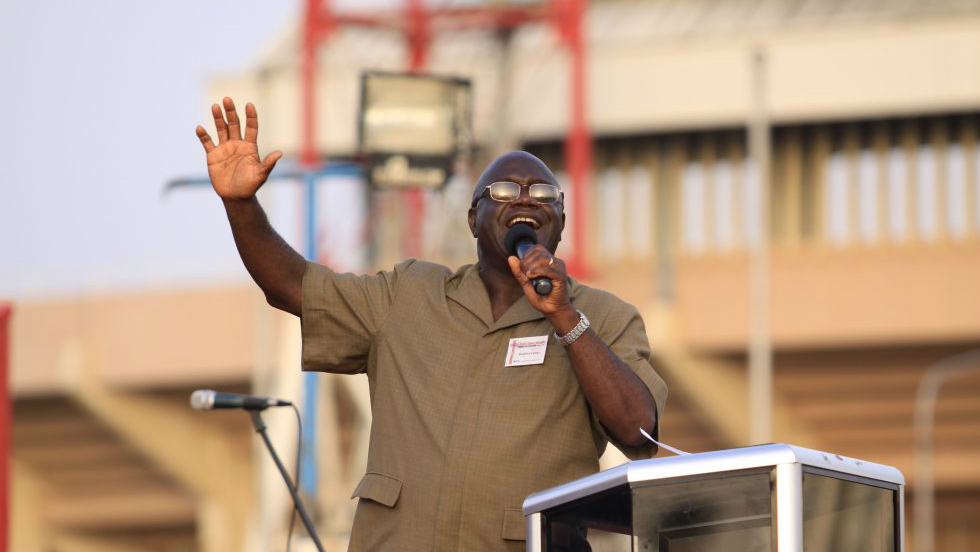
Stephen Lungu, Africa’s Enterprising Evangelist, Dies of COVID-19

Coronavirus claims life of Malawi leader known as the “Billy Graham of Africa.”

Stephen Lungu

Stephen Lungu

Christianity Today January 20, 2021
Courtesy of African Enterprise

Stephen Lungu, a beloved African evangelist and retired leader of African Enterprise (AE), passed away Monday morning after being hospitalized with COVID-19 complications in Malawi. He was 78.

“We all prayed. However, it has pleased the Lord to rest him,” Stephen Mbogo, who succeeded Lungu as AE’s international CEO in 2014, told board and team members “with great sadness” in a January 18 bulletin.

He cited Psalm 116:15: “Precious in the sight of the Lord is the death of his faithful servants.”

Mbogo noted that few colleagues and supporters would be able to attend the funeral, due to public health restrictions to combat the coronavirus. More than 300 people joined a private Facebook group to watch Lungu’s burial.

Pre-pandemic, many more would have come to honor the man often referred to as “the Billy Graham of Africa.”

“To be sure, there will be thousands and thousands of people in heaven because of Stephen Lungu,” stated Michael Cassidy, honorary chairman of the Lausanne Movement for World Evangelization, who founded AE in 1961 while a student at Fuller Seminary.

“I have known many preachers over the years in African Enterprise, and beyond it, but I don’t think I have ever known a more passionate and endlessly energetic preacher of the gospel than Stephen,” stated the South African evangelist. “None of us could ever match his energy or his day and night sharing of the gospel, whether from public platforms or in shops and restaurants.”

Lungu grew up abandoned and abused at age seven on the streets of Salisbury, Rhodesia (pre-independence Harare, Zimbabwe), and became leader of The Black Shadows gang. As AE noted in its tribute:

Steve hated God for what had happened to him and he hated white people who had ‘everything’ while Blacks starved. Aged 18 when the Rhodesia/Zimbabwe liberation struggle began, he was ready to use his gang to fight for freedom. Little did Steve know that in the midst of this time of national revolution, there would come an inner revolution in his life.

AE summarized the pivotal moment in Lungu’s life:

In his well-known testimony, Stephen recounts an evening where, in his late teens, he took his gang to throw petrol bombs into an evangelistic tent meeting in the capital city of Harare. As they awaited the appointed time to do this, the words of the preacher penetrated Stephen’s heart and he ended up staggering forward to give his life to Christ instead.

Lungu was discipled by Patrick Johnstone, missionary author of the Operation World prayer guide, and became an evangelist. He first served with Dorothea Mission, then as AE’s team leader in Malawi for decades before succeeding Cassidy as the ministry’s international leader from 2007 to 2013.

AE aims to be a “catalyst for effective urban evangelism” and reports reaching 1 million people a year through proclamation evangelism and community transformation projects via teams in 11 African nations: Democratic Republic of Congo, Ethiopia, Ghana, Kenya, Malawi, Rwanda, South Africa, Tanzania, Uganda, Zambia, and Zimbabwe.

Lungu proclaimed the gospel to crowds around the world, including a notable gathering in Ethiopia.

“A year after the 1991 fall of Colonel Mengistu in Ethiopia, under whose reign Christians were persecuted, churches with AE organised a rally in Addis Ababa in which thousands turned up,” Ben Campbell, CEO of AE Australia, told Eternity News. “As a result of Lungu’s sermon and ‘altar call,’ 10,000 people came forward to accept Christ, with 900 event administrators kept busy all day processing the decision cards.”

“A giant has fallen among us,” said Francis Mkandawire, general secretary of the Evangelical Alliance of Malawi.

“The Christian history of Malawi will never be told without mentioning the name of Baba Stephen Lungu, as he was fondly called. Stephen was more than a preacher to many of us in Malawi; he was a father,” said Mkandawire. “Stephen remains one of the few men who continued to mentor the emerging generation of preachers without seeing them as competition.”

“If there was a contemporary African evangelist and global leader I knew who through the powerful witness of his own life story was ‘so eager to preach the gospel, who was not ashamed of the gospel, who believed in the gospel as that brings salvation to everyone,’ it was our dear brother,” said Nana Yaw Offei Awuku, Lausanne’s previous regional director for English- and Portuguese-speaking Africa (succeeded by Mbogo) who was mentored by Lungu, referring to Romans 1:15–16.

“Out of the abundance of the love of Christ that captured his heart from the jungles, Stephen laughed loudly and loved lavishly all across cultures,” Offei Awuku, who now directs Lausanne’s generational initiative, told CT. “As a true witness of God's grace, Stephen saw hope in situations against hope.”

“I will always remember Stephen Lungu’s passion and energy to preach a Christ-centered message everywhere he was invited,” Emmanuel Kwizera, Lausanne’s Catalyst for Proclamation Evangelism and AE’s international missions director, told CT. “Stephen was very energetic to preach evangelistic messages regardless of the size of the audience.

“Baba Stephen, you have inspired thousands of emerging evangelists through your passion and zeal of evangelization. After Billy Graham, Stephen Lungu … I totally believe that the next chapter belongs to us.”

Lausanne and AE had planned to convene 1,500 evangelists from 54 African countries last month in Nairobi, but due to the pandemic had to reschedule the landmark gathering for December 2021.

Michael Oh, executive director and CEO of the Lausanne Movement, said Lungu was a strategic leader of the Mission Africa initiative after Lausanne’s third congress, held in Cape Town in 2010.

“[He] embodied the description of the early disciples in Acts 4:13 so well, not only in the commonness of his ‘I’m a nobody’ background but especially in the recognition of all who knew him of his boldness in his witness and the undeniable fact that he had been with Jesus,” Oh told CT. “I am eager to see how the next generation of African leaders impacted by his mentoring will step into roles of global influence for the gospel.”

Note: This obituary will be updated.

News

Two Pastors Join SBC President Race

One is known for his involvement in racial reconciliation efforts, and the other is a founding member of the anti-“woke” Conservative Baptist Network.

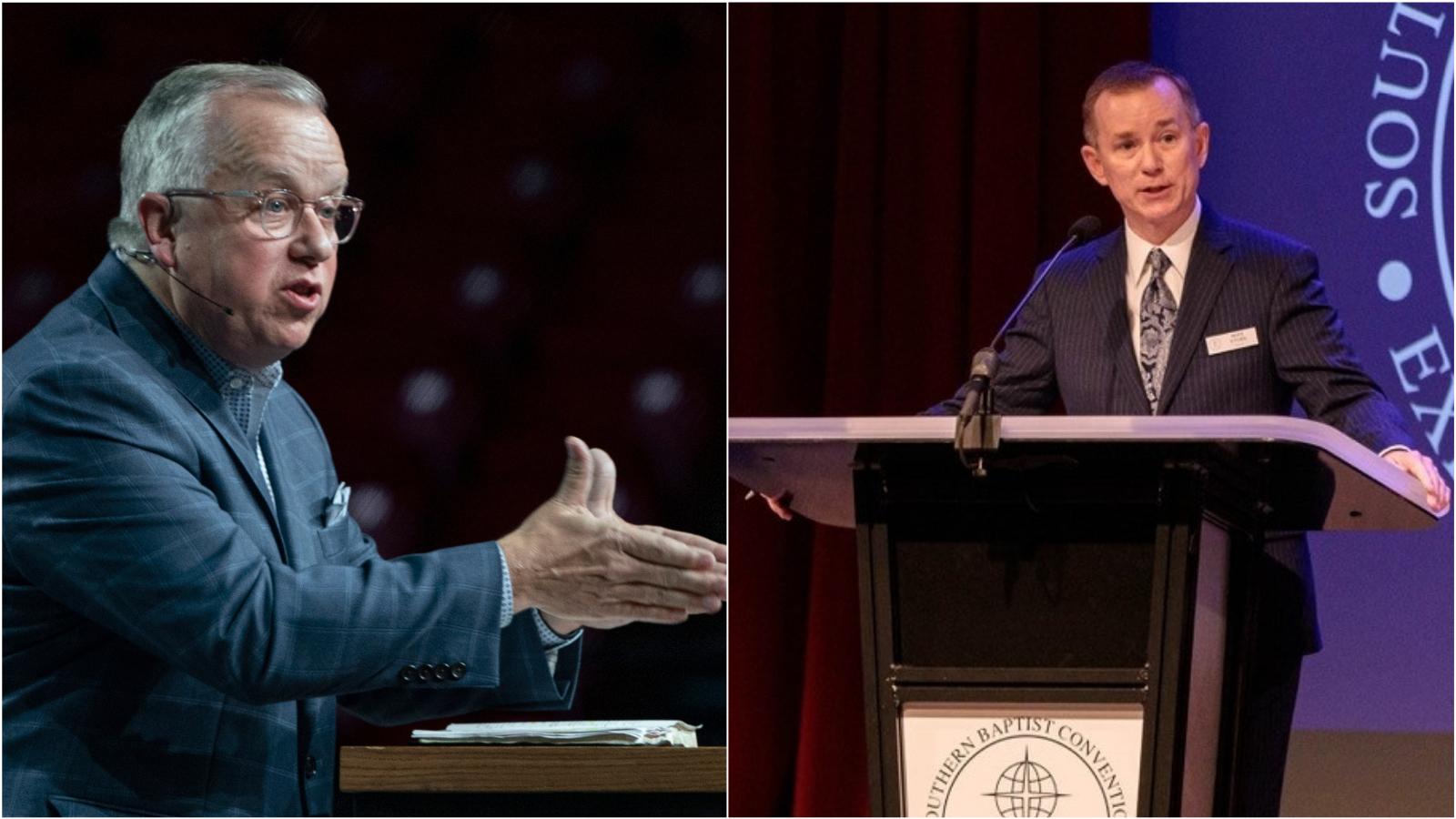
Ed Litton and Mike Stone

Ed Litton and Mike Stone

Christianity Today January 19, 2021
Courtesy of Baptist Press

Albert Mohler has new competition in the race to become the next president of the Southern Baptist Convention.

Two pastors, Ed Litton and Mike Stone, accepted upcoming nominations in the past week, each representing different emphases for the future of the SBC as the denomination grapples with an escalating debate over its approach to race.

Mohler has been in the running for over a year; the SBC canceled its previous election along with its 2020 annual meeting due to COVID-19.

Mohler is already a big name in the SBC. The president of the Southern Baptist Theological Seminary in Louisville, he’s currently the longest-serving entity head in the denomination and regularly weighs in on current issues on his daily podcast, The Briefing.

But with that platform and prominence has come controversy, especially in recent months. Southern Baptists and evangelical onlookers saw the former Never Trumper endorse the president for reelection, decry Trump’s role in the attempted insurrection, and defend his decision to vote for him. He also led seminary presidents in a letter condemning critical race theory as incompatible with SBC beliefs.

“Dr. Mohler’s shifting positions on political issues have left a significant number of Southern Baptists dissatisfied with his candidacy,” said Dave Miller, editor of the SBC Voices blog and a pastor in Iowa. “Others feel he has enough power and control already and does not need to add SBC president to his other positions of power.

Stone, a senior pastor in South Georgia and former chairman of the Executive Committee of the SBC, was named as a contender last week. He immediately garnered endorsements from Tom Ascol, president of Founders Ministries, and Gerald Harris, retired editor of the Christian Index who, like Stone, belongs to the steering council of the Conservative Baptist Network.

Founders and the Conservative Baptist Network have been among the most vocal challengers to what they see as the influence of critical race theory and social justice in the denomination. Stone acknowledges that, “the convention, at least on paper, is squarely within the mainstream of conservative theology,” but along with other network members has voiced concerns about “woke” beliefs in SBC entities and seminaries.

Litton, a senior pastor in Mobile, Alabama, and former SBC Pastors Conference president, was put forward Tuesday by the denomination’s first and only African American president, Fred Luter.

Litton was among the group of white and black pastors who issued a joint statement on the gospel, reconciliation, and justice last fall, and both he and Luter signed onto a recent statement “in opposition to any movement in the SBC that seeks to distract from racial reconciliation through the gospel and that denies the reality of systemic injustice.”

“I have known Ed Litton for over 20 years. Our relationship started when we preached for each other as part of the SBC Racial Reconciliation Sunday during the month of February,” Luter, who led the SBC from 2012 to 2014, told Baptist Press. “From there our relationship developed to more than just colleagues to bring races together. We both shared the hope of drawing people closer to a relationship with Jesus Christ and then growing disciples for Christ. In both of our churches our focus has been the same all of these years.”

The Convention will vote on the candidates at its annual meeting in Nashville in June, installing officers for two-year terms. While SBC churches are self-governed, the president wields influence by setting missional priorities for the denomination, serving as a figurehead and spokesperson, and appointing committee members.

Outgoing president J. D. Greear made headway during his term by addressing sexual abuse and diversity. He offered new initiatives to address sexual abuse in the wake of a massive report on incidents within SBC churches, affirmed black lives matter, and appointed the most diverse slate of committee members in SBC history.

Now, the denomination will look to Greear’s successor to either build on his efforts or set new priorities; experts in SBC polity generally say it takes two presidential terms to make a lasting impact on the direction of the organization.

All candidates see the need for the declining denomination to improve evangelism and build up membership and giving; the 14.5 million-member convention has been shrinking for years and saw its biggest decline in a century in 2019.

Stone has emphasized the sufficiency of Scripture and the role of everyday Southern Baptists in convention business—two of the biggest concerns raised by the Conservative Baptist Network.

“I … want to champion the sufficiency of Scripture. It is a doctrine Southern Baptists have long held, but recently there are uncertain sounds about this issue that are originating in many corners of the Convention,” Stone told the Baptist Message. “I want to foster greater involvement of grassroots Southern Baptists. We acknowledge ecclesiastically that we are not a top-down hierarchy. However, increasingly, we are being led by smaller and smaller groups of decision makers.”

Stone, who leads Emmanuel Baptist Church in Blackshear, Georgia, stepped down as Executive Committee chairman in February 2020, just as the Conservative Baptist Network was formed. He faced backlash for his efforts last year to nominate subcommittee chairmen during his final meeting rather than allowing the incoming chair—the first black pastor to hold the position—to do so. In a response, he shared an explanation and critiqued the “cancel culture of today’s SBC social media.”

Stone also served on the committee tasked with recommending whether a church should disfellowship with the SBC due to abuse, racism, or theological violations alongside Litton’s wife, Kathy, who is a director at the North American Mission Board and the first woman elected registration secretary in SBC history.

Stone said he spoke to Mohler last week about entering the race. While he doesn’t see his candidacy in opposition to any others, Stone said, “I truly feel the SBC will be best led by a pastor. With deep gratitude for an entity leader’s influence, the SBC is a convention of churches and needs leadership that is daily in tune with the local church.”

Mohler, who also became president of the Evangelical Theological Society last year, accepted his 2021 candidacy back in October. At the time, he said to the Southern Baptist Texan:

Anything that has happened in the last several months has only amplified the reasons I was willing this year to be nominated and now next year since the convention was delayed. I think Southern Baptists face some incredible challenges and some very real issues, and I think we need to have the kinds of conversations that will clarify issues and bring Southern Baptists together.

Litton, lead pastor of Redemption Church in Saraland, Alabama, has been a critic of the Conservative Baptist Network, telling CT last year, “Honestly, I do not understand why they exist. I do not know a single professor, seminary, or for that matter a single SBC pastor who does not wholeheartedly stand with the inerrancy of Scripture.” In the Baptist Press report about his planned nomination, he spoke up about the need for Southern Baptists to reemphasize their common mission.

“Recently, I shared with my church, ‘A deeply divided nation needs a deeply united church,’” he said. “Simply and honestly, we are not there as a convention of churches. I fear our credibility is faltering. While the world waits deeply in need of Jesus, we have seen division grow in our SBC family. We have been blessed as Southern Baptists with strong churches, strong pastors, leaders and theologians, but what we need is a broken and contrite heart. We need to reemphasize our common mission, committed together and following Jesus.”

Ideas

10 Best Practices for Improving Religious Freedom in Complicated Countries

Lessons we learned from helping Vietnam become the first country to be peaceably removed from the United States’ blacklist of the worst persecutors of Christians and other believers.

Vietnamese residents wearing face masks practice social distancing as they stand in a queue for free rice at St. Joseph's cathedral in the old quarters of Hanoi on April 27, 2020.

Vietnamese residents wearing face masks practice social distancing as they stand in a queue for free rice at St. Joseph's cathedral in the old quarters of Hanoi on April 27, 2020.

Christianity Today January 19, 2021
Nhac Nguyen / AFP / Getty Images

I was completely frustrated. Our SUVs were sunk in mud. And while still morning, I felt the December daylight already racing away. It seemed we would never reach our intended village in northwest Vietnam, nestled between Laos and China.

It was my second trip in 2010 to Dien Bien province, home to the famous Vietnamese military victory over French colonial forces in 1954. The government was always happy to facilitate tours of the Dien Bien Phu battlefield.

But I wasn’t there to see the battlefield. I was there to understand why the local government was not allowing churches to register.

There I was, literally stuck, prevented from reaching Muong Thin, a White Hmong village that—if it existed—allegedly contained one of the only three registered house churches in the entire province. “I’ve traveled 10,000 miles to be stuck on a road to nowhere,” I thought. “Am I getting played by the local officials?”

Working on religious freedom is like that road to Muong Thin. You are never quite sure if the road works, or where it leads, or who the partners may (not) be. All you know is that you have to keep showing up, believing that God has gone before you, trusting the relationships—no matter how unlikely—that he has revealed.

Attempting to reach a house church in a White Hmong village in the Northwest Highlands of Vietnam in December 2010.Courtesy of Chris Seiple
Attempting to reach a house church in a White Hmong village in the Northwest Highlands of Vietnam in December 2010.

***

Since the US Congress passed the International Religious Freedom Act of 1998, many ambassadorial positions, along with several inter-governmental and non-governmental entities, have been established across the world, often working together [see footnote at bottom].

Yet, despite the institutionalization of positions and alliances over the past 23 years, the world has never seen greater violations of international religious freedom (IRF). Governmental restrictions on religion have never been higher worldwide, while social hostilities have also soared.

In short, those who care about religious freedom have never been more organized to such little effect.

Just check the latest Open Doors report, released last week, on the top 50 countries that harass and persecute Christians for their belief. While Open Doors only tracks persecution against Christians, the Pew Research Center has chronicled how religious freedom has worsened over the past decade for Christians (harassed in 145 countries as of 2018), Muslims (in 139 countries), Jews (in 88 countries), and those of other faiths or no faith.

At the start of a new year, in the wake of National Religious Freedom Day (January 16) and as the Biden administration takes the IRF torch from the Trump administration, it is good to reflect on what has worked and what has not worked in our collective efforts to protect and promote religious freedom.

A point of reference in this needed discussion is the Institute for Global Engagement (IGE). This NGO was founded in 2000 by my parents to steward their global relationships after their experiences at Eastern University, World Vision, and the State Department where my dad served as the first US Ambassador-at-Large for International Religious Freedom (1998–2000). I joined IGE in January of 2001 to “operationalize the answer” to their big question: Instead of reacting tactically, fighting to get people out of jail for their faith—a noble cause, to be sure—could a proactive strategy be developed that helped “transform the structures of persecution” within a country, such that people didn’t go to jail for their beliefs in the first place? And could a relational diplomacy discern leverage points of self-interest that resulted in “win-win” situations for all parties?

By 2012, I was able to articulate a theory of change from my own Christian perspective about how best to operationalize the building of religious freedom within a country, instead of advocating for it from outside a country. In 2014, I refined and discussed this theory from a secular perspective. More recently, I’ve had the privilege of working on an even broader framework: a covenantal pluralism where each and all have the obligation to engage, respect, and protect those different from themselves as a function of their inherent, God-given dignity and their God-given liberty of conscience.

But I’ve never taken the time to succinctly state some of the best practices of engagement that guide day-to-day operations. Here are 10 best practices that help me engage complicated places, based on IGE’s experiences in Vietnam:

1. Articulate the principles of engagement that form and inform your best practices.

In April of 2001, we wrote up IGE’s Principles of Engagement on one piece of paper. It is a natural thing, I suppose, to want to “change the world.” But these principles suggest something different: We followers of Christ engage the world not to change it, but because we are changed.

What changed most in me these past 20 years is that I now understand that we glorify God when we care about the liberty of conscience of everyone (not just our fellow believers). I believe that liberty of conscience is the greatest gift from a gift-giving God. Without the freedom to think, there is no freedom to accept grace.

What are your principles of engagement that encourage you to seek his face, so that you can know yourself, and therefore be positioned to know his world? What is your theology of engagement? Such questions must be constantly asked, as the only thing more dangerous than thinking without doing is doing without thinking.

2. Hire people, not positions.

This work requires team players who can think holistically, and historically. You need people who look for the whole, past and present, not accepting any simple explanatory framework. You need people who know how to Listen, Observe, Verify, and Engage. You need people who are humble and honest, empathetic and elicitive, patient and persevering. You need people familiar with suffering, which should be discussed during the interview process. And you need people who have and/or seek the skills of engagement: evaluation, negotiation, and communication. You must be intentional about educating (how to think) and training (what to do), as a part of your mutual and ongoing discipleship within your organization.

3. Let your “Yes” be yes, and your “No” be no (Matthew 5:37).

We Christians believe that God knows and sees everything, but we don’t always act that way. In an authoritarian context, the government sees everything but does not know everything. What you say in the official meeting must be consistent with what you say in the van ride, what you say at dinner, and what you say at the hotel.

A Vietnamese official once said to me: “Thank you for telling the truth … we know who you are.” There will always be those who do not want you to succeed. Don’t give them leverage by violating your integrity.

4. Harness self-interest.

Usually, it is the tactical transaction that eventually leads to tangible transformation. Make the case that allowing citizens to believe as they wish is good for the country’s stability, economic development, women’s empowerment, and better regional and global relations (not least with the United States).

I quickly learned to argue that “seminary is security”—that the more theologically trained pastors, imams, and monks there were, the more likely their congregations were to live out the best of their faith, and thus the more likely they were to be loyal citizens. After many years of making this case to the Vietnamese government, a Protestant seminary was established in 2013 in North Vietnam—the first of its kind.

5. Act at the invitation of government officials (who, by the way, are also made in the image of God).

Doug Johnston, president emeritus of the International Center for Religion and Diplomacy (which he founded in 2000), once told me: “There are always good people in bad places.” If you expect a boogeyman behind every conversation, you will find one. And to be sure, there is a spiritual oppression in certain places. But most government officials care about their people. Many officials do not have other opportunities for a livelihood. Almost none can emigrate to another place. And all government officials don’t want to be embarrassed or have attention drawn to their challenges or mistakes.

Some things have to be said in public; others at dinner. Work with them, recognizing that religious freedom might be your top issue, but it is almost always No. 11 on their daily Top 10 list. The right government partner can ensure geographic access while providing political cover.

IGE’s work in Vietnam began because, after spending a day with us in May 2004, a senior Vietnamese official said: “You are the first Americans not to give us a list and tell us what to do.” We were welcomed through open doors after that.

6. Allow relationships to reveal strategy.

There are many that you are supposed to meet in a country, but few that you were meant to meet. Listen to everyone, but make time to spend time with those that “have something about them.” Don’t worry about the schedule (especially on the first trips). Let the activities give you the excuse to build relationships.

And don’t be afraid to go sightseeing. I was usually against this idea in my younger years, because I was there to “get something done.” But sightseeing is an opportunity for your hosts to express pride in their country. And it’s an opportunity to understand how they understand their history. Such excursions and meals—and above all, riding in a van or SUV together—reveal all kinds of conversations that would not develop at the proverbial “strategy session” with local partners.

The result is that you are prepared to propose a strategy that is consistent with its environment, because it has been developed together. Relational diplomacy takes time; and your team, board, and donors must be educated to understand and support this patience.

7. Work top-down (with government officials) and bottom-up (with grassroots organizations).

In my experience, religious freedom work usually starts with the former, because the whole reason for your presence is to better understand why there are problems (even as government officials assure you otherwise). As sufficient trust emerges, push the envelope. Expand the location of your activities, as well as the invitation list: first go with the religious leaders that the government suggests; then suggest some of your own registered religious leaders; then move to unregistered religious leaders. And then go see those religious leaders in their local context.

Your visits may not (immediately) change policy or practice, but you do make hope tangible by spending time with the religious community—even as you signal to the government that you now know these people and that you will be checking on them. And please, seek to discern the individual and institutional power dynamics at play as you engage, as they are almost always a function of the relationship between the ethno-religious majority and the ethno-religious minorities, shading everything from access to education to economic development to religious freedom.

Working with government officials also includes your own government. It is vital to understand the ebb and flow of the bilateral relationship between your government and theirs, to include the points of self-interest. Relationships in the various elements of your government, not least its political parties, are critical. Sometimes I call this holistic effort, at home and abroad, “Track 1.5 Diplomacy.” If Track 1 is government-to-government relations, and Track 2 is people-to-people encounters, sustainable solutions take place at their intersection.

8. Find the story.

Every culture has a mechanism for respect, for welcoming the stranger. Every country has a potential future rooted in the best of its past. I’ve always told my hosts: “I’m not here to name, blame, and shame you, although I will speak truth to you behind closed doors—because that’s what friends do. But I do want to come alongside the best of who you already are. I want to be your ambassador to the rest of the world, telling your story to others who otherwise wouldn’t hear it, let alone listen.”

I remember being in a Hanoi museum on one of my first visits. I found this 1949 quote on the wall from Ho Chi Minh, who is revered across all sectors of society as the founder of modern-day Vietnam:

“The teaching of Confucius has a strong point; i.e., self-improvement of personal virtue. Jesus’ Bible has a strong point; i.e., noble altruism. Marxism has a strong point; i.e., a dialectical working method. Ton Dat Tun’s doctrine has a strong point; i.e., their policies are suited to conditions in our country. Does Confucianism, Jesus, Marx and Ton Dat Tun share common points? Yes. They all pursued a way to bring happiness to human beings and benefit to society. If they were still alive today, and if they were grouped together, I believe they would live in harmony, like close friends. I try to become their pupil.”

I used this quote time and again, all over Vietnam, saying that we wanted to help create the table where all beliefs and none had a seat, so that all citizens could become pupils in order to make Vietnam better, together.

9. Develop a practical and non-threatening way forward—with and through local partners—for the short and long term.

Design agreements (with public signings) for which the government can take credit. These agreements, however, must provide practical short steps that build on each other. The agreement is not binding, legally, but it is binding publicly, as such agreements are never about the law but about the public perception of what is (not) being done in a country.

That said, the transparent rule of law equally applied to all citizens is the long-term goal. It is often difficult to implement because there is little prior understanding of, let alone training for, the rule of law. The solution is to create non-threatening spaces—as part of the signed agreements—that present academic and comparative contexts from around the world, equipping government and religious leaders to make their own decisions based on these global case studies.

From the beginning, IGE partnered with The International Center for Law and Religion Studies (ICLRS) at Brigham Young University, the flagship school of The Church of Jesus Christ of Latter-day Saints. Also founded in 2000, by Cole Durham, ICLRS and IGE have worked together in Vietnam, Laos, China, Myanmar, and Uzbekistan. While we have different theological views, it was and remains true that IGE wanted to work with the best. And why is ICLRS the best? Because they remember their faith’s own persecution in the US. They know what it is like to be a minority, and their members go to the best law schools to protect and preserve their freedom to believe as a function of everyone’s freedom of conscience or belief.

When Vietnam developed a draft law on religion, its drafters came to IGE and ICLRS, which provided a 51-page critique of the law (which we spent three hours discussing at the Vietnamese National Assembly). This partnership continues to walk with Vietnam, providing the best and ongoing advice, as friends should.

And while these academic conferences are non-threatening, providing different perspectives on how the rule of law might evolve in a particular country over the long-term, their most important function in the near-term is to allow people to meet who otherwise would not. Conferences are excuses for coffee breaks. And coffee breaks are where a religious minority leader from the provinces can meet a national leader from the capital. A relationship is begun. Stereotypes begin to soften. Honest conversations about community, citizenship, and constitution take root.

10. Always remember: The method is the message, the process is the product.

Everything you do—from planning to programs—must speak to and model the ends you seek. Your words and actions testify to Christ as you help local partners build an inclusive table, where everybody gets a seat, with the freedom to not only express, share, and/or change beliefs, but to bring those beliefs to the public square. This kind of consistent integrity—sometimes, unknowingly—builds trust, enabling the path forward.

In 2006, I had the opportunity to testify before the US Senate Finance Committee. Because I had been to Vietnam three times in the previous 18 months (including trips to the Central Highlands, where there had been problems), I was able to name the challenges as well as the positive trends that were emerging. I recommended that Vietnam be removed from the State Department’s religious freedom violations list, that the US establish permanent normal trade relations with Vietnam, and that the US support Vietnam’s accession to the World Trade Organization. And, wouldn’t you know it, those things actually happened, in that order!

Almost 10 years later, I was at an event in Hanoi with Vietnamese officials, discussing how far the partnership between IGE and Vietnam had come. One of the officials pulled me aside and said something I will never forget: “Do you remember when you gave that Senate testimony? All of us were watching here in Hanoi. You did not shy away from our challenges but you also gave us credit for what we were doing. You were honest. I think that is why IGE has been successful. We trust you.”

In other words, while what you do is important, how you do it is vital. At the end of the day, trust is the only commodity you trade in when it comes to working cross-culturally in contexts that you will never fully understand.

***

Meeting with White Hmong pastor Tu, leader of a 148-person church in the Northwest Highlands of Vietnam in December 2010.Courtesy of Chris Seiple
Meeting with White Hmong pastor Tu, leader of a 148-person church in the Northwest Highlands of Vietnam in December 2010.

We eventually made it to Muong Thin village. There we met Pastor Tu of the White Hmong people. He shared with us what it was like to pastor a 148-person church in the Northwest Highlands of Vietnam. We prayed and sang. His church sang “Silent Night” for us—truly a joyful noise!

While IGE serves all faiths and none—as a function of our belief—it was a wonderful way, as Christians during that 2010 Advent season, to close out what became one of the most significant trips I ever took.

In my frustration about trying to find the village that morning, I had forgotten that earlier that week, IGE and its partners had completed the first-ever meeting between Protestant church leaders from across Vietnam and government officials and scholars in Hanoi. This meeting led to another roundtable in 2011 with 18 church leaders, and a third in 2012 with 23 church leaders. These roundtables set a vital precedent, as they began to mainstream—to the government and to the general population—the idea that Vietnamese Christians were good citizens and loved their country as much as anyone else. This momentum contributed to the establishment in 2013 of the first Protestant seminary in North Vietnam (as noted above).

My faithless pessimism that morning on the way to Muong Thin also did not know that we would be given the privilege of speaking into Vietnamese society. Vietnam’s national news agency, VTV4, would do a three-minute report on our delegation’s visit. Also, “Talk Vietnam” would eventually air a 45-minute interview, which is still available (part 1 and part 2).

We were told that December in 2010—as Vietnam’s central government tried to register more churches—that the local government had registered only three churches in Dien Bien. Today, the province has 115 registered churches—transparently living out their faith, serving their communities and country. Perhaps some of the above “best practices” contributed to this steady progress.

I end with the conclusion from my Dien Bien trip report to the IGE board: “In all of this, there is the healthy reminder that as Christians who worship a sovereign God, we are liberated from definitions of success. In fact, we at IGE have foremost learned that working overseas is merely the opportunity to be faithful, showing up and shutting up, seeking to come alongside what God is already doing through those whom He has appointed and/or anointed for this time.”

Chris Seiple, PhD, is president emeritus of the Institute for Global Engagement, which played a significant role in helping to remove Vietnam (2007) and Uzbekistan (2019) from the US State Department’s religious freedom violations list. He is a senior fellow at the University of Washington’s Jackson School of International Studies, and is co-editor, with Dennis Hoover, of the forthcoming Routledge Handbook on Religious Literacy, Pluralism, and Global Engagement.

Sidebar on IRF groups:


In October 1998, the US Congress passed the International Religious Freedom Act. The act created the position, and the US State Department office, of Ambassador-at-Large for International Religious Freedom—who would make recommendations about which countries in the world should be put on the State Department’s religious freedom violations list. The act also created the US Commission on International Religious Freedom, which would serve as an independent voice on the same issues. Since then, the following entities have been established to help end the harassment and persecution of anyone, anywhere, for his/her beliefs and/or conscience:

• 2010: the International Religious Freedom Roundtable links grassroots NGOs of all faiths and none with policymakers in Washington, D.C. (a model that has been replicated in various forms around the world)
• 2014: the International Panel of Parliamentarians for Freedom of Religion or Belief (IPPFoRB) brings together a diverse group of parliamentarians across political, religious, and regional boundaries
• 2015: an International Contact Group on Freedom of Religion or Belief (ICG FoRB) convenes like-minded countries to share information and discuss common strategies
• 2018: the annual Ministerial to Advance International Religious Freedom invites foreign ministers to discuss how best to reduce religious freedom (originally hosted by the US in 2018 and 2019, Poland hosted the event, virtually, in 2020)
• 2019: the International Religious Freedom Alliance of 28 states coordinates religious freedom promotion between ministerials
• 2020: the International Religious Freedom Secretariat helps coordinate religious freedom roundtables worldwide

The United Nations and the European Union have established ambassadors or special envoys for freedom of religion or belief, as have several states, including: Denmark, Germany, Mongolia, Norway, Poland, Taiwan, The Netherlands, the United Kingdom, and the United States. Several other states have established ambassadors or special envoys regarding religious engagement (i.e., engaging religious actors on issues other than religious freedom, e.g., poverty reduction, conflict resolution, climate, etc.), including: Finland, France, Germany, Greece, Lithuania, and Sweden.

Compiled by Knox Thames, the first-ever US State Department Special Advisor for religious minorities in the Near East and South/Central Asia during the Obama and Trump administrations. He currently serves as a senior fellow at the Institute for Global Engagement, and is a visiting expert at the US Institute of Peace.

addApple PodcastsDown ArrowDown ArrowDown Arrowarrow_left_altLeft ArrowLeft ArrowRight ArrowRight ArrowRight Arrowarrow_up_altUp ArrowUp ArrowAvailable at Amazoncaret-downCloseCloseellipseEmailEmailExpandExpandExternalExternalFacebookfacebook-squarefolderGiftGiftGooglegoogleGoogle KeephamburgerInstagraminstagram-squareLinkLinklinkedin-squareListenListenListenChristianity TodayCT Creative Studio Logologo_orgMegaphoneMenuMenupausePinterestPlayPlayPocketPodcastprintremoveRSSRSSSaveSavesaveSearchSearchsearchSpotifyStitcherTelegramTable of ContentsTable of Contentstwitter-squareWhatsAppXYouTubeYouTube