Ideas

The Christian Case Against the Orphanage

Contributor

Children need a stable family, not institutional care.

Christianity Today August 8, 2019
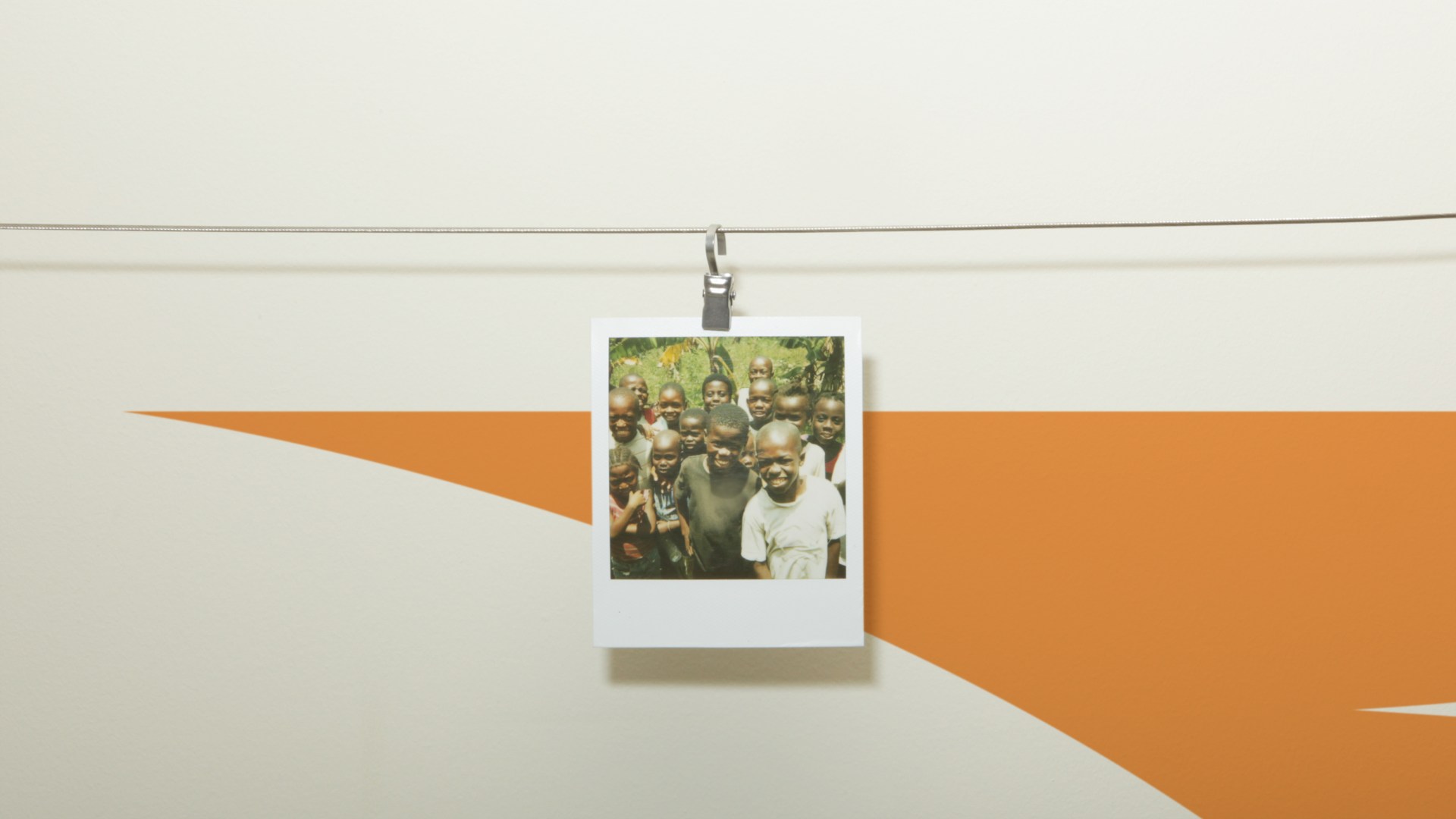
Illustration by Rick Szuecs / Source images: Unsplash

In recent years, both The Guardian and The New York Times have featured lengthy exposés of orphanages in the majority world. It appears that many orphanages have been run for nefarious ends. There have been reports of children being trafficked into orphanages either in return for financial benefit to impoverished parents or merely on the promise of a better life for their children. There is also evidence that in some of the worst cases, children have then been sexually and physically abused in the orphanages or sold on to be exploited by others.

Cases like these have led Australian Senator Linda Reynolds to campaign from within the Australian government for action on orphanage tourism and to lobby for “orphanage trafficking” to be classed as a new crime under the legislative umbrella of Australia’s Modern Day Slavery Act. Christians have been implicated in these terrible abuses, as the exposés reveal that churchgoers worldwide have been financially and practically propping up the global orphanage system over many decades, potentially making children more vulnerable to exploitation.

Personally, I have found reading these articles incredibly tough—for a whole variety of reasons. My mother spent some of her childhood in an orphanage in India. My wife’s grandparents ran a well-respected children’s care home. I began fostering and adopting children 13 years ago. I am the founding director of a charity working specifically with vulnerable children and I regularly consult for large Christian NGOs.

Additionally, members of my local church and more than a couple of friends currently live in or have been raised in institutions. Many more friends and church family support orphanages around the world. Some of them have even helped start orphanages. Over the years, I have given significant practical help, prayer, and financial support to them and to various young people going out on short-term orphanage projects. Ever since my wife and I first met nearly 30 years ago, we have dreamed about pulling our experience together and spending our retirement running an orphanage in Africa or Asia. The last thing I want to hear is that I could be doing more harm than good by trying to help vulnerable children around the world.

Like many, I take the challenges raised by the development sector very personally. For those of us who have invested our lives into this area of Christian service, the temptation is to insulate ourselves from criticism by retreating from the conversation or fighting against the critique. But I also know from years of working in the field of child protection that we must face up to the facts, research any allegations, and ensure we are putting the welfare of children before our own ego, mission or dreams. History is sadly littered with well-meaning Christian interventions that went badly wrong, with many of them covered up for generations.

Christianity and Orphanages

According to figures from the United Nations, by a conservative estimate, there are around 8 million children living in orphanages around the world. Additionally, there are over 70 million people living as refugees or internally displaced due to war, conflict, and natural disaster and many of these are children who have lost parents or family or both. There have also been many children affected by the AIDS epidemic, and even today despite huge economic advances around the world, children are over-represented among the “bottom billion” poorest people. According to UNICEF, there could be as many as 140 million children around the world .

With such shockingly huge statistics, it is not surprising that occasionally terrible reports emerge. However, it does seem rather extreme to react by suggesting that all orphanages should be shut down because of isolated cases of trafficking and abuse. Is it simply a case of finding an angle to scapegoat Christians?

It should not surprise us that Christians are highly involved in a response to the global challenge to help vulnerable children. There are more than 40 occasions where the Bible refers specifically to God’s concern for orphans or the fatherless (Deut. 10:17–18, 24:17, 27:19, James 1:27, etc).

Historically, Christians have also often been at the forefront of the care, protection, and championing of vulnerable children. Until now, many people have seen Christian orphanage support as a key component of championing the cause of the most vulnerable.

My charity, Home for Good, conducted a parallel study among British adults, asking 6,000 people for their perceptions and practices regarding the support of orphanages. We found that churchgoers were seven times more likely to support an orphanage through visiting or volunteering than other British adults. It is undoubtedly true that the world’s orphanages owe much to Christian support. But whereas orphanages used to be seen as an honorable cause, they are now being implicated in a global scandal.

Institutions and Scandals

The term orphanage is elastic. It can describe large-scale institutions like the City for Human Welfare in Turkey that cares for almost 1,000 children—mostly victims of the war in Syria. But it can also be applied to a small group home where just a handful of children live under one roof. And there is a range of models in between including children’s villages, residential care centers, compound foster care, shelters, and rescue homes. I had always assumed that the larger the orphanage, the worse the conditions; however, recent research seems to be pointing the finger at smaller institutions as well as larger ones.

What is now being understood across the development community, and by child psychologists, social workers, and child protection experts is that an institutional culture can be found even in smaller, modern orphanages. Signs might include organizational regimes and routines that take little account of individuality, places where psychological and emotional needs are left unmet, or homes that tend to isolate children from the outside world. The impact of this may not be as visually shocking as images of rocking toddlers left in cots in rooms without windows. Yet the invisible impact of veiled institutionalization may be just as severe.

The long-term effects of institutionalization are what lie behind the suggestion that orphanages may be doing more harm than good. And this has caused me to start rethinking orphanages too.

At the conclusion of her TED talk “The Tragedy of Orphanages” Georgette Mulheir, CEO of LUMOS, states:

But there is still much to be done to end the systematic institutionalization of children. Awareness-raising is required at every level of society. People need to know the harm that institutions cause to children, and the better alternatives that exist. If we know people who are planning to support orphanages, we should convince them to support family services instead. Together, this is the one form of child abuse that we could eradicate in our lifetime.

Is there a better alternative?

But are all orphanages really only abusive environments that need to be eradicated?

While I have seen evidence that does indeed suggest that some orphanages are fronts for child trafficking and child exploitation, it is blatantly unfair to tar all orphanages with that same brush. Many orphanages, faith-based or secular, are well-managed, financially accountable, and run by sensitively trained staff who desire the children’s best outcomes.

In the best cases, orphanages are indeed trying to keep children safe, nourished, clothed, and educated. I have heard stories from children living in orphanages who were abandoned, sleeping rough, begging, or being used as child prostitutes. It was an orphanage that rescued them, providing shelter, safety, food, and drink.

However, just because a lifeboat is a safer alternative to drowning in the sea does not mean those who have been rescued want or need to live on a lifeboat for years on end. Similarly, just because an orphanage may be safer than trying to survive on dangerous streets does not mean orphanages are the long-term solution to the problems facing vulnerable children.

When it comes to vulnerable children, I have seen that the best place for them to thrive is in the context of a permanent loving family. If anything were to happen to my wife and me, we have made arrangements for our children to be taken under the wing of a family as close in values to our own as possible, not go to an orphanage or a residential home or foster care. A true sense of family cannot be replicated in institutional care. In the West, residential care is used sparingly and only when other care options have been exhausted.

Orphanages can do good, but they are not a good solution to the problems facing children without homes. Rebecca Smith, senior child protection advisor at Save the Children, told me, “There are better and worse orphanages, but there is no such thing as a good orphanage.”

The Kaduna first lady of Nigeria, Hadiza El-Rufai, agrees. Visiting an orphanage for 24 children that her husband’s government has just renovated, she might have been expected to sing the praises of her country’s care system. Instead, she said: “No matter how well run an orphanage is, we really do not want our children to grow up there; it can never be as a child growing up in a family with mother and father.” She went on to call on Nigerians to step up as potential adoptive families.

There are two main family-based alternatives to orphanages. The first one is reunification with birth and extended families. The viability of this option would need to be assessed with the child’s safety, security, and best interests in mind. There may be a need for professional, therapeutic support to be put in place or for financial capacity building to be in place around the family.

If this is not possible, a second option is reparenting through locally approved foster carers or adopters. This is the preferred option in the Western world when birth families are not able to provide appropriate care, but it also has an ancient and international tradition.

Some say that this kind of global sea change from orphanages to family-based care is unrealistic and naïve. But unrealistic and naive was what William Wilberforce was accused of when he started to fight the transatlantic slave trade. This movement toward family-based care is the next logical step on the innovation journey.

The myth holding us back

A common response to this call for the end to orphanages is to ask, “Don’t orphanages exist precisely because there are no families to take care of the children?” This assumption is a myth that needs to be addressed. Research conducted by Faith to Action discovered a shocking reality: The majority of children living in orphanages across the globe still have at least one living parent! Their study found that 95–98% of children living in institutional care in Eastern Europe and Central Asia had parents who felt they could not care for them and therefore placed them in orphanages. The research also suggests that, with some help, these families could care for their children.

The term orphanage is therefore somewhat of a misnomer when it is filled with children who have living parents. Nevertheless, there are significant pull factors that encourage families to relinquish their children to orphanages. This may be for financial gain for the parent or the child. In areas of extreme poverty, parents may feel they are giving their child a better start in life to be supported by Western donors who will pay for a lifetime of food, medical expenses, and education. Some reports indicate that certain profiteering “orphanages” who rely on a “full house,” or who gain financially from large overseas adoption fees, may even pay parents to relinquish their children.

Kate Van Doore, a lawyer and international children’s rights campaigner, gave me this sobering assessment: “Orphanages do not exist because orphans exist. Rather orphans exist because orphanages exist.”

All of this amounts to both good and bad news. The bad news is that some children are needlessly being placed into orphanages. The good news is that with the right processes, we could significantly reduce the number of children living in orphanages in our lifetime.

Should we stop supporting orphanages?

After the sexual abuse and harassment scandals that hit both Oxfam and Save the Children in 2017, there was such a huge backlash against all aid and development agencies that some people ceased to support not only those charities but any development charities. A knee-jerk reaction is not helpful; we instead need to bring, wisdom, humility, and nuance to these issues, particularly regarding money.

I remember, as a young missionary in Albania, literally finding a baby abandoned on the street one November evening. The child was wrapped in a dirty sheet and next to it was a pot for coins. I knew a couple of coins was not going to save this child from freezing, so I did what I felt was my Christian duty and picked up the baby to take it to the nearest orphanage.

Within seconds, a woman appeared out of nowhere and snatched the child back before holding her hands out for money. This parent was so desperate that she was using her child as financial bait. The generosity of strangers was not helping the problem of street children but rather exacerbating it.

A number of orphanages have deliberately put themselves on tourist routes to entice people to treat them as another excursion: safari one day, orphanage tour the next. Tourists are encouraged to play with the children, then give them gifts or make a donation. Some of these orphanages were found to be exploiting the children, lining someone’s pockets and not helping the children at all. The Westerners were being conned. They thought they were doing some good, but really they were being used as pawns in the exploitation of the children.

I am not suggesting we all stop funding orphanages today. I am definitely not suggesting we stop caring for the plight of vulnerable children around the world. But it is time to face up to the questions being asked of us. Are we being manipulated? Are we meeting the real needs of the children? Are the orphanages really profiteering ventures in disguise? How can we best channel our finances so that children really benefit?

Is giving time better than giving money?

I have good Christian friends whose children have volunteered at an orphanage for a summer or a gap year. It seems such a good thing to do. They are investing their time and energy in the well-being of children, giving them human connection, affection, and attention. The young people come home changed. Their eyes are opened to needs beyond their own. Their values and sometimes their career plans are shifted. Everyone seems to be a winner. The orphans are entertained, the orphanages are encouraged, and the young people are inspired.

My perspective on this being a “win-win” has shifted, however, after hearing about the steady stream of tourists (often hundreds in a week) who visit orphanages to play with the children. In one orphanage in China, some visitors pop in for an hour or two. Others for a week or two. At another orphanage, I heard from a young volunteer that she was allowed to take a small baby home with her for a few days. The common factor with all the volunteers was that they left the project feeling like they’d done something good, but the children they were trying to help ended up feeling abandoned—again and again.

There is evidence from attachment theory that shows that children living in orphanages already have difficulties making appropriate trusting relationships because of early trauma or abandonment. Having suffered a major broken attachment from birth parents, what children need most for their healing is consistency of relationship and care. Having random strangers come and go in their lives will be repeatedly traumatic and could be far more detrimental than we could ever imagine.

Just as we might need to rethink the way we use our finances to help vulnerable children, we may also need to rethink the way we use our time when it comes to offering support to vulnerable children. Are we just “voluntourists” who have little expertise in understanding the psychological, emotional, and cultural needs of children in orphanages? Who does the whole experience benefit most? What may be some of the unintended consequences of our short-term programs? Could the money we would have spent on our own experiences be better utilized in different ways?

What should the church do?

There are three negative reactions that this article may provoke.

Firstly, I am nervous that Christians who are currently supporting orphanages and children’s villages around the world will immediately stop funding these initiatives. The sudden drop in funds is likely to make children more vulnerable as it could lead to unplanned and unmanaged transitions for children. Please instead use the financial power and influence you have as a donor to encourage the institutions you support to redirect their efforts toward family-based care with the best possible outcomes for the children involved.

Secondly, I am nervous that Christians will ignore this article and this movement and hope against hope that the institution they support is the one institution that has got it right. Please at least ask the questions so you can have a clear conscience that the children you are supporting are not put at risk and get the best outcomes possible.

Thirdly, I am worried that Christians will fight to preserve orphanages despite the evidence, and that this will not only potentially be bad for children but also bad for the church, reinforcing the stereotype that Christians are naïve do-gooders. Bearing in mind the child-abuse scandals that have plagued the church over the last few decades, please, could we instead make sure that we care more about individuals than we do about institutions, more about the well-being of children than the reputation of the church?

My wife and I need a new dream for our retirement. It will still be founded on making one small corner of our world better for vulnerable children. But instead of helping to open an orphanage or two, maybe now we will help to close an orphanage or two and ensure the children are safely placed in families where they can thrive.

Krish Kandiah is the founding director of Home for Good, a charity dedicated to finding a home for every child who needs one. Krish has wide experience in the fields of cross-cultural mission, aid, and development. He helps to catalyze a wide range of Christian and secular agencies to work together for the best outcomes for vulnerable children around the world. For more information, visit homeforgood.org.uk and homecomingproject.org

News

Why Southern Baptists’ Social Justice Spat Is Actually About the Sufficiency of Scripture

The Founders documentary trailer uncovers a larger disagreement over how to approach secular theories around race and gender.

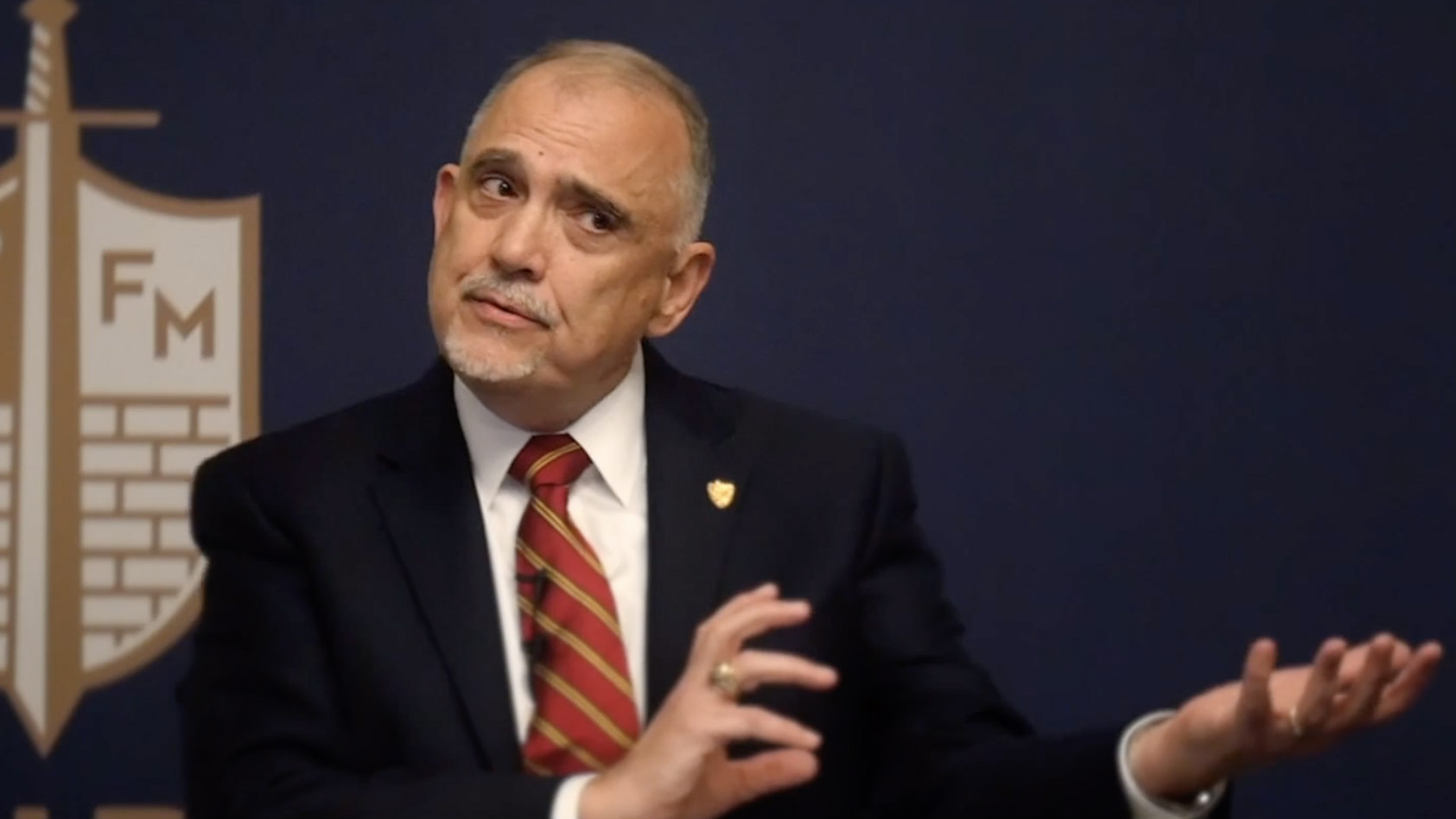
Pastor Tom Ascol serves as the president of Founders Ministries.

Pastor Tom Ascol serves as the president of Founders Ministries.

Christianity Today August 7, 2019
By What Standard trailer screenshot / Founders Ministries

Fallout over a controversial documentary trailer rebuking an alleged social justice agenda within the Southern Baptist Convention marks the latest flashpoint in ongoing clashes over how the denomination should engage ideologies they see as contrary to Scripture.

Founders Ministries, a Calvinist-oriented Southern Baptist group, announced August 1 that three of its six board members had resigned over objections to the trailer for a forthcoming documentary titled By What Standard? Addressing recent debates over racial justice and women’s roles, the documentary alleges “wavering” commitment “to the authority and sufficiency” of the Bible among some Southern Baptists, the ministry said.

Two of the outgoing board members—Tom Hicks and Fred Malone—said in statements that they agree with the issues raised in the documentary but believe the trailer, which featured clips from the SBC annual meeting in June, conflated the problems with the denomination’s efforts to confront sexual abuse. (Initially, the four-minute trailer included an image of sexual abuse survivor and victim advocate Rachael Denhollander. After complaints, her clip was removed.)

The other resigning board member, Jon English Lee, did not release a statement.

Over the past year, two additional Founders board members had resigned, but the ministry’s president Tom Ascol said neither cited theological or philosophical differences among his reasons for departing.

At least three interviewees to be featured in the documentary—seminary president Daniel Akin, pastor Mark Dever, and author Jonathan Leeman—asked to be removed from the film over “concerns about what the tone, tenor, and content of the full documentary will be.” Several other participants took issue with the trailer.

These leaders do not represent opposite extremes of the nation’s largest Protestant denomination. The Southern Baptists taking issue with Founders’ approach share many core convictions with the ministry, not just the inerrancy of Scripture, but also an opposition to radical feminism and critical race theory dictating the church’s social engagement. A key difference among conservative Southern Baptists comes in how much they are willing to learn from elements of secular ideologies, versus rejecting them outright.

Ascol, pastor of Grace Baptist Church in Cape Coral, Florida, said reaction to the documentary illustrates how challenging it can be for Christians who agree on the inerrancy of Scripture and the exclusivity of the gospel to settle on a common strategy for confronting error in the culture.

Ascol told CT that everyone involved in the current SBC discussion is committed to Scripture, but there’s a divide between those who see learning from secular ideologies as a threat to the sufficiency of the Word and those who “think we can use the tools of these ideologies without getting burned by the ideologies themselves.”

‘Unaware’ of the danger?

The ideologies in question tend to involve race and gender, which have become hot topics among Southern Baptists in recent years, as the denomination continues to reckon with racism throughout its history and grapple with the proper application of complementarian teaching.

Despite relative agreement within the SBC on its statement of faith, The Baptist Faith and Message, different approaches on these social issues have come to the fore of Southern Baptist Convention over at least the past three years, dating back to disagreements around the 2016 presidential election.

More than 11,000 conservative evangelicals—many of them Southern Baptists—signed a 2018 “Statement on Social Justice and the Gospel” claiming “lectures on social issues” in the church and “activism aimed at reshaping the wider culture” “tend to become distractions that inevitably lead to departures from the gospel.”

Southern Baptists recently adopted a controversial resolution on critical race theory and intersectionality (CRT/I), which cited both theories as useful for confronting racial divisions even though the theories “have been appropriated by individuals with worldviews that are contrary to the Christian faith.”

Members of the denomination were split: “Some Southern Baptists claim insights from CRT/I can be appropriated to understand the plight of victimized populations and to more effectively approach them with the gospel,” the Southern Baptist Texan reported. “Others say the theories’ origins—typically ascribed to postmodernism and to neo-Marxism—undermine their usefulness for believers.”

A Twitter discussion over women like Beth Moore preaching in public worship stirred up among Southern Baptists last spring and led to a formal debate on the topic at a Founders meeting in June between Ascol and Texas pastor Dwight McKissic, who has also taken issue with his portrayal in the documentary trailer.

Thanks to the internet, the Southern Baptist back-and-forth over how to engage social issues is happening in real time and before the church and the watching world. At the same time, top entity leaders and pastors have sought to address major cultural moments from a biblical perspective, rather than letting secular or leftist ideology drive discussion.

The denomination has been here before. Southern Baptist Theological Seminary President Albert Mohler recognizes the “massive cultural upheavals” today’s church faces, and he recalls a resistance to liberal theology in the 1970s that instituted the SBC’s Conservative Resurgence.

“There is anxiety … that a younger generation is unaware of many of the same dangers” that led the SBC leftward in the past “and perhaps unaware of the extent to which many of the larger currents in the culture have been embraced,” he told CT.

Mohler has distanced himself from the Founders’ documentary and said he does not believe there is an ideological commitment to “leftist doctrines” in the SBC, no conscious efforts to move the denomination away from Scripture.

‘Wresting with’ social justice

Looking back even further than the Conservative Resurgence, the conflict over cultural engagement in the SBC is nothing new, according to Carol Holcomb, a University of Mary Hardin-Baylor University professor who studies Baptists and the social gospel.

Ever since social gospel teaching emerged in the early 20th century, the SBC has alternately embraced and denounced it. Southern Baptists’ reticence to devote themselves fully to social causes, Holcomb told CT, stems in part from early Southern Baptists’ desire to defend slavery. The convention’s founders devised an “elaborate defense of slavery” in the mid-19th century “that divorced individual from social sin” and caused the SBC to develop “a religious culture” that “is inhospitable to social justice.” While support of slavery dissipated long ago, she said, residual resistance to social causes remains.

Though Southern Baptists long have cared about social ills, Holcomb said, their theological heritage makes it difficult for them “to find the gospel of the both/and”—embracing the idea “that Jesus cares about the whole person” and not merely salvation of the soul. Some focus more heavily on individual salvation while others include a greater emphasis on social ministry with their evangelistic efforts, she said.

Framers of The Baptist Faith and Message apparently viewed social ministry and evangelism as complementary rather than in tension. The SBC’s faith statement champions both the duty “to make disciples of all nations” and the “obligation to seek to make the will of Christ supreme in our own lives and in human society.”

For Ascol, the issue is faithfulness to Scripture. He fears that some Southern Baptists, while committed in theory to inerrancy, are allowing ideologies other than Scripture to determine their beliefs and practices in the church.

For example, he said, the Bible states qualifications for pastors in 1 Timothy 3:1–7, but some undermine Scripture’s sufficiency by claiming a preacher isn’t qualified to state the Bible’s teaching on race unless he also studies extensively the experience of ethnic minorities. Similarly, Scripture presents plain teaching about gender roles, but some claim that teaching cannot be understood without studying extensively the experience of being female.

“It can be a very good thing” to seek understanding of other believers’ experiences, Ascol said. “But to suggest” that “we somehow cannot know truth unless we do this” implies “the Bible really is not sufficient.”

Additionally, voices concerned about the place of social justice initiatives in the church worry that such priorities could divert efforts away from evangelism and Christian mission.

Mark Coppenger, a retired philosophy and ethics professor at Southern Seminary, said, “A good many evangelicals seem to think … by ingratiating themselves to the culture (or at least not turning it off), they’ll see a harvest of both goodwill and kingdom growth.”

Yet some advocates of social justice see it as an expression of Christian teaching and mission.

Kevin Smith, executive director of the Baptist Convention of Maryland-Delaware, where some 500 churches worship in 41 different languages, said varying approaches to cultural engagement should not disrupt the fellowship of believers, like Southern Baptists, who “agree on the person and work of Jesus.”

“At least half of what’s going on among Christians is not even about the content and the disagreement of the matter, but is about sinful, divisive personality, ethnocentrism, political convictions, and overzealous arrogance,” Smith said. “Another half is disagreeing over how we apply loving our neighbor.”

The SBC is not alone in discussing the way forward for believers amid cultural challenges. The Gospel Coalition, a parachurch group of Reformed evangelicals, has faced similar discussions, and a much-discussed exchange at Bible teacher John MacArthur’s Shepherds’ Conference earlier this year also addressed social justice.

David Roach is a writer in Nashville, Tennessee.

Ideas

Jesus, Deliver Us from This Racist Evil Age

We believe in a Savior who redeems, a Spirit who reconciles, and a gospel that is the antithesis of white supremacy.

Christianity Today August 6, 2019
Illustration by Rick Szuecs / Source image: Lightstock

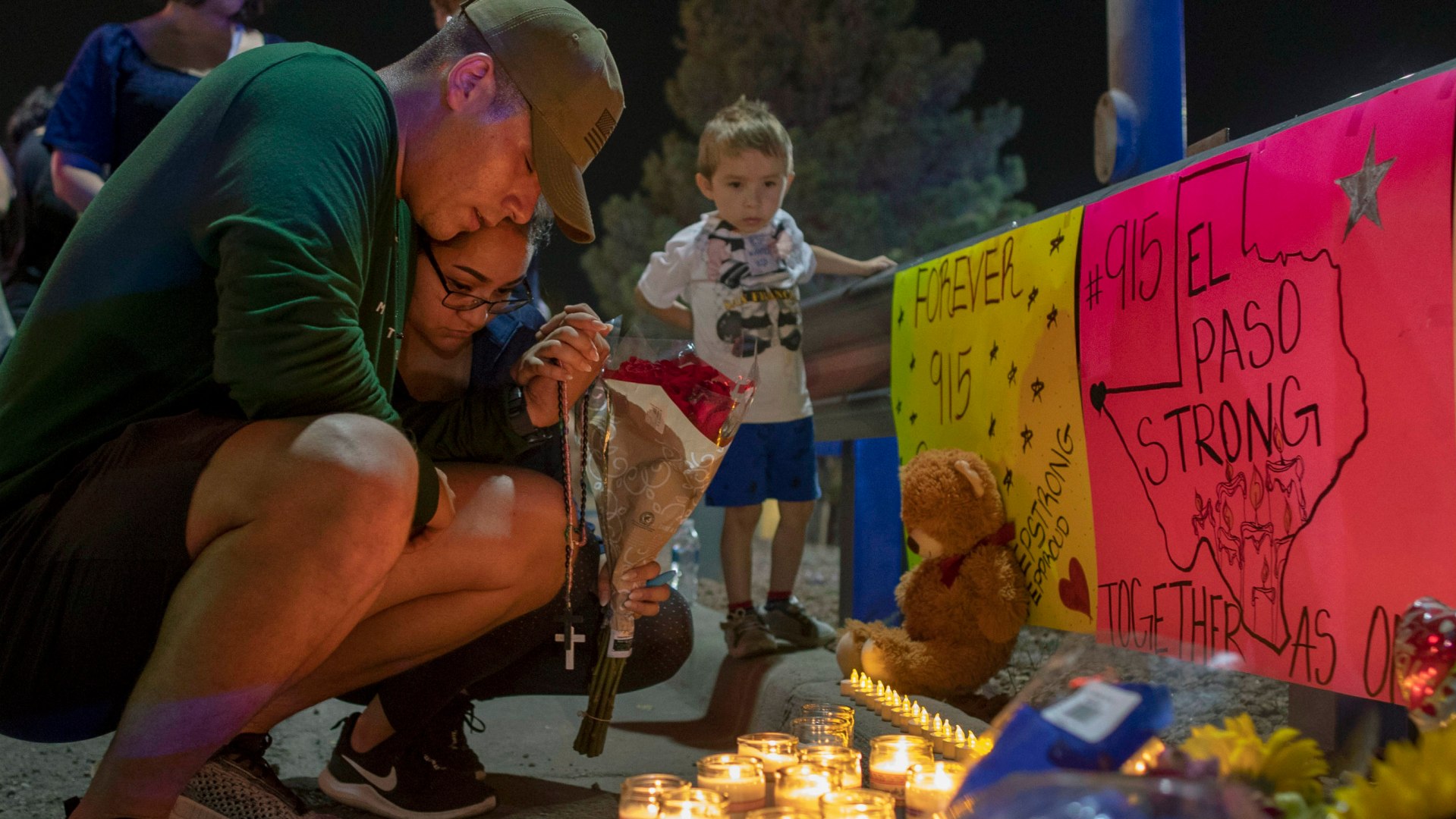
On August 3, 2019, a shooter entered a Walmart shopping center in El Paso, Texas, and murdered 22 image-bearers and injured dozens of others. According to news reports, the gunman was a white supremacist, and he is rightly being identified as a domestic terrorist.

This massacre marks the latest overt example of white supremacist terror in the US. The shooter allegedly wrote an online racist “manifesto” in which he refers to Latino/a immigrants as invaders into Texas who could only be stopped by deadly force. The shooter’s statement castigates immigration, making racist verbal attacks about “the heavy Hispanic population” in Texas. Of the 22 he murdered, news sources reveal that the terrorist targeted Hispanics and killed eight Mexican image-bearers.

Recent attacks like this one remind us that racism is a reality. With the rise of 21st-century hate crimes over the past several years, racism enflames the souls of those who allow the embers to burn. Racism will always be a matter of life and death for any image-bearer adjudicated by the racist as an enemy of the state.

Certainly, legislation and policies are important responses to the dangers posed by racism and white supremacy. However, for Bible-believing Christians and our churches, the gospel of Jesus Christ gives us a supernatural weapon by which to take all racist ideologies and actions captive in Christ.

The gospel of Jesus Christ can help Christians, with ears to hear, courageously speak in love the truth against racism and white supremacy. Through the power of the Spirit, the gospel can help Christians, with willing hearts, engage in the spiritual battle against racism and white supremacy, even when doing so is unpopular.

The Present Evil Age and Racism

The apostle Paul explains in Galatians that Jesus died and resurrected to deliver ethnically diverse groups of people from the present evil age and to redeem them from the curse of the law (1:1, 4; 3:13). Jesus also died for our sins to deliver us from God’s wrath, justify us by faith, reconcile us to God, and reconcile us to one another (Rom. 3:24; 5:7–10; Eph. 2:11–22).

Christ’s redemption results in the redeemed receiving the Abrahamic blessing, namely, the Holy Spirit (Gal. 3:13–14). Scripture tells us again and again that walking contrary to the Spirit is opposed to the gospel and makes us complicit in the evil works of the present evil age (John 3:3–21; 14:15–31; 16:4–15; Gal. 5:16–26; Eph. 2:11–3:12; 1 John).

The present evil age at least consists of a cursed universe because of sin (Gen. 3:1–19). This is one reason the Bible speaks of the need for a “new creation” (Gal. 6:15; cf. Isa. 65:17–25).

The present evil age also consists of false ideas (Gal. 1:8–9, 4:8–11; Col. 1:21; 2:8), wicked behavior (Gal. 5:19–21; Col. 1:21), depraved human beings spiritually dead and walking in the path of trespasses and sins (Eph. 2:1–10), and corrupt earthly and demonic systems and authorities (Eph. 1:19–20; 2:1–3; Col. 2:14–15; Rev. 17:1–18:24).

The present evil age both enslaves people under sin’s power and is also enslaved to sin’s power (Rom. 3:10–18; 6:6, 20; Gal. 4.3), to the demonic forces of evil (Gal. 4:9-11; Eph. 2:1-3; 4:17–19; Col. 3:20), and to everything within the present evil age (Gal. 1:4; 4:3). Racism and white supremacy are part of the present evil age because they are opposed both to the gospel of Jesus Christ and to the love produced by the Spirit (Gal. 5:13–26).

Jesus Christ himself gives us good news (Mark 1:14–15), because he is the good news (Gal. 1:15–16). He delivers his people by faith from the present evil age and gives ethnically diverse Christians his Spirit (Gal. 1:4; 3:13–14; 4:4–7).

The Spirit enables followers of Christ—people with beautiful Asian, black, brown, and white skin; with a range of immigration statuses; with different accents—to pursue mutual sacrificial love for one another in the power of the Spirit as the people of God (Rev. 5:9; 7:9–10). Christians must walk in love in the power of the Spirit as opposed to the lust of the flesh (Gal. 5:13–26; Rom. 8:1–16; 1 John 3:1–24).

One way we do this is by loving our neighbor as we love ourselves, instead of taking advantage of our freedom to gratify our sinful desires or to serve the demonic forces of evil. As Paul writes in Galatians 5:13–14, “You, my brothers and sisters, were called to be free. But do not use your freedom to indulge the flesh; rather, serve one another humbly in love. For the entire law is fulfilled in keeping with this one command: ‘Love your neighbor as yourself.’”

This Spirit-empowered love can move willing Christians to speak against and to seek to defeat every form of racism and white supremacy with the supernatural weapon of the gospel, the inerrant Word of God, and God’s common grace.

Racism is antithetical to the gospel of Jesus Christ. Those who willfully live to gratify the sinful desires of racism “will not inherit the kingdom of God” because they reveal they might be still enslaved to the present evil age and to its seductive powers (Gal. 5:17, 19–21), instead of being freely enslaved to love by the power of the Spirit as those redeemed by Christ and bound for the promised land of new creation.

The Requirements of Kingdom Citizenship

Because of Jesus’ death and resurrection, God’s kingdom is a multi-ethnic kingdom, with a brown-skinned Jewish Messiah reigning as king, filled with diverse dialects and stories. These citizens of the kingdom have tasted by faith the salvation of the one God, the one Jewish Lord, and the one Holy Spirit (Eph. 4:4–6). The kingdom consists of ethnically diverse image-bearers who have died with Christ in Christian baptism and are raised to live a life transformed by the Spirit (Rom. 6:1–23; 8:1–16; 1 Pet. 2:9–10).

Professed Christians who perpetuate racism, pander to any form of white supremacy in overt or covert ways in the church and in society, and remain opposed to taking racist ideologies and racist behavior captive in Christ run the risk of falling short of the kingdom of God. Such people may hear Jesus say, “I never knew you; depart from me, you workers of lawlessness,” when they stand before him in the day of judgment—even if they preached good sermons, performed many great works, and cast out demons in the name of Jesus (Matt. 7:21–23; Gal. 5:21).

Certainly, we all sin and fall short of the glory of God in many ways (Rom. 3:23), but kingdom-citizenship requires allegiance to King Jesus Christ above all (John 14:6; Acts 4:12). Allegiance to Jesus requires us to obey Jesus (Matt. 5–7).

From where we sit as African American Christians, racism and white supremacy are opposed to the gospel of Jesus Christ, and they pose a threat to all diverse image-bearers in our churches. Brown immigrants and people of color—families like Jarvis’s, with a Hispanic wife and a mixed African American and Hispanic son, and Curtis’s, with an African American wife and children—are genuinely afraid that white supremacists may murder us and our kids because of the color of our skin. These fears are present in many of our churches.

As we continue to live in the present evil age as Christians until Jesus returns, we who believe in biblical authority and in the transformative power of the gospel of Jesus Christ must answer this question with absolute clarity, “How will we respond?”

Regardless of political affiliation, Christians must not play political games with racism and white supremacy. We must reject all forms and expressions of racism and white supremacy. We must not employ racist rhetoric about image-bearers who are immigrants and people of color. We must not dehumanize or hate any image-bearer based on the color of their skin (Asian, black, brown, or white).

Christians must become aware of our own complicity in racism. With God’s help, Christians must also overcome convenient silence about racism because of fear of the political, social, and financial cost. Christians, and the churches in which we worship, must preach, obey, and apply the whole gospel in ways that will take every wicked thought and behavior captive in Christ, including racist thoughts and behavior, in the power of the Spirit and in ways that will cultivate Spirit-empowered love for all ethnically and racially diverse image-bearers.

Racism and white supremacy will spiritually kill the souls of every image-bearer. And racism and white supremacy are literally a matter of life and death, especially for immigrants, for people of color, for white people who oppose white supremacy or who stand in the path of white supremacist terror, and for anyone whom white supremacists view as the so-called ethnic other.

Will we who claim Christ be faithful to follow Jesus and engage in the spiritual battle against all forms of racism and white supremacy with the gospel of Jesus Christ in the power of the Spirit in our churches and in our communities? We do not know. But we do know God is able, and the gospel of Jesus Christ can change lives, including the lives of racists. We pray and live with hope that the Lord Jesus would help all Christians to preach, obey, and apply a sufficient gospel to this present evil age!

Jarvis J. Williams (PhD) is associate professor of New Testament interpretation at the Southern Baptist Theological Seminary. He is the author of numerous academic works on salvation in Paul in its early Jewish context.

Curtis A. Woods (PhD) is the associate executive director for convention relations and communications for the Kentucky Baptist Convention and an assistant professor of applied theology and biblical spirituality at the Southern Baptist Theological Seminary.

They are co-authors of The Gospel in Color: A Theology of Racial Reconciliation for Families.

Speaking Out is Christianity Today’s guest opinion column and (unlike an editorial) does not necessarily represent the opinion of the magazine.

Books
Excerpt

Why Niceness Weakens Our Witness

I can’t follow Christ and also succeed at being nice.

Christianity Today August 5, 2019
Illustration by Rick Szuecs / Source image: Getty

God did not call you to be nice. This statement has been rattling around in my head for well over a year now, and I haven’t been able to shake it. It has reemerged at crucial moments, not as an excuse to be snarky, angry, or rude, but because I have noticed something going on in my heart, and in the church, for a while now: A competing allegiance. A warm and inviting idolatry that has managed to wedge itself between us and true obedience to Christ.

For as long as I can remember, I have loved to be nice—not just loved but needed—and it is an identity I have struggled to leave behind. I want to be accepted, and I want to be embraced. As a lifelong nice girl, I have not only felt this pressure but I have also caved in to it often. The need to be nice has influenced my ministry as well as my relationships. I have backed away from hard conversations or softened my convictions, opting instead for the wide gate of niceness.

“Niceness” is a form of superficial kindness that’s used as a means to a selfish end. I identify it as an idol in my life because I have served it tirelessly, and it has served me well in return. My devotion to it has won me a lot of acceptance and praise, but it has also inhibited my courage, fed my self-righteousness, encouraged my inauthenticity, and produced in me a flimsy sweetness that easily gives way to disdain.

As I look beyond my own heart, I see this same phenomenon everywhere. Niceness has become a social currency in our culture, one that we value highly without ever really realizing it. I once discussed this topic with Christina Edmondson, dean of intercultural student development at Calvin College and cohost of the podcast Truth’s Table, and she remarked that “we are wooed by superficial niceness. Satiated by it.” We will forgive all manner of ills in a person we deem to be nice. We use niceness to grease the wheels of our social interactions. We employ it like a ladder, helping us to scale the heights of our career. And for many Christians, following Jesus means we are just really, really nice.

The friend who says a hard thing that we need to hear, the pastor who holds us accountable, the leader who disrupts the status quo—these not-nice behaviors are frequently met with swift rejection and even rage. Friendships end. Church members leave. Social media burns with outrage. These kinds of reactions tell us something about the role of niceness in our culture. It isn’t just a social expectation—it’s a sacred cow.

When we turn to it for promotions in our workplace, preference in our community, and power in our ministry, niceness is no longer a harmless social default but an alternative god whose promises compete with Christ. In sum, it stands between us and obedience.

So, how did we get here? And what does niceness mean for our Christian witness?

Going back to ancient times, virtue has traditionally referred to a particular moral good. In Plato’s Republic, the philosopher names four classical virtues: wisdom, temperance, courage, and justice. These virtues are not merely about doing the right thing—they’re about doing it for the right reason. Plato describes virtue as “the desire of things honorable,” which means we are motivated by a greater good outside ourselves.

Niceness, on the other hand, aims small. In her book American Niceness, author Carrie Tirado Bramen describes niceness as a virtue of “surfaces rather than depths,” while Philip Ryken, president of Wheaton College, calls it “a trivial virtue that is easy to fake.” Niceness is concerned with the appearance of goodness and not the reality of it. It gives the facade of serving others but exists primarily to serve ourselves. In the end, niceness only makes us into “whitewashed tombs” (Matt. 23:27)—pristine on the outside but empty within.

In addition to being a false virtue, niceness radically diminishes our Christian witness. Author Randy Alcorn describes it this way: “We’ve been schooled that it’s inappropriate to say anything negative. Being a good witness once meant faithfully representing Christ, even when it meant being unpopular. Now it means ‘making people like us.’ We’ve redefined Christlike to mean ‘nice.’”

Not surprisingly, this false idol has shaped the reputation of Christians throughout the world. Alcorn goes on to say, “Many non-believers know only two kinds of Christians: those who speak truth without grace and those who are very nice but never share the truth.” In other words, niceness is one of the reasons our gospel message is uncompelling and our witness limp. Niceness is a false form of spiritual formation that has crept into the church, seduced Jesus’ followers, and taken much of the power out of our lives. It is one of our generation’s favorite idols, and it is high past time to name it.

After observing the fruit of this false idol in my own life, here’s what I have concluded: I cannot follow Jesus and be nice. Not equally. Because following Jesus means following someone who spoke hard and confusing truths, who was honest with his disciples—even when it hurt—who condemned the hypocrisy of the Pharisees and turned over tables in the temple. Jesus was a man who went face-to-face with the devil himself and died on a cross rather than succumb to the status quo.

We exist in a world that swings between sweetness and outrage, two behaviors that seem to be at odds with one another. In reality, they are two sides of the same coin: a lack of spiritual formation. When our civility isn’t rooted in something sturdy and deep, when our good behavior isn’t springing from the core of who we are but is instead merely a mask we put on, it is only a matter of time before the façade crumbles away and our true state is revealed: an entire generation of people who are really good at looking good.

The solution, however, is not to trade in our appearance of niceness for an appearance of boldness. We have to go deeper into Christ.

Jesus was loving. He was gracious. He was forgiving. He was kind. But he was not nice. He was a man who would leave the 99 sheep to rescue the one, but he was also totally unafraid of offending people. Jesus understood the difference between graciousness and personal compromise, between speaking truth and needlessly alienating people. Rather than wear a shiny veneer, he became the embodiment of rugged love. This, not niceness, is what we are called to.

Sharon Hodde Miller, PhD, is a writer, pastor’s wife, and mother of two. She is the author of Free of Me: Why Life Is Better When It’s Not About You and Nice: Why We Love to Be Liked and How God Calls Us to More, from which this essay was adapted.

Copyright August 2019. Used by permission from Baker Books, a division of Baker Publishing Group.

Culture
Review

What Hollywood Gets Right About Snake-Handling Christians

The sincere portrayal in “Them That Follow” gives mainstream believers perspective on the real oddity of our faith.

Christianity Today August 5, 2019
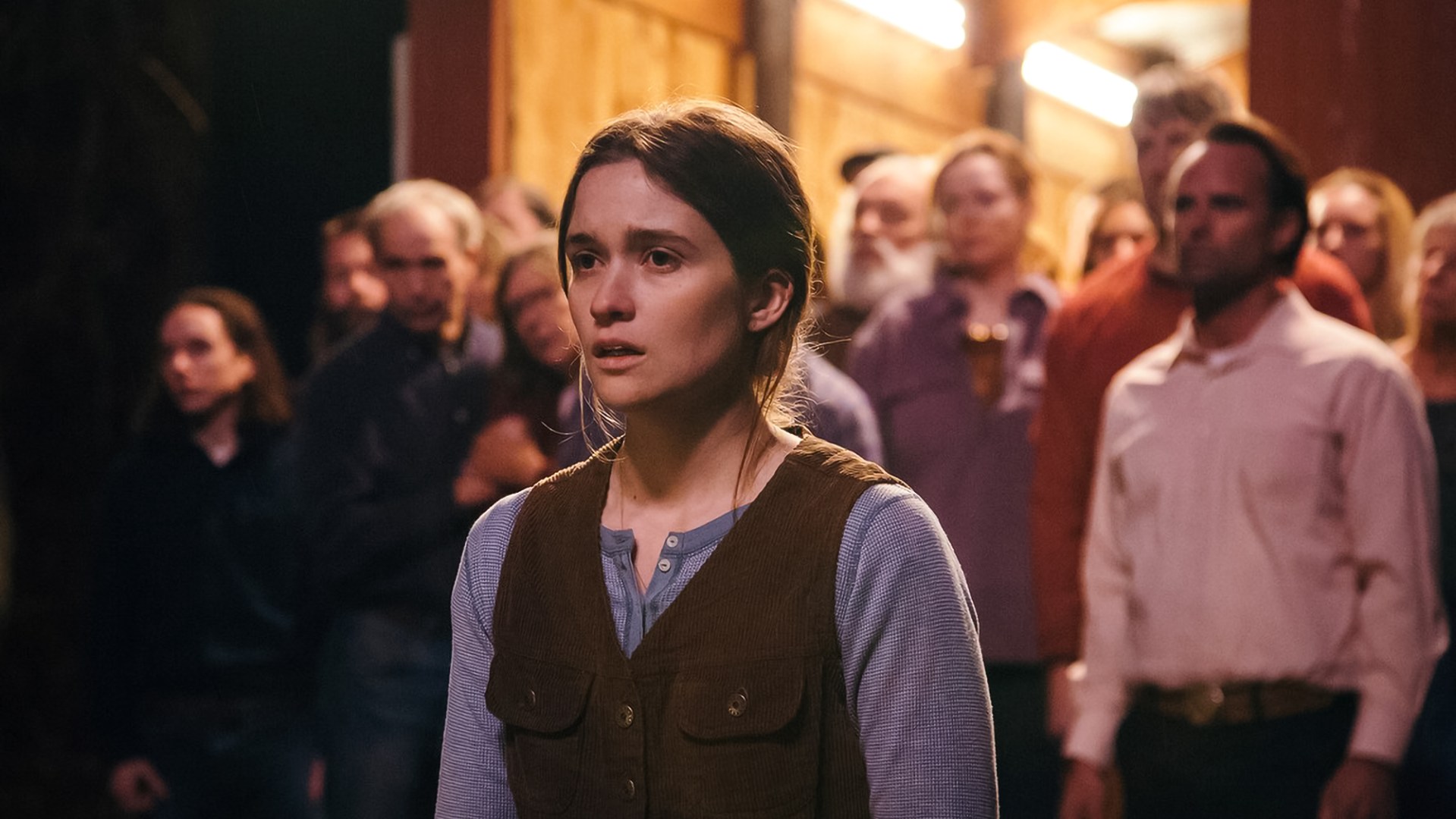
Promo image / 1091 Media

If movies have taught us anything—think Raiders of the Lost Ark, Jungle Book, even Snakes on a Plane—it’s that snakes are not to be trusted. For Christians, it’s a lesson that goes back to the Garden itself.

Filmmakers hoping to offer a sympathetic depiction of these animals face quite the challenge. But that’s exactly what co-writer and co-director Britt Poulton and Dan Madison Savage manage to do in their recently released film Them That Follow.

In the hands of this capable storytelling duo, snakes are not the terror many imagine them to be, though a very real threat to life and limb. Rather, they are beautiful, albeit seriously misunderstood, creatures.

It is also difficult to paint a sympathetic picture of something as misunderstood, and often equally reviled, as Pentecostal snake handling. But Poulton and Savage demonstrate the same kind of care and concern for these people of faith as they do the serpents they handle.

Them That Follow tells the story of Mara (played by Alice Englert), the daughter of snake-handling pastor Lemuel (Walton Goggins). Early in the film, Mara pledges herself to be married to Garrett (Lewis Pullman), the spirit-filled young man being groomed by Lemuel, even though she is pregnant with the child of Augie (Thomas Mann), the wayward son whom she really loves.

All told then, Them That Follow is a coming-of-age love story. But it’s also more than that, in large part because it offers a rare glimpse into a world of Christian faith and practice that will strike many viewers as strange and unfamiliar, even evangelical Christians.

The filmmakers could have easily sensationalized this practice, but they go to great lengths to do the opposite. The camera lingers over the characters and the places they inhabit, lending the visuals a Terrence Malick-like sense of spiritual saturation. The story unfolds slowly but intentionally, creating space for the characters to be and become rich and textured human beings rather than caricatures or stereotypes.

Most importantly though, the film depicts these faithful individuals not as blind or backwards, but as sincere and earnest. For Mara in particular, the film seems to affirm both her core desire to commune with the Spirit of God in and through the created order, and her ability to discern the Spirit’s presence and activity in her life.

In fact, without spoiling anything, the whole narrative turns on the characters’ perceptions of the Holy Spirit. A handful of key religious leaders refuse to respond appropriately to what the Spirit is whispering into Mara‘s ears, choosing instead to deploy the language of spirituality as a tool to maintain their power and control over her and the rest of the community.

Like Mara, they too operate with an earnest zeal that the film never calls into question. They each have their foibles, but it is clear that their flaws have nothing to do with their belief in a spiritually charged world. Instead, the real tragedy—and indeed the irony—is that they aren’t committed enough. As a result, they are unable or unwilling to rightly discern the Spirit’s voice and, by extension, unable to follow his prompting.

The film is also uniquely American. Snake handling is itself an expression of Christianity contained almost entirely within the Appalachian region of the United States. It emerged at the turn of the 20th century as an offshoot from the Holiness movement.

From my own theological perspective, by instituting snake handling as a regular, intentional practice (and in some cases as evidence of salvation), practitioners are overinterpreting a small handful of biblical allusions to the ways in which Christ’s work on the cross has caused poison, like death, to lose its sting (e.g., Mark 16:17-18). That being said, it would be an overstatement to suggest that snake handlers are doing something qualitatively different than any other Christian community in the US whose worship practices have also been shaped by the evangelical tradition.

I realize that some Christians might balk at the suggestion that snake handling is in any way representative of our faith and practice, and I certainly have no intention of making this claim. But, snake handling notwithstanding, from the perspective of those looking in from the outside, it’s hard to deny that Christians have always been in the habit of doing things that are—how should I put it?—a bit odd.

Even without snakes, our worship includes some unusual practices and proclaims some unbelievable truths. In baptism, we dunk each other underwater (which is only slightly odd) while saying something about dying (a little odder) and coming back to life (super odd!). In communion, we eat bread and drink wine while claiming to consume Christ’s body and blood (downright weird). Then there are more strange practices like speaking in tongues, laying hands on the sick, and casting out demons.

In truth though, that’s as it should be. There is nothing “normal” about proclaiming the death and resurrection of God in the flesh. Nor about loving one’s enemies, praying for one’s persecutors (Matt. 5: 43-48), or sacrificing for the wellbeing of foreigners or social pariahs (Lev. 19:34; Luke 10: 25-37). Some might even call this way of life complete foolishness (1 Cor. 1:18) because that’s just how unexpected the gospel proves to bee.

But according to Jesus, the most glaring of all our oddities—the one that should stand out like a swollen, snake-bitten thumb—is the radical, unqualified love we show to each other (John 13:34-35). This “new commandment” Jesus announced in John 13 serves as a helpful reminder, especially when outsiders struggle to understand why we do what we do.

It can be easy to convince ourselves that those outside our community are uncomfortable with Christianity because they think religious faith itself is naïve. But this is why Them That Follow proves to be such an insightful film. In its sympathetic handling of its religious characters, told from the perspective of outsiders looking in, it dares to suggest that it isn’t snake handling that outsiders find off-putting about Christianity. If anything, to “pick up snakes with their hands” without being poisoned is a genuine sign of deeper spirituality.

However, what the film’s narrative depicts as utterly unbelievable, and thus unforgivable, to outsiders is how a group of Christians ostensibly committed to loving one another could be so quick to leverage their spiritual authority to silence and condemn those through whom the Spirit is speaking a critical word.

Put differently, genuine faith turns out to be fairly compelling in this film, no matter what form it takes. But when a community’s idiosyncratic practices simply serve to reinforce oppressive power structures, it’s a deal breaker. Quirkiness is endearing; duplicity is intolerable.

Them That Follow is rated R, so it isn’t for children. Not only is it thematically intense, but it also contains numerous moments of disturbing violence. Nevertheless, adult Christians will find in it a sympathetic portrait of a group of believers who engage in a practice that many would admit is odd at best and misguided at worse.

Rather than denigrate our sisters and brothers who respond to the Spirit in ways we might find uncomfortable, Them That Follow invites us to tell their stories sympathetically and, in doing so, to love them. I know it may sound a bit unconventional, but if we learned how to treat members of our own community with the same kind of compassion that this film demonstrates toward them—to love the people we instinctually want to discredit or disown—snake handling might look completely normal by comparison.

And that would be odd indeed.

Kutter Callaway is associate professor of theology and culture at Fuller Theological Seminary and co-director of Reel Spirituality. His most recent books are Deep Focus: Film and Theology in Dialogue and The Aesthetics of Atheism: Theology and Imagination in Contemporary Culture. He hosts the Kutter Callaway Podcast and tweets @kuttercallaway.

News

Recent Shootings Spur Pastors to Call Out White Supremacy

For many evangelicals, it’s time to name the evil beneath the violence.

Christianity Today August 5, 2019
Andres Leighton / AP

With two mass shootings making national news over the weekend, responses from evangelical leaders shifted from mourning the tragic events to naming the evil blamed for recent attacks.

Several pastors spoke up to decry the racism and white supremacy that, according to an online manifesto, motivated a gunman to attack a Walmart in the border city of El Paso, Texas, killing 20 people and injuring 26 more on Saturday. That night, another mass shooting took place at a bar in Dayton, Ohio, though authorities have not determined a motive.

“As president of @SWBTS, I want to be clear that we condemn in the strongest possible form any and all ideologies of racial/ethnic superiority/inferiority that fuel the kind of hate evidently motivating the #ElPaso shooter to commit such a horrific act of violence in our state,” tweeted Adam Greenway, president of Southwestern Baptist Theological Seminary in Fort Worth.

Multiple Southern Baptist leaders echoed Greenway’s remarks, and others—including leaders like Denny Burk and Andrew Walker—shared a National Review editorial that targeted white supremacy as the root cause of America’s mass shooting problem:

… the patterns on display over the last few years have revealed that we are contending here not with another “lone wolf,” but with the fruit of a murderous and resurgent ideology—white supremacy—that deserves to be treated by the authorities in the same manner as has been the threat posed by militant Islam.

The El Paso tragedy marks the second US attack this year involving a young white man who named the New Zealand mosque gunman as inspiration (as did the California synagogue shooting suspect back in April). According to reports, the 21-year-old accused of opening fire at Walmart wrote, “This attack is a response to the Hispanic invasion of Texas.”

Since 2017, white extremists have targeted victims in eight US attacks, but the El Paso shooting was the most deadly, The New York Times reported. The ideology has been linked to at least four of the ten worst “active shooter incidents” in the country.

While Christian leaders repeatedly join in the sadly-too-familiar refrain of mourning mass shootings in America, the rhetoric has clearly intensified.

On Sunday, preachers Greg Laurie and Jack Graham attributed the surge in shootings to an escalating spiritual battle and the work of the devil, while others specified that such evil is rooted in racism.

The recent incidents have prompted more US evangelicals to declare “Christ’s supremacy over white supremacy”—as John Starke, lead pastor of Apostles Church Uptown in New York, put it—and to call on fellow believers to do the same.

“When these manifestos outline the motive as #WhiteSupremacy, the Church CAN’T be silent in calling this out! #WhiteSupremacistTerrorism,” wrote D. A. Horton, pastor of Reach Fellowship in Long Beach, California, and a professor at California Baptist University. “This doesn’t mean everyone of European descent is a White Supremacist. But it does identify the system of hatred that is rooted in evil.”

Christian leaders of color, like Wheaton College professor Esau McCaulley and hip-hop artist Propaganda, were quick to bring up how churches might address the shootings on Sunday morning.

“We had a Latina sister from the El Paso area in worship today. She told me Latinx brother and sisters near the southern border are absolutely terrified they could be next,” said Mika Edmondson, who leads New City Fellowship in Grand Rapids, Michigan. “We prayed, ‘Lord deliver us from this present evil age … from white nationalism & the principality of racism.’”

White pastors from a range of traditions offered similar sentiments over the weekend, linking the evil of mass shootings to racism.

“Mass murder is not a ‘tragedy.’ A cyclone or an earthquake or a tornado that takes lives is a tragedy,” tweeted Ray Ortlund, pastor of Immanuel Nashville. “But mass murder is evil. And if motivated by racism, it is evil compounded.”

Chad Veach, from the nondenominational Zoe Church LA, called racism an “evil learned behavior,” while Jonathan Martin, lead pastor of The Table in Oklahoma City, urged fellow Pentecostals to “clearly name and oppose white supremacy now.”

Some Christians coupled their condemnation of white supremacy with “violent Leftism,” citing the reported political leanings of the Dayton shooting suspect. “It’s all awful. White supremacy is disgusting. And so is violent Leftism,” wrote pro-life activist Lila Rose. “… until we stop pretending that the violent, nihilistic outbursts in our country are due to ONE sick ideology or ONE cause, we won’t be able to prevent them.”

Southern Baptists made their opposition to the alt-right resurgence of white supremacy and white nationalism official in a resolution in 2017. That same year, many evangelical leaders, including advisers to President Donald Trump, spoke up to decry the Unite the Right rally that drew protestors to Charlottesville, with some going on to criticize Trump’s controversial “both sides” response.

“Neither the nation nor the church has demonstrated a sustained commitment to confronting white supremacy,” wrote Theon Hill, Wheaton communication professor, following the Charlottesville clashes.

“At key moments, Christians have advocated for the abolition of slavery, death of Jim Crow, and the end of mass incarceration, but the commitment to equality has consistently languished over time. Our lack of sustained commitment to biblical justice keeps the soil of racism and white supremacy fertile for the James Fields Jr.s and Dylann Roofs of American culture to grow into domestic terrorists.”

After the mosque massacre in Christchurch, New Zealand, CT heard from evangelicals around the world about how Christians could respond. After the Poway synagogue shooting, a fellow Orthodox Presbyterian reflected on the suspect’s ties to his tradition.

CT has also reported on pastors who have advocated for tighter gun restrictions and ministries offering outreach in the wake of mass shootings.

Ideas

I’m a Shooting Survivor. If You’re Going to Pray for Us, Here’s How.

We need more than “thoughts and prayers” in the immediate aftermath.

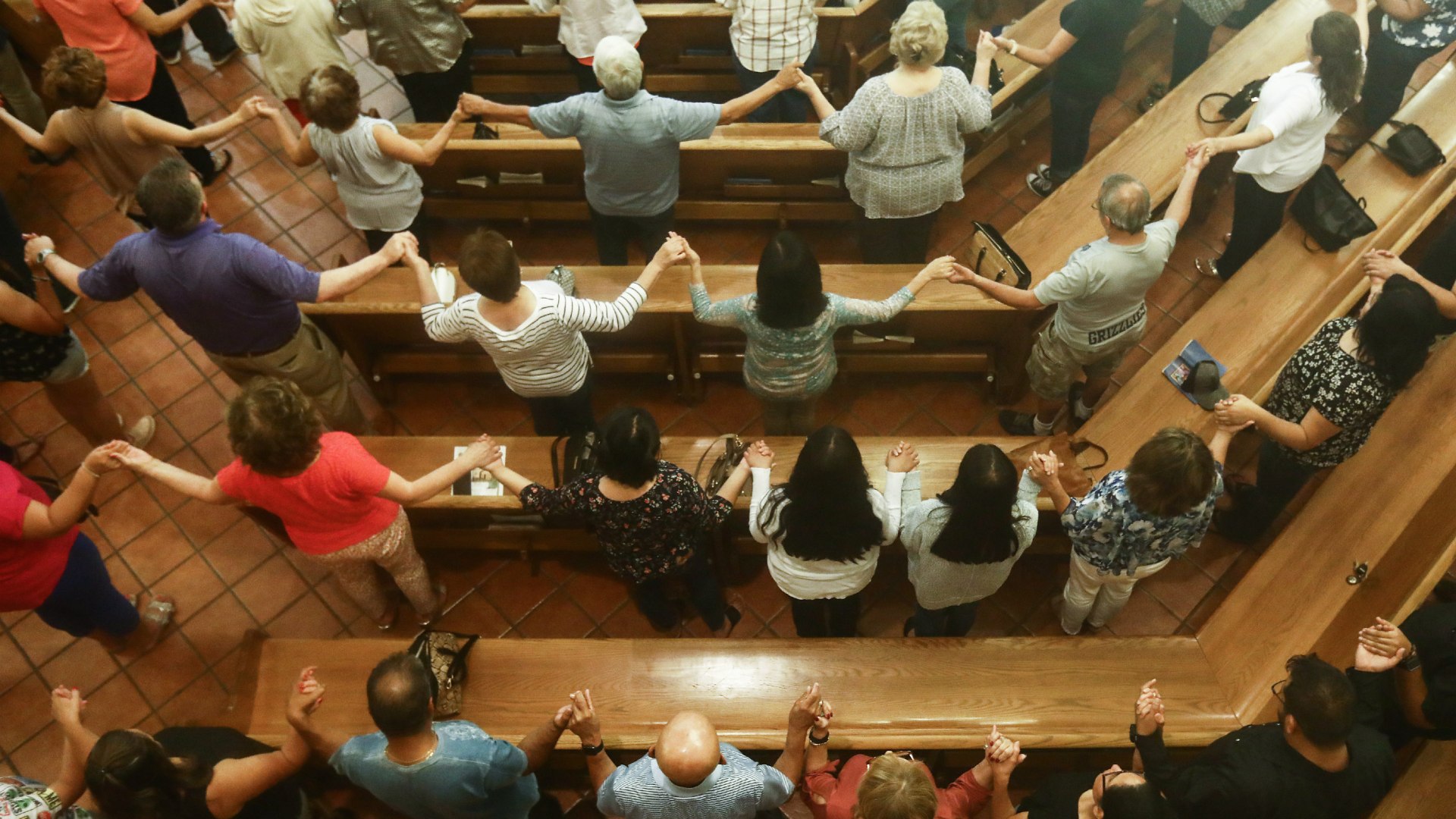
St. Pius X Church in El Paso holds a vigil for victims.

St. Pius X Church in El Paso holds a vigil for victims.

Christianity Today August 4, 2019
Mario Tama / Getty Images

I have a complicated relationship with “thoughts and prayers.”

The phrase has become the familiar refrain after each mass shooting, echoed in tweets and statements offering condolences to families and communities shaken by tragedy. Like many others affected by gun violence, I can’t help but feel frustrated and cynical when I hear another line about “thoughts and prayers.”

It has been six years since I was shot when a gunman opened fire at New River Community College in Virginia. With the news of each mass shooting, each child dead after finding a loaded weapon in their home, and each suicide or senseless gun death, I wonder if action from those in power will ever follow the thoughts and prayers.

As a shooting survivor, I believe in action. At the same time, I believe in the power of prayer. I know firsthand what living through a shooting does to a mind and what a bullet does to a body, and I believe that my recovery and healing is a direct result of prayers that were prayed for me.

It is easy to feel powerless in the aftermath of a mass shooting. As we mourn the lives lost in El Paso, Dayton, and every other community where gun violence is an everyday reality, it can seem impossible to find the words to pray.

Being a survivor doesn’t mean I can singlehandedly solve the crisis of gun violence. What I can offer, though, is insight into some specific ways to pray for survivors as one part of our response to gun violence.

Pray for physical wounds, pain, and future treatments.

Managing bullet wounds is often a process of trial and error, where it can take days for doctors to figure out how to provide comfort. Many survivors face years of recovery, including surgeries and physical rehabilitation. Pray that they would experience a relief from the physical pain, that the lasting effects of the wounds would be minimal, and they would have the strength to persevere through the treatments to come.

Pray for their invisible wounds.

Survivors have witnessed the unimaginable, oftentimes seeing people they love also wounded or killed. These are images that will never leave their minds. Whether or not they were wounded, they are processing their near-death experience and wondering what their new reality will be. Many survivors will deal with post-traumatic stress disorder, anxiety, and depression. Pray for the emotional trauma they are dealing with. Pray that they would have access to counseling, therapy, and whatever type of mental health treatment that they need.

Pray for wisdom for doctors, nurses, and all medical specialists they encounter.

Medical staff face a weighty task as they are asked to treat and care for victims. Pray for wisdom as they make medical decisions, steady hands as they perform surgeries, kindness as they talk to their patients, and for stamina and endurance as they provide care.

Pray for shielding from photos and information of the shooter.

I will never forget waking up and seeing the face of the person who shot me next to my picture on the front page of the newspaper or seeing my name scroll across the ticker on the national news. As videos and photos make their way into the coverage, pray that the survivors are shielded from hearing about the shooter and reliving their trauma over and over again.

Pray against nightmares and for the ability to sleep and rest.

For me, one of the hardest things in the days following the shooting was sleeping. I was terrified to close my eyes, and when I did, I suffered through nightmares. After a significant trauma, the body needs sleep. Pray that the survivors are able to able to rest without fear.

Pray for financial provision for medical costs and other needs.

The financial impact of being shot is devastating for families, especially if the person hurt was the family wage-earner or will live with a lifelong disability. Please pray for financial provision for hospital bills, ongoing care, materials needed to function well, and ongoing mental health treatment.

Pray for guidance and support during the legal process.

In incidents where the shooters are taken into custody, survivors face a long and tedious legal process full of court proceedings. They will be asked to testify about the worst day of their lives and forced to listen to the traumatizing details. I know firsthand how overwhelming this process can be. Pray they would have support and guidance as authorities work to bring shooters to justice.

Pray they would have a strong support system for the long haul.

Supporting a shooting survivor is not a short-term endeavor. Please pray that each survivor will have an unbreakable support system, full of people who will love them and care for them and not abandon them if it gets difficult. Pray that the survivors will not feel like a burden to those around them but instead will allow others to serve them.

Pray for support from other survivors.

Having a support system of friends and family is critically important for a survivor. However, there is a special type of support that can only come from being able to lament with a fellow survivor who can fully understand their suffering and experience. Pray they would be able to make connections and get support from people who have been through it themselves.

Pray against re-traumatization after other shootings.

For a survivor, it can feel impossible to experience healing when we are constantly having to relive our experience with each new mass shooting that happens. Every time we are flooded with the memories of our experience. For a lot of us, this includes things like PTSD symptoms and panic attacks. Pray that God would provide a peace that surpasses all understanding and strength when they are weak.

Keep praying.

If I can convince you to do just one thing on this list, I hope it is this one. Keep praying. For many survivors, including myself, the day of the shooting is not the hardest day. The hardest day comes later, when you are confronted with your new reality in the aftermath. When the cards stop coming, when people stop asking how you are, and when the news cycle changes, you begin to feel forgotten and isolated. People praying for you months and years after the shooting is a significant way to show support.

God knows the needs of survivors, so I don’t believe it is necessary to know exactly what to pray for in order to pray. However, when we acknowledge the specific needs of others, we are better able to empathize with them, love them, and serve them. We are also better able to recognize the deep and ongoing trauma of gun violence that lasts long after the news cameras are gone.

I hope that this list helps you pray for victims in El Paso and Dayton. And while I pray there isn’t a next time, I hope it’s helpful then, too.

Taylor Schumann is a writer, shooting survivor, and contributor to the forthcoming book If I Don’t Make It, I Love You: Survivors in the Aftermath of School Shootings. She lives with her husband and son in Charleston, South Carolina.

Speaking Out is Christianity Today’s guest opinion column and (unlike an editorial) does not necessarily represent the opinion of the magazine.

Books
Review

World Vision Helped Evangelicals Become Social Activists—Within Limits

A new history tracks the uneasy alliance between the organization and its core supporters.

Christianity Today August 2, 2019
Source image: Thisiskyle / Lightstock

When World Vision responded to the HIV/AIDS crisis in Africa, it didn’t tell supporters. The work wasn’t secret, exactly, but the organization also didn’t publicize what it was doing. It didn’t know how to publicize it, how to get evangelical donors to care about this particular crisis, AIDS in Africa. AIDS meant sex. AIDS was icky. It was associated with homosexuality, sexual promiscuity, and drug use, and to talk about AIDS, you had to talk about needles and condoms.

God's Internationalists: World Vision and the Age of Evangelical Humanitarianism (Haney Foundation Series)

God's Internationalists: World Vision and the Age of Evangelical Humanitarianism (Haney Foundation Series)

University of Pennsylvania Museum Publications

360 pages

$37.48

“We’re a G-rated ministry,” the marketing team told Rich Stearns when he became president of World Vision US in 1998, “involved in an R-rated issue.”

AIDS education and prevention also reminded evangelicals of liberal social programs. It made them suspicious that the gospel message was being replaced with social action. This was always the challenge for World Vision, the small missionary agency that grew to be the largest Christian humanitarian aid organization in the world: How do you convince evangelicals that caring about social issues is part of the gospel? How do you persuade them that tending the sick and caring for the poor isn’t in conflict with sharing the good news of Christ’s death and resurrection?

The answer is the subject of God’s Internationalists: World Vision and the Age of Evangelical Humanitarianism, an insightful new book by David P. King, who directs the Lake Institute of Faith & Giving and teaches at the Indiana University Lilly Family School of Philanthropy. King argues that the organization shows how American evangelicals came to understand themselves in a global context in the 20th century. Historians have been very interested in this subject in the last few years, looking at how missionaries, missionary-spies, religious media, the state of Israel, and cooperation with churches in the global south made American evangelicals into global thinkers. King’s history is a valuable contribution to this scholarship. It’s especially interesting because it focuses on this tension in evangelical life between evangelism and social action.

The Humanitarian Turn

King’s story starts in the 1940s with the end of World War II and the beginning of a boom of revivalism. Conservative American Protestants—who at the time used the words fundamentalist and evangelical interchangeably—felt a renewed optimism about the possibilities for preaching the gospel. With new energy, new technology, and a new political situation, they felt they could reach the whole world for Christ. A young Bob Pierce took the gospel to China with Youth for Christ, with funds raised by another young YFC minister, Billy Graham.

Pierce spent four months in China, preaching in the largest auditoriums he could find. He didn’t know the language, so he spoke through a translator. He hadn’t studied the culture, so he didn’t try to adapt the messages to the specific needs or concerns of the Chinese people. He was, nevertheless, quite successful. Pierce recorded 17,852 decisions for Christ in the flyleaf of his Bible.

His ignorance could cause problems, though. Pierce preached at a girls’ school run by Dutch Reformed missionaries and told the new converts to go home and tell their parents, “I’m a Christian now.” One girl named White Jade followed his instructions. Her father beat her and threw her out of the house. The missionaries took this story to Pierce, demanding to know how he was going to help this newborn Christian whose faith made her an orphan. Pierce gave them his last five dollars. He felt convicted, though, that it wasn’t enough.

On his second trip to China, Pierce brought funds for orphanages, leper colonies, and to buy food and medicine. He continued to hold revivalist rallies but paired them with concern for the physical conditions of the people he was trying to reach. King calls this “a new evangelical humanitarianism” that “tied evangelism and social concern together with insider evangelical language that completely avoided the language of a liberal social gospel that conservatives despised.”

Pierce set out on his own in 1950, founding World Vision with this idea of combining traditional missionary work with humanitarian aid. He said social action sent a message: “Yes, we care about your eternal destiny—but we also care about you now.”

World Vision was blocked from China when the Communist government closed the country to missionaries, so Pierce turned his attention to Korea right as the Korean War began. The war created some acute physical needs. Pierce was especially concerned about orphans. By the end of the 1950s, World Vision was committing 79 percent of its annual budget to orphans, spending more than $425,000 to care for about 13,000 children. Child sponsorships became a major part of World Vision’s fundraising and a core part of the organization’s identity.

Caring for Souls and Stomachs

American evangelicals supported this work, but many were skeptical of World Vision. There were concerns, according to King, about the organization’s disregard for evangelical boundaries. Pierce was a pragmatist. He was happy to partner with non-evangelical groups, ignoring theological differences. There were also concerns about Pierce himself. As King writes, Pierce was “quick to speak, prone to anger, blunt, and bull-headed, even as he was generous, loyal, and tender-hearted.” There were rumors of affairs and substance abuse. Pierce struggled with depression and was often estranged from his wife and children. “His general instability,” King writes, “was an open secret among fellow evangelical leaders.”

There were also continued conflicts about priorities. Shouldn’t souls come first, stomachs second? Pierce said no. “You can’t preach to people whose stomachs are empty,” he said. “First you have to give them food.”

He convinced a lot of Christians. Throughout the Korean War, World Vision funneled American evangelical money to Christian orphanages and shipments of food, medicine, and Bibles, as well as evangelistic crusades. When the United States got more involved in the war in Vietnam, World Vision was there, constructing refugee centers, hospitals, and a vocational training program for tribal people. The organization supplied wheelchairs and crutches to Vietnamese doctors and shipped thousands of pounds of relief aid into the country. When the conflict expanded into Laos and Cambodia, World Vision took aid to those countries too. Pierce’s successor, Stan Mooneyham, personally led a convoy carrying $100,000 of medical supplies from Saigon to Phnom Penh, the capital of Cambodia, in 1970. When they got there, Mooneyham preached about the love of God.

In the 1970s, the organization expanded operations from 8 to 40 countries, and its budget grew from $4.5 million to more than $100 million. World Vision also started to look beyond the front lines of the Cold War, responding to natural disasters in Bangladesh and Nicaragua and famines in India and Ethiopia. World Vision mobilized American evangelicals to become social activists, especially on the issue of world hunger. It developed youth group curricula for “planned famines,” where teenagers would fast for 40 hours to raise funds for World Vision. And it organized a “Love Loaf” campaign, asking families to skip one meal per week.

“World hunger resonated with evangelicals,” King writes, “and World Vision offered them acceptable ways to respond. It allowed them to act, indeed, to become social activists within limits.”

Mooneyham discovered two very sharp limits. The first was any criticism of American foreign policy. World Vision tried to help Vietnamese refugees in 1978, three years after US withdrew from the war. In the violence after America’s departure, more than 200,000 Vietnamese refugees attempted to flee the country by boat. Mooneyham tried to get the US to take the “boat people,” but he was rejected. He then organized a ship to pull them out of the water, but the US refused to register the vessel. World Vision had to work with the government of Honduras instead. Eventually, President Jimmy Carter relented, ordering the Navy to assist the refugees and offering the boat people asylum in the US, but World Vision had learned the challenge of working against US interests.

The second limit was any criticism of middle-class American consumption. Mooneyham said committed Christians should reject consumerism, move toward simple living, and fast in solidarity with the poor. He said charity wasn’t enough. Evangelicals should work for systematic change, starting in their own homes.

It didn’t go over well. As King explains, evangelicals were moved by pleas to care for orphans and feed the hungry, but “critiques of American imperialism, demands for structural change, and appeals for simplicity of life” mostly fell on deaf ears.

Reconnecting with Evangelicals

This started a rift between World Vision and American evangelicals. The organization grew increasingly disconnected from supporting churches. In the 1980s, World Vision downsized its church-relations department. Instead of working with congregations and promoting missionary and humanitarian work in church services, the marketing team used direct mail and TV ads. By 1984, World Vision got 86 percent of its donors through television. The organization also turned more to government aid and shifted its focus to large-scale development projects. This meant more partnerships with groups such as the United Nations Children’s Fund and the World Health Organization. In the process, World Vision became more professionalized. When it hired new people, there was increased emphasis on expertise and less concern about Christian commitment.

The organization became more international, too. World Vision developed a federalist model, which gave a lot of independence to international offices. They all shared administrative costs and signed on to World Vision’s Statement of Faith, Core Values, and Covenant of Partnership, but Latin American, Asian, and African offices could make decisions without regard for the sensibilities of American evangelicals. There were internal fights over the use of images of malnourished children, the value of child-sponsorship programs, and the differences between charity and development.

By the 1990s, World Vision was struggling to maintain a real connection to American evangelicalism. According to King, an internal study found that less than half of the organization’s offices considered the mission statement when screening potential employees, and only 40 percent asked for a written faith statement. “Religious talk” was often relegated to chapel talks and the occasional staff retreat. When World Vision started responding to the HIV/AIDS crisis, it didn’t try to convince evangelical supporters of the importance of the work.

This was a big concern when Rich Stearns became president of World Vision US in 1998. He pushed for a new outreach effort. When he did, he found that evangelicals were ready and open to World Vision’s brand of evangelical humanitarianism. An AIDS education effort saw immediate response. The number of evangelicals willing to support HIV/AIDS work jumped from 3 percent to 14 percent in a single year. Megachurch pastors, notably Rick Warren of Saddleback and Bill Hybels of Willow Creek, were ready to partner with World Vision on big social action projects. From 1999 to 2006, the number of evangelical donors increased by 50 percent. Young evangelicals were especially responsive: When World Vision reached out to Christian colleges and campus ministries, 20,000 evangelical students on 400 campuses signed up to support the fight against AIDS, as well as sex trafficking, malaria, and global poverty.

“World Vision’s history,” King concludes, “sheds light on the evolving international outlook of American evangelicals from World War II to the present. … Whether retaining an American exceptionalism or recasting themselves as global citizens, they also incorporated a religious lens into their interpretation of the world and their place within it.”

God’s Internationalists is a fascinating new narrative about American evangelicals and politics in the 20th century. While King’s writing is probably too academic for some readers, this is an important new book that complicates our understanding of how evangelicals came to see social issues as a key part of their Christian witness.

Daniel Silliman is a US historian who writes about religion in American culture. He teaches writing and humanities at Milligan College in Tennessee.

Ideas

For Jesus Army, Must the Wages of Abuse Be Death?

Contributor

Closure of UK-based charismatic church network raises question of whether ministries can recover after abuse is uncovered.

Christianity Today August 1, 2019
illustration by Pri Sathler

Rainbow-colored vans and buses were a regular sight in my hometown during my childhood in southern England. Emblazoned with a large red cross on the window and the words Jesus People Loving People on the side, wherever the vehicles stopped a team of people would jump out dressed in brightly colored camouflage gear and start an open-air evangelistic meeting. This was how I experienced the Jesus Army.

But this innovative and controversial British group will now no longer be on the streets. Numerous disclosures of the past sexual abuse of children have led not just to the appropriate criminal prosecution of the individuals concerned, but the dissolution of the entire church network.

Despite these tragic and terrible events, some might ask if the disbanding of the entire denomination is too extreme a reaction? Does the total disappearance of a ministry circumvent the Christian potential for change, learning, redemption, forgiveness and restitution?

How should believers react to the awful fact of the increasing number of ministry abuse scandals in the United Kingdom, United States, and beyond? What can we learn from the Jesus Army’s response?

The Jesus Army is not to be confused with the Salvation Army, founded by William and Catherine Booth in 1865 and now numbering 1.7 million members worldwide; nor with the Church of England’s evangelistic organization known as the Church Army, founded in 1882 and now with about 300 evangelists in the UK and Ireland.

The Jesus Army was founded out of a charismatic church in Bugbrooke in 1969 by Noel Stanton, following his personal encounter with charismatic renewal and the Jesus People movement in the US. By 1987, the group had taken on a clear vision to follow in the footsteps of the Salvation Army and sought to reach out to marginalized people in the UK.

At its peak, the Jesus Army had about 2,500 members. They used targeted evangelistic campaigns and a strongly directive form of mentoring and discipleship which became known as “heavy shepherding.” The forcefulness of these practices led to the Jesus Army being removed in 1986 from membership of both the Evangelical Alliance UK (EAUK) and the Baptist Union of Great Britain.

In 1999, the Jesus Army was received back into the EAUK’s membership. Its expulsion and re-inclusion seemed to offer good evidence that discipline for the sake of restoration (as described in 2 Corinthians 2:5–11) can be effective when it comes to churches and denominations.

But after the sentencing in late May of 6 men for the assault of 11 victims from the 1970s to 1990s, the Jesus Army voted to revoke its constitution and to shut down as a national organization. With the winding down of the central overseeing body, individual churches were encouraged to become independent fellowships.

Tragically, such incidents of child sexual abuse are echoed in many different denominations and organizations today. The Church of England is currently facing scrutiny by the Independent Inquiry into Child Sexual Abuse (IISCA), with more than 3,300 allegations reported so far. In fact, the IICSA recently announced a new investigation that will scrutinize safeguards across the broader spectrum of churches and organizations beyond Anglican and Catholic ones, indicative of the growing number of serious allegations and disclosures. Meanwhile in the US, the Southern Baptist Convention acknowledged both media reports of 700 cases of abuse by affiliated pastors over several decades and its own failure to adequately care for victims.

Some feel that such denominations and ministries are now so tainted that they, like the Jesus Army, should be fully terminated. Others would argue that there is the possibility of redemption even after these most serious of crimes.

The Bible is very clear about the intrinsic value, dignity, and worth of all people, and is particularly outspoken about children and the consequences of crimes and sins against them. There is no excusing or dismissing the evil of the abuse of children. As a foster parent, I have seen too many instances of the horrific impact that sexual abuse has on children. It is vital that we as the church prove to be both above reproach in our safeguarding practices and unfailingly compassionate in our care for victims.

However, there does not seem to be a clear-cut approach in Scripture as to whether it is possible for organizations and churches to recover after the guilty have been punished by the legal and civic authorities.

There are times when we see a clarity and severity of the judgement of God. For example, on Ananias and Sapphira—a passage that made my children scream out in objection to the apparent injustice when we read it together. The problem for my children was that God would strike down dead a couple who had exaggerated the gift they were offering to the church, and how particularly harsh this seemed in comparison to the exceptional mercy afforded to the apostle Paul who had been murdering Christians.

Or compare the fate of Uzzah, who is struck dead for putting out his hand to steady the Ark of the Covenant so it doesn’t fall, with the clemency given to King David for murdering his mistress’s husband, Uriah. Is murder less important to God than half-hearted tithing? Is adultery less important to God than temple furniture?

From our human perspective, how are we able to determine the full significance of every crime and scandal? How can we even begin to understand every punishment or mercy meted out by God to individuals, let alone be clear about its implications for modern organizations?

Once the perpetrators have been found guilty and sentenced, how are we to respond to organizations that have been affected by abuse? Which side do we err on: mercy and pardon, or judgment and punishment?

There is a strong argument for leaning toward the side of grace. After all, there but for the grace of God go any of us. We are all sinners forgiven by grace, and who are we to judge the living and the dead? All of us fall very far short of God’s standards, and each of us has the capacity to abuse power and harm others.

But each of us also has the responsibility to act in wise and discerning ways that protect the vulnerable and promote righteousness. We must of course lean toward the side of truth, being diligent to investigate accusations, acknowledge wrongdoing, support victims, and take appropriate action against the guilty. How can we balance these two mandates?

Justin Humphreys, CEO of thirtyone:eight—a UK-based Christian safeguarding charity which advised the Jesus Army on its response—told CT:

“There are some circumstances where it almost seems as though there is no way to rebuild where damage has been caused by abuse and harm—especially where this has repeatedly occurred in the church environment. Indeed, sometimes unsafe cultures are so embedded that the ability to sift out all the undesired remnants of harmful attitudes and practices is impossible even after the perpetrators have been disarmed of their power and removed from their positions. Closure may sadly be the only robust step to assure people’s future safety.

But we must remain hopeful that our God is able to redeem all things in His time. We must be realistic in this regard, however, and to assume that acting with grace alone will address issues of abuse is naïve and dangerous. Risk is a reality, and we must be prepared to face the truth and deal with it effectively and appropriately. The church is no exception.”

Jesus is our model when it comes to balancing grace and truth. He is the one who is described as “the one and only Son, who came from the Father, full of grace and truth” (John 1:14). Jesus magnificently holds in tension the pure holiness of God and the perfect compassion of God. The same Jesus who restored Peter, who offered full forgiveness and a VIP welcome to paradise to the thief dying next to him on the cross, also declared that a millstone ought to be tied around the neck of anyone that causes a little one to stumble.

Following Jesus means we should be gracious and hospitable to the worst of sinners, but also be decisive and unremitting in the way we deal with sin—even shutting down ministries and excommunicating pastors when necessary, if they have lost their moral and spiritual credibility.

We must be more committed to protecting the vulnerable than protecting the reputation of the church, denomination, or ministry involved. We cannot turn a blind eye if we uncover abuse in any form. We must face it head on, refusing to allow grace to eclipse truth or truth to eclipse grace.

Krish Kandiah is founder of Home for Good, a UK-based fostering and adoption charity.

News
Wire Story

South Carolina Foster Ministry Opens to Catholics for the First Time

Despite a federal waiver backing its Protestants-only policy, Miracle Hill continued to face legal challenges.

St. Mary’s Catholic Church in Greenville, South Carolina

St. Mary’s Catholic Church in Greenville, South Carolina

Christianity Today August 1, 2019
DXR / Wikimedia Commons

In late May, the Jay Scott Newman received a visitor in his study at St. Mary’s Catholic Church in Greenville, South Carolina.

Reid Lehman, the CEO of Miracle Hill Ministries, sat down to tell the priest that Lehman’s evangelical agency, the largest provider of care to the needy in the Upstate— the 10-county westernmost region of South Carolina— was changing its policies.

For the first time in its 82-year history, the ministry planned to allow Catholics to serve as volunteers and employees in its vast network of homeless shelters, thrift stores, and drug-recovery programs. More importantly, it would allow Catholics to serve as parents to foster children in its government-funded foster care agency.

The change marked a 180-degree turn for a ministry founded on fundamentalist Protestantism that has separated Catholics and Protestants in this region of the South for generations. That separation may explain why the priest and the CEO had never met, though the church lies only 3.5 miles from Miracle Hill’s offices and Newman has been its pastor since 2001.

But a lawsuit and a bruising public controversy over the ministry’s refusal to work with anyone who was not Protestant had finally brought them together.

In February, a Catholic mother of three who was denied an opportunity to volunteer at one of Miracle Hill’s children’s homes sued the federal and state governments, accusing them of allowing the ministry to discriminate on the basis of religion.

Aimee Maddonna’s lawsuit challenged a US Department of Health and Human Services exemption that allows all foster care agencies in South Carolina to disregard a regulation barring religious discrimination in federally funded foster care programs.

Chastened by the public response to the lawsuit, which suggested that the ministry did not consider Catholics to be fully Christian, Miracle Hill’s board and CEO reconsidered.

The ministry continues to deny non-Christian applicants (including Jews, Muslims, and nonbelievers). It won’t work with LGBTQ people, either. In May, a married lesbian couple sued the federal and state government over the religious exemption granted to Miracle Hill.

In an email, Lehman said he was traveling and unable to speak to a reporter.

But a news release acknowledged the ministry did not want to be known for its differences with other branches of Christianity.

“ … We recognize our previous stance has wounded other followers of Jesus Christ,” Lehman was quoted as saying. “For Miracle Hill, embracing Christians who share our beliefs simplifies our affiliation process while protecting core values and doctrinal consistency. It’s the right thing to do.”

If nothing else, the new policy marked a concession to changing times. Around the US and the world, Catholics and Protestants have cooperated on a host of advocacy and social justice issues for more than 50 years.

“I grew up hearing all the time that Catholics were not Christians,” said Helen Lee Turner, a professor of religion at Furman University in Greenville, who spent her childhood in nearby Spartanburg. “This is what people believed. It’s really based on people not understanding what a Catholic is.”

In South Carolina, Catholics comprise 10 percent of the population.

Protestants make up two-thirds, according to Pew Research, including 35 percent who identify as evangelicals. Many of the state’s Protestants have historically objected to the office of the pope, as well as devotion to Mary, the mother of Jesus, and the saints, which some Protestants see as a form of idolatry.

Priests in the area say they’ve been frustrated by Miracle Hill’s refusal to cooperate with Catholics, even as they applaud the ministry’s good works helping the poor.

Newman, who said he has long admired the ministry’s dedication to helping those in distress, described the meeting with Miracle Hill’s CEO as warm and friendly.

“This was the latest expression of an old conversation between Catholics and Protestants,” he said, referring to the gradual rapprochement between the two groups in the area of social service and advocacy work.

As they concluded their talk, Lehman agreed to meet with other priests in the deanery or geographic jurisdiction to explain to them the ministry’s new policy.

At that meeting in early June, Lehman explained that Miracle Hill would welcome Catholics so long as they are active members of a Catholic church and able to provide a letter of recommendation from a priest. They must also sign a form agreeing to the ministry’s nine-point doctrinal statement. (That statement includes such beliefs as “The Bible is the only inspired, infallible, inerrant and authoritative Word of God” as well as the basic elements of the Nicene Creed.)

On July 5, Miracle Hill Ministries quietly posted a news release saying it was opening its foster agency service to Catholics.

Maddonna’s suit, which does not name Miracle Hill as a defendant, is now awaiting an initial ruling from a US District Court judge. She maintains she cannot sign the doctrinal statement that does not accord with her beliefs as a Catholic.

Editor’s note: Christianity Today has previously reported on a similar dilemma involving Catholics and evangelical pro-life pregnancy centers. Some Catholics could not affirm statements that they “believe the Bible to be the inspired, the only infallible, authoritative Word of God” since they also believe in the authority of the pope and church councils.

In addition, Maddonna maintains that taxpayer-funded agencies should not be allowed to deny services based on religious beliefs. Americans United for Separation of Church and State, which is representing her, declined to make Maddonna available for an interview.

In the meantime, Miracle Hill has yet to accept a Catholic applicant to its foster care program. The program, which received about $600,000 in public funding last year, is still working out how to add more applicants. It is now working with 210 foster parents, many of whom praise Miracle Hill for offering far better support and guidance than the state Department of Social Services, which officially grants the foster parent license.

South Carolina is burdened by high caseloads of foster children and multiple bureaucratic mazes. As of this week, there were 4,428 children in the state’s foster care system but only 3,132 licensed foster parent homes, according to the state Department of Social Services.

Newman said he expected that within a few months Miracle Hill would begin working with Catholic families.

“They have a large presence in the direct service of those in distress and the Catholic Church wants to be involved in serving those in need,” he said. “So it’s inevitable there will be greater cooperation. We want to help and they’re on the front lines already.”

Apple PodcastsDown ArrowDown ArrowDown Arrowarrow_left_altLeft ArrowLeft ArrowRight ArrowRight ArrowRight Arrowarrow_up_altUp ArrowUp ArrowAvailable at Amazoncaret-downCloseCloseEmailEmailExpandExpandExternalExternalFacebookfacebook-squareGiftGiftGooglegoogleGoogle KeephamburgerInstagraminstagram-squareLinkLinklinkedin-squareListenListenListenChristianity TodayCT Creative Studio Logologo_orgMegaphoneMenuMenupausePinterestPlayPlayPocketPodcastRSSRSSSaveSaveSaveSearchSearchsearchSpotifyStitcherTelegramTable of ContentsTable of Contentstwitter-squareWhatsAppXYouTubeYouTube