Ever since social media invaded our personal lives—and the delivery room—postpartum photos have created a new pressure on expectant mothers. In an instant, hundreds if not thousands of people can look in on the joy of the moment. That's not always a bad thing; however, when private moments become public, it's tough to ignore the watching eyes. When we have an audience, we are far more likely to perform.
From top to bottom: Her.meneutics writers Amy Julia Becker, Megan Hill, Amy Simpson, and Caryn Rivadeneira share their first photos as new moms.
From top to bottom: Her.meneutics writers Amy Julia Becker, Megan Hill, Amy Simpson, and Caryn Rivadeneira share their first photos as new moms.
The Jersey Shore's Nicole "Snooki" Polizzi recently told expectant mom Kim Kardashian that to look her best post-delivery, she should to stay away from nude lipstick and "remember to bring an extra pair of eyelashes in your purse in case you are not at home when your water breaks." Both Polizzi and Kardashian make a living presenting a certain image, but the pressure to perform isn't reserved for reality TV stars. As much as I would like to say that I'm above such vanity, I'll confess—like many moms—I am sympathetic.
On a Sunday afternoon in late August, I was nine days past my due date. I sat curled around a wingback chair, my eyes clamped shut and my face buried in the cushion while my dad looked on with a furrowed brow. I tried to relax my body and breeeeathe while another contraction washed over my body. I'd been having contractions all day long, and while they had increased in strength they had not increased in frequency, which meant I couldn't yet check into the hospital. My parents were in town to await the delivery, and my dad was especially anxious. As I sat there groaning on the chair, my dad finally he said, "It's time."
I packed my bags for the hospital with everything I needed: a nightgown, a change of clothes, slippers, hair ties, a toothbrush, and a camera. I also threw in some items to help me relax during labor: a lavender-scented heating pad, and a sock full of tennis balls for massaging my back. Before I zipped up my things and hopped in the car, I made sure to pack one final thing: makeup. I grabbed some cover-up, blush, eyeliner, mascara, and pink lip-gloss. Only then was I ready to go have a baby.
Long before that day, I had been concerned about how I would look post-delivery. I'd seen countless Facebook photos of postpartum mothers who looked like they'd been run over by a truck. In contrast, I saw pictures of Beyoncé soon after giving birth, looking flawless and serene. Between the two options, I wanted to look like Beyoncé. But how?
I perused the Internet for tips, and soon discovered that I was far from being the first woman to worry about how she'd look in her post-delivery photos. I found discussion boards counseling women to have their hair done before checking into the hospital, or recommending taking photos from a high angle, which is more flattering.
My postpartum beauty regime may not have ascended to Snooki-level heights, but the heart of my concern speaks to my reliance on makeup. In a sense, makeup allows women to hide and to be less vulnerable. For some, appearance is not just about vanity, but also security, power, and control.
Between the pressure of social media and the power of makeup, what's a new mother to do?
For starters, some of us might consider scaling back on social media. If Instagram, Twitter, and Facebook threaten to interfere with the beauty and intimacy of the moment, then save the memory for you and your loved ones alone.
Second, we need to reclaim the beauty of the post-delivery moment. Postpartum photos are rarely beautiful in the traditional sense. Labor and delivery can get pretty ugly, and any woman who has gone through it has experienced the terrible "pain of childbearing" (Gen. 3:16). I was in labor for well over 24 hours, developed pre-eclampsia, and retained an enormous amount of fluid. The picture my husband snapped just after the delivery is perhaps the worst picture ever taken of me in my entire life.
When I first saw that photo, I was embarrassed. I did not see beauty. But my husband did. He loves that photo and always comments on how beautiful I look in it. Although my face and body were puffy distortions of his wedding day bride, he saw beauty in that moment, and he saw beauty in me. That's the funny thing about the post-delivery moment. In it co-mingles a blessing with a curse. The brokenness of our world is written all over our bodies, and yet those marks are the signs of a marvelous new life.
In that respect, the post-delivery moment echoes the paradox of the cross. Jesus' crucifixion is both hideous and glorious. In Christ's death we witness the terrible consequences of sin and the radiant love of God. The cross is both ugly and beautiful, all at the same time.
Likewise, mothers literally lay down their bodies to bring new life into the world. The beauty of that moment conforms not to earthly standards, but to that of Christ's sacrifice. It is a different kind of beauty, one that is faintly cruciform.
When I look at that post-delivery photo of myself, that's the kind of beauty I hope to see. I want to relish in the splendor of that moment. I want to recognize the beauty of new life coming out of physical sacrifice. And I want to glory in the scars that gave me my son.
In the spirit of that desire, I join with several other Her.meneutics contributors in sharing our own postpartum photos. In doing so, we want to celebrate the beauty of life springing forth from formidable sacrifice, and to claim those physical costs as glory. We hope you will pull out your own postpartum photos and do the same!
UPDATE: A memorial service for Dana Key will be held 1 p.m. Thursday, June 10, at the TLC Church in Cordova, Tennessee. A memorial fund has also been set up; donations may be sent to TLC Church / Dana Key Family, 4199 Pheasant Hill Cove N, Lakeland TN 38002.
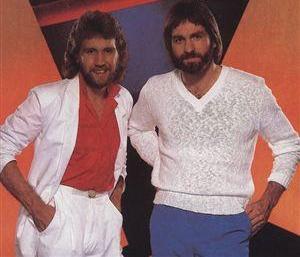
Dana Key, who with musical partner Ed DeGarmo formed one of the great rock bands in CCM history, died of a ruptured blood clot Sunday night at the age of 56, according to CCM’s website and various other reports. In recent years, Key was a senior pastor at TLC Community Church in Memphis, Tenn., which was his and DeGarmo’s hometown.
“Dana Key was an awesome guy,” DeGarmo told Christianity Today. “Extremely talented for sure, but he was much more than that. He was absolutely passionately in love with Christ, his wife Anita and their three children.
“He lived his life fully dedicated to building God’s kingdom with every breath he took. He was a true pioneer. He could preach the gospel in a way that compelled thousands to accept Christ, and he could play guitar and sing like you were getting a glimpse of his soul. He was my friend and my brother. The world will miss him. I will miss him dearly.”
TobyMac first met Key during his days with dcTalk in the late 1980s and early ’90s, when dcTalk would open for DeGarmo & Kay. He said Key “was genuine and passionate to the core. He seemed to love God’s Word more than the songs he sang about it. He obviously made huge impact with his songs and songwriting. But what I learned behind the curtain was even richer.
“He taught us from God’s Word . . . most nights before we took the stage. That is something I admired. Thank you Mr. Key, you will truly be missed. Enjoy the view, my friend.”
Christian musician Todd Agnew, whom Key signed to Ardent Records some years ago, wrote on his website that Key was “a believer and proclaimed Jesus Christ. Dana was a mentor and role model to me. There’s no way I can capture what I learned here in a hotel typing on my phone. I wish I had recorded it all and could put it in a book for you: Wisdom from one Christian Generation to the Next. But I can’t. . . . Dana was a man of God. Before he was a musician, he was a minister. And before he was a minister, he was God’s child. He will be missed.”
Doug Van Pelt, editor of HM Magazine, posted a nice tribute to Key, noting how a D&K song (“You Gave Me All”) was instrumental in helping him decide to commit to the Christian faith. “It’s neat how that song made a profound impact on me that night,” Van Pelt writes. “It described the condition of my heart, which broke and I wept before the Lord for the first time in 9 years. I’m grateful for Dana Key and his faithfulness and his creativity.”
Harold Smith, CEO of Christianity Today International and a friend of both Key and DeGarmo, said, “Dana’s passion, pure and simple, was the gospel. He sang its truth from countless stages (amplified with some wicked guitar work), and preached its truth from the pulpit he so loved. ‘Christ died for me,’ he would say. ‘I’ll live for him.’ And he did – at high volume.”
Ardent Records has set up a tribute on its website.
All over the country, 17- and 18-year-olds are nervously awaiting college admissions' decisions. I remember my own chagrin in April of my senior year when, after tearing into a thin envelope from the University of Virginia, I learned I'd been wait-listed.
However, with increasing tuition costs (on average, ,000/year for private colleges and ,000/year for public universities), we're rethinking the value of a college education. It's well-proven that you don't need a college degree to make money. Just look at Bill Gates, Steve Jobs, Mark Zuckerberg, and even more recently, Nick D'Aloisio—a 17-year-old who sold his news-reading app to Yahoo for millions. If money were the only consideration, college may not be the best choice for today's young people.
Peter A. Thiel, himself a graduate of Stanford, lures bright, young entrepreneurs away from college with a two-year, 0,000 fellowship. The first Thiel fellows graduate this spring with real-world experience in launching businesses and pursuing research interests — a gain greater, some think, than letters behind one's name. Tony Wagner, an education specialist and author of Creating Innovators: Young People Who Will Change the World, champions this alternative view of education. He pushes for less emphasis on content and more on curiosity and creativity.
"Every young person will continue to need basic knowledge, of course," explained Wagner in a recent New York Times article. "[But] young people who are intrinsically motivated — curious, persistent, and willing to take risks — will learn new knowledge and skills continuously. They will be able to find new opportunities or create their own — a disposition that will be increasingly important as many traditional careers disappear."
In an economy where creativity and curiosity can trump core content knowledge, traditional college education can easily be viewed as an investment of diminishing returns. If college is merely a pragmatic means of securing a set of marketable skills — and a salary — then perhaps Thiel, Wagner, and the rest are right. There are cheaper, more efficient ways than college to get a job, especially as tuition steadily increases faster than the rate of inflation. But as Americans, and as Christians, we must also ask ourselves: What do we believe to be the value of higher education? Is there something more?
Historically, religious leaders in the U.S. promoted higher learning. Standing on the backs of the Reformers and their commitment to education, our Puritan fathers founded such prestigious academic institutions as Harvard, Yale, and Dartmouth. Mark Noll notes in the opening chapter of his book, The Scandal of the Evangelical Mind, "Of the many striking features of the Puritans, one of the most remarkable was their zeal in developing a Christian mind."
The Puritans' desire to engage the mind reveals their robust theology: they believed the biblical mandate to love God with all dimensions of human personhood, including one's intellectual capacities. They also, as Noll writes, "viewed the whole of life as a gift from the God of grace. They did not separate social, ecclesiastical, and theological concerns into artificially separated categories."
This Puritan approach to education (and by extension, work and career) as a means of worship translated for a long time into a broader, cultural agreement on the moral importance of education. David Brooks, in The Atlantic, traces the trajectory of meaning Americans have historically ascribed to education. While today's students and graduates are more likely to see college as a means to achieving professional success and financial security, students from earlier eras believed in the power of education to cultivate virtue and instill character.
Curriculum reflected these high-minded ideals, pushing students to master a broader theoretical knowledge base. Robert Maynard Hutchins, who became president of the University of Chicago in 1929, championed a particularly ambitious four-year liberal arts curriculum there in order to fight what he saw as "the peculiar brutality and aggressive stupidity with which a man comports himself when he knows a great deal about one thing and is totally ignorant of the rest."
If today's students are nudged toward narrowing their interests, students of earlier generations were invited to broaden their curiosities. They were invited into the "leisure of conversing with the greatest minds and souls of the past" (Charles Malik, The Two Tasks). Because this kind of education granted to students an understanding of their historical moment, it almost necessarily commended to them a sense of moral duty. In his 1913 address to graduating students, Princeton's president John Hibben sounded almost like a preacher: "The world expects you to produce as well as consume, to add to and not to subtract from its store of good, to build up and not tear down."
But this moral imperative has since eroded, and college is viewed more and more pragmatically as the place to earn one's career credentials. Perhaps this will seem to have been necessary. Who can afford learning for learning's sake? Still, Christians might thoughtfully reconsider the utilitarian language used describing the value of education today. A college degree isn't only to be equated with job preparation and salary potential, and the value of college is far greater than the sum of a student's potential earnings.
As Christians, we can value the kind of educational apprenticeship college is. It depends on a singular and sustained act of humility. In college — or in any classroom or church pew, for that matter — students learn to admit that not all knowledge is within reach of their powers of curiosity and creativity, and there is a greater conversation than the contemporary one. And as David Brooks notes in a recent column for the New York Times, there is a dimension of knowledge that "can[not] be taught and memorized; it can only be imparted and absorbed." This would seem to be an argument for the continuing value of teachers and the classroom — even for college.
Key grew up just a few blocks from Graceland in Memphis, and attended school with DeGarmo, dreaming about being a rock star, according to Mark Allan Powell’s Encyclopedia of Contemporary Christian Music. The two boys formed their first band, The Sound Corporation, in sixth grade. As a high school junior, he was invited to join the secular rock group Black Oak Arkansas as lead guitarist, but he and DeGarmo were already involved in music ministry for Youth for Christ.
DeGarmo and Key formed in 1977 and performed off and on for 20 years. The band was known initially for its innovative sound, as good as anything in secular music, and they remained commercially viable through the 1980s even as their sound became more predictable. But their lyrics and mission always remained the same: “Ministry is the primary reason for the existence of D&K,” Key said in 1993. “Our music is simply a vehicle to communicate a message.” They often held altar calls at the end of their shows.
Key – a direct descendant of Francis Scott Key (composer of “The Star Spangled Banner”) – went on to become an executive with Ardent Records (while DeGarmo went on to co-found ForeFront Records), and wrote the books Don’t Stop the Music and By Divine Design.
Here are two music videos featuring D&K:
Editor’s note: This blog post may be updated throughout the day as we learn more.