When it comes to spiritual formation and discipleship, African American Christians are in it together.
Black believers are more likely to position their growth in Christ in the context of community and fellowship, while white Christians take a more individualized approach, according to a study released this week from Barna Research.
The survey found that twice as many black Christians as whites were currently being mentored or discipled by a fellow believer (38% vs. 19%). Over a quarter of black Christians also served as mentors themselves, compared to 17 percent of white Christians.
The prevalence of such relationships relates to traditional models of leadership and lineage in African American churches. In an interview with CT about his book Reviving the Black Church, pastor Thabiti Anyabwile described how “most of our pastors were in some kind of apprenticeship in preparation for the ministry. They would sit under another pastor or have a ‘spiritual father’ who would pour himself into them.”
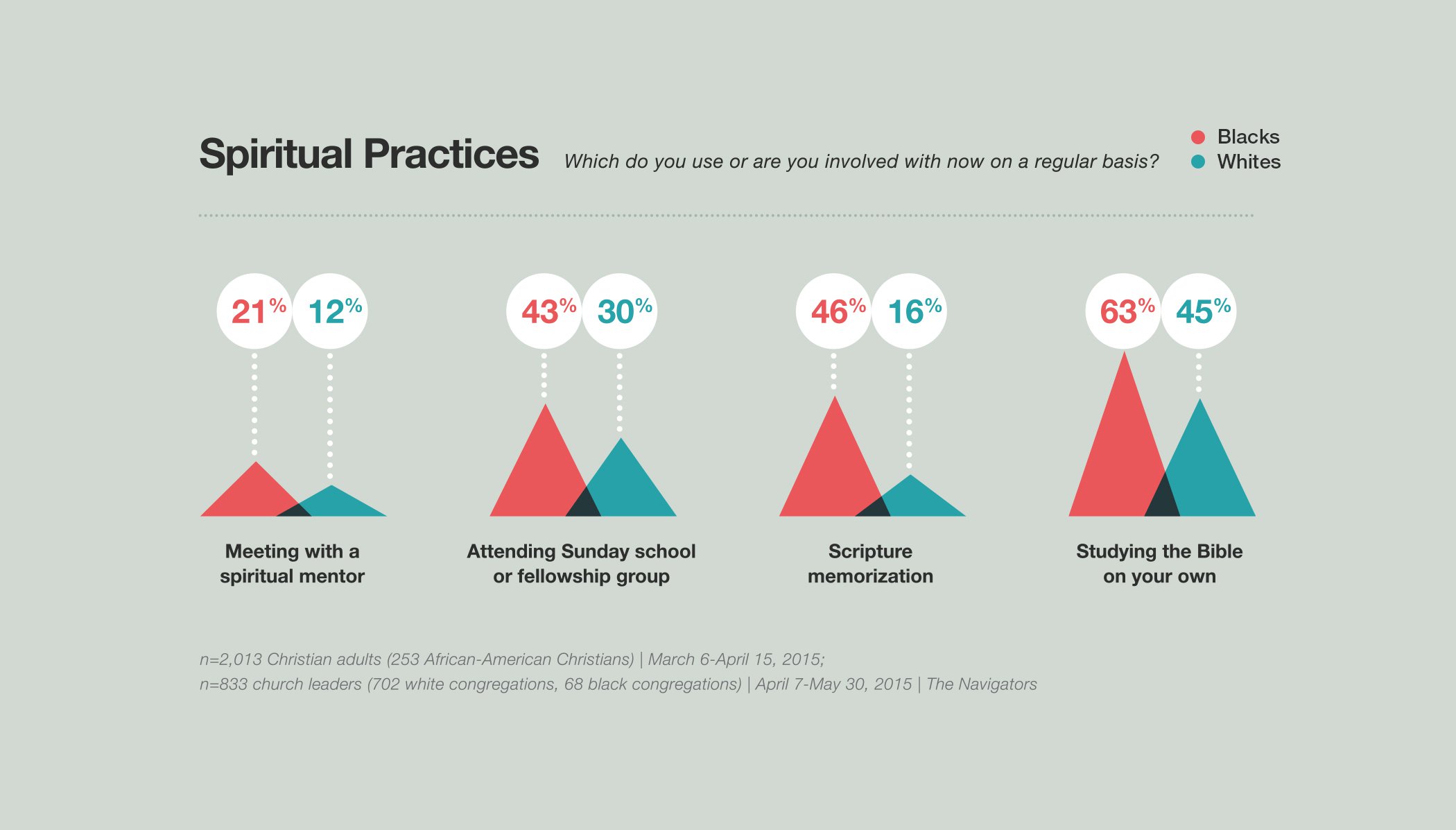
Black Christians also preferred group-based discipleship to one-on-one (32% vs. 22%), while white Christians favored being discipled on their own (39% vs. 31%), according to Barna. They are four times more likely than white Christians to list study groups as “very important” to their spiritual development.
 Barna Group
Natasha Sistrunk Robinson, a mentoring coach and author of Mentor for Life, numbers among the churchgoing African Americans who see group mentoring as essential.
“In a mentoring small group, your learning is going to be enhanced because you're not just hearing the philosophy of one person; rather you are drawing near to God by sharing in the diverse experiences of the group,” she wrote. “When we mentor people and intentionally make disciples in this way, we also create safe places for people to learn and grow, to love and be loved well.”
Barna researchers pointed out that fellowship was a particularly strong component of mentorship for African Americans. “There are plenty of similarities in how both groups define the primary goals of discipleship,” the report stated, “but black Christian leaders are more likely to say ‘deepening one’s faith through education and fellowship’ is a goal of discipleship (85% compared to 71%).”
The group mindset among African Americans also stems from church history and current racial tensions. Black churches and denominations formed when their members were excluded from white fellowship. Given that Martin Luther King Jr.’s observation on Sunday morning segregation mostly still holds true, believers continue to view these congregations as “a necessary place of refuge and resistance” in the aftermath of racially motivated violence and systemic injustice, CT columnist Christena Cleveland wrote.
About a third of black Christians and more than a quarter of white Christians say getting through tough times motivates them to pursue spiritual growth.
 Barna
Barna
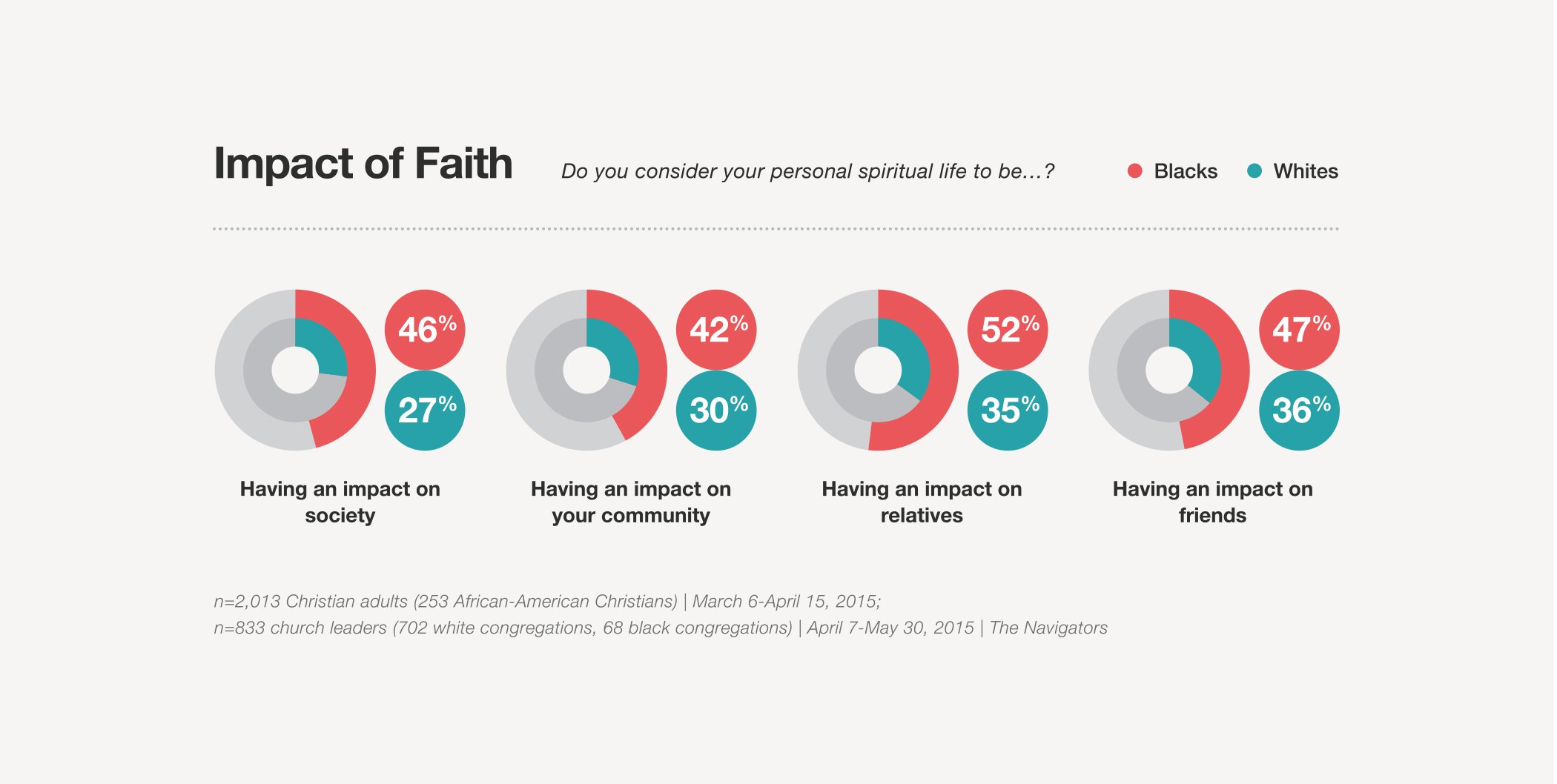
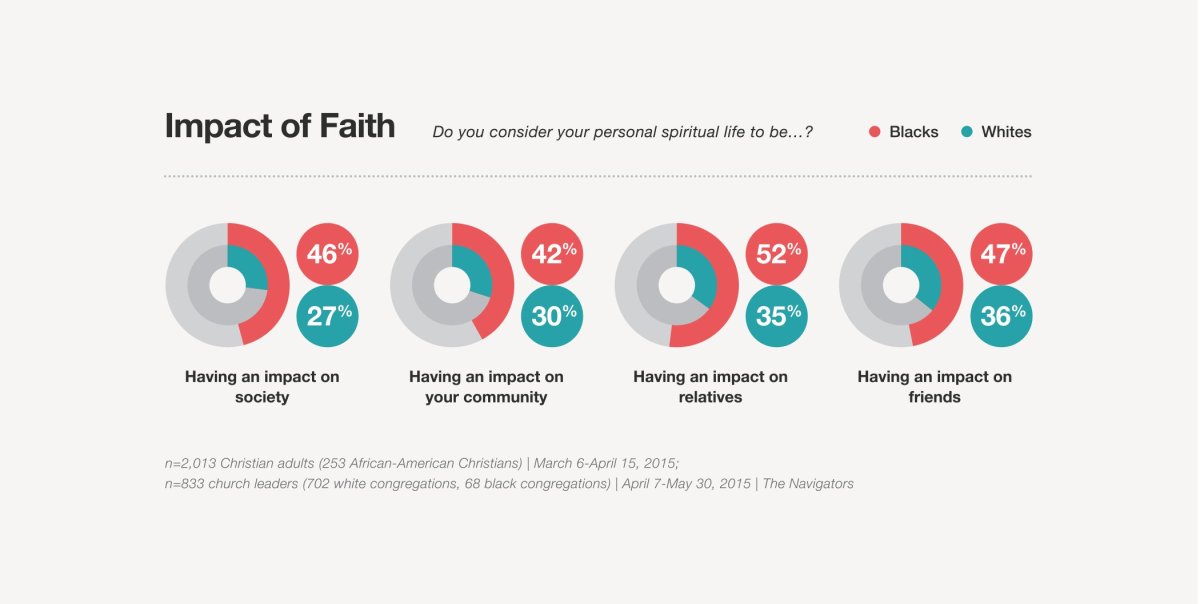
These realities add significance to fellowship found in churches and small groups. While white Christians are more likely to label their spiritual lives as “entirely private,” African Americans see their spiritual lives as intertwined with the social and political situations they face. Almost half of black Christians (46%) believe their spiritual lives impact society at large, compared to 27 percent of white Christians.
“There’s something powerful about being together. It reminds me of a Henri Nouwen quote about the ministry of presence that suggests we underestimate just what being together means,” said Cleveland, discussing a retreat held for Christian women of color last year. “Often we want to preach eloquent sermons or produce some sort of amazing artistic expression to touch people’s hearts, and that’s great … but a lot of it is laughing and knowing that we’re not alone.”
CT’s previous coverageof trends among black churches includes “black flight” from Washington D.C. churches and how black Protestants are doing the best job at retaining millennials.