Ideas

A Christmas Conspiracy for Zoomer Men

They’re not wrong to believe in a contested world. But they’ve misidentified the villains.

A manger on a red spiral background
Christianity Today December 9, 2025
Illustration by Christianity Today / Source Images: Unsplash

When Tucker Carlson sat across from Nick Fuentes and let him speak without resistance, what followed was justifiable outrage, with all the predictable clips and think pieces that comprise another round of culture-war exhaustion.

Alongside the spectacle, something quieter was happening. Young men, those with no platform of their own, were listening—not because Fuentes is insightful (he isn’t), but because he speaks with the confidence of someone who claims to know the truth behind the curtain.

That’s the appeal. And the appeal isn’t unique to Fuentes. Spend five minutes on TikTok or Telegram, and you’ll hear young men swapping “hidden knowledge” about shadow elites, global cabals, secret networks, and World War III prophecies. You can even fall asleep to their murmurings.

Some of them are absurd. Some of them are wicked—especially the antisemitic sludge Christians must condemn without qualification. The deeper question is why any of it resonates at all.

The easy explanations are condescending: ignorance, gullibility, too much internet. These might comfort pundits, but they do nothing for pastors. The truth is more straightforward and, unfortunately, sadder. Young men are reaching for stories big enough to make sense of the world they inherited—a world where 9/11 shattered innocence, smartphones rewired childhood, institutions failed publicly, the pandemic disoriented everything, and politics turned into a circus of incompetence.

These men were raised inside a narrative vacuum. No shared history. No moral tradition thick enough to hold them in its embrace. No binding account of who we are, what we’re for, or why anything matters. When you take away the big story, people go searching for smaller ones.

And conspiracy theories offer a plot.

Every conspiracy comes with the same cast: the villain (sometimes “the elites,” sometimes “the Jews”), the enlightened remnant who “really see,” and the prophet broadcasting from his bedroom at 2 a.m. It’s recycled Gnosticism with better microphones. Everyone else is asleep. You, however, are woke.

For young men who feel powerless, anonymous, and atomized, this lands like a revelation. The world feels hostile; conspiracies explain why. Life feels unfair; conspiracies tell you who to blame. Your private frustrations sharpen into purpose. You’re not drifting anymore; you’re decoding.

Oddly, this all gives me a bit of hope.

Not because conspiracies are good—they often aren’t—but because the longing beneath them is honest. Young men already assume the world is morally charged, spiritually contested, and shaped by invisible forces. They’re not materialists; they’re intuiting a dimension of reality that their inherited narratives never equipped them to name. They sense what Scripture has always said: The world is not purely material, not fully rational, and not finally explained by institutions or elections. Their mistake isn’t believing in a contested world. It’s misidentifying the villains.

“We do not wrestle against flesh and blood,” Paul writes, “but against the rulers, against the authorities, against the cosmic powers over this present darkness” (Eph. 6:12, ESV). Scripture names the real conspiracy—sin, death, and the Devil conspiring to deform creation—and then answers it with a counter-conspiracy stronger than darkness ever anticipated: God entering history in weakness to overthrow those enemies through love.

Isaiah lived in a version of the same uncertainty as ours. Surrounded by fear, rumor, and lies that masqueraded as clarity, he warned God’s people against mistaking the plot: “Do not call conspiracy everything this people calls a conspiracy. … [The Lord Almighty] is the one you are to fear” (Isa. 8:12–13). The prophet wasn’t denying invisible forces; he was redirecting trembling minds toward the only power actually steering history.

And the resolution arrives one chapter later, when Isaiah widens the lens and identifies the promised King: “For to us a child is born, to us a son is given” (9:6). The Lord of Hosts, Isaiah suggests, isn’t a shadowy operator but a coming ruler whose authority is carried forward not through fear of hidden players but through trust in a publicly revealed ruler. The true threat was never hidden elites. The true King would never stay hidden.

C. S. Lewis wrote of Christianity as the true myth, the story that satisfies every human longing for meaning because it is—uniquely—both cosmic and concrete. You could just as easily call it the one true conspiracy theory—not because it trades in paranoia, but because it names both the unseen powers Scripture says are at work and the God who overrules them. It exposes evil without obsession and ends the plot not in resentment but in resurrection.

This is precisely where modern conspiracies collapse. They can reveal villains, but they cannot reveal a Savior. They sharpen suspicion, but they cannot bear the weight of hope. They hand you a plot with no path forward, no one to become. The Christmas story, by contrast, proves that God’s plot does move forward. And it moves you with it.

In A Million Miles in a Thousand Years, Donald Miller describes his friend Jason, a father watching his teenage daughter drift toward a destructive crowd. Nothing worked—not rules, not lectures, not consequences. She wasn’t just disobedient; she had stepped into a story that felt thrilling, dramatic, and dangerous.

Jason figured he needed to give her a better one. So he signed their family up to help build an orphanage in Mexico. At first his daughter rolled her eyes. Then she asked questions. Then she started posting updates. Soon her bad-news boyfriend was gone, the habits loosened, and the old life simply fell away. Not because Jason confronted every issue but because his daughter had stepped into a bigger story, and the smaller one lost its power.

Zoomer men who are swept into conspiracies are living in a similar scenario. They’ve found a story buzzing with urgency that never asks them to become better men. They’ve inherited a cast of villains but never a calling. They’ve been handed a purpose-shaped emotion without a purpose-shaped life. What they need is what Jason’s daughter needed: a story that asks us to grow up and, subsequently, take up our cross.

That’s why we shouldn’t only despair over rising conspiracy thinking. We should also take heart. Jesus told us what to expect: “The harvest is plentiful.” (Matt. 9:37) Not hopeless. Not lost. Simply waiting for someone to sow better seeds and then reap what grows.

We won’t shepherd young men by mocking them out of conspiracies or coaxing them back into civility. We won’t fix this with better algorithms or more fact-checks. We won’t help by pretending the world is simple when they already know it isn’t.

Debunking alone won’t stop conspiracy theories. We have to out-story them.

Fortunately, Christians have been doing that for millennia. Ours is the only story bold enough to name the real enemies—sin, death, the Devil—and the only story strong enough to promise their defeat. It is the story where the King conquers by being crucified, where the grave isn’t the end, where resurrection is not a metaphor but a fact. It is the only narrative that doesn’t leave men in the dark but calls them into the light.

No basement broadcaster can match that. No “secret knowledge” guru can compete with a kingdom that has outlived empires. The gospel is still the biggest, truest, most demanding conspiracy theory on earth—and it remains the only one that can actually make men new.

Luke Simon is the codirector of student ministries at The Crossing in Columbia, Missouri, and an MDiv student at Covenant Theological Seminary. He has written on Gen Z, technology, masculinity, and the church. You can follow him on X.

Ideas

Christ Welcomes Us So That We Might Welcome Him

The Incarnation is an act of divine hospitality, and the church is the cohost.

Adoration of the Shepherds by Rudolf Schiestl

Adoration of the Shepherds by Rudolf Schiestl

Christianity Today December 8, 2025
WikiMedia Commons / Edits by CT

For the first seven years of my childhood, my family lived in government-subsidized housing in an urban part of Jackson, Mississippi. You could see the weathered gray vinyl siding and rust-red accent panels of our low-rise apartment building from US Highway 80. The walls of our small four-bedroom apartment were a flat beige, and our windows overlooked a school and a Service Merchandise store.

Day after day, my three siblings and I watched our parents work two jobs, sometimes three, so that our family could keep the lights on. Our shared struggles and misfortunes created a peculiar sense of solidarity among our tight-knit community, even as we each longed to find our place in the wider world.

One memory in particular captures my desire for belonging in those early years: My Uncle Johnny would promise my siblings and me, “I’ll come pick you all up and take you somewhere fun,” but he would never show up. I’d wait at the smudged screen door, watching every car that passed, my stomach sinking with each one that wasn’t his. After a while, I would realize he wasn’t coming. So I’d slip off my shoes, go back inside the house, and turn on the cartoons to drown out the noise of my disappointment.

This kind of hope-deferred waiting isn’t unique to me. It’s what many of us experience in a world that overpromises and underdelivers. We wait. We hope. We believe a promise fulfilled will come and bring us a different life, one where we are always welcomed. But so often the world never shows up in the way we want.

This is what makes the story of Christmas so radically audacious: Only God keeps his promise to come to us, to welcome us into his plan. Only his humble arrival is the fulfillment of every yearning the world could never satisfy. Only in this act of divine hospitality do we find where we truly belong.

Yet at Christmas we might hear the story of God coming to us and remain unmoved, forgetting that in Christ, God extends to us the most extraordinary act of divine welcome this world has ever known.

The scandal of Advent is not only in the fact that Christ came but also in the people he came for and the way he arrived. The creator of the universe chose to become a holy temple of flesh, entering his creation through the womb of a teenage girl of lowly means. God chose the very space marked by the pronouncement of judgment (Gen. 3:16) to become the birthplace and proclamation of redemption (Matt. 1:21; Luke 1:35).

Divine hospitality begins not in places of lofty grandeur but in the overlooked margins—the places society often deems unworthy of our attention. It’s here I have come to understand what God’s welcome looks like for a girl in the projects looking to belong: extravagant.

It is good news for us that God’s welcome is neither abstract nor distant. It is as real and tangible as his body, which held space in a mother’s womb. Advent invites us to remember that God more than makes room for his people; he entered our world and dwelt intimately among us (John 1:14). In Jesus’ incarnation, divine hospitality takes on flesh, proving the promise of the prophet Isaiah to be true: “The people who walked in darkness have seen a great light; those who dwelt in a land of deep darkness, on them has light shone” (Isa. 9:2).

In his coming, God not only draws near to us but also receives the humble welcome of those who open their hearts to him (Phil. 2:6–8). This is the beautiful exchange at the heart of Advent: God welcomes us so that we might welcome him and, in turn, one another.

Yet how easily we can make the season of Advent a declaration of Christ’s presence without his priorities, a celebration of the blessings of God’s kingdom without the ways of the King: humility, holiness, and the honoring of others. To rejoice in Christ’s coming while neglecting his calling is to miss the very purpose of his arrival.

A true acknowledgment of Advent moves us toward a celebration that expresses itself in service. Many find themselves waiting for the promise of hope and belonging to be fulfilled this year, whether they have lost jobs, have been displaced, or are unwelcome in the spaces that once felt like home.

Into that ache of belonging, Paul’s words in Romans offer a clear invitation that reflects Christ’s hospitality toward humanity:

Accept one another, then, just as Christ accepted you, in order to bring praise to God. For I tell you that Christ has become a servant of the Jews on behalf of God’s truth, so that the promises made to the patriarchs might be confirmed and, moreover, that the Gentiles might glorify God for his mercy. (15:7–9)

The greatest testimony the world will notice is not the decorations hung on our mantels but the visible outworking of God’s arrival beyond the manger into our very lives. This is the captivating and scandalous beauty Advent was always meant to display.

When we invite someone into our lives, whether that person comes from the margins of society (where Jesus first arrived) or from a place the world celebrates, our togetherness is rooted in the awareness that, because God came close to us on earth, we can come close to God and one another.

If the Incarnation is the ultimate act of divine hospitality, then the church becomes the host, embodying the welcome of Christ far and wide. Advent is an opportunity to participate in God’s redemptive welcome.

Though I did not have the words as a child to articulate it fully, my community in the projects drew together because of shared need. Even with the financial constraints surrounding us, we had one of the most welcoming communities I’ve ever known. We welcomed others into our lives and were welcomed into theirs.

As children of God, we come together in recognition of our emptiness, our struggle, our communal need for the grace only God can give. The incarnation of our Savior means that we are no longer left waiting at the door for a promise that is never fulfilled. God came near, bringing with him the kind of welcome we long for but rarely find in this world.

Advent reminds us that divine hospitality begins with God making room for us in Christ. It continues as we make room for God and mirror the scandalous grace of Bethlehem.

Oghosa Iyamu is the author of the six-week Bible study Forever Welcomed, which traces God’s impartial love throughout the grand narrative of Scripture.

News

A Year After Assad, Evangelicals Help Syria Heal

While uncertain about life under the new Islamist-led government, Christians are providing spiritual and material aid to their neighbors

Aleppo city in Syria.

People visiting a citadel in Aleppo City, Syria, for the first anniversary of Assad's fall.

Christianity Today December 8, 2025
Edits by CT / Source Image: Picture Alliance, Getty

Last year, Nahla Ishak drove about three hours from Damascus, Syria, to attend a fundraising conference in Amman, Jordan. As the founder of Generations Over Crisis, a nonprofit supporting Syrian families affected by trauma, Ishak relies on these trainings to sustain her organization’s work.

In the early hours of December 8, 2024, she received news that a coalition of Islamist rebel forces from Idlib in northern Syria had entered Damascus and toppled the 24-year rule of President Bashar Assad. Ishak felt a cocktail of emotions: shock, worry, anxiety, and fear.

Family and friends from her Baptist church in Damascus cautioned her not to return right away. But two days later, with the Syria-Jordan border closed, Ishak flew to Beirut and drove across the Lebanese border to get home.

“Logic tells you that the ship’s captain is in the ship during a storm,” she said.

The Damascus Ishak returned to was not the one she’d left. Vehicles broadcasting Islamic messages by loudspeaker roamed the capital’s streets. Syrians were defacing and tearing down once-ubiquitous posters of Assad and his father, Hafez Assad, formerly an illegal action.

Today, on the one-year anniversary of the Assad government’s collapse, the storm has passed, but the wreckage left behind after Syria’s nearly 14-year civil war is immense. An estimated 90 percent of Syrians are living in poverty, with one in four unemployed and one in three residential buildings severely damaged or destroyed, according to the United Nations Development Programme.

Poverty is pushing young men toward radicalism and theft and forcing young women to sell their bodies so they can feed their families, Ishak said. Destitute civilians beg in the streets of Damascus, some maimed by wartime injuries. Economic pressures, combined with the trauma of war, split families through divorce and immigration.

As they did throughout the civil war, many Syrian evangelicals are serving their neighbors of all backgrounds. Though uncertain about the future under the new Islamist-led government, Christians like Ishak believe the church must be outward focused, bringing light to the darkness.

“Our work has doubled,” Ishak said. “It’s not enough for us to tell people, ‘Come to church.’ We have to go out.”

Syria’s civil war began in early 2011, when Assad’s security forces violently cracked down on civilian demonstrators calling for freedom and the end of his regime. The resulting armed conflict, paired with the brief but brutal ISIS takeover of Raqqa and other parts of Syria in 2014 and 2013, decimated the nation’s historic Christian community. Syria boasted an estimated 1.5 million Christians before the war, mainly from Orthodox and Catholic backgrounds. Today only around 300,000 Christians remain, with thousands finding refuge in Europe, Australia, and Canada, Ishak says.

Ishak stayed in Syria, citing God’s call to serve her nation’s people. She described Assad as a dictator with corrupt politics but emphasized that he respected minorities and did not discriminate based on sect or religion. Political opposition raised his ire and led to surveillance, arrests, imprisonment, and deaths, staining Syria’s human rights record.

“Those of us [Christians] who stayed in the country decided it was better for us to sit on the side and not say a word,” Ishak said.

Minorities in Syria—including the Christian, Kurd, Druze, and Alawite communities—worry how the new government, led by interim president Ahmed al-Sharaa, will treat them. Formerly connected to al-Qaeda, al-Sharaa has drawn scrutiny from both inside and outside Syria.

In the past year, attacks on minorities compounded this fear. In March, government forces killed  around 1,700 Alawites in Syria’s coastal areas while attempting to squelch a rebellion against the new government. In June, a suicide bomber killed 25 worshipers in a Greek Orthodox church in Damascus. In July, deadly feuding broke out between Sunni Bedouin and Druze militias in Sweida. When government forces intervened, the fighting had displaced nearly 200,000 and killed hundreds, including a Druze-background pastor and his extended family.

Yet in the wake of the Assad regime’s fall, Ishak said many are responding to God’s love by putting their faith in Christ, especially those from Syria’s Druze and Alawite communities For the safety of these individuals, she requests that their stories not be shared.

Through her work with Generations Over Crisis in the past decade, Ishak has interacted with hundreds of impoverished families while delivering food and clothing to families impacted by disasters, including the February 2023 earthquake in Syria and Türkiye. Ishak and her volunteers run a women’s empowerment center, four annual conferences focused on mental health, and an educational program for teenagers who have dropped out of school because of poverty and displacement.

In Latakia, on Syria’s western coast, Ishak recalls recently meeting a 16-year-old Muslim boy who lost his father and mother during the war. He told her he was angry with Allah, asking him why he was punishing Syrians. Since she and other volunteers were serving in a non-Christian area, Ishak said they did not announce their religious identity, but they did proclaim God’s love.

“I told him, ‘We’re coming to show you that God loves you,’” Ishak recalled. “He said it was the first time that someone explained God’s love to him.”   

Esper Yaqoub, a pastor of a Christian and Missionary Alliance church in the Damascus suburbs, said that since he became a church leader in 2022, his congregation has seen men and women from Alawite and Sunni Muslim backgrounds come into the kingdom.

One Alawite woman came to Yaqoub’s church seeking to understand the dreams she’d had. In one, she saw a paper with two words written on it in a language she didn’t know. When she woke up, she wrote the words in her diary before she forgot their appearance. Yaqoub said that when he looked up the words, they translated to “Holy Bible” in Syriac. This woman also described a dream where she followed a trail of breadcrumbs to a desk with a glass of wine.

“I told her about the blood of Jesus and that his blood was poured for her salvation,” Yaqoub said.

According to Yaqoub, most Syrian Christians are afraid of Muslims, as the Assad regime sowed fear to divide societal groups and maintain its control. But like Ishak, Yaqoub believes in showing the love of God to his fellow Syrians, who have suffered so much.

Yaqoub recently met a Muslim family in the street. He could tell by their dress that they were strictly observant. Yaqoub chose to smile and greet them, which led to a conversation. Yaqoub then invited the man to drink coffee with him at church.

Building bridges like these has led to spiritual fruit. Yet Yaqoub worries that with the Islamist tendencies of the new government, the evangelical church may lose its freedoms in the coming years.

“The Assad regime, they didn’t care about religious issues. … They just cared about domination, political privilege,” Yaqoub said. “So for us, it was easy to preach the gospel among non-Christians. Nowadays we don’t know what the future carries for us, but for sure we put our faith in our Lord Jesus Christ.”

Unlike many other Syrian Christians, Yaqoub deeply opposed the Assad government and wept with joy when a friend called him to tell him the regime had fallen. He chided Christians who under Assad’s regime valued their comfort more than freedom from oppression and corruption.

“I was telling them, ‘A dog can eat, and a dog can take a trip,’” Yaqoub recalled. “We are not animals. It’s not about having food, and it’s not just about going to the shore. It’s something deeper.”

But now, Yaqoub and other minorities in Syria fear how al-Sharaa’s government will legislate Islamic practice and implement sharia law in non-Muslim communities.

In a September interview with 60 Minutes, al-Sharaa explained that he joined al-Qaeda as a teenager and broke ties with it in 2016 because he no longer agreed with its principles. And while he acknowledged the myriad problems facing Syria, he chose to emphasize all that his government has accomplished in the last year: giving refugees and displaced peoples hope to return home, expelling Hezbollah and Iranian militias, confronting ISIS, and freeing captives from notorious prisons like Sednaya.

“Are these acts of terrorism or noble deeds?” al-Sharaa asked the interviewer rhetorically. 

The international community seems to be cautiously accepting him. In a turn of foreign policy, US president Donald Trump lifted sanctions on Syria in May, saying he wants to “give them a chance at greatness.” On September 24, al-Sharaa presented a liberated Syria to the UN—the first Syrian president to address the General Assembly in nearly 60 years. On November 10, al-Sharaa met with Trump in the Oval Office, the first Syrian head of state to do so.

In spite of these positive steps, Ishak wonders what will develop as Syria establishes laws in the coming years. Christians used to bring pork and alcohol products from abroad into Syria, but under the new government, this has been unofficially prohibited. In the future, she wonders if non-Muslim women will be forced to wear hijabs in public. Will concerts be banned? Will public celebrations of Easter and Christmas be forbidden as well?

“Everyone here now is living a contradiction,” she said. “We’re happy that the corruption, the original problems, and the domination of [the previous regime] are gone, but we don’t know what the future will do to us.”

Religious freedom is crucial for Syria’s future, Yaqoub believes—even more important than financial support or food. As in many Arab countries, Syrians cannot choose their official religion. Government-issued ID cards bear the religion of their carriers—a descriptor inherited from one’s parents that cannot be legally changed.

This lack of religious choice, present under Assad’s regime as well, makes Yaqoub concerned about the future of families in his church. What challenges will they face as they raise children whose ID cards label them as Muslim or Alawite? He thinks of a Muslim-background friend displaced in Lebanon who would like to marry a Christian woman. That would require going to an Islamic court and speaking the shahada, the Muslim creed of faith, which he refuses to do as a committed follower of Christ.

Though Yaqoub said it’s almost incomprehensible to imagine a Syria where people can freely choose their religion, he views the former government’s collapse as evidence of a sovereign, miracle-working Lord.

“I believe in our God, who can change what is unchangeable,” he said.

Ishak agreed that Syria needs miraculous, divine intervention. Right now, Syrians have so much need, she said. War shattered the health sector. That’s why she runs her personal dental clinic for free and offers medical clinics through Generations Over Crisis.

Yaqoub said that in the last year, electricity costs have risen, though power is now available in Damascus for two or three hours at a time, an improvement from the past decade. Low salaries make daily life difficult for Syrians. Rent on an inexpensive apartment can cost around $100, equal to a schoolteacher’s monthly income.

Both Ishak and Yaqoub say that Syrians from all backgrounds come to churches for help. During the war, foreign Christian organizations supported Syrians by funneling money through churches. Unfortunately, this sometimes led to corruption and theft by Christian leaders, Ishak and Yaqoub said. Some Syrians in physical need started to view churches as aid centers rather than places to have spiritual needs met.

With sanctions on Syria suspended, Yaqoub looks forward to Western nonprofits establishing centers to supply humanitarian aid, which will allow the church to return its focus to spiritual needs.

Meanwhile, Ishak feels that Western nations are mainly talking rather than delivering practical action to help Syria rebuild.

“The country needs healing,” she said. “It needs people to dress its wounds more than people theorizing and giving promises they can’t keep.”

News

Nigerian Authorities Rescue Christian Children Abducted in Mass Kidnapping

“I just wish someone can help me get my child back home soon.”

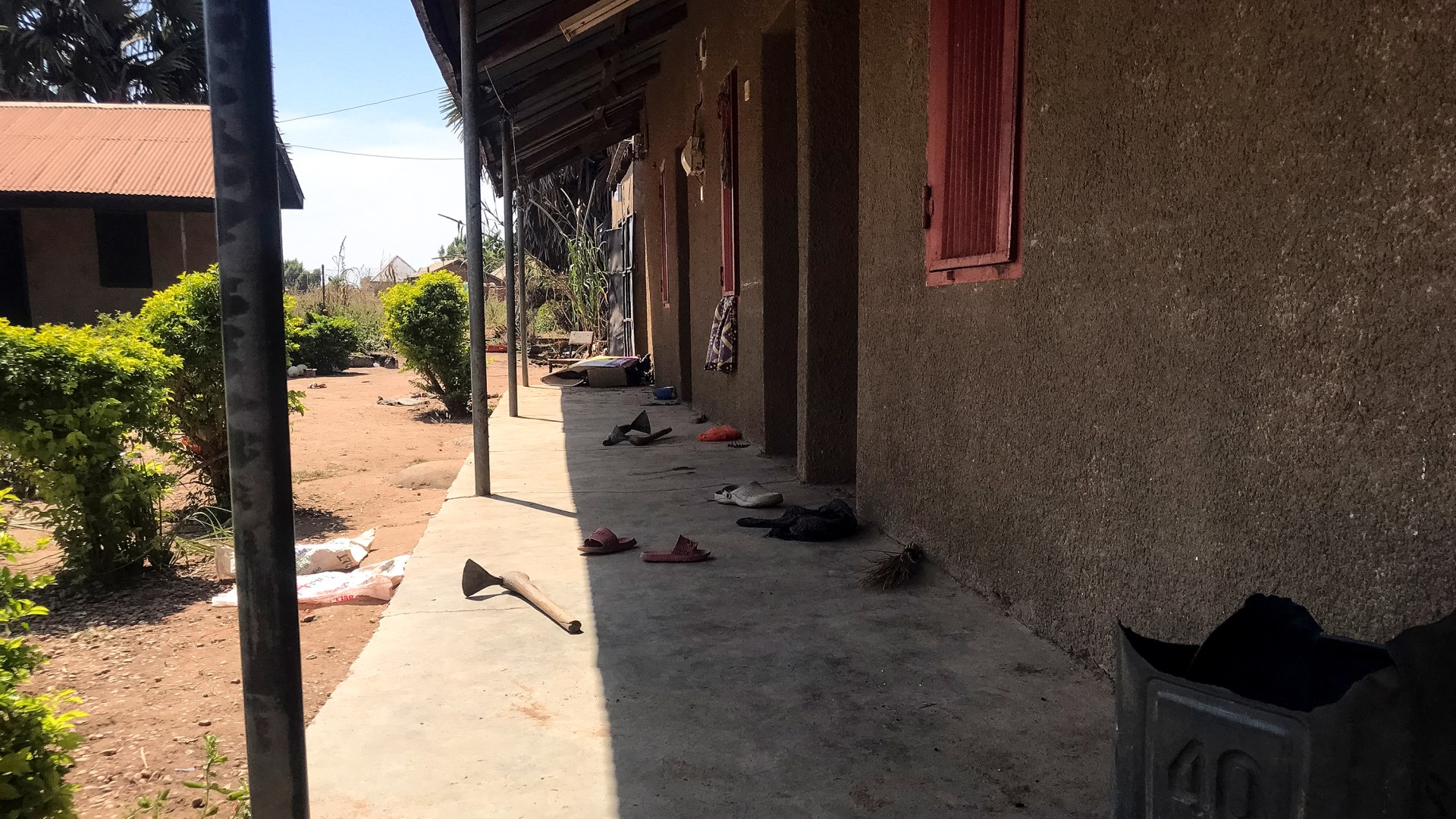
A ransacked student dormitory at St. Mary's Catholic School in Nigeria.

A ransacked student dormitory at St. Mary's Catholic School in Nigeria.

Christianity Today Updated December 24, 2025
Ifeanyi Immanuel Bakwenye / Getty

Key Updates

December 24, 2025

Nigerian authorities rescued the 130 remaining abducted students and teachers on Sunday, according to PBS News. Authorities said Monday all captives have now been released and children would be reunited with their families by Christmas. Niger state governor Mohammed Bago indicated kidnappers had only taken a total of 230 people, rather than the 315 originally reported by the government.

December 8, 2025

Nigerian authorities rescued 100 abducted students over the weekend, according to the Christian Association of Nigeria. No information is available about how the children were freed, who is responsible for the kidnapping, or if any arrests have been made.

December 8, 2025

Emmanuel Laigan’s buzzing phone woke him up at 5 a.m. on November 21.

“Your son’s school has just been attacked,” his brother said. Laigan jumped out of bed and drove his motorcycle seven miles to St. Mary’s Catholic Primary and Secondary School in Papiri, a community in Niger State in north central Nigeria.

When he reached the gates an hour later, the school was in chaos. Attackers had ransacked the student hostels and flung their beds into the courtyard. Students’ clothes, shoes, and books lay in the dust. Panicking families crowded the entrance. A mother wept as she called her daughter’s name over and over. One father stood frozen. Other parents collapsed on their knees.

Laigan discovered that armed bandits had taken his first-grade son Habila in the overnight school raid.

“I became weak,” Laigan told CT through a translator. “My son is a quiet boy. I do not know why anyone would do this to children.”

Laigan, a member of the United Missionary Church of Africa, said his family relies on the steady stream of visits and prayers of his church as they wait for news of Habila.

In total, kidnappers seized 315 Christian victims from St. Mary’s, including 303 students ages 5 to 18 years old and 12 staff members—Nigeria’s largest mass school abduction to date. Fifty students had escaped as of November 23. At least 250 captives, including Habila, remain missing.

Paulina Ishaya, a volunteer health worker at the school, said gunshots woke her up at about 1:30 a.m. “One of the nurses told us there were bandits in the school,” she told CT. “We immediately ran, jumped the fence, and hid in the bus until daybreak.”

Authorities have not yet identified who kidnapped the students, and the kidnappers have not contacted families, according to Daniel Atori, spokesperson for the Christian Association of Nigeria (CAN) in Niger State. Meanwhile, families are shattered and living in constant fear, Ishaya said: “Many parents cry from morning till evening because of their children. Some can’t even eat.”

Atori said the association has declared a three-day fast and prayer vigil beginning December 5 to pray for the captives’ safe return.

The attack occurred within a week of two other mass kidnappings. Armed men stormed a public school for girls about 116 miles north of Papiri on November 17 and abducted 25 Muslim schoolgirls. Two days later, bandits raided Christ Apostolic Church in the neighboring Kwara State, killing two worshipers and abducting 38 others during a livestreamed service. The kidnappers demanded ransoms but released their victims after the government threatened to attack.

The school kidnappings and church attack came weeks after US president Donald Trump designated Nigeria a “country of particular concern” (CPC). Trump suggested withholding subsidies to Nigeria over the government’s inaction to stop anti-Christian violence.

The Nigerian government has rejected Trump’s claims and denied that Christians are targeted more than other groups. Jere Gana, Nigeria’s former information minister, told local media that Trump’s threats may have triggered the latest wave of school abductions, since terrorist groups use children as “human shields.”

Gana said the location of the attacks suggested the kidnappers deliberately retreated into forests in anticipation of aerial strikes.

St. Mary’s proprietor, Bulus Dauwa Yohanna, criticized the Nigerian government for making “no meaningful effort” to rescue the victims still in captivity.

“I’m not aware of any effort made by government beyond collecting the names of the students from us,” he told the BBC.

Yohanna, who is also bishop of the Roman Catholic diocese of Kontagora, disputed the Niger State government’s claims that the church defied orders to close the school after threat of attacks, saying that they had not received any orders.

Later, on November 22, the day after the St. Mary’s raid, the Niger State government shut down schools across the state.

Atori, the CAN spokesperson, decried the plight of families caught up Nigeria’s spiralling violence and insecurity.

“It came as a shock,” he told CT. “Now schools are closed. Only God knows what … these people want to carry out [next].”

Atori said prayers and unity in churches are reassuring distraught parents. “Our prayers are working. God is answering,”

Mass school kidnappings in Nigeria date back to 2014, when Boko Haram militants abducted 276 teenage girls, mostly Christians, from a government secondary school in Chibok, a town in northeast state of Borno. While about 160 escaped or were released, around 100 remain missing or in captivity.

In 2018, the Islamist jihadist group raided another government girls’ school in Dapchi in Yobe State and abducted 110 students. Boko Haram means “Western education is forbidden.”

Since Nigerian president Bola Tinubu took office in May 2023, there have been at least five mass school abductions. Bandits have also snatched more than 100 Christian clergy amid the country’s growing kidnapping crisis. Nigerian pastor Audu Issa James died this fall while in captivity.

For Laigan and his family, desperation fuels every passing day since his son’s kidnapping. His wife, Lydia, refuses to eat. They have not received any word from government security agents.

“They told us since the governor is aware that they would handle it,” Laigan said. “But this is our fear: We do not know if they will rescue our children.”

Laigan said each time he hears rumours of released victims, he rushes to the place where they’ve been seen, but his son remains missing.

“I just wish someone can help me get my child back home soon.”

Church Life

Lord Over LinkedIn

As layoffs mount amid economic uncertainty, lots of us are looking for work. Here’s how to approach the process.

Jesus and the LinkedIn logo.
Christianity Today December 5, 2025
Illustration by Elizabeth Kaye / Source Images: WikiMedia Commons

God may clothe the birds and the lilies, but he doesn’t seem that interested in our careers.

At least, that’s how I’ve felt at times. Perhaps you’ve felt this way too. Maybe unemployment found you through no fault of your own, the outcome of a medical issue, family circumstances, a new administration, or a company layoff. (In October of this year, over 150,000 men and women lost their jobs from layoffs alone.)

Even if you’re still employed, you may be miserable in your current job, doing some “vocational scrambling” and looking for new work. In either case, the longer the search drags on, the more isolated and bitter you feel, and the harder it is to believe God is paying attention.

This nagging suspicion can get us stuck in one of two places. Either we lack urgency—lackadaisically applying to new roles here and there, trying to be content in all things, praying that the Lord will provide “in his time”—or else we find ourselves wracked with anxiety, spending hours submitting applications online.

Even the mature Christian (who might not fall into either of these traps) has to ask, “How do I navigate a job search effectively?” Professional career coaches and social media influencers can give tips on résumés, LinkedIn profiles, and interview strategies, but they don’t often address our inner motivations or underlying unease.

Meanwhile, well-meaning faith-and-work literature can feel tone-deaf and out-of-touch for the desperate applicant. Yes, all work is sacred, and our vocations are a means of participating in God’s redemptive purposes, as best articulated by Tim Keller in Every Good Endeavor. But it’s hard to engage with that larger framework if you just need to pay the bills.

What I think Christian (and secular) job seekers need first and foremost is a practical recommendation—an encouragement to the means by which over half of job seekers report finding work. I’m talking about networking.

Networking sounds like a buzzword, a recommendation those career coaches and social media types would make. It evokes a “You scratch my back, I’ll scratch yours” mentality. It conjures an image of another perfunctory meeting over coffee and an awkward request for any “available opportunities.” It smacks of using subtle sales tactics to pressure a stranger to make a referral or a connection on your behalf.

Certainly, networking can be schmoozy and cynical. But we can approach it differently—not as a practice of fake flattery and underhanded manipulation but simply as a habit of intentional conversation with friends, family, and strangers. Yes, you’re still hoping for a job offer to arrive as soon as possible. But in the meantime, you receive opportunities to listen to others’ stories and advice and, as a happy side effect, to form lasting relationships.

If networking is the process by which most jobs are found, I’d like to suggest that all applicants should start there rather than wiling time away or frantically submitting cover letters to online portals. And for the Christian, networking can look different: more relational than transactional, more intentional than haphazard.

If this is unfamiliar territory, here are a few guiding principles.

Be clear and forthright in your initial outreach. The more straightforward the ask, the easier it will be for the recipient to say yes. Avoid the ambiguous “Could I have 15 minutes to pick your brain?” Introduce yourself and describe precisely why you’re interested in a conversation. If you received the same email, would you say yes? As a test run, send your message to a friend or two first and get their reactions.

Approach conversations as relational, not transactional, with humility rather than selfish ambition or vain conceit (Phil. 2:3). Fight the urge to focus on “What can I get out of this?” or “Do you have a job for me?” That’s the kind of networking we’re trying to avoid. Is there an element of self-interest in your initial outreach? Almost inevitably. Don’t let that discourage you.

Come prepared with thoughtful questions. One proverb goes, “The heart of the discerning acquires knowledge, for the ears of the wise seek it out”(Prov. 18:15). You initiated the conversation, so you should be prepared to lead. What could you learn that might help you discern whether a role or company is a fit? Which aspect of this person’s vocational trajectory might apply to your own?

Be a good listener; be genuinely curious (James 1:19). Don’t get sidetracked by your preconceptions of what a conversation should look like. Pay attention to what’s actually being said.

Recalibrate your definition of a successful conversation. What if this person can’t help you find a job tomorrow? It’s no problem. Remember, that’s not the only reason you reached out in the first place.

Stay in touch. This is easy to say but hard to do. As a first step, send a thank-you email or handwritten note. Follow the LinkedIn pages of your contact and her company. She gets a promotion, publishes an article, or speaks at a conference— send a congratulatory note! You stumble across an article or podcast that relates to her work—forward it. Real relationship consists of periodic touchpoints like these.

Become a connector. Seek the good of your job-searching neighbor (1 Cor. 10:24). In a conversation with a recruiter, you may realize that a position isn’t right for you but might be a good fit for a friend. Send an email to link the two of them. Schedule a Zoom call with someone who’s earlier in a career. The more you do this, the more it becomes part of your professional DNA even after the job search is over.

Don’t struggle alone (Gal. 6:2). Your search may last weeks, months, or longer. Each passing day may lead to increasing loneliness and resentment. Even those closest to you likely won’t understand what you’re going through unless you tell them explicitly. For men, sharing your insecurities with a spouse or friend can be particularly vulnerable. Know that it’s okay to admit you’re struggling.

Don’t count out the local church. Here are two examples.

After I graduated from law school, I was deferring student loan payments, was engaged to be married, and was unemployed. I frantically applied to job after job with not much to show for it. To say I was discouraged would be an understatement. My pastor at the time heard about my struggle and asked a simple, life-altering question: “Have you met the church’s attorney?”

With a brief email, he introduced the two of us. That attorney just happened to need some part-time help. After dozens and dozens of applications and six-plus months of searching, my pastor’s three-sentence email was the final piece of the puzzle. Unknowingly, my pastor had been part of my networking journey.

In a different context, at my parents’ church in rural Appalachian Ohio, men and women walk through the sanctuary doors looking for answers to life’s hardest questions and for help finding a job—many of them with criminal records or struggles with addiction. For as long as I can remember, my parents (and many of their church friends) have written letters to judges, given rides to and from work, and made connections with local business owners. Networking looks different in a rural setting—in part because everyone knows everyone and cold emails typically aren’t necessary. But an introduction by a church member with an exemplary reputation goes a long way for someone trying to get back on his feet.

If you’re reading this article as someone who’s comfortably retired or stably employed, what does this networking conversation have to do with you? You are in a fortunate position. Like my pastor many years ago, you might go out of your way to facilitate connections for people struggling with career transitions. You undoubtedly have more influence than you realize. An introduction from you could be the difference between an application floating into the digital abyss and getting pulled from the bottom of the pile. Let this be a gentle reminder that the only reason you’re comfortably retired or stably employed is because of God’s extravagant grace in your life. Now you have the opportunity to extend that grace to your neighbor.

Proverbs 21:31 proclaims, “The horse is made ready for the day of battle, but victory rests with the Lord.” The verse holds tension. Despite our skilled preparation, the Lord is responsible for each win. At the same time, God is interested in our effort, and his interest allows for both our labor (don’t just sit on your hands and pray for a new role to fall into your lap) and his sovereign provision (take the pressure off, reach out to strangers for coffee, and submit applications knowing that God loves you and will care for you).

Let’s be job seekers who skillfully prepare with the boldness and assurance that comes from knowing that the Lord provides for the birds and the lilies. “So won’t you teach me how I mean more to you than them?” goes the lyric to a Jon Guerra song. “In times of trouble, be my help again.”

Jacob Zerkle is a husband, father of three, and attorney in the Chicago area. 

History

‘Saint Nicholas Is Our Guy’

A conversation with printmaker Ned Bustard on what traditions teach about the joy of generosity.

A Saint Nicholas icon with a Santa hat on.
Christianity Today December 5, 2025
Illustration by Elizabeth Kaye / Source Images: Unsplash, WikiMedia Commons


Many Christians wrestle with whether to include Santa Claus legends in their holiday traditions. Printmaker Ned Bustard offers the church tradition and history of Saint Nicholas as a winsome middle ground, pointing believers to the beautiful truths of God’s greatest gift in the Incarnation.

Bustard, author of Saint Nicholas the Giftgiver, sat down with Clarissa Moll of The Bulletin to share what Nicholas teaches us about giving and generosity. Here are edited excerpts from the conversation.

Why do Christians need the ecclesial tradition and story of Saint Nicholas?

There is a gravitas when you realize this is not just a made-up story. One of my favorite reviews of my book Saint Nicholas The Giftgiver is the complaint that there was too much Jesus and too much Santa. How could I dare bring magic and Jesus together? I like that the story of Saint Nicholas presents such a tension.

Twenty years ago, I wanted my children to enjoy the magic of Christmas and enjoy Saint Nicholas but not miss out on Jesus. We tend to do one or the other. I wanted to take back Saint Nicholas and claim him as mine because I’m a believer and part of the church. He was a real person, had dark skin, and was from Turkey. These are all real things. I’m investing in this person because he really existed. 

I’m happy to write stories about imaginary creatures and people, but when it comes to church history and the faith that I’m a part of, I want it to be real and I want others to experience the weight and glory of being part of the church of Christ. We’re part of this church; we’re part of this tradition that goes back. We are moored, in the best possible way, across time with the cloud of witnesses, and we are connected to them. 

What is the real story of Nicholas?

Nicholas was born in Turkey on March 17, 270, as far as we know. His story was written down after his death. He was born to a wealthy Christian couple who died soon after due to a plague. He was then given to his uncle to raise. 

Nicholas’s uncle was an abbot in a monastery, and when Nicholas grew up he was made a bishop in his 20s or 30s. Folks were trying to decide who the next bishop should be, and they decided the next person to walk through the door would be him. Nicholas walked through the door, and he was made a bishop. 

Some stories say that he went to Jerusalem and spent time as a hermit in a cave near there praying. Records show that he was at the Council of Nicaea. He was persecuted and imprisoned during the great persecution under Emperor Diocletian, and he died an old man.

There’s a story of Nicholas battling Artemis, the goddess of the city in which he served as bishop. He prayed against the goddess, and her statue fell over, kind of like Dagon in 1 Samuel 5. How much of these stories are true? We don’t know, but we do know that he really did exist and has this reputation for being generous.

That reputation for generosity is perhaps what we know best of Nicholas. 

In the classic story, a family doesn’t have enough for the wedding dowries of their three daughters. Nicholas deposits three bags of gold in their home while they’re sleeping to give them the capacity to be married. 

Why do you think that we need that particular perspective of Nicholas, as the public-facing bishop who gives in secret?

Secret giving is great and sometimes underrated. In our house, we had Saint Nicholas stockings, and I never said who filled those stockings. Other presents we’d put names on, but stocking gifts just appeared. My wife and I always had a long-running argument of whether or not these gifts should be practical. She would say, “Let’s put a toothbrush in the stocking.” I said, “No toothbrushes on Christmas. That’s too ordinary.” 

We need joyful, raucous, superfluous gifts because Christmas is an extravagant gift. Even though prophets foretold this for hundreds of years, when you get the real gift of Christ in the Incarnation, it’s beyond what you can imagine. James says that all good gifts come from our Father above. All of the things that we receive are generous gifts from God. 

What is the greatest gift you’ve ever given, and what’s the greatest gift you’ve ever received?

One of my happiest Christmases was in the ’70s. There was an action figure of a pirate and his first mate. The pirate had a peg leg, and you could open it to find a little treasure map inside. You could push on the characters’ backs, and they would swing their swords. On top of all that, it came with a fold-out ship for the figures to ride in.

Besides life and being chosen and loved by God, my greatest earthly present would be the day my wife said “Yes” and “I do.” That was the best gift I have ever received, such a glorious thing. However, in our family’s culture, we love to give gifts. I’m always searching for the best present because it is the way that I show love. Like Nicholas, I’d always rather participate in the joy of giving.

Books
Review

Looking Back 100 Years

Three history books to read this month.

Three books.
Christianity Today December 5, 2025
Illustration by Christianity Today.

This piece was adapted from CT’s books newsletter. Subscribe here.

Andrew Ross Sorkin, 1929: Inside the Greatest Crash in Wall Street History—and How It Shattered a Nation (Viking, 2025)

In his 1933 inaugural address, Franklin Roosevelt explained why saving the economy required a heavy dose of federal intervention:

The money changers have fled from their high seats in the temple of our civilization. We may now restore that temple to the ancient truths. The measure of the restoration lies in the extent to which we apply social values more noble than mere monetary profit.

Andrew Sorkin, the author of 1929, agrees with Roosevelt. The crash could have been avoided if only humility and a sense of limits were able to overcome the darker sides of human nature: greed, ambition, and an addiction to optimistic thinking.

At the center of Sorkin’s story are the speculators: Charles Mitchell, Thomas Lamont, William Durant, J. P. Morgan, Jr., Jesse Livermore, and others. They spread the “gospel of economic opportunity” and tried to stop all efforts from the Federal Reserve to cool down the markets. By 1930, 8 million people were out of work. One thousand three hundred banks had failed. President Herbert Hoover called it a depression.

Sorkin rejects the idea, still bandied about in high school classes today, that Hoover caused the Great Depression. He argues that such an interpretation is the legacy of a well-orchestrated Democratic smear campaign in the years leading up to the 1932 presidential election.

Sorkin is such a compelling storyteller that readers with little knowledge of economic or financial history will enjoy and learn from this book.

David Greenberg, John Lewis: A Life (Simon & Schuster, 2024)

John Lewis loved to preach. As an eight-year-old boy growing up in rural Alabama, he preached to chickens. In his definitive biography of Lewis, historian David Greenberg chronicles how Lewis fulfilled his spiritual calling not in churches but at Nashville lunch counters, Greyhound bus stations, the Edmund Pettus Bridge, and ultimately the House of Representatives. “Race was closely tied to my decision to become a minister,” Lewis once said. “I wanted to use the emotional energy of the Black church to end segregation and gain freedom for Black people.”

Lewis’s life, as Greenberg tells it, is a story of dogged persistence in the fulfillment of this calling. Lewis was put on this earth to do one thing—end racial injustice through nonviolent protest. He never wavered from that task, even when this vocation led to physical beatings that brought him to the brink of death.

The story of Lewis’s early years will be familiar to those who have studied the Civil Rights Movement. Greenberg covers it well. But his biography also takes us beyond Selma and the March on Washington. He tells the story of Lewis’s career in politics, his relationship with American presidents, and his marriage to Lillian Lewis.

John Lewis lived a life defined by hope, justice, peace, and love. His story reminds us that amid all of today’s polarization and political strife, there is a better way. Greenberg’s biography is a good starting point for those interested in walking this path.

Alan Brinkley, Voices of Protest: Huey Long, Father Coughlin & the Great Depression (Vintage Books, 1983)

Populism rules today in American politics. Democratic socialists like Bernie Sanders gain political traction by reminding people that most of the nation’s wealth is concentrated in 1 percent of the population. Donald Trump has captured a significant portion of the white working class with promises of manufacturing jobs and nostalgic longings for a Christian nation.

For those who want to think historically about 21st-century American populism, Alan Brinkley’s 1983 book Voices of Protest is worth revisiting. Brinkley focuses on Louisiana governor and US senator Huey Long and popular Catholic radio preacher Charles Coughlin. Both men gained national attention in the 1930s as critics—from the left—of Franklin Delano Roosevelt’s New Deal.

Long was known for his bombastic personality, mesmerizing speeches, attacks on big businessmen like John D. Rockefeller, and proposal to redistribute the nation’s wealth to benefit ordinary working people. Coughlin believed that Catholic social teaching required him to use his radio platform to promote the expansion of American currency through the monetization of silver.

Long and Coughlin were both showmen with large audiences. Brinkley argues that their activism was informed by a distinct populist ideology. They appealed to middle-class Americans reeling from sudden economic change and concerned about the concentration of wealth and power in fewer hands. Brinkley’s book offers a window into the appeal, weaknesses, and danger of American populism and, in the process, provides insight into our current moment.

John Fea is visiting fellow in history at The Lumen Center in Madison, Wisconsin, and distinguished professor of history at Messiah University in Mechanicsburg, Pennsylvania.

History

‘A Shot Came Out of Nowhere’

CT reported on the assassination of a president, a Supreme Court ban on Bible-reading in schools, and Martin Luther King Jr.’s “I Have a Dream” speech.

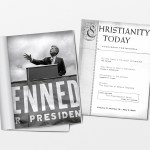
An image of President Kennedy.
Christianity Today December 5, 2025
Illustration by Christianity Today / Source Images: Getty

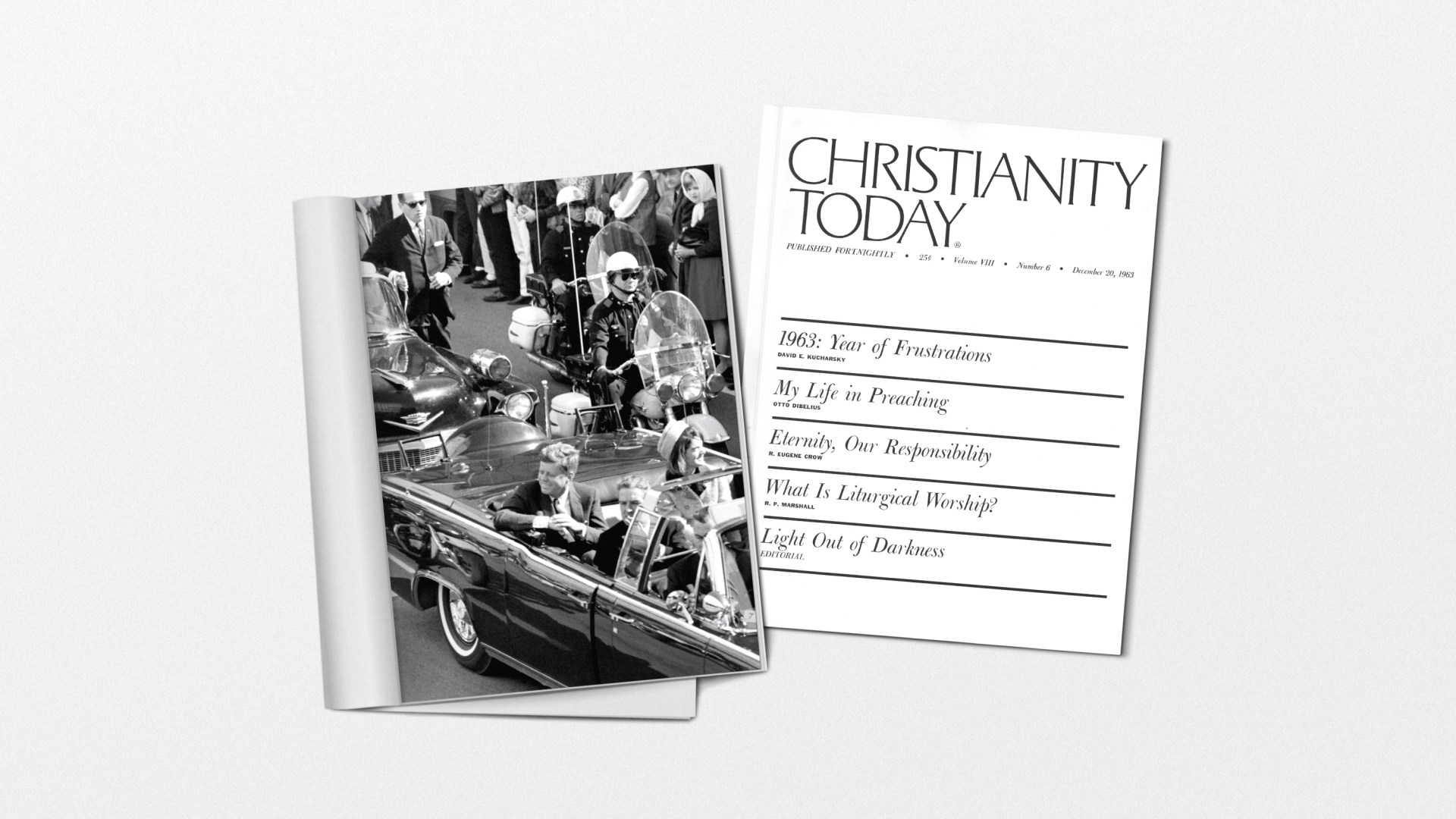
CT in 1963 covered one of American history’s tumultuous years. When President John F. Kennedy was assassinated in Dallas, editors in the magazine’s Washington, DC, office collected religious leaders’ comments on “The Death of the President” and tried to capture the feeling of the moment:

A shot came out of nowhere and changed a thousand things around the world. An unknown assassin brought sudden and tragic end to the life of a world-renowned figure; John F. Kennedy was dead by the hand of an evil man whom nobody knew, and who will be known only as long as his infamy is remembered. …

In one tragic moment, an unexpected event changed the plans and hopes of many people and of a nation. Strategies devised with an eye to next year’s presidential elections were suddenly obsolete. The whole civil rights issue at once took on new but unknown dimensions. … So little, one shot, by one unknown man, changed so much. …

During the 35 minutes that the fallen President lay dying in a Dallas hospital, three men gathered dead leaves and leisurely loaded them into a truck that stood on the circular drive that fronts the White House. The whirring blades of a helicopter could be seen above the grass in the back of what was the Kennedy home. Here of all places everything looked normal on this warm, gray, November day.

But suddenly a flag was quietly lowered to half mast above the white mansion. Others on surrounding public buildings were similarly lowered, and the eye received the message that the mind found impossible to believe. The President was dead.

Authorities identified the assassin as Lee Harvey Oswald—a lone gunman, they said, but one whose sketchy past, shadowy meetings with underworld figures, and sudden death in police custody would fuel decades of conspiracy theories. CT sent a correspondent to interview the accused killer’s mother.

Mrs. Marguerite Oswald … tried under difficult circumstances to provide religious training for her three sons. … The infant Lee was baptized in a Missouri Synod Lutheran church in New Orleans. He was never confirmed.

Mrs. Oswald attempted to stay at home and rear her family but eventually was forced to go to work. She paid a maid to care for the children for a time, but when World War II came, she had to make other arrangements. The older two sons she placed in a Lutheran institution which accepted children having only one parent. She said she was expected to pay whatever circumstances would permit.

But Lee was too young to enter the church home. Mrs. Oswald said she had no choice but to leave him to the care of a sister, who also lived in New Orleans, and to hire other attendants for him whenever possible. … 

“I know that my son was not an atheist,” Mrs. Oswald declared.

Before that fateful day, the biggest political story of the year was the Supreme Court decision in Abington School District v. Schempp. The court decided that teachers reading Scripture to students was a violation of the First Amendment. CT reported from the court: 

Justice Tom C. Clark had been drawling over a zig-zag sewing machine patent when, with scarcely a pause, he shifted to cases 119 and 142. Clark talked for another 25 minutes. His voice trailed off as he finally announced the court’s decision against a 150-year-old American tradition of prayer and Bible reading in the public schoolroom. The decision was regarded in some quarters as imposing a restriction upon the religious practices of more Americans than any prior government action.

The court’s decision on June 17 was 8 to 1, with Justice Potter Stewart, an Episcopalian, voicing the lone dissent, just as he did in 1962 when the court struck down the 22-word interfaith prayer approved by the New York Board of Regents for use in the public schools of that state. … The justices differ sharply on why required public school devotions are unconstitutional. Clark’s majority opinion was shared only by Chief Justice Earl Warren, Justice Hugo L. Black, and Justice Byron White.

Clark’s argument against devotional exercises in the public schools rested largely on the contention that the government must maintain an attitude of neutrality in religious matters. He said the test may be stated as follows: “What are the purpose and the primary effect of the enactment? If either is the advancement or inhibition of religion then the enactment exceeds the scope of legislative power as circumscribed by the Constitution.”

CT followed developments in the Civil Rights Movement in 1963, with an eye toward shifting religious positions and the impact on churches

Anti-segregation campaign in Birmingham, Alabama, included a series of attempts by Negroes to worship in all-white churches. Several of the churches welcomed the demonstrators, while others turned them away. … Mercer University (Southern Baptist) trustees voted 13 to 5—with 3 abstentions—to enroll Negroes on the Macon, Georgia, campus.

Martin Luther King Jr. led the March on Washington in August. Four CT editors joined the throngs gathering on the National Mall to see if the “religious element” of the movement offered a “genuine spiritual under-girding” or if it was “a mere form of godliness.” They reported back

The day was mostly bright, with temperatures in the eighties. Washington’s notorious humidity was somewhat offset by a fresh breeze and scattered clouds in the afternoon. 

Highlighting the afternoon ceremony was the great oratory of King, who cried again and again, “I have a dream.” But as if to prove that people doze despite the best of preachers, hundreds stretched out on the grass and slept most of the afternoon away. Another temptation was the cool water of the Reflecting Pool, and other hundreds kicked off their shoes and stockings to dangle their feet over the edge. At least two persons fell into the shallow pool.

A. Philip Randolph, 74-year-old elder statesman of civil rights in America and the son of a clergyman, was among several speakers who appealed to religious precedent. Randolph, program emcee and chairman of the national march committee, reminded the vast throng of more than 200,000 that “We are leading the multitudes in the streets just as … Jesus Christ led the multitudes in the streets.”

NAACP leader Roy Wilkins, seeking to perpetuate the fervor of the day, said:

“You got religion here today. Don’t back-slide tomorrow.”

[Dr. Eugene Carson Blake, stated clerk of the United Presbyterian Church in the USA] declared that Negroes “have mirrored the suffering of Jesus Christ.” He quoted Romans 12:1 as a helicopter whirred high overhead.

CT founding editor L. Nelson Bell continued to oppose civil rights laws. He said there was no biblical justification for segregation, but his main concern was that “voices of moderation on both sides of the issue are being drowned out by the louder voices of ‘rights’ without reference to the realities of the situation.” Other evangelicals called for white Christians to join the Civil Rights Movement—or forfeit any claim to moral authority in America.  

Evangelical leadership completely missed the point of the March on Washington and was not represented. … The evangelicals should do some soul-searching to discover how they got themselves into such a predicament. A biblical sense of the importance of men’s souls should have brought them close to the Negro. Also, the Negro churches are very conservative in their theology. Evangelicals pride themselves on affirming the oneness of man in their support of foreign missions. But conservative American churches and churchmen have done little in meeting the Negro problem. The little that has been done has been rather patronizing, and this the Negro considers an insult. 

Evangelicals have often allied themselves with the conservative social and political forces in the United States, especially in the South. … Christianity at its inception and at certain great points in its history has been extremely radical. The usual conservative exaltation of property rights as the basic right sounds strange from those who profess to uphold the spiritual and downgrade the material. … 

The members of evangelical churches need to learn the disciplines of the love of Christ.

CT also called readers to action on another current issue: cigarettes. The magazine urged Christians to read a recent report on tobacco and to stop smoking.  

The Consumers Union Report on Smoking and the Public Interest approaches the problem on a medical and social basis without direct reference to its moral aspect, although ethical implications inevitably shine through its discussion of the industry’s deliberate blindness to evidence and the mendacity of its advertising. But the Christian community is in a different position. It can no more look at the cigarette-lung cancer problem from a morally neutral point of view than it can be oblivious of the moral implications of the daily slaughter on the highways and the human wreckage through alcoholism. … 

Habitual cigarette smoking is no longer for the Christian a mere take-it-or-leave-it matter. It has moved from an optional indulgence to a question of the stewardship of the body. … On the scriptural ground that the God who gives us our bodies requires accountability for their use, none of us has the right to contract any habit that has been shown to lead to grave illness and premature death.

Amid the year’s crises and conflict, CT redesigned the magazine, hiring the artist who would go on to develop the iconic ad campaign, “I’d like to buy the world a Coke.” The redesign was announced with a note: 

Christianity Today’s contemporary, clean look reflects tradition and at the same time maintains dignity and respect for the subject matter of conservative religious publication. To achieve it, New York artist Harvey Gabor made use of areas of white space, contrasting with text areas. … “There is always the same seeming paradox: to be contemporary and simple, but not sterile; to be modern, but with a touch of classicism. … Perhaps the most intangible quality I sought for Christianity Today was a style and momentum all its own.”

An English professor argued that Christians could read contemporary literature—even if the literature is itself immoral

Salinger’s Catcher in the Rye may be taken to illustrate these distinctions. Because it contains offensive language, instances of censurable behavior, and a number of reprehensible ideas, many readers would label it an immoral book. But in doing that they may have overlooked the most significant scene in the novel, the one which provided its title, in which Holden explains to Phoebe his vision of standing in a rye field full of small children to guard them from plunging over a cliff. This is his way of making sense out of the terrifyingly chaotic world which envelops him, a world empty of values but full of phonies, and if we accept the idea that literature has some basic part to play in the human search for order, then the worth of this one scene ought to outweigh what we may regard as the worthlessness of the other elements. Catcher in the Rye is thus seen to be a mixed product, one requiring careful thought if it is to be evaluated sensibly. … 

At the end of the year, CT reported a widespread sense of failure and helplessness in American culture and American churches.

Ministers and laymen alike felt a sense of defeat.

For clergymen, a chief source of frustration was what to do with the latest variety in a historic strain of hearers-only Christians. The 1963 crop of professing believers whose lives reflect so little of New Testament teaching drew many a pastor into the lonely garden of perplexity.

One candid young minister came out of an experiment aimed at more meaningful Christianity with these words: “It’s been a flop. So far I’ve managed to reduce the congregation from 400 to about 50.”

He had tried modern music, jazz, dialogues, discussions, and plays. Next on the list was a plan to convert the church into an apartment house with the lobby as a chapel.

The heresy of universalism, implicit or overt, may be held responsible for lay indifference in some quarters. But what about lethargy in evangelical ranks?

The growth rate of most evangelical enterprises has leveled off markedly in recent years, and in 1963 many such efforts were pushing to maintain the status quo. …

“It’s like trying to climb Niagara Falls to meet these needs,” one evangelical leader said publicly.

Culture

The 12 Neglected Movies of Christmas

The quest for a perfect fruitcake, a petty larcenist, and a sly Scottish dramedy should all grace your small screen this season.

An old TV covered in Christmas decorations.
Christianity Today December 4, 2025
Illustration by Elizabeth Kaye / Source Images: Unsplash, Pexels

Christmas movies are hard to define yet easy to recognize. If you were to draw a Venn diagram of the genre, with one circle labeled “takes place during the holidays” and the other “themes of hope and redemption,” you might find Miracle on 34th Street at the very center. It’s a Wonderful Life would also live in the overlapping area, along with A Christmas Story—which still plays for 24 consecutive hours on TBS and TNT every year—and perhaps a Dickens adaptation or two.

Discovering a new classic is a tall order. (If it’s already a classic, why would it need to be discovered?) But if you’re willing to stretch the definition of “Christmas movie” just a little bit, possibilities begin to unfold. Keep the holiday milieu and the redemptive theme, but allow for a little melancholy amid the magic, and you’ve got plenty of alternatives to the familiar, comforting formula of a Hallmark special or a Christmas pageant.

To that end, here are 12 movies just outside the canon that beg for inclusion in this year’s holiday watch list. They vary enough in tone and subject to appeal to almost every mood and whim. Though none of them directly dramatize the birth of Christ, they are yoked together by a common yearning for salvation.

Remember the Night (1939)

When her trial is postponed until after the holidays, a petty larcenist (Barbara Stanwyck) spends Christmas with the lawyer (Fred MacMurray) assigned to prosecute her. The setup sounds perfectly contrived, but screenwriter Preston Sturges spins it into a scenario with surprising emotional punch. The movie’s beating heart is an extended visit to a family farm in which the woman confronts everything that’s been missing from her life. The irresistible warmth of this passage, which includes a rendition of a parlor song crooned by Sterling Holloway (the voice of Winnie the Pooh), could melt the hardest ice. | Watch on Prime Video.

The Man Who Came to Dinner (1941)

Hospitality is a key theme among Christmas movies for its connection to the Nativity story. If the innkeeper hadn’t offered Mary and Joseph the stable, where would our Savior have been born? This virtue is put to the test in this spirited farce, in which a self-centered, razor-tongued radio celebrity (memorably played by Monty Woolley, repeating his Broadway role) is forced to spend Christmas in the home of a Midwestern family after sustaining a hip injury. Hilarity ensues, romance blossoms, and justice prevails in an ironic ending that forces everybody to learn their lesson. | Watch on Tubi.

Christmas in Connecticut (1945)

A lifestyle columnist (Barbara Stanwyck again) who has constructed a persona as the ideal housewife despite knowing next to nothing about keeping house must fake her way through a Christmas dinner when a GI (Dennis Morgan) visits her house. (The premise could easily work today if you swapped columnist for influencer.) What makes the film rise above its cute conceit is its poignant but understated glimpse into American life during World War II, with its unspoken longing for comfort and connection. | Watch on Prime Video.

Come to the Stable (1949)

Though it may be a stretch to label this one a Christmas movie, this postwar drama about two French nuns who enlist the residents of a small New England town to build a children’s hospital deserves closer consideration. The film begins magically with the two sisters (Loretta Young and Celeste Holm) emerging from the snowy plains on a moonlit night and contains enough peace and good will toward men to fill a dozen pictures. Also, the New England town is called Bethlehem. | Watch on Prime Video.

The Holly and the Ivy (1952)

Family reunions are an unavoidable motif of the holiday genre, but few movies capture the complex feelings that can attend such gatherings. This finely wrought British drama, in which an aging clergyman (Ralph Richardson) contends with a series of revelations concerning his three grown children during a Christmas visit, demonstrates the need for repentance as well as forgiveness. It uses the titular folk carol to demonstrate the power of the holiday to cut as well as to heal: “The holly bears a prickle, as sharp as any thorn …” | Watch on Prime Video.

Shower of Stars: “A Christmas Carol” (1954)

No Dickens adaptation can hold a candle to the 1951 Scrooge starring Alastair Sim (sorry, Kermit!) but here’s one worth rescuing from obscurity: an hourlong episode of the variety series Shower of Stars starring Fredric March as Scrooge and Basil Rathbone as Marley’s ghost. Those unfamiliar with the glory of live television may balk at the black-and-white kinescope presentation, but the drama survives intact. Its greatest strength is its music: a score by the great Bernard Herrmann and lyrics by Maxwell Anderson, who also wrote the teleplay. The result is a production whose soundtrack can be enjoyed independently of the visuals. | Watch on Prime Video.

Pocketful of Miracles (1961)

While it doesn’t match the emotional wonder of the original Lady for a Day, Frank Capra’s color remake is far more Christmasy. An elderly fruit peddler (Bette Davis) enlists the help of a local gangster (Glenn Ford) to transform her into an elegant society lady so her daughter won’t be ashamed of her when she visits with her rich fiancé. It’s a rare Hollywood film in which duplicity is presented as a virtue, and while it falls short of the magisterial It’s a Wonderful Life (Capra’s masterpiece), it has gained a small cult following. | Watch on Prime Video and Pluto.

ABC Stage 67: “A Christmas Memory” (1966)

Truman Capote narrates this adaptation of his own novella, a nostalgic, autobiographical account of his childhood relationship with a distant and eccentric relative. Most of the narrative revolves around the quest to make the perfect fruitcake, but there are emotional depths to the deceptively simple story. There is a remake in the 1990s starring Patty Duke, but the one with Geraldine Page, who won an Emmy, is the true classic. | Watch on YouTube.

Comfort and Joy (1984)

This sly Scottish dramedy, written and directed by the inimitable Bill Forsyth, is an offbeat holiday treat that connoisseurs seem to be keeping to themselves. Set in the days leading up to Christmas, the story involves a Glasgow radio deejay (Bill Paterson) who finds himself caught in the middle of a turf war between competing ice cream franchises. The themes here are reconciliation and renewal; the comedy is understated but richly quirky. | Watch on Hoopla.

The Dead (1987)

A Christmas party in Dublin at the turn of the 20th century is the backdrop for John Huston’s final film, a brilliant adaptation of James Joyce’s celebrated short story. The dinner gathering is rendered in warm, dusky tones and garlanded with a variety of sharply etched characterizations by some of Ireland’s finest actors. The film gracefully transitions into a profound meditation on the transience of life and the precious gift of memory. It may prove a bit melancholy for some tastes, but the rewards are ample. | Watch on Prime Video and Tubi.

Joyeux Noel (2005)

The 1914 Christmas truce is the subject of this Oscar-nominated French drama in which French, British, and German soldiers spontaneously lay down their arms to exchange carols instead of artillery shells. The fact-based story is a moving reminder that Christmas is about the promise of peace on earth, inaugurated by the arrival of Jesus. When Diane Kruger sings to her lover in the trenches, the voice belongs to French soprano Natalie Dessay, and the result is transcendent. | Watch on Netflix, Prime Video, and Tubi.

Christmas, Again (2014)

This low-key, low-budget, low-stakes indie drama captures the isolation that many people feel during the holidays. The center of attention is a lonely 30-something (Kentucker Audley) in New York City whose seasonal job as a Christmas tree retailer keeps him teetering on the edge of a breakdown. Modest and observational, the film unfolds with a series of encounters with a variety of colorful shoppers, one of which becomes a catalyst for renewal. The pleasure of this virtually plotless character study is in waiting to see the needle move—ever so slightly—away from despair and toward hope. | Watch on Prime Video.

Nathaniel Bell manages the internship program and teaches film history for the Snyder School of Cinema & Media Arts at Biola University. He lives in Whittier, California, with his wife and three sons.

News

Amid Peace Talks, Russian Drone Damages Christian School in Kyiv

Ukrainians are wary of any plan that gives Moscow its “Christmas wish list.”

Damages to Kyiv Christian Academy from a Russian drone strike.

Damages to Kyiv Christian Academy from a Russian drone strike.

Christianity Today December 4, 2025
Image courtesy of Eric Moore

Eric Moore’s windows rattled as Ukraine’s air defense systems intercepted hundreds of incoming drones and missiles early Saturday. The South Dakota native and director of Kyiv Christian Academy spent three hours huddled in the stairwell of his townhouse with his wife and two sons, ages 7 and 9, during the most intense period of the attack.

Around 6 a.m., near the end of the nearly 10-hour bombardment, the school’s night security guard called. A drone had struck the grounds, blowing out 75 windows and leaving a crater 6 feet wide and 4 feet deep in the front lawn. The guard was patrolling the back of the property and escaped injury.

The K-12 school serves 47 students and shares its building with a private elementary school of 140 children. Moore surveyed the damage when it was safe to leave his home a few hours later.

“People were standing around, taking in the scene,” he told Christianity Today. “A dodgeball tournament had been scheduled for that morning by [the Christian group] Athletes in Action.”

The attack on the capital city left 3 dead and 29 injured while cutting power to the western half of the city. It calls into question the Kremlin’s commitment to ongoing peace talks.

“While everyone is discussing points of peace plans, Russia continues to pursue its ‘war plan’ of two points: to kill and destroy,” Ukraine’s foreign minister, Andrii Sybiha, wrote on X.
After months of failed negotiations, Washington launched a new wave of diplomacy that began with a controversial 28-point peace plan, leaked by Axios in mid-November. The proposal made major concessions to Russia, including requiring Ukraine to cede land beyond the roughly 20 percent Russia currently occupies; shrink its army from around 800,000 to 600,000; and abandon all efforts to join NATO.

Ukraine and its European allies sharply criticized the plan, warning that insufficient security guarantees will invite the Kremlin to rearm and launch another invasion in the near future.

On Sunday, Ukrainian officials met in Florida to revise the plan with Secretary of State Marco Rubio and White House special envoys Steve Witkoff and Jared Kushner. The next day, Witkoff and Kushner flew to Moscow for talks with Russian president Vladimir Putin.

Ukrainian president Volodymyr Zelensky said the revised plan “looks better,” though Putin signaled his displeasure and blamed Europe for amendments he called “absolutely unacceptable.” He warned that Russia is ready to go to war with European states if attacked. 

According to a Wall Street Journal report, the revised draft increases the cap on Ukraine’s military personnel to its current strength, defers land negotiations to “discussion between the leaders of the US and Ukraine,” and softens the language on NATO membership.

“Being tired doesn’t mean we’re ready to give up,” said Maia Mikhaluk, a pastor’s wife who lives in Kyiv and has helped plant churches across Ukraine for the past 18 years. She believes the original plan handed the Kremlin its “Christmas wish list” and provided “nothing that is good for Ukraine.”

If Moscow’s land grabs are legitimized or expanded, many of the Mikhaluks’ 27 church plants across the country will be in danger, she noted. “We have pastors in our network who would have to flee from the areas occupied by Russians, because if they stay, they’ll be slaughtered,” she said.

According to a Mission Eurasia report, Russian soldiers have killed more than a dozen priests and pastors in Ukraine since the war began. The organization’s president, Sergey Rakhuba, told CT that the Kremlin’s seizure of churches and detention of pastors in Russia-occupied regions should serve as a warning for what could happen nationwide if Ukraine’s security guarantees are sidelined in negotiations.

“This will happen with all of Ukraine if you give Putin a chance,” Rakhuba said. “He’s not going to stop with this so-called peace deal.”

Other unresolved issues in the framework include the future of Ukrainian elections and the fate of nearly 20,000 Ukrainian children that Russia abducted and subjected to indoctrination.

Despite the uncertainty and near-daily attacks on civilians, churches remain full and Christians continue serving with resilience, Rakhuba said. “I have not seen such a powerful movement of God in the countries of the former Soviet Union in my missional memory,” he added.

Last month, Mission Eurasia hosted its third annual volunteer forum, bringing together hundreds of Christians to share best practices and resources. The organization also provided wood-burning stoves for volunteers to deliver to Ukrainians whose homes were damaged by the ongoing war.

Ministries face new obstacles as well. Mikhaluk said Russian drones have become more accurate and deadly in recent months and are targeting humanitarian aid vans. Her church halted its aid deliveries to Kherson and Donetsk due to the increased risk. Some Ukrainian cities have even draped large fishing nets over their streets to trap drones aimed at vehicles and pedestrians.

Still, ministry work continues. Moore spent the weekend with more than 100 volunteers cleaning up glass and installing temporary windows at Kyiv Christian Academy. Classes resumed on Tuesday, and the school launched a campaign to raise money for new windows.

Mission Eurasia volunteers continue delivering food parcels to families in need and sharing messages of hope to marginalized communities. The group has delivered more than 300,000 food packages this year.

Mikhaluk’s church, a member of the Association of Missionary 

Evangelical Churches of Ukraine, has redirected its frontline aid efforts to internally displaced people around Kyiv who need firewood, blankets, and other necessities as temperatures drop. She said Moscow has intensified its attacks on the country’s energy infrastructure, and many fear this winter could be the most difficult since Moscow’s full-scale invasion began nearly four years ago.

The outcome of this week’s peace talks remains uncertain, but Mikhaluk said she knows where her hope lies. “God has always been very close and very real in those dark times,” Mikhaluk said. “When you’re completely stripped of whatever false securities you had—that, I think, is when we’re closest with God.”

addApple PodcastsDown ArrowDown ArrowDown Arrowarrow_left_altLeft ArrowLeft ArrowRight ArrowRight ArrowRight Arrowarrow_up_altUp ArrowUp ArrowAvailable at Amazoncaret-downCloseCloseellipseEmailEmailExpandExpandExternalExternalFacebookfacebook-squarefolderGiftGiftGooglegoogleGoogle KeephamburgerInstagraminstagram-squareLinkLinklinkedin-squareListenListenListenChristianity TodayCT Creative Studio Logologo_orgMegaphoneMenuMenupausePinterestPlayPlayPocketPodcastprintremoveRSSRSSSaveSavesaveSearchSearchsearchSpotifyStitcherTelegramTable of ContentsTable of Contentstwitter-squareWhatsAppXYouTubeYouTube