Ideas

The Half-Truths We’ve Told About MLK

Contributor

In the ’60s, white evangelicals condemned Martin Luther King Jr. In the ’80s, we lauded a convenient, hagiographic version of his life. How should we remember him now?

Christianity Today January 12, 2024
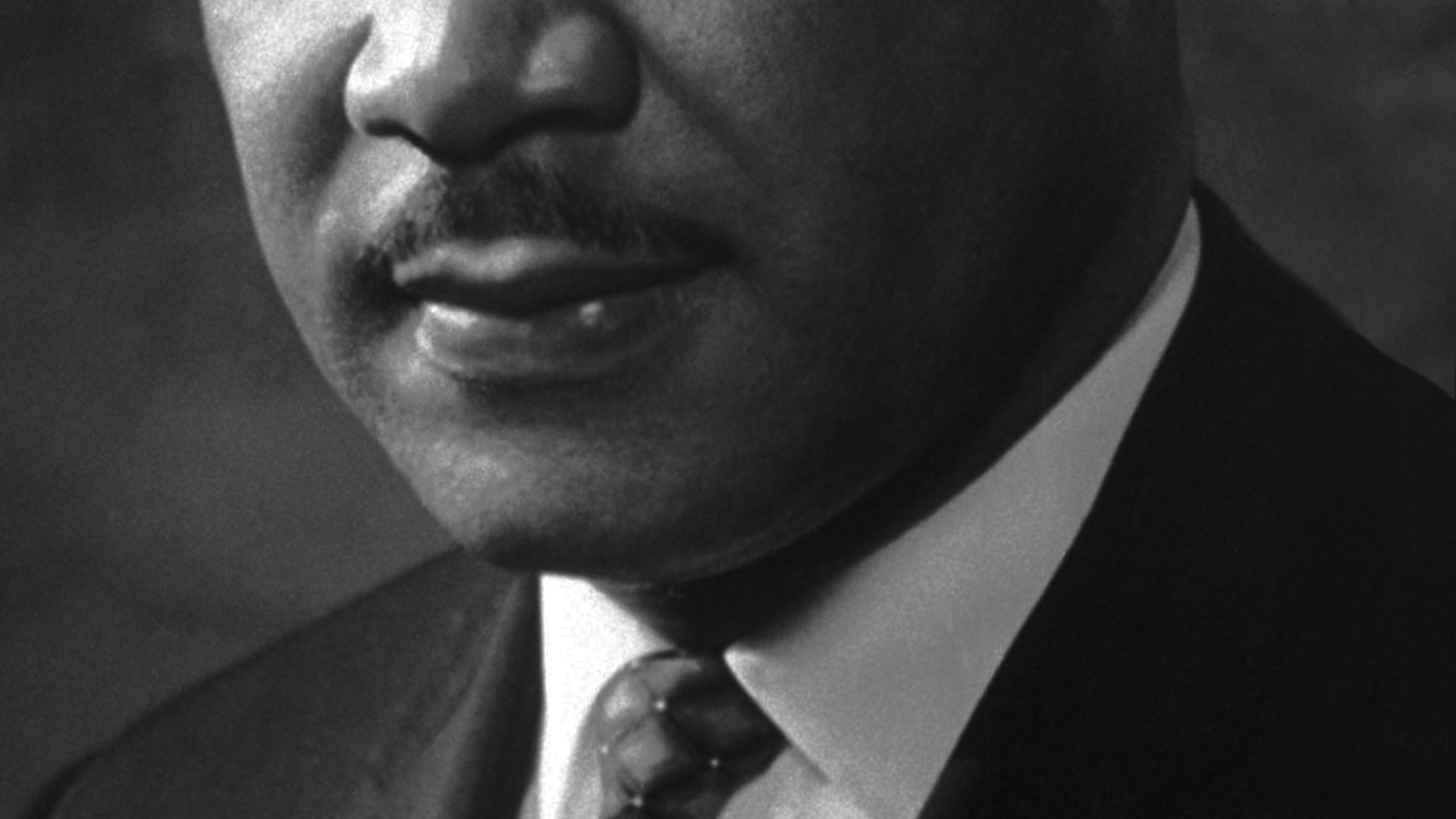
Illustration by Elizabeth Kaye / Source Images: Wikimedia Commons

As the white editors of Christianity Today surveyed Martin Luther King Jr.’s nonviolent civil disobedience on behalf of civil rights in the summer of 1964, they were not impressed. “For preachers to argue that ‘civil disobedience’ is justified helps to encourage those who would resort to violence,” CT declared that August.

A half century later, CT formally apologized for its opposition to King and the civil rights movement. By then, the magazine had published numerous pieces lauding King as an example of Christian love whose words and actions offered a needed call to repentance for white evangelicals.

But King remains an awkward figure for those of us who are both white and evangelical—two things that King was not. Many of us would like to herald him as a prophet, but when we do, we risk co-opting King for our own purposes rather than understanding him on his own terms.

White American evangelicals have typically reacted to King in one of three ways: (1) criticizing his Christian practice as heretical or hypocritical; (2) heralding him as a prophet of love whose teachings can heal our racial divisions and cleanse us of the sin of racism; or (3) highlighting his commitment to nonviolence and an alleged colorblind American ideal as an alternative to more militant forms of Black nationalism.

There is at least some truth in every one of these three reactions to King—but in each case, white evangelicals have frequently gone too far. In each case, we have too often tried to fit King into our own evangelical categories instead of understanding him on his own terms.

King’s non-evangelical Christian theology

King was not an evangelical. Evangelicals have traditionally seen the answer to the problem of sin primarily in individual conversion. This was the message of the 18th- and 19th-century revivalists, and it was the message of Billy Graham in the 20th century.

But King understood sin primarily in structural terms. From the time that he was first conscious of the world around him until the day he died, King’s life was shaped by the structural reality of racial segregation—a legal, social, and cultural system that refused to treat him with full human dignity simply because of his skin color. King viewed his call to the ministry not primarily as a call to save souls for the afterlife but as a call to bring the kingdom of God to bear on an evil system that did not treat people as people.

The ultimate way to overcome evil was through the power of the cross—but not the cross of Christ’s judicial atonement, as white evangelicals believed, but the cross of collective “unearned suffering.” Nonviolent activism could expose the evils of structural injustice and bring about a national repentance as the broader public was moved by the sight of seeing oppressed people showing love toward their oppressors.

King was neither the first nor the last to preach this message, but he was more effective than most, partly because his view of Christianity and American democracy appealed not only to African American Christians but also to many white liberals. Unlike the early 20th-century Black nationalist Marcus Garvey or King’s contemporary Malcolm X, King grounded his calls for racial justice in the nation’s founding documents—the Declaration of Independence’s assertion that “all men are created equal” and the rights guaranteed by the Constitution.

He also grounded his principles of racial equality, human dignity, and nonviolent activism against injustice in the parts of the Bible that held the greatest appeal for white liberal Protestants: the Sermon on the Mount, the parable of the Good Samaritan, the Golden Rule, and the biblical prophetic tradition.

To many white liberal Christians, King’s message of love and justice—especially backed by his willingness to go to jail and risk his life for his beliefs—seemed to be a perfect reflection of the version of the social gospel and the tenets of American democracy that they already believed, even if they had sometimes applied these principles inconsistently on matters of race. They lauded King as a modern prophet and put him on the editorial masthead at The Christian Century, the leading liberal Protestant magazine of the time.

White evangelical Christians found King’s message far more objectionable. King’s views of the Bible, conversion, and the Atonement did not match their theology. Nor did his political views coincide with theirs. To most white evangelicals, international communism was one of the greatest threats to religious freedom, and they therefore supported the Vietnam War and America’s Cold War mission.

King, as a pacifist and Christian socialist who was often critical of the US government, opposed the Vietnam War and engaged in a campaign of nonviolent civil disobedience—a campaign that Christianity Today and Billy Graham denounced. They believed it would potentially undermine America’s anti-communist mission and thought that it violated the New Testament’s requirement for Christians to submit to governing authorities.

White evangelical repentance

It took a long time after his death for most white evangelicals to fully make peace with King. In the late 1960s and 1970s, some young evangelical progressives who wanted to make racial reconciliation a central priority for the evangelical movement venerated King, but many conservative evangelicals ignored him. Not until the late 1980s did Christianity Today magazine begin regularly publishing hagiographic retrospectives on King.

When conservative evangelicals rediscovered King in the late 20th century, they began using his historical memory as a way to call white evangelicals to repentance for the sin of individual racism. The reason, they said, white evangelicals (including themselves) had opposed King in the 1960s was that they’d had racist attitudes. But in retrospect, they saw the light and realized that King was the true Christian while they themselves had been the Pharisaical sinners.

This repentance was undoubtedly genuine and sorely needed, but it was also based on at least a partial misunderstanding of King. His message was primarily social rather than individual, and his goal was to transform American democracy and lead African Americans to the promised land—not merely to heal white Christians’ hearts so that they could begin worshiping at multiracial churches.

Some of the white Christians who now lauded King—such as Jerry Falwell, who in 1988 called King “everybody’s American hero”—also supported then-president Ronald Reagan’s Cold War nuclear arms buildup and opposed the presidential campaign of Jesse Jackson, the civil rights leader who had been King’s associate. It is highly unlikely that King would have approved of these white evangelical political stances had he lived long enough to see them. And white evangelicals likely would’ve been far less approving of King were he still alive in the late 1980s and championing causes similar to the ones Jackson endorsed.

In attributing their prior rejection of King to past racist sins for which they had now repented, some of the white evangelicals who adopted King as a prophetic hero failed to fully grapple with the theological distance between King’s message and their own.

It wasn’t merely hatred of Black people or opposition to racial integration that had prompted evangelicals in the 1960s to repudiate King; it was profound differences in theological and political orientation. Those differences were as wide as ever in the 1980s and 1990s, but now that King was dead, it was easy for white evangelicals to ignore them.

The King that they now heralded was a mythical King who was far more evangelical and conservative than he ever had been in real life.

King as conservative hero

At the very moment that white evangelicals were beginning to rediscover King, many younger African Americans and white liberals were starting to distance themselves from him. The release of Spike Lee’s film Malcolm X in 1992 popularized Malcolm’s Black nationalism for a younger generation of African Americans who were tired of seeing white people herald Martin Luther King Jr. as an example of nonviolent Black passivity.

PBS’s landmark documentary series Eyes on the Prize (1987) and Taylor Branch’s Pulitzer Prize–winning book Parting the Waters: America in the King Years, 1954–63 (1988) represented the high-water mark for hagiographic treatments of King from American historians.

After the late 1980s, depictions of King became more critical, with historians much more likely to note his condescending (or even abusive) treatment of women and his conflicts with younger activists. These new histories suggested the most courageous people in the struggle were actually local activists such as Fannie Lou Hamer and Bob Moses or Black Power advocates like Stokely Carmichael.

In this context, white conservative evangelicals doubled down on their appropriation of King, lauding him not only as a believing Christian (in contrast to Black Power radicals who were not) but also as a colorblind conservative whose dream of a world where people “will not be judged by the color of their skin but by the content of their character” offered an implicit critique of affirmative action. The fact that the real King supported affirmative action and democratic socialism during the final years of his life was lost on those who understood King only through his “I Have a Dream” speech.

Understanding King today

As a white evangelical Christian who is also an academic historian, I face three questions as I think about King: (1) How should I understand King as a historical figure, in the context of his own time and place? (2) How should my understanding of King affect my own understanding of Christian theology and the Bible? and (3) How should my understanding of King and Christian theology affect my response to issues of racial justice today?

The first question is the easiest to answer: King was a complicated figure, but it seems clear that his theological and political views differed substantially from those of white evangelicals both then or now. To understand King’s views, we have to understand the history of the Black social gospel, as theological historian Gary Dorrien has argued.

The second question is more uncomfortable: Does white evangelicalism’s resistance to the ethics of King show that we’ve gotten our theology wrong, and should we therefore become converts to the Black social gospel?

We need to choose our Christian theology based on our understanding of biblical truth, not merely on our attraction to a particular way of life or our admiration of a Christian principle in action. But whenever we find evidence that our own theological tradition hasn’t adequately rejected a given sin, like racism, we should identify the theological blind spots that kept our tradition from seeing that evil. We should adopt instead a theological corrective that includes not only our own understandings of the Bible but also whatever biblical truths we find in other Christian traditions, including King’s theology and the theology of other Black Christians.

Regardless of our understanding of King, we also need to answer the question of how we should respond to racial injustice today—and whether we should appeal to King’s words when we do so. Because it’s easy to quote King selectively or out of context, we need to be careful about using King to weigh in on current policy debates, especially if we’re tempted to use his words to argue against a particular form of Black activism.

At the same time, King’s example of active resistance to evil through nonviolent love is still just as inspirational as it was during his lifetime—it can still convict and inspire us, even if we might not agree with all his theological views. I appreciate the humility of the white Christians of the late 20th century who recognized that King’s attitudes were far more Christlike than theirs and who found in King an impetus to repent. Their historical understanding of King may have been incomplete in some cases, but their humility was laudable.

And so, on this 95th anniversary of King’s birth, I think we need to approach King with a similar humility. We need to realize that his story is not our own, and his understanding of the Christian faith was probably different from ours. He was a man of both deep flaws and profound insights. He was not the only civil rights hero or even the best one.

But he was deeply engaged with the Christian message of justice and reconciliation, and there is much we have yet to learn from his life as it was—not as we might wish or imagine it to be.

Daniel K. Williams teaches American history at Ashland University and is the author of The Politics of the Cross: A Christian Alternative to Partisanship.


Ideas

The Trump Debate Is Dead

Staff Editor

Evangelical elites of all political stripes still dispute Trump, but the question is largely settled at the grassroots.

Christianity Today January 12, 2024
Brandon Bell / Staff / Getty

Next week’s Iowa Republican caucuses formally launch the 2024 primary race that will almost certainly end with a third GOP nomination for former president Donald Trump. When Iowans caucus on Monday, recent polling suggests Trump will easily claim the state’s 40 delegates, with rivals Nikki Haley and Ron DeSantis jostling for second place.

Whatever the exact results, the decisions of Iowa’s white evangelical caucus-goers will be much scrutinized in the days to come. But for most of them, I suspect, those decisions have been long since made. American evangelicals’ conversation around Trump has changed dramatically since 2020, splitting along a kind of class line and all but disappearing as an active consideration for the average voter.

In most evangelical circles, the Trump debate is dead.

Let’s start with the exception: Among what some call the “evangelical elite,” this is still a live question. Whether it’s permissible (or required) to support (or oppose) Trump for president is still actively discussed among evangelicals who write books and articles like this one, who attract followings online, who know what “Big Eva” means and how they feel about it, who attend seminary (but probably not for pastoral ministry), and who otherwise participate in The Discourse—wherever they land politically or theologically.

Trump support is a live question for self-proclaimed Christian nationalists on X (formerly Twitter). And it’s a live question for “never Trump” evangelicals at The Atlantic or The New York Times. In Iowa, it’s a live question for Republican kingmaker Bob Vander Plaats, who told CT he’s holding out hope for a DeSantis win.

But for the average white evangelical Republican, my strong impression is that this debate is basically finished. Very few evangelicals will vote or caucus this year having freshly agonized over whether to back Donald Trump.

That’s so for several reasons, none of them especially unique to evangelicals. One is the reality of how millions of Americans routinely vote: by partisan default and after relatively little research into the policy and personal history of the candidates on offer.

The raging politico who can’t seem to log off, touch grass, and love his neighbor has become a stock character in American politics. But there’s another character better represented in our democracy: the party-line voter (and sometimes nonvoter) who really does intend to do her civic duty but just has so much else to do first. There’s dinner to cook, laundry to sort, that email to answer, the dog to wash.

Low-information voters get a bad rap, and the part of me fascinated by politics is sometimes tempted to join in that denigration. But another part of me recognizes that this mode of political engagement makes sense for many people. After all, my job means I can spend a whole day researching a candidate’s record—and get paid for it. Probably 99.9 percent of America can’t do the same. People have limited time and energy, and they can’t spare much for distant political dramas, so they vote the party line.

That includes many evangelicals. Much has been made of “the 81 percent” of white evangelicals who voted for Trump in 2016. But, depending on exactly which data set you use, that figure is statistically identical to the proportion of white evangelical votes for the Republican nominees of 2020, 2012, 2008, and 2004. As difficult as it is for those of us in the chattering class to fathom, a lot of this story is simply Republicans voting Republican.

And for all the same reasons that people cast low-information votes, relatively few voters have comprehensive political ideologies to uphold. Default partisan voting doesn’t rest on an exhaustive policy platform undergirded by mutually reinforcing theses about the purpose of the state, the grounding of human rights, the nature of the common good, and so on. It rests on a few high-profile issues (right now: abortion, education, immigration, inflation, Israel, Ukraine) and, well, vibes.

In that sense, the evangelical decision to back Trump was at once a very big deal and a comparatively small one. It was big when done by evangelical elites—the kind of people who are still talking about this, who do have a political ideology supposedly informed by Scripture, who spent the 1990s putting out statements about the importance of character in politics and then forgot all about it when Trump came on the scene.

The Book of James warns us that those “who teach will be judged more strictly” (3:1), and high-profile Trump supporters knew better.

Yet many ordinary voters knew rather less. I’ll never forget mentioning Trump’s Access Hollywood tape to an older relative—a white evangelical Republican—shortly before the 2016 election. I said I couldn’t believe people still supported him after hearing what he’d said. She said she hadn’t heard of it at all. That was the first time I’d have an exchange about Trump along those lines. It wasn’t the last.

Political division feels worst when it’s close, when it comes between us and loved ones who taught us the very ethics that make enthusiasm for Trump inconceivable. But the “servant who knows the master’s will and does not get ready or does not do what the master wants will be beaten with many blows,” as Jesus taught, while “the one who does not know and does things deserving punishment will be beaten with few blows” (Luke 12:47–48).

Error is judged in proportion to knowledge, that is. And almost a decade into this saga, I’ve come to hold in tension a big-picture dismay over American evangelicalism’s embrace of Trump and a recognition that the rationale behind any one evangelical Trump vote may be complicated, surprising, and even sympathetic.

The final factor bringing the Trump debate to its close is sympathetic too, if only because it reflects a common human failing—one I too often find in myself: We don’t like to admit we’ve been wrong.

This factor isn’t about making the decision to back Trump, then, but about what happens after that decision has been made. It’s something of an ethical sunk cost fallacy: If you’ve voted for him once, why not again? If supporting him puts you in the wrong, you’re already there.

The tricky thing about sunk cost is that it doesn’t feel like a fallacy, and that’s especially true when we’re talking not business but politics, ethics, and their implications for personal identity. To refuse to vote for Trump in 2024 after voting for him in 2016 or 2020 is to admit error—and that’s uncomfortable.

Indeed, in the political realm, perhaps even more than elsewhere, the human instinct is to justify ourselves (Luke 10:29), to reassure ourselves and each other that we got it right the first time, to recommit even when we would do better to repent. Trump’s on the ballot anew for 2024. But who wants to keep debating a decision already made?

Bonnie Kristian is the editorial director of ideas and books at Christianity Today.

News

The Middle East’s Favorite Christmas Carol Is About War and Hate

Traditional melody suggests it is only when Christians realize the holiday comes with “hard realities” that the spirit of Nativity dwells in their hearts.

Christianity Today January 12, 2024
Illustration by Elizabeth Kaye / Source Images: Getty / Youtube

This past holiday season—like many before it—the Arab world’s favorite Christmas carol spoke directly to war and suffering.

With Orthodox Christians observing their 12 days of Christmastide from January 7–19, their churches in the Middle East were the latest to sing “Laylat al-Milad” (On Christmas Night). Written in the 1980s during Lebanon’s civil war, the song has been performed by classical divas, worship leaders, and children’s choirs alike. It has offered comfort during the regional conflicts since, from the Syrian civil war to ISIS’s reign of terror to the current war between Israel and Hamas in Gaza.

Its haunting melody and lyrics speak less about a baby in a manger than the life that baby demands that we live. And also of the life that baby makes possible:

Chorus: On Christmas night, hatred vanishes On Christmas night, the earth blooms On Christmas night, war is buried On Christmas night, love is born

Verse 1: When we offer a glass of water to a thirsty person, we are in Christmas When we clothe a naked person with a gown of love, we are in Christmas When we wipe the tears from weeping eyes, we are in Christmas When we cushion a hopeless heart with love, we are in Christmas

Verse 2: When I kiss a friend without hypocrisy, I am in Christmas When the spirit of revenge dies in me, I am in Christmas When hardness is gone from my heart, I am in Christmas When my soul melts in the being of God, I am in Christmas

The Christmas season in the Middle East can be a double blessing. Advent begins one month before the Catholic and Protestant holiday on December 25, while festivities continue weeks further until the Orthodox celebration on January 7 and its Epiphany on January 19. But this season, in sympathy with a muted Christmas in Gaza, Holy Land Christians canceled their public revelry.

Yet they still gathered to sing and worship in church.

In Israel’s northern town of Kafr Yasif, the Baptist church “kissed their friends” in congregational greeting as the praise band led a joyous rendition of “Laylat al-Milad.” In Amman, Jordan, an evangelical orphan ministry gathered around 300 Muslim and Christian at-risk children to celebrate, as the Baptist school choir serenaded their parents. And in Erbil in Iraq’s Kurdistan region, the Alliance church included the carol in a merry gathering of potluck fun and gift exchange.

The Syrian-born manager of Lebanon’s BeLight FM radio station said he played “Laylat al-Milad” at least once daily. And an Egyptian director of SAT-7, the Christian satellite TV network, called it a clear holiday favorite.

CT asked evangelical leaders in each location for their reflection on the seasonal standard:

George Makeen, ministry content consultant for SAT-7:

To get a sense of how this song resonates with Arab Christians, picture the end of World War I, when churches were full of people celebrating the end of conflict despite the destruction all around them. They knew the suffering was over and could anticipate the future rebuilding. But for us, we are fragile and see no way out of our situation. We ask: God, how long? But we don’t think it will end any time soon.

Yet in Christ, we celebrate anyway.

This song conveys the true meaning of Christmas. It reminds us of hard realities, and that as soon as we become aware of these realities—this is when we are most aware of Christmas.

This paradox is not what is usually heard in Christmas songs, but like everything else in our faith, the unbelievable is true. This is fitting because the original Christmas story was a hard reality. The boy whose birth was announced by angels flees to Egypt while a king slaughters babies.

I can’t remember a time in my life when the suffering was so bad. But if Gaza is an earthquake, the aftershocks will also be dangerous. What will happen with the wave of fanaticism to come? What impact will it have on continued economic stress in Egypt, Lebanon, and Sudan? And what about the collective trauma everywhere?

We expect more suffering to come.

But my favorite line in the song is “hatred vanishes, war is buried.” The baby that fled to Egypt died by crucifixion—yet in between, he preached love and hope and ultimately was resurrected. We try to give this message in our programming, but a song conveys it much more powerfully.

David Rihani, head of the Assemblies of God church in Jordan:

In Jordan, Christmas is an official holiday, and before canceling celebrations in solidarity with Gaza, the public squares and shopping malls were decorated festively. But with all this missing, the focus is squarely on Jesus. And this song, popular every Christmas, is the most popular by far.

Its message, stronger than any sermon—or UN resolution—has never been so clear.

This year, Jordanian kids cared much less about receiving presents. They know something is wrong in the world, overwhelmed by the media discussing the war 24/7. The images are of dying children and angry demonstrations. But while the news outside is all about suffering, our churches and halls have reverberated with youth choirs singing with passion, demonstrating their care for life and peace.

They have inspired me to speak more strongly to stop the war.

We tell our children that there is politics, and there are people. We are not to hate one another. We hate the war, but we must use this opportunity to connect with Jews and Muslims in pursuit of peace.

There need not be problems between Arabs and Israelis. Muslim empires protected Jews when they were oppressed in Europe. And historic Palestine had them as friends and neighbors. This song calls for tolerance, for peace, and reminds us, “the spirit of revenge dies in me.”

The more we connect, the fewer problems we will have.

Nour Botros, radio manager for Lighthouse Arab World’s Belight FM in Beirut, Lebanon:

I heard this song growing up in Syria, but it never resonated with me until Christmas 2013, when I fled the war and went to Lebanon. I didn’t know if I would ever see my family again, but the chorus—“war is buried, hatred vanishes”—was emotionally touching.

We were in civil war with the exact opposite reality, killing each other in hate. And I thought about celebrating Christmas far from home, yet with a hope that at Christmas we have the opportunity to love one another, just as God loves us. And even now, after 13 years of war in my country, any song about peace continues to touch my heart.

Syria has been craving love and peace.

Several years later at BeLight, I watched as we filmed a video clip of this song sung by special-needs children. Their voices were nothing like that of our classical Arabic singers. But it again it touched me, as the line states, “When hardness is gone from my heart, I am in Christmas.”

As a believer, meditating on this song reminds me what happened this holiday. Every person must come to understand its message, why Jesus was born and remains with us today. Even in war, this will give us the hope that we need.

Malath Baythoon, senior pastor of Erbil Alliance Church, Kurdistan Region of Iraq:

This is an amazing song, with a beautiful melody. It represents a new beginning—a new tree, new clothes as gifts, and, above all, a new heart. The baby Jesus brought this world the love of God, and as Iraqis we sing it at Christmas to help change our mood.

That is because this song does not represent reality at all.

In fact, it is the exact opposite. Israel and Gaza are at war. Russia and Ukraine are at war. Economic troubles are everywhere. And here in Kurdistan, there are constant tensions between different groups of people. It is not a confirmation of what actually happens at Christmas.

But if we sing this song as a prayer, it works. It can be true in our person-to-person and family-to-family relationships. It can be true in our churches. We want this season to be filled with love, but if you don’t know Jesus, you are drawn to war and hatred.

The song can be a reality in our hearts—we can only pray it will be true in our nations.

Rula Mansour, founder and director of Nazareth Center for Peace Studies and associate professor at Nazareth Evangelical College, Israel:

Our center has made this refrain—“Hatred vanishes, the Earth blooms, war is buried, love is born”—our motto for Christmas, reminding us that love, born from the womb of darkness, transcends borders with the power of creation and redemption.

It is through the acts of compassion, liberation, and healing illustrated in this song—offering water to the thirsty, clothing the naked, wiping the tears of those who weep—that God aims to bring about the restoration of human dignity. The church, his transformed community, displays these signs of the kingdom in the face of oppressive structures, as evidence of God’s new world.

In hope, we look beyond hardships and trust in God’s goodness and complete sovereignty over tragedy and injustice. Even if we cannot see the results now, God will complete our unfinished and imperfect work, bringing justice and righting all wrongs in his time.

We see “war buried” through the eyes of our faith.

And then, as followers of the Peacemaker and as coworkers with God, we earnestly tear down the walls that separate us, resisting evil with good and hatred with love, to pave the way for a brighter future. But it is when our “souls melt in the being of God,” as the song states, that his love moves us away from excluding to embracing the other, turning an enemy into a friend.

Only then can we become beacons of hope, conveying God’s presence to bring healing, comfort, justice, peace, and restoration—to the places, situations, and lives we touch. And this year especially, this song, like a prophetic melody, declares the transformative power of Christmas—with a call to action to “bury war.”

Church Life

How Brazilian Megachurches Became Global Church Planters

Satellite congregations are popping up wherever a critical mass can be found, from Florida to Portugal to Kazakhstan.

Christianity Today January 11, 2024
Illustration by Christianity Today / Source Images: Getty

The Florida Center neighborhood is the place to go in Orlando if you are a Brazilian immigrant missing home. From Guaraná sodas to brigadeiro candies, all kinds of merchandise from the South American country are available in stores and restaurants. Today you can also find there Alcance Orlando, a satellite church of a congregation in Curitiba, a city of nearly 2 million in southern Brazil.

The main pastor, Paulo Subirá, moved to Florida with his wife and three school-age children in 2017.

“When I came to Orlando, we met in small groups with family and some friends, as we previously had in Brazil,” he says. After a while, the gathering grew to include friends of friends.

The group became too large to meet at a home and then outgrew meeting at a hotel. “We then understood we should start a church from that group,” Subirá said.

Alcance Orlando now has two Sunday services that meet in a 300-seat auditorium. On weekdays, members gather in 31 small groups spread across the Greater Orlando area. Subirá, whose brother Luciano leads Comunidade Alcance in Curitiba, is currently preparing a young pastor to start a new community in South Carolina with some Brazilian families that left Florida.

Brazilian immigrant church plants in Europe and North America—usually started by well-known local ministries that exist apart from denominational bodies or missionary agencies—are new for Brazilian Christianity. These church plants are the result of the confluence of two phenomena: the growth of the evangelical population and emigration.

The rise of the evangelical faith in Brazil is well-documented. In a 1980 census, 6.6 percent of Brazilians self-identified as evangelicals, with that number jumping to 22.2 percent in 2010. Data from the 2022 survey is yet to be released, but a 2020 study by the polling institute Datafolha indicated that 31 percent of Brazilians identified as evangelical. Demographer José Eustáquio Diniz Alves estimates that evangelicals may outnumber Brazilian Catholics (64.4% of the population in 2010) by 2032. Brazil’s population is now 203 million people.

Migration to other countries, in turn, has experienced ups and downs over the years, with current figures reaching a peak. A report from the Brazilian Ministry of Foreign Affairs revealed that in 2022 there were 4.6 million Brazilians living abroad, the highest number reported since 2009.

The largest Brazilian communities were in the US (1.9 million)—Greater Orlando alone is home to around 100,000 Brazilians—and Portugal (360,000), where one in three foreign immigrants is from Brazil.

Migrants from the Global South have also become a growth driver for Christianity in Europe.

“Latin American migrants have planted thousands of churches in Spain, Portugal and beyond over the last thirty years. It is difficult to find a major European city that does not have a large Spanish-speaking and/or Brazilian congregation,” writes Jim Memory in a recent report.

Historically in Brazil’s case, however, many of these churches were part of the so-called neo-Pentecostal denominations, such as the Igreja Universal do Reino de Deus (“Universal Church of the Kingdom of God,” IURD), and were known for their exorcism rituals and inclination to preach the prosperity gospel. From the 1990s, IURD expanded to Europe, North and South America, and Africa. More recently, the denomination has lost numerous members to other denominations and has had to close churches, many overseas, largely because of scandal.

In 2017, nearly 2,000 Brazilian missionaries were living abroad. A report from the Associação de Missões Transculturais Brasileiras indicates that the number of cross-cultural missionaries, including both domestic and overseas, has been growing at a rate of 6.7 percent per year since 1989, a higher number than the rate of growth for the evangelical population, 5.8 percent per year.

In this environment, many local church leaders have seen an opportunity to test their model of organization and growth in other parts of the world as their members have moved to other countries.

One example is Igreja Batista Atitude (IBA), whose main church site is in Rio de Janeiro. Today it has 15,000 members in the main campus and another 14,000 across 60 sites in six countries.

Known nationally as the place where former first lady Michelle Bolsonaro worships, Atitude (which is part of the Brazilian Baptist Convention) now has churches in Orlando and Deerfield in Florida, Vancouver (Canada), Lisbon and Porto (Portugal), Milton Keynes (UK), and Lamego (Mozambique).

Josué Valandro, IBA’s senior pastor, says his strategy encompasses two types of church planting. He calls the first type “intentional,” as is the case in Mozambique. These are traditional places for Brazilian missionary work: riverine communities in the Amazon basin; the sertanejos, or countryside, in northeastern Brazil; and sub-Saharan Africa. Atitude is now training 17 men and women to be sent to these locations.

The other type is “organic,” driven by the relationships and travels of its members, like those who immigrate to other nations.

Two years ago, André Oliveira helped open Atitude in Lisbon’s Príncipe Real district, an artsy, middle-class neighborhood. Since then, Oliveira has baptized 43 people, an exceptional number for Portuguese standards. According to the Alianca Evangélica Portuguesa (AEP), only 3 percent of all churches in the country have baptized 50 or more people in the 2021–2022 period. The only catch: only four of those baptized are Portuguese. (AEP data shows that 29.3 percent of evangelical churches in the country have 75 percent or more foreigners in their assistance.)

Reaching local people’s hearts is also an issue for Onda Dura Church. The mother church was founded in 2007 in Joinville, southern Brazil, by Filipe “Lipão” Duque Estrada, the great-grandson of Joaquim Osório Duque Estrada, an 1800s poet who wrote the lyrics of the Brazilian national anthem.

Lipão, whose arms are covered with tattoos and who has gauges in his earlobes, did not inherit his ancestor’s poetic skills. Instead, his gift is to reach young people through contemporary language and worship. The church’s name is a kind of statement on its own and resonates with its pastor’s affection for surfing—Onda Dura can be translated as “a lasting wave,” reflecting the idea that “God’s wave lasts forever.”

Onda Dura has 2,700 members at the main campus. “Expanding was in our heart from the beginning,” said Lipão. After years of planting churches across Brazil, Onda Dura opened official satellite locations in other countries after Brazilian immigrants living overseas asked for more than just being able to stream content.

“People come to us to be discipled and be pastored, because they cannot find a healthy church to become part of,” he said. Onda Dura Online now has a dedicated pastor and a team of volunteers to reach out to seekers wherever they are. They hold weekly discipleship courses focused on biblical training and evangelism.

These leaders then encourage online churchgoers to form small groups to watch the service together and meet during the week. Eventually, Onda Dura sends a church planter or a regional pastor to lead that community into becoming a full church.

“The idea behind Onda Dura Online is not to create consumers for our content but to use the digital environment to give birth to a physical church,” said Lipão.

This was the script that Onda Dura followed to establish itself in Charlotte, North Carolina (where it now gathers around 100 people every Sunday), Chicago (60 people), and Porto in Portugal (150). In Sines, southern Portugal, and Suzuka, Japan, new churches are slated to launch in the first half of 2024. Currently, small groups are forming in Italy, the UK, Ireland, Belgium, the Netherlands, Argentina, and Kazakhstan.

“Virtually all our members have left their entire family to migrate,” said Alcance Orlando’s Subirá. “The church becomes relevant because it is the only family they have.” Subirá has heard stories of church members helping each other get driver’s licenses or find jobs and short-term housing.

One growing population at Alcance Orlando are the Brazilian immigrants’ American sons and daughters, who are fluent in English and want to speak the same language they speak in school at church. “The church must follow them,” he says.

In the UK, which began church activities just over six months ago, Atitude has already started an English service in addition to its Portuguese programming.

Grandchildren and great-grandchildren of immigrants form a large part of Brazil’s population. Many Protestant communities in the country today are the fruit of the work of foreign church planters, says Lipão, like the German pastors who immigrated alongside the Lutheran farmers who settled in his state of Santa Catarina in the late 1800s.

“It worked once,” he said. “Why can’t it happen again?”

Franco Iacomini is a Brazilian journalist.

It’s Okay to Have an Unhappy New Year

We know holiness doesn’t always lead to happiness. But what if our unhappiness can itself be holy?

Christianity Today January 11, 2024
Diana Parkhouse / Unsplash

For many, the start of a new calendar can be the most motivating time of the year. We make a list of overly optimistic resolutions, hoping that the season ahead will be filled with greater health, success, and happiness than the one behind.

This can take on a distinctly spiritual tone for Christians as we start new Bible reading plans and devotionals—often with the unspoken conviction that becoming more faithful to God will, ultimately, make us more peace-filled and joyful.

But what happens when, sometimes only a couple weeks into January, we begin to get discouraged, dissatisfied, and unmotivated—when we start to feel like we’re already failing at having a “happy” New Year?

I know this feeling of disappointment well. Like most people’s lives, mine has had its ups and downs. I’ve experienced some losses: the sudden death of my sister, who was my only sibling; a season of infertility; and a health challenge or two. I still carry deep pain from these experiences and have many days when I move through the world as a mourner.

But, all things considered, the scales have tipped toward blessing for me. To this day, I’ve had a good life by any reasonable standard and am comfortable, safe, and secure. In the grand scheme of history, I’ve enjoyed unprecedented prosperity and freedom. Technically speaking, I have everything I need and much of what I want.

Yet I have also known deep unhappiness. In fact, I’ve noticed a certain kind of melancholy descending upon me over the years—like a slow drip of discontent and disillusionment—almost as if I’ve been expecting something from life that has not yet been delivered. Put succinctly, I feel like life has let me down somehow.

I understand how off-putting and cringeworthy this must sound. I’ve worked in humanitarian aid and social services and know what real deprivation looks like. What could a person like me—with all the love and material comforts I’ve enjoyed—complain about? Why doesn’t my very blessed life feel like a blessing? And why doesn’t my pursuit of holiness always feel like happiness?

My guess is that if you were to ask people today why they participate in religion or spiritual practices, many would say it’s because these things make them feel better. Faith creates a sense of emotional centering and brings them peace.

Yet I have come to believe that this good feeling cannot be the reason we choose to follow Jesus. I agree that things like joy and courage are often byproducts of a deep walk with God. Studies confirm that religious habits do, in fact, positively impact a person’s mental health. But life with God doesn’t always guarantee perfect, uninterrupted happiness.

Every church I have attended rejected the prosperity gospel outright. Growing up, I was taught that adversity wasn’t to be feared, that poverty and sickness were not signs of failure on my part or a lack of favor on God’s part. I didn’t feel entitled to affluence and knew God was good even when my circumstances were not.

But despite my well-constructed theology of suffering, there were elements of the prosperity gospel’s values that felt vaguely familiar to me. While I did not believe that God was a vending machine for material abundance, I did expect God to make me happy—to bless me spiritually and experientially—if I followed him well.

I knew God may not grant me physical things like health and wealth, but he was supposed to at least bestow intangible goods like fulfillment in work, meaning in ministry, and a joyful intimacy with him, along with a sense of purpose and comfort in my suffering. I assumed that if I believed all the right things, I would feel the right way.

But what I’ve come to realize is that this is, essentially, an emotional prosperity gospel—a sacrosanct rendition of “the good life” ideology that has subconsciously crept into our popular theology. Its tenets are well-known to many of us: Discover God’s will for your life, grow close to him, and you’ll feel a sense of contentment. Make godly choices and peace will be the norm and pain an aberration.

I’d lived in the shadow of a cosmic equation, in the formula of If this, then that. Give this, and you’ll receive that; sow this and you’ll reap that. Cause and effect. My seed money was my theological wisdom, good behavior, and right choices. And the return on my investment would, at least, be deep and abiding joy.

Meanwhile, negative feelings like pain and sadness were marginalized in faith communities and told they didn’t belong. Difficult emotions are often still seen as unholy—fear, anger, or anxiety are seen as resulting from a lack of trust in God or a disregard for the spiritual disciplines. And so we end up feeling a distinct urge to prove our holiness by demonstrating our happiness.

It is impossible to overstate how much New Thought (the philosophical forerunner of The Power of Positive Thinking) and the prosperity gospel have shaped this religious ideology—which manifests itself throughout Christian books, songs, sermon series, wall decor, and even pulpits in pithy sayings like:

I’m too blessed to be stressed.
God won’t give me more than I can handle.
Everything happens for a reason.
I should just let go and let God.
Pray more; worry less.
Faith over fear.

It's no wonder we feel like we’ve failed spiritually when no facet of our life consistently delivers the psychological outcomes we expect. When we’ve made all the right choices and believed all the right things, we can even feel like God has defrauded us of his favor and abundance.

Many of us have squeezed our lives into a narrow understanding of what it means to be blessed, plagued by impossible expectations of perfect bliss and emotional satisfaction. But this constant pursuit of happiness can be exhausting. Happiness can be a tyrant, demanding all our attention and allegiance. And, when it’s idolized, it can suck the life out of our relationships, our ministries, and our families—none of which were ever designed to deliver complete fulfillment.

Faith is not euphoria or the means to a therapeutic end, nor is God a mechanism by which we achieve self-actualization. True religion is not a method of personal or emotional transcendence. It is not a security blanket or soothing salve. When we center our hope on these things, we will always be disappointed. Accepting and enduring this truth is difficult, but it has made this world a better home for me.

So, then, what good is God’s presence in our life if it doesn’t always feel like emotional prosperity? Why say “yes” to faith in Jesus?

Faith, as I now understand it, is simply the heart’s response to recognizing what is true. It’s saying yes to what we know is right, good, and holy. Our relationship with God is not transactional, like some divine exchange of goods and services. Christianity is more like a path or a road. It is a manner of walking and a way of being, not just a mode of thinking or feeling. God’s presence is good because it illuminates this path and helps the world make sense.

God calls us to hard things in this life. And there is a purpose in our pain, but not in a utilitarian sense—as if suffering is the ultimate spiritual optimizer. Most of us are already familiar with the phrase “God is more concerned with your holiness than your happiness,” but what if our unhappiness is important in itself?

I believe unhappiness can enlighten our lives by offering us a unique wisdom and clarity. Sometimes unhappiness is the heart’s way of telling us something is wrong or needs tending to. But sometimes it is God’s way of reminding us of what is true and good—of the way things should be in our world.

Since leaving Eden, sin’s curse has separated us from the original intent of our creation. We have eternity in our hearts (Ecc. 3:11)—and yet we are finite in our strength, we don’t know all the answers, and our flesh is mortal. Our souls long for what should be, while our bodies live in the hard reality of what is.

Sadness is part of the human condition. Restlessness is an appropriate, even righteous response to what’s broken. If you struggle with disappointment, frustration, or anticipation, it is not because you are spiritually immature but because we are living after the Fall. Existence will always feel like an incomplete sentence, like a hunger that’s never fully satisfied until Christ comes again in glory and ushers in his new creation.

Whether because of our sin, our fragility, or our unrealized aspirations in the face of reality, it will always be difficult—if not impossible—to achieve lasting happiness in this life. No New Year’s resolution can fix that. And whether your pain is like a boulder or a pebble in your shoe, it is as holy as any moment of happiness you may experience. It can even serve as a lament for the brokenness in the world.

This, my friends, is the holiness in our unhappiness.

For as long as I can remember, I was a faithful disciple of the emotional prosperity gospel. I’d embraced the myth that my life had to feel good, rewarding, and meaningful to be blessed. But I have come to realize that simply existing as a beloved child of God—getting to see him and live, to wrestle with him and know that he is always with me—is itself the greatest gift of all.

Our righteousness is not a bargaining chip for blessing, and God is not a means to some selfish end—he is the end. He is the Way, and he is enough.

Adapted from Holy Unhappiness by Amanda Held Opelt. (Copyright 2023) Used with permission from Worthy Books, a division of Hachette Book Group, Inc.

Amanda Held Opelt is a speaker, songwriter, and author of the book A Hole in the World: Finding Hope in Rituals of Grief and Healing.

Theology

There’s Never Been a Better Time to Be an Evangelical Christian

Evangelicalism’s historical emphases on personal renewal and church revival shine precisely in dark days like these.

Christianity Today January 11, 2024
Jonathan Schoeps / Lightstock

This piece was adapted from Russell Moore’s newsletter. Subscribe here.

Just before Christmas, New York Times columnist Ross Douthat responded in his newsletter to the continuing controversy about the Francis papacy in a surprising way.

What was surprising here is not that Douthat, a convert to Catholicism, would write about the church’s stormy politics; he does so all the time. Also not surprising is his almost-despair about the Francis papacy; he is almost surely the most widely read Roman Catholic critic of the pope.

Surprising, though, was his conclusion: that there’s never been a better time to be a Roman Catholic. Over the past year, I’ve come to a similar conclusion: that there’s never been a better time to be an evangelical Christian.

Douthat gets to his conclusion the long way around. He writes about his own conversion into a church led by Pope John Paul II and then Benedict XVI, when the Catholic future seemed to be trending toward even more of the kind of conservative Catholicism that drew Douthat in the first place.

He had come to the Times expecting to be a defender of the church—but then the terrifying scope of the sexual abuse crisis became clear. Then the pope resigned, followed by all of the ambiguity as to where the church would now be headed on matters such as marriage, family, sexuality, and even the authority of the papacy itself.

Douthat poses the anguished question, “Who would choose to be a Catholic at a time like this?”

In this, Douthat argues that conservative Catholics such as himself are perhaps sympathetic to the plight of the more liberalizing Catholics during the John Paul II era, who were often asked, If you don’t like the direction of the church, why not just become an Episcopalian?

Whatever the current tumult of the church, Douthat argues, these progressive Catholics truly believed that the reform they sought was God’s will and that they would be vindicated in the long run. The same impulse is present, he writes, in those dismayed by the confusing state of the church now.

Douthat argues that what’s evaporated is not a Catholic view of history or of its own authority but the flawed-from-the-first assumption that Rome would be a “safe harbor” from modernity or a “fortress against the struggles of the age.”

“When I meet people who are becoming Catholic now, at a time like this, the fact that those struggles are present inside the church does not seem to especially bother them,” Douthat writes. “They’re used to struggle and uncertainty, they don’t expect a simple refuge, and they recognize that any space of real spiritual power—which the Catholic Church still is, I promise—will inevitably be a zone of contestation as well.” Douthat argues that this has always been the state of the church “from the beginning, from failed and feckless popes all the way back to failed and even treacherous disciples.”

The real question, he writes, is whether the Christian story is true. If it is, then the church will emerge intact from this crisis as it has all of those before, Douthat concludes. “And whether you’re a liberal, a conservative or just a believer trying to stay out of the crossfire, you should feel confident that what happens inside Roman Catholic Christianity will show some of those ways through.”

Far be it from me as a low-church Protestant to give counsel to Catholics about their struggles. As Pope Francis would say, “Who am I to judge?” But nor can I, being what Douthat calls the “stringent sort of conservative Protestant,” see in any of it “simple vindication for Calvin or Luther or their contemporary heirs.”

For an evangelical—especially an American evangelical—to show any sort of triumphalism in light of some other group’s identity crisis would be, at best, an inability to read the room, and, at worst, the kind of blindness that Jesus told us can only come for those who insist they can see (John 9:41). When it comes to the crises of evangelical Protestantism, though, I am in a very similar place to Douthat. I truly believe there is no better time to be born again. Here’s why.

Though not Roman, all of us profess to be “catholic,” in that we believe the church will ultimately endure through any “dangers, toils, and snares”—not to mention the abominations that make desolate—that the gates of hell (or the judgment of God) might muster. And, in addition to that, there are certain emphases that evangelicalism has brought to the broader body of Christ that should cause us to expect, and to endure, times like these.

The word evangelical is contested, of course, but sometimes we act as though this is a recent revelation. Evangelical is, quite intentionally, not an institution or an ideology. It describes instead a renewal movement that emphasizes and underscores certain aspects of universal Christianity—aspects that are maybe best described as the personal .

Jesus told us, “You must be born again,” and revival movements have warned that implicit faith in a church—much less national, ethnic, or political identity—is not enough. The question “Do you have a personal relationship with Jesus Christ?” might sound clichéd and might carry the baggage of a certain hyper-programmed sort of salesmanship, but that doesn’t mean it’s not true.

At its best, evangelical Christianity reminds the world and the church that the Good Shepherd doesn’t just see the flock but the one sheep lost in the woods. “God so loved the world” (John 3:16) is an important truth. So is “Christ loved the church and gave himself up for her” (Eph. 5:25). But we also need to hear and believe that Jesus “loved me and gave himself for me” (Gal. 2:20, emphasis added).

Even our view of biblical authority—often derided as naive and literalistic—is an emphasis on the personal. The issue isn’t just the objective truthfulness of the Scriptures (although that’s a necessary condition), but the question of actually personally reading, hearing, and living the Word of God. Under that is a confidence that God—as in the days of Josiah—can speak with the voice that creates life and new creation, even when the structures and institutions have fallen away.

In fact, that’s what’s happened again and again. The Wesleys never “won” a battle for the Church of England. But even in the coldness of that Laodicean time, hearts were “strangely warmed” and a revival emerged, a revival that, as is often the case, wasn’t a comeback of institutions but a bypassing of them to reach people—one sinner at a time.

Whether in an established church or outside of it, evangelicalism at its best has reiterated that a government or a culture can neither establish nor impede the gospel.

That’s really relevant today, a time when some secular leftists think they can nudge religion out of existence. And on the Right, what is Christian nationalism but an attempt at an established religion—just established by the angers of populist mobs rather than by the traditions of parliaments or kings?

That doesn’t happen with a strategy or a blueprint. Indeed, personal renewal and church revival—what we might say evangelicalism at its best has aspired to conserve—nearly always start with despair and perplexity.

Can these bones live? How can a man be born when he is old? The answers seem both obvious and daunting. That’s why Jesus said, “The wind blows where it pleases. You hear its sound, but you cannot tell where it comes from or where it is going” (John 3:8). Much of evangelical Christianity, at least in America, is beclowned and bewildered, deceiving and being deceived. That’s true—and should not, at least for evangelical Christians, be at all surprising.

But even when we are taken by surprise, and even when so many churches and institutions stumble in the dark—in the absence of a lampstand they don’t even remember to miss—Jesus still says, “Here I am! I stand at the door and knock. If anyone hears my voice and opens the door, I will come in and eat with that person, and they with me” (Rev. 3:20).

In fact, evangelical Christianity ought to be made of the people reminding everyone else that trends do not define the future. The trend of an individual life is always bad, after all. The gospel does not improve the trend—it interrupts it: “I once was lost, but now am found, / was blind, but now I see.”

All kinds of imbalances can happen. Evangelicalism can devolve into individualism and pragmatism, but the reason evangelicalism—whatever it calls itself—bursts out so often in the history of the church is that it speaks to those who’ve lost faith in their own effort or in the efforts of some institution they trusted.

Reinhold Niebuhr wrote, “It is wholesome therefore for the Church to stand under the stinging rebuke ‘God is able of these stones to raise up children unto Abraham,’ a rebuke in the form of a statement of fact which history has validated again and again.” In fact, the Bible tells us, that very rebuke is good news (Luke 3:18) because those “stones,” over and over again, are the tax collectors and sinners everyone else has given up on, who have given up on themselves.

Revival tents can collapse. Cathedrals can fall. But if the tomb in that garden is really empty, if those women weren’t lying, there will still be a church—even if every other hope gives way. And in that church, there will still be people saying, “Jesus loves me, this I know / for the Bible tells me so.” Maybe the deadest, most cynical, most hostile person you can imagine—maybe even you?—might be the one leading that cry.

In a time of justice-seeking without forgiveness, of self-actualization without new creation, people are longing for something many of them don’t even know to call “grace.” When they find it, they will be amazed. So should we.

We are born again at the right time. “Behold, now is the favorable time; behold, now is the day of salvation” (2 Cor. 6:2, ESV) might just be another way of saying this: There’s never been a better time to be an evangelical Christian.

Russell Moore is the editor in chief at Christianity Today and leads its Public Theology Project.

Theology

Africa’s Top 10 Bible Verses

Leaders reflect on what YouVersion’s list of the most-shared Scriptures in their corner of the continent includes—and misses.

Christianity Today January 11, 2024
Illustration by Christianity Today / Source Images: Pexels / Unsplash

Below are Africa’s top verses of 2023 as determined by YouVersion. With the help of Langham Partnership, Christianity Today asked three local Bible scholars for their analyses on what the findings suggest about the state of Christianity on the continent.

Elizabeth Mburu, Langham Literature regional coordinator for Anglophone Africa, Langham Partnership, Kenya:

What is your overall reaction to this list?

The top ten in Africa did not surprise me. Some of them are my go-to verses!

What might the verses more unique to Africa convey about Africa’s spiritual needs or level of biblical literacy/engagement?

It is likely that these verses feature prominently in Africa because of the challenging socioeconomic and sociopolitical circumstances in many African countries.

Many Christians are enduring hardships and they resort to God’s promises to provide security, provision, prosperity and protection. We struggle against many societal ills, such as corruption, as well as other issues, including spiritual oppression and false teachings. We generally have a transactional relationship with God, and most of these verses would be taken as promises—rewards for good religious conduct.

Most do not know how to interpret the Bible for themselves and so rely on what they hear from pastors. Given the rise of neo-Pentecostalism in Africa and the reality that approximately 85 percent of pastors do not have formal training, the popular verses would include those on this list. Unfortunately, this means that biblical literacy tends to be shallow in many contexts, and the “harder” truths that lead to spiritual maturity tend to be ignored since they are not meeting a felt need.

Given the events of this past year, is there a verse you wish were on this list instead?

I would wish that 1 John 2:9 was on this list. Many Africans tend to elevate ethnic identity above their identity as brothers and sisters in the family of God. We forget that when we become Christians, the church becomes our new “tribe.”

There seems to be a lack of understanding that love is the greatest commandment and it is tangible, not abstract. As a result, negative ethnicity is a constant blight in many churches, particularly during electioneering season when historical ethnic enmities are weaponized by our politicians.

Yacouba Sanon, regional book commissioner, Langham Partnership International, Côte d’Ivoire:

What is your overall reaction to this list?

The verses in the list summarize the needs and aspirations of Christians in Africa: Hope in God’s promises, trust in God’s provisions, and security in the midst of uncertainties. I am encouraged to see that both Testaments are used by readers, and although New Testament verses appear more, two OT verses come on top, and these verses come from the two major prophetic books.

What might the verses more unique to Africa convey about Africa’s spiritual needs or level of biblical literacy/engagement?

I was puzzled by John 1:1. This verse in John belongs to a highly Christological context. It does not refer to a specific physical need. Therefore, when used, highlighted, or shared, it may resonate with a strong affirmation of the deity of Christ.

Given the events of this past year, is there a verse you wish were on this list instead?

I am surprised there is not a single verse from the Psalms, as the Psalms provide us with words of encouragement and hope in a troubled world with two ongoing wars. I would have expected a verse like Psalm 46:2 or 93:1. These verses are reassuring and offer comfort in difficult times. Maybe many are too focused on their own problems and are not concerned with the big issues in the world.

Sunday Bobai Agang, president of Evangelical Church Winning All (ECWA) Theological Seminary, Jos, Plateau State, Nigeria:

What is your overall reaction to this list?

All the verses shared are quite familiar, and that makes me very happy. In the early 1980s, I attended a Bible college where memorization of 60 verses from the Old and New Testaments was a requirement. Many of these verses shared—for instance, Philippians 4:13, Jeremiah 29:11, Matthew 6:33, and so on—are among my favorites, and I use them every week when I pray for the things I want God to do in my life.

What might the verses more unique to Africa convey about Africa’s spiritual needs or level of biblical literacy/engagement?

To begin, it might be due in large part to the training that pastors—who are actively involved in evangelism, church planting, teaching, and discipleship of their members—received regarding biblical literacy.

Further, it shows the social context and the people’s common experiences. For instance, Christians in times of political unrest and economic suffering often find comfort in memorization of Scriptures that speak to hope both now and in the future.

Given the events of this past year, is there a verse you wish were on this list instead?

Romans 4:17 and 11:36. In Romans 4:17, it is written that Abraham “believed that God was able to bring back to life the dead and create new things out of nothing.” Assuming this is the same God who saved us, he can transform any situation we’re in right now.

As Paul states in Romans 11:36, “Everything comes from God; everything exists by God’s power and everything is intended for God’s glory.” No longer held. Everything that exists today can only be explained by the might of God, according to my interpretation of this. The purpose of God’s creation is to bring glory to God. Consequently, God is supreme, and he wants me to spend my life such that others will glorify him.

Editor’s note: CT’s regional analyses of the YouVersion top Bible verses of 2023 include Africa, Brazil, the Philippines, Singapore, and Ukraine.

Founded by John Stott, Langham Partnership trains, equips, and publishes pastors and leaders in growing Christian communities in the Majority World.

Theology

How Old Is Too Old to Lead a Church?

Six Asian church leaders discuss whether it’s wise for congregations to set age limits for senior pastors.

Christianity Today January 11, 2024
Illustration by Mallory Rentsch Tlapek / Source Images: Lightstock / Getty

In 2014, Christianity Today published a feature by Warren Bird, author of Next: Pastoral Succession That Works, about how 100 prominent US pastors successfully—and unsuccessfully—passed their role down to a new leader. Bird and co-author William Vanderbloemen found that half stepped down by age 65 and that the average age of American church leaders was 55.

This year, CT sought to explore the issue of pastoral succession from a different cultural perspective: churches in Asia. Hierarchy and respect for elders often make passing the baton more difficult for senior pastors in this region, and the aging population in some countries means more pastors are leading into their later years.

We asked six pastors in East and Southeast Asia—in China, Japan, Singapore, Indonesia, and the Philippines—for their views on whether churches or denominations should set age limits for senior pastors and how they can prepare for a smooth succession. Responses are arranged from yes to no:

Freddy Lay, 68, former lead pastor and former chairman of Indonesia Chinese Church (GKI) in Jakarta, Indonesia:

It would be wise for a church or denomination to set age limits for pastors, since we all have limited lifespans and our bodies and minds deteriorate due to age. I chose to retire at 65, although I kept serving the Lord after my retirement in an advisory role, which is a less physically demanding task. Retired ministers can get involved in mentoring other leaders. [Lay successfully added a pastoral age limit of 65 into his denomination’s constitution.]

Although the Bible does not include specific age limits for a pastor, we can learn from the examples set in the Bible regarding succession. For example, God set a time limit for priests and Levites to serve in the temple (Num. 8:25–26).

We can also look at the leadership succession from Moses to Joshua and from Elijah to Elisha. A pastor must start preparing a succession plan as soon as they begin carrying out their leadership role. He does this by modeling what it means to lead the church and investing time in prayer for God’s will. Cultivating a new generation of leaders is one of the most important roles of current leaders.

Armando Canoy, 59, president of Philippine Baptist Theological Seminary in Baguio City, Philippines:

It is wise for churches to set age limits for senior pastors because in some cases, a church is filled with the senior pastor’s relatives, who want the pastor to stay until he dies of old age. Thus, I think 70 should be the retirement age at these kinds of churches.

At 70, I’ve seen some senior pastors who are still mentally sharp, full of wisdom, and great in their personal and social relationships. However, physical health is a great challenge. After 70, health issues often take over, especially for senior pastors who are not economically well-compensated by their churches. This also leads to financial struggles, as most senior pastors in the Philippines do not have medical insurance coverage or retirement savings. Some senior pastors want to stay in their position until old age so that they can secure financial provisions.

Of course, 70 as a retirement age is not in the Bible. For instance, Moses started his ministry at age 80. But in Numbers 8:25–26, the Levites were told to stop performing duties that require laborious lifting of equipment in the tabernacle at age 50. Physically, they may not be as effective in performing these duties. Yet they were asked to assist in the Tent of Meeting in carrying out other duties.

These verses prove that there is a need for senior pastors to transition when effectiveness diminishes. As to the age, 70 is considered old in the Philippines. Hence, it’s time for a new breed and generation of leaders. It’s Joshua’s time.

Zhang San (pseudonym), 47, pastor of a Baptist house church in China:

Writing a fixed age into the church’s constitution might not be a good idea. That’s because there may be times of hardship when you need a trustworthy and proven faithful servant to serve longer. Also, the health situation may differ from pastor to pastor. Finally, the relationship between a shepherd and his flock also varies: Sometimes the congregation loves and trusts their pastor so much that they want them to stay longer. Other times, people prefer to bring in fresh air.

At the same time, I can see the benefits of having an age limit. Some senior pastors hold on to authority and refuse to give opportunities to the younger generation. Also, older people are usually not willing to change their ideas—in Chinese, we have a common saying that “experienced masters can’t learn new skills”—and may be too stubborn to pivot when the situation requires it.

So it would be wise for a church to set an age for senior pastors and lay elders but to also set criteria for allowing exceptions. The Bible talks about both the value of experienced leaders (Ps. 92:14; Prov. 16:31, 20:29) and the danger of being stubborn or controlled by others in a person’s last years (Gen. 27:1, 1 Sam. 2:27–33, 1 Kings 1:1).

In Chinese culture, depriving an older person of authority because of his or her age is a humiliating and disrespectful act. Most founding pastors serve till their death. So my thoughts on this issue are very different from the majority viewpoint in Chinese house churches but align with other leaders of my generation (those born after the 1970s).

Preparing a new successor should start immediately in a pastor’s ministry, as anything could happen—especially in China, where a pastor could be detained at any time. Moving to a new senior pastor is very difficult when trust has been built between the pastor and the congregation. Also, the longer a pastor serves, the stronger the church culture and the harder it is for another person to fit into this culture.

Satoru Kanemoto, 75, former senior pastor of Nerima Church of God and former chairman of the Japan Lausanne Committee in Tokyo, Japan:

Churches should set age limits for senior pastors so that there are fewer power struggles during leadership transitions. Yet pastors should also have the option to continue if the church agrees to it.

As to the age at which that limit should be placed, it depends on the pastor. He or she should be able to extend or shorten it depending on his or her health or mental condition. When I first took pastoral leadership at Nerima Church of God in 1988, the cultural norm was for people to retire at 60. Nowadays, the age has risen to 65, and soon it will be 70. The age limits on pastors should also be flexible based on the needs of the church.

In Romans 12:1–21, we see that God allows us to be faithful to his call. I believe the Prince of Peace gives us opportunities to serve the Lord in different roles after pastoral leadership. In my case, I retired at 70 and then became the headmaster of a nursery school and also the president of Japan Missiological Society.

While some denominations have age limits for senior pastors, the shortage of pastors in Japan makes it difficult to maintain. Many churches ask retiring pastors to stay until the church can find a new pastor. If the pastor still decides to retire, then the denominational leaders ask other retired pastors to come in and preach, or lay leaders preach in turn. Occasionally, pastors’ wives help preach in the church.

I started preparing to hand over the pastoral role when I became a pastor at 33. I strongly recommend young pastors to start thinking about it early and consider what would be best for the church they are leading. Some of the challenges in succession I’ve seen include power struggles for the pastor’s financial resources, the church members’ attachment to the pastor, and vice versa. Sometimes these cause churches to divide.

Lora Timenia, 36, faculty at Asia Pacific Theological Seminary in Baguio, Philippines:

It is not wise to set age limits for pastors. The call of God is designed by God and should not be limited by age, gender, race, or social status. Moreover, the anointing of God for a position, role, or office determines who serves and how long one serves. King Josiah was very young when he was appointed king. Caleb was quite old when he entered the Promised Land. Hence, there is no set age for the calling of God.

Personally, I prefer to retire and be a hobbyist at 70. Our bodies grow weaker through the years. The things we could do before can become tougher to do as our bodies age. Our memories, our speaking voice, our capacity to stay up late, or our social pacing may not be the same as when we were younger. Plus, generations evolve fast. The things that my generation liked may be eons away from what the current generation likes.

That being said, in the pastoral office, age is actually an asset. The wisdom learned through the years and solid relationships developed with God and with congregants through time is a treasure for the church. So if God does not guide a pastor out of office, then he or she should stay put regardless of his or her age.

The majority of the pastors in the Philippines hold on to the pastoral office until there is very explicit guidance from God to step down. However, many pastors are not prepared to be succeeded by younger generations. Because they do not have retirement plans, they have no other source of income but the church salary and no other place to dwell but the parsonage. There are instances when the calling has passed but the pastor does not want to leave due to living necessities.

I have always believed that discipleship is the priority ministry of every pastor. Discipleship means raising genuine followers of Jesus. Genuine followers of Jesus ultimately end up serving in various ministries, including pastoral leadership. I will never forget what a Singaporean pastor said to me: “Let my ceiling be your floor.” Pastors should normalize the building up of others, whether it is for succession or not.

Soo-Inn Tan, 68, director of Graceworks, a Christian publishing and training ministry in Singapore:

We first need to ask, What is a church? If a church is primarily a family, it would be strange to set a retirement age for the senior parent figure. If we see the church as primarily an organization, then there is merit in setting up a retirement age to ensure there is a succession plan.

The Bible does not speak of a retirement age for senior pastors. I suspect the issue of age limits for senior pastors arises because there are leaders who overstay their welcome, leading to dysfunction in their church. This is a problem that needs to be addressed.

Therefore, the question is not so much about setting limits but considering how we can ensure that the right people continue to serve as pastors and how to help those no longer suitable for leadership roles to step away.

We also need to provide pathways for those who should no longer serve as senior pastors to serve in other ways, like mentoring, writing, prayer, teaching, or pastoral care. We never want to give the impression that just because a person is no longer a senior pastor, he or she is no longer of use to the kingdom.

Singapore is a rapidly aging society. With better health care and diet, many will be fit and functional late into life. Numbers like 65 or 70 will be of no help in helping us understand the capability of a person. People age differently. My mother died at 94, having struggled with dementia and Parkinson’s for about eight years before her passing. My lecturer at Regent College, James Houston, is 101 and still writing. Age alone is not useful to gauge a person’s suitability for service.

God decides when we come and go, so at all times, pastors should seek to lead the church in a way that conveys that the church and its mission is bigger than any one person.

Additional reporting by Isabel Ong

Culture

The Funny, Confusing Sincerity of ‘The Book of Clarence’

Jeymes Samuel’s anachronistic biblical epic nods to classics like “Ben-Hur” and “Life of Brian”—and ends with a surprisingly earnest view of Christ.

Christianity Today January 11, 2024
© 2023 Legendary Entertainment. All rights reserved.

Out with the superhero movies, in with the biblical epic? From Journey to Bethlehem to The Chosen’s fourth season and Martin Scorsese’s recent announcement that he’ll start shooting a movie based on Shūsaku Endō’s A Life of Jesus later this year, Jesus movies are multiplying. Maybe, just maybe, 2024 will even be the year that Terrence Malick finally finishes editing his long-gestating Jesus project, The Way of the Wind.

In the middle of all this is The Book of Clarence, which—it seems safe to say—offers a perspective on the New Testament you won’t get from more devotional or high-concept films. Inspired by movies as different as Ben-Hur and Monty Python’s Life of Brian, and featuring a majority-Black cast, Clarence tells a sometimes epic, sometimes humorous story that is not quite about Jesus himself.

Focused on a fictitious character who lives just to the side of the greatest story ever told, the film is written and directed by Jeymes Samuel, also known as The Bullitts, the rapper turned filmmaker who made waves a few years ago with the Black Western The Harder They Fall. That film, as stylized as it was, was widely touted as a “corrective” to the Western genre and to popular perceptions of the past, drawing attention to real-life outlaws and lawmen who had largely been neglected by previous filmmakers.

The Book of Clarence, in American theaters Friday, has a somewhat different agenda. Here, Samuel is indulging his love of classic Bible epics while filtering the genre through his own experiences as someone who grew up in “the hood” (i.e., a mostly Black public housing development in London).

“Clarence is your everyman,” Samuel told Esquire. “Clarence is literally just a dude in the hood, through the eyes of which we look at that era and learn stories.” The Book of Clarence may be set in Jerusalem in A.D. 33, but the world of the film is playfully anachronistic, with gladiators, chariots, and crucifixions existing side-by-side with nightclubs, weed dealers, and hair salons.

That might sound like a recipe for comedy, and The Book of Clarence certainly is that—at times. But anyone expecting an updated version of History of the World, Part IIwill be in for a surprise. Strikingly, there is a genuine quest for spiritual self-improvement at the heart of this film, and it sometimes goes beyond Bible-movie tropes to engage more directly with the Book on which the genre is based.

The film revolves around the titular Clarence (LaKeith Stanfield), a hapless “seller of ungodly herbs” who happens to be the identical twin brother of the apostle Thomas (also Stanfield). Thomas’s name, of course, is Aramaic for “twin.” Samuel is having some fun with his source material there, but he also flips expectations by turning Thomas—famous, justly or not, for his doubts—into the embodiment of pious religious belief, while making Clarence the skeptic who doesn’t believe in God and is convinced that all of Jesus’ miracles must be mere “tricks.”

Clarence is upset that Thomas has left home to be with Jesus while their mother (Marianne Jean-Baptiste) was sick. If religion makes people deny their families, he reasons, that’s one more reason to reject it altogether. (The film doesn’t explicitly mention it, but the biblical Jesus commended his disciples for leaving their families to follow him in Matthew 19:27–29 and Luke 18:28–30, and it’s fascinating to see a Bible movie explore what it would have felt like to be one of the relatives left behind.)

Clarence does think religion can have its uses, though—and here, Samuel’s script is at its weakest. When Clarence finds himself in debt to a local gangster (Eric Kofi-Abrefa), he turns to local religious leaders, hoping their aura can somehow rub off on him and protect him from the gang.

First, he asks John the Baptist (a very funny David Oyelowo) to dunk him in his “holy water.” Then, he asks Jesus’ apostles to let him join their ranks. And when that doesn’t pan out, he finally decides to go into the messiah business for himself, posing as a new Christ and getting his best friend Elijah (RJ Cyler) to play the dead or disabled people “healed” by his touch. The crowds give him offerings for his “miracles,” money he plans to use to pay his debt.

Clarence never explains why a gangster would be so impressed by religious conversion that he’d cancel Clarence’s debt, nor does it make Clarence’s instant celebrity remotely plausible. (The title character in Life of Brian attracted followers unintentionally—that was the joke.)

It often feels like Samuel wanted so badly to include certain scenes and characters that he jammed them into the story under the flimsiest of pretexts. When Judas (Micheal Ward) dares Clarence to prove his worthiness by freeing some slaves, for example, Clarence ends up fighting a gladiator named Barabbas the Immortal (Omar Sy). Samuel clearly wanted to film old-fashioned gladiatorial combat, but the story around that scene makes little sense.

Clarence’s miracles may be fake, but the miracles of Jesus (Nicholas Pinnock), when we finally get to see them, are anything but. Indeed, they go quite a bit beyond the biblical template.

When Clarence meets Jesus’ mother, Mary (Alfre Woodard), she describes how Jesus turned clay pigeons into live birds when he was a child, a story that comes straight out of the apocryphal Infancy Gospel of Thomas. When Jesus confronts a crowd that wants to stone Mary Magdalene (Teyana Taylor), he doesn’t merely talk to them; he freezes their stones in mid-air like Neo freezing bullets in The Matrix. And when Jesus reveals at the Last Supper that one of his disciples will betray him, the disciples are suddenly frozen in place—with one halting, notable exception—in a scene that harks back to famous paintings of the moment, as well as earlier Hollywood mimicry of those works.

Samuel plays with iconography in other ways too. The fact that non-Roman characters are almost all played by Black actors is at first barely acknowledged. But it becomes significant when a confrontation with Roman soldiers plays on modern concerns about official racism and police brutality. More caustically, the film suggests that the white Jesus of later art stems from a case of mistaken identity. Unfortunately, the film’s accounting of that mistake is one of the many plot twists with too little narrative sense. (No spoilers here, but it’s almost a causality loop.)

Through it all—including fantastical touches such as the lightbulb-like orbs that appear over Clarence’s head when he has an idea—Clarence keeps returning to more earnest themes. “Be the body, not the shadow,” says Clarence’s mother, concerned that her son is drifting through life. When Clarence tries to tell Varinia (Anna Diop), the woman with whom he’s smitten, that he’s a “changed man,” she replies that she believes in growth, not change. And Clarence says repeatedly that “knowledge is stronger than belief,” a statement first deployed to explain his lack of faith that takes on new meaning as the story progresses.

When the film premiered at the BFI London Film Festival three months ago, many reviews noted that it goes through very abrupt tonal shifts, and most critics seemed to think the film was better in its earlier, funnier sections. I’m not so sure. Clarence is riddled with plot holes and inexplicable twists, but the early scenes are an especially disjointed mess, while the final stretch is where it all begins to cohere.

Not coincidentally, perhaps, the ending is also the portion of the film where Jesus becomes a bigger part of the narrative, while Clarence’s story falls into the familiar pattern of a trial before Pilate (James McAvoy) and all that comes after it. It’s possible that Samuel is just going through the motions here, but I think not. Thanks in no small part to Stanfield’s performance, the film’s last scenes have a sincerity that goes beyond the genre conventions and Samuel’s playful tweaks. The Book of Clarence is no gospel, but it has an undeniable fascination with the Good News.

Peter T. Chattaway is a film critic with a special interest in Bible movies. He lives with his family in Abbotsford, BC, Canada.

News

Died: Chungthang Thiek, Pastor of Manipur’s Prayer Movement

The Indian evangelical leader sought a space in the hills where people “could commune with God without interruption.”

Christianity Today January 10, 2024
Courtesy of Joshua Thiek / edits by Elizabeth Kaye

Chungthang Thiek, a revivalist and preacher who launched a prayer movement in the hills of Manipur, a northeastern state in India, died on January 4. He was 75 and had been battling vocal cord cancer for months.

Thiek obeyed the vision he received on July 11, 1986, the last day of a youth camp he was leading, instructing him to “Arise and rebuild,” words that first led him to build a discipleship and evangelistic ministry that soon evolved into something more specific.

Following a trip to South Korea, Thiek returned with a vision to provide a place for people to pray and started to pray for the same. In 1990, he established “Prayer Mountain” right outside Manipur’s second largest city of Churachandpur, which has welcomed hundreds of thousands of Christians from across the country since.

A former math teacher turned evangelist, Thiek had a heart for Manipur and learned all of the state’s languages and dialects. His life’s work became defined by that vision at youth camp. There, he later recalled, God spoke to him from the book of Nehemiah 2:17:

Then I said to them, “You see the trouble we are in: Jerusalem lies in ruins, and its gates have been burned with fire. Come, let us rebuild the wall of Jerusalem, and we will no longer be in disgrace.”

“The situation in Manipur and especially in Churachandpur at that time (1986) was very bad. Alcoholism had gripped most of our young people, as well as drug abuse,” said Thiek’s former ministry partner Lalmanlien Mana, who at that time was one of the campers. “Their spiritual lives were way down in the pit.”

But the vision Thiek shared with these young people in his characteristic bluntness and passion stirred their hearts.

“Thiek said, ‘Let us join together to rebuild our spiritual lives, our families, our community, as well as our society,’ and Nehemiah Prayer Team (NPT) was born that day,” Mana said.

Mana remembers that this message resonated so deeply that 115 youth out of the 200 in the camp came forward and committed their lives to praying for their communities and country.

“Many from the NPT in the years to come became leaders, trainers, pastors, and people of influence,” Mana said.

The NPT asked young Christians to fast as individuals or groups and to donate a share of rice (the staple food of the people of that region) to the ministry. The collected rice would be sold, and the NPT would use these funds to organize gospel camps, seminars, and crusades.

In 1989, Thiek and few NPT members traveled to South Korea and learned about “prayer mountains,” a movement where once-persecuted Christians sought momentary refuge by talking to God in nature.

“Dad was burdened to provide a place for people to pray,” said Joshua Thiek, the oldest of Thiek’s three sons. “A solitude where they could commune with God without interruption, as long as they wanted, one on one, and refresh their soul and spirit before they left.”

In 1990, a local leader in the area gave a mountain property to Thiek, and soon local Christians began heading to the area. Since its inception, the experience has been free and runs entirely on donations and rice sales. Between 4,500 and 6,000 visit each month and stay in the campus’s 70 cabins.

“People come to the Prayer Mountain to fast and pray,” Mana said. “Some for a day (morning till evening), some for three days, some for a week, and some for 40 days. They are free to stay as long as they like.”

Through NPT, around 3,000 Indian Christians have currently committed themselves to praying. The organization, whose motto is “Ask, Rise and Build,” has also spread to Assam, Meghalaya, Mizoram, and New Delhi and today is a department of the Independent Church of India.

Thiek was born in Jinam Paithe Punji village in the state of Assam, which borders Manipur. Though there are no official records from his birth, his son said he was born in 1949. He lost his father at age four.

When Thiek moved to a new village to attend school, he stayed in various families’ homes, where he did odd jobs for them like collecting sticks from the forest or carrying water from the well.

Later, he moved to Manipur to a village outside of Churachandpur, where he attended high school. He received a bachelor’s degree in zoology and mathematics and later a Bachelor of Divinity from Union Biblical Seminary, in the western Indian state of Maharashtra.

While his greatest impact came from his work within the borders of Manipur, Thiek also served as northeast regional secretary for the Evangelical Fellowship of India (EFI), the umbrella body for evangelicals in India. He served with EFI for 28 years and helped develop Christian unity and leadership in the region.

“He appeared small in stature but was a very tall leader respected throughout the nation,” said Vijayesh Lal, the present general secretary of EFI. “I had the privilege of ministering alongside him many times. He was the one who opened the northeast region for me. His passion for people, simplicity, cheerfulness, straightforwardness, and his willingness to serve even a younger person like me will stay with me forever. He was a true missionary.”

Richard Howell, former general secretary of EFI and Thiek’s colleague, remembers him as a man dedicated to prayer and fasting.

“He was exceptionally gifted to network and develop partnerships,” said Howell, who worked with Thiek for 20 years. “His first convert to Christ was when he was practicing preaching on an empty road, and lo and behold a drunkard came stumbling, who then committed his life to Christ.”

Leaders also remembered the way Thiek was able to recognize and overcome his own biases and shortcomings through prayer and by listening to others.

Leela Manasseh, former secretary for EFI’s Women Commission, worked alongside Thiek for many years. At one point she asked him to keynote a women’s conference.

“First, he wept … then he shared: ‘My wife told me last month to go to the Prayer Mountain. … She asked me to spend time with the Lord to correct my thinking about women leaders. I had never accepted that God gives the gift of leadership to women. I returned home from the mountain and said sorry to my wife,’” Manasseh said. “‘I shared with her how God helped me to understand that God blesses both men and women with the gift of leadership.’

“We were all moved to tears of joy,” Manasseh said. “That was the best keynote address that I have ever heard so far. A man in leadership testified to women leaders and how God changed him before he could address a gathering of women leaders. It spoke volumes.”

After retiring from EFI in 2021, Thiek founded the Ministry of the Saints, an organization that sought to provide education for the children of day laborers, whose parents could not afford to send them to school.

“Dad one day encountered two very feeble children … doing nothing while their parents were working in the field. He asked them why they were not in school, and the children said that their parents cannot afford to send them and they stay idle the entire day waiting for them to return,” Joshua Thiek said. “Dad was deeply moved. His personal experience of losing his father at a very young age fueled his passion for providing a brighter future for such children.”

The ministry today supports the education of 57 children and is overseen by Joshua Thiek.

One year before Prayer Mountain opened, in 1989, Chungthang Thiek moved to Imphal, Manipur’s capital. After his cancer diagnosis, he moved to Guwahati, Assam, just weeks before violence killed dozens of Christians, many of them from Thiek’s minority Kuki-Zo community. His own family fled to a relief camp before joining him in Assam.

“My father’s last days would have been harder if he would have witnessed the violence with his own eyes,” Joshua Thiek said.

Weeks before leaving to begin cancer treatments, Thiek spoke at Prayer Mountain’s 2023 convention last March, which drew 600 Christians, and met with Mana there in April, sharing his dreams for the next stages of his ministry.

“Thiek started this in 1986, and the Lord has been leading us till today; and now when Thiek is gone, I believe that the Lord will continue to lead us till Jesus’ second coming,” Mana said.

Thiek is survived by his wife, three sons, and three grandchildren.

Apple PodcastsDown ArrowDown ArrowDown Arrowarrow_left_altLeft ArrowLeft ArrowRight ArrowRight ArrowRight Arrowarrow_up_altUp ArrowUp ArrowAvailable at Amazoncaret-downCloseCloseEmailEmailExpandExpandExternalExternalFacebookfacebook-squareGiftGiftGooglegoogleGoogle KeephamburgerInstagraminstagram-squareLinkLinklinkedin-squareListenListenListenChristianity TodayCT Creative Studio Logologo_orgMegaphoneMenuMenupausePinterestPlayPlayPocketPodcastRSSRSSSaveSaveSaveSearchSearchsearchSpotifyStitcherTelegramTable of ContentsTable of Contentstwitter-squareWhatsAppXYouTubeYouTube