News

Died: Mark Lowrey, Founder of PCA Campus Ministries

He started Reformed University Fellowship with a vision of students ministering to students and learning to love the local church.

Christianity Today January 10, 2024
Photo by Allison Shirfeffs / edits by Rick Szuecs

Reformed University Fellowship (RUF) founder Mark Lowrey choked back tears as he described the vision that inspired his ministry at The University of Southern Mississippi (USM) in the early 1970s.

“We were gonna impact the world with the gospel, and people were gonna understand who Christ was, and they were gonna come to him, and they were gonna be part of his church,” he said in a 2023 video celebrating the 50th anniversary of RUF.

Lowrey died on Christmas Eve at age 78, but not before seeing RUF spread to 177 university campuses in 43 states, employing 160 ordained ministers, 57 women in staff roles, and 157 interns. Lowrey also spent more than 25 years with Great Commission Publications, a curriculum ministry jointly supported by the Presbyterian Church in America (PCA) and the Orthodox Presbyterian Church (OPC).

Born in Hattiesburg, Mississippi, on September 27, 1945, Lowrey earned his undergraduate degree from USM and served one tour in Vietnam with the army before enrolling at Reformed Theological Seminary (RTS) in Jackson, Mississippi.

In 1971 Lowrey was approached by leaders from three Presbyterian churches in Hattiesburg and asked to lead the college ministry at USM. Called “Westminster Fellowship,” the campus ministry had begun in the 1950s as a ministry supported jointly by the three churches and carried out by ordained ministers. But by the early 1970s, the ministry had stalled: It had no USM students. The churches hoped a first-year seminarian would revive the ministry.

“I had been deeply impressed by a speaker at RTS who drove home the church’s unique role in carrying out Christ’s commission to make disciples of all nations,” Lowrey later explained in an essay commemorating the founding of RUF. He also recalled his time at several InterVarsity Christian Fellowship conferences and how InterVarsity wrestled with the question, How do you do ministry on the college campus?

Despite the obstacles, Lowrey saw an opportunity at USM. Denominational campus ministries in the 1960s and 1970s had focused on students from their own denominations and “had largely substituted social concerns and activism for evangelism and discipleship,” he wrote in 2023.

Lowrey’s approach would be different: Minister to children from Presbyterian churches, but carry out the Great Commission to all students. As a ministry of the church, his campus work would teach students the importance of being part of the local church both now and for the rest of their lives. As the ministry grew, campus ministers—almost always seminary-trained and ordained— ministered “to students through students,” according to Lowrey, with the goal of producing students who would serve the church upon graduation.

The ministry focused on the essentials of the Christian faith as expressed in Scripture and the Westminster Confession of Faith: the authority of Scripture, salvation through Christ alone, growth in grace, worldview, evangelism, and service.

The campus ministry at USM officially became a PCA ministry in 1973, when two of the three supporting churches transferred into the newly formed denomination. Throughout the 1970s and early 1980s, RUF campus ministries began at several Mississippi institutions, including Belhaven College (now Belhaven University), Mississippi College, and Mississippi State University. The PCA presbyteries in Mississippi encouraged Lowrey to expand the ministry. He developed an internship program, summer conference, staff training programs, and short-term missions conferences.

In 1983 Lowrey became the PCA’s coordinator for campus ministry.

“Mark was equal parts a vision person and a detail person,” recalled James “Bebo” Elkin, who served alongside Lowrey in Mississippi in the early days of the ministry. “He was skilled at putting together a coalition: he wasn’t just a master of facts and figures, he also prioritized relationships with people, and could get them involved in key ways.”

In 1996 Lowrey moved from college ministry to children’s ministry and served as director of publications for Great Commission Publications (GCP) from 1996 until 2020. The publishing ministry that produced the Trinity Hymnal was struggling financially and needed to update its curriculum offerings for children.

Central to this new curriculum would be teaching children that all of Scripture—both the Old and New Testaments—points to Jesus Christ. They named the curriculum “Show Me Jesus.”

Lowrey navigated GCP through the pandemic as its interim executive director from 2020 to 2021, and then as executive director from 2021 until 2023.

As news of Lowrey’s passing spread, tributes poured in on social media. Fellow pastors described him as a “true churchman” and a faithful mentor.

“His life and ministry helped shape the PCA in ways not readily visible but undeniable,” said Daryl Madi, a pastor. “Much like a steel support beam running the length of a house. It doesn’t get prominently displayed for guests to see, but nothing would be the same without it.”

He is survived by his wife Priscilla, whom he met and married while she was working for InterVarsity Fellowship in the early 1970s, and their two children, Leonard and Elizabeth.

“If you let the Word loose with the Holy Spirit, then he changes people,” Lowrey said of RUF. “I know that God’s still working because that’s what it’s about—God’s work.”

Theology

Singapore’s Top 10 Bible Verses

Leaders reflect on what YouVersion’s list of the most-shared Scriptures in their nation includes—and misses.

Christianity Today January 10, 2024
Illustration by Christianity Today / Source Images: Unsplash

Below are Singapore’s top verses of 2023 as determined by YouVersion. With the help of Langham Partnership, Christianity Today asked three local Bible scholars for their analyses on what the list conveys about Christianity in the Southeast Asian city-state.

https://datawrapper.dwcdn.net/Bbwi3

Samuel Law, dean of advanced studies and associate professor of intercultural studies, Singapore Bible College:

What is your overall reaction to this list?

No surprises. In general, the verses are reflective responses to the worldview and issues of our context and subscribe to the theological frameworks of the megachurches/denominations representative of Singapore.

What might the verses more unique to the list convey about Singapore's spiritual needs?

I’m actually more surprised that Proverbs 3:5–6 is unique to Singapore and would have thought that it would be mentioned in the other countries. I remember a Sunday School song based on those verses that we used to sing as I was growing up in the US. Perhaps the verses are a favorite in Singapore as they parallel the Asian/Confucian attitude in life’s journey and align with a Daoist worldview.

Given the events of this past year, is there a verse you wish were on this list instead?

Isaiah 55. The chapter reminds us that God’s ways are not our ways and, despite circumstances, he is still at work. Despite our VUCA (volatile, uncertain, complex, ambiguous) 21st-century context, nothing impedes his power to transform situations in accordance to his mission of redeeming all creation.

Peter C. W. Ho, academic dean, School of Theology (English), Singapore Bible College:

What is your overall reaction to this list?

We are unsurprised but concerned! For instance, we discuss Jeremiah 29:11 quite frequently at the college. Students will tell us that they did not know the “good plans” involved going into exile, and the “you” is plural. These texts are often read devoid of context and too quickly personalized. There is a clear hermeneutical/interpretive gap in how we read the Bible. We have been reading the Bible in a fragmented way and we now train students to read in larger contextual chunks.

What might the verses more unique to the list convey about Singapore's spiritual needs?

When these verses are read without their contexts, we see several issues:

  1. A strong focus on receiving something positive for the individual self. This includes God’s material provision and guidance for one’s choices for success.

  2. At least half of these choices reflect the lack of faith or a sense of fear. This underlies verses like Isaiah 41:10, Joshua 1:9, Proverbs 3:5, 1 Peter 5:7, and John 14:27. Note that this is not the “fear” of God.

  3. If the data (for Singapore) reflects a general ignorance of the larger historical context of how God deals with his people underlying the verses, coupled with “whatever works for the good of me” and fearfulness of life (rather than of God), we do have grounds for concern.

Given the events of this past year, is there a verse you wish were on this list instead?

In these verses, the focus is mostly one-directional: What God should do for me, not how I should live before him (my commitment to God; e.g., Deut. 6:4). There is a need to shift the focus back to God.

There is also a lack of how the collective people of God ought to live before God and in the community (justice, righteousness, love, etc.). There is a need to move beyond the good for the self.

Perhaps most frightening is a lack of selection that expresses one’s trust in and value of Jesus Christ as most important. Material success and fears of life characterize the general selection of verses, but Christ is little to be found.

Maggie Low, faculty member at Trinity Theological College and an ordained minister of the Presbyterian Church of Singapore:

What is your overall reaction to this list?

It’s encouraging that, generally, people are putting their hope in God in a troubled world through texts like Isaiah 41:10 and Jeremiah 29:11. As a biblical scholar, I hope that readers understand that the historical context also presupposes repentance on the part of the Jewish exiles to whom the passages were written.

Similarly for Joshua 1:9, I’d rather readers be more aware of 1:8, which calls for meditation on the Torah. Finally, I’m surprised by the citation of Proverbs 4:23 in Singapore and that it is, in fact, the top verse in Taiwan. Perhaps it resonates more with the Confucian context.

What might the verses more unique to the list convey about Singapore's spiritual needs?

On the other hand, I’m not surprised by the use of Proverbs 3:5–6 in Singapore, though it is not cited in other countries. This is a verse that is often taught in Sunday schools. Perhaps it reflects our desire to get good academic or work results in the midst of uncertainties and unpredictability, so we have to turn to God and commit the matter to him.

However, I would want to highlight that this is a proverbial genre based on observations, rather than a prophetic promise of a positive outcome.

Given the events of this past year, is there a verse you wish were on this list instead?

Psalm 94:1–2 is what I’ve been highlighting to my students regarding the wars in Ukraine and in Gaza. We need to be aware that God is a God of justice and not just niceties, that it’s ok for people to express their anger to God; in fact, that is also necessary for our mental health.

Editor’s note: CT’s regional analyses of the YouVersion top Bible verses of 2023 include Africa, Brazil, the Philippines, Singapore, and Ukraine.

Founded by John Stott, Langham Partnership trains, equips, and publishes pastors and leaders in growing Christian communities in the Majority World.

Theology

How Churches Can Build Trust Among Gen Z Filipinos in an Age of Scandal

As police arrest a pastor for an alleged murder in a lurid crime of passion, young people question how they can trust the church.

Christianity Today January 10, 2024
Illustration by Christianity Today / Source Images: Getty

When 19-year-old Giona Melo heard that police had arrested the pastor of the largest Baptist church in the Philippine island of Mindanao for allegedly murdering his romantic rival, a male beauty pageant contestant, all she could do was laugh.

“I used to get really angry, but now I laugh because it’s just absurd,” said Melo, who grew up in Cagayan de Oro, a city in northern Mindanao, and is now a student at North Park University in Chicago. “I have peace because I trust in God more than the church.”

Dimver Andales, the 51-year-old head pastor of Lapasan Baptist Church in Cagayan de Oro, was accused of masterminding the murder of 24-year-old Adriane Rovic Fornillos, a candidate for Mister Cagayan de Oro. The police have called the case a crime of passion because Andales, a married man, was allegedly in a romantic relationship with Fornillos’s girlfriend. He was arrested along with his associate pastor, who is said to be an accomplice of the crime.

Around the time the news broke, another pastor, Jennifer Cobarrubias of Dream Life Church in Quezon City, went viral for a TikTok video in which she and her church members mocked former congregants who had left her church. She quickly faced backlash on social media: “This is why I stopped going [to church],” read one tweet. “Religious people are the most judgmental ones.” Another read: “These types of people are using religion to control people’s lives. … Shouldn’t you be praying for them instead of mocking them [on] TikTok?”

“It is sad to see Christian leaders fail to be good representatives of Christ,” said Micah Bacani, a recent graduate of the University of the Philippines in Diliman, Quezon City. This isn’t the first time the 24-year-old has grappled with a Christian leader's moral failings. Apologist Ravi Zacharias, who was posthumously charged with sexual abuse in 2021, also greatly influenced Bacani’s spiritual life. “It’s sad because they’re called to a different standard. But I think it’s a comfort to know that their failures don’t diminish the work God can do in their lives.”

While the Philippines is the most Christian country in Asia and public trust in church leaders remains high, church scandals or pastoral pettiness now reach a wider audience through social media, impacting how Gen Z views the church. Ministry leaders working with this demographic are finding that trust is no longer a given like in previous generations. Given this context, faithful pastors and church leaders need to establish young people’s trust in the church and ministries through personal relationships and through transparently answering their questions.

Responding to church controversies

Scandals within the church and Christian-inspired sects are not new in the Philippines. Last year, a court in Palawan ordered the arrest of Romeo Nuñez, pastor of Jesus Christ The River of Life Church, over rape accusations filed by a church member. In 2021, a US federal grand jury charged Apollo Carreon Quiboloy, leader of the Kingdom of Jesus Christ church and the self-proclaimed “appointed son of God,” with sex trafficking.

Back in 2005, a former assistant of Eli Soriano, founder of the sect called Ang Dating Daan (“The Old Path”), accused the pastor of rape amid feuds between his group and the sect Iglesia Ni Cristo. Soriano moved to Brazil amid the rape and libel cases.

Yet for Gen Z, the difference now is how quickly word spreads online.

“Young people spend a lot of time on social media, and these days, issues of religious leaders spread like wildfire,” said Mark Henry Pellejera, pastor of Rod of God Ministry, who disciples high school students in rural Cagayan. “This has a huge effect on the faith of those who aren’t plugged into a community where they can ask questions, be discipled, and express their concerns.”

In his ministry, Pellejera addresses recent scandals in one-on-one conversations with the members of his youth group, stressing that even religious leaders are prone to fall into sin. However, Pellejera finds that young atheists and skeptics have a harder time being open to Christianity because these church scandals reinforce their preexisting skepticism and distrust toward religious leaders.

Eva Marie Joy Famador, the national coordinator of Micah Philippines, an organization that raises awareness of integrity in churches in the country, stresses the importance of churches being open about the ugliness inside.

“Filipino churches deal with scandals quietly, because the concept of saving face or shame is very important to us,” Famador said. She has observed that there is a tendency for Filipino churches to cover up a moral failing or to even flat-out ignore it because they’re concerned about their public image.

“We need to understand what the Bible says about integrity and teach these principles to our congregation so that we can develop a system of accountability,” said Famador.

Famador noted that corruption—which can come in the forms of sexual abuse, financial misuse, abuse of power, bribery, vote buying, or tax evasion—can be addressed on a practical level by instituting transparency and accountability in the church. At the same time, openness can also protect church leaders from defamation and congregants from untrue gossip.

Disconnect between leaders and young people

The 2021 State of the Filipino Youth Survey found that 54 percent of Gen Z Filipinos said they engage in religious activities daily. Yet in the same survey, less than a quarter said they were “members of a social group or organization,” and of those, only 37 percent said they joined a church or religious organization.

Dana Calanog, a 23-year-old medical student at St. Luke’s Medical Center in Quezon City, noted that one reason for the low participation rate could be the disconnect between pastors and their young congregants.

“Leaders can be absorbed in their authority and see themselves as God, so it’s important for me when they go out of their way to make me feel heard,” Calanog said. She appreciates how her pastor not only cares about her spiritual life but also asks about her personal life and listens to her worries about school.

“It’s important for me to have a church leader who is open, willing to discuss things, and respectfully acknowledges where I’m coming from.”

Because social hierarchy is determined by age in the Philippines, it can be difficult for pastors to address the questions of young church members without feeling like their authority is being questioned.

“Raising concerns shouldn’t be taken as a personal attack,” said Melo. She is concerned about how some Christians overly revere their pastor and believe that everything the pastor says is the gospel truth. This is why she finds pastors who are humble to be more trustworthy.

“I trust church leaders who have been to therapy, who are vulnerable and open to themselves,” Melo said. “I think it shows their capacity for sensitivity to God’s word.”

Gen Z Filipinos care about mental health issues, a struggle that 73 percent of them have dealt with. Seeing church leaders address this from the pulpit can be empowering for young people who value authenticity and can pave the way for relationships to be deepened across generations.

Bacani, the recent grad, said he trusts his church leaders because they intentionally show that they care. “My youth pastor disciples me, and I trust him because I’ve seen his wisdom in the way he lives,” Bacani said. “I’ve seen his humility when he admits his mistakes and acknowledges his shortcomings.”

“Trust is a relationship issue”

To build trust among Gen Zers, Famador believes leaders need to put systems in place to address issues so that the church won’t be prone to corruption. This also sets clear expectations and boundaries for congregants to follow.

“Accountability needs to be institutionalized in the church,” Famador said. “If someone has a complaint, they go to a [designated] person or committee. The pastor’s wife should be there if a woman seeks counseling from a male pastor. If a church member wants to give money to an outreach program, they are advised to give directly to the treasurer instead of the pastor.”

As the former executive director of the Christian Convergence for Good Governance, Famador also advocates for government intervention in sexual abuse cases.

Pellejera encourages his congregation to communicate openly with him. Having a two-way dialogue between church leadership and the congregation is important for building trust, especially in a context that is as communal as the Philippines.

“When someone has a problem, they can come to me directly and freely express their concerns, questions, and judgments,” Pellejera said. “It can be easier to implement this in a small congregation where everyone feels like family.”

Bacani and other Gen Zers agree with the need for the church to be a safe place to ask questions and express doubts with older, more mature believers.

“Trust is a relationship issue,” Bacani says. “This is why it’s important for me to have deep relationships with the leaders of my church.”

The Iowa Evangelical Betting Against Trump

Bob Vander Plaats wants Christian voters to move on from Trump. Are they still listening?

Bob Vander Plaats, president and chief executive officer of The Family Leader

Bob Vander Plaats, president and chief executive officer of The Family Leader

Christianity Today January 9, 2024
Andrew Harrer / Bloomberg via Getty Images

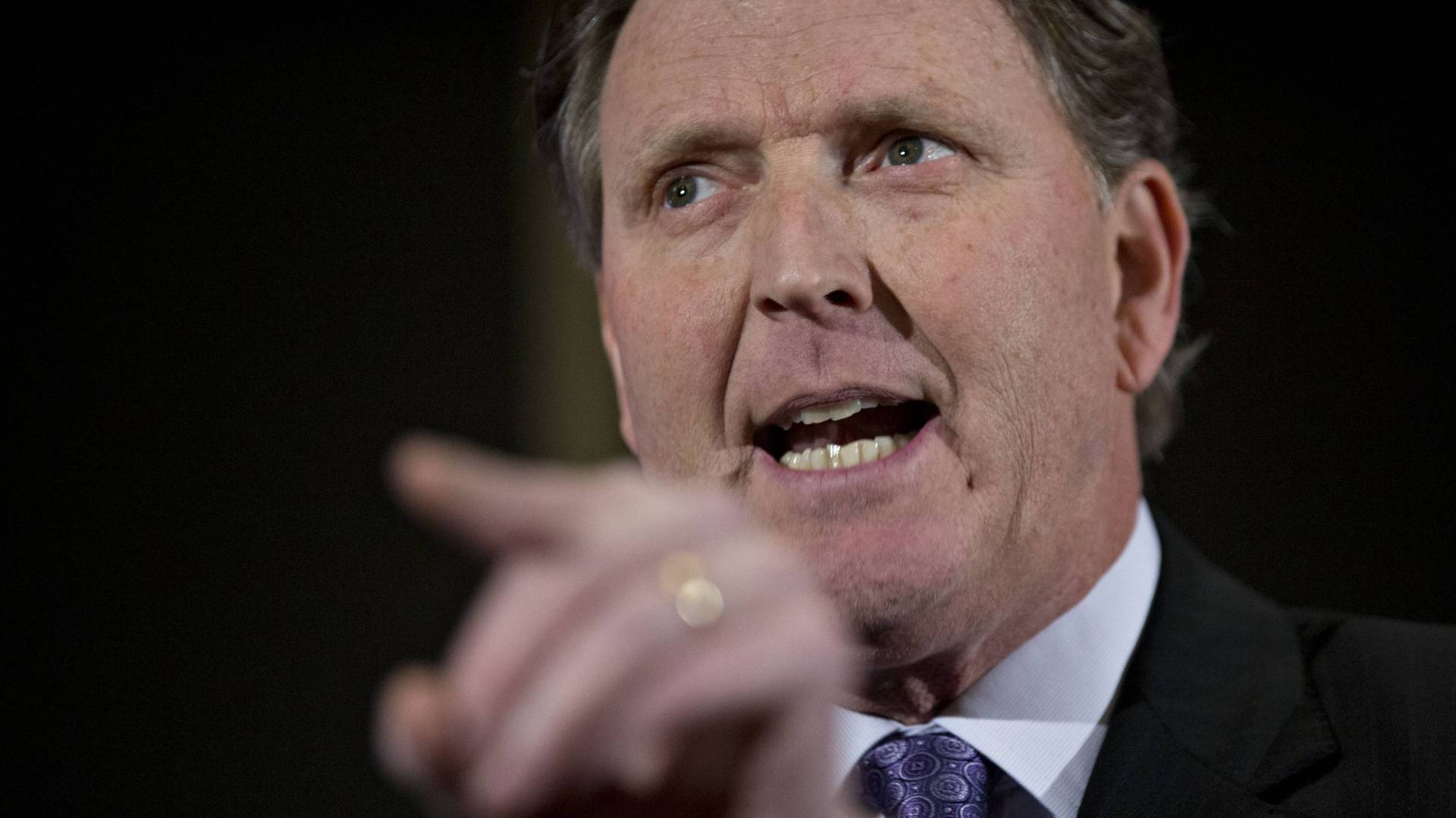
In the lead-up to the first caucus in the presidential race, GOP hopefuls barnstorm Iowa, turning up at town halls, cornfields, schools, the state fair, and Bob Vander Plaats’s house.

He and wife Darla have welcomed Florida Gov. Ron DeSantis, former United Nations ambassador Nikki Haley, and entrepreneur and political newcomer Vivek Ramaswamy. DeSantis, Ramaswamy, and Sen. Tim Scott (who has since suspended his presidential campaign) also visited his church, Soteria Des Moines, a Baptist congregation in the state’s capital.

Vander Plaats is head of The Family Leader, an Iowa-based conservative Christian nonprofit with ties to Focus on the Family. He has built up a winning streak picking out the past three GOP caucus winners in his state—Mike Huckabee in 2008, Rick Santorum in 2012, and Ted Cruz in 2016—and holds one of the most-coveted Republican endorsements.

“Bob Vander Plaats is a kingmaker,” said Jim Tillotson, president of Faith Baptist Bible College in nearby Ankeny. “I would think his endorsement carries a lot of weight.”

Vander Plaats, though, tends to downplay his influence. “It’s not my endorsement,” the 60-year-old told Christianity Today. “It’s more that I’ve had a front-row seat to this entire process.”

In the lead-up to the caucuses, when he wasn’t brushing shoulders with candidates or hosting them during The Family Leader events, Vander Plaats was working from a nondescript office park in Urbandale, Iowa, where the ministry is headquartered.

His office is crowded with traces of his Iowa roots: a card with “I heart basketball” recalls his days on Northwestern College’s Red Raiders team, and a flip calendar displays family photos. A round tin with Wilhelmina peppermints, an homage to his Dutch heritage, is within arm’s reach on the table he uses as a desk.

American flags are everywhere: Some small ones on a desktop stand, several draped over a couch, another printed on a cushion. Behind him, a small flag waves near the US Capitol in a painting by Texas-born artist G. Harvey, released by Focus on the Family. It’s titled Time of Hope.

This year, Vander Plaats is holding out hope. Though the polls in his state show former president Donald Trump leading the field by over 30 points, he has backed DeSantis, believing him to have better odds at beating Joe Biden in November.

“I do see a big shift coming by January 15,” the day of the caucus, Vander Plaats said. “If I happened to believe otherwise, I wouldn’t have endorsed him. I think Ron DeSantis can win.”

While The Family Leader doesn’t endorse presidential candidates, Vander Plaats takes his personal endorsement seriously, seeking counsel from his family and close friends and talking to God before announcing his pick.

“We’ve bathed this in prayer, probably since the 2020 election,” he said, “that God would raise up the one that we know that … we should rally behind.”

The Family Leader invites Iowans to join in that outpouring of election prayer, offering a 14-day prayer and fasting devotional around the 2024 race.

When asked what he is looking for in the next president, Vander Plaats slips into preacher mode, referencing Micah 6:8 in describing a leader who would “seek justice, but to love mercy and walk humbly with our God, and, really, to find a shepherd today.”

Vander Plaats pulled from the parable of the lost sheep in the Gospel of Matthew to talk about the high call of leadership.

“A shepherd will lay down their life for the flock. A shepherd puts the cause of the flock above himself all the time,” he said. “I think America, but also the world, would be well served if we had a shepherd in the role of government that we could all look up to and say, That’s leadership.”

https://twitter.com/bobvanderplaats/status/1723054786155626825

The lifelong Iowan grew up in the faith, attending a Christian high school and a small Reformed Church in America college in Iowa called Northwestern. His career began as a high school accounting teacher. Eventually, he became a high school principal in his hometown of Sheldon.

During that time in the ’90s, his school district and another were sued by the Iowa Civil Liberties Union over a student-organized effort to lead commencement prayer. Vander Plaats recalls the federal district court judge questioning him during the case about his background, since he went to Christian schools. Vander Plaats told his alma mater that he got the impression the judge “thought my purpose was to proselytize.” The school districts won on appeal.

The birth of Vander Plaats’s third son in 1993 caused his life to take a turn, and he became more involved in pro-life and pro-family causes. Lucas Vander Plaats had a rare brain disorder resulting in lifelong physical and mental disabilities that required 24-hour care.

A few years after Lucas was born, Vander Plaats became CEO of Opportunities Unlimited, an Iowa organization that assists people with disabilities. He shared his son’s story and his testimony of God’s presence in the midst of suffering in a book published by Focus on the Family in 2007; Joni Eareckson Tada wrote the foreword.

Lucas was a “miracle” who caused the family to look “beyond where we were,” Vander Plaats told Northwestern after his son passed away in 2021 at age 28.

As he became more interested in pro-family policy, Vander Plaats’s interest turned to the public square. In 2002, 2006, and 2010, he mounted gubernatorial bids. Each came up short, including withdrawing in 2006 to run for lieutenant governor.

But instead of vanishing from the public eye, his influence continued to grow. In 2008, he chaired Mike Huckabee’s winning campaign in Iowa. He spearheaded a successful effort in 2010 to oust three members of the Iowa Supreme Court who had voted to overturn a previous state law that resulted in the legalization of same-sex marriages.

That same year, he took on the role of president and CEO of The Family Leader. The Iowa group wants to see Christians engage the government with a pro-family gospel witness. It puts on programs to connect pastors and lawmakers, holds prayer events, and produces voter resources around policies and candidates.

https://x.com/bobvanderplaats/status/1741556126695473658

The organization has continued to punch above its weight in a state where churchgoing voters are a powerful bloc. Seventy-seven percent of Iowans are Christians, including 28 percent that are evangelical. In the 2016 caucuses, 62 percent of Republicans who participated in entrance polls in Iowa self-identified as white evangelical Christians.

But white evangelicals aren’t the same group as they were back then. Over Trump’s presidency, more of his supporters began to identify as evangelical whether they were consistent churchgoers or not.

“People who love their church and believe in God, but haven’t been typical churchgoers—he’s brought those people into the fold,” Pastors for Trump founder Jackson Lahmeyer told The New York Times, which noted that Iowa’s church attendance dropped by 13 percent, more than any other state, per the US Religion Census.

These self-identified evangelicals may be less likely to look to organizations like The Family Leader during campaign season.

“The Family Leader in Christian circles is known. But, you know, the average Republican churchgoer, who is Christian but maybe isn’t an activist, isn’t maybe even familiar with The Family Leader or with Vander Plaats by name,” said Jeff Taylor, an Iowa state senator and political science professor at Dordt University in Sioux Center.

Taylor noted that the “the endorsements that DeSantis has gotten haven’t changed the dynamics for him.”

At a Trump rally in Coralville, Iowa, in December, Iowa voter Peggy Fleakei told CT she’s locked in on her support for Trump. She said the former president “stands for so much of our American values, Christianity, our rights as Americans.”

Vander Plaats recognizes that most of his fellow Iowa evangelicals agree, so his approach is to convince them that they’re “not being disloyal to him by going to Gov. DeSantis,” who he believes has a better chance in the general election.

He compared the scenario to another upset a couple years ago. When Iowa’s longtime incumbent Republican congressman Steve King lost influence in the wake of a series of offensive comments around race and white supremacy, Vander Plaats threw his support behind King’s primary challenger, a relatively unknown state senator.

Though he had been a supporter of King’s, Vander Plaats chalked the change up to a “growing fatigue” with King, whose “voice is no longer desired at the table.” If the scandal-laden politician made it to the general election, Vander Plaats argued, it could put “everybody that’s on the ballot with him … at risk.” In 2020, the state senator, Randy Feenstra, bested King to win the primary. The political newcomer also easily won the general election.

Vander Plaats wants to repeat that in 2024. Like he did with King, Vander Plaats draws his argument along largely pragmatic lines. Americans “want to turn the page from an 80-year-old generation to the next generation, and have somebody who can lead and serve for two terms, not one,” Vander Plaats told CT.

Vander Plaats is bullish that Iowa polling is getting it wrong, and that Trump’s support may be more fragile than it appears: “Iowa always, always, always breaks late. I believe they’re going to break late again,” he told CT.

He has records to point to; in the 2015 presidential cycle, Ted Cruz was trailing five points in second place to then-candidate Trump. Vander Plaats endorsed him anyway, and Cruz won the caucuses by three points.

Back in 2012, Vander Plaats also predicted a surprise victory for Rick Santorum, who had been relegated to the bottom of the pack of six Republican presidential candidates. Santorum pulled ahead two weeks after Vander Plaats’s backing. The Iowa leader said in an interview he received a congratulatory phone call telling him: “You should take the credit.” It was from Donald Trump.

He’s not expecting a call this year.

During November’s Thanksgiving forum put on by The Family Leader, DeSantis, Haley, and Ramaswamy made their arguments to Vander Plaats—and the room full of evangelical voters—with Trump noticeably absent, as he skipped debates and delayed campaigning in Iowa until January. “Sometimes some guests don’t show up,” Vander Plaats said.

When Vander Plaats officially endorsed DeSantis afterward, Trump responded by accusing him of scamming and disinformation, telling his supporters, “I don’t believe anything Bob Vander Plaats says.” Vander Plaats stated that his endorsement couldn’t be bought.

Tillotson, Faith Baptist Bible College’s president, said some Christians have been turned off by Trump taking shots at Iowa Gov. Kim Reynolds, a Republican, who also endorsed DeSantis.

“There’s a lot of Christians that support Trump. And they’ll point to the good things … they’ll point to Roe v. Wade getting overturned and that not happening if those Supreme Court justices weren’t there,” he said. “But then you also have Christians who look at how he runs his private life, and the arrogance that he seems to have, and so then they would say, How can you do that? And so, I do think it’s all over the map.”

Vander Plaats himself voted twice for the former president. When asked if he’s prepared to do so again, he demurs at first, saying that his focus is on the primary. But then he adds: “People have asked me that before, if it’s Trump or Biden … I think [given] the history of Trump and the administration—there’s no doubt that I would land there.”

But until then, he’s still expecting DeSantis to pull ahead. As he said on talk radio, “My decision is not against Trump. It is for the future of our country.”

Books
Review

‘Cultural Christians’ Have Existed for as Long as Christians Have Existed

We often credit the early church with heroic faithfulness. But it was hardly innocent of accommodation and compromise.

Christianity Today January 9, 2024
Illustration by Elizabeth Kaye / Source Images: Lightstock / Pexels / Unsplash / Wikimedia Commons

Martyrdom lurking around every corner. Christians fervent in prayer morning, noon, and night. Bold declarations of “Christ is Lord” in Roman arenas.

Cultural Christians in the Early Church: A Historical and Practical Introduction to Christians in the Greco-Roman World

This describes a few Christians, at a few moments, in the first few centuries of the church. Despite popular depictions, this was not the norm for every person bearing the Christian name. In fact, the norm was less heroic than we might realize.

In Cultural Christians in the Early Church: A Historical and Practical Introduction to Christians in the Greco-Roman World, historian Nadya Williams proposes that many Christians in the church’s first five centuries may have been more closely aligned with their surrounding culture than with Christ. This is not to deny the authenticity of their faith, only to say that Christians have always been tempted to adapt to cultural conventions.

This more nuanced and historically consistent portrait erodes notions of “golden-era Christianity.” Like a microscope revealing cancerous cells, Williams shows readers how Christians are too often infected by the culture around us rather than influenced by Christ in us. From Christian nationalism to love of wealth to Christian “celebrity culture,” there is nothing new under the sun when it comes to how Christians have acclimated to cultural norms.

Straddling fences

Beginning in the New Testament, Williams shows how some Christians took cultural priorities more seriously than biblical ones. The standout case in the Book of Acts is the episode of Ananias and Sapphira, affectionally dubbed by Williams as the “first cultural Christians.”

This couple, seeing the sacrificial generosity of early believers, sought to make a similar statement, albeit with different motivations than those of their counterparts. Where other believers were driven by ideals of sacrificial giving based on the gospel, Ananias and Sapphira pursued a form of notoriety based on Roman notions of benefaction. Wealthy Romans expected to gain something in return for their gifts.

We often act with a similar mindset. The issue for this culturally Christian couple was the manipulative nature of their gift. Giving the church a portion of the proceeds from a land sale would have been laudable; presenting themselves in the same sacrificial light as others was not. Christians ought to give sacrificially, but never in a way that feigns sacrifice for the sake of accumulating power.

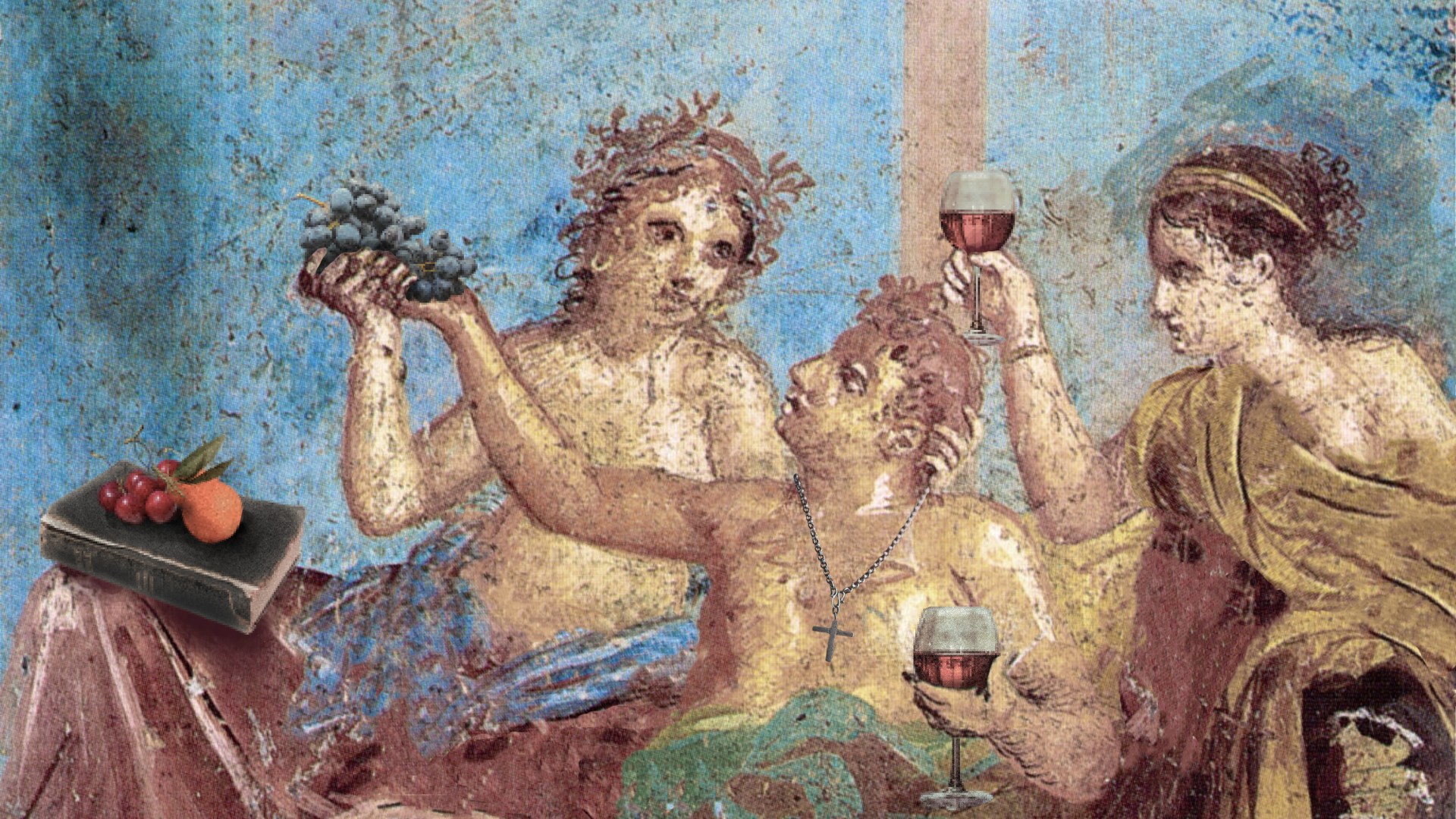
Williams proceeds to shed much-needed historical wisdom on issues related to consuming food and wine (chapter 2), as well as the realities of sexual relations in the Greco-Roman world and their impact on the church (chapter 3). The first Christians, it appears, carried with them some of their Roman baggage, including ritual drunkenness and pagan worship practices. Paul’s exhortations to the church, in 1 Corinthians and elsewhere, make it clear that Christians were attempting to straddle the fence when it came to food and drink, at times looking more Roman than Christian.

Regarding sexuality, of course, nothing could be more countercultural than the Christian sexual ethic. Christians were to be faithful to their spouses or remain celibate. In contrast, Roman men could do almost anything they desired sexually without penalty. In prominent cities such as Rome, Corinth, and Ephesus, cultic prostitution was the norm, not to mention that slaves were seen as property to use sexually as desired. Some may say that we live today in a sexualized culture (which is surely true), but, in many ways, ancient Rome makes the modern West look like a PG-rated cartoon.

Williams then turns the historical page to consider post–New Testament Christians and the cultural sins present within the first few centuries. An interesting case involves Pliny the Younger, a Roman governor who grilled several Christians to better understand the supposed threat they presented in his region. Upon interrogation, it seems that some Christians were quick to reassure Pliny by renouncing their faith. Others persisted, however, leading Pliny to seek wisdom from Emperor Trajan on how to proceed.

The famous exchange between Pliny and Trajan represents a key non-Christian historical source on the nature of Christianity in the second century, attesting to the reality that some were leaving the church. Stories of renunciation would play out in the following decades during various times of Christian persecution, and later leaders such as Cyprian of Carthage would speak to how “lapsed” Christians ought to be reintegrated into the church.

This historical episode lends itself to helpful insights about “exvangelicalism” and related movements. How might Christians today address those who are leaving the church? Is the problem the faith, the clergy, or something else? To what degree do modern conventions such as social media play a factor? It’s worth considering recent work on the rise of the religiously unaffiliated “nones” and “nonverts” alongside stories of their forerunners in the early church era.

According to Williams, Christians in the Constantinian and post-Constantinian eras did not fare much better regarding cultural sins. Scholars of late antiquity are not surprised by violence between Christian groups or even by the power and manipulation used to sway ecclesial decisions. Modern Christians, though, ought to be shocked and reminded that such postures are contrary to Christian virtue.

Often, what seemed like disagreements over theology and practice may have been more cultural than theological. Advocating violence or manipulation as a “means to an end” is antithetical to Christian practice—or it ought to be, as Williams emphasizes. She notes, “Sometimes divisions are less about good theology and more about appearances. And those kinds of divisions should worry and convict us.” To this I can only add, amen!

I was particularly encouraged by the connections Williams draws between the church in the fourth and fifth centuries and the dynamics of Christian nationalism and celebrity culture today. Many have looked to Augustine’s City of God as a critique of Roman culture and its parallels today, but Williams uses Augustine like a scalpel to delicately remove a cancerous tumor. Augustine minces no words regarding the failures of Rome and the absurdity of Roman religion. In sum, placing one’s ultimate hope in an earthly kingdom is foolhardy at best. While heavenly citizens care about the welfare of the earthly kingdom, they are realistic about its prospects and longevity.

Most surprising in this book is the way Williams uses the early monastic movement to draw conclusions about the dangers of Christian celebrities. As numerous individuals fled to the deserts of Egypt and the surrounding region in the late fourth century, their spiritual fame and status garnered much attention. As Williams shows, these spiritual tours of desert monks were not unlike pagan shrine visitations.

Desert monks also represent object lessons for us today. Many today criticize the gathered church for stifling individualized spiritual experience. But whatever spiritual insights we gain from the early monastics, they must be used to serve God’s people.

No golden eras

Cultural Christians in the Early Church gives readers a fantastic example of how we ought to learn from this pivotal period in Christian history. The book is not a detailed introduction to early Christianity. It is, however, a powerful statement regarding human nature and the perennial challenge of living according to Christ. Christian doctrine speaks to the issues of our culture, whether in the first century or the 21st.

The book and its outlook are not pessimistic but realistic. Williams brings to it her knowledge of late antiquity, her dedication as a disciple of Christ, and her observations on modern evangelicalism. There were moments in the book when I wished Williams, rather than ending most chapters with various connections to modern evangelical life and thought, would let readers draw their own conclusions. Overall, however, this work levels the playing field for Christians today. Williams does not excuse these “cultural sins,” but instead does the delicate historical work of helping readers understand how we are just as prone to them as our forebears.

Rather than idolizing the early church, perhaps we should learn some sober lessons and apply them to our experience today. Williams’s work is far from an abstract exercise in social history; it presents a “usable history” of the best sort.

Recognizing our cultural sins ought to bring us back to the upside-down kingdom ethics of Jesus. Truly his kingdom is not of this world. There is no golden era of the church in history; only the one to come in eternity.

Coleman Ford is assistant professor of humanities at Southwestern Baptist Theological Seminary. He is the co-founder of the Center for Ancient Christian Studies and serves as a fellow of the Center for Pastor Theologians. He is the author of Formed in His Image: A Guide to Christian Formation.

Church Life

Don’t Let Yourself Be ‘Cured of Churchgoing’

Church homelessness is lonely and exhausting. And the only antidote is Christian community.

Christianity Today January 9, 2024
Illustration by Mallory Rentsch Tlapek / Source Images: Unsplash

When my family moved from Washington State to California, my parents braced my brother and me for a church search that could take some time. But after just one Sunday, we fell in love with a congregation, and my family still attends there more than 15 years later.

In leaving home for college, I hoped for the same narrative. Instead, I found it to be the complete opposite. In fact, up until about six months ago, I had been going on six years without a home church—which is a familiar reality among many Gen Z Christians.

Roughly one-third of young people are attending church less often today than they did before the pandemic. A 2022 study from the Survey Center on American Life found that the pandemic appears to have caused those who already had the weakest commitments to regular religious attendance—including young people, single folks, and self-identified liberals—to stop attending church altogether at a much higher rate than other Americans.

Throughout my church search, I struggled with thoughts of self-doubt, wondering if I was the problem: Was I just being too picky in my expectations? Was I discounting churches for superficial reasons? In my mind at the time, the reason I had not yet found a church home was a mix of equally valid contributing factors over the course of my college career.

In my first year, I visited what felt like hundreds of churches by bus, since I didn’t have a car. And when the pandemic hit during my sophomore and junior years, I began tuning into my beloved church from back home. By senior year, I was determined to find a community and released any expectation of finding a one-to-one comparison with my home church.

I began commuting 40 minutes into the city in search of a rich community of diverse believers—ethnically, generationally, and socioeconomically. I decided I would commit to a church that I loved regardless of how far I had to go to find it. But I quickly realized how hard it was to get integrated into a church community when you are the only one who lives far away—I couldn’t stop and get coffee after work like the other members who all lived in the area.

Meanwhile, Sunday after Sunday, I felt the isolation of church homelessness.

One reason for this was that many of the congregations I visited were homogenous, and I desperately wanted to learn and be challenged by a diverse group of people. Other reasons were a bit more clear-cut: One church I went to played Pitbull music during the offering. Another church’s website used an AI bot to “show me around,” but for any additional information on leadership and community involvement required me to join their Slack channel. In yet another church I visited, the pastor made a casual remark from stage that read, to me, as a giant red flag.

Some churches I simply did not trust, partly because of their involvement with denominations struggling with scandal or dismissing sexual abuse. Unfortunately, in these times, committing to a church often requires a delicate balance of trusting fellow congregants and being on guard. And especially as a young woman, I wanted a place where I could allow myself to be vulnerable.

Even when the wider denomination is struggling to pursue justice and accountability, I know there are individual churches that are doing well. But how do I know which congregation or church leader will be the subject of the next scandal—or whether I won’t be the next victim?

Studies show that I’m not alone in this fear. According to a 2022 Barna study, 27 percent of people say their doubt in Christianity is due to past experiences with a religious institution. Statistically and anecdotally, many Gen Zers I know share a concern that church just doesn’t feel safe amid so much scandal.

There’s another oft-cited reason people avoid committing to church: In my social circles of young people, I hear many say they just haven’t found a church that shares all their convictions.

In this, I am reminded of the haunting warning C. S. Lewis gives in The Screwtape Letters, where the “devil” writes to his protégé, “Surely you know that if a man can’t be cured of churchgoing, the next best thing is to send him all over the neighborhood looking for the church that ‘suits’ him until he becomes a taster or connoisseur of churches.”

I’ve also heard from others who simply don’t see church as a requirement of the Christian faith. As Daniel K. Williams writes, “What if the problem with dechurched evangelicals is not their faulty understanding of faith, but rather evangelical theology’s own lack of emphasis on the church?” He makes the case that evangelicals need to rediscover a compelling theology of church—to establish a uniquely evangelical answer to the question, “Why church?”

Even for me, the lies of isolation were around every corner. I hit periods of simply not attending church, telling myself that it wasn’t a necessity. Sometimes I quoted Matthew 18:20 to convince myself that I was always “at church” when I was with two or more gathered in Jesus’ name.

In this, going to a Christian college was a double-edged sword. It’s easier to avoid attending a local church when you’re constantly surrounded by Christian community—attending chapel three times a week and engaging with biblical curriculum every day. But I always felt ashamed, like I was a bad Christian, whenever people asked me what church I was going to. It seemed like being connected to a home church was some ultimate litmus test of my spiritual well-being.

Yet none of these excuses ever solved my deep longing for Christian community. Church homelessness is a lonely place to be, and it’s also a vulnerable foothold for the enemy to slip lies into our minds. Satan knows church searching is exhausting and requires faith to persevere as we look for a healthy congregation that will challenge us to serve others and grow in our spiritual walks. This is why he often encourages us toward apathy and indifference, to distance us from our desires for God and community. This, paired with loneliness, can be a powerful combination.

Church is essential for our faith, not to mention that in-person worship can improve our overall well-being and lower our psychological distress. But overcoming church homelessness takes time, mental energy, and emotional endurance. Many of us struggle with the resilience to face it—especially those of us who are young adults or single.

Yet there might be a hidden blessing in this very struggle. To quote Romans 5:3–5, “Not only so, but we also glory in our sufferings, because we know that suffering produces perseverance; perseverance, character; and character, hope. And hope does not put us to shame, because God’s love has been poured out into our hearts through the Holy Spirit, who has been given to us.”

More than anything, I’m grateful the Lord cares about our suffering and sees us through it all.

A few months ago, as I had done many times before, I walked into a new church all alone—when every ounce of my being did not want to walk into the sanctuary by myself. Just then, I heard a still, small voice in my head say something that gave me an immediate sense of peace: “A church should be the safest place to be alone.”

Since then, I’ve attended the church’s connect class, signed up for a small group, and joined their women’s ministry. I’ve written down the names of people I meet each week as a reminder of my answered prayers for Christian community. This Sunday, I will be sitting in the sanctuary, surrounded by fewer strangers than the week before—with my Bible and notebook, my list of priorities, and an open mind—praying this is the place where I can plant my roots and thrive.

And as I continue to show up each week, God continues to demonstrate his faithfulness to me. Each Sunday, I thank the Lord for giving me the strength to battle loneliness; and the more I get plugged in, the more my loneliness dissolves. Beyond that, I’m grateful for the opportunity to see more of God’s kingdom at work around me and to meet other people who each have their own unique reasons for showing up at church despite their personal obstacles.

This is not to say there aren’t still Sunday mornings when I don’t feel like waking up and going to church. But when I look back at some of the toughest times in my life, I see that I felt furthest from God when I wasn’t surrounded by other like-minded believers—and the only way I got out of those trenches was when I decided to give church another chance.

In fact, there have been moments in my life where the only reason I still hold on to my faith is because I knew there were other Christians praying for me. On days when I feel upset with God or discouraged at our sinful world, I know someone is praying for me to regain a sense of hope.

In all this, I want to remind those suffering from church homelessness—especially my fellow young adults and single people—that you are not alone. More than that, you don’t have to be content with this loneliness. You can be resilient and find the family God has promised you.

And every time we make the decision and effort to show up for service on a Sunday morning, our very presence in the house of God means the devil has failed to cure us of churchgoing.

Mia Staub is the content manager at Christianity Today.

Inkwell

Only Noah Was Left

Inkwell January 9, 2024
Photography by Gauhi H.

i.
i was alive seven weeks,
three days
until my mother felt me.
there i was in her ocean,
the umbilical cord my ark
as i sailed from ultrasound
into life.
they saw my teeth
and named me laughter.
how screams shine like smiles.
how hysteria echoes like—
a drowning earth.
i’ve learned there is no such thing
as a drowning sky
because the heavens cannot be baptized.

ii.
what is a smile
while a million portraits of you
sink into earth’s unseen?
today, they still call me laughter,
and rightfully so.
yet my essence knows why
the sky cries.
why she sets into the color of wine
each evening.
why her cold shoulders shiver like
last trimester depressions.
why her snowflakes fall beautifully
every year she outlasts her peers.

iii.
day three
is a journal entry
that begins like the others
but never ends.
it is a dove flying out
into a new world
without its flock
flying flying flying
seeking rest
as its wings wipe the tears
of a mourning sky.

Isaac Akanmu is a poet, financial analyst & author of not belonging anywhere.

News

Azerbaijan Added to US List of Religious Freedom Offenders

Is the Islamic nation’s inclusion—the State Department’s only change this year—driven by its treatment of Christians, Muslims, or ethnic Armenians displaced from the Artsakh enclave?

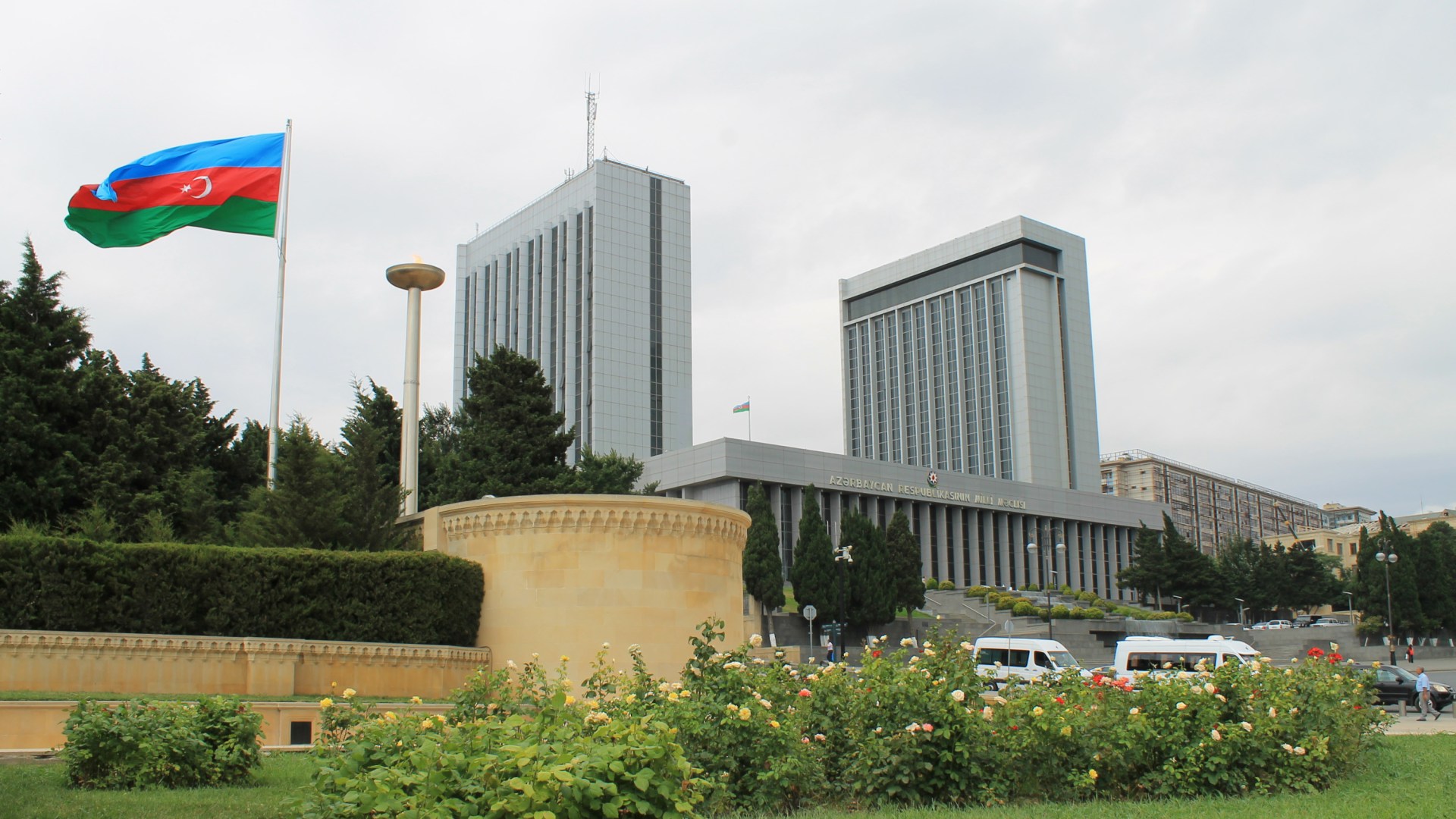
The building of the National Assembly of Azerbaijan.

The building of the National Assembly of Azerbaijan.

Christianity Today January 8, 2024
Mozar / Getty / Edits by CT

For the first time, the United States has recognized Azerbaijan as a violator of religious freedom.

Inclusion on the State Department’s second-tier Special Watch List (SWL) subjects the oil-rich Shiite Muslim–majority nation to the possibility of economic sanctions.

The US Commission on International Religious Freedom (USCIRF) has called for the Caucasus nation’s censure each year since 2013. Created by the 1998 International Religious Freedom Act (IRFA), USCIRF’s bipartisan yearly report evaluates “systematic, ongoing, and egregious” violations independent of US foreign policy concerns and tracks government implementation of its recommendations.

Complicating any consequences, Azerbaijan aligns with US foreign policy in certain areas: It cooperates closely with Israel, is aligned against Iran, and agreed to increase oil exports to Europe in the wake of Russia’s invasion of Ukraine.

In a brief statement, US secretary of state Antony Blinken kept unchanged all other 2022 designations mandated by the IRFA. Azerbaijan joins Algeria, the Central African Republic, Comoros, and Vietnam on the SWL, cited for “engaging in or tolerating severe violations of religious freedom.”

Twelve nations—China, Cuba, Eritrea, Iran, Myanmar, Nicaragua, North Korea, Pakistan, Russia, Saudi Arabia, Tajikistan, and Turkmenistan—again received designations as first-tier Countries of Particular Concern (CPC).

USCIRF “welcomed” the designation of Azerbaijan. But it stated there was “no justification” for failing to follow its advice to also label India and Nigeria as CPCs.

India was first recommended from 2002–2004 as a CPC, from 2010–2019 for the SWL, and then again from 2020 onward as a CPC. Nigeria was recommended for the SWL from 2003–2008, and as a CPC since 2009.

While the State Department has never included India, former president Donald Trump listed Nigeria on the SWL in 2019 and as a CPC in 2020. President Joe Biden removed it entirely the following year.

USCIRF called for a congressional hearing over these omissions and further criticized the State Department for issuing sanction waivers for CPC violators Pakistan, Saudi Arabia, Tajikistan, and Turkmenistan.

In a statement to CT, Lilieth Whyte, public outreach chief of the State Department’s Office of International Religious Freedom, cited three main factors.

Azerbaijan’s laws place “onerous registration requirements” on religious groups to register nationally, restricting them further in their right to worship freely and select their own clergy. The government physically abuses, arrests, and imprisons religious activists, she added, while conscientious objectors are not permitted to serve their country in accordance with their beliefs.

Not mentioned was Azerbaijan’s months-long blockade of its Armenian-populated enclave of Nagorno-Karabakh—which Armenians call “Artsakh”—which culminated in an invasion last September that displaced more than 100,000 people.

At the time, Blinken “urged” Azerbaijani president Ilham Aliyev to “immediately cease military actions.” In November, assistant secretary of state James O’Brien told a congressional committee that “there cannot be ‘business as usual’” in US relations.

But last December, the State Department press service clarified that cessation of interaction with Azerbaijan would be “contrary to our interests.” Instead, US policy would continue to press the country to greater respect for “human rights and fundamental freedoms,” as well as a lasting peace agreement with Armenia.

Shortly thereafter, the two nations swapped prisoners of war, announced as “tangible steps towards building confidence” in pursuit of a peace deal. Azerbaijan has stated that an agreement is close.

Zaven Khanjian, executive director of the Armenian Missionary Association of America, welcomed the State Department designation. Calling the displacement from Nagorno-Karabakh an example of “ethnic cleansing,” he also cited the erasure of Armenian heritage from areas under Azerbaijani control.

And he wants US pressure to move beyond a simple designation.

“Armenians cannot wait until the oil fields in Baku dry up,” Khanjian said, referring to the Azerbaijani capital city, “for Washington to pursue punitive measures.”

Many Armenians, however, are suspicious of the peace negotiations. Khanjian is in favor, but skeptical. His hesitation is rooted in distrust of autocratic Azerbaijan, and he believes Russian and American interests will also have to align. Still, he is praying.

One issue at stake is the return of Armenians to Nagorno-Karabakh. But Azerbaijan counters that ethnic Azeris displaced from Armenia in earlier conflicts should have their rights recognized as well. In letters sent to the United Nations, this includes the right of return westward to Armenia.

Blinken’s designation was met with a harsh response—not by the Aliyev administration, but by an association representing the displaced, formerly called the Azerbaijan Refugee Society. But one month prior to the invasion of Nagorno-Karabakh, the group changed its name to the Western Azerbaijan Community (WAC), whose website displays a map that includes the territory of Armenia.

“The US list on religious freedom has no force, no weight, and we categorically reject it,” stated the WAC, viewing it as an “arrogant” example of American hostility.

Aliyev has previously stated that Azerbaijan would return to these “historical lands,” but in vague terms amid official clarification that this does not include territorial claims.

As long as these veiled threats exist, said Craig Simonian, the Caucasus region coordinator for the World Evangelical Alliance’s Peace and Reconciliation Network, there is doubt that peace negotiations can be meaningful. Azerbaijan also continues to hold Artsakh Armenian political leaders and prisoners of war, while its troops are marshaled on the still-demarcated border.

And the language of Western Azerbaijan is “hugely aggressive,” he said, dismissed by mainstream scholars. But even so, and despite all that has happened, at least the two nations are talking.

“Reconciliation can happen,” Simonian said. “Perhaps not between governments—at least not quickly—but between those who choose to follow Christ.”

Following his nation’s placement on the SWL, Aliyev spoke to some of these directly.

Christmas is a symbol of kindness, he told Azerbaijan’s Orthodox citizens, offering holiday greetings to the mostly ethnic Russian community who follow the Eastern calendar.

“It is commendable that our Christian compatriots, taking advantage of the broad opportunities created by the exemplary relations between the state and religion, are keeping their unique traditions, language, and culture alive,” Aliyev stated. “Ethnic-religious diversity … is one of the predominant qualities of our society.”

Christians comprise roughly 3 percent of Azerbaijan’s population. USCIRF has chided it along with Bahrain, Saudi Arabia, and the United Arab Emirates as authoritarian nations who are “major investors” in a promotion of religious tolerance that “obscures the state’s responsibility and failure to protect and promote freedom of religion or belief for everyone.”

And USCIRF’s most recent country update stated that while Azerbaijan has stopped certain problematic practices, Protestants continue to face obstacles in registration. Not one non-Muslim community has been approved in the last three years.

It is not that bad, one Azerbaijani Christian leader told CT.

“As part of the small circle of evangelicals, I don’t see any major changes toward the churches,” he said, requesting anonymity. “We still have freedom, and I see this designation as a change in US politics.”

Azerbaijan’s Protestants primarily come from a Muslim background.

But there is legitimacy, he added, in policies regulating the Islamic religion. Official religious authorities maintain control over Shiite mosques, with hundreds of mullahs arrested for their support of Iran. Wary of extremism, the secular government keeps a tight watch on foreign preachers of any religion and requires approval of any distributed spiritual literature.

The Azerbaijani Christian then provided a few anecdotes that reveal an uneven attitude toward Christianity.

One church regularly receives approval for visiting American pastors after informing security, he said. But two foreign Christians were denied residency visas under suspicion of unregistered evangelism.

One congregation of primarily Muslim converts wished to mark its ten-year anniversary in a large public hall. The government denied the permit, telling them to celebrate privately in the church. The pastor insisted, telling them to take away his registration—threatening they would then lose contact with his house church network. With this the authorities relented, and the celebration ensued.

One former thug became a Christian and began evangelizing in a Muslim ethnic minority region. When residents complained, he was called into the police, and during interrogation he related his full spiritual testimony. Afterward, the captain told him he was free to continue and to let them know if anyone gave him trouble.

And in a humorous episode, a preacher of short stature planted a church in a border territory far from Baku. Local authorities arrested him but, without a law that forbade his evangelism, charged him instead with assault against the hulking officers. The judge asked how this was possible.

He answered: It was easy, sir. My wife held them down.

Laughing, the judge dismissed all charges.

Why then does the Christian leader remain anonymous?

“Anything political, unless 100 percent in support of the government, might be used against me,” he said. “As long as Christians have peace with the authorities, I don’t want to break the balance.”

Freedom House calls Azerbaijan “not free,” ranking the nation No. 13 from the bottom in its annual Freedom in the World report. But the nation is not currently ranked in the Open Doors World Watch List of the top 50 countries where it is hardest to follow Jesus, though in 2016 it rose as high as No. 34.

Yet for the first time, the US has grouped Azerbaijan with 4 other offending nations, following 12 countries in the first tier of violations. Will designation result in improvement for any?

“The challenges to religious freedom across the globe are structural, systemic, and deeply entrenched,” stated Blinken. “But with thoughtful, sustained commitment from those who are unwilling to accept hatred, intolerance, and persecution as the status quo, we will one day see a world where all people live with dignity and equality.”

News

Christian Colleges Try Eliminating Tuition to Draw Students

A number of schools are trying various methods of not charging tuition, born out of their convictions about debt and hopes for students to choose a Christian education.

Sattler College students at their dorms in Boston.

Sattler College students at their dorms in Boston.

Christianity Today January 8, 2024
Courtesy of Sattler College

As Christian schools adapt their education models to an unfriendly market, several are experimenting with offering free tuition to some or all of their students.

Starting this semester, Sattler College, a small Anabaptist college in Boston, announced that it will not be charging any of its students tuition. The president, Zack Johnson, said some students came to his office in tears of happiness after the announcement.

Uriah O’Terry is a sophomore at Sattler, and the first in his family to go to college. He said in past semesters finding the money for tuition was “a point of stress,” and he had to take out a loan. He’s happy for the change.

“I am being prepared for a life of effective Christian living without the burden of debt,” he said in an email. “So the way I pay for my ‘free’ college education is by serving Jesus and the people around me with the skills and knowledge that I have gained at Sattler.”

Geneva College in Beaver Falls, Pennsylvania, also announced that in fall 2024 it would not charge tuition for Pennsylvania students whose families make under $70,000 a year. In fall 2023, Grace College in Winona Lake, Indiana, began offering free tuition to Indiana students whose families make less than $65,000. That program will continue next school year, now for families making less than $60,000.

Hope College in Holland, Michigan, is in its third year of a pilot program to offer free tuition. It is currently covering tuition for a small group of students who go through a character-based application as it tries to raise funds to cover more and more of its students.

“The reception has been a wide range of things from people who are inspired by it to people who think we’re totally crazy,” said Matthew Scogin, president of the college.

Hope asks students receiving free tuition to sign a covenant that they will give annually in any amount after graduation. “We went to this amazing line Jesus uses in Matthew 10:8, where he says, Freely you’ve received, now freely give. And we said, ‘Let’s see if we can apply that to our actual business model,’” said Scogin.

Sattler president Johnson wants the tuition-free model to encourage students to choose an educational institution where they will experience Christian formation without worrying about money. Most of Sattler’s freshman class this year are the first in their family to attend college, said Johnson.

“To create avenues for discipleship for young Christians is one of the church’s biggest tasks—to be really investing in these years,” said Johnson. “If our young people aren’t choosing to be discipled in these young years, some of us should be pulling our hair out [about] why people are choosing other alternatives.”

Sattler is calling its plan an “entrustment” model, “offering education in exchange for a student’s commitment to the principles of kingdom service and financial gratitude … using gospel concepts of generosity and service to solve the problem of student debt before it even begins.”

Sattler’s Johnson said his statistical modeling “showed we’d probably receive more money as an institution over time if we doubled down on generosity and gratitude, instead of billing an amount that’s usually discounted. … This isn’t certain, but I’m betting we will be better funded in the future because of this decision.”

Sattler—a school that started in 2016 and has a student body ranging between 60 and 80 students—could make it work, according to Johnson, because it has fixed costs, so additional students don’t add to expenses. Students still pay room and board, with subsidies in certain cases.

Willem de Ruijter, Geneva College’s vice president of enrollment and marketing, said in a statement that the school was “continuing to work towards making a rigorous Christian education accessible for all.” The school stated that “strong fiscal leadership and stewardship from boards and alumni” allowed it to offer the free tuition.

Christian higher education is experiencing both the best and worst of times. Some schools are seeing record enrollment, while more than 18 schools have closed since the pandemic. New York City’s only two evangelical colleges shuttered last year as their enrollments declined and debt rose.

Some Christian schools have already firmly established a no-tuition model. Undergraduate students at Moody Bible Institute have their tuition covered by donors, but the school has the students apply for federal aid. College of the Ozarks has a “tuition assurance scholarship” for its students, where they work their way through school in a work-study position, and donors cover any remaining costs.

The new no-tuition programs at Christian schools are popping up as states are also trying to establish more free-tuition programs. New York, Indiana, and Washington currently offer various versions of four-year tuition coverage for public universities, while a number of states are also covering tuition for community colleges.

John Aubrey Douglass, a researcher on higher education at University of California, Berkeley, is more skeptical of how these programs will work financially.

“The political movement for free tuition does not provide any significant plan on how to make up lost revenue,” Aubrey wrote in a 2020 article for International Higher Education. “Universities are like other organizations in society: If they lose significant income, there are consequences that can include reductions in access and in the number of courses offered, and rising student-to-faculty ratios.”

But the W. E. Upjohn Institute for Employment Research looked into such models for the Illinois governor in 2021 and found that the state’s offering of free tuition would more than cover the costs of the program through graduates’ higher earning potential and other spillover effects.

Christian colleges don’t have the tax dollars that state governments do, and don’t receive that increased tax revenue from graduates having higher earnings. And none of these schools are requiring post-graduation income sharing, an experimental model that can allow educational institutions not to charge tuition. But these institutions think they can make it work for theological reasons.

Sattler and Hope are trying to focus on a spirit of generosity through better alumni engagement from such programs. Sattler’s Johnson had looked at Hope’s pilot as a model for getting rid of tuition. Sattler’s program cites the same Bible verse as Hope, Matthew 10:8, to freely receive, freely give. Johnson and Hope’s president Scogin had a conversation this fall about the model and how it could work.

One critique of this model is that students won’t have “skin in the game” and might not perform as well academically. Johnson argues that students are still invested—not only with paying room and board but also with paying through their time.

Johnson himself was educated at the US Air Force Academy and has long thought about what service academies can model for Christian higher education. Like a service academy, Sattler is calling students to “kingdom-focused service” after they graduate, which can mean being a software developer or a missionary. Either way, he is betting that graduates would feel more involved in the institution—in giving, working at the school later, or serving on the board.

Hope’s Scogin acknowledged it’s “a model that’s uncertain. Although, in my view, the current model is even more uncertain because it’s breaking.”

Scogin said Hope could offer free tuition in its small pilot program because the school was in a “position of strength in terms of enrollment and budget.”

“God says this to Abraham—he blesses people to be a blessing,” Scogin said. “We’re charging students an extraordinary amount of money at literally the poorest point of their life. … Jesus creates this crazy upside-down economy, where he says it’s the poor and the lowly and the meek who are actually closest to God. And so we think Christians ought to be the ones pushing hardest on access to education.”

Additional reporting by Harvest Prude.

How IVF Made Its Way into Evangelical Pro-Life Debates

And what I wish I had considered before reproductive assistance.

Christianity Today January 8, 2024
Illustration by Christianity Today / Source Images: Getty

When evangelicals speak of the unborn, they’re often thinking of babies growing inside pregnant moms. Even the pro-life mantra of “from womb to tomb” presupposes a womb to carry them.

So as record numbers of Americans grow their families through in vitro fertilization (IVF), Christians who believe that life begins at conception—even if that’s in a petri dish—face new questions and challenges. In response to expanding reproductive technology, pro-life evangelicals are reexamining the theological and ethical concerns around creating and caring for life at its earliest stages.

I wish I had thought more deeply about this in 2015, when I began IVF in a desperate move to become a mother after several years of infertility. But even as a pro-life Christian, I thought primarily of the lives I would carry, not the ethical ramifications of potential leftover embryos. In fact, I wasn’t even aware one could make so many embryos at once, and the doctors at my IVF clinic didn’t inform me of it.

Other Christians whose beliefs about life did come to bear on their journeys through fertility assistance have experienced the tension firsthand. I talked with Jamie Skipper, who began to consider treatments to help get pregnant around 15 years ago. Her staunch pro-life convictions immediately made things harder.

The Skippers were committed to limiting the number of embryos. If each one created was a new life, they didn’t want any “extras” to sit in a freezer or get destroyed in the process. But IVF is a physically demanding and expensive process, so doctors often recommend fertilizing multiple eggs for a higher chance that one will develop into a healthy baby.

Jamie Skipper said finding a pro-life fertility doctor willing to go with their convictions was “like the underground railroad,” a very hush-hush network. They searched and continued to pray.

“The Bible doesn’t say, Don’t do IVF or Do IVF,” Skipper told CT. “What the Bible does say is Pray without ceasing. If you don’t go into this journey with prayer, you won’t know what God wants for you individually.”

After finally meeting a doctor they trusted, the Skippers moved forward, using their first embryo to become pregnant with their daughter and freezing two more to use later.

They became one of millions of US families who have used IVF to conceive. Earlier this year, Pew Research Center found that 42 percent of Americans have used fertility treatments such as IVF or know someone who has, up from 33 percent in 2018.

In survey breakouts provided to CT, white evangelicals were as likely as Americans overall to say they or someone they know had used fertility treatments. Well over 40 percent of white evangelicals, white mainline Christians, and Catholics agreed, compared to just 26 percent of Black Protestants.

Though evangelicals use fertility assistance, they often approach it differently. Things like fertility medications to stimulate ovulation and intrauterine insemination (IUI)—both of which help conceive a baby inside the mother—are less controversial than IVF, which creates embryos in a lab before implanting them.

When it comes to IVF, one survey found that Protestant Christians were largely in favor of embryo creation for a married couple but against sperm and egg donation in IVF. They also opposed preimplantation genetic testing, which screens which embryos to implant.

The evangelical cautions and ethical arguments around IVF draw from beliefs that life begins at conception, all are created in the image of God, and we have a responsibility to protect and sustain life from its earliest stages—the very same foundation as the evangelical movement against abortion. And yet, IVF has historically been left out of the abortion conversation.

“Evangelicals and other Protestants have achieved moral clarity about the evil of abortion. But we remain confused about the ethics of in vitro fertilization, a technology that removes a woman’s egg and fertilizes it with a man’s sperm in a laboratory environment, then reintroduces the now-living embryo into the woman’s uterus for gestation,” noted theologian and ethicist Matthew Lee Anderson in a post for First Things in 2021.

Perhaps pro-life advocates wanted to focus more on those who intended to end life than those who sought to create it. Perhaps they hesitated to speak out against it knowing the painful struggle of Christians in their midst who had turned to fertility assistance. Either way, evangelicals haven’t been as vocal about the ethical ramifications of IVF as they have about abortion procedures, medication abortion, or even Plan B.

But the conversation has expanded, especially in the wake of Roe v. Wade’s overruling in 2022.

“I’m very connected with a lot of pro-lifers who have had their eyes opened to how IVF violates the rights of children, their right to life,” said Katy Faust, the evangelical founder of children’s rights organization Them Before Us. “I think a lot of it is they just didn’t know before, but once you know, you don’t unsee it.”

Faust speaks against the practice of unrestrained embryo creation in IVF, which inevitably results in frozen embryos being destroyed or left on ice indefinitely. Each embryo is, scientifically speaking, a unique person comprised with a distinct DNA code, including things like eye color and gender, just like one conceived in the womb in its early days.

Faust noted how the landmark 2022 Supreme Court ruling revealed an undeniable connection between IVF and abortion. “Why is it that all of the fertility doctors in red states were freaking out after Dobbs?” she asked. “It’s because they [may not be able] to do business there if they can’t destroy human life.”

Right now, abortion laws do not affect frozen embryos, but there have been a couple of state bills that aim to make it so. In Kansas, for example, a bill that criminalized the “unlawful destruction of a fertilized embryo” advanced to the Senate, but the bill has not passed.

And yet, while most Americans see abortion as a “moral issue,” most do not view IVF in such terms. Few resources exist to help guide Christians who may be considering IVF. One online guide offers this piece of advice: For the Christian, “the decision to conceive is always the decision to implant.”

“Toward a Protestant Theology of the Body”—a recent conference named for the papal catechesis on human sexuality, marriage, conception, and personhood—tackled this rising theme. The Institute on Religion and Democracy event showcased an increased aptitude for questions regarding reproduction and the body.

“If I go and speak on this somewhere, a lot of people just assume that I’m Catholic because, for the last couple decades, it’s really only been Catholics that have been talking about this,” said Faust.

Emma Waters, a research associate for The Heritage Foundation’s Center for Life, Religion and Family, said she’s observed a shift in Protestant Christians, theologians, and pastors beginning to reexamine the moral and theological concerns related to IVF.

“Many Southern Baptist churches, the Lutheran Church—Missouri Synod, the Anglican Church of North America, and some within the Presbyterian Church of America are working to educate their congregants about the purpose of a child, and where Christians should draw firm lines in their use of technology,” Waters told Christianity Today.

In the last couple years, I’ve become more educated about the ethics of reproductive technology and the realities of created and commodified lives. It’s caused me to see my own experience with IVF differently and to wish I had been better informed. While the treatment was successful for me, helping me become pregnant with two healthy babies, the remaining embryos I have stored on ice have caused great heartache.

The biggest evangelical concerns around IVF tend to center around the loss of embryos in the process, so families like the Skippers commit to carrying and caring for any embryos they create.

As Jamie Skipper moved forward with IVF, she worried about what would happen to her two frozen embryos if she “got hit by a bus and died” or was unable to implant them for any reason. She ended up drafting a legal will granting custody to close friends in case of her demise. After the will was in place, the Skippers felt peace that they had done everything they could to protect their children.

Two years after the first successful implant, Skipper implanted the last two embryos, which resulted in the birth of her second daughter.

Today Skipper, like some prominent evangelical groups like Focus on the Family and The Gospel Coalition, supports “ethical” IVF, in which the embryos created are made from the biological material of the parents and implanted into the biological mother, and no embryos are frozen or discarded.

The truth about more than a million frozen embryos on ice has become more common knowledge as of late. Prior to that, many Christians unacquainted with IVF didn’t realize this numeric reality. As the conversation has progressed, pro-life advocates have grown bolder in their advocacy against IVF procedures that create extra embryos.

Several years ago, Live Action founder Lila Rose, who is Catholic, came out against this kind of IVF, and many Christian commentors criticized her stance because of their personal experiences. Because so many Christians have participated in IVF to grow their families, it can be difficult to speak out against it in pro-life contexts.

Remaining true to biblical conviction, however, is more important than avoiding hurt feelings. I want to offer women the kind of resource I wish I had when I began IVF; Skipper and I both see a lack of Christian resources around IVF and plan to write a guide for couples considering potential IVF treatment.

But some evangelicals have moral reservations that extend beyond the potential loss of embryos and don’t support any form of IVF. Anderson, writing for First Things, argues that “the doctrine of the imago Dei illuminates the problem of wrongful creation, not only of wrongful killing.”

In her book Conceived by Science, Stephanie Gray Connors writes of how the process “commodifies” children through the freezing and grading of embryos deemed best to implant in the womb.

“With this motivation, no longer is the human person valued for his or her uniqueness and nature of being an image bearer,” she wrote. “Instead, the person is valued, wanted and selected for the usefulness they provide to others.”

She notes that the freezing process itself poses a risk to the embryo’s life, so it can’t be ethical to “endanger the lives of some children in an effort to create other children.”

Christians heading up the nation’s leading pro-life organizations are beginning to vocalize their concerns about IVF more broadly as well.

Steve Aden, chief legal officer at Americans United for Life, told The Guardian that once people fully understand the implications of traditional IVF, they will “turn away from this creation and freezing of hundreds of thousands of distinct individual human beings who remain in limbo forever or are ultimately cast off as if trash.”

Since her experience with IVF, Skipper has become passionate about educating others about the realities of IVF and excessive embryo creation. As a national health care policy expert, Skipper feels privileged to understand the business of health care. Most people, she said, aren’t aware of the details or monetary motivations behind them.

High success rates are important to clinics, as this often results in more funding and patients.

When mothers choose alternative IVF routes, like refusing to create as many embryos, pregnancy success is less likely, reflecting on clinic rates as a whole. Thus, evangelical pro-lifers are bad for business.

“You should be able to ask specific questions to your specialist to make sure it’s done in a way that 100 percent respects your pro-life stance,” said Skipper. “And if they try to explain to you that science doesn’t work that way or whatever—run for the door, because that’s the first sign that they’re not going to support you.”

Apple PodcastsDown ArrowDown ArrowDown Arrowarrow_left_altLeft ArrowLeft ArrowRight ArrowRight ArrowRight Arrowarrow_up_altUp ArrowUp ArrowAvailable at Amazoncaret-downCloseCloseEmailEmailExpandExpandExternalExternalFacebookfacebook-squareGiftGiftGooglegoogleGoogle KeephamburgerInstagraminstagram-squareLinkLinklinkedin-squareListenListenListenChristianity TodayCT Creative Studio Logologo_orgMegaphoneMenuMenupausePinterestPlayPlayPocketPodcastRSSRSSSaveSaveSaveSearchSearchsearchSpotifyStitcherTelegramTable of ContentsTable of Contentstwitter-squareWhatsAppXYouTubeYouTube